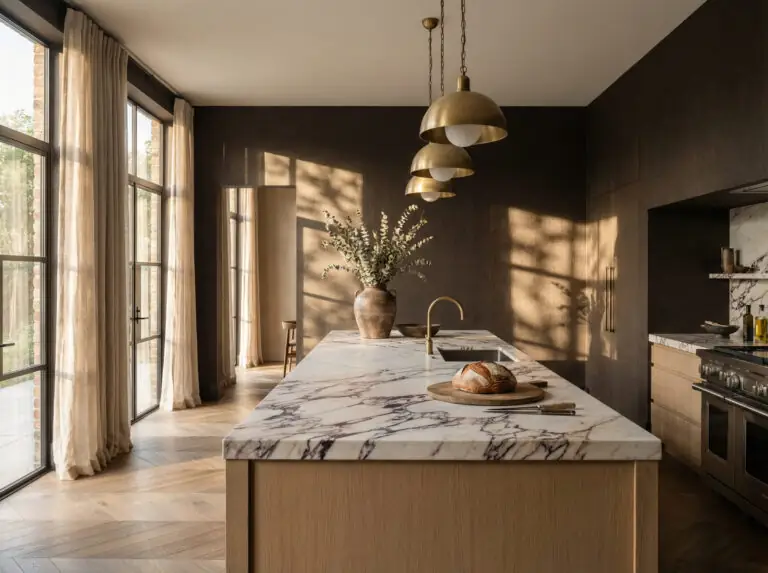
In 2026, the kitchen has officially shed its identity as a purely utilitarian workspace. It is the new living room—the emotional anchor of the home. As we move away from the clinical “all-white” era, we are welcoming a season defined by Quiet Luxury, tactile warmth, and immersive art.
If you are planning a renovation this year, the biggest shift you need to know is this: Texture is the new color. The flat, printed wallpapers of the past are being replaced by surfaces that beg to be touched—faux-linens, embossed grasses, and hyper-realistic mineral effects.
Whether you are looking for a washable backsplash alternative or a dramatic “wallscape” for your dining nook, this comprehensive guide covers everything from the latest aesthetic shifts to the technical specifications of durable vinyl.
📋 Quick Summary: Top Kitchen Wallpaper Trends 2026
(Updating your whole home? Don’t miss our forecast on Kitchen Cabinet Color Trends and Kitchen Flooring Trends to ensure your materials match perfectly.)
The Core Palette of 2026: Warmth Returns
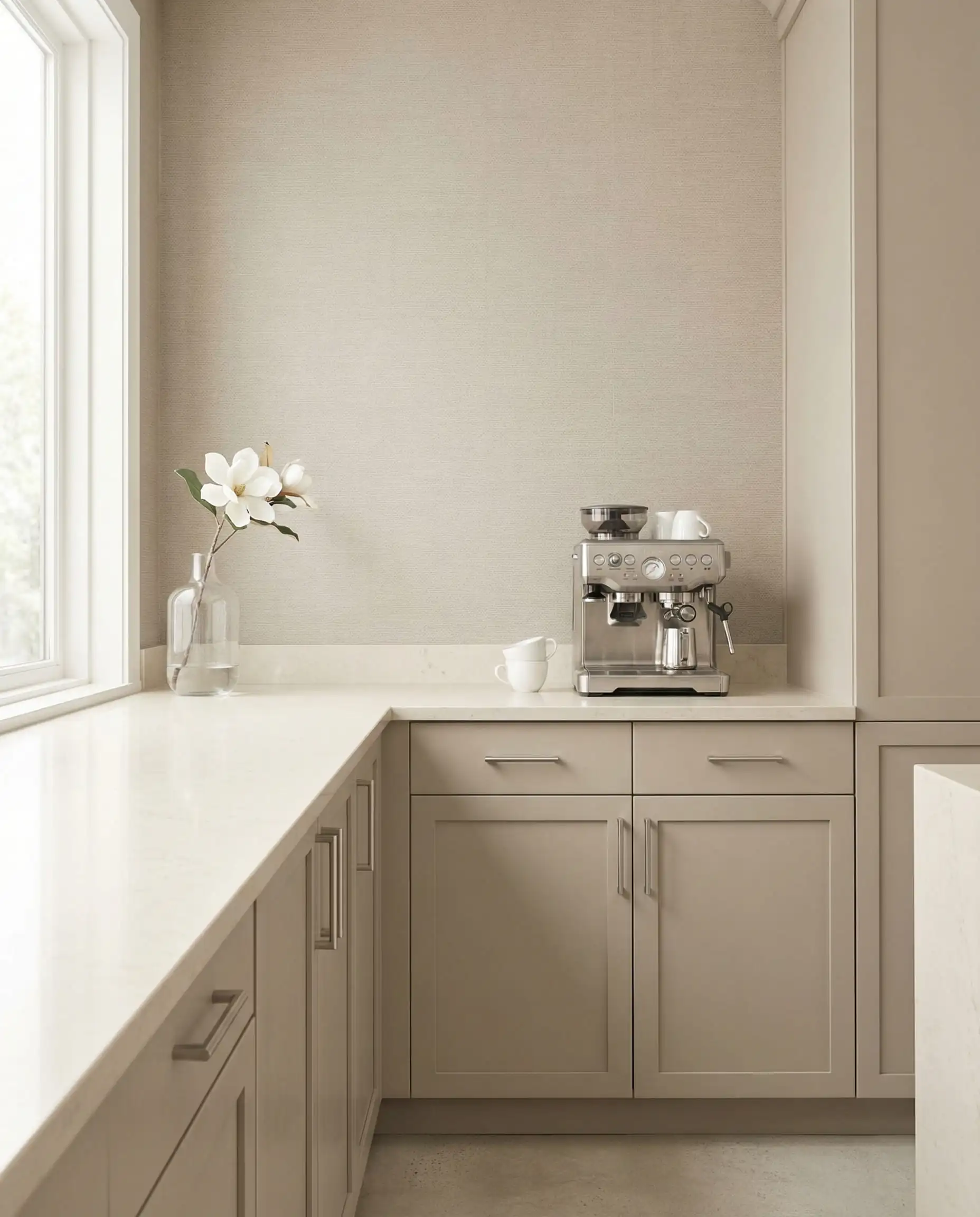
The “grey era” is officially over. In 2026, kitchen design is being dominated by what designers are calling “Cashmere Interiors”—spaces that feel soft, expensive, and incredibly warm. This shift isn’t just aesthetic; it’s a psychological response to the desire for comfort in our most-used rooms.
1. The “New” Neutral: Brown is Back
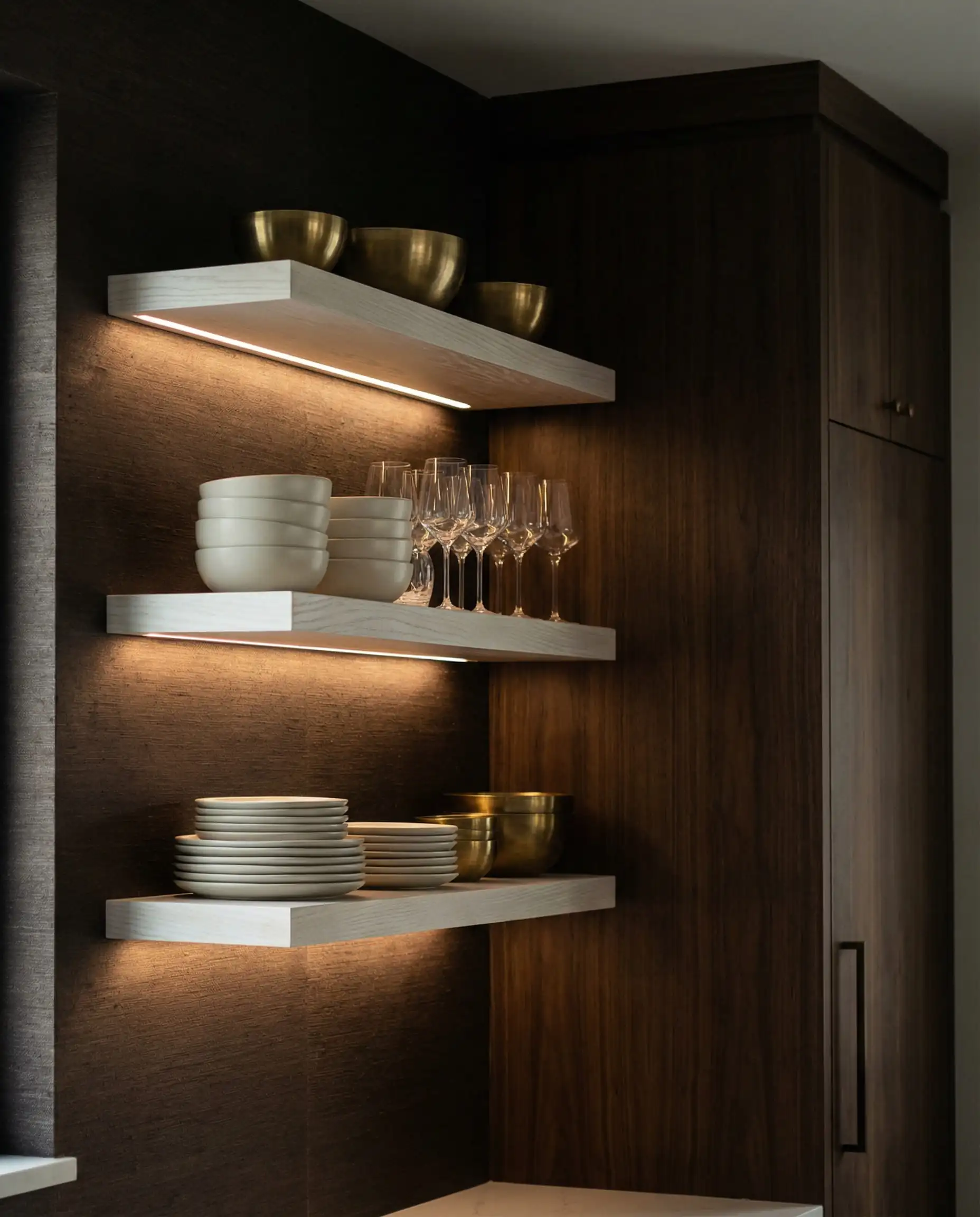
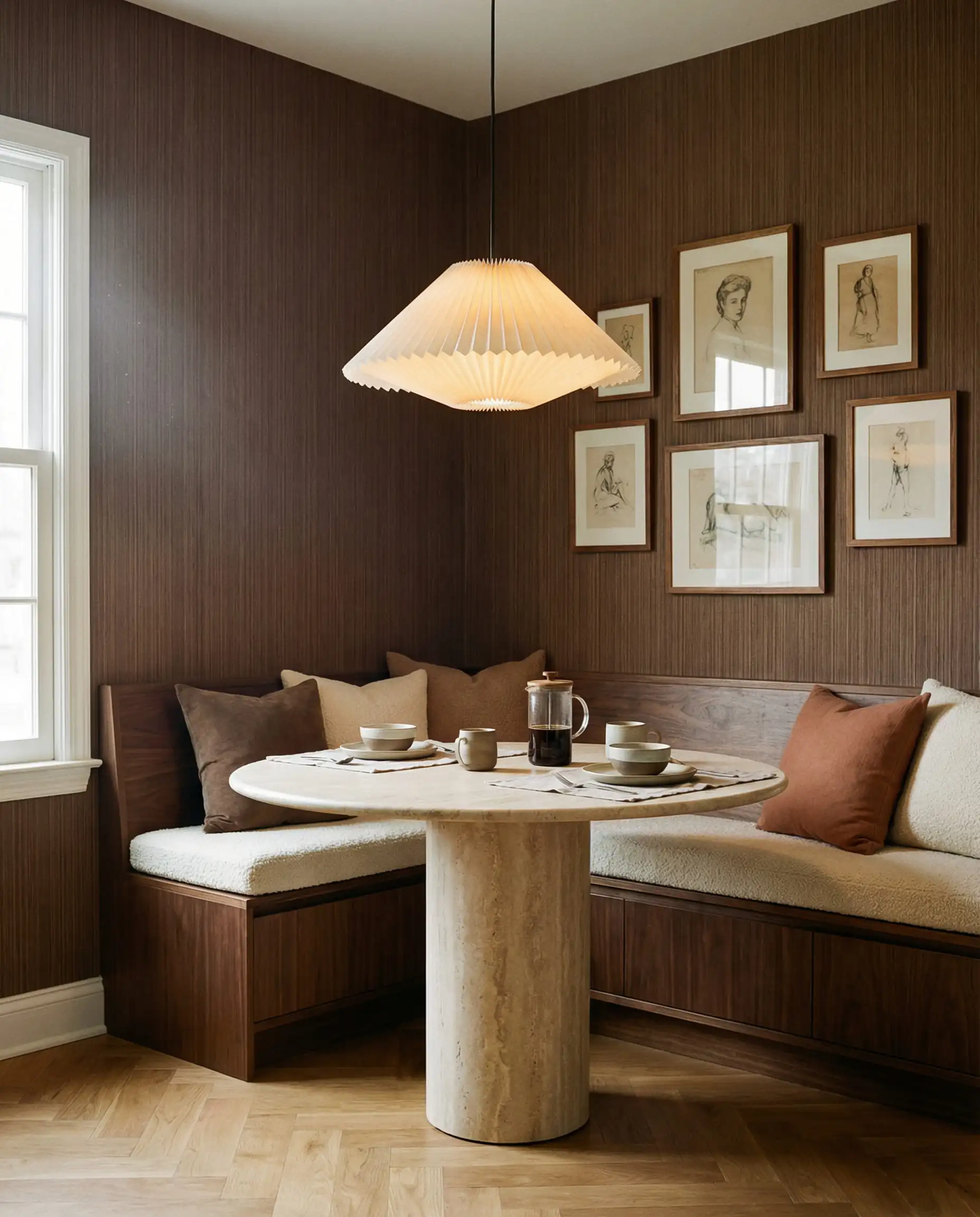
If there is one color defining 2026, it is brown. But forget the heavy 70s shag-carpet brown; this year’s palette is delicious and edible. We are seeing a massive surge in Mocha, Truffle, Espresso, and Umber.
These rich earth tones ground the kitchen and provide a sophisticated contrast to the light oak and walnut cabinetry currently trending.
2. Softened Greens & Terracotta
Biophilic design (design that connects us to nature) is still huge, but it is maturing. The bright “jungle greens” of previous years are drying out and becoming more subdued.
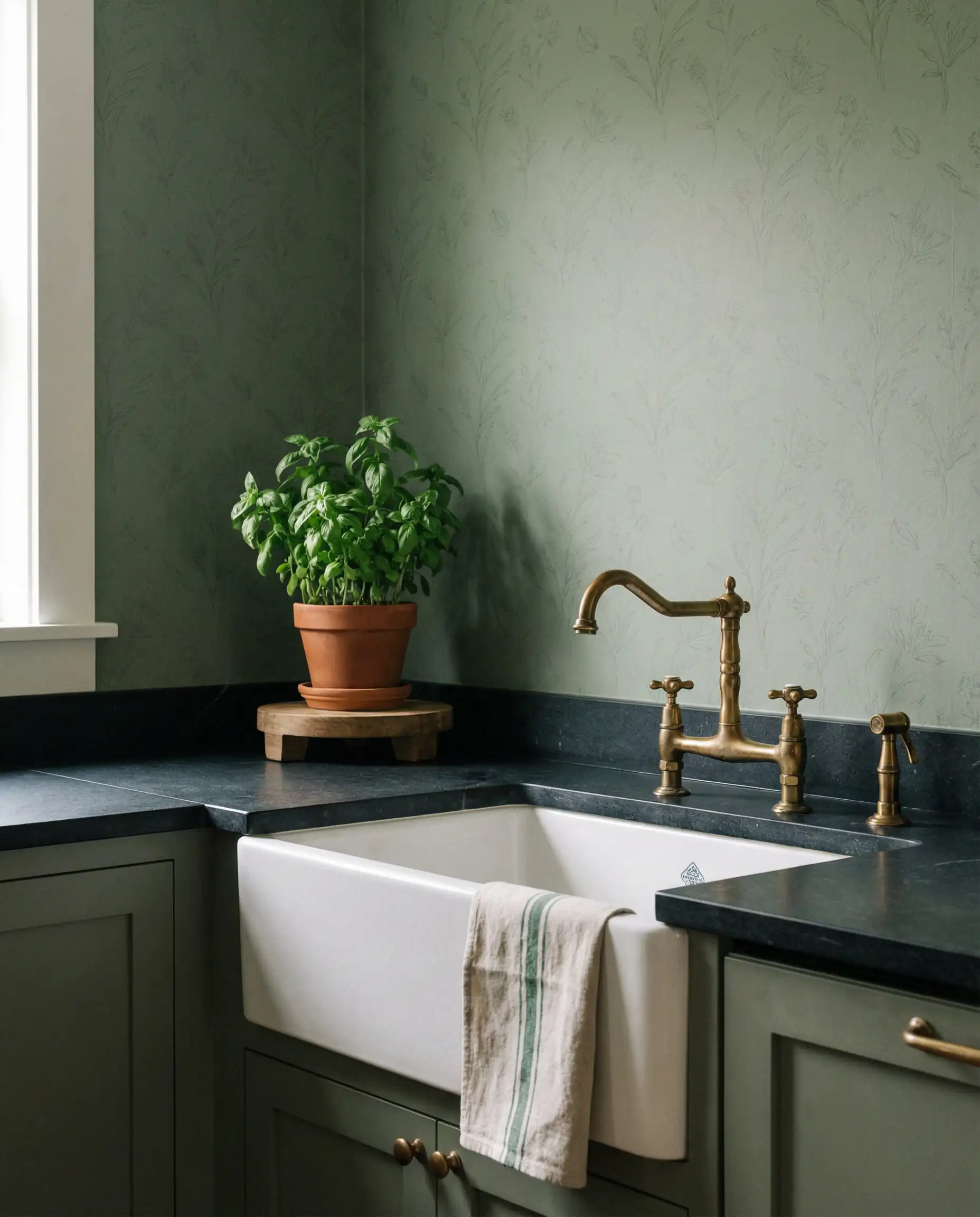
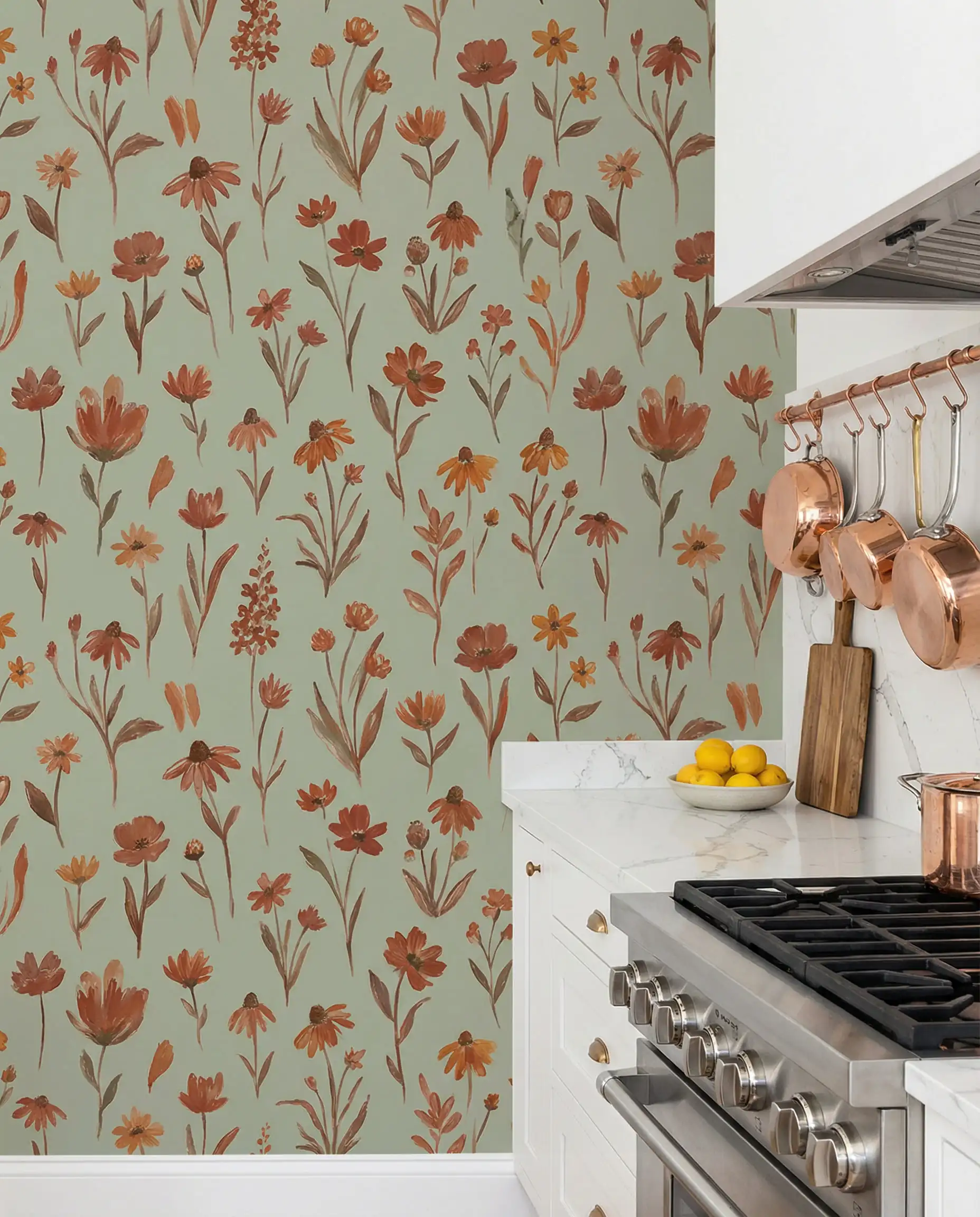
(For more on how to coordinate these colors with your joinery, see our guide on Kitchen Wall Paint Color Trends.)
Top Textures & Patterns for 2026
In 2026, “Quiet Luxury” reigns supreme. This trend is less about showing off bold patterns and more about the quality of the surface. We are moving away from visual flatness toward tactile complexity.
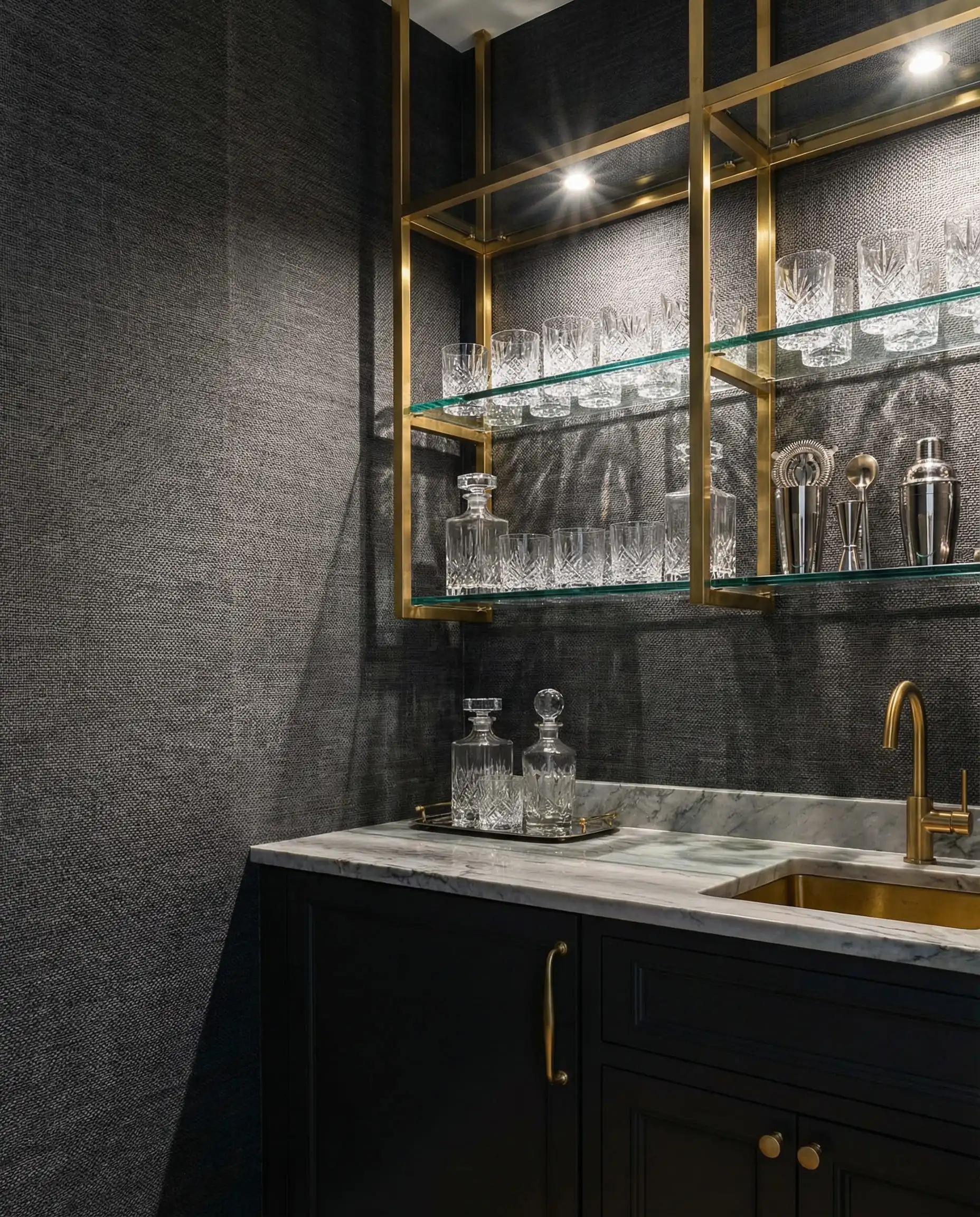
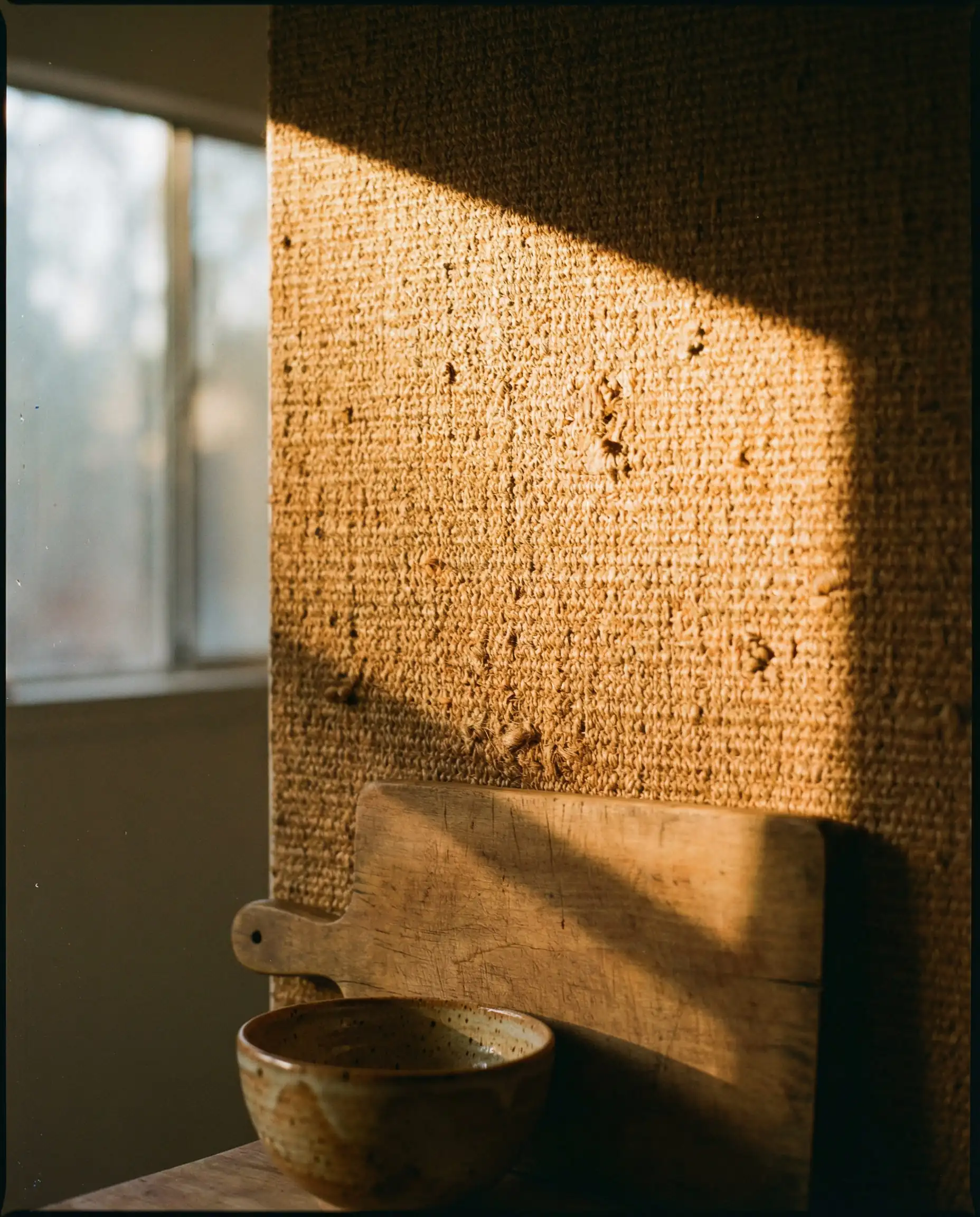
3. “Quiet Luxury” Textures (Faux-Linen & Grasscloth)
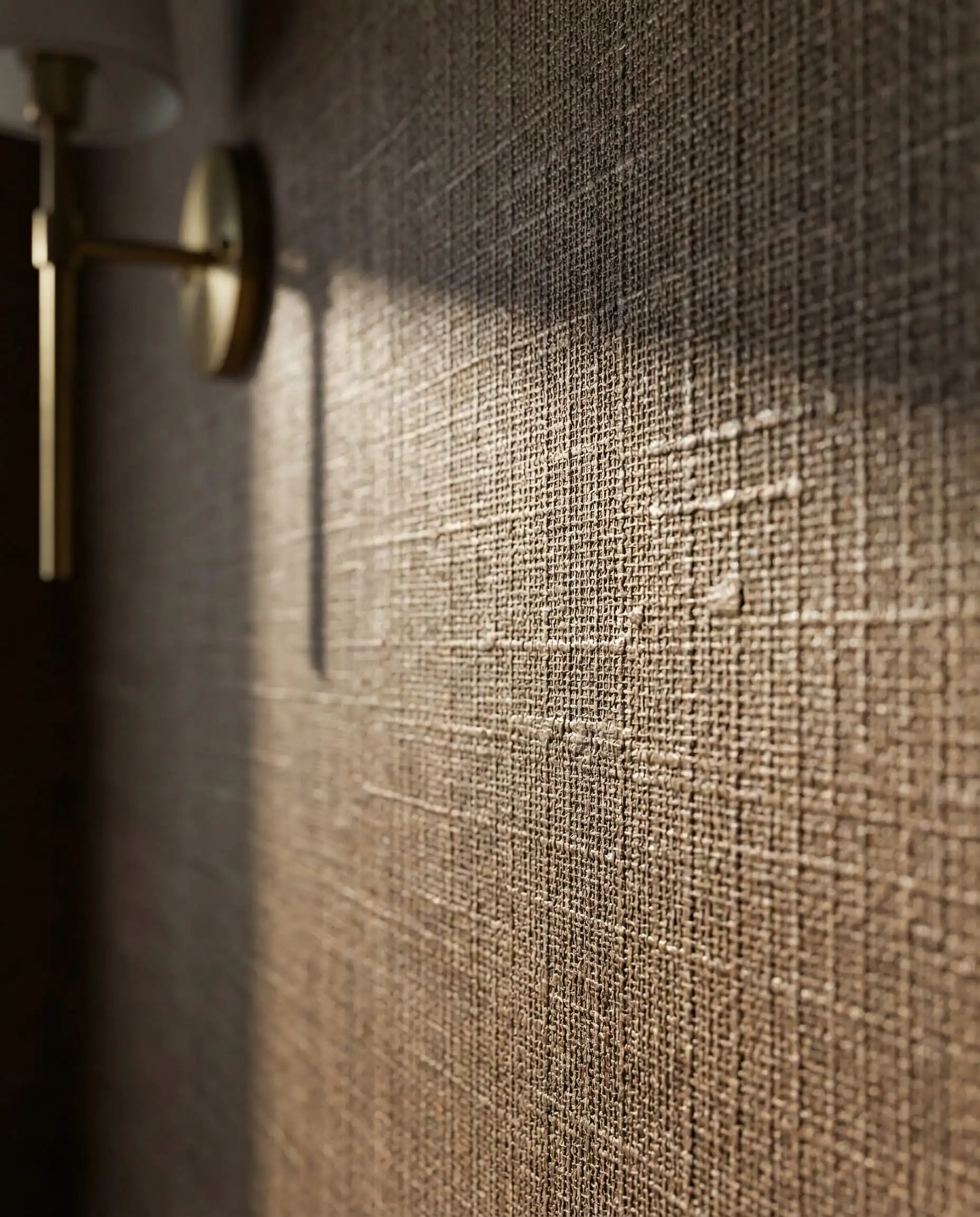
The most requested style for luxury kitchens this year isn’t a print at all—it’s a texture. Homeowners are flocking to wallpapers that mimic woven linen, sisal, raffia, and silk.
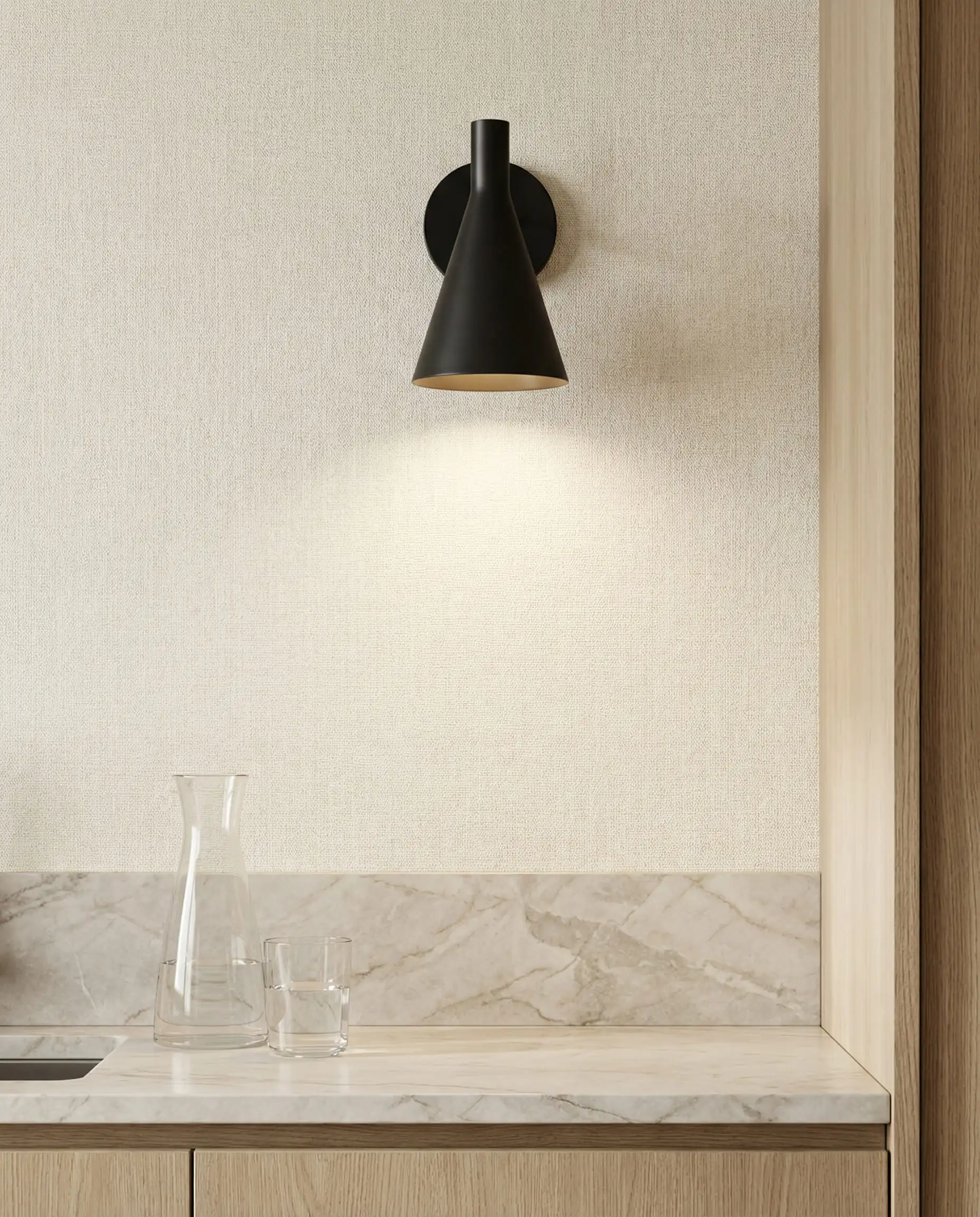
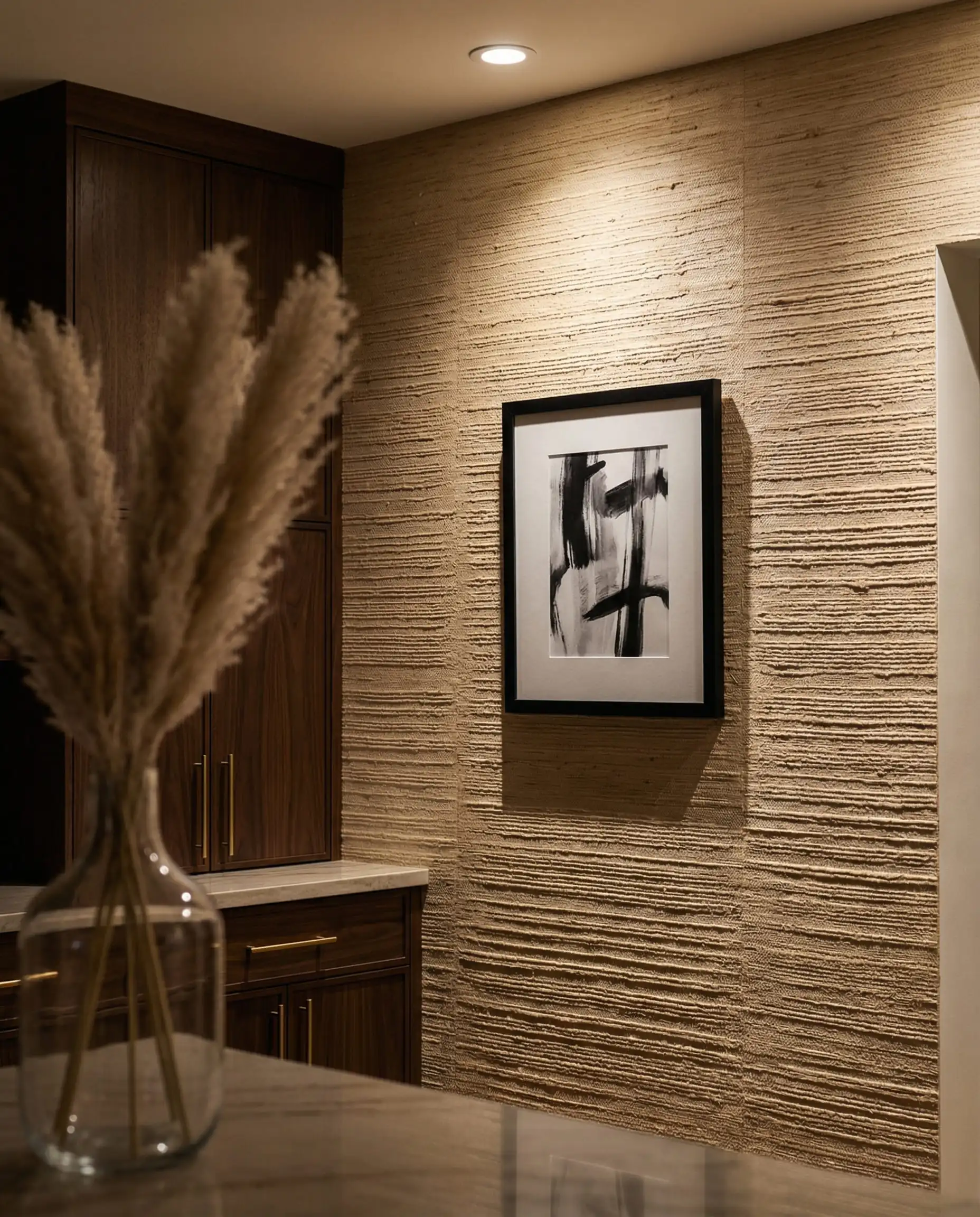
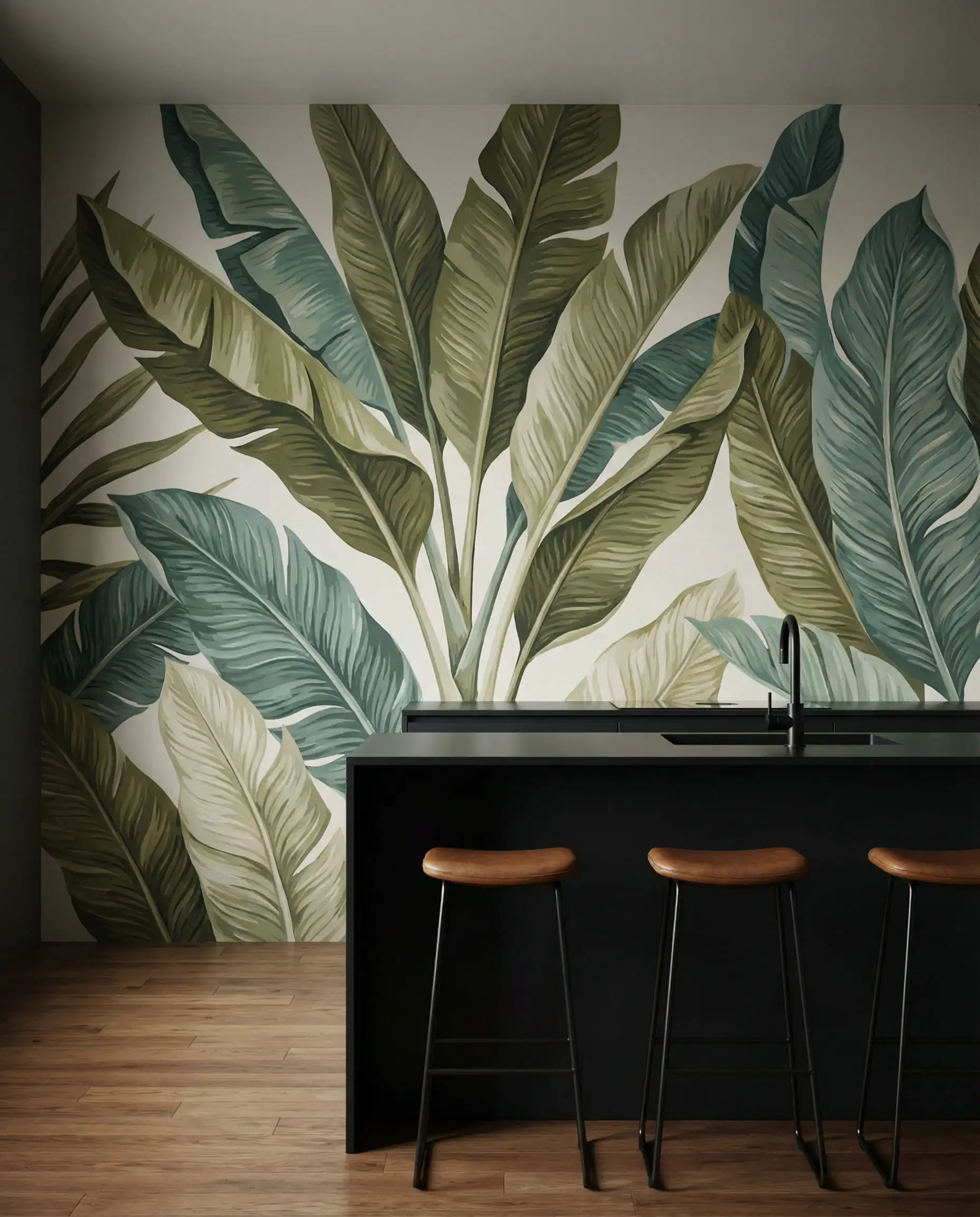
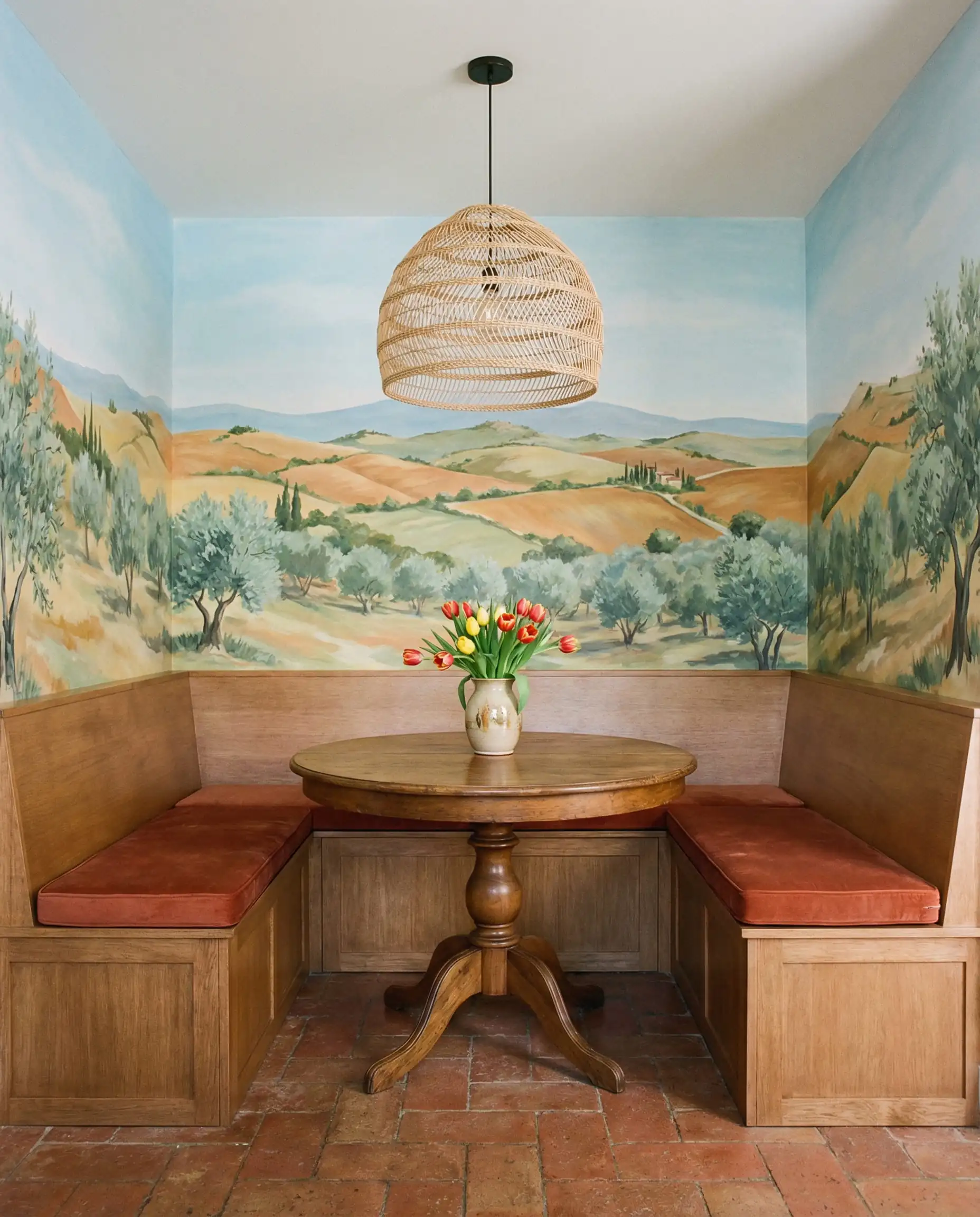
4. The Immersive “Wallscape” (Scenic Murals)
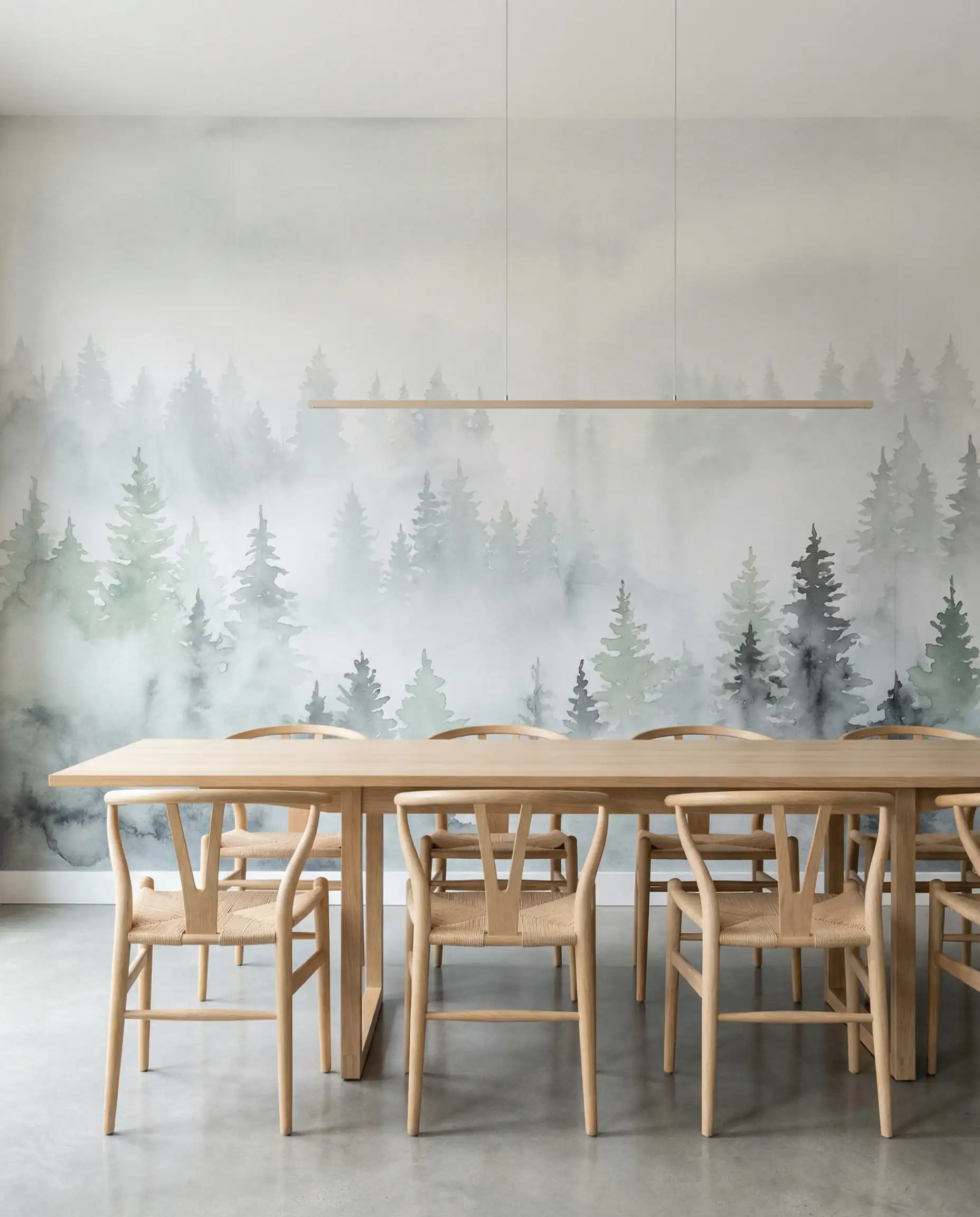
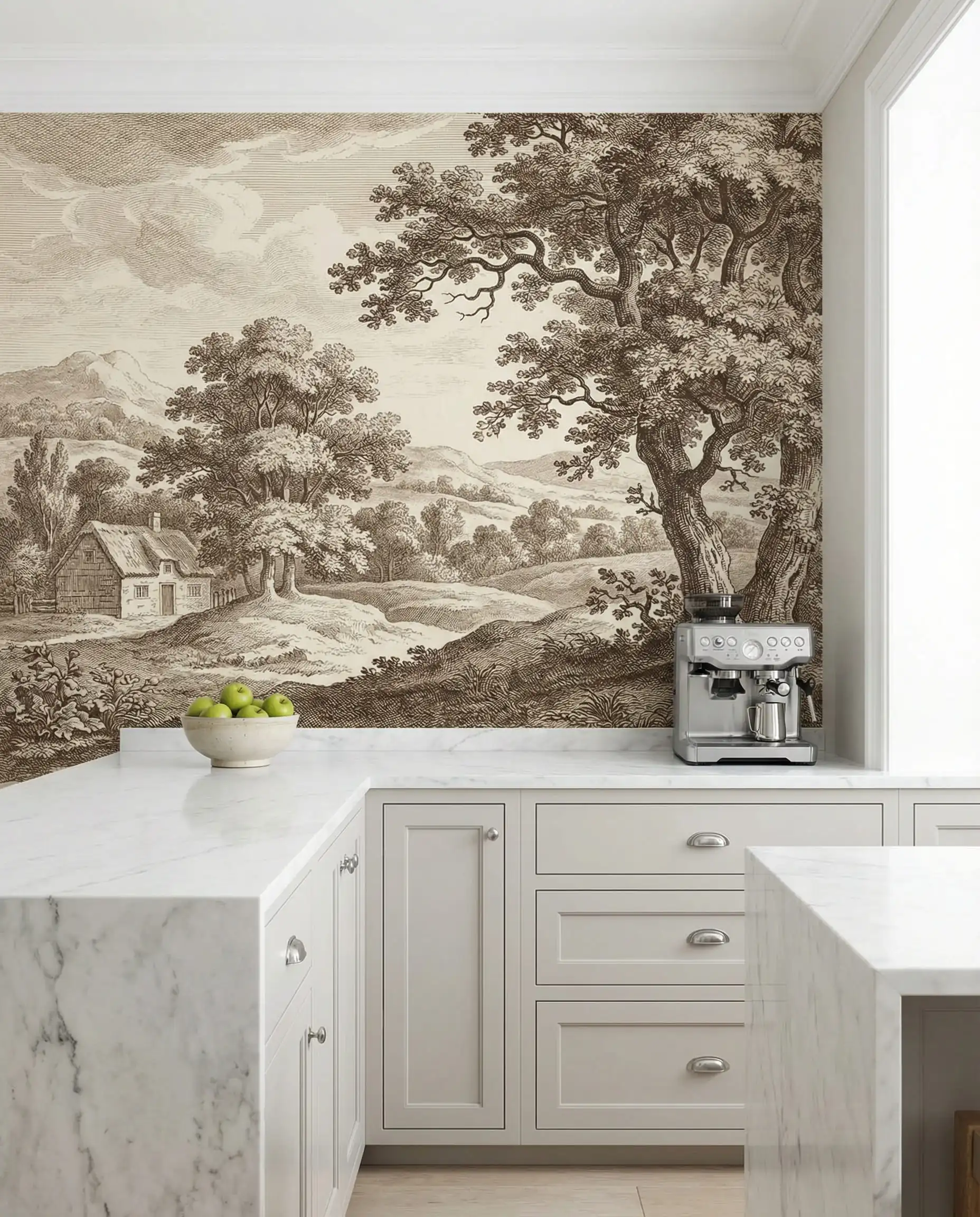
The “Feature Wall” has evolved. Instead of a small repeating pattern (like a stamp), 2026 favors the Panoramic Mural.
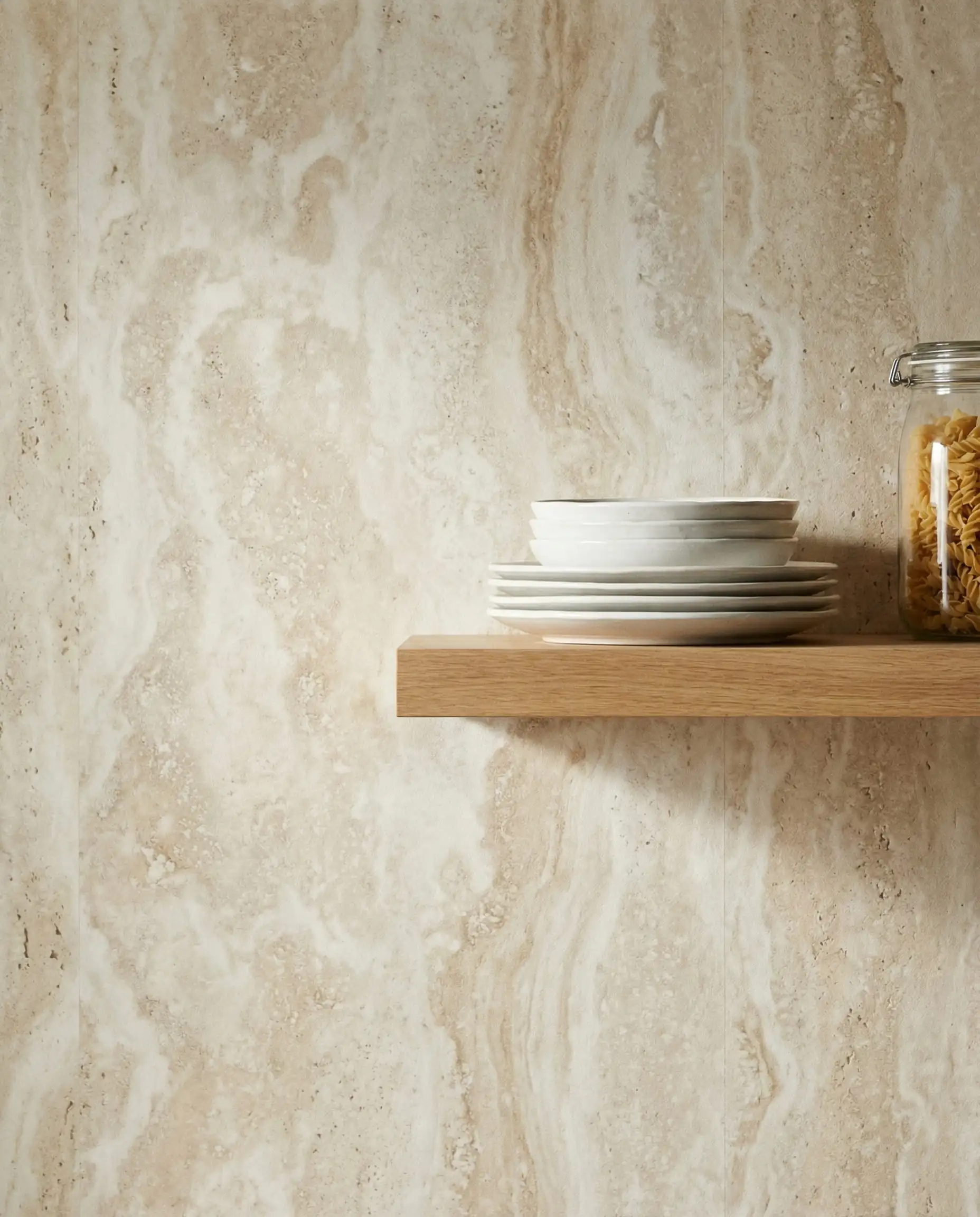
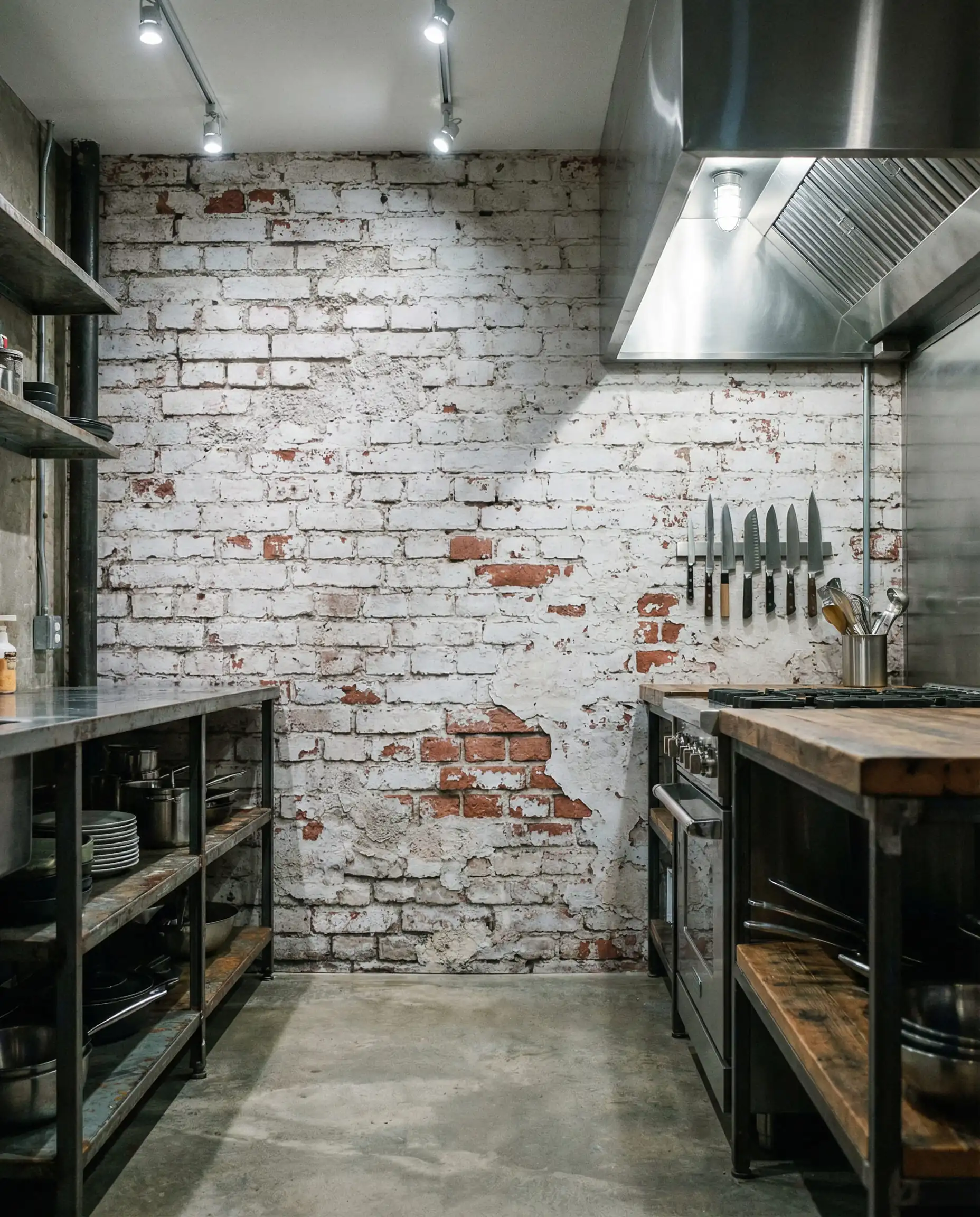
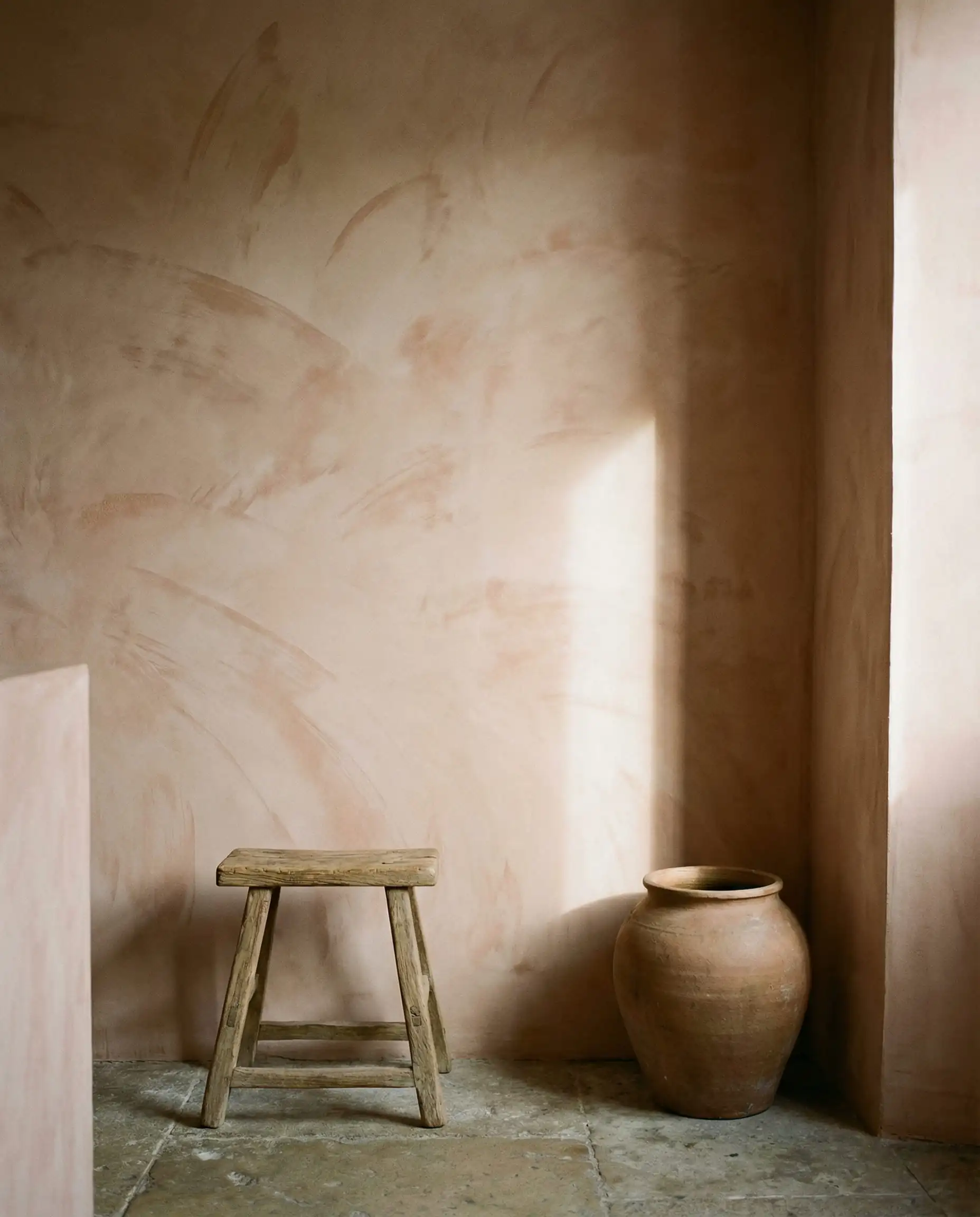
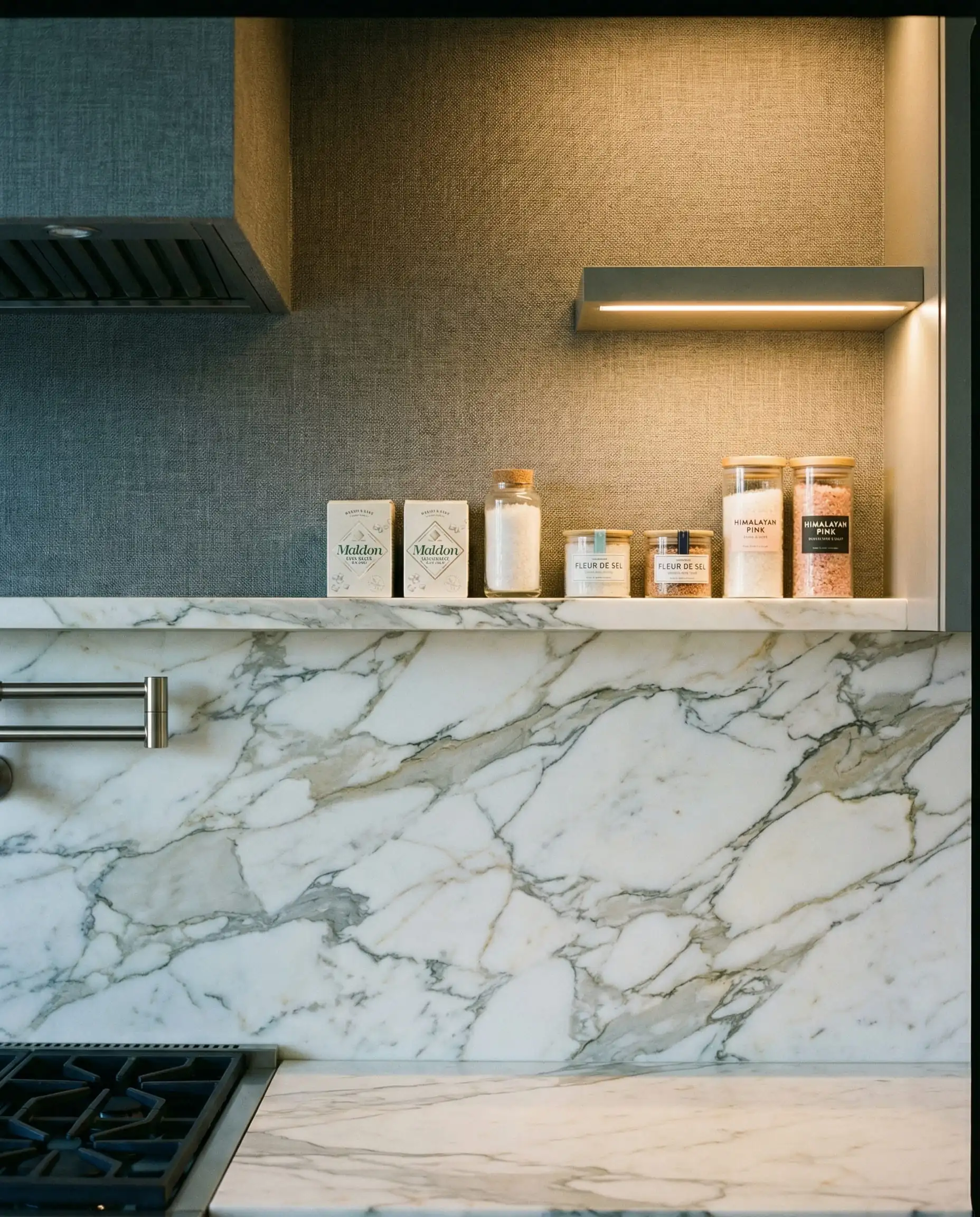
5. Trompe-l’œil Stone & Mineral
Why pay for a marble slab backsplash when you can wallpaper it? Advances in digital printing have made “Faux-Surface” wallpapers incredibly convincing.
(Looking for the real thing? Compare these looks with our Kitchen Backsplash Trends report.)
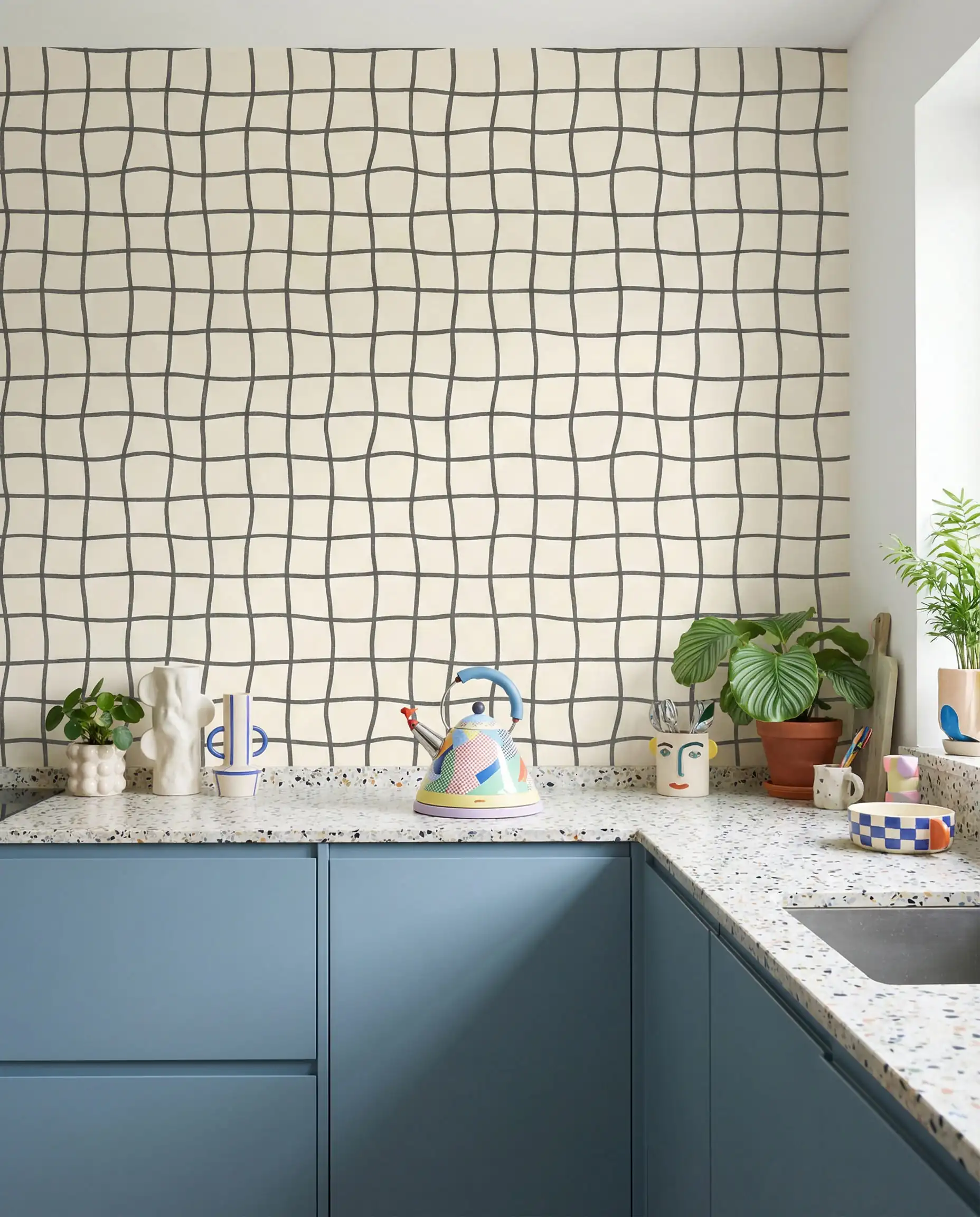
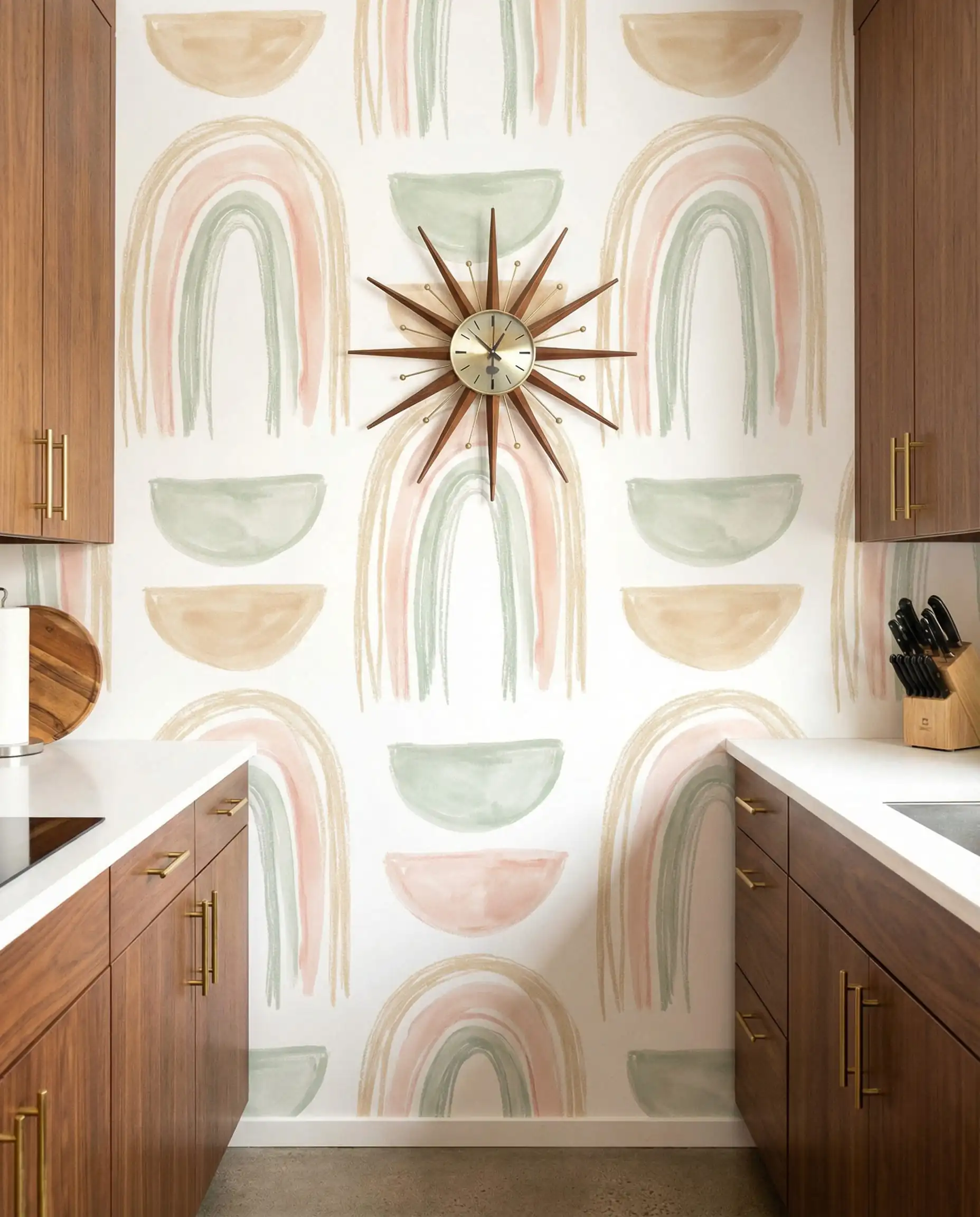
6. Softened Geometrics
Geometric patterns are timeless, but the sharp, aggressive triangles of the 2010s are gone. In 2026, we are seeing “Soft Abstraction.”
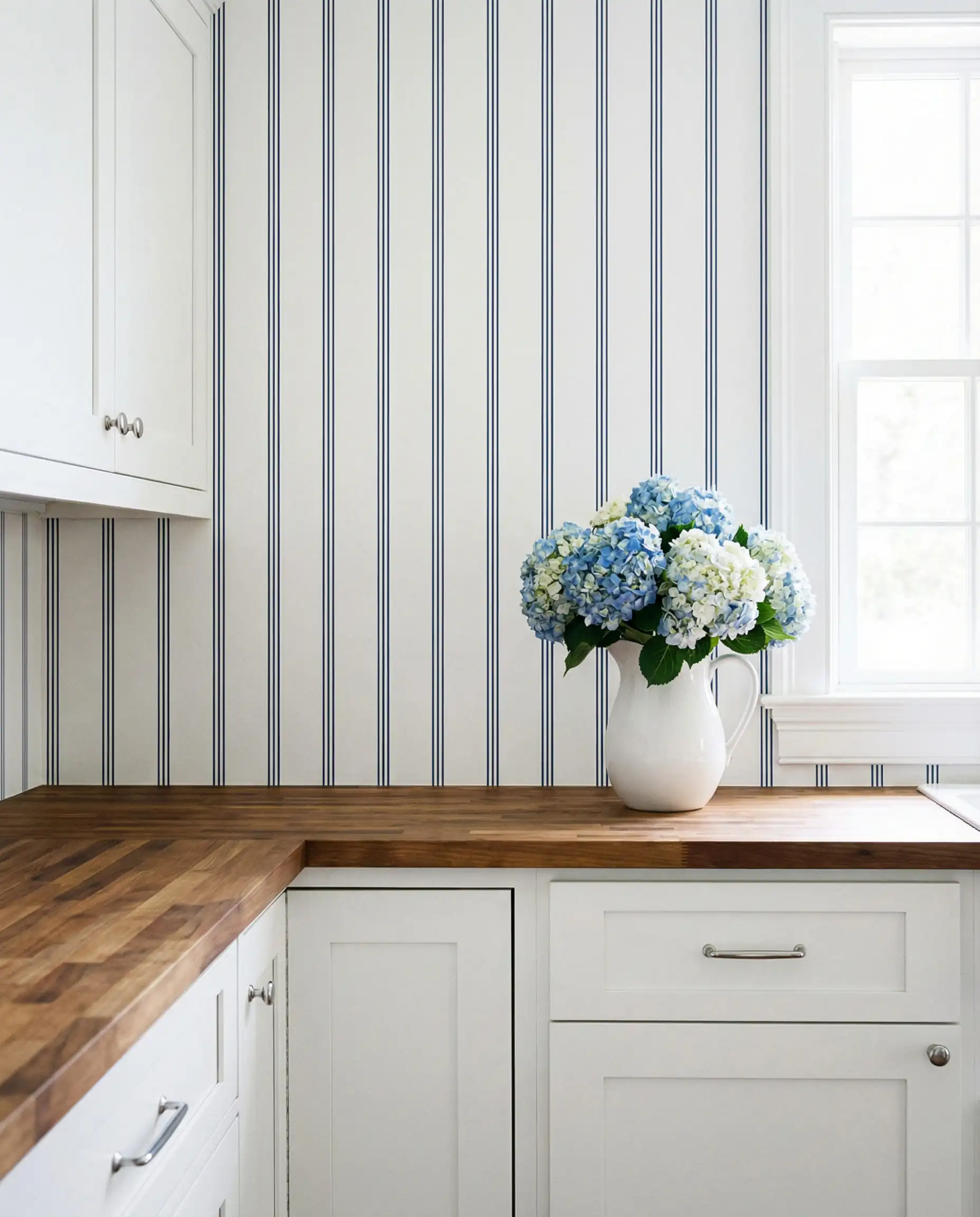
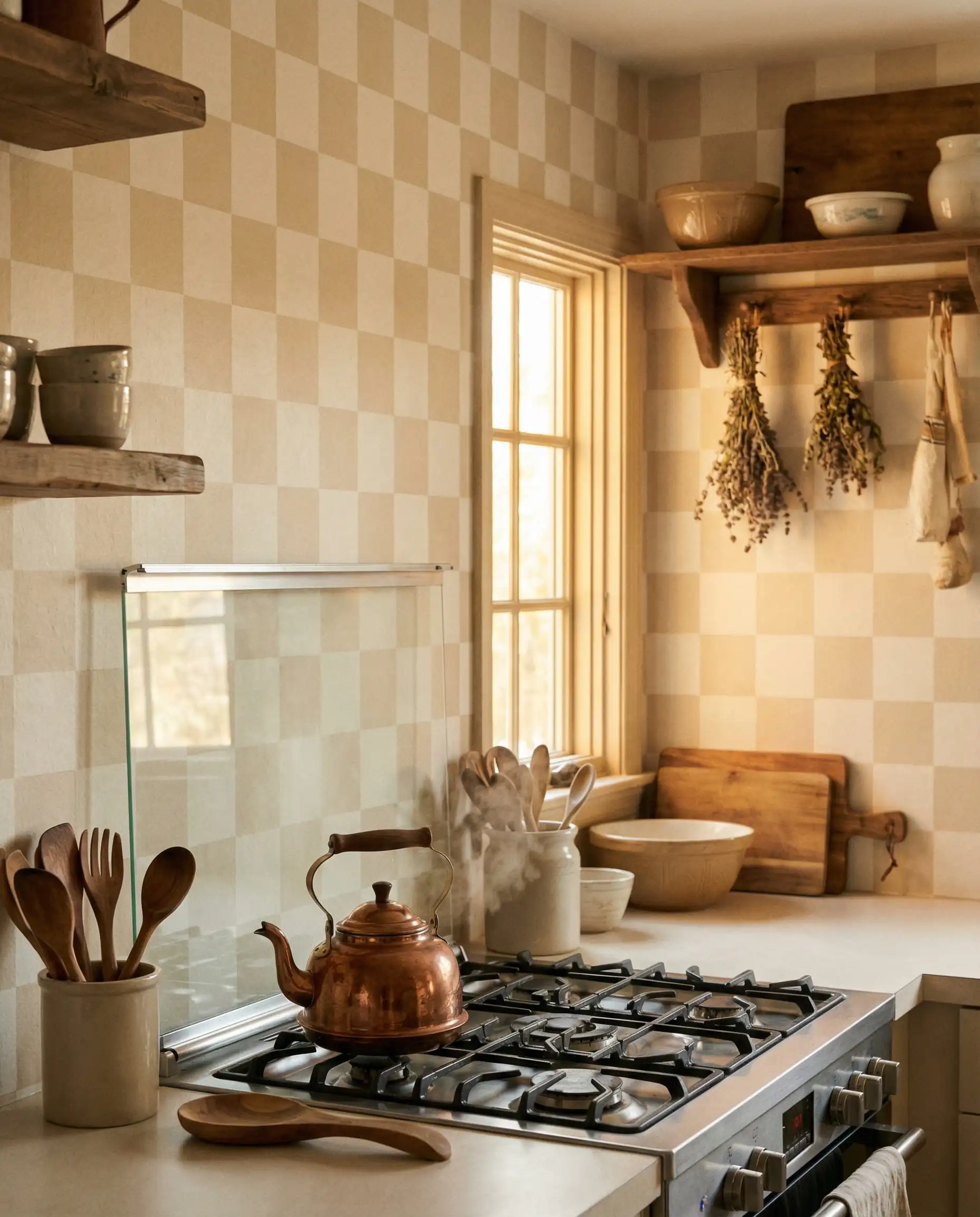
7. Stripes & Checks 2.0
The “Cottagecore” influence lingers but has been refined into a crisper, more tailored look.
(Choosing the right door to match these classic styles is crucial. Check our Interior Door Trends 2026 for the perfect pairing.)
Practical Expert Guide: Choosing the Right Material
This is the most critical section for your renovation success. Kitchens are “hostile environments” for paper—heat, steam, grease, and water are enemies of traditional wallpaper.
8. Vinyl vs. Non-Woven: What to Use Where?
To ensure your design lasts, you must match the material to the “Zone.”
| Zone | Risk Level | Recommended Material | Why? |
| The Splash Zone (Sink/Stove) | High | Solid Vinyl (Scrubbable) | It is essentially a plastic sheet. Grease sits on top and can be wiped off. It is impervious to water splashes. |
| The Prep Zone (Islands/Counters) | Medium | Vinyl-Coated Non-Woven | Durable and breathable. It handles humidity well but avoid harsh scrubbing with abrasive sponges. |
| The Dining Zone (Nooks/Open Walls) | Low | Standard Non-Woven / Cellulose | You can prioritize texture and matte finish here. This is the place for those eco-friendly papers that breathe. |
Never use real paper or unsealed grasscloth near a stove. Not only will it stain immediately from tomato sauce splatters, but it can also absorb oils over time, becoming a fire hazard.
Expert Warning
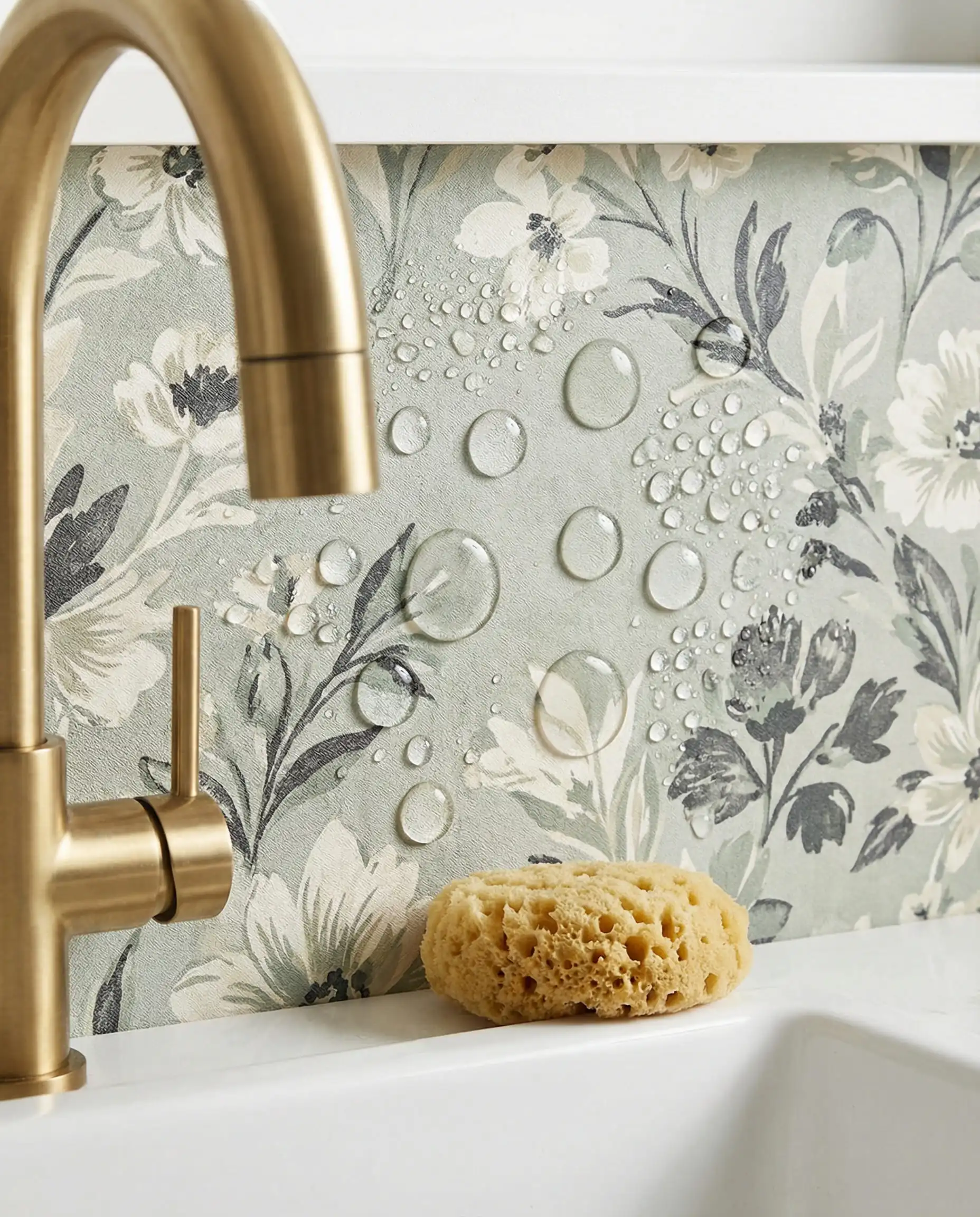
9. The Rise of “Performance” Wallpaper
Manufacturers have responded to the kitchen trend by creating “Contract Grade” residential wallpapers.
How to Style Kitchen Wallpaper (2026 Masterclass)
You have picked the pattern. Now, how do you apply it for that magazine-worthy look?
10. The “Wallpaper Drenching” Technique
“Color Drenching” (painting walls, trim, and ceiling the same color) was a massive trend in 2025. In 2026, we are applying this to wallpaper.
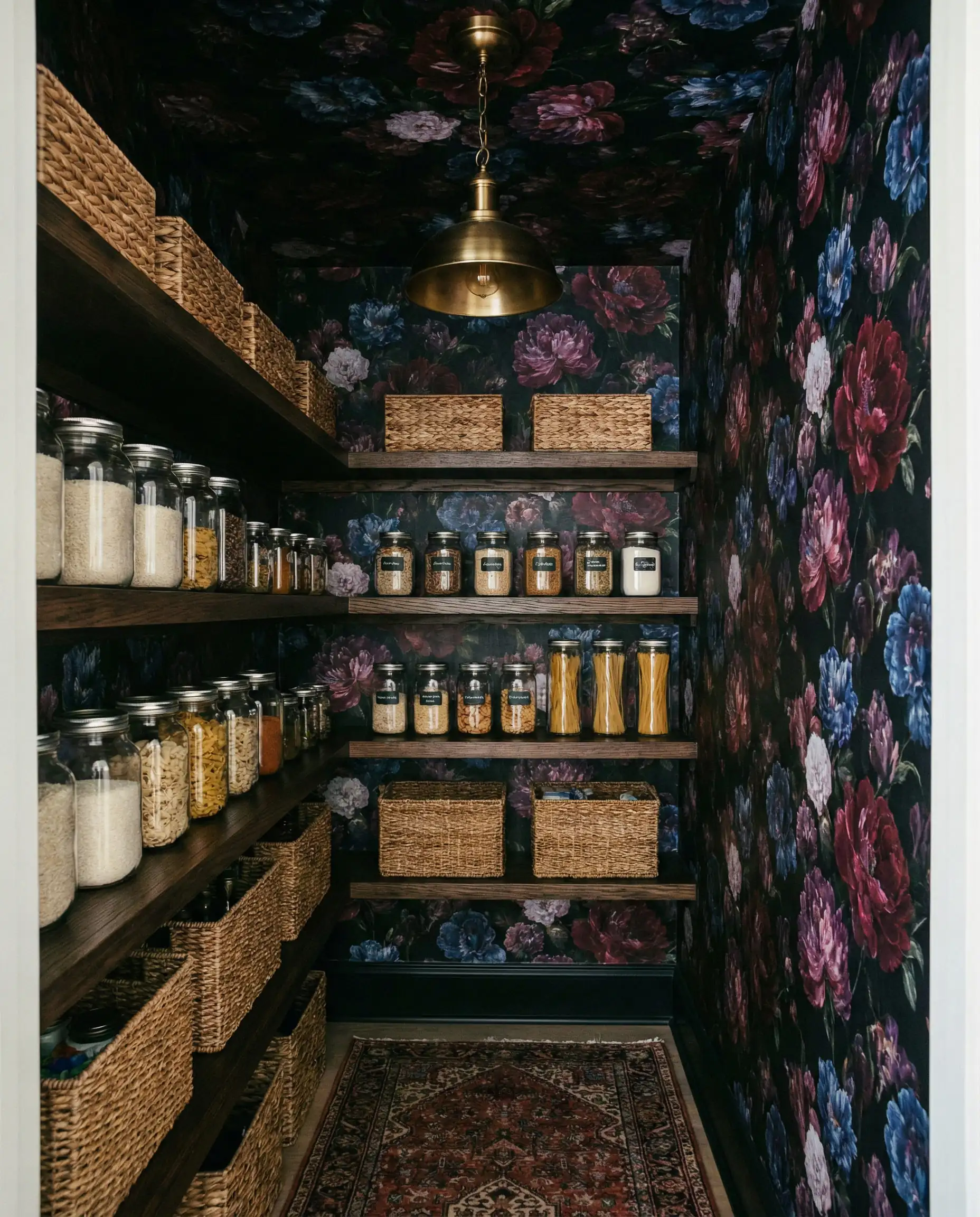
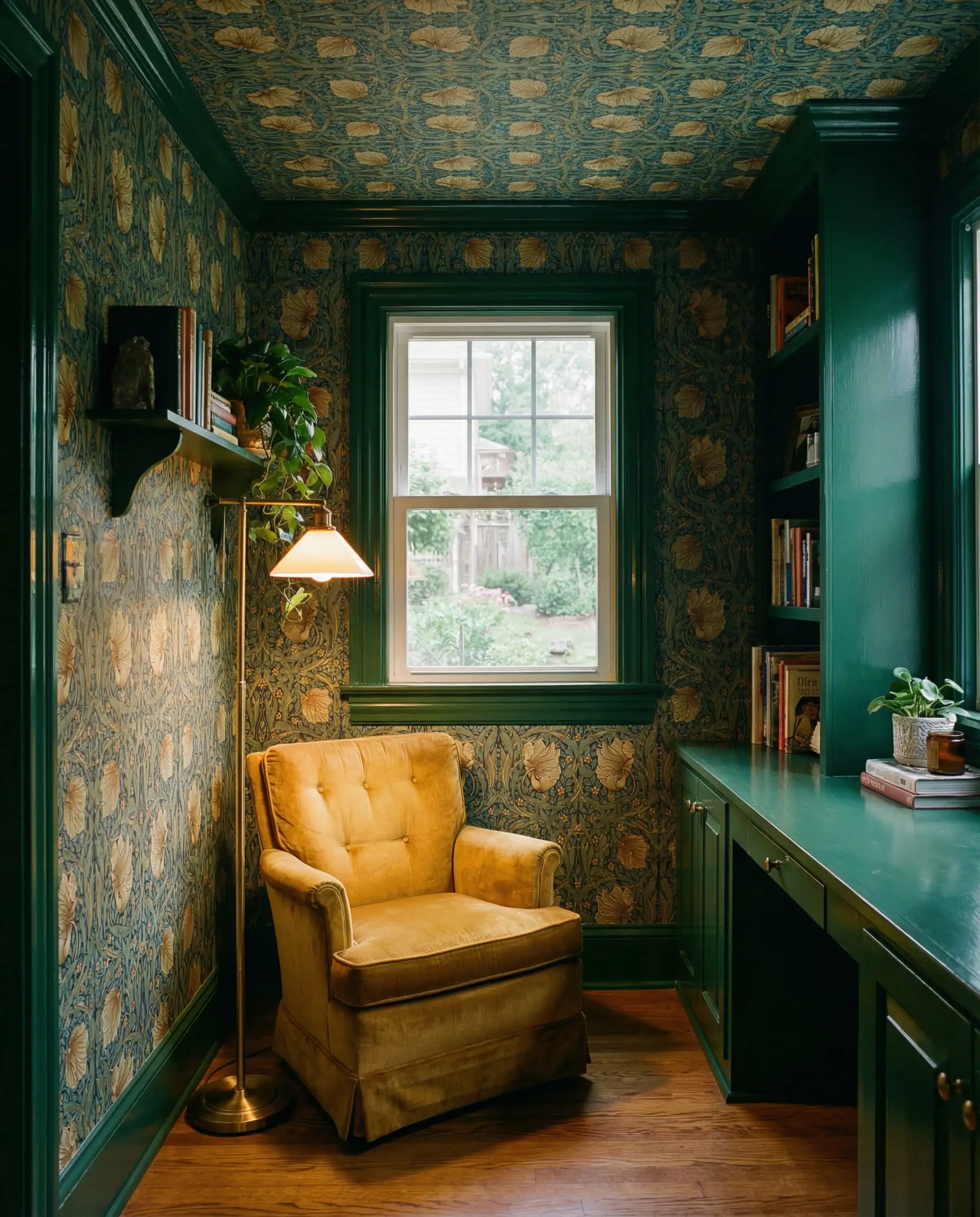
The “Fifth Wall”: Ceiling Wallpaper
If you have white cabinets and white walls, the ceiling is your canvas.
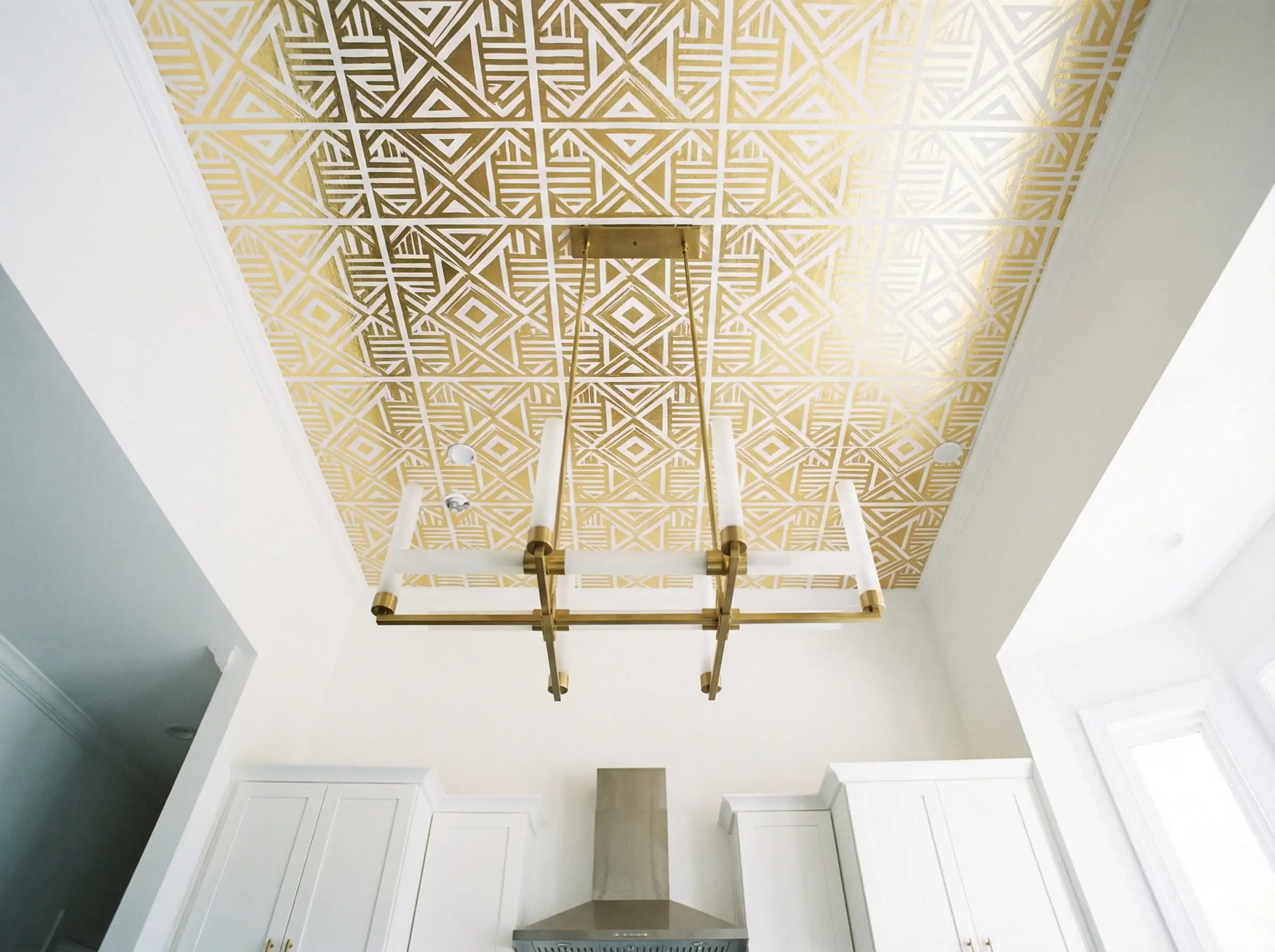
(For other ways to treat your ceiling, read about Ceiling Design Trends.)
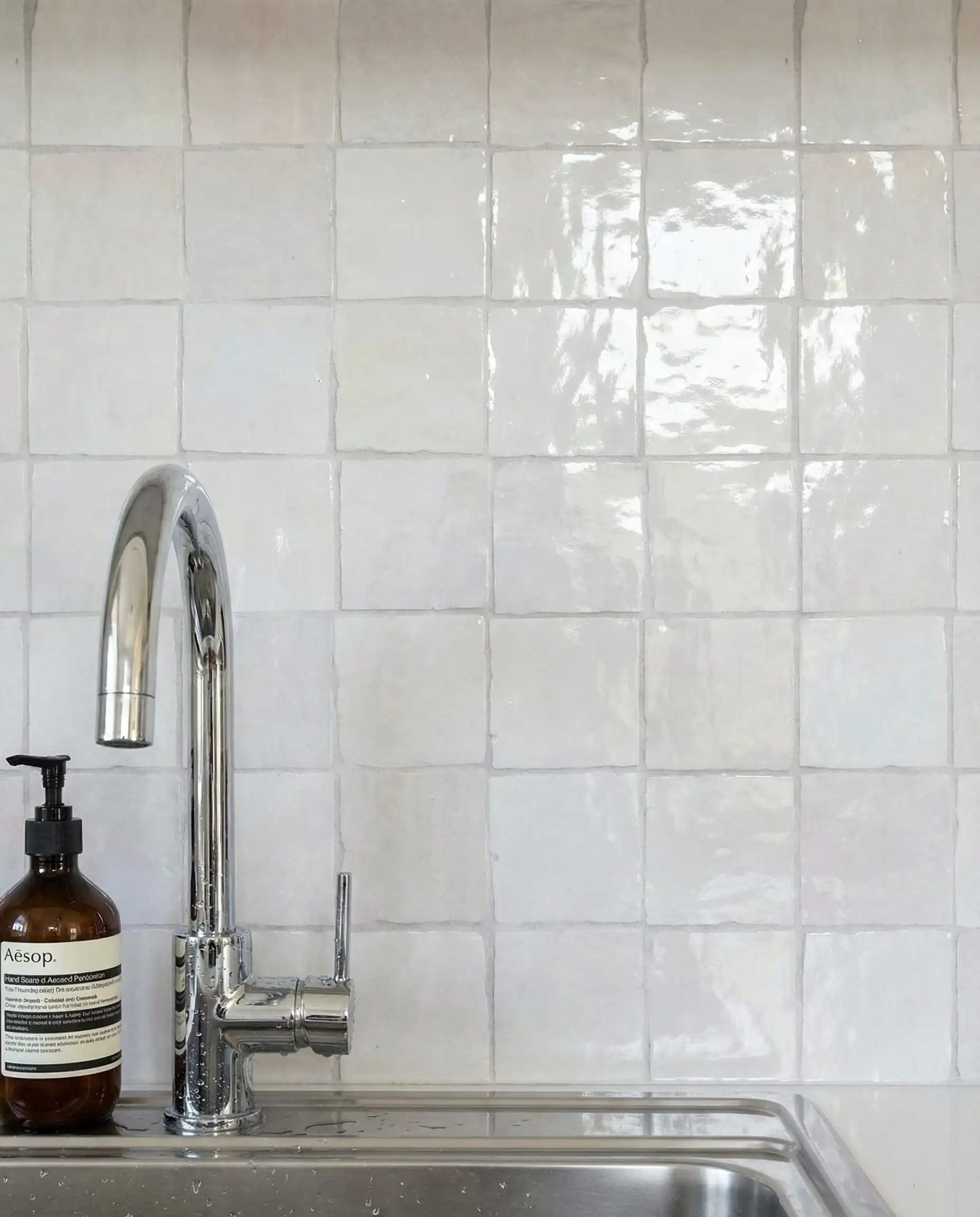
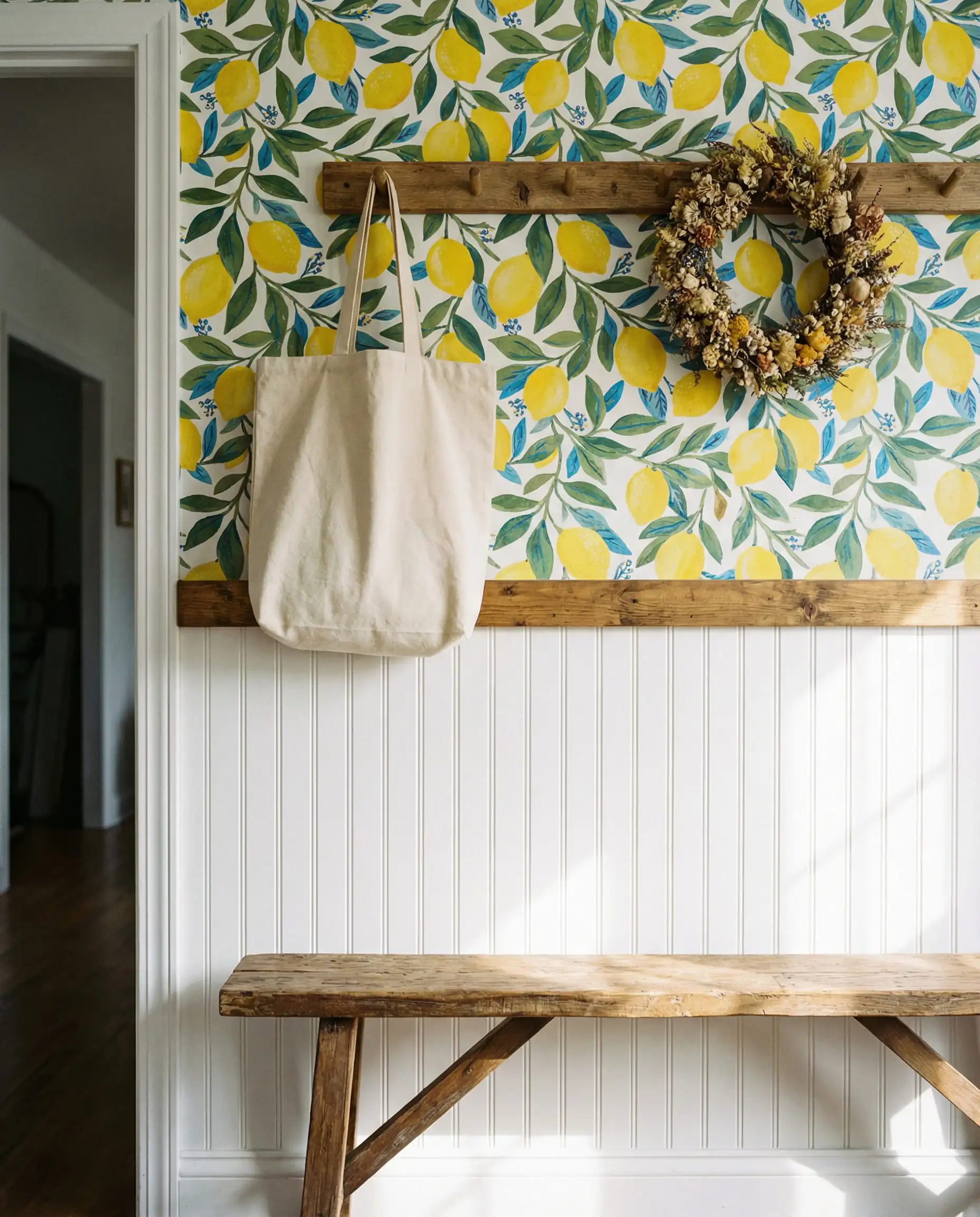
Mixing Wallpaper with Tile & Stone
You don’t have to choose between tile and wallpaper. The most stylish 2026 kitchens use both.
(Need flooring ideas to ground this look? Our Flooring Trends 2026 guide covers the best stone and wood options to complement bold walls.)
Technical Guide: Lighting & Wallpaper Interaction
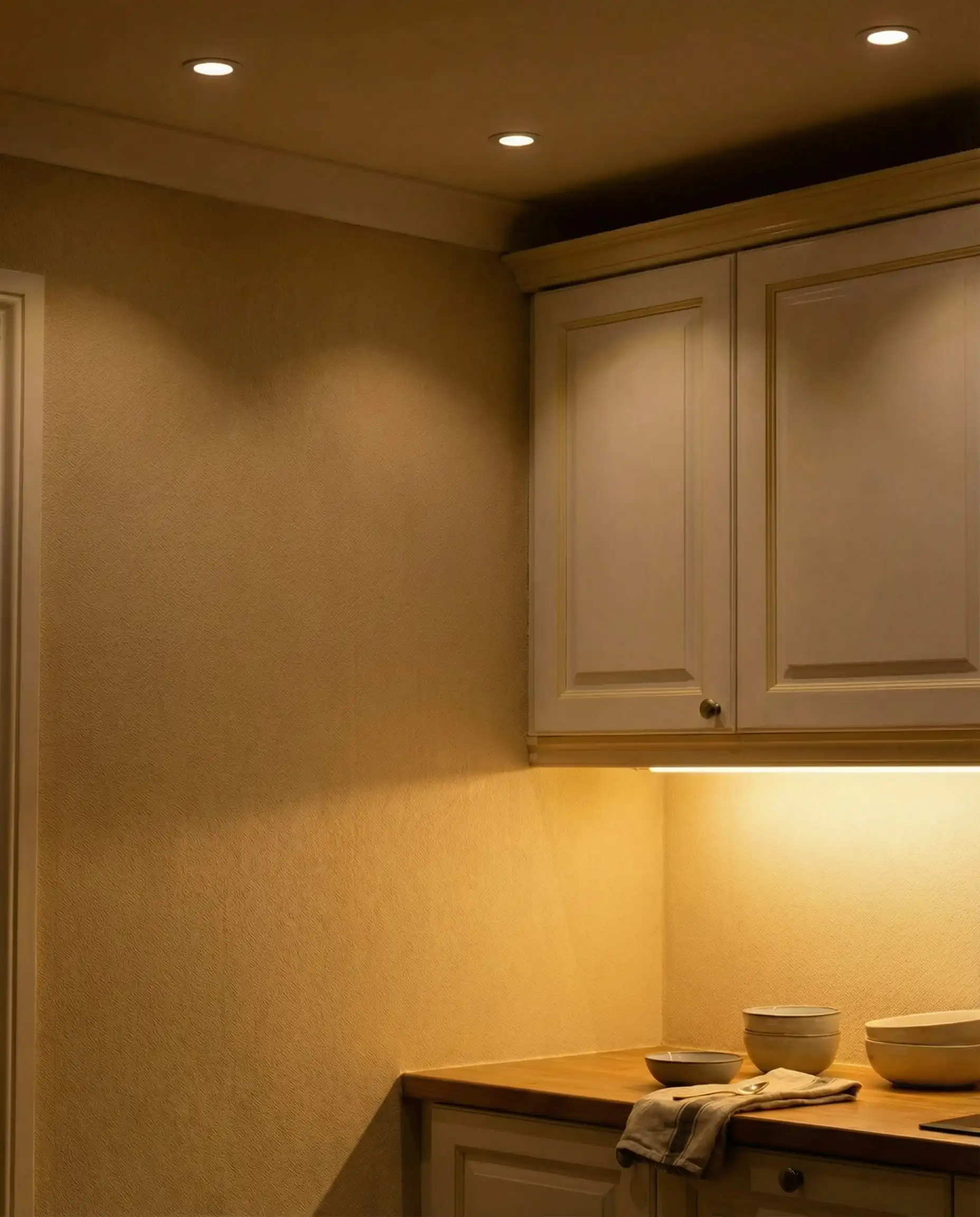
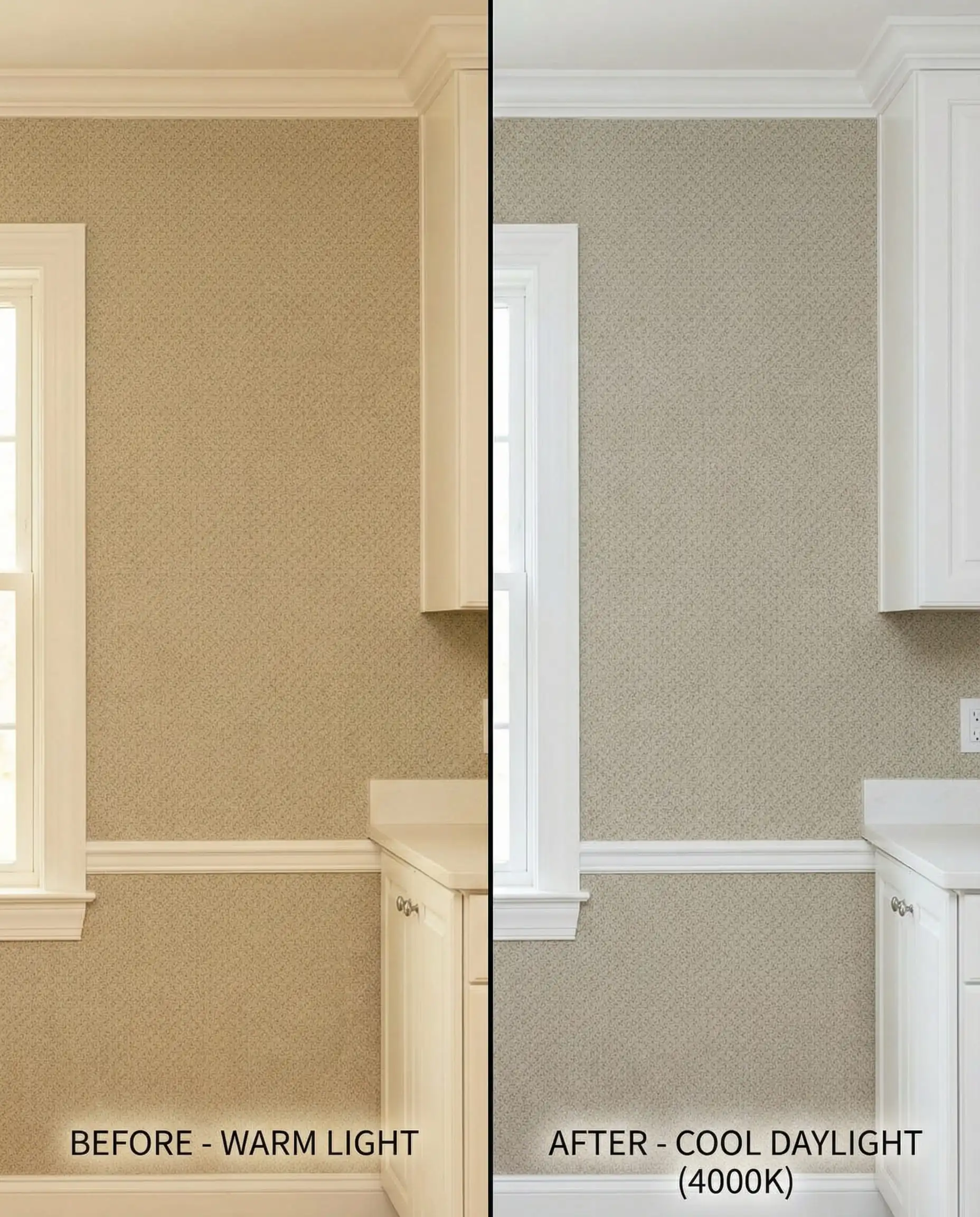
One of the most common mistakes DIY renovators make is choosing a wallpaper without considering their kitchen lighting temperature. The Kelvin (K) rating of your bulbs will drastically change how your wallpaper looks.
The “Metamerism” Check
Metamerism is the phenomenon where colors look different under different light sources.
(For a deeper dive into selecting the right bulbs, read our Kitchen Lighting Trends guide.)
Scaling Your Pattern: Small vs. Large Kitchens
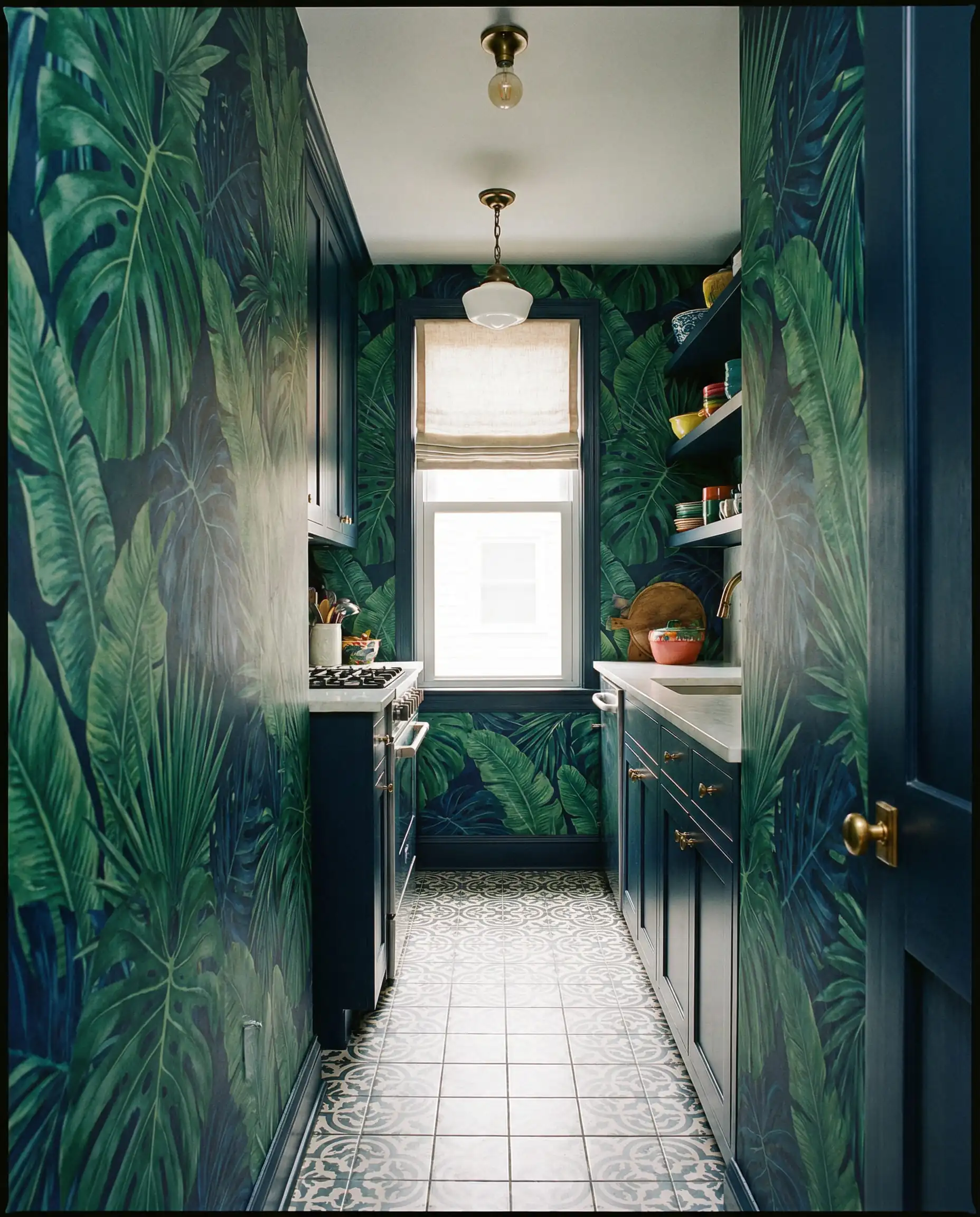
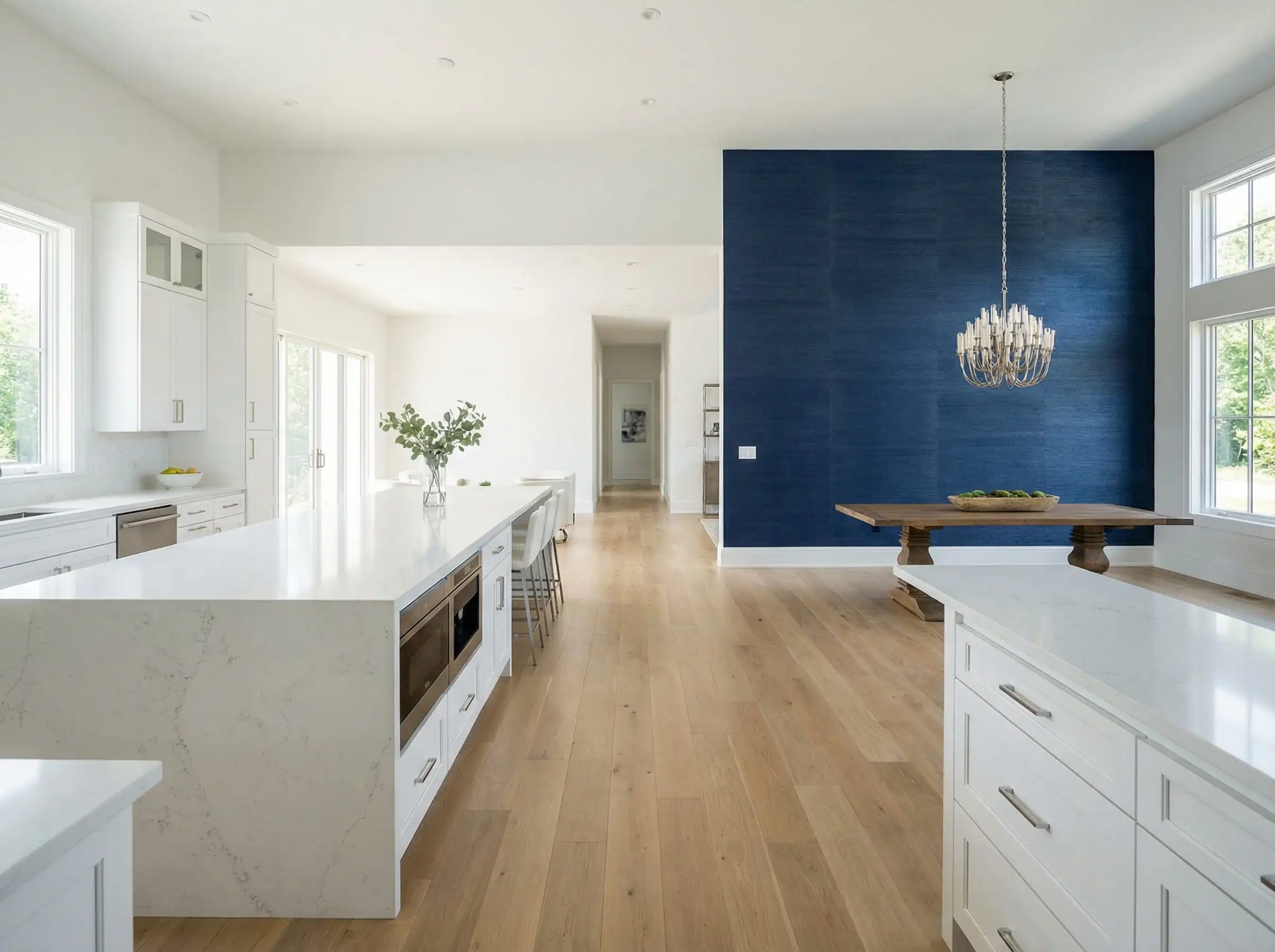
A trend is only effective if it fits the scale of your room. The rules for wallpapering a galley kitchen are different from an open-plan chef’s kitchen.
Small Kitchens & Pantries
Large Open-Plan Kitchens
(See how this applies to other rooms in our Kitchen Trends to Avoid article.)
Maintenance: How to Clean Kitchen Wallpaper
One of the biggest fears homeowners have is cleaning. Unlike paint, you can’t just touch it up. Here is the professional method for maintaining kitchen wallpaper:
- Dust First: Kitchen walls accumulate a sticky layer of dust mixed with airborne grease. Always vacuum the walls with a soft brush attachment before wetting them. If you wet dusty walls, you create mud.
- The Dough Method: For delicate non-woven papers, use “wallpaper dough” (available at hardware stores) to lift dirt without water.
- The Vinyl Wash: For scrubbable vinyls, use two buckets. One with warm water and a tiny drop of dish soap (degreaser), and one with clean rinsing water. Use a natural sponge, not a colored synthetic one (which can transfer dye). Wipe from the bottom up to prevent dirty water streaking.
- Avoid: Magic Erasers (melamine foam). They are abrasive and will sand off the pattern or the sheen of your wallpaper over time.
Sustainability & Eco-Friendly Options
As discussed in our Eco-Sustainable Interior Design Trends article, 2026 is seeing a push against PVC (traditional vinyl).
Frequently Asked Questions (FAQ)
Yes, provided you choose the right grade. Solid Vinyl wallpaper is non-porous, meaning bacteria and mold cannot penetrate the surface. It can be wiped down with anti-bacterial cleaners just like a countertop. Avoid textured fabrics (like velvet or raw silk) which can trap grease and dust.
Technically yes, but with a major caveat. Most wallpaper is not heat-proof. If you have a gas range, the open flame can damage vinyl.
The Fix: Install a clear tempered glass “splashback” over the wallpaper behind the stove. This protects the design from heat and tomato sauce explosions while keeping the visual flow uninterrupted.
If you only remember one thing, make it Tactility. The biggest trend is wallpaper that mimics natural materials—stone, linen, wood, and plaster. We are moving away from “flat” prints toward surfaces that add depth and character to the walls.
(For a broader look at home styling, check out our Trendy Interior Design Styles.)
Not anymore. Modern Non-Woven (Paste-the-Wall) wallpapers are designed to be “strippable.” This means when you are ready for a change in 2030, you can pull the entire sheet off dry without leaving residue or damaging the drywall.
Generally, yes. High-end wallpaper might cost $150 per roll, but covering a 10-foot wall might cost $400 in material. Covering that same wall in mid-range tile could cost $1,000+ in material plus significant labor costs for grouting and cutting. Wallpaper offers a high-impact transformation for a lower “price-per-square-foot” than almost any hard surface.
Summary & Next Steps
The 2026 kitchen is a place of warmth, personality, and sophisticated texture. Whether you opt for the moody elegance of a Truffle Brown linen-look or the immersive drama of a Misty Forest Mural, the goal is to make the kitchen feel as curated as your living room.
Ready to start your renovation?
- Step 1: Browse our Kitchen Cabinet Color Trends to pick your core joinery color.
- Step 2: Order samples of “Scrubbable” vinyl wallpapers to test in your lighting.
- Step 3: Don’t forget the lighting! The right Kitchen Lighting Trends can make or break the texture of your wallpaper.
- Step 4: Consider the finishes. If you go for a matte wallpaper, consider a Modern Kitchen Faucets in brushed nickel or brass to maintain that soft, layered look.