The 2027 Interior Design Forecast: The Styles, Materials, and Colors Defining the Next Era
When mapping out the trendy interior design styles 2027 will bring, one thing is immediately clear: the reign of copy-and-paste beige spaces and stark white farmhouse interiors is officially over. As we spend our days staring at sharp, flat, unyielding screens, our homes are aggressively pivoting to overcompensate. We are seeking out extreme tactile comfort, deeply saturated hues, and a movement forecasters are calling Sensory Modern.
This forecast bypasses generic surface-level advice to give you the exact material shifts, architectural layouts, and chromatic changes dictating the next decade. From the specific walnut grain profiles dominating Salone del Mobile to the rise of highly articulated utility spaces, this is your guide for avoiding real-estate vanilla.
The future of residential design is a full-throated return to deeply personal character and uncompromising useful luxury.
Movement 1: “New Heritage” & The Return of Character
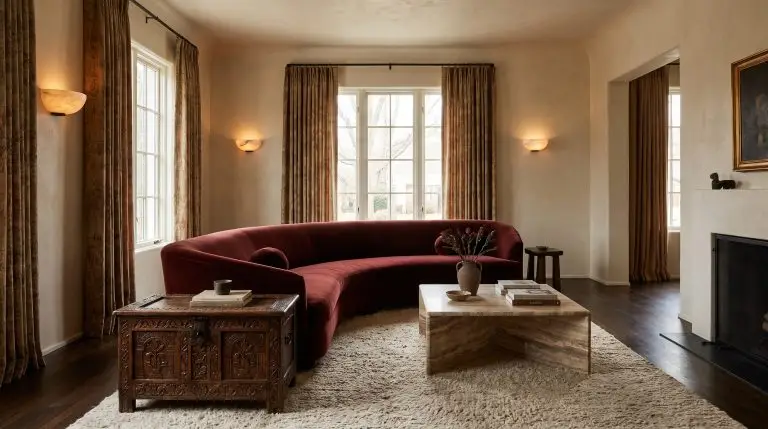
The concept of New Heritage revolves around a desperate desire for spaces that look meticulously collected over decades rather than purchased in a single showroom visit. It relies on the visual tension between modern architectural footprints and deeply patinated, historic materials.
The Shift from White Oak to Rich Walnut
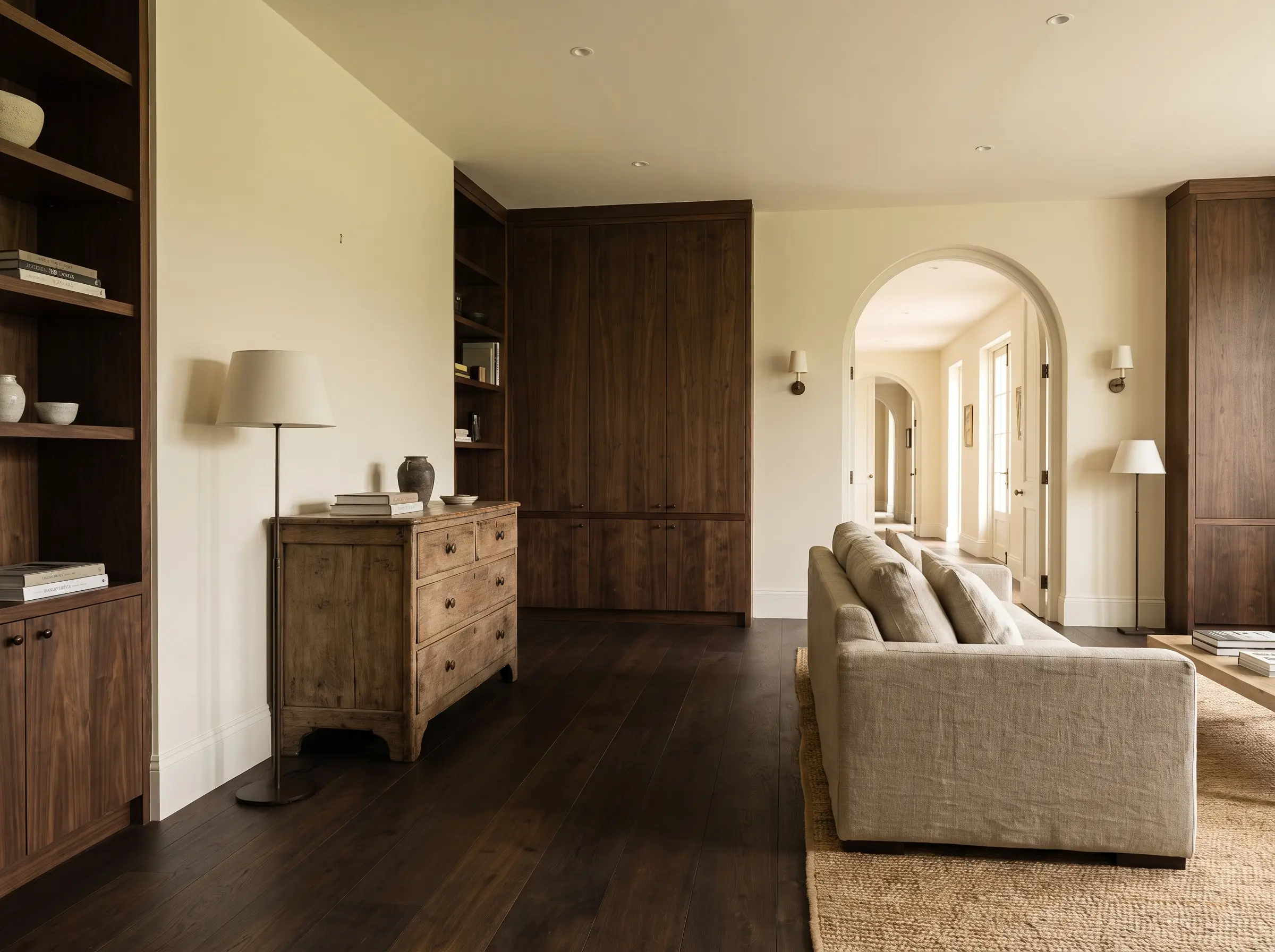
White oak dominated the last five years, but the current design landscape is experiencing a massive pivot toward richer, deeper woods. Walnut, heavy burl wood, and smoked oak introduce instant soul and undeniable history to a room, grounding the space with visual weight.
Do pair deep smoked walnut floors with warm ivory walls and a singular antique oak chest to create tension. Don’t match every wood tone in the room—monolithic brown spaces quickly feel heavy and dated.
Do/Don’t The Wood Mixing Rule
- The 2027 Shift: Moving away from pale, bleached Scandinavian woods to highly articulated, dark walnut and smoked oak.
- Key Material: European Walnut with an oil-rubbed finish.
- Vibe: Grounded, historic, and undeniably bespoke.
High-Gloss Lacquer and Reflective Millwork
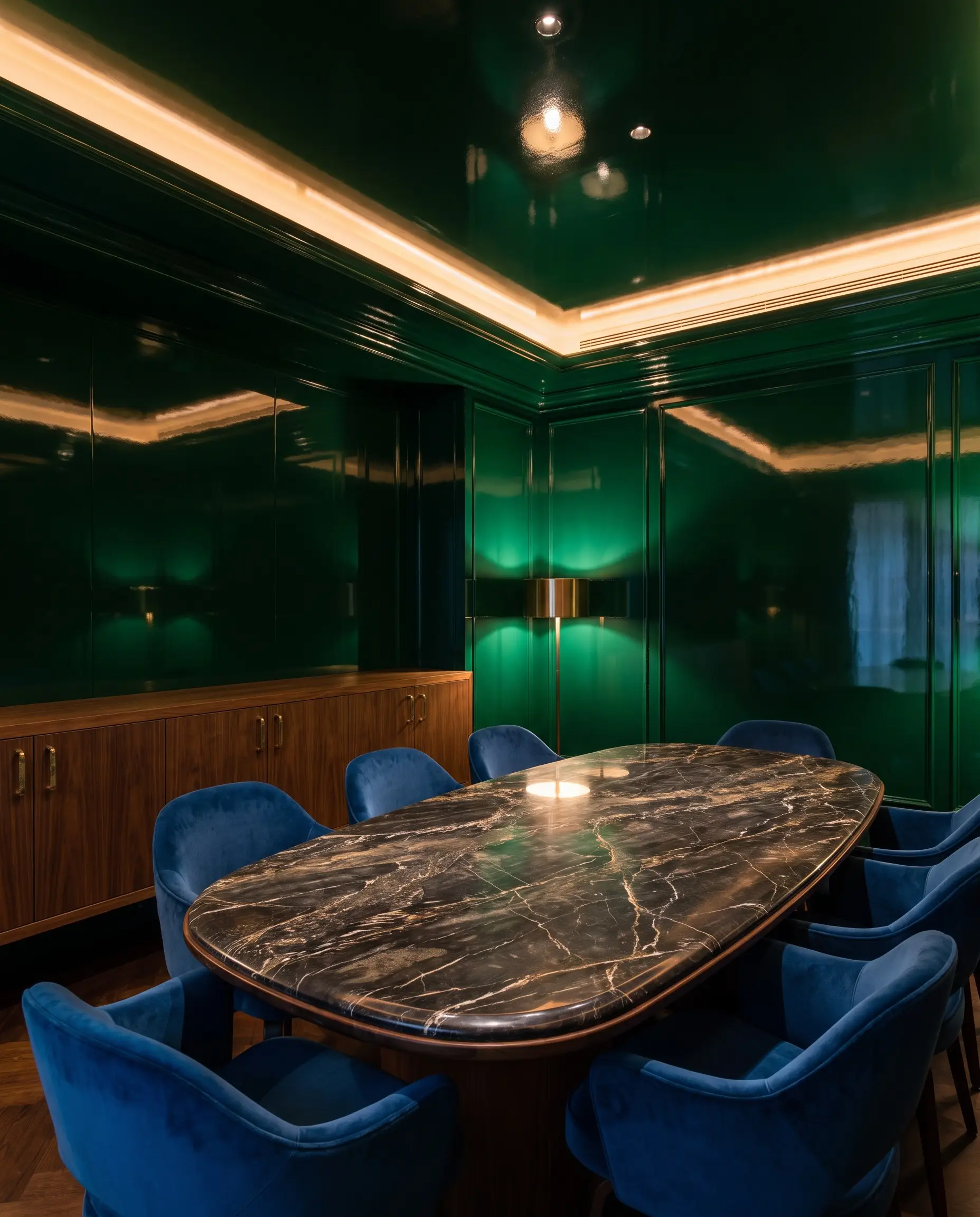
Matte finishes are making way for the luminous sophistication of high-gloss lacquers, particularly in dining rooms, ceilings, and bespoke cabinetry. This highly reflective treatment bounces low-level light around the room, creating an atmospheric, jewel-box effect that feels incredibly high-end.
- The 2027 Shift: Transitioning from flat, chalky cabinet finishes to brilliant, mirror-like lacquers.
- Application Focus: Scullery cabinetry, library ceilings, or formal dining room walls.
- Styling Pro-Tip: Pair high-gloss millwork with raw, unlacquered brass hardware to perfectly balance the slick finish with a rugged, living patina.
Antique Integration in Modern Footprints
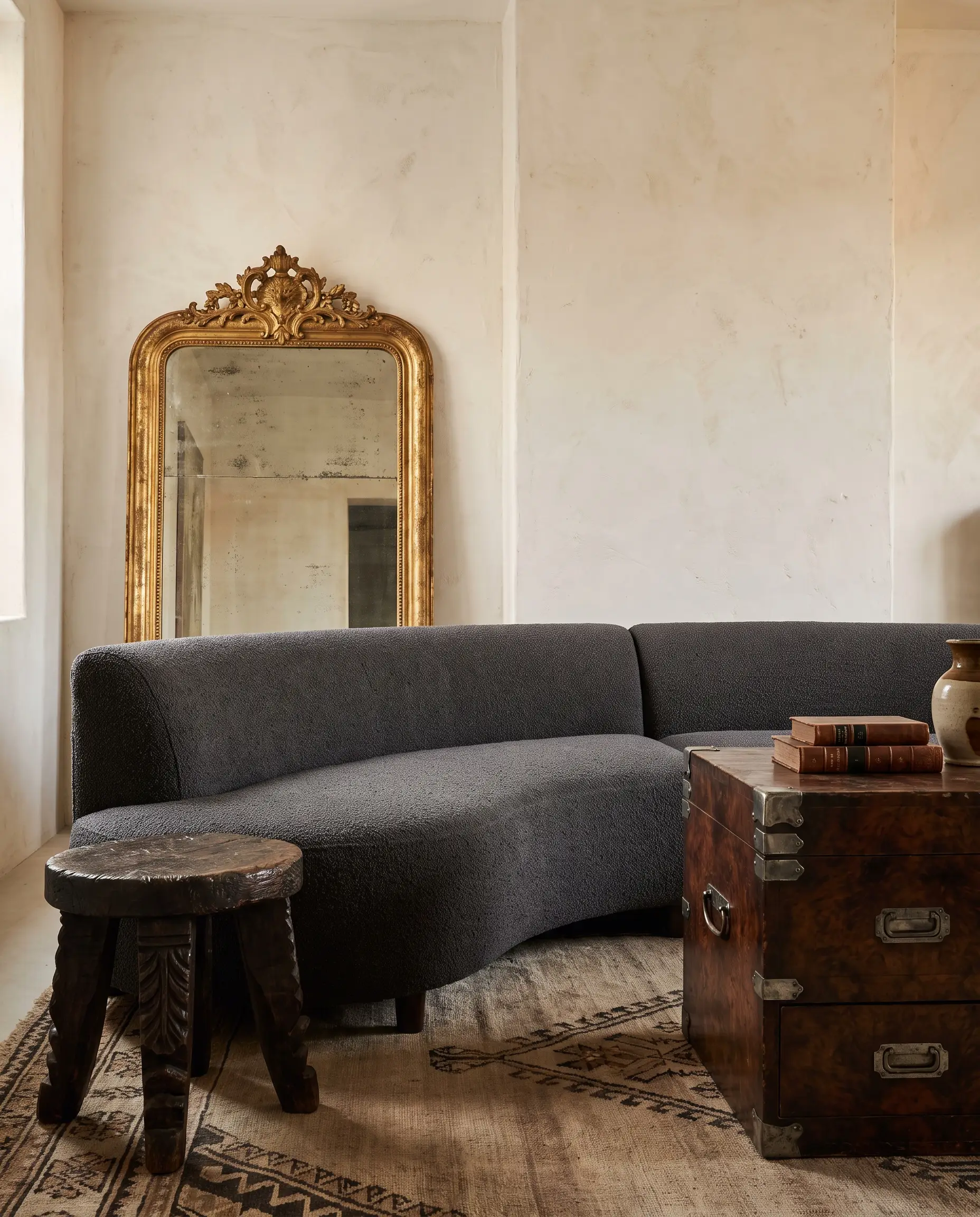
This aesthetic thrives on juxtaposition, placing 18th or 19th-century antiques directly inside ultra-modern architectural envelopes. It is not about recreating a period room; it is about establishing a sharp, sophisticated dialogue between the past and the present.
The most successful antique integrations rely on structural contrast. Place a heavily carved, primitive milking stool next to a sleek, low-profile modern sofa.
Hackrea Styling Tip
- Best Antique Pieces to Mix: Oversized gilt mirrors, primitive milking stools, and heavily patinated campaign chests.
- Key Materials: Burl walnut, oxidized silver, and aged mahogany.
- Vibe: Curated, well-traveled, and unapologetically bold.
Heavy Tapestry and Fringed Textiles
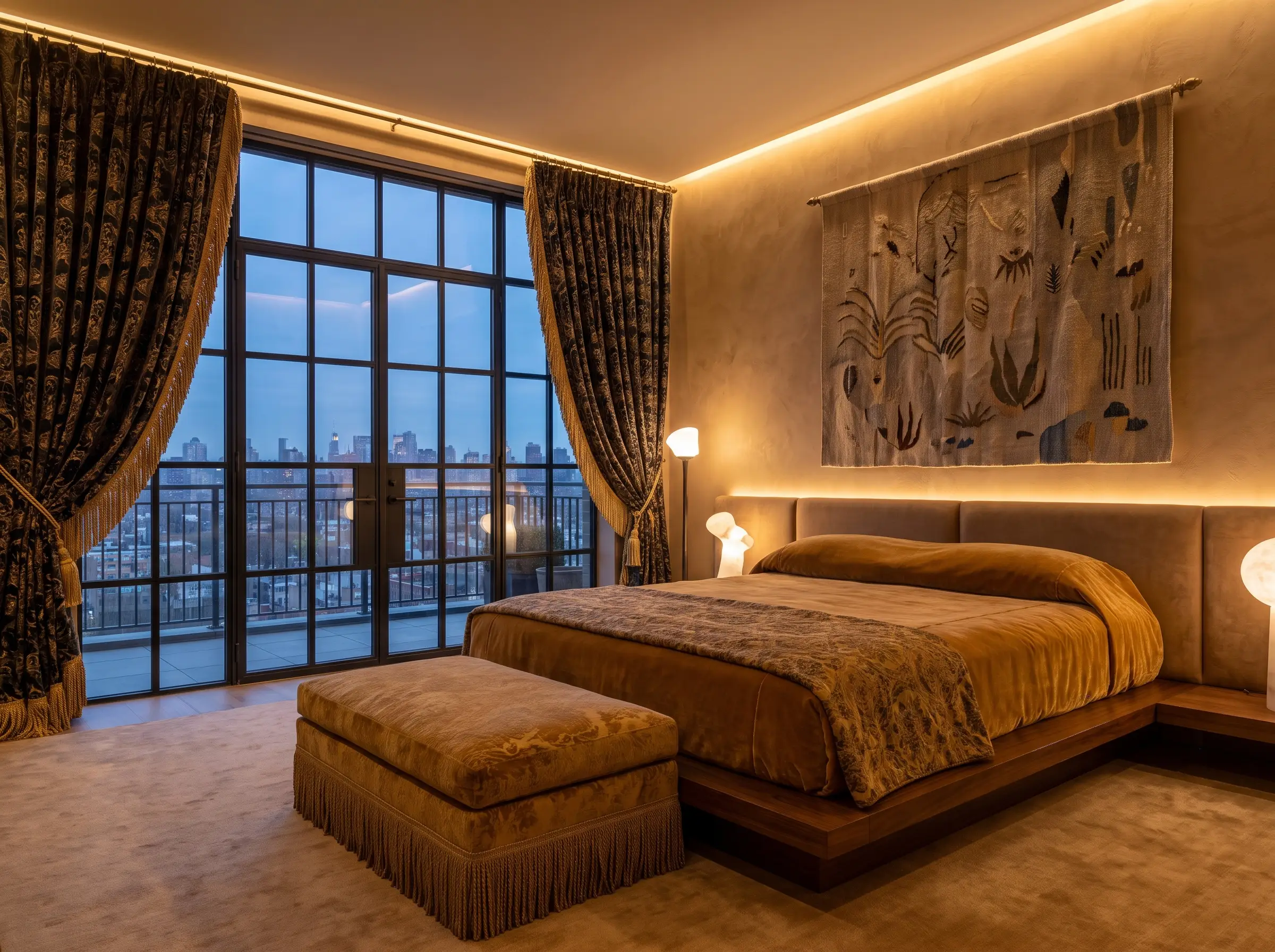
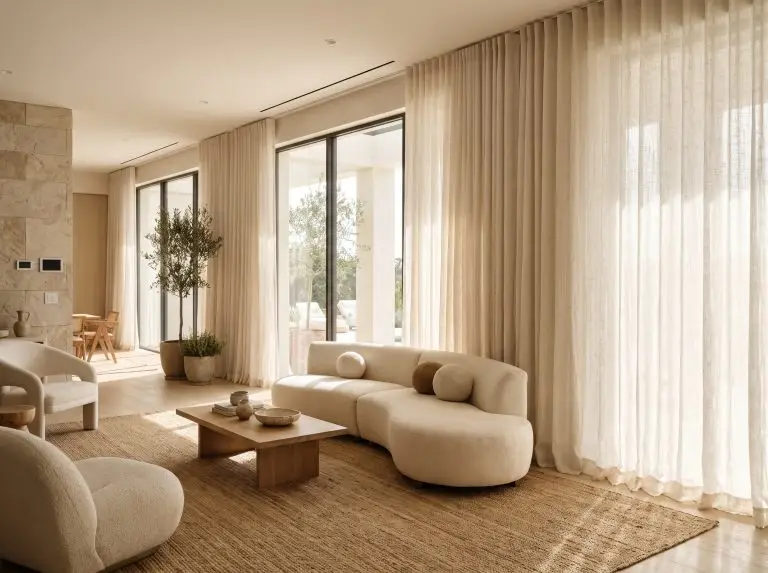
We are moving aggressively away from thin, basic linens toward textiles that carry significant visual weight and character. Heavy tapestry-grade weaves, fringed ottomans, and densely patterned drapery introduce an essential layer of acoustic dampening and tactile richness.
- The 2027 Shift: Replacing sheer, breezy window treatments with heavy, lined drapery and bullion fringe trims.
- Key Materials: Weighted velvet, jacquard weaves, and literal wall tapestries.
- Design Rationale: These dense fabrics absorb sound in open-concept spaces, instantly softening the harsh acoustics of modern life.
Movement 2: Cinematic Mood & The Saturated Palette
The all-white era has concluded, making way for a highly cinematic, chromatic approach to color-drenching. Instead of bright, primary shades, 2027 embraces moody, saturated hues that wrap a room in depth, acting as complex new neutrals.
WGSN’s Luminous Blue and Smoky Atmospherics
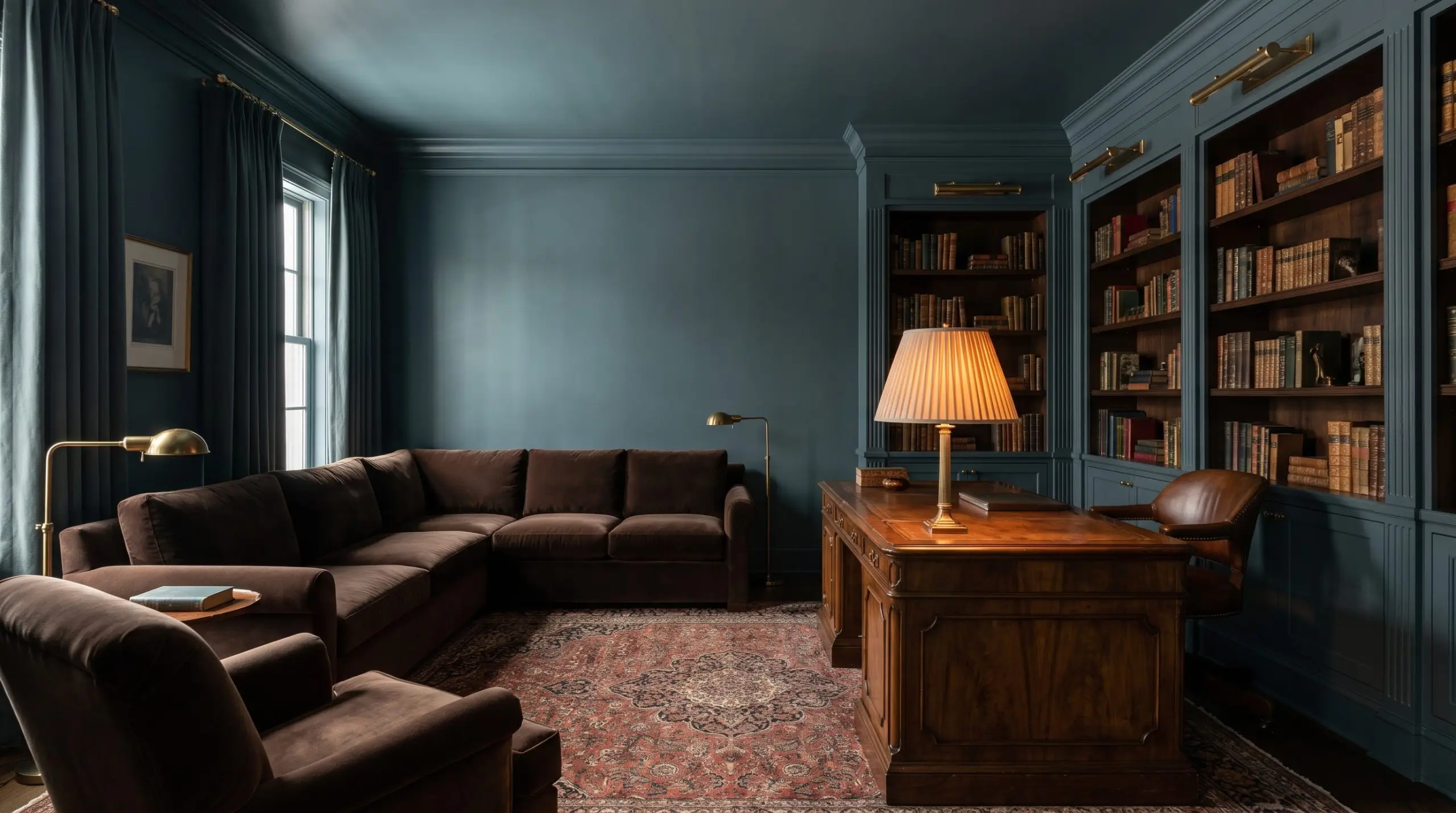
Industry authorities like WGSN have crowned Luminous Blue as a leading force, while smoky, atmospheric blues serve as sophisticated focal points. These shades operate beautifully as new neutrals when grounded by chocolate browns and warm ivories, providing a rich backdrop without overwhelming the eye.
Color-drench your study in a smoky, Luminous Blue (walls, trim, and ceiling), ground the space with chocolate brown velvet seating, and punctuate with antique gold hardware.
Palette to Try
- The 2027 Shift: Moving from safe charcoal grays to complex, smoky blues that change personality as the light shifts.
- Paint Recommendation: Farrow & Ball’s Hague Blue or Glidden’s Smoky Blue.
- Vibe: Cinematic, enveloping, and intensely sophisticated.
Aubergine, Oxblood, and Saturated Reds
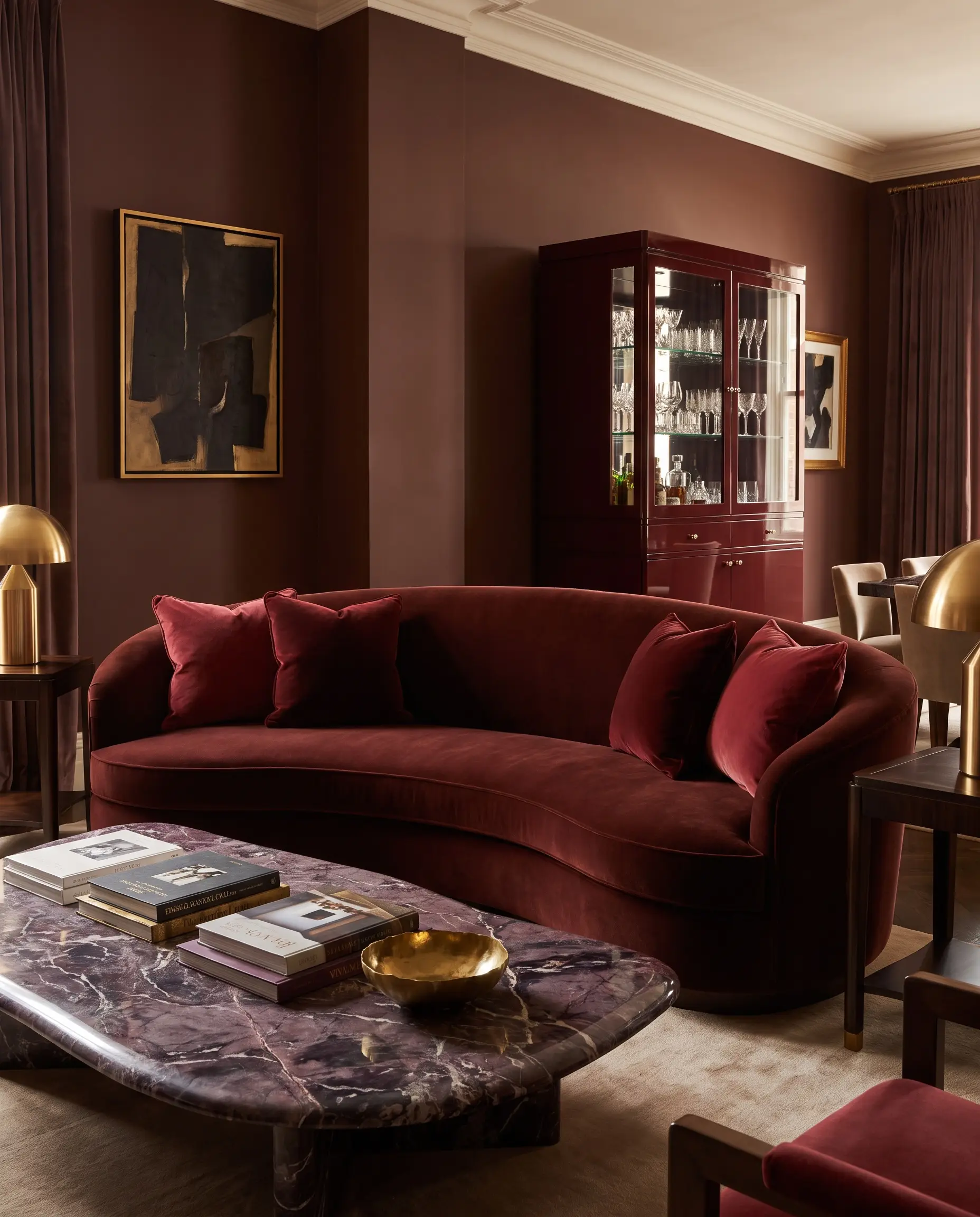
While entirely red rooms remain rare, deep oxblood and aubergine are absolutely dominating furniture silhouettes and bespoke kitchen islands. These saturated, wine-dark hues bring an incredible pulse of energy to a space while maintaining a deeply luxurious, grounded feel.
- The 2027 Shift: Replacing muted terracotta accents with unapologetic, high-gloss oxblood and deep aubergine.
- Application Focus: An oxblood velvet curved sofa, a burgundy lacquered bar cabinet, or a deeply veined aubergine marble coffee table.
- Color Match: Sherwin-Williams Carnelian.
Bronze, Aged Brass, and Pitted Metals
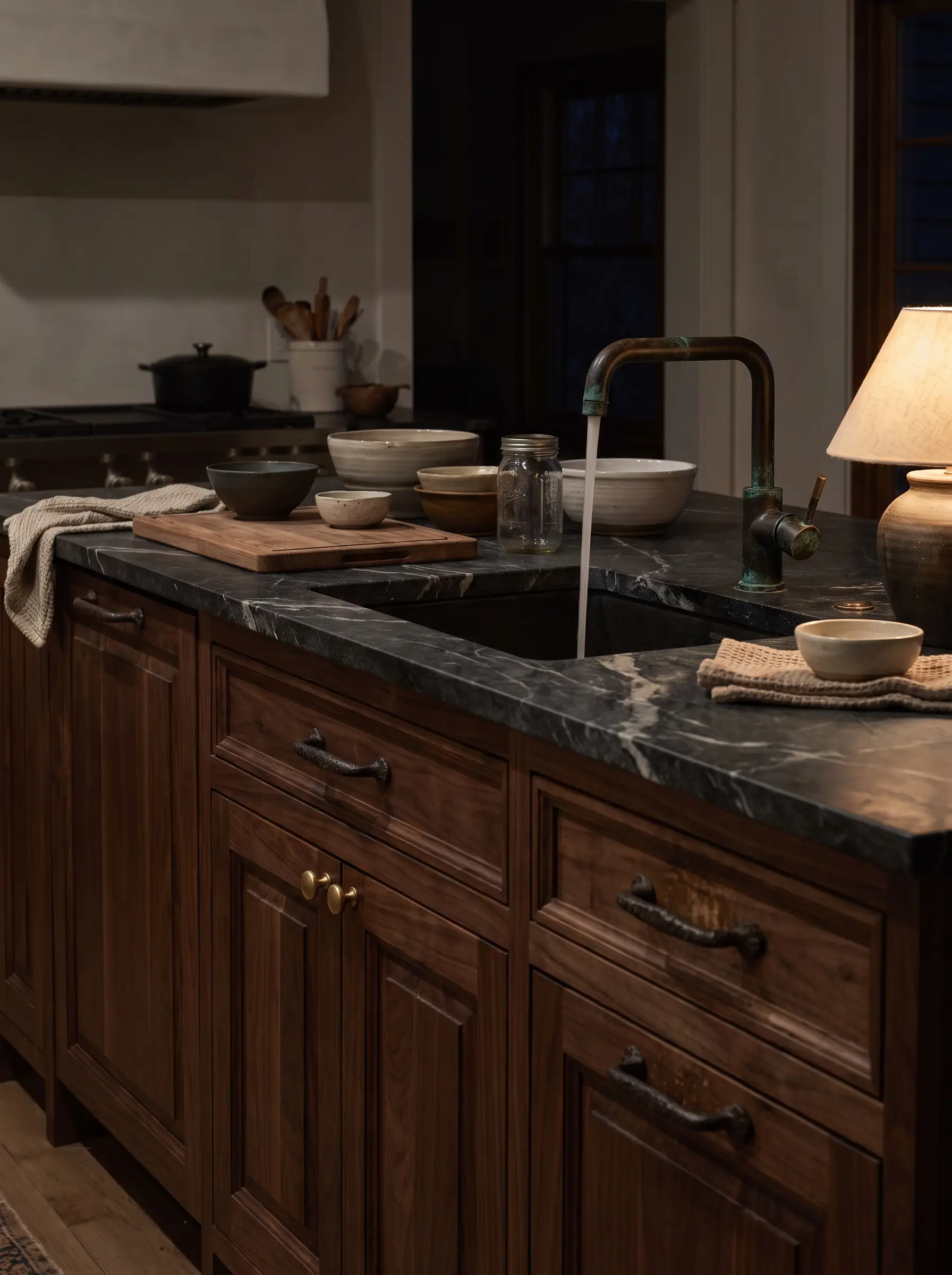
The ubiquitous matte black hardware of the early 2020s is fading rapidly in favor of metals that boast a living finish. Unlacquered brass, dark bronze, and pitted, artisanal metals show the literal hand of the maker, bringing a raw, industrial warmth to highly polished spaces.
Allow your unlacquered brass to age naturally. The fingerprints, oxidation, and uneven darkening are not flaws; they are the exact patina that gives the hardware its bespoke character.
Design Ally Tip
- The 2027 Shift: Trading sterile, factory-perfect matte black for metals that actively tarnish and evolve over time.
- Key Materials: Oil-rubbed bronze, cast iron, and unlacquered brass.
- Vibe: Artisanal, heavy, and enduring.
Movement 3: Sensory Modern & Acoustic Softness
Sensory Modern is the necessary evolution of Organic Modernism. It holds onto the low profiles and biophilic elements we love, but introduces deep acoustic softness and exaggerated forms to explicitly combat the harsh, angular realities of digital life.
Exaggerated Curves and Human-Centric Shapes
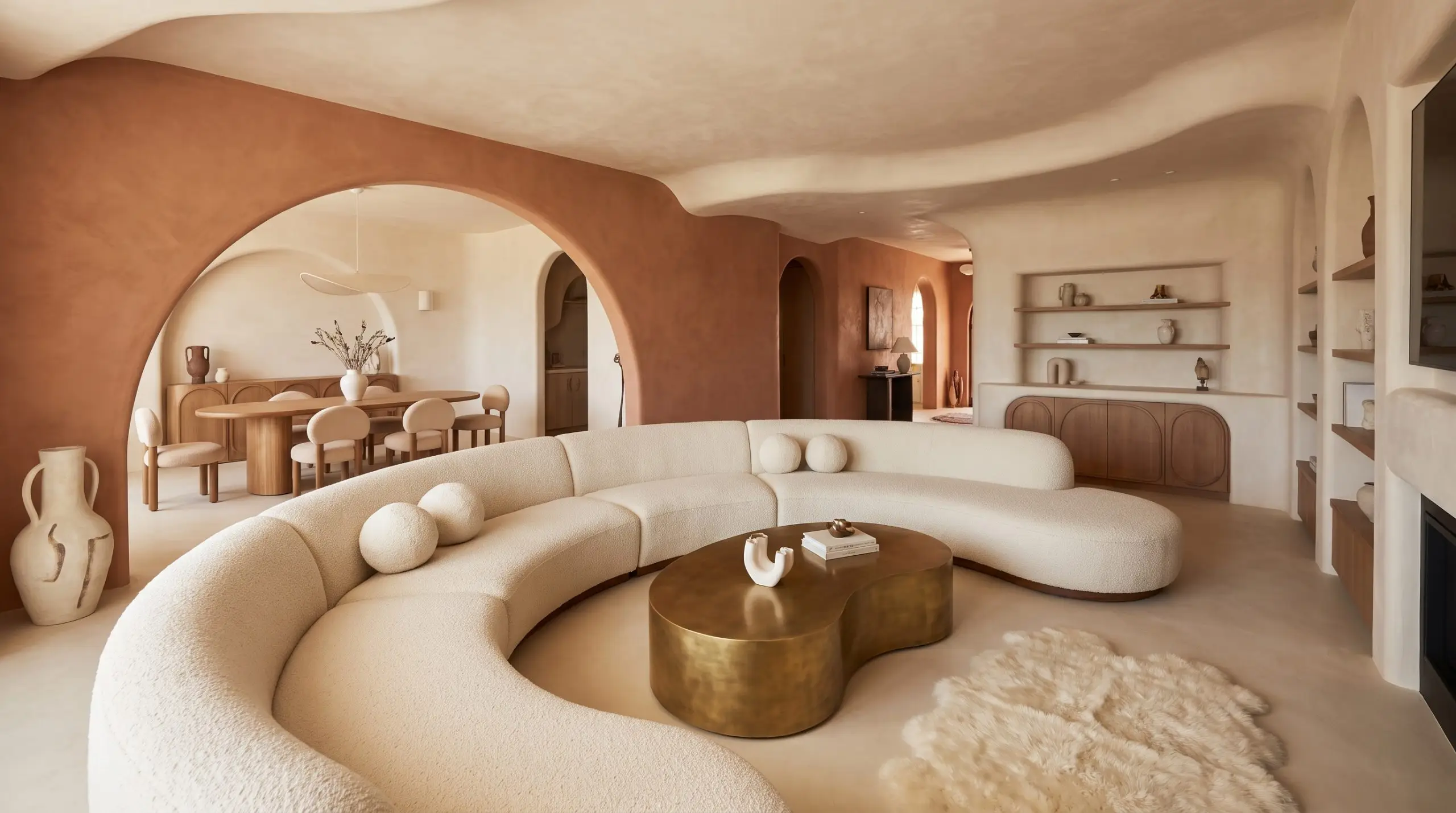
Sharp lines and rigid right angles belong to our screens; our physical spaces are rebelling by embracing rounded sofas, arched doorways, and kidney-shaped coffee tables. These exaggerated, human-centric shapes invite immediate rest and physical ease, softening the visual flow of a room.
- The 2027 Shift: Shifting from modular, boxy sectionals to sweeping, biomorphic seating arrangements.
- Key Silhouette: The crescent-shaped sofa or the pill-shaped dining table.
- Psychological Benefit: Curved environments lower cortisol levels, offering a biological antidote to screen fatigue.
Hand-Troweled Silt and Plaster Walls
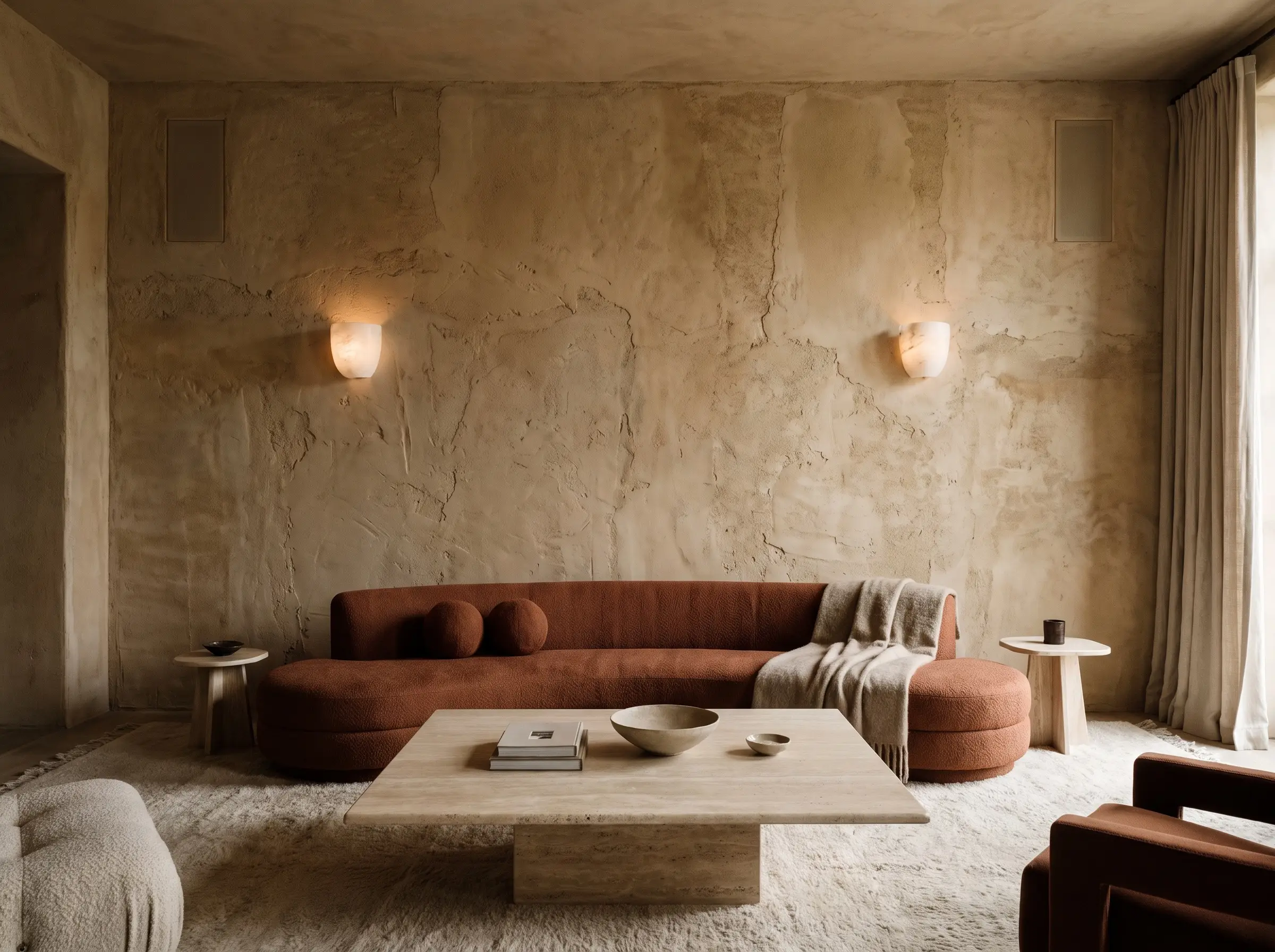
Standard, flat drywall is rapidly losing ground to hand-troweled plaster, limewash, and silt wall treatments. These tactile, monolithic surfaces add a crucial layer of acoustic dampening and raw, artisanal brutalism that makes a room feel structurally profound.
- The 2027 Shift: Moving from pristine eggshell drywall to highly textured, imperfect plaster finishes.
- Application Focus: Primary bedrooms, expansive living areas, or dramatic powder rooms.
- Vibe: Earthy, monolithic, and deeply quiet.
Deeply Veined Natural Stone (Travertine & Soapstone)
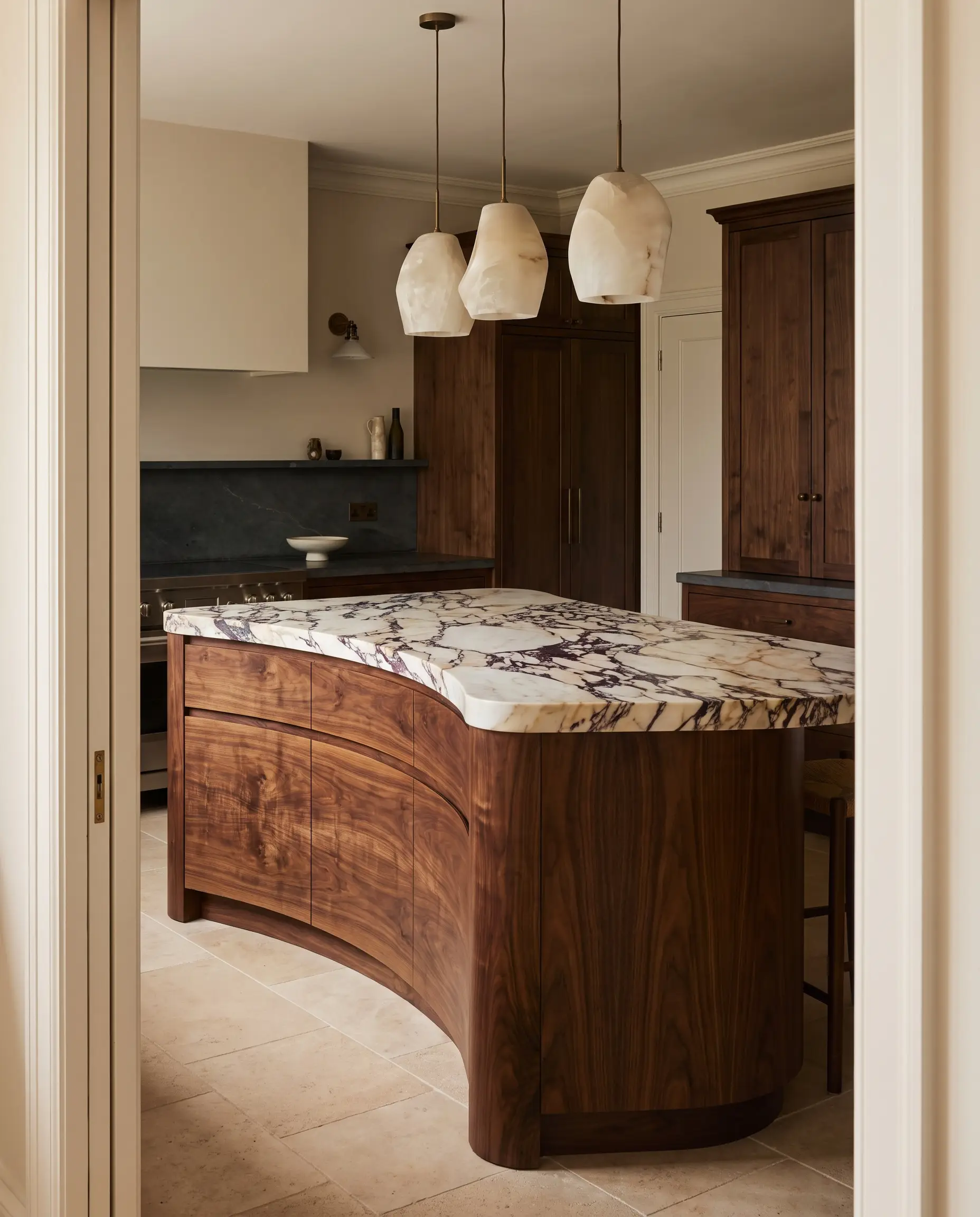
The subtle, quiet quartz countertops of recent years are being replaced by highly expressive, deeply veined natural stones. Heavily articulated marble, raw travertine, and matte soapstone act as organic art installations, bringing fierce, natural energy into the kitchen.
- The 2027 Shift: Moving away from stark white quartz waterfall edges toward rounded, furniture-style islands topped with heavily veined soapstone or striking Calacatta Viola.
- Key Materials: Unfilled travertine, honed soapstone, and breccia marble.
- Styling Pro-Tip: Pair dramatic stone with warm walnut joinery to balance the cold, hard surface with deep organic warmth.
Low-Level Ambient and Sculptural Lighting
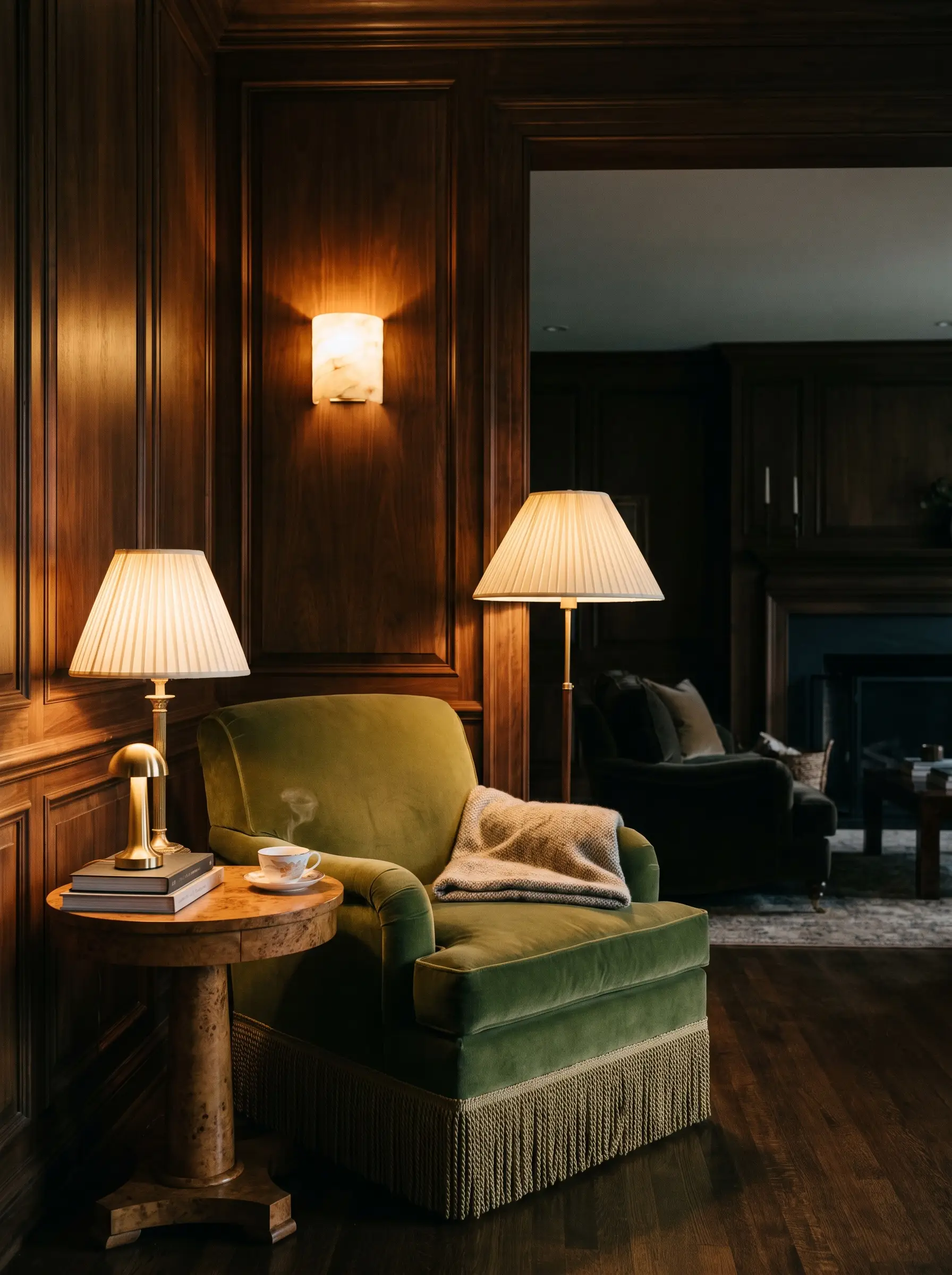
The era of relying on harsh recessed grids is completely over. Lighting in 2027 is distinctly sculptural, heavily reliant on low-level ambient sconces, and utilizes portable, rechargeable lamps to carve out intimate, shadowed pockets within larger rooms.
- The 2027 Shift: Abandoning overhead recessed lighting in favor of layered, eye-level illumination.
- Key Fixtures: Alabaster wall sconces, pleated silk table lamps, and rechargeable brass mushrooms.
- Vibe: Intimate, glowing, and heavily atmospheric.
Movement 4: “Useful Luxury” & Adaptive Layouts
Forecasters like Lidewij Edelkoort predict that “every room will be a living room,” signaling a shift toward adaptive, highly flexible layouts. We are moving past rigid, single-purpose spaces toward “Useful Luxury,” where utility zones are designed with the exact same aesthetic rigor as a formal sitting area.
The Disappearing Act: Invisible Tech
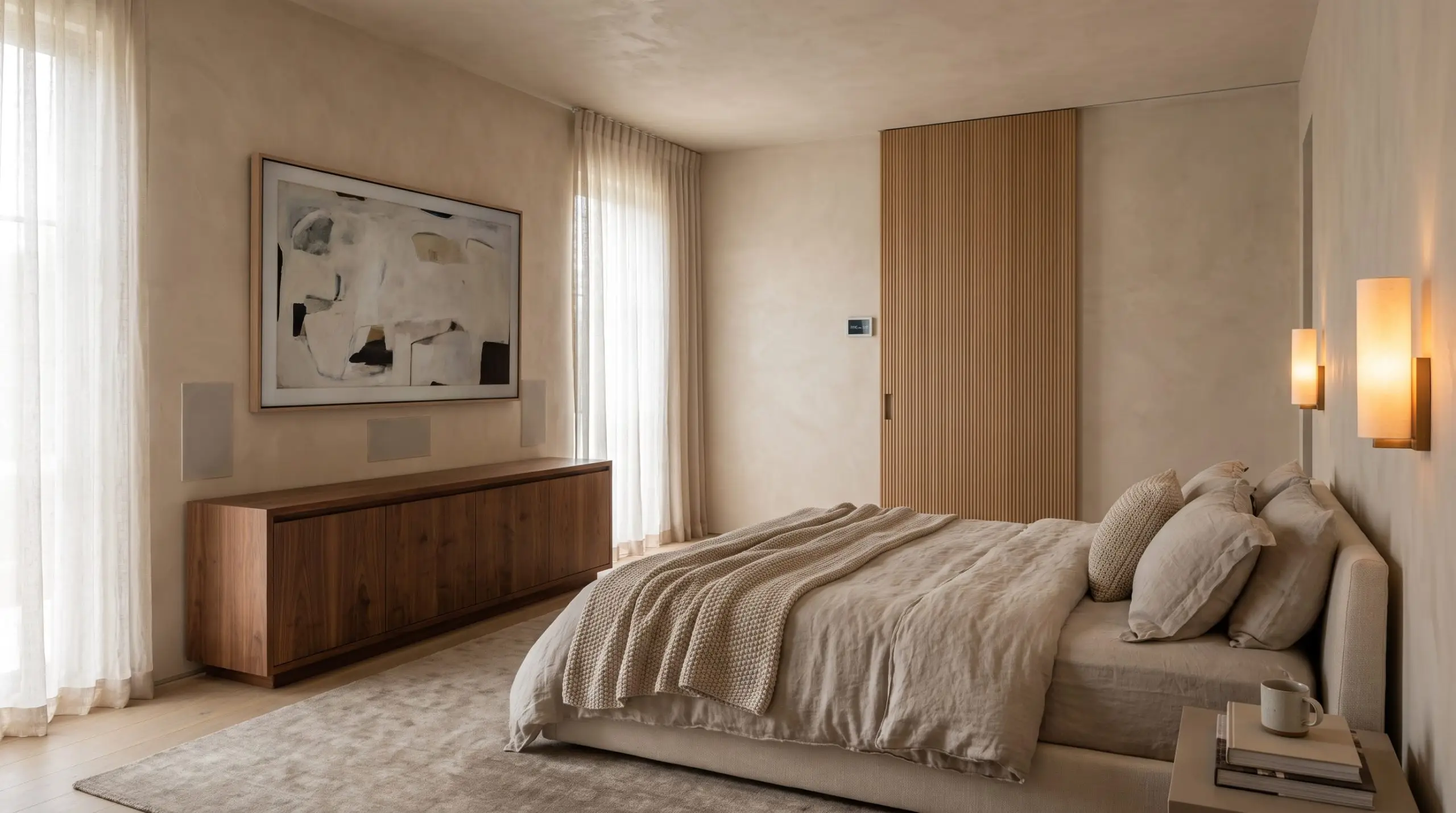
Massive black television screens and glaring smart home panels are no longer acceptable focal points in a luxury space. Technology is now executing a disappearing act, seamlessly integrated into bespoke joinery, disguised as high-end art, or hidden entirely behind sliding fluted timber panels.
Smart Home 2.0 is about technology being felt, not seen. The luxury lies in the experience of automated ambient lighting and climate control, completely devoid of visual digital clutter.
Expert Insight
- The 2027 Shift: Transitioning from prominent media consoles to motorized art lifts and flush-mounted plaster speakers.
- Application Focus: Living rooms, primary suites, and kitchen range hoods.
- Vibe: Unplugged, serene, and intentionally analog.
Dedicated Wellness Rooms and Home Retreats
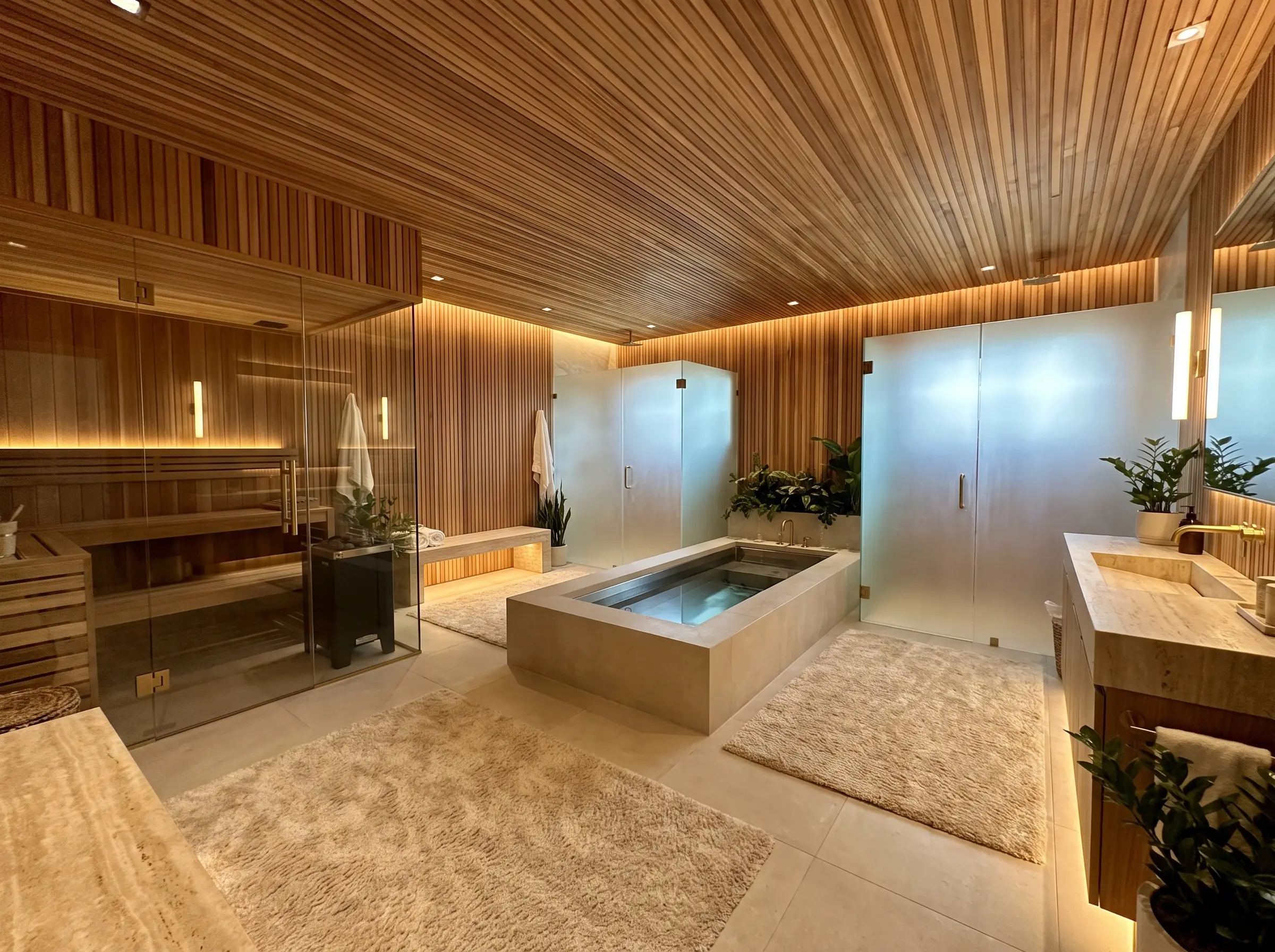
The standard basement treadmill setup has evolved into a dedicated wellness retreat featuring saunas, cold plunges, and red-light therapy zones. These spaces are treated with the exact same high-end finishes, ambient lighting, and natural materials as a primary suite, offering accessible luxury right at home.
- The 2027 Shift: Elevating the home gym from an afterthought into a beautifully articulated wellness sanctuary.
- Key Materials: Slatted cedar, unglazed ceramic tile, and frosted glass.
- Design Rationale: Bringing spa-level recovery tools into the daily residential routine.
Sculleries and Appliance Garages
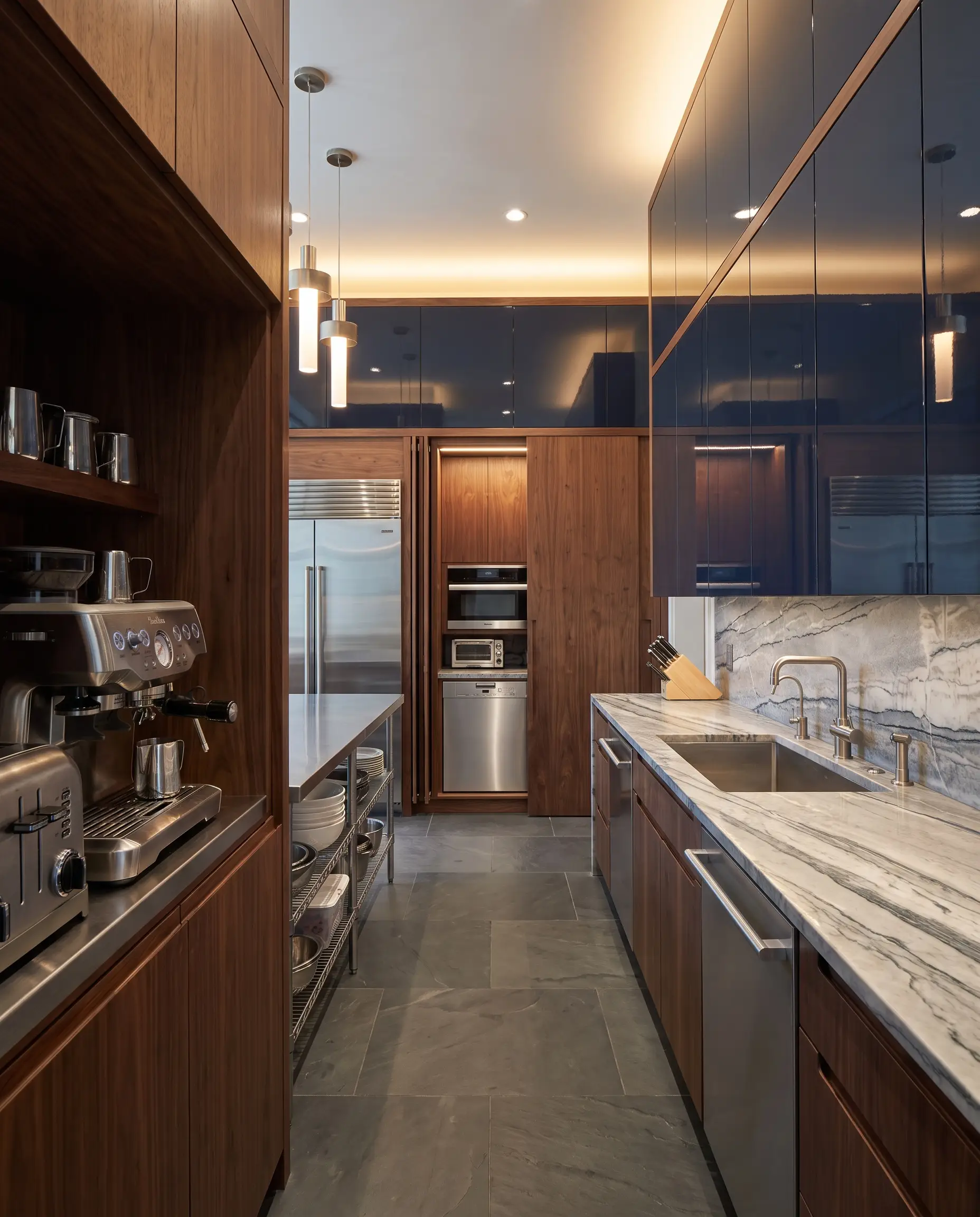
The open-concept kitchen is evolving into a purely social, entertaining space, meaning the actual mess of cooking must be concealed. Heavy prep work, coffee machines, and small appliances are being pushed into hidden sculleries, walk-in pantries, and highly engineered, bespoke appliance garages.
- The 2027 Shift: Clearing the main kitchen counters completely by hiding utility appliances behind pocket doors.
- Application Focus: Pocket-door appliance garages clad in walnut or back-kitchen sculleries with stainless steel prep surfaces.
- Vibe: Immaculately clean, highly functional, and aggressively organized.
Aging-in-Place with High Design
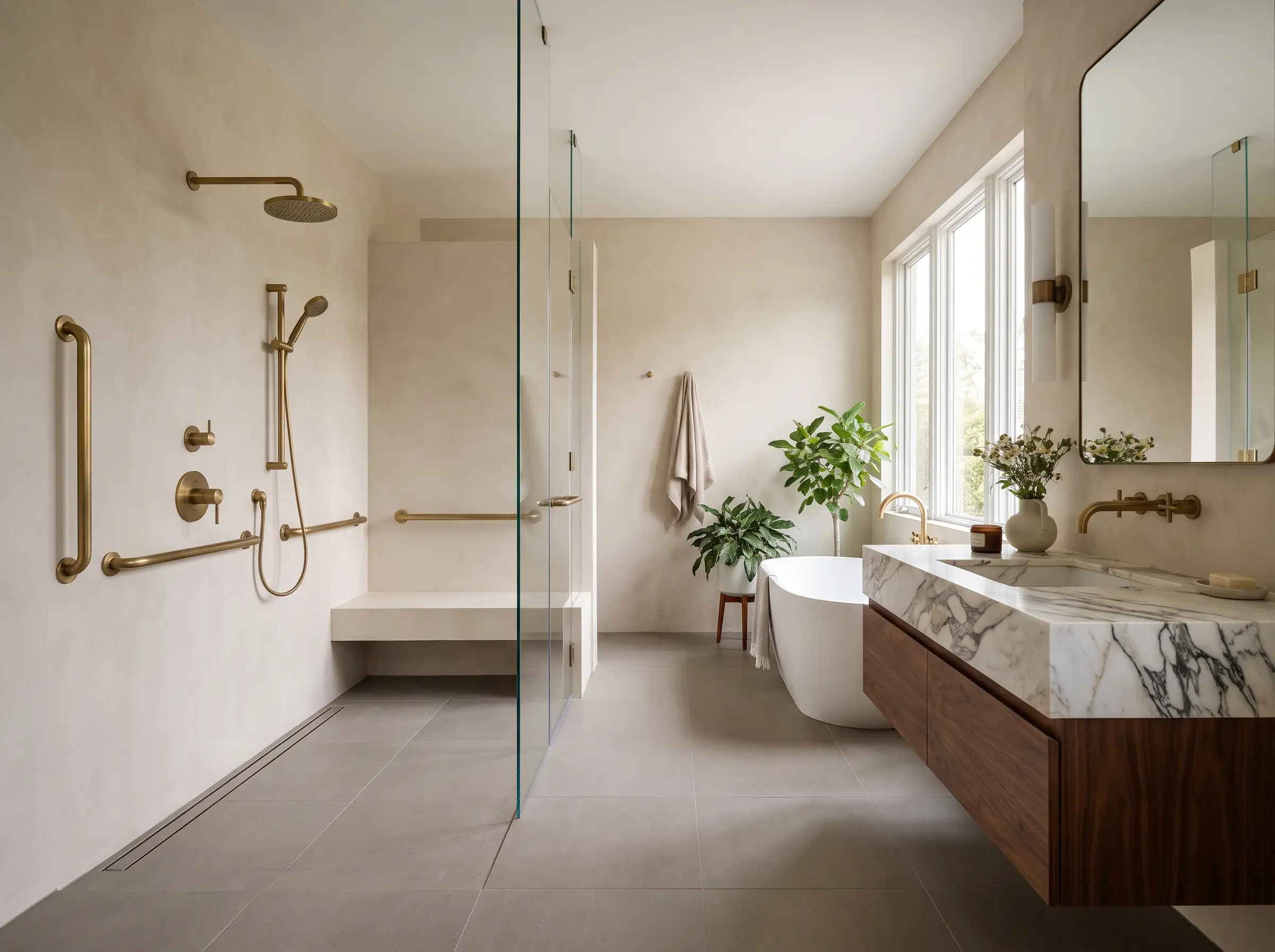
Homeowners in their 40s and 50s are executing major renovations with the long term in mind, ensuring they never have to renovate twice. This forward-thinking approach means integrating zero-entry showers, wider clearances, and beautiful, non-clinical grab bars that look like luxury hotel hardware rather than hospital equipment.
- The 2027 Shift: Stripping the stigma from accessibility by designing future-proof spaces that look like bespoke boutique hotels.
- Key Features: Curbless showers with hidden linear drains, unlacquered brass support bars, and slip-resistant silt tile.
- Design Rationale: True luxury is a home that seamlessly adapts to your physical needs over decades without sacrificing an ounce of style.
Future-Proofing Your Space: The 2027 Mandate
The design landscape of 2027 is ultimately a rebellion against the generic, challenging us to build environments that reflect our exact habits and histories. Whether you are leaning into the deep, historical tension of New Heritage or carving out a space for Useful Luxury with a dedicated wellness room, the goal is to create a home that feels radically, unapologetically yours. Reject the sterile catalog looks of the past decade and embrace the heavily textured, deeply saturated future.
Which 2027 movement are you most excited to implement in your upcoming renovation?

The Aesthetics Desk curates the visual direction for Hackrea. Specializing in design history, global architectural movements, and interior styling, this desk focuses on the psychology of space and how to translate high-end, magazine-quality aesthetics into approachable residential design without falling into fleeting micro-trends.