Trends in interior design are a bit like the seasons—they inevitably change. While the last few years gave us stark minimalism and strict uniformity, 2026 is shaping up to be the year of warmth, personality, and “quiet luxury.”
Designers are moving away from the “showroom perfect” look and embracing spaces that feel lived-in, organic, and deeply personal. To help you navigate your next renovation without falling into yesterday’s traps, we’ve curated a list of kitchen trends to avoid in 2026, along with the fresh alternatives that are taking their place.
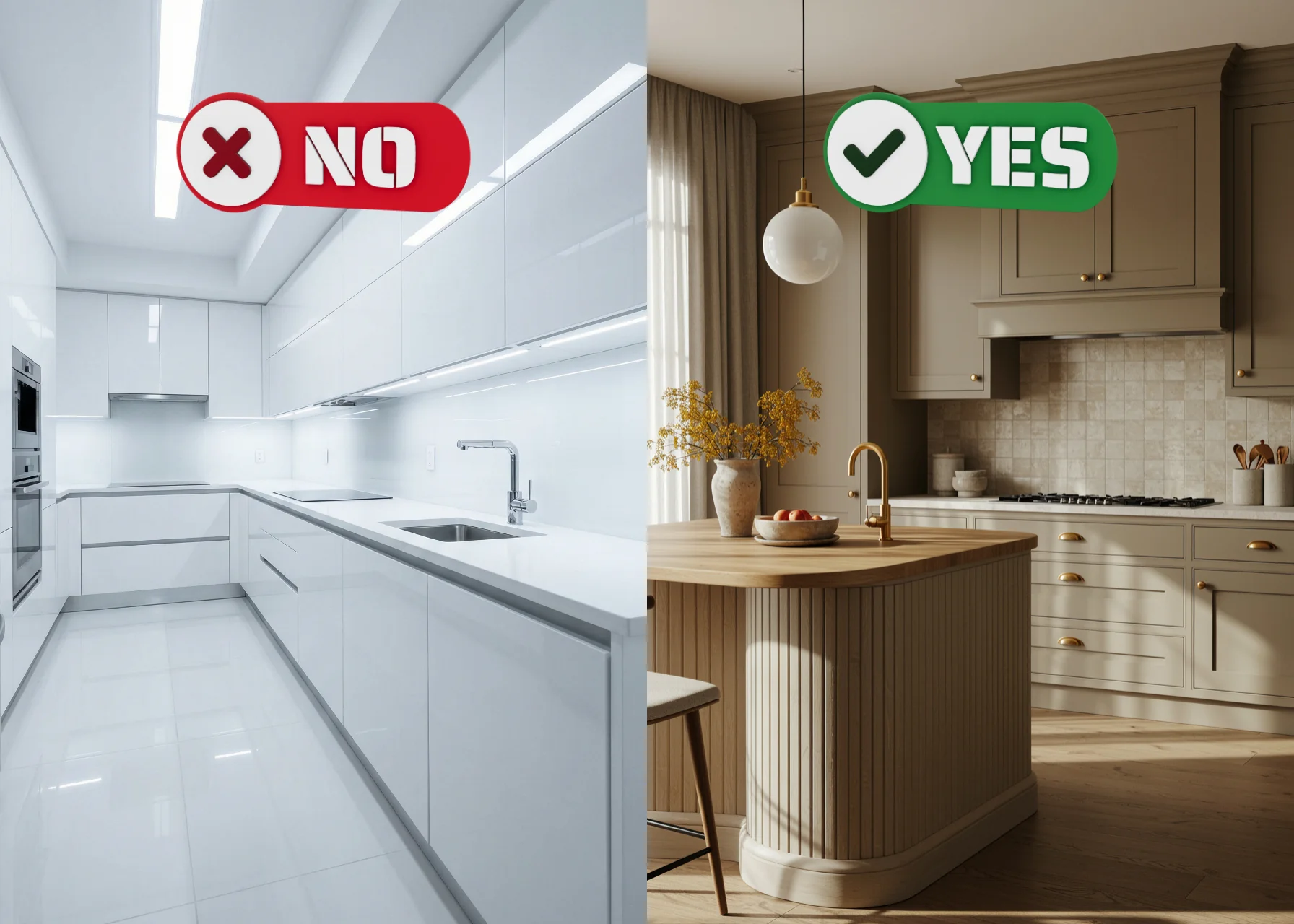
1. The Sterile All-White Kitchen
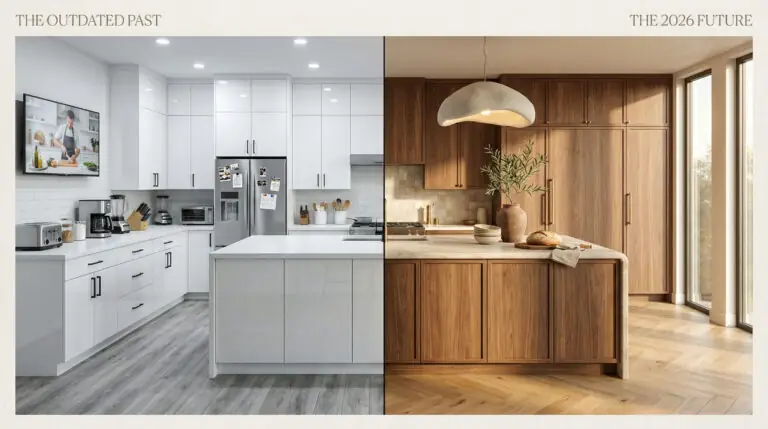
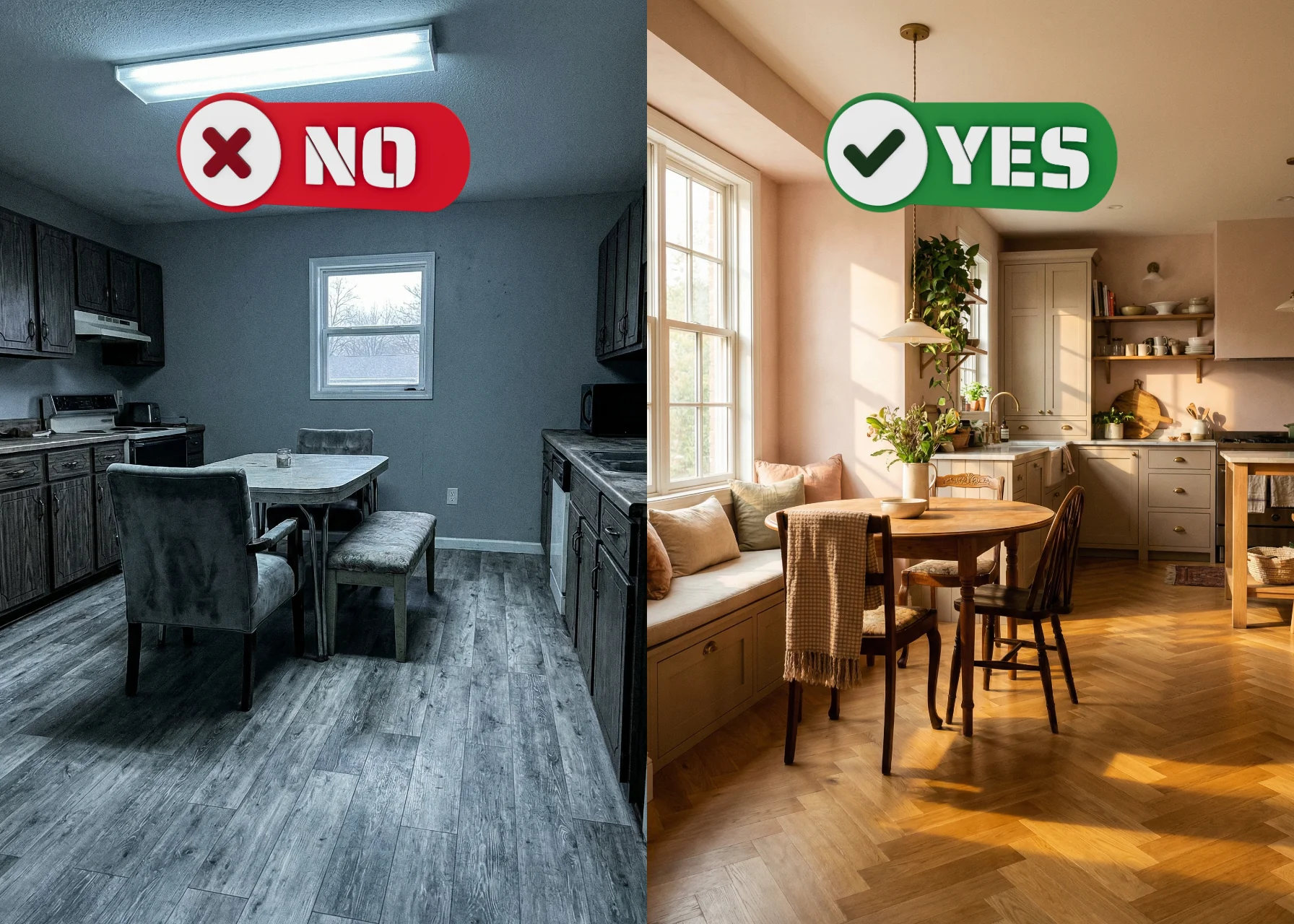
For a long time, the all-white kitchen was the gold standard—clean, bright, and safe. But after years of dominance, it’s starting to feel a little too clinical. A completely white-on-white palette can lack depth and soul, leaving your kitchen feeling more like a laboratory than the heart of the home.
Consider instead: Embrace warm neutrals. Think taupe, mushroom, creamy off-whites, and soft greiges. If you love a light kitchen, these shades keep it airy but add a cozy, welcoming undertone that pure white just can’t match. Layer these with natural wood accents to bring life back into the space.
2. Open Shelving Overload
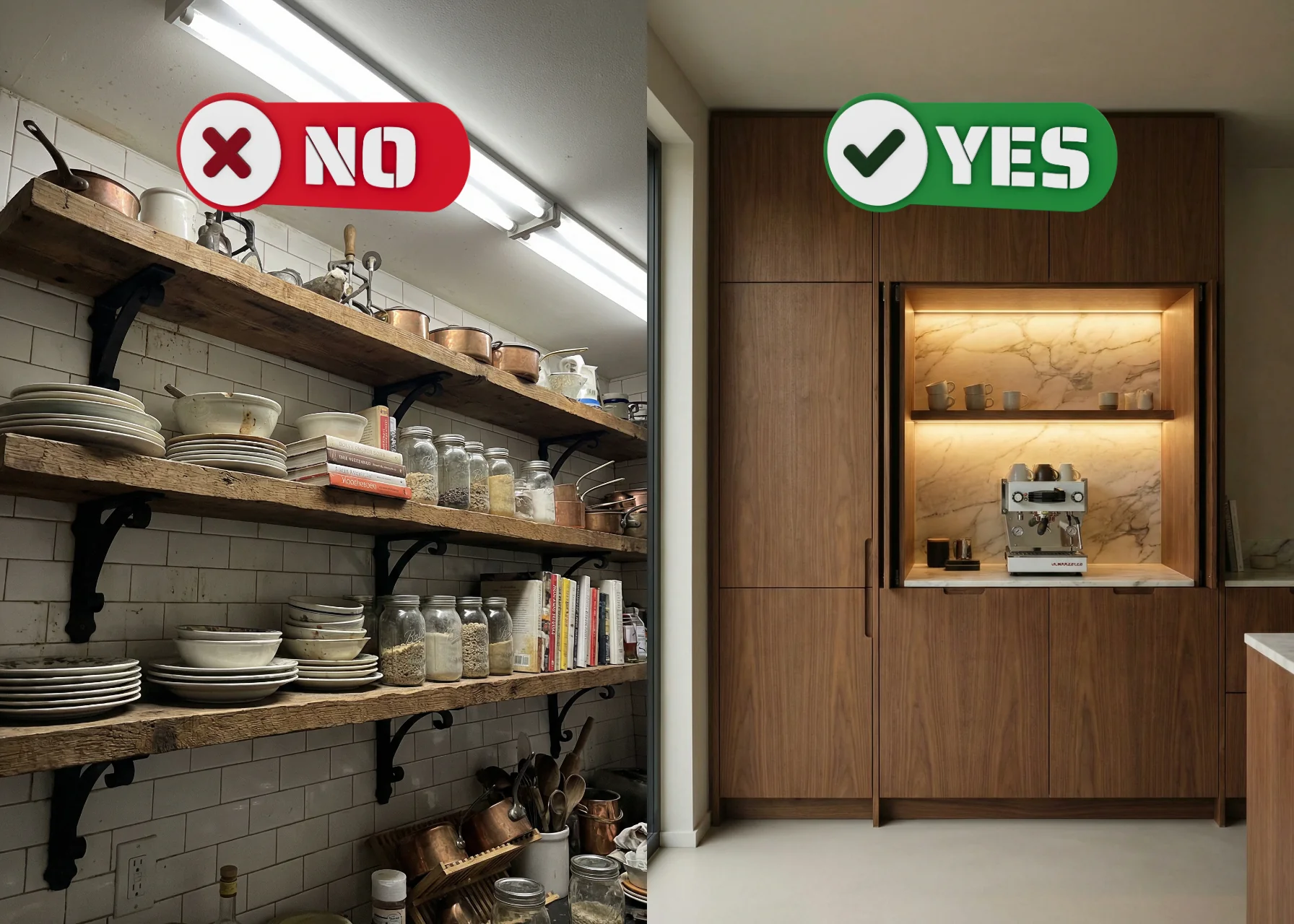
We all loved the idea of open shelving—beautiful stacks of artisan plates and perfectly placed succulents. But the reality? Dust, grease, and the constant pressure to keep everything styled to perfection. In 2026, functionality is reclaiming its throne, and the visual clutter of full open shelving is officially out.
Consider instead: Go for curated display moments. Use a small, single shelf to showcase a few treasured items or cookbooks, but rely on beautiful closed cabinetry for the heavy lifting. “Hidden storage” is the buzzword of the year—think appliance garages and floor-to-ceiling pantries that hide the mess behind gorgeous doors.
3. Industrial “Loft” Aesthetics
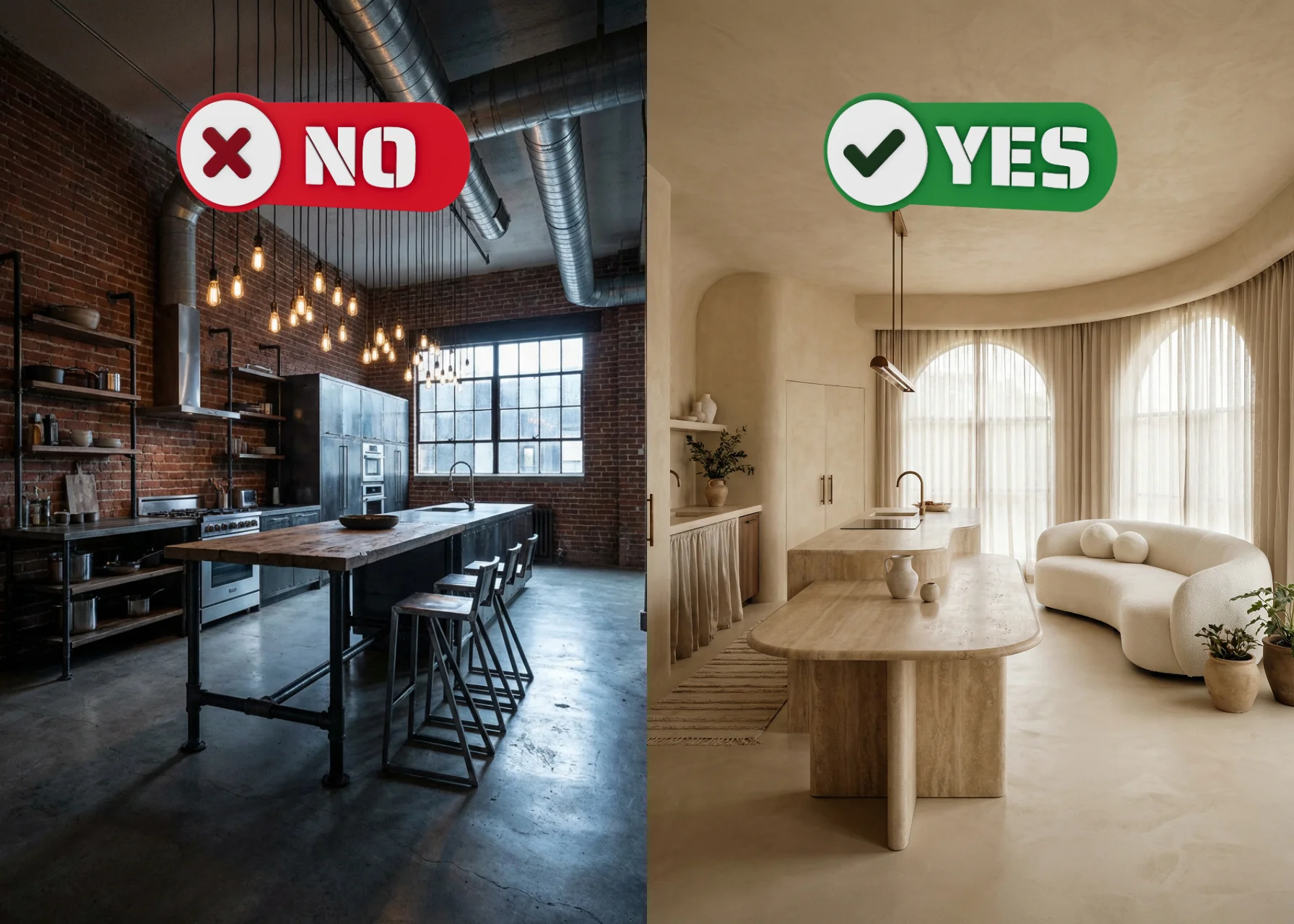
The heavy industrial look—exposed ductwork, cold concrete floors, and raw Edison bulbs—is fading fast. While it had its moment, 2026 is all about comfort and softness. The cold, unfinished vibe of the industrial trend clashes with the desire for sanctuaries that feel safe and nurturing.
Consider instead: Lean into Organic Modern or “Soft Modern” styles. Swap cold concrete for warm stones like travertine or limestone. Replace harsh metals with burnished brass or warm bronze. The goal is to keep the clean lines but soften the edges with tactile, natural materials.
4. Matte Black Hardware Everywhere
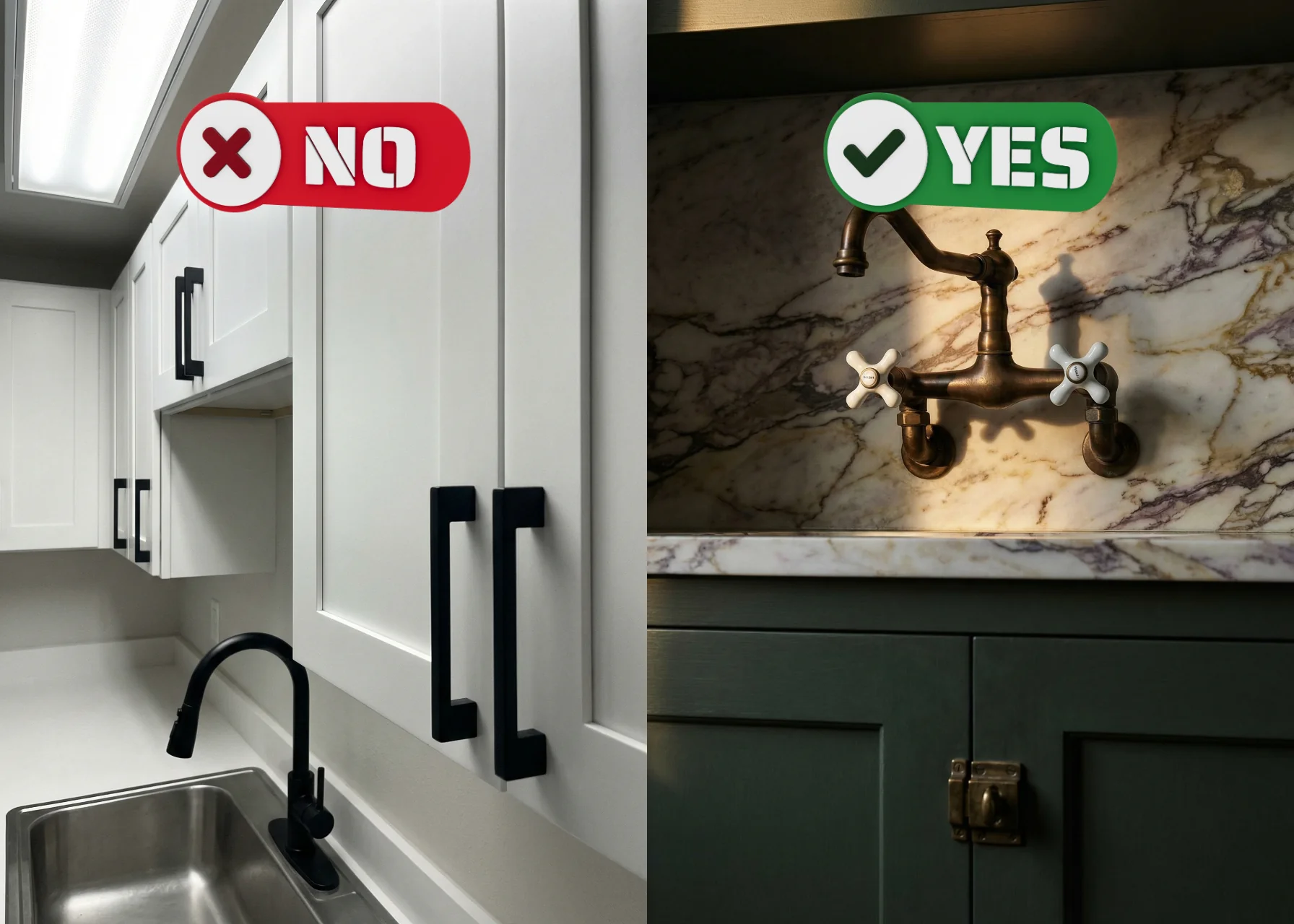
Matte black faucets and handles were the “it” choice for high contrast, but they are becoming ubiquitous to the point of being standard builder-grade. They also have a pesky habit of showing dust and water spots more than you’d expect.
Consider instead: Switch to living finishes. Unlacquered brass, polished nickel, or dark antique bronze are having a major moment. These materials patina over time, adding character and a sense of history to your kitchen that flat black just can’t provide.
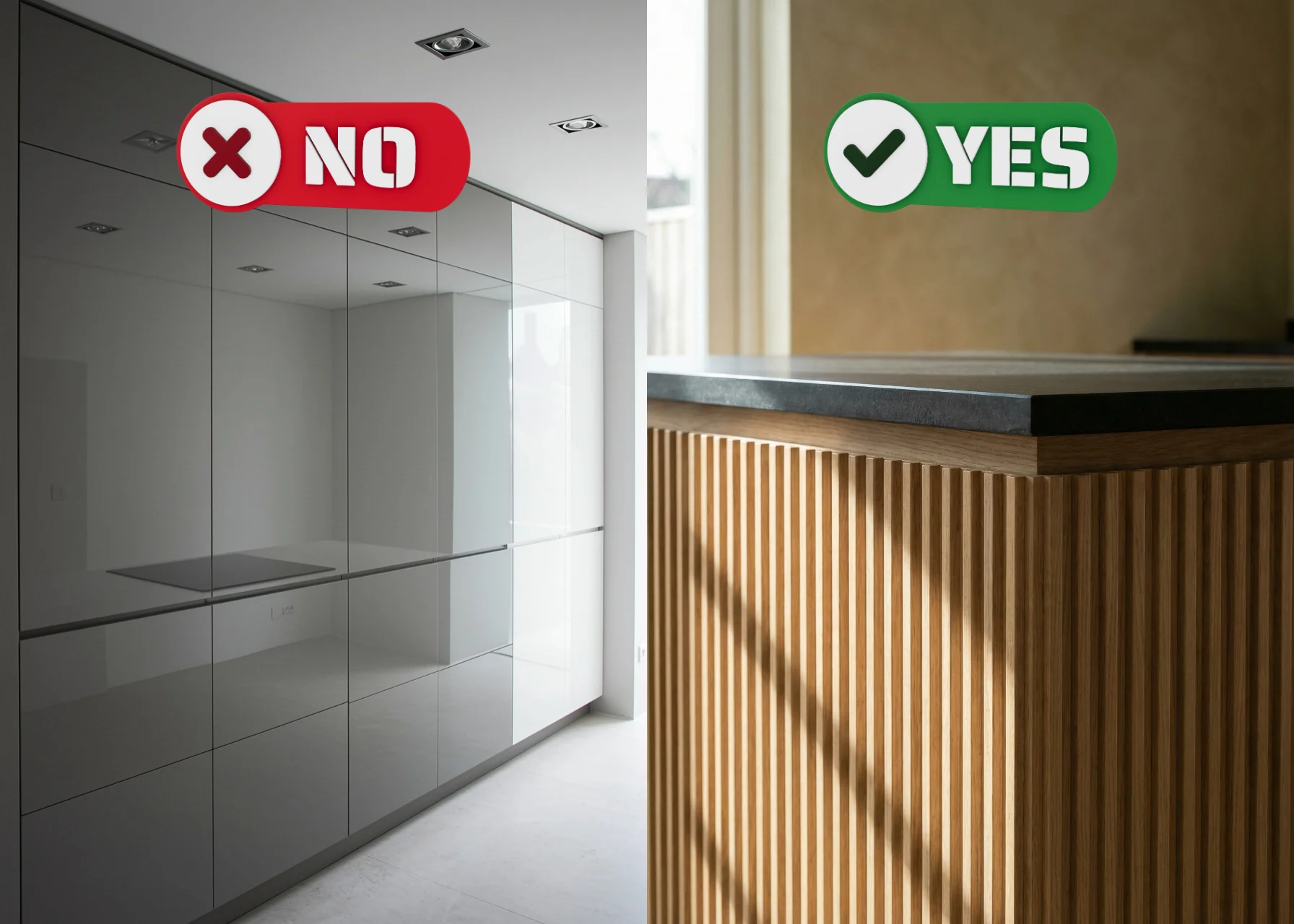
5. High-Gloss “Mirror” Finishes
Super glossy cabinets that reflect everything (including fingerprints) are moving out of the spotlight. They can feel a bit too “plastic” and high-maintenance for the grounded, earthy aesthetic of 2026.
Consider instead: Texture is king. Look for reeded or fluted cabinetry, stained wood grains, or matte, velvety finishes. Textural elements like shiplap (updated vertically!) or wire-brushed wood add visual interest without the glare.
6. The “Farmhouse Chic” Signage
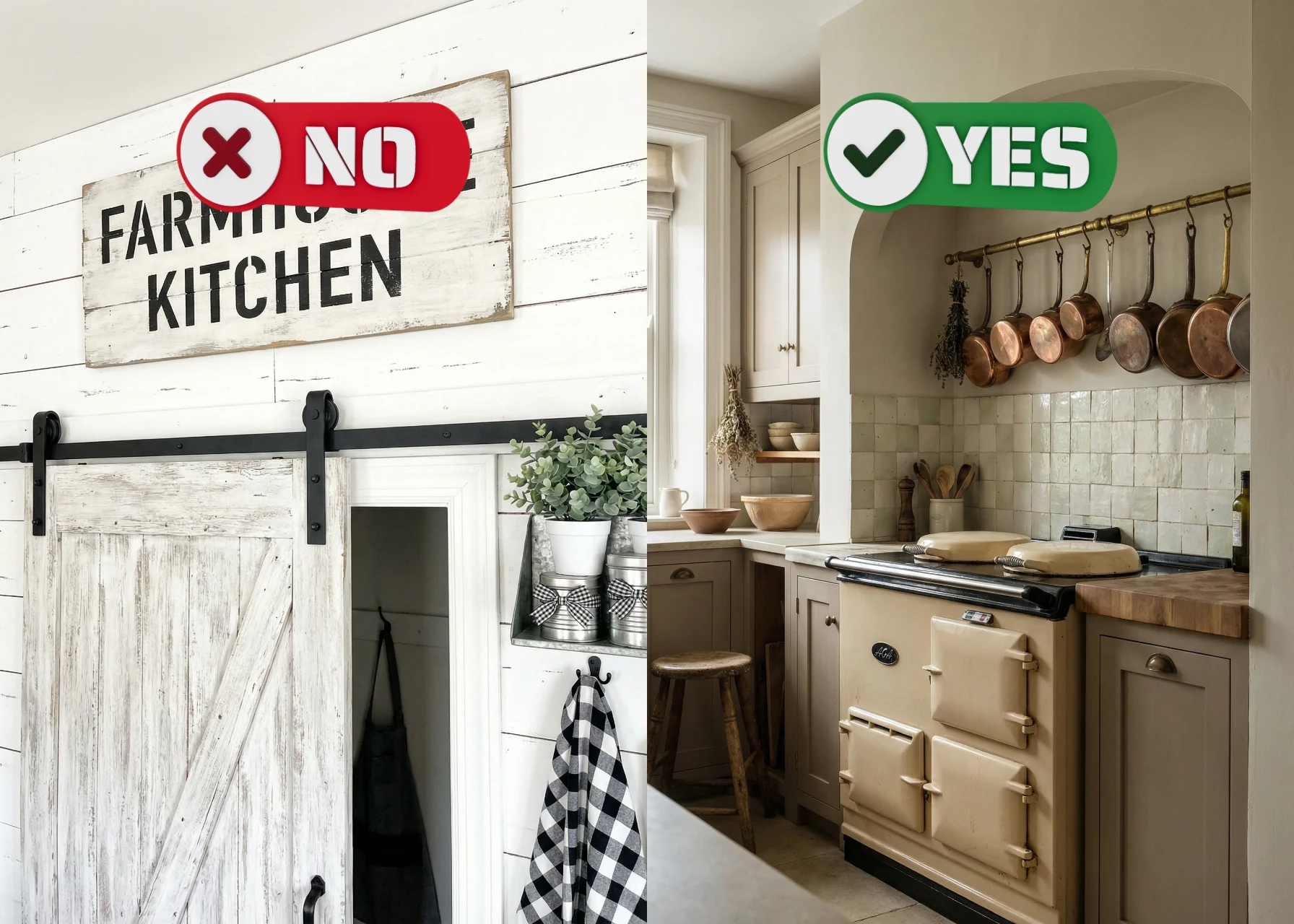
We are officially retiring the oversized “EAT” or “PANTRY” signs and the excessive distressed shiplap. The literal farmhouse look has evolved into something much more subtle and refined. The “theme park” version of the country kitchen is outdated.
Consider instead: Adopt a “Modern Cottage” or English country vibe. Focus on authentic craftsmanship—shaker style cabinets with thinner rails (micro-shakers), real butcher block accents, and heirloom-quality copper pots. It’s about capturing the feeling of a farmhouse without the kitschy decor.
7. Matching Everything
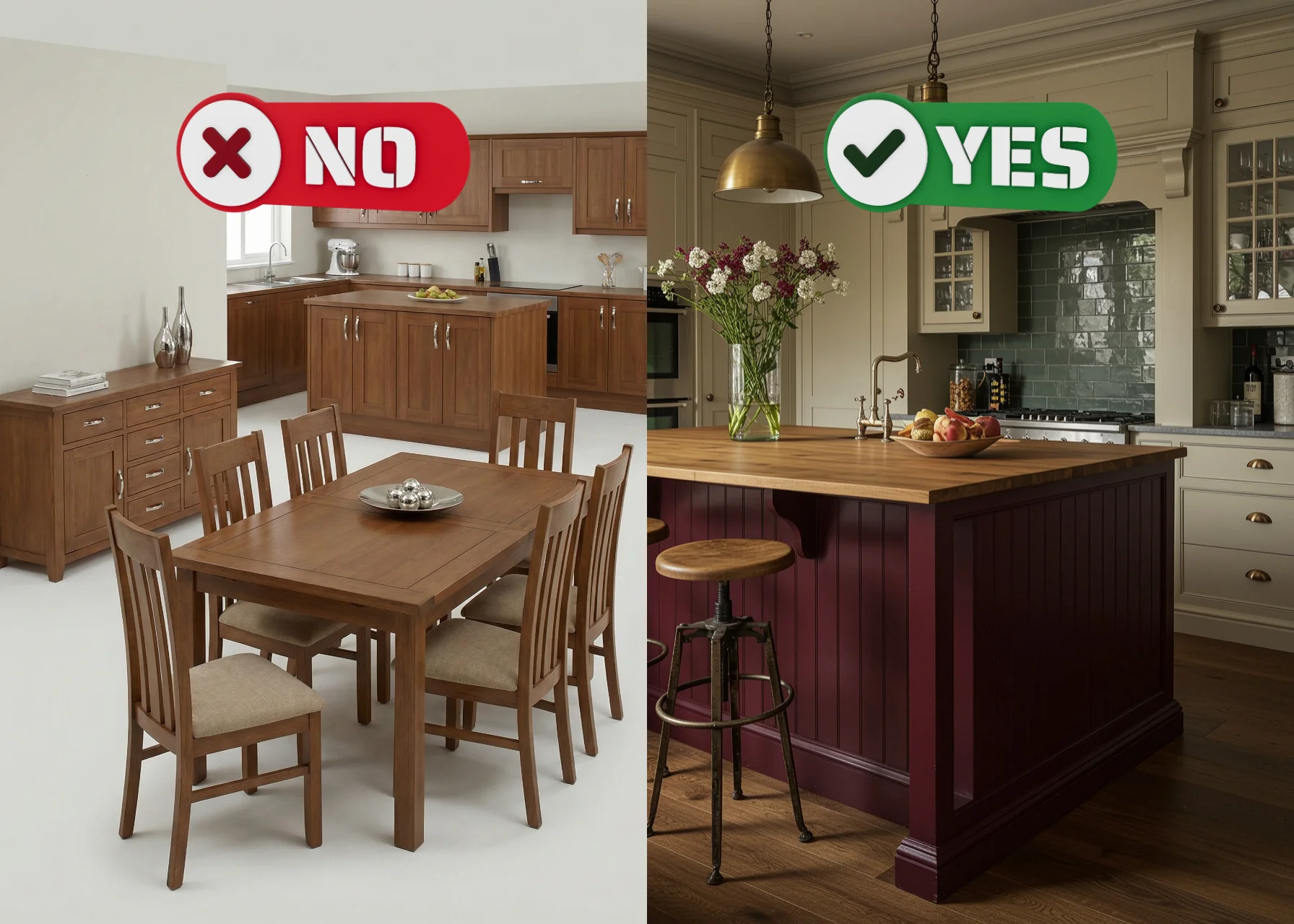
Buying a matching suite of furniture, or ensuring your island color matches your wall cabinets perfectly, is a trend of the past. The “matchy-matchy” look can make a room feel flat and impersonal, like a catalog page rather than a home.
Consider instead: Mix and match with confidence. Try a two-tone kitchen where the island is a deep moody green or burgundy, contrasting with lighter perimeter cabinets. Mix your metals (yes, you can mix silver and brass!) to create a layered, collected look that feels evolved over time.
8. Faux Wood Tile Flooring
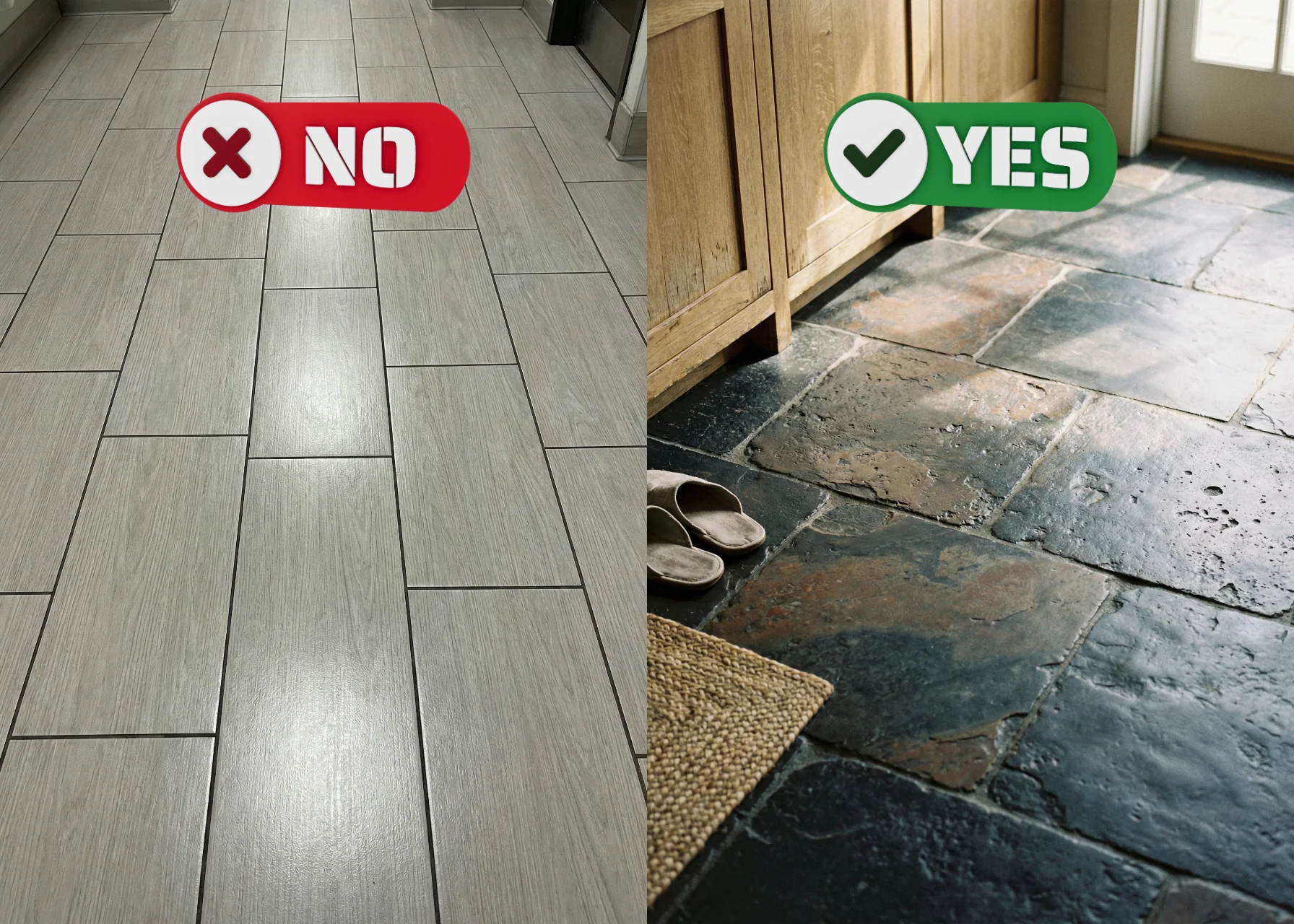
Wood-look ceramic tiles were a practical solution, but in 2026, authenticity is the priority. If it looks like wood but feels cold and hard like stone, it creates a sensory disconnect that designers are avoiding.
Consider instead: If you can’t do real hardwood, opt for authentic alternatives. Luxury Vinyl Plank (LVP) has improved massively in texture and warmth, but better yet, embrace the material you are using. If you want tile, choose a beautiful slate, terracotta, or natural stone tile that looks like itself, not an imitation of something else.
9. Grey-Washed Floors and Walls
The era of the “grey outcome” is ending. Grey-washed wood floors and cool grey walls often leave a space feeling gloomy and dated. As we crave more connection to nature, these artificial-looking cool tones are being replaced.
Consider instead: Return to natural wood tones. White oak, walnut, and honey-toned woods are timeless and bring instant warmth. For walls, swap the cool grey for warm whites or earth-inspired tones like sage, clay, or buttercream.
10. Cluttered Countertops
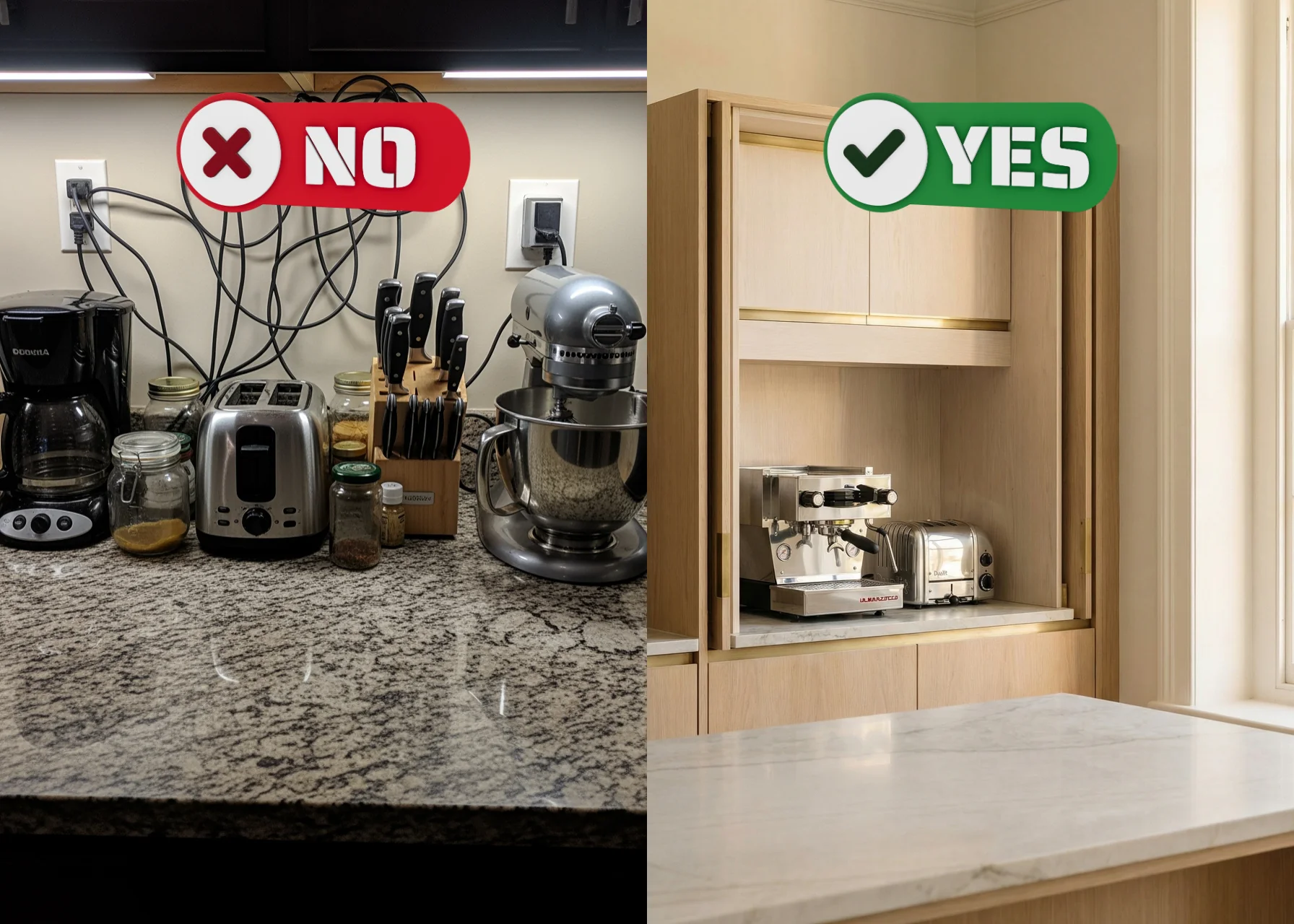
In the past, having a coffee maker, toaster, mixer, and knife block all on display was standard. But with the rise of open-plan living, visual noise is a major enemy.
Consider instead: Invest in appliance garages or designated “breakfast stations” behind pocket doors. The 2026 kitchen is a “quiet” kitchen—where the function is high, but the visual stress is low.
Frequently Asked Questions
A: Not at all! White is a classic that will never truly disappear. However, the clinical, stark-white look is what’s fading. If you love white, try shifting towards warmer, creamier whites (like Swiss Coffee or White Dove) and mixing in wood tones or textured tiles to keep the space from feeling sterile.
A: Absolutely not. If you love it, that is what matters! Trends are just guideposts, not laws. If you feel like your space needs a refresh, though, remember that you don’t have to change everything. You can mix metals—try swapping just your cabinet knobs for antique brass while keeping the black faucet. It creates a cool, eclectic look.
A: For years, “safe” meant grey and white, but buyers today are looking for warmth and character. A sterile kitchen can actually feel less inviting to a buyer in 2026. Stick to natural materials like wood and stone—they have universal appeal and high perceived value compared to trendy laminates.
A: Small swaps make a massive difference. Changing your cabinet hardware, upgrading your lighting fixtures to something more organic, or simply painting your walls a warmer tone can completely transform the vibe of your kitchen without the dust and cost of a remodel.
A: If you only remember one thing, make it “Tactile Warmth.” Whether it’s through wood, unlacquered metal, stone, or woven textures, the goal is to create a kitchen that feels as good to touch as it looks to the eye.
Conclusion
Your kitchen should ultimately make you happy. But if you’re looking to future-proof your investment, leaning away from the sterile and industrial and toward the warm, textured, and sustainable is the way to go. 2026 is all about creating a space that feels like a warm hug—stylish, functional, and unapologetically you.
Ready for a Refresh?
Now that you know what to leave behind, it’s time to focus on the exciting elements you should be bringing into your home. If you’re ready to dive deeper into the specific styles, colors, and materials that will define the most beautiful kitchens of 2026, we have you covered.
Start planning your dream space with these essential guides: