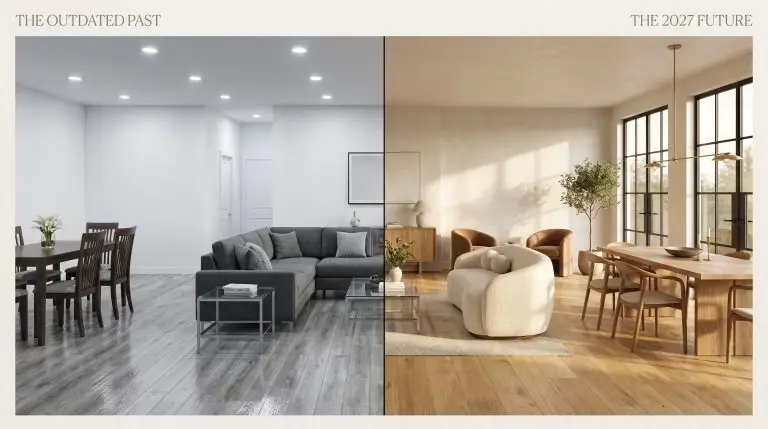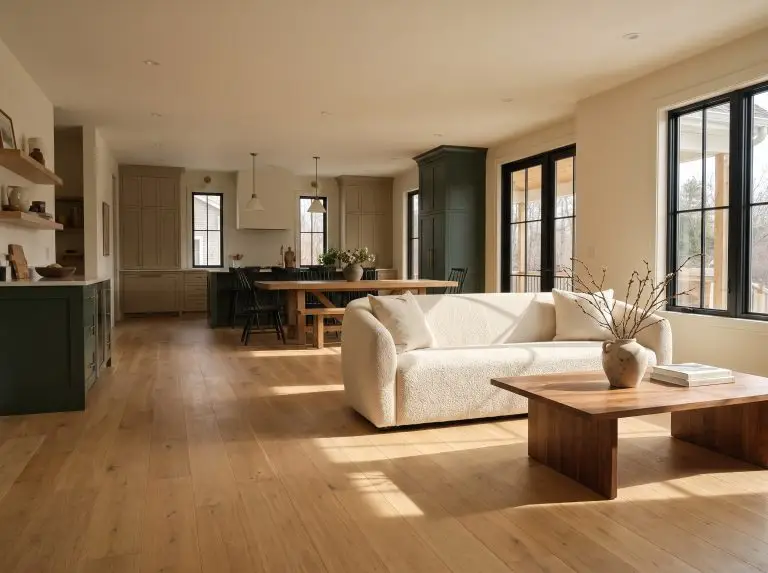
Flooring represents a high-stakes, semi-permanent investment that fundamentally alters the spatial psychology of a house. For the better part of a decade, the market was saturated with clinical, opaque gray planks and heavily hand-scraped faux-farmhouse boards. Those artificially distressed, cool-toned surfaces are now decisively out, as industry standards and consumer preferences shift aggressively toward natural roots.
The core flooring trends 2027 has to offer are driven by authentic materiality, tactile warmth, and architectural scale. Whether you are sourcing character-grade solid hardwood for a bespoke build or high-performance synthetics for an accessible luxury renovation, modern surfaces must feel organic and grounded. Our analysis of current design principles shows a strict rejection of high-gloss plastics and flat, printed imitations in favor of rich, sensory textures.
To future-proof your renovation, you must stop viewing your floors as a passive, neutral canvas.
The modern floor is the foundational anchor that dictates the visual volume, hardware pairings, and lighting strategy of your entire home.
The Hardwood Renaissance: Warmth, Width, and Grain
We are witnessing a massive return to authentic, nature-driven wood surfaces. Consumers and master tradespeople alike are favoring boards that actually look and feel like raw timber, rejecting heavy chemical stains in favor of natural grain expression.
1. The Dominance of “Honey” and Mid-Tone Natural Oaks
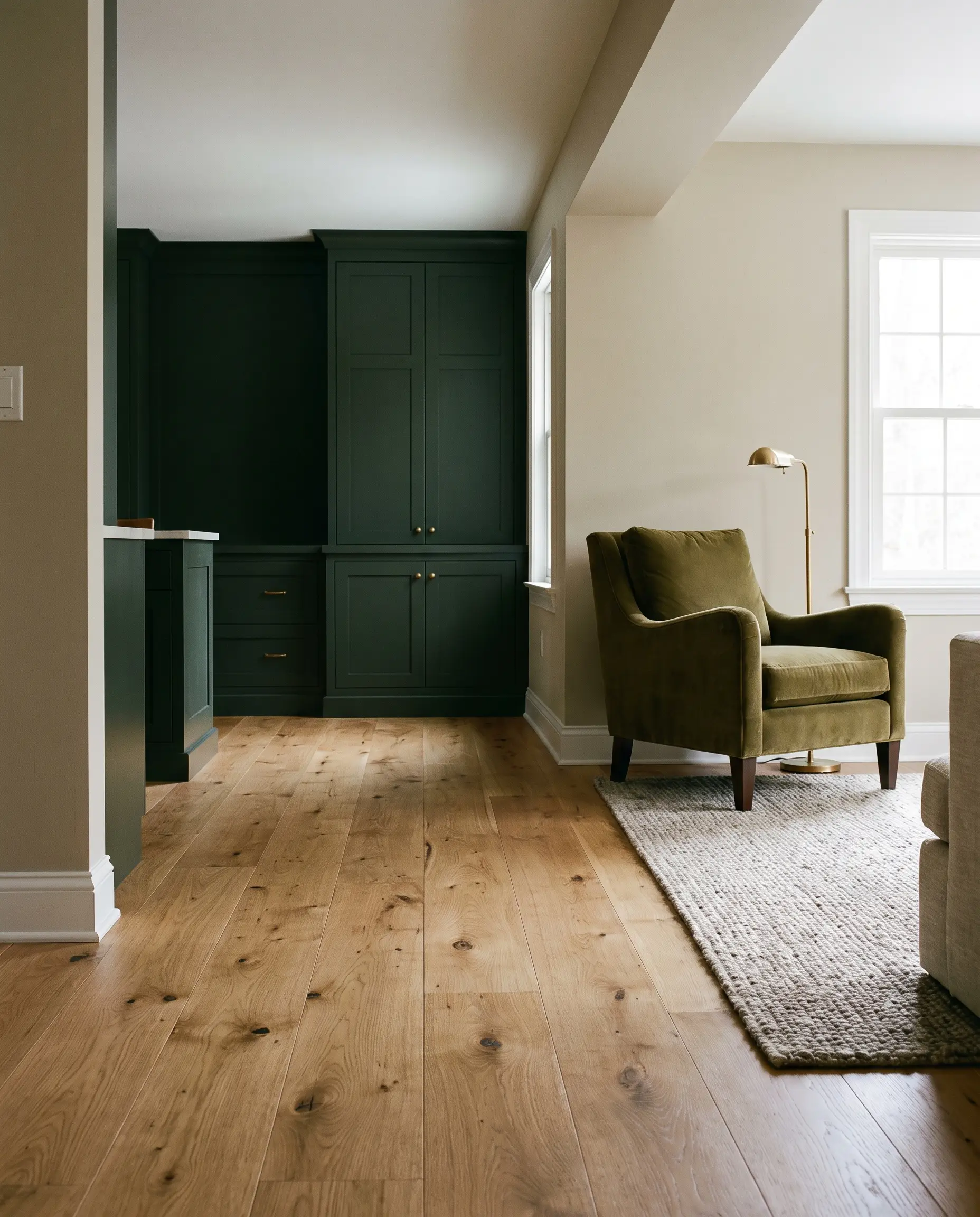
The industry has moved past both icy, ashen grays and the heavy red-orange stains of the early 2000s, landing firmly on balanced, warm mid-tones. White Oak remains the reigning champion for organic modern and transitional spaces due to its incredibly clean grain profile and adaptability. These honey-toned woods introduce immediate warmth without dictating a specific, rigid color palette for the rest of the room.
- Vibe: Grounded, organic, and effortlessly refined.
- Key Material: Character-grade White Oak with a clear or lightly pigmented sealer.
- Paint Recommendation: Benjamin Moore Natural Cream (OC-14) provides a warm, complementary undertone that bridges the gap between the wood and crisp white ceilings.
- Styling Pro-Tip: Pair mid-tone oak with deep forest green cabinetry or warm putty millwork, actively avoiding stark, icy white paints that clash with the wood’s natural warmth.
2. Extra-Wide and Ultra-Long Planks (7-Inch+)
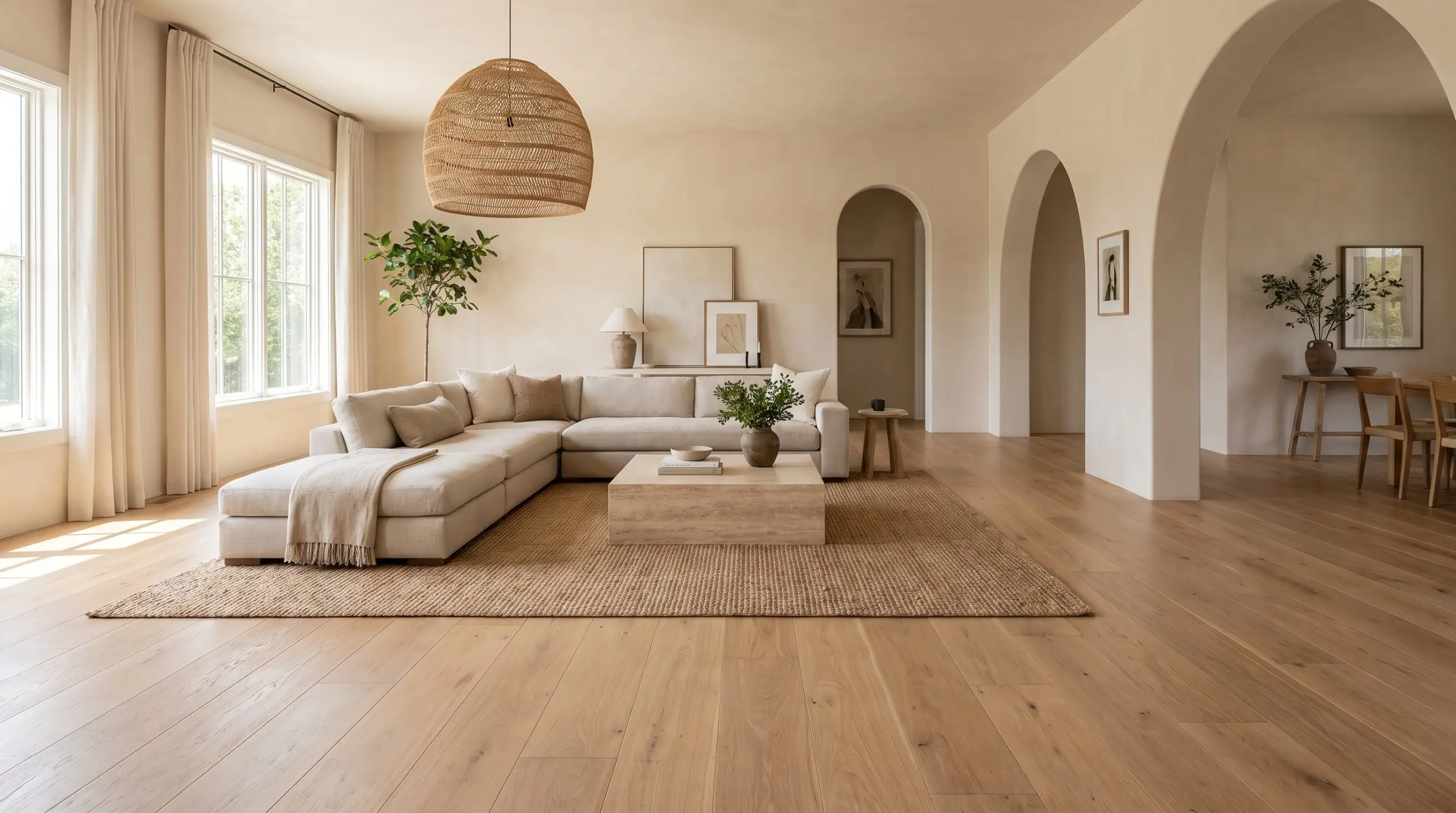
Standard five-inch planks no longer carry the visual weight required for luxury interiors; the modern standard now commands widths of seven to nine inches paired with ultra-long board lengths. From a spatial psychology perspective, fewer physical seams create a cleaner, uninterrupted visual flow, making open-concept living rooms feel significantly larger and less chaotic.
Extra-wide planks are highly susceptible to moisture fluctuations. Professional installers require meticulous subfloor preparation and often recommend a glue-and-nail installation method to prevent the wood from cupping over time.
Hackrea Designer Secret
- Vibe: Expansive, seamless, and architecturally significant.
- Width Specs: 7 to 9 inches for standard luxury; 10+ inches for bespoke applications.
- Spatial Impact: Reduces visual noise, creating an illusion of expanded square footage.
3. Matte, Satin, and Low-Sheen Finishes
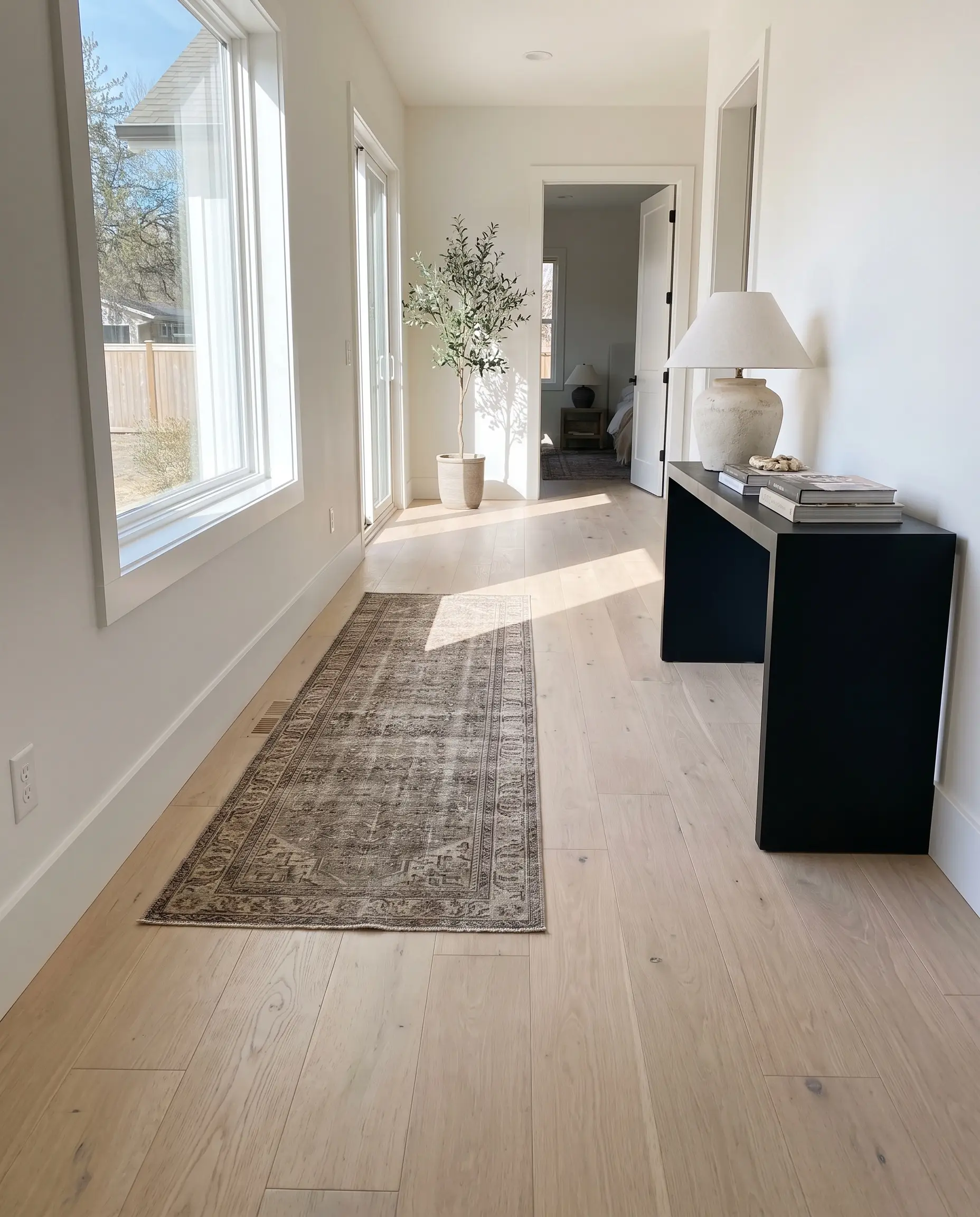
High-gloss, plastic-looking polyurethane finishes are entirely dated, replaced by ultra-matte and low-gloss oil finishes. These low-sheen sealants offer rigorous protection while allowing the wood’s true, raw beauty to remain the focal point. Practically, a matte finish is vastly superior at hiding daily dust, bare footprints, and micro-scratches compared to a glossy, reflective surface.
- Vibe: Tactile, understated, and highly livable.
- Finish Specs: Hard-wax oils or water-based ultra-matte polyurethanes (typically 10% sheen or lower).
- Maintenance Advantage: Diffuses natural light rather than reflecting it, masking everyday wear and tear in high-traffic zones.
4. Light Wire-Brushing over Artificial Distressing
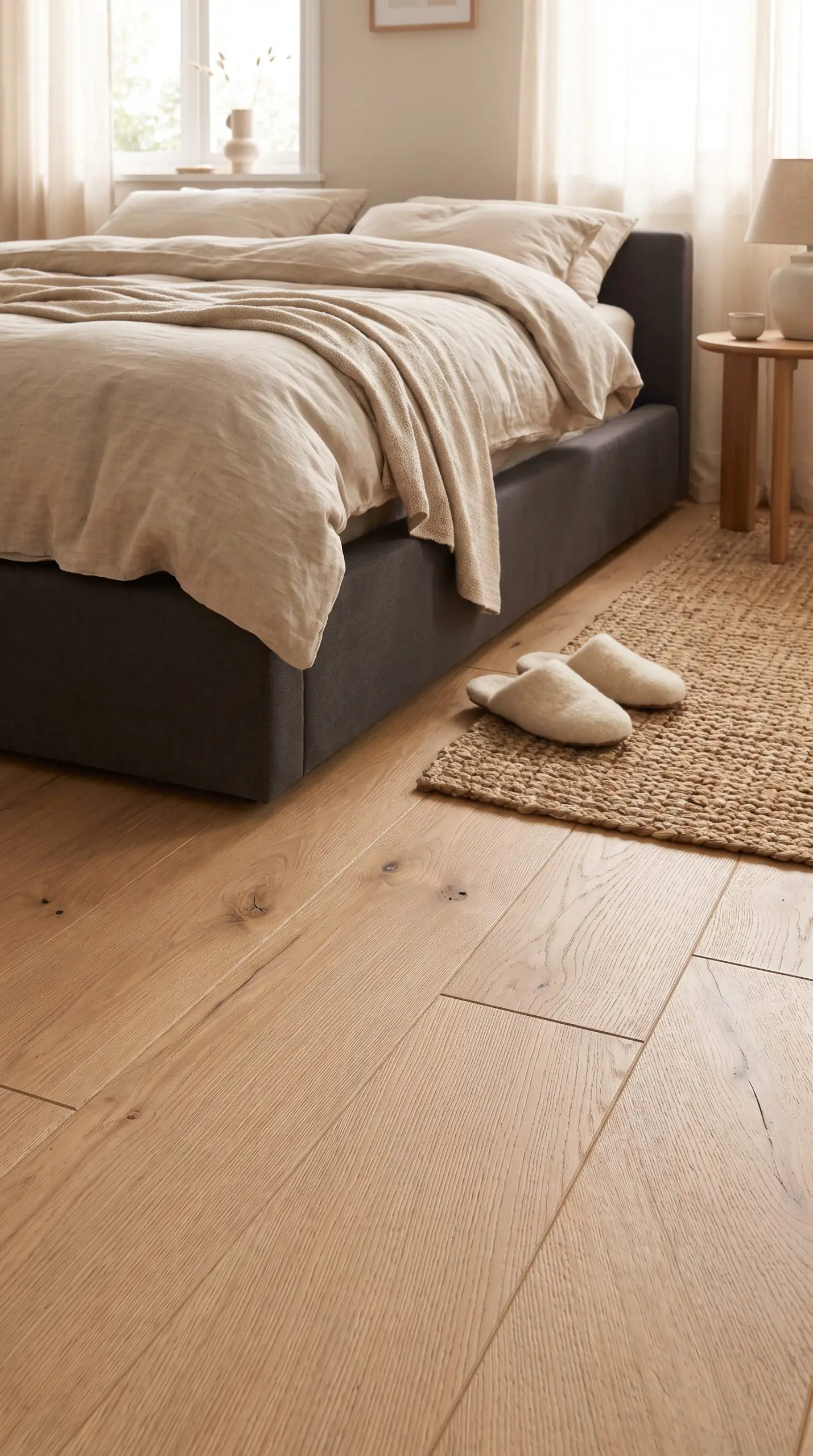
The heavy, aggressive hand-scraping used to simulate “barn wood” has been phased out of modern manufacturing. The current standard for texture is light wire-brushing, a technique that gently removes the softest wood fibers to expose the harder, natural grain underneath. This results in a floor that feels beautifully organic and patinated under bare feet without looking like a manufactured reproduction.
- What’s Out: Deep, artificial hand-scraping, heavy chatter marks, and harsh, dirt-catching bevels.
- What’s In: Subtle wire-brushing, micro-bevels, and authentic, natural knots.
- Tactile Note: The surface should feel gently ribbed and natural to the touch, not aggressively gouged.
Architectural Geometries and Statement Layouts
Materiality is only half the equation; the physical installation pattern fundamentally alters the rhythm of a space. Modern layouts utilize historical geometries but deploy them strategically to avoid overwhelming the eye.
5. Zoned Herringbone and Chevron
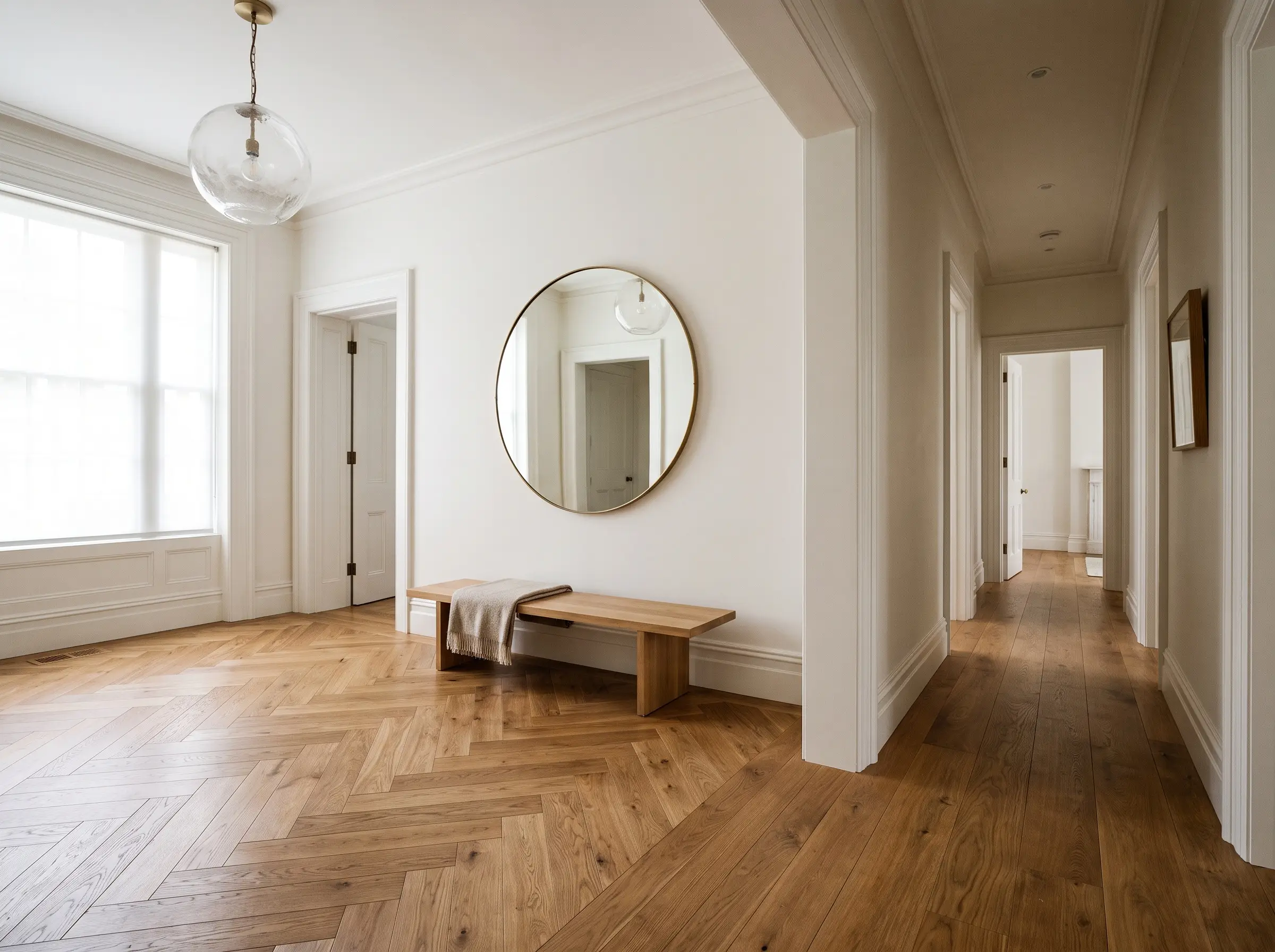
Installing an intricate pattern across an entire open-concept home is often visually dizzying and prohibitively expensive. The current approach is “Zoned Herringbone,” which restricts the complex layout to a specific feature area—like a grand entryway or a formal dining room—before transitioning seamlessly into straight planks of the exact same material for the remaining square footage.
- Vibe: Tailored, intentional, and highly custom.
- Pattern Definition: Herringbone utilizes standard rectangular planks laid in a staggered zigzag; Chevron requires planks cut at a precise angle to form a continuous, sharp V-shape.
- Application Zone: Corridors, foyers, and enclosed formal spaces where the pattern acts as a structural rug.
6. The Return of Heritage Parquet
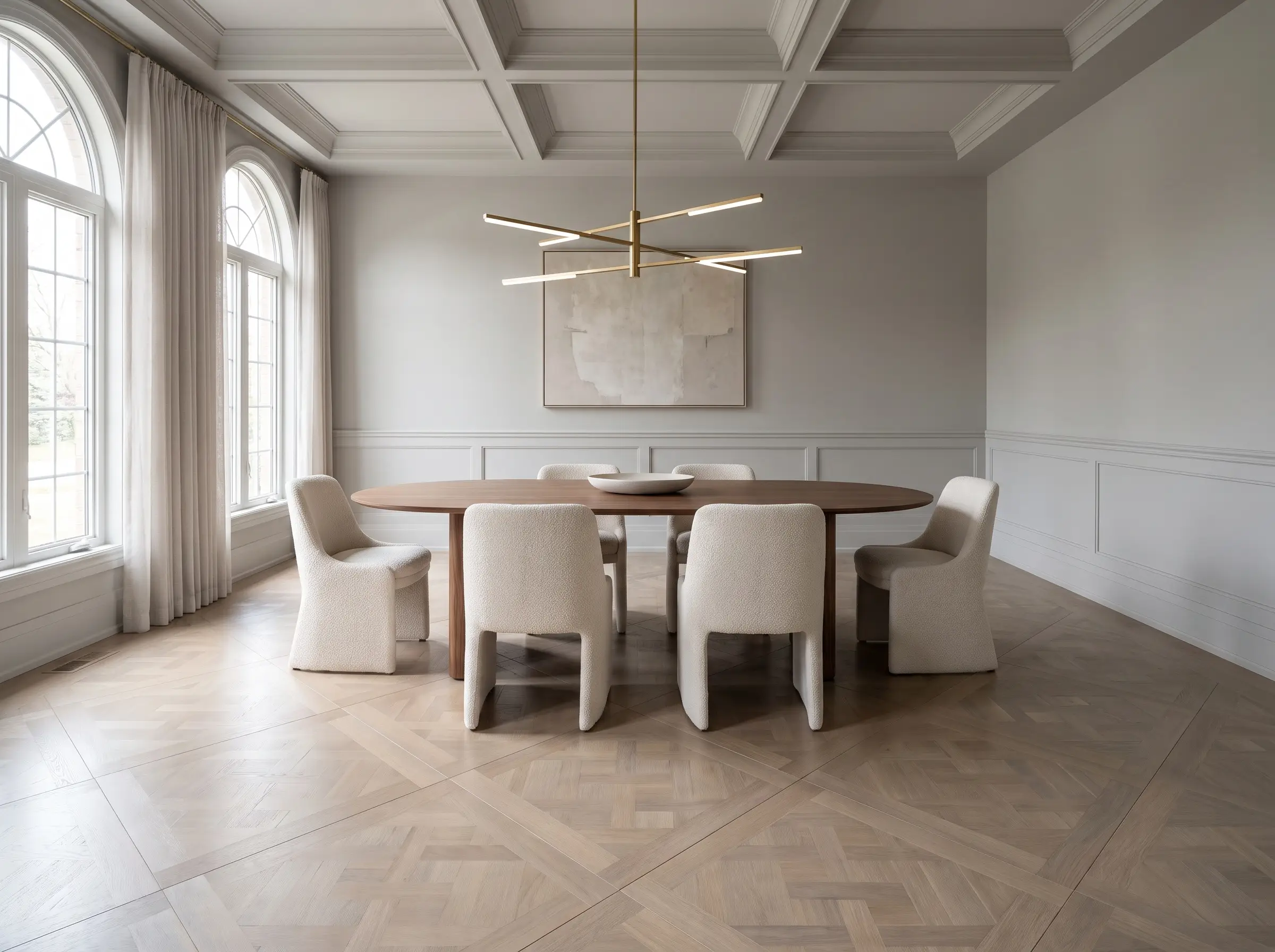
Moving beyond the ubiquitous mid-century aesthetics, high-end design is looking backward to 17th-century French architecture. Parquet flooring, particularly the intricate Versailles pattern, is experiencing a massive revival when executed in lighter, matte-finished woods. This application bridges historical, old-world charm with contemporary lightness, resulting in a deeply bespoke aesthetic.
Parquet is a stunning architectural feature, but it belongs in dry, climate-controlled living spaces. Keep these intricate, multi-seamed wooden patterns strictly out of the splash zones of kitchens and mudrooms.
Design Ally Tip
- Vibe: Historic, sophisticated, and undeniably luxurious.
- Key Material: Lightly smoked or raw-look oak cut into geometric panels.
- Visual Volume: Adds immense structural detail to a room, requiring simplified, minimalist furniture to balance the visual weight.
The Tile Evolution: Scale and Tactility
For hard-wearing zones like kitchens, bathrooms, and mudrooms, the industry is polarizing into two distinct camps: massive, seamless slabs, or highly irregular, handmade ceramics.
7. Large-Format Slabs (24×48 and Beyond)
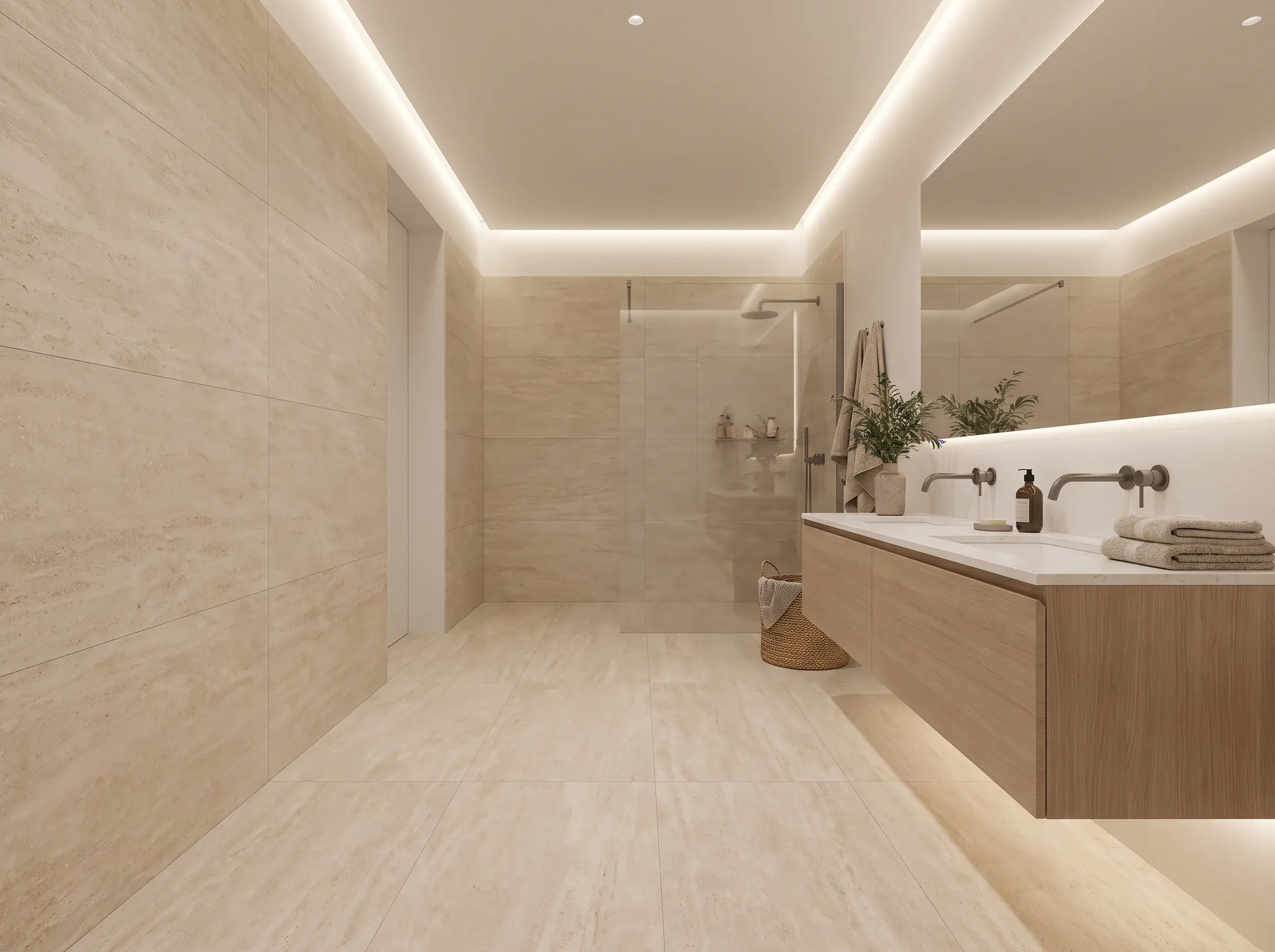
The standard 12×24 inch tile has been completely eclipsed by massive 24×48 inch, or even larger, porcelain slabs. By drastically reducing the number of grout lines, these oversized tiles eliminate visual grid-noise and create a monolithic, seamless canvas. This spatial trick makes cramped bathrooms and narrow galley kitchens feel exponentially wider and more serene.
To successfully pull off the monolithic look of large-format slabs, you must perfectly color-match your grout to the lightest base tone of the tile. Contrasting grout lines will instantly break the illusion of a continuous stone surface.
Hackrea Designer Secret
- Vibe: Expansive, contemporary, and hotel-inspired.
- Dimensions: 24×48 inches is the new baseline; 48×48 inches for ultra-luxury applications.
- Material Match: High-definition porcelain printed with subtle limestone or travertine veining.
8. Marble Grit and European Terrazzo
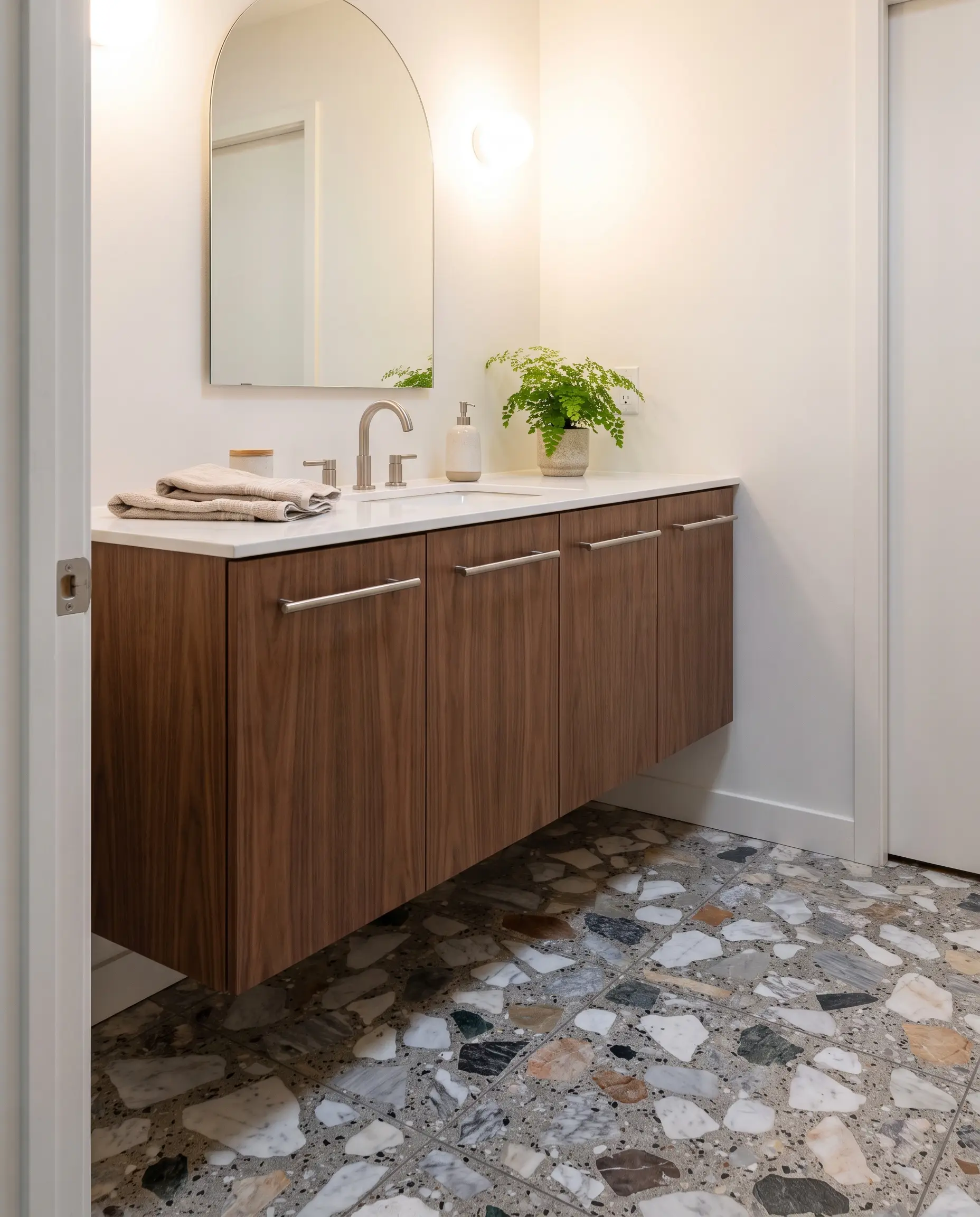
Moving past standard Carrara marble, authentic European terrazzo—specifically styles featuring irregular “marble grit”—is taking over entryways and primary bathrooms. This material embeds fractured mineral fragments into a concrete or resin base, providing a layered, speckled texture. It adds distinct rhythm and visual interest to a space without relying on the harsh, high-contrast geometric tile patterns of the past decade.
- Vibe: Postmodern, artisanal, and highly durable.
- Hardware Match: Pairs flawlessly with satin-finish metals like brushed nickel or unlacquered brass.
- Vanity Pairing: Anchor the speckled floor with a rich, flat-panel walnut vanity to introduce necessary warmth.
9. Tactile Ceramics: Zellige and Terracotta
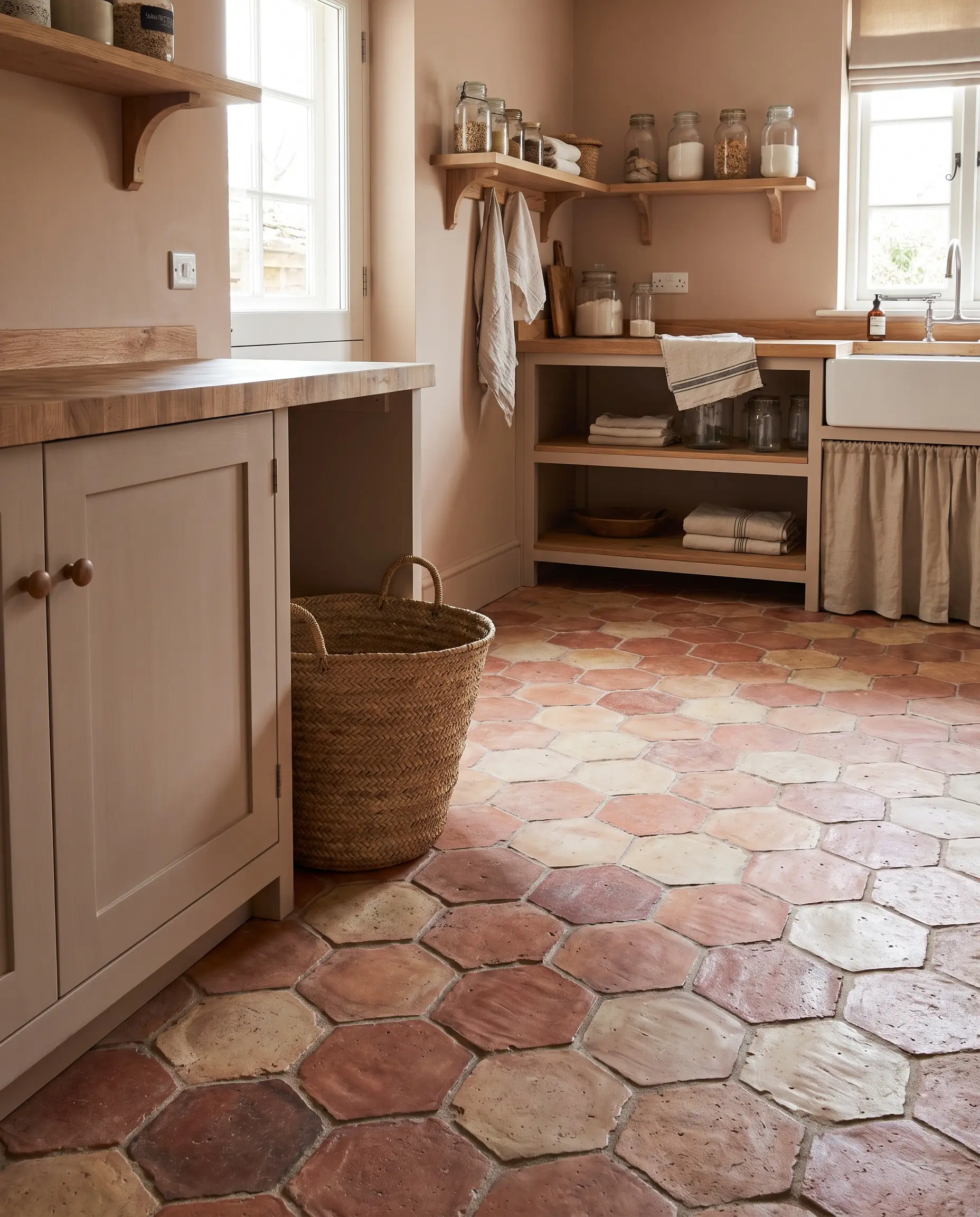
The outright rejection of sterile, factory-perfect surfaces has brought deeply earthy, handmade tiles back into the spotlight. Authentic Moroccan Zellige and French Country terracotta feature undulating surfaces, raw edges, and immense tonal variation. These materials bring a grounded, perfectly-imperfect soul to laundry rooms and kitchens, catching natural light in a way that flat ceramics simply cannot replicate.
- Vibe: Earthy, rustic, and heavily textured.
- Key Materials: Glazed Zellige squares or unglazed, sealed terracotta hexes.
- Paint Recommendation: Farrow & Ball Setting Plaster (No. 231) pulls out the warm, dusty undertones inherent in natural clay floors.
High-Performance Synthetics (The Accessible Luxury Route)
We recognize the realities of active family homes, large pets, and strict renovation budgets. Fortunately, massive advancements in material science have rendered modern synthetic flooring virtually indistinguishable from organic materials, offering high durability without sacrificing aesthetic integrity.
10. Embossed-in-Register (EIR) Luxury Vinyl Plank
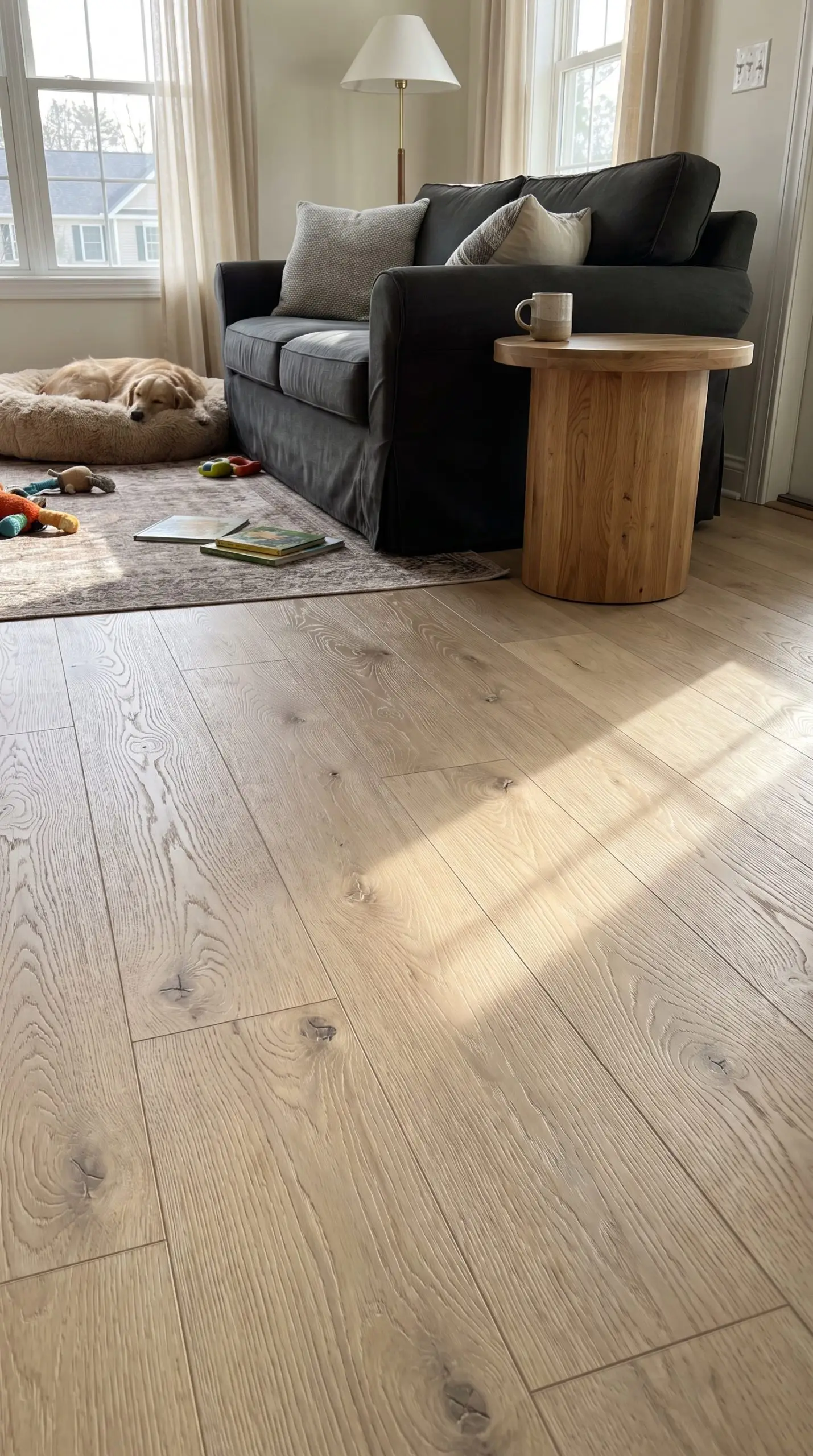
Luxury Vinyl Plank (LVP) is only a premium choice if it utilizes Embossed-in-Register (EIR) technology. This specific manufacturing process physically stamps the texture of the plank so that the grooves perfectly align with the printed visual grain of the wood. EIR entirely eliminates the flat, plastic feel of older vinyl, creating a surface that mimics the Janka hardness and tactile reality of white oak while remaining 100% waterproof.
- Vibe: Practical, resilient, and visually authentic.
- Tech Spec: Always verify the LVP features genuine EIR technology and a wear layer of at least 20-mil for longevity.
- Durability: Highly scratch-resistant, making it the ultimate Accessible Luxury choice for high-traffic, pet-friendly homes.
11. Seamless Rigid-Core for Wet Zones
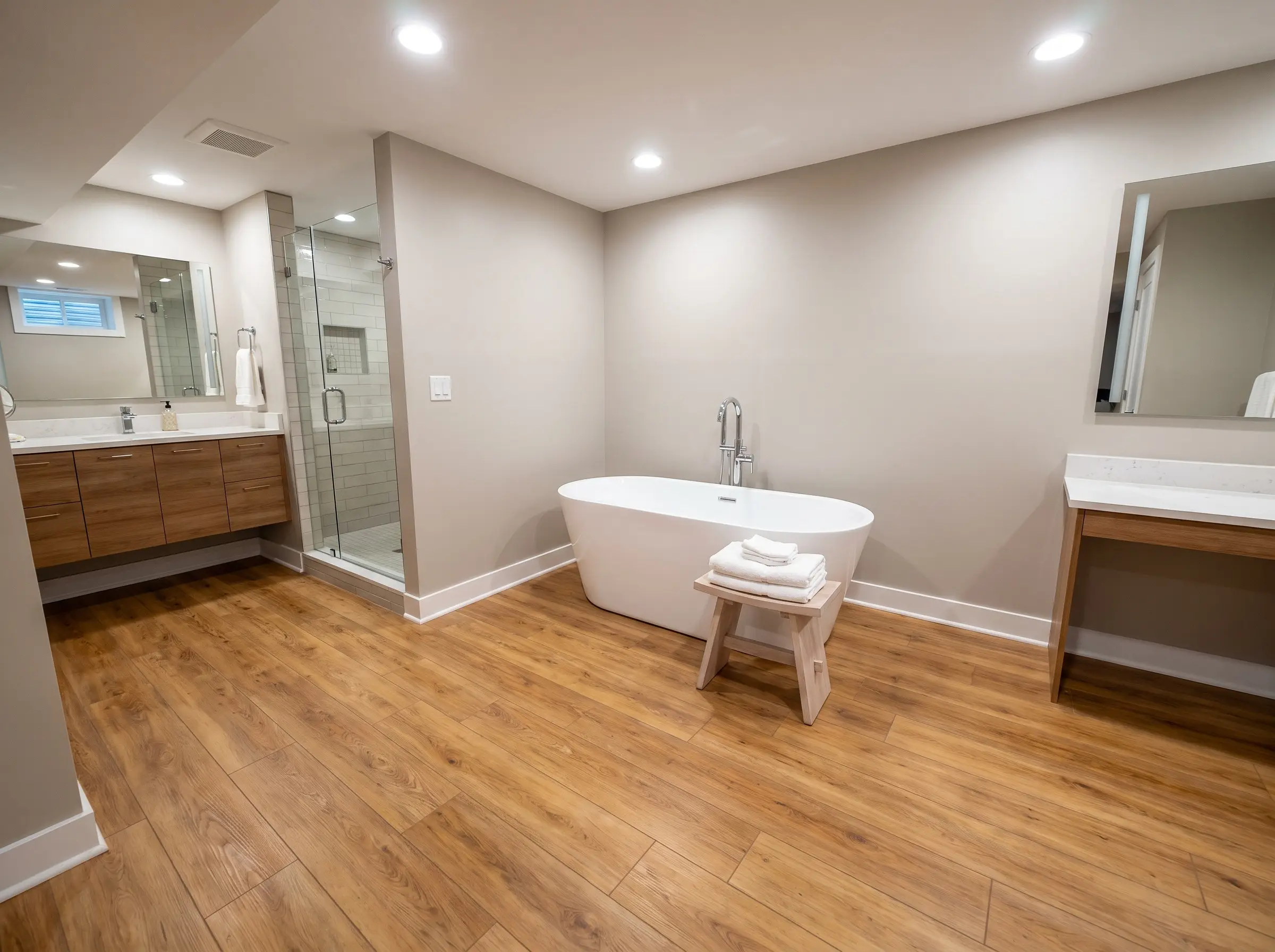
Basements, laundry rooms, and lower-level bathrooms no longer require the cold, echoing surface of traditional ceramic tile. Rigid-core hybrid planks provide the visual warmth and continuous flow of a hardwood floor with absolute climate and moisture resilience. If your home has an uneven subfloor or faces humidity fluctuations, rigid-core offers structural stability that traditional wood cannot match.
- Rigid-Core Pros: Warmer underfoot, completely waterproof, faster click-lock installation, and highly forgiving over minor subfloor imperfections.
- Rigid-Core Cons: Cannot be sanded or refinished; if a plank is deeply gouged, it must be completely replaced.
- Tile Pros: Lasts a lifetime if properly maintained, offers superior radiant heat conductivity, and provides authentic stone texture.
The “Anti-Dated” Strategy: How to Future-Proof Your Floors
Flooring is a foundation meant to last twenty years or more. The most effective strategy to avoid the brutal trend cycle is to look backward rather than forward. If a specific material or pattern has been successfully utilized for a century—such as natural oak, raw terracotta, or classic herringbone—it is guaranteed to survive the next decade. Conversely, if a flooring color relies on an unnatural chemical stain (like opaque gray or high-gloss cherry), it will inherently date your home as soon as the broader color palette shifts.
To ensure your renovation feels cohesive, you must view the floor as the starting point for your entire material palette. Use the guide below to perfectly balance the undertones of your new surfaces with your architectural hardware and wall colors.
The 2027 Flooring Pairing
| Floor Material | Best Hardware Pairing | Best Paint Undertone |
|---|---|---|
| Mid-Tone Honey Oak | Unlacquered Brass | Warm Putty/Cream |
| Large-Format Porcelain (Matte) | Gunmetal or Matte Black | Soft Greige |
| French Terracotta | Polished Nickel | Earthy Plaster/Limewash |
| Marble Grit Terrazzo | Brushed Nickel | Crisp Architectural White |