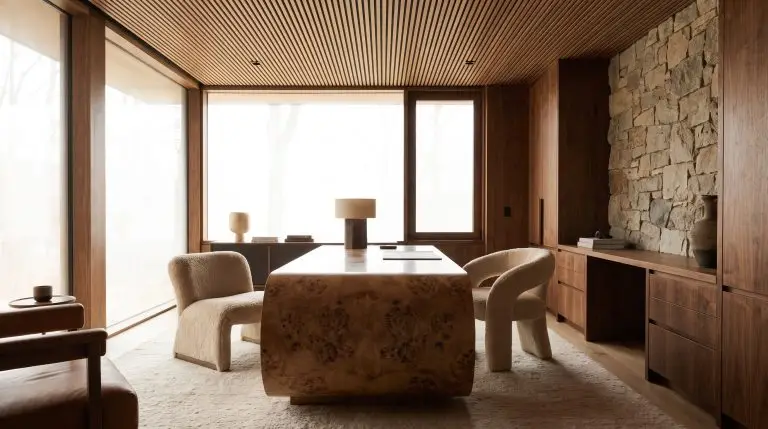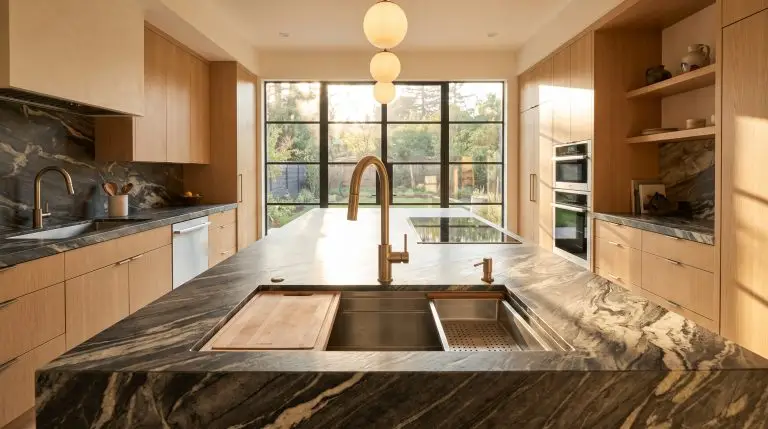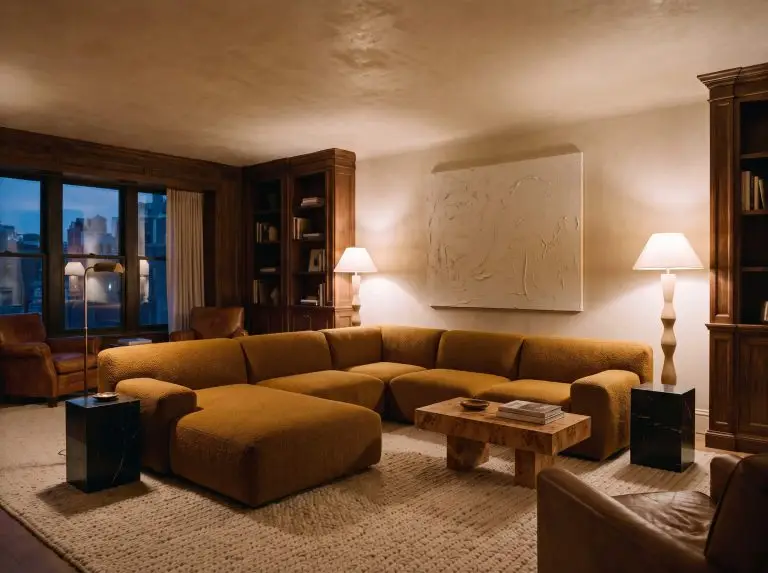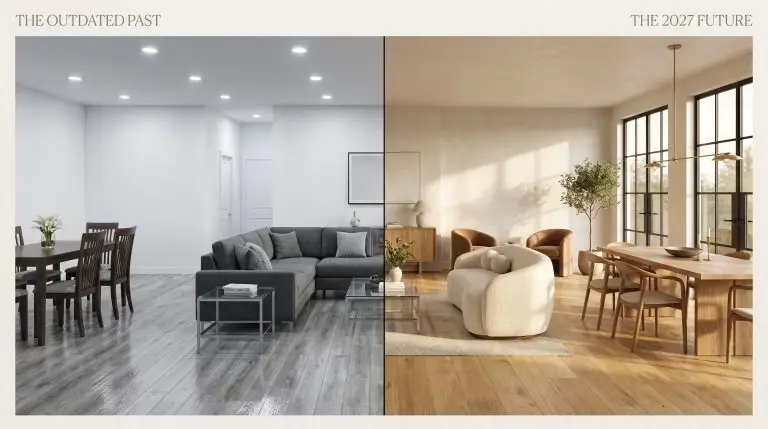
The cool, ashy grays and heavily distressed farmhouse floors of the past decade are officially dead. Hardwood is a permanent architectural investment, and the current design landscape rightfully treats it as the foundational anchor of a high-end home. We are witnessing a massive aesthetic shift toward Warm Minimalism and organic permanence, completely rejecting the sterile and artificial finishes that defined the 2010s.
Because replacing floors is an intensive, high-cost endeavor, the most sought-after styles today act as anti-trends. The focus has pivoted entirely to historical cuts, tactile surface finishes, and natural warmth that ages beautifully over decades. We are looking at European White Oak in its rawest visual state, ultra-matte sheens that absorb rather than reflect light, and variable-width planks that mimic historic estates.
As you plan your upcoming build or renovation, remember that true luxury is defined by authenticity. Plastic-feeling topcoats and artificially scraped boards instantly date a space. The 2027 standard requires material honesty, precise geometric installation, and custom stain matching to ensure your foundation feels entirely bespoke.
Quick Trend Summary: The 2027 Shift
- IN: 5% Ultra-Matte Sheens, Variable-Width Planks, Honey & Midtone Browns, European Hardwax Oils.
- OUT: 5-Inch Standard Planks, High-Gloss Polyurethane, Ashy Gray Stains, Heavy Hand-Scraping.
The New Color Palette: 2027’s Dominant Hardwood Tones
Modern luxury design relies on “safe luxury”—grounded earth tones that serve as a highly versatile, patinated canvas for the rest of your interior architecture. These stains prioritize longevity, avoiding stark extremes to bring an inherent, lasting warmth to your home.
Anchor Open Concepts with Warm Honey-Toned Oak
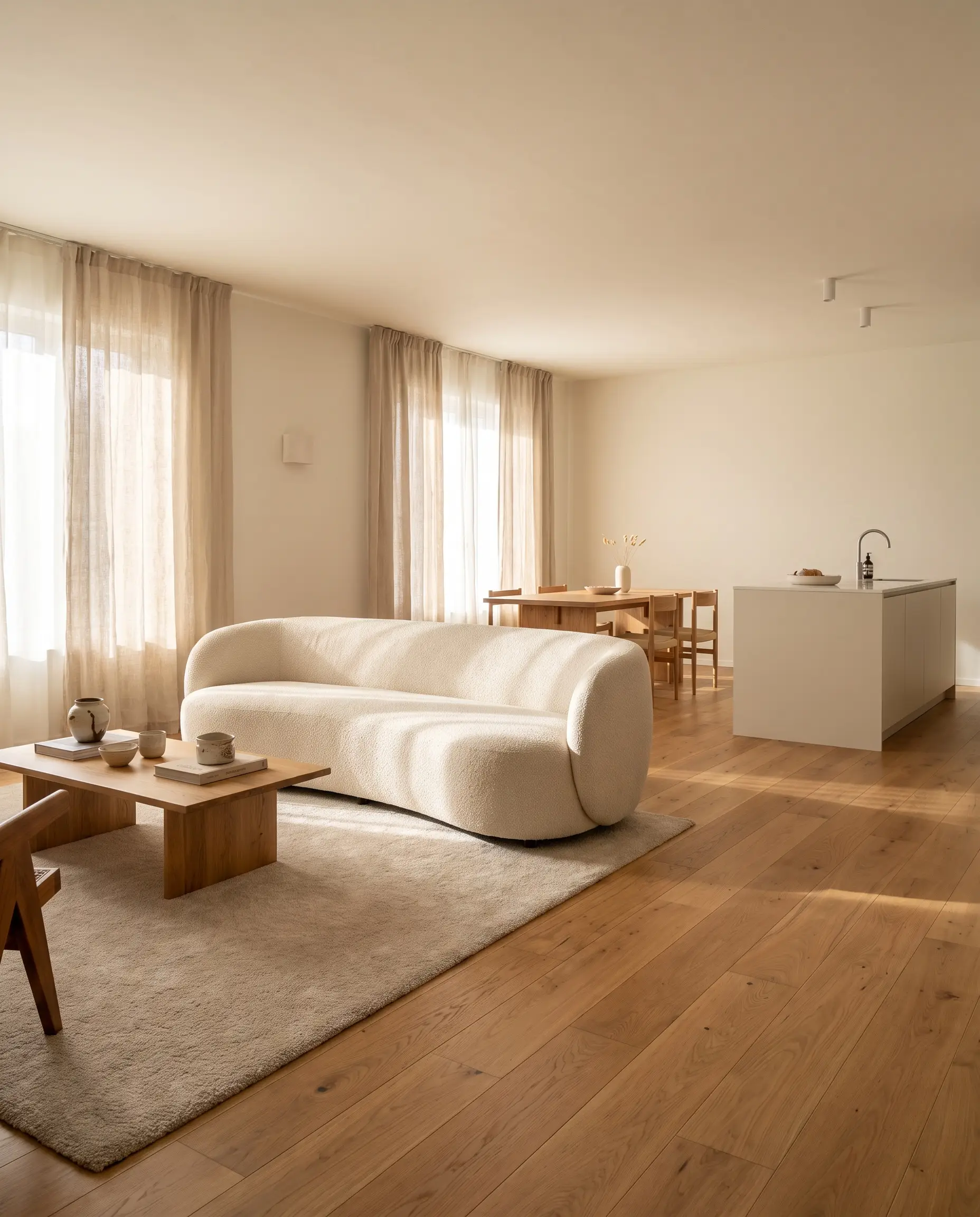
Soft amber and honey hues act as a psychological anchor in expansive, open-concept spaces, replacing the sterile bleached whites of recent years. This colorway brings an immediate, grounded comfort that interacts beautifully with natural morning light.
- Vibe: Grounded, inviting, and inherently warm.
- Key Material: European White Oak with a clear, UV-cured oil finish.
- Paint Recommendation: Benjamin Moore White Dove (OC-17).
- Styling Pro-Tip: Pair with natural linen drapery and soft, textural bouclé upholstery to enhance the organic softness.
Ground Large Rooms with Sun-Washed Midtones
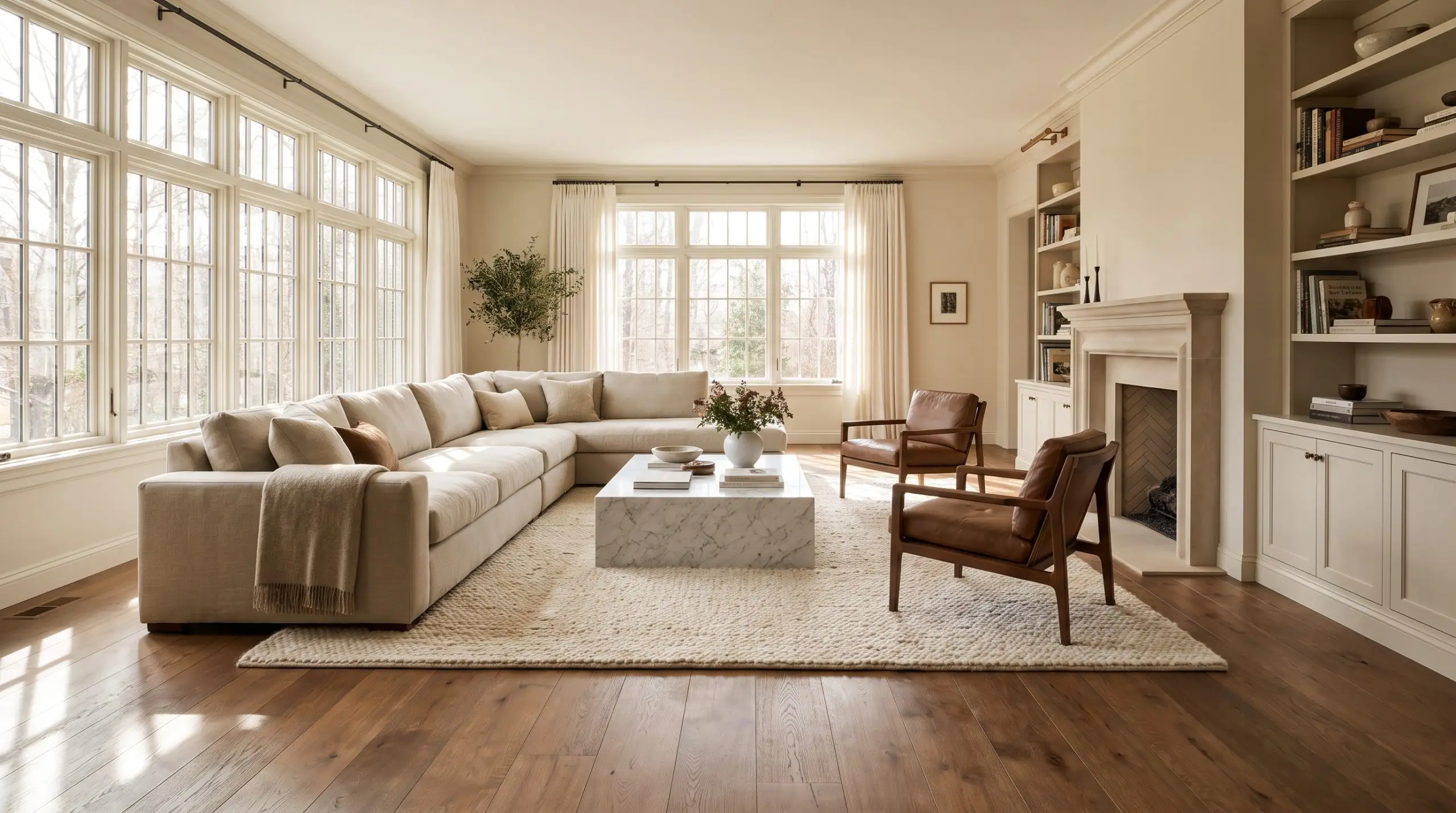
Balanced medium-browns represent the absolute pinnacle of timeless, ROI-friendly design for residential resale value. These sun-washed midtones avoid the heavy, light-absorbing darkness of the early 2000s while providing a rich, architectural contrast against light millwork.
- Vibe: Sophisticated, historically rooted, and reliable.
- Key Material: Rift-sawn oak with a custom mid-tone walnut stain.
- Paint Recommendation: Sherwin-Williams Natural Choice (SW 7011).
- Material Truth: Midtones are notoriously forgiving, hiding everyday dust and foot traffic significantly better than extremely dark or light floors.
Inject Drama with Espresso and Deep Walnut Contrasts
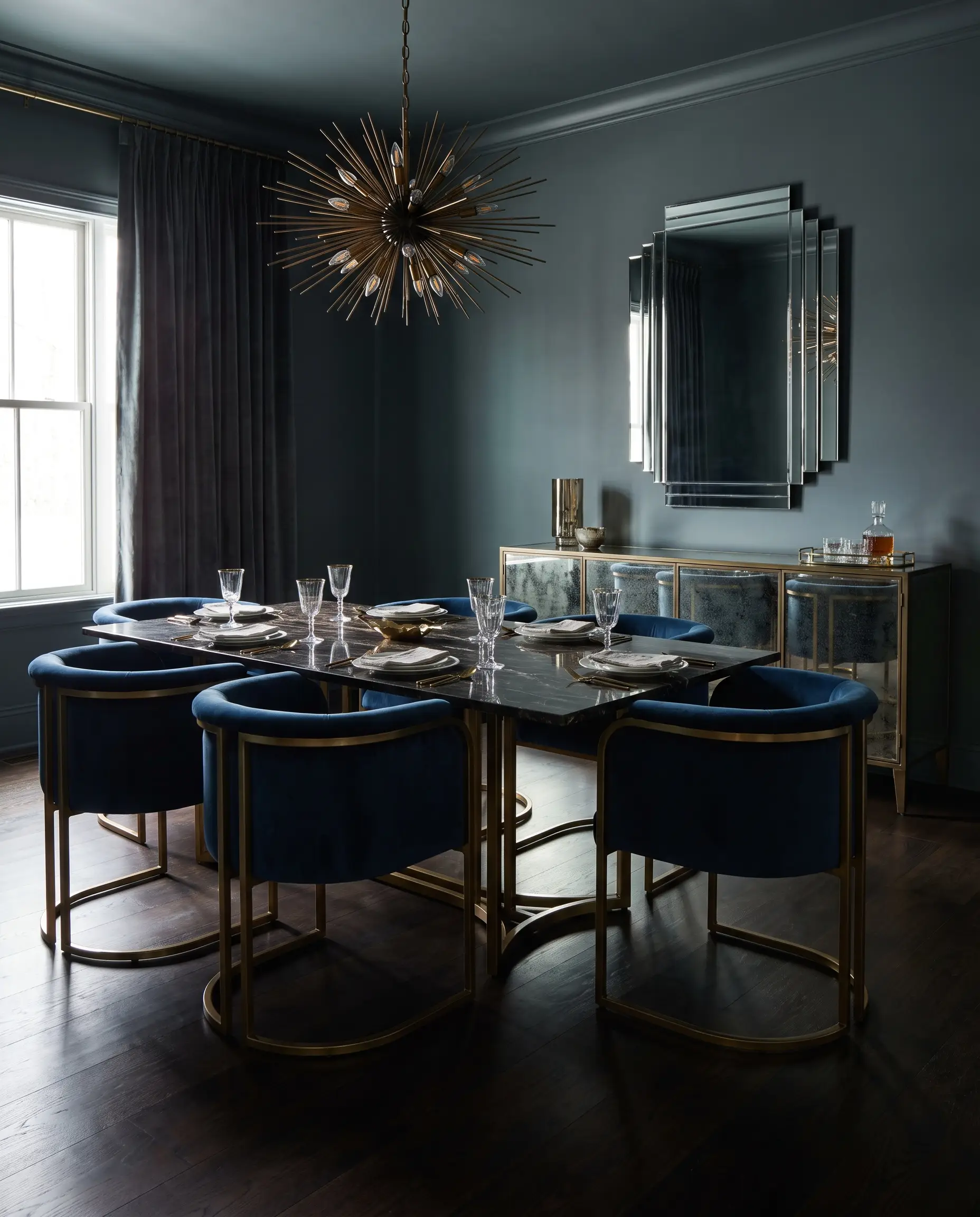
Deep, rich browns are returning to high-end design, utilized intentionally to create moody, Art Deco-inspired drama in formal dining rooms, libraries, or primary suites. These darker stains establish a sophisticated visual anchor but require ample natural light and strategic lighting design to prevent the room from feeling spatially restrictive.
- Vibe: Moody, dramatic, and unapologetically formal.
- Key Material: Solid American Walnut or espresso-stained white oak.
- Paint Recommendation: Farrow & Ball Hague Blue (No. 30) for immersive, material-drenched walls.
- Styling Pro-Tip: Incorporate highly reflective surfaces like antiqued mirror glass or polished marble to bounce light back into the room.
Neutralize Red Undertones with Custom Green-Based Stains
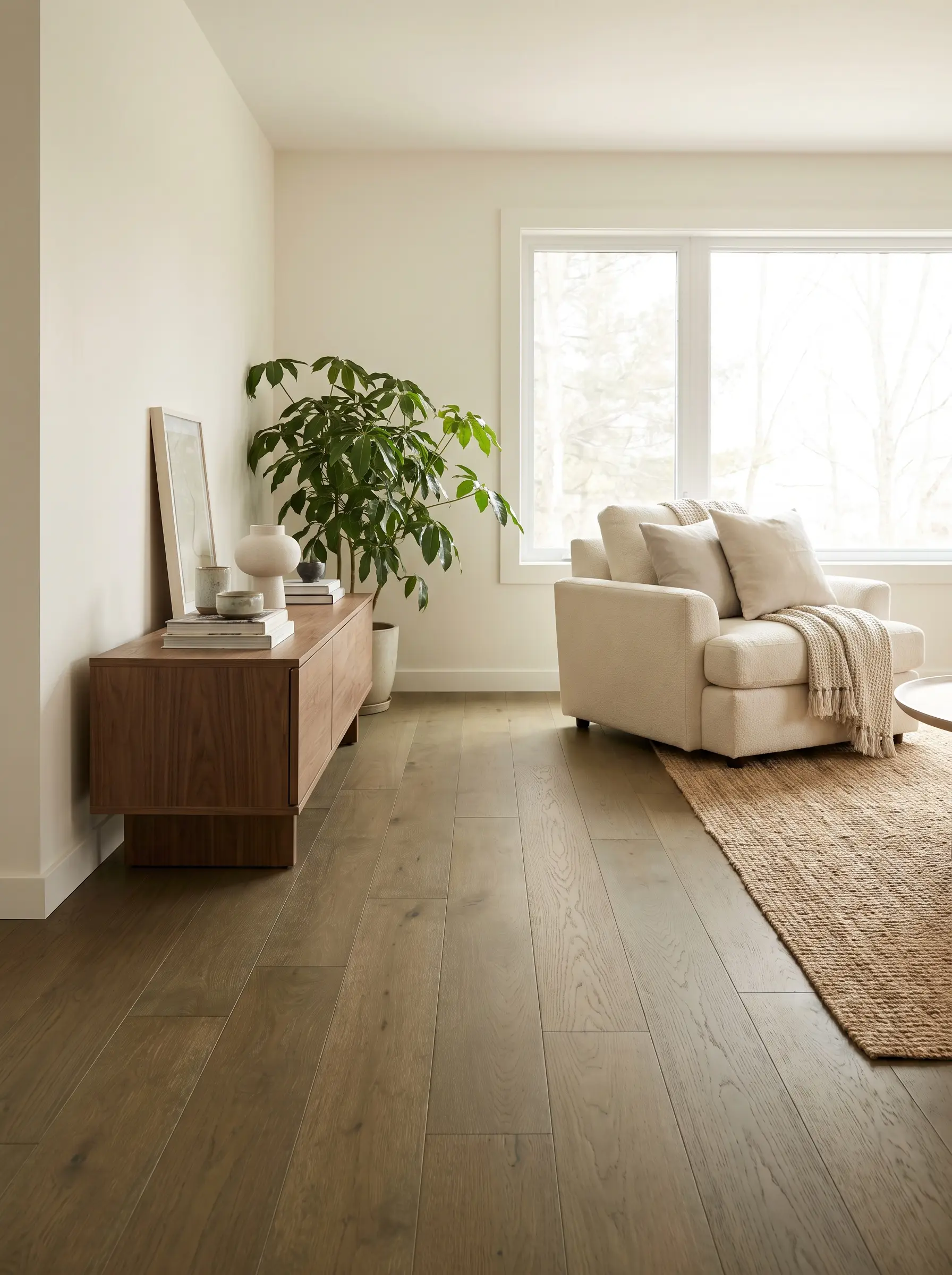
For renovators saddled with 1990s red oak, the solution lies in advanced color theory rather than total replacement. Applying a custom, green-tinted stain mix effectively neutralizes the aggressive red and orange ambering, yielding a modern, organic brown foundation.
Always require your flooring contractor to provide a physical strike-off sample directly on your existing floorboards before coating the entire room. Wood chemistry varies heavily, and the green-to-red ratio must be perfectly calibrated on-site.
Designer Directive
- Vibe: Restorative, modernized, and neutral.
- Key Material: Existing red oak treated with a green-undertone penetrating stain.
- Paint Recommendation: Benjamin Moore Swiss Coffee (OC-45).
Embrace the Raw Look with Bleach-Free Soft Blondes
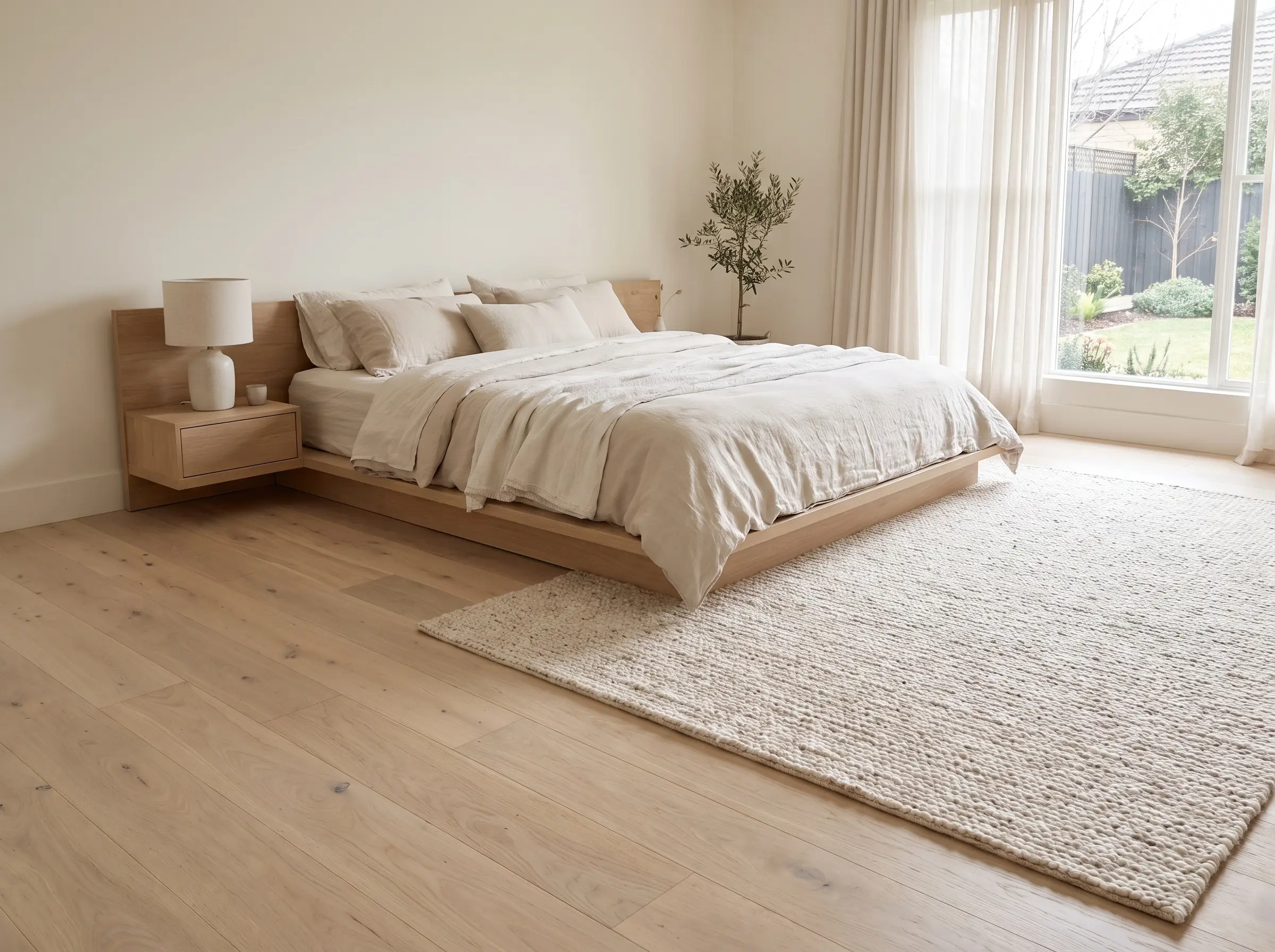
The industry is actively shifting away from heavily whitewashed, coastal floors toward natural, bleach-free blondes that celebrate material honesty. Leaving European White Oak in its rawest visual state inherently supports Organic Modern interiors by letting the wood look precisely like wood.
- Vibe: Serene, minimalist, and deeply organic.
- Key Material: Character-grade white oak with an invisible, water-based sealer.
- Paint Recommendation: Sherwin-Williams Alabaster (SW 7008).
- Styling Pro-Tip: Layer with tonal, unbleached wool rugs to maintain a quiet, uninterrupted visual flow.
Transition to “Greige” for Coastal and Transitional Spaces
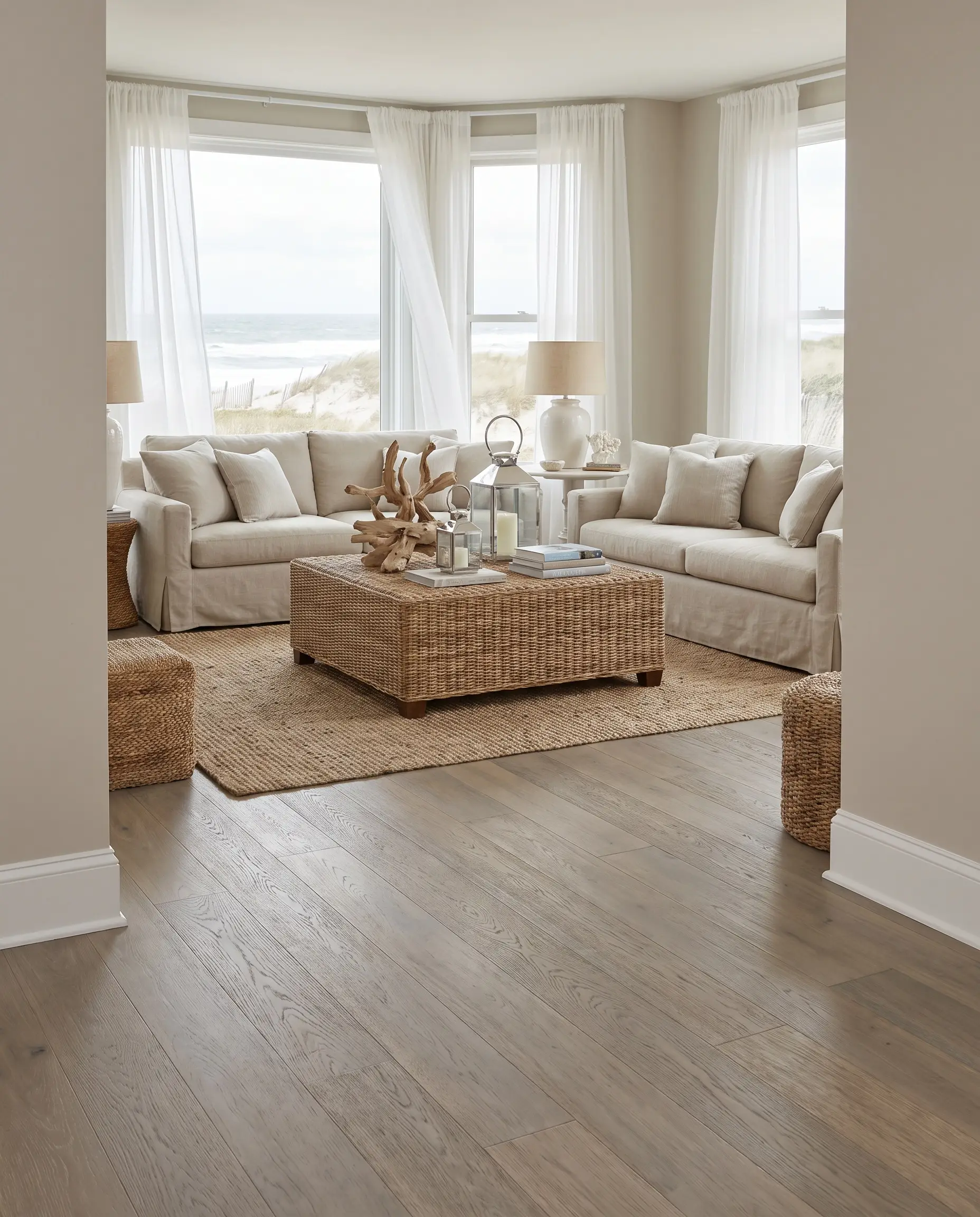
If your architecture demands a cooler palette, “greige”—a meticulous blend of warm beige and subtle gray—offers the perfect evolutionary step away from stark, ashy tones. It serves as a highly adaptable compromise for coastal homes, bridging the gap between warm sunlight and cool, maritime lighting.
- Vibe: Breezy, transitional, and softly muted.
- Key Material: Wire-brushed oak with a custom greige hardwax oil.
- Paint Recommendation: Benjamin Moore Pale Oak (OC-20).
- Styling Pro-Tip: Use crisp white baseboards to give the greige stain a definitive, clean border.
Pros/Cons Matrix for Light vs. Dark Wood in 2027
| Hardwood Tone | Pros for 2027 Interiors | Cons & Considerations |
|---|---|---|
| Light/Blonde Oak | Maximizes natural light, hides dust perfectly, supports Organic Modernism. | Can feel visually ungrounded if not paired with high-contrast ironmongery. |
| Warm Midtones | Highest resale appeal, balances warmth and contrast, hides micro-scratches. | Requires careful paint matching to avoid clashing with yellow/orange undertones. |
| Espresso/Walnut | Injects high-end drama, highlights bespoke millwork, creates intimate spaces. | Shows dust and pet hair immediately; requires abundant natural light. |
Plank Architecture & Spatial Geometry
Color is only half the design process; the physical dimensions and structural cuts of your wood dictate the architectural style of a room. The “Grand Look” is currently dominating residential spaces, requiring precise geometric specifications to achieve true bespoke authenticity.
Maximize Scale with Ultra-Wide 8-to-10-Inch Boards
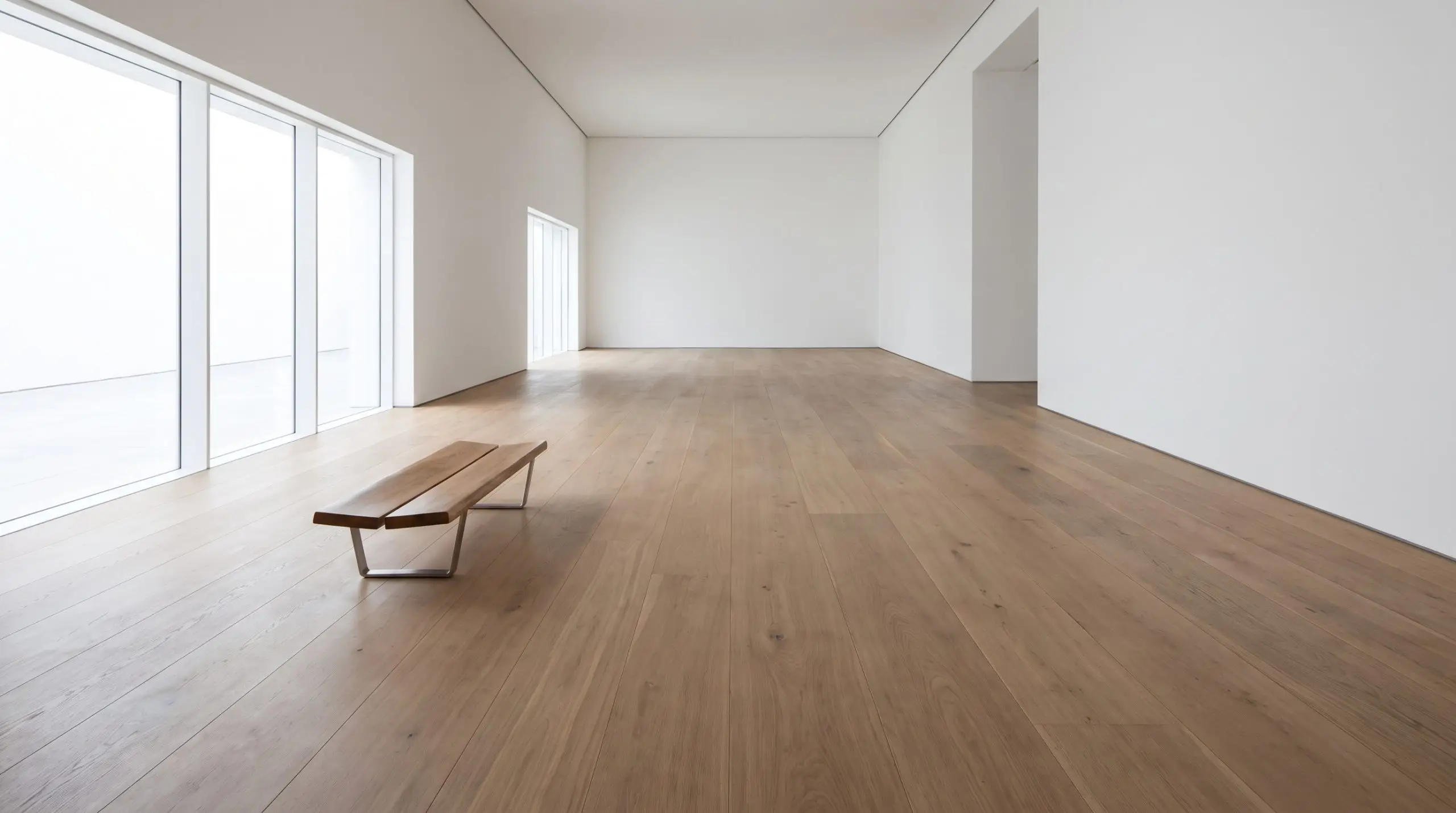
Standard 5-inch planks look immediately dated in luxury renovations; 2027 demands expansive 7, 8, or even 10-inch widths. Fewer seams across the floor drastically reduce visual clutter, making rooms feel exceptionally large and continuous.
- Vibe: Expansive, monumental, and seamlessly modern.
- Key Material: 8-inch premium engineered European oak.
- Material Truth: Ultra-wide planks strictly require a premium engineered construction (a thick real wood veneer over a multi-ply core) to prevent the inevitable cupping and warping that occurs in solid wood of this width.
Create Historical Depth Using Variable-Width Installations
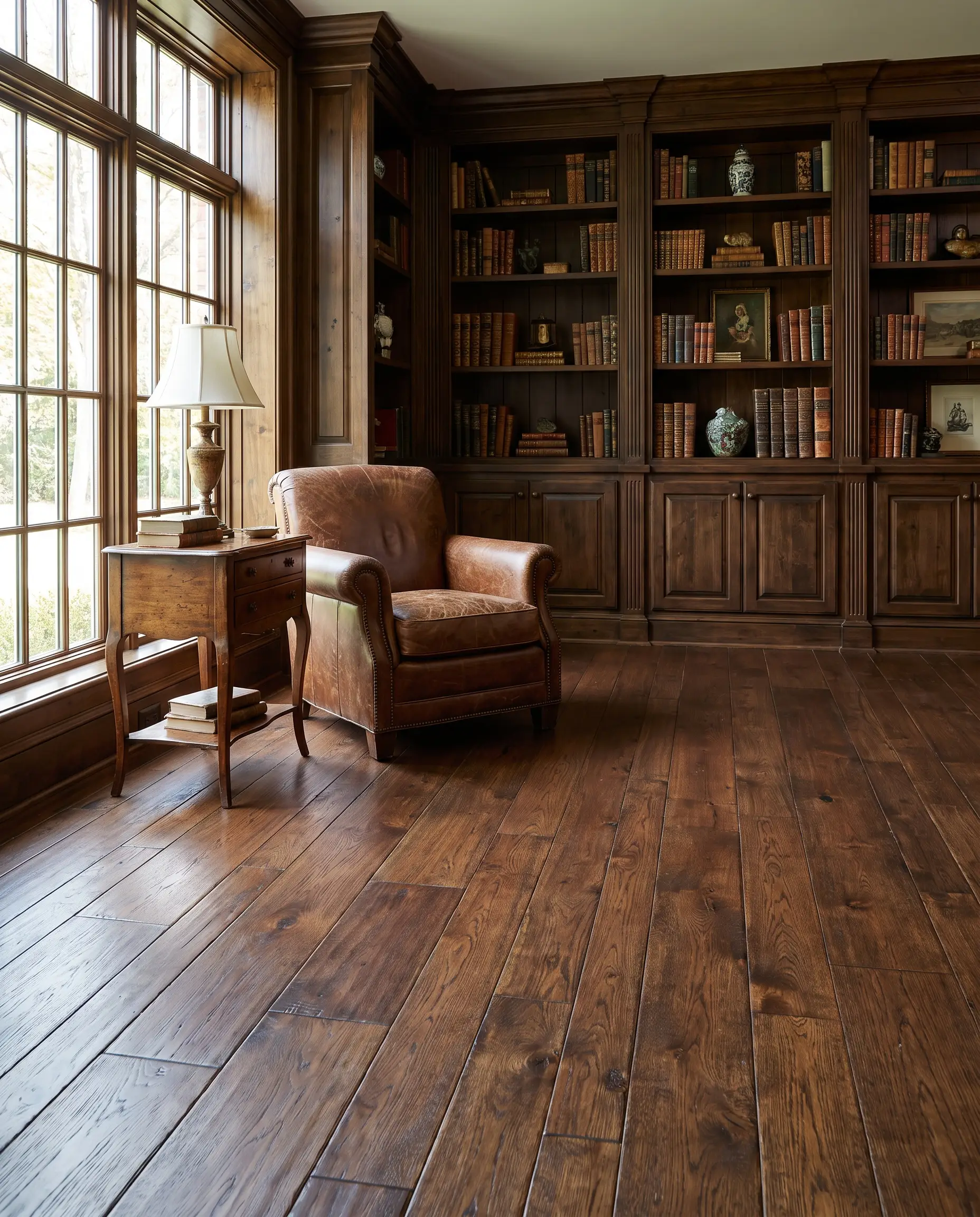
Mixing 5-inch, 7-inch, and 9-inch planks sequentially within the same room instantly injects a home with bespoke authenticity. This variable-width technique mimics the organic, structural character of centuries-old European estates, breaking up the modern monotony of uniform lines.
Your installer must map out a specific repeating sequence (e.g., 5-7-9-5-7-9) to ensure the varying widths look intentional and historically accurate, rather than haphazardly placed.
Designer Directive
- Vibe: Heritage, artisanal, and architecturally complex.
- Key Material: Mixed-width solid or engineered oak bundles.
- Styling Pro-Tip: Run the planks parallel to the longest light source in the room to highlight the varying widths.
Elongate Sightlines with Random-Length Board Specifications
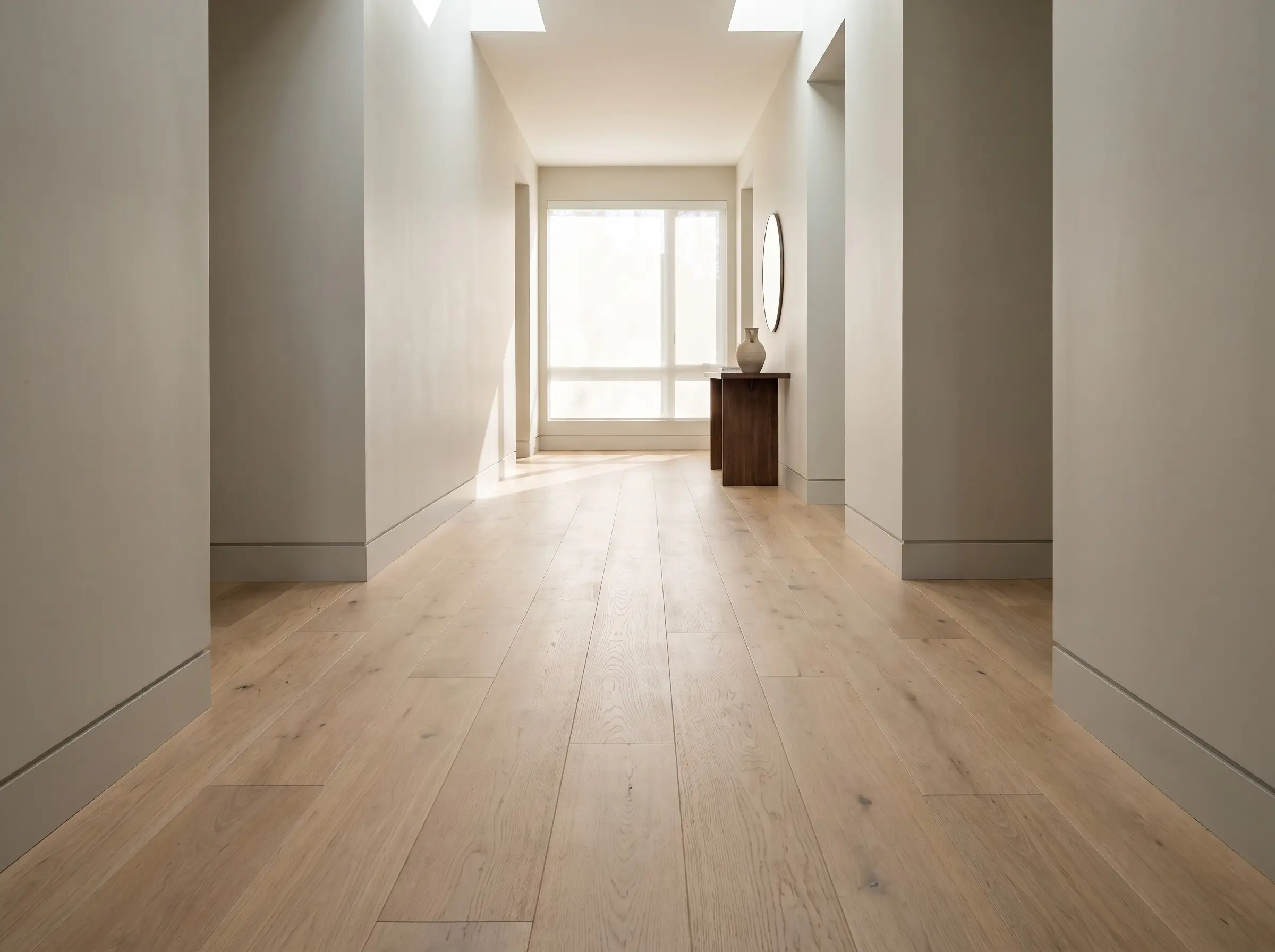
To create a flawless, seamless visual flow, it is imperative to specify long average board lengths—ideally reaching up to 7 or 8 feet. Minimizing the number of end joints across a hallway or grand room drastically elongates the sightlines.
- Vibe: Uninterrupted, sweeping, and high-end.
- Key Material: Random-length premium plank bundles (minimum 70% long boards).
- Styling Pro-Tip: Ensure the installer rigorously avoids “H-joints” or stair-step patterns when laying the ends of the boards.
Define Thresholds with Flush-Mount Wooden Transition Strips
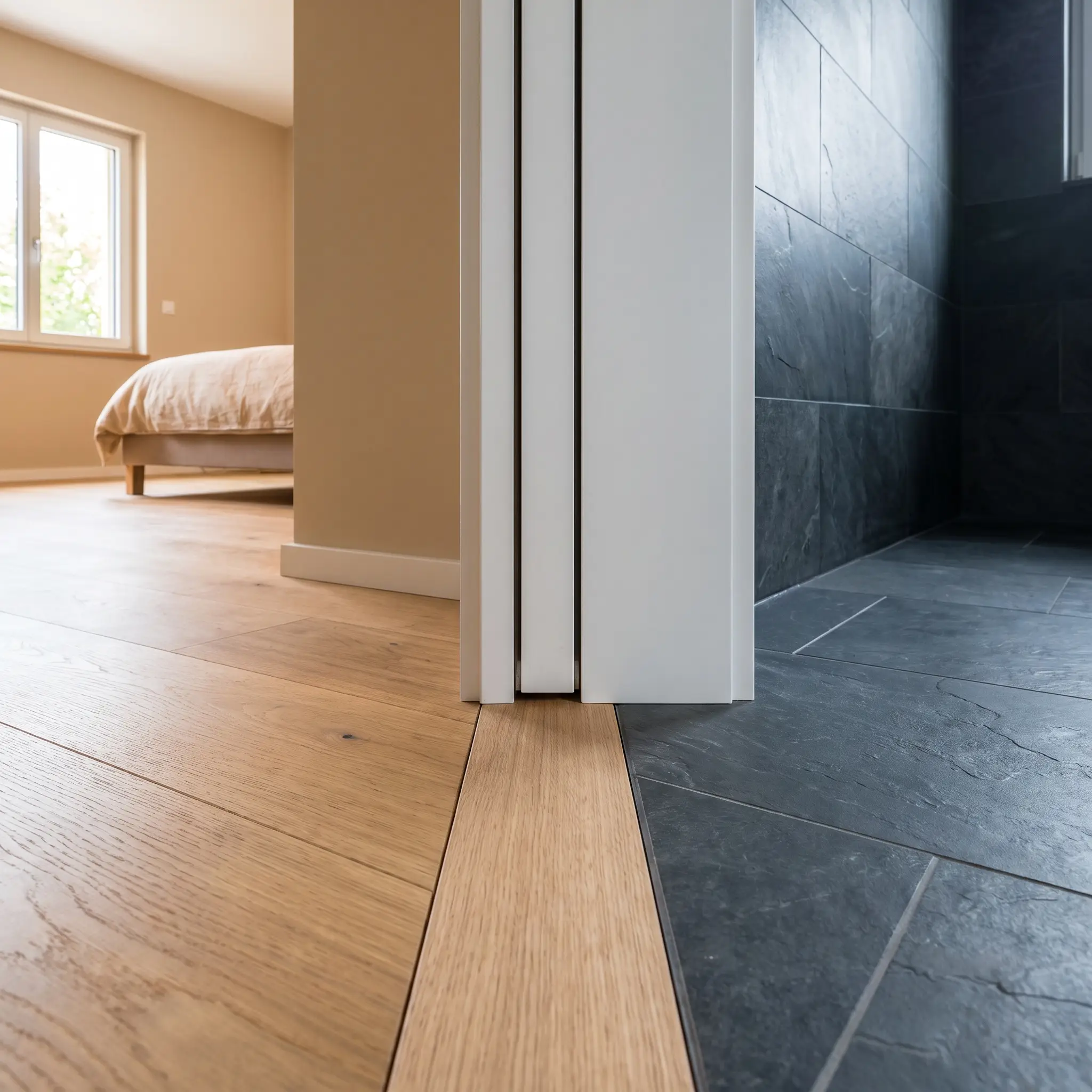
Bulky, overlapping metal or T-molding transition strips instantly ruin a luxury aesthetic. Advocate fiercely for custom-milled, flush-mount wooden transitions when meeting tile or changing rooms, ensuring a seamless, high-end architectural finish that sits perfectly level underfoot.
- Vibe: Tailored, precise, and uncompromising.
- Key Material: Custom-milled oak transitions color-matched to the primary floor.
- Styling Pro-Tip: Plan transitions directly under the door leaf so the seam is completely hidden when the door is closed.
Opt for Rift and Quartered Cuts for Linear, Minimalist Grain
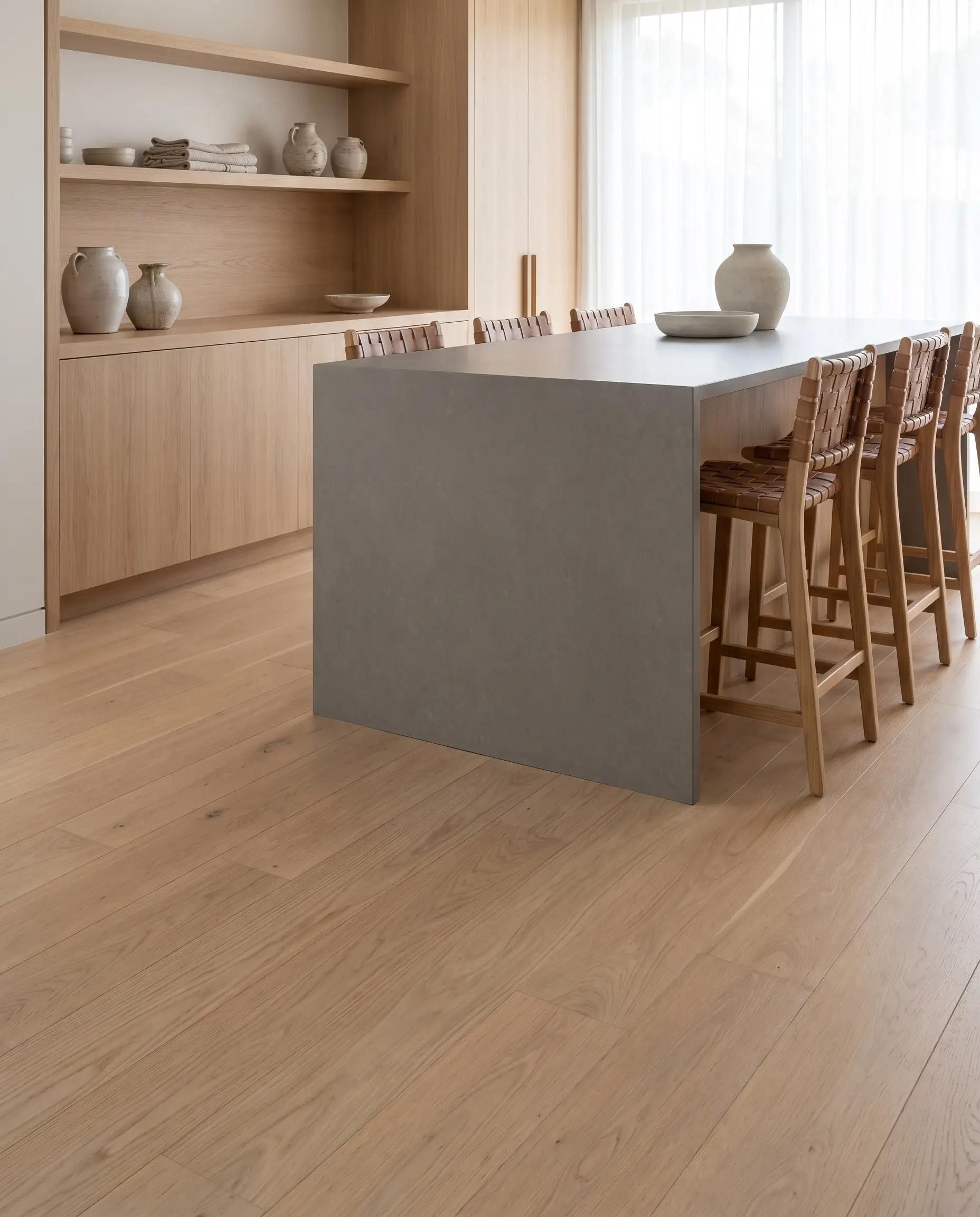
The heavy, wavy “cathedral” grain of plain-sawn wood introduces too much rustic noise for refined interiors. Specifying rift and quartered cuts yields a remarkably straight, linear grain that supports a quiet, Warm Minimalist aesthetic.
- Vibe: Linear, refined, and architecturally quiet.
- Key Material: Rift-sawn white oak.
- Material Truth: Rift-sawn cuts are inherently more dimensionally stable than plain-sawn, making them the superior choice for radiant heated subfloors.
Surface Textures & The “Invisible” Finish Movement
The tactile experience of walking barefoot across your home is defining 2027 luxury. The era of plastic-feeling, highly reflective floors is dead, replaced by raw textures and sophisticated chemistry that absorb natural light.
Specify 5% Sheen Ultra-Matte Topcoats for a Raw Aesthetic
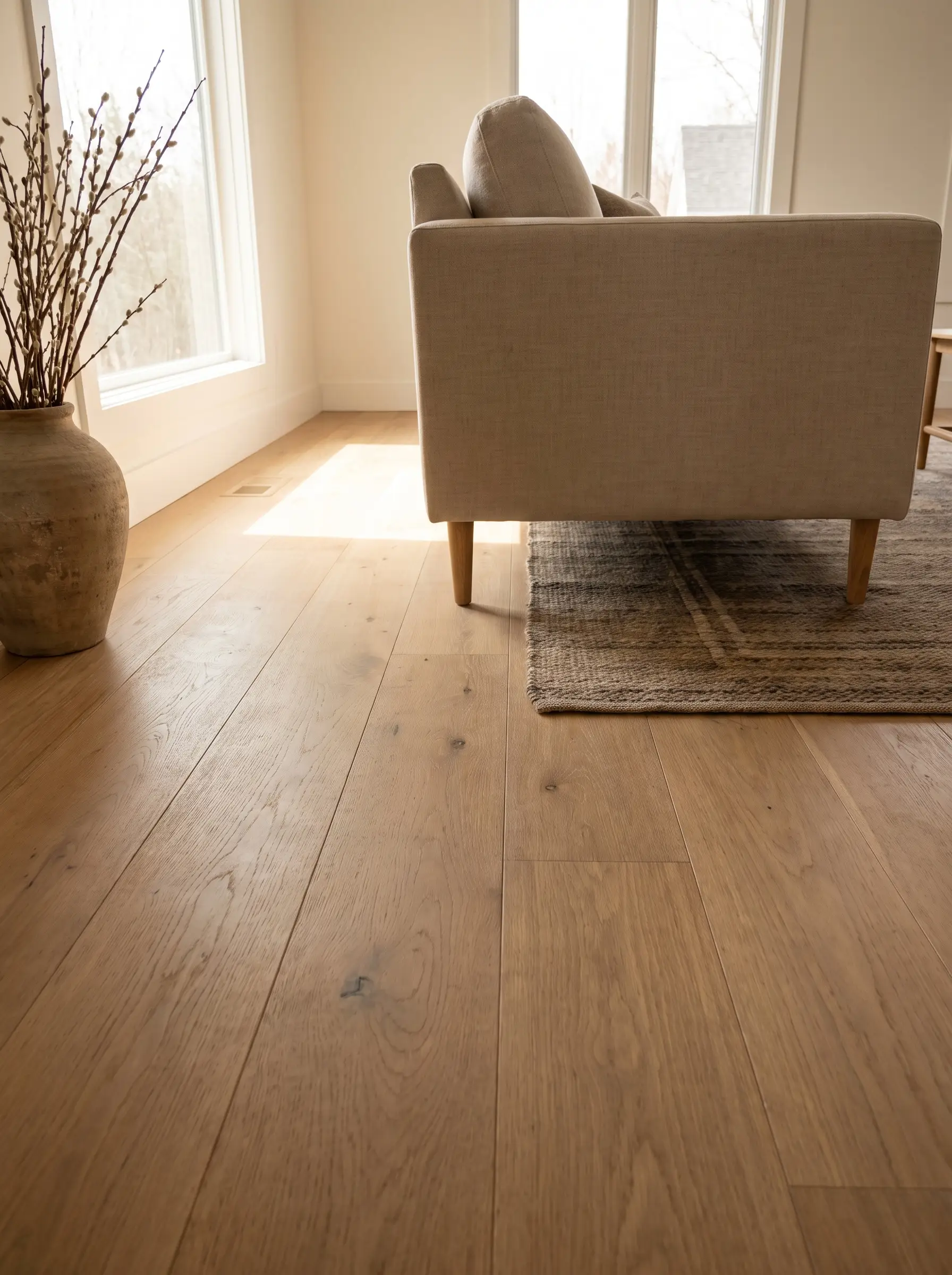
The “Invisible Finish” movement relies on ultra-matte topcoats with a sheer 5% to 10% sheen level. This application fully protects the wood from spills while making the surface appear completely raw, untreated, and deeply organic, standing in stark contrast to the glossy polyurethane of the early 2000s.
- Vibe: Raw, honest, and luxuriously understated.
- Key Material: 5% sheen water-based polyurethane or hardwax oil.
- Styling Pro-Tip: Ultra-matte floors hide dust and pet hair exceptionally well, making them highly functional for active homes.
Enhance Tactility with Light Wire-Brushed Detailing
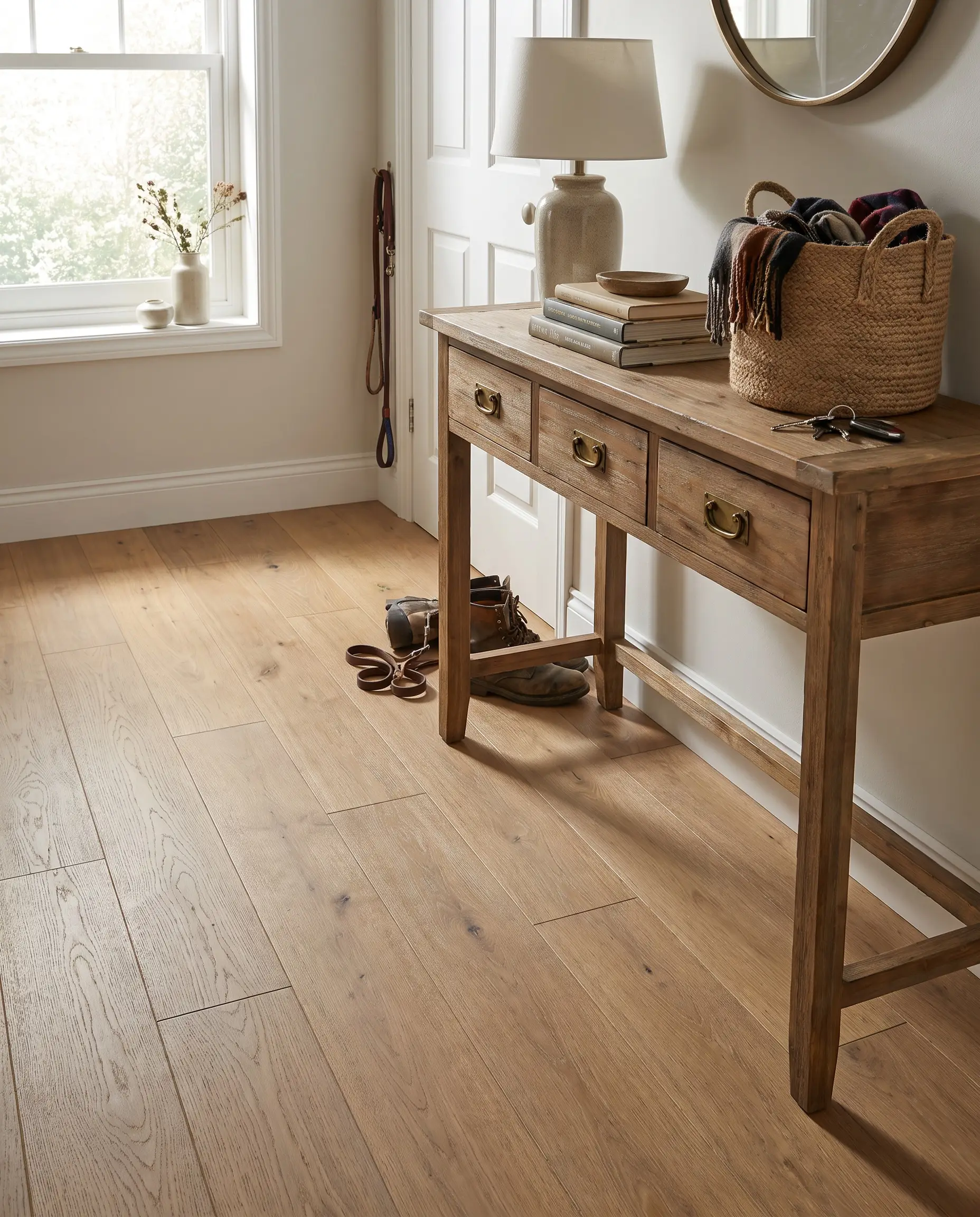
Heavy, artificial hand-scraping looks contrived, but refined, light wire-brushing adds genuine organic texture. This technique pulls the softest fibers from the grain, leaving a subtle, tactile surface that beautifully masks micro-scratches and daily wear.
Always distinguish between “distressed” and “wire-brushed.” Distressed implies artificial damage and gouges; wire-brushed simply enhances the natural linear grain profile.
Designer Directive
- Vibe: Tactile, resilient, and gently weathered.
- Key Material: Wire-brushed engineered oak.
Reject High-Gloss Polyurethane for UV-Cured Hardwax Oils
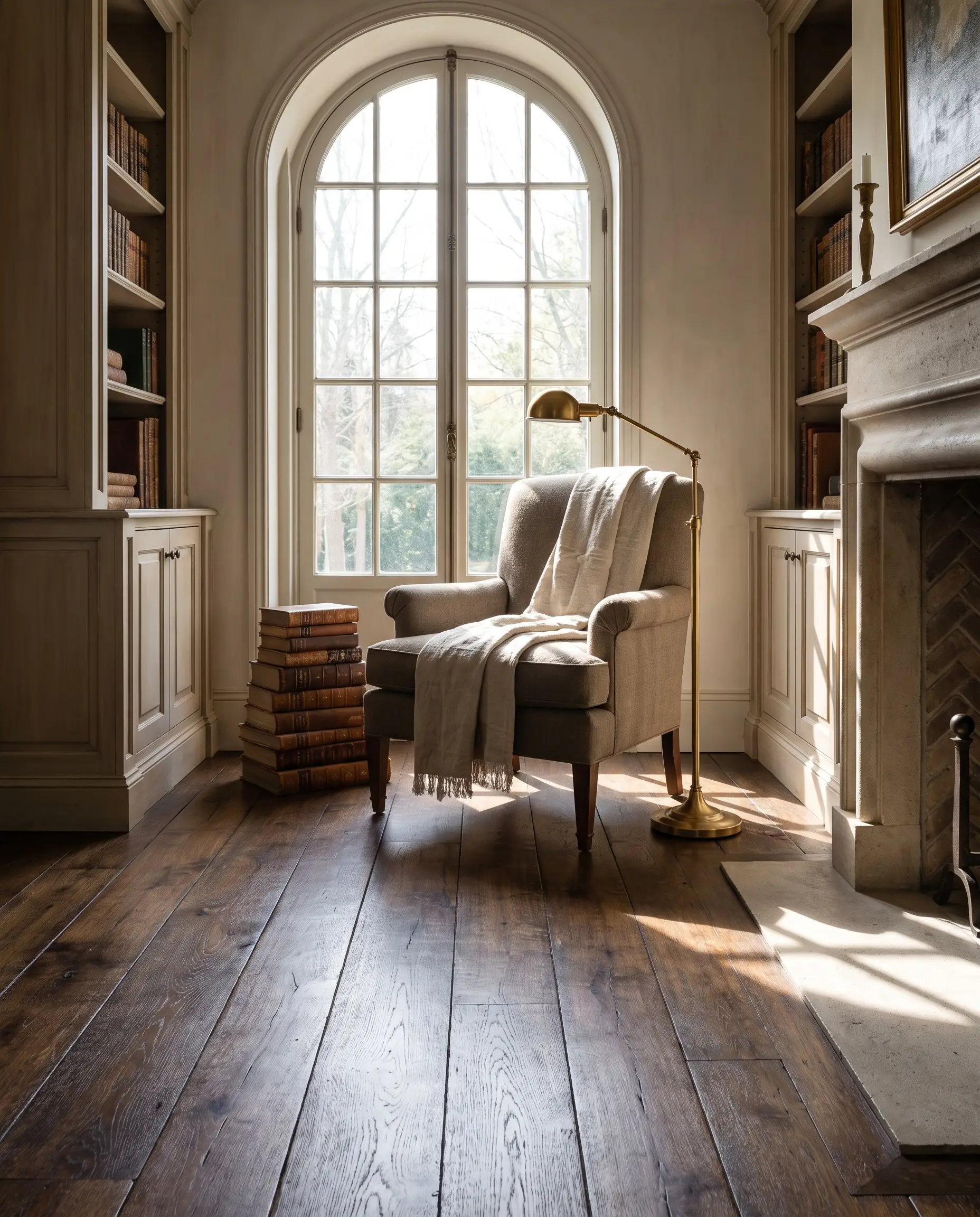
European hardwax oils represent a massive upgrade in finish chemistry, penetrating deep into the wood fibers rather than sitting on top like a suffocating plastic sheet. These finishes offer a rich, patinated glow and allow for hyper-local maintenance—meaning you can spot-repair a scratch without sanding down the entire room.
- Vibe: European, breathable, and easily maintainable.
- Key Material: Rubio Monocoat or Pallmann Magic Oil.
- Material Truth: Oil finishes require periodic nourishment with specialized maintenance soaps to keep the wood hydrated and fully protected over time.
Cost & Budget Breakdown Table for Finishes
| Finish Type | Visual Sheen | Tactile Feel | Long-Term Maintenance | Relative Cost |
|---|---|---|---|---|
| Water-Based Polyurethane | 5% to 20% (Matte to Satin) | Smooth, slightly sealed | Requires full-room sanding to repair deep scratches. | $$$ |
| UV-Cured Hardwax Oil | 5% (Ultra-Matte) | Raw wood, highly tactile | Allows for spot-repairs; requires annual oiling. | $$$$ |
| Oil-Based Polyurethane | 20%+ (Glossy) | Plastic, heavily sealed | Ambers heavily over time; hard to spot-repair. | $$ (Outdated) |
Embrace Character-Grade Wood with Filled Knots and Splits
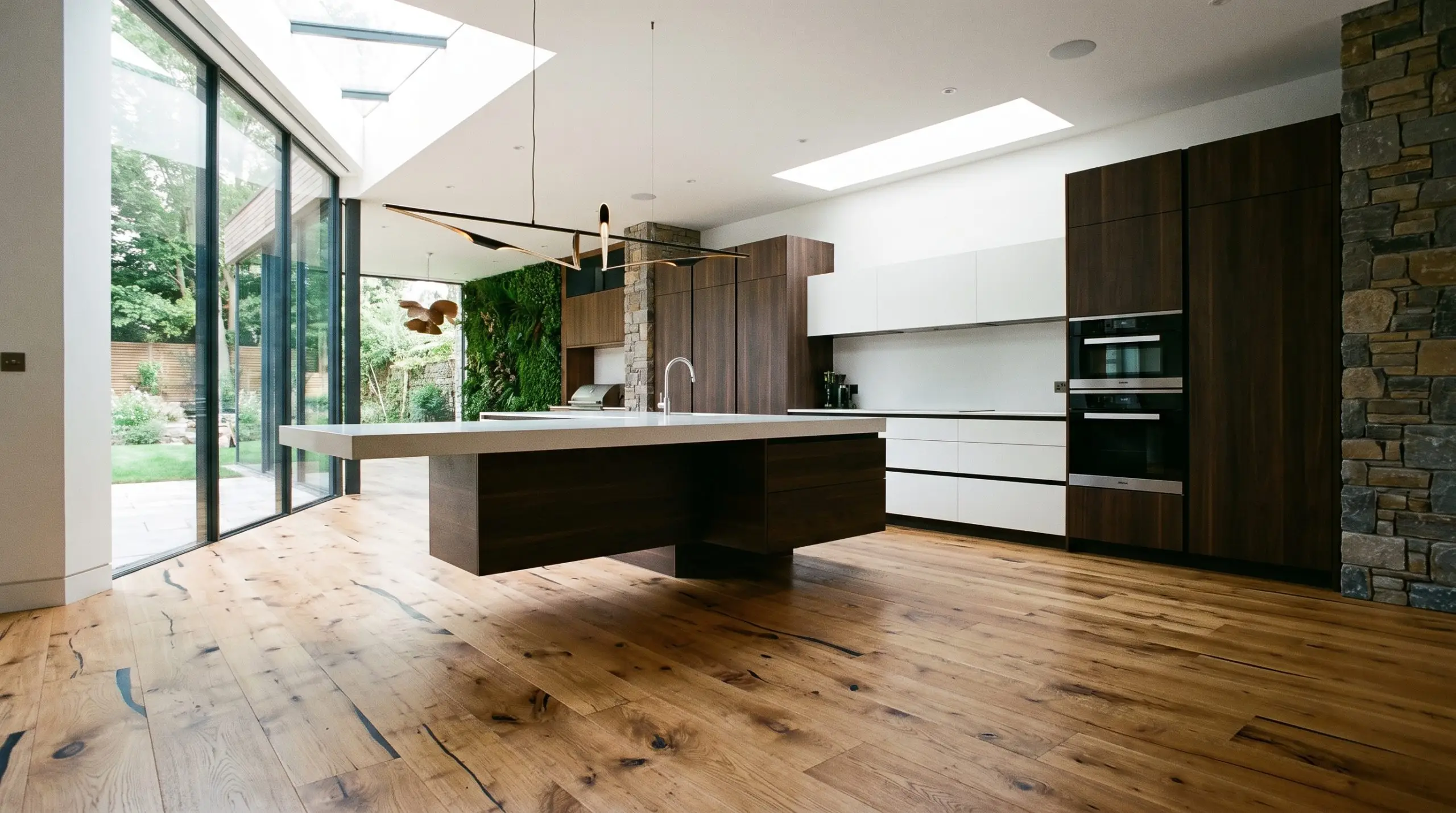
Choosing “character grade” oak over perfectly clear “select grade” injects a space with natural, biophilic charm. However, to maintain a clean, modern surface underfoot, all knots, burls, and splits must be flawlessly filled with black or color-matched epoxy.
- Vibe: Organic, robust, and architecturally striking.
- Key Material: Character-grade oak with black epoxy resin fill.
- Styling Pro-Tip: Pair heavily character-grade floors with sleek, minimalist cabinetry to balance the rustic texture with sharp, modern lines.
High-End Patterning & Parquetry Revival
Patterned floors are experiencing a massive architectural revival, but the proportions have expanded to suit contemporary spatial dynamics. Executing these geometric layouts requires elite craftsmanship, instantly elevating standard hardwood into a bespoke structural feature.
Install Oversized Herringbone in Primary Living Suites
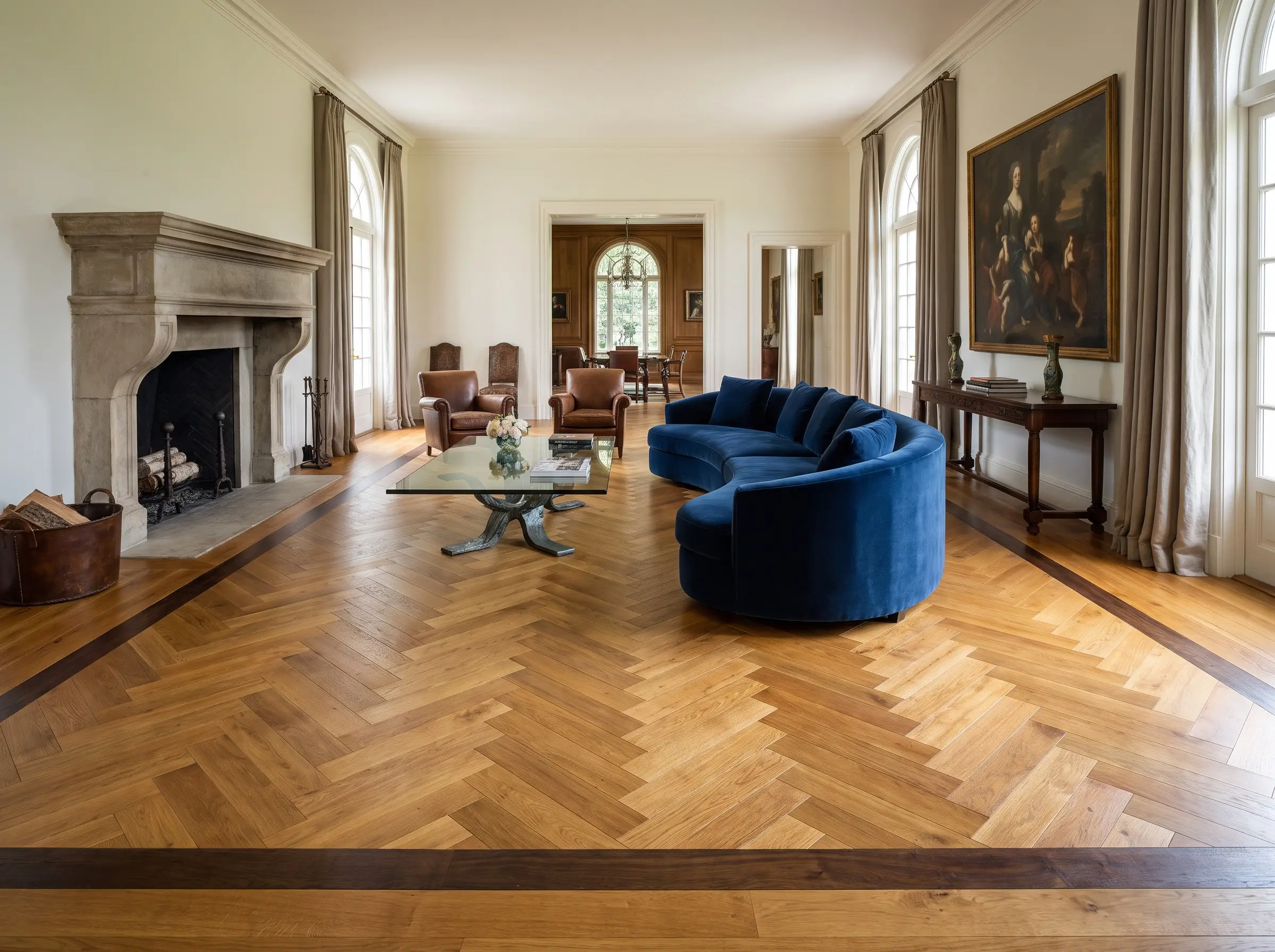
We are moving away from small, busy parquets in favor of oversized herringbone layouts utilizing wider, longer boards. This expansive geometric application makes a bold architectural statement in main living areas without causing the room to feel visually cluttered.
- Vibe: Grand, structured, and historically significant.
- Key Material: 7-inch by 28-inch (or larger) oak herringbone planks.
- Styling Pro-Tip: Border the herringbone pattern with a single straight-lay plank around the perimeter of the room to frame the layout like a piece of art.
Direct Foot Traffic with Elongated Chevron Hallways
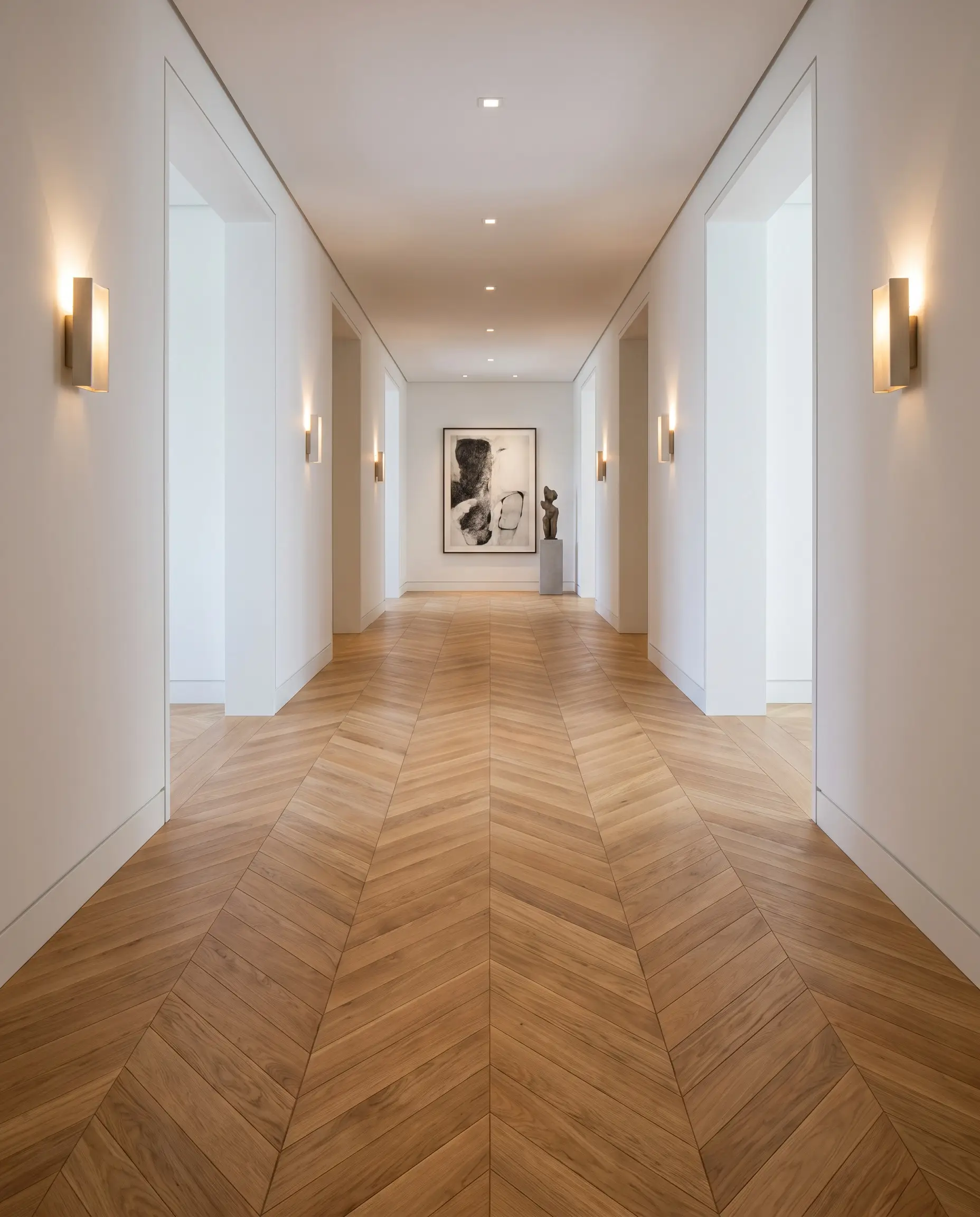
While herringbone uses staggered, overlapping boards, chevron patterns meet at a continuous, sharp point to create a striking V-shape. This aggressive, linear geometry is perfectly suited for long hallways, entryways, or narrow galleries, acting as a visual arrow that draws the eye forward.
- Vibe: Directional, sharp, and highly tailored.
- Key Material: 45-degree angle-cut chevron planks.
- Material Truth: Chevron requires significantly more material waste and precise milling than herringbone, making it a higher-tier bespoke investment.
Frame Fireplaces with Custom Wood Border Inlays
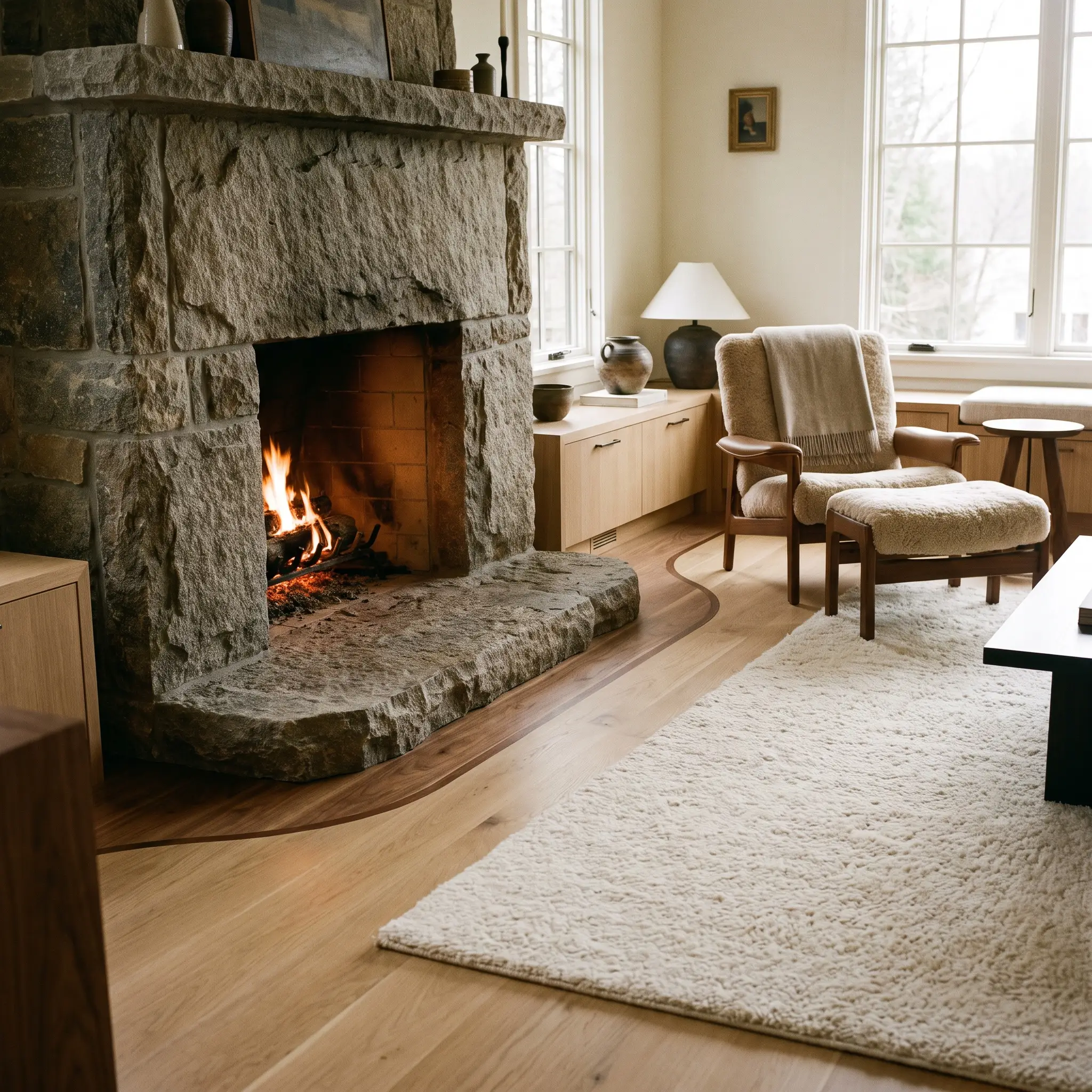
Framing significant architectural features—like stone fireplace hearths or massive kitchen islands—with contrasting wood borders or brass inlays is the pinnacle of bespoke customization. This elite technique clearly defines zones within an open-concept floor plan without the need for physical walls.
- Vibe: Bespoke, distinct, and deeply intentional.
- Key Material: Walnut or brass inlay strips set against a primary white oak floor.
- Styling Pro-Tip: Keep the inlay profile incredibly thin (under 1/2 inch) to maintain a modern, sophisticated aesthetic rather than a heavy, traditional border.
Shift to Continuous Straight-Lays for Cohesive Multi-Room Flow
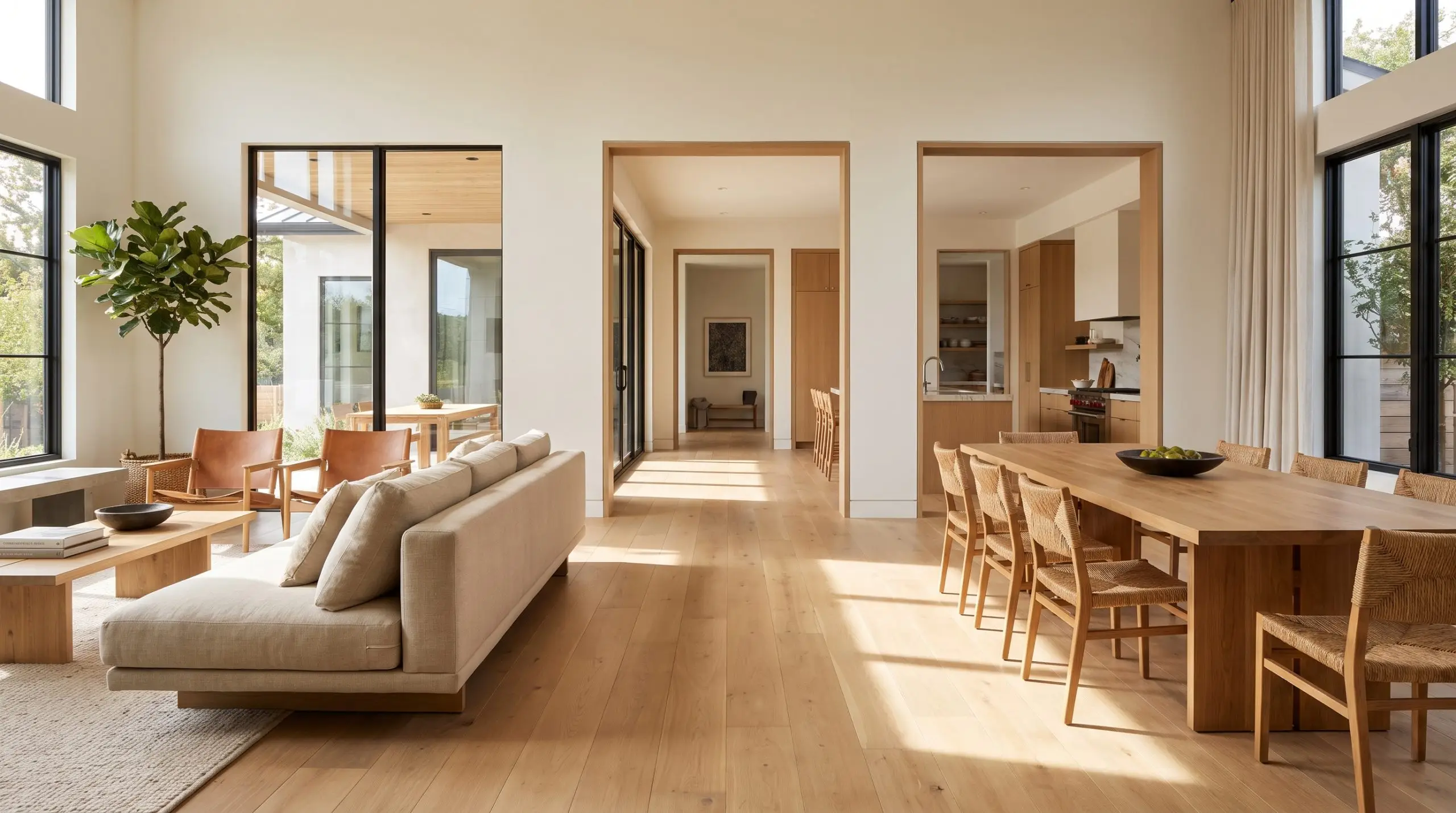
If parquetry does not suit your architecture, the 2027 standard dictates running long, continuous straight planks flawlessly through connected rooms without changing direction. Changing wood direction at every doorway abruptly breaks visual flow, visually shrinking the home and ruining the seamless aesthetic.
- Vibe: Cohesive, expansive, and perfectly unified.
- Key Material: 8-inch straight-lay planks.
- Styling Pro-Tip: Always plan your primary layout line starting from the longest, straightest exterior wall to ensure the planks remain perfectly parallel across the entire floor plan.
Contrasting Elements: Pairing Hardwood with Millwork & Hardware
Wood floors do not exist in a vacuum; their success relies entirely on how they interact with the structural elements around them. The key to mastering the 2027 palette is knowing exactly how to pair your new organic foundation with baseboards, cabinetry, and ironmongery.
Contrast Soft Oak Floors with Dark Matte Black Ironmongery
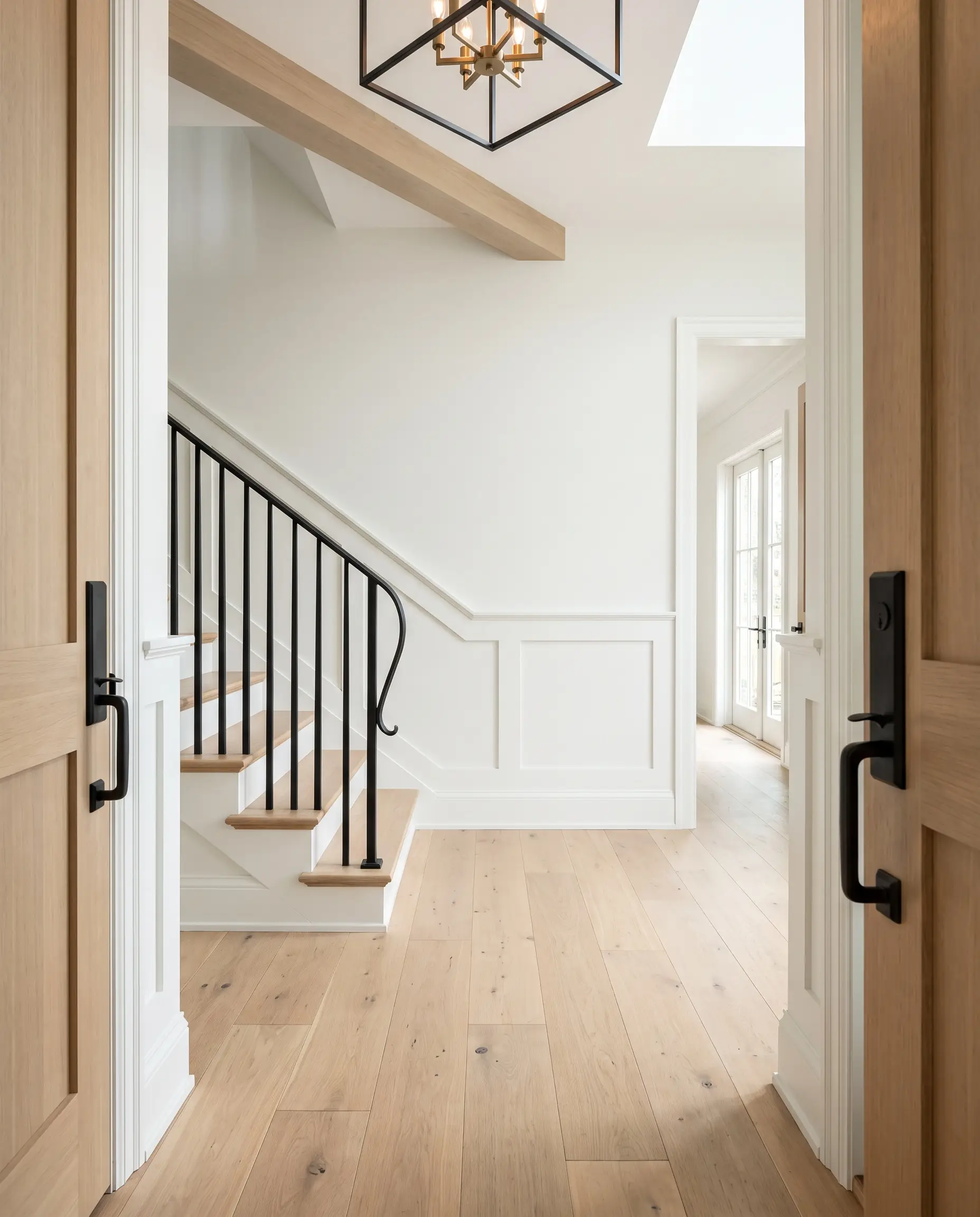
The soft, organic nature of blonde and honey oak floors demands a sharp, definitive visual anchor to prevent the room from feeling formless. Introducing matte black door hardware, steel window frames, or iron stair balusters provides exactly the architectural sharpness needed to balance the warmth underfoot.
- Vibe: Grounded, crisp, and perfectly balanced.
- Key Material: Solid forged brass hardware with a matte black finish.
- Paint Recommendation: Benjamin Moore Chantilly Lace (OC-65) for crisp trim.
- Styling Pro-Tip: Echo the black ironmongery in subtle light fixture detailing to carry the contrast up to the ceiling.
Complement Honey Tones with Unlacquered Brass Accents
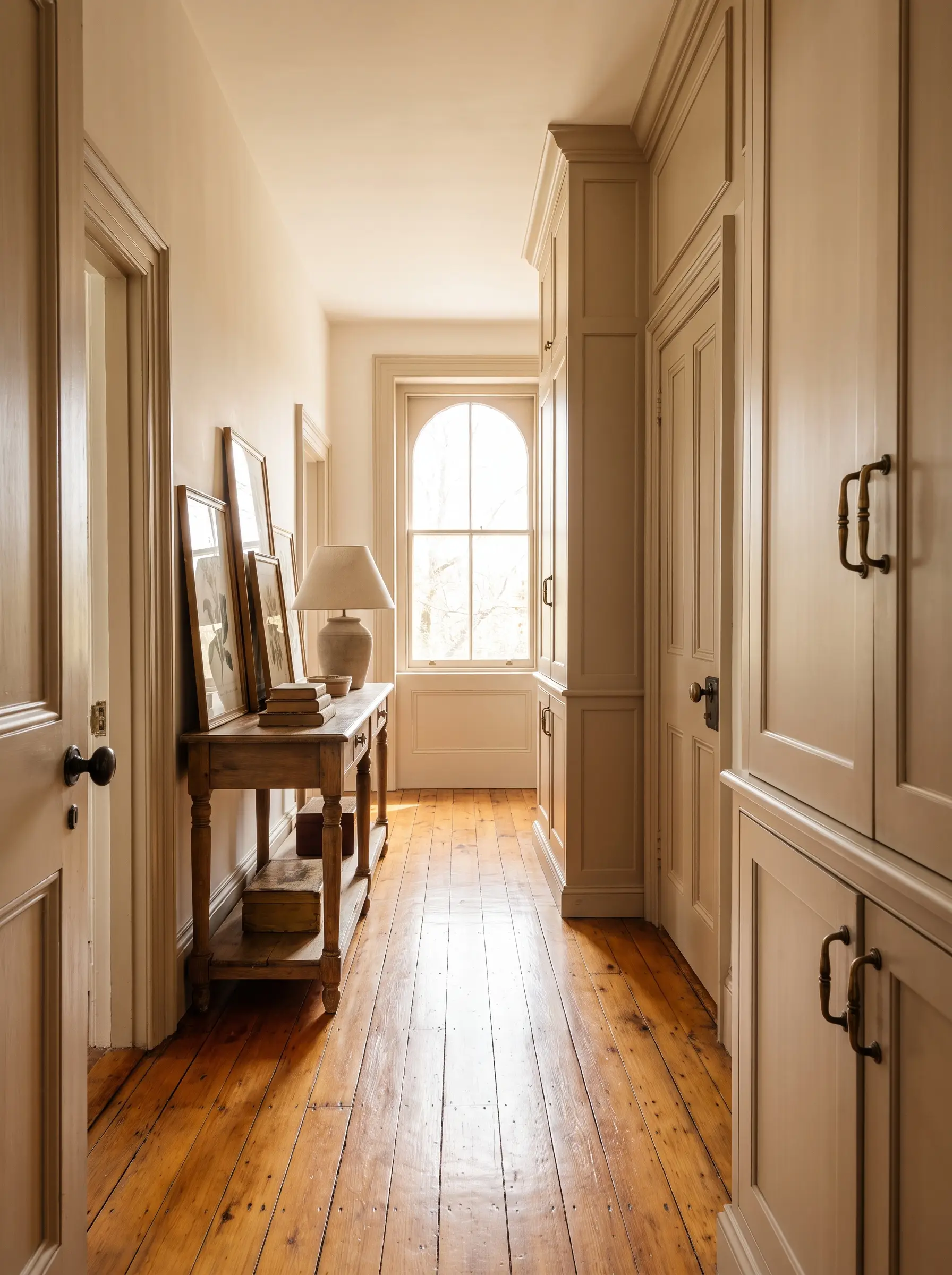
The rich, warm undertones of mid-brown and honey hardwood pair exquisitely with living finishes like unlacquered brass. As the brass patinas and darkens over time, it establishes a cohesive visual warmth that feels authentic, historic, and incredibly luxurious.
- Vibe: Heritage, luminous, and historically rich.
- Key Material: Solid unlacquered brass cabinet pulls and doorknobs.
- Paint Recommendation: Sherwin-Williams Accessible Beige (SW 7036) for tonal millwork.
Implement “Material Drenching” by Matching Floors to Ceiling Beams
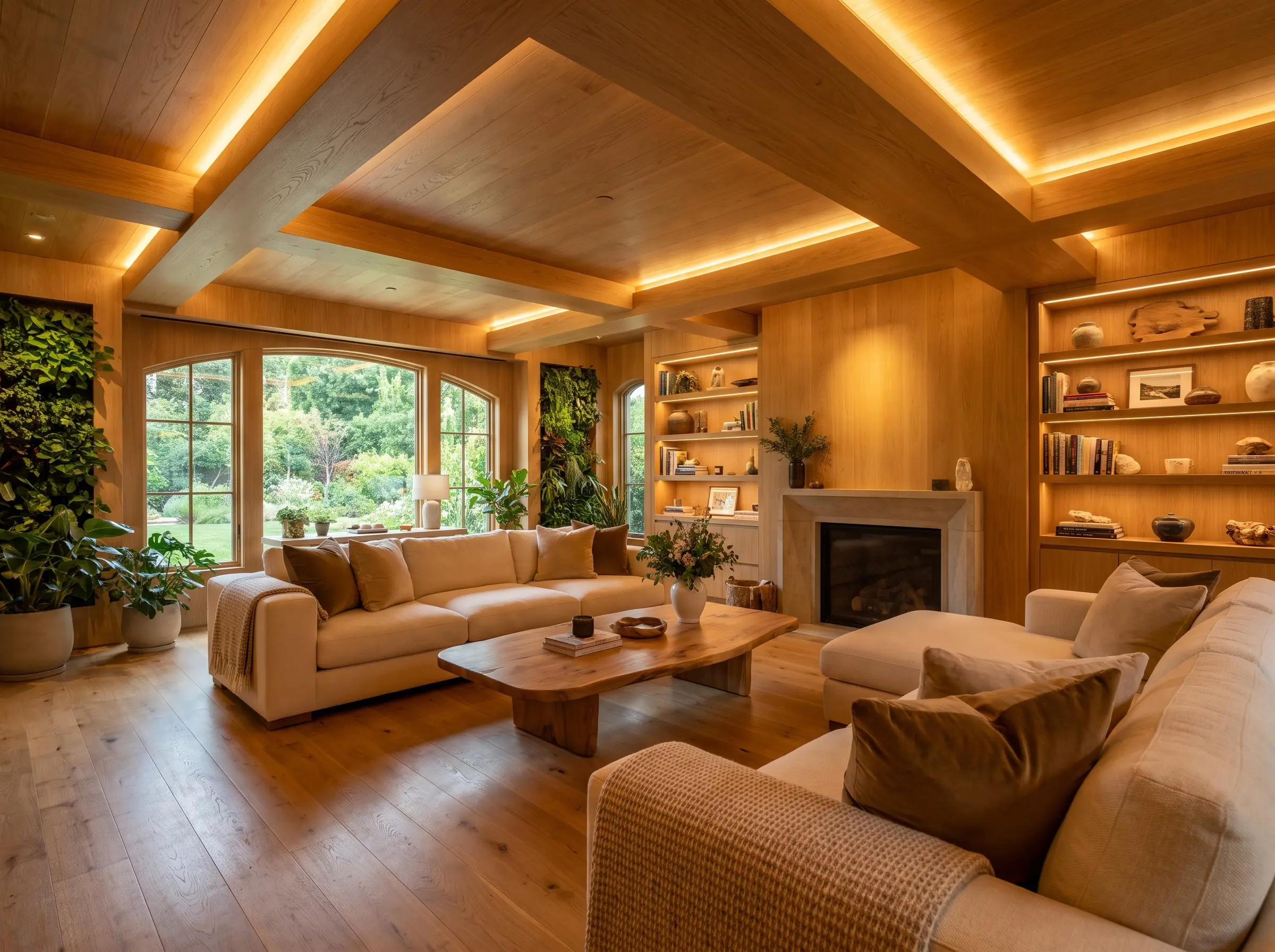
“Material drenching” is the premier 2027 application of biophilic design, moving beyond paint to encompass architectural wood elements. Matching the exact species, cut, and stain of your hardwood floor to your ceiling beams or wall paneling creates an incredibly immersive, high-luxury environment.
- Vibe: Immersive, architectural, and deeply cohesive.
- Key Material: Box beams milled from the same oak veneer as the flooring.
- Styling Pro-Tip: Ensure the lighting plan relies heavily on warm 2700K bulbs to highlight the natural grain on both the floor and ceiling.
Quick Reference List of 2027 Hardware & Wood Pairings
- Blonde/Raw Oak + Matte Black Ironmongery + Crisp White Millwork
- Honey/Midtone Oak + Unlacquered Brass + Tonal Greige Millwork
- Espresso/Walnut + Polished Nickel + Deep, Moody Color-Drenched Walls
Securing Your Investment: Finalizing Your 2027 Flooring Strategy
Designing a bespoke foundation for your home requires uncompromising attention to tactile details and material honesty. Choosing a floor based on natural warmth, historic cuts, and ultra-matte sheens will effortlessly outlast any fleeting micro-trend. Before finalizing your order, it is imperative to secure physical samples and observe them in your home’s exact lighting conditions—morning, noon, and night.
Once your hardwood foundation is set, the next critical step is calibrating your walls to match. Explore our comprehensive Hackrea guide on matching paint colors to hardwood to ensure your entire architectural palette sings in perfect harmony.
The Aesthetics Desk curates the visual direction for Hackrea. Specializing in design history, global architectural movements, and interior styling, this desk focuses on the psychology of space and how to translate high-end, magazine-quality aesthetics into approachable residential design without falling into fleeting micro-trends.