The bathroom has undergone a radical identity shift over the last decade. It is no longer just a functional white box for brushing teeth; in 2026, the bathroom has firmly established itself as a home sanctuary. It is a retreat for “cocooning,” a space for complex wellness rituals, and perhaps the most personal room in the entire house. As we move away from the clinical, all-white aesthetic of the past, homeowners are looking for ways to inject warmth, personality, and texture into these spaces.
The single most effective tool for this transformation? Wallpaper.
If you are still hesitant, worrying about steam peeling the edges or mold growing behind the paper, it is time to update your knowledge. The “fear of humidity” is a relic of the past. Modern wallpaper technologies have evolved dramatically, introducing heavy-duty vinyls, breathable non-wovens, and even fiberglass “wet systems” that are completely waterproof. These advancements allow you to bring the drama and softness of wallpaper into the splash zone without compromising durability.
In this guide, we will explore the 10 defining bathroom wallpaper trends for 2026, moving from the visual inspiration to the technical know-how you need to install them with confidence.
Quick Summary: Bathroom Wallpaper Trends 2026
In 2026, bathroom wallpaper trends are shifting away from cool grays and geometric precision toward warm, earthy neutrals (terracotta, brown, mushroom) and immersive textures that mimic materials like plaster, stone, and woven grasscloth. The top design themes defining the year include:
“Quiet” Biophilia: Misty forests, sepia-toned botanicals, and dried flower motifs.
Panoramic Murals: Large-scale landscapes and skyscapes without repeating patterns.
The “Jewel Box” Effect: Dark, moody colors (emerald, plum) designed for powder rooms.
Waterproof Tech: Fiberglass “wet systems” that allow wallpaper to be installed inside showers.
Soft Geometrics: Hand-drawn curves and imperfect lines replacing sharp angles.
The Top Trends
In 2026, the design landscape is shifting away from the stark and the industrial. We are embracing “earthy vibrancy,” tactile surfaces, and immersive storytelling. Here are the styles that will dominate the coming year.
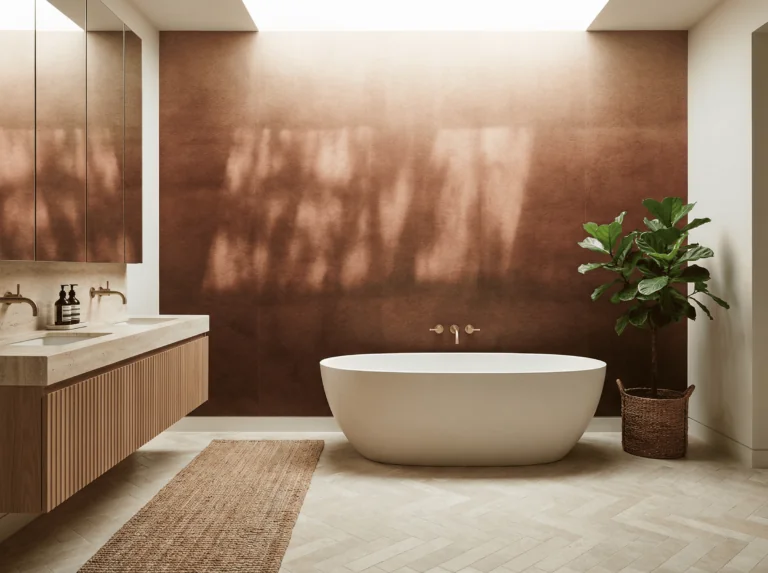
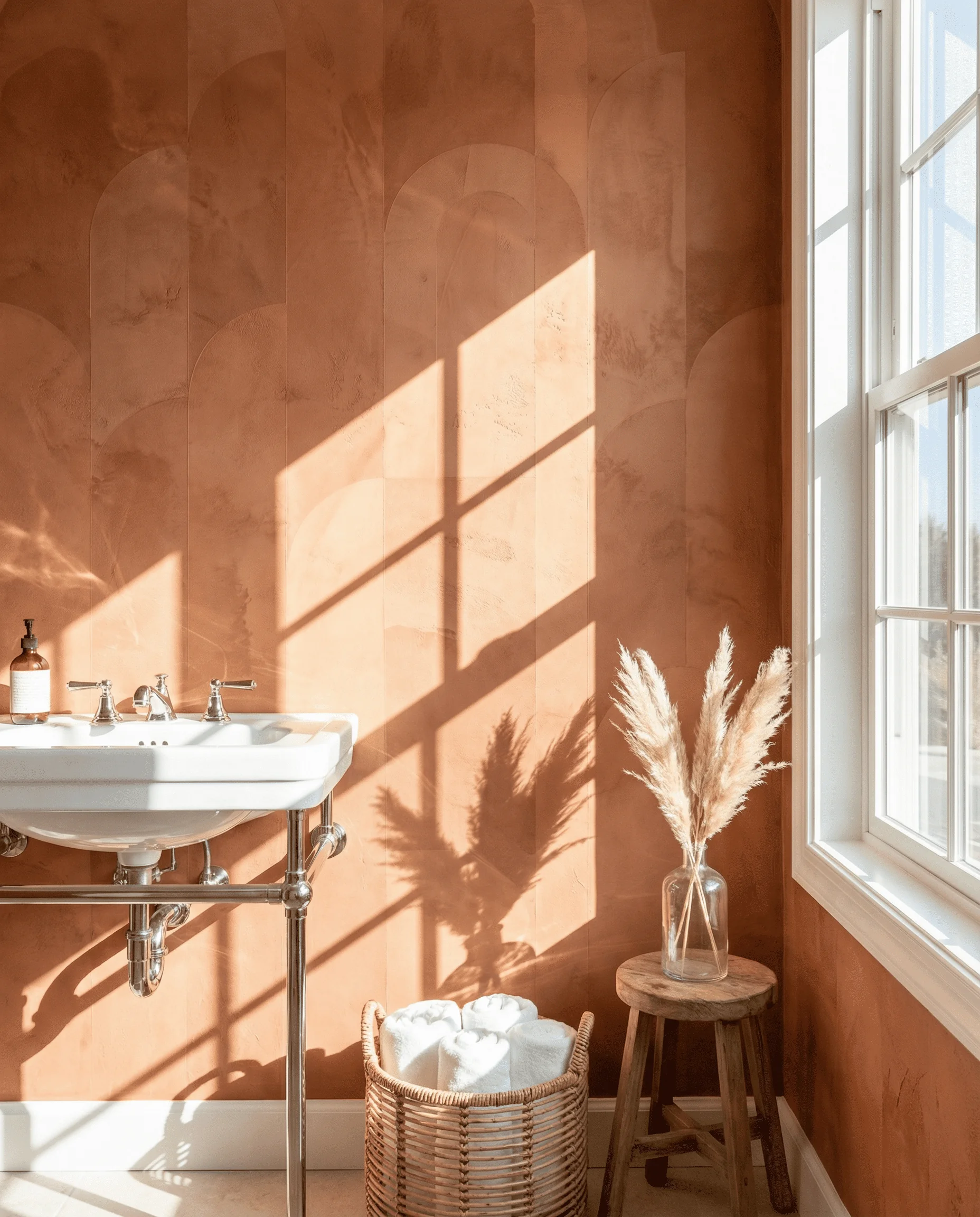
1. The New Neutrals: Embracing Brown and Terracotta
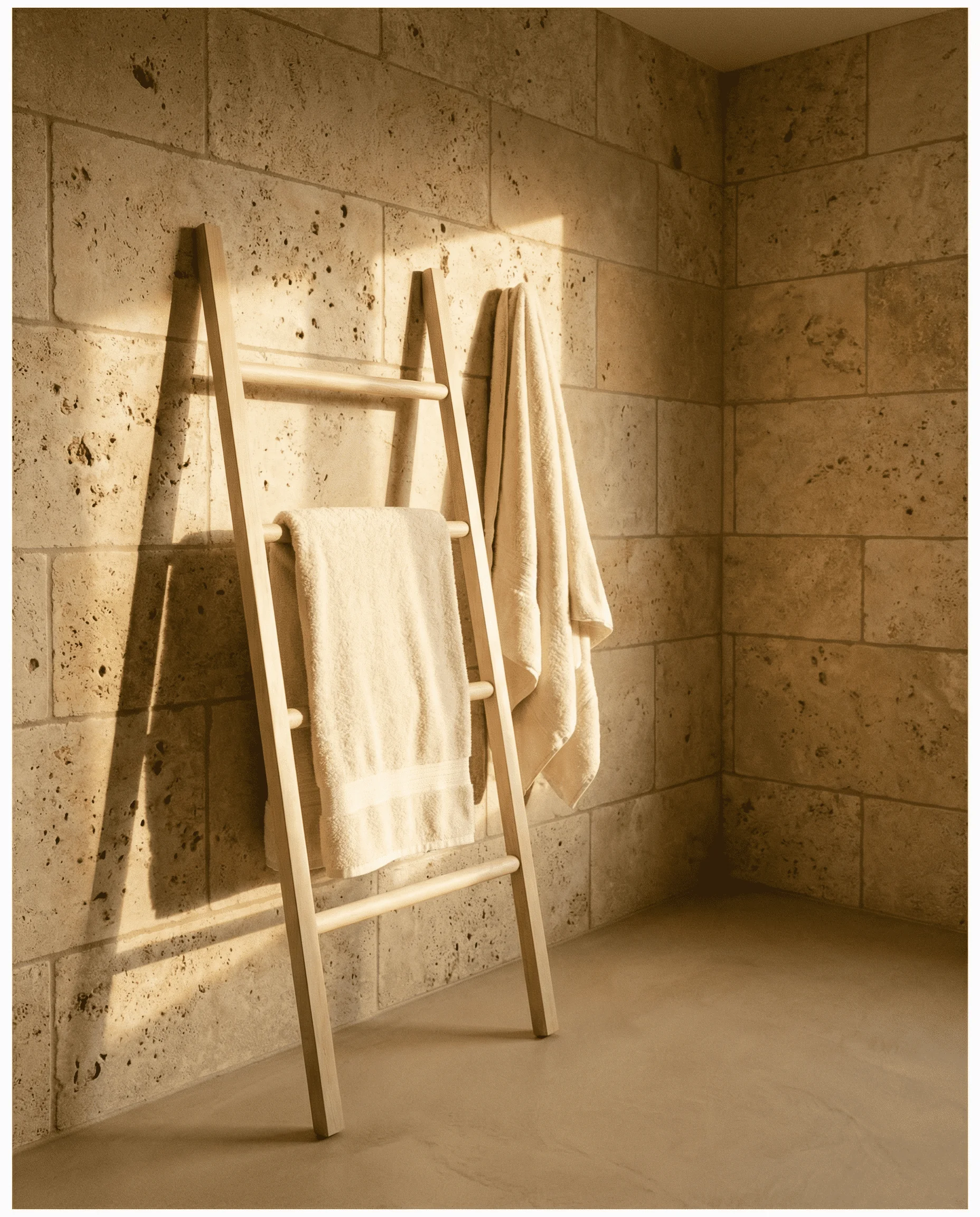
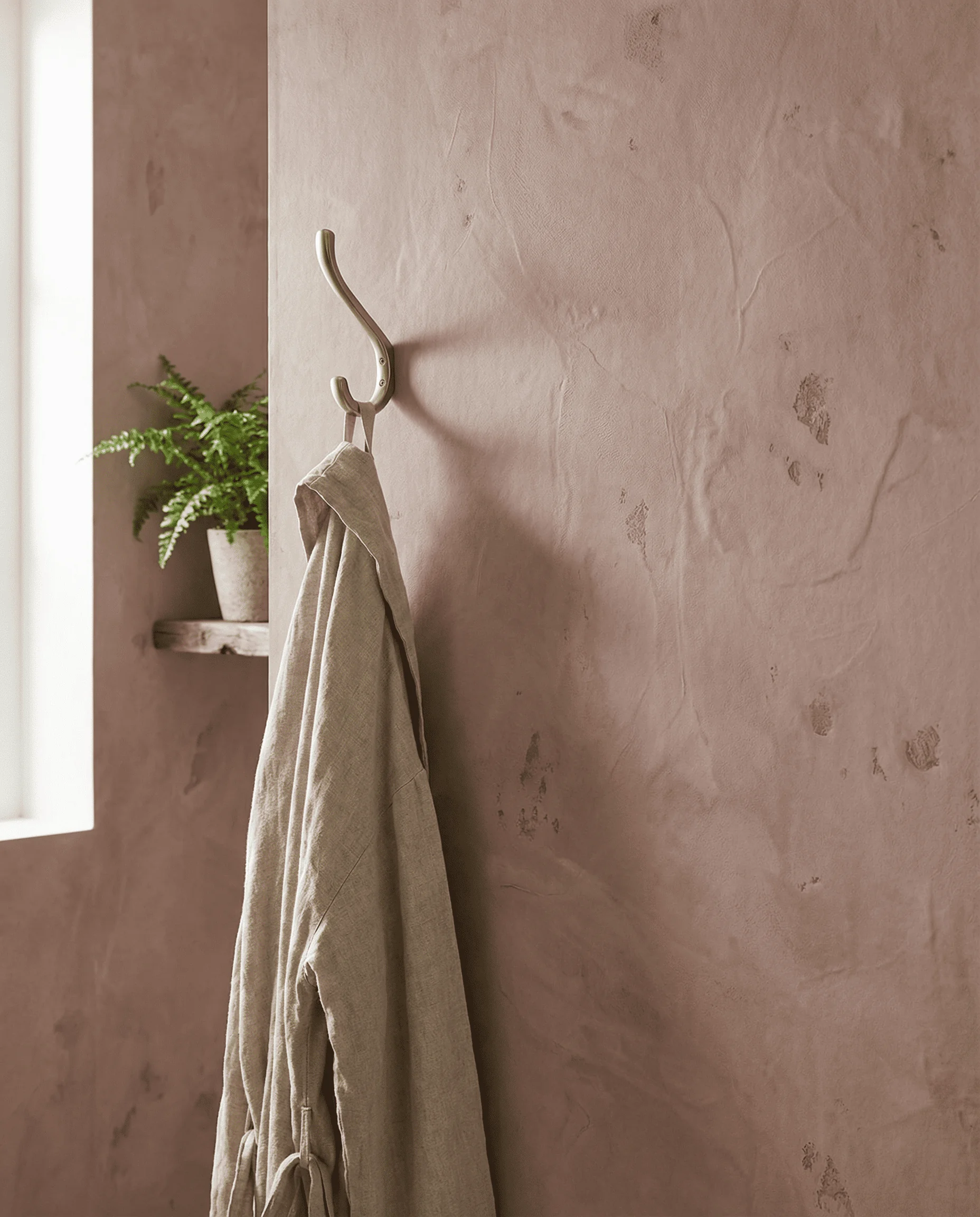
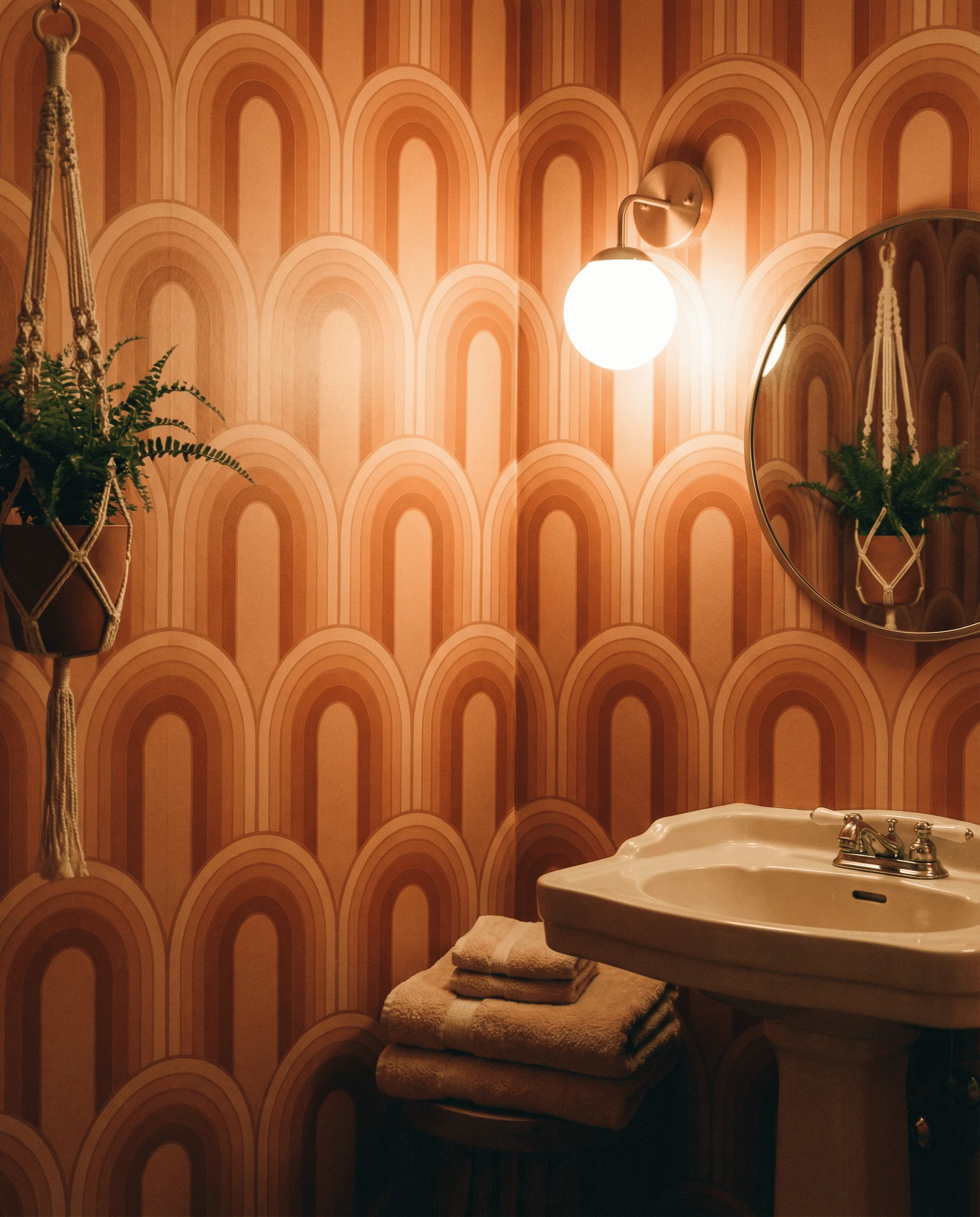
The era of the “cool gray” bathroom is officially behind us. 2026 is defined by radical warmth. We are seeing a massive shift toward grounding, earthy colors that make a tiled space feel less like a laboratory and more like a warm hug. This trend anchors the bathroom, turning it into a cozy retreat.
Description: Look for wallpapers saturated in deep espresso, warm umber, spicy terracotta, and “mushroom” greige. These aren’t usually flat, one-dimensional colors; they often appear in designs that mimic the look of clay, suede, or unrefined earth. The patterns are subtle—tonal shifts that add depth without screaming for attention.
Why it works in 2026: These tones create an immediate sense of intimacy and calm, which is essential for the “spa-at-home” atmosphere. Brown, in particular, is being hailed as the “new black” for its ability to add drama while remaining organic and soft.
Style Tip: To avoid the room looking too dark, pair a chocolate or rust-colored wallpaper with 2026 Bathroom Trends like unlacquered brass fixtures, creamy travertine floors, and light oak vanities. The combination of warm wood and warm walls is unbeatable.
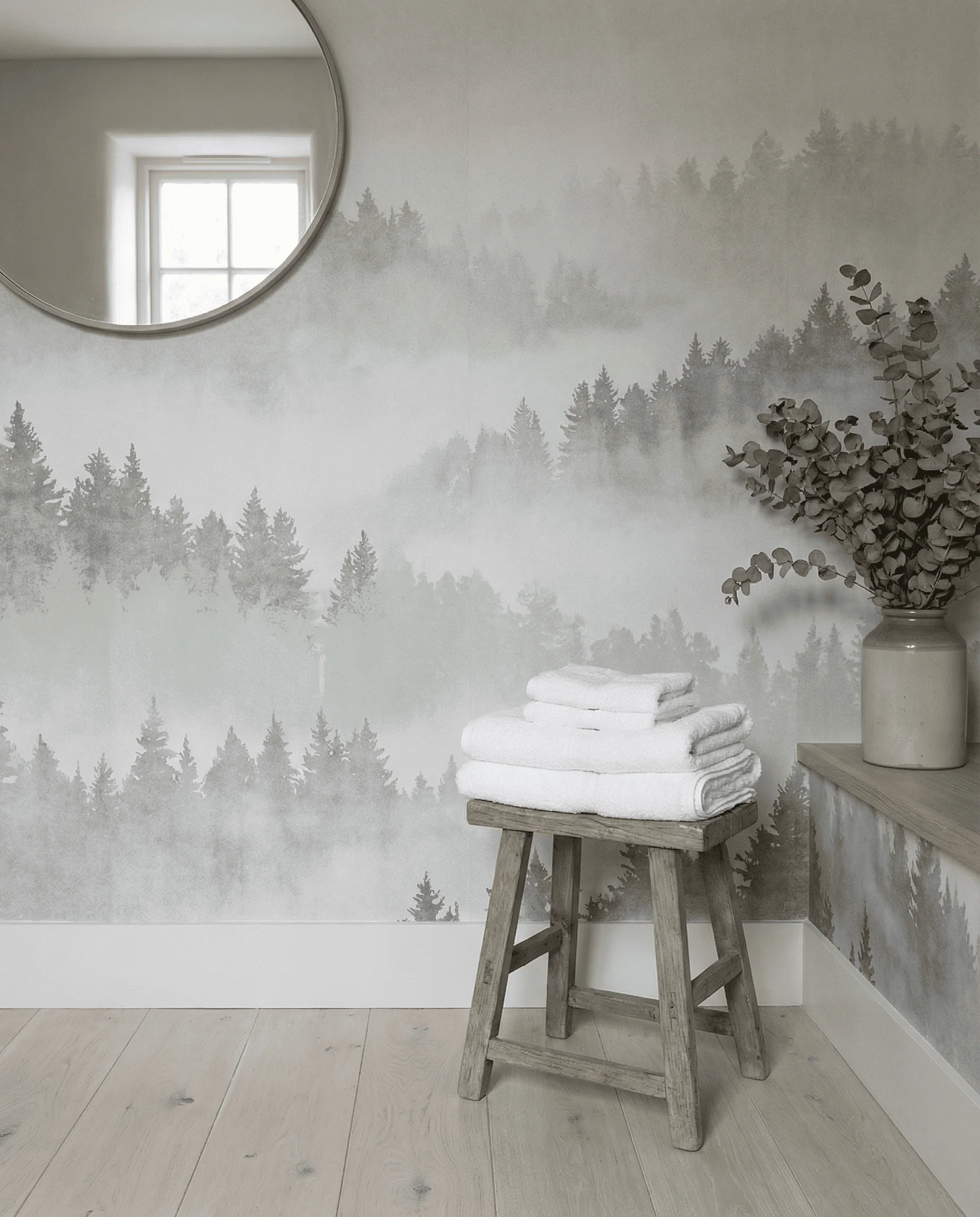
2. Immersive Murals: Panoramic Landscapes
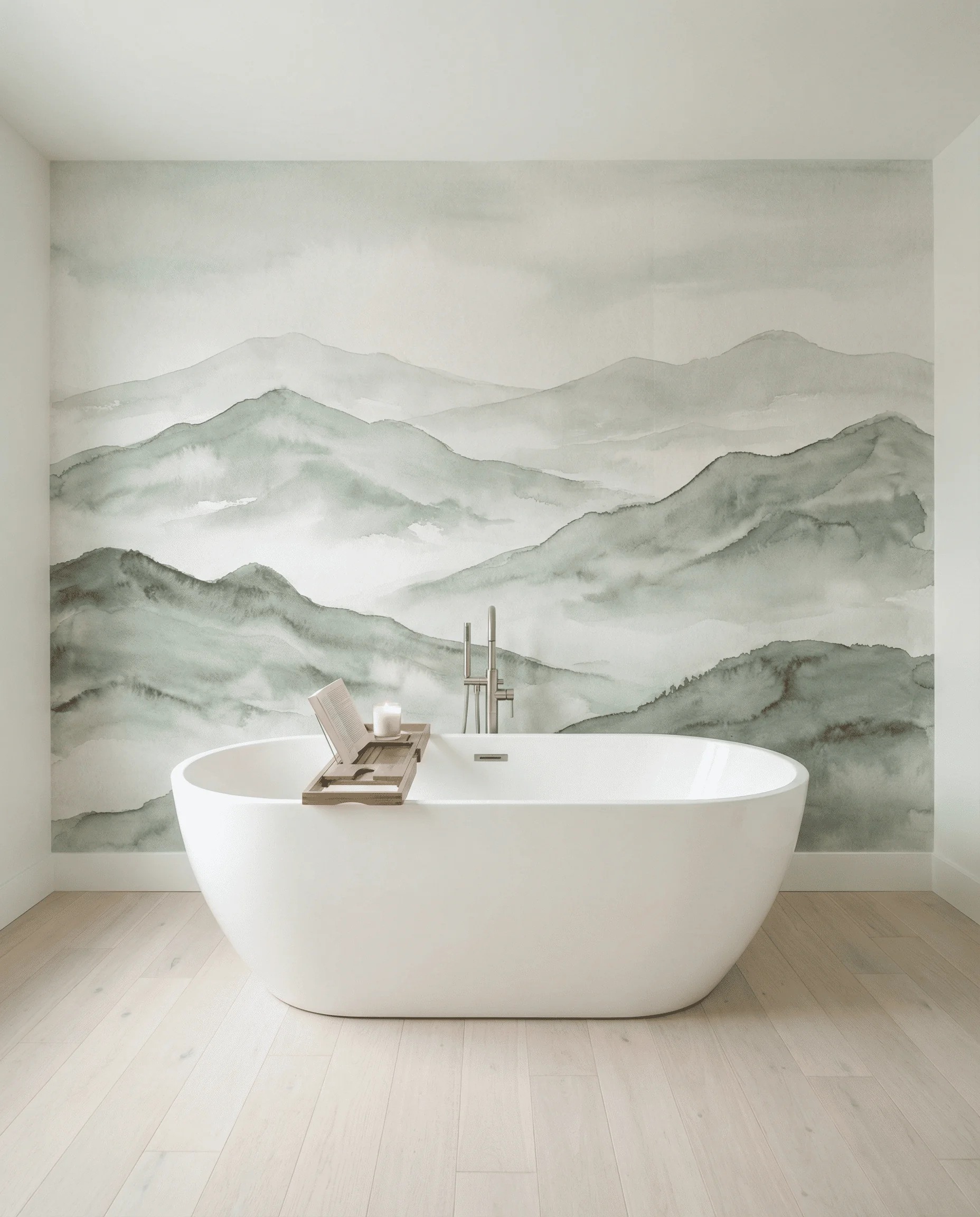
The concept of the “feature wall” has evolved. In 2026, we aren’t just accenting a single wall with a repeating pattern; we are wrapping the room in art. Panoramic murals that do not feature a visible repeat are becoming the ultimate luxury statement, transporting the user to a completely different world.
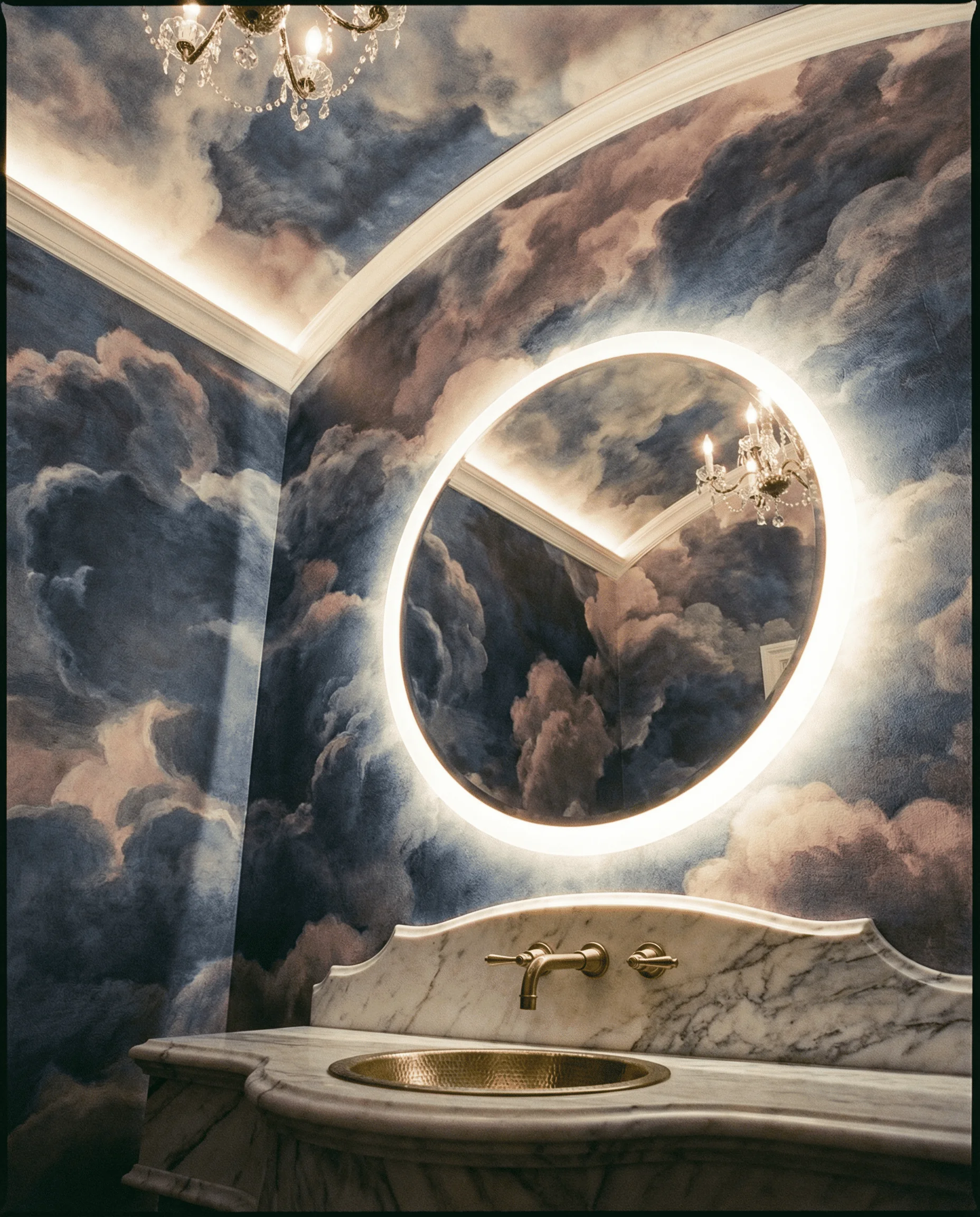
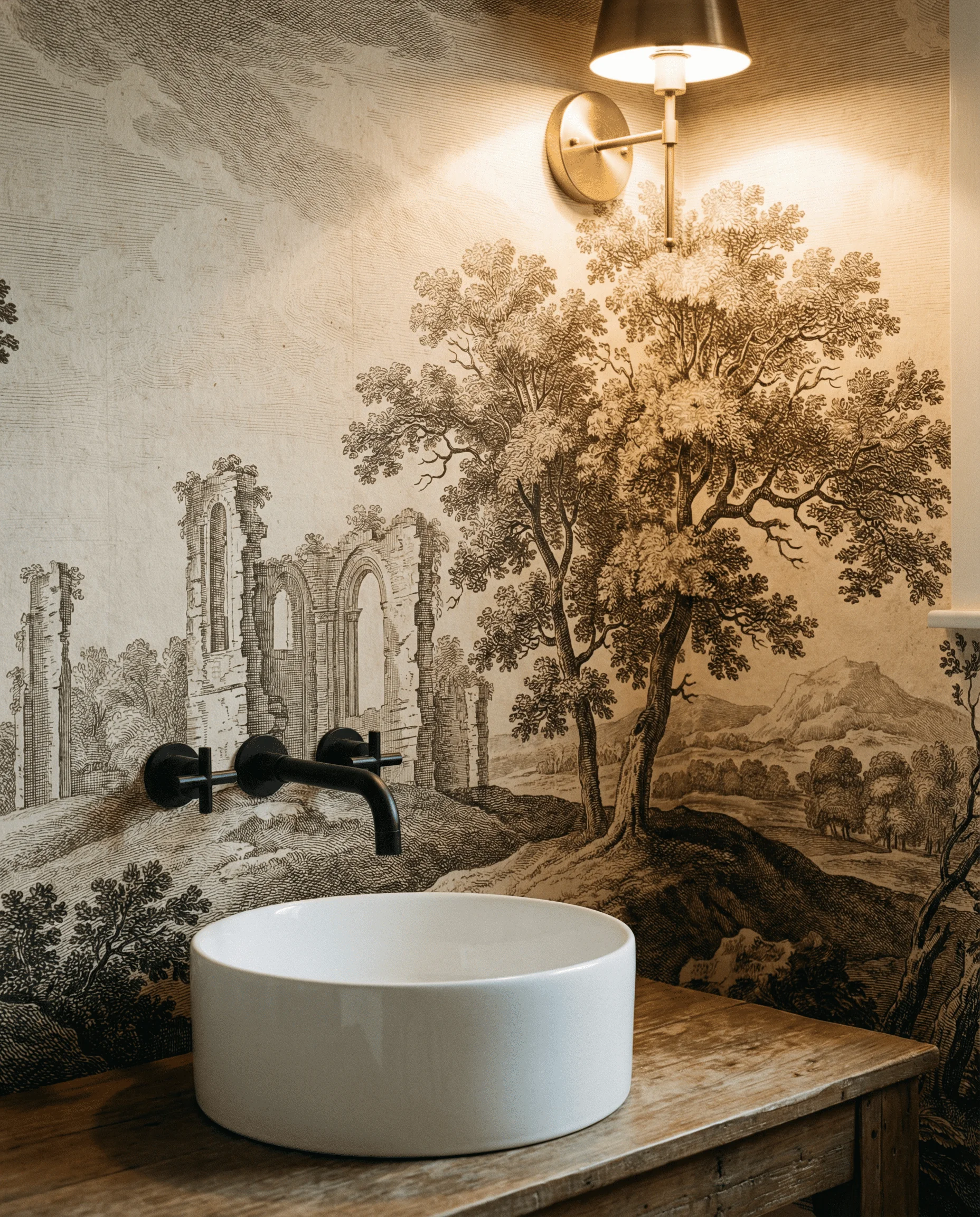
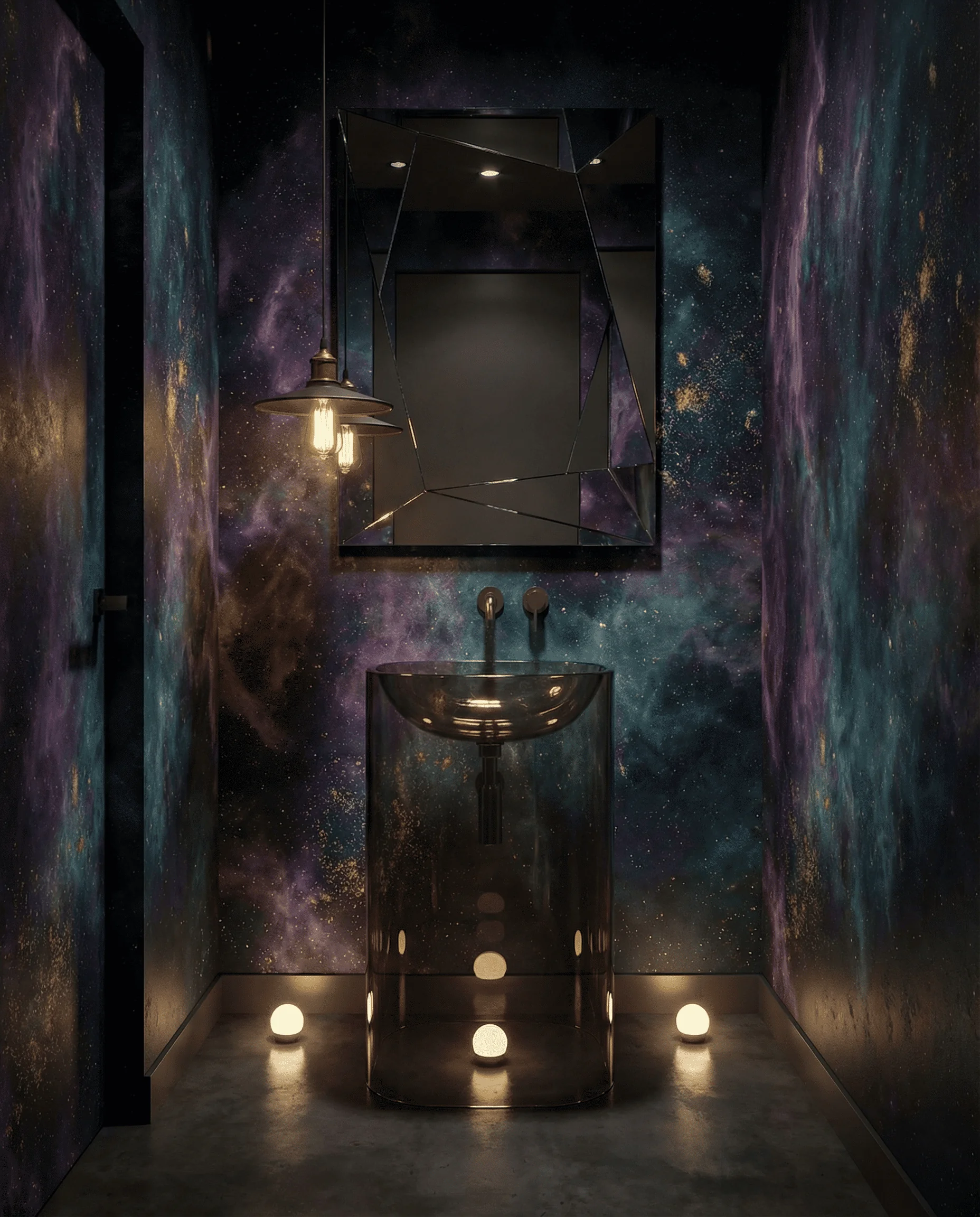
Description: Think large-scale scenic landscapes that stretch across multiple walls. We are seeing misty mountain ranges, etching-style pastoral scenes, dramatic cloud studies (skyscapes), and even “cosmic” nebula designs. The key is that the image tells a continuous story rather than repeating a motif every 12 inches.
Why it works in 2026: This trend blurs the physical boundaries of the room. In a small bathroom or powder room, a landscape mural can actually make the space feel significantly larger by creating an illusion of a distant horizon. It turns a windowless room into a room with a view.
Style Tip: Keep the rest of the decor minimal. Let the mural be the hero. A sleek, floating vanity and a frameless mirror allow the artwork to breathe. Check our guide on Modern Mirror Trends for minimalist options that won’t compete with the view.
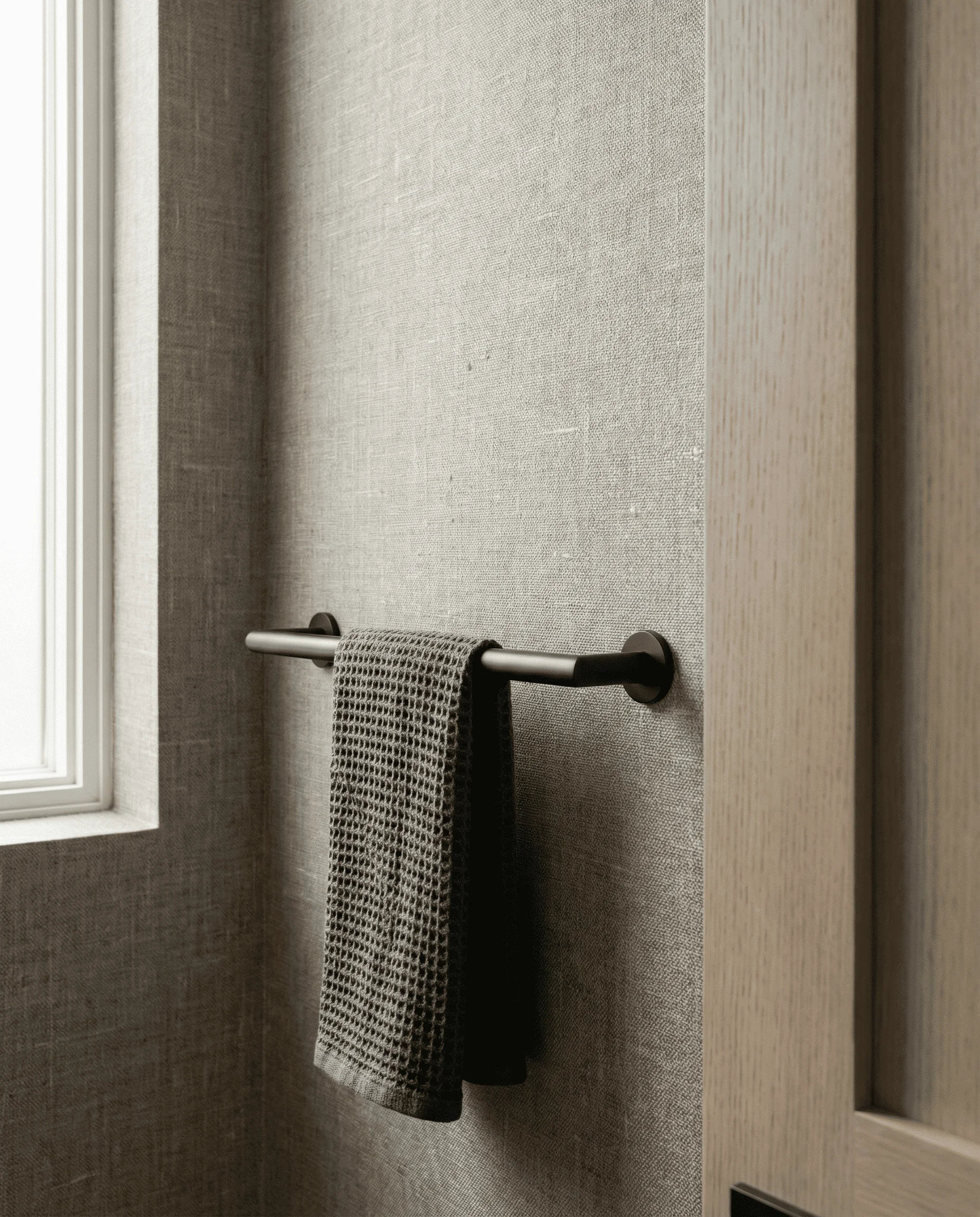
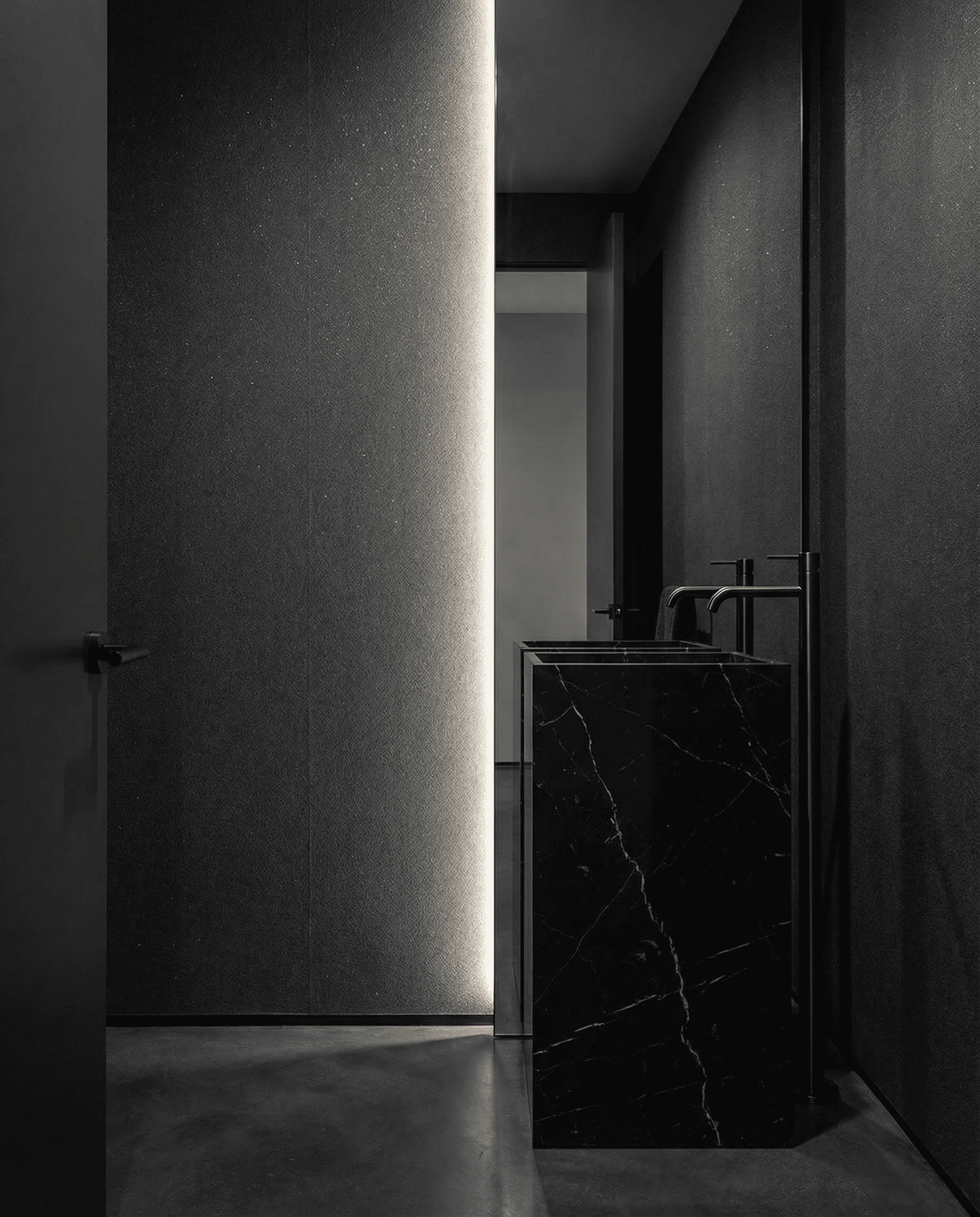
3. Textured Illusions: Faux Plaster and Stone (Trompe-l’œil)
Texture is the biggest buzzword in 2026 interiors, but authentic materials like Tadelakt (Moroccan plaster) or slab stone are expensive and labor-intensive to install. Enter the new generation of “faux” wallpapers. These are high-definition prints that are masters of disguise, offering the look of tactile materials without the renovation headache.
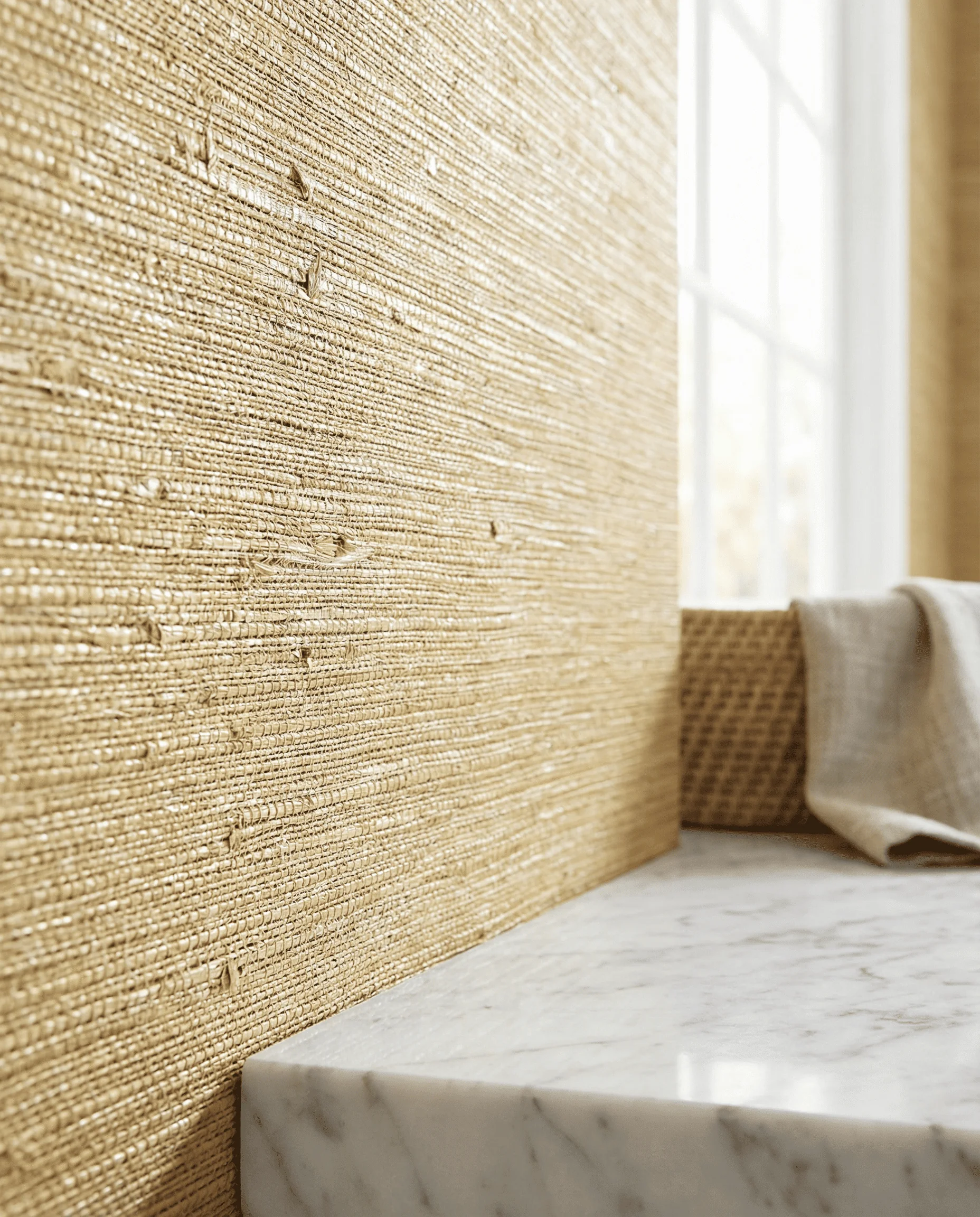
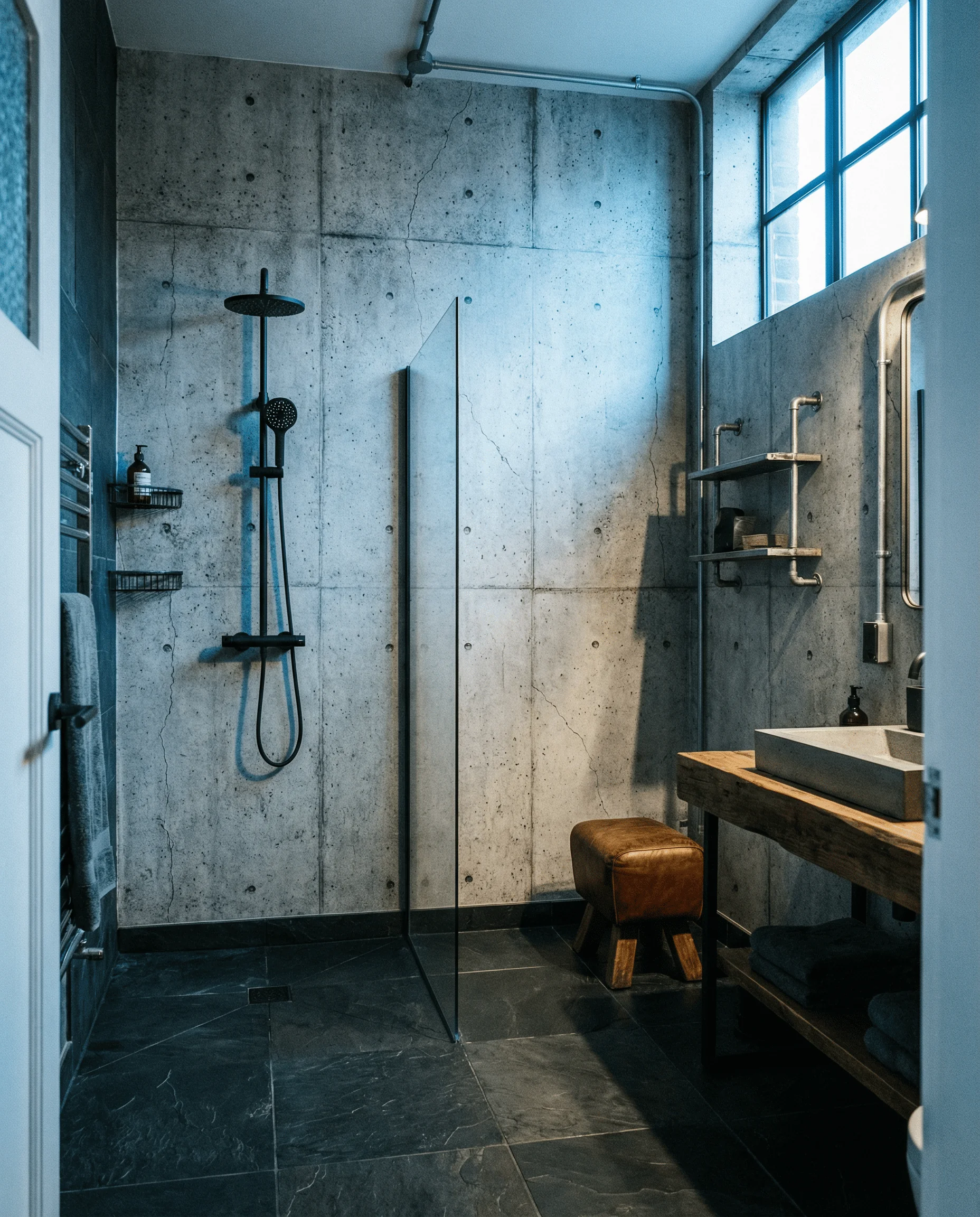
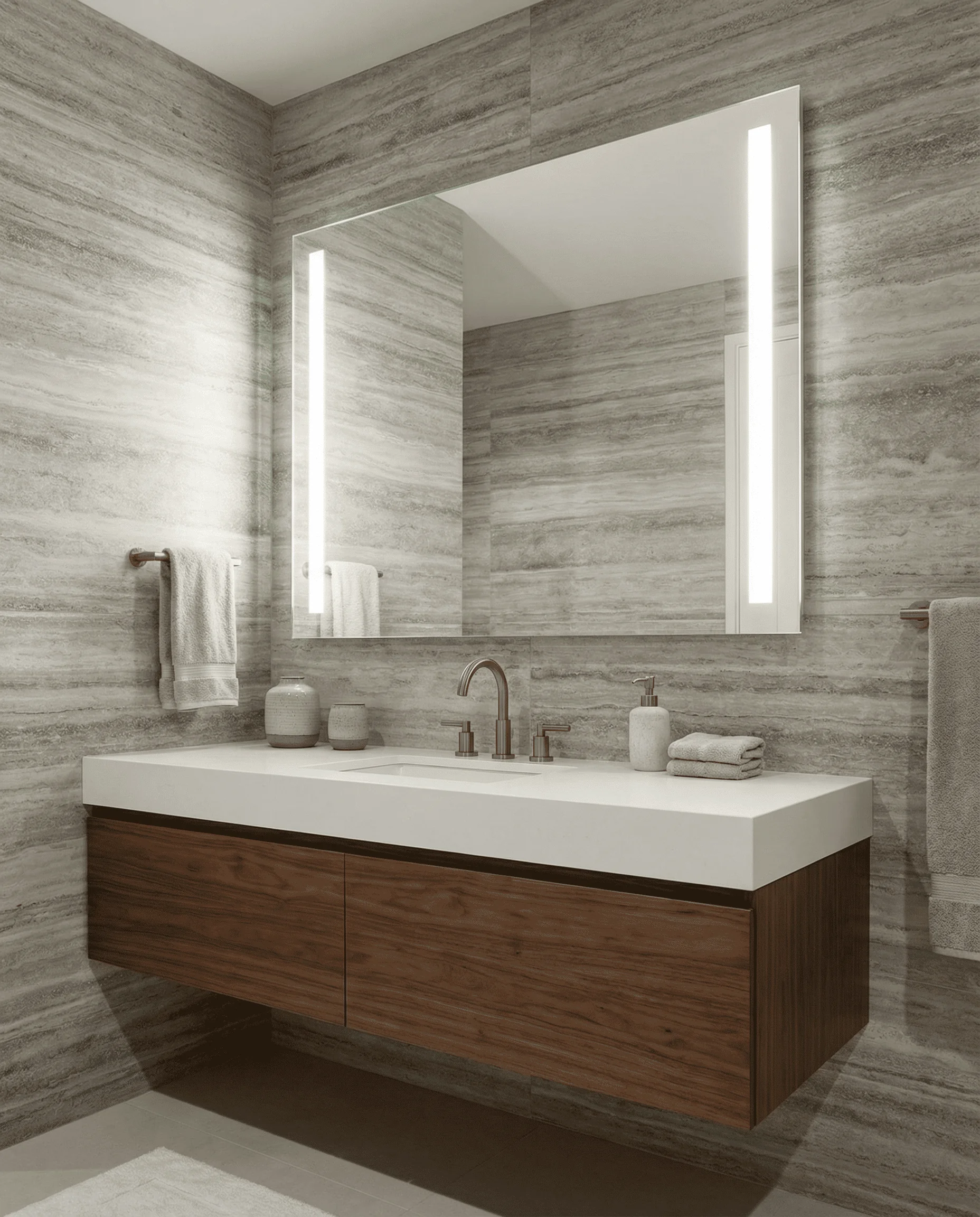
Description: Wallpapers that mimic the chalky, matte finish of Limewash paint, the uneven grit of concrete, the weave of grasscloth, or the veining of travertine and marble. The printing quality is now so high that you often have to touch the wall to realize it’s smooth paper.
Why it works in 2026: It brings architectural weight and “soul” to a new-build bathroom. It provides the perfect backdrop for a minimalist, “Wabi-Sabi” aesthetic where imperfection is celebrated. Plus, unlike real textured walls, these surfaces are wipeable.
Style Tip: If you love the look of grasscloth but worry about humidity, a vinyl faux-grasscloth is mandatory. Real natural fibers will mold in a damp bathroom, but the vinyl imitation offers the exact same visual warmth with zero risk.
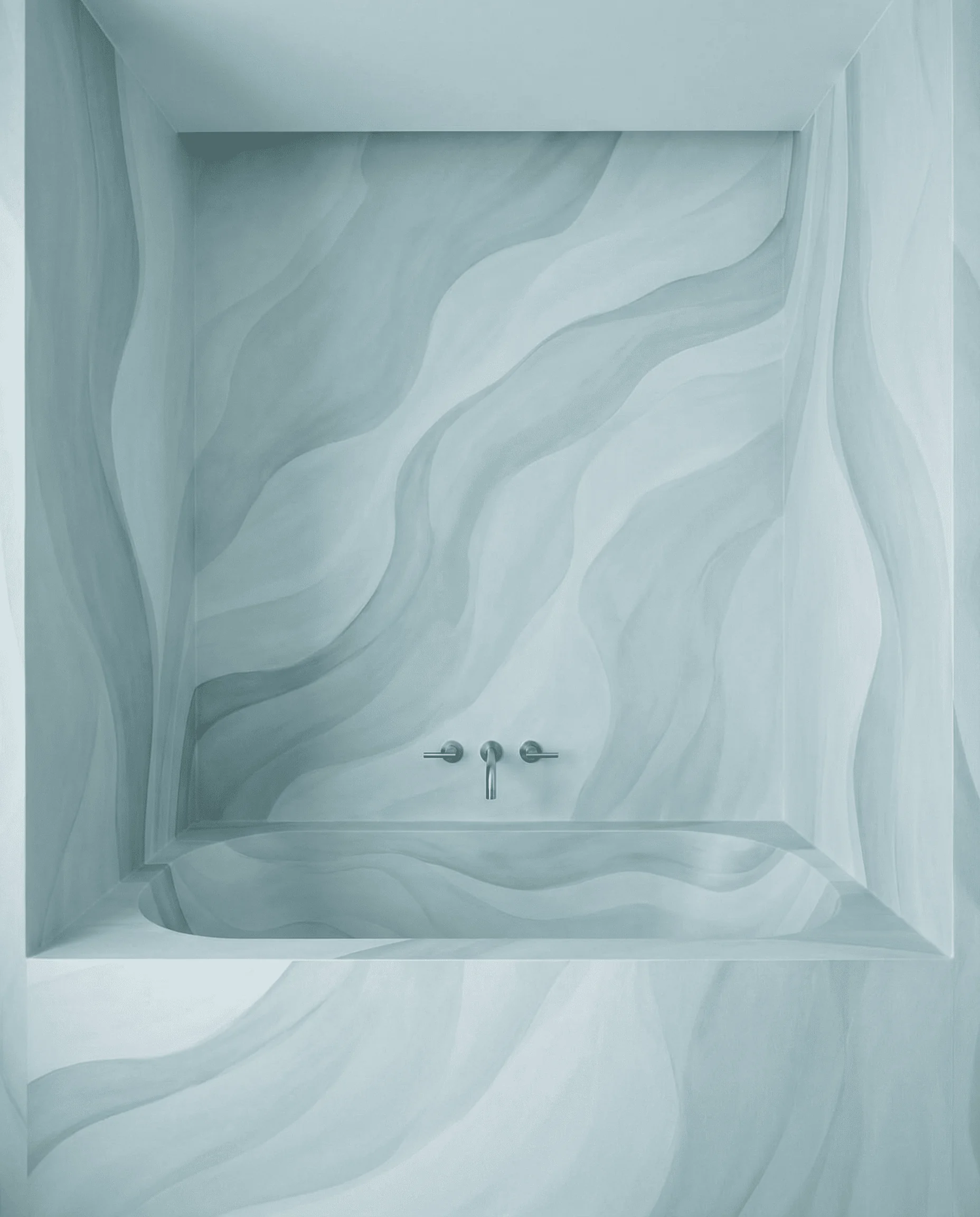
4. Soft Geometrics: Curves over Angles
Sharp, rigid geometric lines and aggressive chevrons are being replaced by “deconstructed” shapes. The 2026 aesthetic favors flow, fluidity, and movement, mirroring the water elements present in the bathroom.
Description: Imagine wavy lines, imperfect hand-drawn grids, soft arches, and retro 70s-inspired curves. The colors are often tone-on-tone (e.g., light beige on dark beige) or pastel, keeping the vibe soothing rather than energetic. The geometry feels organic, as if drawn by a human hand rather than a computer.
Why it works in 2026: This softness aligns perfectly with the current shift toward curved furniture and fixtures. It creates a sense of continuous flow in the room, which is psychologically calming.
Style Tip: This pairs exceptionally well with the curved furniture we are seeing in Furniture Trends. A rounded vanity mirror or an oval freestanding tub mimics the wallpaper’s lines, creating a cohesive, softened environment.
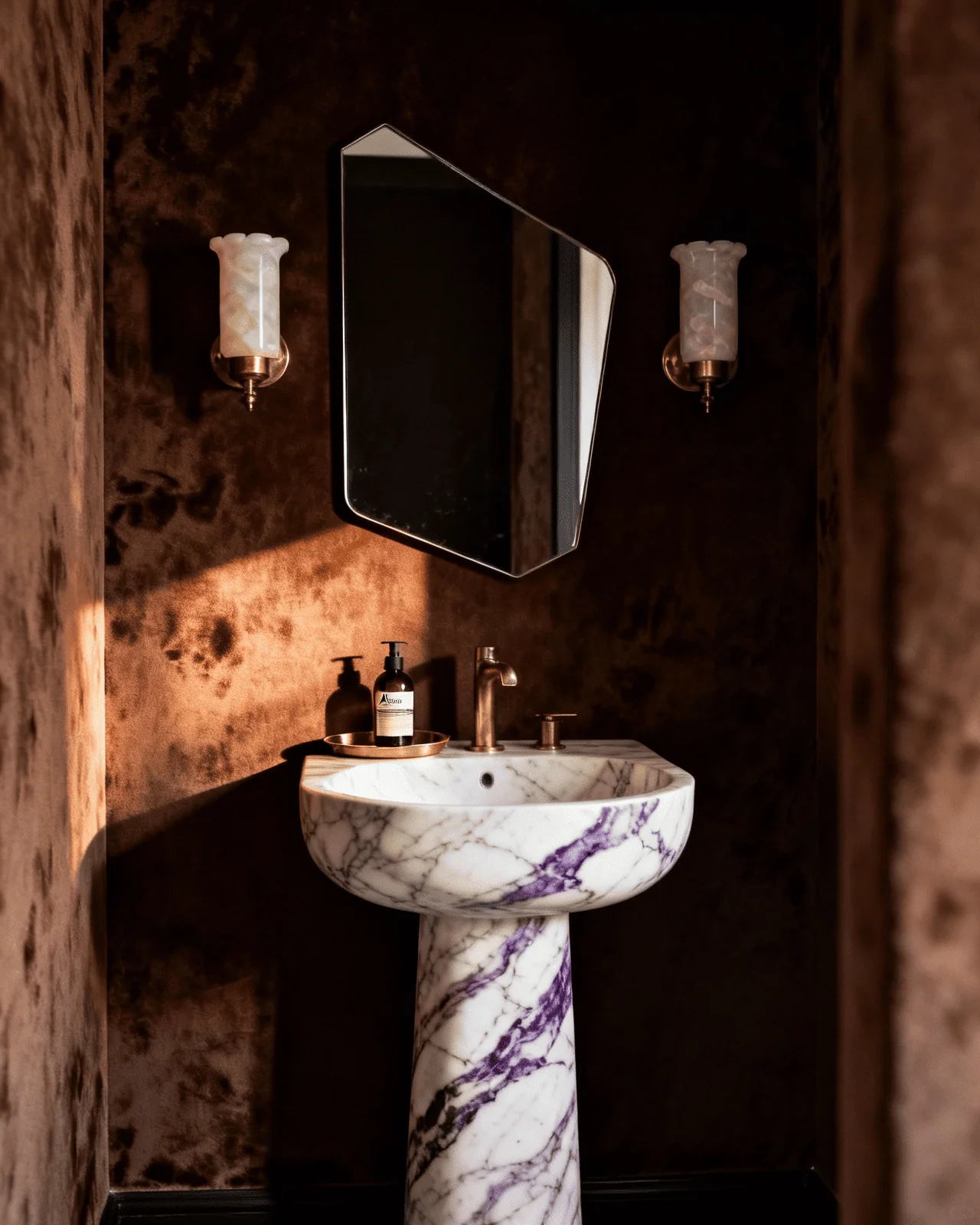
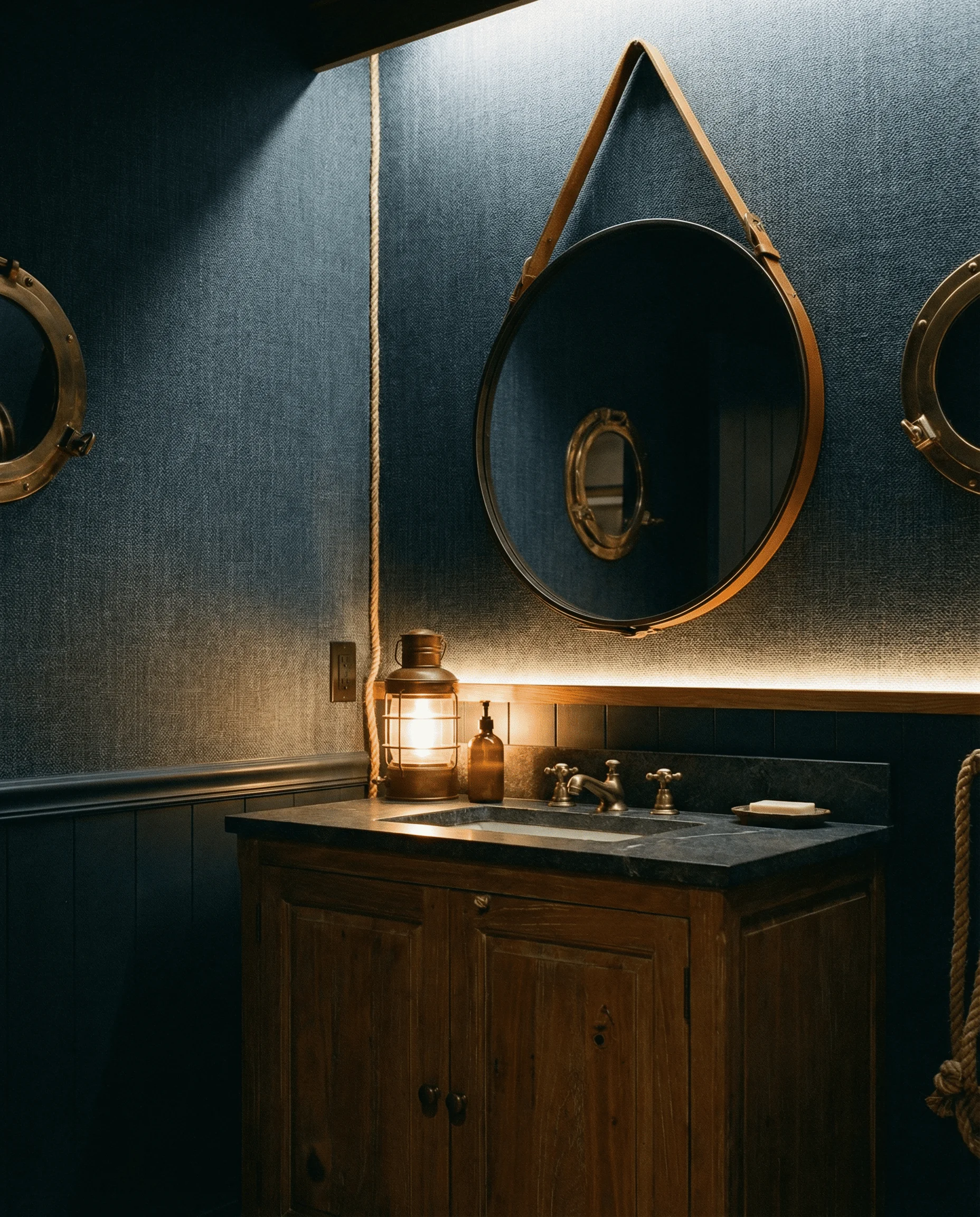
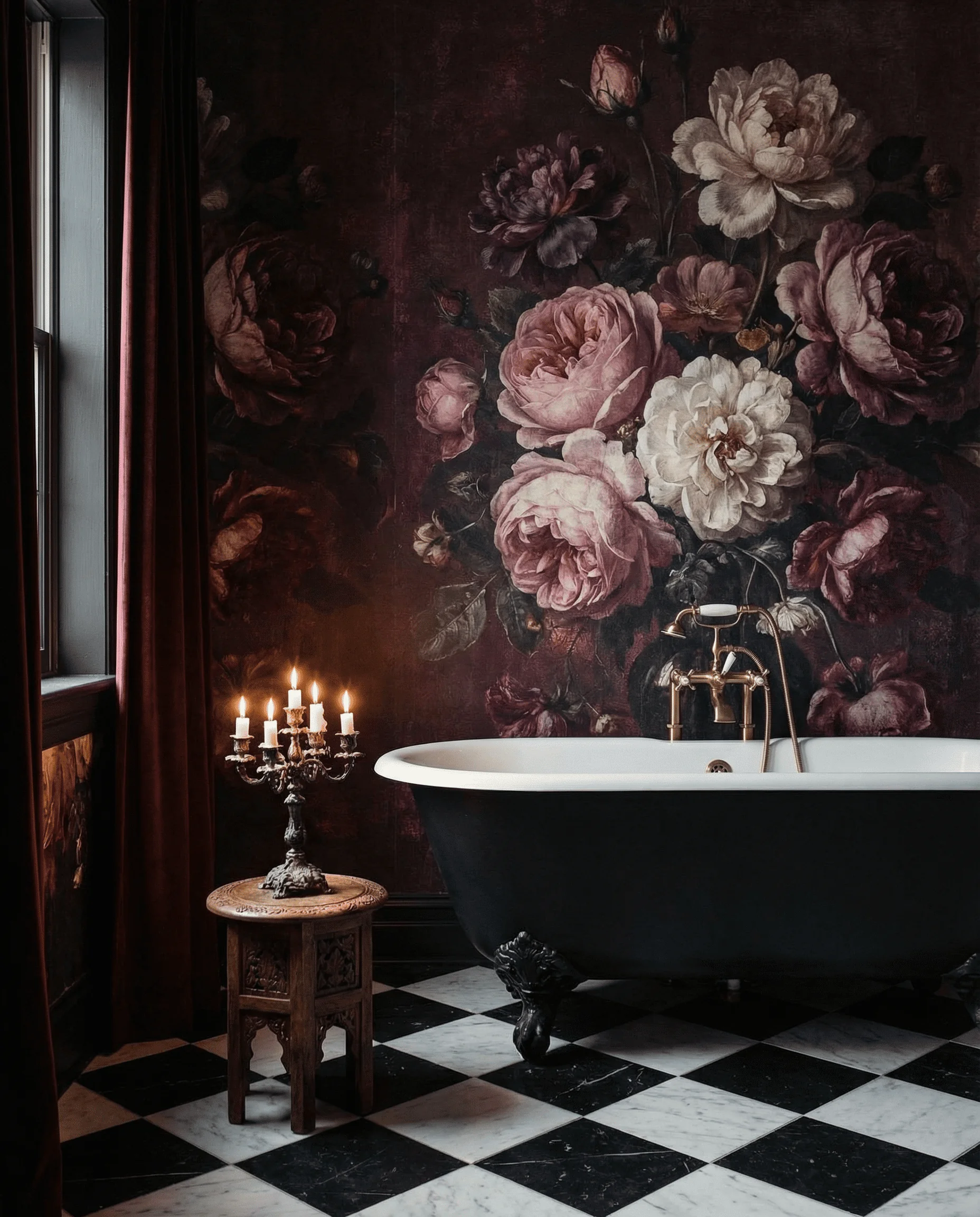
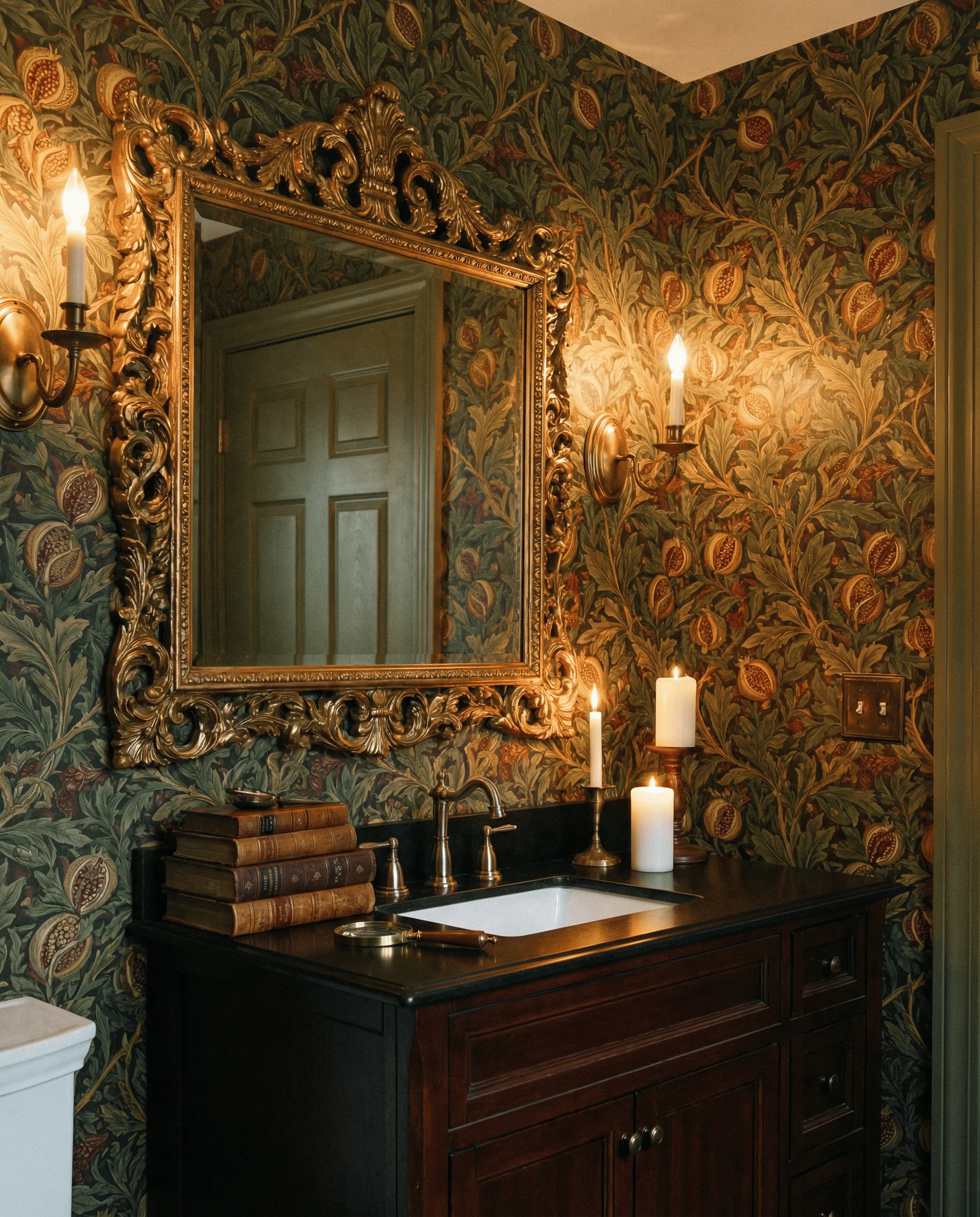
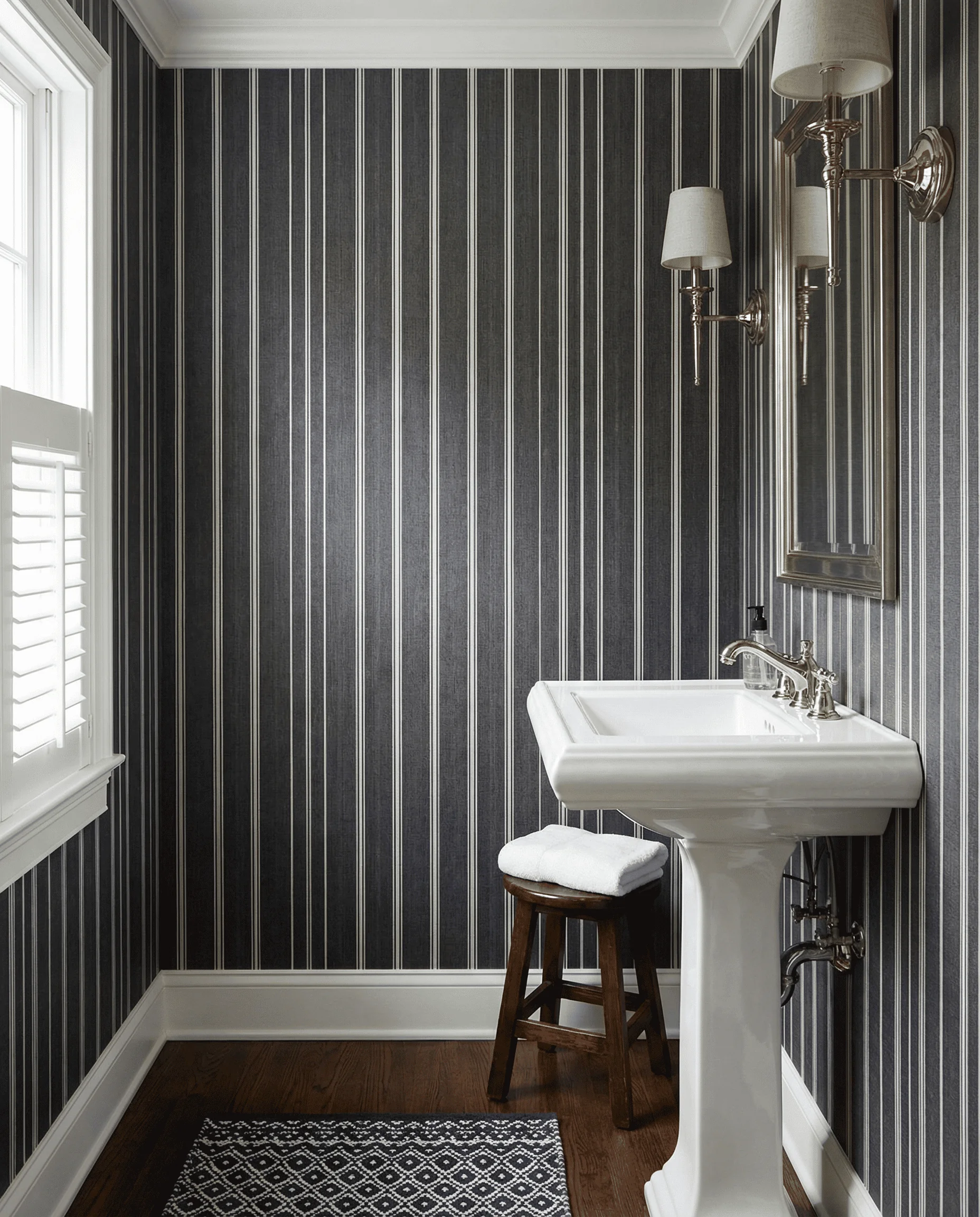
5. Dark & Moody: The “Jewel Box” Powder Room
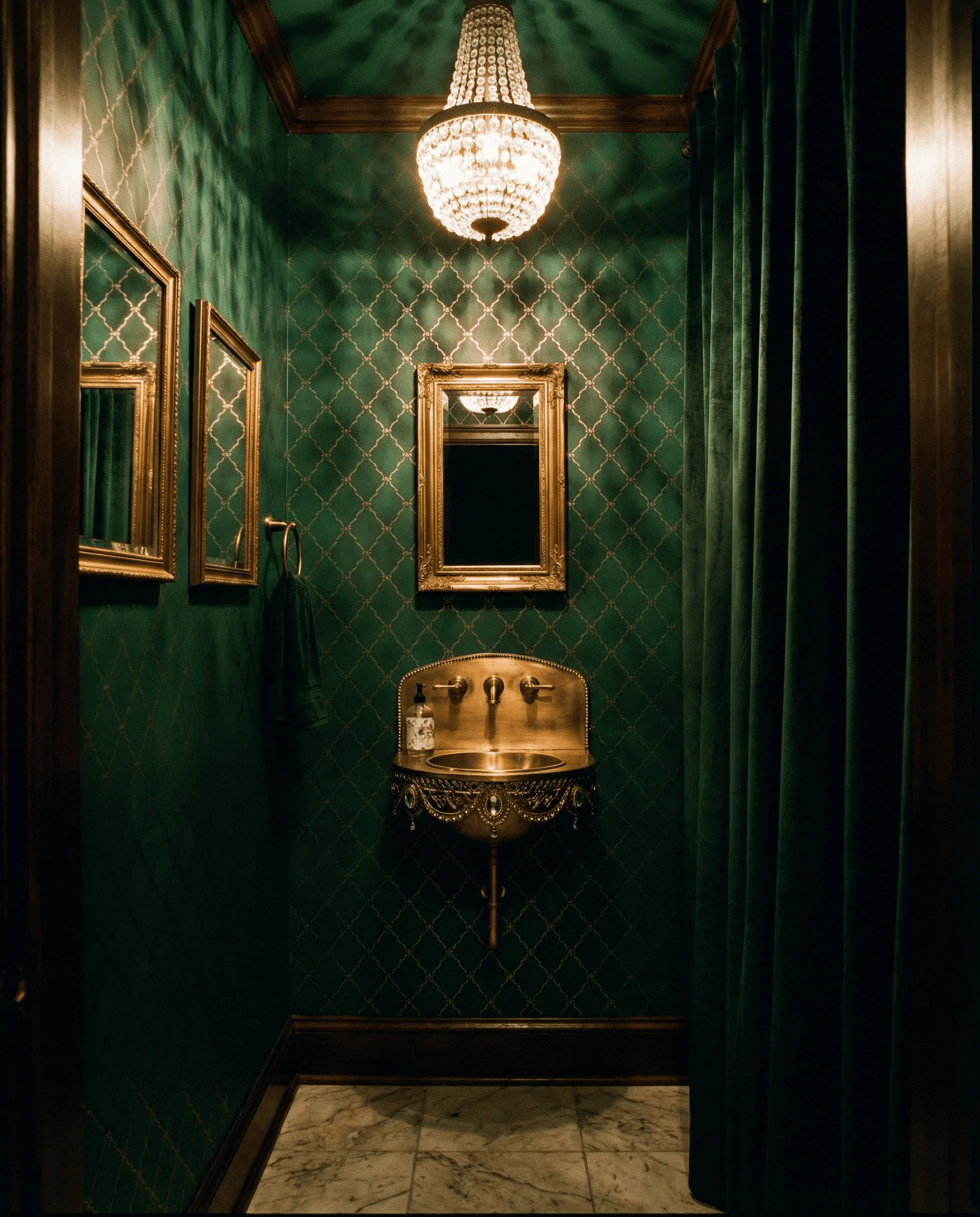
While master baths are leaning toward serene and airy, the powder room is having a dramatic, theatrical moment. Because you don’t spend hours in this room, it is the safest place to take a massive design risk and embrace the dark side.
Description: Deep, saturated colors like emerald green, midnight navy, charcoal, and deep plum. The patterns are often intricate and dense—think Art Deco geometrics, heavy damasks, or midnight tropical themes.
Why it works in 2026: It creates a “surprise” moment for guests. Opening the door to a small, dark, and luxurious room feels like stepping into a jewelry box. It’s sophisticated, intimate, and incredibly high-impact.
Style Tip: Lighting is critical here. Dark wallpaper absorbs light, so you need sconces that cast a warm, atmospheric glow. Combine this with Lighting Trends that feature brass or gold finishes to pop against the dark background.
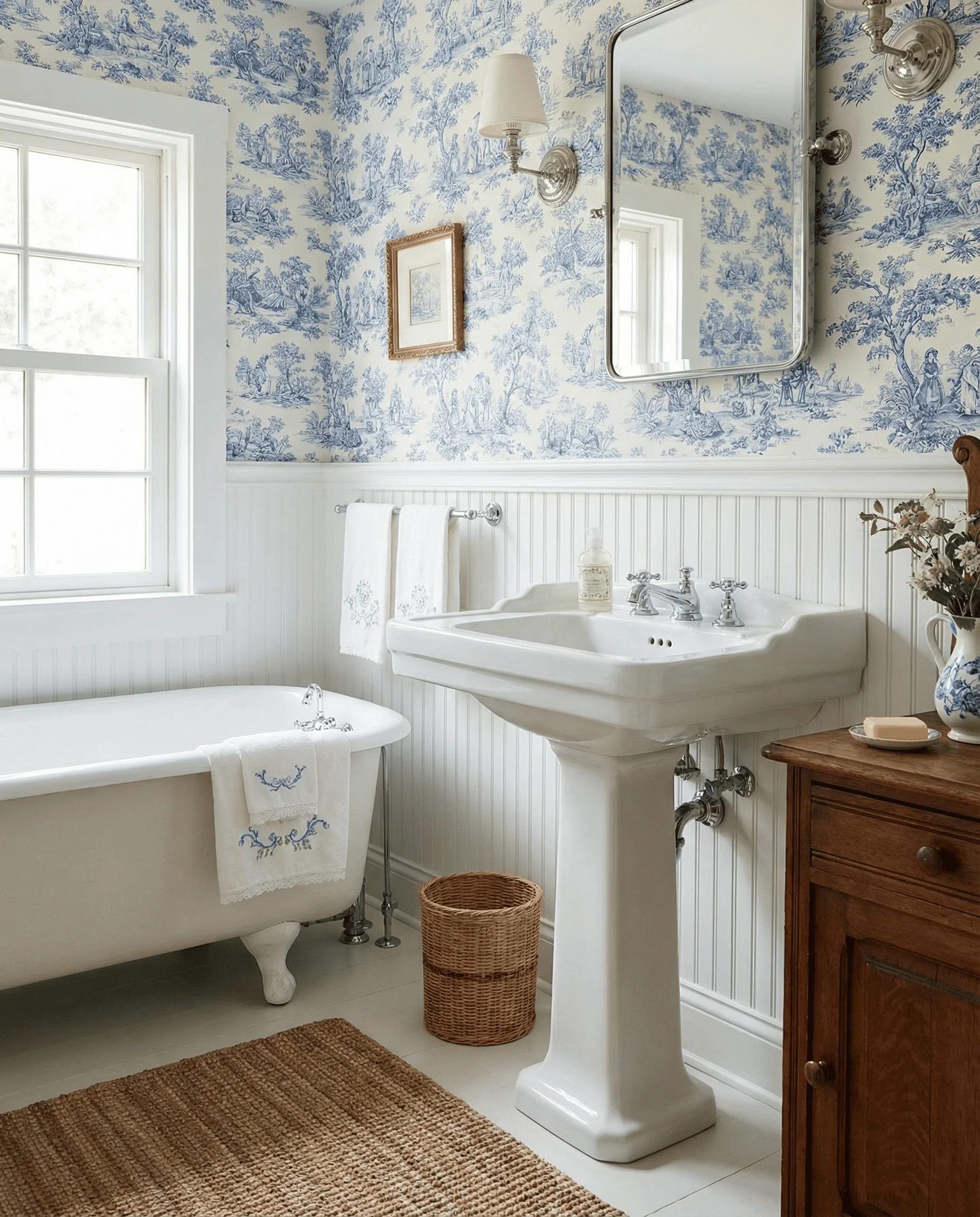
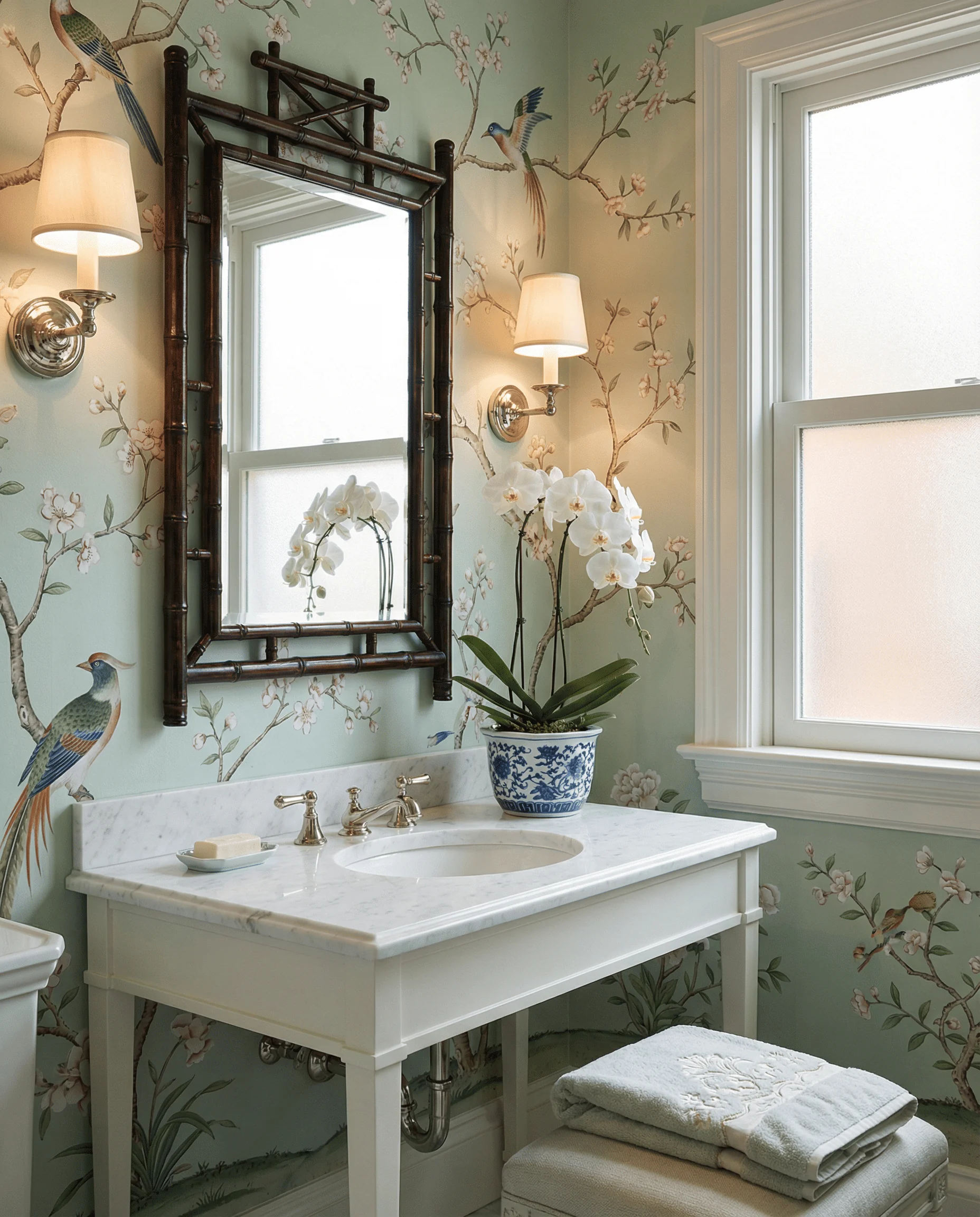
6. Vintage Revival: Modern Toile and Tapestry
The “Grandmillennial” style is still going strong but has matured. It is less “cluttered cottage” and more “moody manor.” We are seeing a revival of historical patterns, but updated for the modern eye.
Description: Classic Toile de Jouy (pastoral scenes), William Morris-style intricate vines, and Chinoiserie. However, instead of the traditional pastel blues and whites, we are seeing these patterns in unexpected, moody colorways—copper on charcoal, olive green on mustard, or burnt orange on cream.
Why it works in 2026: It adds a layer of history and storytelling to a home. In a sterile, modern bathroom, a vintage-style wallpaper adds instant character and charm, bridging the gap between old-world elegance and modern convenience.
Style Tip: Contrast is key. Don’t make the whole room vintage. Pair a William Morris print with a sleek, modern glass shower enclosure or contemporary Bathroom Tile Trends to keep the look fresh, not dusty.
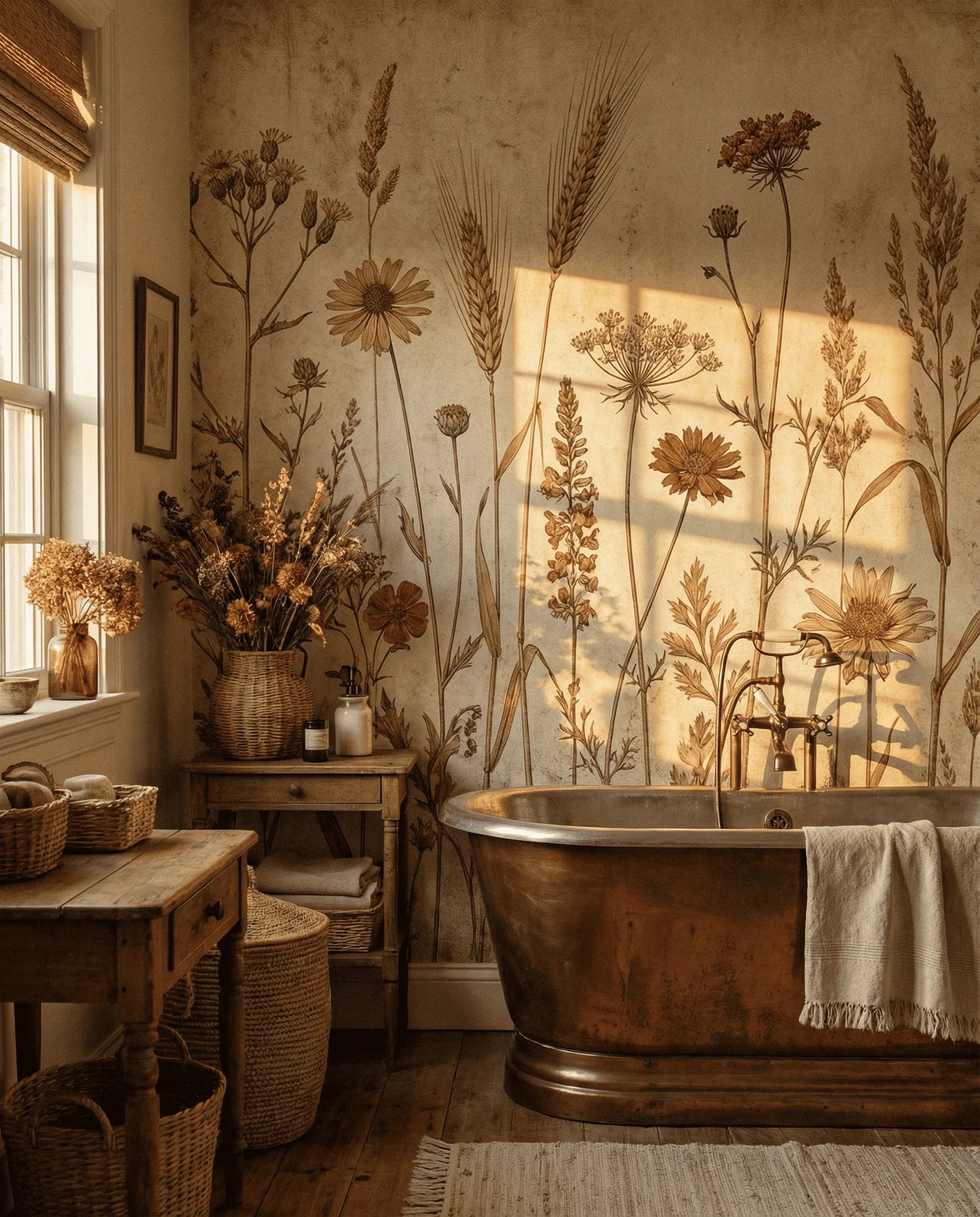
7. Subtle Botanicals: The Evolution of Jungle Prints
The bright, neon palm leaves and banana leaf prints of the early 2020s are fading out. The “Biophilic” trend (design that connects us to nature) is evolving into something more atmospheric, quiet, and sophisticated.
Description: Instead of a bright green jungle, think of a misty forest. Designs feature ferns, dried flowers, delicate branches, and eucalyptus in desaturated palettes—sage greens, dusty blues, fog grays, and sepia tones.
Why it works in 2026: It brings the outdoors in, but in a way that promotes sleep and relaxation rather than energy. It creates a “quiet” connection to nature that feels restorative.
Style Tip: This aesthetic pairs beautifully with Eco-Sustainable Interior Design Trends. Use recycled glass accessories, bamboo mats, and plenty of live plants to enhance the 3D effect of the wallpaper.
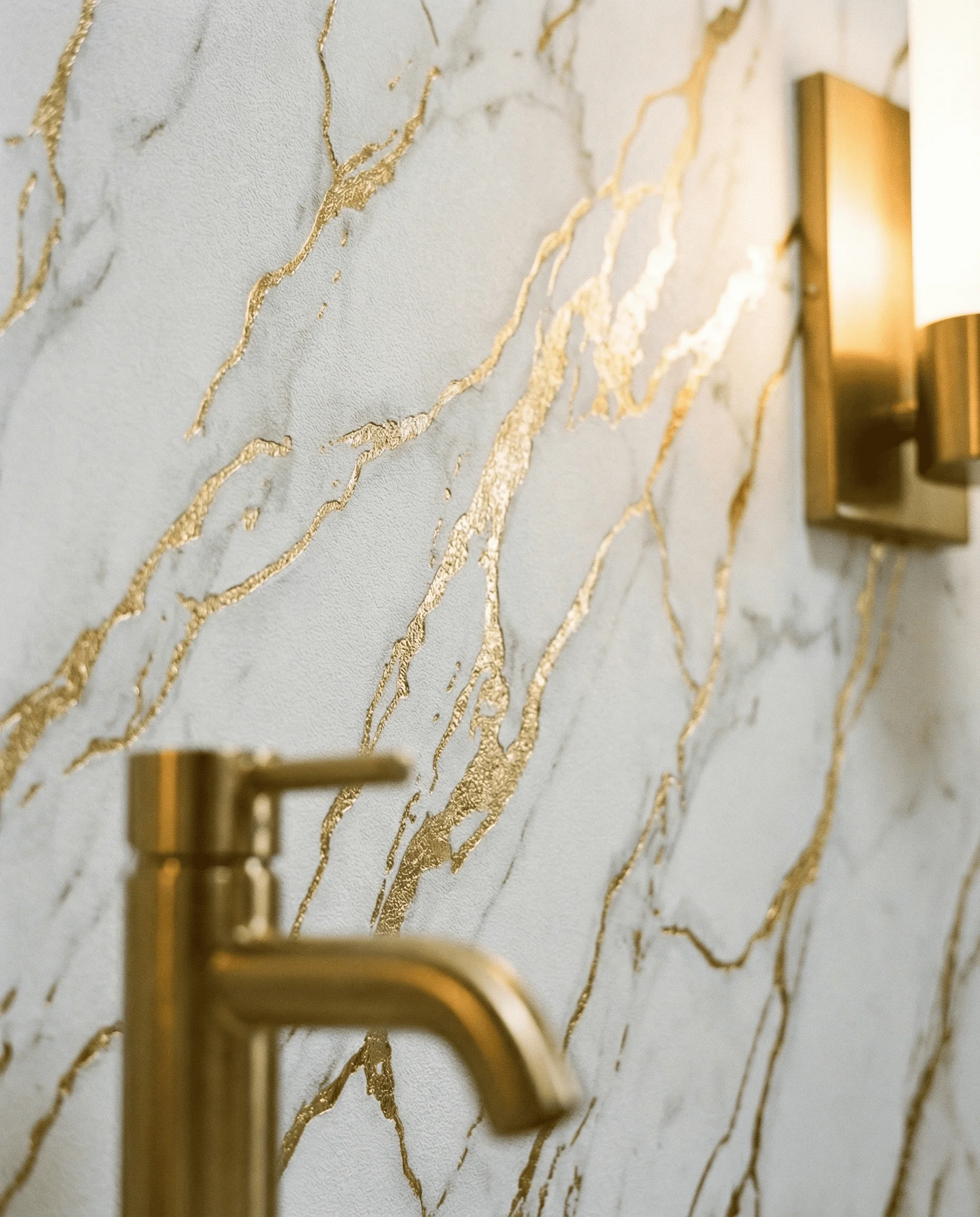
8. Metallic Shimmer: Adding Luxury with Light
We aren’t talking about the aggressive, shiny gold foil of the 80s. The 2026 metallic trend is about “mineral” shimmer—subtle, organic, and reflective details that catch the light.
Description: Wallpapers with embedded mica flakes, pearlescent finishes, or soft bronze/gold veining running through a stone pattern. The shine is often hidden, only revealing itself when the light hits it from a certain angle.
Why it works in 2026: It adds a touch of glamour and luxury without being gaudy. In small bathrooms, these reflective qualities help bounce light around the room, making it feel brighter and more open.
Style Tip: Lighting placement is everything. Position your wall sconces or vanity lights so they wash down the wall, highlighting the metallic accents. When you dim the lights for a bath, the walls will softly glow.
Catch the light. ✨ Metallic accents in this marble paper add a subtle shimmer that paint just can't match.
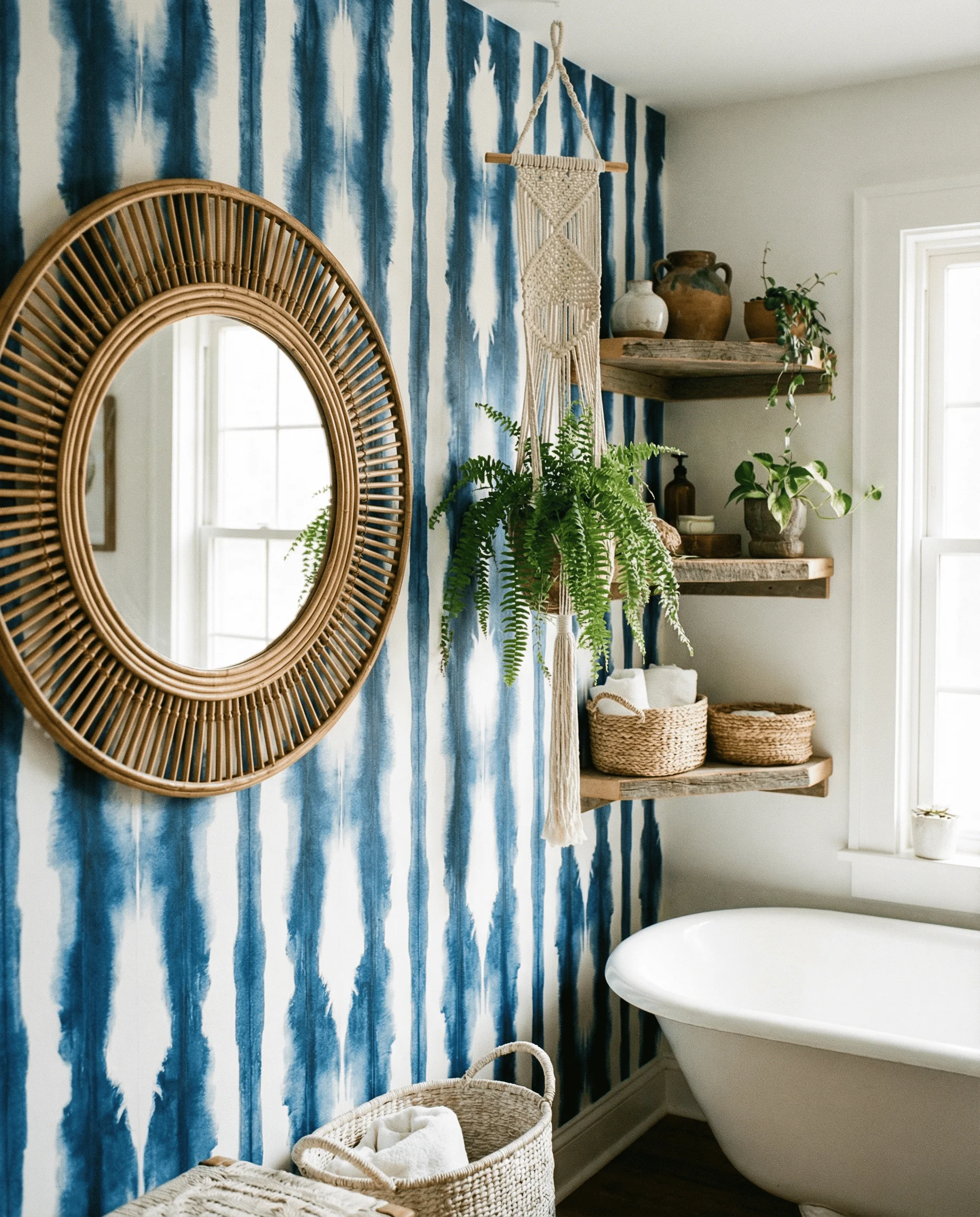
9. Stripes Reimagined: Hand-Drawn and Imperfect
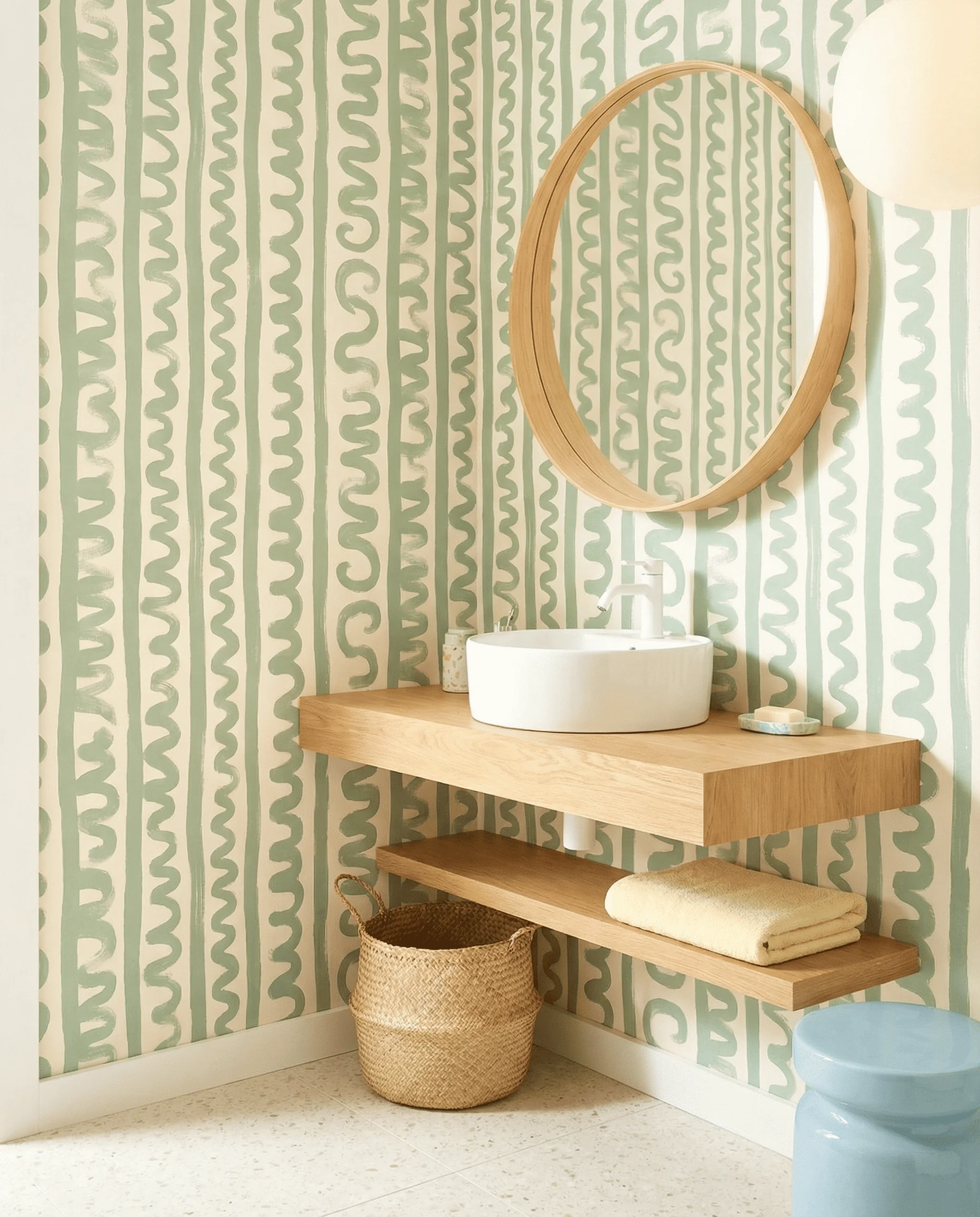
Stripes are a classic design element that never truly dies, but the 2026 version is looser, more relaxed, and more organic than the rigid pinstripes of the past.
Description: Look for “Ikat” style stripes (where the edges are blurred), watercolor bleed stripes, or “ticking stripe” patterns that look like woven linen fabric. The lines are rarely perfectly straight; they have a hand-painted quality.
Why it works in 2026: Vertical stripes are a designer’s secret weapon for low ceilings. They draw the eye upward, making a cramped bathroom feel loftier. The “imperfect” nature of the new stripes keeps the room from feeling too stiff or formal.
Style Tip: This is a versatile pattern that works with almost any flooring. It looks particularly smart when paired with Flooring Trends 2026, such as herringbone wood or large-format stone tiles.
10. The “Wet System” Revolution
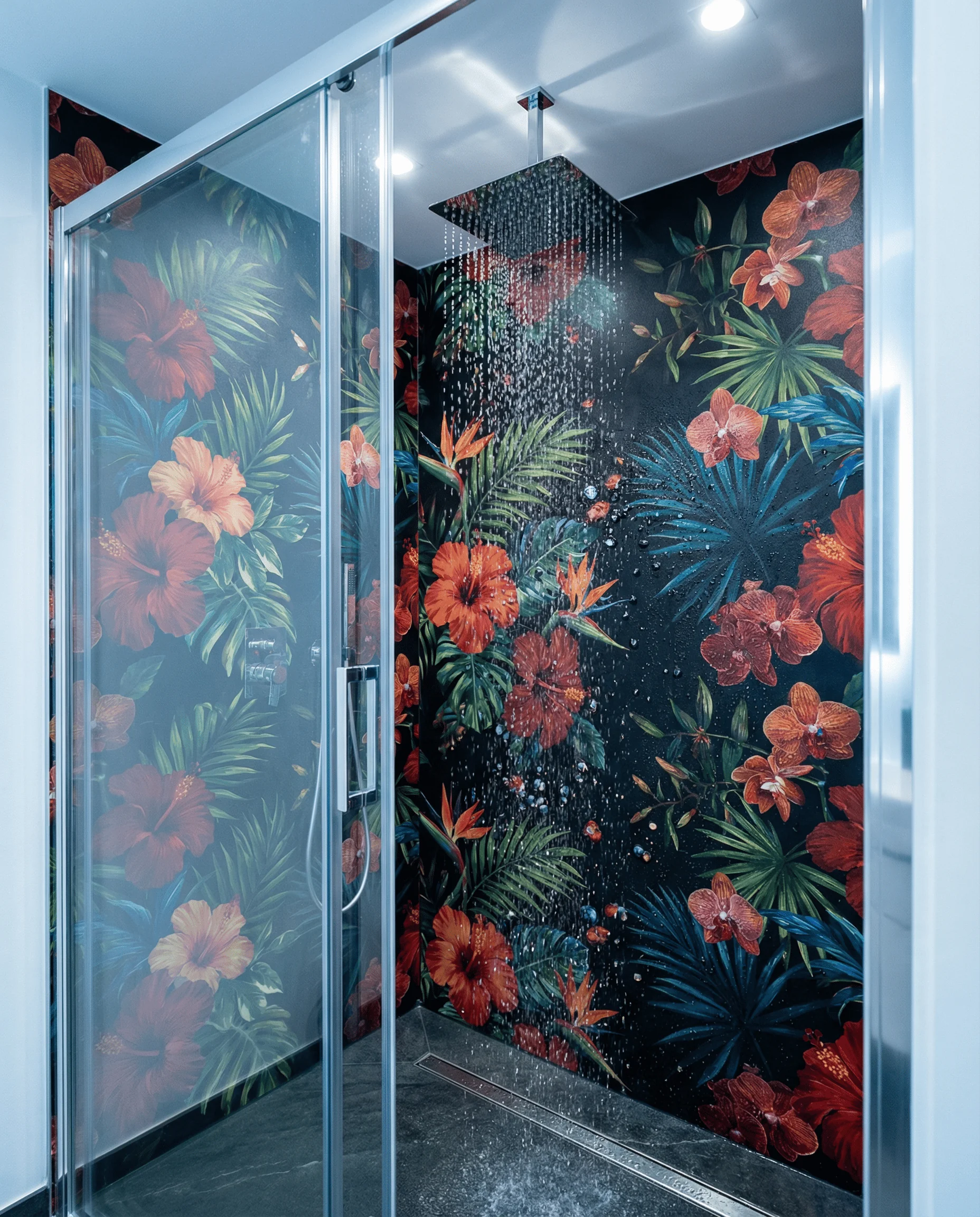
While this is a material innovation, it has sparked a visual trend: the “fully wrapped” bathroom. In 2026, we are seeing wallpaper go where it has never gone before—right inside the shower.
Description: Waterproof wallpaper systems (often fiberglass based) that are sealed with a resin finish. These create a seamless, grout-free surface that can handle direct water exposure.
Why it works in 2026: It allows for total design continuity. You don’t have to stop the wallpaper at the shower door and switch to cold tile. It creates a seamless, immersive look that is highly luxurious.
Style Tip: Use a wet system to turn your shower niche into a piece of art, or wrap the entire wet room in a dramatic mural. It’s a fantastic alternative to the grout lines of traditional tiling.
Choosing the prettiest pattern is the fun part, but in a bathroom, the substrate (the material the paper is printed on) is what determines whether your renovation lasts 10 years or 10 months.
Choosing the Right Material for Wet Spaces
Not all wallpapers are created equal. When shopping, you must ignore the pattern for a moment and look at the specifications.
Vinyl & Washable Wallpapers
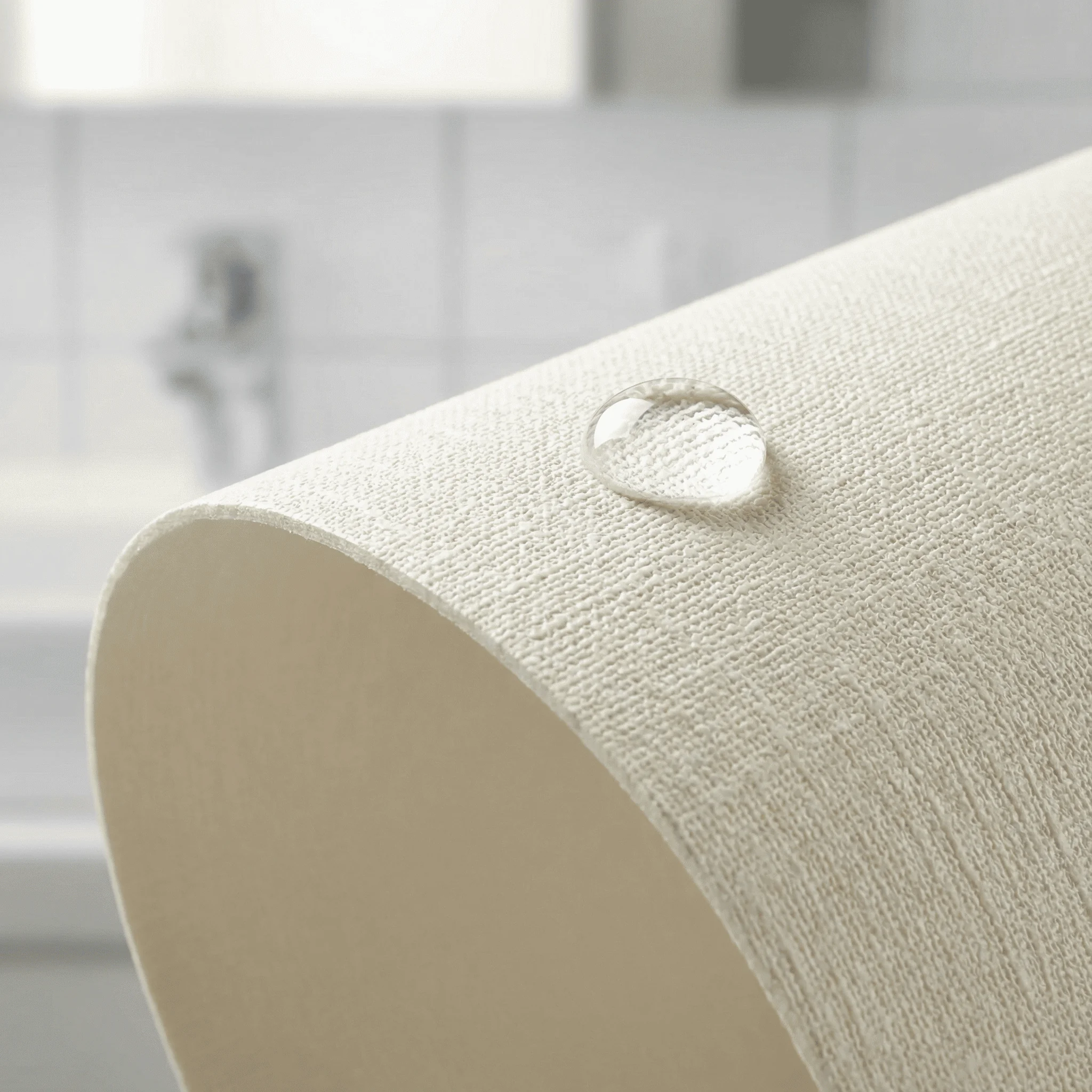
For a full bathroom with a shower or bathtub, Solid Vinyl is the gold standard.
Why it’s best: Solid vinyl is essentially a liquid PVC coating printed on a paper or fabric backing. It creates an impenetrable barrier against moisture. It is scrubbable, meaning you can wash it with soap and water, and it won’t absorb humidity from long, hot showers.
The alternative:Non-Woven wallpapers are a blend of natural and synthetic fibers. They are “breathable,” which means they don’t trap mold behind them as easily as old-school papers. However, while they are fine for powder rooms, they are generally not durable enough for direct splashes or steam-heavy kids’ bathrooms unless coated with a decorator’s varnish.
What to avoid: Stay away from 100% paper, pure silk, velvet flocking, or real grasscloth. These will absorb moisture, stain, and eventually peel or rot.
The proof is in the droplet. 💧 High-quality vinyl wallpaper stands up to moisture without breaking a sweat.
Peel-and-Stick vs. Traditional Paste
The DIY market has been flooded with Peel-and-Stick (self-adhesive) options. Are they good enough for 2026 standards?
Peel-and-Stick (Removable): Great for renters or a quick powder room update. Pros: Easy to install, low commitment. Cons: The adhesive can fail in high humidity/heat environments. Steam can cause the edges to lift over time. If you choose this for a bathroom, look for “premium” vinyl brands specifically rated for moisture.
Traditional Paste (Paste-the-Wall): This is the professional choice for longevity. Pros: You can use a specialized fungicidal adhesive (often sold as “tub and tile” paste) which prevents mold growth. The bond is much stronger and will withstand years of temperature fluctuations. Cons: Harder to install and remove.
Ventilation & Maintenance Tips
The enemy of wallpaper is not actually the water splashing on it; it is the trapped steam.
Extract the Steam: Ensure your bathroom exhaust fan is powerful enough for the room’s square footage. Run it for 20 minutes after you shower to pull all the humidity out.
The Window Rule: If you don’t have a fan, avoid wallpaper in a room with a shower unless you strictly open the window during every use.
Sealing Edges: For extra protection, apply a thin line of clear silicone caulk along the top of the baseboard and the corners where the wallpaper meets tiling. This prevents water from wicking up the back of the paper.
Cleaning: If you chose solid vinyl, you can wipe it down with a damp sponge and mild dish soap. Avoid abrasive scrubbers.
FAQ
Q: Can you put wallpaper in a shower?
A: Yes, but only if you use a specific “Wet System” wallpaper. These are typically fiberglass-based papers installed with a waterproof primer, adhesive, and a final sealing resin topcoat. Standard vinyl wallpaper cannot withstand the direct water flow of a shower; it will eventually fail at the seams.
Q: Is bathroom wallpaper a good idea in 2026?
A: Absolutely. It is one of the highest-ROI updates you can make. It adds personality and luxury that paint simply cannot achieve. With modern “paste-the-wall” technologies, it is also easier than ever to remove if you want to change the style in 3-5 years.
Q: What is the best color for a small bathroom in 2026?
A: You have two distinct strategies. You can try to “fake” light with bright, pale colors (like the “New Neutrals” or “Subtle Botanicals” mentioned above), or you can embrace the lack of space with deep, moody tones (The “Jewel Box” effect). Dark colors blur the corners of a room, which can ironically make a small space feel limitless and cozy rather than cramped.
Q: Can I wallpaper over tiles?
A: Technically yes, but you cannot paste directly onto the tile. You must first use a “lining paper” or a smoothing compound to fill in the grout lines and create a flat surface. If you skip this step, the grid pattern of the tiles will show through your wallpaper, ruining the look.
Conclusion
Whether you are wrapping a powder room in moody emerald damask or creating a serene, spa-like retreat with textured faux-stone, wallpaper is the ultimate tool for 2026 bathroom design. It bridges the gap between functionality and emotion, turning a utility space into a highlight of your home.
Ready to start your renovation? Remember that walls are just the beginning. To create a truly cohesive look, pair your new wallpaper with the right fixtures and flooring. Check out our in-depth guides on Interior Door Trends 2026 and Wall Art Decor Trends to finish your sanctuary with style.
If you enjoyed this article,
you'll want to be the very first to see our next one.
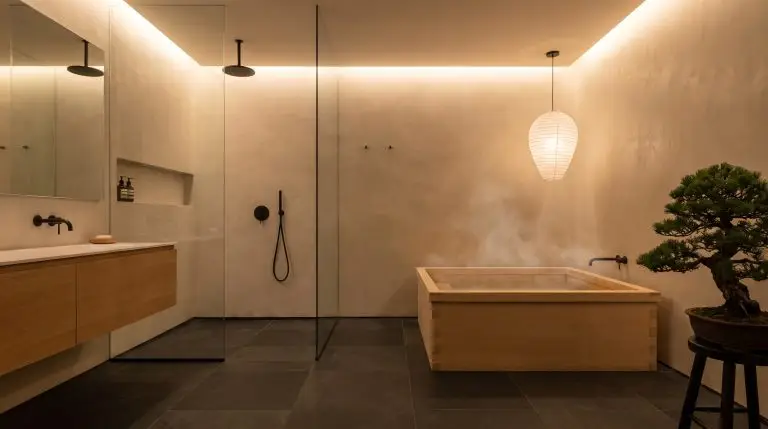
Ditch the sterile tile. Learn how to design a modern Japanese bathroom that perfectly balances deep soaking tubs, organic materials, and true Zen tranquility.
Ditch the dorm-room stigma. Here is how to use textured, matte-finish brick wallpaper to create rich, architectural character on a renter-friendly budget.
A brick wall shouldn’t feel like a relic. Discover how to use authentic limewashes, over-grouted joints, and tactile pairings to modernize exposed masonry.