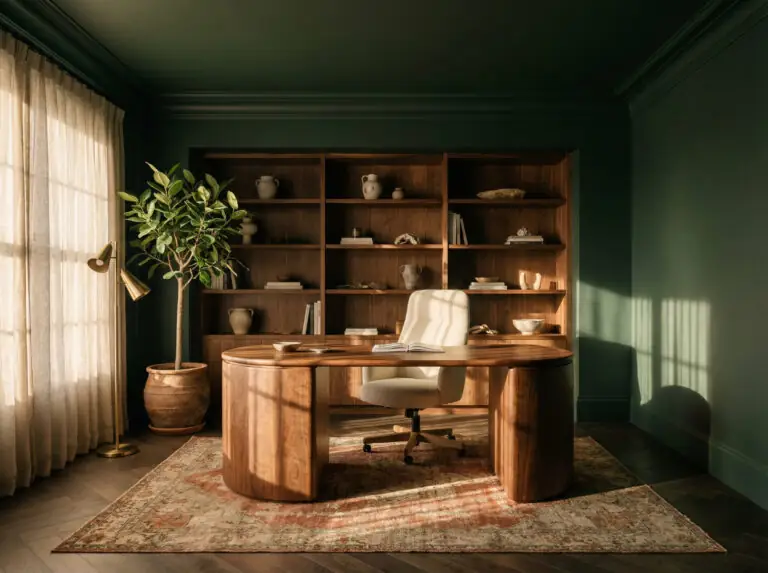
Remember when the “home office” was just a laptop perched precariously on a dining table? Or perhaps a hastily cleared corner of the guest bedroom? Those days are long behind us. As we move into 2026, the makeshift era is officially over. The home office has graduated; it is no longer just a place to work—it’s a sanctuary for deep focus, a backdrop for your digital identity, and, most importantly, a room that finally feels like home.
The biggest shift in home office design trends for 2026 is the disappearance of the “office” aesthetic. We are saying goodbye to sterile white laminates and stiff, corporate-looking mesh chairs. In their place, we are welcoming tactile warmth, restorative colors, and technology that works hard but stays hidden.
Whether you are remodeling a dedicated room or carving out a productivity niche in a studio apartment, this year’s trends are about designing a space that supports your mental well-being just as much as your professional output. Let’s explore the key movements shaping the future of work from home.
📋 Quick Summary: Top 5 Home Office Trends for 2026
For those in a hurry, here are the defining shifts transforming workspaces this year:
- Tactile Naturalism: A move away from smooth veneers to raw, sensory materials like solid ash, cork, and sculpted plaster to ground the senses.
- Restorative Darks: Replacing sterile whites with deep, focus-enhancing colors like “Plum Brown,” “Forest Green,” and warm mahogany.
- Invisible Tech: Desks with under-surface wireless charging and recessed outlets that hide cables completely for a clutter-free mind.
- Soft Geometry: Rigid rectangular desks are out; curved, kidney-shaped tables and organic forms that improve room flow are in.
- The “Cloffice” Glow-Up: Small nooks and closets are being elevated with glass partitions, wallpaper, and architectural joinery, turning tight spaces into jewel-box studios.
The “Un-Office” Aesthetic: Where Function Meets Feeling
For years, the goal was to replicate the corporate office at home. In 2026, the goal is the exact opposite. We are seeing a massive pivot toward “Tactile Naturalism”—a design philosophy that prioritizes raw, honest materials that feel good to the touch.
Trend 1: Tactile Naturalism & Imperfection
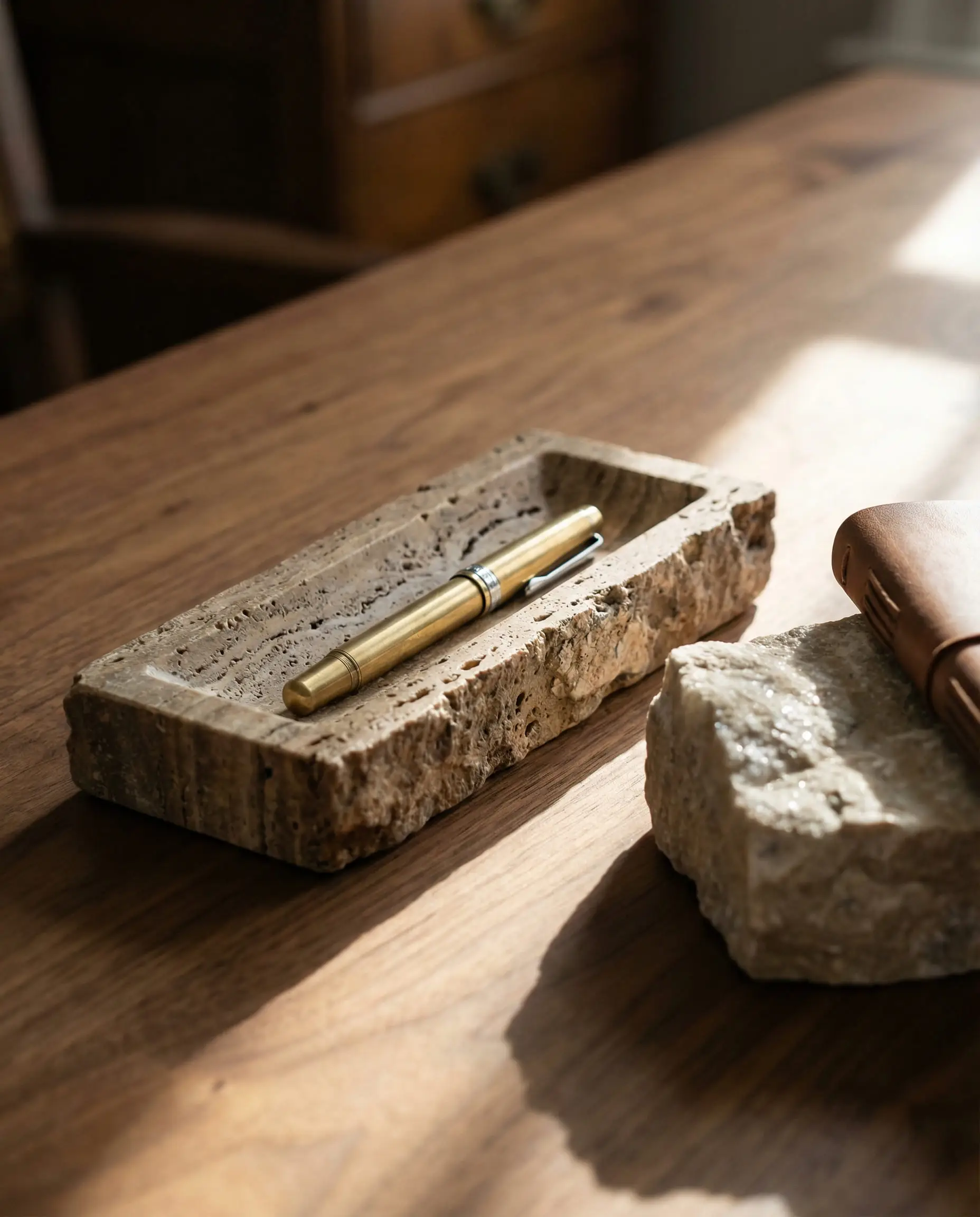
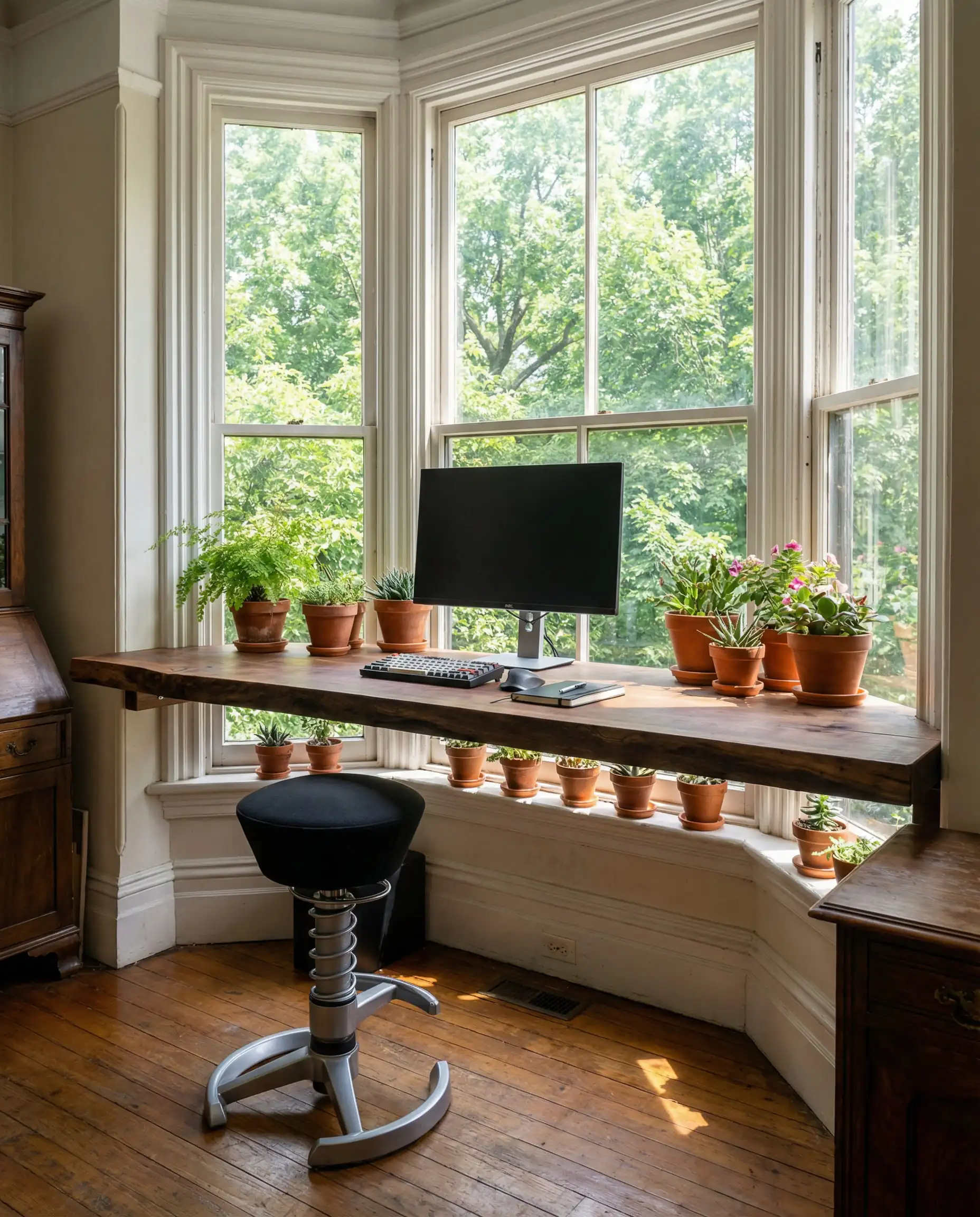
The slick, high-gloss finishes of the early 2020s are being replaced by materials that have character and “grain.” We crave connection to the physical world while we stare at digital screens. This year, expect to see desktops made from solid ash or open-pore oak, where you can actually feel the wood grain.
It’s not just about wood, though. Cork is making a sophisticated comeback, not as a flimsy bulletin board, but as a rich, acoustic wall covering that adds warmth and soundproofing. Sculpted plaster walls and limestone desk accessories are also trending, bringing an element of “perfect imperfection” to the workspace. These materials ground us, reducing stress by engaging our sense of touch—a crucial counter-balance to a day spent on video calls.
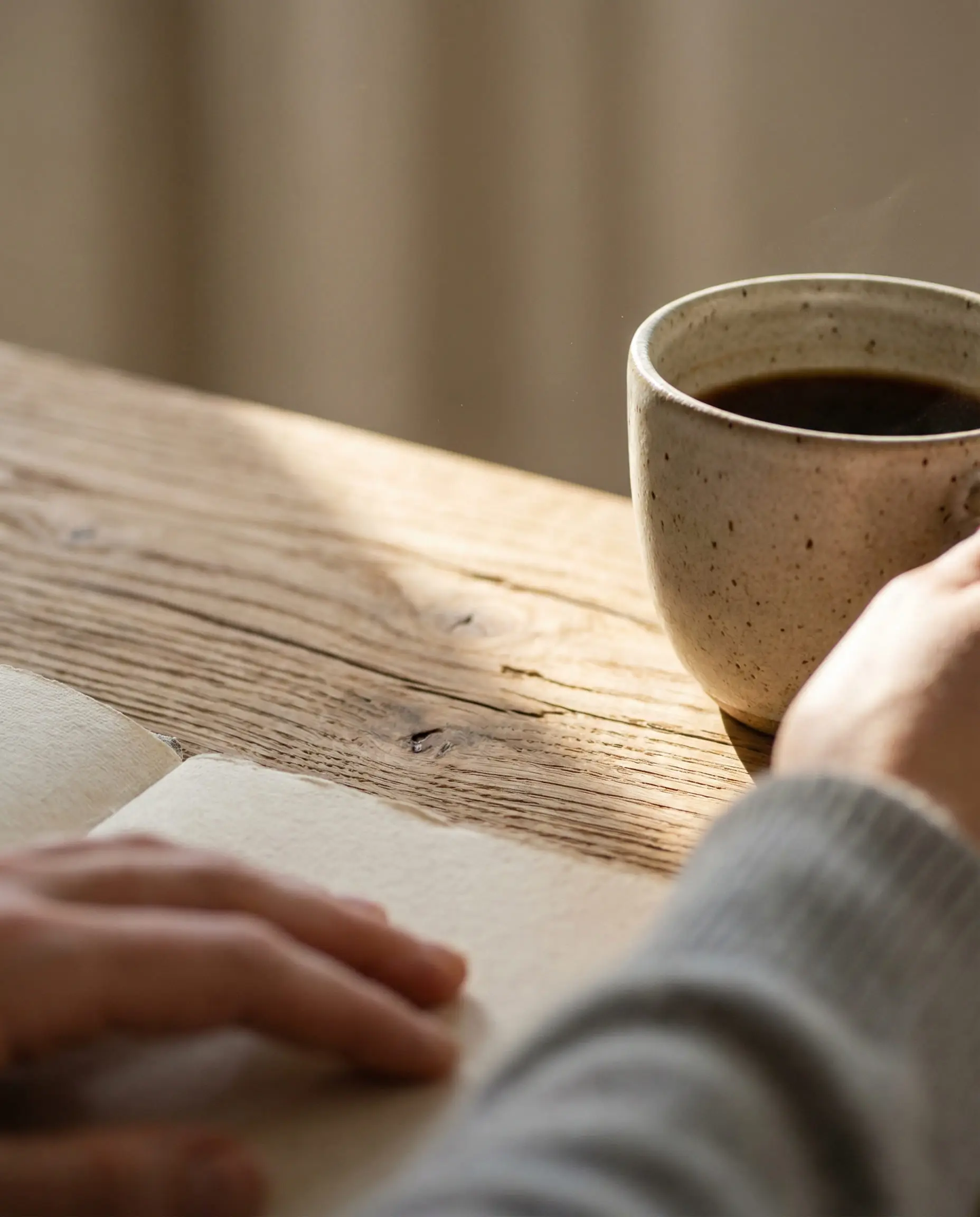
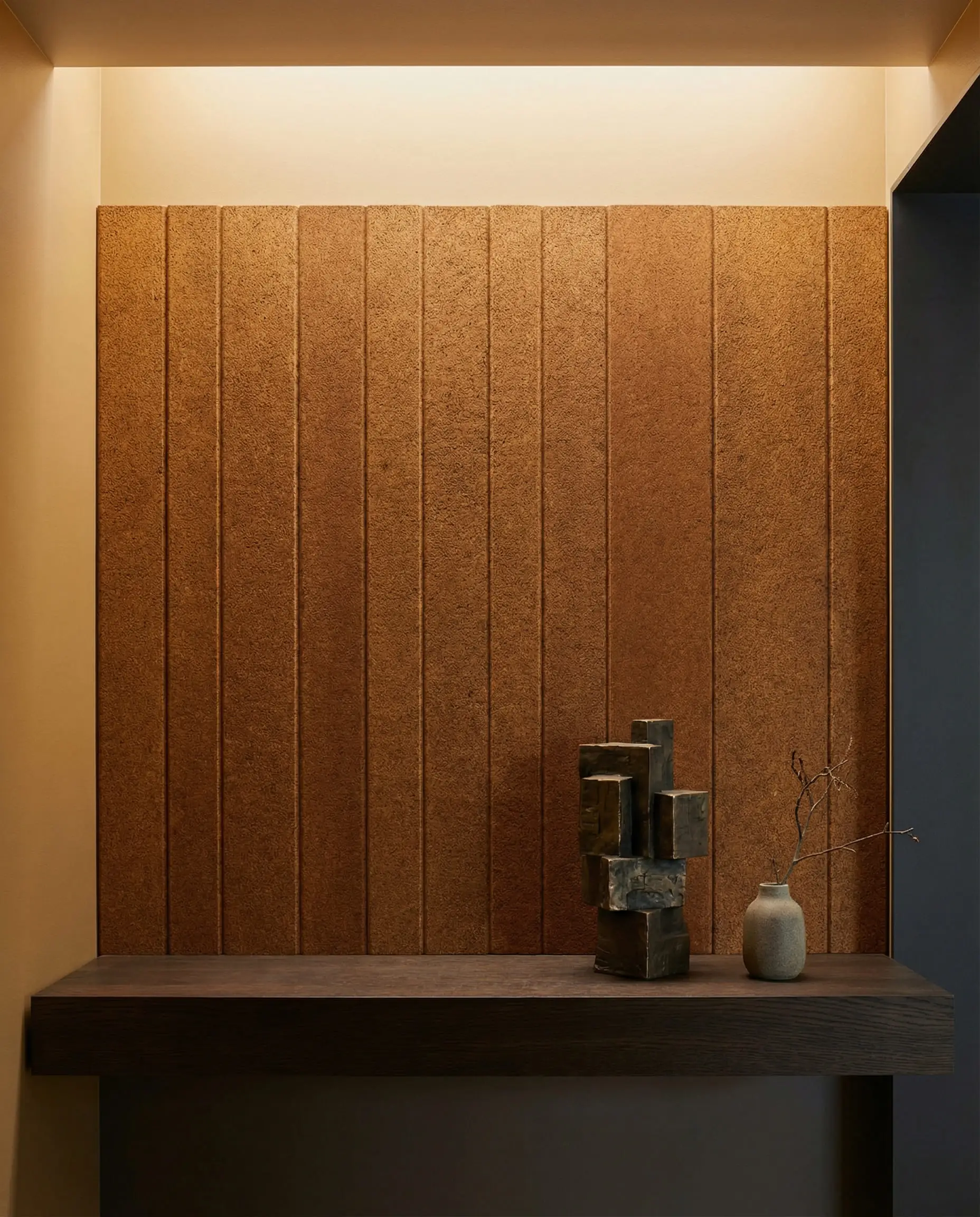
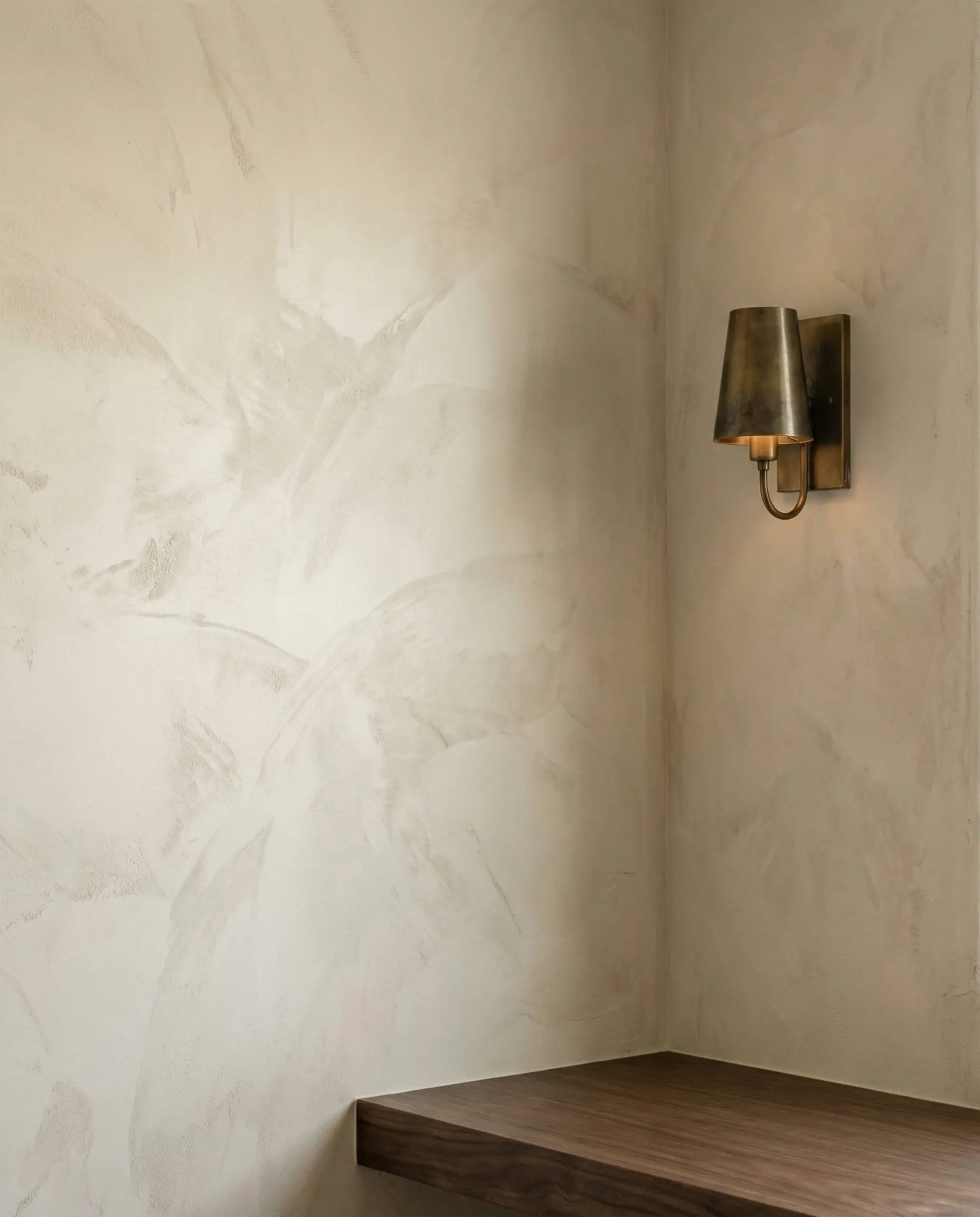
For more ideas on integrating natural textures into your furniture, check out our guide to Furniture Trends 2026.
Trend 2: Soft Geometry
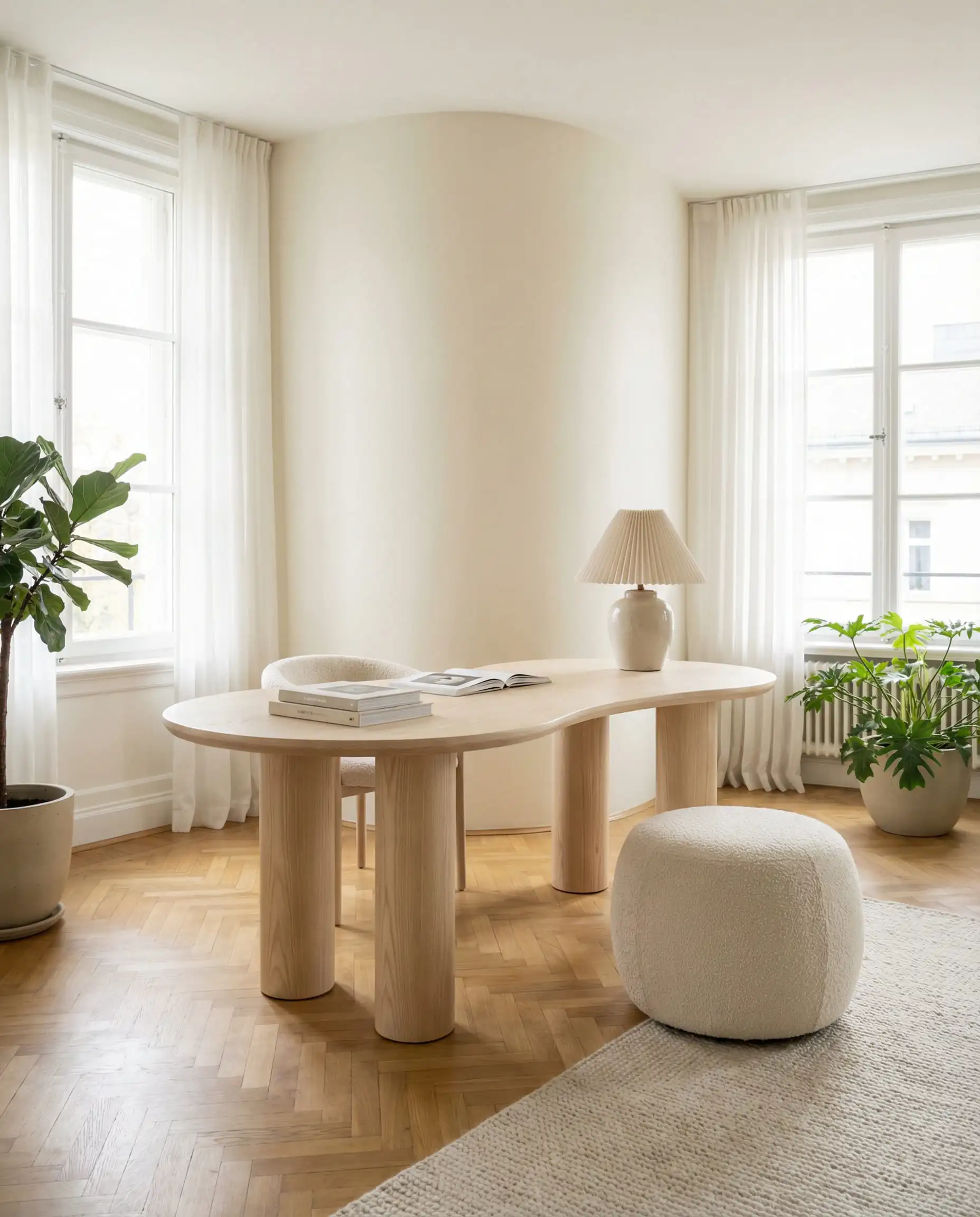
If 2024 was the year of the sharp angle, 2026 is the year of the curve. Rigid, rectangular desks are softening into kidney-shaped workstations and oval writing tables. This shift, often called “Soft Geometry,” is about breaking the rigid grid of the traditional office.
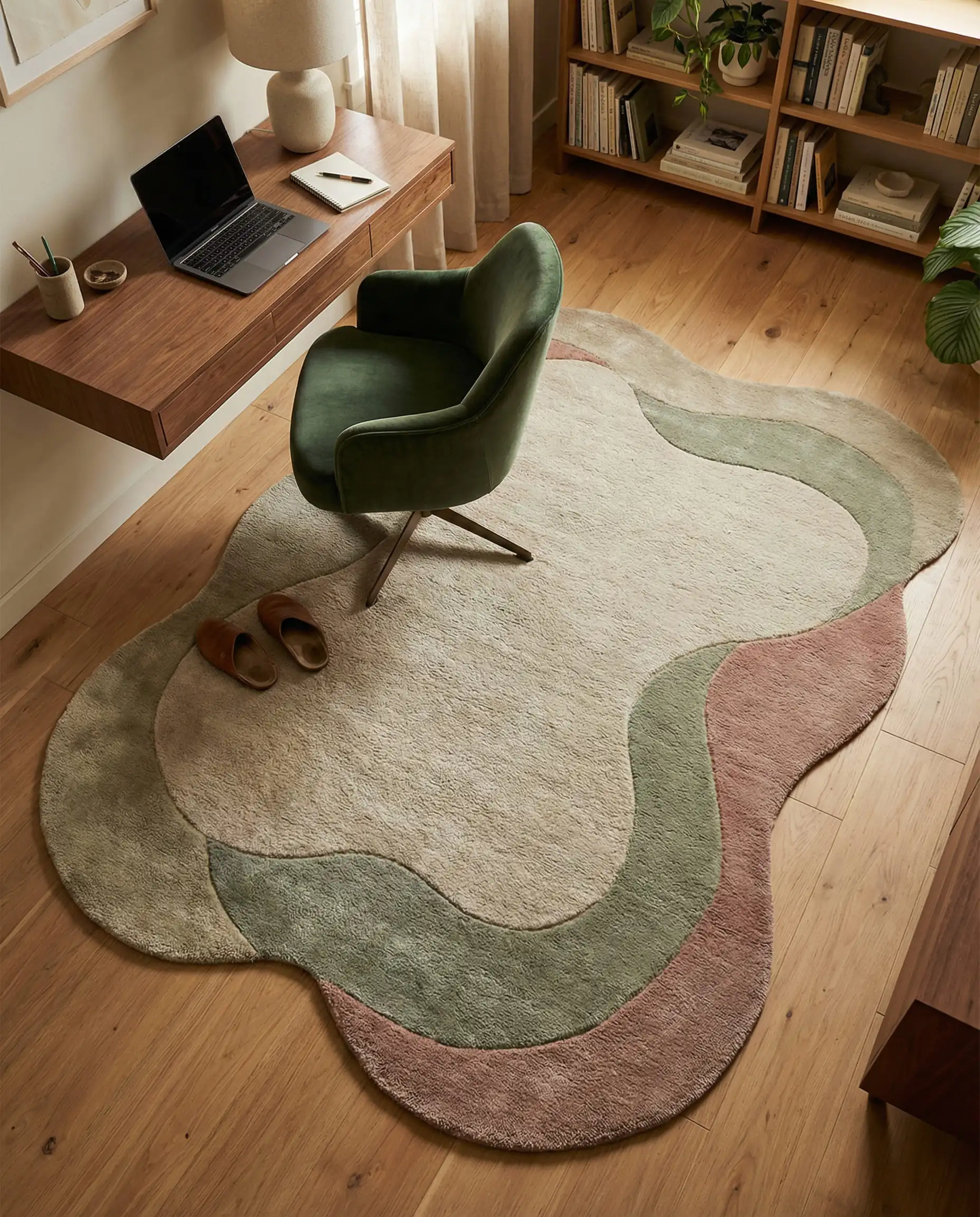
Rounded edges aren’t just an aesthetic choice; they improve the “flow” of a room, especially in smaller spaces where you might be walking past your desk frequently. A curved desk feels less intrusive and more like a piece of sculptural living room decor. Pair this with a rug that features organic, free-flowing shapes to disrupt the boxy feel of a standard room.
Color & Mood: The Rise of “Restorative Darks”
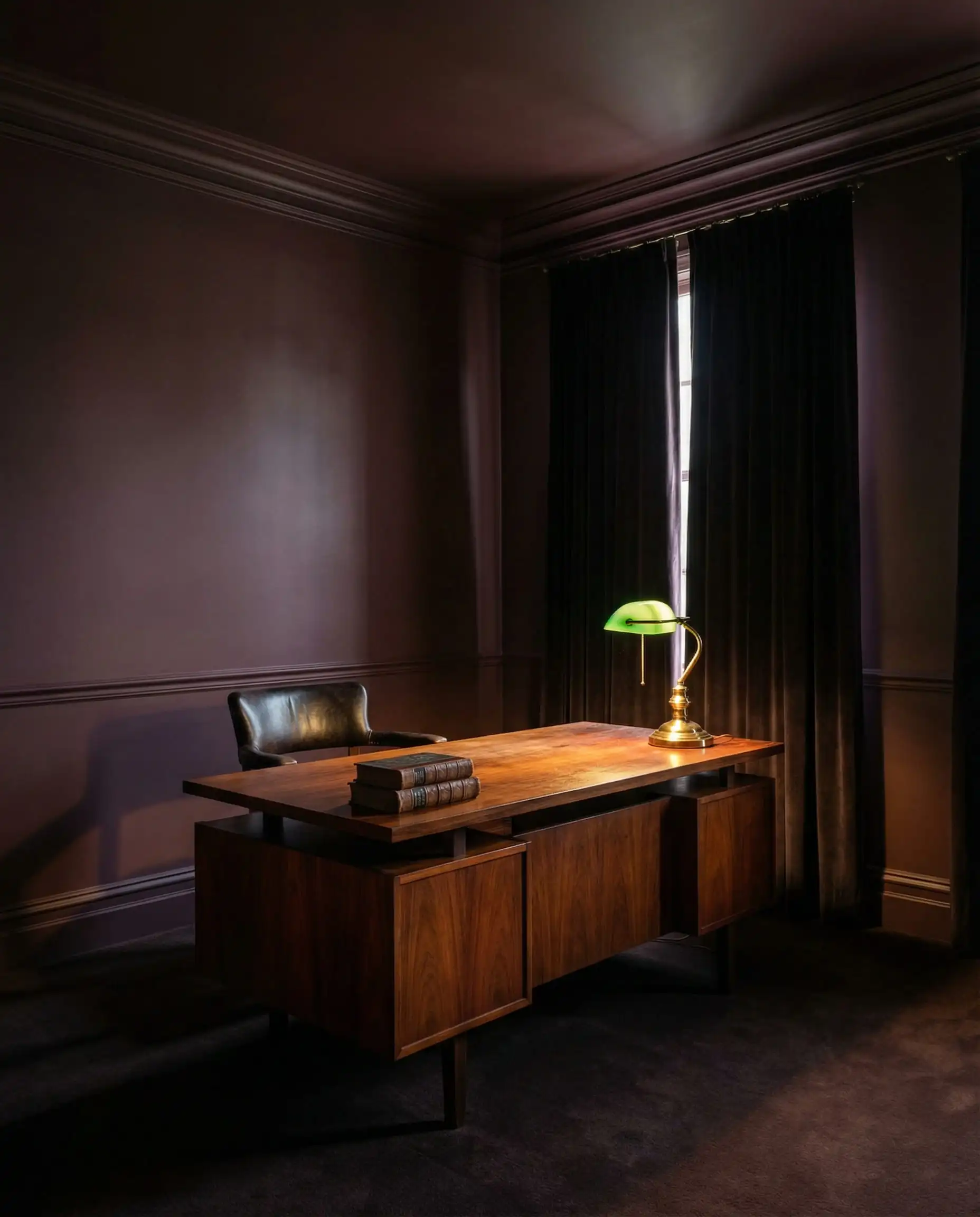
Forget the “bright white implies productivity” myth. While white spaces are airy, they can often feel sterile and visually fatiguing after eight hours. The boldest shift in 2026 home office trends is the move toward darker, richer palettes known as “Restorative Darks.”
Trend 3: The Palette Shift
Designers are increasingly using deep, enveloping colors to “compress” the workspace, creating a cozy, library-like atmosphere that aids deep focus.
These colors work beautifully when “color-drenched”—painting the walls, trim, and even the ceiling in the same shade. This technique blurs the boundaries of the room, making it feel expansive yet intimate.
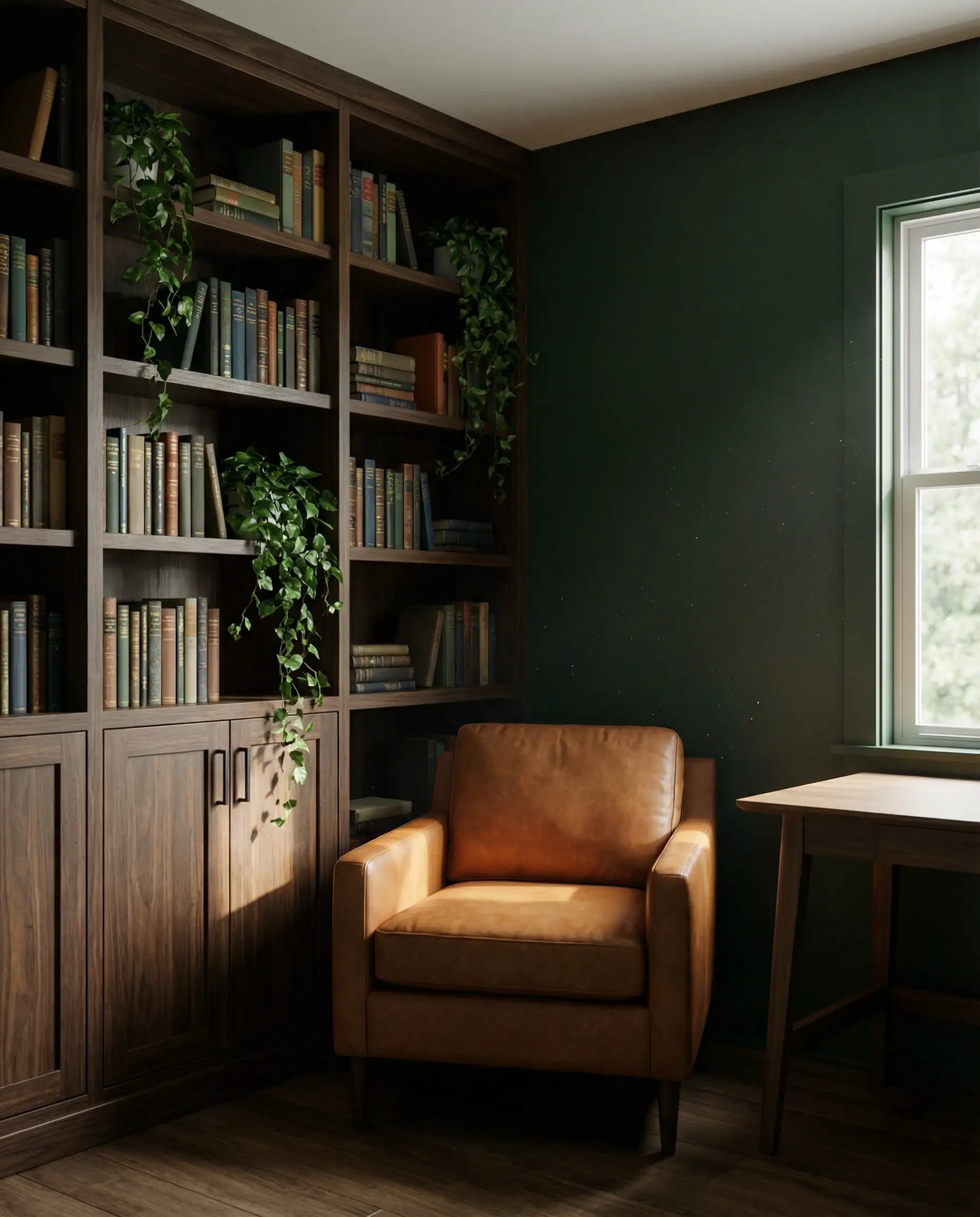
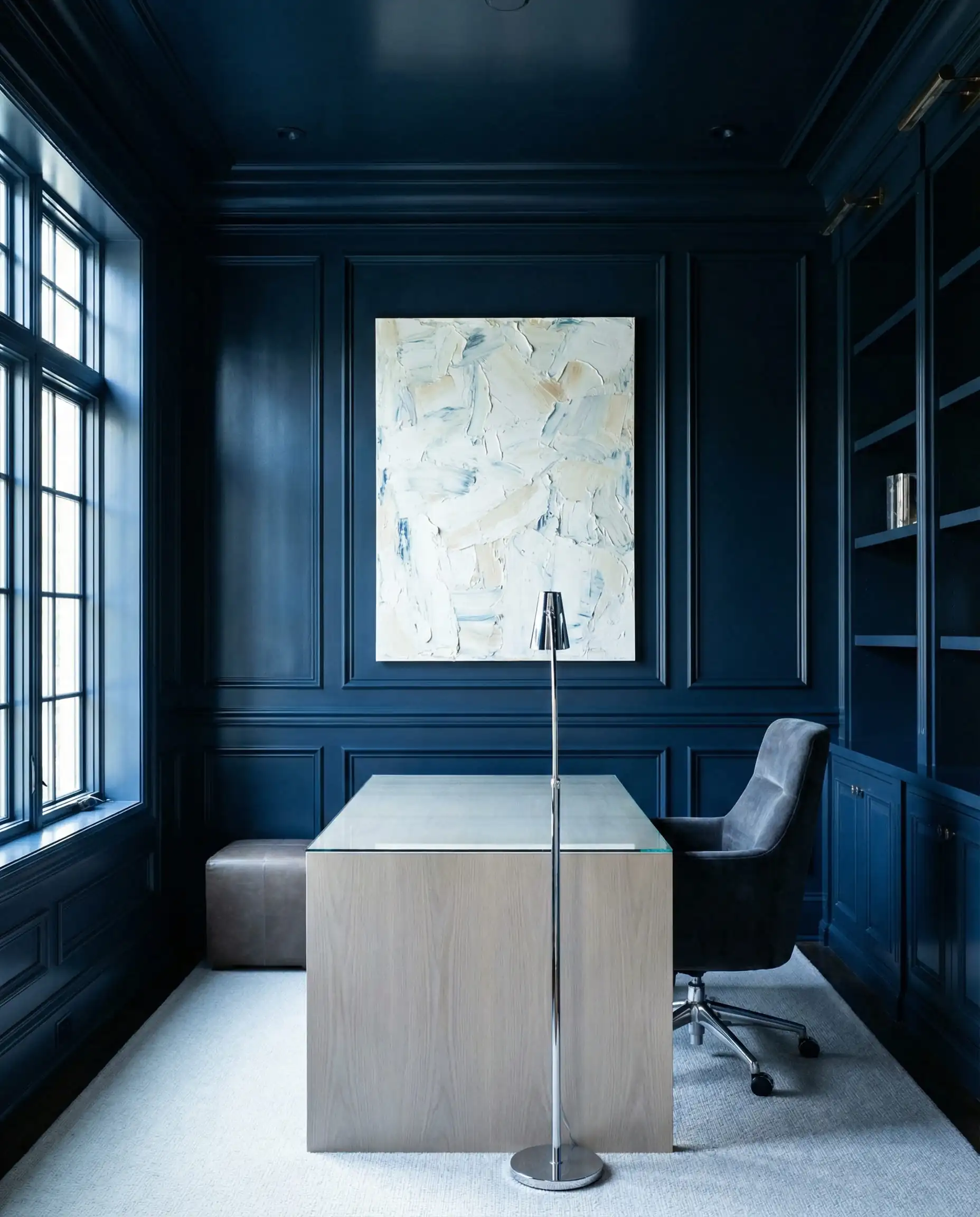
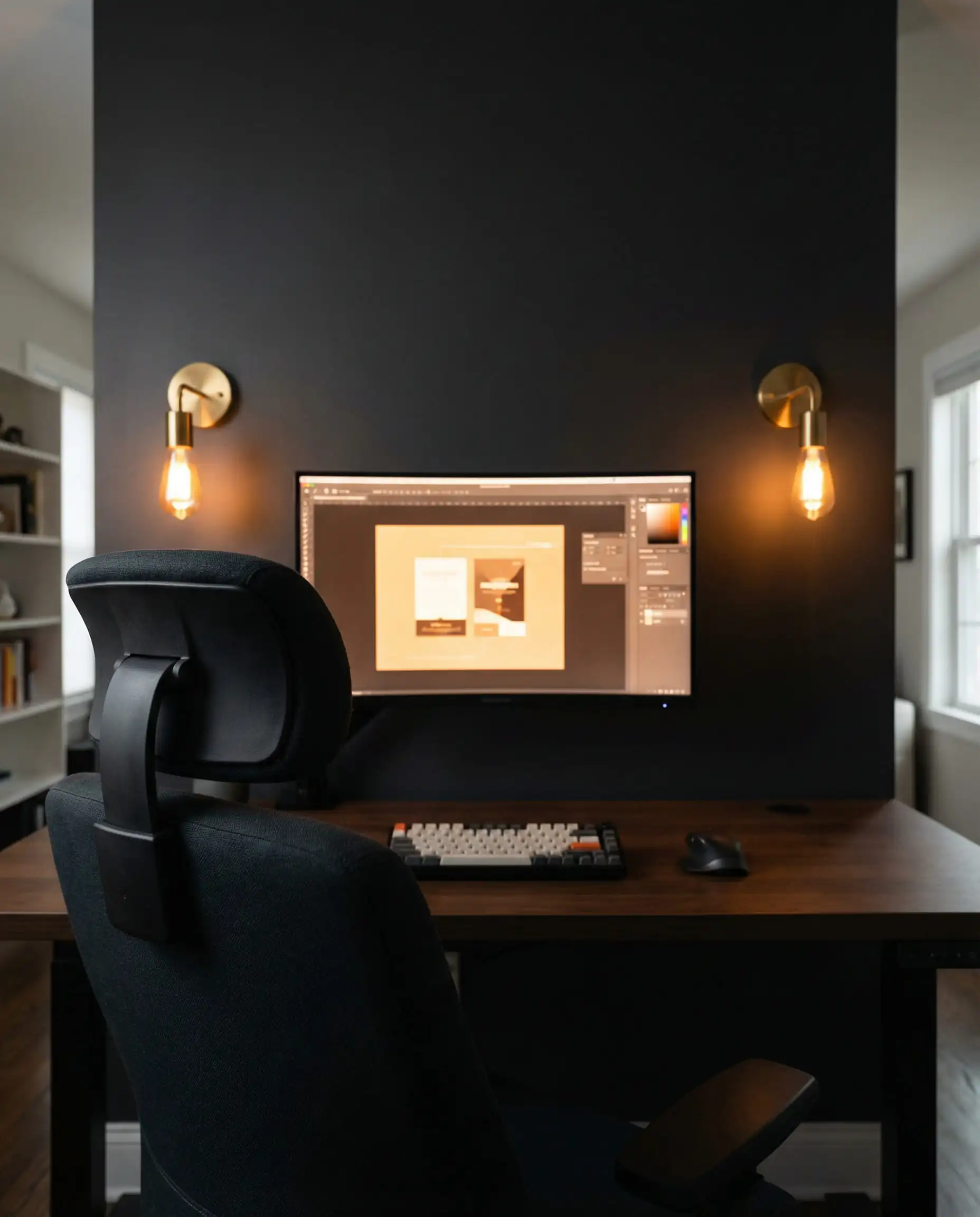
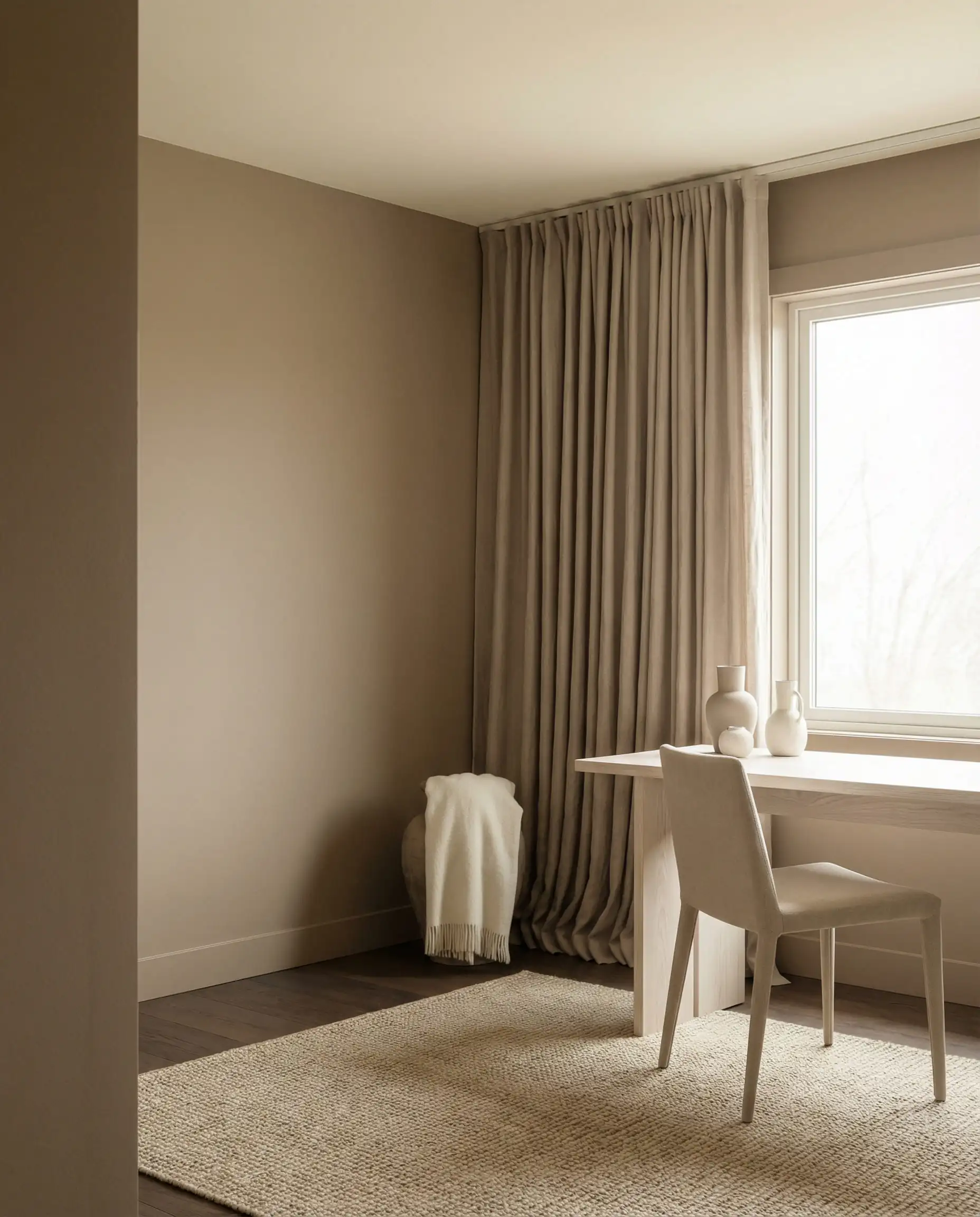
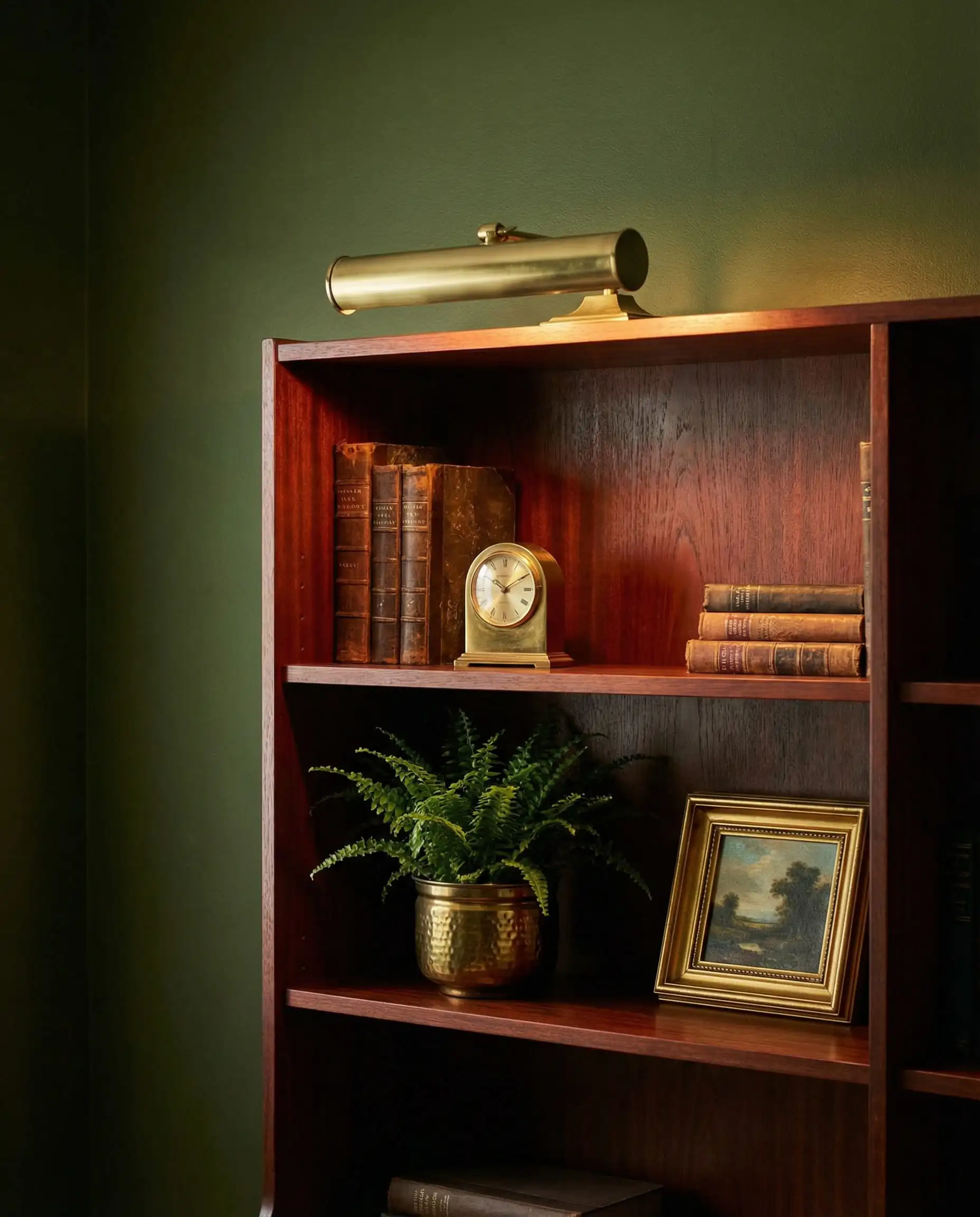
If you are ready to commit to a darker palette, explore our deep-dive into Paint Color Trends 2026 for specific shade recommendations.
Trend 4: Lighting as a Material
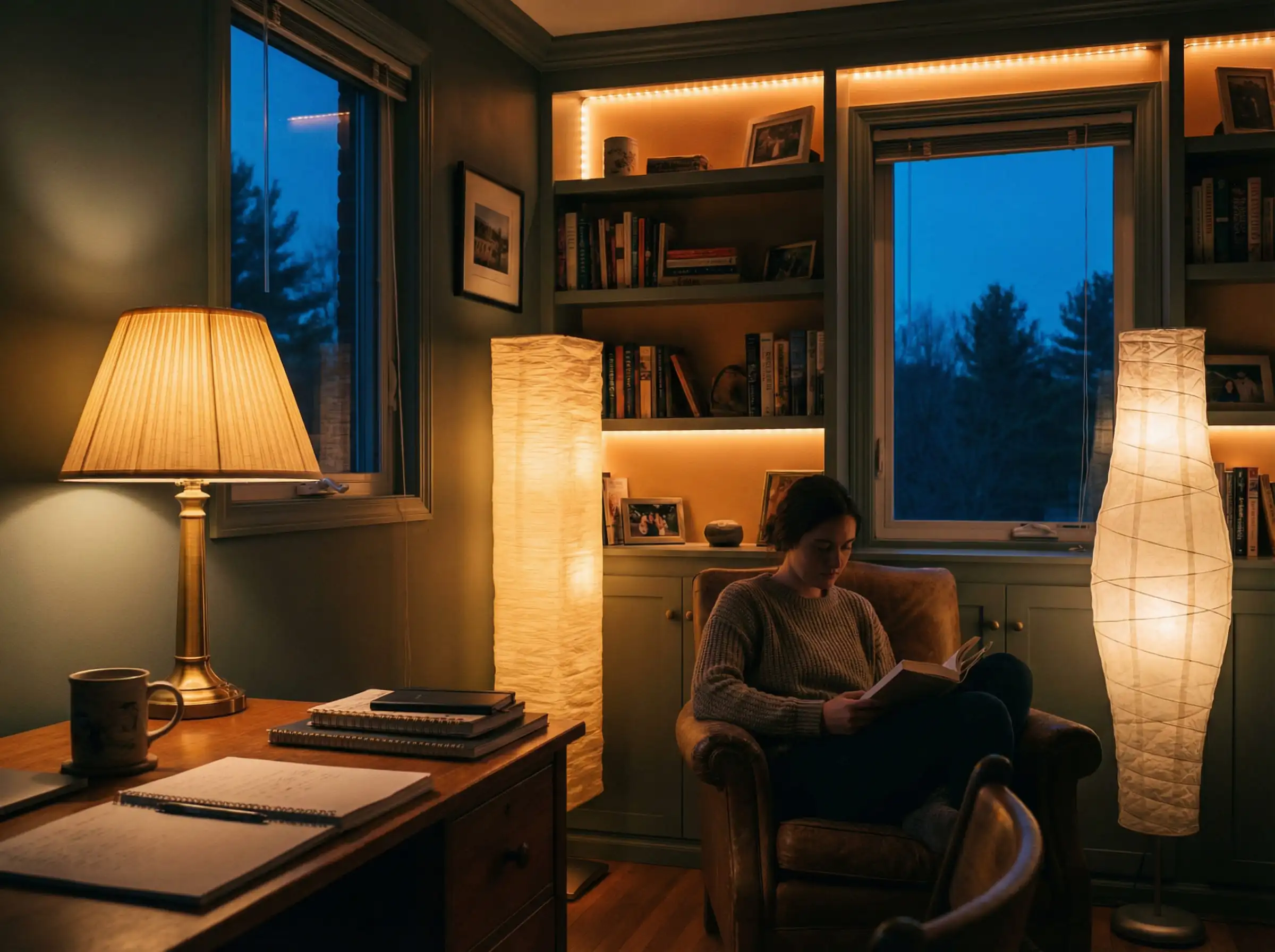
In a dark-toned room, lighting becomes your most important “material.” The trend for 2026 is Circadian Lighting. We aren’t just buying lamps; we are installing smart systems that mimic the sun. These lights start with a cool, blue-toned brightness in the morning to wake you up and gradually shift to a warm, amber glow by late afternoon.
This isn’t just a gadget; it’s biology. By syncing your lighting to your natural rhythm, you maintain energy levels without the jarring “cafeteria light” effect of standard LEDs.
Layout & Function: The Multizonal Home
Not everyone has a spare bedroom to dedicate to an office. The reality of hybrid work has birthed the “Multizonal Home,” where workspaces are fluid and integrated into our living areas without cluttering them.
Trend 5: The Evolution of the “Cloffice”
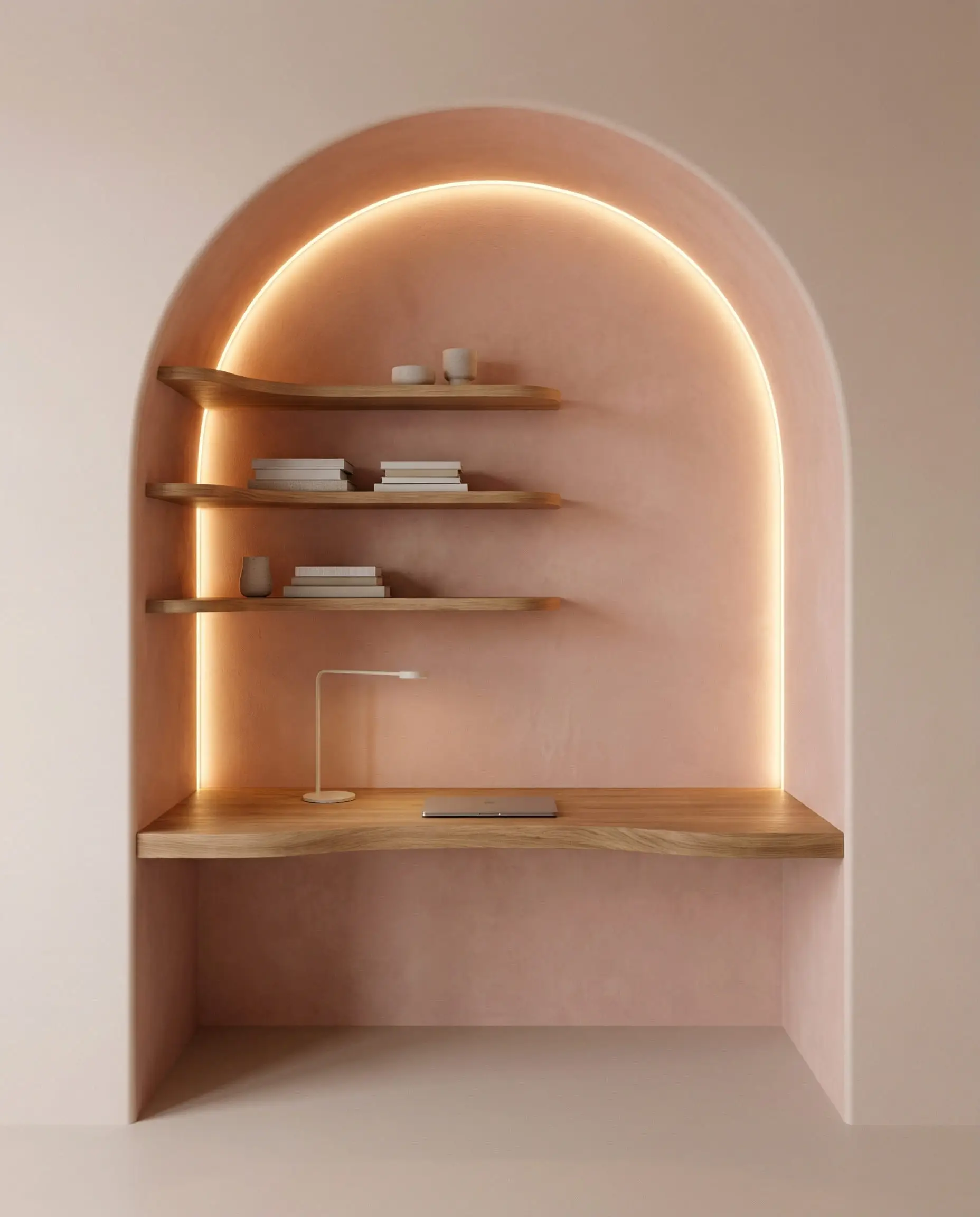
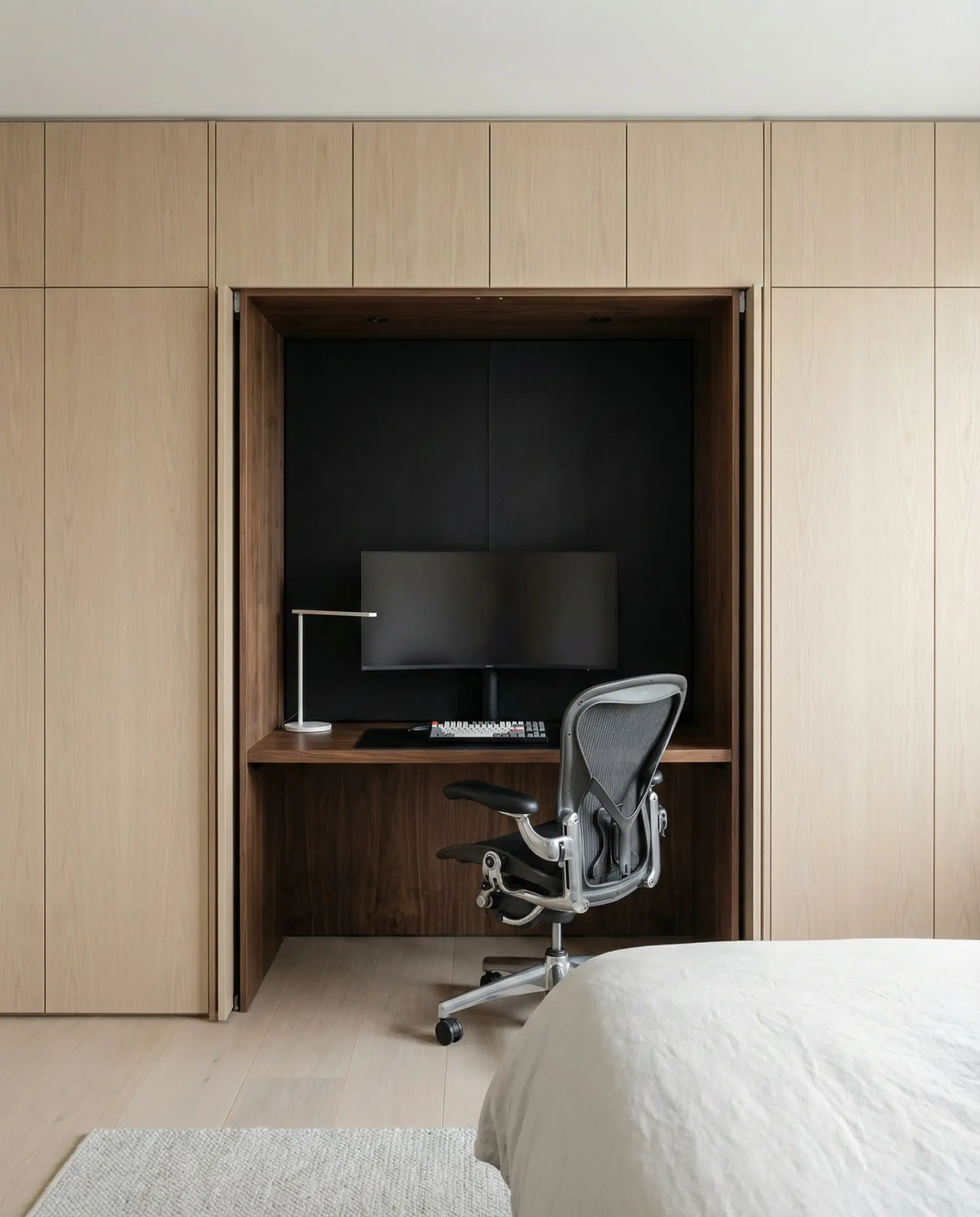
The “Cloffice” (closet + office) started as a desperation move. Now, it’s a high-design feature. In 2026, we are seeing closet offices that don’t look like closets. The doors are often removed or replaced with glass partitions or architectural archways. The interior is wallpapered with bold, oversized prints to turn the nook into a jewel box.
Instead of hiding the work area, we are framing it. High-quality joinery, built-in lighting, and custom shelving turn these small alcoves into efficient, beautiful mini-studios.
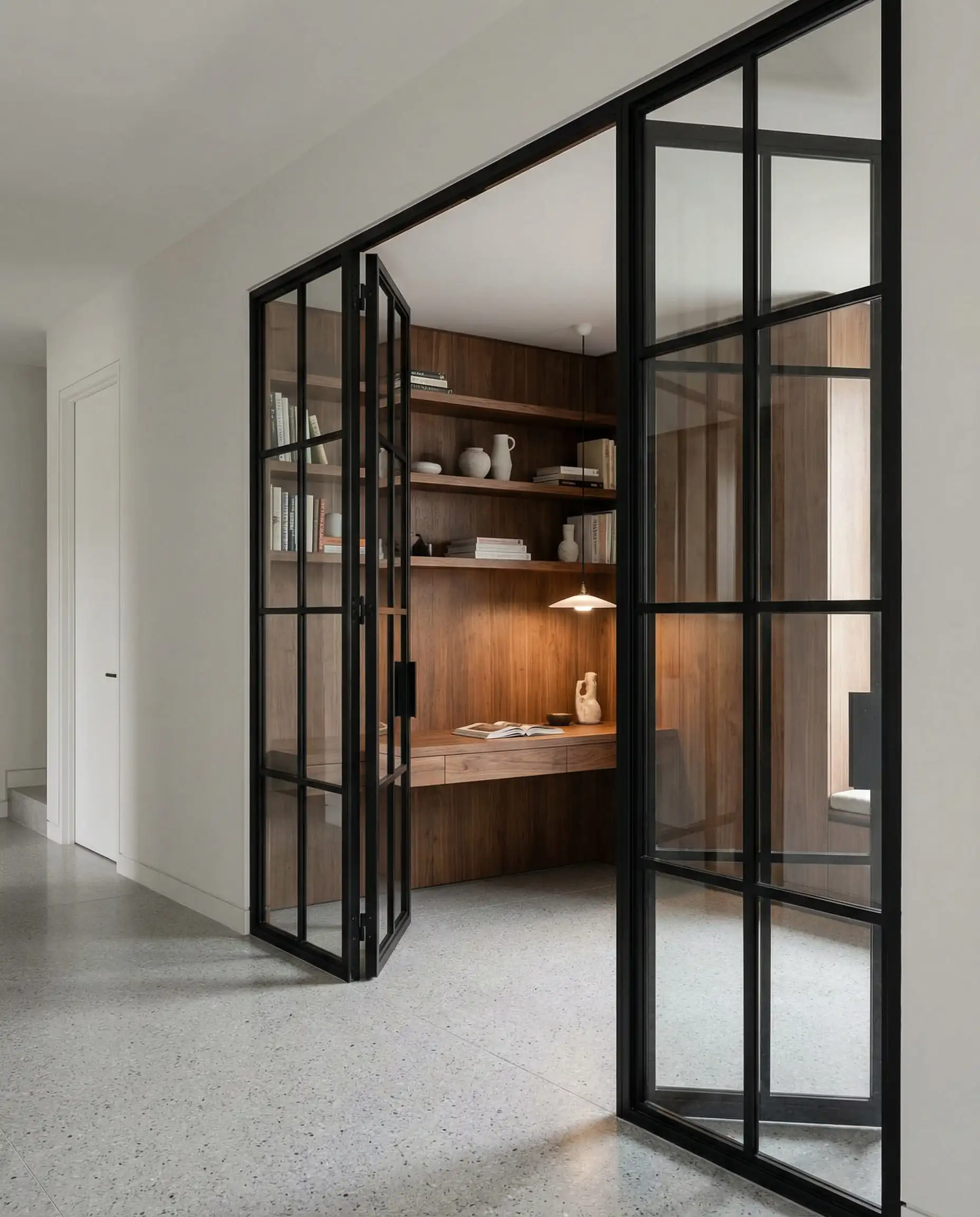
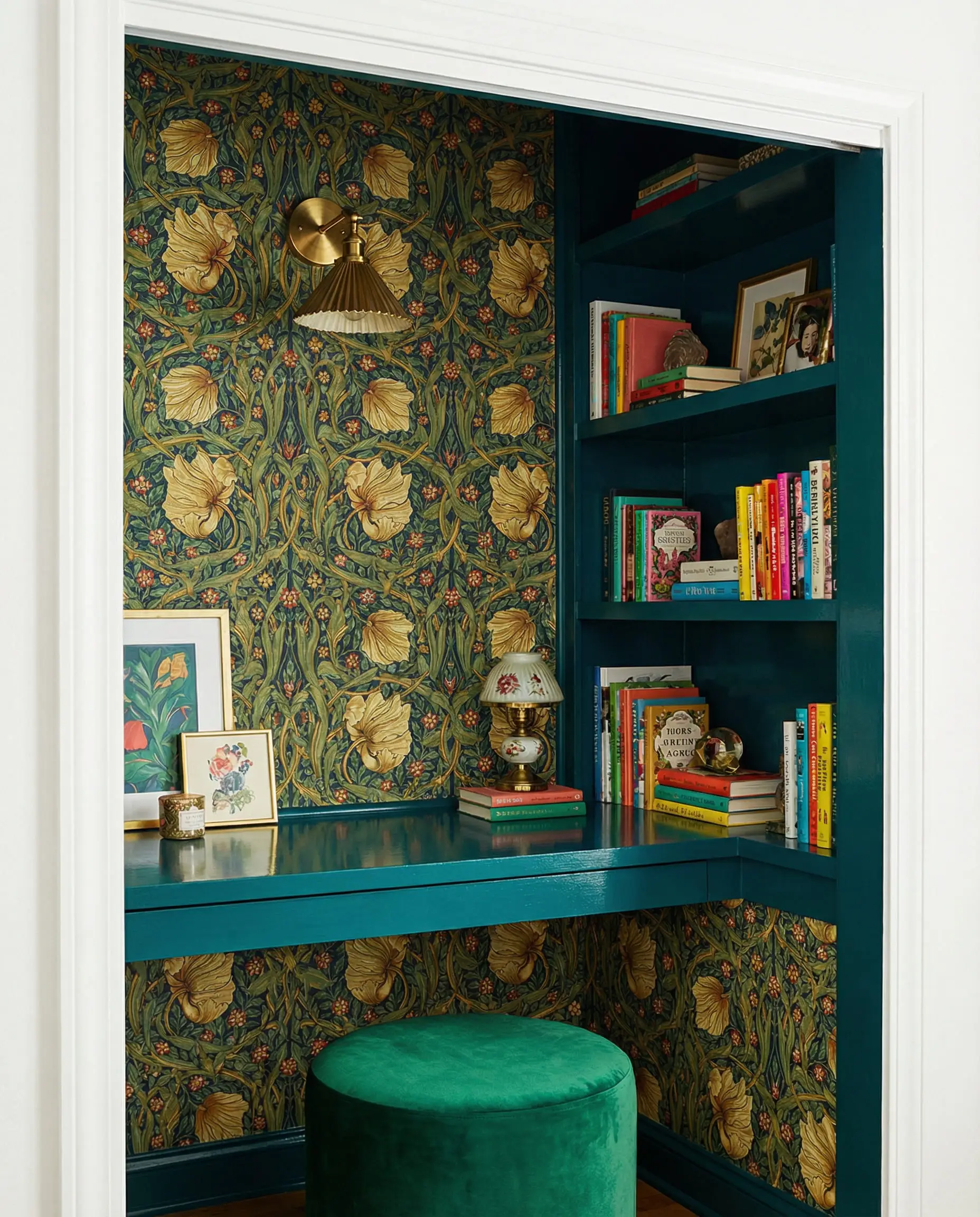
Need inspiration for small-space wall treatments? See our report on Wallpaper Trends to make that nook pop.
Trend 6: The “Floating” Workstation
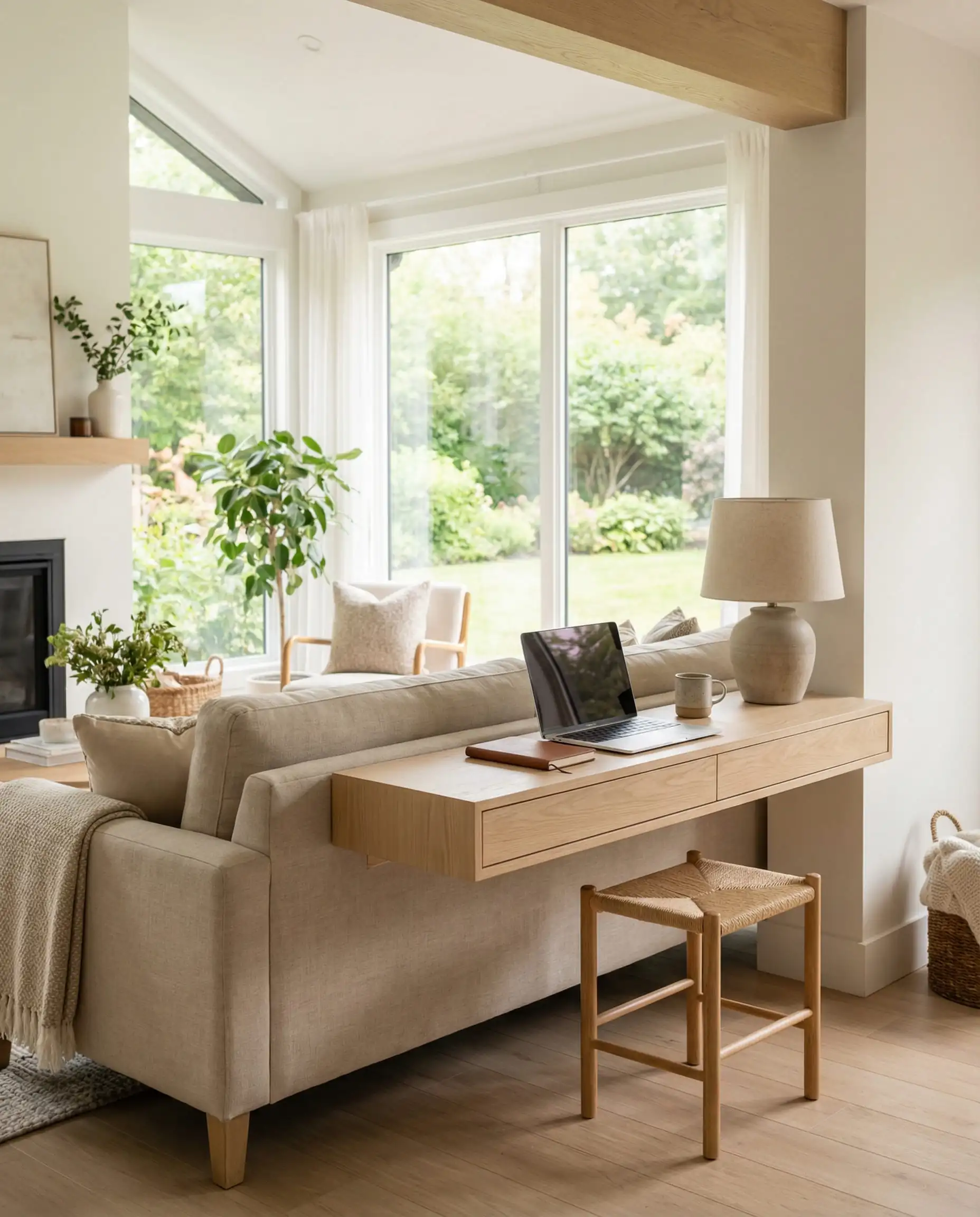
Another emerging layout is the “floating” console. Instead of a heavy desk pushed against a wall, designers are using standing-height consoles placed behind sofas or in wide hallways. These spots serve as a “touchdown” station for checking emails or taking a quick standing meeting.
This trend is perfect for the “laptop nomad” who moves around the house. It encourages movement and prevents the fatigue of sitting in one chair for eight hours.
Technology: Omnipresent but Invisible
We rely on tech more than ever, but we want to see it less. The hallmark of a luxury home office in 2026 is Tech Disappearance.
Trend 7: Wireless Integration
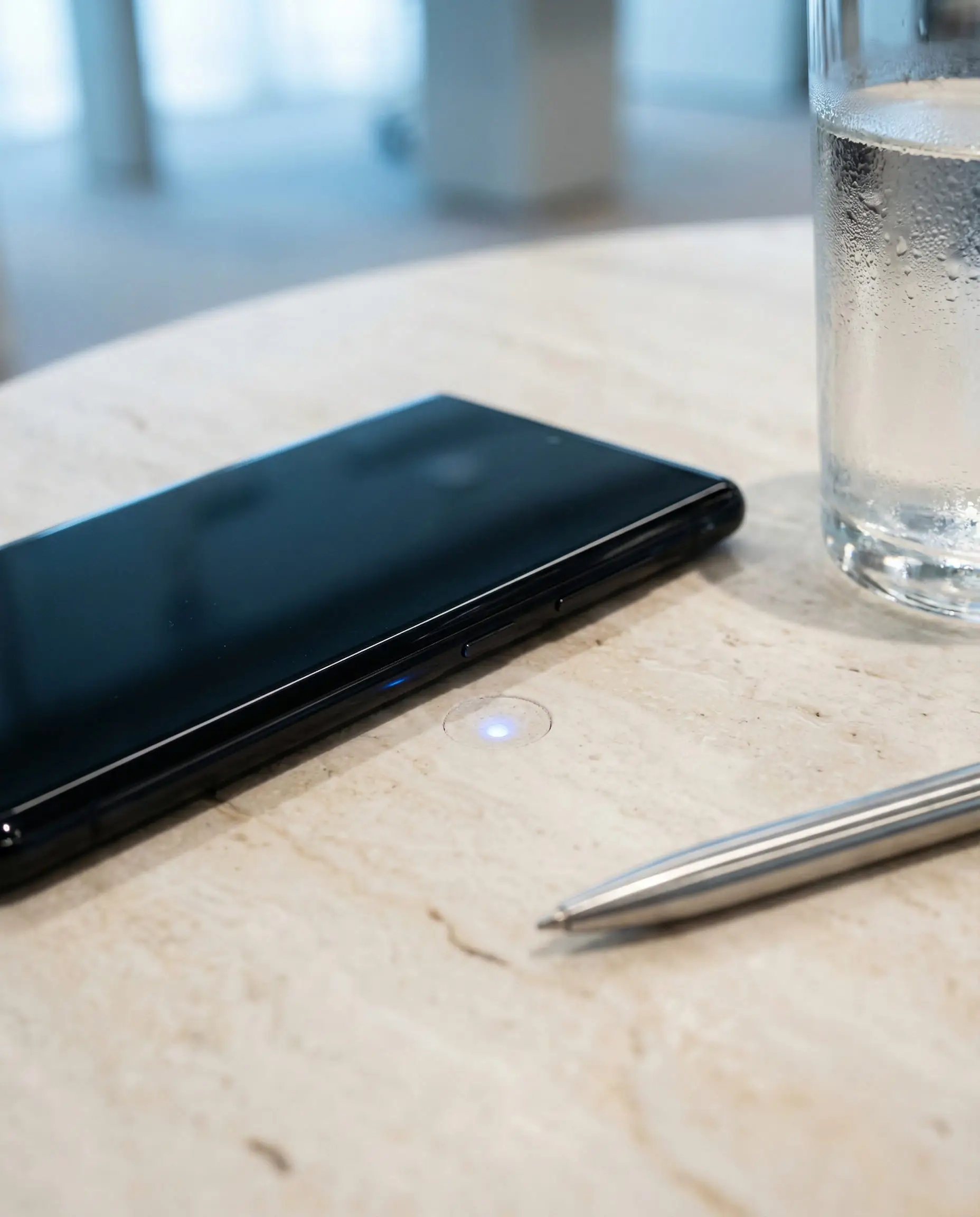
The tangled mess of cables is the enemy of calm. The newest desks are coming equipped with “under-surface” charging technology. This means there are no visible charging pads; you simply place your phone or mouse on a specific spot on the wood or stone surface, and it charges through the material.
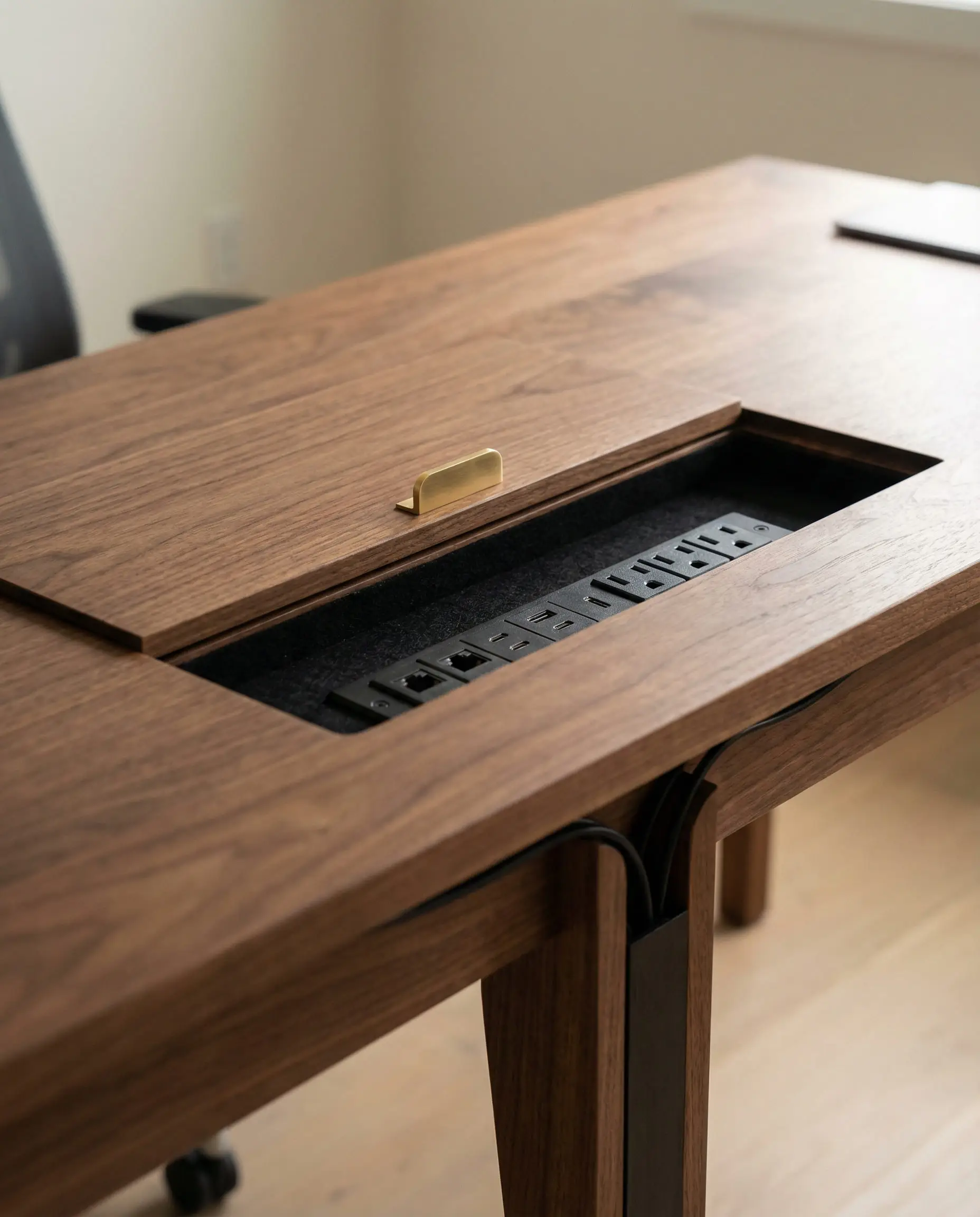
We are also seeing power outlets recessed directly into stone desktops or hidden behind matching veneer flaps, ensuring the grain flows uninterrupted. It’s seamless, magical, and entirely clutter-free.
For those looking to upgrade their tech game, check out our insights on Smart Home Trends to see what else can be automated.
Trend 8: The “Scenographic” Background
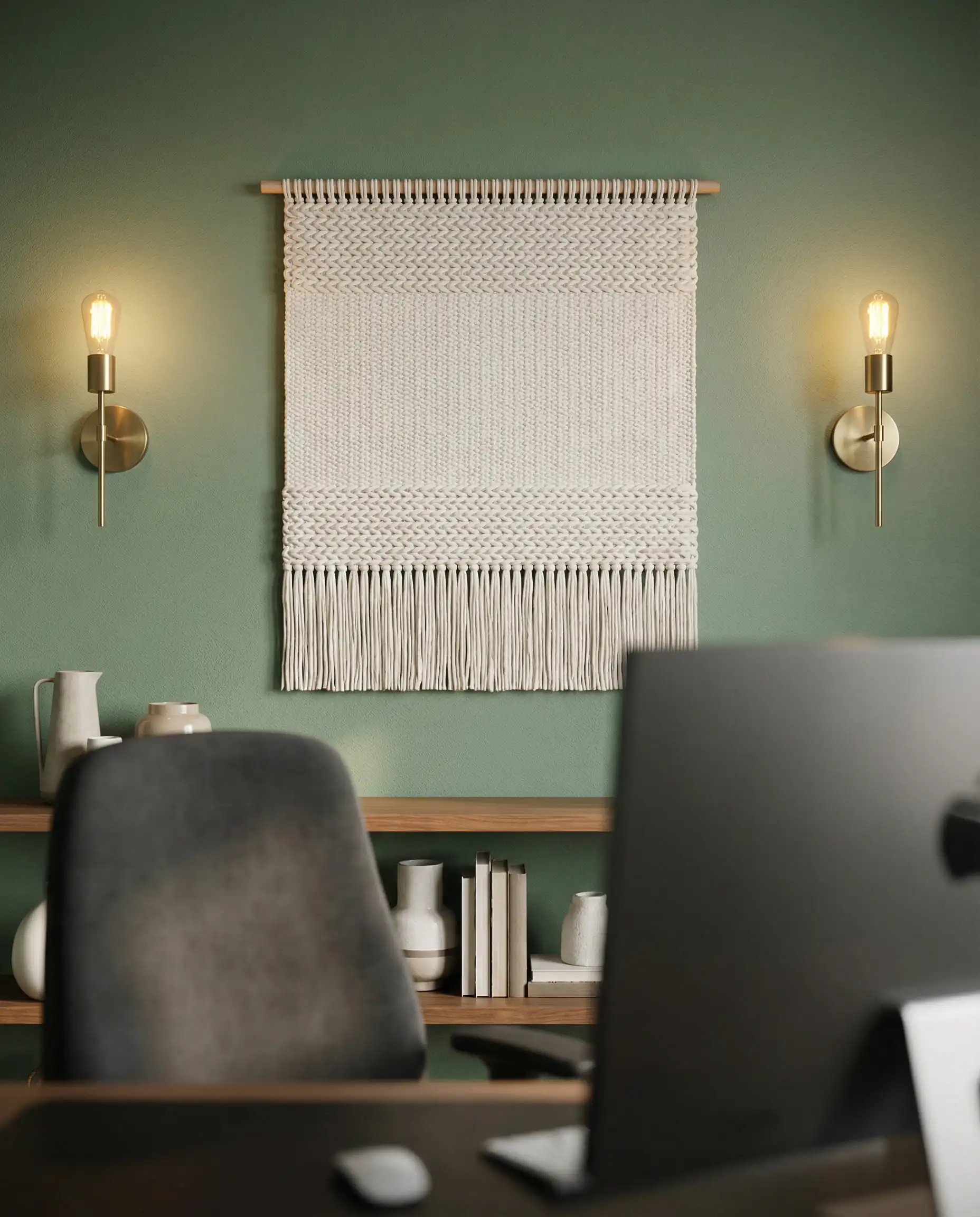
Video calls are permanent. As a result, the wall behind you has become as important as the desk in front of you. This trend is called “Curated Camera Corners.”
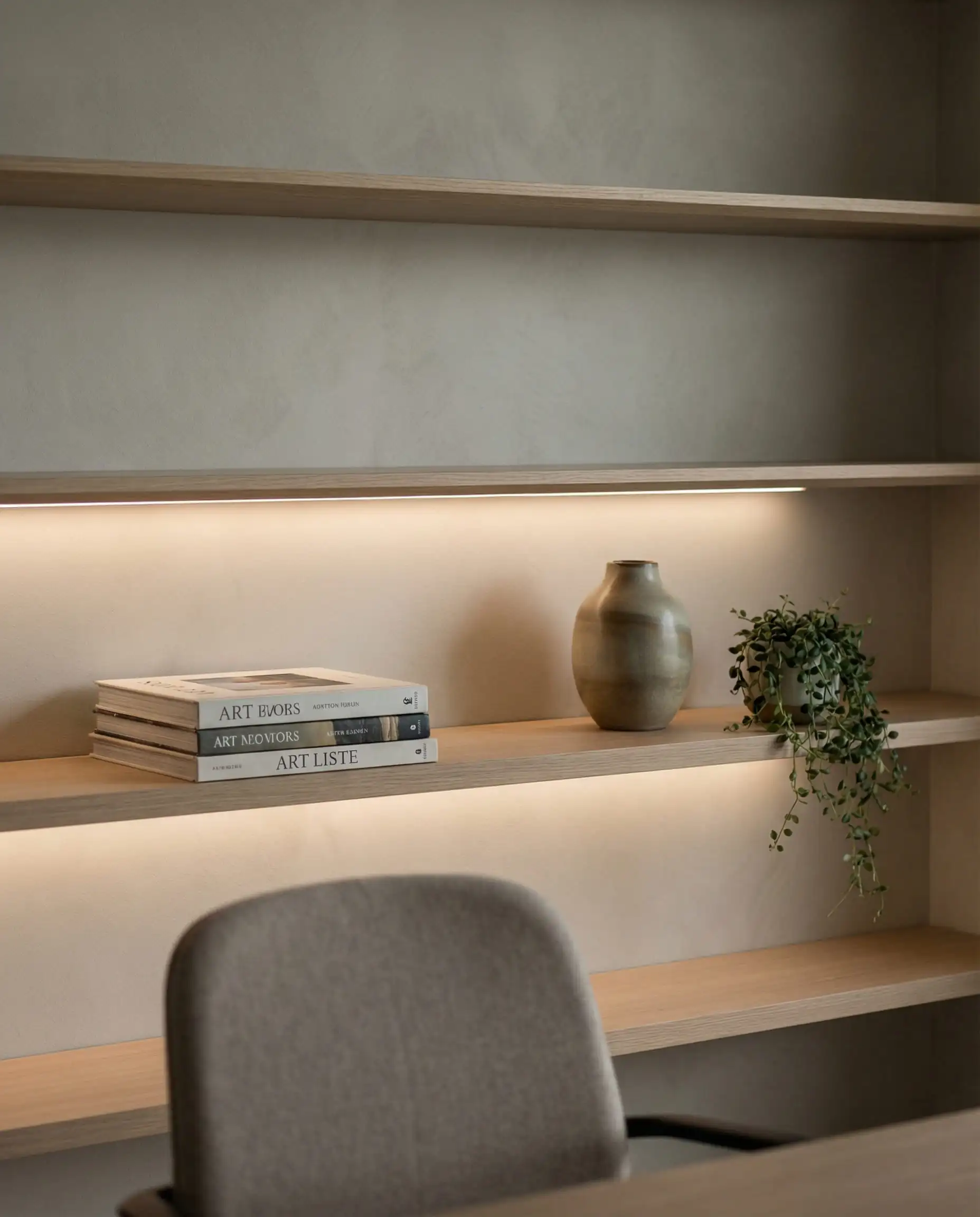
The background is now treated as a stage set. It’s about creating “layered fields” of depth. Instead of a flat wall, think:
- Texture: A wall panel or textured wallpaper.
- Structure: Open shelving with “negative space” (don’t overstuff it!).
- Light: A small accent lamp or LED strip on a shelf to add a warm glow.
The goal is to look professional but personal—a curated glimpse into your life that looks great on a webcam.
Wellness 2.0: Structural Health
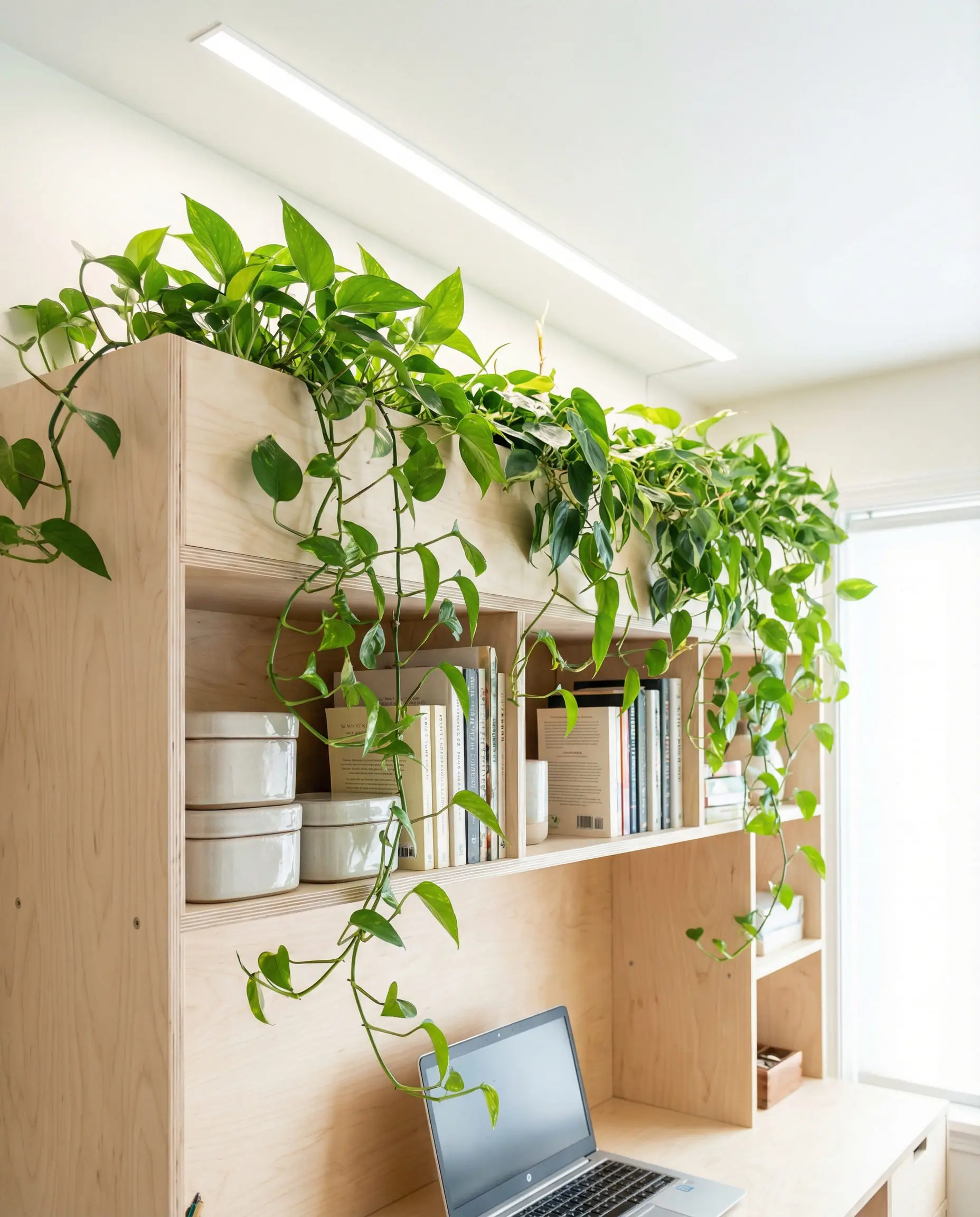
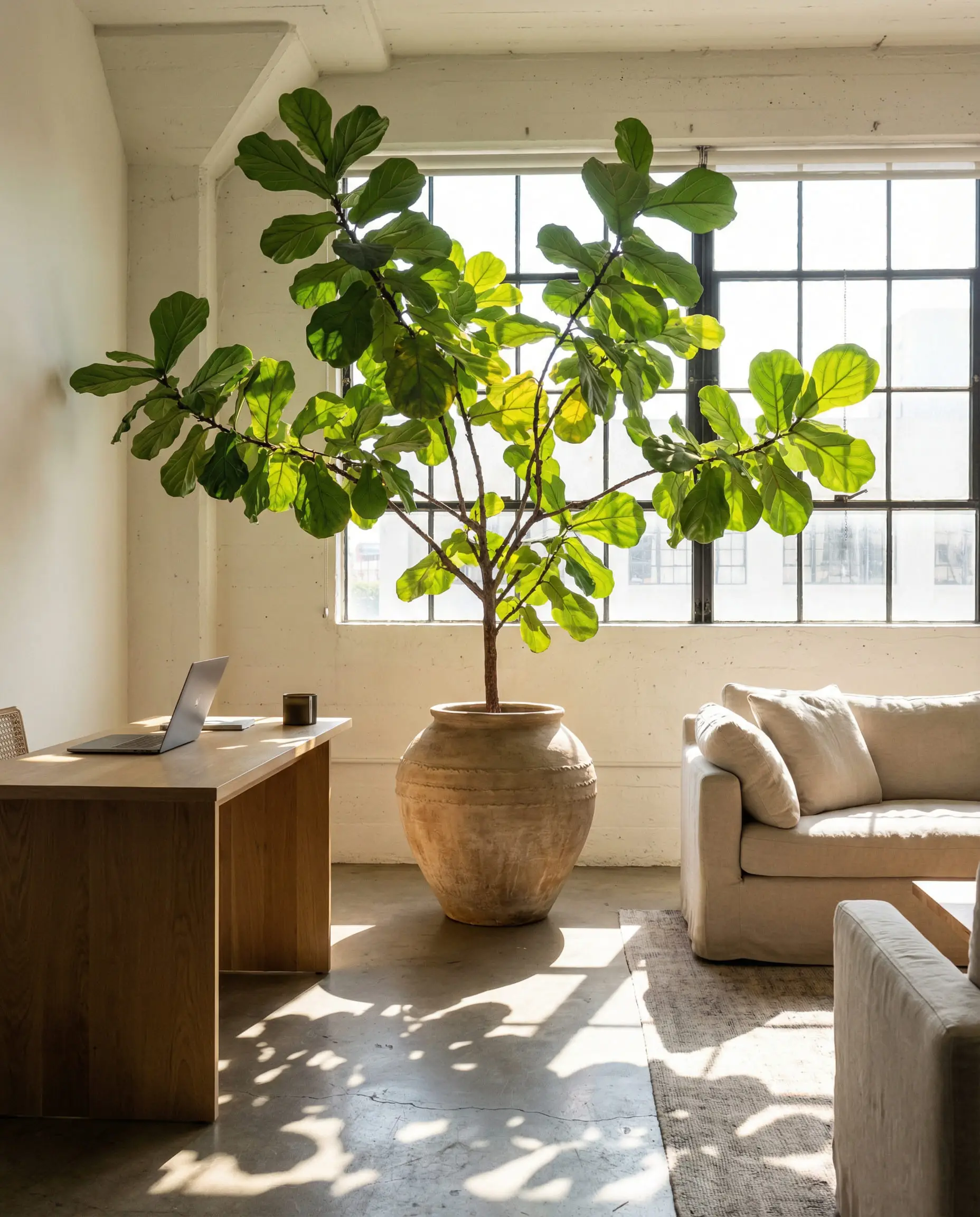
Wellness in the workspace used to mean buying a succulent. In 2026, it means Biophilic Architecture. We are moving from “adding nature” to “building with nature.”
Trend 9: Biophilic Architecture
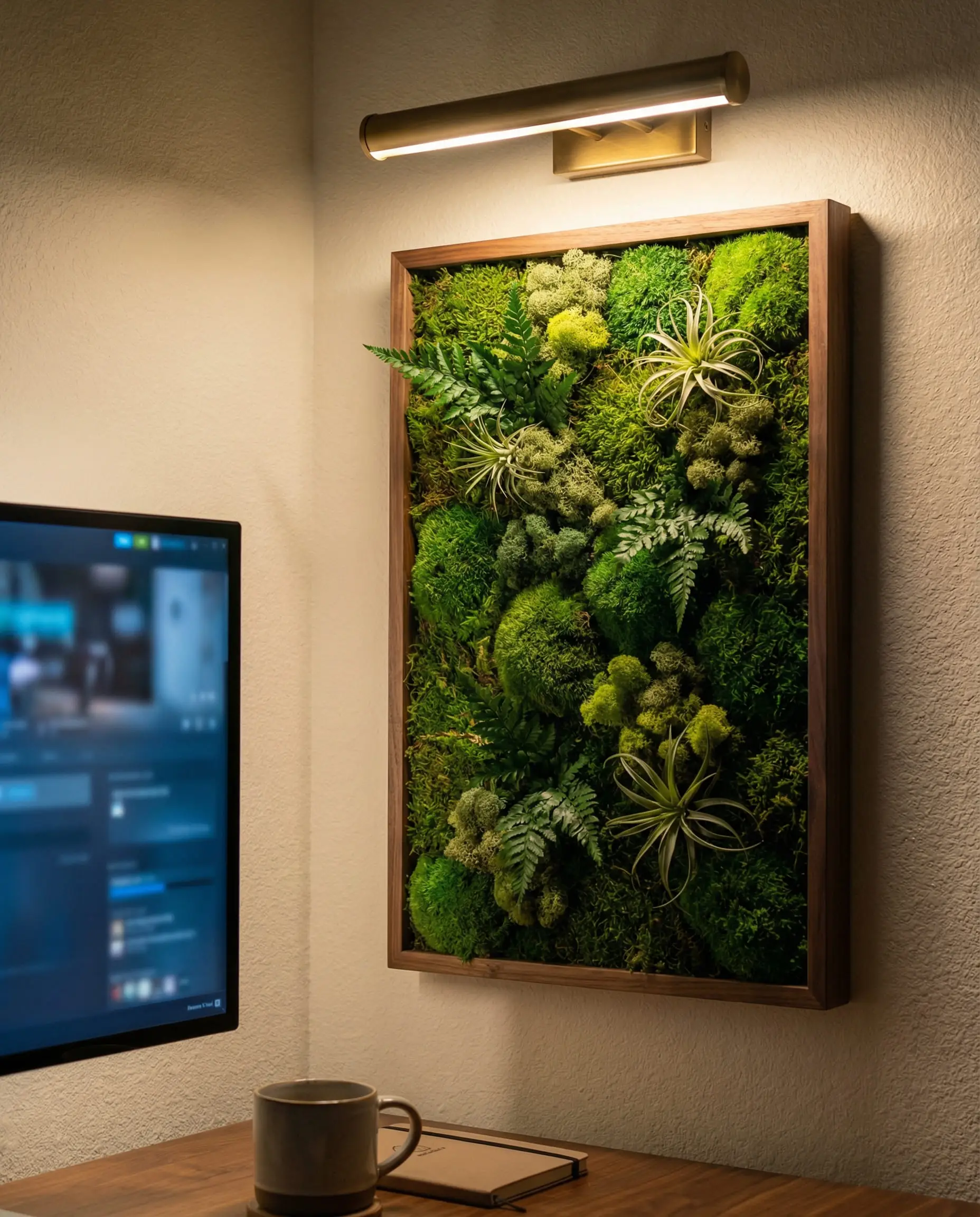
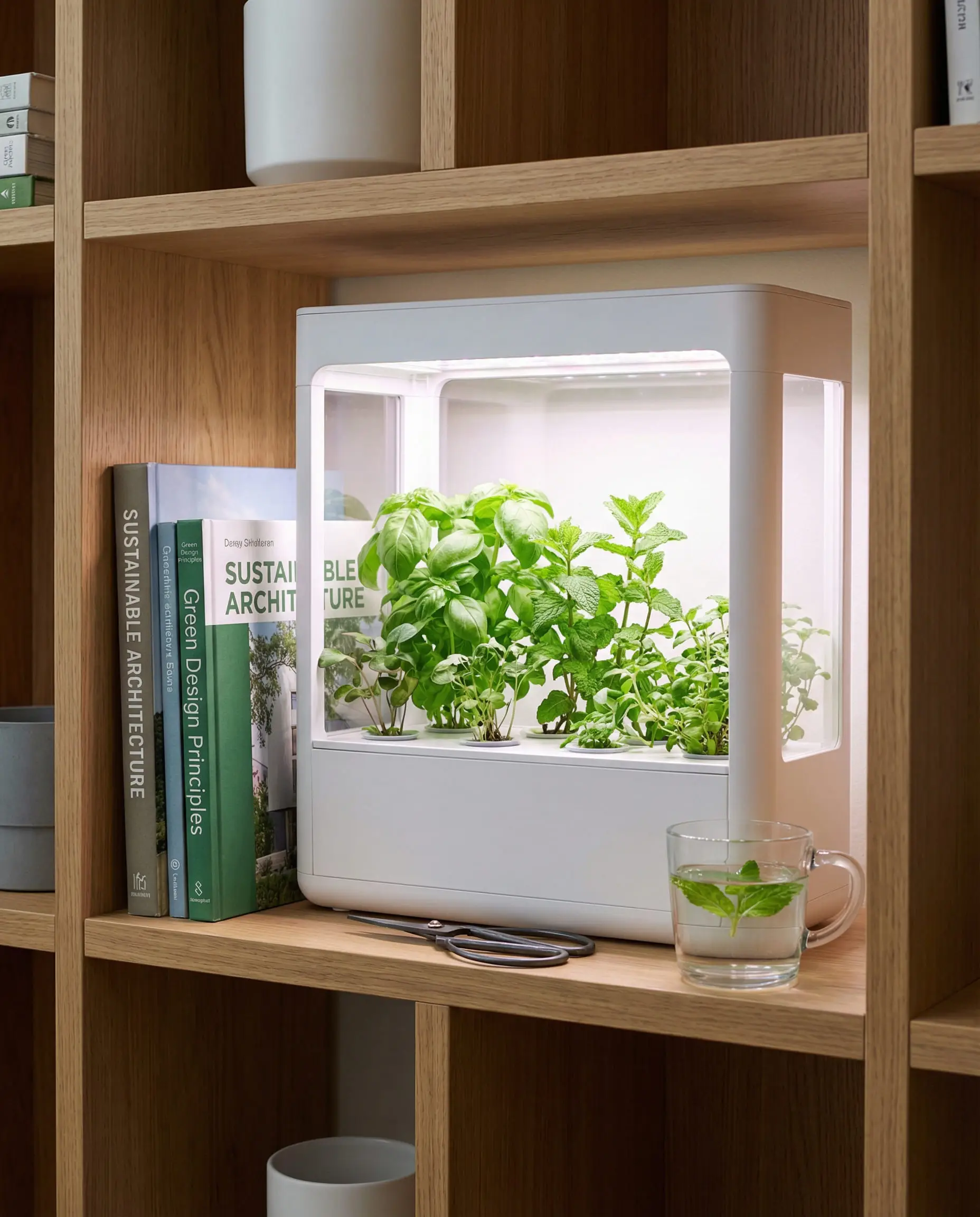
This involves integrating nature into the structure of the room. Think built-in planters recessed into the top of a filing cabinet, or a “living wall” niche framed with joinery. Some high-end home offices are even incorporating small hydroponic systems to grow air-purifying plants directly in the shelving units.
Interested in eco-friendly design? Our guide to Eco-Sustainable Interior Design Trends offers more ways to green your space.
Trend 10: Ergonomics Without the “Gamer” Look
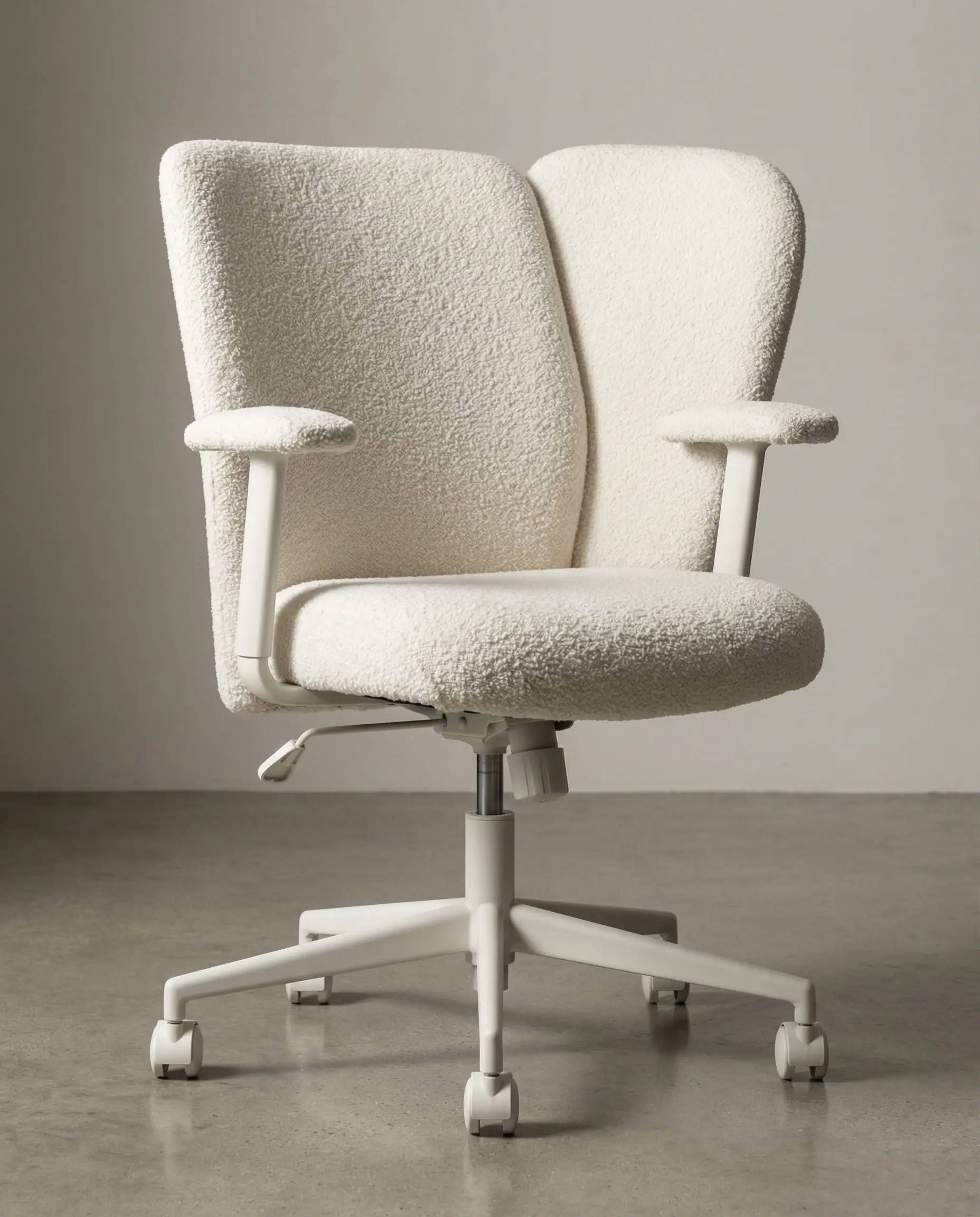
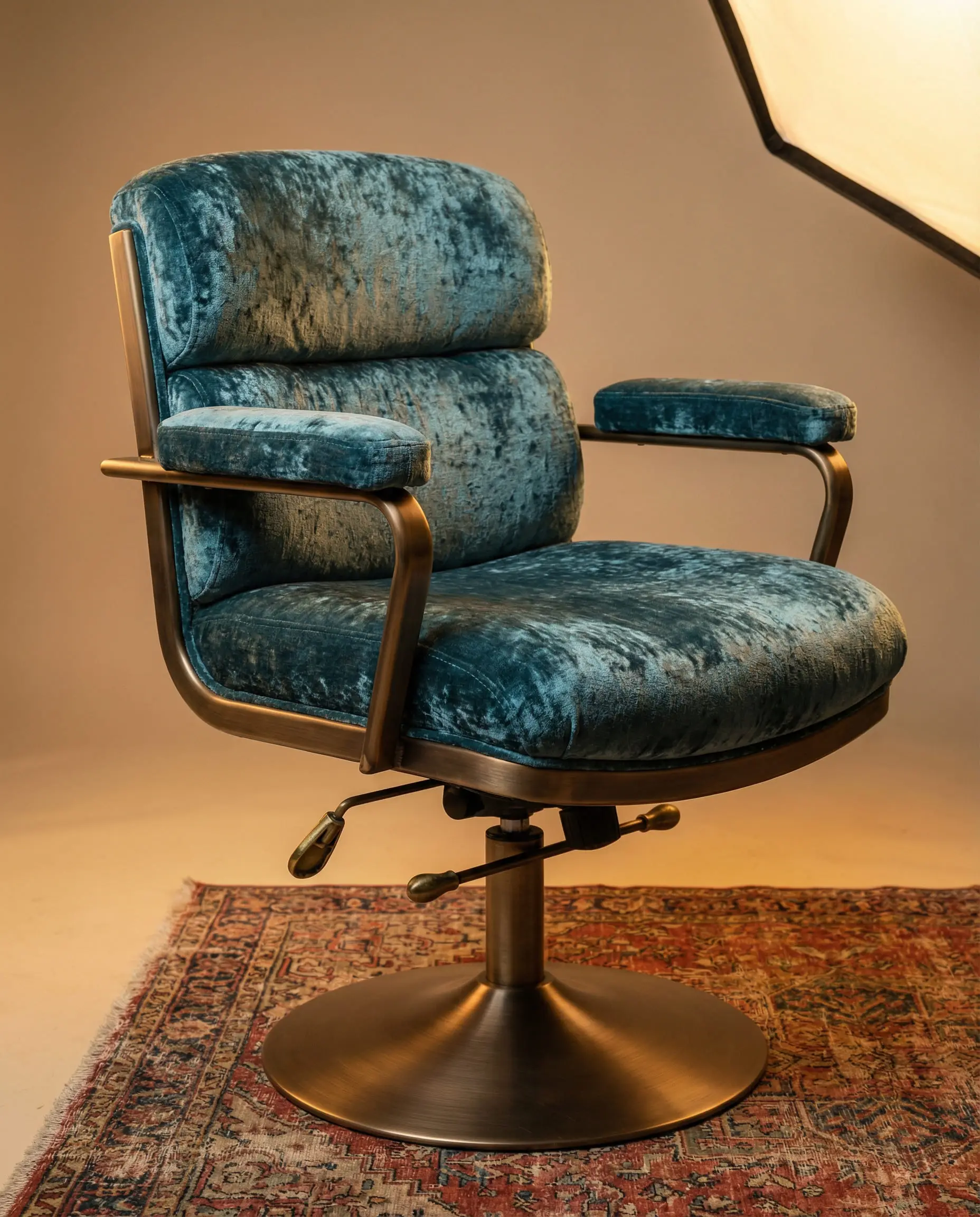
Thankfully, the era of the neon-colored, racing-stripe “gamer chair” in professional settings is fading. The new wave of ergonomic chairs is designed to blend with your living room.
Expect to see high-performance task chairs fully upholstered in bouclé, linen, or velvet. They have all the lumbar support and adjustability you need, but they look like a chic armchair you’d find in a high-end lounge. This allows the office chair to visually “disappear” into the room when work is done.
Pair your new chair with a stylish rug. Check out Carpet & Rug Trends 2026 for the best textures underfoot.
Practical Guide: How to Update Your Space for 2026
You don’t need a full renovation to bring these trends home. Here are actionable, high-impact updates you can do this weekend.
For hands-on projects, browse our DIY Home Decor Trends for custom solutions you can build yourself.
Frequently Asked Questions
A: The trend is moving toward “Restorative Darks” like Plum Brown, Deep Forest Green, and Charcoal Blue. For lighter options, warm neutrals like “mushroom” and taupe are replacing stark whites and cool grays.
A: Not dead, but evolving. The “Multizonal” trend means we are integrating workspaces into open plans more intentionally—using glass partitions, standing consoles, or distinct “zones” marked by rugs and lighting, rather than just floating a desk in the middle of a room.
A: Look for “cable spines” that match your desk legs, or use fabric cable sleeves (that look like rope) instead of plastic tubes. For a 2026 upgrade, invest in a desk with a built-in cable management tray and recessed power strips.
A: Avoid a single overhead light, which creates shadows under your eyes. The best setup is “layered” lighting: a soft, diffuse light hitting your face (from a ring light or window) and a warm accent light in the background to create depth.
A: Absolutely. In fact, mixing a vintage wooden desk with modern, hidden tech is the essence of the “Tactile Naturalism” trend. It adds soul and character that a brand-new showroom set often lacks.
Conclusion
The 2026 home office is a space of contradiction in the best possible way: it is high-tech yet deeply natural; it is a place of work that feels like a place of rest. By focusing on tactile materials, restorative colors, and wellness-first design, you can create a workspace that doesn’t just look good on a video call—it actually helps you think, feel, and work better.
Ready to take the next step? Whether you’re looking for the perfect Modern Desk Lamp or deciding on a new Floor Design, our deep-dive guides have everything you need to build your dream workspace.