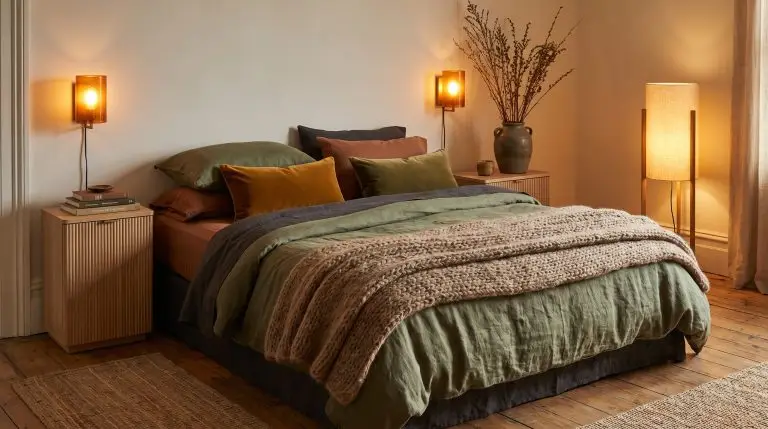
As autumn approaches, the shifting weather triggers a psychological need for a warmer, more grounded space. True high-end seasonal design relies on the principle of visual weight—swapping lightweight summer materials for heavier, light-absorbing textures rather than relying on disposable plastic pumpkins or literal themed signage. A sophisticated fall bedroom is built entirely through sensory layering, focusing on high-quality fabrics, moody ambient lighting, and rich, muddy hues that invite genuine rest.
If you are ready to curate a beautifully layered retreat, explore these 25 styling secrets for a seamless, tactile fall transition.
Mastering the Fall Bed: Heavy Textiles and Layering Techniques
The bed naturally acts as the architectural focal point of the room, dictating the entire atmosphere. Transitioning this space requires moving away from breathable, crisp summer fabrics toward insulating, highly tactile materials that invite rest.
Swap Crisp Percale for Brushed Cotton or European Flax Linen
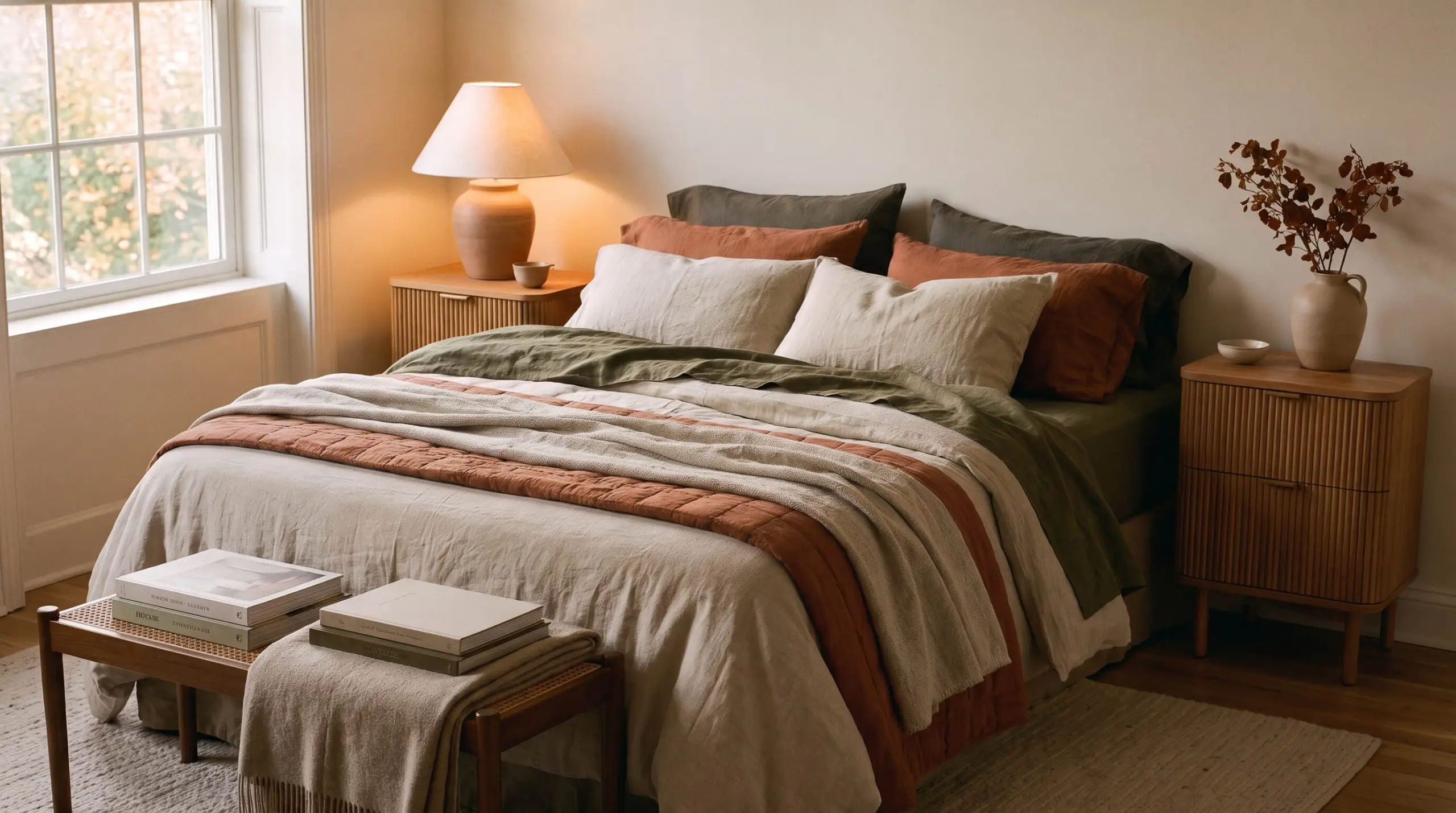
Crisp cottons are excellent for summer, but autumn demands bedding that actively traps heat while remaining highly breathable. Brushed cotton offers a velvety finish for immediate warmth, while heavyweight European flax linen provides gorgeous, rumpled texture that catches low autumn light beautifully.
- Vibe: Relaxed, lived-in luxury
- Key Materials: Heavyweight linen, brushed organic cotton
- Styling Pro-Tip: Stick to tone-on-tone bedding to keep the heavier fabrics from feeling visually cluttered.
- Tactile Swap: Trade your 200-thread-count summer percale sheets for a 175 GSM European flax linen set.
| Material | Pros | Cons |
|---|---|---|
| European Flax Linen | Highly breathable, beautiful natural drape, gets softer with age | Requires air drying for best longevity, higher initial investment |
| Flannel | Exceptional heat retention, incredibly soft to the touch | Can pill over time, sometimes traps too much heat for hot sleepers |
| Brushed Cotton | Warm velvety finish, mimics flannel without the heavy bulk | Less breathable than linen, lacks the organic rumpled texture |
Anchor the Foot of the Bed with a Chunky Mohair Throw
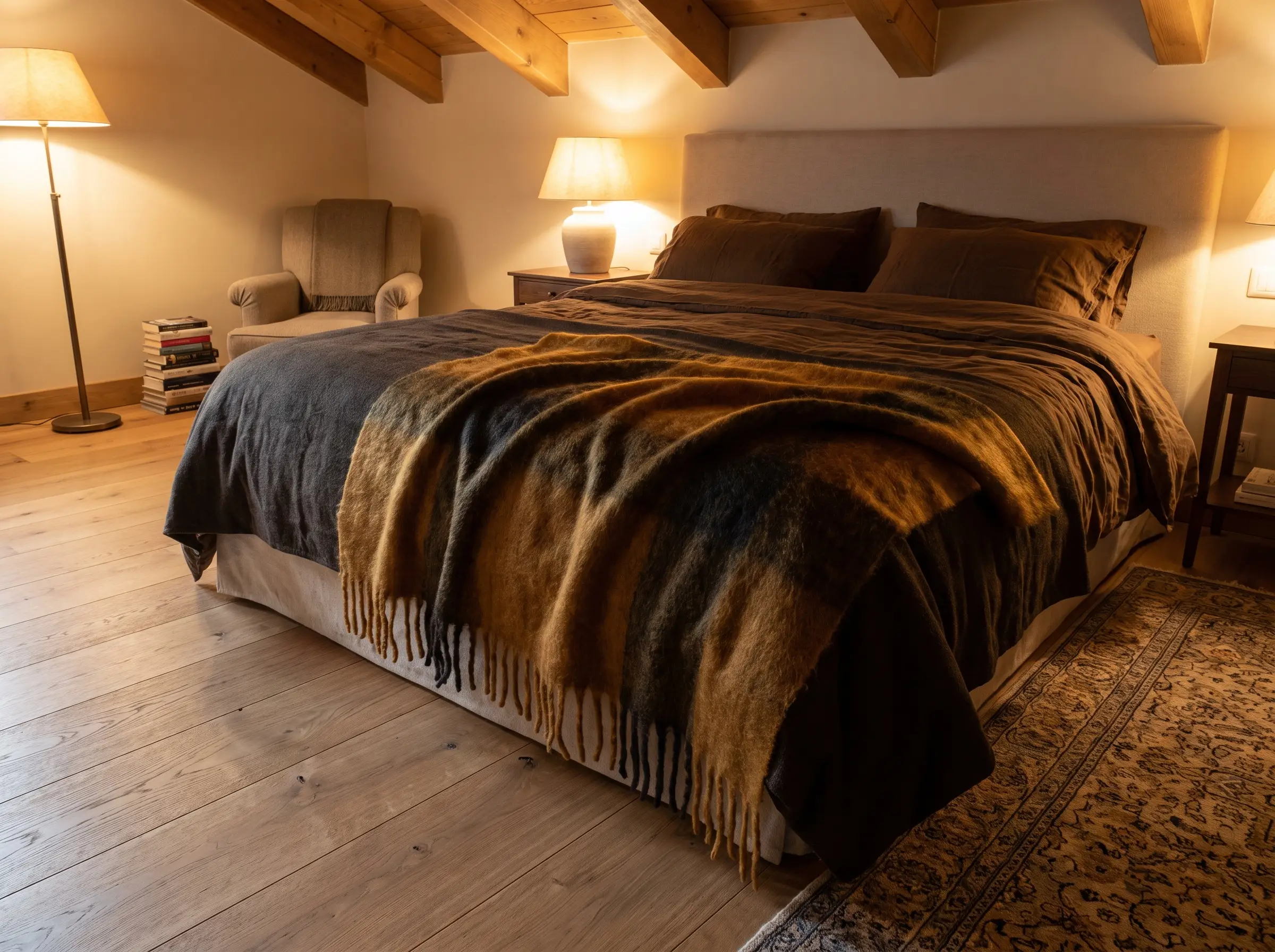
A bed can look flat without a textural anchor at the base to draw the eye downward. Mohair provides exceptional visual weight and an incredibly soft, fuzzy hand-feel that instantly signals cold-weather comfort.
- Vibe: Bespoke, textured warmth
- Key Materials: 100% Mohair, brushed wool
- Styling Pro-Tip: Casually drape the throw rather than folding it perfectly flat to enhance the room’s organic flow.
- Tactile Swap: Replace lightweight cotton waffle blankets with a dense, fringed mohair throw.
Introduce Velvet Lumbar Pillows for Tactile Contrast
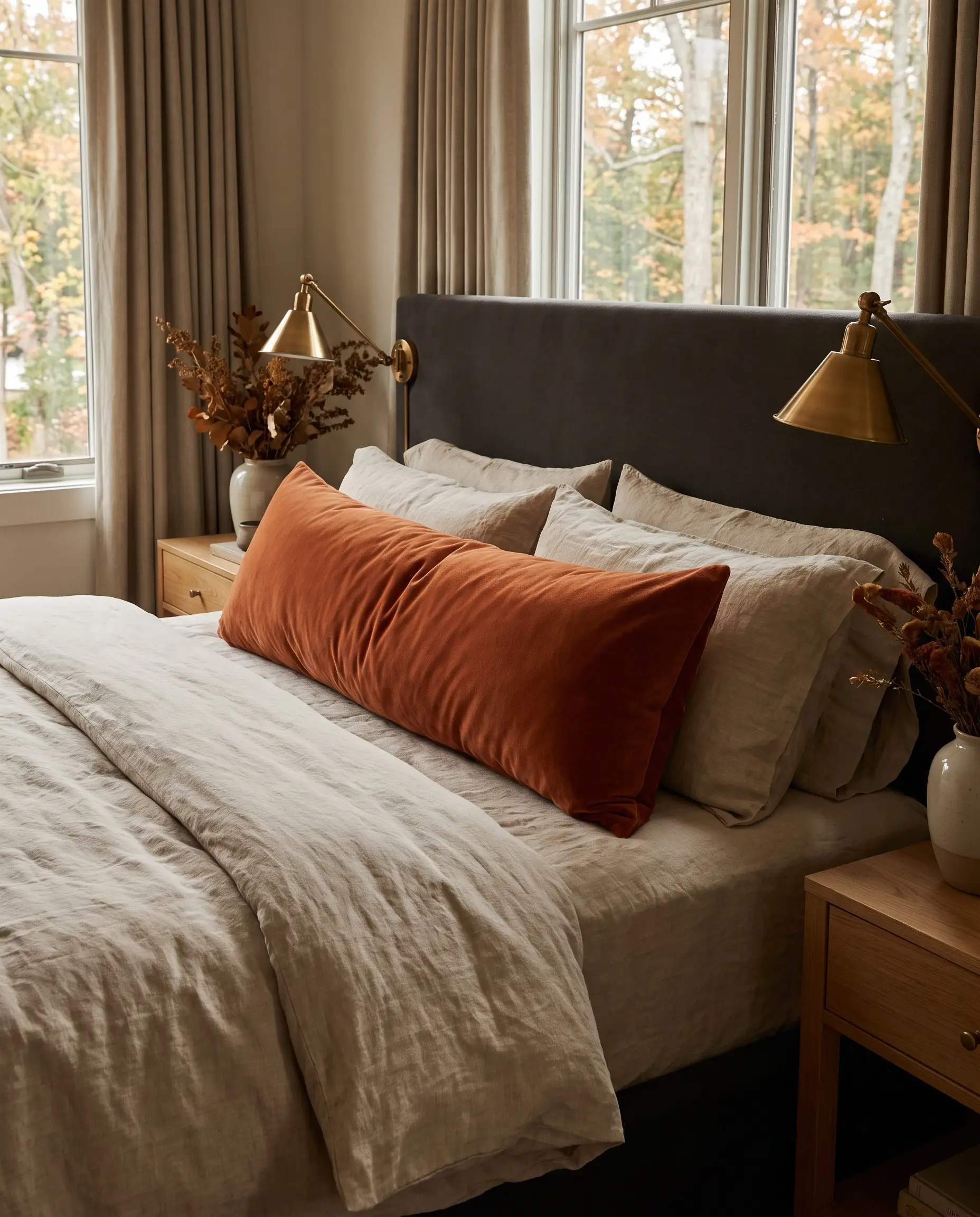
Velvet is the ultimate autumn fabric because its dense pile absorbs light, creating rich, dimensional shadows across the bed. Pairing a smooth linen duvet with a heavy cotton-velvet lumbar pillow establishes a sophisticated tactile contrast.
- Vibe: Moody, tailored elegance
- Key Materials: Matte cotton-velvet, feather-down inserts
- Styling Pro-Tip: Use one oversized, extra-long lumbar pillow rather than a messy collection of small square cushions.
- Tactile Swap: Swap out stiff canvas or linen accent pillows for heavy-weight matte velvet covers.
Double-Stuff Your Duvet Insert for a Plump, Cloud-Like Look
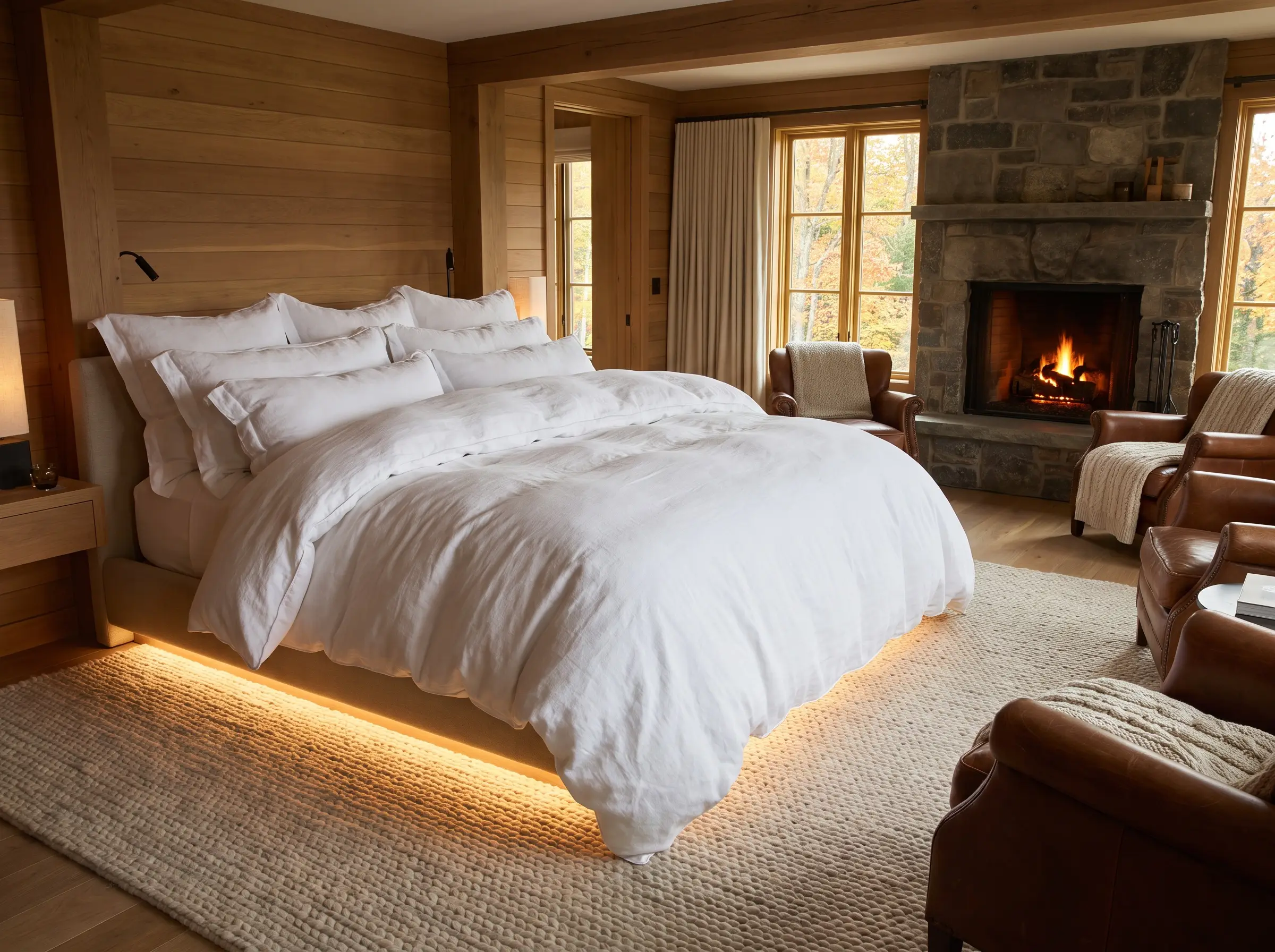
High-end boutique hotels achieve that irresistible, sink-in aesthetic by doubling up on their bedding inserts. Placing two down or down-alternative inserts inside a single duvet cover creates massive volume and insulating warmth.
- Vibe: Decadent, overstuffed luxury
- Key Materials: Baffle-box down inserts, oversized linen covers
- Styling Pro-Tip: Ensure your duvet cover has internal corner ties to keep the heavy double inserts from shifting.
- Tactile Swap: Trade a thin summer quilt for a double-stuffed, high-loft duvet.
Layer a Quilted Coverlet Underneath the Main Duvet
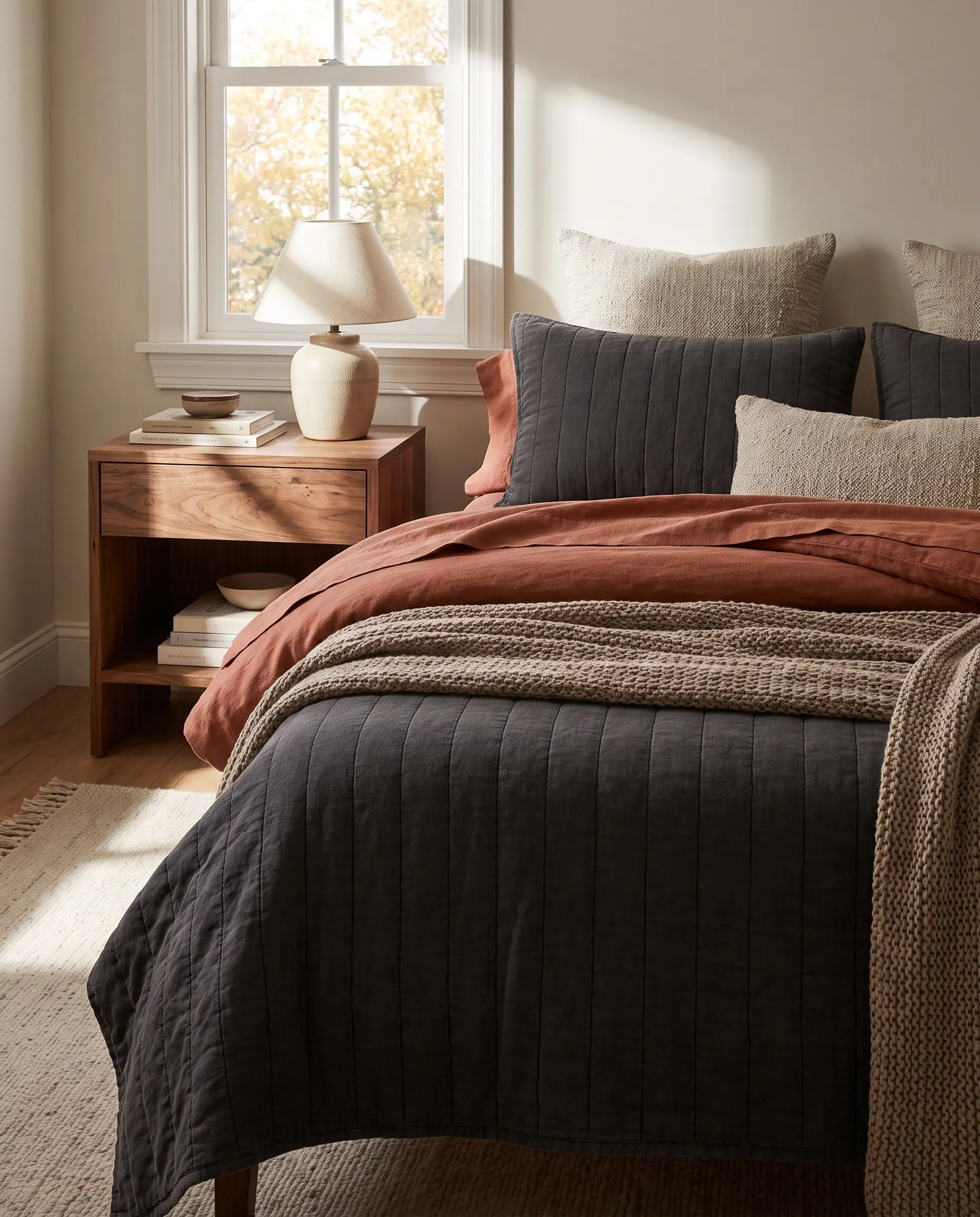
Layering a structured, quilted coverlet between your flat sheet and your main duvet adds an essential architectural layer to the bed. This technique allows you to fold the heavy duvet halfway down, exposing a beautifully tailored mid-layer.
- Vibe: Architecturally mindful, deeply layered
- Key Materials: Channel-stitched cotton, stonewashed linen blends
- Styling Pro-Tip: Choose a coverlet in a slightly darker shade than your duvet to create a grounding visual base.
- Tactile Swap: Introduce a heavy, channel-stitched coverlet in place of a standard flat sheet.
Drape a Weighted Faux-Fur Blanket Over an Accent Chair
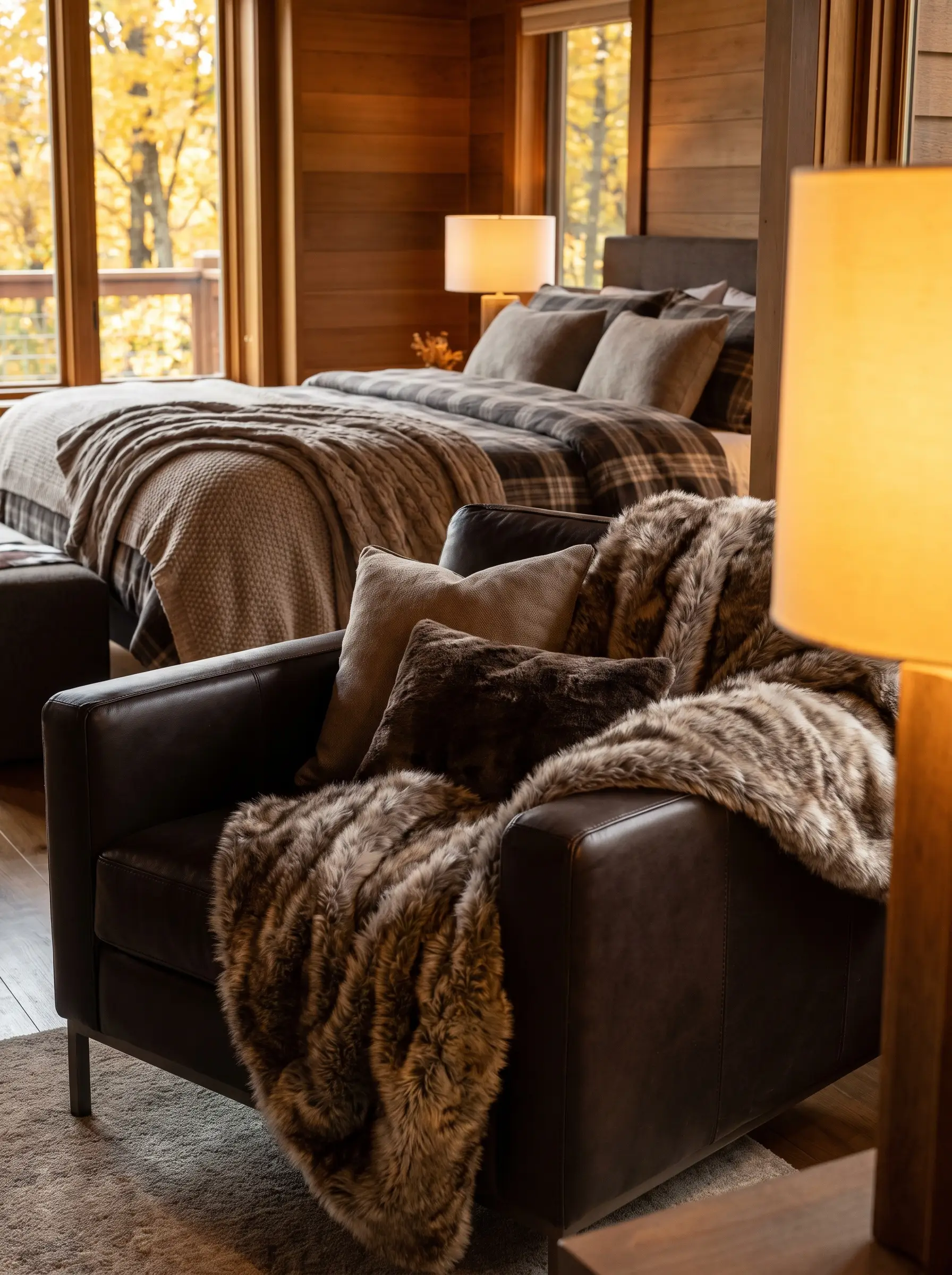
If your bedroom features a reading nook or accent chair, it needs to visually match the heavy layering of the bed. A dense, high-quality faux-fur blanket draped over a sleek wooden or leather chair softens harsh architectural lines.
- Vibe: Inviting, lodge-inspired luxury
- Key Materials: High-pile faux fur, weighted backing
- Styling Pro-Tip: Avoid bright white faux fur; opt for tipped, natural-looking tones like mink, sable, or taupe.
- Tactile Swap: Trade a thin acrylic throw for a heavy, weighted faux-fur blanket.
Shifting the Palette: Sophisticated Autumn Color Pairings
Fall colors should feel muddy, grounded, and rich, rather than bright or synthetic. Transitioning your palette is about introducing saturated tones that absorb light and create an enveloping, cocoon-like atmosphere.
Ground the Space with Deep Ochre and Mustard Accents
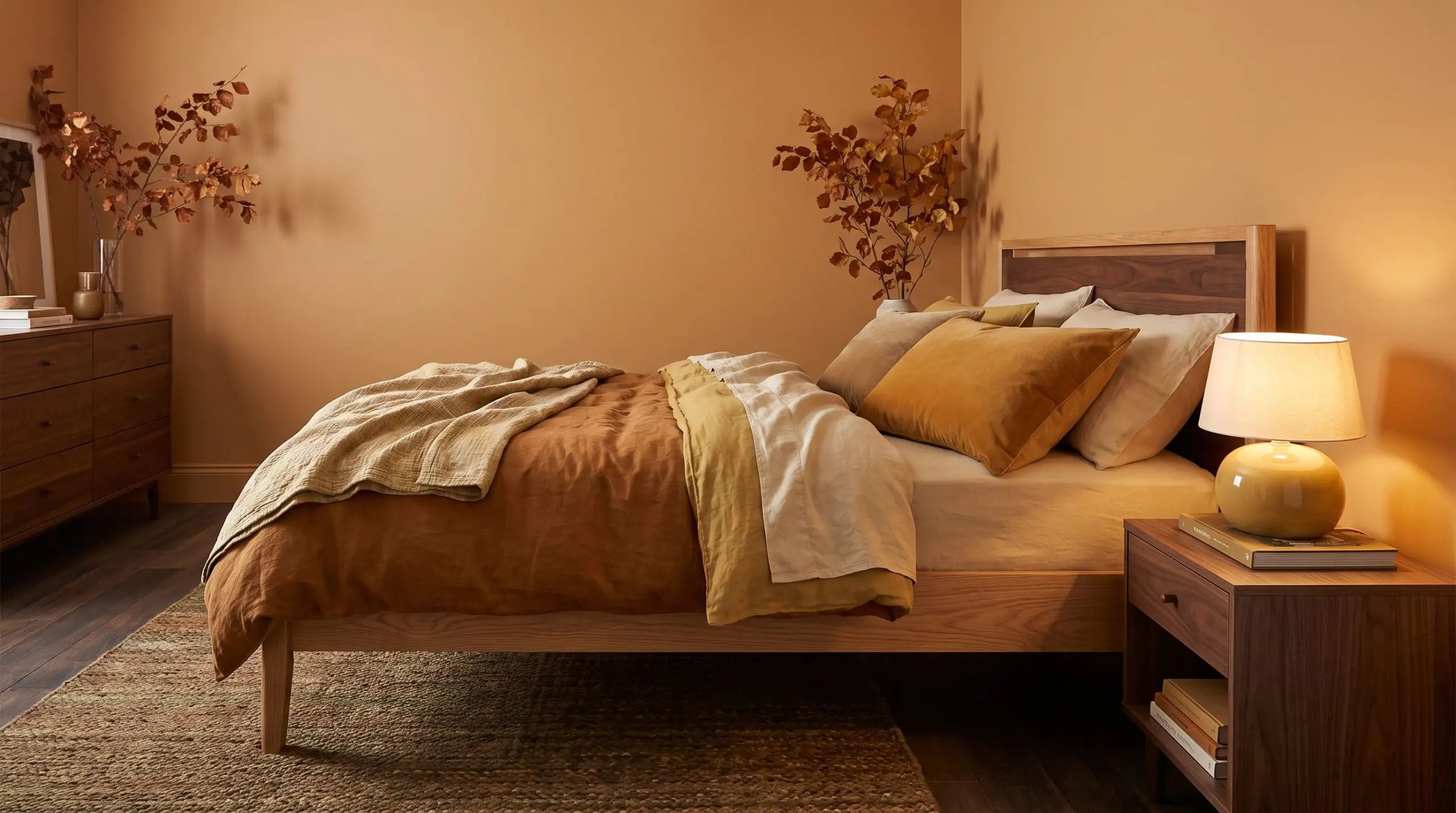
True yellows are too energetic for a restful bedroom, but muddy ochre and muted mustard provide the perfect earthy warmth. These tones mimic the changing landscape while pairing beautifully with natural oak and walnut furniture.
- Vibe: Organic, earthy warmth
- Key Materials: Linen blends, matte ceramics
- Color Match: Farrow & Ball India Yellow
- Styling Pro-Tip: Use ochre in small, high-impact doses like a single velvet pillow or a ceramic bedside lamp.
Warm Up Cool Walls with Terracotta and Rust Bedding
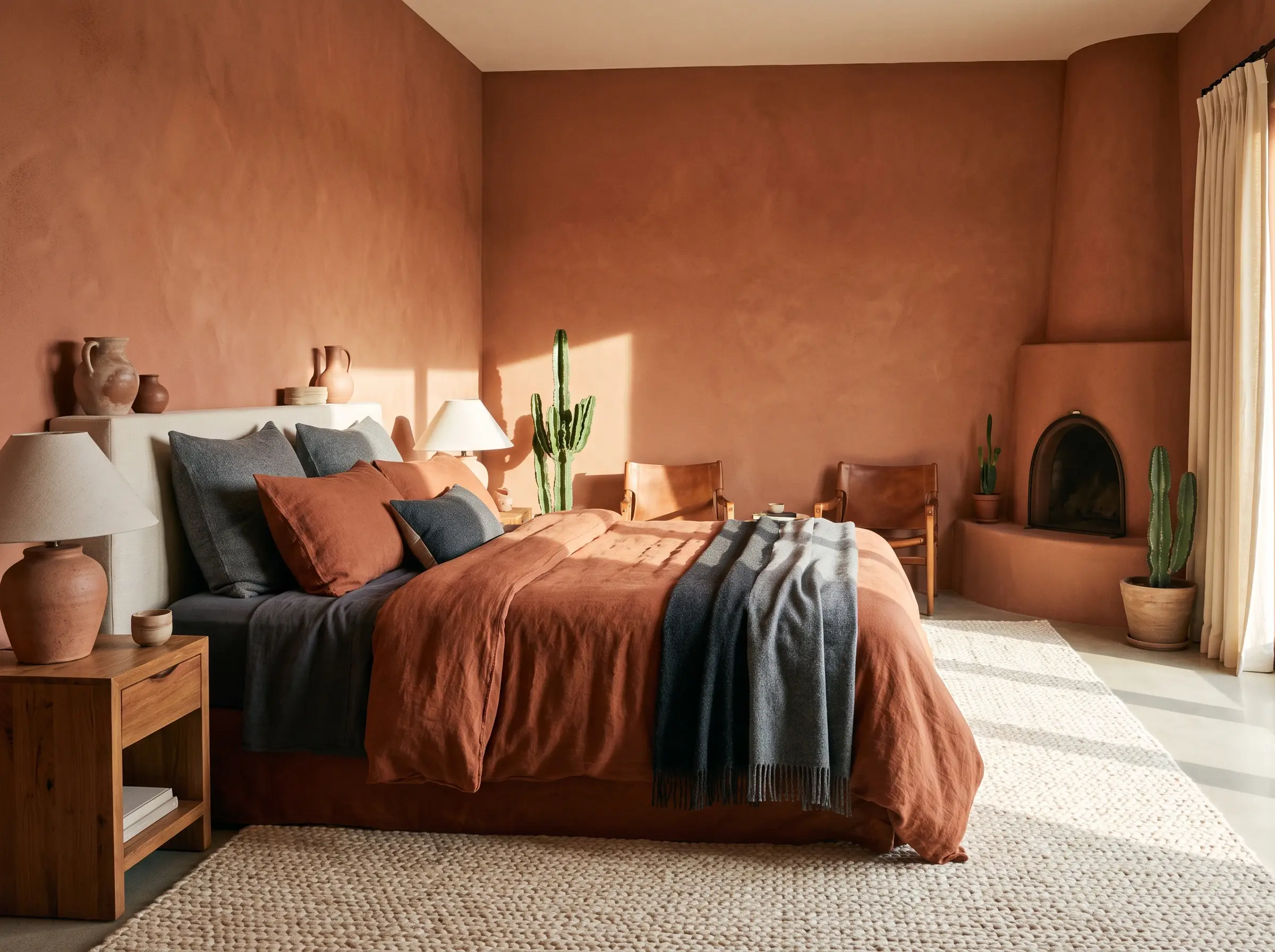
If your bedroom has cool white or gray walls, introducing terracotta immediately warms the visual temperature of the room. Rust-toned bedding acts as a grounding neutral that feels distinctly seasonal without tipping into cliché orange territory.
- Vibe: Southwestern modern, sun-baked comfort
- Key Materials: Stonewashed linen, raw clay
- Color Match: Sherwin-Williams Cavern Clay
- Styling Pro-Tip: Pair rust bedding with charcoal or slate gray accents to keep the palette sophisticated.
Introduce Moody Burgundy and Plum for a Dramatic Edge
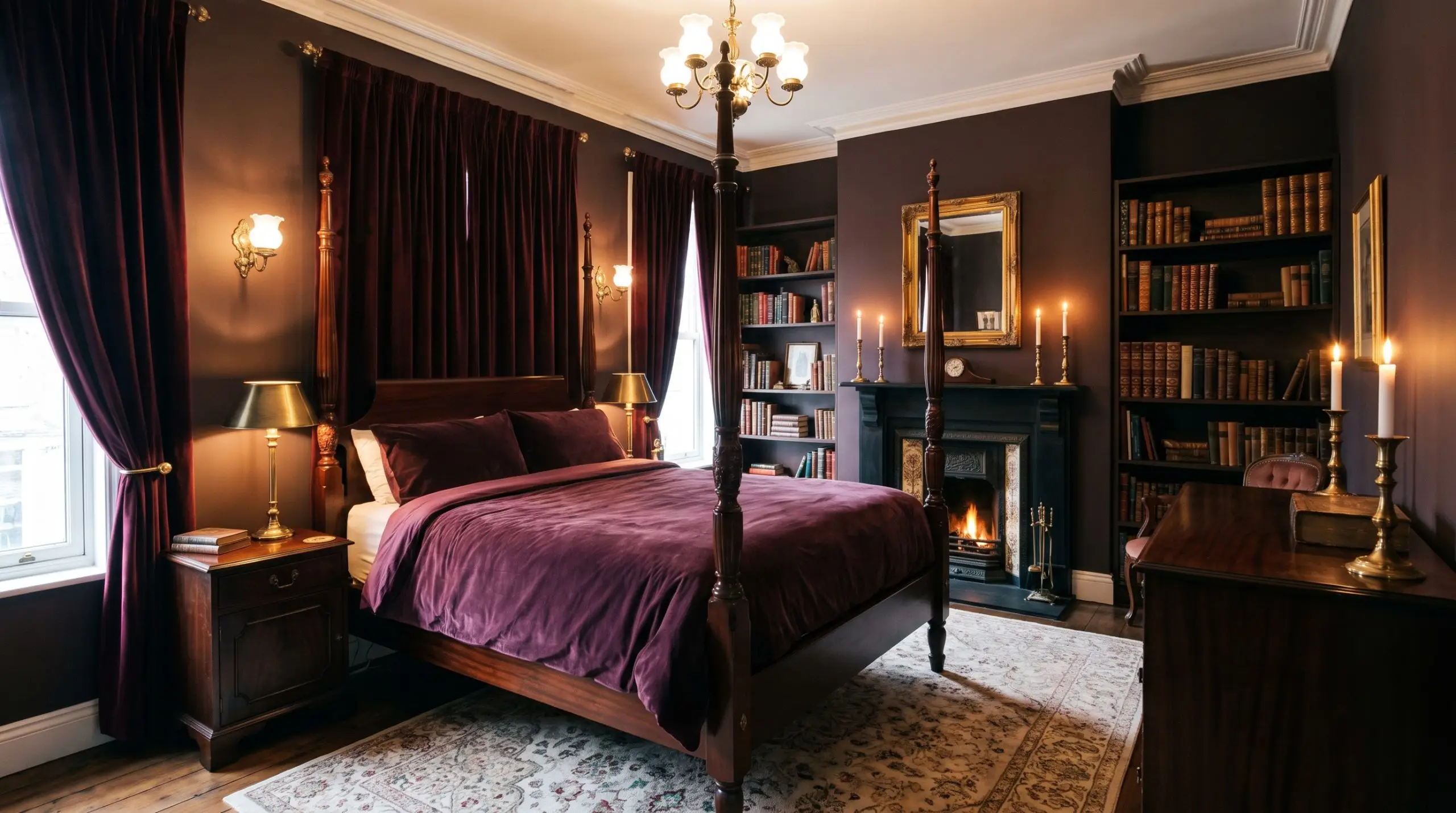
For spaces styled in a Dark Academia or moody aesthetic, deep burgundy and saturated plum offer incredible depth. These dark, bruised tones absorb shadows and make large bedrooms feel intimate and enveloping.
- Vibe: Cinematic, historic elegance
- Key Materials: Heavy velvet, dark mahogany wood
- Color Match: Sherwin-Williams Carnelian
- Styling Pro-Tip: Balance heavy plum textiles with warm metallic accents like unlacquered brass to reflect light.
Pair Chocolate Brown with Cream for High-Contrast Warmth
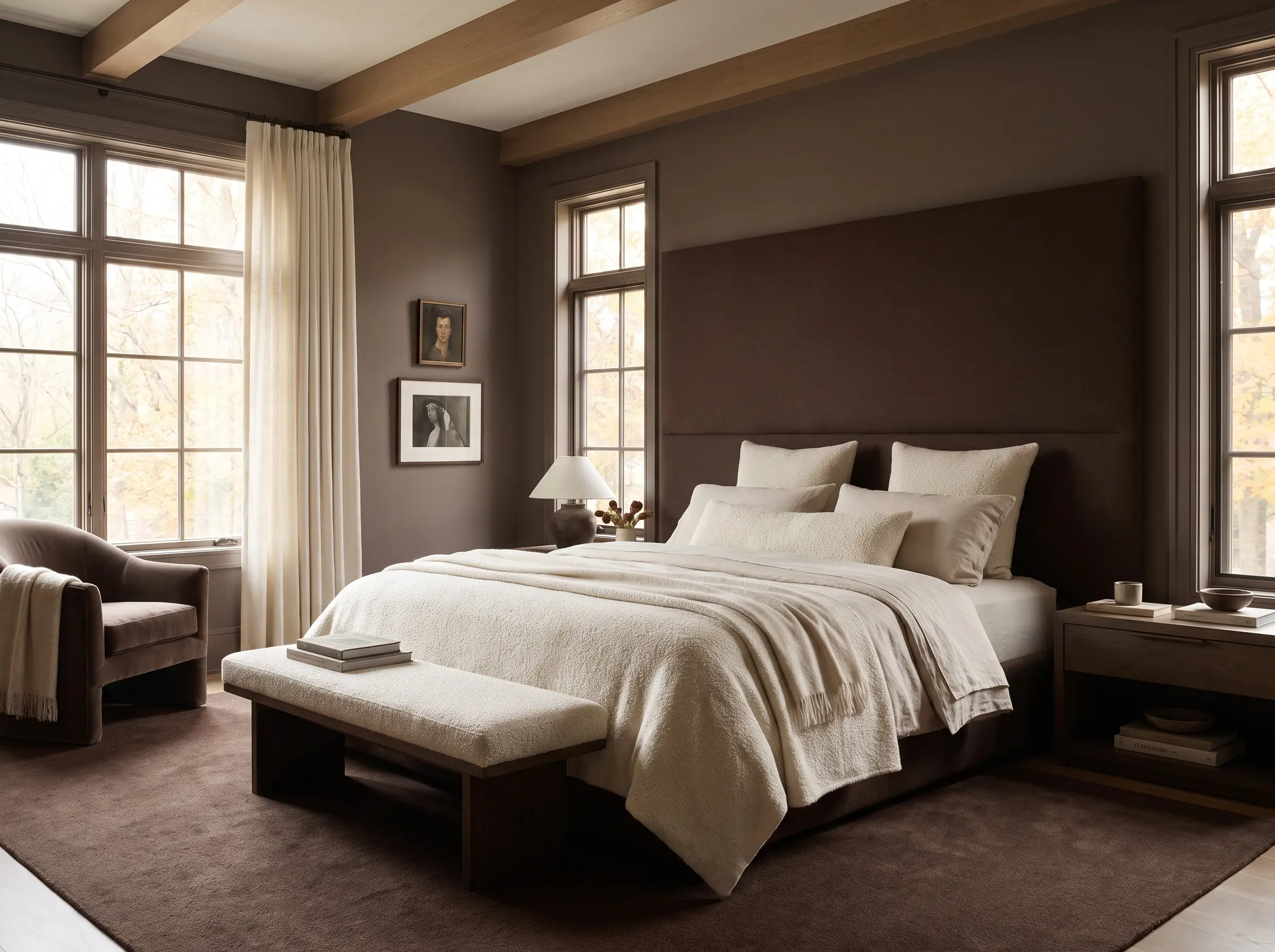
Chocolate brown is rapidly replacing stark black as the preferred high-end grounding color. Pairing a deep, matte brown with warm, creamy whites creates a high-contrast palette that feels incredibly rich and inviting.
- Vibe: Tailored, timeless sophistication
- Key Materials: Matte wool, creamy bouclé
- Color Match: Farrow & Ball London Clay
- Styling Pro-Tip: Use chocolate brown for heavy elements (like a headboard or rug) and cream for the lighter textiles.
Fall Color Pairing Guide:
- Organic Modern: Pair Terracotta (rust/clay) with warm creams and raw fluted white oak to emphasize natural, earthy textures.
- Dark Academia: Combine Moody Plum and Burgundy with dark walnut furniture and heavy velvet drapery for a library-inspired retreat.
- Soft Minimalism: Layer Chocolate Brown over beige tones, using tone-on-tone linen and wool rather than contrasting patterns.
Ambient Lighting: Creating a Moody, Restful Glow
Autumn means losing natural daylight, making artificial ambient lighting the most critical element of the room’s atmosphere. The goal is to eliminate harsh, cool overhead lighting in favor of warm, diffused, low-level illumination.
Install Low-Wattage Edison Bulbs in Bedside Sconces
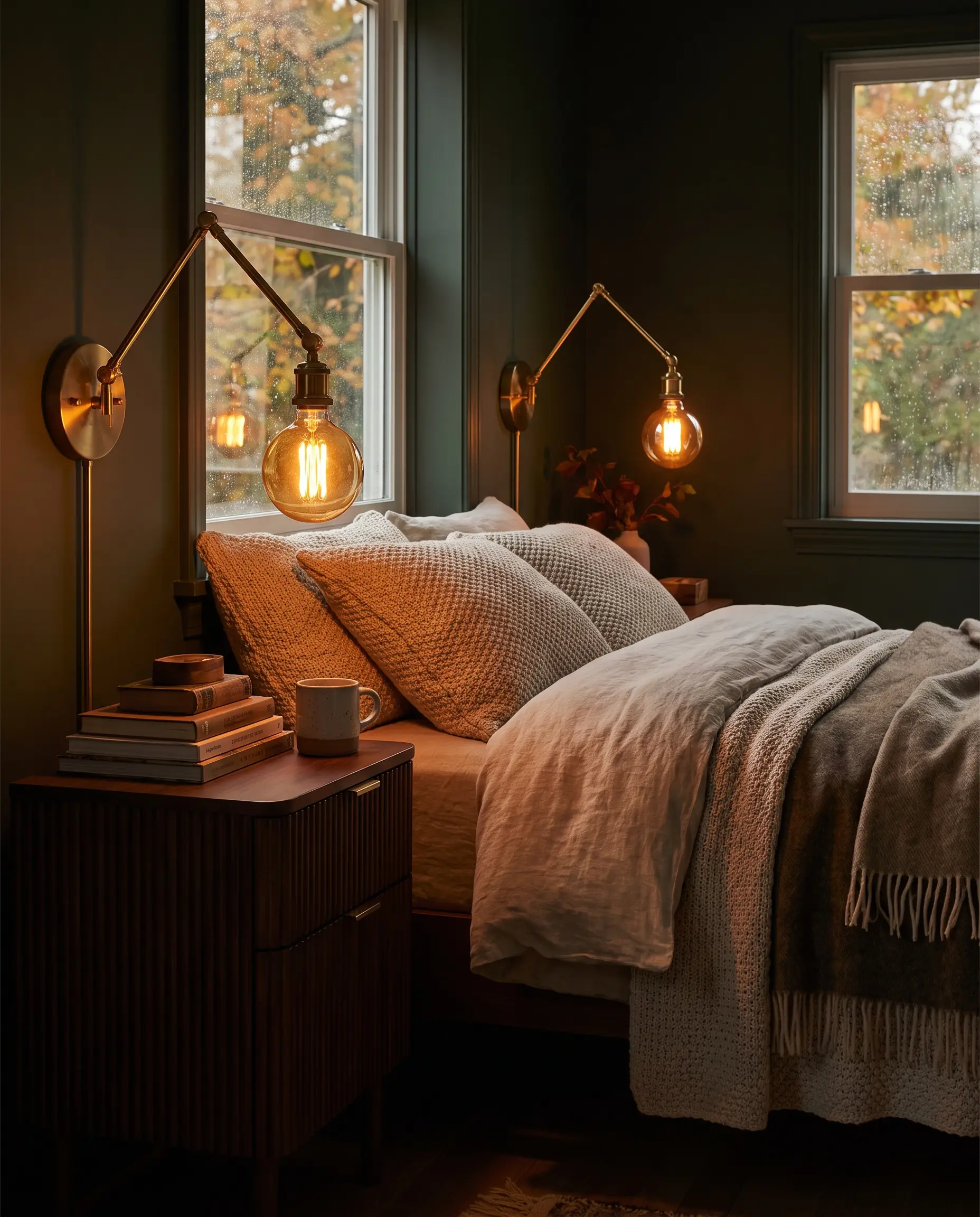
The harsh blue light of standard LEDs destroys the warm, cocooning feeling of a fall bedroom. Low-wattage Edison-style bulbs emit an amber glow that mimics firelight, signaling to your brain that it is time to rest.
- Vibe: Industrial-chic, intimate
- Key Materials: Exposed filament bulbs, brass sconces
- Lighting Spec: 2200K Color Temperature
- Styling Pro-Tip: Use frosted or amber-tinted glass on the bulbs to prevent harsh glare when reading in bed.
Put all bedroom bedside lamps on smart plug dimmers. Program them to automatically turn on at 20% brightness the moment the sun sets, ensuring you never walk into a dark or harshly lit room.
Designer Secret
Kelvin Temperature Chart:
- 2200K (Amber Glow): Ideal for bedside sconces and decorative Edison bulbs. Mimics candlelight.
- 2700K (Warm White): The absolute maximum temperature for a fall bedroom. Best for primary floor lamps and reading lights.
- 3000K+ (Cool White/Daylight): Strictly forbidden in a moody, restful autumn bedroom.
Trade Harsh Overhead Lights for Warmer Floor Lamps
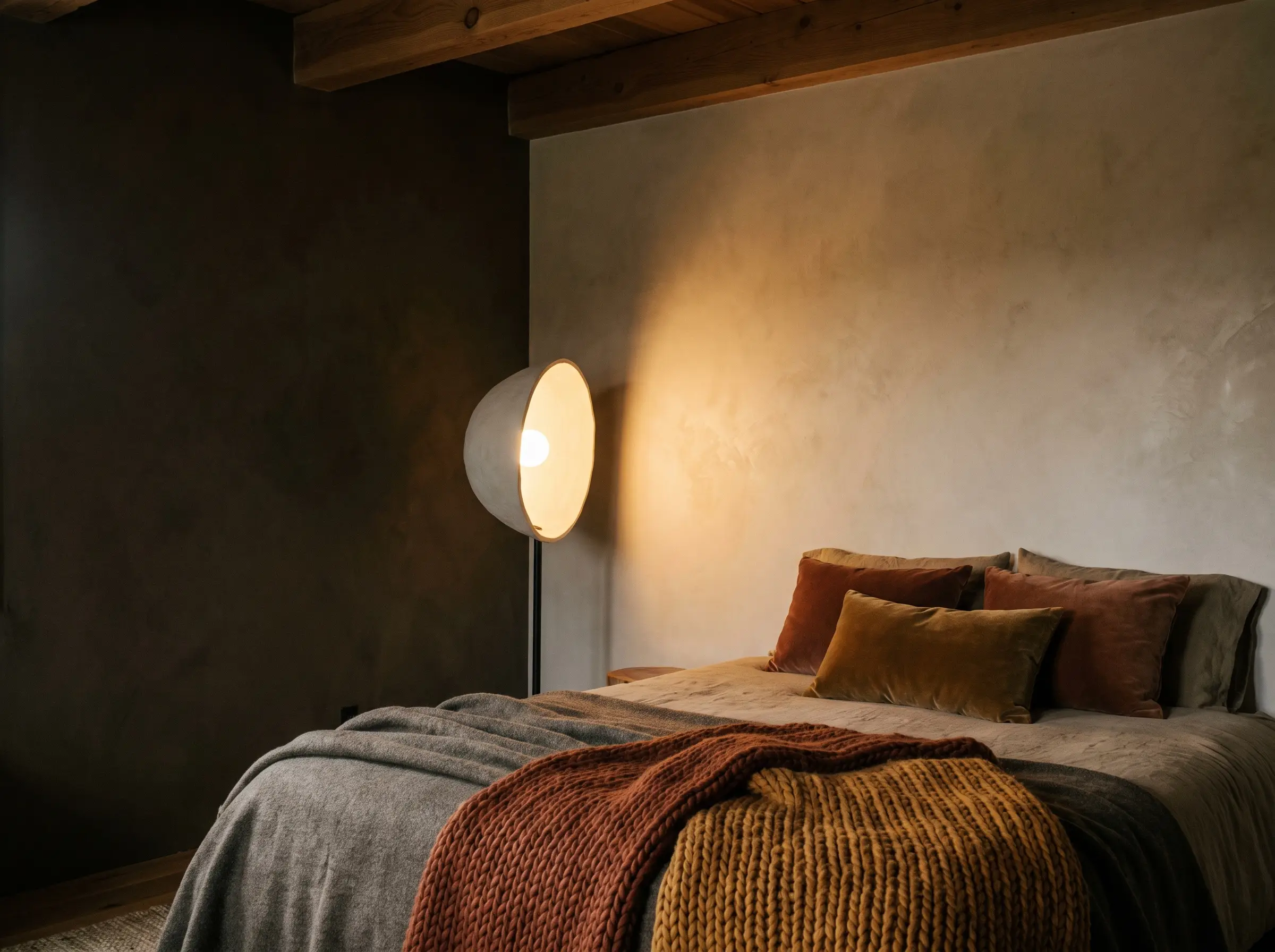
Overhead recessed lighting flattens a room’s architectural details and casts unflattering downward shadows. Relying on floor lamps pushes the light horizontally through the space, creating a soft, dimensional glow that highlights your heavy textiles.
- Vibe: Diffused, sculptural
- Key Materials: Plaster, blackened steel
- Lighting Spec: 2700K Color Temperature
- Styling Pro-Tip: Place a floor lamp in the darkest corner of the room to bounce warm light off the adjacent walls.
If you must use your overhead fixture, install a heavily frosted globe or a fabric drum shade to aggressively diffuse the light before it hits the bed.
Designer Secret
Use Battery-Operated Taper Candles on the Dresser
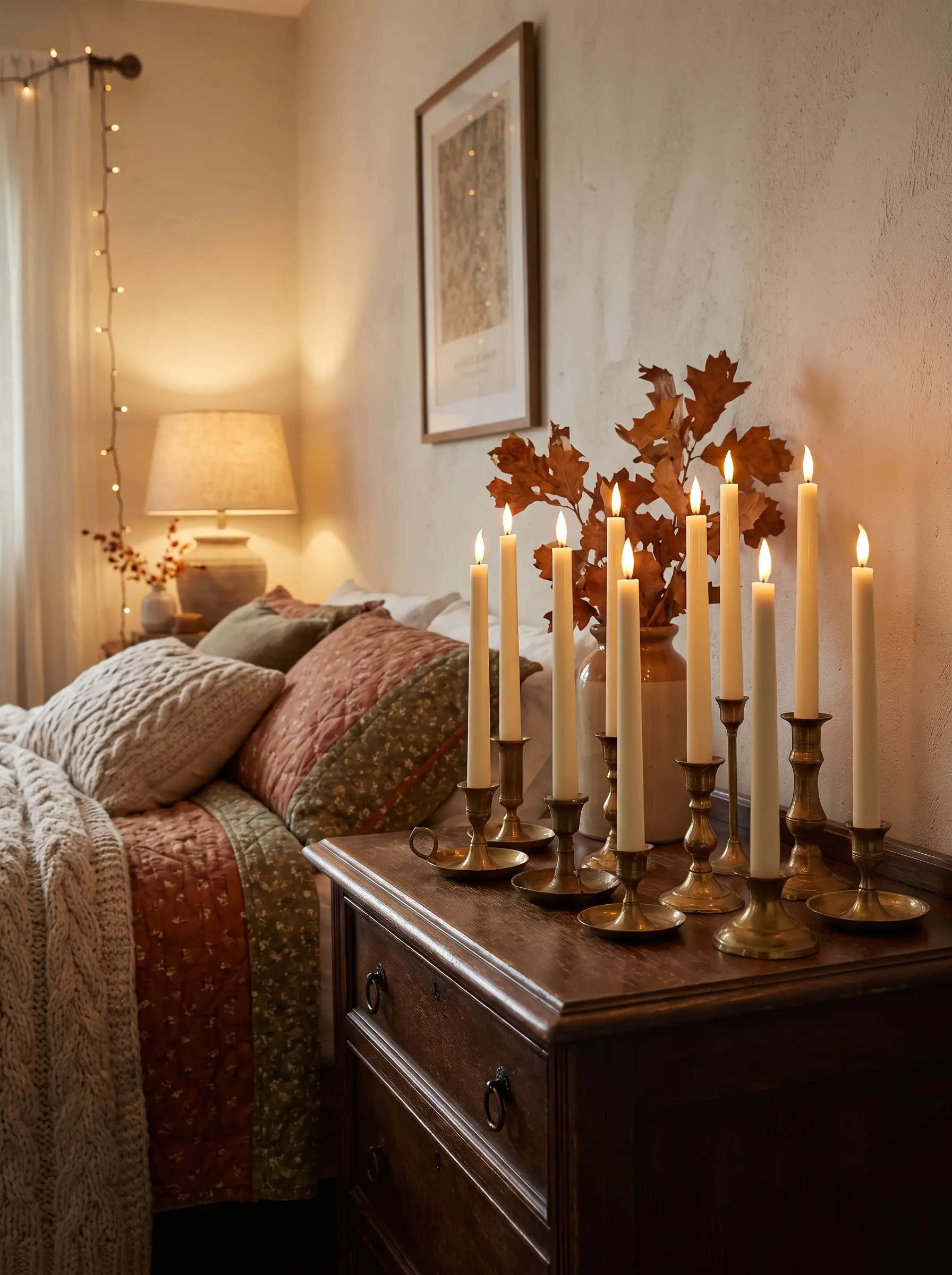
Open flames are often impractical or unsafe in a textile-heavy bedroom, but the visual of candlelight is essential for autumn styling. High-quality, real-wax battery tapers provide the exact flicker of a flame without the soot or fire hazard.
- Vibe: Romantic, historic
- Key Materials: Real-wax LED tapers, heavy brass candleholders
- Styling Pro-Tip: Cluster tapers in groups of three or five at varying heights to create a dynamic, sculptural focal point.
Source flameless candles that feature a 3D moving wick and a remote control so you can easily extinguish them from bed.
Designer Secret
Add a Pleated Lamp Shade to Diffuse Light Softly
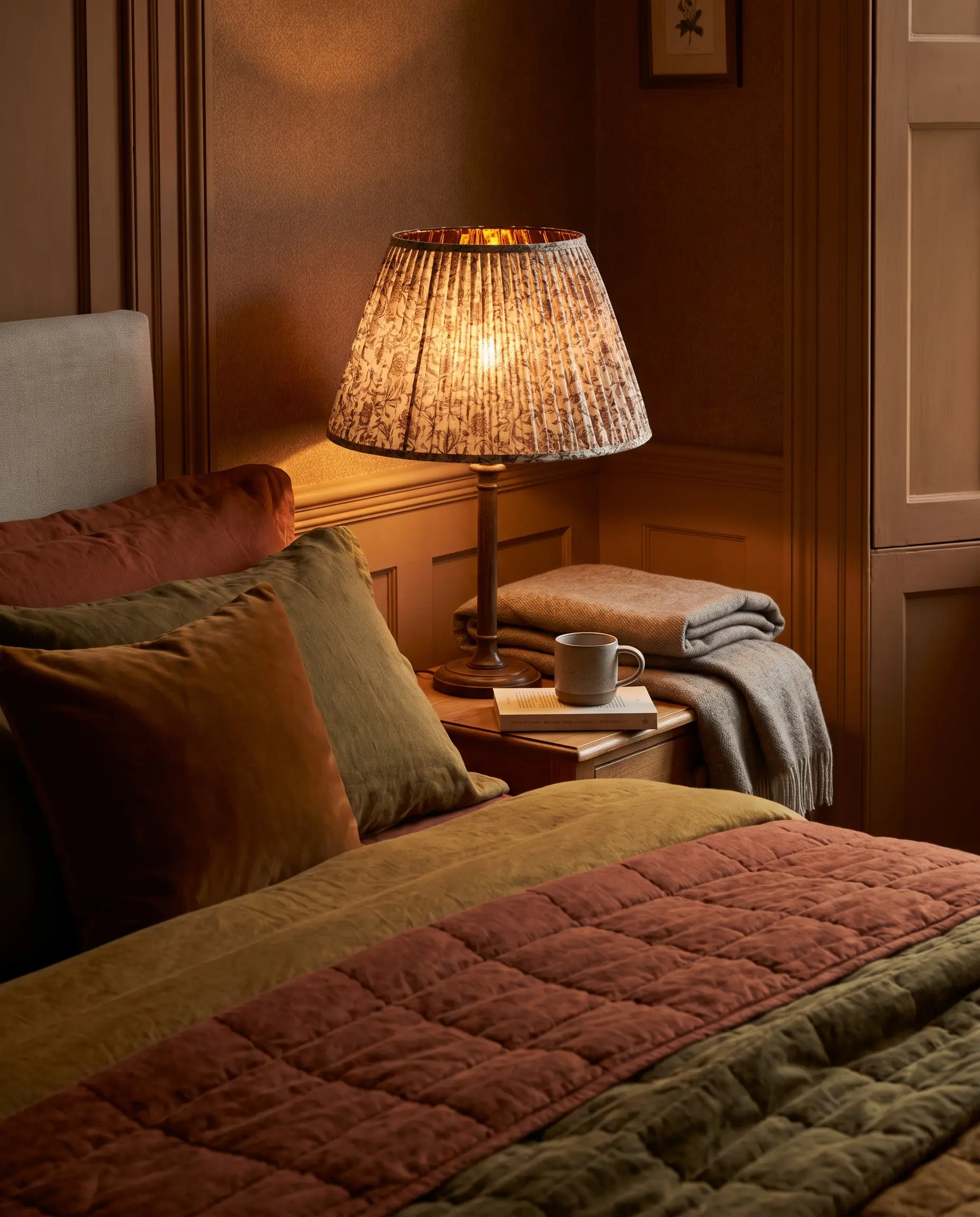
Swapping out stark white, modern drum shades for gathered or pleated fabric shades instantly softens the room. The pleated fabric acts as a physical baffle, diffusing the bulb’s glare while adding a layer of traditional, bespoke texture.
- Vibe: Heritage, soft-tailored
- Key Materials: Pleated linen, block-printed cotton
- Styling Pro-Tip: Choose a shade with a gold or amber foil lining on the interior to further warm the light output.
You do not need to buy a whole new lamp; simply measure the harp of your current bedside lamp and order a custom pleated shade to instantly change the fixture’s aesthetic.
Designer Secret
Backlight the Headboard with Warm LED Strip Lighting
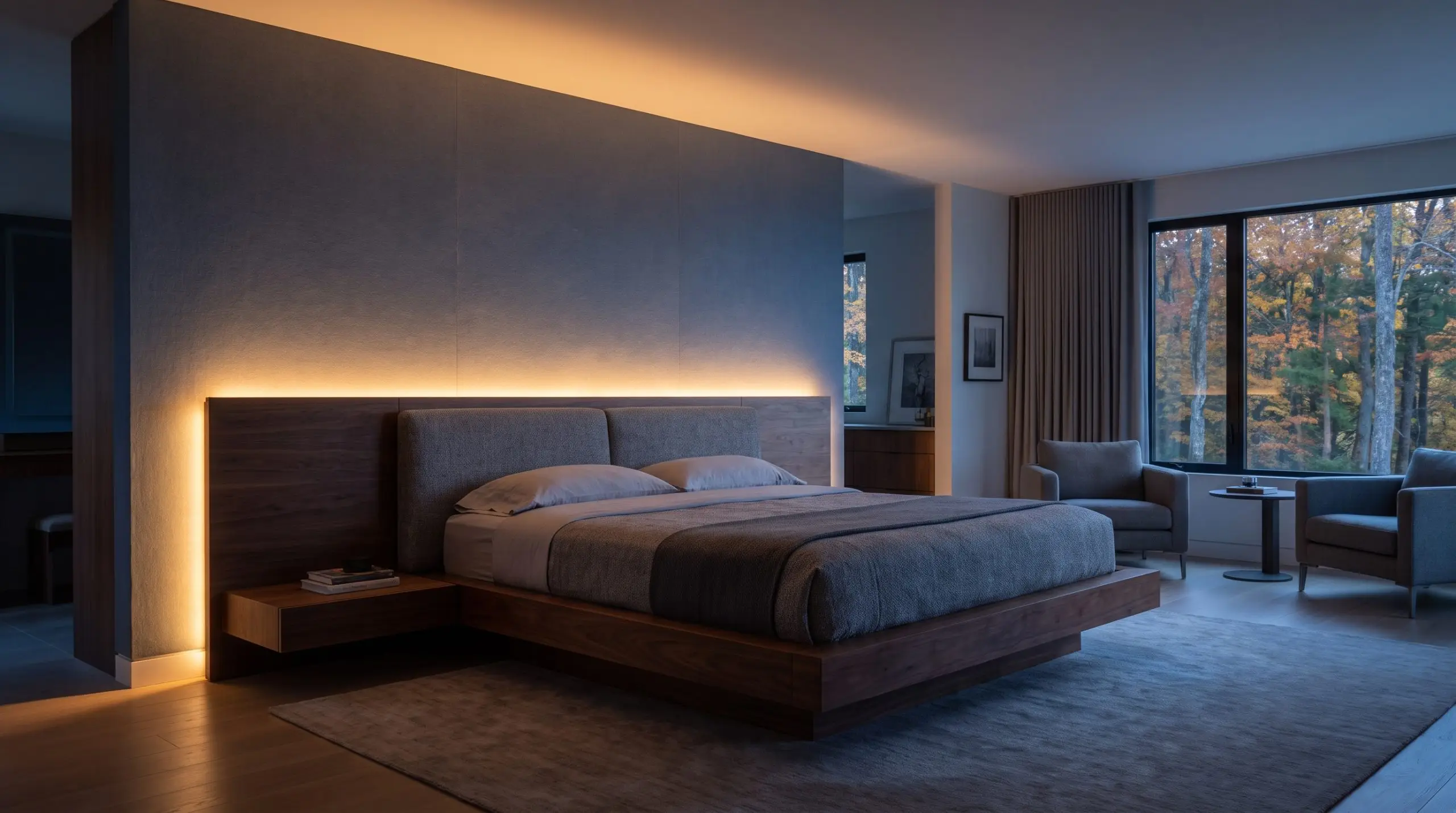
For a truly modern approach to ambient lighting, installing a hidden LED strip behind a floating or platform headboard creates a stunning halo effect. This washes the wall in a soft, indirect glow that serves as the perfect nightlight.
- Vibe: Architectural, boutique hotel
- Key Materials: Dimmable warm LED tape, aluminum channel diffusers
- Lighting Spec: 2400K Color Temperature
- Styling Pro-Tip: Ensure the LED strip is entirely hidden from view; you should only see the light bouncing off the wall, never the diodes themselves.
Mount the LED tape inside a diffused aluminum tracking channel facing the wall, rather than pointing outward, to ensure the light spread is perfectly smooth and seamless.
Designer Secret
Natural Elements and Textural Decor Additions
Bringing the outdoors in during fall requires a shift from fresh green blooms to dried, structural botanicals. These architectural and styling tweaks add immense depth to the room without requiring a full renovation.
Forage Tall, Bare Branches for an Oversized Ceramic Vase
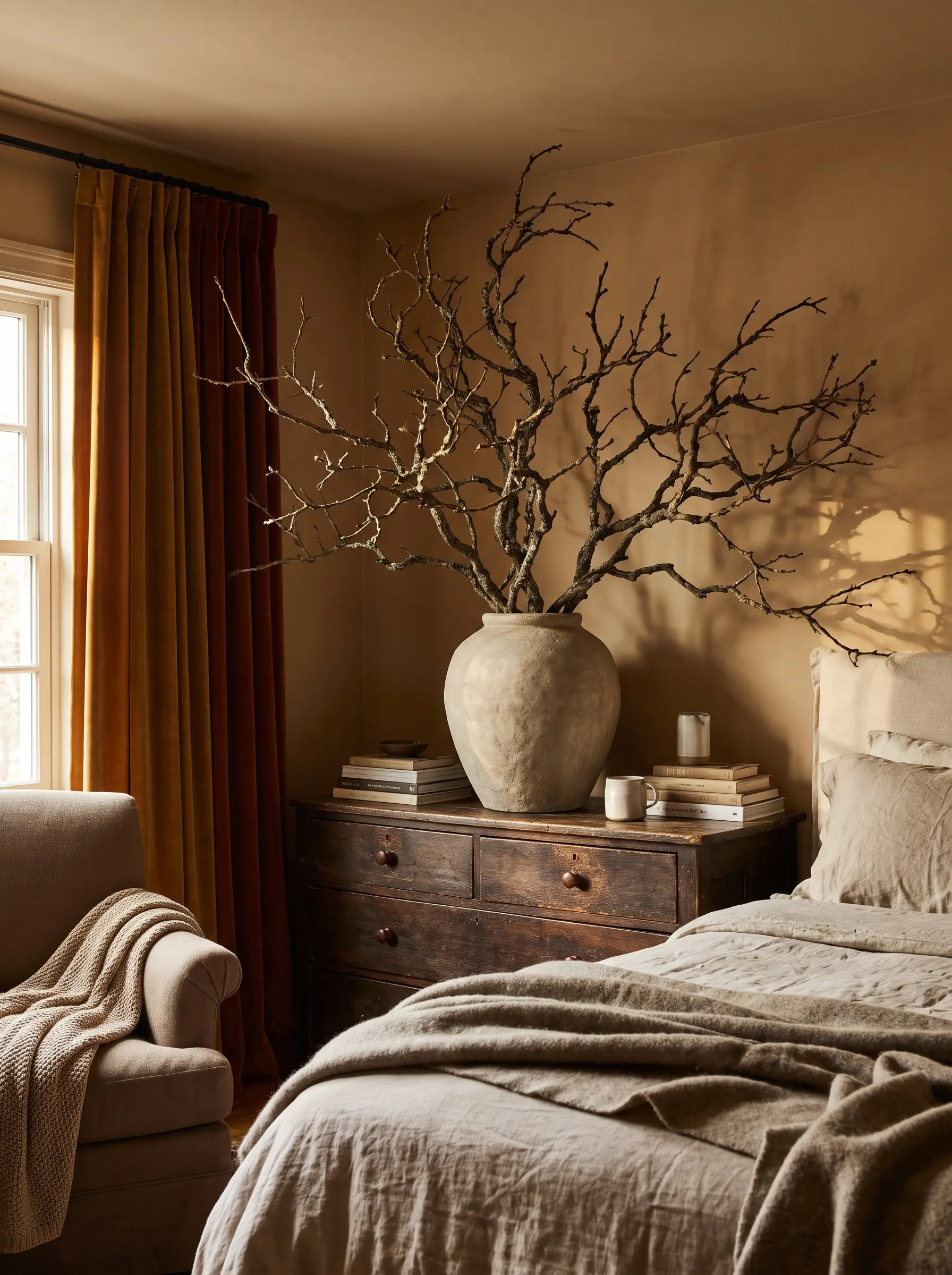
Fresh floral arrangements feel out of place against heavy autumn textiles. Foraging tall, sculptural bare branches (like oak or birch) provides striking vertical height and an organic, wabi-sabi aesthetic that embraces the changing season.
- Vibe: Wabi-sabi, Organic Modern
- Key Materials: Foraged hardwood branches, oversized matte pottery
- Styling Pro-Tip: Use a heavy stone or ceramic vase to anchor the branches, ensuring the visual weight at the bottom balances the height.
Swap Lightweight Curtains for Heavyweight Thermal Drapes
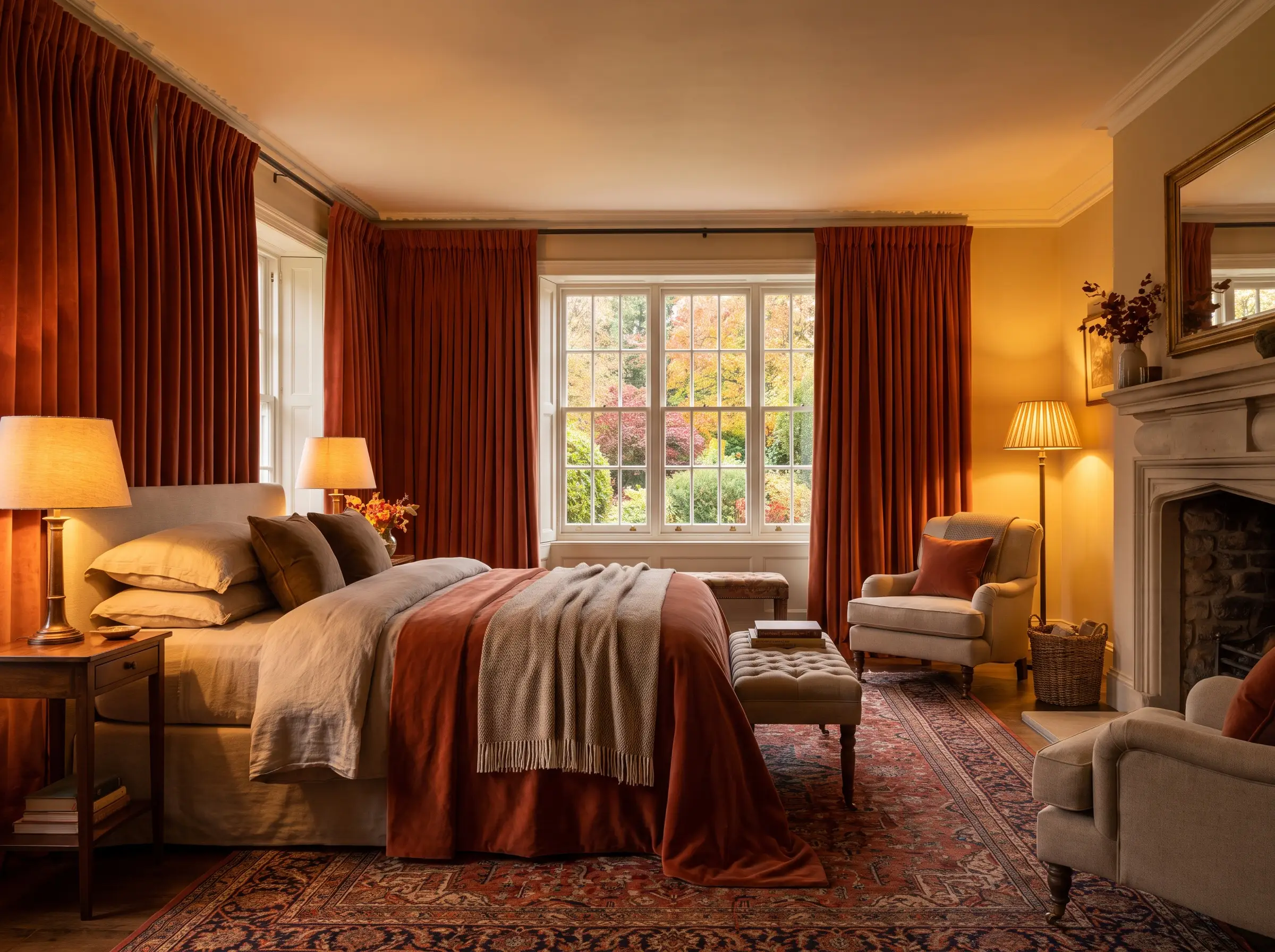
Sheer summer curtains do nothing to insulate a room visually or physically. Installing heavyweight thermal or velvet drapes instantly grounds the space, framing the windows with rich, light-blocking texture that keeps out the autumn chill.
- Vibe: Enveloping, grand
- Key Materials: Lined velvet, heavy wool blends
- Styling Pro-Tip: Hang the curtain rod as close to the ceiling as possible and let the heavy fabric pool slightly on the floor for a bespoke, luxurious look.
Layer a Vintage-Washed Runner Over Your Existing Rug
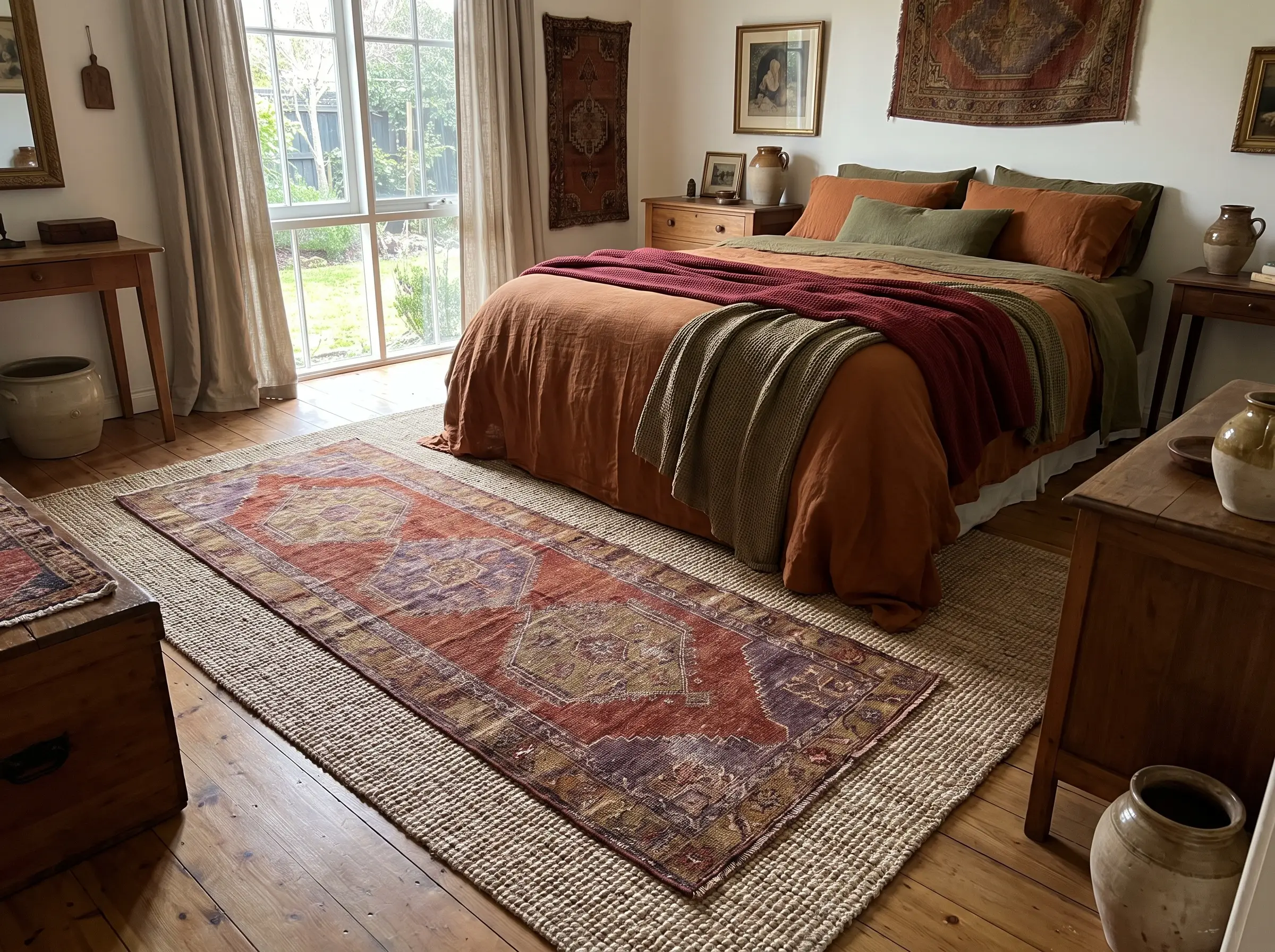
If your primary bedroom rug is a flat-weave or a neutral jute, it may feel too bare for cold mornings. Layering a vintage-washed, heavily patterned runner at the foot of the bed or along the sides adds immediate coziness and insulates the floor.
- Vibe: Curated, collected-over-time
- Key Materials: Hand-knotted wool, distressed Turkish runners
- Styling Pro-Tip: Ensure the layered runner features muddy, saturated hues (like rust or plum) to tie the floor back to your autumn bedding.
Style the Nightstand with Leather-Bound Books and Brass Trays
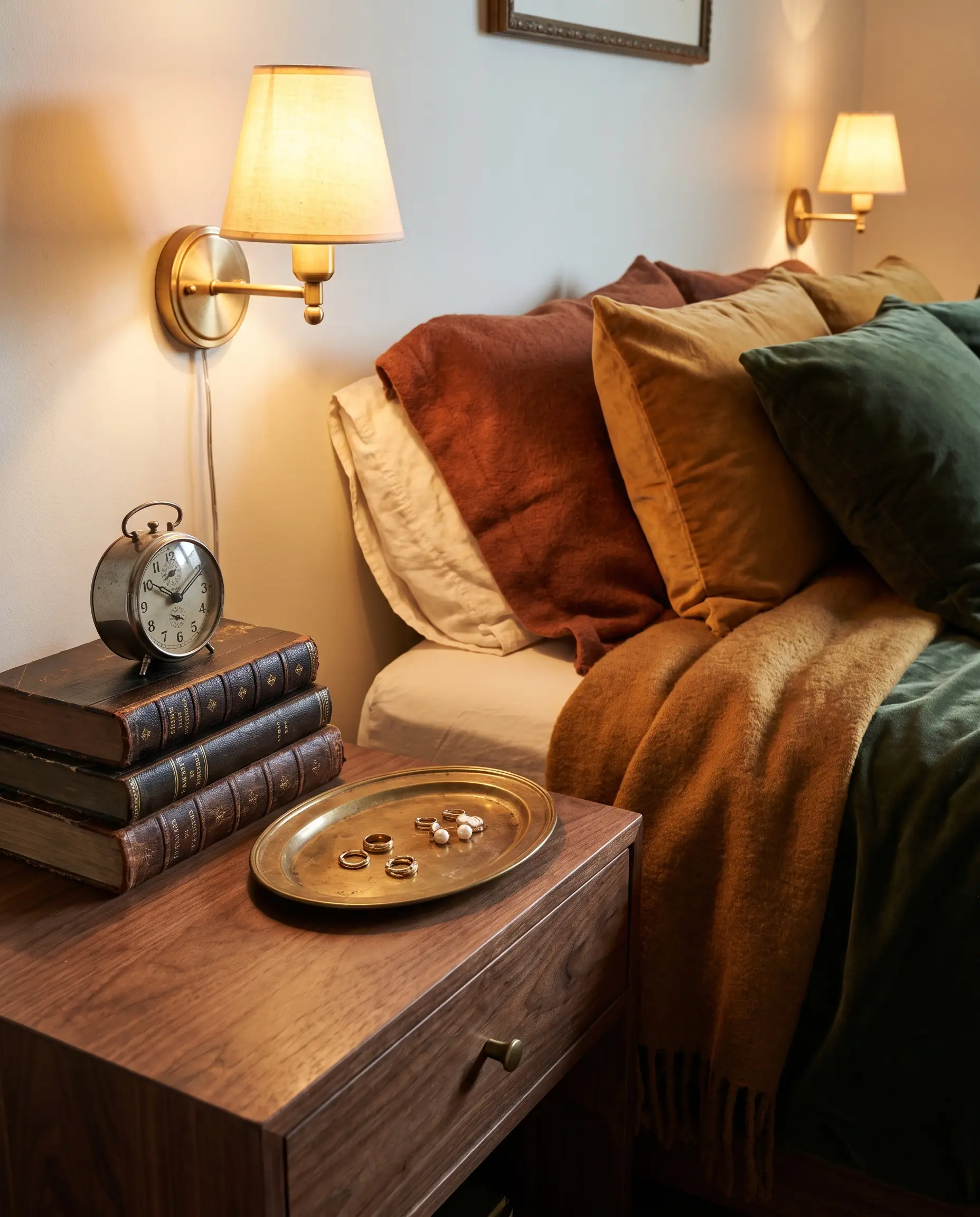
The nightstand is a micro-styling opportunity that shouldn’t be overlooked. Swapping out bright, glossy summer reads for vintage leather-bound books and catching jewelry in a heavy, unlacquered brass tray adds immediate grounding texture.
- Vibe: Sophisticated, academic
- Key Materials: Aged brass, worn leather
- Styling Pro-Tip: Stack two to three books horizontally to create a textured pedestal for a small bedside clock or water carafe.
Introduce Dried Botanicals Like Eucalyptus or Pampas Grass
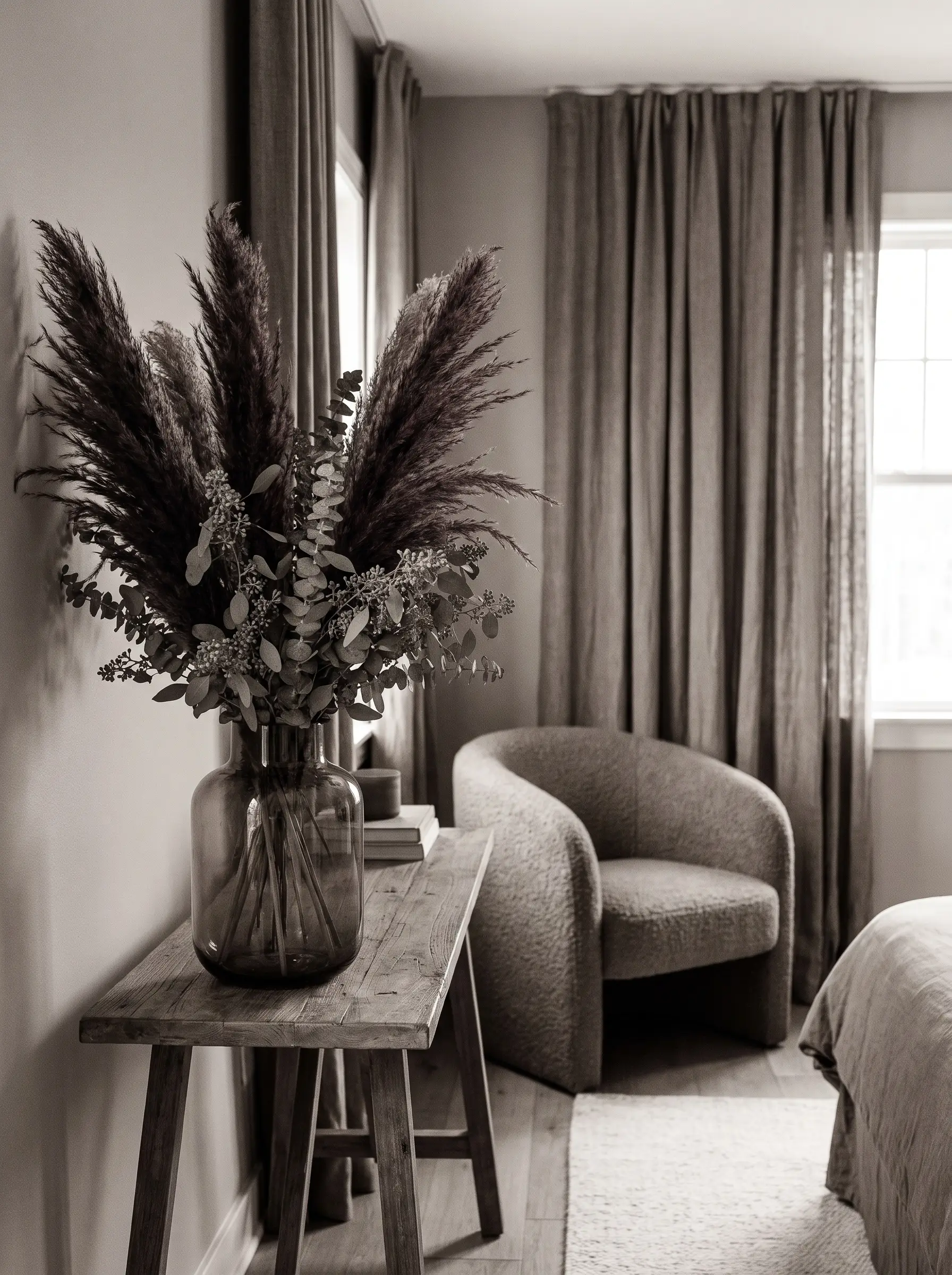
For a softer alternative to bare branches, dried botanicals offer muted colors and incredible texture. Dried seeded eucalyptus provides a beautiful dusty green tone, while dark plum or natural pampas grass adds feathery volume.
- Vibe: Soft, textured, earthy
- Key Materials: Dried structural botanicals, smoked glass vases
- Styling Pro-Tip: Keep dried arrangements monochromatic; do not mix multiple types of dried flowers, which can quickly look like cheap potpourri.
Incorporate Natural Wood Accents to Visually Warm the Room
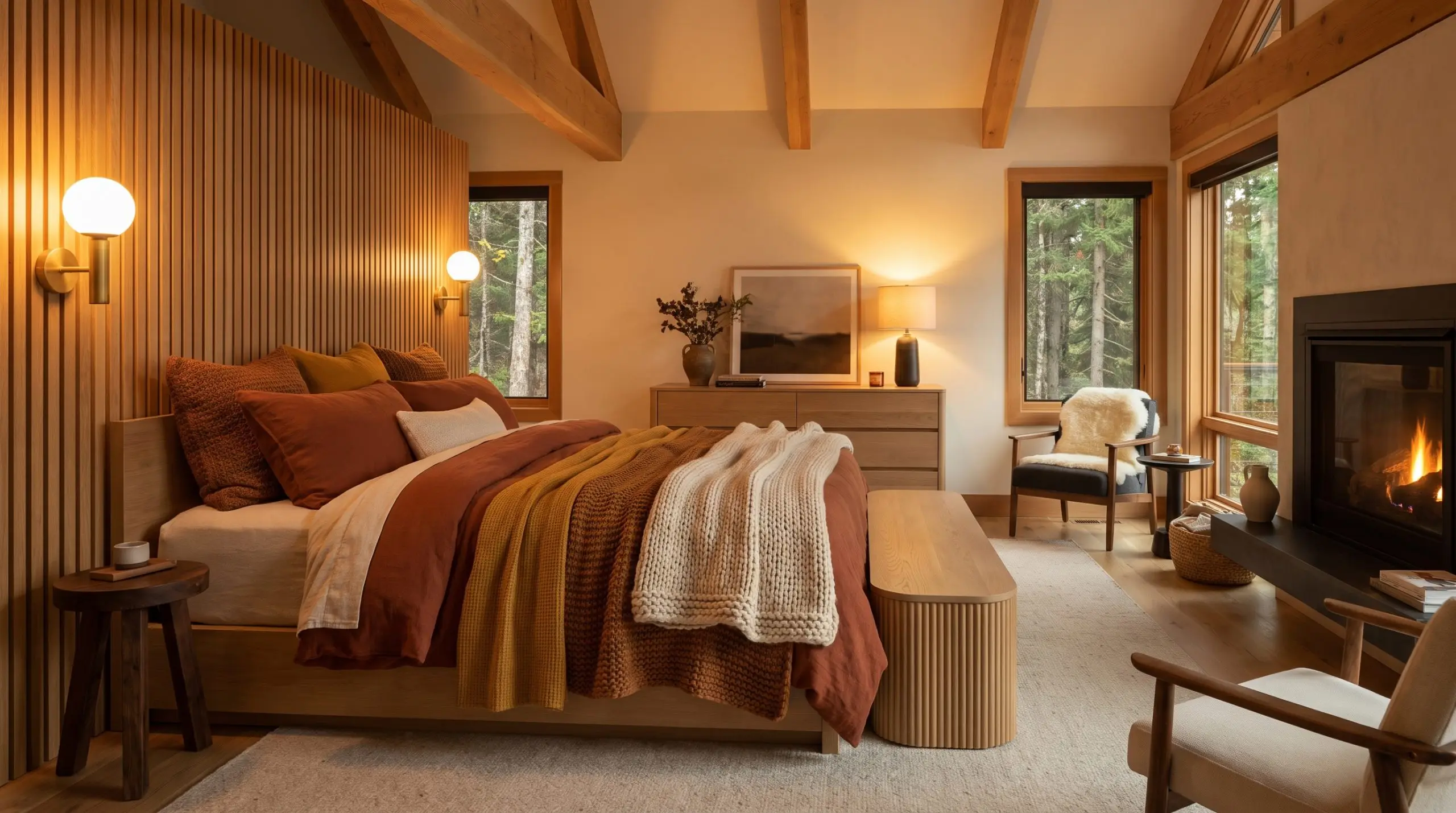
Wood acts as a natural insulator, both physically and visually. If your bedroom relies heavily on painted furniture or metal, introducing a fluted white oak bench or a raw walnut bedside stool brings essential, organic warmth back into the space.
- Vibe: Grounded, architectural
- Key Materials: Fluted white oak, raw walnut
- Styling Pro-Tip: Do not worry about perfectly matching wood tones; mixing a dark walnut side table with a lighter oak bed frame feels intentionally curated.
The Sensory Experience: Scent and Temperature Control
Interior design isn’t just visual; it is deeply tied to scent and physical warmth. Finalizing your room’s transition requires appealing directly to physical comfort and the olfactory experience of autumn.
Layer Woodsy, Amber-Based Scents Through Reed Diffusers
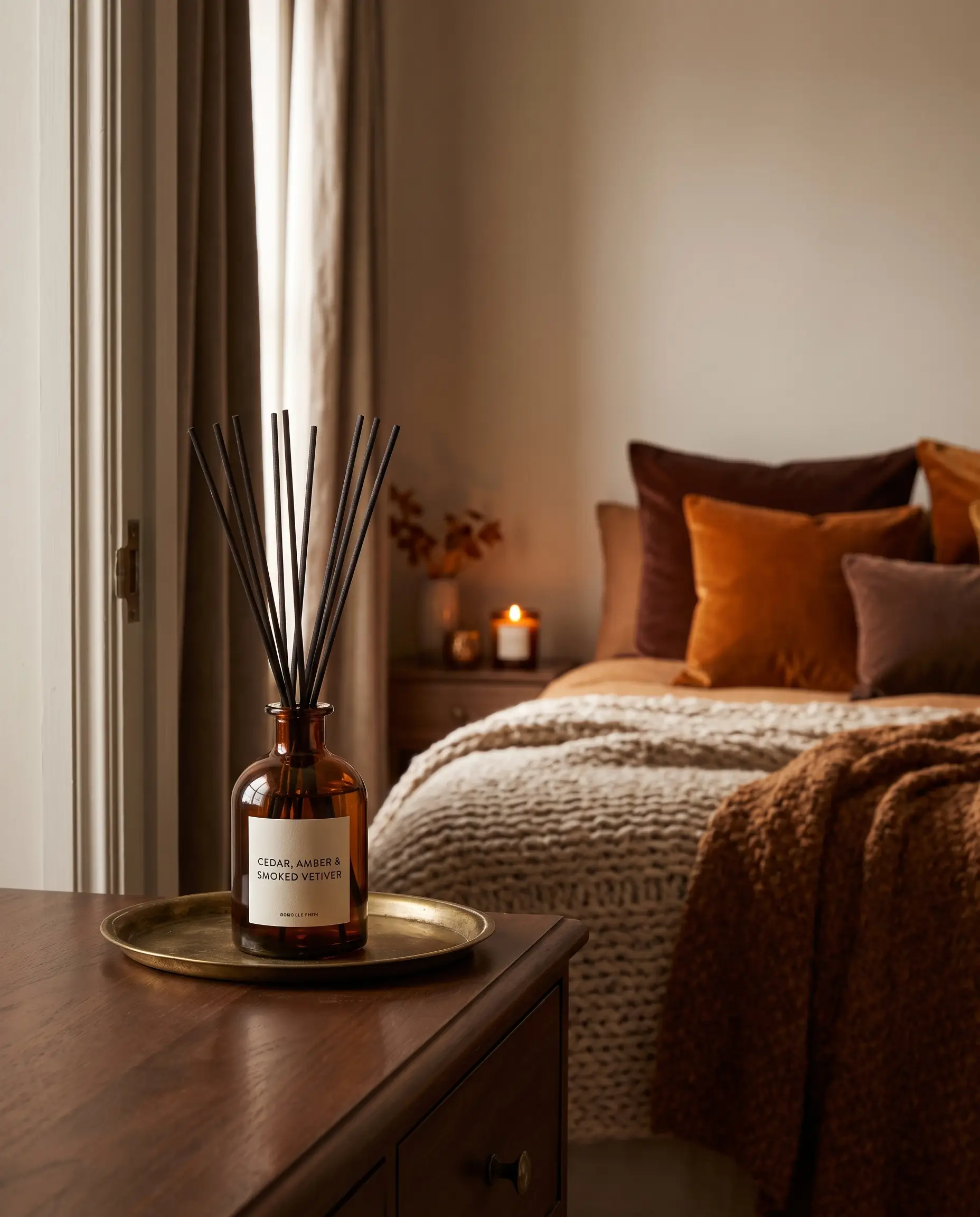
The smell of a room dictates how the visuals are perceived. Ditch the synthetic, overly sweet seasonal candles in favor of sophisticated reed diffusers featuring notes of cedar, amber, cardamom, and smoked vetiver.
- Vibe: Moody, high-end apothecary
- Key Materials: Amber glass diffusers, essential oil blends
- Styling Pro-Tip: Place the diffuser on a dresser near the bedroom door so the scent greets you immediately upon entering.
Place a Woven Basket Stocked with Extra Guest Blankets
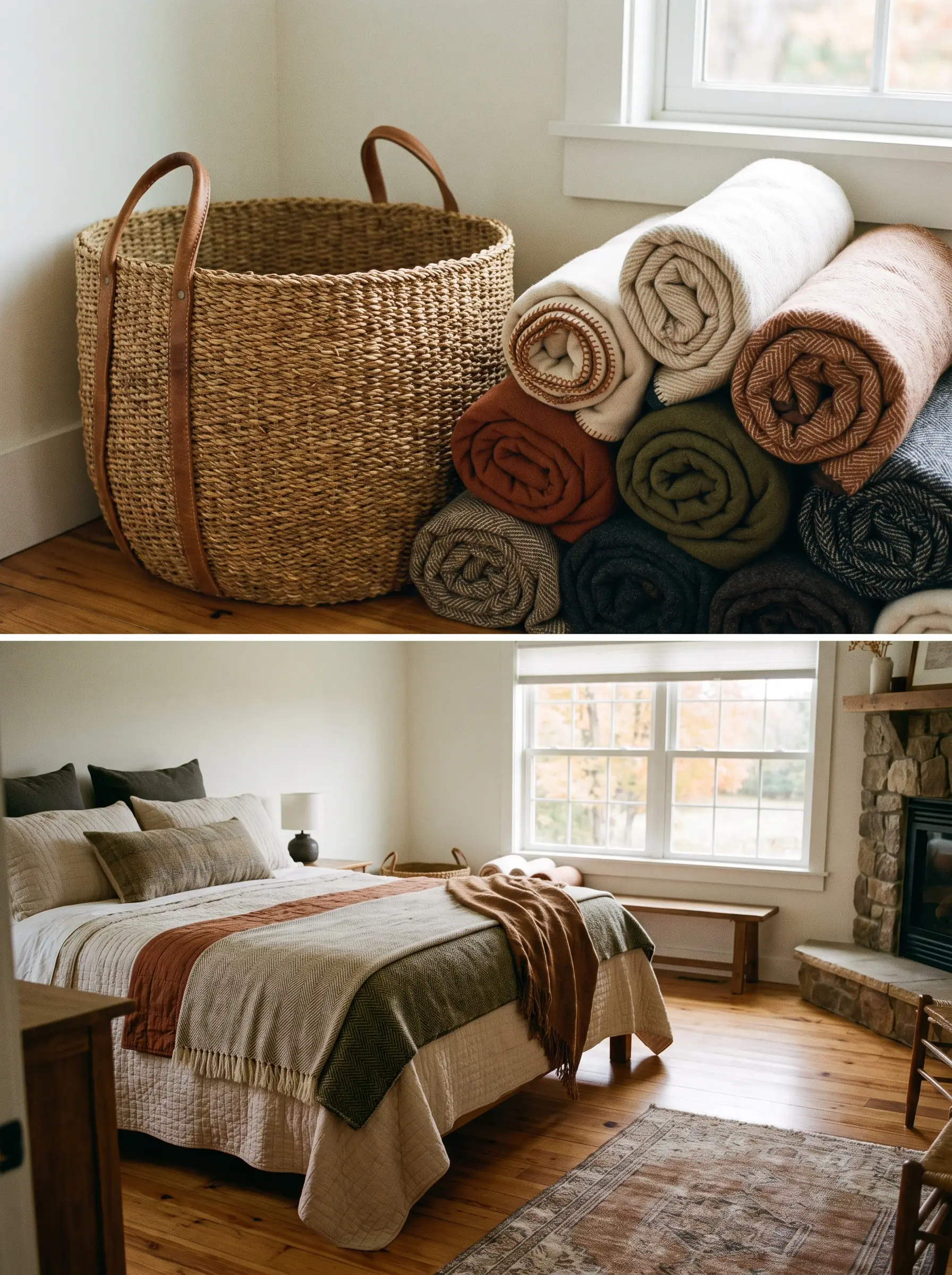
Visible storage of heavy textiles implies hospitality and warmth. Rolling extra wool or fleece blankets and storing them in a heavy, textured seagrass or leather basket adds a functional, highly tactile layer to an empty corner.
- Vibe: Hospitable, layered
- Key Materials: Thick seagrass, saddle leather, rolled wool
- Styling Pro-Tip: Roll the blankets tightly rather than folding them to create a neat, tailored display that shows off the fabric’s edges.
Anchor the Room with a Bouclé or Tufted Bedroom Bench
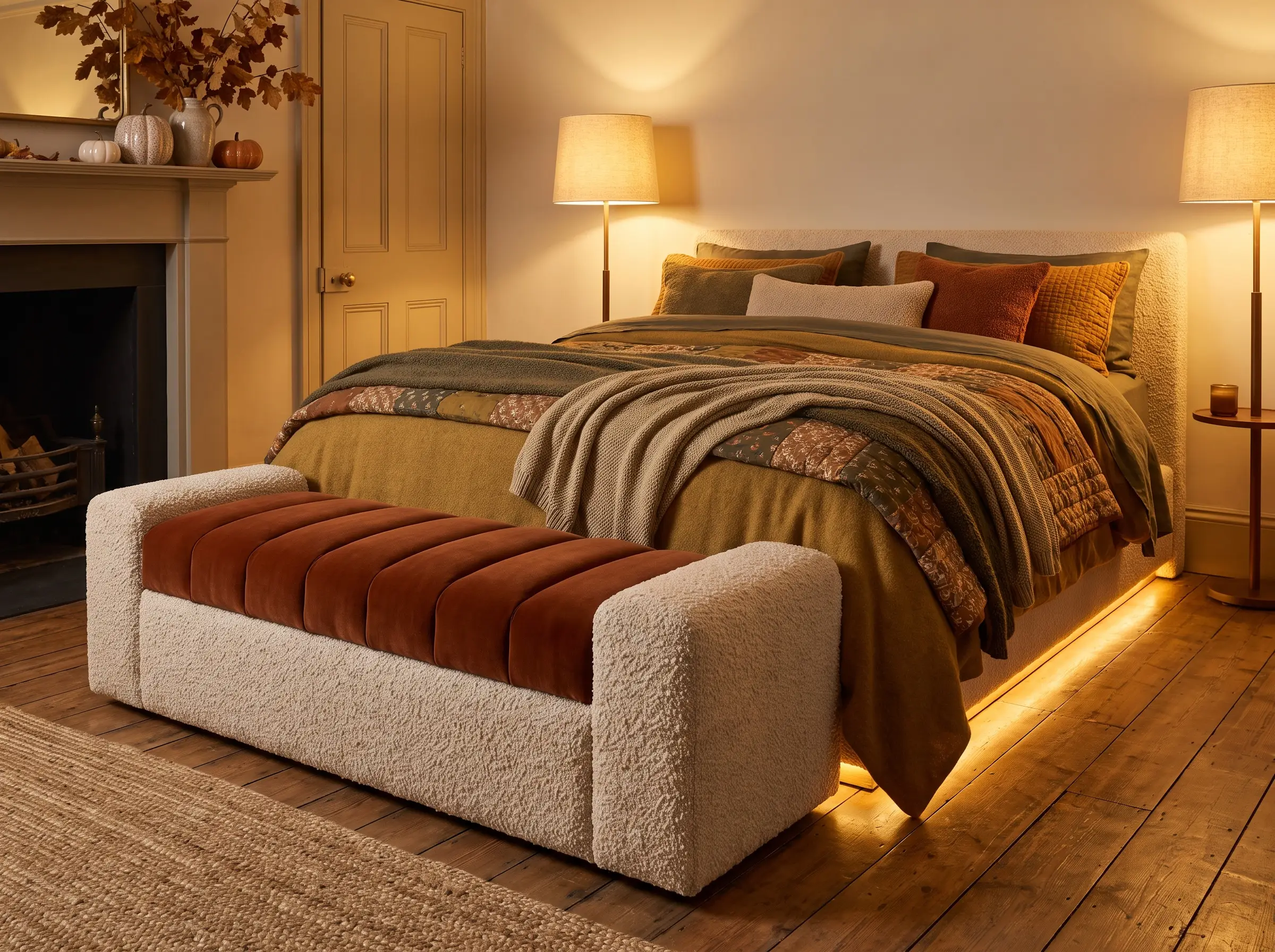
The transition from the bed to the floor should feel seamless. Placing a heavy bouclé or deeply tufted velvet bench at the end of the bed provides a functional place to put on heavy winter socks while adding massive visual weight to the room’s footprint.
- Vibe: Tailored, tactile
- Key Materials: Heavy looped bouclé, channel-tufted velvet
- Styling Pro-Tip: Choose a bench that is exactly three-quarters the width of your bed to maintain perfect spatial proportions.
Upgrade to a High-Tog Winter Duvet Insert for Maximum Insulation
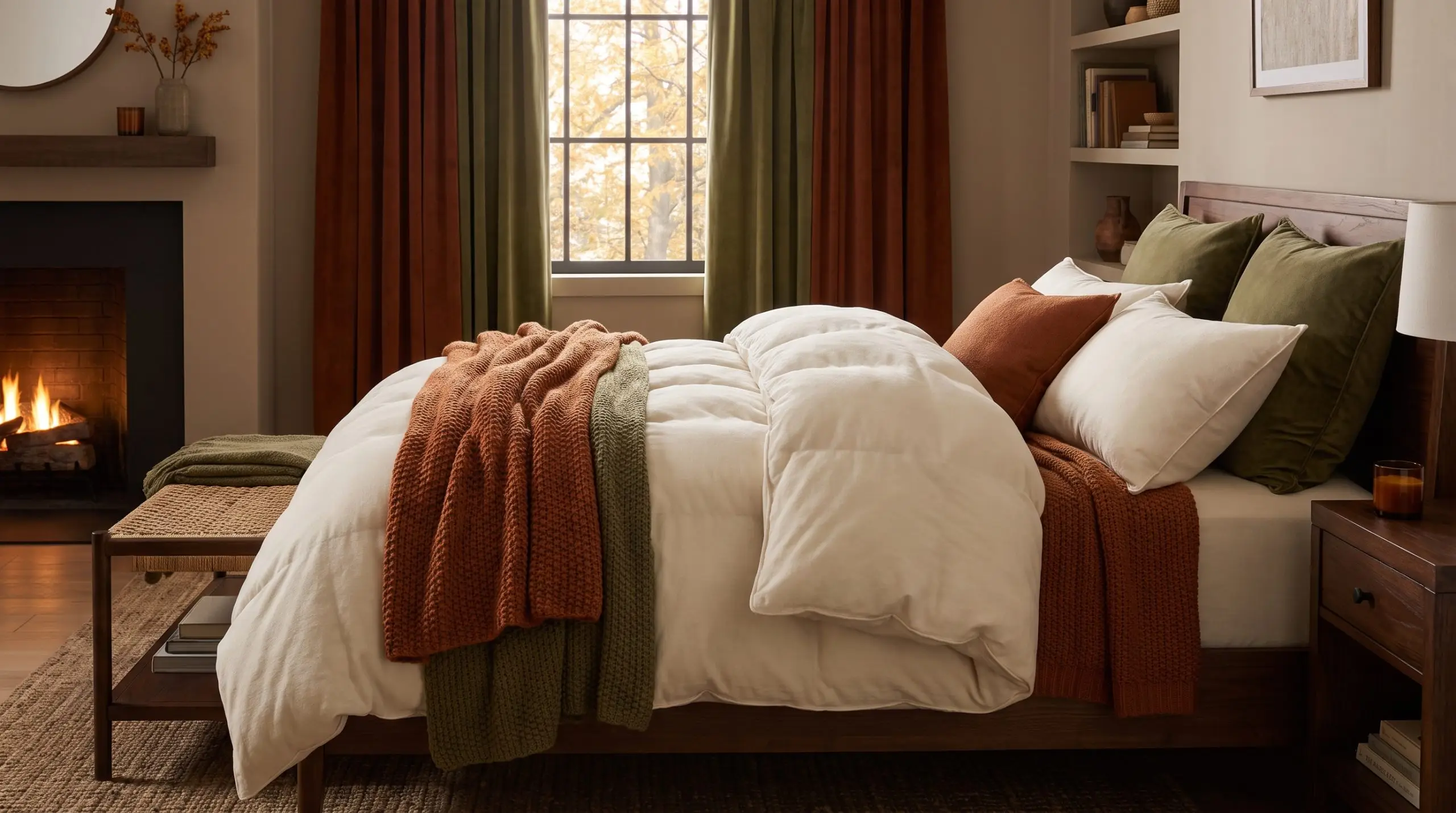
Visuals only go so far if you are shivering at night. Swapping your summer-weight insert for a high-tog (thermal resistance) winter duvet ensures you experience the heavy, enveloping warmth that defines a true autumn retreat.
- Vibe: Functional luxury, deeply insulated
- Key Materials: 10.5 to 13.5 Tog goose down or premium down-alternative
- Styling Pro-Tip: Shake the heavy duvet out by the corners every morning to redistribute the down and maintain maximum loft.
Finalizing Your Autumn Transition
Transitioning your bedroom for fall is a practice in slowing down, increasing visual weight, and investing in textiles that make the space a true retreat from the cooling weather. By prioritizing tactile fabrics like European flax linen and mohair, grounding your palette with muddy hues, and strictly controlling your ambient lighting, you create a deeply restful environment that completely rejects cheap seasonal clichés. Which heavy textile swap are you most excited to introduce this season? Explore our comprehensive bedding guides to find the perfect foundational layers for your space.

The Hackrea Style Desk treats interior decoration as an exact visual science. Rather than focusing on demolition or floor plans, this desk masters the art of color theory, undertone matching, material pairings, and spatial proportion. From balancing the visual weight of mixed metals to finding the perfect bridging tone between disparate wood species, this desk provides the rigorous aesthetic rules needed to achieve high-end, editorial-quality harmony in any space.