The 2027 ’80s Deco Revival: How to Master Postmodern Glamour Without the Kitsch
Say goodbye to the endless sea of muted linens, limewash, and sterile minimalism. The era of beige fatigue has officially peaked, making way for the highly anticipated 80s postmodern art deco revival to dominate high-end residential spaces in 2027. This aesthetic movement is a brilliant collision between the rigorous, mathematical glamour of 1920s Art Deco and the rebellious, neon-tinged material obsession of 1980s Postmodernism.
While the historical roots trace back to the iconic provocations of Ettore Sottsass and the Memphis Milano group, today’s iteration demands a far more sophisticated execution. We are bypassing the costume-like pastiche of the past in favor of bespoke architectural tension, heavy-gauge metals, and monolithic stone. To successfully navigate this daring aesthetic in your home, there is one non-negotiable rule: the key to this trend is Restrained Maximalism.
The Philosophy of 80s Deco: Why This Macro-Trend is Dominating 2027
The generation that came of age during the bold, optimistic design boom of the 80s and 90s is now commissioning high-end renovations, and they are demanding spaces with undeniable personality. However, the 2027 iteration strips away the cheap plastics and laminate veneers of the past, replacing them with bespoke heavy-gauge metals, rich stones, and custom millwork.
THEN vs. NOW: The Material Evolution
- THEN: Flimsy plastic laminates and neon acrylics. | NOW: Automotive-grade, high-gloss custom lacquer and smoked lucite.
- THEN: Faux finishes and stick-on geometric decals. | NOW: Monolithic Calacatta Viola marble and authentic fluted plaster.
- THEN: Cluttered, wall-to-wall pastel chaos. | NOW: Striking architectural silhouettes balanced by rigorous negative space.
You must anchor these vibrant, sculptural pieces with severe negative space—think stark gallery walls and strictly edited sightlines—to prevent the room from devolving into a retro funhouse.
The 2027 Restraint
Architectural Interventions: The Structural ’80s Deco Ideas
True Postmodern revival starts with the architecture, heavily relying on structural interventions rather than just applied decoration. To achieve this bespoke aesthetic, you must treat your walls, doorways, and sightlines as the primary canvas for geometric tension.
Reimagining the Glass Block Partition as a Primary Light Funnel
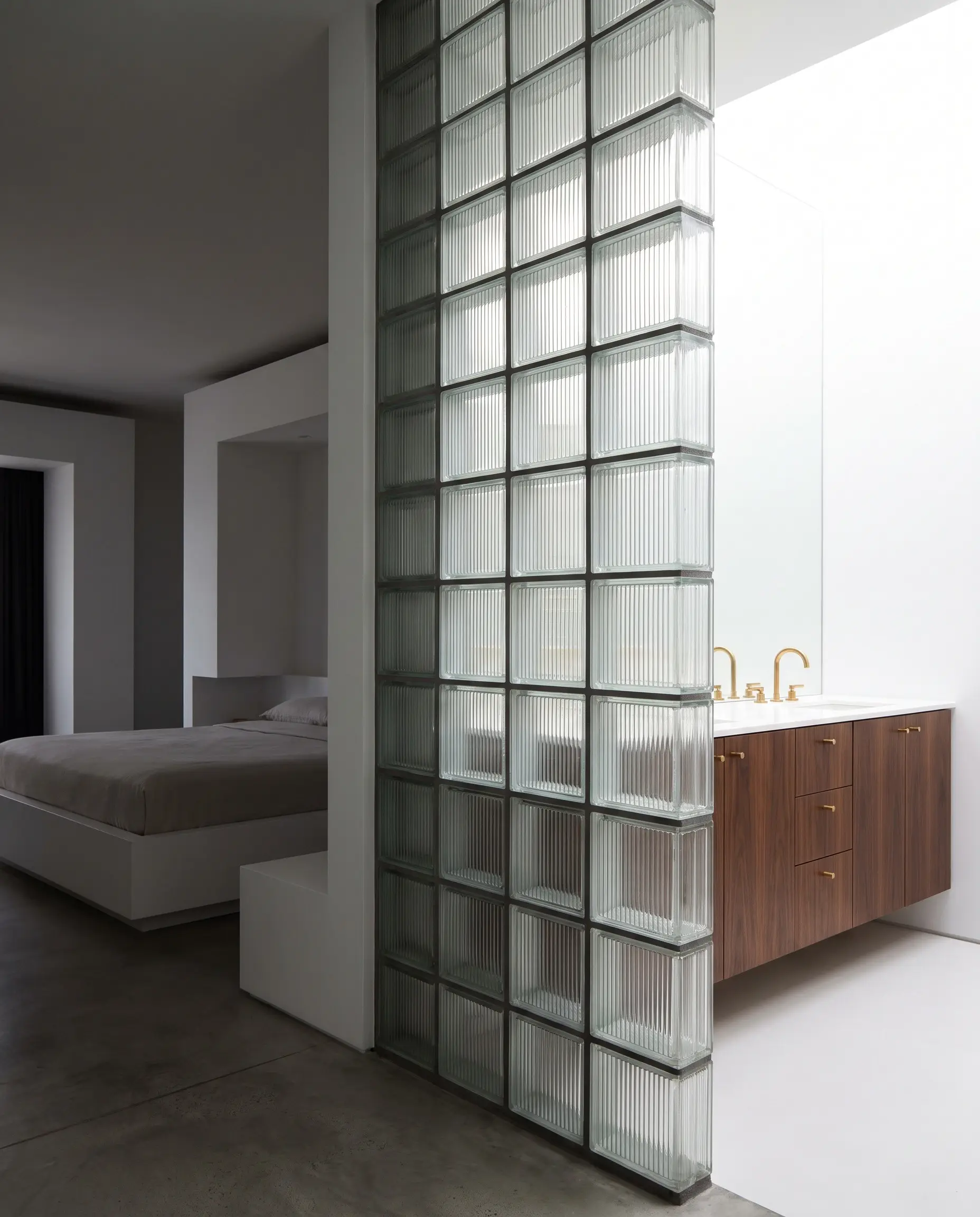
The infamous glass block has returned, but it demands strict architectural discipline to shed its dated commercial reputation. By utilizing strictly grid-lined, frosted, or ribbed blocks, you create a brutalist yet luminous light funnel perfect for separating en-suite bathrooms from primary bedrooms or crafting striking entryway vestibules.
- Vibe: Industrial glamour meets luminous privacy.
- Key Materials: Heavy-weight ribbed architectural glass block, charcoal-tinted mortar.
- Material Collision: Frosted ribbed glass block paired with warm, unlacquered brass hardware.
- Styling Pro-Tip: Stack the blocks in a rigorous straight-lay grid rather than an offset running bond to emphasize the mathematical Deco influence.
The Return of the Stepped Ziggurat Archway
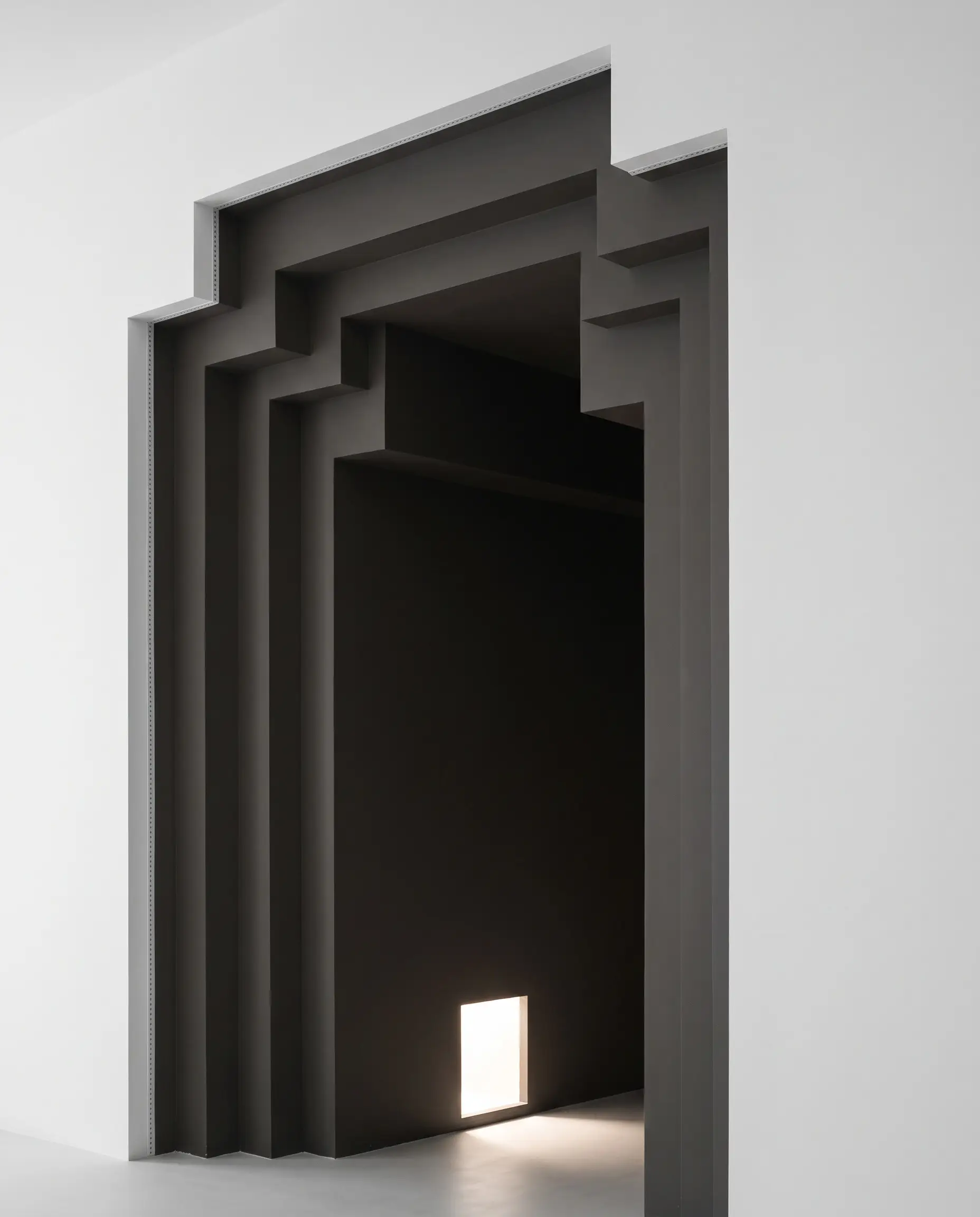
Smooth, sweeping Mediterranean arches have saturated the market, paving the way for the aggressive, geometric tension of the stepped ziggurat archway. This rigid, mathematical silhouette creates an instant architectural focal point, turning a simple transition into a dramatic, custom millwork header.
- Vibe: Theatrical transition spaces with a sharp Deco edge.
- Key Materials: Custom drywall framing, crisp corner bead profiling.
- Paint Recommendation: Benjamin Moore Black Beauty (2128-10) for the interior step.
- Color Match: Stark, matte white on the outer walls to make the dark, recessed interior step pop visually.
High-Gloss Lacquered Ceilings and Color-Blocked Trims
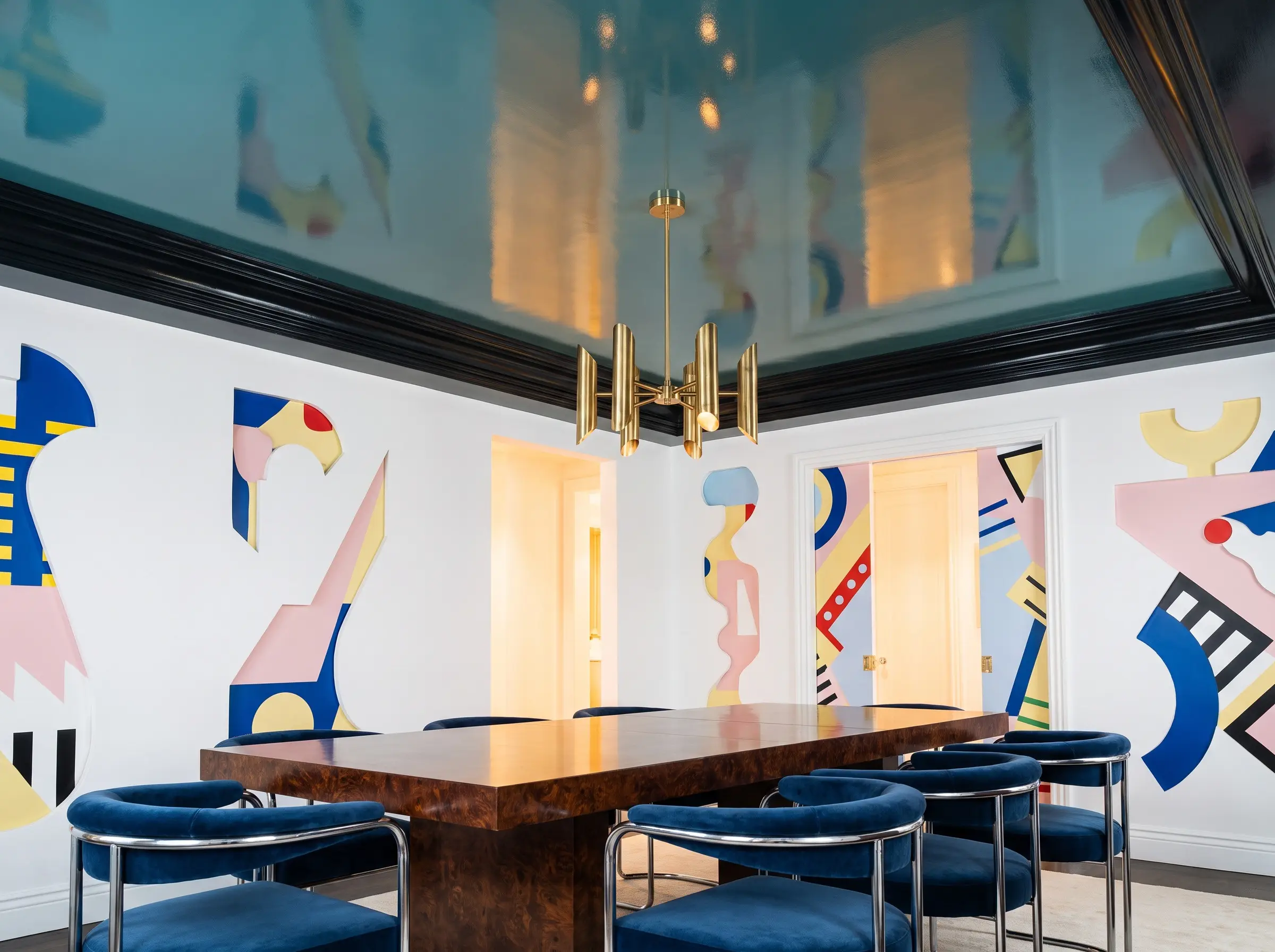
Matte, earthy ceilings absorb light and flatten a room; the 80s Deco revival demands a liquid-like atmosphere that bounces light dynamically across the space. Applying an automotive-grade, high-gloss lacquer to ceilings, paired with color-blocked crown molding, scales up a signature Memphis Milano move for luxury residential interiors.
True mirror-like lacquer cannot be achieved with standard off-the-shelf high-gloss latex. You must commission a master painter experienced in marine-grade or automotive enamels, applied via a dust-free spray process over a Level 5 skim coat.
Sourcing Secret
- Vibe: Opulent, reflective, and wildly saturated.
- Key Materials: Fine Paints of Europe Hollandlac Brilliant enamel.
- Color Recommendation: Farrow & Ball Vardo (No. 288) for the ceiling, contrasted with a stark black trim.
- Styling Pro-Tip: Ensure the ceiling drywall is flawless before application; high gloss will unapologetically highlight every single structural imperfection.
Fluted Plaster and Oversized, Non-Load-Bearing Columns
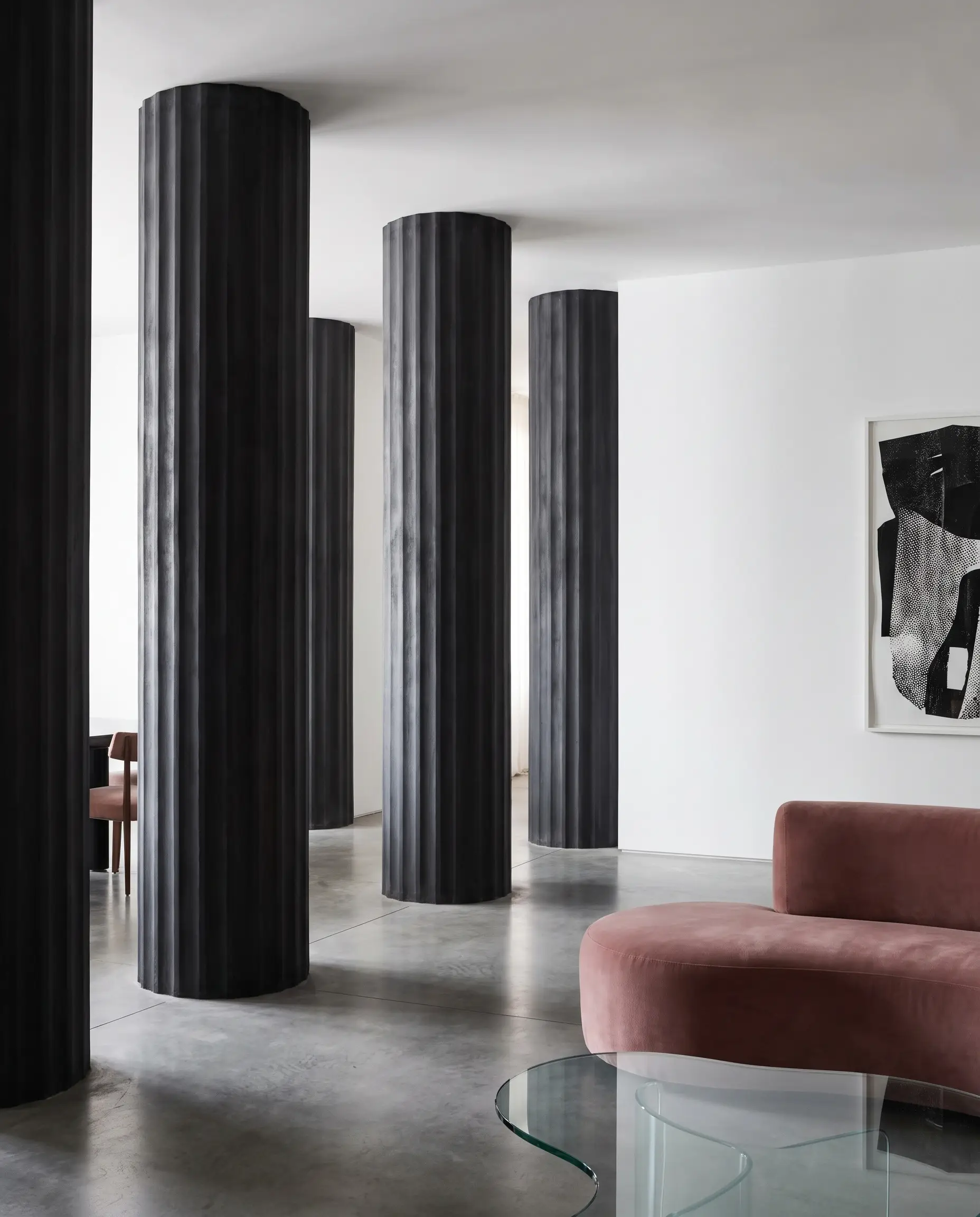
The Postmodern obsession with ironically applied classical architecture is back, utilizing oversized, fluted plaster columns as room dividers, pedestal bases, or fireplace flanks. To modernize this heavy silhouette, these pillars must shed their faux-stone past and embrace a stark, monochromatic identity.
- Vibe: Monumental, museum-like architectural sculpture.
- Key Materials: Cast plaster, bespoke tambour wood panels.
- Paint Recommendation: Sherwin-Williams Tricorn Black (SW 6258) for a monolithic shadow effect.
- Styling Pro-Tip: Do not cap these columns with ornate Corinthian tops; keep the cylinders sheer and flat-topped for a brutalist, contemporary edge.
Material Pairings: The Postmodern High-Contrast Finish
The absolute magic of the 80s Deco revival lies in the deliberate friction between contrasting materials. By forcing traditional, heavy luxury stones to interact with cold, retro-industrial metals and saturated textiles, we generate the high-contrast finish that defines 2027’s bespoke aesthetic.
Calacatta Viola Marble Colliding with Polished Chrome
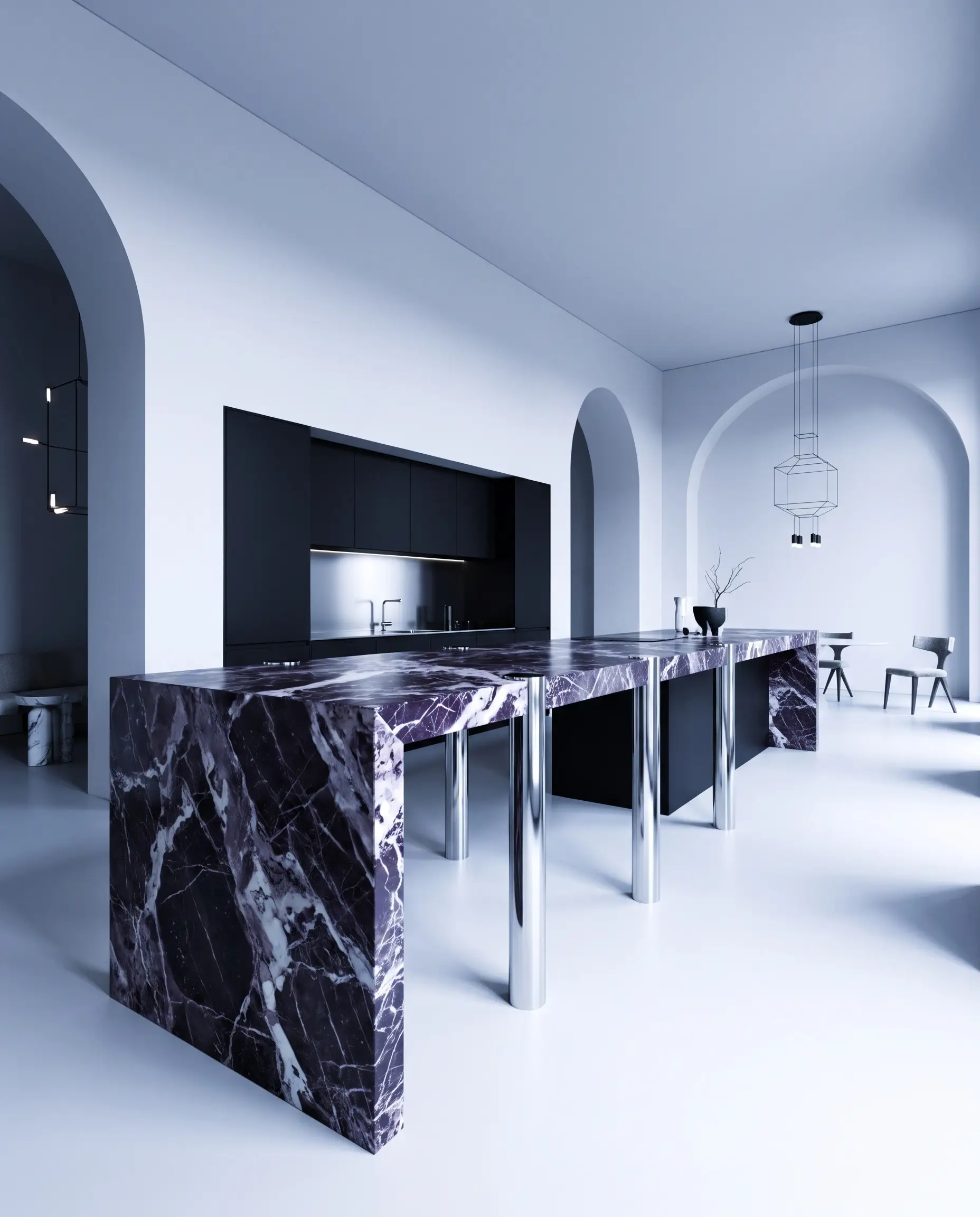
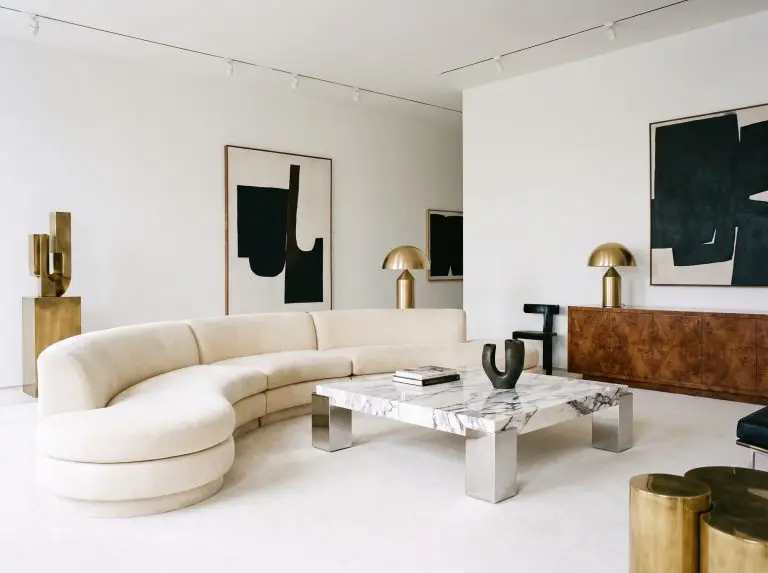
Dramatic, heavily veined stones demand a counterbalance to prevent them from looking overly traditional or visually heavy. By floating a massive slab of deep purple Calacatta Viola marble on sleek, sterile polished chrome legs, you create an aggressive, high-end tension between organic earth and industrial machine.
- Vibe: Aggressive luxury with a sterile, futuristic edge.
- Key Materials: 3cm Calacatta Viola slab, tubular polished chrome.
- Material Collision: Deep purple Calacatta Viola paired with sterile, polished chrome fixtures.
- Styling Pro-Tip: Apply this specific pairing to a bespoke waterfall kitchen island or a monolithic living room coffee table to anchor the room.
Burl Wood Veneers Anchored by Smoked Lucite
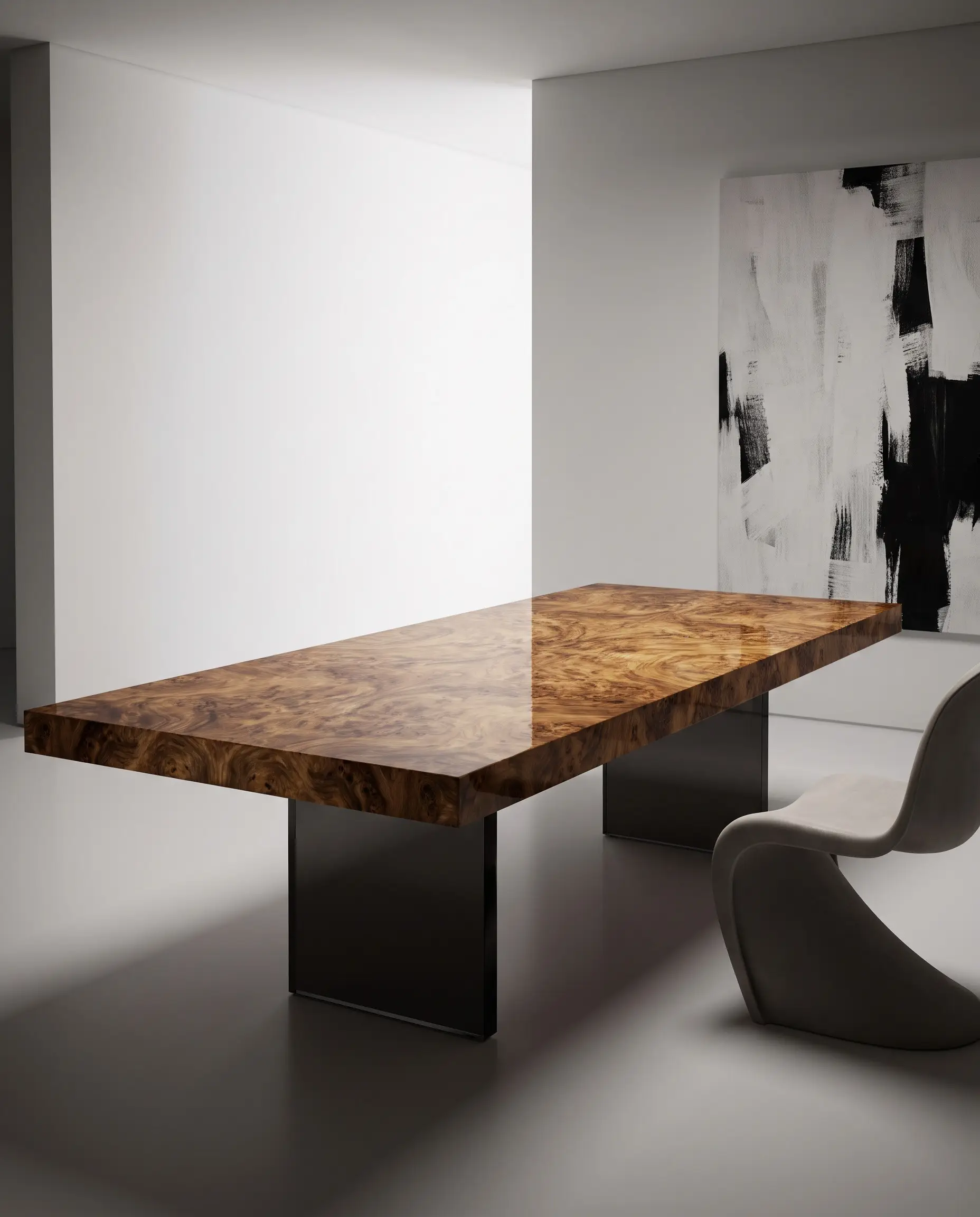
Burl wood is shedding its dated, 1980s executive office reputation by shifting the focus to its swirling, chaotic grain profile. To thoroughly modernize this heavy wood for credenzas and dining tables, it must be visually lifted by transparent, smoked black lucite hardware or legs, creating a floating, futuristic illusion.
- Vibe: Moody, organic warmth suspended in mid-air.
- Key Materials: Walnut or Mappa burl veneer, 1-inch thick smoked acrylic.
- Material Collision: Chaotic burl wood grain paired with transparent smoked lucite.
- Styling Pro-Tip: Use a high-gloss polished finish on the burl wood to reflect the light and contrast sharply against the shadowy depth of the lucite.
Monochromatic Checkerboard and Geometric Tile
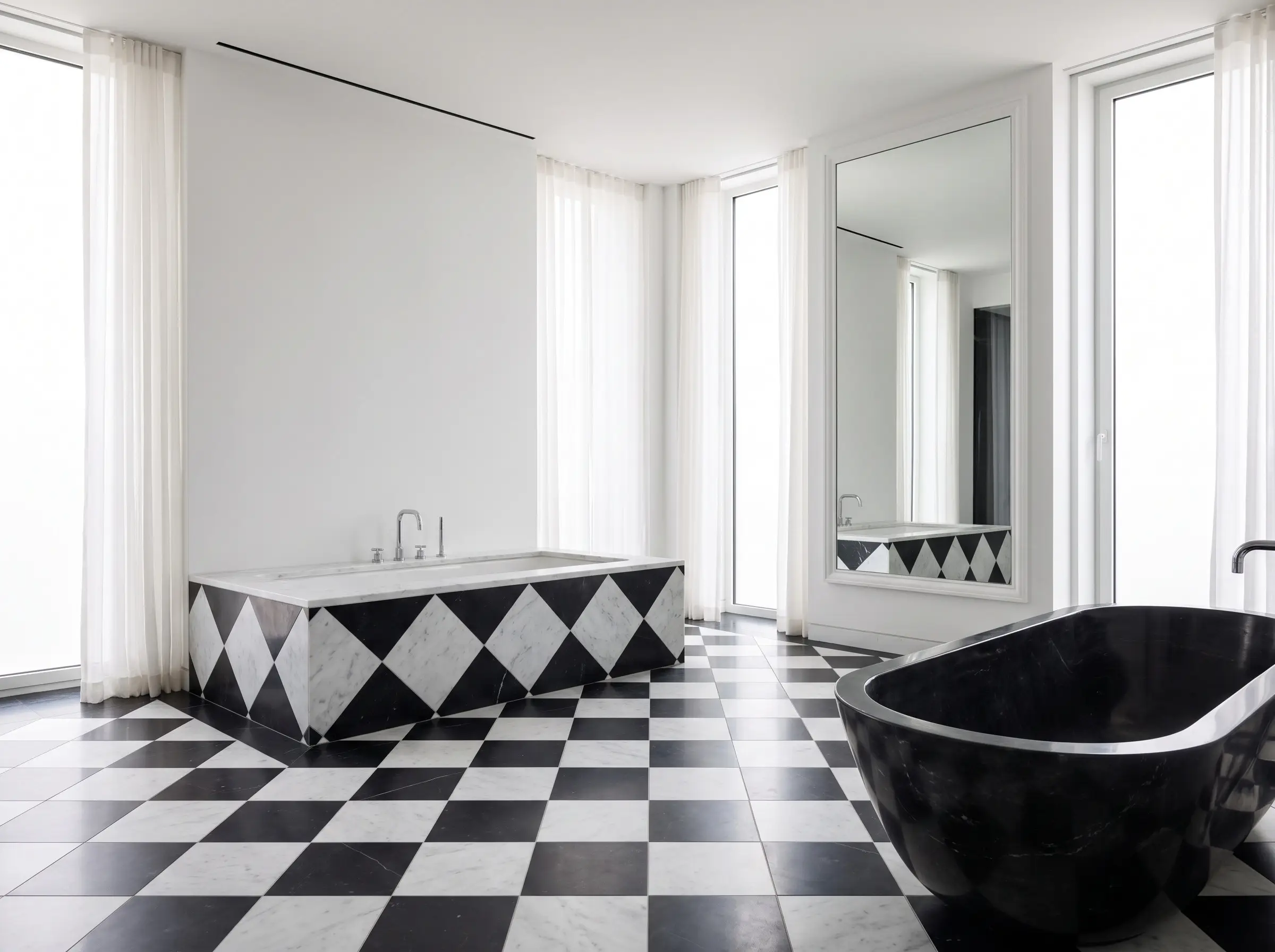
We are officially leaving the rustic, farmhouse checkerboard floors behind in favor of a much sharper, Deco-inspired application. High-contrast, razor-sharp marble checkerboard applied on a strict diagonal introduces a dizzying, luxurious geometry to entryways and primary baths.
Never use primary colors or soft ceramics for your checkerboard floors. Keep the palette strictly limited to high-contrast black, stark white, or deep jewel-toned marbles to maintain the high-end architectural standard.
The 2027 Restraint
- Vibe: Cinematic, high-stakes glamour.
- Key Materials: Nero Marquina and pure Thassos white marble tiles.
- Grout Recommendation: Whisper grey or color-matched epoxy grout to create a seamless, monolithic slab effect.
- Styling Pro-Tip: Run the diagonal checkerboard pattern seamlessly from the floor up the side of a built-in bathtub for maximum visual impact.
Saturated Mohair and Boucle for Exaggerated Upholstery
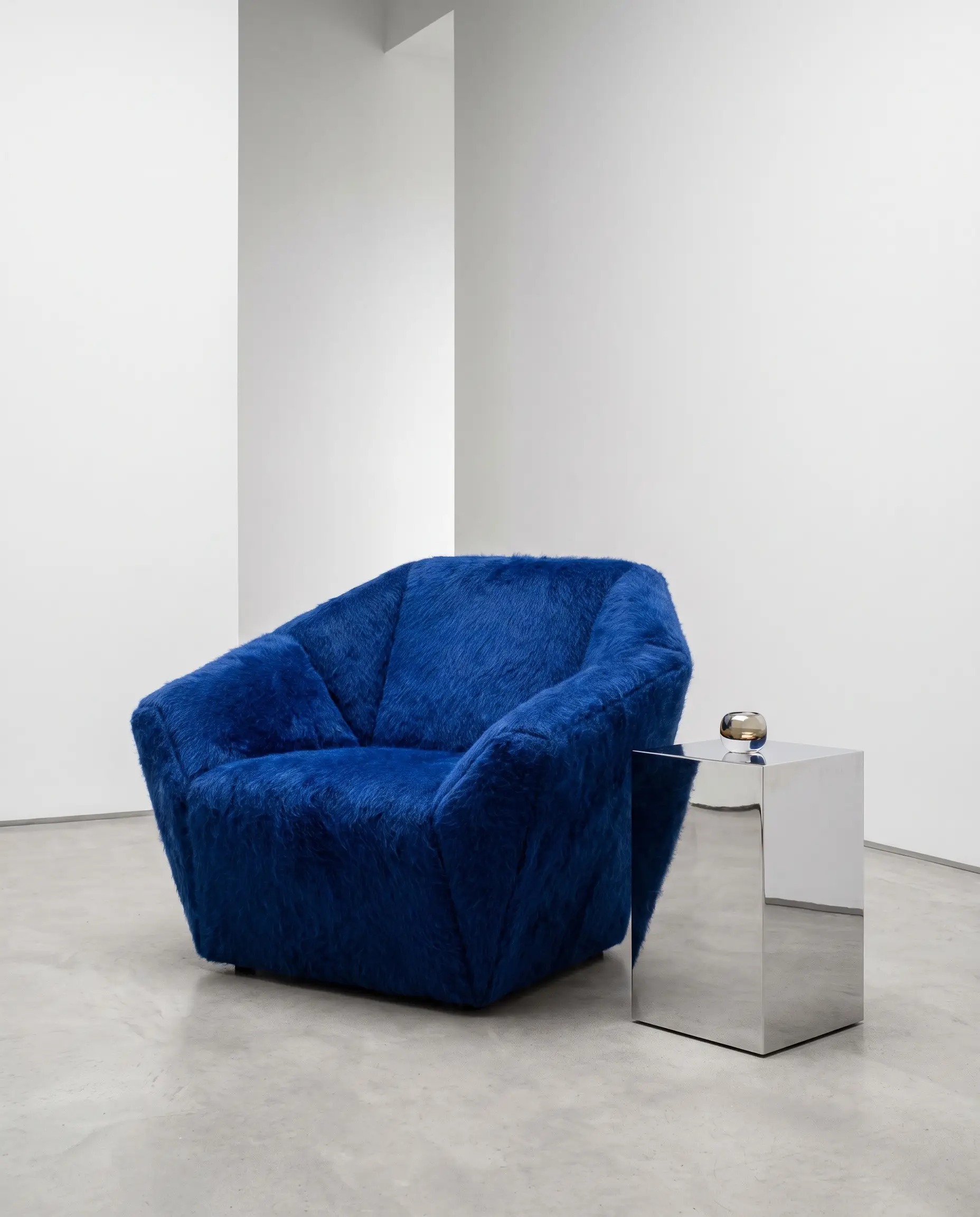
The tactile experience of 2027 postmodernism demands a sharp pivot away from breezy linens and casual cottons. We are anchoring these sculptural furniture frames with heavy, light-absorbing textiles like highly saturated mohair, which drinks in color and provides a lush, sound-dampening weight to the room.
- Vibe: Tactile, luxurious, and deeply saturated.
- Key Materials: 100% Angora mohair, heavy-weight Italian boucle.
- Color Recommendation: Electric blue, deep aubergine, or striking chartreuse.
- Styling Pro-Tip: Upholster a strictly geometric, sharp-angled chair in soft mohair to create an immediate tactile contradiction.
Furniture Silhouettes: Memphis Milano Meets Hollywood Glamour
In this design tier, furniture no longer merely serves a functional purpose; it acts as standalone sculpture. The difference between a purely functional piece and a statement silhouette comes down to exaggerated proportions, continuous curves, and a blatant disregard for standard structural norms.
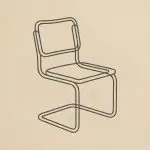
The Tubular Steel Cantilever Chair
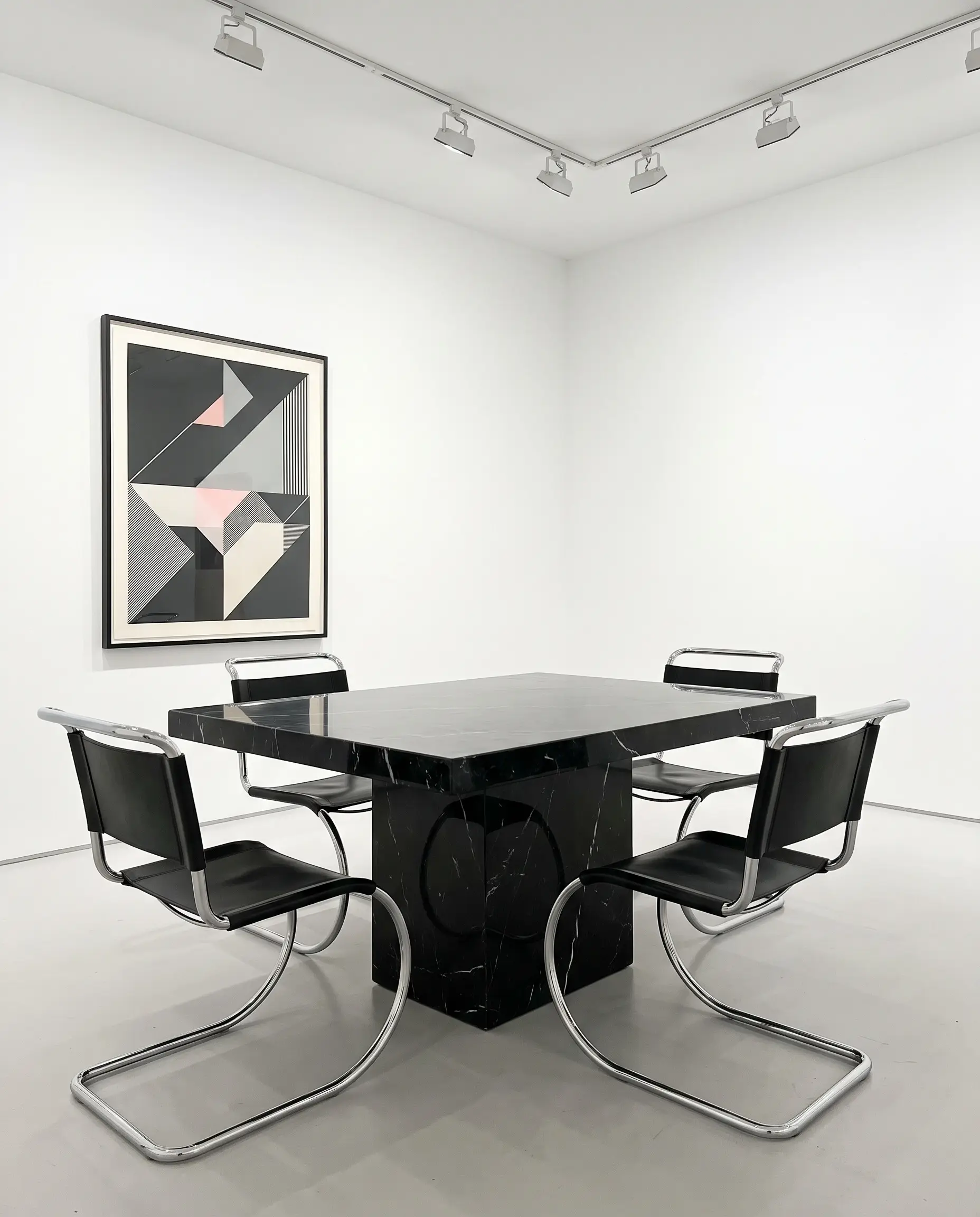
The quintessential 80s seating silhouette has returned to dominate high-end dining rooms and office spaces. Featuring thick, tubular chrome or powder-coated steel frames that curve continuously without back legs, the cantilever chair offers a gravity-defying bounce and a striking, skeletal profile.
When sourcing cantilever chairs, pristine vintage pieces by Marcel Breuer or Milo Baughman hold their value incredibly well. If buying 2027 reproductions, inspect the gauge of the steel; luxury tiers use heavy-weight tubular steel that won’t flex or warp under daily use.
Sourcing Secret
- Vibe: Retro-industrial, gravity-defying elegance.
- Key Materials: Heavy-gauge tubular steel, woven cane, or tight-tailored leather.
- Styling Pro-Tip: Surround a heavy burl wood or monolithic marble dining table with delicate, tubular steel chairs to emphasize the extreme weight difference between the pieces.
Plinth-Base Sofas with Exaggerated, Low-Slung Curves
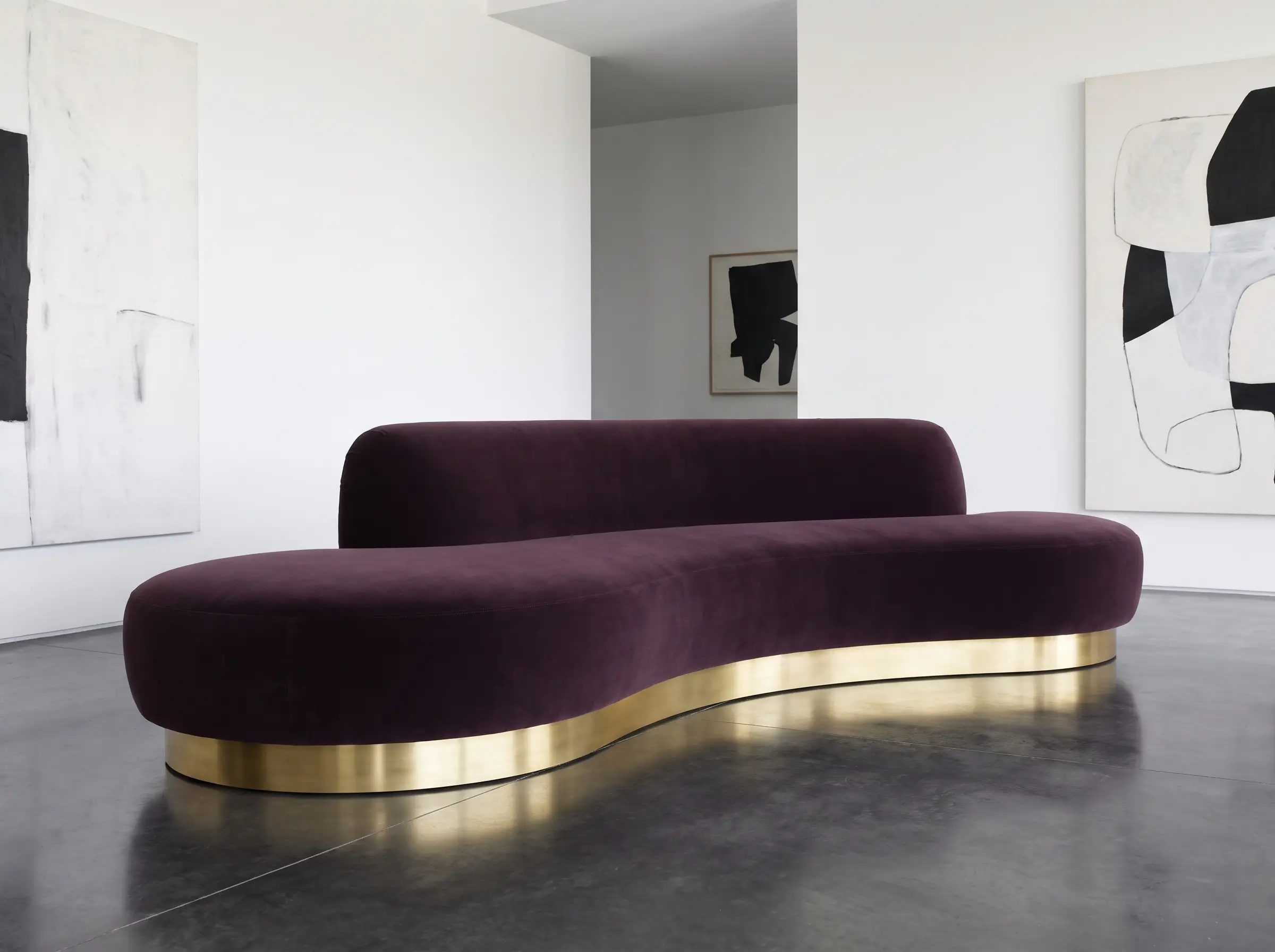
The primary living room anchor must command the space with monumental scale and continuous, sweeping curves reminiscent of 1920s Deco. Sofas sitting entirely flush to the floor on metallic or mirrored plinths eliminate visual clutter underneath, offering a chubby, low-slung profile that feels both deeply grounded and incredibly glamorous.
- Vibe: Lounge-heavy, monumental, and impossibly plush.
- Key Materials: Brushed brass plinths, high-density foam, curved hardwood frames.
- Material Collision: Matte, light-absorbing mohair paired with a highly reflective metallic plinth base.
- Styling Pro-Tip: Float these sofas in the absolute center of the room to show off the continuous curved backrest; they are entirely too sculptural to be pushed against a wall.
Asymmetrical, Primary-Colored Console Tables
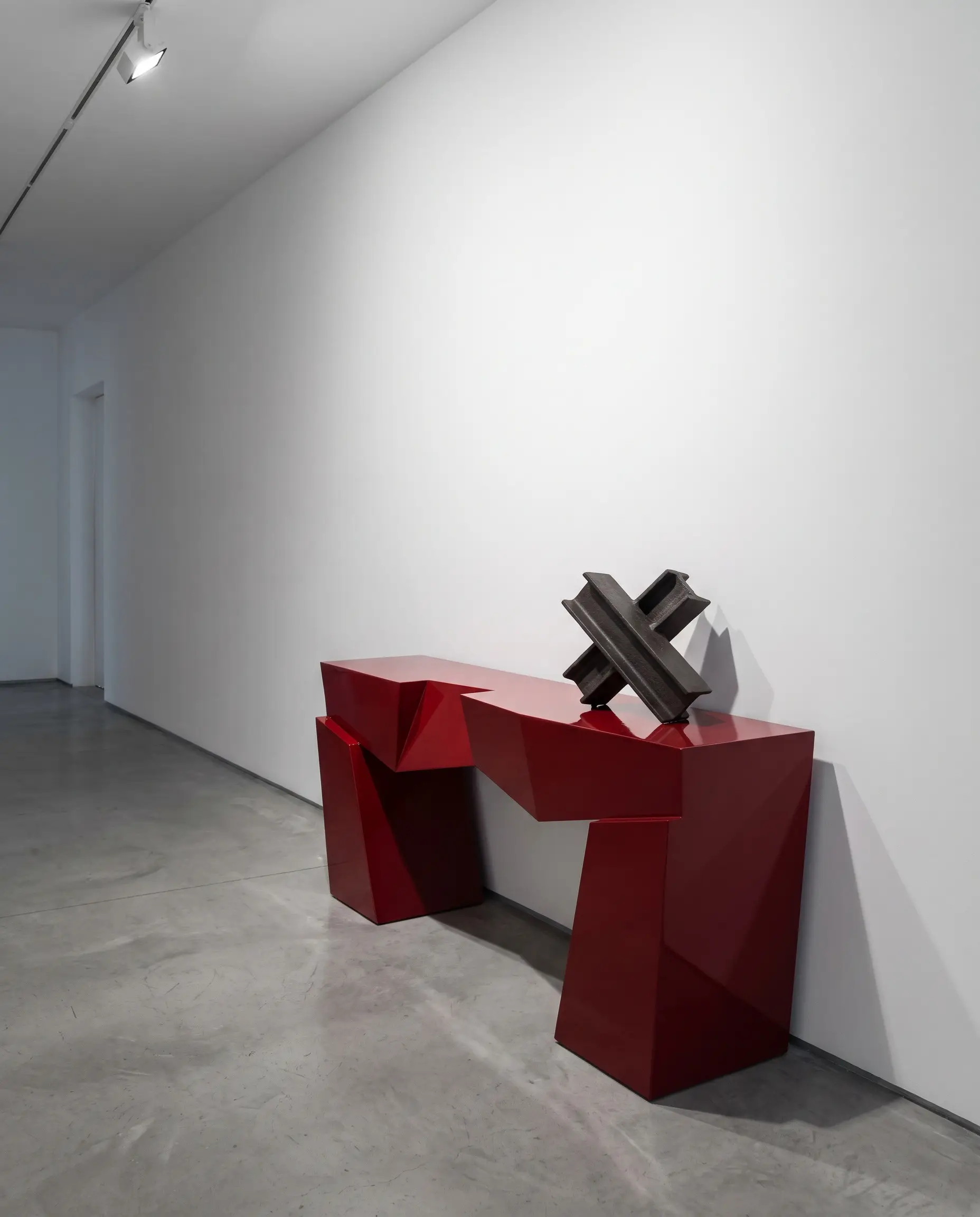
Injecting the playful rebellion of Memphis Milano into a sophisticated space requires absolute control over scale and color. A single, wildly asymmetrical console table painted in a stark primary hue acts as an aggressive focal point when placed in an otherwise austere, monochromatic hallway.
Only use one highly saturated, Memphis-style piece per room. The impact relies entirely on isolation; deploying multiple primary-colored, asymmetrical pieces will instantly degrade the space into a chaotic funhouse.
The 2027 Restraint
- Vibe: Playful, gallery-worthy provocation.
- Key Materials: Custom lacquered MDF, powder-coated aluminum.
- Paint Recommendation: Benjamin Moore Heritage Red (HC-181) or Farrow & Ball Imperial Purple (No. W40).
- Styling Pro-Tip: Leave the surface completely bare or style it with a single, brutalist structural object to emphasize the console’s asymmetrical geometry.
Sculptural Brass and Tinted Glass Coffee Tables
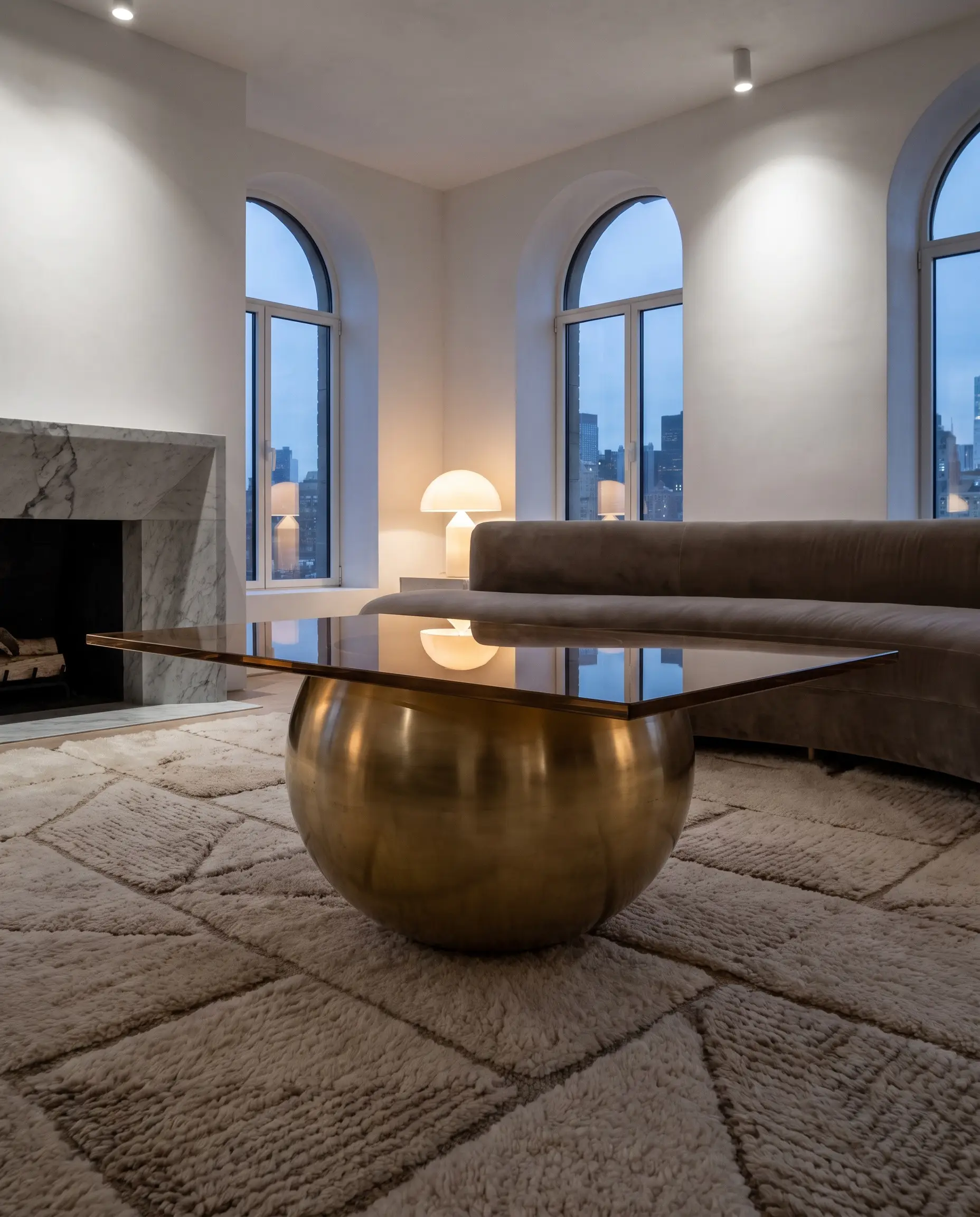
We are moving decisively away from the raw, reclaimed wood coffee tables that dominated the early decade. Anchor your living space with high-shine glamour by utilizing heavy-gauge, unlacquered brass shaped into severe geometric bases—spheres, cubes, or pyramids—topped with thick, bronze-tinted glass.
- Vibe: Heavy, reflective, and geometrically severe.
- Key Materials: Unlacquered brass, 3/4-inch thick bronze or smoked glass.
- Material Collision: Thick, bronze-tinted glass paired with heavy-gauge unlacquered brass spheres.
- Styling Pro-Tip: The tinted glass is essential; it creates a moody, shadowed reflection that interacts beautifully with the room’s ambient lighting, softening the harsh geometry of the brass base.
The Curator’s Eye: Mastering the 80s Deco Revival Without the Kitsch
The razor-thin line between a breathtaking architectural triumph and a dated time capsule is entirely dictated by negative space. You simply cannot fill a room with 100% Postmodern pieces; they require visual breathing room to register as expensive. These bold, geometric profiles and saturated material collisions must be rigorously balanced against stark white gallery walls, large-scale contemporary art, and an absolute commitment to editing. Are you ready to abandon the safety of beige? Decide which architectural intervention commands your attention first—the luminous grid of a glass block partition or the aggressive geometry of a ziggurat archway—and begin your structural transformation today.
The Aesthetics Desk curates the visual direction for Hackrea. Specializing in design history, global architectural movements, and interior styling, this desk focuses on the psychology of space and how to translate high-end, magazine-quality aesthetics into approachable residential design without falling into fleeting micro-trends.