The New Eclecticism: 24 Ways to Master Refined Maximalism in 2027
The sterile, minimalist grip of “sad beige” has finally broken. For years, design enthusiasts were told to strip away their personalities in favor of blank slates and empty surfaces, but the 2027 maximalism and eclectic interior trends signal a fierce return to the deeply personal home. However, this is not a reversion to the chaotic, fast-fashion clutter of the previous decade. We are entering the era of Narrative Eclecticism—a movement defined by collecting with intense, scholarly intention rather than blind accumulation.
This new iteration of maximalist decor is highly cinematic, moody, and rich with heritage. It thrives on the brilliant tension created when you force disparate elements into a dialogue: the rough against the refined, the fiercely contemporary against the deeply historic. It is about applying strict rules of scale and color theory to an abundance of carefully sourced objects, ensuring the space feels like it was effortlessly assembled over decades by a well-traveled eccentric.
To achieve this curated heritage look, you must embrace the discipline of design. You cannot simply fill a room with things and hope for a masterpiece. True maximalism is not the absence of rules; it is the absolute discipline of excess.
Architectural Foundations & Immersive Surfaces
White drywall is the absolute enemy of this aesthetic, as the room itself must possess a distinct, architectural point of view before a single piece of furniture crosses the threshold. Establishing structural gravitas creates the mandatory shell for a narrative-driven space.
1. Drench the Ceiling in High-Gloss Lacquer
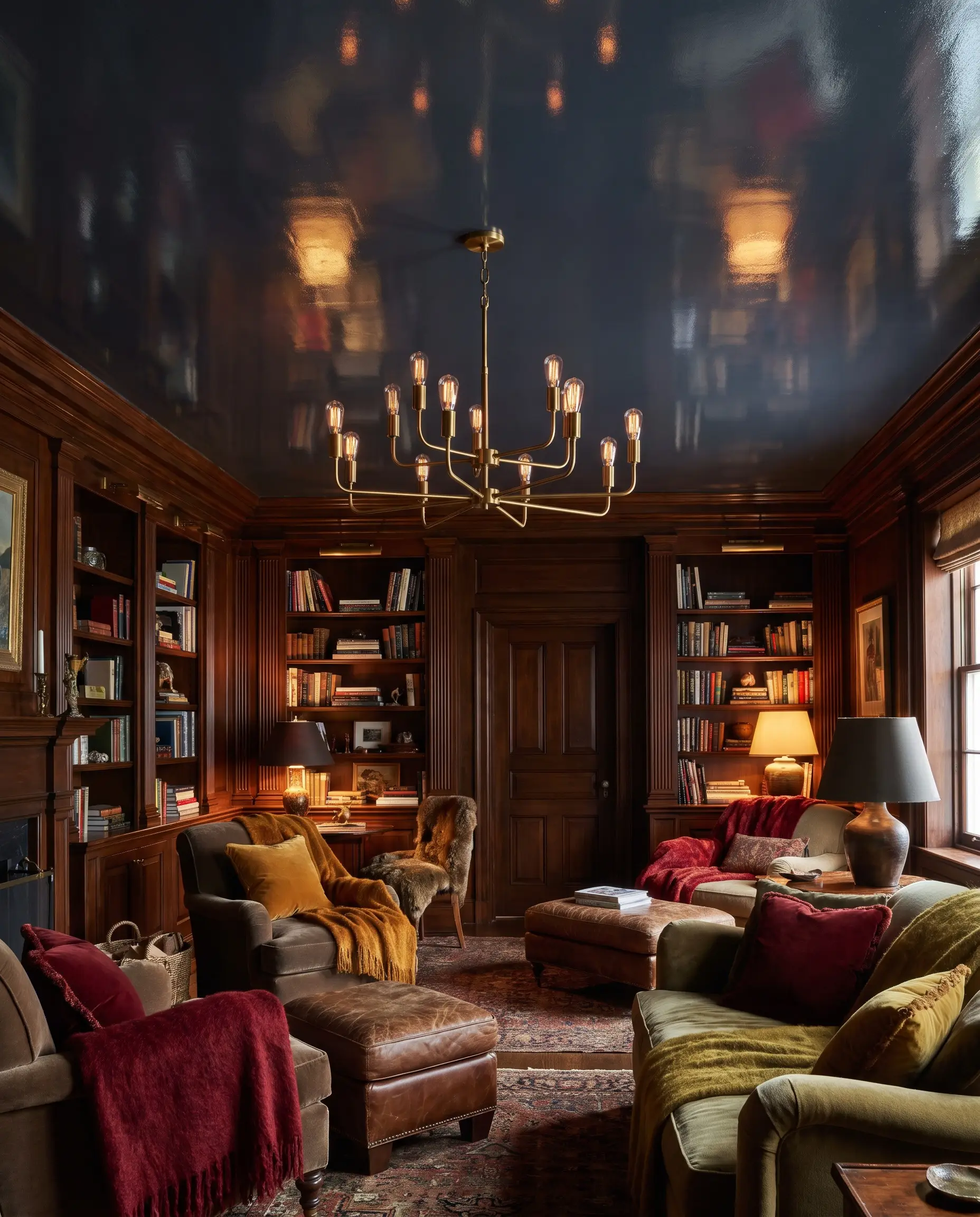
A heavily lacquered ceiling acts as a reflective crown, bouncing ambient light into a room heavily weighted by layered textiles. This high-end architectural finish adds monumental depth, turning the standard “fifth wall” into a mesmerizing, glassy expanse that pulls the eye upward.
High-gloss lacquer requires perfectly skim-coated Level 5 drywall, otherwise every structural and textural imperfection will be heavily magnified.
Curator’s Note
- Vibe: Moody, expensive, and infinitely deep.
- Key Materials: Fine Paints of Europe Hollandlac Brilliant.
- Paint Recommendation: Farrow & Ball Titmouse Blue (No. W24).
2. Apply Trompe L’oeil Wallcoverings for Faux Depth
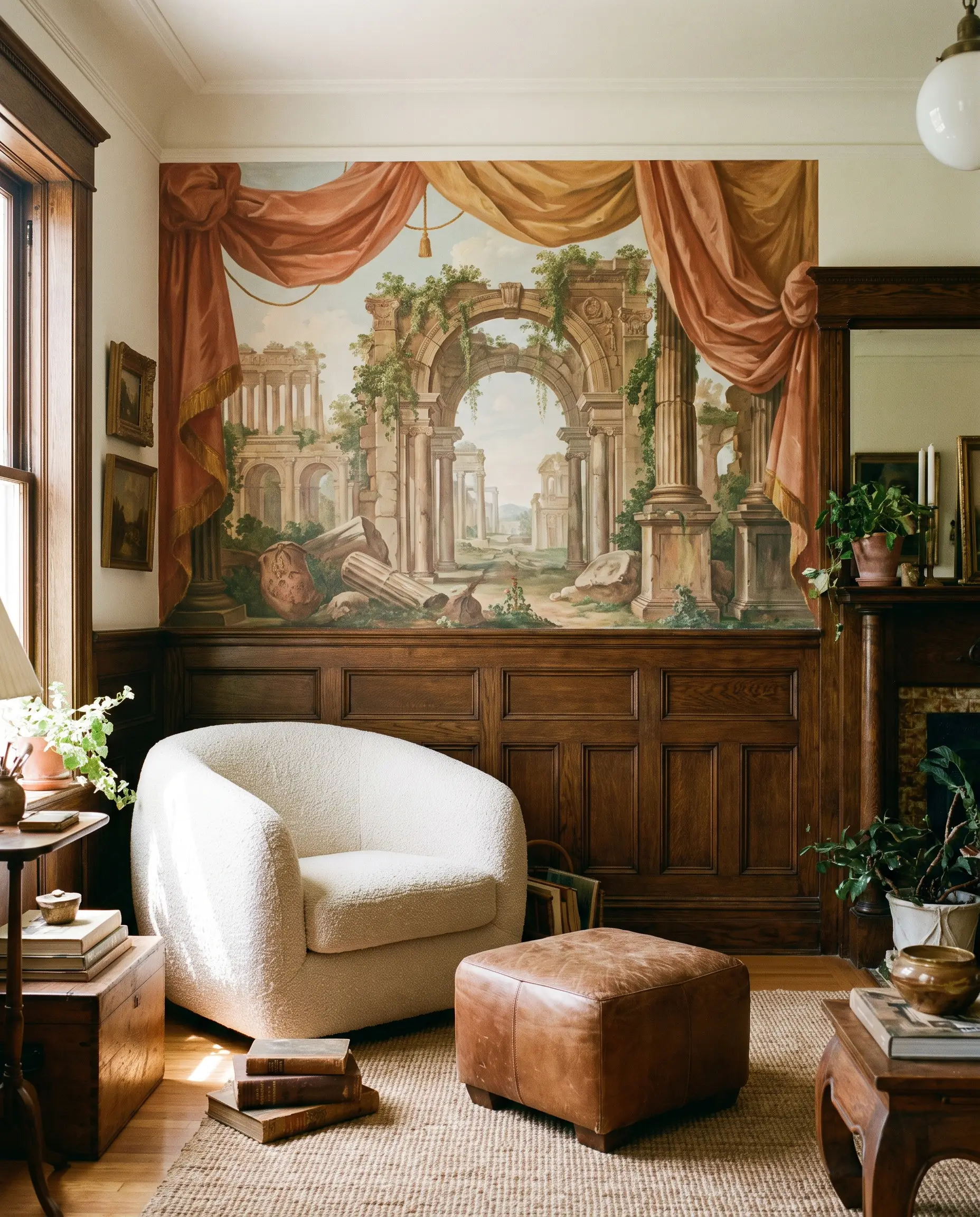
Standard floral repeats lack the architectural history required for 2027’s curated heritage look. Scenic murals and trompe l’oeil designs that mimic classical ruins, draped fabrics, or ornate historic millwork immediately ground the space with historical friction and sweeping visual drama.
- Vibe: Theatrical, historic, and brilliantly deceptive.
- Key Materials: Zuber scenic panels or custom digitally printed wall murals.
- Styling Pro-Tip: Install these murals above a heavy wainscoting to root the faux perspective in physical reality.
3. Install Heavy, Layered Window Passementerie
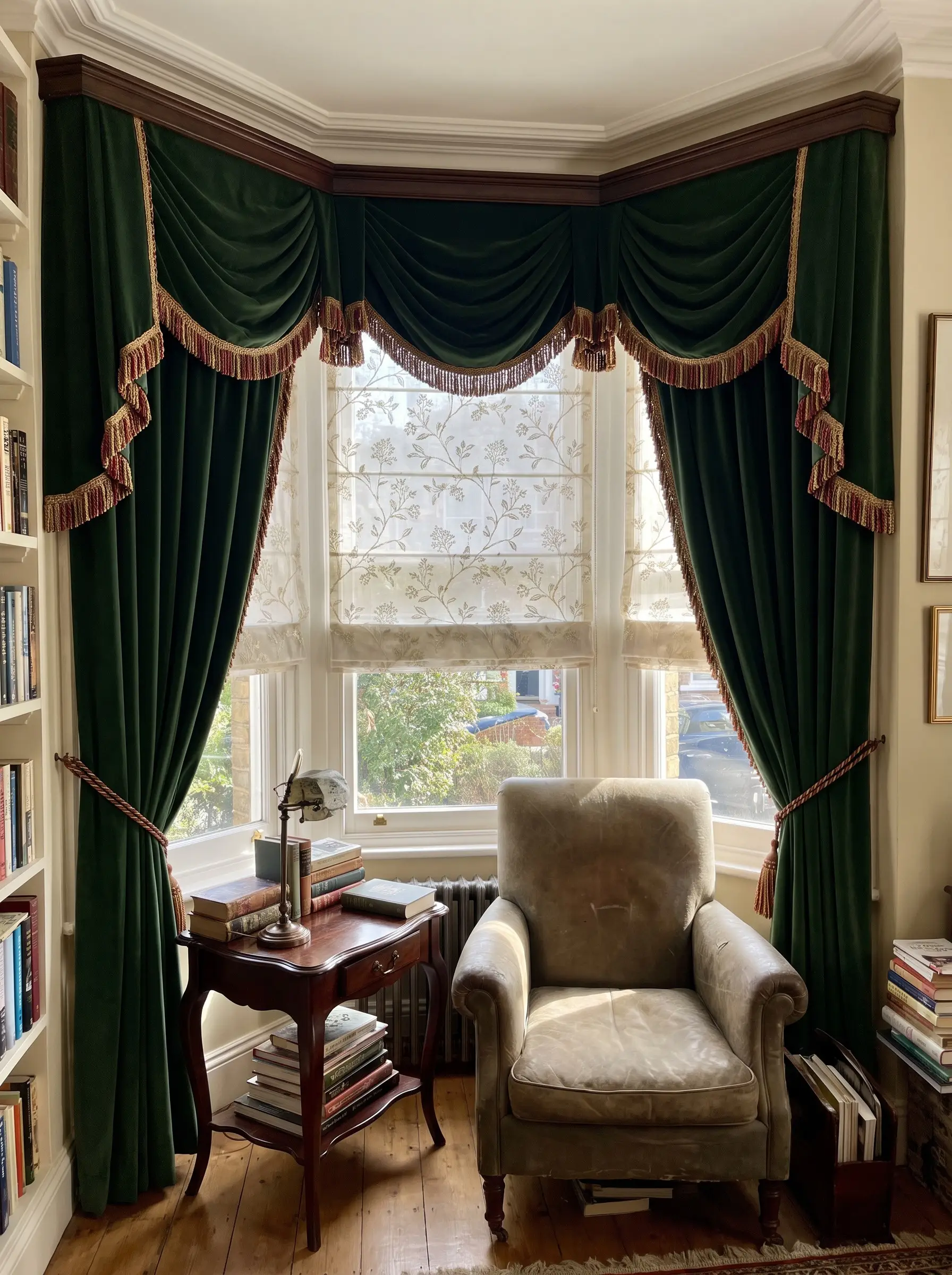
The revival of traditional passementerie—tassels, bullion fringe, and contrast piping—brings necessary tactile weight back to window treatments. Layering heavily constructed outer curtains over sheer, patterned Roman shades creates an immersive, bespoke framing effect that minimalist blinds simply cannot achieve.
- Vibe: Opulent, structured, and deeply traditional.
- Key Materials: Heavyweight mohair velvet and silk-wrapped bullion fringe.
- Design Secret: Use a contrasting color for the leading edge trim to sharply define the window’s vertical lines against the wall.
4. Ground the Space with Checkerboard or Harlequin Stone Floors
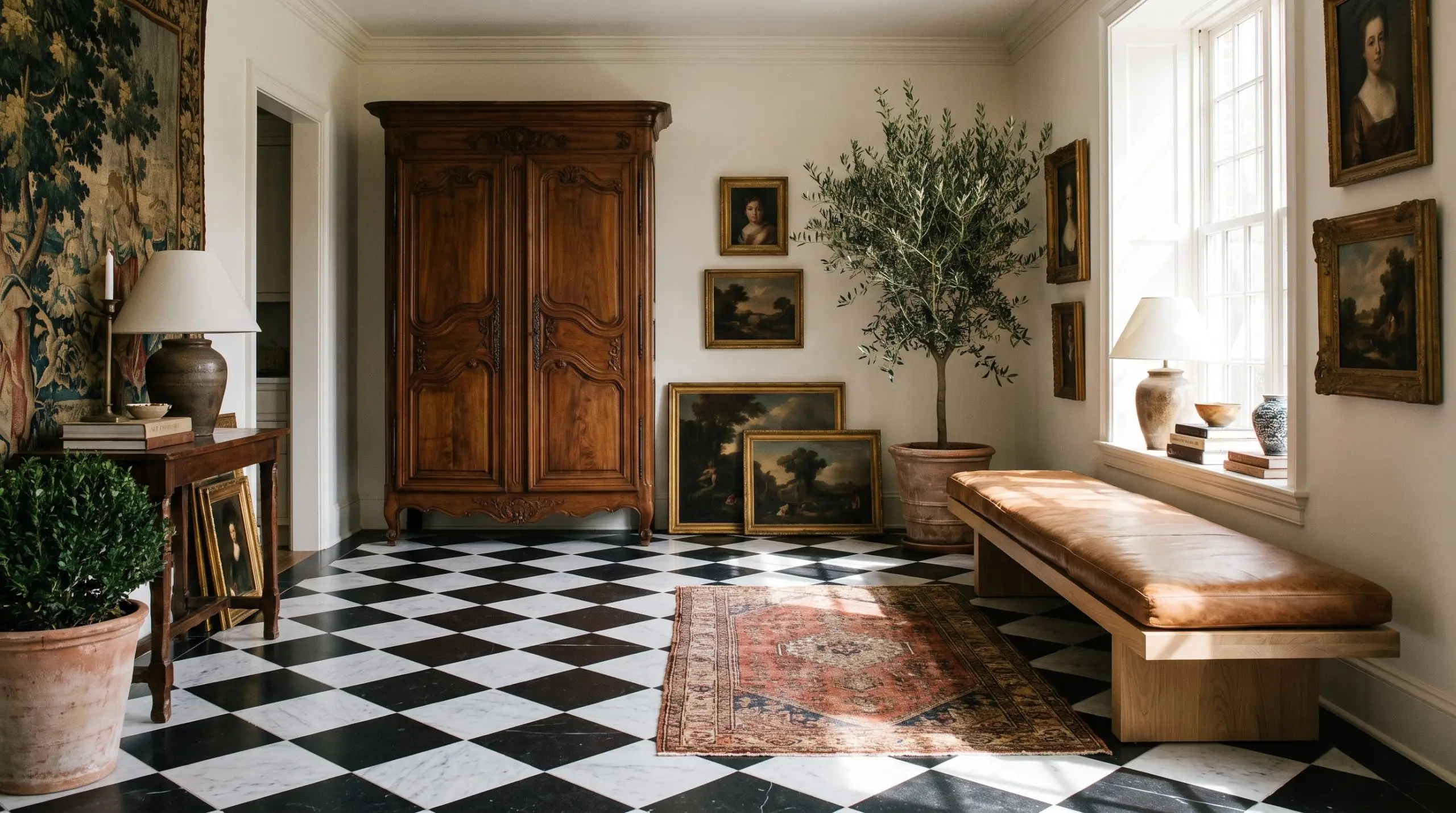
A maximalist room demands a strong, geometric foundation to anchor the visual weight of layered patterns and clustered objects. Laying high-contrast natural stone on a diagonal harlequin grid provides an unshakeable, classical footing that dictates the geometry of the entire room.
- Vibe: Stately, timeless, and geometrically rigorous.
- Key Materials: Honed Nero Marquina and Carrara marble tiles.
- Spatial Strategy: The diagonal lines of a harlequin pattern visually expand the floor plan, preventing heavy case goods from shrinking the room.
5. Extend Historic Millwork Beyond Traditional Proportions
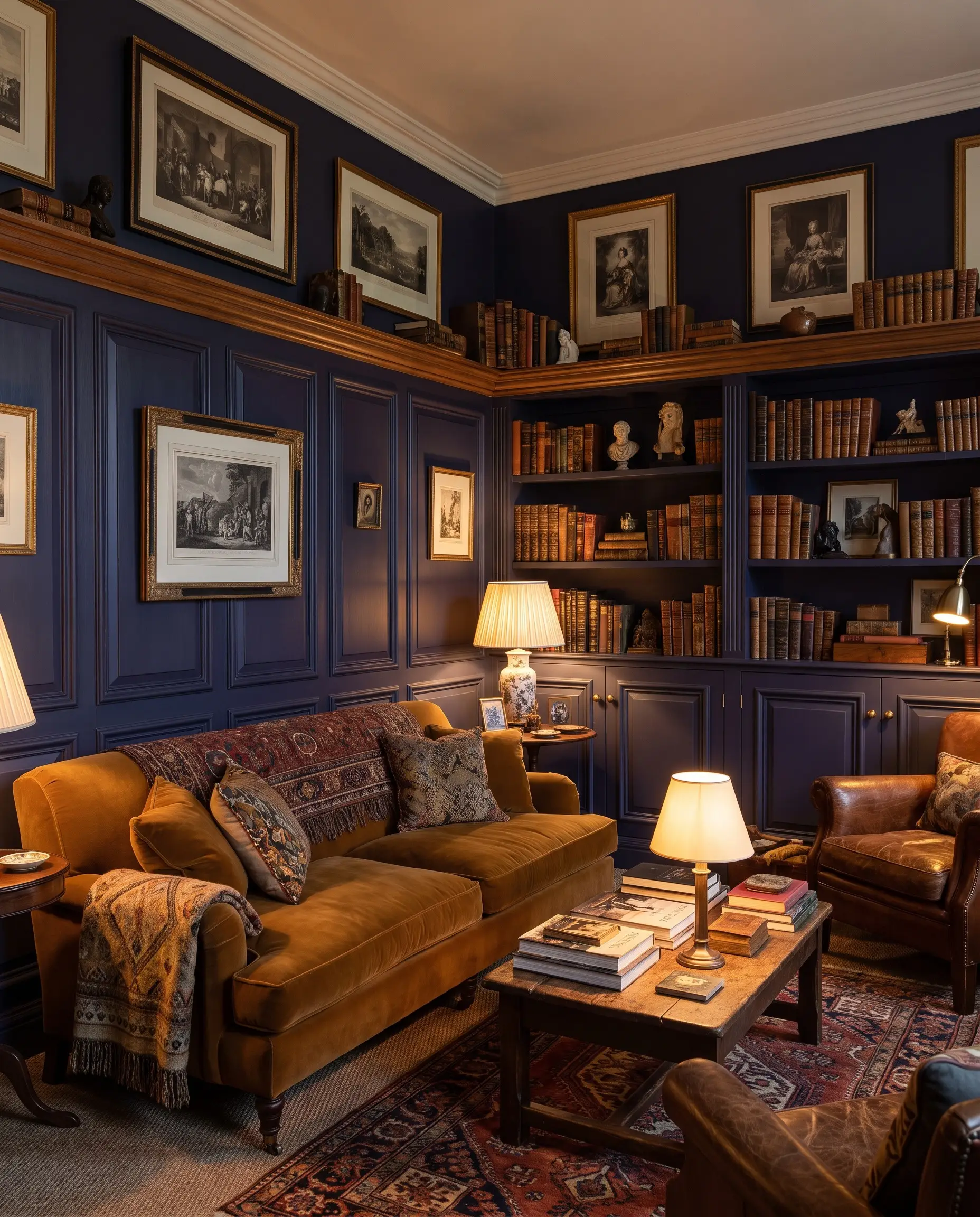
To achieve a moody, intimate jewel-box effect, traditional wainscoting and paneling must be scaled up aggressively. Pushing the millwork three-quarters of the way up the wall deliberately shrinks the ceiling height, compressing the room into a deeply cozy, highly architectural envelope.
- Vibe: Enveloping, scholarly, and architecturally dominant.
- Key Materials: Solid wood paneling with heavy bolection moldings.
- Color Strategy: Paint this extended millwork a saturated, dark tone to maximize the feeling of containment and warmth.
Cinematic Color Palettes & High-Contrast Pairings
The bright, primary dopamine colors of the early 2020s have given way to a moodier, deeply saturated palette rooted in historic European estates. These darker, cinematic shades provide the essential gravitas needed to anchor eclectic collections and heavy fabrics.
6. Anchor with Oxblood and Saturated Burgundy
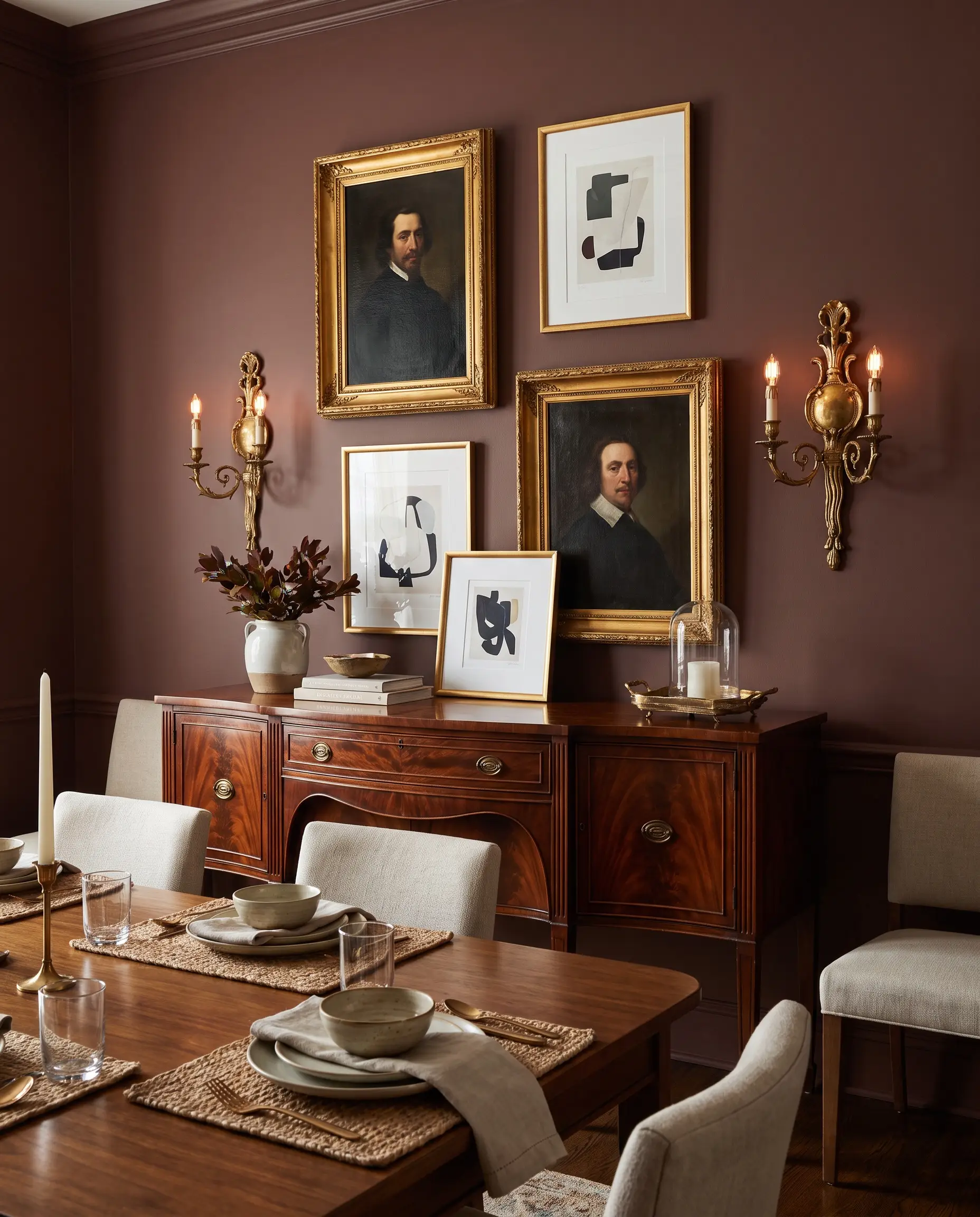
Deep, bruised reds act as the ultimate grounding neutral in a curated, maximalist space. Oxblood walls effortlessly absorb the visual weight of heavy walnut or burled wood furniture, creating a rich, seamless backdrop for gilded frames and contemporary art.
- Vibe: Aristocratic, warm, and unapologetically heavy.
- Paint Recommendation: Benjamin Moore Townsend Harbor Brown (HC-64).
- Material Match: Polished mahogany and unlacquered brass.
7. Punctuate with Acidic Chartreuse
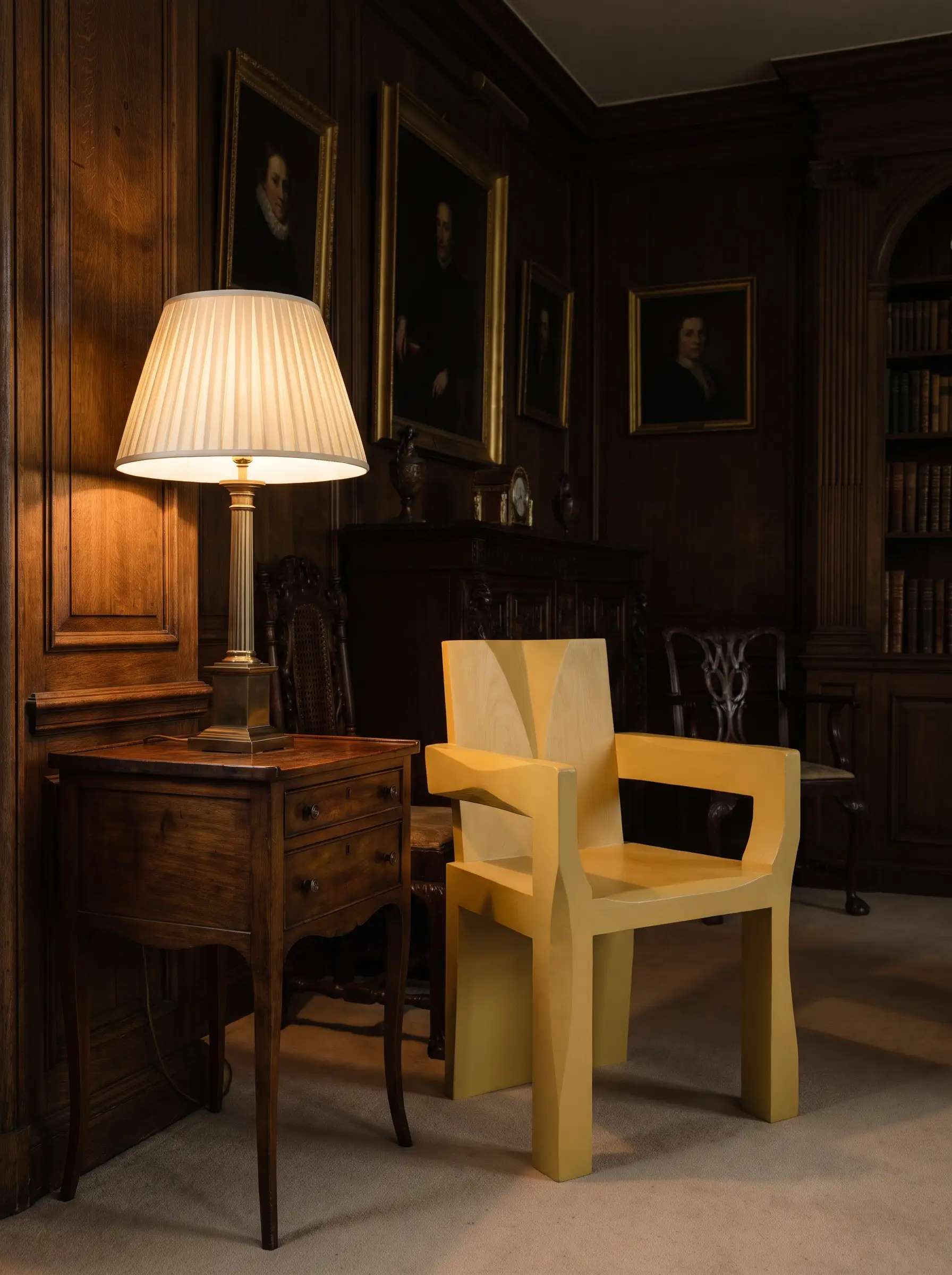
A room steeped in dark heritage colors desperately needs a disruptor to prevent it from feeling like a dusty period museum. A single, sharp hit of acidic chartreuse cuts through the heavy atmosphere, dragging the space firmly into the contemporary era through sheer color tension.
- Vibe: Electric, irreverent, and sharply modern.
- Color Match: Sherwin-Williams Chartreuse (SW 0073).
- Styling Pro-Tip: Deploy this color sparingly on a highly sculptural occasional chair or a pleated silk lampshade.
8. Drench Trim and Doors in Muddy Aubergine
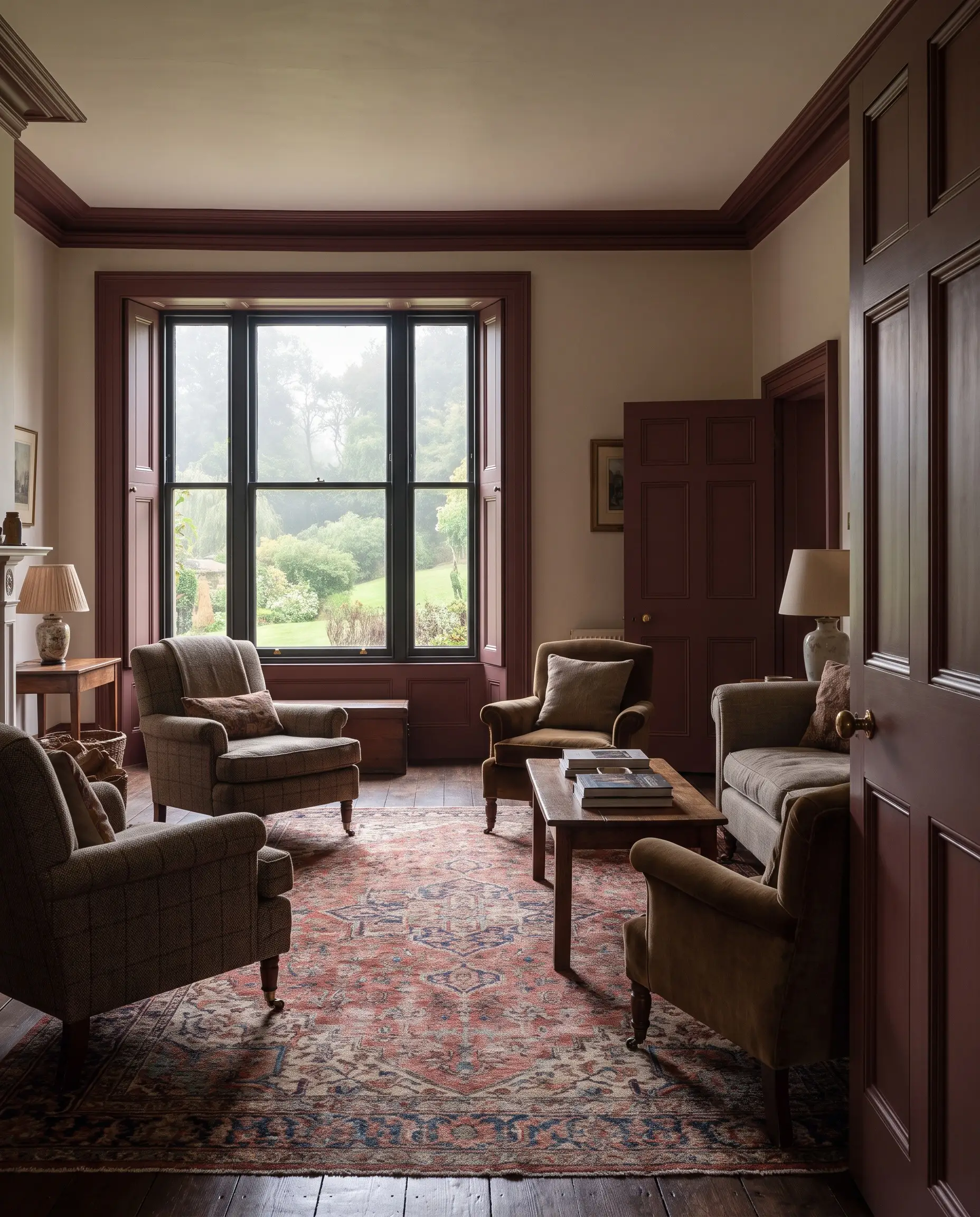
Defaulting to white trim instantly shatters the immersive illusion of a deeply curated room. Painting all baseboards, crown molding, and doors in a muddy, bruised purple frames the space like an Old Master painting, blurring harsh architectural boundaries and softening the transitions.
- Vibe: Sophisticated, continuous, and softly shadowed.
- Paint Recommendation: Farrow & Ball Brinjal (No. 222).
- Application Note: Carry this color directly onto the window sashes to frame the view outside.
9. Contrast Matte Distemper with Polished Brass
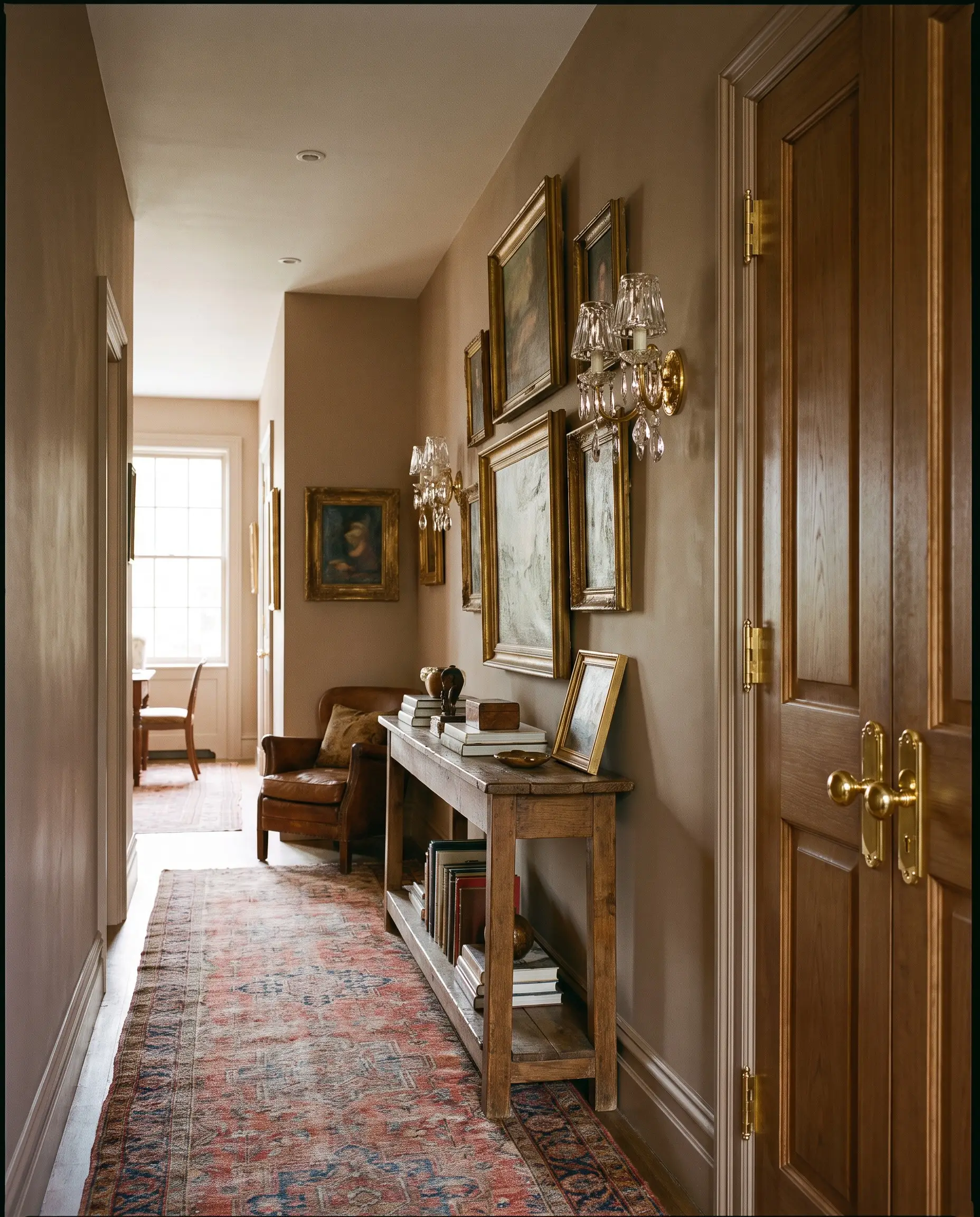
Material juxtaposition is critical; the chalky, ultra-flat, light-absorbing finish of traditional distemper paint demands a highly reflective counterpoint. Polished, unlacquered brass hardware and lighting fixtures pierce the matte walls, creating a brilliant, sparkling friction that feels incredibly bespoke.
- Vibe: Tactile, historic, and quietly luxurious.
- Key Materials: Farrow & Ball Estate Emulsion (for a distemper-like finish) and solid, unlacquered brass.
- Paint Recommendation: Farrow & Ball Dead Salmon (No. 28).
10. Execute the “Shadow Box” Color Technique
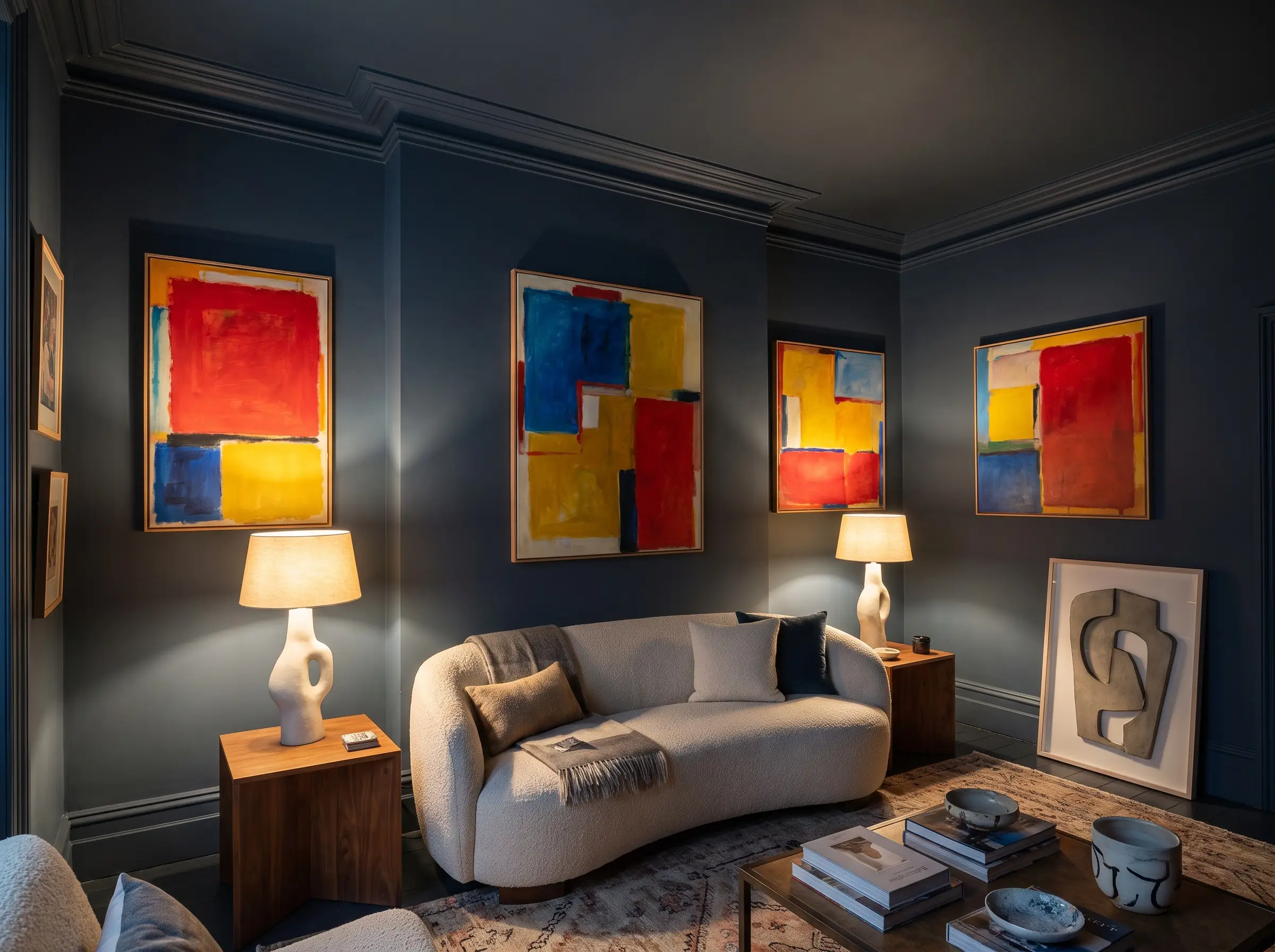
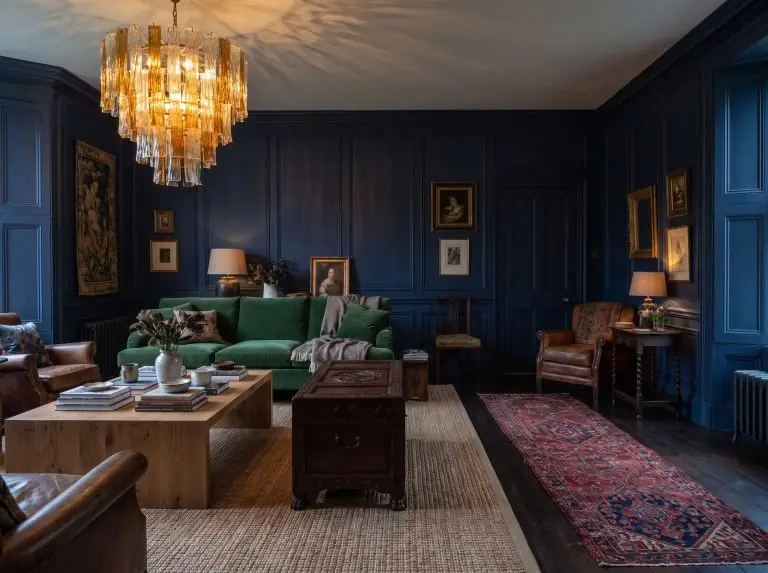
By painting the walls, trim, and ceiling in the exact same dark, saturated tone, you entirely blur the structural edges of the room. This “shadow box” effect allows brightly colored contemporary art and sculptural furniture to visually pop forward, suspended in a boundless void of color.
- Vibe: Gallery-like, infinite, and deeply dramatic.
- Paint Recommendation: Benjamin Moore Hale Navy (HC-154).
- Lighting Requirement: Requires highly localized, warm pooling light (table lamps and sconces) rather than overhead ceiling grids.
| Strategy | Pros | Cons |
|---|---|---|
| Color Drenching | Erases awkward architectural angles; makes small rooms feel infinitely deep. | Requires flawless drywall prep; absorbs natural light aggressively. |
| High-Contrast Trim | Highlights historic millwork; provides sharp, graphic structure to the room. | Can chop up small spaces; draws the eye away from art and furniture. |
The Science of Pattern & Textile Layering
Mastering pattern mixing without inducing sheer visual fatigue relies entirely on the strict application of the “Rule of Three Scales.” You must anchor the room with one massive, dominant pattern, support it with a medium-scale secondary motif, and finish with a rigid, micro-scale geometric to maintain absolute visual order.
11. Pair Large-Scale Chinoiserie with Micro-Stripes
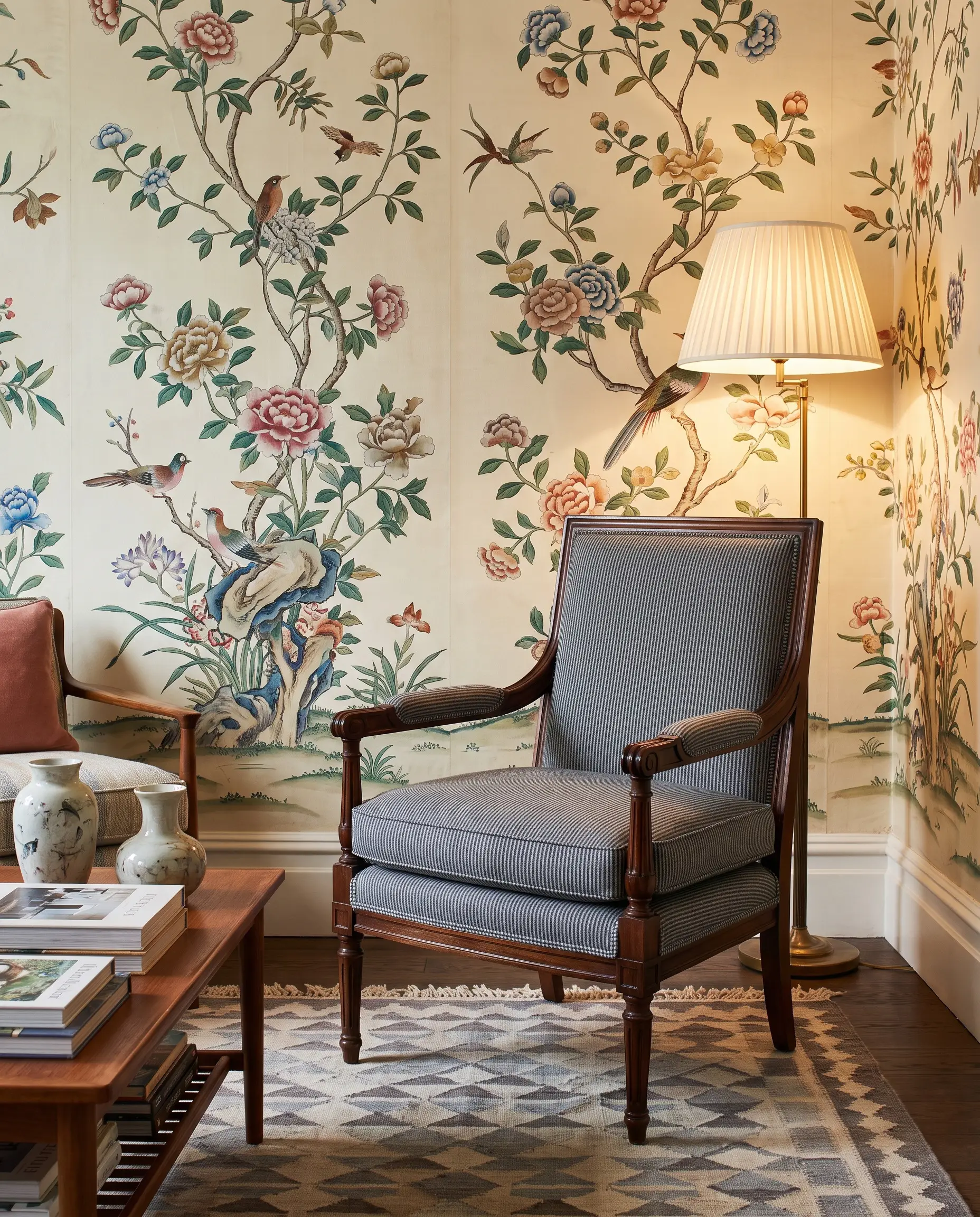
A massive, sweeping floral or Chinoiserie wallcovering possesses immense organic movement that can quickly overwhelm a space if left unchecked. It demands the strict, mathematical geometry of a micro-stripe or pinstripe on the primary upholstery to force the room back into tailored balance.
- Vibe: Tailored, worldly, and precisely balanced.
- Key Materials: Hand-painted silk wallpapers and worsted wool pinstripes.
- Pattern Strategy: Keep the colors in the micro-stripe directly pulled from the background hue of the Chinoiserie to unify the clash.
12. Mix Animal Prints as Faux Neutrals
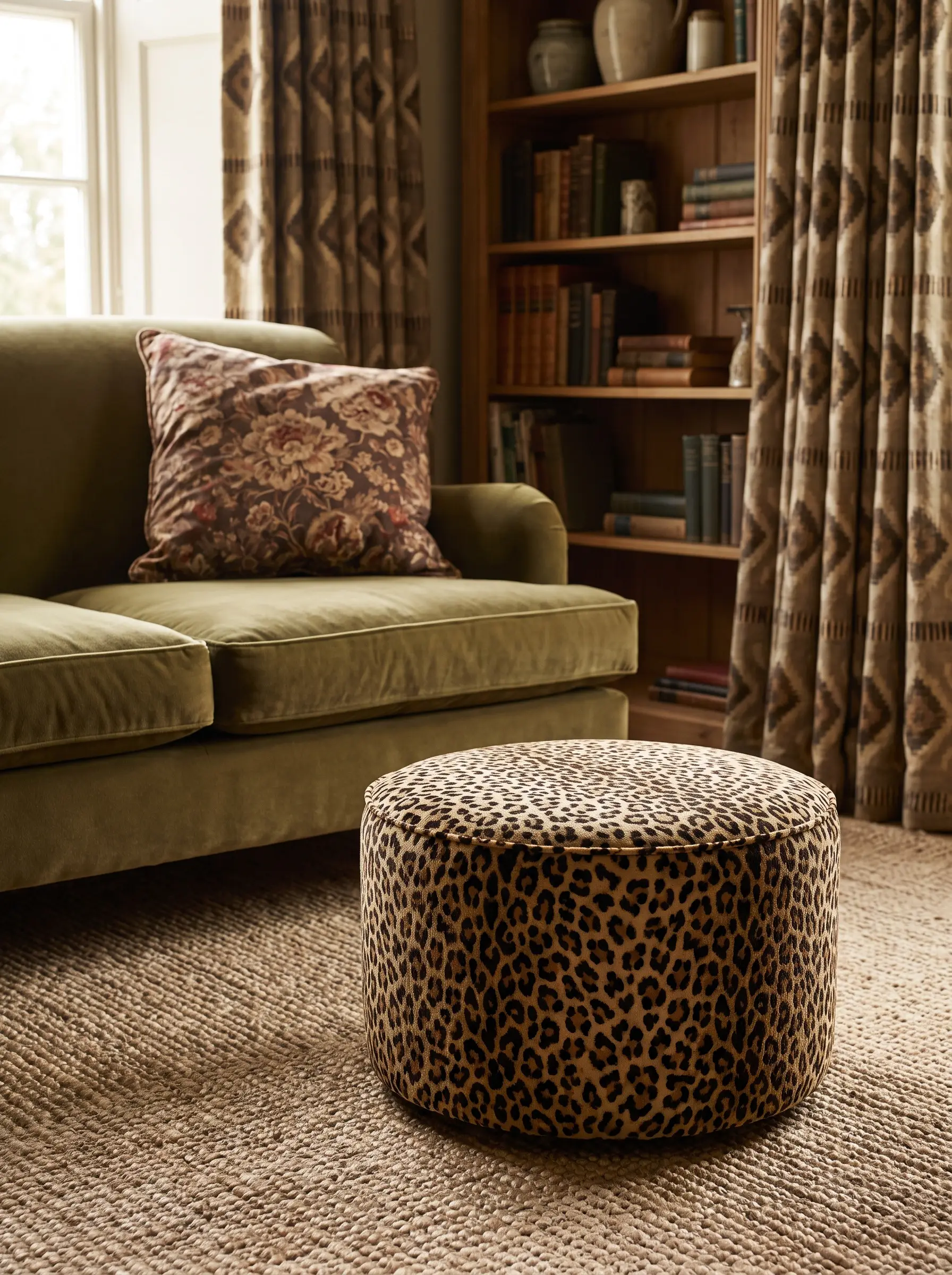
When executed with restraint, natural leopard or tortoiseshell patterns function as grounding neutrals rather than loud accent pieces. Because they are inherently organic and earthy, they effortlessly bridge the gap between rigid geometrics and sprawling florals.
- Vibe: Collected, slightly dangerous, and highly sophisticated.
- Key Materials: Cut-velvet leopard prints or authentic tortoiseshell finishes.
- Styling Pro-Tip: Confine these prints to small footprints—a low footstool or a single lumbar pillow—to prevent them from dominating the narrative.
13. Layer Persian Rugs over Natural Sisal
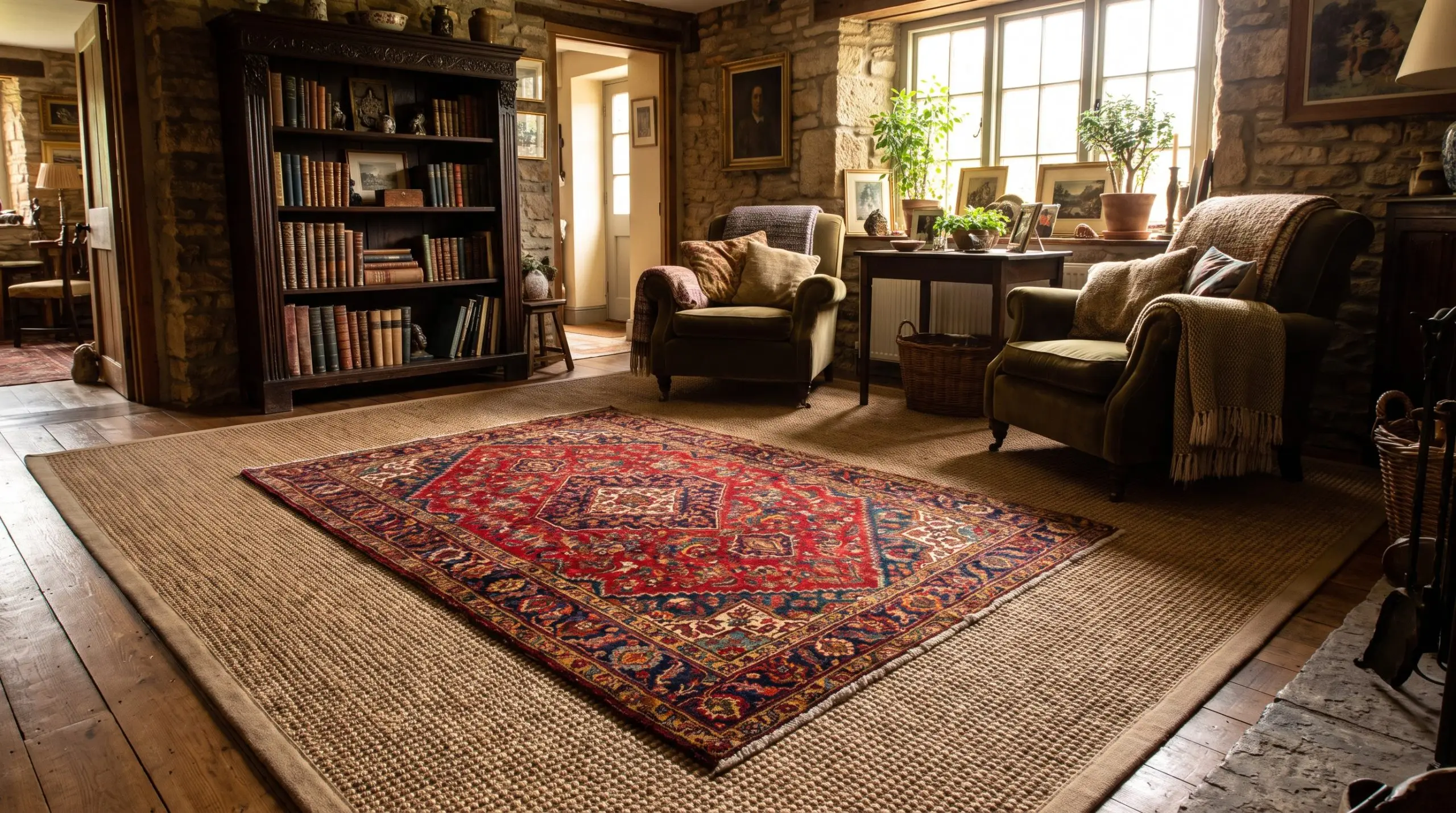
To prevent a heavily patterned room from visually floating away, you must anchor the floor with raw, organic texture. Laying a massive, inexpensive sisal rug wall-to-wall, then floating a highly saturated, antique Persian or Oushak rug on top, provides essential textural grounding.
- Vibe: Earthy, layered, and historically rich.
- Key Materials: Chunky natural sisal and hand-knotted wool rugs.
- Sourcing Secret: Ensure the sisal leaves no more than a 12-inch border around the perimeter of the room to maximize the grounding effect.
14. Clash Geometric Art Deco with Organic Florals
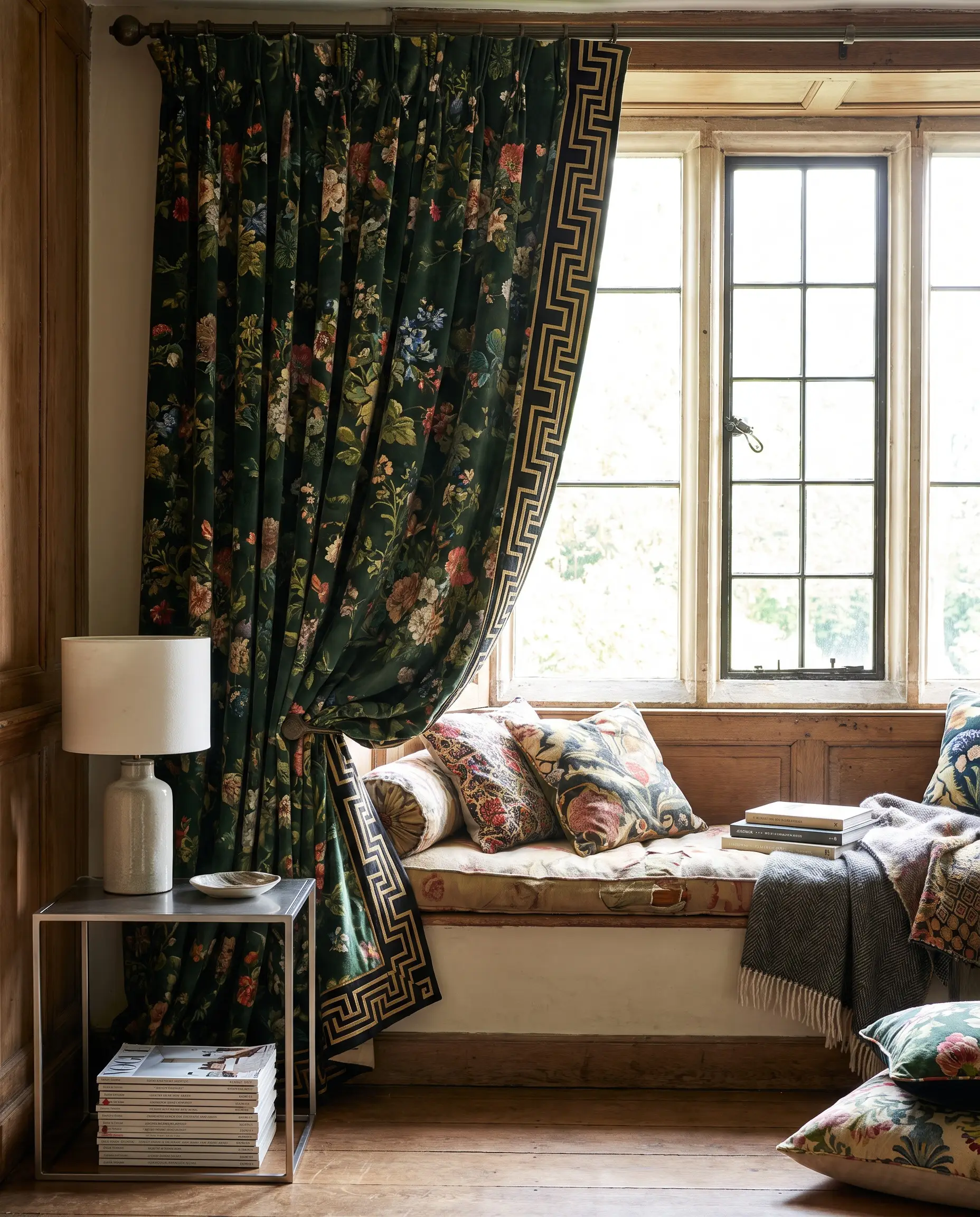
Bridging disparate eras through pattern creates the exact friction that defines narrative eclecticism. Placing sharp, jagged 1920s geometric textiles against soft, sprawling English garden florals generates a high-tension dialogue between architectural structure and wild nature.
- Vibe: Eccentric, bold, and brilliantly clashed.
- Key Materials: House of Hackney floral velvets paired with Greek key or stepped Deco trims.
- Textile Match: Use the Deco geometric strictly as an edge trim or leading border on the floral drapery to frame the organic movement.
15. Utilize Mohair as the Ultimate Visual Rest
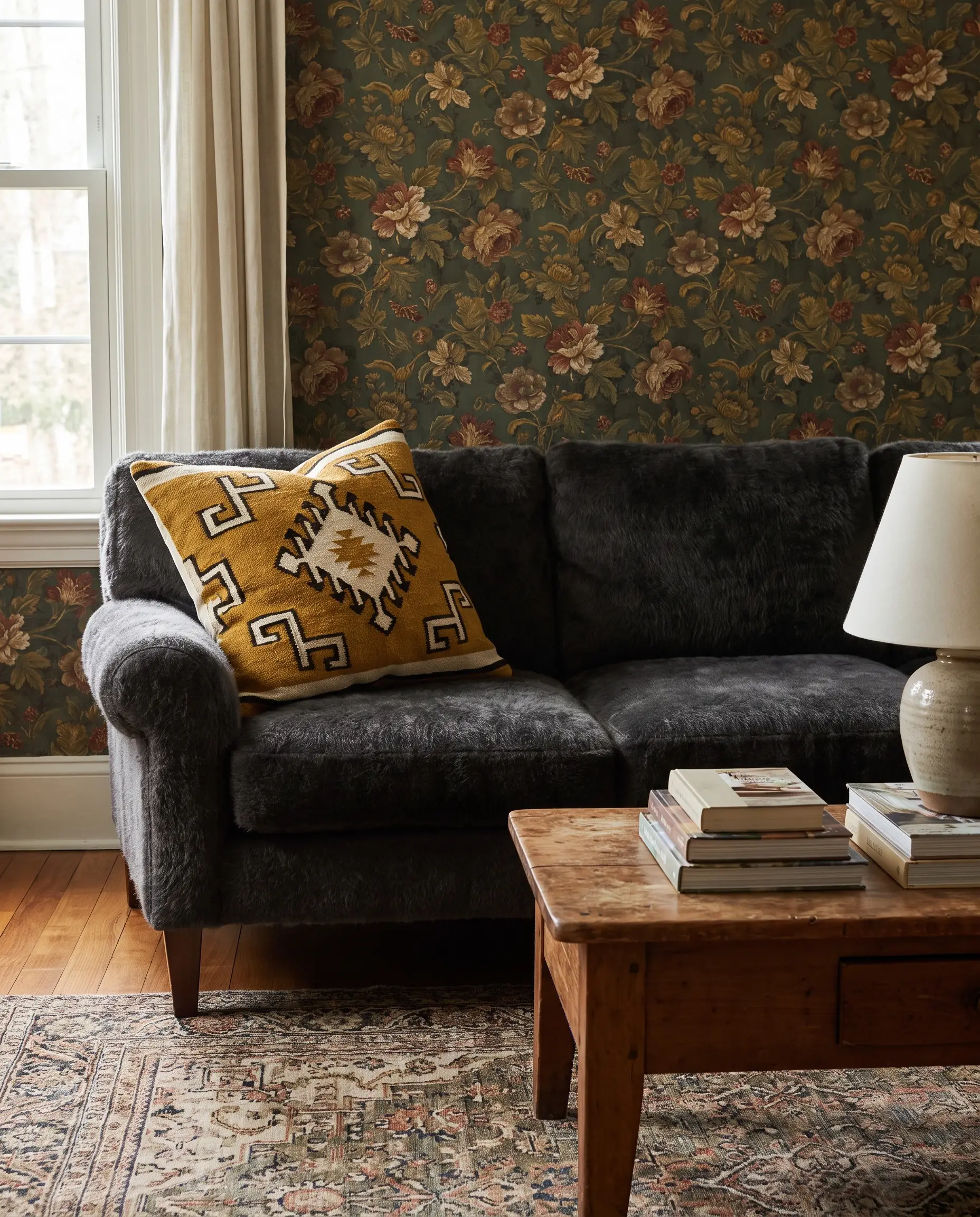
In a room saturated with competing prints and loud wallpapers, a large piece of solid furniture is an absolute necessity for the eye to rest. Solid mohair velvet absorbs light beautifully, providing immense tactile depth without adding another layer of chaotic pattern to the mix.
Never place a micro-print next to a solid; force a large-scale geometric or sprawling floral throw pillow onto the mohair sofa to create a visual bridge between the quiet upholstery and the loud room.
Rule of Scale
- Vibe: Luxurious, quiet, and deeply textural.
- Key Materials: 100% Angora mohair velvet.
- Color Strategy: Match the mohair color to the darkest, most recessive tone in the surrounding wallpaper to anchor the seating area.
Chronological Furniture Mixing & Heritage Sourcing
A room purchased entirely from a single contemporary catalog is completely devoid of soul. True narrative eclecticism requires a minimum of three distinct historical periods represented in the furniture plan, forcing a deliberate, collector-minded conversation across centuries of design.
16. Force a Dialogue Between 1970s Chrome and 18th-Century Wood
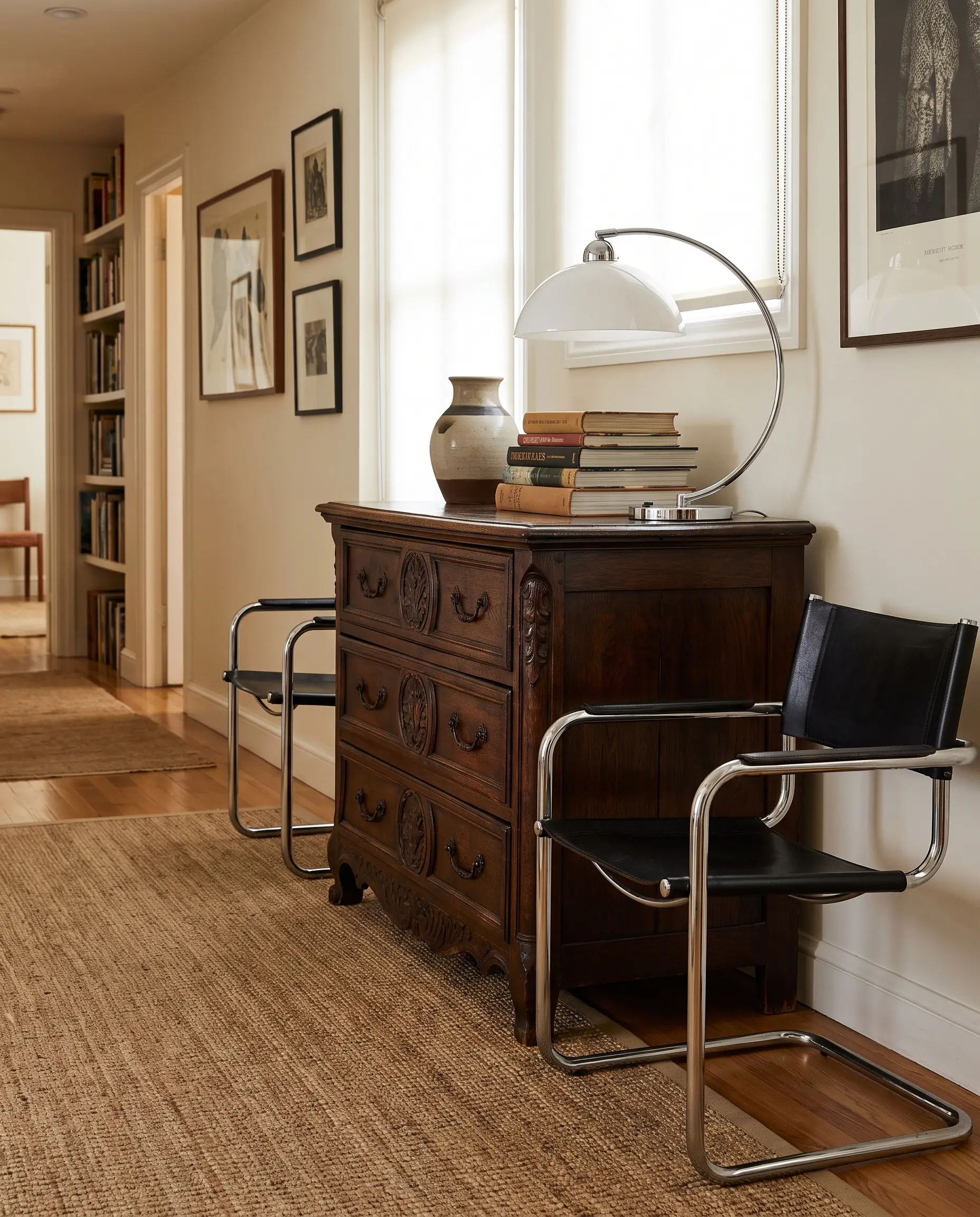
The friction between eras is where design magic happens. Flanking a heavy, ornately carved Georgian mahogany chest of drawers with cold, tubular chrome 1970s Marcel Breuer chairs creates a jarring but magnificent contrast between warm heritage and icy modernism.
- Vibe: Intellectual, daring, and highly curated.
- Key Materials: Antique mahogany and polished tubular steel.
- Styling Pro-Tip: Unify these clashing pieces by styling the mahogany chest with a sleek, minimalist chrome table lamp.
17. Source Monumental, Oversized Case Goods
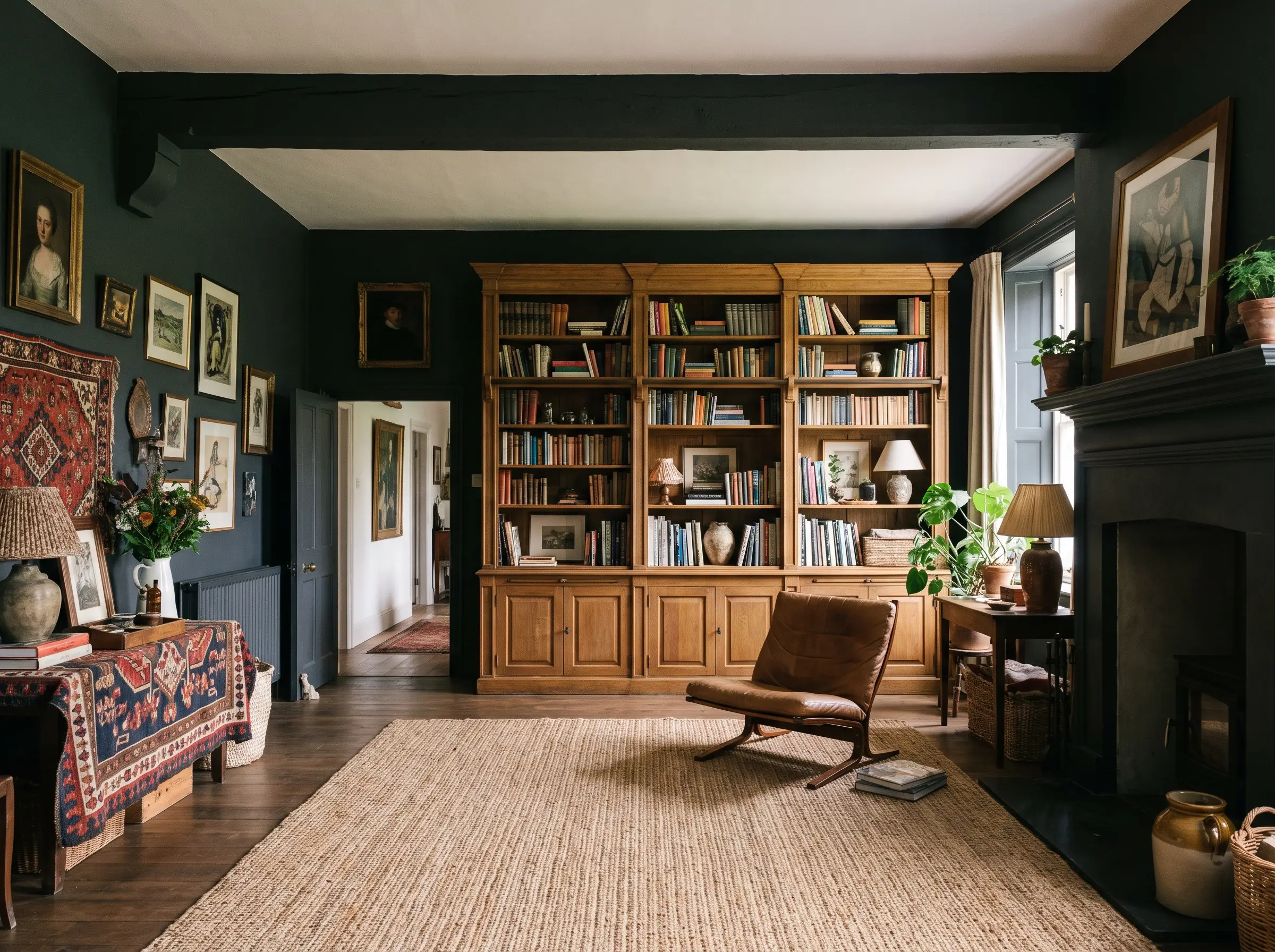
Dainty, undersized furniture simply cannot compete with the aggressive patterns and dark colors of 2027 maximalism. Eclectic spaces require true gravitas, demanding massive, heavy armoires or library bookcases that physically anchor the walls and command undeniable attention.
- Vibe: Imposing, historic, and architecturally substantial.
- Key Materials: Solid oak, walnut, or mahogany antique case goods.
- Spatial Strategy: Place monumental pieces opposite the room’s main entrance to immediately establish scale the moment you walk in.
18. Introduce Burl Wood for Organic Psychedelia
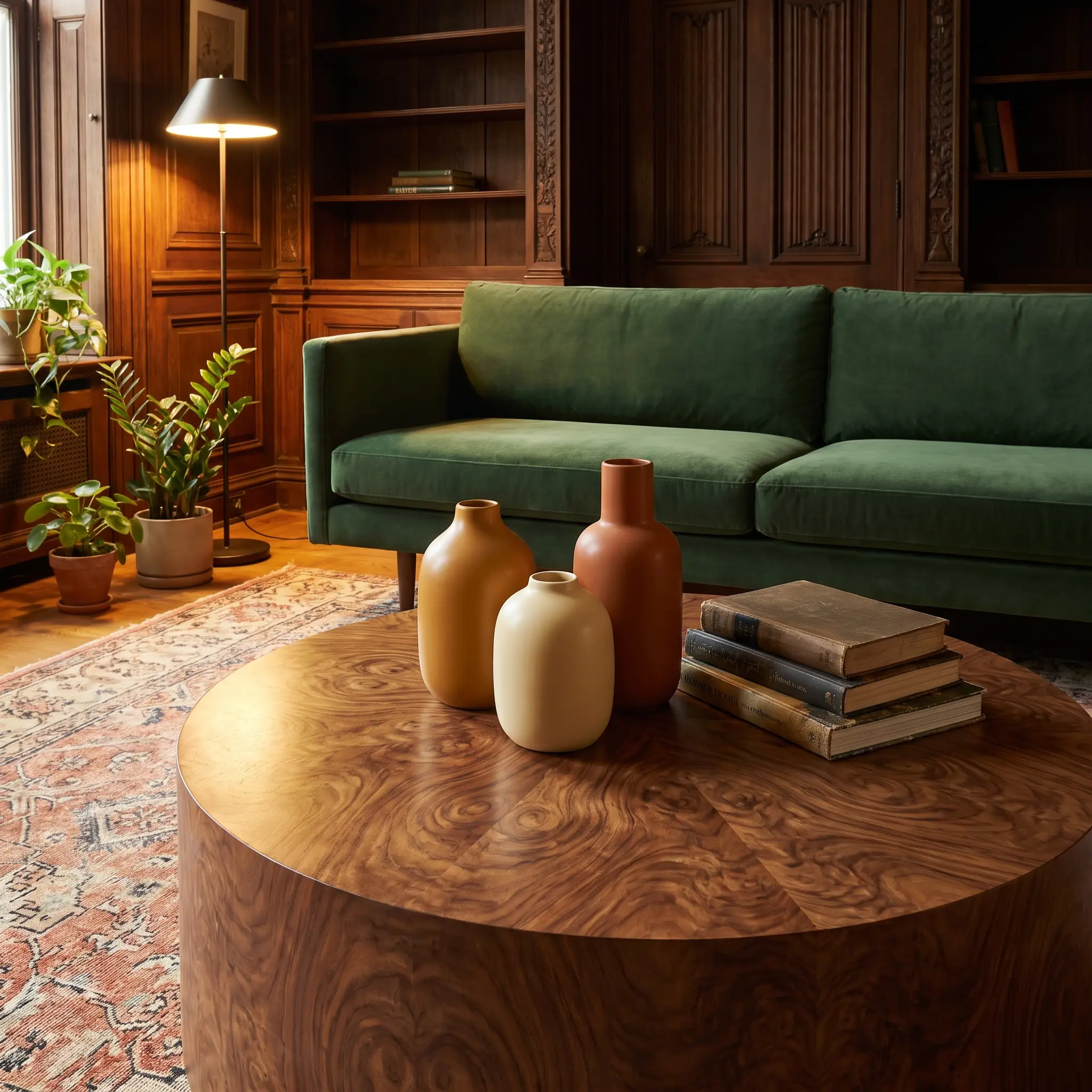
Burl wood functions as a pattern all on its own, offering a swirling, chaotic grain that feels almost psychedelic. Using it for coffee tables or sideboards introduces an organic, highly figured texture that effortlessly bridges sleek modern silhouettes with vintage warmth.
- Vibe: Earthy, hypnotic, and distinctly 1970s glamour.
- Key Materials: Walnut or olive ash burl veneers.
- Pairing Note: Contrast the busy grain of burl wood with perfectly smooth, solid-colored ceramics or glass objects to avoid visual muddiness.
19. Float Contemporary Upholstery in Heritage Shells
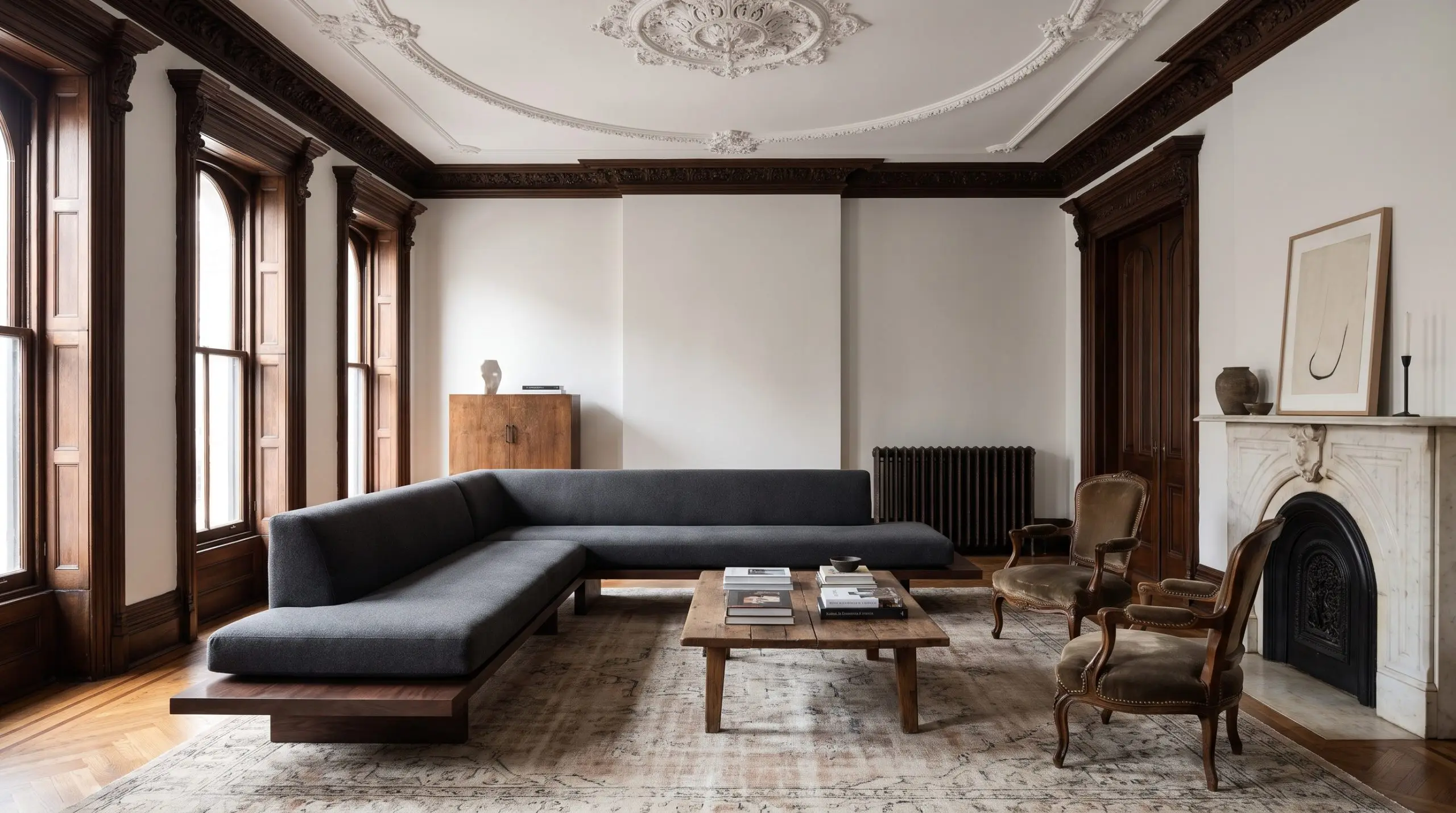
If the room features heavy Victorian moldings, ceiling medallions, and traditional fireplaces, you must actively break that historical rigidity. Floating low-slung, ultra-modern, chunky Italian sofas in the center of the room forces a brilliant, unexpected juxtaposition against the classical architecture.
- Vibe: Avant-garde, rebellious, and fiercely stylish.
- Key Materials: Bouclé or matte wool on modern, plinth-base upholstery.
- Layout Secret: Pull all seating at least 18 inches away from the walls to allow the historic millwork to breathe and assert its presence.
20. Abandon the Matching Dining Set Entirely
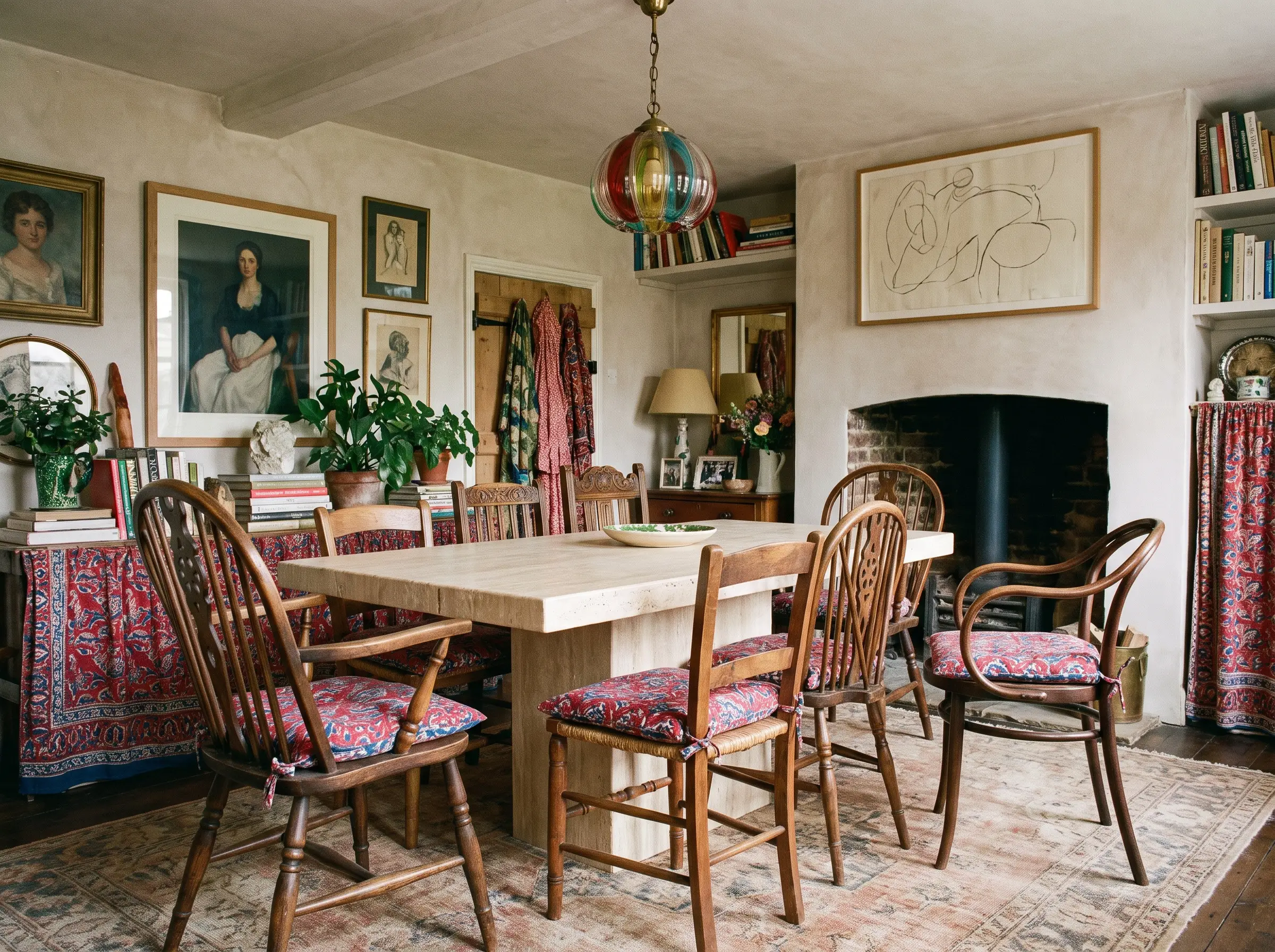
The matched dining set is the antithesis of a collected home. Source a large, simple architectural table and surround it with completely mismatched antique chairs, unifying them solely through the application of the identical fabric on every seat cushion.
- Vibe: Bohemian, deeply personal, and highly resourceful.
- Key Materials: A raw oak or travertine table paired with mixed timber seating.
Micro-Moments: Curated Objects & Sculptural Lighting
The final ten percent of the room is exactly where the “narrative” in Narrative Eclecticism truly lives. This layer is entirely about oddities, monumental art, and sculptural illumination that casts a highly sensory, moody glow over your curated collections.
21. Install Oversized Murano Glass Pendants
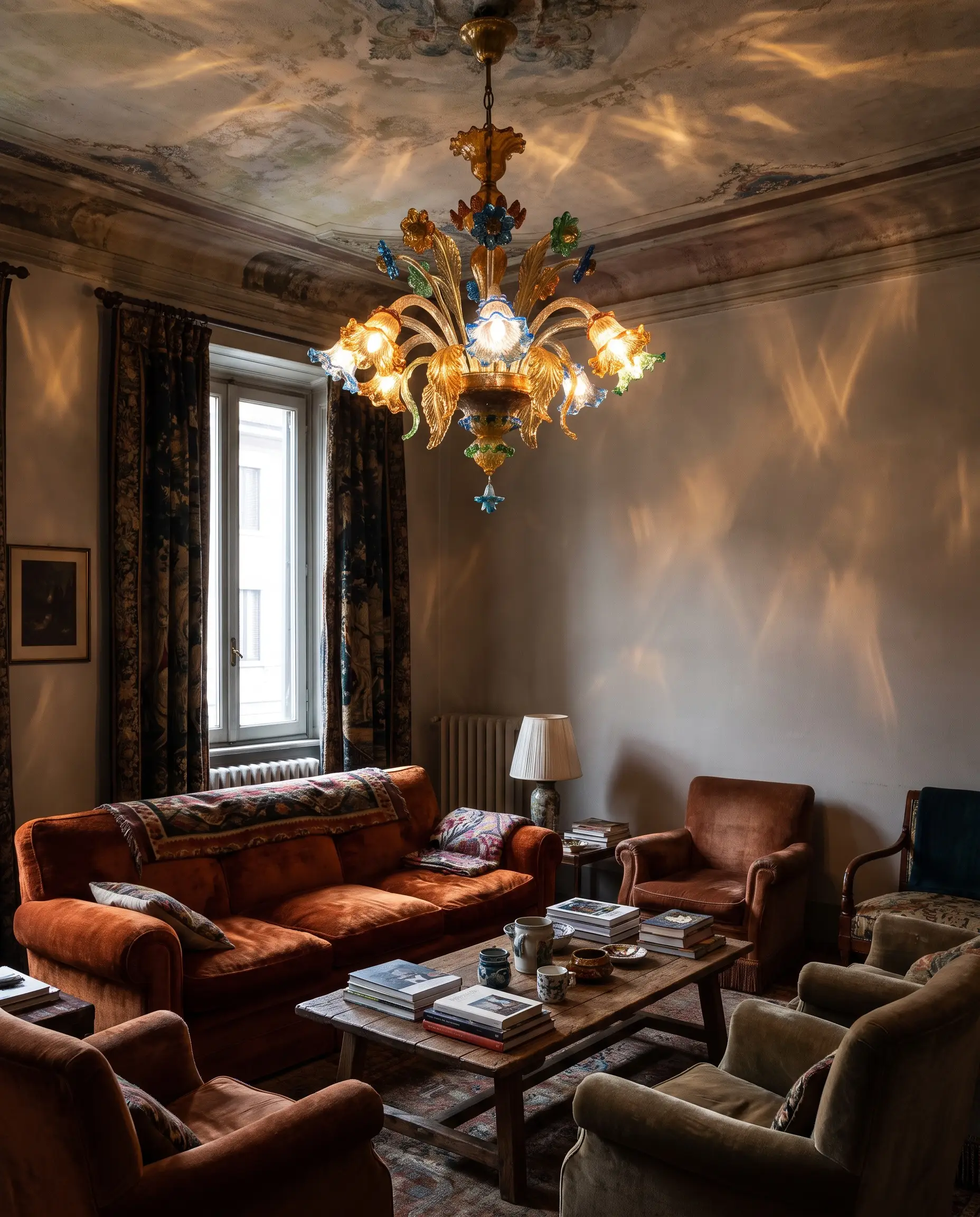
Reject the sterile, clinical glare of minimalist recessed lighting entirely. Massive, colored vintage Murano glass chandeliers act as glowing, translucent sculptures suspended in the center of the room, casting warm, fractured light across the heavy textiles.
- Vibe: Glamorous, atmospheric, and distinctly European.
- Key Materials: Hand-blown Italian Murano glass.
- Lighting Requirement: Put all chandeliers on dimmers to control the exact mood of the room’s shadows.
22. Cluster “Cabinet of Curiosities” Collections
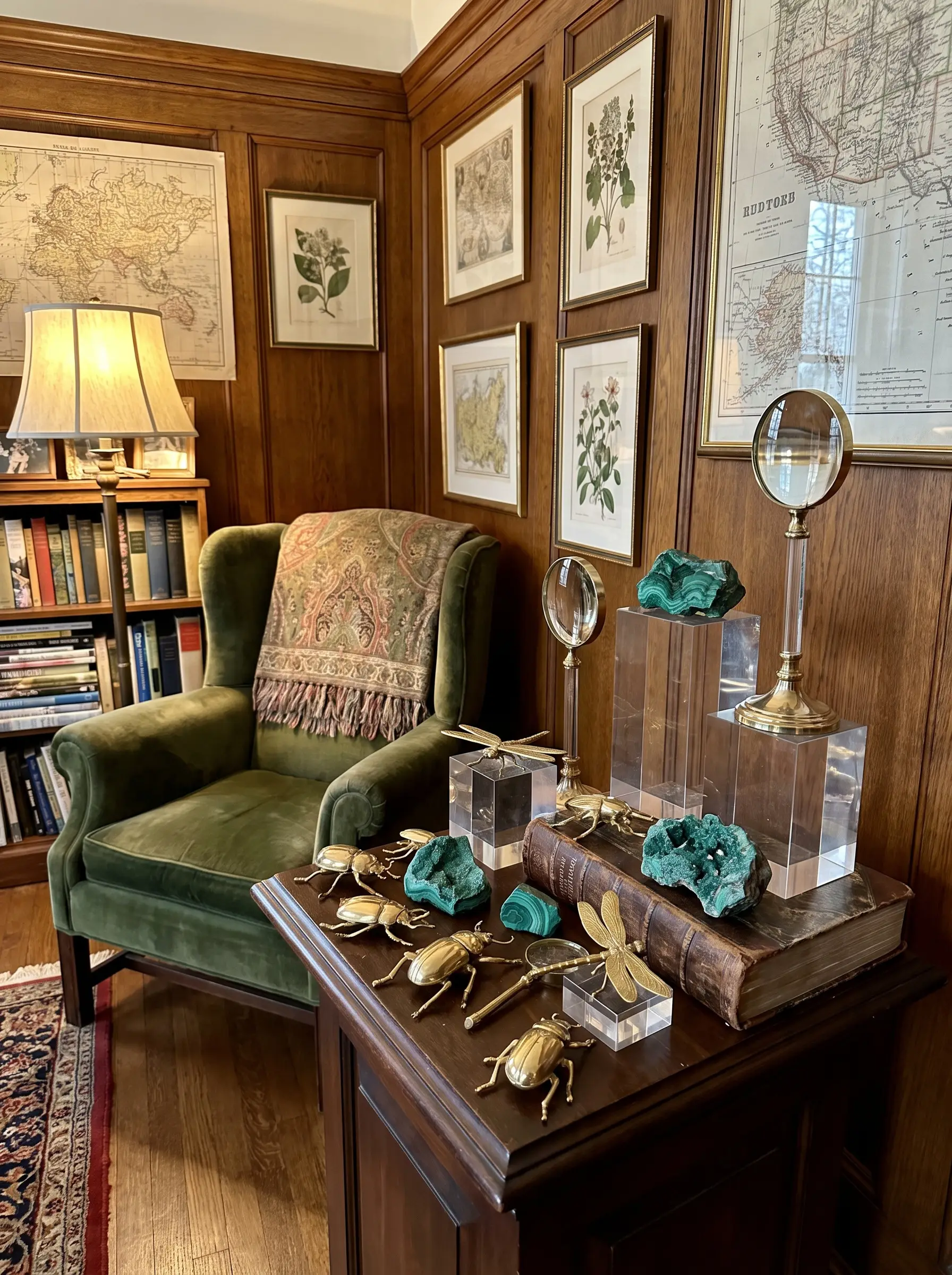
Spreading small decor items evenly around a room instantly devolves into chaotic clutter. Instead, cluster oddities—like vintage brass insects, geological specimens, or antique magnifying glasses—tightly on a single tray or dedicated pedestal to create an intentional, museum-like curation.
- Vibe: Scholarly, eccentric, and intensely focused.
- Key Materials: Brass, malachite, crystal, and aged leather.
- Styling Pro-Tip: Vary the heights within the cluster using small acrylic risers or stacked vintage books to create a micro-skyline.
23. Hang Monumental Contemporary Art over Ornate Fireplaces
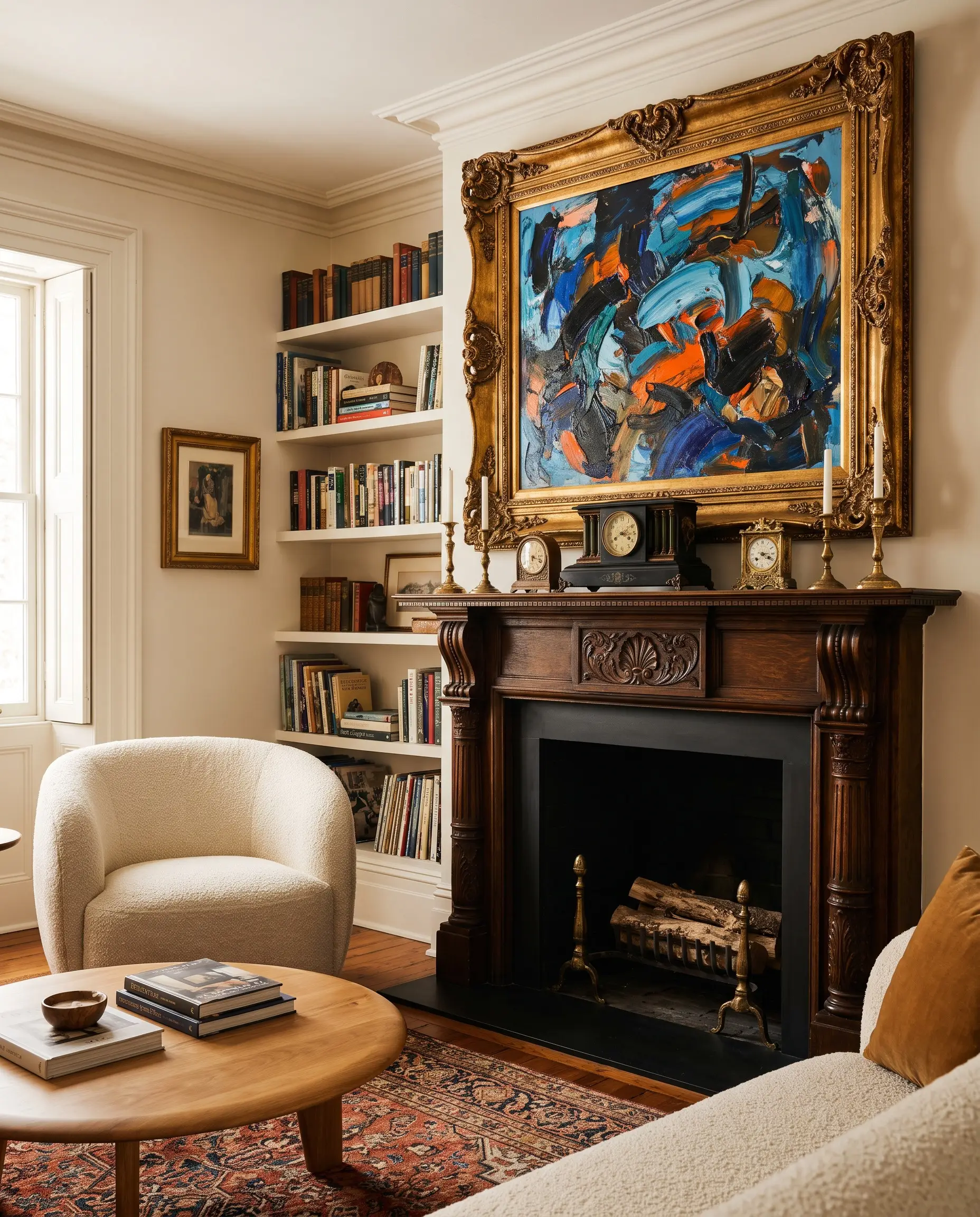
Do not default to hanging traditional landscape paintings in historically traditional rooms. Generate immediate shock value and high-end friction by hanging massive, abstract, fiercely contemporary canvases inside heavy, gilded antique frames directly above the mantle.
- Vibe: Gallerist, provocative, and rule-breaking.
- Key Materials: Abstract acrylic or oil on canvas, paired with 19th-century gilded frames.
- Scale Rule: The canvas should fill at least two-thirds of the empty wall space above the mantle to assert dominance.
24. Utilize Fringed and Fabric-Pleated Lampshades
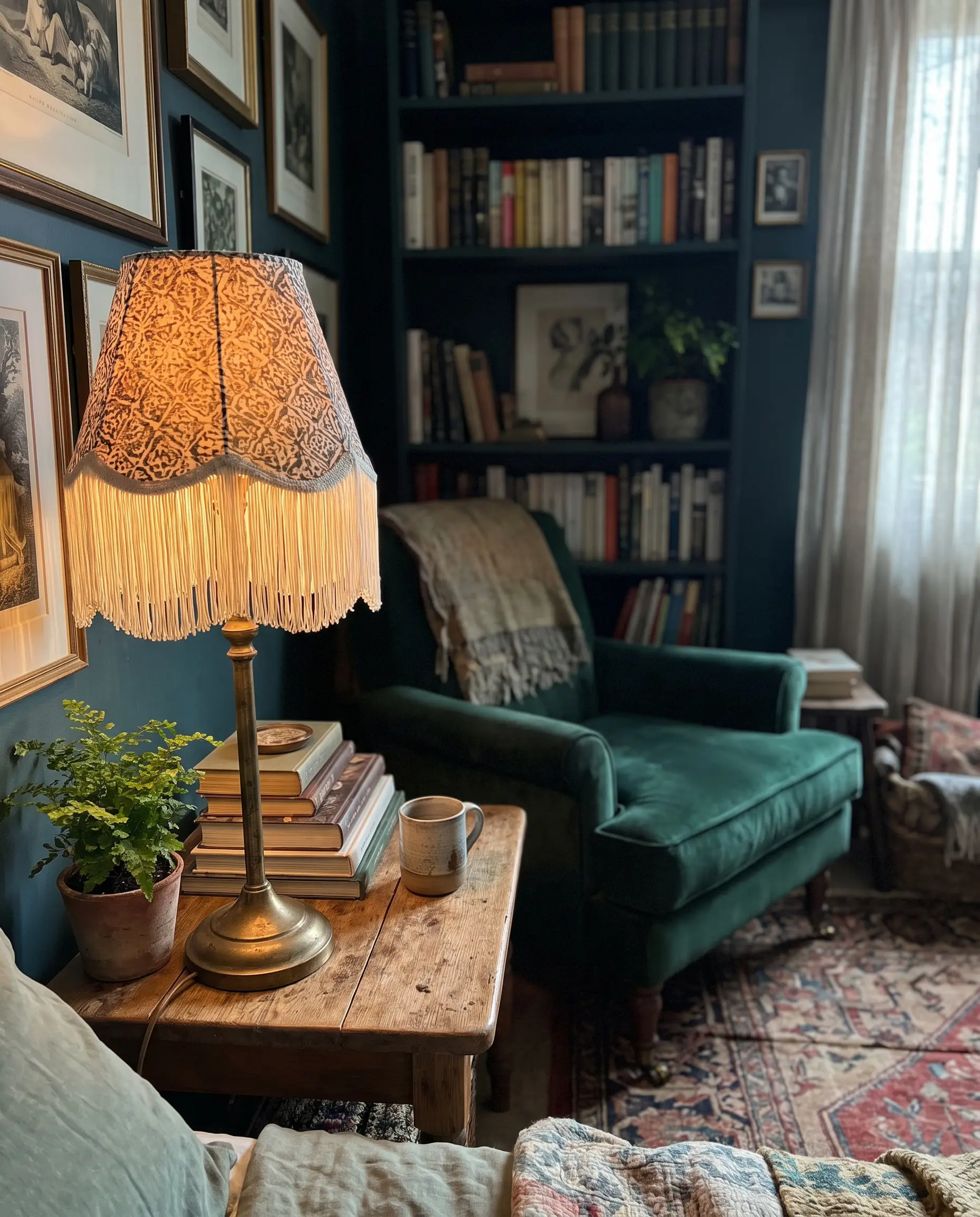
Stark white, drum-style lampshades feel glaring and unresolved in a deeply layered room. Custom pleated silk or block-printed cotton shades, finished with long, sweeping fringe, add a localized layer of softness and intricate pattern directly at eye level.
- Vibe: Romantic, filtered, and heavily textured.
- Key Materials: Block-printed cotton, gathered silk, and silk fringe.
- Design Secret: Line the inside of the shade in a soft pink or amber silk to cast an incredibly flattering, warm glow over the room.
Shop the Look: Material Checklist
- Vintage Murano Glass (for sculptural illumination)
- Gathered Silk (for localized softness)
- Unlacquered Brass (for sparkling friction)
- Olive Ash Burl (for organic psychedelia)
The Curator’s Mandate: Knowing When to Stop
The greatest secret of narrative eclecticism is that editing is just as important as collecting. Maximalism requires breathing room to appreciate the friction between the pieces. Take a photograph of your completed room; if the eye cannot find a single place to rest, you must exhibit restraint and remove one item. Encourage your home to evolve slowly over time, collecting pieces with meaning rather than rushing to fill the void.
Which historical era are you most excited to clash with contemporary design in your own home?

The Aesthetics Desk curates the visual direction for Hackrea. Specializing in design history, global architectural movements, and interior styling, this desk focuses on the psychology of space and how to translate high-end, magazine-quality aesthetics into approachable residential design without falling into fleeting micro-trends.