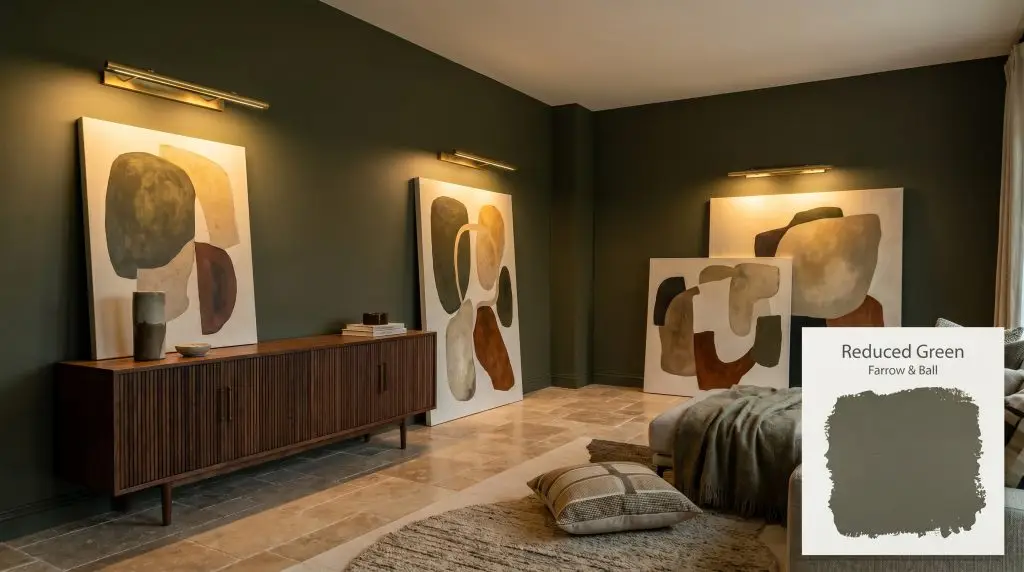
Farrow & Ball Reduced Green (No. 313) is an intense, muddied olive green with deep brown and yellow undertones. Acting as a grounding, earthy neutral, this rich shade brings dramatic warmth and historic depth to both interior and exterior spaces.
Will Reduced Green clash with your room?
Paint Technical Profile
| Color ID / SKU | No. 313 |
| HEX Code | #5c594b |
| Use | Interior, Exterior |
| Best Exposures | South, West, East |
| Best For | Cabinets, Libraries, Trim, Accent Walls |
Farrow & Ball Reduced Green: How This Earthy Olive Transforms Shadow and Light
Some colors sit politely on the wall, while others entirely redefine the boundaries of a room. Farrow & Ball Reduced Green is a masterclass in the latter, acting as a stabilizing force that instantly wraps a space in quiet, architectural confidence. It does not try to artificially brighten a room; instead, it embraces the shadows.
This is a color built for tactile environments. When you pair this muddied green with tumbled travertine, unlacquered brass, or the rich grain of reeded walnut, it stops feeling like just a paint color and starts feeling like a structural material.
It is a historic neutral with a remarkably modern edge. By understanding exactly how it absorbs light and shifts throughout the day, you can use this earthy shade to create spaces that feel incredibly intentional, curated, and effortlessly lived-in.
Farrow & Ball Reduced Green: Undertones & LRV
When deciding if Farrow & Ball Reduced Green leans warm or cool, the answer is definitively warm. This is not a crisp, icy botanical; it is a rich, sun-baked shade that pulls its energy straight from the soil. That inherent warmth is exactly what makes it feel so inviting in residential spaces.
To truly understand how this color will behave on your walls, we have to look closely at its structural DNA:
With an estimated Light Reflectance Value (LRV) of 10.5, Reduced Green is a highly absorbent shade. It bounces almost no light back into the room, meaning it creates massive visual gravity wherever it is applied. This low LRV is your greatest design asset when you want to blur the hard corners of a room and create a seamless, enveloping atmosphere.
Lighting Effects: The Shifting Nature of Reduced Green
Because this shade relies so heavily on its earthy base, its final appearance is entirely at the mercy of your home’s lighting. It is a true chameleon that transitions drastically from morning to night.
Here is exactly how the light will manipulate this color structure:
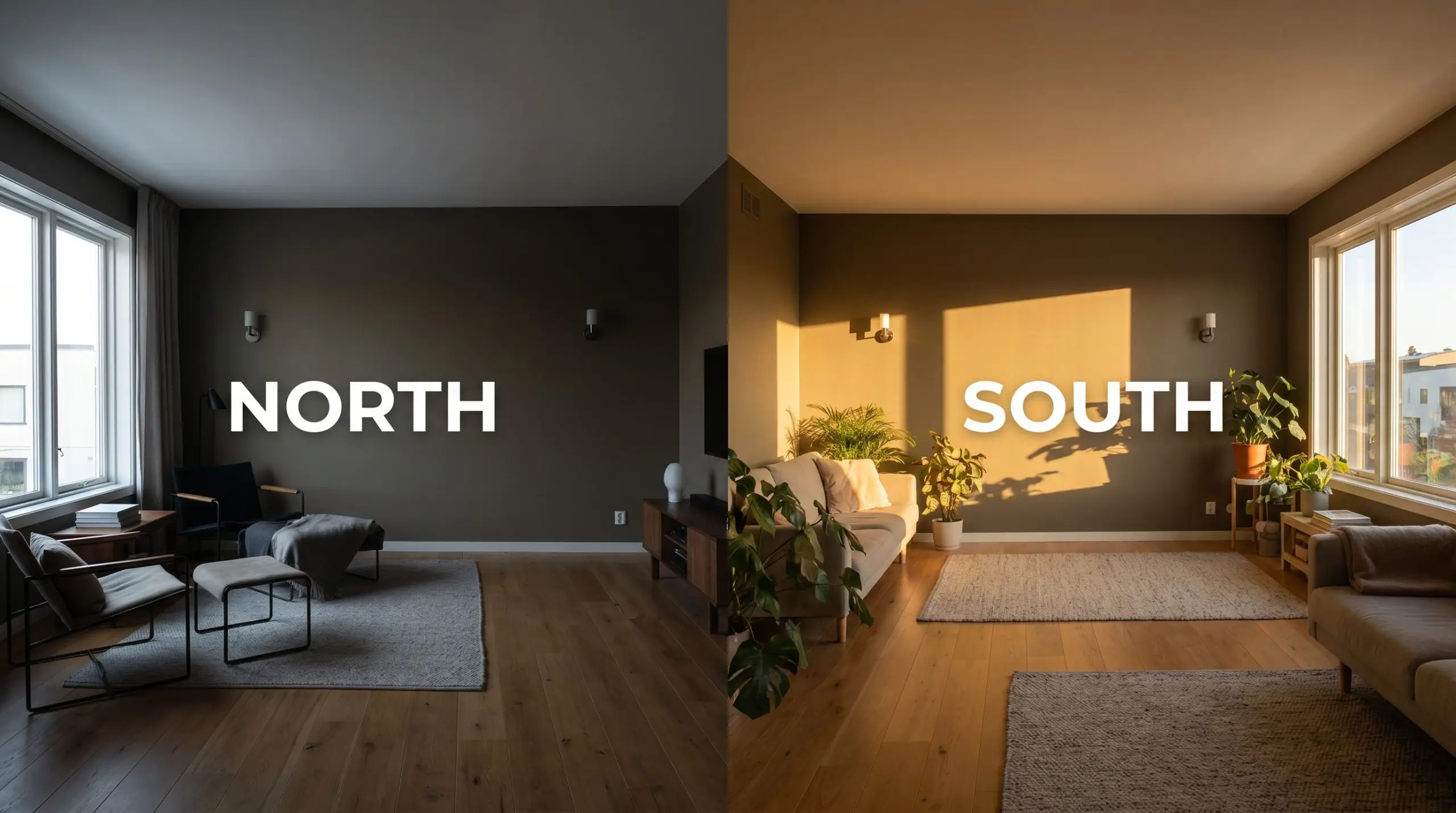
Never try to force a low-LRV color like this to act bright. If you are painting a dimly lit room, lean into the darkness. Pair it with layered, low-level lighting—like brass picture lights and minimalist sconces—to create pools of warmth against the shadowed walls.
Hackrea Pro-Tip (The Shadow Strategy)
Popular Applications
A color with this much visual weight demands intentional placement. Reduced Green thrives in spaces where you want to create a sense of permanence, tactile richness, or dramatic contrast against lighter adjoining rooms.
Library and Study Paneling
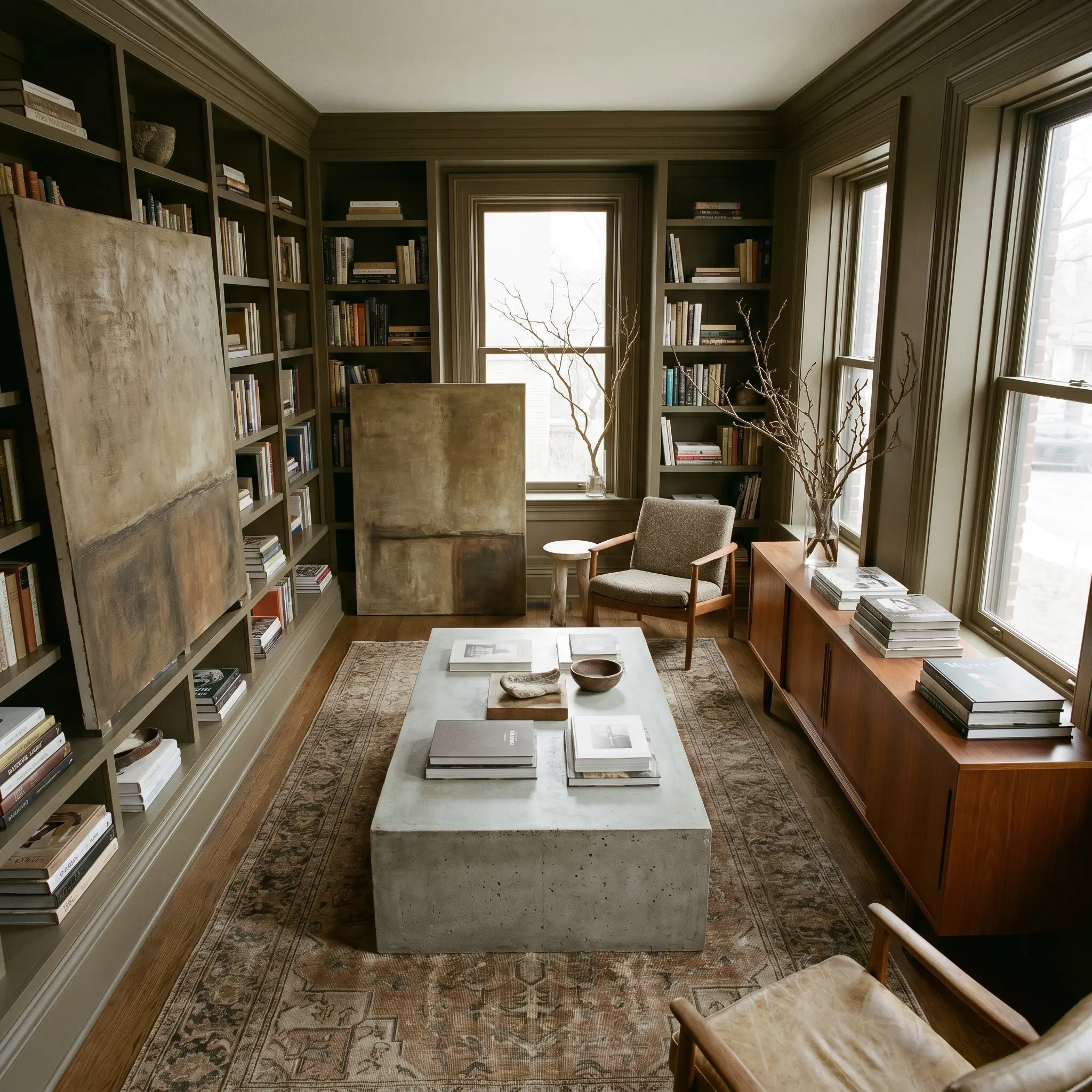
When applied to extensive woodwork or built-in bookcases, this shade instantly establishes a foundation of quiet focus. For the remote worker who needs a space free from visual distraction, wrapping the room in this olive tone creates a cocooning effect.
To prevent the room from feeling like a dusty, forgotten parlor, push the styling toward eclectic modernism. Pair the painted paneling with a brutalist coffee table, a sleek mid-century credenza, and oversized abstract canvases. The tension between the historic wall color and the sharp, contemporary furniture creates a beautifully curated friction.
If you are painting the built-ins, carry the color across the baseboards and window casings. This seamless application method stops the eye from jumping around the room, allowing the books, stacked art, and sculptural branches to take center stage.
Kitchen Cabinetry
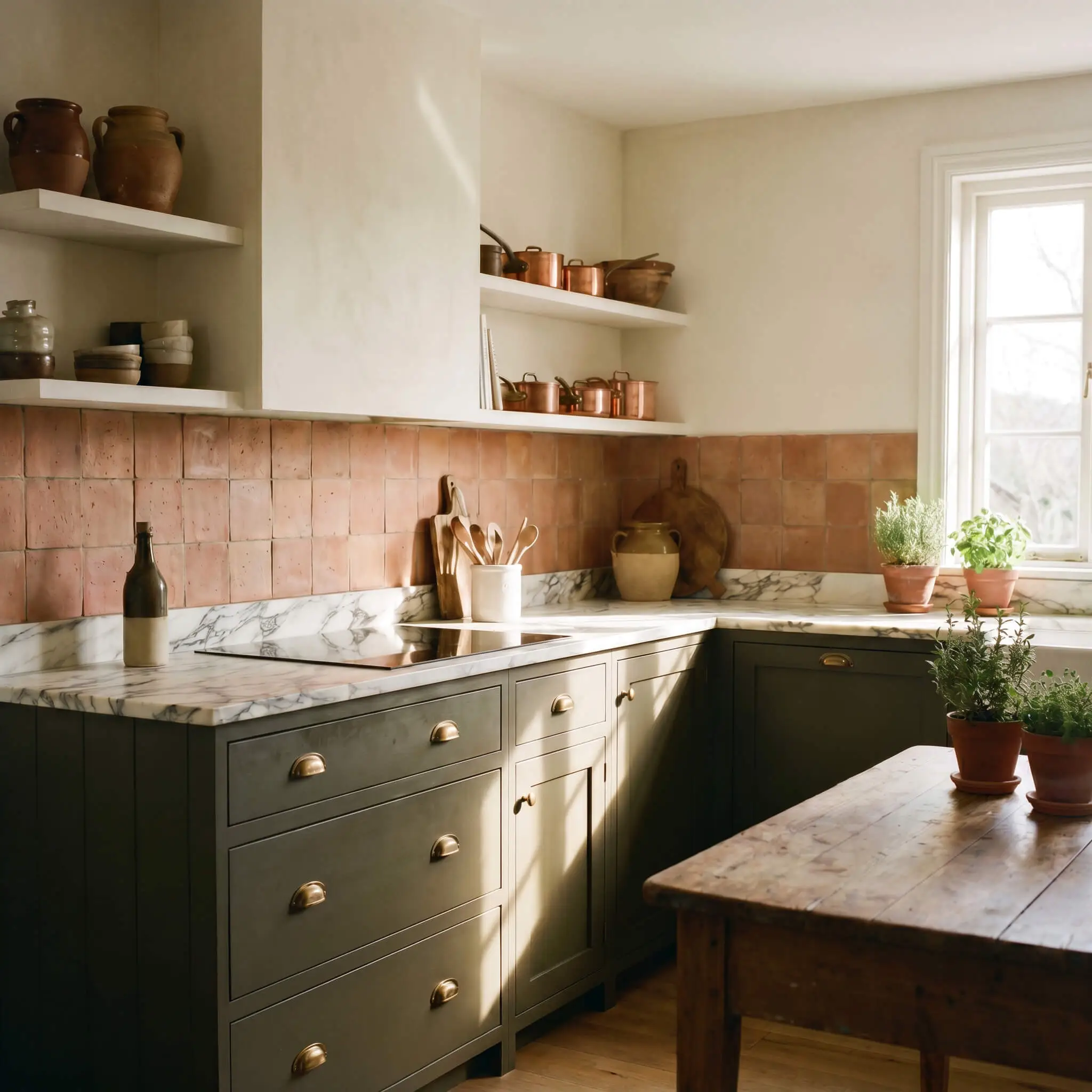
Using this earthy tone on kitchen cabinetry completely changes the temperature of the home’s busiest workspace. It is a brilliant alternative to stark navy or predictable charcoal, offering a warmth that feels incredibly inviting for the avid home chef.
This color begs for organic, living finishes. Top the olive cabinets with honed soapstone or heavily veined marble, and finish the look with unlacquered brass hardware that will patinate over time. If you have a kitchen with brilliant southern exposure, the yellow-green notes will sing beautifully against a backsplash of handmade, unglazed terracotta tiles.
If a fully dark kitchen feels too heavy for your layout, use Reduced Green exclusively on the lower cabinets or a central island. Keep the upper walls finished in a chalky, unbleached parchment white to maintain a sense of vertical lift.
Hackrea Design Secret (The Two-Tone Balance)
Mudrooms and Boot Rooms
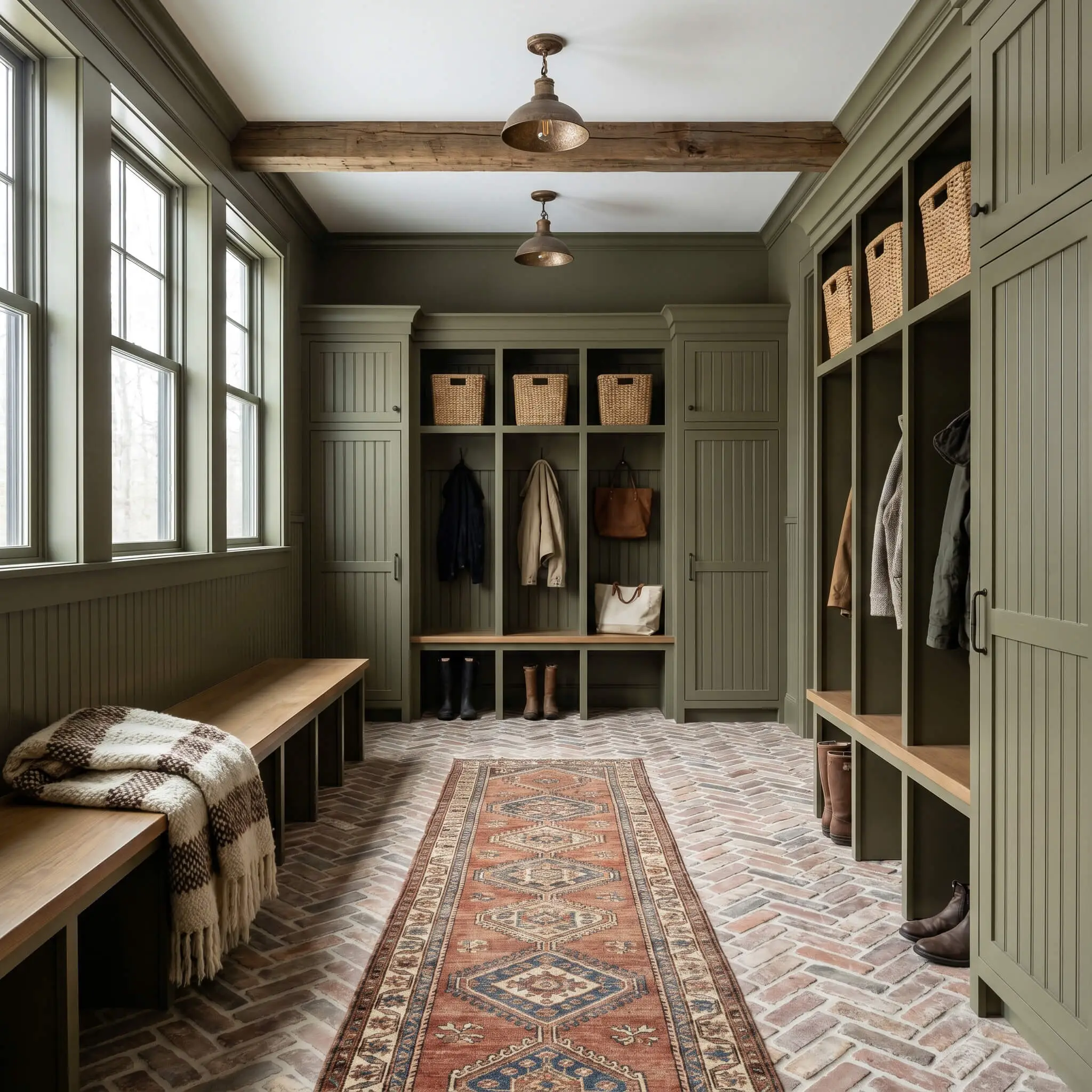
Mudrooms are inherently utilitarian, but that doesn’t mean they should lack stylistic impact. This muddied green is exceptionally forgiving, easily masking the scuffs and daily wear of a busy family drop zone.
Lean into a contemporary rustic aesthetic by pairing the painted beadboard or custom lockers with heavily textured flooring. Tumbled brick laid in a herringbone pattern or rugged slate tiles create a gorgeous, earthy dialogue with the olive walls.
To soften the hard architectural lines of the cabinetry, introduce organic textiles. A vintage tribal runner, woven cane baskets for storage, and a worsted wool throw casually draped over a bench seat will make the space feel collected rather than purely functional.
Exterior Front Doors and Trim
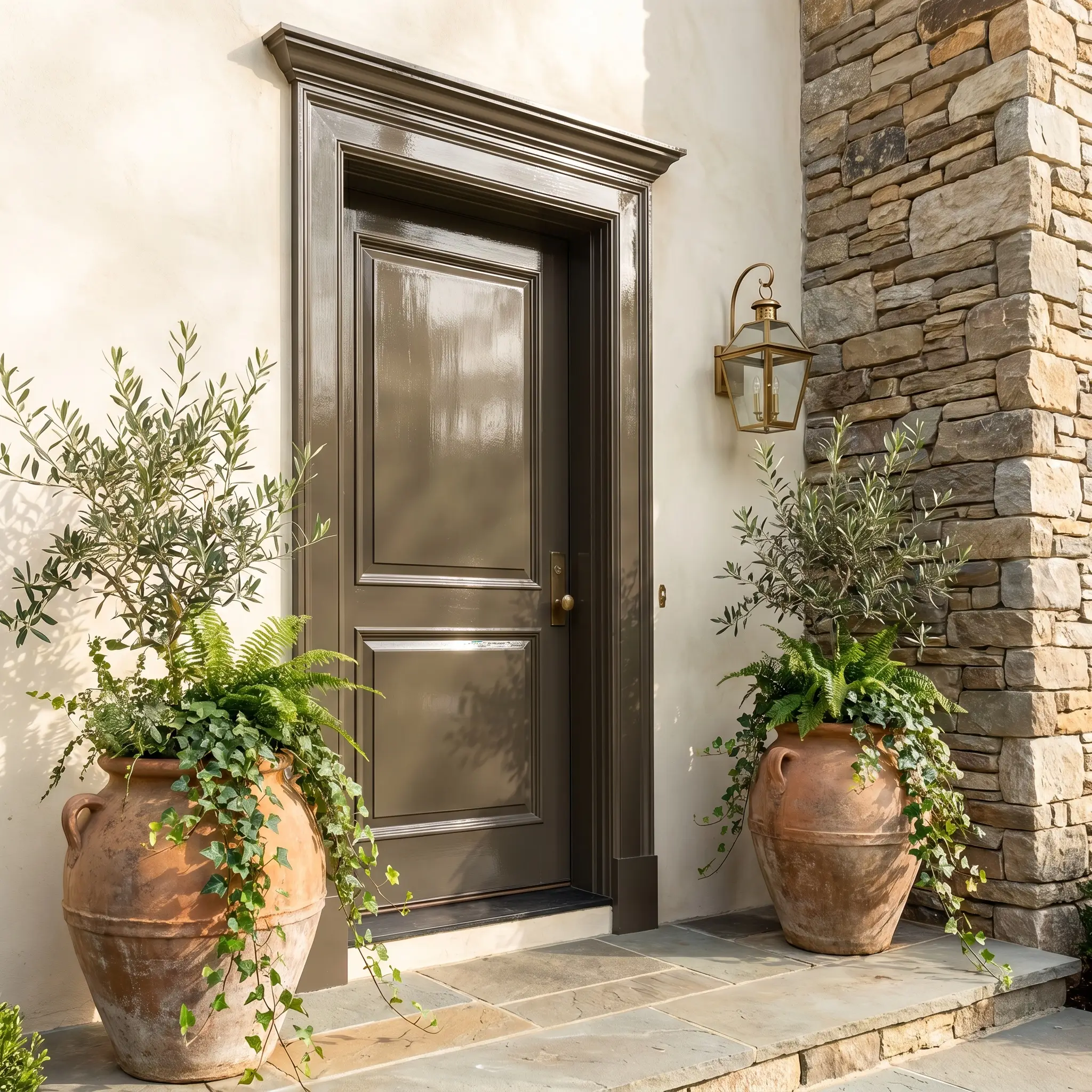
On an exterior facade, natural sunlight washes out a significant amount of a paint’s intensity. Because Reduced Green has such a low LRV and a dense color structure, it holds its ground beautifully outdoors without turning pastel or weak.
It is an incredibly sophisticated choice for front doors, window sashes, and architectural trim, especially when set against natural stone, creamy stucco, or weathered cedar shingles. Finished in a high-gloss exterior lacquer, the door becomes a luminous, jewel-like focal point that hints at the curated design waiting inside.
Flank the entryway with oversized, patinated urns trailing with loose botanicals. The organic olive tone of the door will seamlessly bridge the gap between your home’s architecture and the surrounding landscape.
Cozy, Windowless Powder Rooms
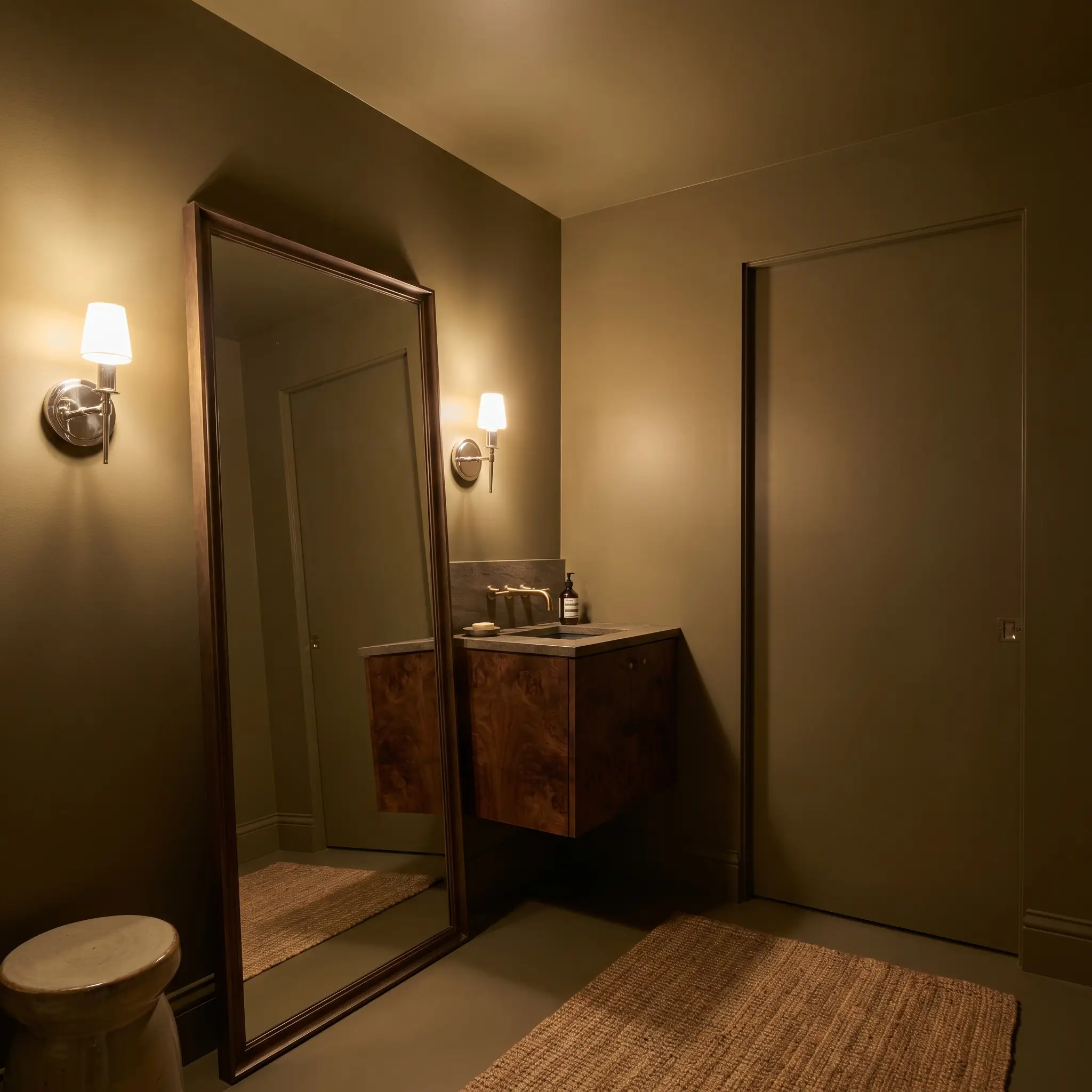
Windowless powder rooms are the perfect laboratory for high-impact design. Instead of fighting the lack of natural light, use this shade to create a shadowed, immersive sanctuary.
Color drenching is the ultimate strategy here. Paint the walls, the ceiling, the baseboards, and the door interior in the exact same finish. This completely dissolves the room’s hard boundaries, making the small space feel endless rather than cramped.
To break up the dense color, introduce highly reflective and textural materials. A floating vanity carved from burl wood, an oversized leaning mirror, and polished nickel sconces will bounce your warm artificial light around the room, creating a glowing, intimate atmosphere.
Best Pairings and Coordinating Colors for Reduced Green
This muddied green does not act as a passive backdrop; it actively dictates the energy of everything placed against it. Because of its dense light absorption, it requires surrounding materials that can either match its visual gravity or provide a sharp, luminous contrast to keep the room feeling dynamic.
Tailored Trim and Baseboard Combinations
Choosing the right trim color is entirely about controlling the boundary lines in your room. If you want a crisp, defined architectural frame, Benjamin Moore White Dove OC-17 provides a soft, shaded contrast that establishes a clean border without feeling stark.
For a more atmospheric approach, Sherwin-Williams Shoji White SW 7042 introduces a subtle beige warmth that creates a seamless tonal bleed from the wall to the woodwork. Farrow & Ball Slipper Satin No. 2004 acts as the ultimate companion, offering a beautifully muted, chalky finish that makes the entire room feel incredibly intentional and cohesive.
Tactile Hardware and Material Pairings
To truly elevate this shadowed shade, you must introduce textures that play with light and shadow. Unlacquered brass is the ultimate hardware choice here, as its living, reflective finish bounces much-needed warmth around the room, creating a striking metallic glow against the matte walls.
For hard surfaces, dramatically veined Calacatta marble acts as a brilliant counterbalance. The cool, crisp white background of the stone lifts the entire palette, while the dark veining speaks directly to the olive’s earthy base.
When selecting furniture or flooring, reeded walnut introduces a deep, organic warmth that grounds the room without competing for attention. Soften these structured materials by incorporating worsted wool textiles, which add a layer of tailored comfort that perfectly matches the paint’s quiet confidence.
Complementary Accent Colors
Curated Designer Mood Boards
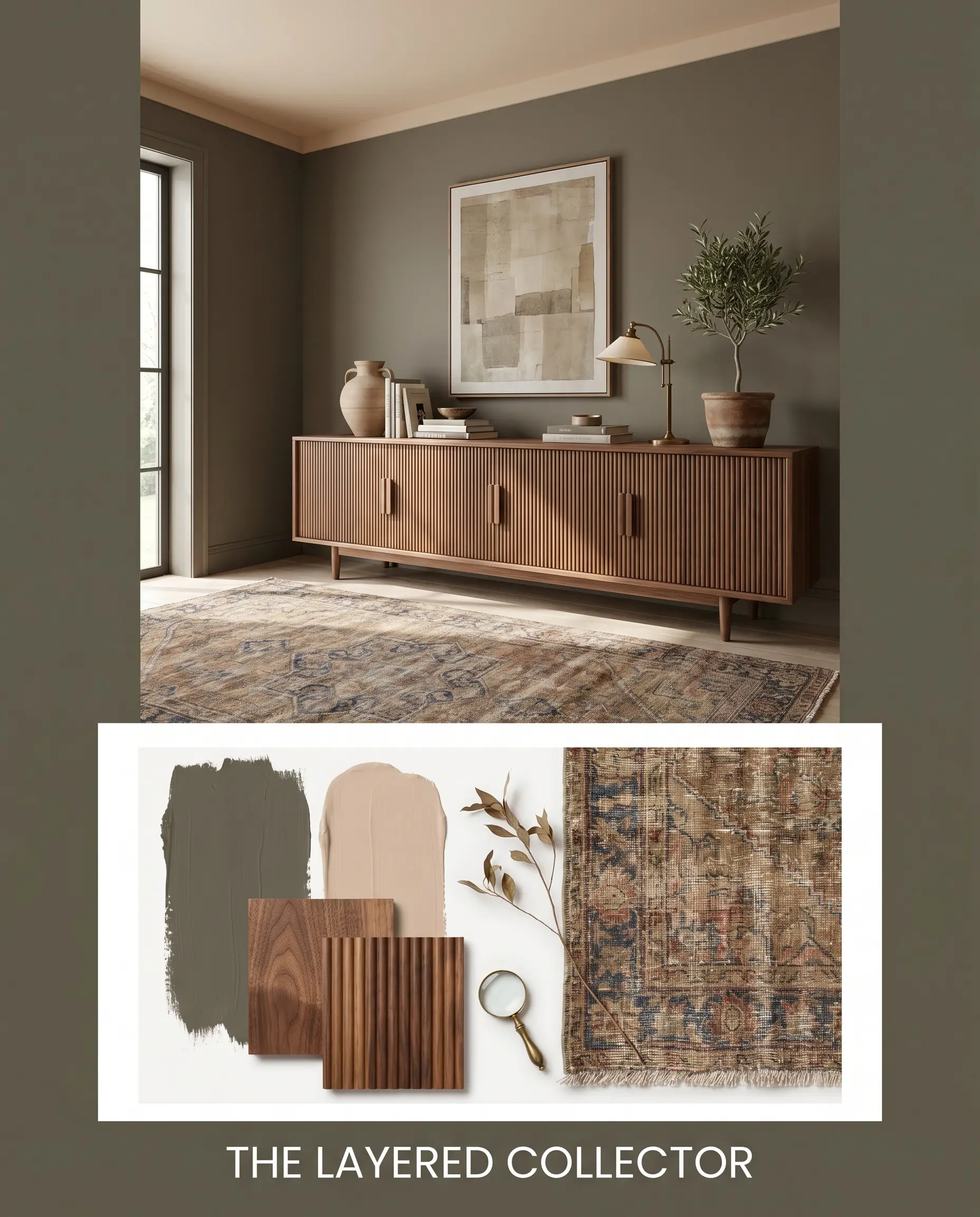
The Layered Collector This palette leans into a curated, transitional energy that feels collected over decades. The walls provide a dense, stabilizing foundation, allowing the soft warmth of Farrow & Ball Setting Plaster on the ceiling to create an enveloping, tented atmosphere. Incorporate a mid-century credenza crafted from reeded walnut and finish the styling with stacked art books and vintage rugs to build a deeply personal, inviting mood.
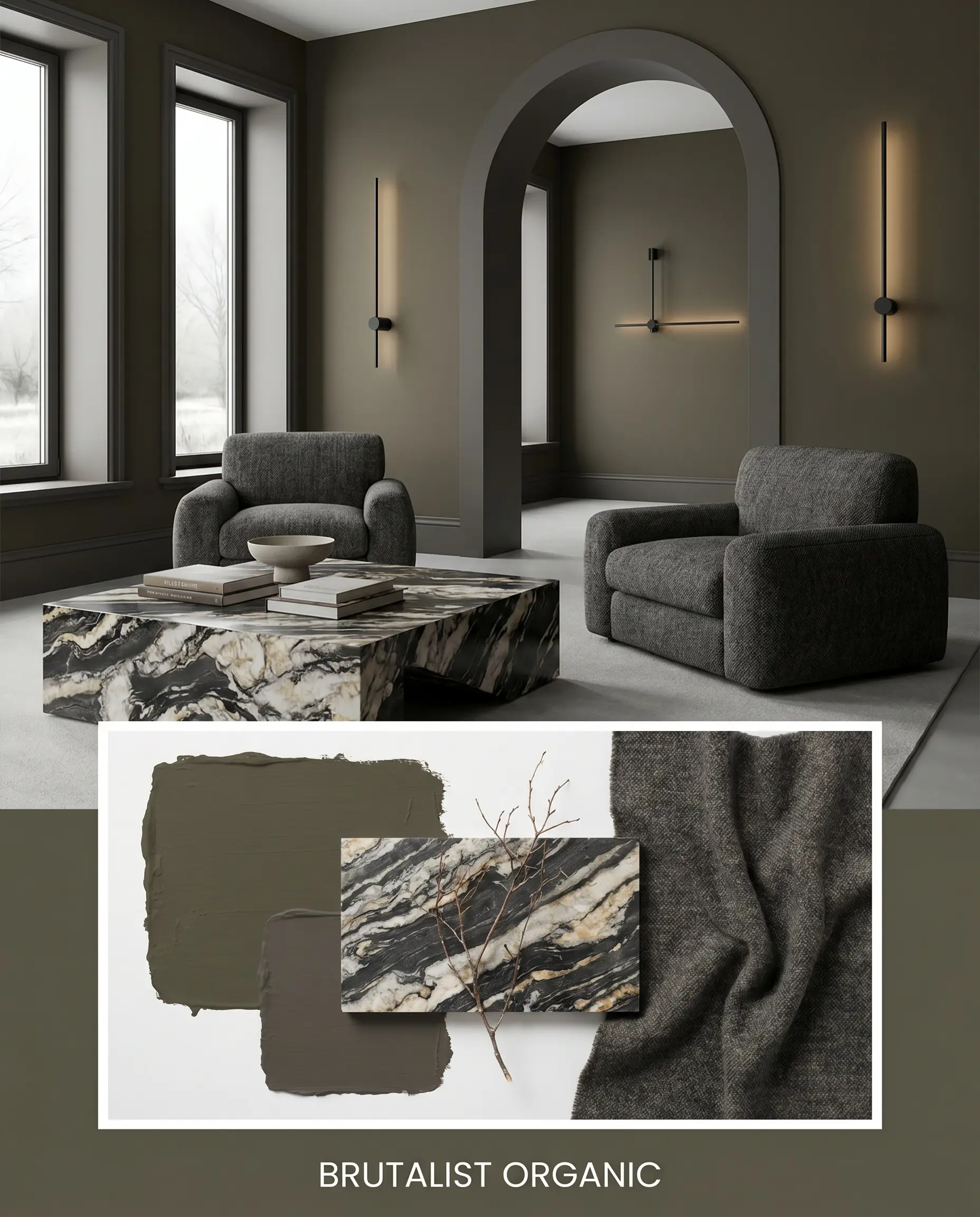
Brutalist Organic For a sharper, contemporary aesthetic, this combination relies on high-contrast architectural tension. Frame the room with Sherwin-Williams Urbane Bronze on the doors and trim to pull the darkest shadows out of the olive paint. Anchor the space with a dramatically veined marble coffee table, minimalist sconces, and worsted wool upholstery to create a room that feels brilliantly moody and decisively modern.
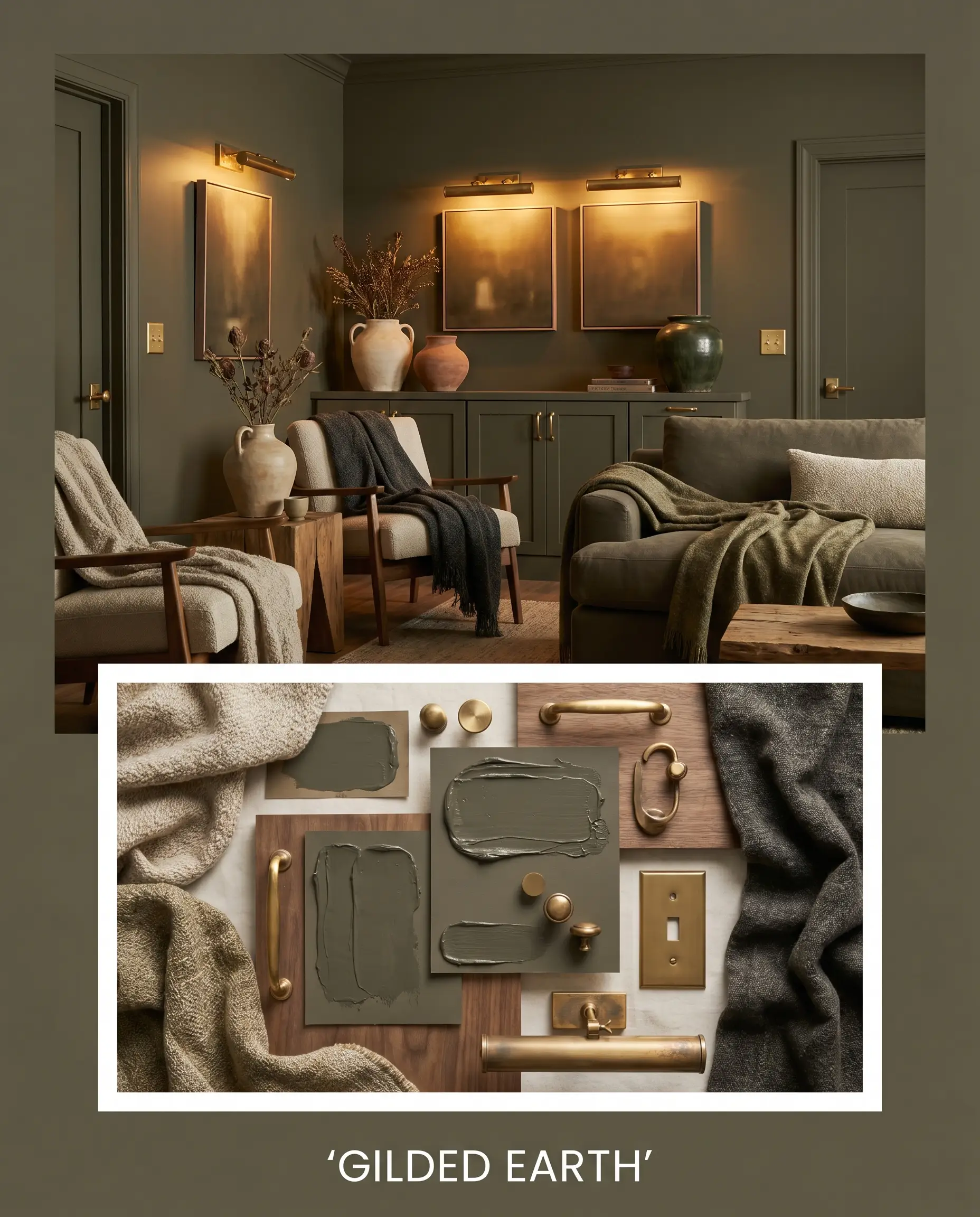
Gilded Earth This approach uses metallic brilliance to cut through the paint’s natural light absorption. By outfitting the space entirely with unlacquered brass hardware and brass picture lights, you create pools of golden warmth that activate the yellow-green pigment in the walls. Pair this with oversized ceramics and textural throws to keep the resulting elegance feeling grounded and approachable.
Head-to-Head Paint Comparisons
Comparing these dark, earthy shades comes down to understanding your room’s natural light and deciding exactly how much structural depth you actually want. A slight shift in undertone can dramatically alter whether a room feels like a cozy retreat or a stark cavern, so choosing the right rival is critical.
Farrow & Ball Reduced Green vs. Farrow & Ball Studio Green
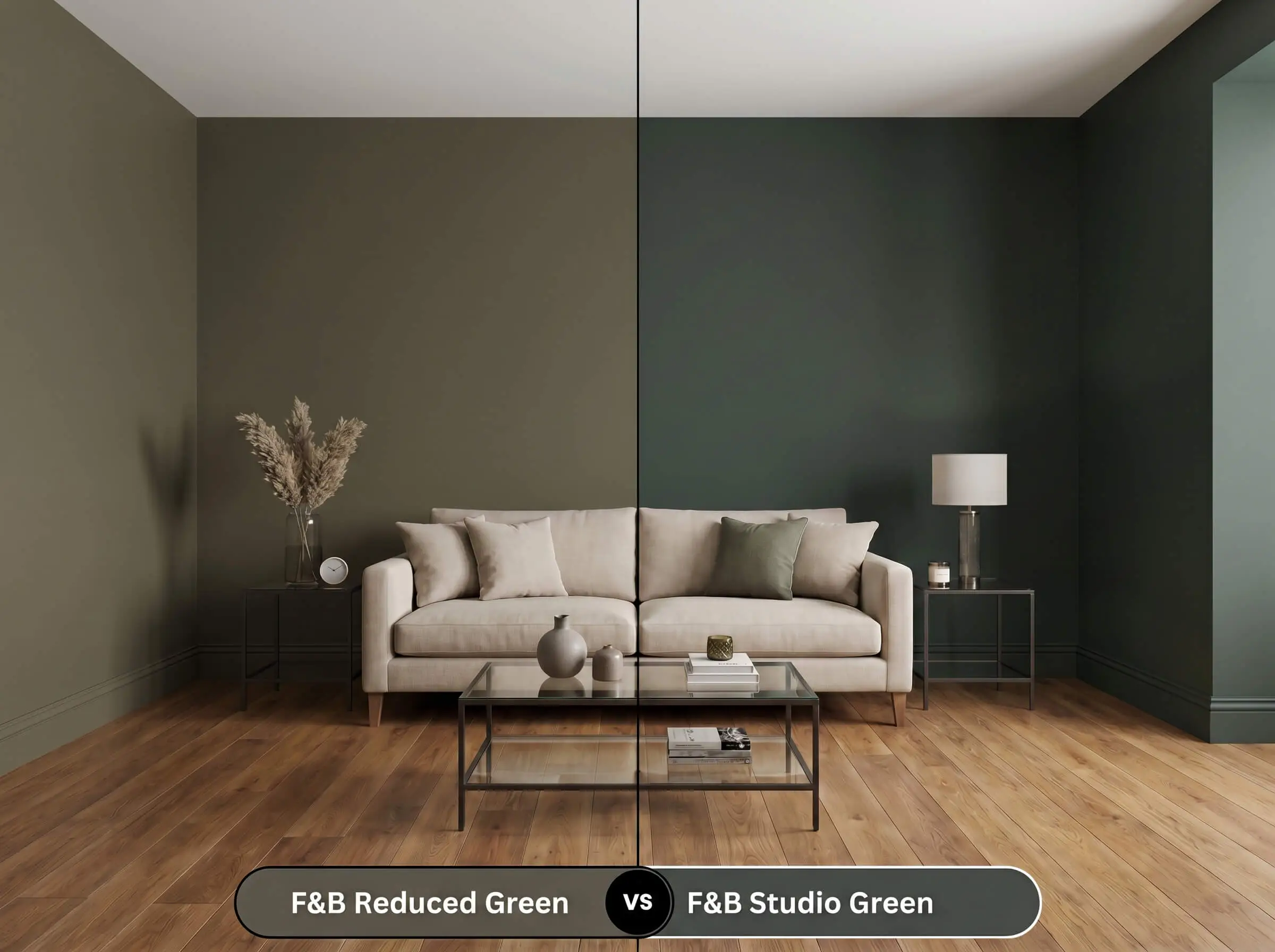
If you want a green that reads almost black in the evening, then choose Studio Green. Its incredibly dark, cool profile makes it a favorite for ultra-moody, dramatic spaces. However, if your room lacks natural light and you still want the color to visibly register as a warm, muddied olive rather than pure shadow, then Reduced Green is the far superior option.
Farrow & Ball Reduced Green vs. Little Greene Invisible Green
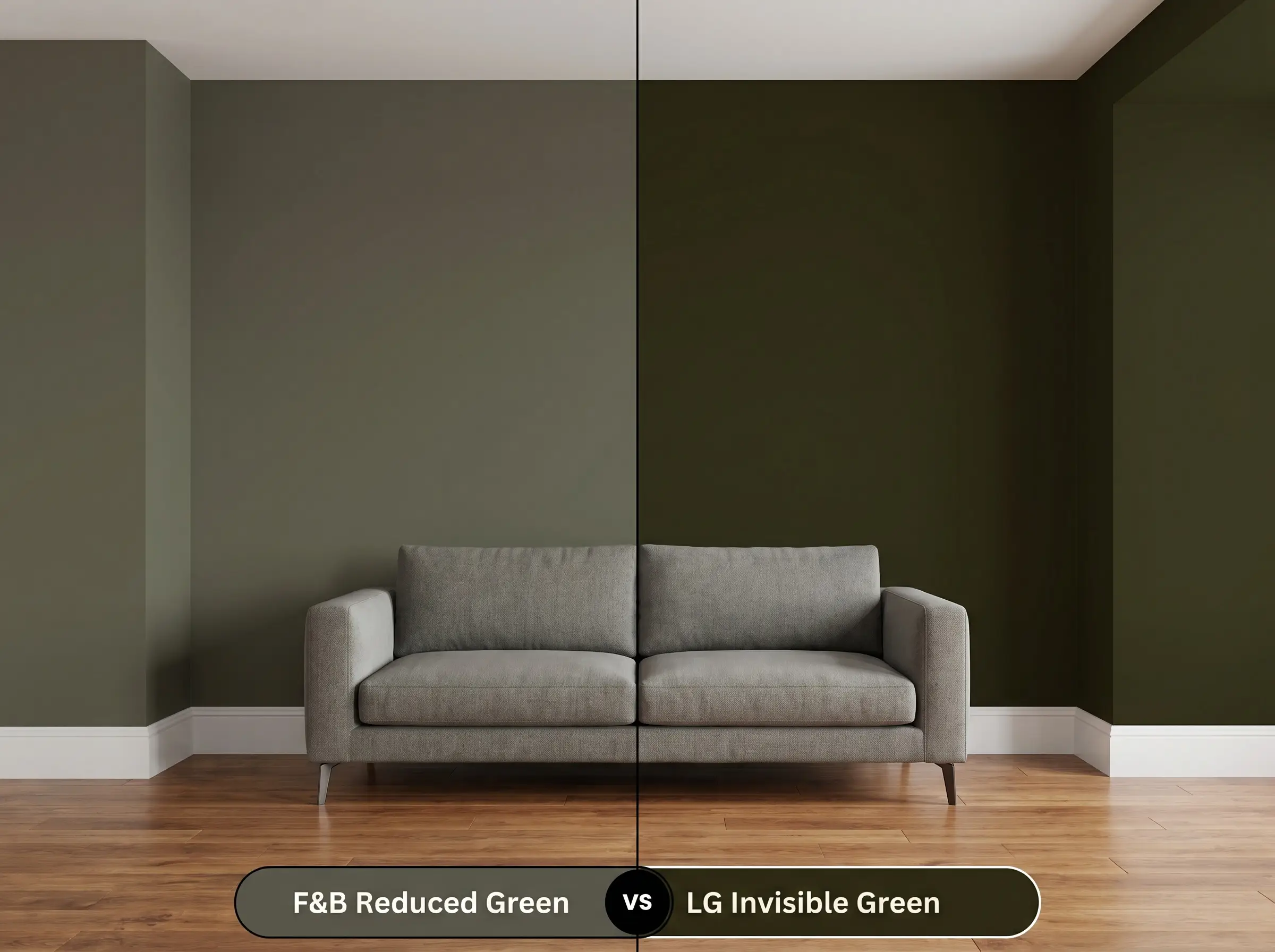
If you are styling a vibrant, heavily patterned room that needs a lively, grassy backdrop, then Little Greene’s shade will perform beautifully. It has a much crisper, botanical energy. If you need a muted, shadowed neutral to anchor rich woods and brass hardware without competing for attention, then stick with Farrow & Ball’s earthy structure.
Farrow & Ball Reduced Green vs. Benjamin Moore Mohegan Sage
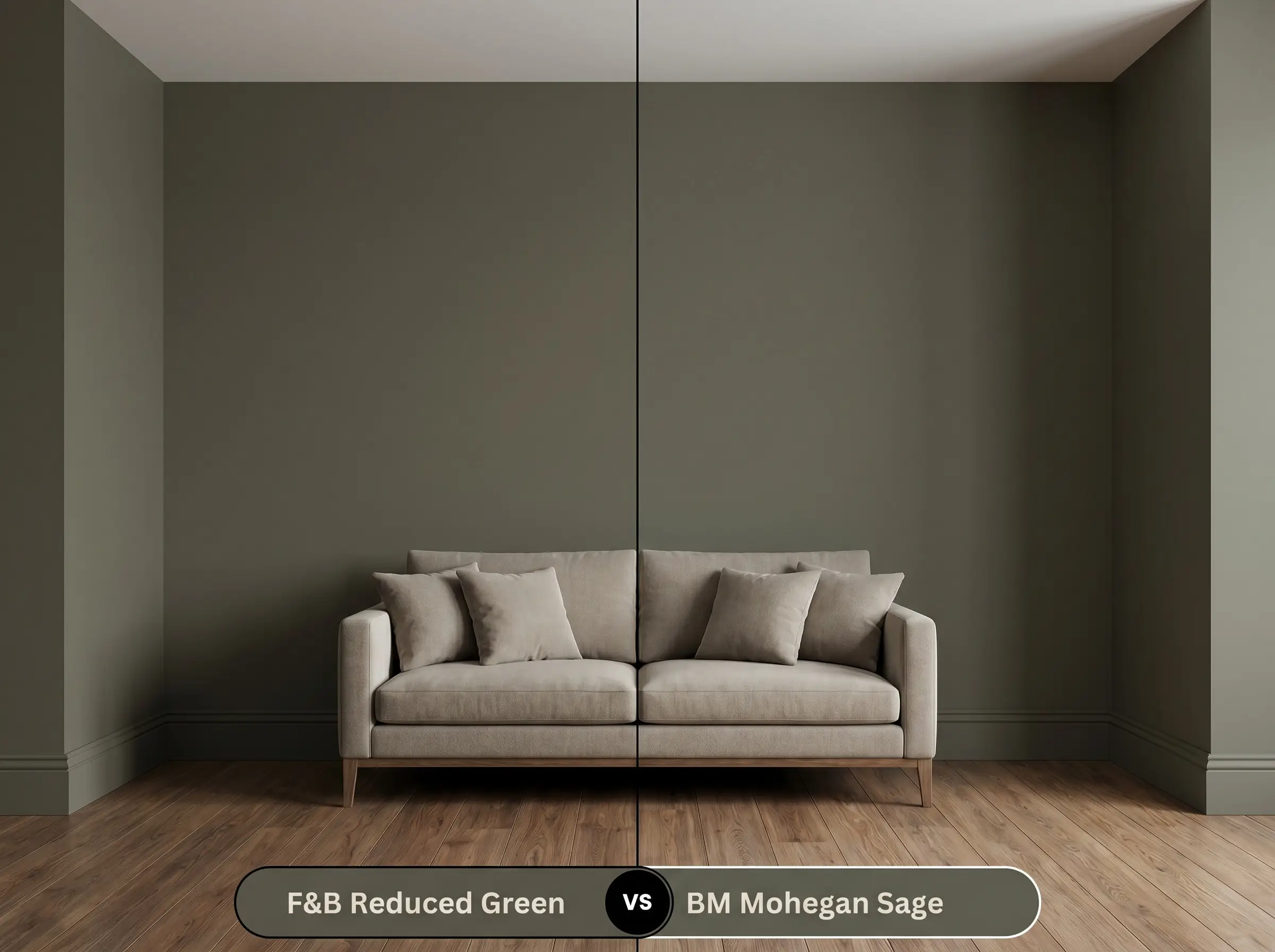
If you prefer a slightly cleaner, more conventional sage that plays predictably well with standard white ceilings, then Mohegan Sage is highly reliable. If you want a historically rooted, complex pigment that shifts unpredictably throughout the day and feels intensely tactile, then Reduced Green provides that premium curatorial nuance.
Alternative Shades & Brand Equivalents
Sometimes a room’s specific lighting dictates that you need just a fraction more warmth, or perhaps you need to match this aesthetic using a different manufacturer. These alternatives capture a similar energy while offering slight variations in their foundational structure.
Farrow & Ball Alternatives
Cross-Brand Color Matches
Professional Application Strategies for Reduced Green
Moving from design theory to actual application requires respecting the physical realities of dark, highly pigmented paint. The finish you choose will completely alter how this shade bounces light and holds its color throughout the day.
Do not attempt to paint this shade over a light wall without the correct foundation. Farrow & Ball’s Dark Tones Primer is absolutely essential; it builds the necessary depth so the rich brown and olive pigments can fully saturate the wall in just two coats.
Hackrea Pro-Tip (The Primer Mandate)
Because this color is so saturated, achieving a flawless finish requires technique. You must apply it generously and maintain a wet edge to prevent “flashing”—those visible, uneven streaks that appear when matte paint dries at different rates. Always use a high-quality, short-nap microfiber roller and avoid the temptation to aggressively touch up semi-dry spots, which will permanently scar the finish.
Frequently Asked Questions
Because intense sunlight naturally washes out dark colors, this shade performs brilliantly outdoors. The direct light strips away the shadowed depth, revealing a gorgeous, organic olive that feels incredibly sophisticated against natural landscaping.
Absolutely. Wrapping the ceiling in this dense, earthy tone stops the eye from traveling upward, creating a beautifully cozy, tented effect that is perfect for intimate dining rooms or moody libraries.
Modern Eggshell is the ideal choice. It provides a highly durable, washable surface while offering just enough soft reflection to highlight the custom millwork and keep the olive tone feeling lively.
No, it actually harmonizes with them beautifully. The prominent brown undertones in the paint speak directly to the warm, earthy grain of red oak, creating a unified foundation rather than a jarring contrast.
The Final Verdict on Farrow & Ball’s Earthy Olive
This shade is the ultimate tool for homeowners and designers who want to craft spaces rooted in tactile warmth and quiet confidence. It excels in rooms designed for lingering—from moody, paneled libraries to grounded, contemporary kitchens. By relying on its rich, light-absorbing structure, you can use this paint to wrap a room in sophisticated intimacy, bridging the gap between historic elegance and modern organic design.
However, this color requires intentional styling to succeed. Do not pair this muddied olive with stark, icy whites (like Sherwin-Williams High Reflective White) or cool, blue-toned grays. Those crisp, chilly tones will sharply clash with the paint’s warm yellow-green base, making the walls look dirty and neglected rather than intentionally curated. Instead, always surround it with creamy off-whites, warm metals, and rich woods to let its natural, earthy brilliance truly shine.
Real-World Inspiration Be the first to upload a real photo of Reduced Green!
No Photos Yet
Includes +20 First Upload Bonus!
Real Experiences
Insights from people who have used Reduced Green.No reviews yet
Be the first to share your experience with Reduced Green.
Earn 15 points instantly!
Closest Cross-Brand Equivalents
The absolute closest scientific color matches for Reduced Green across top paint brands.