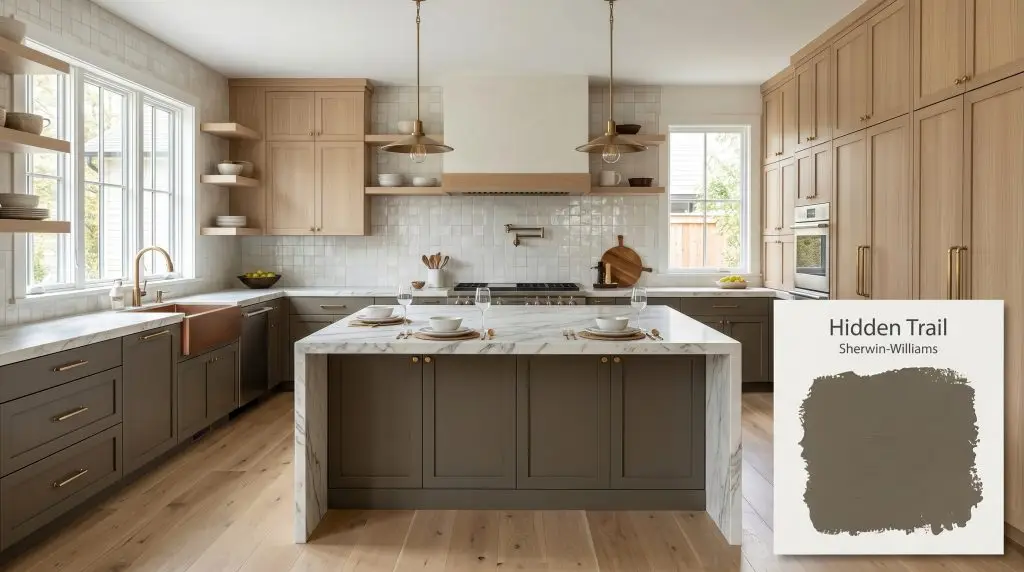
Sherwin-Williams Hidden Trail (SW 9525) is a deeply muted, earthy olive-brown paint color. With a low Light Reflectance Value of 10.47, it acts as a dramatic, grounding neutral that shifts between a shadowed woodland green and a rich, shadowy khaki depending on the room's lighting.
Will Hidden Trail clash with your room?
Paint Technical Profile
| Color ID / SKU | SW 9525 |
| HEX Code | #5F5B4D |
| Light Reflectance (LRV) | 10.47 |
| Use | Interior, Exterior |
| Best Exposures | South, West |
| Best For | Cabinetry, Accent Walls, Exterior Trim, Powder Rooms |
Sherwin-Williams Hidden Trail: Decoding the Muted Olive That Transforms Everyday Architecture
True architectural color requires a willingness to embrace shadows. Sherwin-Williams Hidden Trail (SW 9529) represents the sophisticated side of muddy, desaturated earth tones. This isn’t a simple brown or a standard green, but a complex, shadowed woodland green that actively shifts depending on what you place next to it.
When you apply this rich color mass to your walls, it immediately establishes a tailored, enveloping atmosphere. It pairs just as effortlessly with sleek blackened steel in a modern loft as it does with unlacquered brass in a traditional suburban renovation. By understanding its underlying chromatic profile, you can leverage this muted olive to make standard rooms feel incredibly intentional and custom-built.
Temperature, Undertones & LRV of SW Hidden Trail
Sherwin-Williams Hidden Trail is unequivocally a warm paint color, though its intense desaturation prevents it from feeling fiery or overwhelming. The magic of this shade lies in its structural complexity, blending a dark, muddy base with subtle organic shifts.
This high ambient absorption means the paint will act as a rich, stabilizing void in dim rooms. You will need to introduce intentional layered lighting or abundant natural sun to reveal its full, nuanced warmth.
Lighting Effects & The Chameleon Factor
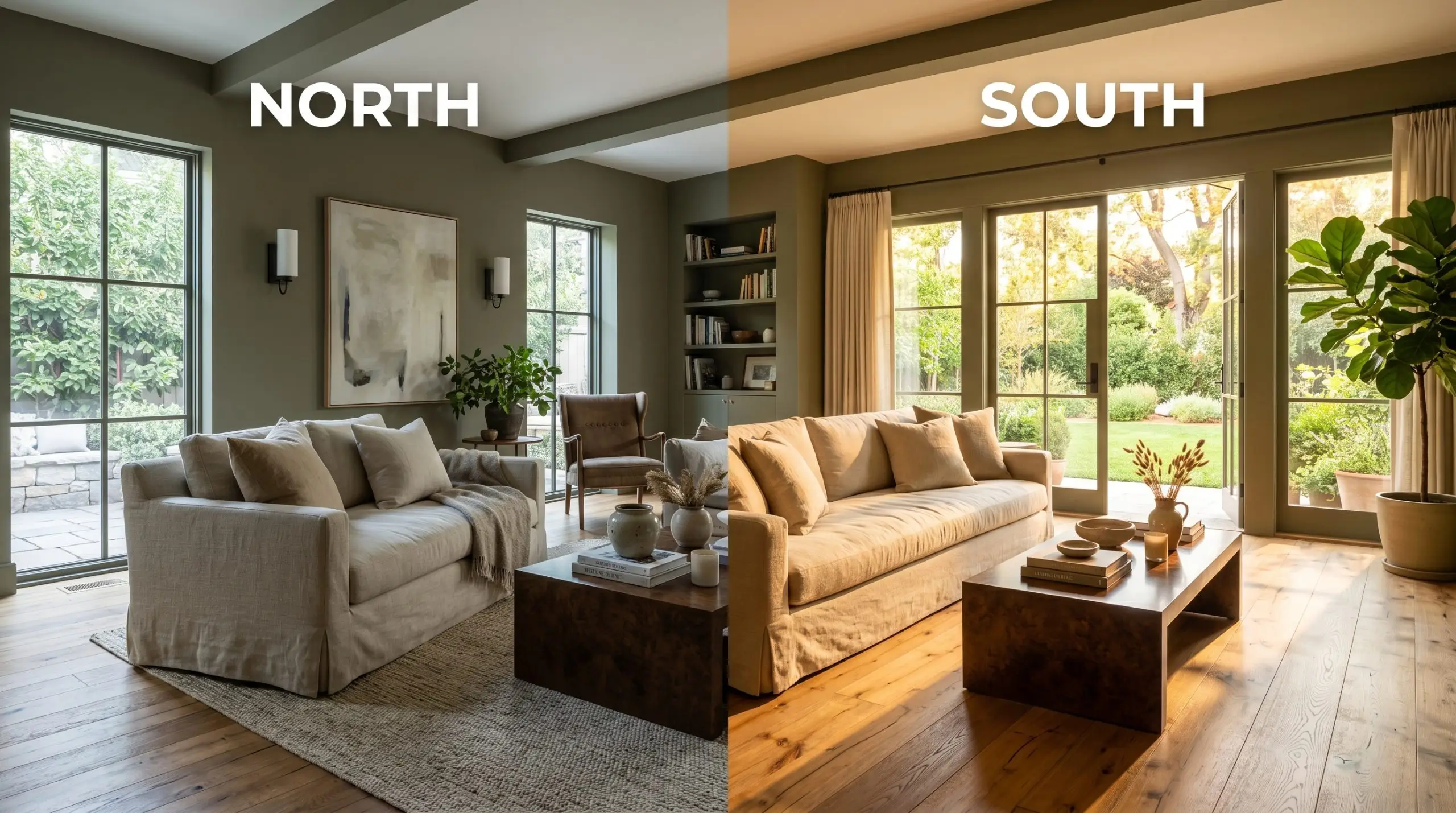
Because of its specific hue angle, SW 9529 is highly reactive to the temperature of the light hitting it. You must anticipate how your room’s exposure will manipulate its underlying color structure.
Popular Architectural Applications
This dense, earthy hue is not a passive background color; it is a structural design element. Whether you are updating standard suburban architecture or refining a contemporary space, Hidden Trail requires deliberate material pairings to balance its intense light absorption.
Kitchen Cabinetry
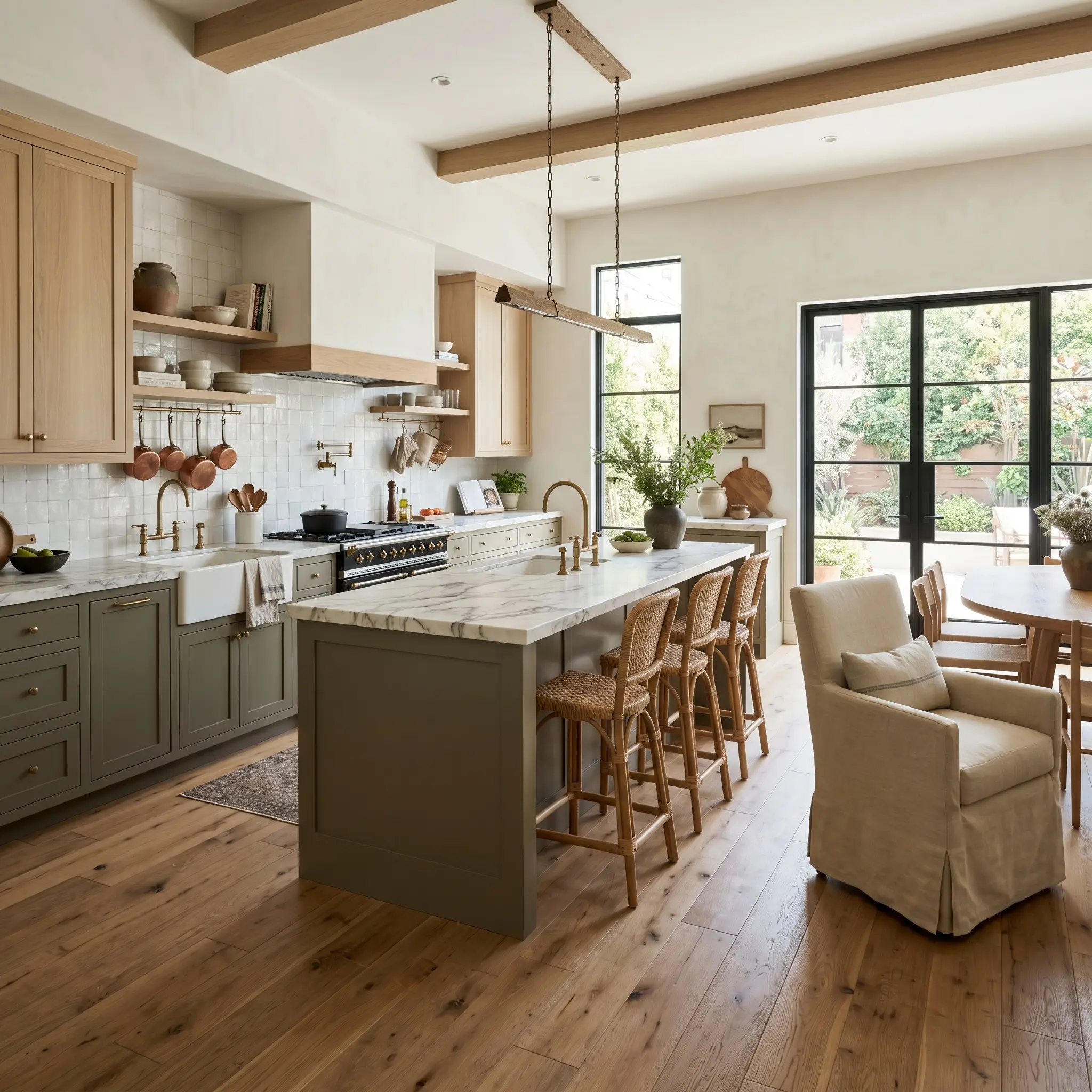
Instead of defaulting to standard shaker farmhouse kitchens, use this shadowed woodland green to execute a sleek, modern organic culinary space for the avid home chef. Paint the lower cabinets and island in this muted olive to root the room, pairing them with bleached oak upper cabinets or open floating shelves to maintain visual lift. To balance the dark color mass, introduce highly reflective surfaces like dramatically veined honed marble countertops and glossy zellige tile backsplashes.
When applying a low-LRV color like Hidden Trail to heavily used cabinetry, always opt for a satin or semi-gloss finish. The slight sheen catches the light, highlighting the cabinet profiles and preventing the dark earthy olive from looking like a flat black hole.
Hackrea Design Secret (The Finish Strategy)
Powder Rooms
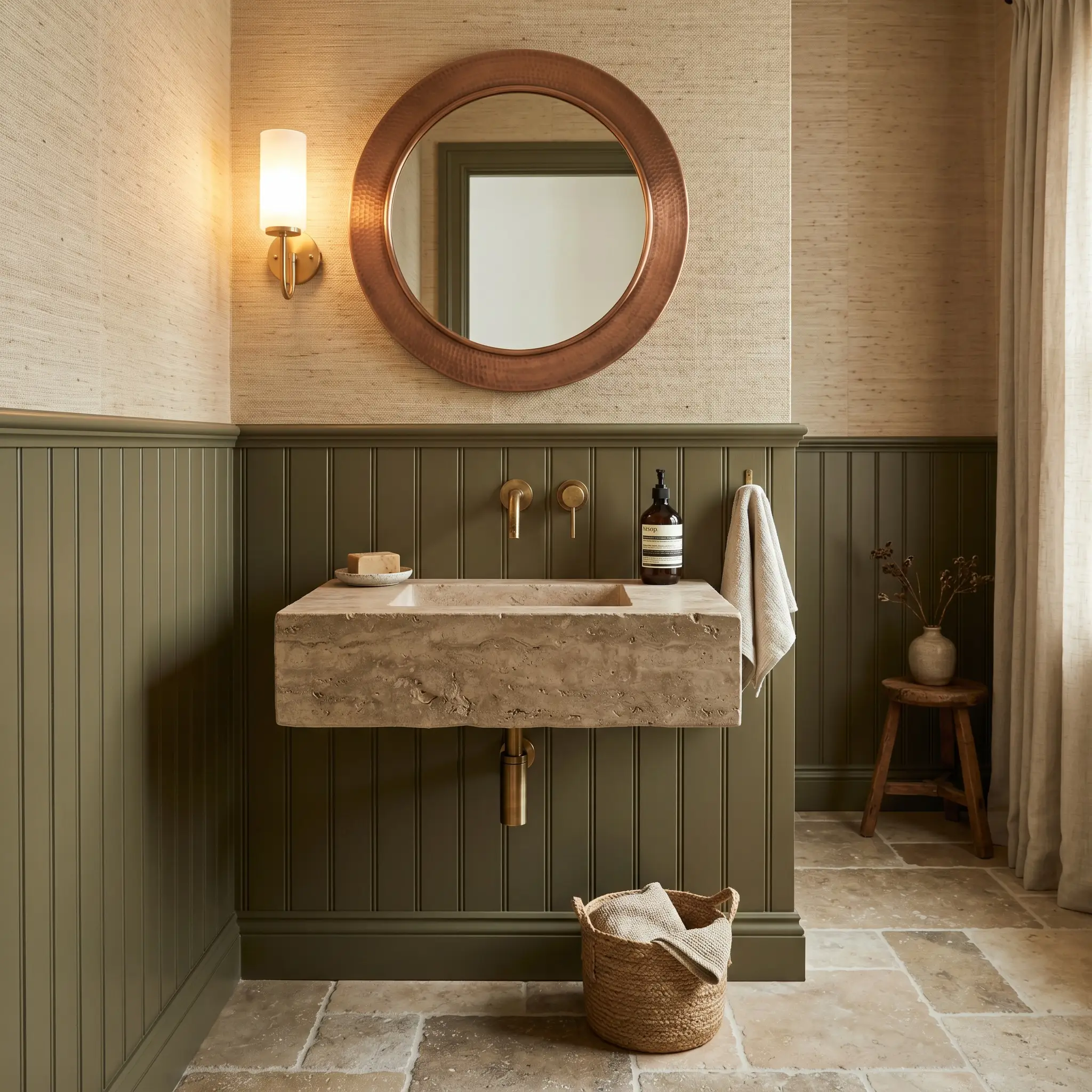
Small, windowless bathrooms are the perfect environment to embrace this paint’s high ambient absorption. For a tactile, curated approach, apply this color to tall beadboard wainscoting and pair it above with a textural grasscloth wallcovering in a lighter oatmeal or a bold, abstract geometric print. Anchor the room with a floating travertine sink and a brushed copper mirror to create a sophisticated, tailored guest experience that feels entirely custom.
Home Offices and Libraries
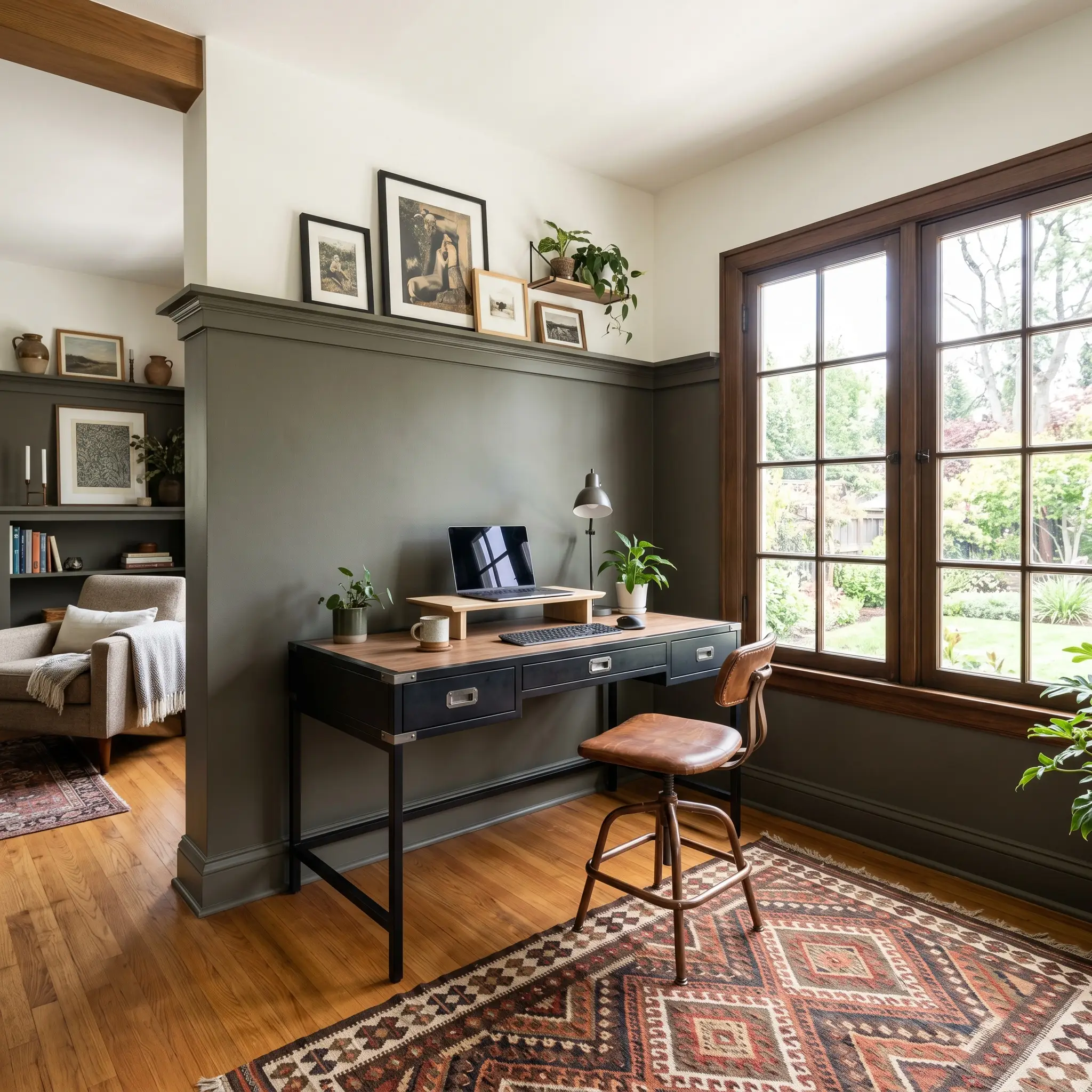
Do not let the historical brown qualities of this paint trap you into designing a dusty, outdated study. You can modernize a home office by using a split-tone painting technique: apply this dense olive-brown from the baseboards up to a high picture rail, leaving the upper wall and ceiling a crisp, warm white. Layer the space with a sleek blackened steel campaign desk, a saddle leather drafting stool, and a vintage kilim rug to create a dynamic, focused environment for the daily remote worker.
Exterior Trim and Shutters
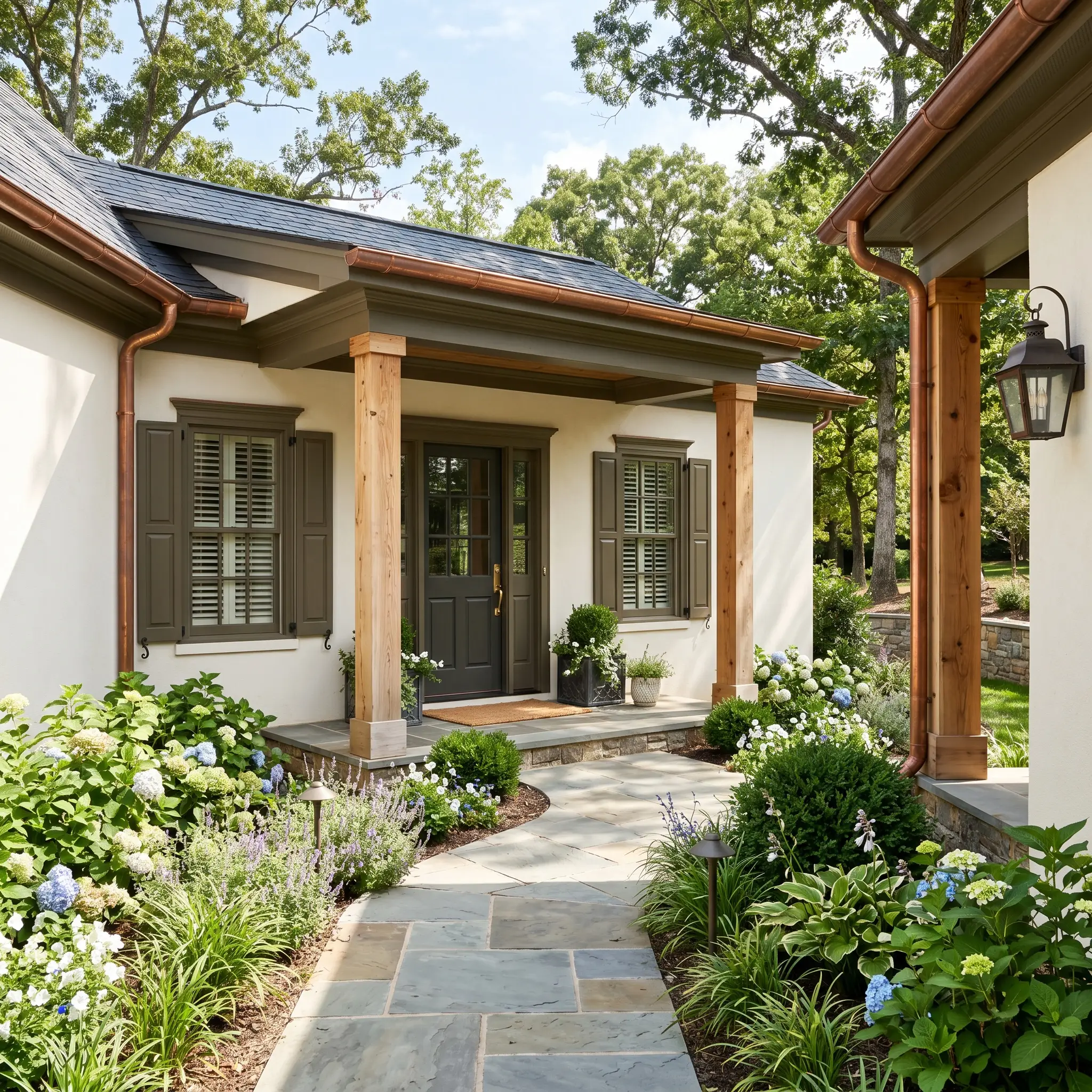
On an exterior facade, natural sunlight aggressively washes out nuanced undertones, making this muted shade an incredibly reliable, sophisticated choice for trim and shutters. Against a creamy, warm white stucco or painted brick exterior, Hidden Trail provides a striking, high-contrast outline without the harsh, sterile starkness of pure black. It beautifully complements natural exterior elements like raw cedar columns, copper gutters, and slate walkways.
Be incredibly cautious when pairing this specific olive-brown with traditional red brick exteriors. The intense red tones can aggressively pull out the yellow-green hidden undertones, creating an unintentional, highly saturated color clash.
Clash Warning (The Red Brick Conflict)
Designing with Sherwin-Williams Hidden Trail: Palettes & Pairings
This dense olive-brown requires crisp, luminous boundaries to hold its shape and prevent the room from feeling visually dense. It thrives when placed next to warm, tonal contrasts that pull out its organic nature rather than fighting its shadowy depth.
Defining the Boundaries
Tactile Elements & Finishes
Building the Room’s Palette
Curated Interior Aesthetics
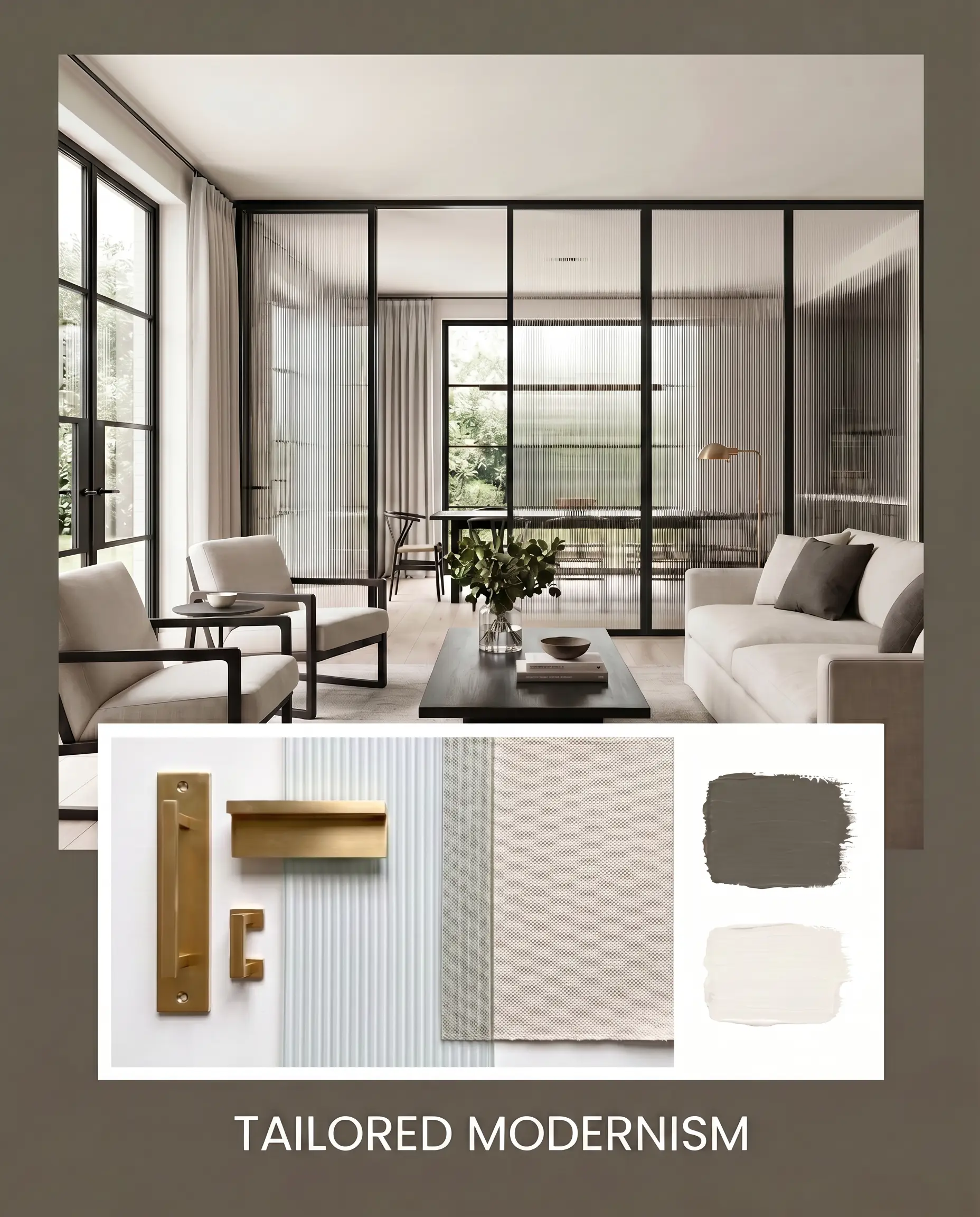
Tailored Modernism This aesthetic relies on strict, clean lines to structure the muddy olive walls. Pair the dark paint with sleek blackened steel frames, expansive panels of fluted glass, and crisp SW Cold Foam ceilings to maintain a sharp, contemporary edge. To soften the strict geometry, drape the upholstery in thick canvas and introduce one striking unlacquered brass library lamp for a flash of premium warmth.
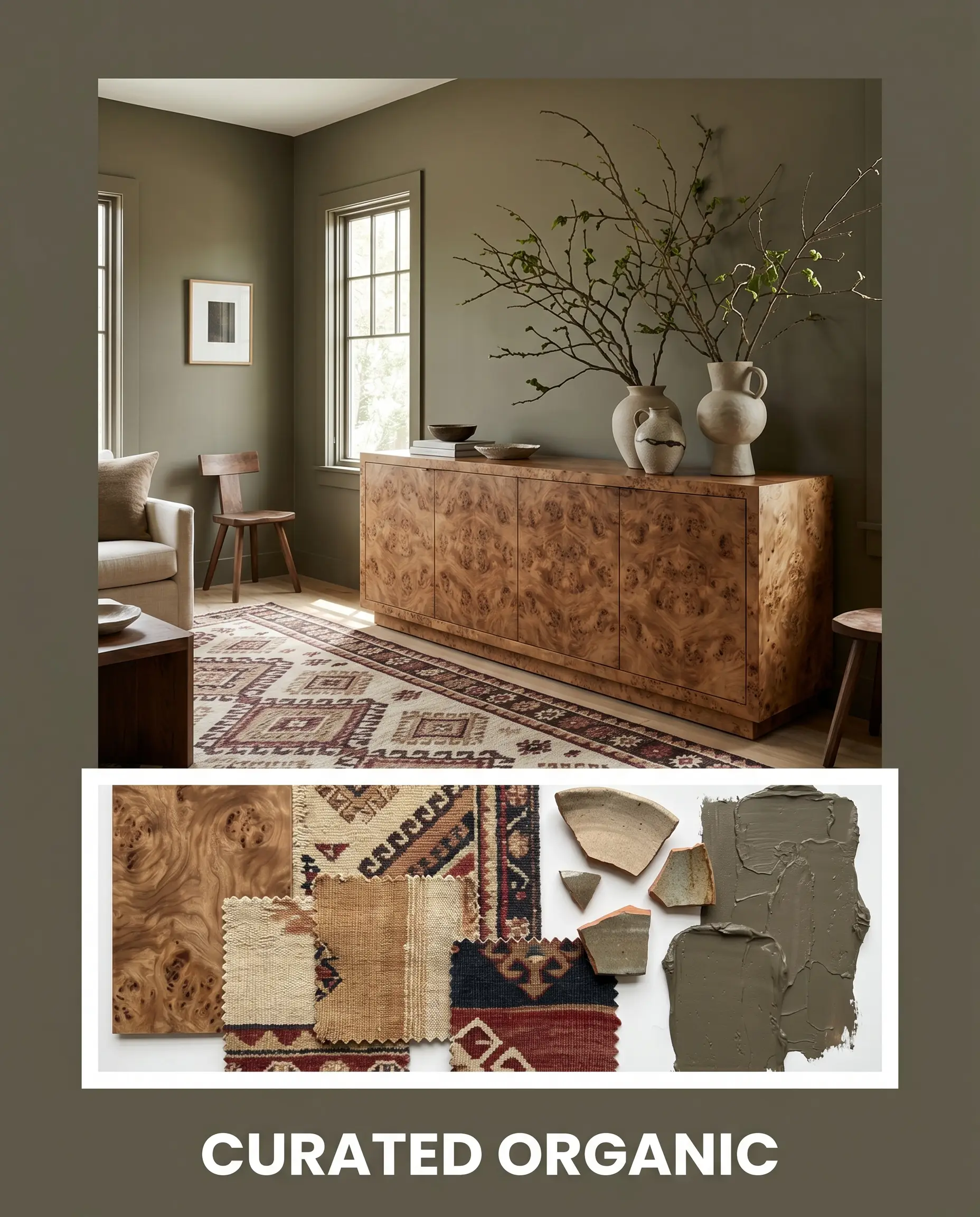
Curated Organic Here, the focus shifts to celebrating the paint’s earthy, historical brown qualities through rich, layered textures. Anchor the space with a prominent burl wood credenza and layer the floors with a vintage kilim rug featuring subtle hints of Farrow & Ball Hay and deep plum. Introduce oversized branches in sculptural ceramic vases to pull the outdoor woodland energy directly into the sophisticated interior.
Comparative Color Theory & Lighting Performance
There are specific architectural exposures where this muted olive might pull too dark or lose its organic green edge entirely. If your space lacks natural light or you need a crisper undertone, you must evaluate how this shade performs against its direct competitors.
Sherwin-Williams Hidden Trail vs. Sherwin-Williams Nocturne SW 9520
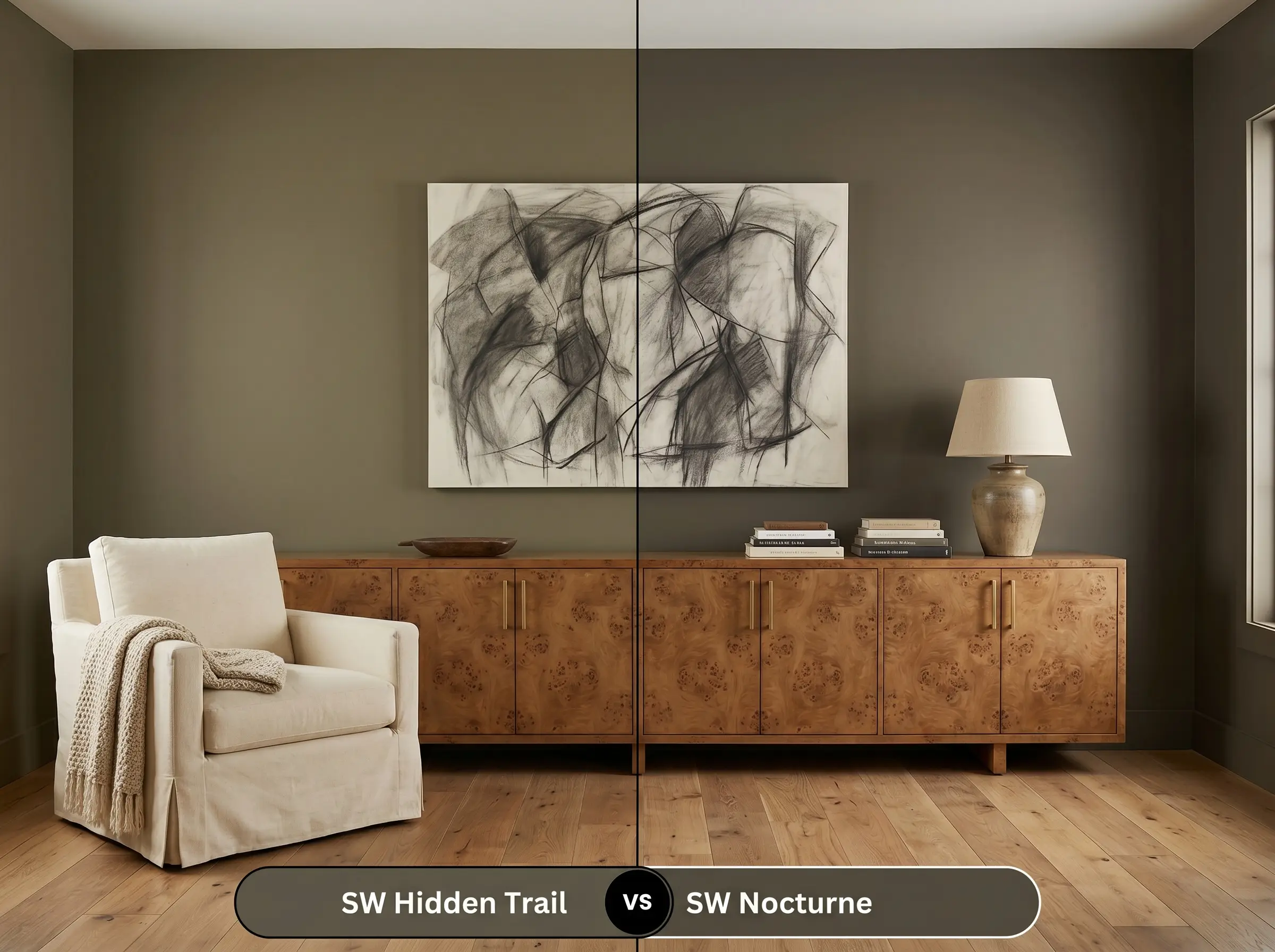
If you are designing a room that receives abundant, warm southern light, SW Nocturne offers a much cooler, grayer base that resists turning overly yellow. Hidden Trail possesses a warmer khaki undertone, making it the better choice for spaces where you want to amplify an insulated, cozy atmosphere. Rely on Nocturne if you need a strict, neutral charcoal-olive, but stick with SW 9529 to retain a distinct, earthy brown warmth.
Sherwin-Williams Hidden Trail vs. Benjamin Moore Dark Olive 2140-30
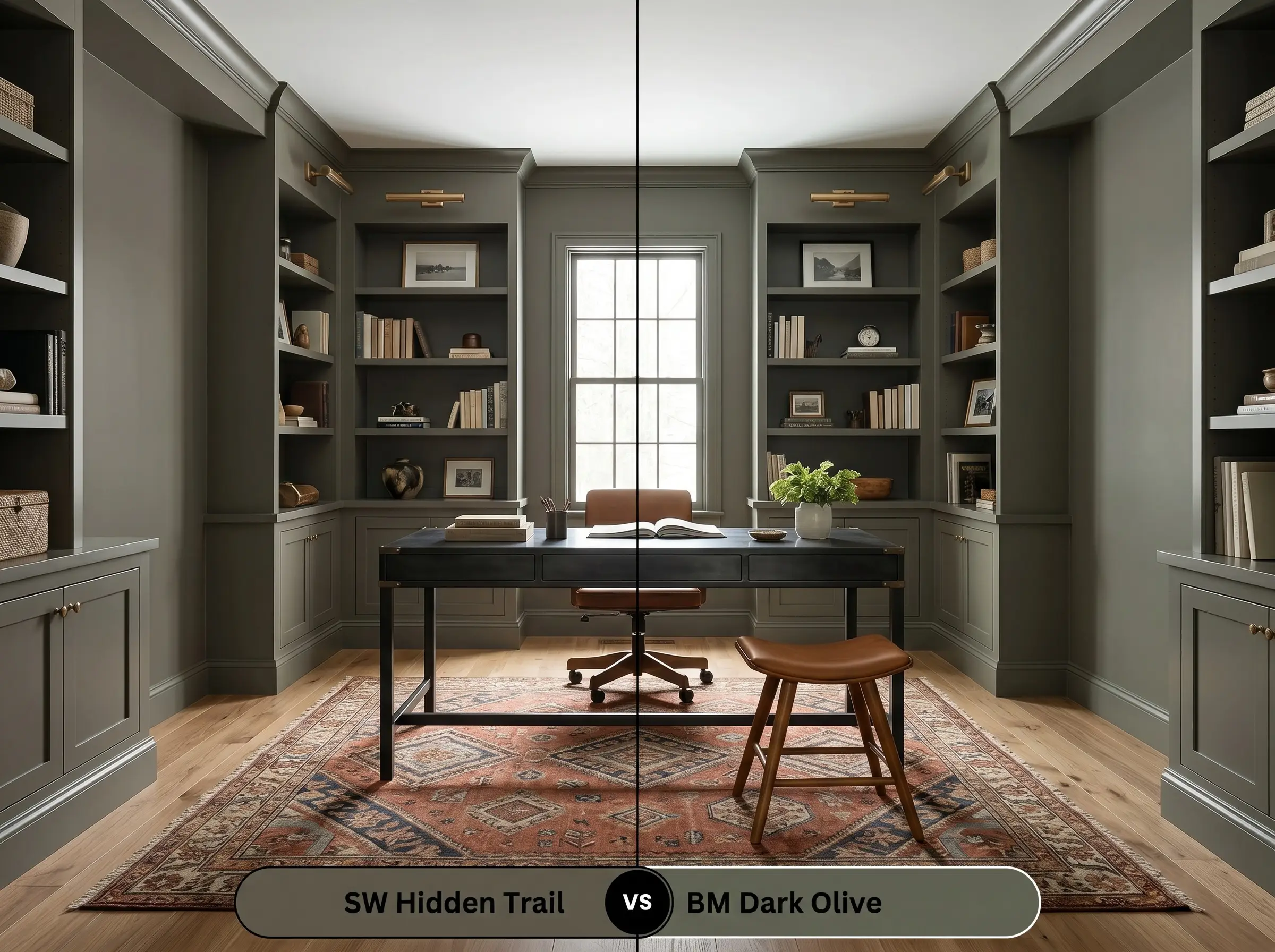
Benjamin Moore Dark Olive is a significantly more saturated, traditional green that lacks the heavy brown desaturation found in its competitor. If your goal is a classic, vibrant botanical feel, Dark Olive will hold its green shape much better in shaded corners. Hidden Trail is the superior option when you intentionally want the color to read as a sophisticated, muddy taupe-brown under warm artificial lighting.
Exploring Alternative Earthy Olives
When a homeowner loves the structural concept of a shadowed green but needs a slight shift in light reflectance or a warmer base, subtle pivots are necessary.
Same-Brand Alternatives
Cross-Brand Matches
Executing SW Hidden Trail on the Wall: Practical Application
Moving from curatorial mood boards to the physical reality of a renovation requires a strict understanding of how dark pigments behave during application.
The Dynamic Sheen Guide
Primer Strategy
This profound depth of color absolutely requires a high-quality, deep-tinted gray primer to ensure the muddy base develops correctly. Applying this directly over a standard white primer will force you to paint endless coats and risk a streaky, uneven finish.
Coverage & Success Tips
Plan for a minimum of two generous coats, though three may be necessary to achieve the true, opaque color structure. Be acutely aware of “flashing”—visible, shiny roller marks caused by uneven drying—by maintaining a wet edge and avoiding aggressive touch-ups once the paint begins to set.
Common Concerns & Edge Cases
Because North-facing light is inherently cool and gray, it strips away the subtle yellow-green nuances in this paint. In these exposures, the color will absolutely lean into its historical brown qualities, reading as a dense, shadowed taupe rather than a vibrant olive.
With an LRV of 10.47, this is a highly light-absorbing color that will retain significant solar heat on an exterior surface. If you live in a hot climate, you must consult with your painter about using heat-reflective additives or ensuring your brick is structurally sound enough to handle the thermal expansion.
Unlike traditional botanical olives, this shade features a heavy brown base that thrives in dim, windowless spaces by creating a moody, enveloping atmosphere. It will read much darker and more neutral than a standard green, making it an excellent backdrop for warm metallic hardware and textured wallcoverings.
To keep this dense color mass from looking like a visual void, you should always apply it in a satin or semi-gloss finish on cabinetry. The elevated sheen catches ambient light, highlighting the edges of the cabinet doors and bringing a sophisticated, luminous quality to the muddy olive tone.
The Final Assessment
Sherwin-Williams Hidden Trail is the ultimate architectural tool for homeowners who want to introduce moody, complex depth without committing to a stark black or a predictable navy. It is perfect for enveloping home offices, grounding modern organic kitchens, or adding sophisticated contrast to exterior trim. Its ability to shift seamlessly between a shadowy woodland green and a tailored taupe-brown makes it an incredibly versatile foundation for layered, tactile interior design.
While this muted olive is highly adaptable, it is not universally forgiving. If your design goal is a light, breezy coastal aesthetic or a stark, high-gloss minimalist space, this paint will actively fight your vision. Its inherently muddy, desaturated profile requires the warmth of natural textures, rich woods, or premium metals to thrive; placing it in a room filled with cool, icy grays or sterile white plastics will instantly make the walls look dingy and unintentional.
Hackrea Pro-Tip (The Aesthetic Boundary)
Real-World Inspiration Be the first to upload a real photo of Hidden Trail!
No Photos Yet
Includes +20 First Upload Bonus!
Real Experiences
Insights from people who have used Hidden Trail.No reviews yet
Be the first to share your experience with Hidden Trail.
Earn 15 points instantly!
Closest Cross-Brand Equivalents
The absolute closest scientific color matches for Hidden Trail across top paint brands.