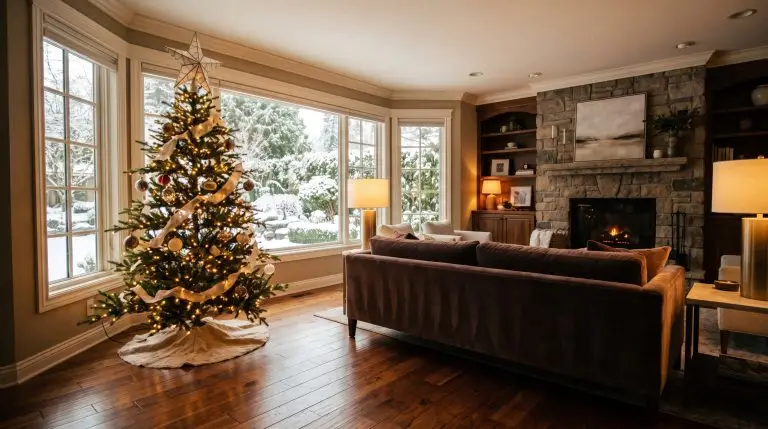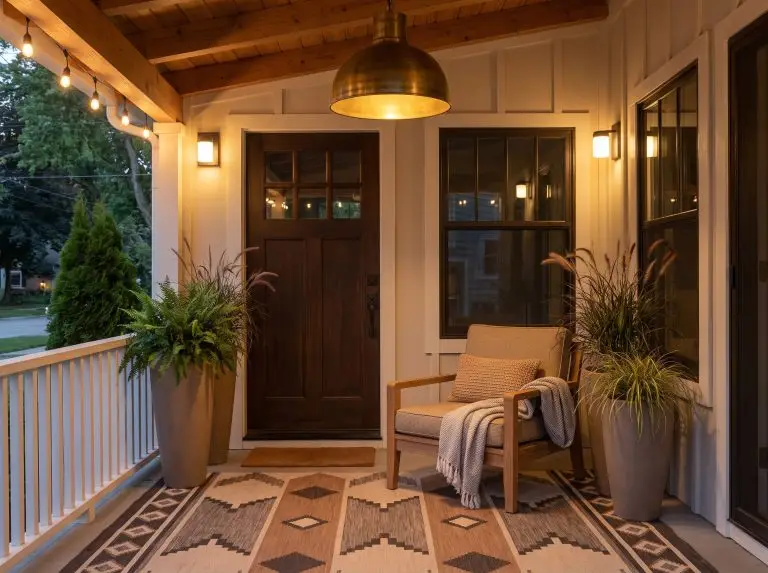
The front porch serves as the vital psychological transition between the public street and your private sanctuary. We approach this space through the lens of “Curb Appeal Architecture,” treating the exterior footprint with the exact same spatial respect, structural planning, and curatorial eye as an interior living room. A beautifully executed entry requires far more than tossing out a generic welcome mat; it demands a rigorous balance of striking aesthetics and uncompromising weather resistance.
When you invest in high-performance materials and precise scale, you stop fighting the elements and start expanding your home’s usable square footage.
Whether you are working with a sweeping wrap-around veranda or a restrictive concrete slab, mastering proportion, zoning, and material science is the only way to build a front porch that commands attention and actually lasts through the seasons.
Mastering Scale and Spatial Layout
The most common mistake homeowners make is purchasing furniture that fundamentally ignores their porch’s architectural footprint. To build a compelling exterior room, you must analyze the spatial limitations and establish clear traffic sightlines before a single piece of decor is placed.
Anchor a Narrow Porch with Asymmetrical Seating
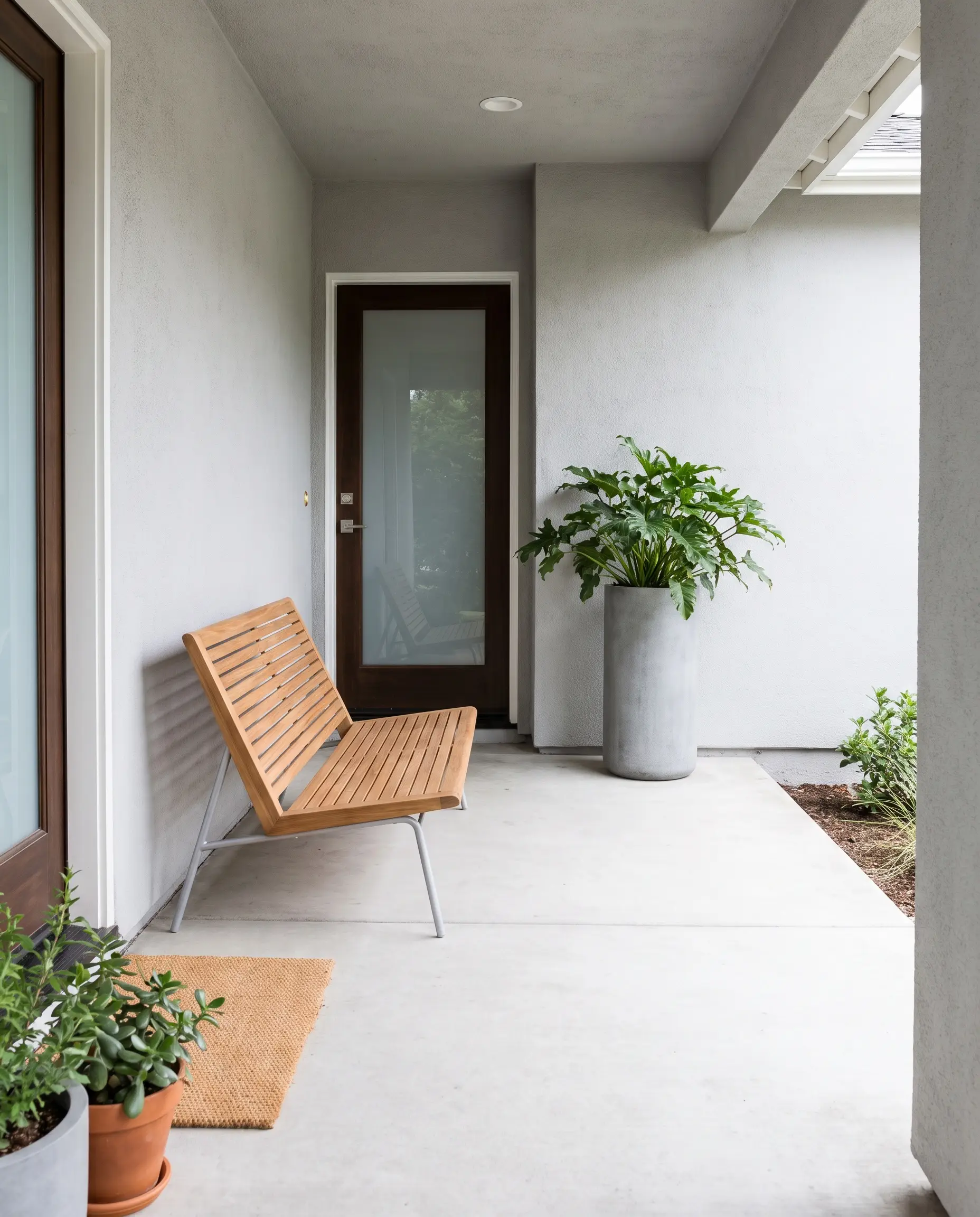
Forcing a symmetrical pair of chairs onto a narrow concrete slab immediately blocks traffic flow and makes the entry feel claustrophobic. Instead, take an asymmetrical approach by placing a single, architecturally significant lounge chair angled toward the door, balanced by a towering planter on the opposite side to hold the visual weight.
- Vibe: Organic Modern minimalism.
- Key Material: Slatted teak or powder-coated aluminum framing.
- Designer Dimension: Maintain a strict minimum of 36 inches of clearance between the seating and the door swing to guarantee a comfortable, unobstructed walkway.
Define the Perimeter with an Oversized Outdoor Rug
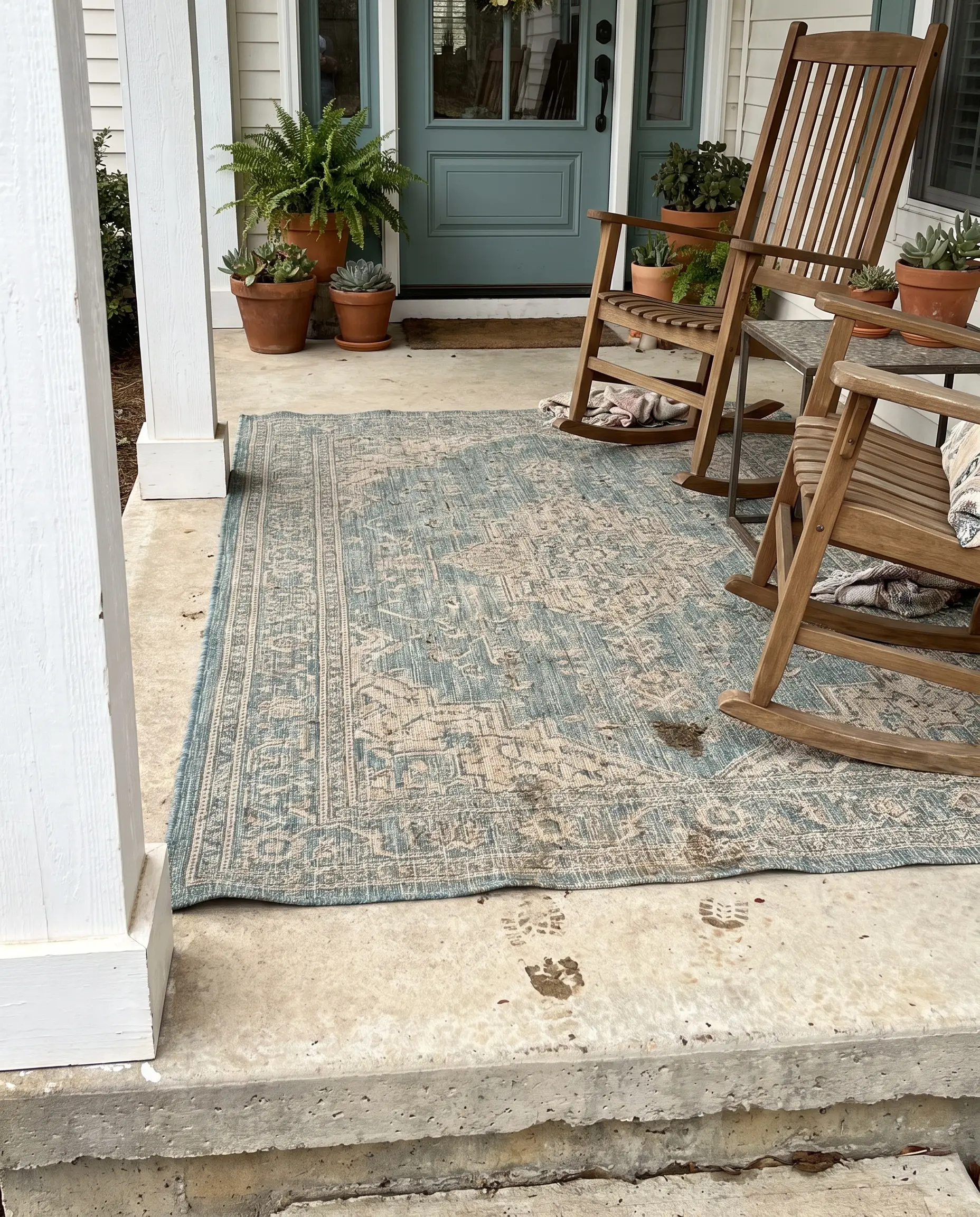
A tiny, postage-stamp rug floating awkwardly in the center of the floor visually shrinks the area. Pulling a generously sized rug—typically a 5×8 or 8×10—all the way to the foundational columns instantly grounds the space, transforming a raw slab into a highly defined, conversational zone.
- Vibe: Transitional elegance.
- Key Material: Flat-weave polypropylene for extreme high-traffic endurance.
- Color Match: Benjamin Moore Aegean Teal (for front door contrast).
High-Performance Furniture Selection
Outdoor furniture is a direct investment against the elements, and relying on cheap, disposable construction will ruin your home’s curb appeal within a single year. Prioritize longevity and rigorous material science to guarantee a high return on your investment.
Opt for Grade-A Teak Over Softwoods for Longevity
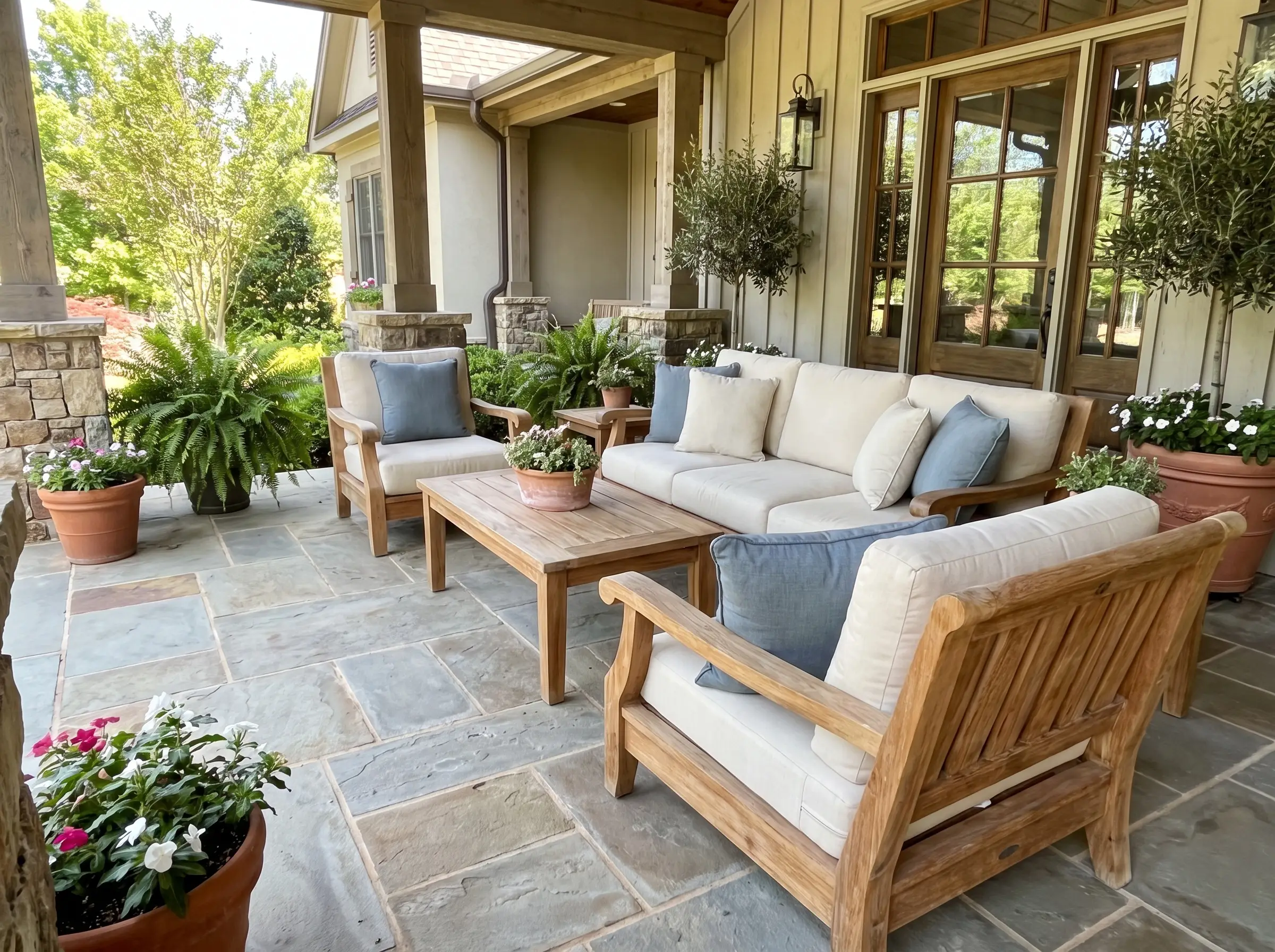
Softwoods like acacia or pine will inevitably warp, splinter, and peel when exposed to relentless sun and rain. Grade-A teak is the undisputed standard for exterior endurance, packed with natural oils that aggressively resist rot, pests, and moisture degradation. You can maintain its warm honey tone with annual oiling, or allow it to gracefully weather into a sophisticated, coastal silver patina.
- Vibe: Accessible Modern Luxury.
- Key Material: Kiln-dried, sustainably sourced Grade-A Teak.
- Maintenance Profile: Low to medium, depending on desired finish.
| Feature | Grade-A Teak | Powder-Coated Aluminum |
|---|---|---|
| Weather Resistance | Exceptional (Natural oils repel water) | Exceptional (Impervious to rust) |
| Visual Weight | Heavy, grounded, organic | Light, airy, structural |
| Maintenance | Requires oiling to keep brown tone | Zero maintenance; wipe clean |
| Heat Retention | Remains cool in direct sunlight | Can get warm, requires cushions |
Modernize the Classic Rocker with Powder-Coated Metals
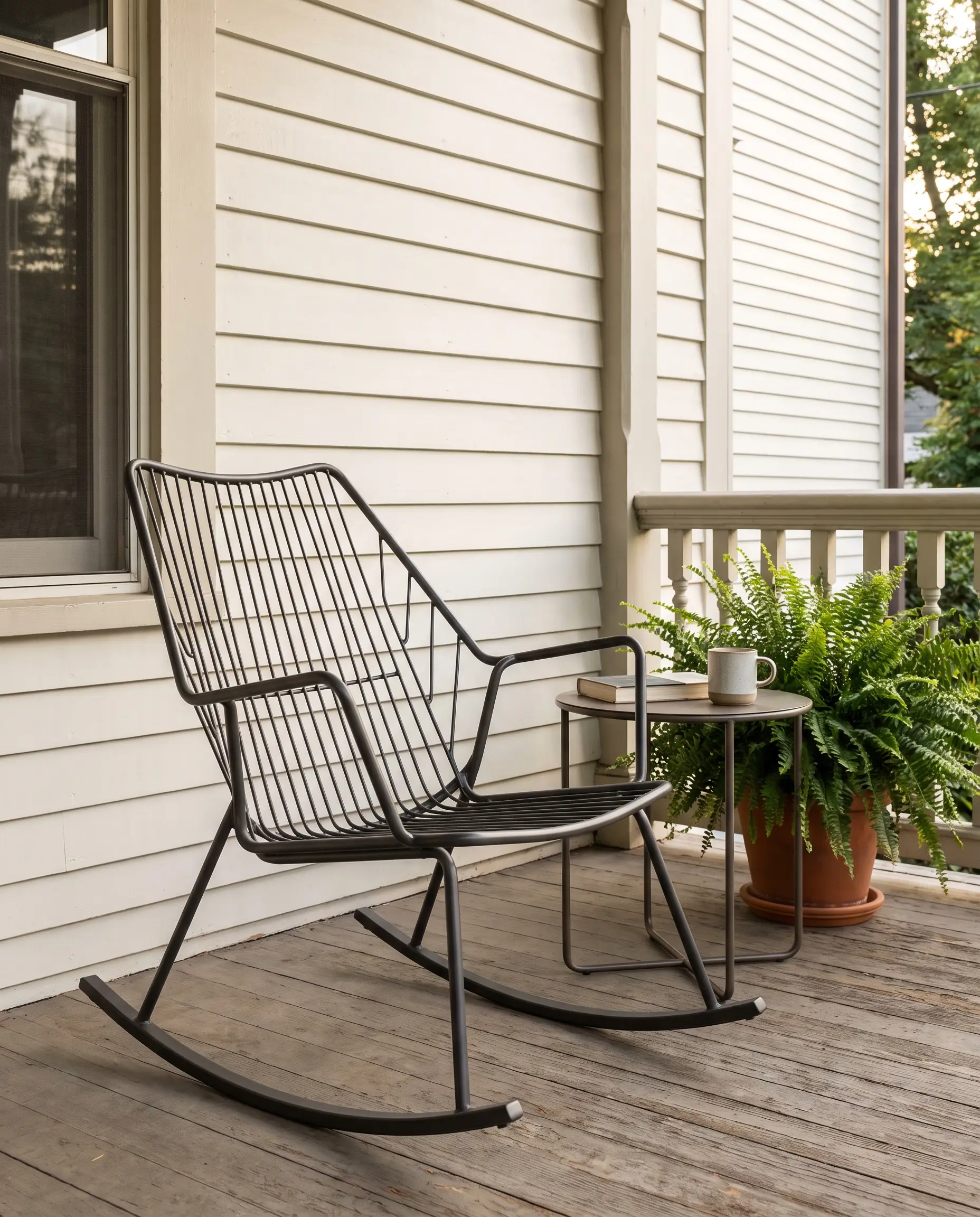
The traditional, chunky wooden rocking chair often feels visually heavy and dated against contemporary architecture. Introduce a sleek, powder-coated aluminum rocker or a wire-frame design to inject a sharp, Transitional edge that plays beautifully against traditional exterior siding.
- Vibe: Contemporary Transitional.
- Key Material: Matte powder-coated aluminum.
- Paint Recommendation: Contrast the matte metal against crisp siding painted in Sherwin-Williams Alabaster.
Introduce a Suspended Daybed for Deep Eaves
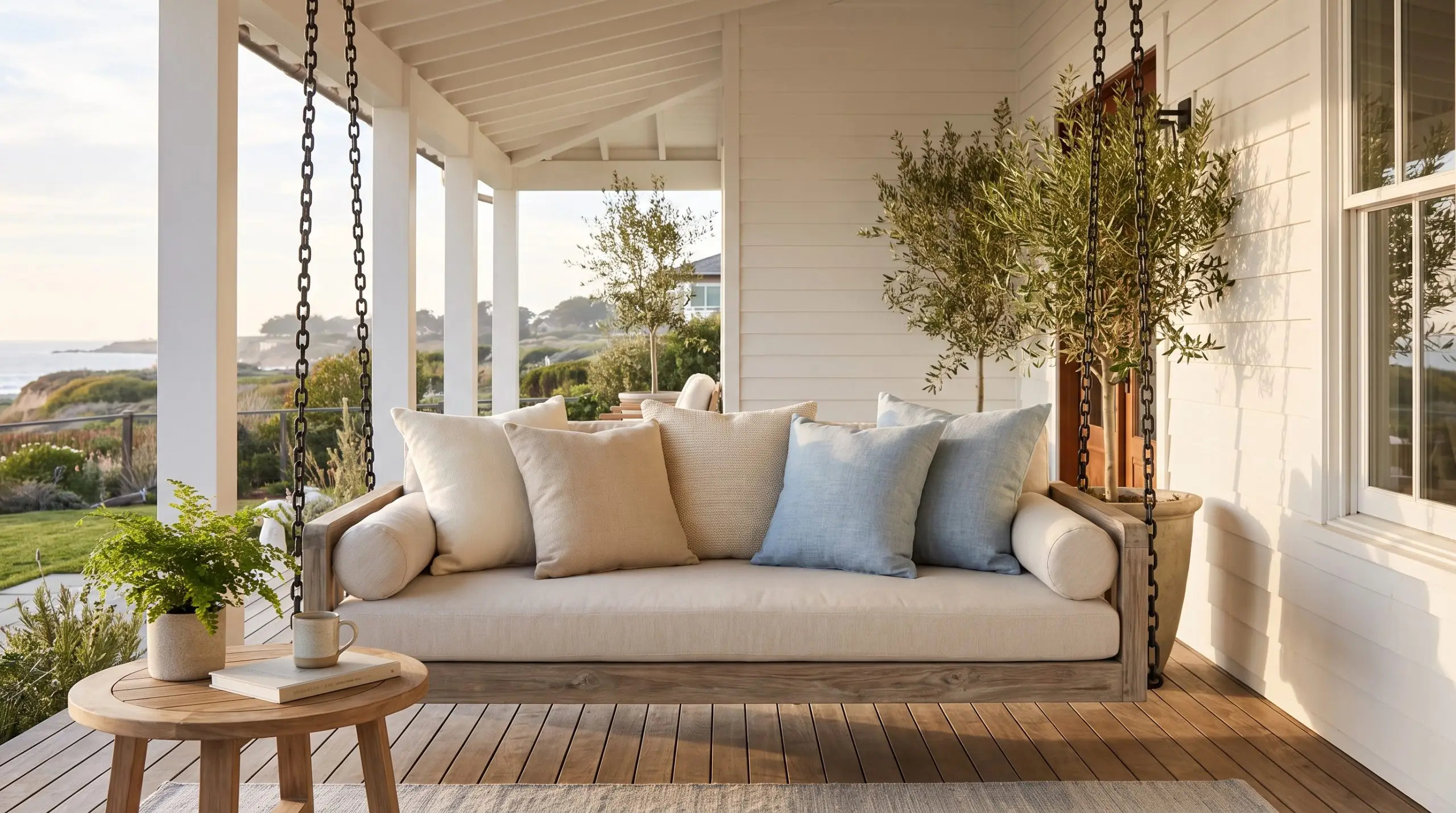
If you possess a deep, wrap-around footprint, abandon the standard porch swing in favor of a luxurious, twin-sized suspended daybed. This aspirational upgrade maximizes the spatial footprint of deep eaves, offering a resort-level lounging experience right at your front door.
- Vibe: Relaxed Coastal Luxury.
- Key Material: Marine-grade rope or heavy-duty matte black steel chains.
- Textile Match: High-density, fast-draining outdoor foam mattresses.
A suspended daybed requires significant structural reinforcement. You must locate and anchor directly into the ceiling joists, as the combined weight of the bed and multiple occupants easily exceeds standard swing hardware limits.
Durability Check
Architectural Planters and Greenery
Greenery serves as the vital connective tissue between the rigid hardscaping of your porch and the softscaping of your front yard. Executing this transition flawlessly relies entirely on mastering scale.
Flank the Doorway with Tall Tapered Planters
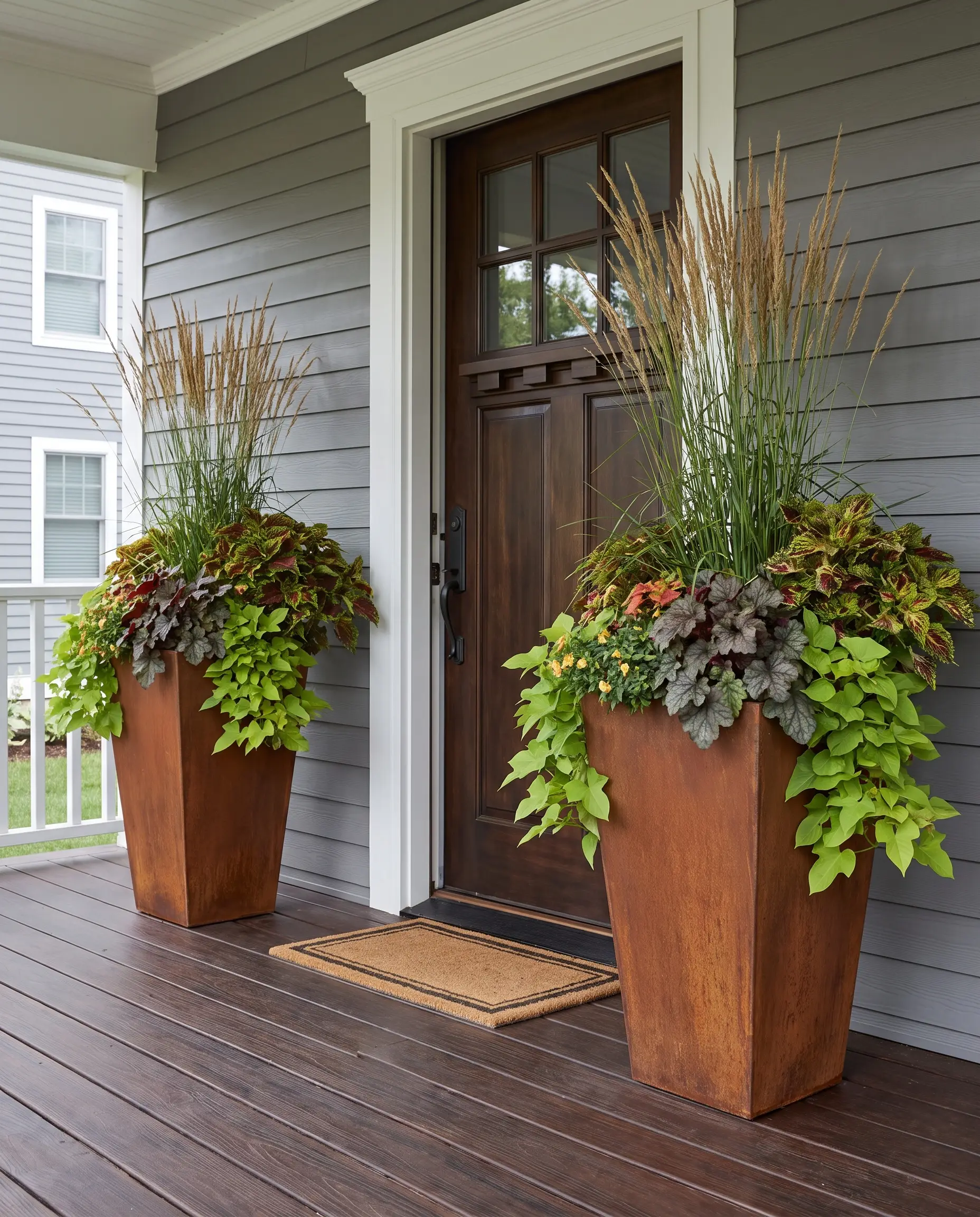
A standard 12-inch pot becomes completely invisible when viewed from 40 feet away on the street. To command attention and frame the sightlines of your entryway, flank the door with imposing, 24 to 36-inch tall tapered planters cast from glass-fiber reinforced concrete (GFRC), which delivers the visual gravity of stone at a fraction of the weight.
- Vibe: Structural and commanding.
- Key Material: Glass-fiber reinforced concrete (GFRC) or heavy-gauge corten steel.
- Planting Style: Formal and symmetrical.
Employ the “Thriller, Filler, Spiller” method for professional-grade containers. You need vertical height (the thriller), dense bulk (the filler), and a cascading vine (the spiller) to maximize curb appeal and volume.
Visual Rule
Ground the Steps with Clustered Terracotta
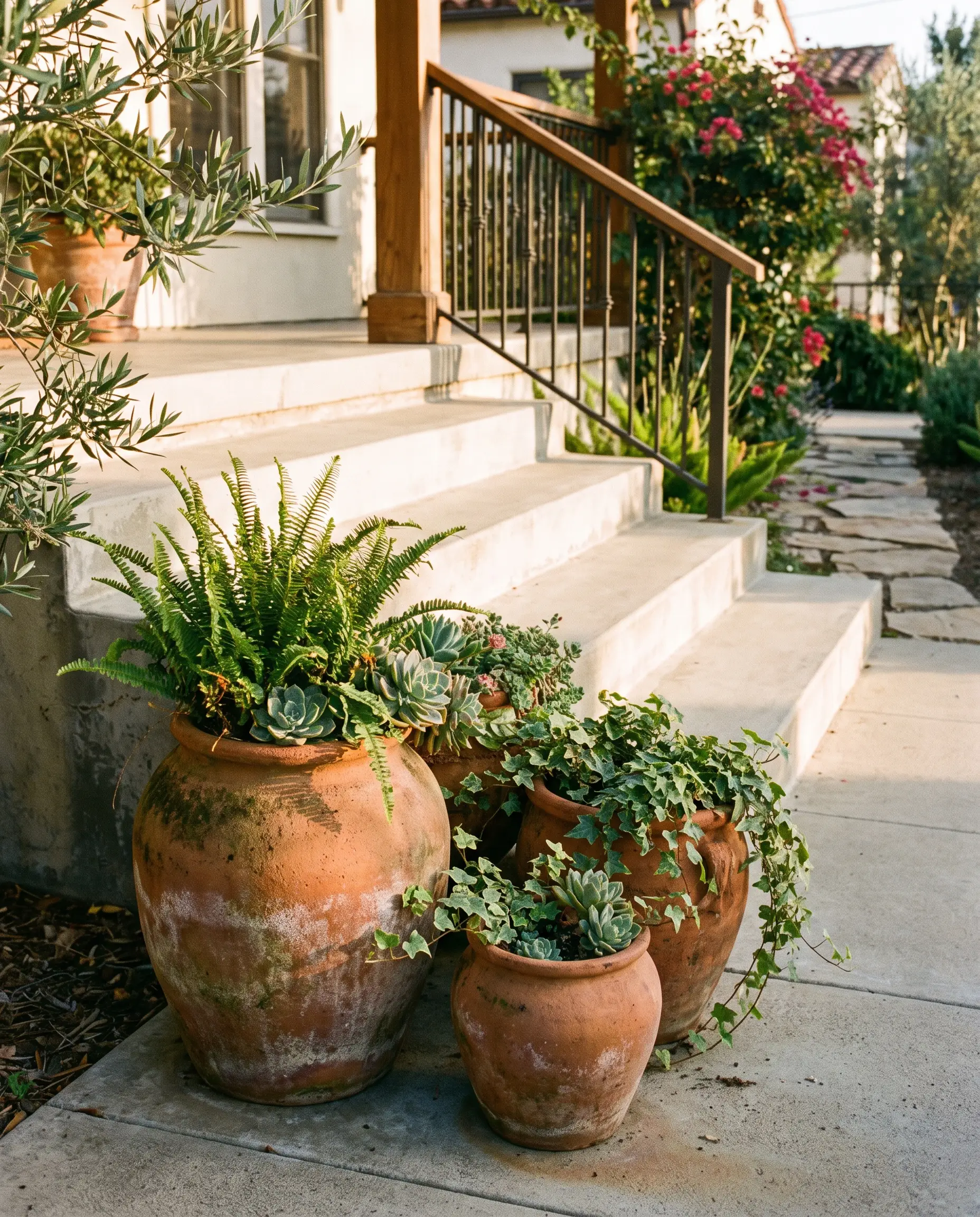
Ease the harsh architectural transition down to the walkway by grouping naturally aged terracotta pots at the base of the stairs. Assembling these in odd numbers—specifically clusters of three or five—injects an Organic Modern texture, allowing the natural patina of the clay to soften the concrete or brick steps.
- Vibe: Mediterranean or Organic Modern.
- Key Material: Raw, unglazed terracotta.
- Designer Dimension: Only execute step-clusters if your staircase is wider than 48 inches to prevent dangerous tripping hazards along the primary walkway.
Layer Trailing Vines in Matte Black Window Boxes
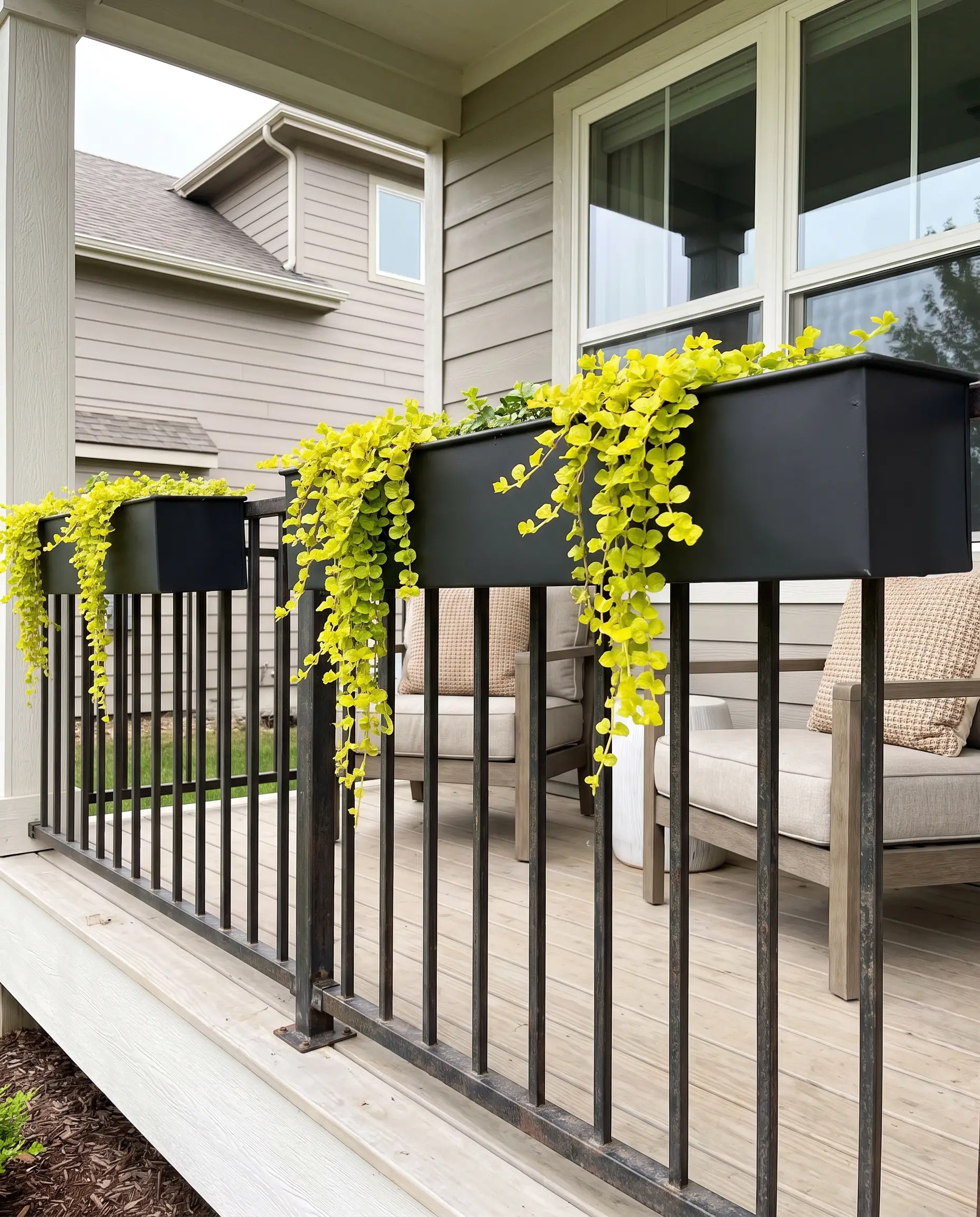
When your horizontal spatial footprint is entirely maxed out, you must push the design vertically. Attach clean-lined, modern window boxes to the porch railings or directly beneath the front windows to draw the eye upward.
- Vibe: High-contrast contemporary.
- Key Material: Matte black galvanized steel or aluminum.
- Color Contrast: Sherwin-Williams Tricorn Black window boxes packed with vibrant Creeping Jenny.
Layering Entryway Lighting
Lighting is arguably the most overlooked element of exterior styling, frequently abandoned to whatever builder-grade fixtures were installed decades ago. Implementing a layered outdoor lighting scheme—combining ambient and task sources—is mandatory for high-end curb appeal.
Swap Standard Flush-Mounts for Oversized Pendants
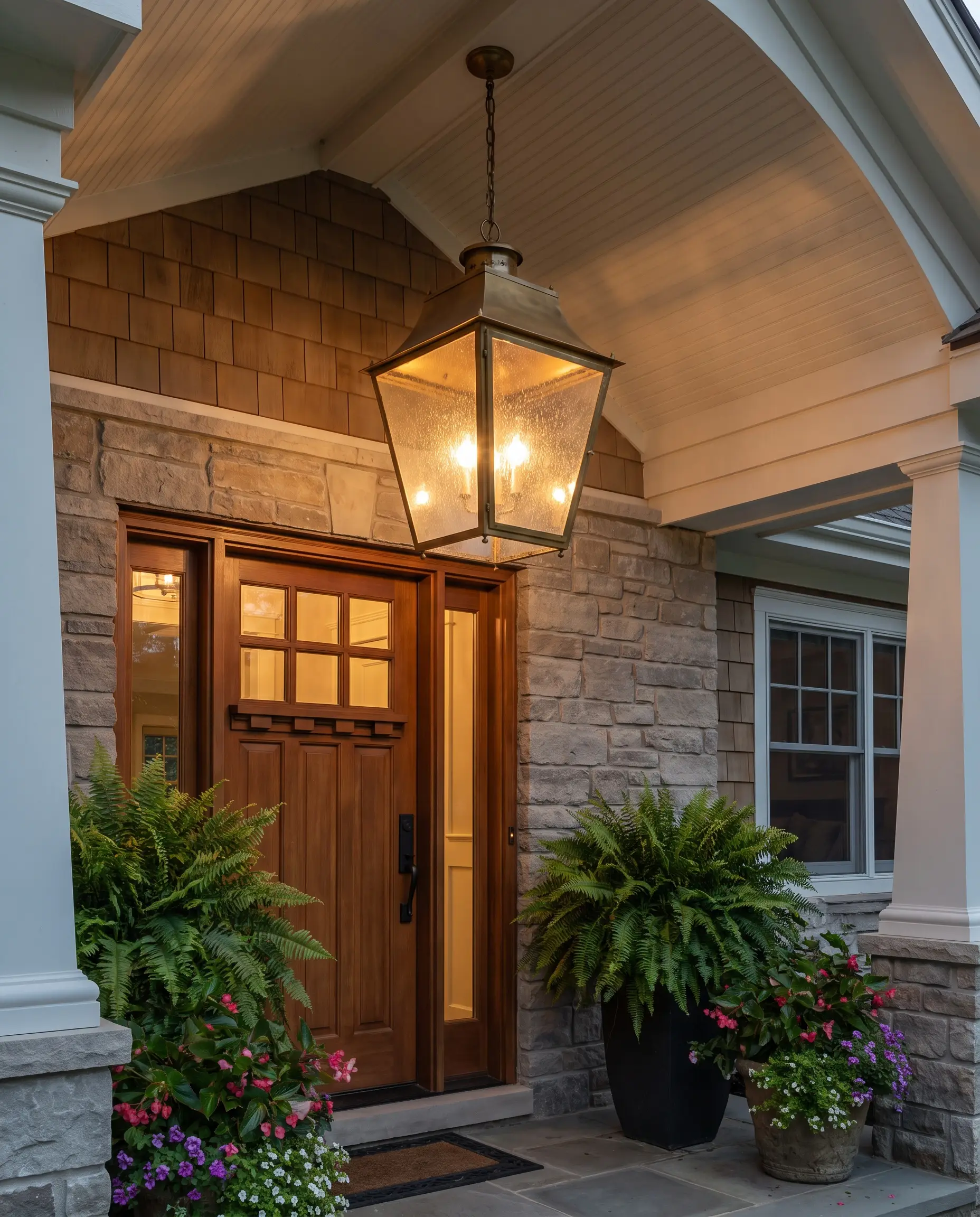
Most default porch lights are undersized by at least 50%, looking timid against the facade of the house. If your porch features a covered ceiling, remove the basic flush-mount and drop a substantial, structural pendant or lantern to act as the primary, anchoring light source.
- Vibe: Bold and architectural.
- Key Material: Seeded glass and weather-resistant brass or iron.
- Designer Dimension: The primary overhead fixture should measure at least 1/4 to 1/3 the total height of your front door to achieve proper visual proportion from the street.
Flank the Door with Elongated Sconces
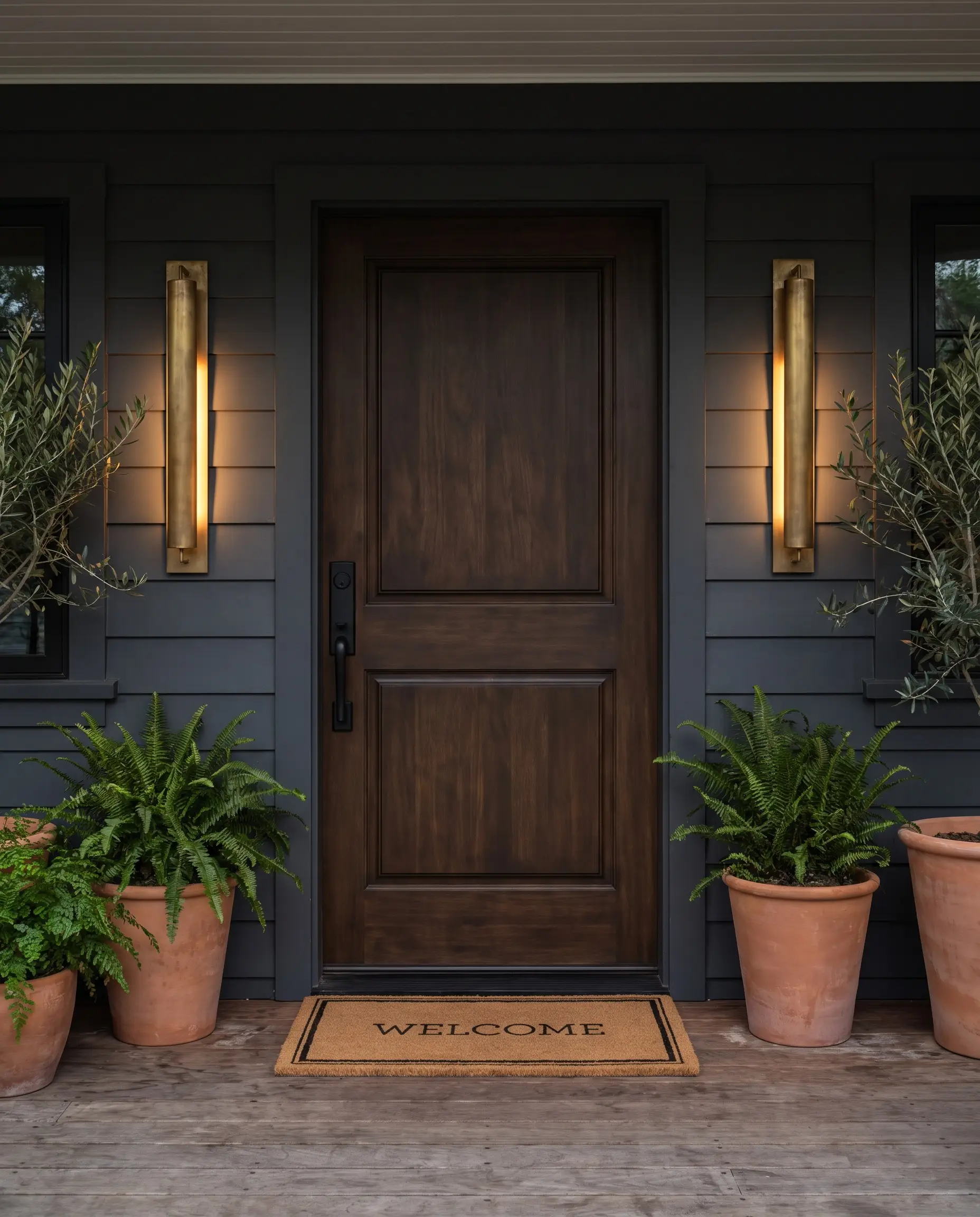
Tiny, ornate carriage lights clutter the visual plane. Upgrade to elongated, linear sconces measuring 18 to 24 inches tall to establish a sophisticated, symmetrical frame around the entry, selecting a finish that sharply contrasts your exterior paint.
- Vibe: Sleek and authoritative.
- Finish Match: Unlacquered brass on dark siding, or matte black on white brick.
- Designer Dimension: Mount your sconces so the center of the fixture sits exactly at eye level, roughly 66 inches from the porch floor.
Introduce Battery-Operated Table Lamps for Evening Ambiance
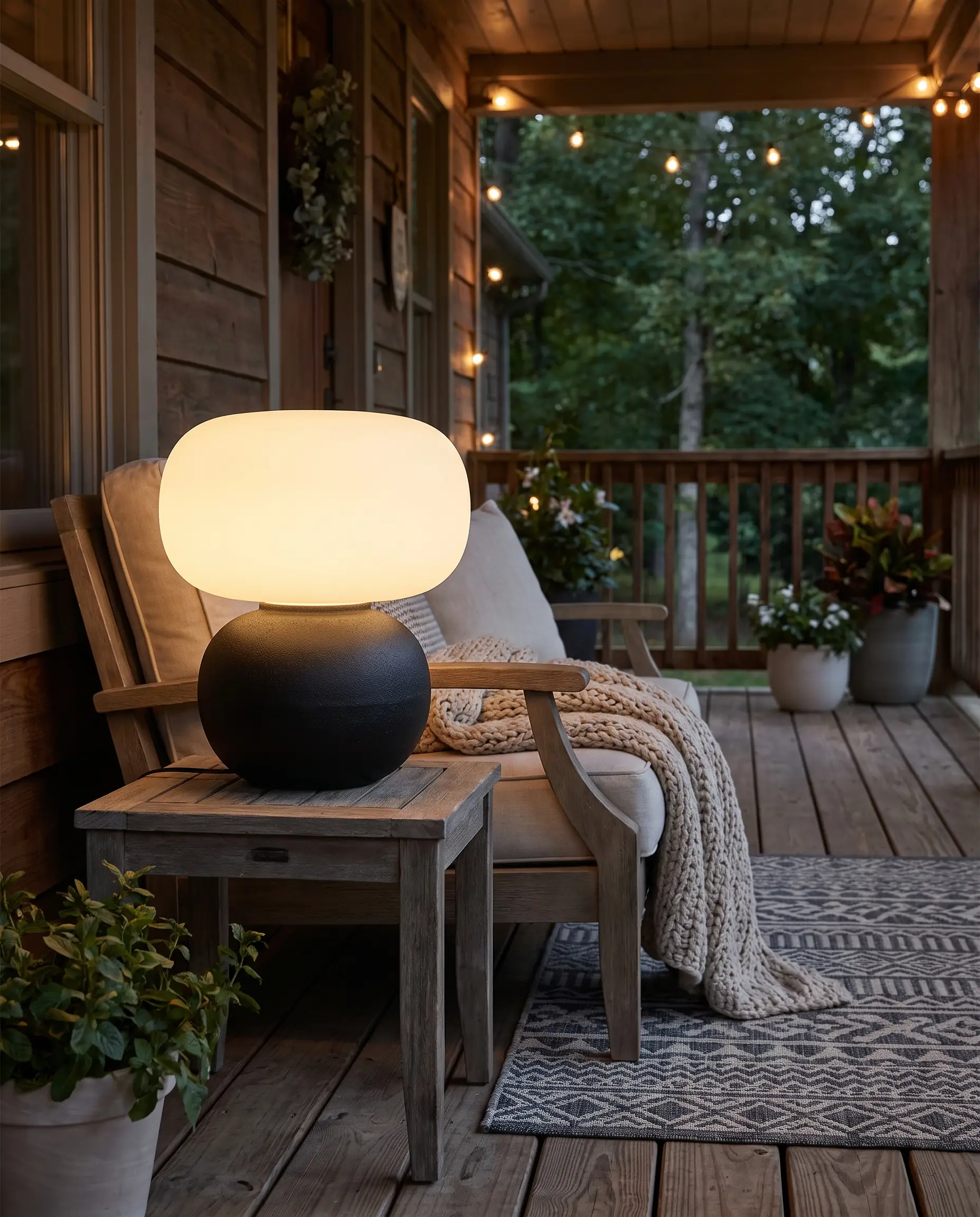
Harsh overhead lighting creates severe shadows; true exterior luxury mimics the comfort of an interior living room. Place heavy-weighted, rechargeable LED outdoor table lamps on your side tables to cast a warm, conversational glow across the seating zone without the expense of hiring an electrician.
- Vibe: Intimate and curated.
- Key Material: Powder-coated cast iron bases for wind resistance.
- Bulb Temp: 2700K warm white LED.
Textiles and Finishing Details
Textiles and hardware are the critical finishing layers that transition a porch from a rigid structural space into a highly curated, tactile living area. These elements must deliver both supreme comfort and ruthless weather endurance.
Layer a Washable Rug Beneath a Heavy Coir Mat
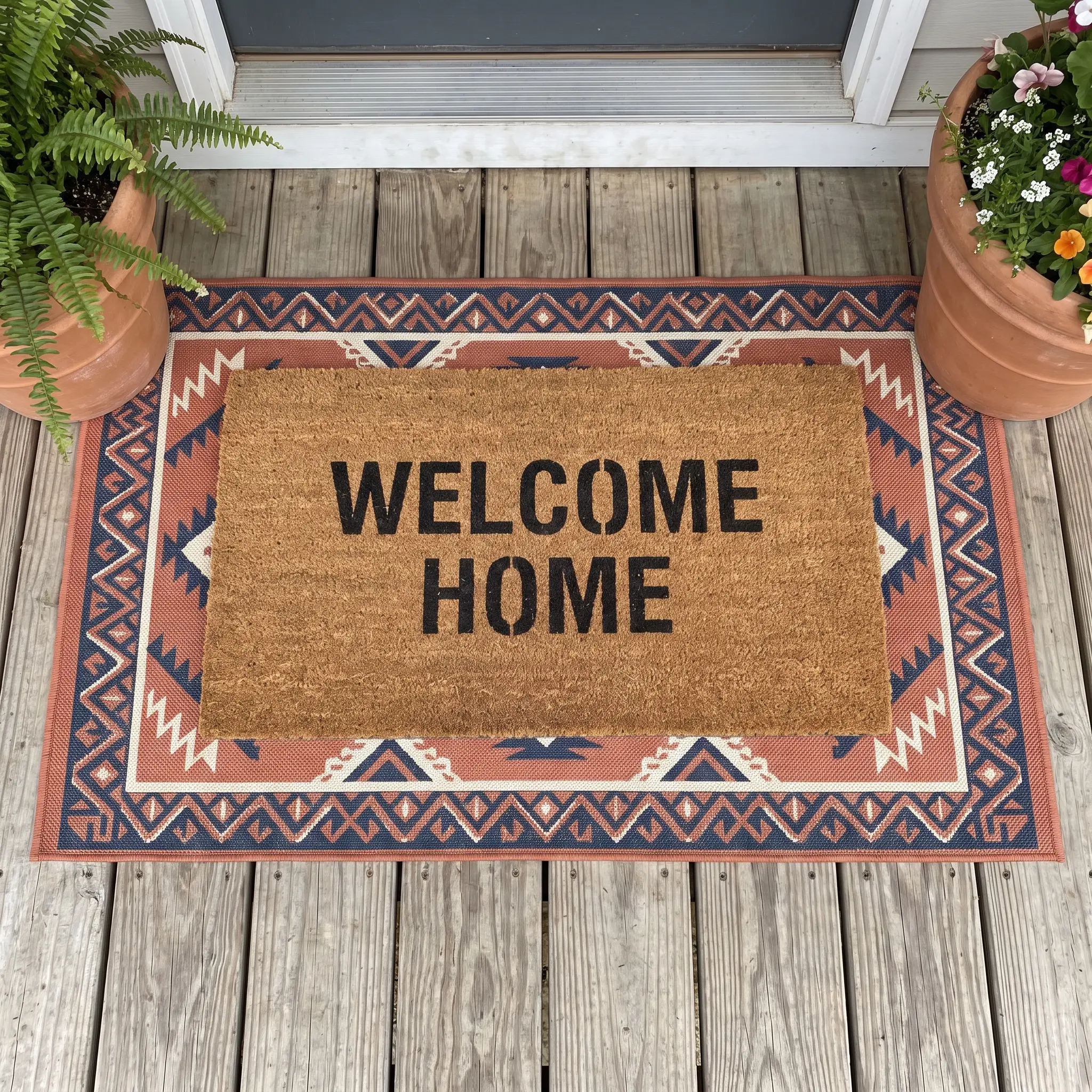
A standard coir mat often looks unfinished and lonely when floating on a large porch. Ground the entry by layering a slightly larger, patterned flat-weave rug beneath the coir mat, ensuring the base layer brings texture while the top layer handles the heavy soil.
- Vibe: Curated and welcoming.
- Key Material: Heavy-duty coir paired with a machine-washable synthetic base.
- Style Hack: Use a 3×5 base rug beneath a standard 2×3 coir mat for the perfect 6-inch border.
Strictly avoid thick pile or jute rugs for the base layer. They trap standing moisture against the porch floor, which will rapidly rot wooden decking and stain concrete.
Durability Check
Soften Hard Lines with Solution-Dyed Acrylic Pillows
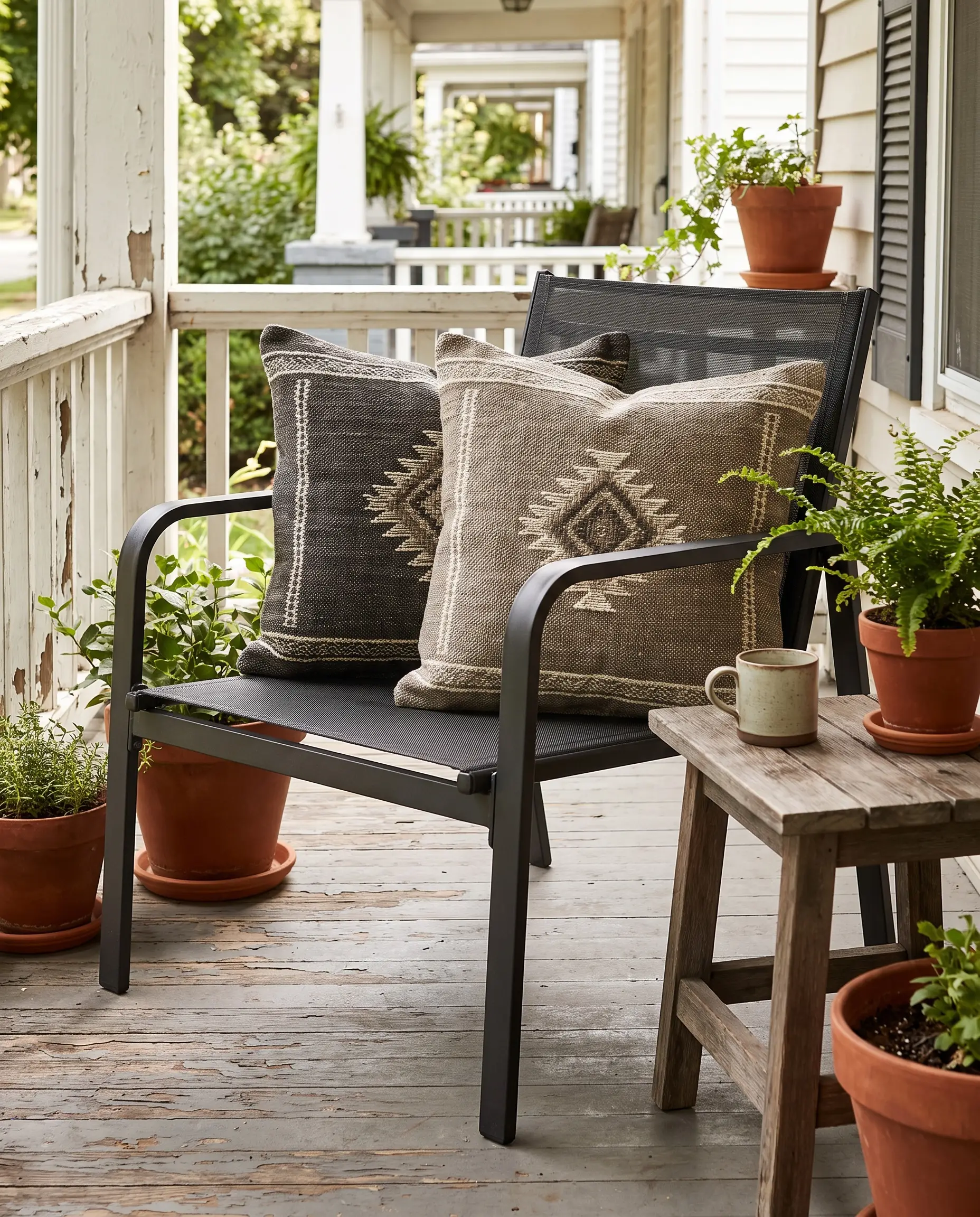
Standard interior throw pillows will bleach out and mold within weeks of sun and humidity exposure. You must specify high-performance fabrics to soften the rigid lines of metal or wooden furniture, guaranteeing your styling remains pristine all season.
- Vibe: Plush and resilient.
- Key Material: 100% solution-dyed acrylic (e.g., Sunbrella or Perennials).
- Insert Type: Quick-dry reticulated foam inserts.
“Solution-dyed” means the color pigment goes all the way through the synthetic fiber—like a carrot. Standard printed outdoor fabrics only have color on the surface—like a radish—making them highly susceptible to UV fading.
Visual Rule
Upgrade House Numbers to Floating San-Serif Fonts
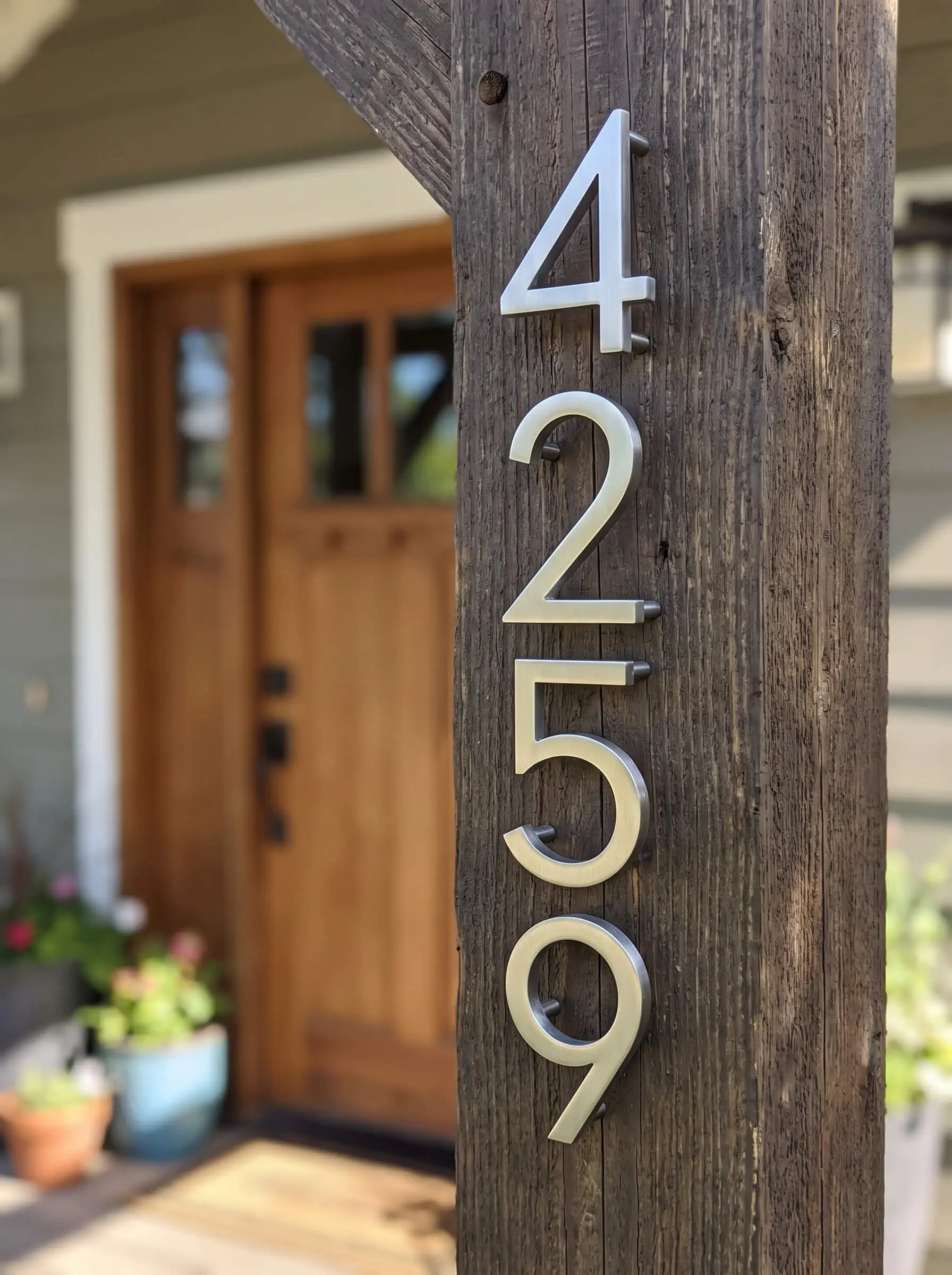
Faded, curly brass house numbers instantly date the entire facade of your home. Swapping them for crisp, 6-inch floating san-serif metal numbers (such as Neutraface) is the highest ROI weekend project, instantly modernizing the architectural read of the property.
- Vibe: Crisp and contemporary.
- Key Material: Solid machined aluminum or stainless steel.
- Mounting Style: Mounted vertically on a structural column or horizontally above the mailbox with a 1/2-inch float spacer.
The Seasonal Transition Blueprint
To maintain authoritative curb appeal year-round, you must stop treating your porch like a disposable holiday aisle. A truly sophisticated exterior relies on a strict seasonal transition strategy: your heavy Grade-A teak furniture, architectural GFRC planters, and oversized lighting fixtures are permanent structural anchors. When the seasons shift, you only rotate the micro-elements—swapping the solution-dyed acrylic pillow covers and updating the organic matter within the pots. This disciplined approach prevents visual clutter and ensures your home’s first impression remains intentional, grounded, and luxurious regardless of the month. Assess your entryway today: which architectural element—your lighting scale, your spatial layout, or your material durability—are you going to correct this weekend?

The Hackrea Style Desk treats interior decoration as an exact visual science. Rather than focusing on demolition or floor plans, this desk masters the art of color theory, undertone matching, material pairings, and spatial proportion. From balancing the visual weight of mixed metals to finding the perfect bridging tone between disparate wood species, this desk provides the rigorous aesthetic rules needed to achieve high-end, editorial-quality harmony in any space.