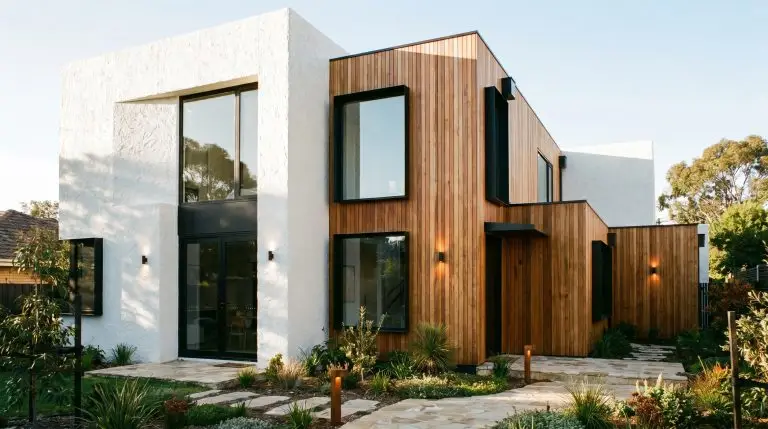
Committing to a white exterior is the fastest, most decisive way to modernize a home’s facade, but it carries immense architectural risk. Without strategic intervention, a poorly executed white house instantly devolves into a flat, featureless box, stripped of character and blinding under direct sunlight. When homeowners search for white house exterior ideas, they are often searching for validation that their massive investment won’t end up looking like a sterile hospital wing or a cheap, flipped property.
The secret to mastering this aesthetic lies in understanding “The Dimensional White.” Because white paint inherently absorbs no light, it relies entirely on physical shadows, material texture, and architectural layering to create visual depth. A successful white facade is never just about the paint; it is a rigorous exercise in high-contrast fenestration, organic material integration, and precise lighting geometry.
Elevating your curb appeal demands a disciplined approach to finishes and undertones. From the calcified texture of authentic limewash to the warm, golden glow of clear cedar accents, these 24 specific architectural executions will transform a blank, intimidating canvas into a striking, dimensional volume.
The Science of White: LRV and Geographic Lighting
Before selecting a specific aesthetic, you must understand the technical metrics of exterior paint. The most critical factor in your decision is not the name on the paint can, but its Light Reflectance Value (LRV) and how it interacts with your local climate.
Sunlight relentlessly washes out exterior paint, consistently making it appear two to three shades lighter outside than it does on an interior swatch. A pure white with an LRV above 90 might look perfectly crisp under the diffused, overcast skies of the Pacific Northwest, but that exact same formula will create a blinding, neighborhood-alienating glare in high-sun states like Arizona or Florida. You must map your paint’s warm or cool undertones directly against your geographic lighting conditions.
Never evaluate an exterior white paint swatch indoors. You must paint a minimum 2×2 foot sample directly onto your cladding to observe how your region’s specific Kelvin temperature (sunlight color) shifts the paint’s undertones throughout the day.
Hackrea Exterior Design Rule
| Geographic Climate | Recommended LRV Range | Why It Works |
|---|---|---|
| High-Sun / Desert (AZ, NV, FL) | LRV 70 – 82 | High-intensity sunlight amplifies white. Lower LRVs (creamy/greige whites) prevent blinding glare while still appearing as a true white outdoors. |
| Overcast / Northern (PNW, UK) | LRV 82 – 90+ | Gray, diffused light mutes paint. High-LRV, crisp whites cut through the gloom and prevent the facade from looking dingy or yellowed. |
| Four-Season / Temperate (Midwest, Northeast) | LRV 75 – 85 | Balanced climates require versatile, neutral whites with balanced earth undertones that adapt to both harsh summer sun and stark winter snowscapes. |
Textural Cladding & Siding Ideas
Because white paint obscures natural shadows, your physical cladding material must work twice as hard to generate visual texture. The foundation of a dimensional facade begins with the tactile surface of your siding.
1. Apply Authentic Romabio Limewash on Red Brick
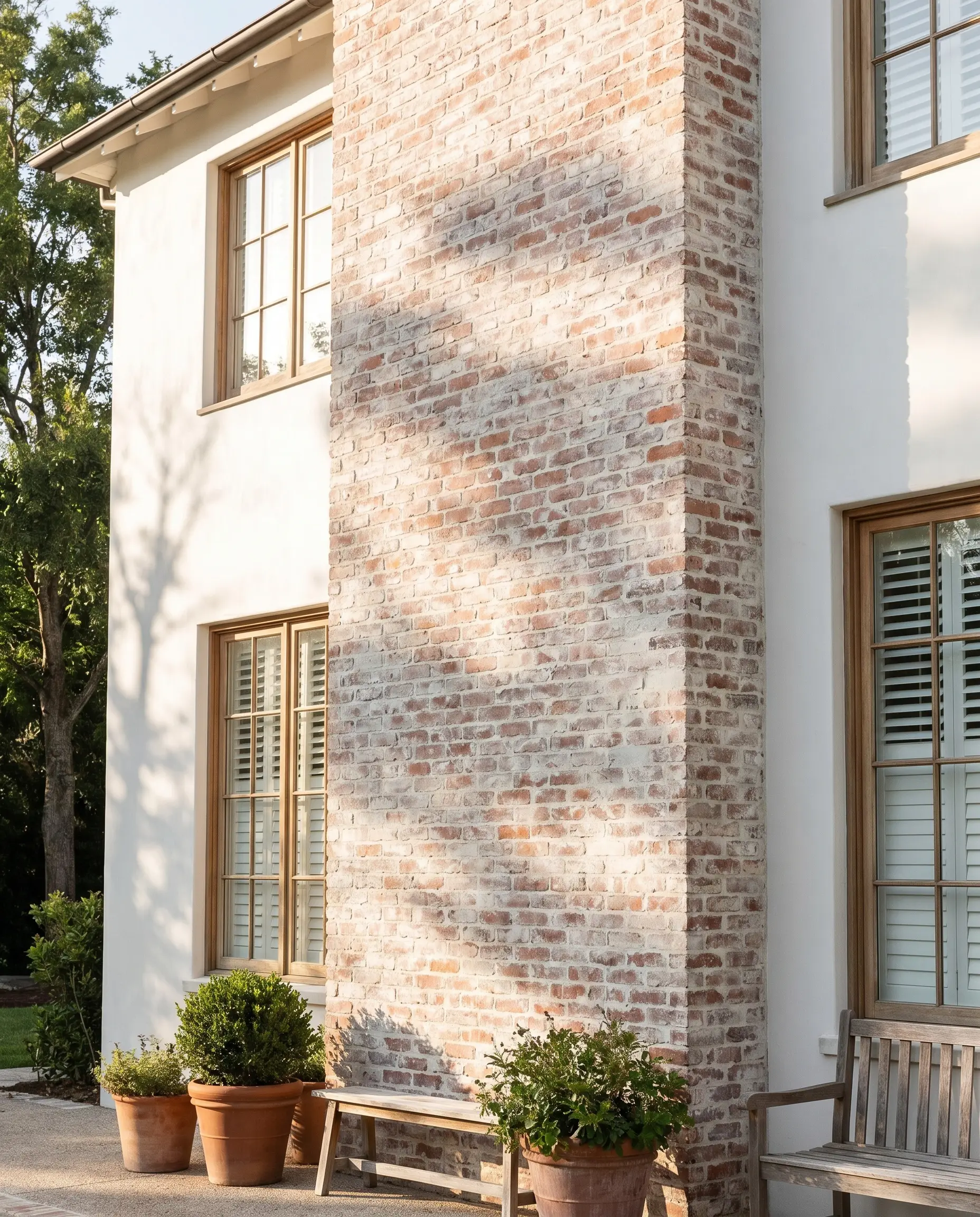
Upgrading dated masonry requires mineral-based breathability, not a suffocating plastic film. Authentic calcified limewash penetrates the brick to create an old-world, chalky patina that ages gracefully, completely avoiding the peeling and moisture-trapping failures of standard latex paint.
- Material Focus: Romabio Classico Limewash.
- Texture Profile: Matte, calcified, and highly tactile.
- Vibe: European heritage meets modernized historic preservation.
2. Layer Hardie Board and Batten for Vertical Height
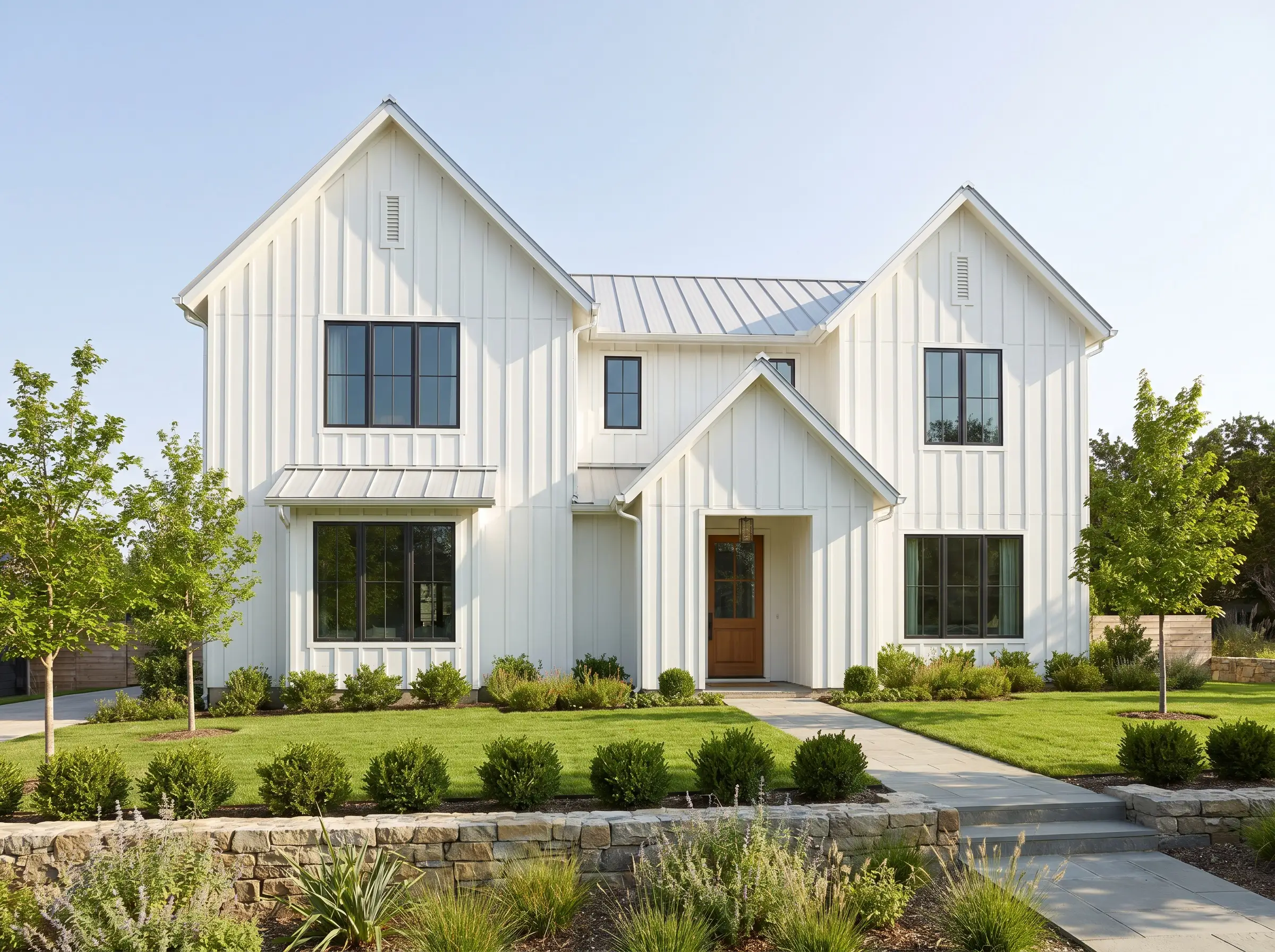
Vertical cladding physically alters the scale of a home, drawing the eye upward to emphasize architectural volume. The physical battens project outward, casting shifting micro-shadows across the flat boards as the sun moves, ensuring the white facade never looks static.
- Material Focus: Fiber cement board and batten.
- Structural Spec: 16-inch to 24-inch batten spacing for optimal shadow casting.
- Vibe: Elevated transitional structure.
3. Use Smooth Trowel Stucco for Spanish Revival Silhouettes
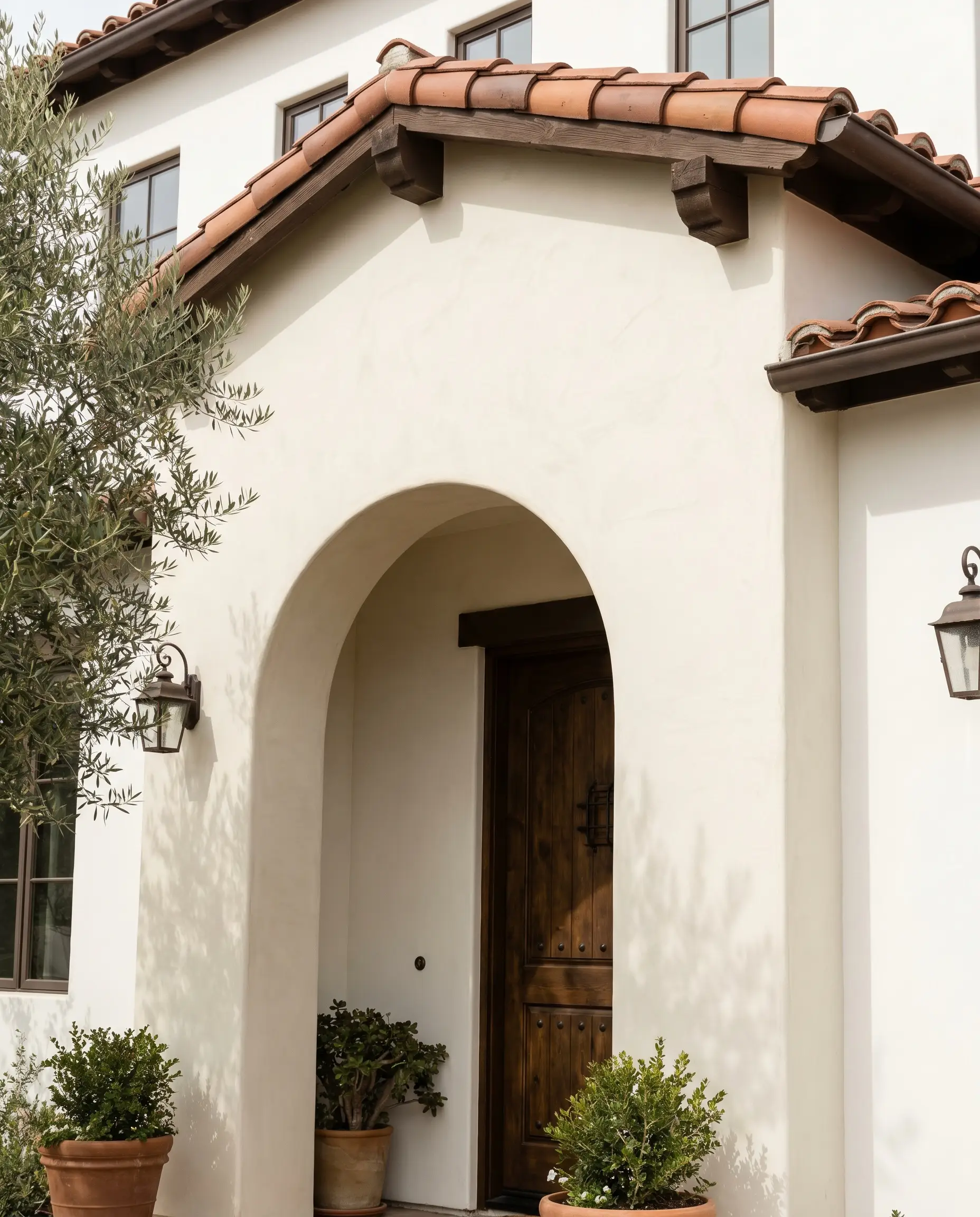
Moving away from sharp modern lines, smooth trowel stucco wrapped around arched entryways offers a softer, more organic approach to white exteriors. The subtle imperfections in the hand-troweled finish catch the light organically, pairing flawlessly with terracotta roofing and dark wood accents.
- Material Focus: Smooth Trowel Stucco.
- Paint Match: Sherwin-Williams Alabaster (Warm, creamy undertone).
- Vibe: Refined Mediterranean and Spanish Revival.
4. Install White Painted Cedar Shingles for Coastal Texture
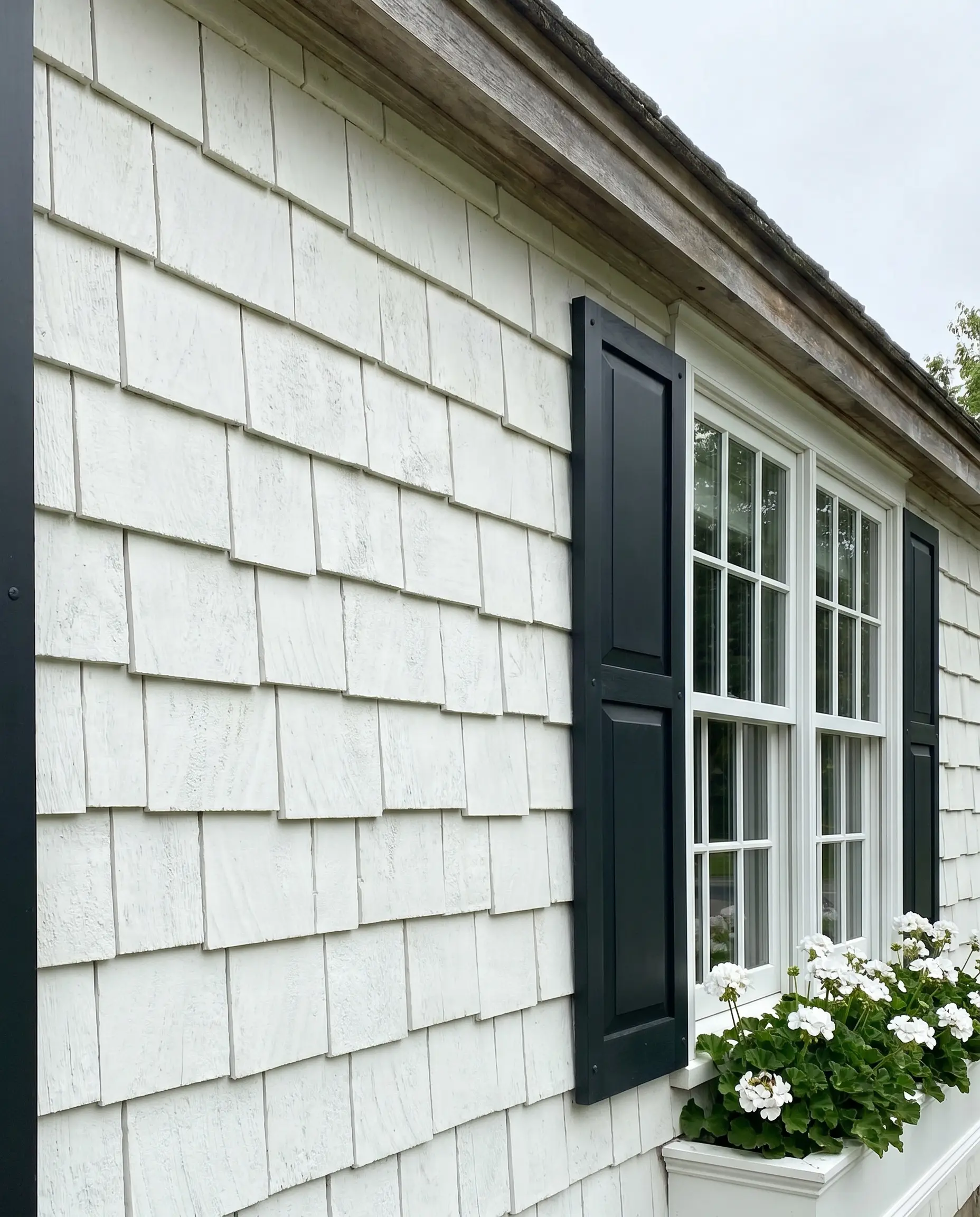
Traditional coastal architecture relies on layered repetition to break up large expanses of exterior wall. The overlapping nature of cedar shingles creates a highly tactile, shadow-heavy surface that grounds the crispness of a bright white finish.
- Material Focus: Premium grade cedar shingles.
- Paint Match: Benjamin Moore Chantilly Lace.
- Vibe: Heritage Cape Cod.
5. Opt for Fiber Cement Lap Siding with a Deep Reveal
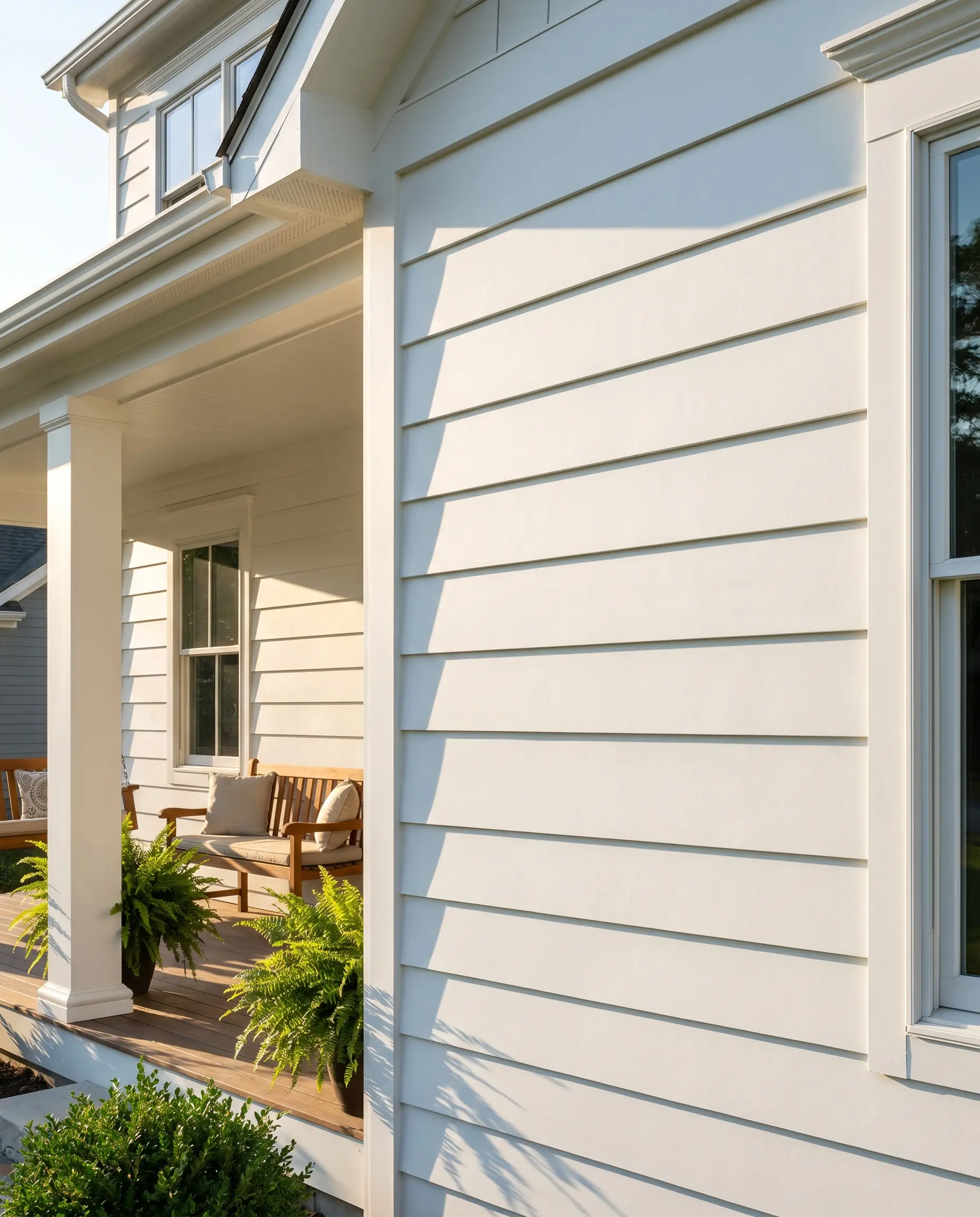
Standard vinyl siding often falls flat when painted white due to shallow overlaps. Specifying a premium fiber cement lap siding with a deep reveal guarantees a sharp, defining shadow line beneath every single plank, giving the facade substantial architectural weight.
- Material Focus: Fiber Cement Lap Siding.
- Structural Spec: Minimum 5/8-inch butt edge thickness for maximum shadow line depth.
- Vibe: Crisp, classic Americana.
6. Ground the Foundation with Whitewashed Stone Veneer
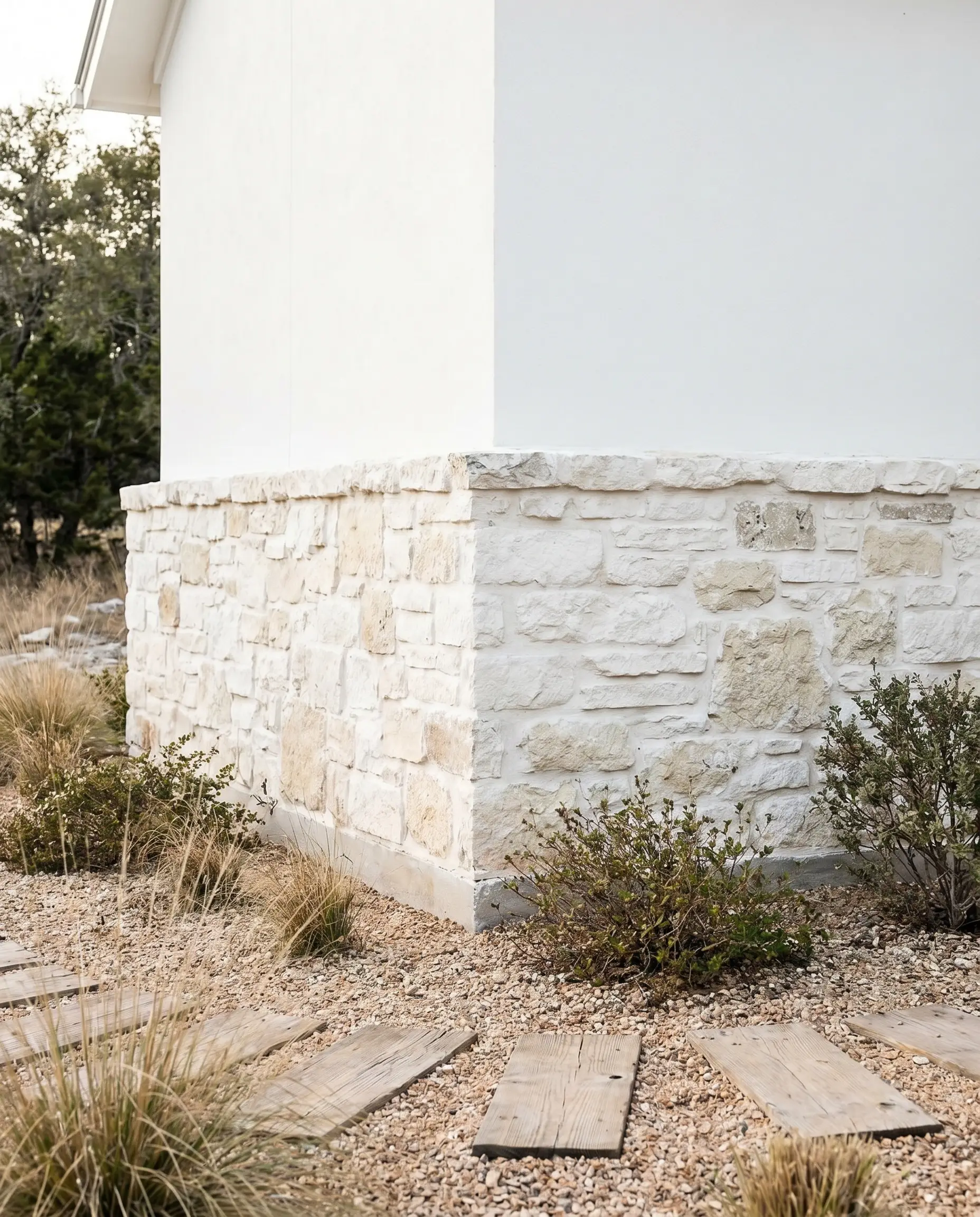
A completely white house can occasionally suffer from a “floating box” effect if it lacks visual anchoring at the base. Integrating an over-grouted, whitewashed stone skirting anchors the silhouette to the surrounding landscape while maintaining a cohesive, monochromatic palette.
- Material Focus: Natural limestone or whitewashed cultured stone veneer.
- Styling Pro-Tip: Use a heavy over-grout technique (German Schmear style) to soften the stone edges.
- Vibe: Grounded, earthy transitional.
High-Contrast Trims & Roof Pairings
A white house acts as an expansive architectural blank canvas, meaning the framing elements—your roofline, fascia, and windows—dictate the home’s final identity. High-contrast fenestration and deliberate roof pairings provide the essential structural boundaries that keep the white volume grounded.
7. Frame with Matte Black Aluminum Clad Mullions
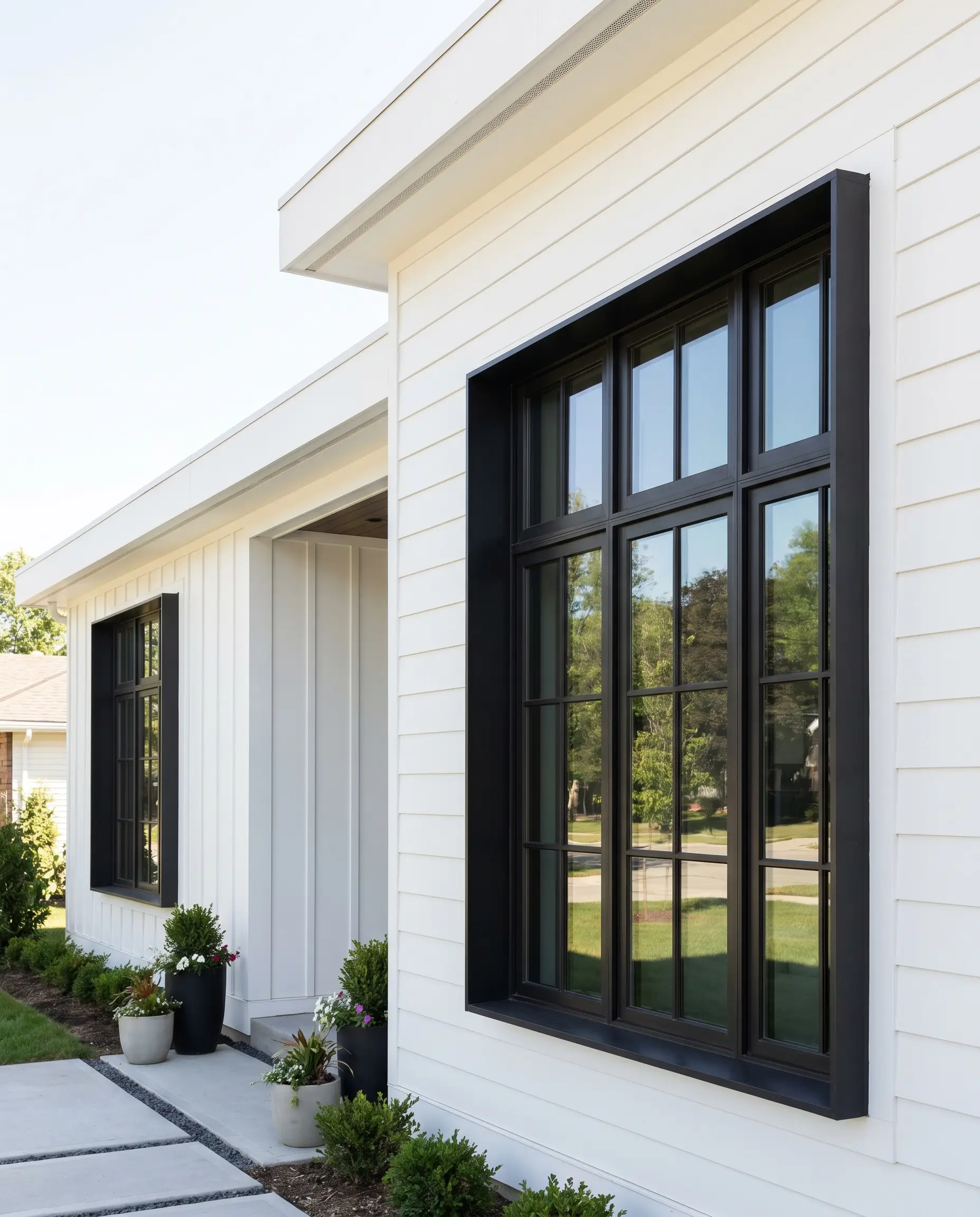
The modern classic approach to fenestration relies on extreme contrast to create the illusion of deep, recessed voids. Matte black window frames act like eyeliner for the home, drawing sharp structural focus and making the white siding appear even crisper by comparison.
- Material Focus: Extruded aluminum clad wood windows.
- Color Match: Factory matte black or Benjamin Moore Onyx.
- Vibe: Sharp, modern industrial.
8. Cap with a Charcoal Standing Seam Metal Roof
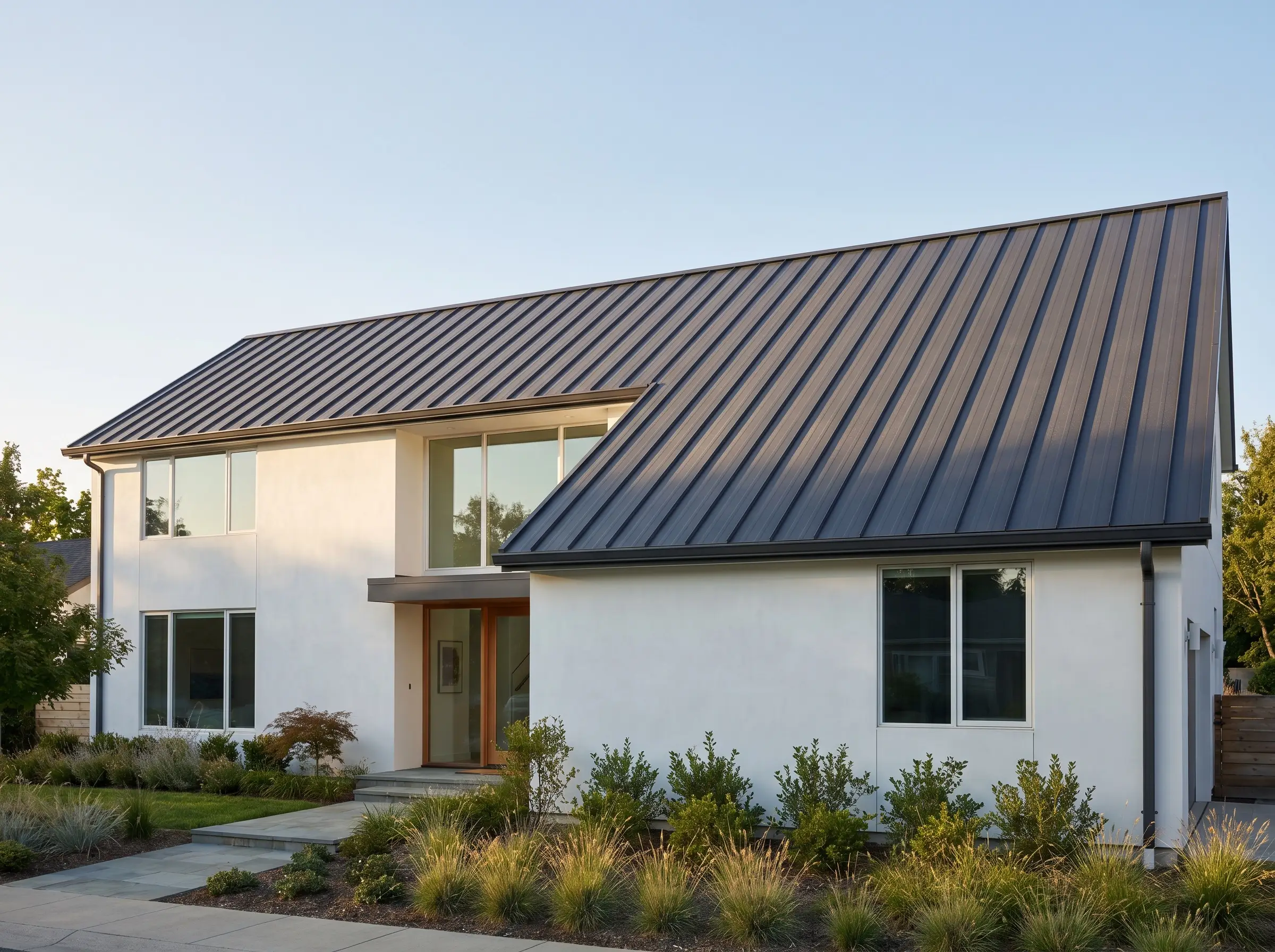
Upgrading from standard asphalt to a standing seam metal roof introduces clean, vertical sightlines that pull the eye upward. A deep charcoal finish provides a striking, modern cap to a white facade without the harsh, uncompromising starkness of a pure black roof.
- Material Focus: 24-gauge steel standing seam metal roofing.
- Color Match: Matte Charcoal Gray.
- Vibe: Sleek, transitional modern.
9. Execute Tone-on-Tone: White Fascia with White Gutters
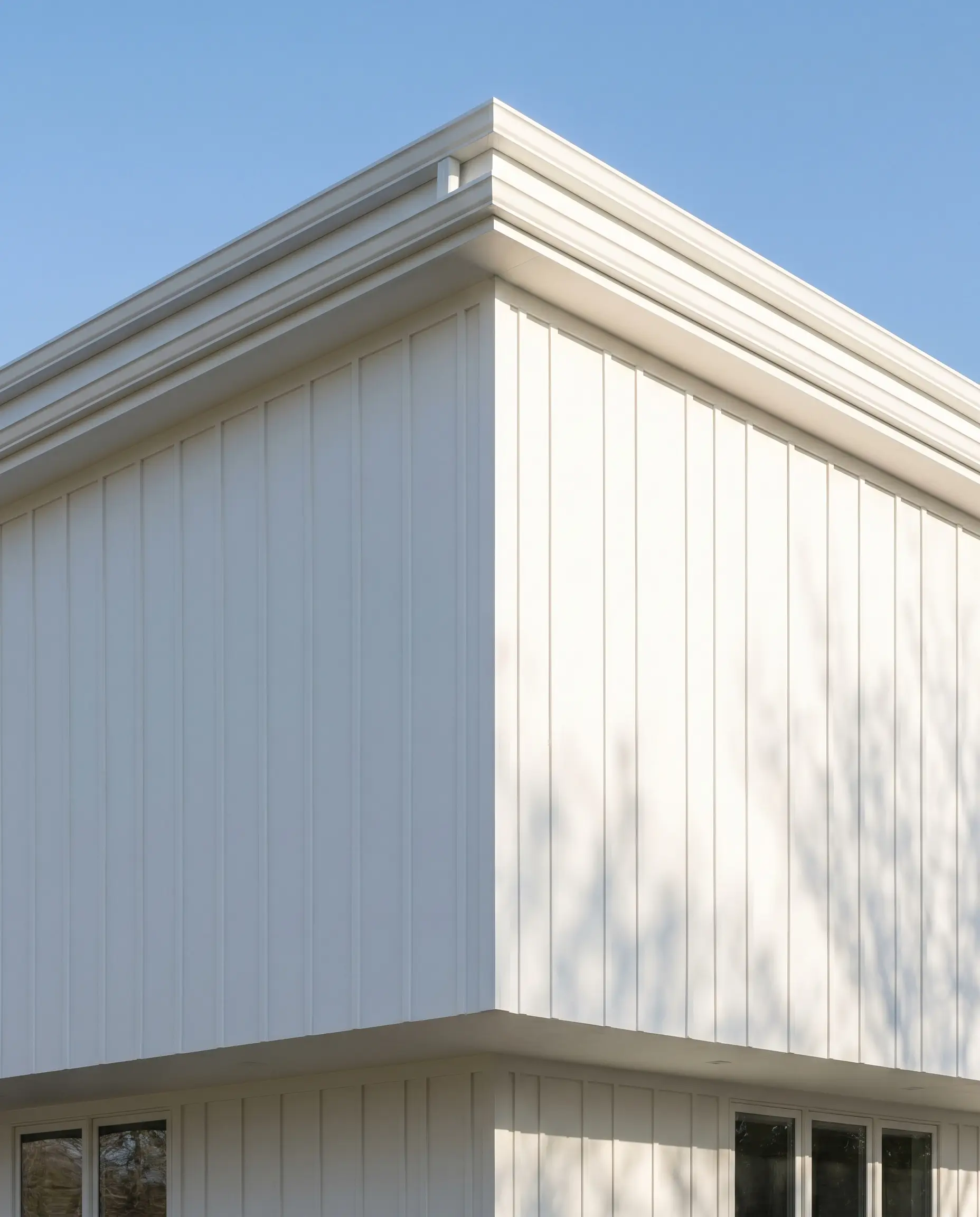
For a highly minimalist, sculptural aesthetic, eliminating the contrast at the roofline allows the home to read as a single, uninterrupted geometric volume. Painting the fascia and the gutter systems the exact same white as the siding makes the functional hardware disappear entirely.
- Material Focus: Seamless aluminum gutters.
- Paint Match: Color-matched exactly to the primary siding white.
- Vibe: Ultra-modern minimalist.
10. Introduce Dark Bronze Gutter Systems for Subtle Warmth
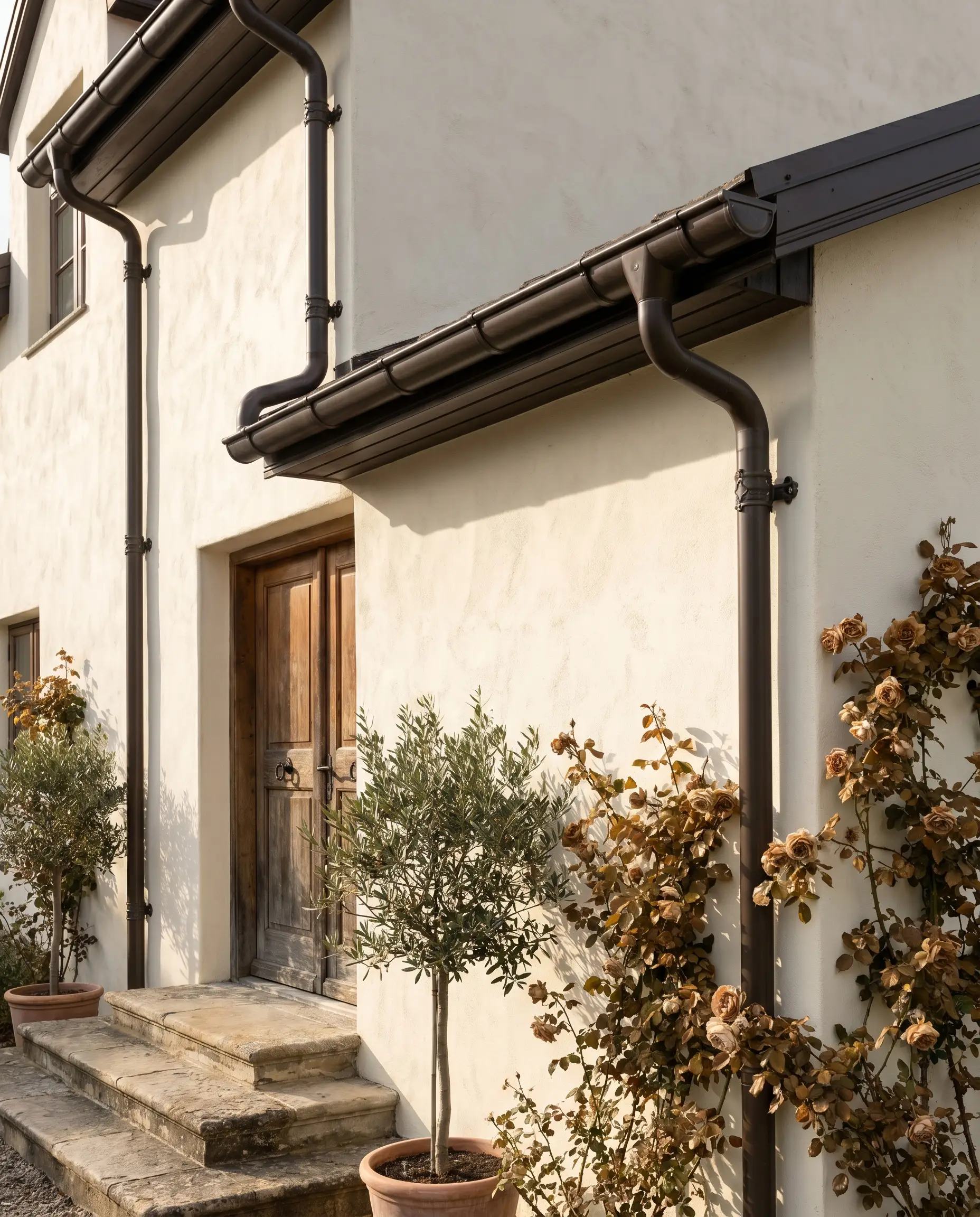
When black trim feels too aggressive, dark bronze offers historic gravitas and a subtle, earthy warmth. Bronze gutter systems and downspouts pair exquisitely with creamy, warm-toned whites, delivering high contrast with a softer, more sophisticated edge.
- Material Focus: Dark bronze aluminum or steel gutter systems.
- Styling Pro-Tip: Pair with warm-undertone whites to pull out the brown and gold notes in the bronze.
- Vibe: Refined European or historic renovation.
11. Soften the Contrast with Slate Gray Architectural Shingles
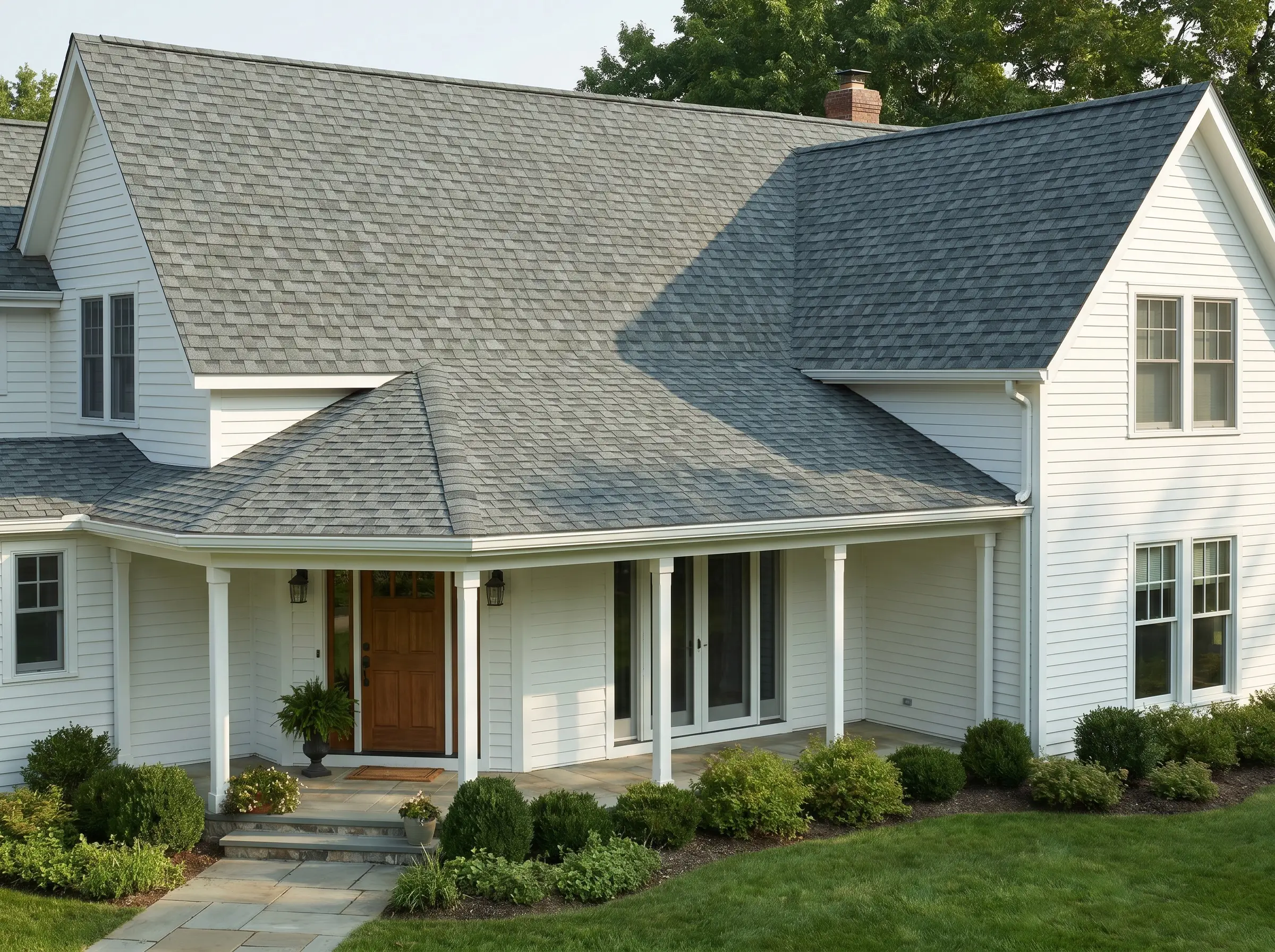
Traditional silhouettes require roofing materials that offer texture without overpowering the delicate white paint. Slate gray architectural shingles provide a beautifully dimensional, shadow-catching surface that softens the home’s profile, making it feel approachable rather than stark.
- Material Focus: Dimensional architectural asphalt shingles.
- Color Match: Weathered Wood or Slate Gray.
- Vibe: Classic, approachable heritage.
12. Modernize with “Invisible” Glass Balcony Railings
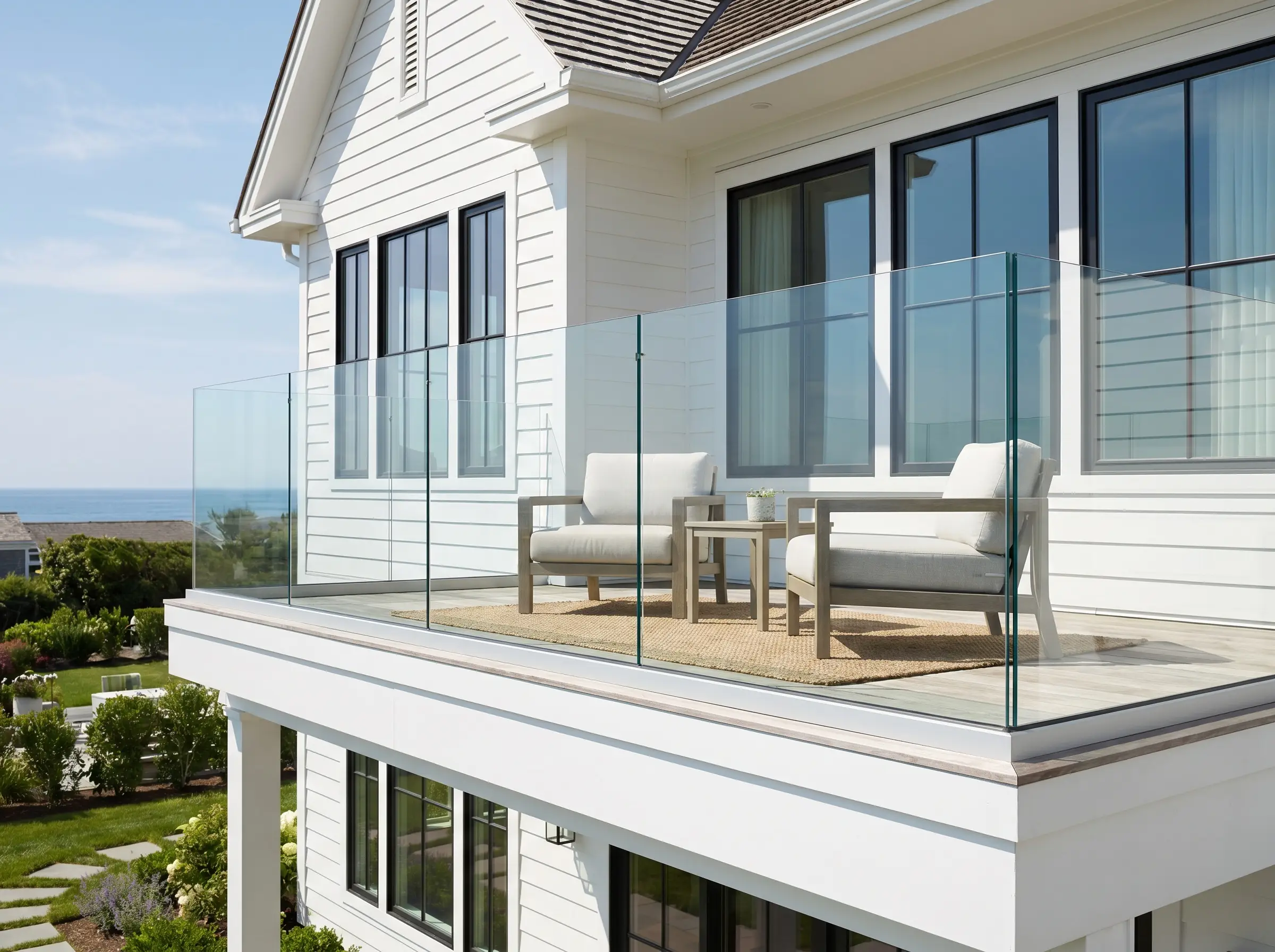
Heavy wooden spindles or dark metal railings can visually clutter a pristine white facade, especially on secondary levels. Frameless glass balcony railings eliminate visual obstructions, allowing the clean white architecture and the surrounding landscape to take center stage.
- Material Focus: 1/2-inch tempered architectural glass with concealed base shoes.
- Styling Pro-Tip: Ensure the glass is low-iron to prevent a green tint against the white paint.
- Vibe: High-end coastal or contemporary modern.
Warming It Up: Wood Accents & Organic Materials
The ultimate, non-negotiable rule of white exterior design is that it demands organic warmth to prevent an aesthetic descent into sterility. Strategically placing natural wood and living metal finishes introduces soul, tactile richness, and visual relief to the monolithic canvas.
13. Anchor the Entry with a Rift-Sawn White Oak Door
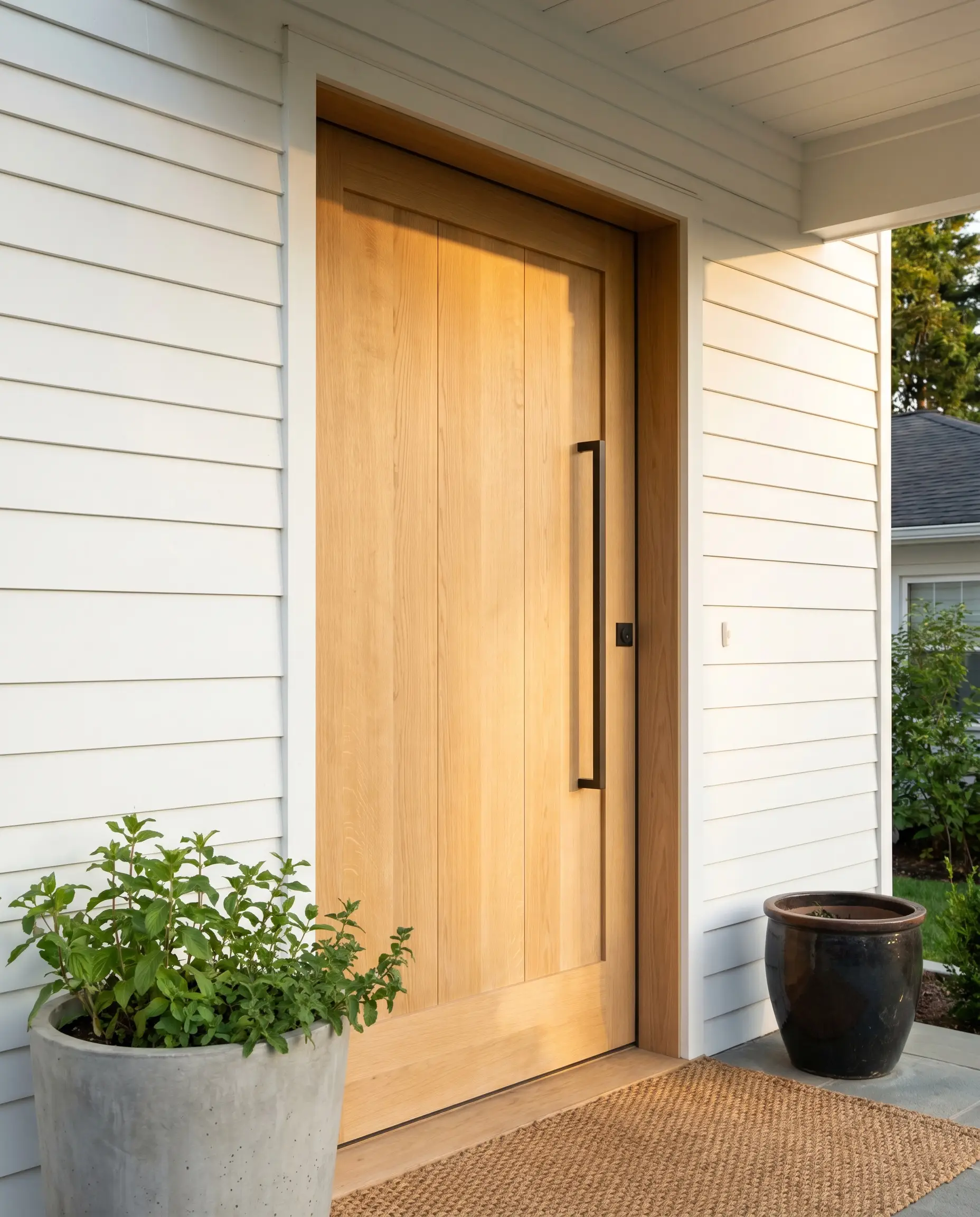
The front door is the primary tactile touchpoint of the home, making it the perfect location to introduce high-end, organic grain. Specifying rift-sawn wood ensures straight, modern grain lines that elevate the entry, strictly avoiding the rustic, cabin-like feel of knotty woods.
- Material Focus: Solid rift-sawn white oak.
- Styling Pro-Tip: Use a clear, matte stain to highlight the natural blonde tones of the oak against crisp white siding.
- Vibe: Accessible luxury and modern warmth.
Maintenance: Solid wood exterior doors require annual inspection and resealing with a marine-grade UV clear coat to prevent the oak from graying or warping under harsh sun exposure.
Pro Tip
14. Clad the Entryway Soffits in Clear Cedar
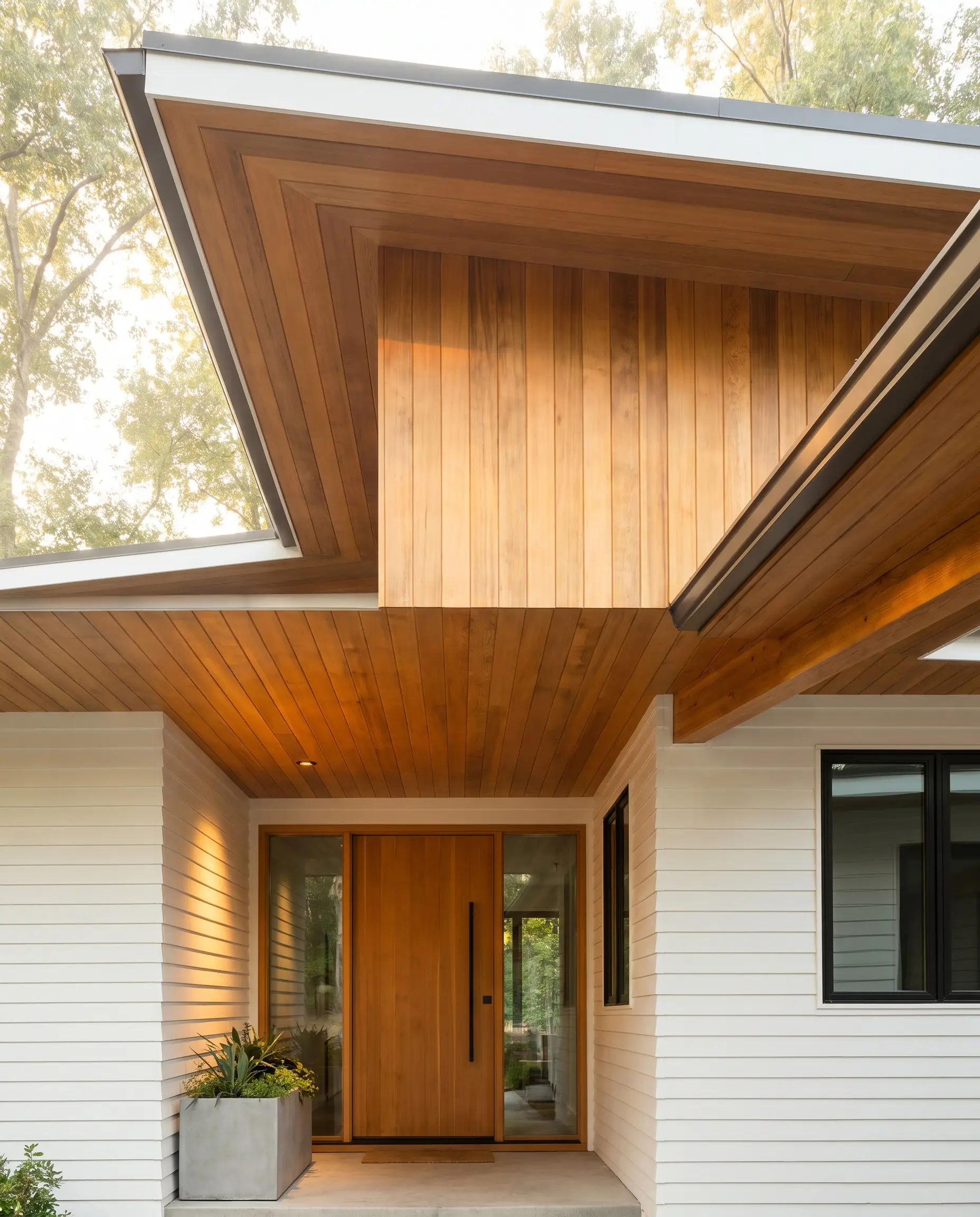
Placing warm wood on the underside of an architectural overhang is a masterful way to introduce texture while protecting the material from direct weather. The clear cedar reflects a warm, golden glow down onto the white siding, softening the entryway lighting and creating an inviting threshold.
- Material Focus: Clear, vertical-grain Western Red Cedar.
- Placement: Porch ceilings and deep eaves.
- Vibe: Sophisticated mid-century or contemporary.
Clear cedar soffits are inherently protected from direct rain, but they must still be sealed with a high-quality UV-protectant to prevent the wood from naturally silvering over time.
Pro Tip (Maintenance)
15. Integrate Thermowood Slat Privacy Screens
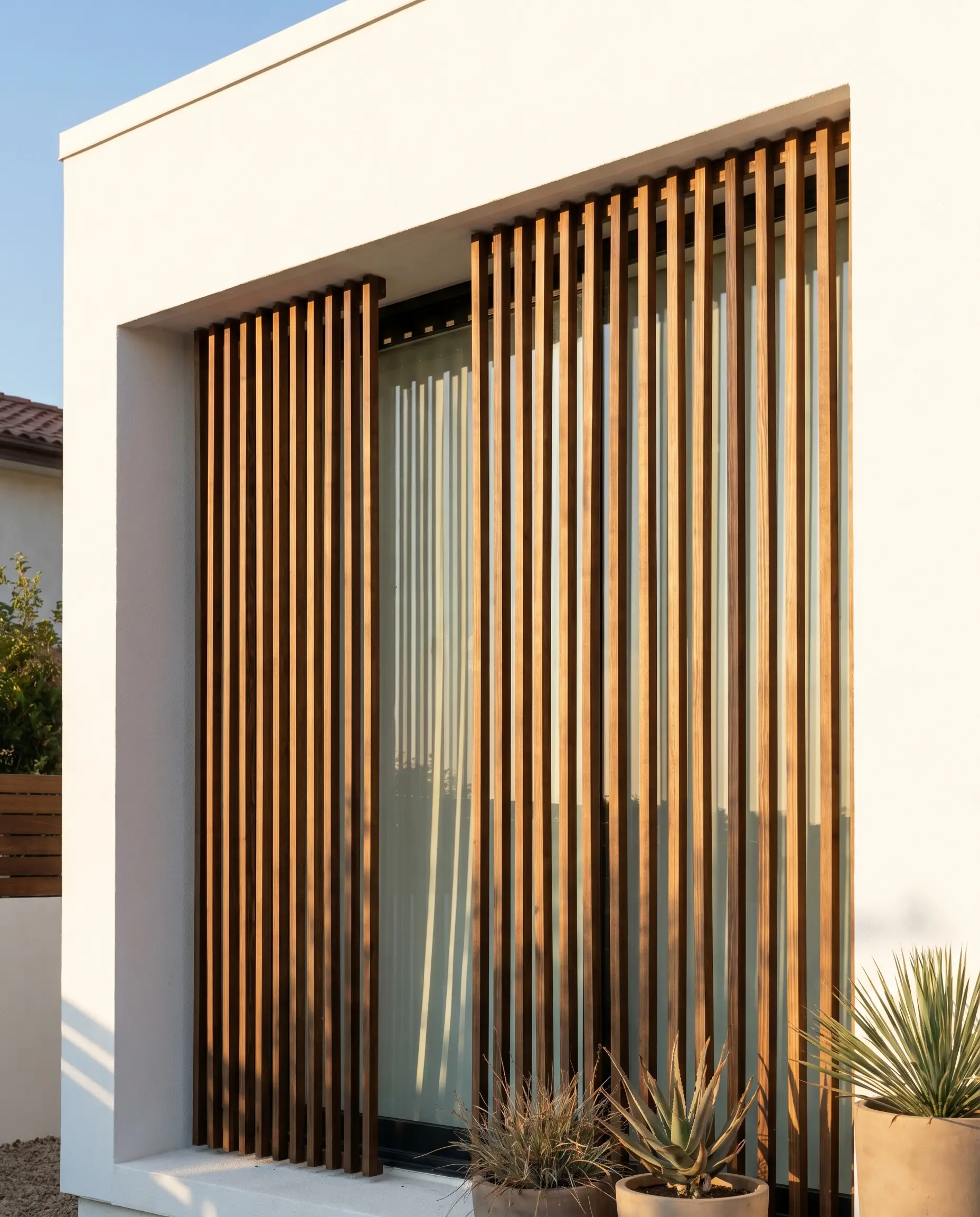
Architectural screening offers a dynamic way to introduce wood tones while physically manipulating sunlight. Vertical wood slats installed over large windows or open carports add necessary organic texture while casting rhythmic, linear shadows across the white render behind them.
- Material Focus: Thermally modified ash or pine (Thermowood).
- Structural Spec: 2×2 vertical slats with a 1-inch gap for optimal light filtration.
- Vibe: Japandi or Desert Modern.
Thermally modified wood is highly resistant to rot and pests, but applying a penetrating cut-oil will maintain its rich, roasted-brown coloration and prevent surface checking.
Pro Tip (Maintenance)
16. Frame the Porch with Chunky Reclaimed Timber Columns
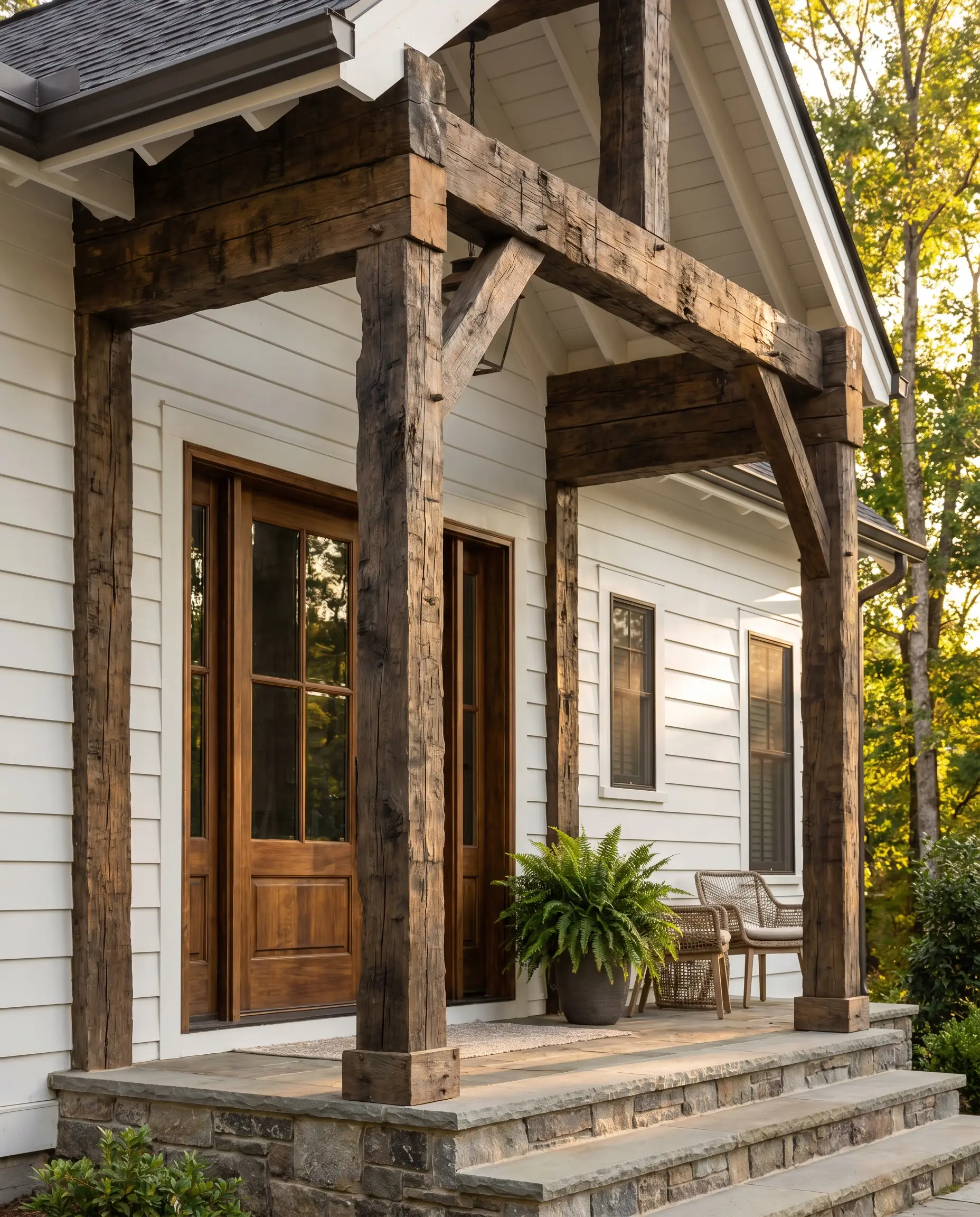
Contrast is not just about color; it is also about texture and age. Pairing the crisp, pristine finish of fresh white paint with the rough-hewn, imperfect surface of massive reclaimed timber beams creates an immediate, highly coveted visual tension.
- Material Focus: Hand-hewn reclaimed oak or Douglas fir timbers.
- Styling Pro-Tip: Ensure the columns are structurally proportional; undersized wood posts on a large white volume will look spindly and disproportionate.
- Vibe: Elevated mountain modern or refined farmhouse.
Reclaimed timbers often contain dormant insects or deep-seated moisture; ensure the beams are professionally kiln-dried and treated with a borate solution before installation.
Pro Tip (Maintenance)
17. Upgrade to Stained Douglas Fir Garage Doors
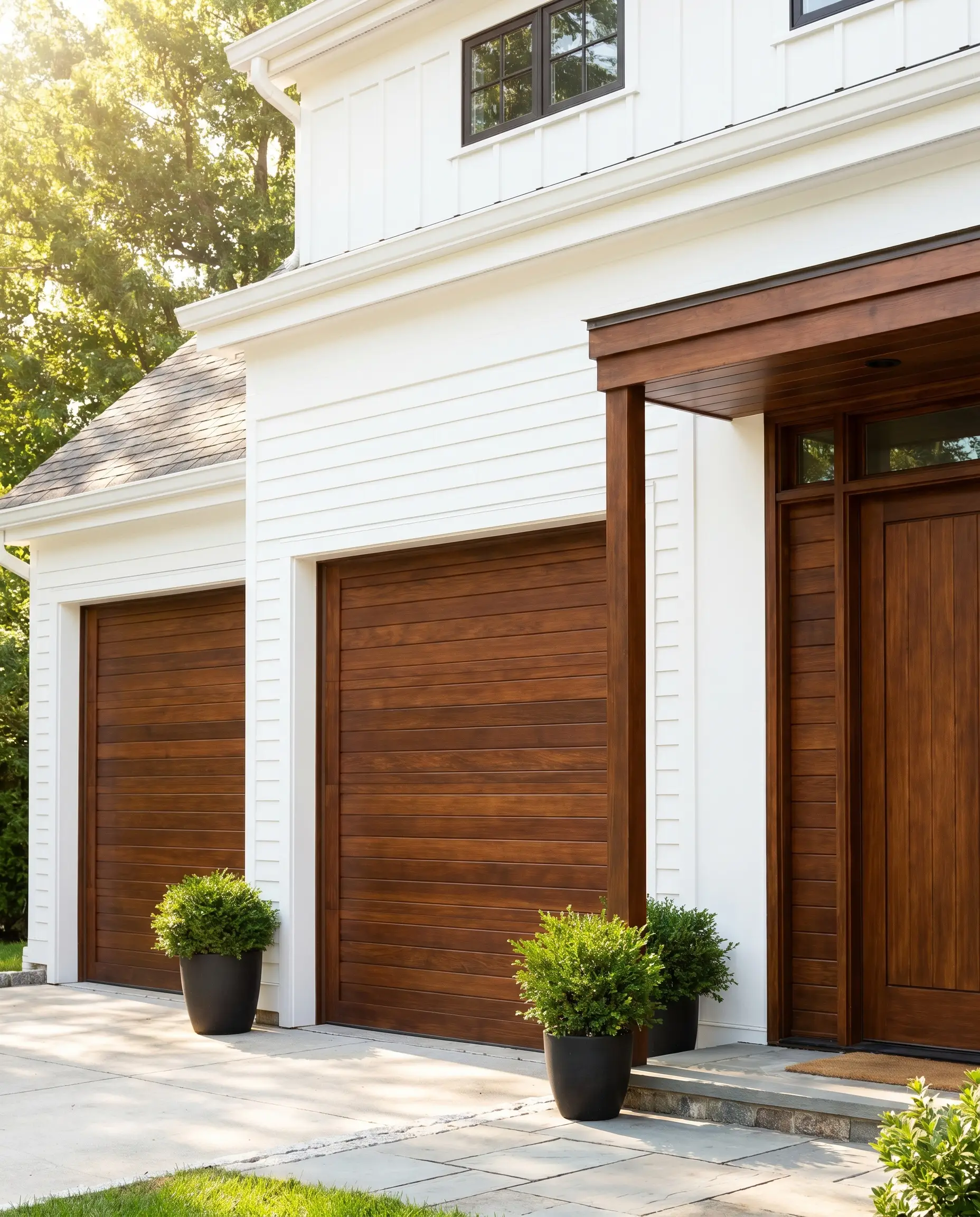
Because garage doors often consume a massive percentage of a home’s front visual real estate, a standard white metal door can easily turn the facade into a monolithic white wall. Swapping to a stained, natural wood garage door instantly breaks up the volume and injects massive curb appeal.
- Material Focus: Custom stained Douglas Fir or Mahogany composite.
- Styling Pro-Tip: Match the garage door stain exactly to the front door for cohesive visual grounding.
- Vibe: High-end transitional.
Garage doors face immense thermal expansion; use a high-quality, penetrating oil finish rather than a film-forming polyurethane that will inevitably blister and peel.
Pro Tip (Maintenance)
18. Patina the Facade with Copper Gooseneck Sconces
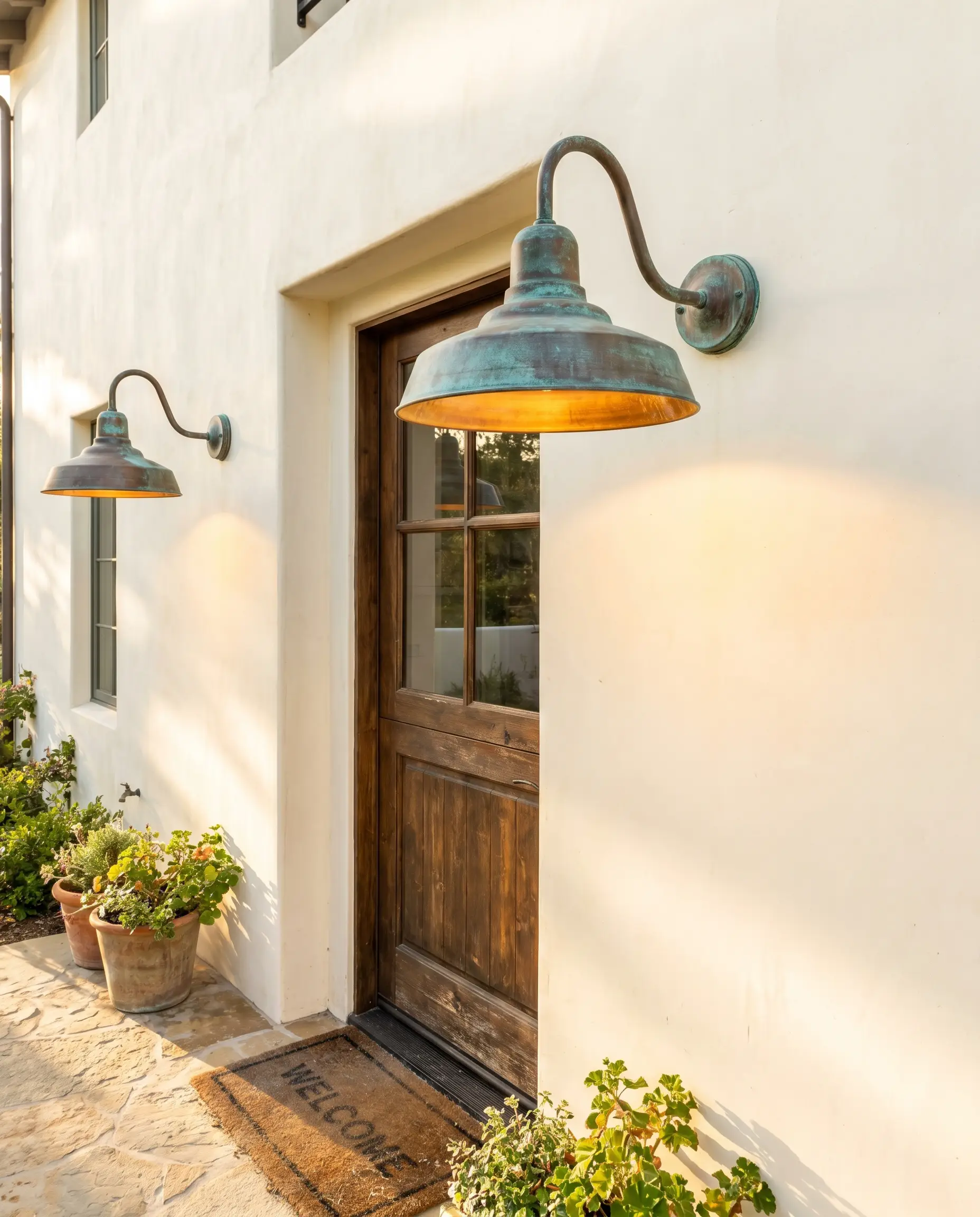
Incorporating living finishes introduces an evolving, dynamic element to a static white exterior. Raw copper lighting fixtures act as jewelry for the home, eventually oxidizing to develop a striking verdigris patina that looks incredible against a creamy white backdrop.
- Material Focus: Unlacquered, spun-copper gooseneck lighting.
- Styling Pro-Tip: Oversize your exterior lighting; fixtures should be roughly 1/4 to 1/3 the height of the door they are framing.
- Vibe: Heritage coastal or bespoke farmhouse.
To allow the copper to age naturally, specify “unlacquered” fixtures. If you require the shiny, raw penny aesthetic, you must purchase lacquered copper and rigorously re-apply a clear metal sealant every few years.
Pro Tip (Maintenance)
Architectural Style Executions (Beyond the Farmhouse)
The modern farmhouse trend has heavily influenced the conversation around white exteriors for years, but white is a universally applicable architectural tool. By shifting your material pairings and rooflines, you can flawlessly execute a white facade across a highly diverse range of architectural vernaculars.
19. The Modern Minimalist Box (Flat Roofs & White Render)
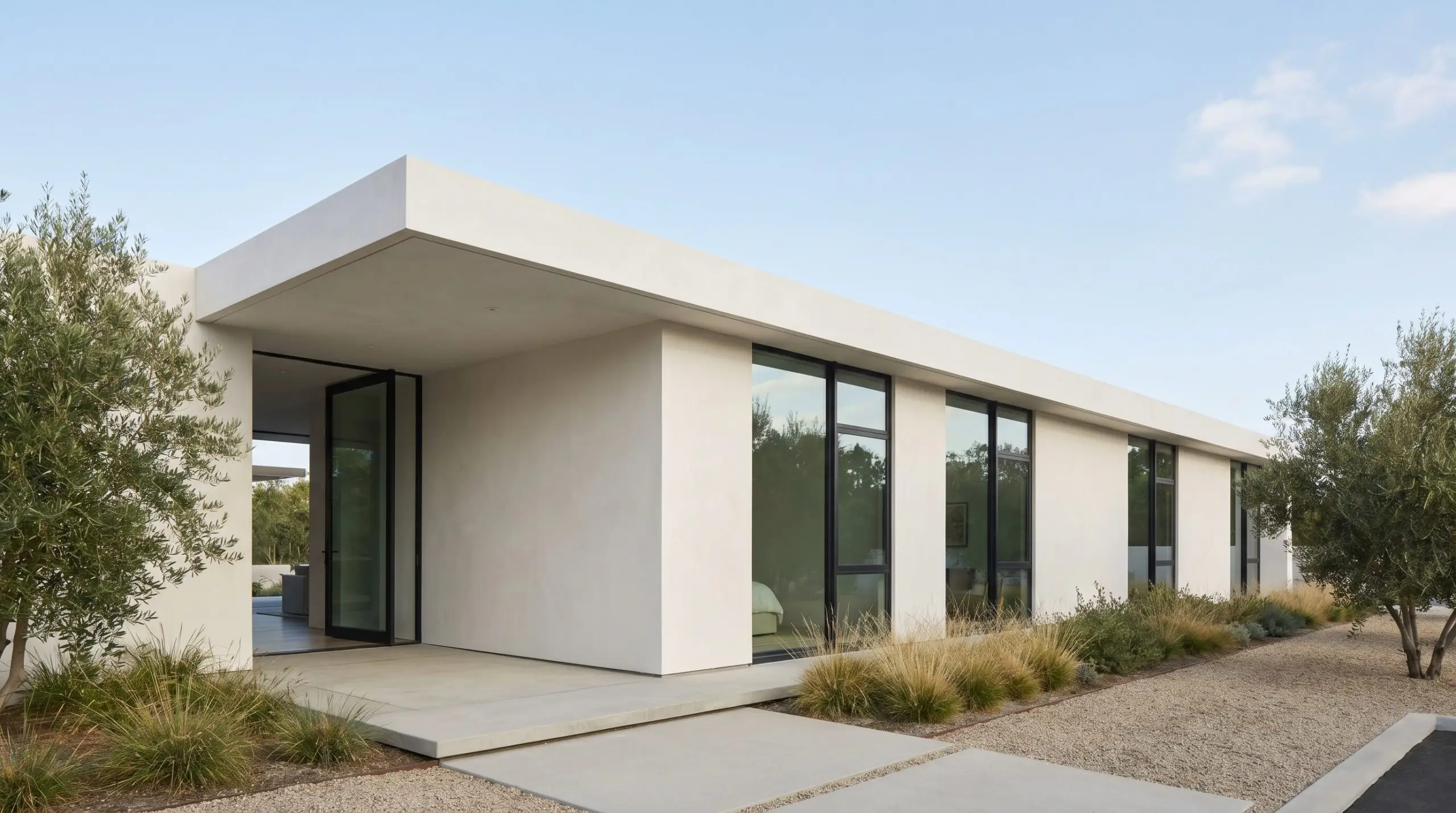
This aesthetic strips away all ornamentation to let the pure geometry of the structure speak for itself. Crisp, unblemished white stucco meets flush transitions and floor-to-ceiling glass, creating a serene, gallery-like presence that demands flawless execution.
- Key Materials: Smooth white render, commercial-grade black aluminum glazing, zero-edge rooflines.
- Paint Match: Sherwin-Williams Pure White.
- Vibe: Avant-garde, stark, and highly disciplined.
20. The Transitional Tudor (White Brick with Steep Black Gables)
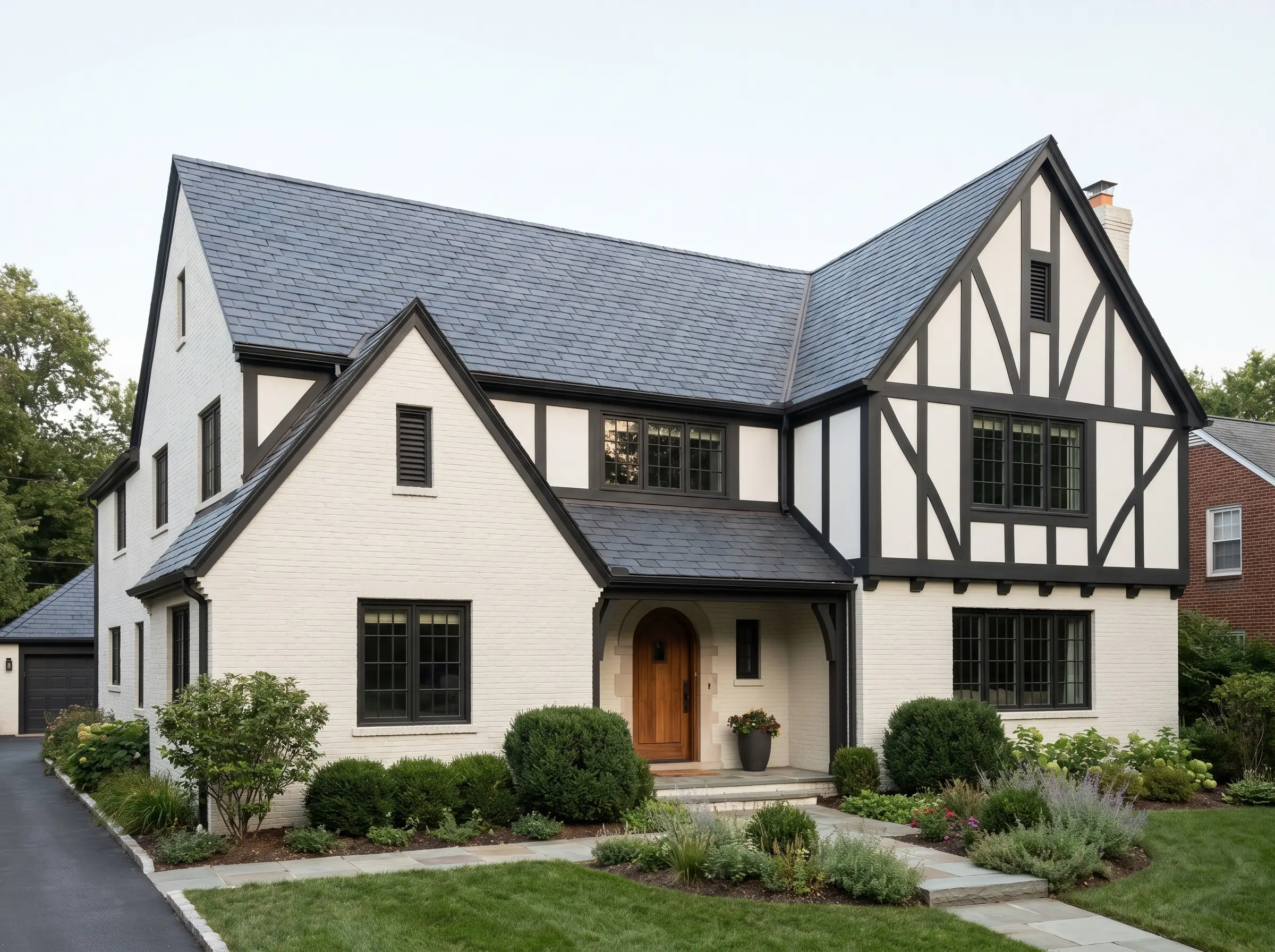
Updating a heavy, historically dark Tudor requires a masterful balance of preservation and modernization. Limewashing the original brick while painting the iconic, steep half-timbering a stark, modern black completely revitalizes the silhouette without erasing its heritage.
- Key Materials: Mineral limewash, painted wood half-timbering, steep-pitch slate roofs.
- Paint Match: Benjamin Moore White Dove (Brick) and Benjamin Moore Onyx (Timbers).
- Vibe: Sophisticated, modernized historic charm.
21. The Desert Modern (Warm White Stucco & Agave Landscaping)
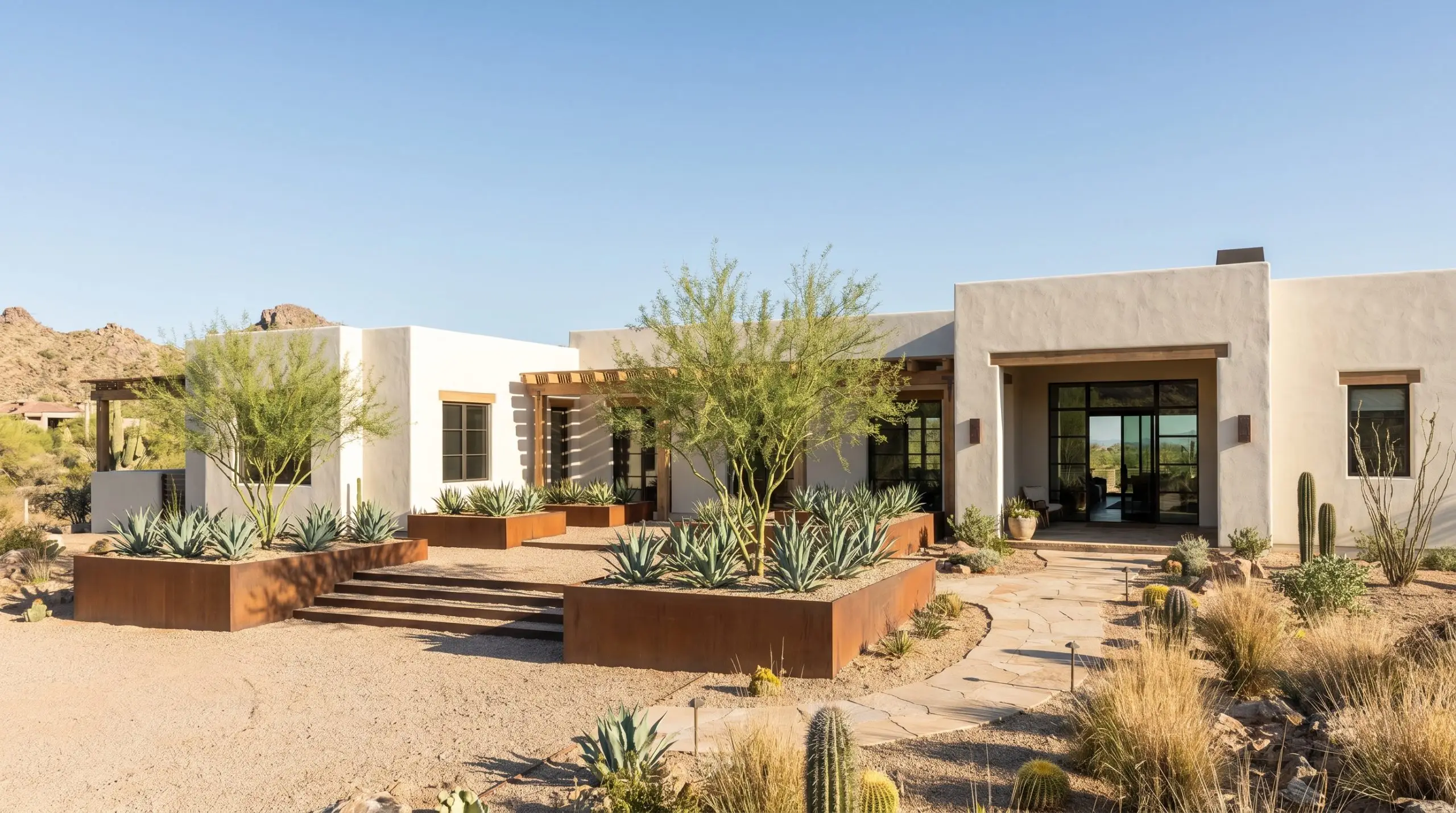
Thriving under intense, arid sunlight requires high-LRV whites that lean intentionally creamy to avoid blinding glare. This style pairs warm white stucco with low-slung rooflines, structural xeriscaping, and rusted metal accents to blend seamlessly into the environment.
- Key Materials: High-LRV warm stucco, corten steel planters, natural agave and palo verde trees.
- Paint Match: Benjamin Moore Swiss Coffee.
- Vibe: Earthy, relaxed, and sun-drenched.
22. The Classic Cape Cod (Crisp White Clapboard & Navy Shutters)
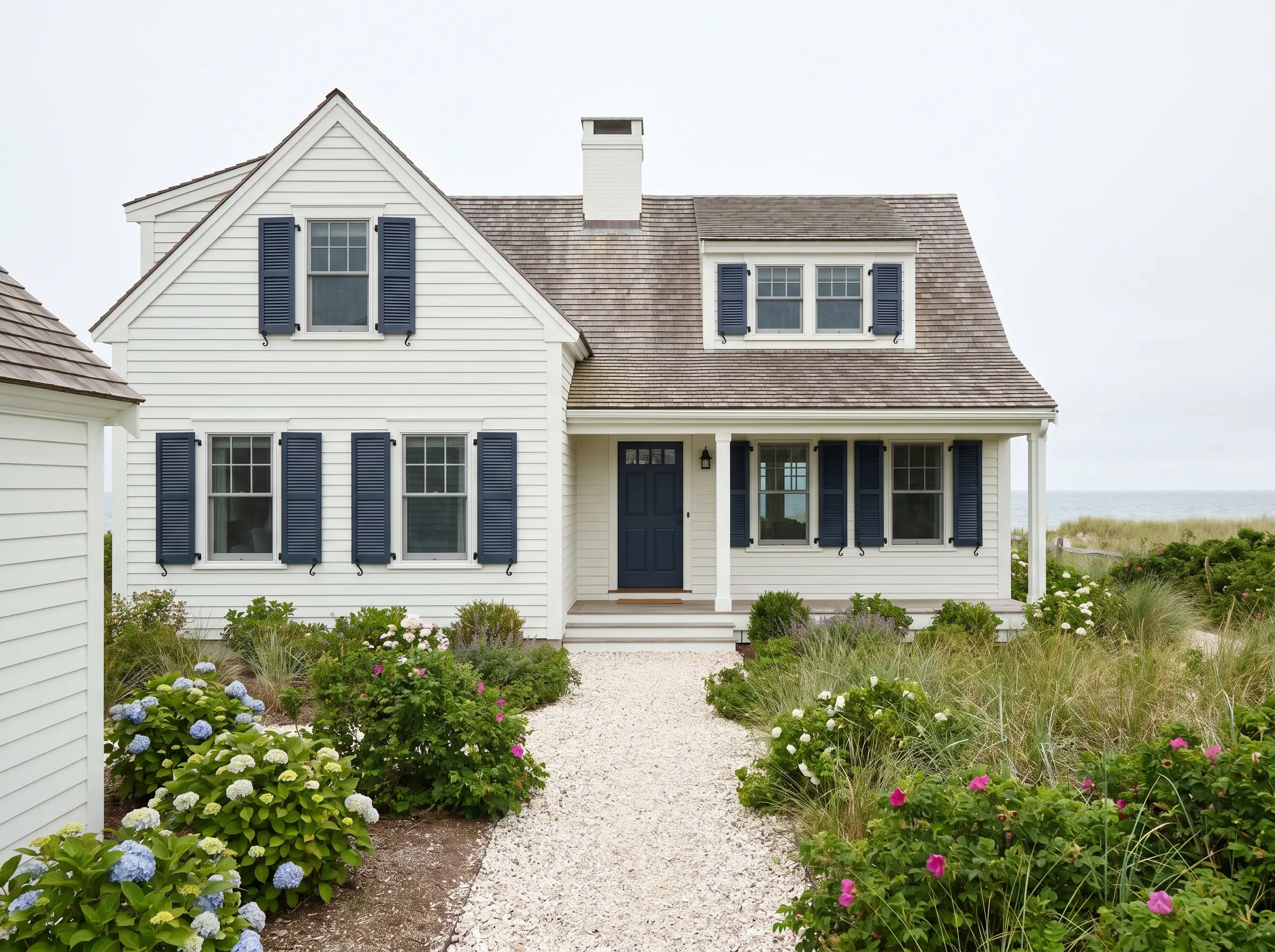
The definitive heritage coastal look relies on crisp, nautical contrast and functional detailing. Bright, clean whites applied to traditional clapboard are sharply framed by deep navy or black-green accents and authentic, operational shutter hardware.
- Key Materials: Painted cedar clapboard, functional louvered shutters, iron dog-style tie-backs.
- Paint Match: Benjamin Moore Chantilly Lace (Siding) and Hale Navy (Shutters).
- Vibe: Timeless, breezy, and historically grounded.
23. The Scandinavian Cabin (White Siding with Black Pine Accents)
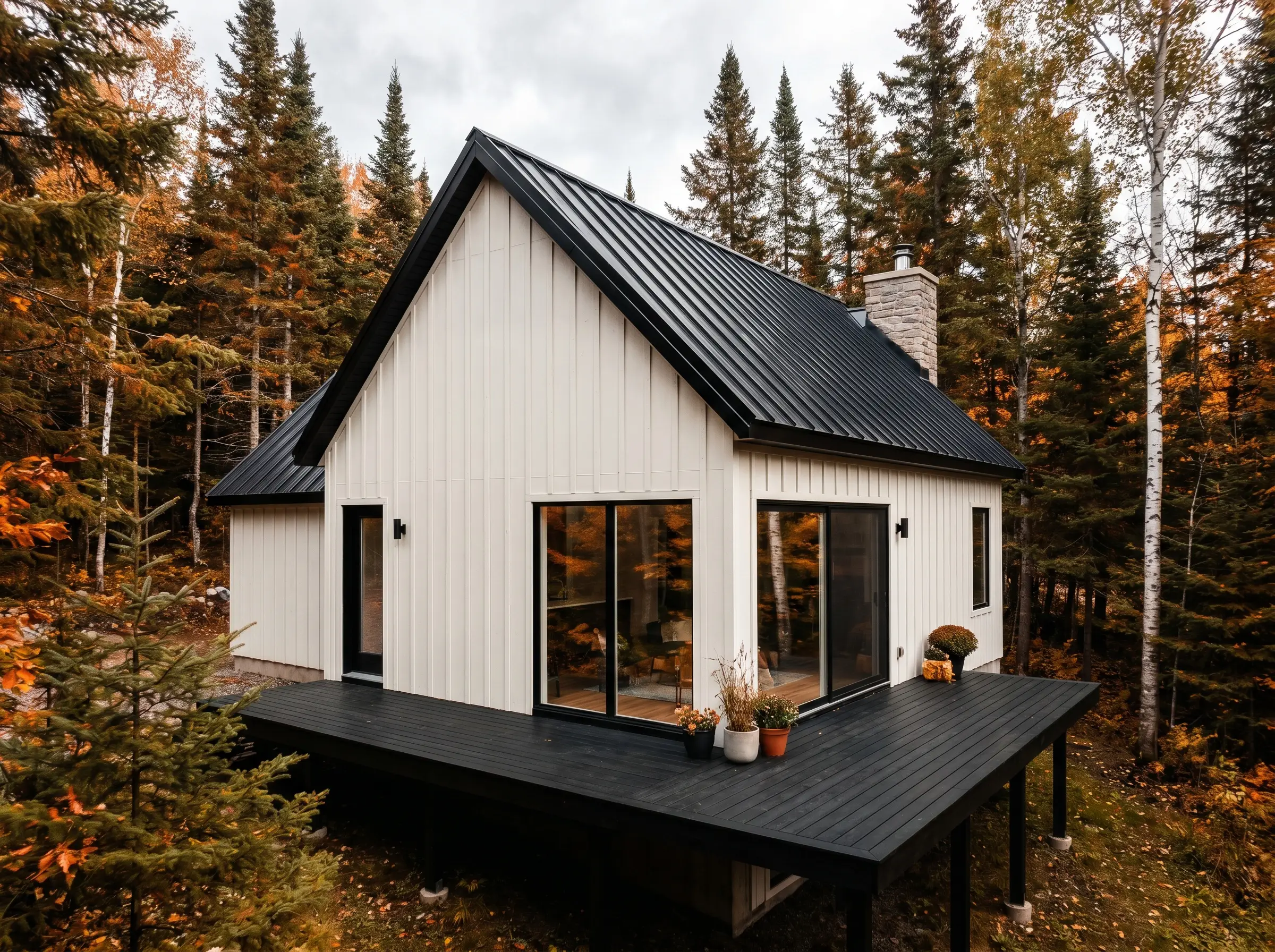
Bringing Nordic sensibilities to woodland retreats involves high-contrast, minimalist material palettes that stand out sharply against the natural tree line. Vertical white siding paired with stark black window frames and black metal roofing creates a striking, resilient profile.
- Key Materials: Vertical board and batten, black metal roofing, minimalist black pine decking.
- Paint Match: Farrow & Ball All White.
- Vibe: Crisp, isolated, and highly modern.
24. The Elevated Farmhouse (Creamy White with Limestone Accents)
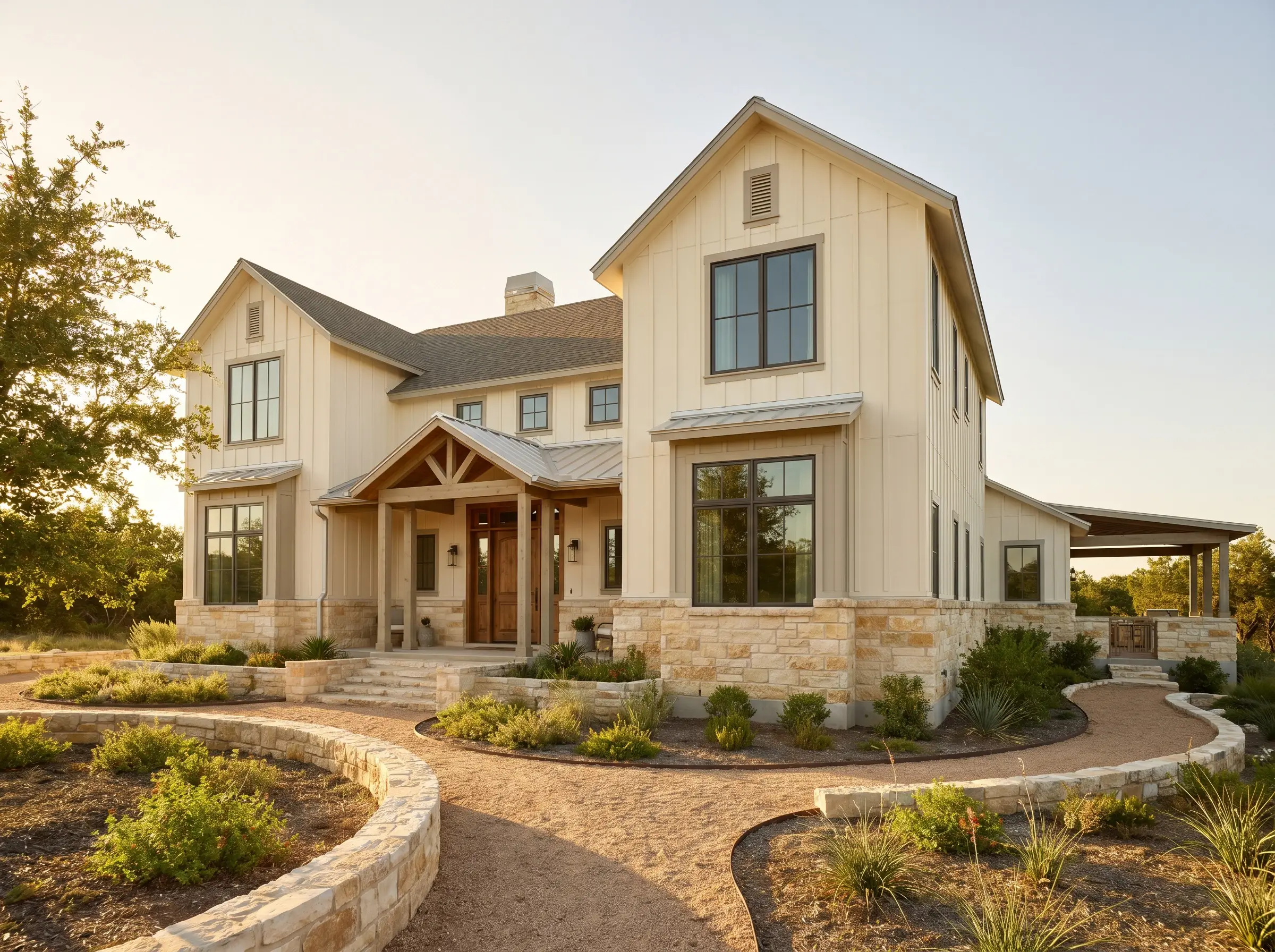
The evolution of the farmhouse trend abandons the stark, high-contrast black-and-white formula for a much softer, more sophisticated palette. Creamy, nuanced whites are layered with natural limestone hardscaping and muted, earthy trim colors to create an estate-like presence.
- Key Materials: Creamy painted siding, natural Texas limestone veneer, muted greige trim.
- Paint Match: Sherwin-Williams Alabaster.
- Vibe: Luxurious, approachable, and enduring.
The Elite White Exterior Paints
Selecting the exact chemical composition of your paint is the final, defining step. To prevent costly application errors, we have curated the industry’s most reliable, designer-approved white paints, categorized precisely by their undertones and lighting requirements.
| White Category | Elite Paint Selection | Best Lighting/Climate | Designer Warning |
|---|---|---|---|
| Warm/Creamy Whites | Benjamin Moore Swiss Coffee Sherwin-Williams Alabaster | North-facing homes or cool, overcast climates. Excellent for high-sun desert regions to prevent glare. | Designer Warning: Do not pair these with stark, cool-toned stone veneers; the yellow undertones will clash and look dirty. |
| True/Crisp Whites | Benjamin Moore Chantilly Lace Sherwin-Williams Pure White | Modern homes, heavily shaded lots, or regions with diffused, gray lighting (PNW). | Designer Warning: Do not use Chantilly Lace in high-sun desert climates; it will cause severe, blinding glare for your neighbors. |
| Earthy/Greige Whites | Benjamin Moore White Dove Farrow & Ball School House White | Historic renovations, wooded lots, and facades pairing heavily with natural stone and wood cladding. | Designer Warning: These can pull distinctly gray or muddy on heavily overcast days. Always test on a South-facing wall first. |
Master Your Curb Appeal
A white exterior is never just a completed paint job; it is an active, shifting canvas that responds directly to the sun’s trajectory. Before committing to a multi-thousand-dollar application, you must rigorously test your selected formulas. Paint massive, two-foot test swatches on the North, South, East, and West elevations of your home. Observe how the undertones shift at 9 AM, 2 PM, and 8 PM.
Only when a color holds its structural integrity across all lighting conditions are you ready to finalize the facade. Once your white canvas is secured, complete your architectural transformation by exploring our guide to the Best Front Door Colors for Curb Appeal to anchor your home’s entry.