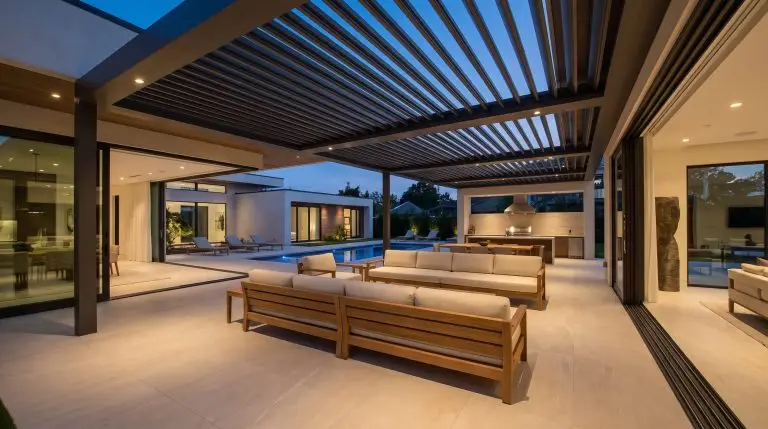
True spatial wellness requires more than just beautiful furniture; it demands intentional Feng Shui home decorating that honors both ancient principles and contemporary architectural flow. The modern approach to this practice is entirely invisible. We are leaving behind literal charms, clunky crystals, and red tassels in favor of high-end materiality, biomorphic silhouettes, and strategic spatial alignment.
By understanding Qi (energy flow), we can manipulate spatial geometry to craft rooms that intrinsically calm the nervous system. A well-designed home is a physical manifestation of balance, achieved through luxurious textures, smart floor plans, and grounded aesthetics.
Mastering modern Feng Shui means utilizing premium interior architecture and styling to engineer an environment that intuitively supports your daily well-being.
The Entryway: Designing the “Mouth of Qi”
The foyer acts as the “Mouth of Qi,” the critical threshold where energy crosses from the outside world into your private sanctuary. If this space is visually blocked or frantic, the entire home suffers energetically, making a clear, intentional layout paramount.
Anchor the Space with a Grounding Console (Earth Element)
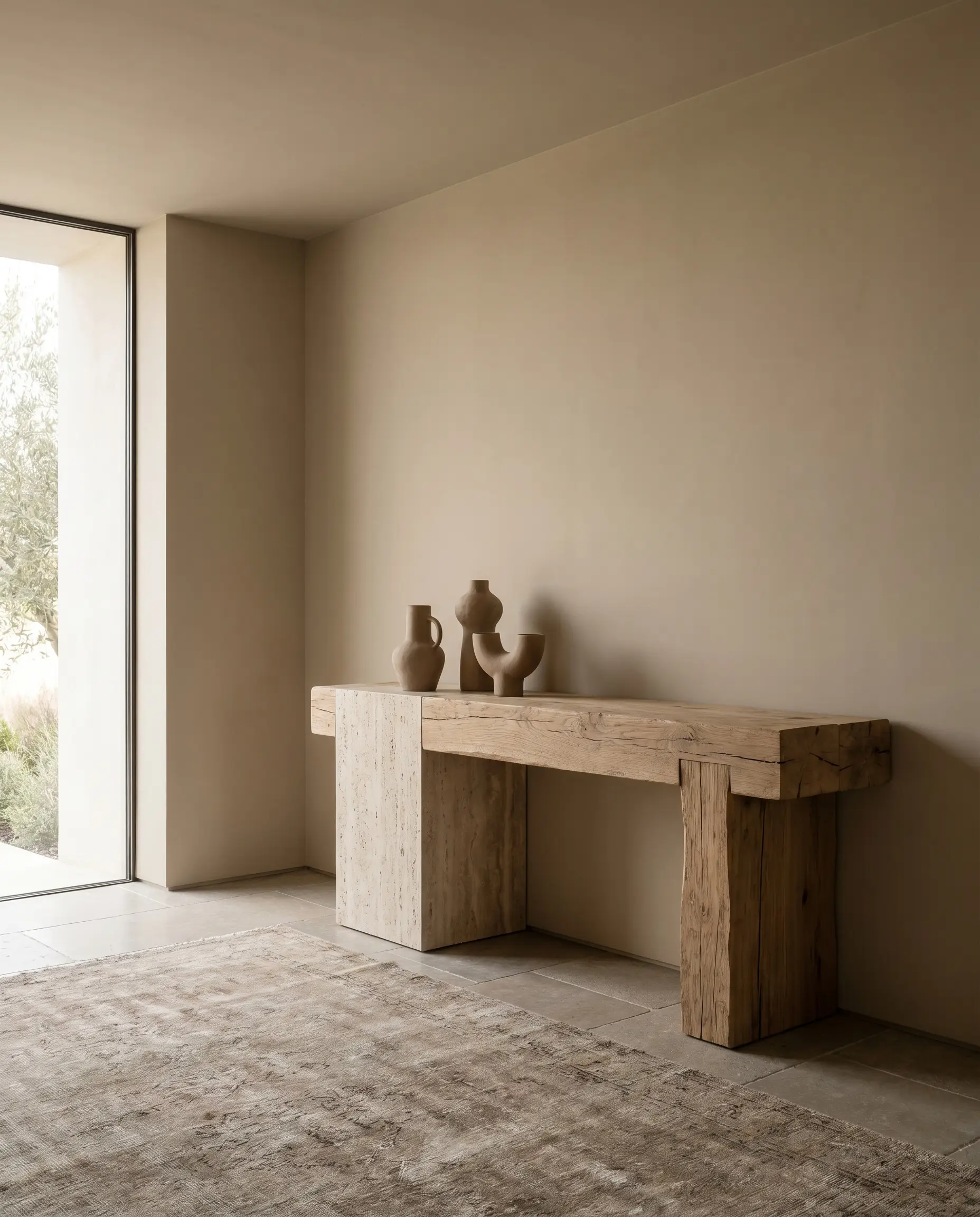
Grounding the entryway instantly prevents chaotic, fast-paced energy from rushing indoors. Introducing a heavy, monolithic console table establishes immediate visual weight and tactile stability, acting as an architectural anchor for the space.
- Vibe: Grounded, stable, and welcoming.
- Key Materials: Honed travertine, burl wood, or reclaimed white oak.
- Paint Recommendation: Sherwin-Williams Shiitake (a warm, earthy greige).
- Styling Pro-Tip: Keep the surface strictly curated with a maximum of three sculptural objects to maintain clear spatial flow.
Never let entryway furniture block the natural swing of the front door; the path inward must be completely unobstructed.
Designer’s Directive
Illuminate the Path with Warm, Layered Sconces (Fire Element)
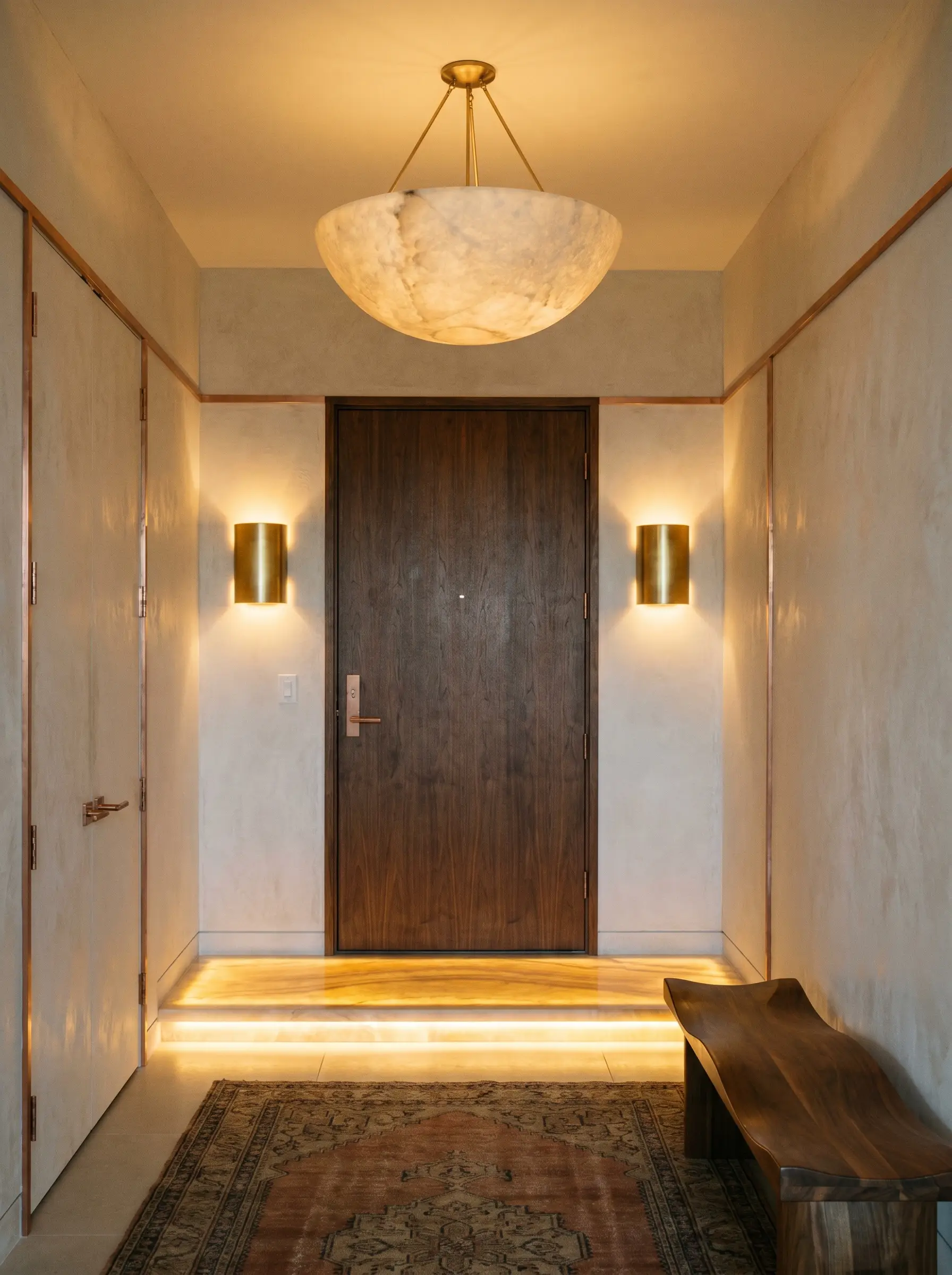
A dark, shadowed threshold stifles Qi and creates a subconscious sense of unease. Flanking the door with warm, brushed brass wall sconces or suspending a statement alabaster pendant draws positive, active Fire energy inside while maintaining a highly sophisticated aesthetic.
- Vibe: Luminous, inviting, and warm.
- Key Materials: Brushed brass, unlacquered copper, and natural alabaster.
- Quick Tip Callout: Source bulbs specifically at 2700K to achieve a welcoming, Yin-balanced glow that avoids clinical harshness.
- Styling Pro-Tip: Wire these fixtures to a dimmer switch to control the intensity of the Fire element throughout the day.
The Mirror Rule: Expand Space Without Bouncing Energy Out
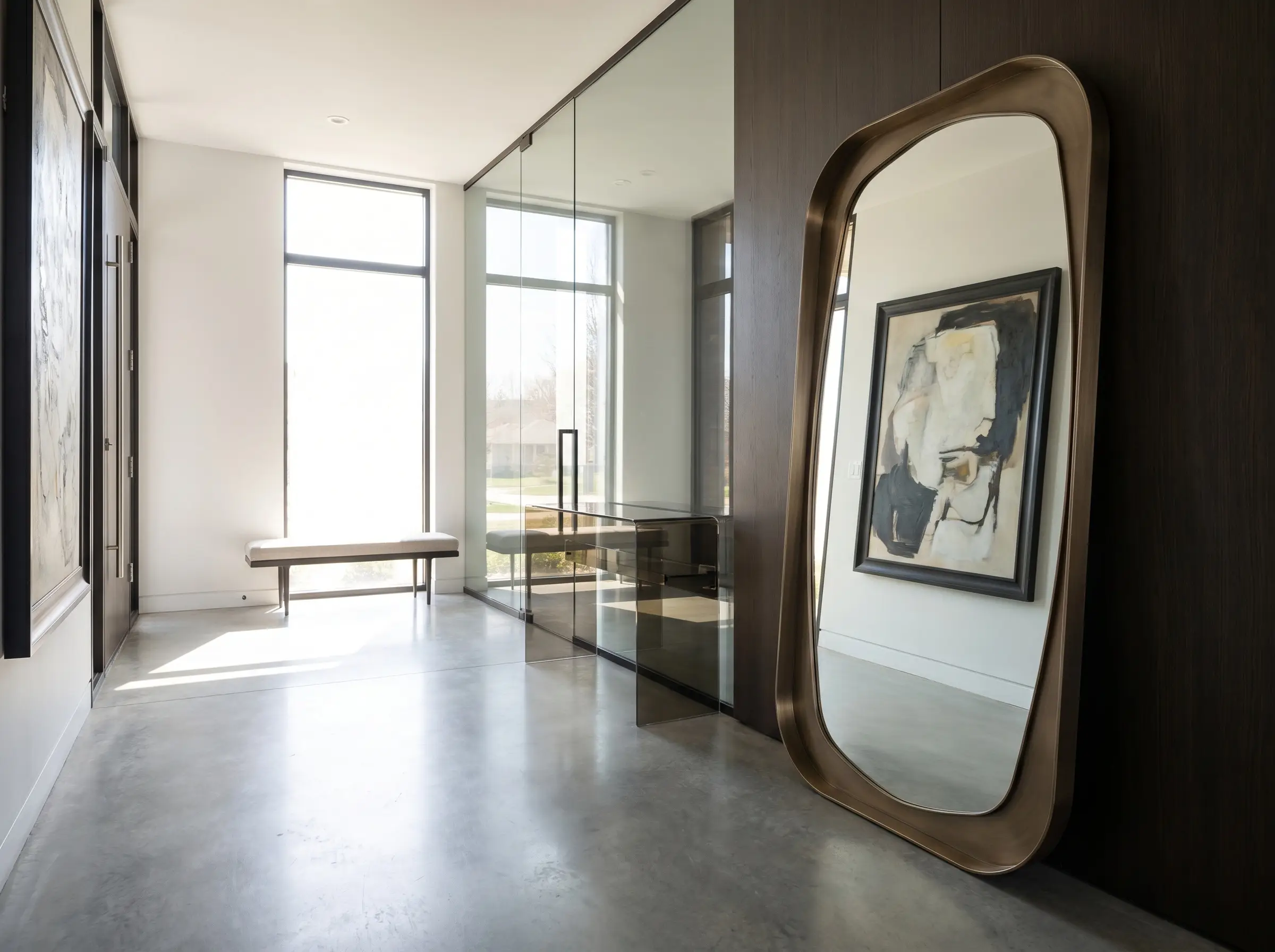
While mirrors are brilliant for expanding tight foyer architecture, placing one directly facing the front door aggressively pushes incoming energy right back out. Positioning an asymmetrical or bronze-tinted floor mirror on a perpendicular wall correctly amplifies natural light without disrupting the kinetic flow.
- DO: Lean a heavy, oversized mirror on a side wall to reflect a curated piece of art or an interior doorway.
- DO: Opt for smoked glass or bronze-tinted finishes to subtly soften the reflection.
- DON’T: Hang a mirror directly opposite the main entrance.
- DON’T: Use heavily distressed or fragmented glass, which visually shatters the energetic field.
The Living Room: Cultivating Harmony & Connection
As the core center of Yang (active) energy, the living room thrives on fluidity and human connection. The primary design objective here is to foster seamless conversation and eliminate harsh spatial tension.
Establish the Commanding Position with a Curved Sofa
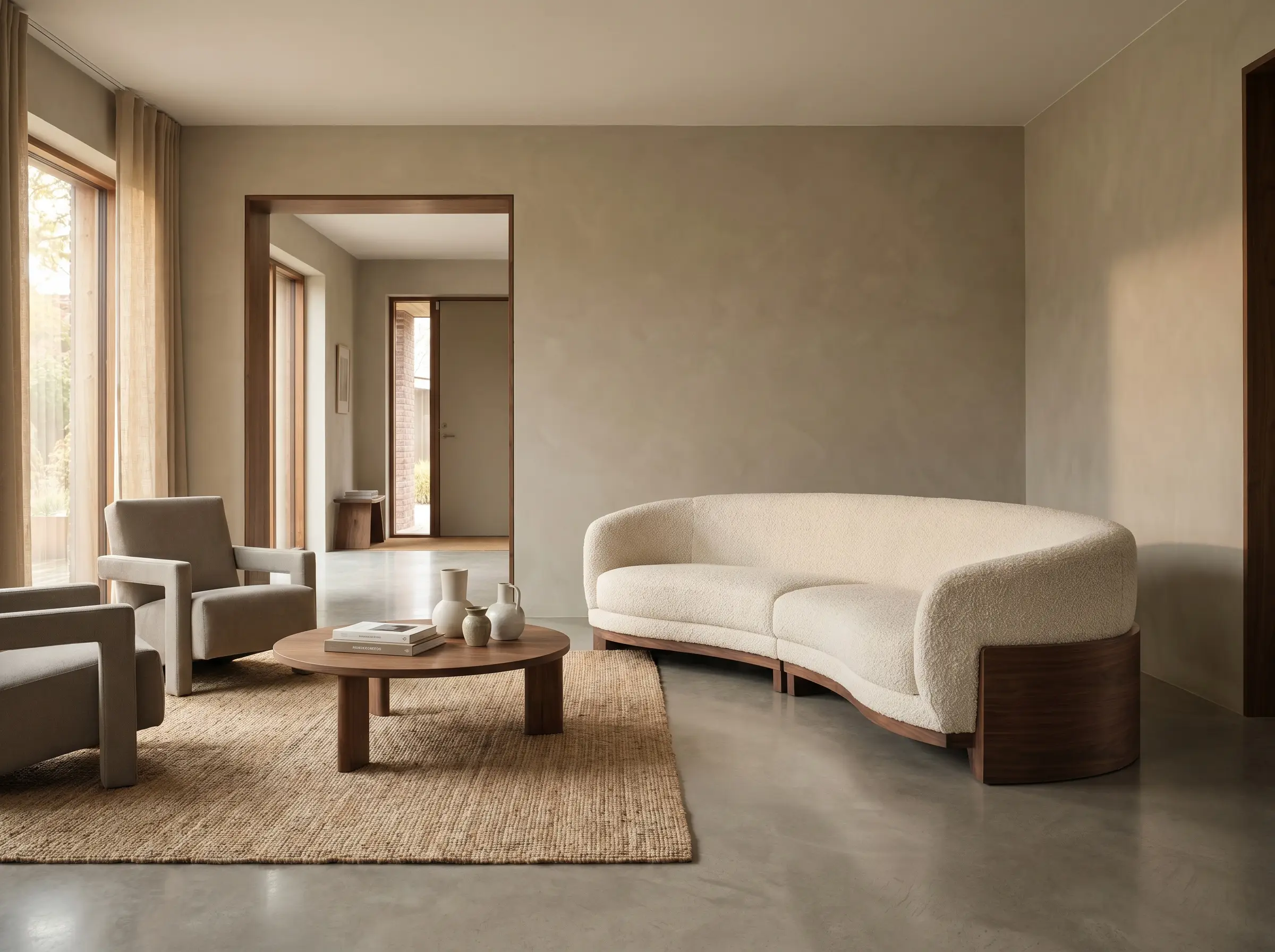
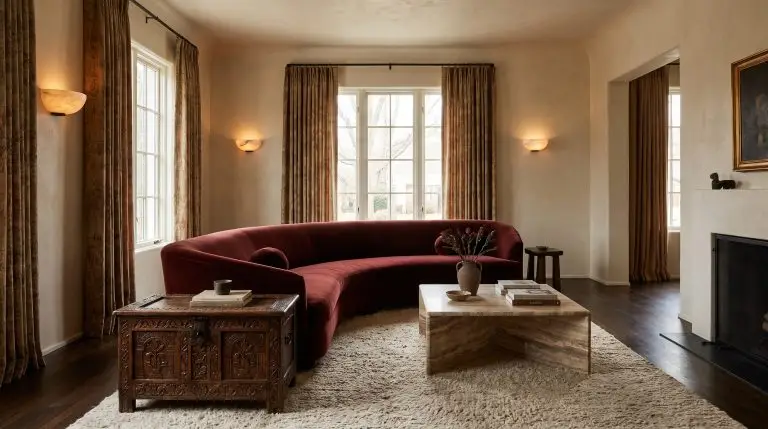
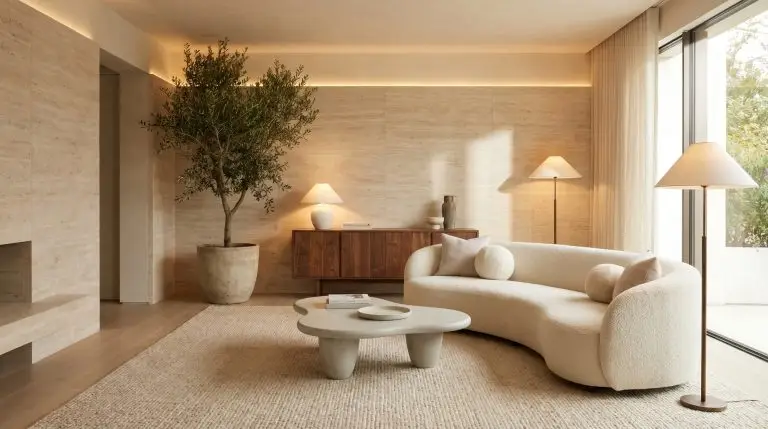
The Commanding Position dictates that your primary seating must have a solid wall behind it and a clear diagonal view of the entrance, ensuring a subconscious sense of safety. Opting for a softly tailored, curved sofa in this position promotes a continuous, circular flow of Qi, preventing stagnant energy pockets.
- Vibe: Secure, fluid, and conversational.
- Key Materials: Heavy looped bouclé, performance linen, and solid walnut framing.
- Color Recommendation: Farrow & Ball Drop Cloth.
- Styling Pro-Tip: Pull the sofa at least six inches away from the back wall to allow air and energy to circulate freely behind it.
Soften “Poison Arrows” with Biomorphic Coffee Tables
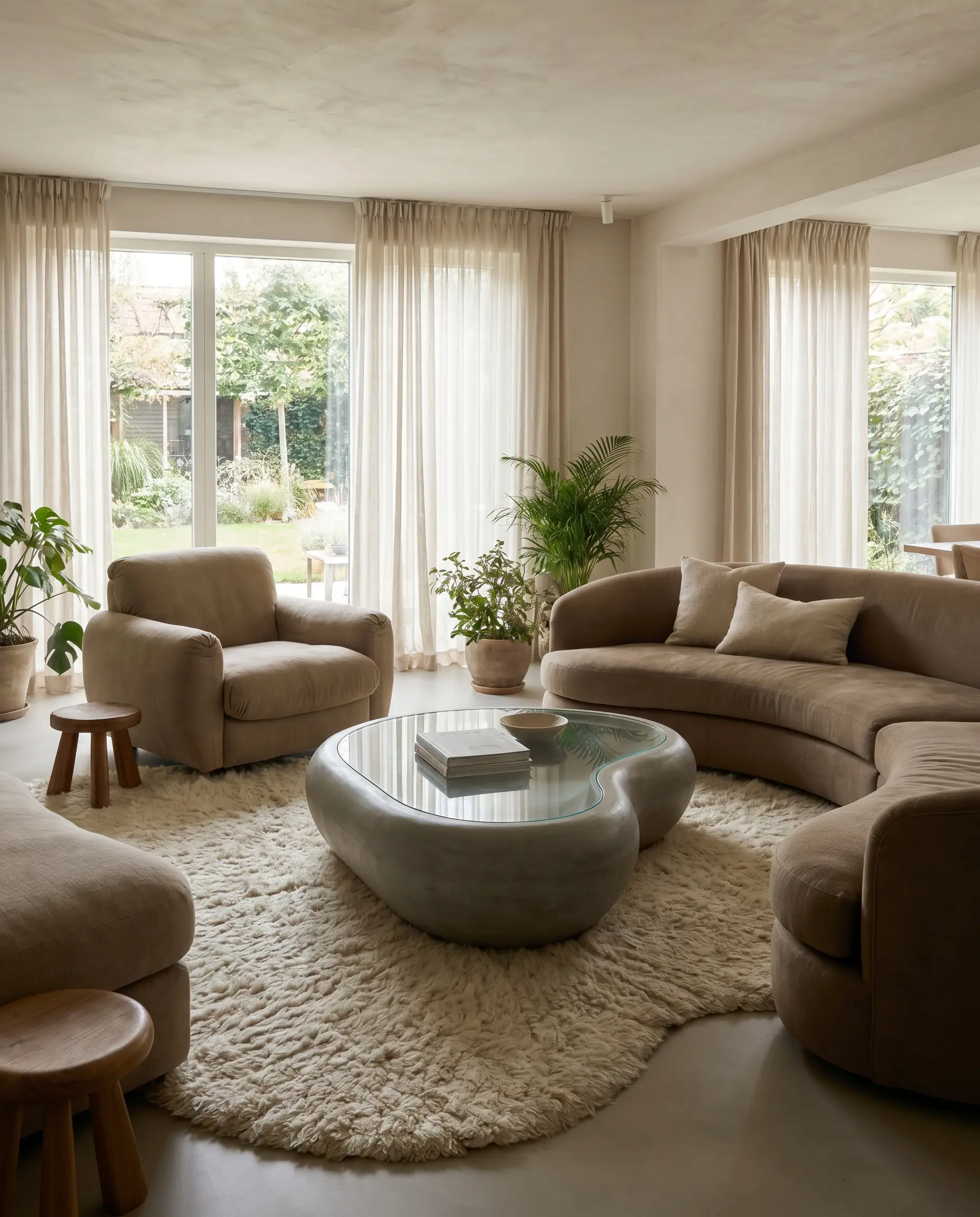
Sharp 90-degree angles pointing directly at seating areas create Sha Qi—harsh, aggressive energy that registers as psychological tension. You can instantly neutralize these “poison arrows” by anchoring the room with biomorphic, kidney-shaped, or perfectly circular coffee tables that soften the spatial geometry.
- Vibe: Relaxed, organic, and tension-free.
- Key Materials: Cast concrete, carved walnut, or thick tempered glass with rounded edges.
- Styling Pro-Tip: Pair a low-profile biomorphic table with an asymmetrical rug to further break up rigid, linear floor plans.
If a piece of furniture looks sharp enough to bruise your shin, it is actively introducing Sha Qi into your living space.
Designer’s Directive
Integrate the Wood Element via Tall, Sculptural Greenery
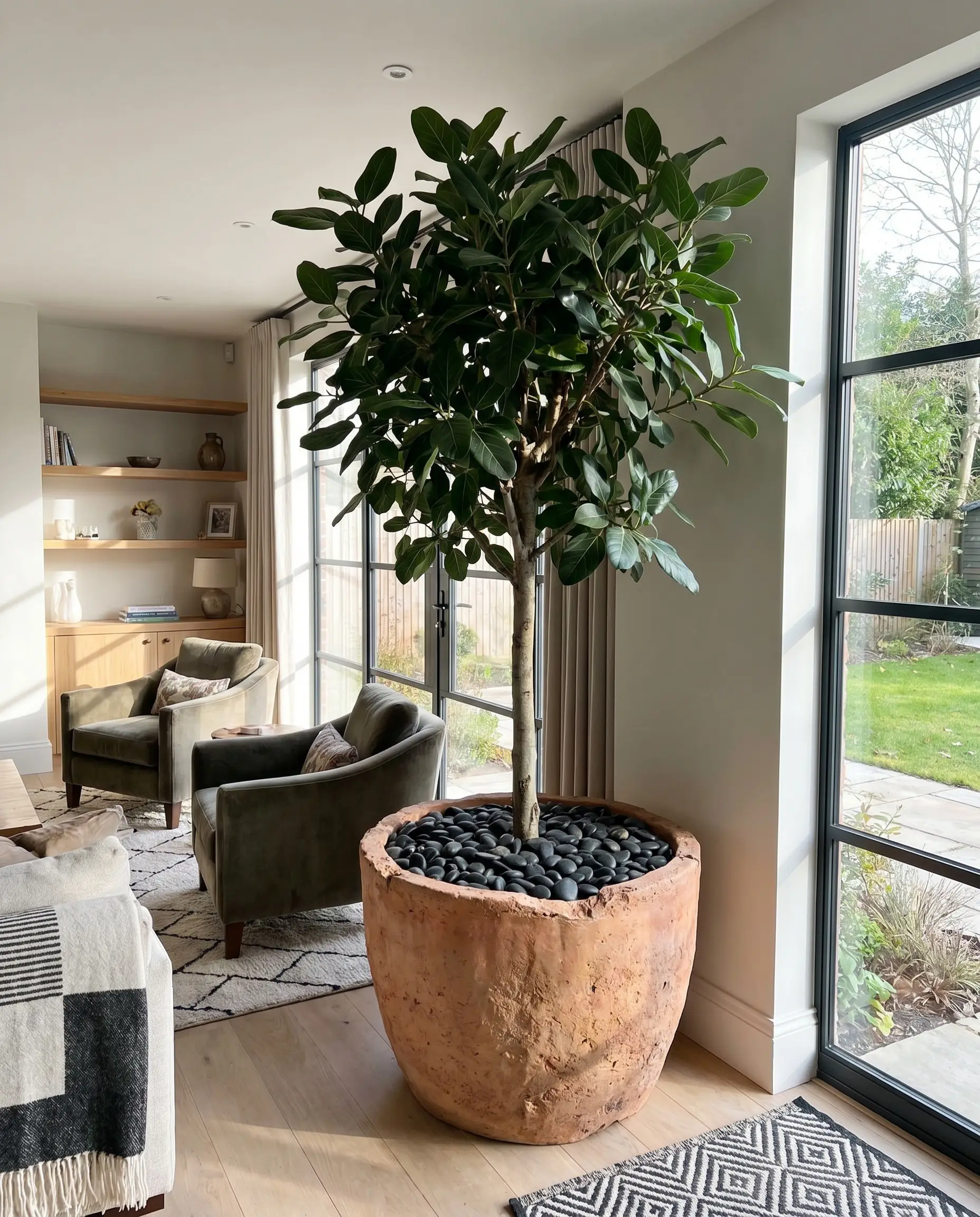
The Wood element introduces vitality and upward growth, but a chaotic collection of tiny pots creates visual clutter that traps energy. Instead, deploy a single, statement-making interior tree in a stagnant corner to dramatically lift the room’s energetic ceiling.
- Vibe: Lush, vibrant, and architectural.
- Key Materials: Live foliage and heavily textured raw ceramic planters.
- Species Recommendation: A mature Ficus Audrey or a Black Olive tree.
- Styling Pro-Tip: Top-dress the planter soil with smooth black river stones to introduce a subtle Water element that symbolically “feeds” the Wood.
Activate the “Wealth Corner” with Subtle Luxury
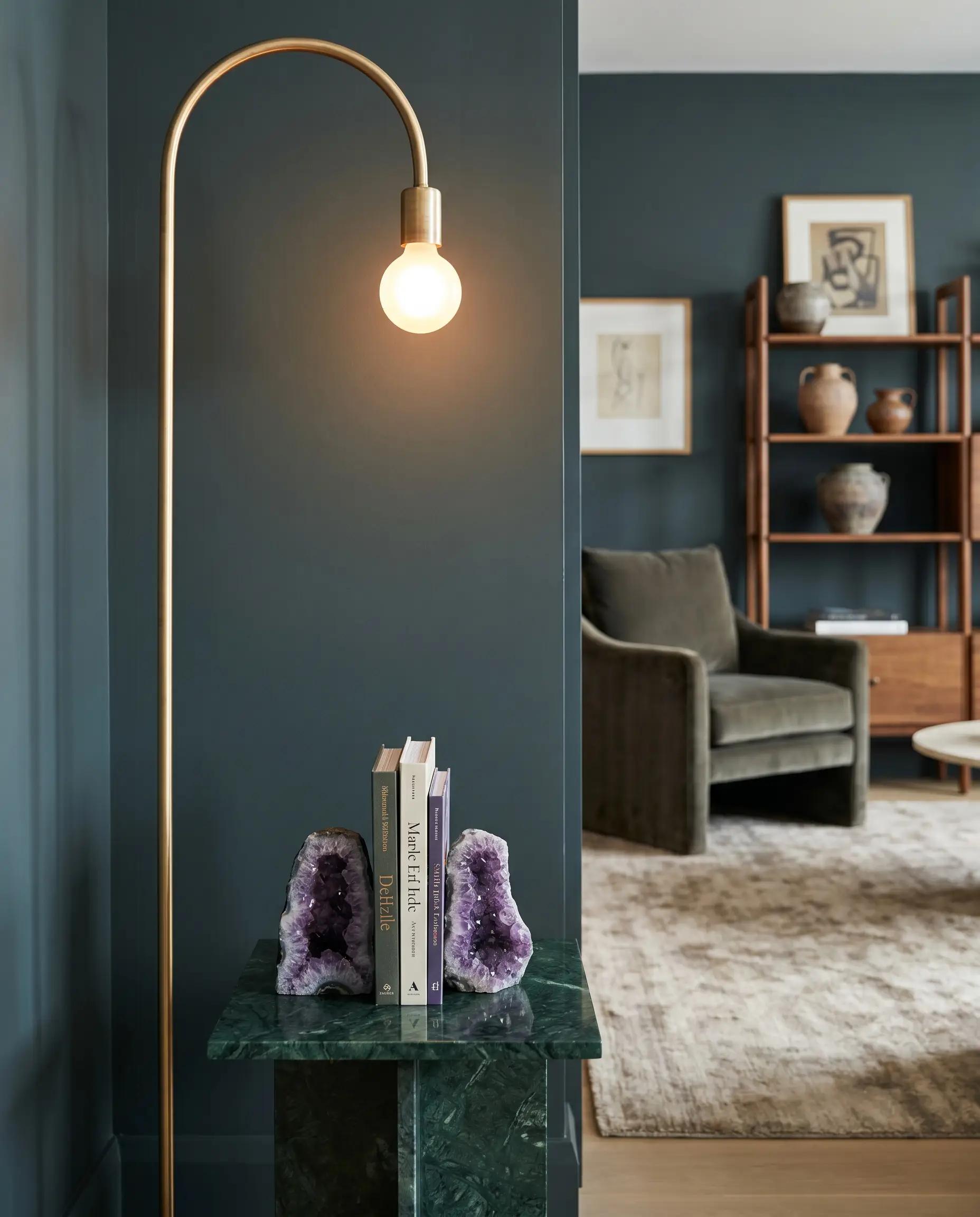
The far-left corner from your main entrance represents the Xun area, historically tied to abundance. Rather than literal coins, activate this zone through modern signifiers of wealth: pristine material quality, a high-end brass floor lamp for active Metal energy, or a highly curated sculptural vignette.
- Vibe: Prosperous, refined, and deeply intentional.
- Key Materials: Deep green marble, violet amethyst geodes (disguised as bookends), and unlacquered brass.
- Color Recommendation: Benjamin Moore Regent Green.
- Styling Pro-Tip: Ensure this corner is impeccably well-lit; shadows in the wealth sector symbolize neglected potential.
The Bedroom: Engineering Ultimate Rest & Intimacy
Transitioning into the bedroom requires a strict shift toward Yin (passive) energy. This sanctuary must be fiercely protected from outside chaos, utilizing highly controlled spatial layouts to engineer deep rest and relational intimacy.
Secure the Bed with an Upholstered, Solid Headboard
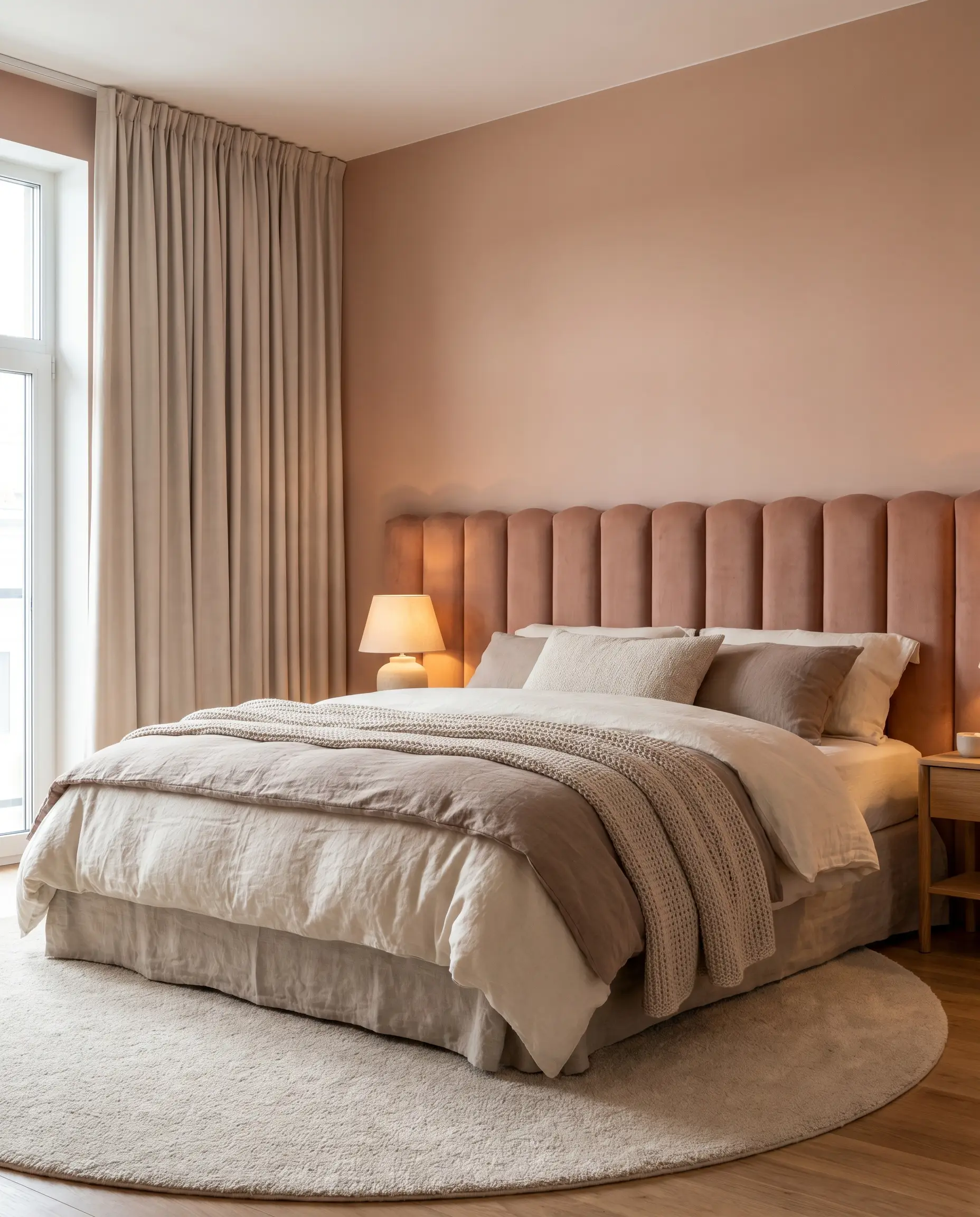
A bed left floating in the middle of a room or pushed underneath a window creates severe energetic instability that disrupts sleep. We mandate the use of a solid, upholstered, or heavy wood headboard placed firmly against an unbroken wall to provide the structural security your nervous system requires to power down.
- Vibe: Protected, restorative, and solid.
- Key Materials: Channel-tufted velvet, padded linen, or solid white oak.
- Paint Recommendation: Farrow & Ball Setting Plaster.
- Styling Pro-Tip: Avoid metal slatted headboards, which visually and energetically resemble prison bars and fail to block drafts.
Enforce Symmetry with Monolithic Nightstands
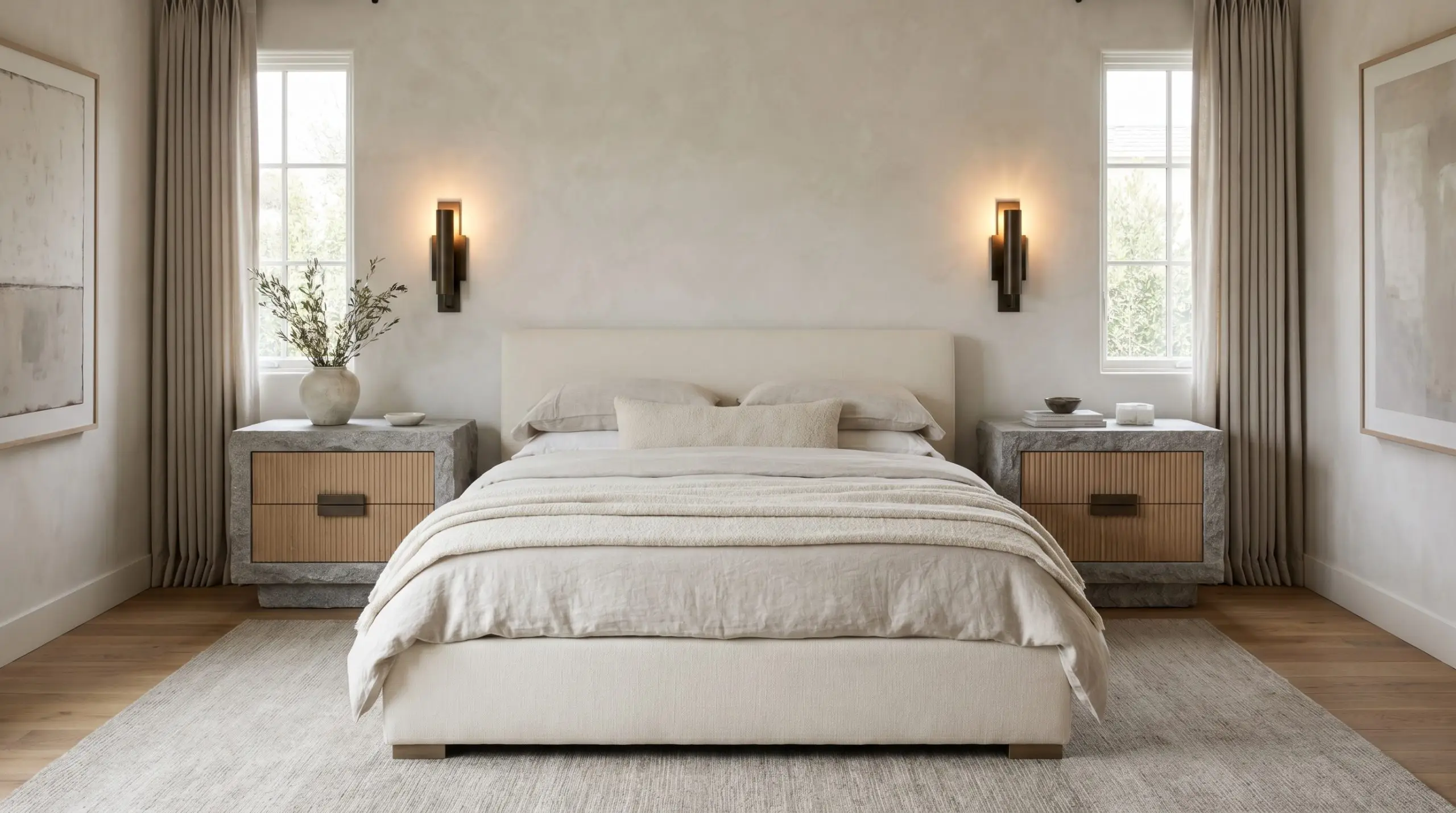
Unequal weight on either side of the bed actively generates imbalance in romantic partnerships. By flanking the mattress with identical, substantial nightstands and matching architectural sconces, you create a unified, equitable energetic field for two people.
- Vibe: Balanced, harmonious, and equitable.
- Key Materials: Heavy stone blocks, fluted oak, and matching metal hardware.
- Styling Pro-Tip: Ditch flimsy floating shelves; the nightstands must have physical mass and reach the floor to ground the sides of the bed.
Never push a bed into a corner; always leave equal breathing room on both sides to allow energy to circulate and to afford both partners equal access.
Designer’s Directive
Remove “Active Qi” (The Tech Ban)
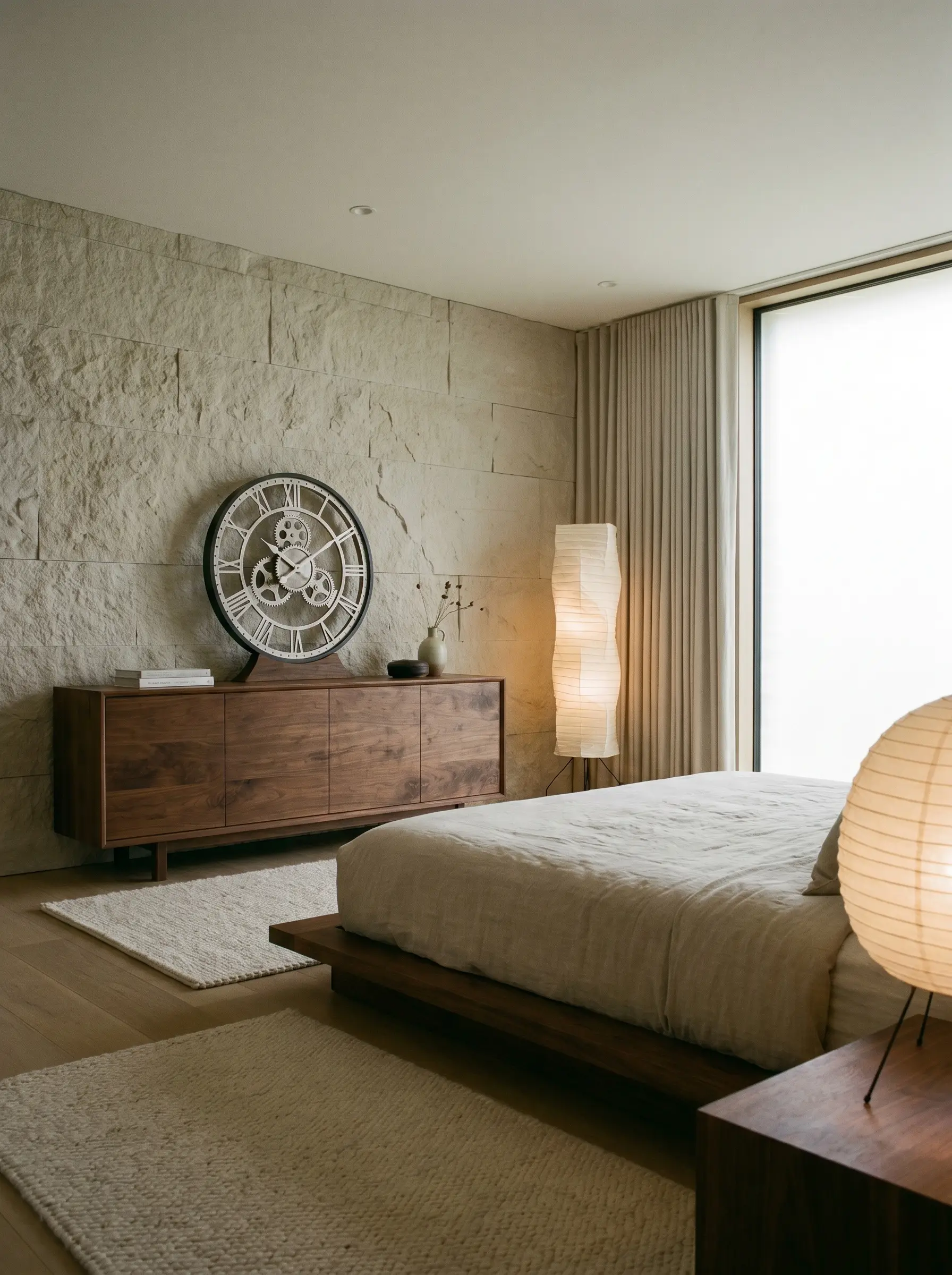
Televisions, glaring digital clocks, and exercise equipment emit chaotic Yang energy and high electromagnetic frequencies that absolutely ruin bedroom tranquility. Preserving this Yin environment requires a total ban on exposed tech, either by removing it entirely or hiding it within a bespoke credenza.
- Vibe: Quiet, disconnected, and serene.
- Key Materials: Solid wood cabinetry or motorized art screens to conceal screens.
- Styling Pro-Tip: Replace your digital phone alarm with a beautifully crafted analog mechanical clock.
Ground the Room with Heavy Natural Fiber Rugs
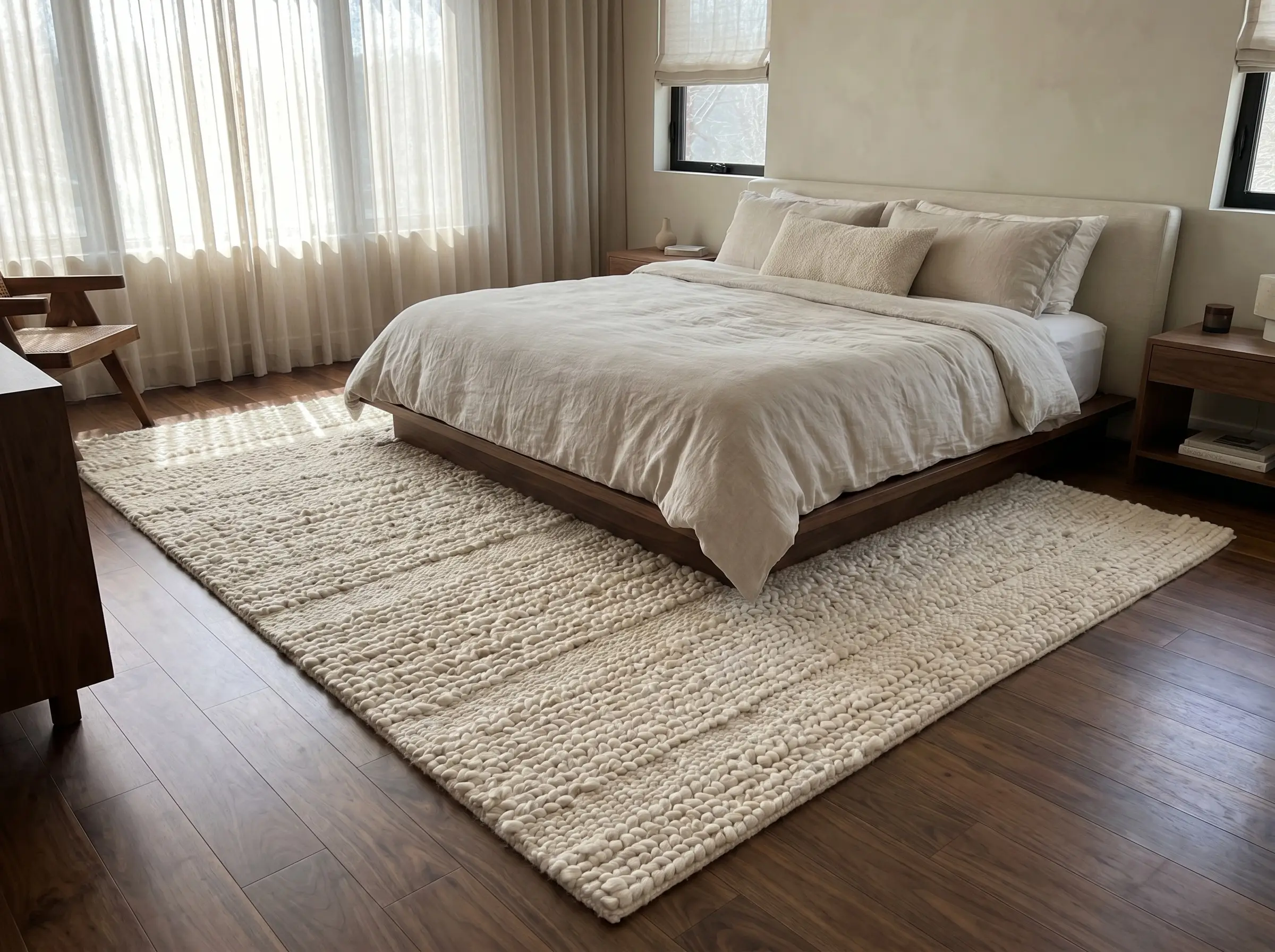
Hardwood floors are beautiful but inherently fast and kinetic, causing energy to bounce rapidly around the room. Anchoring the bed with a massive, plush natural fiber rug introduces the Earth element, immediately shifting the body into a relaxed, tactile state upon waking.
- Vibe: Soft, quiet, and deeply anchored.
- Key Materials: Hand-knotted wool, thick jute, or a luxurious silk-blend.
- Sizing Advice: The rug must extend at least 24 inches beyond the sides and foot of the bed to create an adequate energetic perimeter.
- Styling Pro-Tip: Avoid loud, geometric patterns in the bedroom rug; stick to solid, tonal textures that visually quiet the floor plane.
The Modern Elemental Matrix: Styling the Five Elements
A truly harmonious home contains all Five Elements in careful proportion. To maintain a sophisticated aesthetic, these ancient forces must be introduced through high-end materials, architectural textures, and nuanced undertones rather than literal, primary colors.
Water: Wavy Glass & Deep Indigo Accents
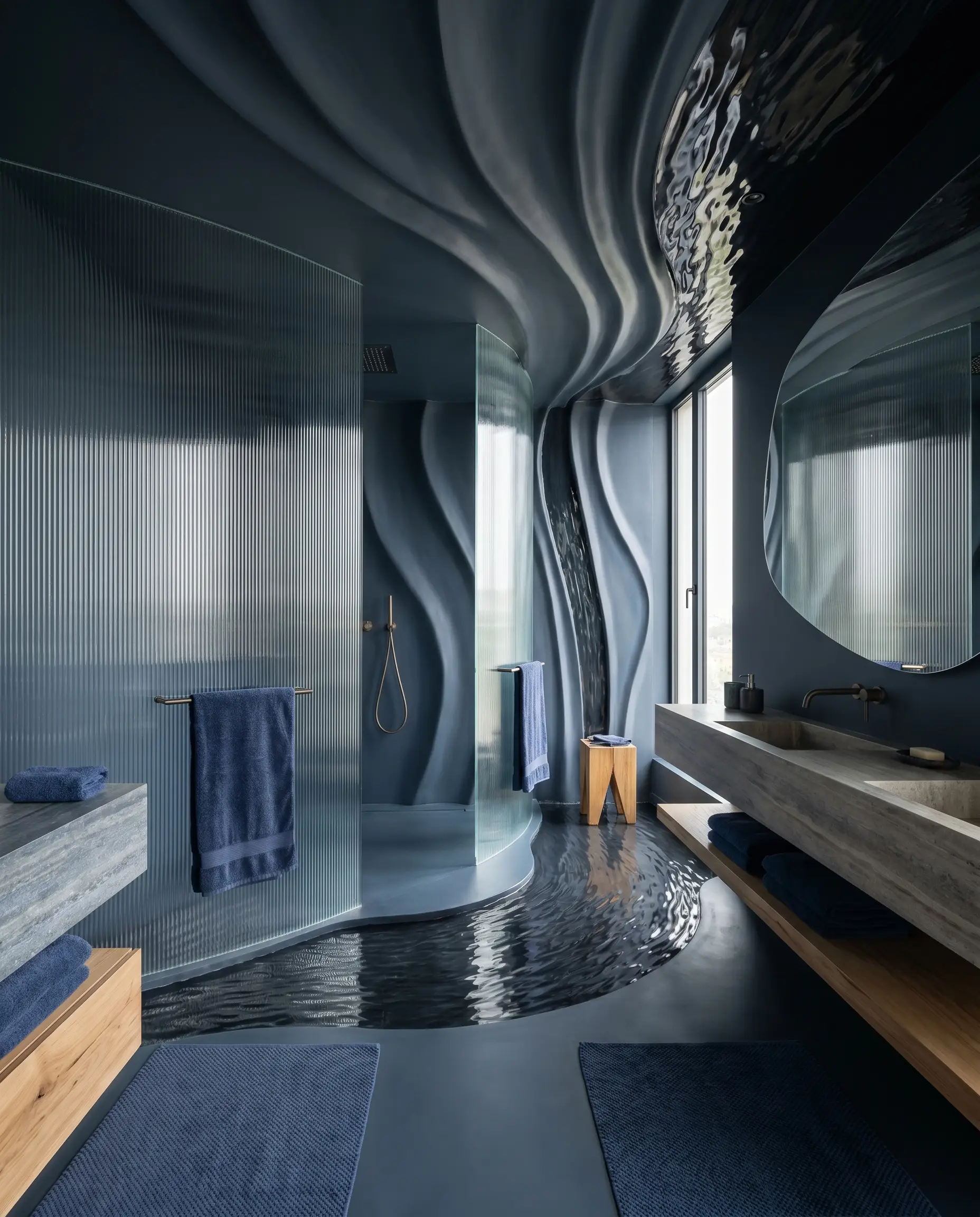
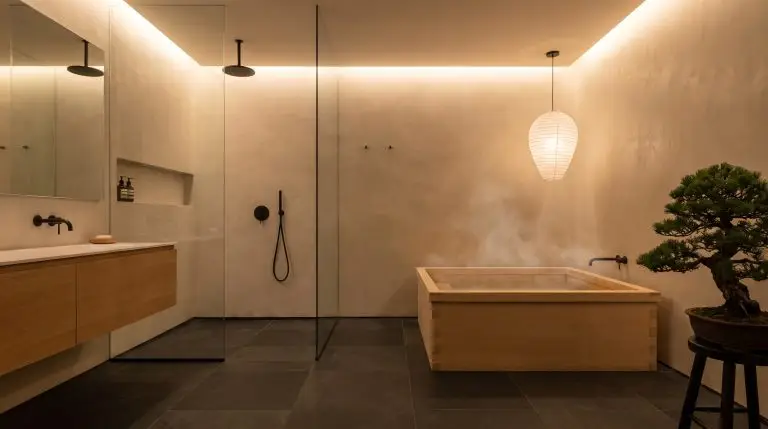
The Water element rules wisdom, clarity, and downward flow. Skip the cliché indoor fountains and represent this kinetic force through reflective, undulating surfaces and moody, oceanic textiles.
- Traditional Element: Water
- 2026 High-End Material: Fluted cast glass partitions and asymmetrical mirrors.
- Color Match: Farrow & Ball Hague Blue.
- Styling Pro-Tip: Use wavy glass in shower doors or room dividers to suggest the movement of water while maintaining privacy.
Metal: Brushed Brass & Reflective Surfaces
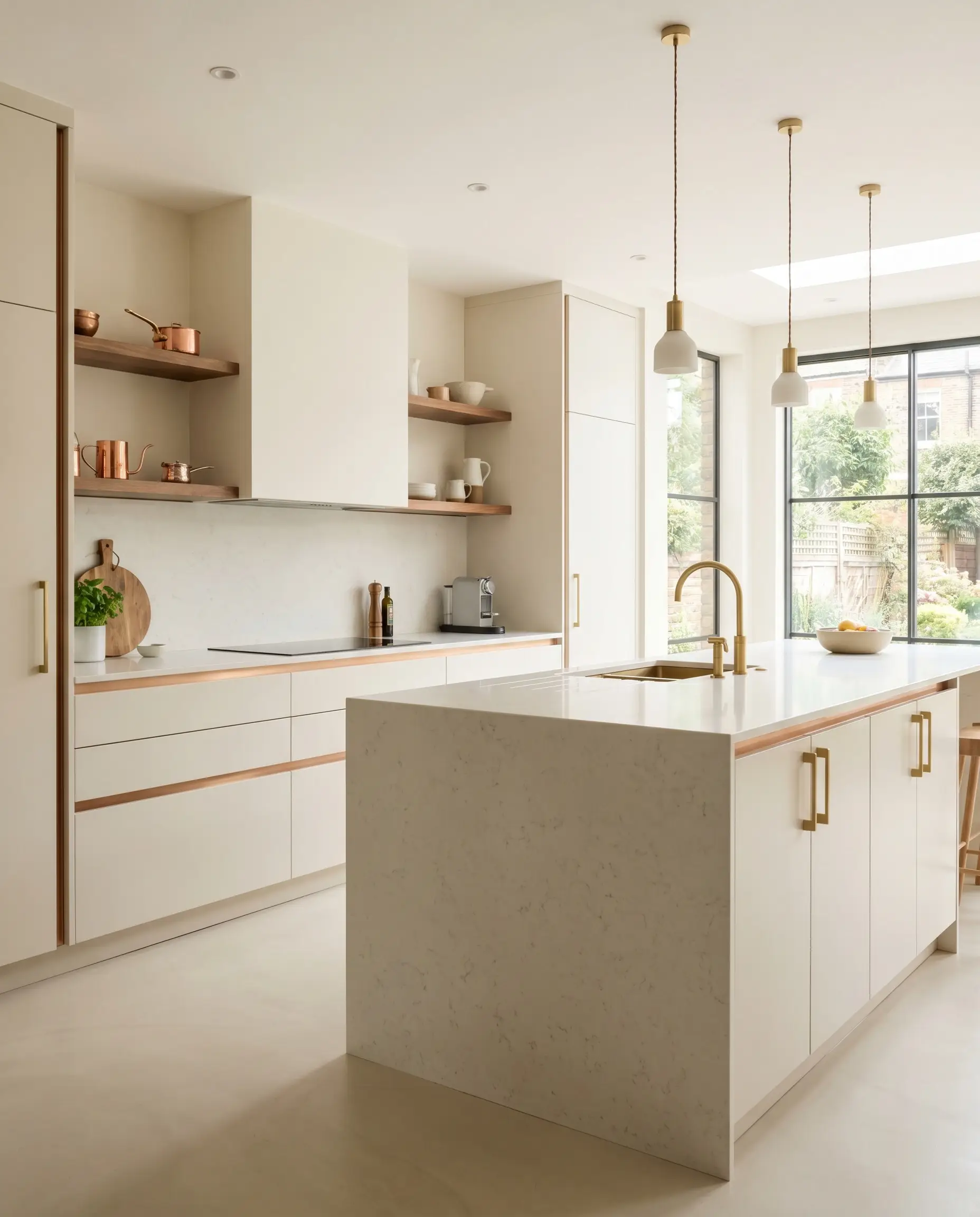
Metal brings precision, focus, and efficiency to a floor plan. To prevent the space from feeling like a cold, sterile clinic, prioritize warm-toned metals and highly polished accents that bounce light elegantly.
- Traditional Element: Metal
- 2026 High-End Material: Unlacquered brass hardware and metallic-threaded pillows.
- Color Match: Sherwin-Williams Snowbound.
- Styling Pro-Tip: Incorporate brushed brass cabinet pulls in the kitchen to activate this element seamlessly.
Fire: Ambient Lighting & Terracotta Tones
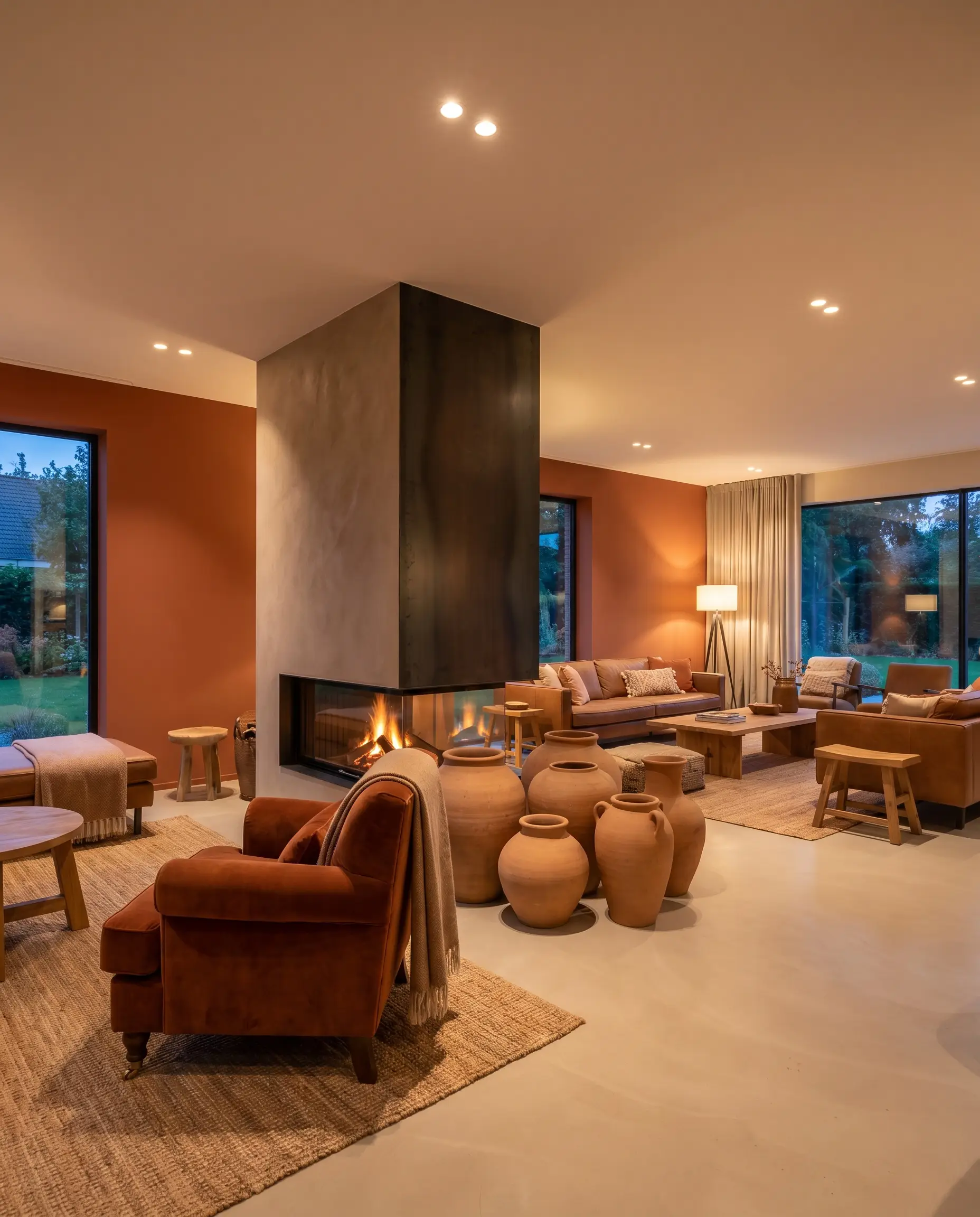
Fire stimulates passion, recognition, and outward expansion. You do not need to paint a wall crimson; instead, layer warm ambient lighting and rich, clay-baked hues to introduce this active energy gracefully.
- Traditional Element: Fire
- 2026 High-End Material: Terracotta vessels, rust-colored velvet, and statement fireplaces.
- Color Match: Benjamin Moore Audubon Russet.
- Styling Pro-Tip: Strictly limit Fire elements in the bedroom, as excess Yang energy actively disrupts sleep cycles.
Earth: Travertine, Roman Clay, and Ceramics
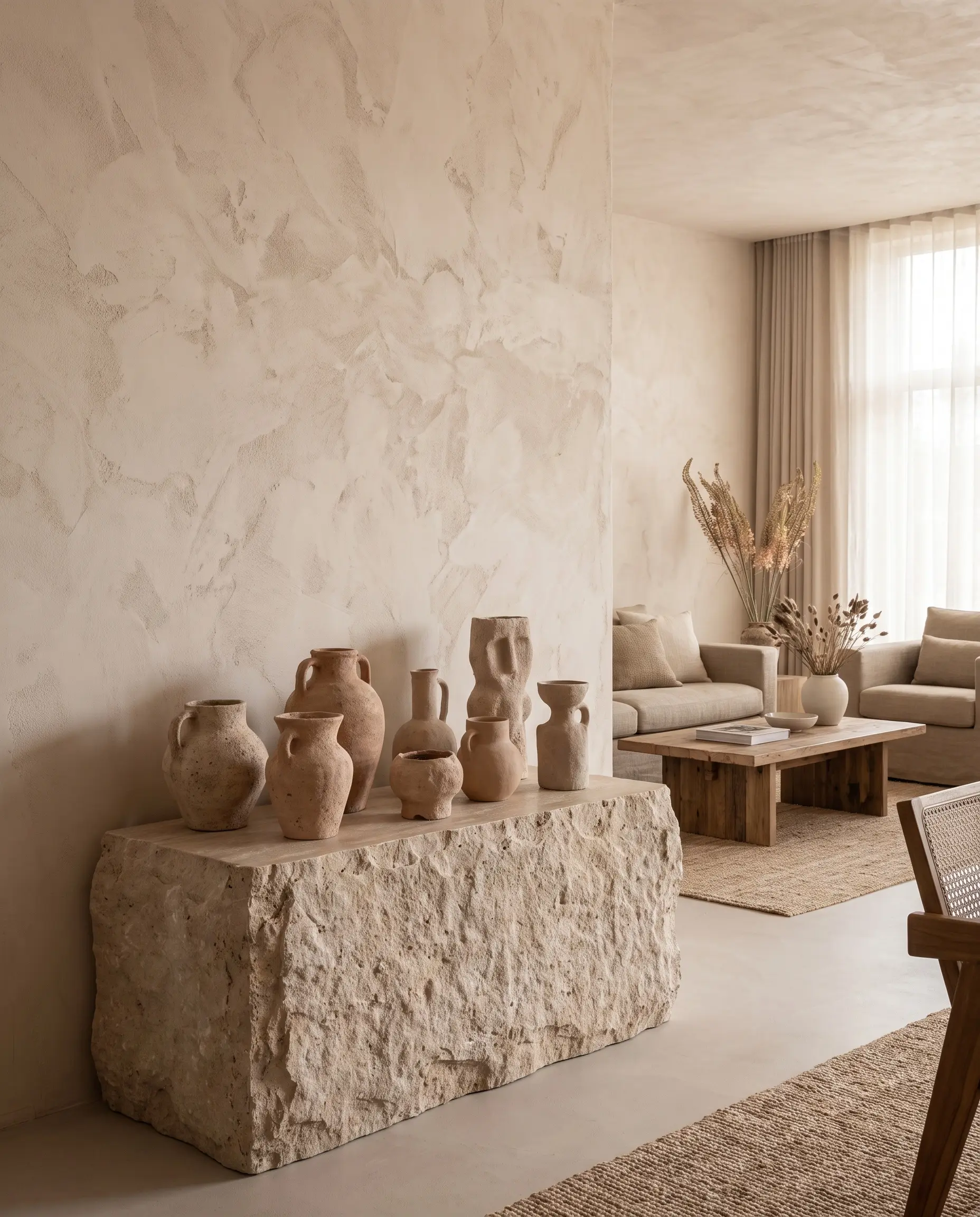
Earth provides nourishment, physical stability, and boundaries. Introduce this vital grounding force through highly tactile, raw architectural finishes that serve as visual anchors for lighter, more kinetic pieces.
- Traditional Element: Earth
- 2026 High-End Material: Monolithic travertine plinths and raw, unglazed ceramics.
- Color Match: Portola Paints El Mirage.
- Styling Pro-Tip: Apply a heavily textured Roman clay or limewash treatment to your walls to physically wrap the room in the Earth element.
The Invisible Architecture of Well-Being
Modern Feng Shui is, at its core, simply brilliant interior design. It is the practice of crafting a physical space that intuitively supports human psychology. When you manipulate spatial geometry, prioritize tactile natural materials, and align your layout with energetic flow, you are not just decorating—you are engineering a sanctuary. Start small: shift your living room seating into the Commanding Position, clear the visual clutter from your entryway today, or swap harsh overhead bulbs for warm sconces. Treat your home not as a static container for furniture, but as a living, kinetic entity that actively collaborates with your daily well-being.
The Aesthetics Desk curates the visual direction for Hackrea. Specializing in design history, global architectural movements, and interior styling, this desk focuses on the psychology of space and how to translate high-end, magazine-quality aesthetics into approachable residential design without falling into fleeting micro-trends.