The Insider’s Guide to Sherwin-Williams Garage Floor Coatings: Pro Secrets for a Showroom Finish
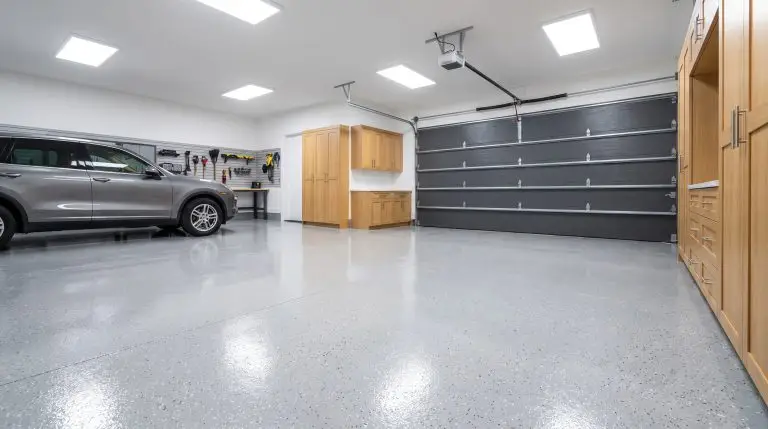
The garage is the hardest working floor in the home, yet it is often subjected to the weakest finishes. Slapping a standard latex house paint onto a raw concrete slab is a guaranteed recipe for disaster, leaving you vulnerable to hot tire pickup, road salts, and chemical spills. Finding the best Sherwin-Williams garage floor paint requires navigating a massive catalog, understanding that true industrial-grade durability exists on a completely different shelf than standard retail acrylics. Sherwin-Williams formulates some of the most resilient industrial coatings on the market, provided you know exactly which chemical ecosystem to tap into.
- Top Commercial Pick: ArmorSeal 8100
- Best Premium DIY Kit: H&C Shield-Crete
- Biggest Mistake to Avoid: Standard Porch & Floor Enamels
- Mandatory Prep Step: Mechanical grinding or heavy chemical etching
Decoding the Sherwin-Williams Garage Ecosystem
True garage durability requires a two-component chemical epoxy—a resin and a hardener that cure chemically, rather than a single-component paint that merely dries. Sherwin-Williams divides its heavy-duty products into two distinct tiers: consumer-friendly residential kits under the H&C label, and pro-grade industrial lines housed at the commercial desk under the ArmorSeal banner.
1. ArmorSeal 8100: The Commercial-Grade Standard
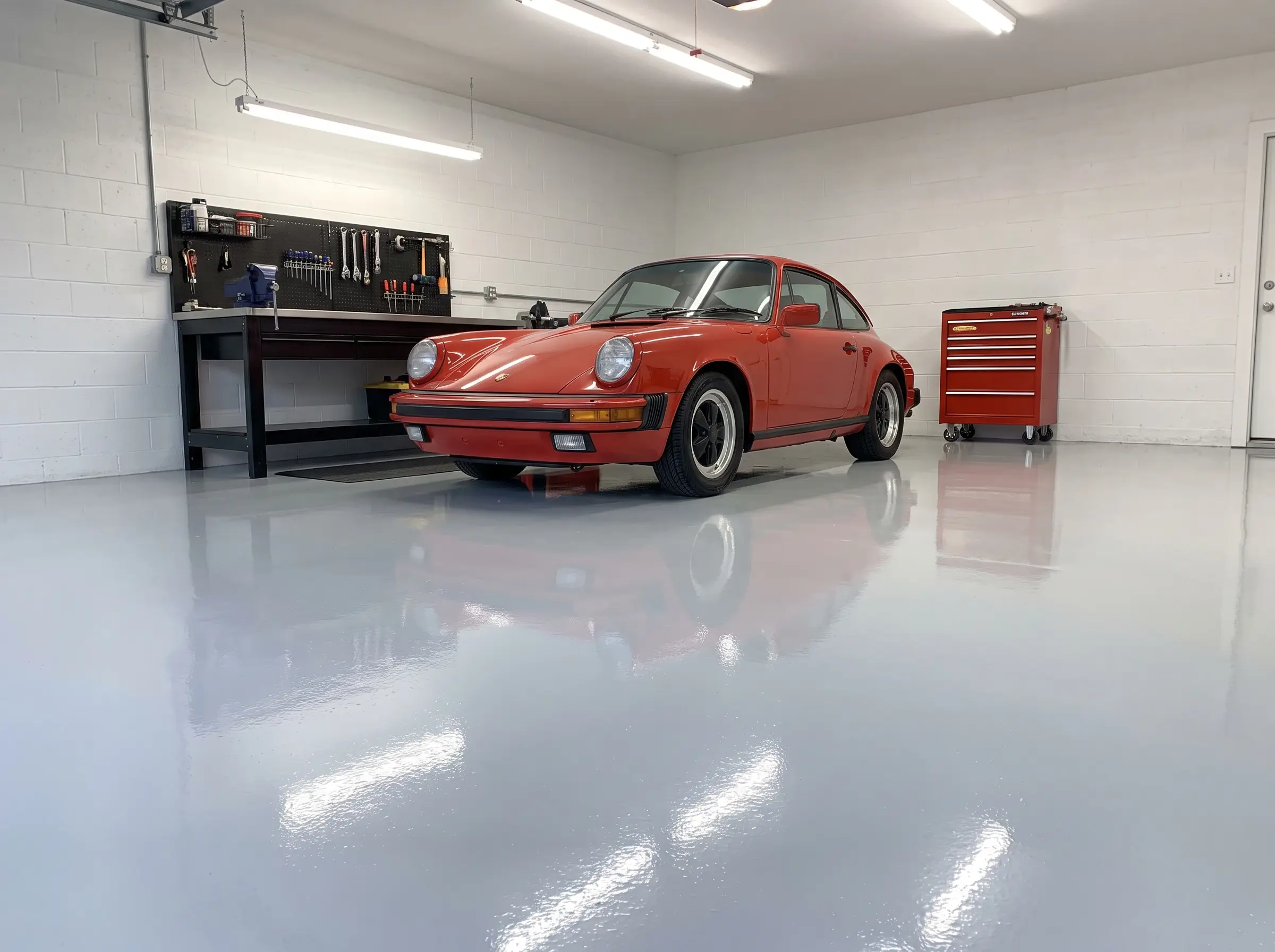
When professional contractors need a flawless, bulletproof finish that resists aggressive chemical spills and yellowing, they skip the retail aisle entirely. ArmorSeal 8100 is a two-component coating water-based epoxy engineered for heavy industrial use, providing an unmatched barrier against hot tire pickup.
- Vibe: Industrial-grade luxury car showroom.
- Key Chemistry: 2-Part Water-Based Epoxy.
- Curing Factor: Strictly monitor your pot life (the exact time you have to apply the mixed product before it chemically hardens in the bucket).
- Visual Finish: High-gloss, exceptionally smooth leveling.
ArmorSeal 8100 Pros & Cons Matrix
| Feature | Pros | Cons |
|---|---|---|
| Durability | Absolute best resistance to hot tire pickup and chemical spills. | Requires a meticulously prepared substrate. |
| Application | Minimal off-gassing and easy water cleanup before curing. | Strictly enforced pot life limits; requires fast application. |
| Availability | Delivers true commercial-grade longevity. | Only available via the Sherwin-Williams commercial sales desk. |
2. H&C Shield-Crete: The Premium DIY Water-Based Epoxy
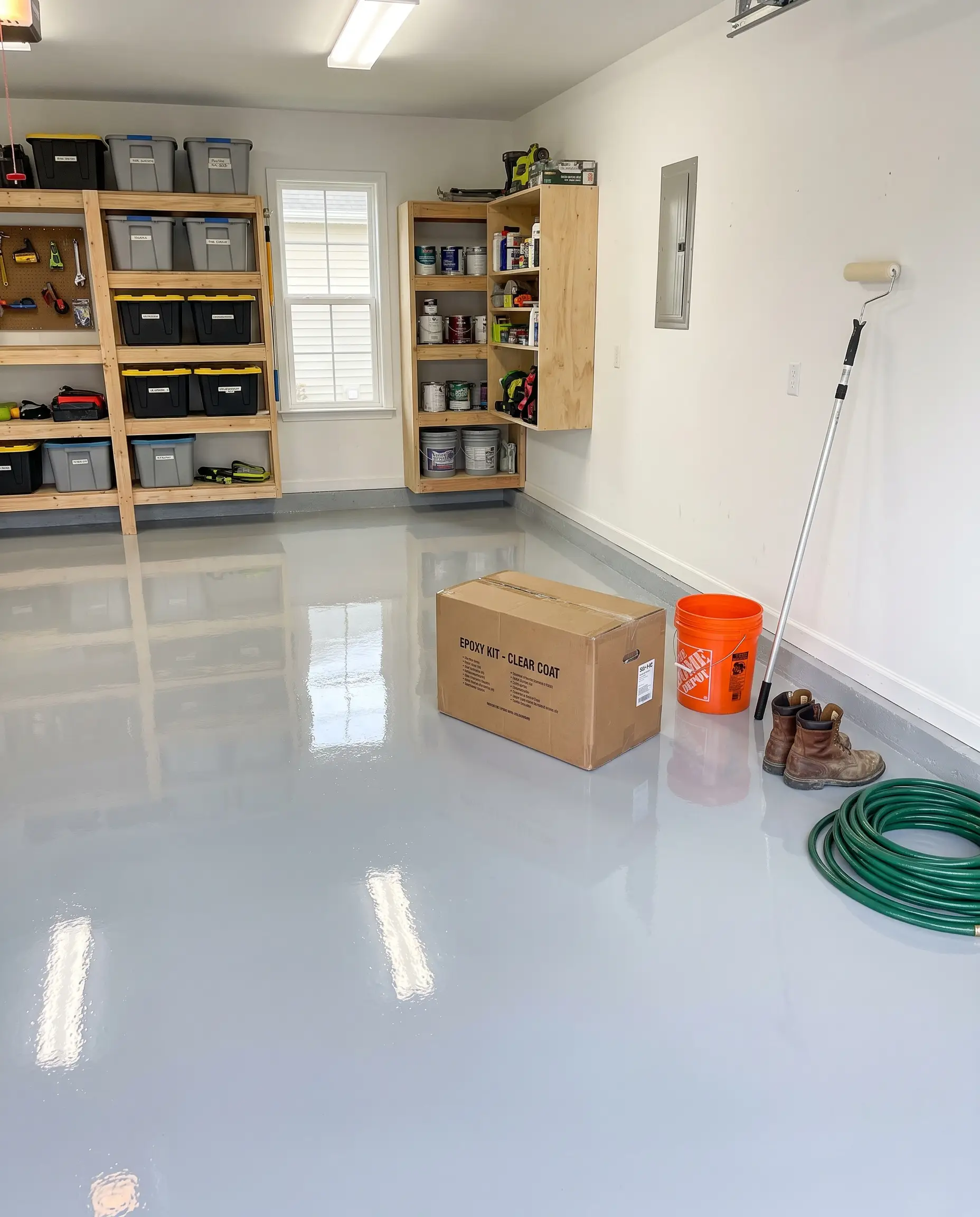
For the ambitious homeowner seeking accessible luxury without navigating the commercial sales desk, H&C Shield-Crete is the premier all-in-one residential kit. This water-based epoxy penetrates deep into the concrete substrate, offering easier mixing and application than its industrial counterparts while still delivering a highly durable surface.
- Vibe: Clean, premium residential finish.
- Key Chemistry: Residential-grade 2-Part Water-Based Epoxy.
- System Requirement: A separate clear topcoat is highly recommended for long-term longevity.
- Ease of Use: Pre-measured components eliminate complex ratio math.
3. Porch & Floor Enamel: When to Avoid It Entirely
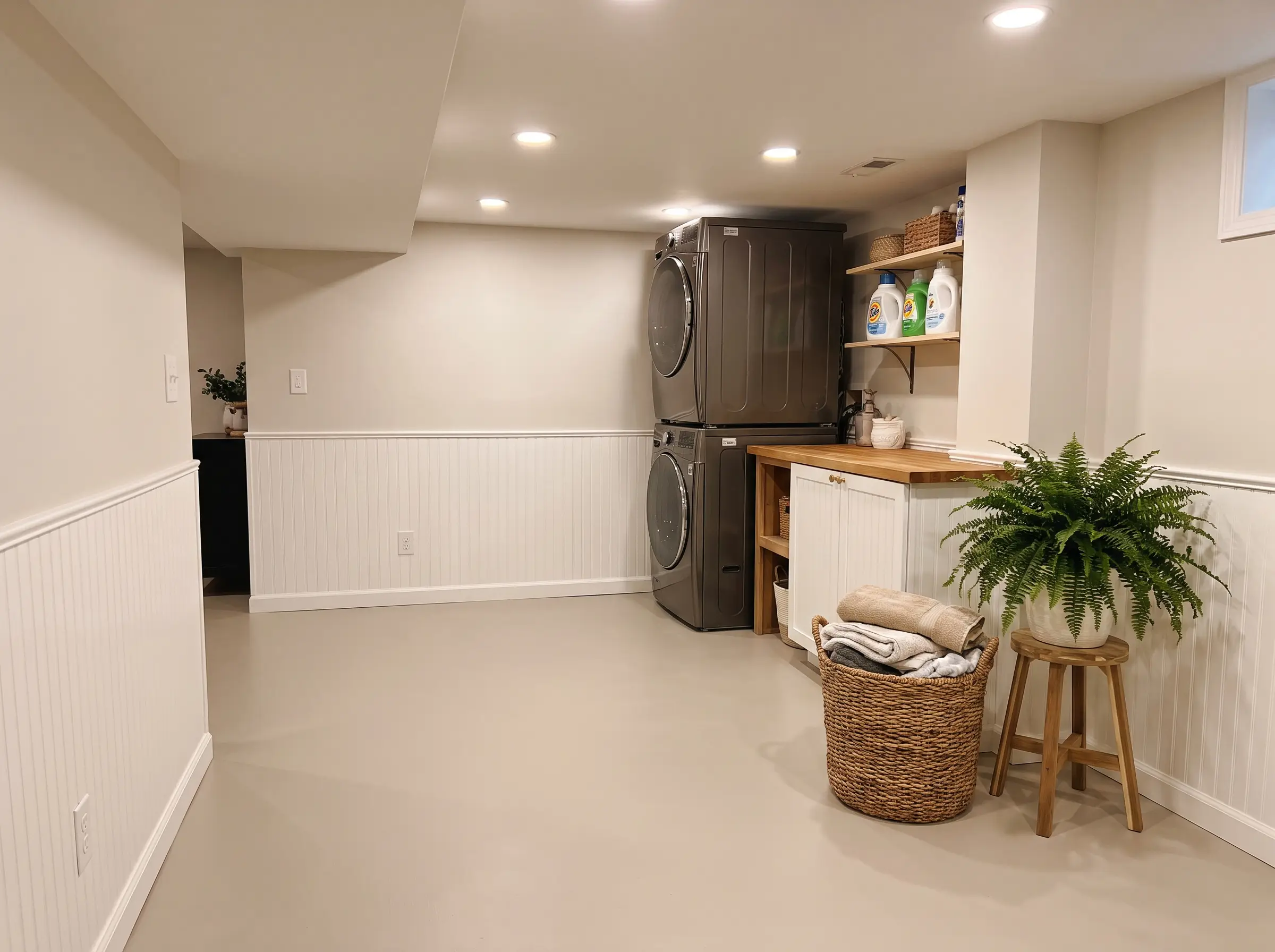
Applying standard floor paint to a vehicular surface is the single most expensive mistake a homeowner can make. While Sherwin-Williams Porch & Floor Enamel is fantastic for basements and pedestrian patios, parking a hot car on this single-component acrylic guarantees immediate, catastrophic peeling.
- Vibe: Pedestrian use only (basements, patios, laundry rooms).
- Key Chemistry: 1-Part Acrylic/Alkyd Enamel.
- Failure Point: Zero resistance to hot tire pickup.
- Adhesion Reality: Will aggressively bond to hot tires instead of the concrete substrate.
Sherwin-Williams Porch & Floor Enamel (and the Forté line) is not rated for vehicular traffic. The intense heat from car tires will melt the acrylic film, causing it to rip off the slab in large chunks.
WARNING – AVOID FOR GARAGES
Defeating “Hot Tire Pickup”: The Chemistry of Lasting Adhesion
The primary enemy of any garage floor is the physics of hot tire pickup. As you drive, your vehicle’s tires heat up significantly; when parked on a cool garage slab, the rubber contracts as it cools, literally grabbing the floor coating. If the coating’s mechanical adhesion to the raw concrete is weaker than the tire’s grip on the surface, the finish rips right off the floor.
4. The Critical Role of the Clear Coat System
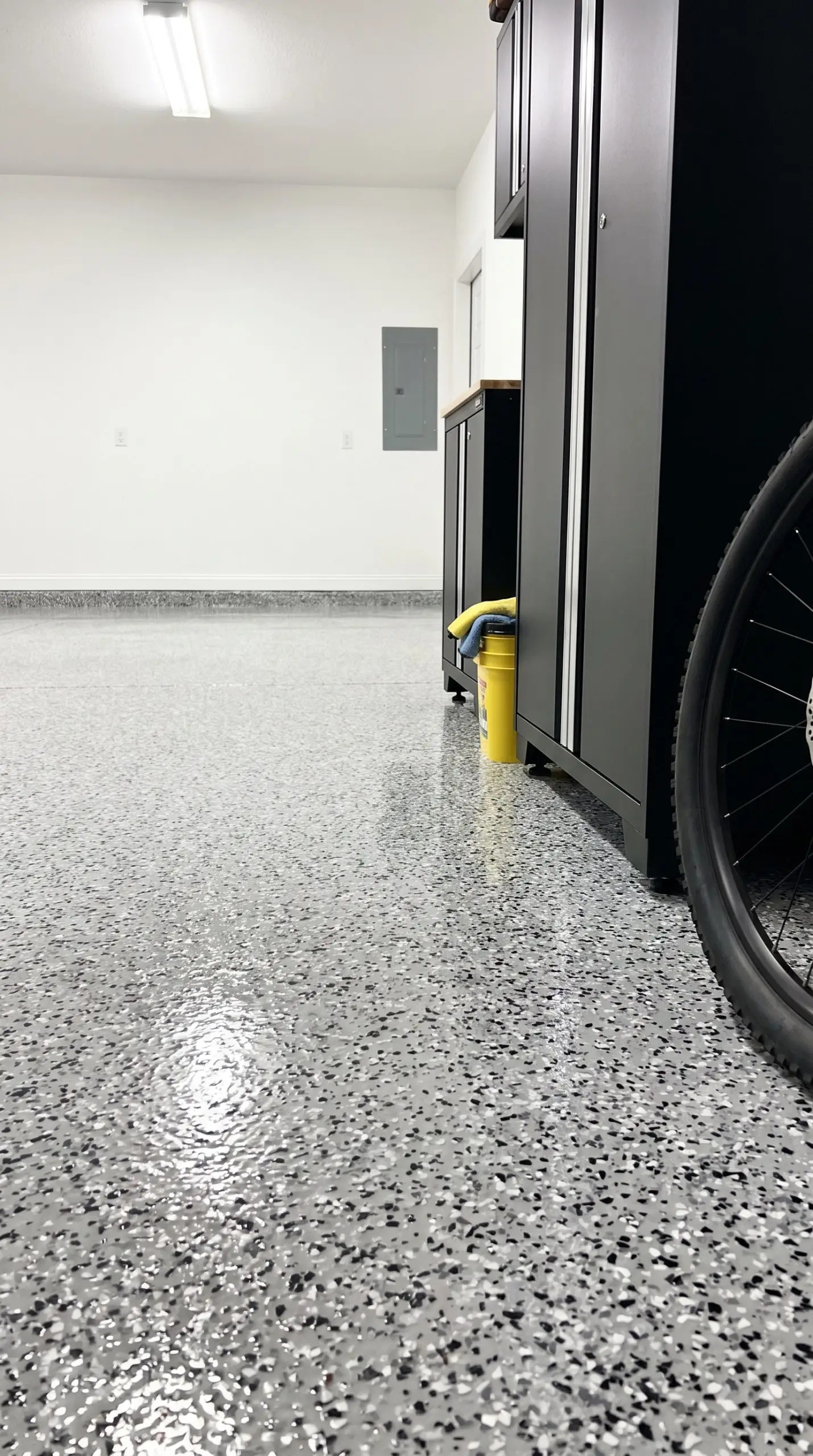
A pigmented base coat provides color, but a dedicated clear topcoat provides the impenetrable shield required for a true showroom finish. Whether you are running H&C or ArmorSeal, locking in your decorative broadcast flakes with a product like ArmorSeal 8100 Clear provides a non-negotiable barrier against UV yellowing and aggressive tire heat.
- Vibe: High-gloss, seamless luxury.
- Key Chemistry: Clear 2-Part Water-Based Epoxy or Polyurethane.
- Primary Function: Locks down broadcast flakes and blocks UV degradation.
- Maintenance Benefit: Creates a perfectly slick surface that repels oil stains.
A premium clear coat doesn’t just protect against hot tire pickup—it creates a completely non-porous barrier that makes sweeping and mopping the garage infinitely easier, preventing dirt from trapping around the edges of decorative flakes.
Pro Tip
Showroom Aesthetics: Customizing Your Concrete
A garage does not have to look like a dimly lit mechanic’s shop. Because this space serves as an active extension of your home, the color of the epoxy base and the specific blend of broadcast flakes should intentionally echo the interior design style of the adjoining rooms.
5. The Decorative Flake Pairing Guide
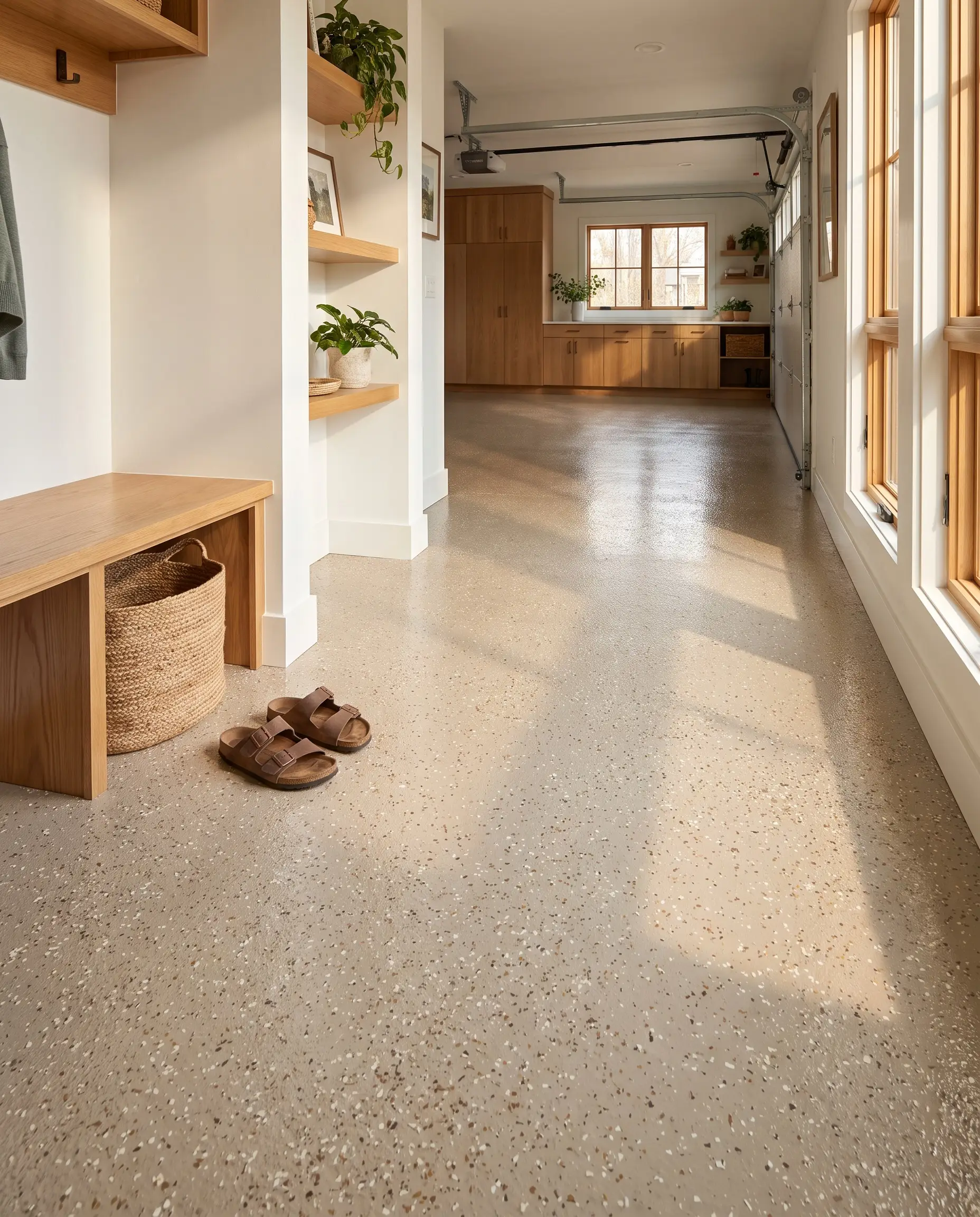
Moving past the generic red, black, and white racing flakes instantly transforms a garage from utilitarian to bespoke. By intentionally manipulating the base epoxy color and the flake distribution density, you can perfectly integrate the concrete floor into your home’s broader architectural aesthetic.
- Vibe: Architecturally integrated spatial design.
- Key Materials: ArmorSeal 8100 Base Coat + Vinyl Broadcast Flakes.
- Application Technique: Toss flakes upward to allow them to rain down evenly into the wet epoxy.
- Design Rule: The heavier the flake broadcast, the more the base color is obscured.
Designer Pairing List:
- Organic Modern Homes: Pair a warm greige epoxy base (Color Match: Sherwin-Williams Accessible Beige) with a medium-density broadcast of tan, cream, and subtle brown flakes to mimic natural terrazzo and warm stone.
- Minimalist Spaces: Utilize a high-gloss solid white or light gray base (Color Match: Sherwin-Williams Passive) and skip the flakes entirely for a seamless, ultra-sterile gallery look.
- Industrial/Brutalist Spaces: Apply a solid medium-gray base (Color Match: Sherwin-Williams Cityscape) with a highly sparse, minimal broadcast of pure charcoal and silver flakes to replicate raw, polished concrete.
The Non-Negotiable Prep Phase (The Industry Secret)
No Sherwin-Williams product, regardless of its commercial pedigree, will survive poor preparation. Precisely 90% of a successful epoxy installation comes down to the physical preparation of the concrete, which requires opening the microscopic pores of the slab so the coating can achieve a permanent mechanical bond.
Mechanical Grinding vs. Chemical Etching
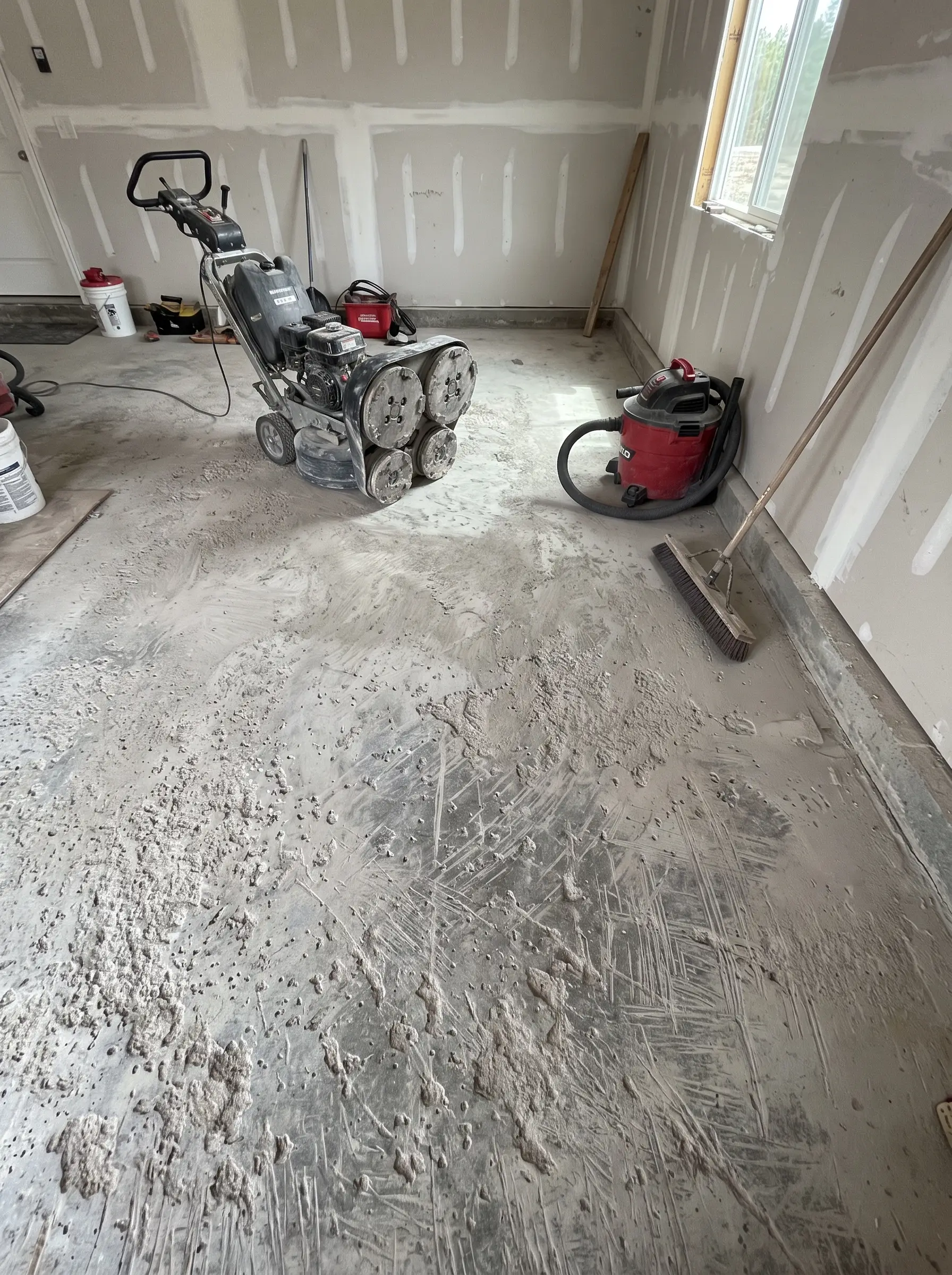
Surface profiling dictates the lifespan of your floor. While chemical etching is the standard inclusion in DIY kits, true commercial adhesion demands a mechanical grind to physically cut away sealed, greasy, or tightly troweled concrete.
- Vibe: Raw, porous, heavily textured concrete.
- Key Tool: Diamond grinder or shot blaster.
- Target Profile: The concrete must feel like 120-grit sandpaper before applying epoxy.
- Failure Warning: Skipping concrete profiling guarantees catastrophic adhesion failure.
Grinding vs. Etching Comparison Table
| Profiling Method | Cost | Physical Effort | Adhesion Reliability |
|---|---|---|---|
| Mechanical Grinding | High (Requires machine rental) | High (Heavy machinery operation) | Flawless. Physically exposes raw concrete pores. |
| Chemical Etching | Low (Acid wash is cheap) | Medium (Scrubbing required) | Variable. Fails entirely if the concrete has an existing sealer. |
Securing Your Investment
Achieving a flawless, industrial-grade floor requires immense patience during the final curing phase. Rushing to park your vehicles too early will instantly destroy the chemical bond you just worked so hard to establish.
- Timeline: 24 Hours Safe for light, cautious foot traffic in well-ventilated conditions.
- Timeline: 72 Hours Safe for moving lightweight storage bins and plastic shelving units.
- Timeline: 5 to 7 Days Strictly required for vehicular traffic, heavy tool chests, and full chemical cure (highly dependent on ambient humidity).
Walk confidently up to the Sherwin-Williams commercial desk, specify your exact concrete profiling method, and secure the right two-component system for a permanent, flawless finish.