The Warm Minimalist Bedroom: How to Layer Light for a Serene Sanctuary
Stark lines and uncluttered surfaces bring an undeniable visual peace, but without the correct illumination strategy, a minimalist bedroom quickly devolves into a sterile, unwelcoming clinical space. In a room intentionally devoid of excessive physical decor, light itself must become your primary architectural material. We approach the ambient, task, and accent layers not as functional afterthoughts, but as structural tools to sculpt warmth, establish spatial boundaries, and cultivate a deeply restorative, hygge-infused sanctuary.
The foundation of this transformation relies on strict adherence to professional lighting metrics. Kelvin Check: For bedroom ambient layers, strictly limit your bulbs to 2700K, and demand a Color Rendering Index (CRI) of 90+ to ensure skin tones and textiles look rich rather than washed out in a flat, blue-light haze.
Architectural Ambient Solutions (Hidden Warmth)
High-end minimal design thrives on the invisible; the ambient layer should emanate from soft, indirect washes that bounce off the architecture rather than harsh, central ceiling fixtures. By hiding the source, we allow the glow to dictate the mood.
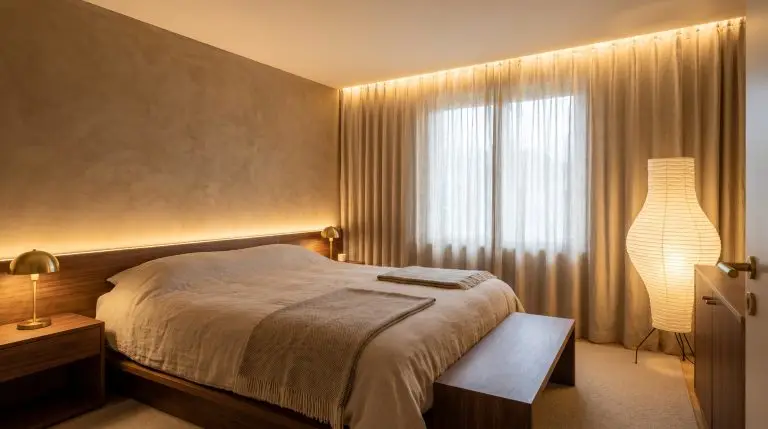
Wash the Headboard Wall with a Recessed LED Cove
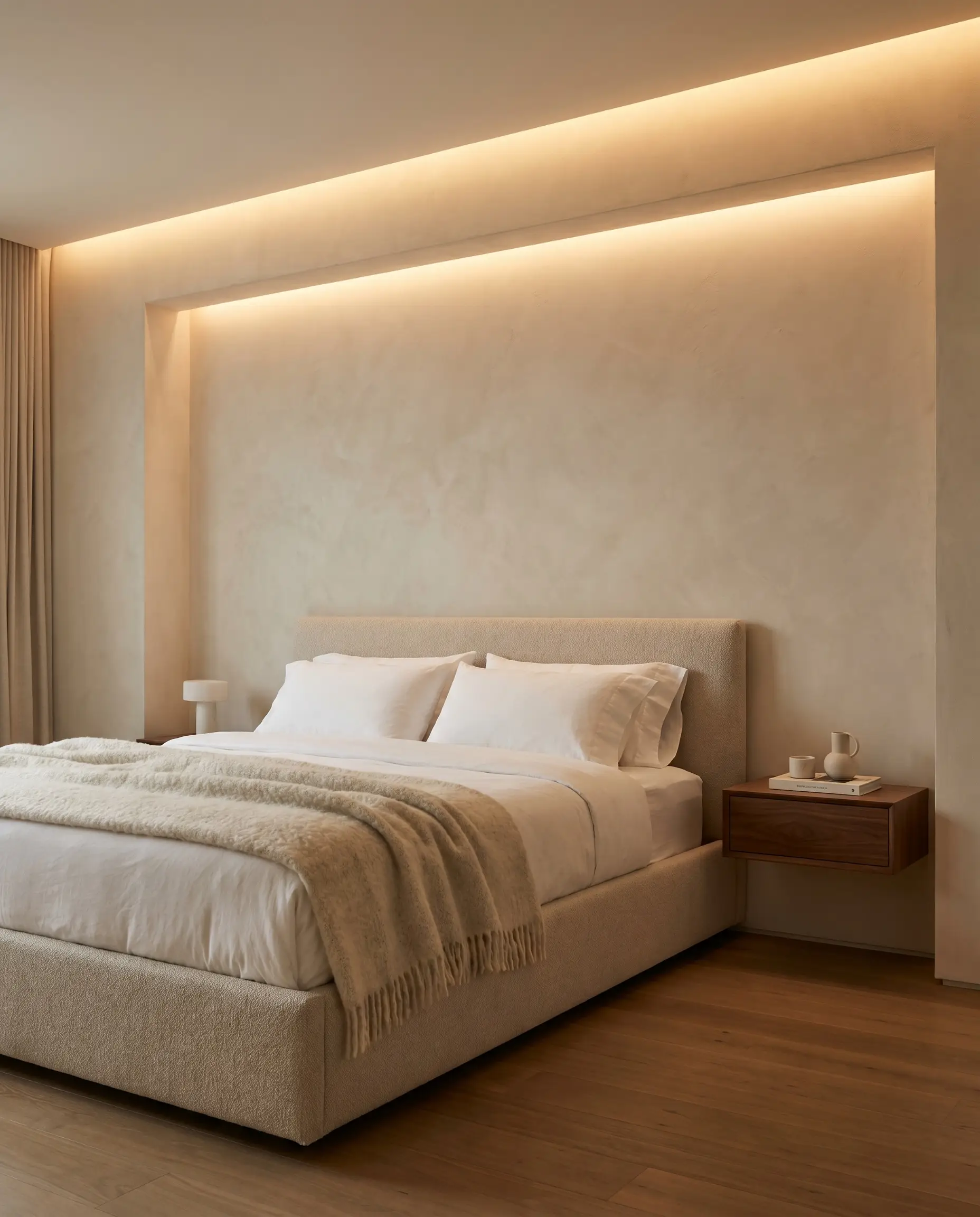
Dropping the ceiling slightly or building out a subtle false wall behind the bed creates a hidden architectural channel. This cavity allows a continuous strip to cascade a waterfall of warm light down the wall, establishing a soft focal point without a single visible bulb.
- Do: Install strips inside an aluminum extrusion channel fitted with a milky polycarbonate diffuser to completely eliminate harsh LED dotting.
- Don’t: Mount bare LED tape directly to the drywall, as the individual diodes will reflect off adjacent surfaces and ruin the high-end illusion.
- Ideal Lumen Output: 300-400 lumens per foot for a gentle, non-overpowering wash.
Undermount 2700K Strips for a “Floating” Bed Effect
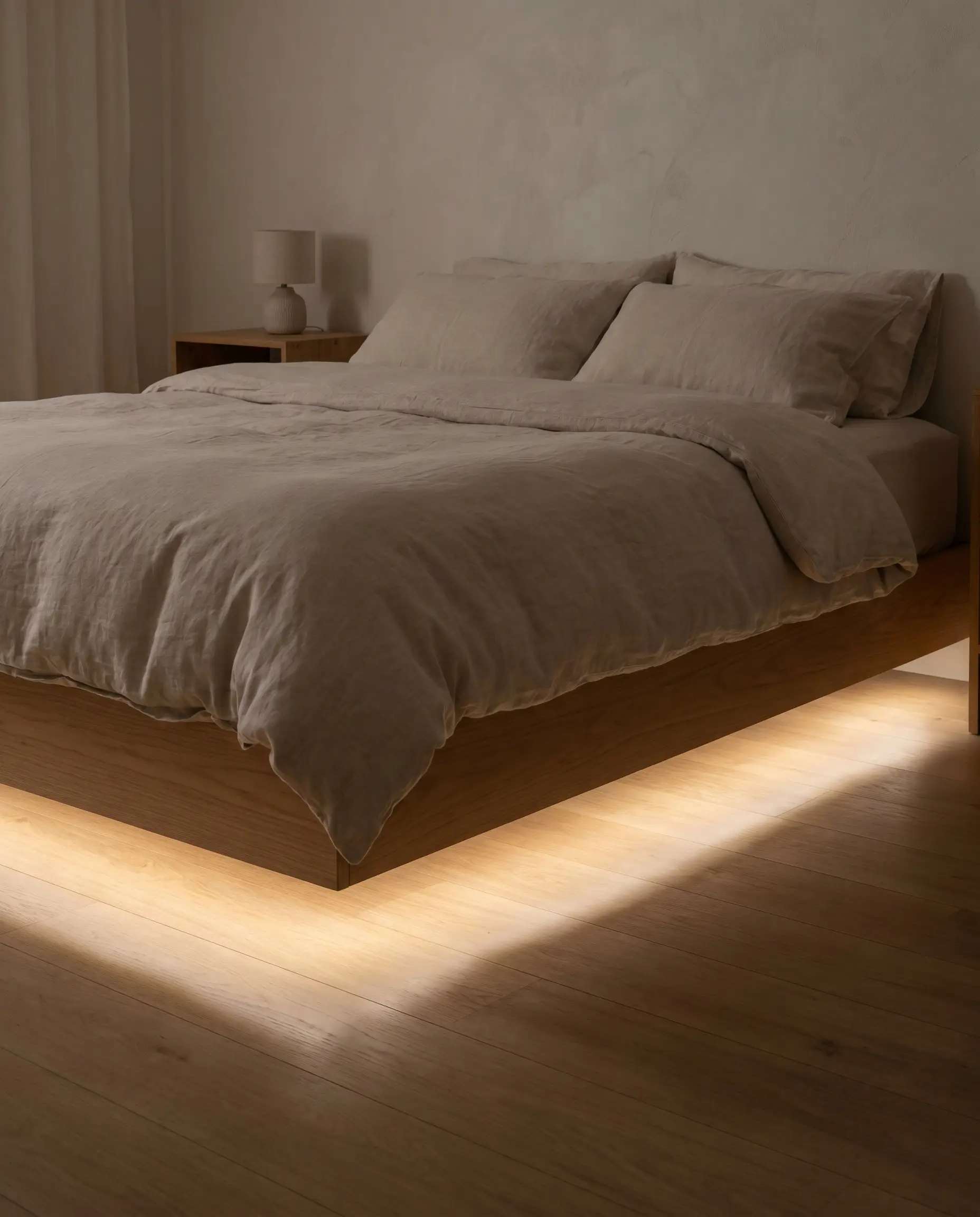
Grounding a minimalist bed frame with toe-kick lighting introduces a low-level ambient layer that adds profound depth to the floor plane. This technique provides excellent nighttime navigation while protecting your circadian rhythm from jarring overhead glare.
- Vibe: Weightless, luxurious, and highly structural.
- Placement: Recess the channel at least two inches behind the bed frame’s bottom edge to conceal the hardware completely.
- System Integration: Connect this specific zone to a robust smart lighting ecosystem for automated scheduling.
Soften the Edges with Illuminated Window Valances
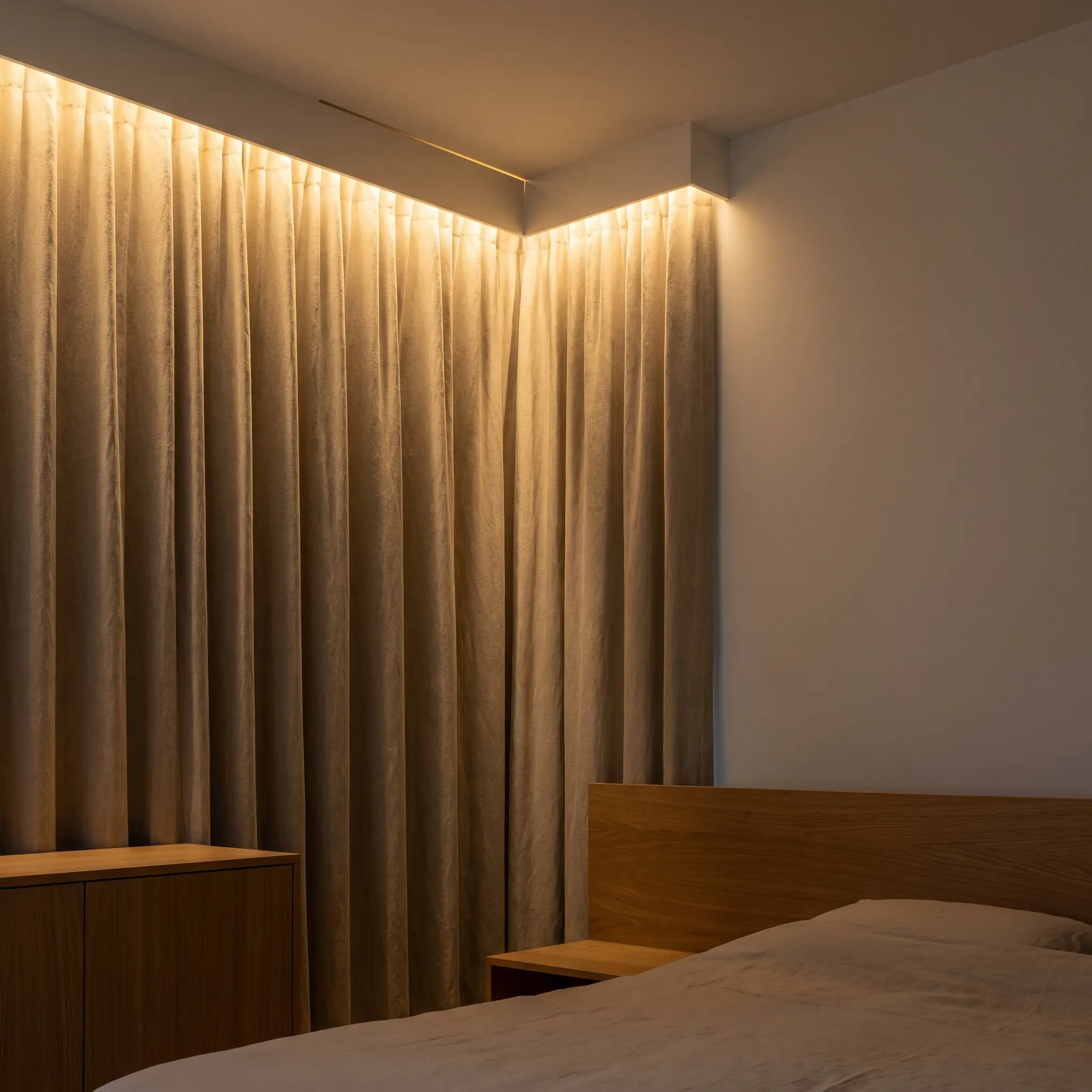
Hiding warm LED strips within a ceiling pelmet or behind a curtain valance introduces massive amounts of tactile warmth into a stark space. As the illumination travels down the heavy folds of linen or velvet drapery, it transforms a flat plane into a rich, glowing tapestry.
- Key Material: Heavyweight, unlined Belgian linen or matte velvet.
- Beam Angle: 45-degree angled extrusion channel to direct the wash precisely down the fabric rather than into the room.
By uplighting or downlighting heavy drapery, you force the light to pool in the recesses of the fabric folds, creating micro-shadows that give the flat walls the visual weight and texture of crushed velvet.
Shadow Play
Sculptural Bedside Fixtures (Visible Warmth)
Transitioning from invisible architectural channels to the physical objects in the room requires a highly curated eye. In a minimalist space, a bedside light operates as a functional sculpture, where the fixture’s material dictates the exact quality of the diffuse glow.
Drop an Asymmetrical Fluted Glass Pendant Over the Nightstand
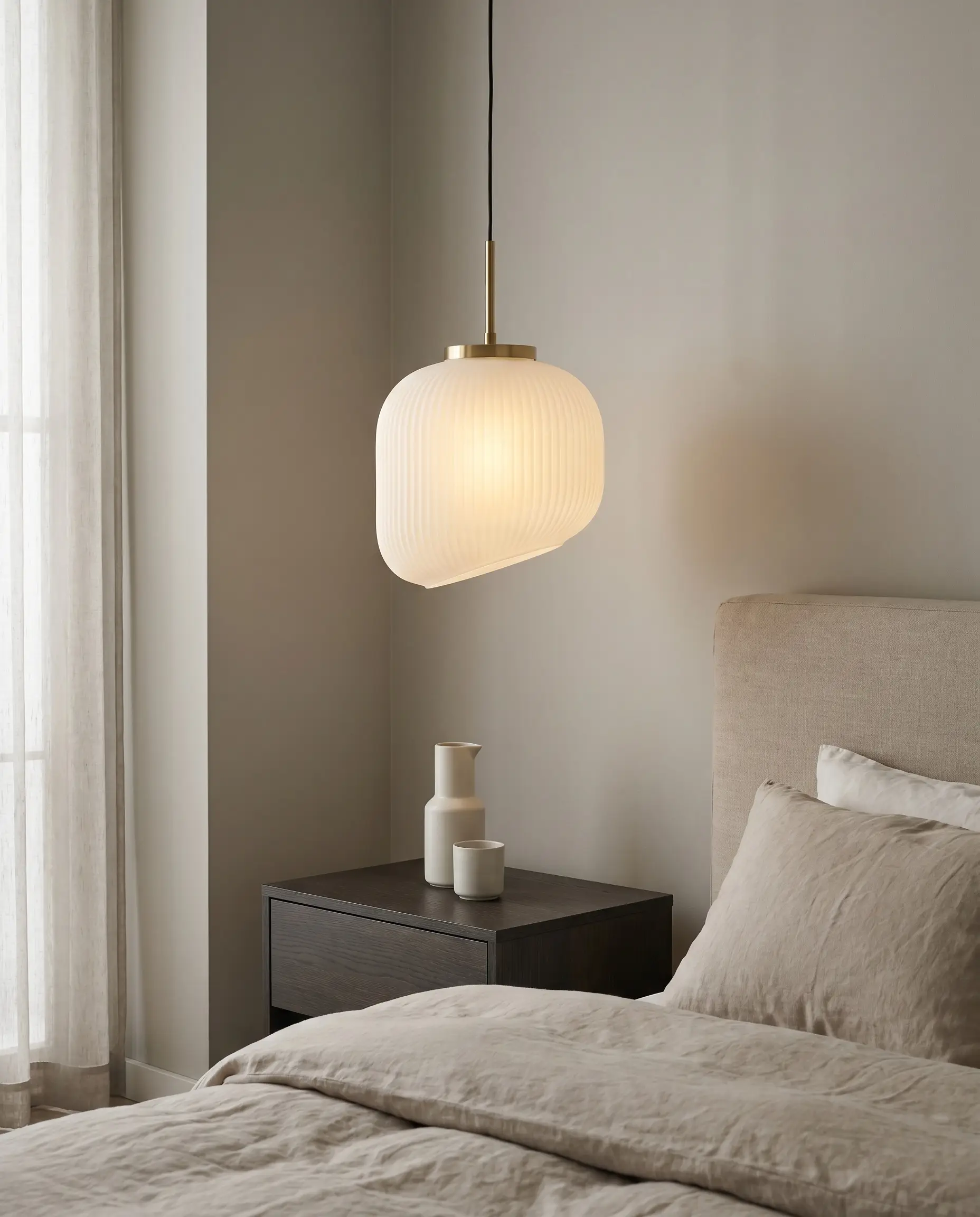
Freeing up nightstand surface area by suspending a low-hanging pendant drastically cleans up the visual plane of the room. Utilizing ribbed or fluted glass refracts the warm light beautifully, dispersing it evenly without glaring directly into the eyes of someone resting in bed.
- Vibe: Sophisticated, airy, and vertically engaging.
- Drop Height: Position the bottom edge of the pendant 18 to 22 inches above the nightstand surface.
To achieve this high-end look without requiring extensive custom electrical rough-ins, seek out plug-in pendants featuring unlacquered brass hardware and thick, frosted fluted glass.
Fixture Sourcing
Blend In with Textured Plaster Wall Sconces
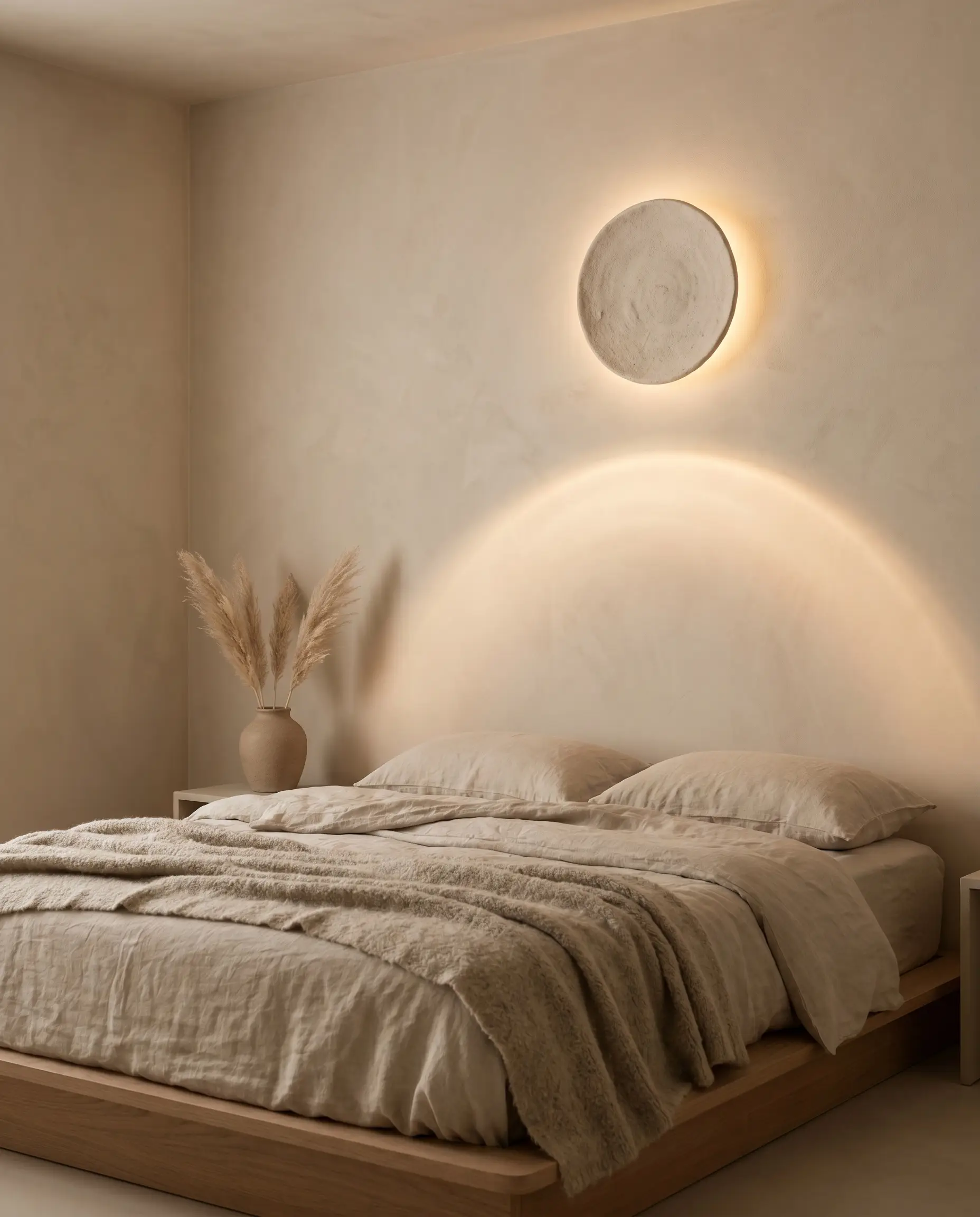
For an impeccably serene Organic Modern aesthetic, utilize flush-mount sconces crafted from raw ceramic or plaster. By painting the fixture the exact same color and finish as the surrounding wall, the hardware performs a disappearing act during the day and emits a pure, floating halo of light at night.
- Vibe: Earthy, monolithic, and deeply calming.
- Paint Recommendation: Portola Paints “Roman Clay”.
- Styling Pro-Tip: Use a trailing-edge dimmer to ensure a smooth, flicker-free descent into low-light levels.
Anchor the Space with a Noguchi-Style Paper Floor Lantern
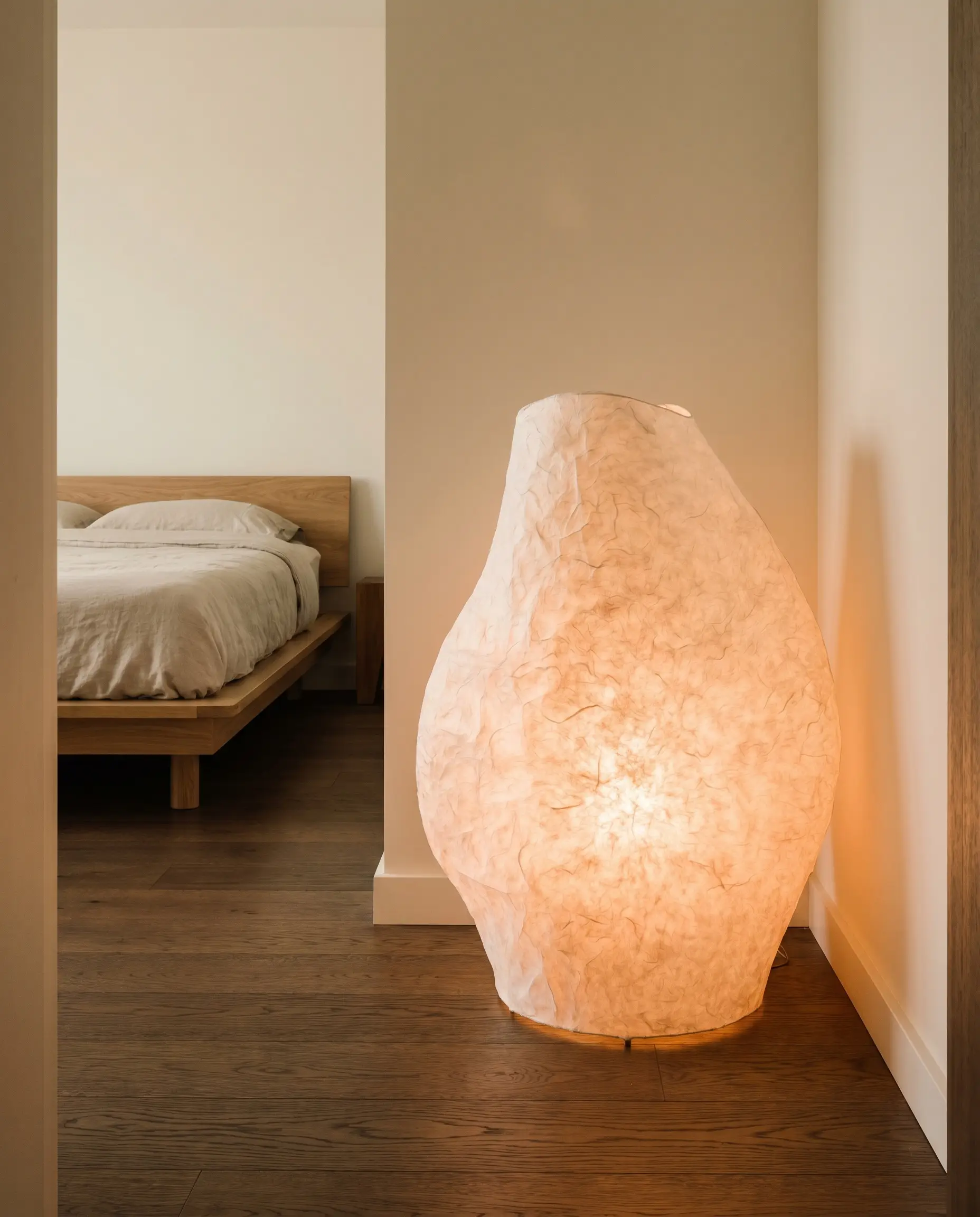
Tapping into the meticulous restraint of Japandi and Wabi-Sabi design, a paper floor lantern acts as the ultimate material diffuser. The organic fibers of Washi or rice paper absorb and scatter the light, turning even a standard bulb into a soft, glowing ember.
- Vibe: Ethereal, grounded, and historically rooted.
- Placement Strategy: Position the lantern asymmetrically in an empty corner rather than directly adjacent to the bed to balance the room’s visual weight.
- Design Pedigree: Look to the iconic light sculptures of Isamu Noguchi for masterclasses in paper tension and form.
Install Matte Black Articulating Sconces for Directional Reading Light
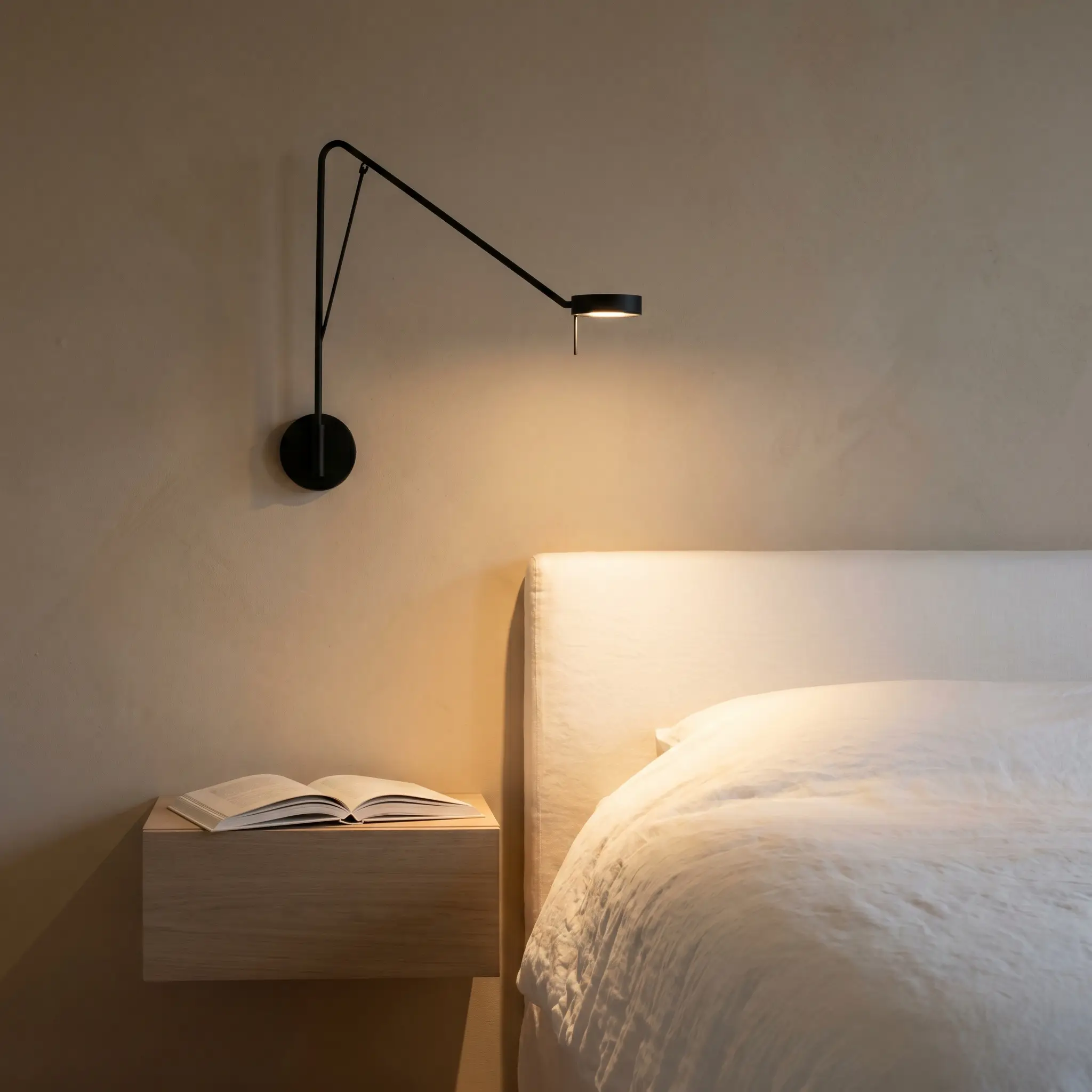
To satisfy the task lighting layer without flooding the entire sanctuary with unnecessary brightness, rely on a hyper-focused, narrow-beam sconce. A classic Bauhaus or industrial minimalist design provides high-contrast functionality and striking geometric lines.
- Vibe: Sharp, functional, and highly architectural.
- Key Materials: Powder-coated matte black steel or machined aluminum.
- Contrast Principle: The sharp silhouette of the matte black fixture creates a stunning visual anchor against the soft, warm light it emits.
Material & Texture Pairings (Reflecting the Glow)
Illumination is entirely dependent on the surfaces it interacts with; you cannot achieve a truly warm ambient layer in a room painted a stark, cool white. The physical materials of your walls, metals, and woods serve as the final filter for your lighting scheme.
| Fixture Type / Light Source | Ideal Wall or Furniture Material Pair | Visual Effect & Warmth Rating |
|---|---|---|
| Recessed LED Cove (2700K) | Roman Clay / Lime Wash Walls | 10/10 – Suede-like diffusion, high texture. |
| Fluted Glass Pendant | Smoked Oak or Walnut Nightstand | 9/10 – Refracted glow meets rich, deep wood grain. |
| Matte Black Task Sconce | Matte White Oak / Ash Accents | 8/10 – High contrast shadow play, clean lines. |
| Plaster Flush-Mount Sconce | Monochromatic Plaster Wall | 10/10 – Seamless halo effect, architectural blending. |
Cast Warm Light Across Lime Wash or Roman Clay Walls
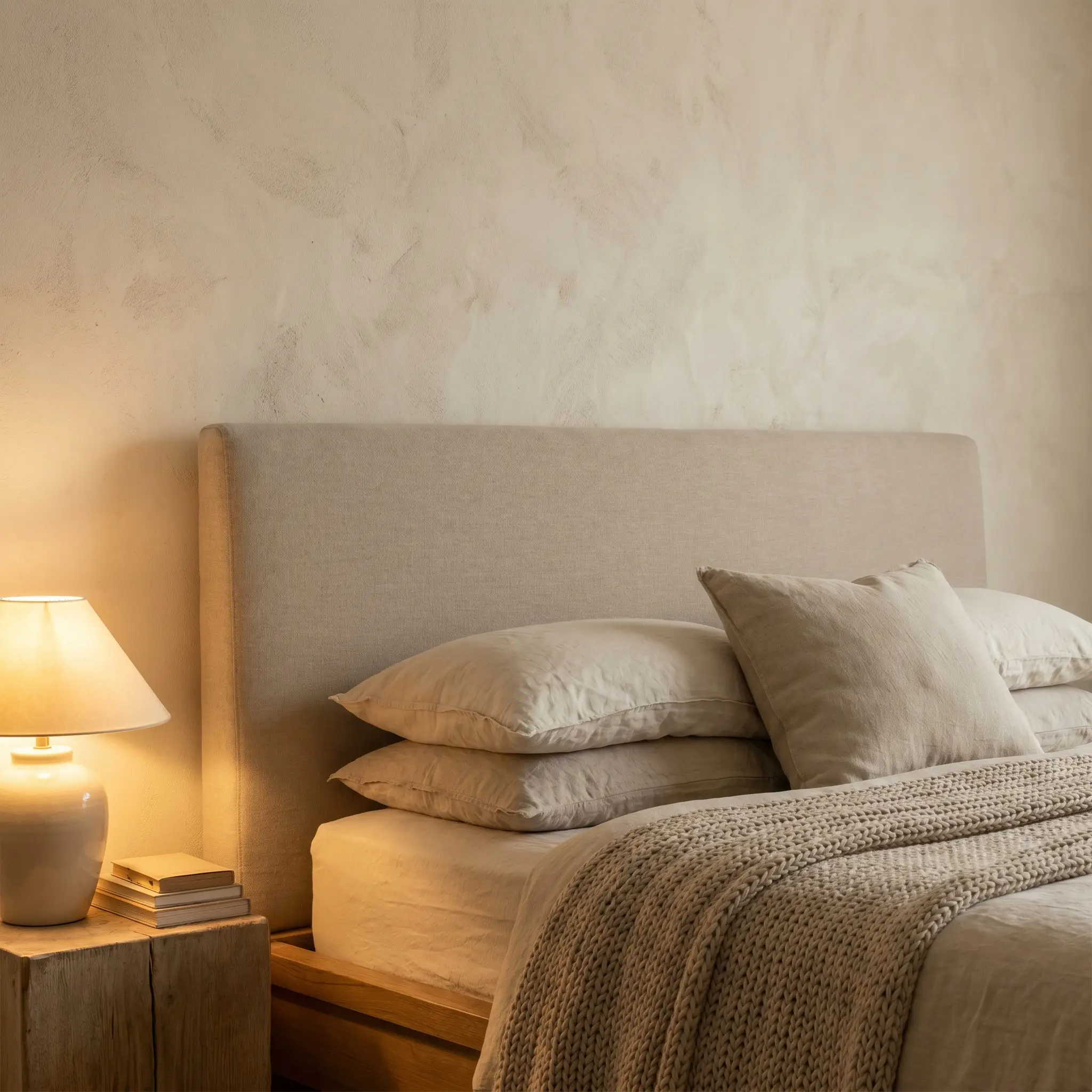
Flat latex paint reflects light harshly, exposing drywall imperfections and creating a cold glare. By applying a heavily textured finish, the mottled surface catches the light within thousands of micro-shadows, creating a breathtaking, suede-like effect across the walls.
- Vibe: Old-world permanence meeting modern restraint.
- Paint Recommendation: Farrow & Ball “School House White”.
- Application Guide: Reference our definitive lime wash wall application guide for exact trowel techniques.
Pair Brass and Bronze with Warm Walnut Accents
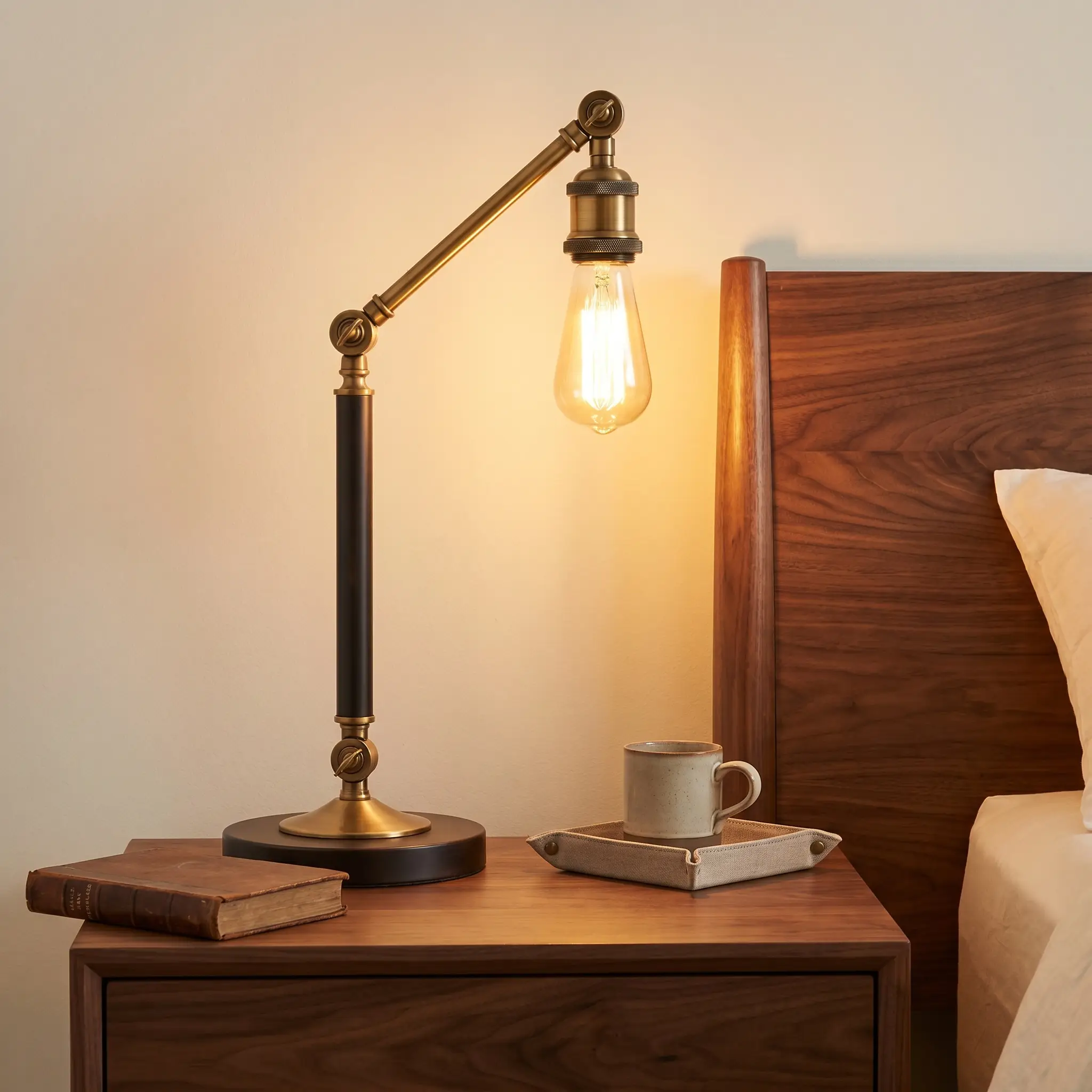
Material synergy dictates the perceived temperature of a room. Unlacquered brass and oil-rubbed bronze fixtures paired with dark, inherently warm woods like walnut naturally amplify a 2700K glow, enriching the space with organic depth.
- Vibe: Rich, grounding, and materially honest.
- Wood Grain Profile: Specify flat-cut walnut to showcase the sweeping, natural cathedrals of the wood under the light.
Strictly ban all cool-toned metals—such as chrome, polished nickel, or standard stainless steel—from this specific aesthetic. They will actively fight the 2700K bulbs and cast a chilling, metallic reflection into your sanctuary.
Hackrea Styling Tip
Smart Control & Circadian Rhythms (Programming Warmth)
The ultimate hallmark of high-end, modern luxury is biological integration. A true minimalist sanctuary adapts seamlessly to the human circadian rhythm, transitioning gracefully from functional brightness to deep, restorative warmth as the evening progresses.
Automate “Dim-to-Warm” Smart Bulbs for Evening Wind-Down
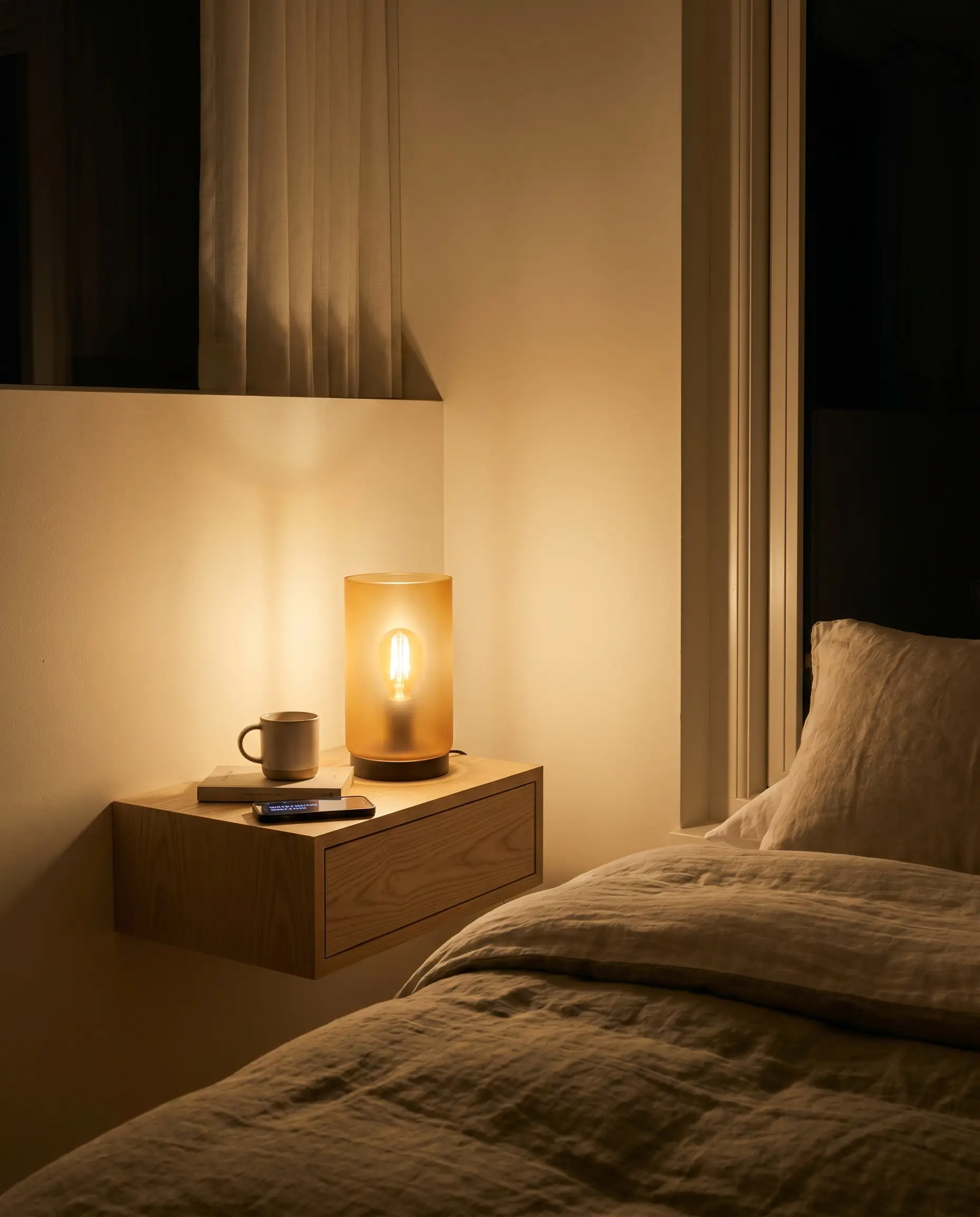
Standard dimming technology simply reduces the lumen output, leaving the color temperature static and unnatural. True “Dim-to-Warm” smart bulbs replicate the physics of an incandescent filament, dropping the Kelvin rating from a crisp 3000K down to a candle-like 2200K as they dim, actively signaling your brain to produce melatonin.
- Vibe: Biologically optimized and deeply relaxing.
- Target Kelvin Range: 3000K (Daytime) shifting smoothly to 2200K (Pre-sleep).
- Automation: Program a gradual 60-minute fade to begin an hour before your intended sleep time.
Swap Harsh Overhead Cans for Floor-Level Proximity Sensors
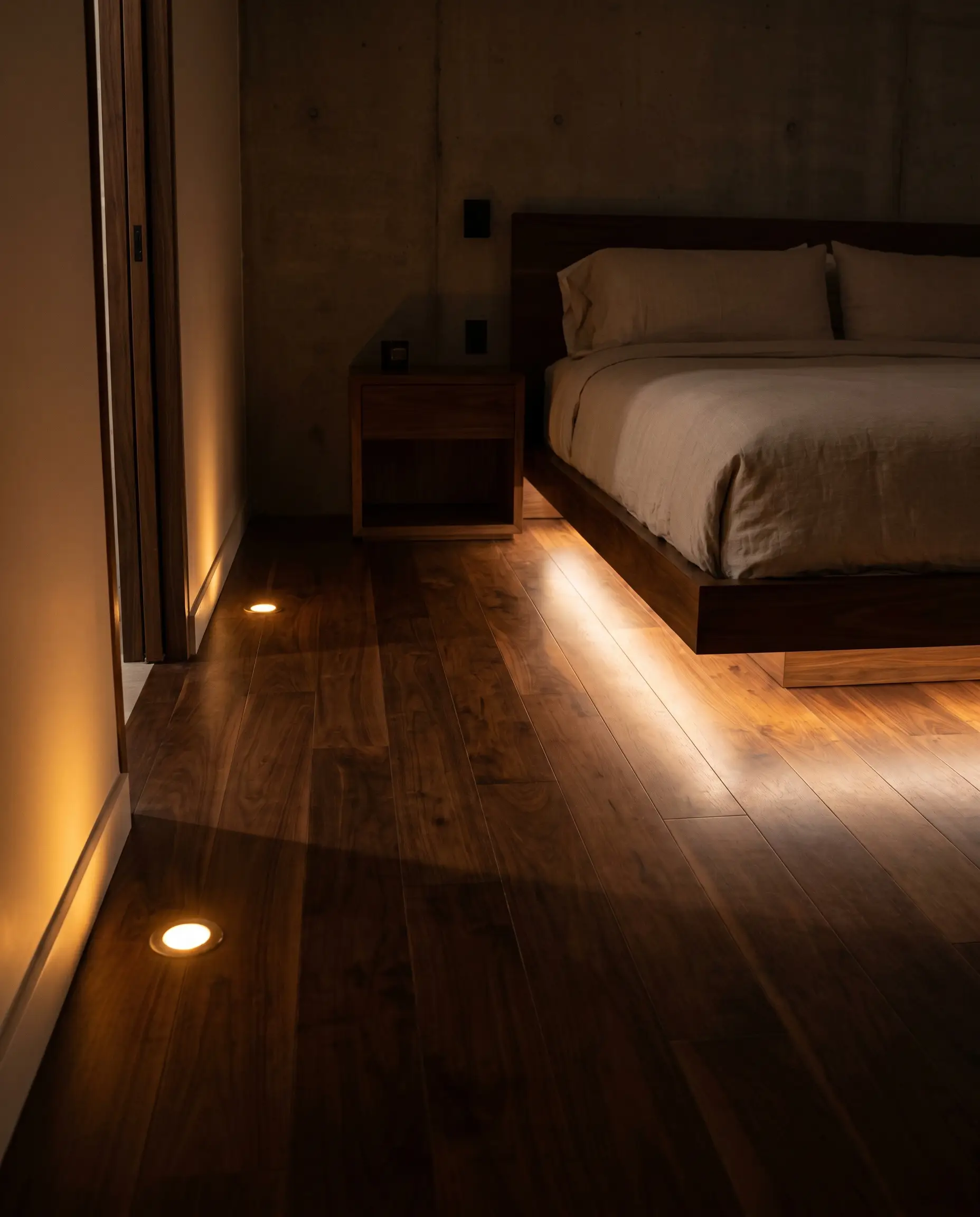
Disrupting deep sleep with a glaring overhead light during a midnight trip to the bathroom is a critical design failure. By tying under-bed ambient lights or low-wall recessed markers to discreet floor-level motion sensors, you create an intuitive, glare-free path.
- Vibe: Intuitive, silent luxury.
- Settings: Cap the sensor output at 10% brightness and lock the color temperature at a deep, amber 2200K.
- Design Secret: This is the ultimate high-end hotel luxury trick, executed flawlessly for residential wellness.
The Circadian Sanctuary: Finalizing Your Wind-Down Lighting
A minimalist bedroom must never feel barren, clinical, or cold. By treating light as a tangible architectural material—carefully selecting 2700K temperatures, integrating hidden structural layers, and utilizing tactile diffusers like plaster, glass, and paper—you build a deeply restorative space. This layered illumination strategy removes the need for superfluous physical clutter, allowing the architecture itself to breathe and envelop you. Start by swapping your bedside bulbs to 2700K tonight, and begin planning your architectural layers tomorrow.
The Aesthetics Desk curates the visual direction for Hackrea. Specializing in design history, global architectural movements, and interior styling, this desk focuses on the psychology of space and how to translate high-end, magazine-quality aesthetics into approachable residential design without falling into fleeting micro-trends.