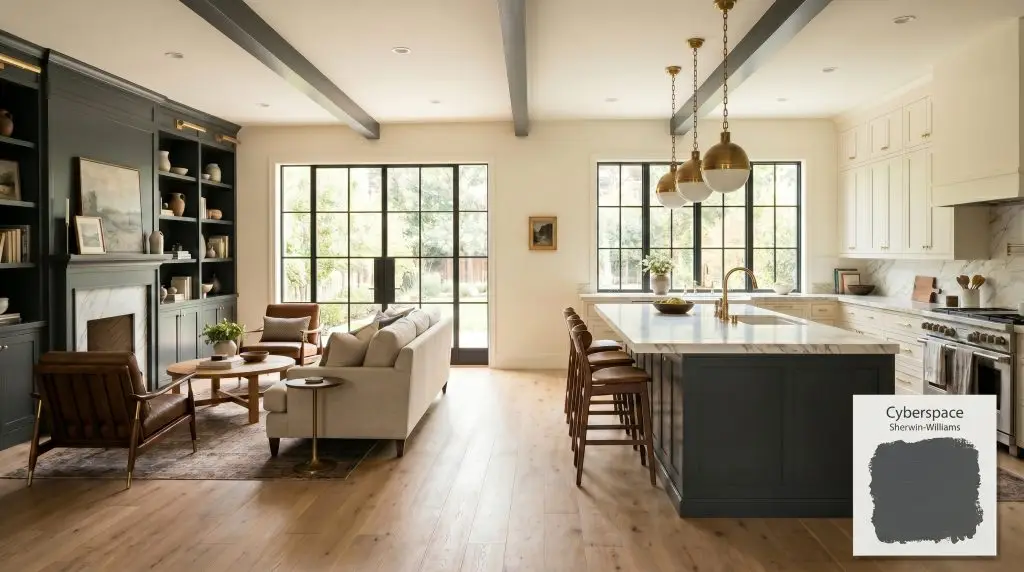
Sherwin-Williams Cyberspace is a deeply saturated, cool-toned charcoal gray with strong navy blue undertones. Operating with an LRV of 6, it acts as a dramatic, moody neutral that shifts dynamically between a soft, stormy black and a rich slate blue depending on your room's lighting conditions.
Will Cyberspace clash with your room?
Paint Technical Profile
| Color ID / SKU | SW 7076 |
| HEX Code | #44484D |
| Light Reflectance (LRV) | 6 |
| Use | Interior, Exterior |
| Best Exposures | South-facing, West-facing |
| Best For | Kitchen islands, lower cabinets, home offices, media rooms, exterior siding |
Sherwin-Williams Cyberspace: The Ultimate Charcoal-Navy Hybrid for Moody Interiors
Homeowners often crave a dramatic, dark aesthetic but freeze at the paint counter, terrified their choice will turn the room into a flat, light-absorbing cave. Sherwin-Williams Cyberspace (SW 7076) answers that hesitation with a brilliantly engineered structure.
It delivers the anchoring depth of a soft black while maintaining a pulse of tailored color that brings the walls to life. This is the exact shade you reach for when you want undeniable architectural contrast without the harshness of a pure, jet-black silhouette.
Sherwin-Williams Cyberspace: Undertones & LRV
Is SW 7076 warm or cool? It is decidedly cool, leaning heavily into its crisp, slate-like composition.
With an LRV of 6, this charcoal navy hybrid possesses incredibly low light reflectance, absorbing 94% of the illumination in a space. This means it requires intentional styling and ample lighting to reveal its sophisticated blue character rather than collapsing into a heavy, indistinct shadow.
Mastering Directional Lighting & Shadows
The biggest fear with this dark hue is that it will read as an institutional, icy blue in bright rooms or a lifeless void in the dark. Understanding how illumination manipulates its hidden slate notes is the secret to unlocking its true elegance.

Popular Room Applications
This deeply saturated tone demands a canvas that can handle its visual weight. It excels in environments where you want to foster focus, create an intimate retreat, or establish a striking, high-contrast focal point.
Kitchen Islands & Lower Cabinets
This shade is a brilliant way to ground a culinary space without committing to stark black. It looks incredibly handsome on lower cabinetry, especially when paired with creamy perimeter cabinets or heavily veined marble countertops. Applying it to satin finish cabinetry allows the subtle sheen to catch the light, revealing the rich slate notes. It provides an excellent foundation for navy blue kitchen cabinets that require a bit more architectural edge.

Will Cyberspace work with your specific lighting, floor, or furniture?
Home Offices & Libraries
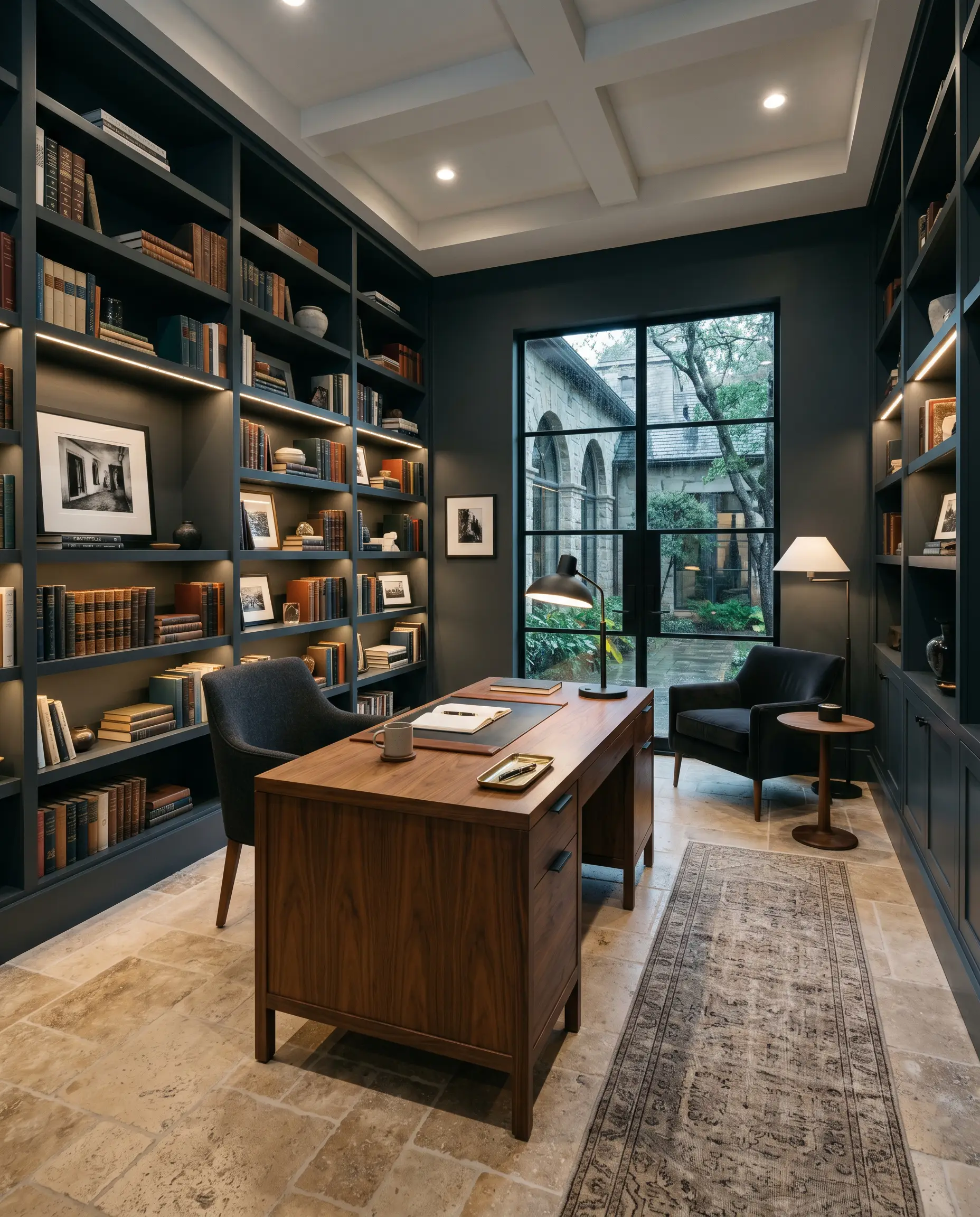
When applied to a dedicated workspace, this hue establishes an atmosphere of quiet, focused sophistication. Wrapping the walls and built-ins in this color creates an immersive environment that feels both historic and highly tailored. If you are exploring dark moody paint colors for a workspace, this option perfectly balances dramatic depth with enough color to keep the room feeling alive.
Media Rooms
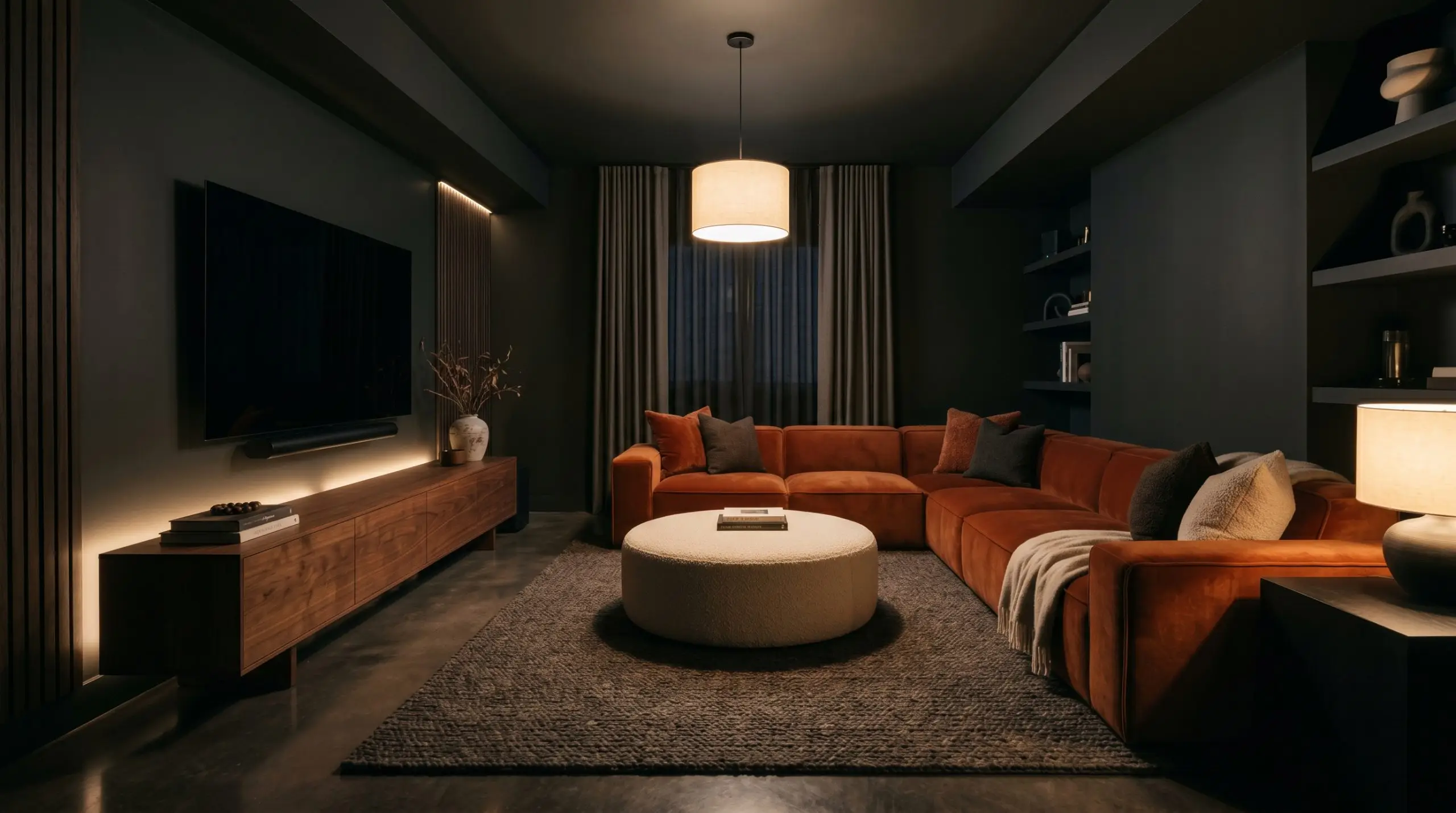
The exceptionally low light reflectance makes this an ideal candidate for spaces centered around a screen. It absorbs ambient glare beautifully, allowing the architecture to fade away while you watch a film. Pair it with plush, low-profile seating in rich rust velvets or textured bouclé to soften the room’s energy and add tactile comfort.
Exterior Siding & Front Doors
On an exterior facade, direct sunlight will wash out some of the charcoal depth, bringing the navy to the forefront. It creates a stunning, tailored appearance on mid-century modern ranches or crisp transitional homes. Always test a large swatch outside, as the intensity of full sun will make it appear significantly lighter than it does indoors.

Will Cyberspace work with your specific lighting, floor, or furniture?
Unique Design Ideas & Creative Placements
Beyond standard walls, this saturated shade is a powerful tool for manipulating visual boundaries. Let’s explore unexpected ways to harness its architectural strength.
The “Fifth Wall” Canopy

Instead of defaulting to a standard white ceiling, try pulling this deep charcoal up overhead in a dining room or long hallway. This technique visually lowers the ceiling, creating an intimate, canopy-like effect that feels incredibly high-end. Ground the look with a glowing, multi-tiered alabaster chandelier to cast warm, inviting pools of light against the dark overhead plane.
The Gentleman’s Lounge

Transform a secondary living area into an immersive, sophisticated retreat by embracing full color drenching. Paint the walls, baseboards, crown molding, and interior doors entirely in this shade. The seamless application eliminates visual breaks, allowing the room to feel expansive yet intensely cozy, especially when styled with tufted leather sofas and vintage Persian rugs.
High-Contrast Entryway Framing

Use this commanding color strictly on the interior side of your front door and the surrounding sidelights. This creates a crisp, tailored focal point that anchors the foyer without overwhelming a narrow space. It sets a confident, sophisticated tone the moment guests step inside, pairing beautifully with checkerboard marble floors or distressed herringbone wood.
Hardware, Trim & Material Pairings for Cyberspace
This shade thrives on intentional contrast and tactile warmth. The right materials will elevate its sophisticated edge while preventing the room from feeling stark.
Tailored Trim & Baseboards
Metal, Stone & Tactile Elements
Coordinating Color Palettes
Because of its deeply hidden cyan-blue structure, this hue requires secondary colors that either harmonize with its coolness or intentionally disrupt it with complementary warmth.
Designer Mood Boards
Here is how to bring these tactile elements and colors together into cohesive, real-world aesthetics.
The Urban Atelier: This mood board leans into the paint’s modern edge. Picture the deep charcoal walls serving as a backdrop for bronze articulating wall lamps, a sleek walnut credenza, and accents of Benjamin Moore Porringer Gray 2121-40. The energy is sharp, tailored, and highly focused.

Will Cyberspace work with your specific lighting, floor, or furniture?
Textured Organic: This palette uses texture to soften the dark foundation. Imagine a space anchored by this hue, layered with tumbled travertine floors, heavily textured linen drapery, and strategic pops of Sherwin-Williams Cavern Clay SW 7701. The resulting vibe is grounded, inviting, and richly earthy.

The Collector’s Study: This concept embraces classic, moody sophistication. The color drenching technique envelops the space, accented by burnished brass hardware, vintage leather seating, and the subtle, misty presence of Farrow & Ball Cromarty No. 285 on the ceiling. It feels timeless, quiet, and deeply luxurious.

Will Cyberspace work with your specific lighting, floor, or furniture?
Head-to-Head Comparisons
Sometimes a specific lighting exposure or architectural style demands a slightly different approach. Here is how this shade stacks up against its closest rivals so you can make a confident choice.
Sherwin-Williams Cyberspace vs. Sherwin-Williams Iron Ore SW 7069
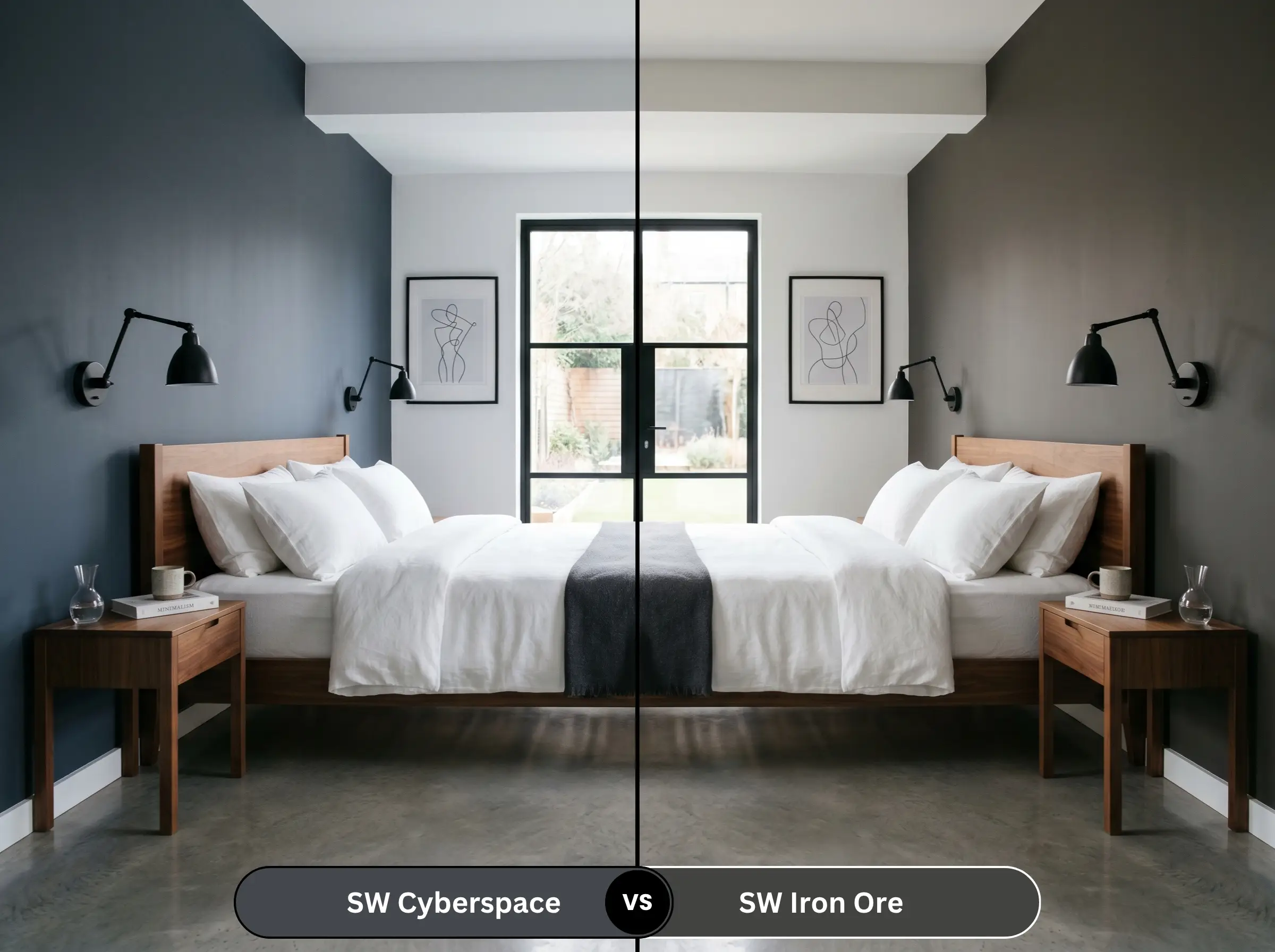
If your room has intense, cool northern light that amplifies blue, Iron Ore SW 7069 might be the safer bet. Iron Ore is a much warmer, softer charcoal that lacks the distinct navy current, making it feel more like a true, muted black on the wall.
Sherwin-Williams Cyberspace vs. Sherwin-Williams Naval SW 6244
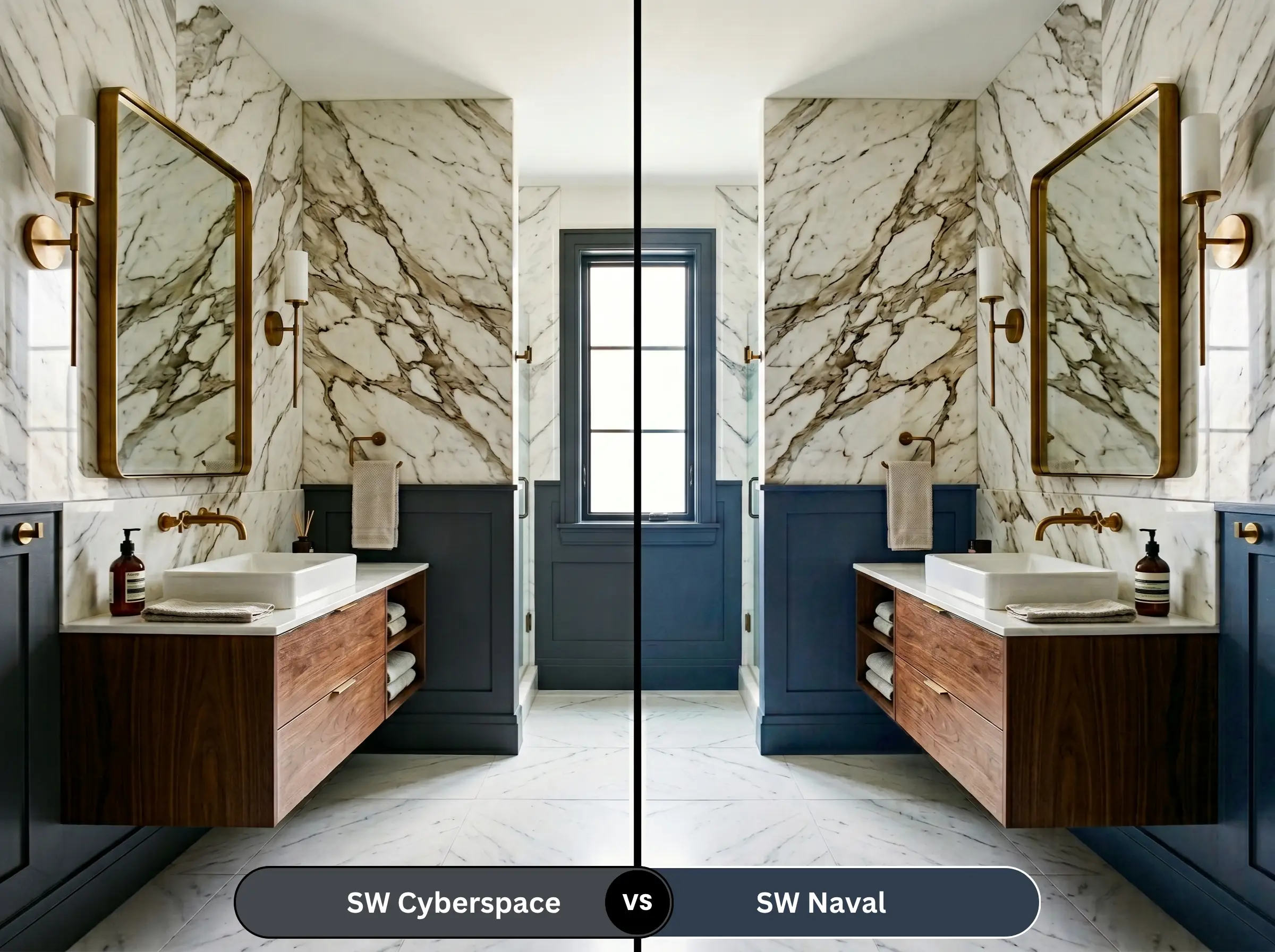
Choose Naval SW 6244 if you want an undeniable, classic blue. Naval is significantly more saturated and vibrant, whereas SW 7076 is heavily muted by its charcoal base, offering a much stealthier, shifting aesthetic.
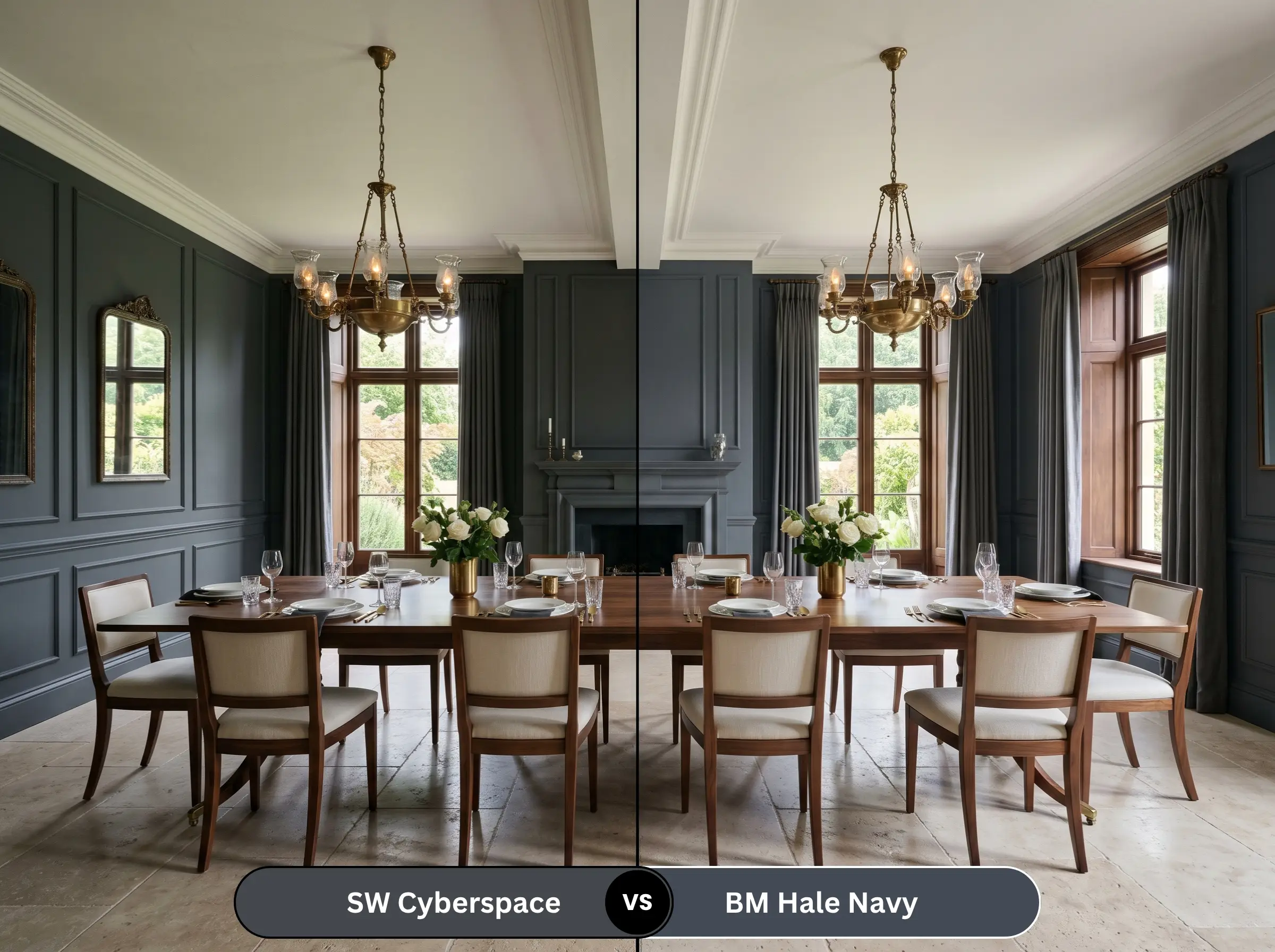
Sherwin-Williams Cyberspace vs. Benjamin Moore Hale Navy HC-154
Will Cyberspace work with your specific lighting, floor, or furniture?
Hale Navy HC-154 is a deeply historic, transitional blue with subtle gray undertones, but it still firmly reads as navy. SW 7076 sits much closer to the black end of the spectrum, offering a moodier, heavier presence.
Sherwin-Williams Cyberspace vs. Benjamin Moore Cheating Heart 1617
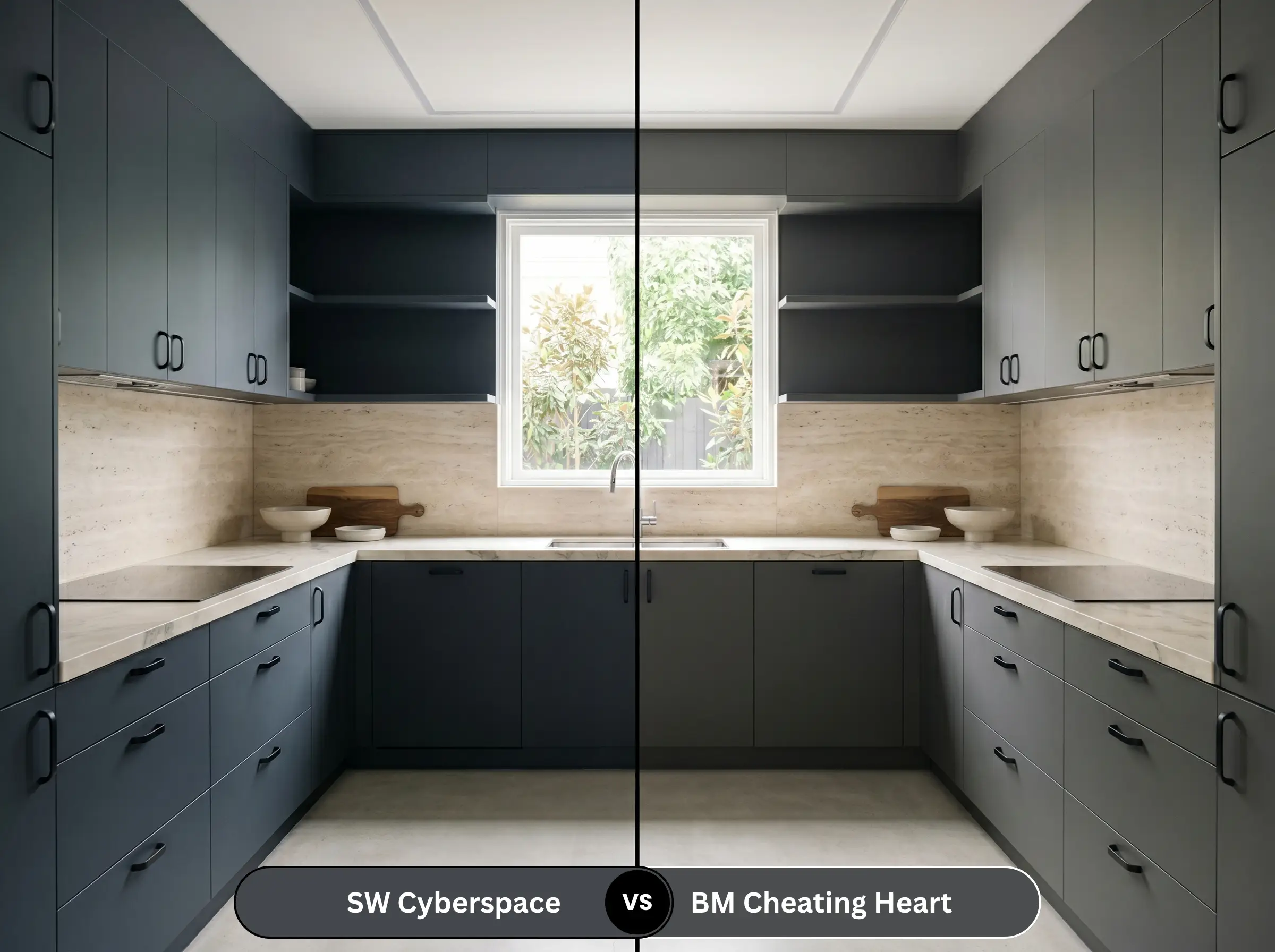
These two are incredibly similar in their moody, charcoal-blue intentions. However, Cheating Heart 1617 often reads slightly warmer and more charcoal-dominant, making it a better choice if you are afraid of the paint pulling too blue in crisp morning light.
Similar Shades & Cross-Brand Matches
If you need a slight adjustment in depth or are shopping across different paint manufacturers, consider these trusted alternatives.
Same-Brand Alternatives
Competitor Equivalents
Practical Application & DIY Advice
Executing a dark, saturated color requires a strategic approach to finishes and preparation. Here is how to ensure a flawless final result.
The Dynamic Sheen Guide
You must use a deeply tinted gray primer. Applying this dark shade over a standard white primer will force you to paint endless coats to achieve true opacity. A dark primer base ensures the rich charcoal-navy develops its full, intended depth immediately.
Hackrea Pro-Tip (The Primer Rule)
Coverage & Success Tips
Expect to apply at least two generous coats, even with a tinted primer. Be highly mindful of “flashing.” Dark paints are notoriously unforgiving of uneven roller pressure or touch-ups done after the paint has dried. Maintain a wet edge while rolling, and if you find a missed spot later, you will likely need to repaint the entire wall from corner to corner to avoid a visible, shiny patch.
Frequently Asked Questions
Because its underlying structure is firmly rooted in slate and navy rather than red, it rarely flashes purple. However, if you pair it with intensely warm, red-heavy incandescent bulbs or place it next to deeply warm cherry wood, the contrasting energy can sometimes trick the eye into perceiving a faint violet cast.
It performs exceptionally well outside. While a true, stark black can sometimes look harsh or fade into a flat gray under intense UV exposure, the hidden blue notes in this shade give it a softer, more organic fade. It feels intentional and architectural even under the glaring midday sun.
You absolutely can, provided you embrace the moodiness intentionally. Instead of fighting the lack of light, lean into it by color drenching the entire space. Add layered, warm artificial lighting—like glowing brass wall sconces—to bounce light off the dark walls and create a sophisticated, jewel-box atmosphere.
To quietly suppress the blue and pull the charcoal forward, opt for warm, earthy metals like antiqued brass or unlacquered copper. The orange and yellow tones in these metals naturally balance the cool slate, making the cabinetry feel richer and more grounded.
The Final Verdict on SW Cyberspace
Sherwin-Williams Cyberspace (SW 7076) is a brilliantly executed shade for those who want the anchoring power of black without the harsh, light-devouring reality of it. It is perfect for homeowners looking to elevate a home office, ground a kitchen island, or create a commanding exterior facade. The shifting navy undertones provide a sophisticated, tailored energy that breathes life into modern, transitional, and historic spaces alike.
While this color is highly versatile, you must be incredibly careful when pairing it with yellow-heavy, golden oak flooring or overly warm, Tuscan-style beige tiles. The intense, cool slate energy of the paint will violently reject the yellow-orange tones of the wood or tile, making the floor look dated and the walls appear uncomfortably cold. If you have these fixed elements, you are much better off choosing a warmer, brown-based charcoal to maintain a harmonious visual flow.
Hackrea Design Secret (The Material Clash)
Room Compatibility & Clashes Diagnoses
Hackrea's reports evaluating the compatibility of Cyberspace in real rooms.Primary Bedroom with Architectural Tray Ceiling
"Color-drenching an LRV 6 charcoal across both walls and a multi-level ceiling in cool northern light risks collapsing architectural depth, despite rich contrast with warm wood floors."
Closest Cross-Brand Equivalents
The absolute closest scientific color matches for Cyberspace across top paint brands.