The Ultimate Guide to Modern Farmhouse Living Rooms in 2026
Welcome to the true heart of the home. The living room is where the farmhouse aesthetic truly comes alive, serving as a gathering space that perfectly balances elevated design with everyday durability.
Over the last decade, we have watched this beloved architectural style mature dramatically. The cliché 2010s look of mass-produced, heavily distressed furniture is officially dead and buried.
Today, the aesthetic has been replaced by a highly sophisticated, European-inspired approach perfectly tailored for 2026. Homeowners no longer want spaces that feel like a themed movie set; they crave curated, lived-in luxury that feels completely effortless.
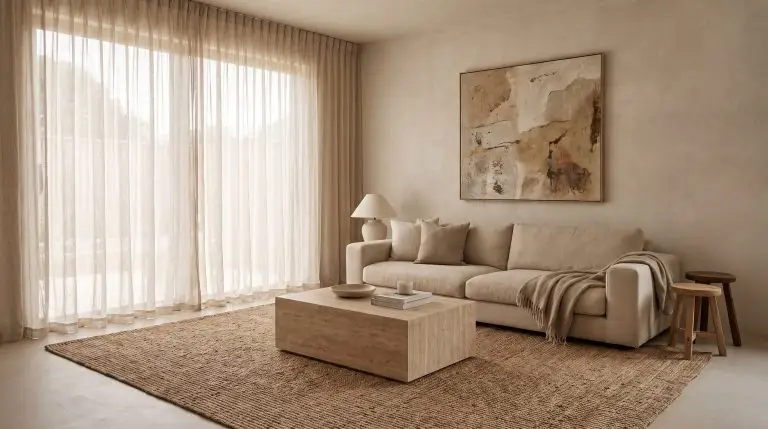
Mastering the modern farmhouse living room in 2026 requires blending rustic warmth with sleek, contemporary minimalism. To achieve this elevated aesthetic, designers prioritize organic textures like limewash, warm earthy color palettes, authentic reclaimed architectural elements, and clean-lined furniture, completely avoiding outdated distressed clichés.
In this comprehensive guide, we will break down exactly how to achieve this updated aesthetic. You will learn the specific paint colors, architectural features, and furniture silhouettes required to master your space today.
What is the New Modern Farmhouse Style? (2010s vs. 2026)
The most common problem readers submit to our platform is feeling like their home is permanently stuck in 2015. When a reader recently asked us how to fix their living room, they sent in a photo of a space drowning in stark white shiplap, clunky sliding barn doors, and distressed faux-wood signs.
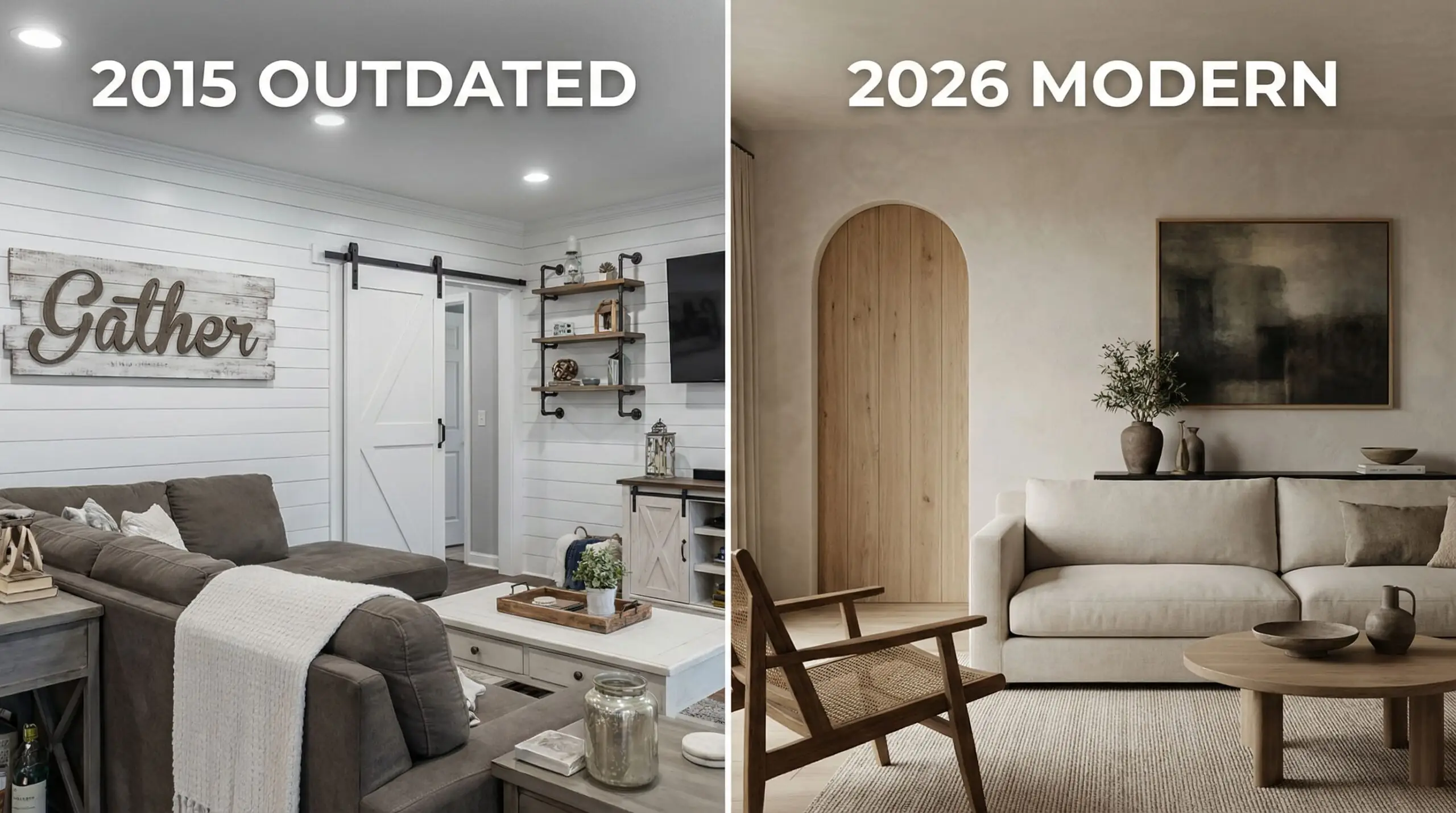
The aesthetic has fundamentally shifted from a literal “Rustic Farmhouse” interpretation to an elevated European Farmhouse vibe. Pioneers of the modern transitional look, like Shea McGee of Studio McGee, have helped transition the entire design industry toward a softer, more collected, and historically resonant aesthetic.
We are witnessing a massive move away from stark, sterile whites and cool, icy grays. Instead, our studio partners are seeing a massive shift toward warm taupes, mushroom tones, and moody, saturated accents.
The goal is no longer to look “farmhouse chic,” but rather to look authentically timeless.
| Design Element | Outdated 2010s Trend | The 2026 Standard |
|---|---|---|
| Wall Treatments | Horizontal stark white shiplap | Vertical V-groove or Limewash / Roman Clay |
| Wood Finishes | Gray-washed faux wood | Wide Plank European White Oak |
| Decor & Art | Word art and mass-produced signs | Abstract art and moody vintage landscapes |
| Doors & Entryways | Clunky sliding barn doors | Soft arched doorways and pocket doors |
| Hardware | Brushed nickel or matte silver | Unlacquered Brass and matte black |
To instantly update your space for 2026, remove any decor that features written words. Replace those pieces with highly textured abstract art or vintage-inspired landscape oil paintings to instantly elevate the room’s sophistication.
💡 Hackrea Designer Tip
Key Takeaway: Authenticity is the new luxury. You must swap out mass-produced, faux-distressed items for genuine vintage finds and organic materials to achieve a high-end look.
Core Elements of a Modern Farmhouse Living Room
To build a successful modern farmhouse living room, you must start with the right architectural and foundational elements. Let’s break down the core pillars required to achieve the 2026 aesthetic.
Color Palettes: Warm Neutrals and Moody Accents
The baseline of the 2026 modern farmhouse is rooted in a highly curated, earth-toned color palette. Stark, hospital-white walls are a thing of the past.
Today’s living rooms require visible depth and warmth to feel grounded and inviting. For your primary wall colors, lean heavily into creamy off-whites and soft taupes.
Our absolute favorite foolproof paints are Benjamin Moore’s “Swiss Coffee” (mixed at 75% strength) and Farrow & Ball’s “Drop Cloth.” These specific shades provide a luminous, warm backdrop that beautifully contrasts with natural wood tones.
If you want to add dramatic contrast, utilize deep, saturated accent colors on your trim, built-ins, or interior doors. Sherwin-Williams “Pewter Green” or Benjamin Moore “Cheating Heart” are stunning, moody choices that bring a sophisticated, European edge to the space.
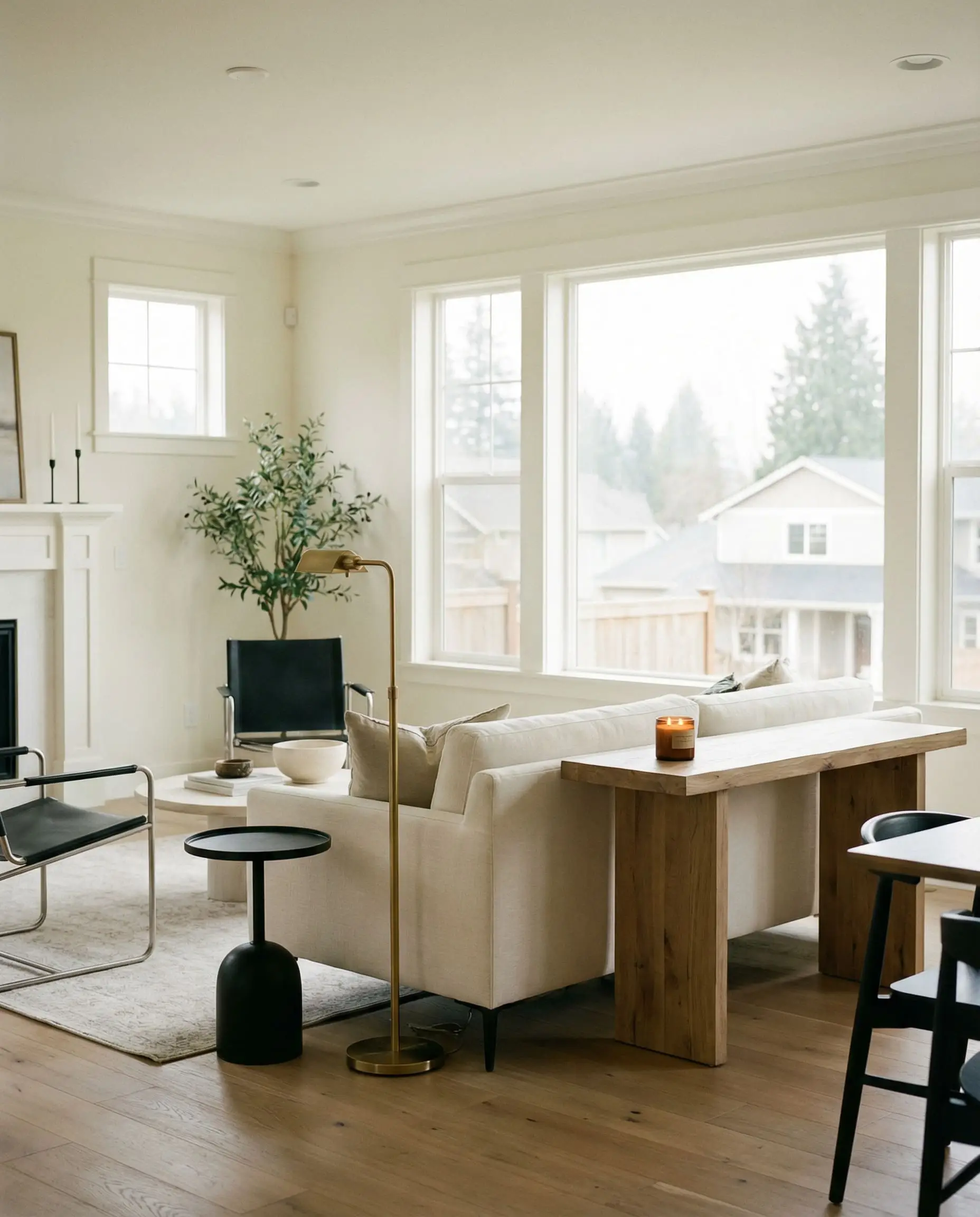
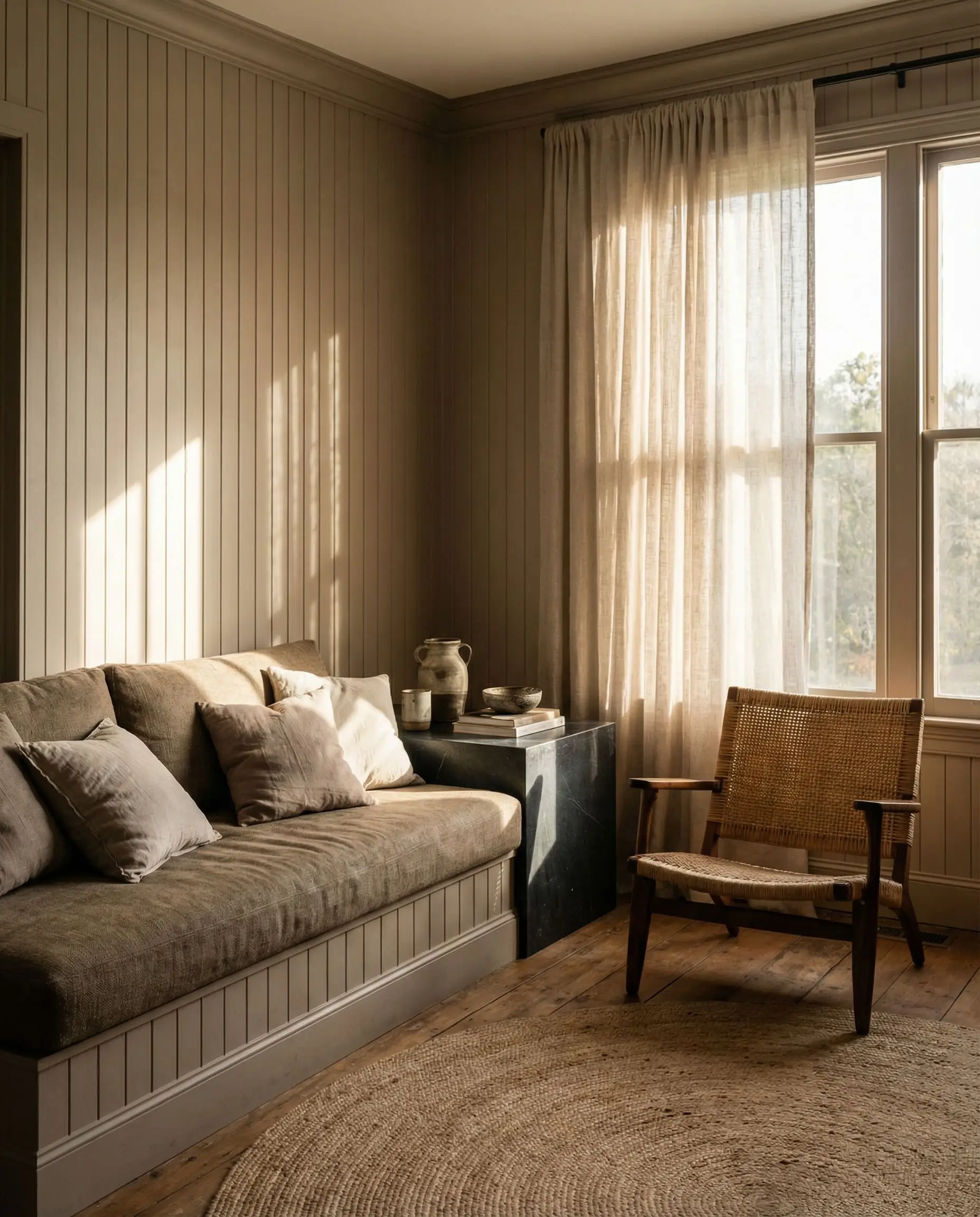
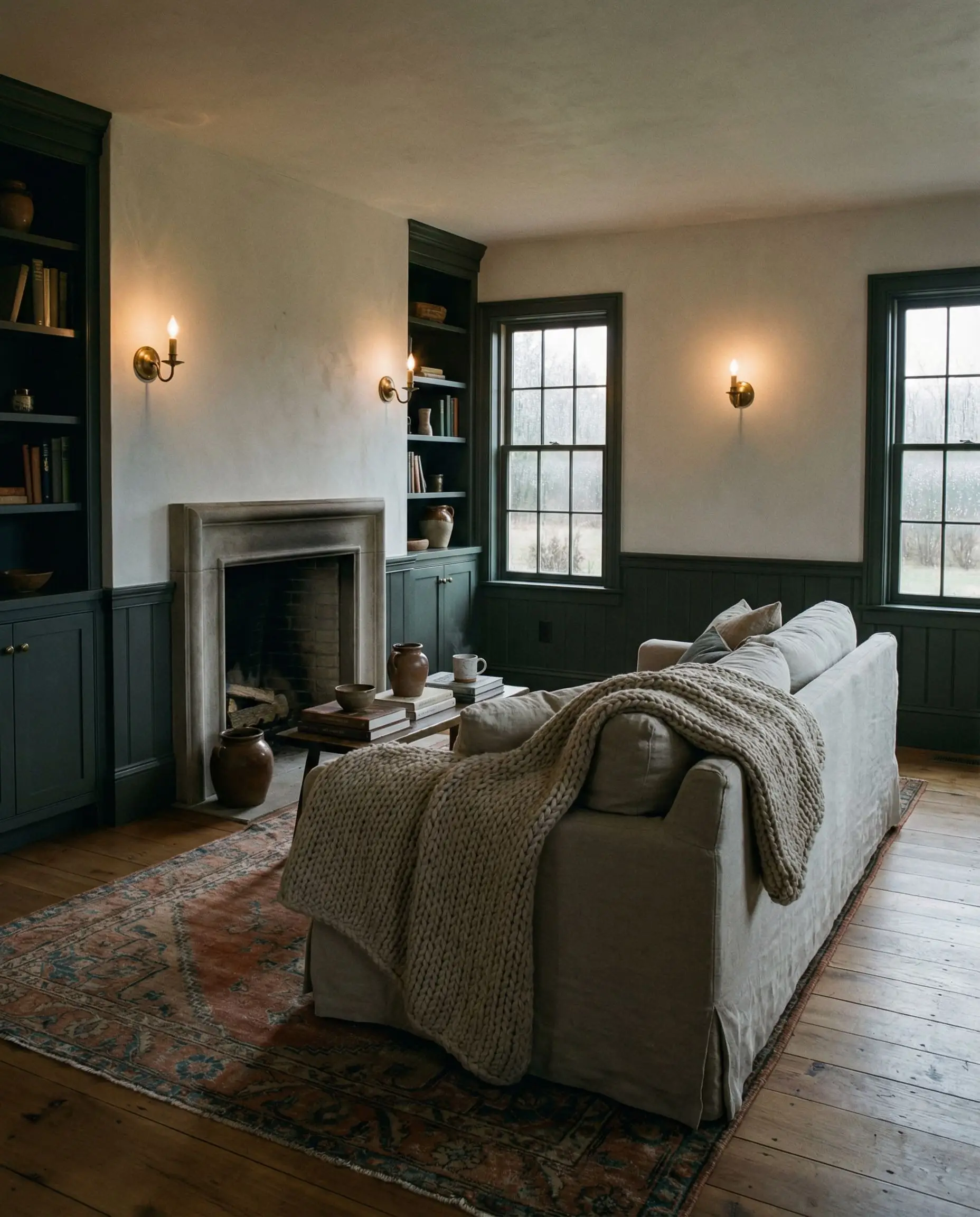
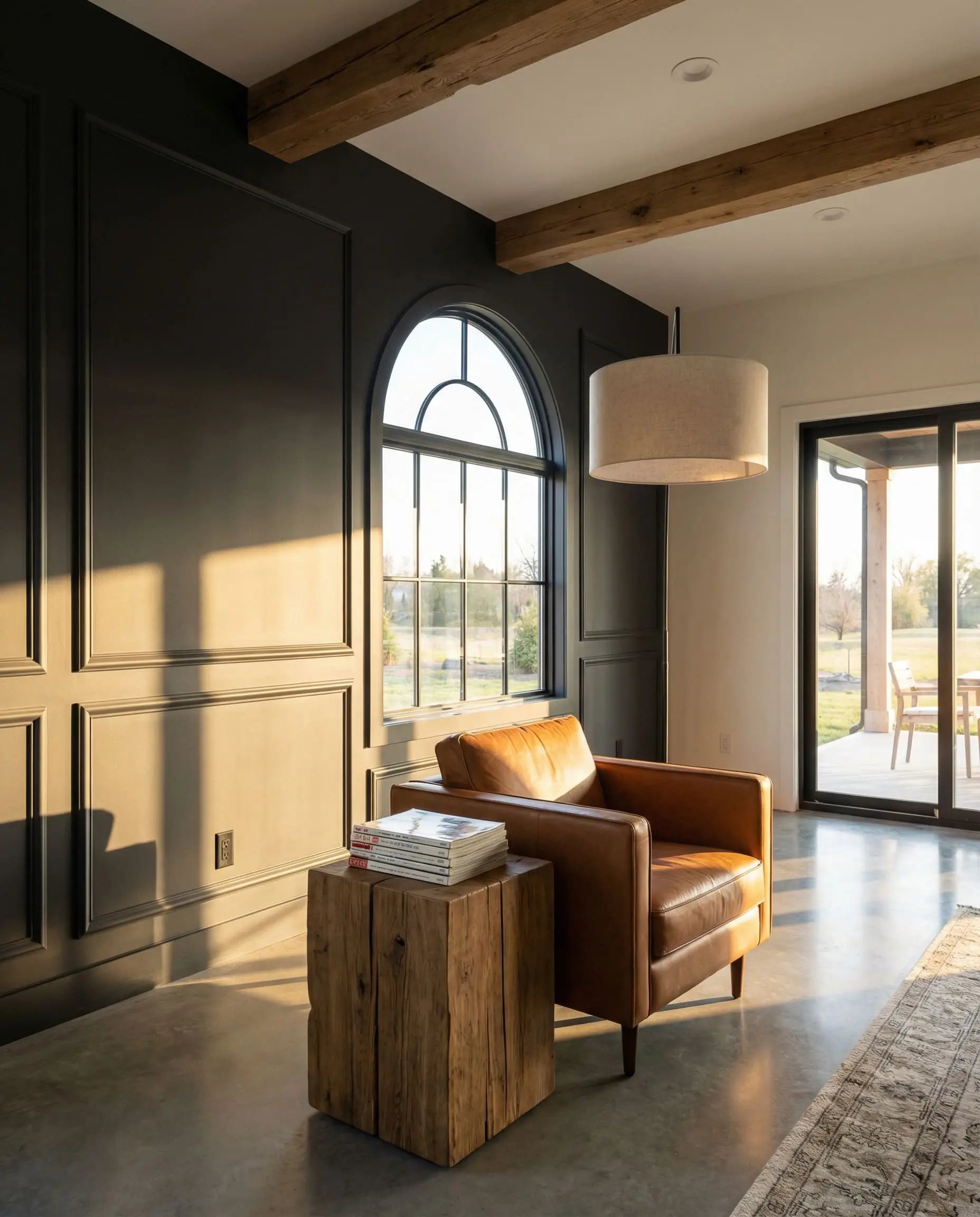
Try the “Color Drenching” technique. When painting a room in a warm neutral, drench the space by painting the baseboards, walls, and crown molding the exact same color. Just shift the finish: use a flat finish on the walls and a satin finish on the trim for subtle, high-end dimension.
🎨 Hackrea Paint Tip
Textures and Materials: Wood, Stone, and Linen
In a neutral space, texture is your most powerful design tool. Because the 2026 modern farmhouse palette is relatively subdued, the tactile quality of your materials must carry the visual weight of the room.
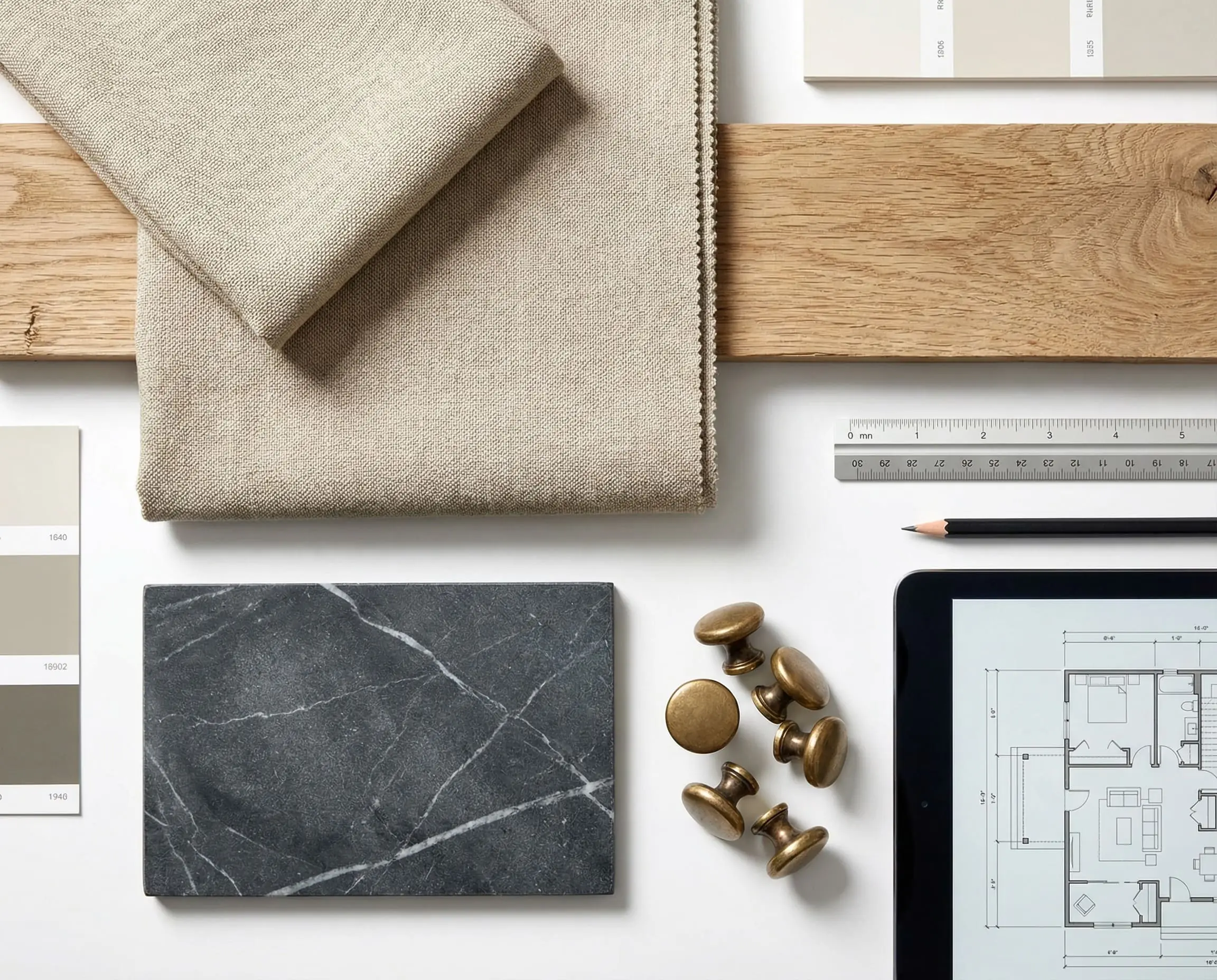
Start by grounding the space with authentic, natural flooring. Wide Plank European White Oak is the undisputed champion of this aesthetic. Opt for planks that are at least 7 inches wide with a matte, wire-brushed finish that hides scratches while radiating warmth.
Layer in soft, organic textiles to contrast the hard architectural lines. Heavy performance linen and chunky bouclé fabrics are essential for your upholstery. These materials offer a luxurious feel that can still withstand the chaos of daily family life.
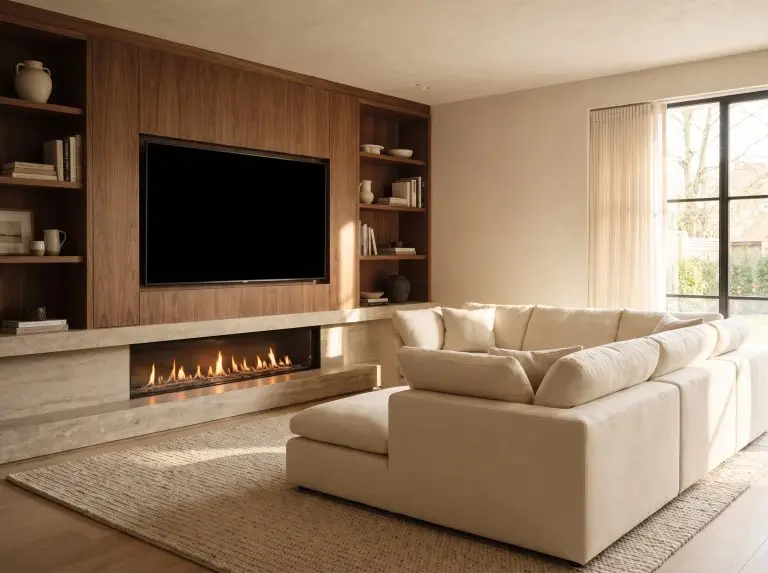
Finally, incorporate raw, natural stone to elevate the room. Swap out basic white subway tile on your fireplace surround for honed soapstone, heavily veined marble, or tumbled travertine.
The 80/20 Rule of Texture dictates that 80% of your room should feature soft, matte finishes (linen, raw wood, plaster), while 20% should feature hard, reflective surfaces (polished stone, metallic hardware, mirrors) to create perfect visual balance.
🛋️ Hackrea Material Tip
Architectural Features: Beams, Built-ins, and Wall Treatments
The architecture of your living room sets the stage for everything else. If your room lacks inherent character, you can easily add it through thoughtful, historically inspired millwork and structural details.
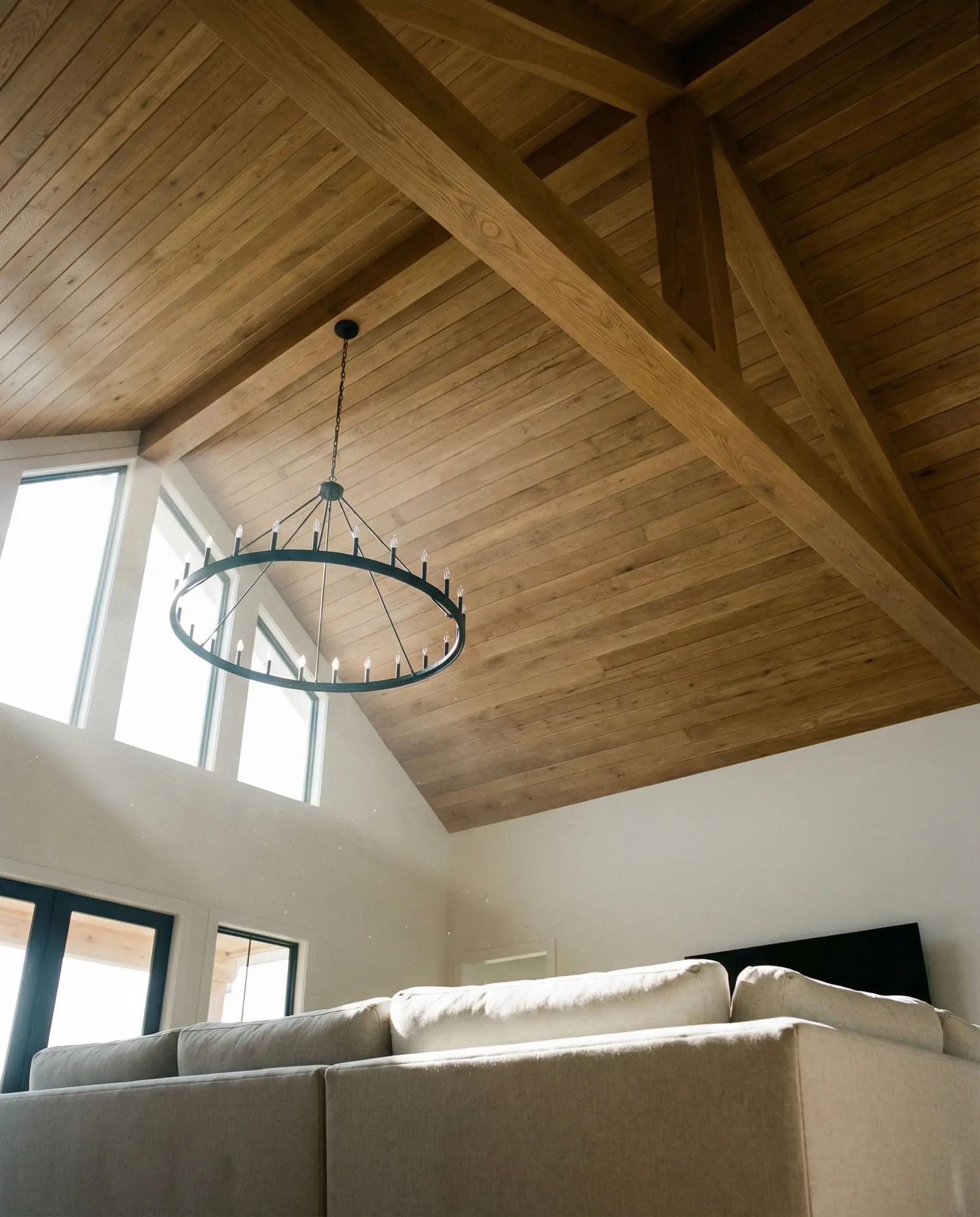
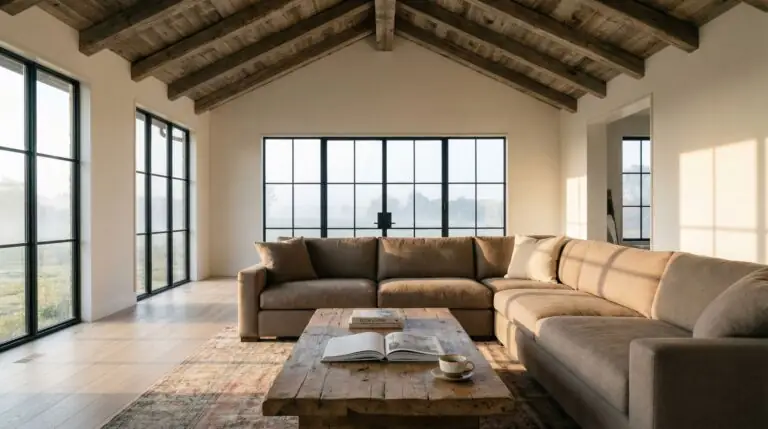
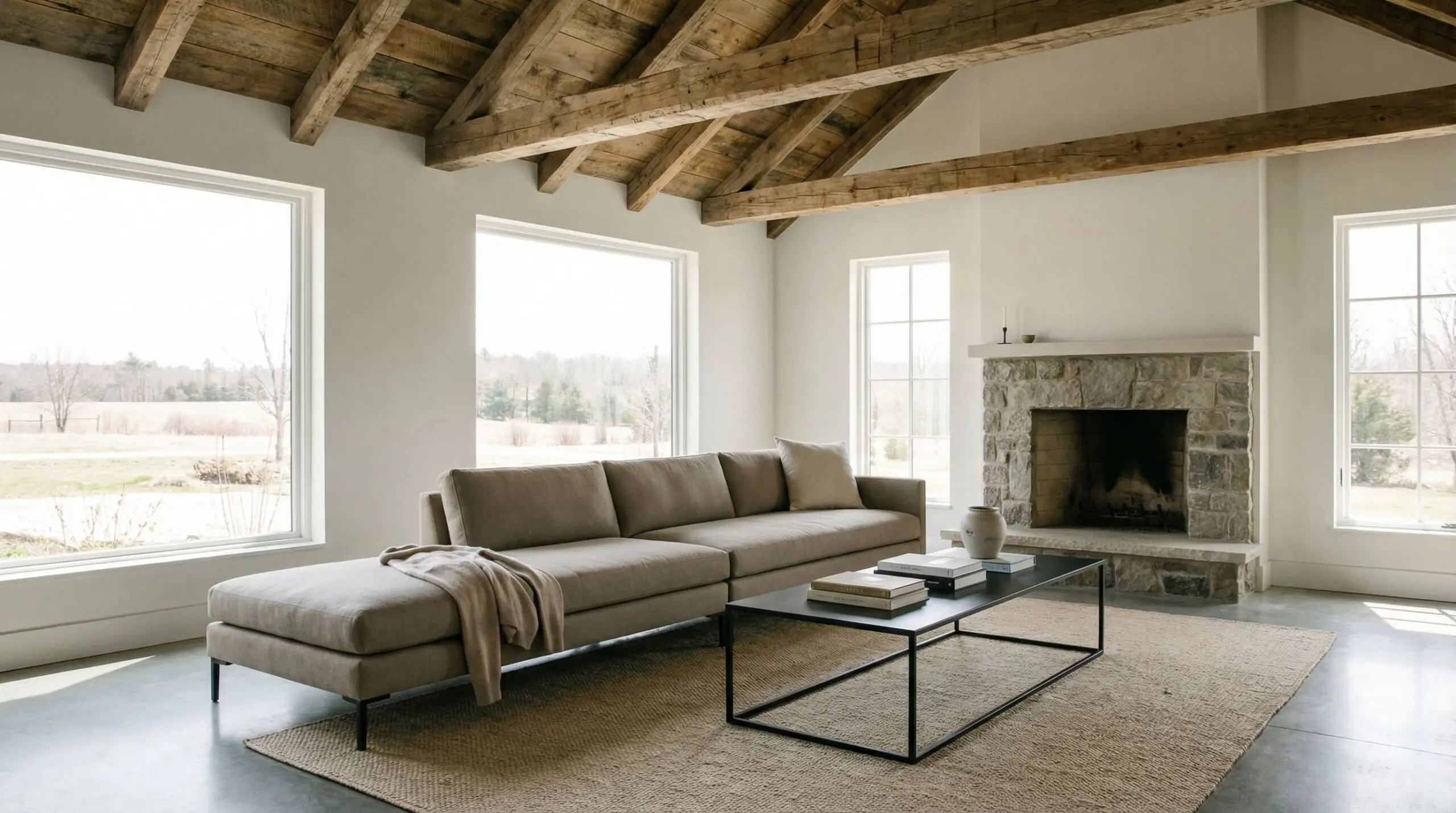
Vaulted ceilings adorned with authentic reclaimed wood beams are a hallmark of the modern farmhouse. If solid reclaimed timber is outside your structural budget, high-quality, custom-stained hollow box beams offer the exact same visual impact for a fraction of the cost and weight.
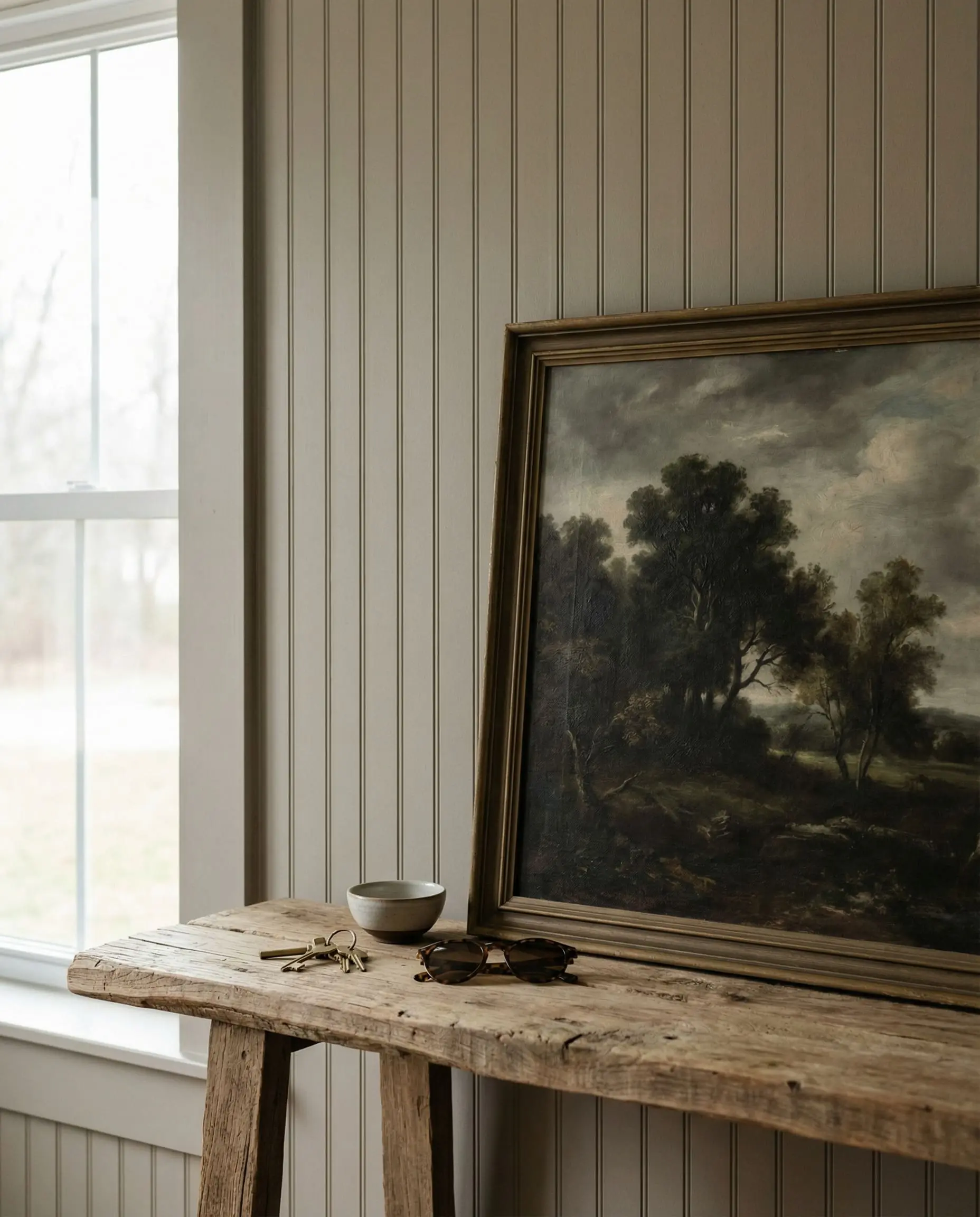
Say goodbye to horizontal shiplap. The modern alternatives are far more sophisticated and intentional. Vertical V-groove paneling draws the eye upward, making standard 8-foot ceilings feel significantly taller.
Alternatively, applying a Limewash / Roman Clay treatment to your walls provides a sueded, old-world texture. For specific shade recommendations, explore our guide on the best Limewash and Roman Clay paint colors.
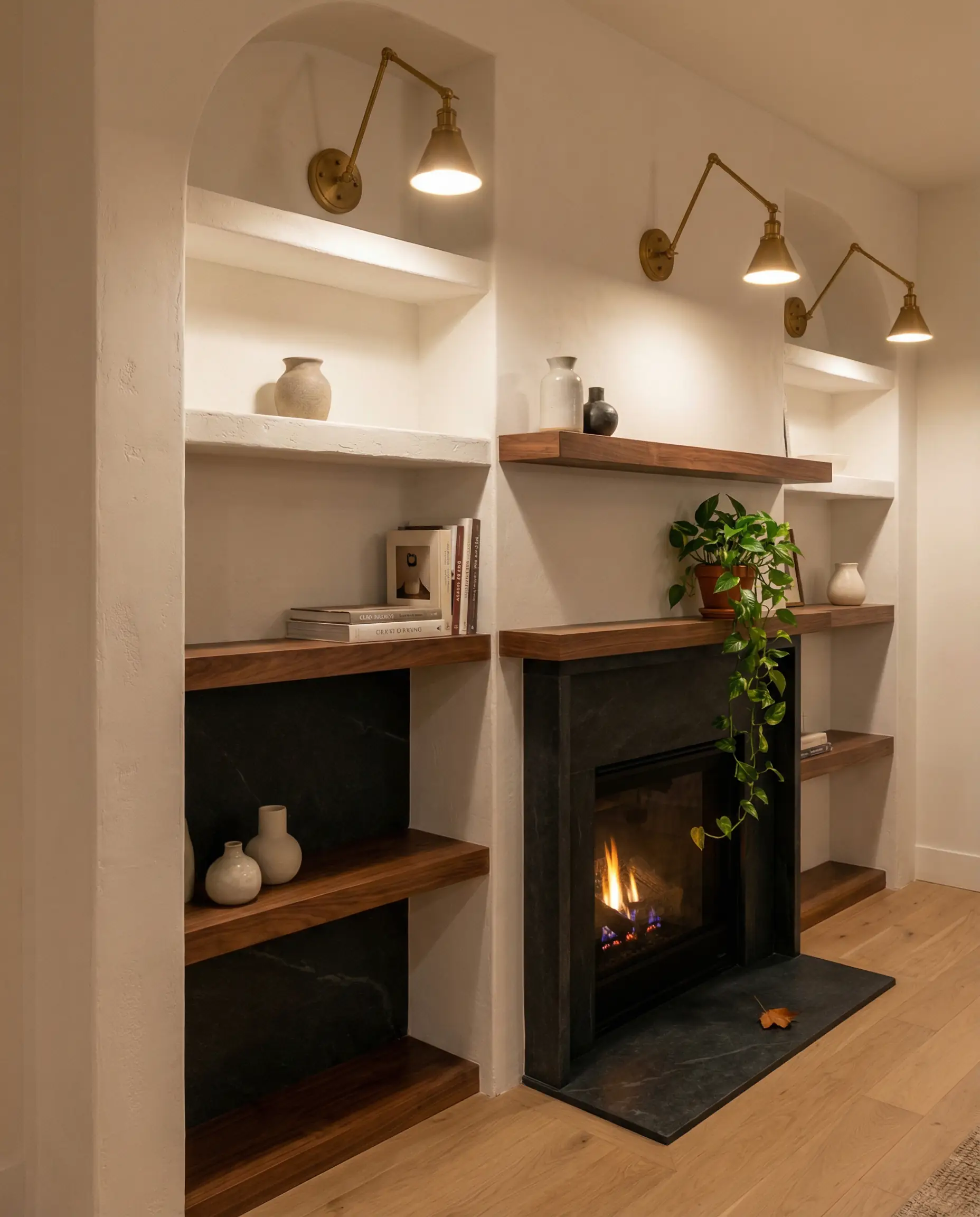
Custom built-ins are another non-negotiable feature. In 2026, we are seeing a massive trend toward arched plaster built-in shelving flanking the fireplace. These soft curves perfectly break up the rigid, boxy nature of traditional living rooms.
Modern Farmhouse Do’s and Don’ts
Looking at the floor plan photos sent to our team by frustrated homeowners, we frequently see the exact same styling mistakes. Follow these strict rules to keep your living room looking custom and intentionally designed.
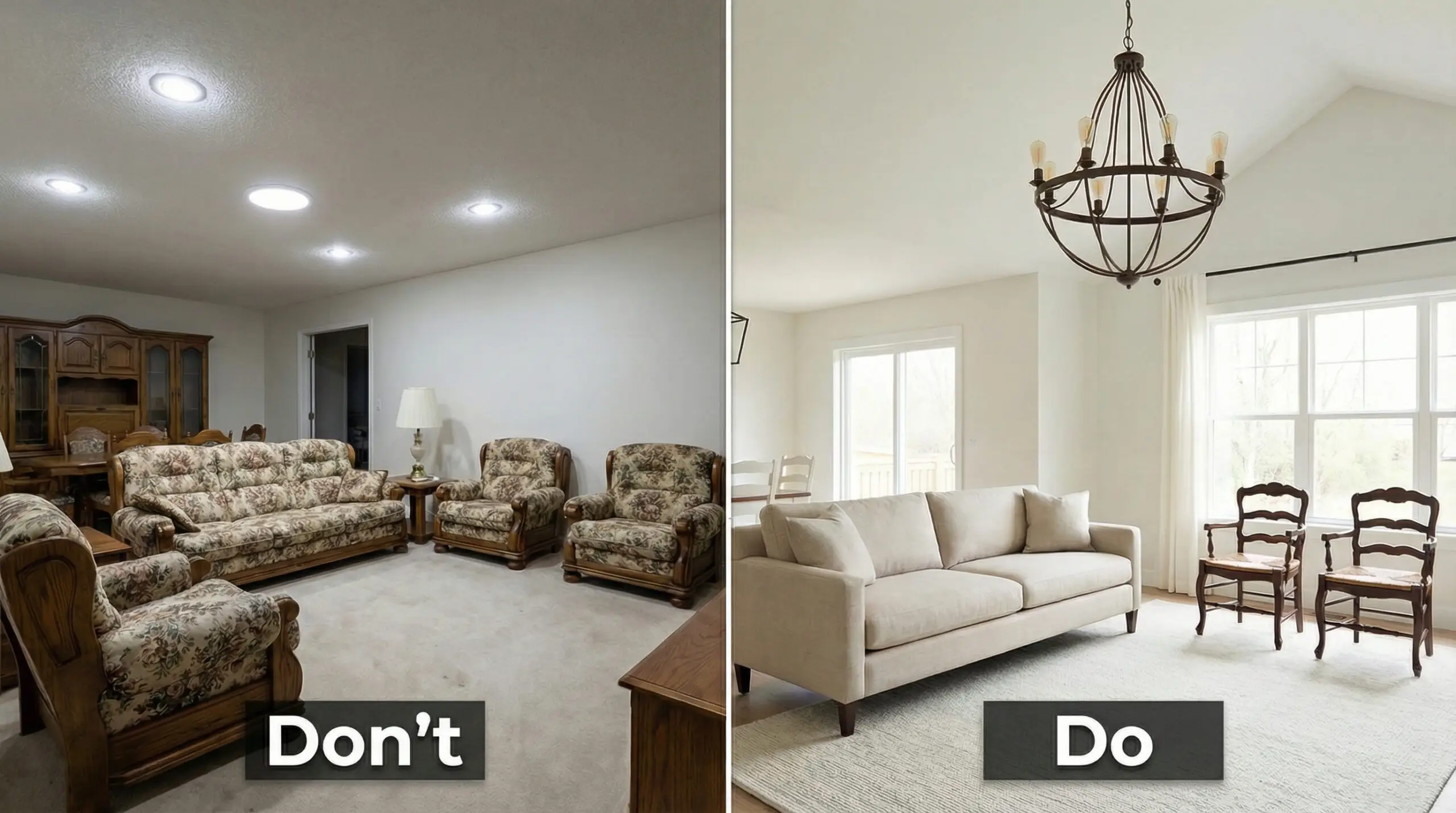
Pros:
Cons:
The Do’s and Don’ts List:
5-Step Styling Formula for Your Living Room
A collaborating interior designer recently told us that the secret to a flawless room isn’t just what you buy, but the exact order in which you layer it. Use this foolproof 5-step formula to style your modern farmhouse living room like a seasoned professional.
The Rule: Always start with your largest foundational pieces and work your way down to the smallest decorative accents to ensure perfect spatial balance.
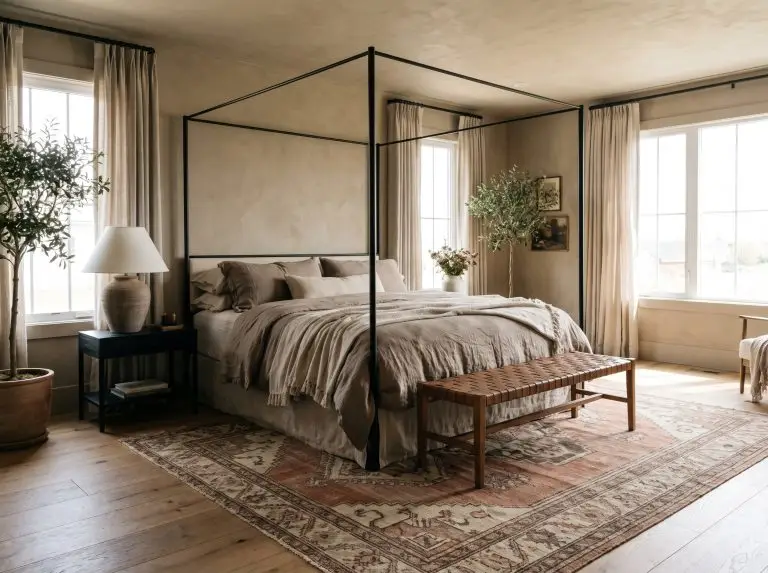
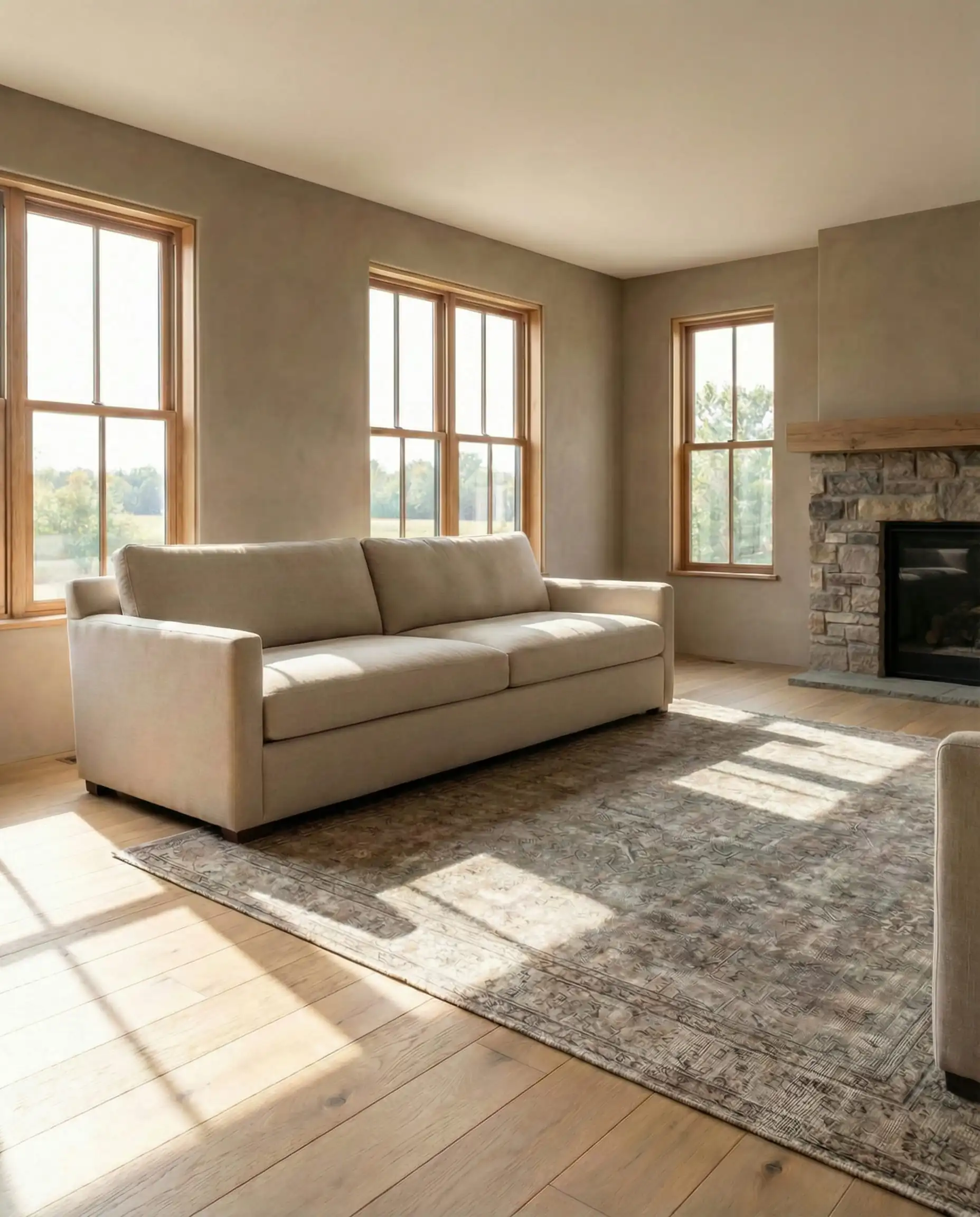
Step 1: Anchor with a Neutral Foundation The Setup: Start from the ground up. Anchor your seating arrangement with a massive, highly textured rug. Vintage Turkish Oushak rugs or chunky wool-jute blends are perfect. Pair this with a clean-lined, neutral sofa. For specific size and material recommendations, check out our guide on cozy neutral rugs for high-traffic areas.
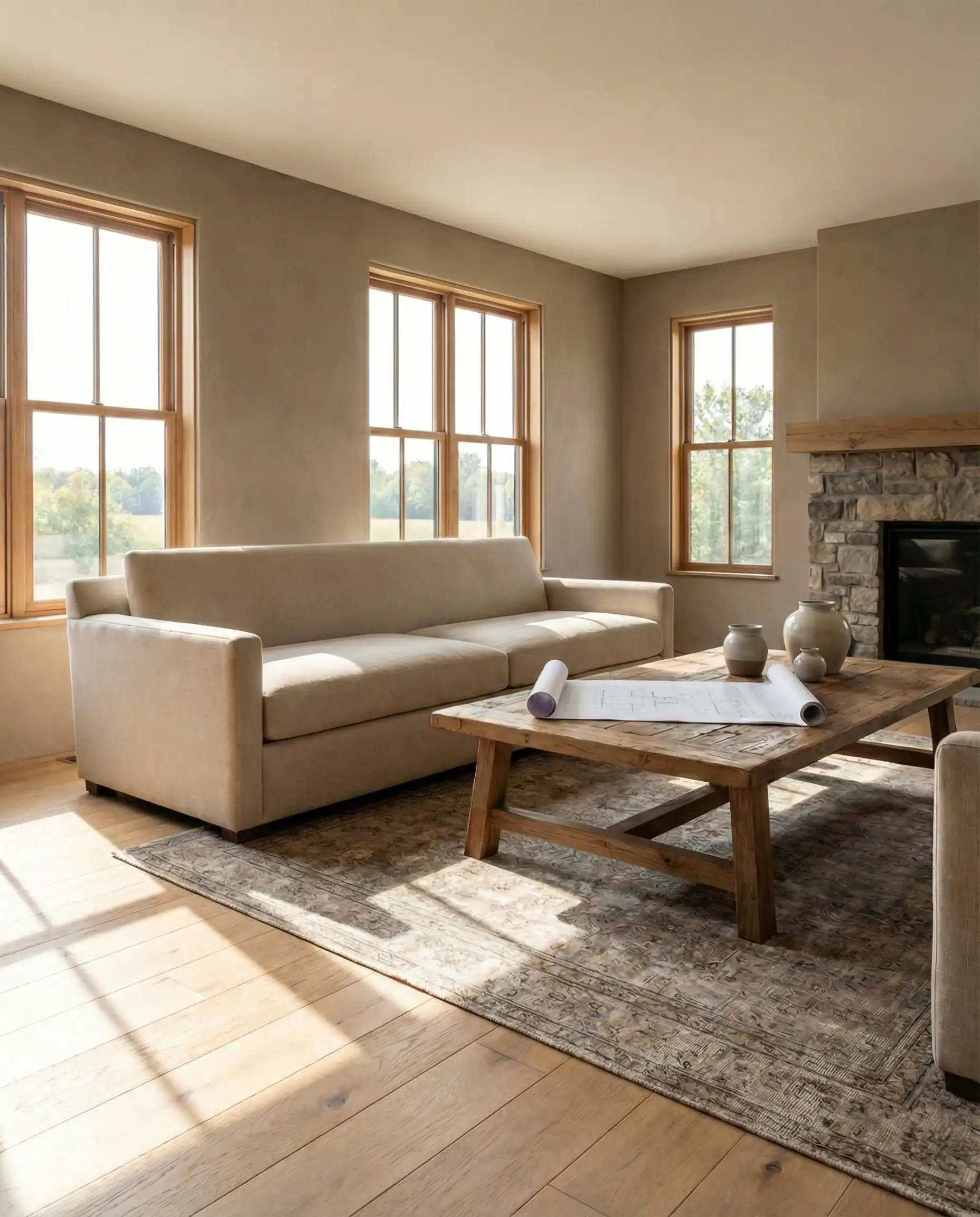
Step 2: Layer in Vintage or Antique Woods The Setup: Once your soft seating is placed, inject warmth and history. Add a heavy timber console table behind the sofa or a reclaimed oak coffee table in the center of the room. The wood tones do not need to match your floors perfectly; in fact, a slight contrast adds depth.
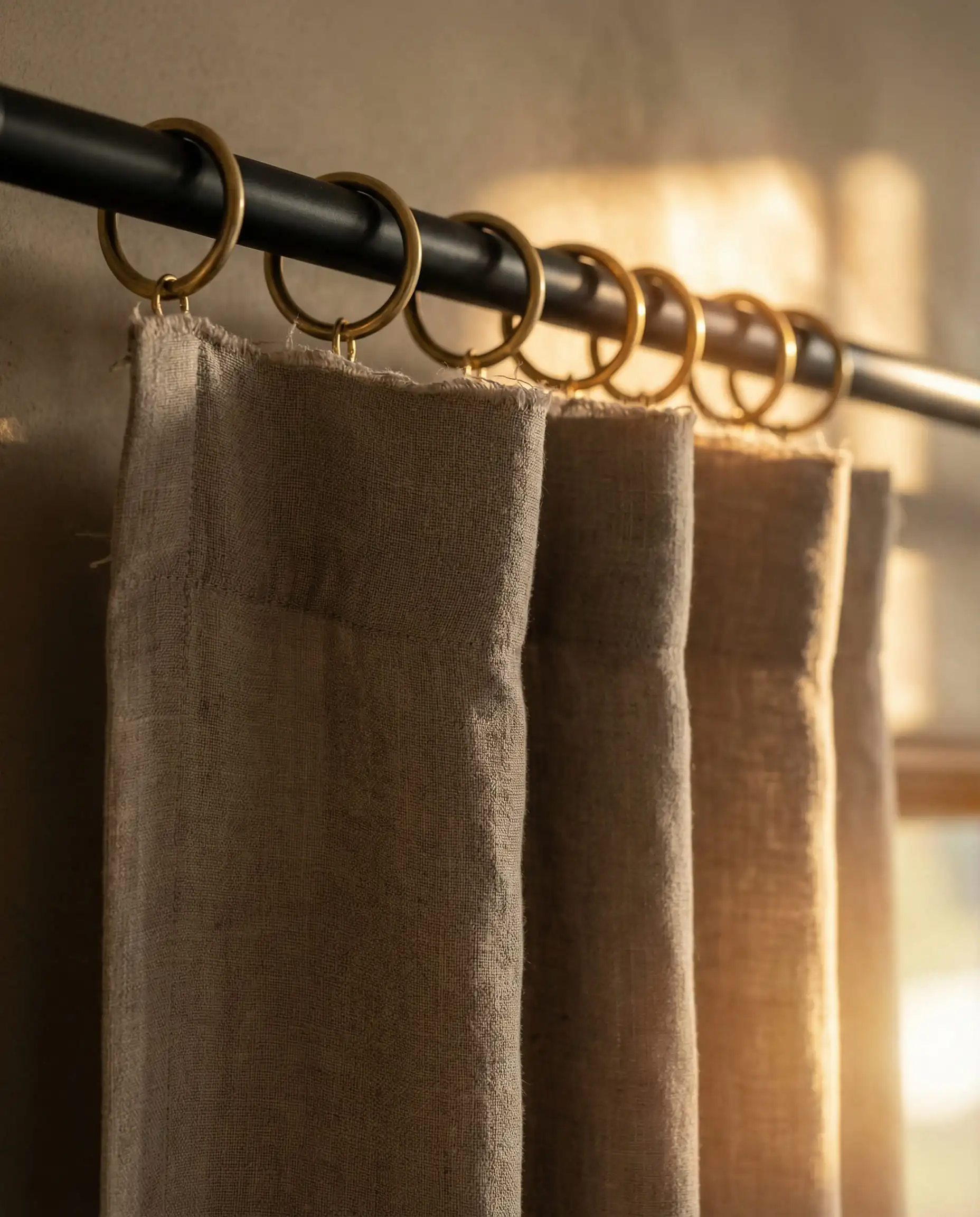
Step 3: Add High-Contrast Metals The Setup: This is where the “modern” aspect truly shines. Introduce sharp, high-contrast metals through your curtain rods, lighting fixtures, and cabinet hardware. Mixing matte black iron with warm, living brass creates a sophisticated, high-end tension in the room.
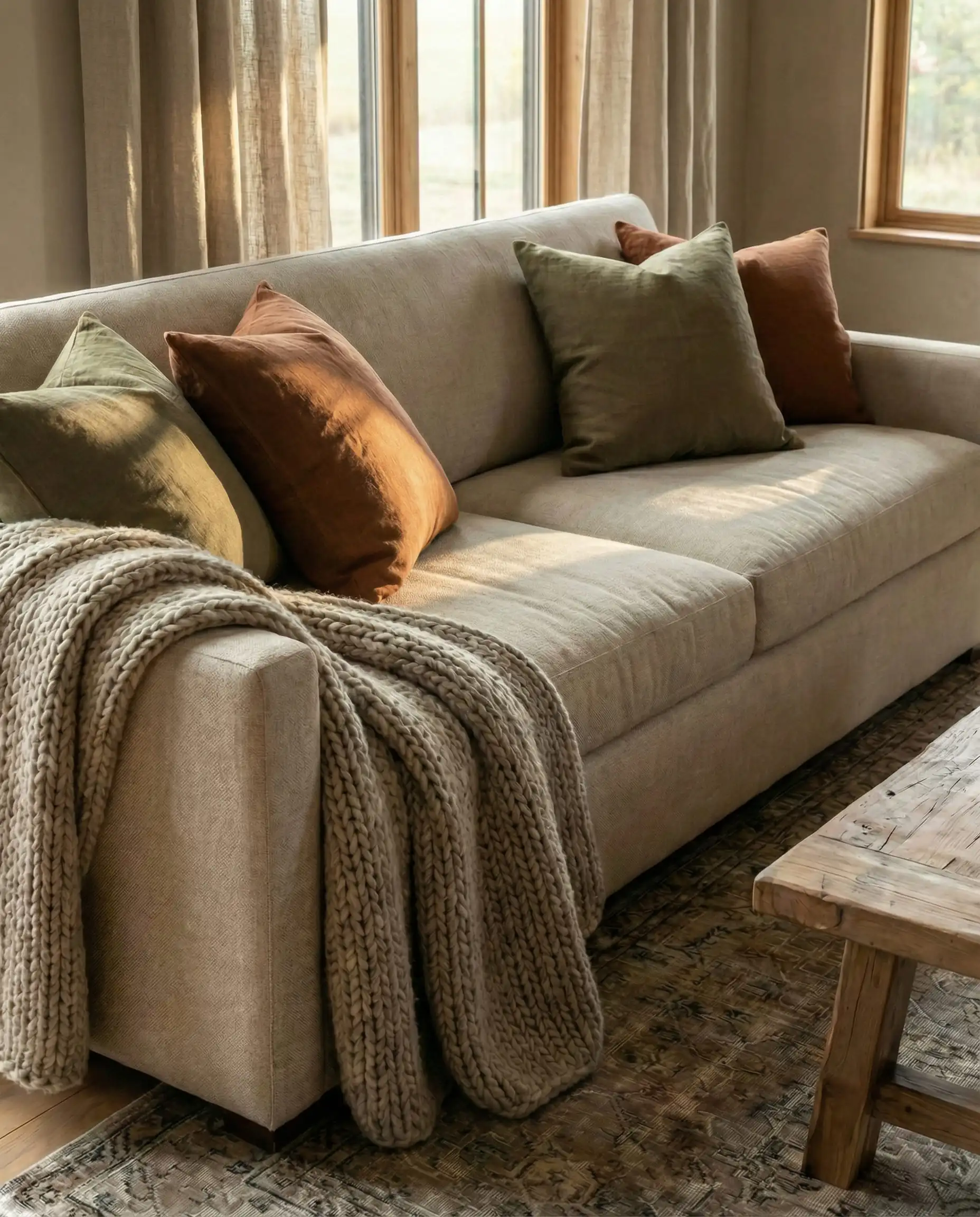
Step 4: Soften with Organic Textiles The Setup: Now, make the room feel lived-in. Drape a chunky knit wool throw over the arm of a chair. Swap out generic sofa pillows for oversized, 22×22 inch down-filled linen covers in muted tones like olive, rust, or deep charcoal.
Step 5: Curate Meaningful Decor The Setup: The final step is the jewelry of the room. Forage oversized, structural branches and place them in an artisan ceramic vase on the coffee table. Lean a piece of moody abstract landscape art on your built-ins. Keep the decor intentional and wonderfully sparse.
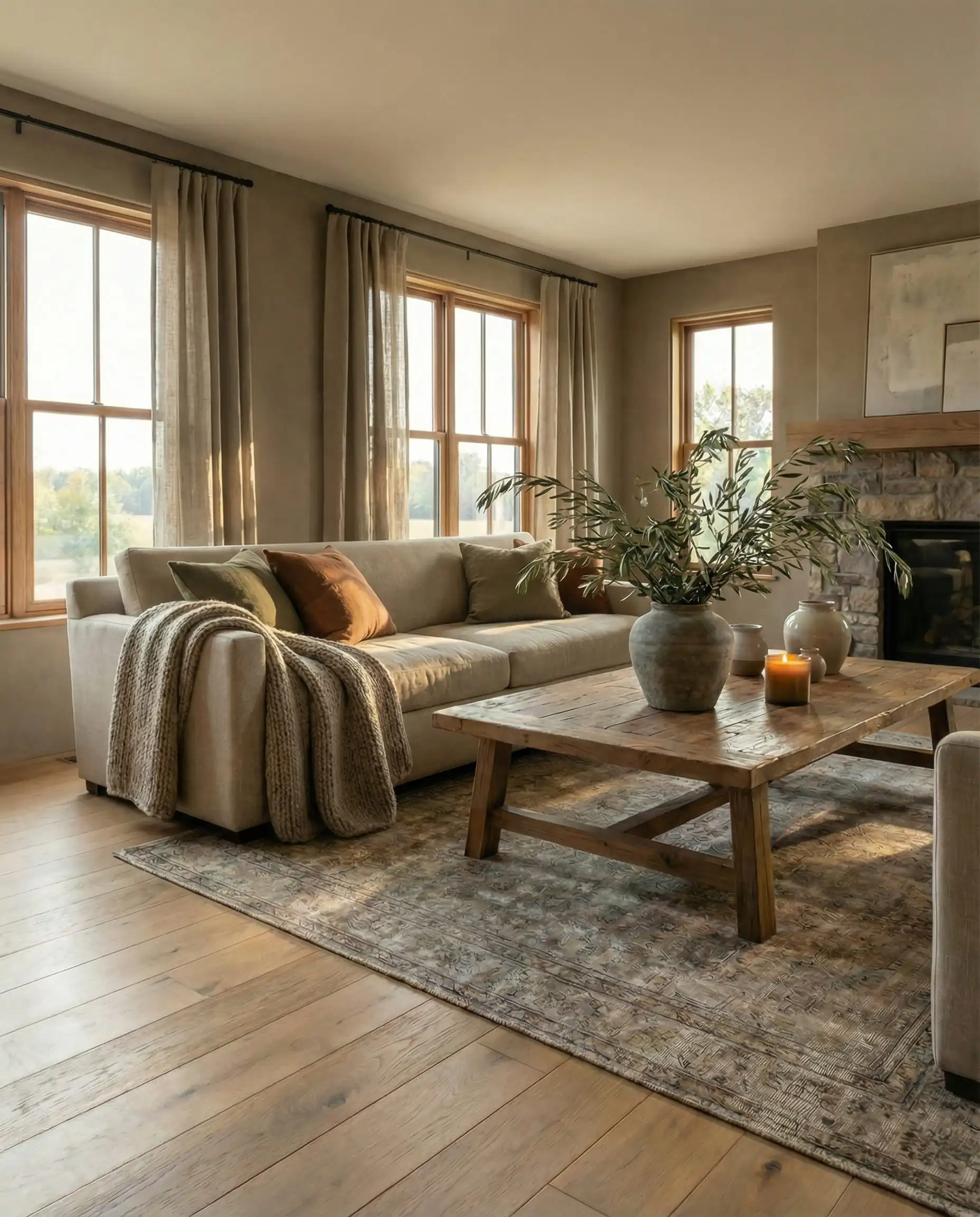
When styling branches, always use odd numbers. Three large, sweeping oak or olive branches in a heavy stone vessel will always look more natural and sculptural than a perfectly symmetrical, tightly packed bouquet.
🌿 Hackrea Styling Tip
Furniture Selection: Balancing Comfort and Clean Lines
The secret to modern farmhouse furniture is balancing the casual, sink-in comfort of country living with the tailored, architectural silhouettes of modern design. Selecting the right pieces ensures your space feels both inviting and highly intentional.
The Perfect Sectional or Sofa
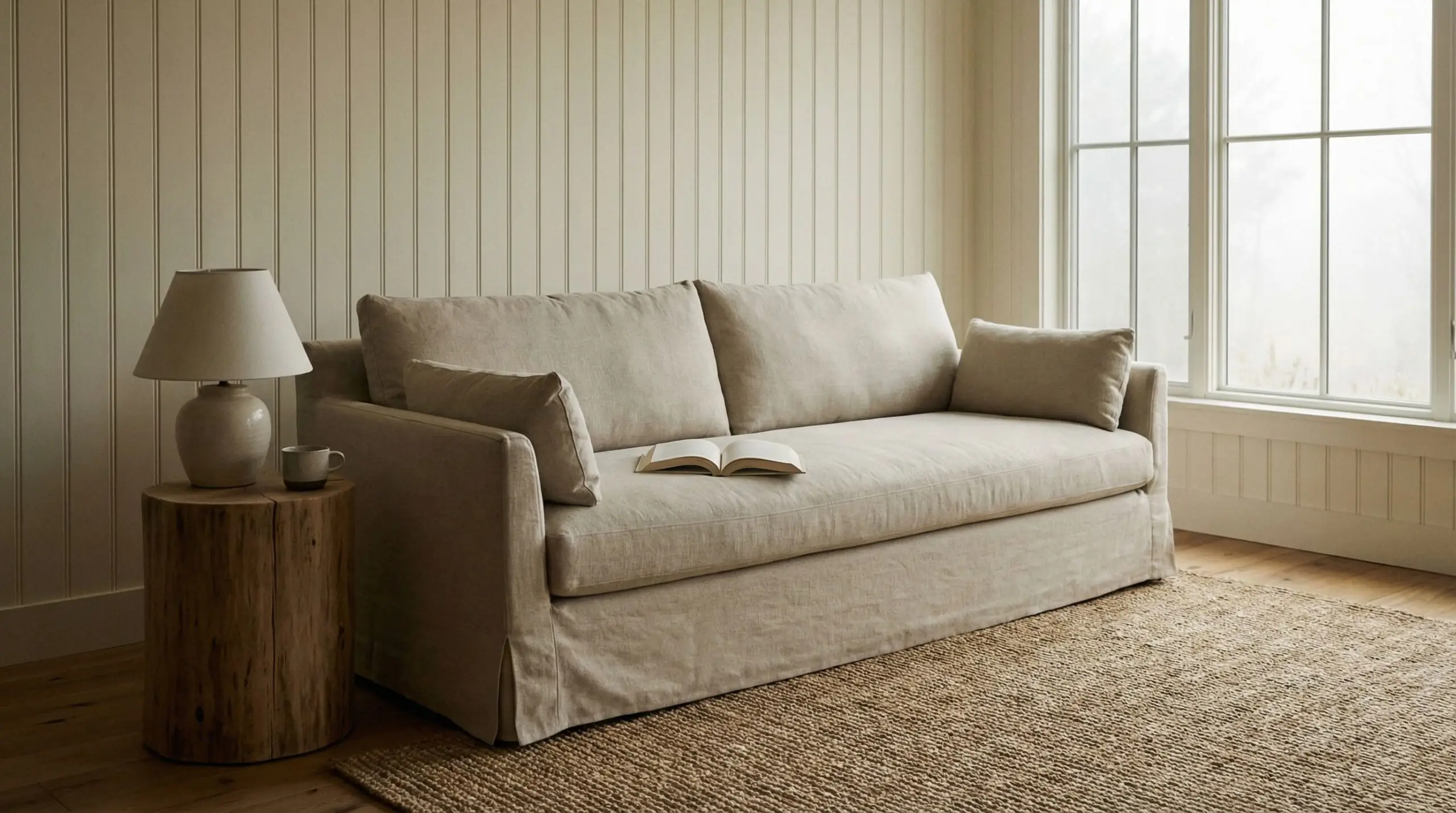
Your sofa is the largest investment piece in the room, so it must bridge the gap between form and function. In 2026, the trend is heavily leaning toward casual, high-end slipcovered linen sofas.
However, these are not the baggy, wrinkled slipcovers of the 90s. Today’s slipcovers are tailored, crisp, and floor-skimming, offering a relaxed yet refined silhouette.
If you prefer a cleaner look, tight-back sofas or bench-cushion sectionals are dominating the market. A single, long bench cushion completely eliminates the visual clutter of multiple seat cushions.
This provides a sleek, modern horizontal line that beautifully contrasts with rustic vertical ceiling beams.
Accent Chairs and Coffee Tables
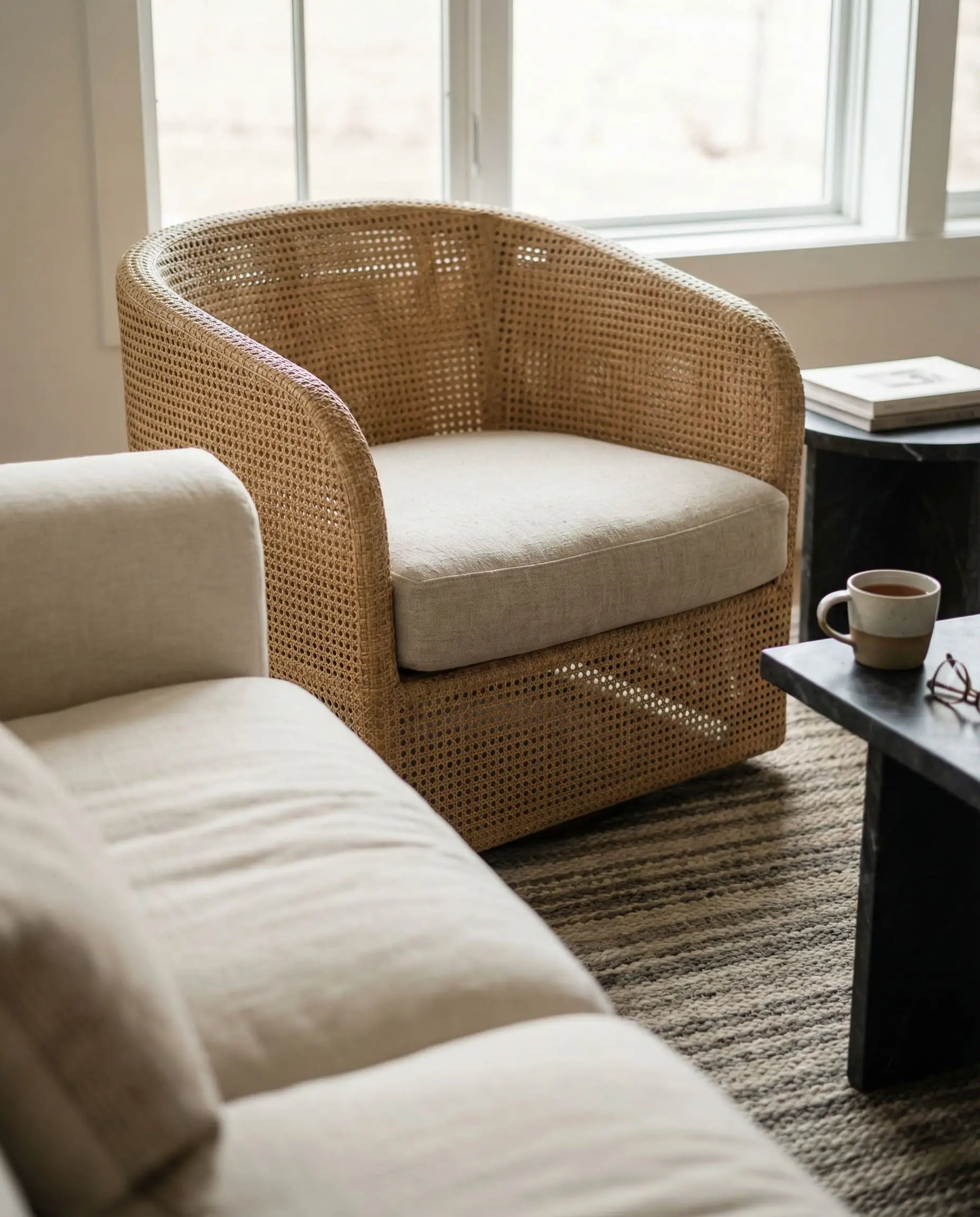
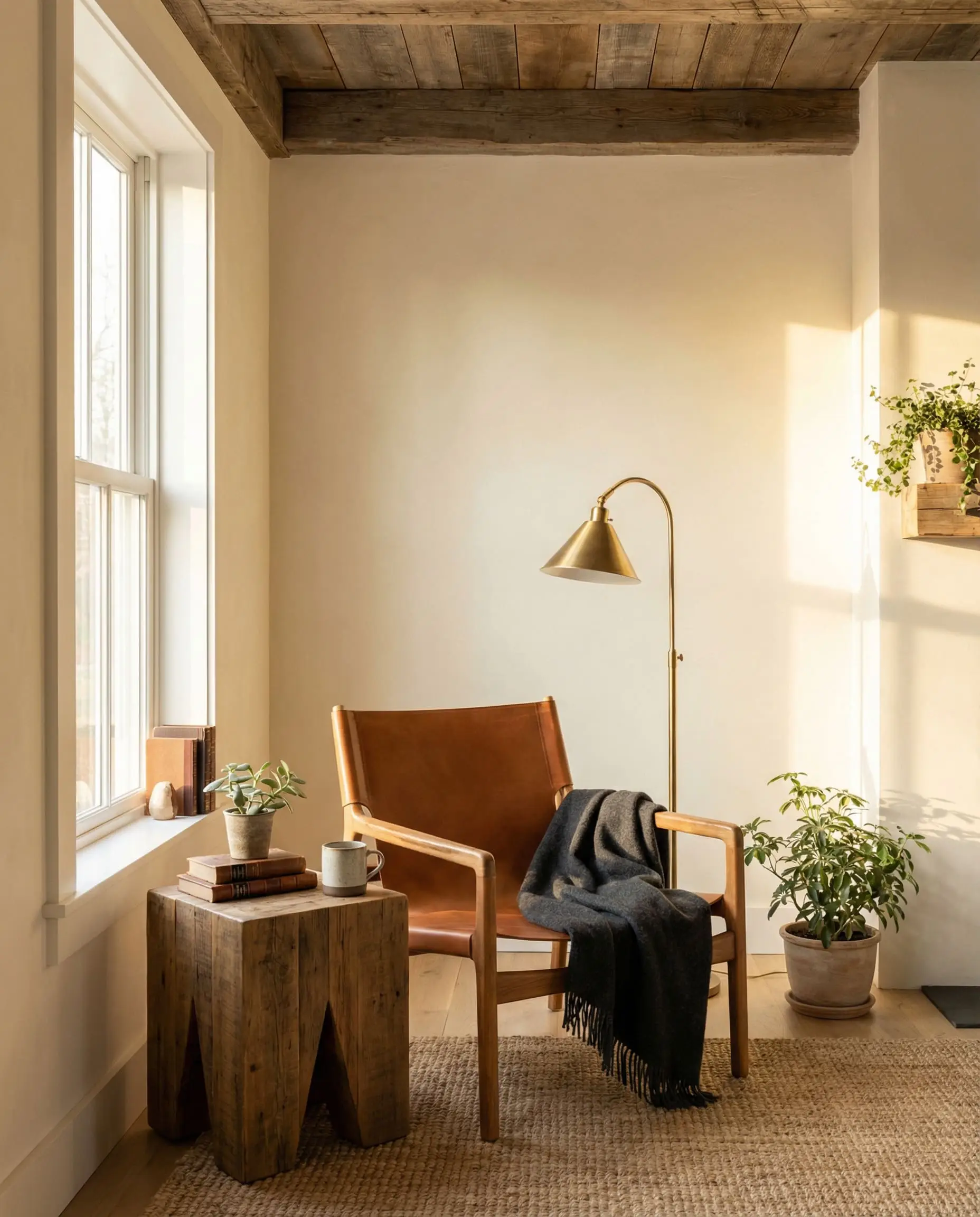
Accent chairs are your ultimate opportunity to introduce structure and new materials. Pair your soft, plush linen sofa with structured cognac leather sling chairs or rigid woven cane armchairs.
This juxtaposition of soft and hard materials is a hallmark of high-end editorial design. It prevents the room from feeling too heavy or homogenous.
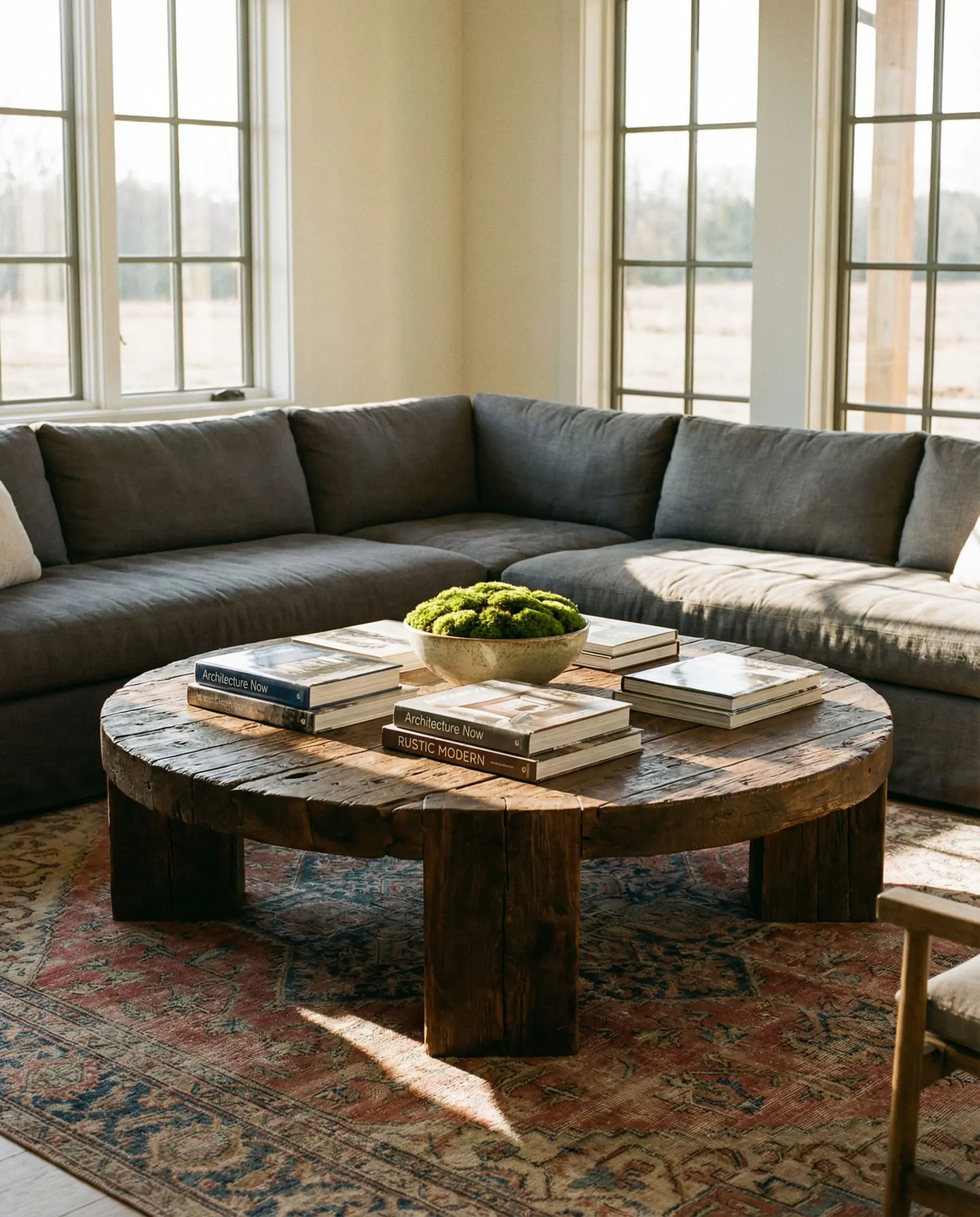
Ground the seating arrangement with a substantial centerpiece. Choose a rustic, raw-edge, or heavy timber coffee table to anchor the room.
Opt for a 48-inch round table if you have a boxy sectional, as the curves will soften the room’s hard angles. Need help decorating it? Read our tutorial on How to Style a Rustic Wood Coffee Table.
Lighting and Hardware: The “Jewelry” of the Room
Lighting and hardware are the ultimate bridge between the rustic and the contemporary. If your room feels too traditional or dated, updating your light fixtures is the fastest, most effective way to modernize it.
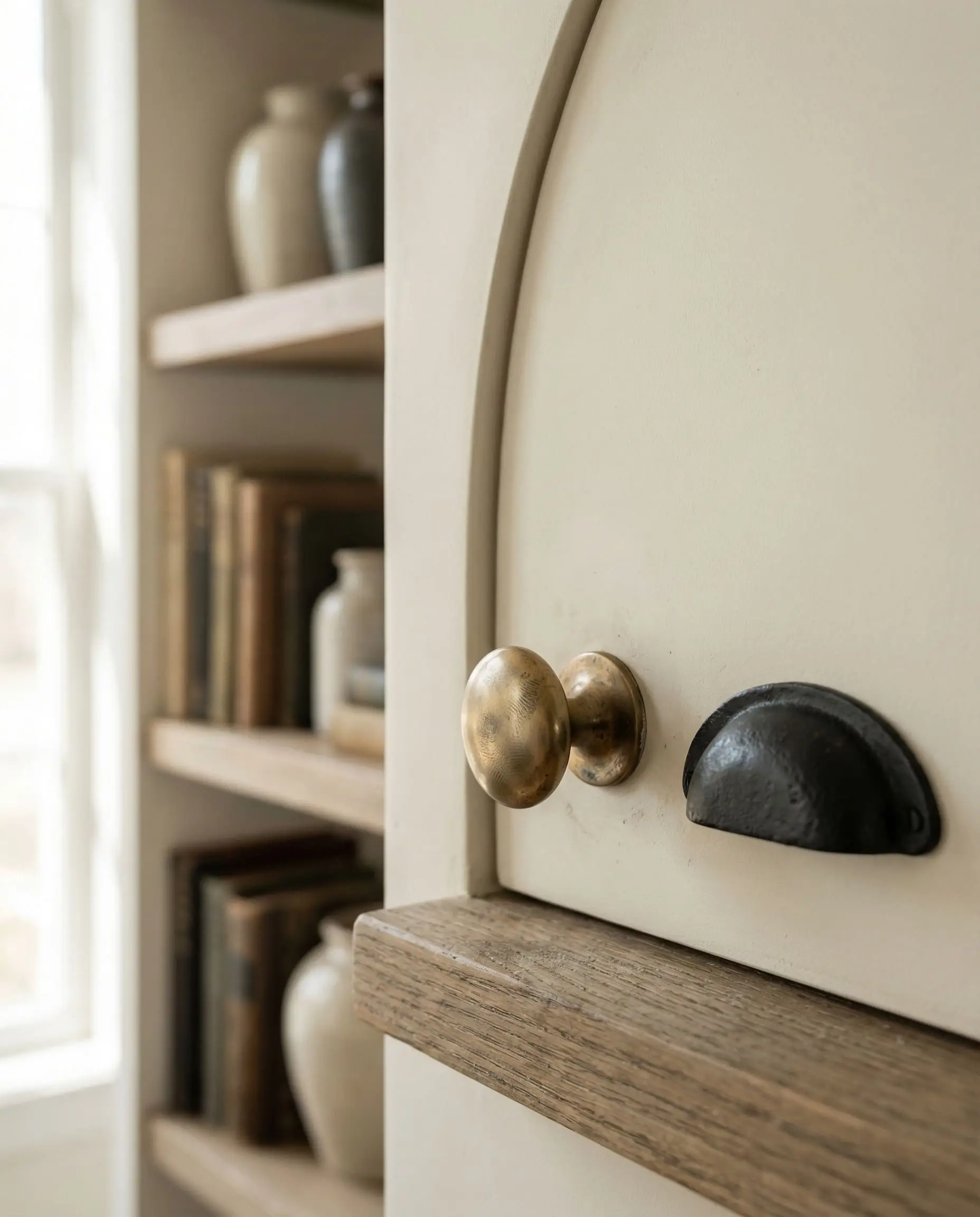
Mixing metals is practically mandatory in the 2026 modern farmhouse. Our favorite designer formula is pairing matte black iron fixtures with Unlacquered Brass accents.
The black provides a modern, graphic punch, while the living brass develops a beautiful, historic patina over time. For a deeper dive into this exact formula, read our guide on mixing matte black and unlacquered brass.
Opt for oversized, dramatic lighting. Wrought iron wagon wheel chandeliers have been updated with sleeker, ultra-thin profiles.
Alternatively, oversized 30-inch linen drum pendants offer a softer, more organic glow. Flank your fireplace or built-ins with articulating brass wall sconces to provide warm, moody, eye-level lighting.
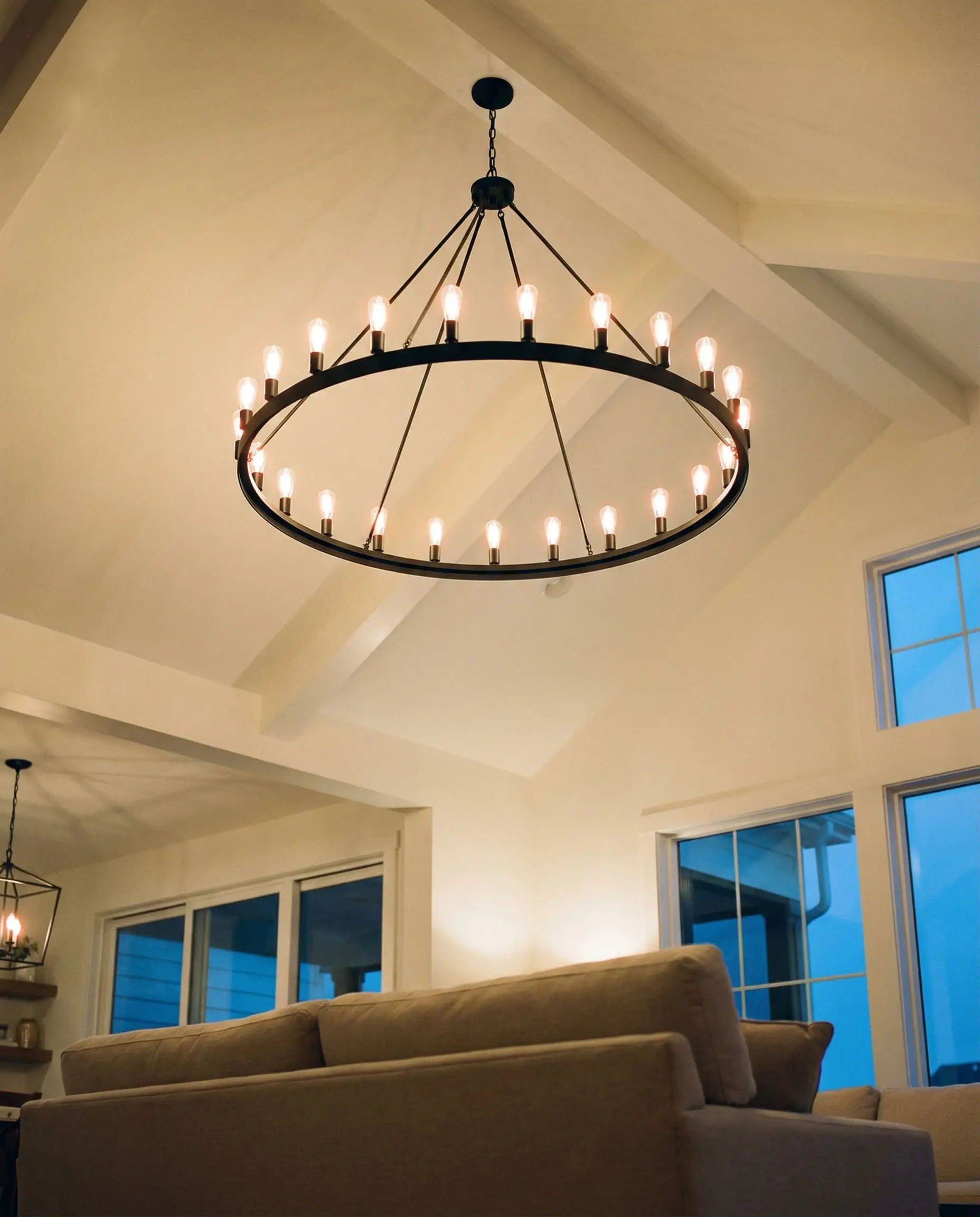
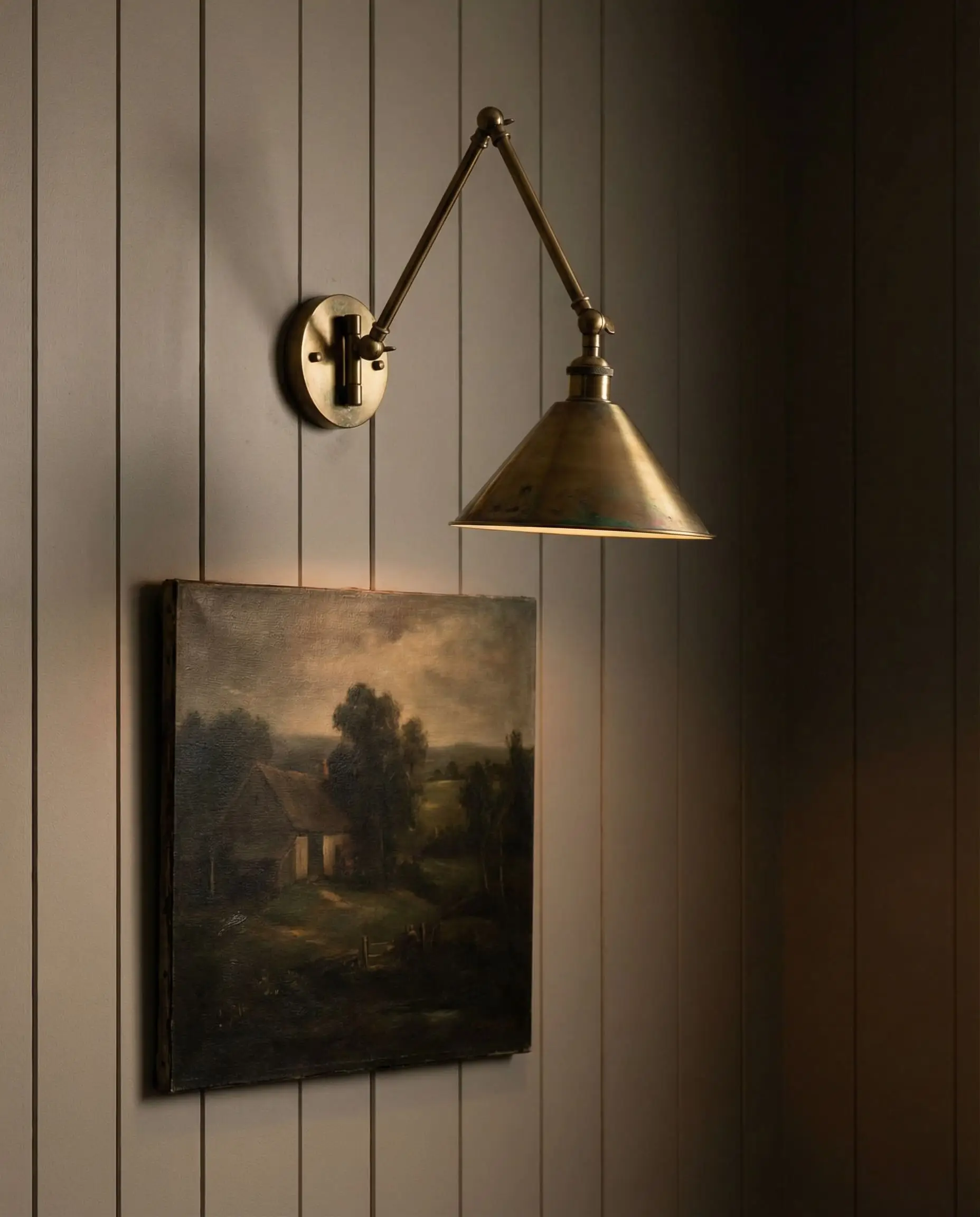
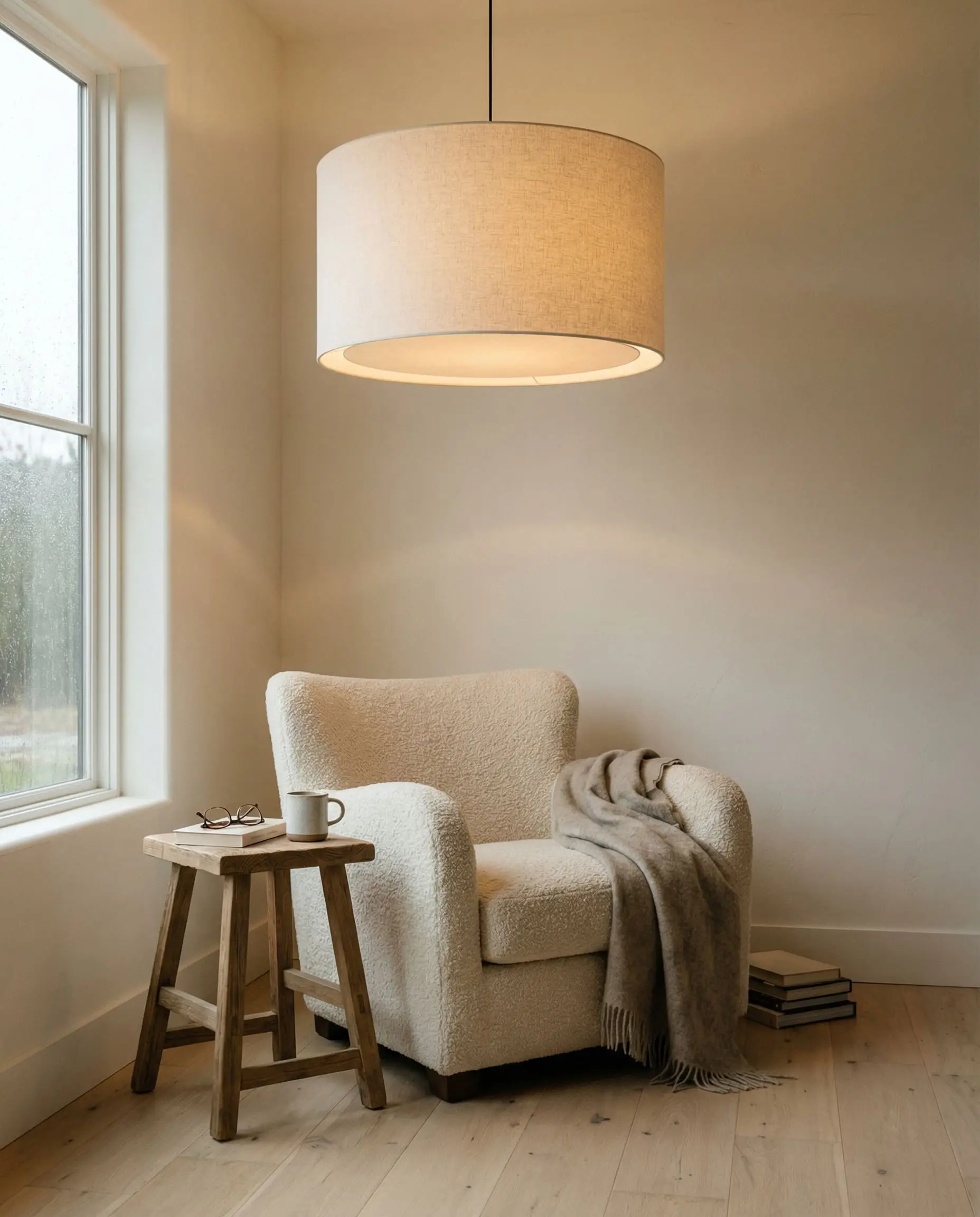
Always hang your living room chandelier so the bottom sits exactly 7 feet (84 inches) off the floor. This ensures it feels connected to the seating group without obstructing sightlines across the room.
💡 Hackrea Lighting Tip
Cost Breakdown: Budgeting for a Modern Farmhouse Refresh
When readers ask us how much a living room makeover actually costs, the answer depends entirely on whether you are doing a weekend DIY refresh or a full architectural overhaul.
Below is a realistic cost breakdown for a modern farmhouse living room project in 2026, categorized by budget tiers. The massive jump in the designer tier accounts for custom labor and bespoke, hand-crafted materials.
| Project Element | Low Tier (DIY Focus) | Medium Tier (Curated) | High Tier (Designer/Custom) |
|---|---|---|---|
| Paint & Wall Treatments | $150 – $300 (Standard Paint) | $600 – $1,200 (Roman Clay) | $3,500+ (Custom V-Groove Millwork) |
| Lighting Fixtures | $250 – $500 (Big Box Stores) | $800 – $2,000 (Studio Brands) | $4,000+ (Artisan Brass Fixtures) |
| Sofa / Primary Seating | $1,000 – $1,800 (Mass Market) | $3,000 – $5,500 (Performance Linen) | $8,000+ (Custom Bench-Cushion) |
| Architectural Additions | $300 – $600 (Faux DIY Beams) | $2,000 – $4,000 (Hollow Box Beams) | $7,000+ (Authentic Reclaimed Timber) |
| Decor & Rugs | $400 – $800 (Synthetic Blends) | $1,200 – $2,500 (Wool/Jute Blends) | $5,000+ (Antique Oushak Rugs) |
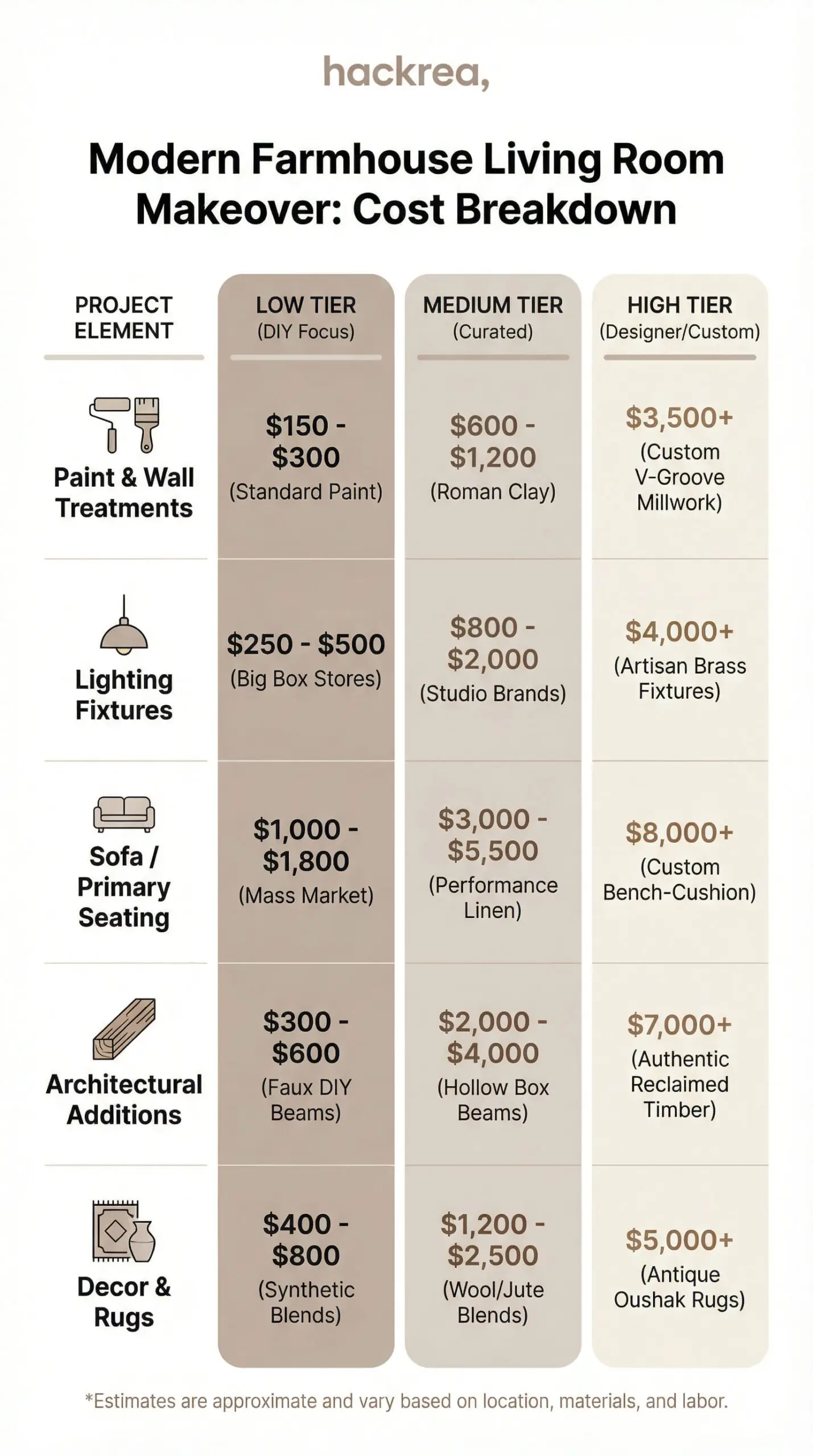
Key Takeaway: If you are on a tight budget, spend your money on high-quality textured paint (like limewash) and one massive statement lighting fixture. These two elements provide the highest visual ROI and can instantly elevate budget-friendly furniture.
Frequently Asked Questions (FAQ)
A: No, it is simply evolving. The literal, rustic “farmhouse” look of 2015 is out, but it has gracefully matured into the European Farmhouse and Organic Modern aesthetic, which focuses on timeless materials, historic architectural features, and minimal clutter.
A: Absolutely. In fact, blending a sleek mid-century modern leather chair with a plush, slipcovered farmhouse sofa creates a highly curated, custom look. The key is to unite the two distinct styles using a shared, warm, earthy color palette.
A: Wide Plank European White Oak is the undisputed gold standard. It offers an organic, matte finish that feels historic yet incredibly clean, providing the perfect foundation for both rustic timber pieces and modern minimalist furniture.
Final Thoughts
The 2026 modern farmhouse living room is a masterclass in visual balance. By marrying the soulful history of authentic, reclaimed materials with the sleek, uncluttered lines of contemporary design, you can create a space that is both breathtaking and incredibly livable.
If you want to master this aesthetic throughout your entire home, be sure to explore our complete organic modern interior design guide.

The Aesthetics Desk curates the visual direction for Hackrea. Specializing in design history, global architectural movements, and interior styling, this desk focuses on the psychology of space and how to translate high-end, magazine-quality aesthetics into approachable residential design without falling into fleeting micro-trends.