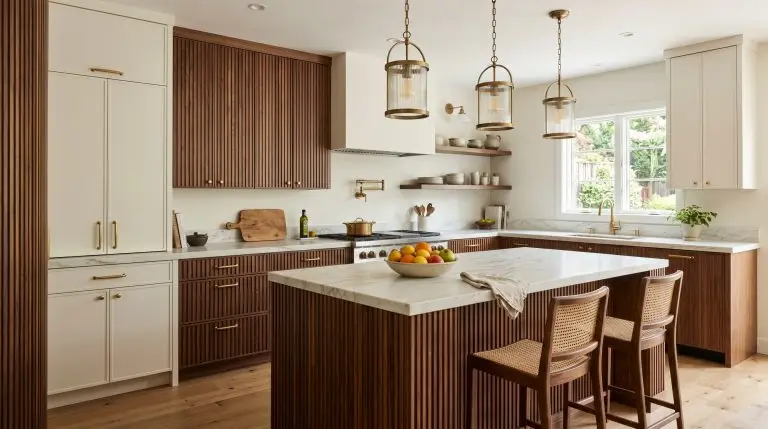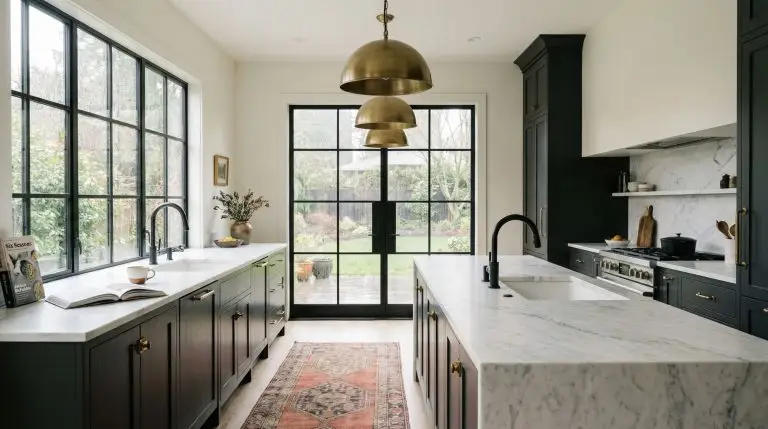
The era of perfectly matching every metal fixture in your home is officially behind us. In 2026, designing a space that feels curated, collected, and highly personal requires embracing the tension of opposites. We are seeing a massive shift in the industry, moving away from sterile, uniform palettes toward a more deeply layered aesthetic.
Our studio partners are seeing a massive shift toward transitional kitchen design, a style that masterfully blends sleek, modern lines with historic, soulful warmth. The absolute best way to achieve this high-end aesthetic? Pairing the stark, industrial edge of matte black with the romantic, evolving nature of raw brass.
Matching metals everywhere is a dated concept that flattens a room’s visual landscape. Instead, think of matte black as the architectural anchor that grounds the space, while unlacquered brass acts as the jewelry that gives it a soul.
Mixing matte black and unlacquered brass is the ultimate design strategy for creating a balanced, transitional space. The secret is applying the 80/20 rule: use matte black as your grounding, dominant finish, and introduce unlacquered brass as a warm, living accent that develops a beautiful patina over time.
Why This Specific Metal Combo Works So Well
To understand why this pairing is a favorite among elite designers, we have to look at both color theory and material science. This combination thrives on extreme, intentional contrast. You are pairing the darkest value in the color spectrum with a warm, light-reflecting metallic.
The magic lies in the contrast of texture and finish. Matte black absorbs light, offering a flat, velvety visual that feels infinitely modern and crisp. In contrast, unlacquered brass reflects light, bringing a subtle, glowing warmth that softens the starkness of the black.
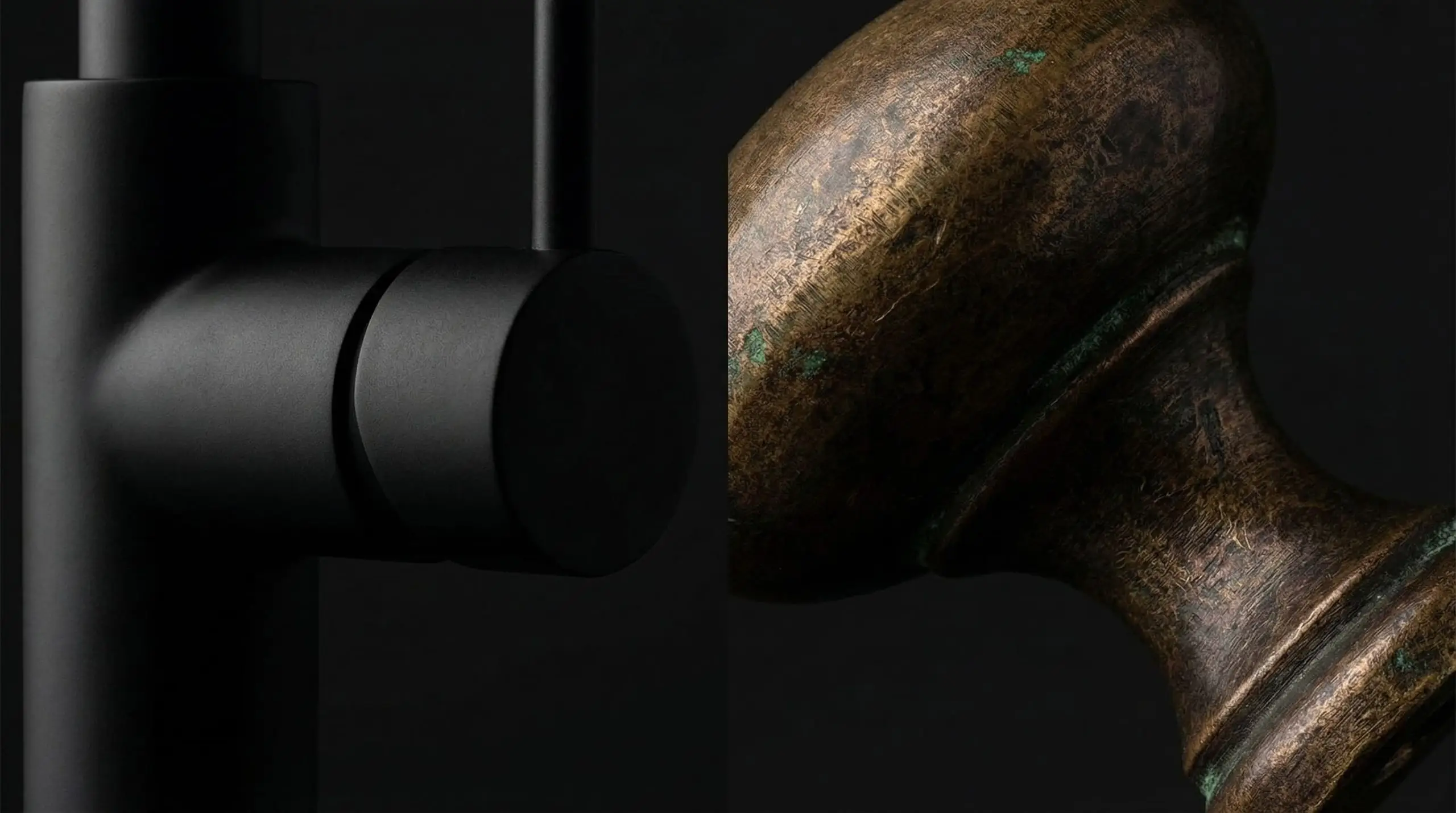
The most profound contrast, however, is the contrast of time. High-quality matte black fixtures are typically electroplated, meaning the finish is chemically bonded to the metal to remain static, durable, and completely unchanging. Unlacquered brass, on the other hand, is highly dynamic. It reacts to its environment, aging gracefully and proving that your home is a living, breathing space.
When choosing paint to backdrop this metal combo, opt for creamy, warm whites like Sherwin-Williams Alabaster or deep, moody hues like Benjamin Moore Cheating Heart. Stark, cool-toned whites can make the black feel too harsh and the brass look overly yellow.
💡 Hackrea Tip
The 80/20 Rule: How to Balance Black and Brass
The most common problem readers submit to our platform is a space that feels chaotic because they split their metal finishes evenly down the middle. A 50/50 split creates visual competition, leaving the eye confused about where to rest.
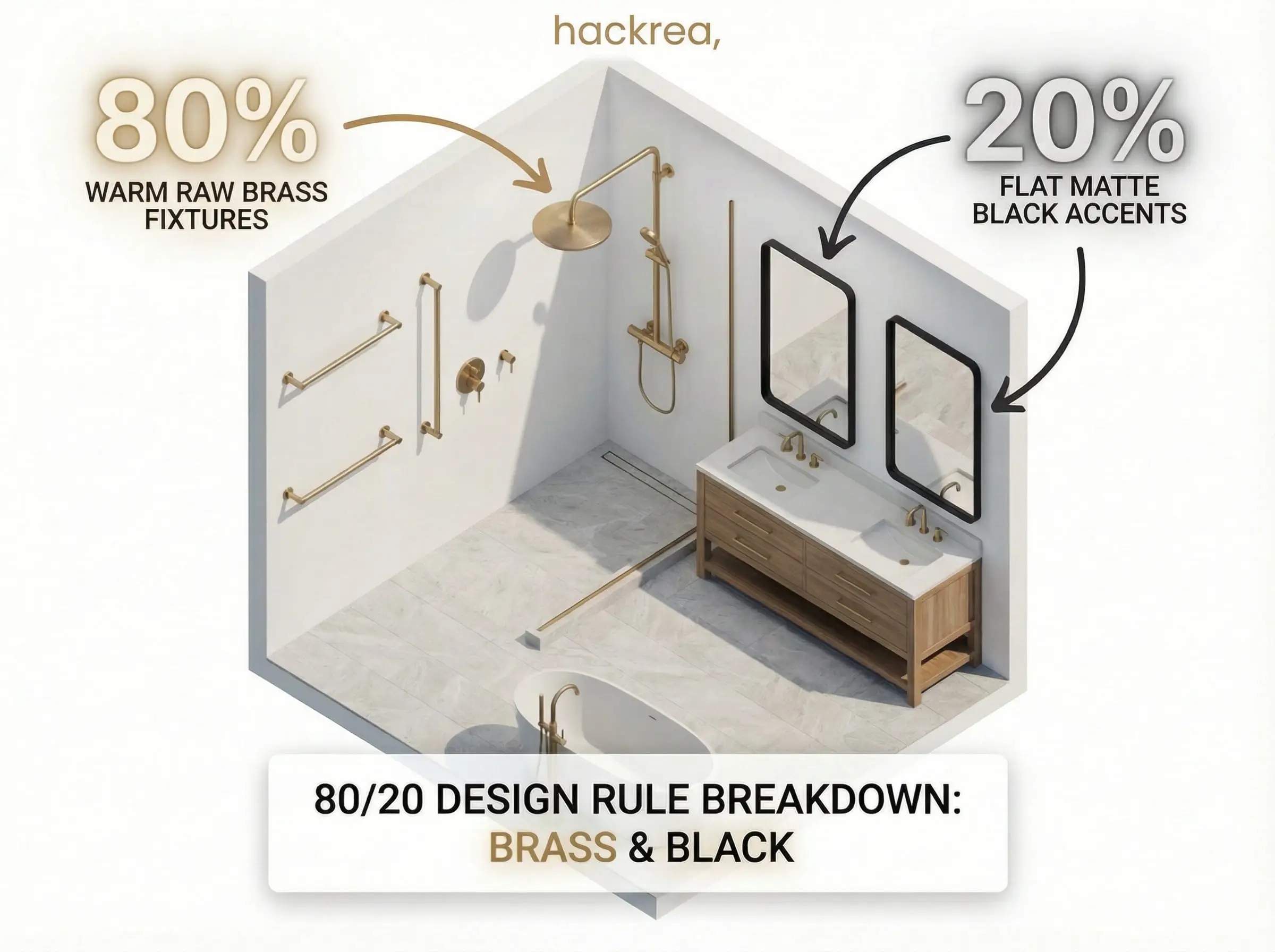
The Rule: To achieve a magazine-quality look, you must apply the 80/20 ratio. Choose one metal to dominate roughly 80% of the space’s hardware and fixtures, and use the second metal strictly as a 20% accent.
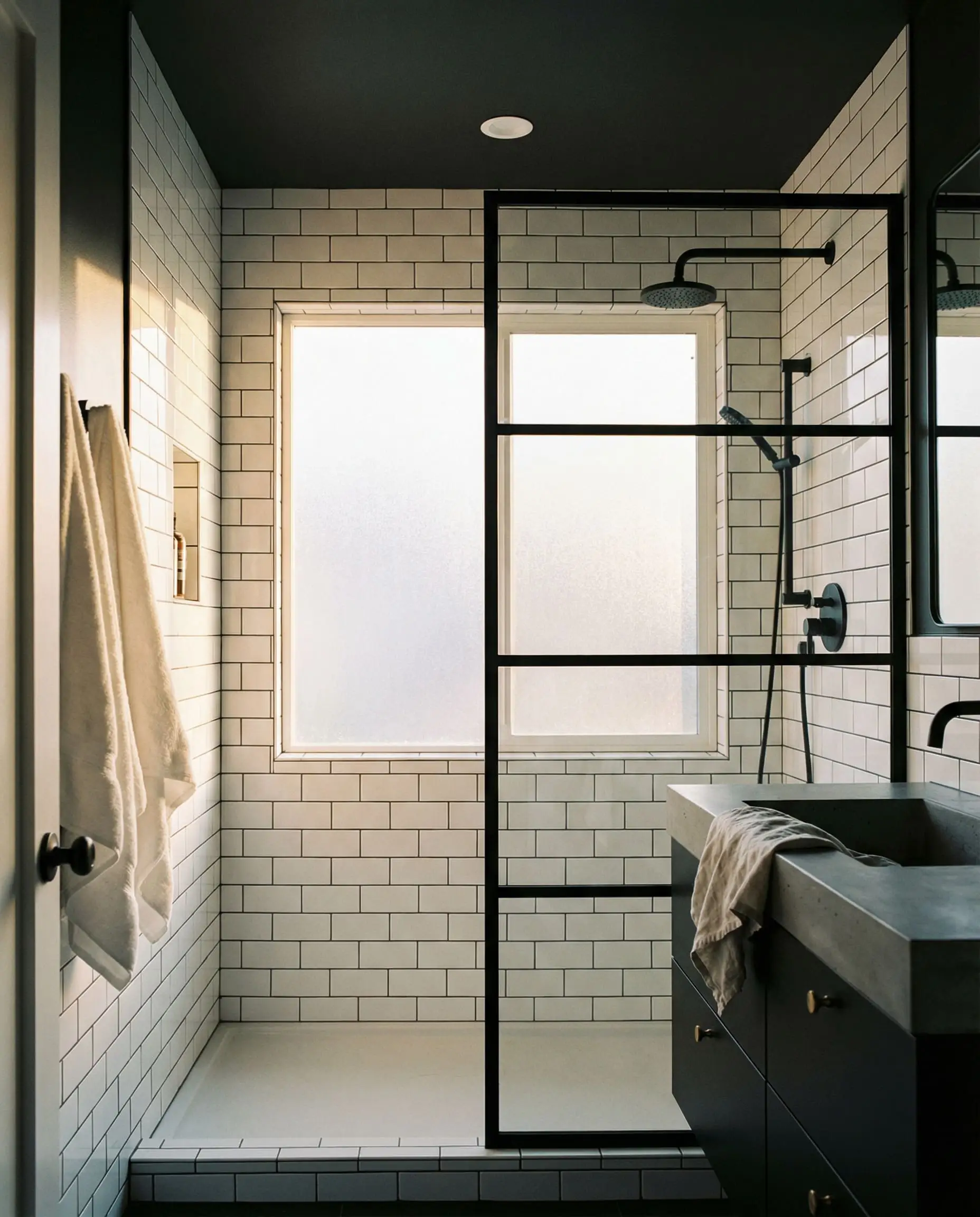
- Scenario A: Matte Black Dominant. If you want an edgy, highly modern space, use matte black for your primary plumbing, lighting, and mirror frames. Then, introduce unlacquered brass strictly on your cabinet hardware—like 1.5-inch diameter brass knobs—to inject just enough warmth to keep the room from feeling cold.
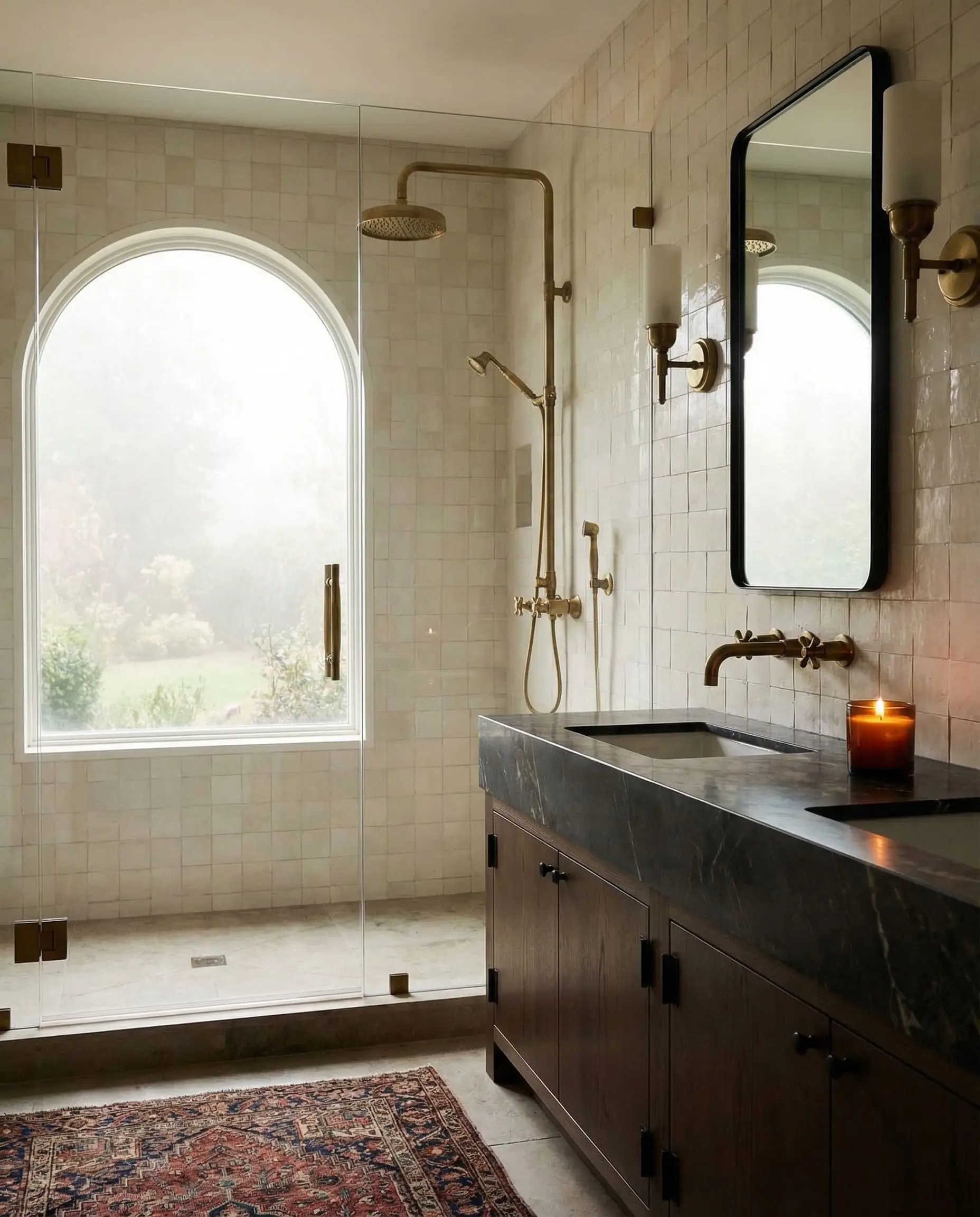
- Scenario B: Brass Dominant. If your goal is a luxurious, traditional, or European-inspired space, allow brass to take center stage on your faucets, shower systems, and primary lighting. Use matte black sparingly as a crisp framing element, such as on slender window mullions, sleek cabinet hinges, or a single, structural vanity base.
Room-by-Room Application Guide
Kitchens: Faucets, Hardware, and Lighting
When a reader recently asked us how to fix their living room and open-concept kitchen, the first thing we addressed was their hardware placement. In the kitchen, we highly recommend using our specialized framework to determine which metal goes where.
The Touch vs. Sight Framework: Always use unlacquered brass for the elements you physically touch every single day. The natural oils from your hands are exactly what helps the brass develop its bespoke patina. Reserve your matte black for the visual anchors that are rarely handled.
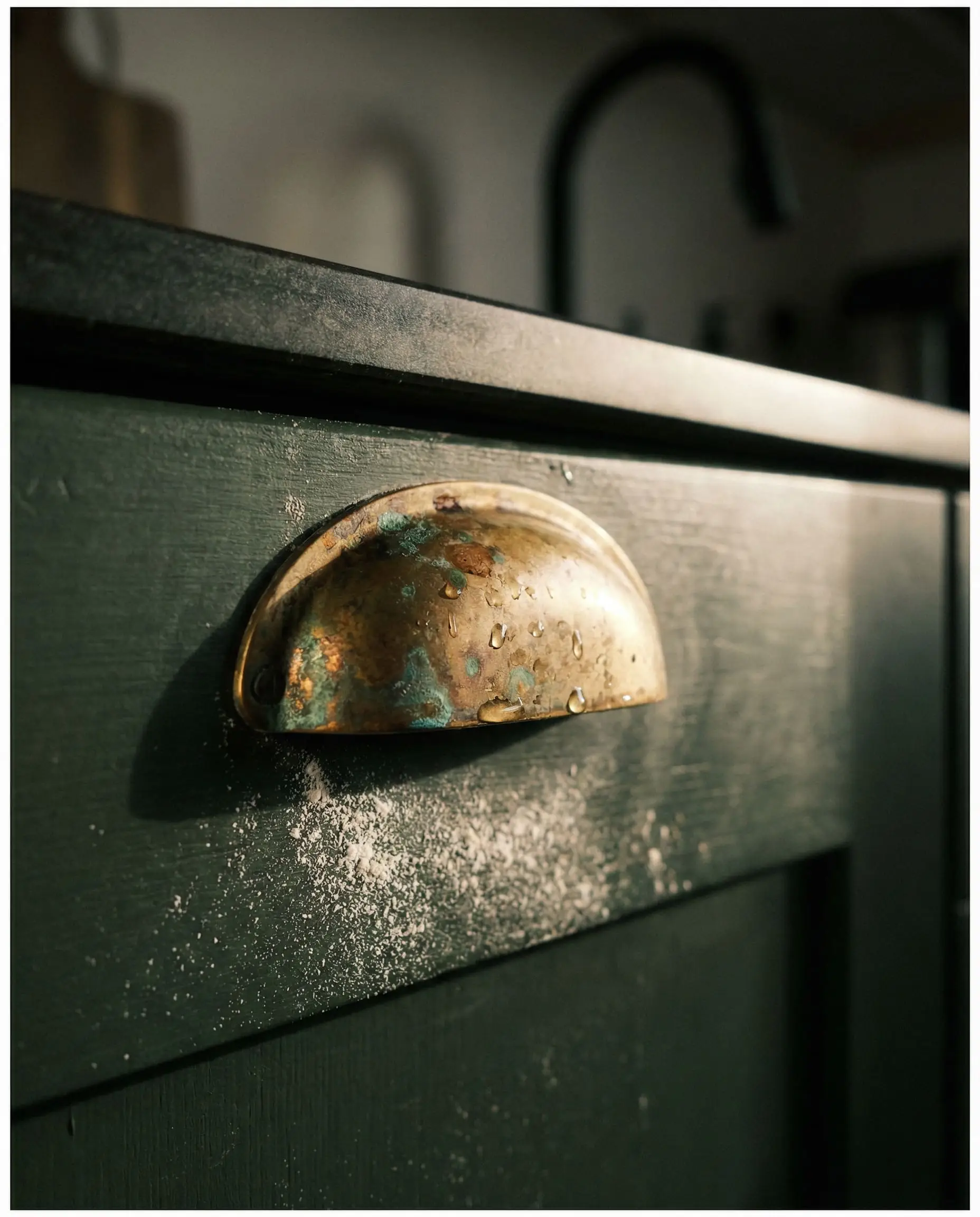
If you love the coveted, English-countryside aesthetic of deVOL kitchens, try mixing metals between your island and perimeter cabinetry. You might use black hardware on a light oak island, while outfitting moody, dark green perimeter cabinets entirely in aging brass. For more detailed layouts, check out our guide on 2026 kitchen hardware trends.
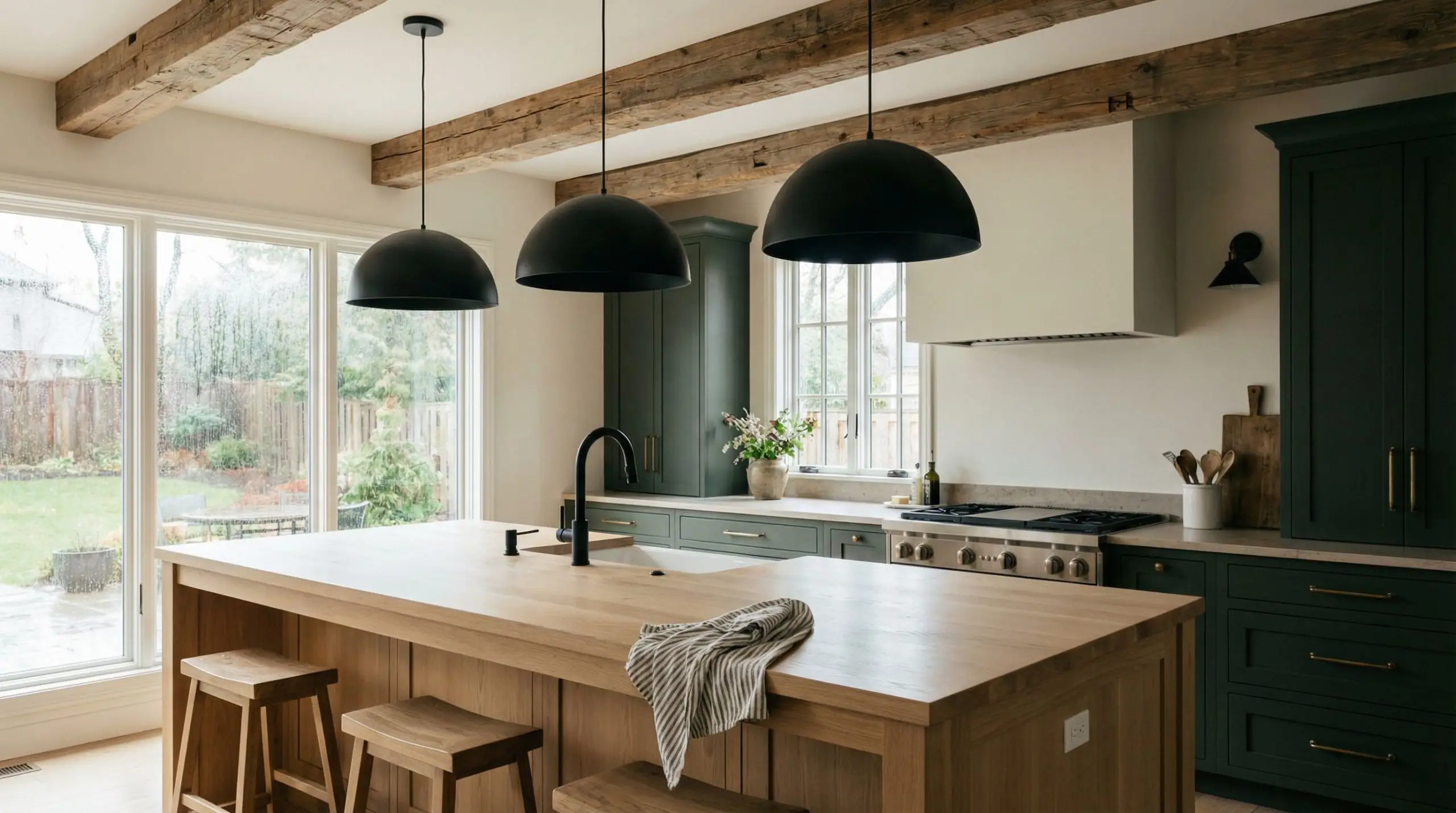
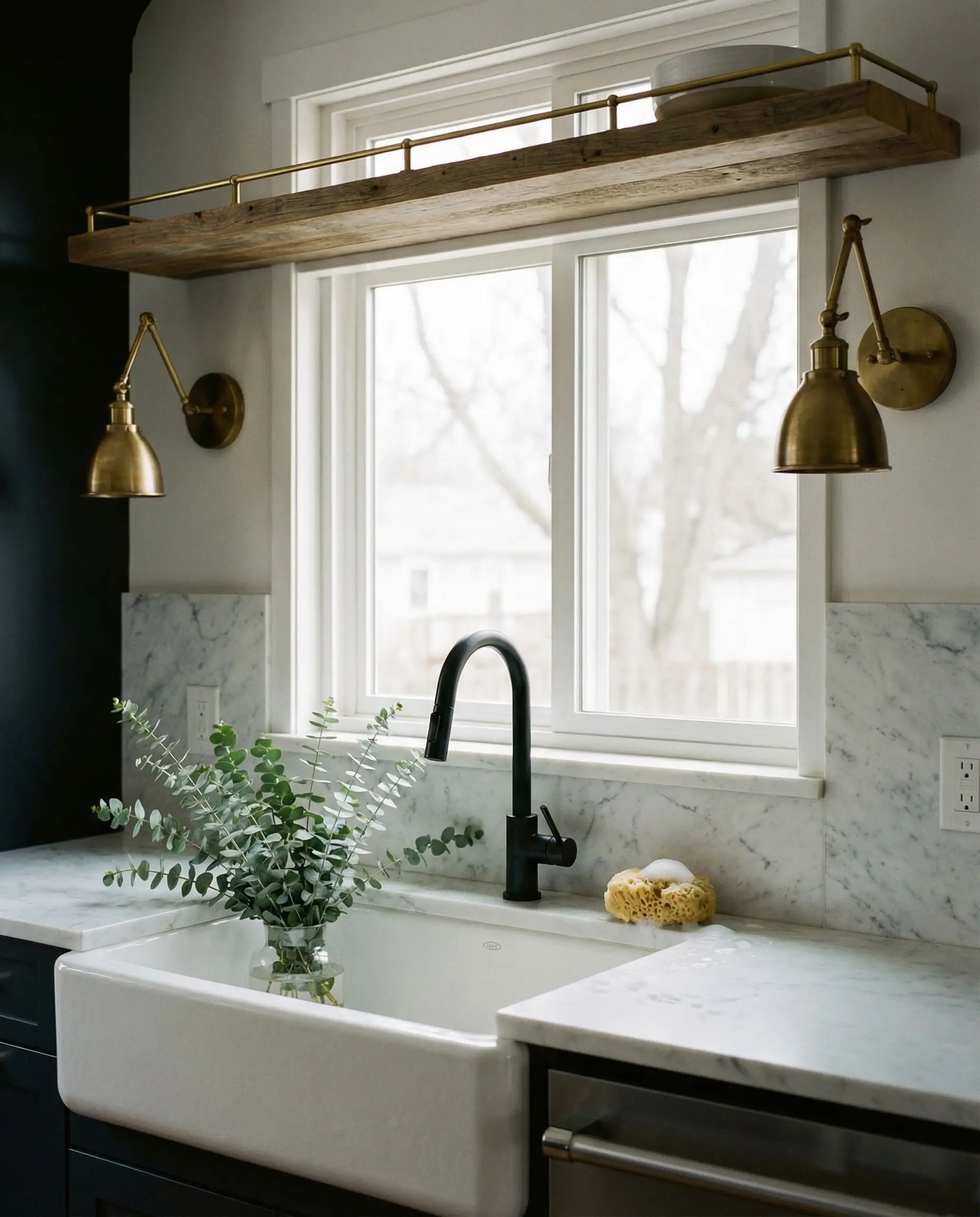
If you choose a matte black faucet, seamlessly tie the brass back into the sink area by installing an unlacquered brass soap dispenser or a brass gallery rail on a floating shelf directly above the sink.
🛋️ Styling Tip
Bathrooms: Shower Fixtures, Mirrors, and Vanities
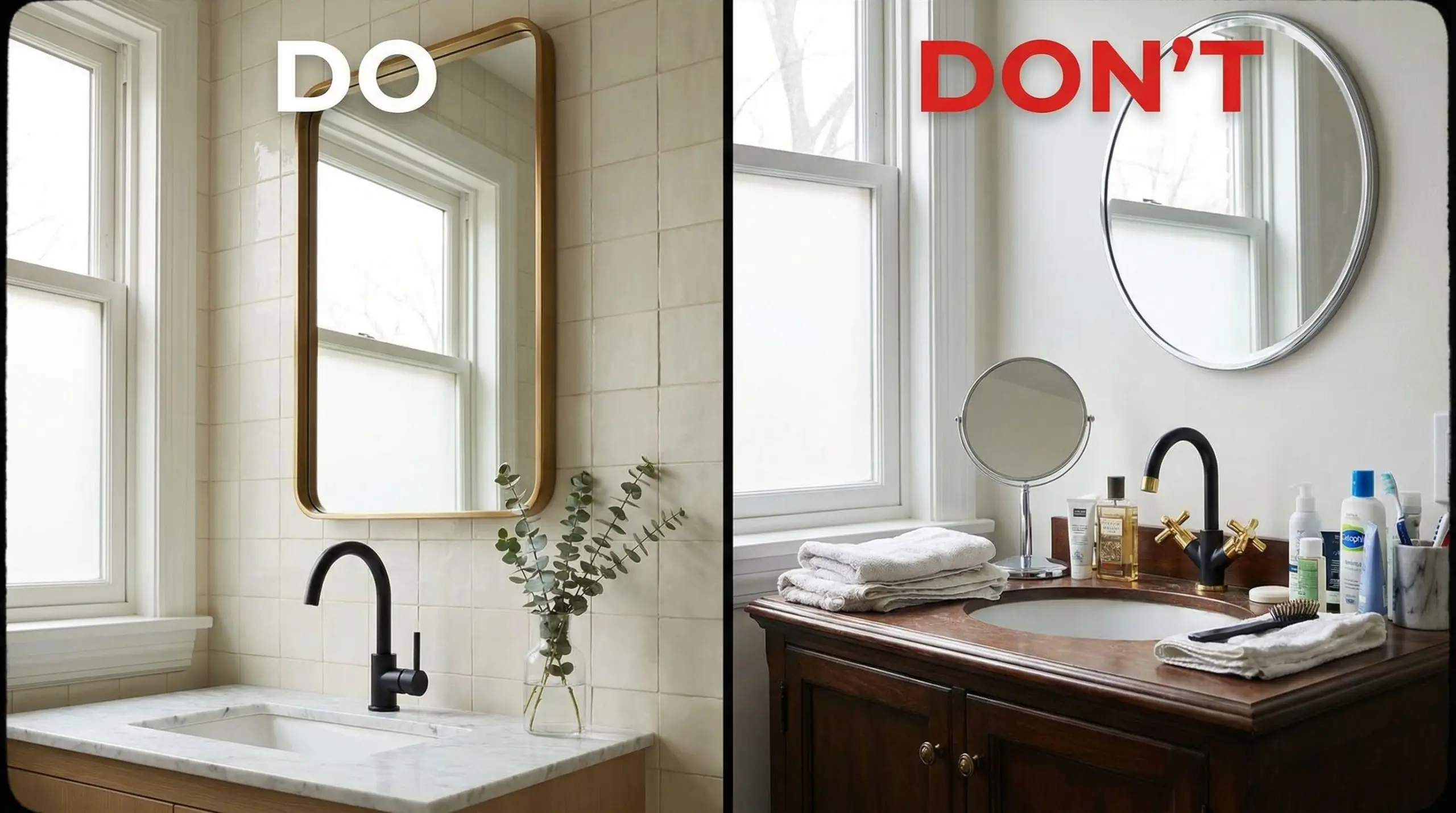
Looking at the floor plan photos sent to our team, bathrooms are where DIY designers make the most expensive mistakes. Bathrooms introduce the complex variables of dense plumbing, high moisture, and constant temperature shifts.
The Fix: When dealing with the shower enclosure, you must commit to a single metal. Mixing a black showerhead with a brass diverter valve looks like a plumbing mistake, not a design choice. Stick to one cohesive finish for the entire shower system.
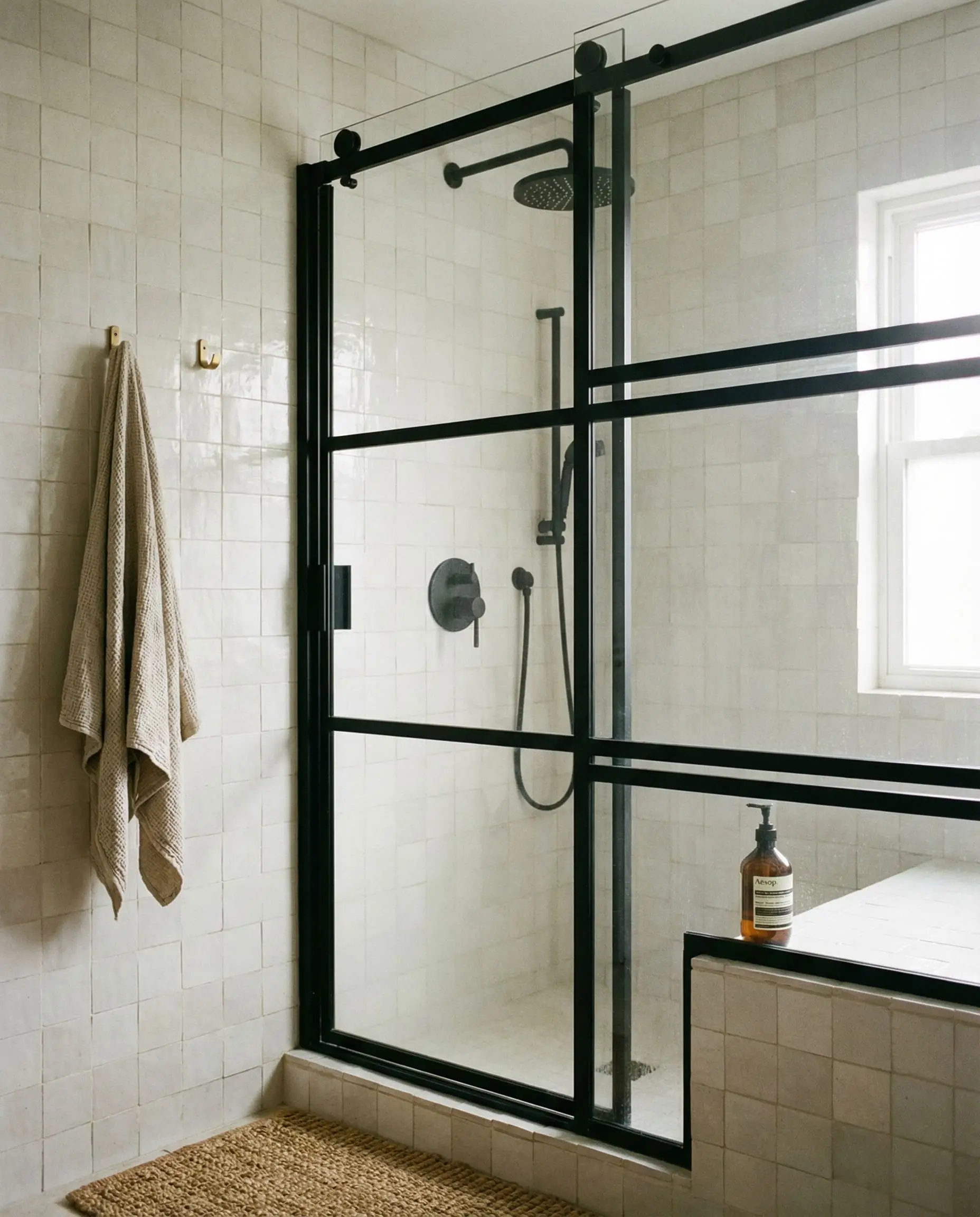
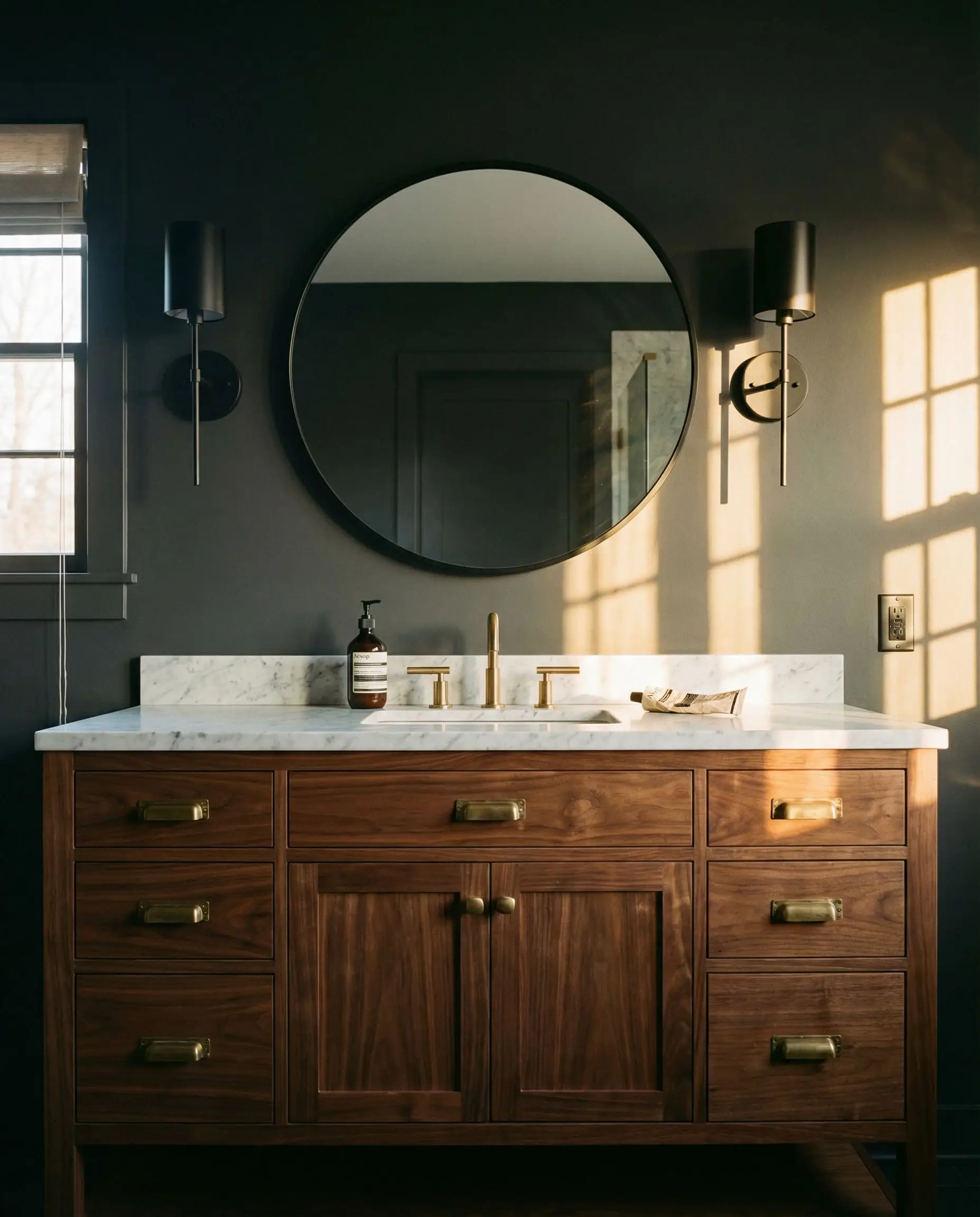
If you want to master living finishes in bathroom design, we recommend letting matte black handle the architecture while brass handles the jewelry.
Understanding Unlacquered Brass: The “Living Finish”
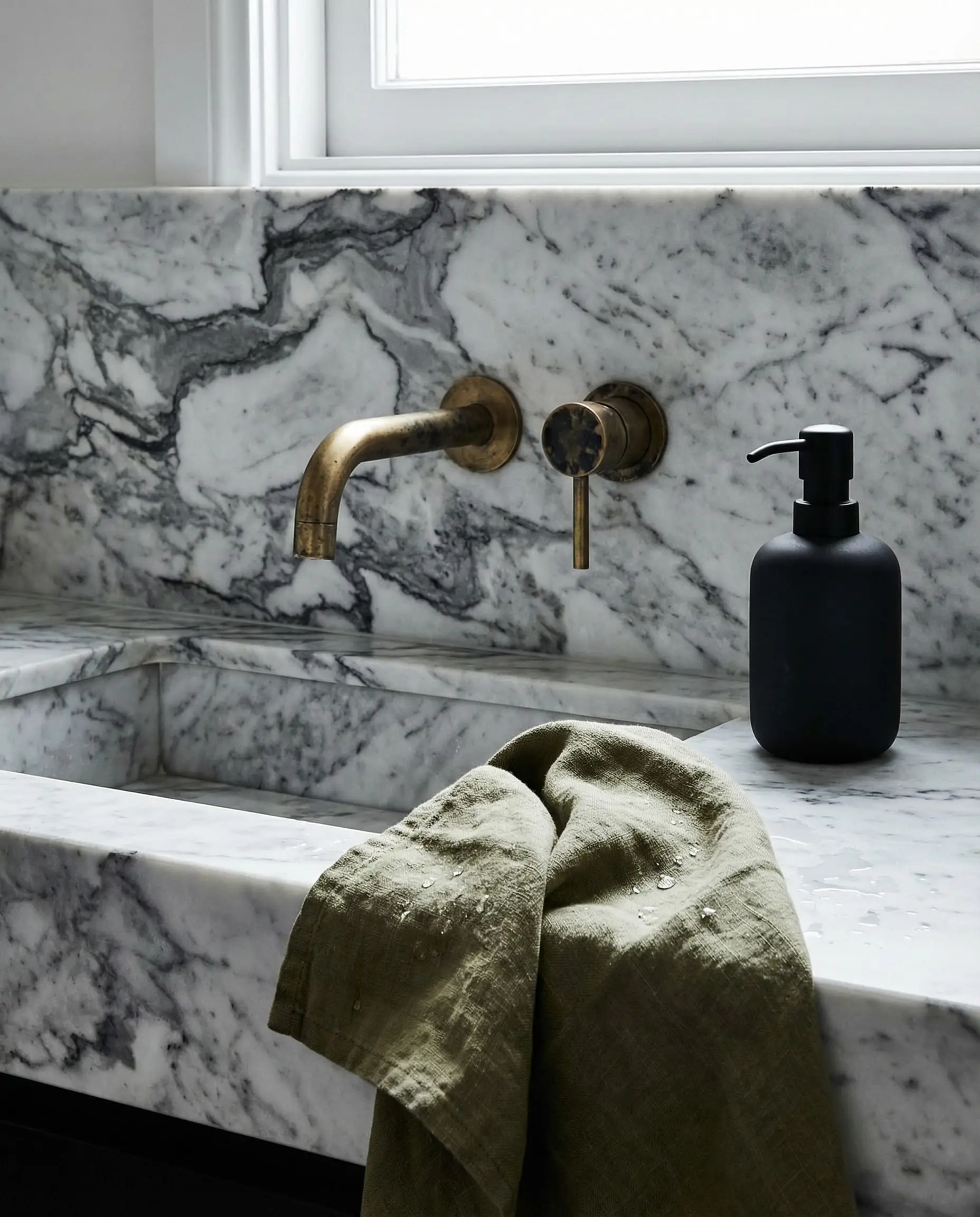
Before you invest in this aesthetic, you must understand what a living finish actually entails. Unlacquered brass is raw, solid brass that has deliberately been left without a protective clear coat or synthetic lacquer.
Because it is exposed to the air, moisture, and the oils on your skin, it undergoes a natural chemical process called patina / oxidation. Over time, the shiny, bright gold surface will darken, developing rich brown undertones, subtle water spots, and occasionally even faint green hues in high-moisture areas.
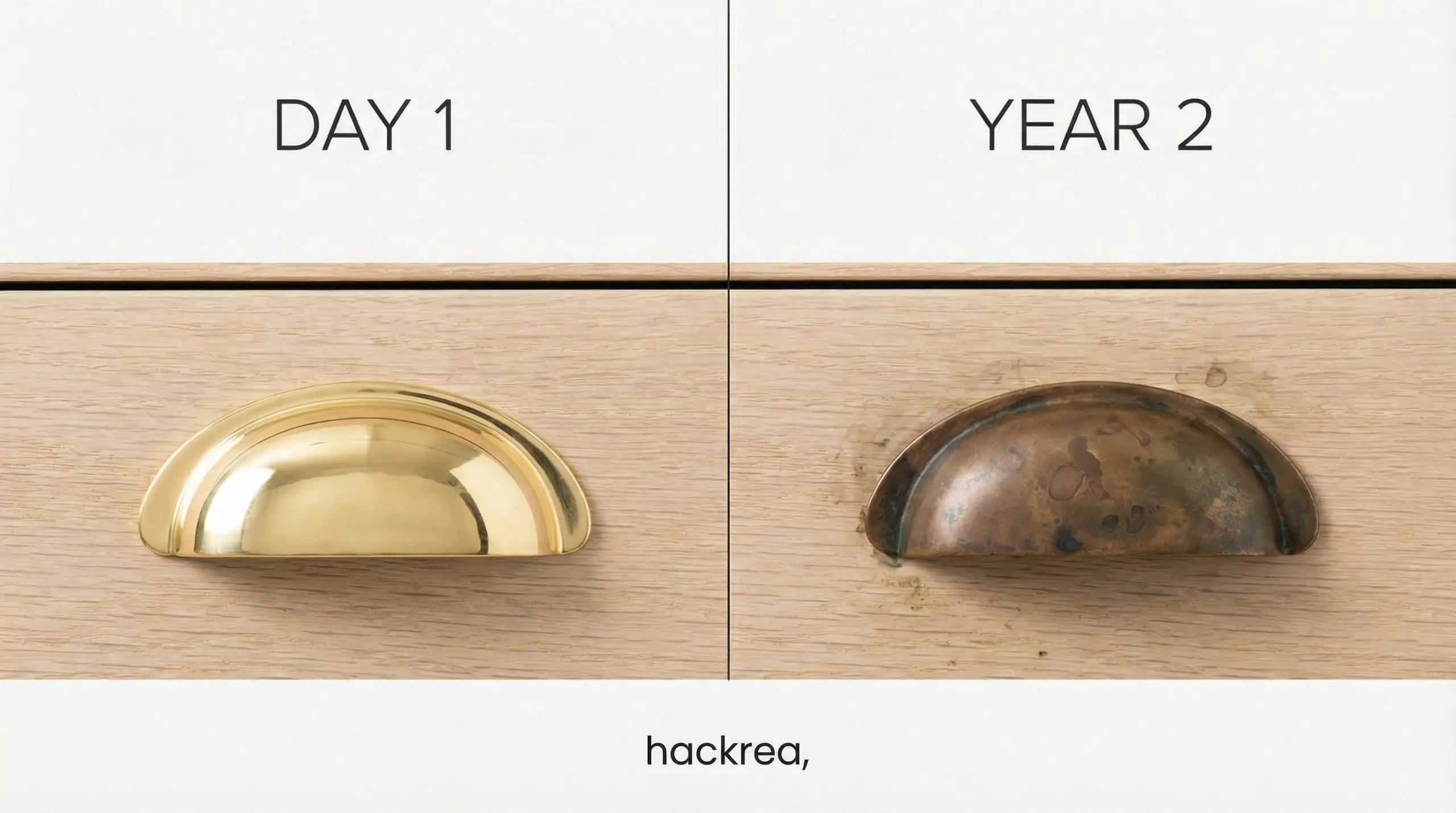
Designers adore this finish because it offers unparalleled authenticity. It tells the story of the home and looks like a bespoke, antique architectural salvage piece. However, if you expect your hardware to look brand new forever, this is not the finish for you.
Pros:
Cons:
Designer Do’s and Don’ts for Mixing Metals
A collaborating interior designer recently told us that the line between a beautifully mixed space and a chaotic hardware aisle is incredibly thin. Follow these strict editorial guardrails to protect your investment.
Shop the Look: Top Hardware & Fixture Brands
When sourcing unlacquered brass, you are making a long-term investment in the architectural integrity of your home. You must read the fine print: ensure you are buying true raw brass, not “antique brass” or “champagne bronze,” which are artificially colored and permanently sealed with a topcoat.
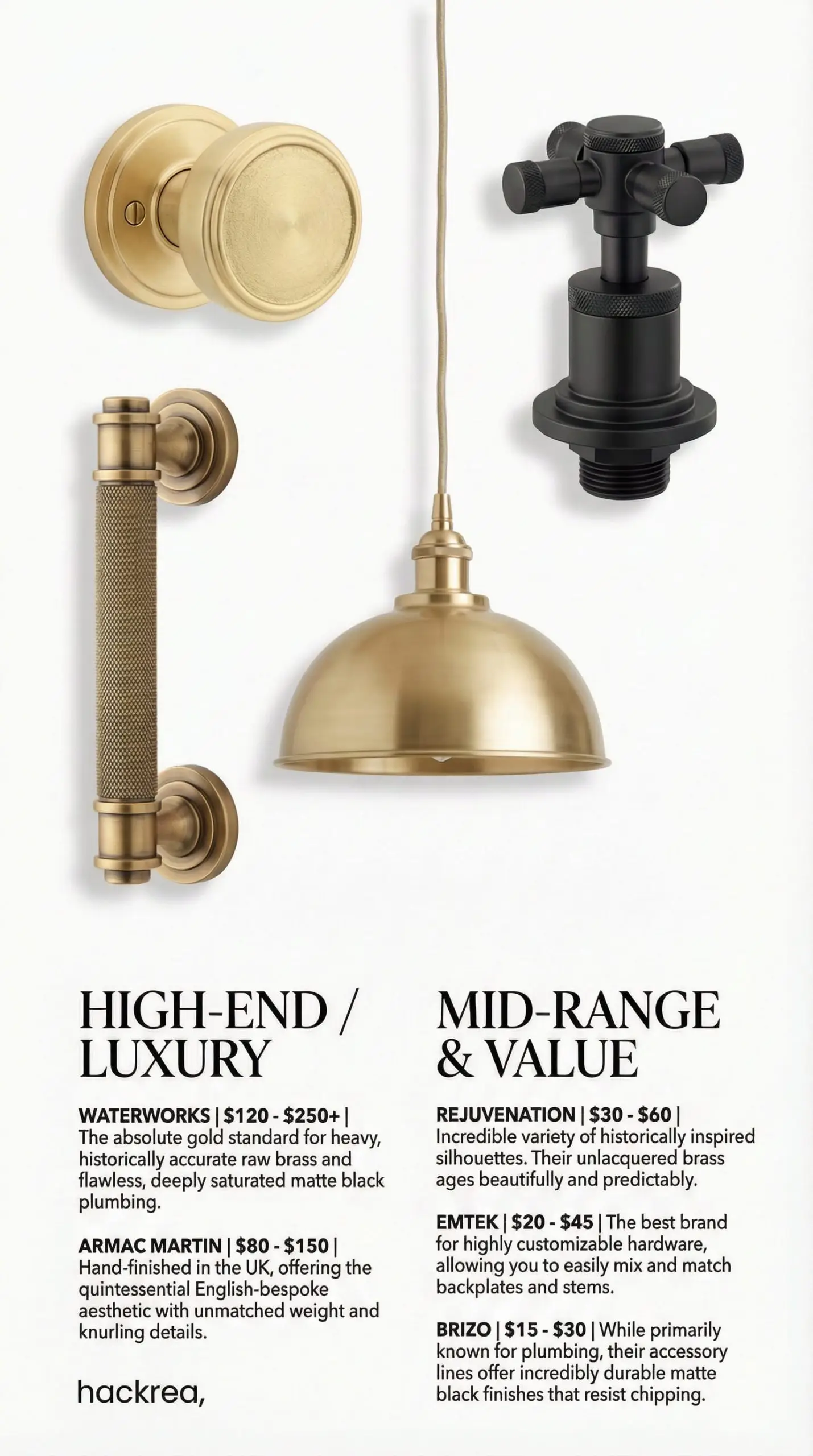
Here is our curated breakdown of the best brands on the market, categorized by budget, to help you source the perfect cabinet pull.
| Brand Tier | Recommended Brand | Price per Standard Pull | Why We Love It |
|---|---|---|---|
| High-End / Luxury | Waterworks | $120 – $250+ | The absolute gold standard for heavy, historically accurate raw brass and flawless, deeply saturated matte black plumbing. |
| High-End / Luxury | Armac Martin | $80 – $150 | Hand-finished in the UK, offering the quintessential English-bespoke aesthetic with unmatched weight and knurling details. |
| Mid-Range / Accessible | Rejuvenation | $30 – $60 | Incredible variety of historically inspired silhouettes. Their unlacquered brass ages beautifully and predictably. |
| Mid-Range / Accessible | Emtek | $20 – $45 | The best brand for highly customizable hardware, allowing you to easily mix and match backplates and stems. |
| Value / Entry | Brizo | $15 – $30 | While primarily known for plumbing, their accessory lines offer incredibly durable matte black finishes that resist chipping. |
Maintenance & Care: How to Clean Unlacquered Brass
The beauty of a living finish is that the best maintenance routine is often no routine at all. If you want to encourage a rich, dark patina, simply clean your hardware with a soft microfiber cloth, warm water, and a drop of mild dish soap. Dry it immediately to prevent uneven water spotting.
If you want to learn how to clean and maintain brass to keep it looking shiny and new, you will need to put in some elbow grease. To strip away the oxidation and restore the bright gold finish, apply a specialized brass polish like Barkeepers Friend or Brasso. For a natural alternative, rub a lemon half sprinkled with baking soda directly onto the metal, let it sit for five minutes, and buff it out.
When cleaning your matte black fixtures, you must be incredibly gentle. Because matte finishes have a microscopic texture that diffuses light, harsh chemicals, abrasive sponges, or wax-based cleaners will permanently strip or polish the matte coating, leaving behind shiny, ruined patches. Stick strictly to mild soap and water.
Frequently Asked Questions
A: Yes, it can. When raw brass is exposed to high levels of moisture and salt—particularly on bathroom sink faucets or coastal home exteriors—the copper in the brass alloy reacts by forming a turquoise-green patina known as verdigris. If you dislike this, a quick polish will remove it entirely.
A: Cheap, builder-grade matte black is waning, but high-quality, architecturally driven matte black is a permanent staple. When used as an accent rather than a blanket finish for an entire house, it provides a timeless, grounding contrast that will never feel dated.
A: Yes, but it requires advanced restraint. If you are mixing black and brass, you can introduce a third metal like polished nickel as a highly reflective, cool-toned bridge. However, the third metal should make up no more than 5% to 10% of the space, used strictly on minor accents like exposed plumbing p-traps or small decorative hinges.
Final Thoughts
The interplay between matte black and unlacquered brass is a masterclass in balance. By marrying the crisp, unchanging edge of modern black with the warm, evolving romance of raw brass, you create a space that feels instantly historic yet undeniably fresh.
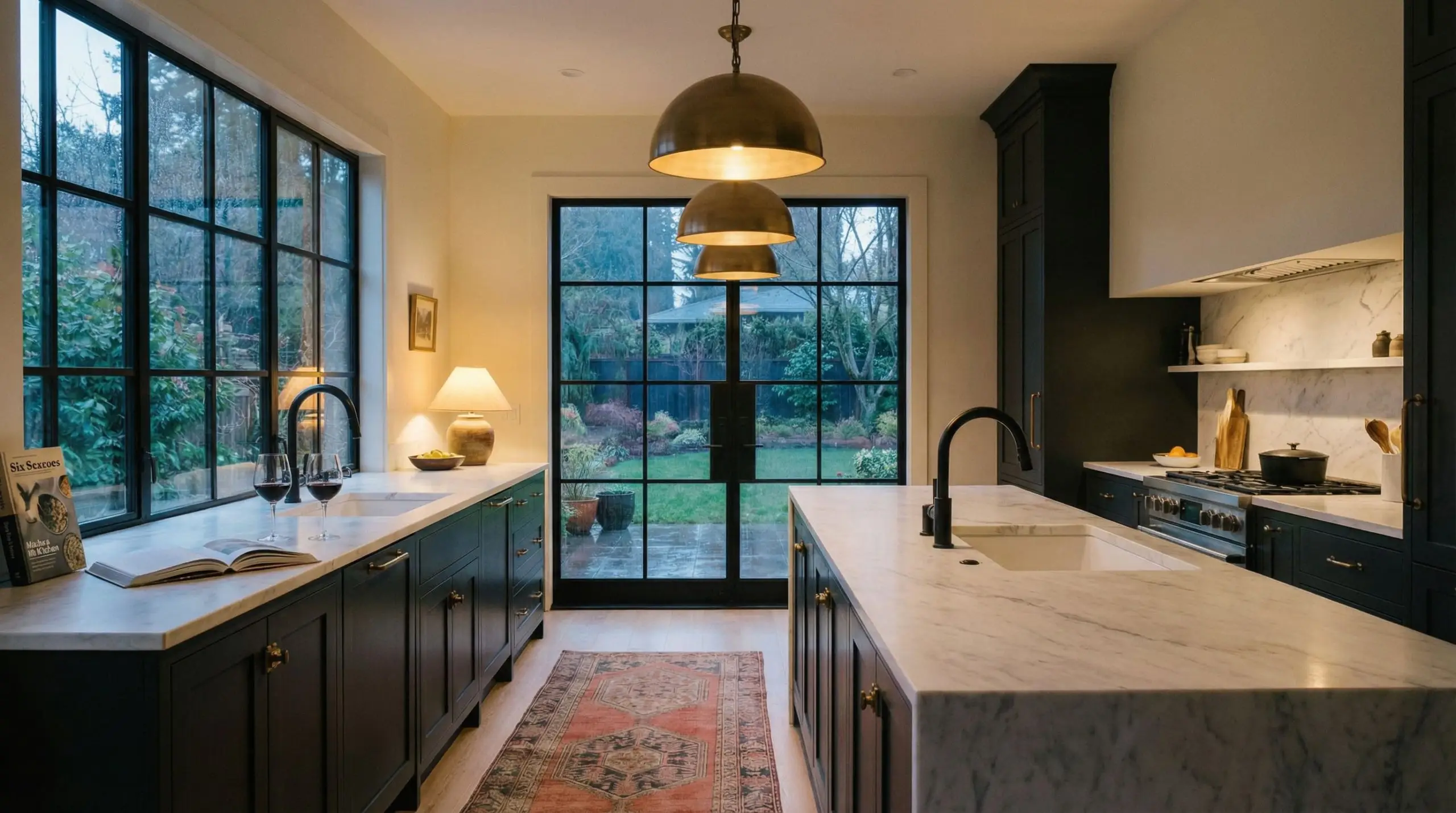
We want to see how you are applying the 80/20 rule in your own homes! Share your metal-mixing projects, or tag @hackrea_en on Instagram so our editorial team can feature your stunning transitional spaces.

The Hackrea Style Desk treats interior decoration as an exact visual science. Rather than focusing on demolition or floor plans, this desk masters the art of color theory, undertone matching, material pairings, and spatial proportion. From balancing the visual weight of mixed metals to finding the perfect bridging tone between disparate wood species, this desk provides the rigorous aesthetic rules needed to achieve high-end, editorial-quality harmony in any space.