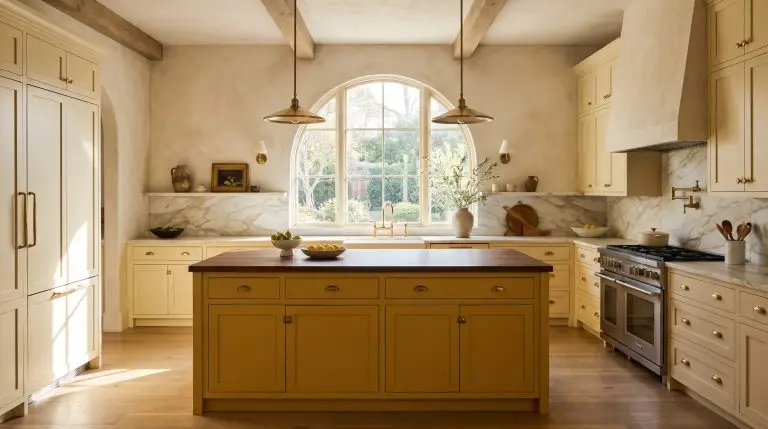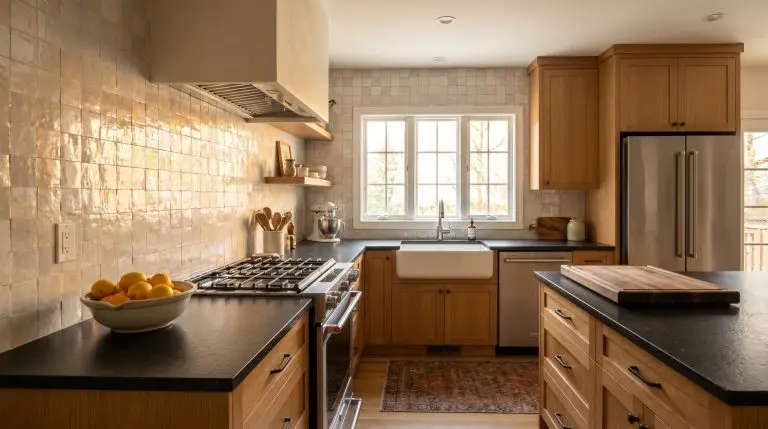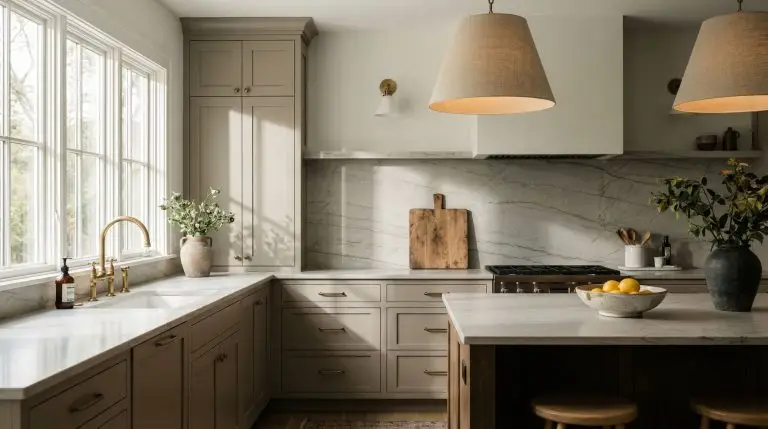
Designing a transitional kitchen requires navigating a razor-thin line between clinical and antiquated. A stark, ultra-modern culinary laboratory lacks human warmth, while a heavy, ornate build feels painfully dated before the final coat of paint even cures. This paralyzing trend anxiety stems from a fundamental misunderstanding of stylistic blending. A successful transitional space is not a haphazard collision of old and new elements; it is an exercise in calculated friction.
Master designers rely exclusively on the 70/30 Tension Metric to achieve equilibrium. This proprietary formula dictates that the room must establish a dominant baseline—typically 70% clean, contemporary architectural lines—and intentionally disrupt it with 30% soulful, heritage materials like handmade zellige tile or aged metals. Before examining the micro-applications of your cabinetry and stone, understanding the broader philosophy of Transitional interior design is paramount. The alchemy lies in the tension, forcing contrasting aesthetics to speak the same sophisticated visual language.
The Core Rule of Modern-Traditional Blending
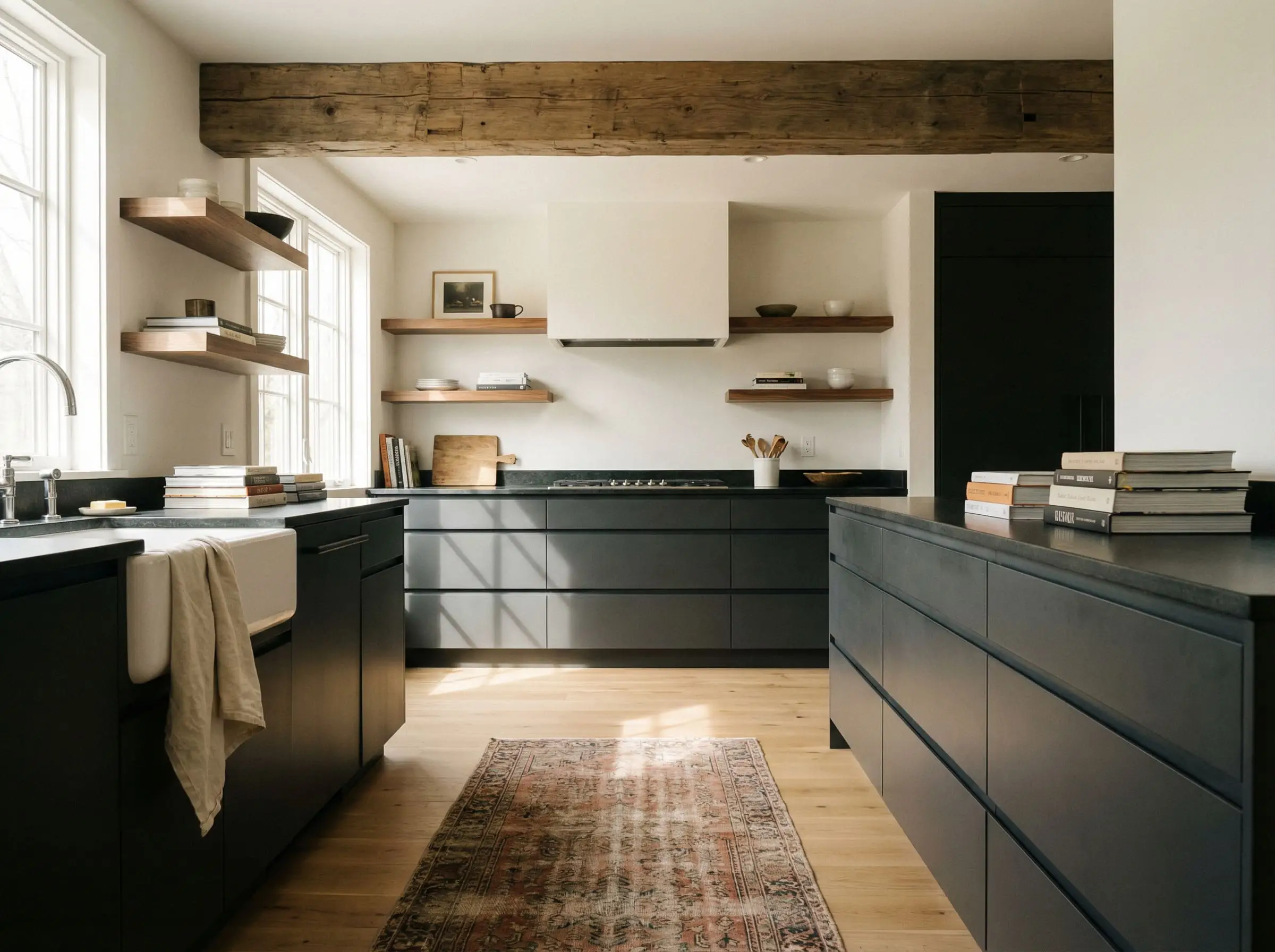
The cornerstone of high-end design is deliberate material juxtaposition. If every element in a room shares the exact same historical origin, the space falls flat. When the physical architecture leans heavily traditional—such as deeply recessed paneling or thick crown molding—the hardware must introduce a sharp, linear modernity to slice through the visual weight. Conversely, if your foundation consists of flat-panel European slab doors and hidden integrated appliances, the plumbing fixtures and lighting must inject deep, historic resonance.
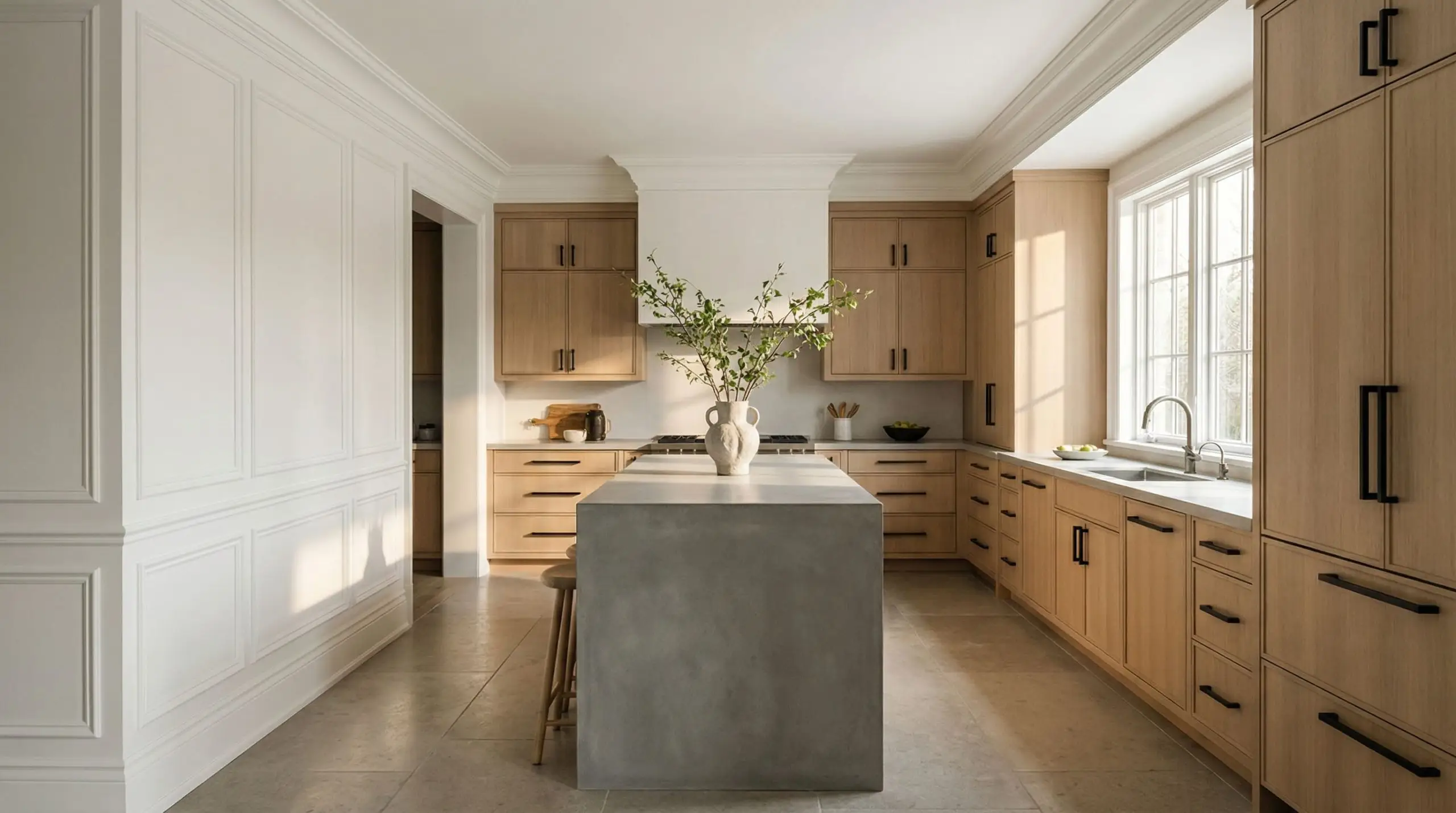
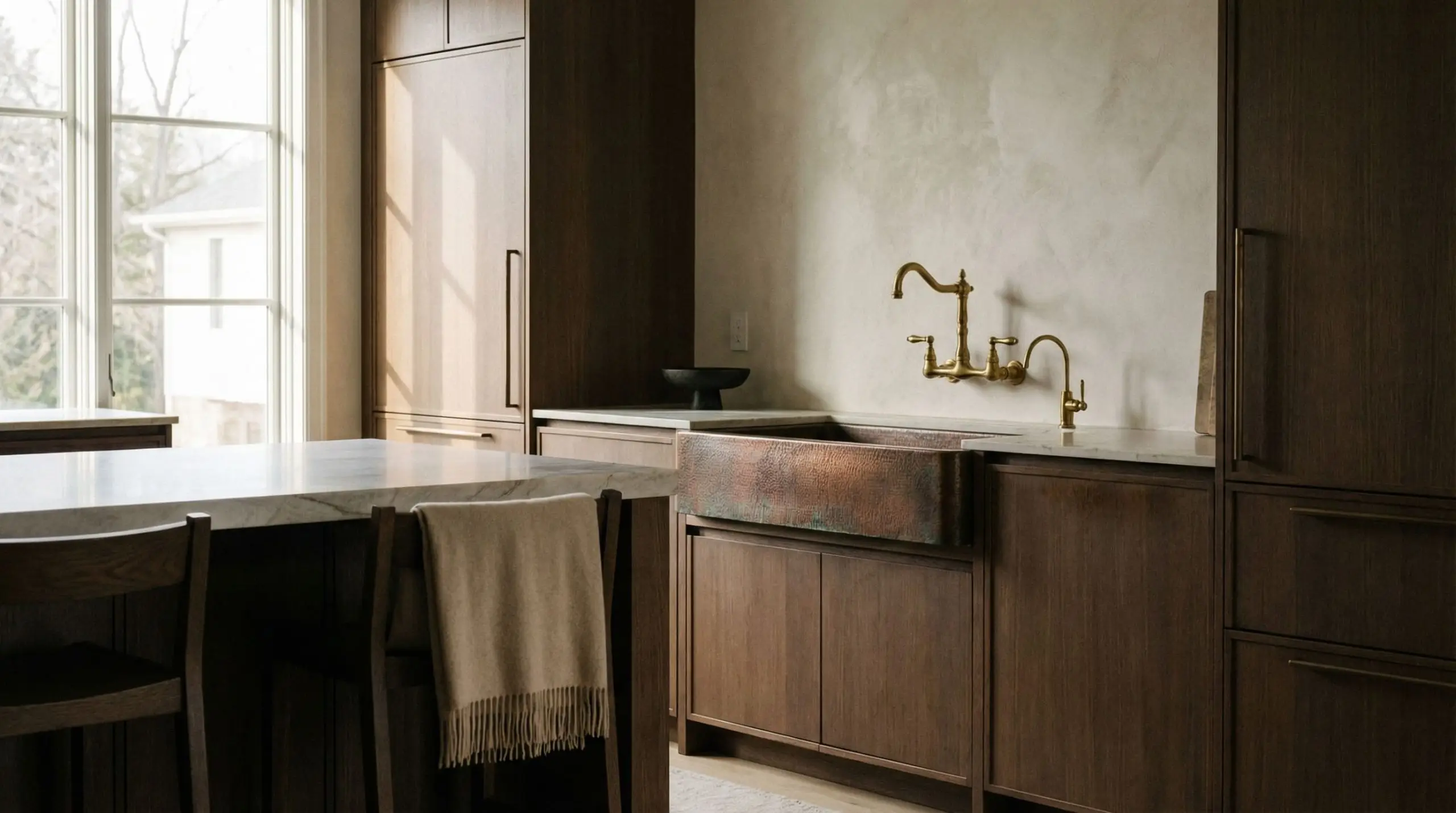
Furthermore, the transitional aesthetic entirely rejects the frigid, high-LRV (Light Reflectance Value) white palettes of the previous decade. Stark whites read as undeniably modern and sterile, immediately breaking the illusion of a lived-in, generational space. Instead, the industry has universally shifted toward muddy neutrals as the foundational canvas.
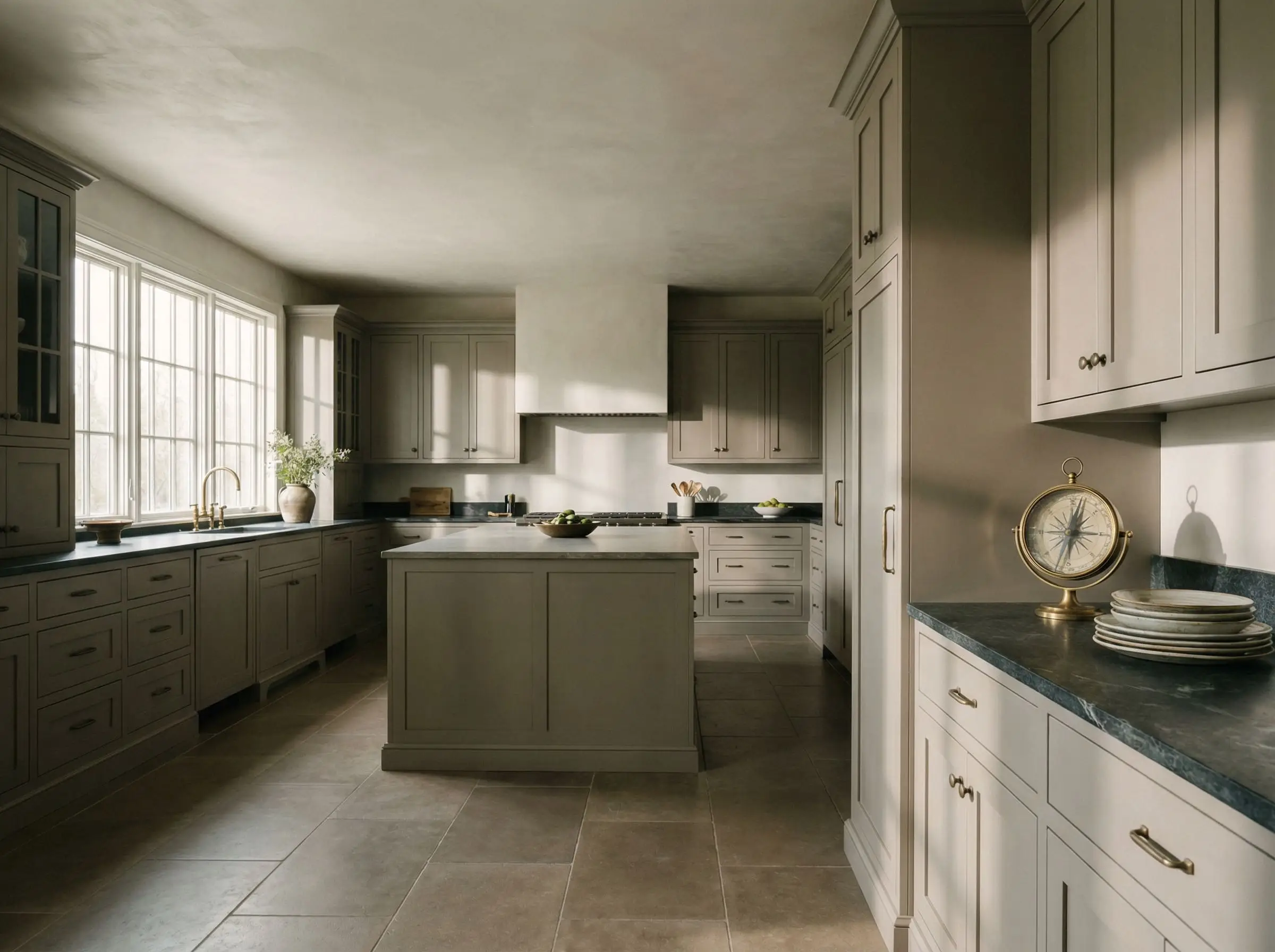
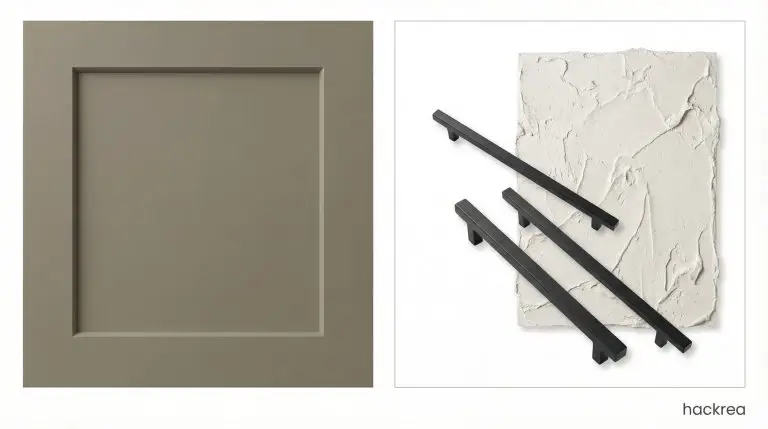
Never match the era of your hardware to the era of your cabinetry. If the wood profile is steeped in traditional artisanship, the metal layered on top of it must be ruthlessly contemporary. This intentional friction is what generates the bespoke, curated atmosphere of a true transitional space.
Hackrea Stylist’s Golden Rule
Cabinetry & Color Palette Ideas
Transitional kitchen cabinets dictate a staggering 80% of your room’s overall visual weight. Because this foundational layer consumes the majority of the spatial footprint, your exact cabinet profile and paint undertones will instantly determine the success or failure of the aesthetic:
Idea 1: The “Slim Shaker” Cabinet Profile
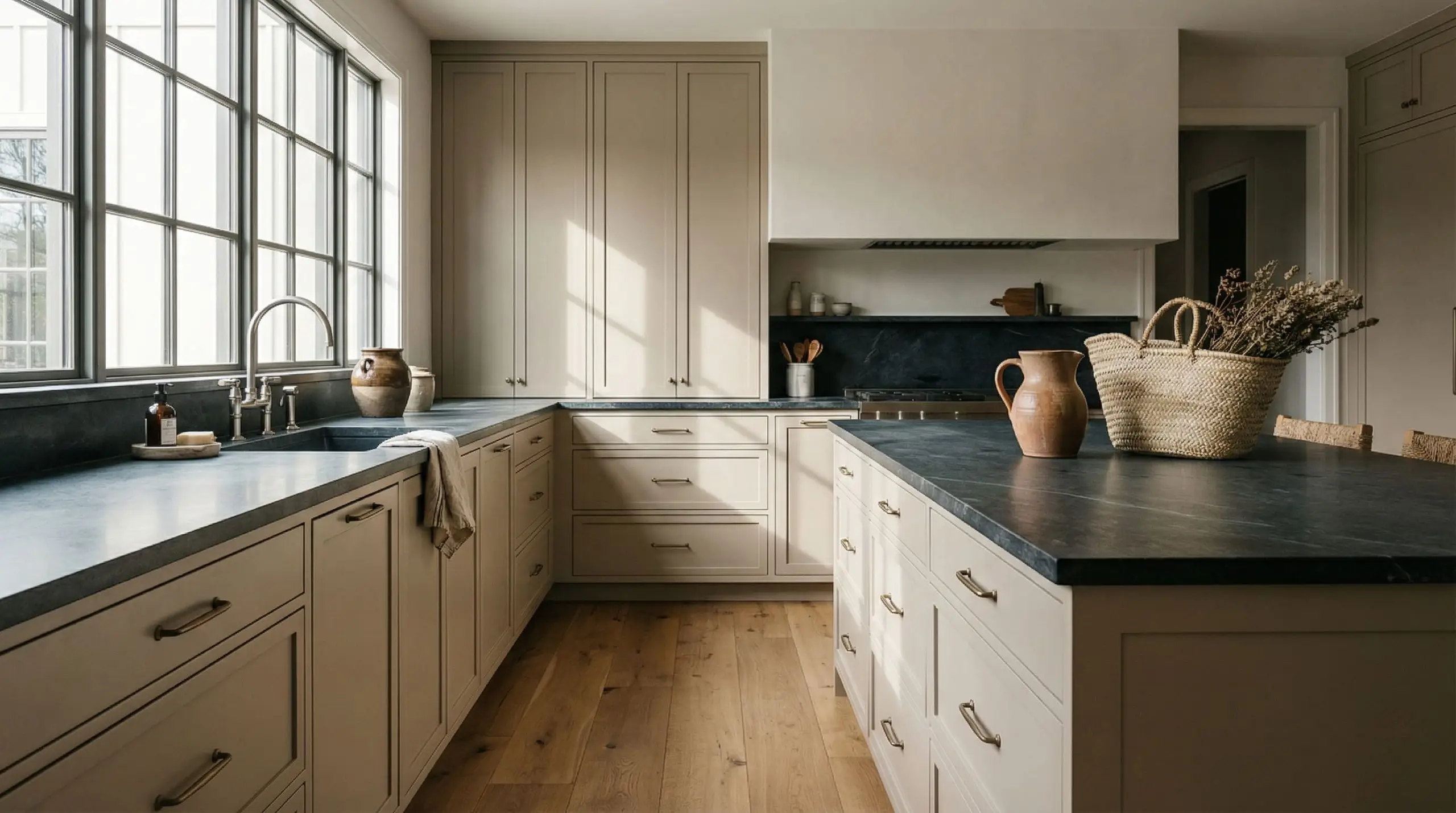
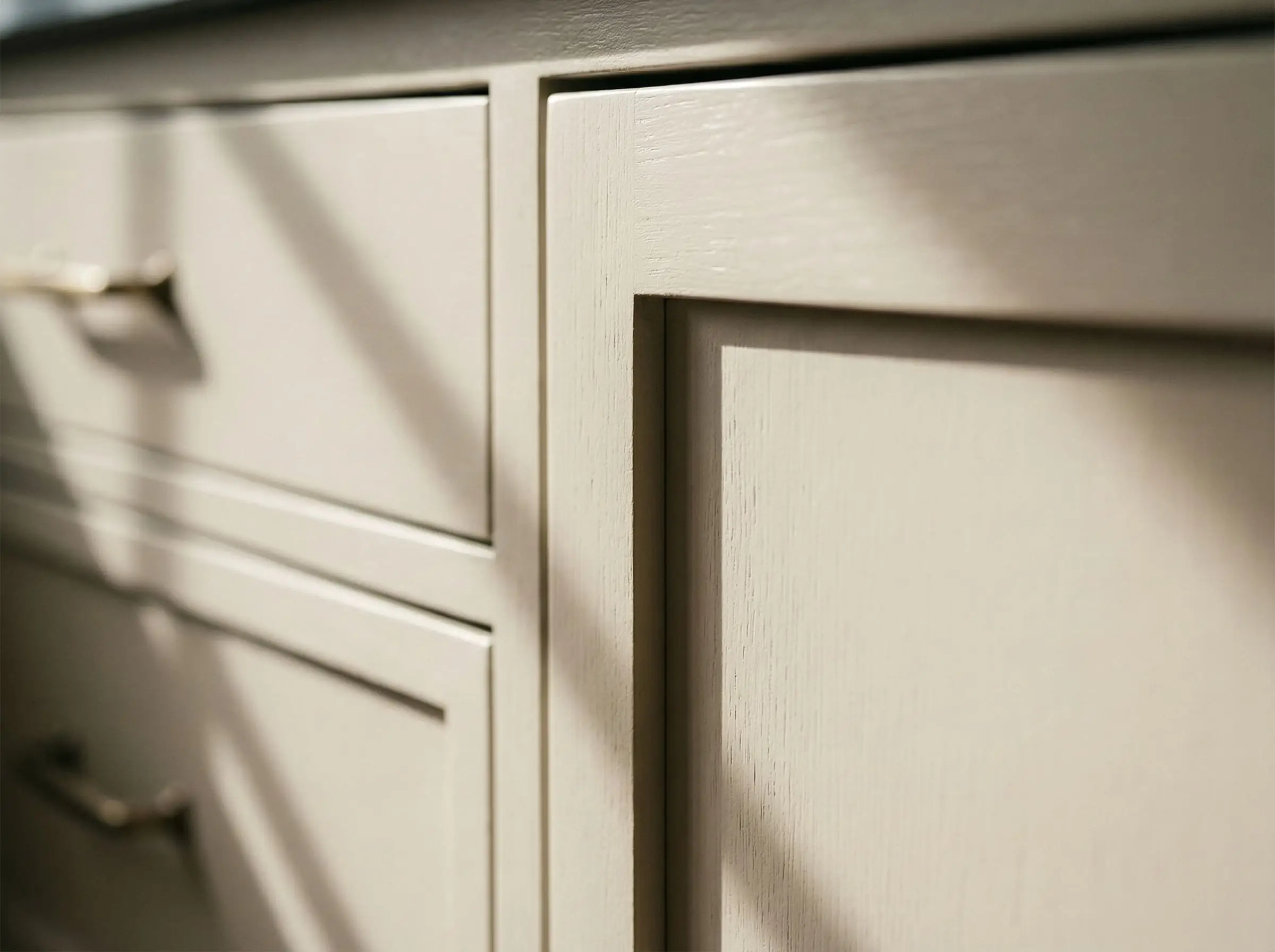
The standard, bulky shaker cabinet has oversaturated the market, often skewing too heavily toward a rustic farmhouse vernacular. To correct this, elite fabricators have engineered the Slim Shaker—also known throughout the industry as the micro-shaker. This refined door style features a dramatically narrowed stile and rail frame, typically measuring between a mere half-inch to one inch in width.
This microscopic adjustment completely alters the architectural language of the room. It acknowledges heritage craftsmanship without succumbing to it.
Why It Works:
Idea 2: Mushroom, Putty, and “Muddy” Neutral Paints
The quickest way to ruin a transitional design is to bathe it in a stark, cool-toned white. Frigid whites reflect light harshly, leaning dangerously into sterile modernity and stripping the room of its organic essence. To achieve authentic high-end nuance, the palette must shift toward muddy neutral cabinets.
These are complex, heavily pigmented tones that refuse to be categorized. They are the chameleons of color theory, shifting effortlessly between gray, beige, and subtle green depending on the time of day and the angle of the sun. They ground rigid modern architecture with an undeniable, earthy warmth.
When specifying paint, look directly to the elite formulations:
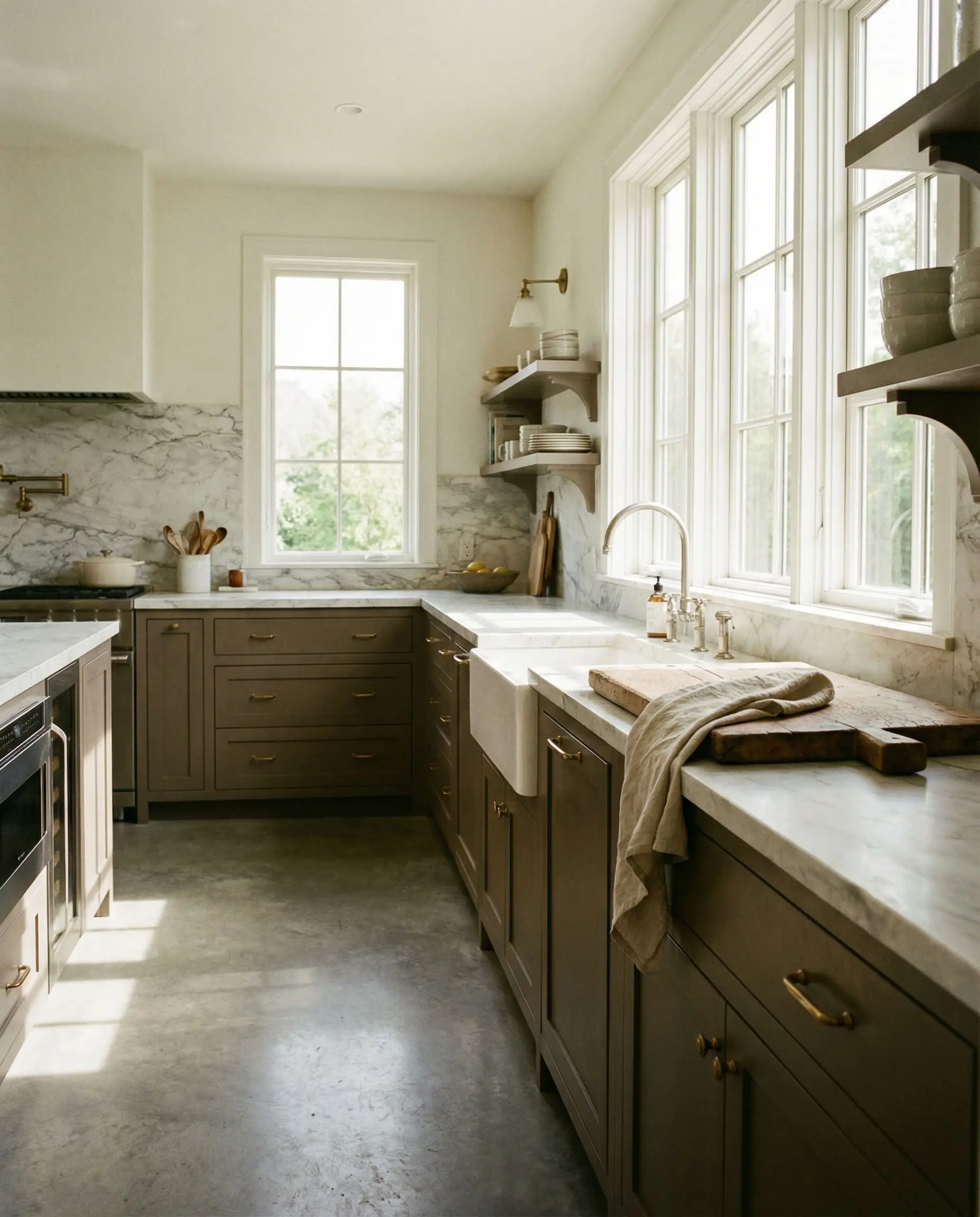
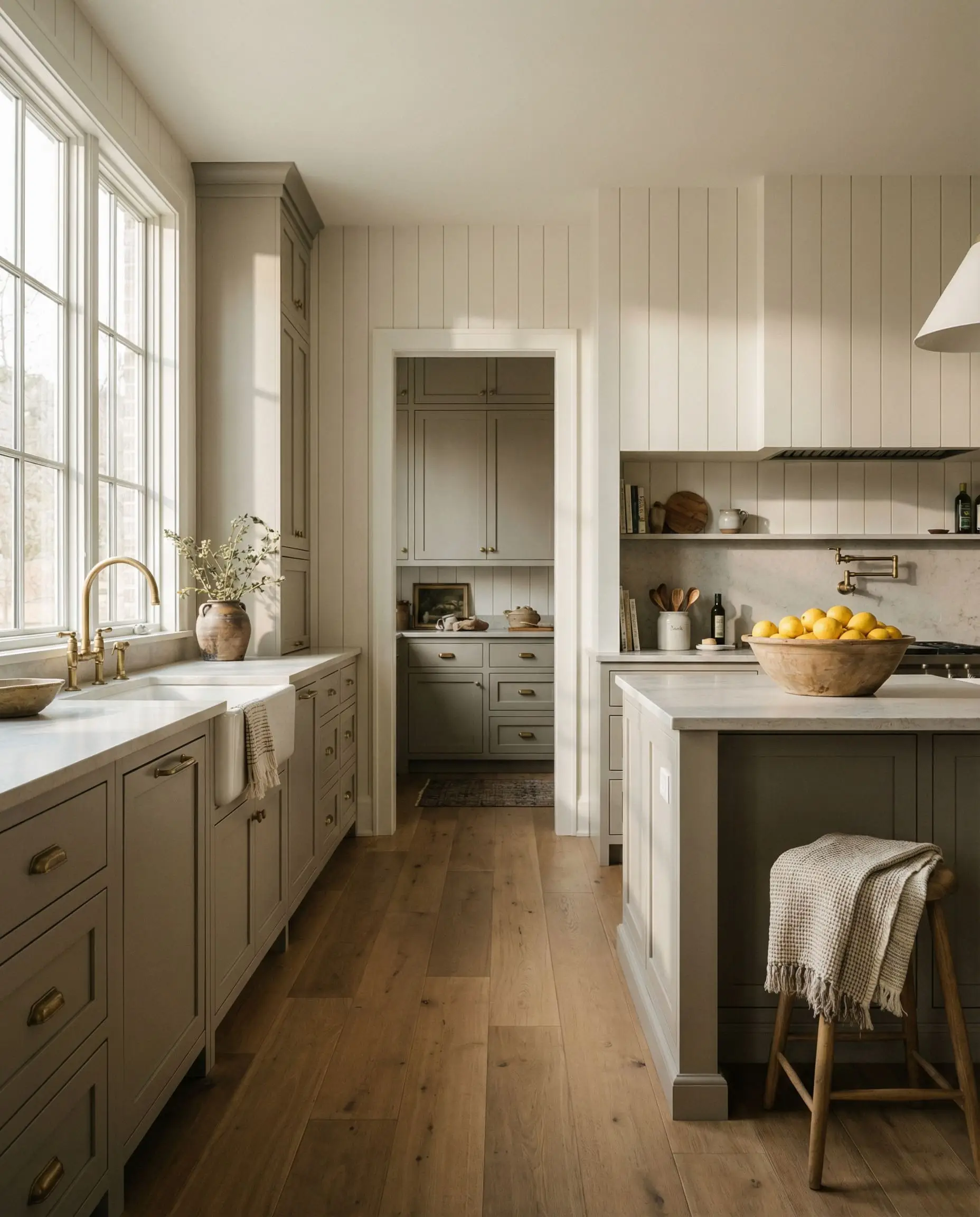
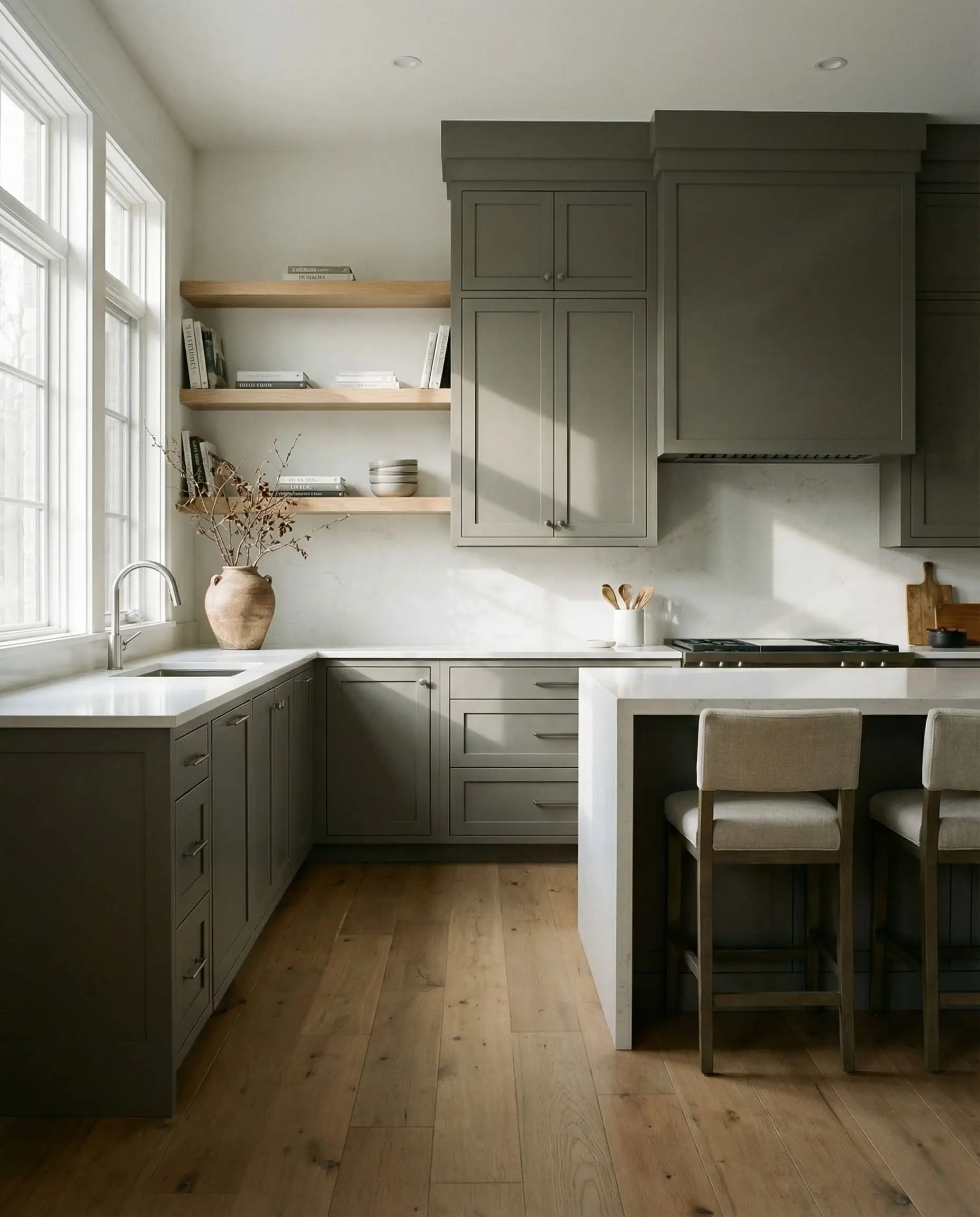
Muddy neutrals are highly reactive. You must test these specific tones on large swatches in your exact space, observing how natural light pulls their underlying green or violet pigments at high noon versus dusk.
Hackrea Stylist’s Secret
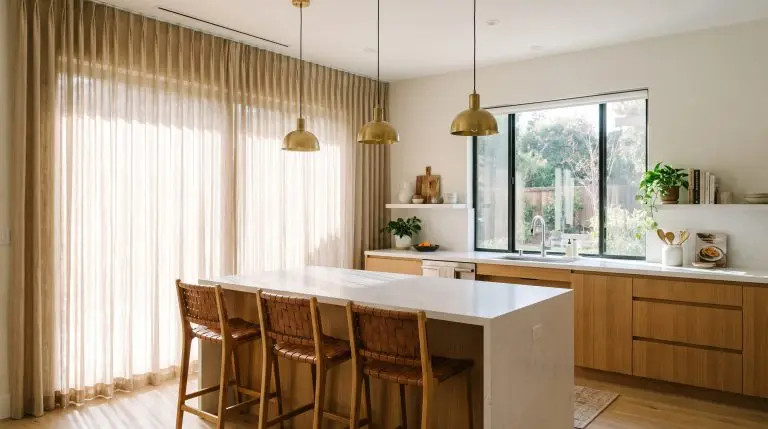
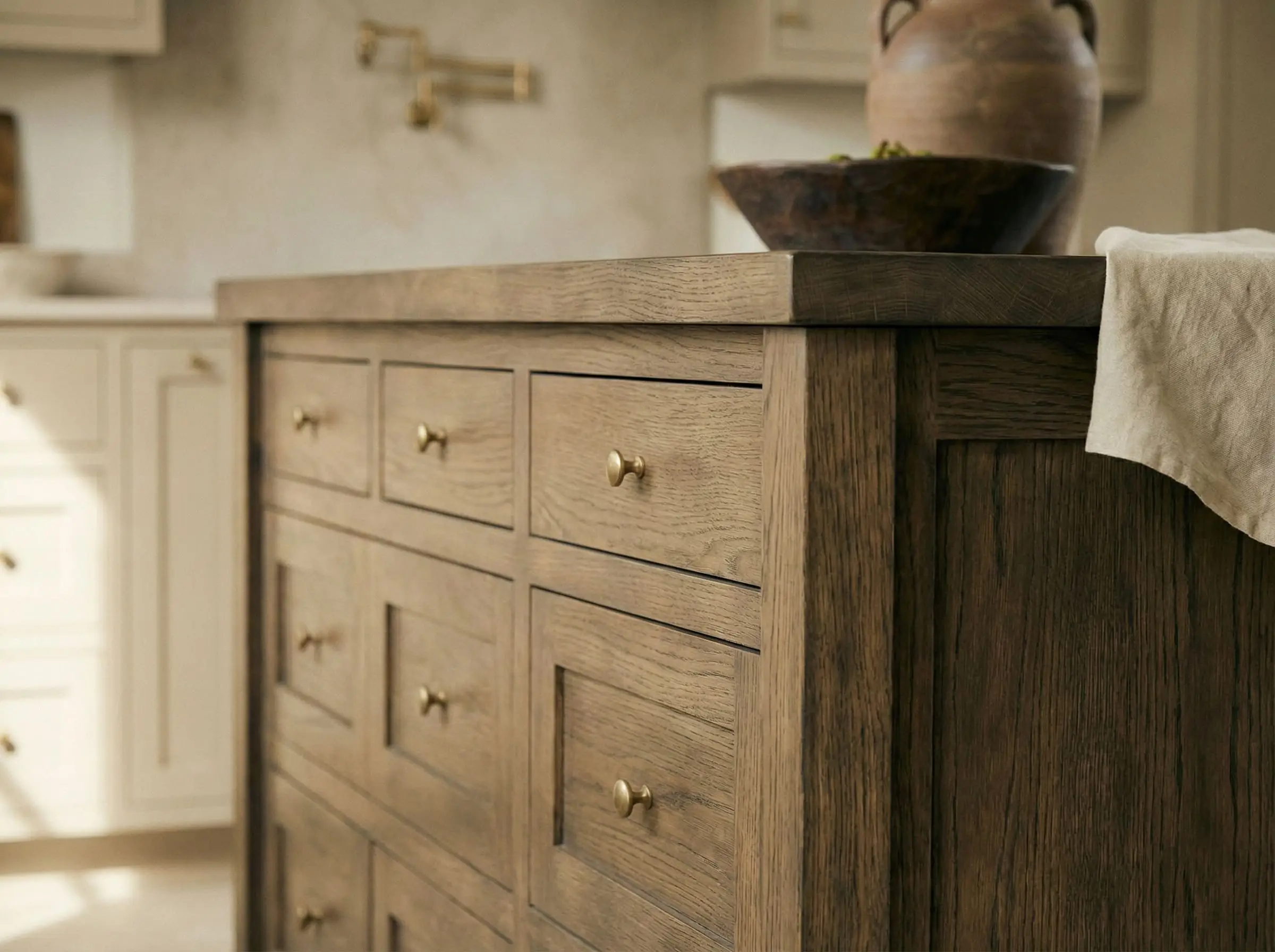
Idea 3: Rift-sawn Oak Islands with Inset Cabinetry
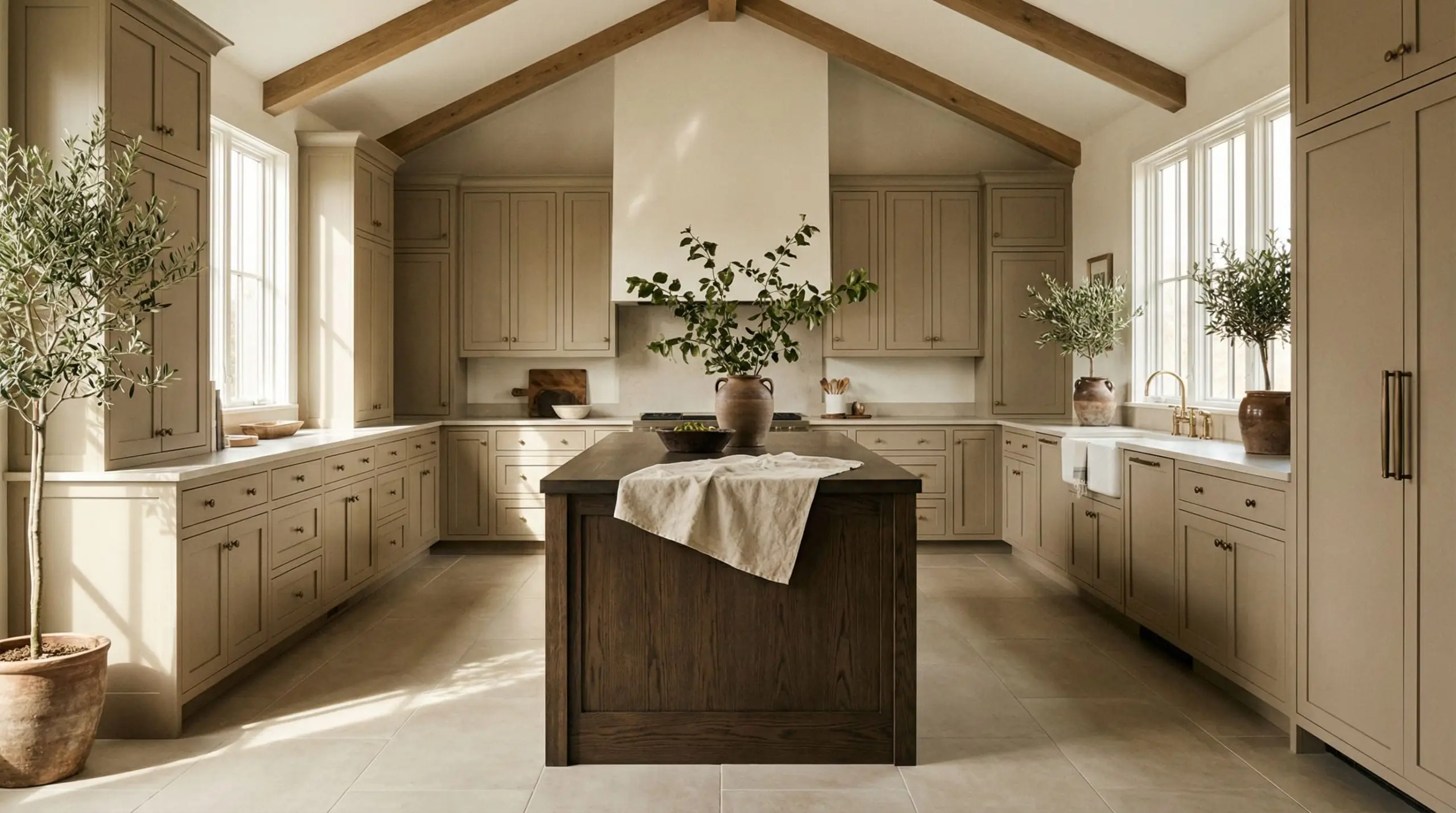
A monochromatic kitchen often lacks the necessary friction to hold the eye. To inject immediate tactile intrigue, pair your painted muddy neutral perimeter with a highly contrasting center island constructed of stained, rift-sawn white oak. The execution of this pairing is highly specific. The perimeter must utilize inset cabinetry, where the door sits perfectly flush inside the face frame.
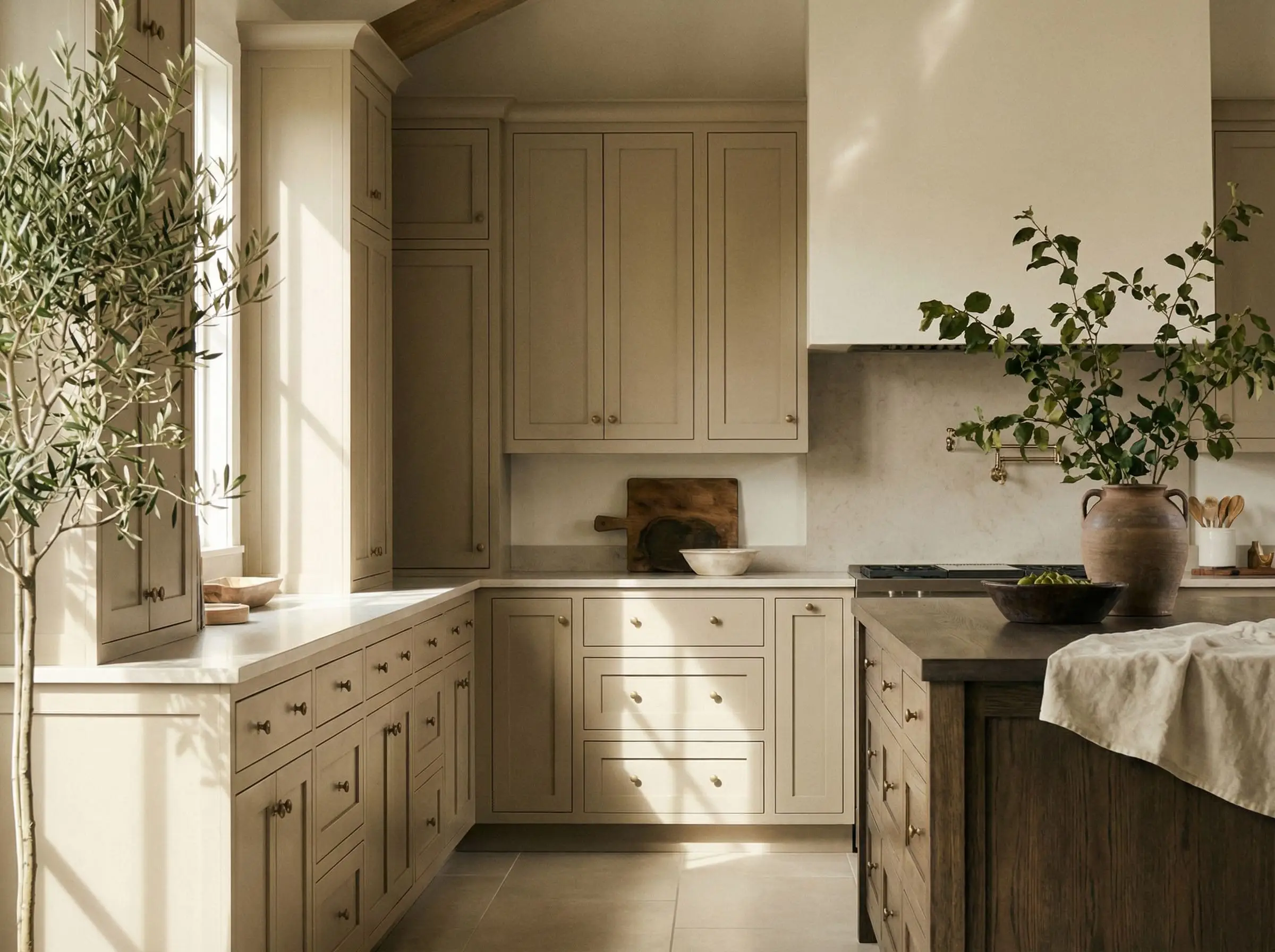
This intricate construction method is the ultimate hallmark of bespoke, old-world traditional artisanship. To counter that heavy heritage, the center island’s rift-sawn oak introduces a ruthlessly clean, modern linear grain, entirely free of the chaotic, swirling knots found in standard plain-sawn lumber. The resulting juxtaposition is a masterpiece of material science: the rigid, bespoke geometry of the painted inset frame directly challenging the organic, streamlined warmth of the raw timber.
Hardware & Fixture Ideas
If cabinetry is the architectural foundation, hardware and plumbing act as the crucial jewelry that calibrates the transitional scale.
This is the exact layer where you manipulate the 70/30 Tension Metric, forcefully injecting history into a brand-new build. While this article focuses on specific hardware selections, you can find a comprehensive breakdown on how to mix metal hardware effectively across a room.
Idea 4: Unlacquered Brass Hardware on Modern Profiles
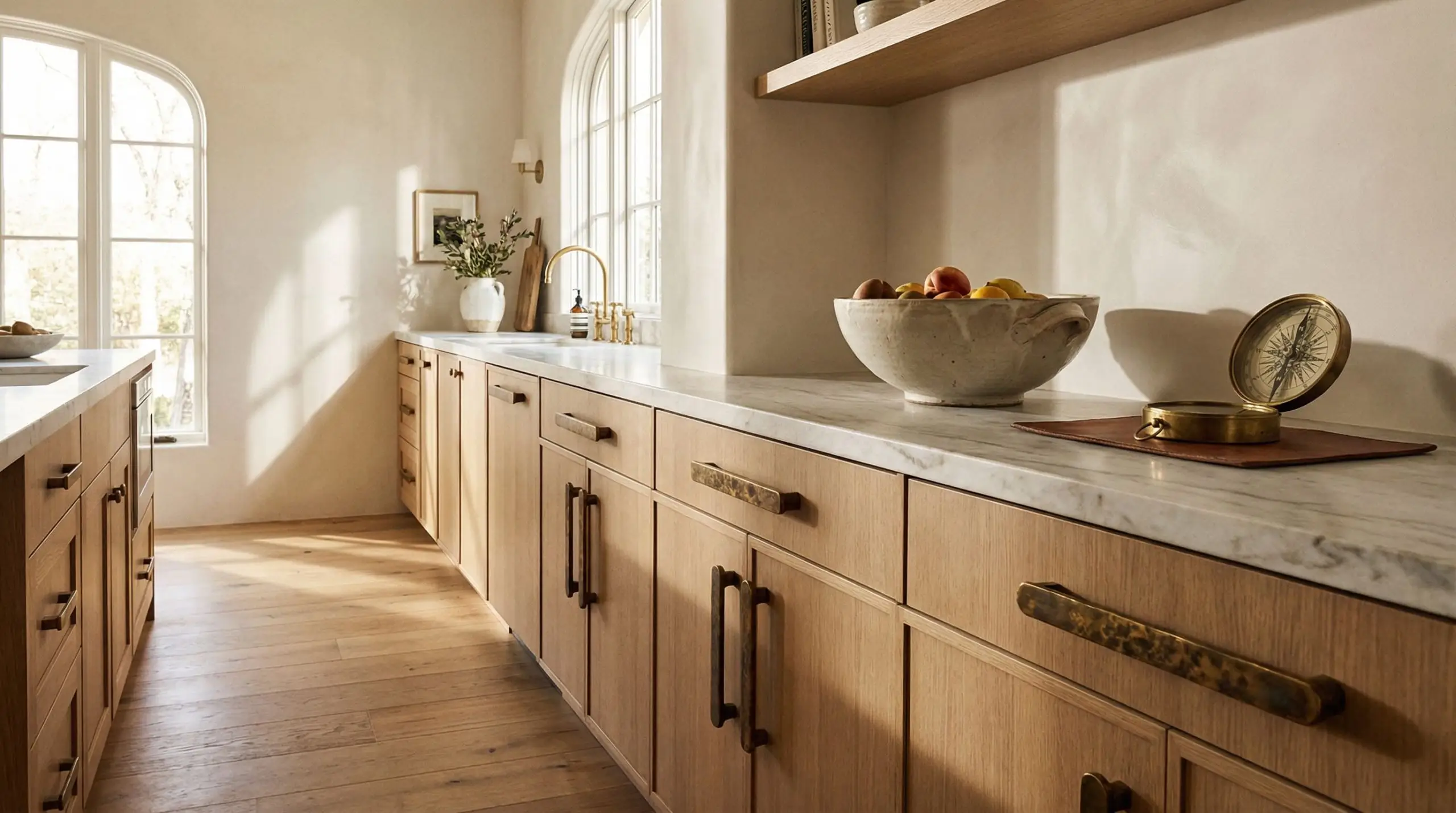
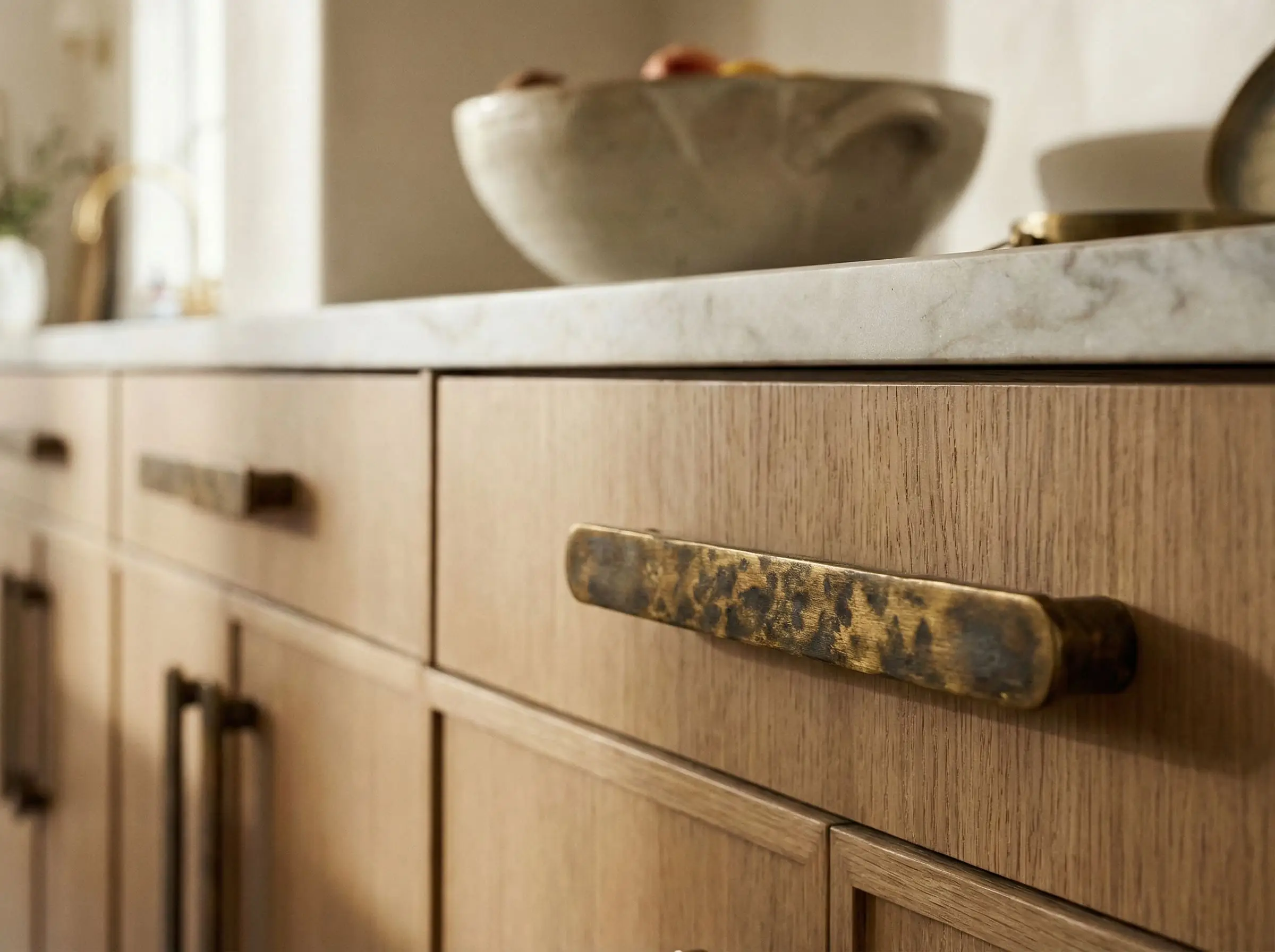
Perfect, factory-sealed metals have no place in a deeply curated space. To bridge the gap between contemporary and classic, you must specify unlacquered brass. This is a highly reactive living finish that arrives gleaming but intentionally tarnishes, darkening into a rich, mottled brown-gold patina as it reacts to the oils in your hands and the oxygen in the room.
The stylistic power of unlacquered brass is unlocked entirely through juxtaposition. When you mount these historically heavy, oxidized pulls onto a streamlined, micro-shaker or flat-panel oak drawer, the friction is palpable. The stark, sterile lines of the modern wood profile are instantly grounded by the authentic patina of the metal.
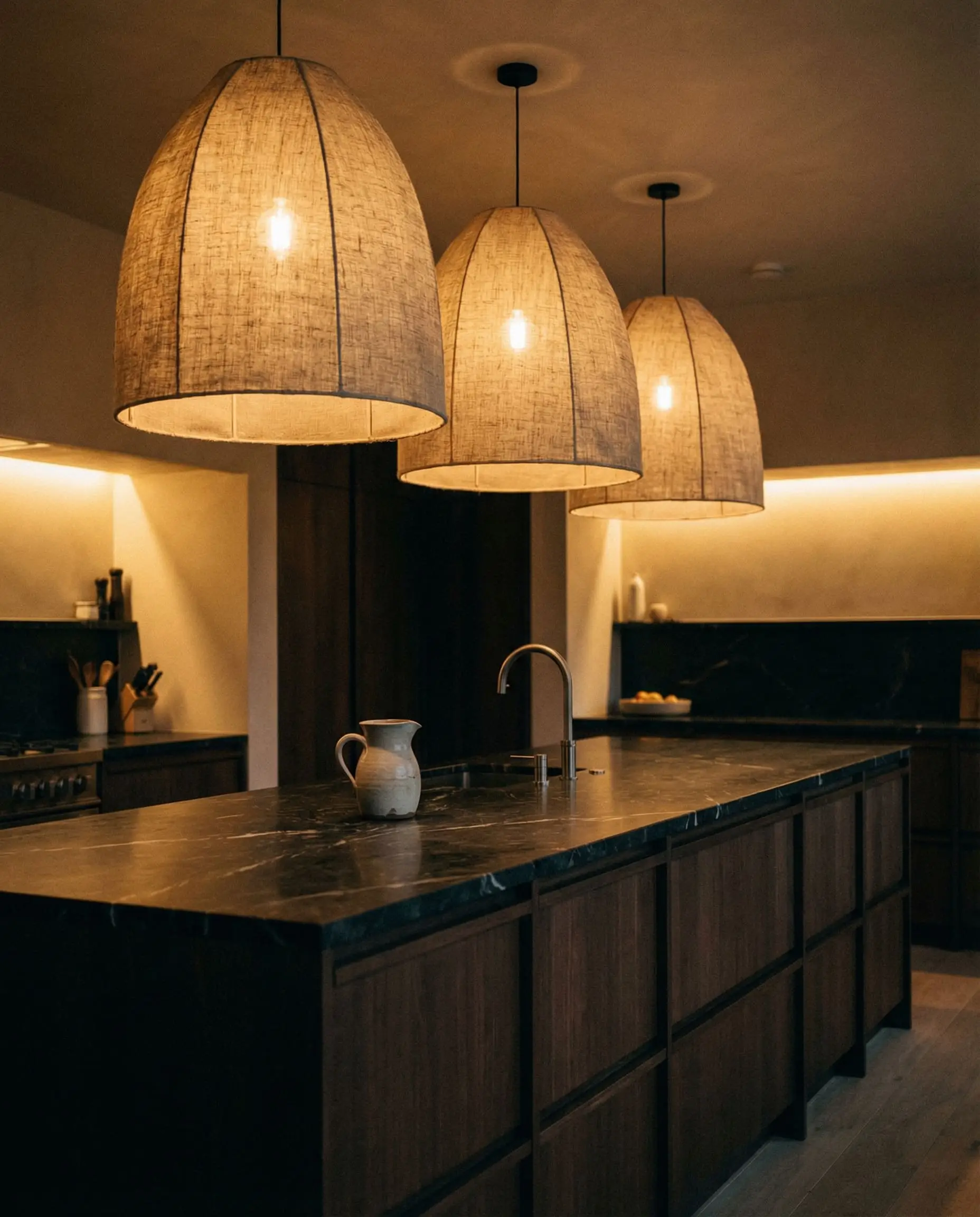
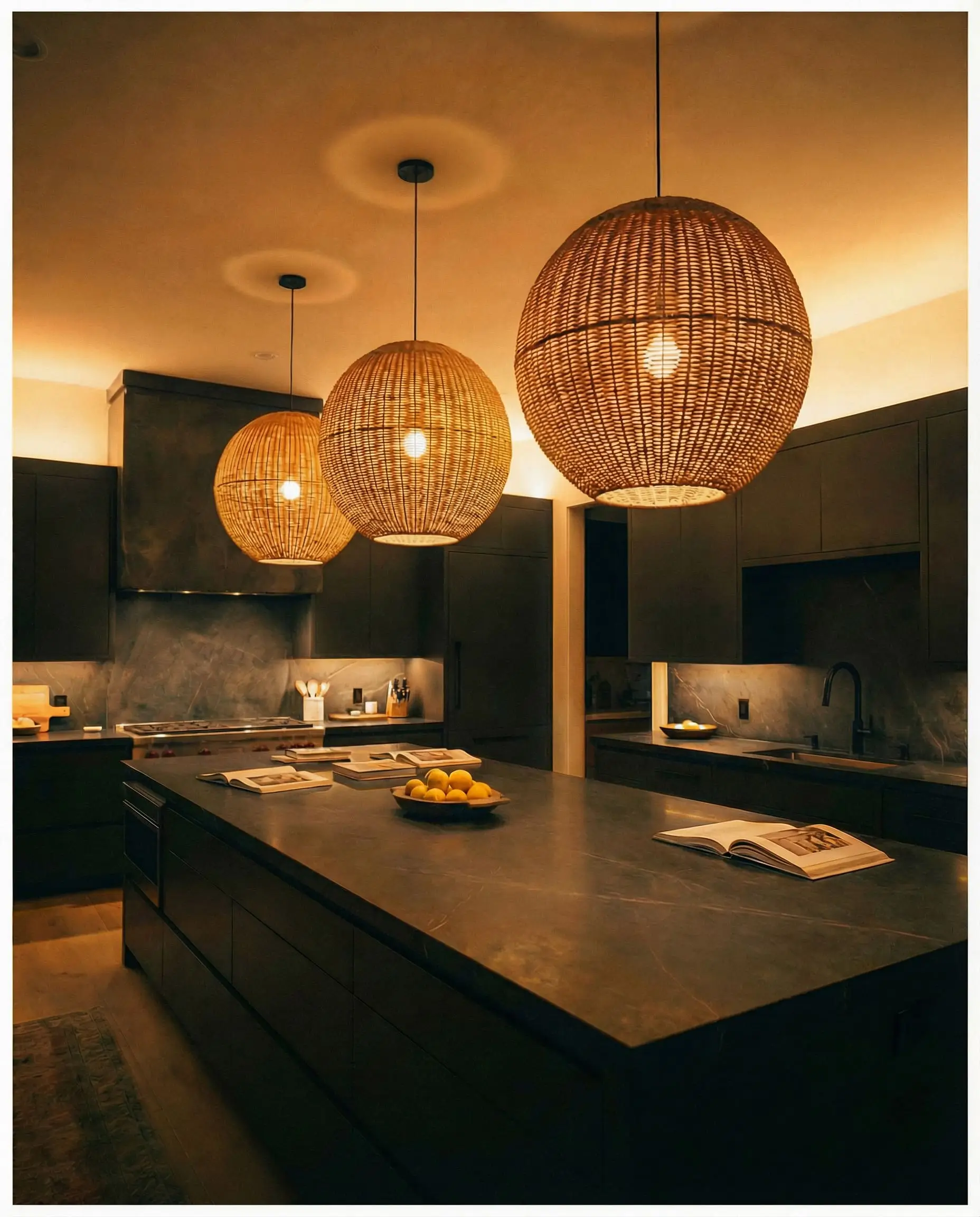
Idea 5: Oversized Fabric or Plaster Pendant Lighting
Transitional kitchen lighting must actively combat the vast expanses of hard, cold materials—rigid cabinetry, dense stone slabs, and sharp structural angles. If the lighting plan introduces even more glass and harsh metal, the visual weight becomes aggressively clinical.
Hackrea Stylist’s Secret: Use the upper quadrant of the room to aggressively soften the architecture below.
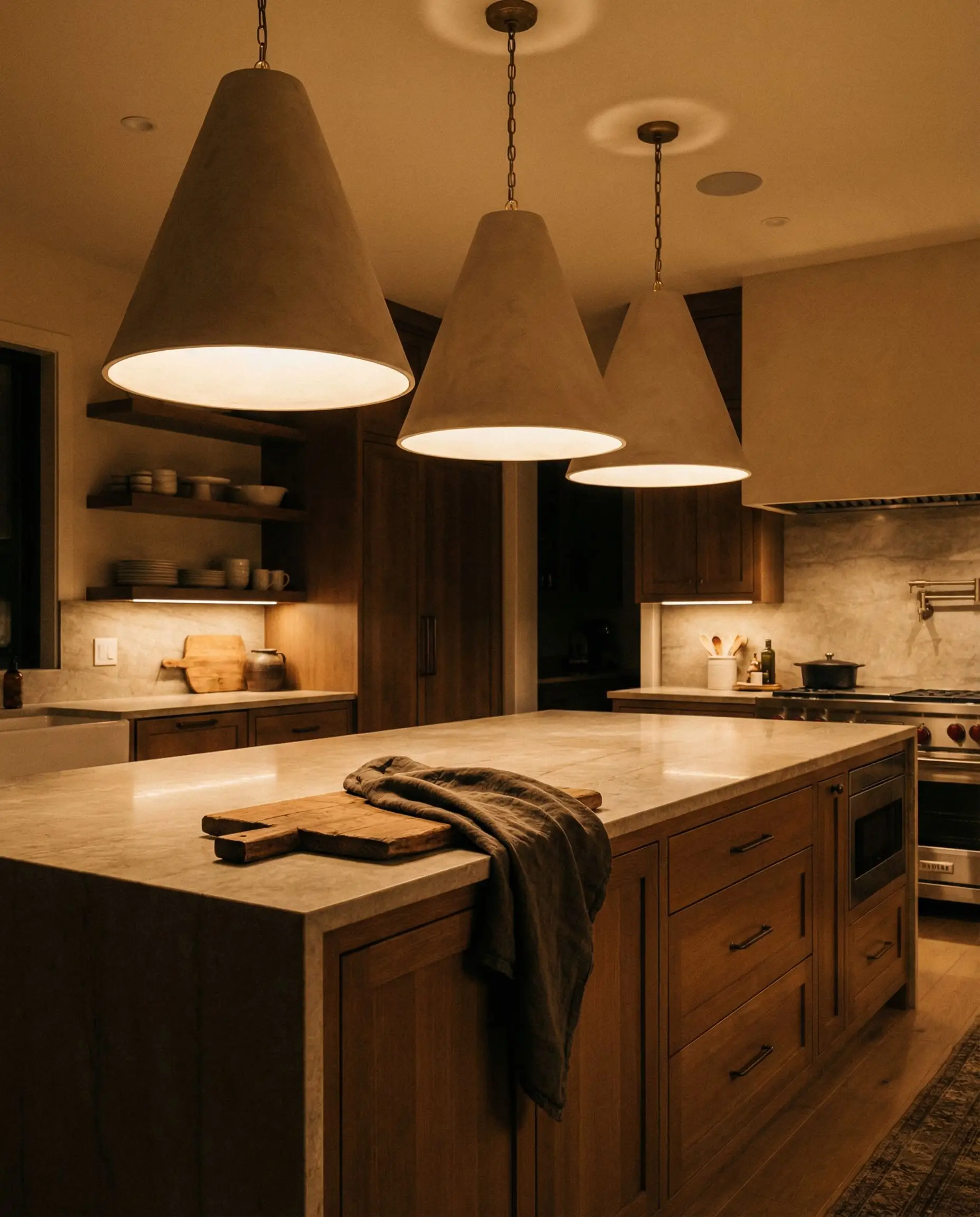
Suspend oversized, conical pendants directly over the island, ensuring the fixtures are constructed from deeply organic, textured materials. Hand-troweled plaster, draped heavy linen, or tightly woven rattan instantly diffuse the harshness of the room. These massive, tactile domes inject a crucial dose of traditional softness, drawing the eye upward and breaking the relentless linearity of the modern lower-half. The sheer scale of the oversized pendants provides modern drama, while their raw materiality supplies the heritage.
Idea 6: The Bridge Faucet Revival
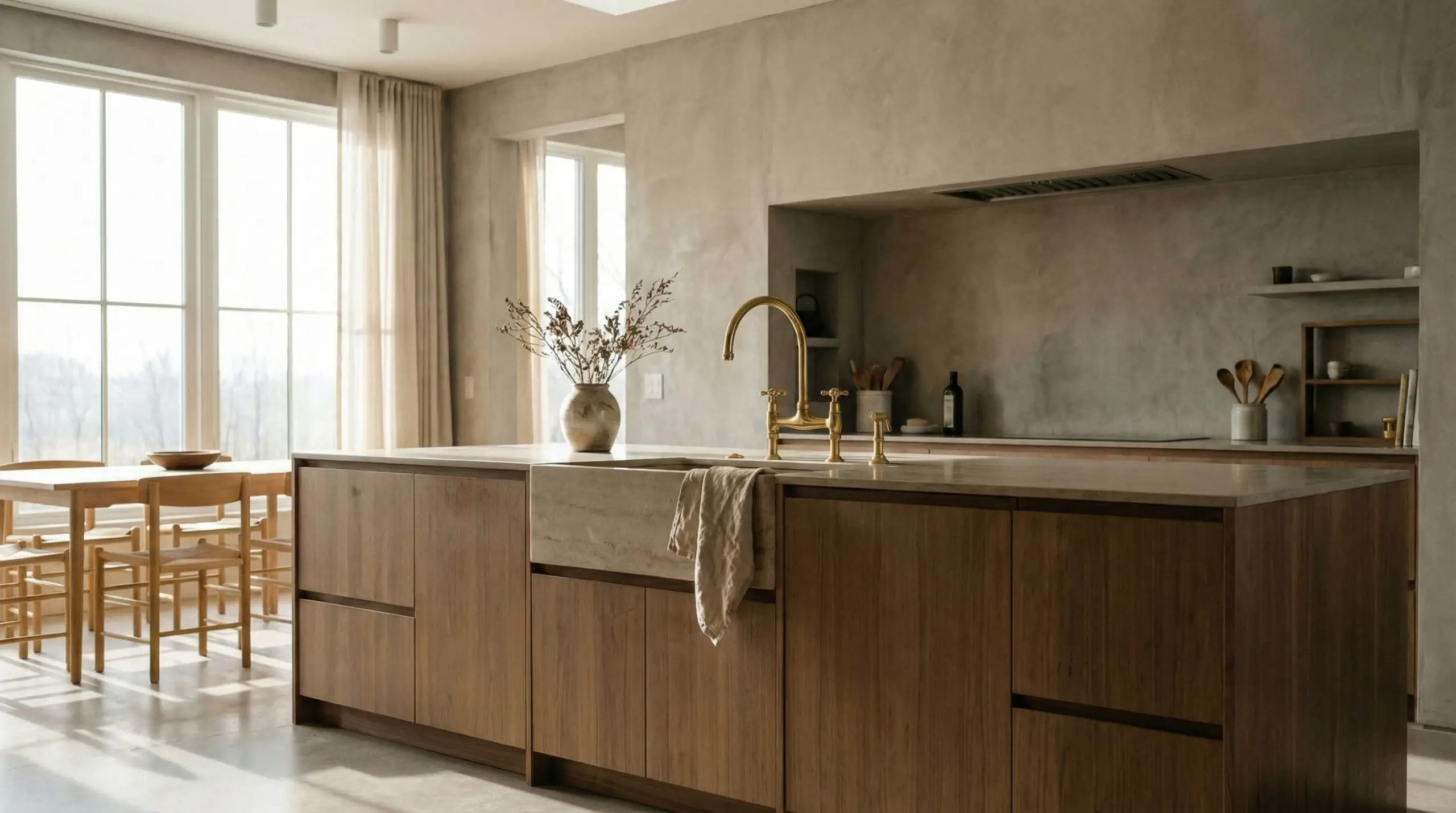
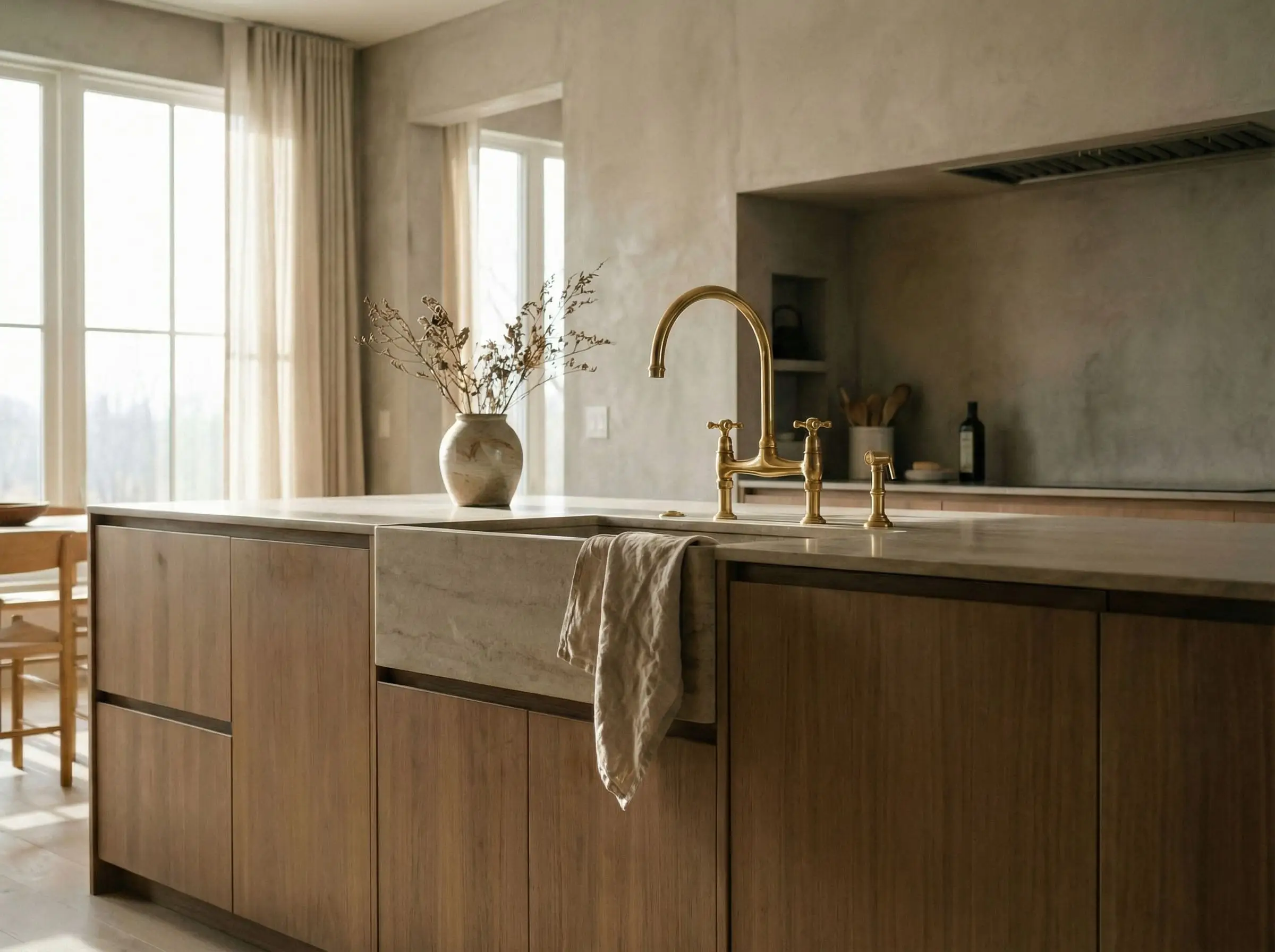
The plumbing zone is a prime opportunity for shape-contrast. Discard the sleek, single-handle pull-down faucets of the ultra-modern era and embrace the classic, two-handle bridge faucet. Mount this highly ornate, curving fixture directly above a hyper-modern, zero-radius square-edge undermount sink. The sweeping, traditional architecture of the exposed bridge pipe creates a striking, sculptural focal point when set against the razor-sharp, brutalist angles of the modern basin beneath it.
Surfaces & Architecture Ideas
Countertops and integrated structural elements serve as the permanent canvas of the transitional kitchen. Because these materials are incredibly difficult to alter later, the design mandate here is seamless, undeniable luxury.
Idea 7: The Seamless Slab Backsplash
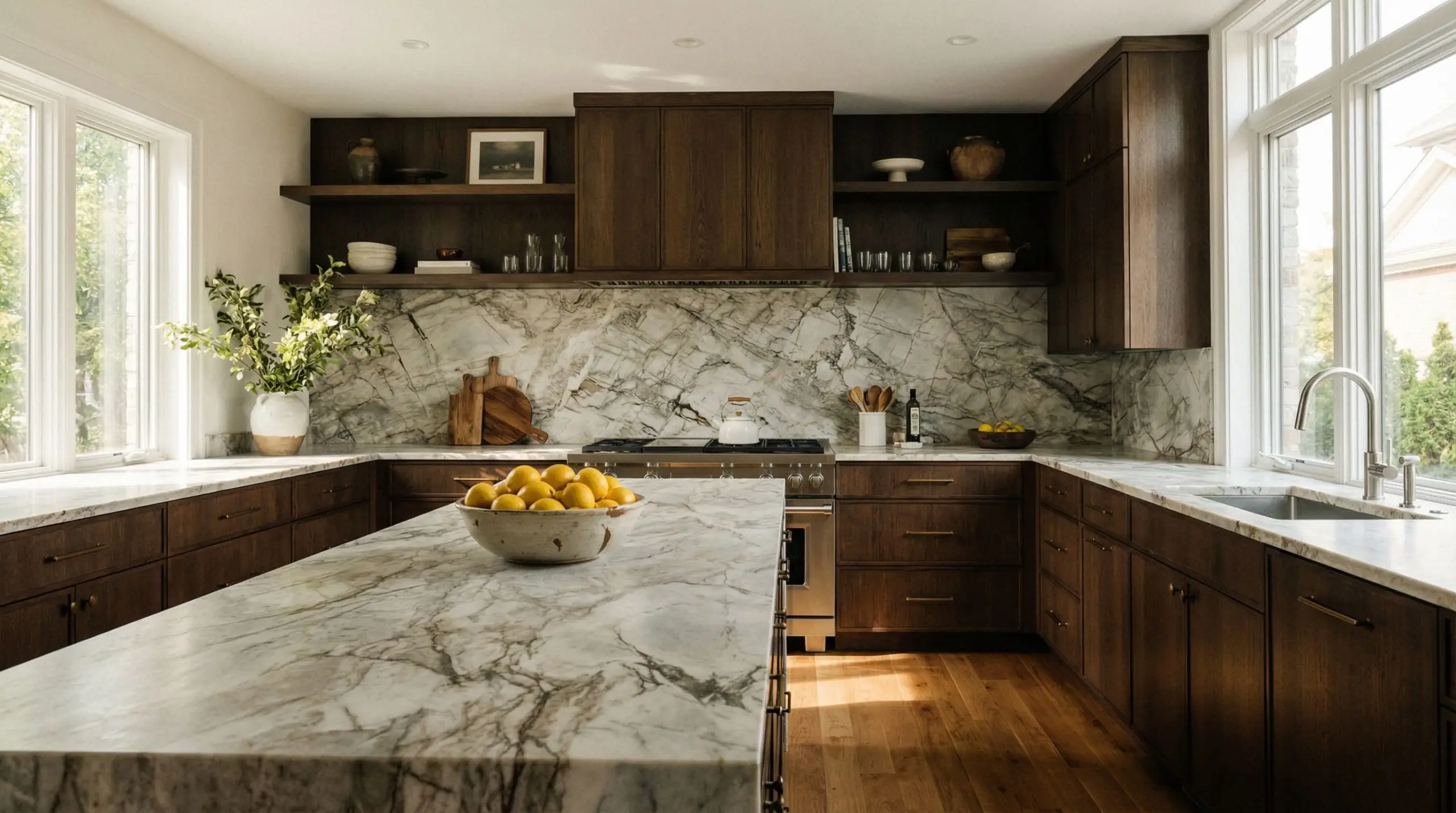
Heavily grouted, contrasting subway tile has given way to a vastly superior, high-end application. The most dominant surface trend in transitional design is the continuous, seamless slab backsplash.
Instead of breaking the visual plane with small, repetitive tiles, specify your fabricator to run the exact countertop stone directly up the vertical wall space to meet the upper cabinets or the ceiling. The material selection is critical here: heavily veined natural stones like Taj Mahal quartzite or Danby marble are essential. The chaotic, organic veining of the raw earth provides the necessary traditional soul, while the entirely grout-free, uninterrupted vertical application reads as sleek and hyper-modern.
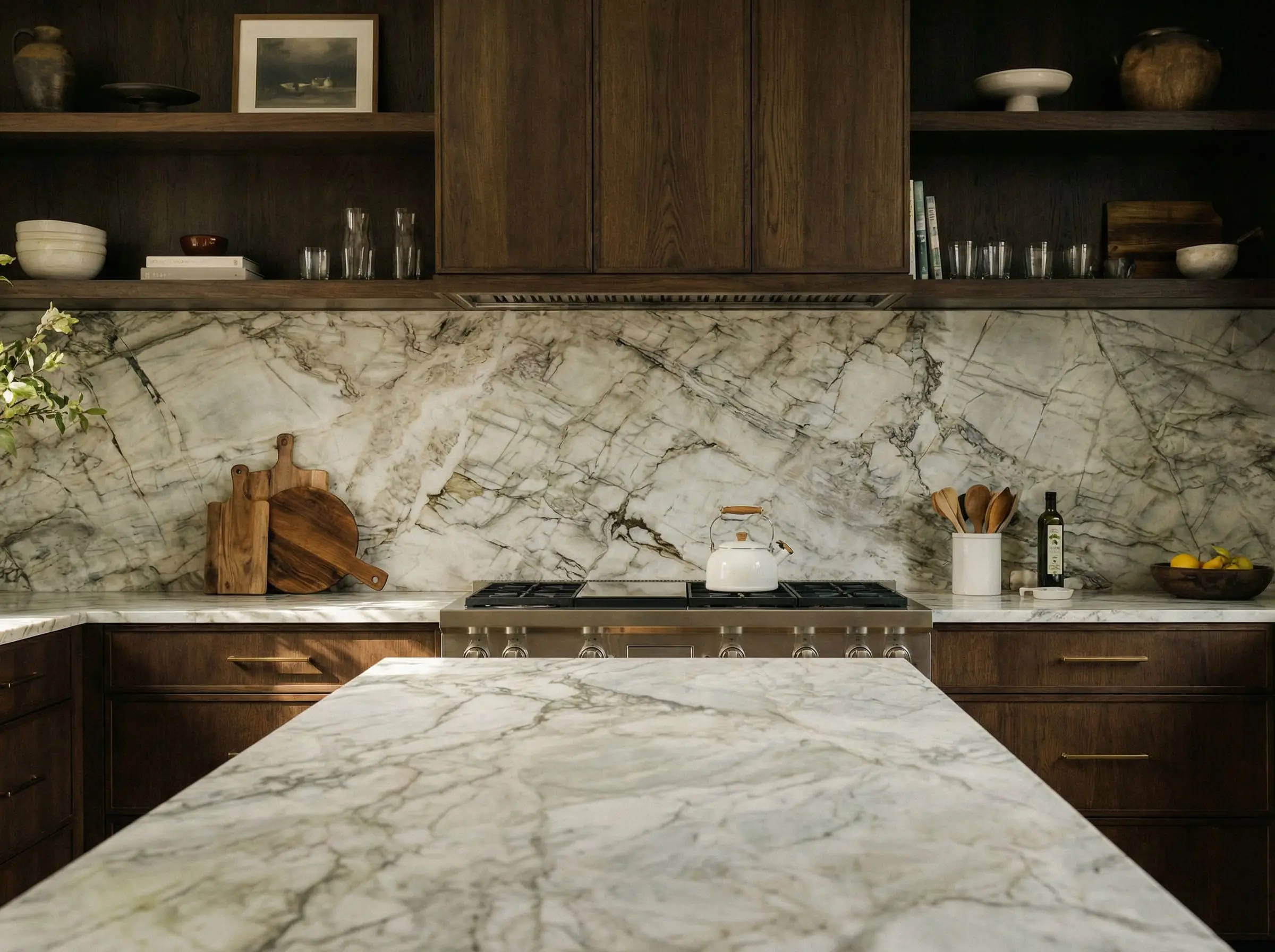
To execute this flawlessly, you must purchase sequential slabs from the same stone block. Instruct your fabricator to “book-match” or continuously vein-match the seam where the horizontal counter intersects the vertical wall slab, creating an unbroken waterfall effect.
Hackrea Pro-Tip
Idea 8: Fluted or Reeded Glass Accent Doors
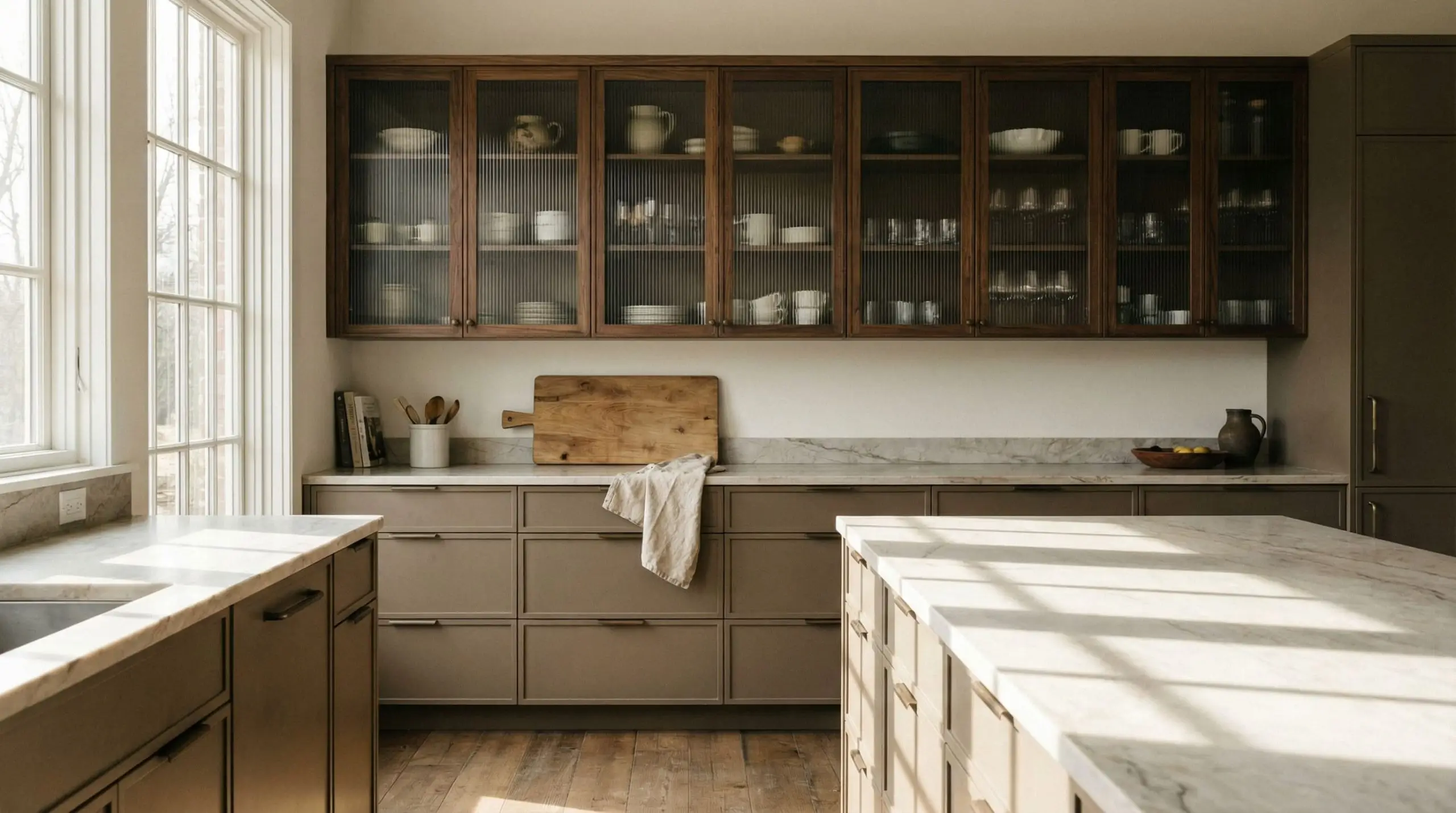
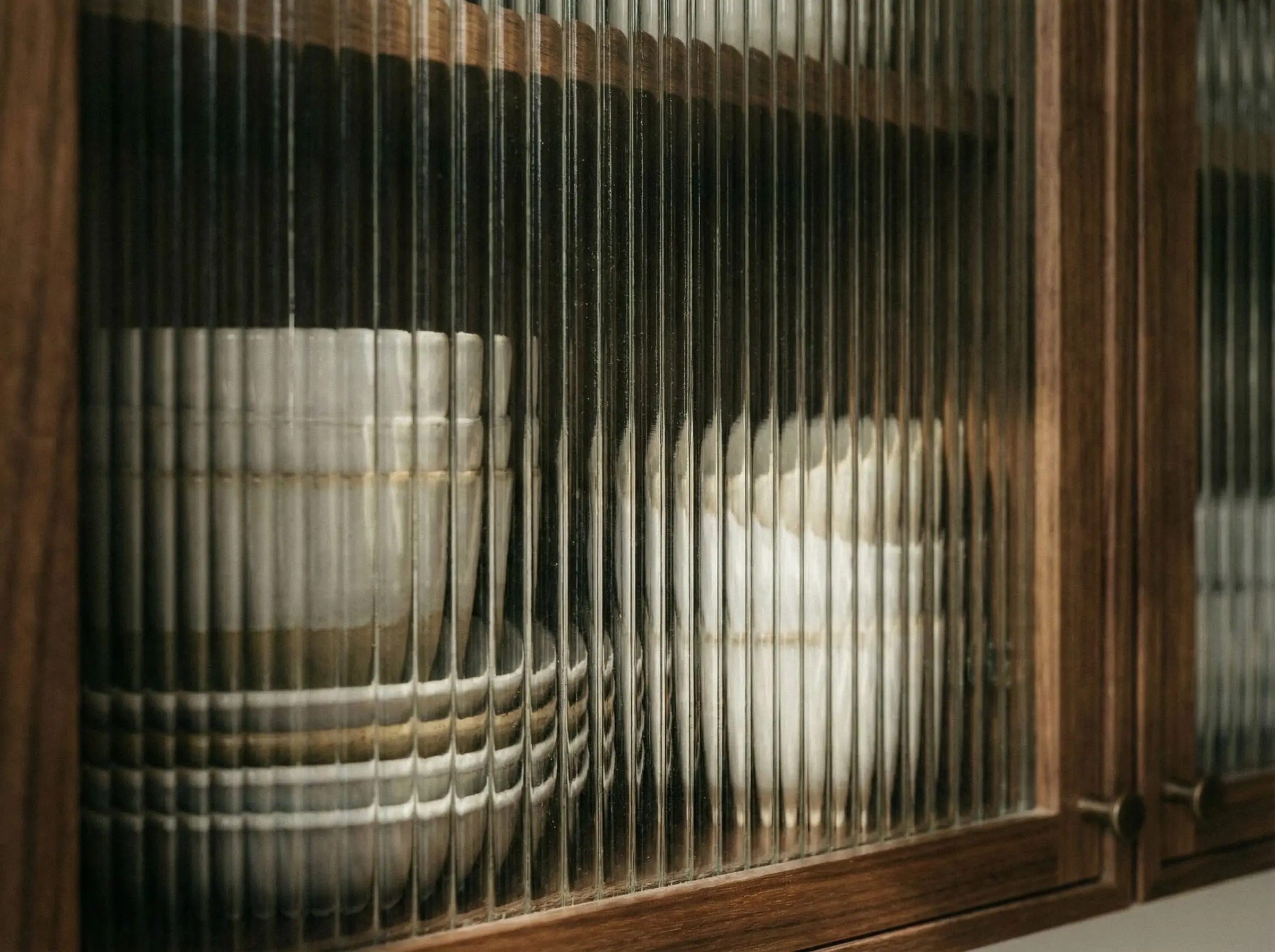
While traditional clear glass upper cabinets are a classic choice, they demand rigorous internal styling and often deteriorate into visual clutter. For a highly elevated alternative, specify fluted or reeded glass for your accent doors.
This specialized glass features dense, repeating vertical ridges. Aesthetically, it bridges two worlds perfectly: the ribbed texture evokes the nostalgic, old-world charm of vintage apothecary cases, while the strict, repeating vertical lines provide a distinctly modern, architectural rhythm. Practically, the reeded texture distorts and obscures the interior contents, allowing you to hide mismatched everyday dishware while still breaking up the heavy visual mass of solid wooden doors.
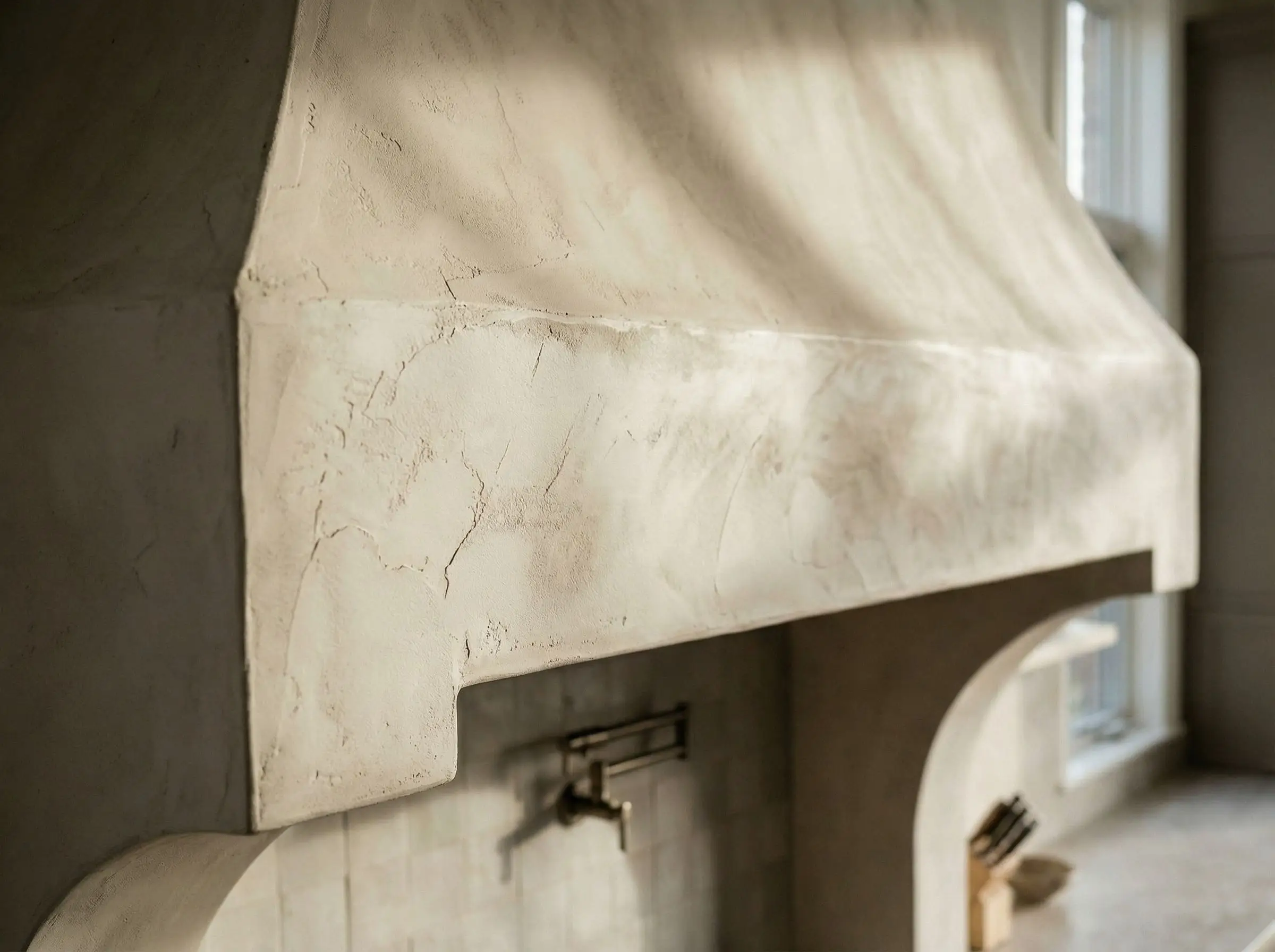
Idea 9: The Tapered Plaster Range Hood
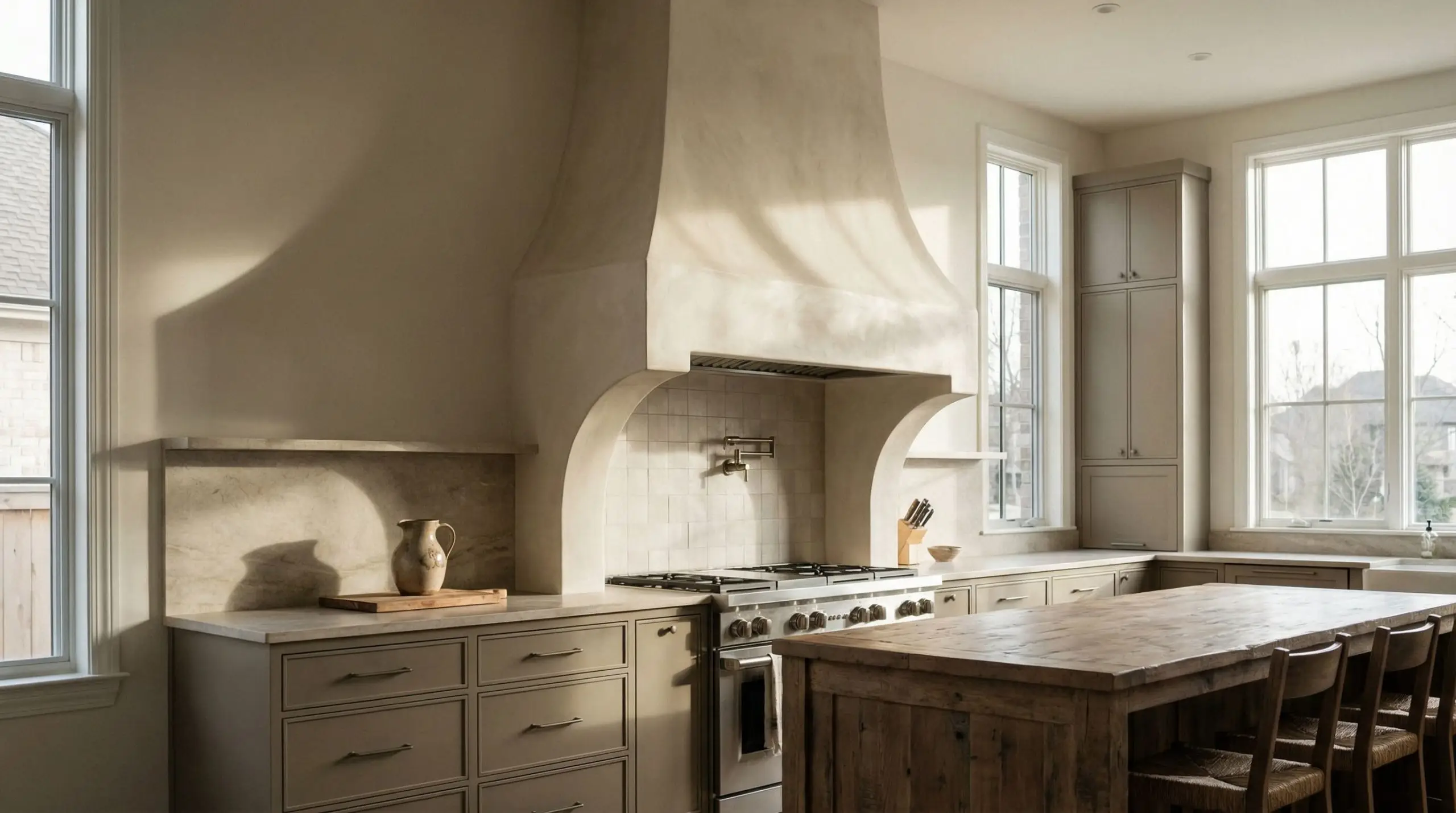
The cooking alcove requires a commanding focal point, but ornate, carved-wood mantels are overly traditional, and exposed stainless-steel duct boxes are far too industrial. The definitive transitional solution is the custom, tapered plaster range hood.
Architecturally, the hood should feature a smooth, sweeping, sloped geometry that leans entirely modern in its silhouette. However, the surface must be finished in a hand-troweled plaster. This tactile, wabi-sabi application creates a beautifully imperfect, chalky finish that catches natural light in subtle, rolling shadows. The resulting structure feels ancient in its materiality but highly contemporary in its shape, perfectly encapsulating the transitional ethos.
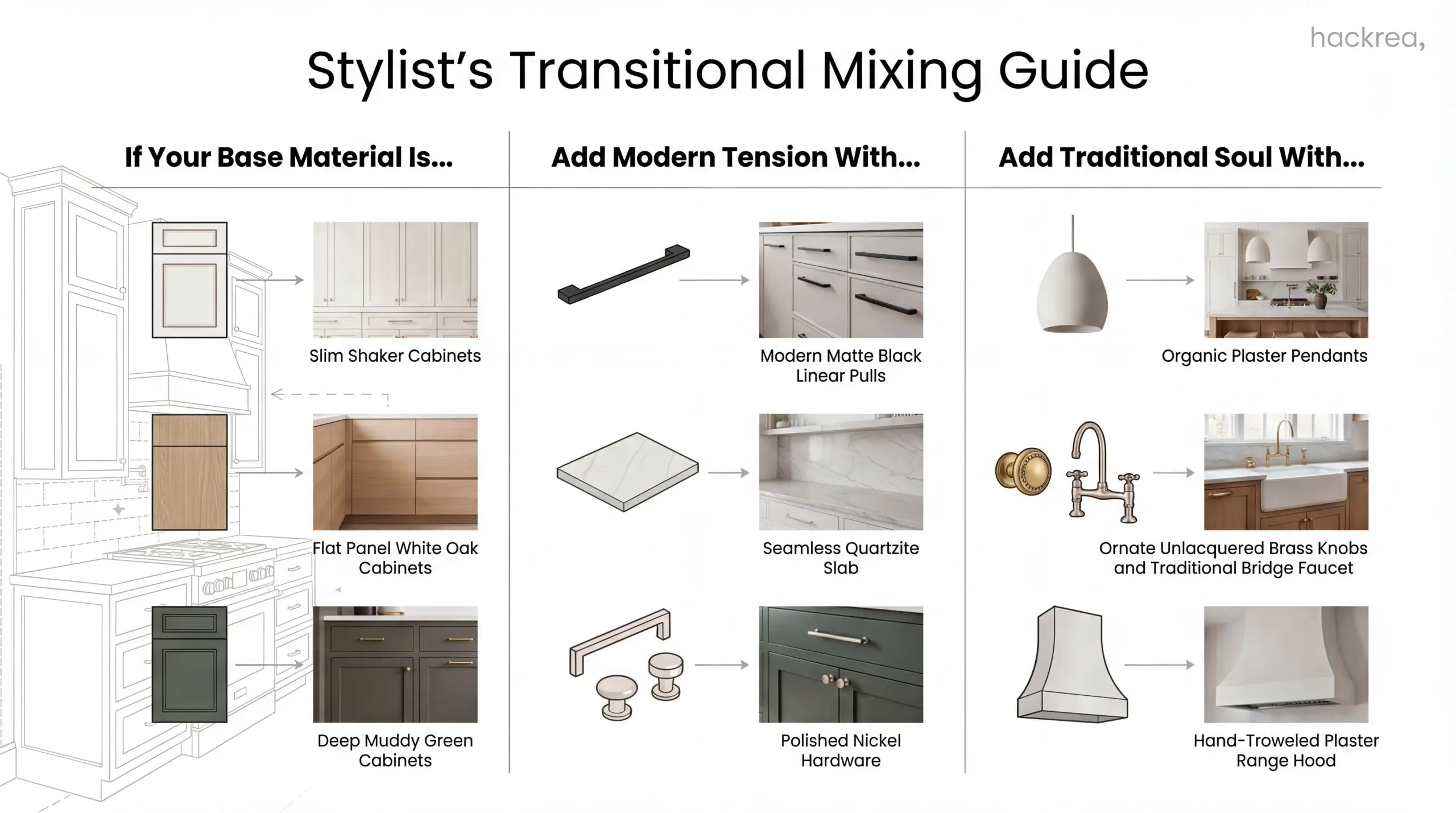
The Stylist’s Transitional Mixing Guide
Achieving the perfect visual equilibrium requires strict adherence to material science. To eliminate the guesswork of undertone matching and finish selection, we have engineered the definitive pairing guide. Use this matrix to audit your material choices: locate your foundational baseline, and deploy the exact corresponding finishes to inject the necessary modern tension and traditional soul.
| If Your Base Material Is… | Add Modern Tension With… | Add Traditional Soul With… |
|---|---|---|
| Slim Shaker Cabinets | Modern Matte Black Linear Pulls | Organic Plaster Pendants |
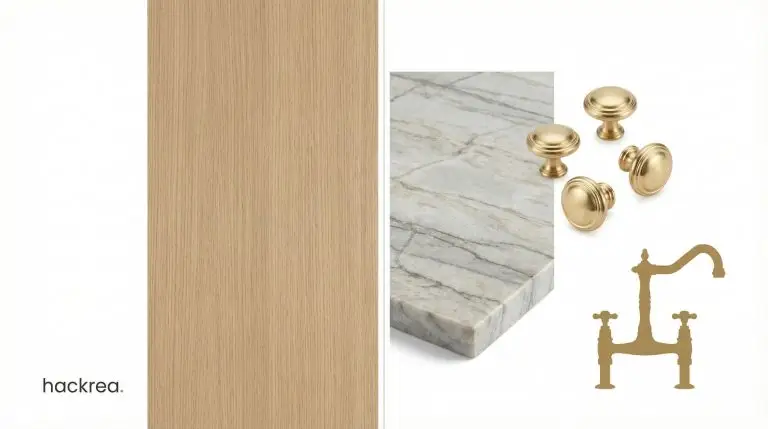
| Flat Panel White Oak Cabinets | Seamless Quartzite Slab | Ornate Unlacquered Brass Knobs & Traditional Bridge Faucet |
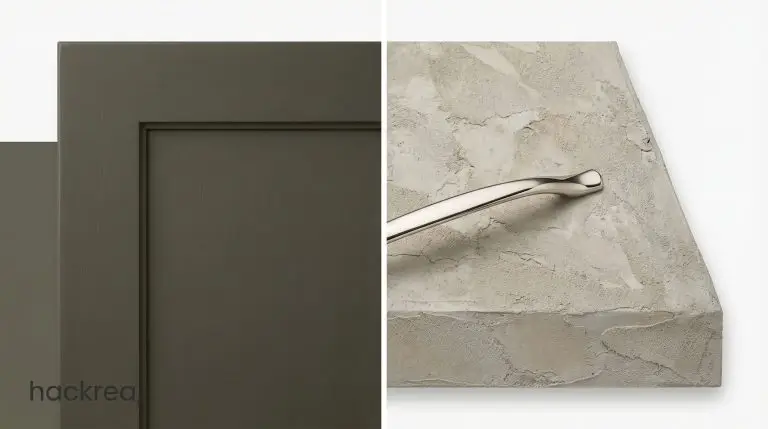
| Deep “Muddy” Green Cabinets | Polished Nickel Hardware | Hand-Troweled Plaster Range Hood |
Final Checklist: Curating Your Transitional Kitchen
The line between a curated masterpiece and a disjointed renovation is razor-thin. As you finalize your architectural plans and material specifications, actively audit your selections against the 70/30 Tension Metric.
True transitional design is an exercise in restraint and deliberate contradiction. Which muddy neutral are you swatching first?

The Hackrea Style Desk treats interior decoration as an exact visual science. Rather than focusing on demolition or floor plans, this desk masters the art of color theory, undertone matching, material pairings, and spatial proportion. From balancing the visual weight of mixed metals to finding the perfect bridging tone between disparate wood species, this desk provides the rigorous aesthetic rules needed to achieve high-end, editorial-quality harmony in any space.