Modern Minimalist Living Room Ideas: Designing a Serene, Tactile Space
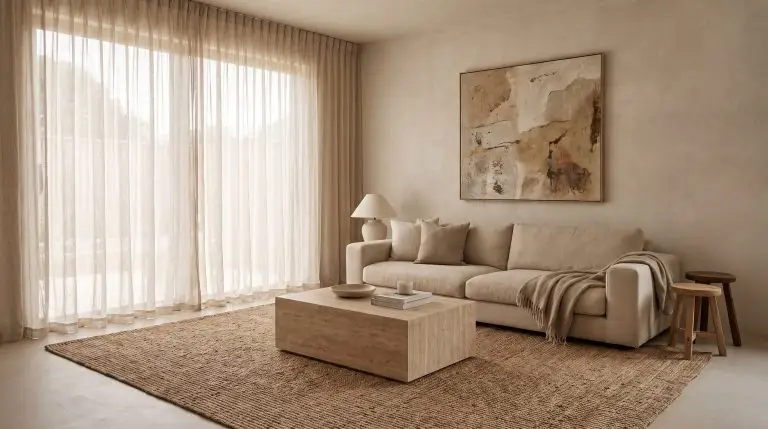
The living room is inherently the most challenging space to keep minimalist because it is the most heavily lived-in zone of the home. We understand the hesitation; for years, the industry pushed a stark, glossy white box aesthetic that felt more like a clinical waiting room than a sanctuary. Today, we look to masters like Axel Vervoordt and Vincent Van Duysen, redefining the space through warm minimalism—a discipline rooted in tactile depth, intentional proportions, and the curation of negative space.
To master the modern minimalist living room, you must completely shift your focus away from adding objects and instead prioritize heavy tactile textures and monolithic architectural scale.
Mastering the Minimalist Layout and Negative Space
Minimalism fundamentally starts with the floor plan, not the furniture. The negative space architecture—the literal air between your pieces—is just as crucial as the physical objects themselves.
Float Furniture Away From the Walls
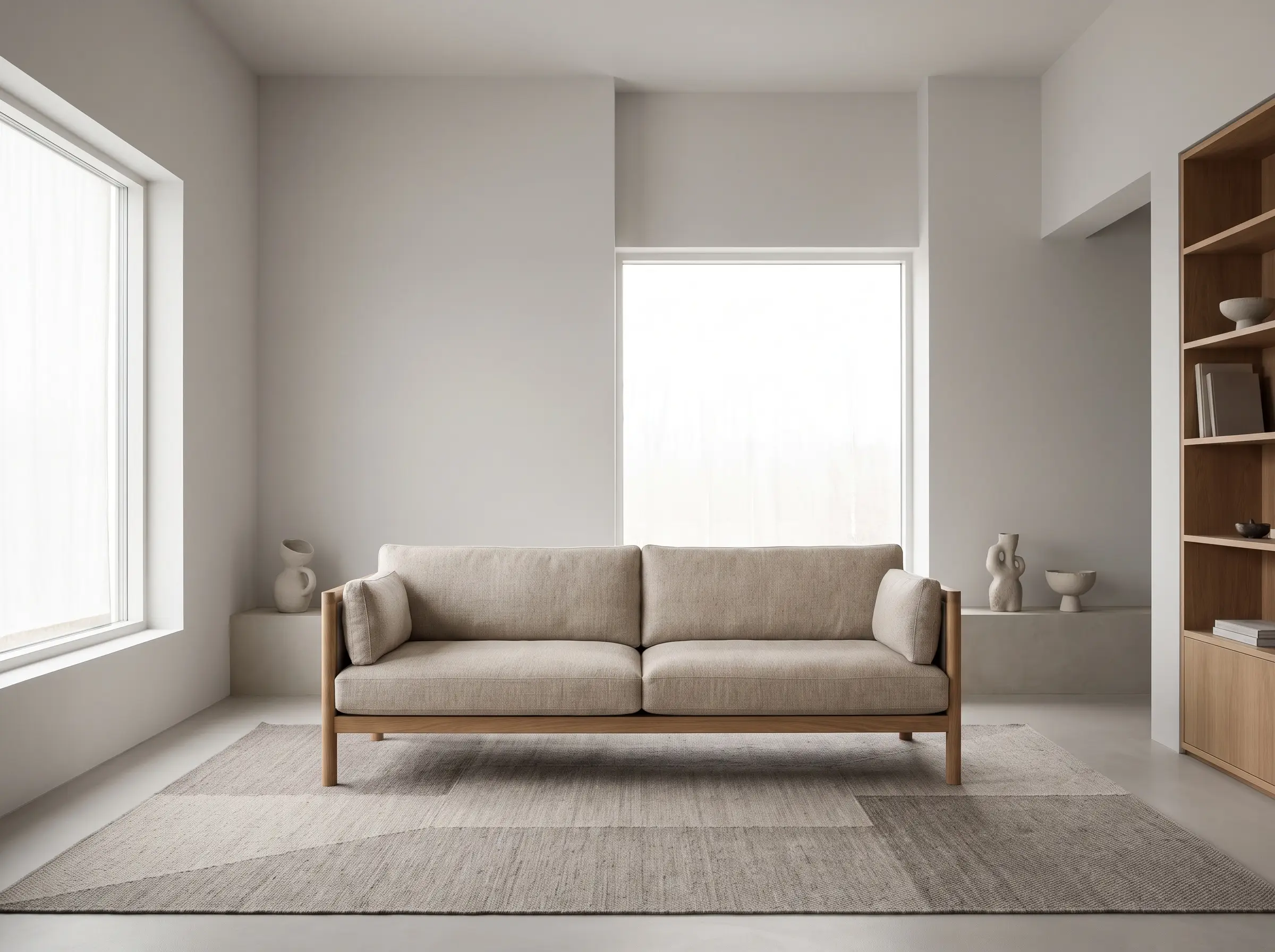
Floating a sofa instantly creates a breathable perimeter that makes the room feel inherently more architectural and deliberate. Pulling heavy upholstery away from the boundaries forces the eye to appreciate the furniture as a three-dimensional sculpture rather than a space-filling afterthought.
- Scale Check: Ensure a minimum of 18 to 24 inches of clearance behind floating sofas to maintain breathable negative space.
- Vibe: Airy, architectural, and deliberate.
- Key Materials: Finished-back upholstery, solid wood framing.
Embrace Asymmetrical Balance with a Single Statement Chair
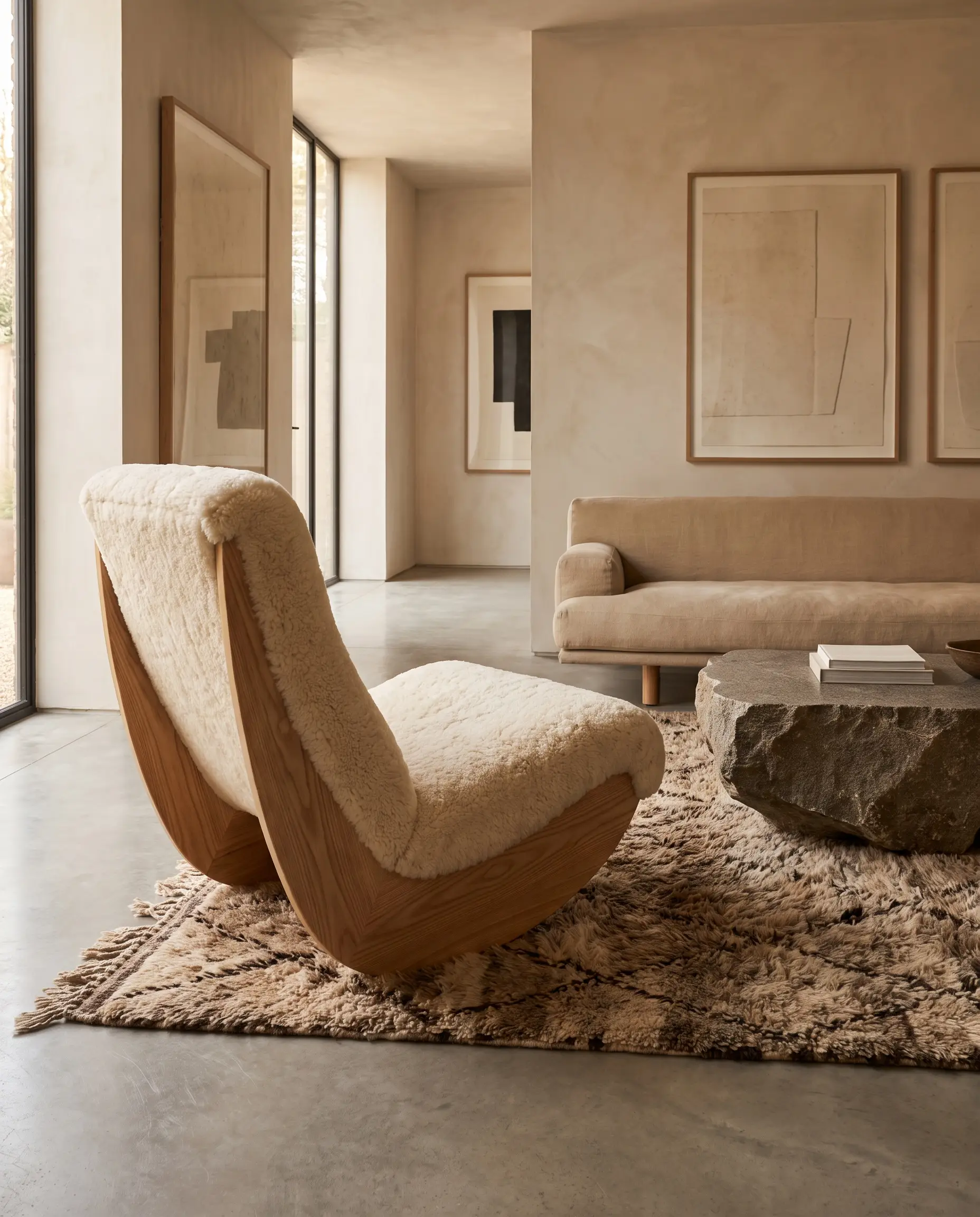
Replace the standard, cluttered symmetry of matching accent chairs with one singular, highly sculptural piece. Anchoring the room with a Pierre Jeanneret-inspired lounger or a chunky monolithic seat forces the eye to process a distinct shape rather than duplicate visual weight.
Avoid buying matching furniture sets at all costs; perfectly symmetrical, store-bought pairs instantly strip a room of its curated, lived-in soul.
Visual Clutter Warning
- Vibe: Curated, gallery-like, and grounded.
- Key Materials: Ash wood, rattan, or heavy shearling.
- Styling Pro-Tip: Angle the chair slightly inward toward the coffee table to foster conversation without closing off the room’s flow.
Conceal the Technology with Flush Consoles
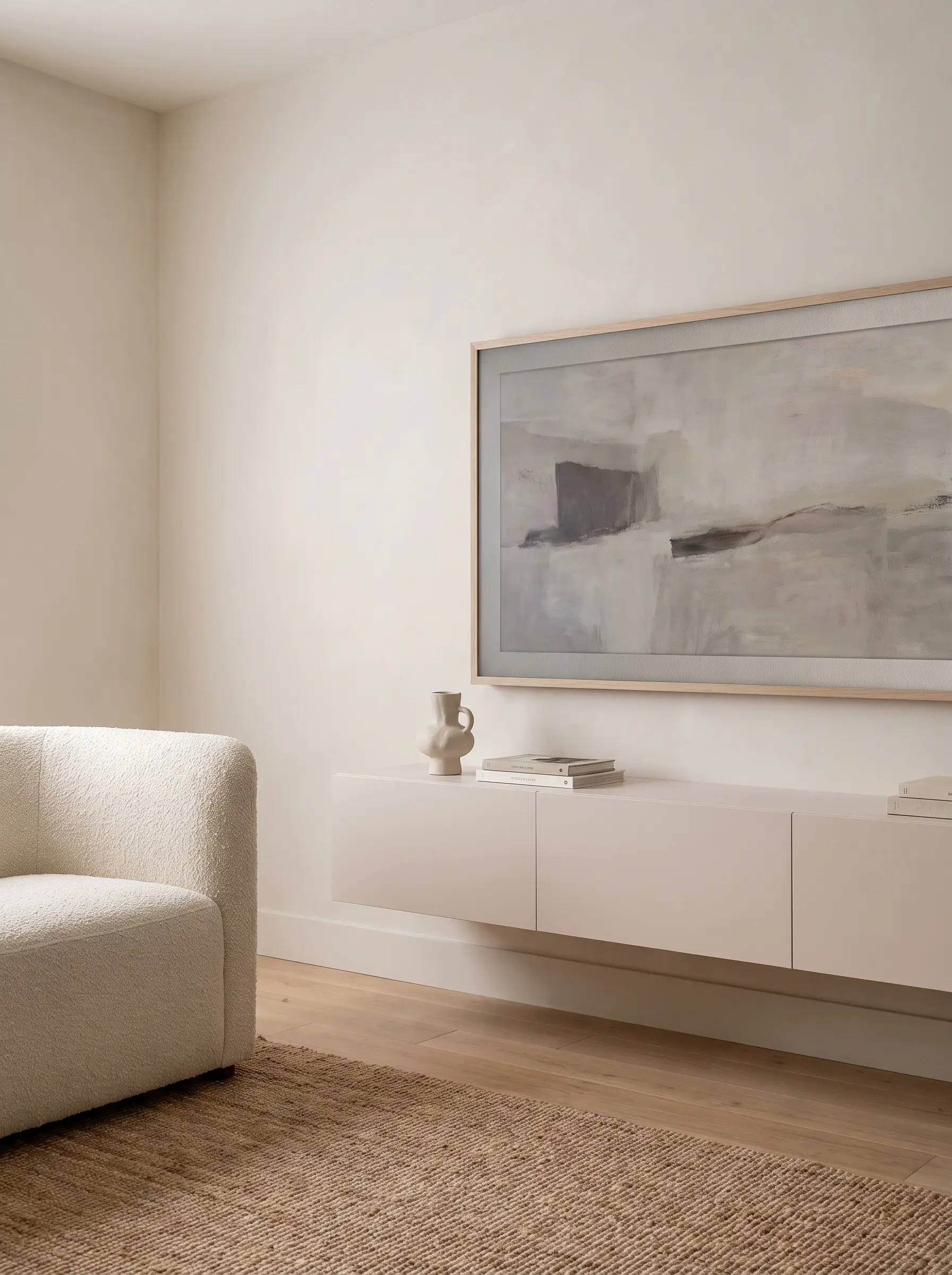
The visual gravity of a massive black television screen immediately shatters a serene environment. Camouflage the tech by pairing a matte-screen art display, like the Samsung Frame, with handle-less, floating media consoles painted to seamlessly match the surrounding wall.
- Scale Check: Mount the floating console exactly 10 to 12 inches off the floor to create the illusion of weightlessness.
- Vibe: Invisible infrastructure, seamless utility.
- Key Materials: Matte-finish screens, push-to-open MDF cabinetry.
- Paint Recommendation: Portola Paints “El Mirage”.
- Styling Pro-Tip: Paint the console the exact same shade as your walls to make the unit disappear entirely.
Utilize Shadow Gaps and Flush Baseboards
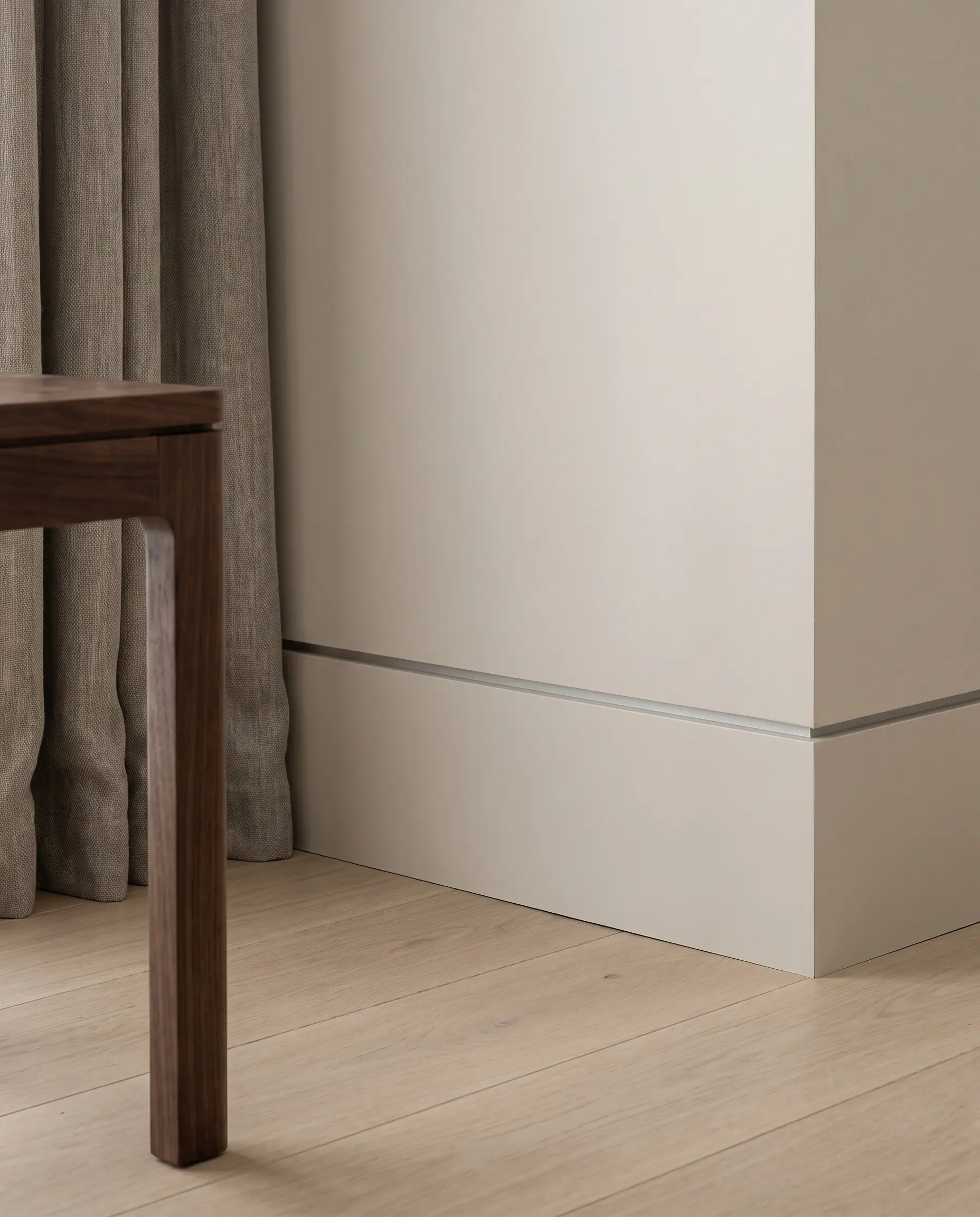
Traditional, chunky baseboards create a visual border that interrupts the flow of the wall into the floor. Opt for a shadow gap (or reveal) at the floorline, or paint existing flush baseboards the exact same shade as your walls to blur the boundaries of the room.
- Vibe: High-end architectural precision.
- Key Materials: Aluminum reveal beads, flat-stock wood baseboards.
- Styling Pro-Tip: If a full remodel isn’t possible, use a high-quality matte enamel paint on existing trim to mimic the architectural wall finish.
Tactile Materiality: Warming Up the Minimalist Box
When you strip away visual clutter, the remaining materials are forced to do the heavy lifting. A minimalist room completely devoid of tactile contrast is inherently sterile; warmth must be built through raw, organic surfaces.
Apply Limewash or Roman Clay to the Walls
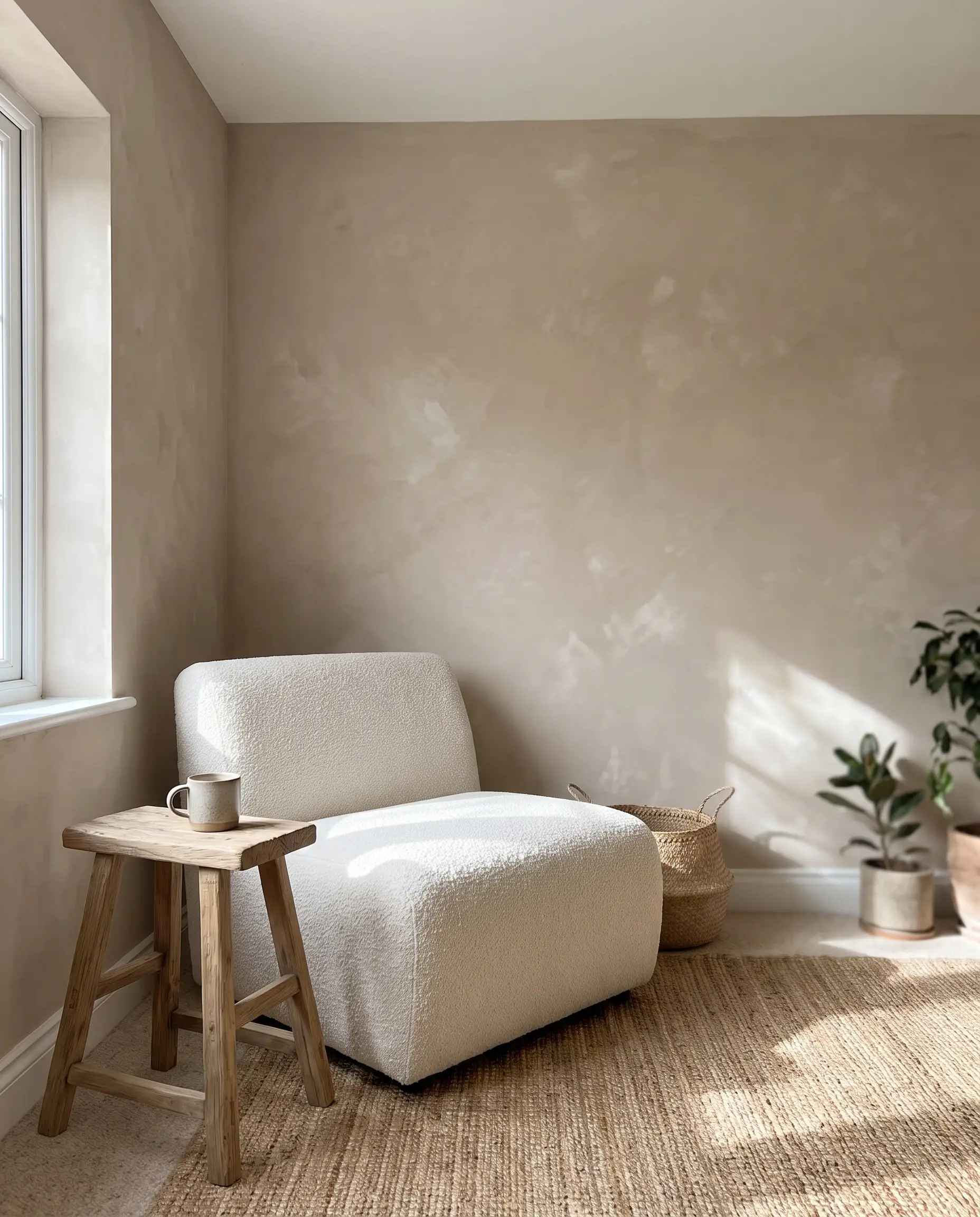
Flat, matte white paint often reads as cold and unfinished in a pared-back space. Limewash or Roman clay introduces a chalky, mottled movement that catches the light organically, turning blank walls into a luminous, quiet art installation.
- The Tactile Test: Run your hand across the wall; it should feel like soft suede, not chalky drywall.
- Vibe: Earthy, soft, and enveloping.
- Key Materials: Slaked limestone, natural mineral pigments.
- Paint Recommendation: Portola Paints “Figueroa” (Roman Clay) or Bauwerk Colour “Bone” (Limewash).
Anchor with Large-Format Travertine or Honed Marble
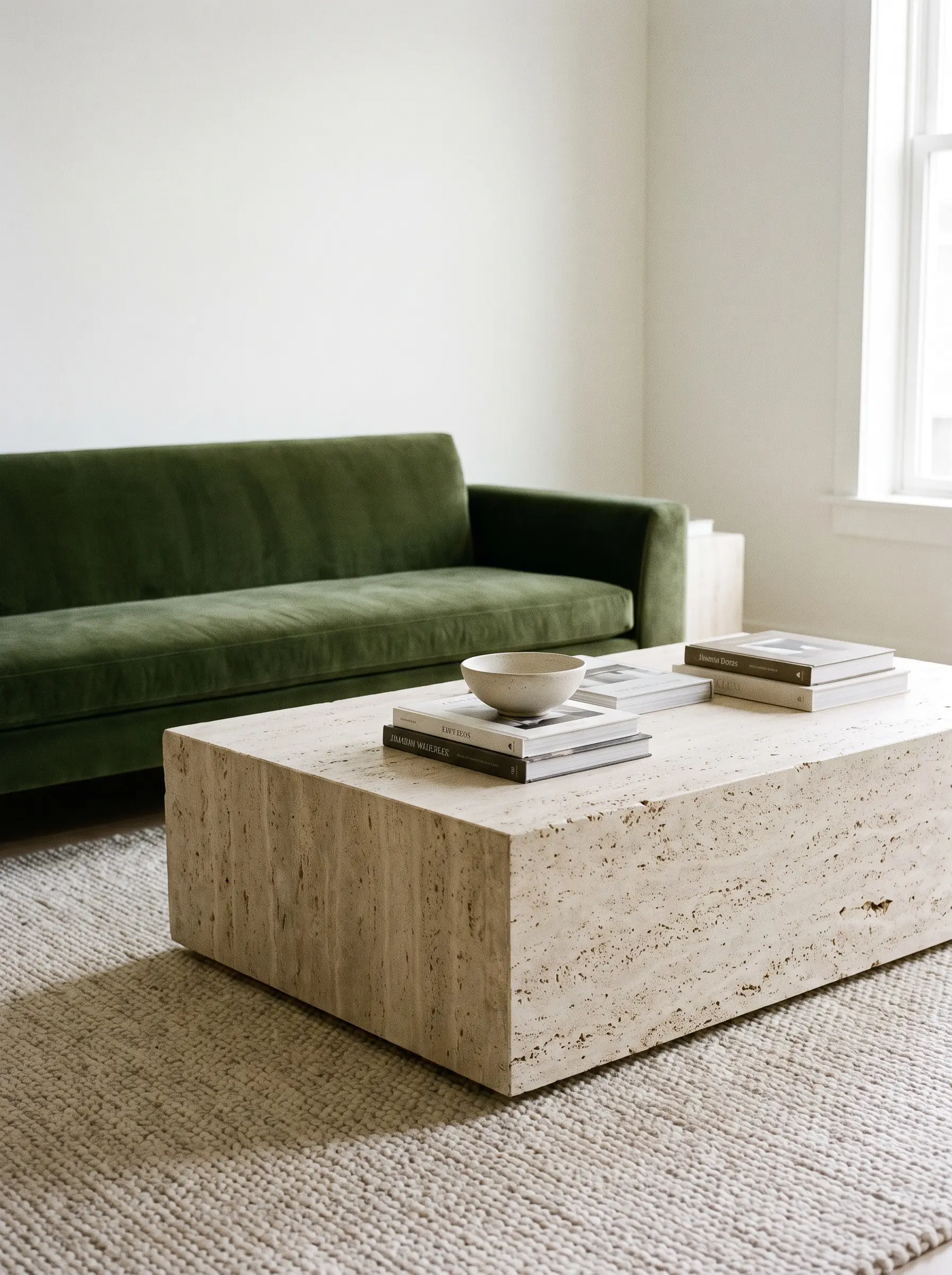
High-gloss or highly polished stones reflect too much light, creating an aggressive, flashy energy. Anchor the space with unpolished, honed large-format travertine or marble plinths that absorb light and project an ancient, grounded permanence.
- Vibe: Monolithic, ancient, and grounded.
- Key Materials: Unfilled honed travertine, honed Calacatta Viola marble.
- Styling Pro-Tip: Use a solid block coffee table or a thick, raw-edge fireplace surround to maximize the stone’s visual weight.
Contrast Cold Stone with Smoked Oak or Walnut
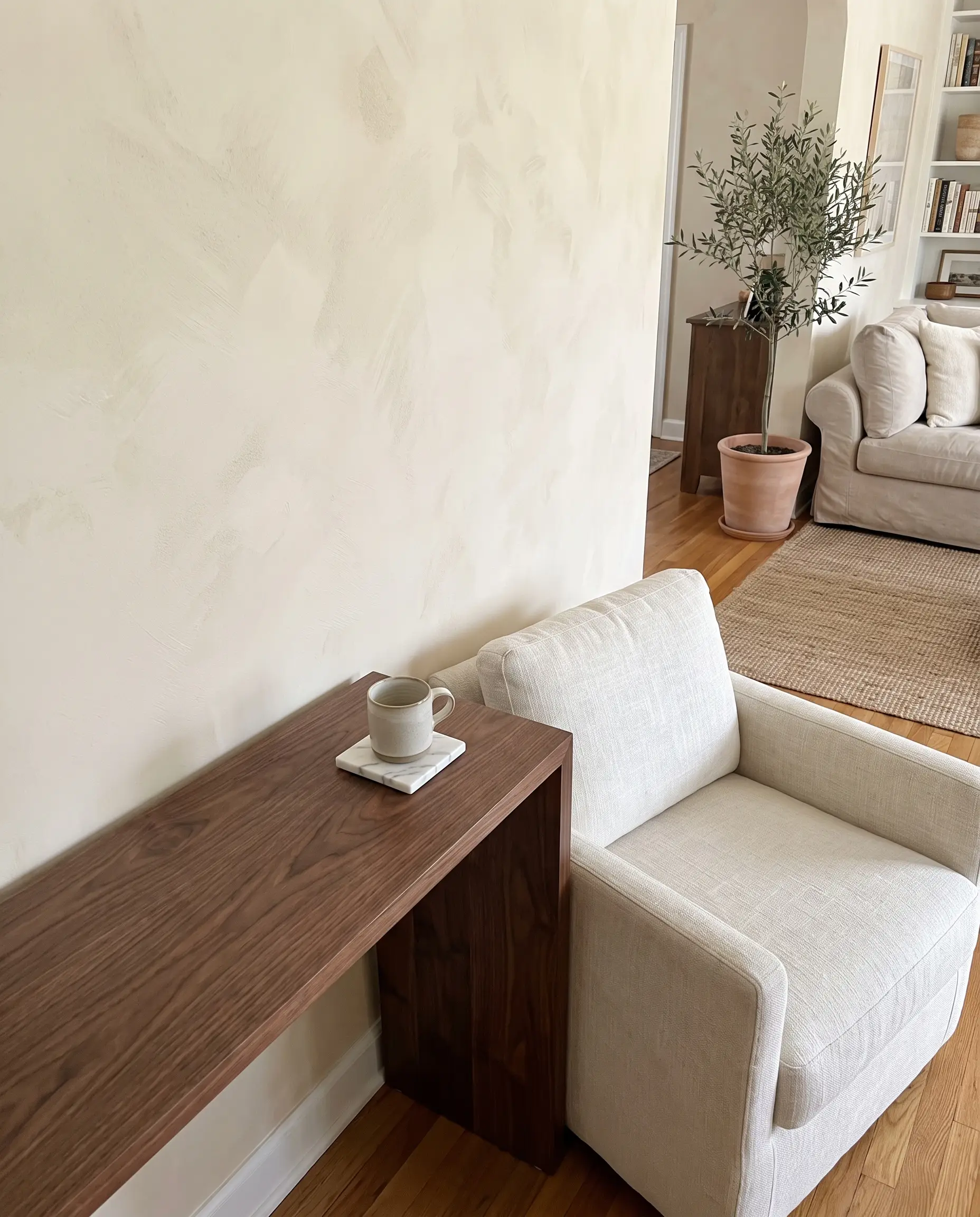
Cool-toned, hard surfaces like plaster and stone must be actively balanced by the deep, resonant warmth of rich woods. This interplay prevents the room from feeling like a museum and grounds the airy architecture.
- Material Pairing 1: Honed Silver Travertine + Smoked Oak + Ivory Boucle.
- Material Pairing 2: Roman Clay Walls + Solid Walnut + Heavy Woven Linen.
- Material Pairing 3: Calacatta Marble + Ebonized Ash + Shearling.
Layer Monochromatic Textures (Boucle, Linen, Wool)
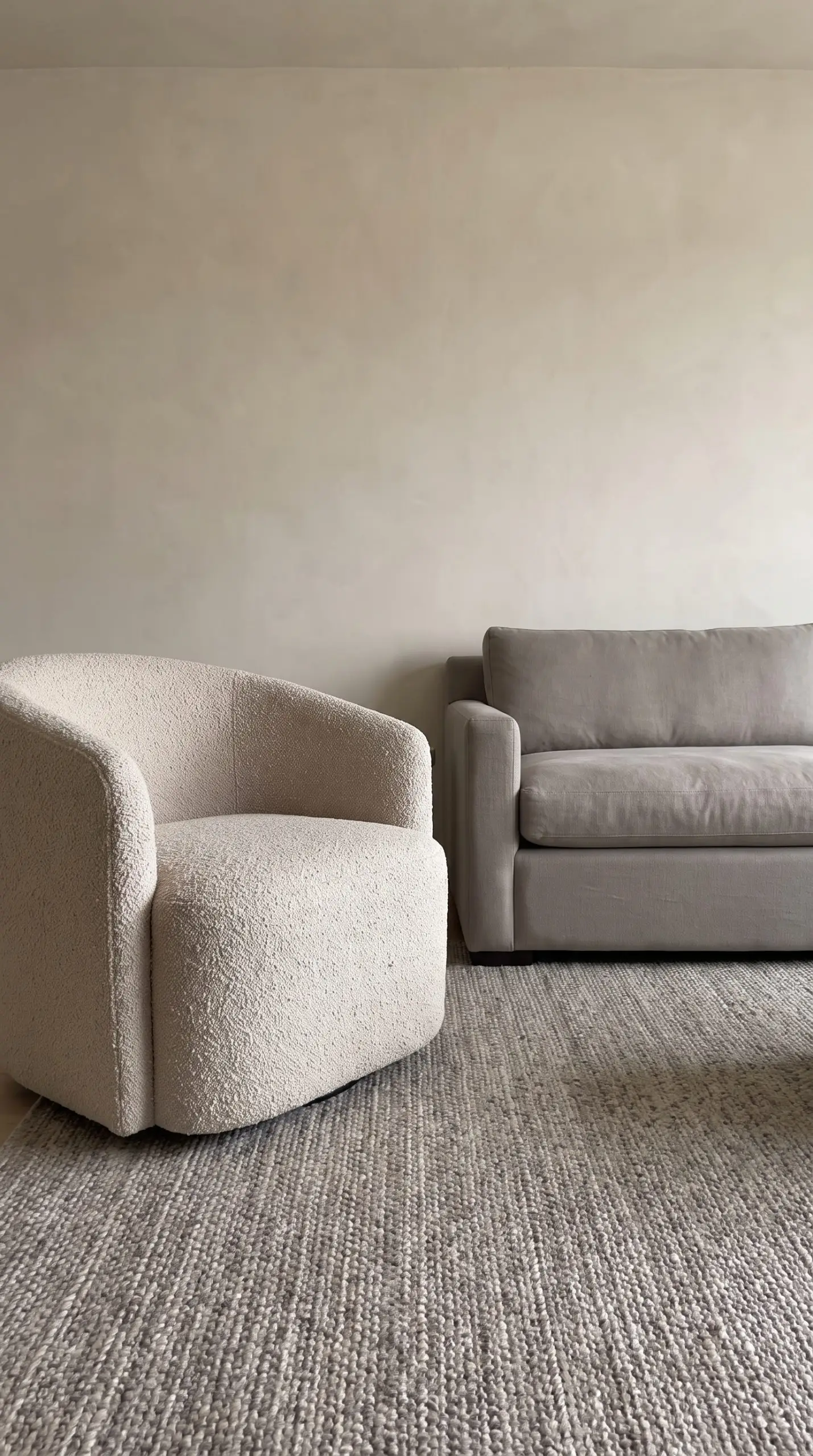
If your room relies on an entirely beige or soft gray palette, tonal layering is your primary tool for creating depth. Contrast a smooth wall with heavy Belgian linen drapery, a flat-weave wool rug, and a nubby boucle accent chair to generate visual interest without breaking the color restraint.
- The Tactile Test: Ensure no two adjacent textiles share the same weave density; place a coarse wool rug directly beneath a smooth linen sofa.
- Vibe: Cozy, dynamic, and visually quiet.
- Key Materials: Heavyweight Belgian linen, natural wool, cotton boucle.
Furniture Scale and Proportions
Modern minimalist furniture must feel grounded and substantial, completely rejecting the spindly, fragile shapes of the past. Mastering the scale of these pieces dictates the entire spatial energy of the room.
Ground the Room with Low-Profile Seating
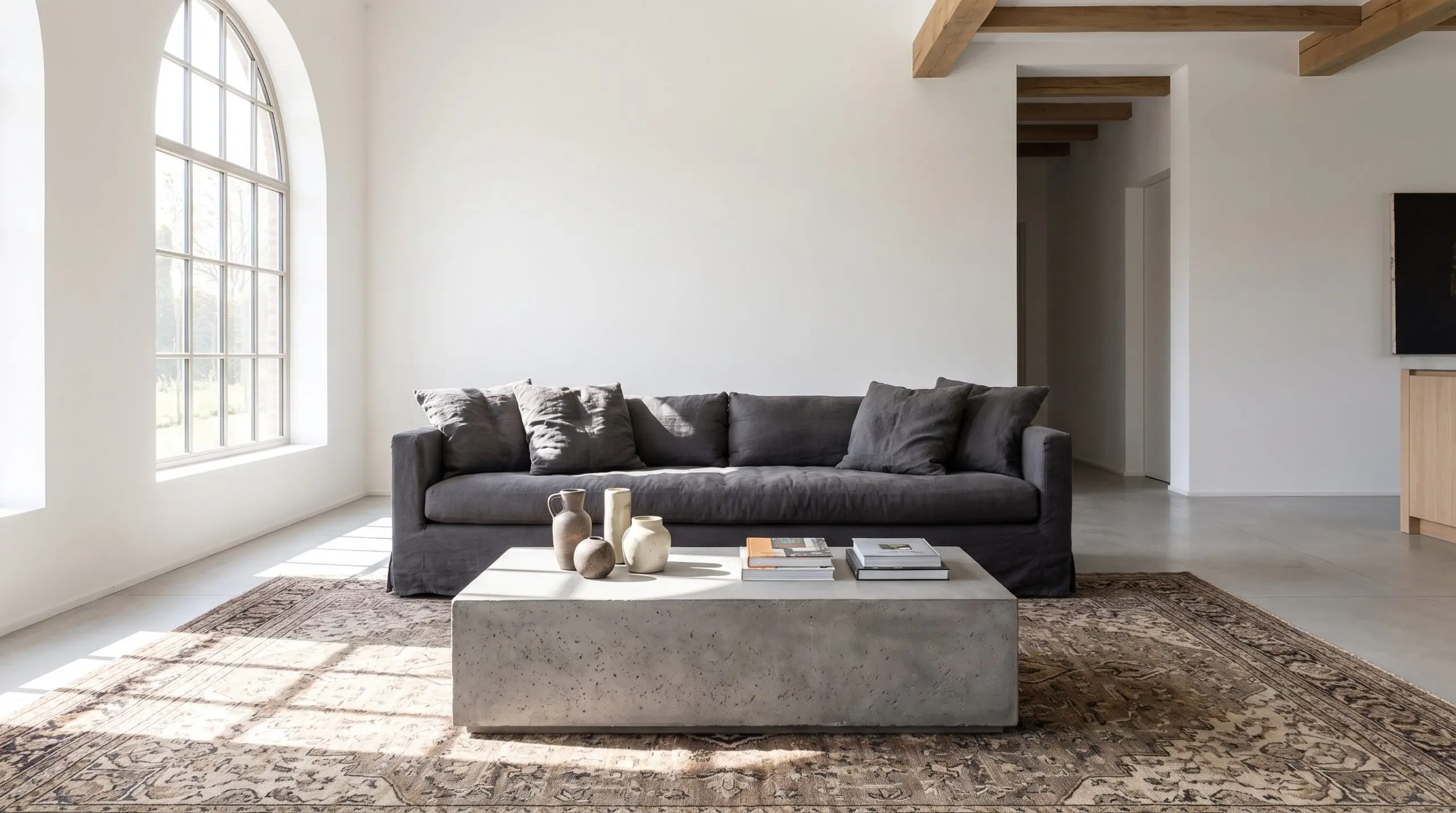
Deep, low-to-the-ground European seating—like a Mario Bellini Camaleonda or a sleek B&B Italia equivalent—dramatically alters the perception of the room. Lower furniture increases the visual volume of the ceiling, making the entire floor plan feel vastly larger and more breathable.
- Scale Check: Look for seat heights strictly between 15 to 16 inches to achieve the proper low-profile proportion.
- Vibe: Lounge-like, relaxed, and expansive.
- Key Materials: High-density foam, deep-pile velvet or heavy linen slipcovers.
Select Monolithic Coffee Tables
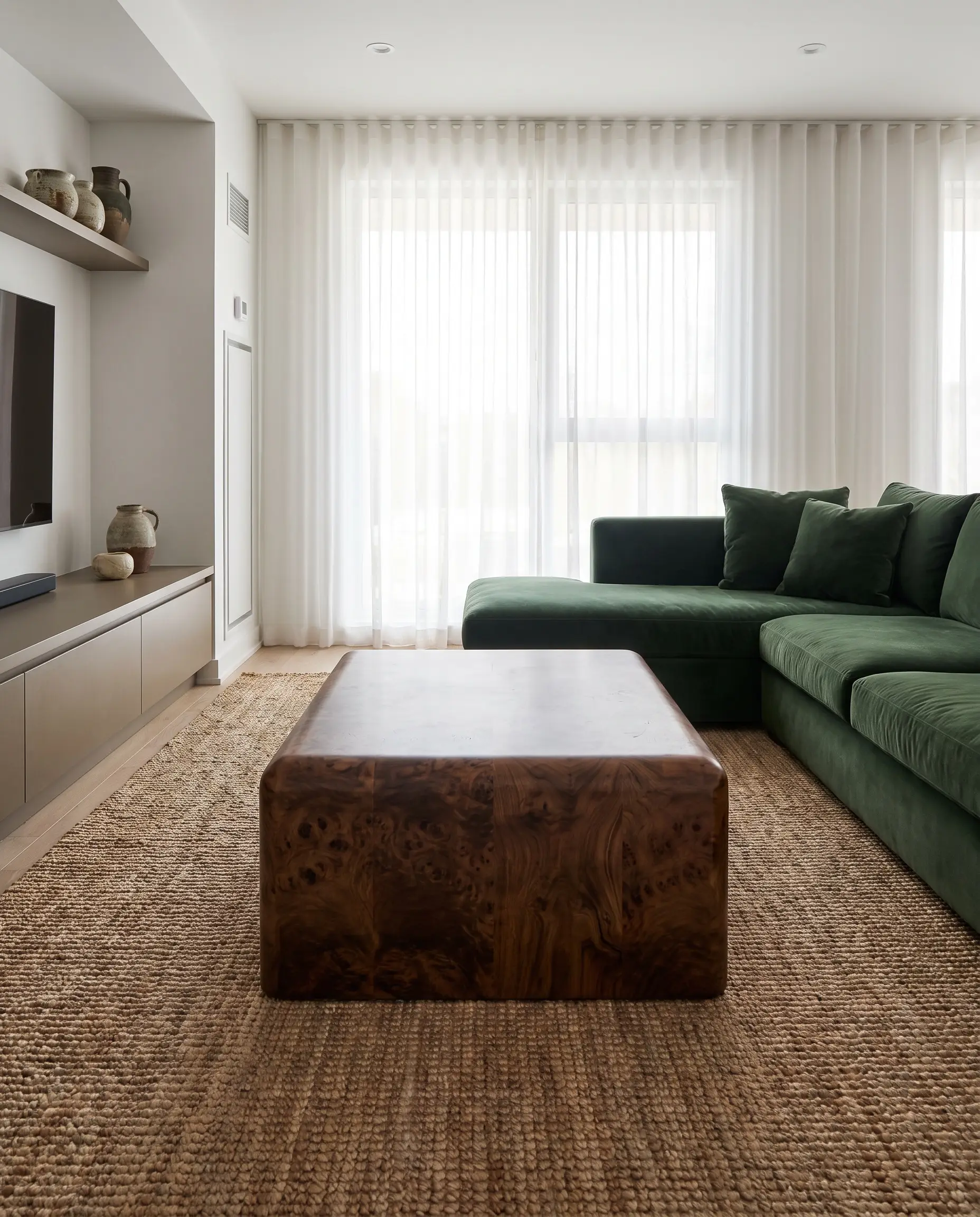
Reject fussy, glass-and-metal tiered tables that add chaotic lines to your negative space. Advocate for a solid, plinth-style coffee table—a singular block of wood or stone that acts as a heavy visual anchor in the center of the room.
- Vibe: Sculptural, heavy, and definitive.
- Key Materials: Solid burl wood, honed marble, cast concrete.
- Styling Pro-Tip: Keep the surface mostly clear; the table itself is the statement piece.
Use an Oversized Rug to Eliminate Visual Choppiness
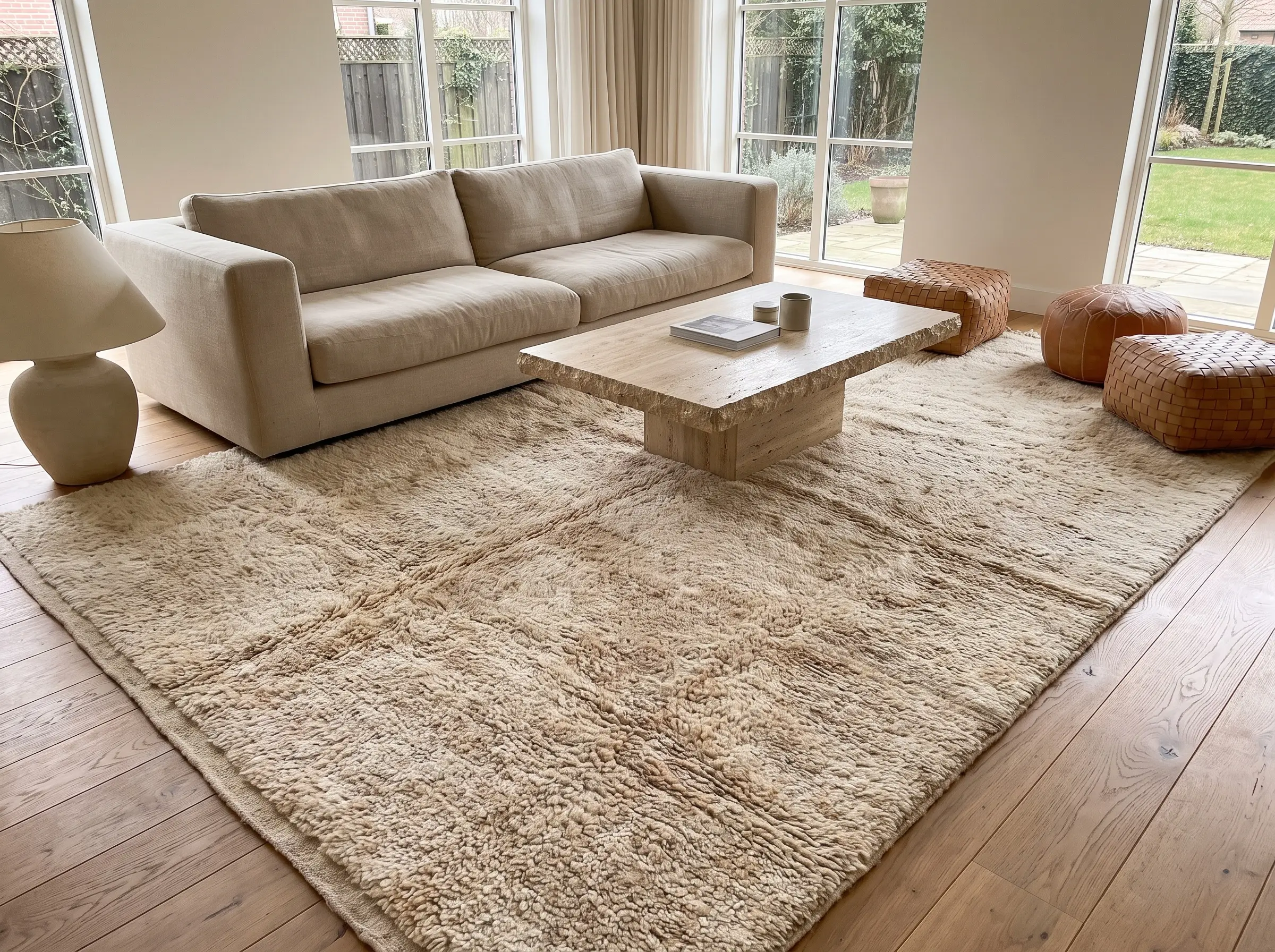
A rug that is too small chops up the floor plan, creating unnecessary visual borders and harsh transitions. A properly scaled minimalist rug creates a massive, unbroken island of softness that unifies the seating arrangement.
If you can see the floor between the sofa and the rug, the rug is too small. All living room furniture must sit entirely on the rug to prevent spatial fragmentation.
Visual Clutter Warning
- Vibe: Cohesive, expansive, and soft.
- Key Materials: Hand-knotted wool, thick Moroccan pile, or textured jute.
- Styling Pro-Tip: Ensure the rug extends at least 12 inches past the edges of your sofa.
Opt for Closed Architectural Built-Ins
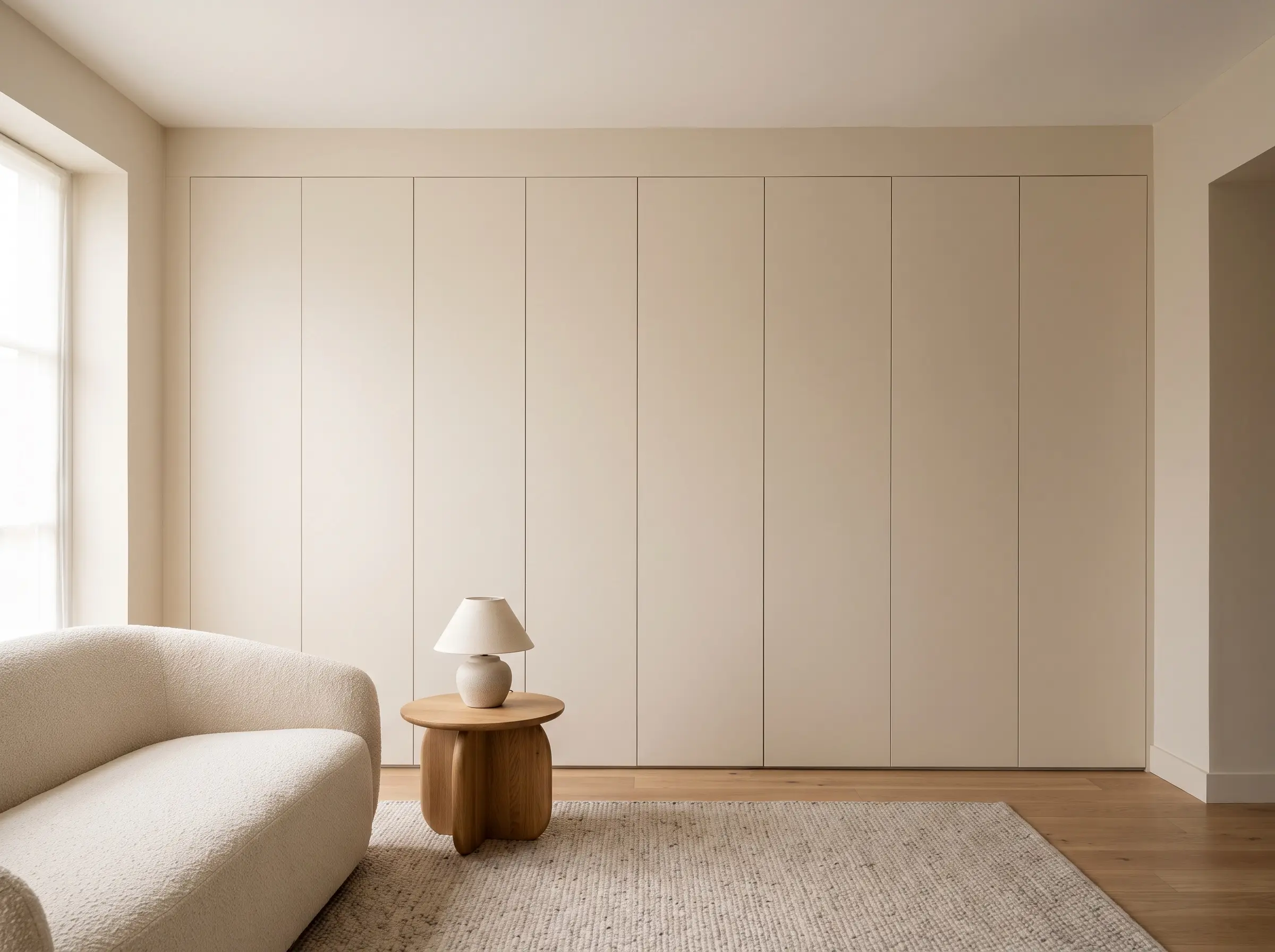
Open shelving is the enemy of the minimalist living room, demanding constant, exhausting curation. Invest in floor-to-ceiling, flat-front, push-to-open cabinets that blend seamlessly into the wall, providing massive storage for board games, remotes, and daily life without the visual noise.
- Scale Check: Run the cabinetry flush from the floor straight to the ceiling, leaving zero gap at the top to maintain the architectural illusion.
- Vibe: Streamlined, practical, and monolithic.
- Key Materials: Painted MDF, concealed European hinges.
Lighting and Window Treatments for a Serene Glow
Harsh, highly directional lighting instantly destroys a minimalist aesthetic, casting aggressive shadows and flattening textures. Shift your focus away from ornate decorative fixtures and prioritize the pure, ambient quality of the light itself.
Install Recessed Wall Washers Instead of Central Pendants
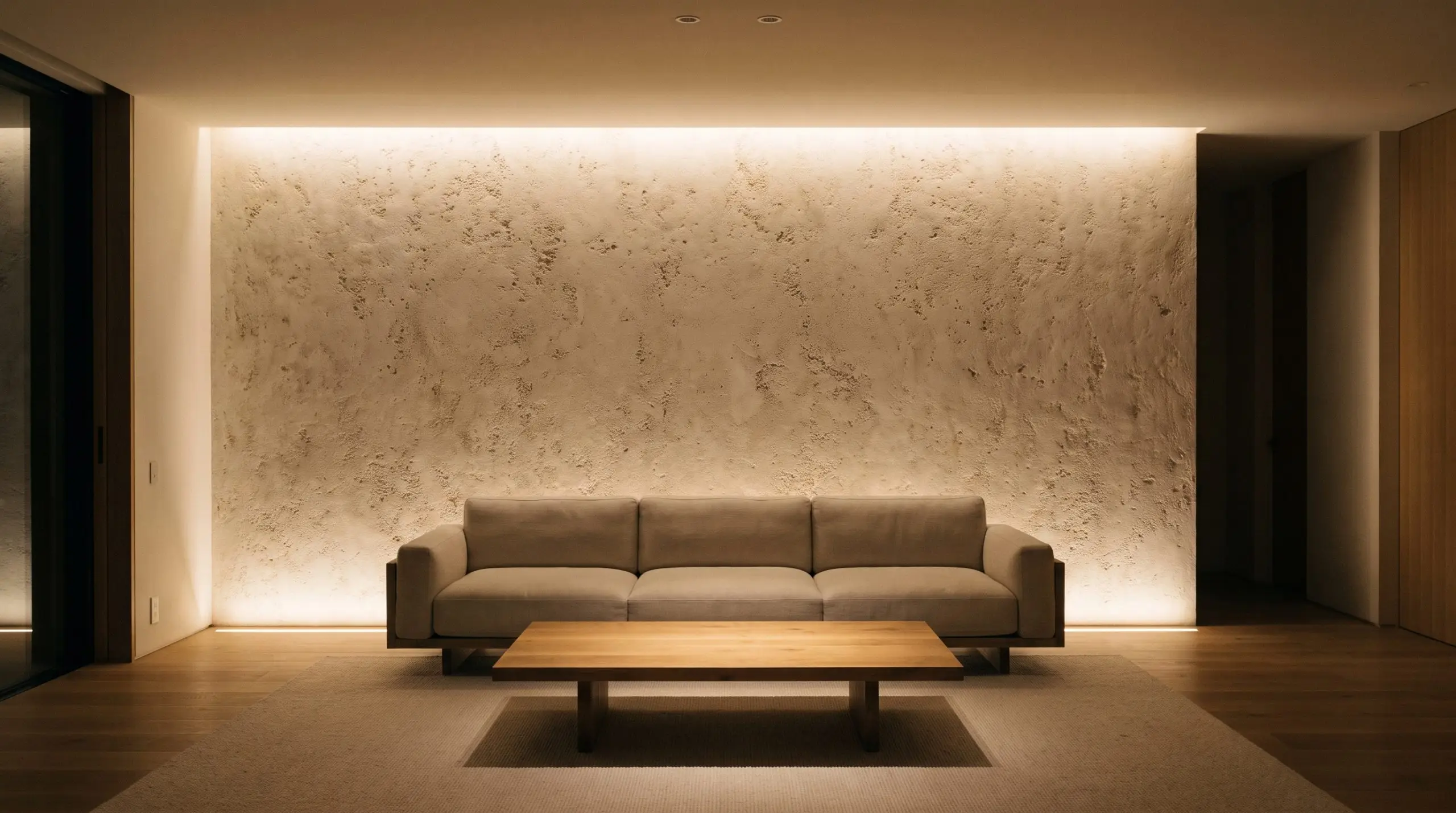
Ditch the heavy, central chandelier that dominates the room’s airspace. Instead, install recessed architectural wall washers to graze your limewash or plaster walls, creating a perimeter of soft, ambient light rather than a harsh downward glare.
- Vibe: Atmospheric, glowing, and sophisticated.
- Key Materials: Flangeless recessed LED trims, plaster-in housings.
- Styling Pro-Tip: Position the wall washers 18 to 24 inches away from the wall to perfectly highlight the plaster’s mottled texture.
Introduce Paper Lanterns or Noguchi-Style Sculptures
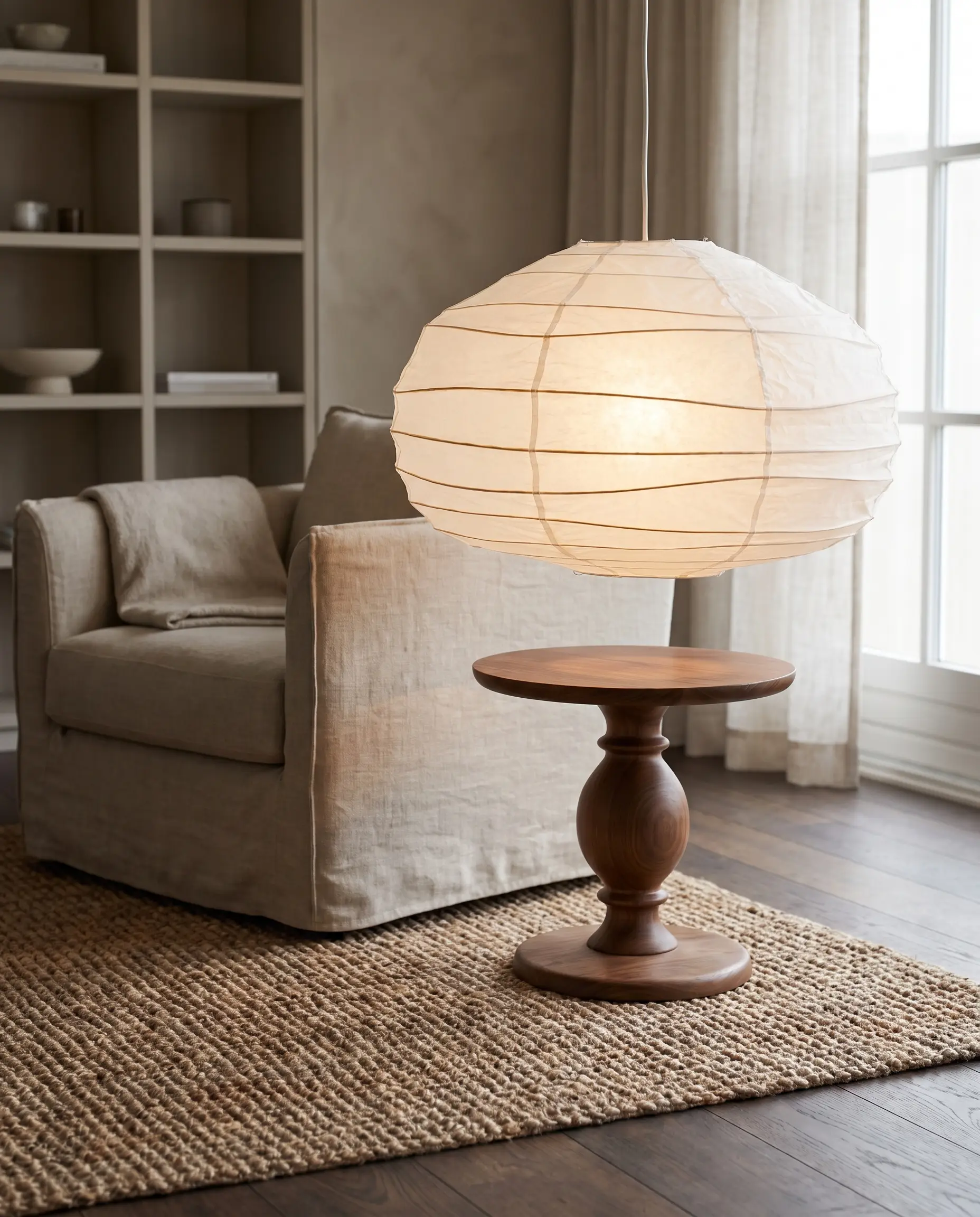
When a decorative fixture is necessary, oversized, weightless Japanese paper lanterns provide unparalleled organic softness. Masterpieces like the Isamu Noguchi Akari lanterns diffuse light beautifully while serving as delicate, floating sculptures during the day.
- Vibe: Ethereal, gentle, and culturally rooted in Japandi design.
- Key Materials: Washi paper, bamboo ribbing.
- Styling Pro-Tip: Hang a massive lantern low over a side table to create an intimate, secondary lighting zone.
Soften the Architecture with Wall-to-Wall Sheer Drapery
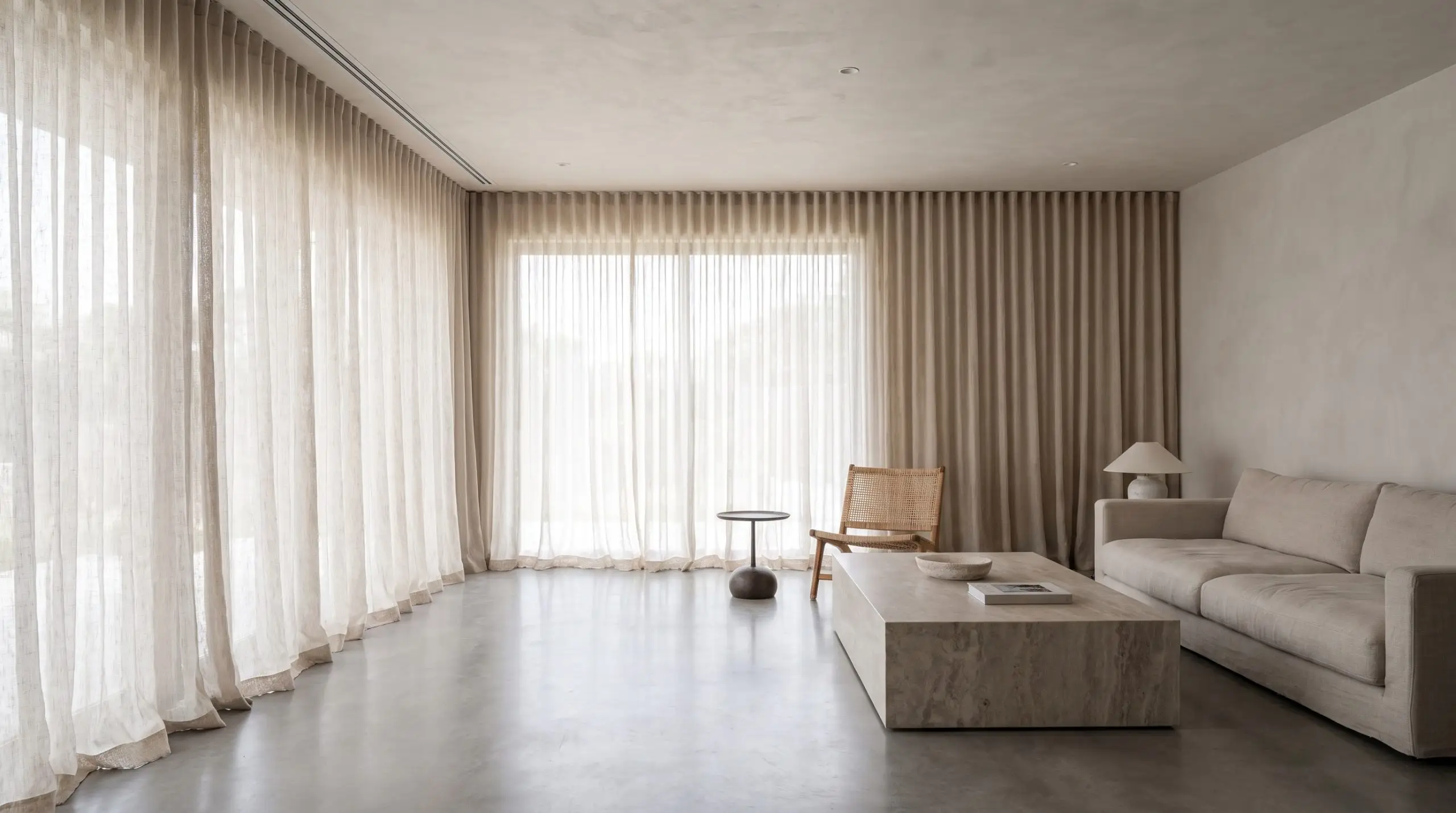
Avoid heavy, patterned curtains that weigh down the window frames. Install continuous, ceiling-to-floor sheer linen drapery on a recessed architectural track to soften the hard edges of the room while maximizing the flow of natural daylight.
- Scale Check: Drapery should perfectly “kiss” the floor, with zero puddling and zero gap, to maintain a razor-sharp minimalist line.
- Vibe: Billowing, seamless, and light-filtering.
- Key Materials: 100% sheer linen, aluminum recessed ceiling tracks.
Stick to 2700K Warm Ambient Bulbs
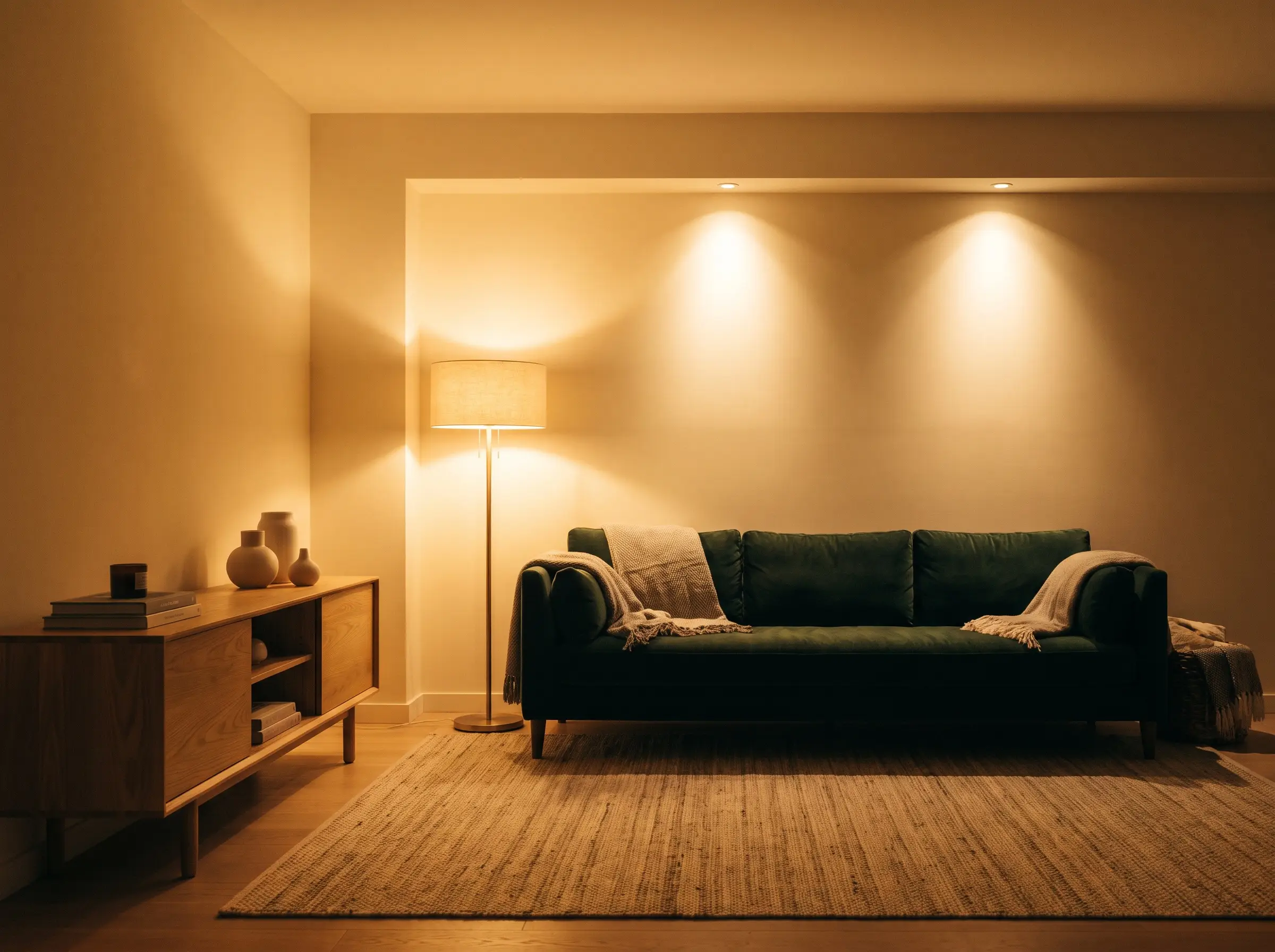
The cardinal minimalist sin is using cool, blue-toned lighting that renders a space sterile and commercial. Mandate the strict use of warm ambient bulbs across every single fixture to ensure the room functions as a glowing sanctuary after dark.
- 4000K – 5000K (Daylight/Cool White): Strictly avoid; creates a harsh, clinical atmosphere.
- 3500K (Neutral White): Acceptable for task-heavy kitchens, but too crisp for a serene living room.
- 2700K – 3000K (Warm White): The gold standard for living spaces; mimics the comforting glow of late afternoon sun.
Styling the Minimalist Living Room (The Final 10%)
Minimalist styling requires severe restraint and an editorial eye. Every single object introduced into the space must serve a distinct functional purpose or possess profound sculptural beauty.
The Rule of Three for Coffee Table Styling
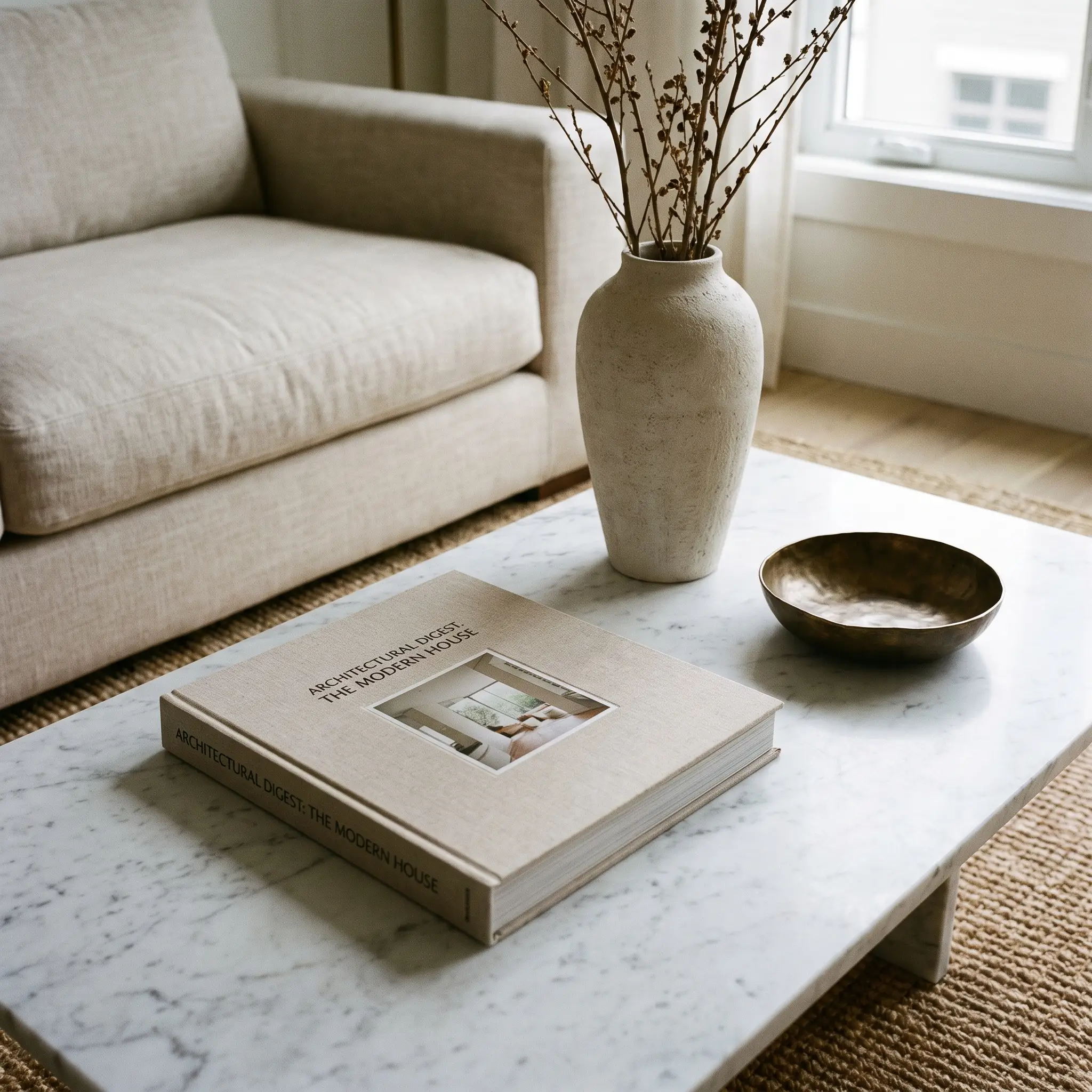
A cluttered coffee table immediately unravels the serenity of a room. Limit the surface to exactly three highly curated items: a large architectural design book, a sculptural vessel, and a functional catch-all to ground the composition.
- Vibe: Restrained, intentional, and balanced.
- Key Materials: Bronze bowls, ceramic vases, linen-bound books.
- Styling Pro-Tip: Vary the heights of the three objects to create a subtle, natural visual triangle.
Feature a Single Oversized Branch or Botanical
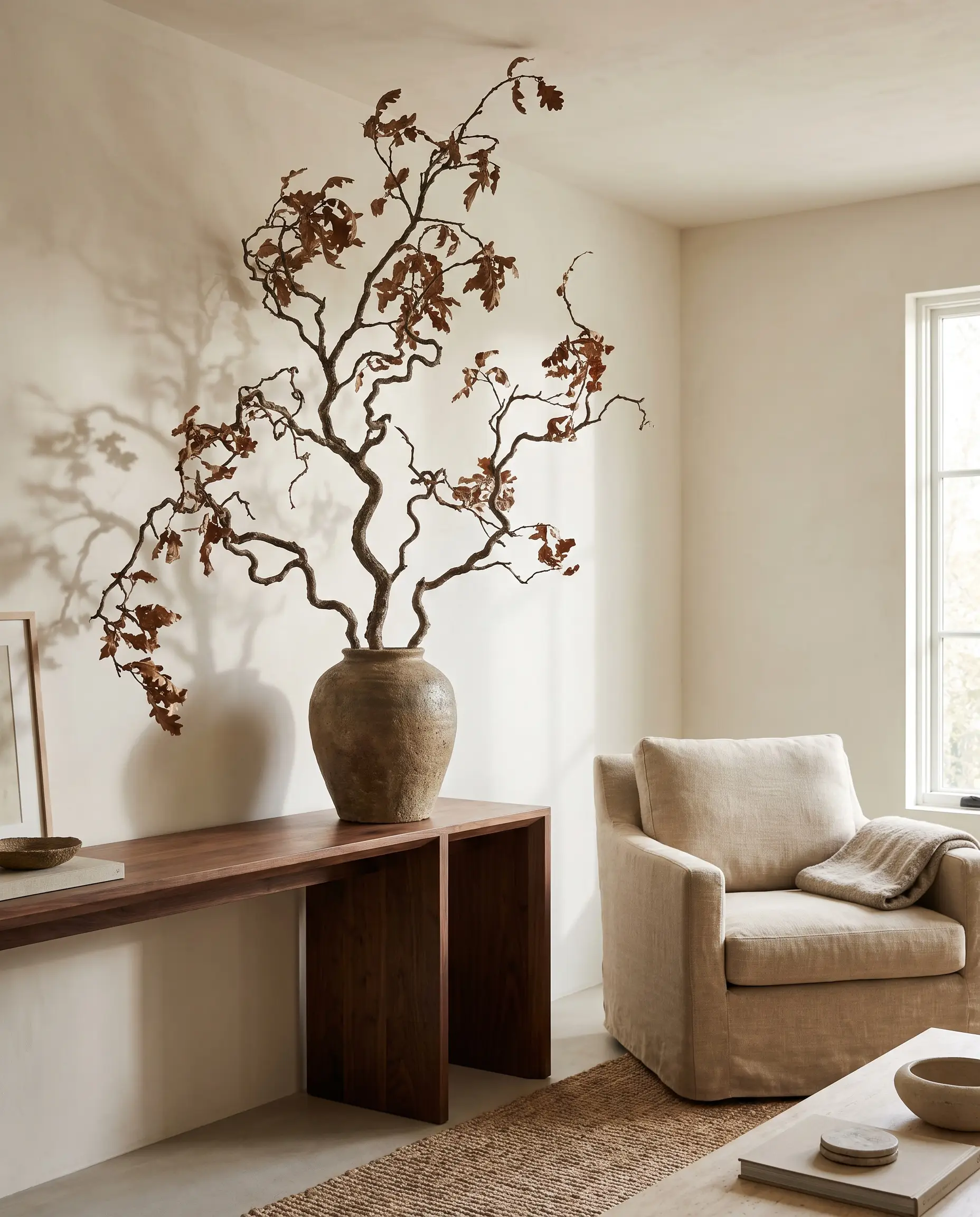
Complex, colorful floral arrangements introduce unnecessary micro-textures and visual noise. Instead, source a heavy ceramic vase and display a single, dramatic, oversized branch—like oak, olive, or cherry blossom—to bring organic life indoors with architectural scale.
- Scale Check: The branch should be at least twice the height of the vase to achieve the correct dramatic proportion.
- Vibe: Organic, dramatic, and structural.
- Key Materials: Foraged branches, raw stoneware vases.
Display Large-Scale Abstract Canvas Art (Unframed)
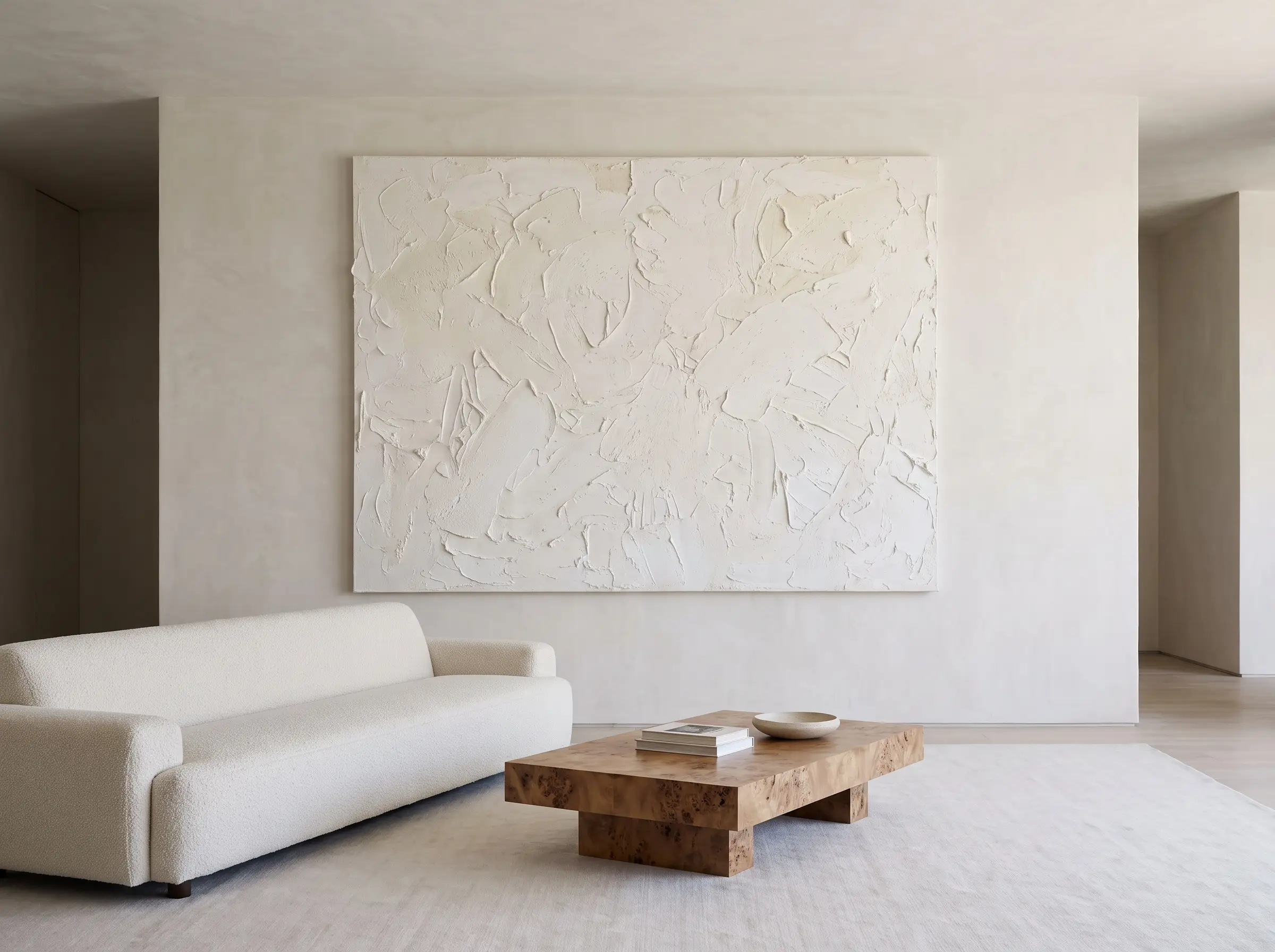
A minimalist living room should actively avoid busy gallery walls that chop up the sightlines. Opt for one massive, tonal, abstract canvas, leaving it unframed or finished with a raw wood floater frame to keep the piece feeling integrated rather than tacked on.
Multiple small, framed prints scattered across a wall destroy negative space. Commit to scale over quantity.
Visual Clutter Warning
- Vibe: Immersive, quiet, and gallery-esque.
- Key Materials: Heavy impasto acrylic, plaster art, raw canvas.
- Styling Pro-Tip: Hang the center of the canvas exactly 57 inches from the floor to align with standard gallery viewing heights.
Keep Bookshelves 50% Empty for Breathability
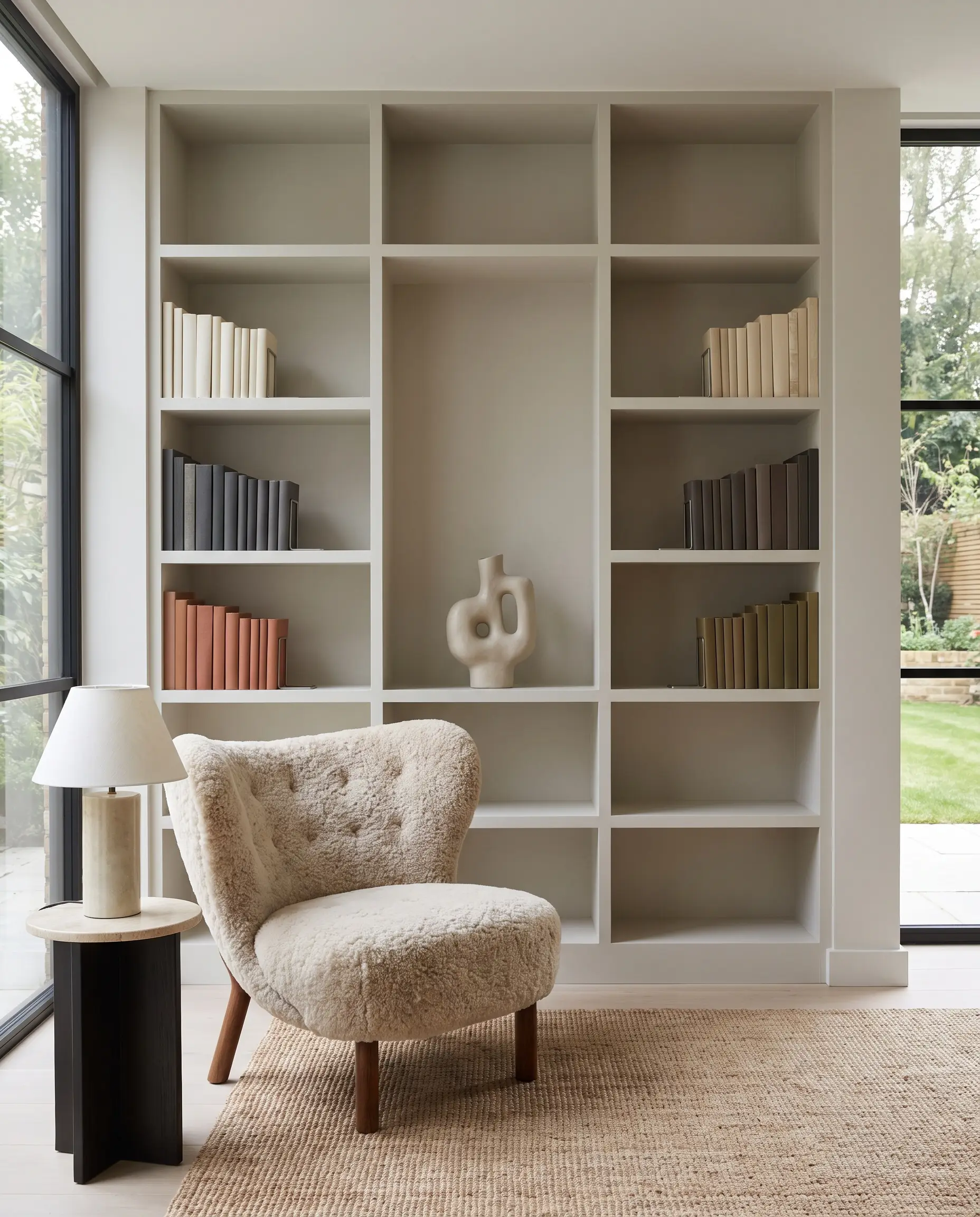
If your built-ins feature open sections, you must aggressively manage the display. Enforce the 50% rule: half of the shelf space must remain entirely empty, allowing the curated books and ceramics the negative space they need to breathe.
- Vibe: Curated, airy, and highly disciplined.
- Key Materials: Color-blocked books, minimalist bookends.
- Styling Pro-Tip: Group books by size and push them to the far left or right edges of the shelf, leaving the center entirely blank.
Ditch Toss Pillows for Bolsters or Single Lumbars
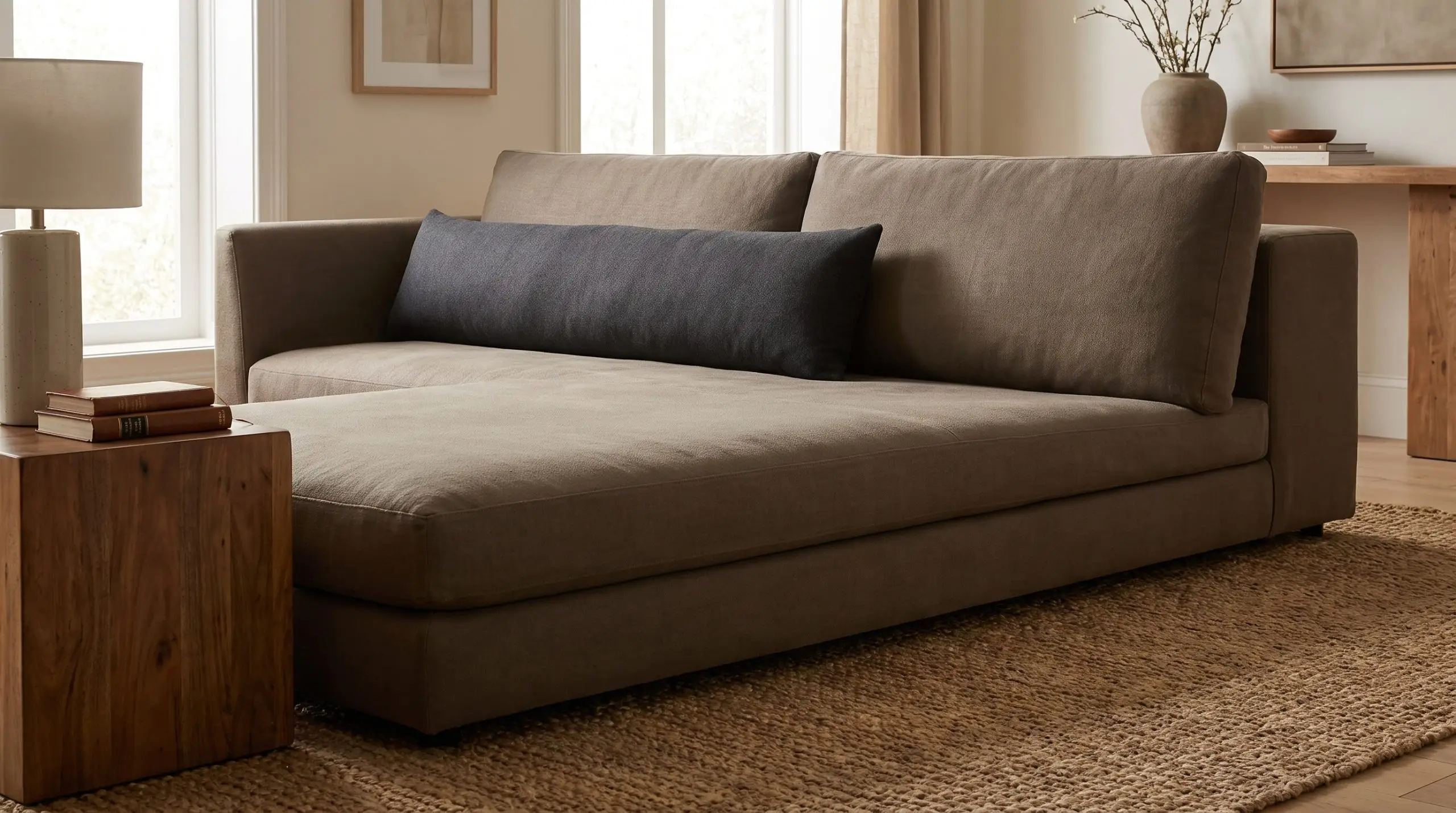
A sofa choked with a half-dozen different throw pillows contradicts the core philosophy of minimalism. Strip the upholstery back to structured comfort by using a single, extra-long lumbar pillow or a precise pair of heavy cylinder bolsters.
- Scale Check: A single lumbar pillow should span at least one-third the total length of the sofa.
- Vibe: Tailored, clean, and highly structured.
- Key Materials: High-density foam inserts, heavy linen covers.
Hide Everyday Clutter in Sculptural Catch-Alls
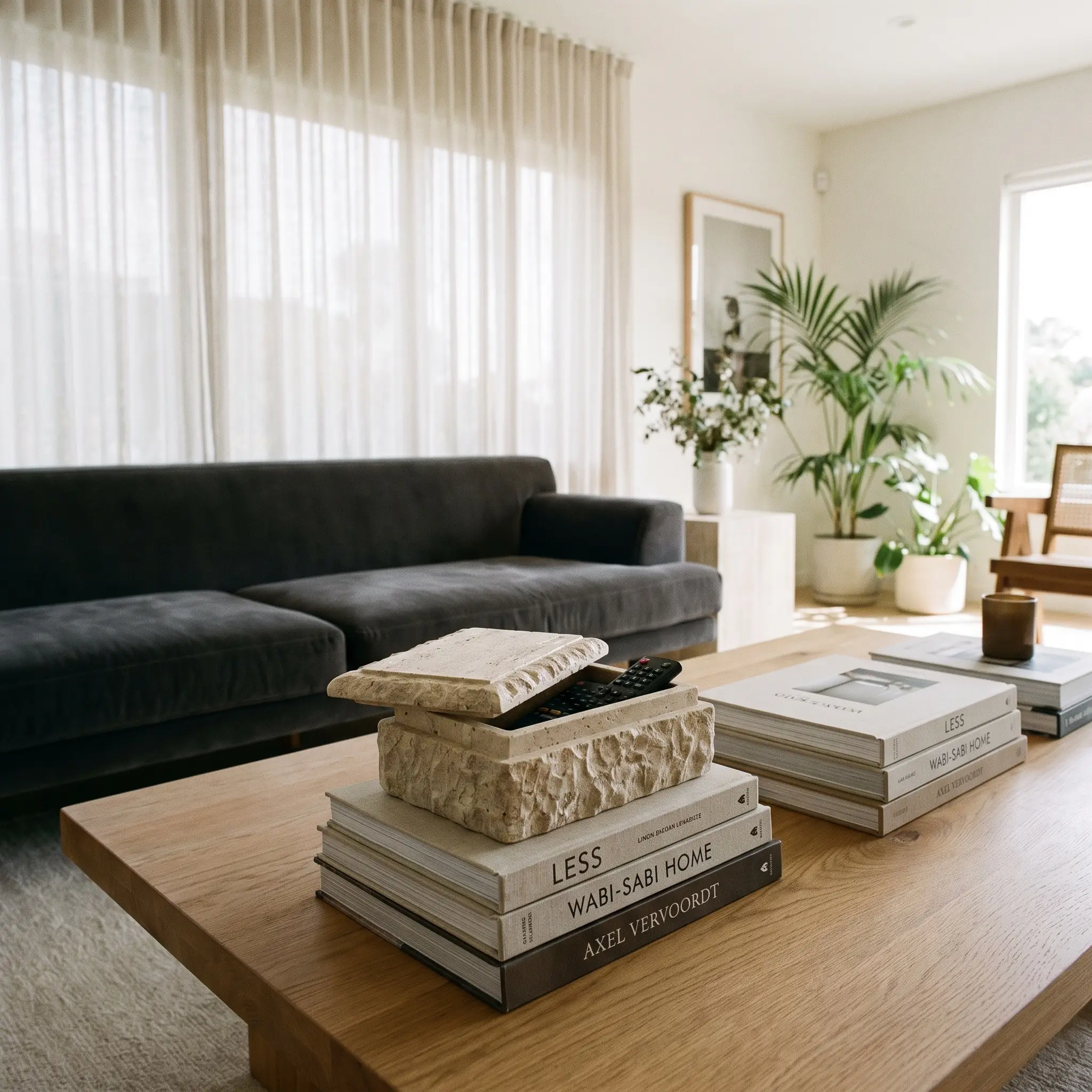
Real life involves remotes, coasters, and matches, but they do not need to be on display. Source beautiful, lidded stone or wood boxes that read as solid sculptures while secretly housing the ugly necessities of daily living.
- Vibe: Secretive, functional, and pristine.
- Key Materials: Carved travertine, turned walnut.
- Styling Pro-Tip: Place a heavy marble box on top of your design books to double as a paperweight and a hidden storage unit.
The Minimalist Maintenance Protocol
Minimalism is not just a one-time shopping trip; it is a daily practice of curation and restraint. To maintain the flawless architecture of your space, implement the “One In, One Out” rule—for every new object brought into the living room, an old one must be removed.
- Clear the Surfaces: Remove all cups, mail, and uncurated items from the coffee table and floating console.
- Fluff the Bolster: Reshape your single lumbar or bolster pillow and realign it perfectly with the sofa seams.
- Hide the Tech: Place the remote controls back inside their sculptural stone catch-all.
- Adjust the Drapery: Pull the sheer linen drapery into perfect, uniform folds along the recessed track.
Which tactile material do you plan to incorporate into your space first? Let the texture guide your next steps, and be sure to explore our comprehensive Minimalist Interior Design Guide for whole-home application.
The Aesthetics Desk curates the visual direction for Hackrea. Specializing in design history, global architectural movements, and interior styling, this desk focuses on the psychology of space and how to translate high-end, magazine-quality aesthetics into approachable residential design without falling into fleeting micro-trends.