The Organic Modern Living Room: 15 Ways to Master Raw & Refined Elegance
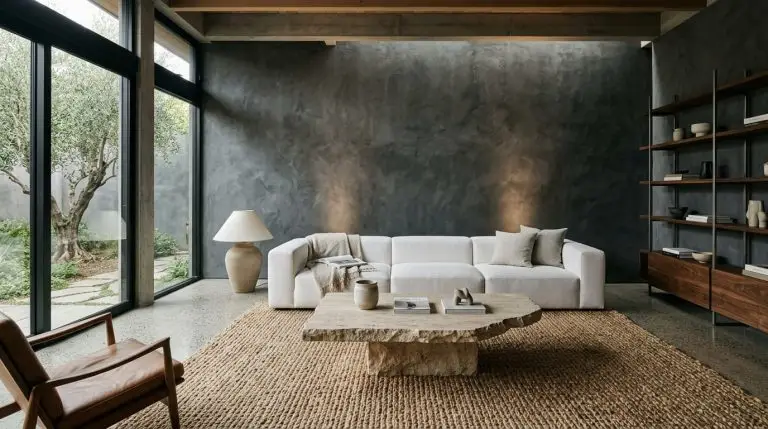
The clinical, hyper-sterile minimalism of the late 2010s has finally exhausted its welcome. Discerning eyes are rejecting the cold, grey-and-white box in favor of spaces that actually breathe. Yet, the pendulum swing toward warmth often results in a catastrophic overcorrection—a cluttered, unstructured bohemian mess that lacks architectural rigor.
The organic modern living room is the precise antidote to both failures. It is not a fleeting aesthetic; it is a calculated, highly disciplined study in architectural tension. True organic modernism demands a deliberate collision between strict, unapologetic modern geometry and the raw, heavily textured imperfections of the natural world. We are abandoning vague platitudes.
This masterclass dictates the exact material pairings, spatial layouts, and sourcing specifications required to execute this aesthetic flawlessly. If you rely on basic beige paint and generic wood furniture, the room will read as flat and uninspired.
The true success of an organic modern space relies entirely on the alchemy of raw and refined.
The Core Styling Formula: Mastering Architectural Tension
Successful organic modernism requires strict visual discipline. It is a rigorous balancing act of opposing forces; without a framework, the integration of natural elements quickly degrades into primitive, rustic cabin territory. The secret lies in orchestrating intentional architectural tension across every square inch of the living room.
Here is the foundational mathematics of high-end styling.
The 70/30 Balance Rule
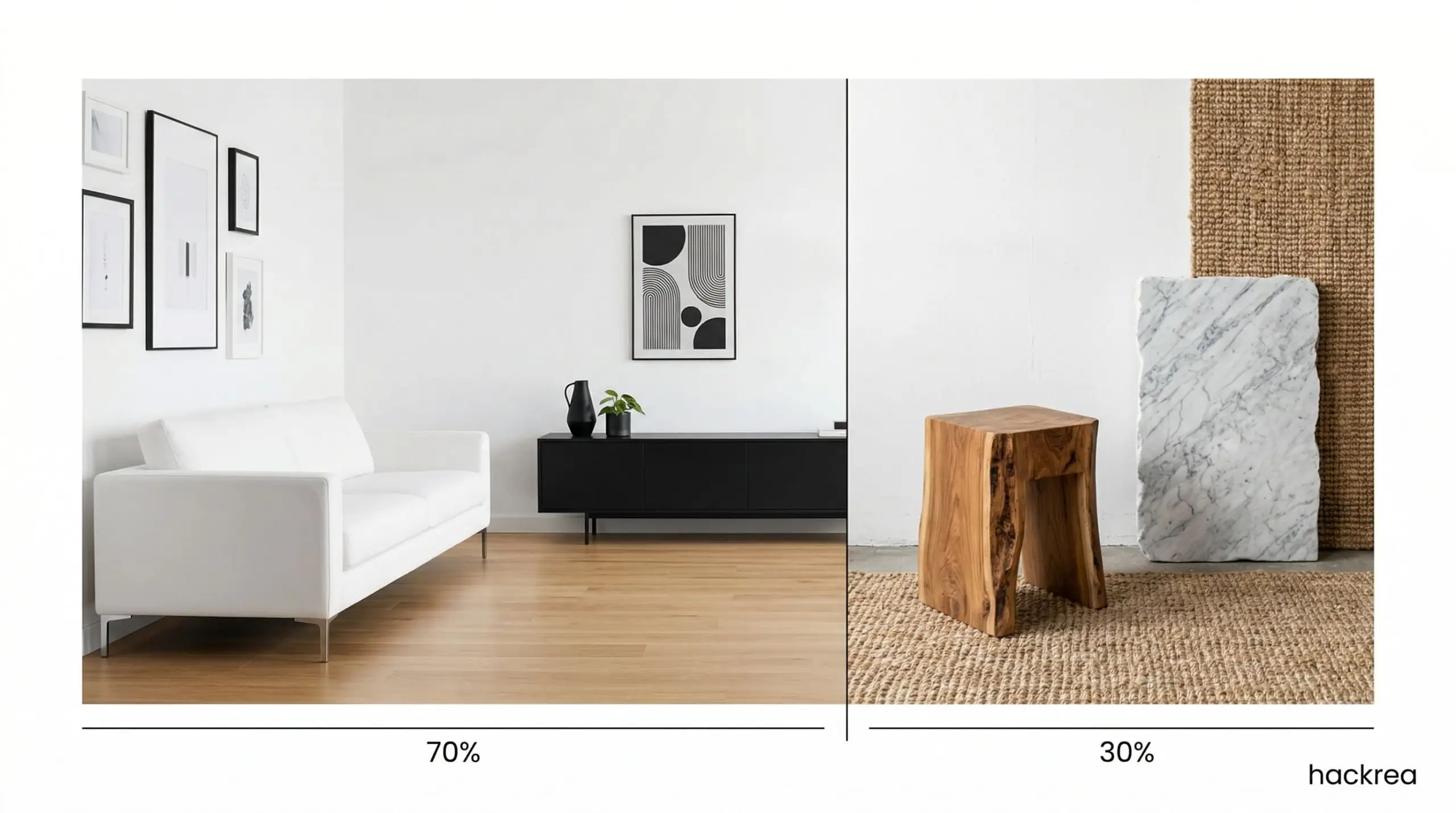
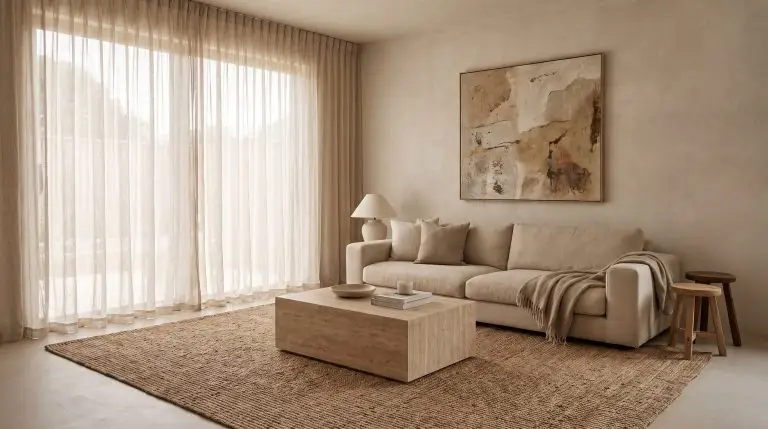
The 70/30 ratio is the non-negotiable metric for establishing spatial harmony. To prevent the design from skewing too heavy, 70% of the living room must consist of clean, modern, streamlined silhouettes. Source razor-sharp track-arm sofas, sleek, handleless media consoles, and matte blackened steel hardware to build a crisp architectural foundation. The remaining 30% is where the aesthetic finds its pulse. Inject raw, organic, or heavily textured elements—a live-edge wabi-sabi stool, a slab of heavily veined, unpolished marble, or a thick woven jute rug. Flipping this ratio is a fatal styling error. If the room becomes 70% raw wood and textured wool, the modern edge dissolves entirely, leaving behind a heavy aesthetic that completely breaks the intended sophistication.
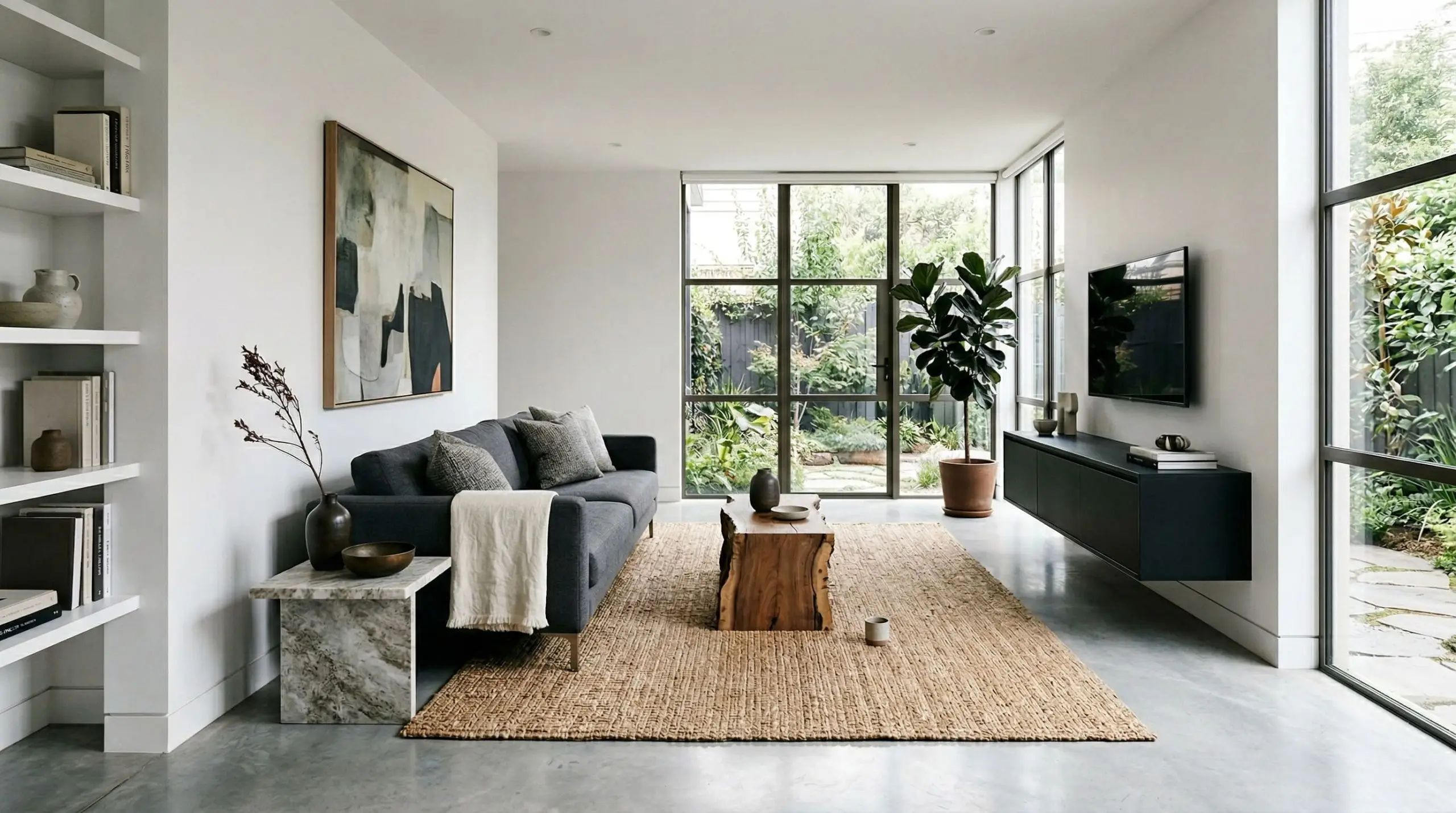
Always establish your 70% modern foundation first. It is infinitely easier to layer 30% organic texture into a sleek, rigid room than to force modernism into a space already dominated by heavy, rustic timber.
Hackrea Styling Tip
Breaking the “Beige Box” Myth with Patina
The most pervasive myth in modern organic design is the assumption that the palette must be exclusively cream, ivory, and beige. A living room stripped of all color and shadow is not organic; it is anemic. The crucial missing ingredient in a flat, uninspired space is patina. To break the beige box curse, the design must embrace moody, earthy tones and materials that actively age. Injecting deep, saturated hues—like a muddy ochre velvet pillow, a deep olive linen drape, or a heavily saturated rust-toned ceramic—anchors the lighter elements and forces the eye to register visual depth.
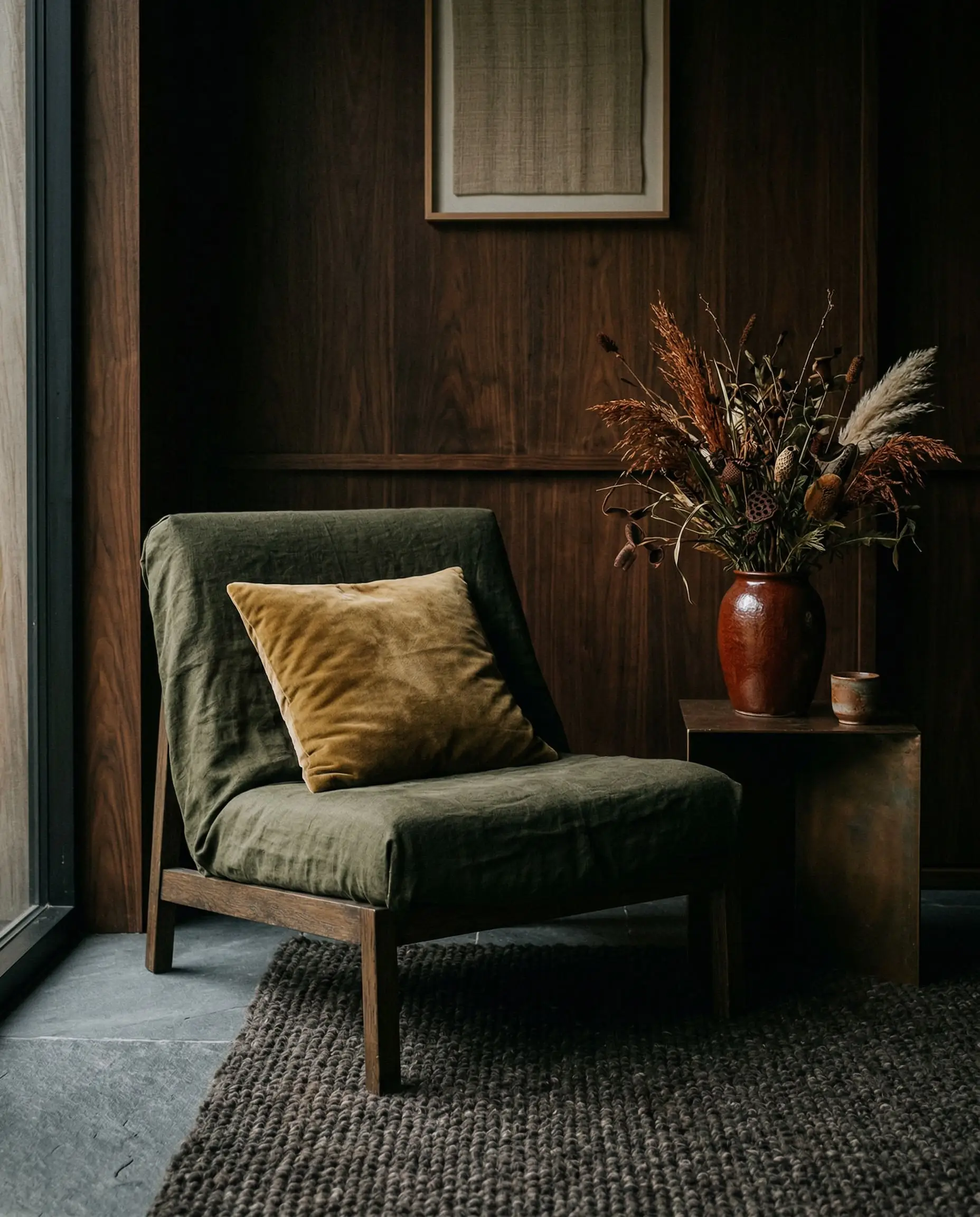
Beyond pigment, the physical materials must carry a sense of history. Specify unlacquered brass for lighting fixtures or oxidized metals for side tables. These living finishes tarnish and deepen over time, providing a silent, grounding narrative. Look to the sophisticated atmospheres mastered by the late Christian Liaigre; his interiors never relied on flat whites. Instead, they utilized deep, shadowy woods, aged bronze, and textured plaster to create rooms that felt both profoundly modern and ancient. Without shadow and patina, the living room will always feel like a sterile showroom rather than a curated sanctuary.
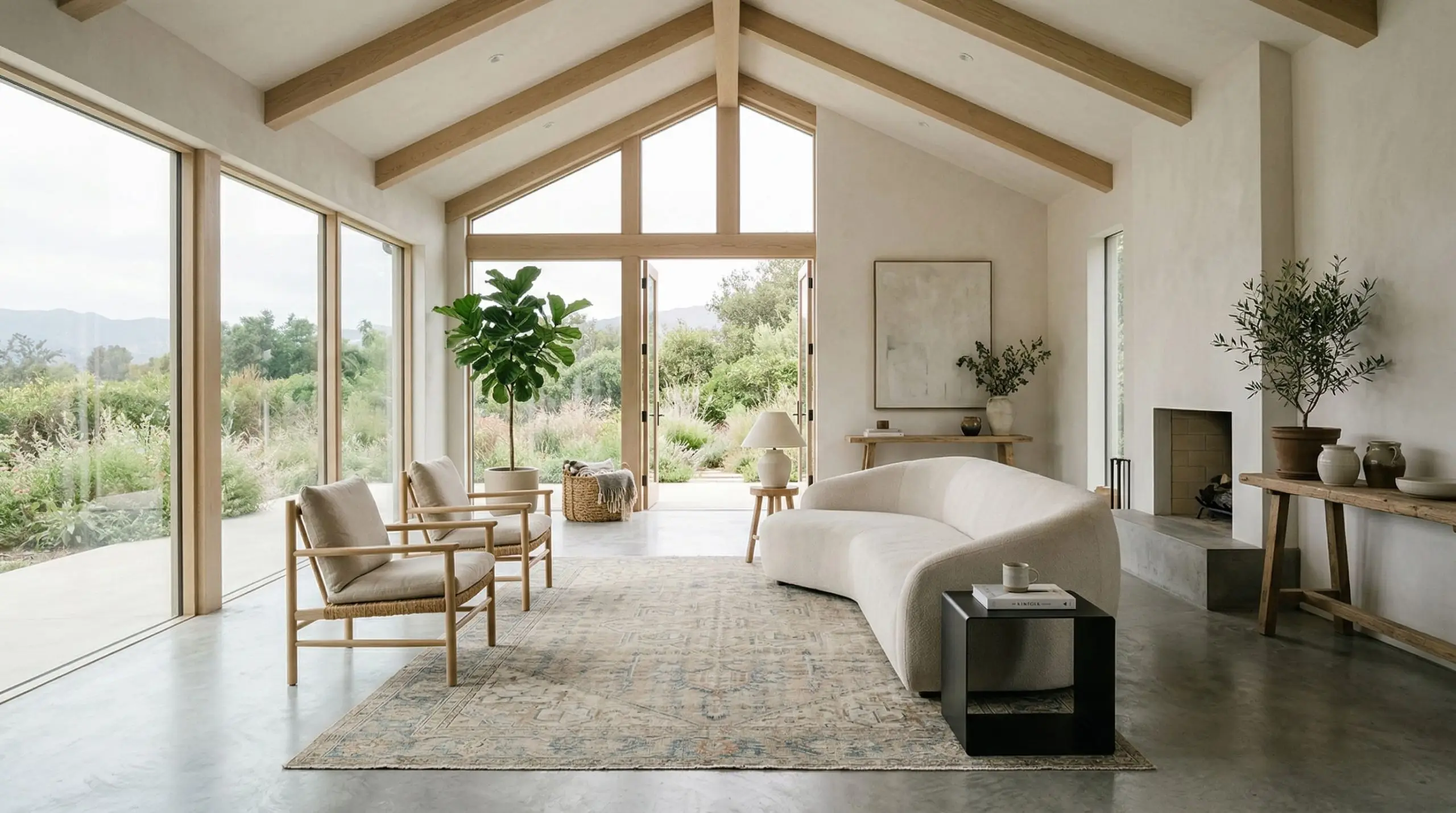
15 Organic Modern Living Room Ideas: Material & Furniture Pairings
Theory must eventually give way to physical execution. Achieving the perfect balance of raw and refined requires sourcing the exact right profiles, textiles, and stone cuts. Moving past the conceptual framework, these are the precise material combinations, furniture silhouettes, and spatial strategies required to style an elite organic modern living room:
Seating & Upholstery Executions
The foundation of the living room begins with how it holds the human form. Seating must bridge the gap between architectural rigor and undeniable tactility.
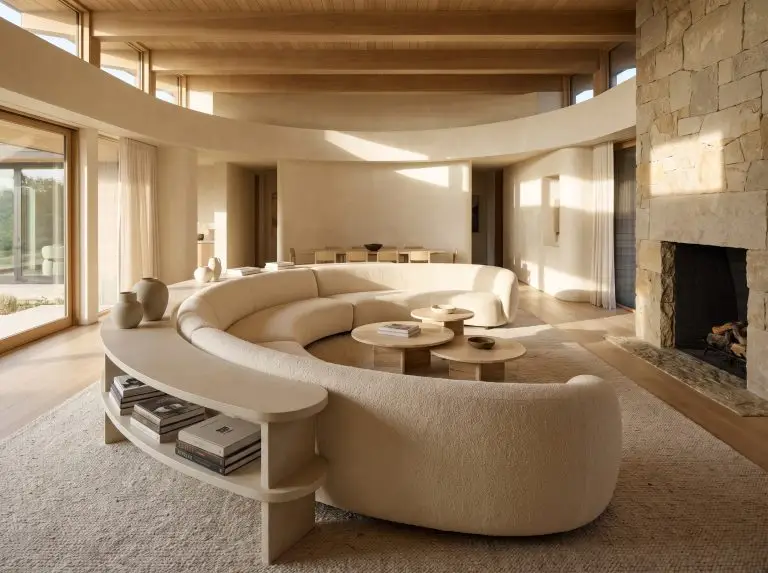
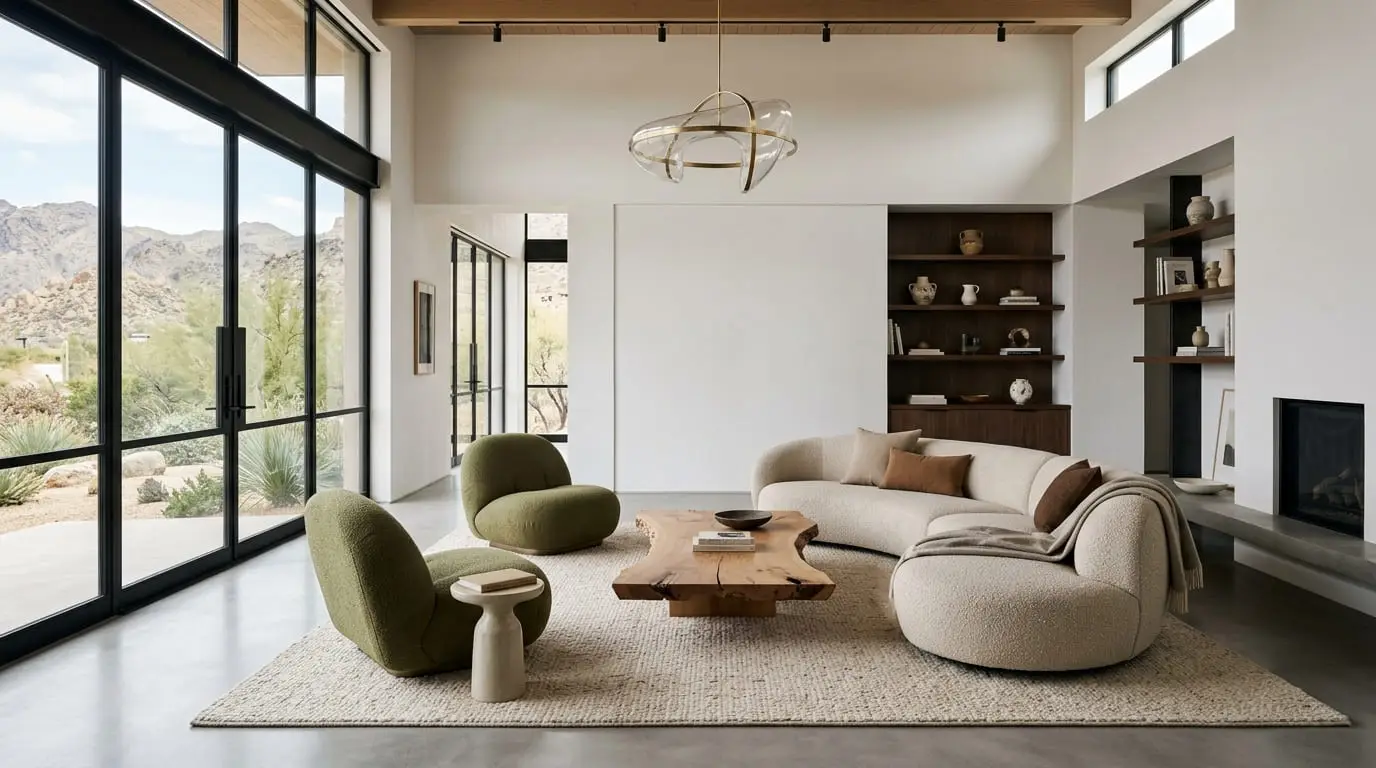
1. Low-Profile & Asymmetrical Silhouettes: Ditch high-backed, overstuffed traditional sofas immediately. Source ground-hugging, sculptural silhouettes that expand the visual space and lower the room’s center of gravity. Asymmetrical, curved backs introduce an organic fluidity that breaks up the rigid geometry of standard drywall boxes.
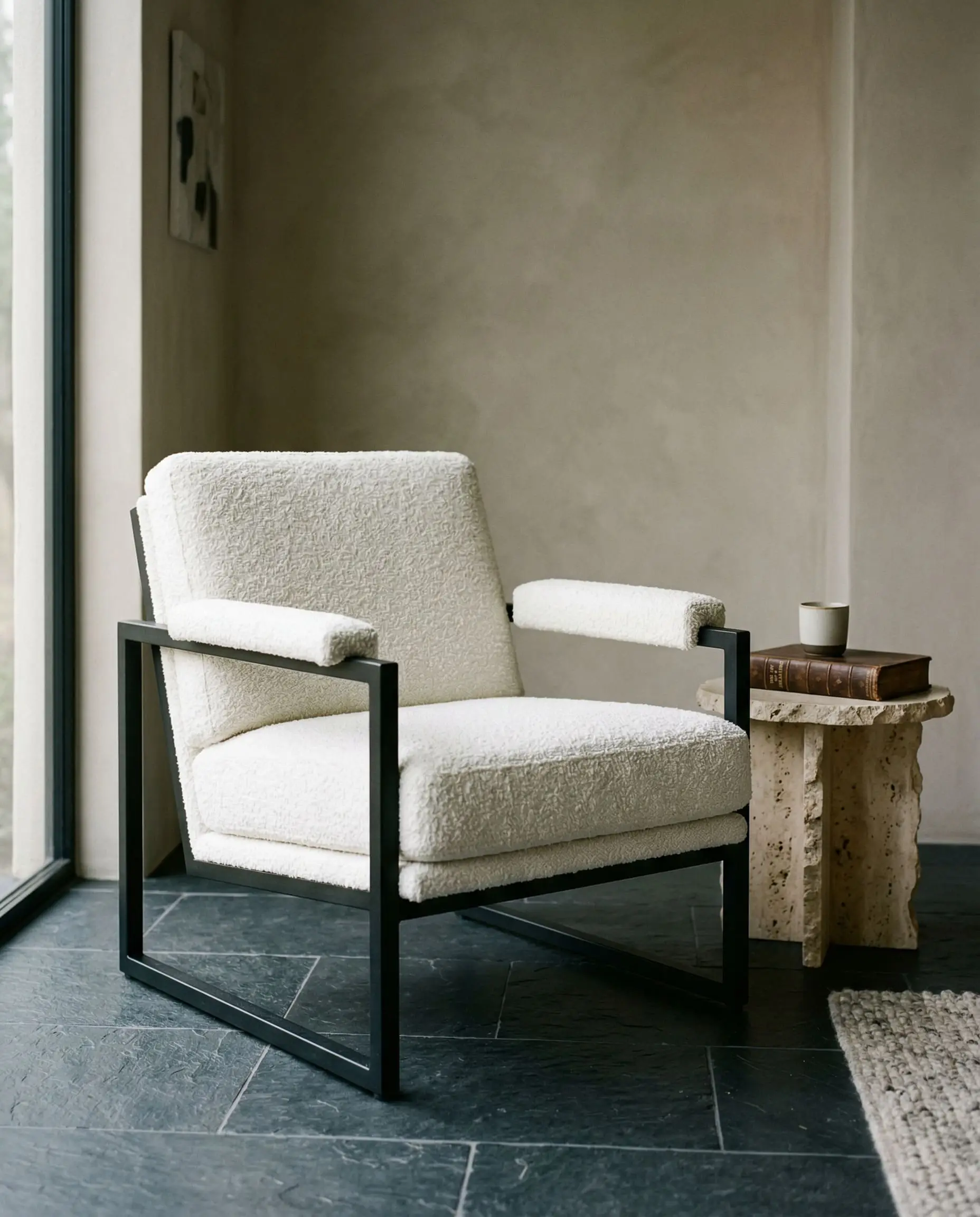
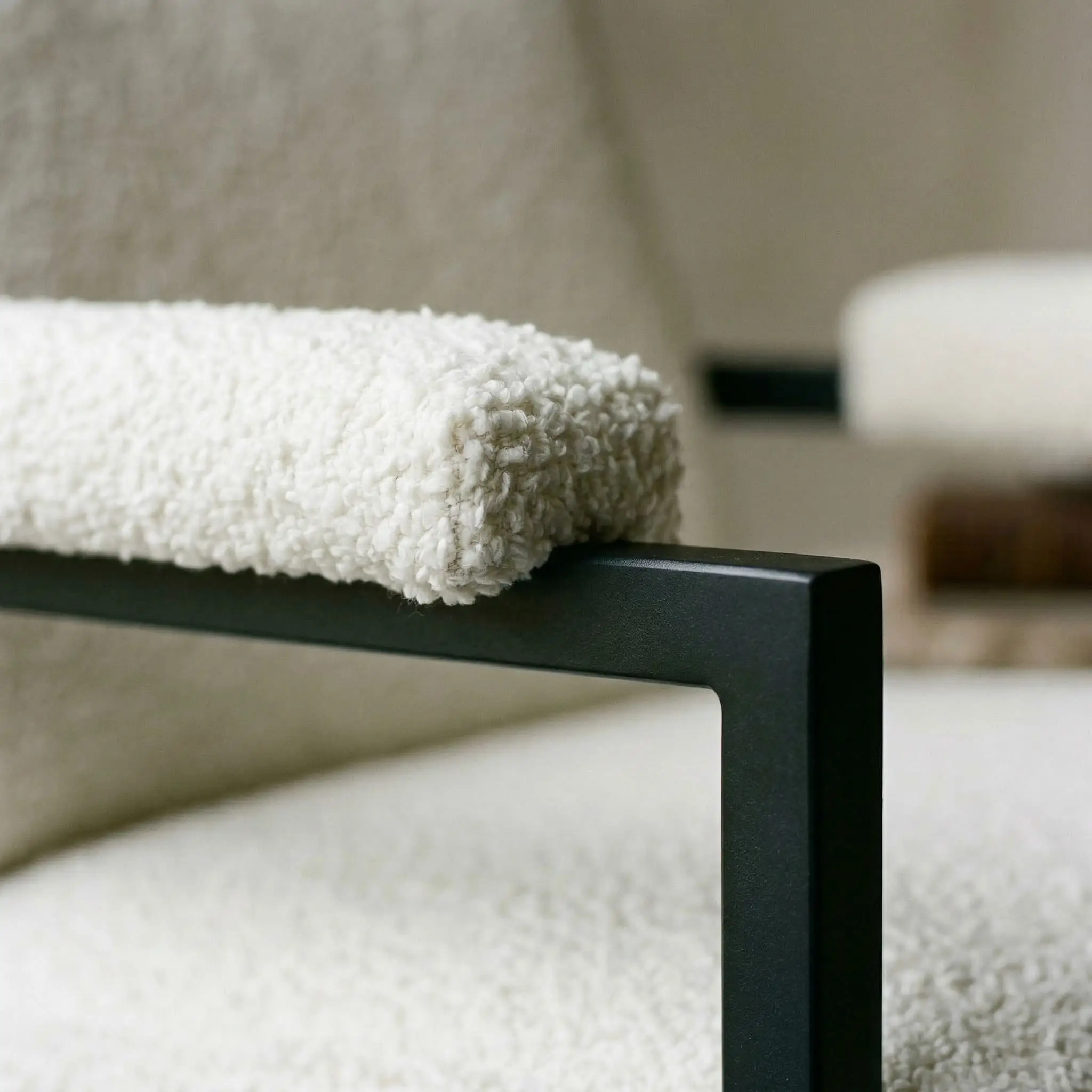
2. Bouclé Meets Blackened Steel: To master tactile tension, pair soft, highly textured bouclé or raw shearling armchairs with the sharp, cold bite of matte blackened steel frames. The visual friction between the plush, cloud-like upholstery and the unforgiving metal is the exact definition of raw-meets-refined.
3. Linen Layering: For foundational seating, avoid shiny synthetics or tight-weave cottons. Specify heavy-weight Belgian linen slipcovers. The fabric’s natural tendency to wrinkle slightly provides a relaxed, unpretentious elegance, while the tailored slipcover maintains a clean, modern line.
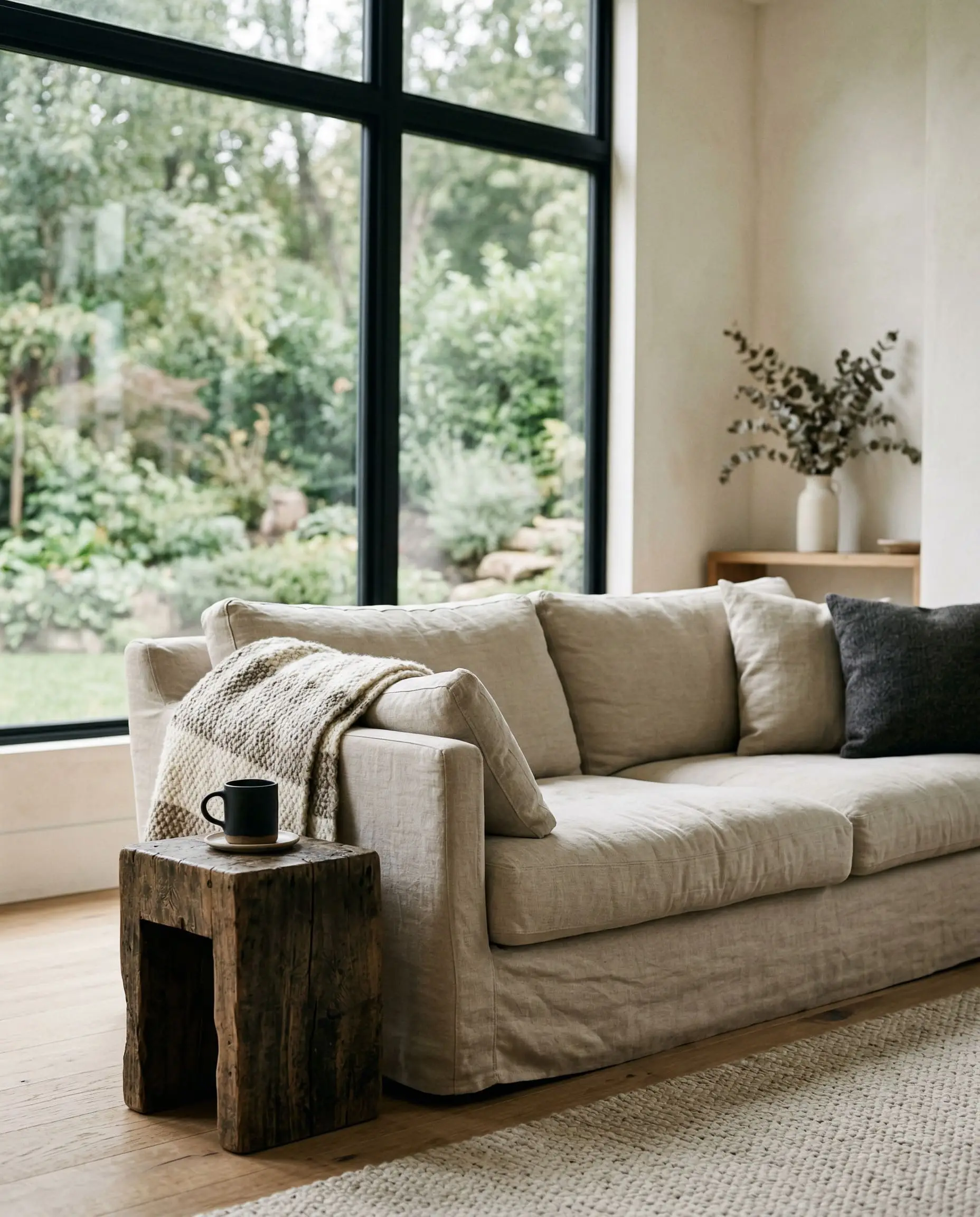
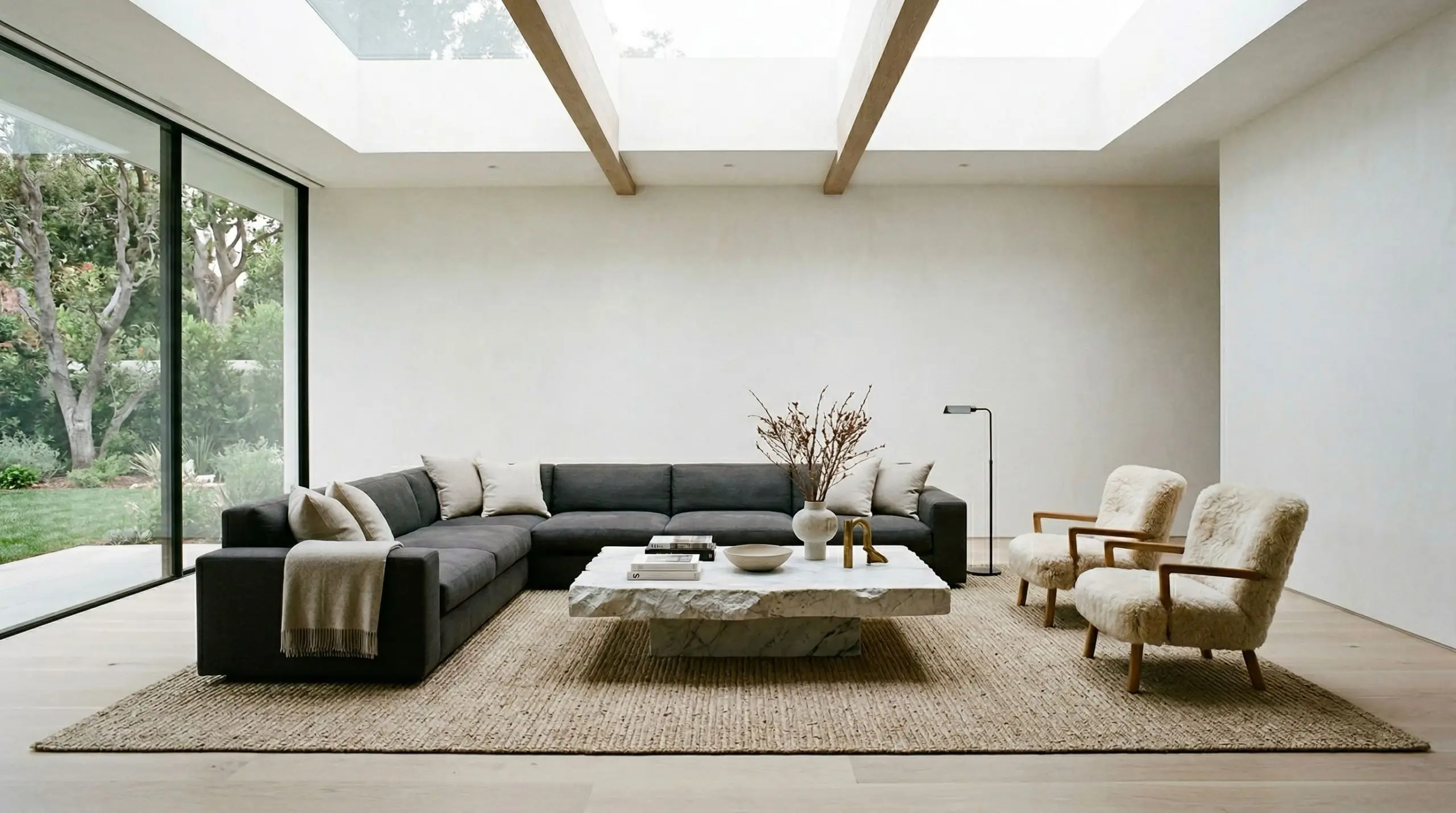
4. Floating Furniture Plans: Never push a sofa flush against the wall. Pull all furniture inward to create a breathable, “floating” layout. This spatial arrangement mimics the natural flow of organic environments, allowing air and light to circulate around the sculptural forms, treating each piece of furniture as a distinct architectural object rather than perimeter padding.
Hard Goods: Coffee Tables & Consoles
Wood and stone act as the skeletal structure of the aesthetic. Sourcing the correct finishes is paramount; high-gloss sealants and polished stones will instantly ruin the organic illusion.
The Formula: Honed Travertine + Heavy-Weight Linen + Matte Blackened Steel
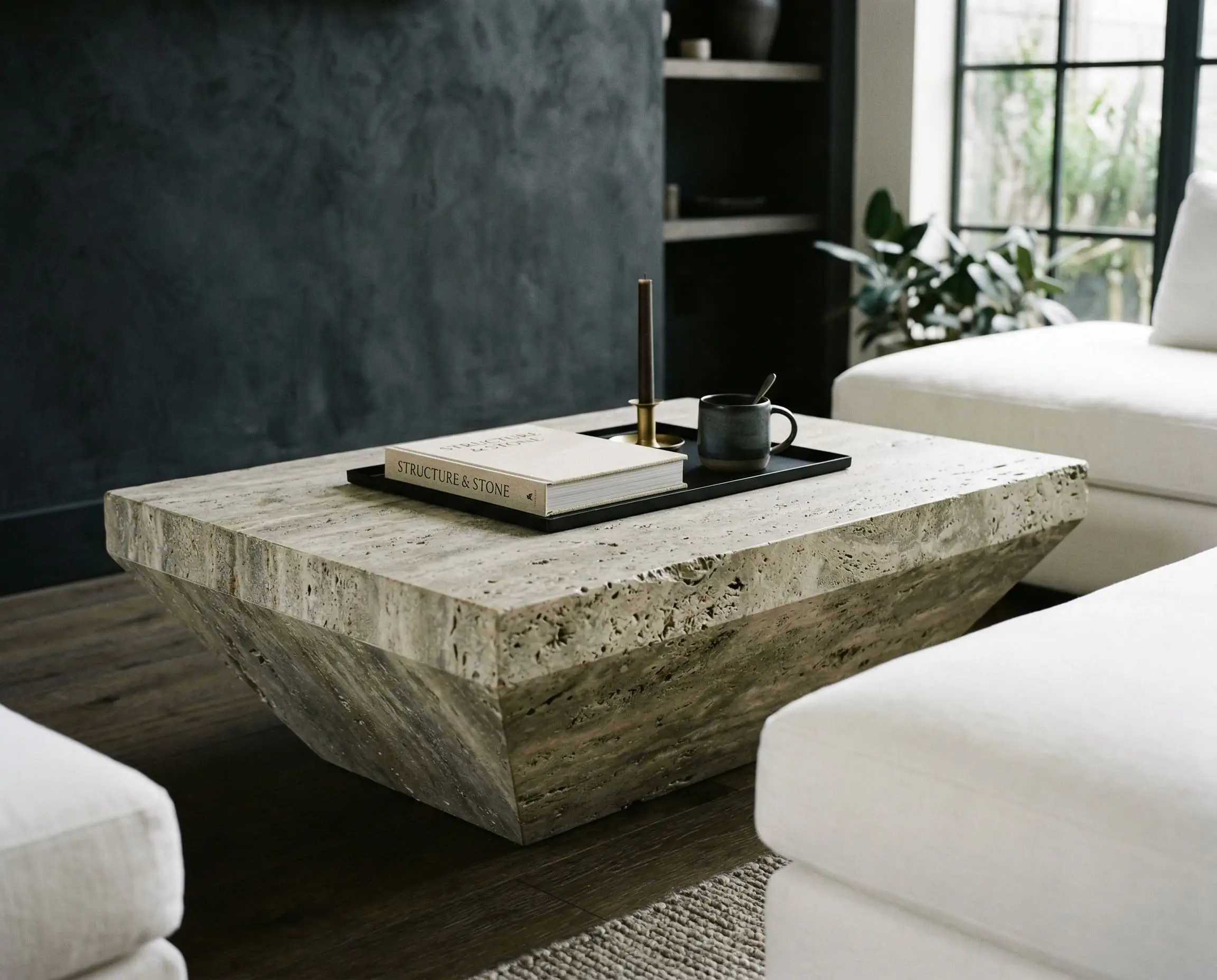
5. Honed Travertine Plinths: Polished marble reads too glamorous and traditional. Instead, specify honed travertine for coffee tables and plinths. The matte finish and porous, pitted surface of the stone deliver an earthy, grounding weight that perfectly anchors a room.
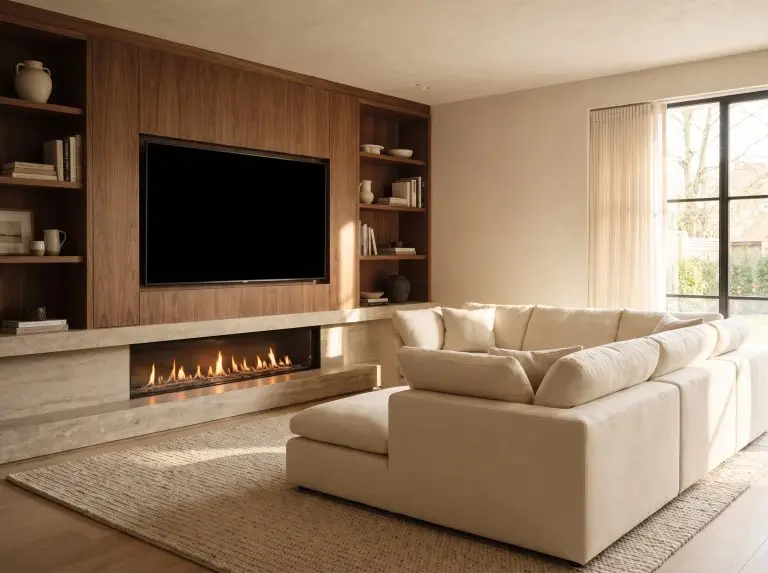
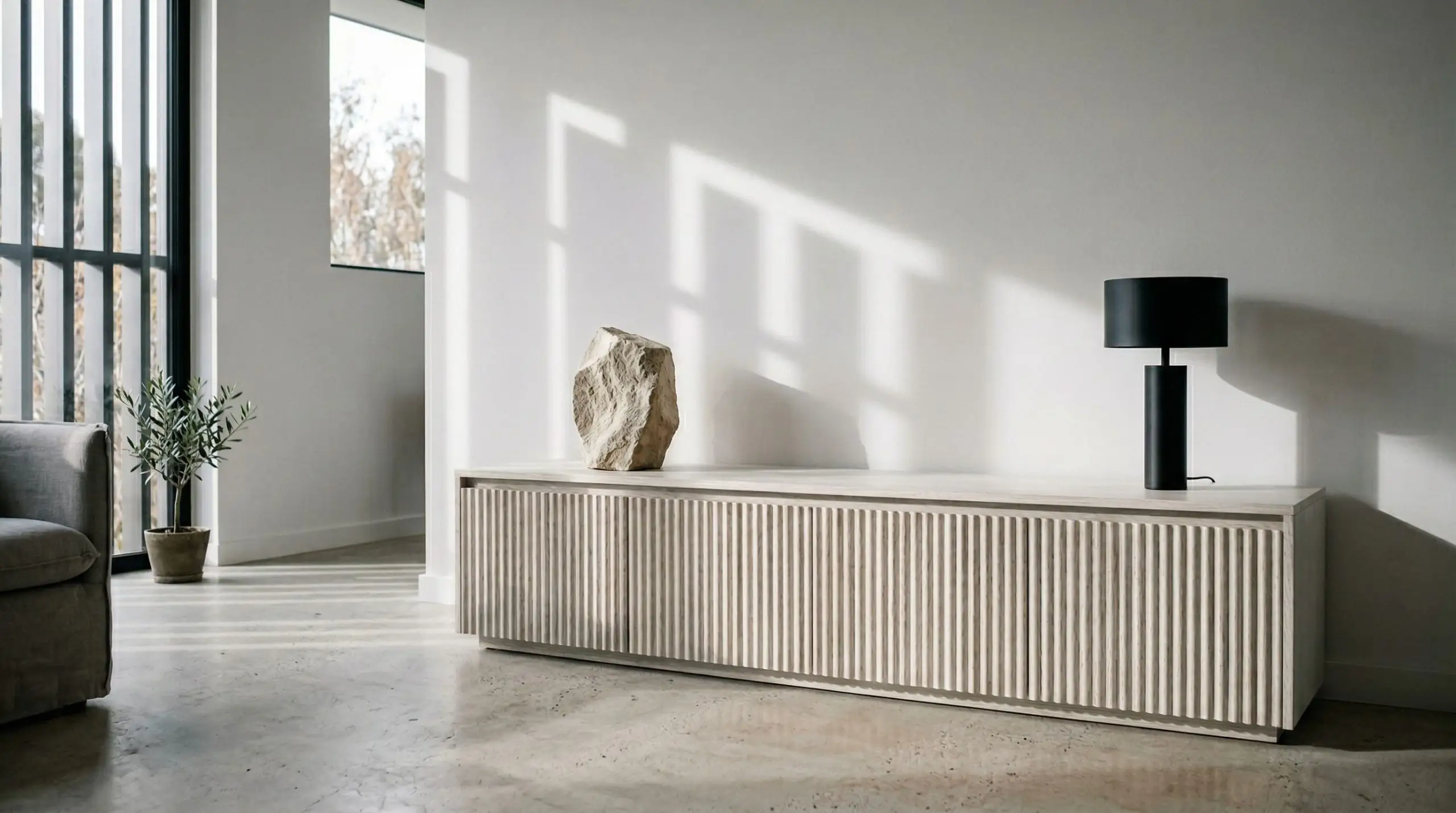
6. Fluted White Oak Cabinetry: Flat-front wood consoles can feel heavy and monolithic. Introduce fluted or reeded white oak for media cabinets and built-ins. The vertical ridges create rhythmic architectural shadows, adding micro-texture that catches the ambient light without requiring chaotic hardware.
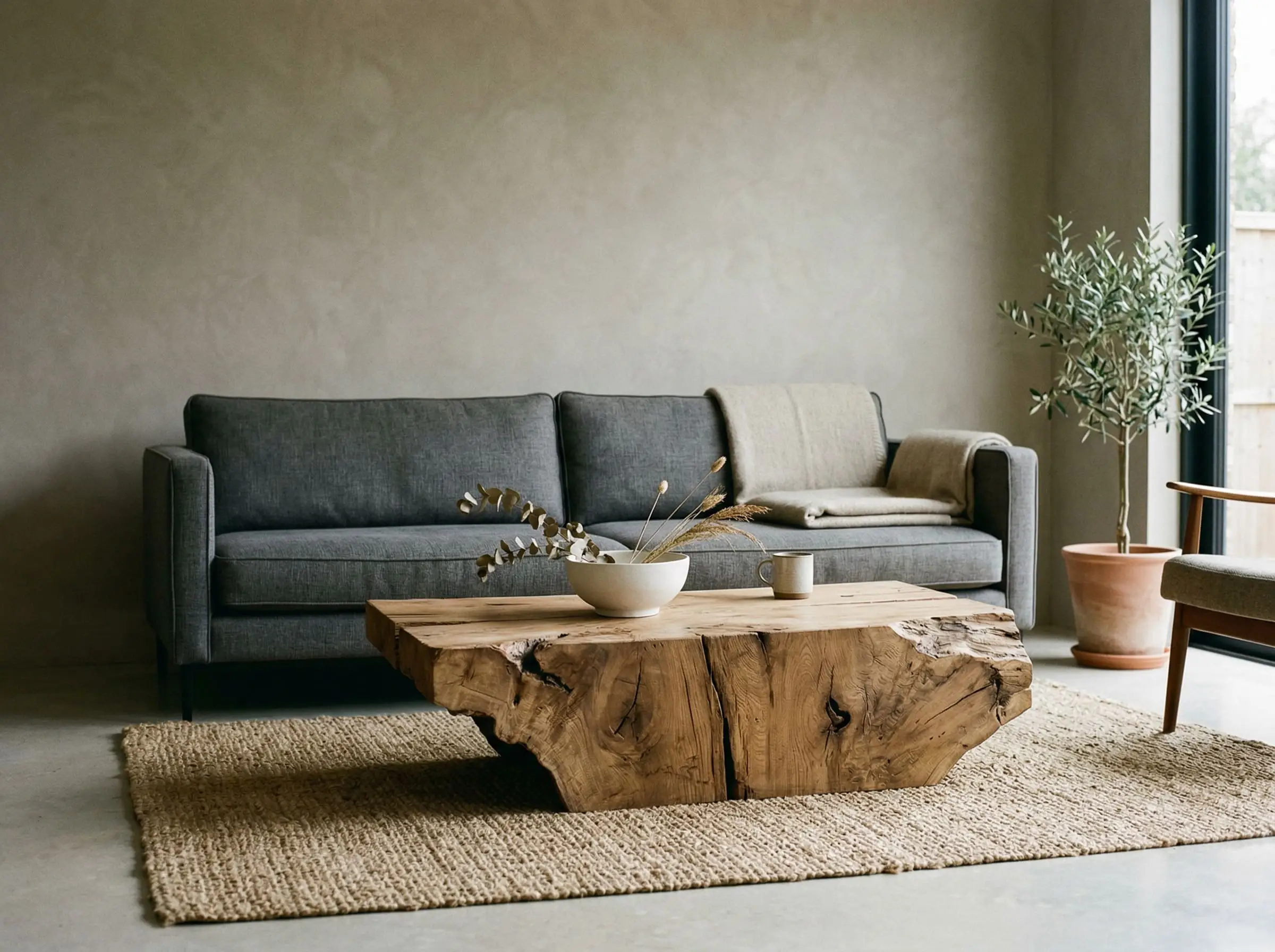
7. Wabi-Sabi Sculptural Tables: Embrace the Wabi-Sabi philosophy by sourcing asymmetric, raw-edge wood coffee tables. These pieces act as functional art, celebrating the natural splits, knots, and imperfections of the timber. Set against a clean-lined modern sofa, the raw wood becomes a striking focal point.
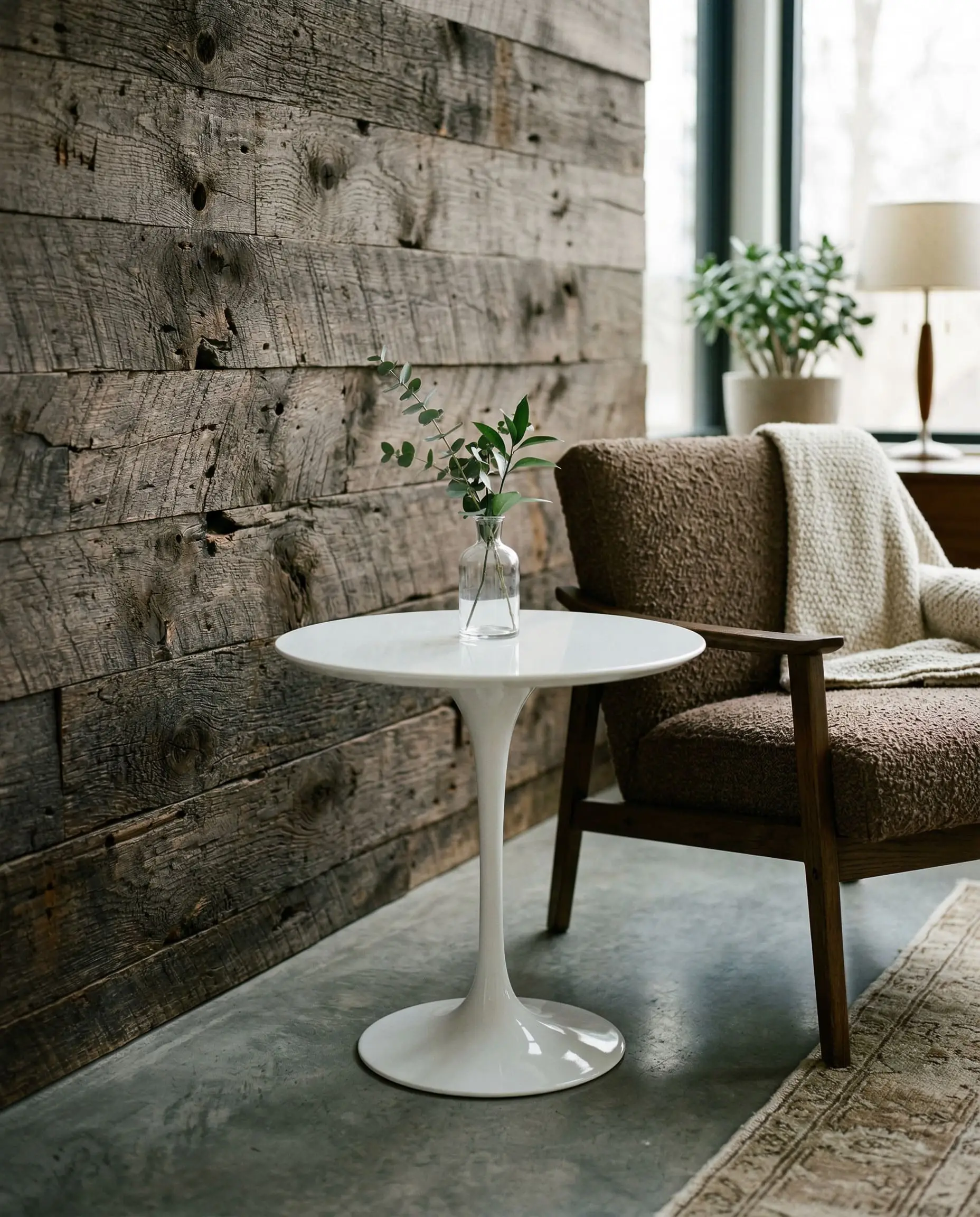
8. Eero Saarinen Influence: To prevent the room from drowning in earthy wood tones, introduce a singular, stark white modern pedestal table—heavily influenced by Eero Saarinen’s iconic tulip designs. Placing a pristine, glossy white fiberglass or marble side table next to a rough, textural rug creates a sharp, deliberate contrast that jolts the eye and reinforces the modern end of the spectrum.
Textures, Rugs & Wall Treatments
The outer shell of the room dictates how light and sound behave. Flat, sterile drywall and synthetic carpets are the enemies of tactile depth.
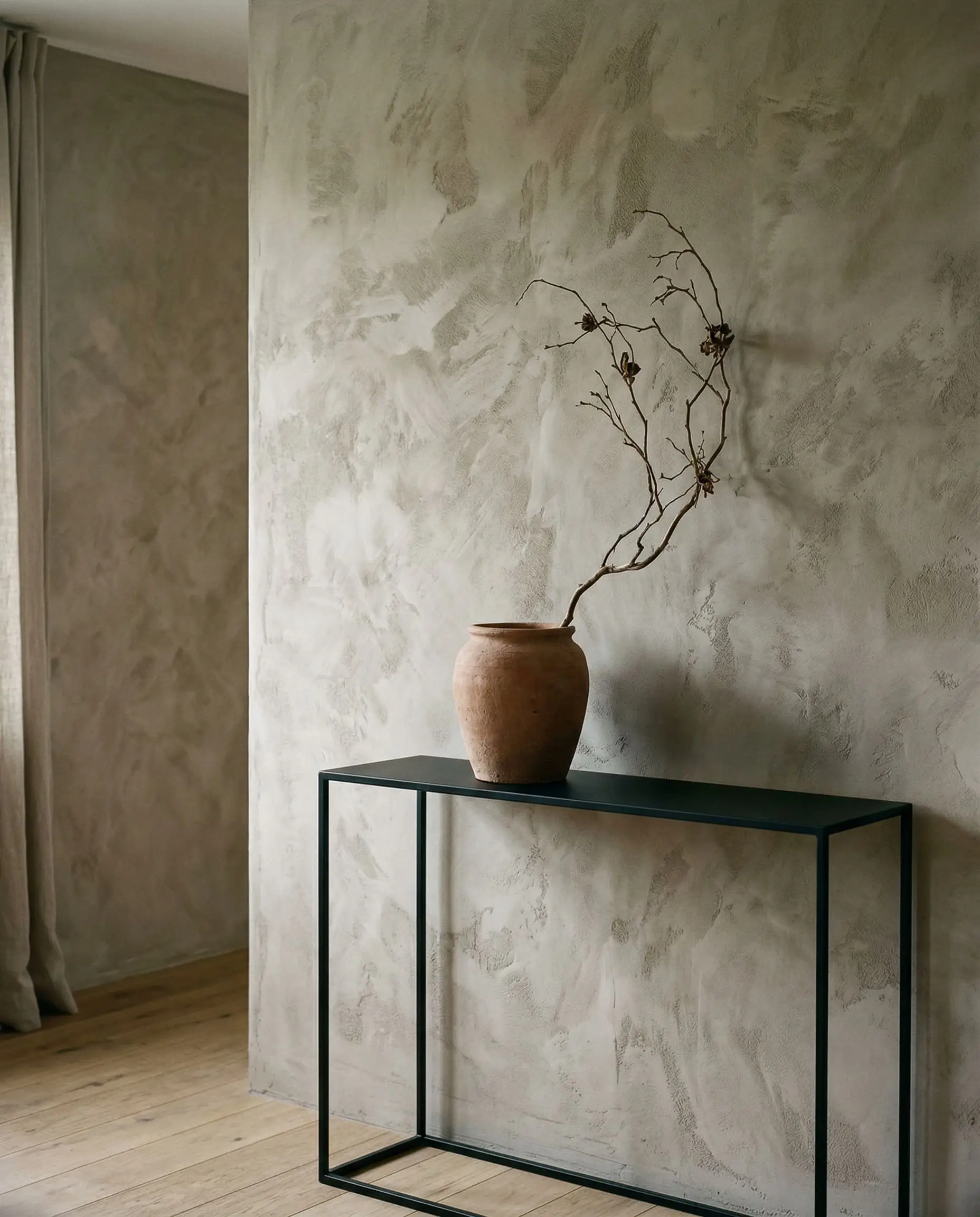
9. Limewash & Roman Clay: Banish flat white latex paint. Commission Roman clay or learn how to limewash walls to create a cloudy, plaster-like depth across the vertical planes. The subtle, mottled brushstrokes mimic natural stone, wrapping the room in a soft, suede-like texture that shifts beautifully as the sun moves across the sky.
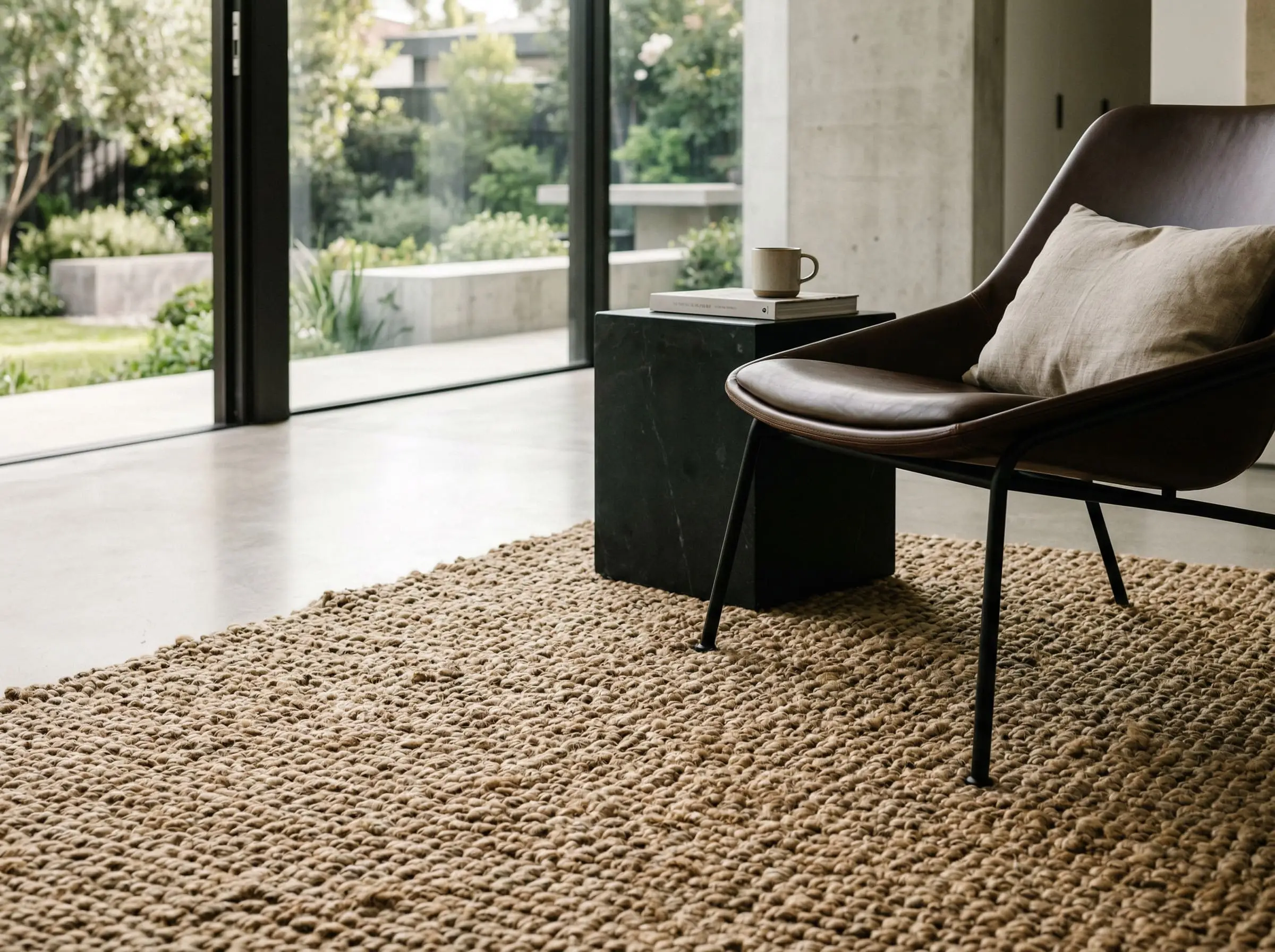
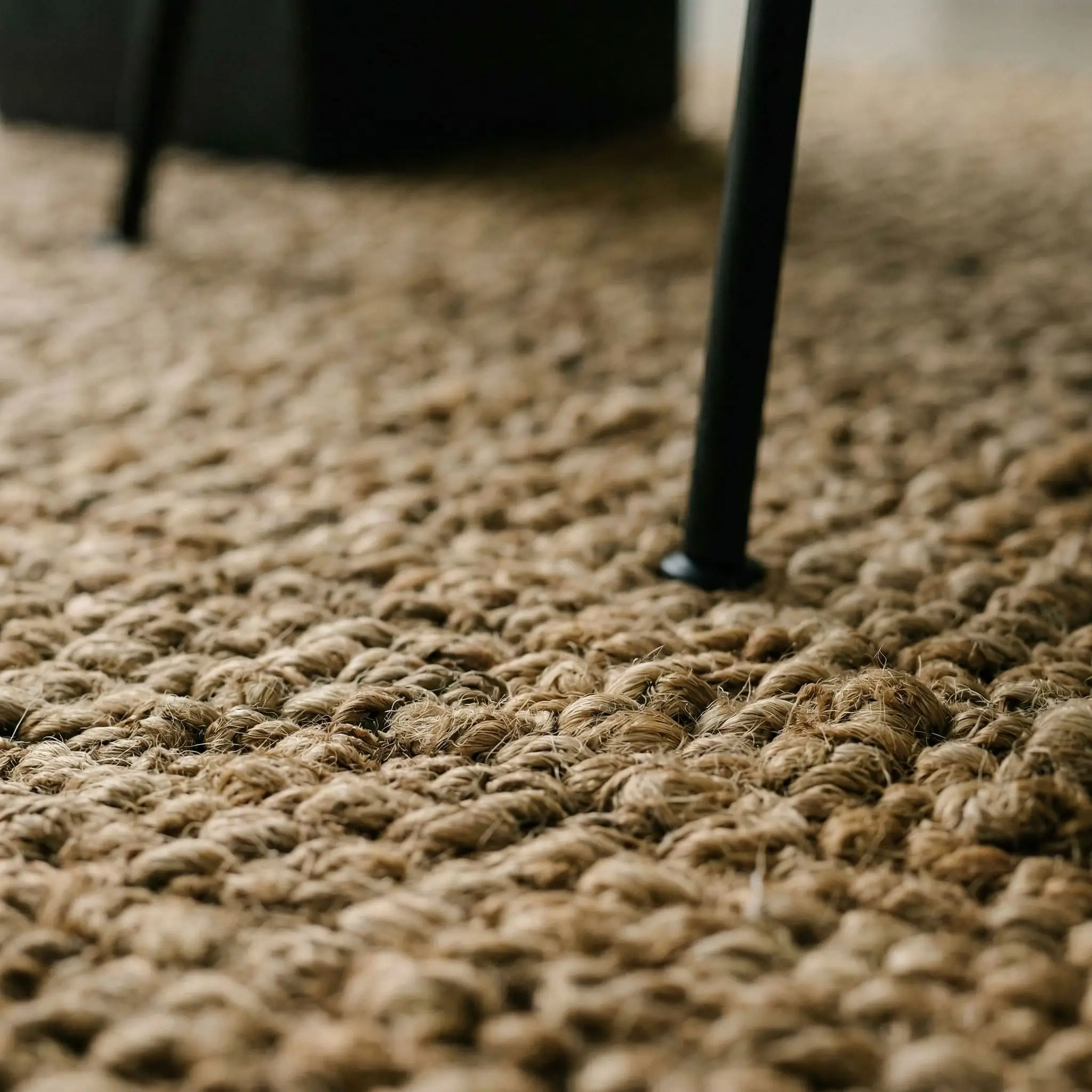
10. Oversized Chunky Jute: Ground the floating furniture arrangement with a massive, thick-woven jute or sisal rug. The aggressive, fibrous texture absorbs sound and adds immense earthy weight, providing a highly tactile foundation that contrasts brilliantly against smooth stone or sleek metal legs.
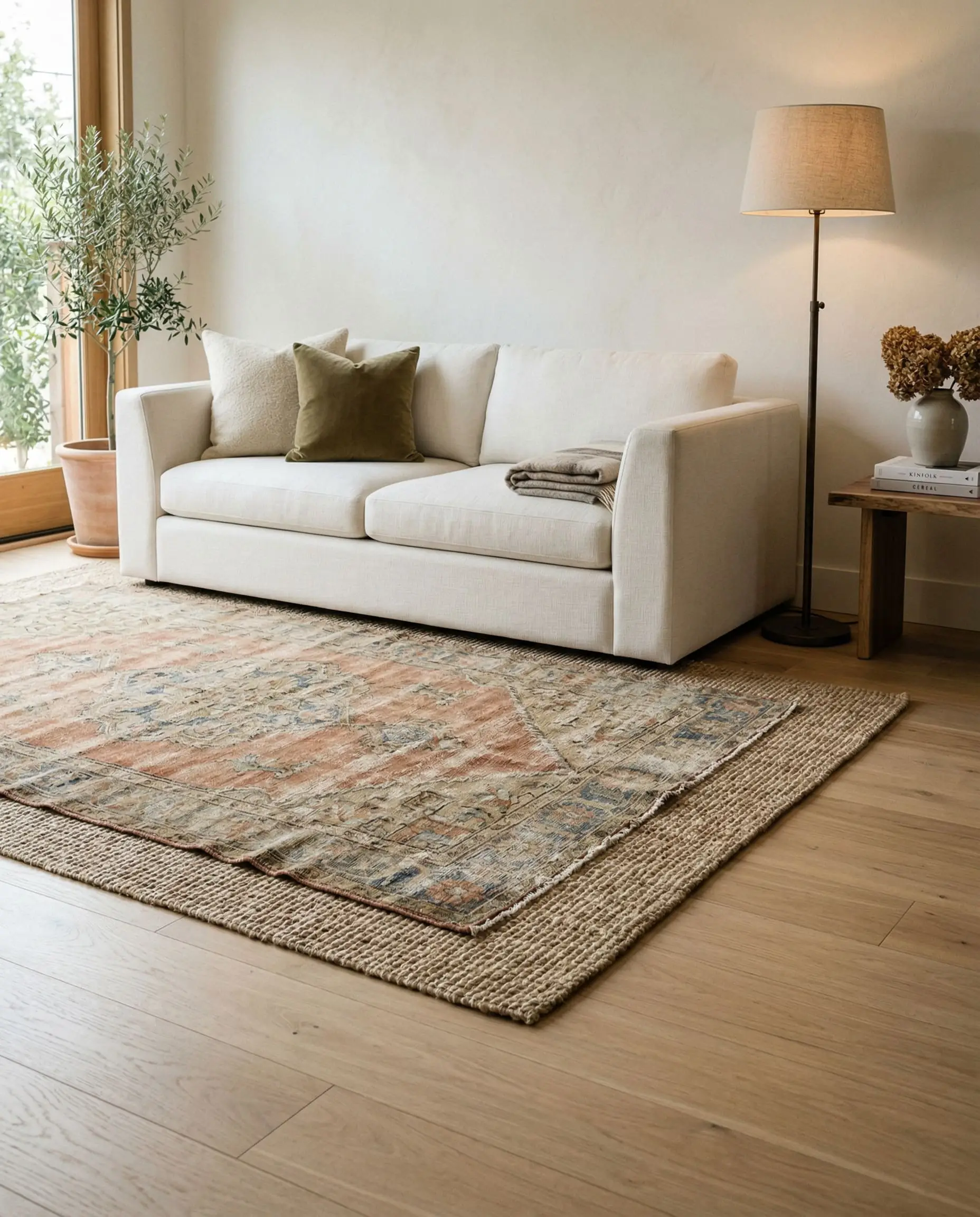
11. Layered Vintage Oushak: A pristine, brand-new rug often lacks soul. Layer a faded, low-pile vintage Oushak directly over the chunky jute. The worn threads and muted, vegetable-dyed colors inject subtle history and a whisper of pigment without overwhelming the neutral palette.
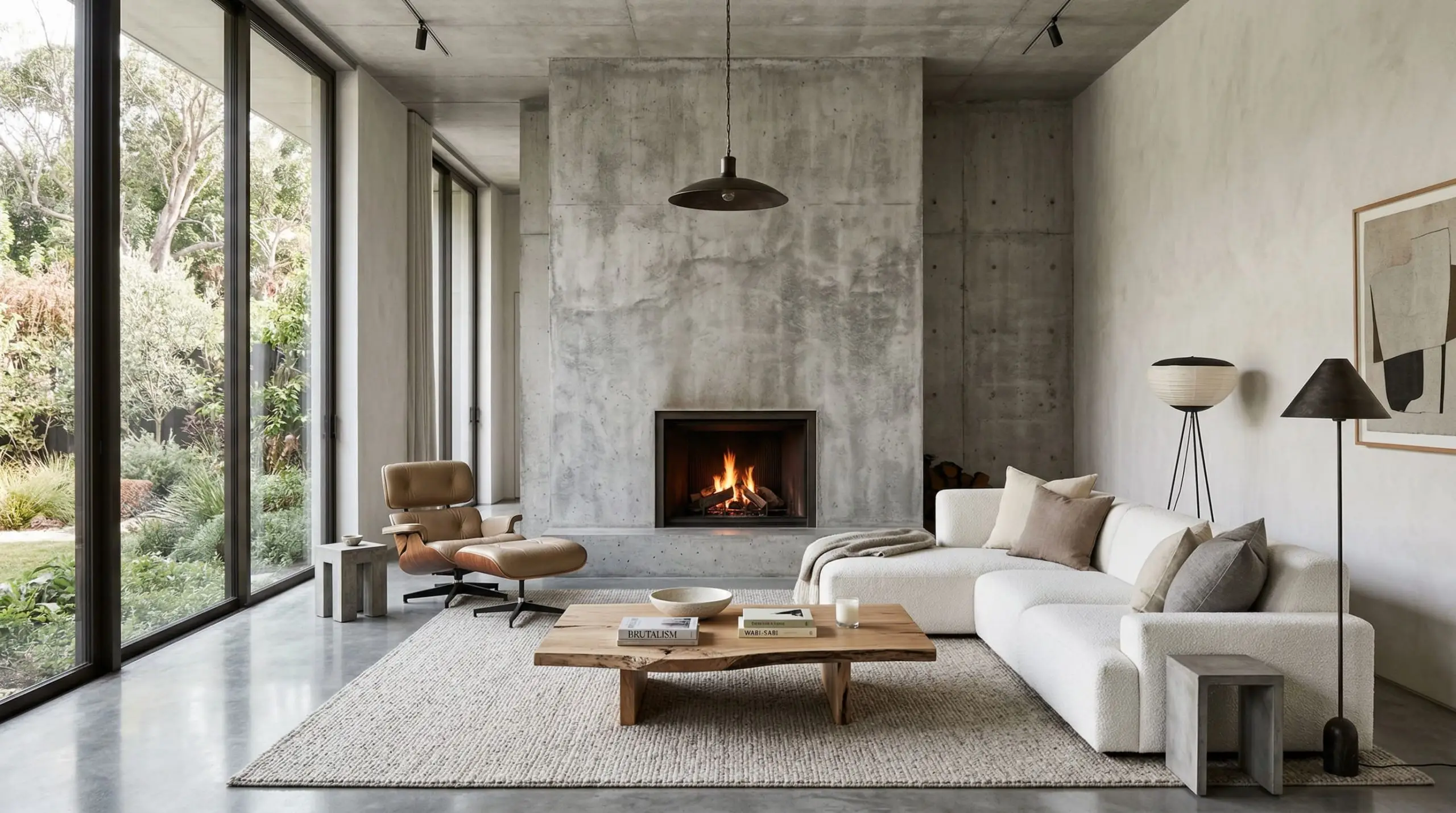
12. Monolithic Fireplaces: If the architecture includes a fireplace, strip away the fussy, traditional wooden mantels and tile surrounds. Specify a seamless, floor-to-ceiling plaster or raw concrete monolithic finish. This brutalist-leaning structural choice draws the eye upward and serves as a massive, unadorned anchor of architectural tension within the space.
Biophilia & Sculptural Lighting
Illumination and living elements must be handled with curatorial restraint. Cluttering the room with small potted plants or harsh overhead lighting destroys the sanctuary atmosphere.
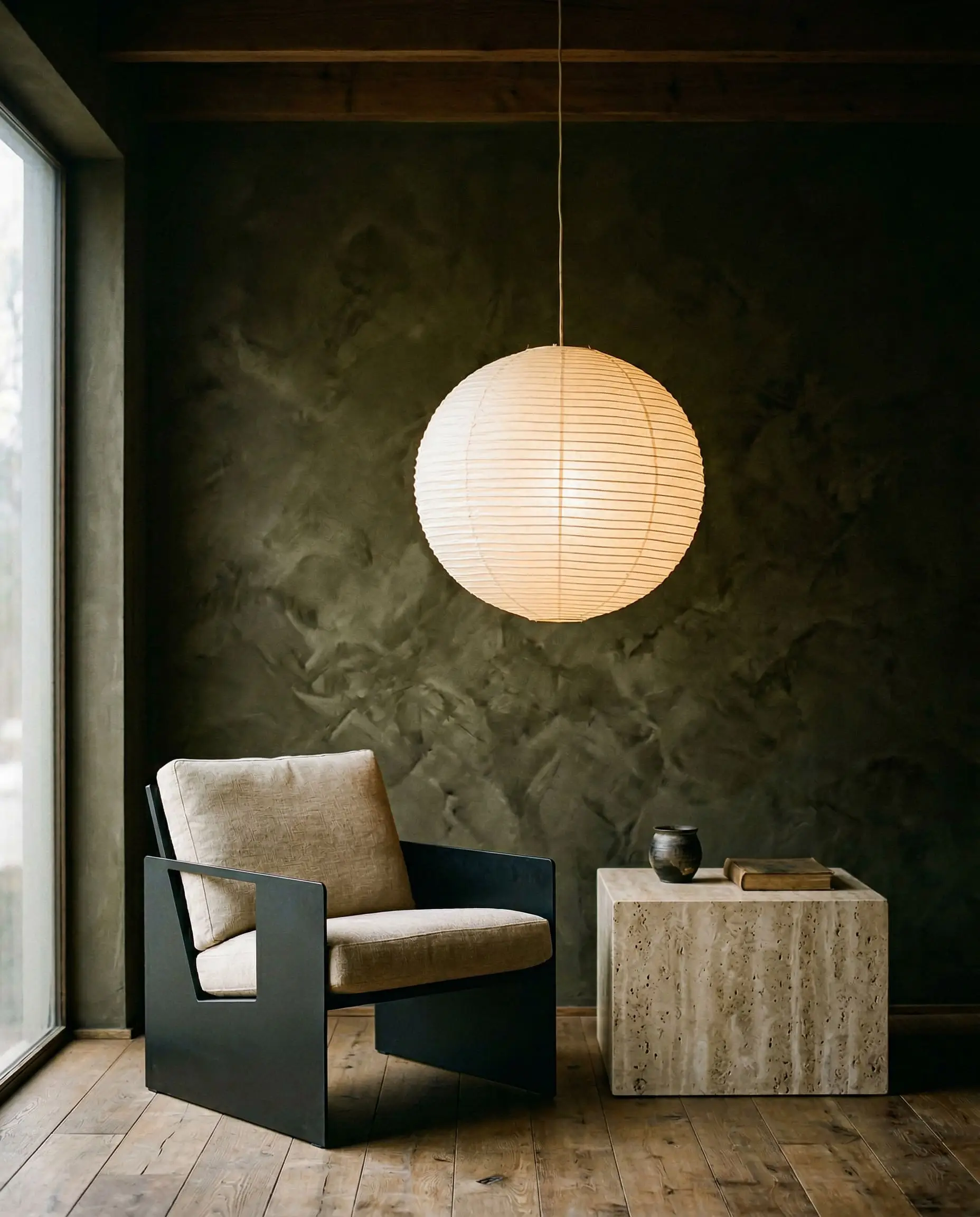
13. Isamu Noguchi Paper Lanterns: Forego heavy glass chandeliers. Suspend oversized, delicate paper lanterns—specifically the iconic Akari light sculptures by Isamu Noguchi. The ribbed washi paper diffuses ambient light into a soft, glowing halo while introducing a weightless, organic shape that floats above the heavier stone and wood elements below.
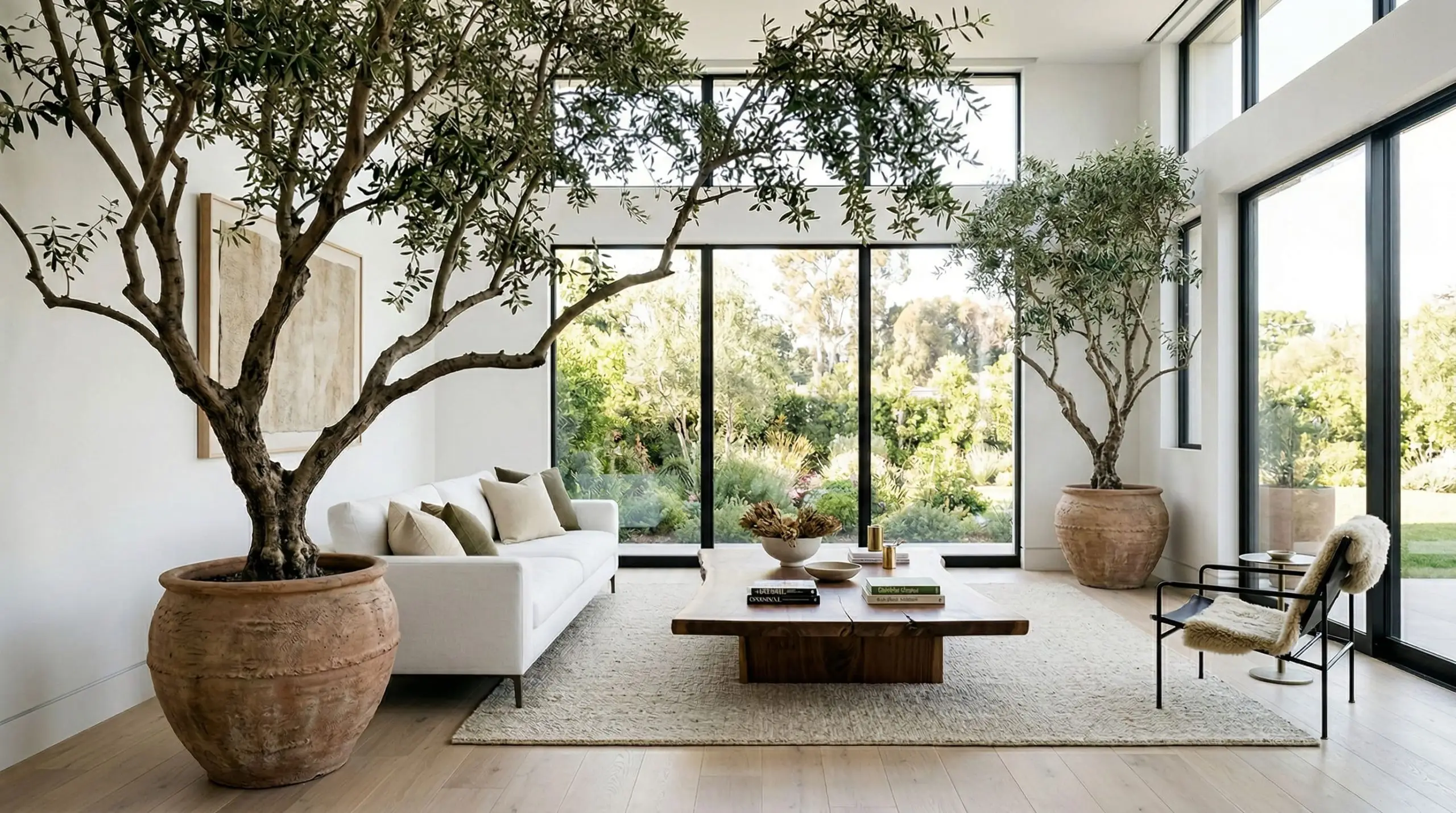
14. Structural Greenery: The integration of biophilic design does not mean turning the living room into a greenhouse. Ban tiny, trailing plants scattered across every surface. Instead, pitch a singular, massive structural tree—like a mature Olive Tree or a towering Ficus Audrey—potted in a raw, unglazed terracotta vessel. This creates a powerful, intentional architectural statement.
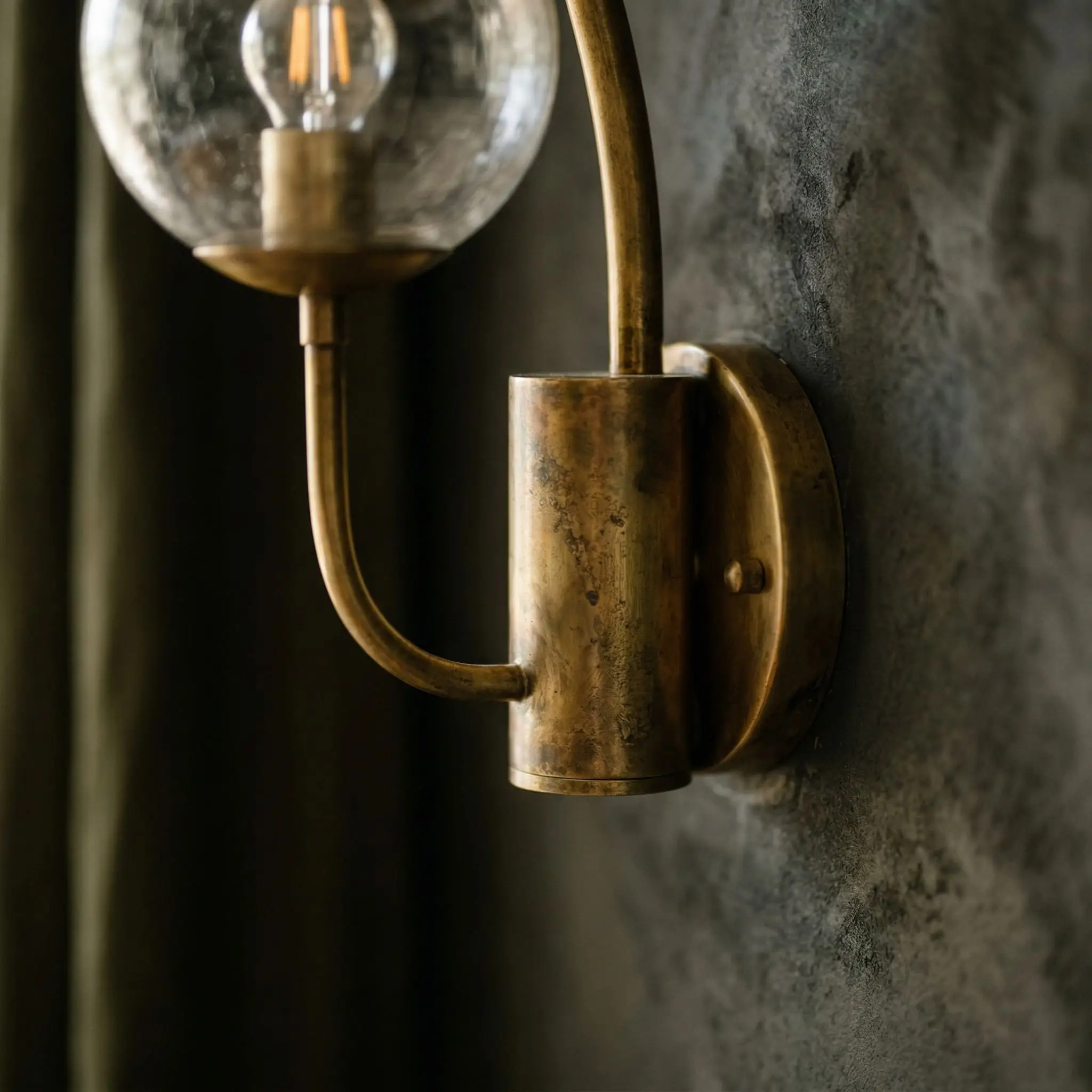
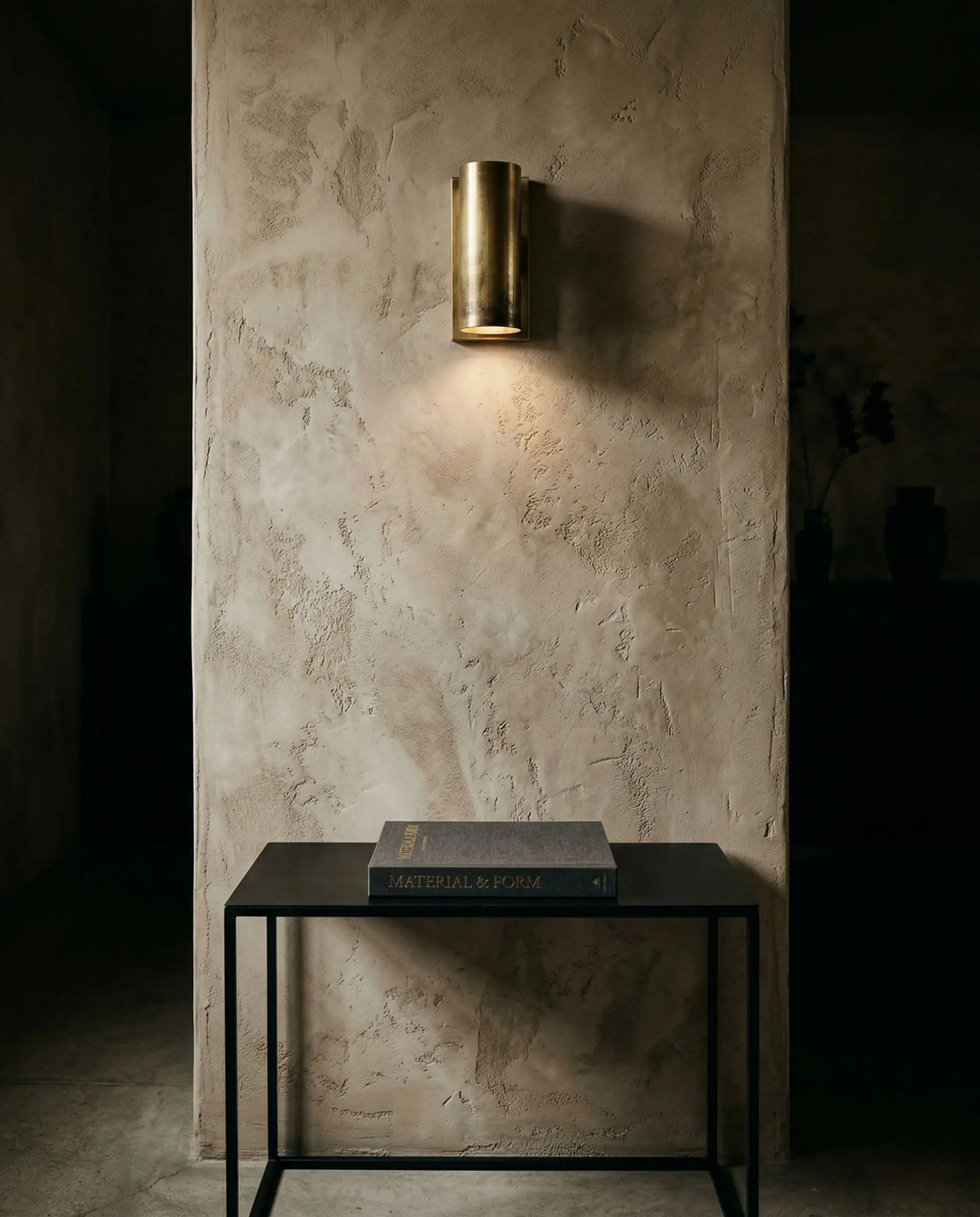
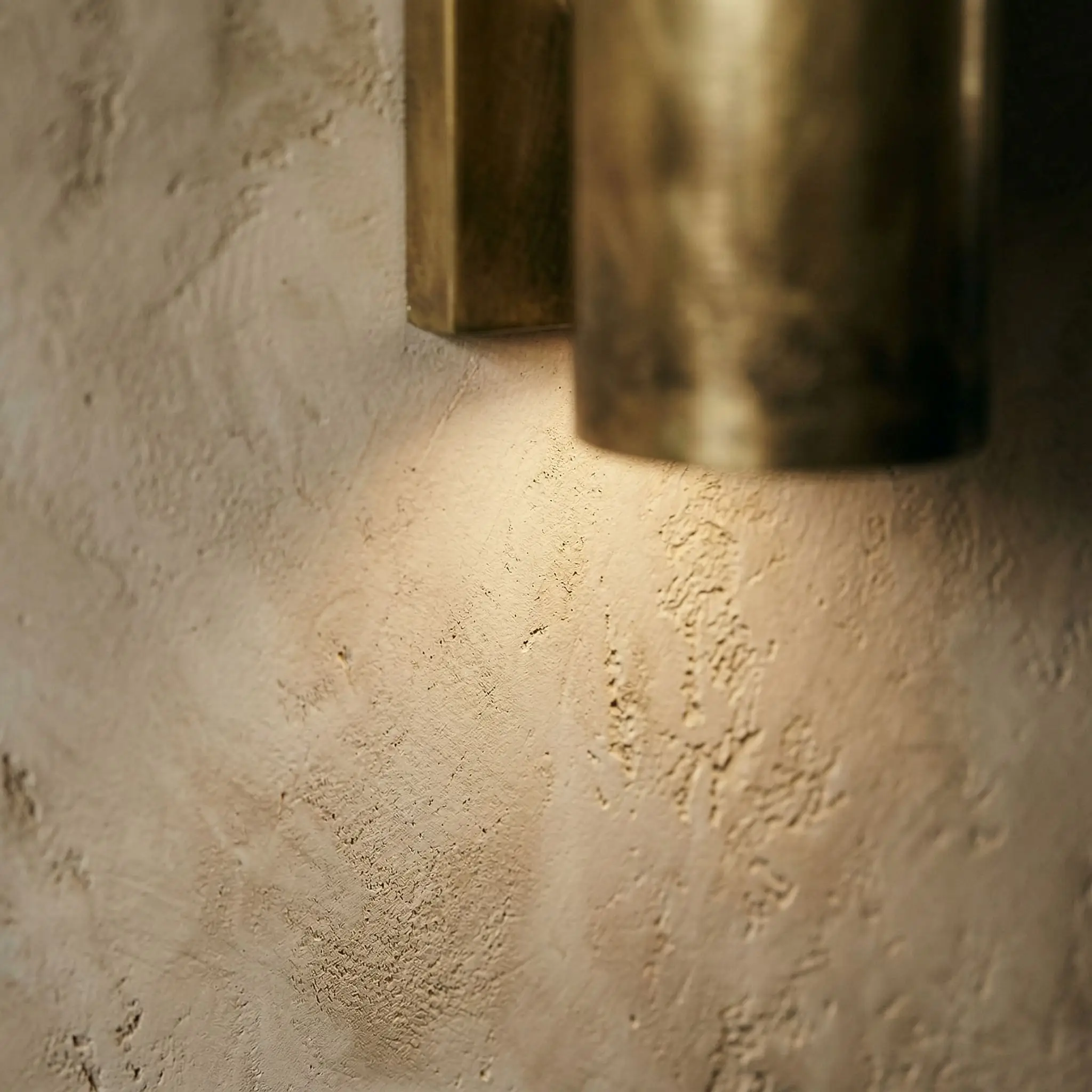
15. Architectural Sconces: Relying solely on overhead lighting flattens the room’s texture. Install matte ceramic or unlacquered brass wall sconces to cast sharp, directional light against the limewash plaster walls. This grazing technique highlights the cloudy depth of the wall treatment, utilizing shadows as a deliberate design material.
Organic Modern Do’s and Don’ts
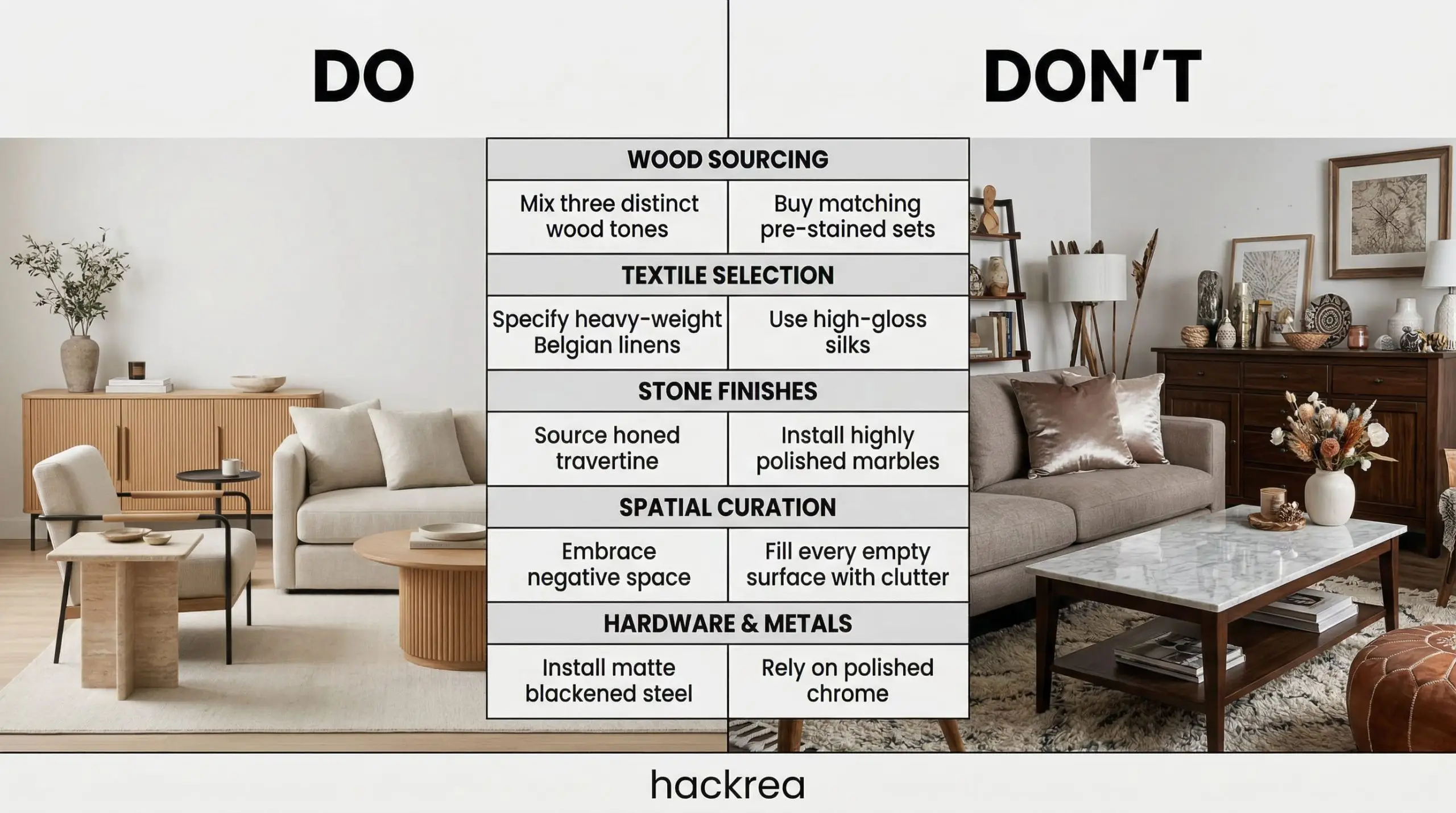
Mastering the organic modern aesthetic requires ruthless editing. The line between a highly curated, architectural sanctuary and a chaotic, disjointed living room is razor-thin. When sourcing materials and finalizing spatial layouts, the smallest deviation in texture or finish can unravel the entire design. A shiny velvet pillow or a matching bedroom-style wood set will instantly cheapen the visual narrative. To protect the integrity of the space, adhere to this strict comparative matrix.
| The Stylist’s Directive | DO: The Refined Execution | DON’T: The Aesthetic Failure |
|---|---|---|
| Wood Sourcing | Mix three distinct wood tones (e.g., pale fluted oak, rich walnut, and charred ash) to mimic natural forest diversity. | Buy matching, pre-stained wood furniture sets. It instantly flattens the room and screams “showroom floor.” |
| Textile Selection | Specify heavy-weight Belgian linens, matte bouclé, and raw shearling for upholstery and window treatments. | Use high-gloss silks, shiny velvets, or synthetic microfibers. They violently clash with porous stones and raw woods. |
| Stone Finishes | Source honed travertine, soapstone, or leathered granite. The matte, porous surfaces absorb light and add earthy weight. | Install highly polished, reflective marbles or high-gloss lacquers. The mirror-like shine ruins the tactile, grounded illusion. |
| Spatial Curation | Embrace negative space. Allow bare plaster walls and empty corners to let sculptural furniture silhouettes breathe. | Fill every empty surface with small, chaotic boho knick-knacks or trailing macramé planters. Clutter kills architectural tension. |
| Hardware & Metals | Install matte blackened steel, unlacquered brass, or oil-rubbed bronze to introduce living finishes that age beautifully. | Rely on polished chrome or brushed nickel. They read as cold, builder-grade, and entirely disconnected from nature. |
If you are ever in doubt about a material, run your hand across it. If it feels perfectly smooth, cold, and synthetic, it likely belongs in a different design style. Organic modernism is a profoundly tactile experience; the hand should register friction, weave, and grain.
Hackrea Styling Tip
The Stylist’s Evolution: Living with Patina
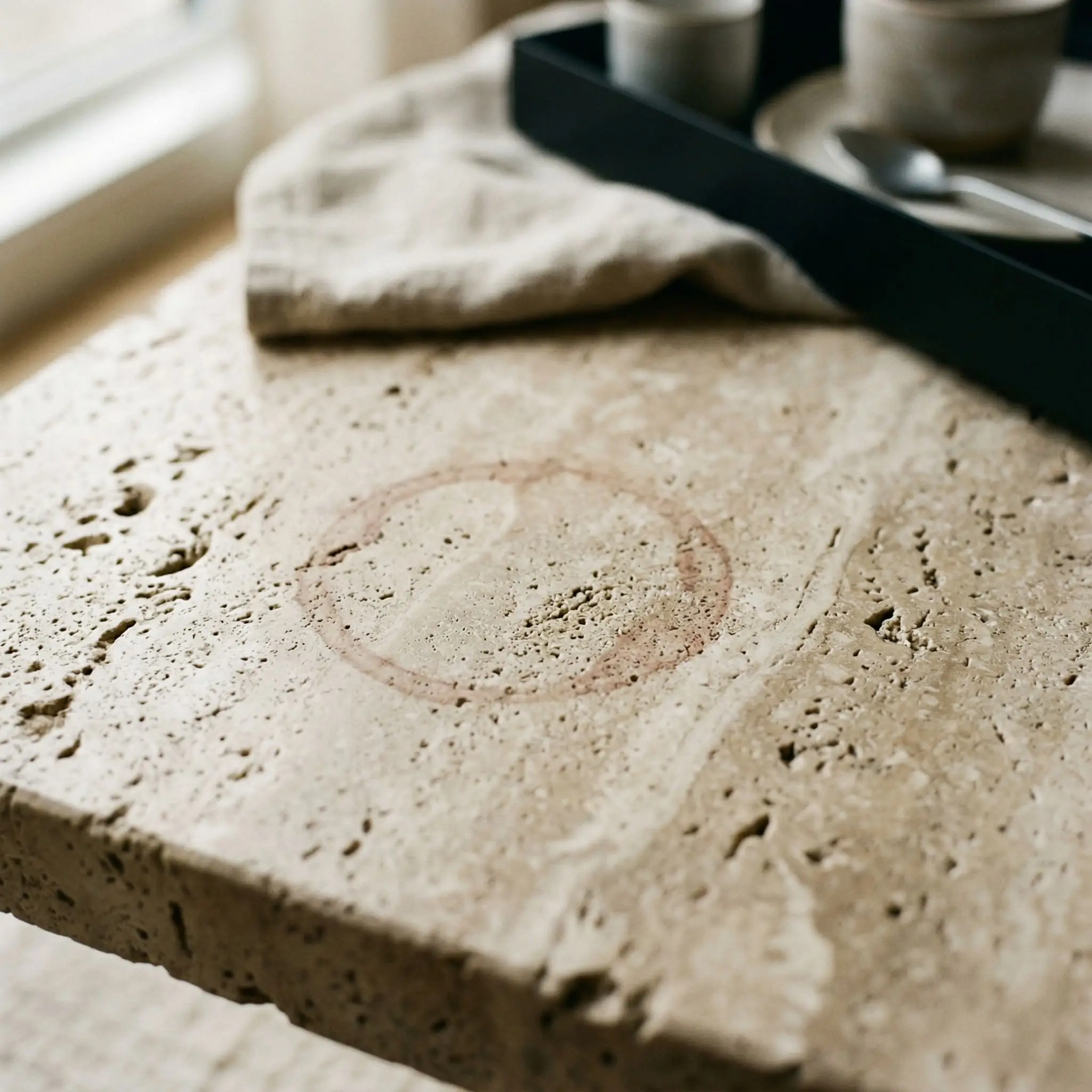
An elite organic modern living room is never a static, frozen photograph. It is a living, breathing environment engineered to evolve alongside its inhabitants. The fundamental beauty of this aesthetic lies in its surrender to time. The honed travertine will eventually etch from a spilled glass of wine, the heavy-weight Belgian linen will soften and drape more profoundly, and the unlacquered brass will oxidize into a deep, shadowy bronze. This is not damage; this is the ultimate goal.
Spaces that remain perfectly pristine and unyielding after five years have failed their primary mandate. They are museums, not sanctuaries. By anchoring your living room in the friction between crisp architectural modernism and the rugged, imperfect honesty of natural materials, you create a space with actual soul. The architectural tension holds the room’s shape, while the patina tells its story.
To master the mathematical foundations of this aesthetic across every room in your house, study our masterclass in the ultimate guide to organic modern interior design. The alchemy of raw and refined does not stop at the living room door—it is a comprehensive, whole-home philosophy.

The Hackrea Style Desk treats interior decoration as an exact visual science. Rather than focusing on demolition or floor plans, this desk masters the art of color theory, undertone matching, material pairings, and spatial proportion. From balancing the visual weight of mixed metals to finding the perfect bridging tone between disparate wood species, this desk provides the rigorous aesthetic rules needed to achieve high-end, editorial-quality harmony in any space.