A load-bearing interior column planted directly in the center of an open-concept living space or basement often feels like an intrusive barrier. The instinct is to paint it white, push a chair in front of it, and pray it disappears into the drywall. But attempting to hide a structural necessity rarely works; it only makes the space feel apologetic and poorly planned.
We need to flip this perspective entirely. Treat the pillar not as an obstacle, but as a prime architectural anchor. By dressing these raw supports in high-end materials, tactile finishes, or integrating them into bespoke millwork, you command the spatial zoning of the room. You take back control of the floor plan by forcing the column to serve a deliberate, aesthetic purpose.
Whether you lean toward the wabi-sabi texture of hand-troweled plaster or the sleek utility of a wrap-around floating bar, owning the structure changes the entire psychology of your layout.
True design never apologizes for structural necessities; it transforms them into the most deliberate, stunning features of the home.
Textural Millwork & Wood Wraps
Wrapping a raw drywall or metal support in custom millwork instantly softens the acoustics of a room while adding immense tactile warmth. This transition from a cold, utilitarian beam to a crafted wooden feature immediately grounds an open-concept layout.
1. Fluted White Oak Cylinders
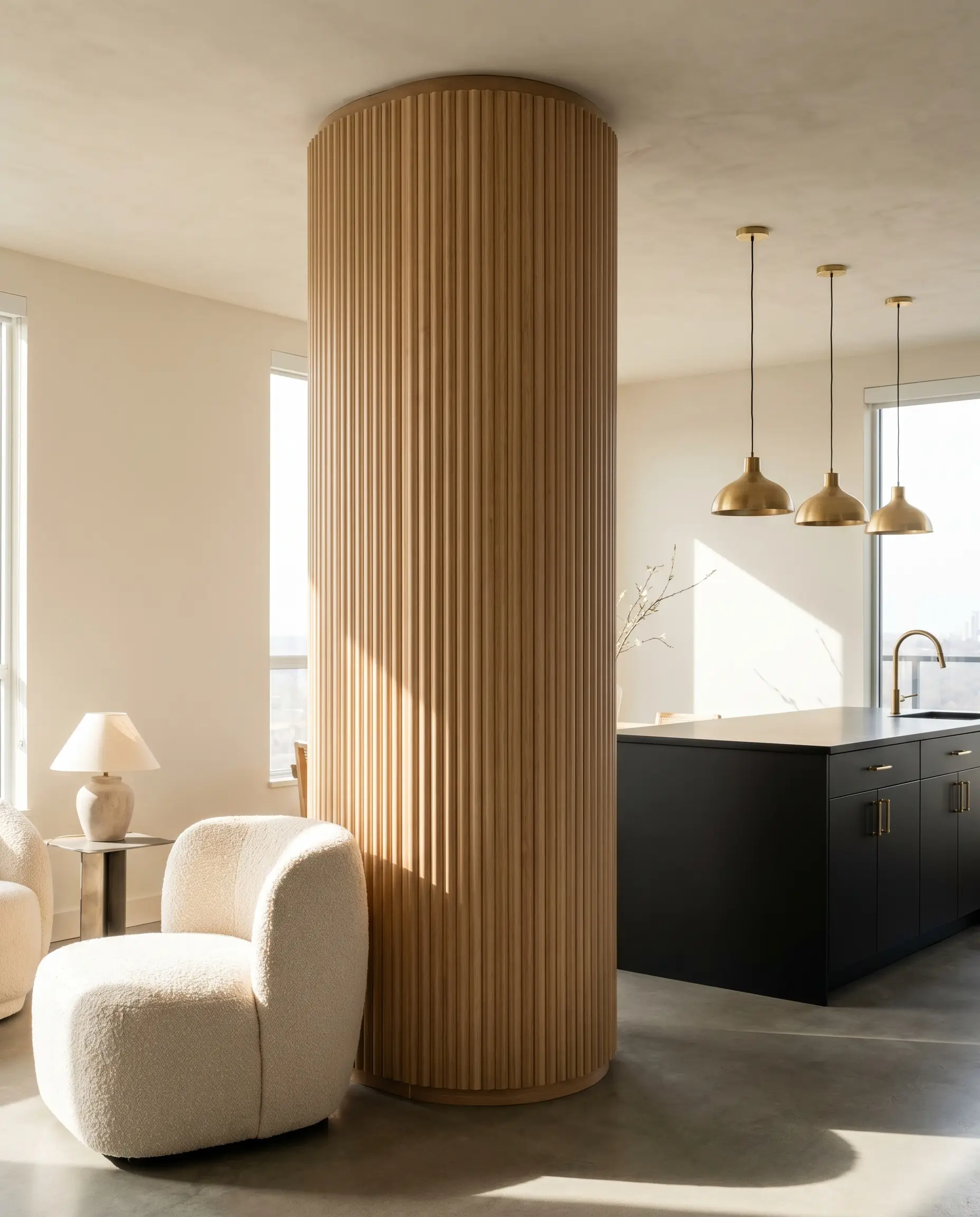
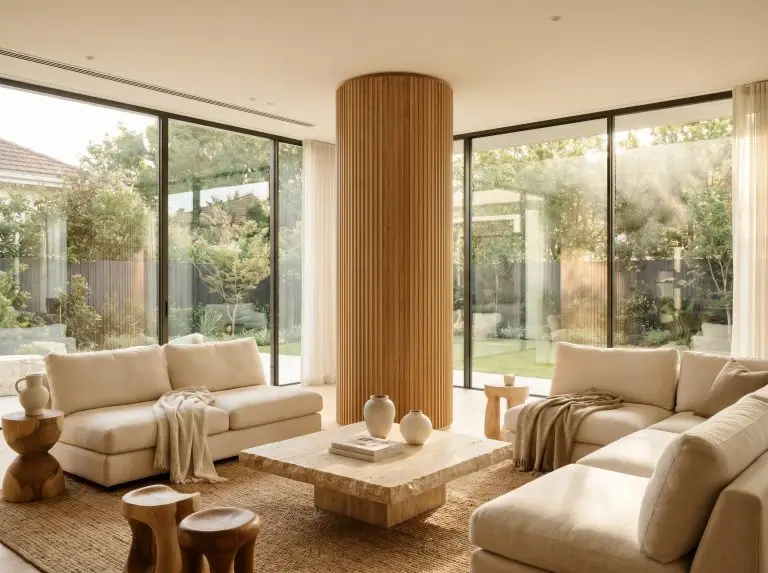
Round columns clad in flexible, tambour-style fluted white oak create an instant organic modern focal point. The continuous vertical ridges draw the eye directly upward, dramatically increasing the perceived ceiling height while adding a soft, rhythmic texture to the room.
- Vibe: Organic Modern / Warm Minimalism
- Key Material: Flexible tambour wood paneling (White Oak)
- Best Paired With: Unlacquered brass lighting and matte black hardware
When wrapping a column in wood, always leave a 1/4-inch shadow gap at the ceiling and floor to account for natural expansion and contraction, preventing the tambour from bowing.
Designer Secret
2. Minimalist Vertical Pine Slats
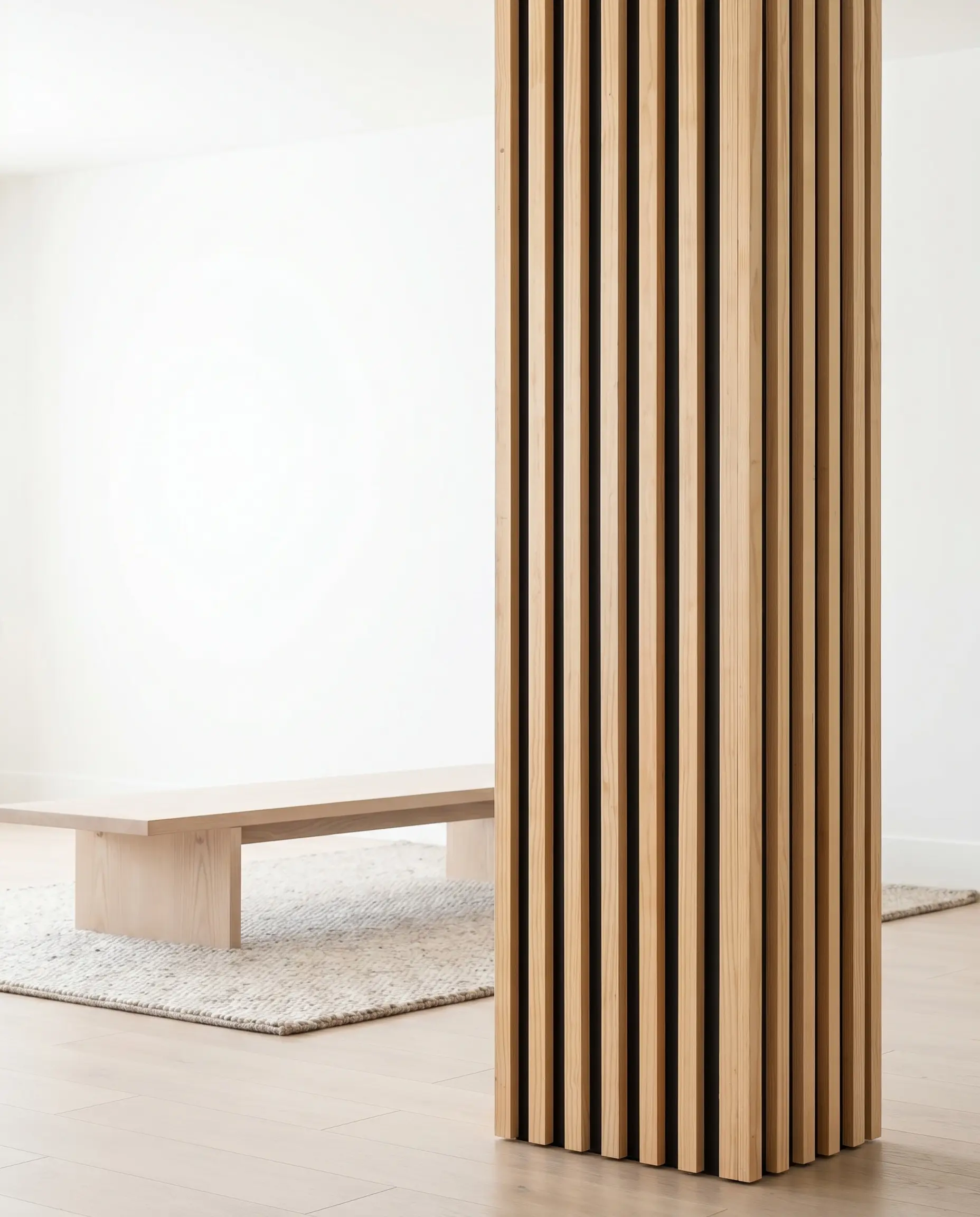
Channel a Japandi aesthetic by spacing out vertical pine or ash slats around a square column structure. Allowing the negative space behind the wood to show through establishes a striking, high-contrast visual weight that feels incredibly custom.
- Vibe: Japandi / Architectural Minimalist
- Key Material: 1×2 inch clear pine slats
- Paint Recommendation: Farrow & Ball Pitch Black (for the negative space backing)
- Styling Pro-Tip: Maintain exactly a half-inch gap between each slat for optimal shadow play.
3. Square Shaker-Style Paneling
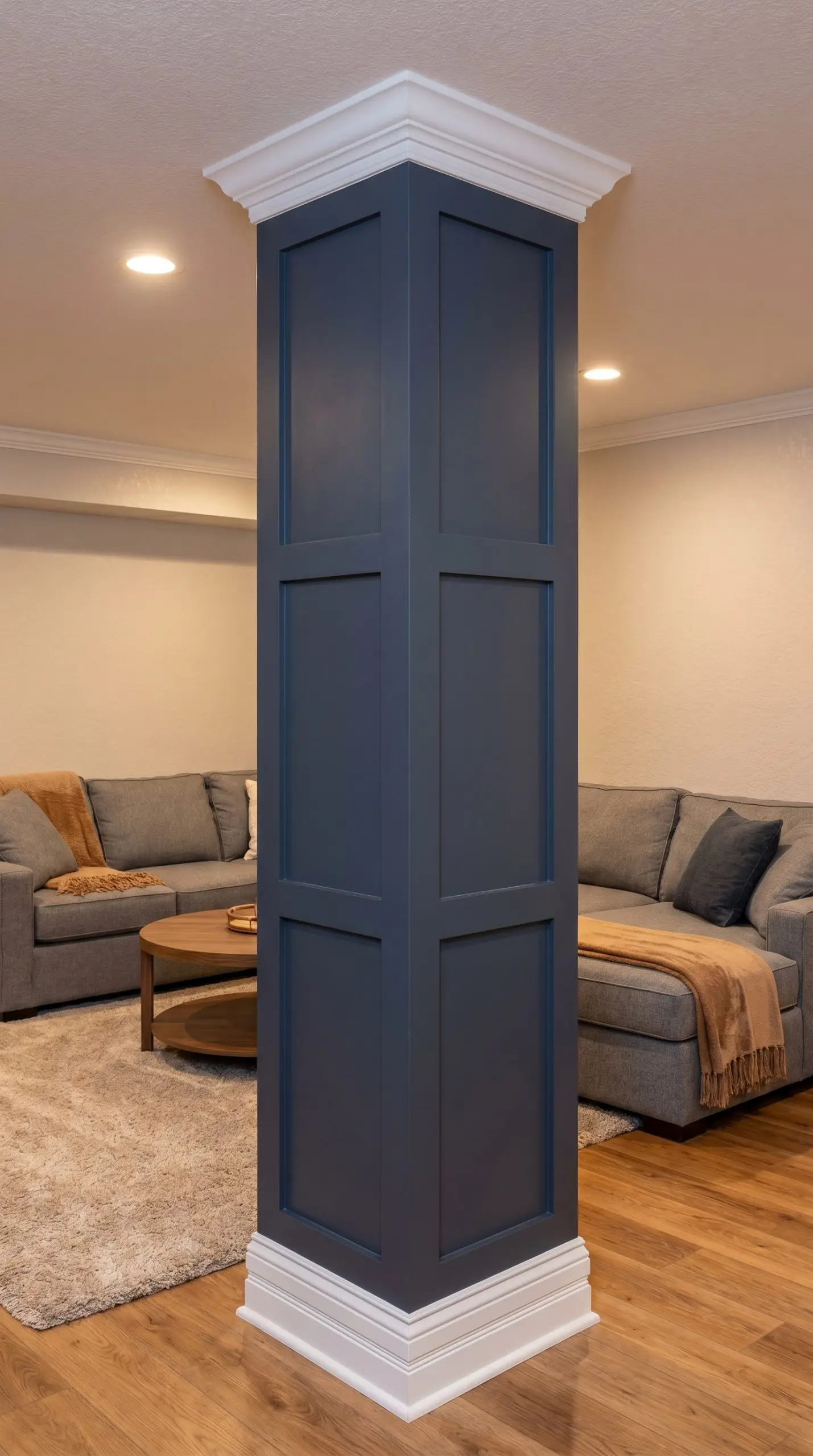
Boxing out a round basement lolly column with MDF and applying Shaker-style trim offers a classic, transitional anchor for your lower level. It provides the heavy, built-in permanence of traditional carpentry while remaining highly accessible for residential renovations.
- Vibe: Transitional / Classic Craftsman
- Key Material: Smooth MDF boards with 1×4 trim
- Paint Recommendation: Benjamin Moore Hale Navy
- Styling Pro-Tip: Cap the top and bottom with substantial crown and base molding to integrate it fully into the room’s architecture.
4. Dark Walnut Mid-Century Wraps
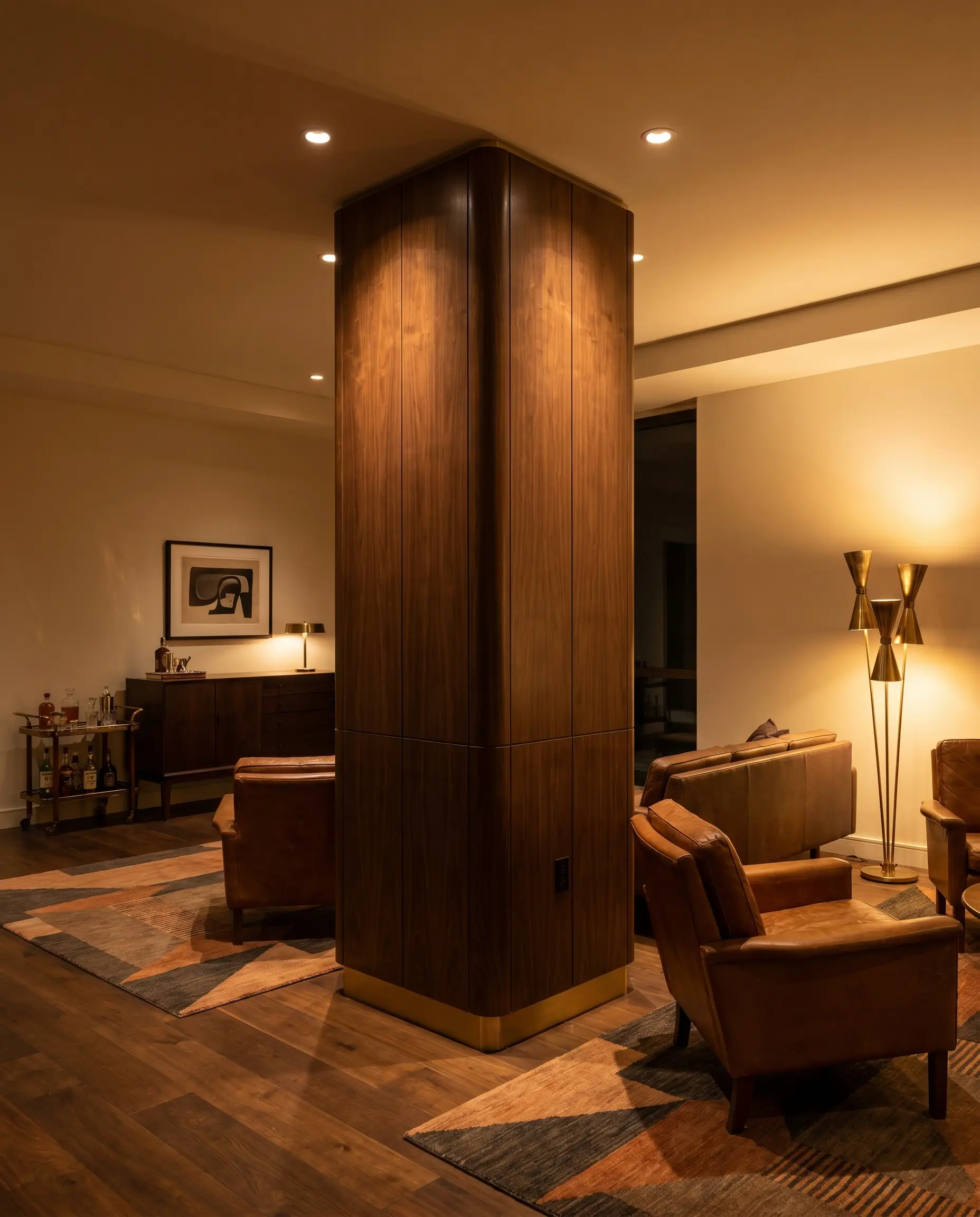
A sleek, non-tapered, flat-panel walnut wrap delivers a moody, mid-century modern presence reminiscent of a 1960s executive suite. The richness of the continuous wood grain turns a standard pillar into a luxurious, tailored statement piece.
- Vibe: Mid-Century Modern / Mad Men-esque
- Key Material: Premium Walnut veneer panels
- Finish Recommendation: Clear satin polyurethane (avoid high gloss to keep it sophisticated)
- Best Paired With: Low-profile brass baseboards and vintage leather seating.
5. Ebonized Shou Sugi Ban Accents
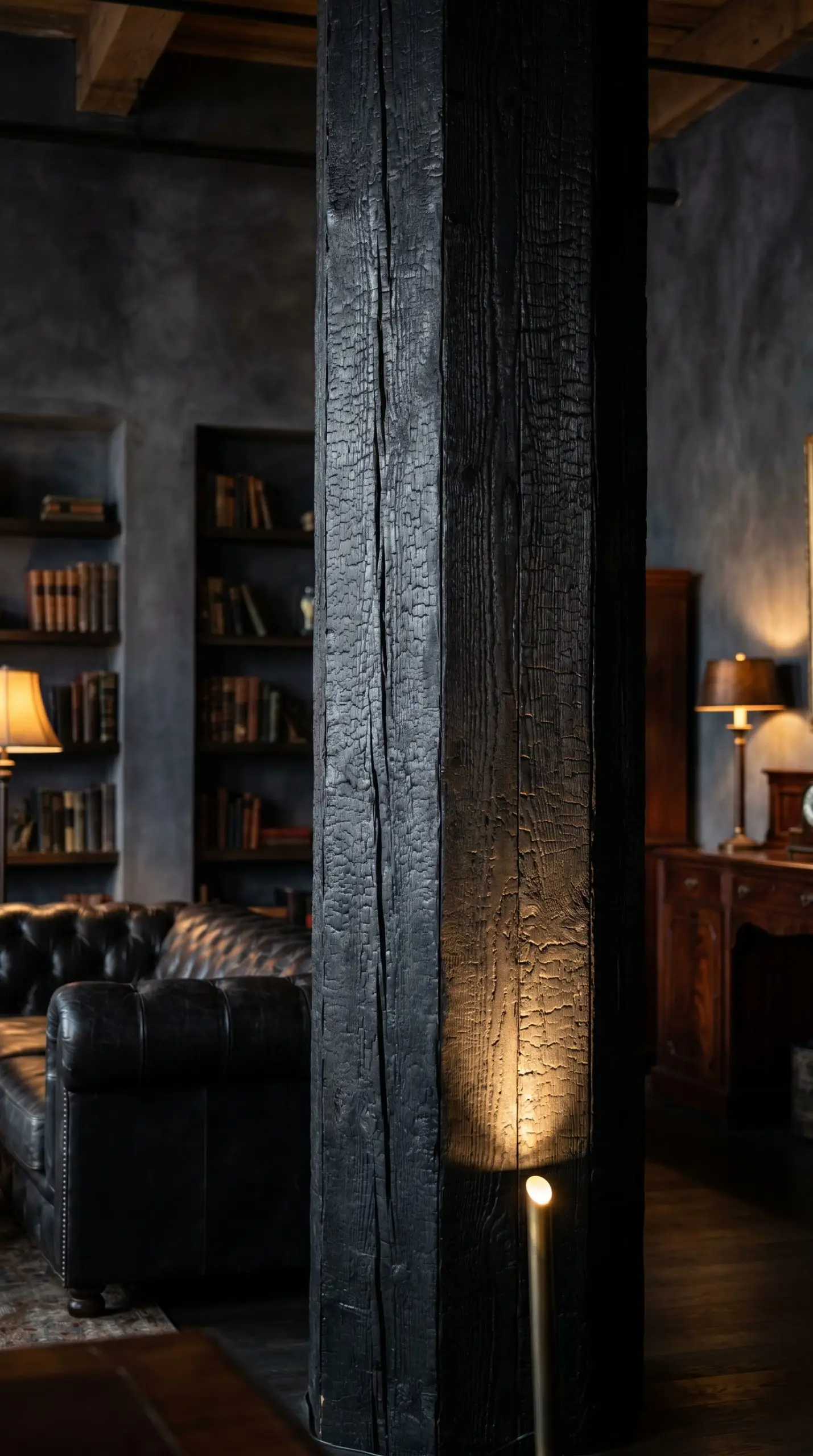
Wrapping a column in deeply charred Shou Sugi Ban wood introduces a striking, highly textured aesthetic that anchors industrial lofts or dark-academia spaces. The cracked, matte texture of the burnt wood absorbs light, creating a phenomenal tactile contrast against smooth walls.
- Vibe: Industrial / Dark Academia
- Key Material: Charred cedar or cypress (Shou Sugi Ban)
- Finish Recommendation: Penetrating oil sealer to lock in the char and prevent flaking
- Styling Pro-Tip: Illuminate the column with a narrow-beam directional floor spotlight to highlight the aggressive surface texture.
Stone, Plaster & Masonry Treatments
Embracing monolithic design means making a hollow structure feel like a solid, ancient support beam carved directly from the earth. Applying heavy, earthy materials like plaster or stone gives the column an undeniable sense of permanence and grandeur.
6. Hand-Troweled Roman Clay
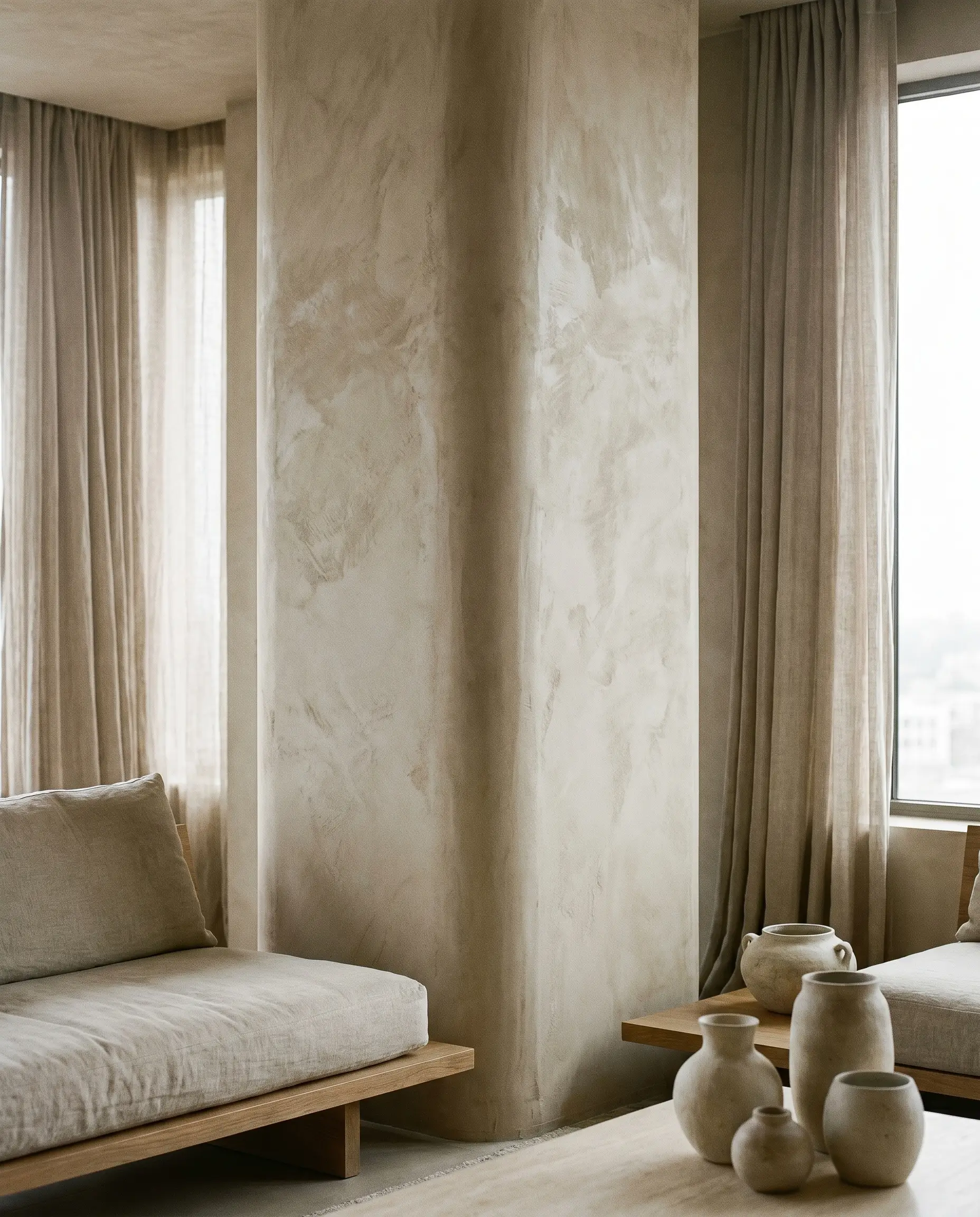
Coating a column in hand-troweled Roman clay or Tadelakt yields a mottled, cloudy, suede-like finish that standard interior flat paint simply cannot achieve. This tactile application leans heavily into wabi-sabi principles, capturing and diffusing natural light beautifully across its uneven surface.
- Vibe: Wabi-Sabi / Earthy Minimalism
- Key Material: Roman Clay or Tadelakt plaster
- Color Recommendation: Portola Paints Roman Clay in “Kensington”
- Styling Pro-Tip: Use a flexible trowel to build up multiple thin layers, letting the natural burnish marks become the artwork.
7. Large-Format Calacatta Viola Box Cladding
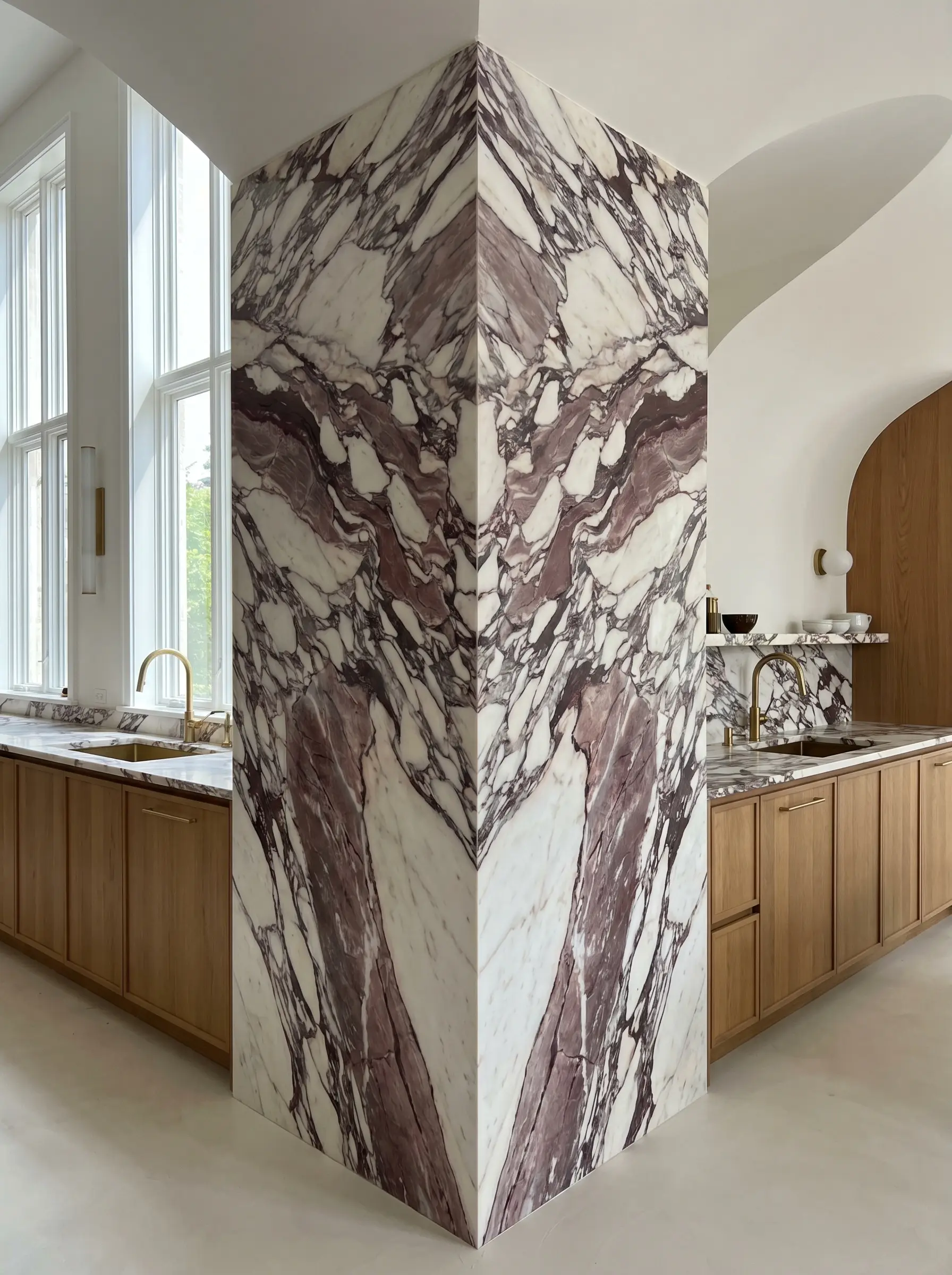
Boxing a central column in heavily veined, high-contrast marble establishes an ultra-luxury, dramatic focal point suited for high-end kitchens or grand foyers. Sourcing large-format porcelain slabs achieves this bespoke stone look flawlessly without requiring structural reinforcement for the weight.
- Vibe: Postmodern Luxury / High-End Italian
- Key Material: Large-format Calacatta Viola porcelain slabs
- Fabrication Detail: Specify mitered edges from your fabricator to maintain the illusion of a solid stone block.
Bookmatch the veining on the most visible corner to create a continuous, breathtaking visual flow that screams expensive bespoke fabrication.
Hackrea Styling Tip
8. Exposed Raw Concrete (Brutalist)
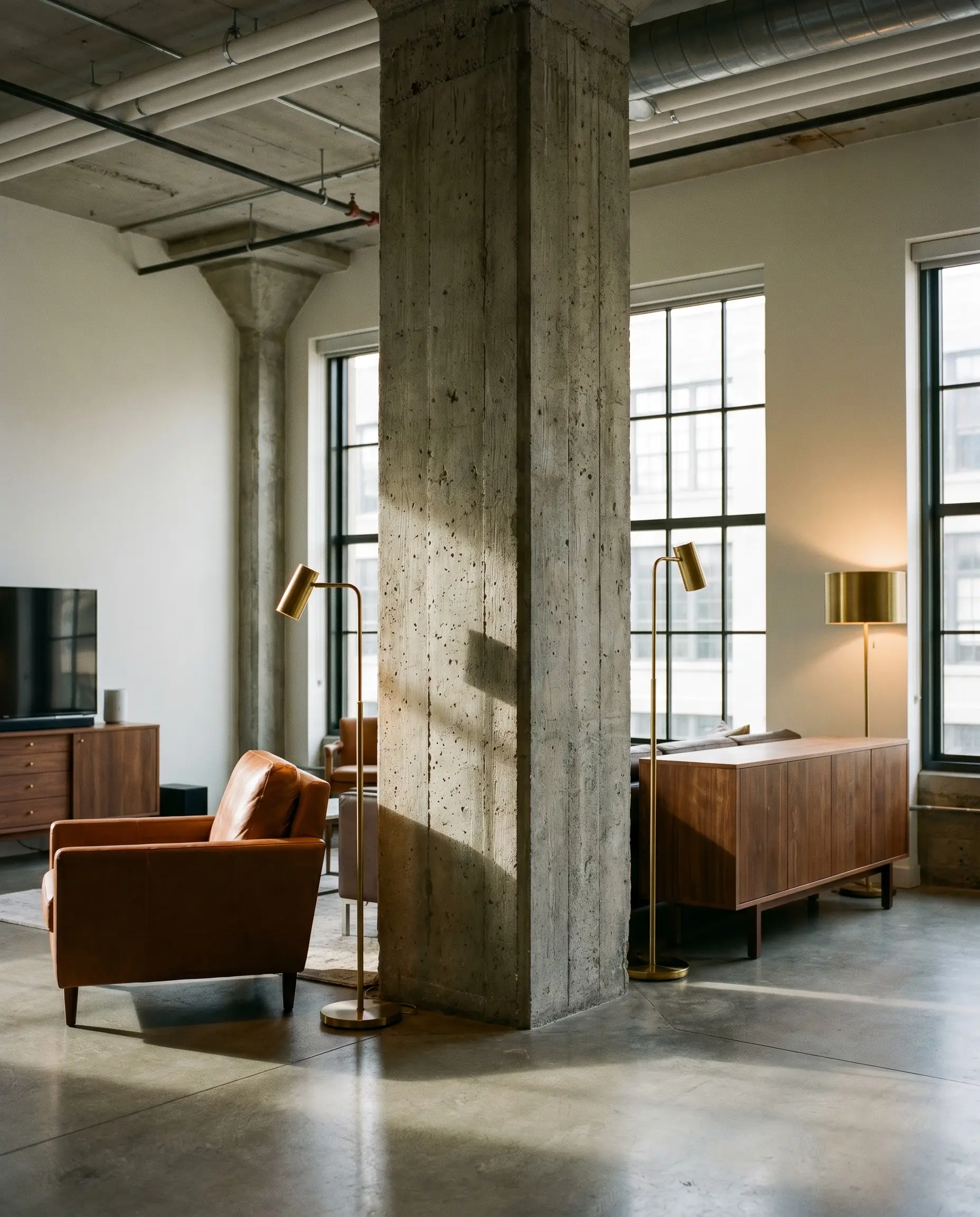
If your loft or basement already features a structural concrete column, strip away the old paint and leave the raw, poured texture exposed. The cold, brutalist nature of the concrete provides a stunning architectural contrast when layered with warm interior elements.
- Vibe: Brutalist / Urban Loft
- Key Material: Raw, unpainted structural concrete
- Best Paired With: Cognac leather upholstery, rich walnut furniture, and ambient brass lighting.
- Maintenance Tip: Apply a matte penetrating concrete sealer to stop the surface from dusting over time.
9. Honed Travertine Cladding
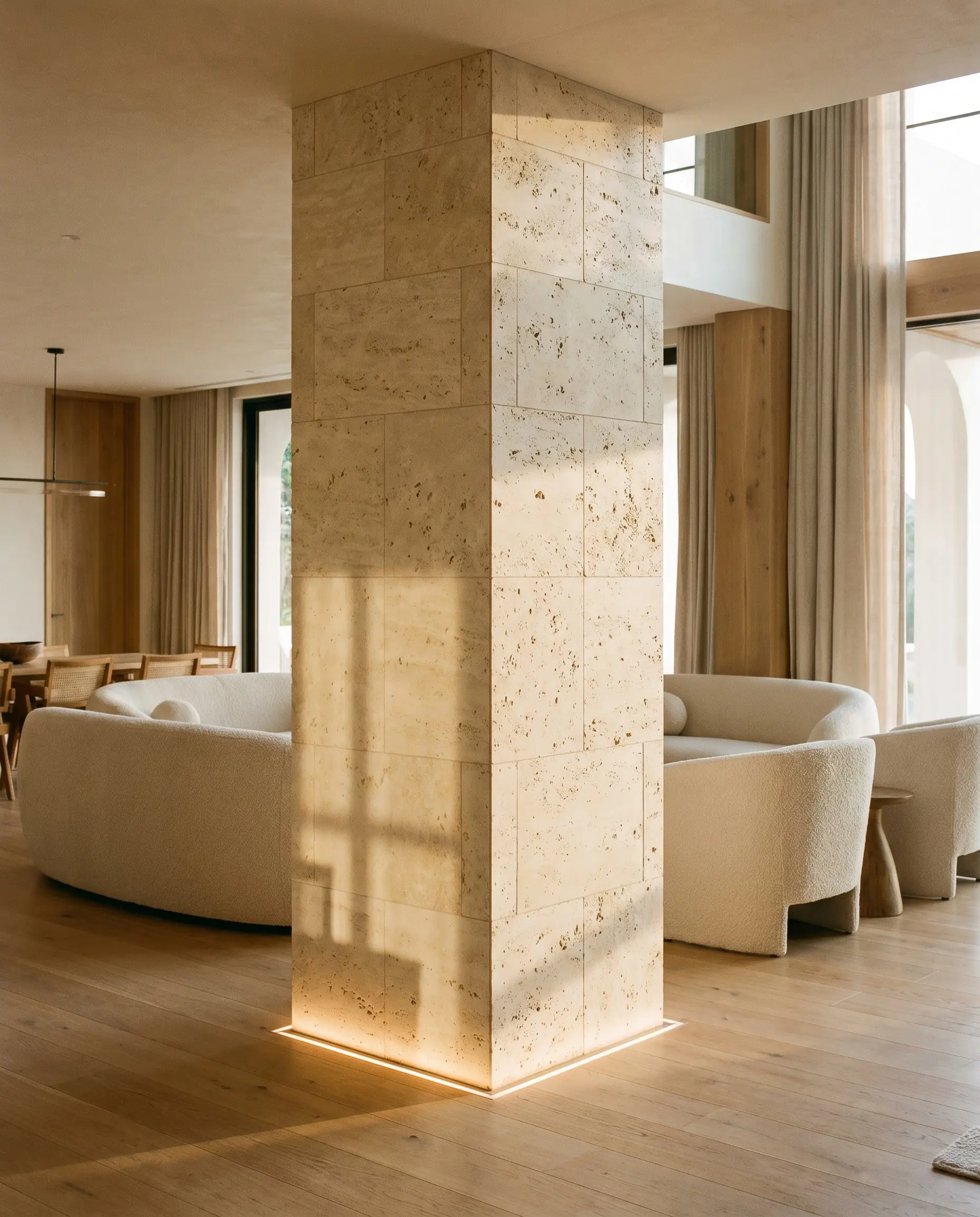
Wrapping a pillar in unfilled, honed travertine tiles introduces a porous, earthy texture that instantly warms up stark, modern spaces. The natural pits and creamy variations in the stone create a subtle, sophisticated visual weight that feels timeless.
- Vibe: Warm Modernism / Mediterranean
- Key Material: Unfilled, honed travertine tiles or slabs
- Grout Recommendation: Match the grout perfectly to the stone’s base color to maintain a monolithic appearance.
- Styling Pro-Tip: Install warm, dimmable ambient floor lighting nearby to cast shadows across the stone’s natural imperfections.
10. Authentic Exposed Red Brick
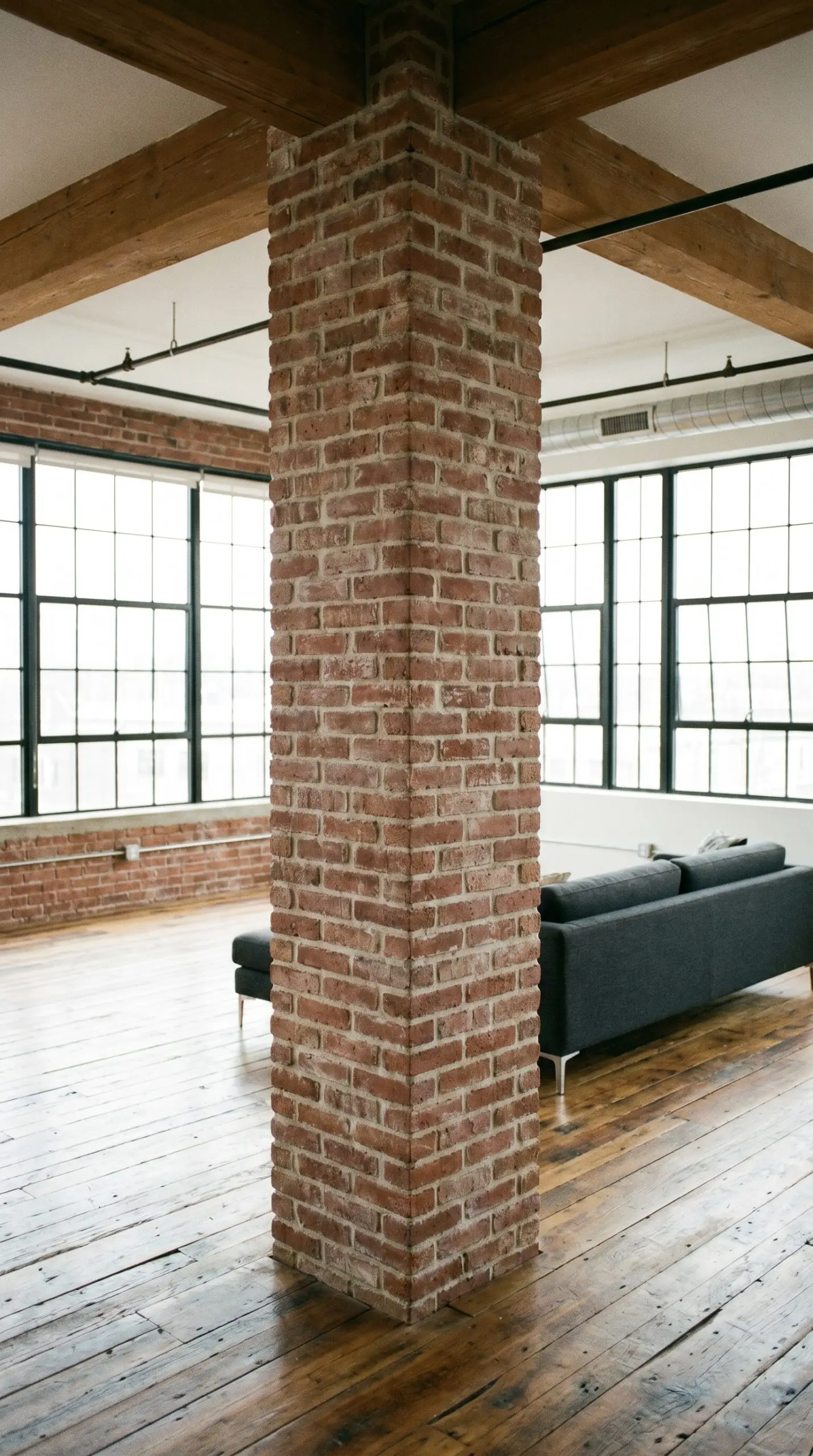
Resurrect the historical character of an industrial loft by wrapping a standard drywall column in thin brick veneers. This treatment brings authentic, raw texture back into modernized spaces, grounding the room in architectural history.
- Vibe: Industrial Loft / Historic Urban
- Key Material: Reclaimed thin brick veneer
- Finish Recommendation: Apply a German smear technique if you need to soften the red tones and brighten the room.
- Styling Pro-Tip: Wrap the corners using specialized “L-shaped” corner brick veneers to perfectly fake the look of a solid masonry pillar.
11. Softening Edges with Bullnose Plaster
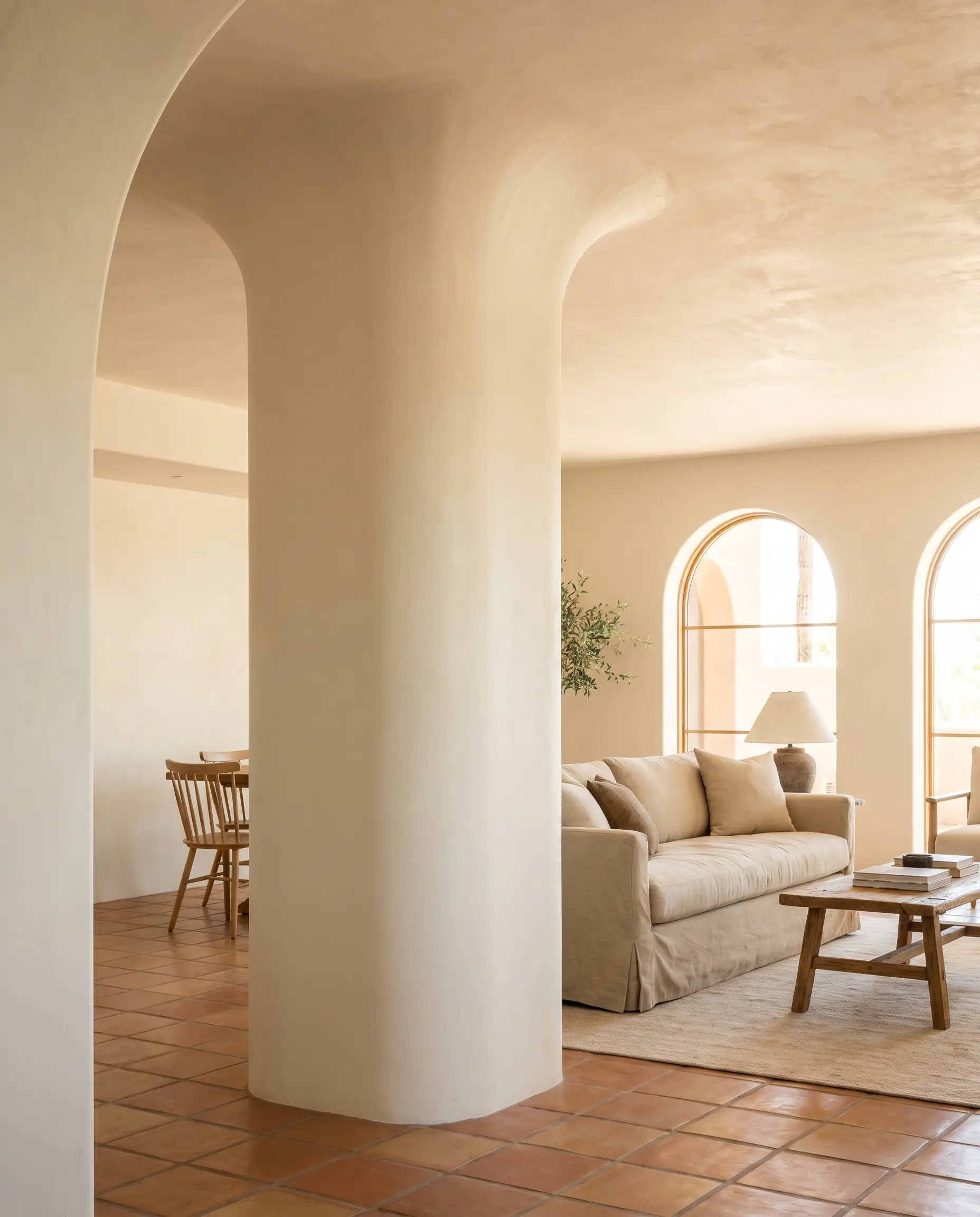
Instead of settling for the sharp, rigid 90-degree corners of a standard square column, frame the edges with bullnose corner beads and coat the entire structure in plaster. This spatial psychology trick introduces soft, Mediterranean architectural curves that relax the entire room.
- Vibe: Southwestern / Mediterranean Modern
- Key Material: 3/4-inch radius bullnose corner bead and setting-type joint compound
- Paint Recommendation: Sherwin-Williams Alabaster
- Styling Pro-Tip: Carry the bullnose curve into the ceiling transition rather than using standard crown molding for a seamless, sculpted look.
Functional & Built-In Integrations
When a column sits directly in the middle of your usable footprint, you must deploy active architecture to reclaim the space. If you cannot move the pillar, force it to work for you by integrating it seamlessly into your daily living habits and custom built-ins.
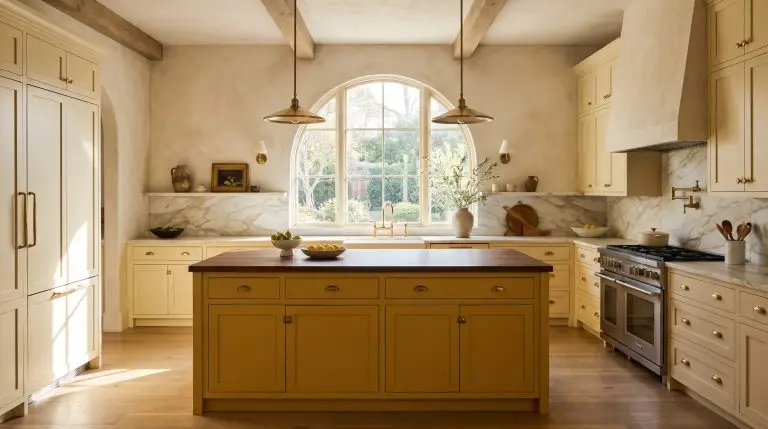
12. The Kitchen Island Anchor
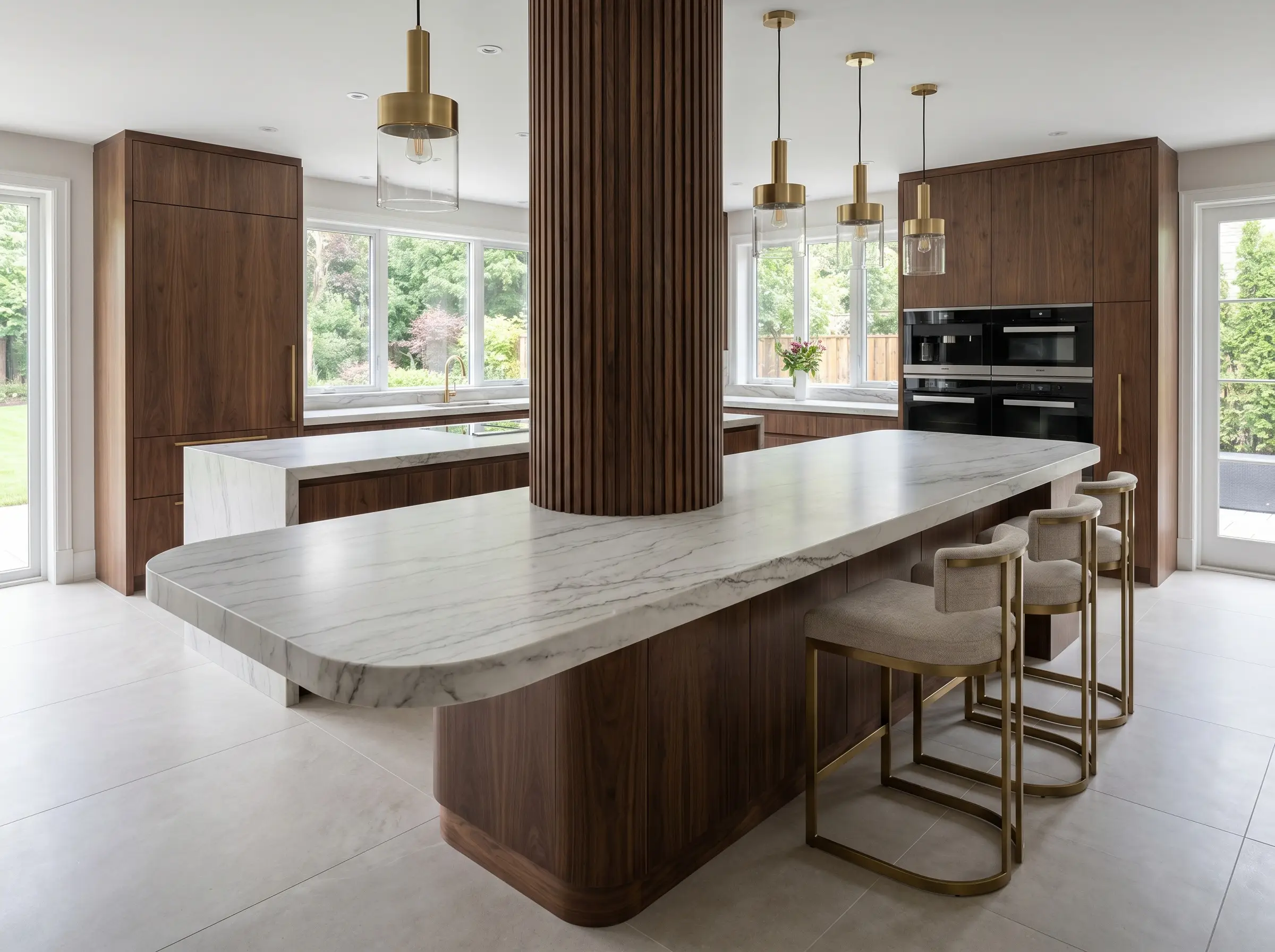
An awkwardly placed kitchen column transforms into a deliberate, custom architectural anchor when you extend the island countertop to fully engulf its base. This aggressive spatial zoning turns a structural nuisance into a high-end, tailored workspace.
- Vibe: High-End Custom Culinary
- Key Material: Quartz or natural stone countertop extensions
- Best Paired With: Seamlessly integrated under-counter barstools.
To achieve a truly bespoke look, wrap the base of the column in the exact same fluted or flat-panel material as your island cabinetry. It bridges the gap between structure and furniture perfectly.
Designer Secret
13. Wrap-Around Floating Bar Counter
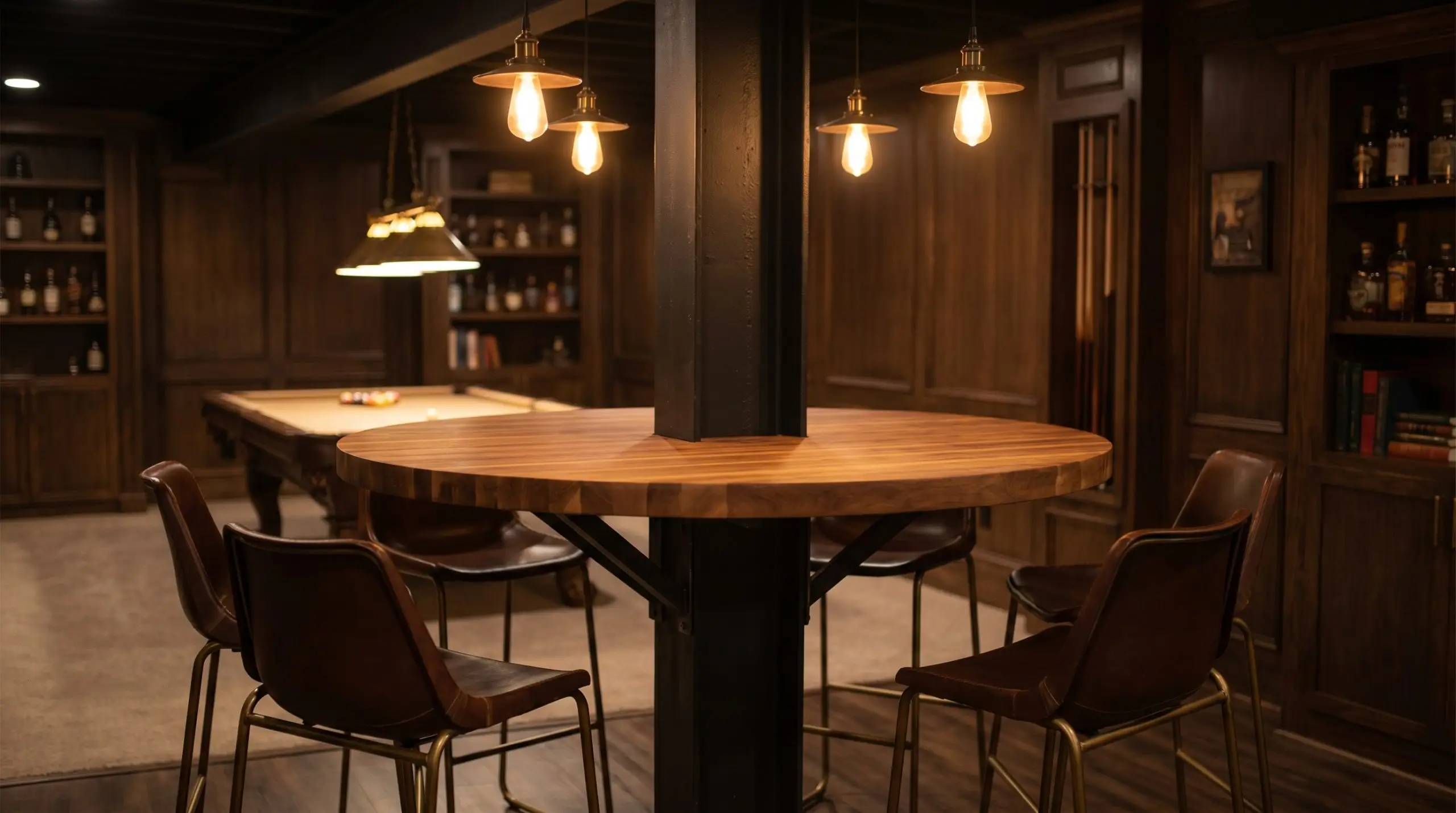
Reclaim the dead space around a basement lolly column by constructing a floating, circular or square high-top bar directly around its waist. This instantly creates a casual, highly functional entertainment zone without shrinking the room’s footprint.
- Vibe: Modern Entertainment / Speakeasy
- Key Material: Solid butcher block or custom-cut quartz
- Structural Requirement: Heavy-duty concealed steel brackets bolted directly to the column framing.
- Styling Pro-Tip: Install the counter at exactly 42 inches high to accommodate standard ergonomic barstools.
14. Floor-to-Ceiling Bookshelf Wraps
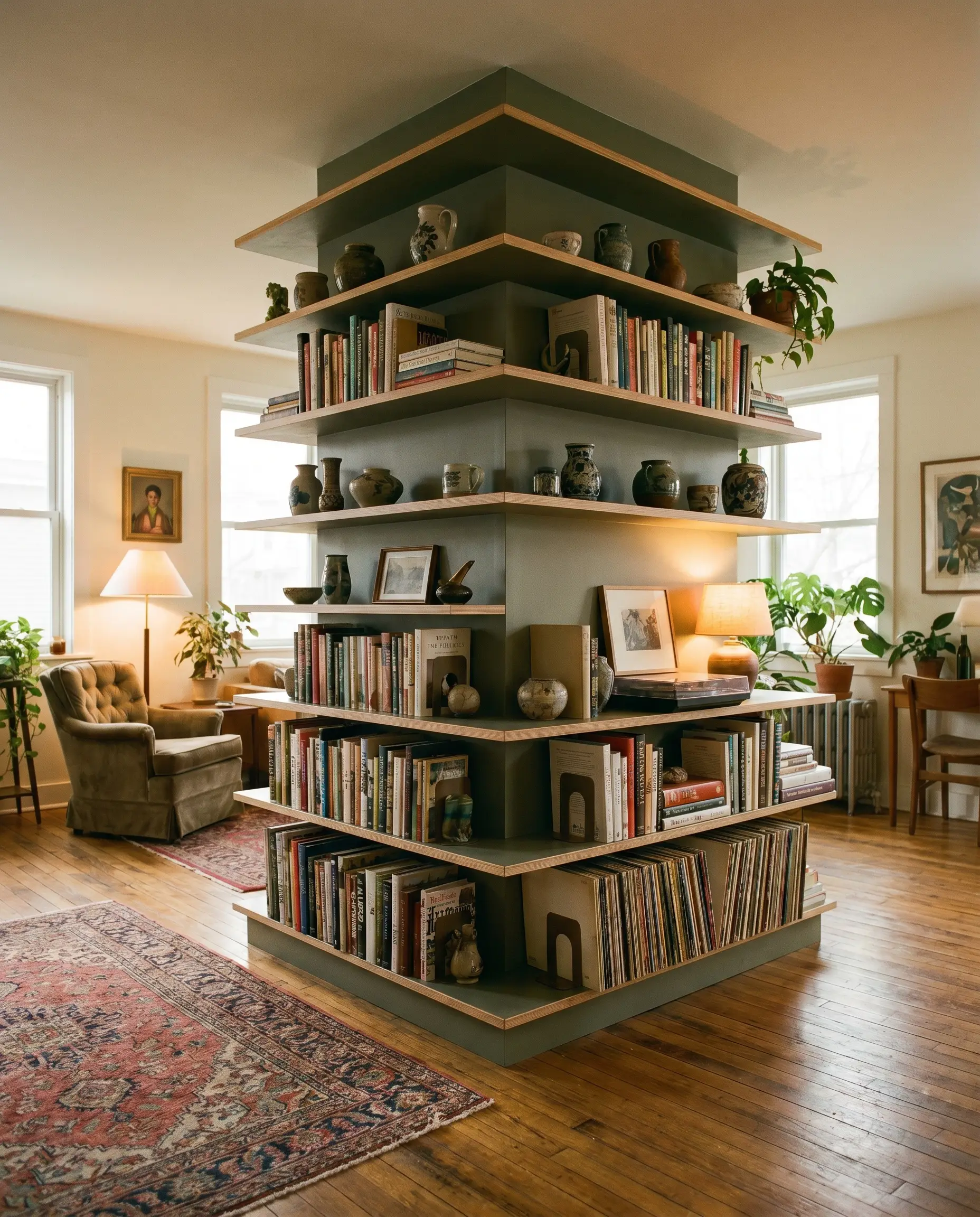
Building shallow, custom shelving on two or four sides of a square column provides phenomenal vertical storage for readers and collectors. It turns a blank pillar into a curated, 360-degree display for ceramics, art books, and vinyl records.
- Vibe: Curated Maximalism / Library Chic
- Key Material: Custom-milled plywood with hardwood edge-banding
- Paint Recommendation: Farrow & Ball Green Smoke
- Styling Pro-Tip: Keep the shelf depth between 8 and 10 inches to ensure the column doesn’t become overwhelmingly bulky in the center of the room.
15. Integrated Vertical LED Channels
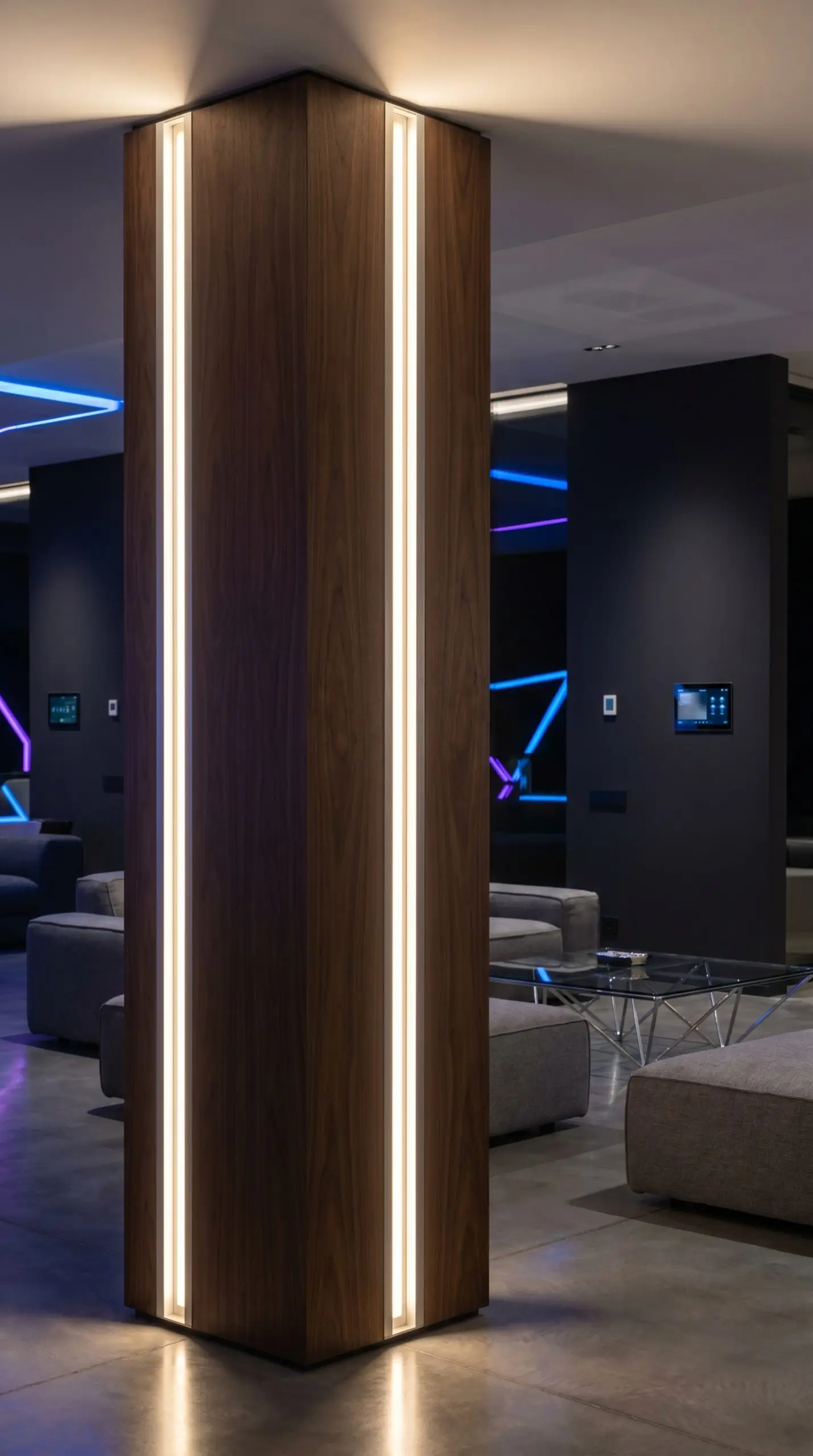
Routing vertical channels into a wooden column wrap and installing flush-mount aluminum LED profiles turns the structure into a futuristic, floor-to-ceiling ambient light fixture. This functional integration provides brilliant secondary lighting while highlighting the column’s verticality.
- Vibe: Cyber-Modern / High-Tech Luxury
- Key Material: Aluminum LED extrusion channels with frosted diffusers
- Lighting Spec: Specify warm white COB LED strips (2700K-3000K) to ensure a high-end glow rather than a sterile, commercial glare.
- Styling Pro-Tip: Hook the LEDs to a smart dimmer switch to control the room’s mood effortlessly.
16. Recessed Display Niches
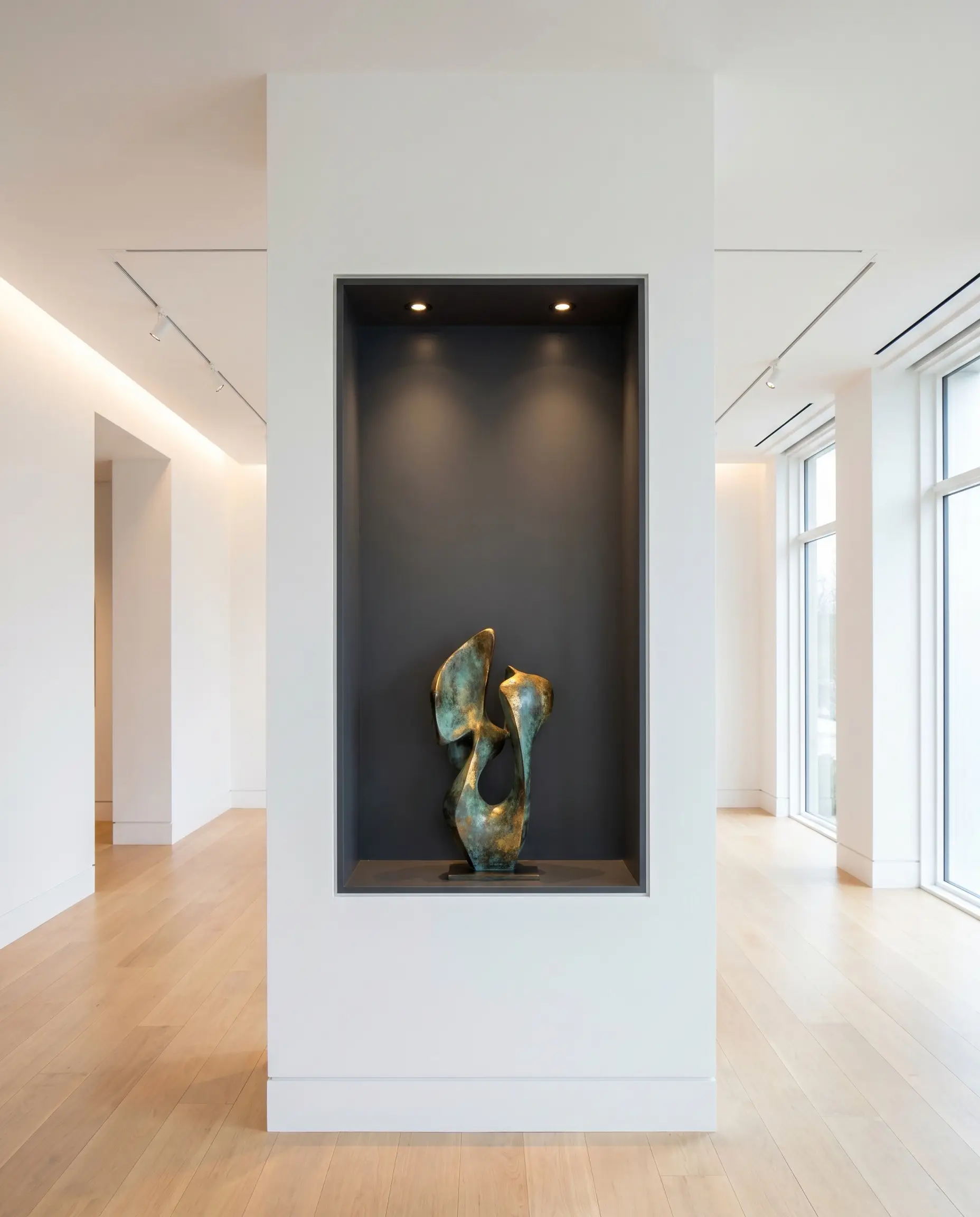
If a column must be boxed out wider than the internal structural support, utilize that hollow cavity space to construct illuminated, recessed display niches. This highly architectural solution embeds art directly into the bones of your home.
- Vibe: Museum Modern / Architectural
- Key Material: Drywall returns with integrated micro-downlights
- Best Paired With: A single, high-impact sculpture or rare trailing plant.
- Styling Pro-Tip: Paint the interior of the niche a darker accent shade to create an illusion of infinite depth.
Bold Illusions & Paint Treatments
When heavy millwork or masonry exceeds the budget or spatial limits, optical illusions step in to manipulate the room’s perceived mass. Mastering light, reflection, and bold color theory allows you to dictate exactly how the eye registers a structural pillar.
17. Floor-to-Ceiling Antique Mirror Cladding
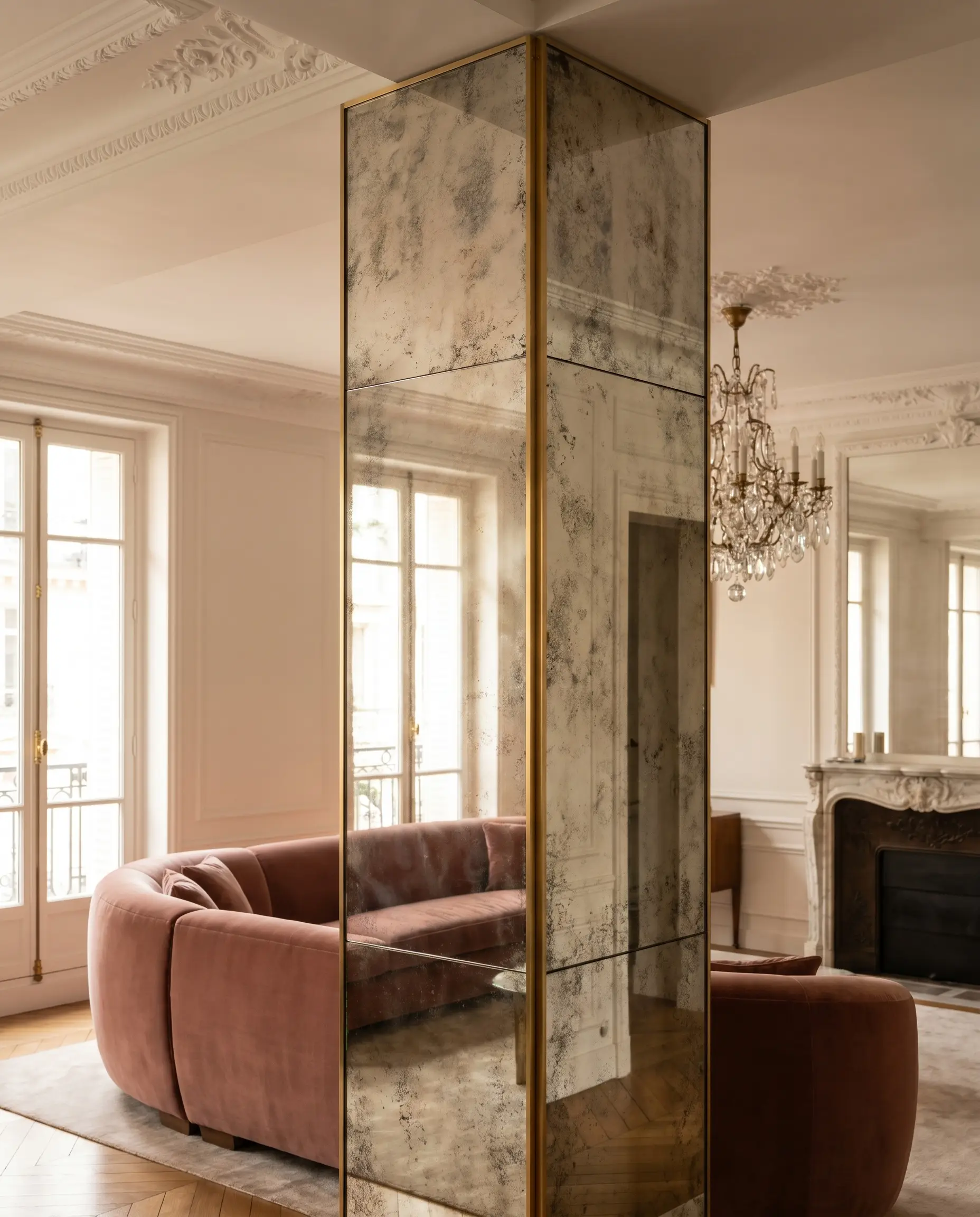
Cladding all four sides of a square column in heavily antiqued mirror glass effectively forces the structure to “disappear” by bouncing the surrounding room back at the viewer. The distressed, oxidized finish of the antique glass ensures the piece looks like a glamorous European installation rather than a 1980s commercial gym.
- Vibe: Vintage Glamour / Parisian Apartment
- Key Material: Lightly distressed antiqued mirror panels
- Installation Detail: Secure with mirror mastic and finish the edges with minimal brass J-channels.
Never use standard, clear mirrors for this application. Clear glass creates confusing, harsh reflections in the center of a room, while antiqued glass offers a soft, atmospheric glow.
Hackrea Styling Tip
18. Monochromatic Color-Drenching
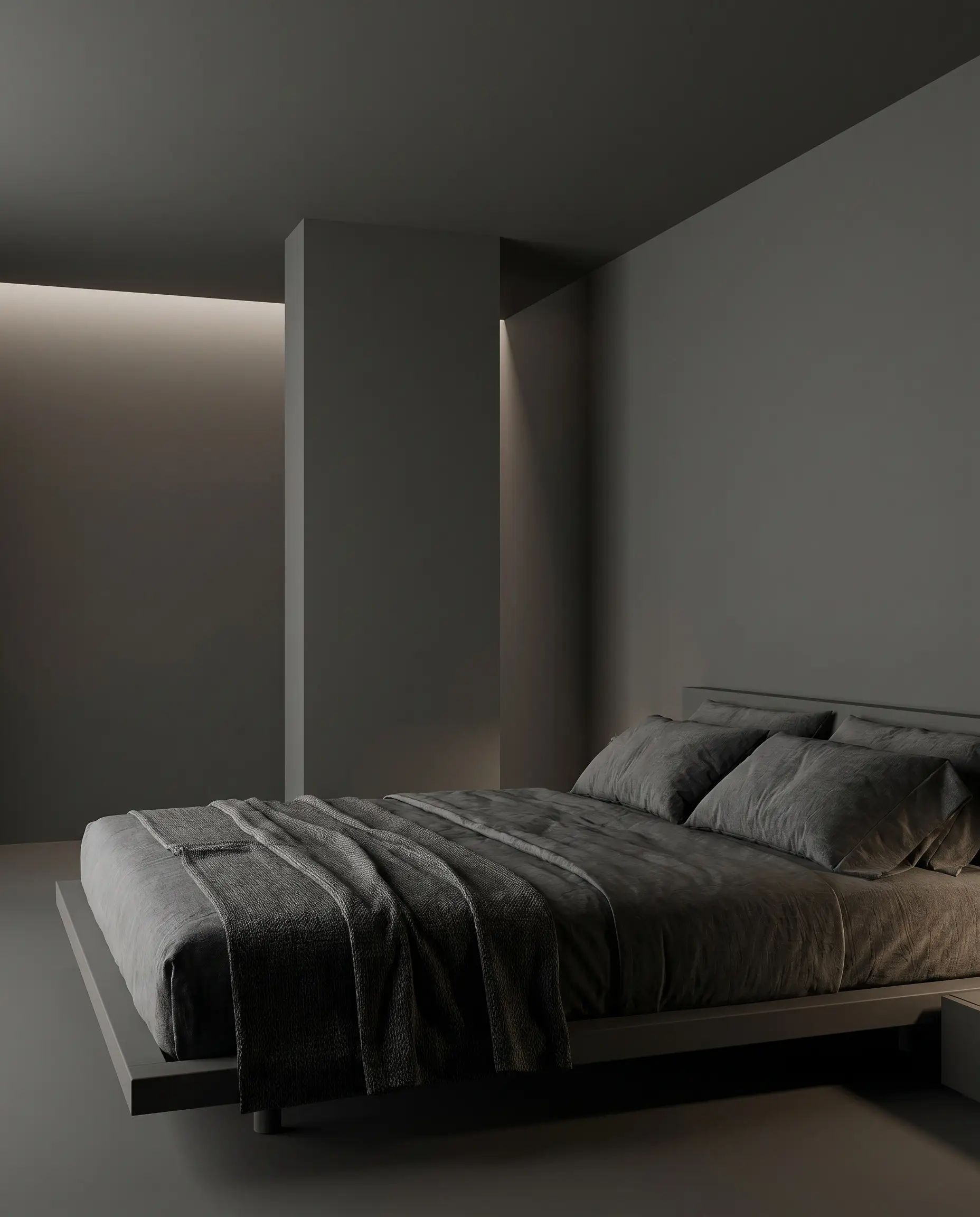
Execute a flawless camouflage technique by painting the column, the ceiling, and the surrounding walls in the exact same dark, moody shade. This color-drenching method completely erases contrasting visual boundaries, allowing the pillar to melt seamlessly into the architecture.
- Vibe: Moody Monochromatic / Contemporary
- Key Material: Premium interior paint
- Color Recommendation: Benjamin Moore Iron Mountain
- Styling Pro-Tip: Use a dead flat matte finish across all surfaces to absorb light and maximize the illusion of boundless space.
19. High-Gloss Postmodern Lacquer
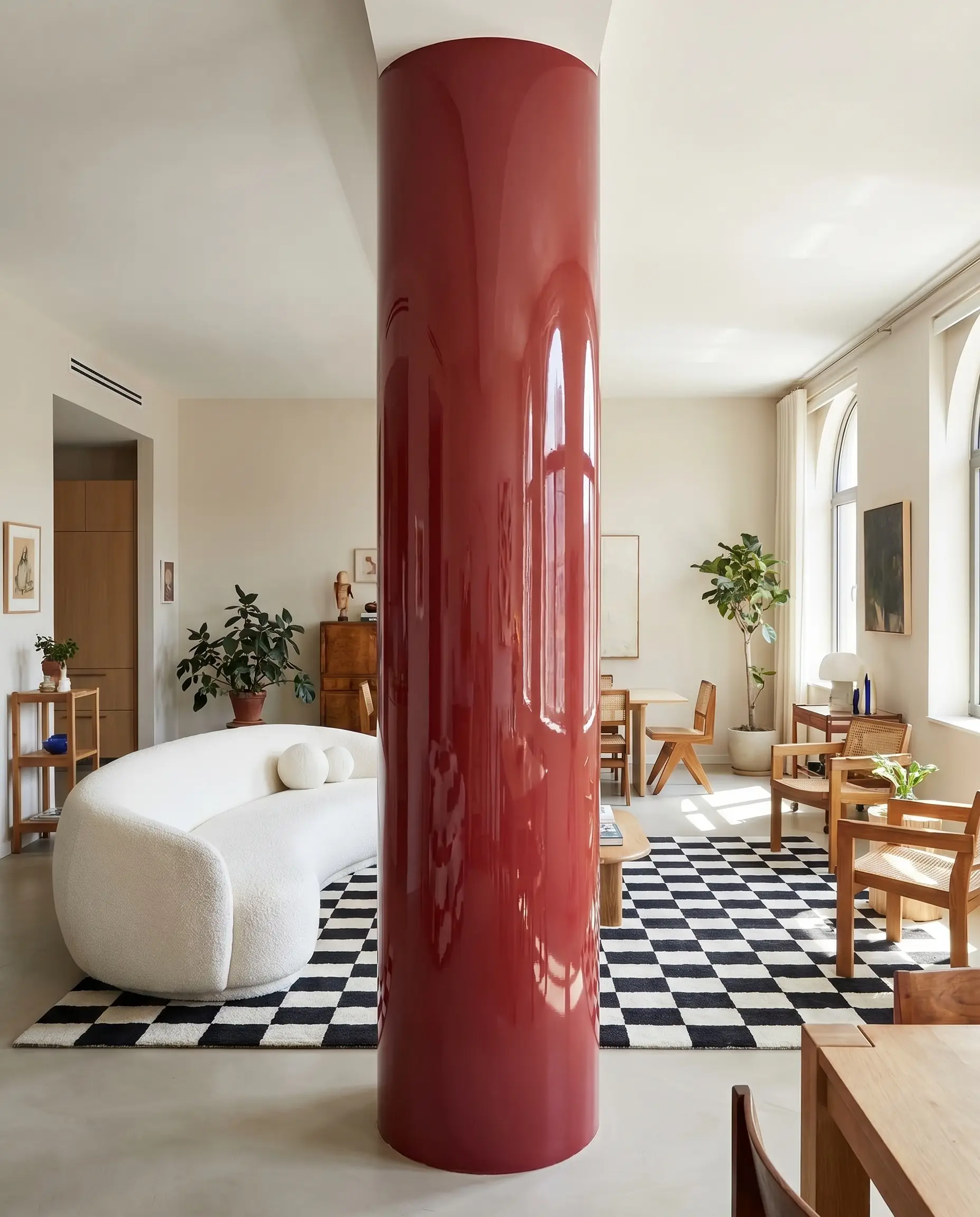
Lean aggressively into the column’s presence by coating it in a vibrant, high-gloss lacquer, transforming the pillar into a deliberate Postmodern art installation. A reflective, mirror-like gloss finish demands attention and brings an incredible, unexpected energy to a neutral room.
- Vibe: Postmodern / Bold Eclectic
- Key Material: Fine Paints of Europe Hollandlac Brilliant
- Color Recommendation: Farrow & Ball Rectory Red
- Preparation Warning: High-gloss finishes highlight every microscopic flaw; you must achieve a Level 5 drywall finish with meticulous skim coating before painting.
20. The Half-Wall Craftsman Faux Column
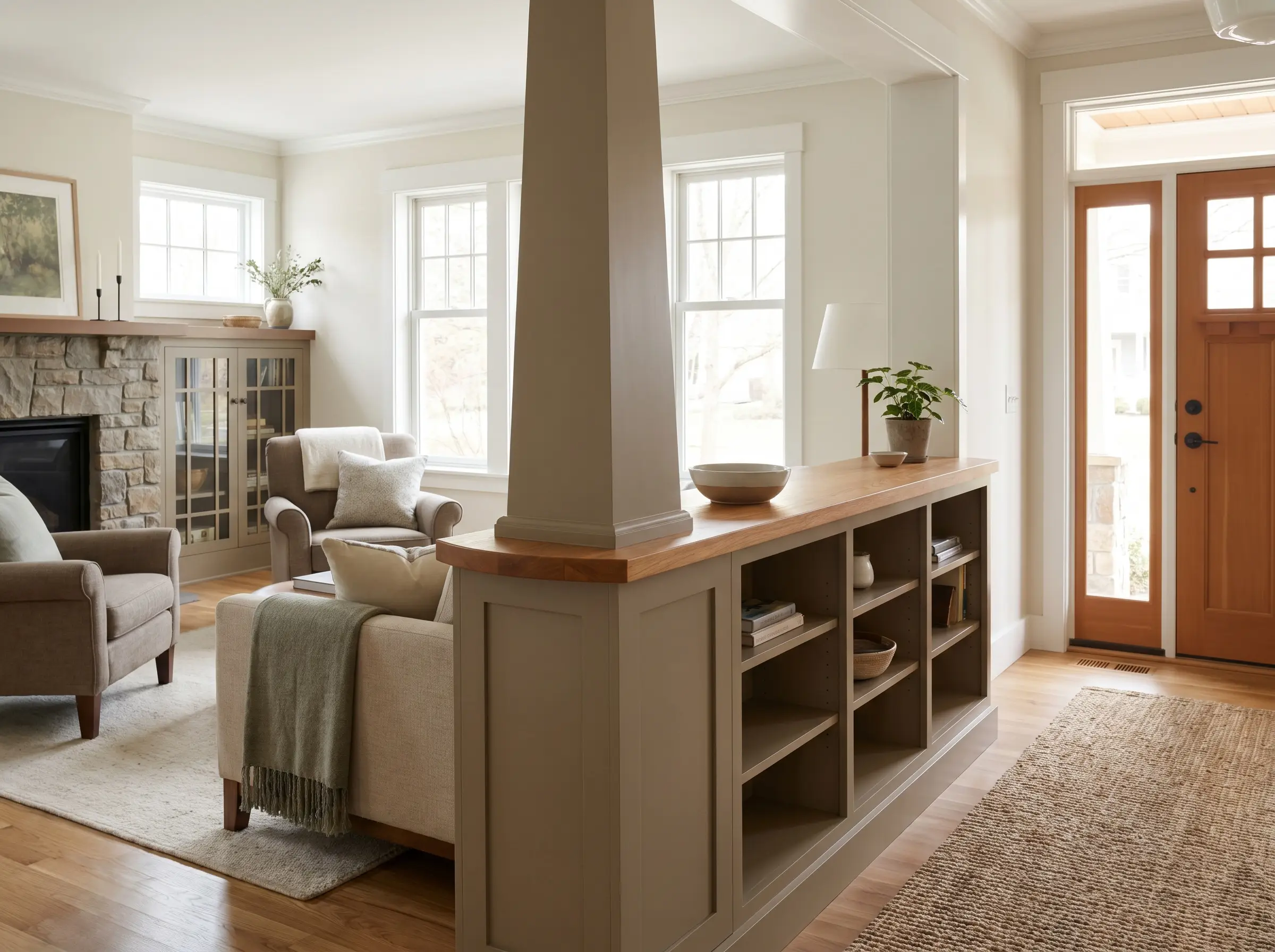
When constructing decorative columns purely to zone an open floor plan, place stout half-columns atop low, craftsman-style bookcases. This brilliant spatial zoning trick defines the visual boundary between a living room and an entryway without sacrificing natural light or sightlines.
- Vibe: Craftsman / Historic Revival
- Key Material: Tapered wood column wraps and custom base cabinetry
- Paint Recommendation: Sherwin-Williams Studio Clay
- Styling Pro-Tip: Cap the half-wall with a warm oak slab to serve as a functional drop-zone for keys and mail.
21. Biophilic Climbing Plant Wrap
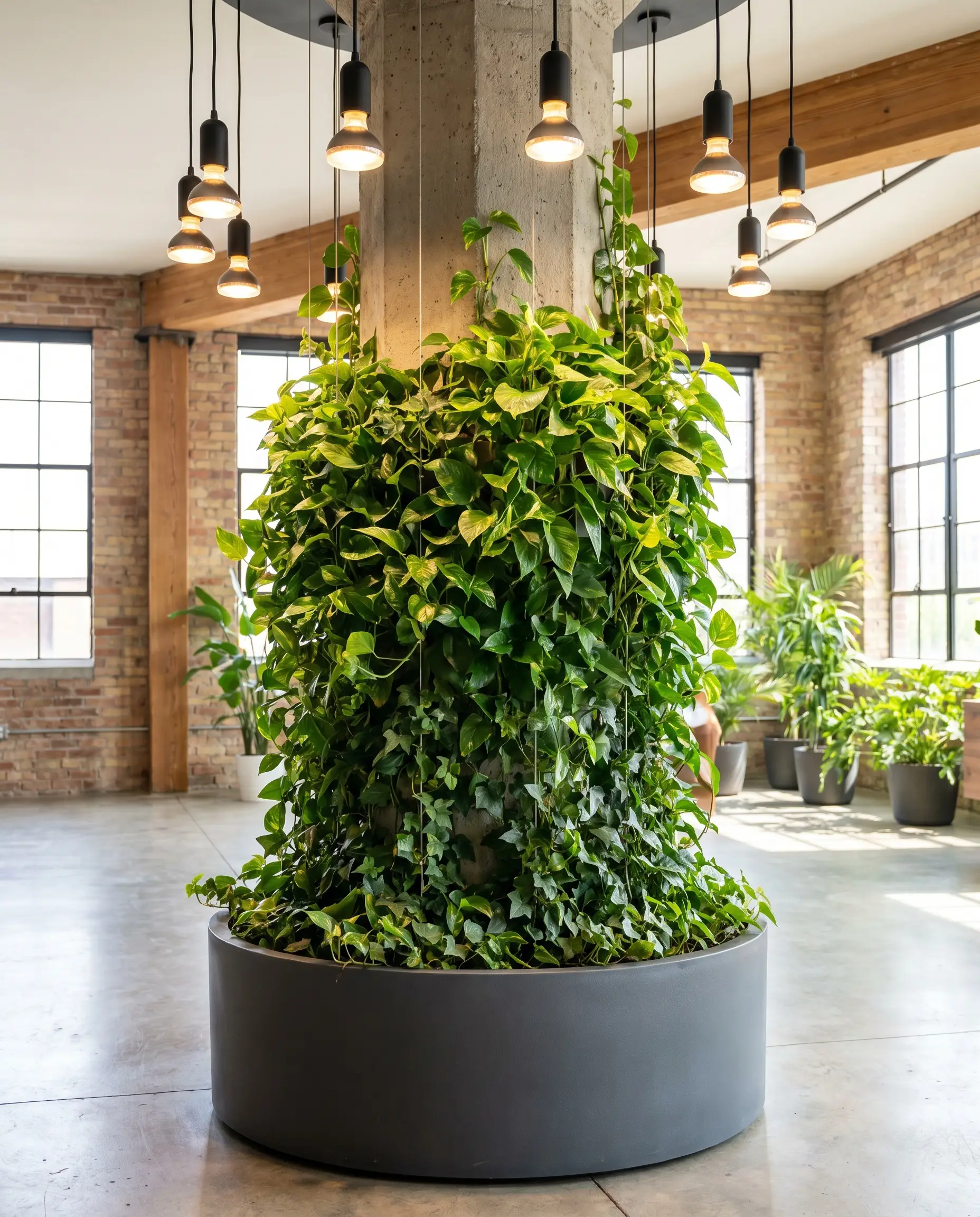
Install a subtle, tension-wire trellis system around the column and allow trailing indoor plants to aggressively wrap the structure, forging a living green wall. This biophilic design approach softens harsh urban environments and introduces immense psychological relief and vitality into industrial lofts.
- Vibe: Urban Jungle / Biophilic Modern
- Key Material: Stainless steel cable trellis kits and robust climbing plants (Golden Pothos or English Ivy)
- Best Paired With: Overhead, full-spectrum LED grow bulbs housed in stylish pendant fixtures.
- Styling Pro-Tip: Keep the soil base in a sleek, self-watering fiberglass planter integrated tightly at the foot of the column.
The Economics of Column Integration: Cost vs. Impact
Understanding the financial realities of transforming your column ensures your ambition matches your budget. Whether you are executing a weekend DIY project or hiring master tradespeople for bespoke fabrication, here is how the costs break down.
| Material/Treatment | Average Cost Range | DIY Friendly? | Aesthetic Vibe |
|---|---|---|---|
| DIY Fluted MDF Wrap | $150 – $300 | Yes | Organic Modern / Rhythmic |
| Hand-Troweled Roman Clay | $200 – $450 | Yes (with patience) | Wabi-Sabi / Earthy |
| Custom Drywall Boxing & Niches | $500 – $1,200 | Moderate | Museum Modern / Clean |
| Bespoke Porcelain/Stone Cladding | $2,000 – $4,500+ | No | Ultra-Luxury / Postmodern |
Common Column Mistakes to Avoid
- Don’t ignore the floor and ceiling transitions. Leaving a wrapped column hovering without proper baseboards or crown molding makes the entire installation look like a cheap afterthought.
- Do integrate the column’s base and crown trims seamlessly with the rest of the room’s architectural molding.
- Don’t wrap a basement lolly column in generic, cheap sisal rope. It immediately dates the space to a 2010s nautical theme and acts as a magnet for dust and pet hair.
- Do invest in a smooth MDF shaker box or a fluted tambour wrap for a sophisticated, dust-resistant finish.
- Don’t cut into, notch, or drill deeply into a structural wood or steel column to run electrical wiring for sconces or TVs.
- Do consult a licensed contractor to build a hollow, framed chase around the load-bearing core to safely house your electrical routing.
Anchoring Your Aesthetic (Final Thoughts)
A central interior column is a rare opportunity to dictate the exact architectural language of your home. By refusing to hide it, you establish a confident, curated atmosphere that feels bespoke and intentional. Choose a material that speaks directly to the tactile qualities and tones of your existing layout, and watch as an awkward obstacle becomes the defining feature of your space. Which high-end material are you planning to wrap your column in? Let the structure guide you, and be sure to explore our comprehensive open-concept zoning strategies to continue refining your floor plan.