Brick Accent Walls: Textures, Treatments, and Modern Styling
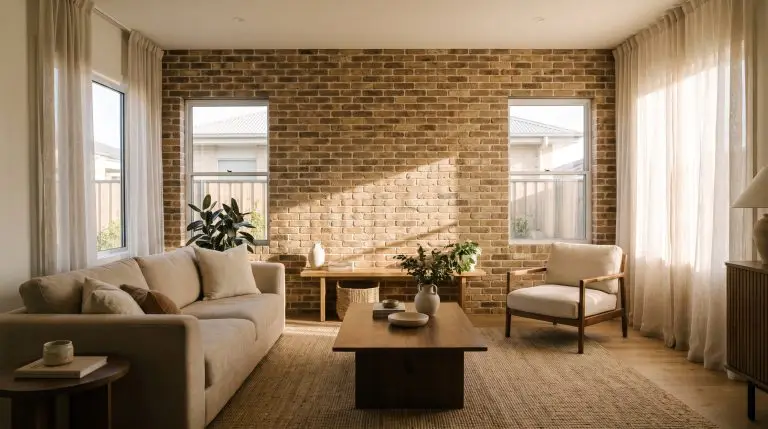
A brick wall instantly injects architectural gravitas into a flat, drywall-heavy room, but getting it wrong results in an oppressive space that feels trapped in a 1990s pizza parlor. We are treating the brick accent wall not as a mere color choice, but as a textured canvas that dictates your entire lighting plan and soft-material palette. Skip the history lessons on industrial lofts; we are focusing strictly on the tactile articulation of modern masonry.
This guide breaks down actionable surface treatments, modern sourcing realities from authentic veneers to high-density panels, and the exact spatial styling required to pull it off. Here is how to manipulate grout lines, surface washes, and tactile contrast to execute a flawless, modern brick accent wall.
Surface DNA: 4 Ways to Treat and Finish Your Brick
The factory-red finish is not a life sentence for your masonry. Surface treatments completely change the design style by chemically and physically altering the face of the brick.
The Authentic Italian Limewash (Soft & Chalky)
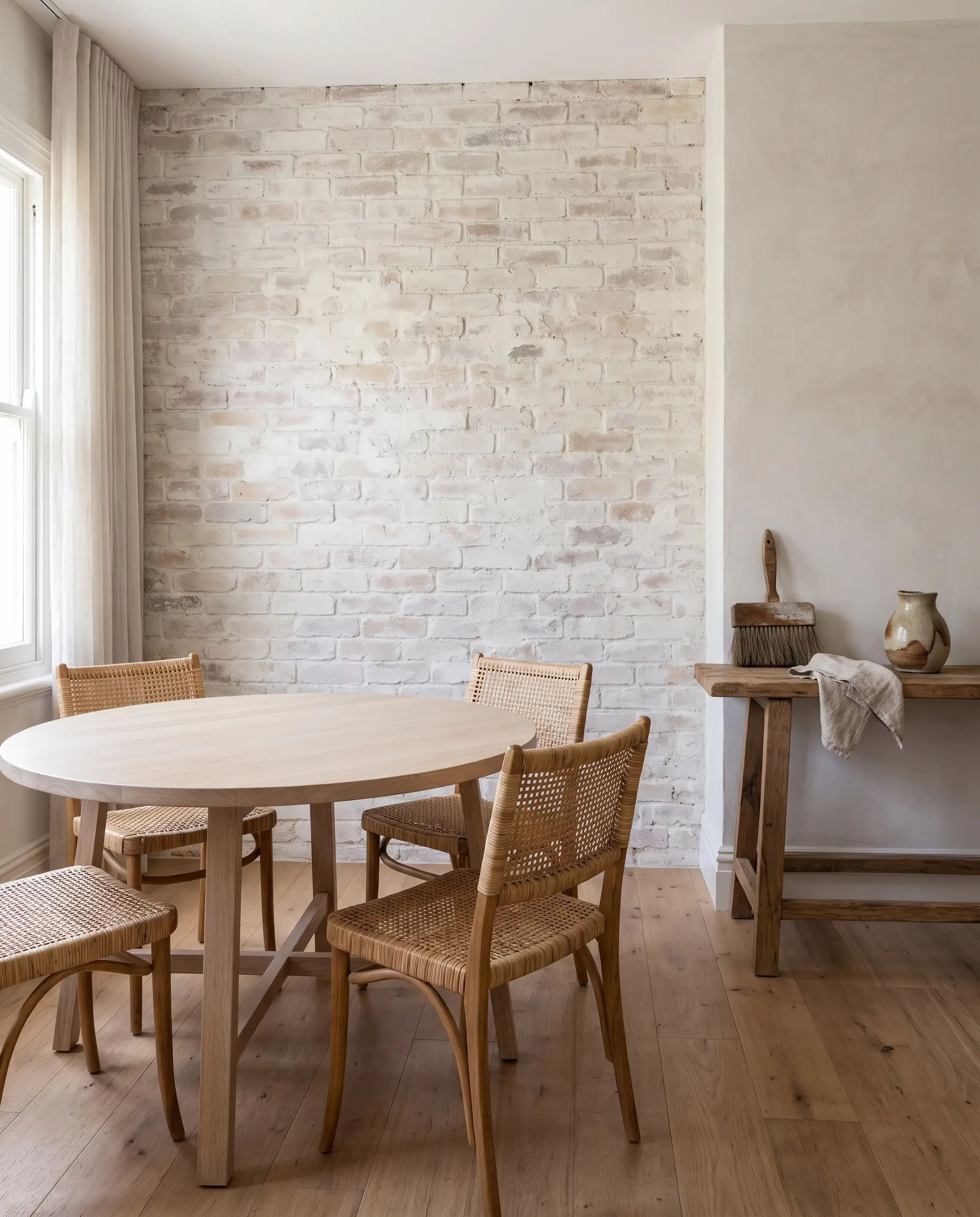
Authentic mineral-based limewash creates a breathable, matte, mottled patina that perfectly suits Organic Modern spaces. It softens the harsh geometry of the masonry while retaining all the tactile shadow play.
Unlike standard latex paint that sits on top of the surface and eventually peels, real limewash calcifies to the brick. This chemical reaction creates a permanent, breathable bond that ages beautifully.
Material Science
- Vibe: Organic Modern, Wabi-Sabi, Soft Mediterranean.
- Material Match: Romabio Classico Limewash.
- Styling Pro-Tip: Apply with a large masonry brush and distress with a spray bottle of water before it fully sets to control the opacity.
The Heavy German Smear (Mortar Wash)
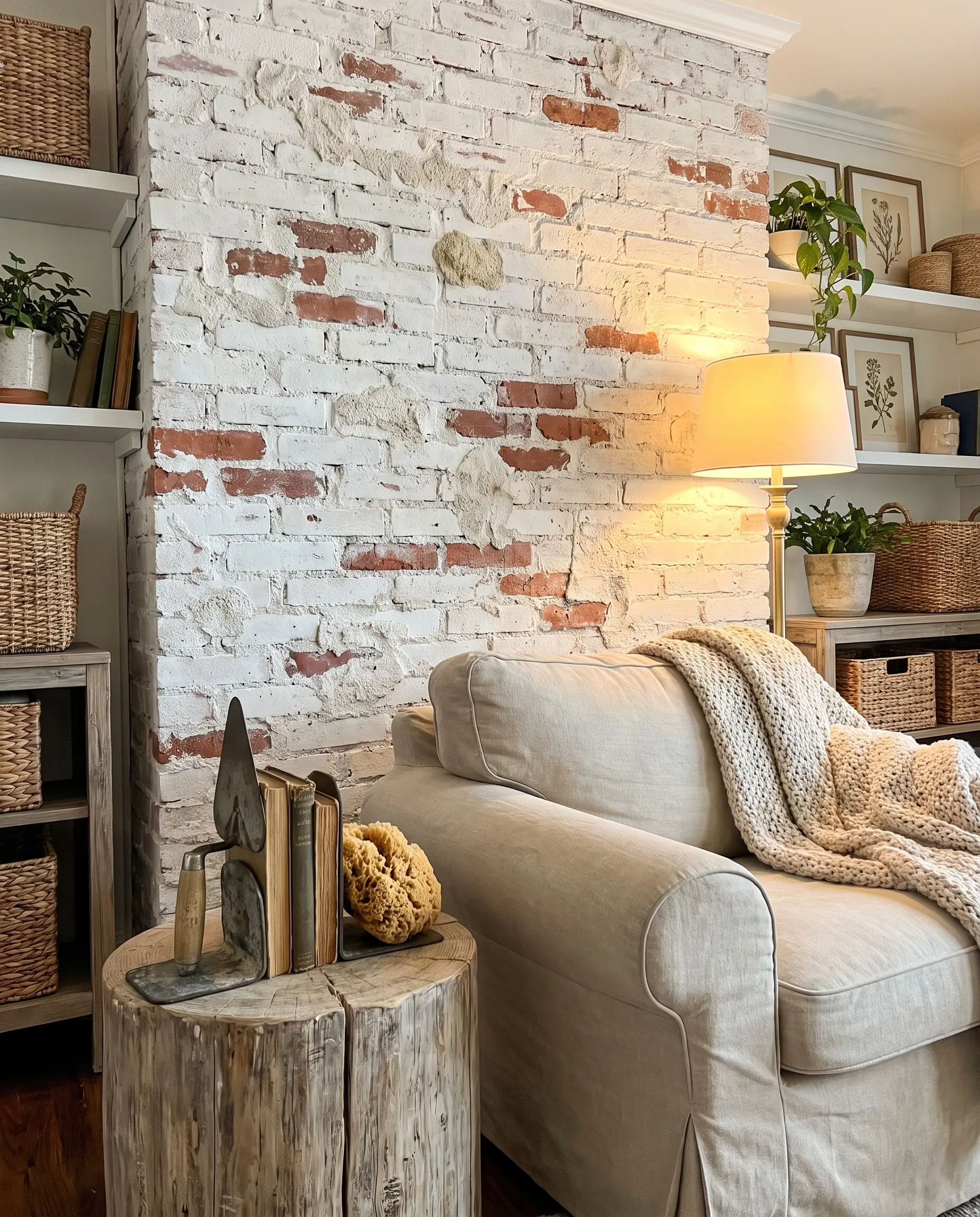
This technique involves physically spreading wet mortar over the brick face and wiping it back to expose random patches of the original masonry. It physically softens the hard right angles of the bricks, creating a rugged texture ideal for Modern Farmhouse or European Cottage aesthetics.
Do not confuse this with paint. A German Smear (Mortar Wash) is a physical application of cementitious material that permanently alters the structural profile of your wall.
Designer Warning
- Vibe: European Cottage, Modern Farmhouse.
- Key Materials: Standard white Portland cement and masonry sand.
- Application Tool: A heavy-duty masonry trowel and a large grout sponge.
Matte Color-Drenching (The Dark Academia Route)
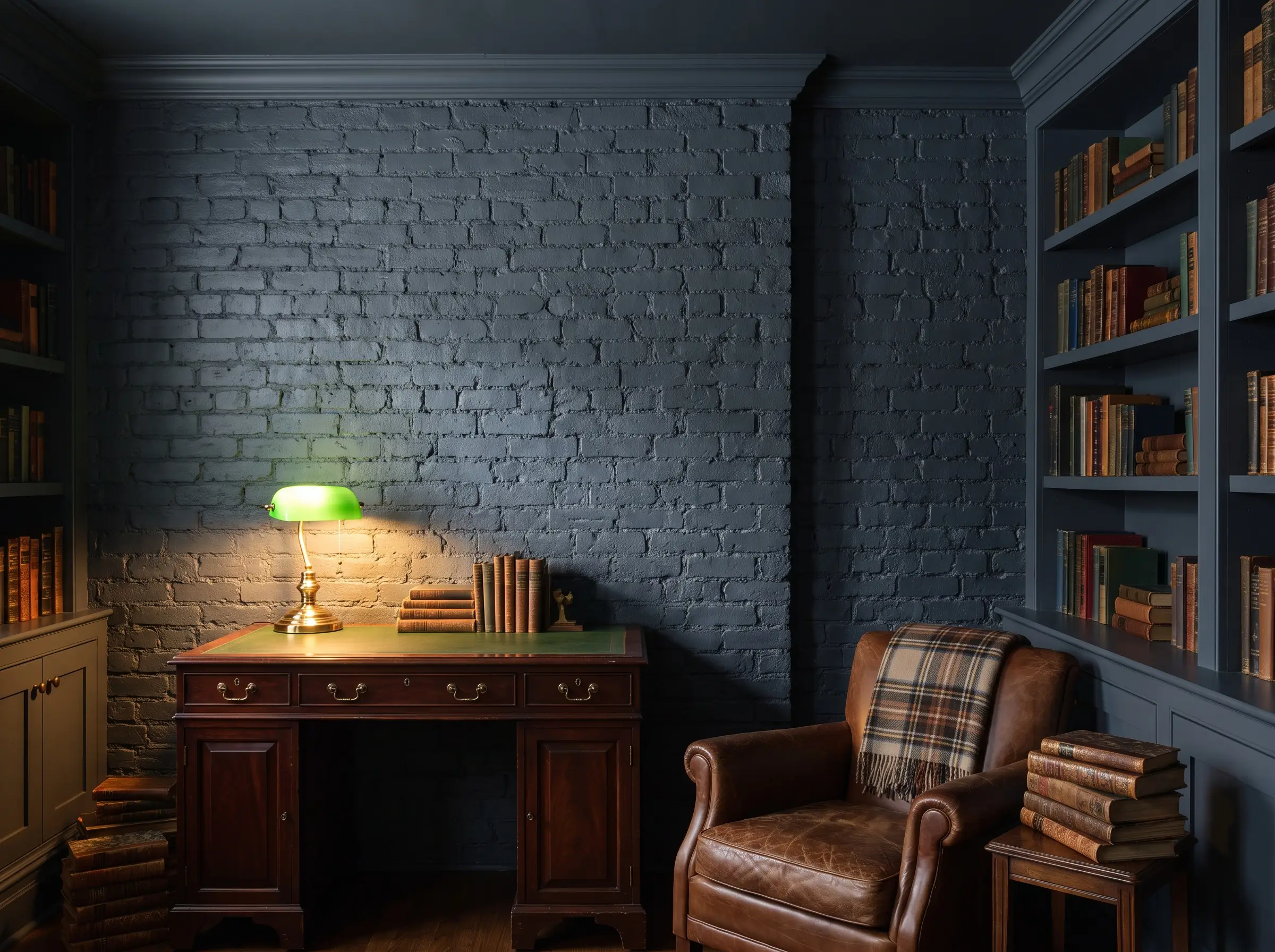
Color-drenching the brick, crown molding, and adjacent walls in a single, dark mineral paint creates an incredibly moody, immersive environment. The heavy texture of the brick breaks up the dark color, preventing the room from feeling flat or hollow.
- Vibe: Dark Academia, Moody Transitional, Modern Gothic.
- Paint Recommendation: Benjamin Moore Hale Navy.
- Finish Requirement: Always specify a flat or matte finish; a plastic sheen will instantly cheapen the architectural integrity.
The Sealed Raw Patina (Industrial Grade)
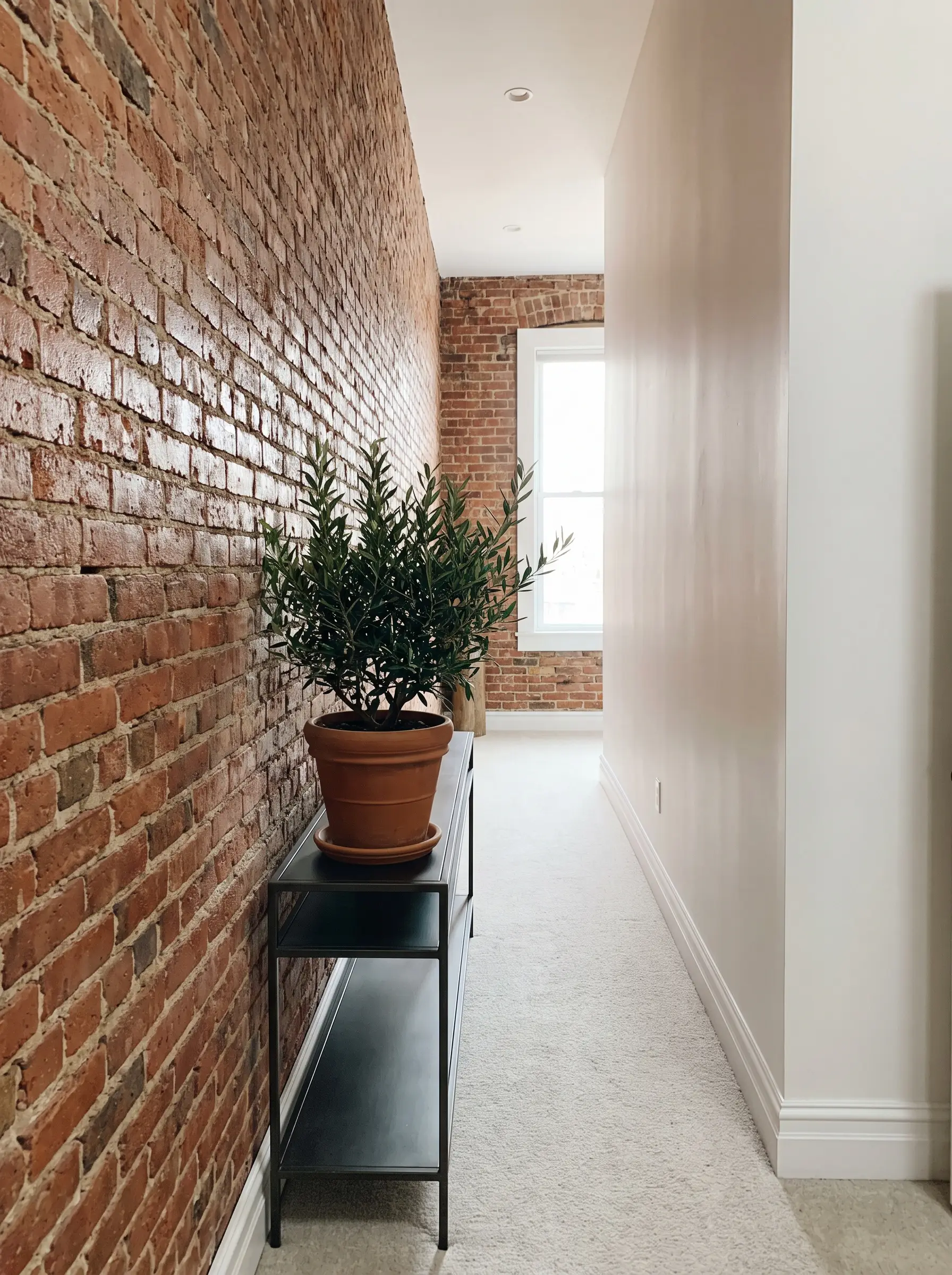
Leaving a classic red brick wall raw requires intentional maintenance to prevent it from deteriorating into a dusty mess. Securing the raw patina ensures you keep the warmth and historical grit without sacrificing the cleanliness of your living space.
Command your installer to apply a high-quality, matte masonry sealant over raw brick. This locks in the gritty patina and prevents brick dust from constantly shedding onto your baseboards and furniture.
Maintenance Rule
- Vibe: Authentic Industrial Loft, Historic Restoration.
- Material Match: Silane-Siloxane penetrating masonry sealer.
- Styling Pro-Tip: Pair the raw red brick with crisp white adjacent walls to frame the texture rather than competing with it.
Sourcing & Installation: Real Masonry vs. Faux Hacks
Not every renovation budget allows for pouring a structural concrete footing to support full-dimensional brick. Navigating the modern materials market means choosing between high-end authentic materials and remarkably engineered budget alternatives, perfectly spanning the gap from Budget DIY to Accessible Luxury.
Authentic Thin-Brick Veneer Sheets (Accessible Luxury)
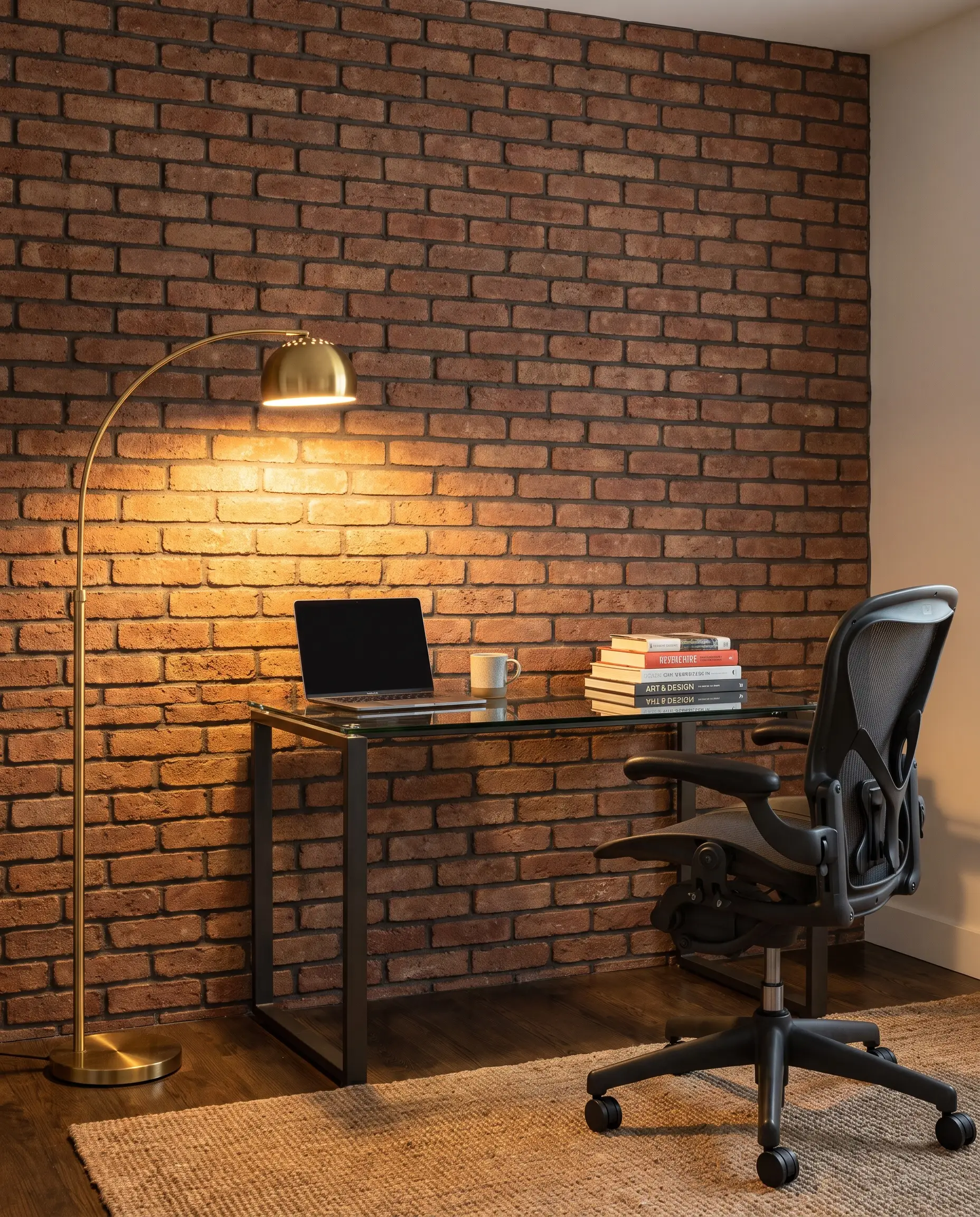
Thin-brick veneers are the gold standard for authentic renovations, utilizing real, kiln-fired clay sliced thin and mounted on mesh webbing. This provides one hundred percent authentic texture and shadow articulation without the immense structural weight of full bricks.
- Vibe: Accessible Luxury, Historic Accuracy.
- Key Materials: Kiln-fired thin-brick veneer (like Brickwebb).
- Installation Note: Requires a polymer-modified thin-set mortar and professional grouting.
High-Density Polyurethane (HDU) Panels (Budget DIY)
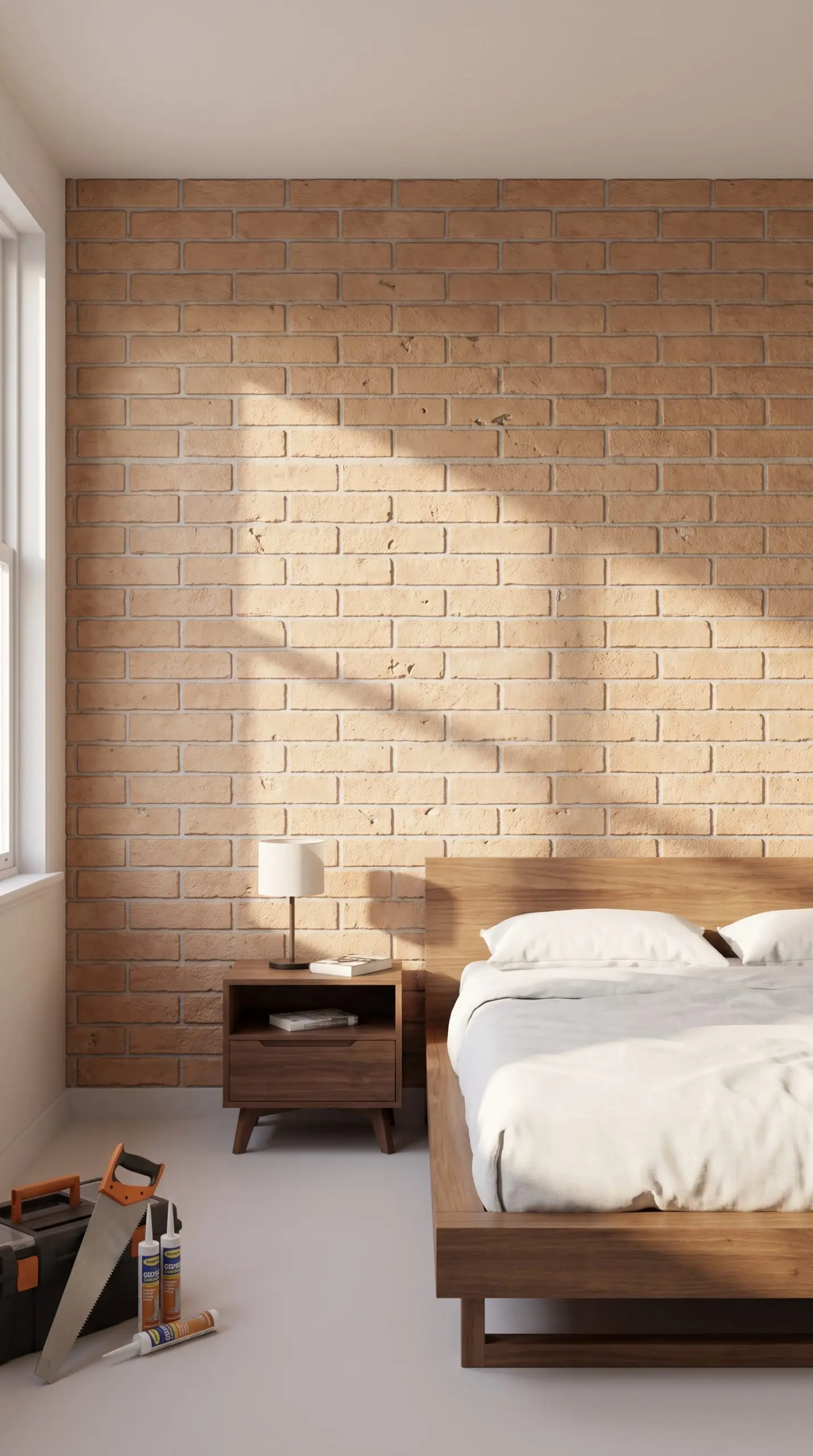
Forget the cheap, shiny 3D plastic sheets of the past; seek out high-quality High-Density Polyurethane (HDU) panels modeled directly from real brick walls. They capture realistic grout lines and authentic imperfections, offering a highly viable solution for tight budgets or strict rental agreements.
- Vibe: Budget DIY, Renter-Friendly.
- Pros: Lightweight, cuts with a standard saw, installs with construction adhesive, requires zero wet mortar.
- Cons: Feels hollow to the touch, cannot withstand high-heat applications near fireplaces.
Manipulating the Grout Joint Profile
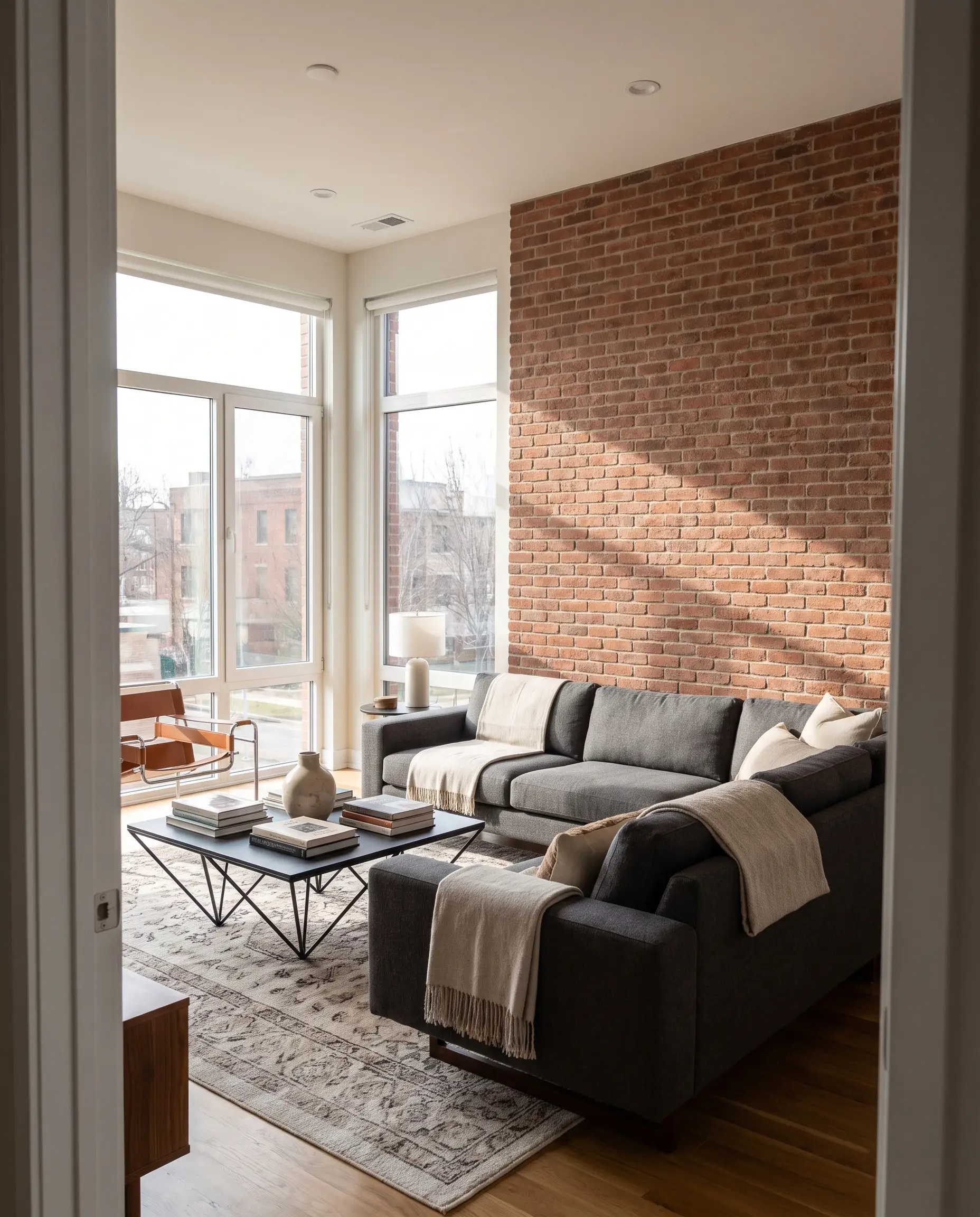
The way your installer finishes the mortar between the bricks dictates the shadow play and entire aesthetic of the wall. Manipulating the grout joint profile changes the physical depth of the masonry, entirely altering how light hits the surface.
| Profile Name | Shadow Effect | Best Design Style |
|---|---|---|
| Raked Joint | Deep, aggressive shadows with high contrast | Authentic Industrial Loft |
| Flush Joint | Minimal shadows, flat and uniform transition | Modern Crisp, Minimalist |
| Over-grouted | Soft, blurred edges with minimal shadow definition | Organic Modern, European Cottage |
- Vibe: Highly customizable based on profile choice.
- Key Materials: Standard Type N masonry mortar.
- Styling Pro-Tip: Discuss the exact joint profile with your mason before they begin; once the mortar cures, the shadow effect is permanent.
Architectural Placement: 4 High-Impact Locations
Applying brick to random walls creates a chaotic, movie-set backdrop aesthetic. An accent wall must have an architectural anchor or distinct spatial purpose to feel intentional and grounded within the home.
The Bedhead Anchor Wall
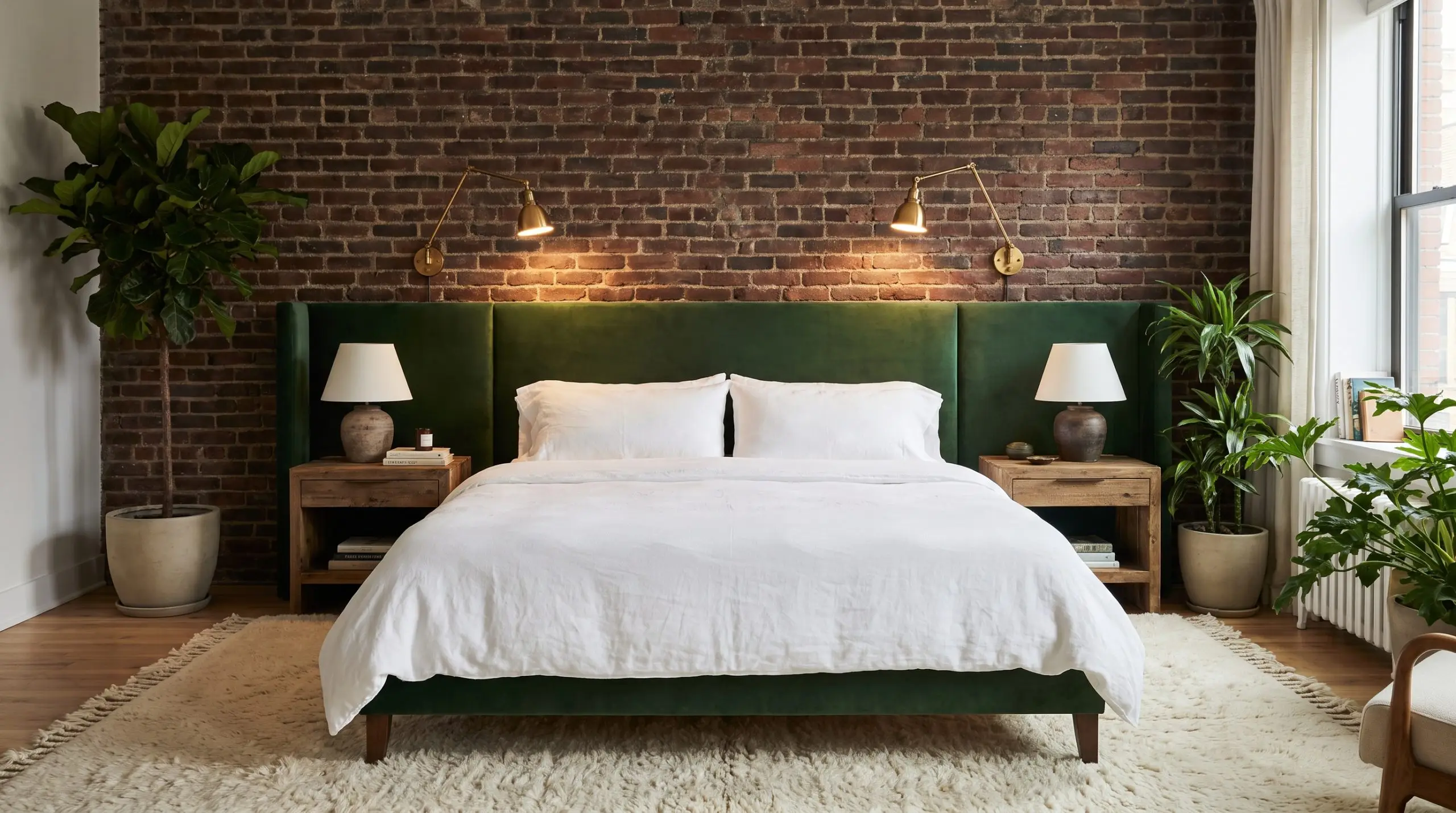
Placing the brick exclusively behind the headboard establishes a heavy, grounding anchor for the primary bedroom. The success of this layout relies entirely on the juxtaposition of the hard, cold masonry against oversized, plush textiles.
- Vibe: Urban Sanctuary, Grounded Organic.
- Styling Pro-Tip: Contrast the rough brick with an oversized, fully upholstered velvet or boucle headboard.
- Lighting Rule: Install hardwired reading sconces directly onto the brick to cast warm, localized shadows over the bed.
The Floor-to-Ceiling Fireplace Extension
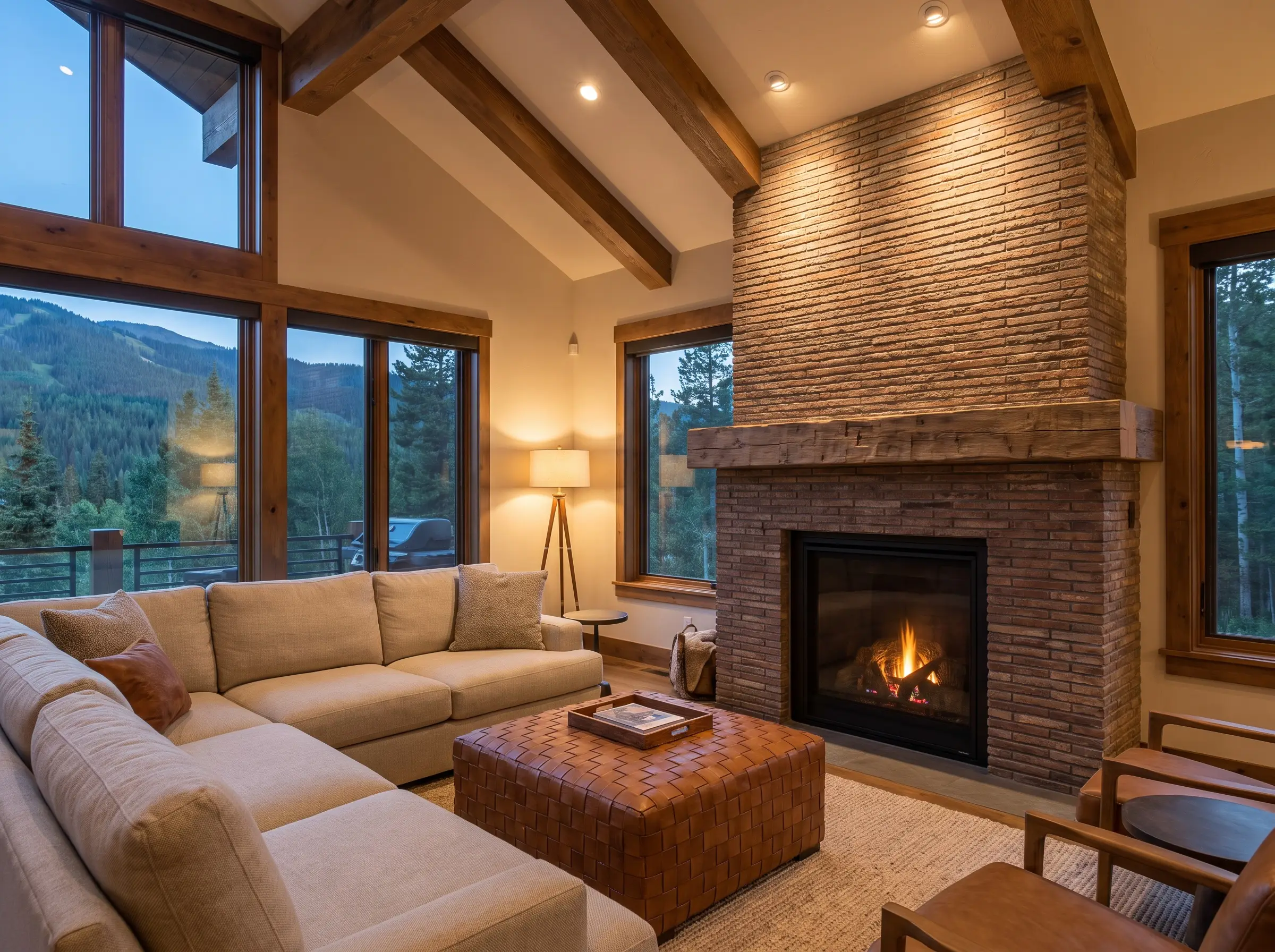
Instead of stopping the masonry at the mantel, run the brick entirely up the chimney breast to the ceiling line. This monolithic focal point visually raises the ceiling height and commands the spatial layout of the living room.
- Vibe: Grand Transitional, Modern Lodge.
- Key Materials: Authentic thin-brick veneer (for heat resistance).
- Styling Pro-Tip: Mount a thick, reclaimed timber mantel directly into the masonry to break up the verticality with organic warmth.
The Kitchen Backsplash-to-Ceiling Feature
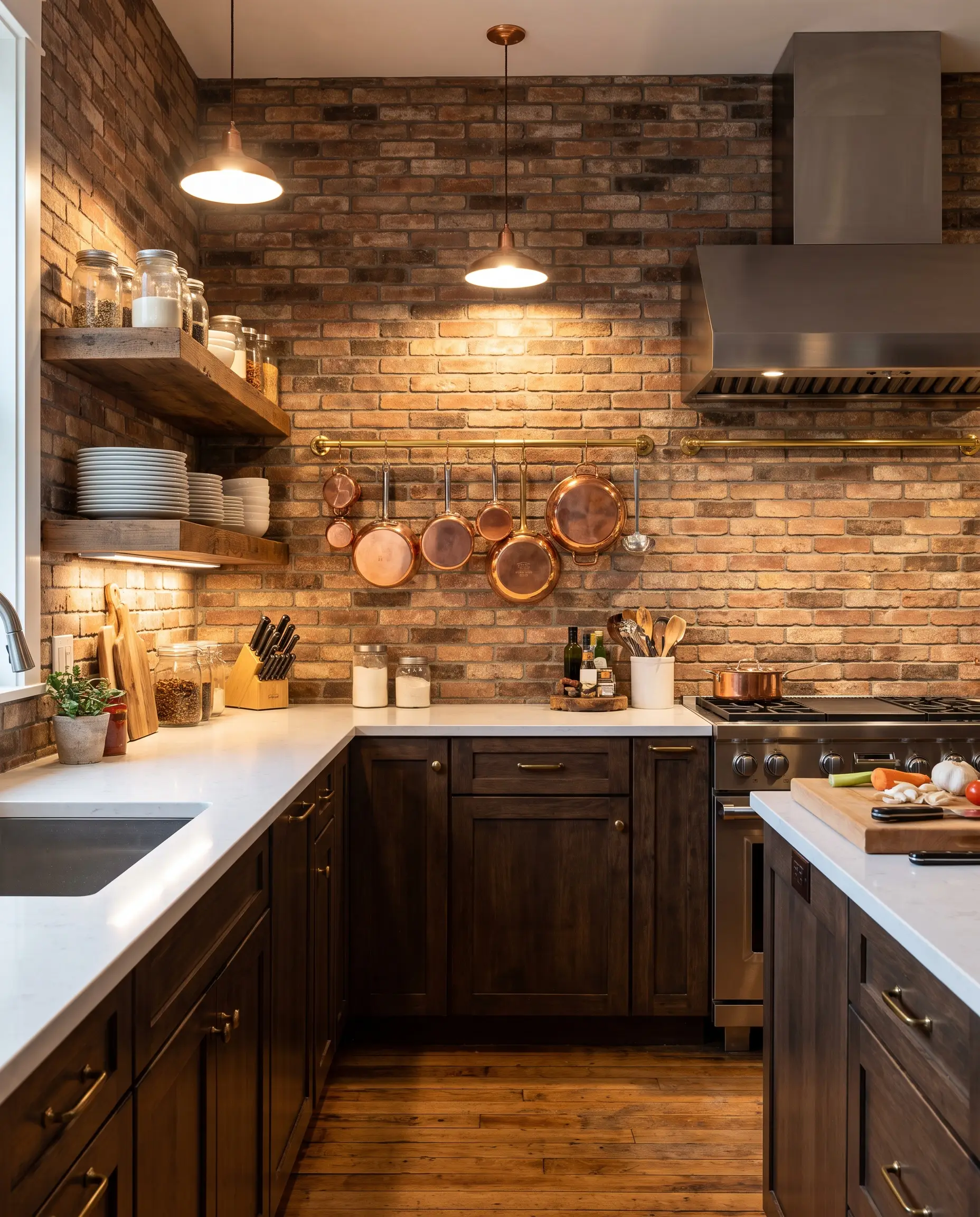
Ditch the standard ceramic subway tile and run thin-brick veneer from the countertops all the way up to the ceiling line. Floating thick, open wood shelving directly on top of the brick creates a rugged, highly functional culinary space.
You absolutely must seal brick in cooking zones with a heavy-duty, grease-resistant masonry sealant. Unsealed brick is highly porous and will permanently absorb cooking oils and sauce splatters.
Maintenance Rule
- Vibe: High-End Bistro, Industrial Chef’s Kitchen.
- Material Match: Glazed or heavily sealed thin-brick veneer.
- Styling Pro-Tip: Pair with unlacquered brass rail systems for hanging copper cookware against the masonry.
The Textural Entryway Drop Zone
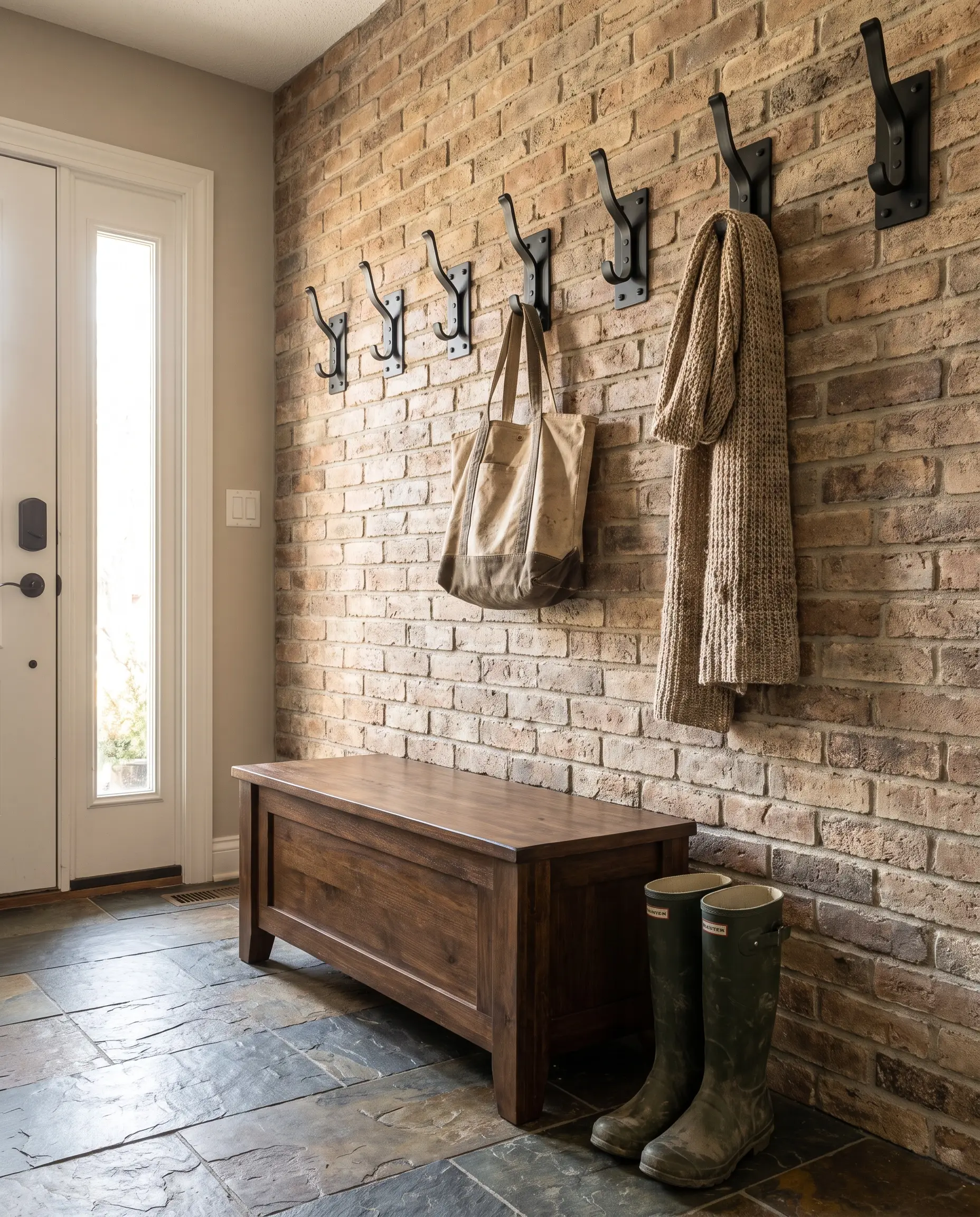
A small foyer or mudroom is the perfect transient space to experiment with heavy brick textures without overwhelming the primary living areas of the house. It establishes immediate architectural character the moment you walk through the front door.
- Vibe: Rugged Utility, Welcoming Industrial.
- Key Materials: HDU panels work exceptionally well here to save budget.
- Styling Pro-Tip: Bolt heavy-duty matte black steel coat hooks directly into the wall for a highly functional, tactile drop zone.
The Hackrea Method: 4 Rules for Styling & Lighting Masonry
A beautifully installed brick wall will completely fail if surrounded by the wrong lighting plan and incompatible furnishings. Bridging the gap between raw construction and interior decorating requires strict adherence to these non-negotiable styling laws.
Mandate Wall-Grazing Sconces
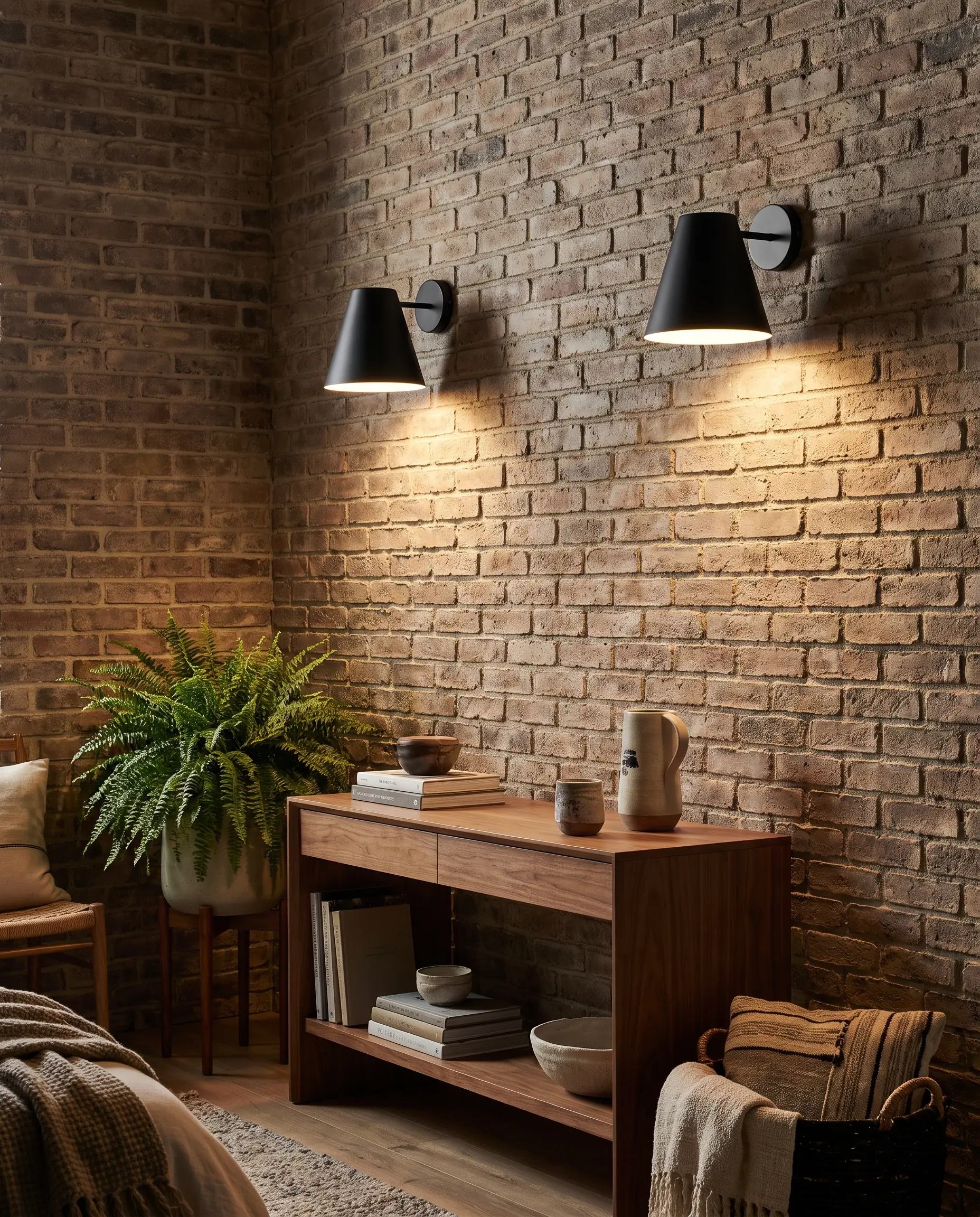
Never attempt to light a heavily textured wall purely from a central ceiling fixture. You must mandate wall-grazing lighting to shoot light straight down the face of the brick, intentionally exaggerating the shadows and depth of the mortar joints.
- Vibe: Dramatic, High-Contrast, Museum-Quality.
- Key Materials: Hardwired sconces or recessed ceiling channels placed exactly 3-4 inches from the wall.
- Styling Pro-Tip: Use warm-temperature LED bulbs (2700K) to bring out the natural, earthy tones of the masonry.
Softening with Sheer Linens and Boucle
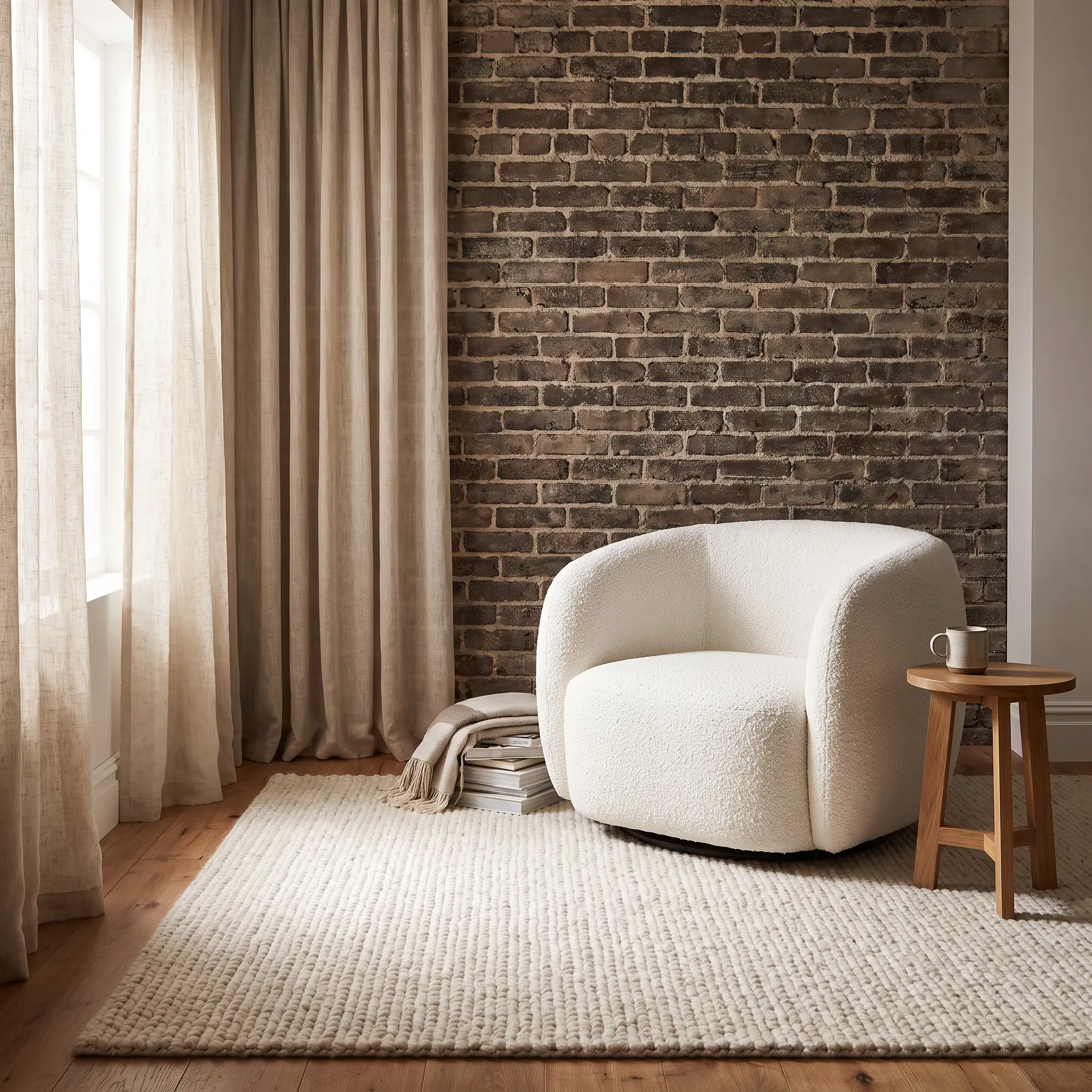
Brick is visually heavy and acoustically hard, requiring you to aggressively over-index on soft furnishings to balance the room. Achieving tactile contrast means pairing the rough masonry with floor-to-ceiling sheer linen drapery, boucle lounge chairs, and thick wool rugs.
- Vibe: Tactile Luxury, Balanced Organic.
- Textile Match: Heavyweight Belgian linen and dense wool.
- Styling Pro-Tip: Float your soft seating at least six inches away from the brick wall to let both materials breathe visually.
Pairing Red Brick with Walnut and Brass
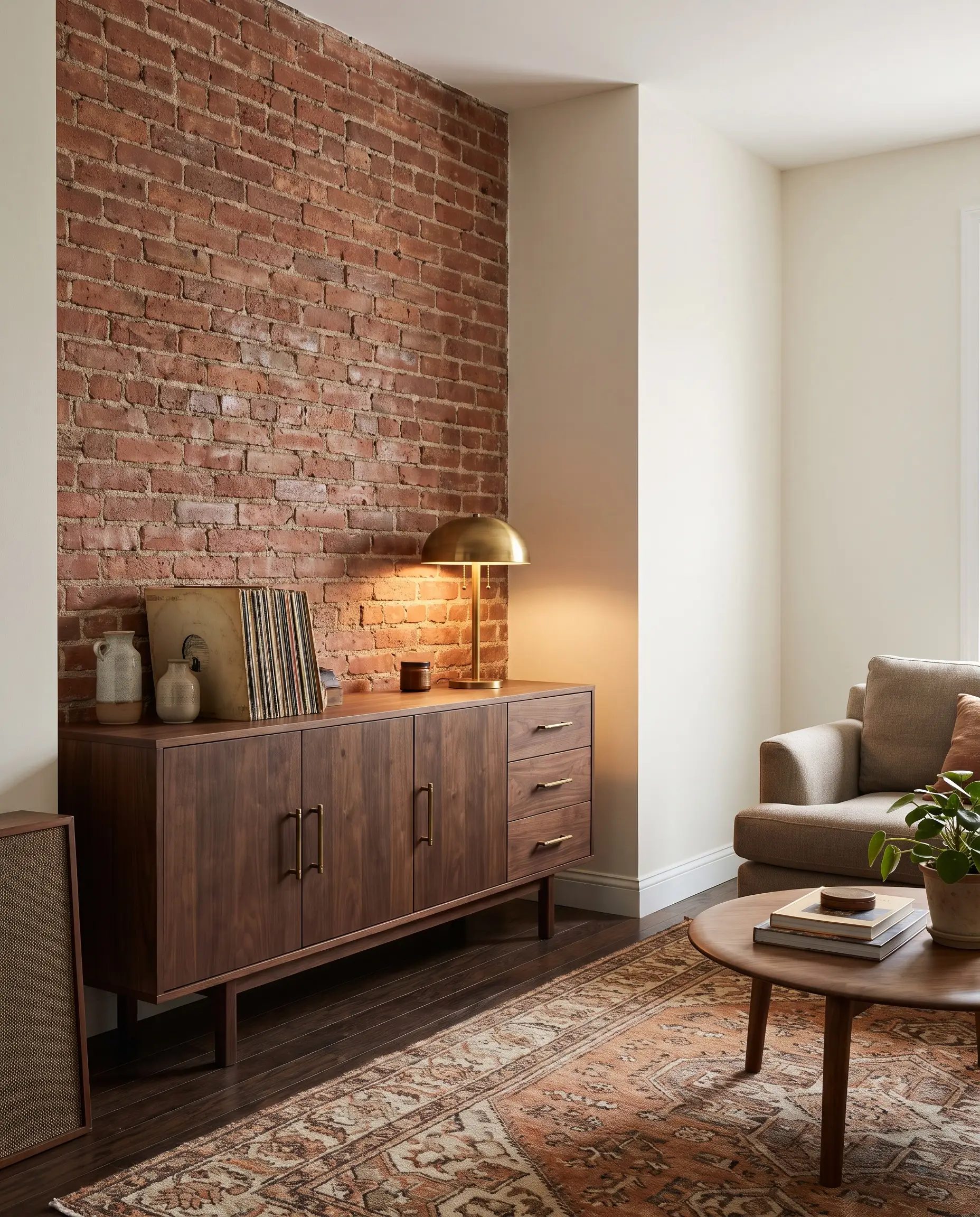
Classic red brick can quickly look like a retro diner if paired with shiny black finishes or competing cherry woods. Ground the fiery tones of the masonry by introducing warm, matte walnut furniture and living brass hardware.
Raw Red Brick + Matte Walnut Wood Tones + Unlacquered Brass Hardware = A rich, earthy aesthetic that feels historically rooted rather than dated.
Styling Formula
- Vibe: Mid-Century Modern, Historic Warmth.
- Key Materials: Solid matte walnut, unlacquered brass.
- Color Match: Sherwin-Williams Alabaster (for adjacent walls to keep the room bright).
Pairing White Painted Brick with Matte Black Steel
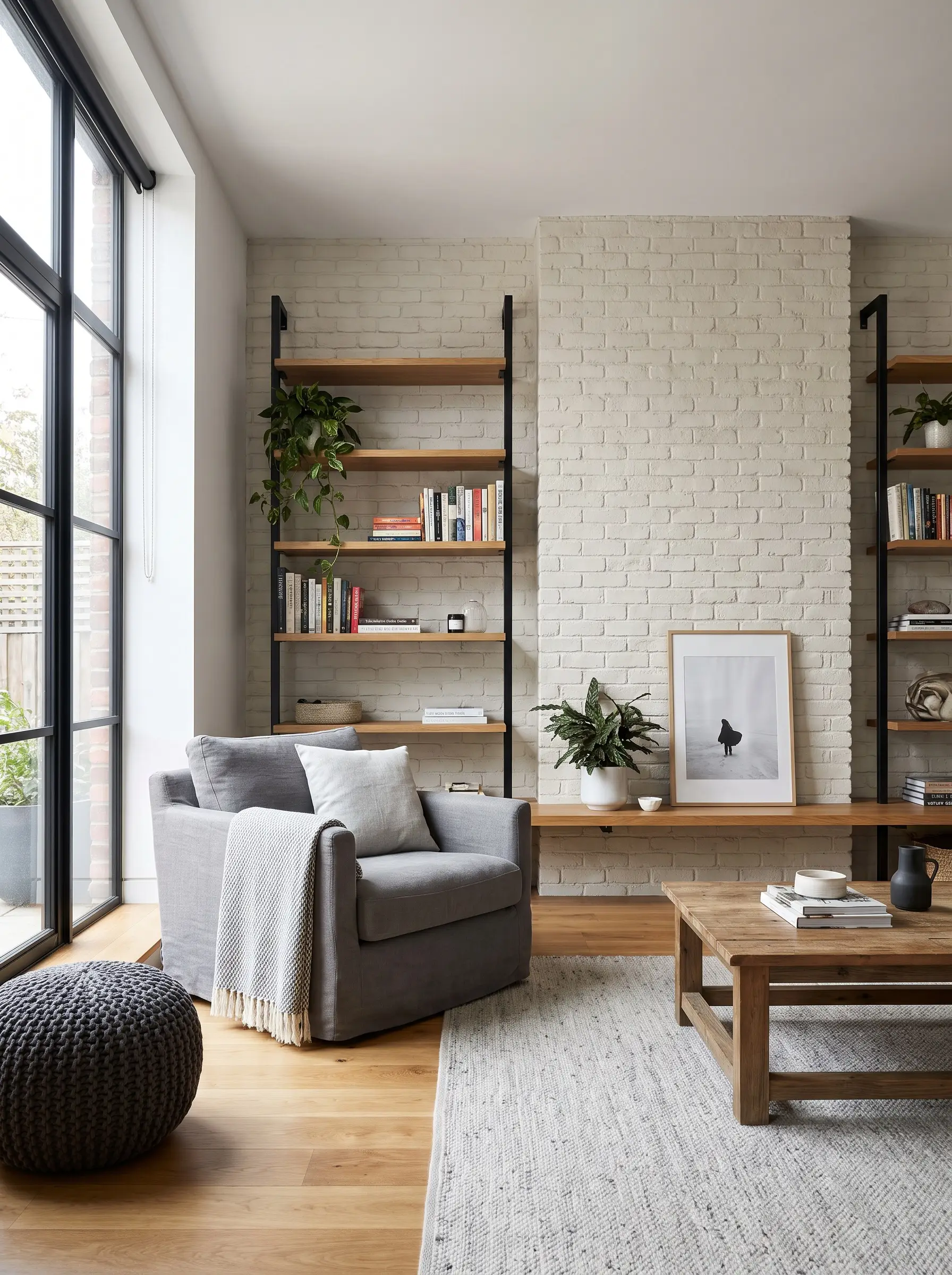
To prevent a white painted brick wall from feeling like a sterile, exterior hospital facade, you must introduce sharp, high-contrast lines. Matte black steel window frames, lighting fixtures, or shelving brackets cut through the visual softness of the white masonry.
- Vibe: Crisp Industrial, Modern Minimalist.
- Key Materials: Powder-coated matte black steel.
- Paint Recommendation: Benjamin Moore White Dove (for a soft, warm white brick finish).
Art Mounting Realities
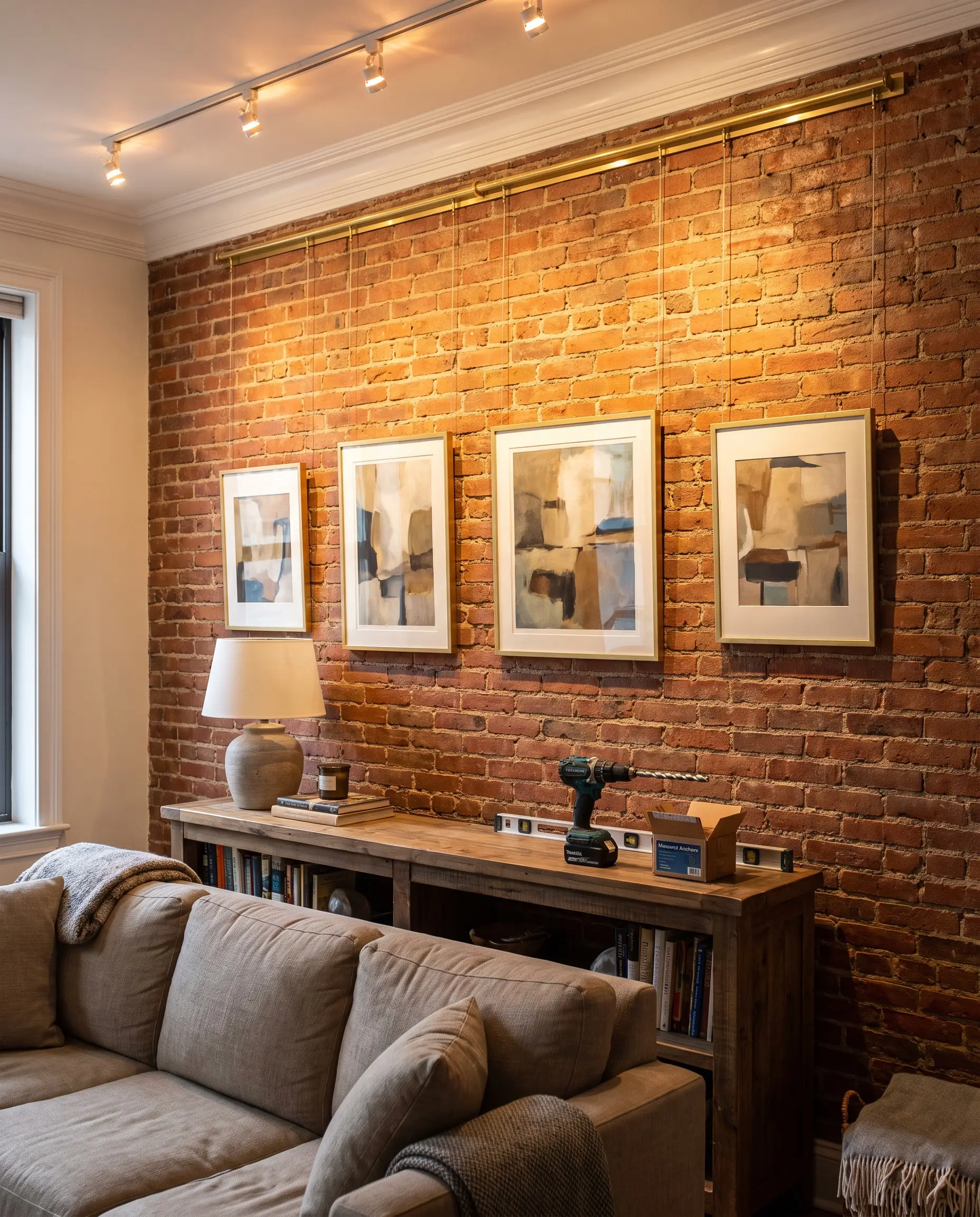
Hanging art on a masonry wall requires mechanical precision rather than standard drywall hooks. If you do not want to drill directly into the face of your new brick, utilize a traditional gallery rail system suspended from the ceiling molding.
- Vibe: Curated Gallery, Intentional Display.
- Key Materials: Masonry anchors, a hammer drill, and a carbide-tipped masonry bit.
- Step-by-Step Execution: Mark the mortar joints (not the brick face) for drilling, use the hammer drill to create the pilot hole, insert the masonry anchor flush with the mortar, and drive in the mounting screw.
The Blueprint: Executing Your Brick Wall with Intention
Whether you secure authentic thin-brick veneer or source remarkably engineered HDU panels, the architectural success of your accent wall lies entirely in the execution of the grout lines, the surface wash, and the lighting plan. Assess your room’s natural light and structural anchor points before committing to a dark, color-drenched treatment versus a soft, chalky limewash. To ensure your new masonry doesn’t fall flat in the dark, explore our comprehensive guide on living room lighting to perfect your wall-grazing technique and bring those textures to life.