The New Reading Room: 2027 Architectural Trends for Home Libraries
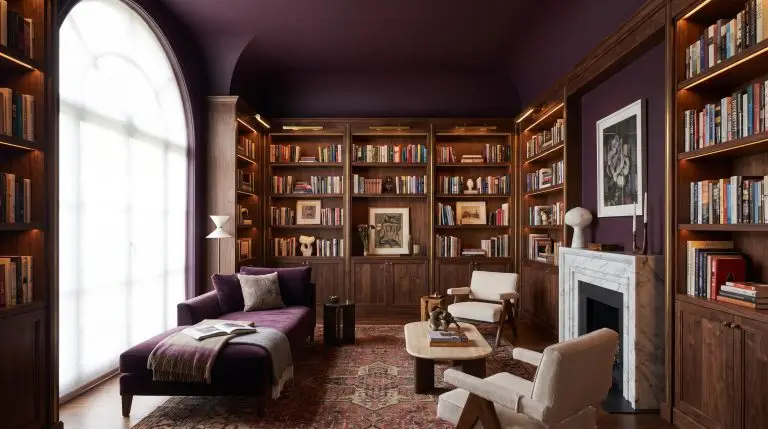
Screen fatigue has reached a critical mass, driving a rapid departure from sterile, open-concept living. Affluent homeowners and design-conscious bibliophiles are reclaiming dedicated square footage to build deeply personal, tactile sanctuaries. The home library is no longer a dusty afterthought or a chaotic home office; it is a multi-sensory archive designed for total analog immersion, and the 2027 home library design trends reflect this exact cultural shift.
Moving into 2027, the focus shifts aggressively toward interior architecture, prioritizing bespoke millwork, advanced illumination, and immersive textures. A successful reading room requires precise structural articulation long before the first book is shelved. It is about crafting an environment that controls acoustics, manages ambient light, and curates a physical retreat from digital noise.
We are seeing a complete rejection of the standard white-box aesthetic in favor of rich, saturated color drenching and highly customized material pairings. From fluted glass cabinet fronts to circadian rhythm lighting integration, these are the exact architectural trends redefining the modern reading room. Let us examine the materials, lighting parameters, and custom millwork detailing required to build a masterful home library this year.
Architectural Shifts in Custom Millwork
Before paint finishes or upholstery selections are even considered, custom millwork dictates the fundamental success of the room. The 2027 aesthetic leaves basic MDF built-ins behind, demanding highly customized, mixed-material architecture that feels entirely bespoke.
Floor-to-Ceiling Curved Plaster Niches
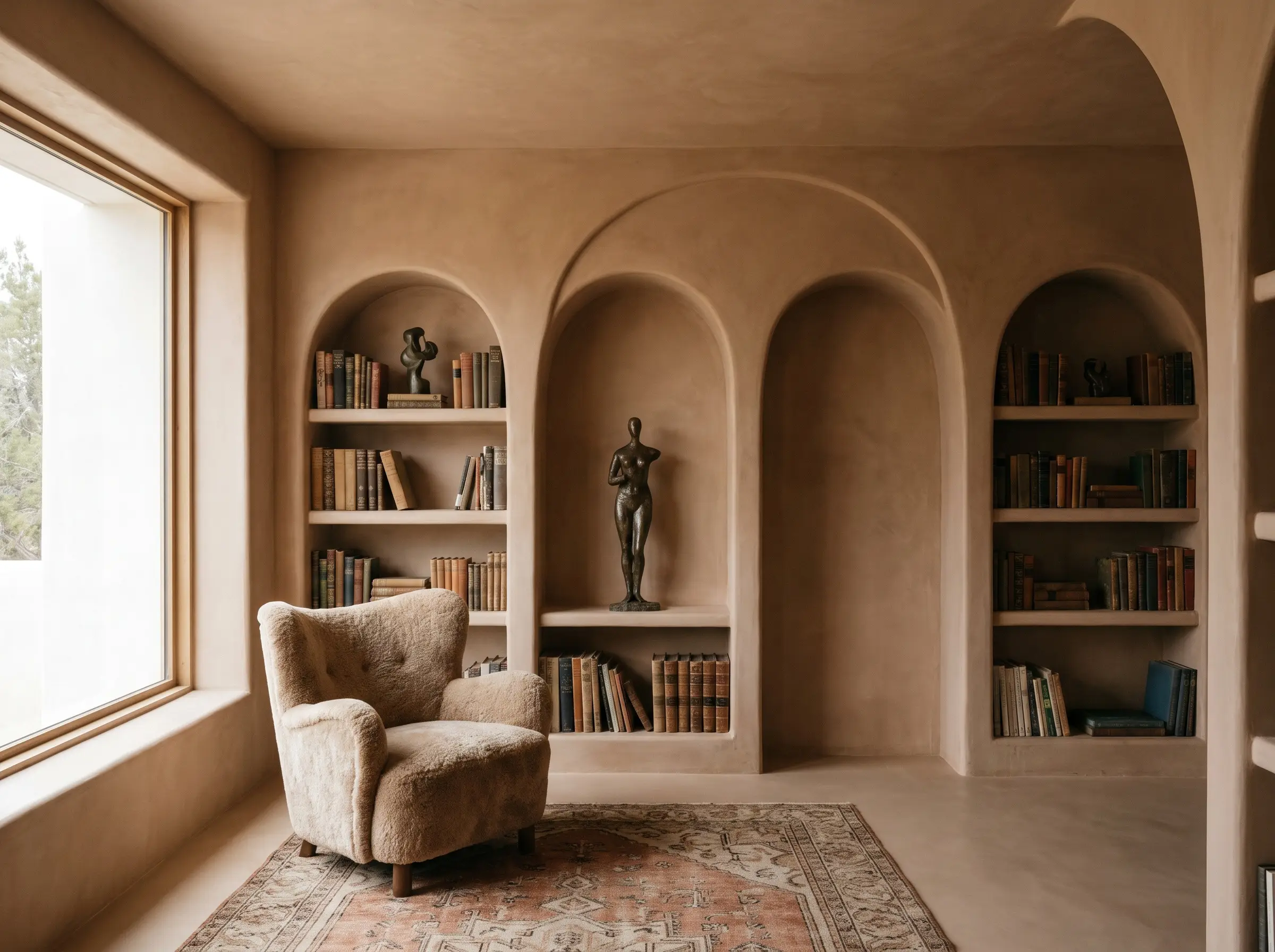
Sharp, rigid wooden boxes are giving way to the seamless, organic geometry of arched plaster niches. This structural approach softens the visual weight of heavy book collections, transforming the walls into fluid, sculptural installations.
- Vibe: Organic Modern minimalism with structural warmth.
- Key Materials: Tadelakt or Roman clay.
- Structural Note: Requires skilled artisan application over curved drywall armatures.
Mixed-Material Shelving with Burl Wood Veneer
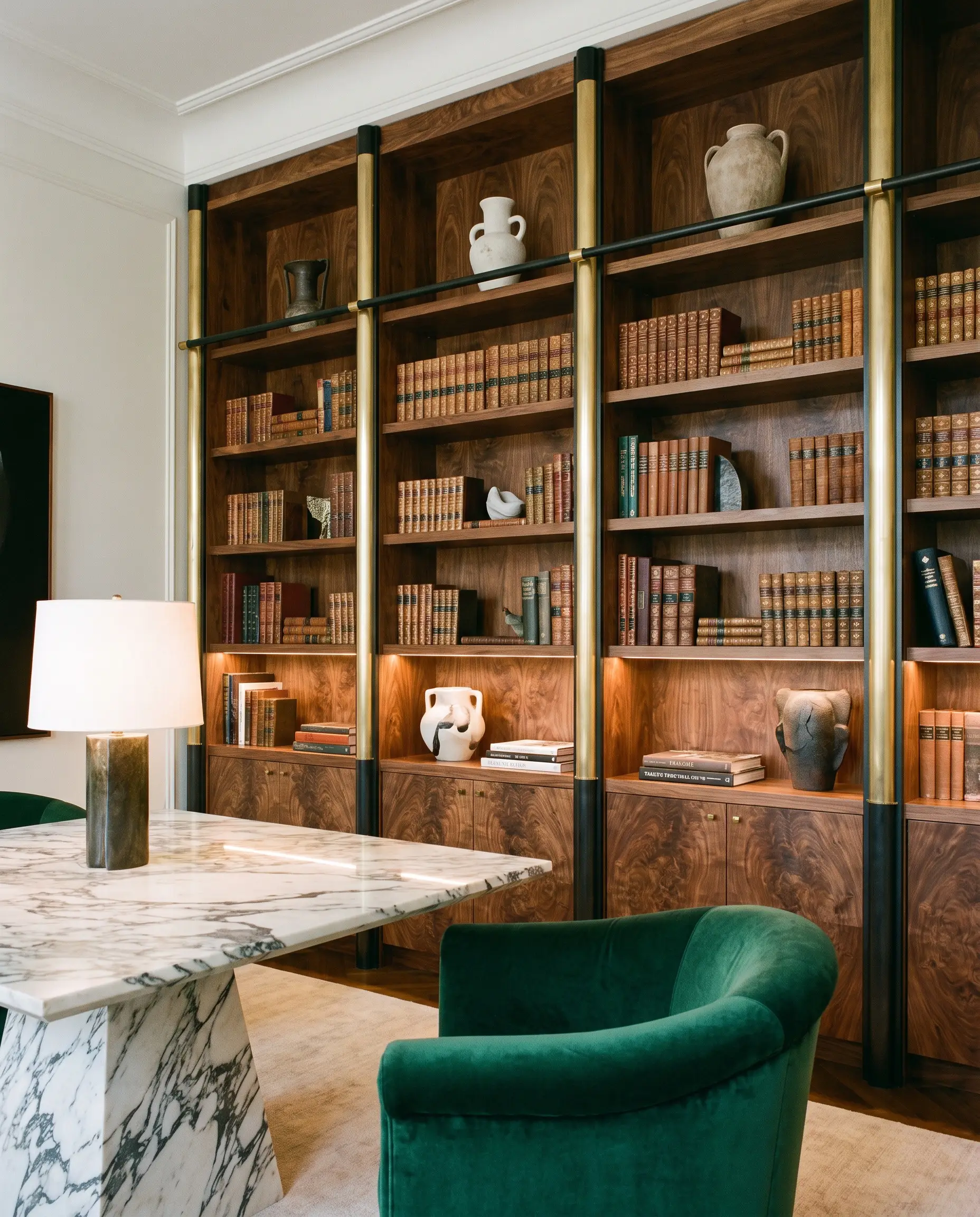
Standard oak built-ins are stepping aside for the dramatic, highly articulated grain of burl wood veneer. When paired with unlacquered brass or blackened steel uprights, this mixed-material approach delivers a striking Neo-Deco aesthetic with intense visual depth.
- Vibe: Refined Neo-Deco luxury.
- Primary Material: Walnut or maple burl wood veneer.
- Hardware Match: Unlacquered brass or blackened steel stanchions.
The Fluted Glass Display Cabinet
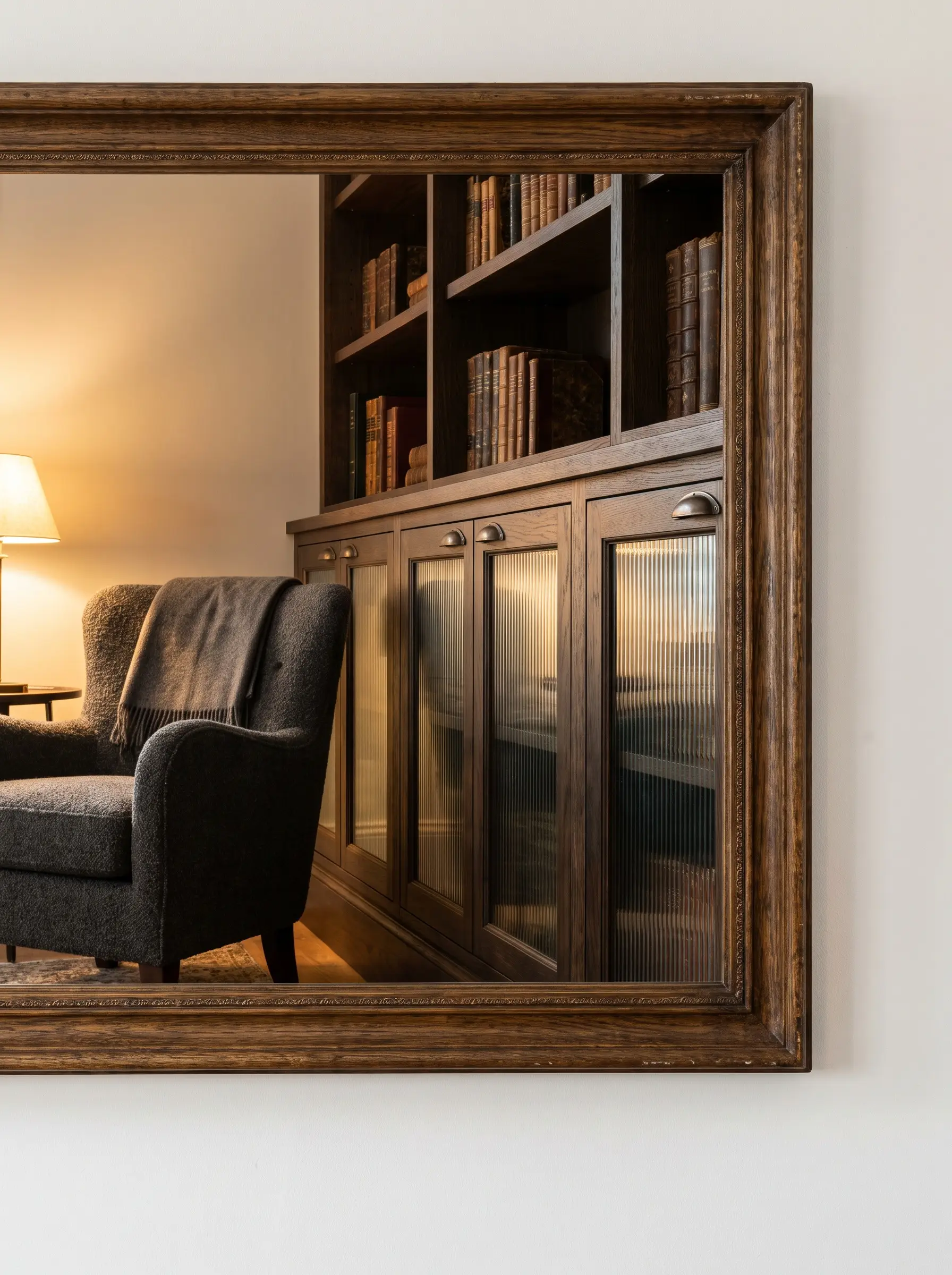
Ribbed or fluted glass doors on lower structural cabinets offer a sophisticated alternative to completely exposed shelving. This treatment obscures visual clutter while actively reflecting ambient light around the room’s lower perimeter.
- Vibe: Tailored, high-end preservation.
- Key Material: 1/4-inch tempered fluted glass.
- Hardware Match: Minimalist edge-pulls in aged bronze.
Integrated Acoustic Wood Paneling
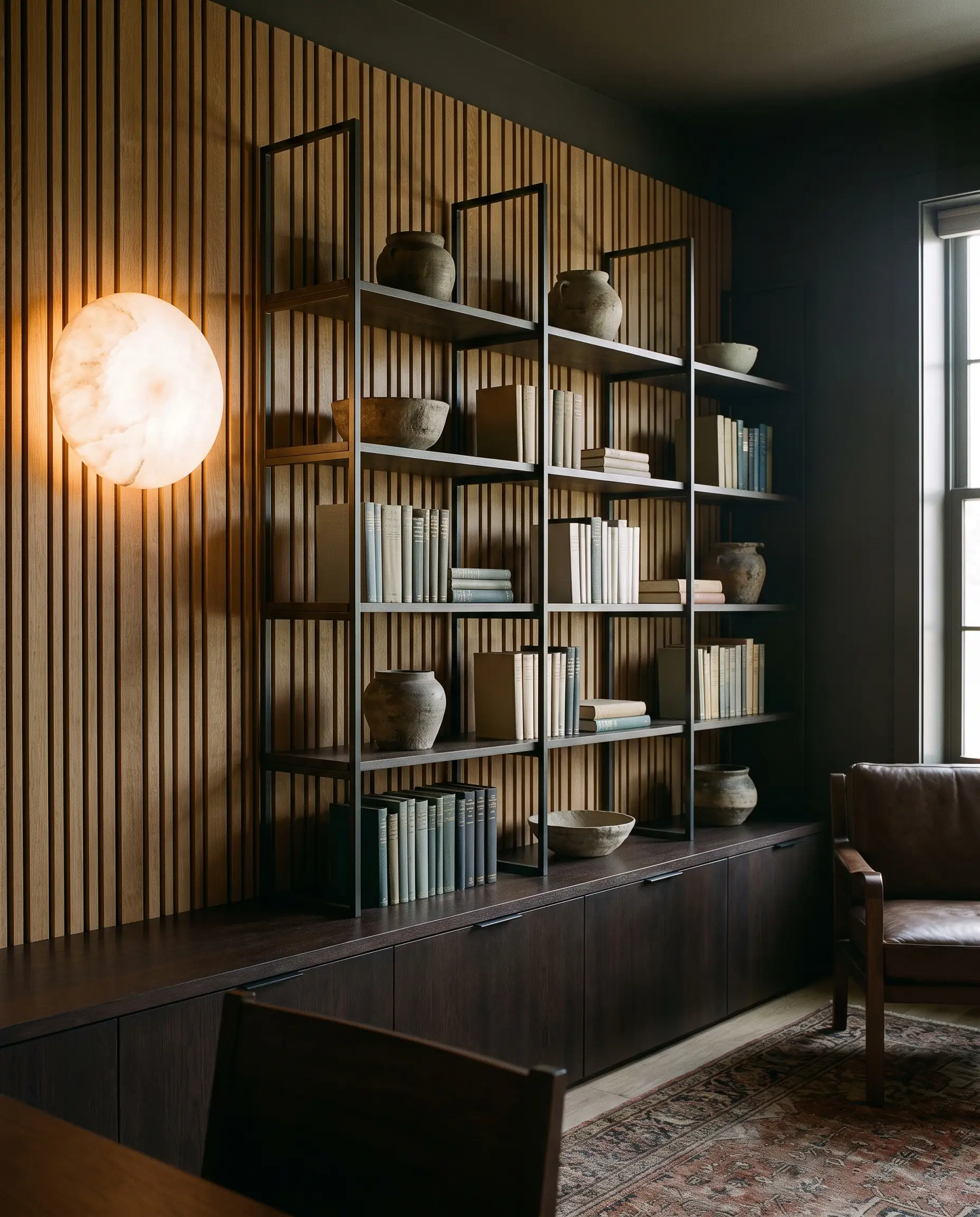
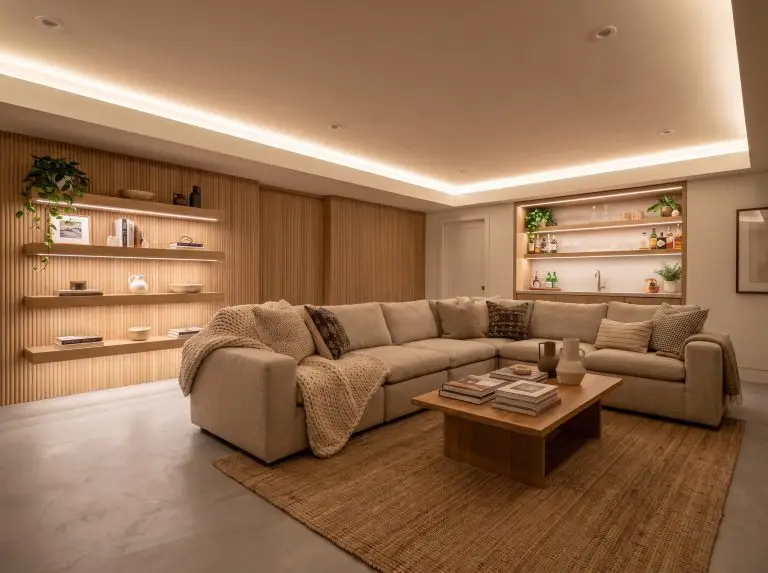
A true reading room requires functional sound dampening to maintain a quiet, isolated atmosphere. Backing open shelves with felt-backed wood slats actively absorbs acoustic reverberation while providing a handsome, linear backdrop for the books.
- Vibe: Architectural serenity.
- Key Material: Acoustic felt-backed rift-sawn oak slats.
- Application: Install directly onto the drywall behind the open shelving framework.
Floating Stone Ledges for Oversized Volumes
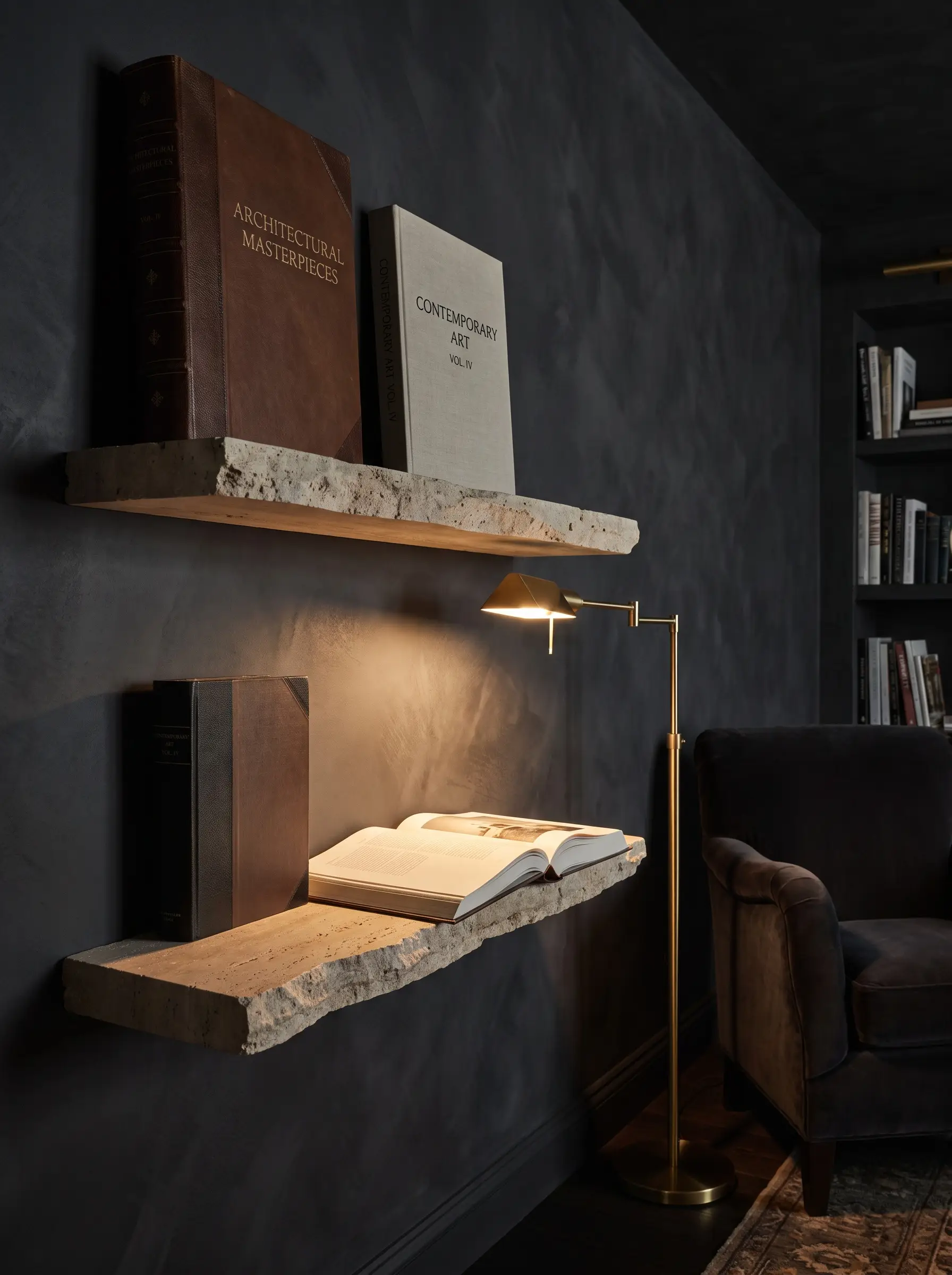
Standard wood shelves often warp under the immense weight of oversized art and design folios. Integrating heavy, cantilevered stone ledges directly into the architecture creates a bespoke, structural display dedicated entirely to massive volumes.
- Vibe: Monumental, bespoke luxury.
- Key Material: Unfilled travertine or heavily veined marble slabs (2-inch thickness).
- Support: Requires heavy-duty concealed steel bracket supports anchored to the wall studs.
Hidden Passageways and Concealed Doors
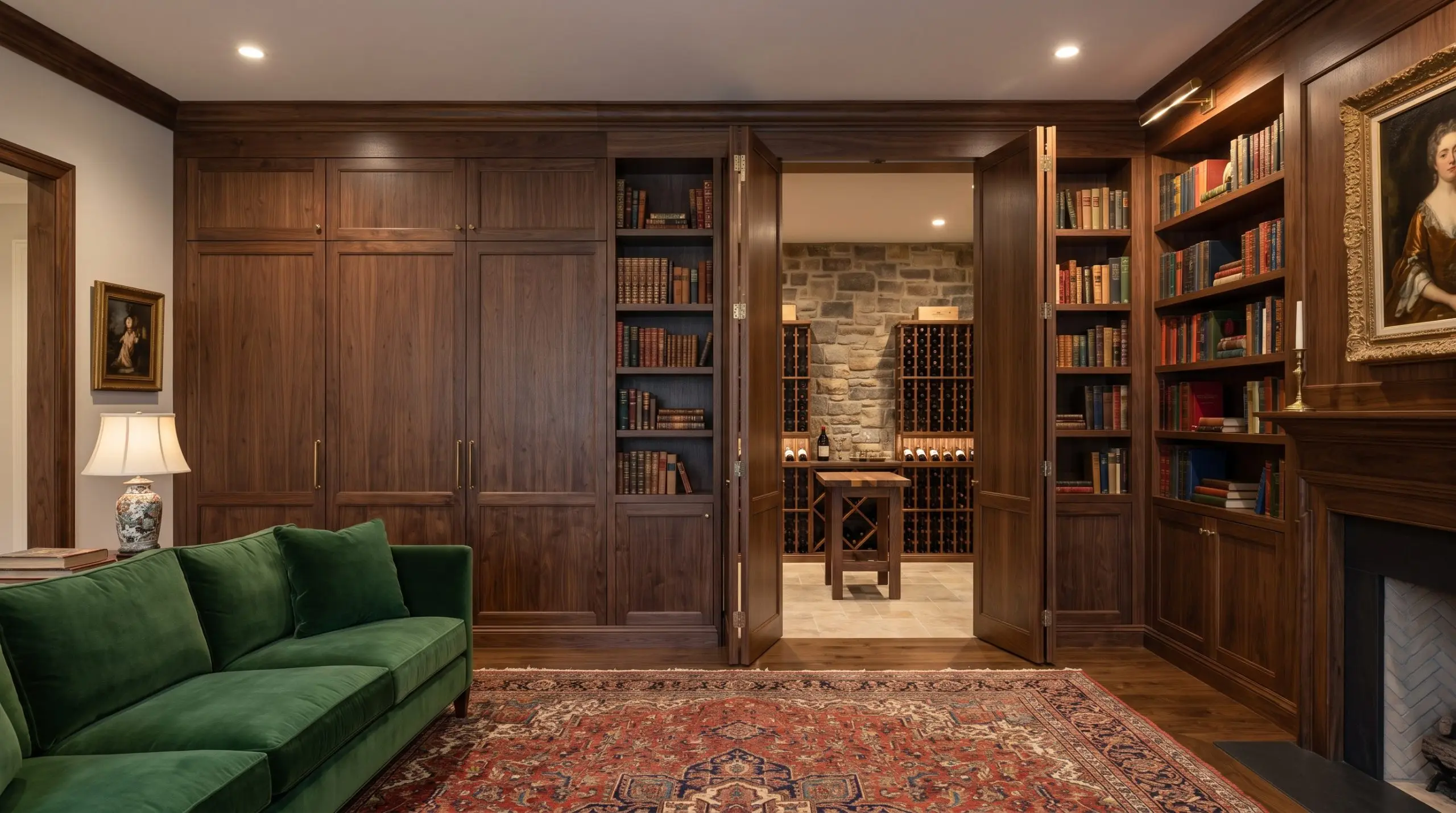
The psychological appeal of a hidden sanctuary remains strong, but modern execution demands absolute architectural seamlessness. Flush-mount millwork that completely conceals a doorway to a primary suite or wine cellar adds a layer of exclusive, functional intrigue.
- Vibe: Stealthy, sophisticated privacy.
- Hardware Requirement: Heavy-duty concealed pivot hinges.
- Execution: Millwork must be perfectly flush with no visible casing or standard door frames.
The Modern Matte-Black Rolling Ladder
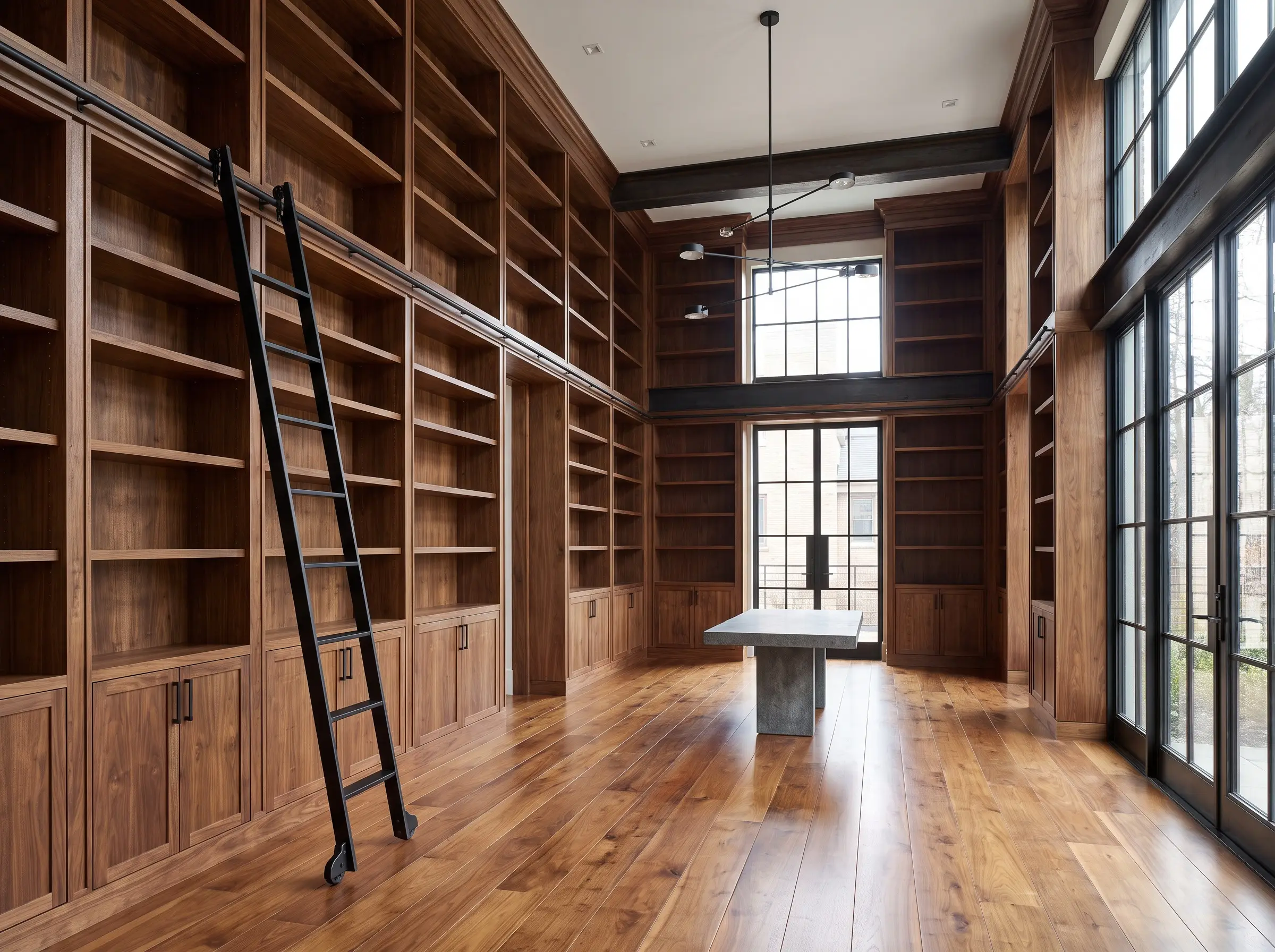
The traditional rolling ladder is a required feature for high ceilings, but heavy, ornate brass and wood models feel dated. Sleek, minimalist matte-black or powder-coated steel hardware provides a sharp, contemporary edge against rich wood tones.
When installing the upper track rail, mount it exactly 7/8ths of the way up the total millwork height; placing it too high causes visual crowding near the ceiling cornice.
Designer Secret
- Vibe: Industrial-leaning contemporary.
- Key Material: Powder-coated steel or matte-black aluminum.
- Mobility: Specify quiet-glide polyurethane wheels to protect hardwood floors.
Advanced Library Lighting and Illumination
A masterful library relies entirely on the precise layering of illumination, shifting away from harsh, broad overhead fixtures. In 2027, light is treated as a physical material used to highlight architectural millwork, reduce eye strain, and protect delicate book spines.
Recessed LED Channel Lighting in Shelves
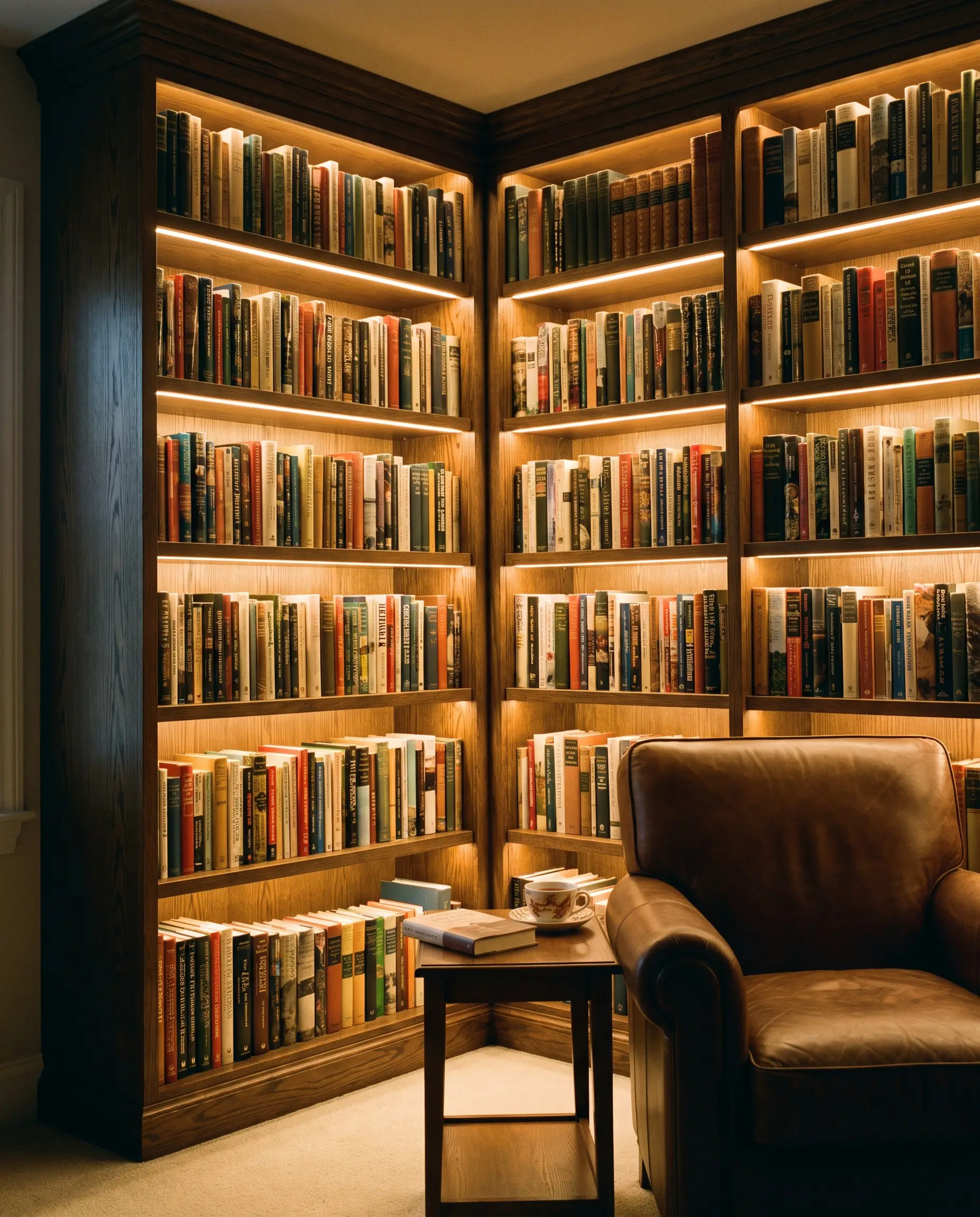
Bulky puck lights create harsh hot-spots and visual glare that ruin a calm reading environment. Routed, diffused LED strips hidden within the front lip of the shelves wash light backward over the books, creating a seamless, glowing facade.
When routing the channel for the LED extrusion, ensure the groove is set at least 1/4 inch back from the shelf lip to completely hide the diode glare from anyone seated in the room.
Designer Secret
- Vibe: Clean, modern atmospheric warmth.
- Illumination Spec: Strictly 2700K color temperature for an inviting glow.
- Hardware: Aluminum extrusions with frosted polycarbonate diffusers.
Unlacquered Brass Picture Lights
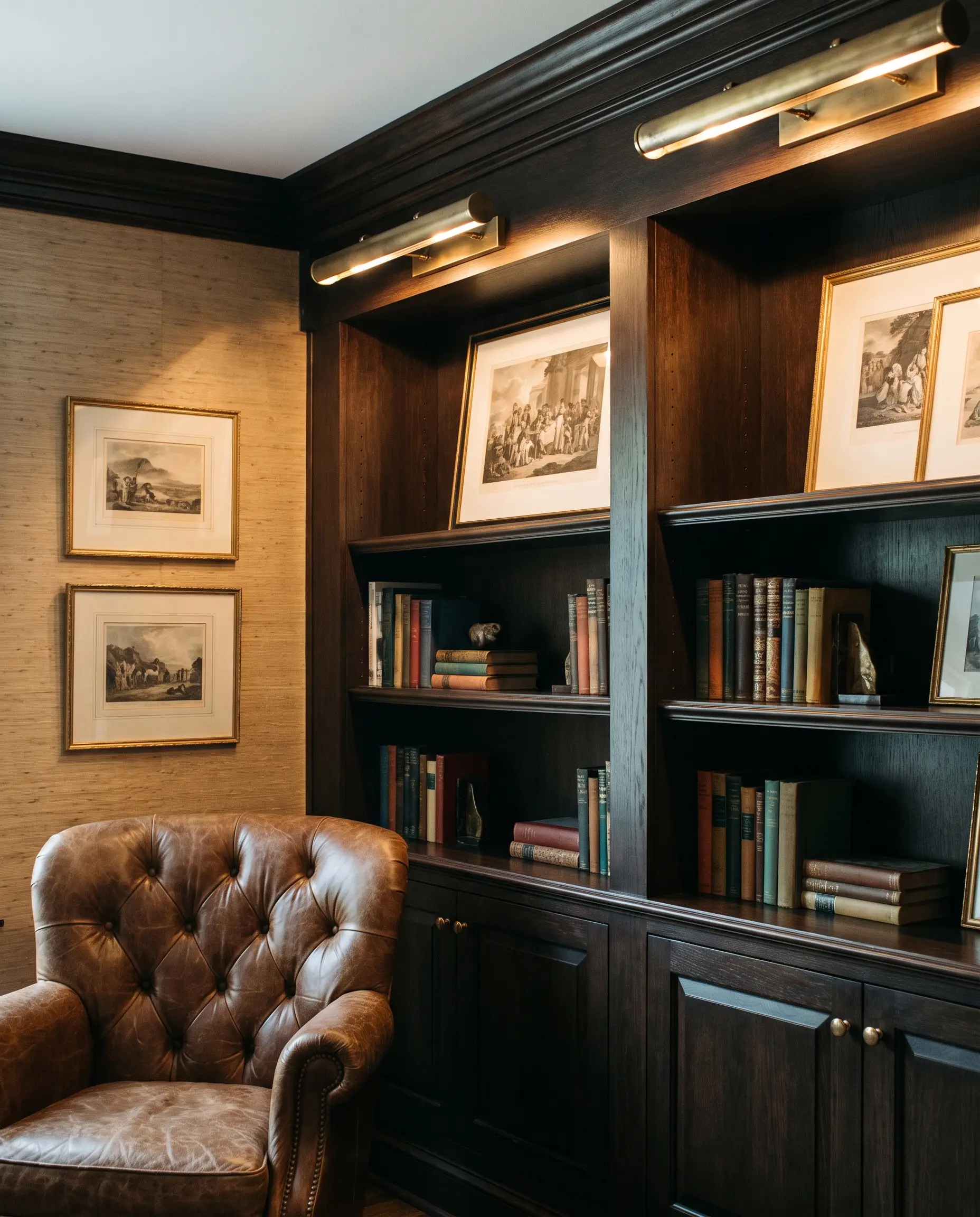
Breaking up the intense verticality of floor-to-ceiling shelves requires deliberate horizontal interruptions. Mounting unlacquered brass picture lights directly onto the millwork headers introduces a classic, patina-driven element that ages beautifully over time.
- Vibe: Timeless, academic refinement.
- Key Material: Solid, unlacquered brass (avoid cheap, shiny plated alternatives).
- Illumination Spec: Warm 2500K to 2700K bulbs.
Low-Level Floor Washers in Walkways
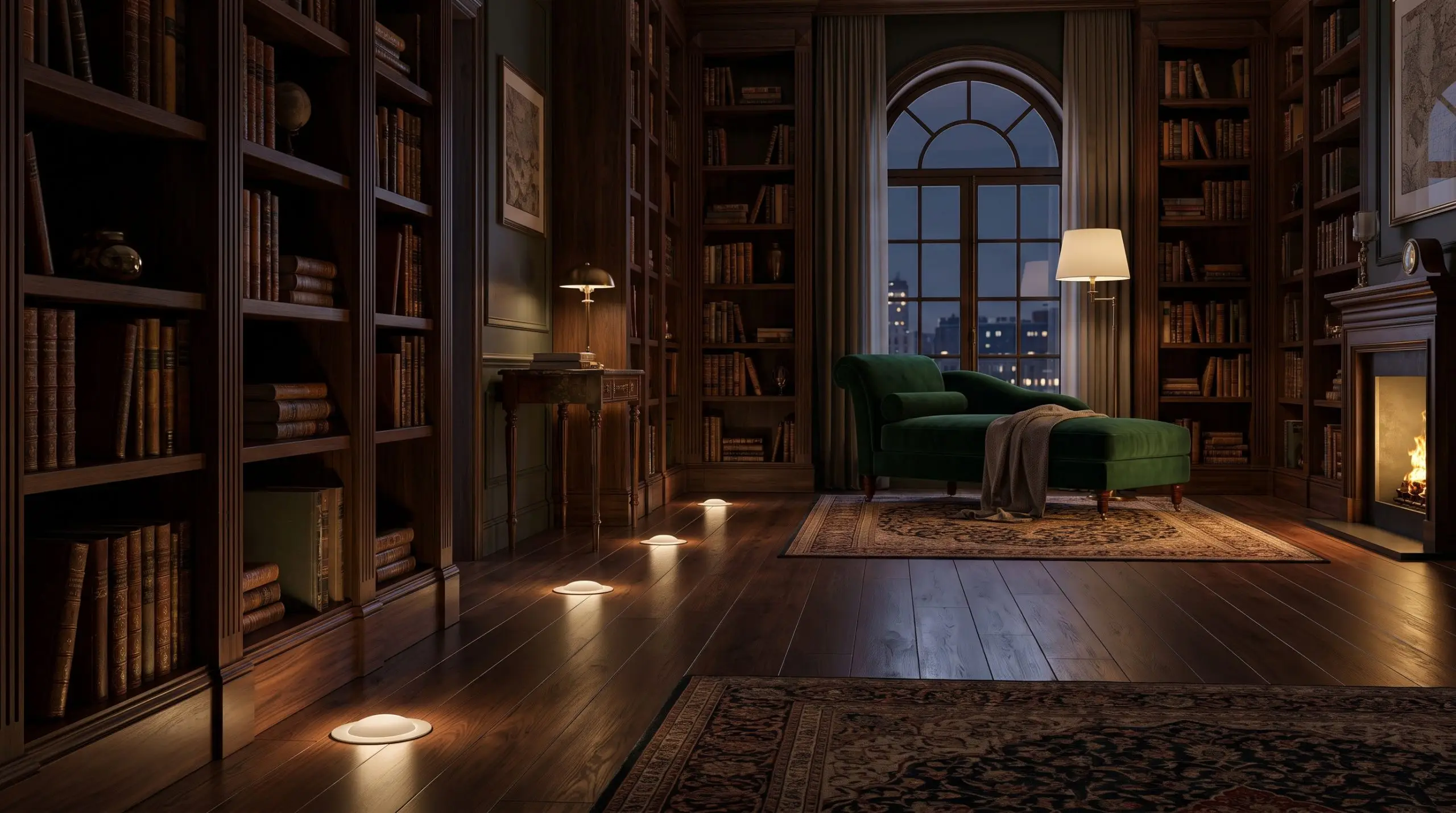
Borrowing a technique from high-end commercial hospitality design, low-level illumination grounds the room and creates a cinematic pathway at night. Installing miniature recessed wall lights just above the baseboards provides moody, non-intrusive navigation.
- Vibe: Bespoke hospitality luxury.
- Placement: Install exactly 12 inches off the finished floor.
- Hardware: Plaster-in trimless LED step lights.
Backlit Alabaster Wall Sconces
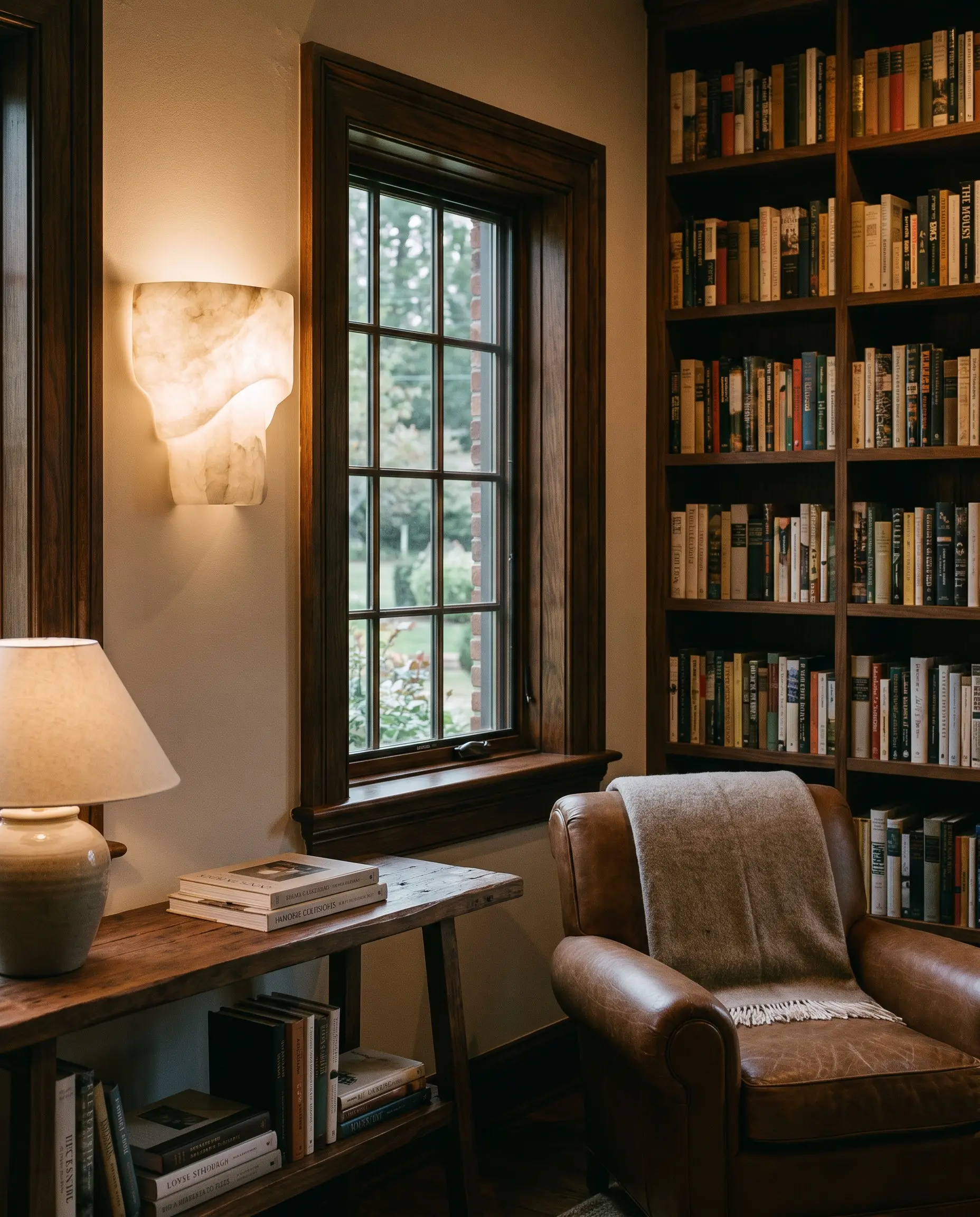
Ambient, sculptural lighting is necessary to soften the rigid grid of bookshelves. Because alabaster naturally diffuses light, it creates a soft, non-directional stone glow that severely reduces eye strain during long reading sessions.
- Vibe: Organic, sculptural elegance.
- Key Material: Natural carved alabaster stone.
- Placement: Flanking window casings or central seating zones.
Smart-Controlled Circadian Reading Lamps
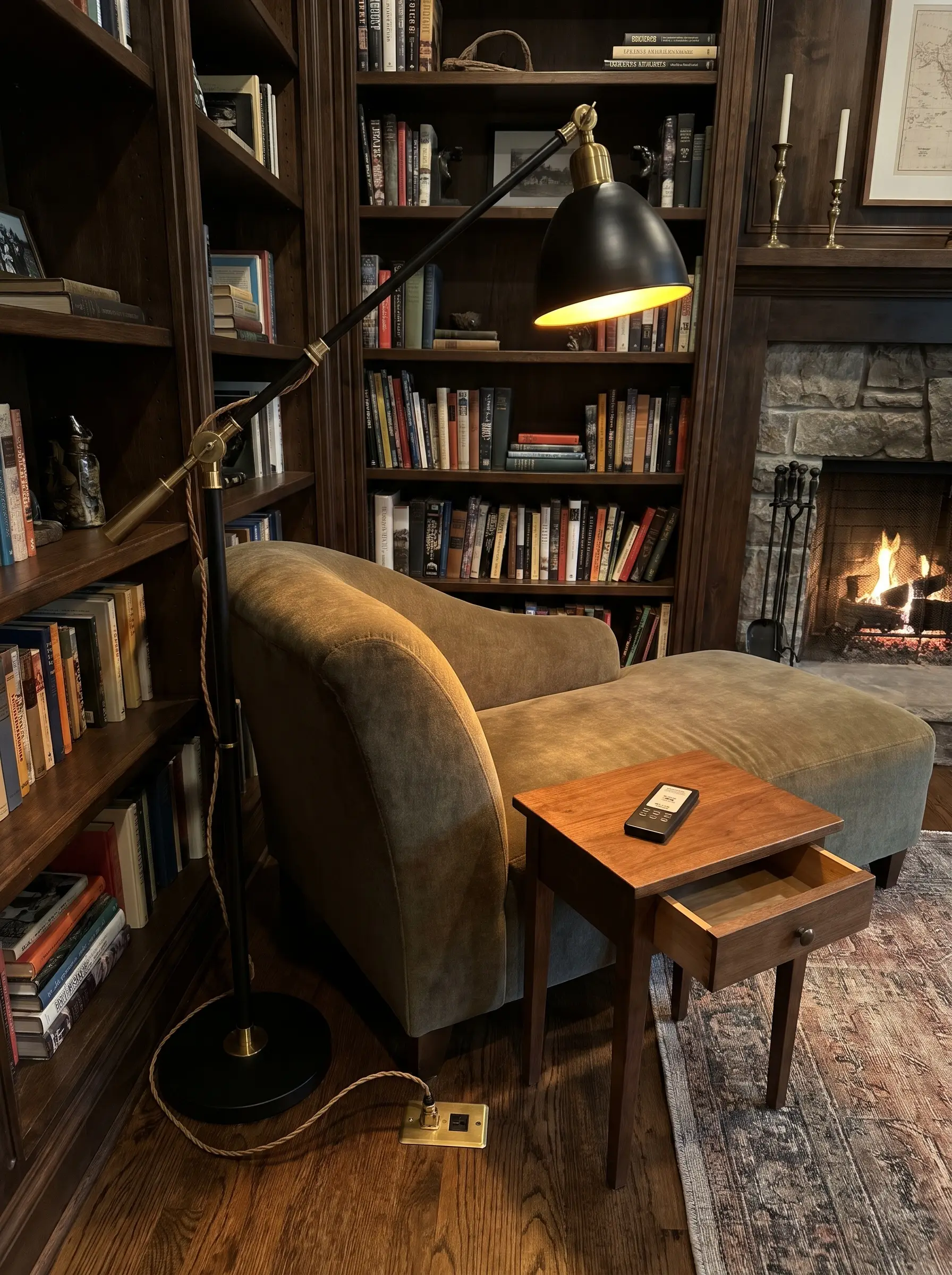
Integrating modern technology into an analog space must be done invisibly to maintain the aesthetic illusion. Reading floor lamps equipped with circadian rhythm programming automatically shift from cool task light in the afternoon to warm amber light in the evening, protecting natural sleep cycles.
Route power cords through a brass floor-mounted outlet directly beneath the reading chair.
Conceal USB-C charging ports within the heavy base of the lamp rather than on the visible stem.
Use wireless, smart-dimmer remotes tucked into a side table drawer instead of relying on visible wall panels.
Vibe: Invisible, health-focused technology.
Functionality: Programmable color temperature shifting (4000K down to 2200K).
Form Factor: Heavy brass or blackened steel articulating floor lamps.
Immersive Color Palettes and Wall Treatments
White box libraries strip a room of its intimacy. The 2027 aesthetic relies on heavy saturation, enveloping the reader in deep, grounding hues and highly tactile wallcoverings that absorb light and sound.
Drenching the Room in Oxblood Red
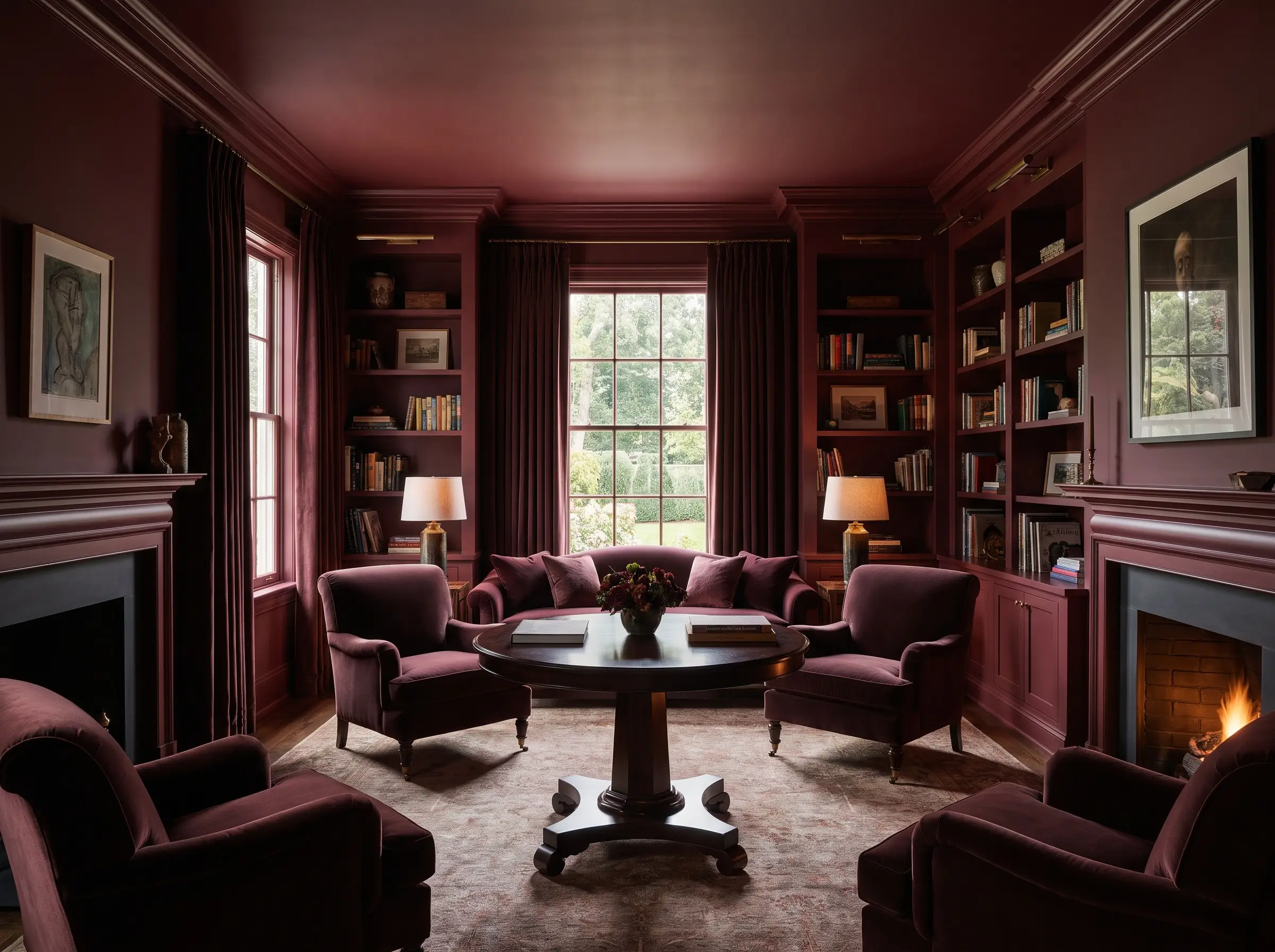
The color drenching technique—painting the walls, trim, ceiling, and built-ins the exact same shade—erases visual boundaries and makes a small room feel endless. Deep oxblood or aubergine delivers a rich, historic-yet-modern atmosphere that feels incredibly grounded.
- Vibe: Moody, enveloping sophistication.
- Color Match: Farrow & Ball Brinjal (No. 222) or Sherwin-Williams Carnelian (SW 7580).
- Finish Recommendation: Dead flat or matte for walls, satin for the millwork.
High-Gloss Lacquered Bookshelves
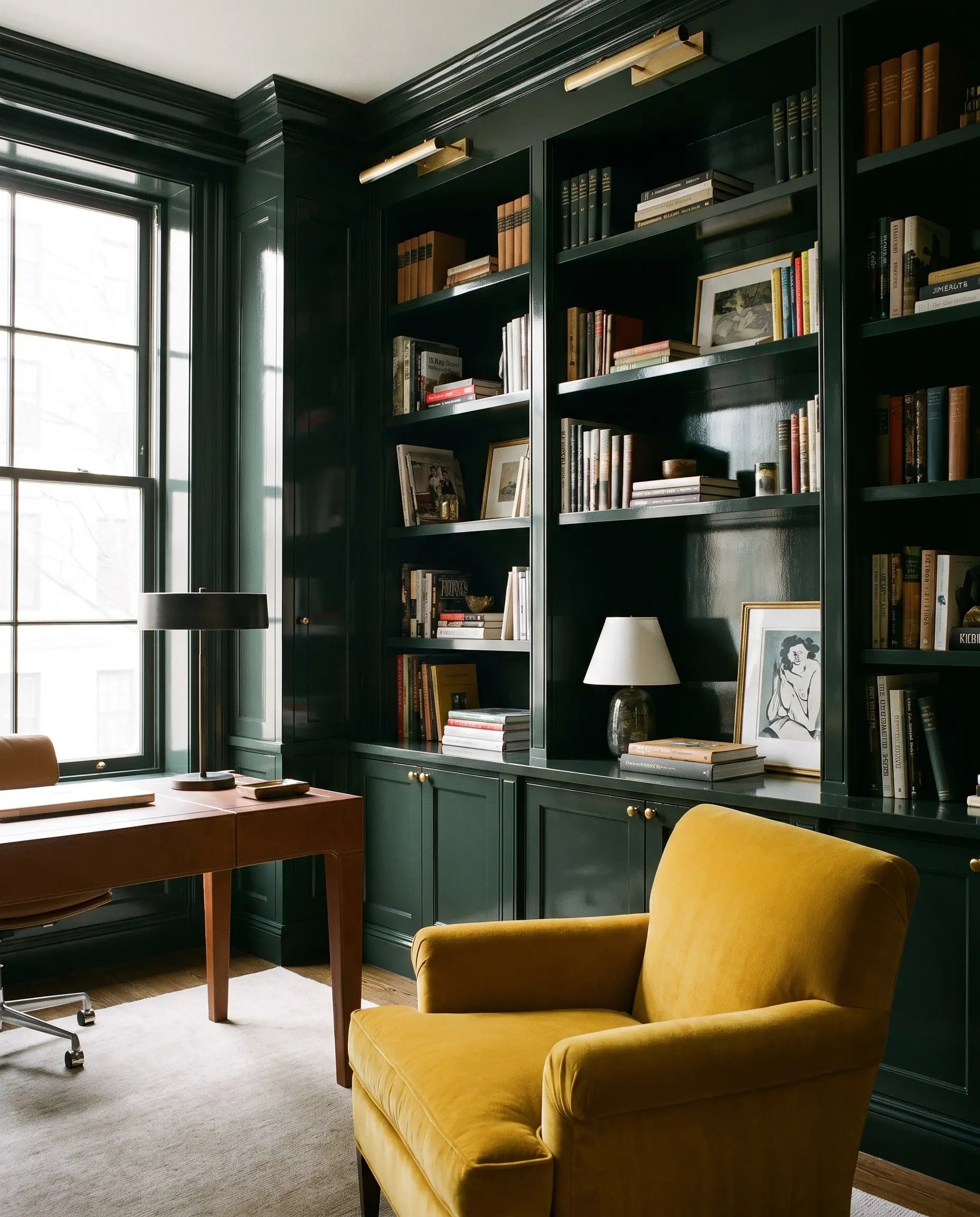
To prevent a dark room from feeling cavernous, contrasting matte walls with high-impact sheen on the cabinetry is highly effective. A true high-gloss lacquer bounces ambient light around the space, updating traditional European library aesthetics for a contemporary home.
- Vibe: Dramatic, reflective luxury.
- Preparation Reality: Requires extensive sanding, priming, and perfectly dust-free professional spraying to achieve a mirror finish.
- Color Match: Benjamin Moore Black Forest Green (HC-187).
Deep Espresso and Warm Walnut Dominance
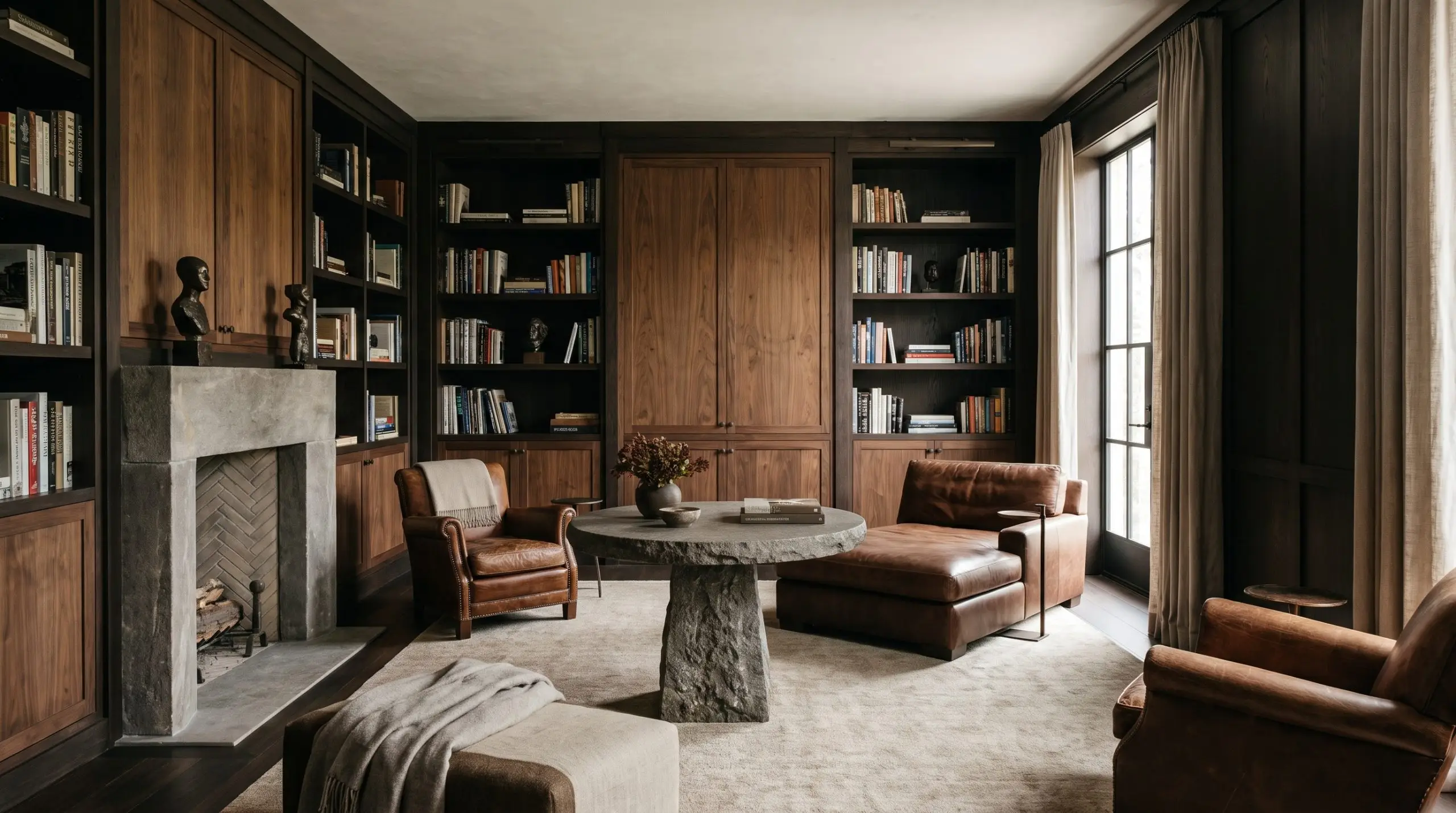
The industry is executing a sharp departure from pale Scandinavian ash and white oak in dedicated reading rooms. Current iterations favor rich, dark espresso stains that highlight the natural wood grain without skewing unpleasantly red or orange.
- Vibe: Grounded, masculine warmth.
- Key Material: Walnut or dark-stained white oak.
- Finish Recommendation: Matte clear-coat to protect the wood without adding cheap shine.
Wrapping the Ceiling in Grasscloth
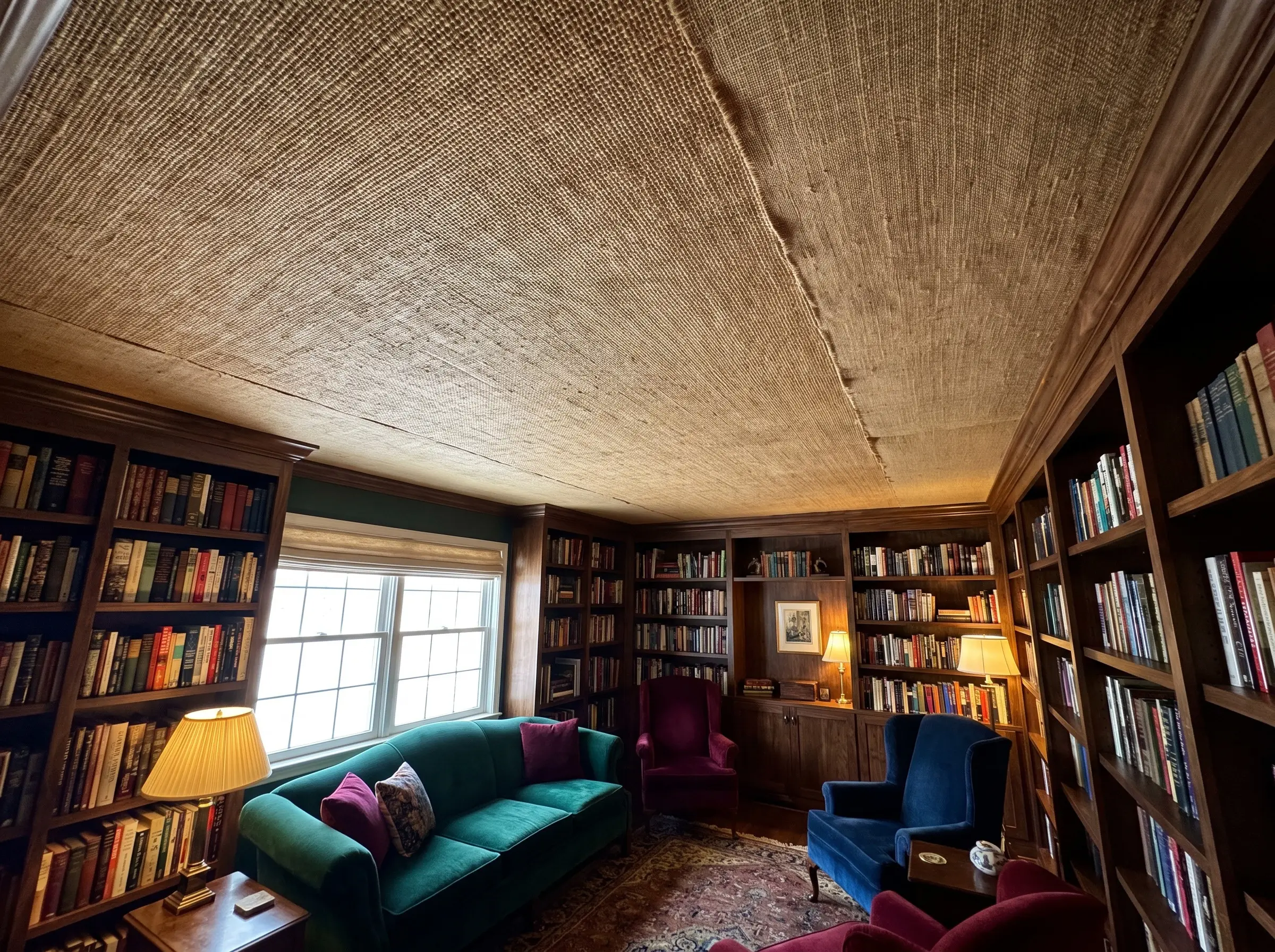
Treating the fifth wall with standard flat paint ignores a massive opportunity for texture and acoustic control. Applying a natural grasscloth or heavy burlap wallcovering to the ceiling absorbs sound while adding immediate visual warmth and intimacy to the space.
- Vibe: Tactile, tailored comfort.
- Key Materials: Natural woven grasscloth or dense burlap.
- Application Note: Requires a perfectly smooth ceiling skim-coat prior to installation.
Tone-on-Tone Limewash for Warm Minimalism
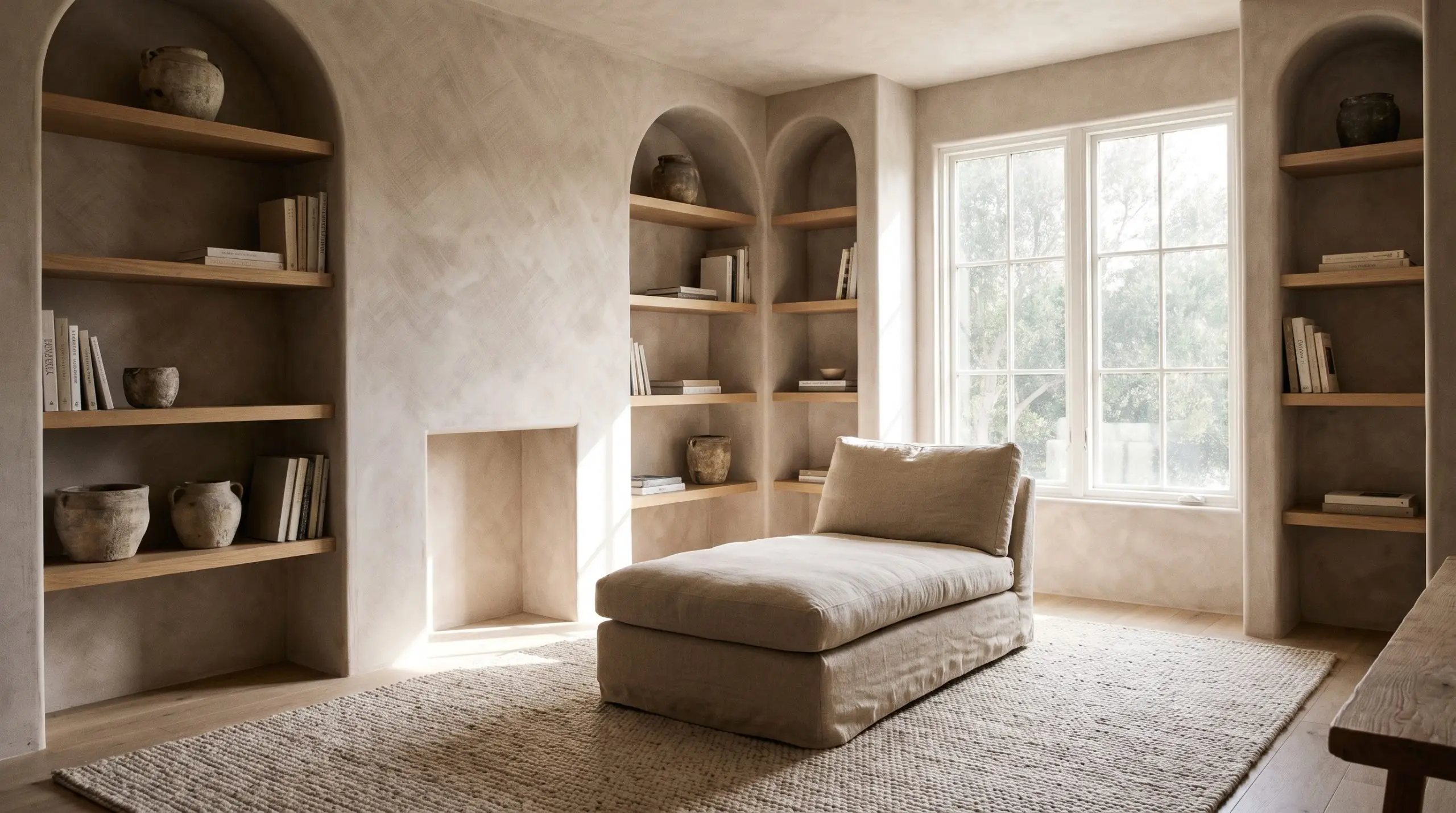
For those who prefer a lighter, more serene palette, stark white is still strictly avoided. Applying a taupe or mushroom limewash creates a suede-like, mottled texture that keeps a light-filled library feeling grounded and architectural rather than sterile.
- Vibe: Serene, plaster-like minimalism.
- Color Match: Portola Paints ‘El Mirage’ or ‘Truffle’.
- Application Note: Requires a specialized limewash primer and a cross-hatch brushing technique.
Patterned Wallpaper as a Bookshelf Backdrop
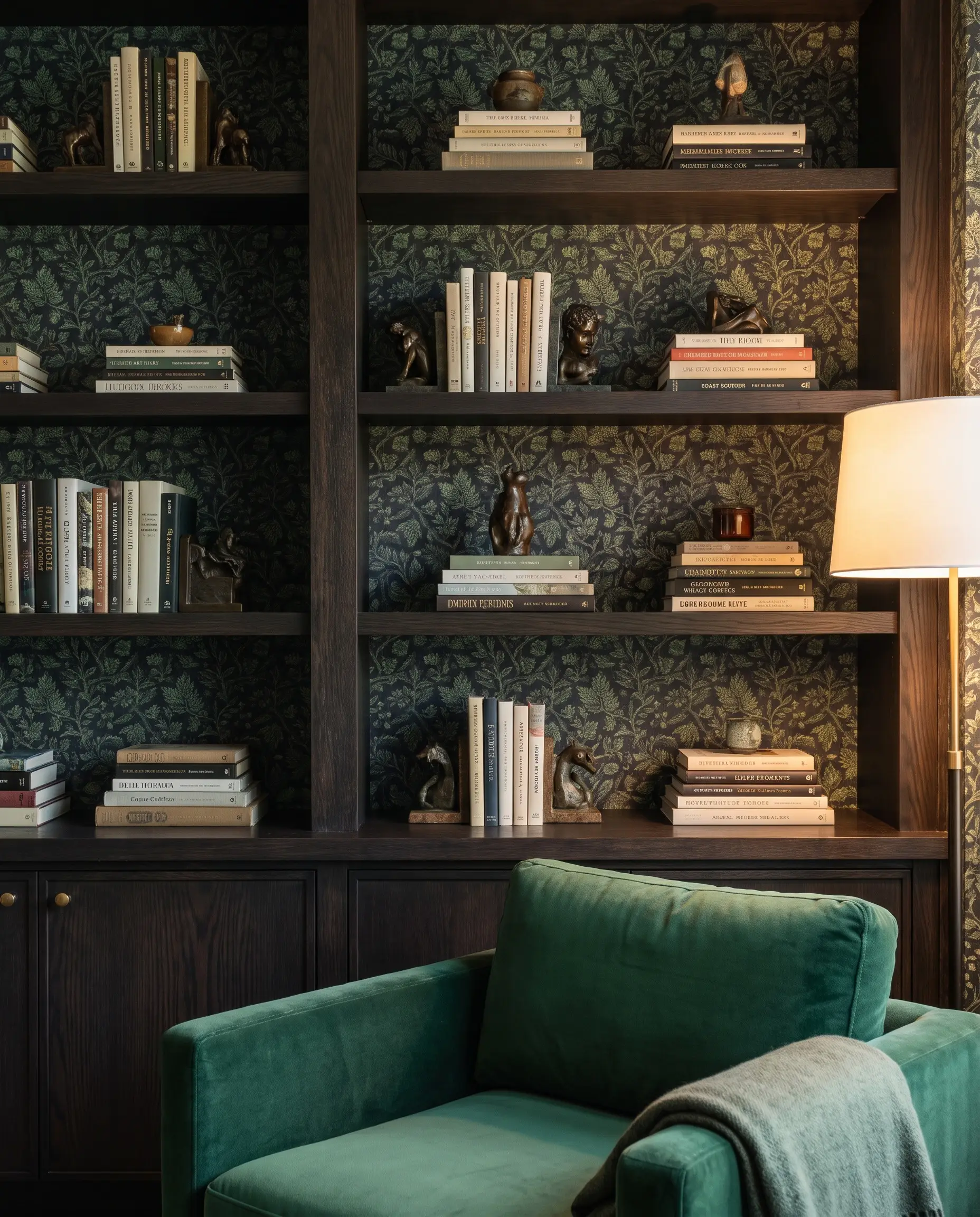
Installing wallpaper strictly on the back wall of the shelving units creates a heavily layered, custom look that adds instant depth to the millwork. Choosing a dark botanical or geometric print ensures the pattern acts as a sophisticated shadow rather than a loud distraction.
- Vibe: Layered, curated maximalism.
- Scale Recommendation: Select a small-scale pattern so the design remains legible behind stacked books.
- Material Match: High-quality, non-woven paste-the-wall paper.
Layout Strategies and Tactile Furniture Pairings
A library must function effortlessly for the human body, not just act as a display case for literature. The furniture layout in 2027 prioritizes long-form lounging ergonomics and the seamless integration of analog hobbies alongside reading.
The Return of the Oversized Chaise Lounge
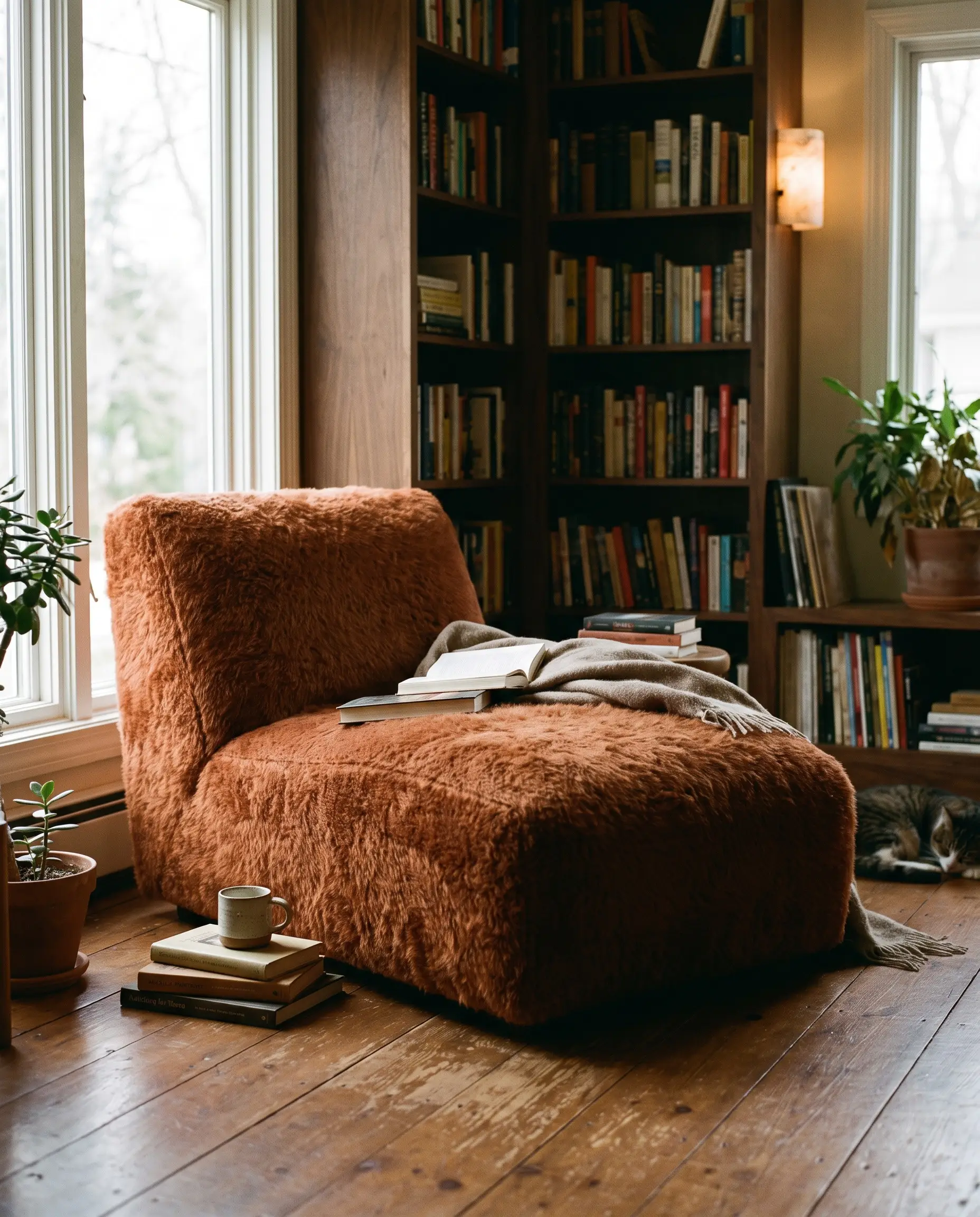
Stiff, upright wingback chairs look excellent in photographs but fail during hours of sustained reading. The current shift favors deep, asymmetrical chaise lounges upholstered in heavy, tactile fabrics that allow for true, ergonomic sprawling.
- Vibe: Unstructured, decadent comfort.
- Fabric Match: Heavyweight mohair or performance velvet.
- Placement: Float the chaise away from the walls, angled toward the primary light source.
Designing the Analog Listening Corner
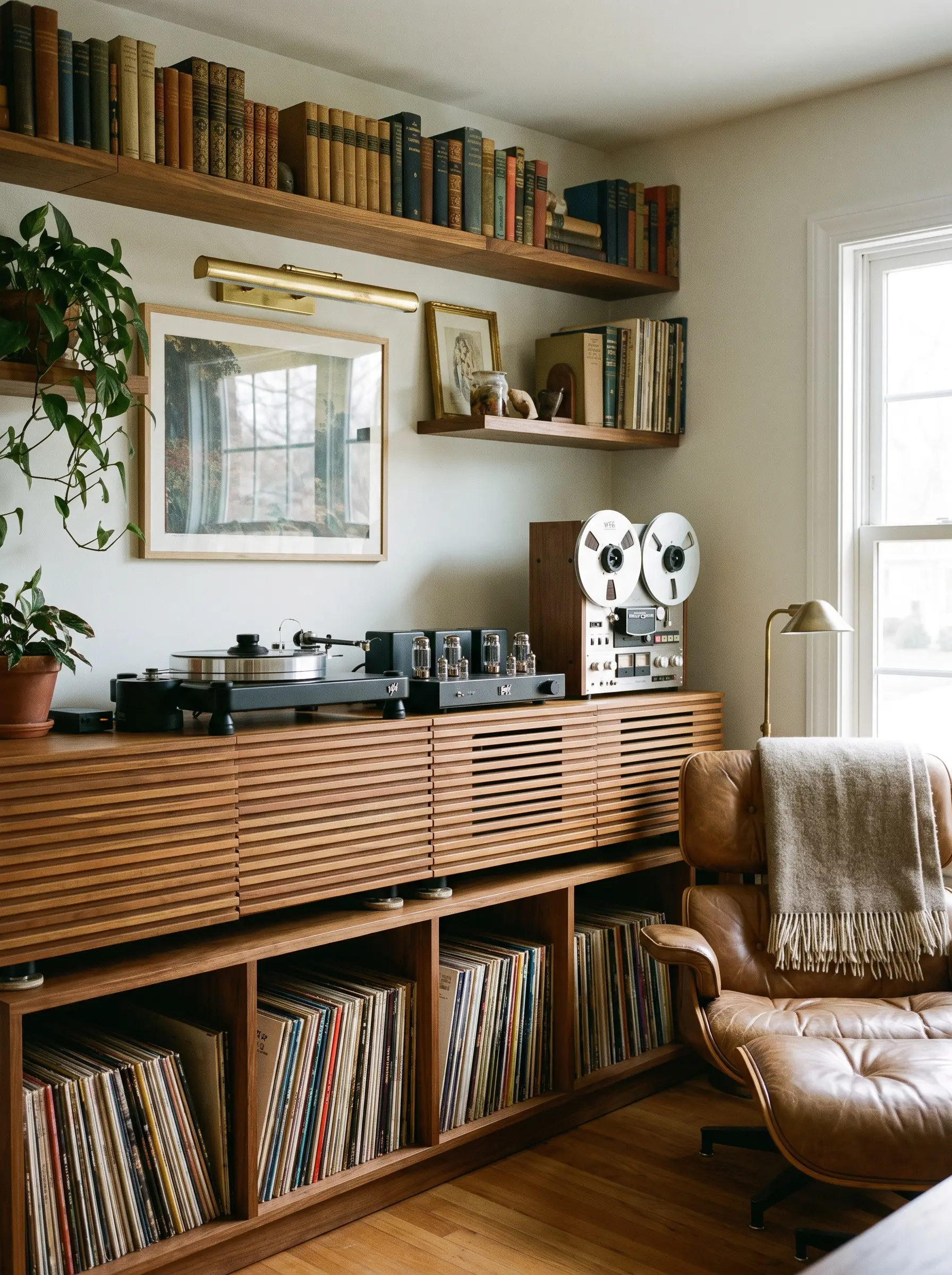
The modern library doubles as a mixed-media retreat for the screen-fatigued. Dedicating a lower millwork section to vinyl record storage, anchored by a heavy walnut console for a turntable, merges audiophile culture with the literary archive.
- Vibe: Cultured, multi-sensory relaxation.
- Key Material: Solid walnut or teak slatted console.
- Layout Tip: Ensure the turntable surface is physically isolated from floor vibrations to protect playback quality.
Centralized Pedestal Tables for Research Spreads
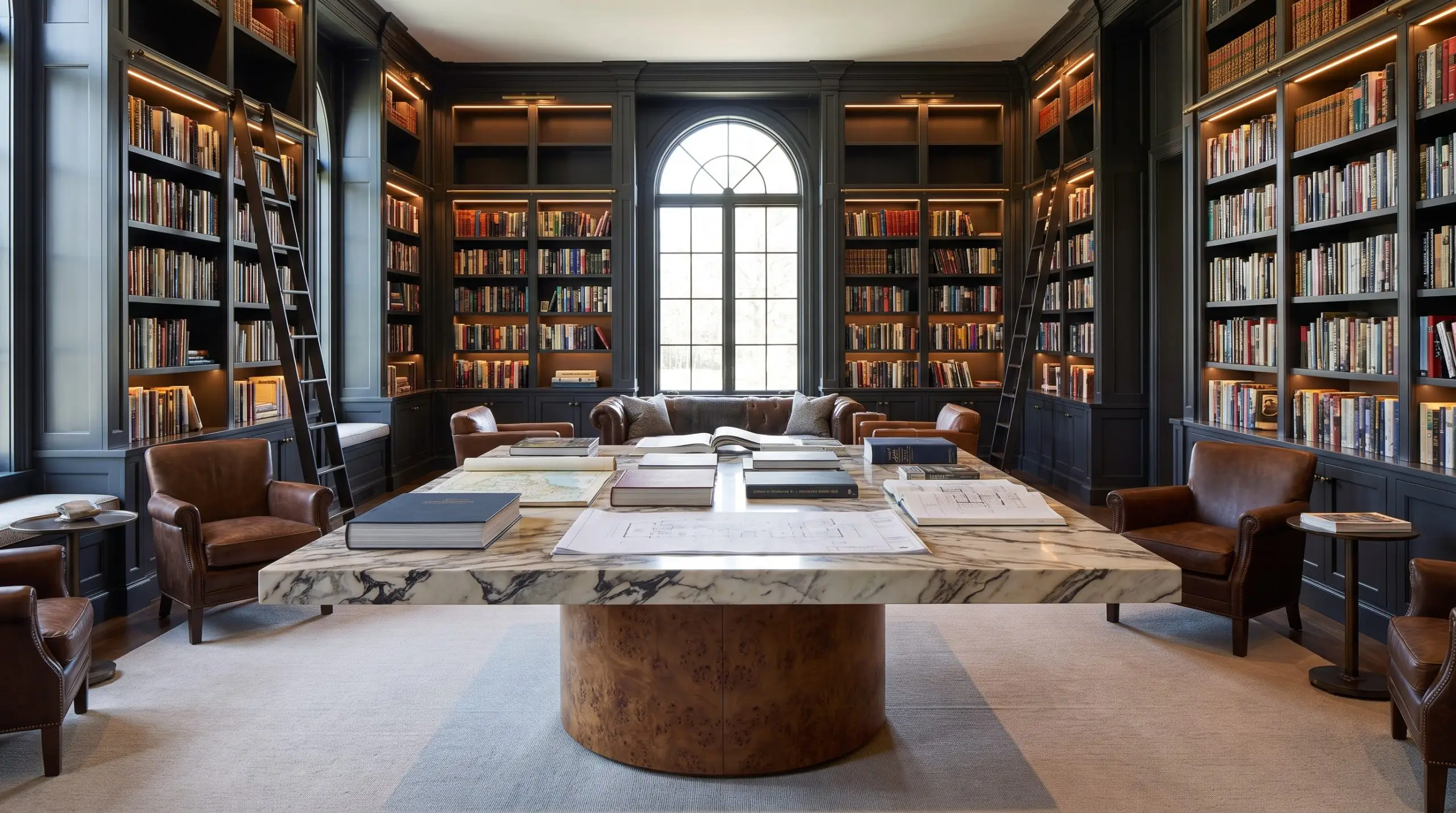
A traditional, heavy executive desk often makes a library feel too corporate and stressful. If square footage permits, floating a heavy stone or wood pedestal table in the center of the room serves as an elegant, non-imposing anchor for laying out multiple books and documents.
- Vibe: Academic, collaborative elegance.
- Key Material: Heavily veined marble or burl wood drum base.
- Proportion Tip: Allow at least 36 inches of clearance on all sides for comfortable circulation.
Saturated Jewel Tones in Velvet Upholstery
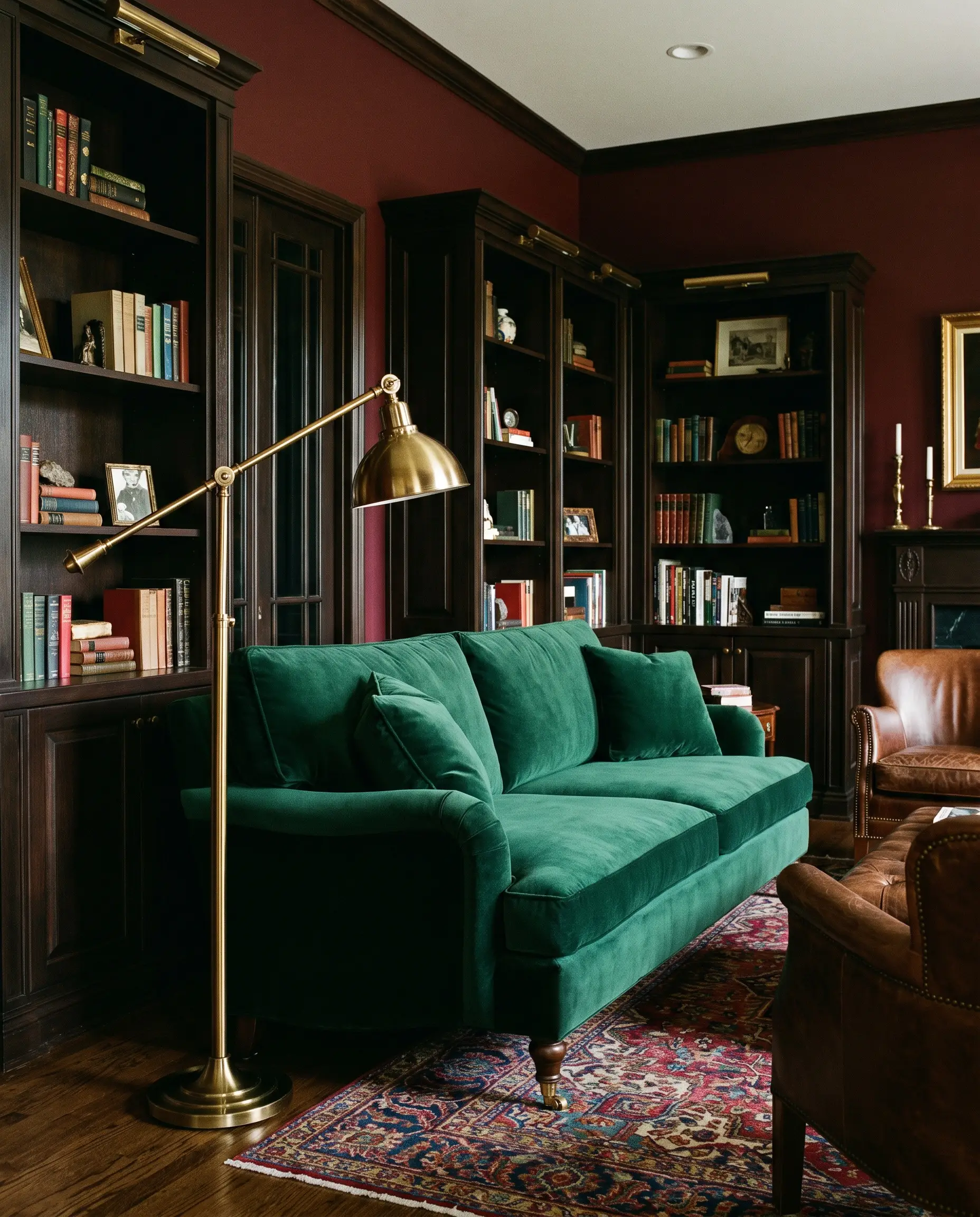
To offset the heavy dominance of dark espresso wood or oxblood walls, seating should introduce stark, saturated contrast. Upholstering a sofa or reading chair in jewel-toned mohair creates a striking visual tension that feels intensely luxurious.
- Vibe: High-contrast, tactile opulence.
- Color Match: Deep emerald green or mustard yellow.
- Fabric Match: 100% cotton velvet or dense mohair.
Curating Negative Space on the Shelves
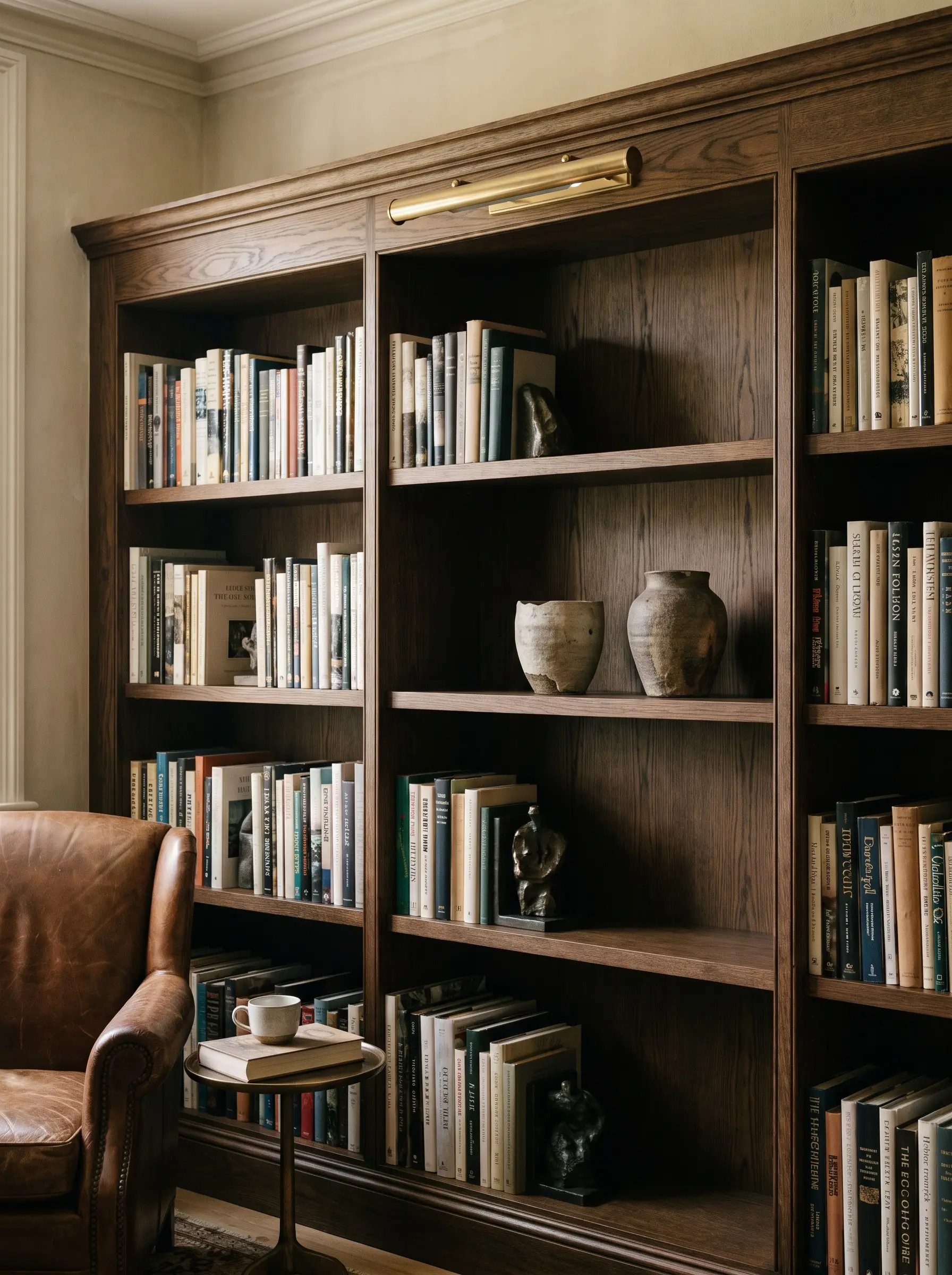
The chaotic, stuffed-to-the-brim aesthetic easily crosses the line from charming to claustrophobic. Treating bookshelves like gallery walls by leaving intentional voids allows the architecture to breathe and highlights individual pieces of sculptural ceramic or art.
Leave exactly 20% to 30% of your total linear shelf space completely empty. This negative space is a crucial design element, not a storage failure.
Styling Rule
- Vibe: Curated, intentional restraint.
- Display Focus: Rough-hewn ceramics or unpolished bronze sculptures.
- Execution: Group books tightly, followed by a wide void, avoiding predictable symmetry.
Modular and Sculptural Bookcases
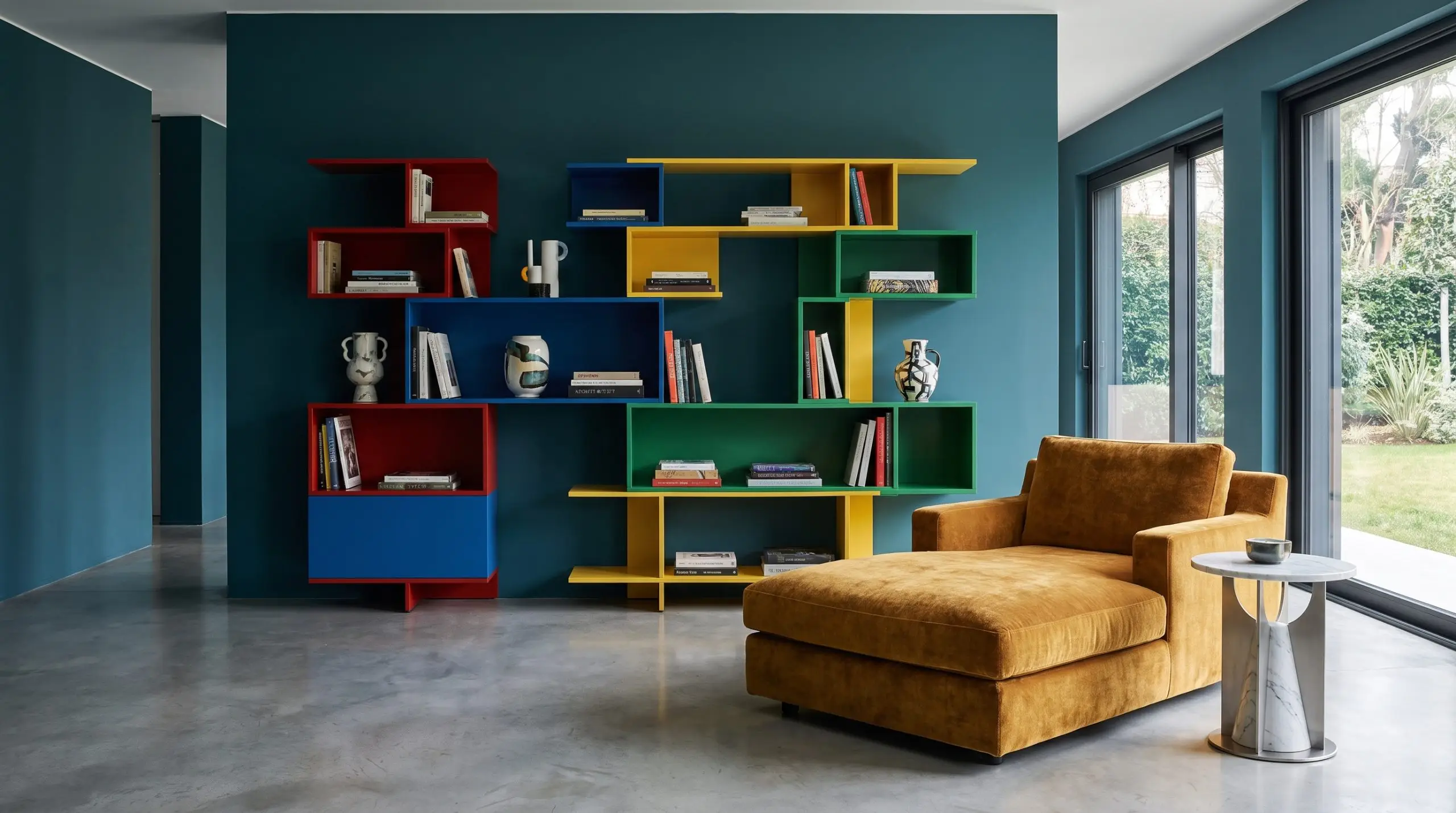
For those operating within accessible luxury constraints or residing in spaces where bespoke millwork is impossible, freestanding shelving is the definitive solution. Asymmetrical or modular units heavily influenced by Italian Postmodern design act as striking, functional art pieces.
- Vibe: Avant-garde, flexible luxury.
- Key Material: Powder-coated steel or lacquered MDF modules.
- Advantage: Completely non-destructive and moves with you to future properties.
Concealing Climate Control for Rare Books
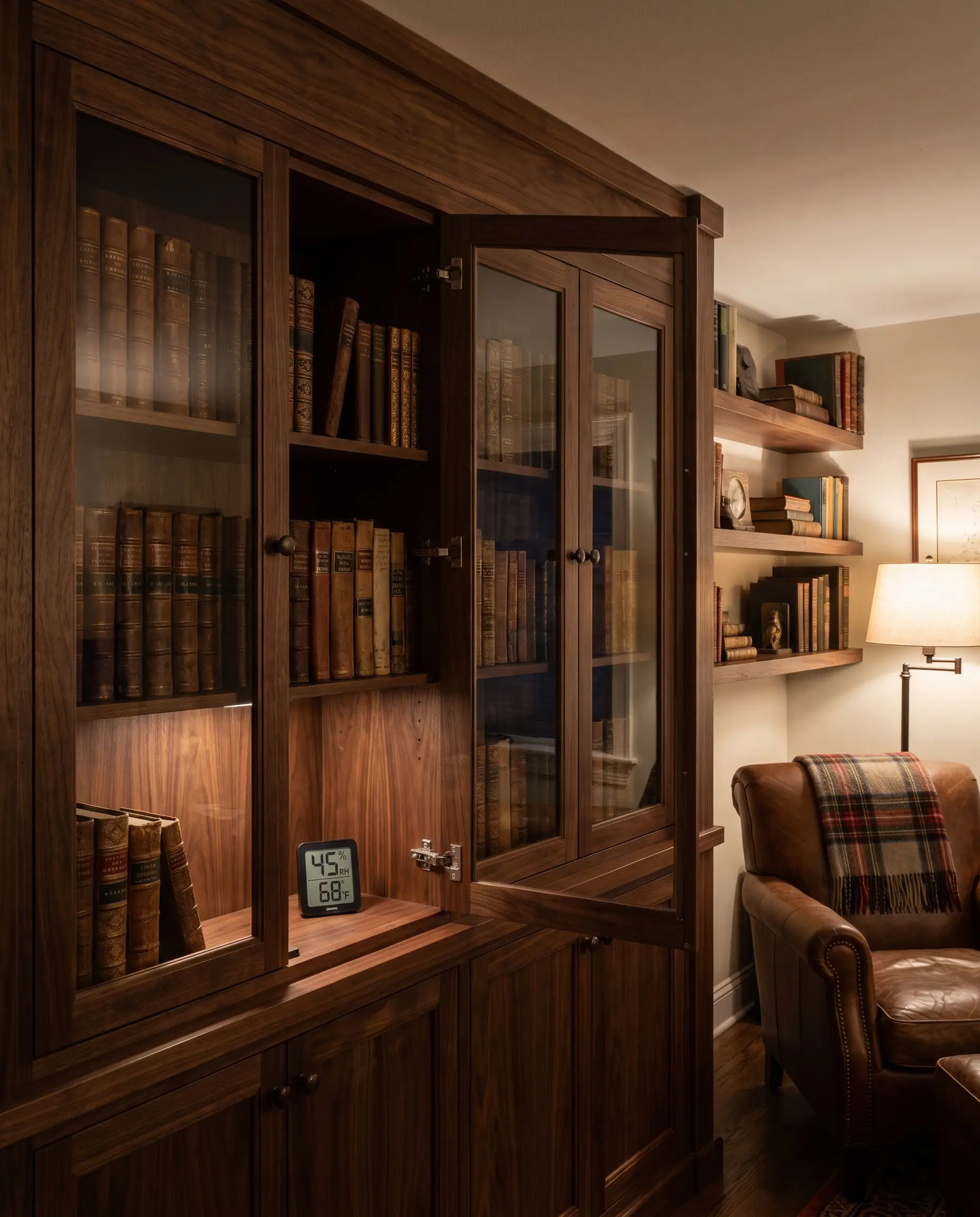
Serious collectors require functional preservation measures that do not disrupt the room’s aesthetic purity. Integrating hidden, humidor-style climate controls within specific glass-front cabinets prevents page foxing and spine cracking without turning the library into a laboratory.
Pros/Cons: Open Shelving vs. Glass Cabinets
Open Shelving:
- Pros: Immediate tactile access, excellent acoustic dampening, lower fabrication cost.
- Cons: Zero dust protection, exposes fragile spines to ambient humidity fluctuations.
Glass Cabinets (Climate Controlled):
- Pros: Complete protection against dust, UV degradation, and humidity; museum-grade preservation.
- Cons: Significantly higher bespoke fabrication costs, requires integrated power and ventilation routing.
Vibe: Archival, museum-grade preservation.
Key Tech: Integrated digital hygrometers and concealed micro-humidifiers.
Placement: Reserve strictly for antique folios and first editions.
Curating Your Personal Archive
The 2027 home library represents the ultimate architectural luxury: a dedicated, analog retreat built for human focus. Before committing to the expense of custom built-ins, assess your natural light exposure and commit to a grounding color palette that supports your specific reading habits. Whether you are installing simple modular cases or commissioning floor-to-ceiling burl wood veneer, the goal is to curate a highly tactile environment that physically separates you from the digital world. To ensure your structural foundation is flawless, explore our comprehensive guide on custom millwork and built-In architecture.
The Aesthetics Desk curates the visual direction for Hackrea. Specializing in design history, global architectural movements, and interior styling, this desk focuses on the psychology of space and how to translate high-end, magazine-quality aesthetics into approachable residential design without falling into fleeting micro-trends.