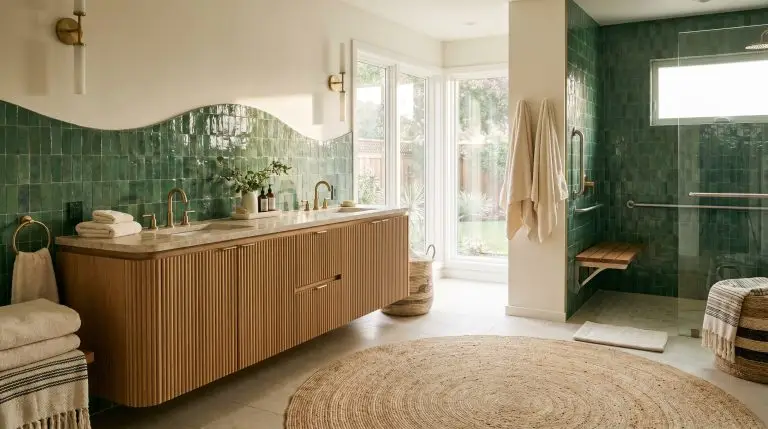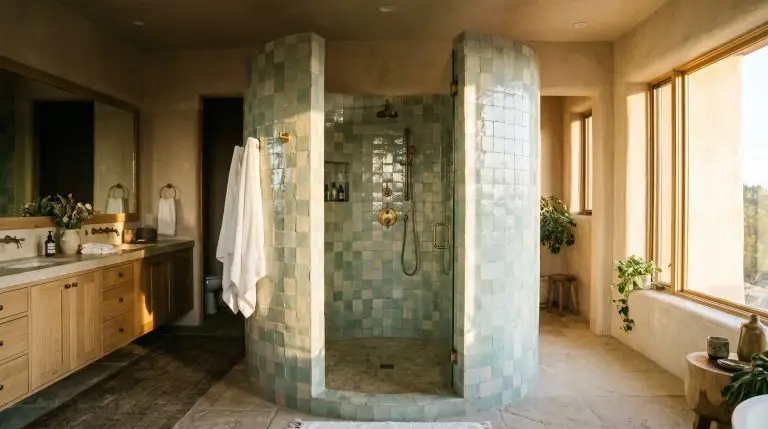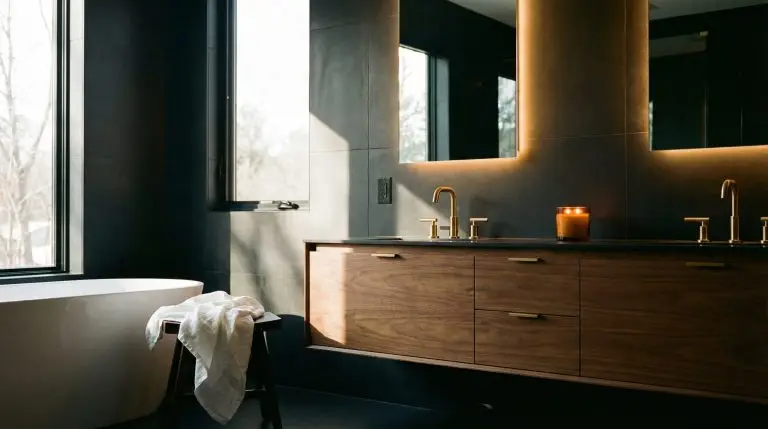
Stepping into a masterfully executed, dark-tiled boutique hotel bathroom is a profoundly visceral experience. The atmosphere is immediately hushed, the air feels heavier, and the physical boundaries of the room seem to dissolve into a soft, ambient glow. For the better part of the 2010s, the design industry was paralyzed by a clinical obsession with sterile, all-white interiors. But as we transition into the defining aesthetics of 2026, the pendulum has swung toward a profound desire for cocooning—spaces that offer sanctuary through tactile richness and deliberate mood.
Mastering black tiles in interior design is the ultimate architectural power move for achieving this quiet luxury. Yet, the fear of creating a cramped, lightless cave remains a formidable barrier for many homeowners. This hesitation stems from a fundamental misunderstanding of how dark materials perform. Black tile is not merely a color choice; it is a masterclass in light manipulation and surface texture.
When executed correctly, black surfaces do not close a room in; they make walls recede, creating an optical illusion of infinite depth.
The Psychology & Physics of Dark Surfaces
To master the dark aesthetic, one must first understand the physics of light absorption. The persistent myth that black inherently shrinks a room is a symptom of poor architectural planning, not the material itself. Dark surfaces require a strategic calculation of spatial perception. By controlling how light strikes the plane, designers can blur the physical boundaries of a room, transforming a finite box into an expansive, shadow-drenched sanctuary.
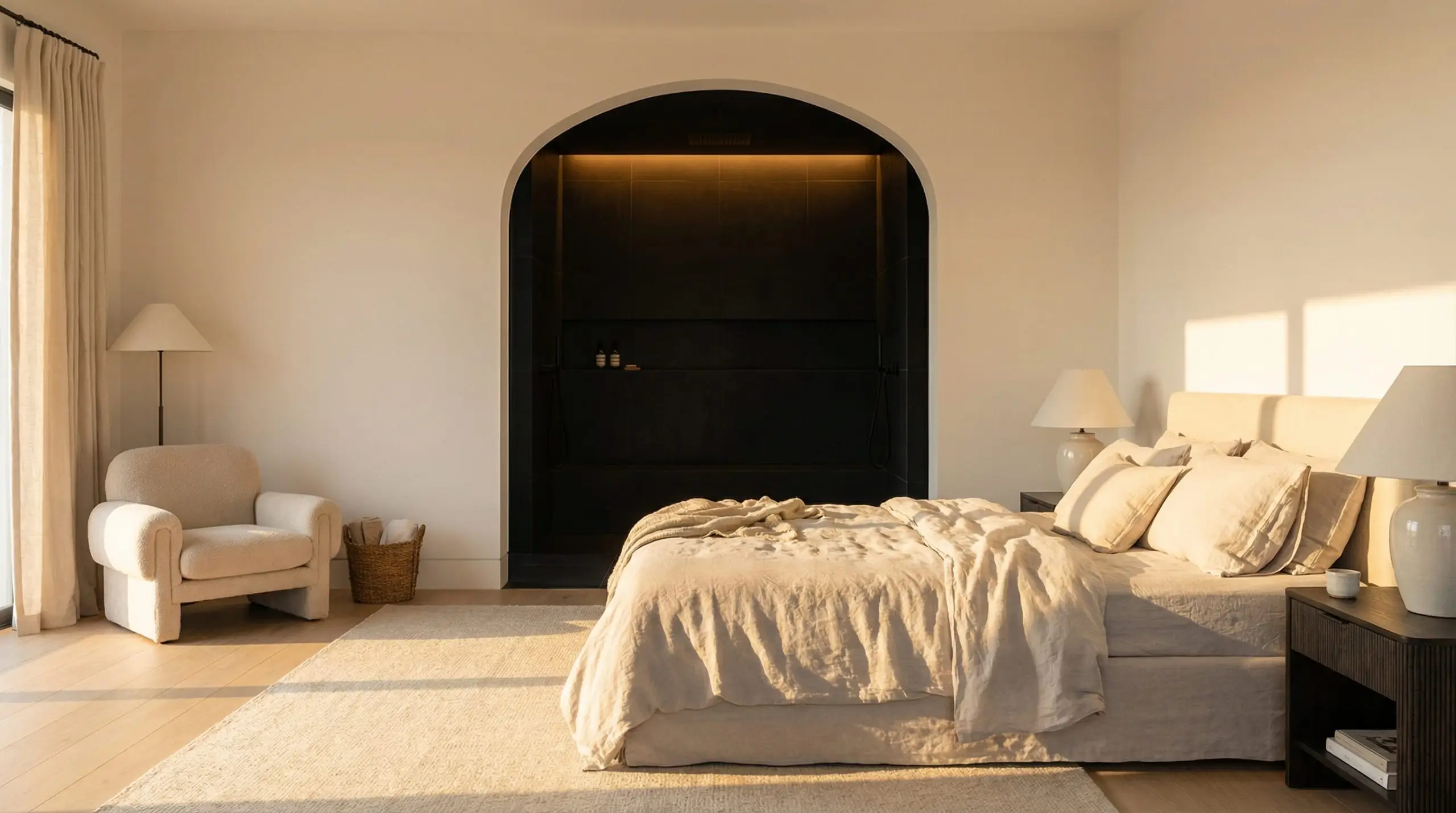
Light Absorption vs. Spatial Perception
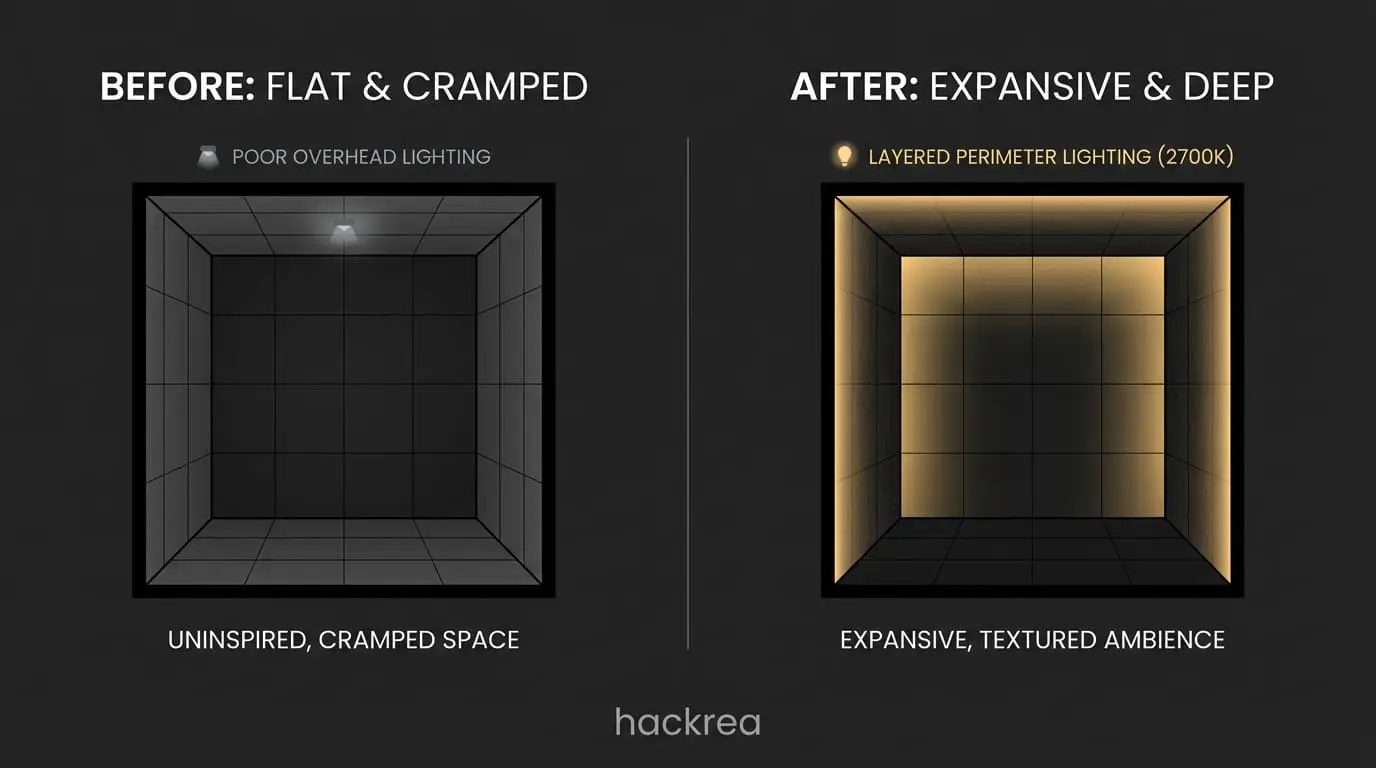
Every architectural material possesses a specific Light Reflectance Value (LRV), dictating exactly how much illumination it absorbs versus how much it bounces back into the space. Matte black tiles possess an LRV nearing zero, meaning they swallow light whole. Therefore, relying on a single overhead bulb is a catastrophic failure that flattens the room into a featureless void.
Light is not an accessory in a black room; it is the architecture.
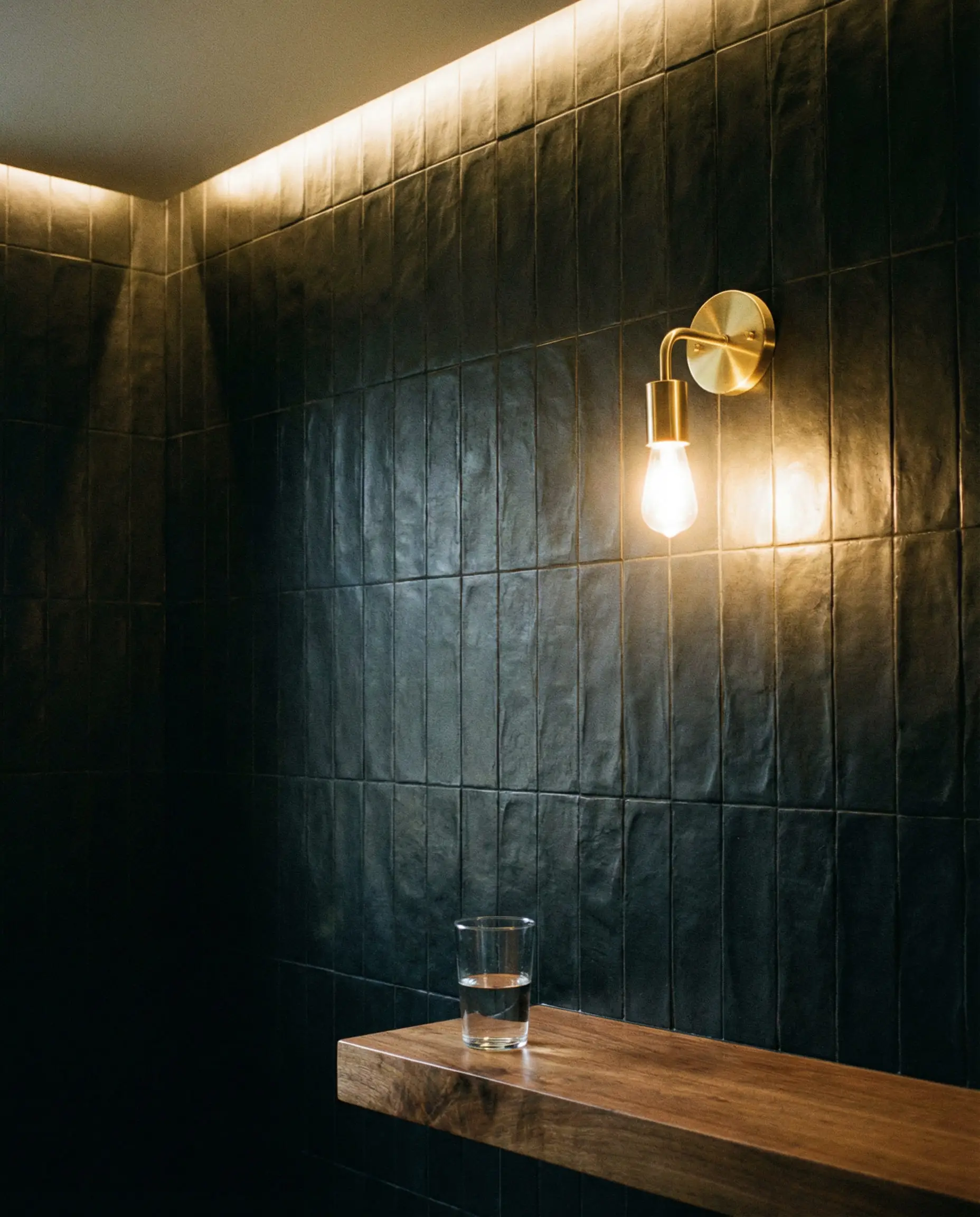
To achieve tactile richness, illumination must be meticulously layered. Master tradespeople employ perimeter lighting, architectural wall sconces, and hidden LED strips to wash ambient lighting down dark walls, catching the grain of the tile rather than illuminating the empty air. Furthermore, black tiles possess exceptional thermal mass. In sun-drenched, south-facing rooms, they absorb and retain heat—a brilliant passive warming strategy in winter, but a spatial dynamic that requires careful climate consideration in arid desert environments.
To prevent black tiles from reading as cold or industrial, your ambient illumination must be strictly calibrated. Specify LED fixtures with a color temperature between 2700K and 3000K. This warm, amber-leaning light interacts beautifully with dark surfaces, rendering them intimate and inviting.
Hackrea Styling Tip
The 2026 Finish Matrix: Matte, Gloss, and Fluted
The physical finish of your tile dictates ninety percent of its maintenance reality and its overarching atmospheric vibe. As we analyze the architectural surfaces dominating the 2026 market, three distinct finish categories emerge as the foundational pillars of the dark interior. Selecting the correct finish is the difference between a bespoke sanctuary and a daily maintenance regret.
Matte & Honed: The Velvet Effect
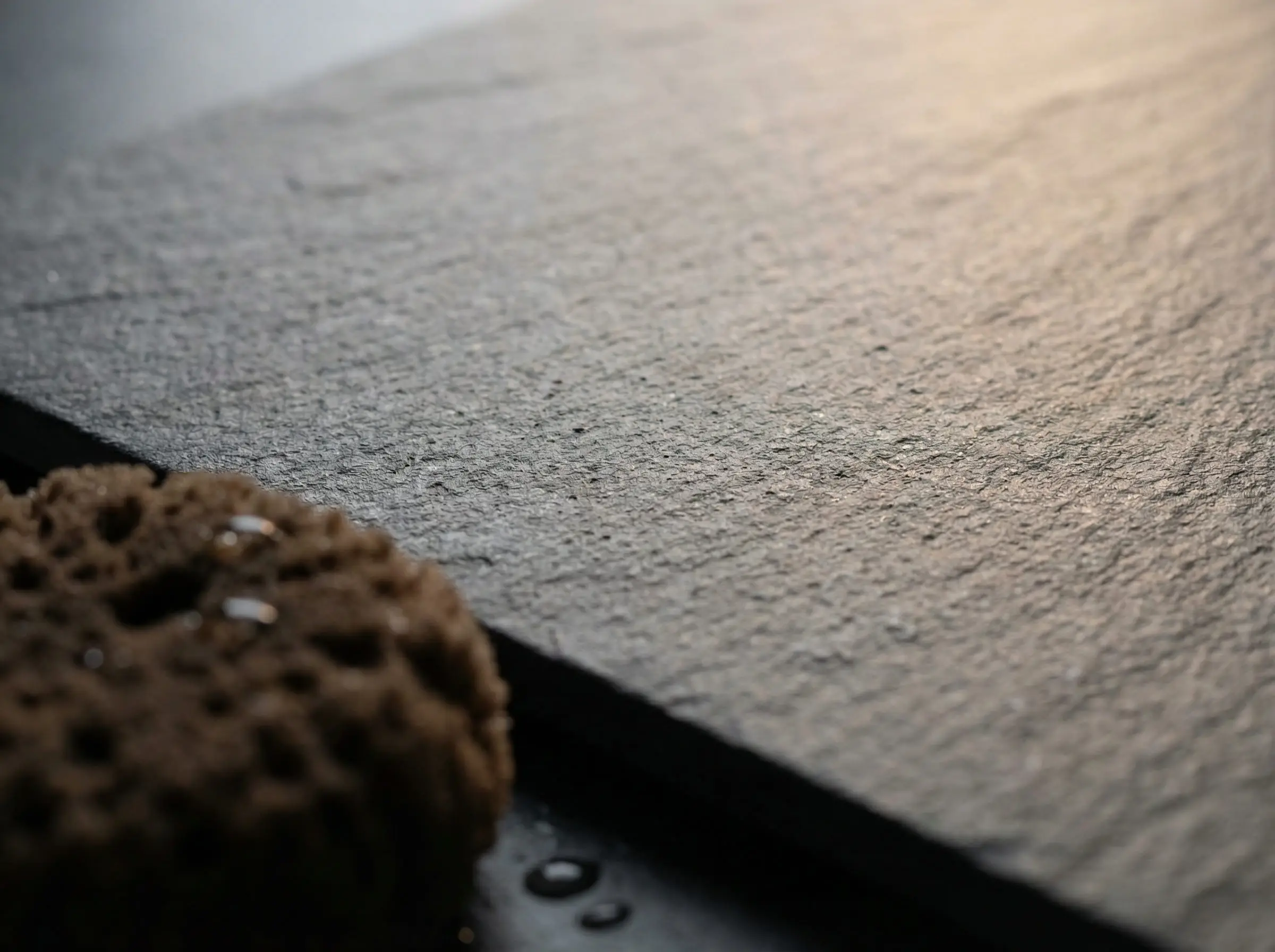
There is a profound, quiet elegance to the velvet effect of matte porcelain and honed slate. These unpolished surfaces absorb light with a soft, diffused quality, entirely eliminating the harsh glare associated with cheaper ceramics. Aesthetically, honed finishes ground a space, offering an organic footprint that feels deeply connected to the earth. From a practical standpoint, matte flooring is the ultimate choice for high-traffic zones; the lack of a reflective glaze naturally hides minor footprints, dust, and superficial smudges while providing essential slip-resistance.
However, the failure state of matte black in wet environments is severe. Because the surface is inherently porous and textured at a microscopic level, it is highly susceptible to clinging onto chalky residue. Alkaline hard water and soap scum will embed themselves into the velvet finish, drying into a glaring white haze that ruins the monolithic aesthetic.
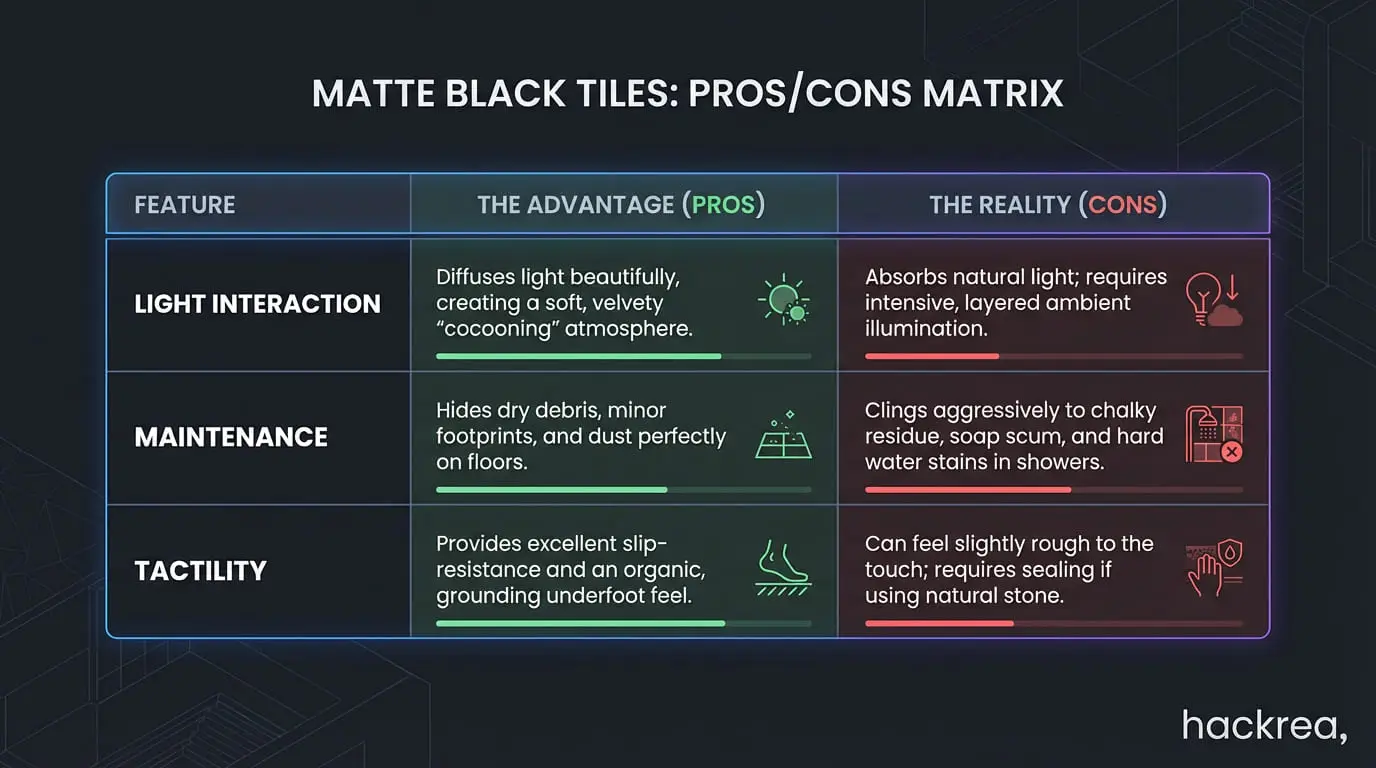
Pros/Cons for Matte Black Tiles
| Feature | The Advantage (Pros) | The Reality (Cons) |
|---|---|---|
| Light Interaction | Diffuses light beautifully, creating a soft, velvety “cocooning” atmosphere. | Absorbs natural light; requires intensive, layered ambient illumination. |
| Maintenance | Hides dry debris, minor footprints, and dust perfectly on floors. | Clings aggressively to chalky residue, soap scum, and hard water stains in showers. |
| Tactility | Provides excellent slip-resistance and an organic, grounding underfoot feel. | Can feel slightly rough to the touch; requires sealing if using natural stone. |
High-Gloss & Glazed: The Glamour Risk
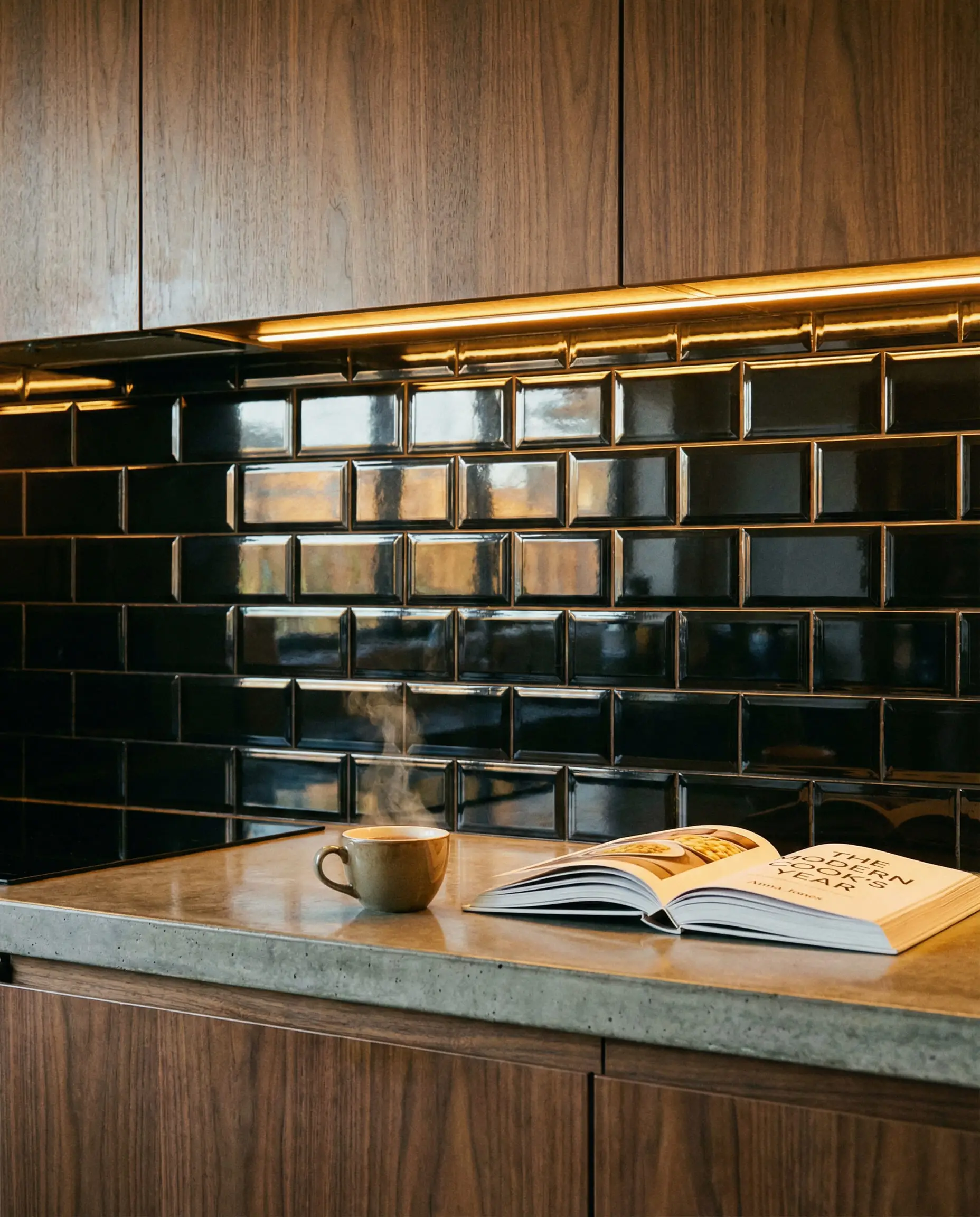
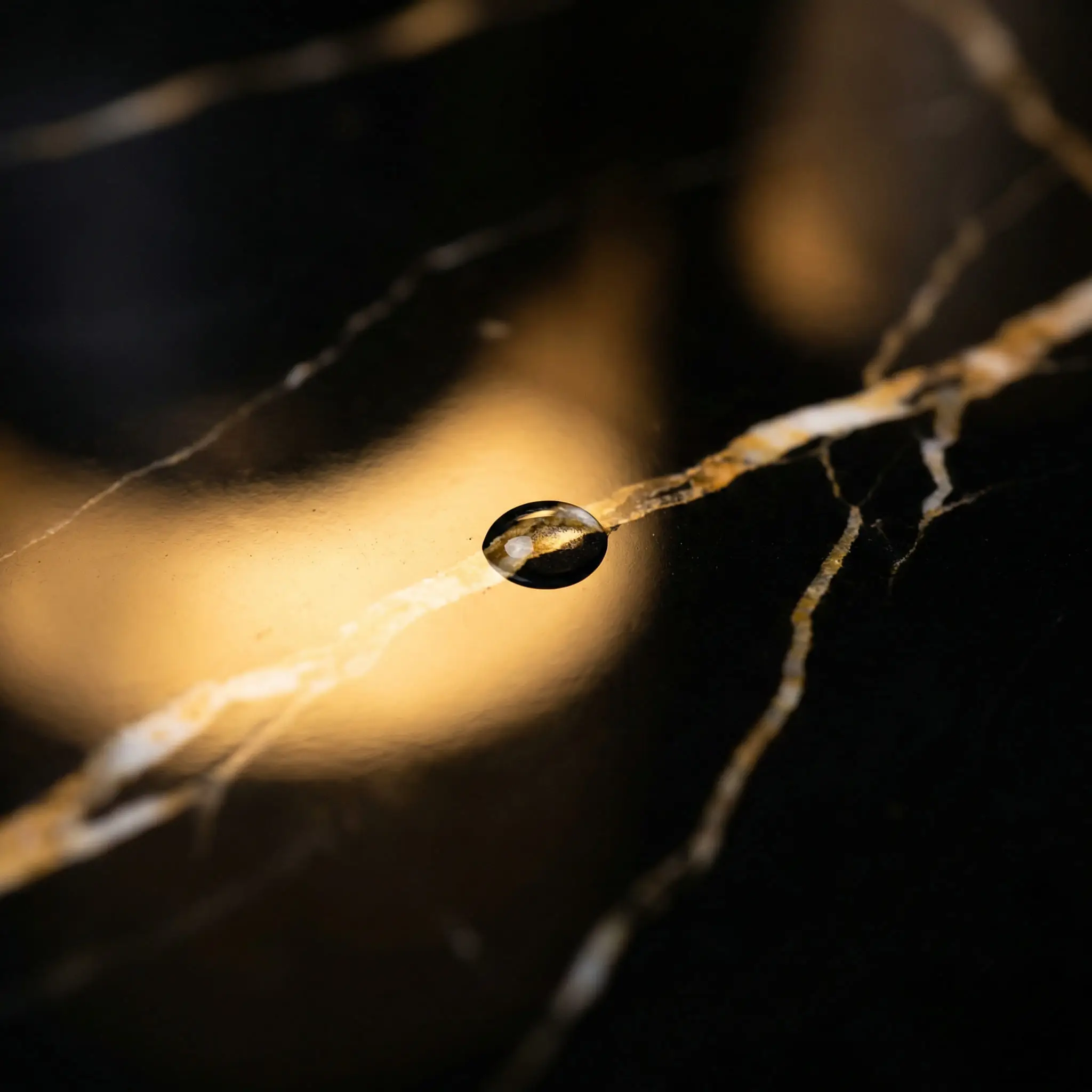
For spaces that demand a more theatrical presence, high-gloss glazed ceramics and polished black marble—particularly the striking, golden-veined Sahara Noir—offer an unparalleled level of sophistication. Glossy dark surfaces act as architectural mirrors. They bounce ambient illumination around the room, making them a strategic masterstroke for small, low-light spaces like powder rooms or narrow galley kitchens.
Yet, this brilliance comes with what industry insiders call the “Glamour Risk.” A polished black surface is an unforgiving canvas. It will broadcast every single water droplet, stray fingerprint, and micro-scratch with glaring clarity.
To navigate this risk, deployment must be highly strategic:
Fluted & 3D Textured: The 2026 Tactile Trend
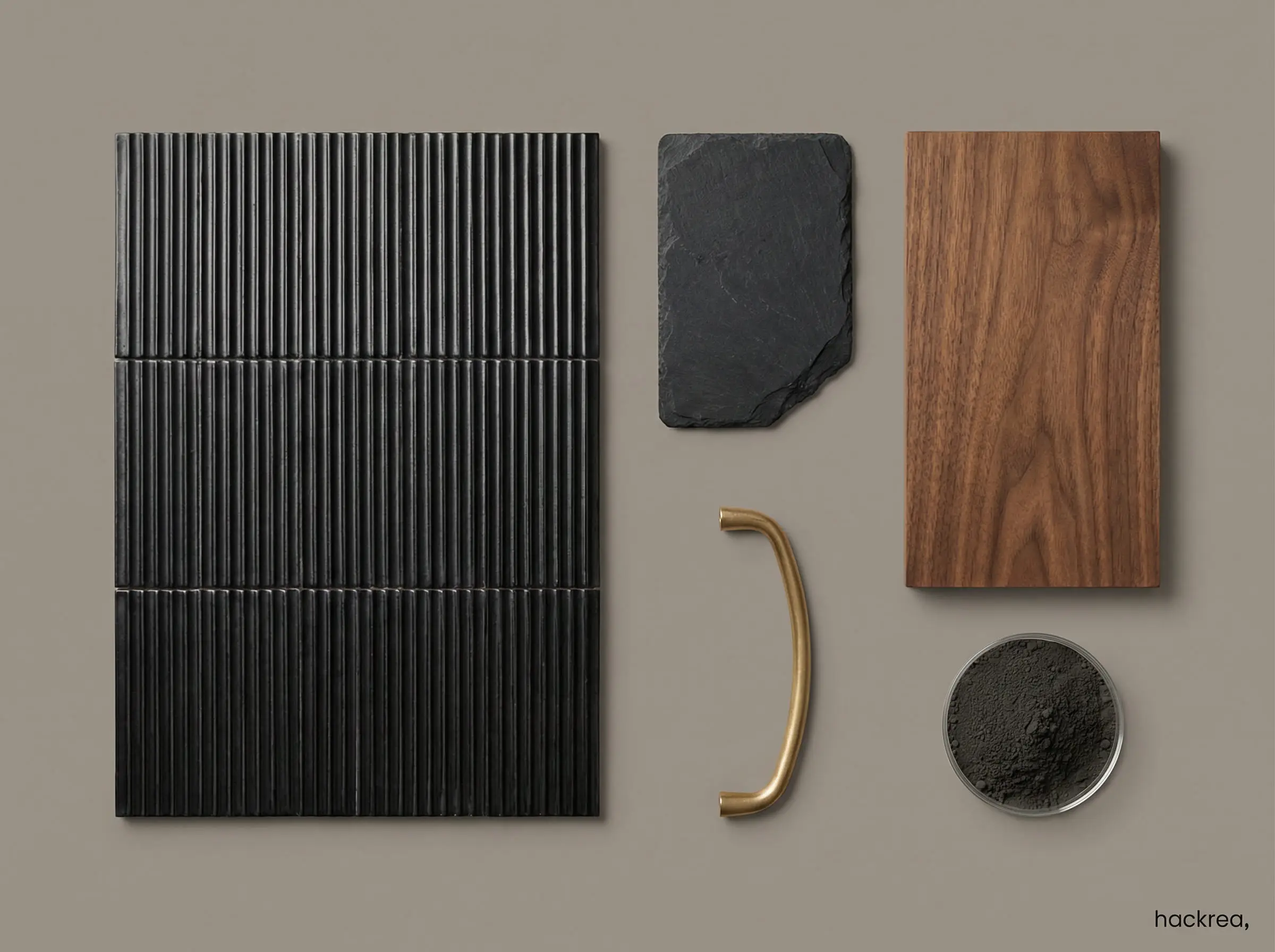
The most significant evolution in architectural surfaces for 2026 is the explosive shift toward tactile richness. Flat planes are being rapidly replaced by ribbed, fluted Zellige tiles. This is where black tile transcends mere surface covering and becomes architectural art. A fluted black feature wall is a masterclass in shadow play; the protruding ridges catch the ambient illumination, while the deep grooves hold onto absolute darkness.

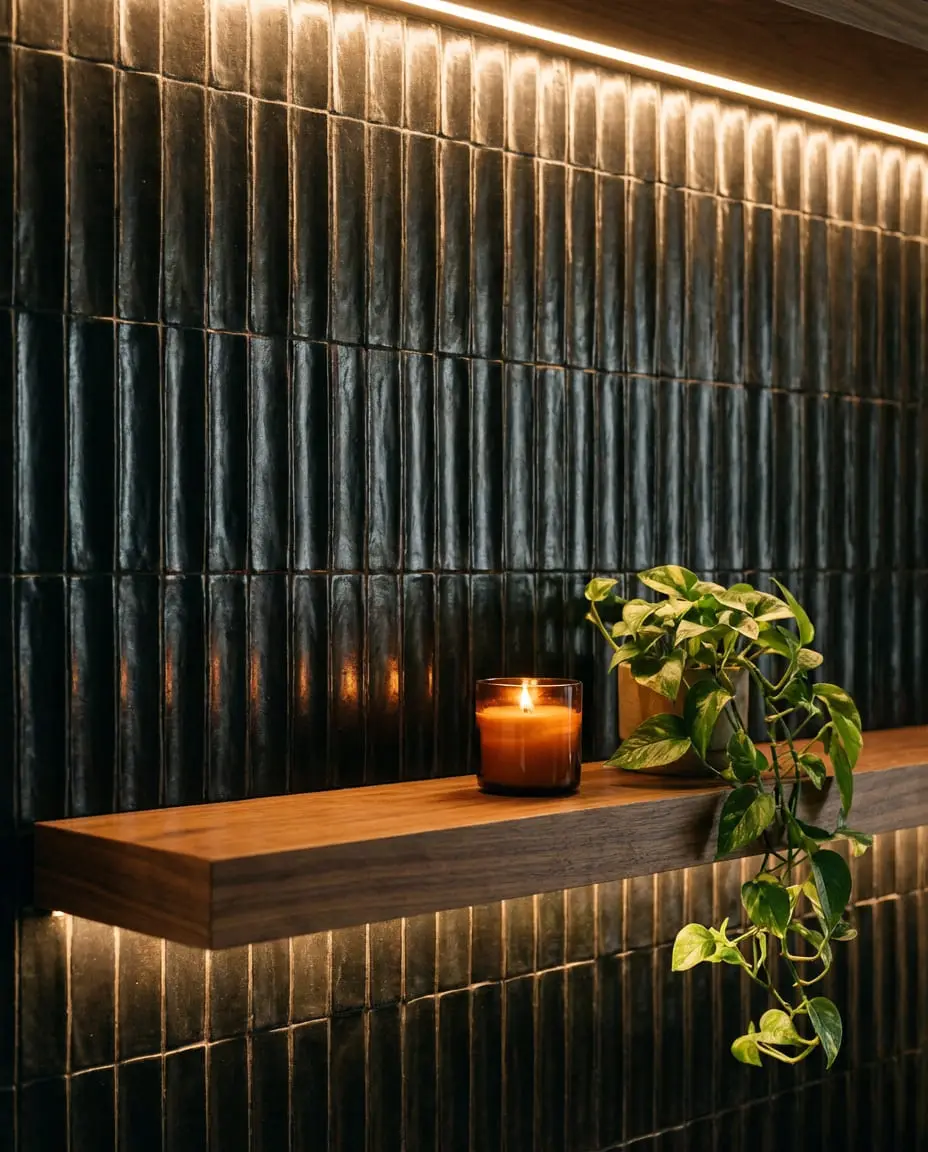
This dynamic interplay of light and shadow breaks up the visual weight of a dark wall, preventing it from feeling monolithic or oppressive. Collections mimicking organic stone effects or utilizing precision-milled architectural fluting—such as the highly sought-after Tacta collection—introduce a rhythmic, sculptural quality to the room. When you run your hand across a wall of ribbed black porcelain, the sensory feedback is immediate and luxurious. It demands to be touched. By utilizing 3D textured tiles, designers can inject immense character into minimalist spaces without relying on contrasting colors, allowing the geometry of the tile itself to dictate the room’s energy.
Room-by-Room Execution Strategies
The application of dark surfaces cannot be a blanket approach. Black tile behaves entirely differently depending on the specific function, moisture levels, and traffic patterns of the room it inhabits. To engineer a successful space, we must adapt our material specifications and styling formulas to the unique demands of the environment.
The “Quiet Drama” Bathroom
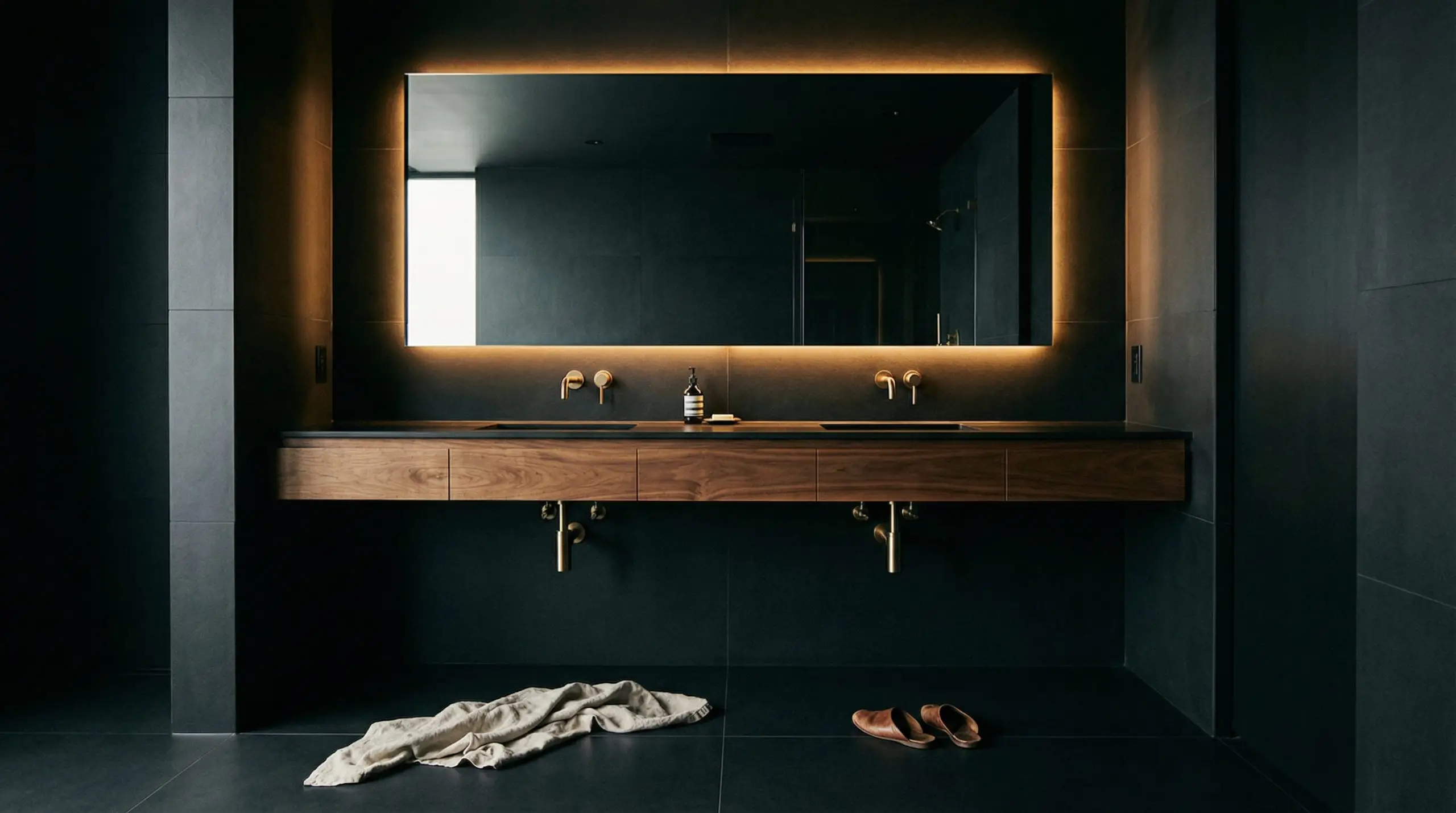
The 2026 primary en-suite is defined by the concept of “Quiet Drama”—a space that feels less like a utilitarian washroom and more like a subterranean thermal spa. To achieve this, master tradespeople are turning to oversized black porcelain panels. By specifying massive slab formats, we effectively eliminate distracting grout lines, resulting in a seamless, monolithic expanse that feels impossibly high-end.
For those hesitant to commit to an entirely dark room, the “dark-tiled corner” is a brilliant zoning technique. Cladding only the walk-in shower enclosure in matte black creates a visually distinct, cocooning wet-room experience that recedes elegantly into the background of a lighter bathroom.
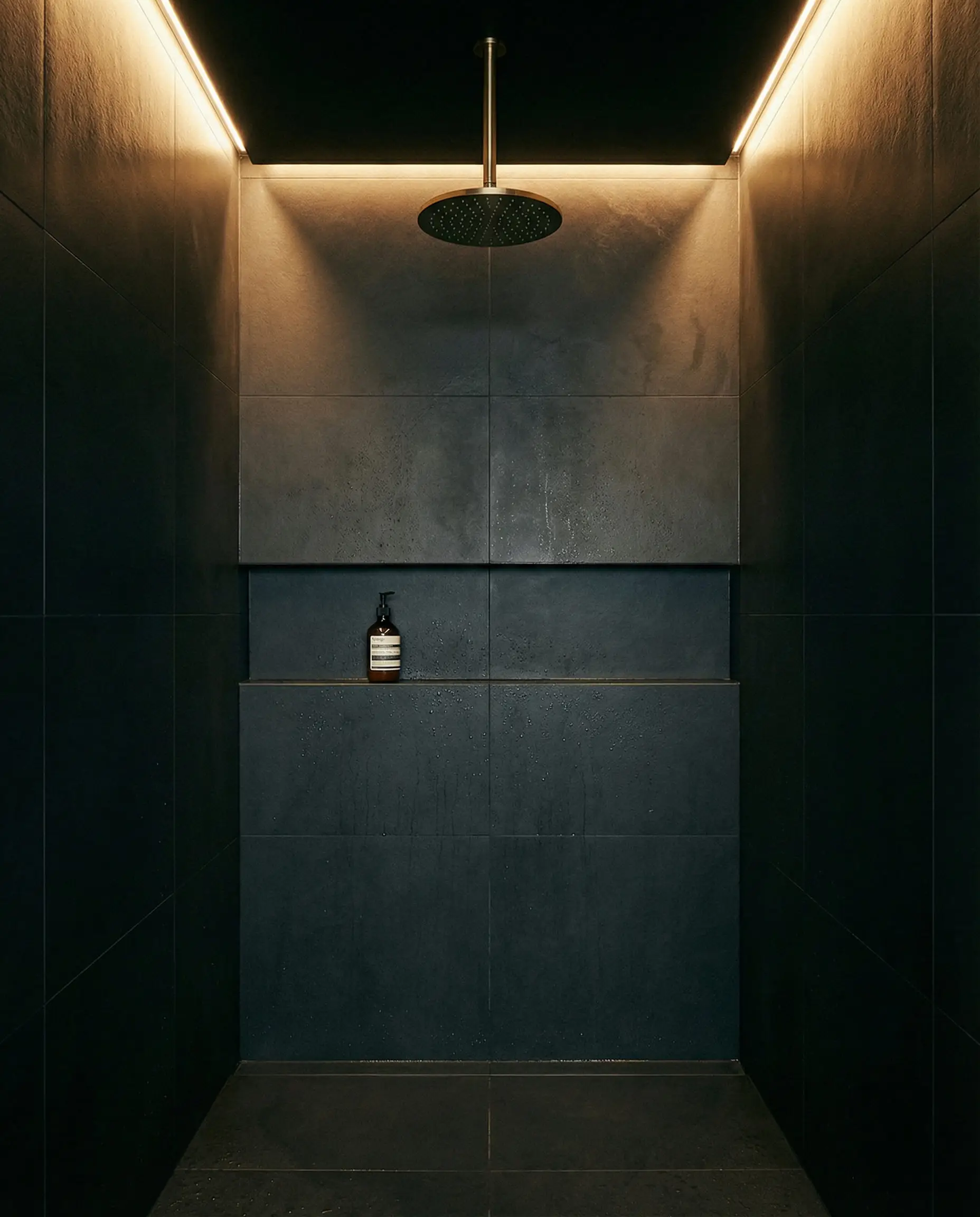
The true secret to the luxury bathroom, however, lies in the material pairings. A room composed entirely of black tile and chrome fixtures risks reading as a dated, clinical space. To prevent the aesthetic from devolving into a cold cliché, you must introduce organic warmth.
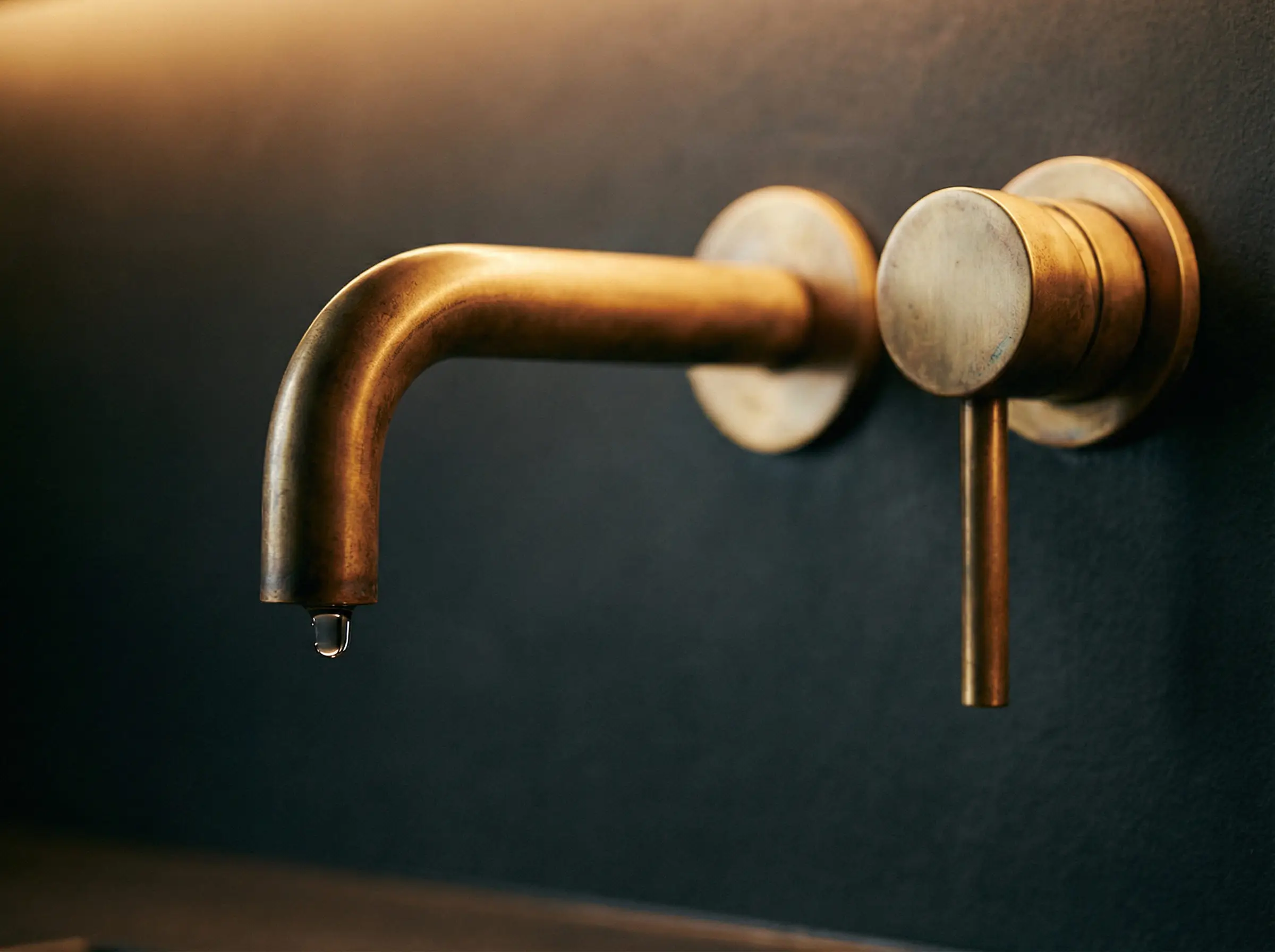
Pair your monolithic black walls with custom vanities milled from rich, natural Walnut. The warm undertones of the timber cut through the visual weight of the tile. Furthermore, specify Unlacquered Brass or Aged Bronze for all plumbing fixtures and hardware. As the Unlacquered Brass ages, its living finish develops a deep, earthy patina that harmonizes flawlessly with the tactile richness of the dark architectural surfaces.
The Architectural Kitchen
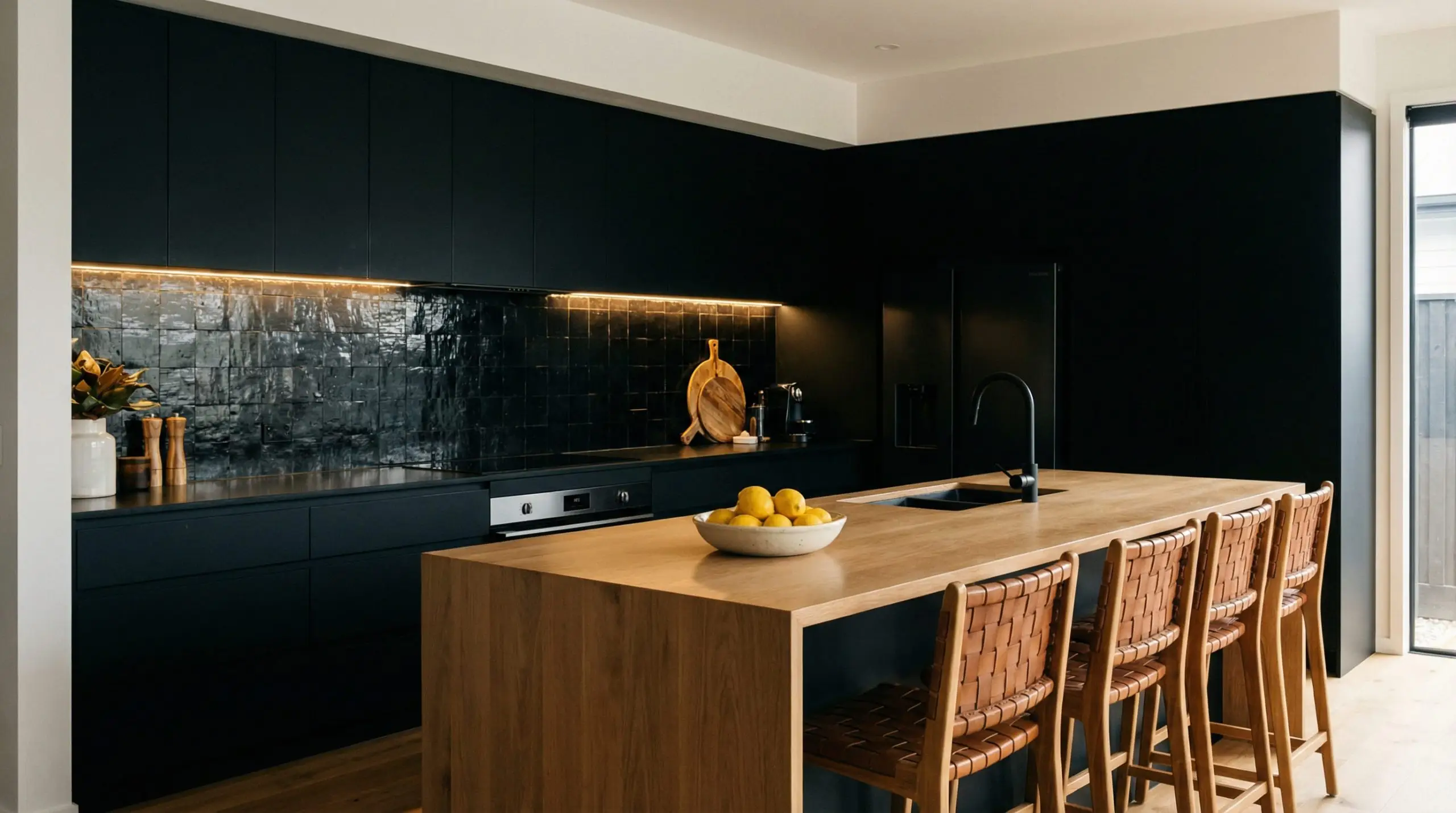
In the culinary space, black tile serves as a grounding architectural force. For flooring, the classic checkerboard pattern has been entirely reimagined for 2026. Instead of high-contrast glossy ceramics, designers are specifying tumbled black slate paired with honed White Marble or Travertine. This muted, textural approach to the checkerboard floor provides historical provenance and immense character without overwhelming the eye.
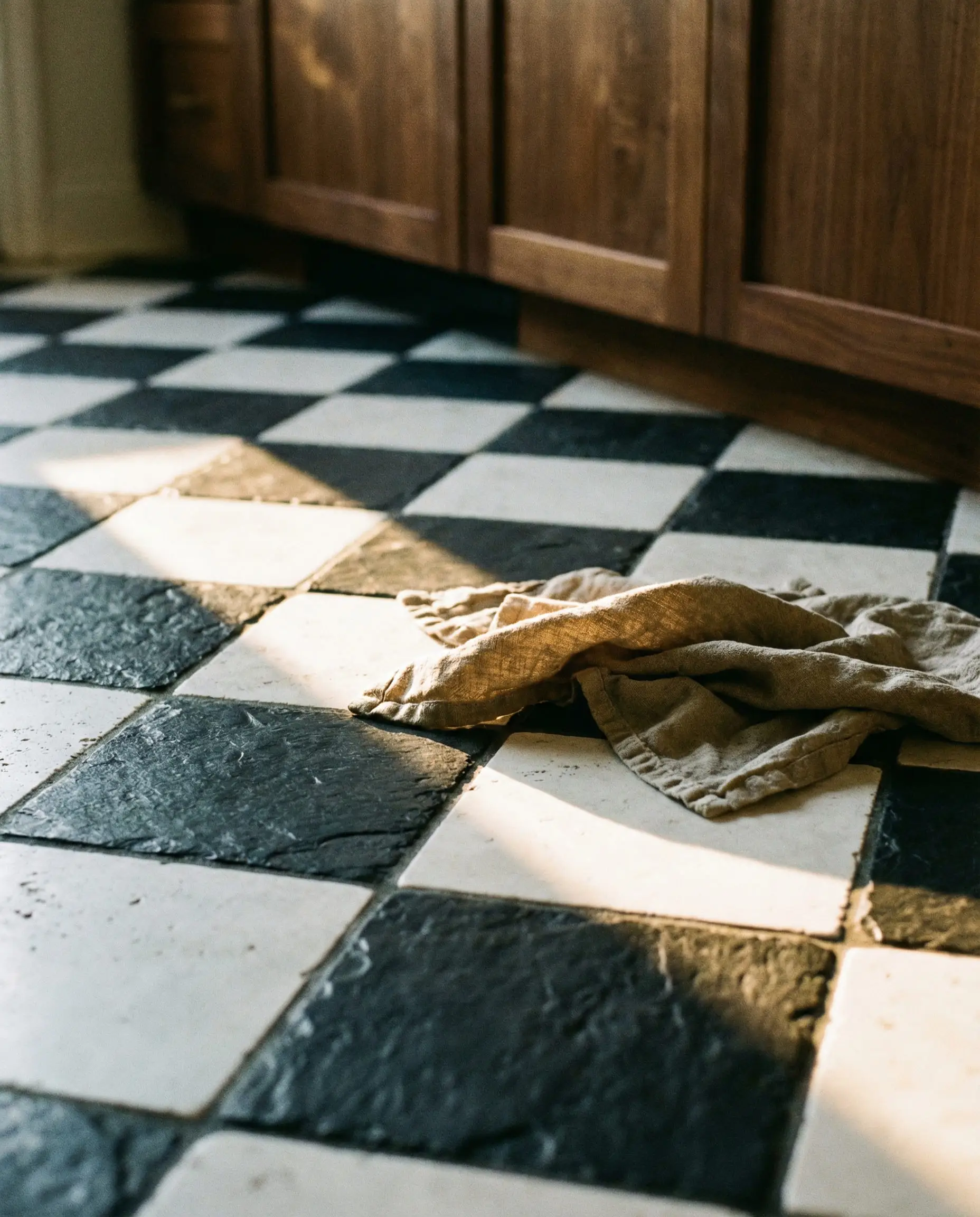
When addressing the backsplash, bespoke luxury is achieved through contrast in finish, rather than color. Mixing ultra-gloss black subway tiles with a matte black grout, or vice versa, creates a sophisticated, tone-on-tone mosaic that shifts dynamically as the under-cabinet lighting moves across it.
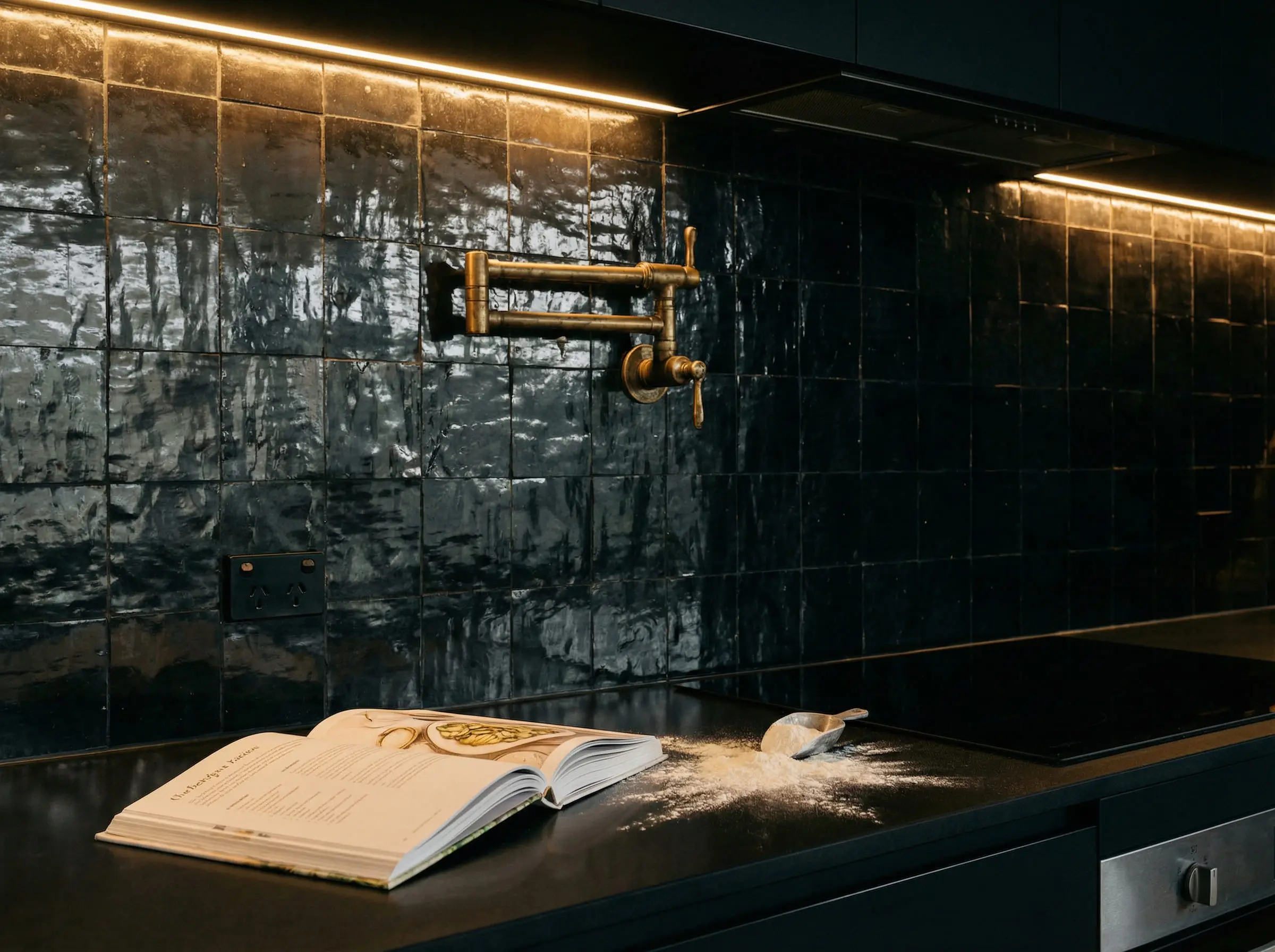
Never pair heavy, dark tile backsplashes with highly veined, busy granite countertops. The aggressive movement in the stone will forcefully compete with the visual weight of the black tile, resulting in a chaotic, claustrophobic kitchen. If you specify a black backsplash, the horizontal countertop plane must remain quiet, utilizing muted materials like honed Soapstone or solid-hued quartz.
⚠️ Design Mistake
The Maintenance Reality: Living with Black Tile
The most persistent anxiety surrounding dark interiors is the assumption that they are impossible to keep clean. The brutal reality is that black tile does not attract more dirt than white tile; it simply highlights high-contrast debris. Lint, dust, and hard water deposits will visually jump off a dark surface, requiring a precise, informed approach to housekeeping.
The Hard Water & Soap Scum Equation
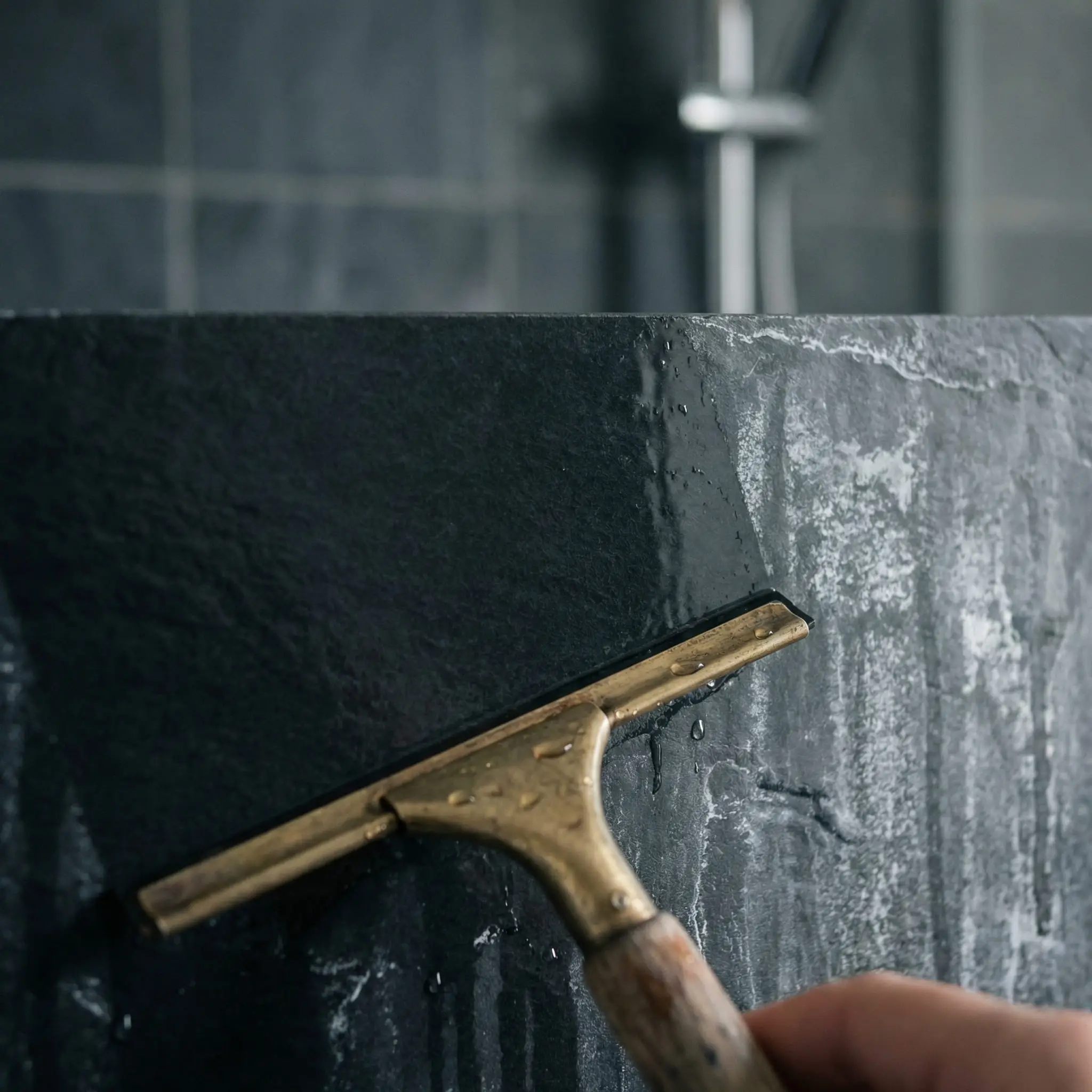
From a material science perspective, the primary enemy of the black shower is water chemistry. Alkaline hard water contains high levels of dissolved calcium and magnesium. When water droplets are left to evaporate on dark tile, they leave behind a chalky residue that glows starkly against the black background. Over time, this builds into an impenetrable layer of soap scum.
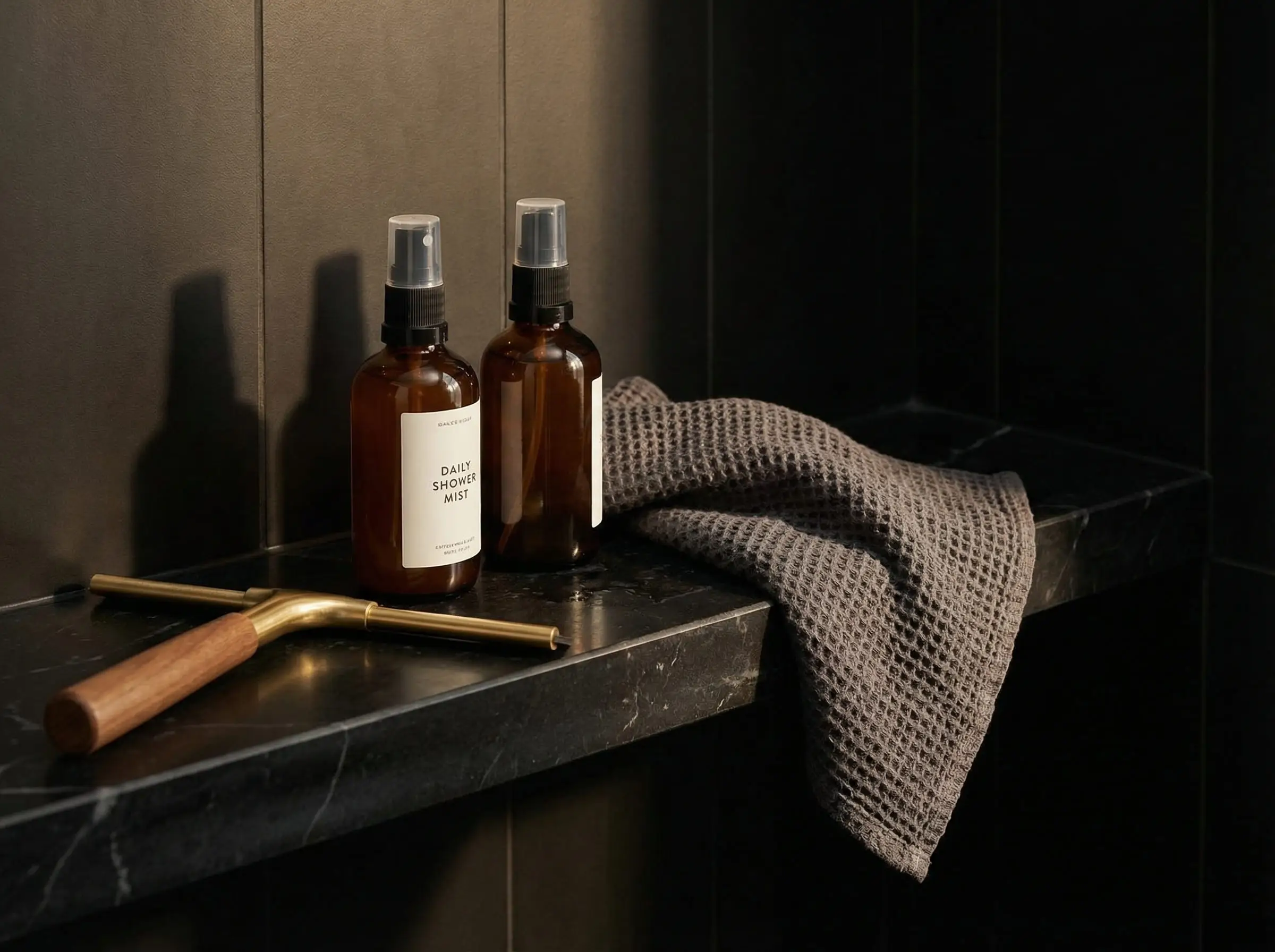
To preserve the integrity of your dark aesthetic, you must adopt a strict maintenance protocol:
Grout Selection: The Make-or-Break Detail
Grout is never an afterthought; it is the architectural skeleton of your tile installation. The color of your grout lines dictates the entire geometry and spatial perception of the room.
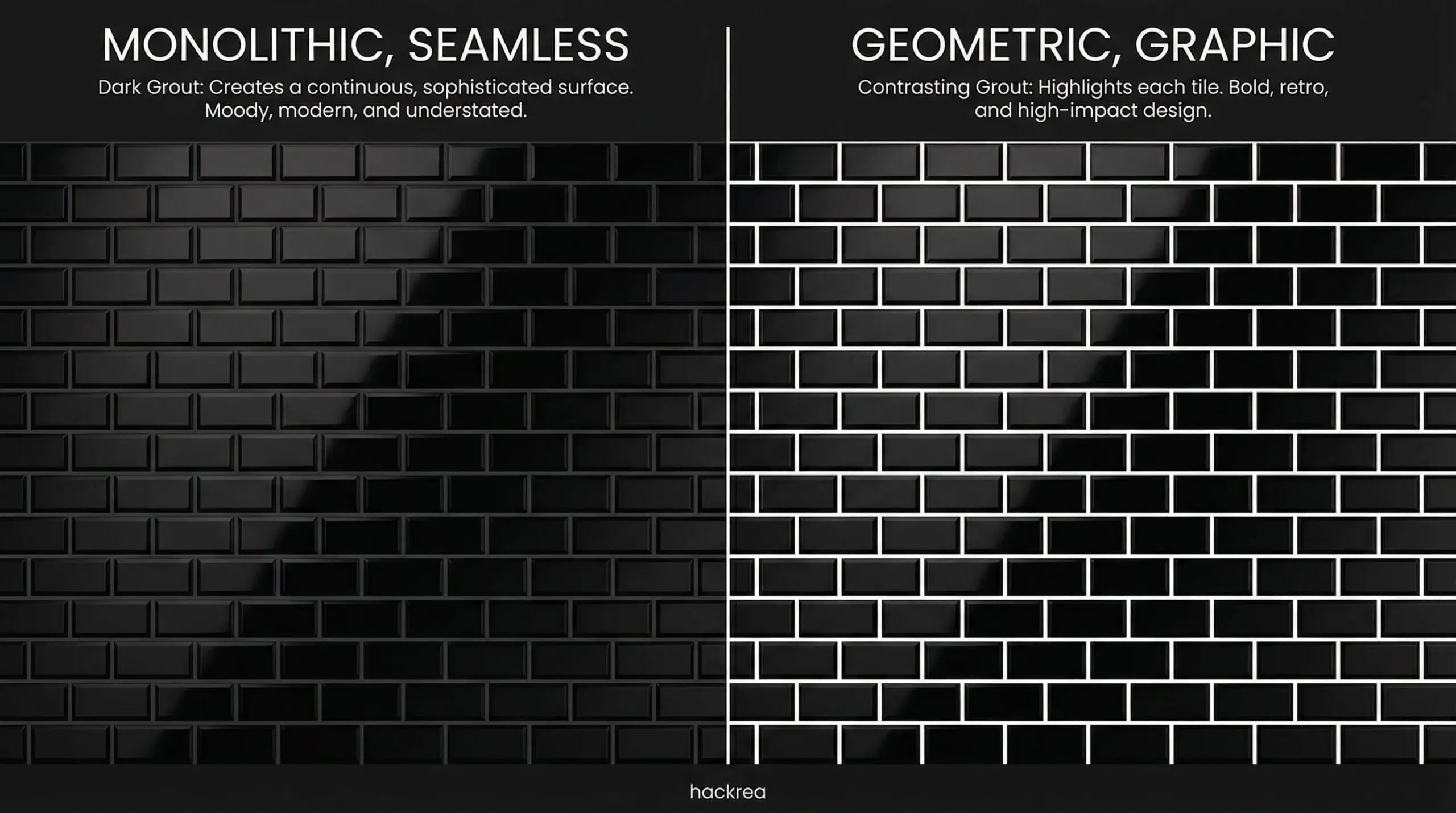
Specifying a charcoal or true black grout is the definitive choice for achieving the 2026 quiet luxury aesthetic. By matching the grout to the tile, you erase the grid. The surface becomes a seamless, infinite, monolithic plane. This optical illusion is particularly crucial in small spaces, as the lack of contrasting lines prevents the eye from stopping, making the room feel vastly more expansive. Additionally, dark grout effortlessly hides long-term discoloration.
Conversely, utilizing a white or light-grey grout against a black tile highlights the exact shape of every individual piece. While this is historically accurate for vintage subway installations, it creates a highly busy, graphic pattern. If not meticulously balanced by quiet, minimalist cabinetry, high-contrast grout will quickly overwhelm a space and shatter the cocooning atmosphere.
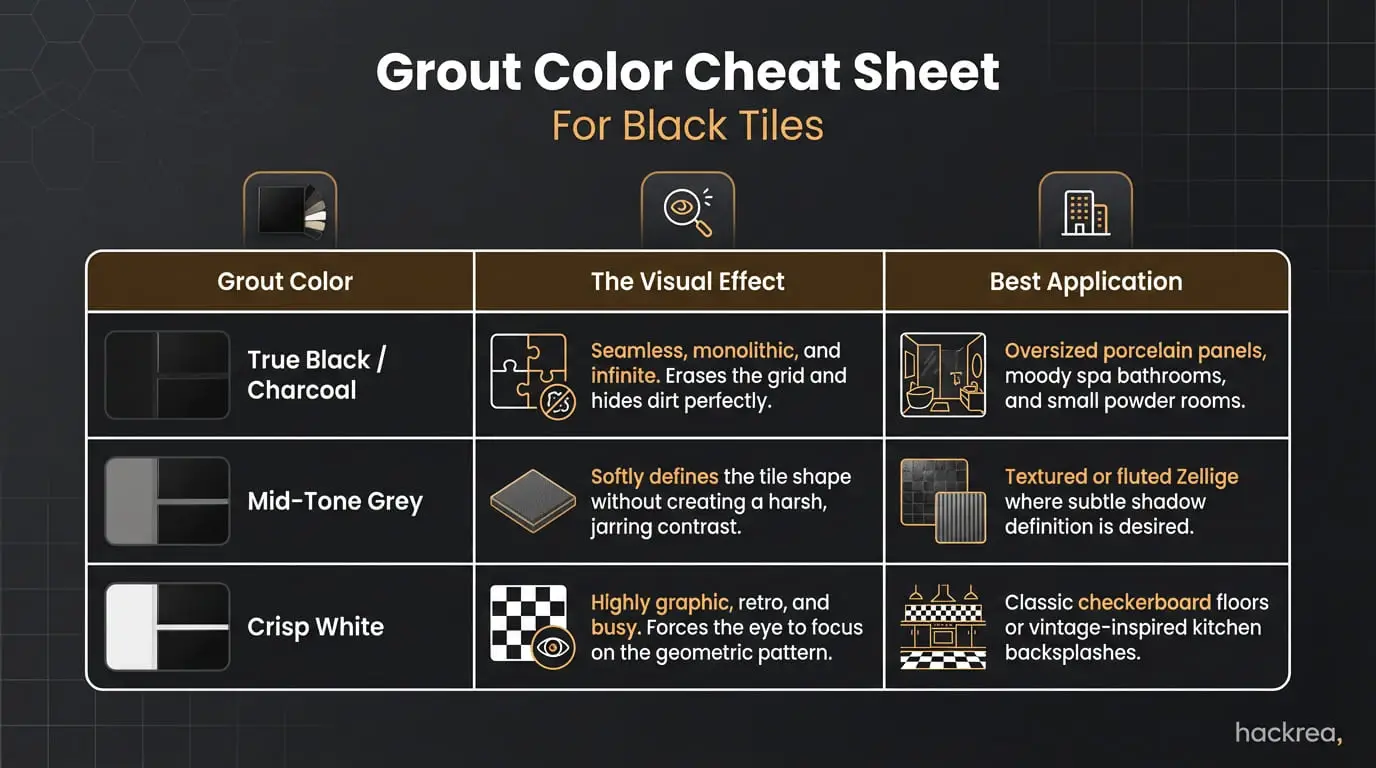
Grout Color Cheat Sheet
| Grout Color | The Visual Effect | Best Application |
|---|---|---|
| True Black / Charcoal | Seamless, monolithic, and infinite. Erases the grid and hides dirt perfectly. | Oversized porcelain panels, moody spa bathrooms, and small powder rooms. |
| Mid-Tone Grey | Softly defines the tile shape without creating a harsh, jarring contrast. | Textured or fluted Zellige where subtle shadow definition is desired. |
| Crisp White | Highly graphic, retro, and busy. Forces the eye to focus on the geometric pattern. | Classic checkerboard floors or vintage-inspired kitchen backsplashes. |
The Future of the Dark Aesthetic
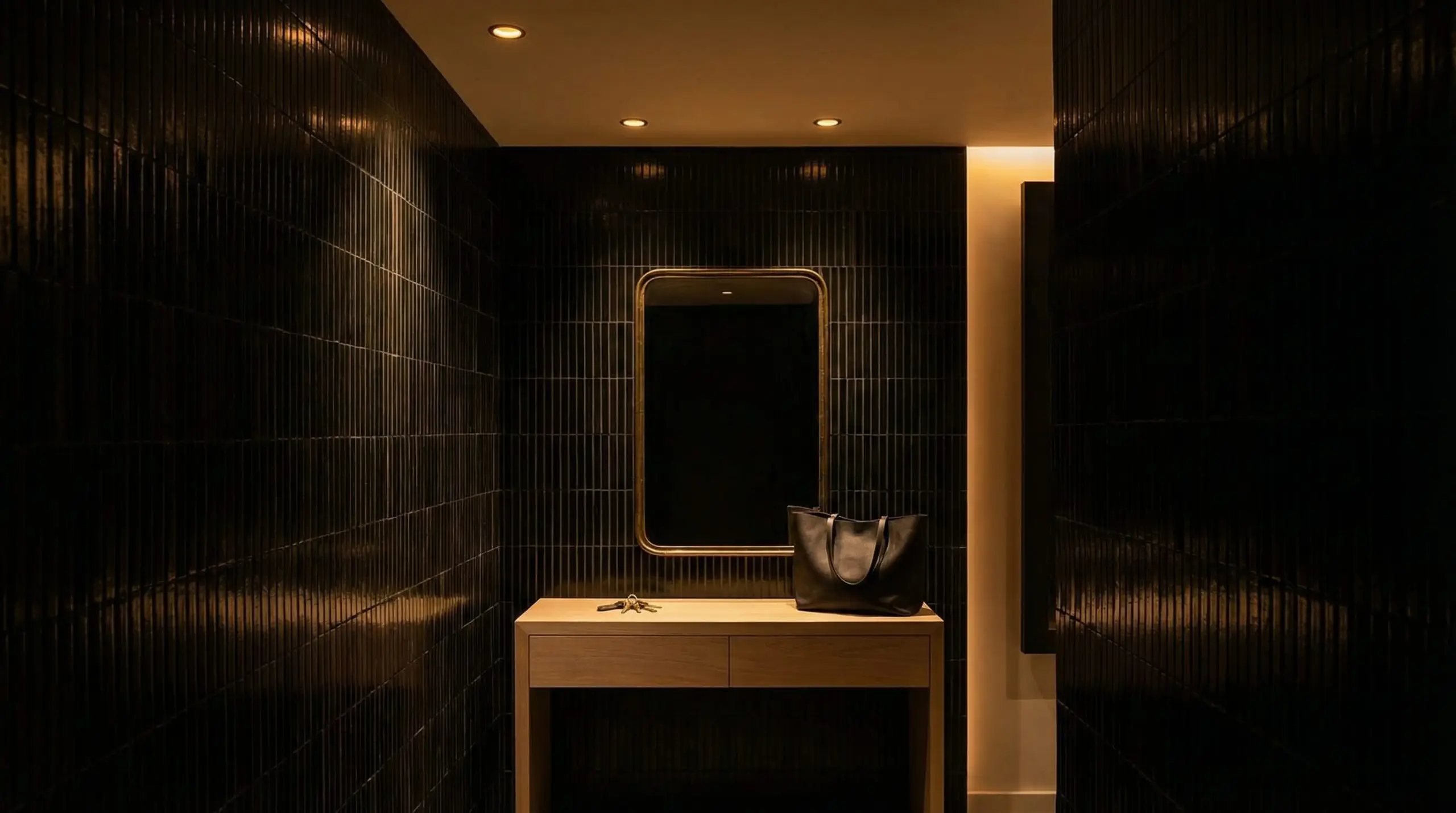
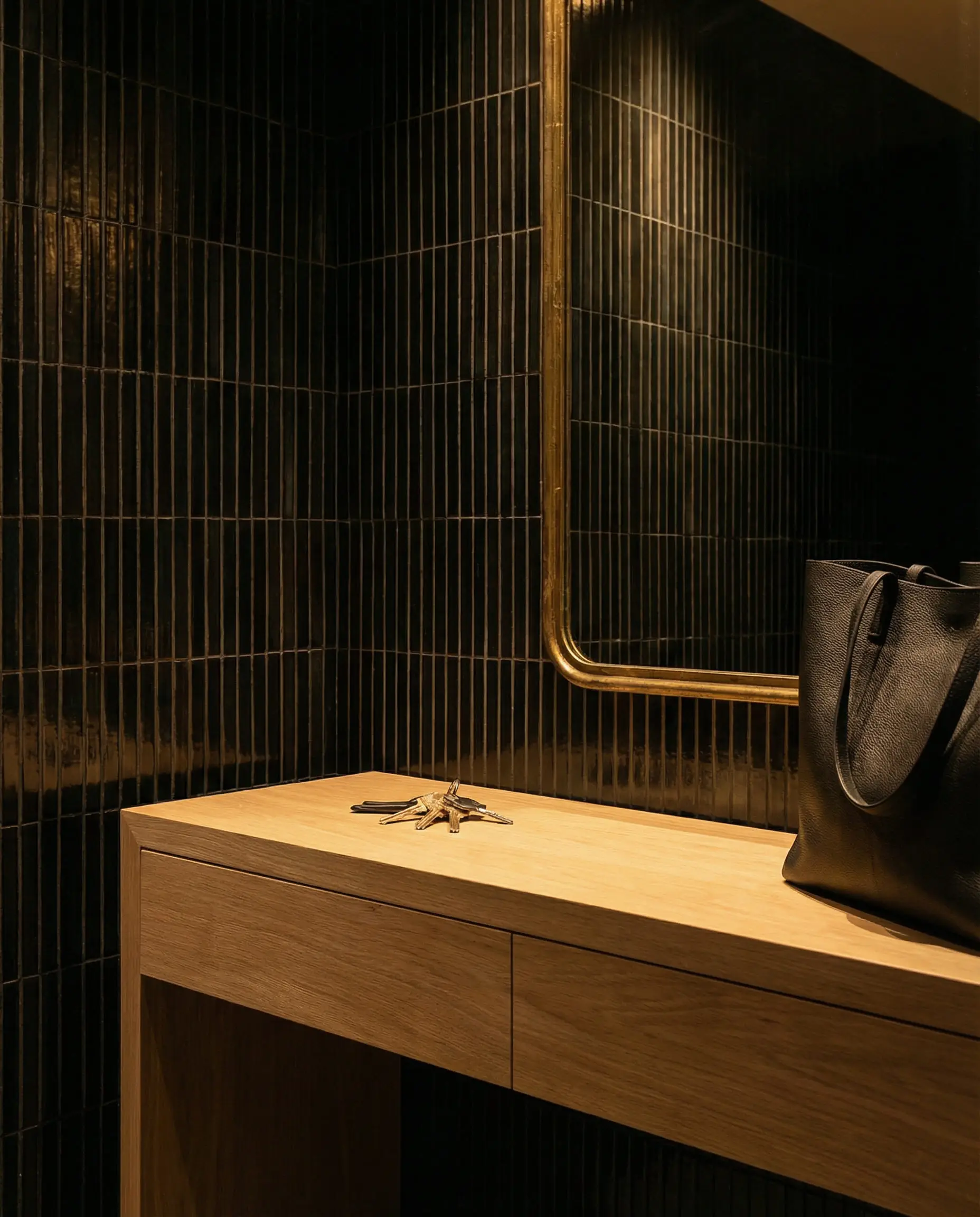
Black tile has officially shed its reputation as a daring, fringe rebellion. It has matured into the very foundation of 2026’s interpretation of quiet luxury. Designing with dark surfaces is a testament to an architect’s restraint and a designer’s mastery over the physical environment. By prioritizing the tactile richness of fluted textures, calibrating your ambient illumination with absolute precision, and grounding the darkness with organic pairings like White Oak and Aged Bronze, you can transform a simple room into a profound spatial experience.
The shadows are no longer something to fear; they are the canvas upon which true atmosphere is built.
We challenge you to look beyond the clinical white box and embrace the depth, drama, and unparalleled sophistication of the dark aesthetic in your next project. Ready to begin engineering your own bespoke sanctuary? Transition from inspiration to execution by exploring Hackrea’s comprehensive ultimate bathroom renovation guide to start planning your architectural masterpiece today.

The Aesthetics Desk curates the visual direction for Hackrea. Specializing in design history, global architectural movements, and interior styling, this desk focuses on the psychology of space and how to translate high-end, magazine-quality aesthetics into approachable residential design without falling into fleeting micro-trends.