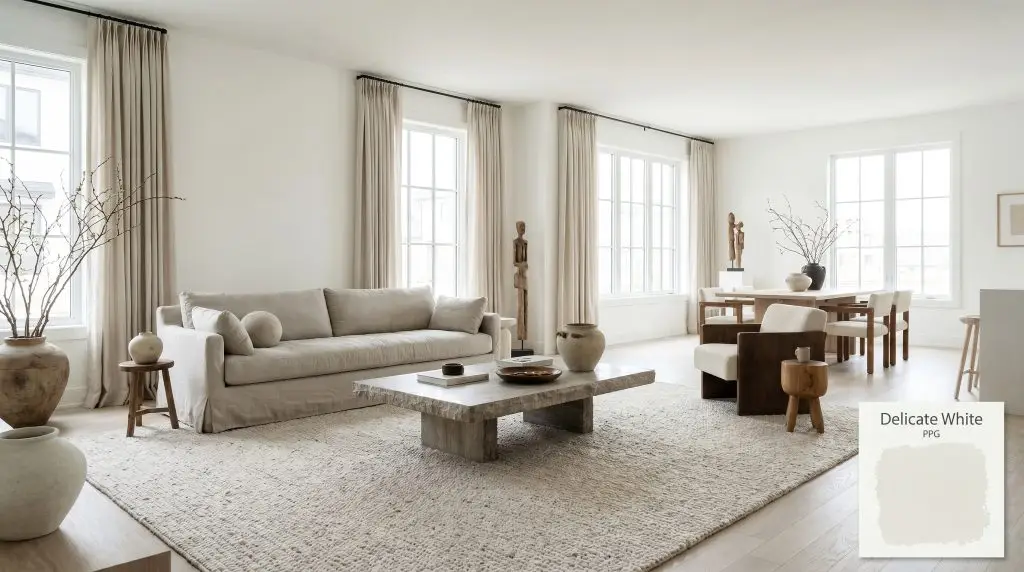
PPG Delicate White (PPG1001-1) is a remarkably clean, highly versatile neutral white with an LRV of 88. Featuring an almost imperceptible green-gray cast, it acts as a true chameleon, providing a crisp architectural finish for trim, ceilings, and main walls without feeling stark or clinical.
Will Delicate White clash with your room?
Paint Technical Profile
| Color ID / SKU | PPG1001-1 |
| HEX Code | #f1f2ee |
| Light Reflectance (LRV) | 88 |
| Use | Interior, Exterior |
| Best Exposures | South-Facing, East-Facing, North-Facing |
| Best For | Ceilings, Trim, Main Walls, Modern Farmhouse, Minimalist Interiors |
PPG Delicate White 1001-1: Crafting a Luminous, Neutral Foundation
Finding a white paint that bounces massive amounts of light without turning your living room into a sterile laboratory is one of the most common challenges in home design. Many high-reflectance shades lean so far into stark coolness that they strip the warmth right out of your furnishings. PPG Delicate White solves this exact problem by balancing crisp luminosity with a barely-there softness.
This specific shade acts as a highly versatile architectural finish, smoothing out visual clutter while amplifying natural light. It provides a brilliant, clean slate that allows your textiles, woods, and artwork to command the room. If you are looking for a true neutral white chromatic profile that feels intentional rather than institutional, this color deserves your immediate attention.
Undertones & LRV of PPG Delicate White
When evaluating PPG1001-1, the most frequent question is whether this shade pulls warm or cool. The definitive answer is that it is a true neutral, possessing a microscopic warm-cool duality that adapts to its environment. This delicate balance is exactly what gives the color its sophisticated edge on the wall.
To understand how this paint behaves, we have to look at its foundational color structure:
At an official LRV of 88, this shade provides massive ambient light amplification. It sits right in the sweet spot for a high-reflectance base, bouncing illumination beautifully around darker spaces. Crucially, it stops just short of crossing into the blinding 90+ LRV territory, ensuring your walls retain a soft, touchable quality rather than a glaring sheen.
Lighting Effects & The Chameleon Factor
Because of its neutral white chromatic profile, this paint is highly reactive to the temperature of the light hitting it. It shifts its personality throughout the day, adapting to the changing angles of the sun.
Here is exactly how you can expect the color to behave across different lighting scenarios:
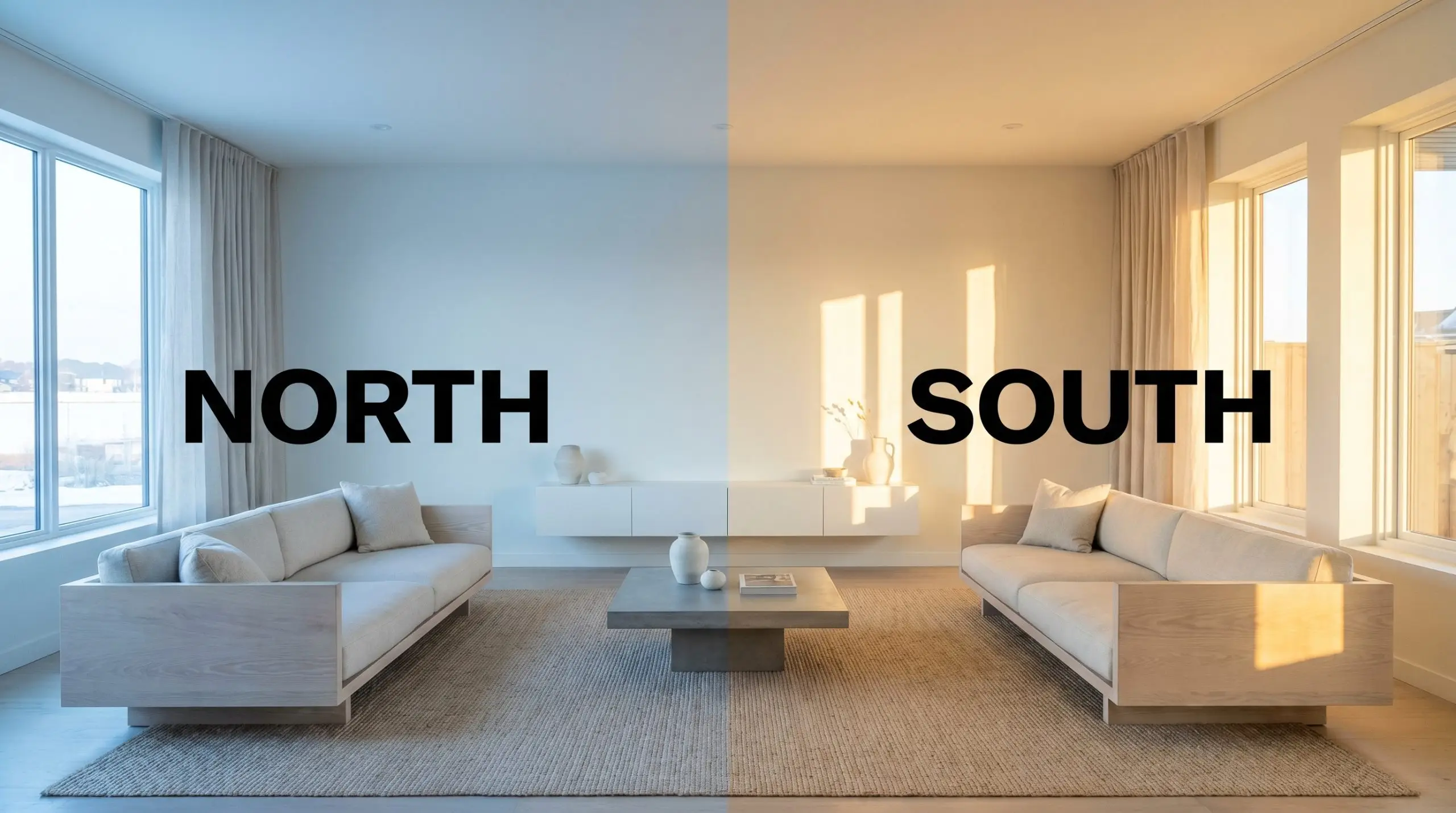
If you want to maintain the crisp, neutral purity of this white at night, swap your standard 2700K bulbs for 3000K or 3500K LEDs. This middle-ground temperature prevents the walls from turning yellow while keeping the space feeling cozy.
Hackrea Pro-Tip (The Bulb Strategy)
Popular Applications
The beauty of a shade with an LRV of 88 is its ability to physically alter how we perceive the dimensions of a room. By maximizing light bounce, this color can make standard architectural features feel expansive and highly custom. Here is how to leverage its unique profile across your home.
Open-Concept Living Rooms
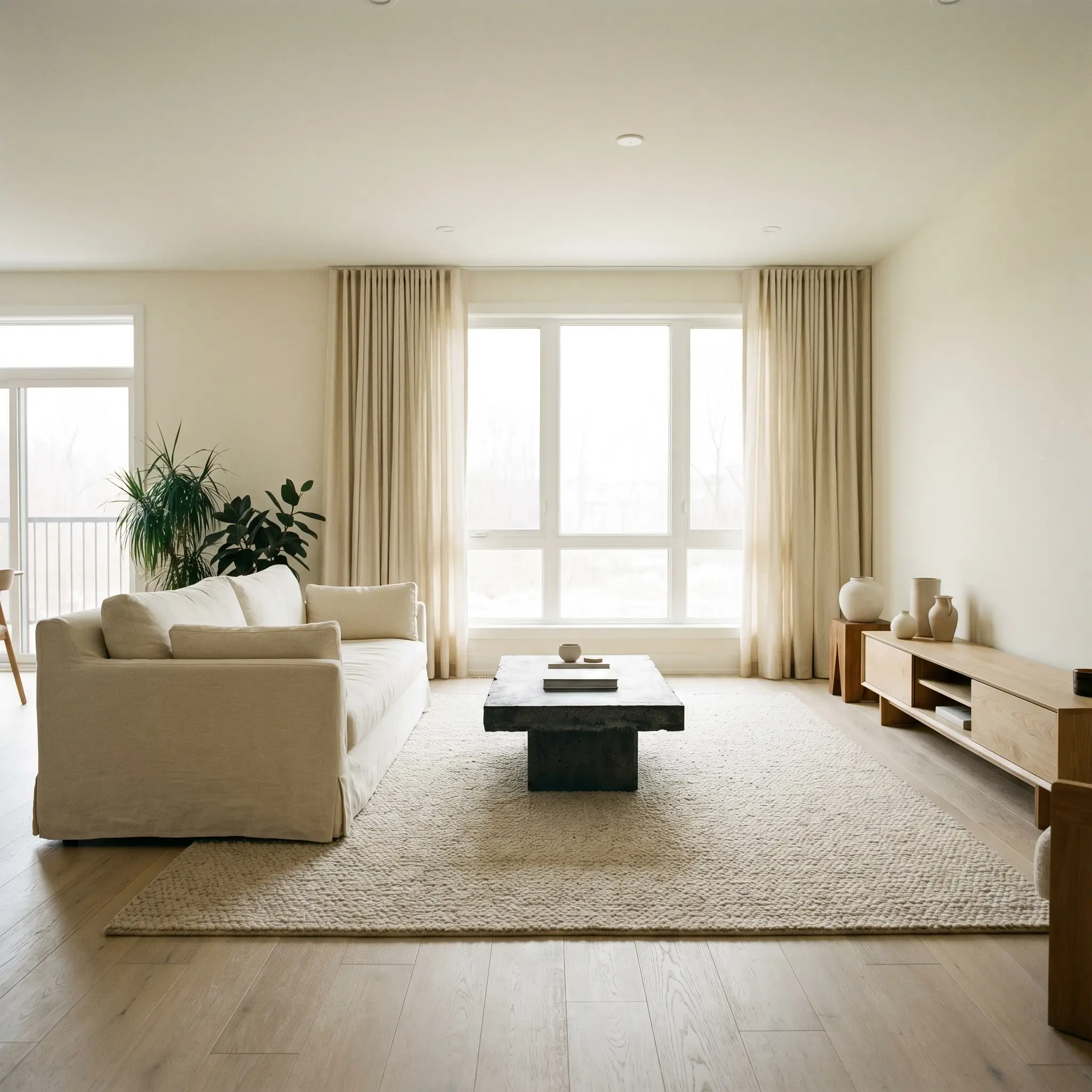
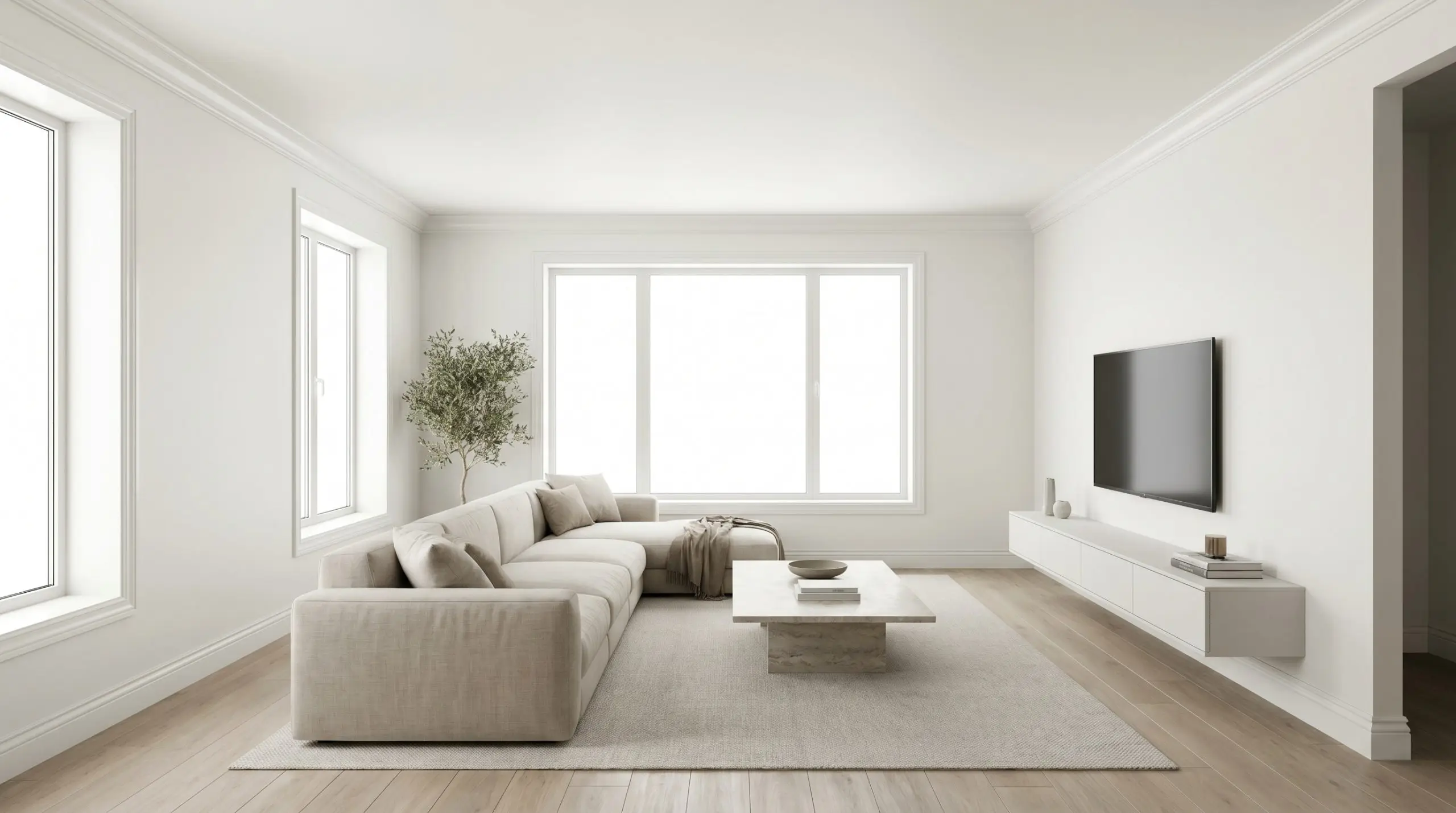
In expansive, multi-use spaces, this neutral white acts as the ultimate unifier, erasing awkward transitions between living and dining zones. Because it lacks a dominant yellow or blue undertone, it serves as a brilliant backdrop for Soft Minimalism or Japandi aesthetics. You can layer raw silk drapery, a slipcovered linen sofa, and a brutalist coffee table without the wall color ever competing for attention.
To keep the room from feeling stark, focus entirely on texture rather than contrasting wall colors. Pair the crisp walls with bleached ash flooring and a massive, textured bouclé rug to visually stabilize the floor plan. The subtle green-gray micro-cast of the paint will gently cool down the warm woods, creating a perfectly balanced, serene atmosphere.
Will Delicate White work with your specific lighting, floor, or furniture?
Kitchen Cabinets & Islands
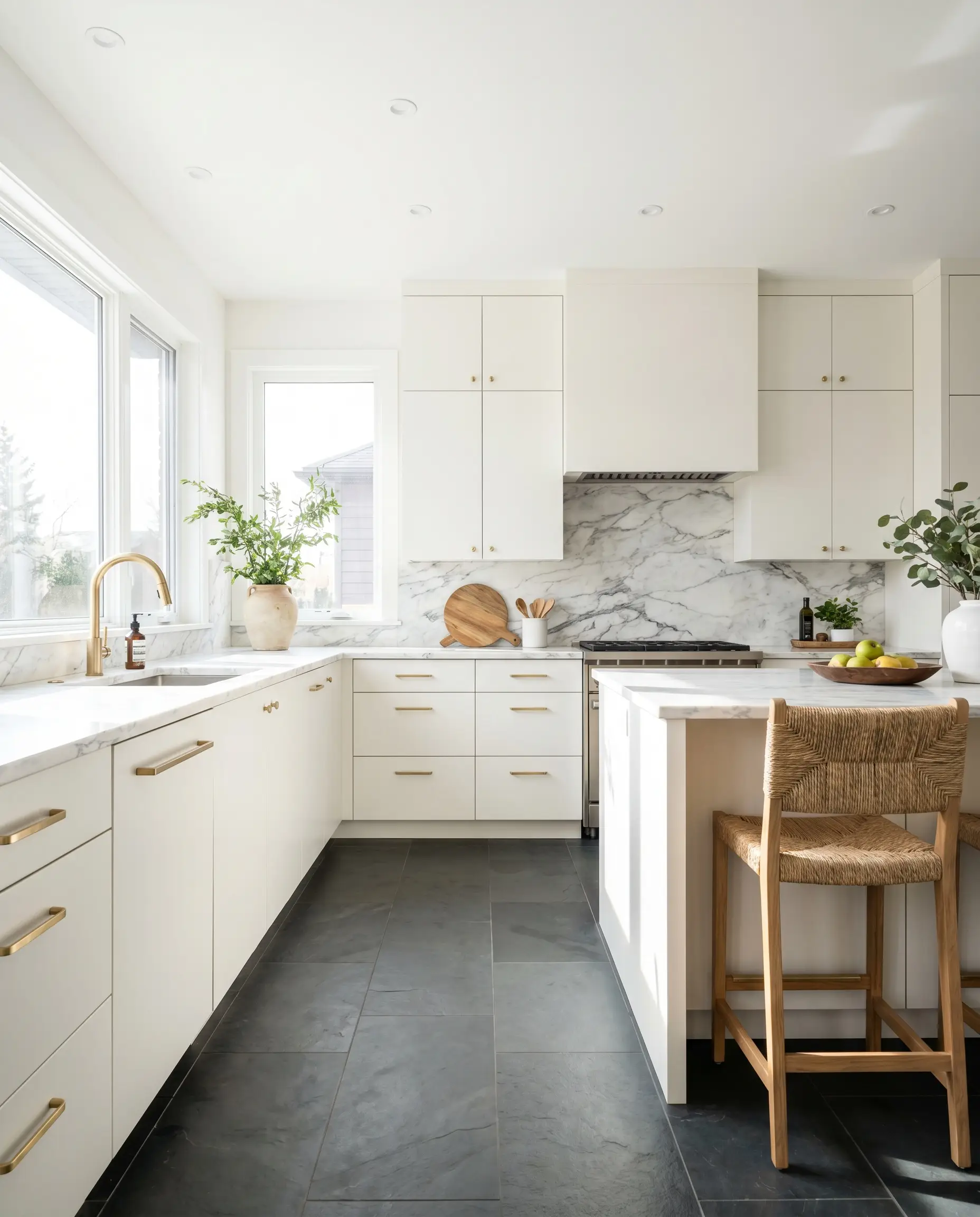
Using this high-reflectance base on cabinetry instantly modernizes a kitchen, especially when paired with flat-panel or subtle shaker profiles. It provides a clean, luminous finish that reflects light beautifully across stone countertops and backsplashes. Unlike creamy off-whites, it establishes a crisp boundary that makes surrounding materials look highly intentional.
For a truly elevated space, pair these bright cabinets with honed slate floors and a heavily veined marble backsplash. Introduce unlacquered brass hardware to add a touch of living warmth that will patina over time. If you want a softer Coastal Grandmother vibe, mix the white cabinetry with floating wood shelves and fluted glass pendant lights.
Baseboards, Crown Molding, & Trim
This shade is exceptional for a crisp trim application, especially if your main walls are painted in a soft gray, muted teal, or dusty plum. The high LRV creates a sharp, tailored frame around your doors and windows, highlighting your architectural millwork. It provides that classic, clean outline without feeling overly aggressive or blindingly bright.
For a highly contemporary look, paint your walls in a matte finish and your baseboards and crown molding in a semi-gloss finish of the exact same color. This tonal layering creates a subtle, sophisticated shift in light reflection that feels incredibly high-end.
Hackrea Design Secret (The Monochromatic Wrap)
Vaulted Ceilings
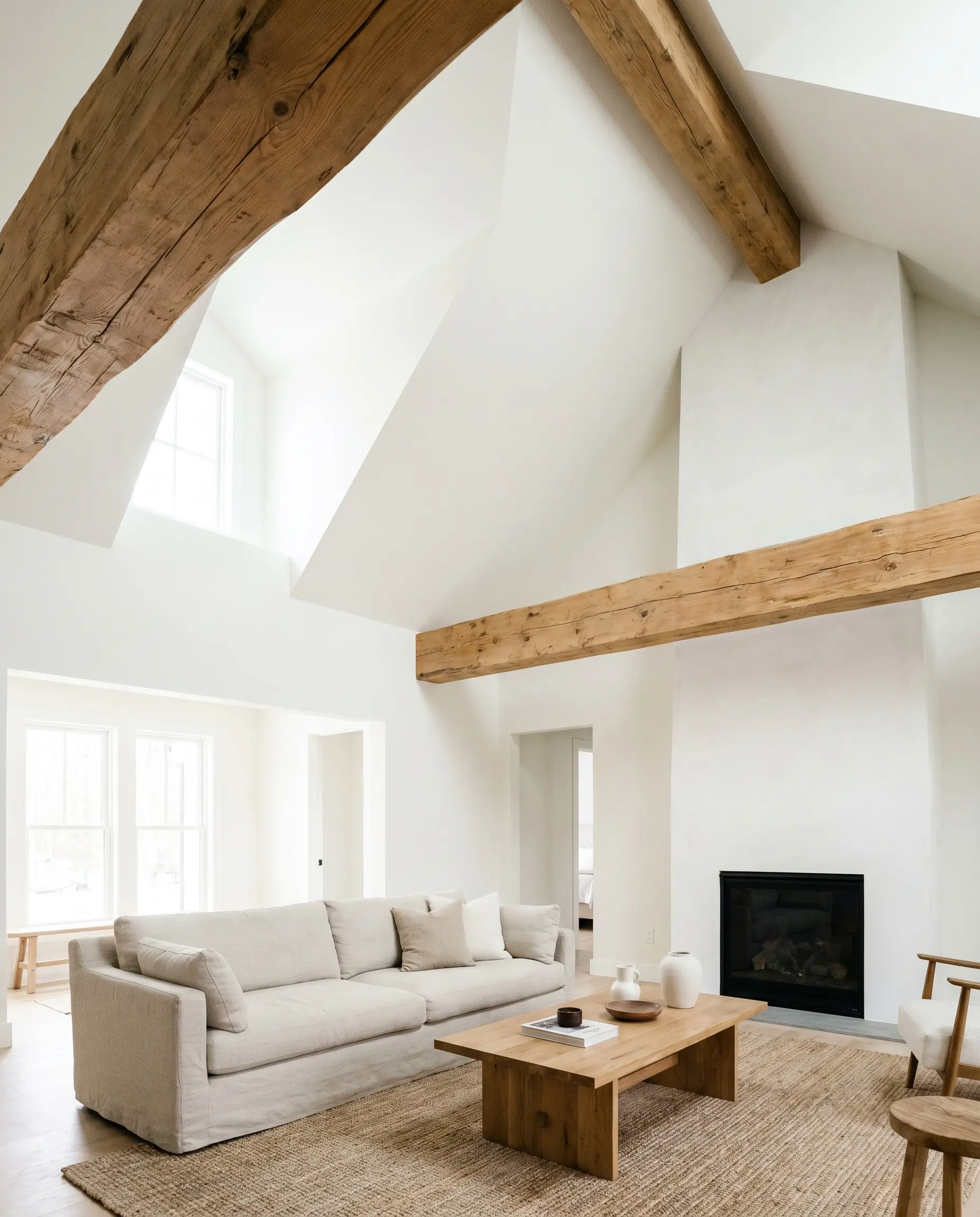
When applied to vaulted or cathedral ceilings, this color practically dissolves the visual boundary between the walls and the roofline. The massive ambient light absorption and reflection pull the eye upward, making the architecture feel airy and limitless. It is the perfect strategy for rooms that feature exposed beams, allowing the wood to stand out sharply against the luminous background.
Will Delicate White work with your specific lighting, floor, or furniture?
Windowless Hallways
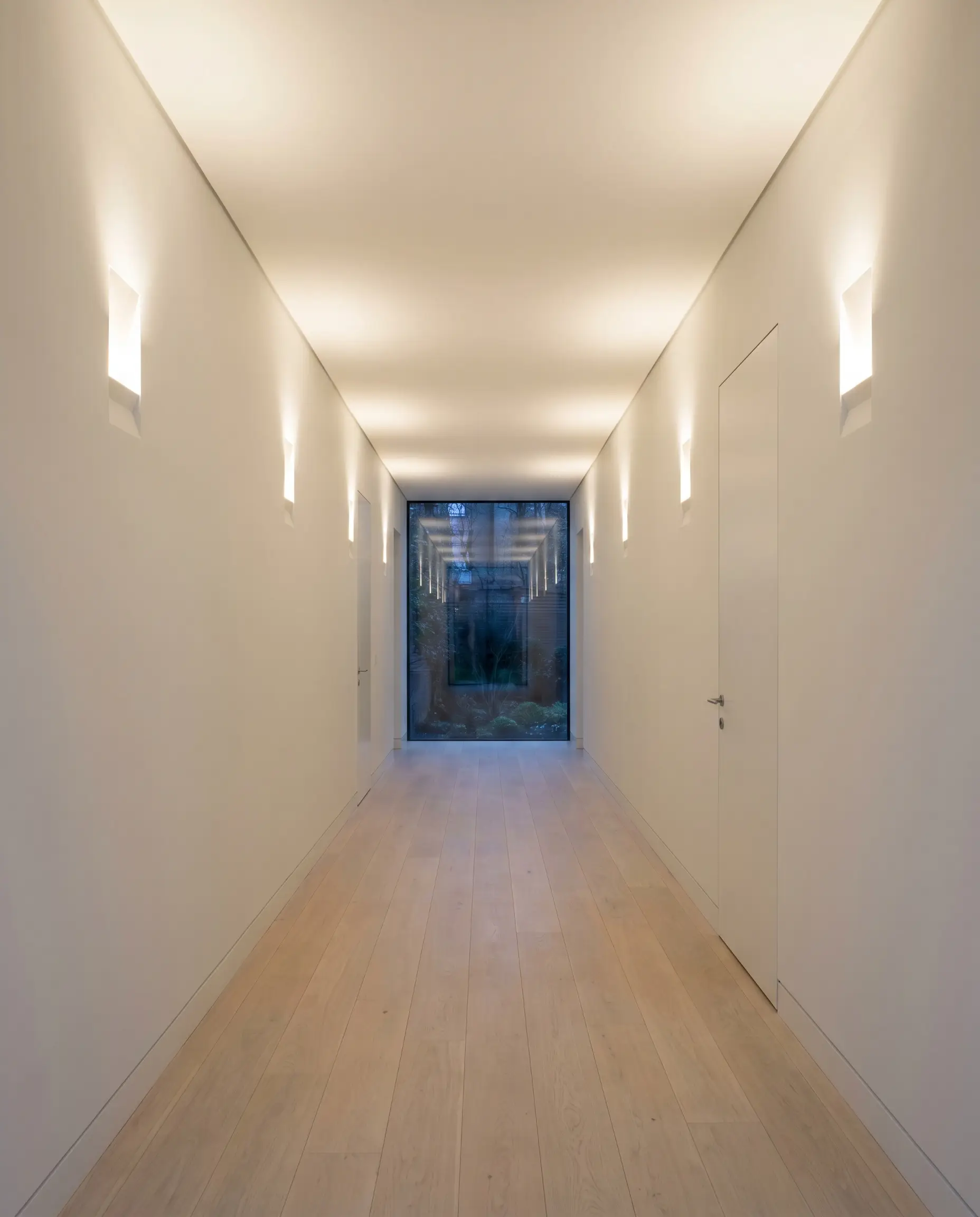
Dark, narrow corridors are the perfect candidate for this specific formulation. The paint acts like a mirror for whatever artificial light you introduce, bouncing it down the hallway and eliminating shadowy corners. To maximize this effect, install architectural sconces that wash light directly up and down the brightened walls.
Coordinating Colors & Material Pairings for PPG1001-1
The secret to styling a true neutral white is understanding that it requires tactile contrast to come alive. Because it doesn’t have a strong personality of its own, it relies entirely on the materials, metals, and secondary colors you place next to it to dictate the room’s mood.
Trim & Baseboards
When this shade is used on the main walls, you have two distinct pathways for your trim. You can either color-drench the space by using the same paint in a higher sheen, or you can opt for a slightly brighter, purer white to create a subtle, tailored boundary.
Hardware, Wood & Material Pairings
To prevent a highly reflective white from feeling clinical, you must introduce materials that absorb light and add visual weight.
Coordinating Colors
When building a palette around this luminous base, look for muted, complex tones that can hold their own against the bright white without feeling overwhelmingly saturated.
Designer Mood Boards
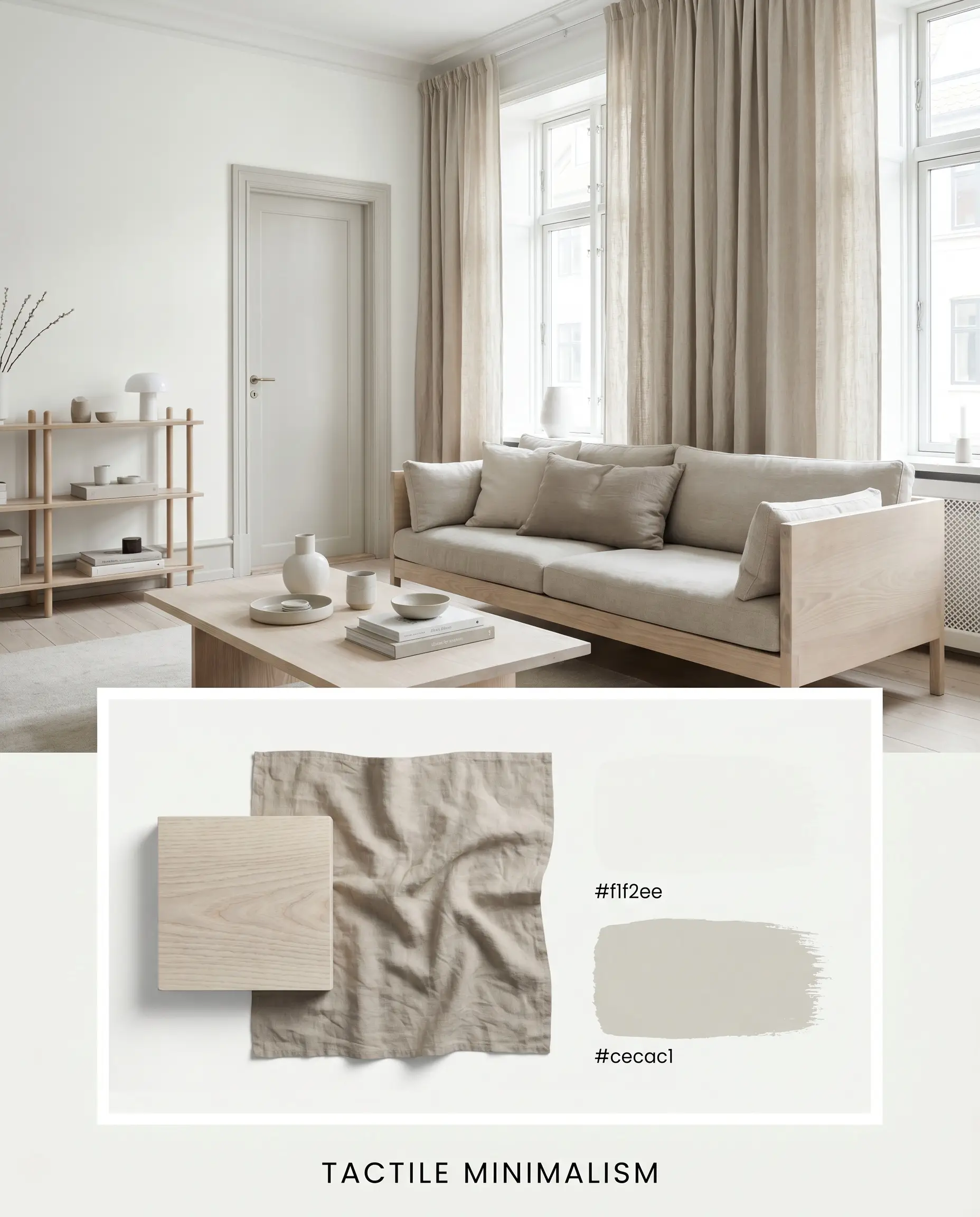
Tactile Minimalism This palette is all about creating a serene, breathable atmosphere through subtle texture rather than loud color. The walls are coated in the crisp white, serving as a quiet backdrop for bleached ash furniture and expansive stonewashed linen drapery. A secondary accent of Swirling Smoke on the interior doors adds just enough depth to keep the space from feeling flat, resulting in a deeply calming, restorative energy.
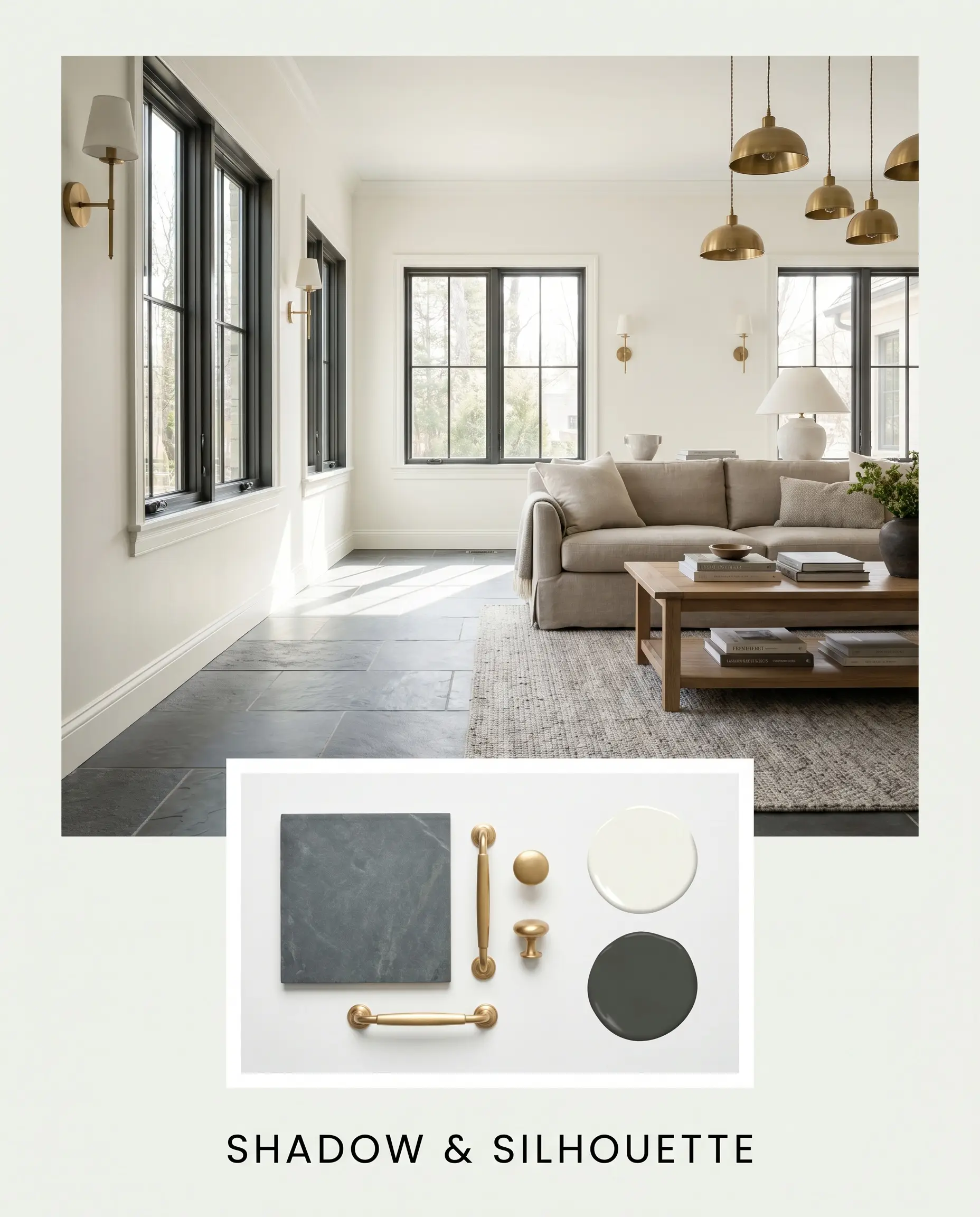
Shadow & Silhouette Designed for high-impact, graphic contrast, this mood board leans into the tension between light and dark. The luminous white walls are sharply interrupted by window frames and architectural accents painted in Iron Ore. Honed slate floors establish a heavy, matte foundation, while unlacquered brass lighting fixtures introduce a necessary flash of warmth to this highly tailored, sophisticated aesthetic.
Head-to-Head Comparisons
Sometimes, a paint’s true characteristics are only revealed when placed directly next to its closest competitors. Depending on your home’s specific lighting conditions or your desired architectural style, a rival shade might actually be the more successful candidate for your project.
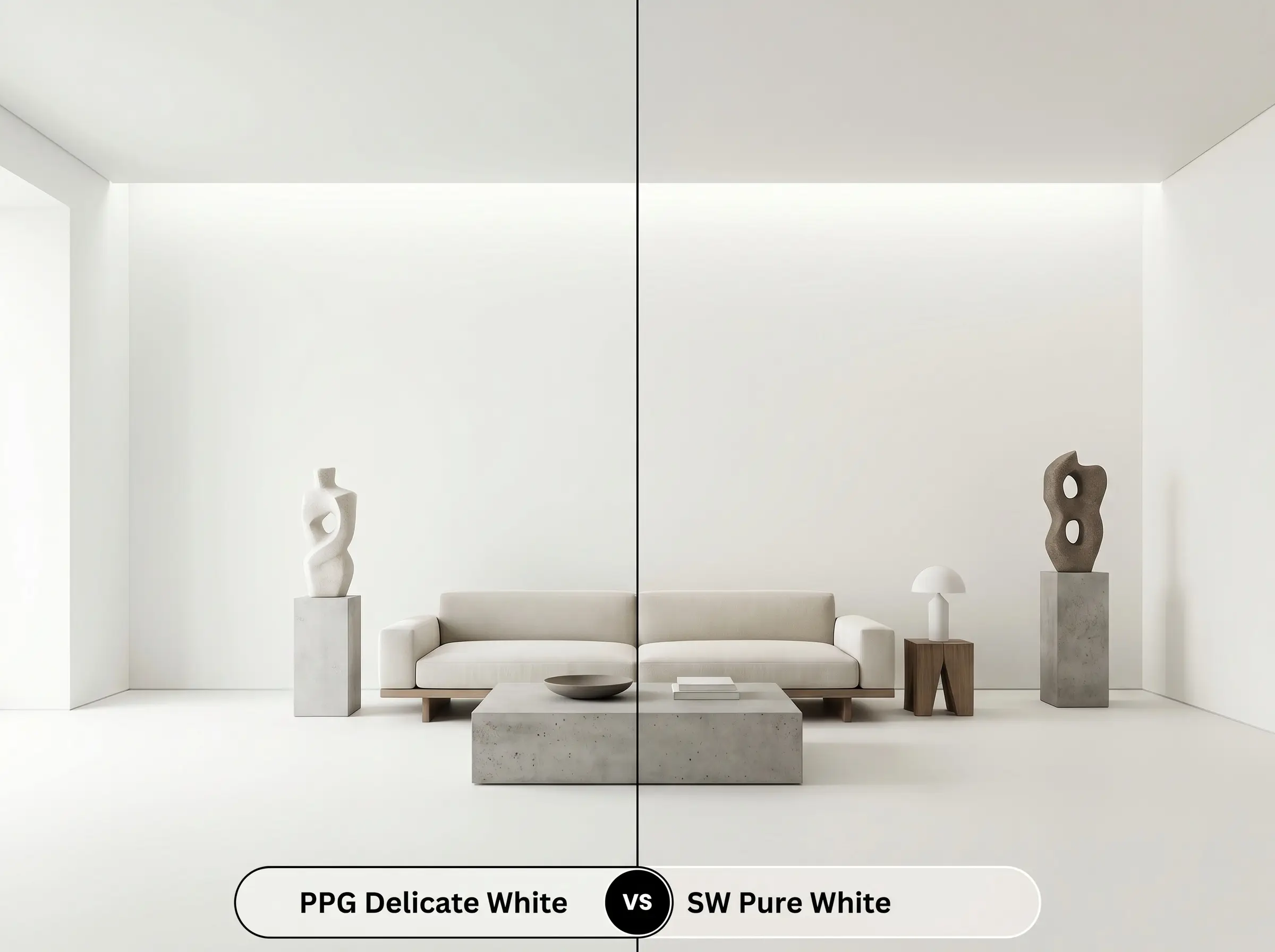
PPG Delicate White PPG1001-1 vs. Sherwin-Williams Pure White SW 7005
Will Delicate White work with your specific lighting, floor, or furniture?
While both are incredibly popular neutrals, Pure White features a distinctly warmer, almost creamy undertone compared to the PPG option. If your room faces north and you are worried about the walls feeling too icy, Pure White will provide a softer, more forgiving glow. However, if you want a truly crisp, modern gallery feel, the PPG formulation remains the superior choice.
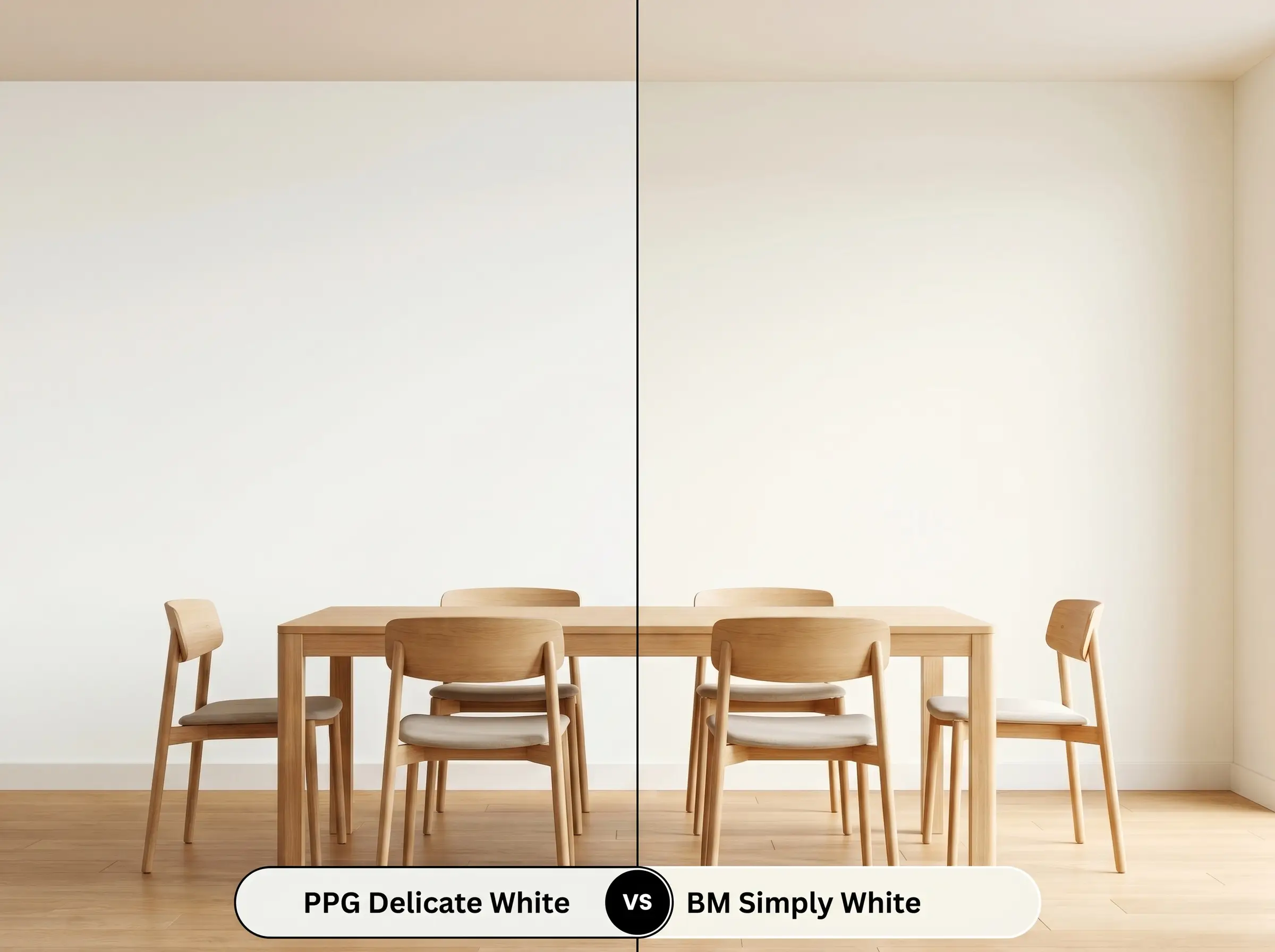
PPG Delicate White PPG1001-1 vs. Benjamin Moore Simply White OC-117
Will Delicate White work with your specific lighting, floor, or furniture?
Simply White carries a very clear, recognizable yellow undertone that makes it glow warmly, especially under incandescent lighting. It is often preferred for traditional homes or spaces with heavy, warm wood tones. In contrast, the PPG shade leans much closer to a true neutral, making it far more adaptable for contemporary or minimalist interiors where yellow undertones would clash.
PPG Delicate White PPG1001-1 vs. PPG Gypsum PPG1006-1
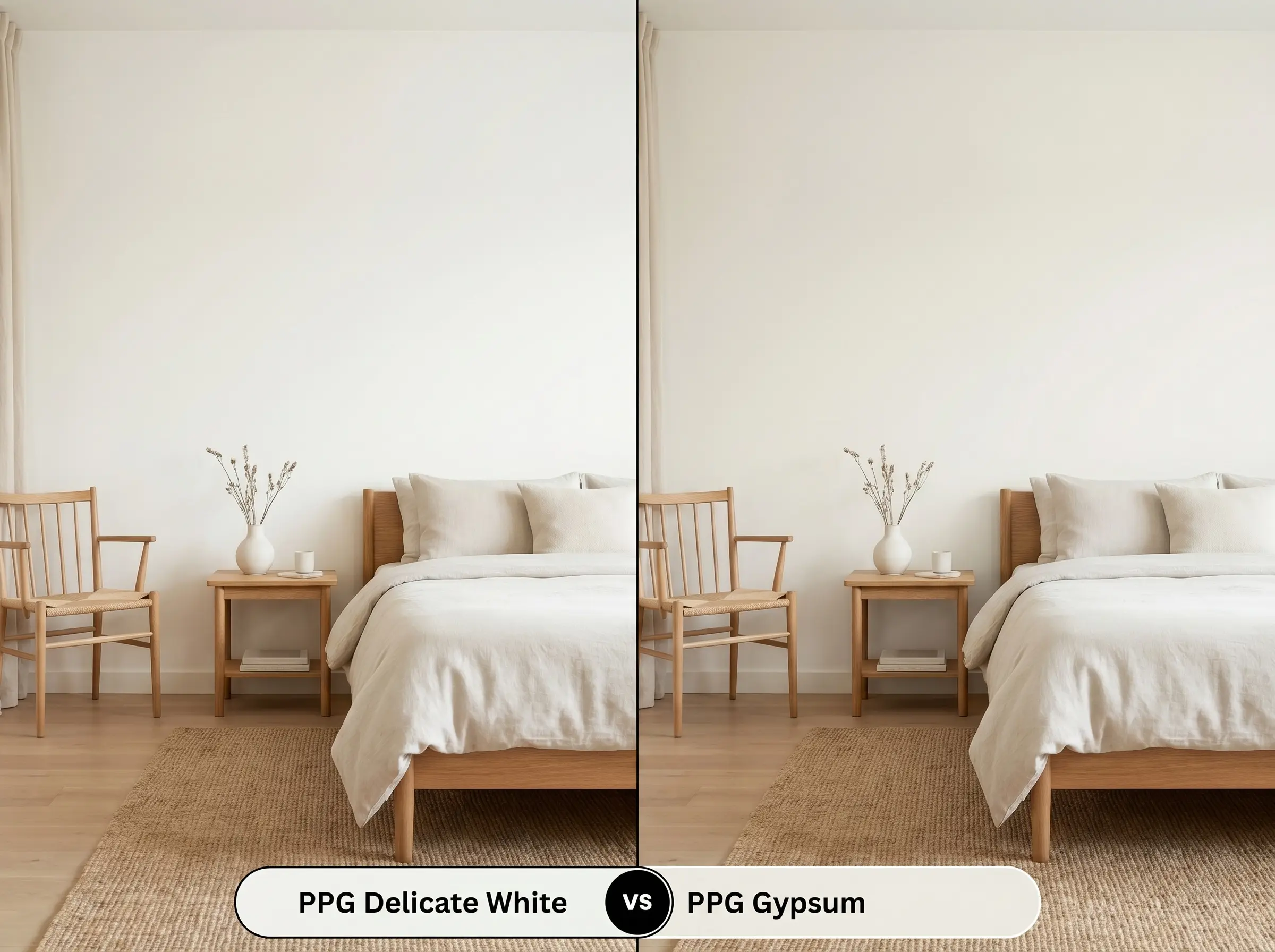
Gypsum is noticeably warmer and slightly more muted, pulling closer to an off-white or very pale greige. It absorbs more light and feels slightly heavier on the wall, which is excellent for creating a cozy, enveloping atmosphere in a bedroom. If your goal is maximum light reflection and a stark, clean architectural frame, stick with the crisper Delicate White.
Similar Colors & Brand Equivalents
If you love the general profile of this shade but need a slight adjustment—perhaps a touch more warmth or a slightly different light reflectance value—there are excellent alternatives available.
Same-Brand Alternatives
Cross-Brand Matches
Practical Application & DIY Advice for Delicate White
Transitioning a high-reflectance color from a tiny swatch to a full room requires strategic planning. Light colors are notoriously unforgiving when it comes to surface imperfections, so your preparation must be meticulous.
Because this is a highly reflective white with minimal pigment, you must use a high-quality, bright white primer before painting, especially if you are covering a dark or vivid color. Without a premium primer, the old color will alter the final perceived undertone of your new white walls. Plan for a minimum of two full coats, and be extremely careful to maintain a wet edge while rolling; touching up a high-LRV paint later often results in “flashing,” where the new paint catches the light differently and leaves a visible, shiny streak on the wall.
Frequently Asked Questions
Because of its high light reflectance, this shade will emphasize the shadows created by heavily textured ceilings, making the texture more obvious. On smooth Level 5 drywall, it performs beautifully, creating a seamless, luminous plane that feels expansive and modern.
At 3000K, the lighting provides a balanced, neutral temperature that prevents the white from feeling icy or sterile. The high LRV will actually work to your advantage here, maximizing the artificial light and making the windowless basement feel significantly brighter and more open.
If applied as a standard exterior latex, high-LRV whites can sometimes show roller marks or flashing in direct sunlight if not applied evenly. For a true limewash effect on brick, it is better to use a specialized mineral paint tinted to this color, which absorbs into the masonry for a streak-free, matte finish.
The subtle green-gray cast actually acts as a gentle neutralizer against the aggressive orange of ambered red oak. Instead of clashing, the cool micro-tones in the paint help balance the visual heat of the floors, allowing the room to feel grounded rather than overwhelmingly warm.
Final Verdict & Expert Warnings
PPG Delicate White 1001-1 is a masterful architectural tool for homeowners who want the crisp, clean look of a modern white without the blinding intensity of a pure, untinted base. Its microscopic green-gray cast provides just enough structure to keep the color grounded, making it incredibly versatile across Soft Minimalism, Japandi, and Transitional design styles. It performs exceptionally well in open-concept living spaces, on modern flat-panel cabinetry, and as a unifying trim color that beautifully frames more saturated wall hues.
This paint is not the right choice for rooms heavily dominated by Tuscan-style warm tones, yellow-beige carpets, or heavily distressed, rustic brown furnishings. Because it lacks a creamy yellow base, placing it directly next to intensely warm, dated earthy tones will instantly make the walls look chilly, gray, and slightly dirty by comparison. If your home features predominantly warm, earthy fixed elements, you will be much better served by an off-white that carries a distinct, complementary warm undertone.
Clash Warning (The Warmth Deficit)
Room Compatibility & Clashes Diagnoses
Hackrea's reports evaluating the compatibility of Delicate White in real rooms.Open-Concept Entryway Partition
"Applying an ultra-high reflectance off-white to this partition eliminates the contrast needed for an accent wall while clashing slightly with the cool metallic furniture at its base."
Closest Cross-Brand Equivalents
The absolute closest scientific color matches for Delicate White across top paint brands.