The Future of the Living Room: 15 Modular Seating & Sectional Trends for 2027
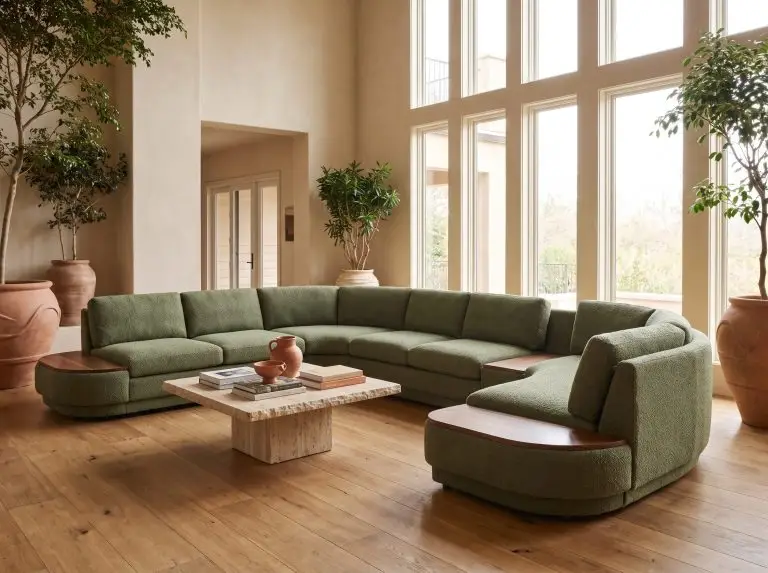
Say goodbye to the messy, oversized aesthetic of the early decade. We are tracking the 2027 modular seating sectional trends, and the market has firmly pivoted toward architectural, tailored modularity that refuses to sacrifice comfort for structure. The days of constantly fluffing deflated cushions are over, replaced by a demand for rigorous silhouettes and hyper-durable materials.
A sectional is no longer merely a place to sit; it is the physical anchor that dictates the entire traffic flow and spatial proportion of your room. Today’s design-forward homeowners are demanding investment-grade pieces featuring integrated hard materials, selective biomorphic lines, and fragmented capabilities that can adapt to entirely new floor plans.
To future-proof your investment, you must understand how to configure these new shapes and specify the right performance materials. Here are the 15 specific executions defining the highest standard of living room architecture this year.
Architectural Silhouettes: Redefining the Modular Shape
The physical evolution of the sofa frame now prioritizes sculptural integrity above all else. Today’s modules must look intentional and fully finished from all 360 degrees, commanding the center of the room rather than hiding against a wall.
1. The “Puddle” Module: Biomorphic & Selective Curves
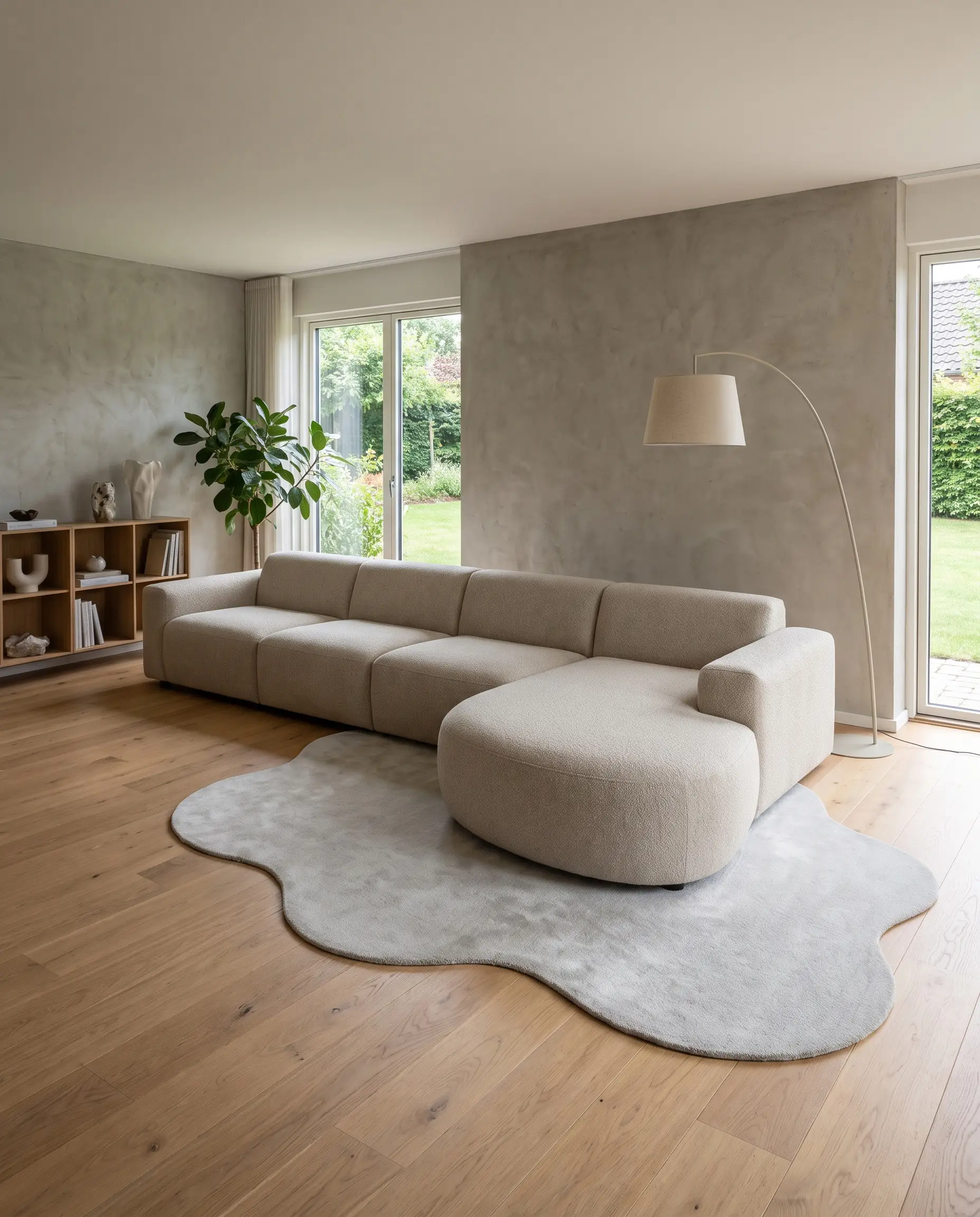
Moving past the generic kidney bean shapes of recent years, selective curves offer the perfect compromise between Organic Modernism and practical space planning. These sectionals feature a strict linear back for flush wall alignment, while the chaise or terminal end flares out into an asymmetrical, biomorphic puddle shape.
- Vibe: Sculptural, organic, and intentionally tailored.
- Key Materials: FSC-certified timber frames wrapped in high-density CertiPUR-US foam.
- Architectural Note: Position the flared puddle end facing the room’s primary entry point to soften the visual footprint.
2. Ultra-Deep, Low-Profile Proportions (The 70s Revival)
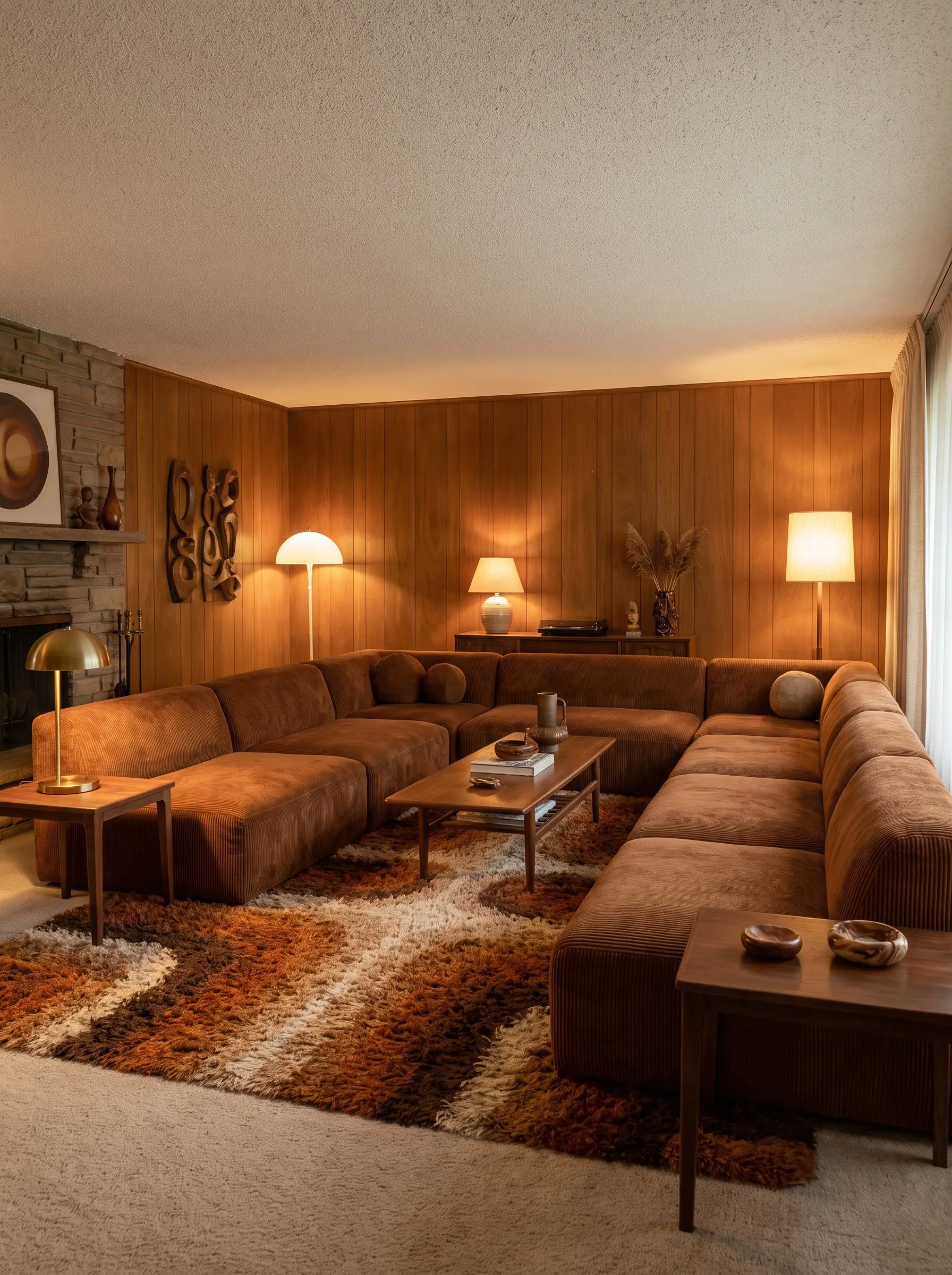
The 1970s revival has brought seating measurements closer to the floor, with seat depths exceeding 24 inches and heights dropping below the standard 18-inch mark. This low-profile architecture actively grounds the room, radically expanding negative space to make standard 8-foot ceilings feel significantly taller.
Do not pair low-profile seating with standard-height side tables. Your casegoods must drop in height concurrently with your upholstery to maintain visual harmony across the horizontal plane.
Hackrea Spatial Directive
- Vibe: Lounge-heavy, grounded luxury.
- Key Measurements: 24+ inch seat depth, 15-17 inch seat height.
Pros/Cons List for Low-Profile Seating:
- Pro: Visually expands the vertical volume of the room.
- Con: Can be difficult for older guests or those with mobility issues to stand up from.
3. The Fragmented Sectional: Standalone-Ready Modules
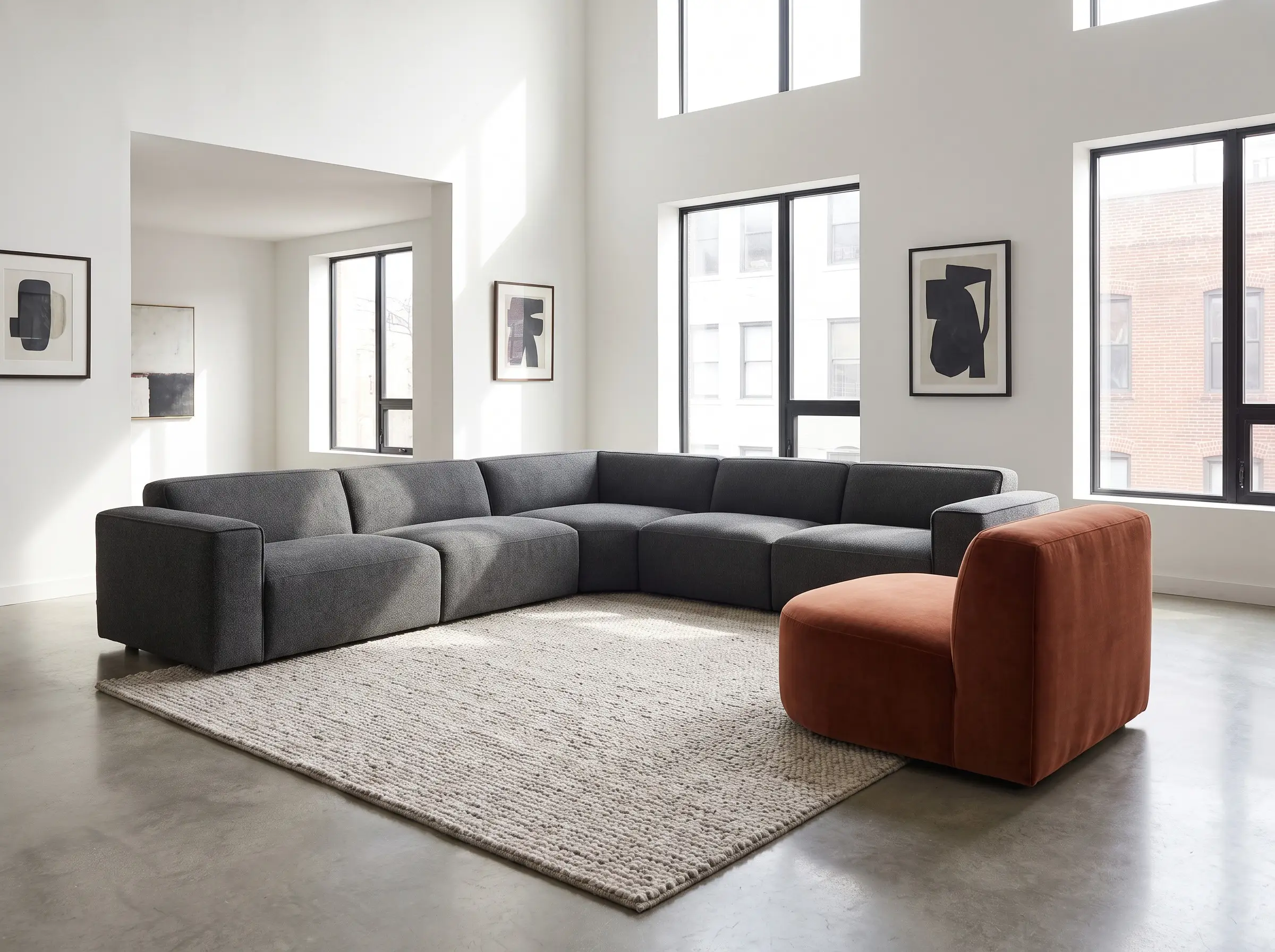
Fragmented modularity represents a massive shift in seating ROI, as individual modules are now designed to function as bespoke accent chairs when separated. Because these pieces feature 360-degree upholstery with no exposed metal clips, they future-proof your investment for seamless reconfiguration in your next home.
- Vibe: Adaptable, high-end gallery aesthetic.
- Key Feature: Fully finished sides and concealed locking mechanisms beneath the frame.
- Styling Pro-Tip: Break off a single corner module and angle it opposite the main sofa to create an instant, cohesive conversation zone.
4. Integrated Casegoods: Built-In Stone & Wood Tables
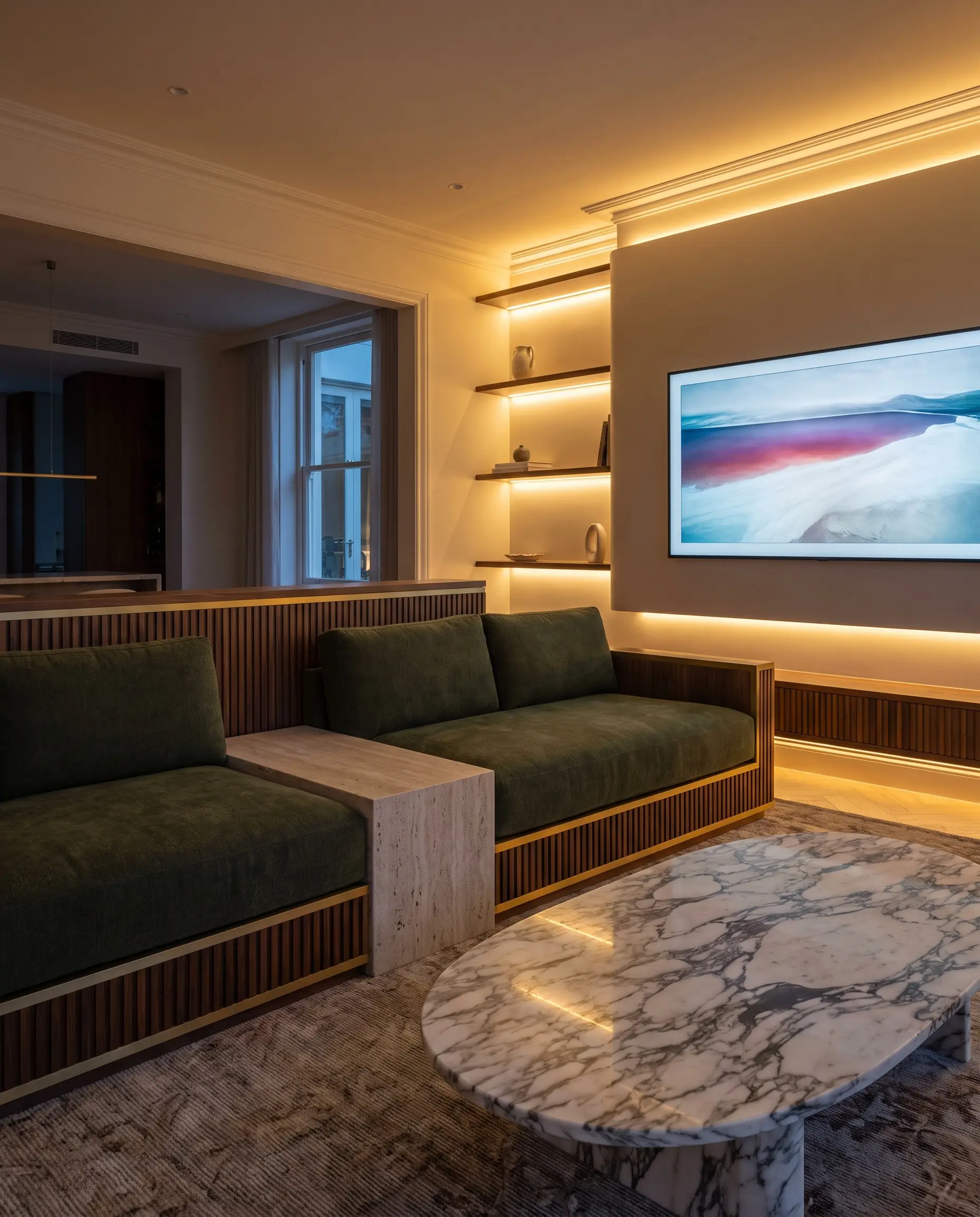
Inserting hard materials directly into the seating arrangement breaks up the heavy visual mass of continuous upholstery. By locking a flat walnut platform or a marble-topped side table seamlessly between two cushions, the sectional becomes a mixed-material architectural feature.
- Vibe: Sophisticated, tech-integrated, and highly functional.
- Key Materials: Unlacquered brass accents, heavily veined marble, and solid walnut slats.
- Material Pairing: Heavy travertine insert modules pair beautifully between two dark moss green seating modules.
Tactile Upholstery: The 2027 Fabric Directives
Visual weight is dictated entirely by fabric texture, and the decade of flat, cold gray linen has officially concluded. The new directive focuses on extreme tactility that hides everyday wear while projecting unapologetic luxury.
5. The Corduroy Renaissance: Wide-Wale & Channel Tufting
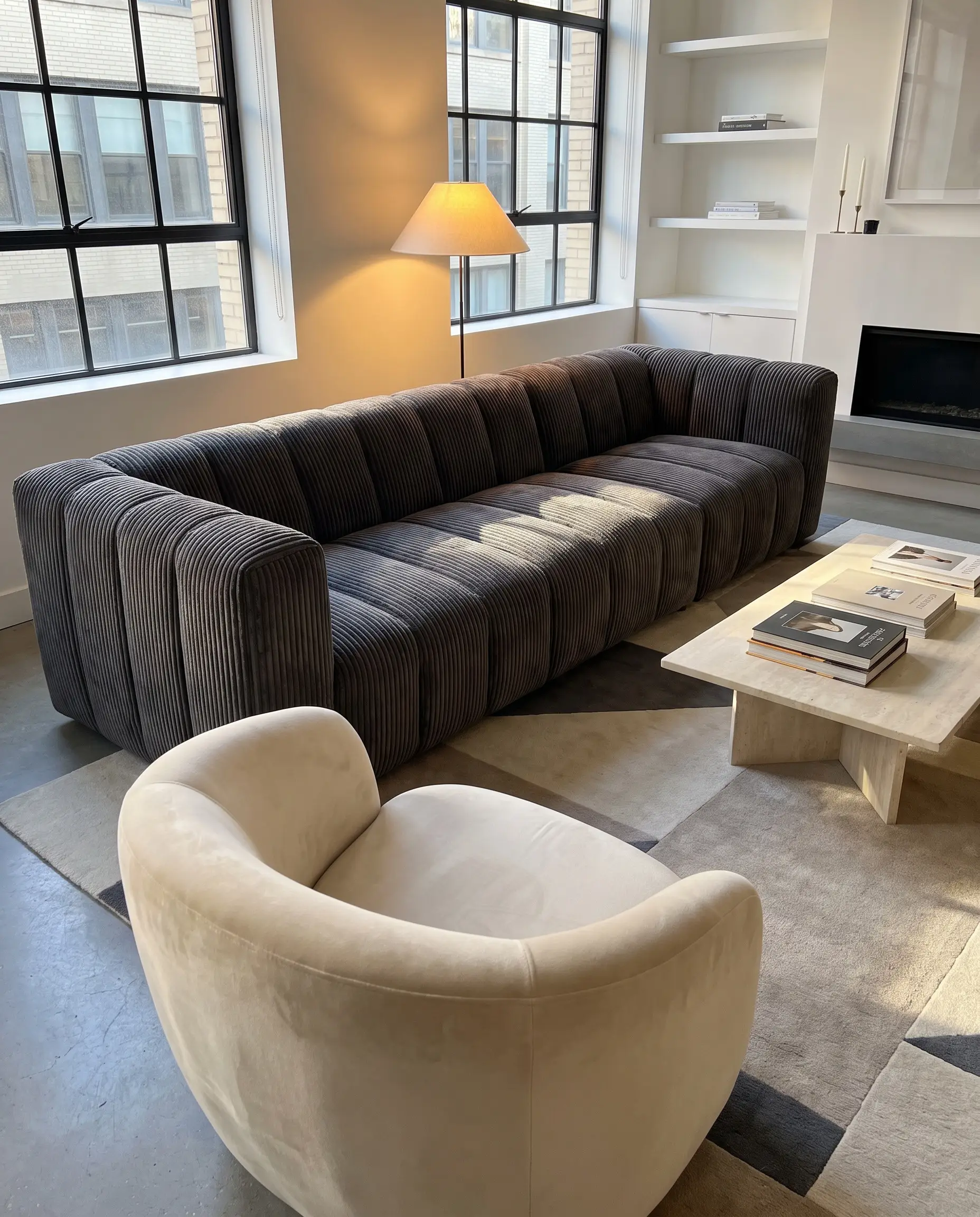
Performance corduroy has aggressively replaced fading bouclé trends, adding strict architectural rigor to soft, plush cushions via thick vertical lines. This wide-wale texture plays dynamically with living room lighting, creating deep shadows that shift throughout the day.
- Vibe: Vintage-inspired yet sharply contemporary.
- Key Materials: Heavyweight cotton-blend wide-wale corduroy.
- Styling Pro-Tip: Contrast the linear texture of channel-tufting with smooth, curved accent chairs to balance the visual weight.
6. Heavyweight Chenille and Crushed Velvet
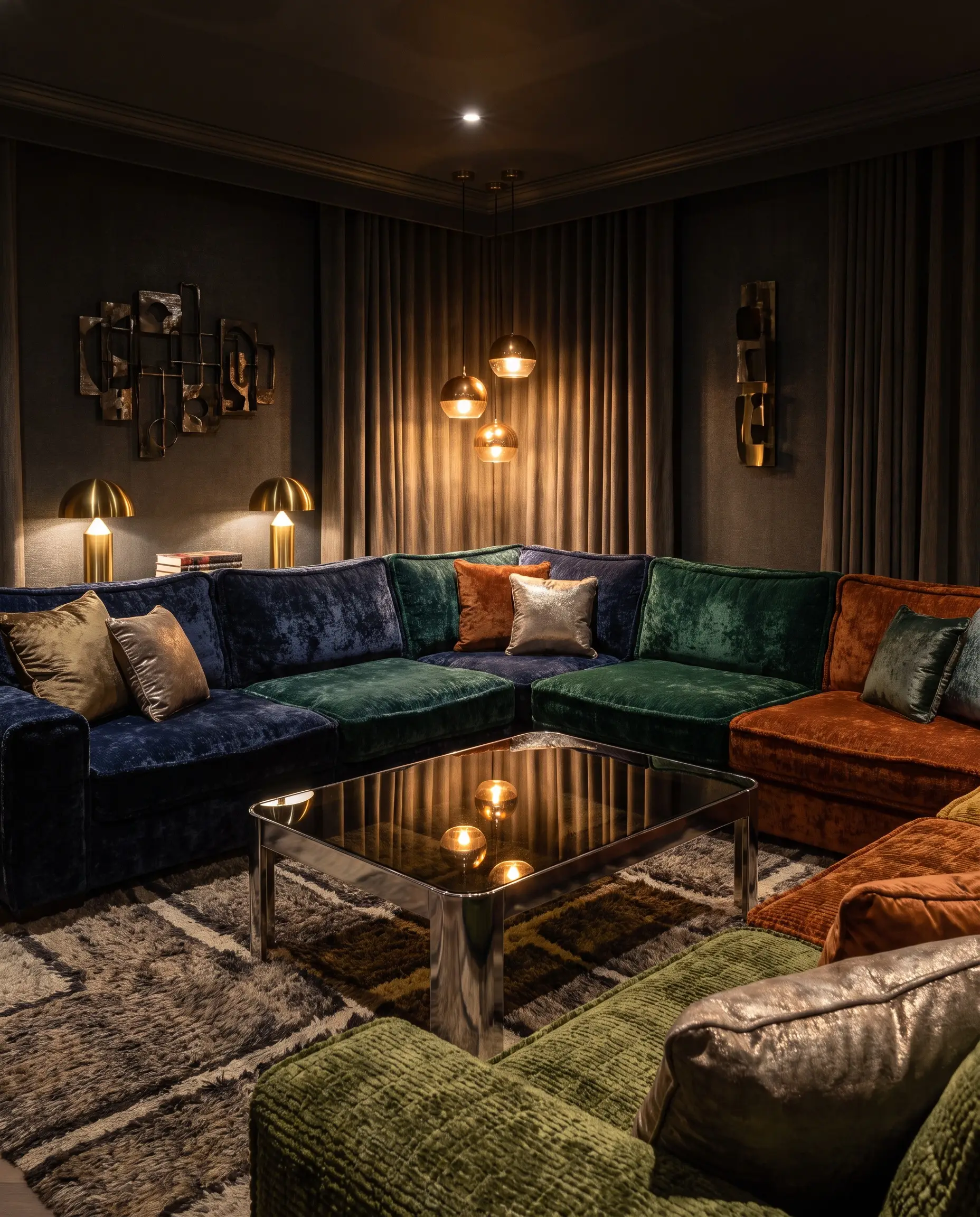
The return of heavy, light-absorbing fabrics provides a bespoke, 1970s luxury hotel aesthetic that feels incredibly dense and opulent to the touch. Despite their high-end appearance, crushed velvet and heavy-weight chenille are remarkably forgiving regarding stains and pet hair.
- Vibe: Moody, saturated, and highly sensory.
- Key Materials: Commercial-grade crushed velvet and dense chenille blends.
- Material Pairing: Pair light-absorbing velvet with high-shine accents like polished chrome or smoked glass coffee tables.
7. Next-Gen Performance: Pet-Friendly Yet Bespoke
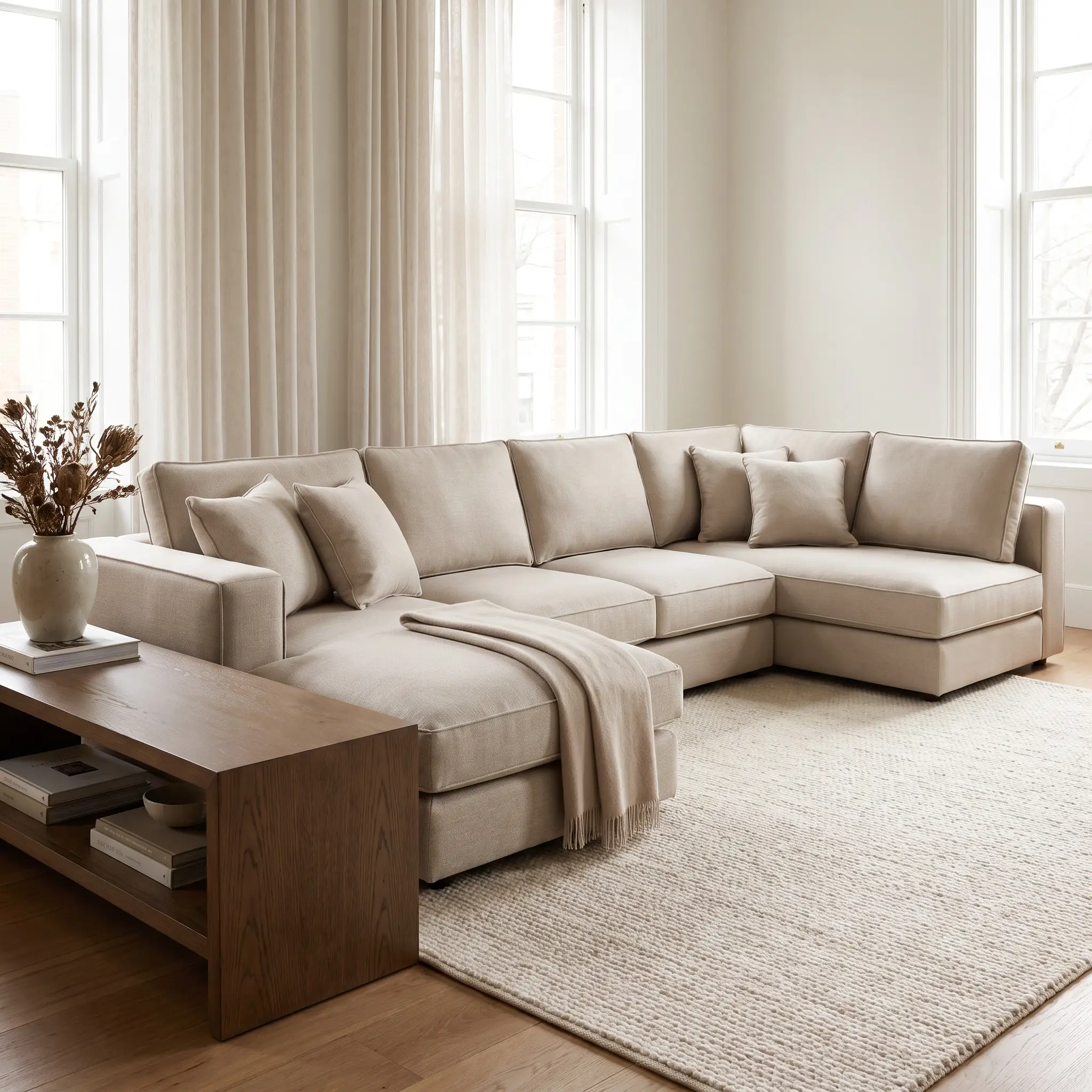
Performance fabrics no longer feel like stiff outdoor patio furniture; innovations in liquid-repellent weaves now look and drape exactly like high-end linen or velvet. Securing a textile with a high Martindale rub count is essential for families wanting approachable luxury without the constant anxiety of spills.
- Vibe: Indestructible luxury.
Performance Fabric Checklist:
- Martindale Rub Count: Minimum of 50,000 for heavy residential use.
- Liquid Repellency: Look for inherent crypton or tightly woven barrier technologies, not just topical sprays.
- Foam Density: Specify CertiPUR-US foam to ensure longevity and prevent toxic off-gassing.
- Weave Tightness: Opt for flat, tight weaves to prevent pet claws from snagging threads.
8. Sustainable Cores: FSC-Timber & Circular Modularity
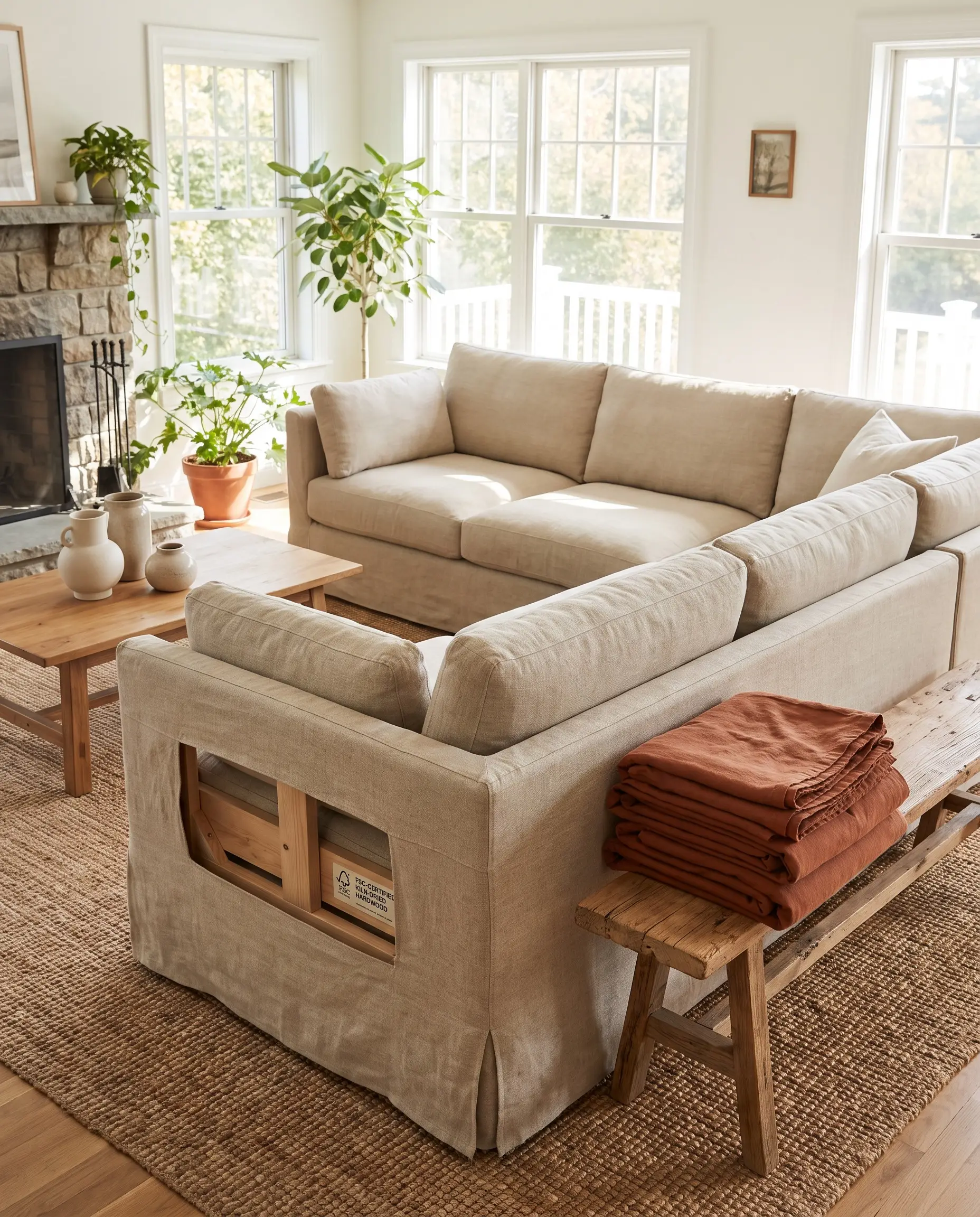
True luxury craftsmanship now demands transparency regarding what is built inside the sofa’s frame. Buyers expect FSC-certified timber frames, recycled PET fill replacing virgin polyester, and removable, washable covers that extend the sectional’s lifespan by decades.
- Vibe: Conscious, heirloom-quality construction.
- Key Materials: Kiln-dried FSC-certified hardwood, recycled PET fiberfill.
- Styling Pro-Tip: Invest in a secondary set of tailored slipcovers in a contrasting seasonal color to double the aesthetic lifespan of the piece.
The 2027 Modular Color Matrix
Color palettes are returning to nature, heavily favoring grounding, earthy tones over sterile whites and cool, clinical grays. Your modular seating should anchor the room with organic warmth.
9. Deep Earth: Terracotta, Moss Green, and Chocolate Brown
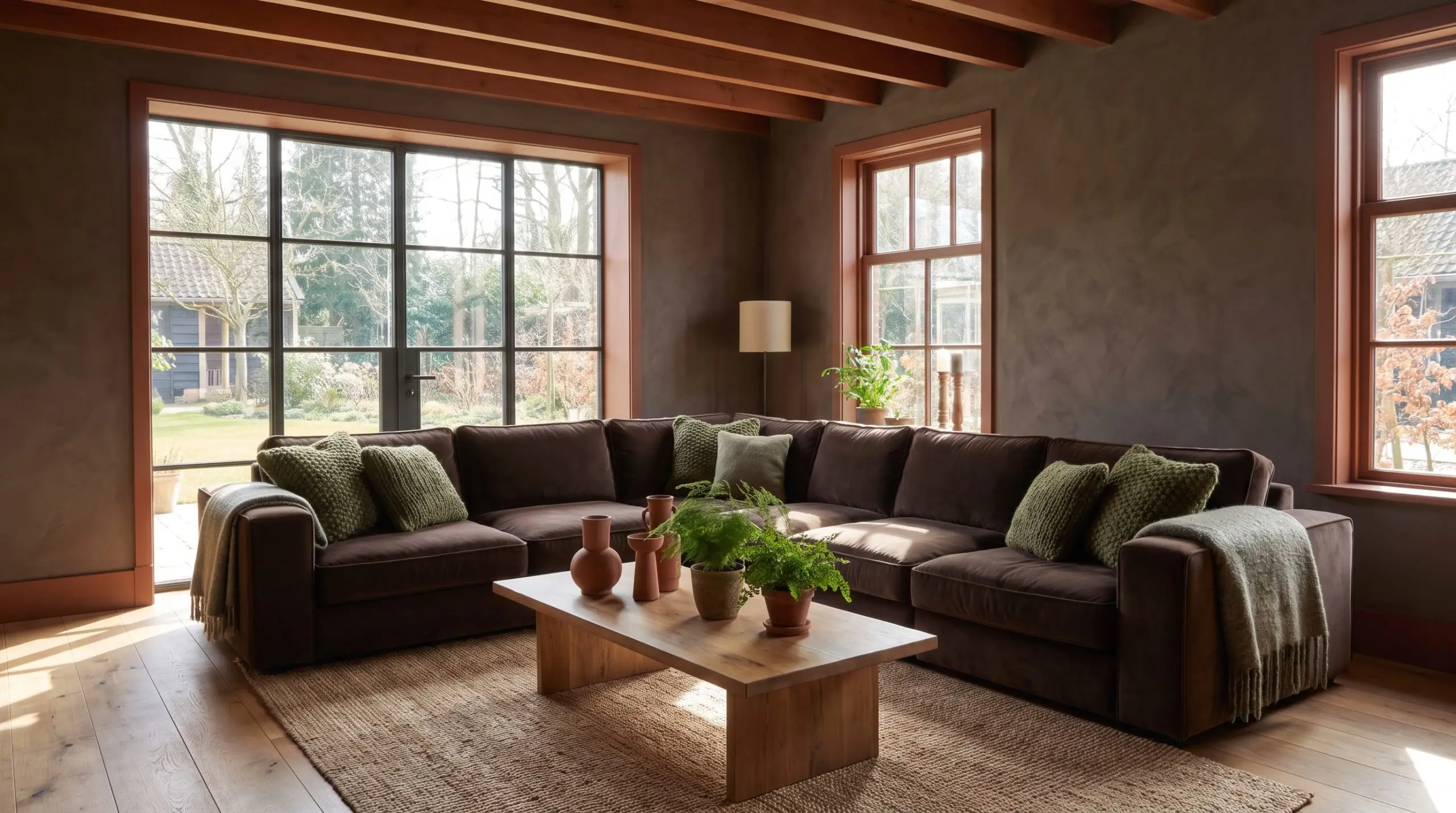
Chocolate brown has emerged as the definitive replacement for harsh black or stark gray, acting alongside terracotta and moss green as the “new neutrals.” These bold, grounding colors harmonize flawlessly with natural wood floors and textured plaster walls.
- Vibe: Grounded, rich, and intensely organic.
- Color Match: Farrow & Ball, Cola (No. 9918) — A rich, deep chocolate brown.
- Color Match: Sherwin-Williams, Rookwood Terra Cotta (SW 2803) — A robust, architectural clay tone.
- Architectural Note: Use these heavy, saturated hues in rooms with abundant natural light to prevent the space from feeling cavernous.
10. The Warm Neutral Shift: Mushroom, Stone, and Clay
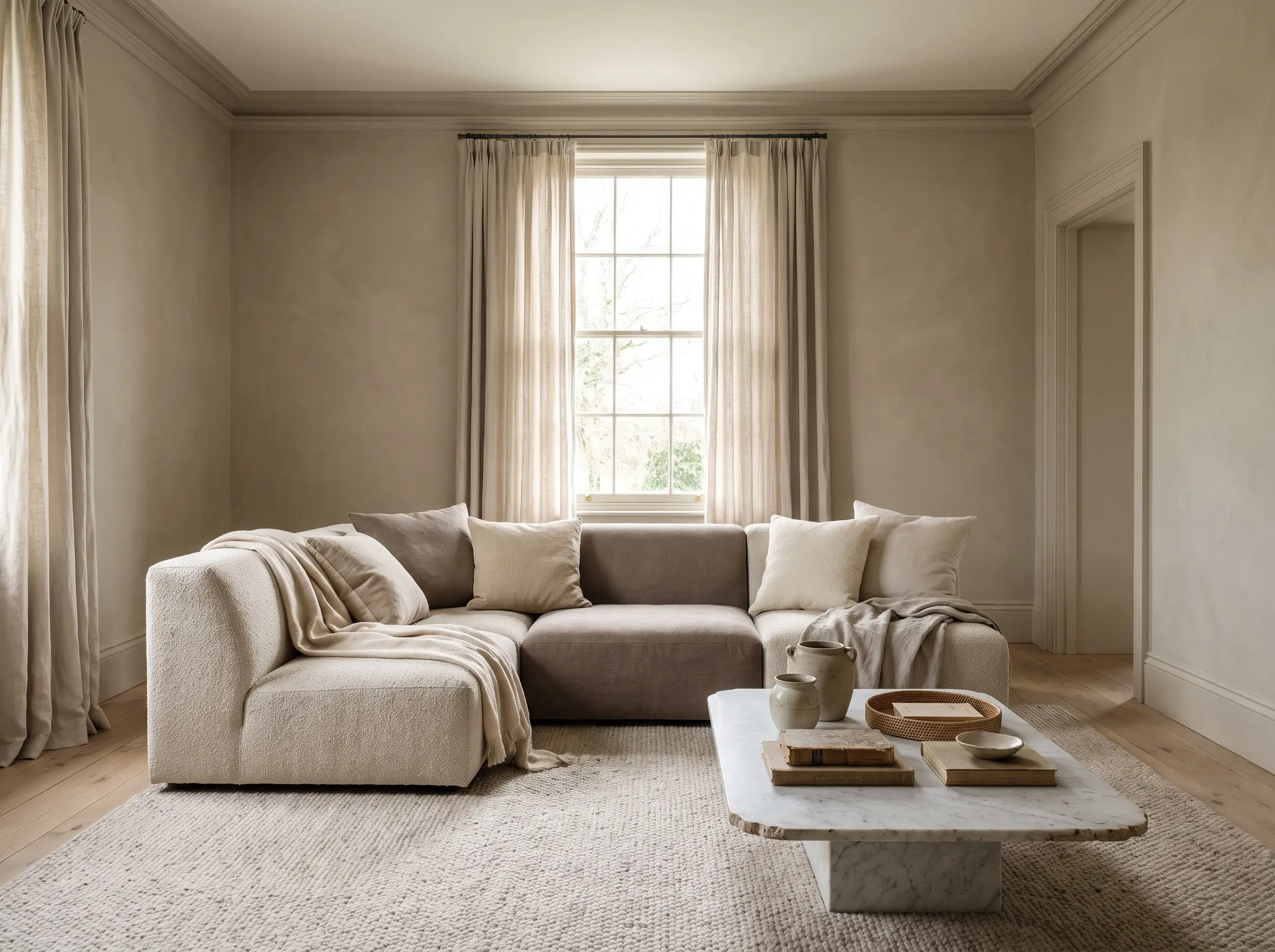
For those specifying light seating, the stark, bright white aesthetic has been replaced by nuanced undertones of taupe, mushroom, and unbleached stone. These limewash-inspired, greige/mushroom tones hide minor daily wear beautifully while injecting essential warmth into the living space.
- Vibe: Soft, luminous, and gracefully aged.
- Color Match: Benjamin Moore, Pashmina (AF-100) — A perfectly balanced, muddy greige/mushroom.
- Color Match: Farrow & Ball, Drop Cloth (No. 283) — A muted, unbleached stone hue.
- Material Pairing: Layer these warm neutrals against raw, matte oak flooring and honed marble for a highly tactile, monochromatic scheme.
11. The “Inky” Accent: Midnight Blue and Deep Aubergine
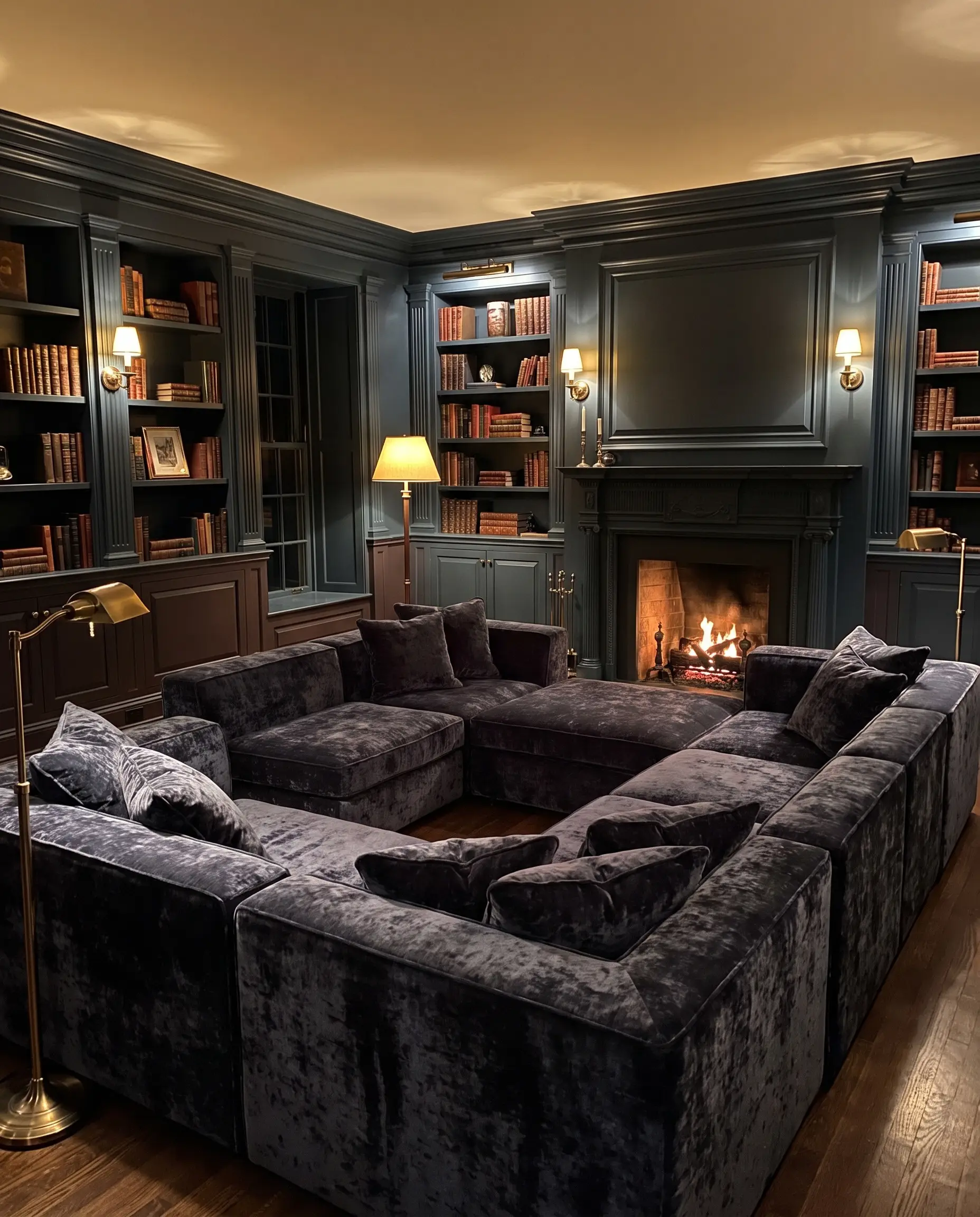
Deep, saturated jewel tones are dominating tightly configured modular setups specifically designed for library rooms, dens, or home theaters. These inky accents create high-contrast, moody interiors that envelop the user in a sophisticated, shadowy atmosphere.
- Vibe: Dramatic, cinematic, and deeply saturated.
- Color Match: Sherwin-Williams, Naval (SW 6244) — A profound, grounding midnight blue.
- Color Match: Benjamin Moore, Caponata (AF-650) — A rich, blackened aubergine.
- Styling Pro-Tip: Execute these inky tones in heavy, crushed velvet to maximize how the fabric absorbs and reflects ambient evening lighting.
Spatial Configuration: How to Layout Your Modules
Sourcing the perfect pieces is only half the architectural challenge; how you arrange them physically dictates the energy and traffic flow of the entire room. These modern spatial strategies ensure your bespoke configurations function flawlessly within your floor plan.
12. The Modern Conversation Pit (U-Shape Enclosures)
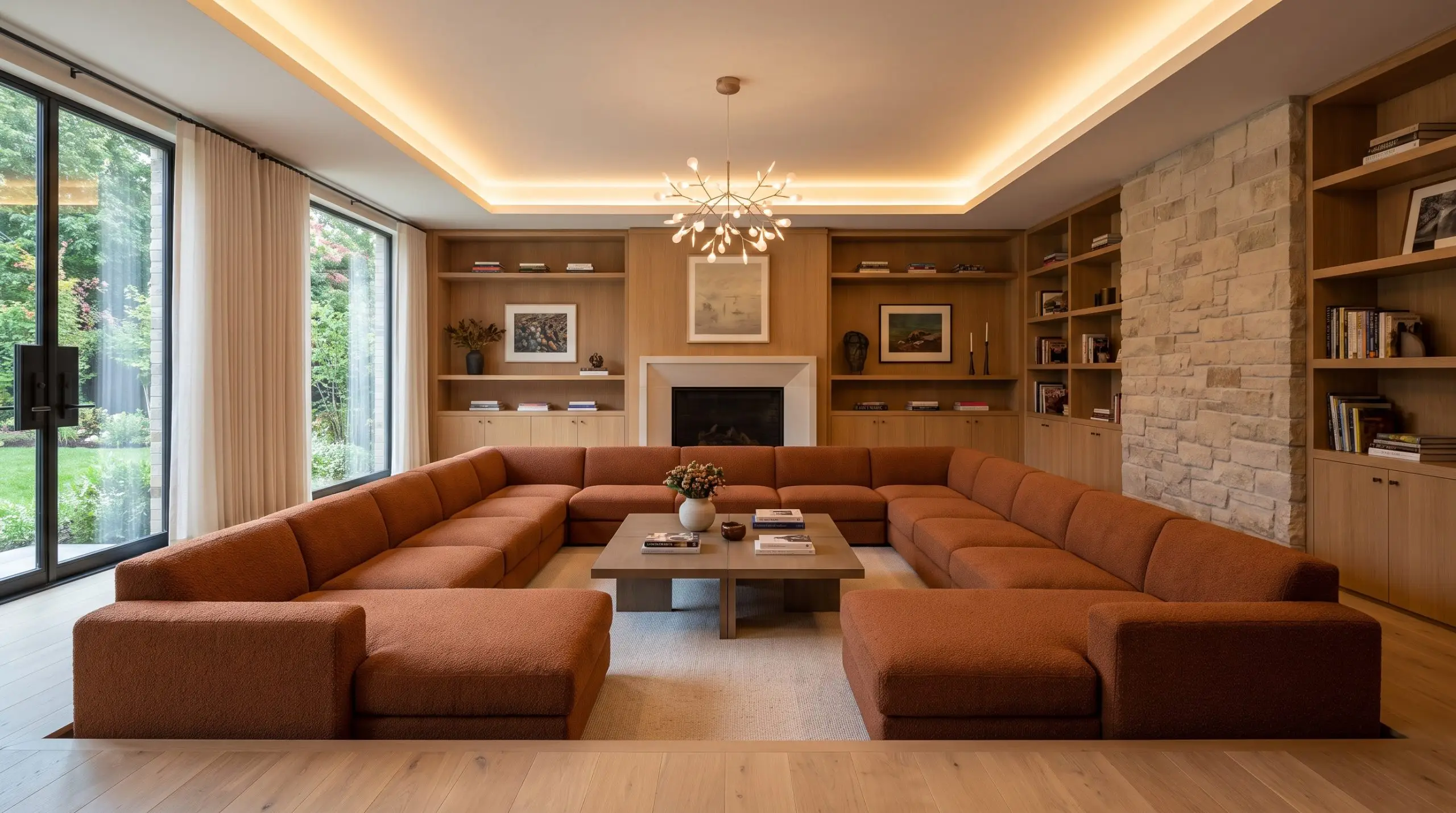
Taking direct inspiration from the sunken 1970s conversation pit, building a closed U-shape using corner modules and double chaises creates the premier inward-facing lounge zone. This highly intimate layout is perfect for family media rooms, prioritizing connection and deep seating.
- Vibe: Intimate, enclosed, and highly social.
- Key Modules: Two terminal chaises, three armless centers, two corner units.
- Architectural Note: This massive footprint requires a strict minimum of 24 inches of clearance around the outer perimeter of the room to avoid looking awkwardly cramped.
13. The Floating Island: Centralized Backless Modules
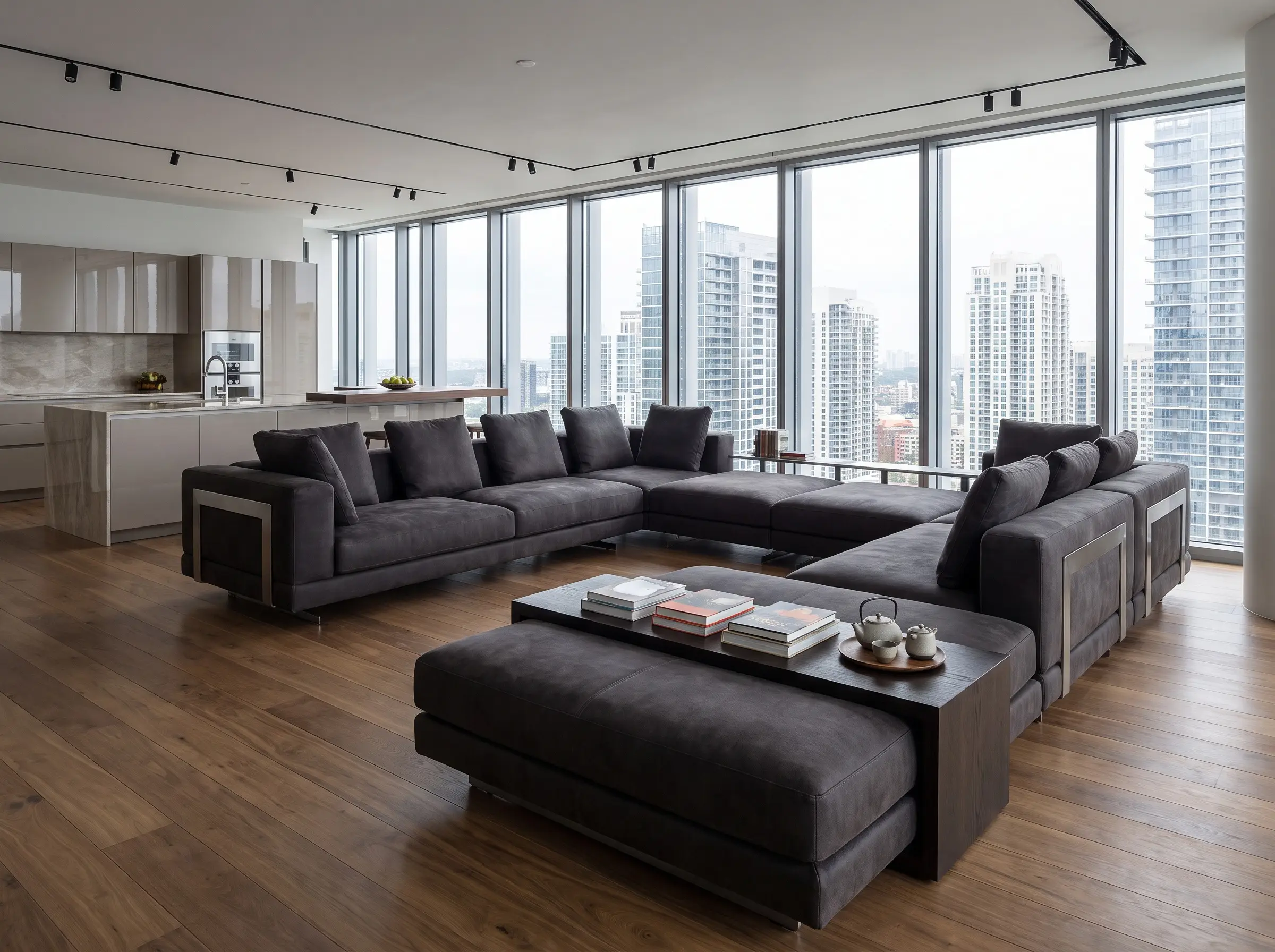
The floating island is the most sophisticated, high-end configuration for open-concept homes that bridge a kitchen and a living space. By anchoring a floating ottoman or flat backless module in the exact center of the arrangement, guests can sit facing multiple directions, dissolving the strict boundaries of the room.
- Vibe: Expansive, fluid, and fiercely contemporary.
- Key Modules: A centralized floating ottoman integrated directly between backed seats.
- Styling Pro-Tip: Place a low-profile, heavily weighted tray on the backless module to allow it to double as a casual coffee table during large gatherings.
14. Asymmetrical L-Shapes with Extended Chaises
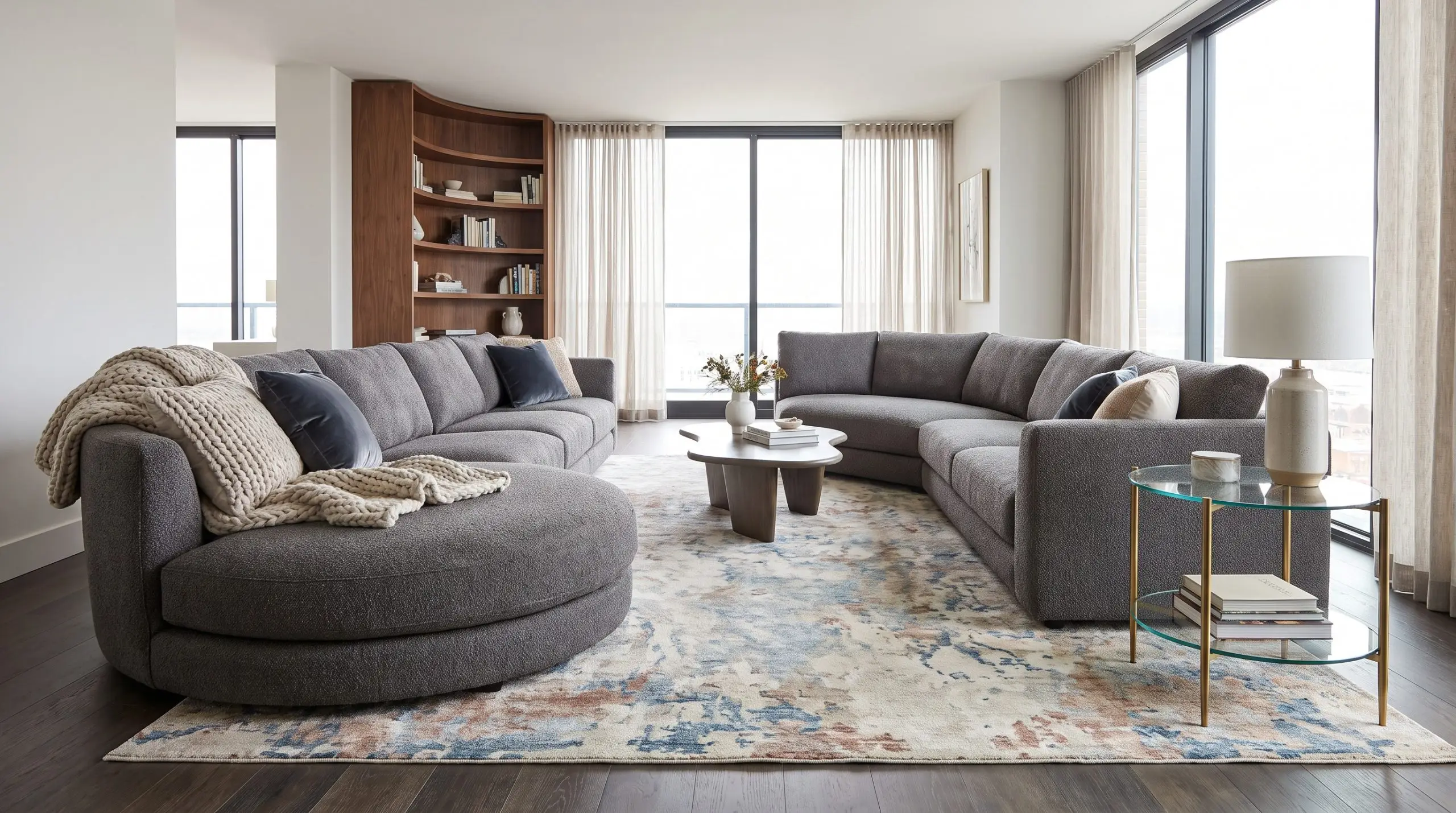
The rigid, symmetrical L-shape has been modernized by pushing a massively oversized, double-wide chaise onto one end. This creates a dynamic, asymmetrical footprint that breaks up the boxy nature of standard living rooms and feels custom-built for your specific architecture.
- Vibe: Custom-tailored, relaxed, and visually dynamic.
- Key Modules: Standard linear sofa modules terminating in a 50+ inch wide chaise.
- Material Pairing: Balance the heavy visual weight of the double chaise by placing an airy, glass-topped side table on the opposite end.
15. The “Broken Plan” Disconnected Layout
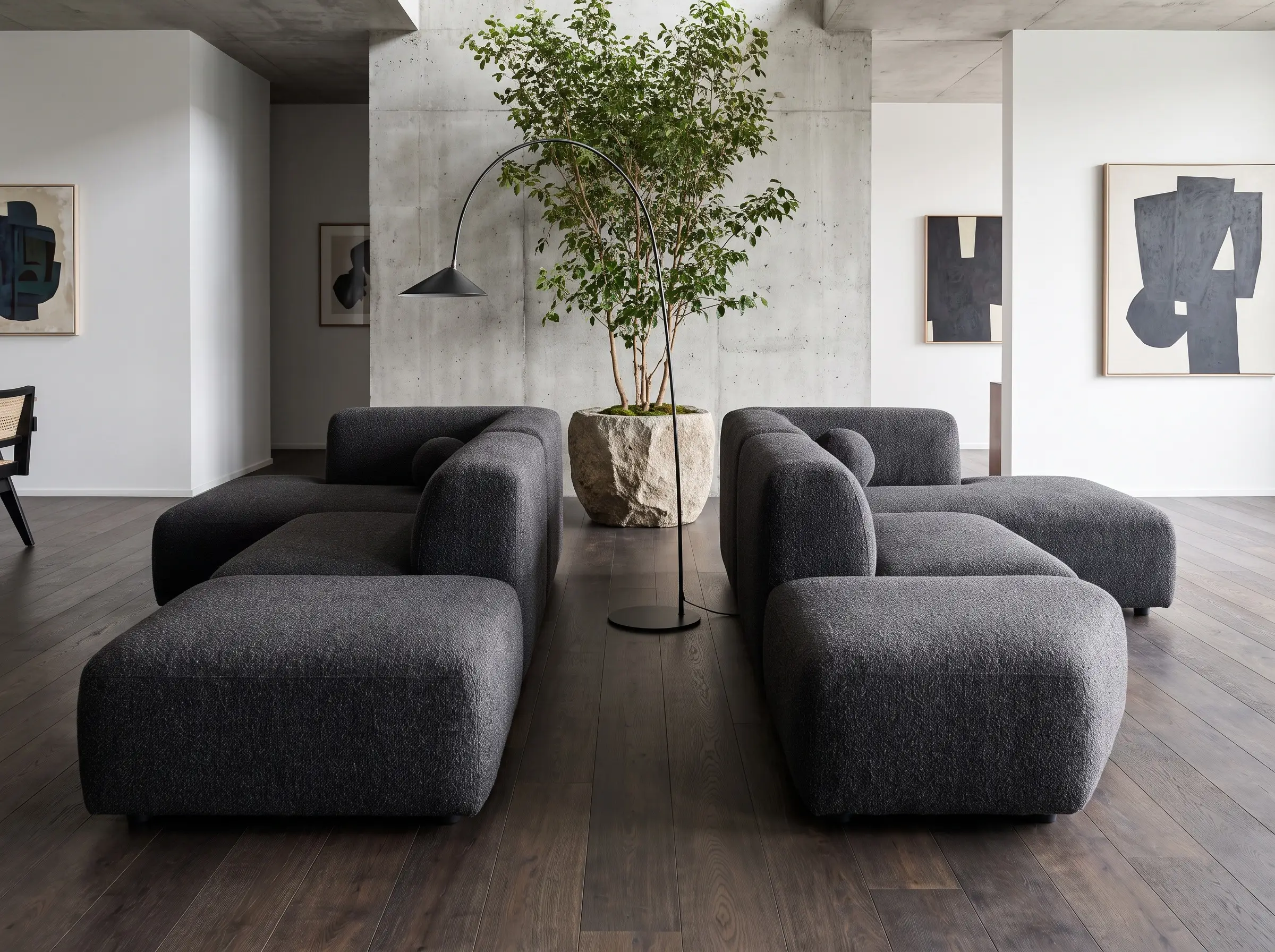
The “Broken Plan” leverages the fragmented modularity trend by utilizing seating pieces without physically connecting them all. Leaving a deliberate 12-inch physical gap between two seating modules to insert a freestanding floor lamp or a large structural planter is a highly editorial, avant-garde design choice for 2027.
The “Broken Plan” layout is the most effective way to make a smaller living room feel expansive. By allowing negative space to flow between heavy upholstery, the eye perceives a much larger floor plan.
Designer Secret
- Vibe: Avant-garde, breathable, and gallery-inspired.
- Key Modules: Fully upholstered, standalone-ready center modules.
- Architectural Note: Ensure the floor lamp or planter placed in the gap is tall enough to break the horizontal visual plane of the low-profile seating.
Curating Your Adaptable Living Space
Ultimately, investing in 2027 modular seating is an investment in adaptable architecture. Do not rush this process. Measure your exact spatial footprint, rigorously test fabric swatches against your home’s natural light, and prioritize structural integrity over fleeting micro-trends. A truly bespoke living room evolves with you, adapting to new homes and shifting needs without losing its tailored sophistication. To finalize your spatial planning, explore our advanced guides on living room color palettes and coffee table pairings to perfectly complement your new low-profile seating.

The Hackrea Style Desk treats interior decoration as an exact visual science. Rather than focusing on demolition or floor plans, this desk masters the art of color theory, undertone matching, material pairings, and spatial proportion. From balancing the visual weight of mixed metals to finding the perfect bridging tone between disparate wood species, this desk provides the rigorous aesthetic rules needed to achieve high-end, editorial-quality harmony in any space.