The 2027 Living Room: 21 Trends Shaping the Future of Intimate, Sensory Design
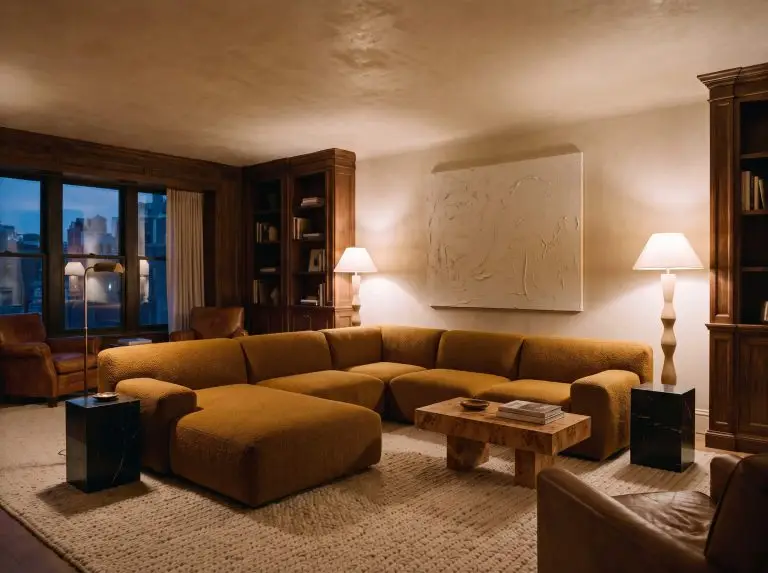
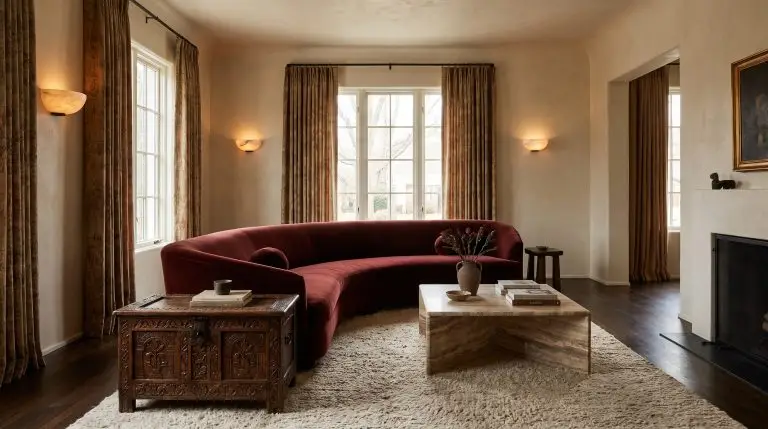
The past few years were dominated by overly restrained, absolute minimalism that left living spaces feeling cold, clinical, and completely devoid of personality. We are decisively moving away from white-box architecture toward environments that prioritize heavy texture, moody atmospheres, and intimate spatial zoning. The sterile showroom aesthetic is dead, replaced by spaces designed to be felt just as much as they are seen.
The year 2027 introduces The Sensory Shift. Living rooms are returning to their historical roots as deeply personal sanctuaries, relying on richly saturated color palettes, heritage materials with heavy patina, and cinematic lighting. It is no longer about how perfectly clean a space looks in a brightly lit photograph, but how the room feels when the sun goes down and the ambient lighting takes over to ground the space.
Achieving this curated, high-end aesthetic requires exact spatial planning and uncompromising material selection. Here are the 21 specific design executions defining the 2027 living room, engineered to bring profound tactile grounding to your home.
The Architecture of Comfort: Layouts & Spatial Zoning
The vast, undefined open-concept floor plan is officially yielding to broken-plan zoning and purposeful spatial boundaries. Furniture arrangements in 2027 are aggressively designed to carve out intimate, dedicated footprints for conversation and quiet retreat.
1. The Modern Conversation Pit (Sunken & Modular)
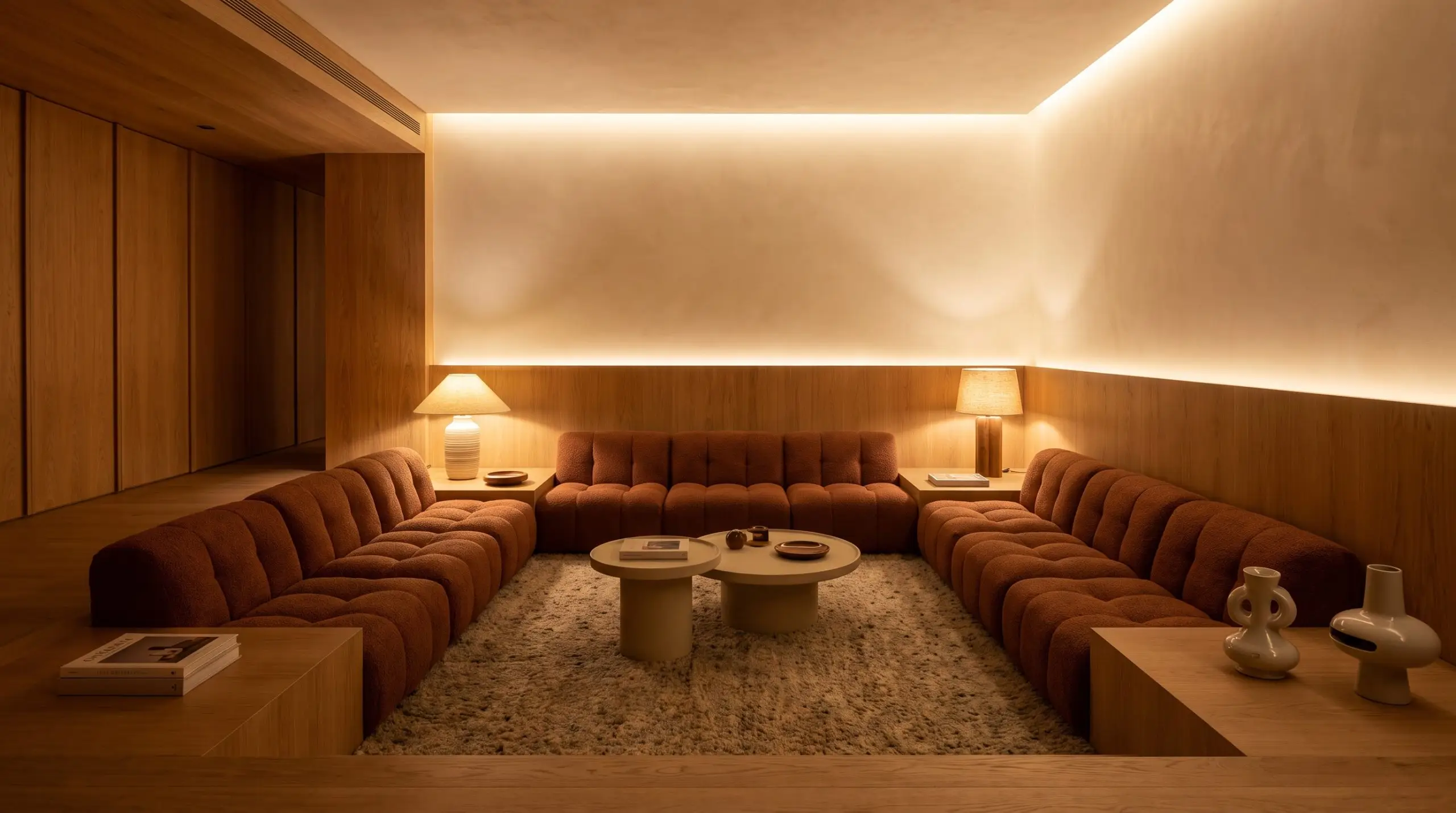
The retro-futuristic allure of the 1970s sunken lounge is returning through ultra-low-profile, U-shaped modular conversation pits. This specific seating configuration mimics the immersive intimacy of a structural pit without requiring invasive floor renovations, instantly anchoring the visual weight of the room.
The sterile, echoey white-box living room featuring a single, stiff sofa floating aimlessly in a cavernous open floor plan.
The Faux Pas
- Vibe: Retro-futuristic, intimately grounded, lounge-centric.
- Key Dimensions: Seat heights must remain under 16 inches to achieve the true sunken visual effect.
- Execution Strategy: Anchor the U-shape with a heavily textured, low-pile rug that extends entirely underneath the modular footprint.
2. 40-Inch Deep Lounging Silhouettes
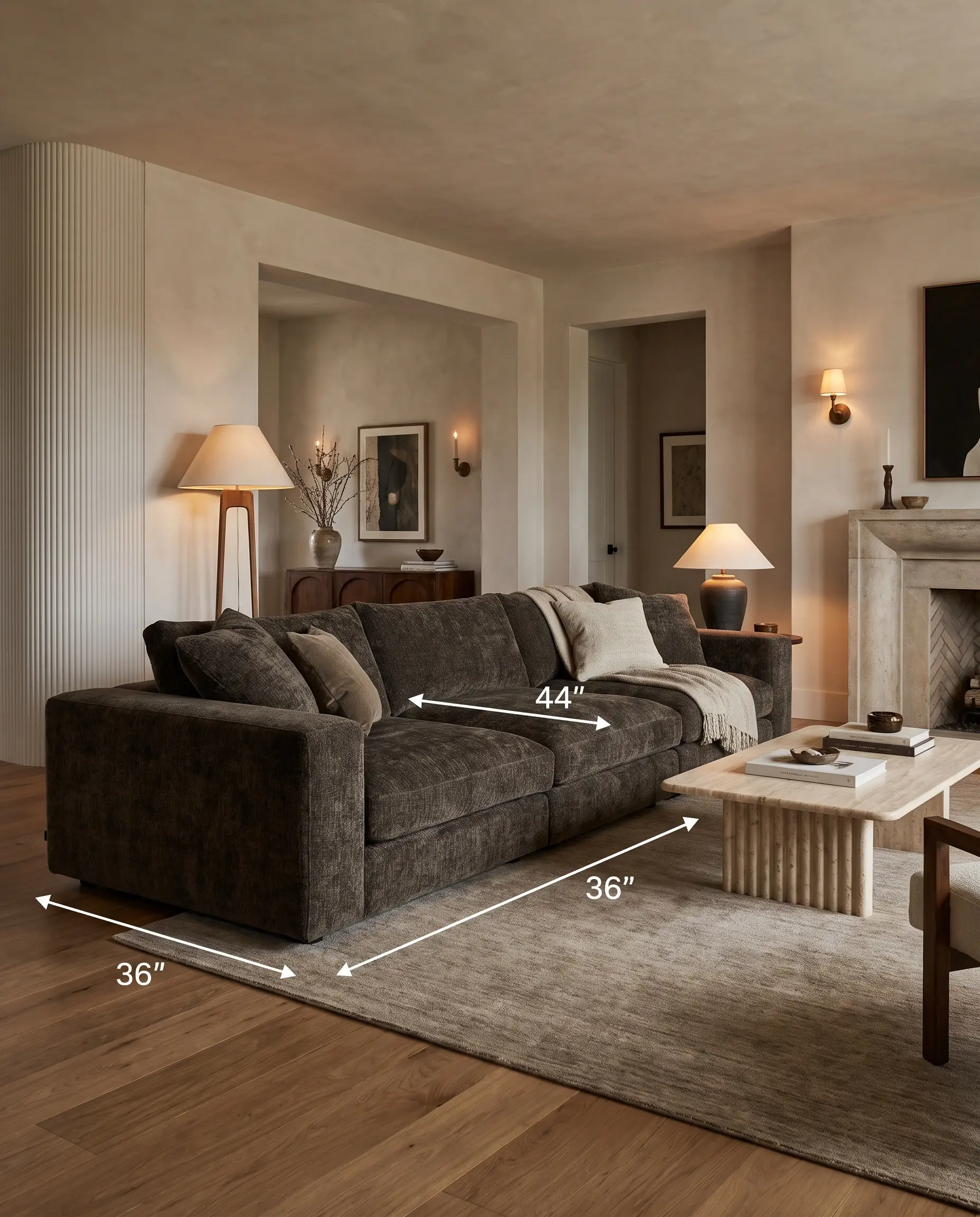
The upright, formal sofa profile has been replaced by low-profile silhouettes featuring massive, oversized depths designed explicitly for reclining. These heavy footprints dominate the living room architecture, demanding careful spatial calculation to ensure the room maintains a breathable flow.
Ensure a minimum of 36 inches of clearance around all major seating footprints to prevent the room from feeling choked by the heavy upholstery.
Design Requirement
- Vibe: Unapologetic comfort, heavy structural presence.
- Key Measurements: Target a seat depth of 40 to 44 inches.
- Styling Pro-Tip: Contrast the heavy visual bulk of the sofa with a visually light, fluted glass or raw stone coffee table.
3. Broken-Plan Zoning with Permeable Dividers
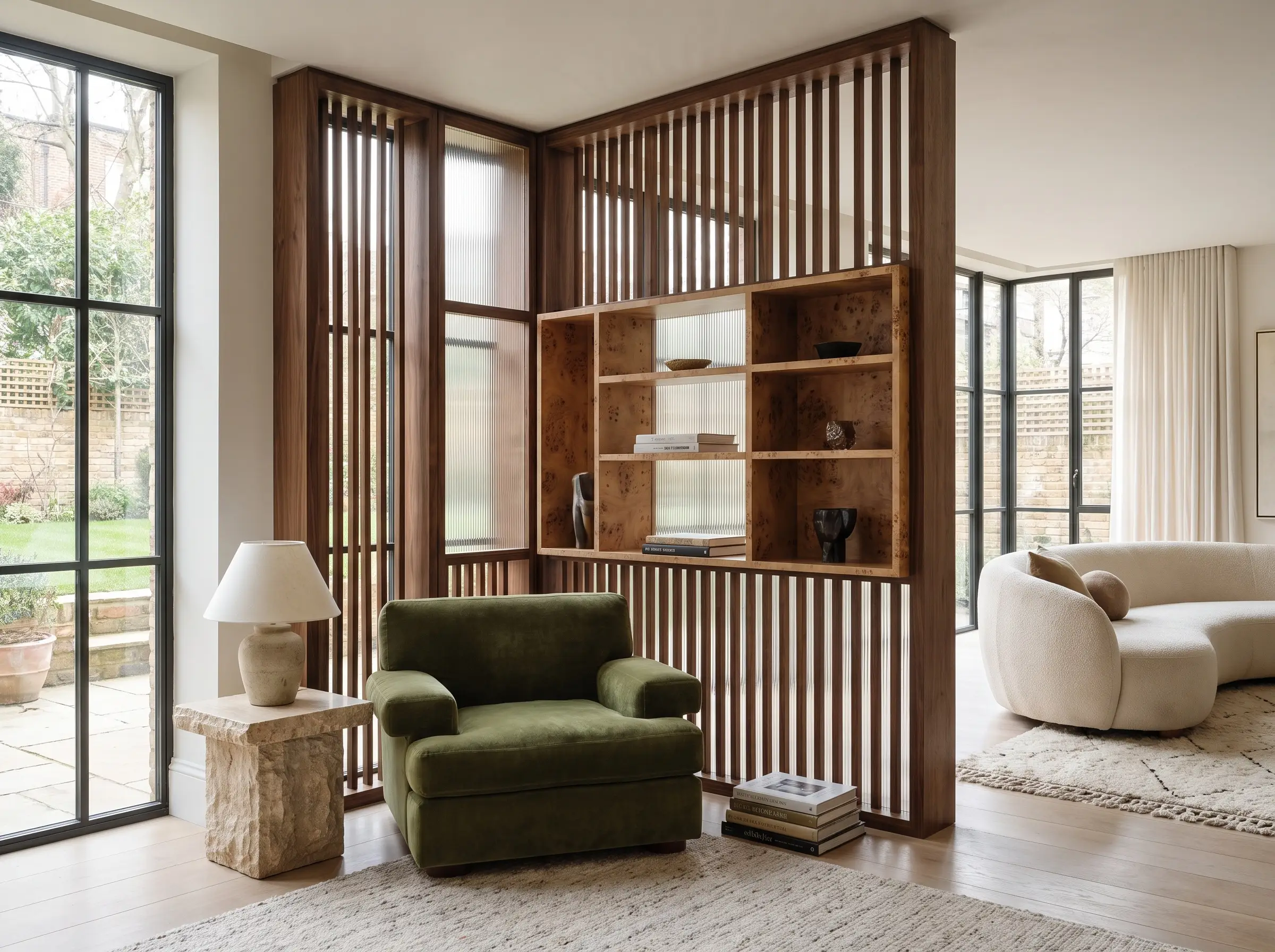
Carving out intimate reading nooks within larger living spaces requires permeable architectural barriers rather than solid drywall. These dividers establish clear physical boundaries and visual intrigue while allowing natural light to filter seamlessly across the floor plan.
- Vibe: Sophisticated segmentation, architectural intrigue.
- Key Materials: Fluted glass screens, open-backed burl wood shelving, slatted dark walnut room dividers.
- Spatial Application: Position dividers perpendicular to exterior windows to maximize light penetration.
4. The Disappearance of the TV Shrine
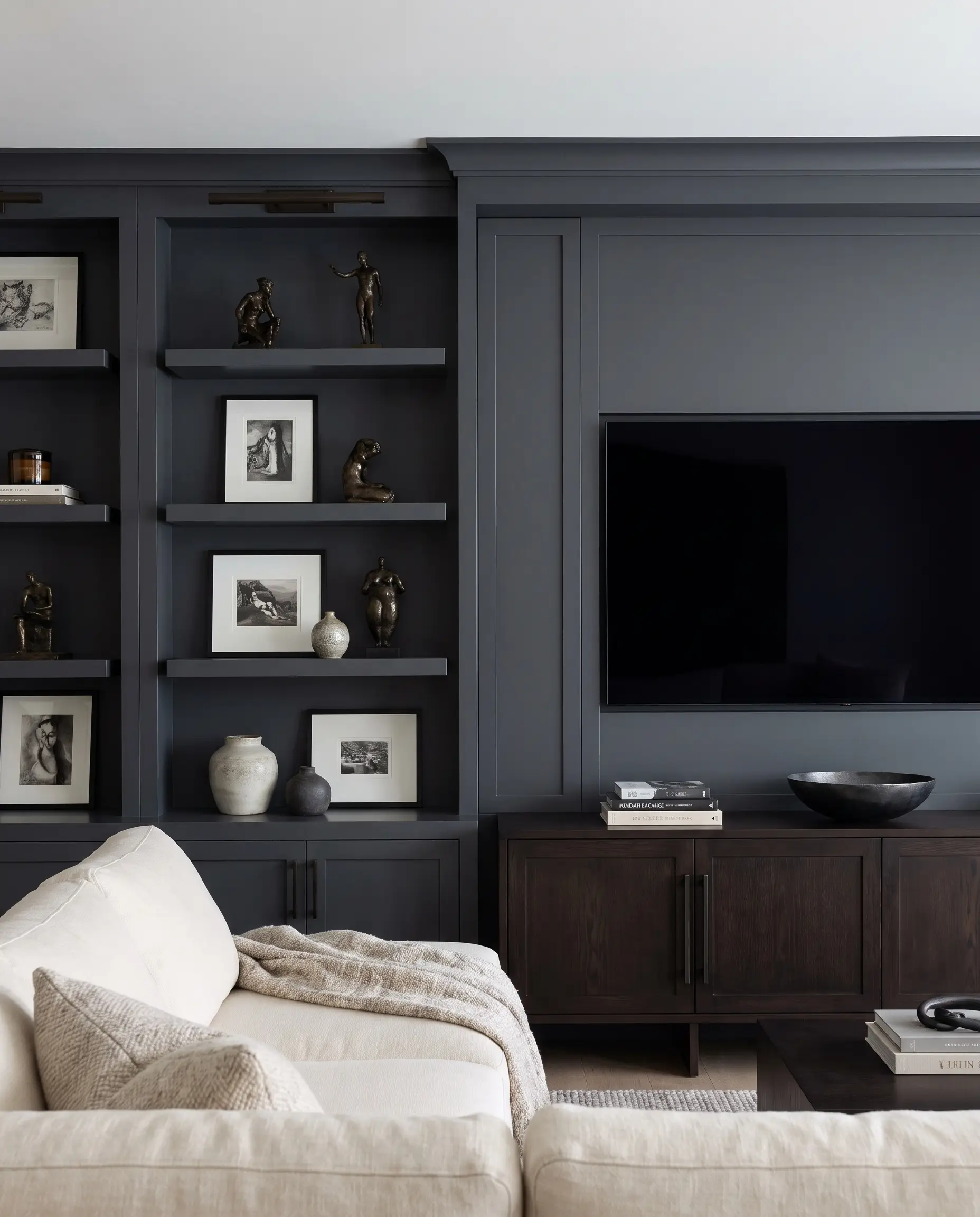
The outdated practice of designing an entire living room around a central media console is over. Technology is now aggressively camouflaged, allowing art, conversation, and architectural millwork to reclaim their rightful place as the room’s true focal points.
- Integration Tactics: Motorized art covers, ultra-short-throw hidden projectors, or flush-mounted gallery screens.
- Paint Recommendation: Benjamin Moore “Cheating Heart”.
- Paint Strategy: Paint the entire media wall in a flat, dark charcoal or espresso shade to completely absorb the black rectangle of the screen when powered off.
The 2027 Material Palette: Tactility & Heritage
Flat, manufactured surfaces are systematically being replaced by rich, raw materials that showcase heavy texture, natural grain, and authentic age. This tactile grounding forces the eye to appreciate the unique imperfections and inherent warmth of high-end sourcing.
5. The Absolute Dominance of Burl Wood
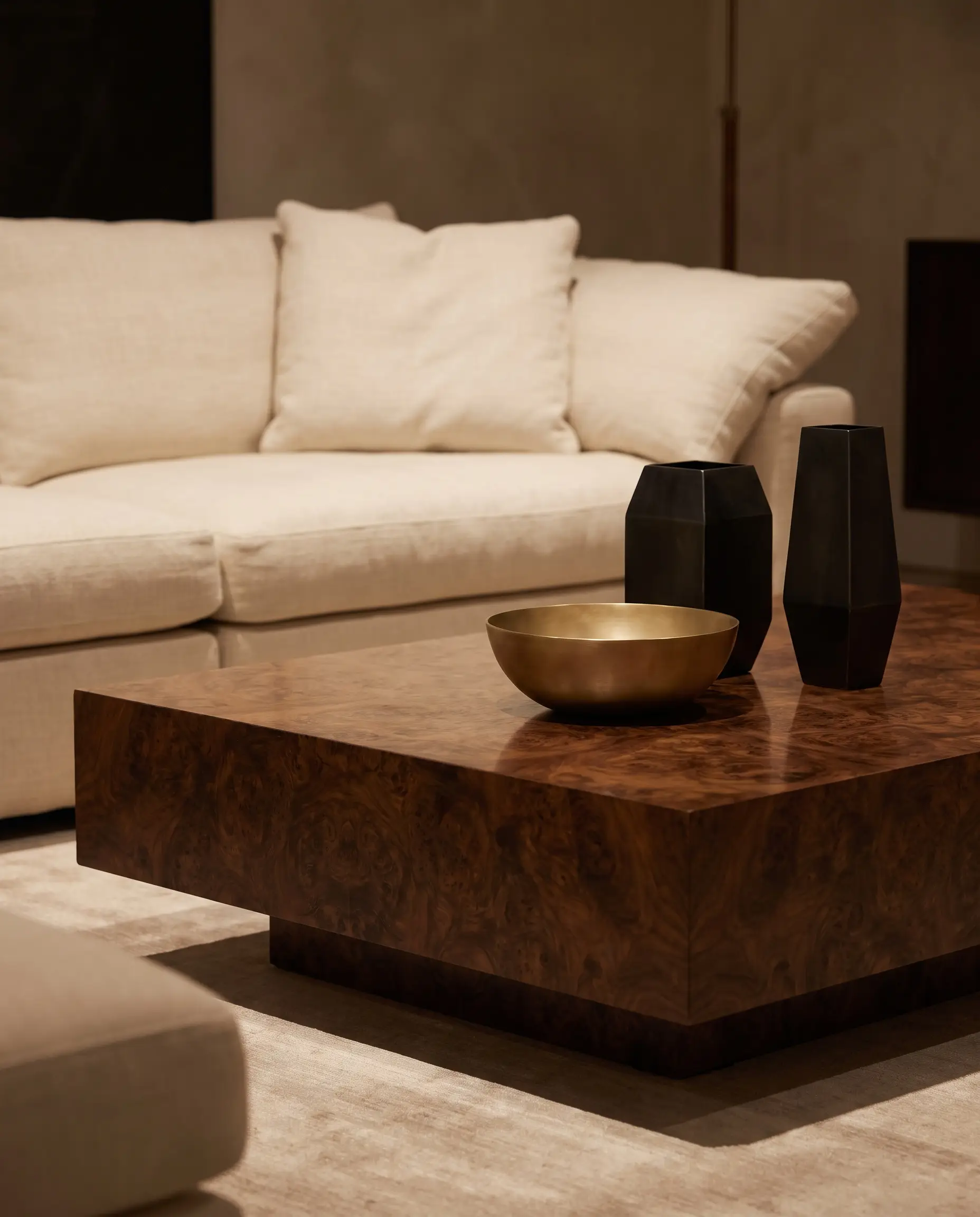
Blonde oak is yielding to the swirling, complex grains of high-end burl wood, which acts as a natural art piece within the living room. Whether utilized on a monumental coffee table or floating shelves, its hyper-active pattern brings historic weight to modern spaces.
To prevent the highly active grain of burl wood from overwhelming the space, pair it strictly with matte, understated metals rather than high-shine chrome or polished brass.
Hackrea Styling Tip
- Vibe: Heritage luxury, organic complexity.
- Optimal Applications: Plinth coffee tables, media credenzas, thick floating millwork.
- Material Pairing: Unlacquered brass, blackened steel, matte bronze.
6. Rosso Levanto and Heavily Veined Marbles
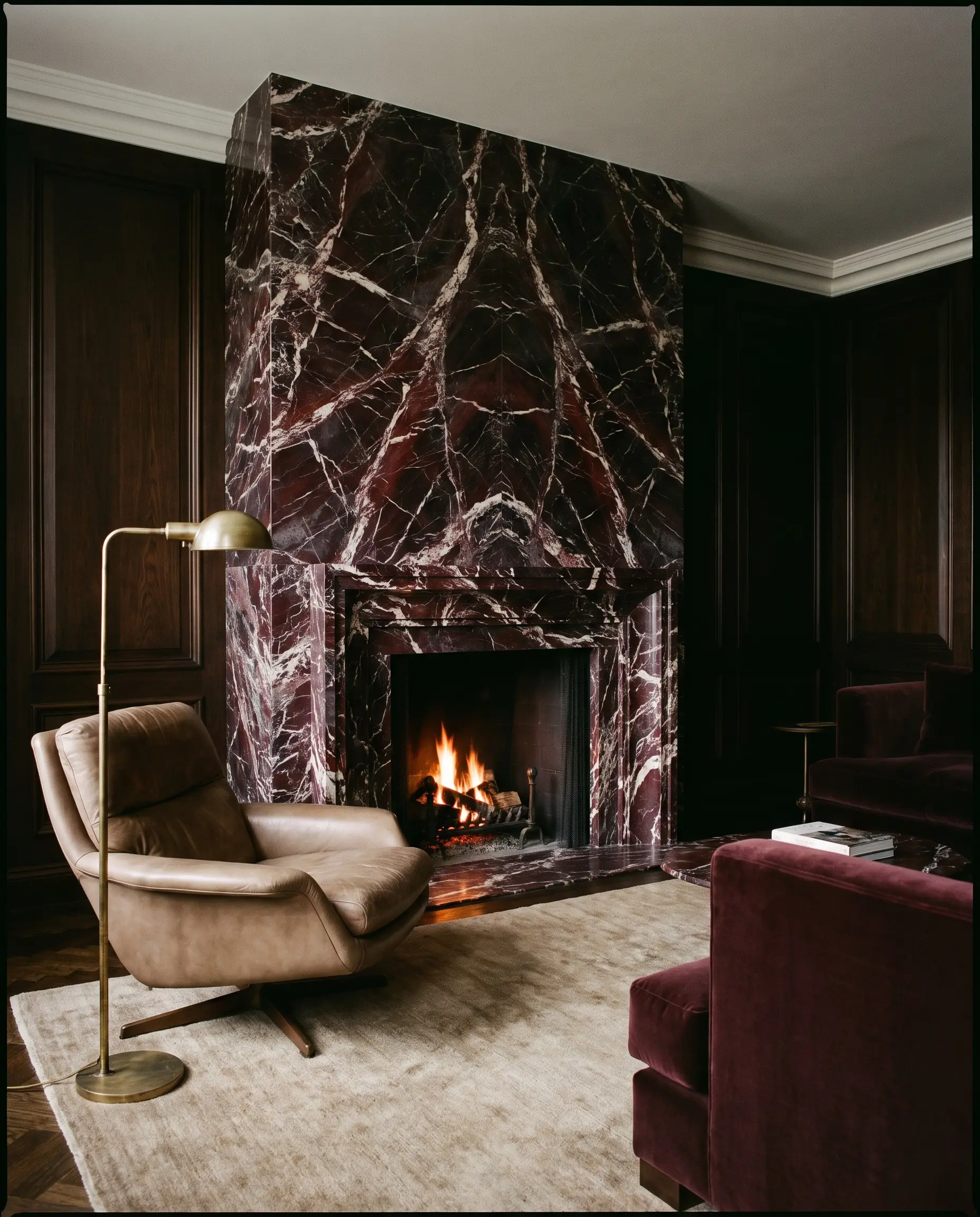
The standard, ubiquitous white Carrara marble has been decisively replaced by dramatic, heavily veined dark stones. Deep burgundy Rosso Levanto or aggressive green marbles applied to side tables, plinths, and fireplace surrounds provide instant, moody sophistication.
- Vibe: Moody, dramatic, uncompromisingly bespoke.
- Pros of Real Stone: Unmatched natural depth, cold tactile feel, guaranteed unique veining patterns.
- Cons of Real Stone: Requires strict porosity maintenance, highly susceptible to acidic etching, heavy weight dictates structural reinforcement.
- Faux Alternative Strategy: If budget dictates porcelain slabs, ensure the print features through-body veining to maintain the illusion of solid stone on exposed edges.
7. Tadelakt and Modern Plaster Washes
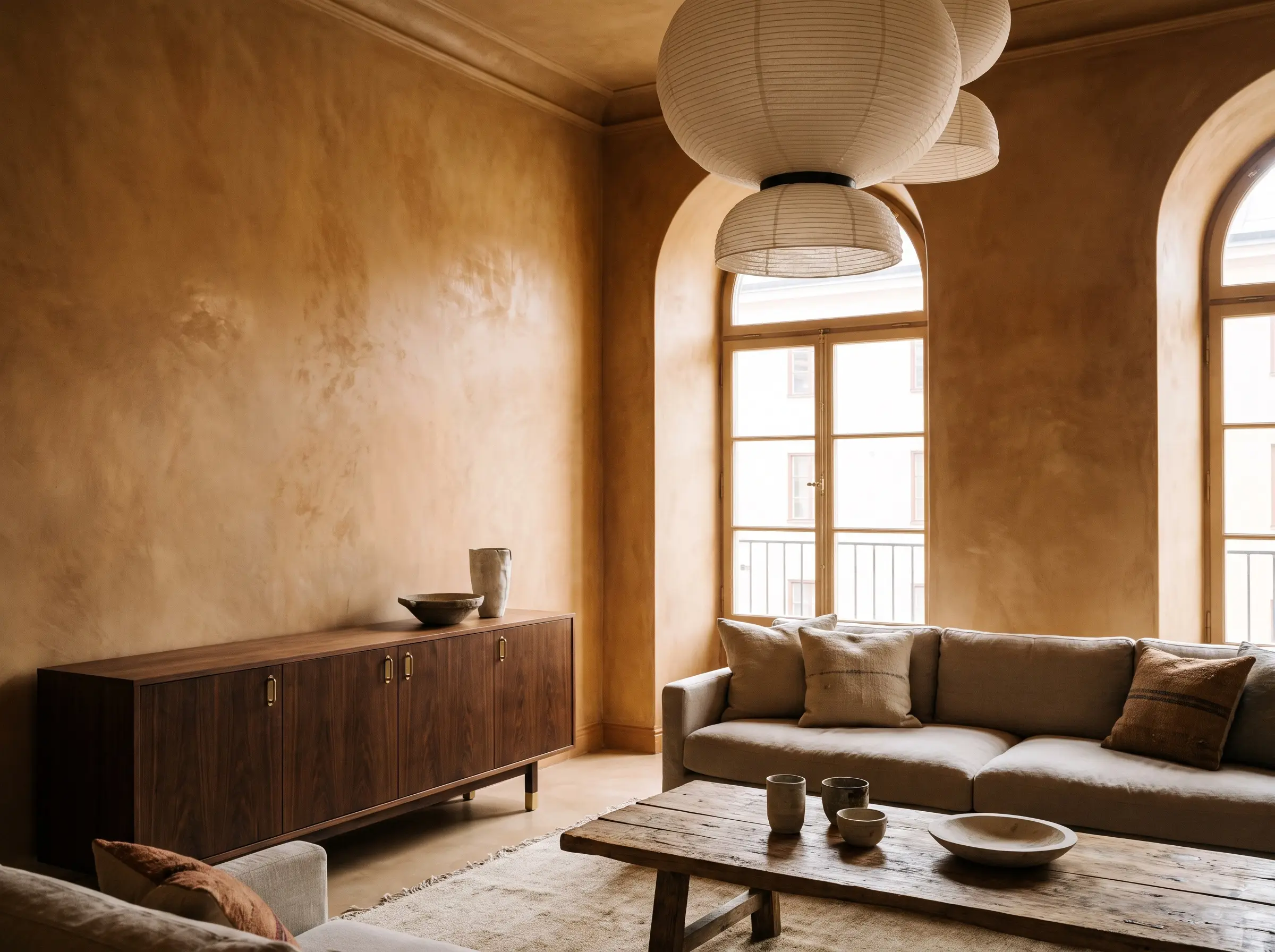
Standard flat drywall is fading in favor of Moroccan Tadelakt plaster and Roman clay finishes that give walls a soft, suede-like appearance. These high-end plaster applications catch natural light beautifully, injecting instant historic character and tactile friction into stark new builds.
Do not confuse authentic, troweled lime plaster with cheap DIY “sponge paint” techniques. True Tadelakt requires a master tradesperson to burnish the surface with olive oil soap for that seamless, waterproof sheen.
Design Ally Warning
- Vibe: Old-world craftsmanship, soft atmospheric texture.
- Key Materials: Lime wash, Roman clay, authentic Moroccan Tadelakt.
- Lighting Impact: The subtle tonal variations diffuse harsh light, creating a glowing, matte finish across the room.
8. Mohair and Mushroom Leather Upholstery
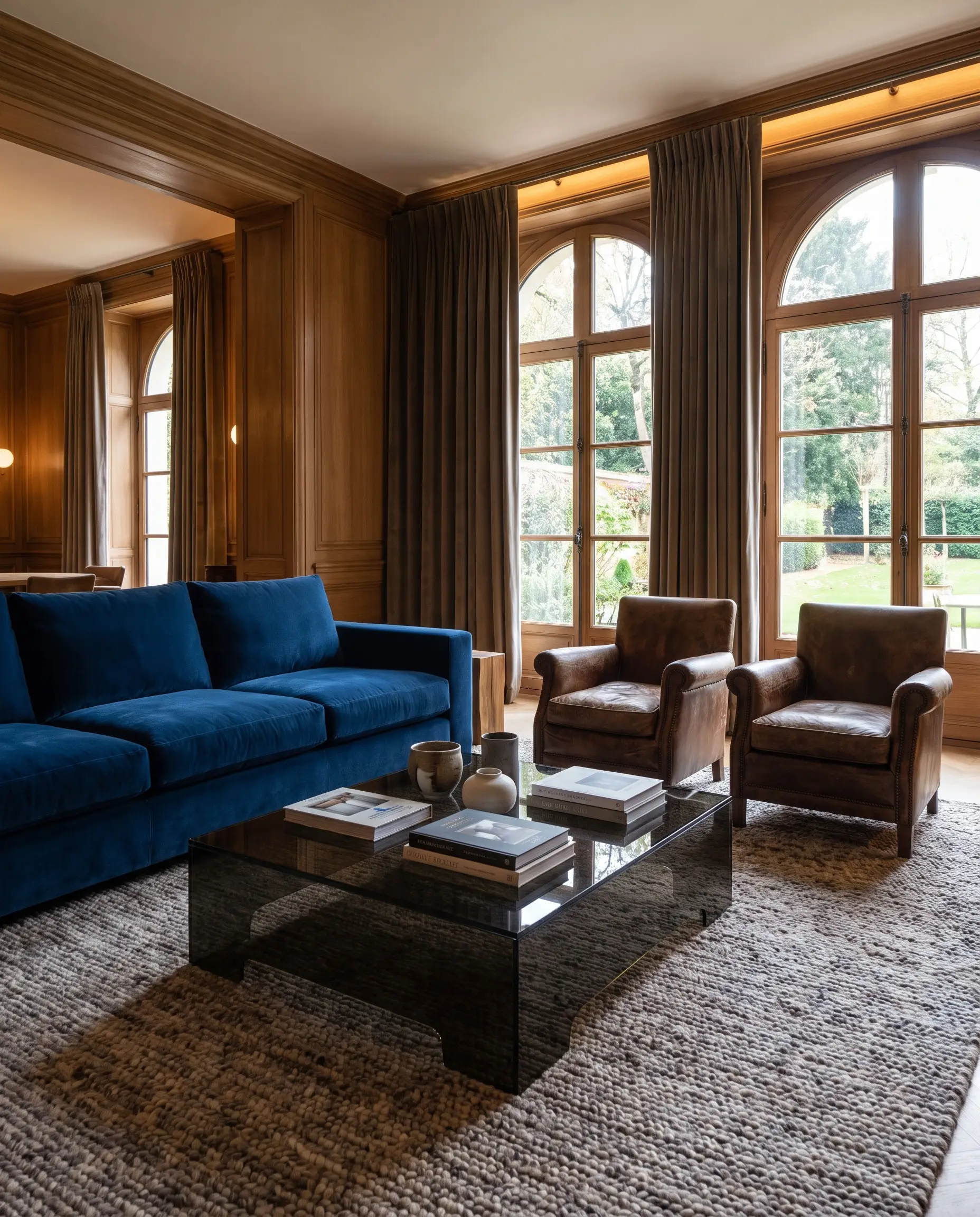
The textile baseline for luxury seating has moved beyond standard velvet, favoring the thicker, exceptionally durable sheen of premium Mohair upholstery. For leather applications, high-end vegan alternatives like heavy-weight mushroom leather offer sustainable luxury with incredible, authentic patina potential.
- Vibe: Heavy tactile luxury, sustainable innovation.
- Mohair Benefits: Resists crushing, offers a deeper color saturation than cotton velvet, provides dense acoustic dampening.
- Mushroom Leather Benefits: Develops a rich organic patina over time, avoids the plastic feel of traditional faux leathers.
9. Smoked and Ribbed Glass Accents
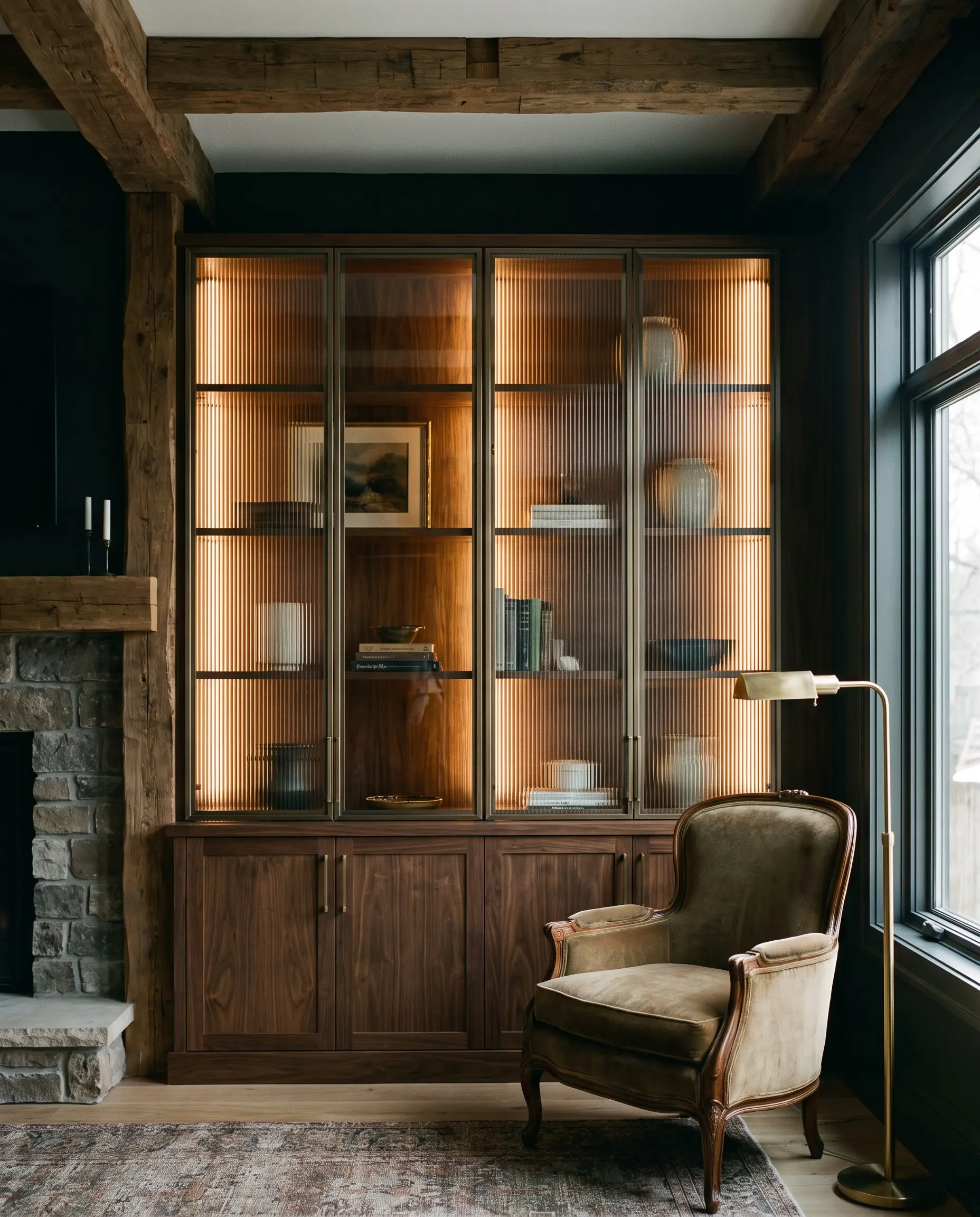
Clear glass can often feel cheap and visually hollow against heavy timber and stone. Integrating smoked bronze glass or heavy ribbed fluted glass on cabinet doors and coffee table tiers adds a moody, 1970s-inspired architectural layer that partially obscures clutter while reflecting ambient light.
- Vibe: Sleek, retro-architectural, moody contrast.
- Key Applications: Custom millwork doors, secondary tiers on stone coffee tables, prominent light fixtures.
- Styling Pro-Tip: Backlight ribbed glass cabinets with warm LED strips to highlight the vertical texture.
Chromatic Depth: Color Drenching & Dark Timber
The new chromatic baseline for the living room is rich, atmospheric, and deeply saturated. Pale neutrals are now considered inherently bland unless they are supported by extreme architectural texture, pushing designers toward confident, enveloping color strategies.
10. Rose Earth and Terracotta Foundations
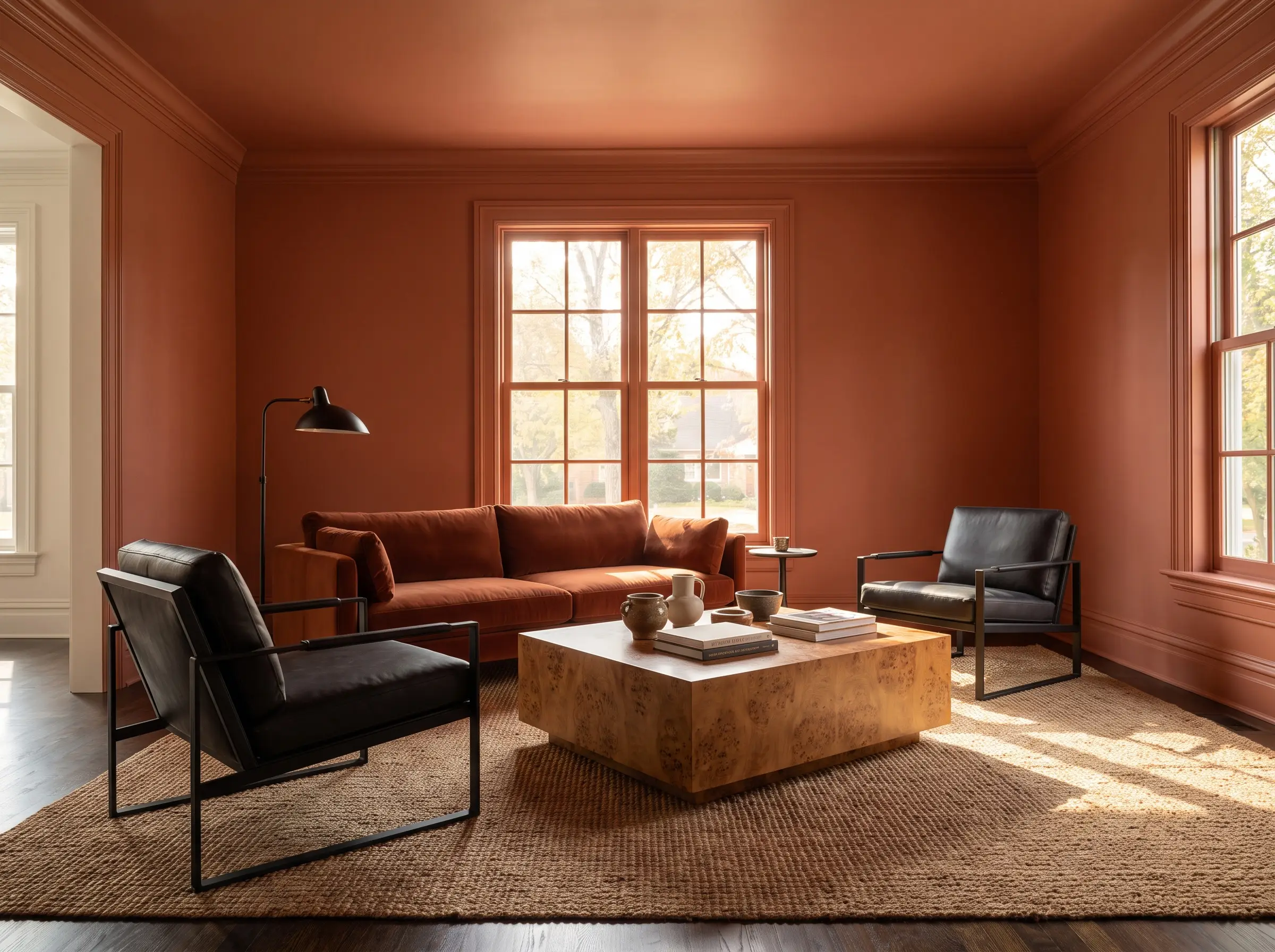
Terracotta, baked clay, and rose earth tones are aggressively replacing flat beige as the foundation of warm interior palettes. Wrapping an entire living room in these saturated shades creates a perpetual, enveloping golden hour effect that instantly warms cold, northern-facing light.
- Vibe: Enveloping warmth, baked organic richness.
- Paint Recommendation: Farrow & Ball “Red Earth”.
- Execution Strategy: Apply the color across the baseboards, walls, and crown molding to execute a flawless color drenching technique.
11. Mossy Olive and Forest Shadow
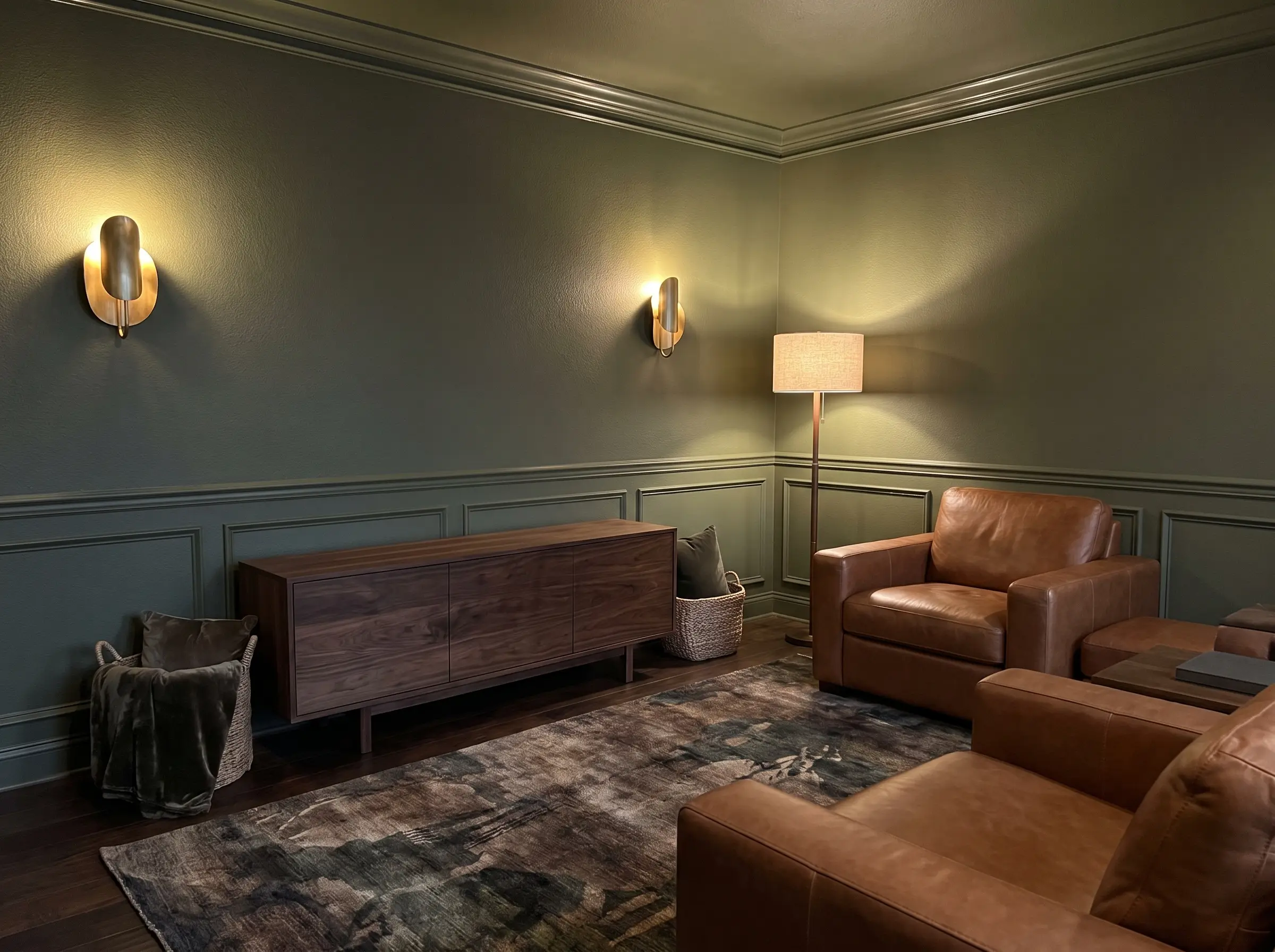
Deep, mossy olive greens are no longer utilized as mere accent walls; they are full-room architectural backdrops. Painted aggressively across trim, doors, and walls, these cool-toned darks create a sophisticated, shadowed atmosphere that grounds the entire spatial layout.
- Vibe: Grounded, shadowed, intensely sophisticated.
- Paint Recommendation: Sherwin-Williams “Rosemary”.
- Optimal Pairing: Contrasts perfectly with the rich, swirling tones of burl wood and saddle leather.
UX Schema: Color Pairing Matrix
| Primary Wall Color | Optimal Metal Accent | Recommended Wood Tone |
|---|---|---|
| Mossy Olive / Forest Shadow | Unlacquered Brass | Deep Walnut |
| Rose Earth / Terracotta | Matte Blackened Steel | Burl Wood |
| Charcoal / Espresso | Polished Nickel | Smoked Oak |
12. The High-Gloss Contrast Ceilings
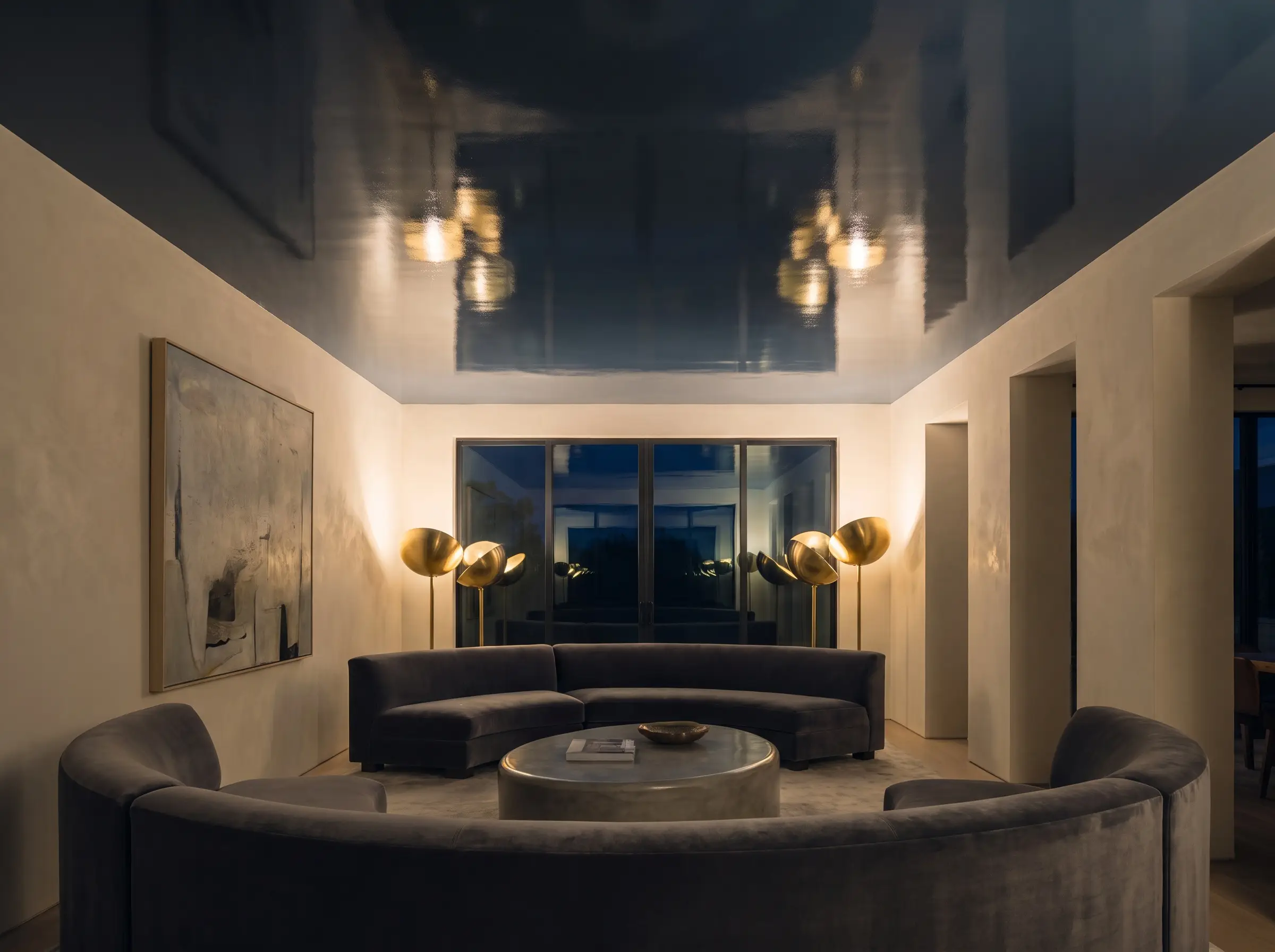
Instead of defaulting to standard flat white ceilings, designers are lacquering the “fifth wall” in dark, high-gloss contrast ceilings to bounce ambient light and create an illusion of infinite height. This hyper-reflective application adds a layer of bespoke tension to otherwise matte environments.
High-gloss paint acts as a magnifying glass for structural imperfections. You must ensure your drywall is skim-coated to a flawless Level 5 finish before attempting this lacquer application.
Designer Warning
- Vibe: High-end bespoke, reflective tension, dramatic scale.
- Paint Recommendation: Benjamin Moore “Hale Navy” (High Gloss).
- Lighting Pairing: Pair with upward-casting floor lamps to maximize the reflective depth of the ceiling.
13. Deep Walnut and Espresso Stains
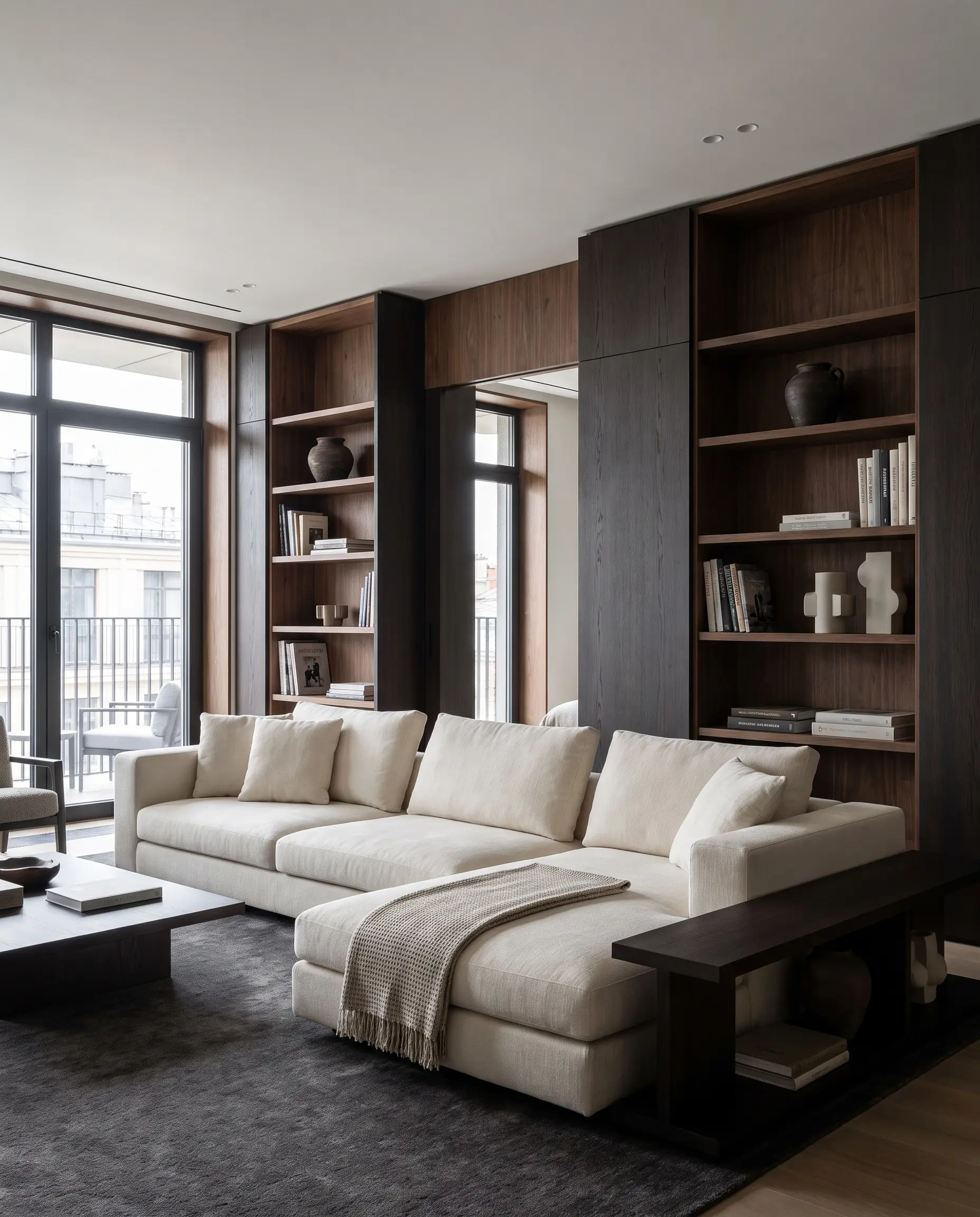
The Scandinavian dominance of light ash and white oak is fading rapidly in favor of dark, historic timber tones. Chocolate brown, espresso, and rich walnut built-ins provide a grounding weight to modern spaces, proving that dark wood does not equate to a heavy, outdated aesthetic when styled correctly.
- Vibe: Historic weight, tailored richness.
- Key Materials: Solid American Walnut, Espresso-stained oak, Wenge.
- Styling Pro-Tip: Mix dark timber with massive, low-profile cream seating to maintain high visual contrast and prevent the room from feeling like a 1990s corporate boardroom.
Cinematic Lighting: Ditching the “Grid of Cans”
The clinical, glaring “grid of cans” recessed overhead lighting layout is dead. The 2027 living room relies entirely on layered, low-level cinematic lighting that sculpts the space with intentional shadow, dramatic highlights, and ambient warmth.
14. Low-Level Ambient Casting
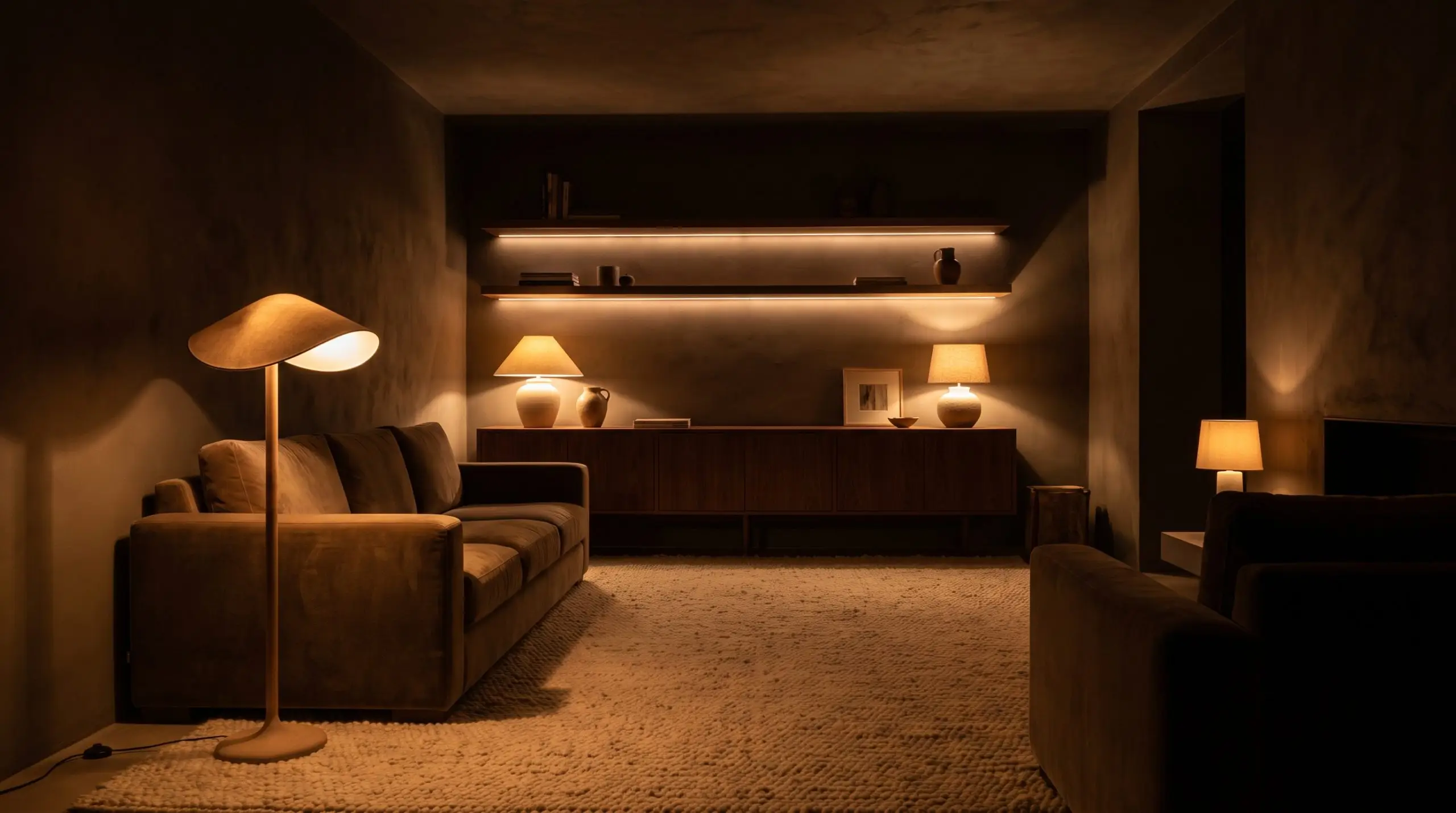
Cinematic lighting demands that illumination is focused strictly on the lower half of the room rather than blasting from the ceiling. Utilizing floor lamps, low-profile table lamps on credenzas, and integrated LED strips under floating cabinets washes the floor in warm light, entirely transforming the room’s evening acoustics and mood.
- Vibe: Intimate, moody, sculpturally shadowed.
- Hardware Mandate: Industry standards dictate the strict use of 2700K (warm white) LED bulbs for all ambient fixtures to avoid a harsh, sterile glare.
- Execution Strategy: Place light sources at varying heights between 18 and 48 inches off the floor to create a dynamic, layered wash.
15. Sculptural Paper and Fabric Pendants
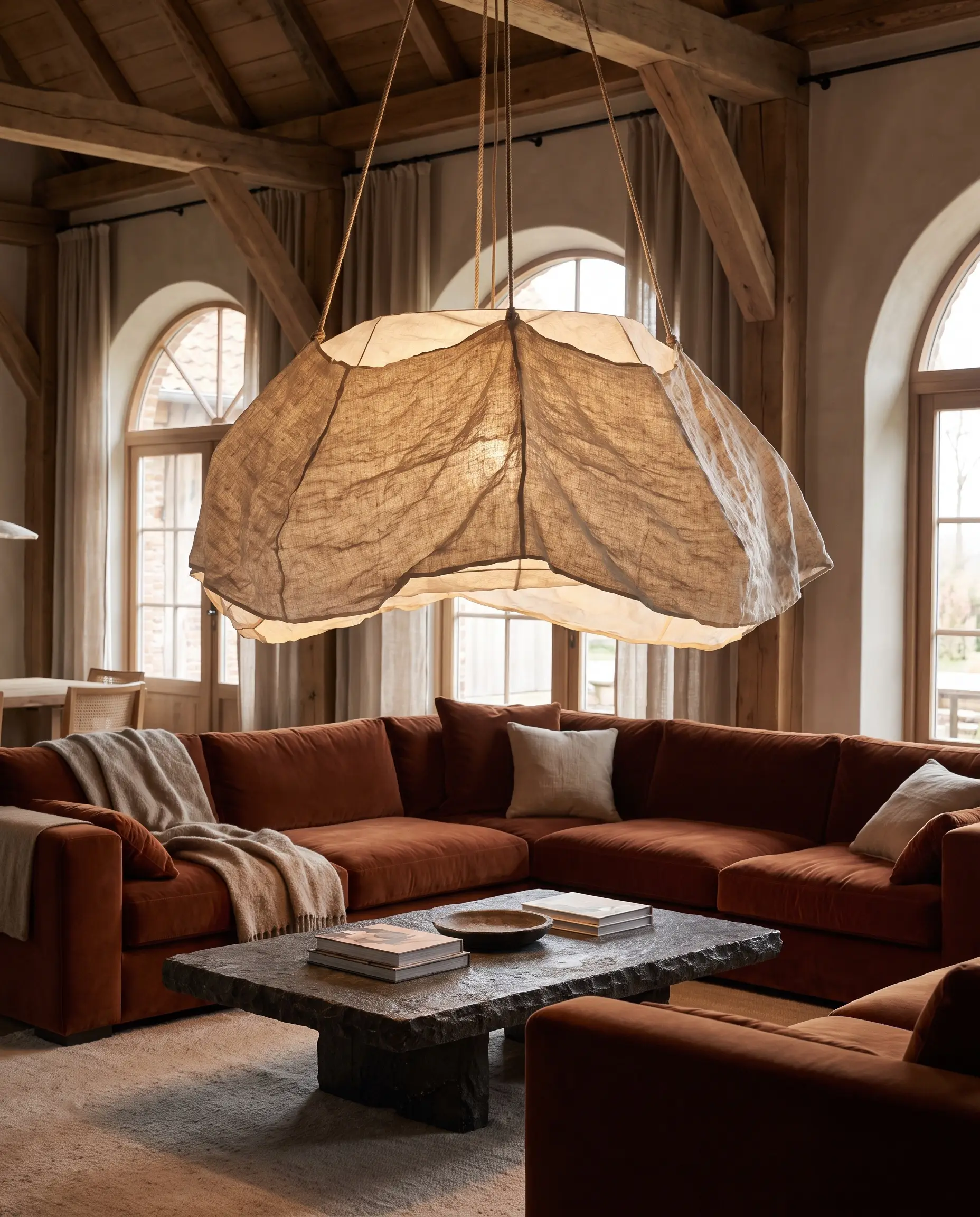
Harsh glass chandeliers and exposed Edison bulbs have been replaced by oversized, organic-shaped pendants crafted from linen, silk, or Noguchi-inspired paper. These lightweight, voluminous fixtures provide soft, diffused overhead light while acting as massive sculptural installations that do not visually weigh down the room.
- Vibe: Ethereal, diffused, architecturally soft.
- Key Materials: Washi paper, stretched raw linen, spun silk.
- Spatial Application: Hang low over a central coffee table to anchor the seating zone and physically lower the visual ceiling plane.
16. Cordless Rechargeable Lamps on Floating Furniture
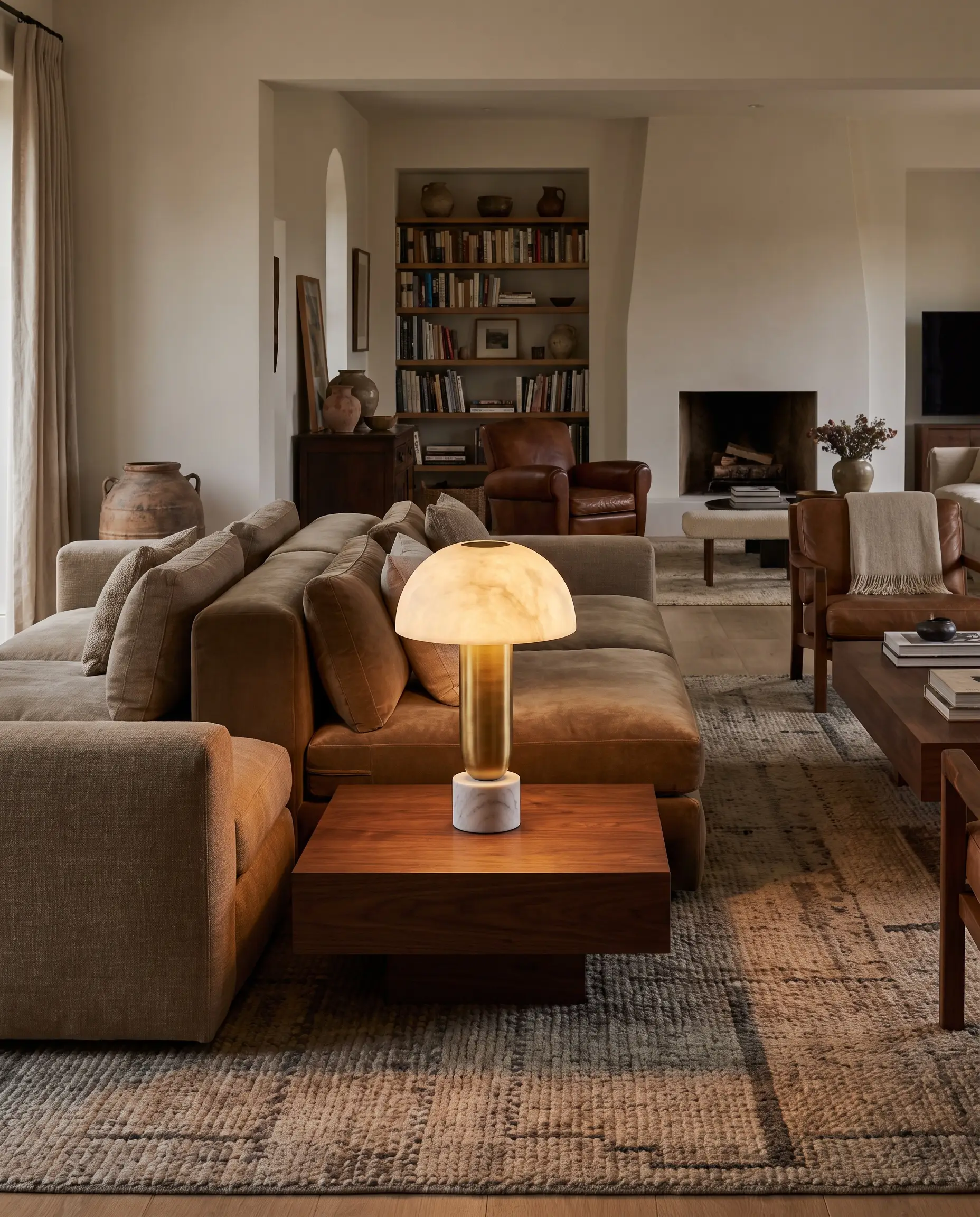
With massive sofas and tables floating in the center of broken-plan layouts, access to floor outlets is frequently severed. High-end, heavy brass cordless rechargeable lamps are the definitive solution for illuminating central zones without stringing ugly cords across your bespoke rugs.
- Vibe: Untethered luxury, functional elegance.
- Material Match: Solid unlacquered brass, honed marble bases, alabaster shades.
- Quality Warning: Avoid cheap plastic restaurant-style lamps; invest in heavy, metal-cast fixtures that offer dimmable, warm-glow LEDs.
17. Architectural Wall Sconces as Art
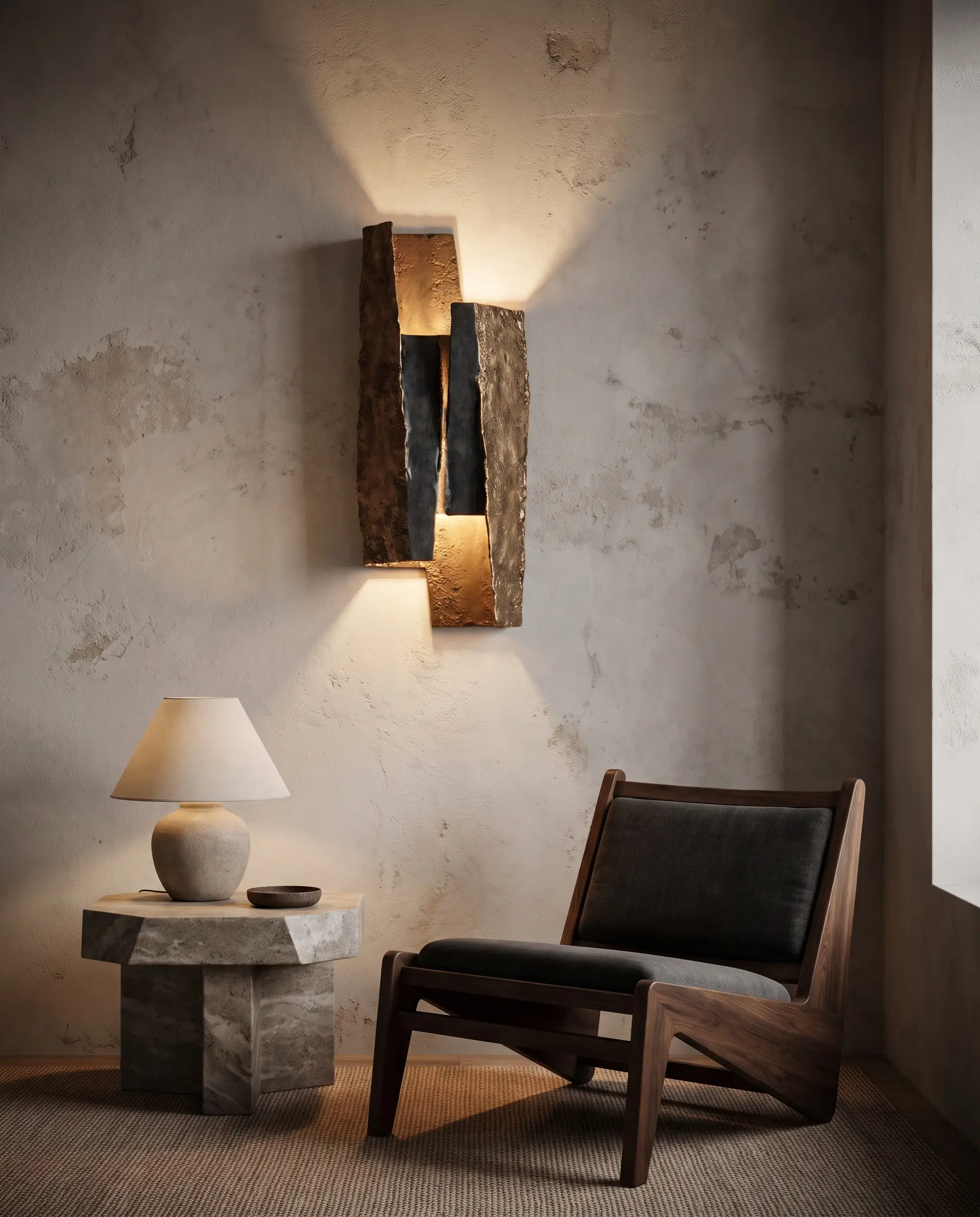
Large-scale brutalist or postmodern wall sconces are aggressively replacing traditional framed art on flanking walls. These architectural lighting fixtures act as primary sculptural focal points during the day and wash the textured plaster walls in dramatic, indirect light at night.
- Vibe: Brutalist, sculptural, dual-purpose design.
- Key Materials: Cast bronze, raw travertine, folded blackened steel.
- Rapid-Fire Styling Tip: Mount sconces slightly lower than standard eye level (around 55 to 60 inches from the floor) to maintain the cinematic, low-casting lighting philosophy.
The “Collected” Curation: Styling & Decor
The staged aesthetic of purchasing an entire matching furniture showroom at once is entirely rejected in 2027. True spatial luxury stems from a highly personal, slightly eccentric curation of eras, materials, and shapes that feels collected over decades of careful sourcing.
18. Equestrian Luxury and Fashion-Inspired Details
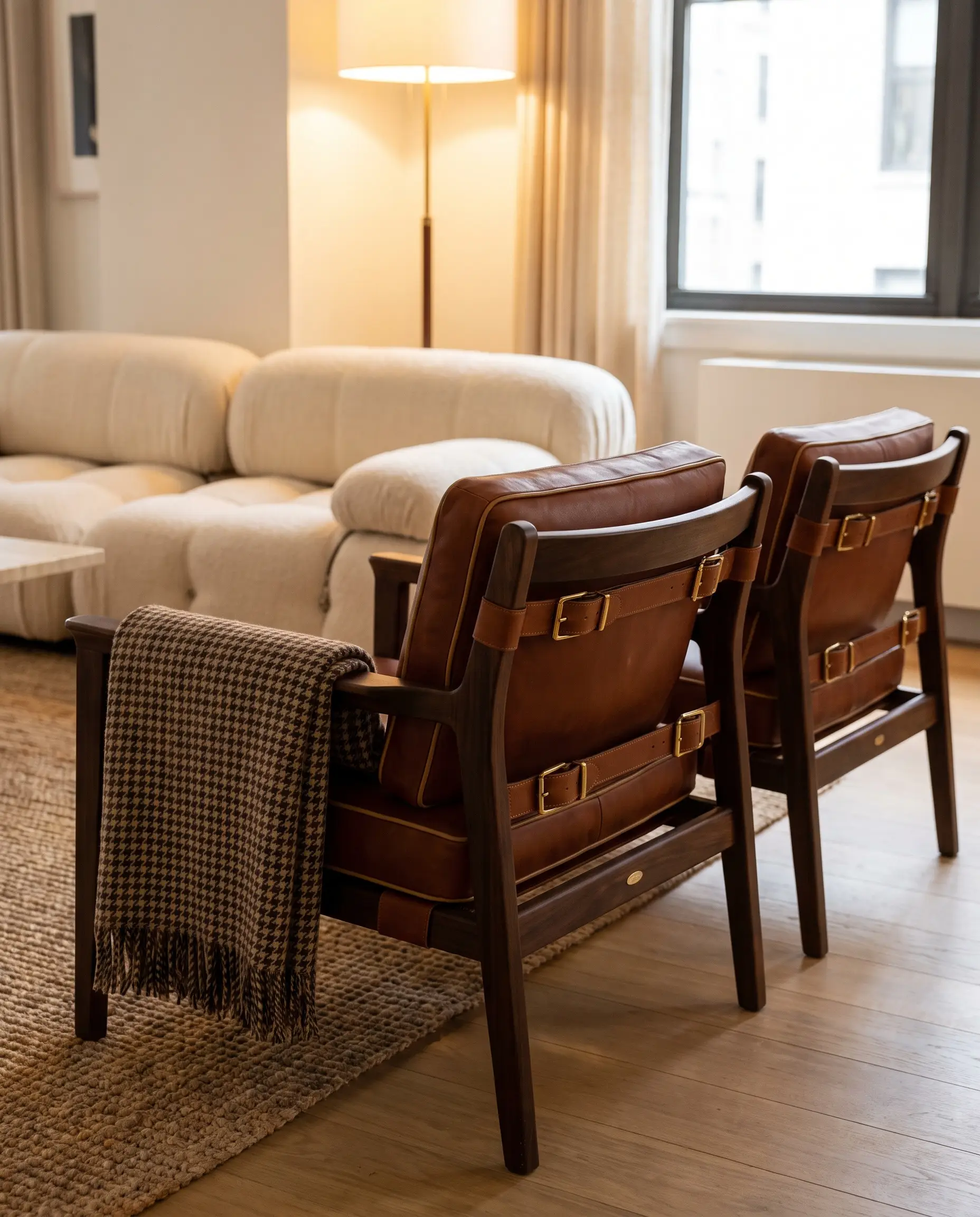
The intersection of high-fashion houses and interior decor is bringing a tailored, structured look to soft furnishings. Incorporating equestrian leather, heavy brass buckles, houndstooth throws, and precise piping on upholstery injects a refined, Ralph Lauren-esque boutique hotel aesthetic into the living room.
- Vibe: Tailored, heritage fashion, structured luxury.
- Key Materials: Cognac saddle leather, heavy wool houndstooth, polished brass hardware.
- Execution Strategy: Apply these rigid, tailored details to secondary seating, like a pair of structured lounge chairs, to contrast with the oversized modular sofa.
19. Singular Oversized Statement Art
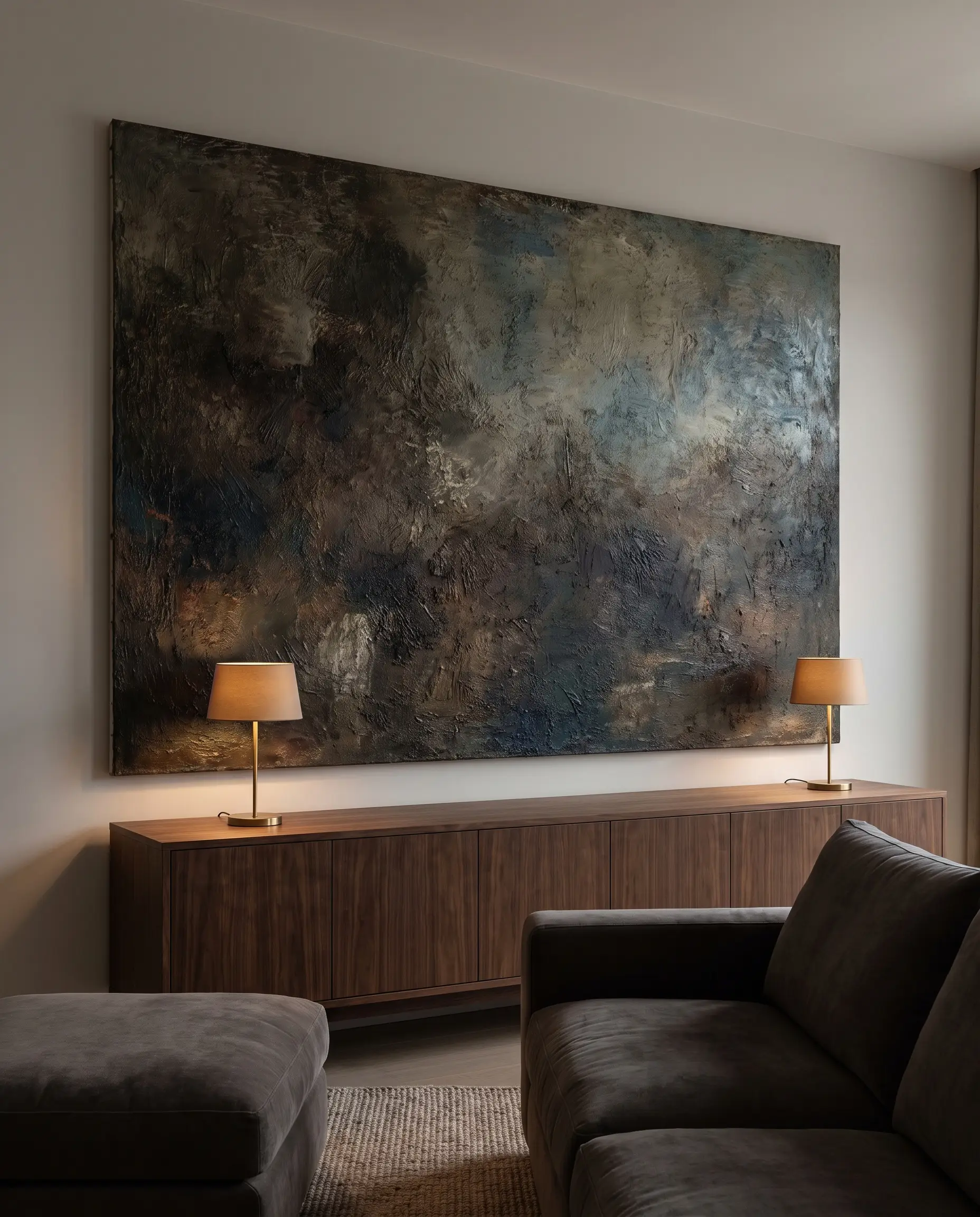
The cluttered, mismatched gallery wall has fractured the visual peace of living rooms for too long. 2027 favors one massive, commanding piece of art—whether a deeply textured canvas or large-scale monochromatic photography—to anchor the room with decisive, uncompromising confidence.
- Vibe: Decisive, commanding, gallery-grade scale.
- Visual Strategy: A single oversized piece forces the eye to rest, whereas a cluttered gallery wall creates continuous visual anxiety.
- Dimension Guide: Ensure the canvas spans at least two-thirds the width of the furniture piece it hangs above.
20. Postmodern Vintage Integration
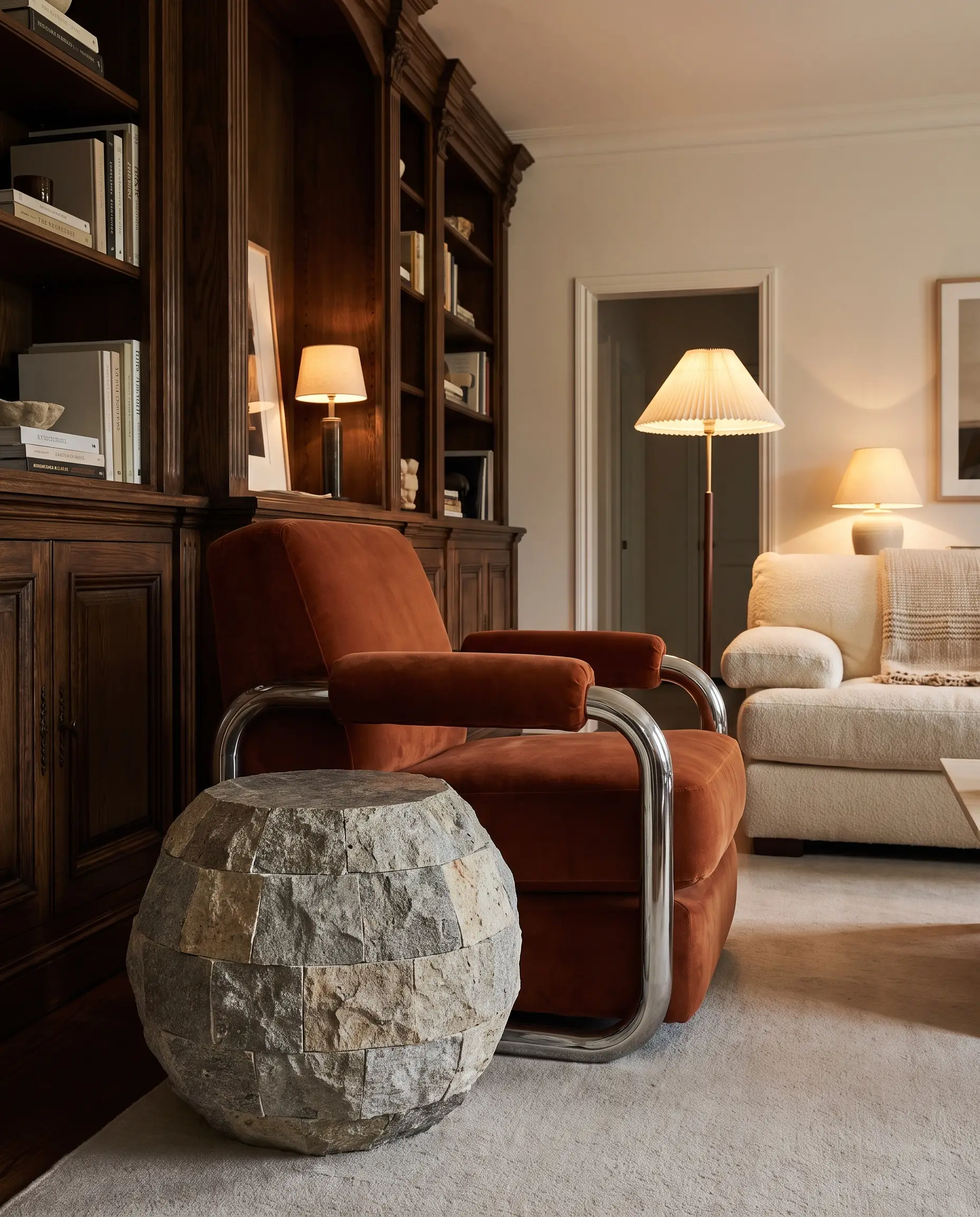
To prevent a living room from feeling locked in a single, predictable era, designers are strategically integrating 1980s postmodern vintage shapes. Placing chunky tubular chrome chairs or geometric stone side tables alongside traditional dark timber creates a brilliant architectural tension and juxtaposition.
- Vibe: Eccentric, curated, era-defying.
- Key Elements: Tubular chrome, geometric stone plinths, exaggerated spherical proportions.
- Styling Pro-Tip: Limit postmodern integration to one or two highly structural accent pieces to avoid the room feeling like a retro theme park.
21. Biophilic Architecture (Beyond Potted Plants)
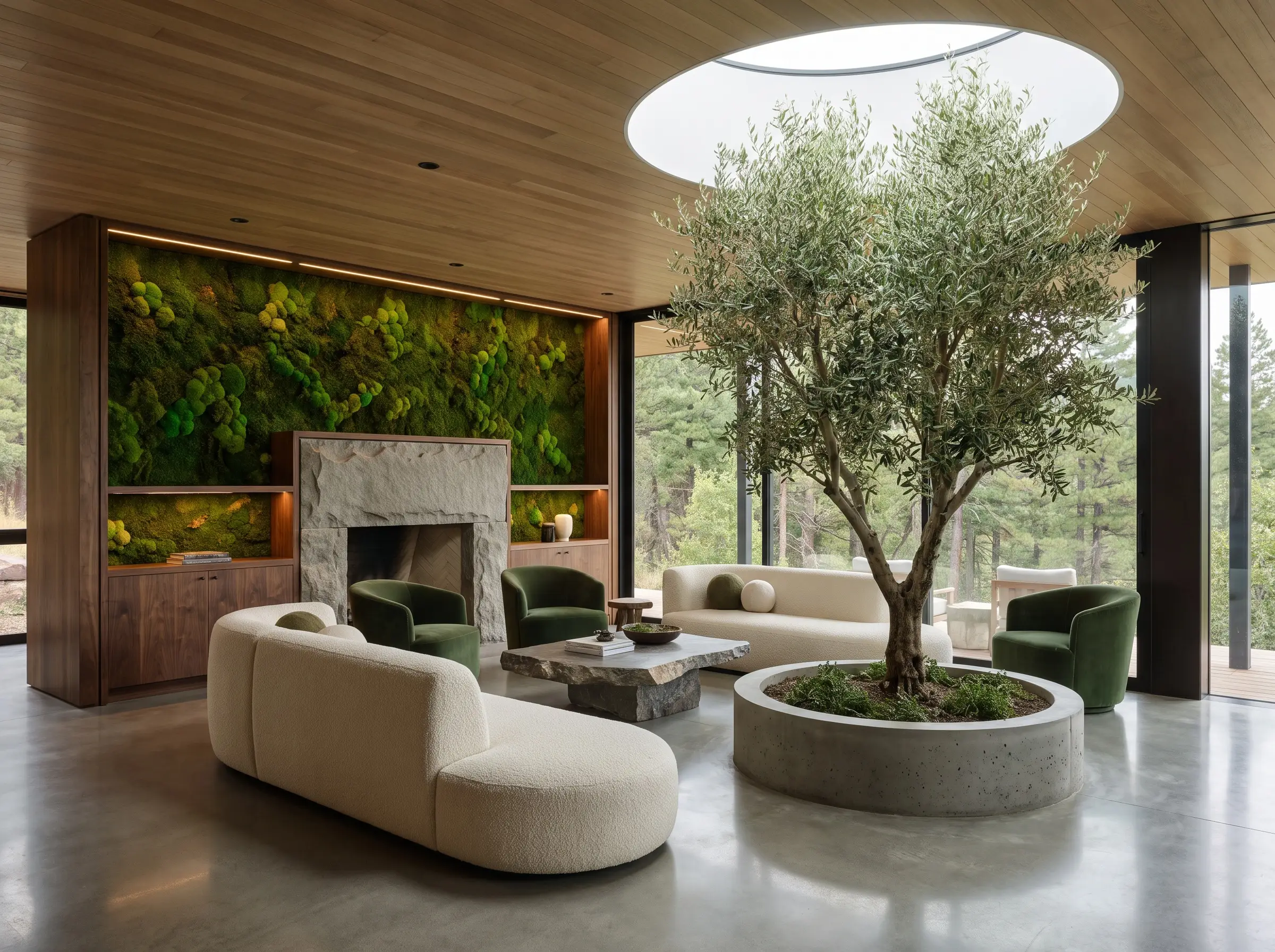
The standard fiddle leaf fig shoved in a woven basket is no longer sufficient for bringing nature indoors. High-end biophilic design now involves structural integration, utilizing built-in stone planters, indoor olive trees under skylights, or living moss walls engineered directly into the custom millwork.
- Vibe: Bespoke, organic integration, architectural permanence.
- Key Executions: Cast-concrete floor planters, integrated millwork grow-lights, towering indoor olive or black olive (Shady Lady) trees.
- Spatial Planning: Treat built-in biophilia with the same permanence as a fireplace, ensuring it anchors the room’s foundational layout.
Curation over Consumption (Designing Your 2027 Space)
Attempting to forcefully integrate all 21 of these trends into a single living room will result in an overwhelmingly chaotic environment. The true 2027 mindset is rooted in curation over consumption, focusing on acquiring pieces that hold genuine spatial weight.
Select three or four of these foundational elements—such as investing in a monumental burl wood coffee table, executing an enveloping olive color drench, and overhauling the space with cinematic lighting—to build a room that reflects your specific personal narrative and daily rhythms.
The days of sterile perfection are over; it is time to build spaces with profound tactile weight and authentic soul. Ready to execute this sensory shift?
The Aesthetics Desk curates the visual direction for Hackrea. Specializing in design history, global architectural movements, and interior styling, this desk focuses on the psychology of space and how to translate high-end, magazine-quality aesthetics into approachable residential design without falling into fleeting micro-trends.