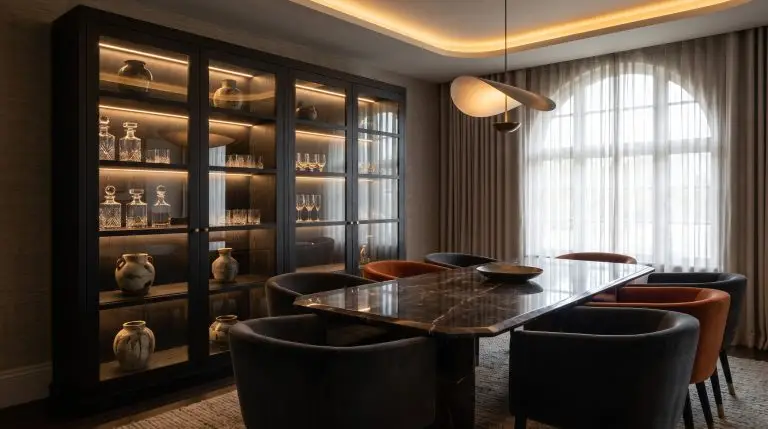
The matching dining room set is officially dead. In 2027, the most captivating hosting spaces rely on the art of “Conceal & Reveal”—a strategic approach to hiding the clutter while beautifully displaying curated glassware and cocktail essentials. If you are tired of staring at a heavy, dated china cabinet or a chaotic kitchen counter, it is time to rethink your dining cabinets hutches and bar storage.
As Hackrea’s Lead Storage & Spatial Designer, I can tell you that today’s best furniture pieces act as functional architecture, blending bespoke aesthetics with highly practical hosting features. Let’s explore the tactile materials, internal lighting extrusions, and layout secrets that will make your space feel less like a furniture showroom and more like an exclusive boutique lounge.
The Modern Hutch: From Heavy Hand-Me-Downs to Architectural Features
The traditional hutch has evolved far beyond the bulky oak boxes of the past. Today’s casework emphasizes sweeping curves, rich tactile textures, and strategic architectural lighting that dramatically shapes the mood of your dining room.
Arched Silhouettes and Curved Casework
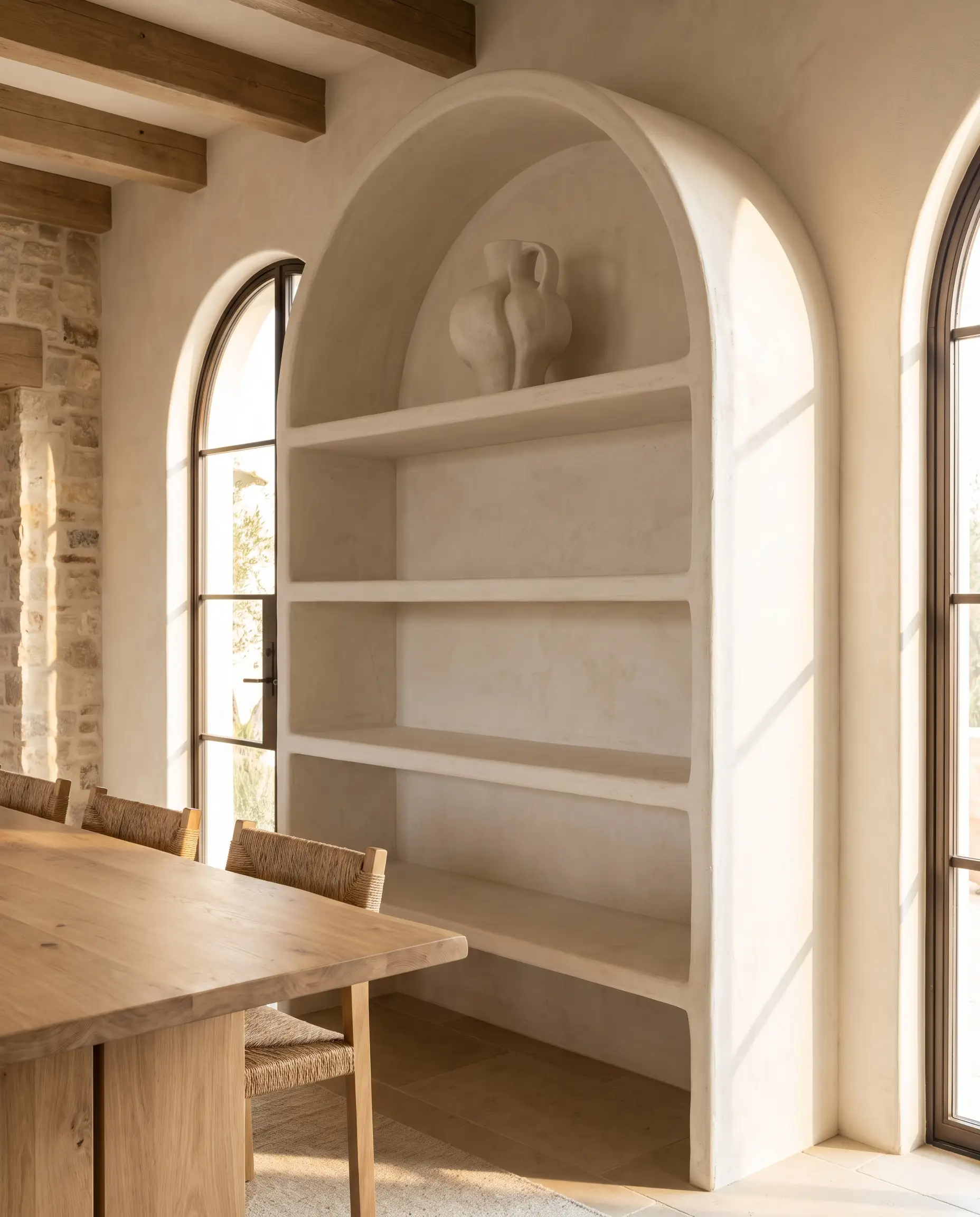
Moving away from rigid right angles, arched tops soften the visual weight of tall furniture and perfectly mimic the look of custom architectural niches. This sweeping silhouette draws the eye upward, making standard dining ceilings feel instantly taller and far more intentional.
- Vibe: Organic Modern meets Mediterranean Villa.
- Key Materials: Ebonized oak, natural walnut, or plaster-coated wood.
- Styling Pro-Tip: Keep the uppermost arched shelf sparsely decorated with a single sculptural vase to emphasize the clean architectural curve.
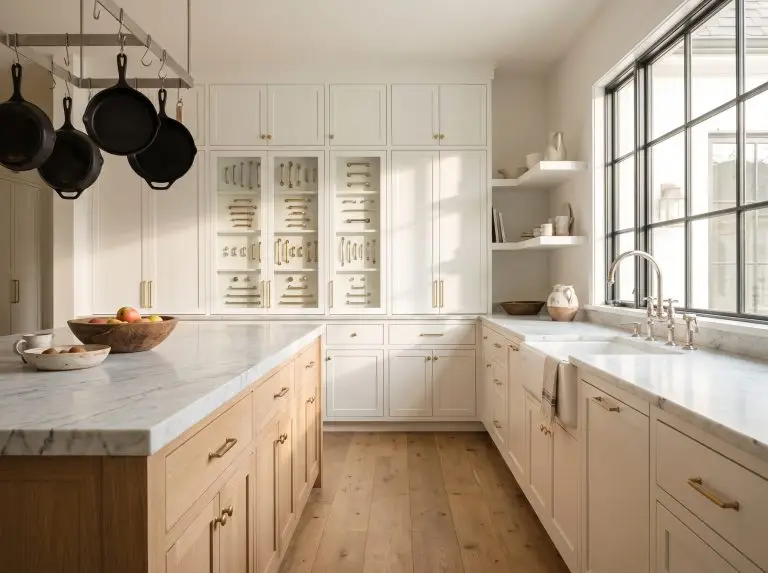
Reeded and Fluted Glass Fronts for Semi-Concealed Storage
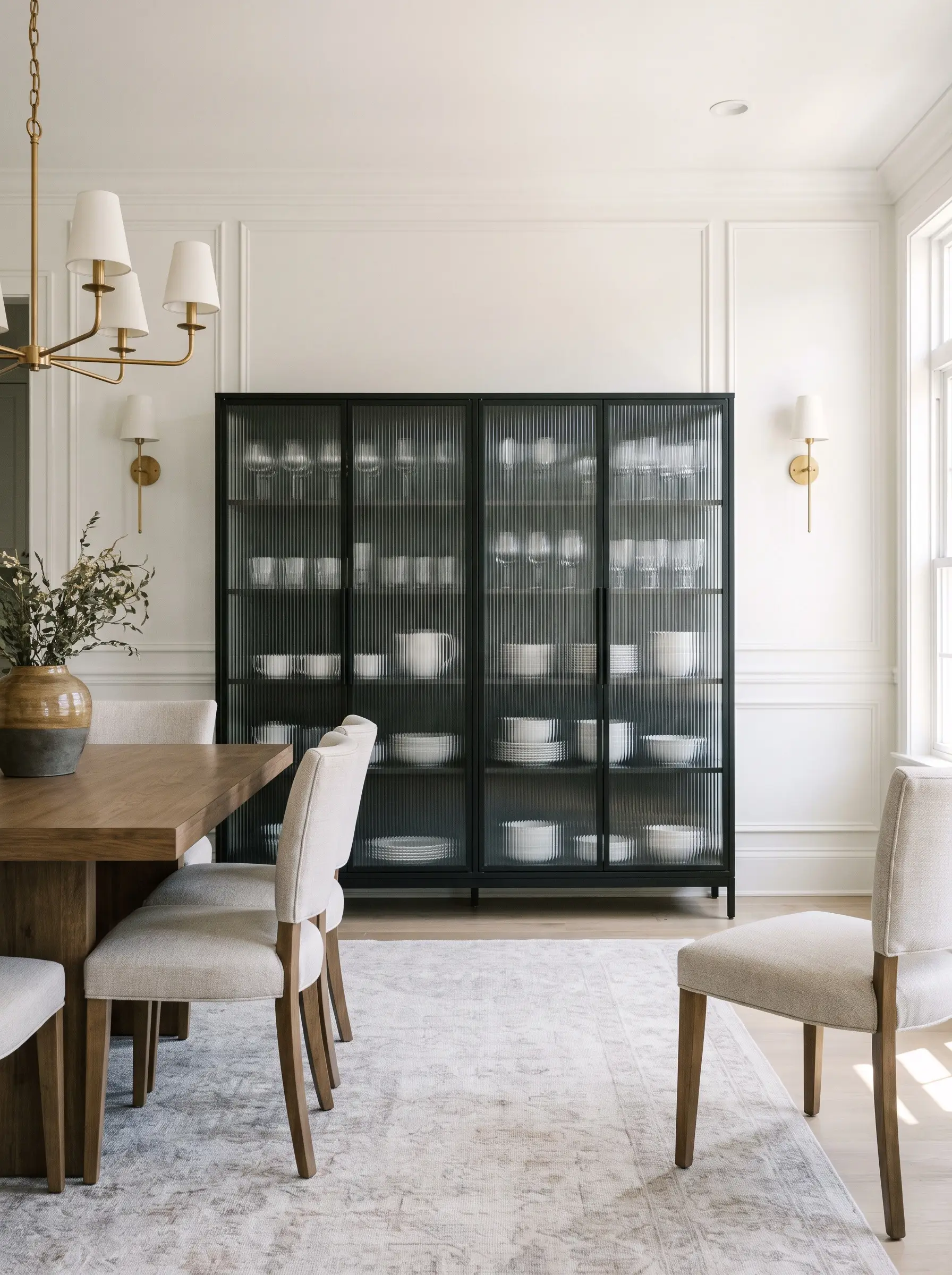
Clear glass demands absolute perfection, but reeded or fluted glass offers a gorgeous, textured blur that forgives mismatched plates without sacrificing the airy feel of a windowed cabinet. It allows you to maintain an organized aesthetic even when the interior contents are slightly chaotic.
- Vibe: Sophisticated Transitional.
- Material Focus: Ribbed structural glass combined with matte black or unlacquered brass hardware.
- Styling Pro-Tip: Stack your most visually cohesive items near the front of the glass to create a deliberate shape, letting the blur obscure the highly practical storage behind it.
High-Contrast Interior Paint and Wallpaper Backings
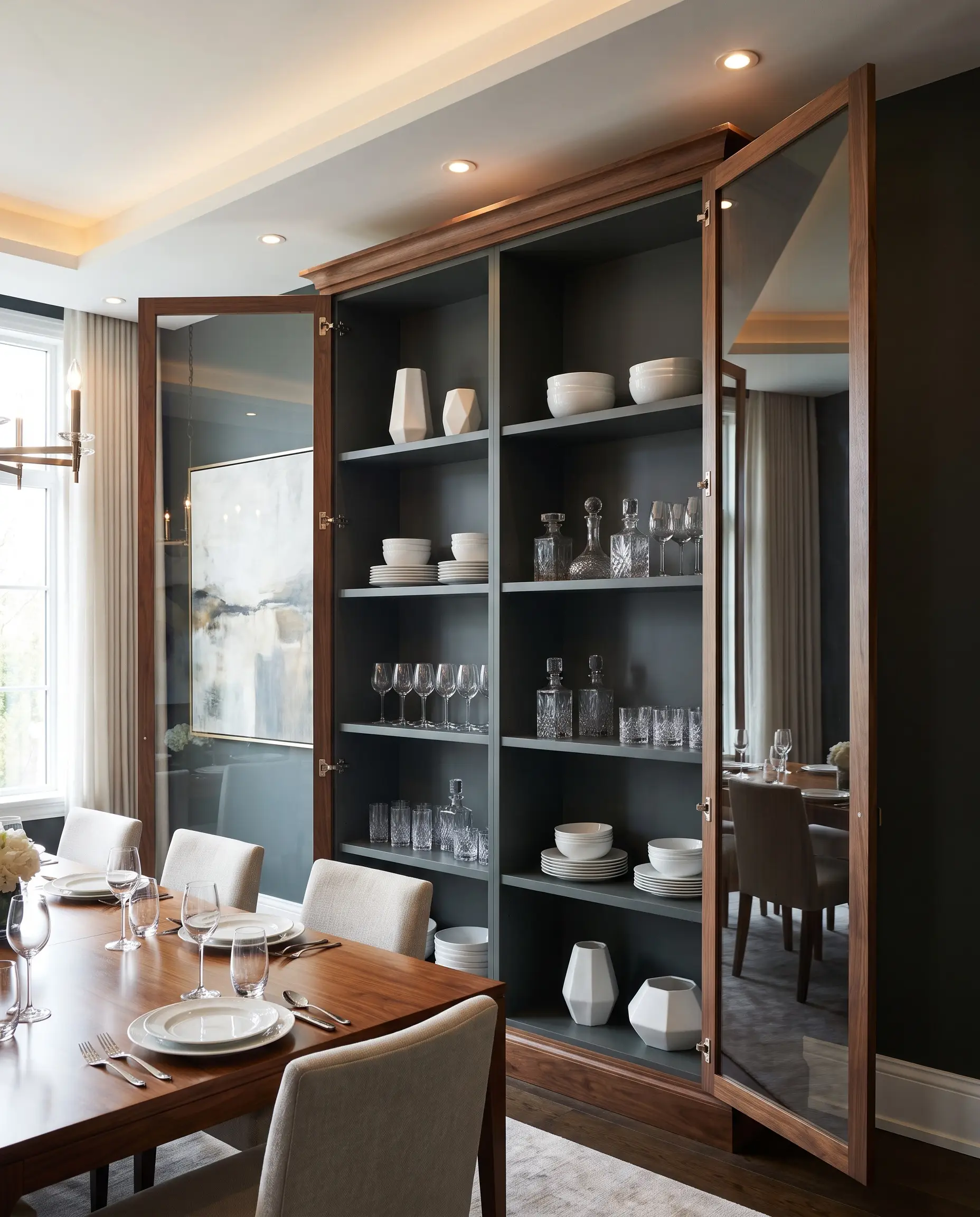
Treating the inside of your cabinet as a canvas instantly transforms a basic piece of furniture into a bespoke display. A moody hue or a textured grasscloth backing creates a striking high-contrast backdrop that makes white ceramics and sparkling crystal absolutely pop.
- Vibe: Bold and Curated.
- Paint Recommendation: Farrow & Ball Studio Green (No. 93).
- Color Match: A deep, blackened forest green that adds immense spatial depth behind shelving.
- Styling Pro-Tip: If using dining room wallpaper, opt for a vinyl grasscloth replica to prevent moisture damage from freshly washed glassware.
Integrated Warm LED Channel Lighting
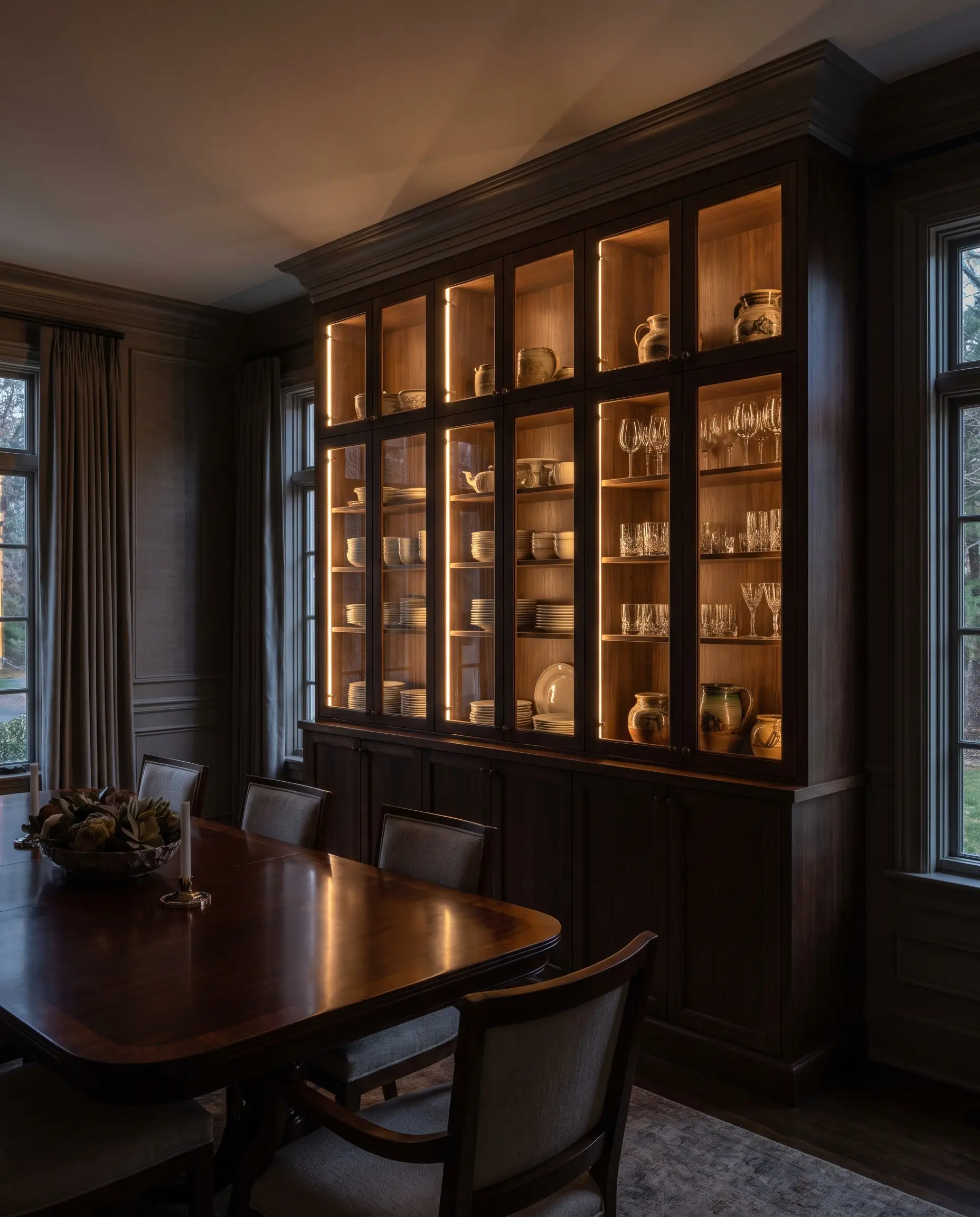
Flat, shadowy cabinets immediately look cheap, whereas integrated illumination mimics high-end custom millwork. Banish harsh top-down puck lights; instead, run continuous strips down the internal vertical seams to wash the back wall with a soft, inviting glow.
- Vibe: Luxury Boutique Hotel.
- Key Materials: 2700K warm LED strips housed in aluminum extrusions with frosted diffusers.
- Styling Pro-Tip: Hide the extrusions behind the front face frame of the cabinet so the light source is entirely invisible to your dinner guests.
Dedicated Bar Armoires and Concealed Cocktail Stations
The era of the dusty, open-air bar cart is firmly behind us. The 2027 entertaining landscape is defined by fully enclosed, dramatic bar armoires that hide the mess of mixology behind stunning, architectural doors.
The Coffee-to-Cocktails Hybrid Cabinet
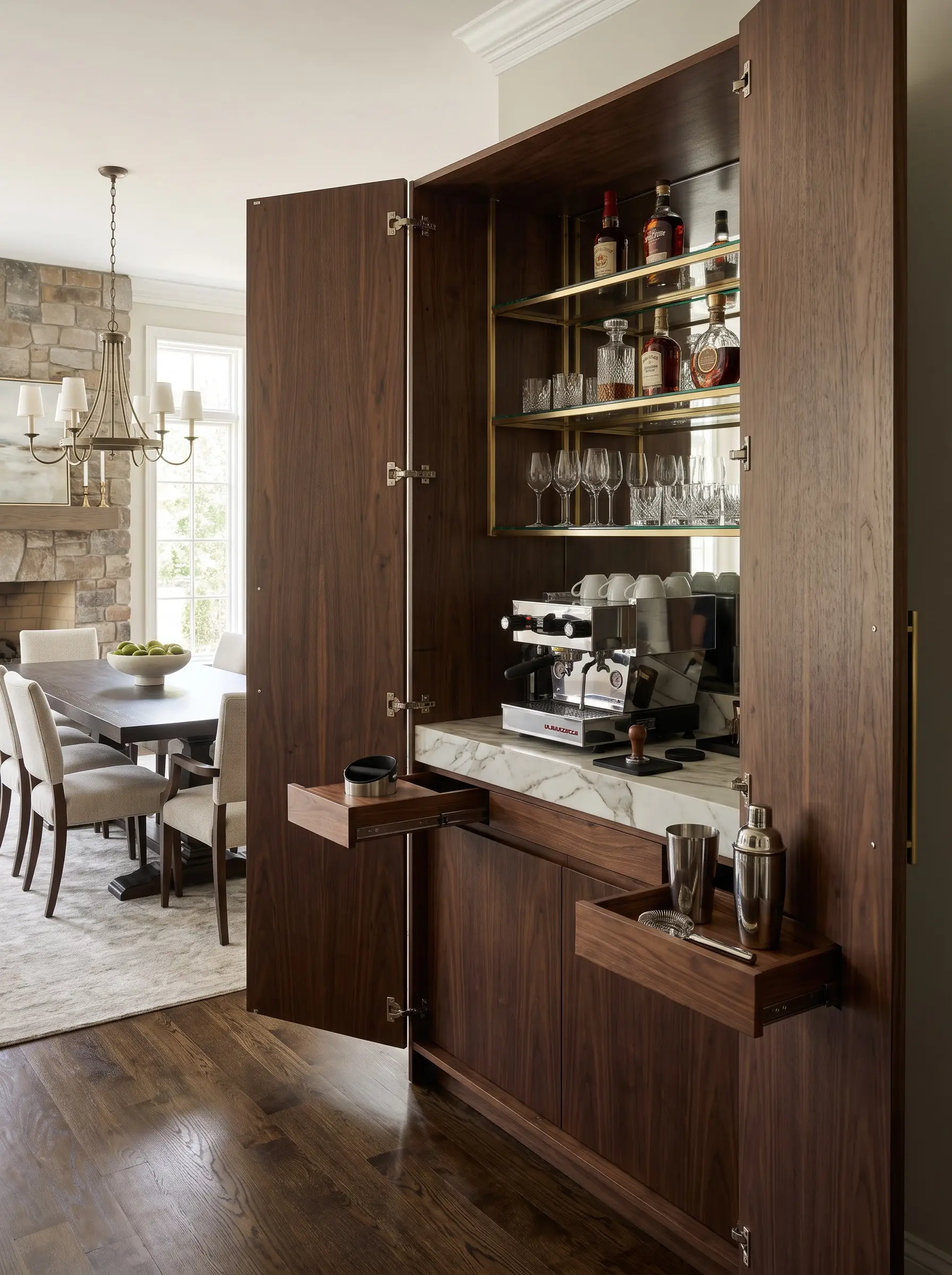
Dual-purpose storage is the hallmark of intelligent spatial design, merging your morning espresso station with your evening cocktail bar. By dedicating a single enclosed armoire to all beverage prep, you completely free up your kitchen counters and create a centralized hub for hosting.
Install a stone remnant on the primary interior shelf. This ensures that spilled espresso grounds or sticky simple syrup won’t ruin the wood veneer, making mid-party cleanups effortless.
The Host’s Secret
- Vibe: High-Functioning Luxury.
- Key Materials: Heavy-duty slide-out trays, internal electrical outlets, and waterproof interior shelving.
- Styling Pro-Tip: Dedicate the bottom half to heavy appliances (espresso machines, blenders) and the top half to delicate glassware and liquor bottles.
Retracting Pocket-Doors for Uninterrupted Entertaining
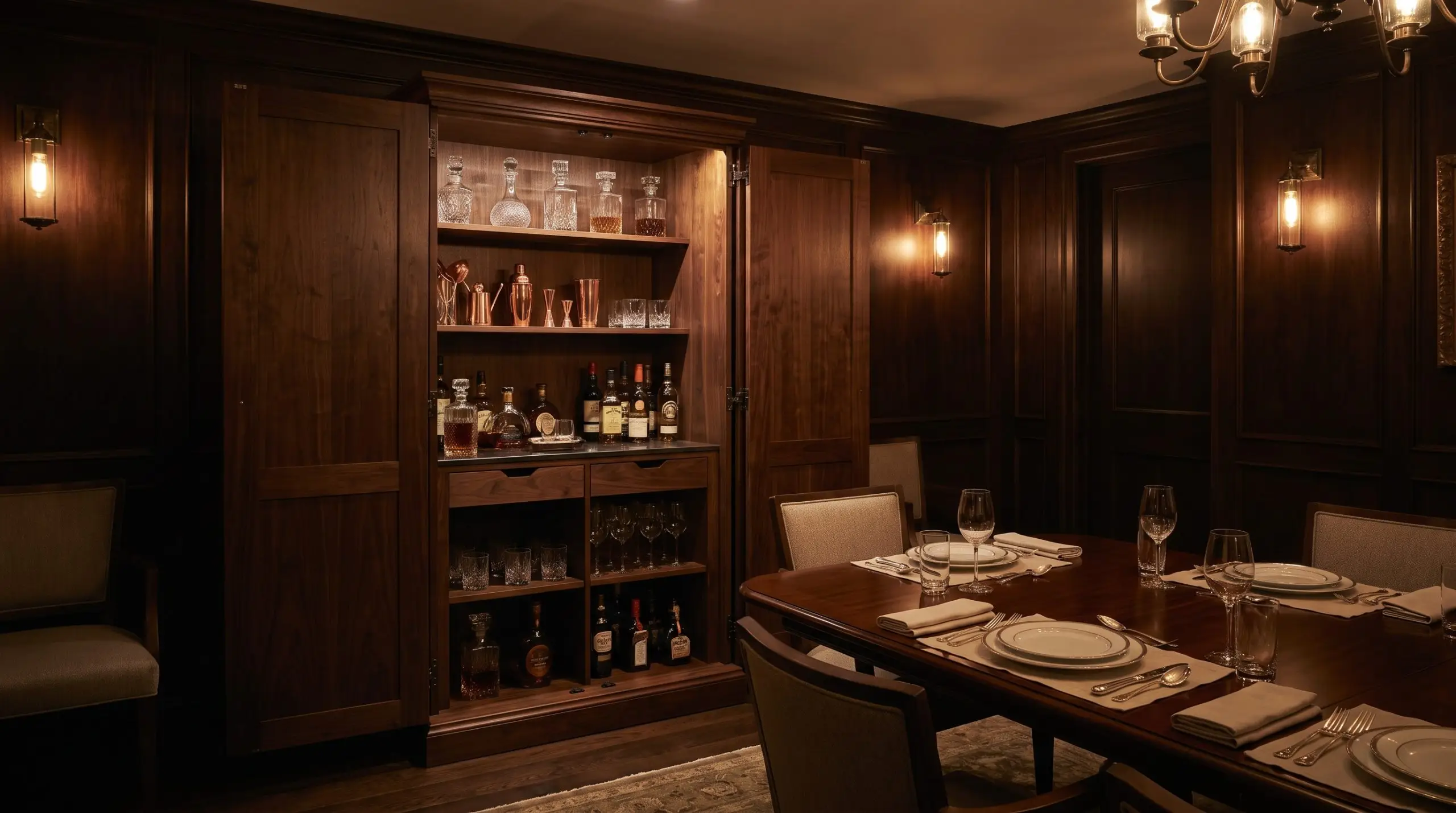
Standard cabinet doors block walkways when left open, but retracting pocket-doors slide seamlessly back into the cabinet walls. This high-end bespoke feature allows your bar to remain completely accessible during a dinner party without interrupting the spatial flow of the room.
Pocket doors signal to your guests that the bar is officially “open” for the evening. Once the night winds down, simply slide them shut to instantly hide the half-empty bottles and used lime wedges.
Entertaining Secret
- Vibe: Bespoke Speakeasy.
- Key Materials: Heavy-duty flipper door slides and solid wood casework.
- Styling Pro-Tip: Ensure your dining space has at least 3 inches of extra width on either side of the armoire to accommodate the internal hardware tracks.
Antique Mirrored Backsplashes for Spatial Depth
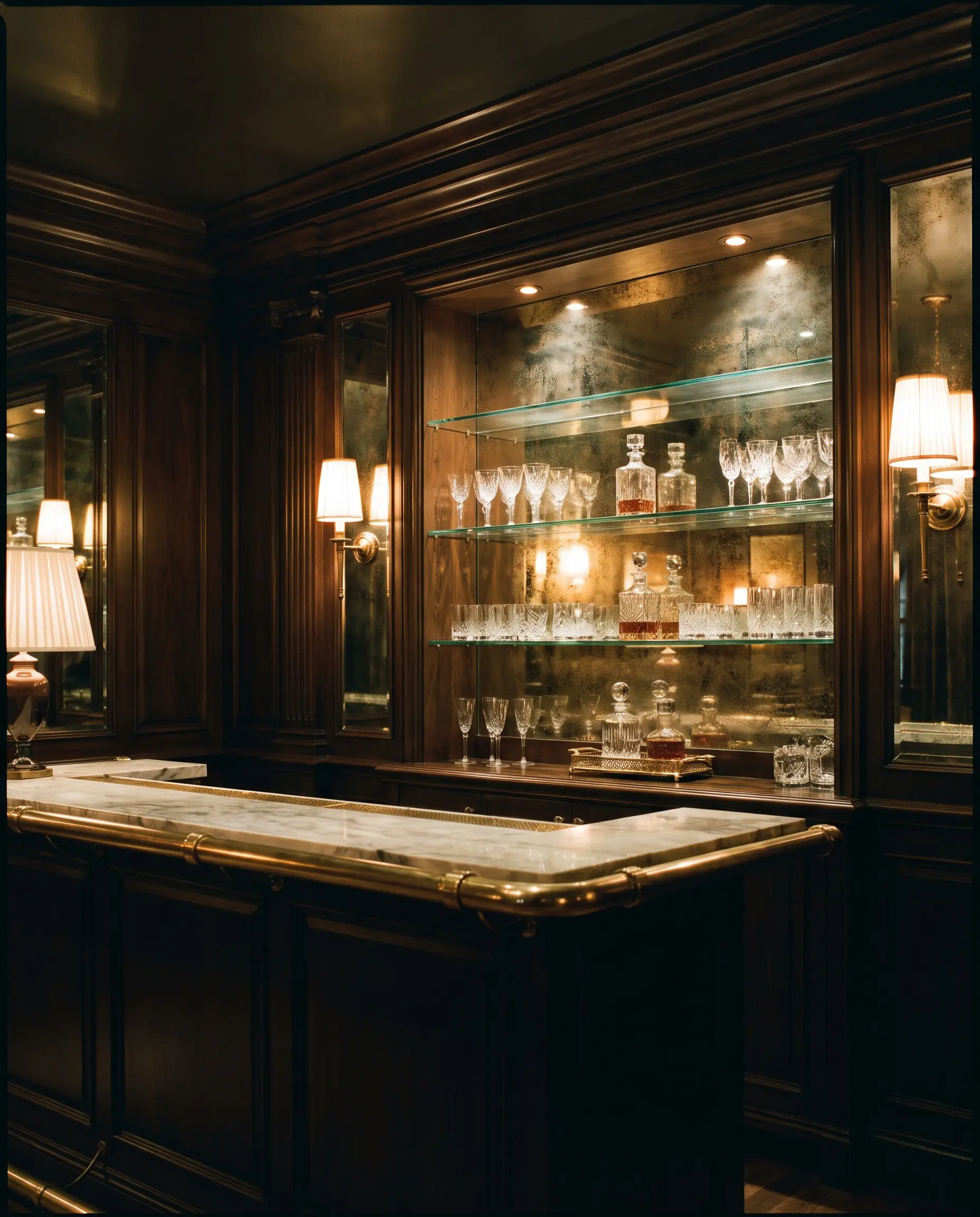
Installing foxed or antique mirror panels at the back of a bar cabinet bounces warm ambient light around the dining room while doubling the visual depth of your glassware. It delivers an immediate speakeasy aesthetic that feels both moody and expansive.
- Vibe: Vintage Glamour.
- Key Materials: Lightly oxidized mirror glass panels, glass shelving.
- Styling Pro-Tip: Use glass interior shelves rather than wood; this allows the light to travel uninterrupted from the top of the cabinet all the way down to the serving counter.
Burl Wood Veneers for High-Impact Statement Bars
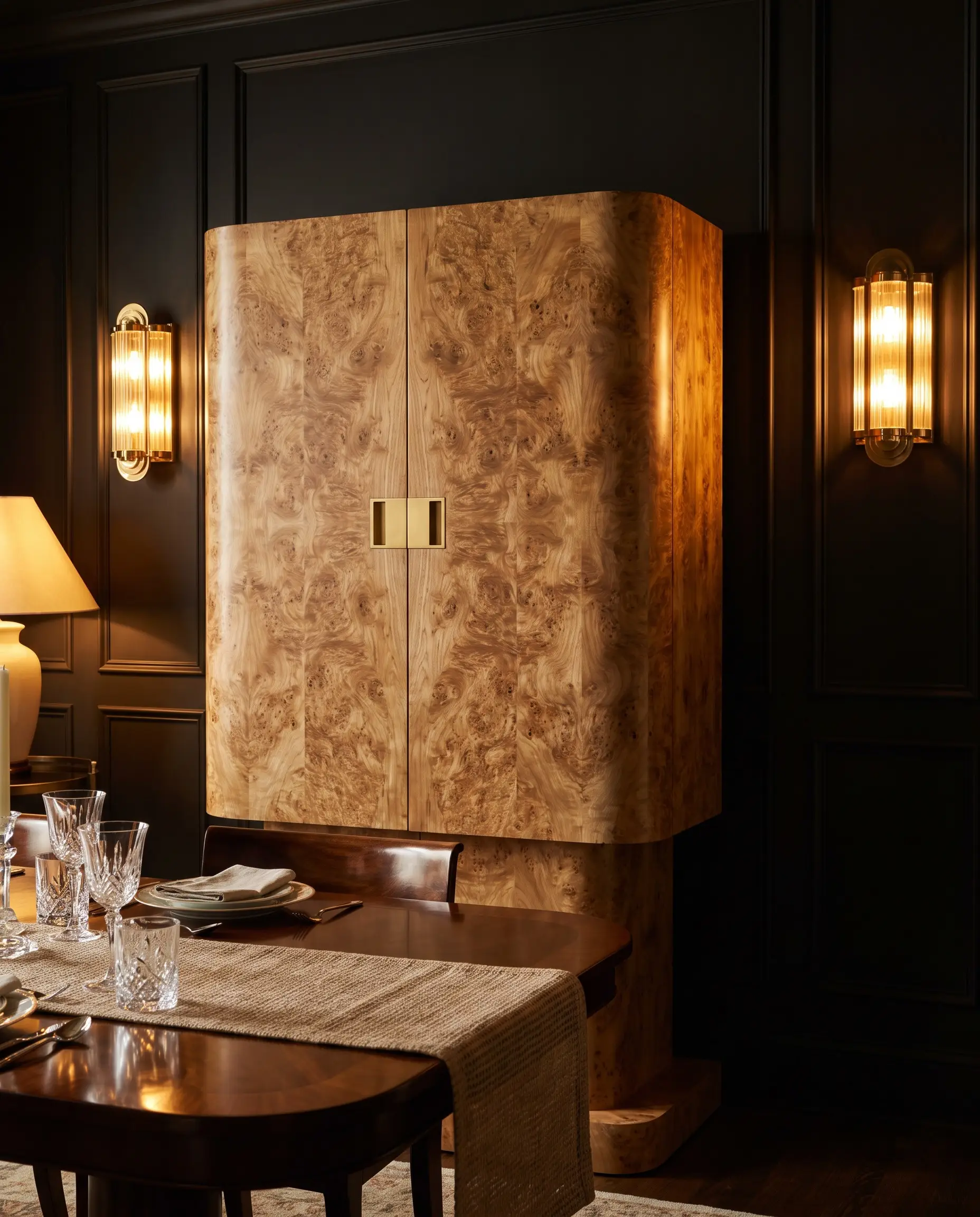
Burl wood acts as natural art, transforming a closed bar cabinet into a sculptural focal point that commands the dining room. This Art Deco resurgence brings an incredibly rich, swirling grain profile that pairs beautifully with dim lighting and metallic accents.
- Vibe: 1970s Art Deco Revival.
- Material Focus: Olive ash burl or walnut burl veneer finished in a protective satin clear coat.
- Styling Pro-Tip: Let the dramatic wood grain do the talking. Keep the hardware minimal—think simple brass finger pulls or push-latch mechanisms.
Low-Profile Storage: Sideboards, Credenzas, and Consoles
If your dining room features low windows, massive art installations, or simply lacks the footprint for a towering armoire, long, low-profile pieces are your best asset. These streamlined sideboards ground the space without eating into your visual square footage.
Wall-Mounted Floating Credenzas
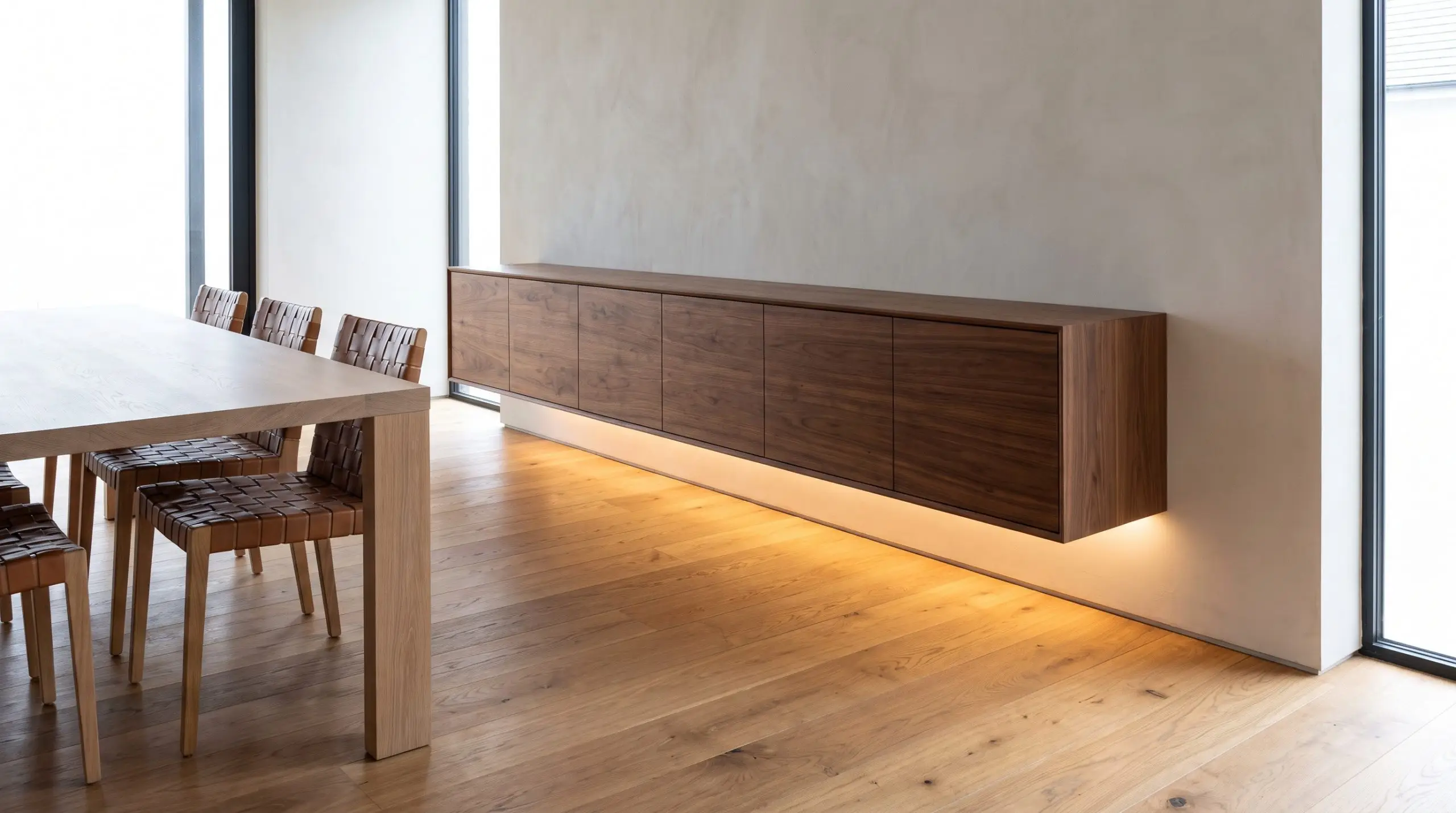
Removing the legs entirely to expose the floor beneath is a brilliant visual trick that makes a tight dining room feel significantly larger. This floating silhouette leans heavily into warm minimalism, creating an airy, unobstructed flow right at the sightline of your dining chairs.
- Vibe: Contemporary Minimalist.
- Key Materials: Heavy-duty French cleat mounting systems, solid wood or lacquer casing.
- Styling Pro-Tip: Run an LED strip underneath the floating cabinet to wash the floor in warm light, enhancing the illusion of weightlessness.
Heavy Stone: Travertine and Honed Marble Tops
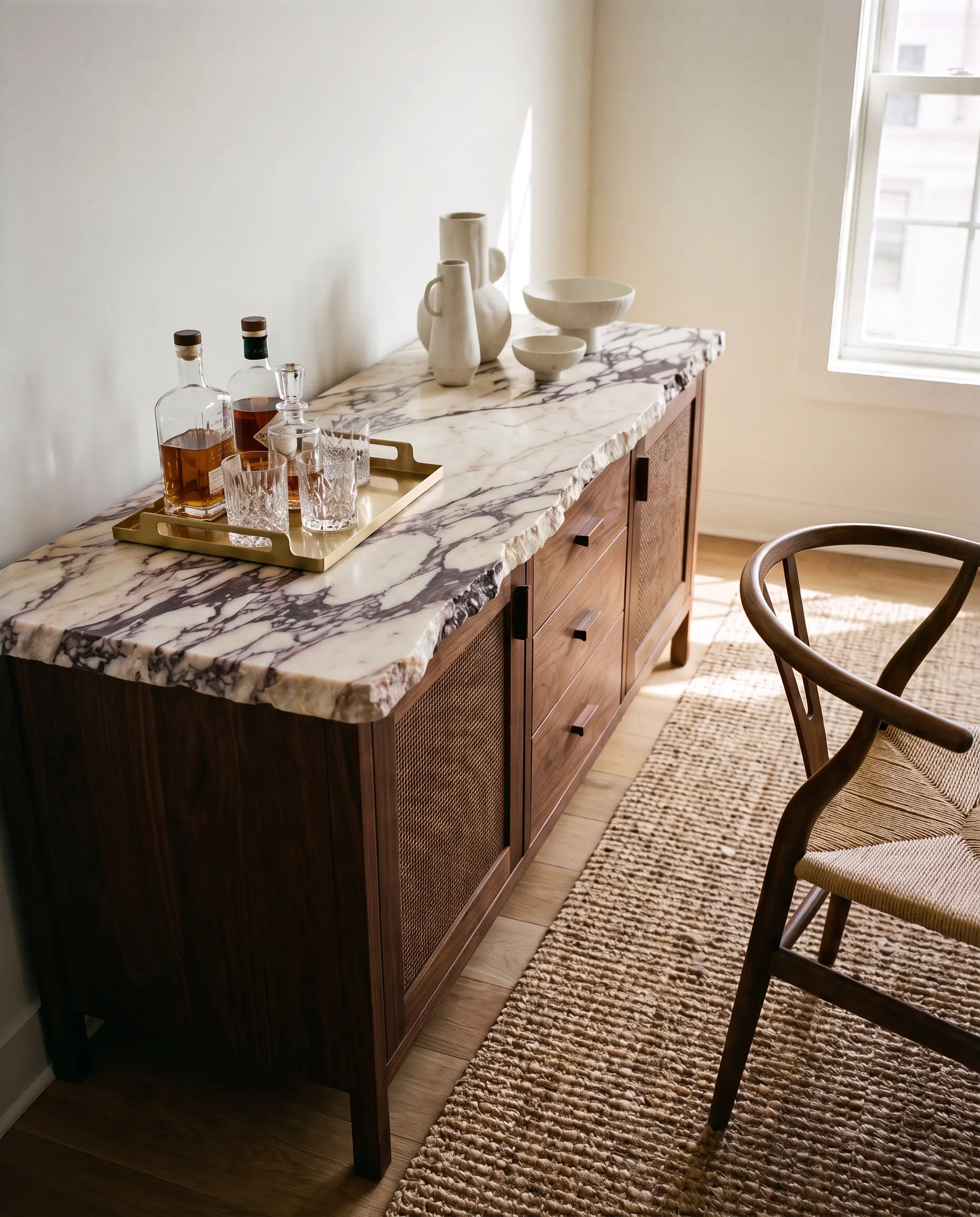
You can upgrade a standard wood sideboard into a piece of accessible luxury by capping it with a custom-cut remnant of travertine or heavily veined marble. This tactile addition not only looks incredibly expensive, but it also provides a bulletproof surface for serving hot dishes or mixing drinks without damaging wood finishes.
- Vibe: Organic Modern.
- Key Materials: Unfilled honed travertine or Calacatta Viola marble remnants.
- Styling Pro-Tip: Visit your local stone yard and ask for “sink cutouts” or leftover slab remnants—you can often snag premium stone for a fraction of the cost to top your freestanding credenza.
Wrapped Suede and Leather Door Fronts
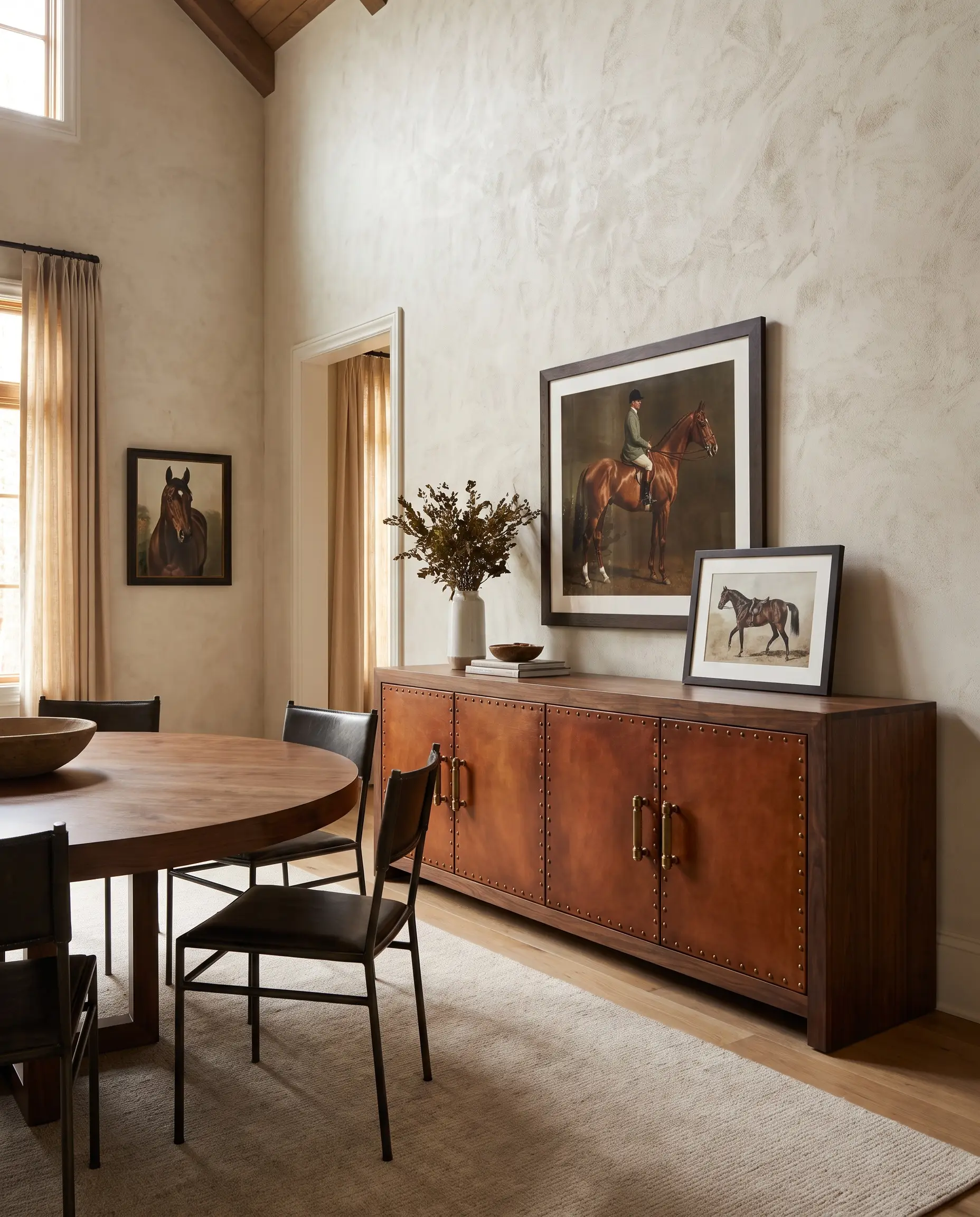
Dining rooms are inherently full of hard surfaces—wood tables, metal chairs, and glass fixtures—so introducing paneled leather doors adds a desperately needed soft texture. Over time, high-quality leather will develop a rich patina, making the storage piece feel deeply personal and lived-in.
- Vibe: Equestrian Chic.
- Key Materials: Top-grain leather or synthetic suede wrapped over MDF panels.
- Styling Pro-Tip: Pair leather fronts with heavy, knurled brass hardware to strike a balance between soft upholstery and industrial metal.
Slatted and Fluted Millwork Consoles
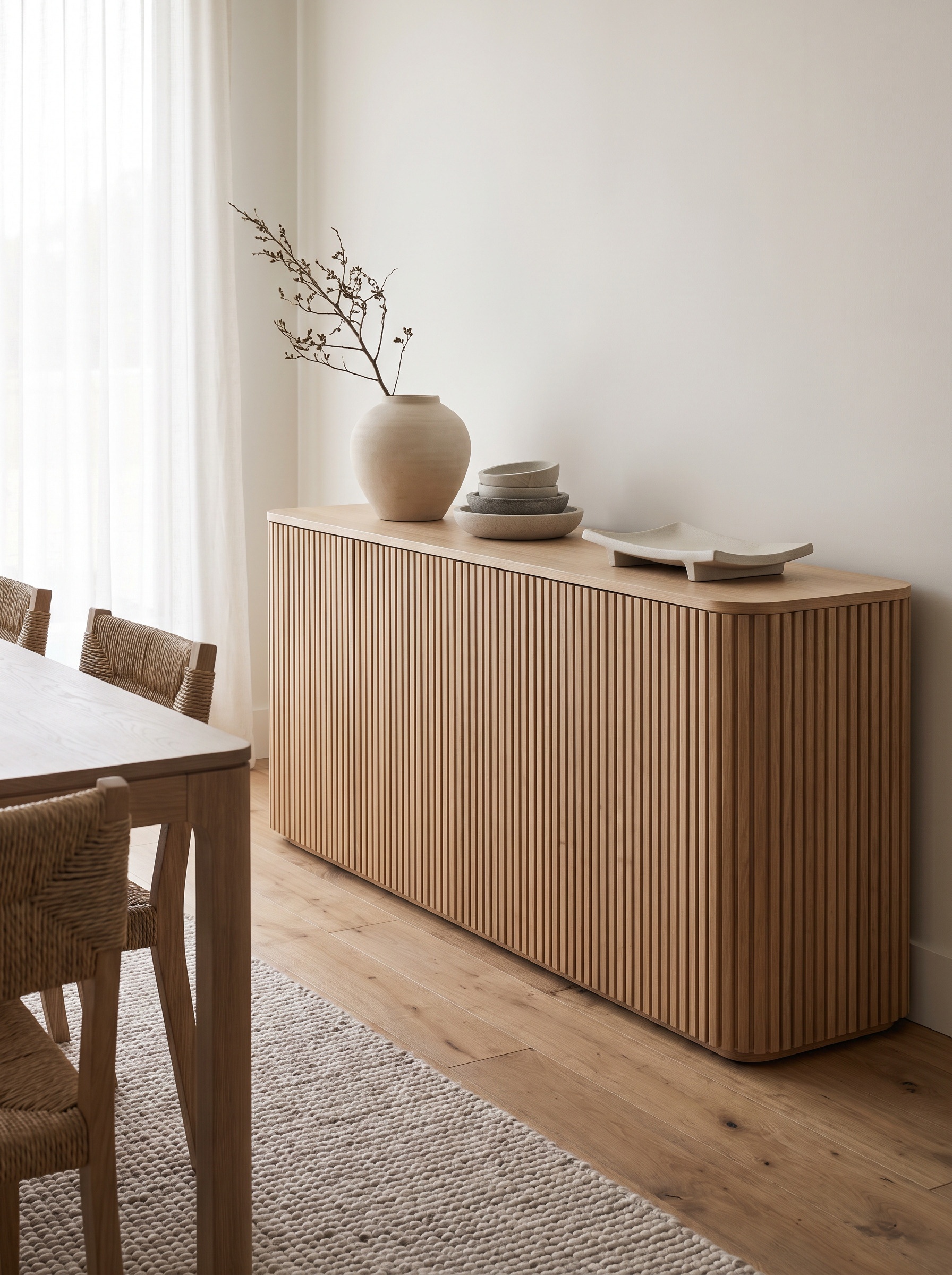
Continuous vertical lines effortlessly hide cabinet seams and hardware, creating a monolithic block of texture that feels highly architectural. This slatted approach leans right into organic modernism, softening the visual bulk of a large storage unit.
- Vibe: Warm Japandi.
- Key Materials: White oak tambour panels or individually milled walnut slats.
- Styling Pro-Tip: Opt for push-latch hardware to keep the fluted lines completely uninterrupted by knobs or pulls.
Hardware, Finishes, and Architectural Illusions
You do not always need custom carpentry to achieve a high-end look. By manipulating finishes, employing clever styling illusions, and upgrading hardware, you can easily trick the eye into seeing bespoke, built-in architecture.
Color-Drenching to Fake a Built-In Look
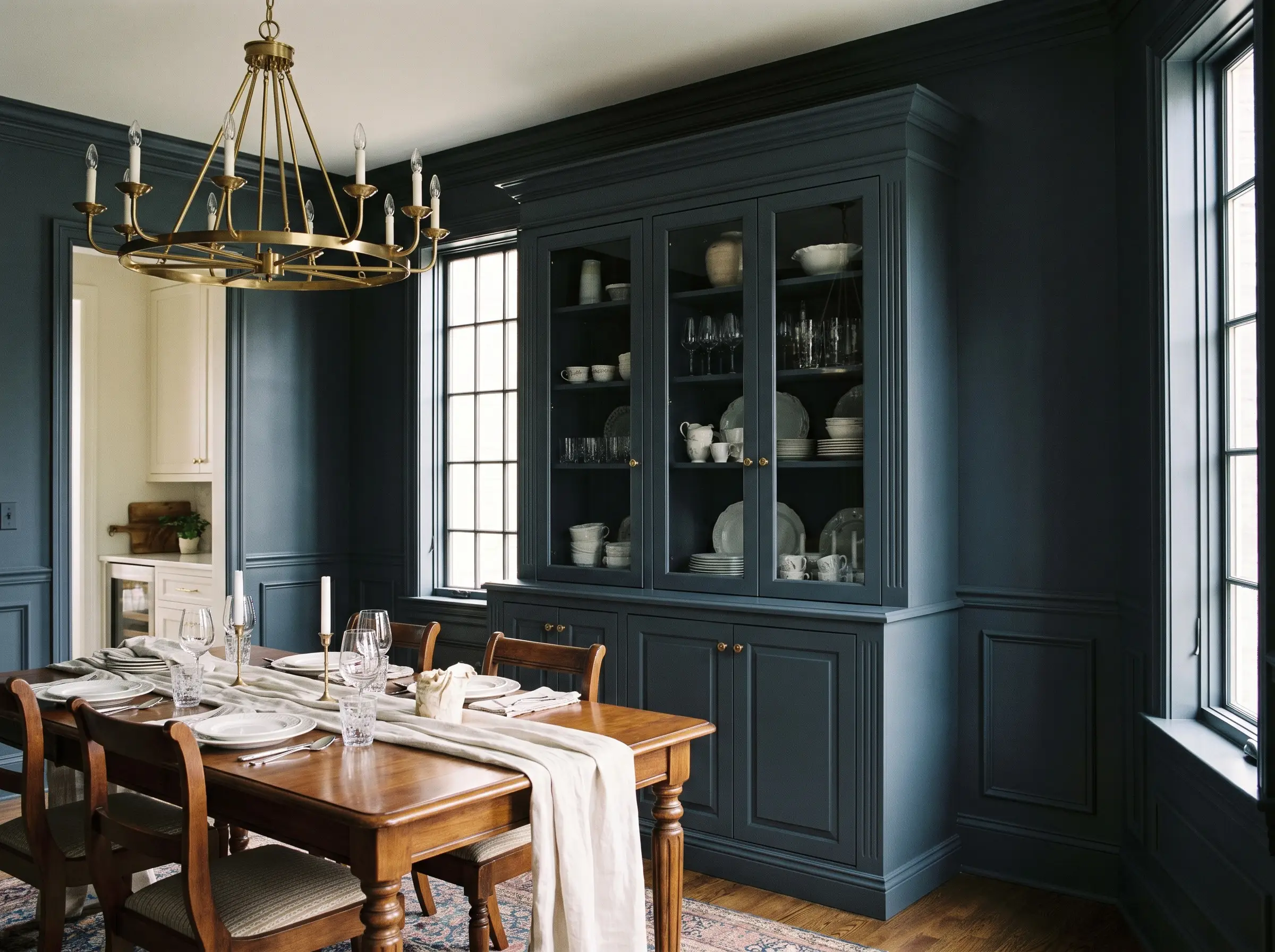
Painting a freestanding hutch or credenza the exact same color and finish as your dining room walls creates a seamless, expensive architectural illusion. By erasing the visual contrast between the furniture and the wall, the storage piece appears seamlessly integrated into the room’s millwork.
- Vibe: Monochromatic Luxury.
- Paint Recommendation: Benjamin Moore Hale Navy (HC-154).
- Color Match: A deeply saturated, classic navy that bridges the gap between traditional and modern.
- Styling Pro-Tip: Use a high-quality cabinet enamel for the furniture piece to ensure it can withstand the wear and tear of hosting, even if the surrounding walls are matte.
Symmetrical Flanking Around Fireplaces or Windows
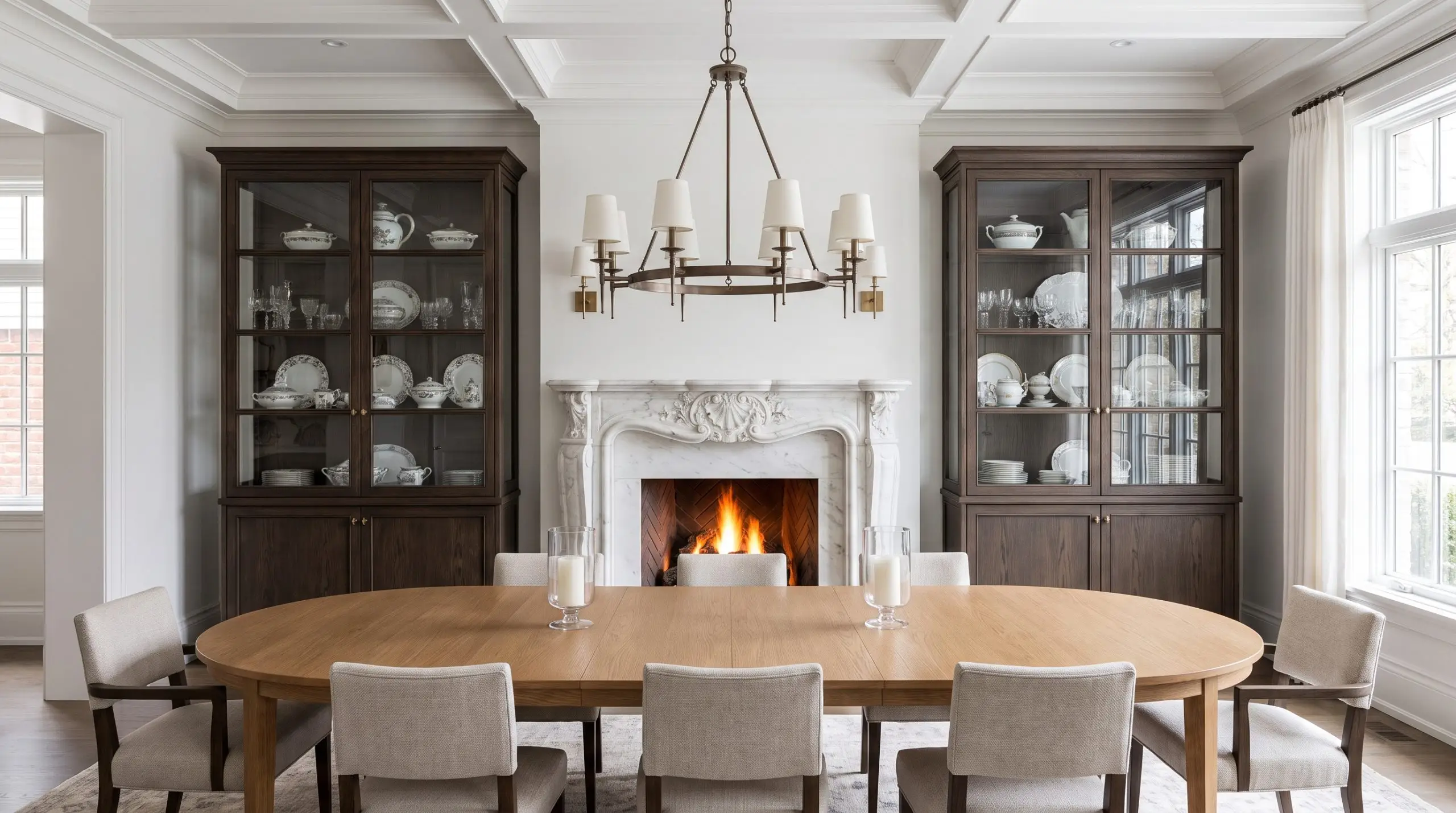
Sourcing two identical tall, narrow cabinets and placing them on either side of a central feature perfectly mimics classic structural symmetry. This framing technique anchors the dining room, drawing the eye directly to your architectural focal point while doubling your storage capacity.
- Vibe: Modern Traditional.
- Key Materials: Twin glass-front towers or matching closed-door armoires.
- Styling Pro-Tip: Ensure the cabinets are exactly the same distance from the central feature; even an inch of asymmetry will ruin the built-in illusion.
The Brass Gallery Rail Hack
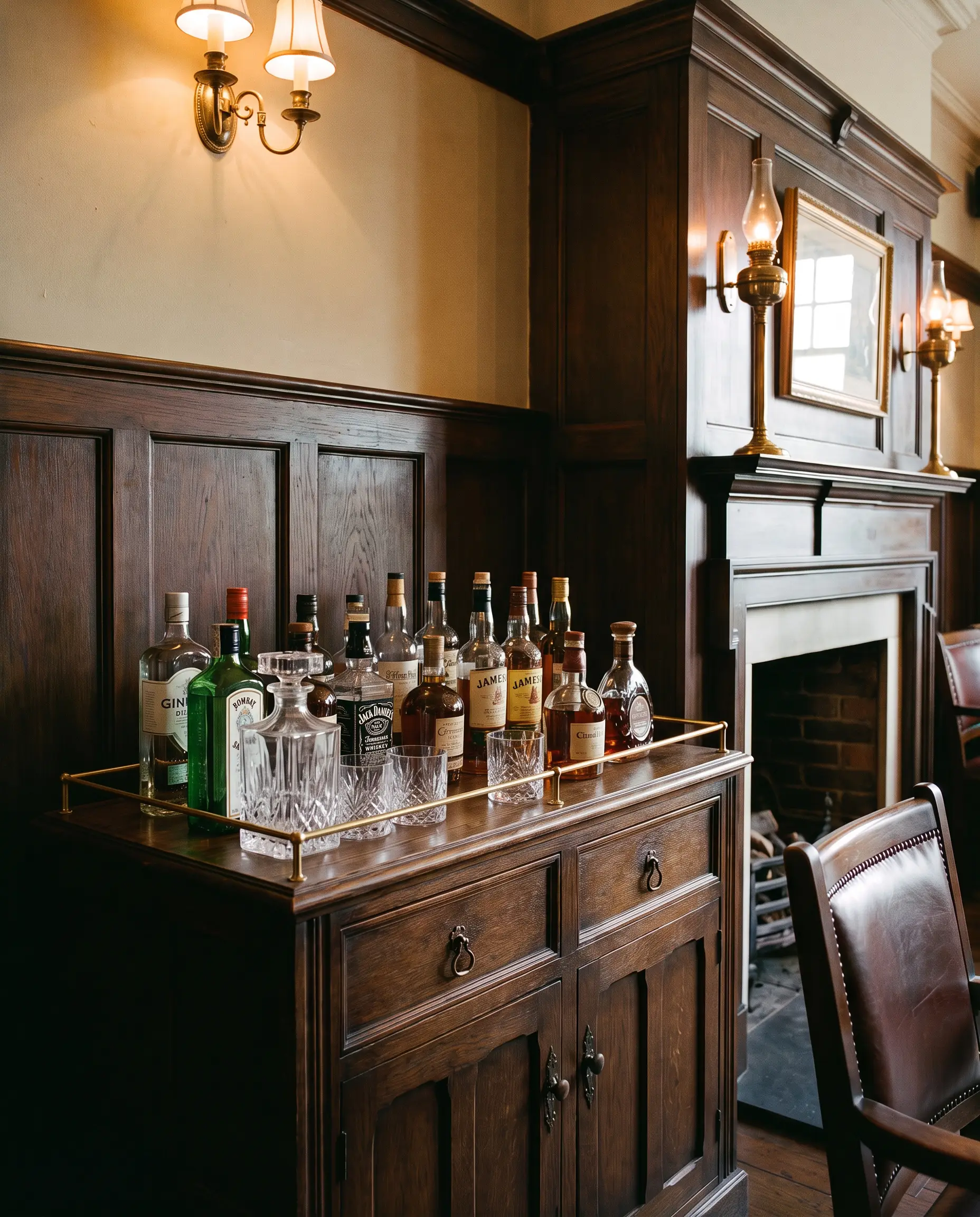
Adding a thin brass gallery rail to the top edge of a flat credenza instantly secures your liquor bottles while refining the piece to a classic English-bar aesthetic. It is a brilliant, low-lift micro-trend that makes off-the-shelf furniture look distinctly custom.
You can order unlacquered brass gallery rail kits online. Simply measure your credenza top, order the corresponding corner and center posts, and screw them directly into the wood for an instant, high-end upgrade.
Pro-Tip
- Vibe: Heritage English Pub.
- Key Materials: Solid brass gallery posts and rods.
- Styling Pro-Tip: Polish the rail once a year, or let it naturally oxidize for an authentic, aged patina.
High-Gloss Lacquer Paired with Unlacquered Brass
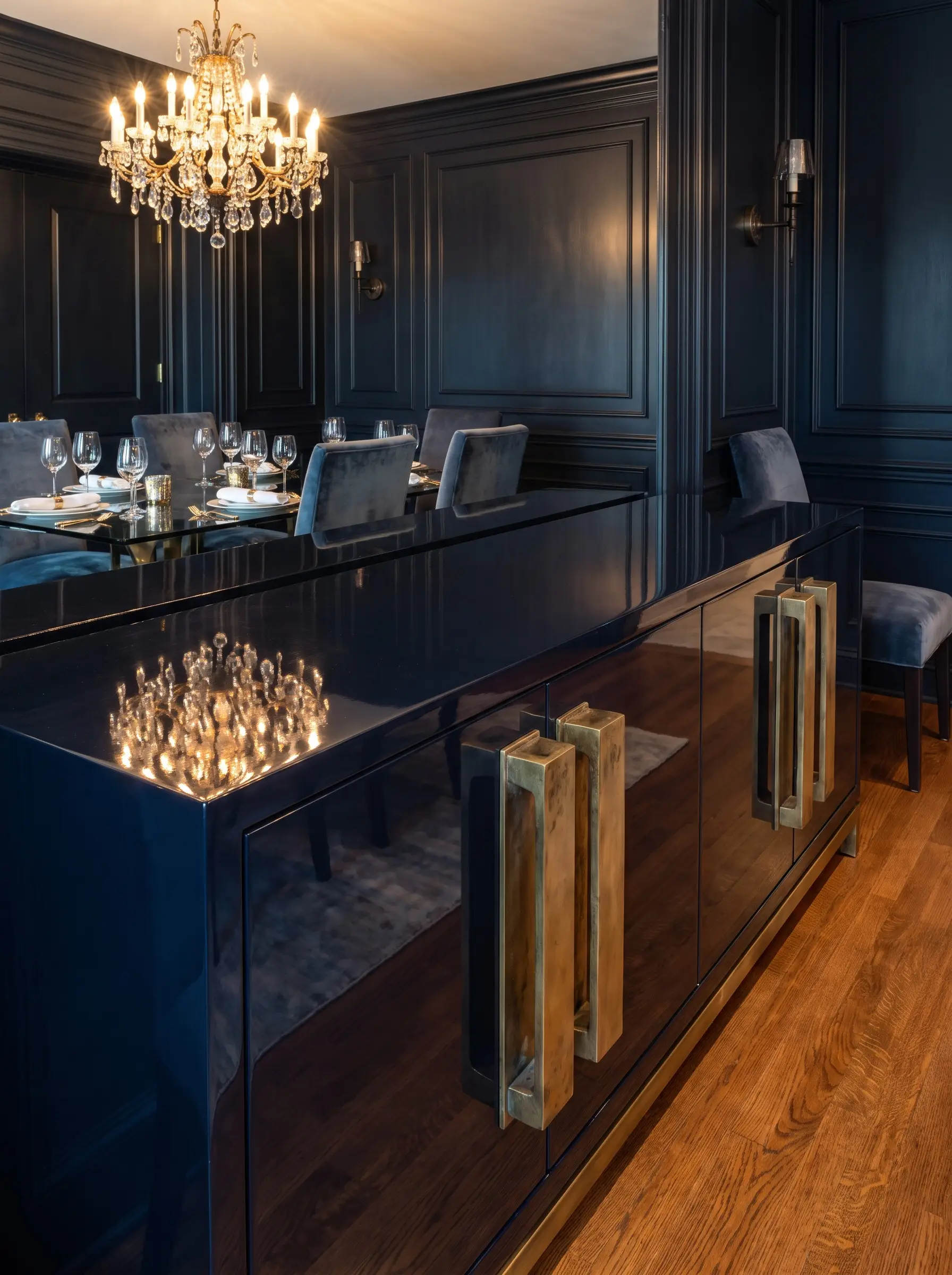
The intense, mirror-like reflection of a high-gloss lacquered cabinet contrasts flawlessly with the living finish of unlacquered brass hardware. This material pairing creates a dynamic tension between pristine, modern shine and raw, aging metal.
- Vibe: High-Fashion Glamour.
- Key Materials: Professional-grade lacquer paint and raw brass pulls.
- Styling Pro-Tip: High-gloss finishes highlight every single imperfection. Ensure your cabinet surface is sanded perfectly smooth and primed heavily before applying lacquer.
Woven Metal Mesh Grilles Over Glass
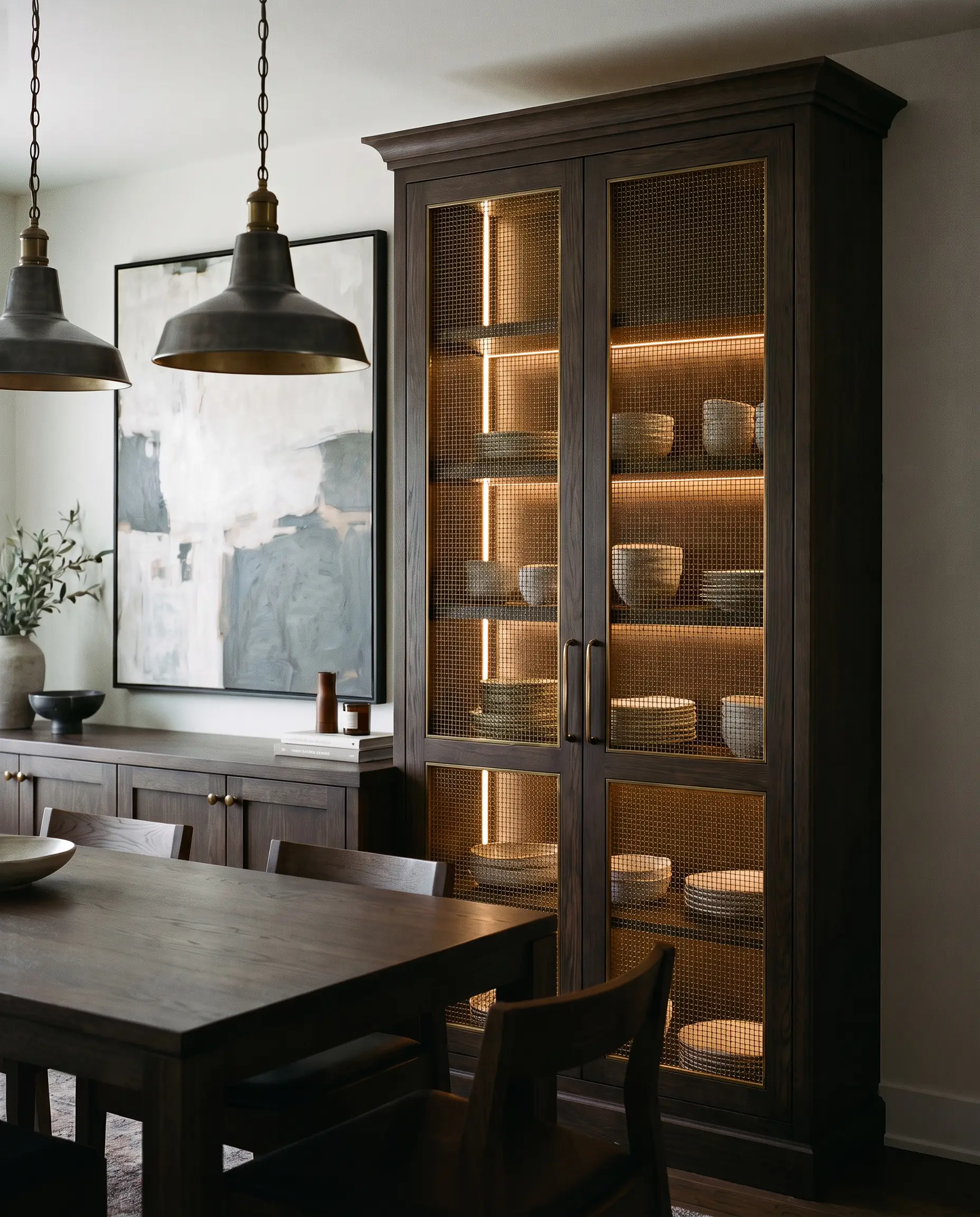
Offering a moody, transitional alternative to clear glass, woven metal grilles provide a tantalizing glimpse of the interior while introducing an industrial, bespoke metallic texture. It perfectly obscures messy stacks of dinnerware while allowing ambient cabinet lighting to shine through.
- Vibe: Industrial Elegance.
- Key Materials: Antiqued brass or blackened steel woven wire mesh.
- Styling Pro-Tip: Back the metal mesh with a layer of sheer, dark fabric if you want to completely hide the interior contents while maintaining the metallic texture on the exterior.
The Entertainer’s Blueprint: Styling Your Dining Storage
Once you have secured the perfect cabinet, the true test of your spatial design skills is how you fill it. Strategic styling ensures your storage pieces look like curated displays rather than cluttered, overflowing kitchen cupboards.
Establishing the Rule of Three on Bar Tops
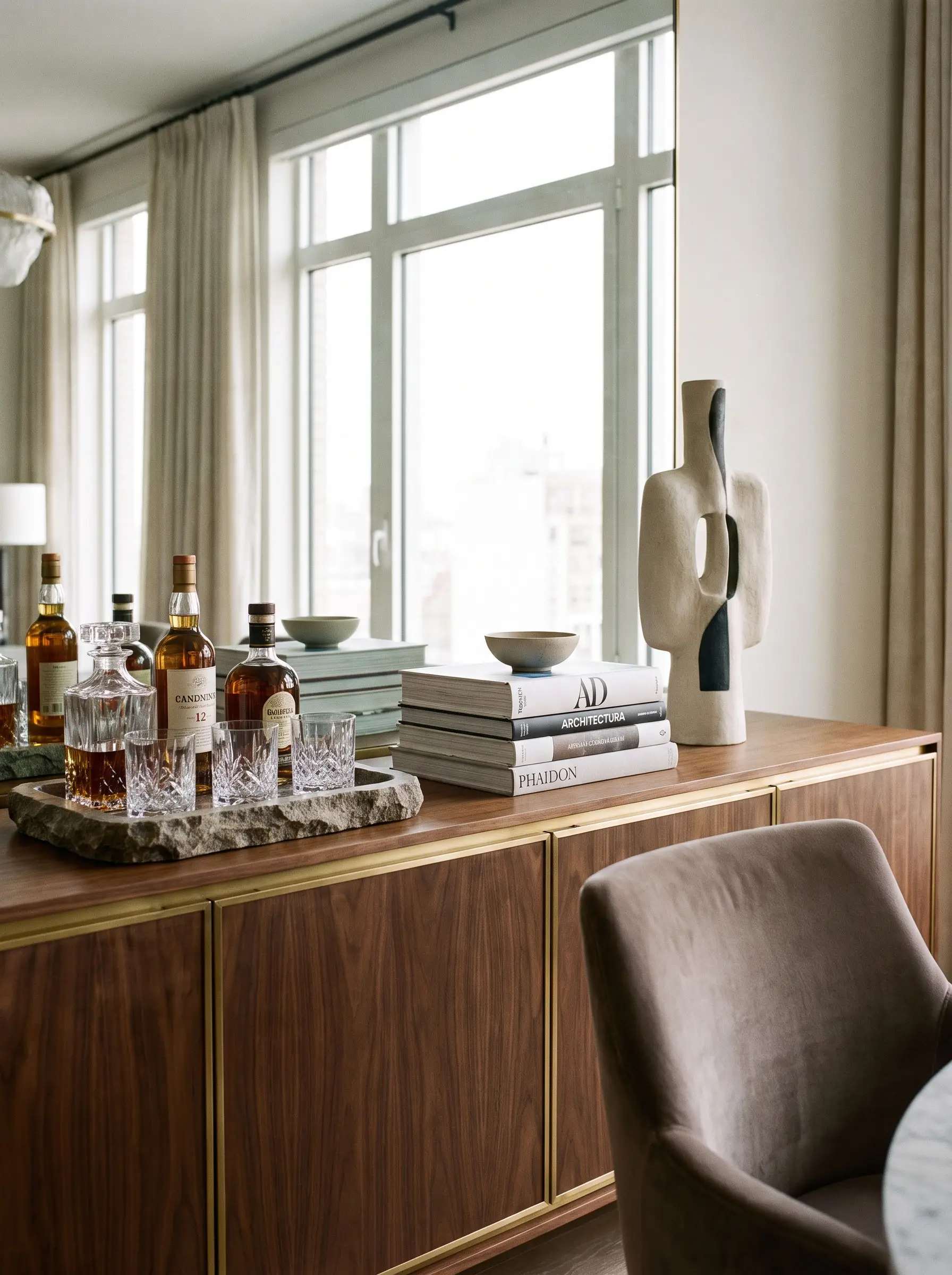
Visual balance on a credenza requires strict grouping parameters, and the Rule of Three is your most reliable styling logic. By combining a tray for bottles, a stack of design books, and a sculptural element, you create deliberate focal points that guide the eye naturally across the surface.
- Vibe: Curated and Intentional.
- Key Materials: Stone trays, heavy architectural books, sculptural ceramics.
- Styling Pro-Tip: Ensure your three groupings vary significantly in height to create a dynamic, rolling visual landscape.
Staggering Glassware Heights for Visual Rhythm
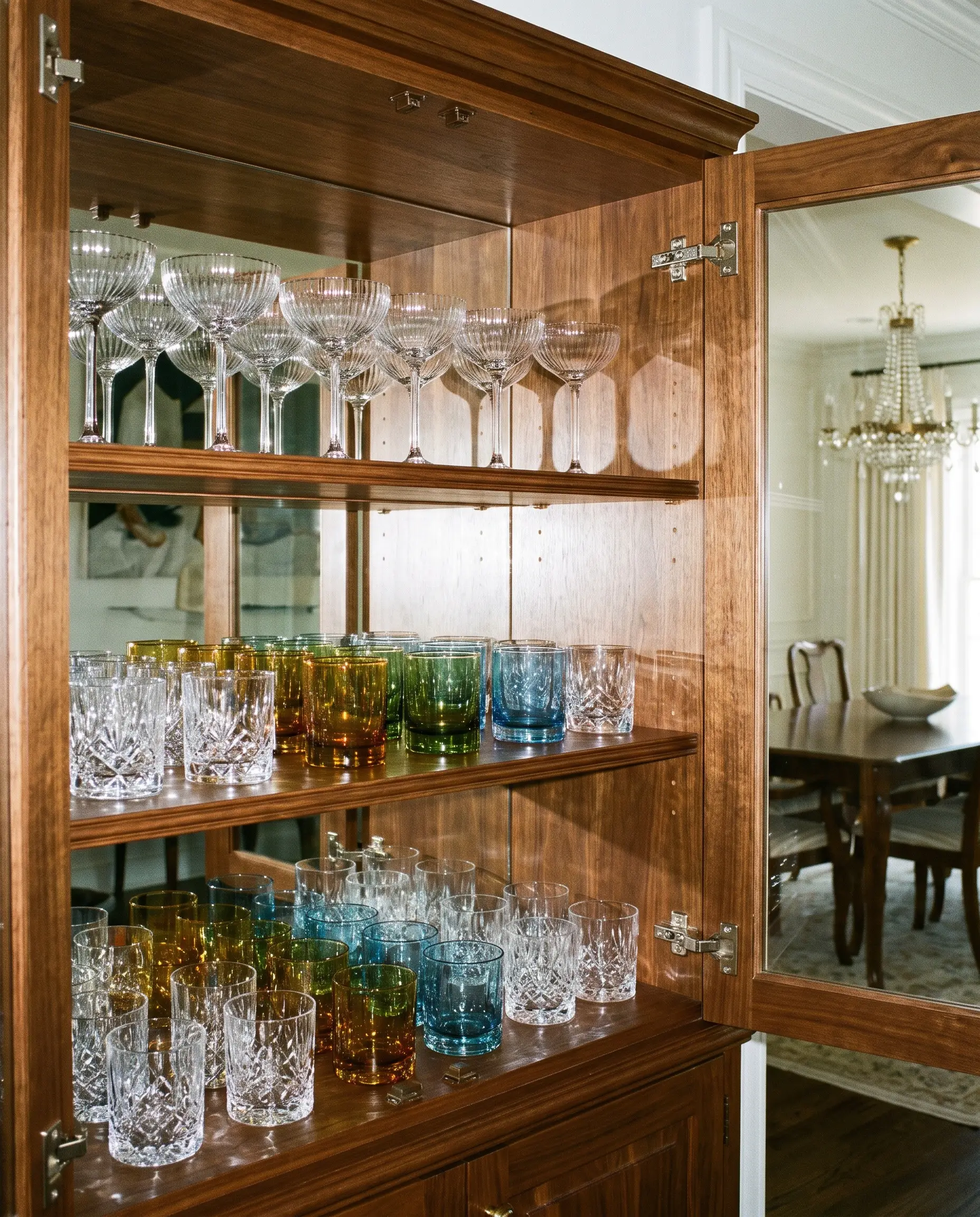
Never line your glassware up in rigid, identical military rows; it looks like a commercial restaurant rather than a hospitable home. Instead, mix tall coupes, lowball tumblers, and chunky decanters to build an engaging visual rhythm that feels collected over time.
- Vibe: Effortlessly Collected.
- Key Materials: Fluted coupes, crystal tumblers, and colored glassware.
- Styling Pro-Tip: Place the tallest glasses in the back and slightly offset the shorter glasses in the front, creating a zig-zag pattern that maximizes space.
Decanting Essentials for Uniformity
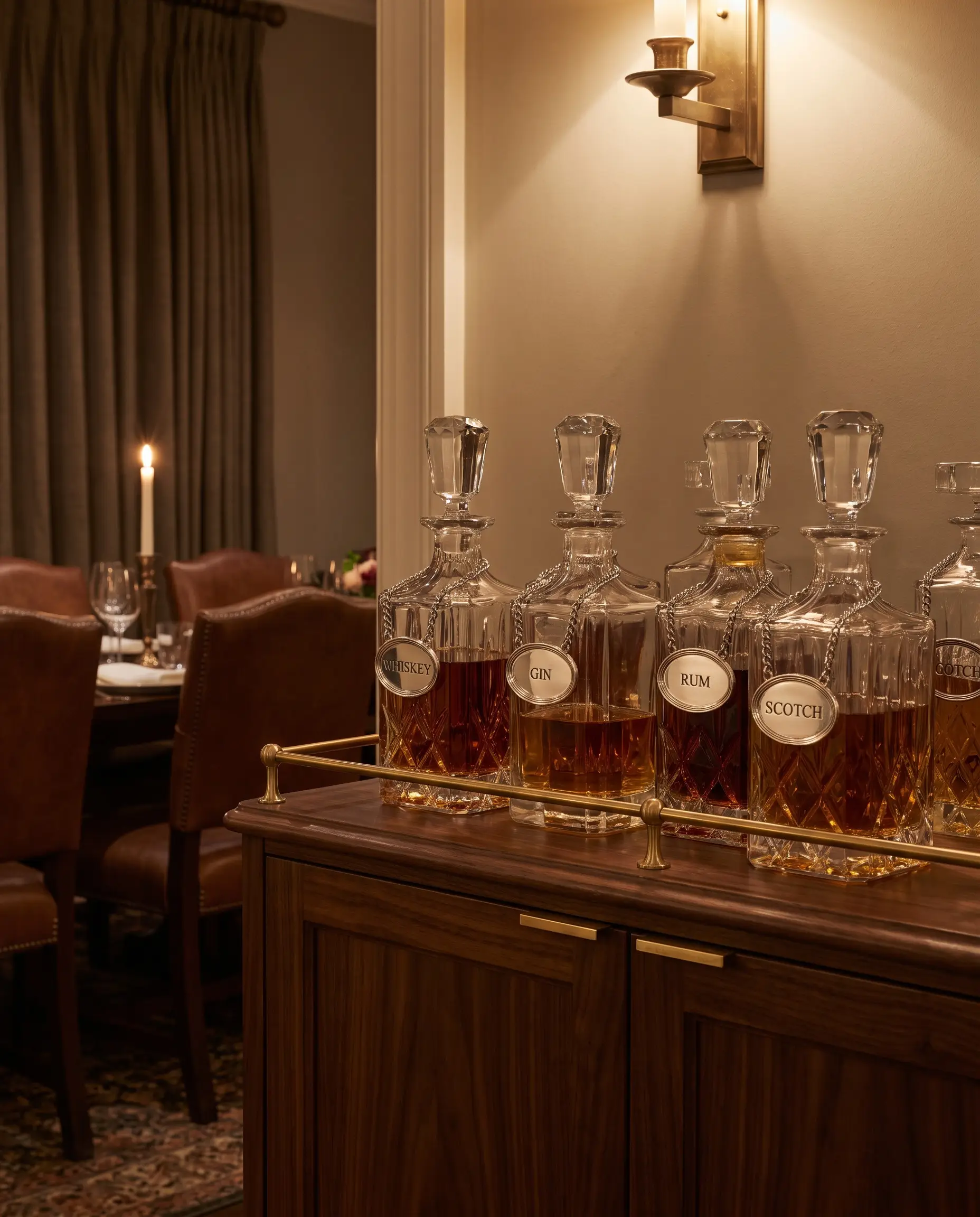
Commercial liquor labels are often visually chaotic and will instantly downgrade the aesthetic tier of your bar setup. Pouring your standard spirits into vintage or modern crystal decanters maintains a strictly high-end look and adds a touch of old-world hospitality.
- Vibe: Refined Luxury.
- Key Materials: Heavy-bottomed glass or crystal decanters with airtight stoppers.
- Styling Pro-Tip: Keep a small, stylish set of silver or brass decanter tags to identify the liquors without ruining the aesthetic.
Integrating Ambient Table Lamps on Credenzas
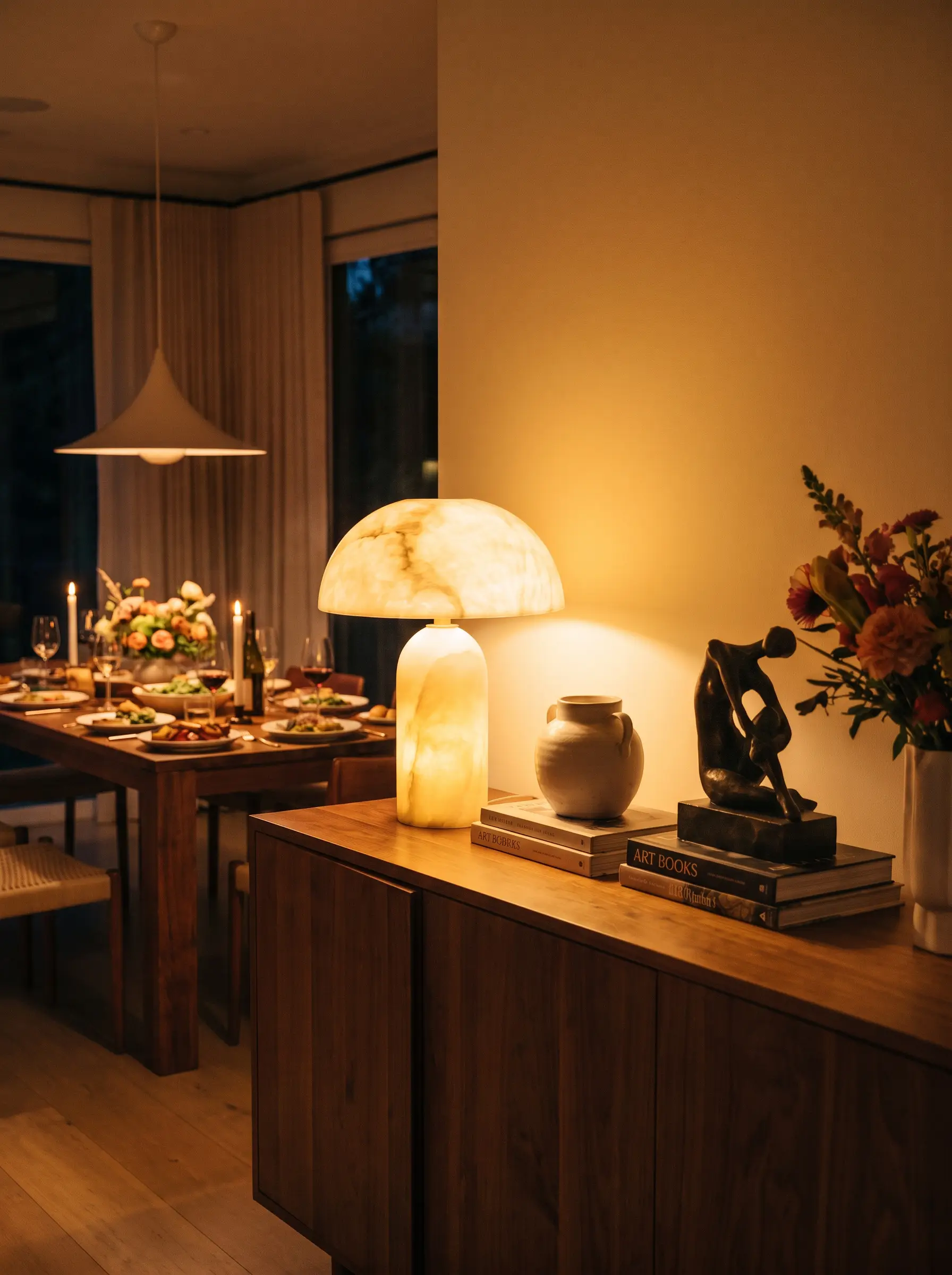
Overhead dining room lighting is notoriously harsh, so layering your light sources is critical for setting an evening mood. Placing a small, sculptural ambient lamp directly on your sideboard draws the eye to your styling efforts and bathes the room in a flattering, low-light glow during dinner.
- Vibe: Intimate Evening.
- Key Materials: Battery-operated LED lamps or corded alabaster table lamps.
- Styling Pro-Tip: If your credenza floats in the middle of a wall without an outlet, invest in a high-quality rechargeable lamp to avoid ugly, trailing cords.
Strategic Sourcing: Dimensions, Clearances, and Buying Metrics
Visual inspiration is useless without functional reality. Before you source a piece of furniture, you must master the buying metrics, ensuring your cabinet allows for proper spatial flow and effortless hosting.
| Furniture Type | Ideal Height | Minimum Walkway Clearance Required |
|---|---|---|
| Low Sideboard / Credenza | 30″ – 36″ | 36″ (from dining table edge) |
| Tall Hutch / Display Cabinet | 72″ – 84″ | 42″ (from dining table edge) |
| Pocket-Door Bar Armoire | 68″ – 76″ | 48″ (to allow for active bartending) |
Ready to Host: Finalizing Your Dining Space Storage Strategy
The best dining storage works incredibly hard behind the scenes while appearing as a deliberate, effortless design choice. Before you invest, honestly assess your actual hosting habits—are you a wine collector, a cocktail enthusiast, or someone who simply needs to hide endless stacks of heirloom dinnerware? Let your lifestyle dictate the casework. Which material trend are you bringing into your dining room this year: the dramatic swirl of burl wood, the high-gloss shine of lacquer, or the textured blur of reeded glass?

The Hackrea Style Desk treats interior decoration as an exact visual science. Rather than focusing on demolition or floor plans, this desk masters the art of color theory, undertone matching, material pairings, and spatial proportion. From balancing the visual weight of mixed metals to finding the perfect bridging tone between disparate wood species, this desk provides the rigorous aesthetic rules needed to achieve high-end, editorial-quality harmony in any space.