The End of the Basic Grid: 12 Advanced Bathroom Wall Coverings for 2027
Executing a major bathroom remodel is a massive financial undertaking, frequently surpassing the $15,000 mark before you even finalize your plumbing fixtures. This high barrier to entry breeds a very specific type of renovation anxiety: the fear of investing heavily in a material that looks glaringly dated within three years. If you are tracking bathroom wall covering trends 2027, the priority has shifted entirely away from safe, temporary fixes toward durable, future-proof materials that justify a premium investment.
We are seeing a definitive rejection of hyper-glossy, inexpensive subway tiles and the high-maintenance grid lines they force upon a space. Instead, the focus has pivoted sharply toward high-performance wet-room engineering and materials that offer flawless visual continuity. The modern luxury bathroom relies on groutless surfaces, highly tactile finishes, and biophilic textures that perform exceptionally well under constant moisture.
By prioritizing architectural scale and continuous surfaces, you eliminate the visual clutter that makes standard bathrooms feel cramped and purely utilitarian. The era of the basic 3×6 white tile is officially over.
Wrap the Wet Room in Seamless Microcement
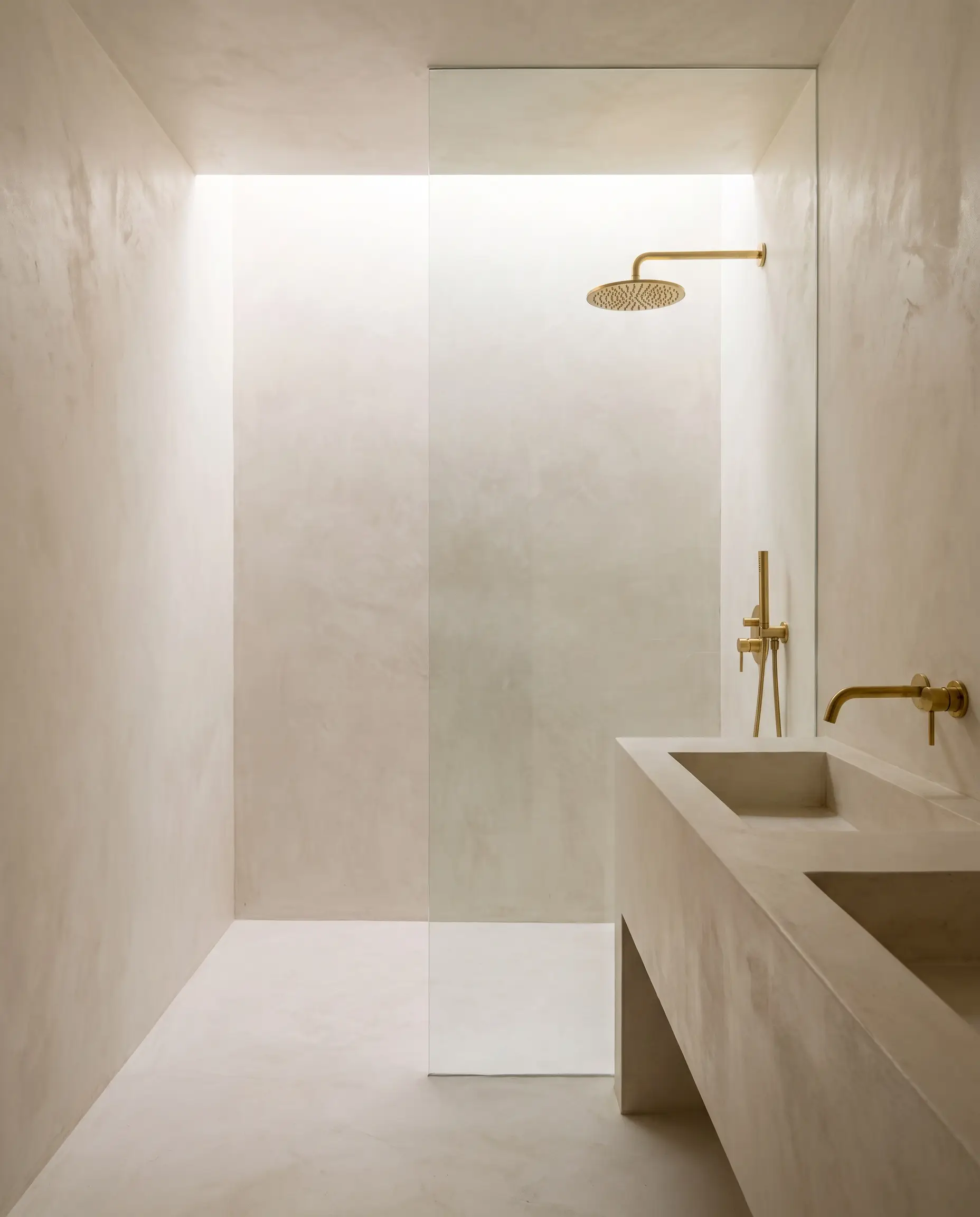
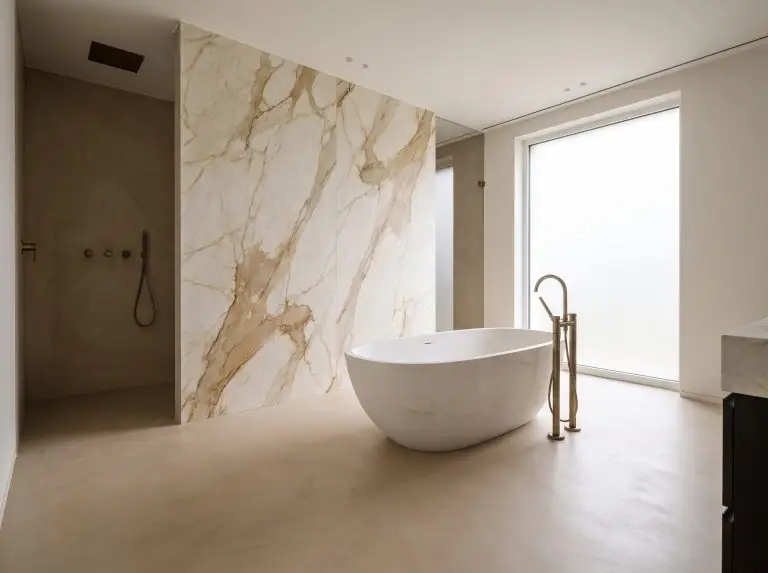
Microcement is a polymer-modified cementitious coating currently dominating high-end European bathroom design. Because it can be applied continuously across walls, floors, and even custom-built vanity basins, it eliminates joint lines entirely and provides a highly architectural, monolithic foundation for your wet room.
| Feature | Microcement Reality |
|---|---|
| Pros | Zero grout lines to clean; highly customizable color matching; waterproof when properly sealed; creates a seamless visual flow. |
| Cons | Requires specialized artisan installation; susceptible to hairline cracks if the underlying building structure shifts. |
Ensure your substrate is completely rigid before commissioning a microcement installation. Professional installers require a heavily reinforced, deflection-free backing board to prevent structural movement from transferring into surface cracks.
Sourcing Secret
The brutalist yet remarkably warm aesthetic of microcement transforms a standard shower enclosure into a bespoke, spa-like environment. Its matte, slightly mottled finish absorbs light beautifully, providing visual depth without relying on busy patterns.
- Vibe: Architectural Minimalism
- Key Materials: Polymer-modified microcement, premium polyurethane sealants
- Styling Pro-Tip: Contrast the matte, chalky finish of the walls with highly polished, unlacquered brass plumbing fixtures to create brilliant textural friction.
Install Fiberglass-Backed Waterproof Wall Murals
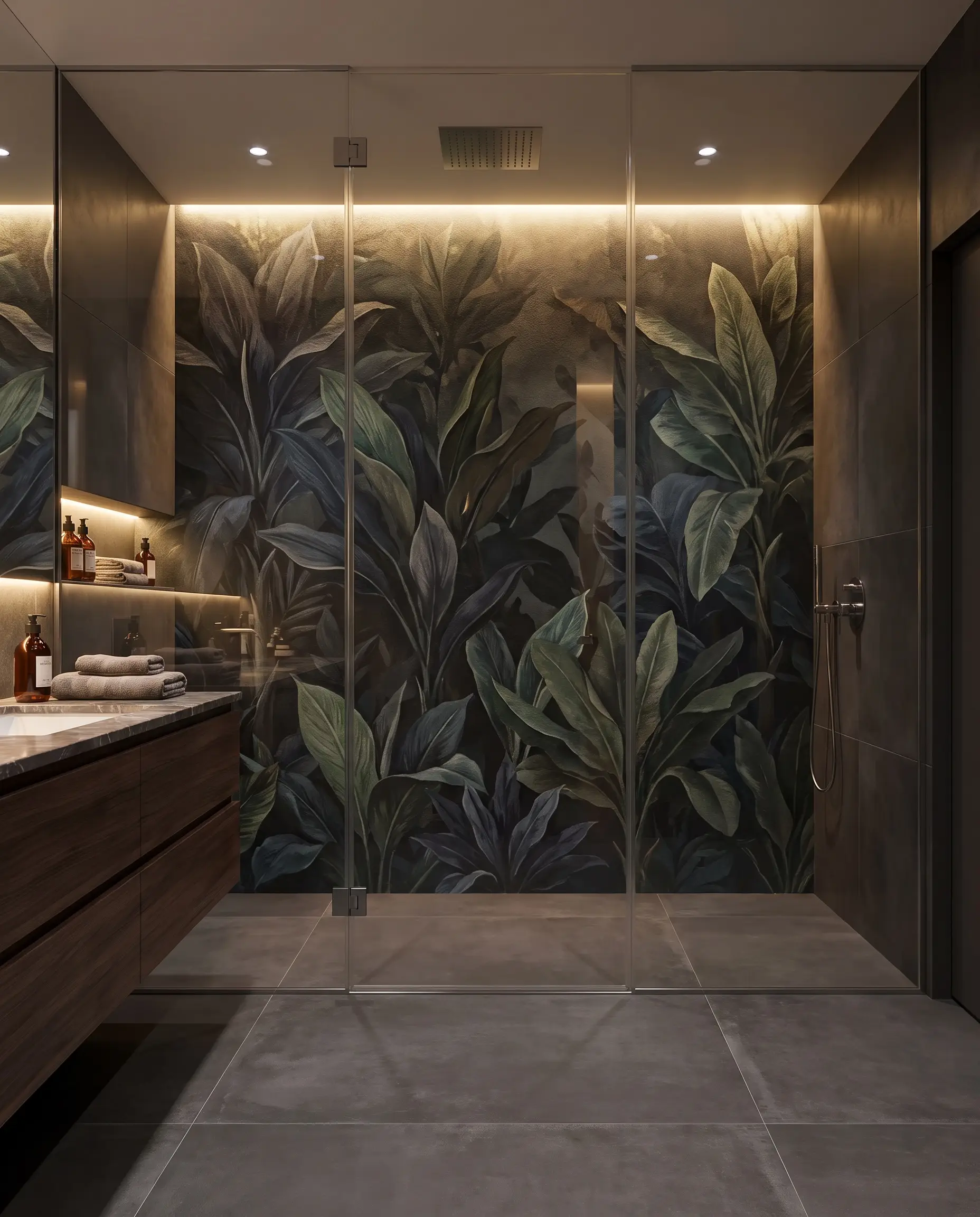
The misconception that wallpaper cannot exist inside a shower enclosure is completely outdated thanks to advanced wet-system engineering. Brands like Wall&decò have pioneered technical wall coverings utilizing fiberglass backing and specialized waterproof sealants that thrive in direct-water zones.
Oversized botanical or abstract murals bring immersive, large-scale art directly into a space traditionally reserved for rigid ceramics. This continuous visual narrative breaks up the hard, clinical angles of standard glass shower enclosures.
- Step 1: Apply the proprietary waterproof primer directly over the waterproofed substrate.
- Step 2: Install the heavy-duty fiberglass-backed mural using the manufacturer’s specialized wet-room adhesive.
- Step 3: Seal the entire installation with a transparent, two-component waterproof topcoat to lock out moisture entirely.
- Vibe: Immersive Boutique Hotel
Drench the Walls and Ceiling in Authentic Zellige
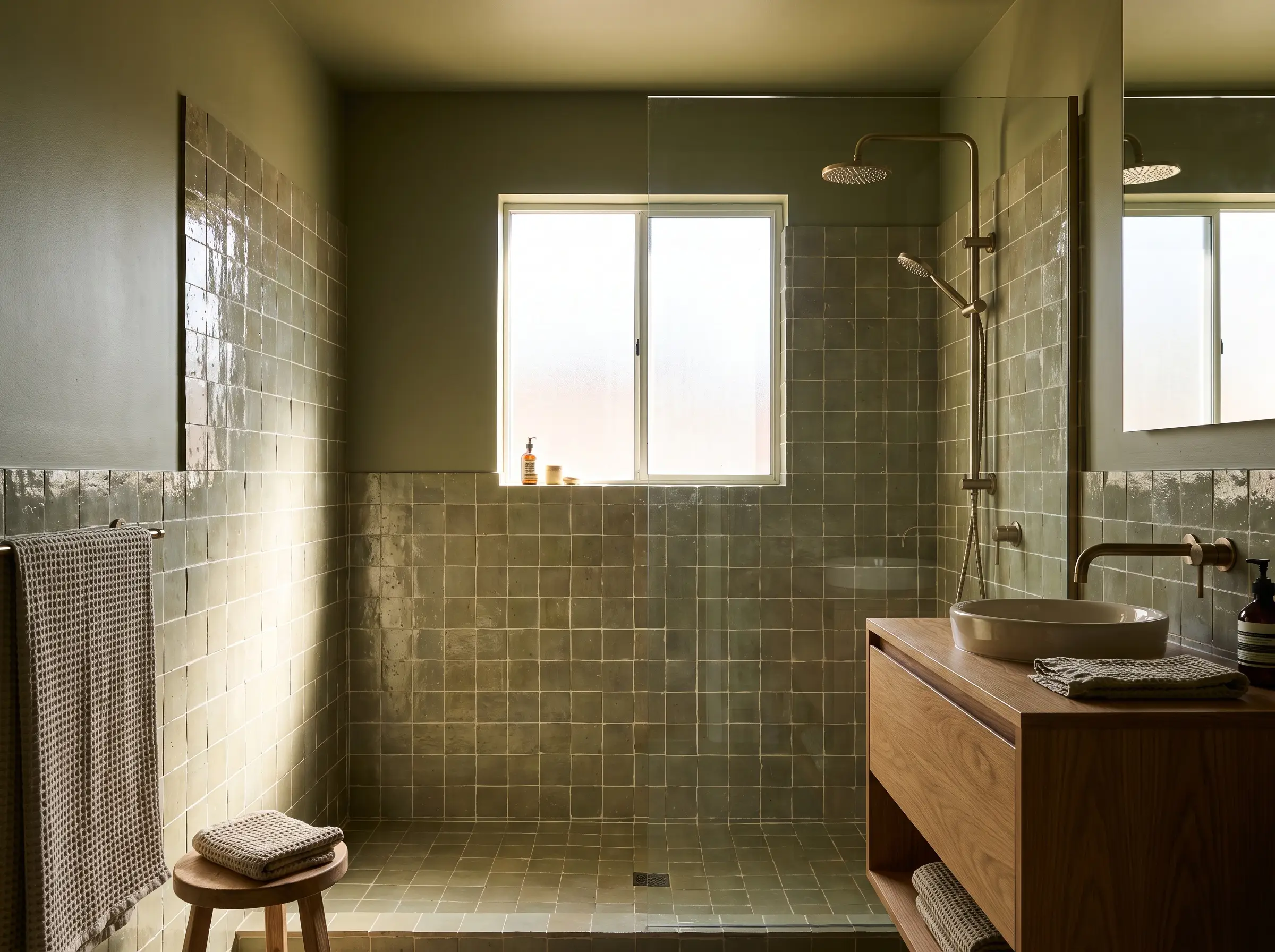
Tile drenching involves wrapping the entire room—walls, shower enclosure, and ceiling—in a single, saturated color to create a monolithic, highly immersive environment. When executing this technique, authentic Moroccan Zellige from fabricators like Clé Tile or Zia Tile is the absolute premier choice for 2027.
The inherent imperfections, pits, and varied glaze of handmade Zellige bounce natural and artificial light aggressively around the room. This highly tactile dimension prevents a single-color, floor-to-ceiling installation from feeling flat or claustrophobic.
- Vibe: Saturated Organic Modern
- Key Materials: Authentic Moroccan Zellige, ultra-tight grout lines
- Color Recommendation: Oxidized terracotta
- Color Recommendation: Dusty olive
- Paint Match: Paint the remaining drywall and ceiling Farrow & Ball Bancha or Sherwin-Williams Cavern Clay to seamlessly match your selected tile glaze.
Mount Floor-to-Ceiling Sintered Stone Slabs
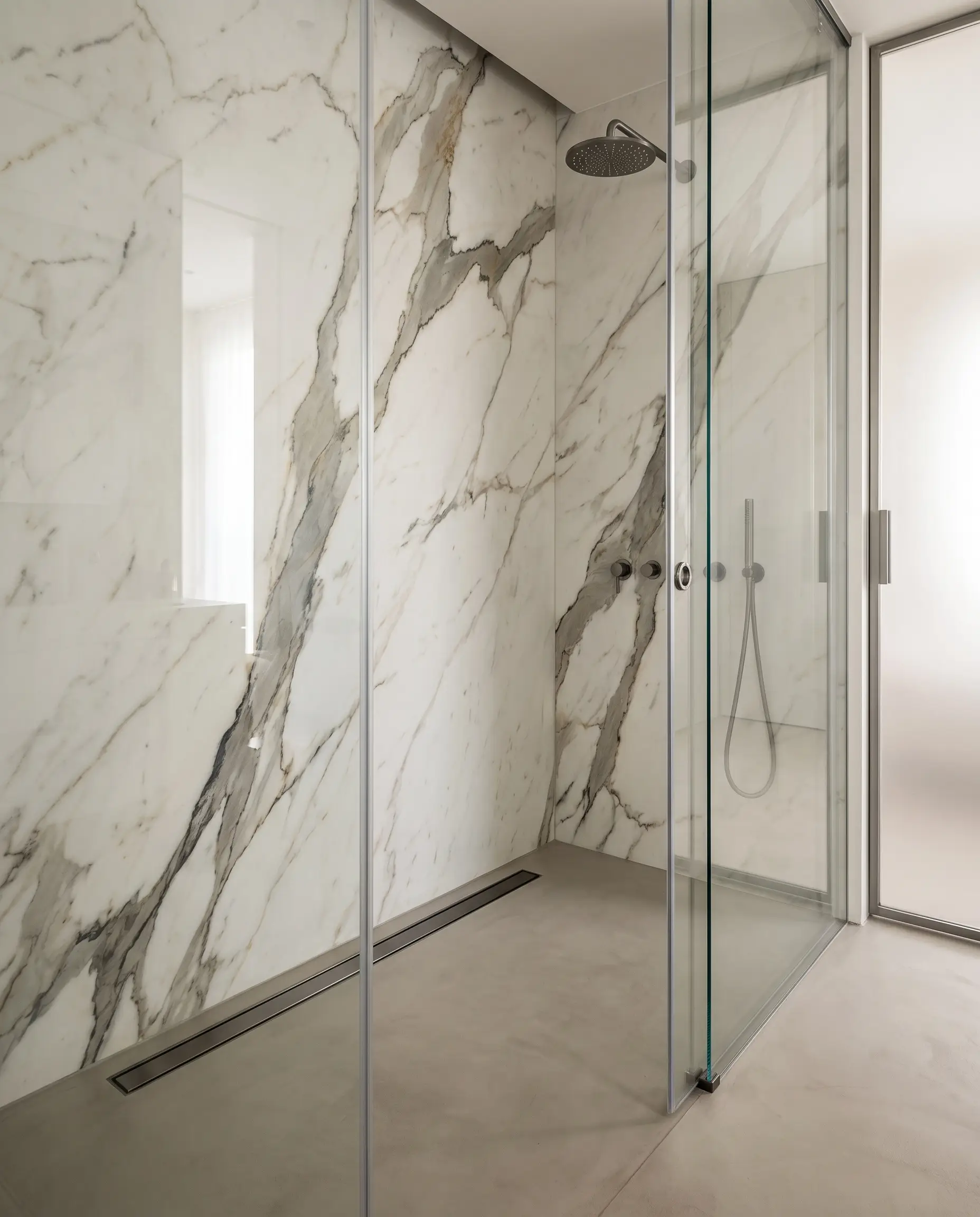
Sintered stone from industry leaders like Dekton or Neolith represents the ultimate high-performance luxury wall covering. These ultra-compact slabs offer the exact dramatic veining of natural Calacatta marble, but they are completely non-porous and entirely immune to acidic bathroom cleaners.
| Material | Average Material Cost (Per Sq. Ft.) | Installation Complexity & Labor | Long-Term Maintenance |
|---|---|---|---|
| Natural Marble Slabs | $60 – $120+ | Extremely high; requires heavy lifting equipment and structural reinforcement. | High; requires annual sealing and neutral pH cleaners. |
| Sintered Stone Slabs | $70 – $110+ | High; requires specialized fabricators trained in handling ultra-compact materials. | Zero; non-porous, stain-resistant, never requires sealing. |
Sintered stone vastly outperforms natural marble in high-moisture environments. Because it lacks the natural porosity of stone, it will never harbor mold, absorb hard water stains, or etch from exposure to standard shampoos and soaps.
Maintenance Check
Installing massive 10-foot panels eliminates grout lines entirely, wrapping your shower in an uninterrupted architectural scale. This continuous surface feels undeniably bespoke and visually expands the footprint of the room.
- Vibe: High-End Bespoke
- Key Materials: Dekton, Neolith, or Laminam large-format slabs
- Finish Recommendation: Specify a matte or softly honed finish rather than high-gloss to align with 2027’s preference for tactile, grounded surfaces.
Introduce Tactile Dimension with Fluted Porcelain
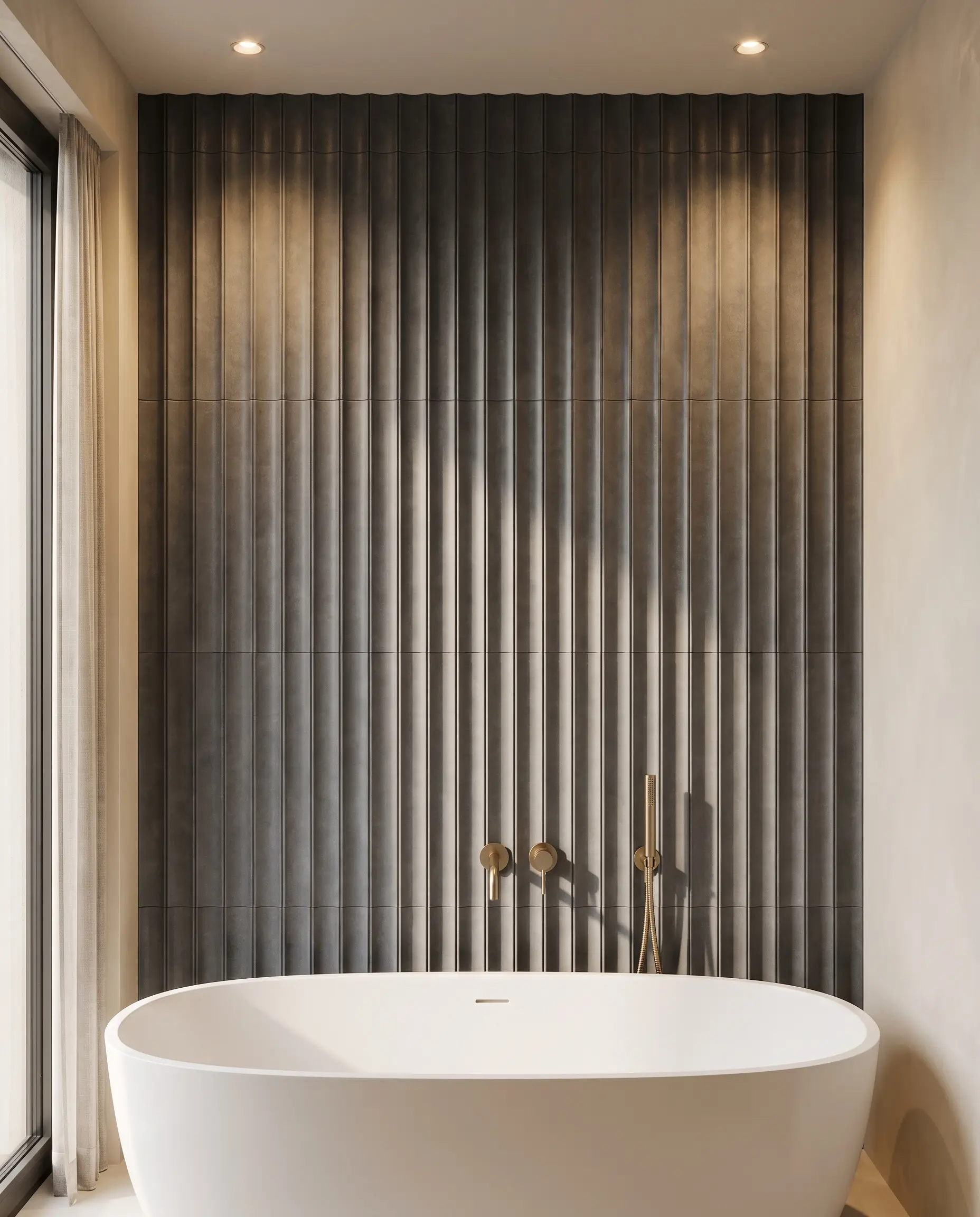
The fluted and ribbed textures that recently dominated living room millwork have successfully transitioned directly into bathroom wet zones. Large-format 3D fluted porcelain tiles offer an actionable way to introduce heavy architectural texture without requiring complex masonry work.
Vertical ridges draw the eye upward, making standard bathroom ceilings feel significantly taller and more expansive. Placing a highly textured fluted feature wall directly behind a freestanding tub or a custom vanity adds critical depth and tactile friction to the layout.
- Vibe: Sculptural Contemporary
- Key Materials: 3D extruded porcelain, large-format ribbed ceramic panels
- Best Paired With: Brushed brass or gunmetal wall-mounted fixtures that cast striking shadows across the vertical ridges.
Apply Traditional Moroccan Tadelakt Plaster
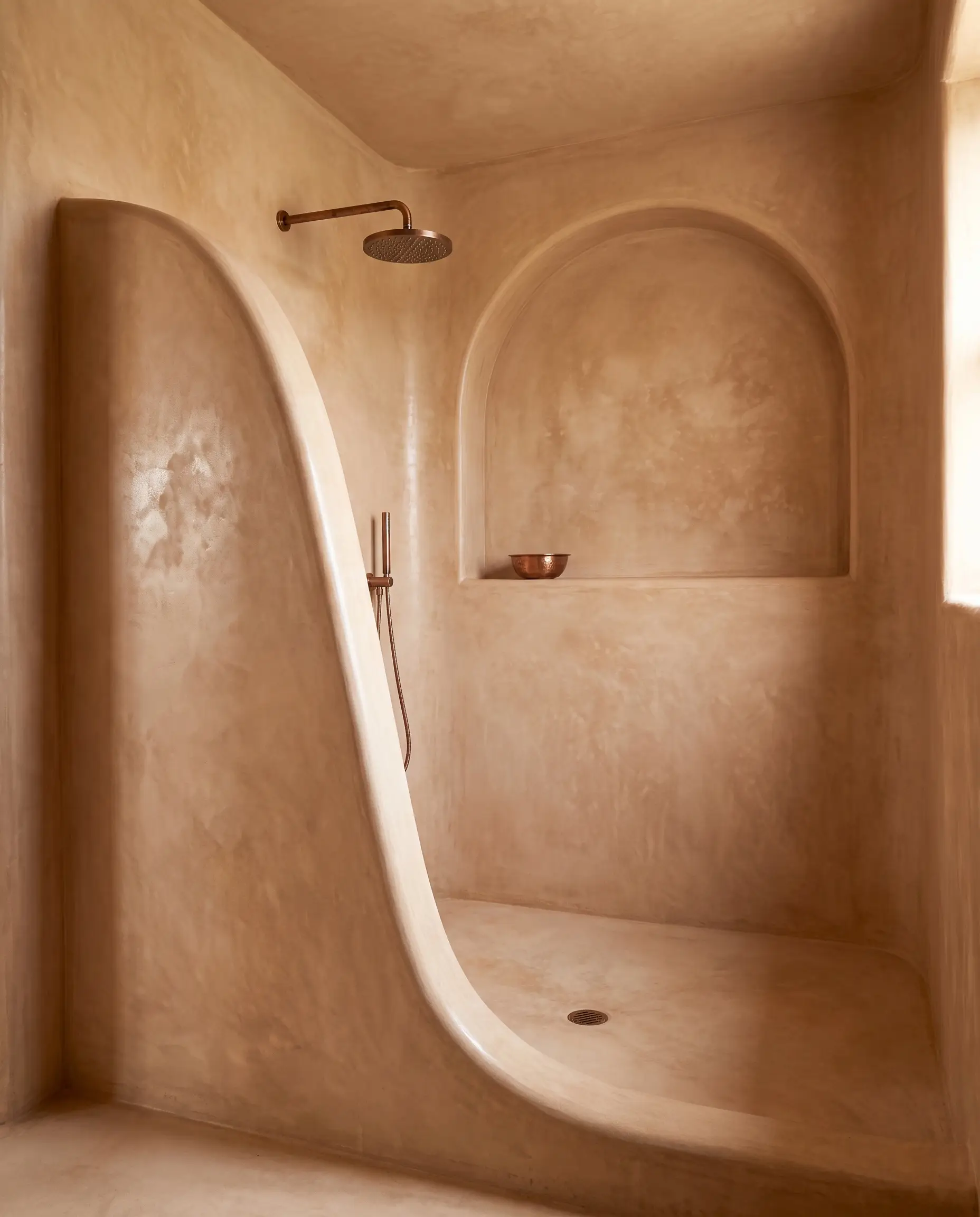
For the organic modern consumer, traditional Moroccan Tadelakt differentiates itself from microcement by offering a softer, more historically rooted finish. This ancient technique involves applying lime plaster and meticulously rubbing it with olive oil soap to create a natural, water-repellent skin.
Do not substitute generic “lime wash” or standard Venetian plaster in wet zones. Authentic Tadelakt relies on a specific chemical reaction between the lime and the olive oil soap to achieve its waterproof properties; standard decorative plasters will melt off the wall under a showerhead.
Sourcing Secret
This water-repellent surface yields a velvety, mottled finish that feels exceptionally organic to the touch. It acts as the perfect continuous material for cladding curved shower walls, arched architectural niches, and the soft, sweeping shapes dominating 2027 layouts.
- Vibe: Earthy Artisan
- Key Materials: Authentic Tadelakt plaster, olive oil soap sealant
- Styling Pro-Tip: Keep the surrounding architecture soft; avoid harsh 90-degree angles in favor of bullnosed corners and gently sloped shower entries.
Contrast Textures with Checkerboard Wainscoting
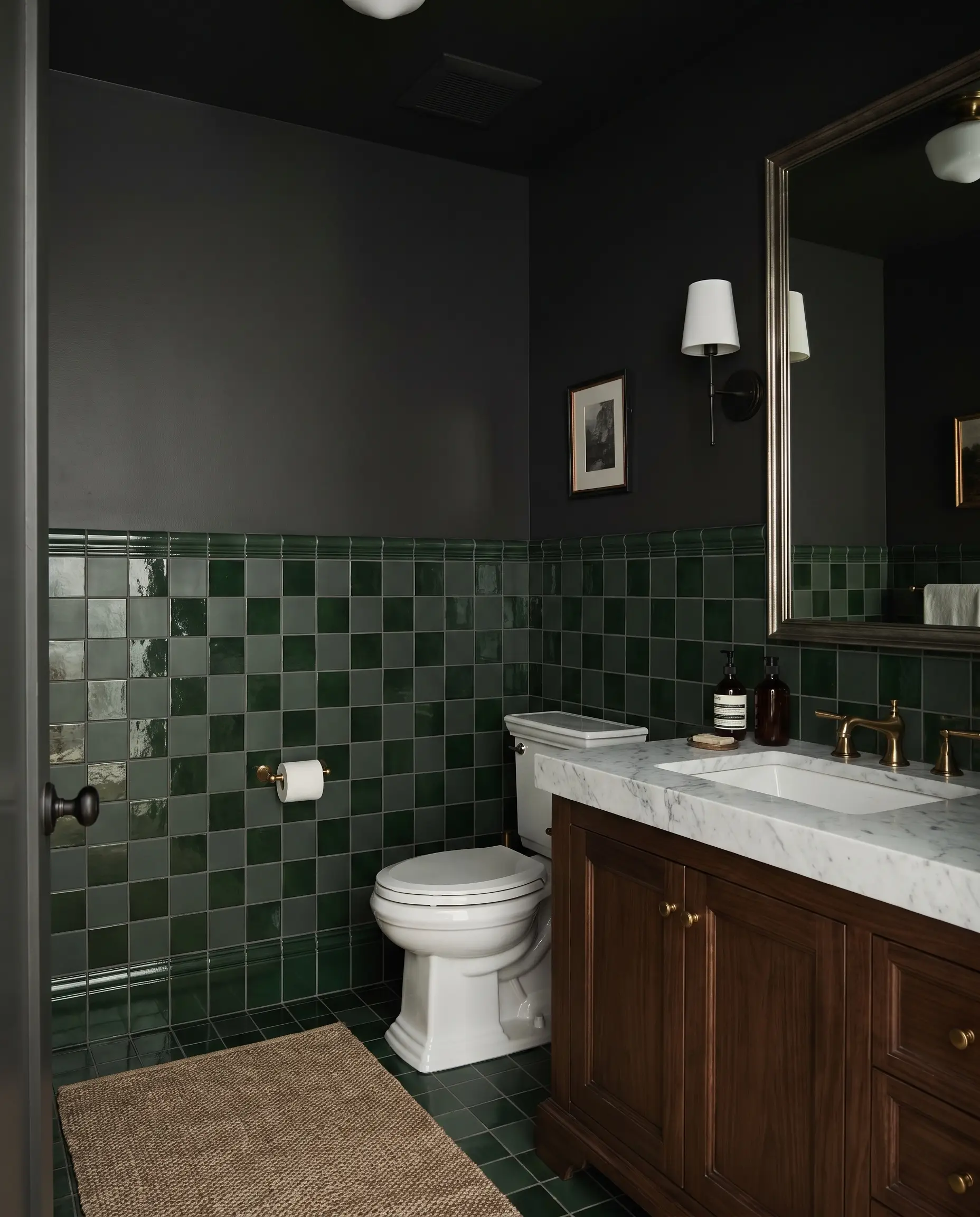
We are updating the traditional wainscoting trend by discarding standard wood beadboard in favor of hard-wearing, wet-room-approved ceramics. Using a checkerboard pattern of matte and glossy tiles of the exact same color creates a subtle, highly sophisticated visual friction on the lower half of the walls.
This approach physically anchors the room and protects the heavy splash zones around the vanity and toilet. By keeping the protective tile strictly on the lower half, you free up the upper walls for dramatic, deeply saturated paint applications.
- Spatial Layout: Run the tile exactly 42 inches high to bisect standard ceiling heights perfectly and align with the top of your vanity backsplash.
- Vibe: Transitional Elegance
- Key Materials: Square ceramic tiles sourced in matching matte and gloss glazes
- Paint Recommendation: Balance a deep green tile wainscoting with Sherwin-Williams Greenblack on the upper walls and ceiling.
Specify Slatted Wood-Look Tile for Biophilic Warmth
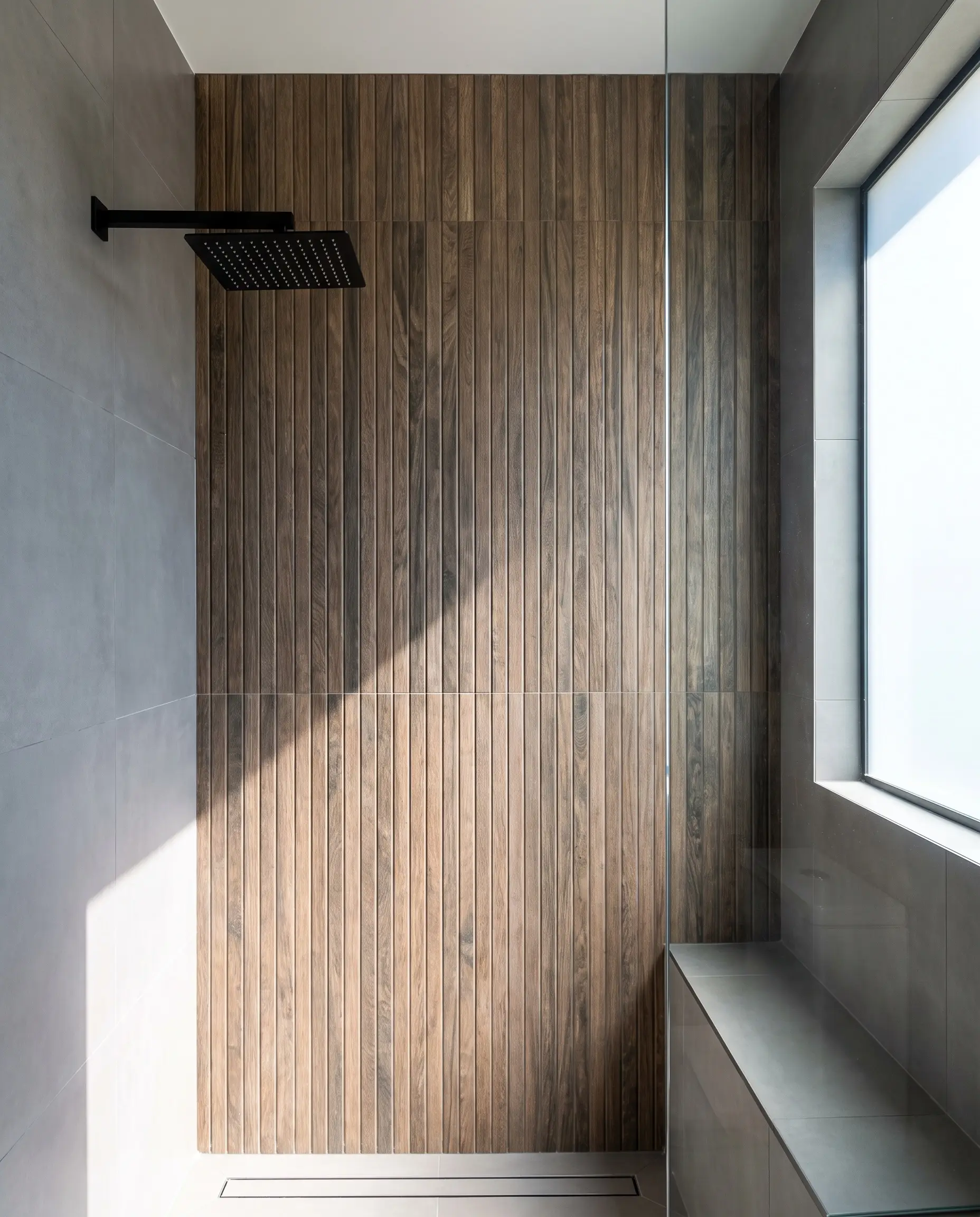
Authentic wood cladding warps, swells, and rots in damp bathroom environments, making it a functional liability. Fortunately, 2027’s hyper-realistic, slatted wood-look porcelain tiles solve this issue, allowing you to execute biophilic design safely inside a wet zone.
Applying these slatted tiles to a single feature wall inside the shower enclosure brings the psychological calm and visual warmth of a Scandinavian sauna directly into a residential bathroom. The texture grounds the space beautifully without introducing a long-term maintenance nightmare.
- Installation Note: You must explicitly demand rectified edges from your supplier; this allows your installer to use a microscopic 1/16th-inch grout line, which is crucial for making the wood illusion believable.
- Vibe: Scandinavian Spa
- Key Materials: Extruded wood-look porcelain, color-matched epoxy grout
Utilize Large-Format Terrazzo in the Shower Enclosure
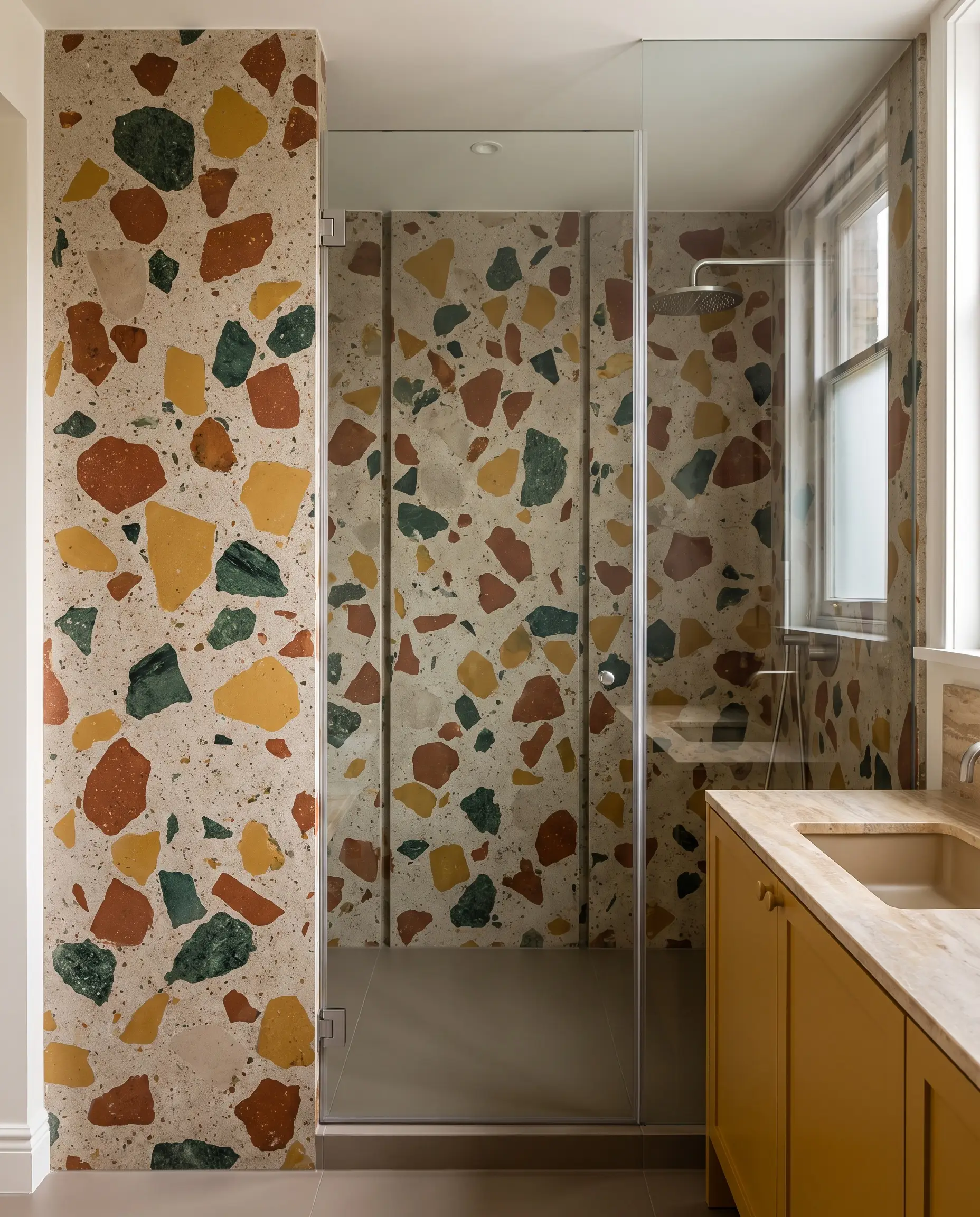
Terrazzo is rapidly evolving past small, busy floor tiles into massive, large-format wall slabs featuring oversized, chunky aggregate known as the palladiana style. This brings a playful yet highly sophisticated postmodern edge to the bathroom.
If large-format terrazzo dominates the vertical planes of your shower, the flooring must remain a quiet, solid color. Competing patterns will create immediate visual chaos and ruin the bespoke impact of the slab.
Design Rule
A neutral base terrazzo embedded with oversized, warm-toned chips like rust, mustard, and deep green creates a striking, art-forward shower enclosure. The massive scale of the aggregate provides bold visual texture with minimal joint lines to scrub.
- Vibe: High-End Postmodern
- Key Materials: Large-format resin or cementitious terrazzo slabs
- Color Match: Pull one specific aggregate color from the terrazzo (like a deep terracotta or mustard) and use it as the solid color for your bathroom vanity cabinetry.
Create a Monolithic Anchor with Colored Concrete Panels
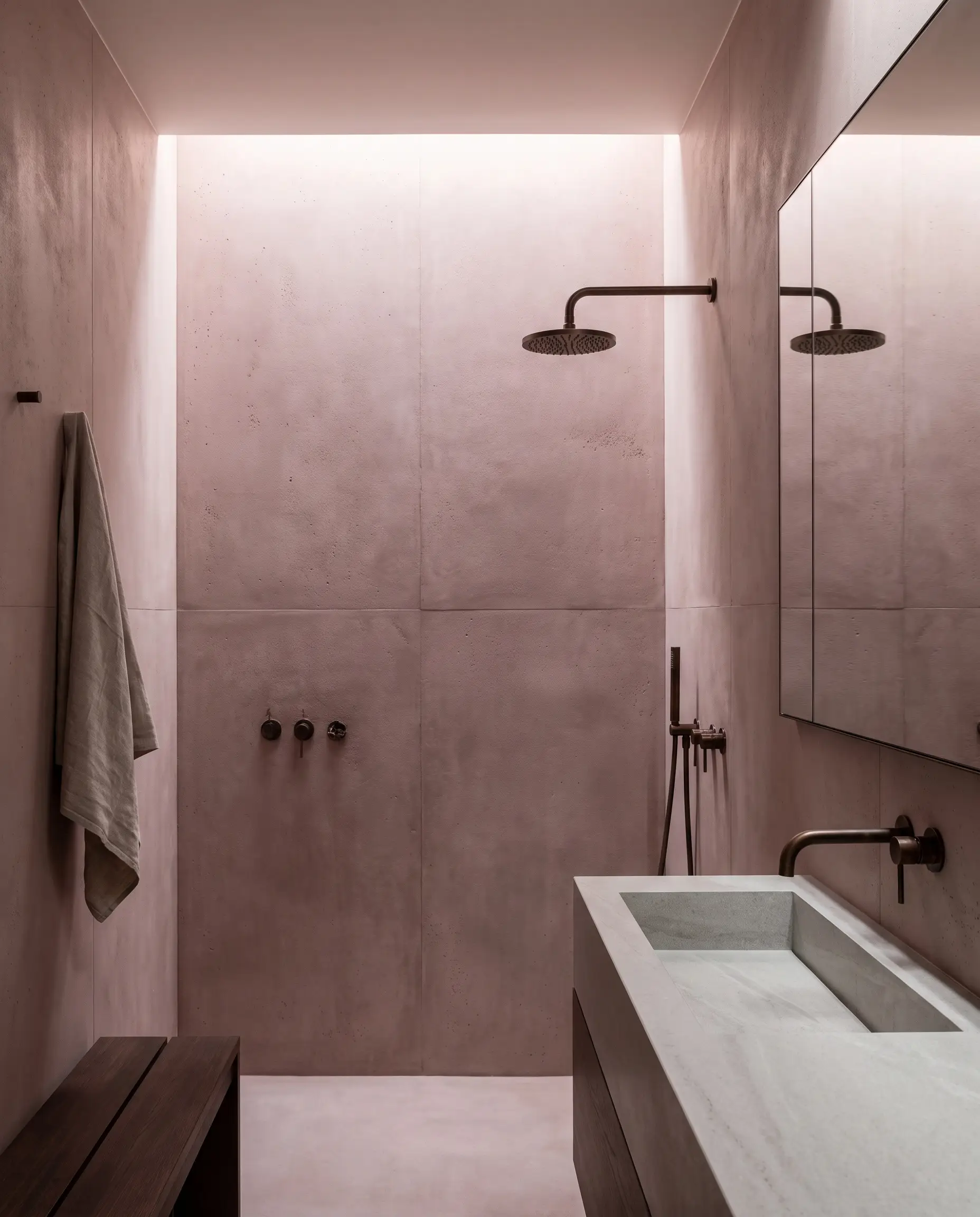
Pre-cast, lightweight glass-fiber reinforced concrete (GFRC) panels deliver architectural minimalism directly to high-end residential baths. The 2027 shift moves aggressively away from standard industrial gray, favoring pigmented concrete in rich shades of dusty rose, terracotta, and deep forest green.
These panels offer a highly tailored, monolithic feel that completely grounds the room. The matte, chalky surface absorbs light, creating a quiet, atmospheric environment that feels incredibly intentional.
- Vibe: Architectural Minimalism
- Key Materials: Pigmented Glass-Fiber Reinforced Concrete (GFRC) panels
- Best Paired With: Matte black or deeply patinated bronze plumbing fixtures that pop sharply against the muted concrete tones.
Layer Oxidized Metal-Effect Porcelain on the Vanity Wall
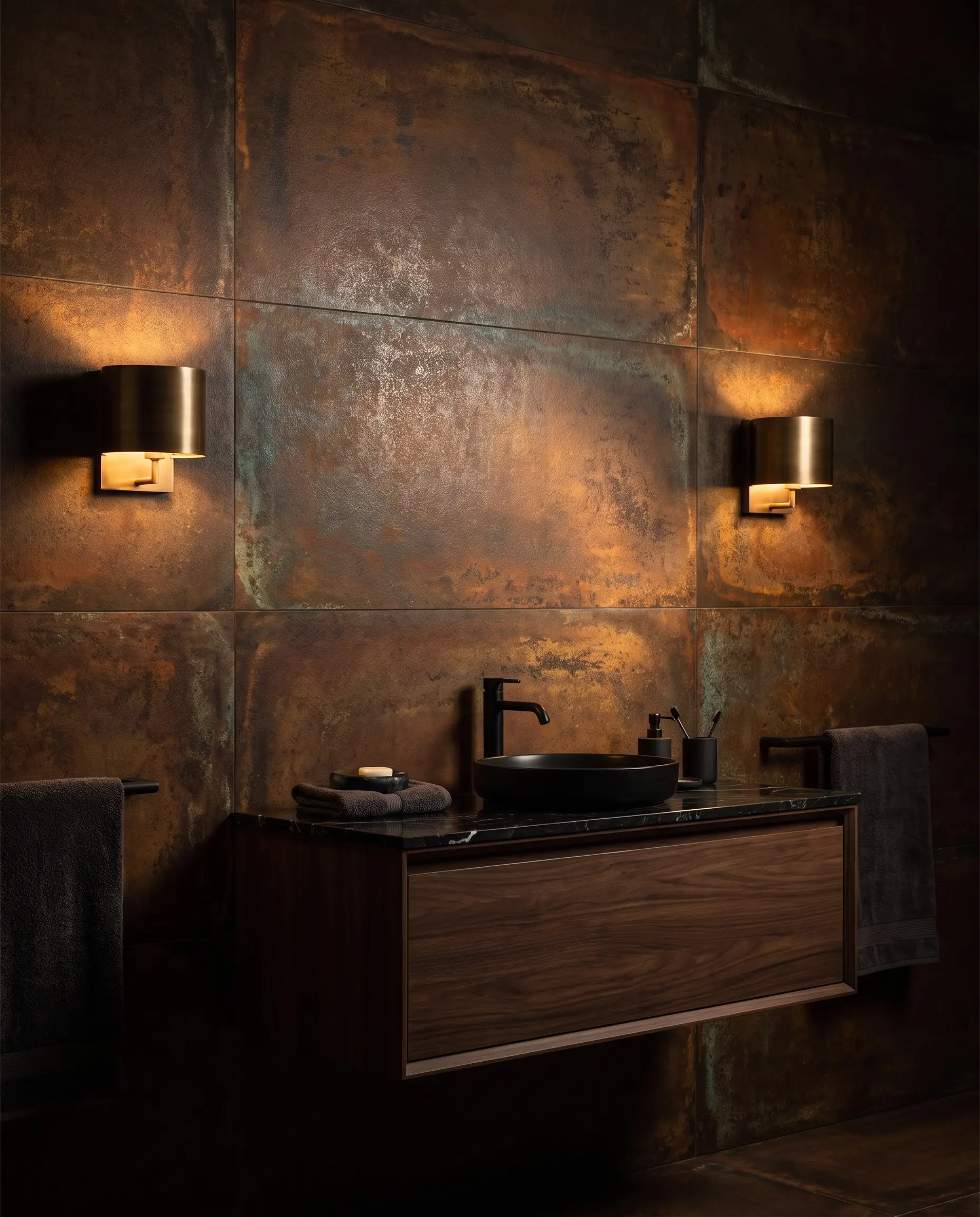
Current design theory leans heavily into the “patina principle”—the desire for materials that look aged, storied, and reactive to their environment. Large-format porcelain tiles engineered to mimic oxidized corten steel, patinated copper, or aged zinc offer a highly durable way to achieve this look.
These moody, saturated materials inject intense drama into a powder room or a dimly lit ensuite. The metallic sheen and rich rust tones turn the primary vanity wall into a bespoke, commanding focal point.
- Vibe: Moody Patina
- Key Materials: Large-format metallic-glaze porcelain slabs
- Styling Pro-Tip: Illuminate the oxidized texture with low-glare, warm-toned wall sconces to highlight the metallic flecks embedded in the porcelain.
Sourcing and Sampling Your Future Bathroom Surfaces
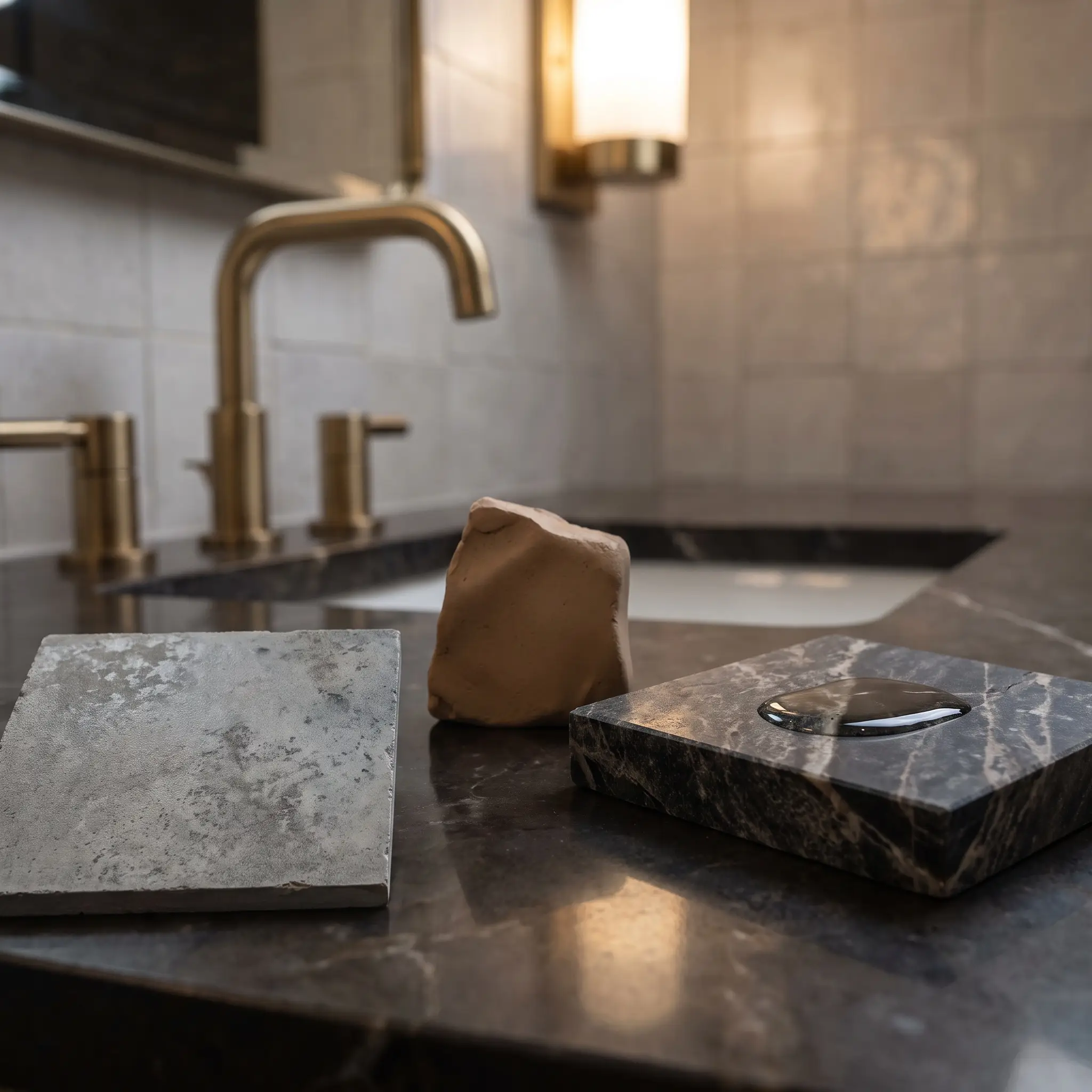
The core philosophy driving 2027 bathroom design is straightforward: demand fewer grout lines, prioritize tactile dimension, and rely on high-performance engineering. Achieving a bespoke, luxury finish requires rigorous planning and physical verification before a single wall is demolished.
Do not commit to a material based purely on a digital rendering. Order physical samples of your microcement, sintered stone, or Tadelakt and test them rigorously with water in your current bathroom to observe how the finish reacts to moisture and your specific lighting. Furthermore, interview your contractors specifically on their track record; executing seamless surfaces requires a vastly different skill set than laying standard tile.
- Action Plan 1: Order physical samples of all primary wall coverings and observe them at morning, noon, and night.
- Action Plan 2: Perform a water test on your samples to ensure the wet color and slip-resistance meet your expectations.
- Action Plan 3: Vet your installation team specifically for their experience with large-format slabs or continuous plaster systems.

The Aesthetics Desk curates the visual direction for Hackrea. Specializing in design history, global architectural movements, and interior styling, this desk focuses on the psychology of space and how to translate high-end, magazine-quality aesthetics into approachable residential design without falling into fleeting micro-trends.