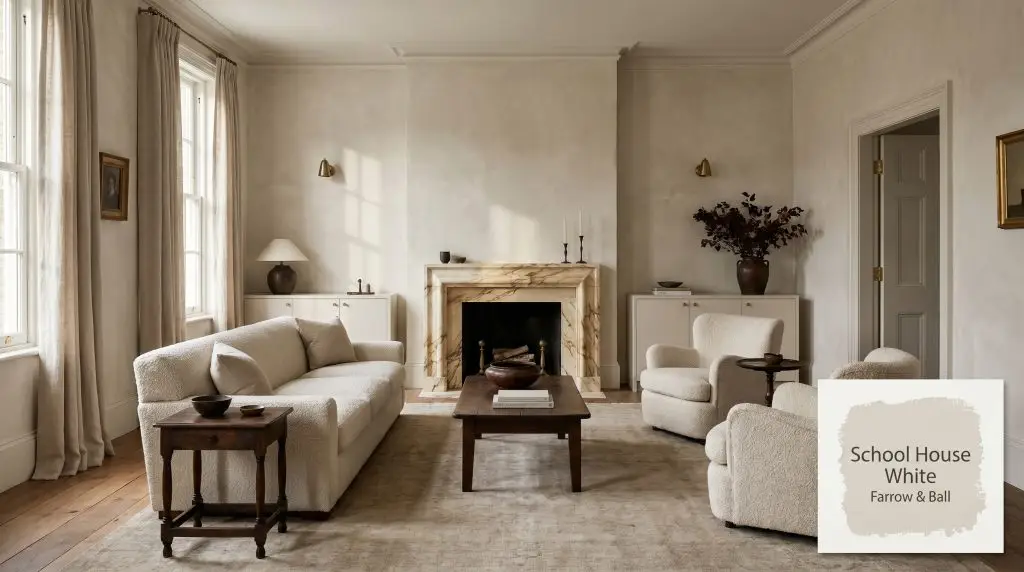
School House White by Farrow & Ball is a soft, warm off-white that feels timeless and familiar. Stripped of cool undertones, this muted, pared-back neutral provides a gentle warmth without leaning too yellow, making it an incredibly versatile choice for both historic and contemporary spaces.
Will School House White clash with your room?
Paint Technical Profile
| Color ID / SKU | 291 |
| HEX Code | #e3ded0 |
| Light Reflectance (LRV) | 74.16 |
| Temperature | Warm |
| Primary Undertone | Soft Beige And Gray |
| Hidden Undertones | Subtle Green In Certain Lighting |
| Use | Interior, Exterior |
| Best Exposures | North-facing or West-facing |
| Best For | Historic properties, living room walls, kitchen cabinets, trim and ceilings, low-light spaces |
School House White Digital Design Concept Boards
Historic Properties and Period Homes
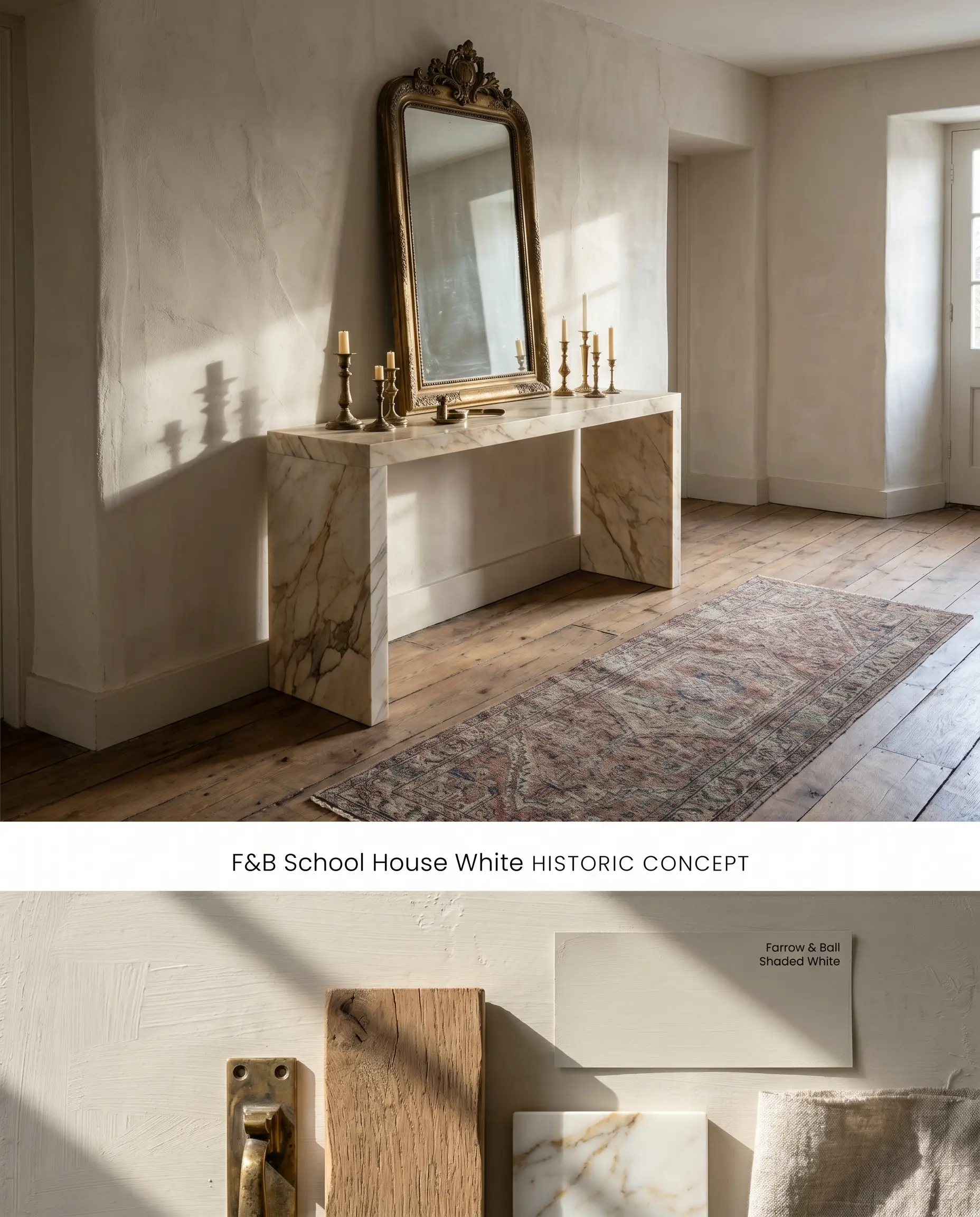
In historic properties, School House White acts as a grounding warm neutral that bridges the gap between aged architectural details and contemporary furnishings. The subtle beige and green undertones interact with uneven plaster walls, absorbing ambient light to soften harsh shadows without leaning yellow. This muted off-white provides a stable backdrop that allows rich, oxidized metals and dark, oiled woods to advance visually.
Living Room Walls
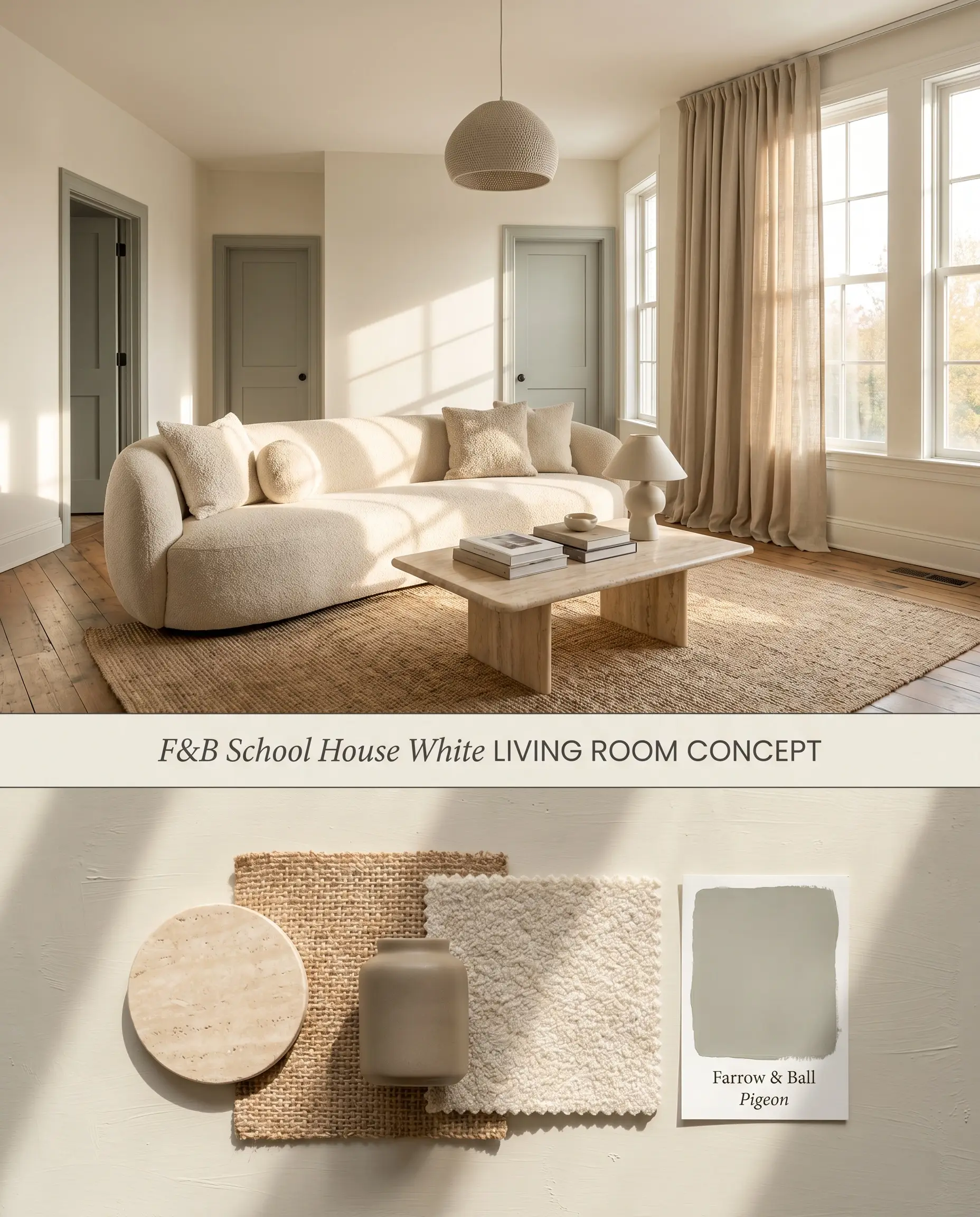
When applied to living room walls, this pared-back hue establishes a refined color structure that anchors large, open-concept spaces. The chalky matte finish diffuses natural light evenly across expansive drywall, preventing the glare often associated with higher LRV whites. By avoiding stark contrast, it allows textural elements like bouclé upholstery and woven linen drapery to dominate the sensory experience.
Kitchen Cabinets
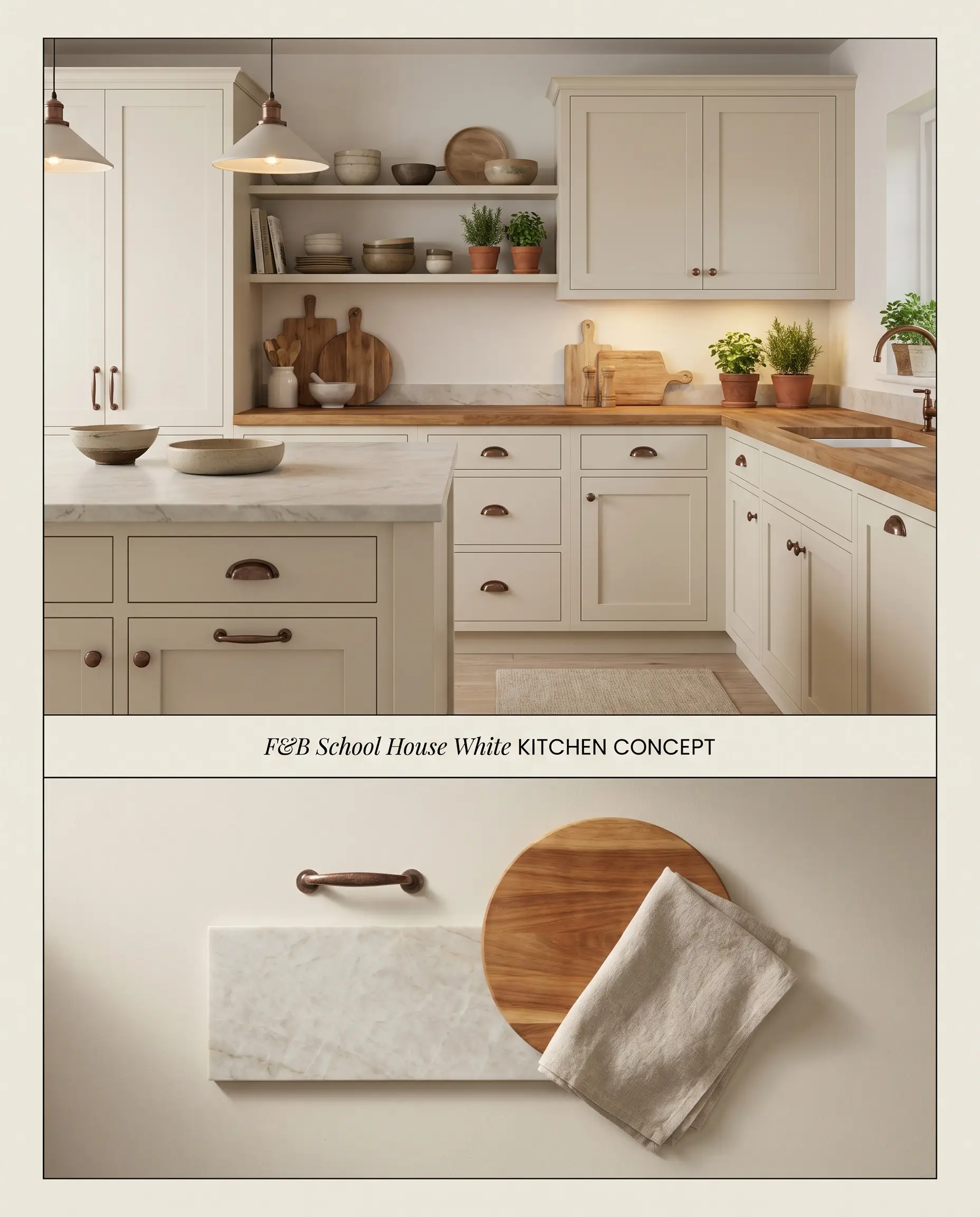
Executing School House White on kitchen cabinetry requires careful attention to surrounding hard finishes due to its inherent green-beige profile. It excels when paired with warm, organic materials, but will immediately muddy if placed next to cool architectural grays or stark white quartz. The resulting aesthetic is a lived-in, unpretentious culinary space that feels permanently grounded.
Trim and Ceilings
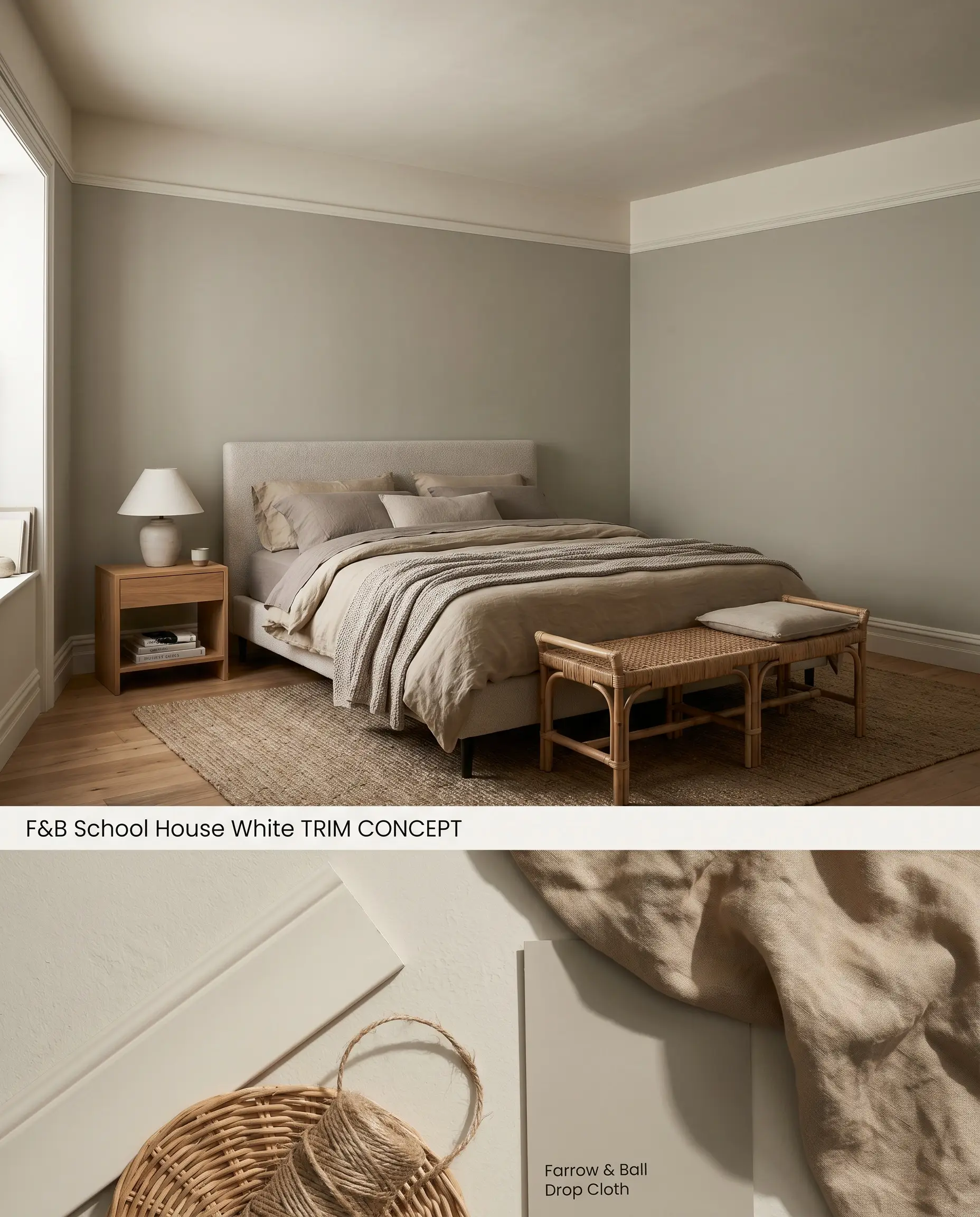
Using this shade for trim and ceilings shifts the spatial perception of a room by lowering the contrast ratio between the vertical and horizontal planes. Rather than a harsh, disjointed line of bright white, the transition becomes a soft, continuous envelope. This technique is highly effective when wrapping a room in slightly darker, earthy tones from the Timeless Neutrals group.
Low-Light Spaces
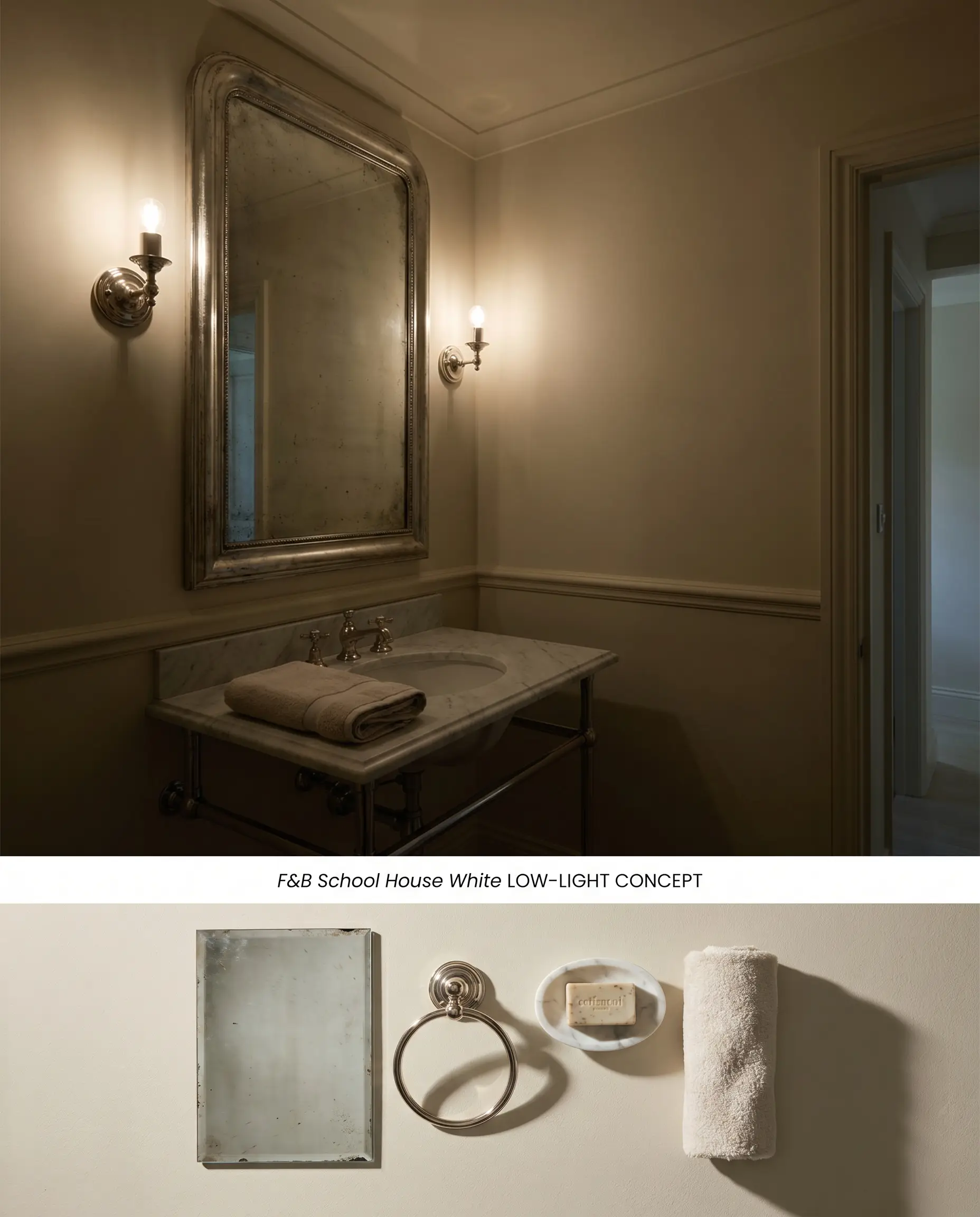
In low-light spaces, School House White relies on its complex chromatic profile rather than raw reflectance to illuminate the room. Instead of turning gray or flat, the ingrained beige and green pigments hold their ground, creating a moody, intimate atmosphere. The lack of direct sunlight allows the architectural finish to read with maximum depth and shadow play.
Head-to-Head Comparisons: Evaluating Chromatic Profiles
Farrow & Ball School House White vs. Farrow & Ball Shadow White 282
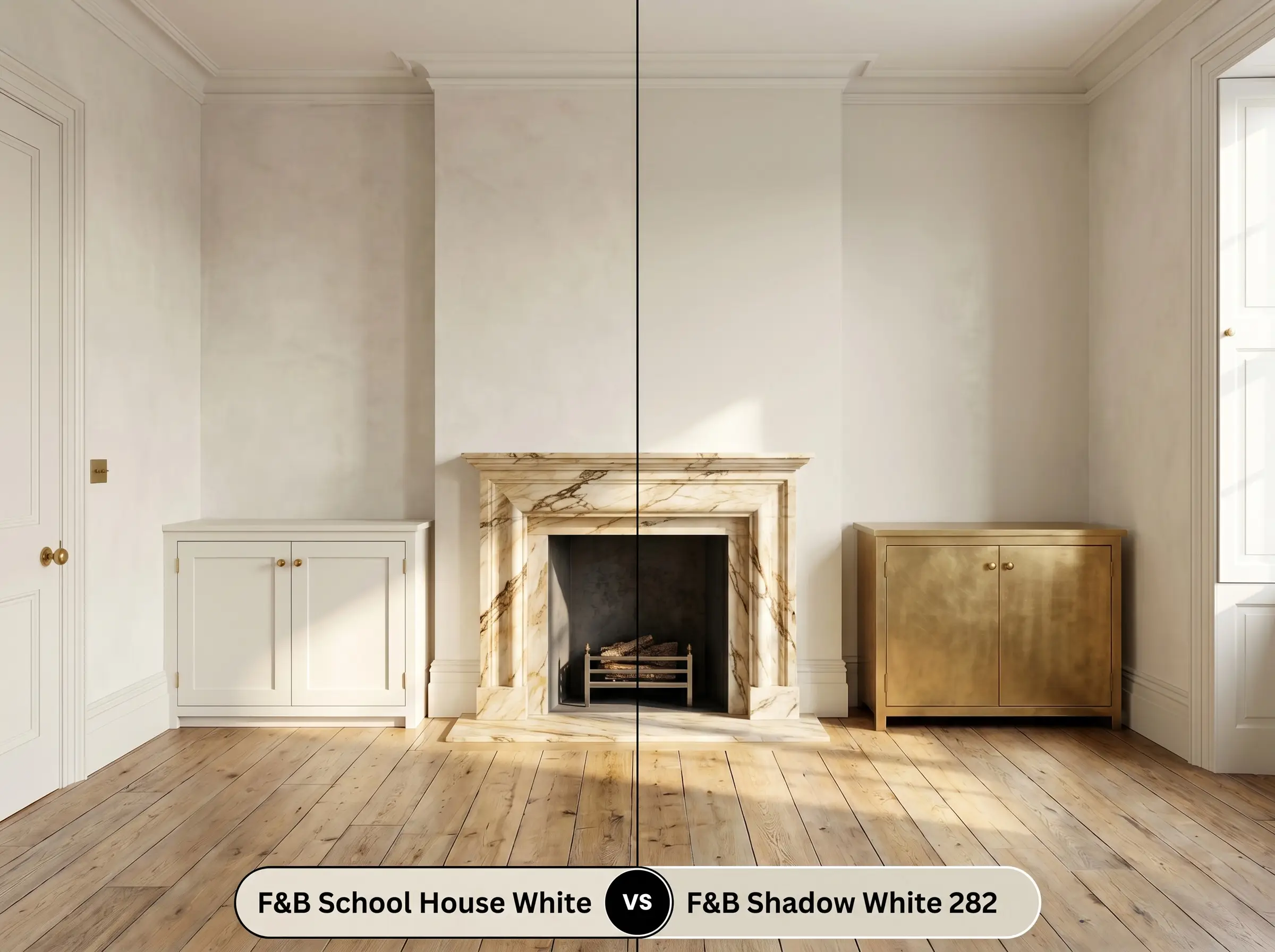
Shadow White operates with a slightly lower LRV and a more pronounced gray-green base, pulling it further away from a traditional cream. School House White retains a cleaner, more illuminated presence in spaces with limited windows, while Shadow White excels in bright, south-facing rooms where its extra depth prevents the color from washing out. Choose School House White when you need to maintain a lighter, airier envelope without sacrificing the historic, earthy undertones.
Farrow & Ball School House White vs. Sherwin-Williams Natural Choice SW 7011
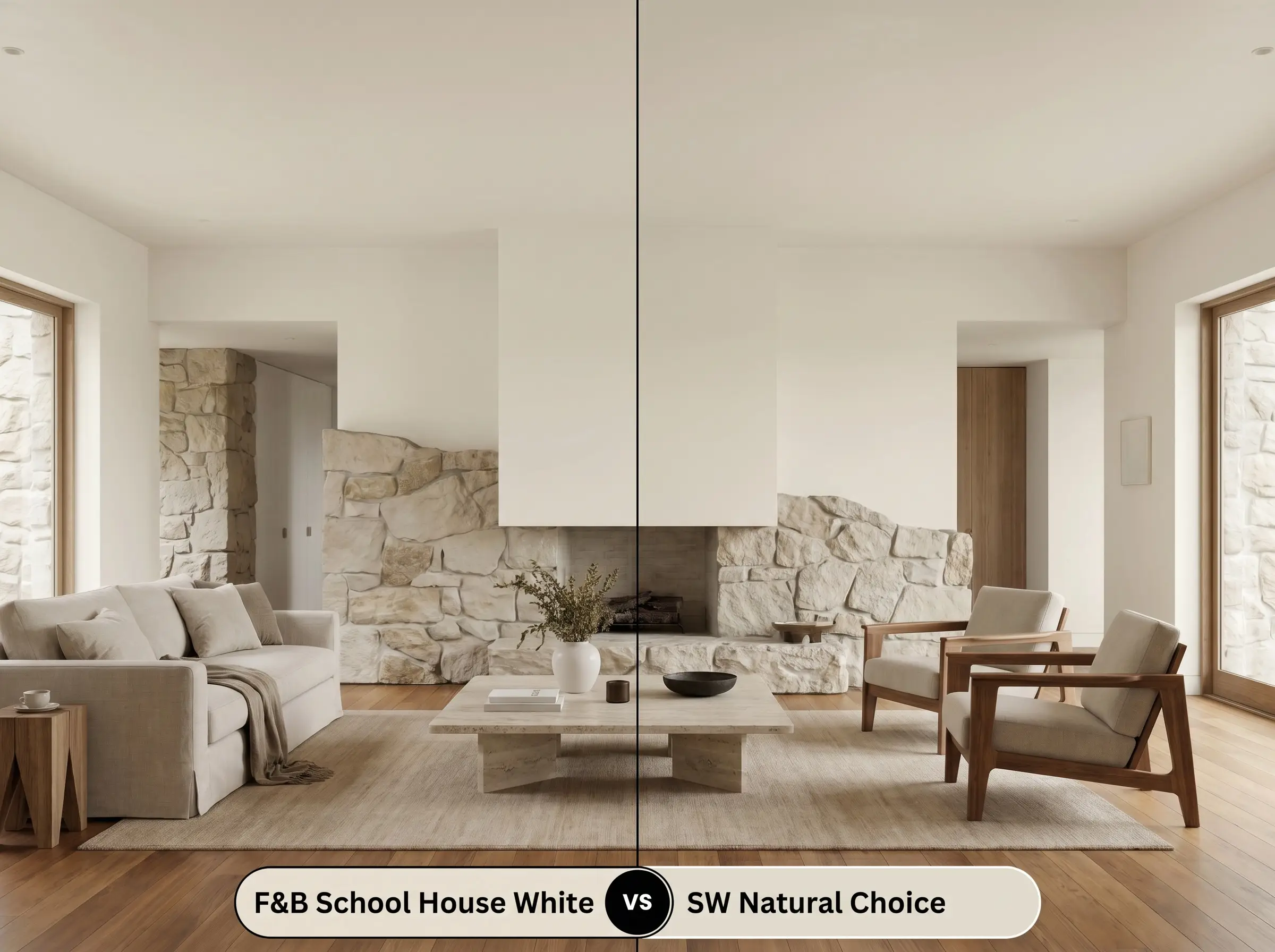
Natural Choice leans noticeably warmer, pushing closer to a yellow-beige, whereas School House White maintains its complex green-gray restraint. When placed against warm wood floors, Natural Choice will amplify the golden tones, while School House White will cool the space down slightly, providing a more balanced, neutral counterpoint. Specify the Farrow & Ball option when integrating with complex natural stones that might clash with the straightforward warmth of the Sherwin-Williams hue.
Farrow & Ball School House White vs. Benjamin Moore White Dove OC-17
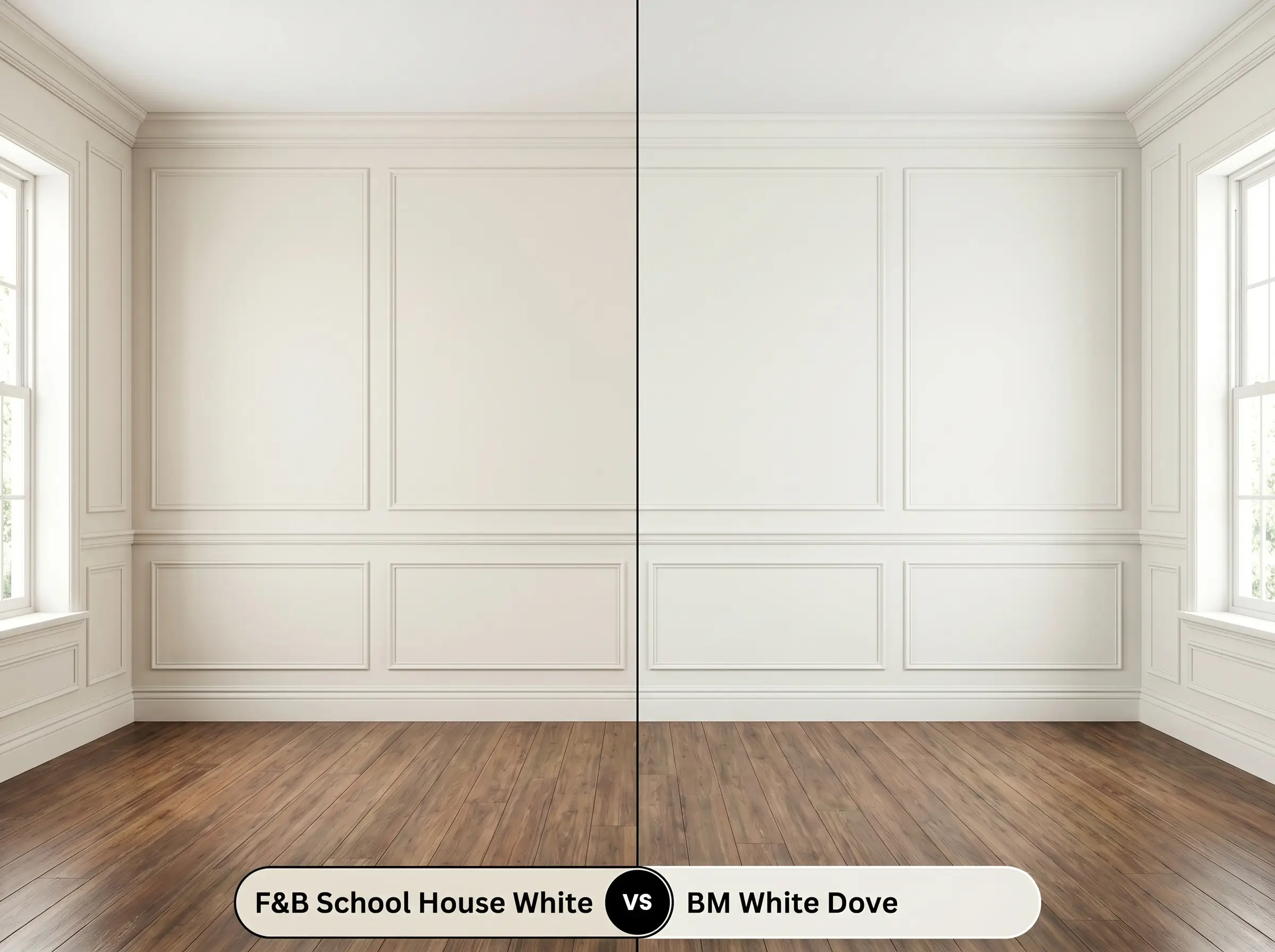
White Dove is significantly brighter with an LRV of 85.38, featuring a highly adaptable greige undertone that functions as a crisp, clean white in most lighting conditions. School House White (LRV 74.16) acts explicitly as a muted off-white or soft beige, absorbing light rather than reflecting it sharply. Deploy White Dove for high-contrast, modern transitional trim, but rely on School House White when wrapping an entire room in a continuous, low-contrast historical palette.
Technical Color Behavior FAQs
Yes, the cooler, indirect light of a north-facing room pulls the hidden green undertones to the surface. To counteract this, rely on warm, 3000K artificial lighting and layer the space with rich, warm-toned textiles.
The subtle green and beige undertones of this paint will immediately conflict with the stark, blue-gray veining of cool marbles like Carrara. This interaction forces the paint to look muddy and unwashed while making the stone appear harsh and clinical.
The ultra-matte Dead Flat finish eliminates surface glare, allowing the eye to register the exact pigment blend without light interference. This makes the color appear slightly deeper and richer on the wall compared to a glossier sheen.
With an LRV of 74.16, it is substantially darker than a standard ceiling bright white, which typically sits above 85 LRV. It functions beautifully as a ceiling color only when the goal is to lower the visual height of the room or when color-drenching the entire space in a single, continuous shade.
Paint Aesthetic & Practical Analysis
| Profile | Analysis | |
|---|---|---|
| Aesthetic | School House White is a masterclass in understated elegance. It delivers a lived-in, effortless warmth that elevates a room without demanding attention, though its subtle green undertones require careful lighting consideration. | |
| The Clash Warning | Because of its subtle green and beige undertones, School House White can clash with stark, cool whites or finishes that have strong pink or purple undertones. Avoid pairing it with cool architectural grays, as it will look muddy and lose its gentle warmth. |
Real-World Inspiration Be the first to upload a real photo of School House White!
No Photos Yet
Includes +20 First Upload Bonus!
Real Experiences
Insights from people who have used School House White.No reviews yet
Be the first to share your experience with School House White.
Earn 15 points instantly!
Closest Cross-Brand Equivalents
The absolute closest scientific color matches for School House White across top paint brands.