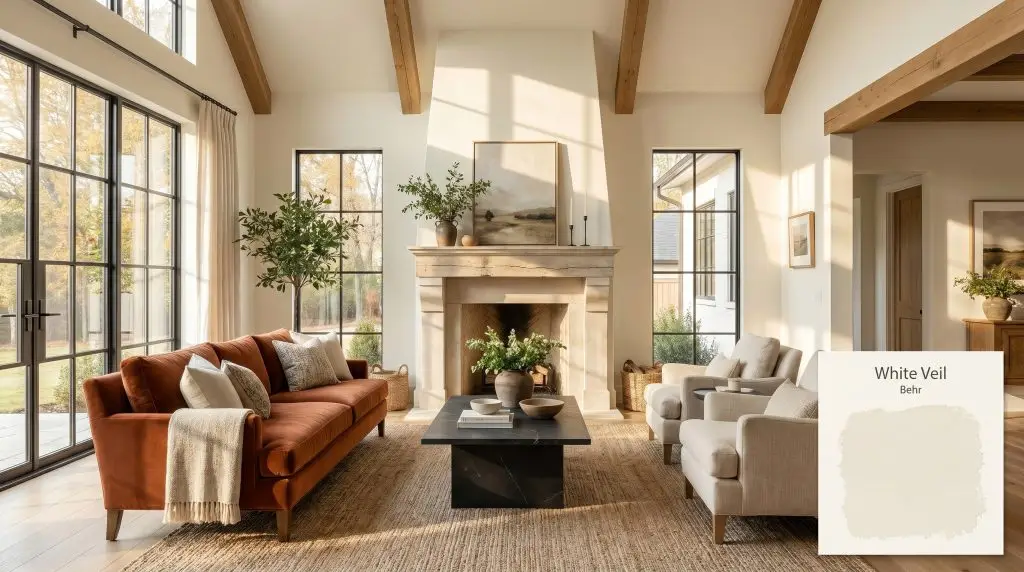
Behr White Veil (OR-W14) is a delicate, warm off-white with a light reflectance value (LRV) of 88. It features soft beige and subtle gold undertones, making it a highly versatile, airy neutral that warms up cool spaces without turning overtly yellow.
Will White Veil clash with your room?
Paint Technical Profile
| Color ID / SKU | OR-W14 |
| HEX Code | #f7f1e3 |
| Light Reflectance (LRV) | 88 |
| Temperature | Warm |
| Primary Undertone | Beige |
| Hidden Undertones | Yellow, Subtle Gold |
| Use | Interior, Exterior |
| Best Exposures | North-facing, East-facing |
| Best For | Kitchens, living rooms, bedrooms, trims, and cabinetry |
White Veil Digital Design Concept Boards
Kitchen Cabinetry and Islands
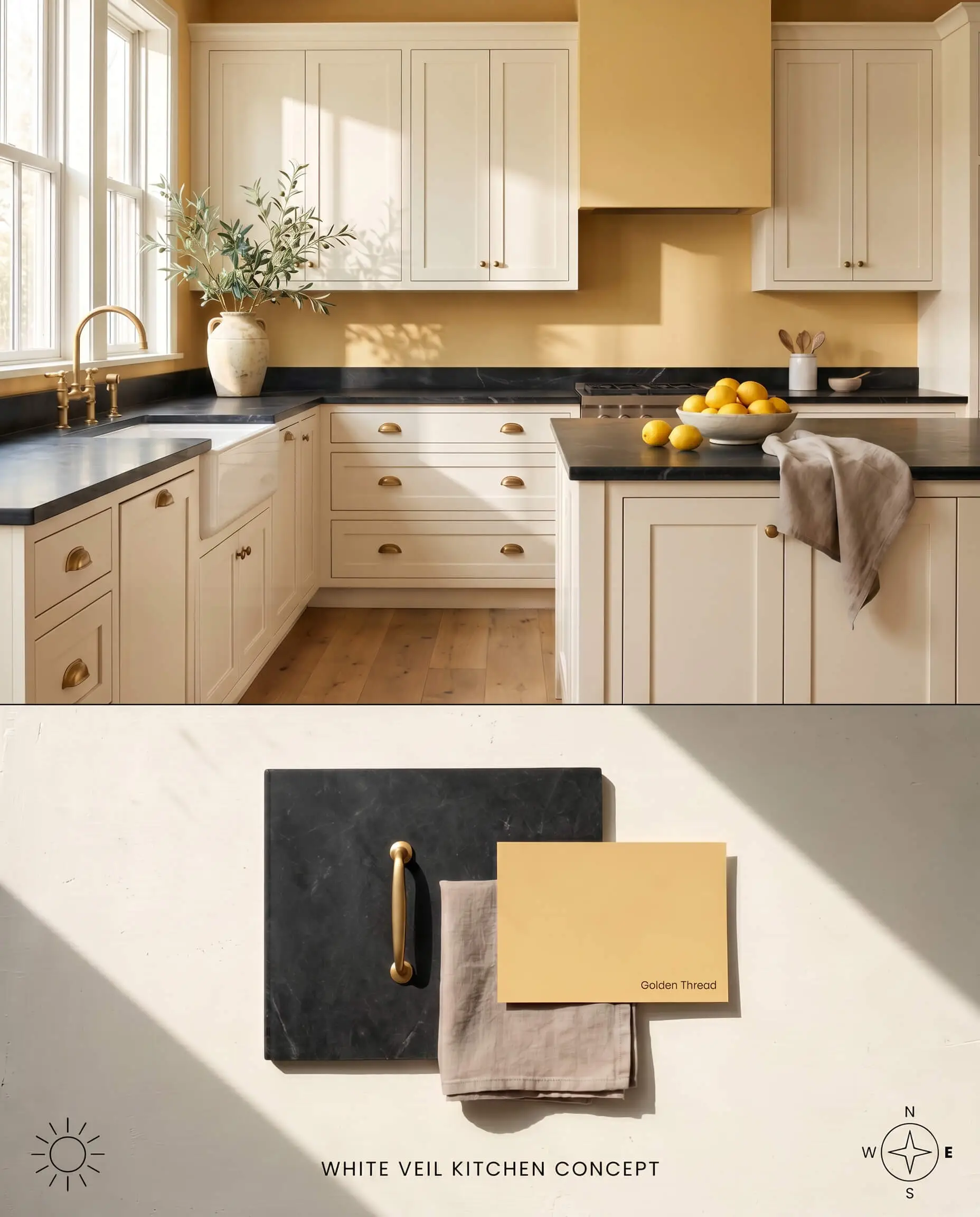
White Veil thrives as a cabinetry finish where its golden cast adds physical depth to millwork without reading strictly yellow. Against honed soapstone counters, the beige undertone balances the dark, matte stone, creating a grounded, transitional aesthetic. Avoiding icy whites on the backsplash prevents the cabinets from shifting dingy.
Behr Cabinet, Door & Trim Enamel ($$ (Value/Accessible Tier)). Provides a durable, fast-drying finish that resists sticking and withstands heavy daily use, offering an excellent cost-to-performance ratio for DIY cabinet and millwork updates.
The Consultant’s Finish
North-Facing Living Rooms
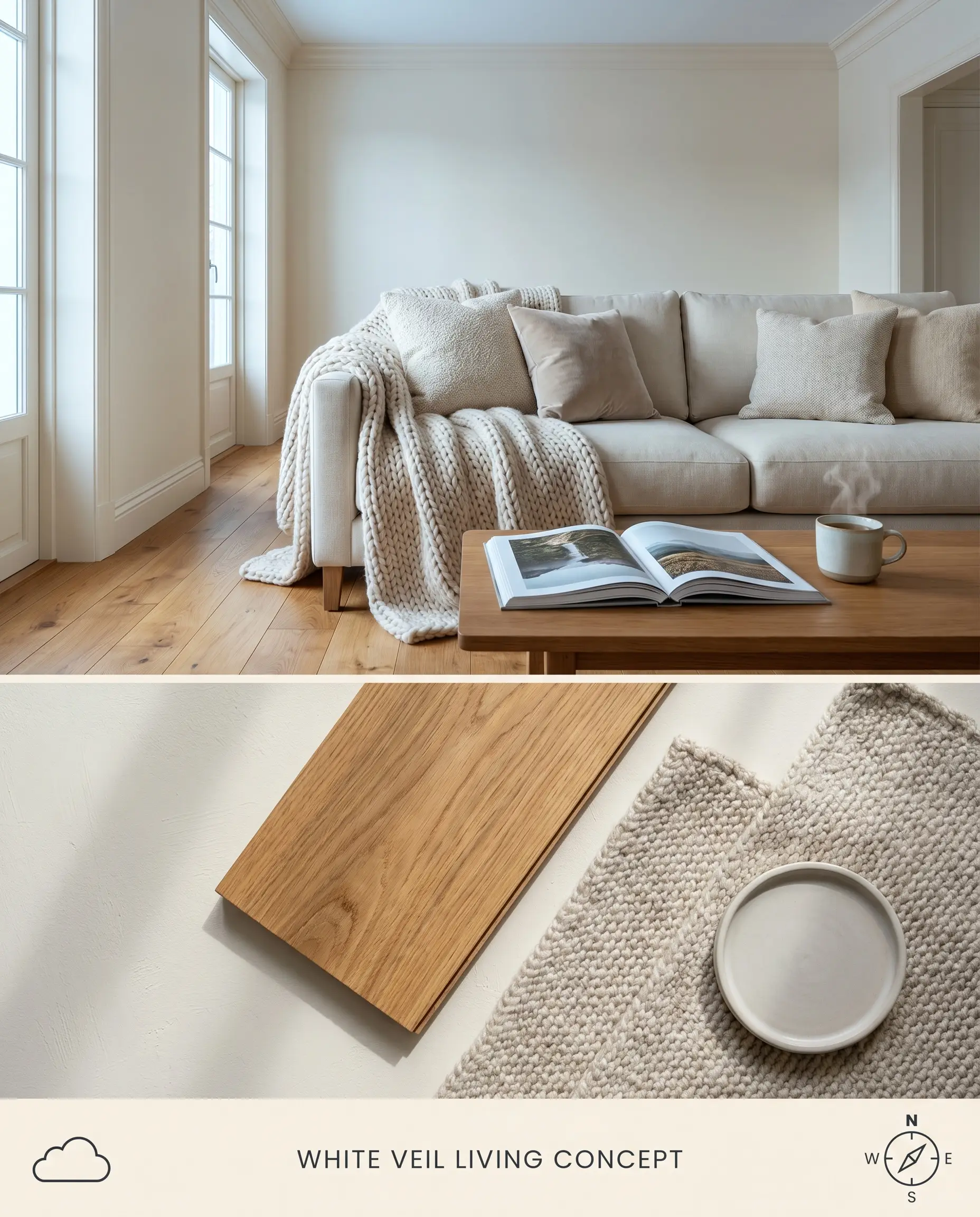
North-facing exposure casts a cool, bluish light that easily flattens standard neutrals. The inherent warmth of this Behr neutral counteracts that chill, holding its chromatic profile and keeping the room inviting. Layering textured textiles reinforces the cozy, off-white aesthetic while absorbing excess shadow.
Behr Marquee Interior ($$ (Value/Premium Tier)). Delivers exceptional value with a one-coat coverage guarantee, providing excellent dirt and grime resistance for busy, budget-conscious households.
The Consultant’s Finish
Primary Bedrooms and Nurseries
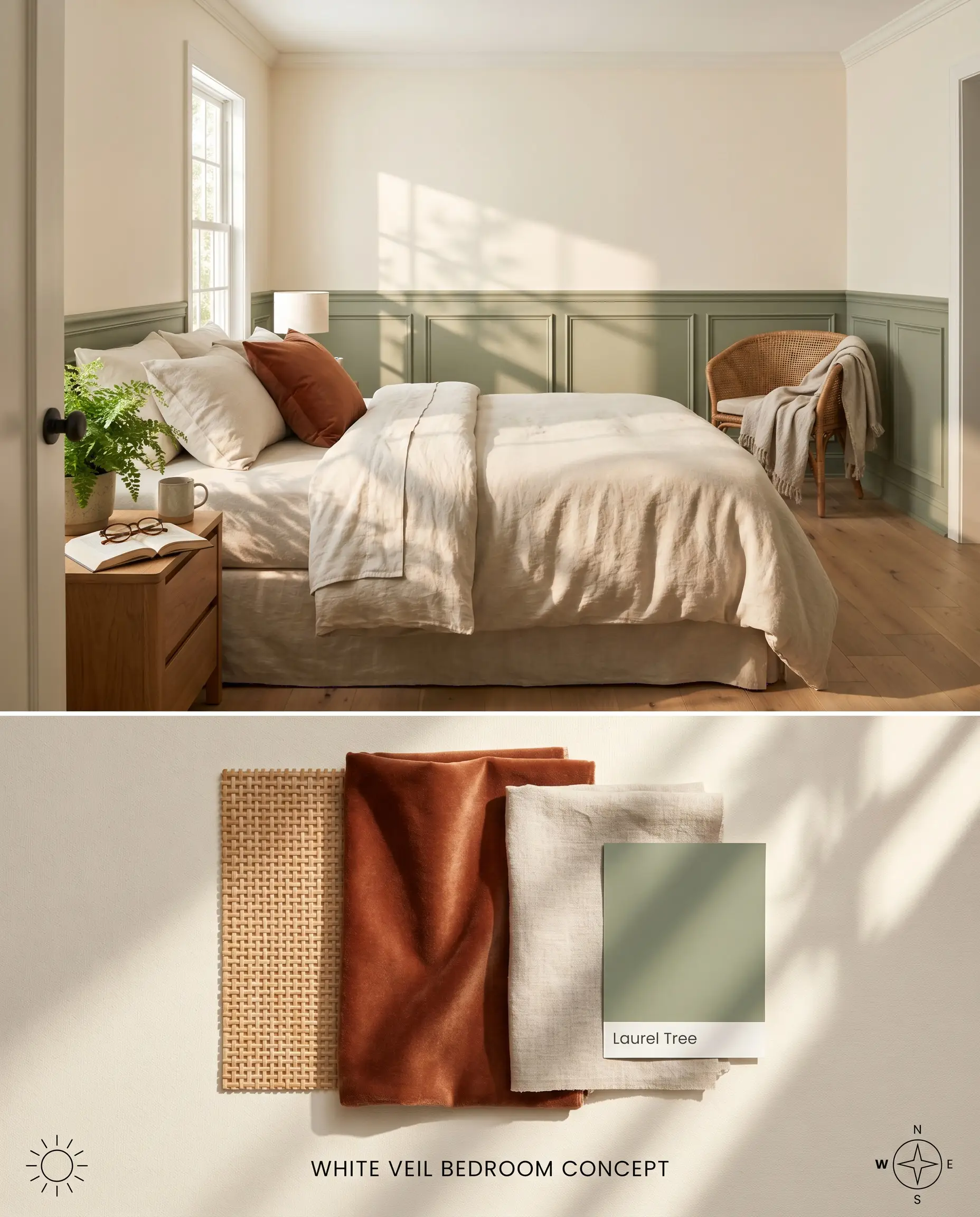
The soft LRV 88 prevents the jarring reflectance typical of stark whites, promoting a restful ambient lighting environment. Pairing this shade with natural linens and organic wood tones amplifies its beige undertone. It serves as a gentle, non-stimulating backdrop that absorbs morning light gracefully.
Behr Marquee Interior ($$ (Value/Premium Tier)). Delivers exceptional value with a one-coat coverage guarantee, providing excellent dirt and grime resistance for busy, budget-conscious households.
The Consultant’s Finish
Open-Concept Main Living Areas
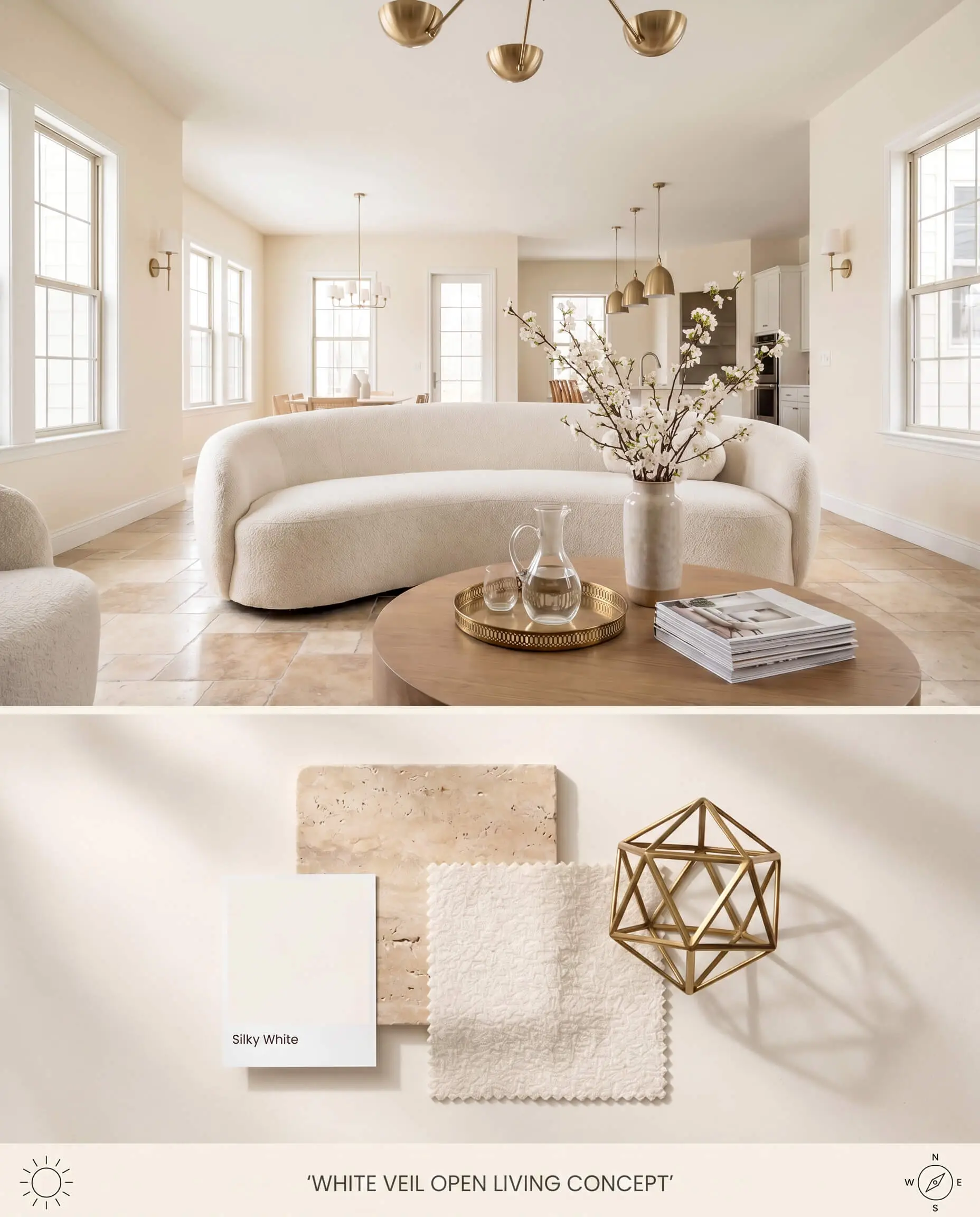
In expansive spaces with shifting light patterns, a warm white maintains architectural continuity. As sunlight travels throughout the day, the color transitions from a crisp off-white in direct morning sun to a rich, creamy hue by dusk. Maintaining consistent warmth across baseboards and ceilings is crucial to avoid undertone clashes.
Behr Marquee Interior ($$ (Value/Premium Tier)). Delivers exceptional value with a one-coat coverage guarantee, providing excellent dirt and grime resistance for busy, budget-conscious households.
The Consultant’s Finish
Exterior Trim and Brick Facades
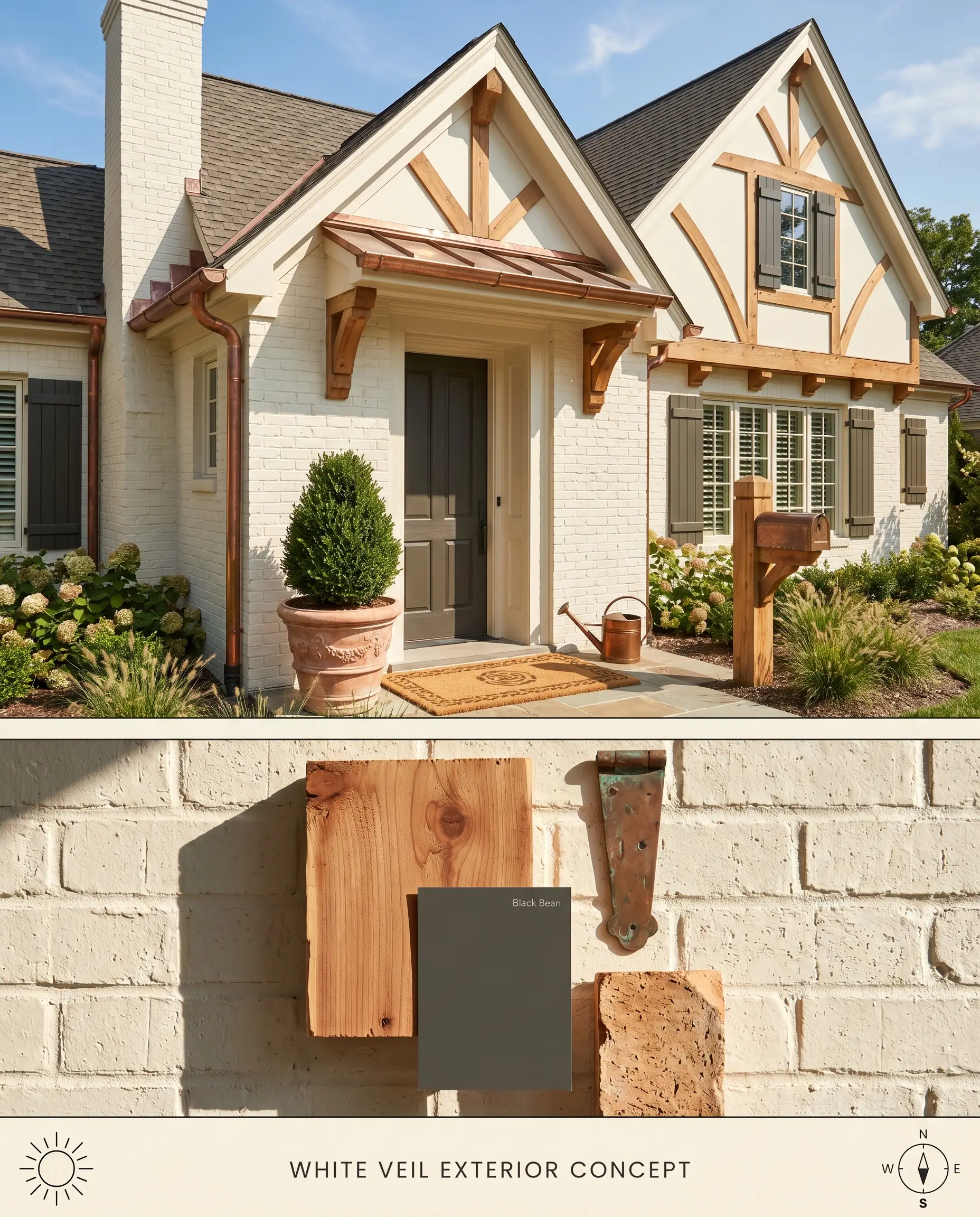
Direct sunlight strips color of its intensity, making high-LRV shades appear significantly brighter outdoors. White Veil retains enough pigment to read as a soft, heritage white on an architectural finish like textured brick rather than blindingly stark. Its golden cast harmonizes naturally with copper gutters and natural cedar accents.
Behr Marquee Exterior ($$ (Value/Premium Tier)). A heavy-duty, dirt-resistant formula that offers exceptional UV protection and robust weather resistance, maximizing time efficiency and long-term value for exterior projects.
The Consultant’s Finish
Head-to-Head Color Theory Analysis
Behr White Veil OR-W14 vs. Behr Swiss Coffee 12
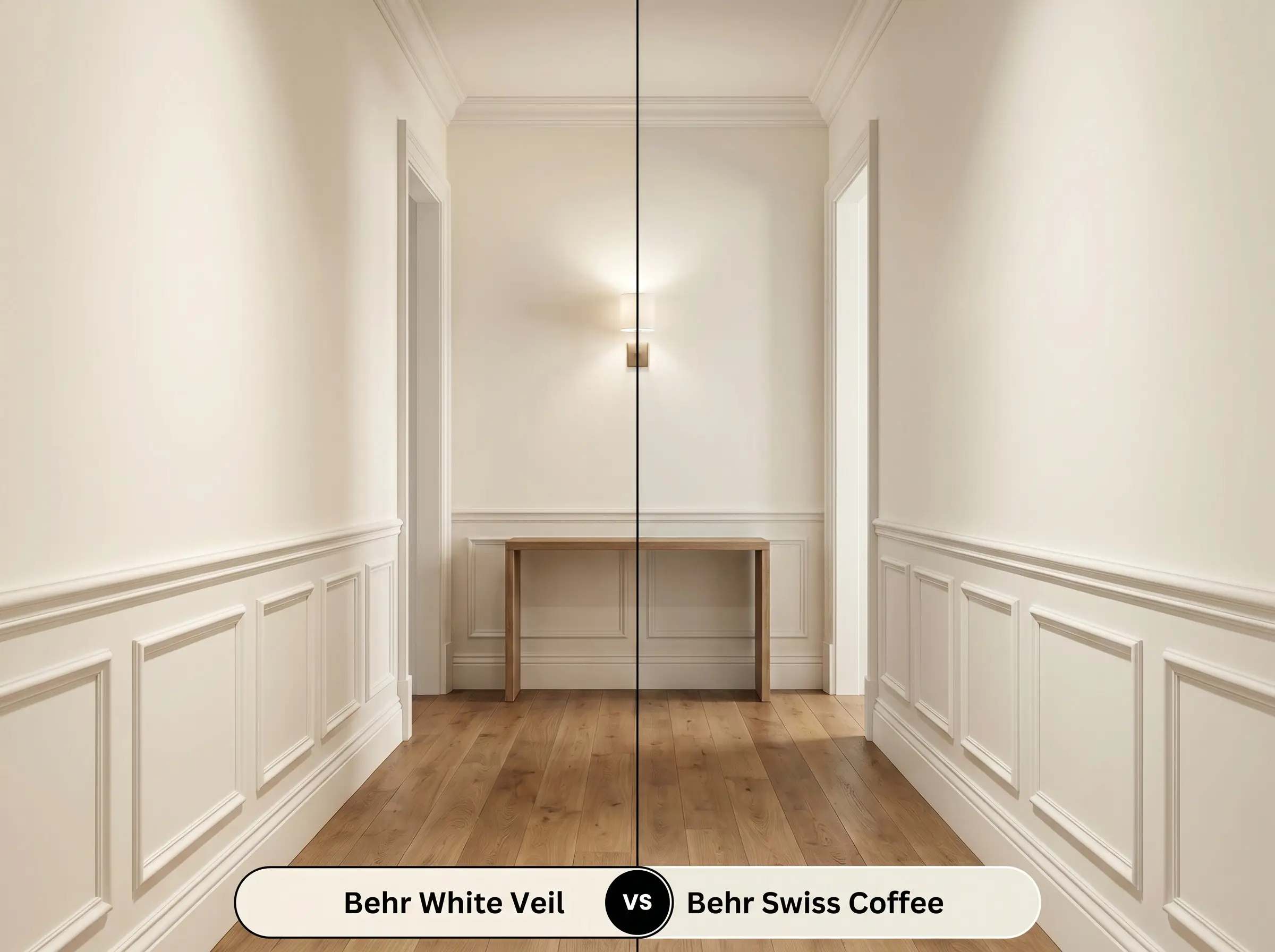
Behr Swiss Coffee 12 is slightly creamier with a lower LRV (84) and stronger green-yellow undertones. Behr White Veil OR-W14 (LRV 88) is cleaner and brighter, reflecting more ambient light. Behr Swiss Coffee 12 works better in rooms needing substantial depth and shadow play, while Behr White Veil OR-W14 acts as a crisper finish in dimly lit corridors where light bounce is a priority.
Behr White Veil OR-W14 vs. Benjamin Moore White Dove OC-17
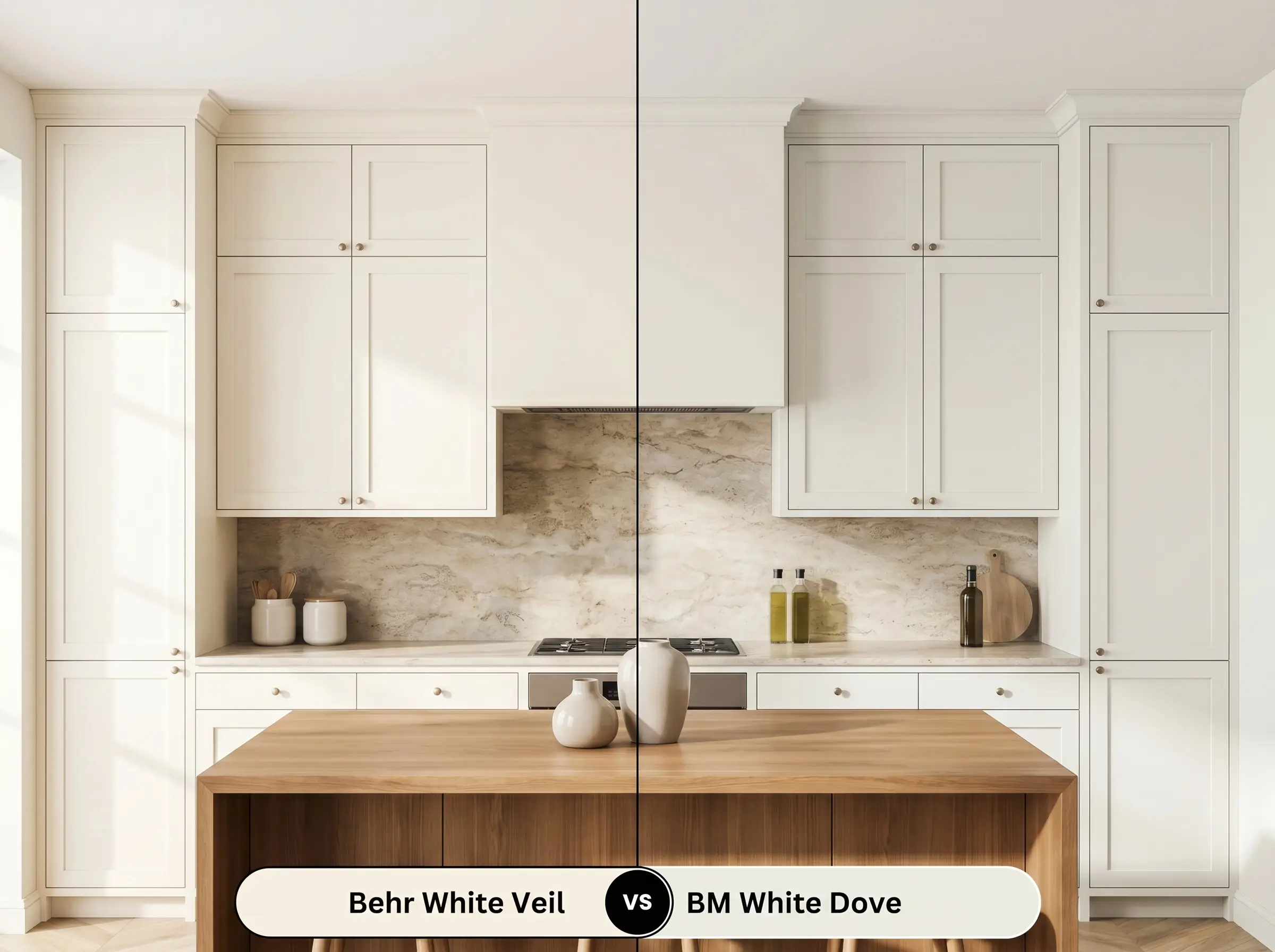
Benjamin Moore White Dove OC-17 (LRV 85.38) relies on a greige shadow base that neutralizes its warmth, whereas Behr White Veil OR-W14 leans distinctly into its golden cast. Choose Benjamin Moore White Dove OC-17 when dealing with fixed finishes that border on cool or neutral, as its gray undertone bridges the gap. Reserve Behr White Veil OR-W14 for spaces completely dedicated to warm, earthy palettes where its beige base can thrive without clashing against cool stones.
Behr White Veil OR-W14 vs. Sherwin-Williams Alabaster SW 7008
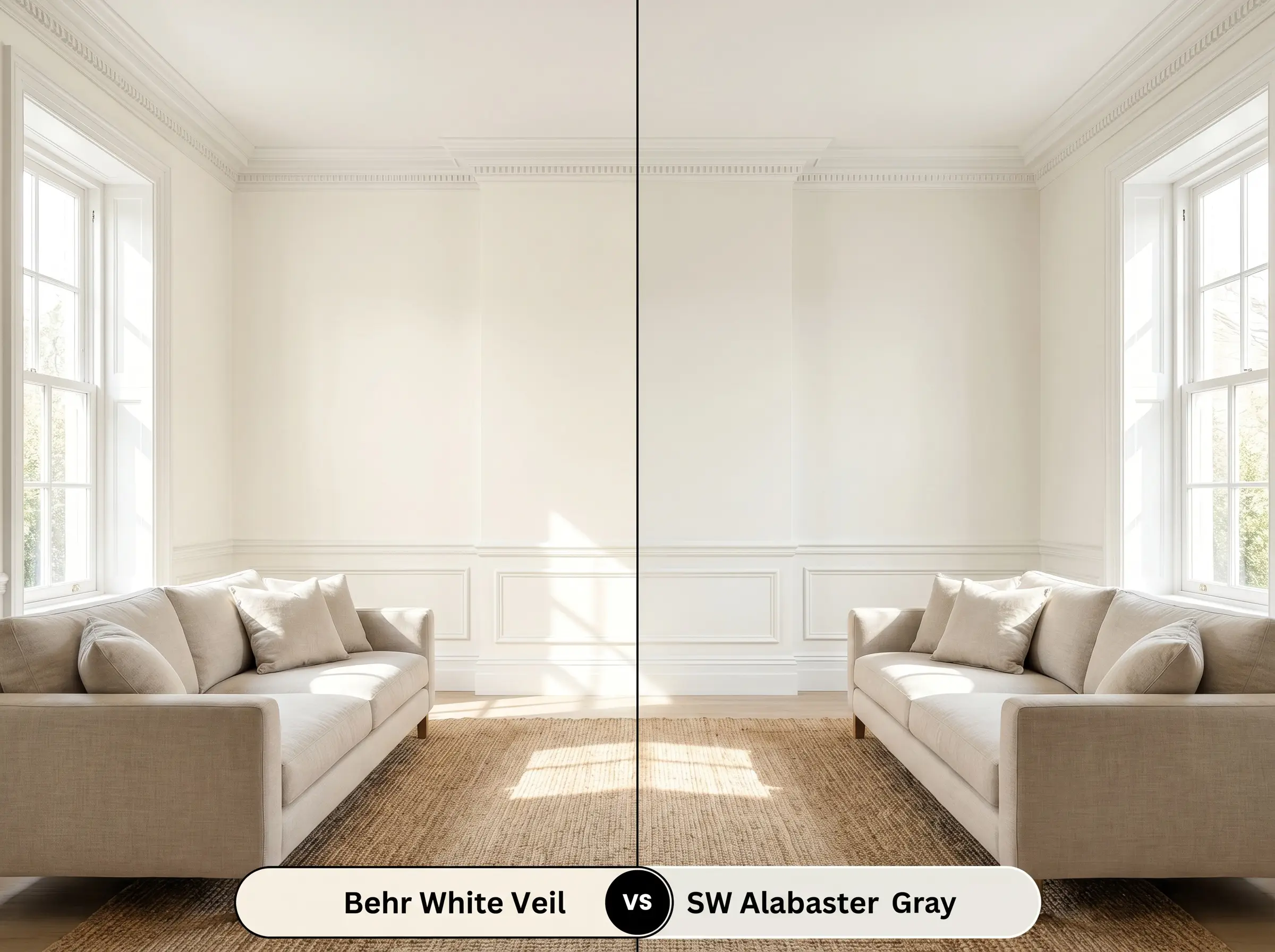
Sherwin-Williams Alabaster SW 7008 (LRV 82) is thicker, creamier, and carries a subtle beige-olive undertone compared to the brighter, clearer yellow-beige base of Behr White Veil OR-W14. In south-facing rooms, Sherwin-Williams Alabaster SW 7008 absorbs intense light and holds its shape better without flashing overly yellow. Behr White Veil OR-W14 is superior for north-facing rooms that require a higher LRV to bounce light without looking muddy.
Technical Color FAQs
Yes, the golden cast in White Veil intensifies significantly under warm southern light. To mitigate this, rely on matte sheens to absorb the glare or deploy it in rooms with cooler, indirect exposures.
Yes, pairing this warm white with cool, blue-based gray floors highlights the yellow undertones in the paint, making it appear dingy. Always pair it with warm wood tones like oak, walnut, or warm-toned stone.
Direct sunlight washes out subtle undertones, allowing White Veil to read as a soft, classic white rather than a stark, blinding hue. Its LRV of 88 provides excellent reflectivity while retaining enough pigment to look natural against landscaping.
No, placing White Veil next to a stark, cool white will immediately emphasize its yellow-beige base, making the trim look aged or stained. For a cohesive look, use a tone-on-tone approach by applying White Veil in different sheens across walls and trim.
Paint Aesthetic & Practical Analysis
| Profile | Analysis | |
|---|---|---|
| Aesthetic | Behr White Veil is an elegant and highly dependable warm white. It strikes a beautiful balance, offering enough warmth to make a space feel inviting while maintaining enough brightness to keep it feeling open and airy. It is a fantastic choice for whole-house palettes. | |
| The Clash Warning | Because of its subtle yellow and gold undertones, White Veil can clash with stark, cool-toned grays or finishes with pink or purple undertones. Avoid pairing it with cool, icy whites on trim, which can make White Veil look dingy or overly yellow by comparison. |
Real-World Inspiration Be the first to upload a real photo of White Veil!
No Photos Yet
Includes +20 First Upload Bonus!
Real Experiences
Insights from people who have used White Veil.No reviews yet
Be the first to share your experience with White Veil.
Earn 15 points instantly!
Closest Cross-Brand Equivalents
The absolute closest scientific color matches for White Veil across top paint brands.