How to Master the Modern Deco Living Room: 14 High-Contrast Styling Pairings
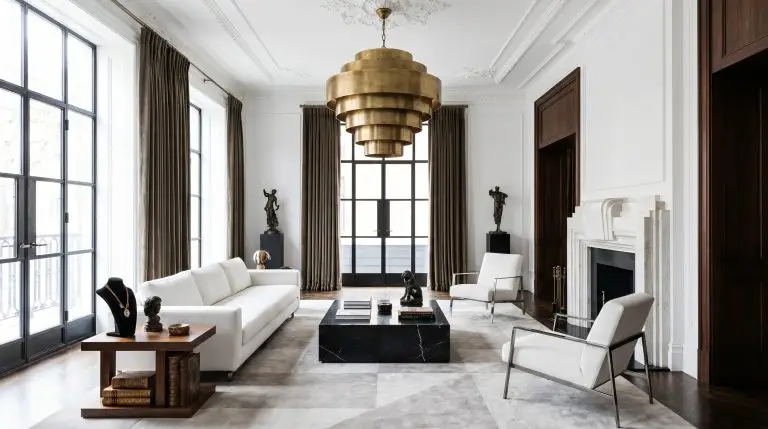
Finding the perfect art deco touches for a modern living room design requires navigating a very fine line between historic glamour and a theatrical costume set. If your space is anchored by clean-lined contemporary furniture, you already possess the ideal blank canvas for the heavy, opulent materials of the 1920s and 30s.
The secret to this aesthetic lies in what our design team calls “The Curator’s Tension”—the intentional, high-contrast friction that happens when a sterile, minimalist room collides with a deeply veined marble plinth or a hit of unlacquered brass. We are not recreating the past; we are grounding sleek, modern silhouettes with the tactile, bespoke weight of architectural history.
Success demands absolute restraint, treating opulent materials as localized sculptural moments rather than an overarching theme. To maintain visual balance and prevent clashing eras, adhere strictly to the 80/20 styling ratio: anchor the room with an 80% modern foundation, and deploy 20% Deco elements to act as the high-impact jewelry of the space.
The Blueprint: Balancing Eras Without the Kitsch
Executing the 80/20 ratio requires a rigorous understanding of visual weight. If your foundational pieces are lightweight and minimalist, a flimsy reproduction lamp will read as cheap, whereas a heavy, authentic Deco piece will anchor the room with stark authority. Use the material pairings below to map your modern base to its ideal historic counterpart.
| If Your Modern Furniture Is… | Pair it with this Deco Touch… |
|---|---|
| Matte Black & Minimalist Steel | High-Gloss Burl Wood or Unlacquered Brass |
| Organic Bouclé & Slouchy Linen | Nero Marquina Marble or Faceted Crystal |
| Mid-Century Teak & Walnut | Polished Chrome or Mirrored Glass |
Luminous Architecture: Lighting and Mirrors
Modern living rooms frequently suffer from clinical, recessed overhead lighting that flattens a space. Historic Deco fixtures cure this instantly, offering inherently sculptural forms that introduce crucial architectural tension and serve as the easiest gateway into the aesthetic.
Float a Tiered Brass Chandelier Over a Low-Profile Sectional
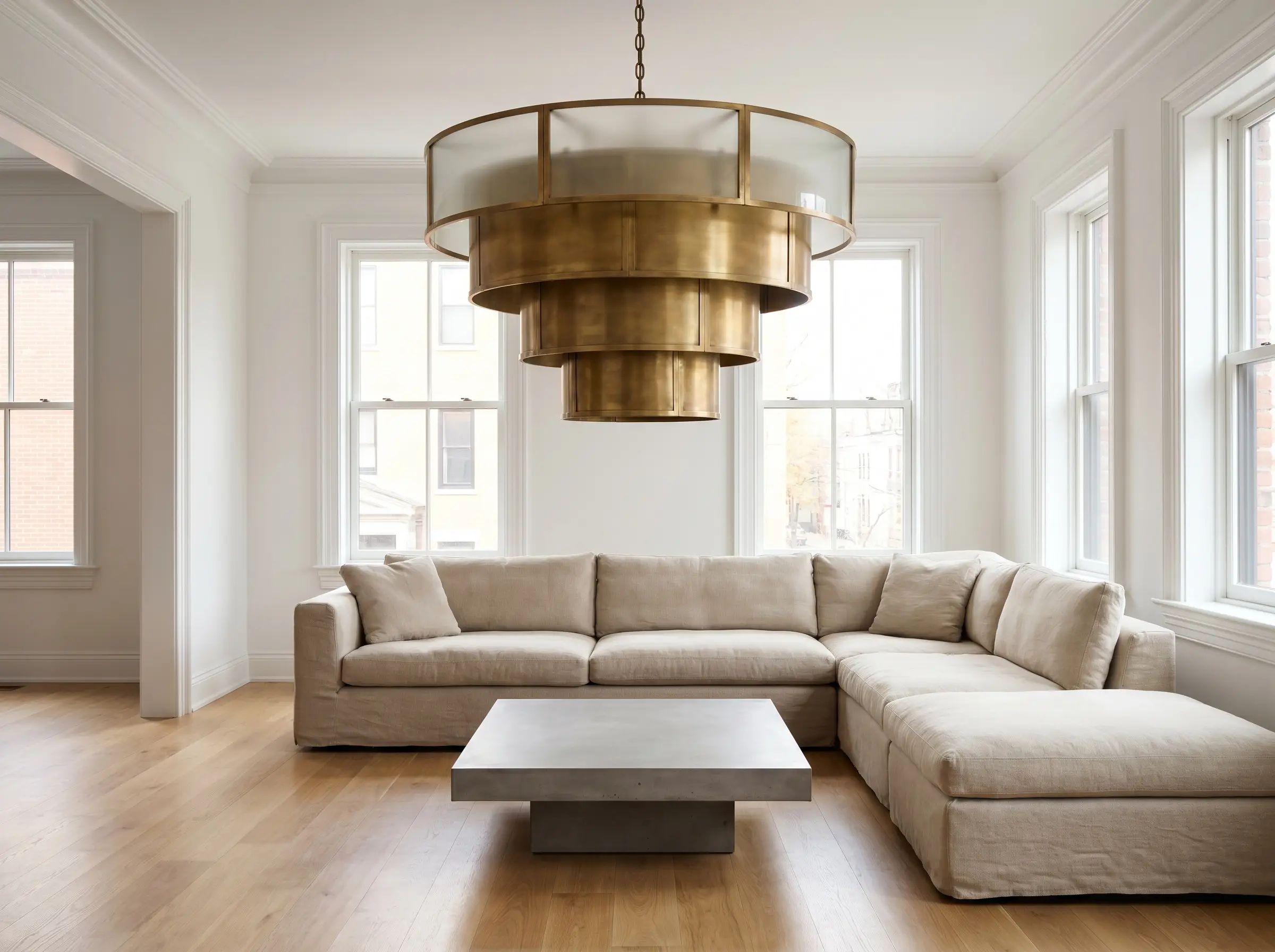
A low-profile modern sectional leaves a vast expanse of negative space that begs for high-impact intervention. By floating a heavy, tiered brass chandelier above a slouchy linen sofa, you create an immediate contrast in scale that commands attention. The sheer visual weight of the cascading metal balances the grounded, horizontal lines of the seating.
- Vibe: Unapologetic focal point.
- Key Materials: Antiqued or unlacquered brass, frosted glass framing.
- Spatial Target: Ensure the lowest tier of the chandelier hangs exactly 36 inches above the primary coffee table to maintain spatial intimacy.
When mixing metals, ensure your Deco brass is unlacquered so it develops a living patina that speaks directly to the matte finishes of modern steel frames.
Designer Secret
Flank the Media Console with Alabaster Sconces
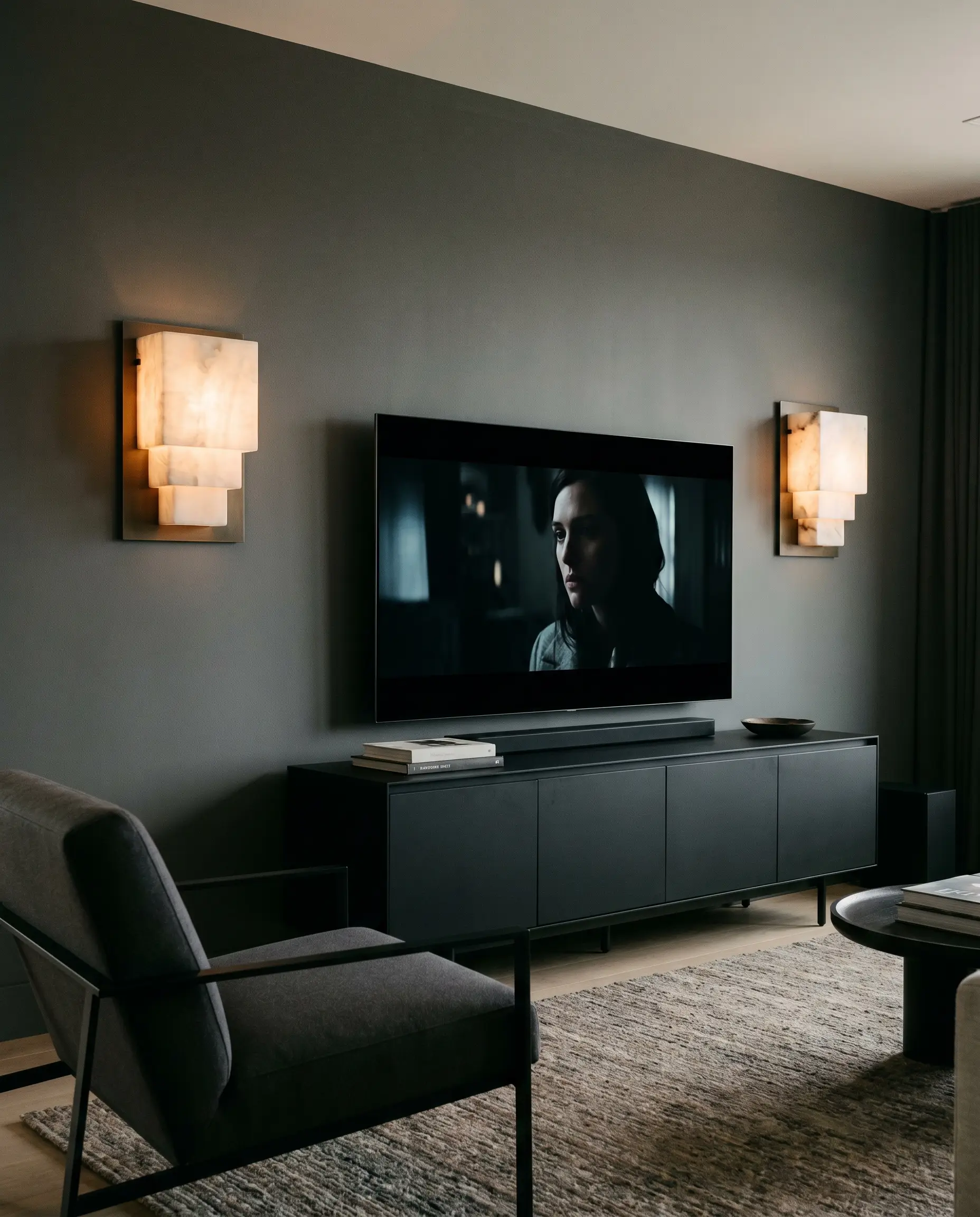
Modern televisions and matte black media units often function as visual black holes in an otherwise thoughtful layout. Warm up these technological voids by flanking the setup with stepped alabaster sconces. The natural translucency of the stone filters light softly, creating a tactile friction against the hard, sterile tech.
- Vibe: Ambient, cinematic warmth.
- Key Materials: Natural alabaster, bronze backplates.
- Paint Recommendation: Sherwin-Williams Peppercorn (for a moody backdrop that makes the alabaster glow).
Anchor the Room with an Oversized Stepped Mirror
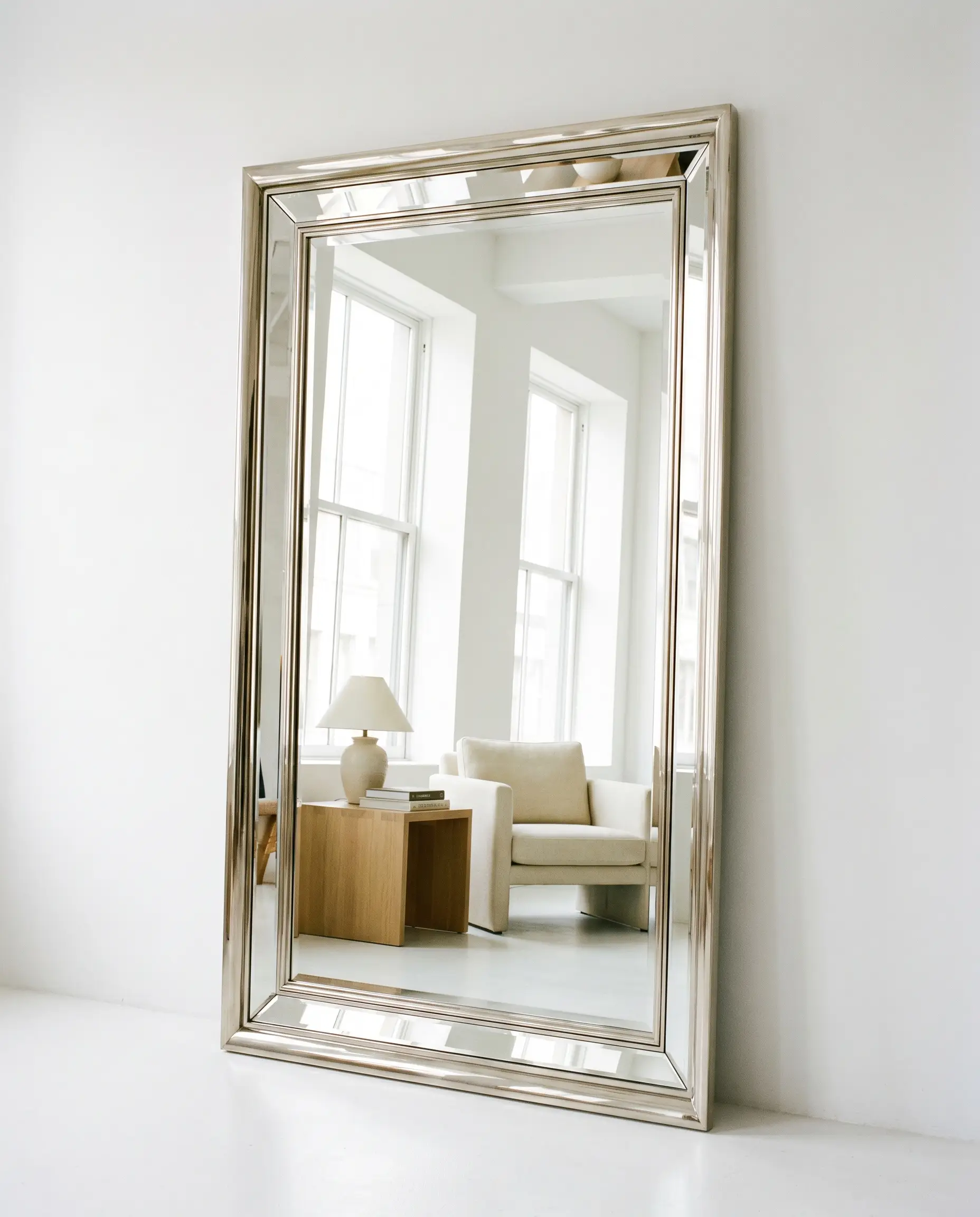
Move away from generic, thin-framed round mirrors that lack architectural presence. Opt for a heavy, floor-leaning mirror featuring a stepped profile or a beveled glass edge set against a stark white gallery wall. This is a renter-friendly architectural hack that multiplies natural light while adding instant, structural depth to a flat room.
- Vibe: Grounded, expansive illusion.
- Key Materials: Beveled mirror, polished nickel or heavy brass borders.
- Placement: Lean it opposite your largest window to double the room’s luminous footprint.
Introduce Fluted Glass Room Dividers or Screens
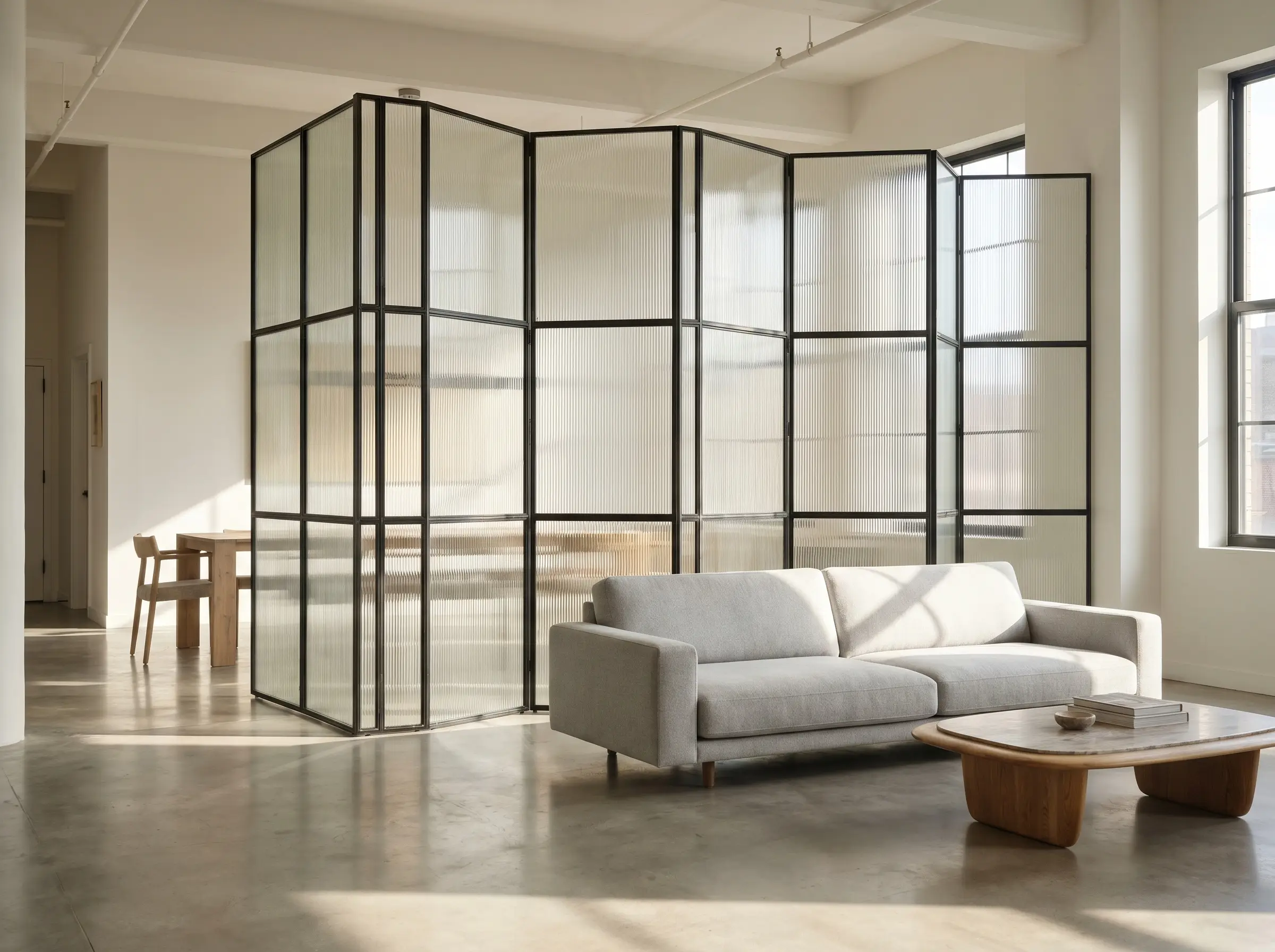
For open-concept lofts, fluted glass framed in blackened steel offers a brilliant method for zoning a living space without sacrificing luminosity. This quintessential 1930s texture bounces light dynamically, seamlessly blending modern industrial framing with bespoke, historic geometry.
- Vibe: Sophisticated spatial zoning.
- Key Materials: Ribbed or fluted tempered glass, blackened steel or iron.
- Functionality: Provides visual privacy while maintaining open-concept light flow.
Tactile Glamour: Textiles and Upholstery Accents
Transitioning to soft goods requires a shift in sensory expectations. While contemporary minimalism heavily favors dry linens and nubby bouclés, this historic aesthetic demands light-catching, dramatic textiles that introduce friction through pure touch.
Contrast Matte Modern Fabrics with High-Sheen Velvet Pillows
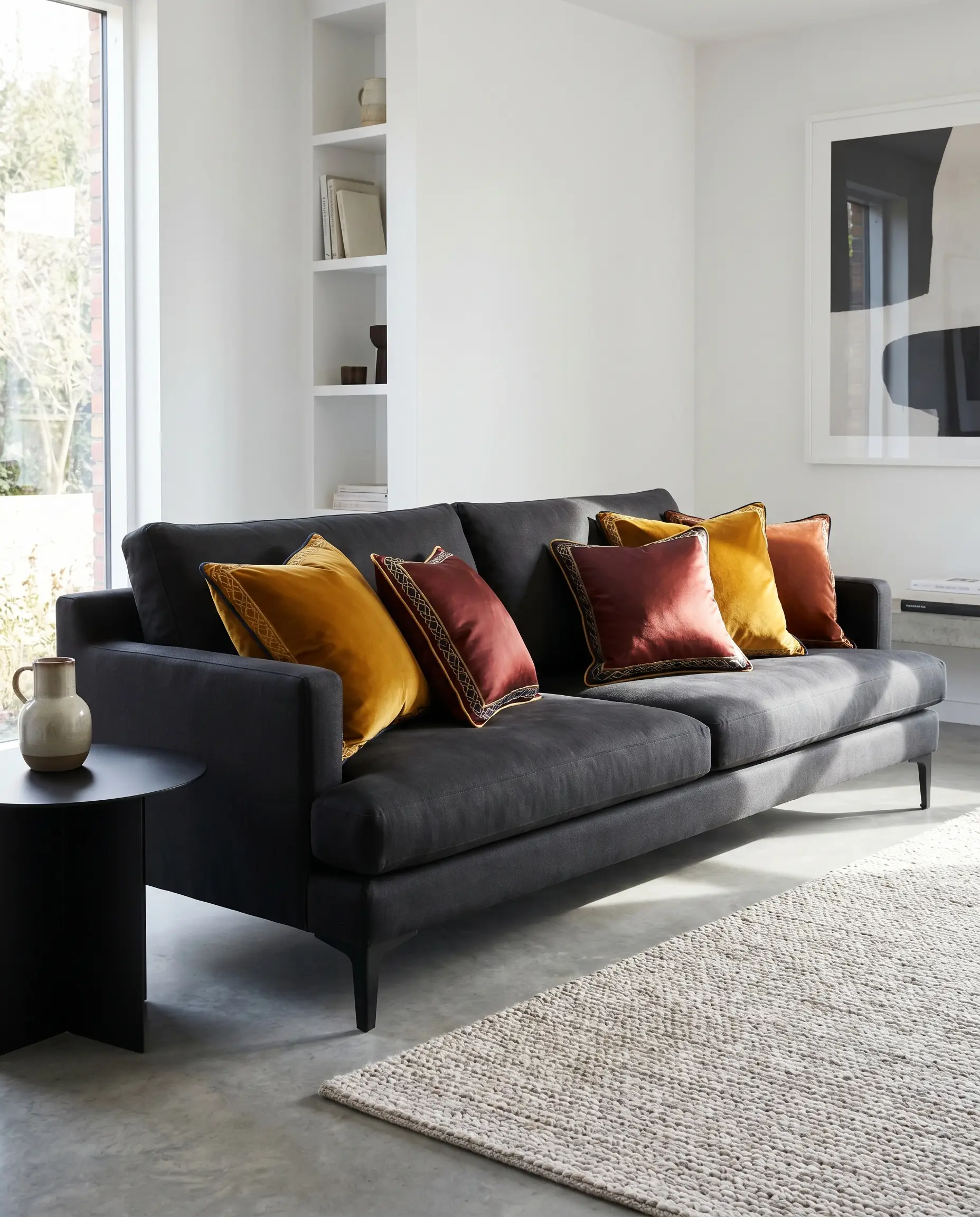
If your primary seating is covered in a matte modern linen or an organic cotton, inject immediate tension using saturated, high-sheen velvet pillows finished with geometric piping. The light-refracting quality of the velvet cuts through the dryness of the modern upholstery, making both materials feel more intentional.
- Vibe: High-contrast sensory luxury.
- Key Materials: Silk-blend velvet, contrasting silk piping.
- Color Recommendation: Deep Ochre, Oxblood, or Saturated Emerald.
Layer a Geometric Marquetry-Inspired Rug Under a Clean-Lined Sofa
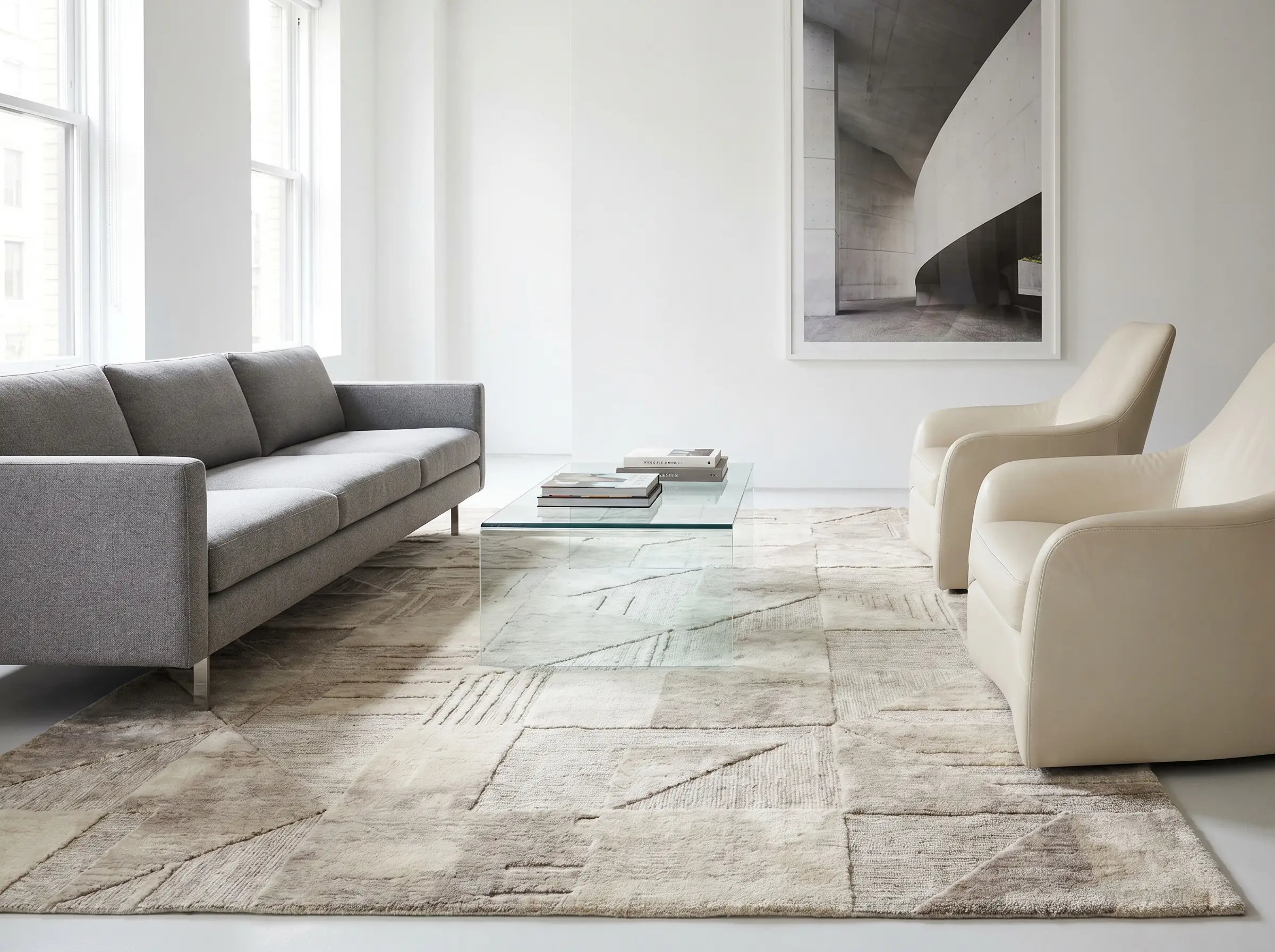
Replace the standard modern jute with a tonal, carved-wool rug featuring a subtle geometric marquetry motif. By slipping this highly structured pattern beneath a strictly clean-lined modern sofa, you ground the seating arrangement with a quiet, architectural foundation that provides texture without inducing visual chaos.
- Vibe: Structured foundation.
- Key Materials: Hand-tufted wool, silk-blend accents.
- Visual Weight: Heavy, anchoring the lower visual hemisphere.
Avoid overly loud, contrasting colors in your floor coverings; instead, source a tonal, carved-wool geometric pattern. This delivers the necessary historic geometry through shadow and pile height rather than overwhelming the room with color.
Designer Secret
Add a Channel-Tufted Ottoman or Bench
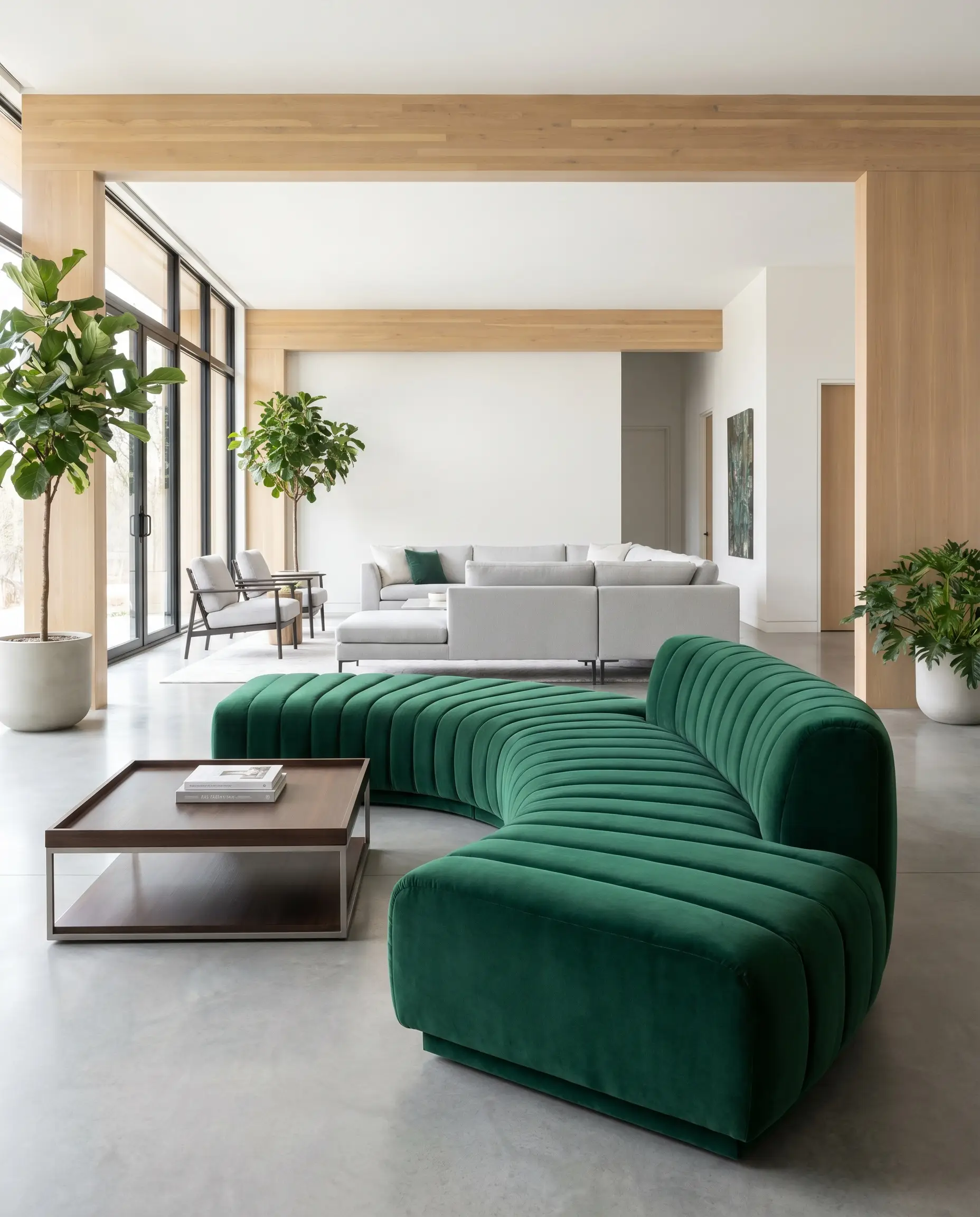
Channel tufting remains the ultimate upholstery technique of the 1930s, offering deep shadows and rhythmic lines. Pair a strictly square modern coffee table with a curvilinear channel-tufted ottoman to force a conversation between rigid right angles and bespoke, sweeping curves.
- Vibe: Tailored, rhythmic seating.
- Key Materials: Performance velvet, concealed plinth base.
- Styling Pro-Tip: Use as a floating barrier between the living room and dining area to keep sightlines open.
Sculptural Friction: Accent Furniture and Heavy Materials
Secondary furniture is where the true investment happens and where the decades physically mix. By carefully sourcing side tables, consoles, and storage pieces crafted from opulent, heavy materials, you establish an environment that feels collected over generations.
Warm Up Cold Modernism with Burl Wood Side Tables
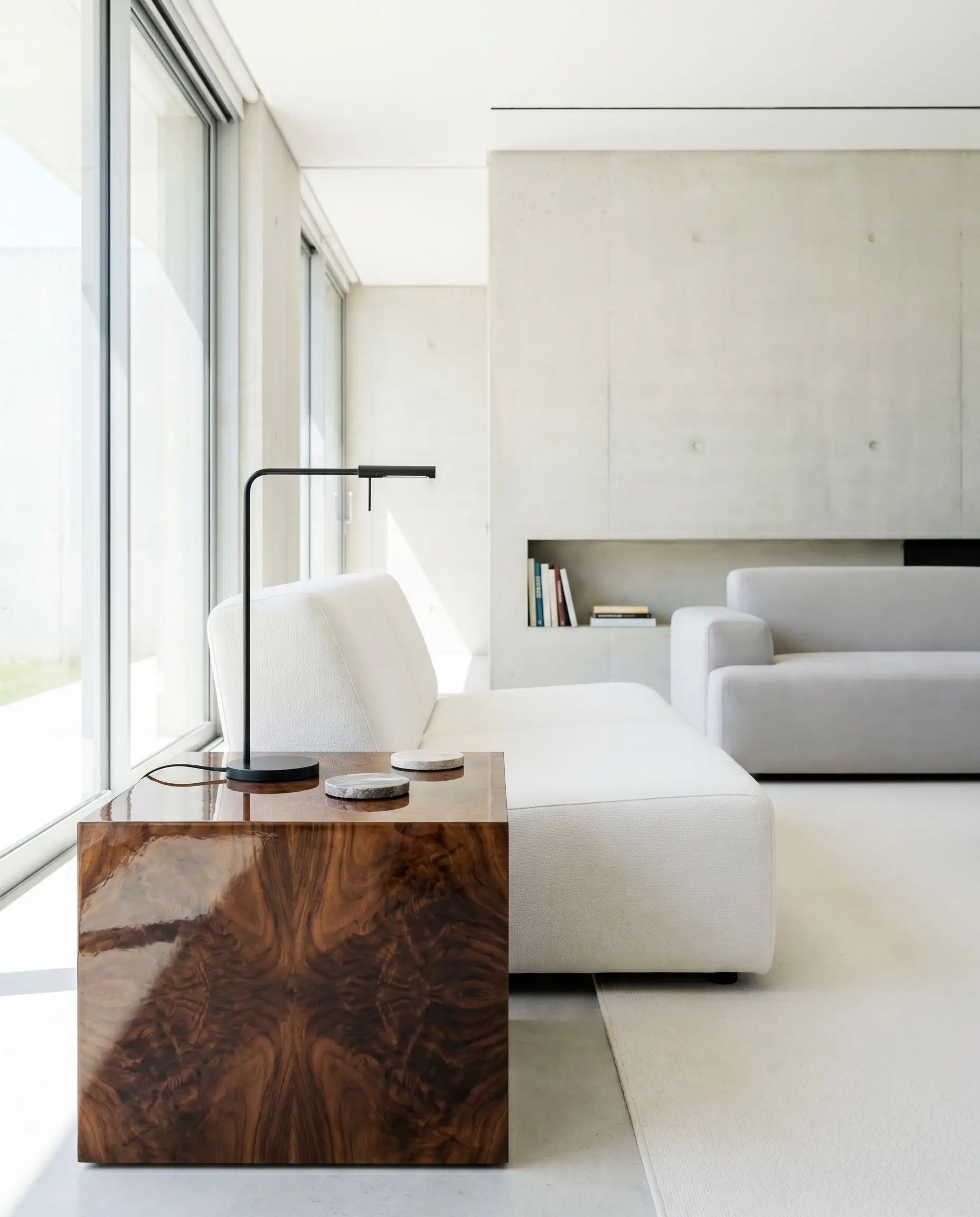
The chaotic, organic grain patterns of high-gloss burl wood perfectly disrupt the sterile predictability of a crisp white minimalist living room. Championed by contemporary high-end design houses like Soho Home, this material introduces an intoxicating warmth that feels inherently expensive.
- Vibe: Intoxicating, organic warmth.
- Key Materials: Mappa or Walnut burl veneer, high-gloss lacquer finish.
- Maintenance Reality: Requires coasters; high-gloss finishes are highly susceptible to water rings.
Use Nero Marquina Marble for Heavy Visual Anchors
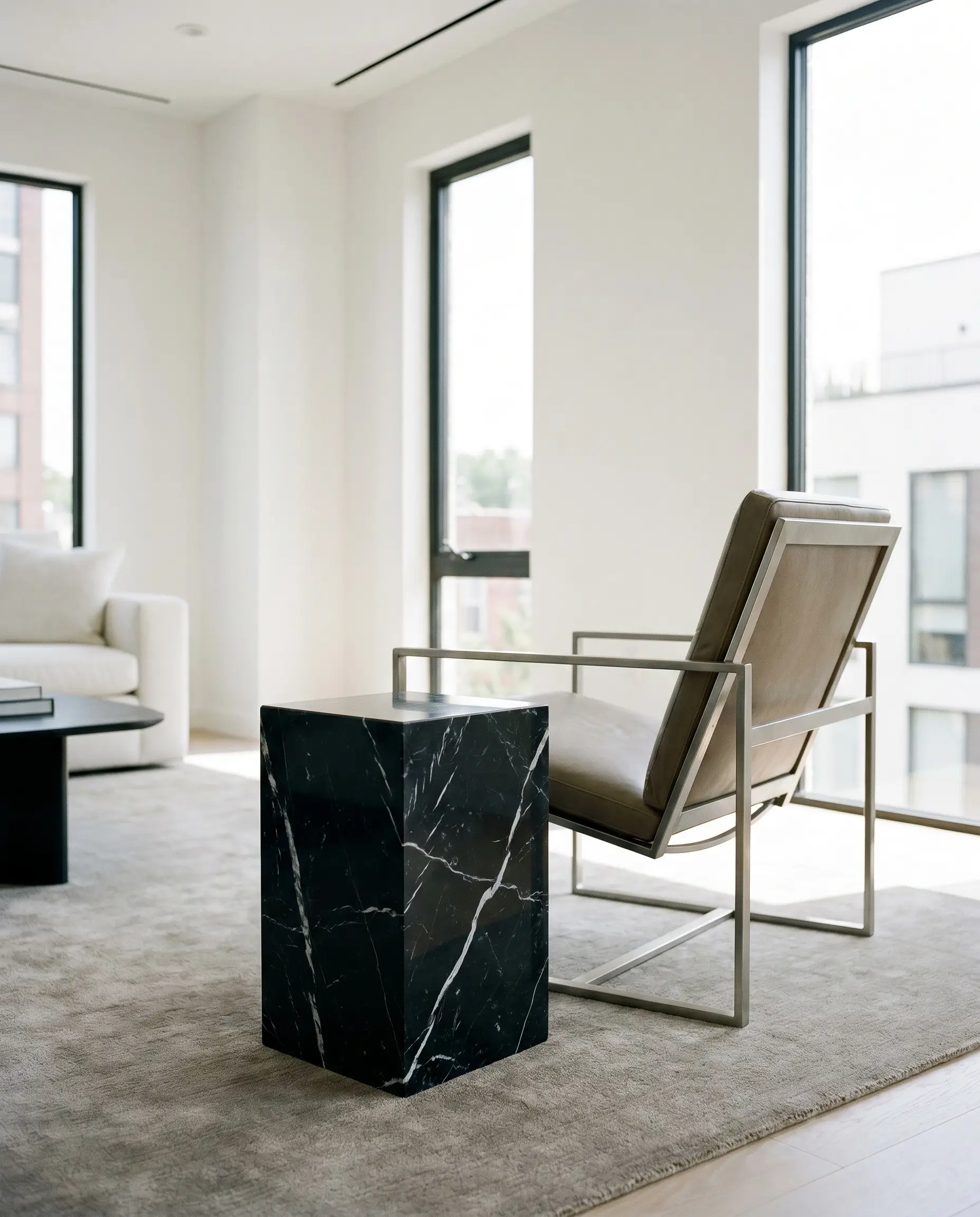
This aesthetic thrives on high-contrast stone, and Nero Marquina marble delivers immediate, stark gravitas. Placing a heavy black marble drink table with stark white veining next to a lightweight, metal-framed modern lounge chair creates a masterful dialogue about weight and permanence.
- Vibe: Unyielding architectural permanence.
- Key Materials: Solid Nero Marquina marble, honed or polished finish.
- Spatial Application: Perfect for a monolithic side table or a low-profile plinth.
Swap Standard Hardware for Unlacquered Brass
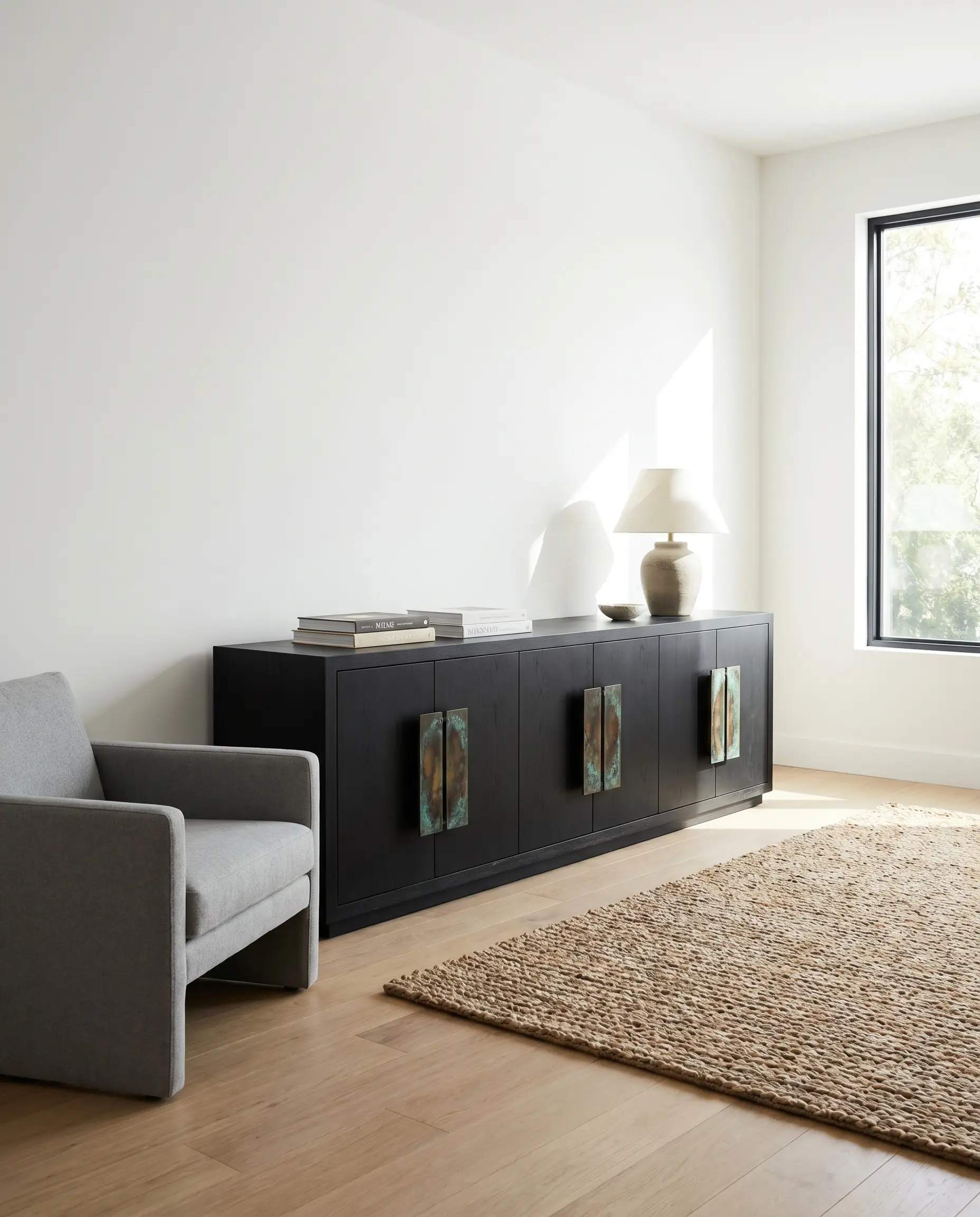
Upgrading the handles on a generic, matte modern media console to heavy, geometric unlacquered brass is the most effective DIY intervention available. The raw metal brings instant pedigree, proving that even budget-friendly contemporary pieces can be transformed through thoughtful, tactile touchpoints.
Hardware Swap Locations:
- Media console cabinet doors.
- Living room built-in desk drawers.
- Entryway or living room credenzas.
Source hardware with a distinctly stepped or faceted profile. The sharper the geometry, the more authentic the historical reference will feel against your flat modern cabinetry.
Hackrea Styling Tip
Introduce a Curvilinear Bar Cart
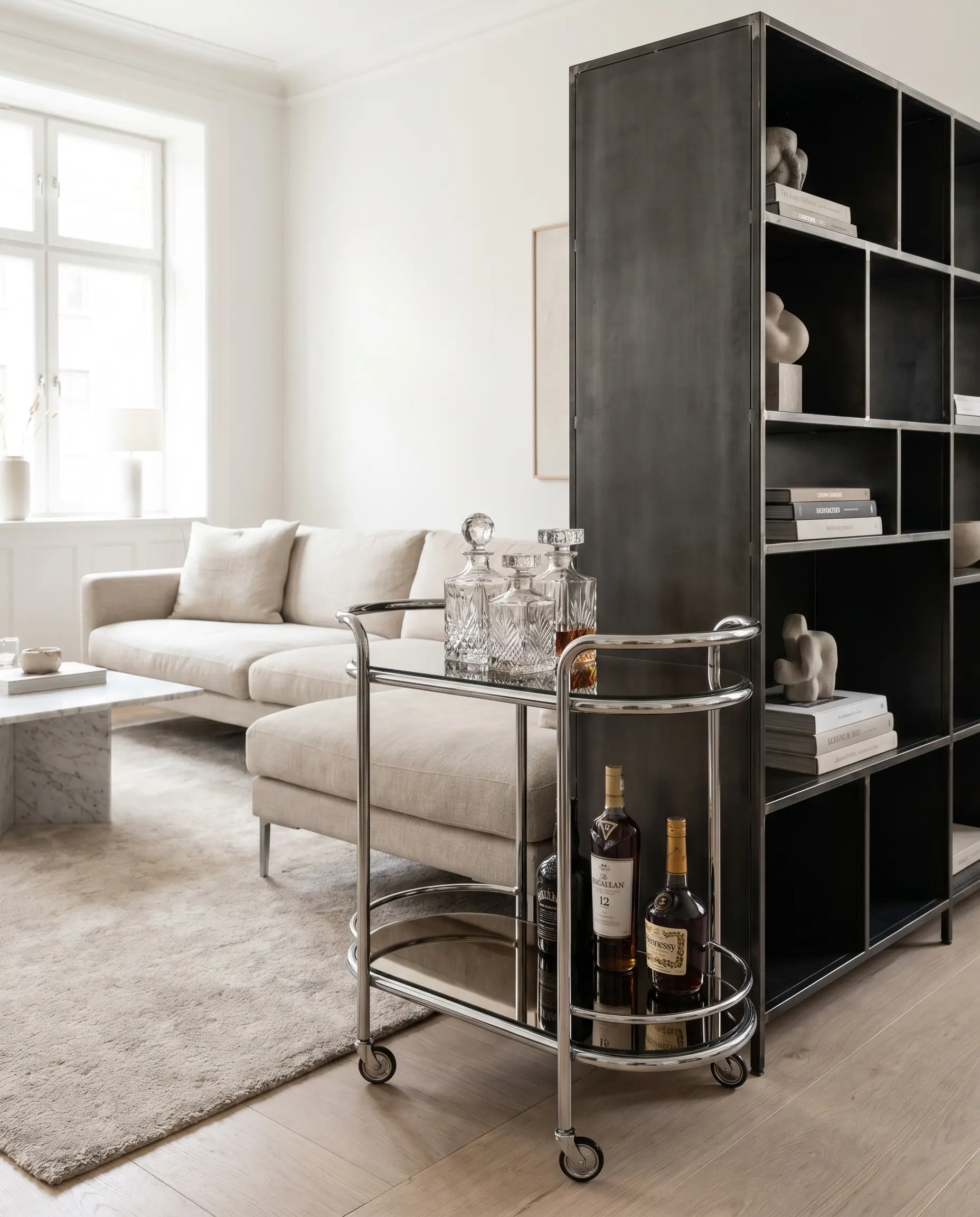
The bar cart is an iconic, lifestyle-driven staple of the era that doubles as a sculptural focal point. Choose a tubular chrome bar cart with mirrored tiers, and style it directly next to a rigid, linear modern bookshelf to maximize the friction between hard industrial lines and sweeping metallic curves.
- Vibe: Curated, high-end entertaining.
- Key Materials: Polished chrome or brass tubing, smoked or mirrored glass.
- Styling Pro-Tip: Edit your bottles ruthlessly. Display only premium, aesthetically pleasing spirits alongside heavy crystal decanters.
The Final Polish: Small Decor and Styling Ratios
The final layer of styling requires absolute, ruthless restraint. These tabletop items and finishing touches complete the narrative, ensuring the space feels layered and intentional rather than cluttered.
Style Coffee Tables with Heavy Glass and Crystal Catchalls
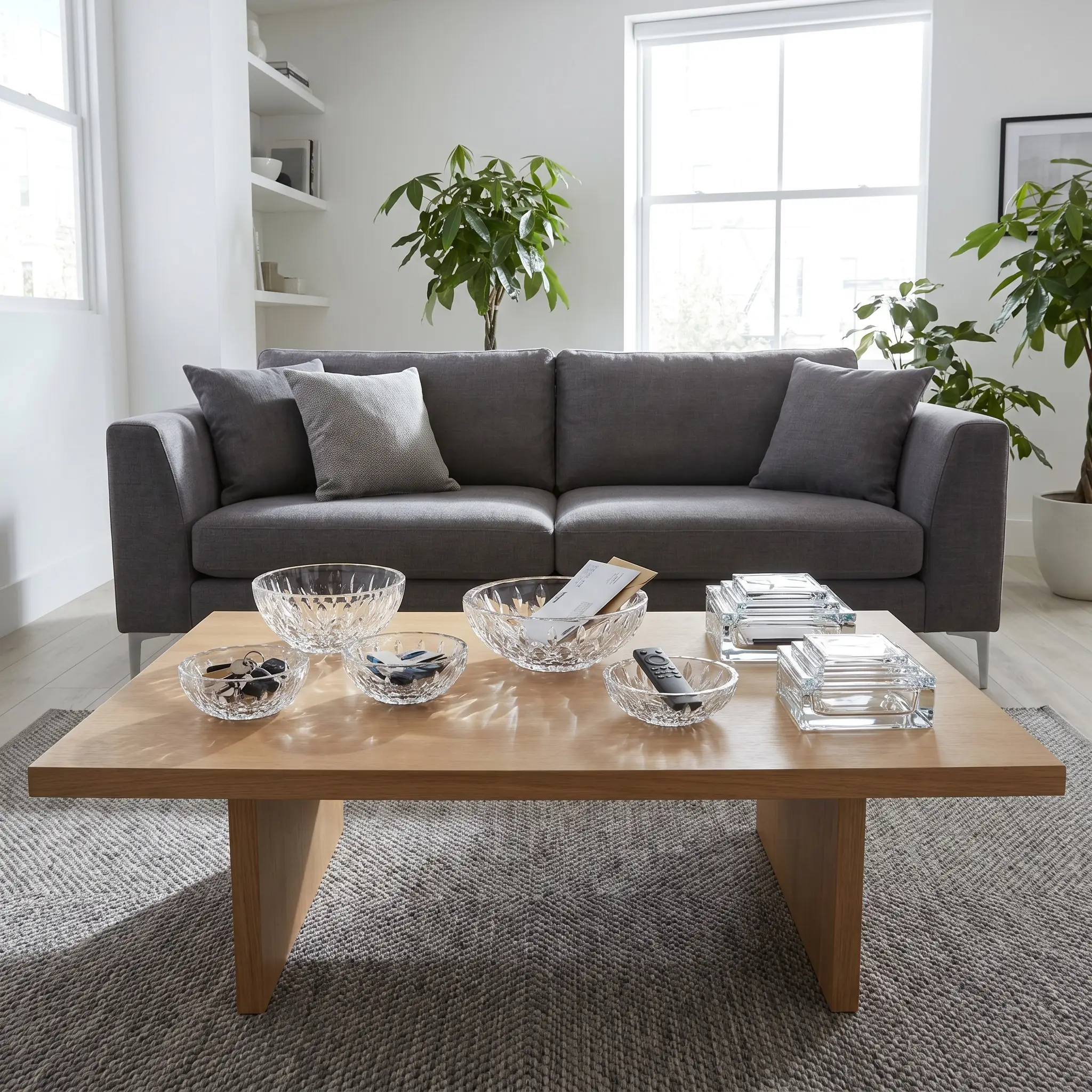
Ditch the ubiquitous modern matte ceramic bowls in favor of heavy, faceted crystal catchalls or stepped-glass decorative boxes. When placed on a matte wood coffee table, the light-refracting qualities of the heavy crystal provide a sparkling, tactile contrast that immediately upgrades the tabletop landscape.
- Vibe: Refined, light-catching detail.
- Key Materials: Cut lead crystal, heavy cast glass.
- Functionality: Perfect for corralling functional eyesores like media remotes or keys.
Display High-Contrast Black and White Photography
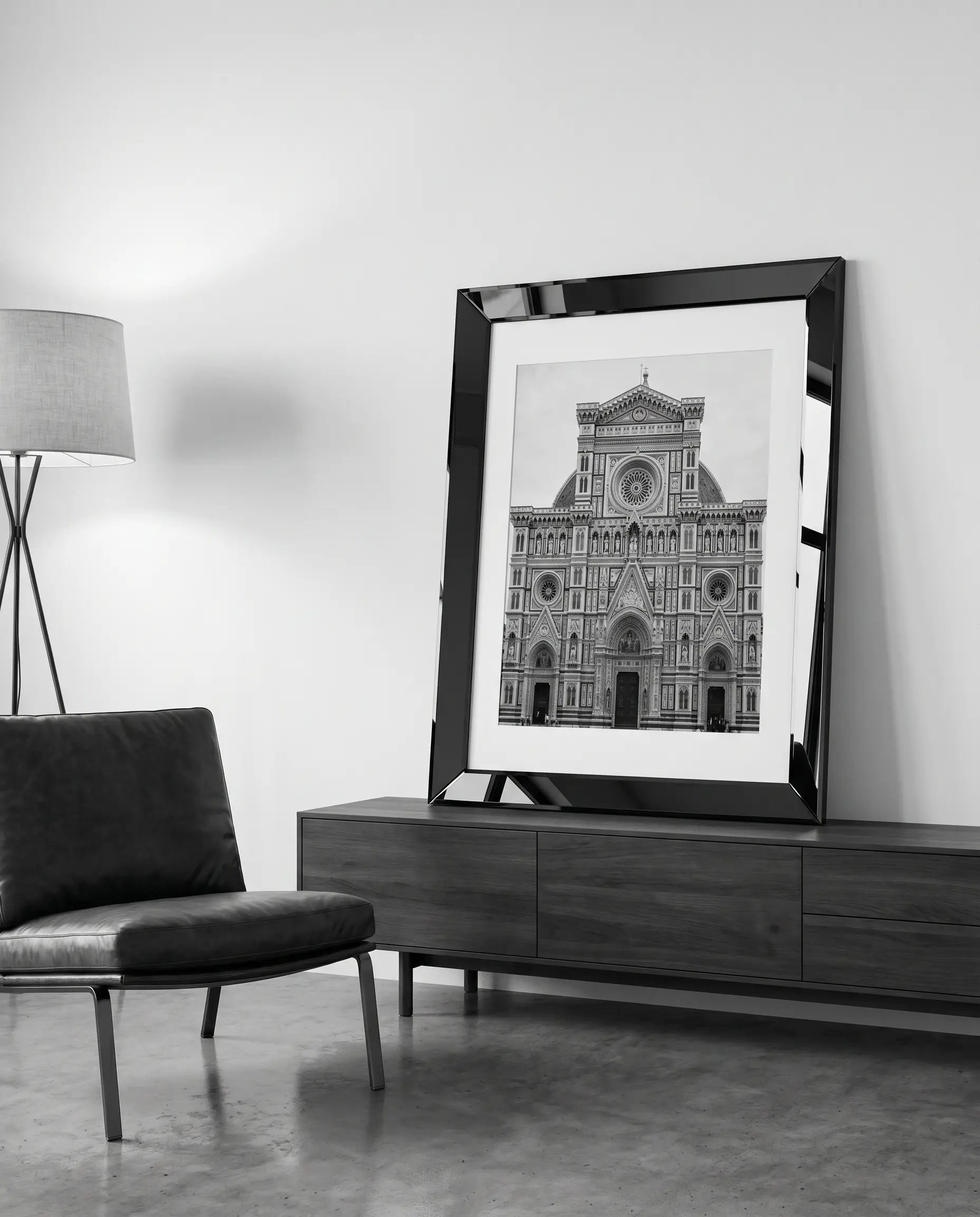
Instead of relying on abstract modern art, lean a large-scale, black-and-white architectural photograph inside a high-gloss lacquer frame. The starkness of monochromatic photography bridges the gap between historic glamour and contemporary minimalism flawlessly, acting as a sophisticated visual palate cleanser.
- Vibe: Cinematic, gallery-quality sophistication.
- Key Materials: Archival matte paper, high-gloss black or mirrored framing.
- Paint Recommendation: Benjamin Moore Chantilly Lace (provides a crisp, high-contrast museum backdrop for monochromatic art).
Curate Architectural Flora (Calla Lilies and Palms)
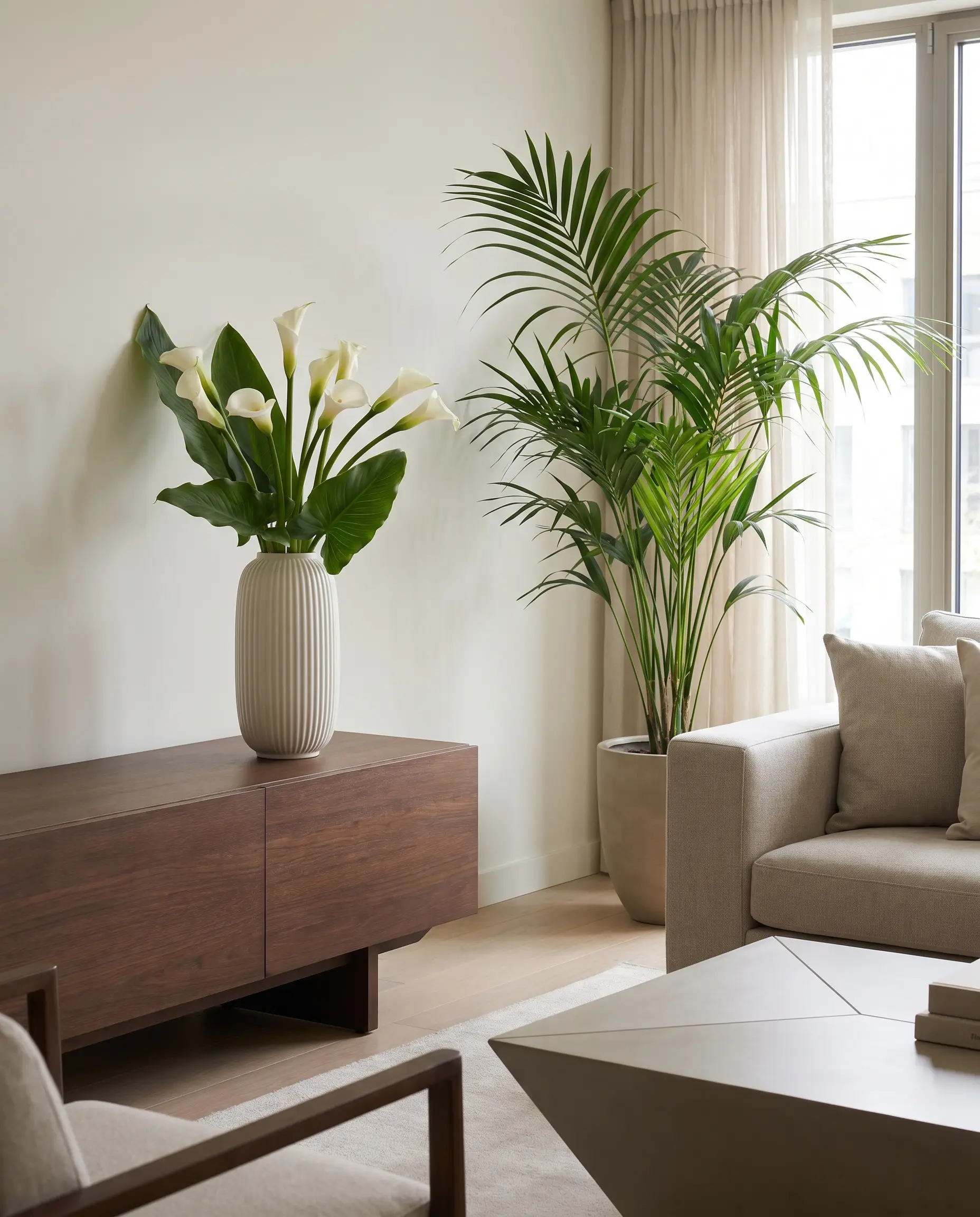
Even your botanical choices should lean into the aesthetic’s signature structural geometry. Swap the overused modern olive tree for a towering, structural Kentia palm, or style a simple, elegant vase of Calla Lilies on your minimalist credenza to reflect the era’s obsession with dramatic, sweeping lines.
- Vibe: Living, breathing architecture.
- Key Flora: Kentia palms, Calla Lilies, or structured orchids.
- Vessel Pairing: Use a polished chrome or ribbed ceramic vase to house the stems.
Curating Your Personal Deco Era
Successfully merging these distinct design philosophies is entirely about curating a timeline, not purchasing a matching set out of a catalog. Your modern foundation provides the quiet breathing room necessary for these opulent, historic materials to sing. Begin with a single, uncompromising investment piece—perhaps a tiered brass lighting fixture or a monolithic burl wood side table—and live with its presence before introducing another layer. The goal is a living room that feels inevitably, effortlessly assembled over decades. Which opulent material—unlacquered brass, high-gloss burl, or heavy marble—will you introduce to your modern space first?

The Hackrea Style Desk treats interior decoration as an exact visual science. Rather than focusing on demolition or floor plans, this desk masters the art of color theory, undertone matching, material pairings, and spatial proportion. From balancing the visual weight of mixed metals to finding the perfect bridging tone between disparate wood species, this desk provides the rigorous aesthetic rules needed to achieve high-end, editorial-quality harmony in any space.