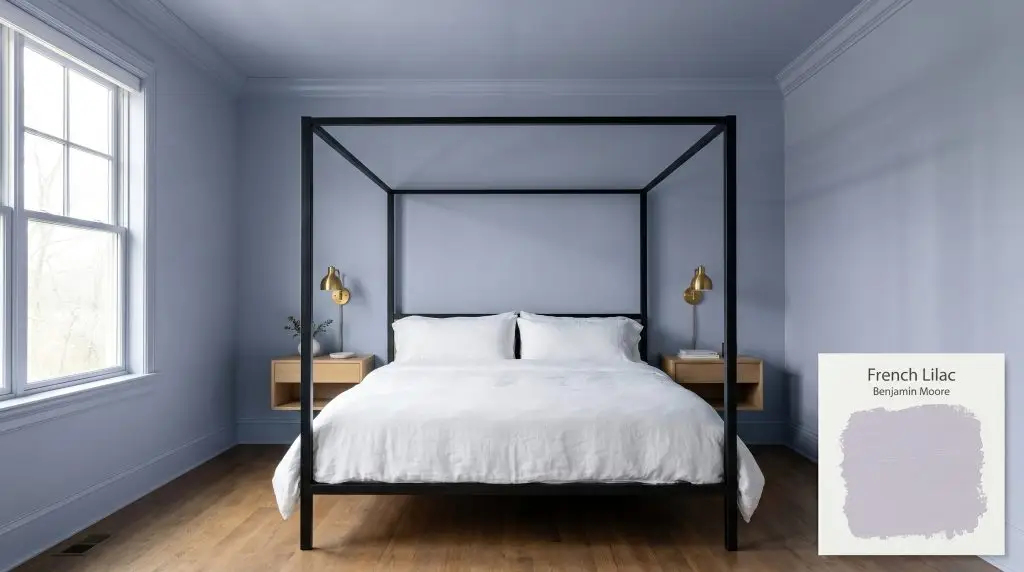
Benjamin Moore French Lilac 1403 is a sophisticated, medium-light pastel purple with a distinct blue-gray undertone. With an LRV of 56.14, it acts as a cool-leaning, muted lilac that avoids feeling overly sweet, making it an elegant architectural finish for bedrooms and bathrooms.
Will French Lilac clash with your room?
Paint Technical Profile
| Color ID / SKU | 1403 |
| HEX Code | #C7C3D9 |
| Light Reflectance (LRV) | 56.14 |
| Use | Interior |
| Best Exposures | South-Facing, East-Facing |
| Best For | Bedrooms, Bathrooms, Closets, Accent Walls |
Benjamin Moore French Lilac: The Sophisticated Pastel Reimagining Transitional Design
Purple is notoriously difficult to get right in residential design. One wrong undertone, and a carefully curated living space instantly reads like a toddler’s playroom.
Benjamin Moore French Lilac bypasses that saccharine sweetness entirely.
Sourced from the renowned Benjamin Moore Classics Color Collection, this shade relies on a highly disciplined pigment blend to maintain its maturity. It is a muted lilac that behaves less like a traditional pastel and more like a highly adaptable, cool-toned neutral when styled with intention. By balancing delicate color with a sophisticated shadow, French Lilac 1468 allows homeowners to inject personality into a room without sacrificing an ounce of elegance.
Temperature, Undertones & LRV of French Lilac
When our users ask, “Is Benjamin Moore French Lilac warm or cool?” the answer is definitively cool. This specific temperature is exactly what gives the paint its crisp, tailored aesthetic, pulling it away from the reddish, warm purples that often feel visually overwhelming.
With a light reflectance value (LRV) of 56.14, French Lilac 1468 sits comfortably in the medium-light category. It absorbs enough natural light to hold onto its distinct chromatic profile in bright, sun-drenched rooms. Conversely, it reflects just enough illumination to avoid feeling visually oppressive or overly dark in spaces with limited windows.
Lighting Effects & The Chameleon Factor
Because this muted lilac contains such a prominent gray base, it is highly reactive to the shifting trajectory of the sun.
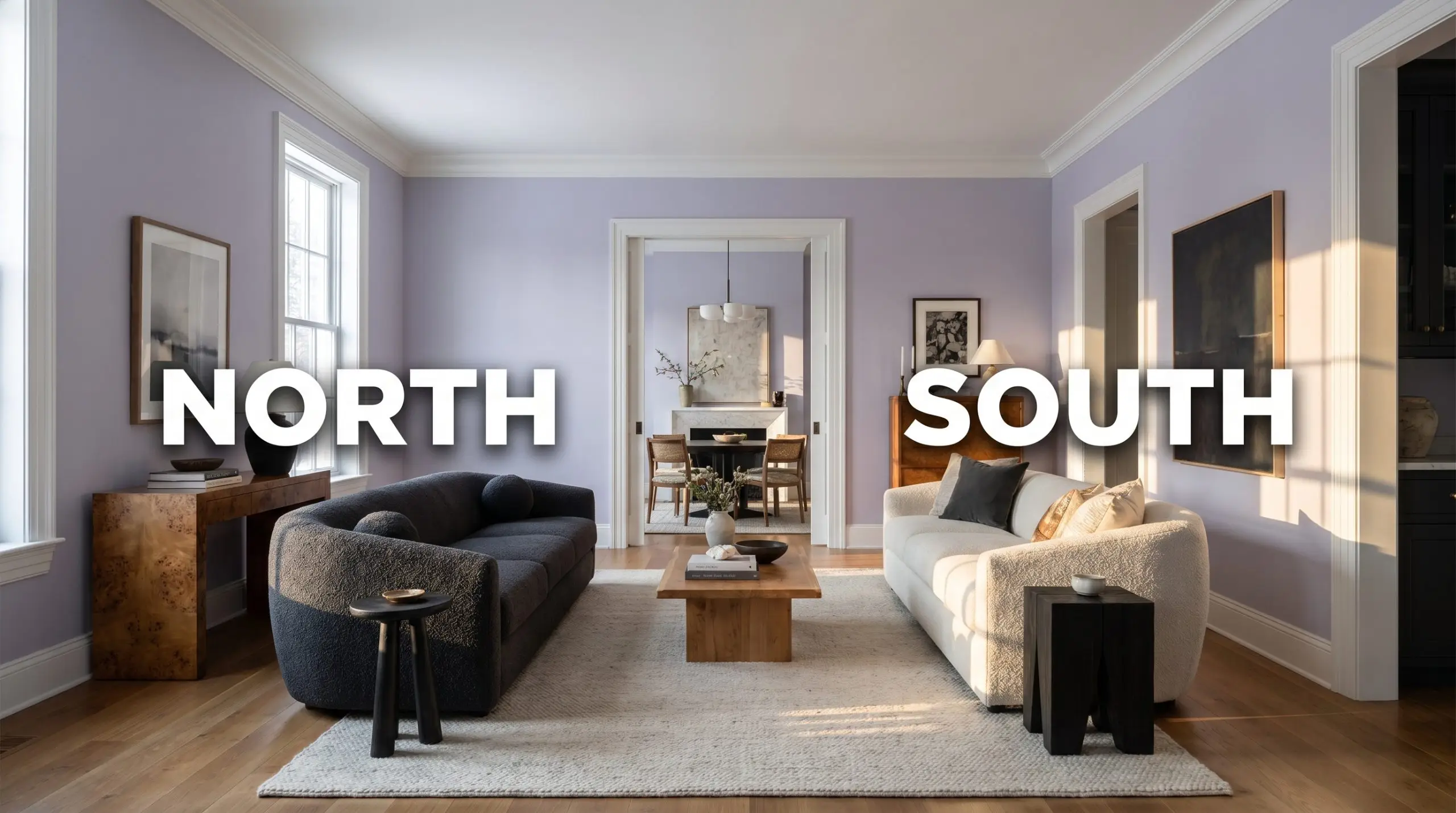
If you are considering this shade for an exterior application, be aware that direct, unfiltered sunlight will wash out the color by at least two shades. On a facade, it will often read as an off-white with just a faint whisper of violet.
Hackrea Pro-Tip (The Exterior Washout)
Popular Applications for French Lilac
To maximize the impact of this cool-toned neutral, you must move beyond predictable, single-wall accent applications. The secret to elevating this shade lies in how you pair its dusty undertones with contrasting textures and architectural features.
Primary and Guest Bedrooms
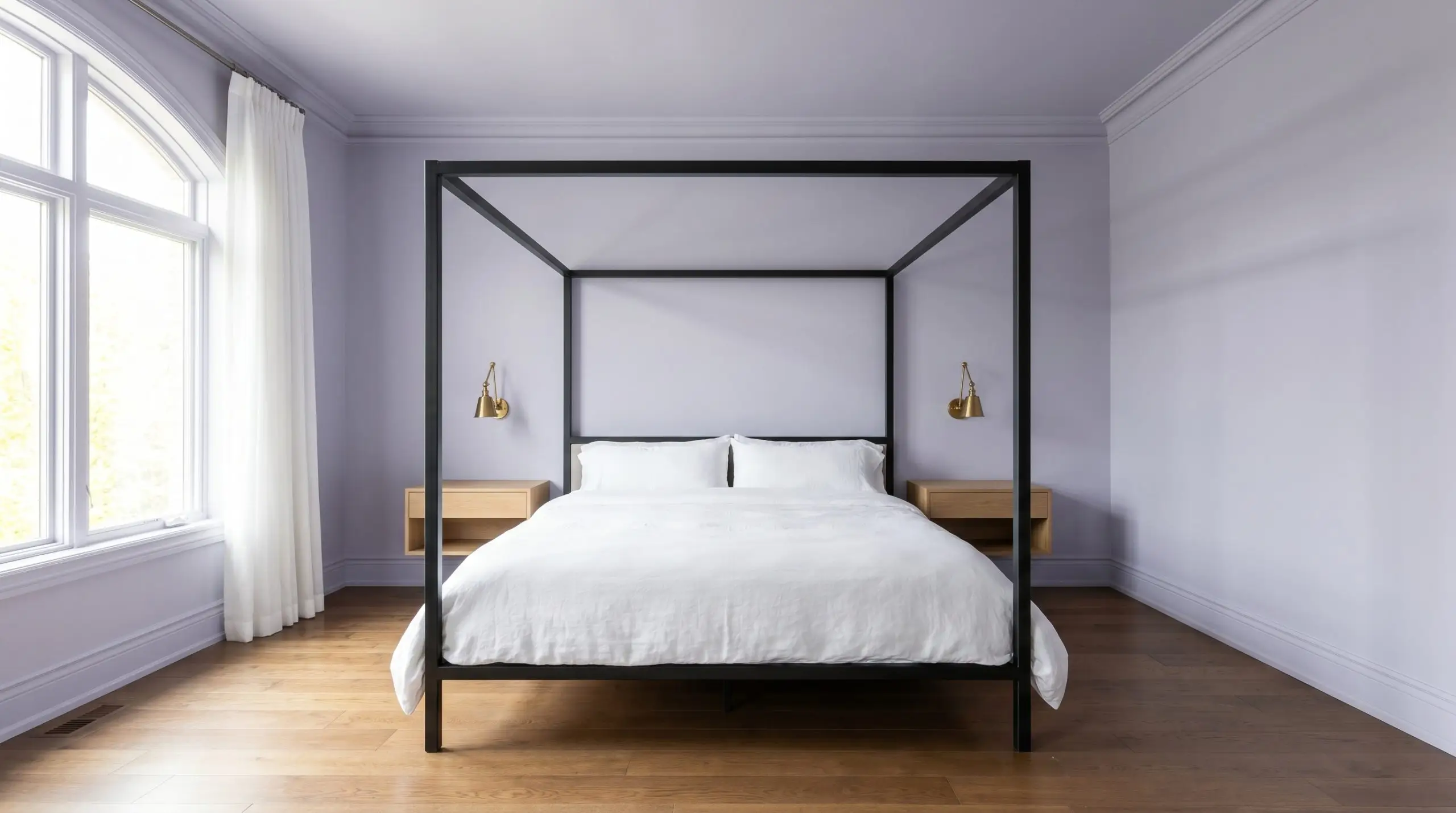
To completely decouple this muted lilac from its traditional “cottage” stereotypes, apply it in a soft modern context. Color drenching the entire room—painting the walls, baseboards, crown molding, and even the ceiling in French Lilac—creates a seamless, highly tailored envelope that feels incredibly intentional.
Break up the expansive color with a blackened steel canopy bed and crisp, optic white washed linen bedding. The sharp, dark lines of the metal will immediately ground the pastel, while the white textiles provide necessary visual relief. For a warmer approach, pair the painted walls with floating white oak nightstands and unlacquered brass sconces to draw out the subtle warmth in the wood grain.
Powder Rooms and Vanity Backdrops
Will French Lilac work with your specific lighting, floor, or furniture?
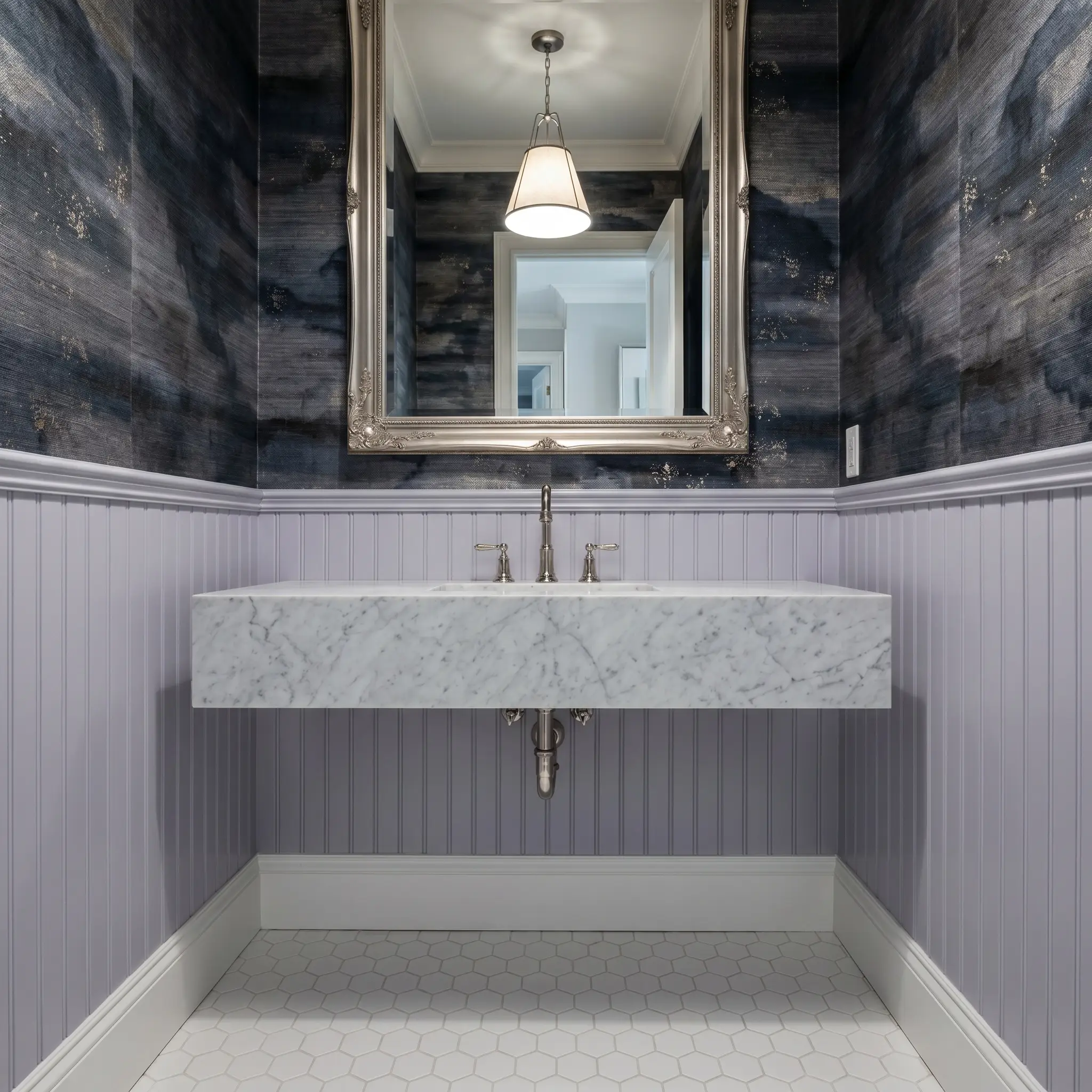
Powder rooms are the perfect environment to leverage this shade’s medium-light LRV for a high-impact, jewel-box effect. Install classic beadboard or picture molding on the lower half of the walls and paint it in a durable satin finish of French Lilac 1468.
Above the molding, hang an abstract watercolor grasscloth wallpaper that pulls in deeper charcoal grays, navy blues, and subtle metallic flecks. Center the space with a floating vanity topped in honed Carrara marble. The cool veining in the marble will speak directly to the paint’s hidden blue-gray undertones, creating a beautifully cohesive material palette.
Closet Interiors and Dresser Drawer Accents
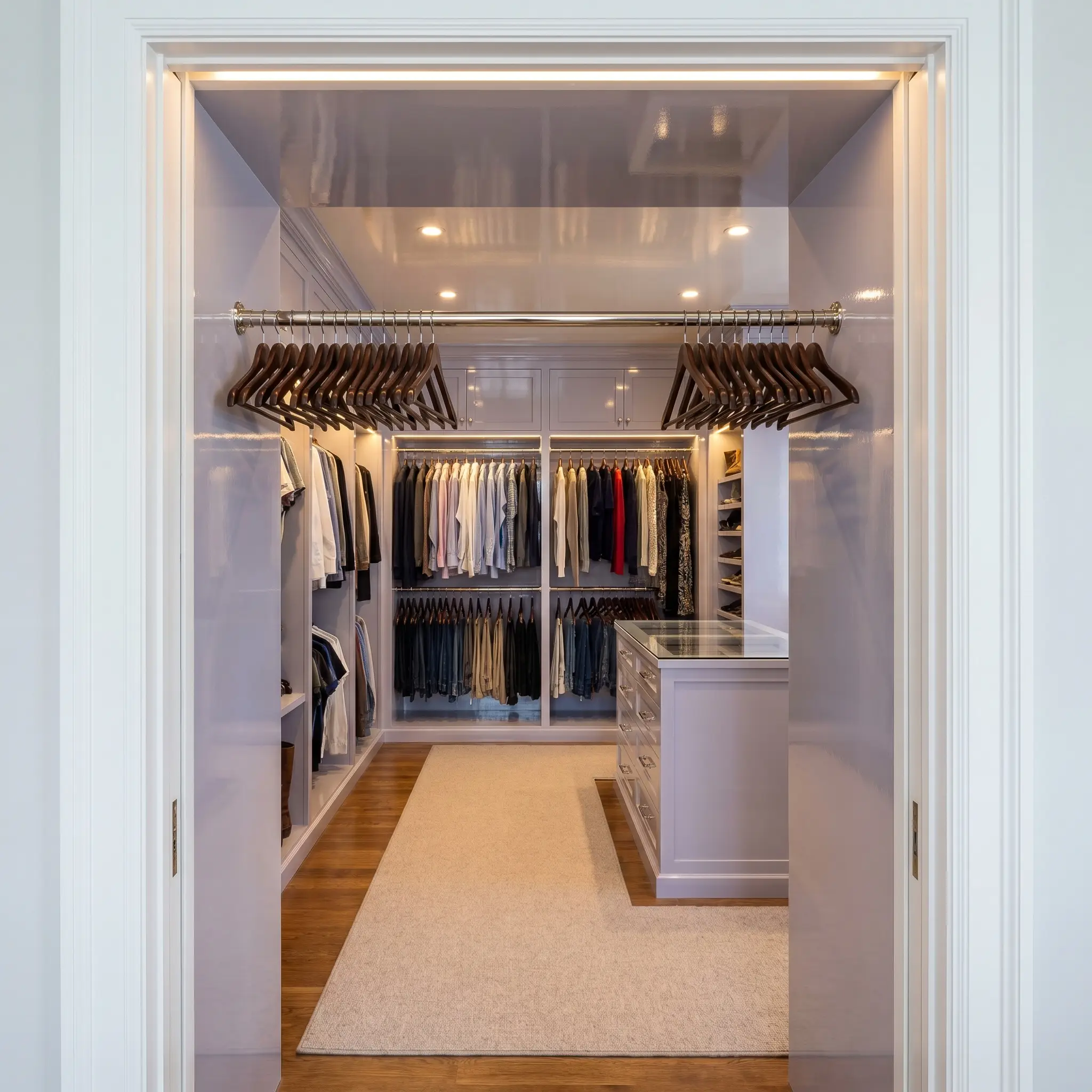
Will French Lilac work with your specific lighting, floor, or furniture?
For the detail-oriented homeowner, injecting this pastel purple into hidden spaces offers a brilliant moment of unexpected joy. Use a high-gloss finish to paint the interior walls and ceiling of a walk-in closet or the inside of a vintage wooden armoire.
The reflective sheen will bounce light around the confined space, making it easier to see your garments while adding a layer of bespoke luxury. Pair this application with rich walnut wooden hangers and polished nickel hardware. The deep, chocolate tones of the walnut create a striking, sophisticated contrast against the cool lilac background.
Laundry Rooms
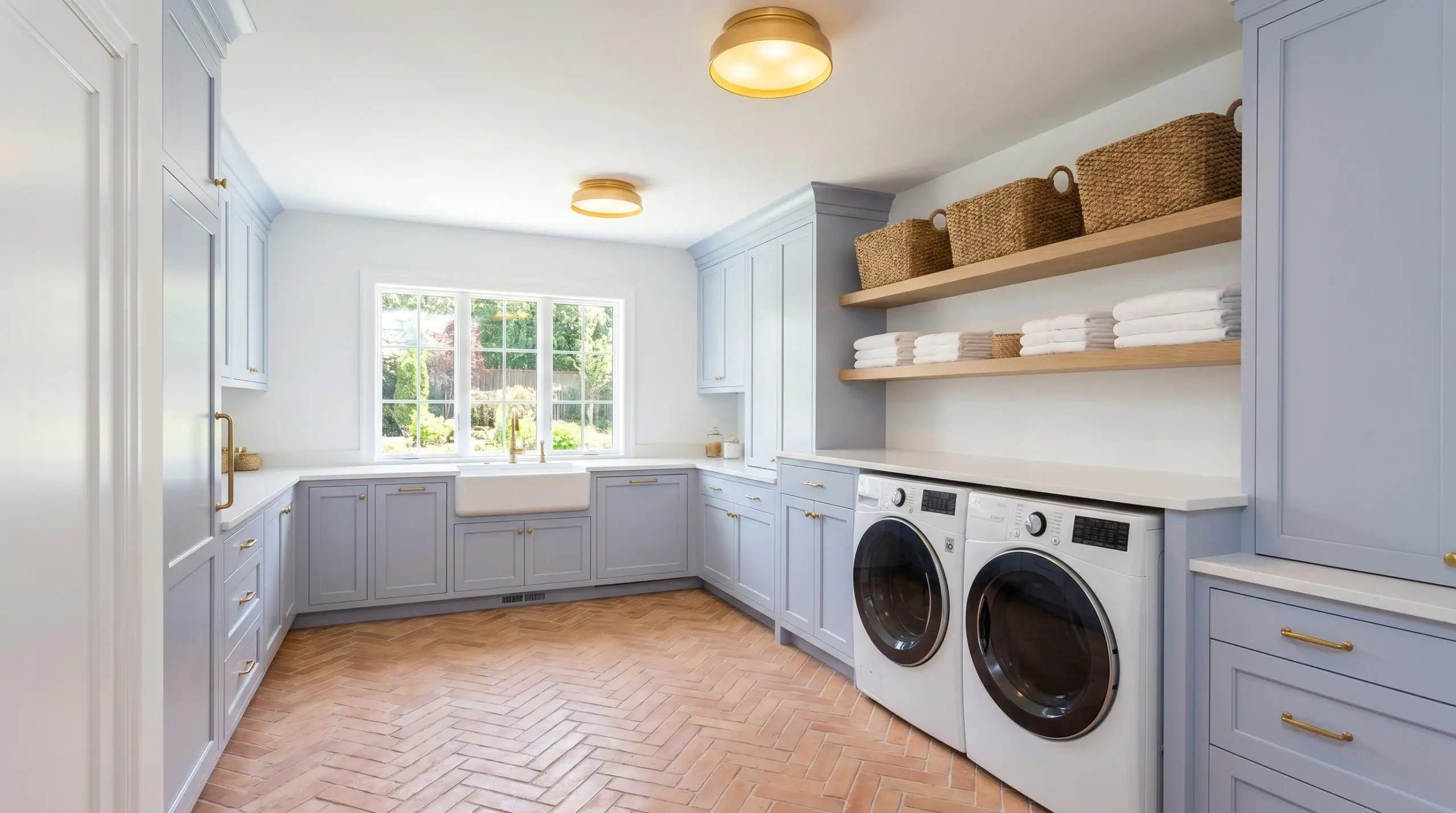
Utilitarian spaces often suffer from sterile, purely functional design plans. Painting your laundry room cabinetry in this chromatic profile instantly softens the environment, making a daily chore feel significantly more pleasant.
Laundry rooms are notorious for harsh, builder-grade fluorescent tube lighting. This specific lighting temperature will pull out the absolute coldest, most clinical blue tones in the paint. Always swap your utility lighting for warm 3000K LED flush mounts before finalizing your color choice.
Clash Warning (Fluorescent Fixtures)
To balance the cool temperature of the cabinetry, install natural terracotta floor tiles in a classic herringbone pattern. Add chunky, woven sisal baskets and floating white oak shelving above the washer and dryer to introduce organic textures that keep the room feeling warm and lived-in.
Coordinating Colors & Best Pairings
Because this dusty violet contains a significant shadow, it requires crisp, intentional boundaries to maintain its shape in a room. Pairing it with high-contrast whites or deeply saturated accents prevents the pastel from bleeding into the background and losing its tailored edge.
Crisp Trim & Baseboard Selections
Hardware, Wood & Tactile Material Pairings
Complementary Palette Selections
Curated Aesthetic Mood Boards
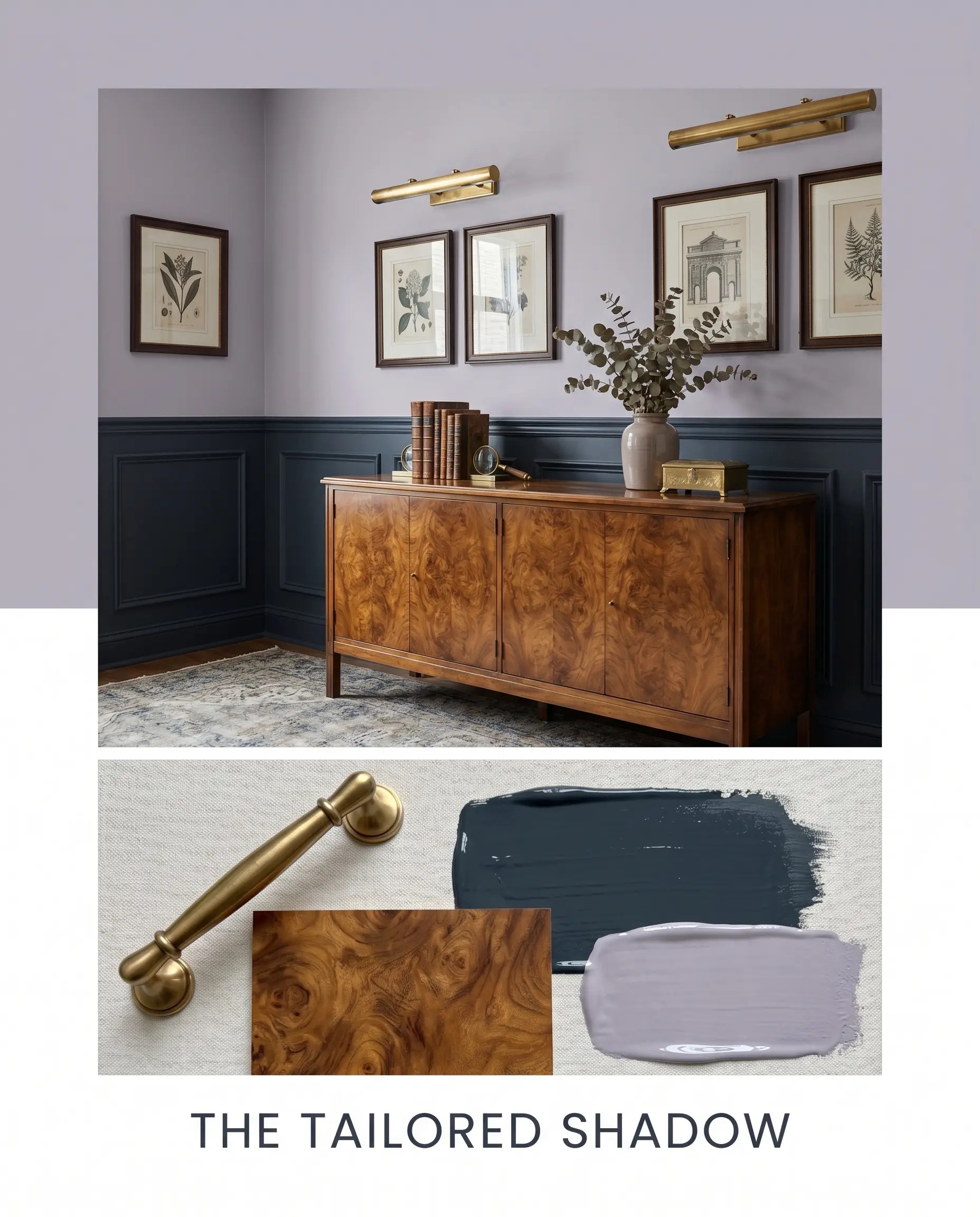
The Tailored Shadow This aesthetic relies on high-contrast tension, pairing the soft, dusty violet walls with the intense, grounding weight of Sherwin-Williams Naval accents. Incorporating a vintage burled wood credenza introduces organic warmth, while polished unlacquered brass picture lights add a layer of classic, aspirational luxury. The resulting atmosphere feels incredibly studious and collected, balancing the delicate pastel with distinctly masculine, structured silhouettes.
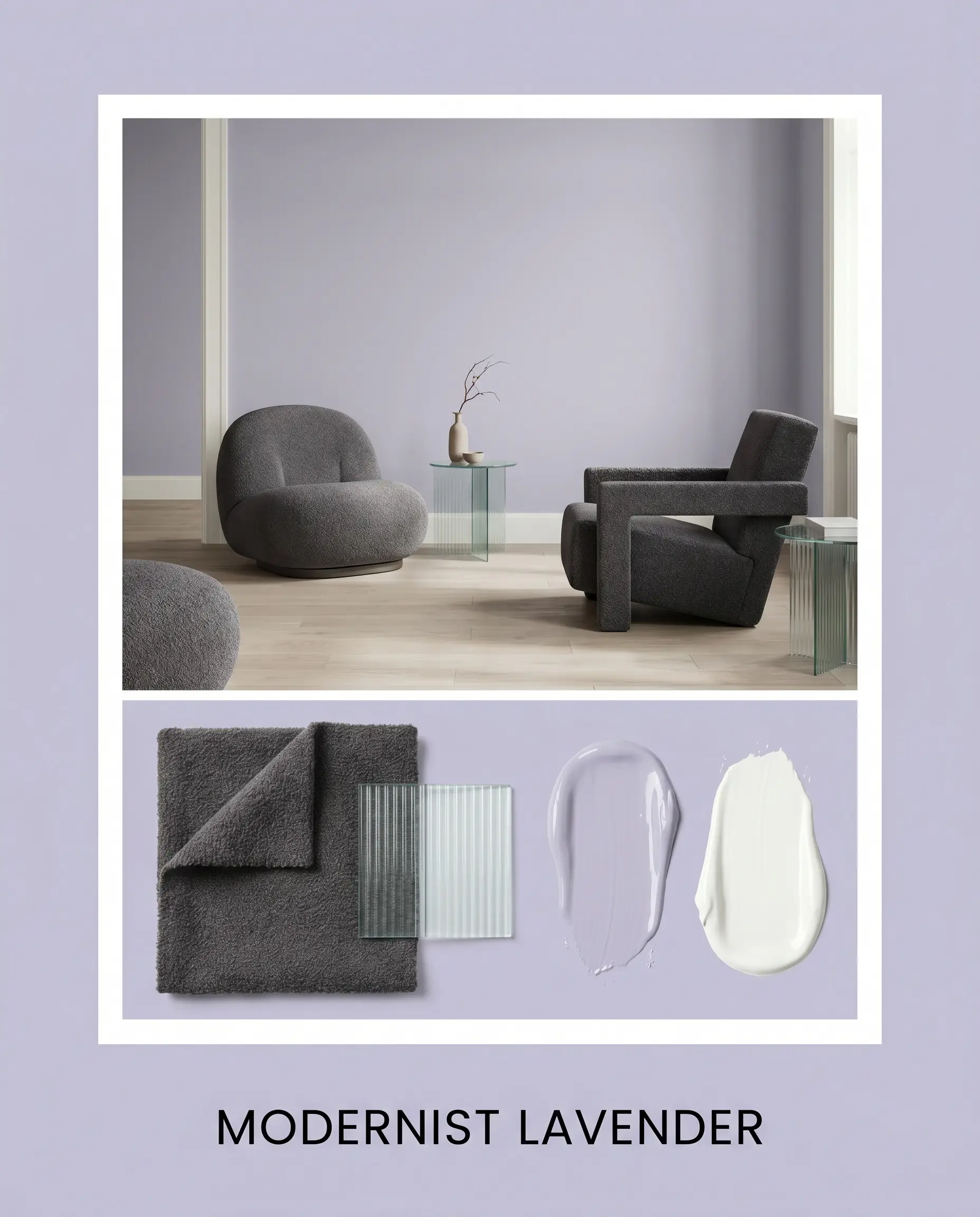
Modernist Lavender Embracing an airy, contemporary energy, this palette uses crisp Chantilly Lace trim to frame the muted wall color with razor-sharp precision. Sculptural accent chairs upholstered in charcoal gray boucle sit alongside minimalist fluted glass tables, creating a tactile dialogue between hard and soft surfaces. The mood is decidedly serene but highly architectural, proving that a cool-toned neutral can feel both welcoming and fiercely modern.
Comparing Benjamin Moore French Lilac Against Industry Rivals
While this specific muted lilac excels in bright, south-facing rooms, its prominent gray shadow can occasionally feel too chilly in spaces starved for natural light. Understanding how it stacks up against similar shades is crucial for ensuring your final selection aligns with your home’s unique architectural exposure.
Benjamin Moore French Lilac vs. Benjamin Moore Dreamy Cloud 2117-70
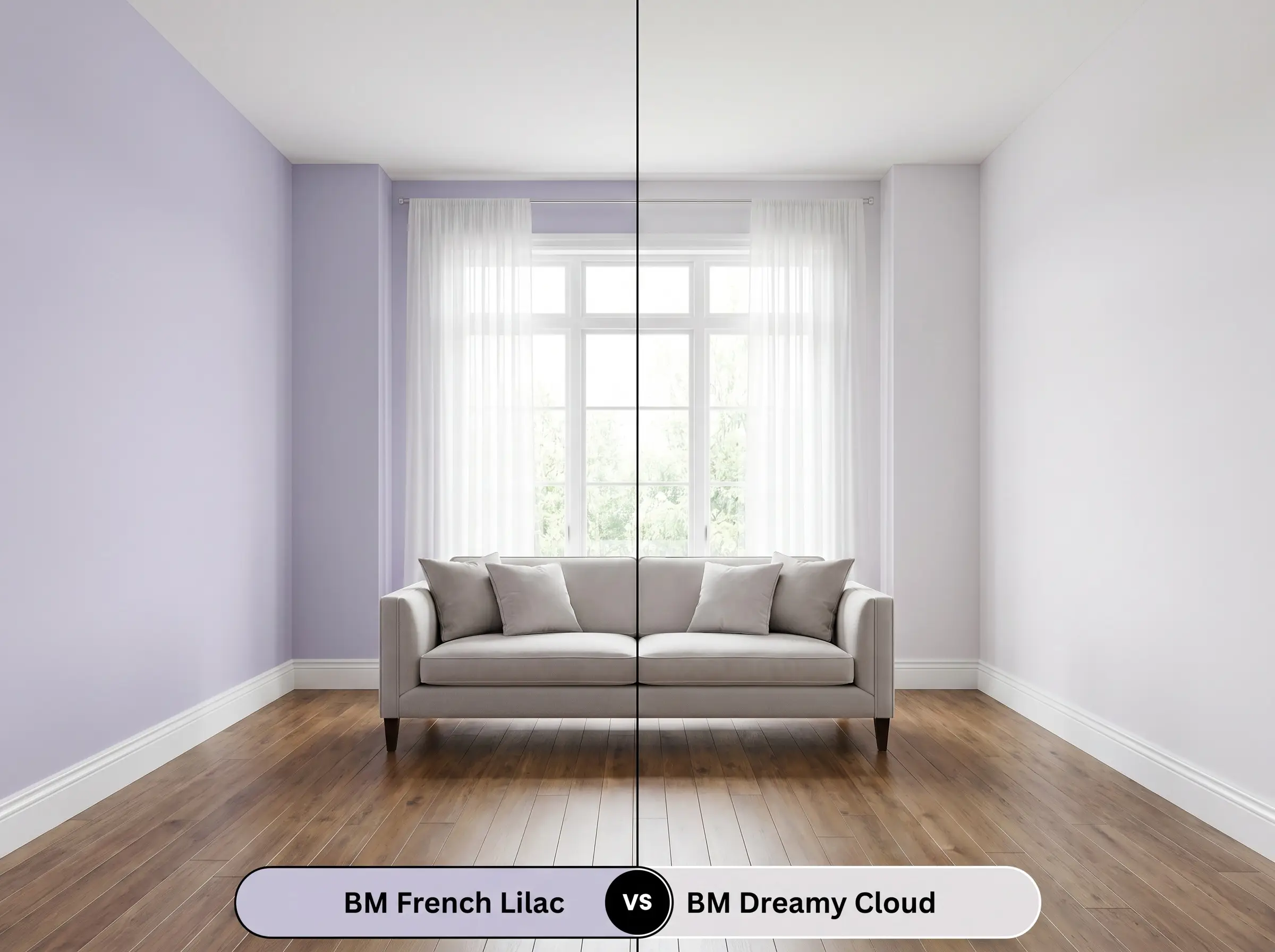
If your room lacks natural light and you need a color that feels noticeably lighter and more ethereal, then Dreamy Cloud is the superior choice. Dreamy Cloud possesses a higher light reflectance value and leans slightly warmer, whereas French Lilac 1468 holds a much firmer, cooler shape on the wall.
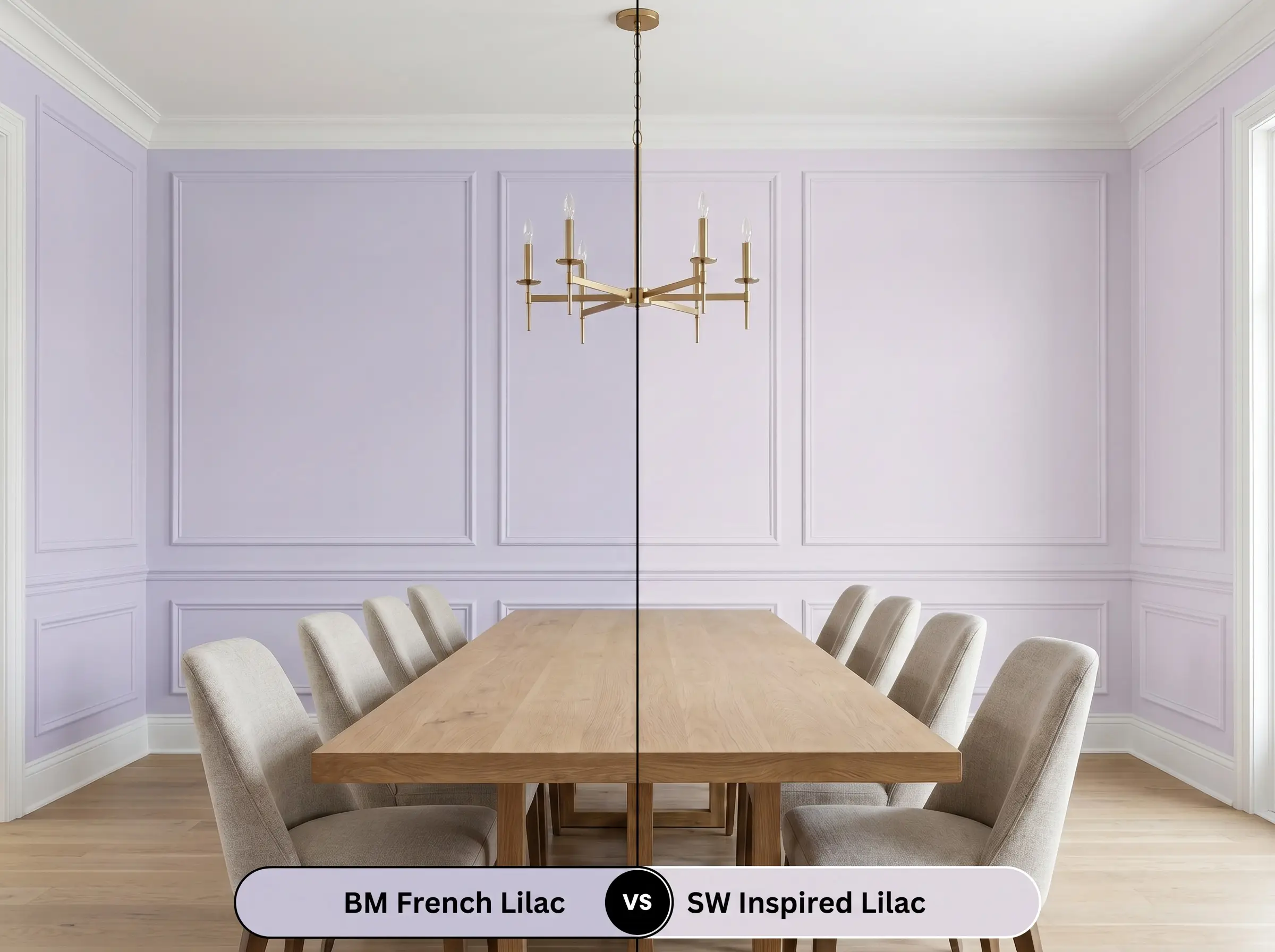
Benjamin Moore French Lilac vs. Sherwin-Williams Inspired Lilac SW 6820
Will French Lilac work with your specific lighting, floor, or furniture?
If you are looking for a true, undeniable purple that lacks a subdued neutral filter, then Inspired Lilac will deliver that vibrant clarity. Sherwin-Williams Inspired Lilac strips away the prominent blue-gray shadow, making it significantly more colorful and energetic, whereas the Benjamin Moore option acts more like a sophisticated, quiet backdrop.
Exploring Similar Colors & Brand Equivalents
Sometimes a space demands just a subtle shift in depth or a slightly warmer undertone to perfectly harmonize with existing flooring or natural light constraints.
Benjamin Moore Alternatives
Sherwin-Williams Color Matches
Practical Application & DIY Advice
Moving from a color swatch to a fully painted room requires a precise strategy for sheens and coverage to ensure the final finish looks intentional rather than amateur.
Optimal Sheen Selections
Primer Strategy & Coverage Expectations
Because this shade relies on a delicate balance of blue and gray pigments, a high-quality, bright white primer is absolutely essential to prevent the yellow tones of existing drywall from bleeding through and muddying the finish.
Plan for a strict two-coat application to achieve true opacity and allow the underlying shadow to fully develop on the wall.
Medium-light colors with cool undertones are highly susceptible to “flashing”—visible, shiny roller marks caused by uneven pressure or stretching the paint too thin. Always maintain a wet edge and load your roller generously to ensure a flawless, uniform envelope.
Hackrea Design Secret (Avoiding The Roller Flash)
Frequently Asked Questions
Because of its medium-light LRV, this shade actually performs beautifully in enclosed spaces when paired with brilliant, cool LED lighting and highly reflective surfaces like polished mirrors to keep the room feeling expansive.
Dark wood floors provide a substantial, high-contrast anchor that makes the pastel feel incredibly tailored and modern, whereas light oak pulls out the color’s softer, transitional qualities for a more relaxed atmosphere.
Applying this hue to the fifth wall draws the eye upward and creates a beautifully unexpected canopy, especially when the surrounding walls are painted in a crisp, highly reflective white to frame the architectural feature.
Polished nickel and unlacquered brass are the ultimate pairings; the nickel seamlessly matches the cool temperature of the paint, while the living brass provides a striking, warm visual counterweight.
Final Verdict: Is French Lilac Right For Your Home?
Benjamin Moore French Lilac 1468 is an exceptionally refined choice for transitional design, perfectly suited for homeowners who want to introduce sophisticated color without overwhelming their space. Its absolute best application is in meticulously tailored environments—like color-drenched primary bedrooms or custom closet interiors—where its dusty, blue-gray shadow can be celebrated alongside high-contrast metals and crisp white trim. It excels in soft modern and heritage revival homes, establishing a serene, collected energy that feels both deeply personal and highly curated.
While this shade is remarkably adaptable, it fundamentally clashes with deeply saturated, warm earth tones like Tuscan golds, muddy terracottas, or orange-leaning oak cabinetry. Placing this cool-toned neutral next to aggressive yellows or oranges forces the paint’s gray shadow to look bruised and dingy, completely compromising the delicate, tailored aesthetic you are trying to achieve. If your home features predominantly warm, rustic fixed elements, you must steer clear of this specific chromatic profile and opt for a much warmer, red-based neutral instead.
Clash Warning (The Earth-Tone Conflict)
Room Compatibility & Clashes Diagnoses
Hackrea's reports evaluating the compatibility of French Lilac in real rooms.No compatibility tests for French Lilac yet.
Be the first to see how this color reacts to your space. Run a free architectural diagnostic now.