35 Sage Green and Cream Bedroom Ideas: The Designer’s Guide to Organic Luxury
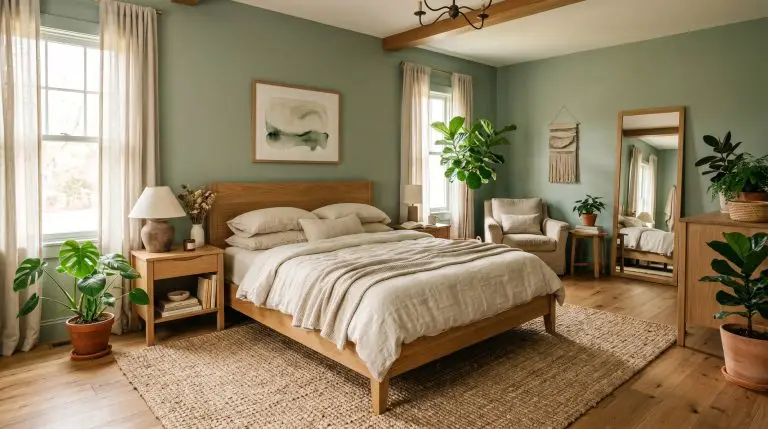
Digital fatigue is fundamentally changing how we approach interior architecture, turning the modern bedroom into a critical psychological sanctuary. You are likely searching for a biophilic retreat—a space that mimics nature’s most soothing elements without feeling overly thematic or artificial.
Sage green and cream offer the perfect tonal baseline for this restorative environment, but achieving true organic luxury requires far more than simply buying the right paint. The secret to a high-end execution lies in manipulating texture, understanding Light Reflectance Value (LRV), and building architectural depth. Flat, poorly lit surfaces will quickly make this combination feel sterile. By aggressively prioritizing tactile materials like heavily weighted linens, chalky plasters, and rift-sawn woods, you can transform a basic two-tone palette into a deeply sensory experience.
Here is the designer’s formula for layering sage and cream into a perfectly balanced sanctuary.
The Architectural Canvas: Paint & Wall Treatments
Standard matte paint applied to flat drywall can easily make a sage and cream palette look like a clinical hospital room if you do not handle the application correctly. You must create structural movement and depth on your walls to establish a tactile foundation before a single piece of furniture enters the room.
1. Color-Drench the Room in a Soft Sage
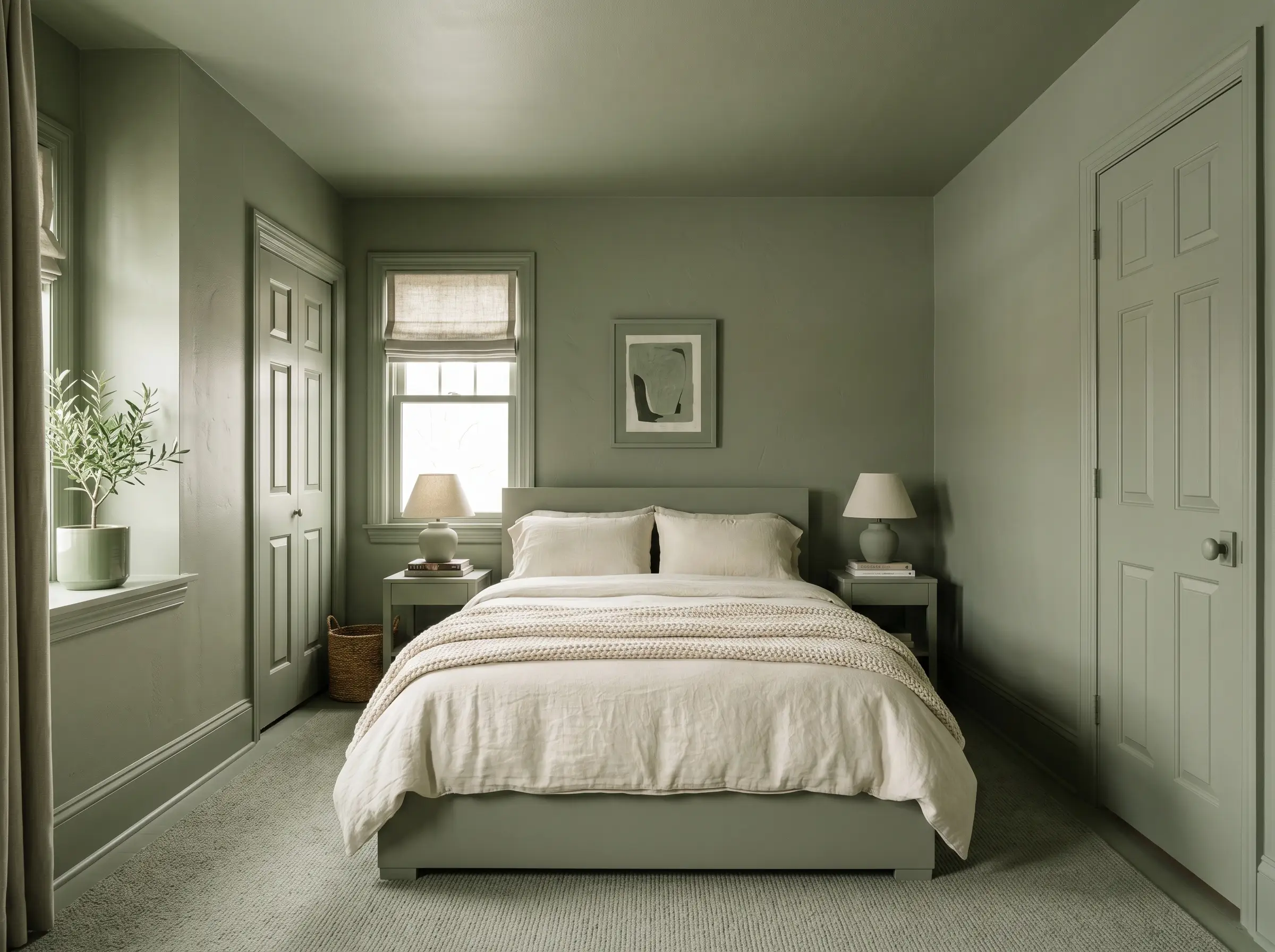
Color-drench the entire room—painting the walls, trim, doors, and ceiling the exact same sage green—to create a continuous, womb-like sanctuary. This technique eliminates harsh visual breaks, allowing your cream furniture to visually pop against a unified, biophilic background.
- Vibe: Modern Monolithic
- Key Technique: Continuous sheen matching across drywall and millwork
- Paint Match: Sherwin-Williams Evergreen Fog
If your space features low ceilings, color-drenching is the ultimate architectural trick to blur the boundary lines and visually expand the architectural height of the room.
Hackrea Styling Tip
2. Apply a Tonal Sage Limewash or Roman Clay
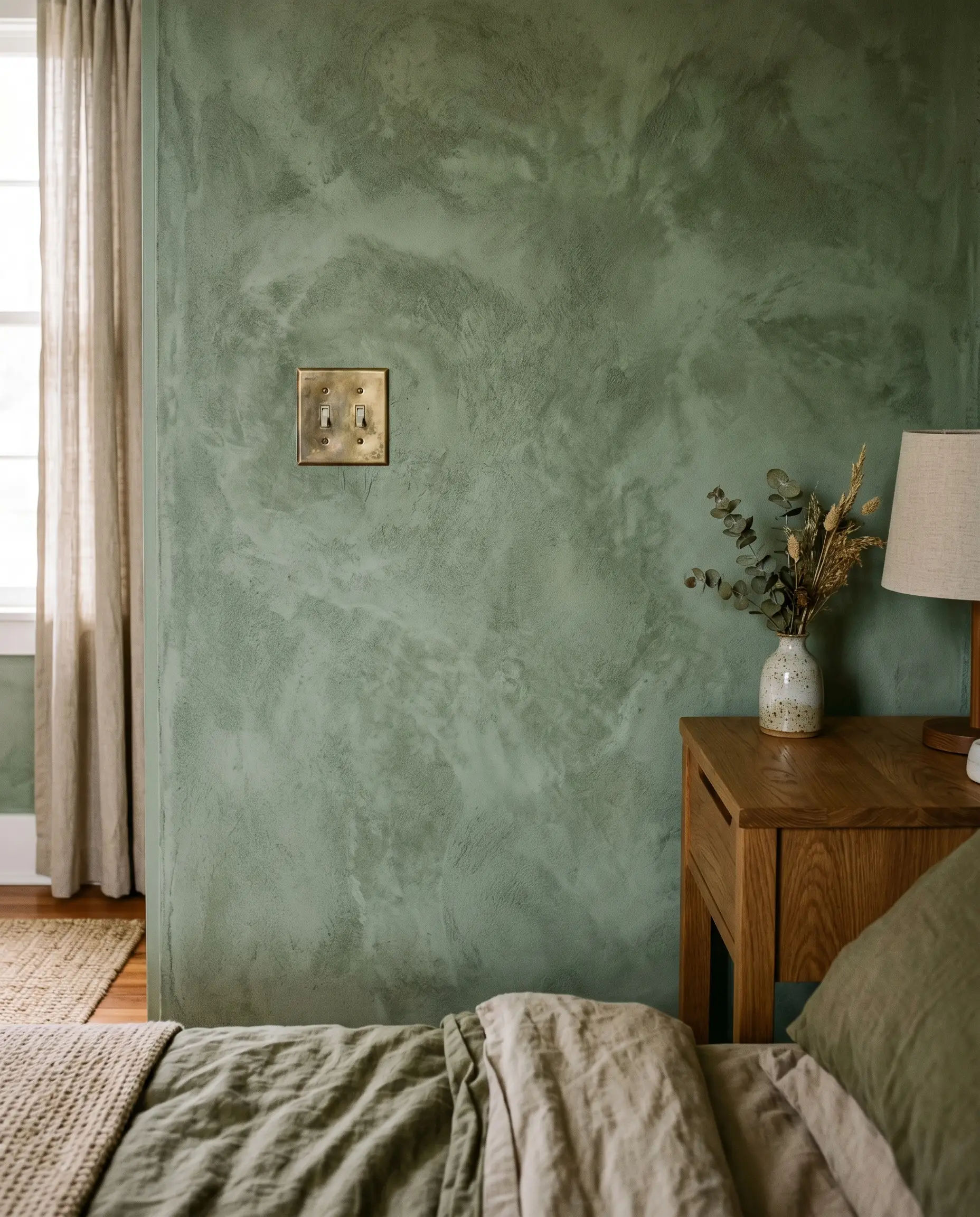
Apply a tonal sage limewash or Roman clay to introduce a strictly tactile alternative to standard paint. The mottled, suede-like finish catches the light differently throughout the day, bringing an earthy, old-world Japandi or Mediterranean feel to the space.
- Vibe: Earthy & Ancient
- Key Material: Mineral-based limewash or Roman clay
- Light Interaction: Highly reactive to natural daylight shifts
Match your chalky limewash walls with unlacquered brass switch plates for a stunning, living-finish contrast.
Designer Pairing
3. Ground the Space with Sage Green Wainscoting
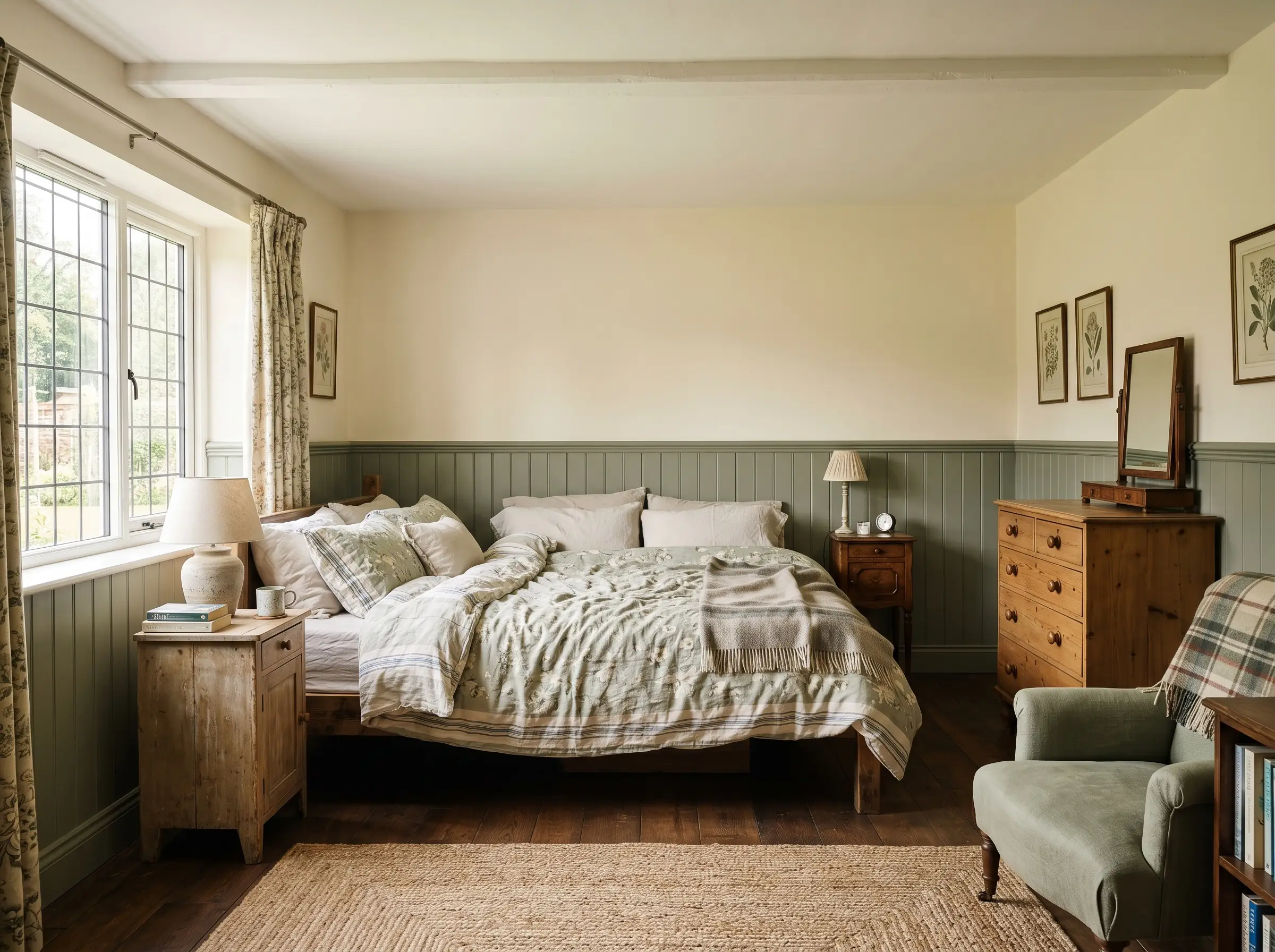
Ground the room by installing beadboard or shaker-style wainscoting on the lower third of the wall, painted in a deep sage and topped with a warm cream. This grounds the visual weight of the room while adding traditional English Cottage charm to the architecture.
- Vibe: English Cottage
- Proportional Rule: Take the wainscoting up exactly 36 inches, or push it to a dramatic 60 inches for high-impact scale
- Paint Match: Farrow & Ball French Gray (Lower) / Farrow & Ball Pointing (Upper)
4. Elevate with Cream Picture Frame Molding
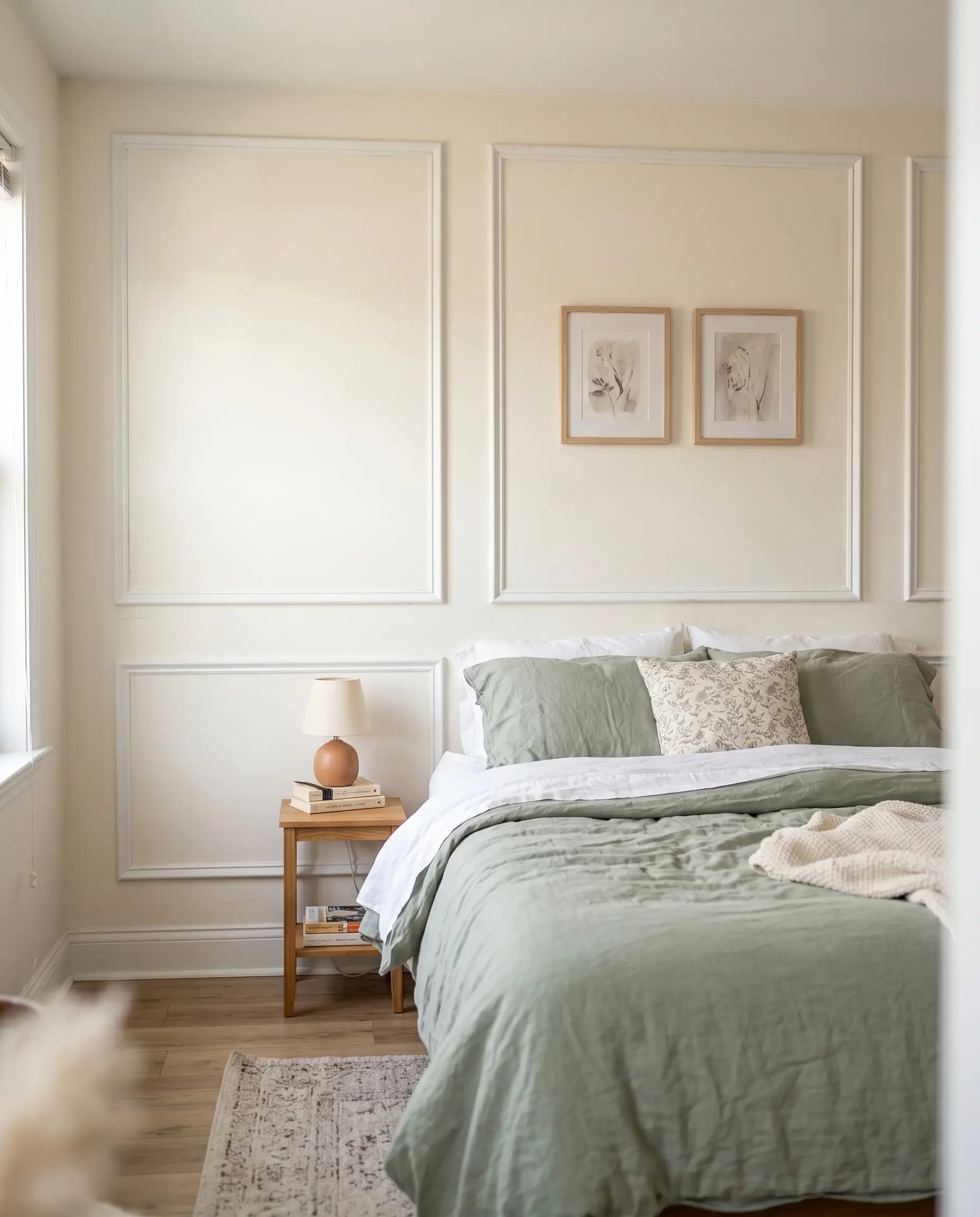
Paint the entire room a soft cream and add intricate picture frame molding for a highly structural, Parisian approach. The sage green is then introduced purely through textiles and art, catering perfectly to those who require a brighter, more feminine execution.
- Vibe: Parisian Soft Traditional
- Key Material: Primed polyurethane or wood trim molding
- Execution Reality: A highly affordable DIY weekend project that looks entirely bespoke
5. Wrap the Ceiling in a Warm Cream
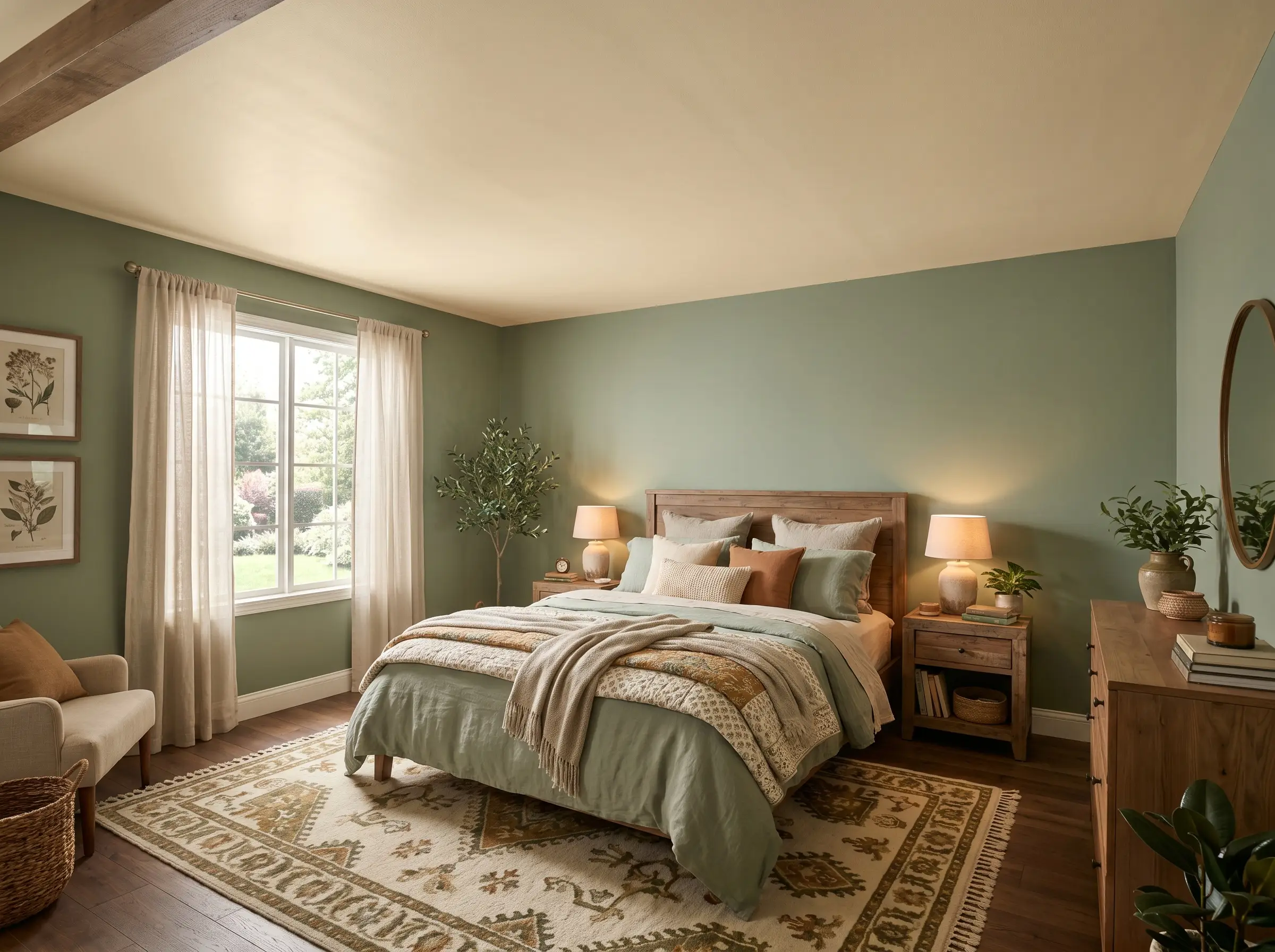
Wrap the ceiling in a heavily tinted, warm cream to maintain the cocoon effect without dropping the visual height of the room. If your walls are a mid-tone sage, a stark white ceiling acts as a jarring visual interruption that shatters the calming atmosphere.
- Vibe: Enveloping Sanctuary
- Key Technique: Tinting ceiling paint to match the LRV of the room’s textiles
Strictly avoid pure white ceiling paint straight from the can; it is highly reflective and will cast an icy glare over your organic palette.
Hackrea Styling Tip
6. Install a Biophilic Botanical Wallpaper
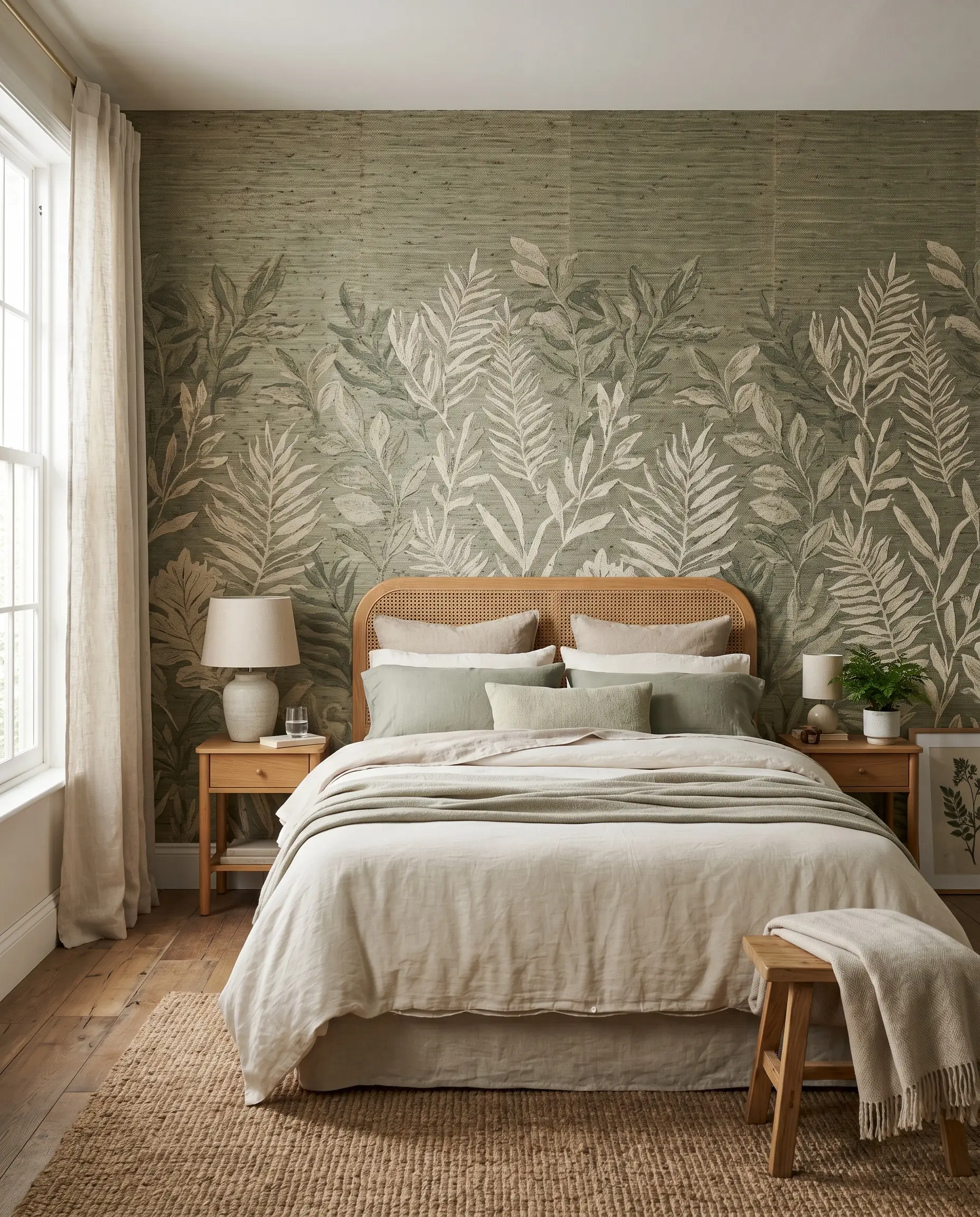
Install a large-scale, muted botanical wallpaper behind the bed that weaves both sage and cream together through organic pattern. Prioritize a matte or grasscloth-textured paper over vinyl to maintain the tactile, organic luxury aesthetic.
- Vibe: Restorative Flora
- Key Material: Natural woven grasscloth
- Styling Focus: The physical texture of the grasscloth absorbs light, softening the room’s acoustics
7. Use a Cream Plaster Accent Wall Behind the Bed
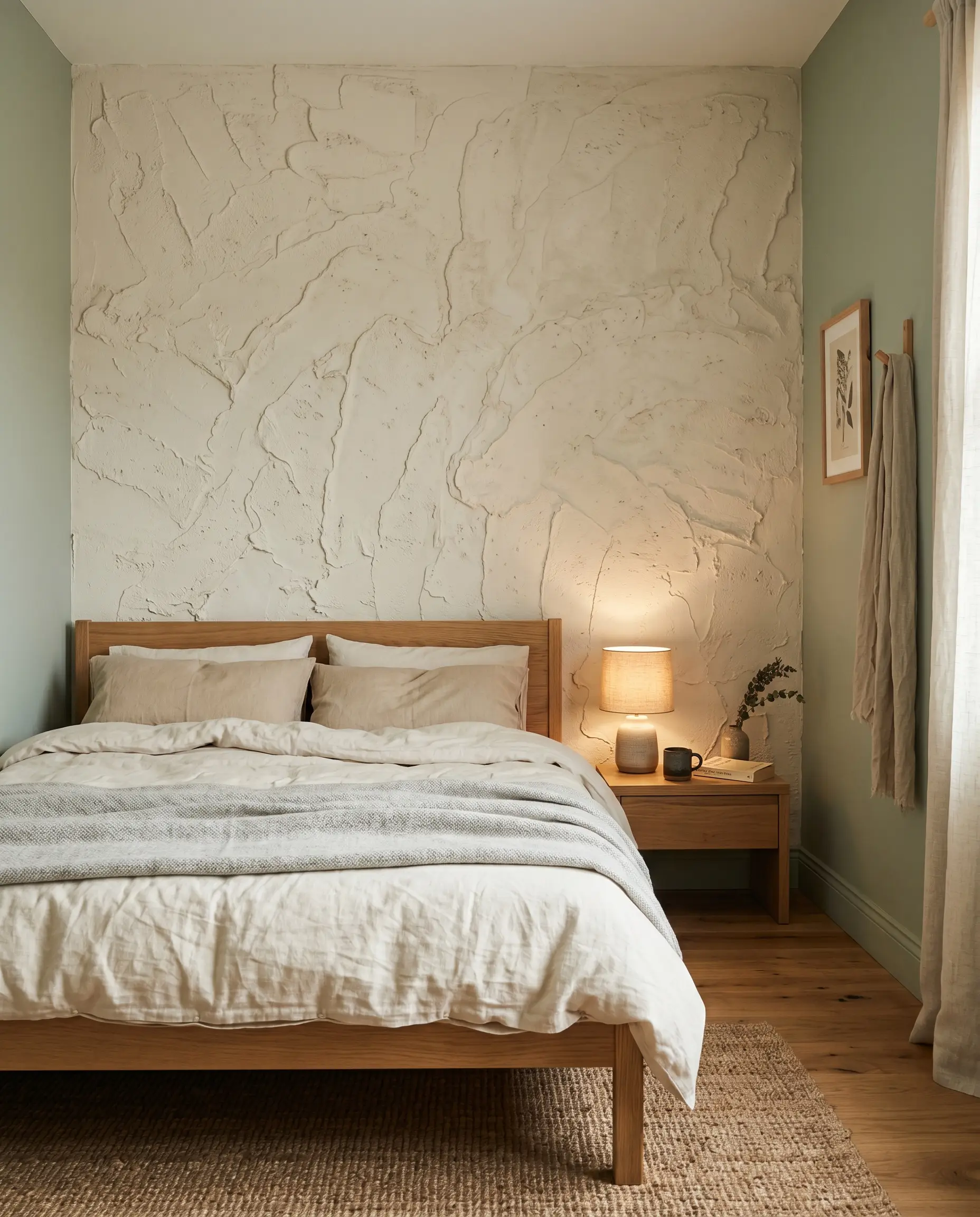
Treat the headboard wall with a heavy, textured cream plaster while keeping the surrounding walls a soft sage. This creates an organic, monolithic backdrop that anchors the bed without relying on heavy furniture.
- Vibe: Minimalist Japandi
- Key Material: Venetian plaster or heavy joint compound
- Focus: Sculptural simplicity
The Paint Undertone Masterclass: Matching Sage & Cream
Cream carries distinct yellow, pink, or gray undertones, while sage green can lean heavily toward blue, gray, or yellow. Forcing the wrong undertones together creates immediate visual friction that ruins the room’s serenity. Our precise pairing matrix below removes the guesswork, ensuring your Light Reflectance Value (LRV) and undertones are perfectly synchronized.
The Designer’s Paint Matrix
| The Vibe | The Perfect Sage Green Pick | The Perfect Cream Pairing |
|---|---|---|
| Earthy & Warm | Sherwin-Williams Evergreen Fog | Benjamin Moore Swiss Coffee |
| Cool & Crisp | Farrow & Ball French Gray | Sherwin-Williams Alabaster |
| Moody & Historic | Benjamin Moore October Mist | Farrow & Ball Pointing |
Layering Textiles: Bedding, Drapery & Soft Furnishings
The bed commands the largest real estate footprint in the room, meaning your soft goods dictate the ultimate success of this palette. In a strict two-tone environment, comfort and luxury are communicated entirely through the physical weight, drape, and weave of your layered fabrics.
8. Invest in European Flax Linen Sheets in Oatmeal
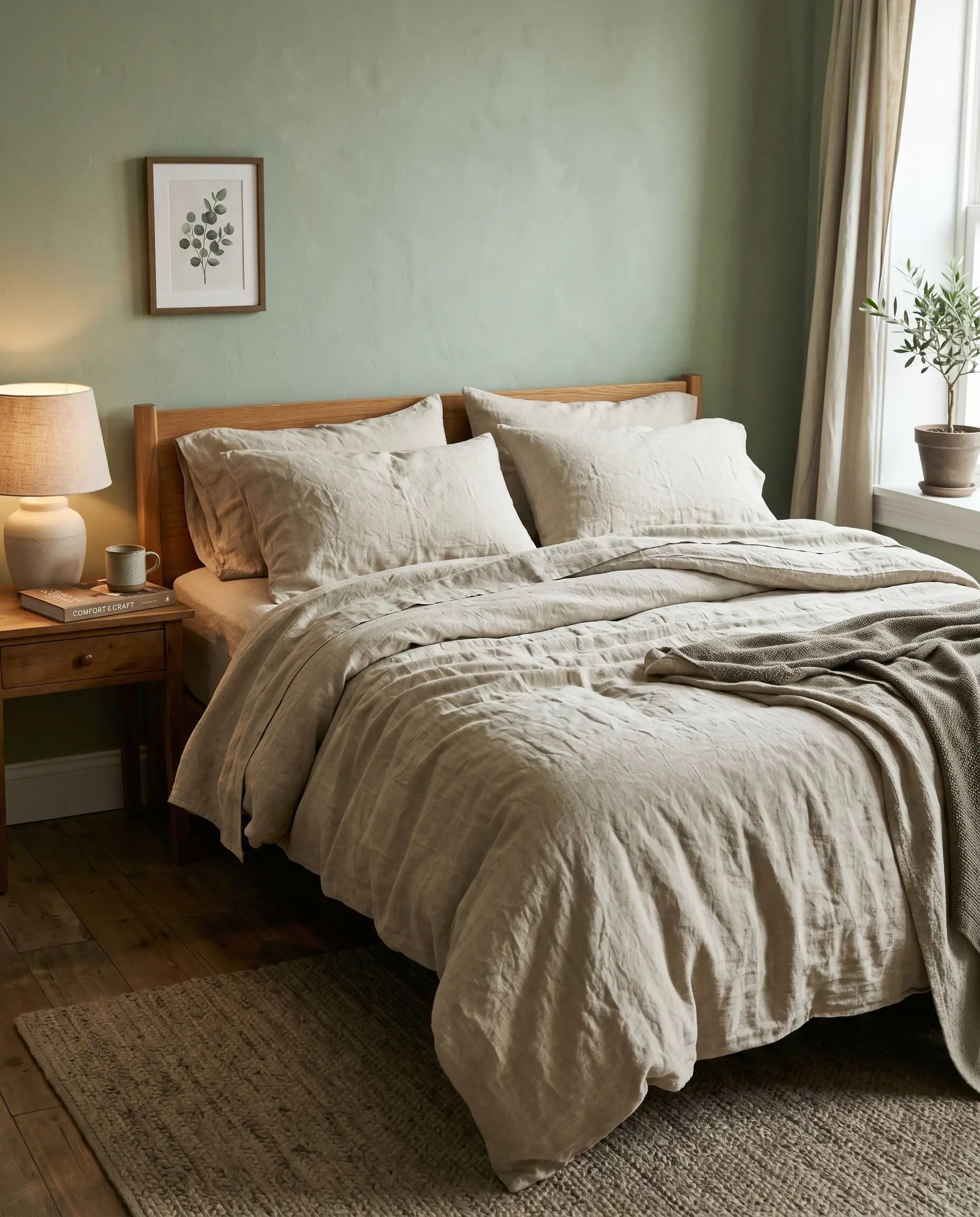
Anchor the bed with heavy, pre-washed European flax linen sheets in a dark cream or oatmeal shade. Linen’s naturally rumpled texture provides a relaxed, lived-in luxury that perfectly complements the earthy nature of sage green.
- Vibe: Effortless Organic
- Key Material: 100% European flax linen
- Styling Focus: Embrace the wrinkles; rigid, hotel-crisp cotton feels too sterile for this aesthetic
9. Anchor the Bed with a Heavyweight Sage Duvet
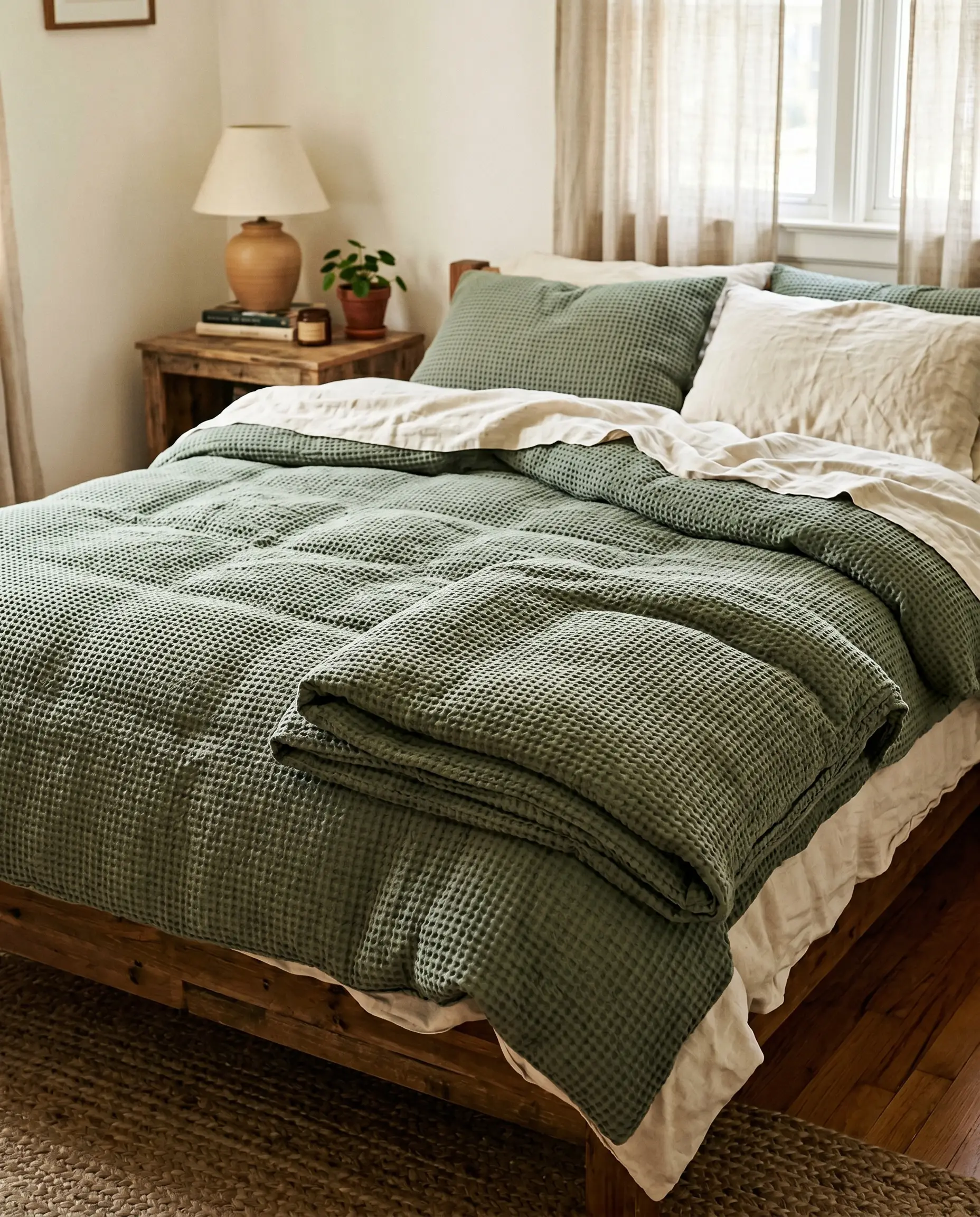
Contrast your cream sheets with a heavyweight sage green duvet or thick cotton waffle-weave quilt. The physical weight and dimensional texture of the fabric add necessary visual depth to the center of the room.
- Vibe: Grounded Comfort
- Key Material: Heavyweight cotton waffle or garment-dyed linen
- Styling Focus: Fold the duvet twice at the foot of the bed to double its visual thickness
10. Introduce Cream Boucle Accent Chairs
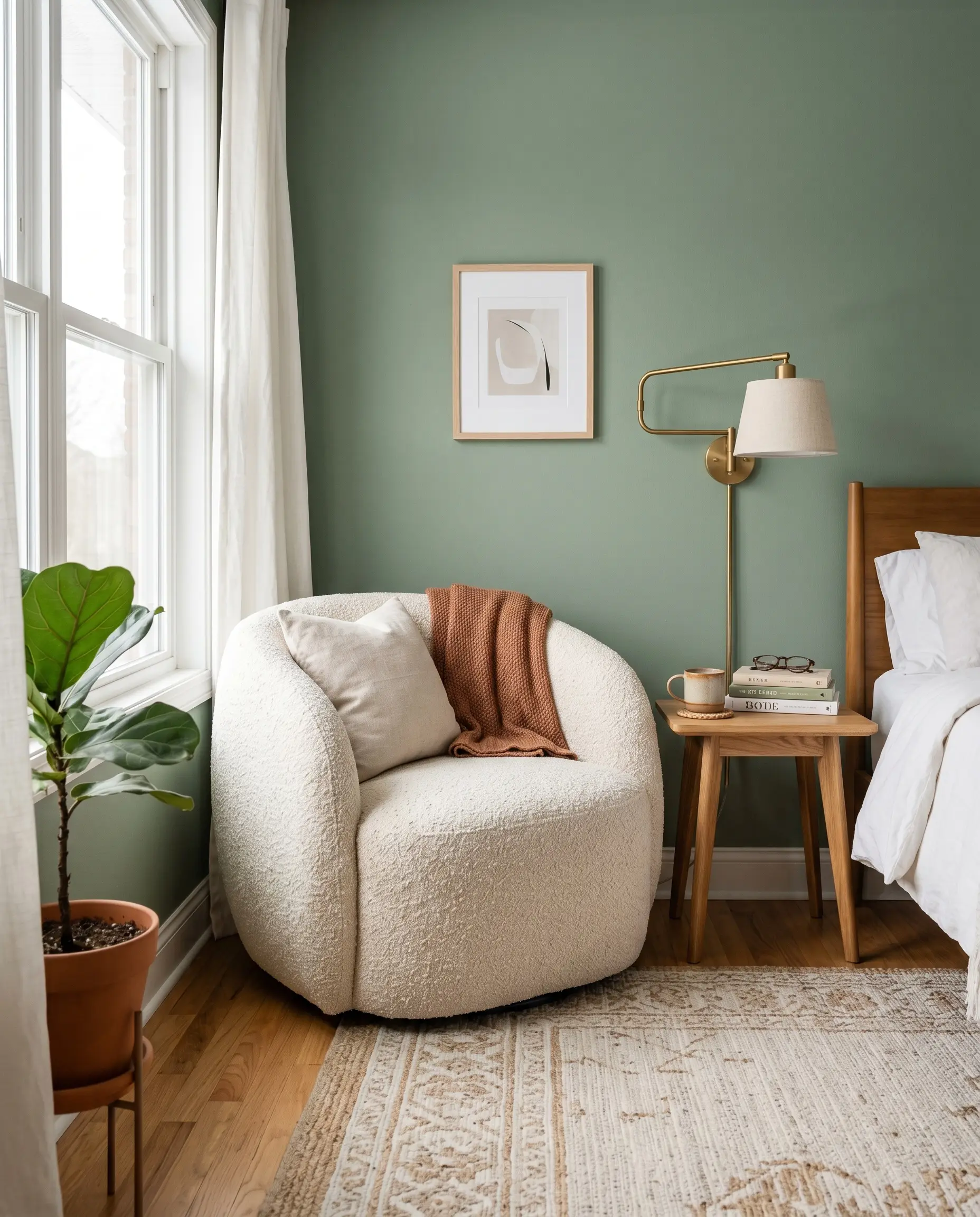
Place a cream boucle reading chair in the corner to introduce a high-texture seating element. The nubby, looped texture of the boucle absorbs light beautifully, adding a cloud-like softness against a flat sage wall.
- Vibe: Soft Modernism
- Key Material: Cream wool or synthetic boucle
- Styling Focus: Sculptural, curved furniture silhouettes
11. Hang Floor-to-Ceiling Cream Sheer Curtains
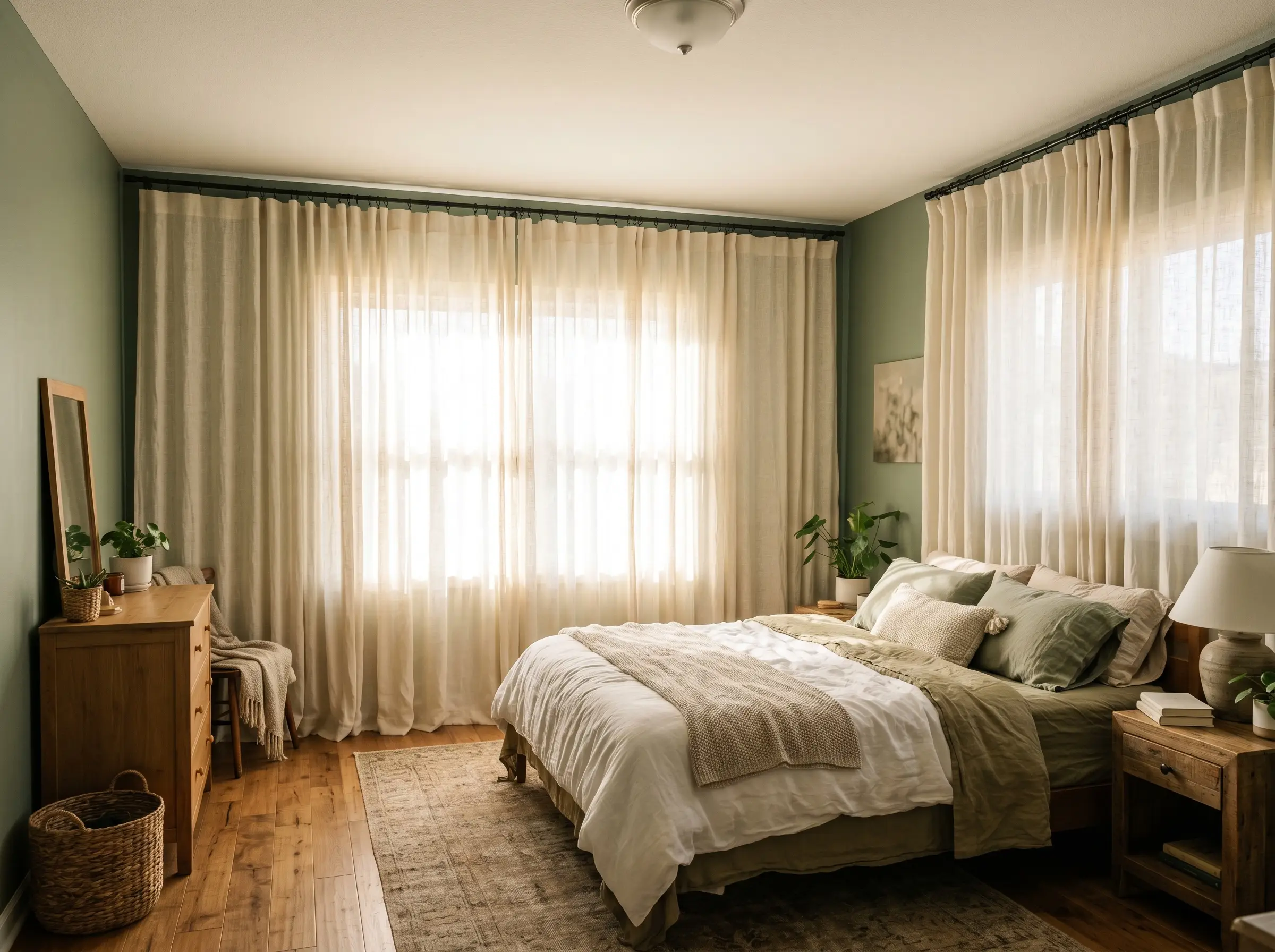
Hang wall-to-wall, floor-to-ceiling cream linen sheers to master your window treatments and light filtration. This specific drape diffuses harsh direct sunlight into a soft, glowing ambient light that makes sage green walls look ethereal.
- Vibe: Ethereal & Diffused
- Key Material: Open-weave linen sheers
Always hang curtains high and wide. Mount the rod just inches below the ceiling and extend it past the window frame to forcefully expand the room’s architecture.
Hackrea Styling Tip
12. Layer a Chunky Knit Sage Throw Blanket
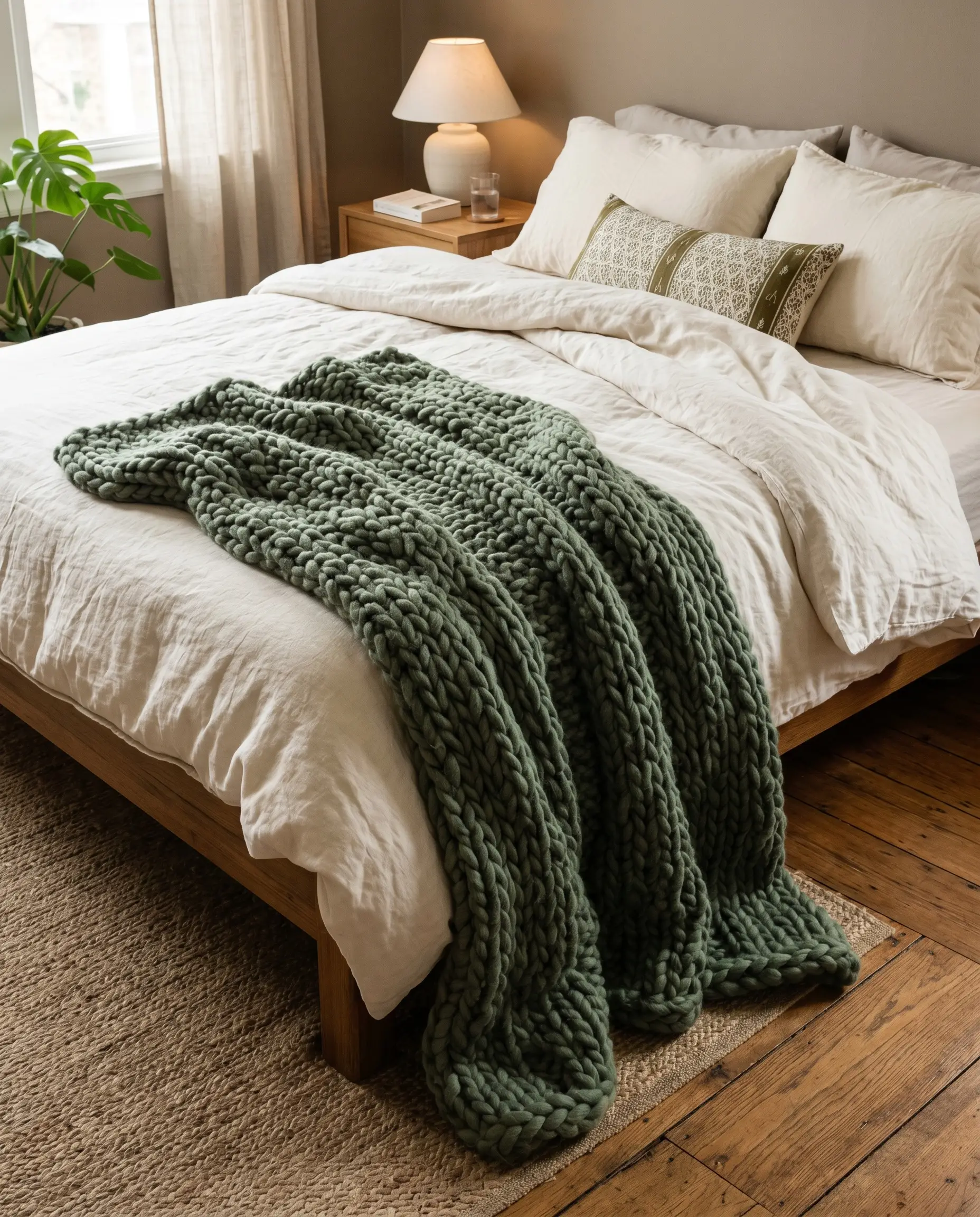
Toss a heavy, oversized knit throw at the foot of the bed to inject crucial micro-texture. This breaks up the vast expanse of cream bedding and visually ties the center of the room back to the wall color.
- Vibe: Undone Elegance
- Key Material: Chunky merino wool or heavy cotton knit
- Styling Focus: Drape it organically; perfectly folded edges look too rigid
13. Ground the Floor with a Jute or Sisal Rug
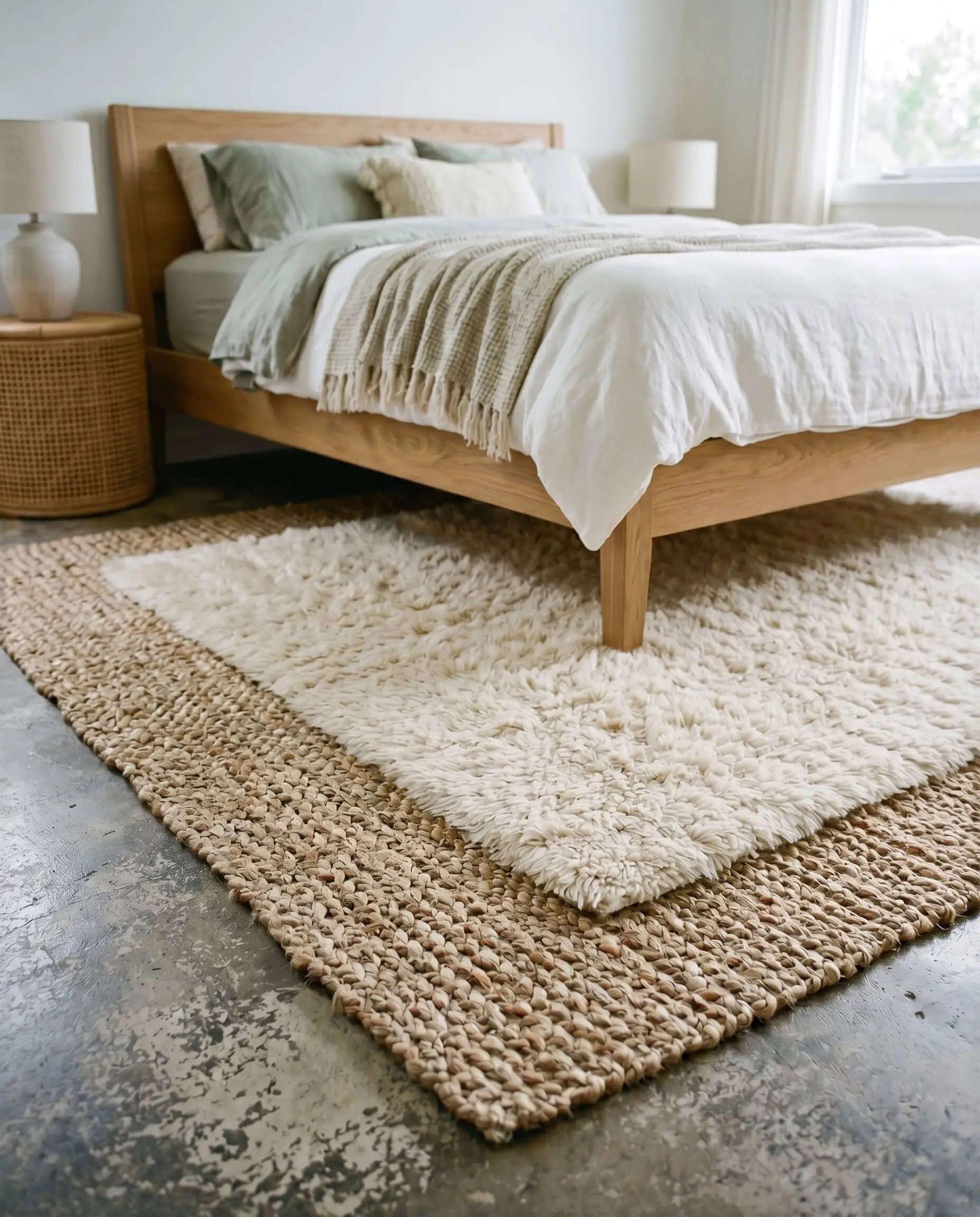
Ground the floor plan with a chunky cream or natural jute rug to introduce a rough, organic element. This abrasive texture prevents the soft greens and creams from feeling too delicate, sweet, or visually weightless.
- Vibe: Coastal Organic
- Key Material: Natural jute or sisal fibers
Layer a plush, soft cream wool rug directly over the rough jute to achieve maximum textural luxury and underfoot comfort.
Designer Pairing
14. Install a Sage Green Velvet Headboard
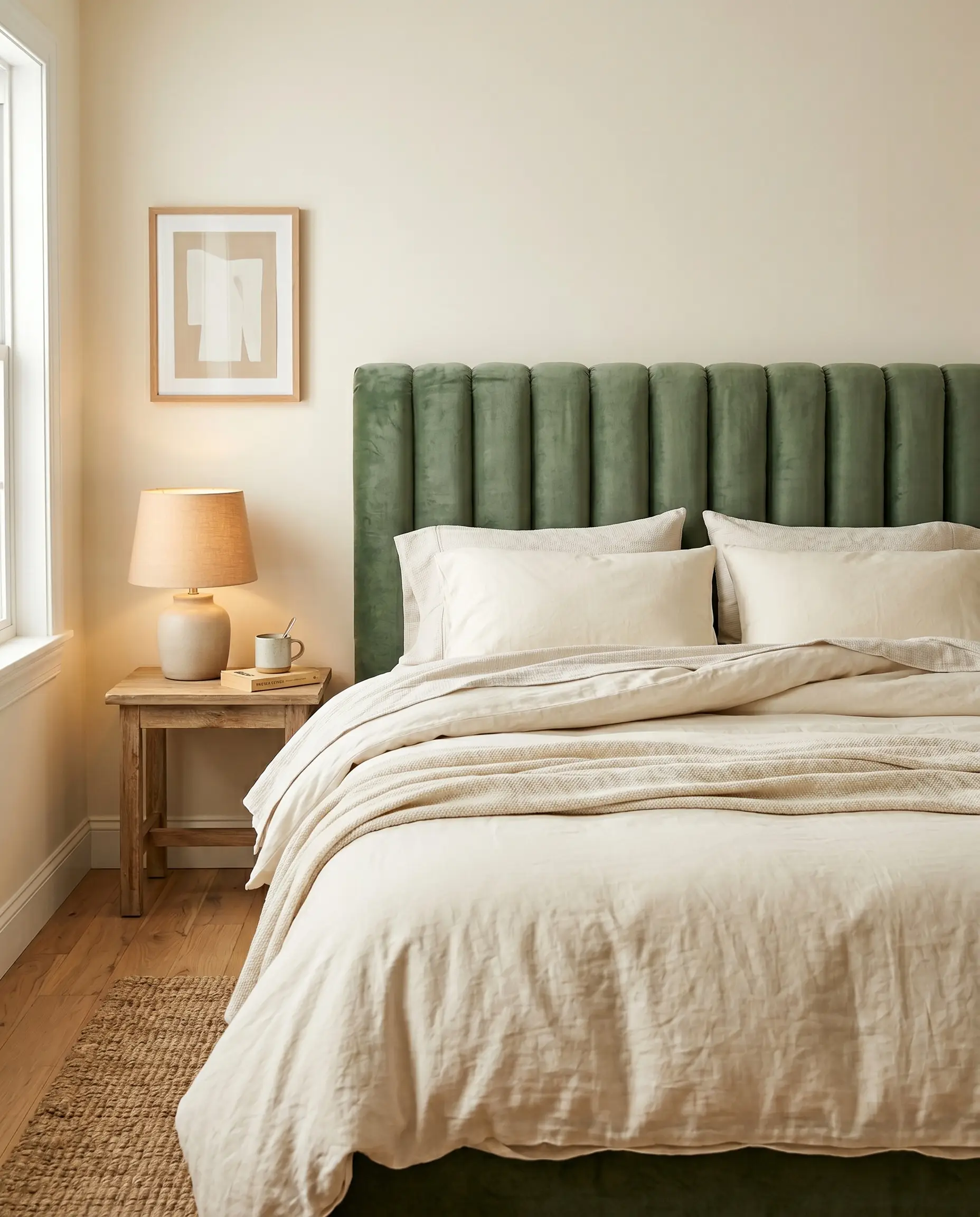
Opt for a channeled or tufted sage green velvet headboard to act as the room’s opulent crown jewel. Velvet interacts with light dynamically, offering a rich sheen and deep shadows that contrast beautifully against crisp cream walls.
- Vibe: Tactile Opulence
- Key Material: Performance cotton velvet
- Light Interaction: Creates natural high-lights and low-lights based on the pile direction
15. Opt for Scalloped Edges on Cream Pillows
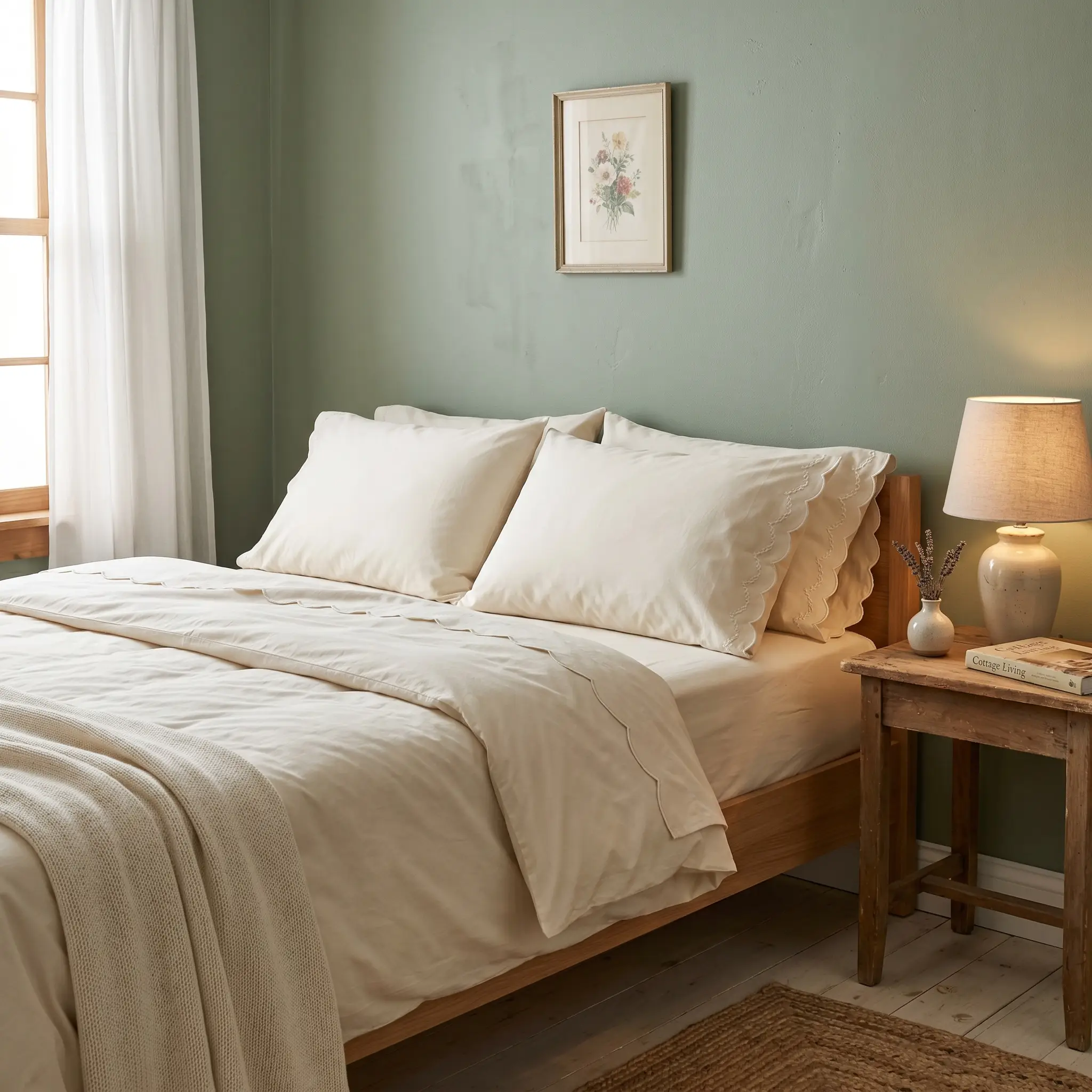
Introduce scalloped edges on your cream pillowcases or shams to tap into the Cottagecore or Grandmillennial aesthetic. This adds a whimsical, soft, and slightly vintage micro-detail that pairs flawlessly with a muted sage.
- Vibe: Soft Cottagecore
- Key Material: Percale cotton with embroidered scalloping
- Styling Focus: Keep the rest of the bedding minimal to let the edges stand out
16. Mix in Muted Olive or Forest Green Accent Pillows
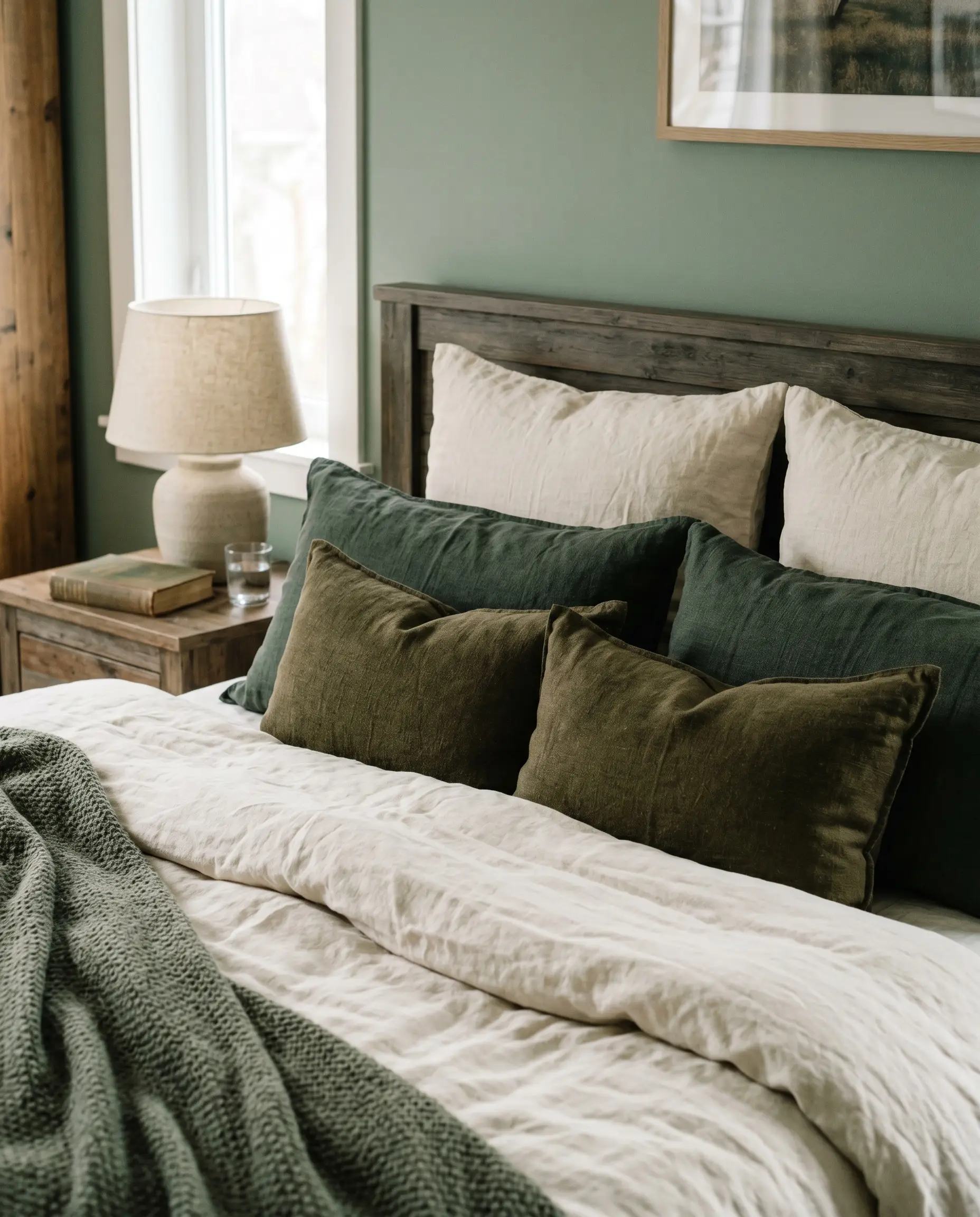
Add depth by introducing pillows in slightly darker olive or forest green to prevent a flat, matchy-matchy look. A room strictly locked into two exact colors feels artificial, so building a tonal landscape is essential for authenticity.
- Vibe: Tonal Depth
- Key Material: Heavyweight linen or velvet
- Styling Focus: Build a tonal landscape by varying the saturation of your greens
Furniture & Hard Material Pairings (The 3D Elements)
Case goods and hardware are the 3D elements that make or break the aesthetic tier of your bedroom. Sage and cream demand specific wood tones and metals to come alive; a glossy cherry wood will clash violently with a muted green, while the right oak or brass will elevate the entire sanctuary.
17. Warm the Palette with Rift-Sawn White Oak
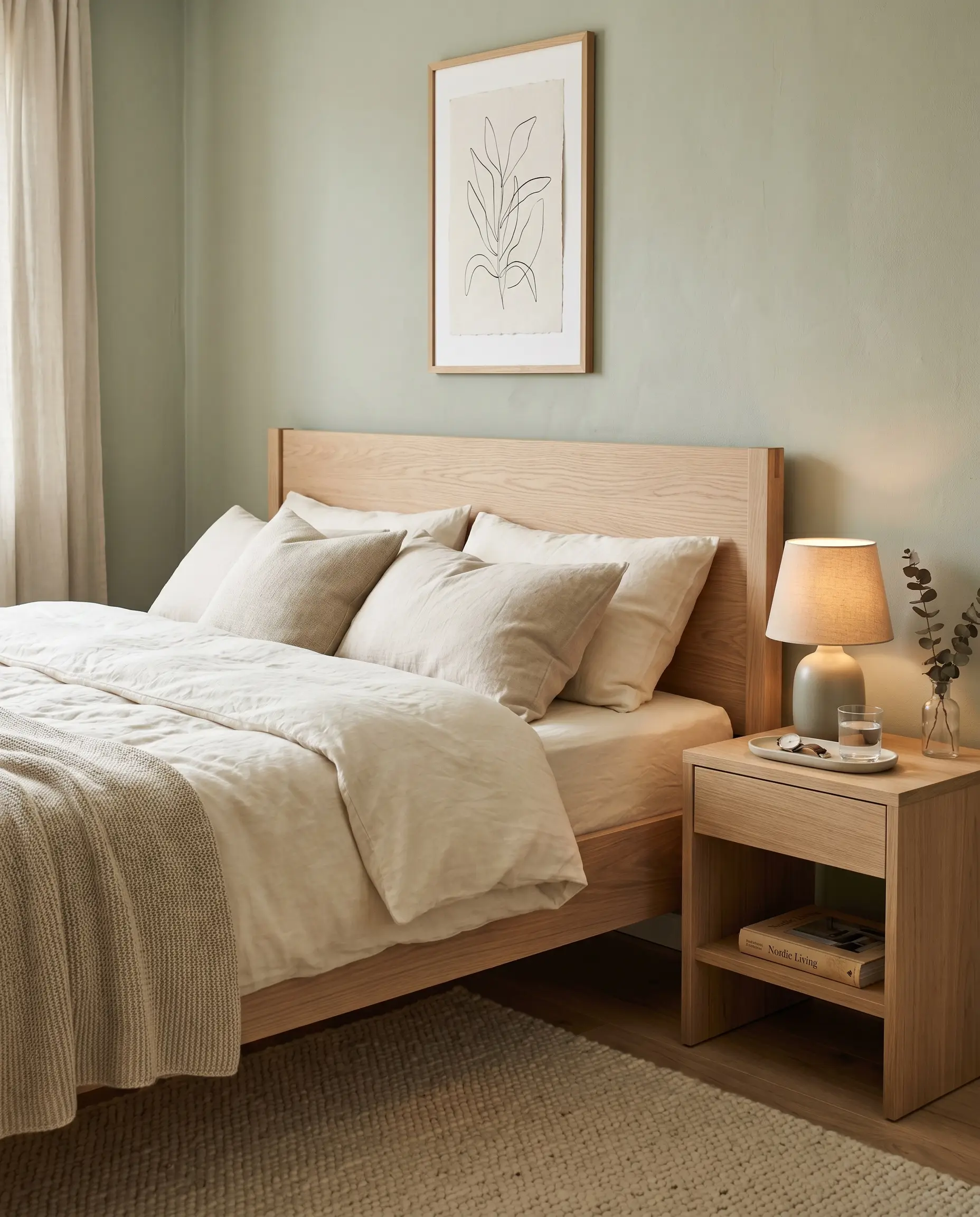
Anchor the room with rift-sawn white oak furniture to provide the ultimate complementary wood tone. White oak’s pale, slightly ashy undertones harmonize with cream and provide a gentle, Scandinavian-inspired contrast to the sage green walls.
- Vibe: Scandinavian Modern
- Key Material: Rift-sawn white oak
- Styling Focus: The linear, straight grain of rift-sawn cuts feels highly modern and clean
18. Add Drama with Burl Wood Nightstands
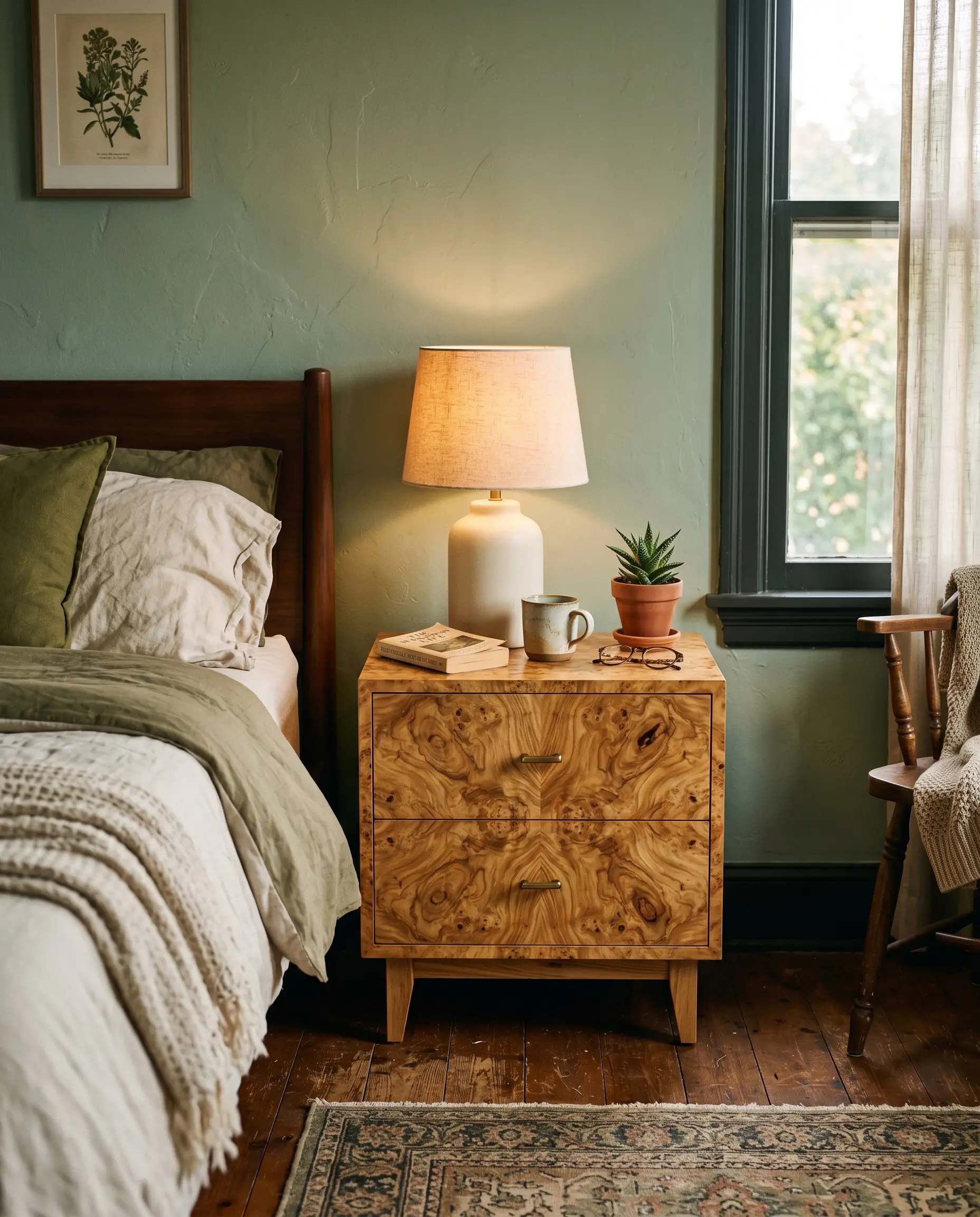
Invest in burl wood nightstands to introduce organic, swirling patterns that break up solid blocks of color. The warm, rich honey tones of the burl act as a high-end statement piece that looks incredibly luxurious against a muted sage.
- Vibe: Bespoke Vintage
- Key Material: Olive ash or walnut burl veneer
- Styling Focus: Let the chaotic wood grain serve as the primary pattern in the room
19. Contrast with Matte Black Hardware
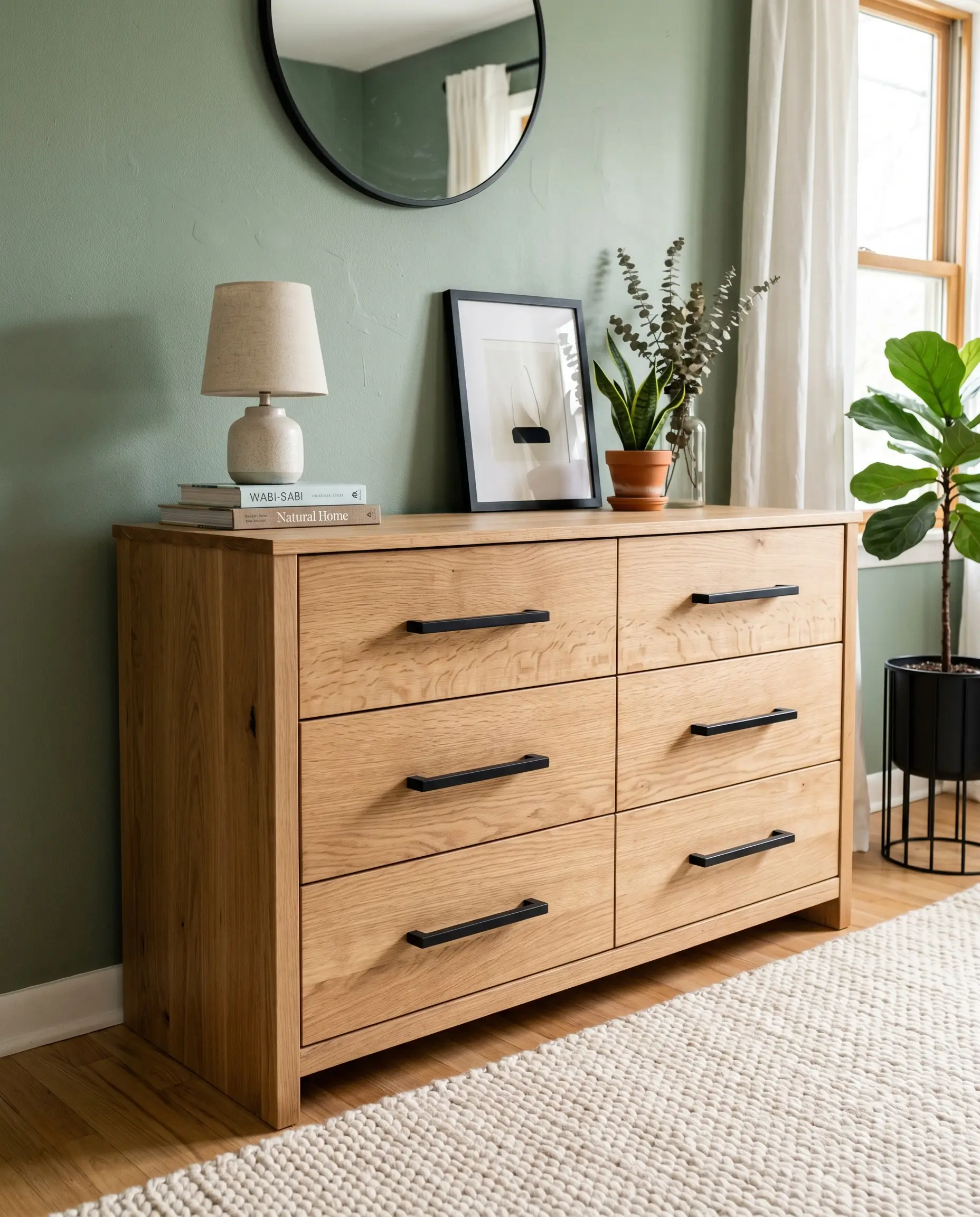
Use matte black door handles, curtain rods, or drawer pulls to ground the airy palette and prevent the room from looking washed out. This dark metal adds necessary visual punctuation, giving the eye a place to rest.
- Vibe: Modern Industrial Edge
- Key Material: Powder-coated matte black steel or iron
- Styling Focus: Deploy sparingly for sharp visual punctuation
20. Introduce Unlacquered Brass Sconces
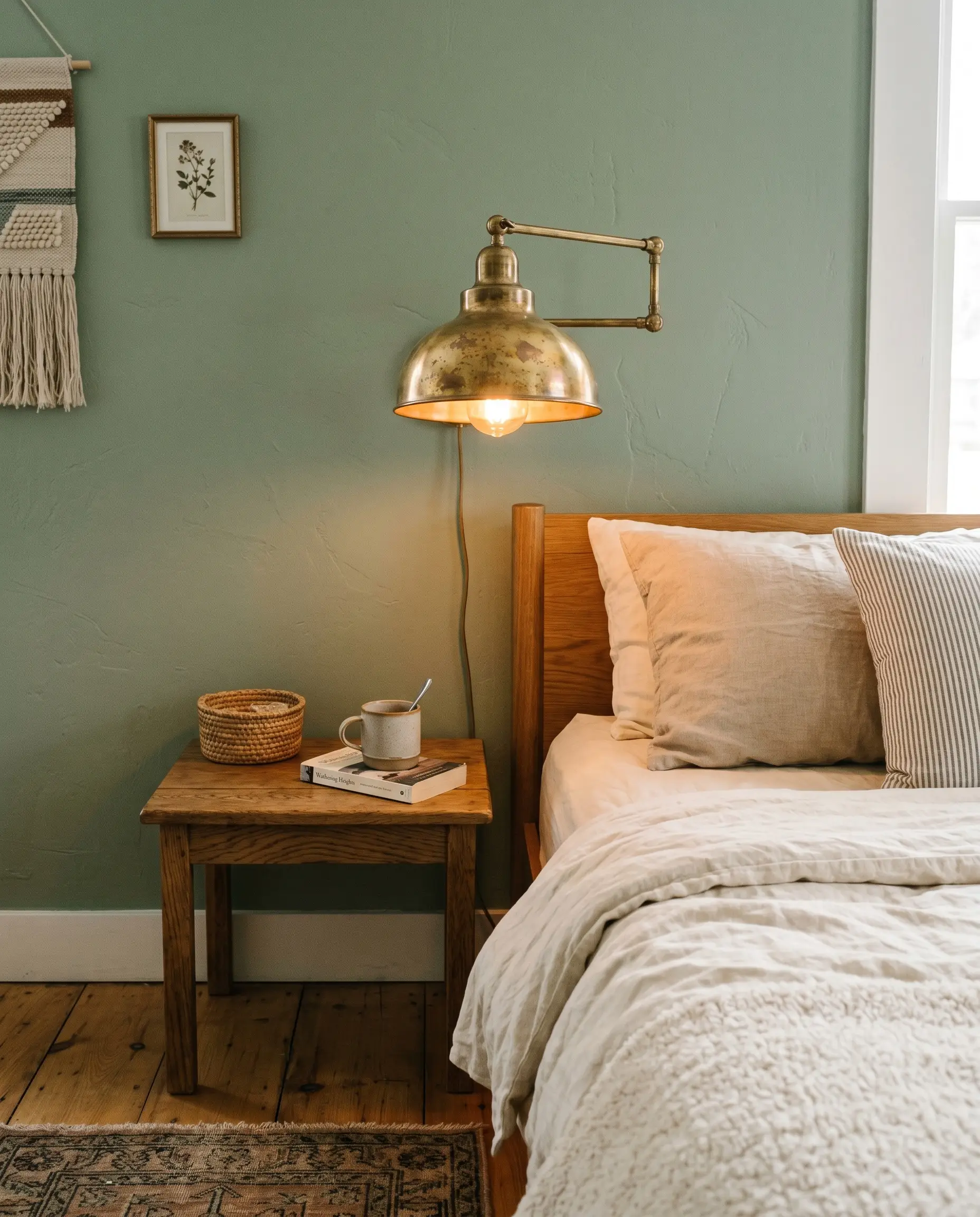
Install unlacquered brass wall sconces to bring a living finish and immense warmth to the bedside. The golden, developing patina of raw brass is the absolute ultimate metallic complement to green, injecting a touch of vintage elegance.
- Vibe: Timeless Elegance
- Key Material: Raw, unlacquered brass
- Styling Focus: Allow the metal to naturally oxidize and darken over time
21. Style with Cream Travertine Side Tables
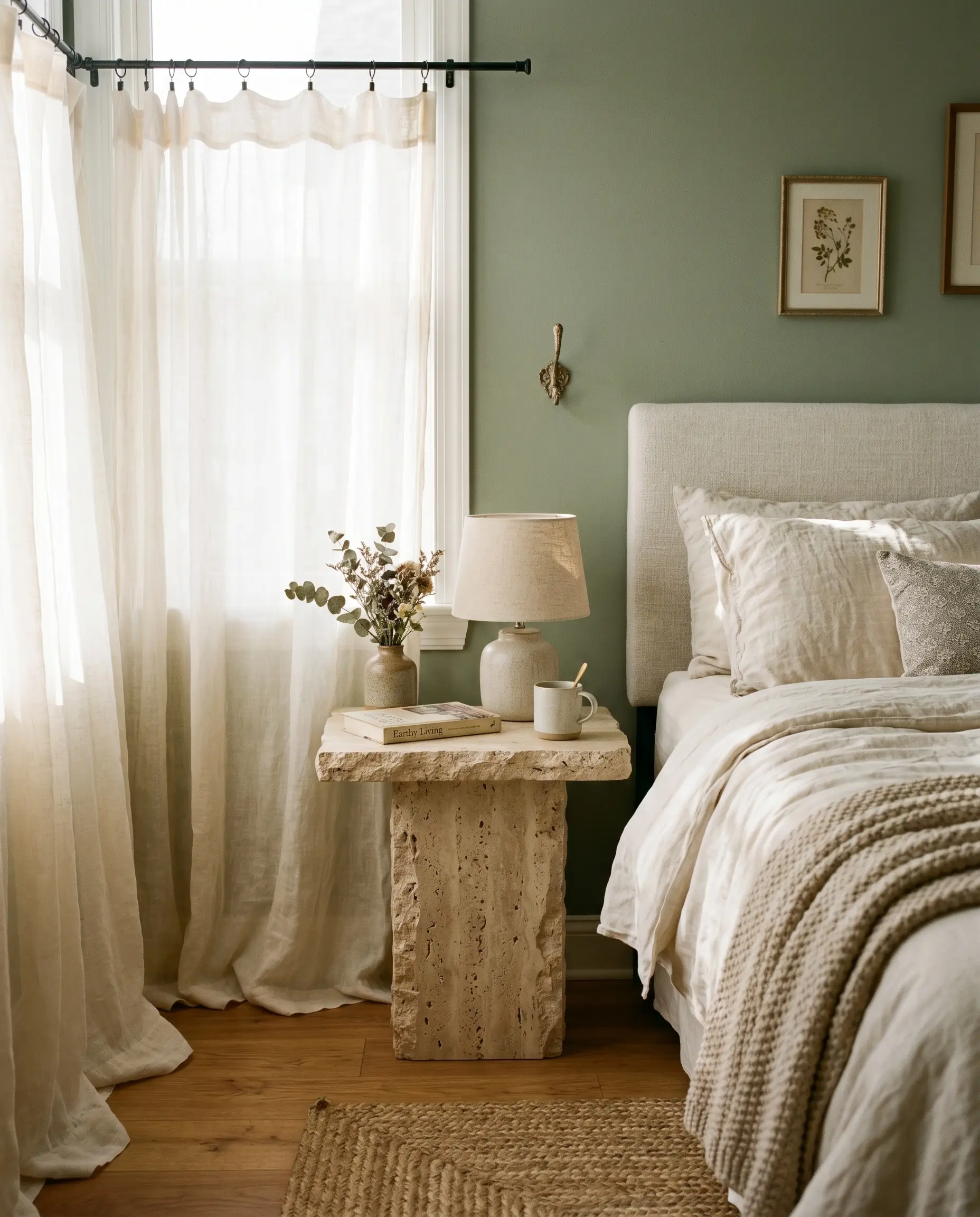
Incorporate a cream travertine bedside table or tray to bring porous, architectural stone into the space. The rough, earthy nature of travertine aligns perfectly with Organic Modernism, contrasting brilliantly against soft linen bedding.
- Vibe: Architectural Organic
- Key Material: Honed cream travertine
- Styling Focus: Contrast the hard, heavy stone with delicate sheer drapery
22. Incorporate Rattan or Cane Webbing Details
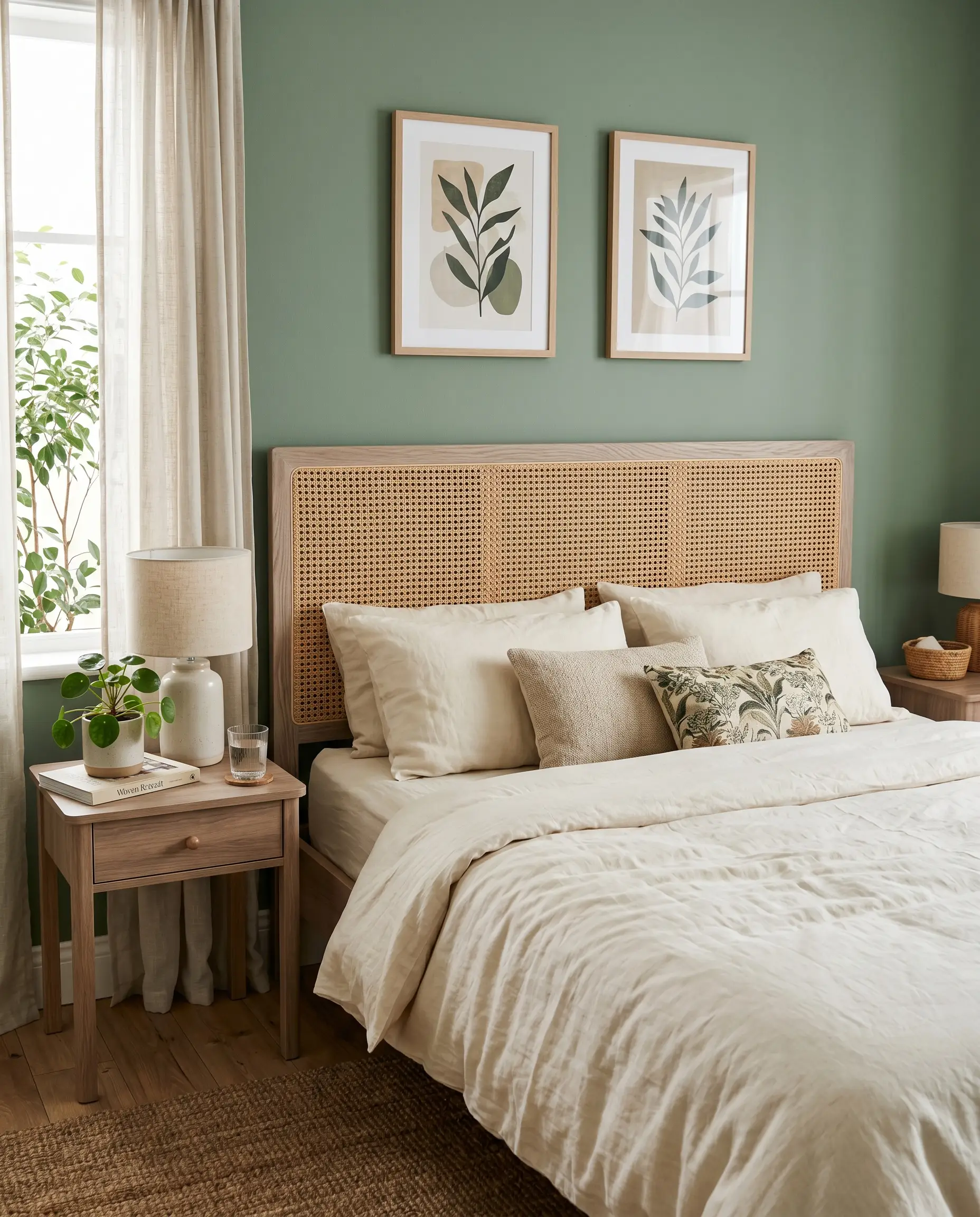
Introduce a cane headboard or rattan pendant light to inject a breezy, coastal warmth into the room. This woven texture bridges the gap between the solid cream fabrics and the flat green walls, keeping the atmosphere relaxed.
- Vibe: Relaxed Bohemian
- Key Material: Natural rattan or cane webbing
- Styling Focus: Keep the wood frame of the cane furniture light and ashy
23. Float a Cream Upholstered Bench at the Foot of the Bed
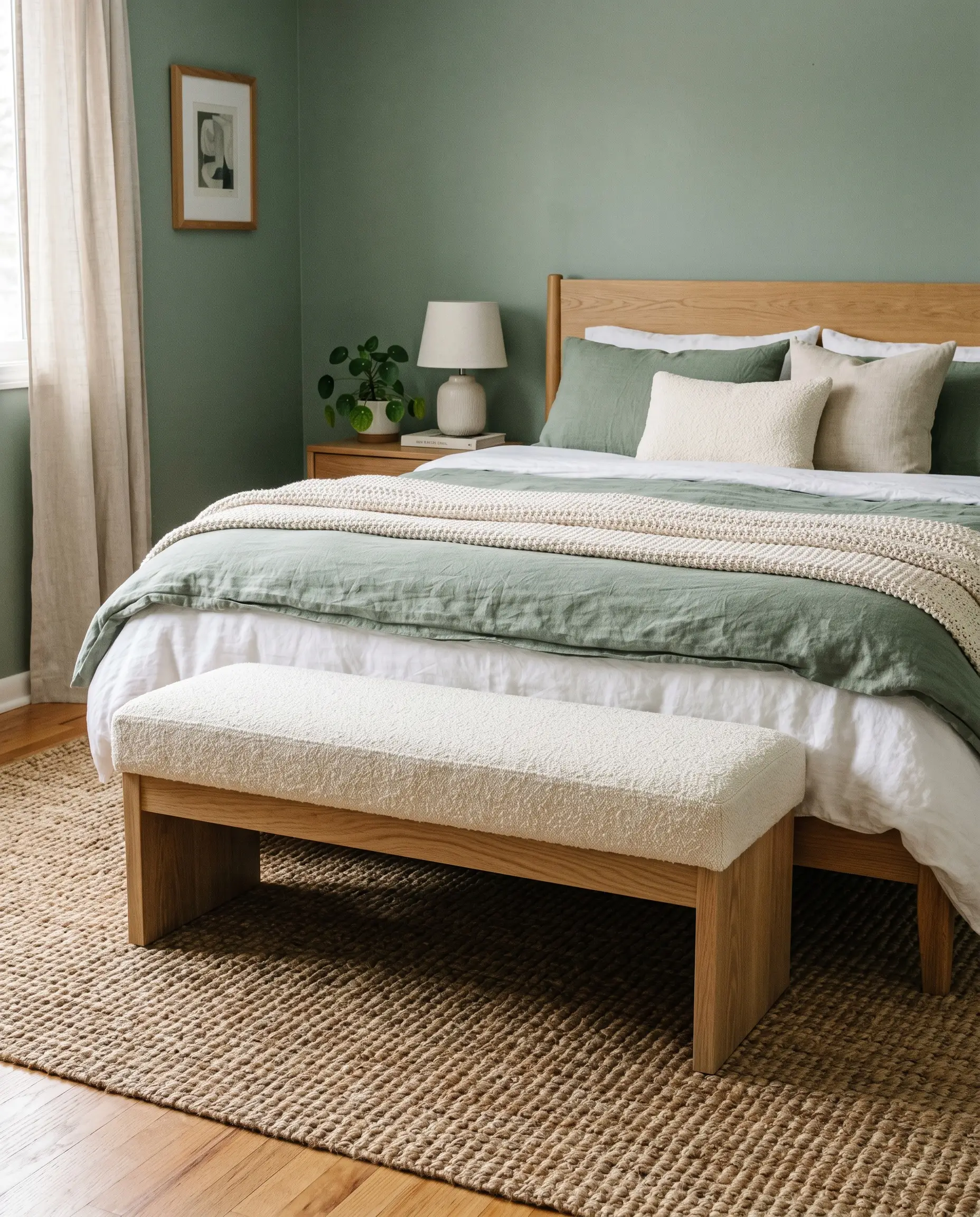
Float a sleek, cream-upholstered bench at the foot of the bed to extend the room’s footprint and break up the floor space. This provides functional seating while adding a layer of hotel-like luxury to the layout.
- Vibe: Tailored Luxury
- Key Material: Cream boucle or performance linen
Select a bench featuring a rift-sawn white oak base to maintain perfect material continuity with your nightstands.
Designer Pairing
24. Install Fluted Wood Wall Panels
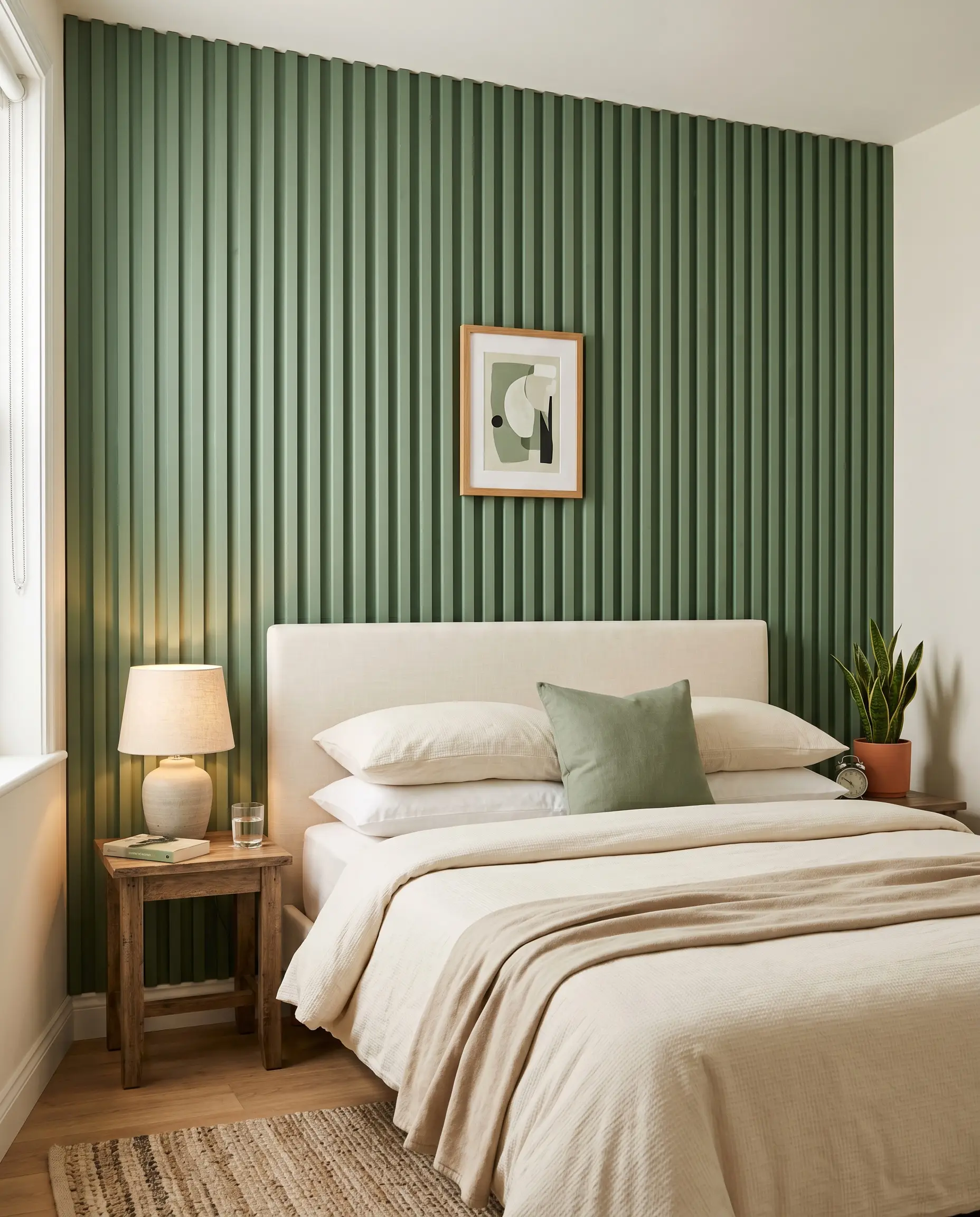
Install vertical fluted wood panels behind the bed—either painted sage or left in natural oak—to add profound 3D architectural texture. The deep ridges of the fluting capture shadows, ensuring the sage color remains dynamic and shifting rather than flat.
- Vibe: Contemporary Tactile
- Key Material: Fluted MDF or solid wood tambours
- Light Interaction: Creates rhythmic, vertical shadow lines
Spatial Styling & Lighting Tactics
How you light the room and arrange the final decor completely dictates how the sage and cream palette is perceived by the human eye. Sage green can easily look muddy or gray in the wrong light; these specific styling tactics ensure the environment remains crisp, serene, and intentionally ambient.
25. Layer Ambient Lighting with Cream Ceramic Lamps
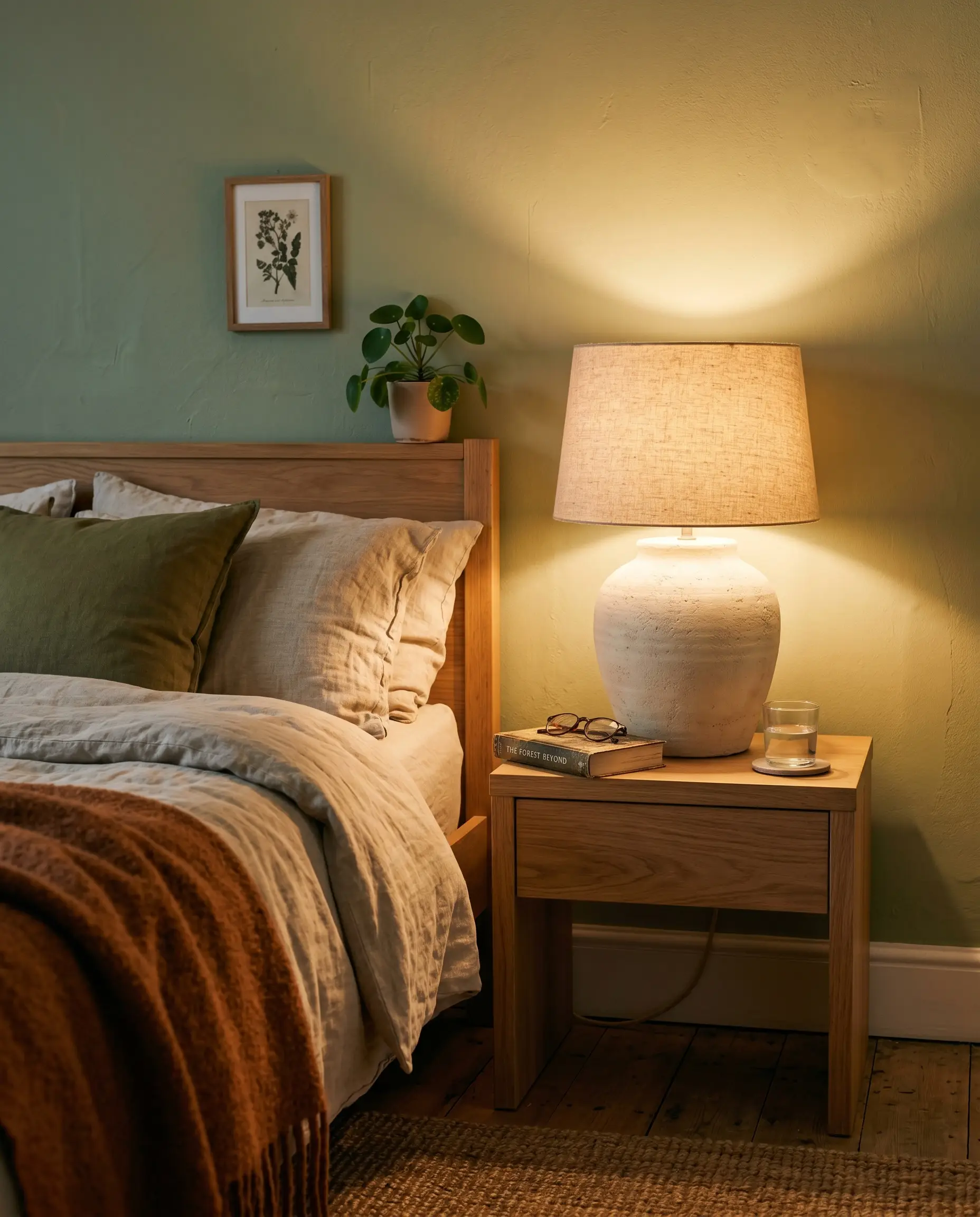
Use oversized cream ceramic table lamps with linen shades to entirely eliminate the need for harsh overhead lighting. The textured ceramic ties into the earthy theme, while the linen shade casts a warm, highly flattering ambient glow over the green walls.
- Vibe: Warm & Ambient
- Key Material: Textured, unglazed ceramic
Strictly avoid turning on the overhead “big light” in this sanctuary space. True mood is built exclusively through layered, low-level table and floor lamps.
Hackrea Styling Tip
26. Reflect Light with an Oversized Floor Mirror
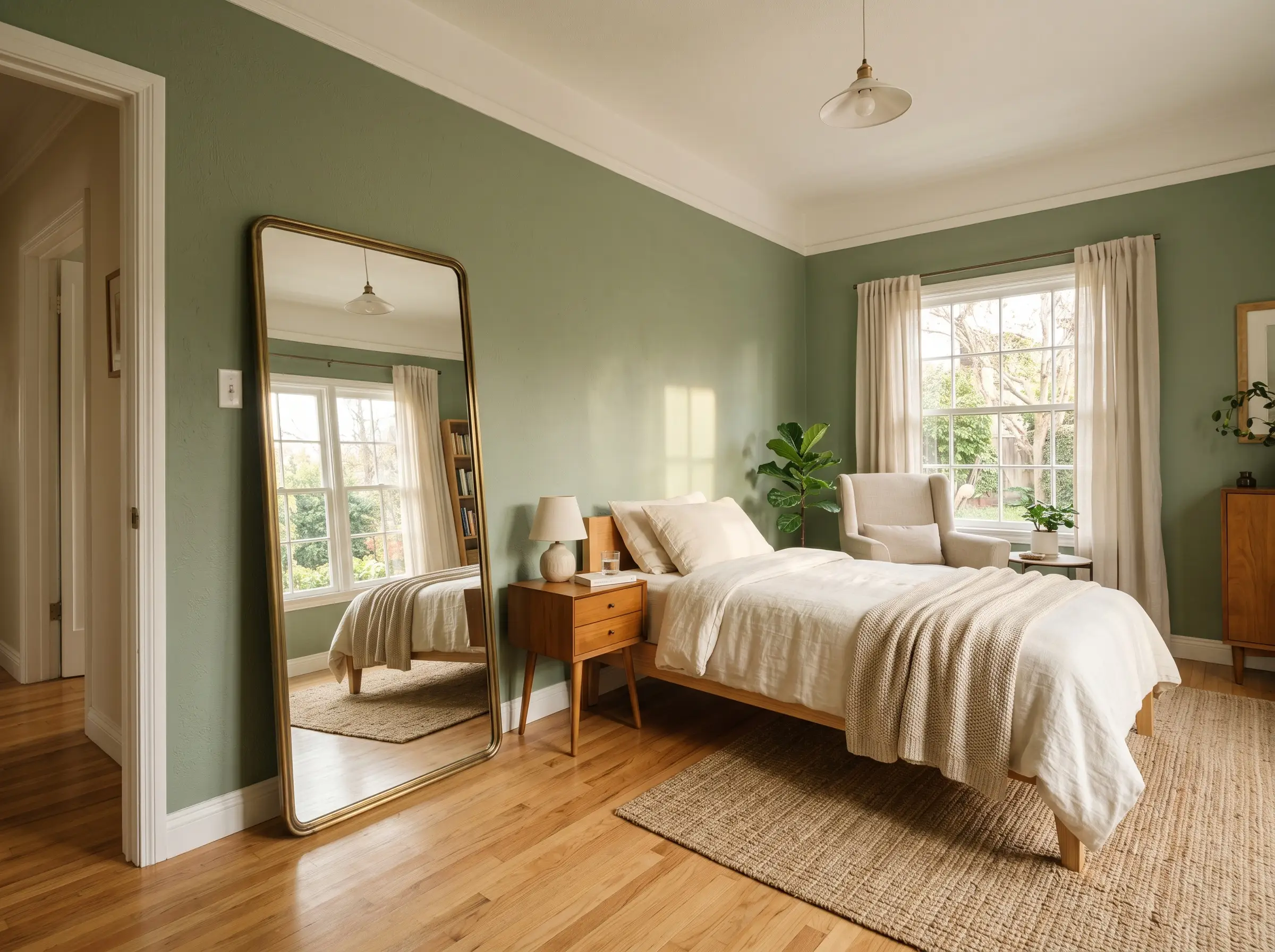
Lean a large, minimal brass or wood-framed mirror against a sage wall to actively bounce natural light around the room. This spatial expansion technique keeps the green paint from feeling too heavy or enclosing in smaller bedrooms.
- Vibe: Expansive Light
- Key Material: Antiqued brass or white oak frame
- Styling Focus: Position the mirror directly opposite a window to double the natural daylight
27. Style Asymmetrical Bedside Tables
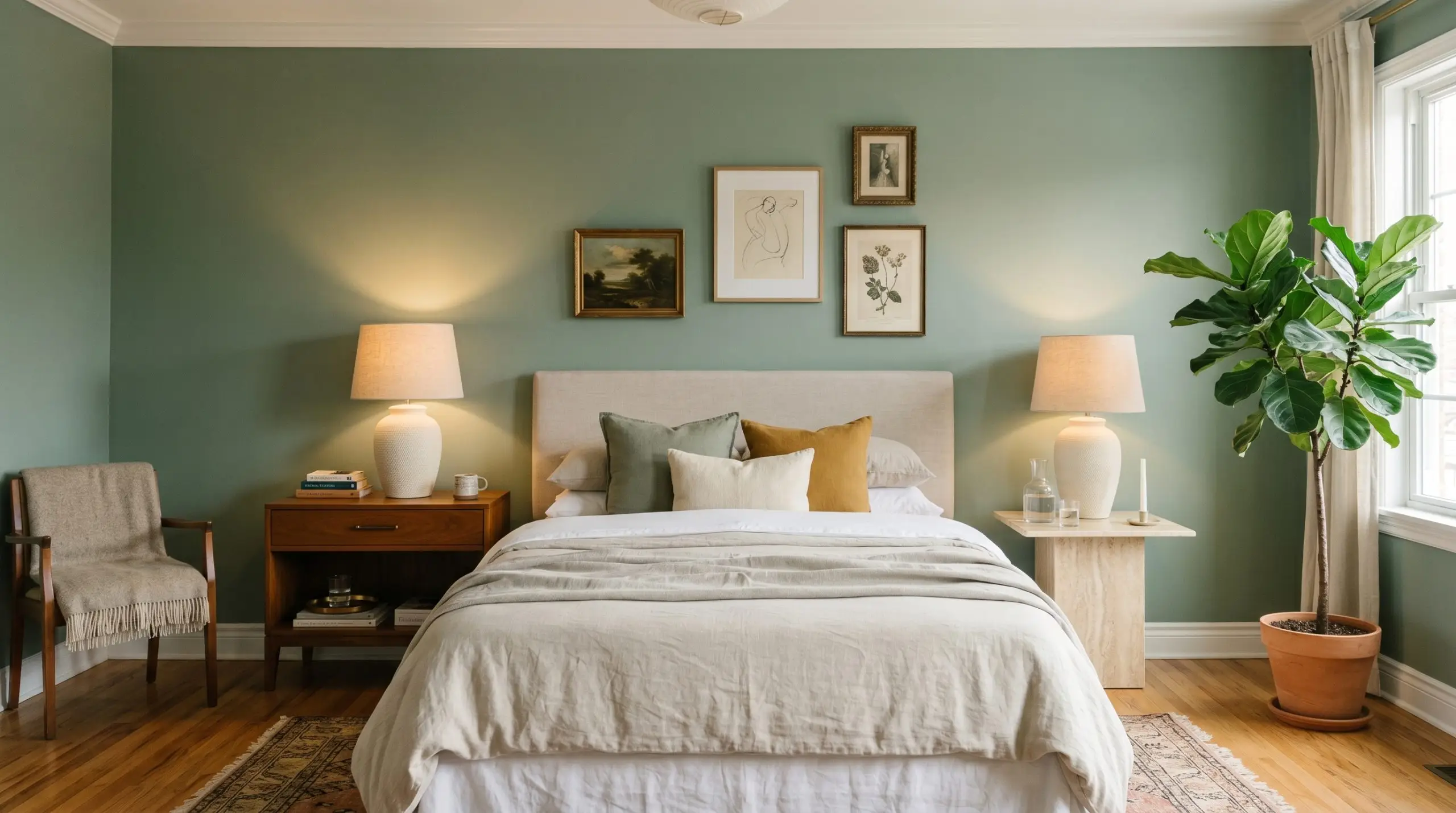
Break away from rigid traditionalism by using asymmetrical nightstands, such as a wood drawer unit on one side and a cream travertine plinth on the other. This advanced designer secret creates a relaxed, collected-over-time energy that matching sets simply cannot achieve.
- Vibe: Curated & Collected
- Key Technique: Matching the visual weight and height of the tables, despite the different materials
- Styling Focus: Unifies the room without looking catalog-sterile
28. Introduce Tall, Structural Olive Trees
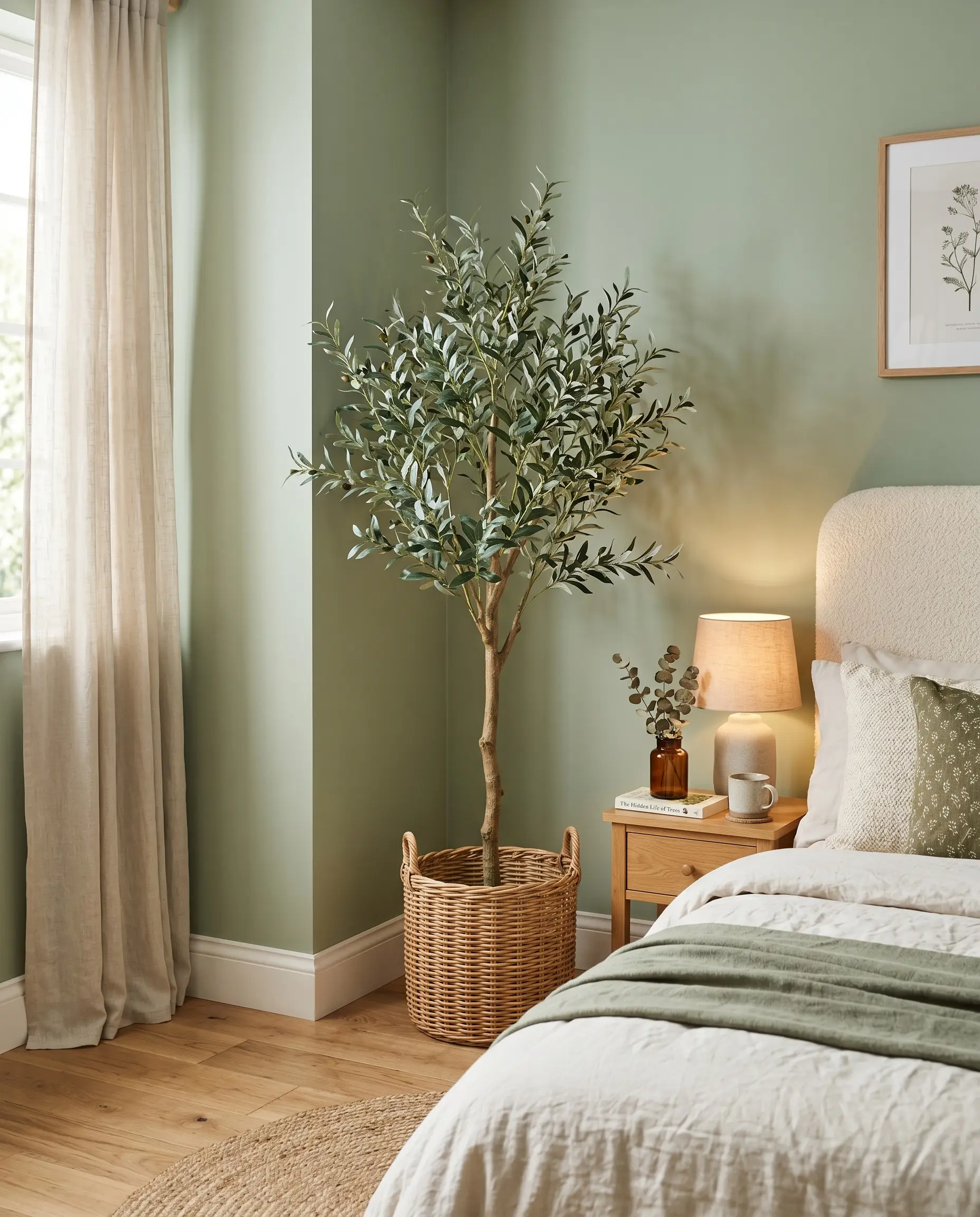
Bring the sage green off the walls by introducing a tall, structural olive tree into a bare corner. The silvery-green leaves perfectly echo the sage palette, satisfying the literal biophilic requirement of the space.
- Vibe: Literal Biophilia
- Key Element: Live or high-quality faux Olive Tree or Ficus Audrey
- Styling Focus: Strictly avoid overused, dark-leafed plants like the fiddle leaf fig; they clash with the muted sage tones
29. Hang Sepia or Cream-Toned Abstract Art
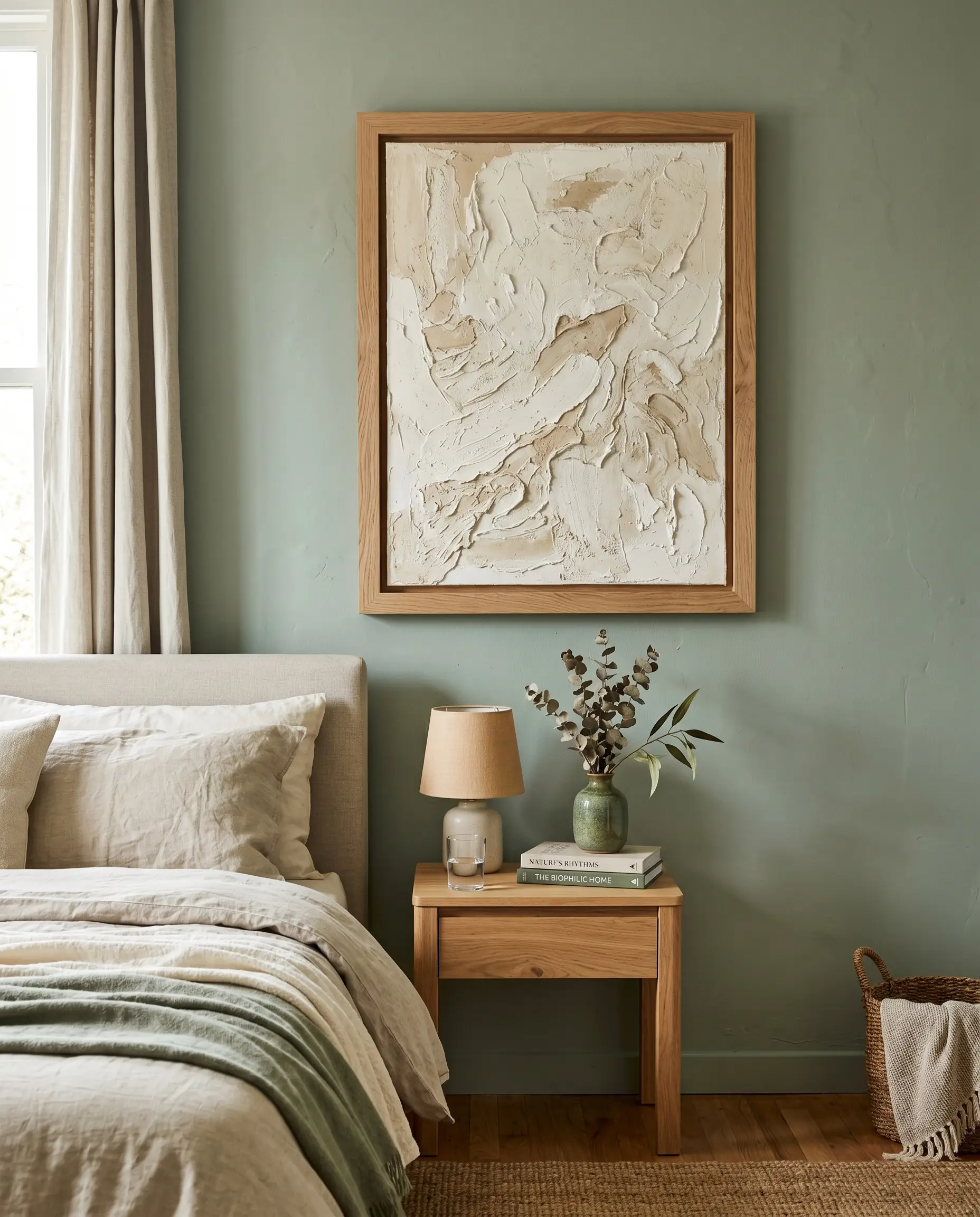
Opt for heavily textured cream abstract canvas art or sepia-toned vintage sketches to dress the walls without clashing. Brightly colored art will violently fight the calming palette, so prioritize pieces that rely on texture or muted, historical tones.
- Vibe: Sophisticated Muted
- Key Material: Spackle art, plaster canvas, or vintage sepia ink
- Styling Focus: Frame in raw oak to maintain the organic warmth
30. Use Sconces for Directional Wall Grazing
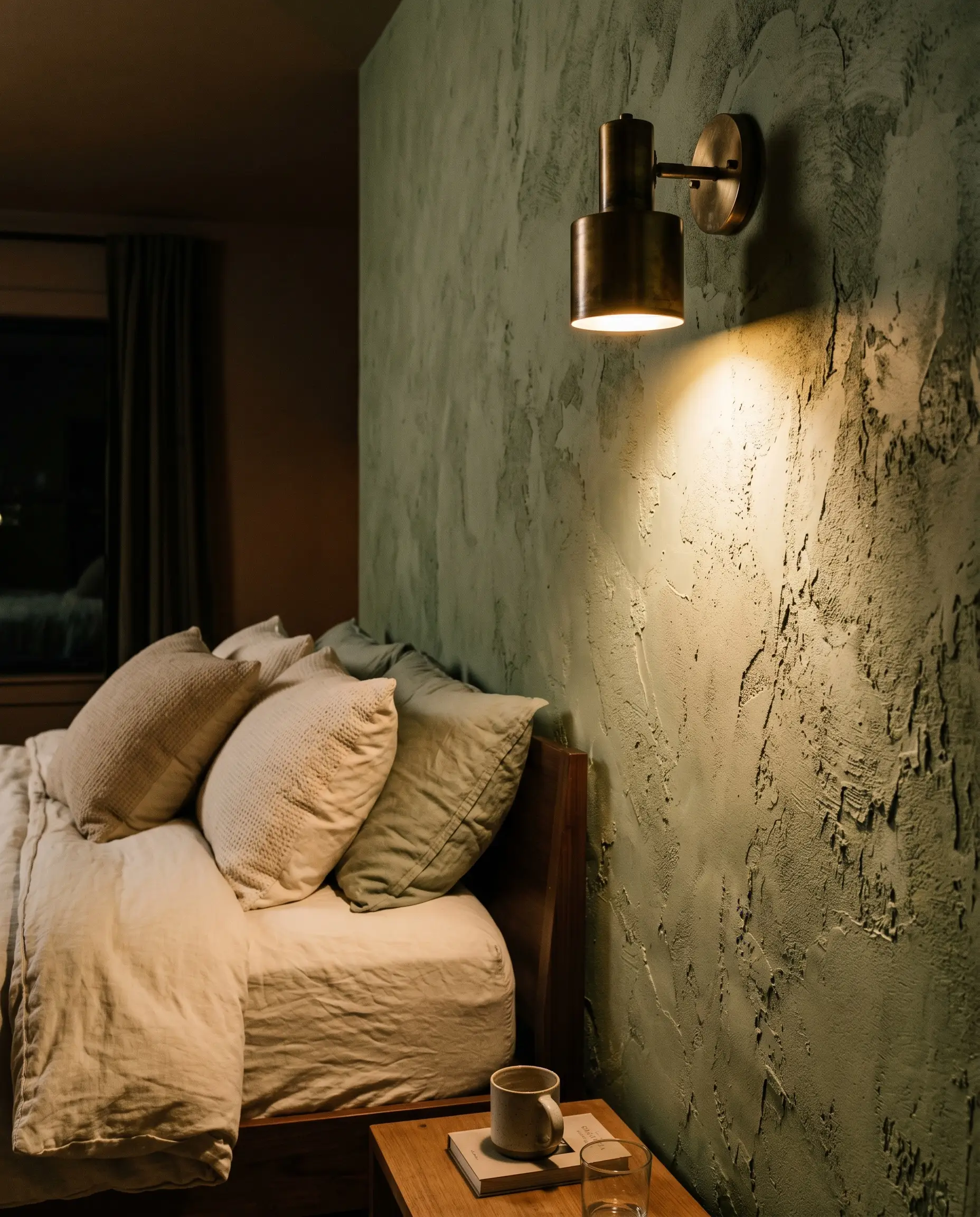
Position hardwired wall sconces so the beam grazes directly up or down the sage green wall. This architectural “wall grazing” lighting technique aggressively highlights the texture of limewash or fluted paneling, creating moody, dramatic shadows at night.
- Vibe: Architectural Drama
- Key Technique: Directional wall grazing
- Styling Focus: Use warm-dim LED bulbs (2700K or lower) to enhance the green’s warmth
31. Drape a Tapestry Behind the Bed
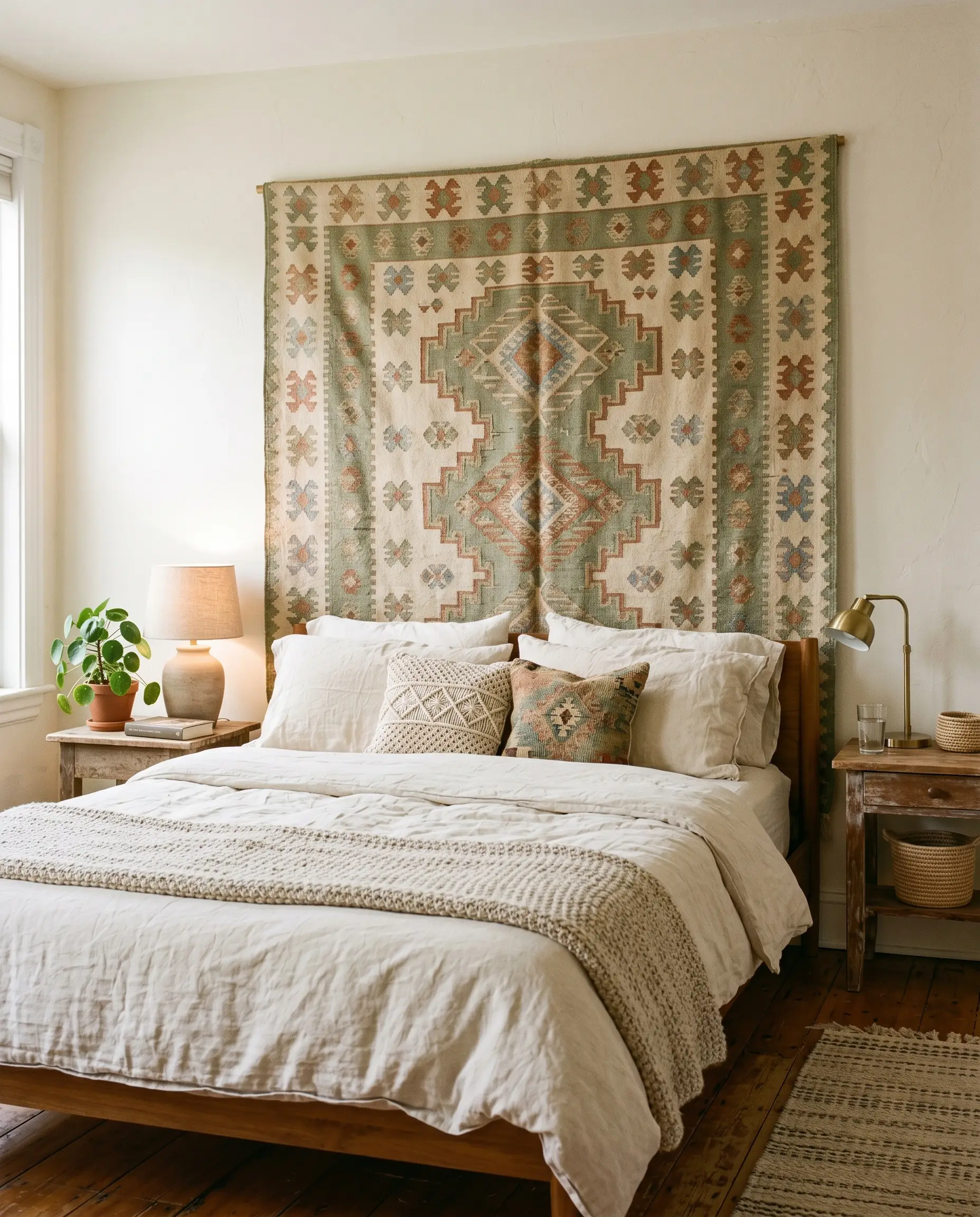
Hang a large cream and sage woven tapestry or a vintage rug behind the bed for a significantly softer alternative to a hard headboard. This heavy textile installation absorbs sound beautifully and adds massive textural warmth to the sleeping zone.
- Vibe: Eclectic Warmth
- Key Material: Hand-woven wool or vintage kilim
- Styling Focus: Mount on a simple, hidden rod to let the fabric drape naturally
32. Keep Nightstands Clutter-Free with Built-Ins
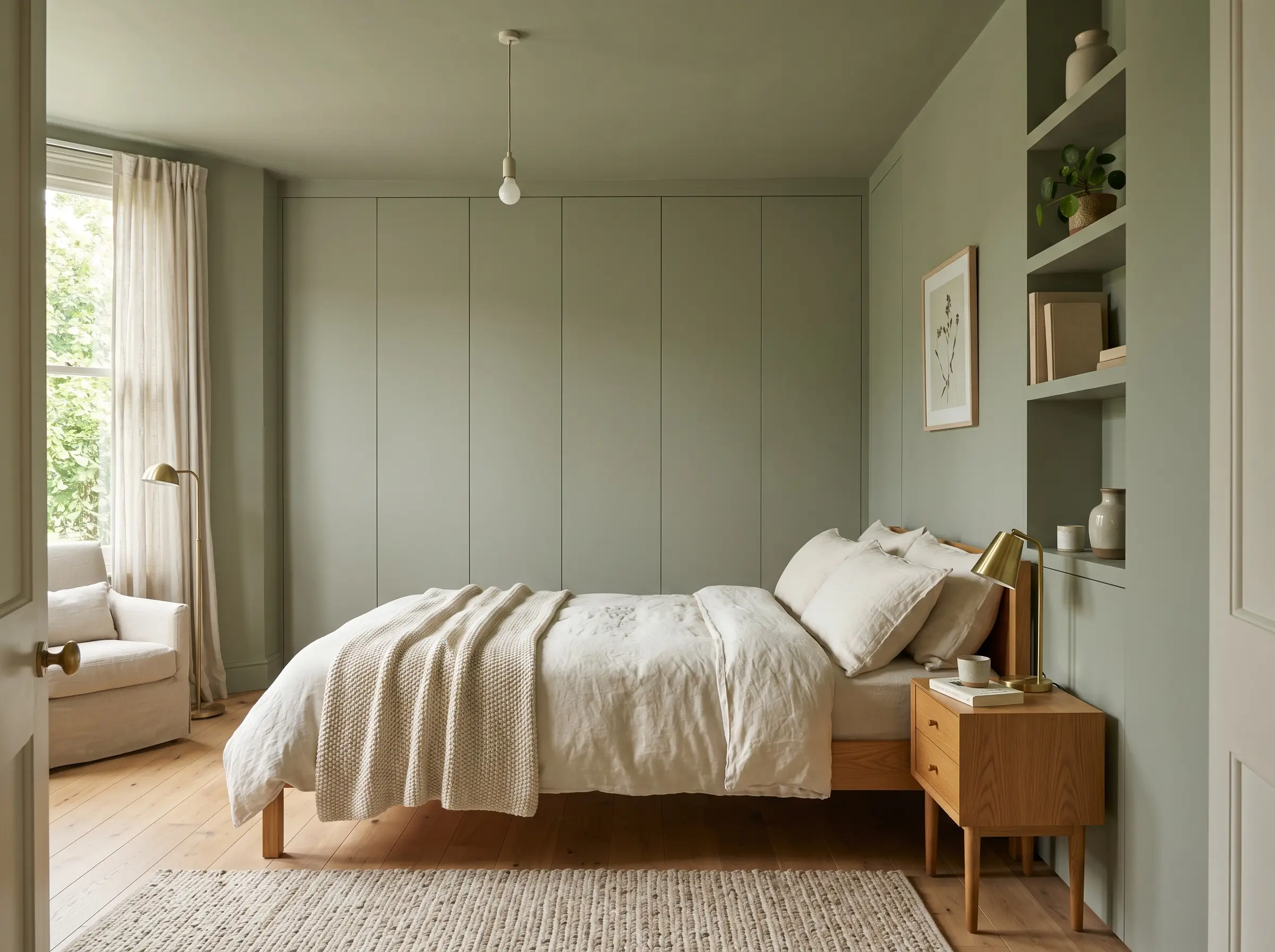
Build custom wardrobes or floating shelving painted in the exact same sage green as the walls to completely hide daily items. Visual clutter instantly destroys the calming psychological effect of a biophilic palette, making closed storage an absolute necessity.
- Vibe: Seamless Sanctuary
- Key Technique: Color-matched millwork
- Styling Focus: Out-of-sight organization is the backbone of organic luxury
33. Style with Vintage Terracotta Pots
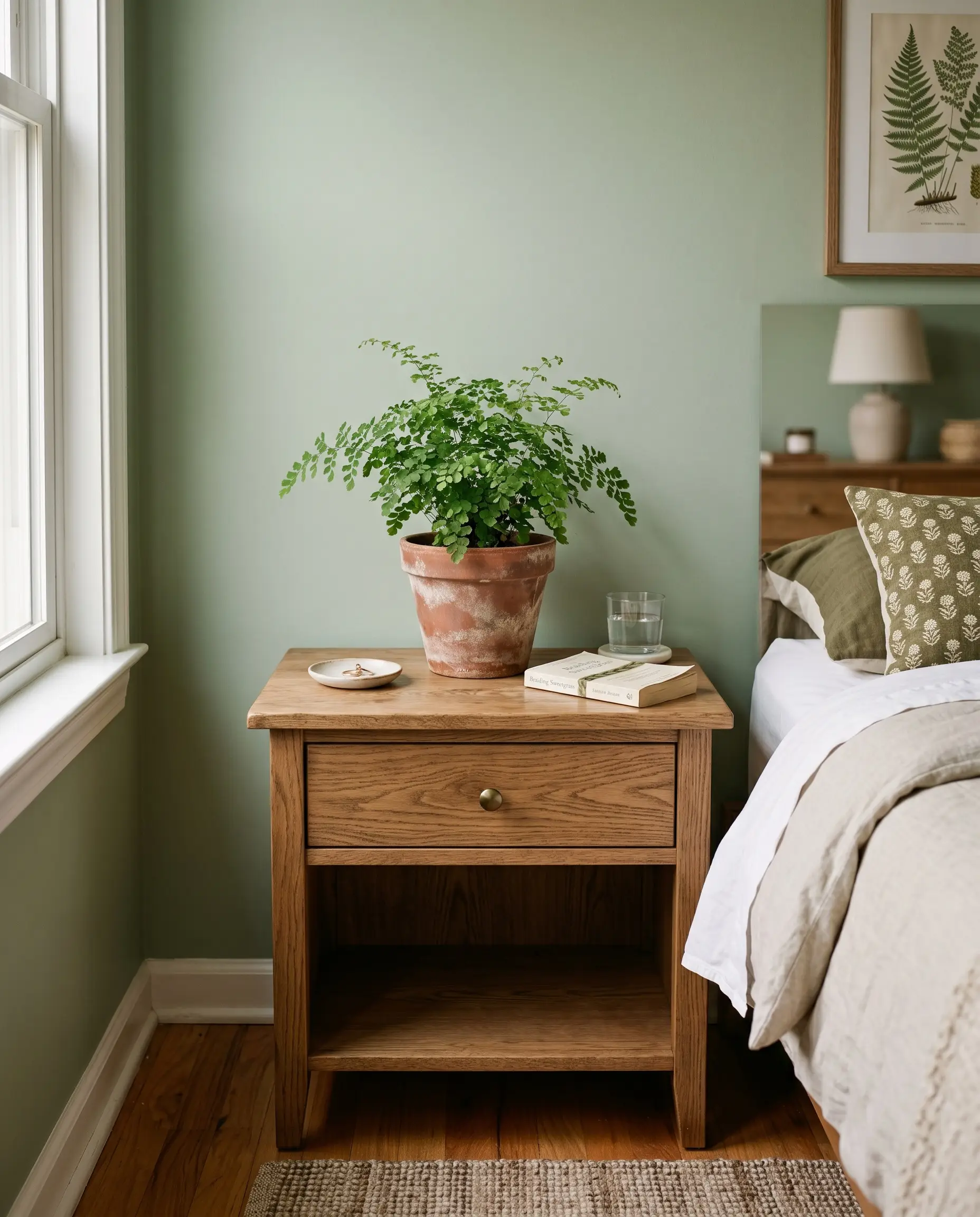
Add small, aged terracotta pots for your bedside plants to introduce a highly calculated, subtle accent color. The dusty, muted rust of the terracotta sits opposite green on the color wheel, adding a vital touch of warmth without ruining the neutral vibe.
- Vibe: Earthy Contrast
- Key Material: Weathered, unglazed terracotta
- Styling Focus: Embrace pots with white calcium buildup for authentic aging
34. Incorporate Fluted Glass Lighting Pendants
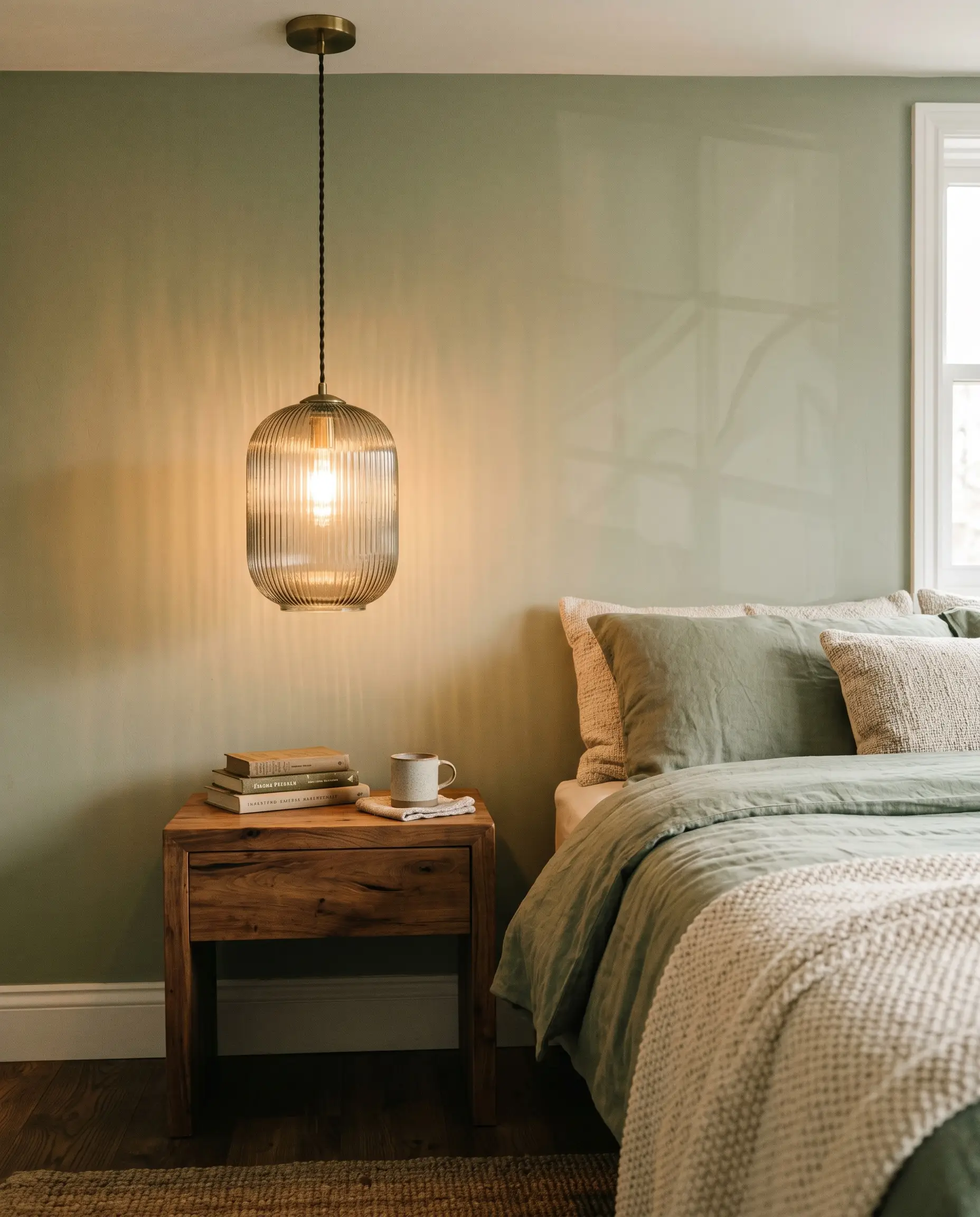
Hang fluted or frosted glass pendants over the nightstands to introduce an elegant, visually distorted light source. The ribbed glass diffuses the bulb softly, fitting perfectly into the highly tactile, sensory theme of the bedroom.
- Vibe: Soft Geometry
- Key Material: Fluted or ribbed glass
- Styling Focus: Contrast the heavily textured fluted glass against standard, harsh clear glass fixtures
35. Finish with a Signature Room Scent
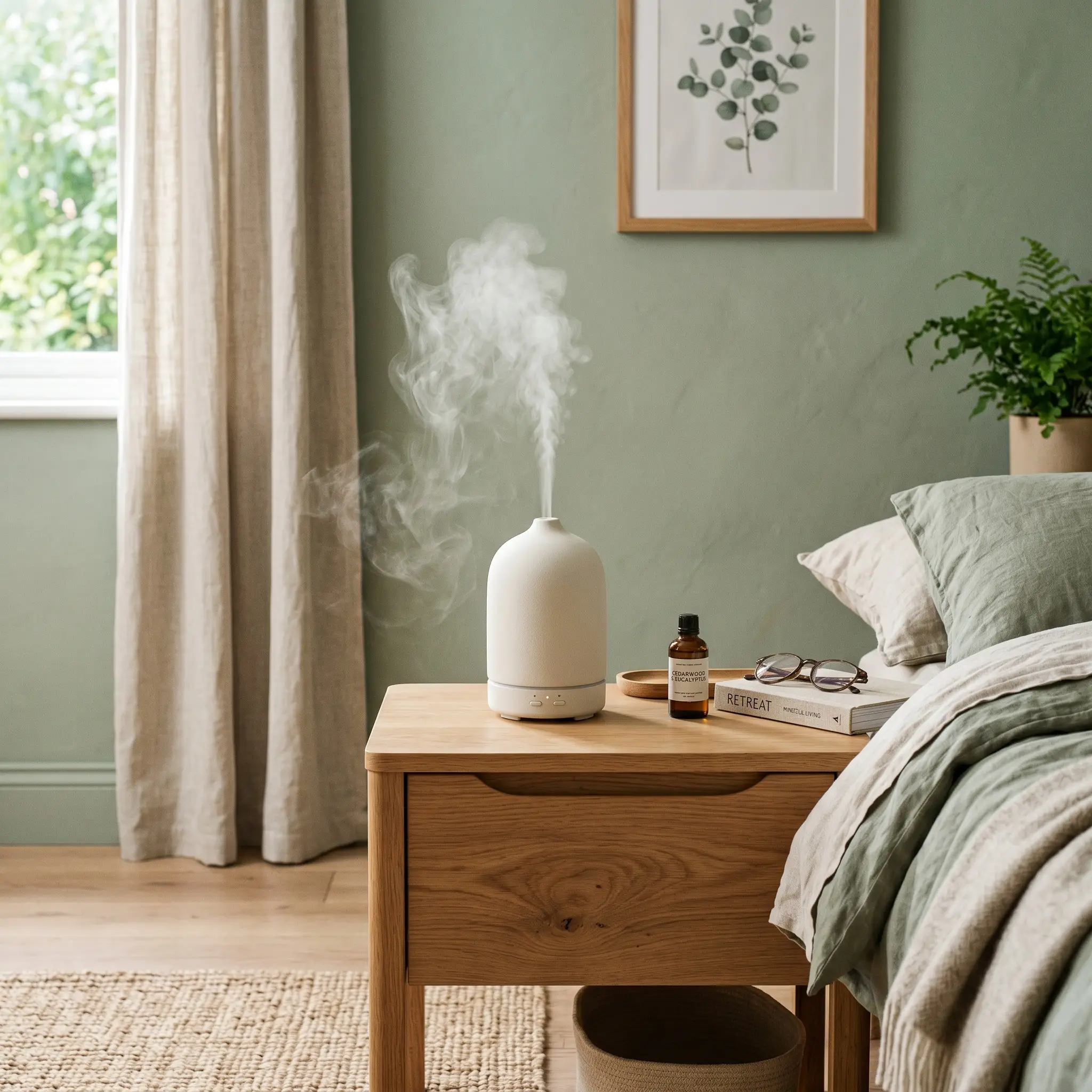
Introduce a diffuser with cedarwood, eucalyptus, or bergamot to physically make the room smell as green and fresh as it looks. A true biophilic room must engage every single sense, making ambient fragrance the ultimate invisible design layer.
- Vibe: Sensory Immersion
- Key Element: Essential oil diffusers or high-quality soy candles
- Styling Focus: Stick to woody, herbaceous scents to match the visual aesthetic
Executing the Vision: Your Next Steps to a Biophilic Retreat
Building a high-end sage green and cream bedroom is ultimately an exercise in restraint and texture. It requires you to look past the basic colors and focus heavily on the physical materials—the drag of limewash, the weight of flax linen, and the warmth of rift-sawn oak. Before committing to a paint gallon, always test your chosen sage and cream swatches on both North and South-facing walls to see how the natural light manipulates the undertones. If you are ready to start the physical transformation, prioritize investing in your heavy linen bedding first to immediately establish the sanctuary feel, and then move to the walls. Which tactile material are you most excited to bring into your space? To master the ultimate textural wall finish for this palette, explore our comprehensive guide on how to apply limewash paint like a professional.

The Hackrea Style Desk treats interior decoration as an exact visual science. Rather than focusing on demolition or floor plans, this desk masters the art of color theory, undertone matching, material pairings, and spatial proportion. From balancing the visual weight of mixed metals to finding the perfect bridging tone between disparate wood species, this desk provides the rigorous aesthetic rules needed to achieve high-end, editorial-quality harmony in any space.