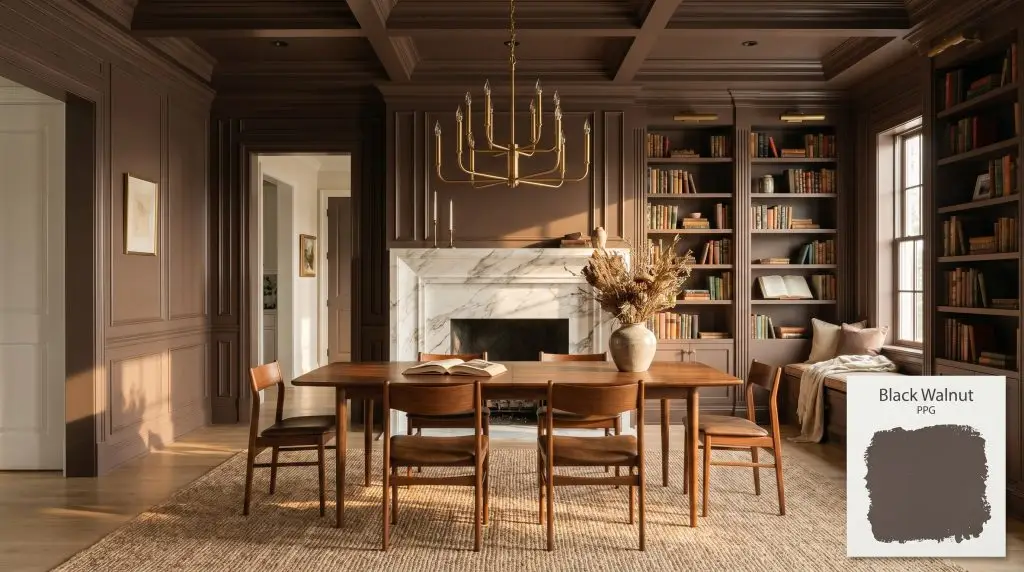
PPG Black Walnut (PPG1014-7) is a dark, warm, dusty violet-black with a distinct mauve undertone. With an LRV of 6, this deeply saturated hue functions beautifully as a dramatic interior accent or a striking exterior trim color, especially when paired with warm neutrals.
Will Black Walnut clash with your room?
Paint Technical Profile
| Color ID / SKU | PPG1014-7 |
| HEX Code | #554747 |
| Light Reflectance (LRV) | 6 |
| Use | Interior, Exterior |
| Best Exposures | South, West, or well-lit spaces |
| Best For | Exterior trim, interior accent walls, cabinetry, dramatic dining rooms |
PPG Black Walnut: Mastering the Dusty Violet-Black for High-Contrast Architecture
Most dark paints try to force a room into submission by sucking all the light out of the air. PPG Black Walnut (PPG1014-7) plays an entirely different game. Instead of acting like a flat, heavy void, this deeply saturated pigment shifts its visual weight as the sun moves across your floorboards.
When paired with heavy linens, unlacquered metals, or highly textured stone, it reveals a complex color structure that feels incredibly intentional. It acts as a grounding anchor for a highly tailored aesthetic, proving that you don’t need a historic mansion to pull off a dramatic, high-end atmosphere.
This shade is a chameleon. It allows you to build a room that feels earthy and grounded in the morning, yet sophisticated and slightly gothic by nightfall.
Decoding the Undertones & LRV of PPG Black Walnut
If you are trying to determine whether this shade runs warm or cool, the answer is a definitive, enveloping warm. While a quick glance might trick your eye into seeing a stark charcoal, its foundational DNA is built entirely on a dark warm brown.
To truly understand how this paint will behave on your walls, we have to look closely at its underlying structure:
With an LRV of 6, the light absorption here is massive. This paint swallows 94% of the light that hits it, meaning it will drastically pull the walls inward. In a dimly lit space, it reads as a near-black shadow, only surrendering its violet-brown complexity when illuminated by a direct light source.
How Sunlight and Shadows Manipulate the Pigment
Because this color is built with such a fragile balance of red and blue over a brown base, it is highly reactive to its environment. If you roll this onto the walls of a poorly lit room relying solely on cool, sterile overhead lighting, the paint will flatten out into a muddy, bruised purple.
To get that premium, rich aesthetic, you have to control the lighting. Here is exactly how the environment alters the hue:
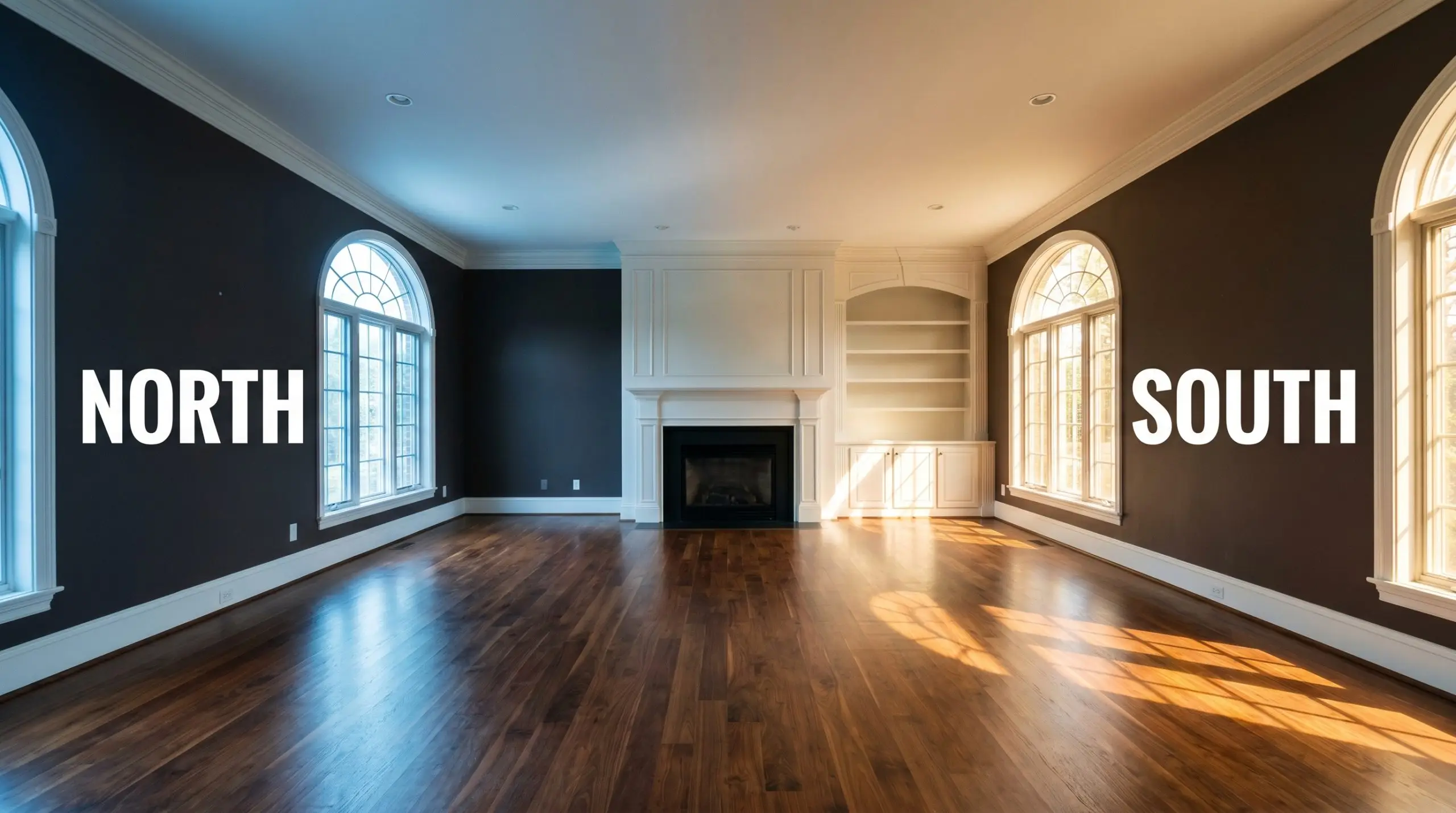
If you want to maintain the sophisticated brown-black illusion at night, strictly use 2700K bulbs in your lamps and sconces. Anything cooler will immediately pull the purple forward, completely changing the mood of the room.
Hackrea Pro-Tip (The Bulb Temperature Strategy)
Where to Apply PPG Black Walnut in Your Home
This dusty violet-black actively compresses the boundaries of a room, pulling the walls inward to create a sense of quiet intimacy. You can leverage this grounding effect across varying architectural styles to drastically shift the mood of your everyday living areas.
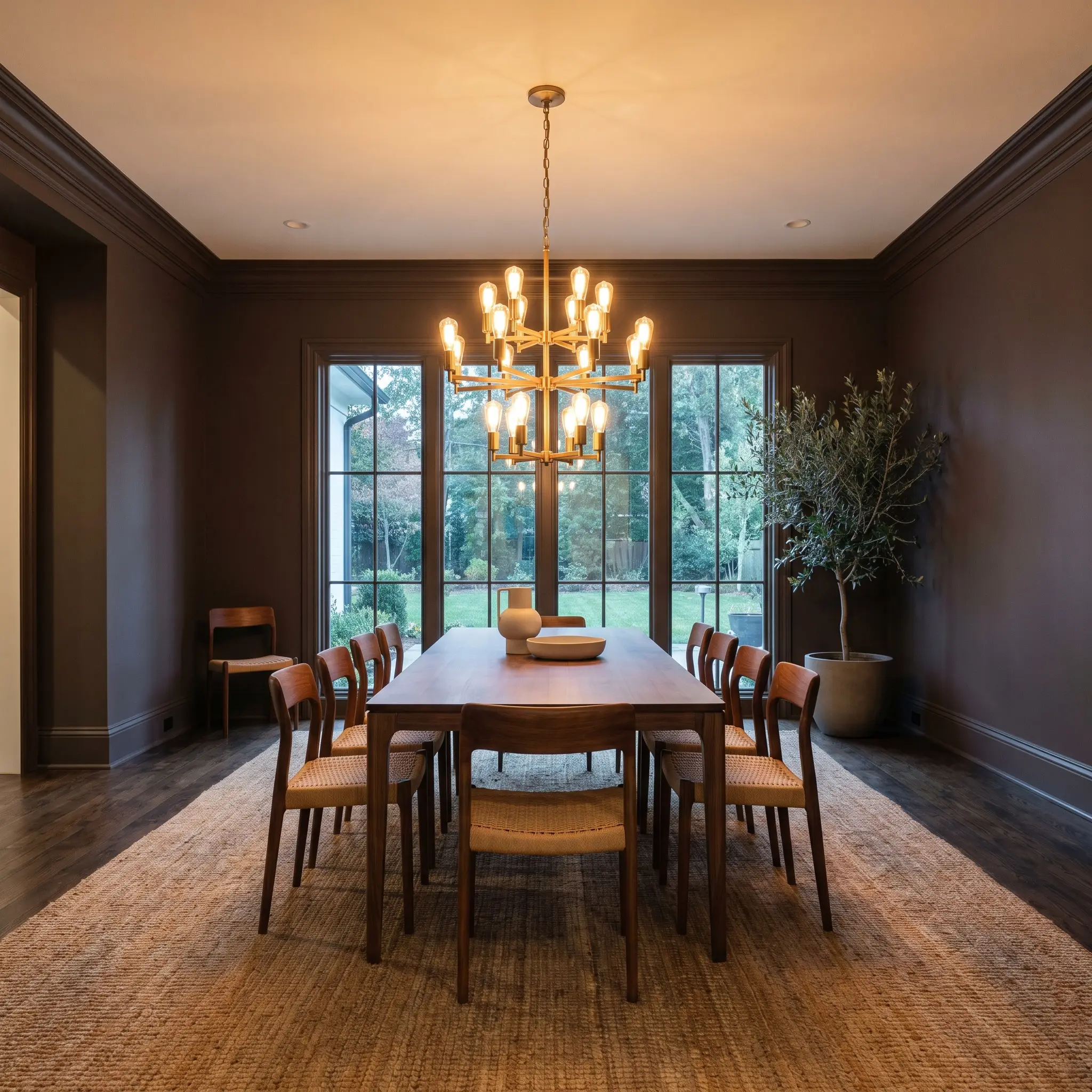
Formal Dining Areas
This shade is brilliant for creating a dramatic dining room that feels both intimate and expansive. By wrapping the walls and trim in this dark tone, you blur the hard corners of the room, allowing a warm, glowing chandelier to become the absolute focal point. Pair it with an oversized, natural jute rug and mid-century walnut dining chairs to soften the formality and introduce an organic, tactile warmth.
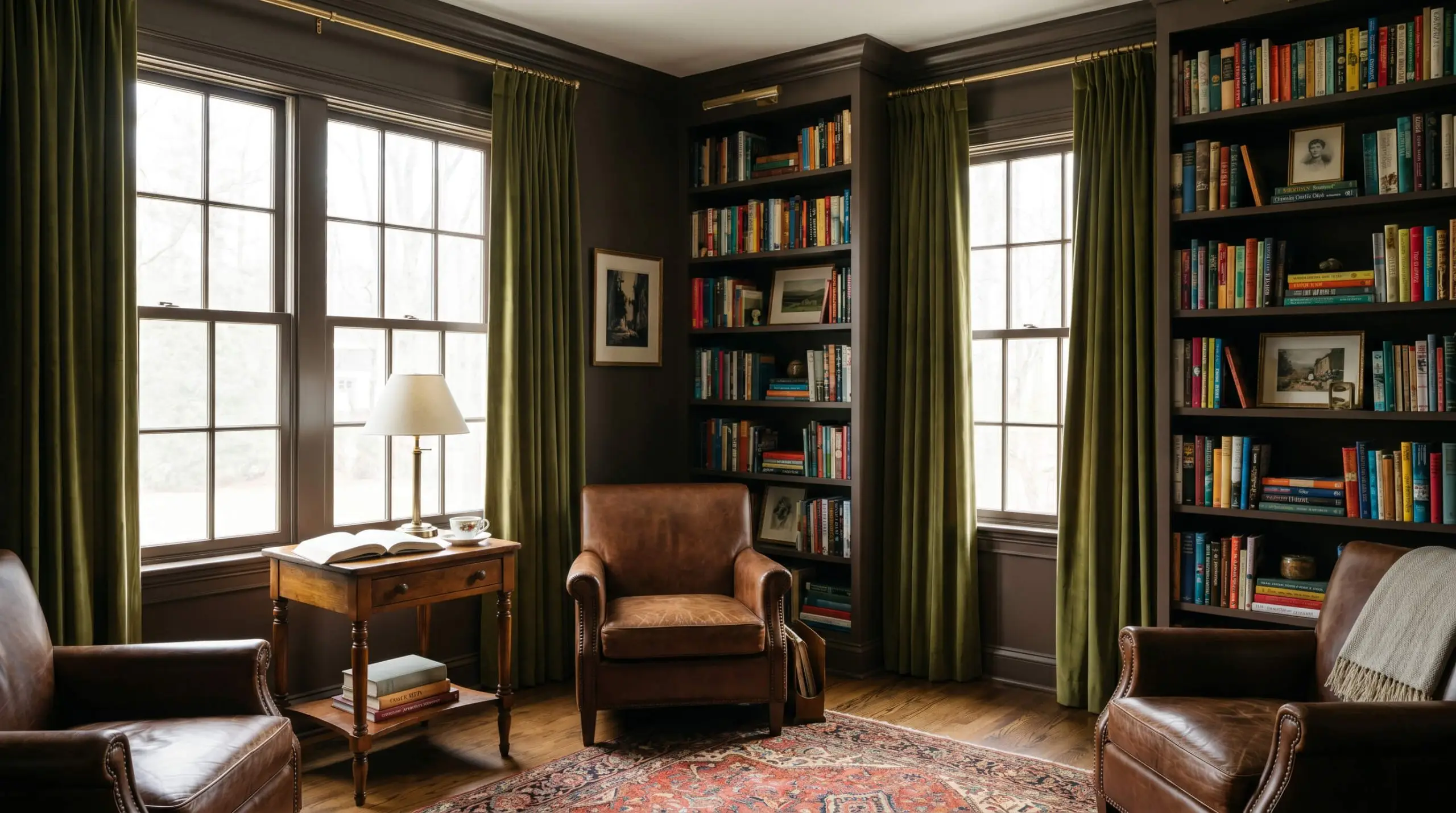
Home Libraries & Studies
If you have a room dedicated to reading or focused work, this color establishes immediate intellectual weight. The dark background makes the varied colors of book spines and framed artwork pop brilliantly against the wall. Introduce velvet window treatments in a muted gold or olive green to play off the subtle purple undertones.
Exterior Facades & Trim
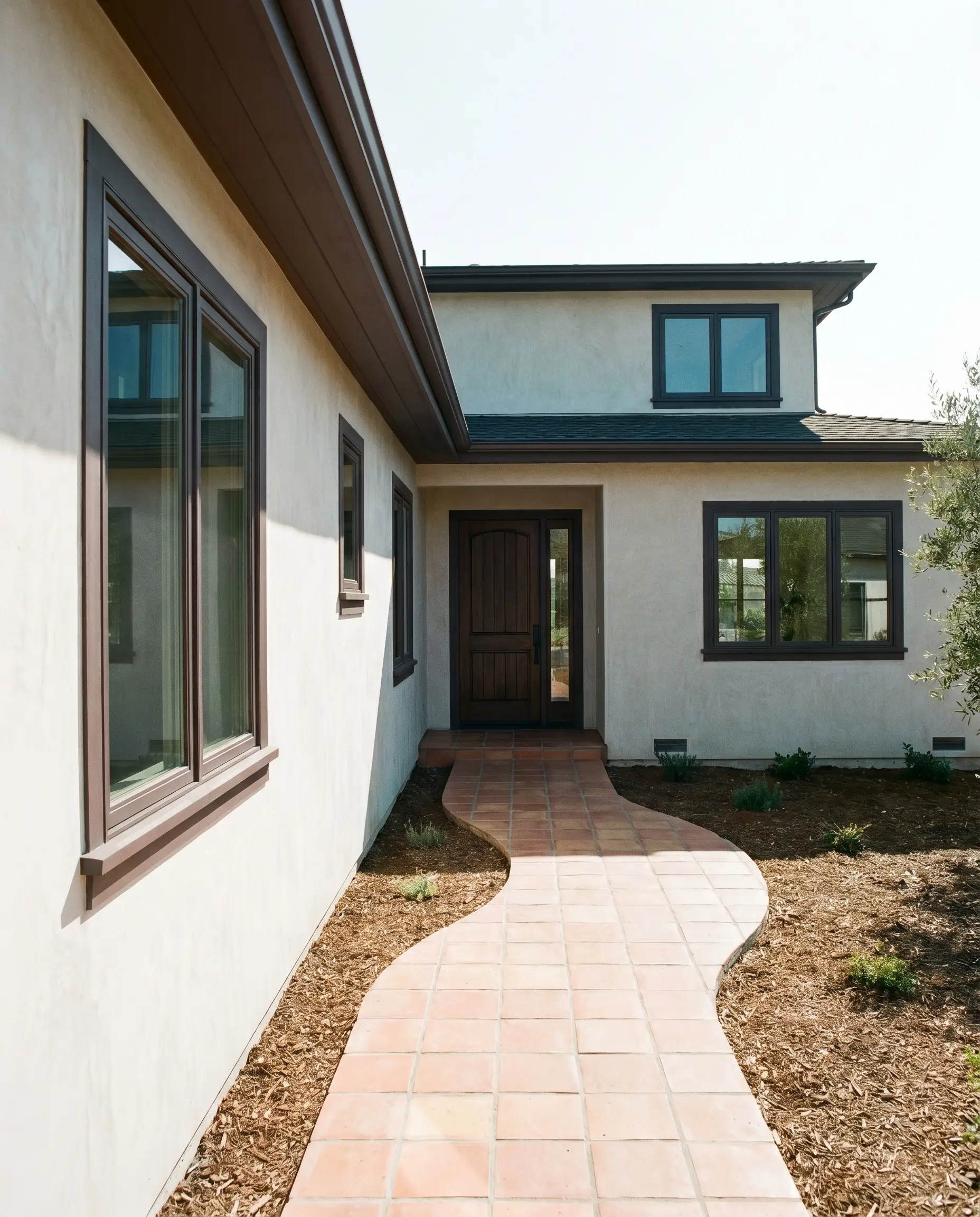
Using this shade on exterior trim, fascia, or window sashes offers a deeply sophisticated alternative to standard black. In direct, bright sunlight, the red and blue elements within the pigment combine to reveal a subtle, dusty plum cast. It grounds lighter brick or stucco homes beautifully, providing high contrast without the harsh, industrial edge of a true jet black.
Kitchen Cabinetry
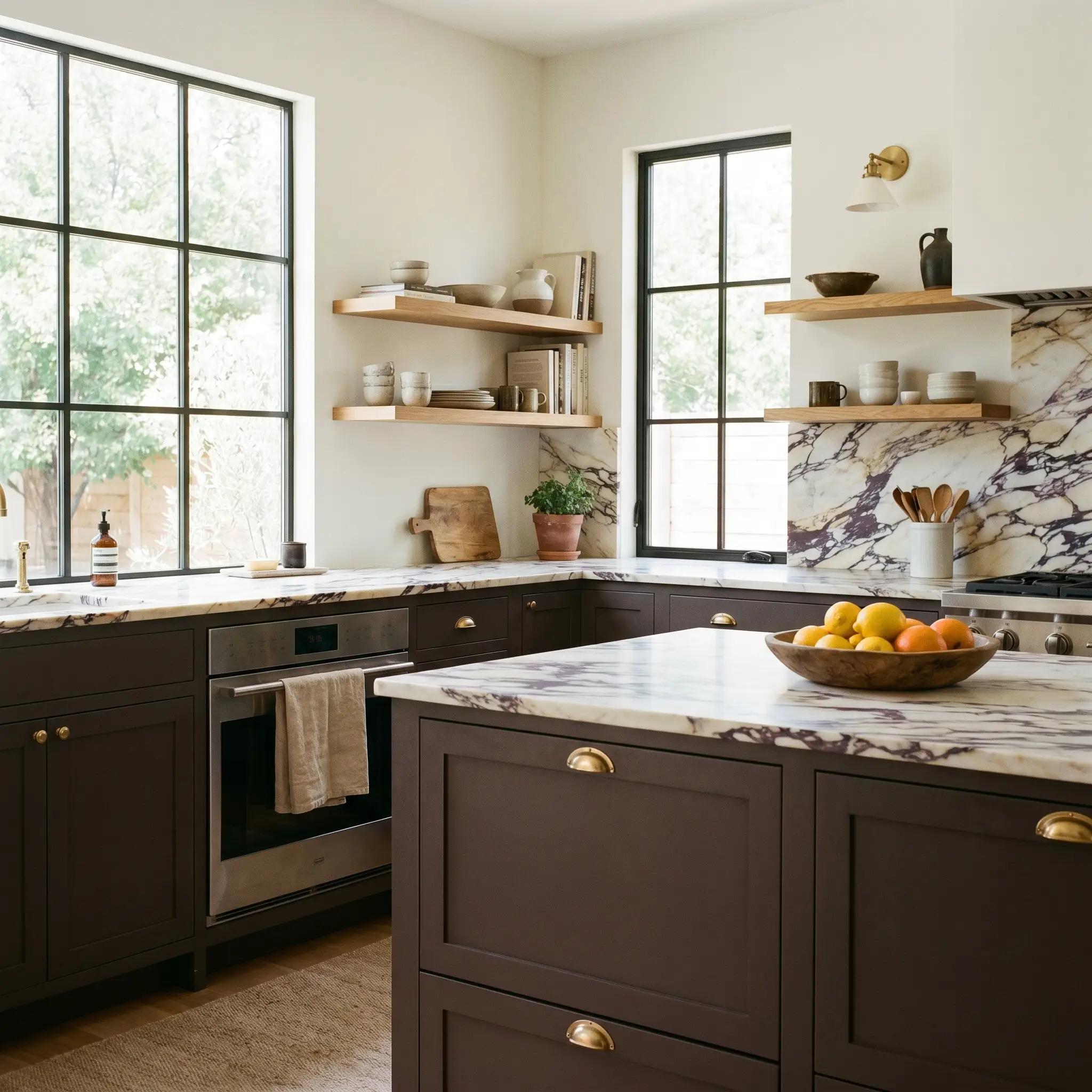
This color acts as a stunning, unexpected foundation for lower cabinets or a central island. The violet-brown base pairs exceptionally well with natural, heavily veined stone countertops, anchoring the kitchen while the upper walls remain light and airy. Use unlacquered brass cup pulls and warm oak open shelving to bridge the gap between the dark base and a lighter ceiling.
Windowless Powder Baths
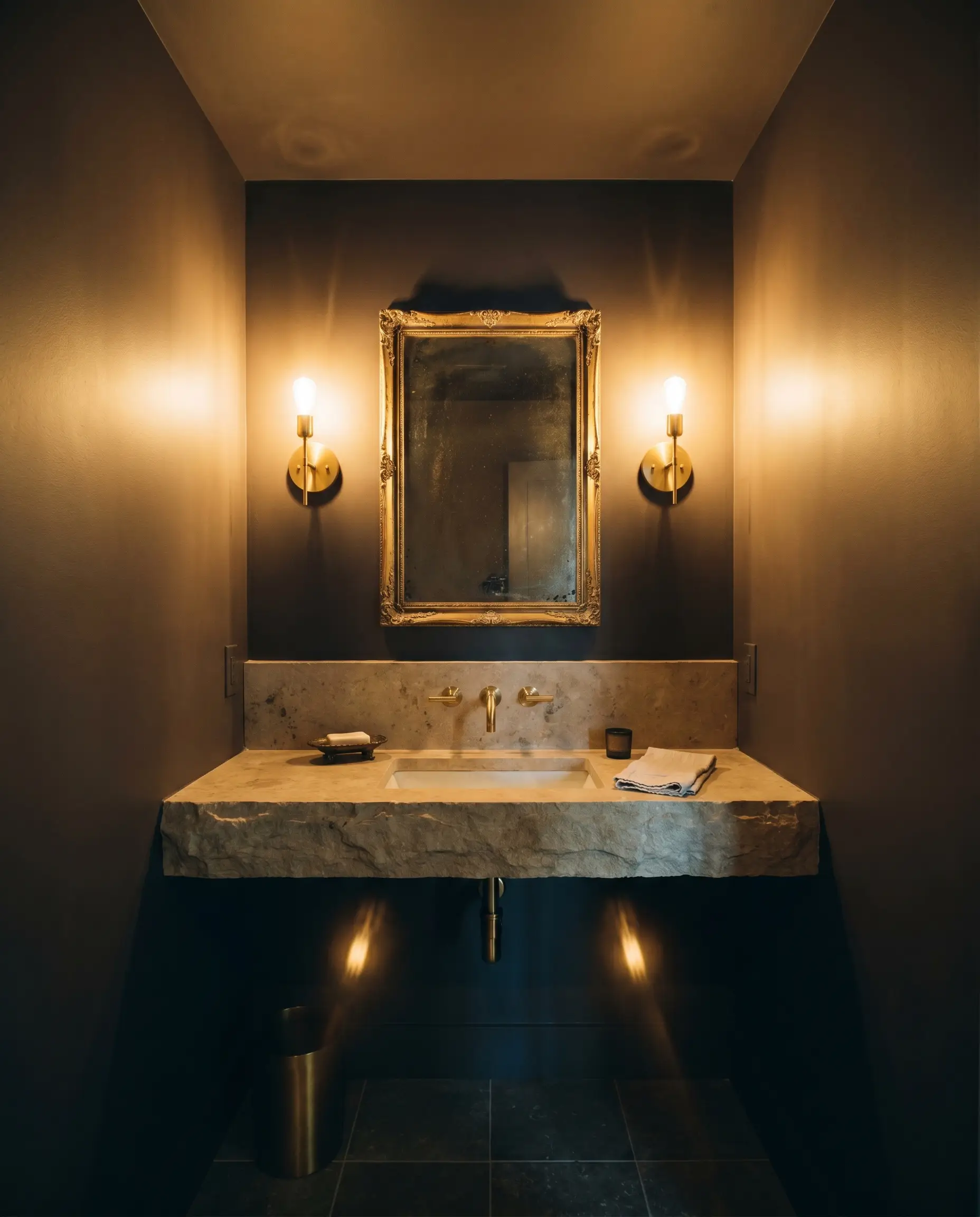
Without natural light to activate its undertones, this hue will appear as a deeply enveloping, near-black void in a small bathroom. To extract its warmth, you must intentionally introduce reflective surfaces and layered lighting. Install a pair of warm, brass-backed sconces flanking a vintage mirror to bounce light around the room and pull the rich aubergine notes out of the shadows.
Unconventional Architectural Applications
Instead of just rolling this heavy pigment across a standard wall, you can use it as a precision tool to highlight specific structural details. When applied thoughtfully, it transforms everyday millwork into custom, standout features.
The High-Gloss Heritage Soaker
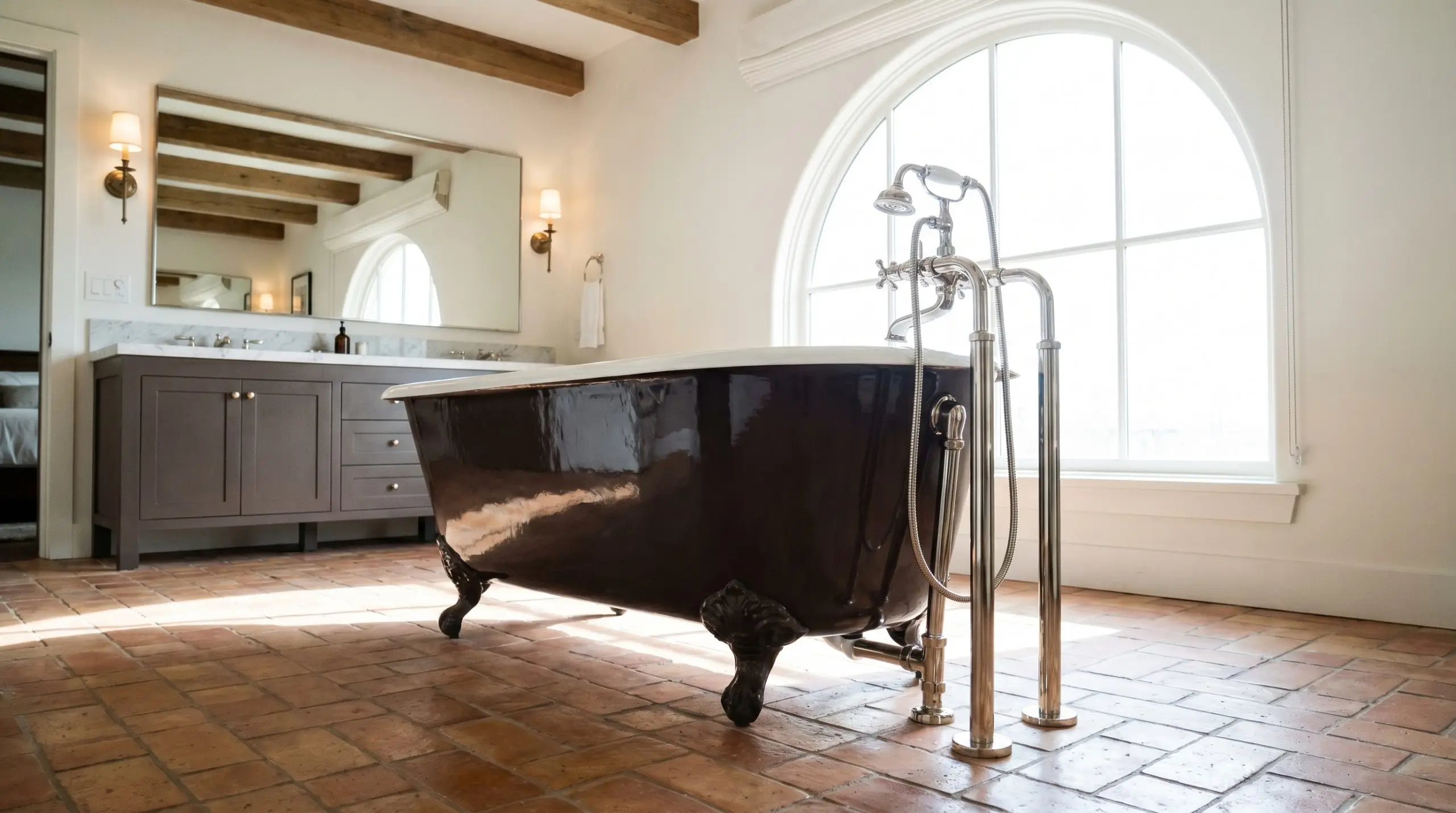
Painting the cast-iron exterior of a freestanding clawfoot tub in a high-gloss finish of this shade highlights the mauve undertones beautifully against the stark white porcelain. The glossy sheen bounces light across the curved surface, creating a luxurious focal point reminiscent of a boutique hotel suite. Pair it with polished nickel floor-mounted plumbing to keep the aesthetic crisp and highly tailored.
The Academic Enclave

Drenching floor-to-ceiling built-in library shelving in this dark, dusty violet-black creates an enveloping, intellectual atmosphere for an avid book collector. The deep, moody background pushes the colorful spines of the books forward, turning the collection itself into the primary art piece.
The Metallic Threshold
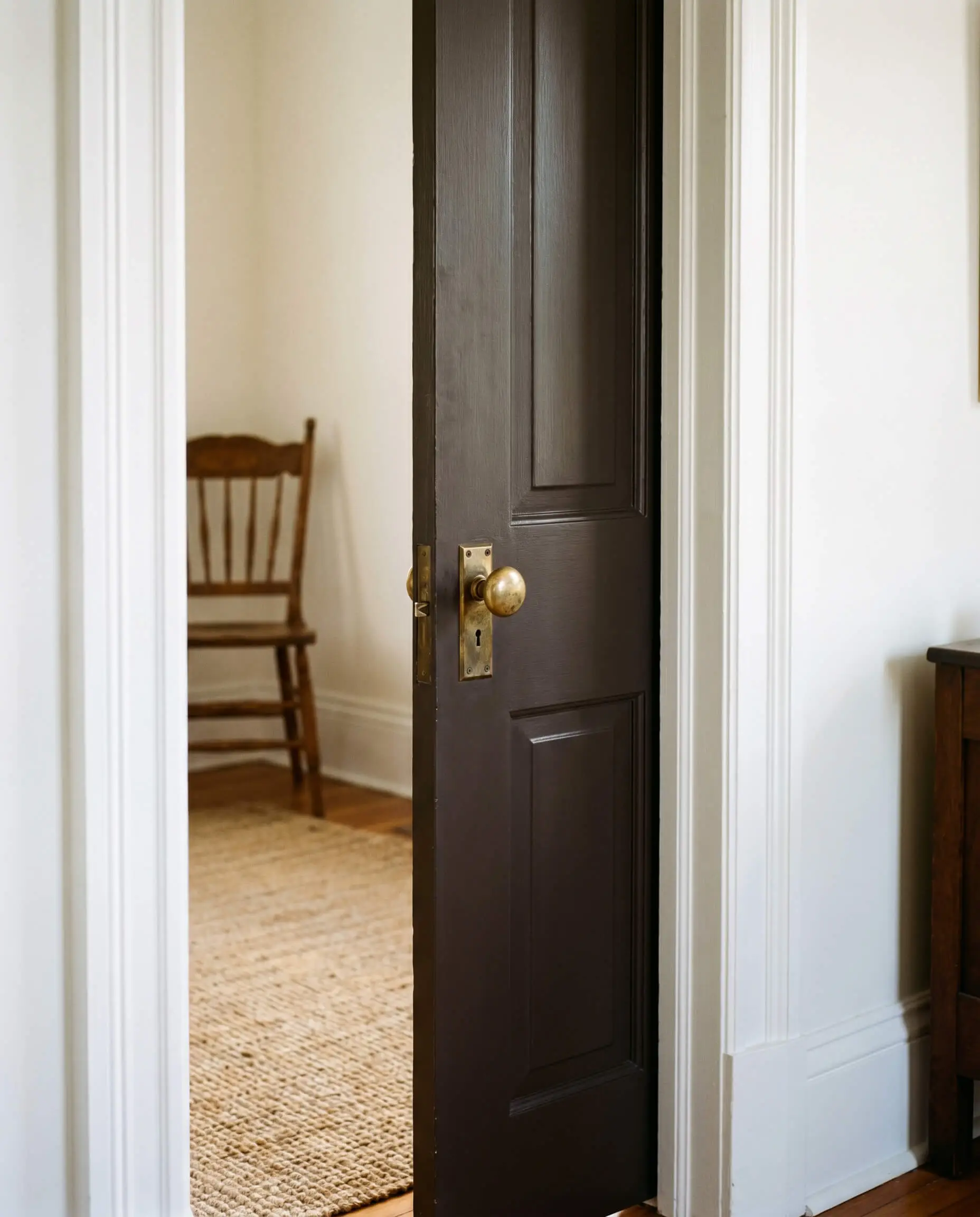
Upgrading standard interior doors with this rich, aubergine-laced dark tone offers a historically rooted yet unexpectedly chic transition between rooms. When paired with unlacquered brass knobs, the warm metal sings against the cool, dusty violet base. It is a brilliant way for a historic home restorer to add modern contrast while respecting the original architecture.
The Grounding Crown
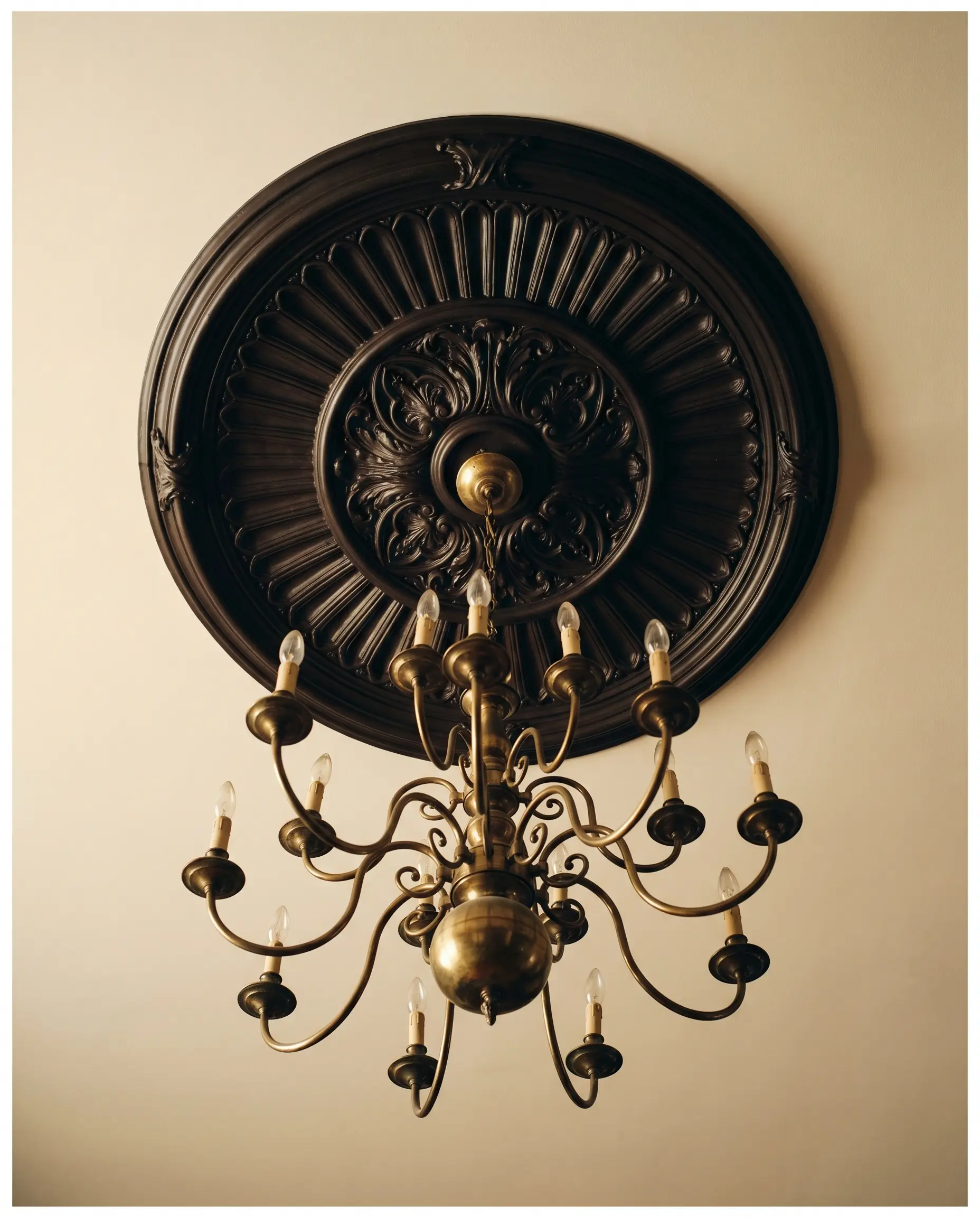
Applying this deeply saturated tone to an ornate plaster ceiling medallion anchors a maximalist chandelier, drawing the eye upward while adding a layer of gothic sophistication. The dark pigment highlights the intricate plaster detailing by creating deep, dramatic shadows within the grooves.
Material Pairings and Palette Combinations
This paint requires a thoughtful supporting cast to keep it from feeling too heavy or cavern-like. The secret to styling it lies in balancing its massive visual weight with materials that either reflect light or introduce organic, earthy textures.
Trim & Baseboards
When framing this dark color, your trim choice dictates the entire crispness of the room.
Hardware, Textures & Tactile Elements
Coordinating Paint Colors
Curated Mood Boards
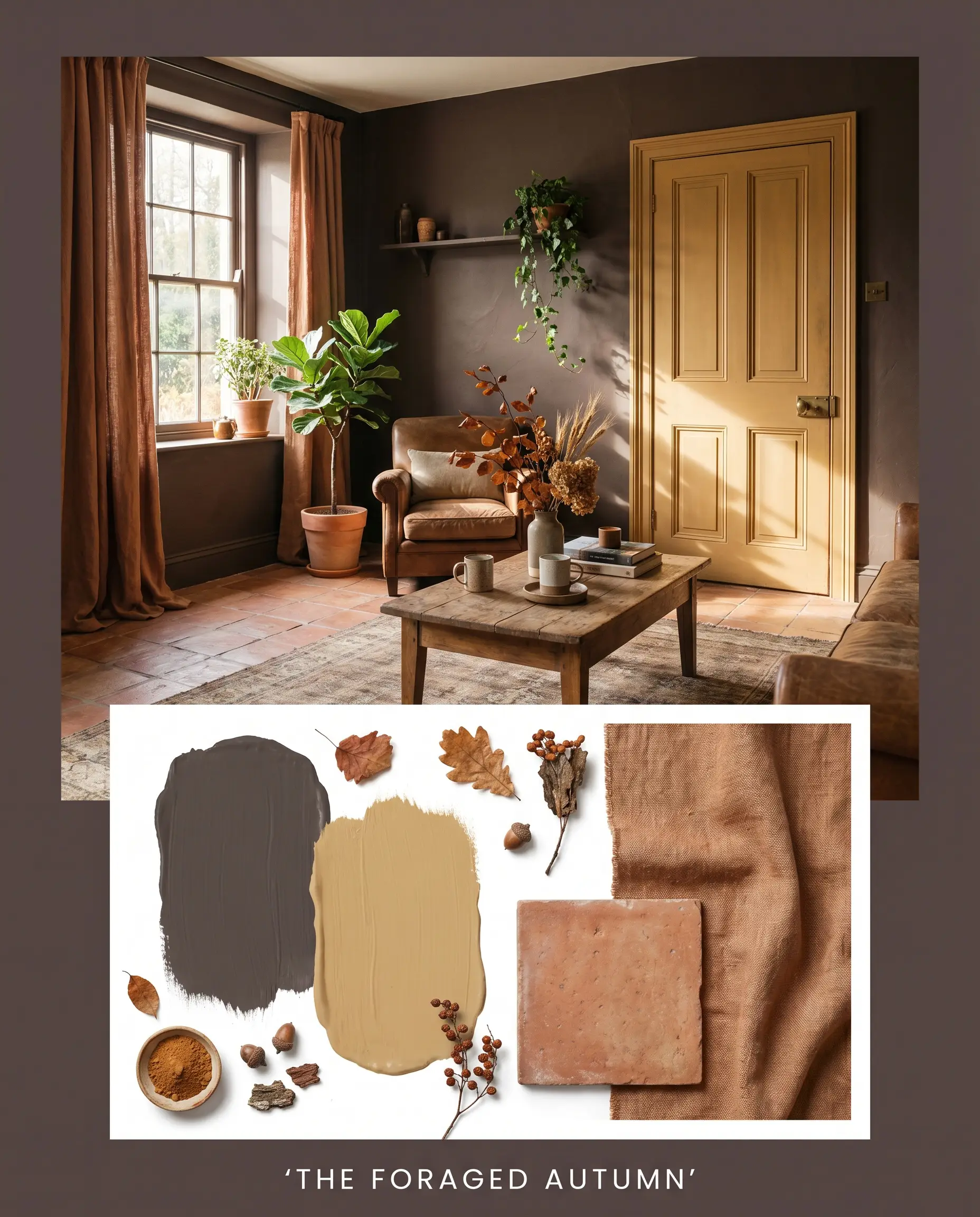
The Foraged Autumn This palette relies on deep, grounding earth tones to create a sense of quiet refuge. Pair the dark walls with tumbled terracotta floors, heavy linen drapery, and accents of Sherwin-Williams Tarnished Trumpet on the interior doors. The resulting energy is incredibly warm, rooted, and slightly rustic, perfect for spaces meant for slow mornings and long conversations.
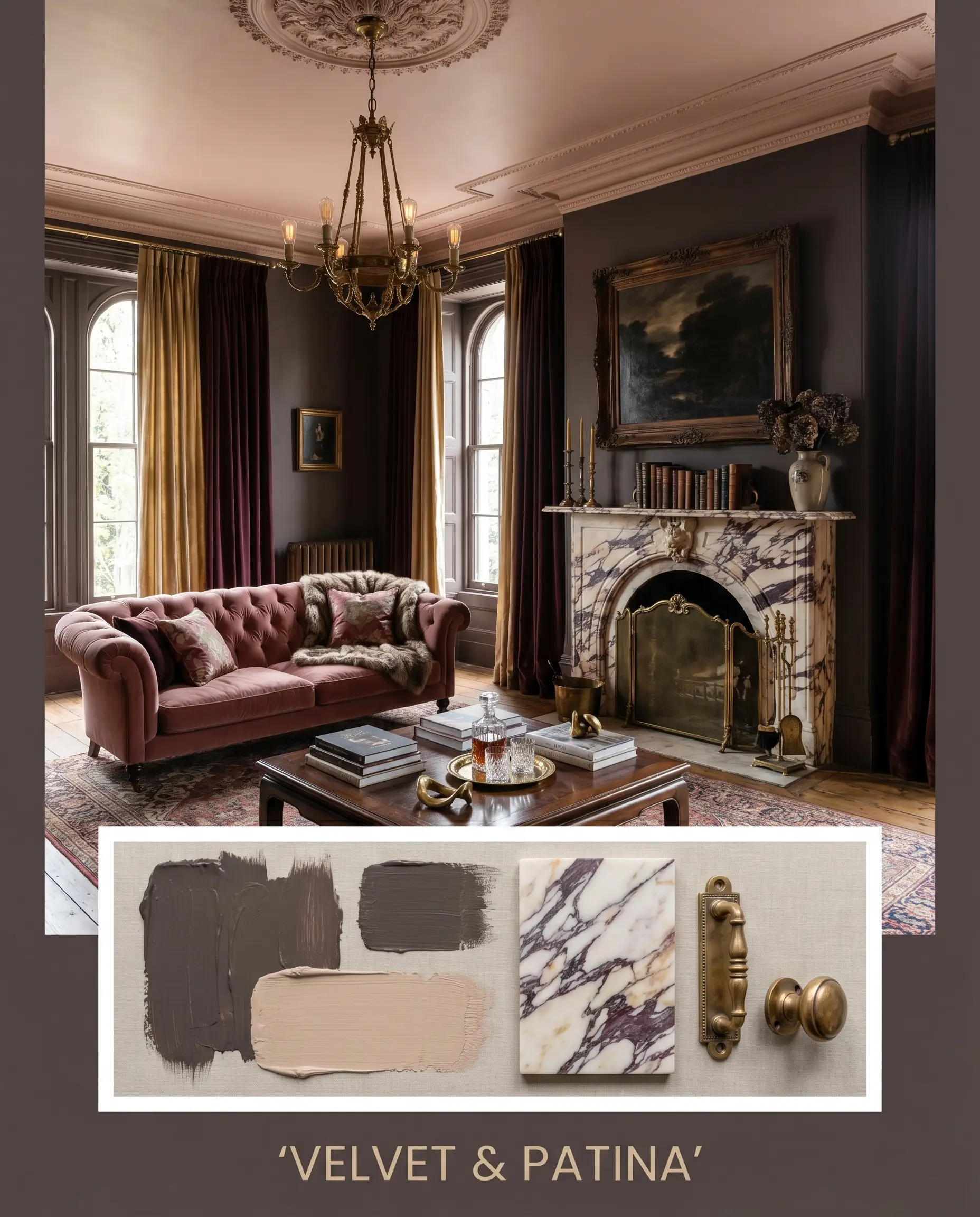
Velvet & Patina Designed for pure, unapologetic drama, this combination leans into the paint’s gothic elegance. Anchor the room with Calacatta Viola marble, unlacquered brass hardware, and soft touches of Farrow & Ball Setting Plaster on the ceiling. The vibe is lush, highly curated, and deeply romantic, bouncing soft light around the room through the metallic finishes.
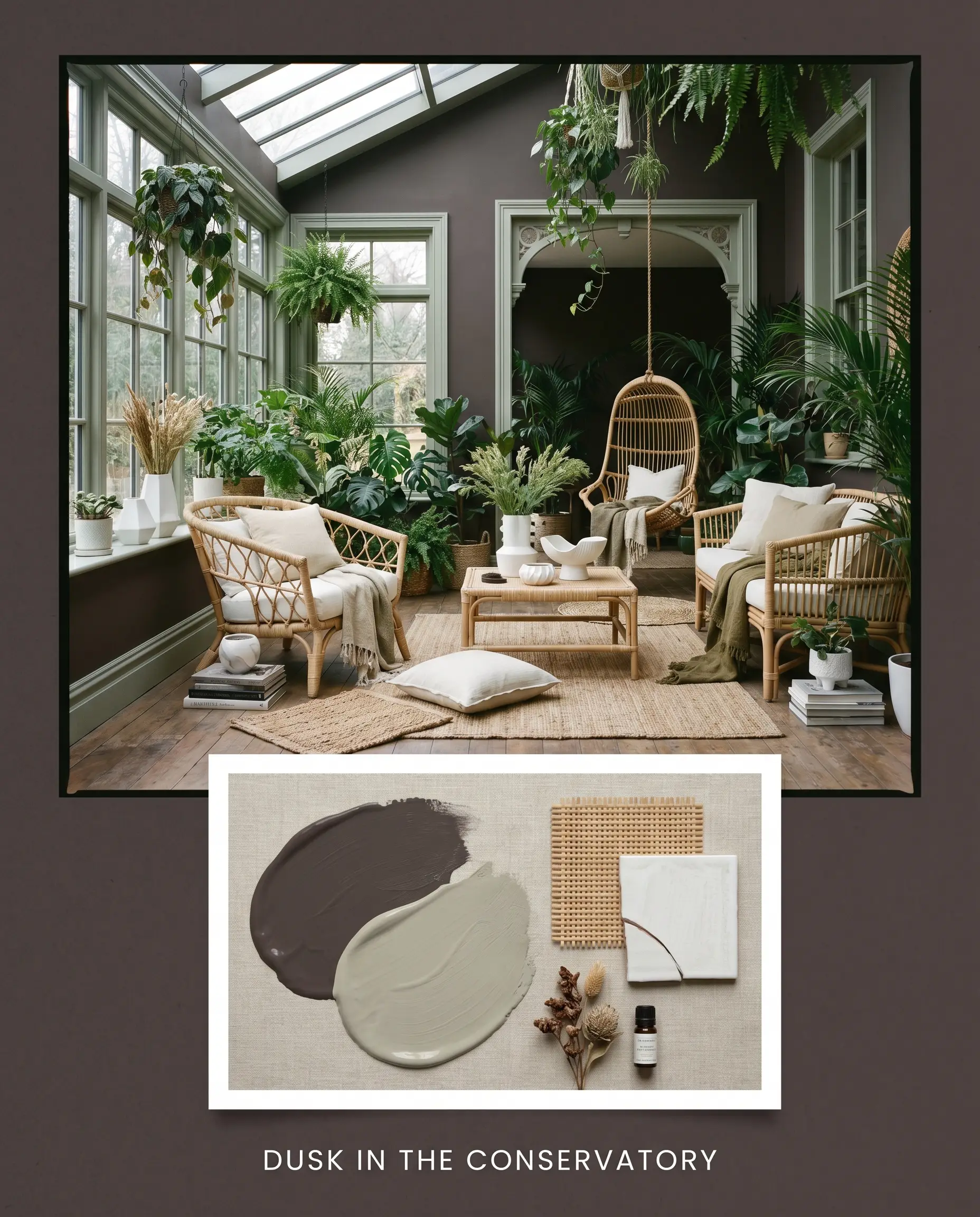
Dusk in the Conservatory This approach uses cool, organic elements to balance the heavy warmth of the walls. Introduce Benjamin Moore October Mist on the trim and pair it with natural rattan furniture and crisp white ceramics. The interplay between the dark violet-brown and the silvery sage creates a fresh, botanical energy that feels alive and breathable.
Direct Comparisons: PPG Black Walnut vs. Industry Rivals
Sometimes, the specific lighting in your home requires a slight pivot. If your room receives entirely cool northern light, you might need to adjust your strategy to avoid the color pulling too purple.
PPG Black Walnut vs. PPG Black Elegance (PPG1004-7)
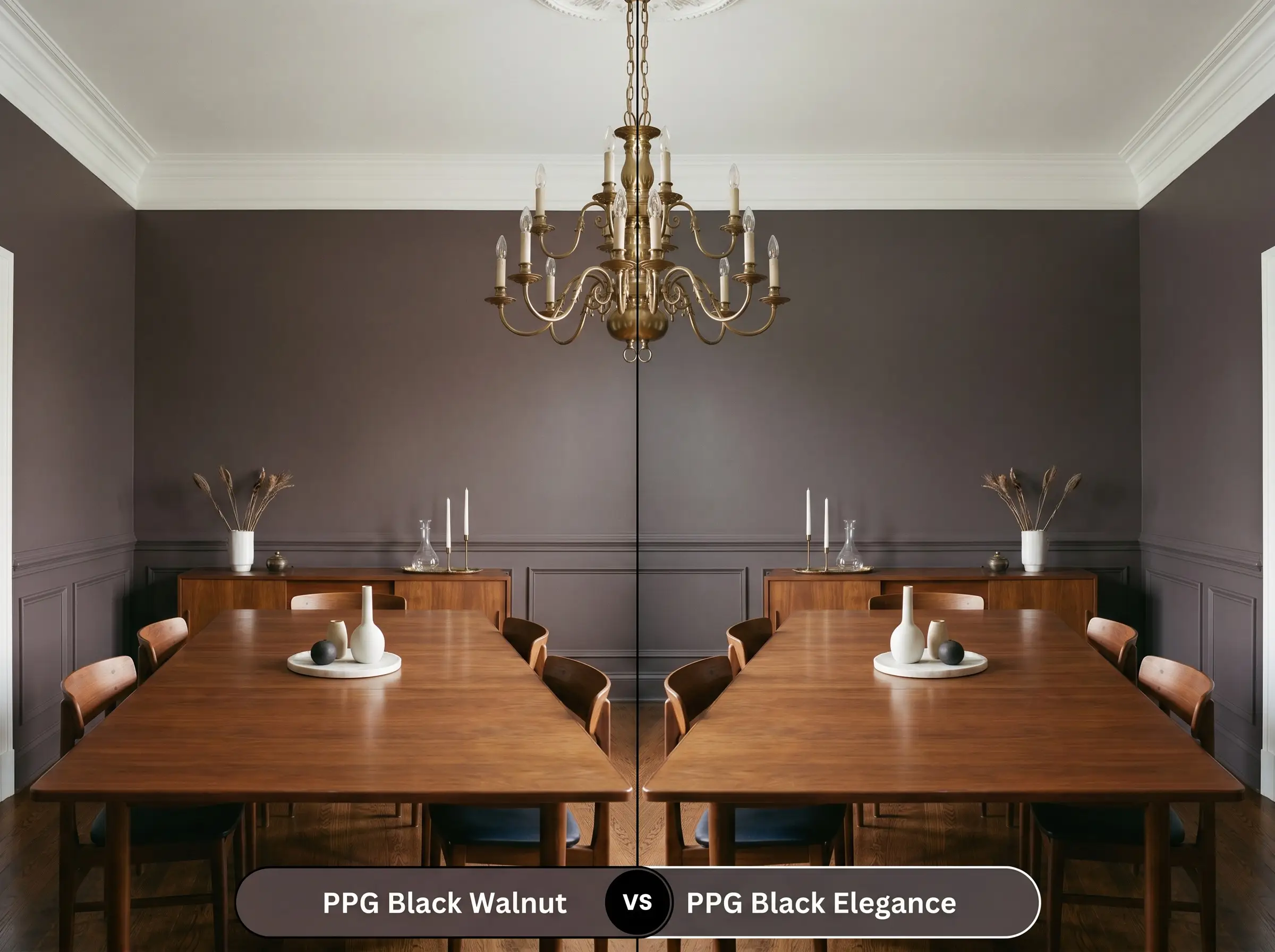
If you want a true, classic charcoal without the purple influence, Black Elegance is the safer route. It is slightly cooler and leans more toward a traditional black, whereas Black Walnut retains its distinct dusty-violet warmth. Choose Black Elegance for stark, modern spaces, and stick with Black Walnut for rooms that need an earthy, historic touch.
PPG Black Walnut vs. Sherwin-Williams Black Fox (SW 7020)
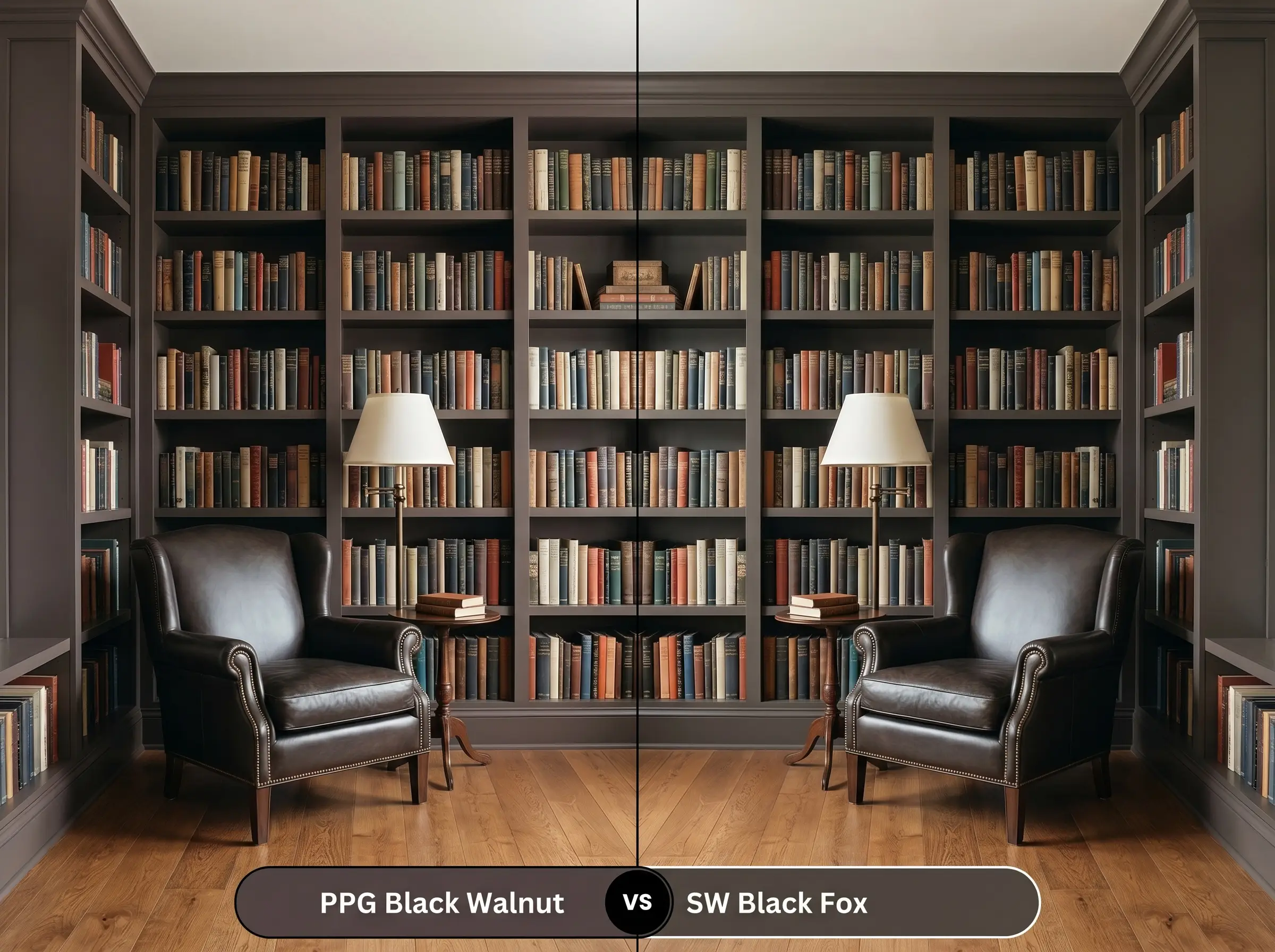
Black Fox is a more traditional dark greige-brown that lacks the aubergine complexities found in the PPG shade. If you are pairing the paint with standard warm woods and want a straightforward, rich brown, Black Fox is highly predictable. However, if you want that subtle, shifting violet undertone that changes throughout the day, Black Walnut provides a much more dynamic finish.
Alternative Shades and Cross-Brand Matches
If you love the concept of this color but need a slightly different undertone or are shopping across different paint lines, here are the closest relational matches.
Execution Strategy and Finish Selection
Applying a color with an LRV of 6 requires patience and the right materials. Dark pigments are notoriously unforgiving of wall imperfections, so your preparation dictates your final result.
The Sheen Guide
Primer & Preparation
You cannot roll this color over a stark white primer and expect it to look rich. Deep, saturated colors require a tinted gray primer to help the paint achieve its true depth. If you skip the tinted primer, the brown base will look streaky, and the violet undertones will struggle to cover the white beneath it.
Coats & Touch-Up Warnings
Plan for a minimum of two full, generous coats, though three may be necessary depending on your roller technique.
Dark paints are highly susceptible to “flashing”—visible, uneven streaks or shiny patches where the roller overlapped unevenly. Always maintain a wet edge while rolling, and never go back to touch up a semi-dry spot. If you miss a spot, wait for the entire wall to dry completely before addressing it.
Clash Warning (The Flashing Effect)
Frequently Asked Questions
In direct, bright sunlight, the red and blue elements within the color structure combine to reveal a subtle, dusty plum or mauve cast. It will not look like a bright purple, but it will read as a highly nuanced, warm violet-black rather than a flat charcoal.
Without natural light to activate its undertones, this hue will appear as a deeply enveloping, near-black void. To extract its warmth in a windowless space, you must use warm artificial lighting (2700K) and reflective surfaces like brass or mirrored sconces.
A high-gloss or satin finish reflects more light, which actively bounces the hidden violet and red notes back to the eye. A flat or matte finish will absorb the light, making the tone appear flatter, darker, and more traditionally brown-black.
Yes, it acts as a stunning, unexpected grounding color for lower cabinets or islands. The dusty violet-brown base pairs exceptionally well with marbles that feature warm gold or subtle burgundy veining, creating a beautifully integrated aesthetic.
The Final Verdict on PPG Black Walnut
PPG Black Walnut (PPG1014-7) is an architectural finish designed for homeowners who want the drama of a dark room without the cold, industrial chill of a standard black. It is perfect for formal dining spaces, moody libraries, and custom cabinetry where its dusty violet-black profile can be illuminated by warm lighting and tactile materials. It thrives in homes that embrace rich textures, layered lighting, and a touch of historic elegance.
However, you must be incredibly careful with your existing hard finishes. If your home is filled with cool, icy gray luxury vinyl plank flooring or stark, blue-toned white marble, this paint will clash aggressively. The warm aubergine cast will fight against the cool undertones of those materials, making the floors look sterile and the paint look muddy. Stick to warm woods, natural unlacquered metals, and earthy stone to let this complex, beautiful pigment perform at its absolute best.
Real-World Inspiration Be the first to upload a real photo of Black Walnut!
No Photos Yet
Includes +20 First Upload Bonus!
Real Experiences
Insights from people who have used Black Walnut.No reviews yet
Be the first to share your experience with Black Walnut.
Earn 15 points instantly!
Closest Cross-Brand Equivalents
The absolute closest scientific color matches for Black Walnut across top paint brands.