The Architecture of Elegance: Mastering the “Quiet Luxury” Home
The relentless churn of internet micro-trends has created an environment of profound aesthetic exhaustion.
From the chaotic visual density of maximalism to the highly stylized rusticity of pastoral revivals, modern residential interiors have become a revolving door of fleeting identities. To participate in these rapid-fire cycles is to guarantee your home will look distinctly dated within thirty-six months.
True wealth whispers.
The cultural shift toward stealth wealth—a movement heavily telegraphed by the meticulous tailoring of fashion houses like The Row or the cinematic environments of Succession—has firmly rooted itself in the highest echelons of spatial design. This is not a passing aesthetic. It is an antidote to the noise. It is the realization that looking “rich” relies on outward display, while being wealthy is an entirely internal, experiential condition.
Mastering this environment requires an absolute devotion to provenance, materiality, and sensory restraint. It demands an interior architecture where the eye is never forced to pause on a jarring seam, a synthetic fabric, or a prominent logo.
What Exactly is “Quiet Luxury” in Interior Design?
Quiet luxury is the precise intersection of rigorous architectural minimalism, traditional artisan craftsmanship, and extreme physical comfort. It is an environment curated with such exacting standards that the resulting space feels entirely effortless. Before examining the tangible materials that construct these spaces, one must first understand the philosophical framework that dictates their selection.
The “Stealth Wealth” Mindset vs. Traditional Minimalism
To conflate stealth wealth with standard minimalism is a fundamental misunderstanding of the discipline.
Absence vs. Quality is the dividing line. Traditional minimalism often focuses entirely on the absence of things, stripping a room down to its barest geometry. While mathematically pure, this approach frequently results in spaces that feel stark, clinical, and physically uninviting.
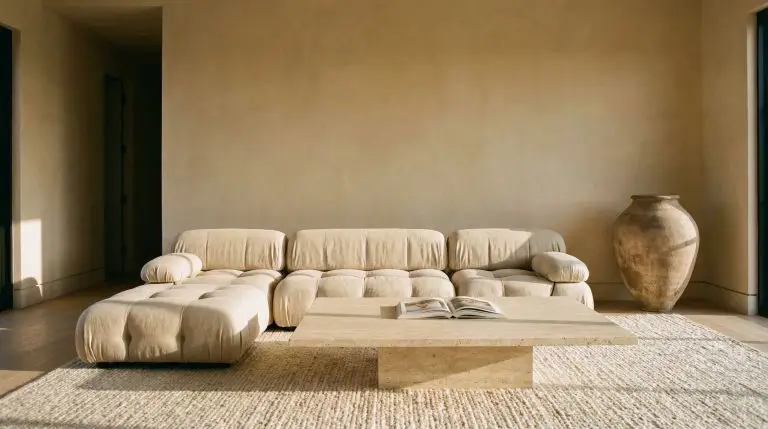
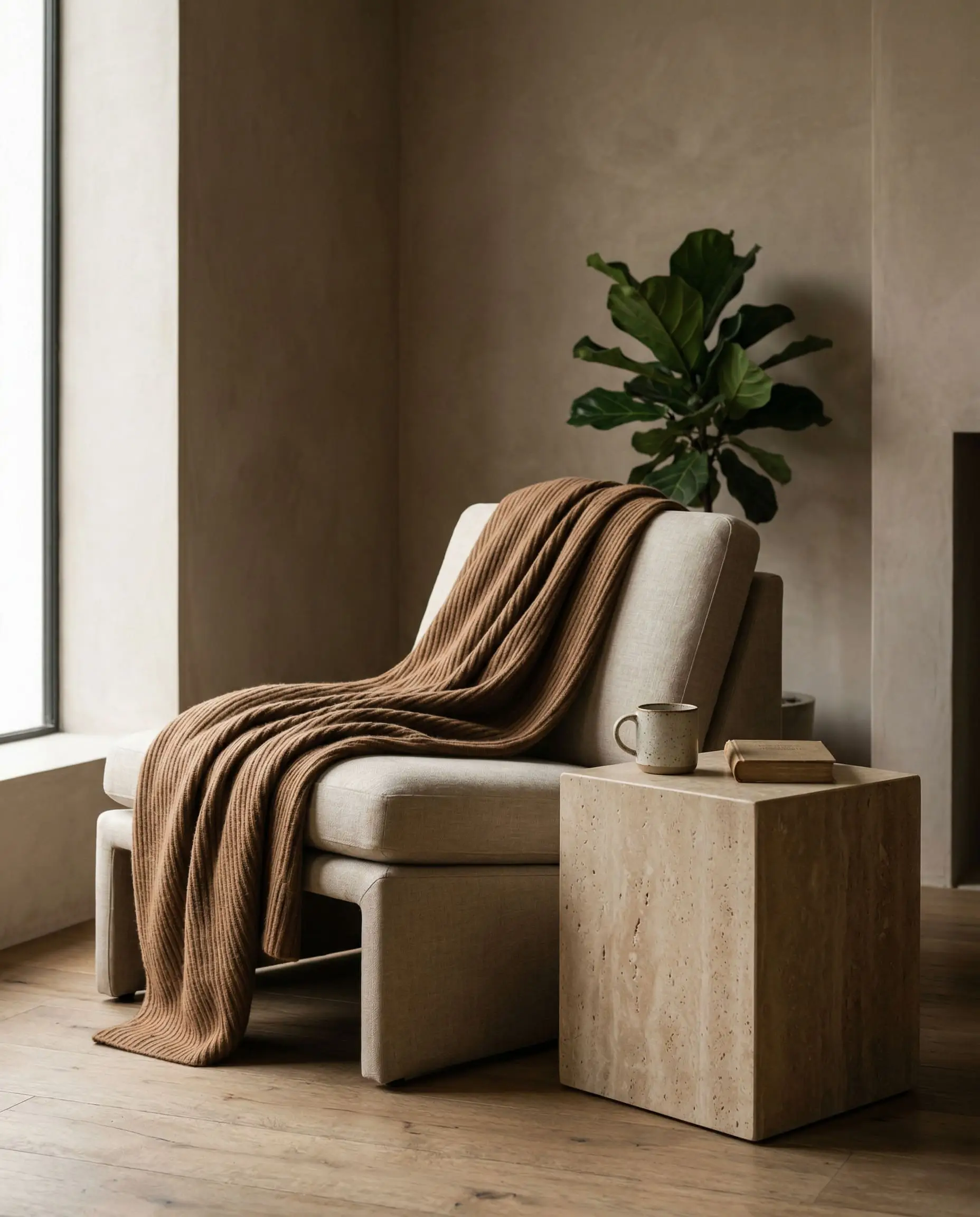
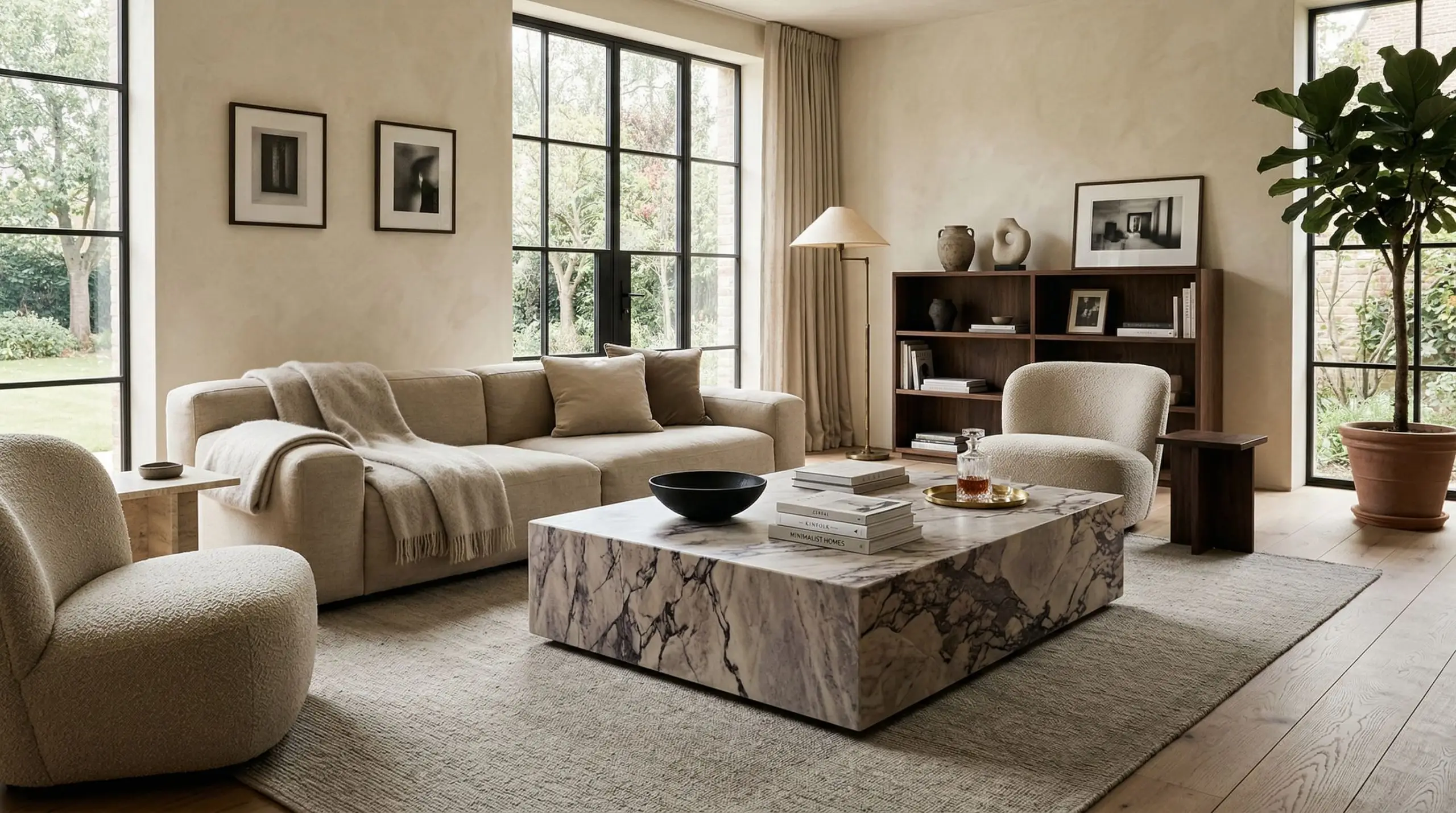
Quiet luxury, conversely, focuses on the relentless quality of what remains. A living room may only contain four pieces of furniture, but the sofa is wrapped in custom Loro Piana cashmere, the side table is carved from a solid block of matte-honed travertine, and the walls are finished in hand-troweled Tadelakt. The space is warm, deeply inviting, and texturally complex. It does not rely on a multitude of objects to create interest; it relies on the pedigree of a few exceptional elements. When a room is stripped of excess, the items left behind must be flawless, as there is nothing to distract the eye from poor craftsmanship.
Elegance is not found in the fixtures you add, but in the seams you hide.
The Psychological Shift: Why We Crave Visual Silence
We exist in an era defined by digital intrusion, constant notifications, and relentless visual clutter. When the outside world demands endless cognitive processing, the ultimate residential luxury is absolute peace.
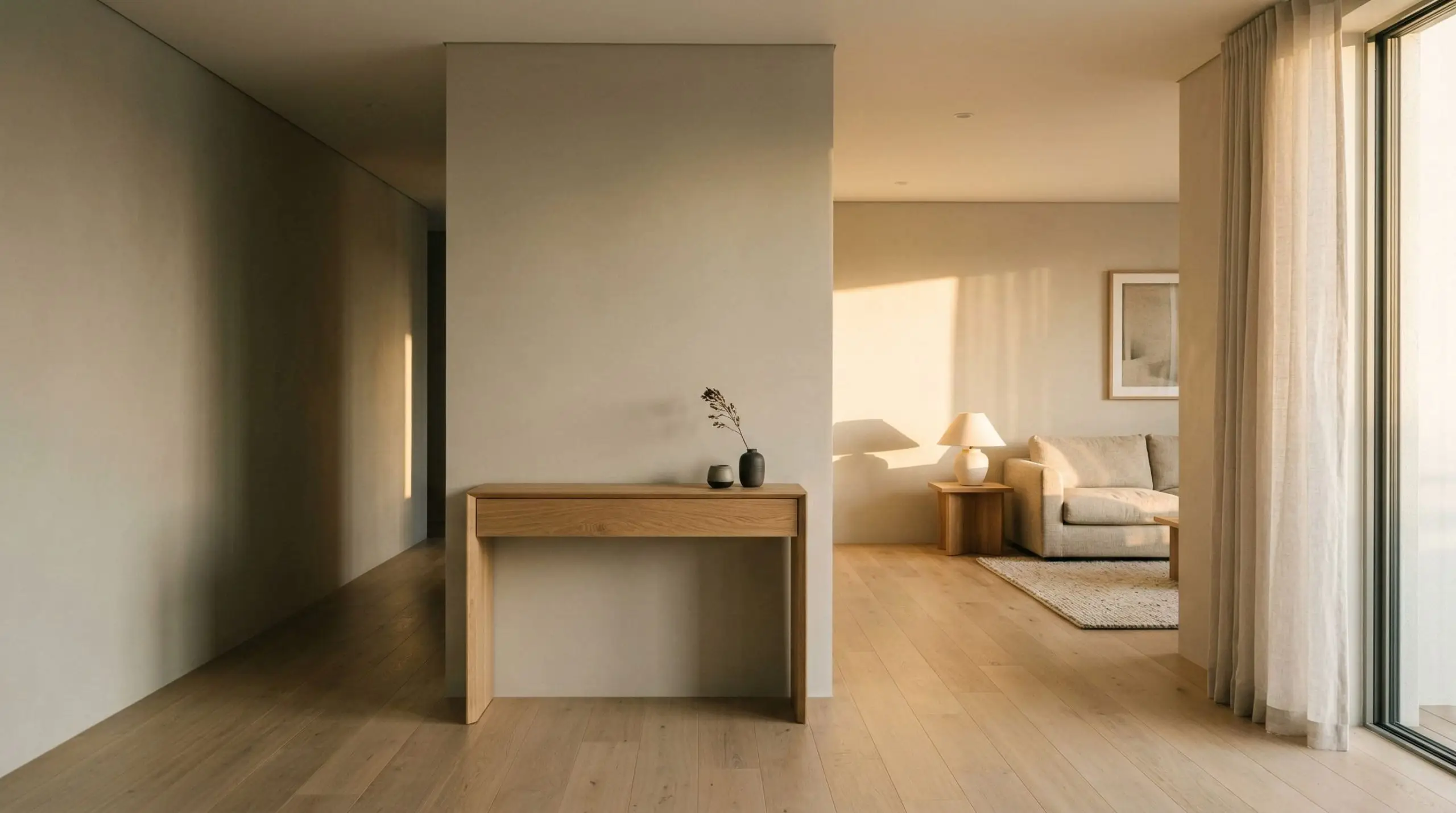
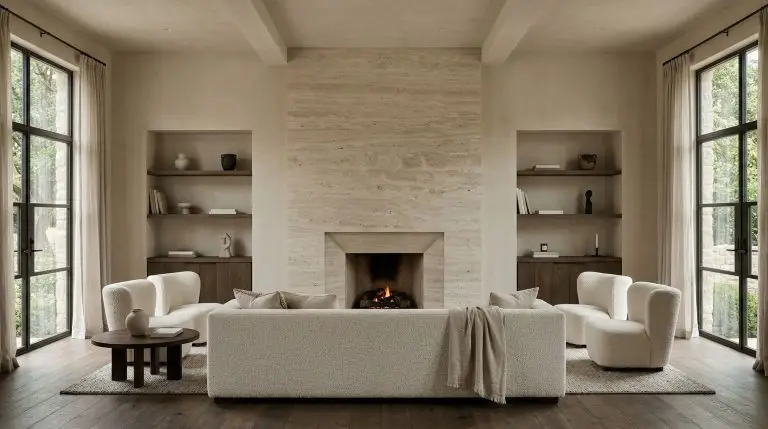
This craving drives the necessity for visual silence. Visual silence is achieved when a space is designed so seamlessly that the eye glides over the architecture without snagging on harsh transitional lines, chaotic textile patterns, or glaring technological intrusions. It is a psychological exhale. By removing the visual friction that subconsciously agitates the mind, the home transforms into a restorative sanctuary. The architecture stops demanding your attention, allowing the mind to finally rest.
The Foundational Pillars of a Quiet Luxury Space
Elegance begins in the drywall. Before a single piece of furniture is sourced, the structural bones of the home must be addressed. A masterfully crafted chair placed inside a poorly finished room will always look entirely out of context.
Pedigree Over Polish: The Importance of Patina
Quiet luxury outright rejects high-gloss, mass-produced perfection. True luxury is not static; it responds to the environment and the inhabitants over time. This introduces the critical requirement of patina. Items should possess a fundamental material integrity that allows them to look more distinguished in two decades than they do on the day of installation.
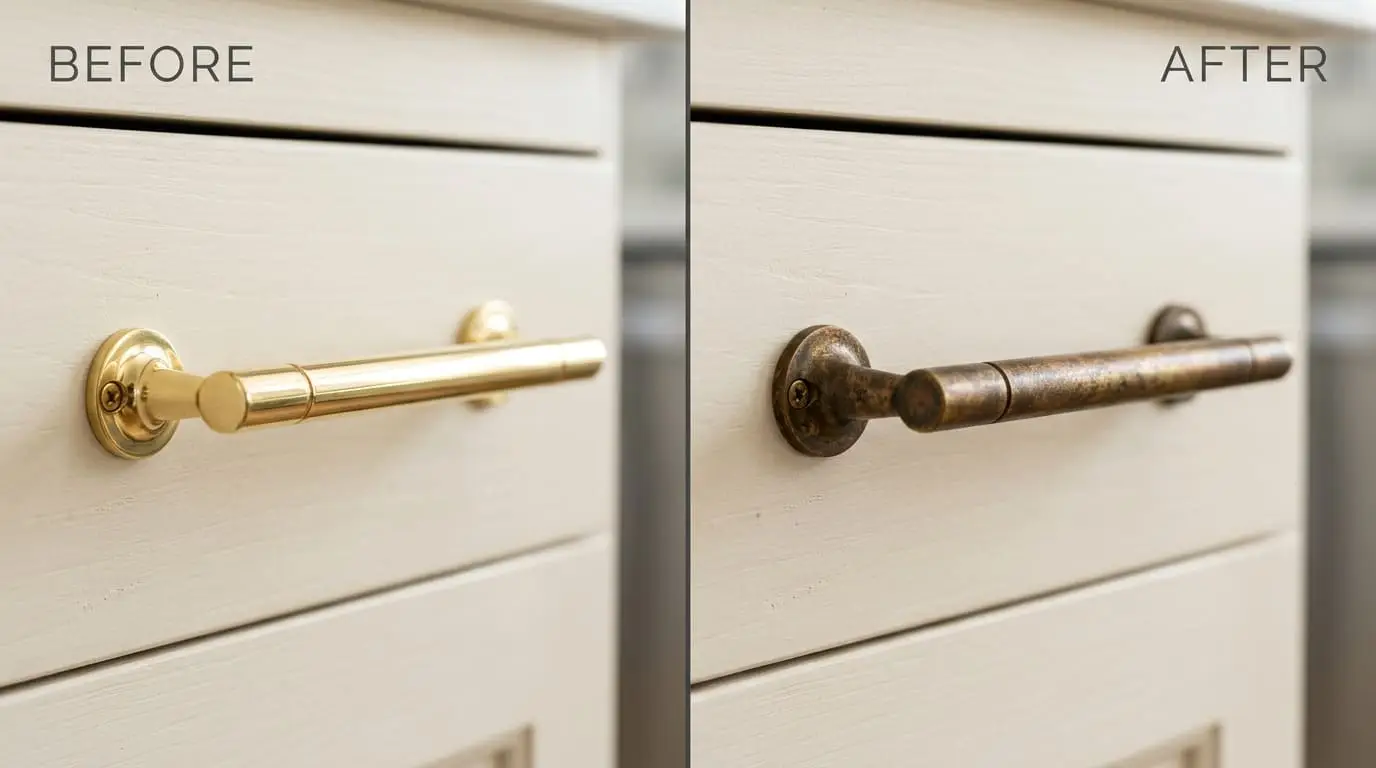
Sourcing for longevity requires an understanding of “Living Finishes.” A living finish is an unsealed material intentionally left raw to oxidize, wear, and burnish through daily human contact.
Hackrea Pro Tip
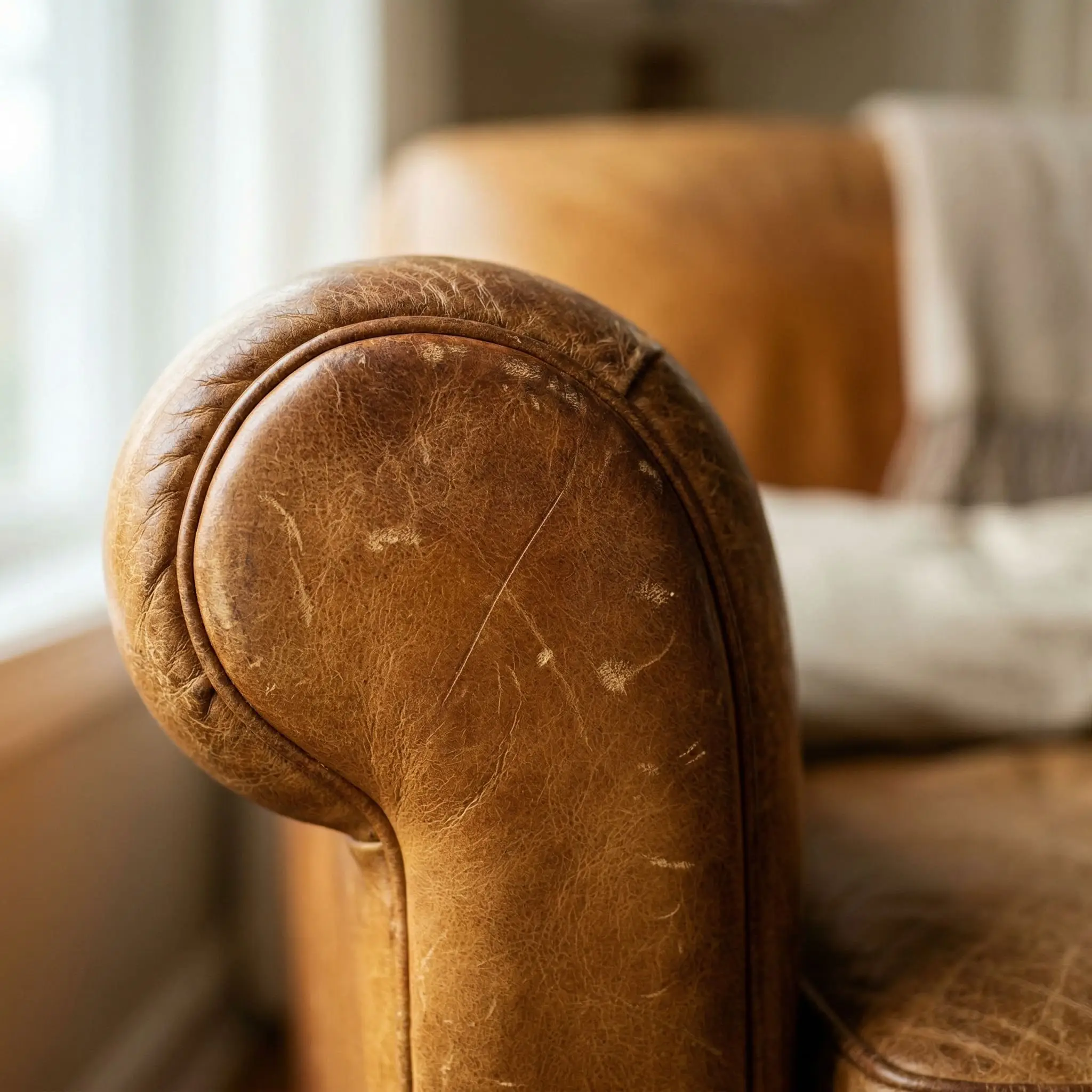
Specify unlacquered brass or unsealed bronze for plumbing fixtures and cabinet hardware. In a high-touch environment like a kitchen, the oils from your hands will naturally darken the metal where it is frequently grasped, leaving a complex, burnished warmth that cannot be replicated in a factory. The same principle applies to vegetable-tanned leathers that soften and scratch, or natural stone counters that etch slightly with use. These are not flaws; they are the physical records of a life well-lived.
Architectural Restraint: Flush Baseboards and Reveals
The hallmark of a low-grade residential build is the use of clunky, applied trim to hide construction mistakes. Heavy baseboards, thick window casings, and ornate crown molding are frequently deployed to mask uneven drywall cuts and shifting floors. True architectural luxury requires absolute, unforgiving precision.
To achieve the seamless environment required by stealth wealth, specify the following architectural upgrades:
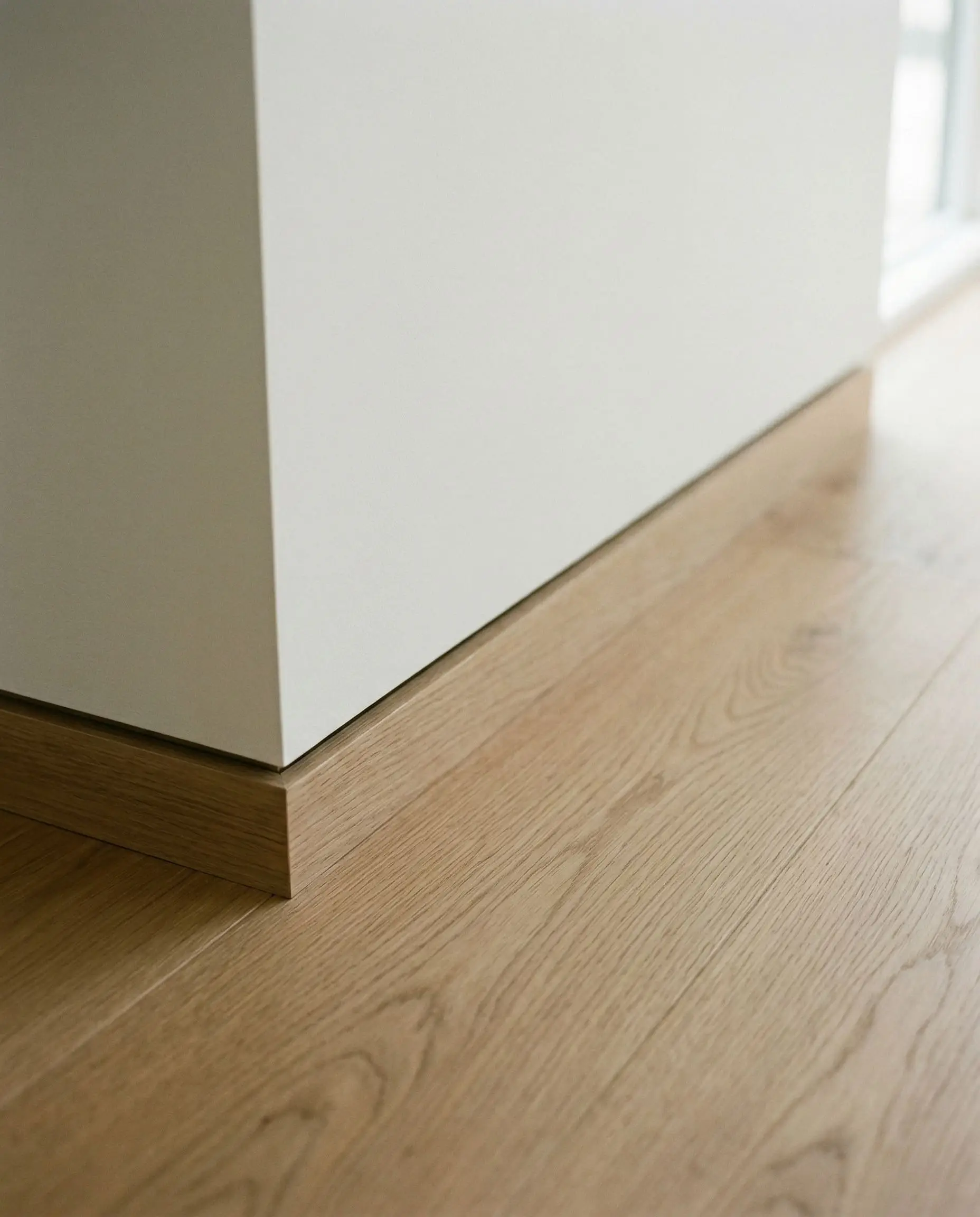
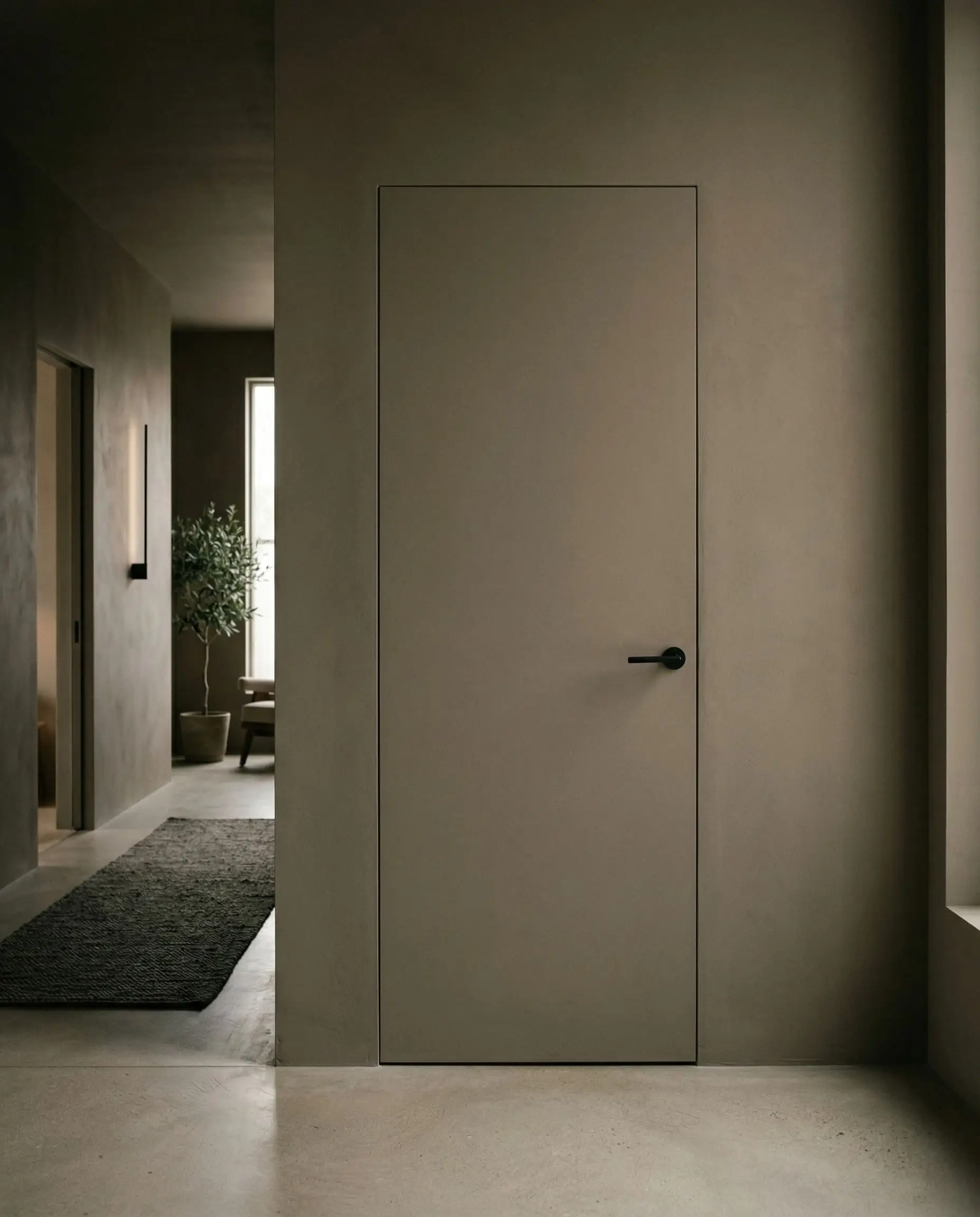
Hiding the seams requires master tradespeople. The absence of trim means there is nowhere to hide a millimeter of error.
The Hidden Technology Mandate
Wealth whispers, and so must your technology. Nothing shatters the carefully cultivated illusion of a serene, timeless interior faster than a glaring black mirror mounted over a fireplace, or a glowing internet router sitting on a credenza.
Technology must serve the space invisibly. Advocate for plastered-in invisible speakers, such as those engineered by Sonance, which are literally mudded into the drywall and painted over, delivering high-fidelity audio with zero visual footprint. Televisions must be masked; utilize the Samsung Frame equipped with a bespoke, custom-milled bezel, or hide screens entirely behind automated, rift-sawn European oak paneling. Ensure bespoke millwork includes hidden charging drawers lined with felt, keeping cables completely out of sight while maintaining modern functionality.
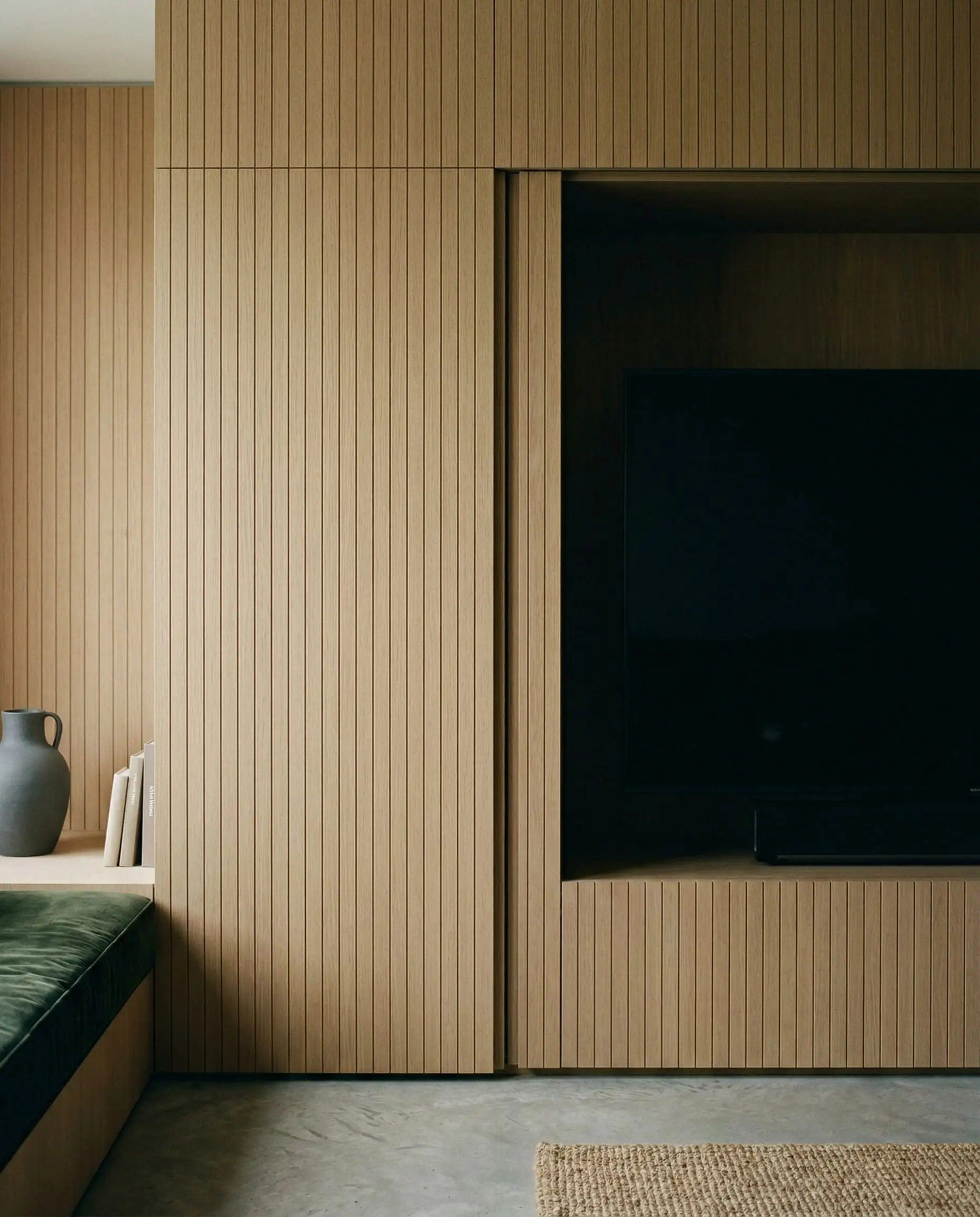
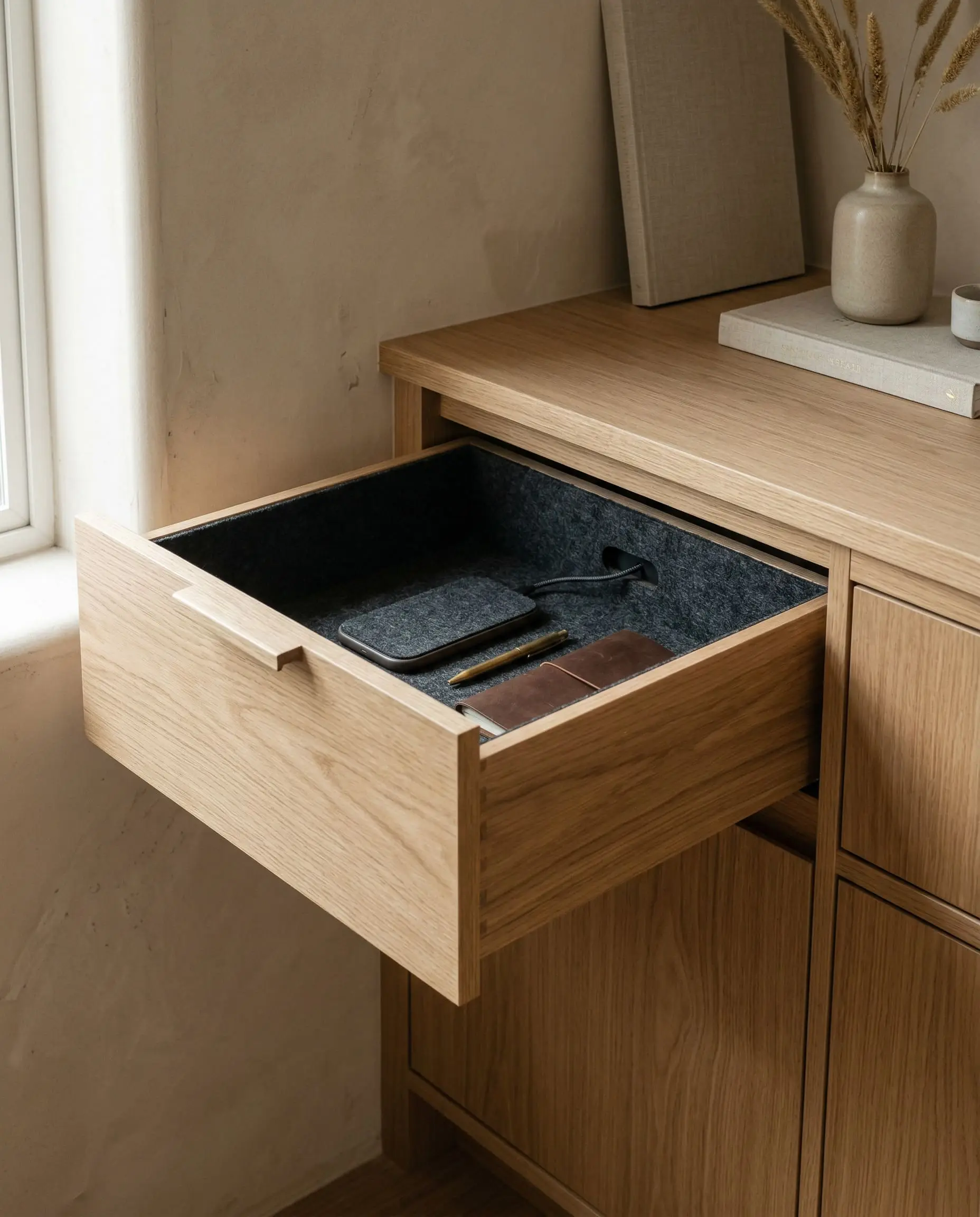
Translating the Look: Materials and Textures That Whisper
If the architecture serves as the bones of the home, materiality is the skin. When visual noise is eliminated, the tactile experience of the space becomes the primary communicator of quality.
Woods and Stones: The Monolithic Approach
The selection of hard surfaces dictates the grounding energy of the home. You must entirely avoid high-gloss exotic woods, such as polished mahogany, and heavily veined, dramatic stones that aggressively demand attention. These materials create high-contrast visual friction.
Instead, mandate low-contrast, highly tactile surfaces. Specify rift-sawn European oak for flooring and millwork; the rift-sawn cut ensures a tight, linear grain structure that provides a quiet backdrop without the chaotic, looping movement of flat-sliced alternatives. For masonry, source matte-honed travertine, tumbled limestone, or honed Danby marble.
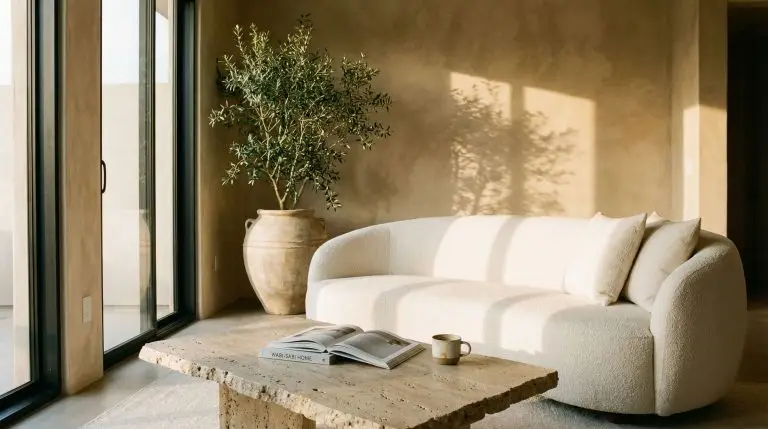
When commissioning furniture, embrace the monolithic approach. A coffee table should not be a complex assembly of glass, metal, and wood. It should be a single, substantial form—perhaps carved from a solid block of Calacatta Viola with a muted, honed finish, or constructed from thick slabs of reclaimed timber. The visual weight of monolithic forms anchors a room, projecting an understated permanence.
Textiles and Soft Goods: The Weight of Luxury
Quiet luxury is heavy. The physical weight of a textile dictates how it drapes, how it absorbs light, and how it feels against the skin. Flimsy, synthetic blends hold stiff, unnatural shapes and reflect light poorly.
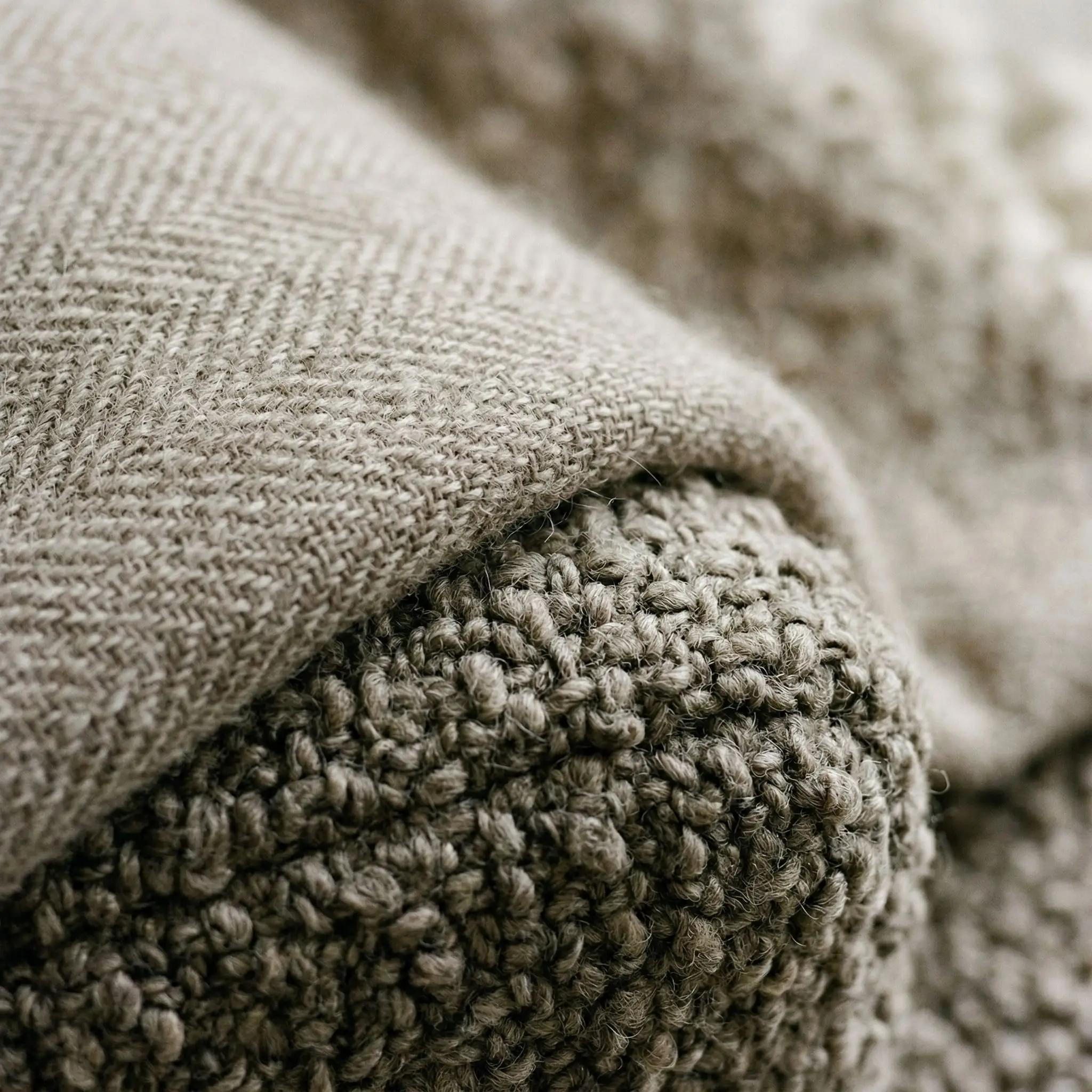
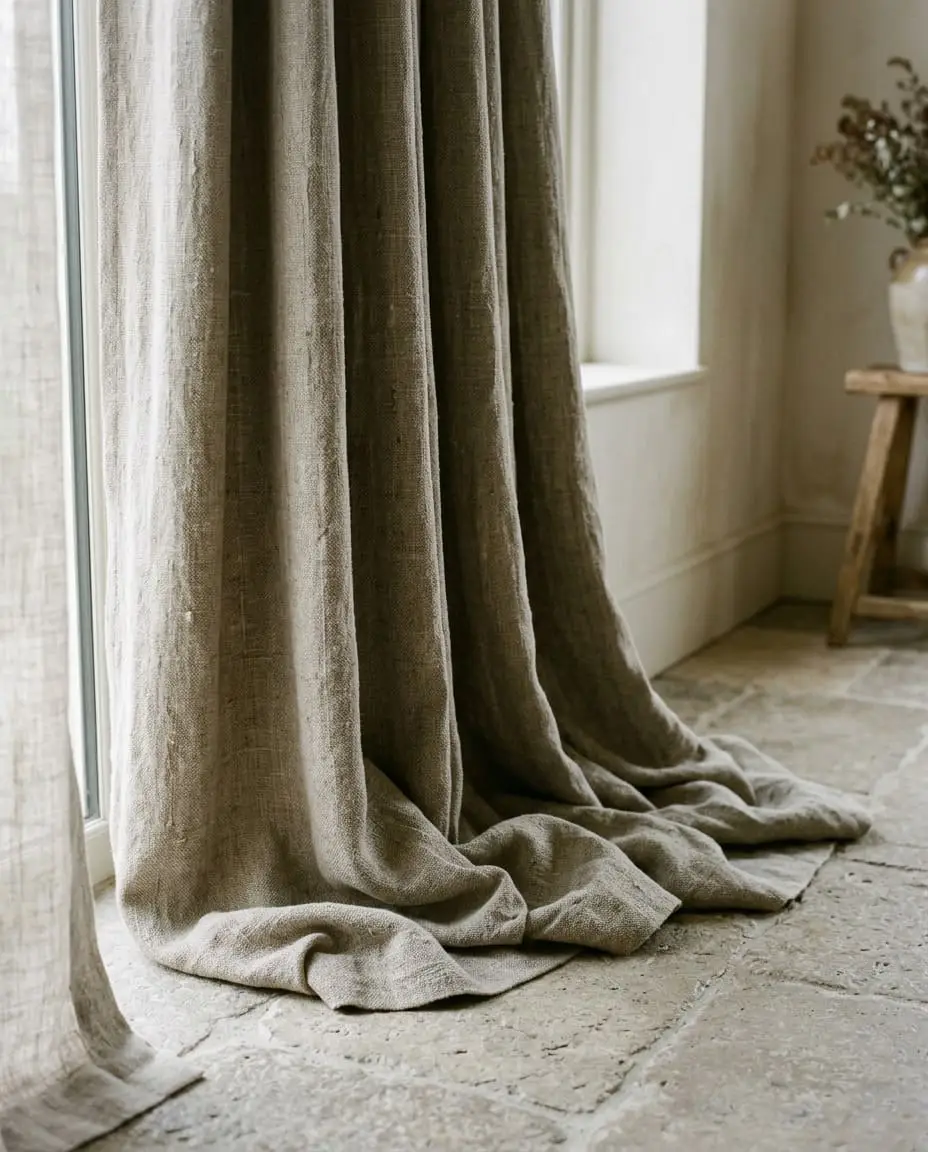
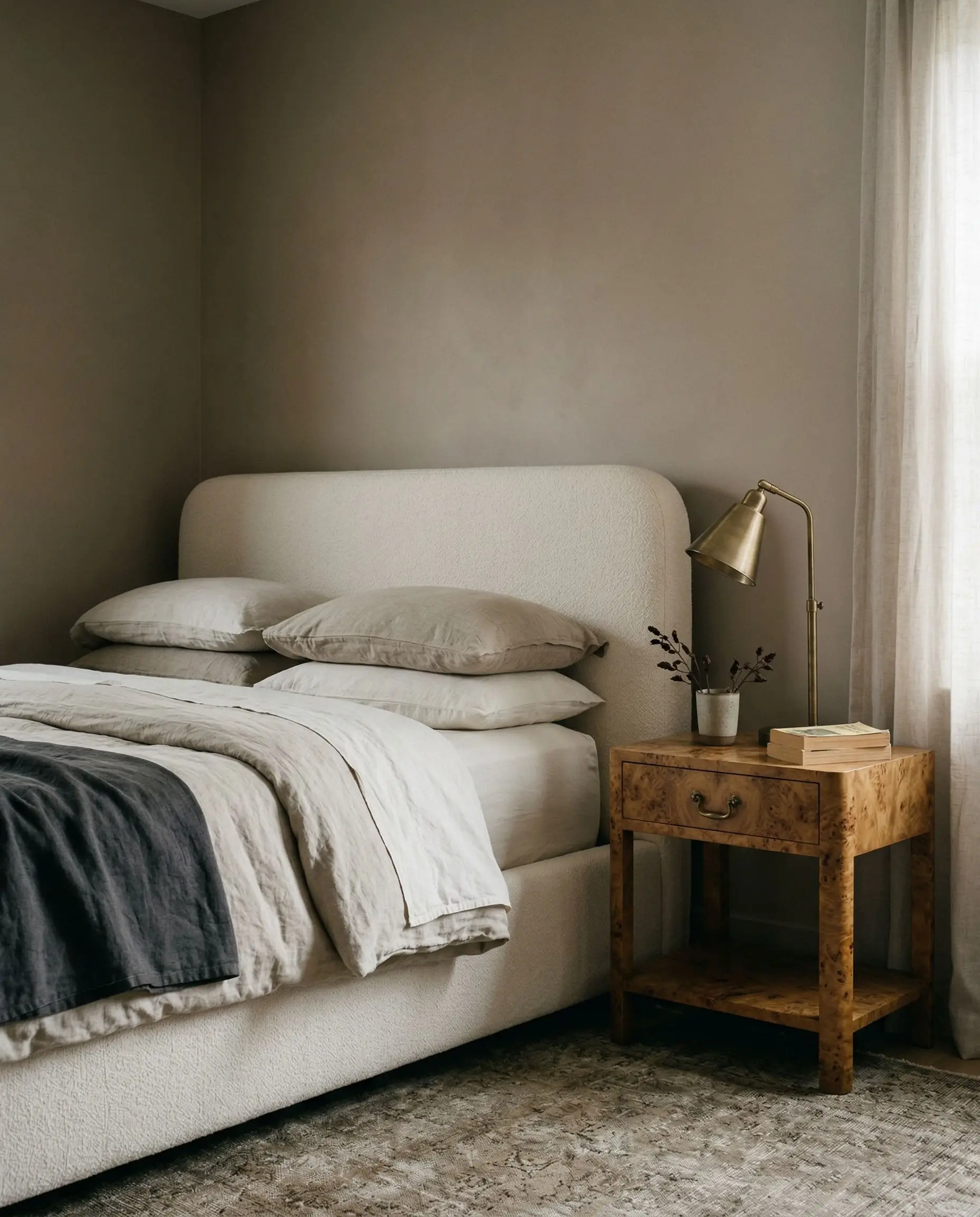
When sourcing soft goods, you must prioritize the weight of luxury. Upholstery and drapery should rely on heavyweight Belgian linens, dense bouclé, and tightly woven wools. Throw blankets should be constructed of pure alpaca or thick cashmere. Because the color palette must remain strictly tonal—relying on nuanced shades of greige, taupe, mushroom, and cream—the texture must do the heavy lifting. A monochromatic room only succeeds if a heavy, slubbed linen sofa is contrasted against a smooth, silk-blend rug and a coarse wool throw. The variation in tactile resistance is what gives the room its soul.
A fabric’s pedigree is proven not by its pattern, but by the way it falls to the floor.
The Sensory Layers: Lighting and Acoustics
True luxury is often invisible. Ninety percent of standard interior design focuses solely on what is seen. The stealth wealth environment separates itself by mastering what is heard and how the atmosphere feels.
Designing for Sound: Acoustic Plaster and Dense Textiles
A room that echoes betrays its visual elegance the moment a conversation begins. The harsh reverberation of sound bouncing off rigid drywall and glass signals a lack of architectural foresight and creates subconscious anxiety. High-end spaces are meticulously acoustically “deadened” or hushed.
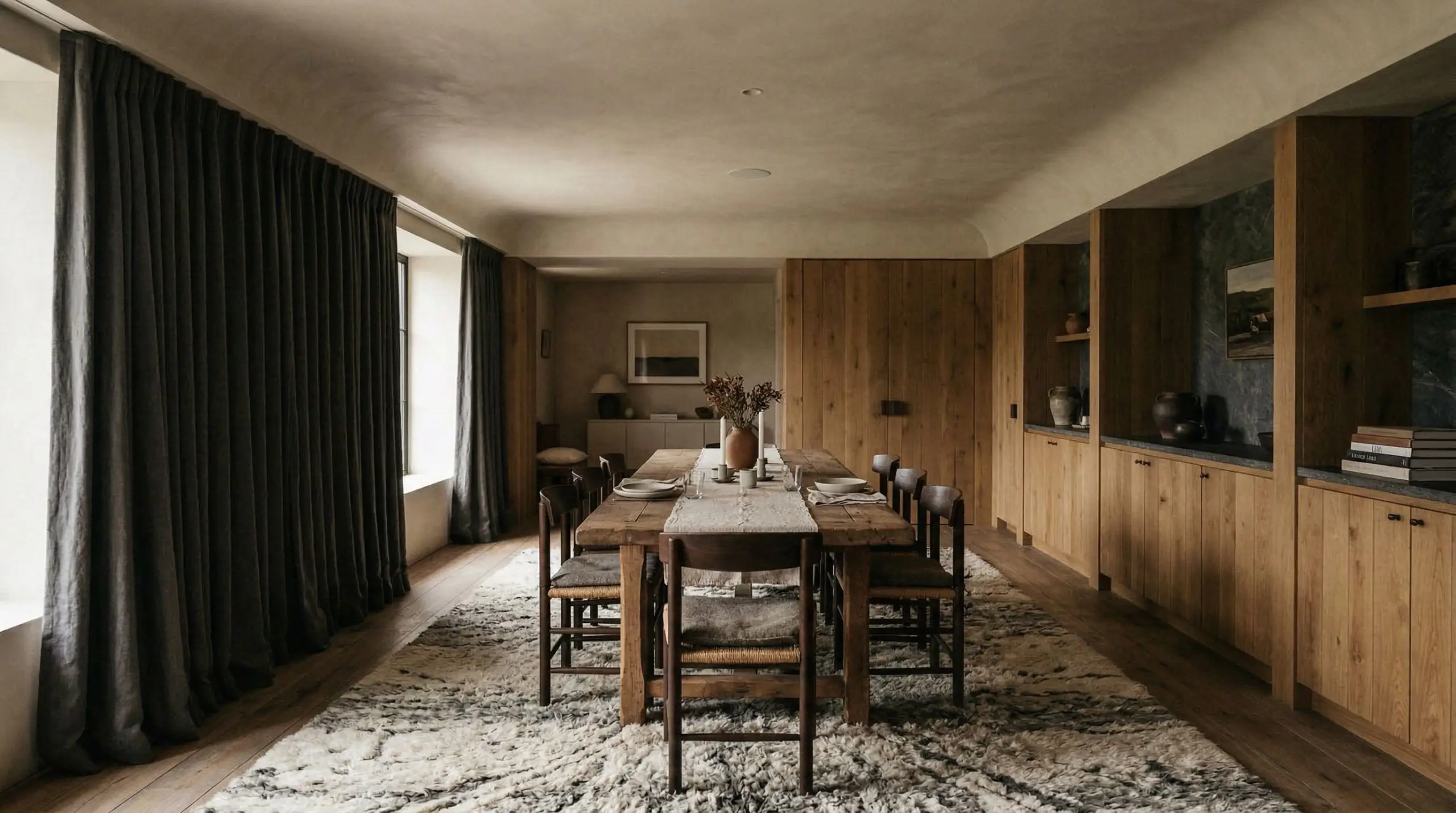
Achieving this psychological comfort without resorting to unsightly commercial sound panels requires layering acoustic dampening directly into the design. Install thick, hand-knotted wool rugs over high-density acoustic rug pads. Utilize heavy, fully lined drapery that spans from the ceiling to the floor to absorb high-frequency sounds. For the ultimate sensory upgrade, specify acoustic plaster ceilings—a specialized finish that mimics the look of smooth drywall but absorbs up to 80% of ambient room noise. The result is a hushed, insulated environment that feels inherently protective.
Dim-to-Warm Technology and Shadow Play
Lighting is the ultimate arbiter of atmosphere. Cold, blue-tinted lighting instantly destroys the warmth of natural materials, rendering even the most expensive European oak flat and lifeless.
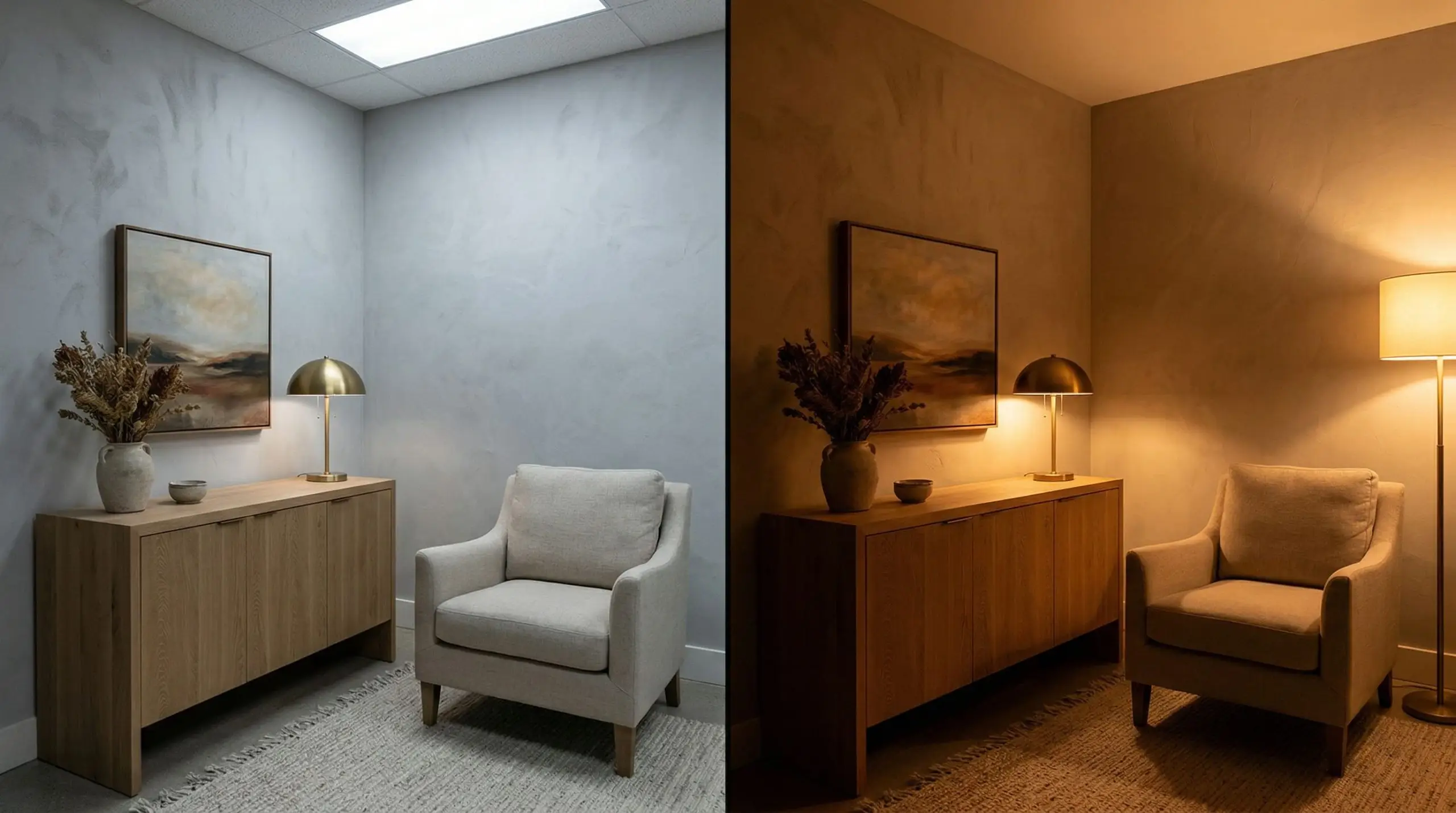
You must mandate absolute control over lighting temperatures. All ambient and task lighting must be 2700K or lower. To achieve authentic atmospheric depth, integrate “Dim-to-Warm” LED technology. Standard LEDs maintain the same color temperature as they dim, looking artificial. Dim-to-Warm technology mimics the behavior of a traditional incandescent filament, shifting from a crisp 2700K down to a deep, amber 1800K as the light is lowered.
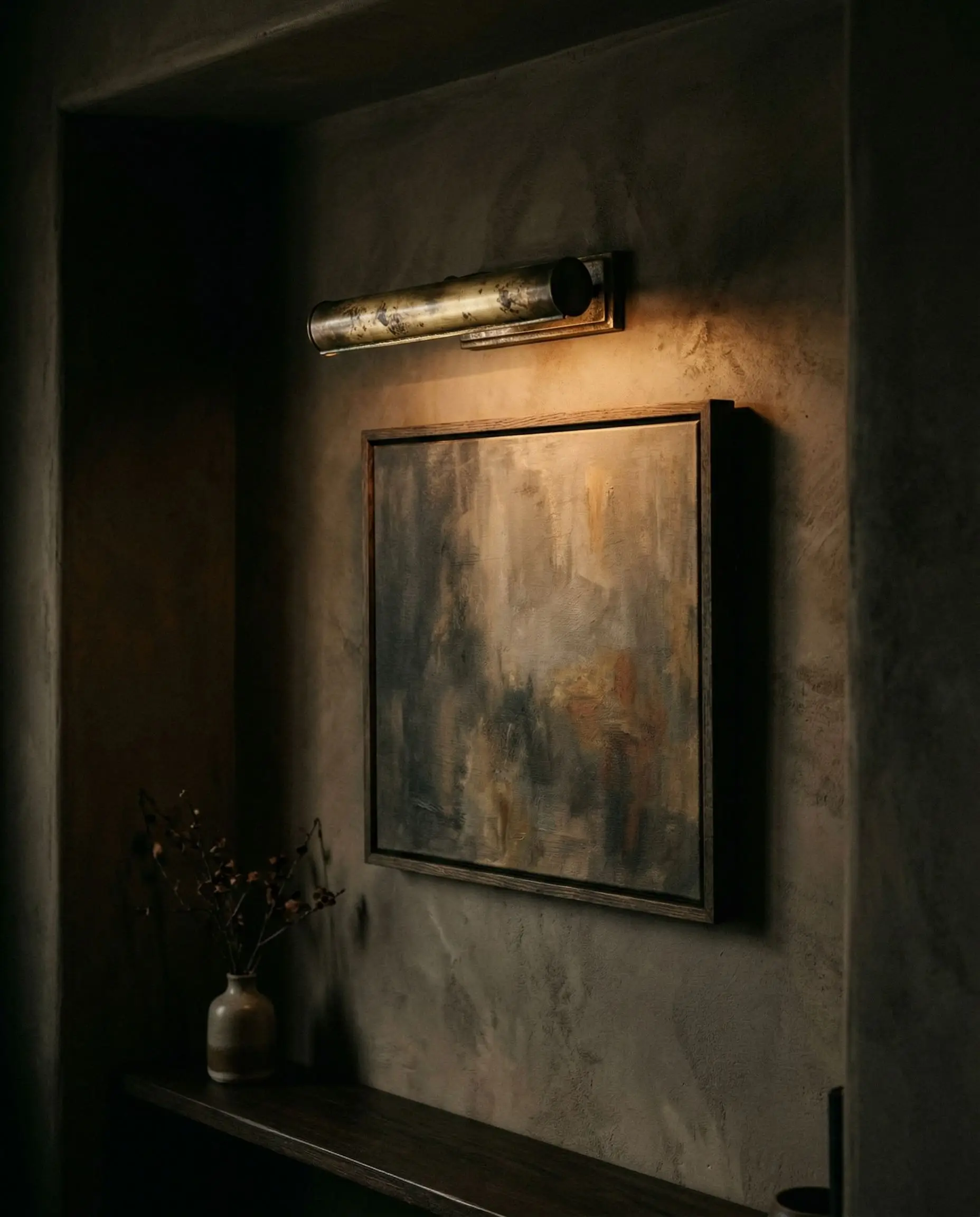
Furthermore, banish the reliance on the “big ceiling light.” A grid of glaring recessed cans flattens a room. Instead, embrace shadow play through layered lighting. Wash textured walls with recessed perimeter grazers, highlight art with brass picture lights, and pool light into corners with low-level table lamps. Shadows are just as important as the light itself; they provide depth, mystery, and intimacy.
The Giveaways: What Breaks the Illusion of Quiet Luxury
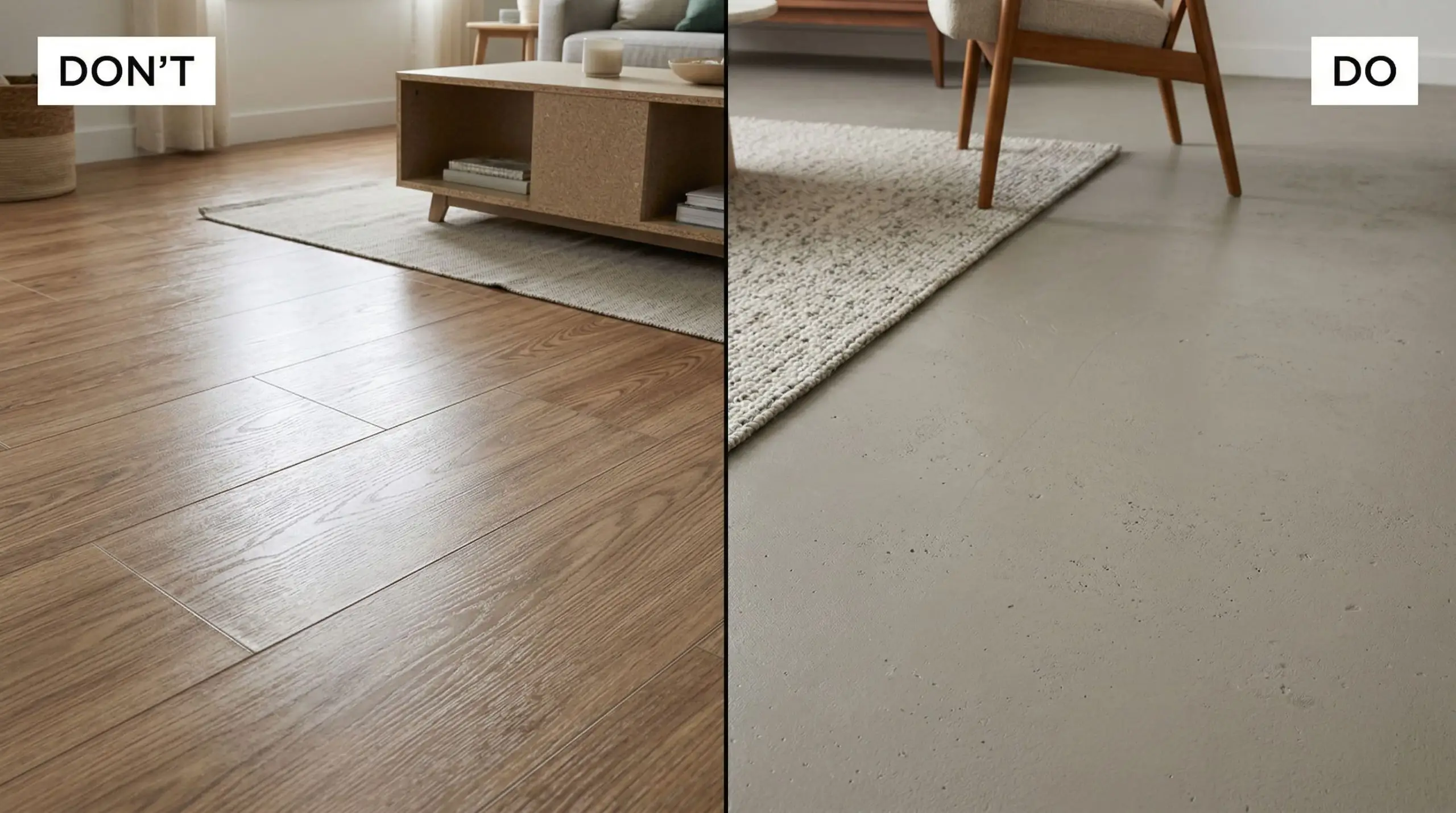
Achieving this aesthetic is an exercise in rigorous discipline. A single misguided element can shatter the entire illusion, immediately shifting the perception of a space from curated elegance to unrefined imitation. To protect the integrity of the design, you must strictly avoid the following faux pas.
Sourcing the Style: The Unspoken Brand Matrix
Executing this level of spatial refinement requires knowing exactly where to source materials and furnishings. The brands that dominate this sector rarely advertise heavily; their reputation is passed quietly among elite architects and interior designers.
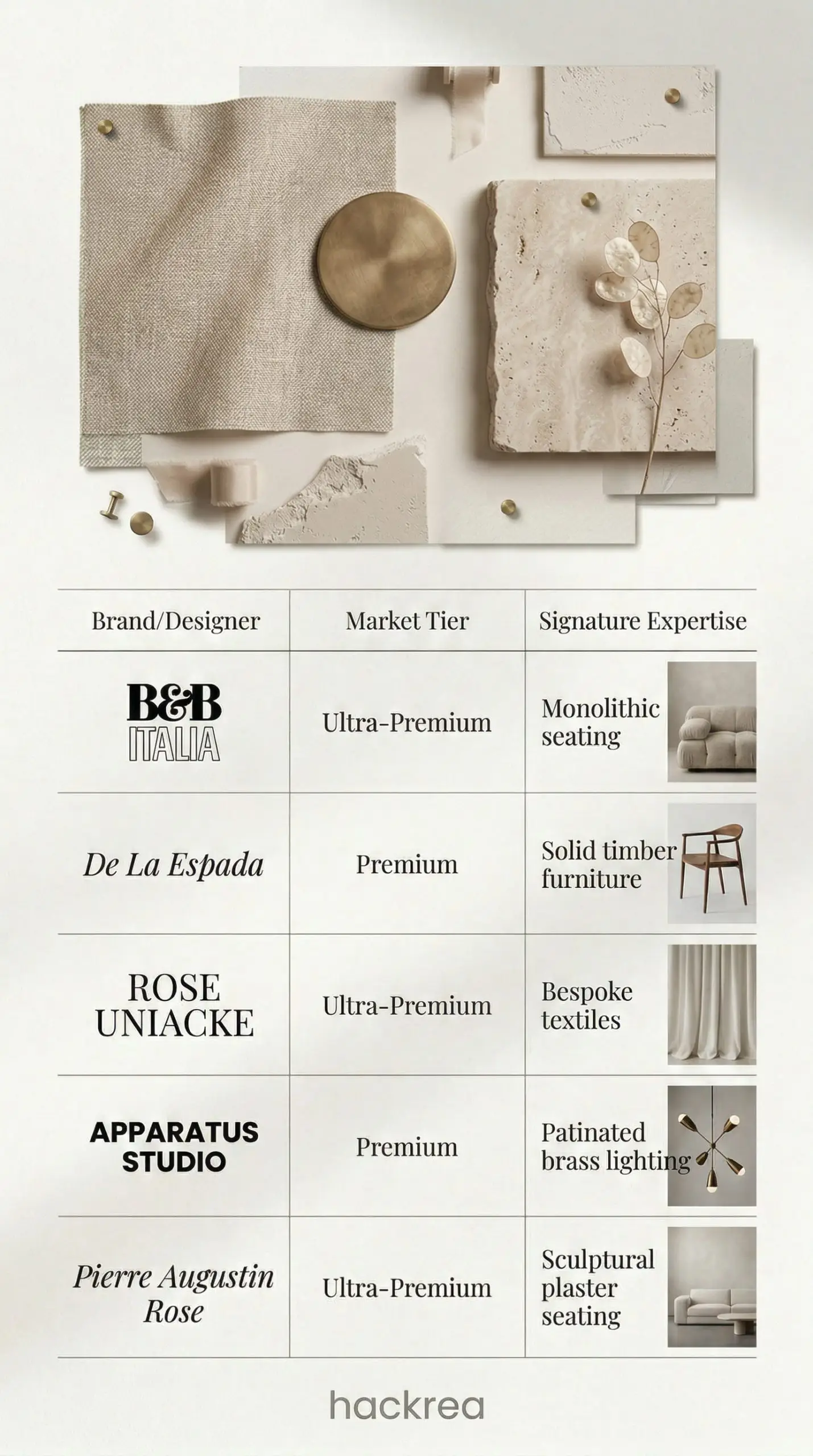
| Brand Name | Price Tier | Signature Material / Item |
|---|---|---|
| B&B Italia | Ultra-Premium | Monolithic, low-slung seating (e.g., the Camaleonda). |
| De La Espada | Premium | Masterfully joined, solid timber dining and occasional furniture. |
| Rose Uniacke | Ultra-Premium | Heavyweight, bespoke textiles and historically rooted upholstery. |
| Apparatus Studio | Premium | Patinated brass and porcelain architectural lighting. |
| Pierre Augustin Rose | Ultra-Premium | Sculptural, curved plaster seating and highly tactile forms. |
The entities listed in this matrix are respected not for their brand recognition, but for their unwavering commitment to fabrication. A piece from De La Espada or Rose Uniacke commands its price point because of the hours of hand-finishing required to produce it, the ethical sourcing of its timber or wool, and the structural integrity that ensures it will outlast its original owner.
The Curator’s Conclusion: Investing in Timelessness
Quiet luxury is not a fleeting aesthetic to be purchased over a single weekend. It is a slow, deeply deliberate curation of your personal environment. It is the architectural embodiment of buying fewer, but vastly superior, things.
By prioritizing provenance over polish, and sensory silence over visual noise, you construct a home that exists entirely outside the exhausting cycle of internet aesthetics. It becomes a space that feels profoundly grounded. We urge you to walk through your own home and audit the environment for visual friction. Remove the unnecessary, silence the technology, and begin investing in the architectural bones and tactile surfaces that will age beautifully alongside you.

The Aesthetics Desk curates the visual direction for Hackrea. Specializing in design history, global architectural movements, and interior styling, this desk focuses on the psychology of space and how to translate high-end, magazine-quality aesthetics into approachable residential design without falling into fleeting micro-trends.