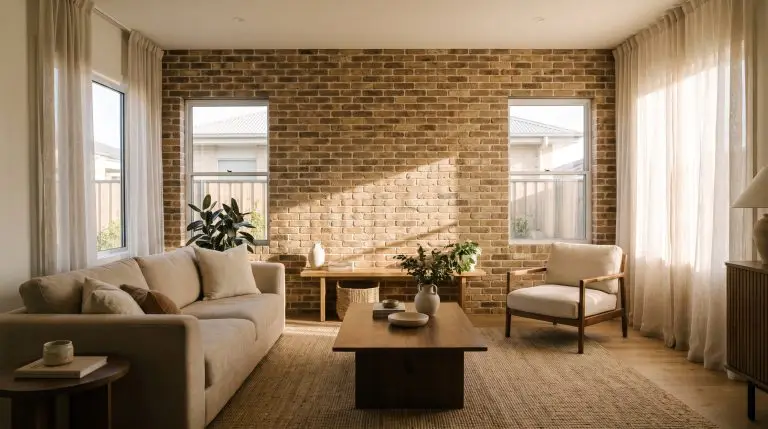
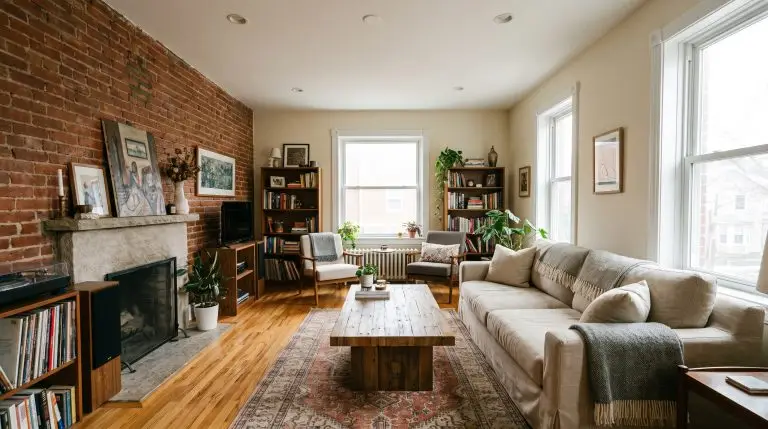
The Ultimate Guide to TV Accent Walls: From Wood Slats to Cinema Mode (2026 Edition)
Let’s be honest: the television is the elephant in the room.
For decades, interior designers have fought a cold war against the “black box.” We’ve tried hiding it in armoires, covering it with sliding art, or banishing it to the basement. But in 2026, the strategy has shifted. The TV is no longer an appliance to be hidden; it is the anchor of the modern living space. The goal now is to integrate it so seamlessly into the architecture of the room that the wall behind it becomes a work of art, even when the screen is off.
Gone are the days when a simple coat of accent paint was enough. Today, the “Media Wall” is a functional powerhouse—a fusion of acoustics, ambient lighting, storage, and texture. Whether you are binge-watching your favorite series or hosting a dinner party where the screen displays digital art, the backdrop matters.
If you are ready to banish the boring drywall and elevate your entertainment zone, you are in the right place. In this guide, we will explore the hottest trends for 2026, the best materials for every budget, and the practical “designer math” you need to get the installation right.
Before you buy a single plank of wood or gallon of paint, visualization is key. Use our Room Visualizer Tool to test these textures in your actual space. Seeing a dark charcoal wall in your lighting conditions can change your mind instantly!
🎨 Hackrea Styling Tip
Top TV Wall Trends for 2026
The vibe for 2026 is “immersive comfort.” We are moving away from stark, glossy minimalism toward tactile surfaces that absorb sound and soften the harsh glare of technology. Here is what is dominating Pinterest boards and architectural digests this year.
1. The Acoustic “Japandi” Slat Wall
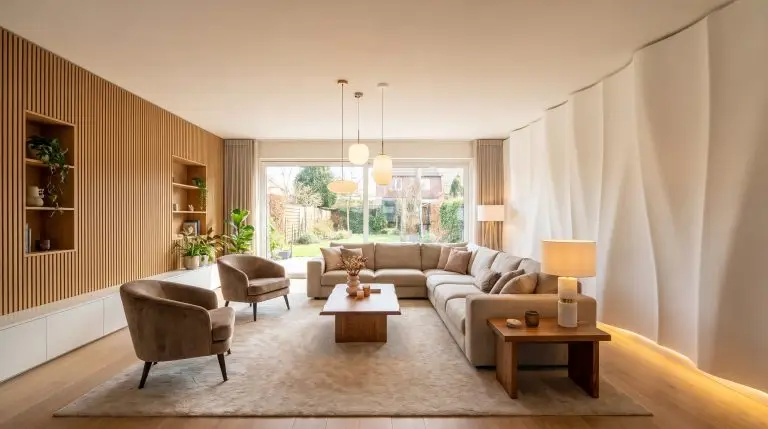
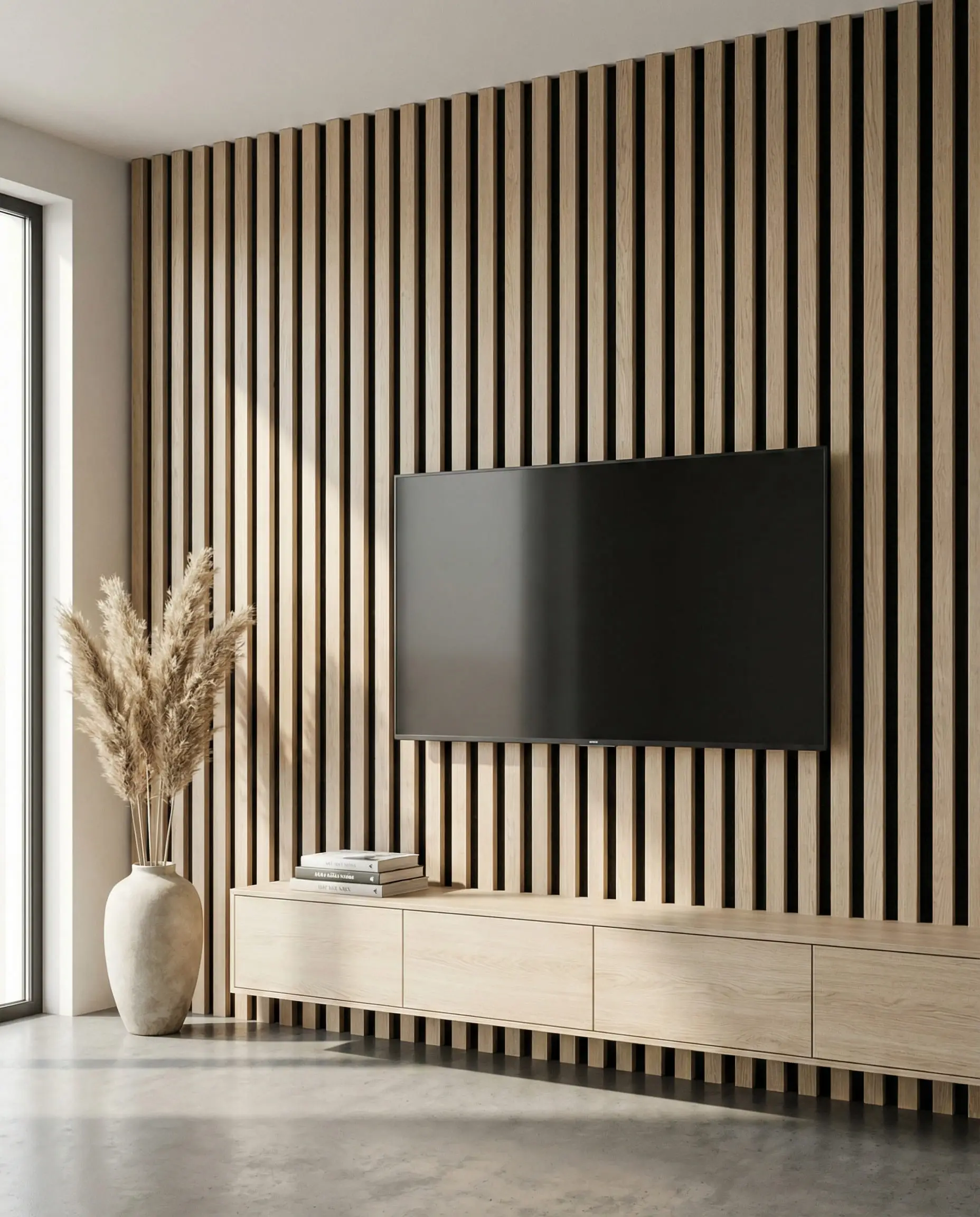
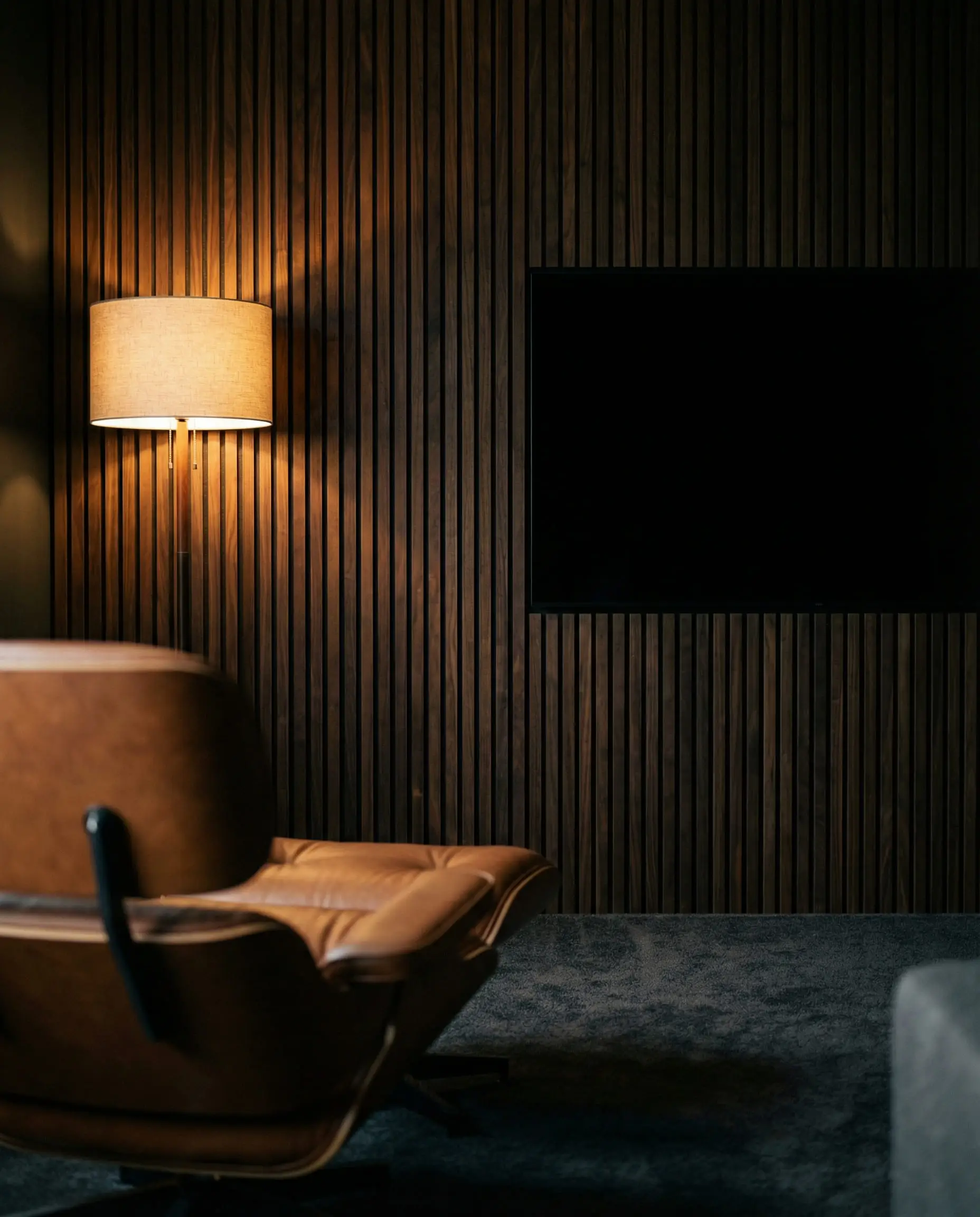
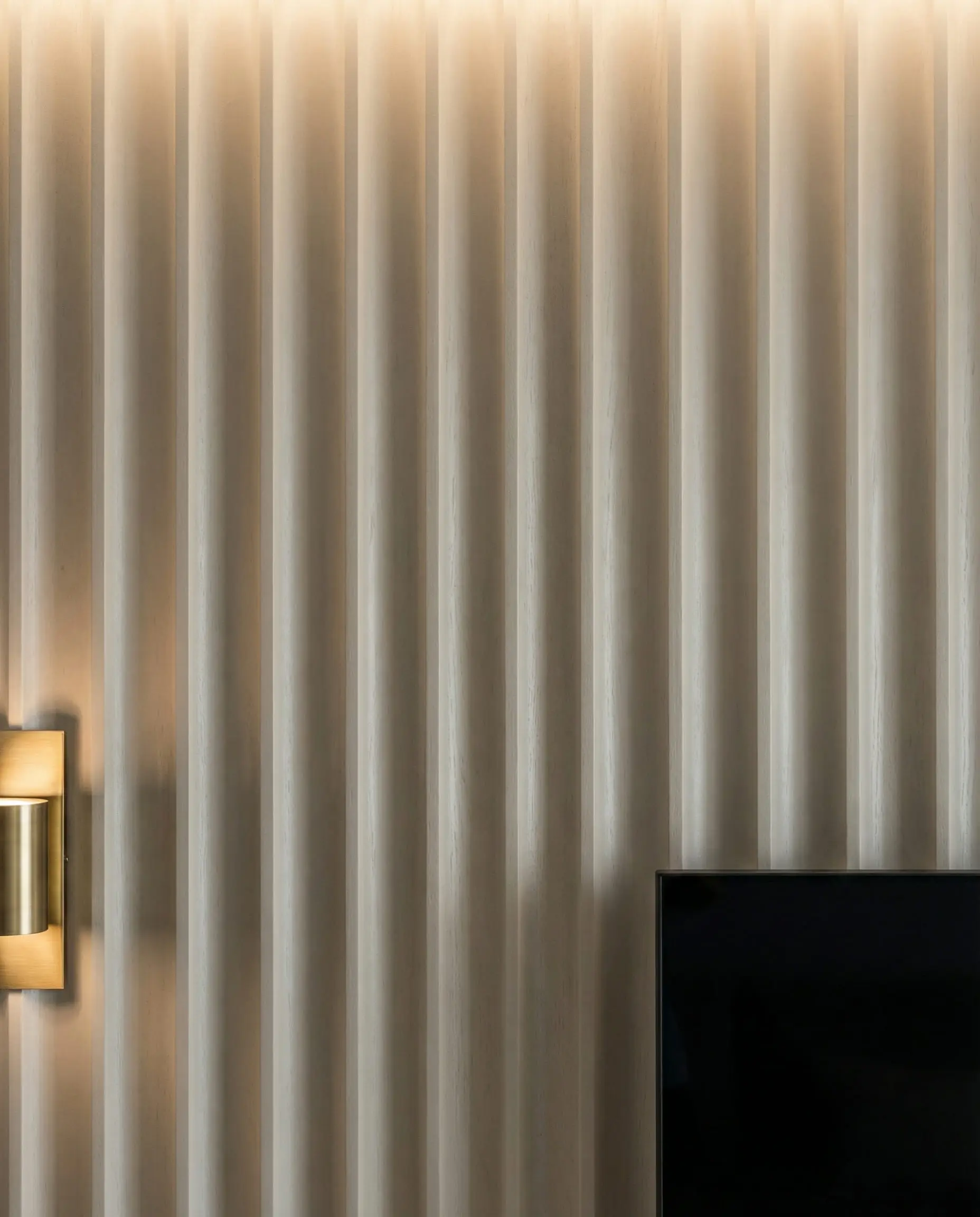
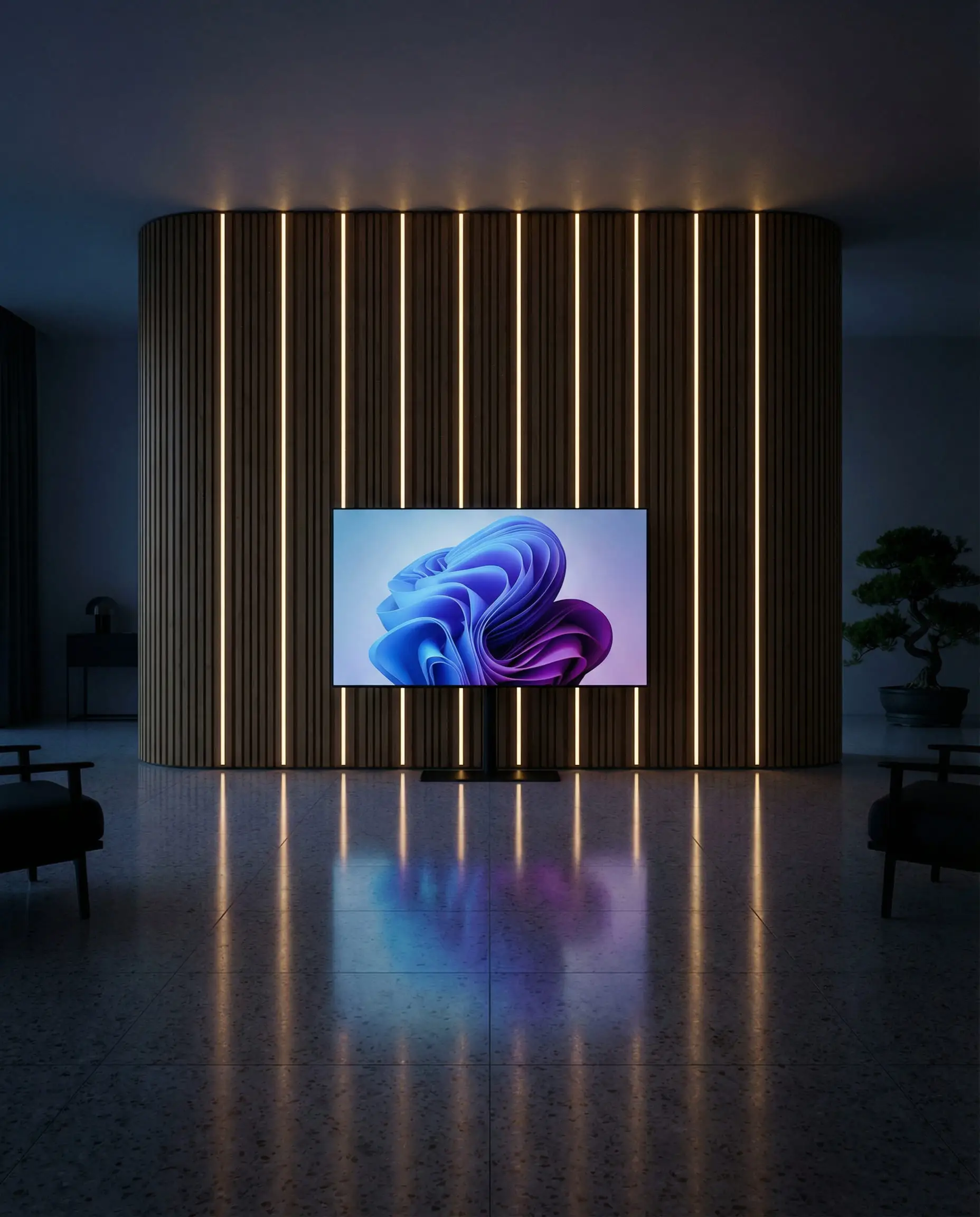
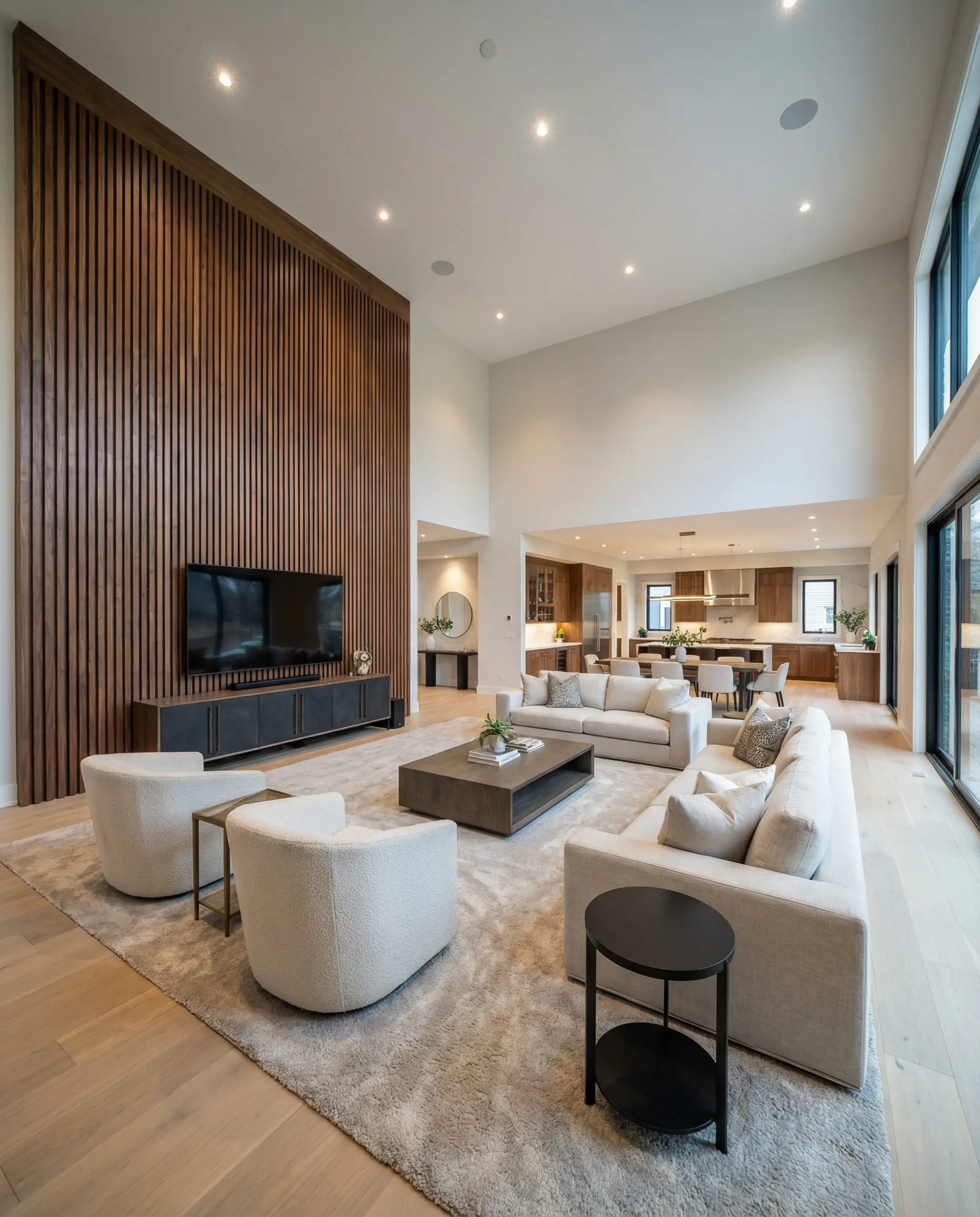
If you have scrolled through Instagram lately, you have seen it: vertical wood slats running floor-to-ceiling. But this isn’t just an aesthetic choice; it’s a functional one. As open-concept living remains popular, noise pollution is a real issue.
The Japandi style (a blend of Japanese rusticity and Scandinavian functionality) champions these wood-on-felt panels. They dampen the echo from your sound system, making movie dialogue crisper, while the vertical lines draw the eye upward, making standard ceilings feel vaulted.
Check out more on this style: Japandi Style Interior Design Trends
2. “Dark Mode” Cinema Walls
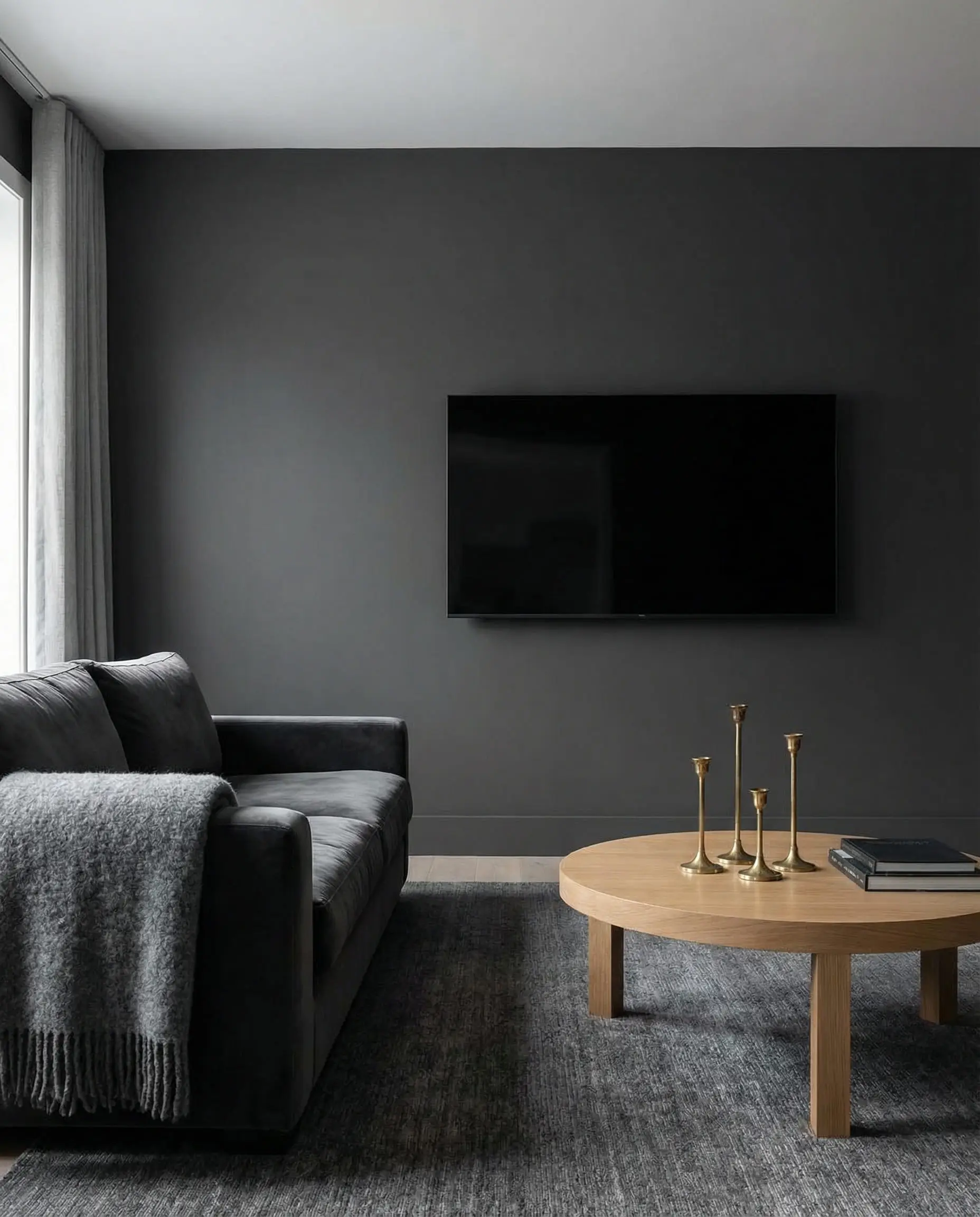
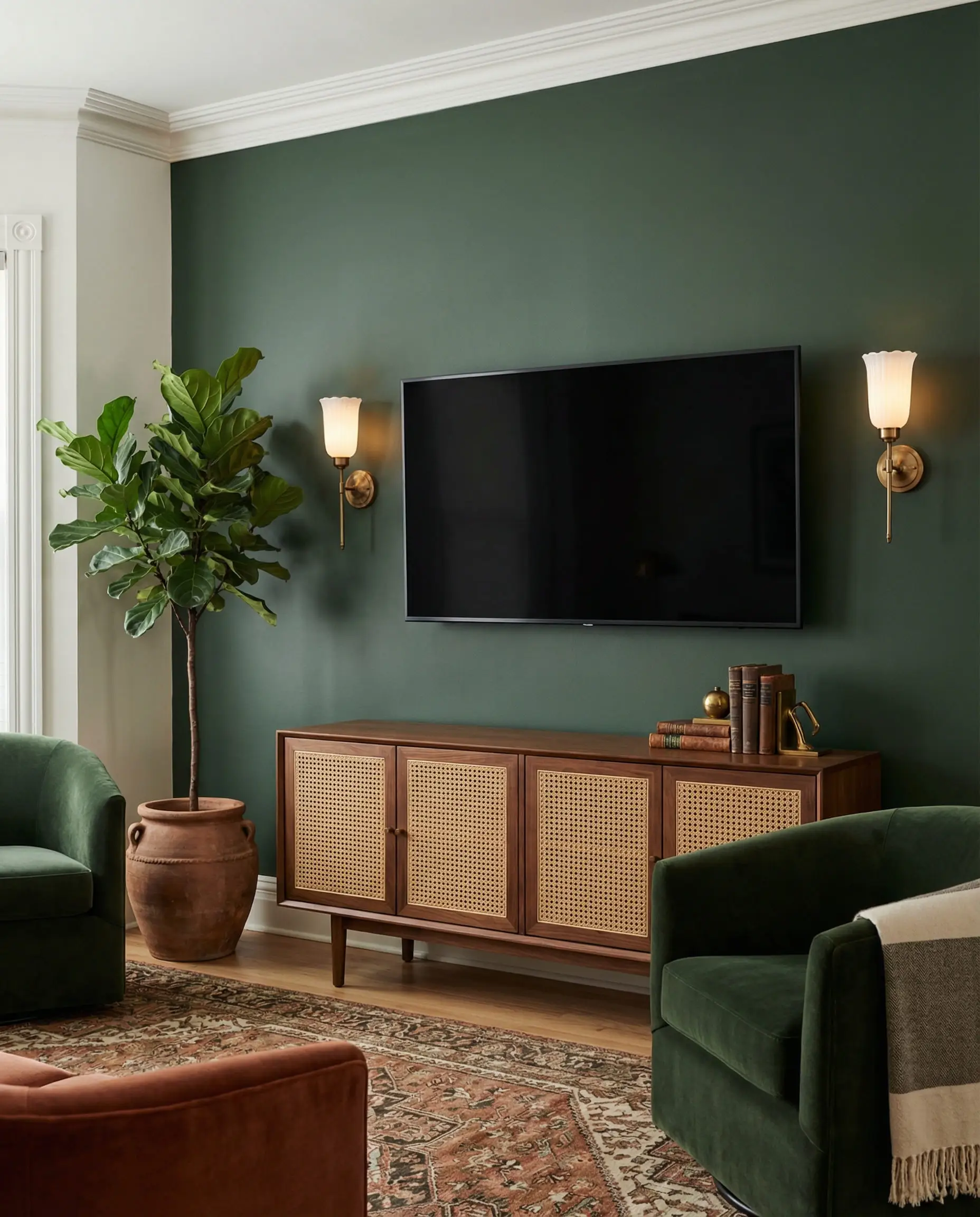
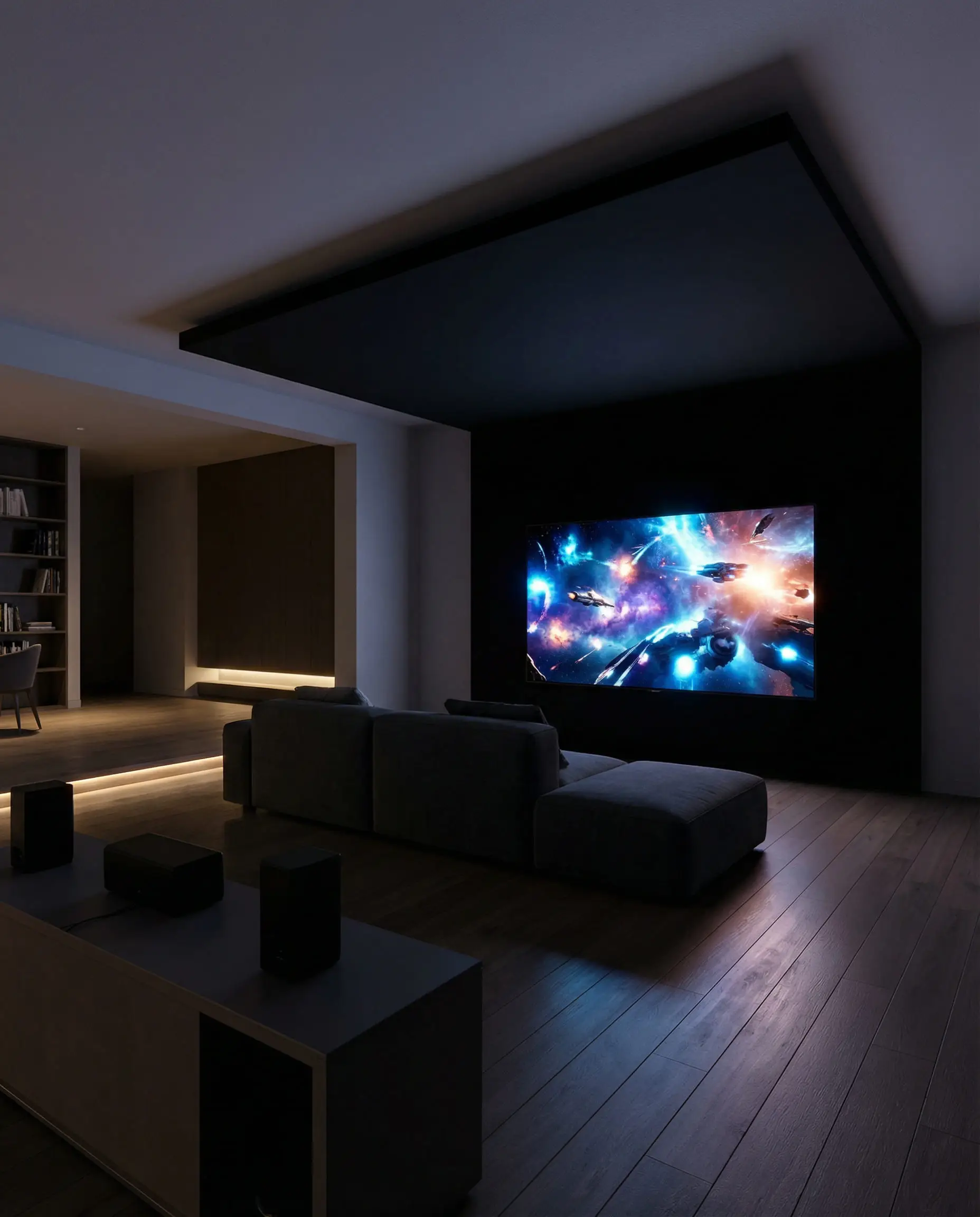
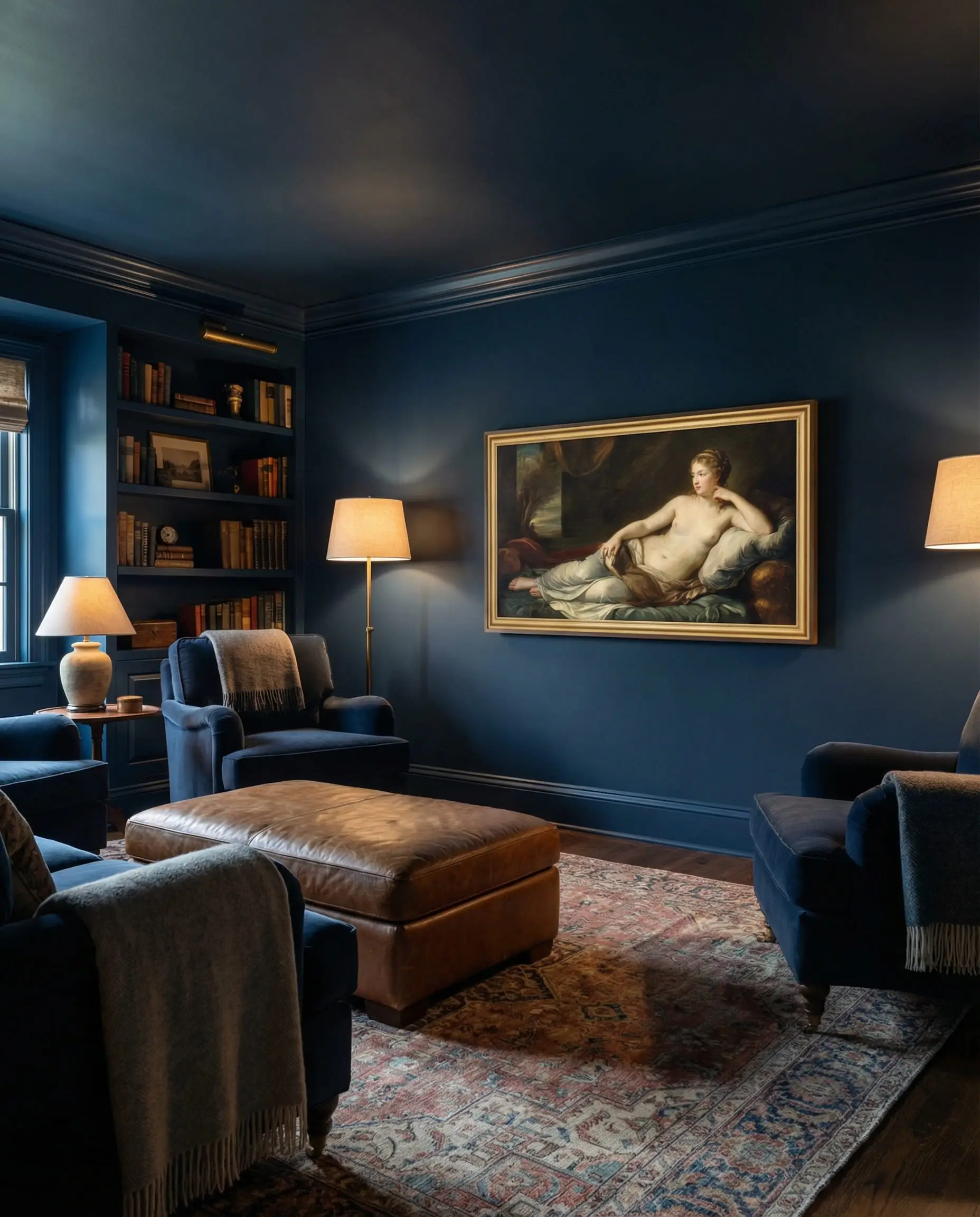
White walls behind a TV can create contrast eye strain. When the room is bright and the TV is dark, your iris works overtime. Enter the “Dark Mode” trend.
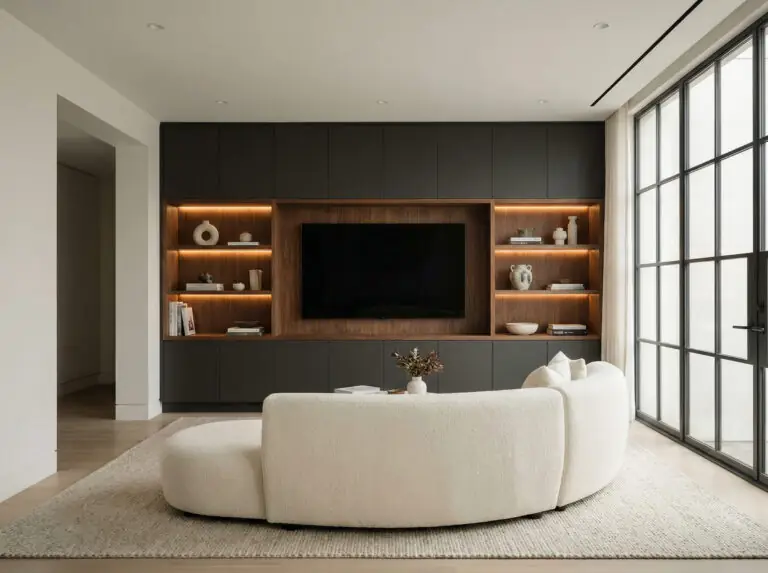
Designers are drenching the TV wall (and often the ceiling above it) in deep, moody hues—charcoal, midnight navy, forest green, or even matte black. This technique, known as “camouflaging,” helps the TV blend into the background when it’s off. When it’s on, the dark surround boosts the perceived contrast and color saturation of the screen, mimicking a movie theater experience.
3. The “Floating” Tech Wall
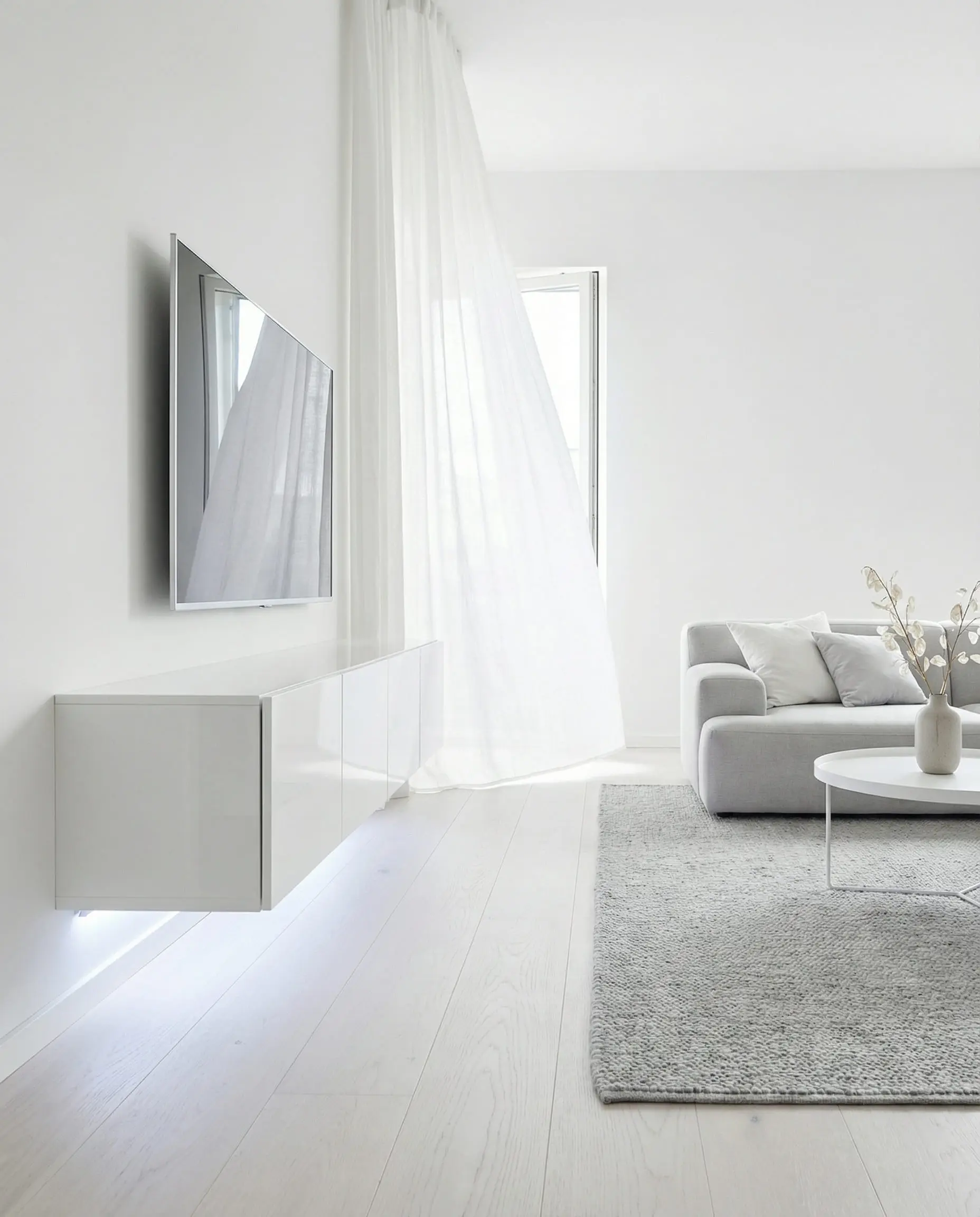
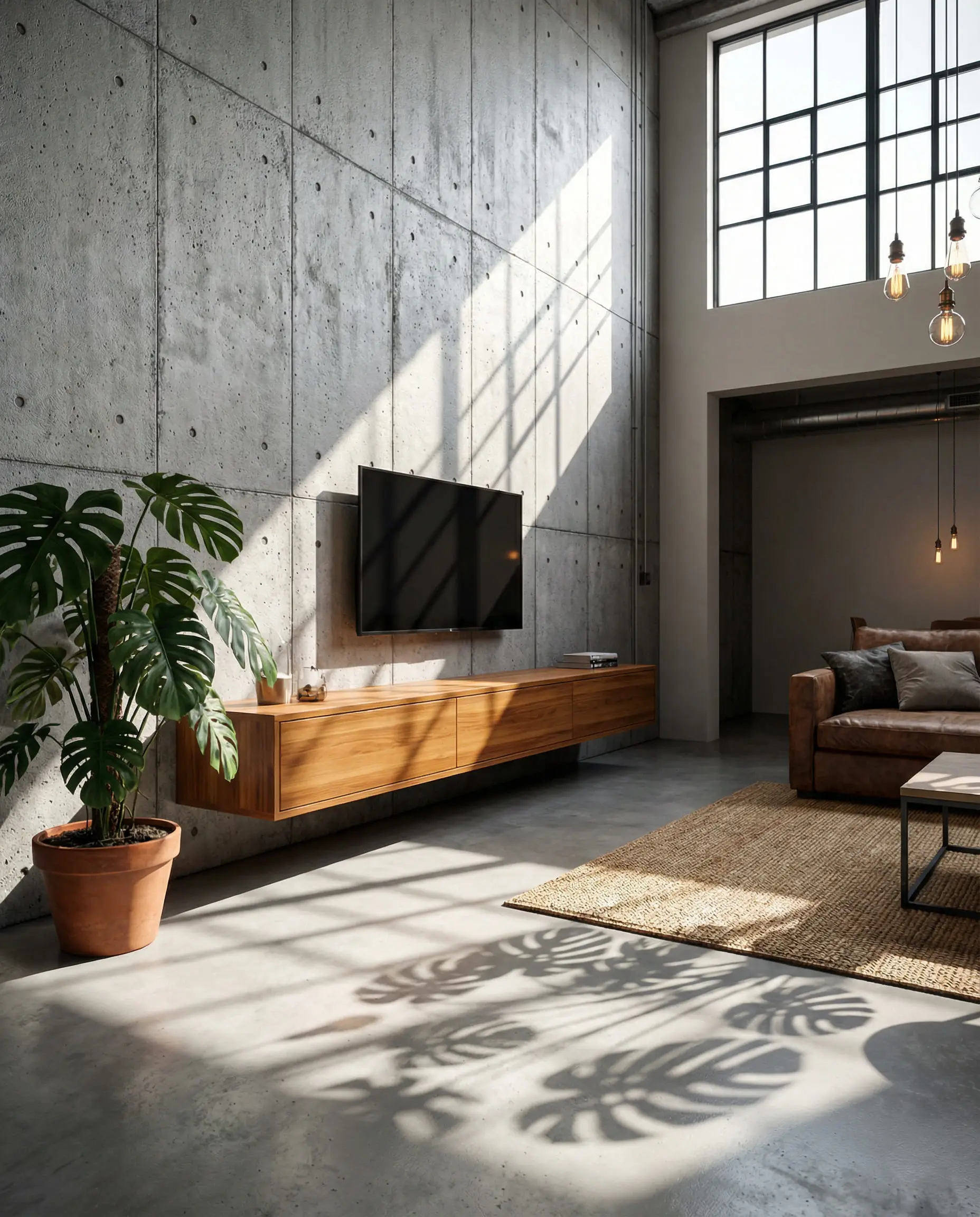
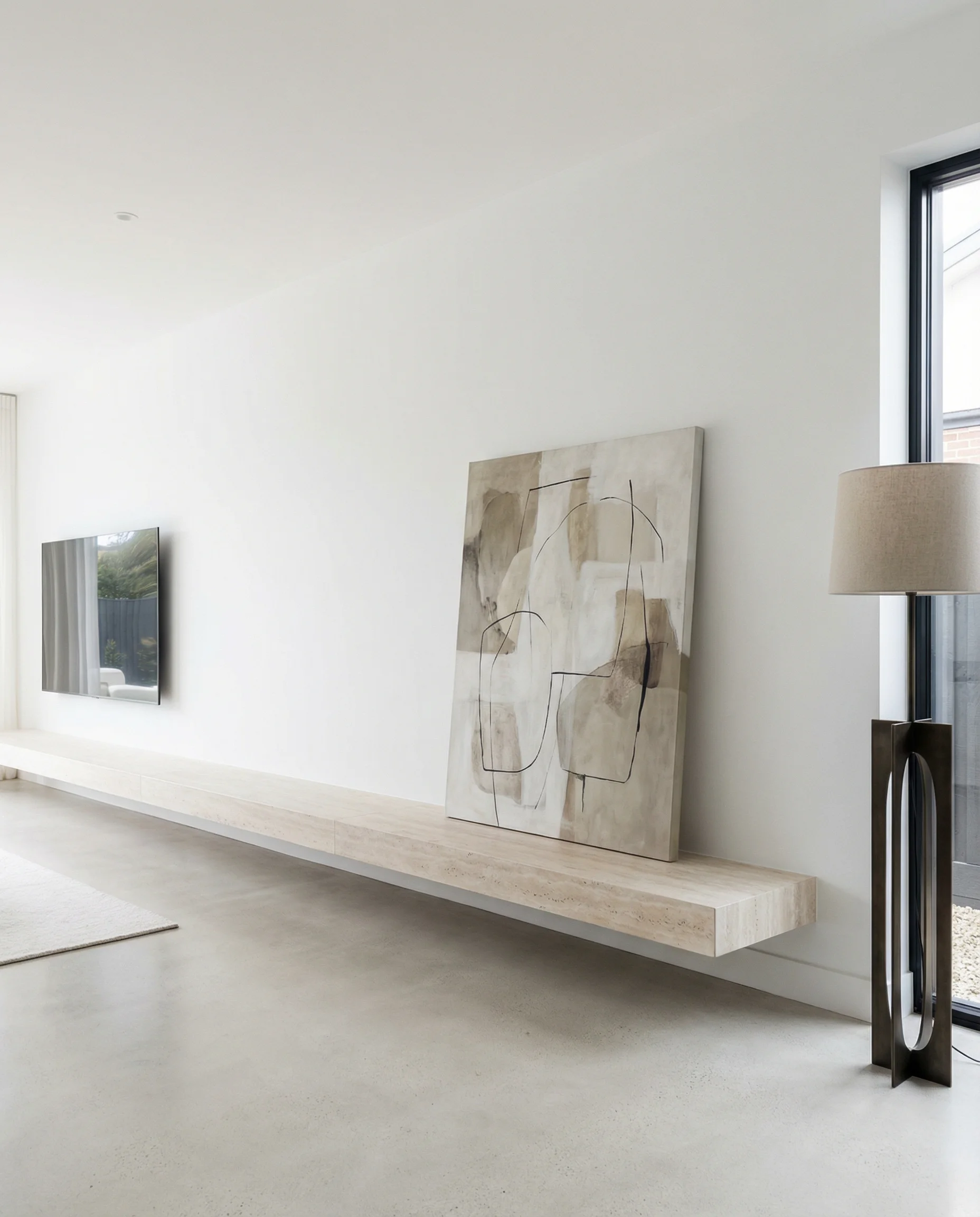
Gravity-defying furniture is huge this year. This trend involves a wall-mounted console unit that hovers about 10–12 inches off the floor, paired with a TV that is also mounted flush to the wall.
The magic comes from the lighting. LED strips installed underneath the floating cabinet and behind the TV create a soft glow that makes the heavy tech gear look weightless. It keeps the floor visible, which is a classic trick to make a room feel wider.
4. The Fireplace Media Wall
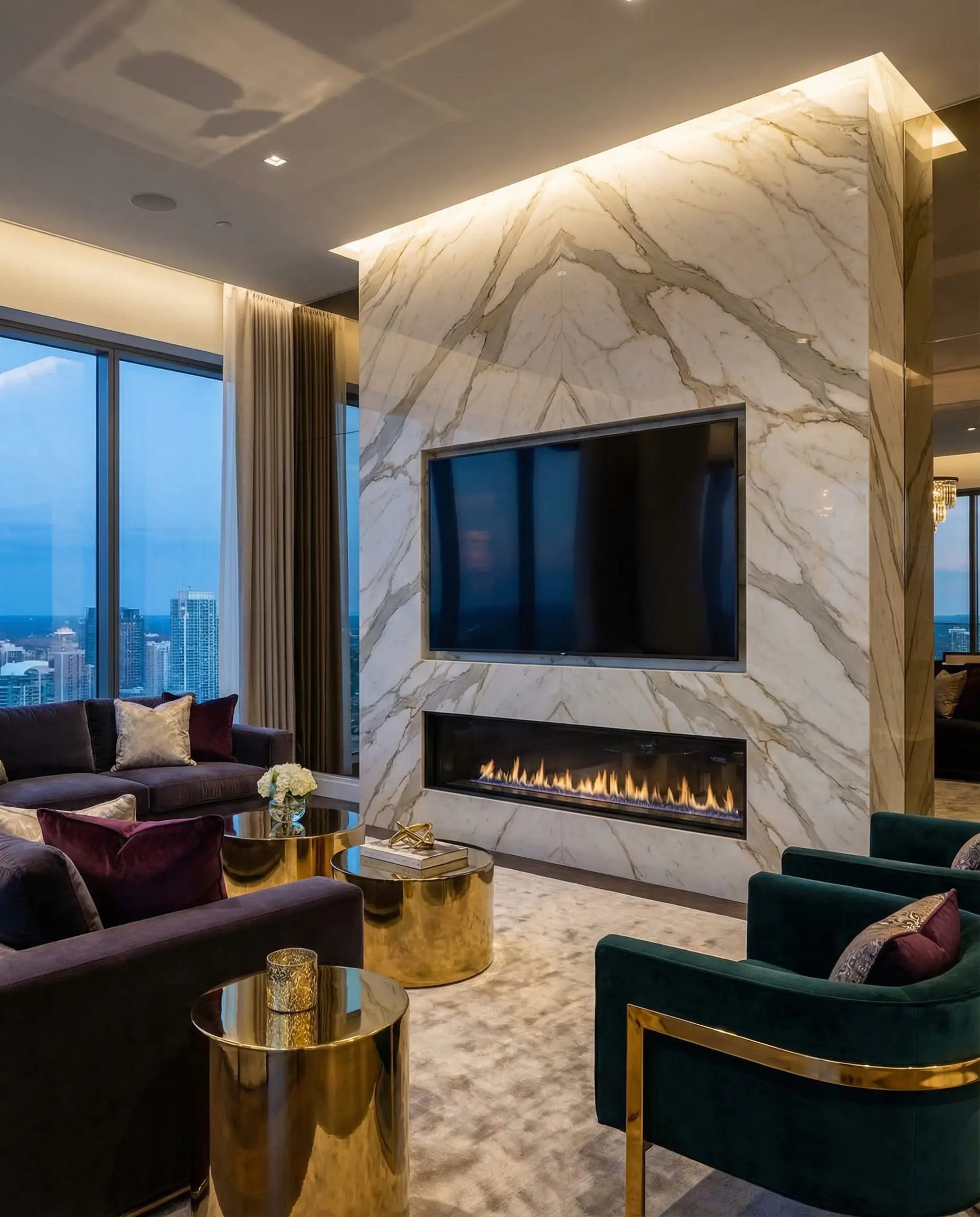
This is the ultimate luxury upgrade. The “Media Wall” concept builds the TV and a linear electric fireplace into a single, cohesive structure. Usually constructed from stud framing and drywall (or MDF), this creates a false chimney breast that houses the TV in a recessed niche and the fireplace below.
It solves the age-old dilemma: “Do I point the sofa at the fireplace or the TV?” Now, they are one and the same.
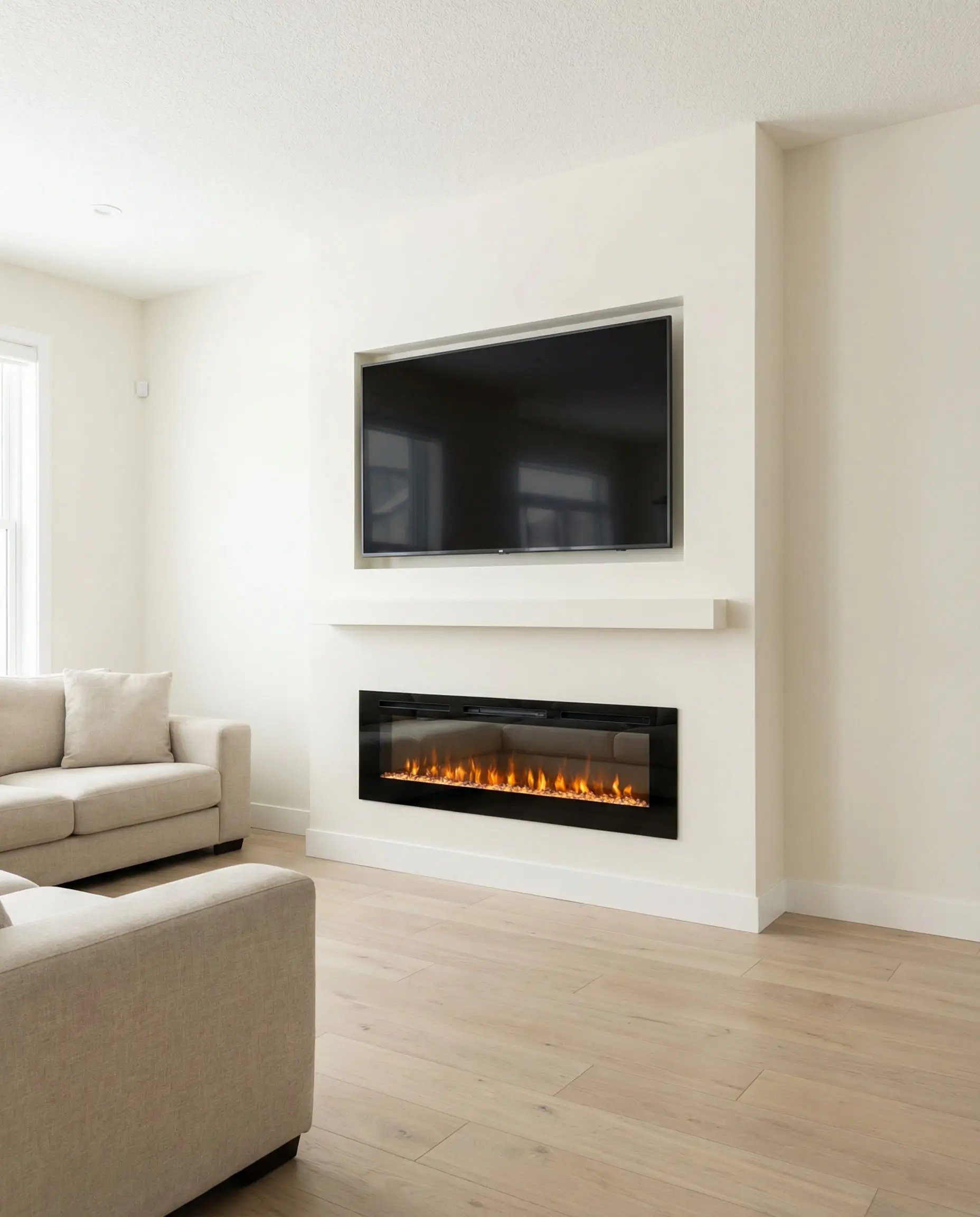
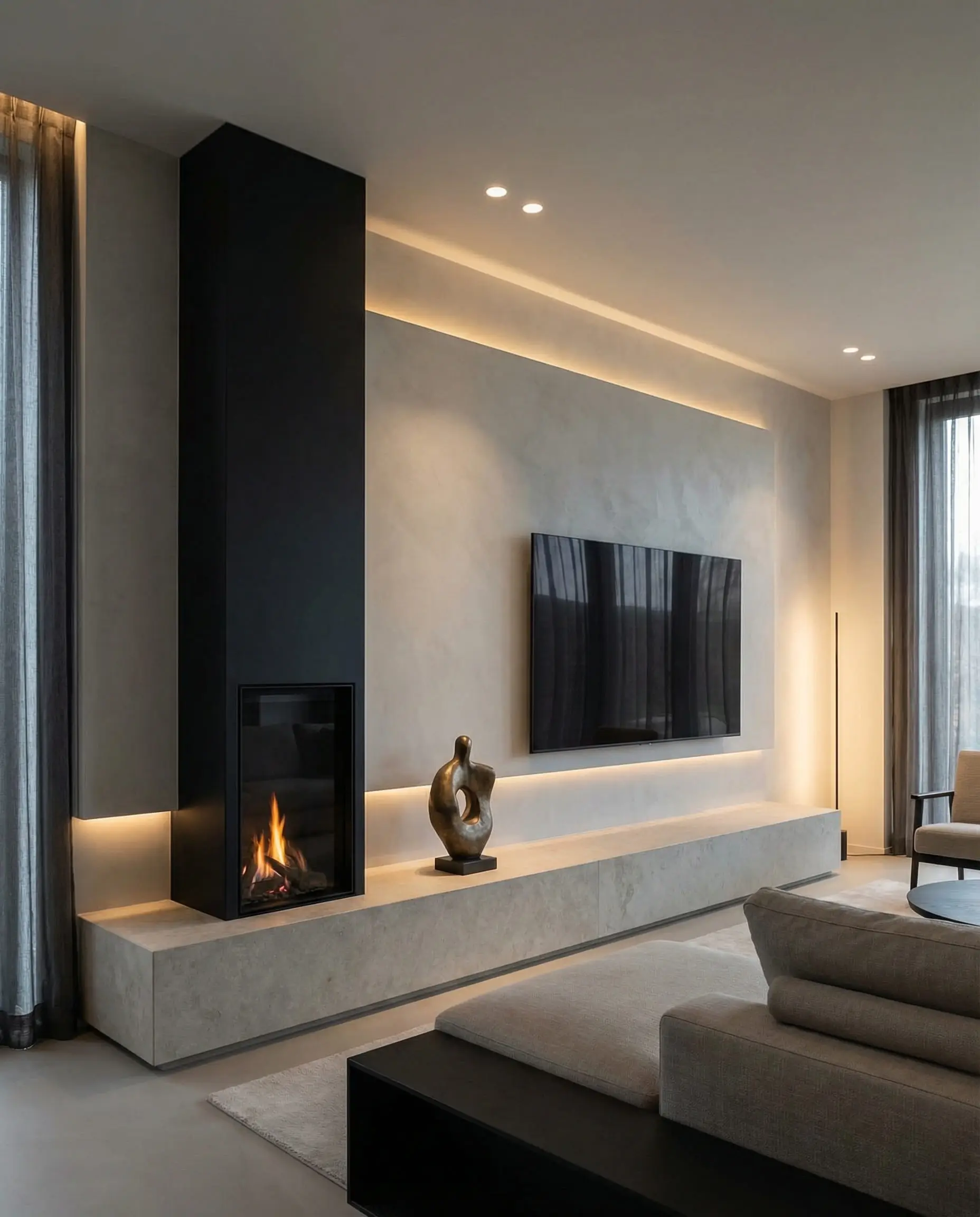
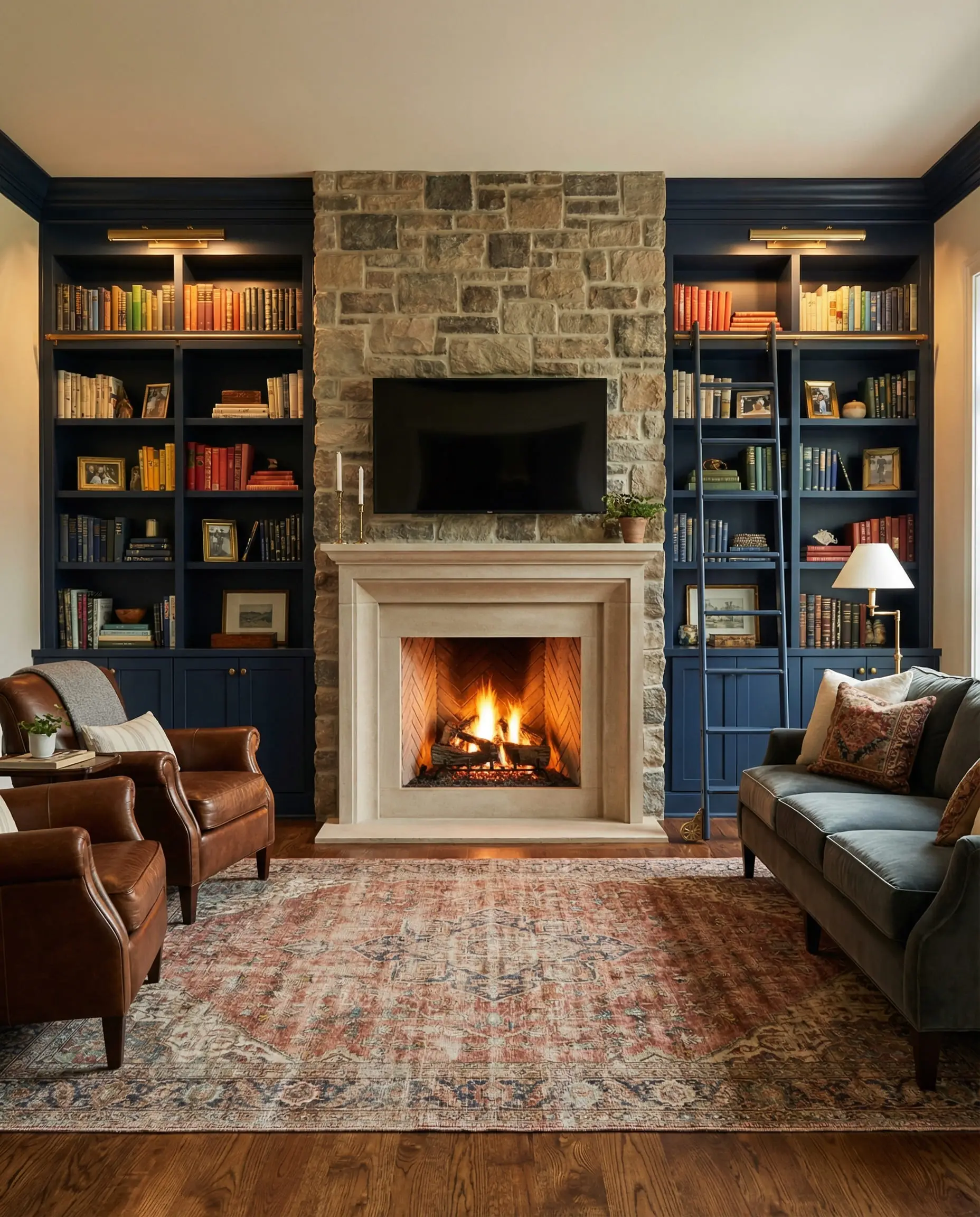
If you are building a media wall with a fireplace, ensure you install a “mantel” or a heat deflector shelf between the fire unit and the TV to prevent heat damage to your screen.
🔥 Pro Designer Tip
Best Materials for a TV Backdrop
The material you choose sets the “temperature” of the room. Here is a breakdown of the best options for 2026, ranging from budget DIYs to high-end luxury.
1. Wood: Warmth and Texture
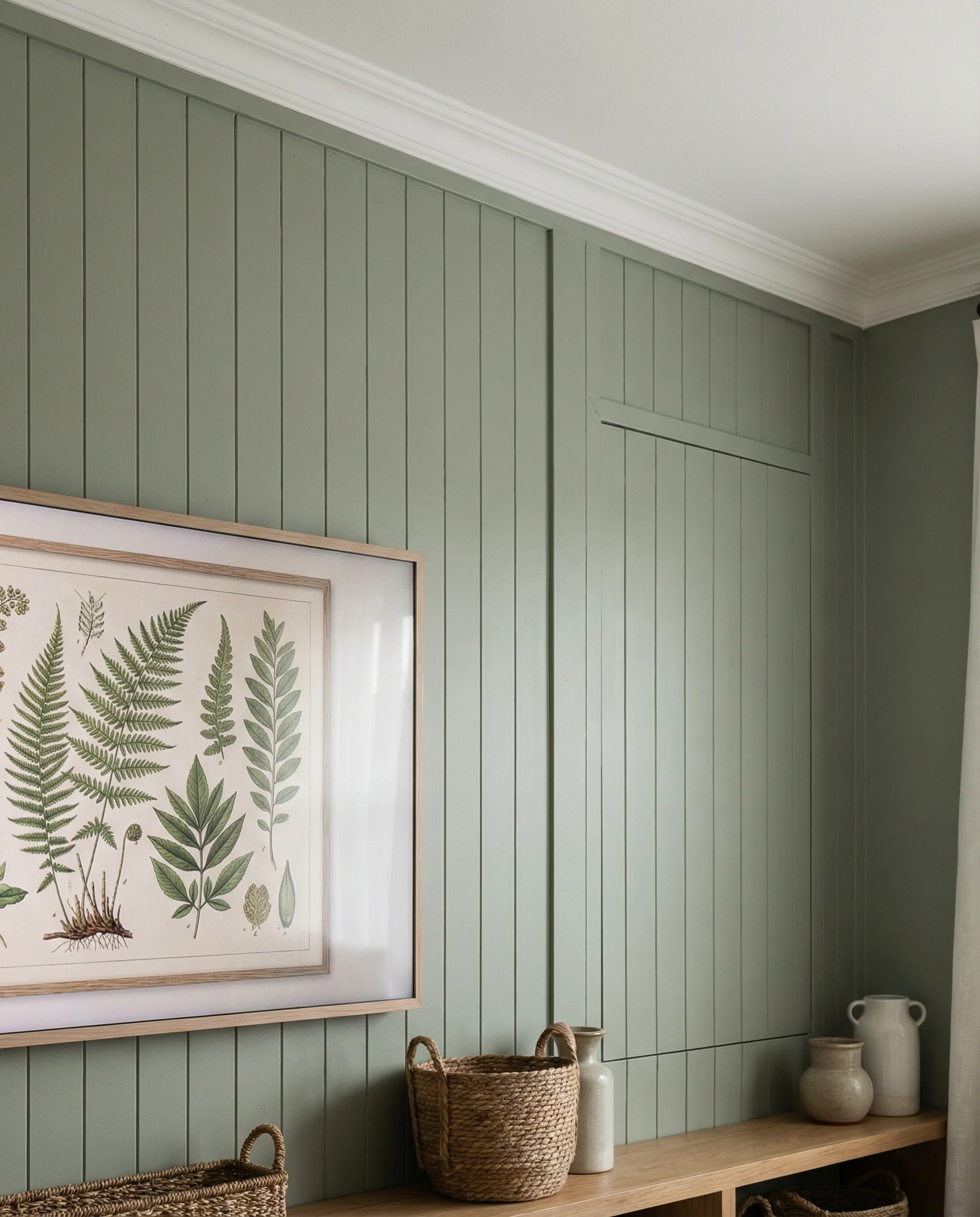
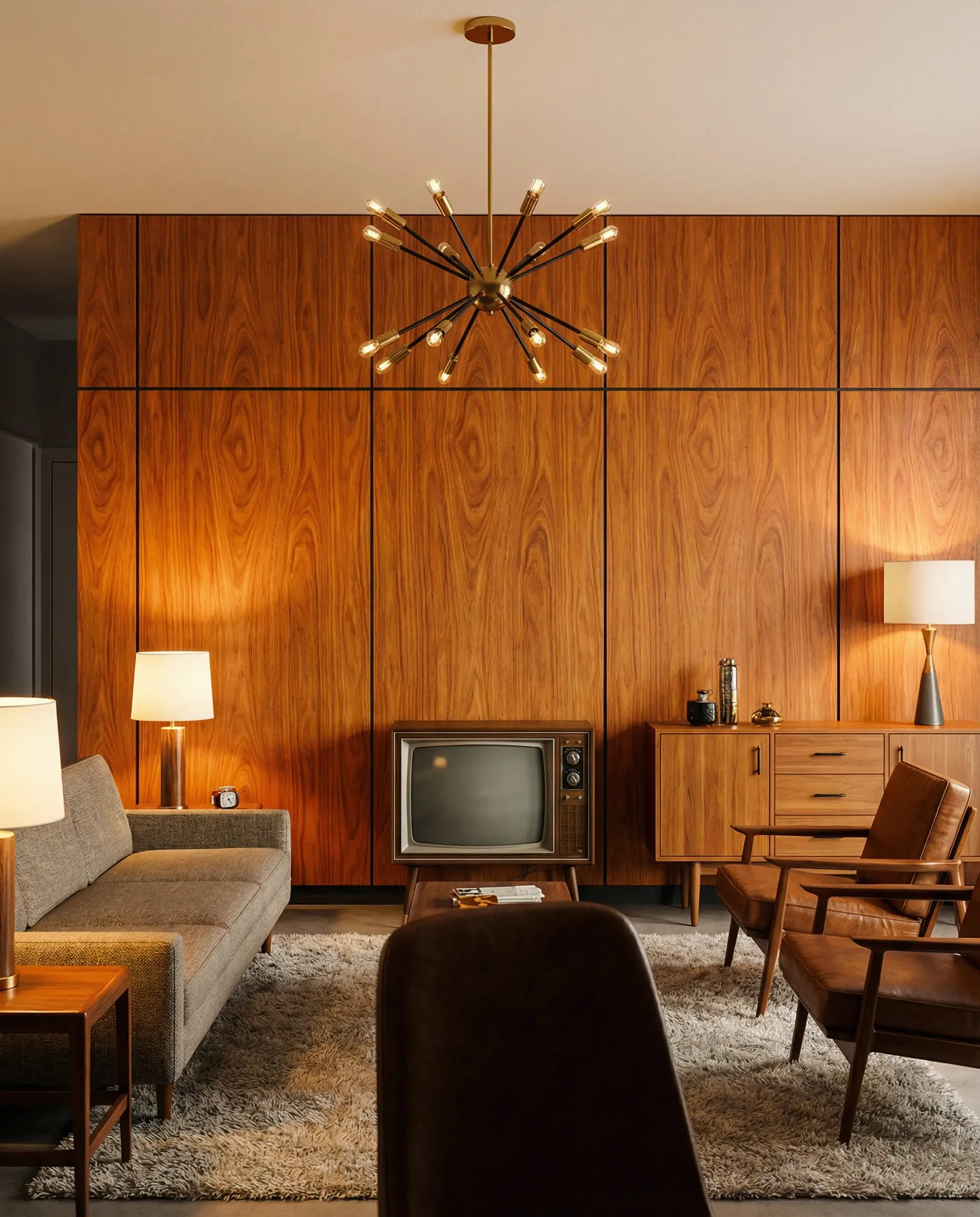
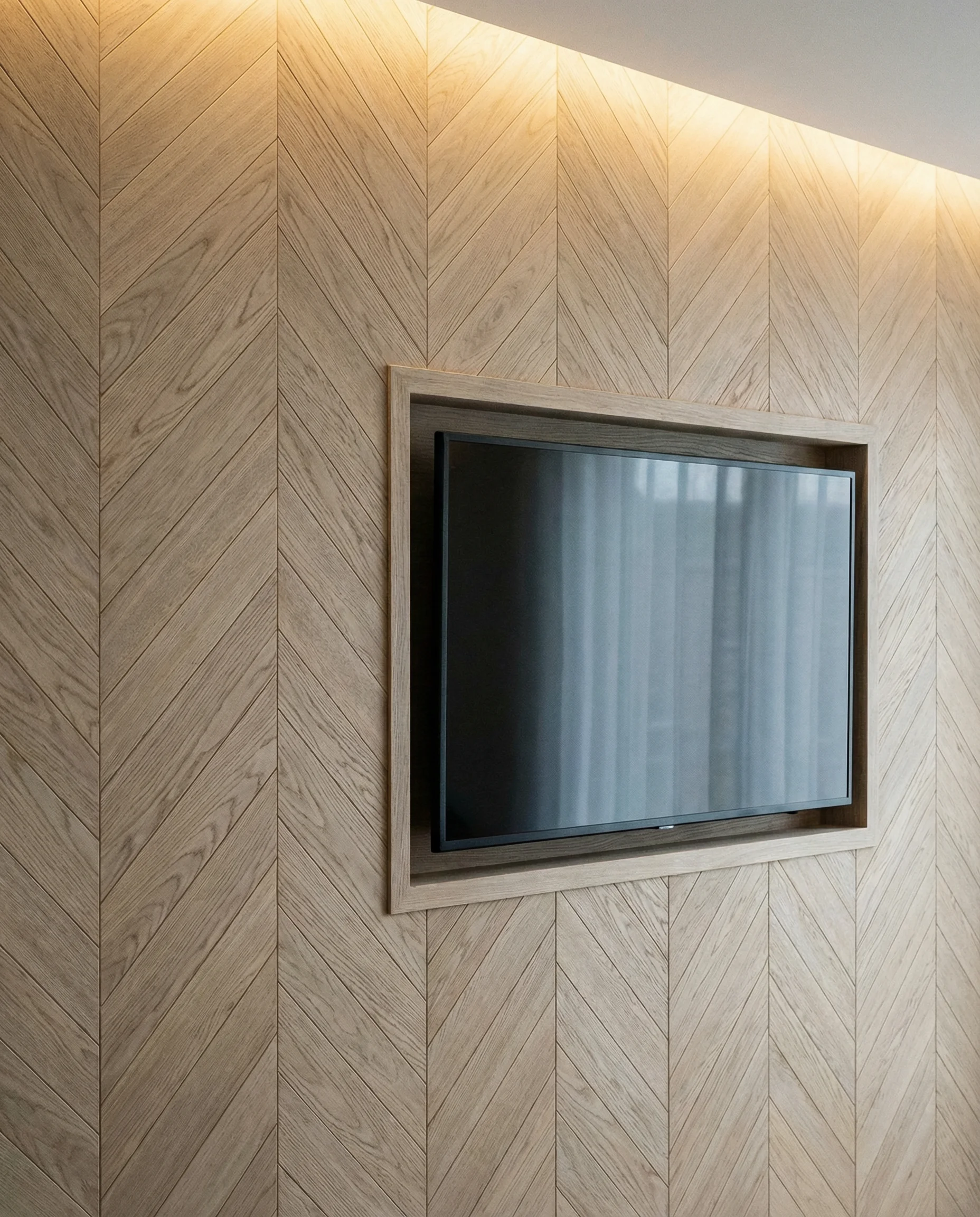
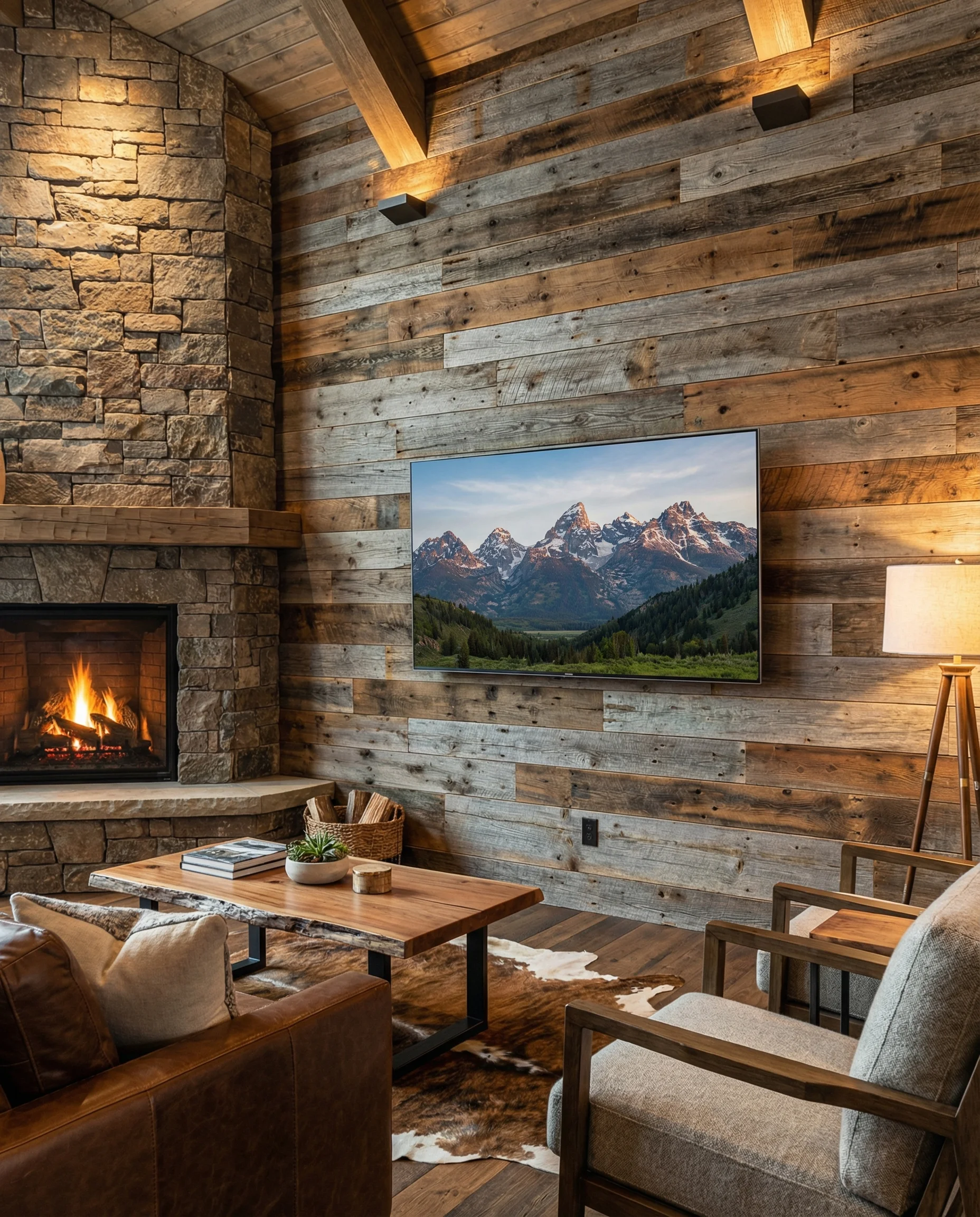
Wood remains the champion of cozy living rooms. Beyond the slat walls mentioned above, shiplap is evolving. The wide, rustic farmhouse shiplap is being replaced by thinner, vertical V-groove paneling painted in monochromatic earth tones.
For a mid-century modern look, walnut plywood sheets with a visible grain can be stunning. It adds instant history and character to a new build.
Read more: Wood Accent Wall Ideas
2. Stone and Marble (or “Porcelain Slabs”)
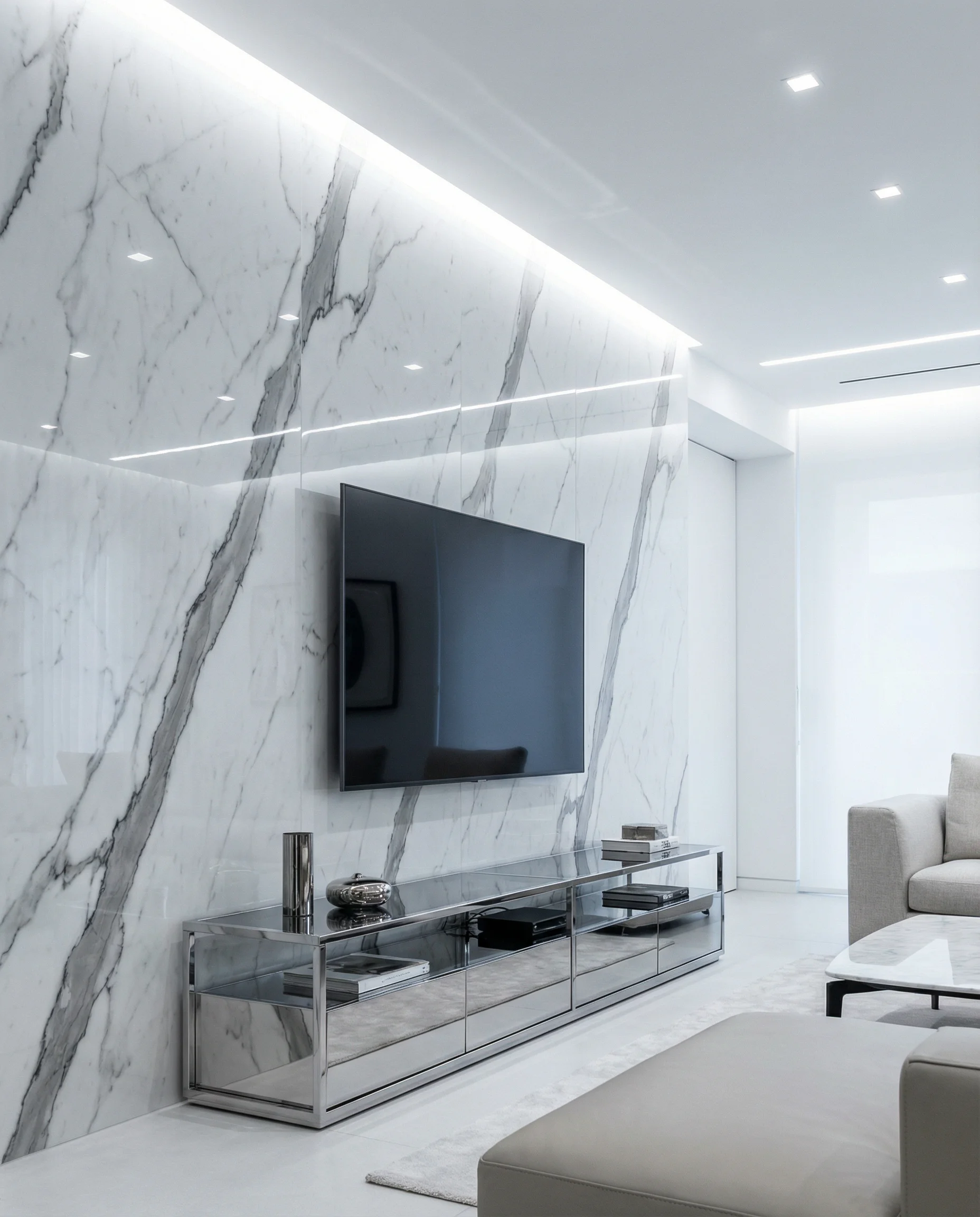
Nothing says “luxury” like a slab of marble behind a 75-inch screen. However, real stone is incredibly heavy and requires structural reinforcement.
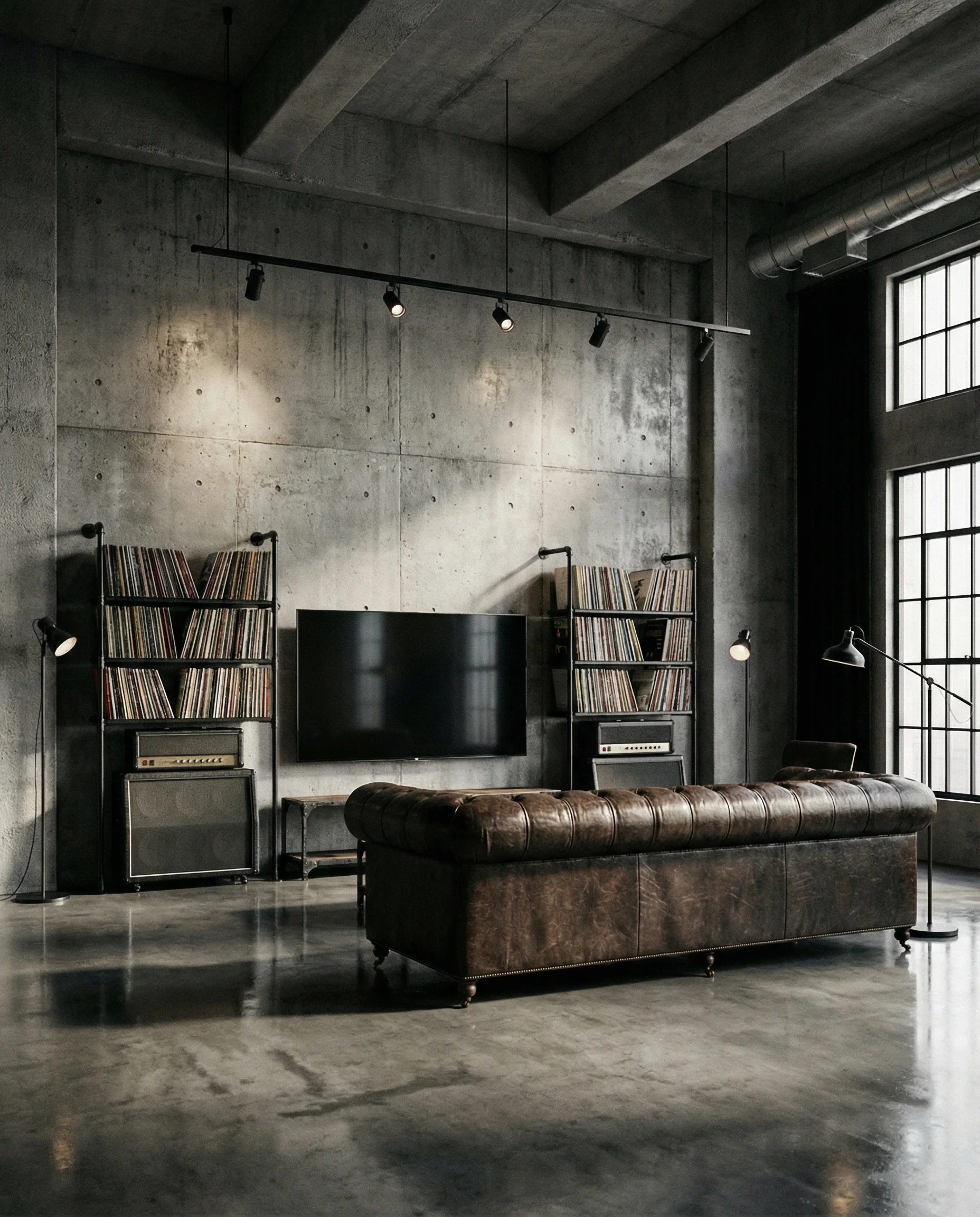
In 2026, the industry standard is Large Format Porcelain Tile. These massive, thin tiles (often 4×8 feet) mimic the veining of Calacatta marble or the grit of industrial concrete but are lightweight and easier to install. They offer that sleek, seamless look without the need for a structural engineer.
3. Paint and Color Blocking
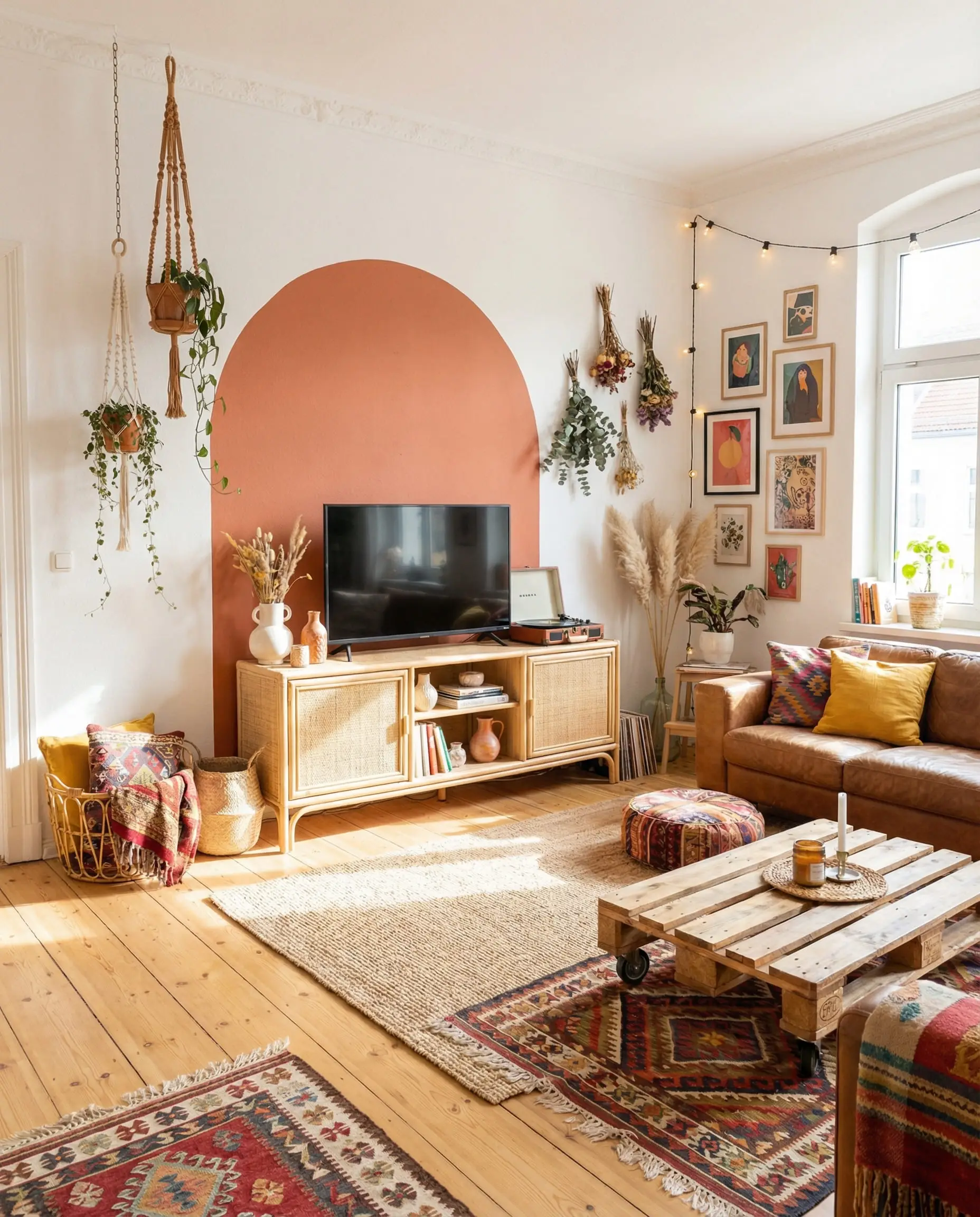
Paint is the most versatile tool in your arsenal. If you aren’t ready to commit to paneling, try Color Blocking. Instead of painting the entire wall, paint a large arch, circle, or geometric rectangle specifically behind the TV and console.
This “zones” the entertainment area without overwhelming the room. A deep terracotta arch behind a black TV and a wooden console is a very trendy, bohemian look right now.
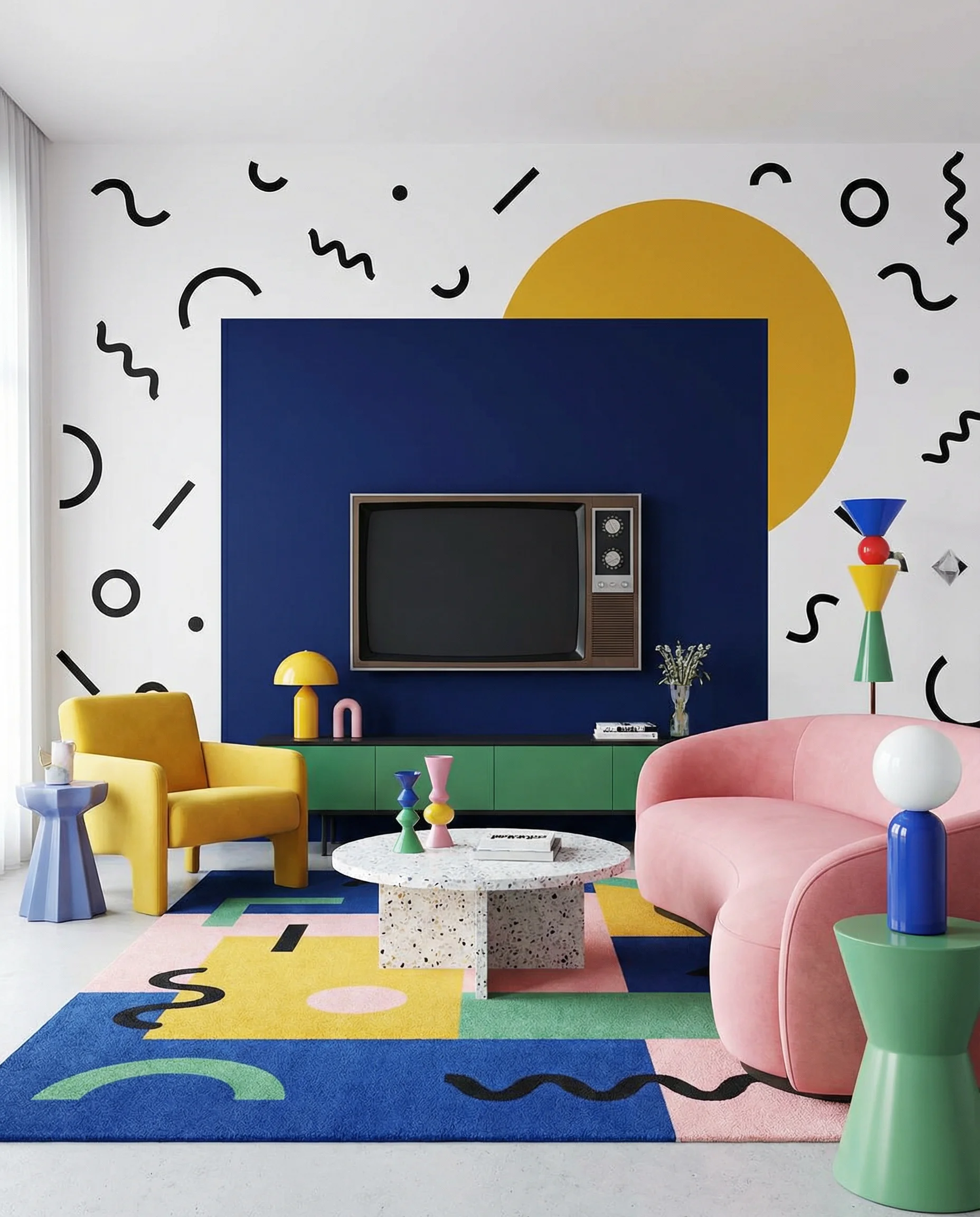
Use a matte or eggshell finish for your TV wall. High-gloss paint will reflect the light from the TV screen, causing distracting glare.
🎨 Hackrea Tip
4. Wallpaper and Murals
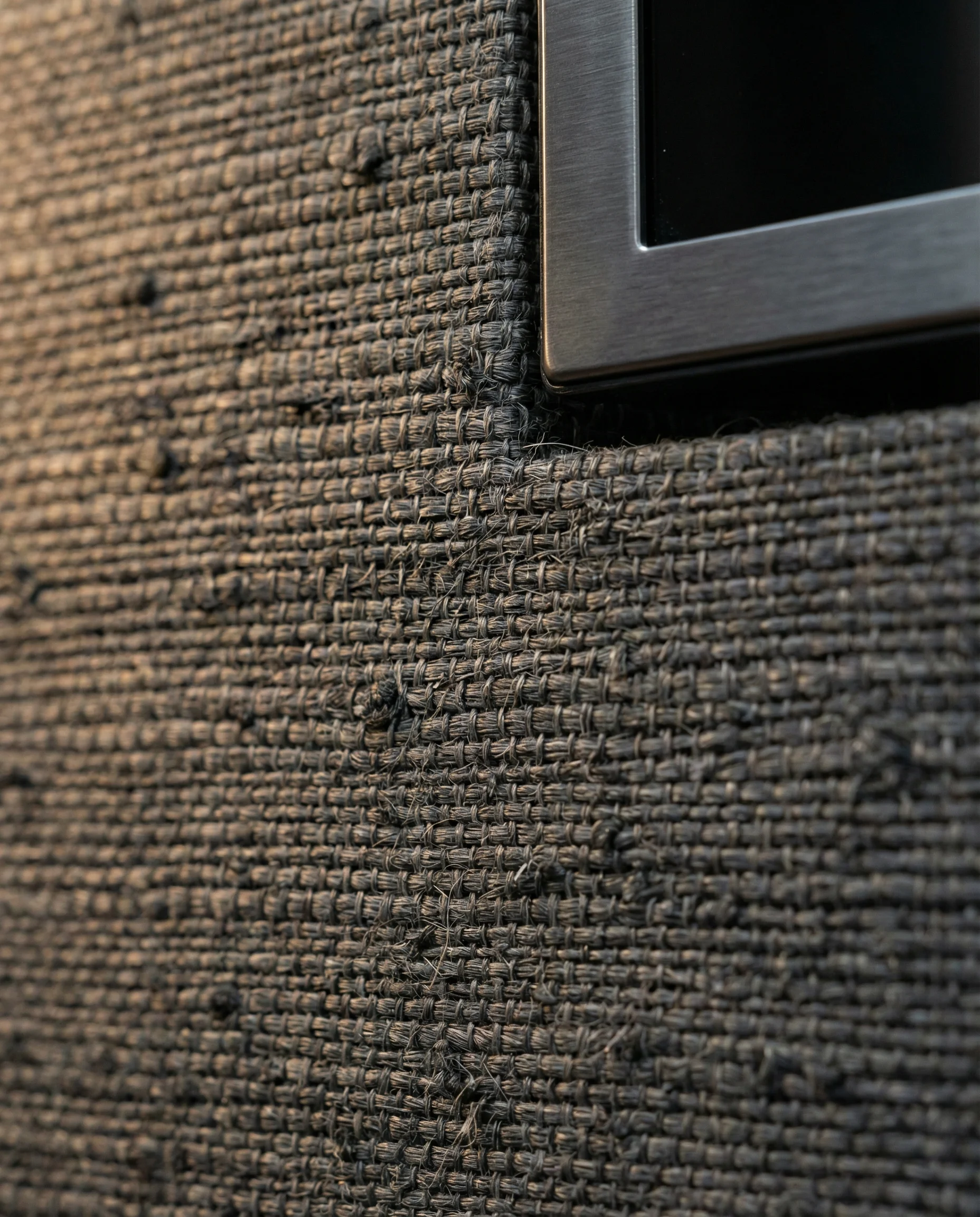
Wallpaper is back with a vengeance, but for TV walls, texture beats pattern. You don’t want a busy floral print fighting for attention with the subtitles on your screen.
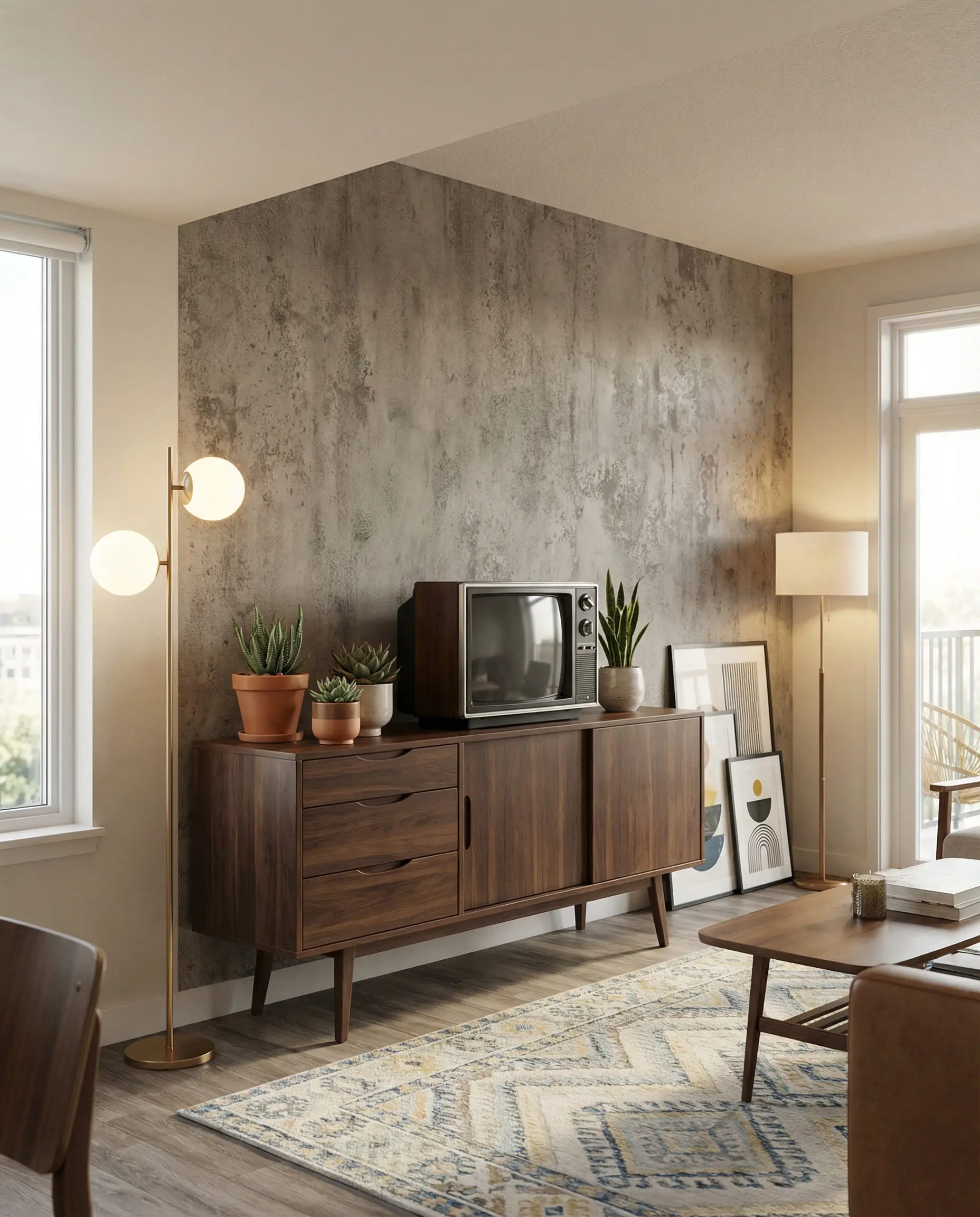
Look for Grasscloth, linen-effect, or “concrete look” wallpapers. These add depth and sophistication without visual chaos. If you are renting, peel-and-stick options are a lifesaver.
Explore options: Stone Wallpaper Trends
Solutions by Room Size & Type
One size does not fit all. A massive stone wall that looks epic in a suburban great room will make a studio apartment feel like a cave.
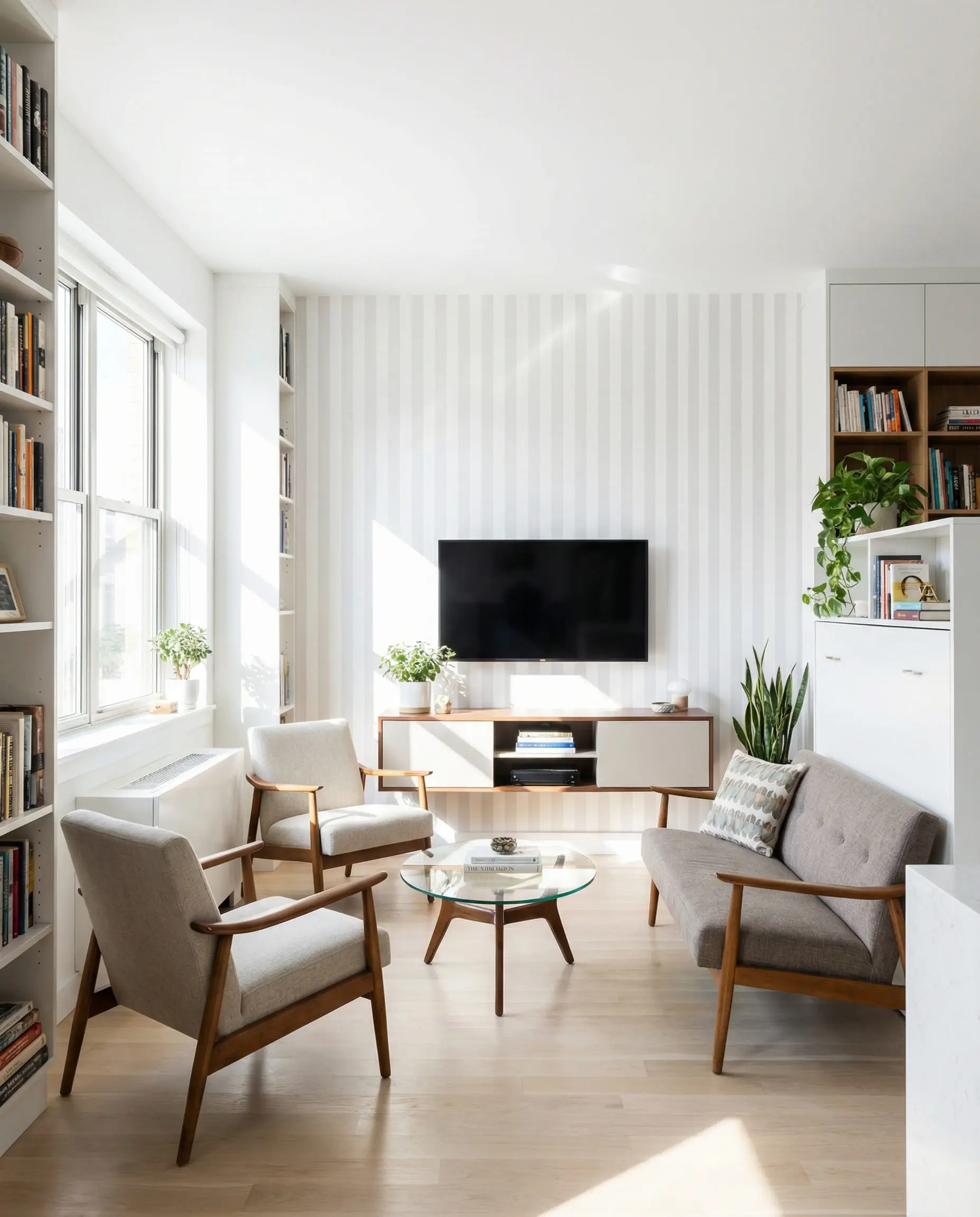
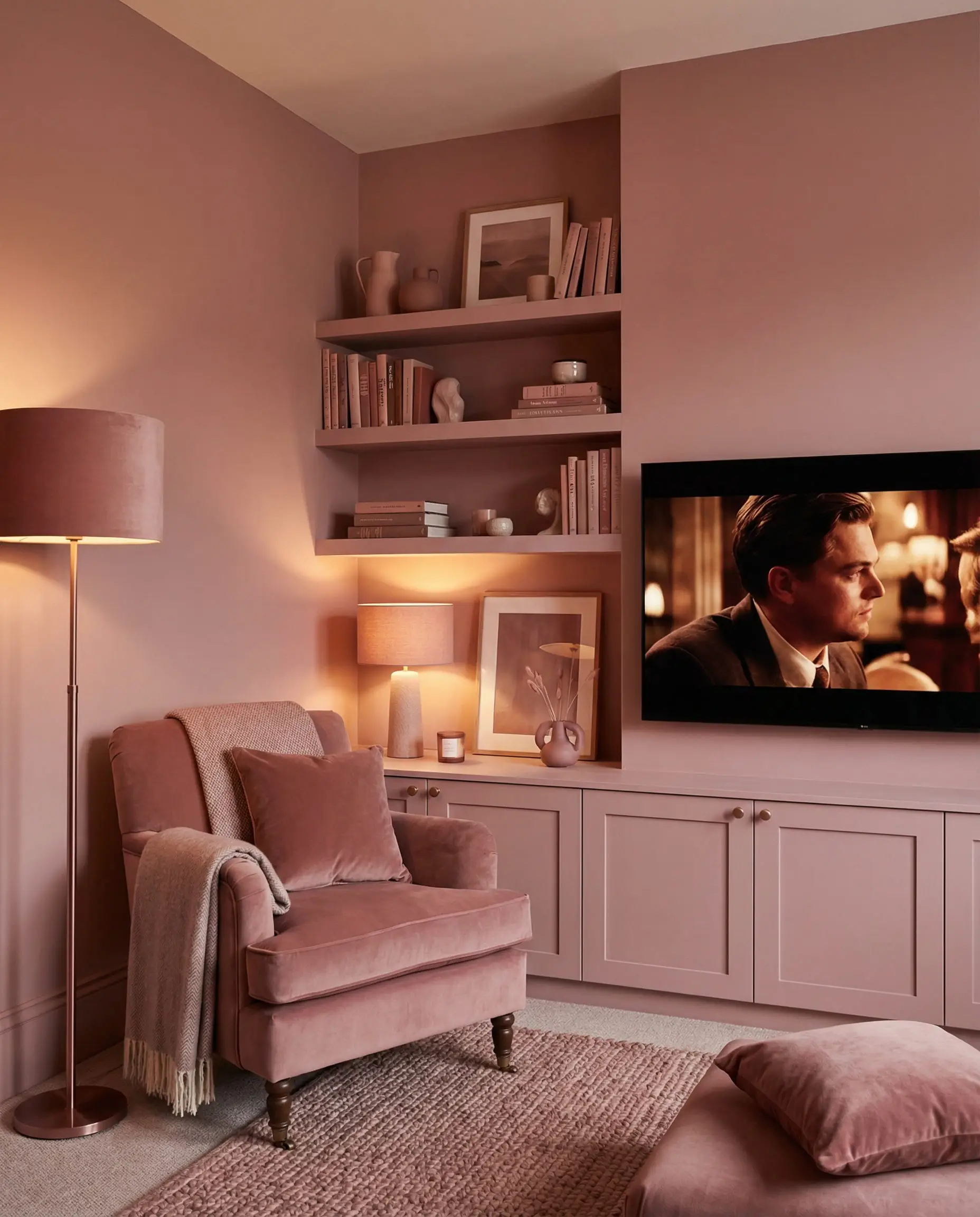
For Small Living Rooms
In compact spaces, the goal is to reduce visual clutter.
Need more inspiration? Small Living Room Ideas with TV
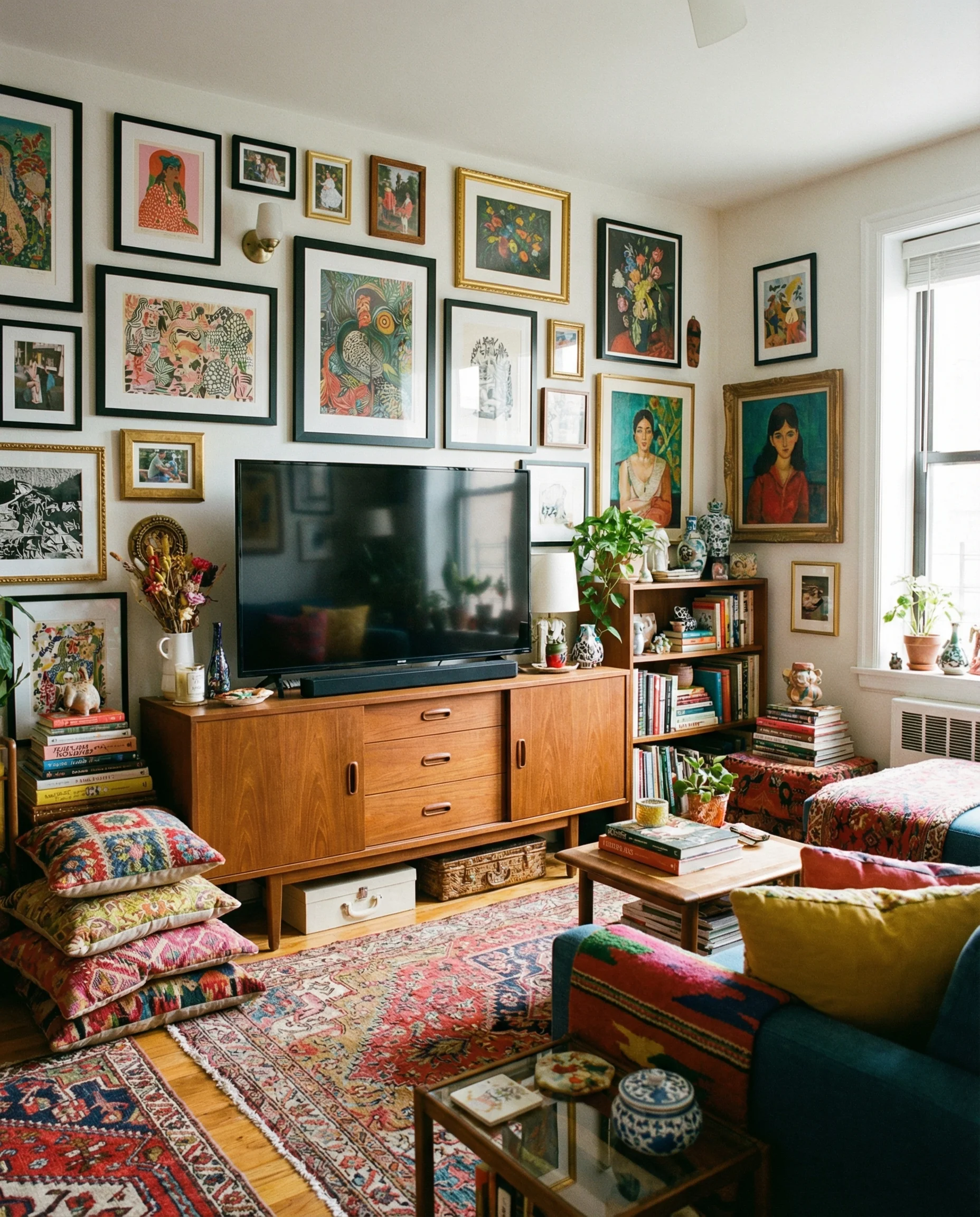
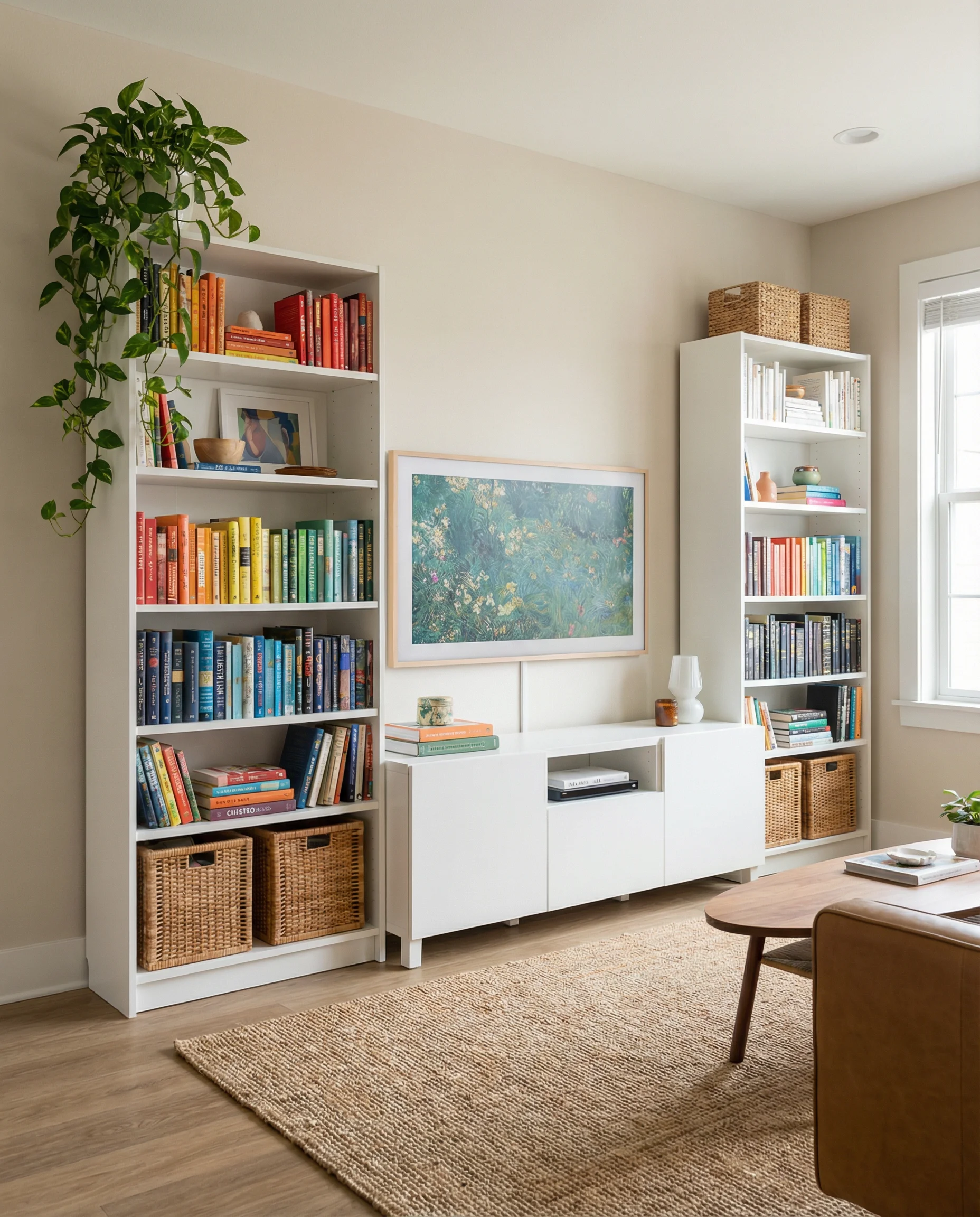
For Renters (The “No-Drill” Zone)
You want the look, but you want your security deposit back.
For Large Open Spaces
In an open-plan house, the TV wall often has to anchor the entire living zone.
Practical Guide: Installation & “Future-Proofing”
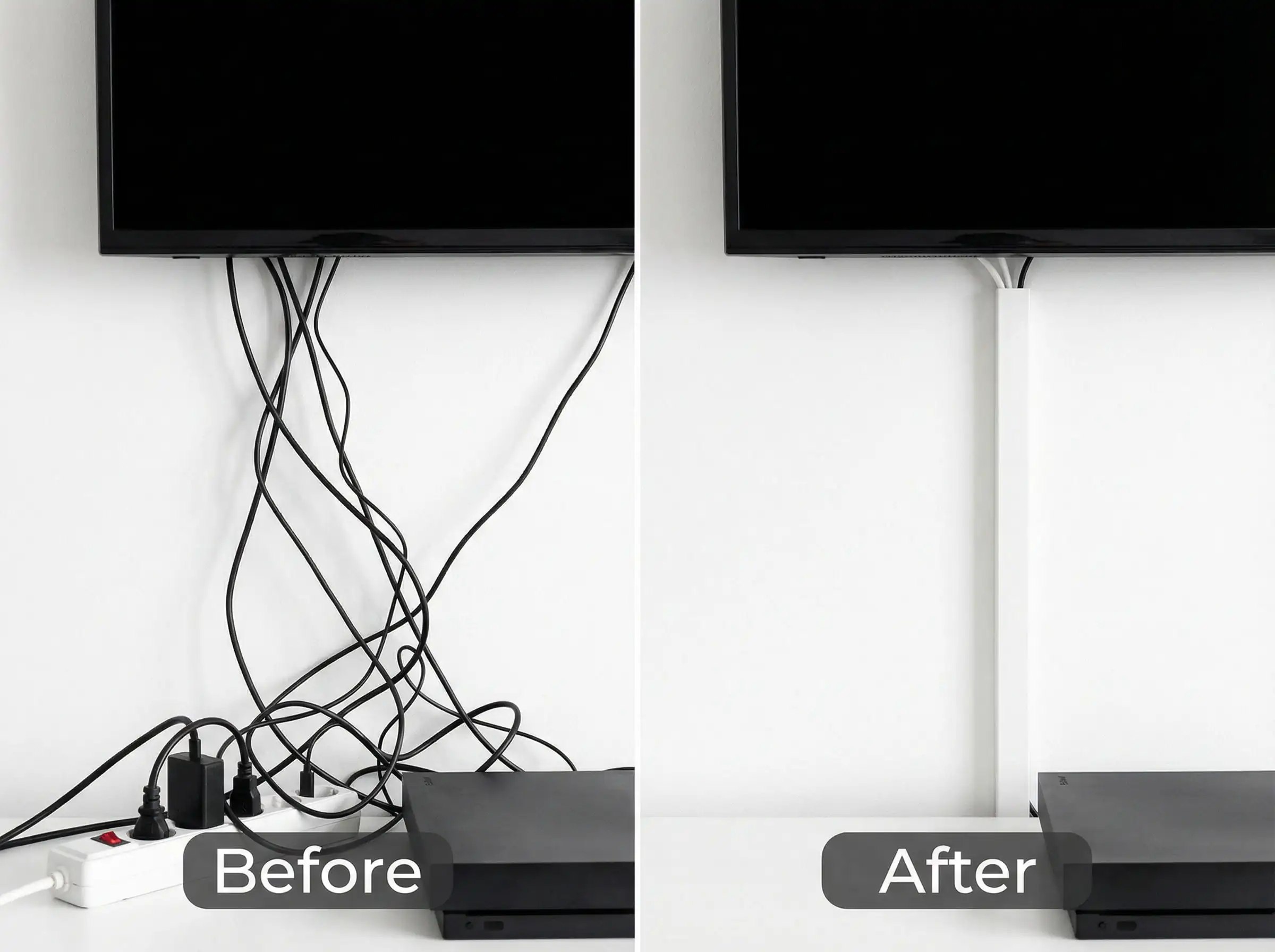
You have picked your style and materials. Now, let’s talk about the technical side. A beautiful wall is ruined if unsightly cables are dangling down the front.
1. The Golden Rule of Height
The number one mistake homeowners make is mounting the TV too high (the infamous “TV too high” syndrome).
The Rule: The center of your TV screen should be at eye level when you are seated. For a standard sofa, this is usually 42 to 45 inches from the floor to the center of the screen.
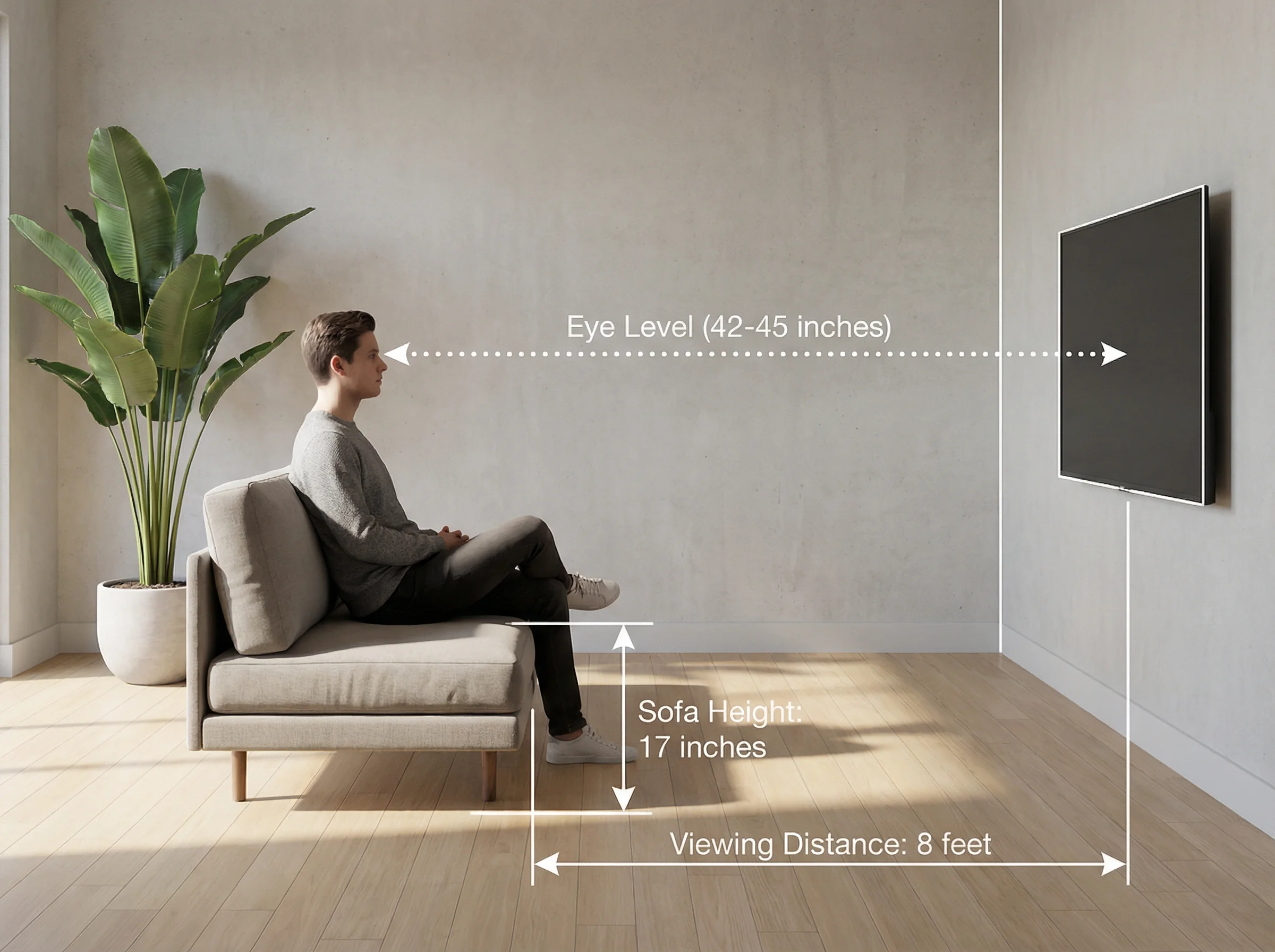
⚠️ Do not center the TV on the wall vertically. Center it based on your seated eye line. Your neck will thank you.
Designer Warning
2. Cable Management: The Invisible Art
If you are building a new wall or adding cladding:
3. Future-Proofing Your Niche
If you are building a recessed niche for your TV (common in fireplace media walls), build it bigger than your current TV.
TVs are getting cheaper and larger. If you build a niche snugly around your current 55-inch screen, you will regret it when you want to upgrade to a 75-inch model in three years. Leave at least 3–4 inches of breathing room on all sides.
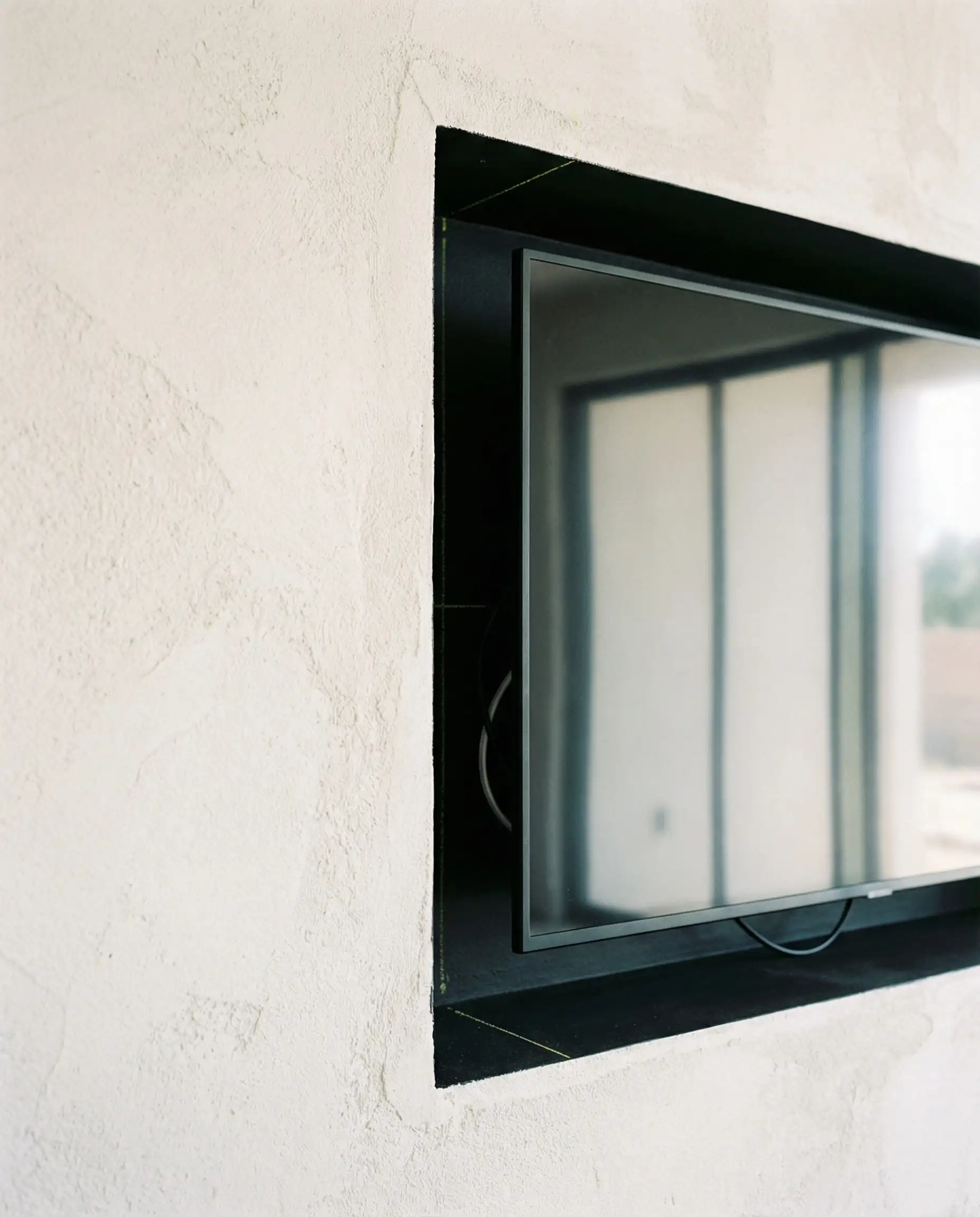
Get the technical details: Ideas for Choosing a Modern TV Stand
4. Lighting Integration
Lighting makes the difference between a “wall” and a “feature.”
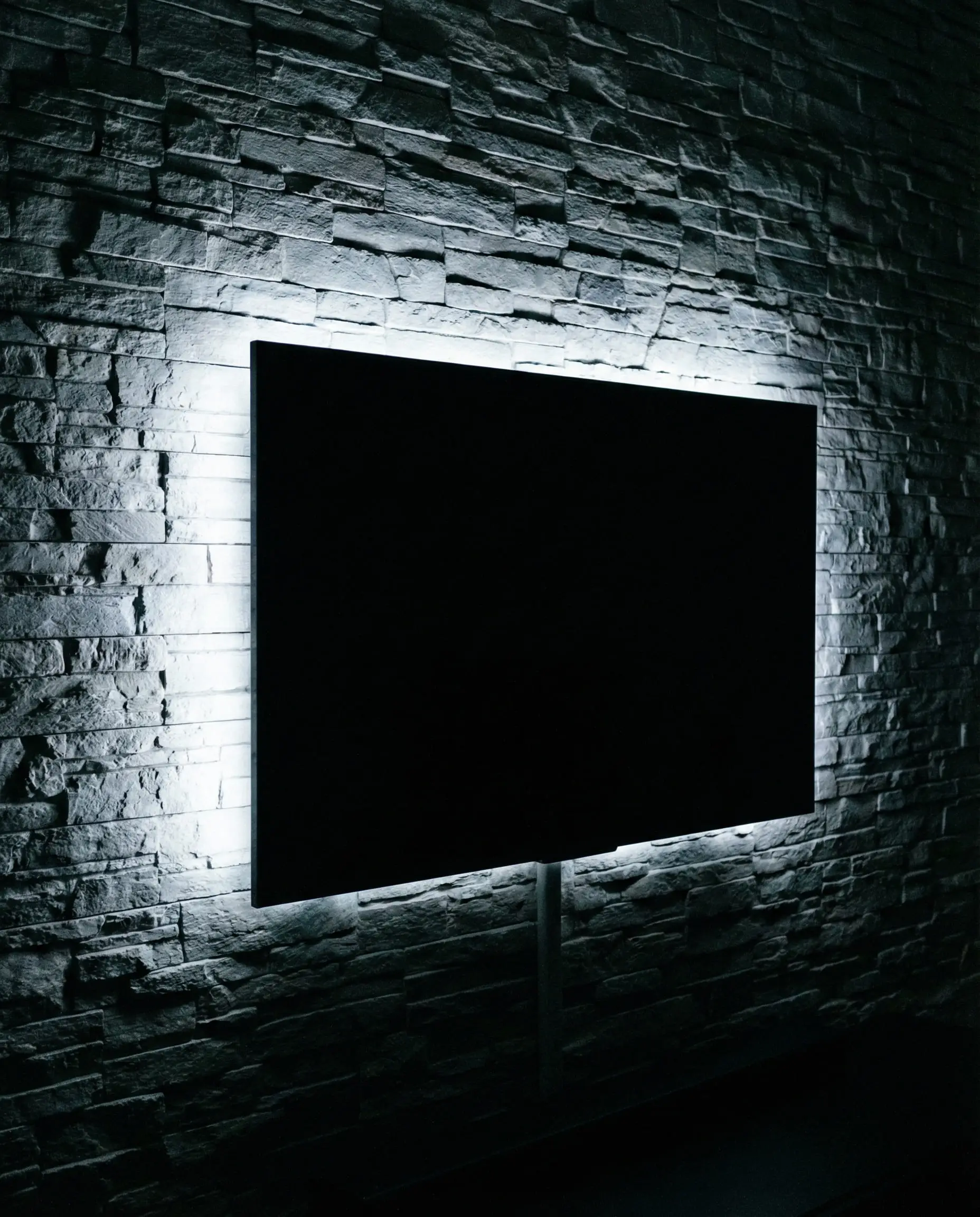
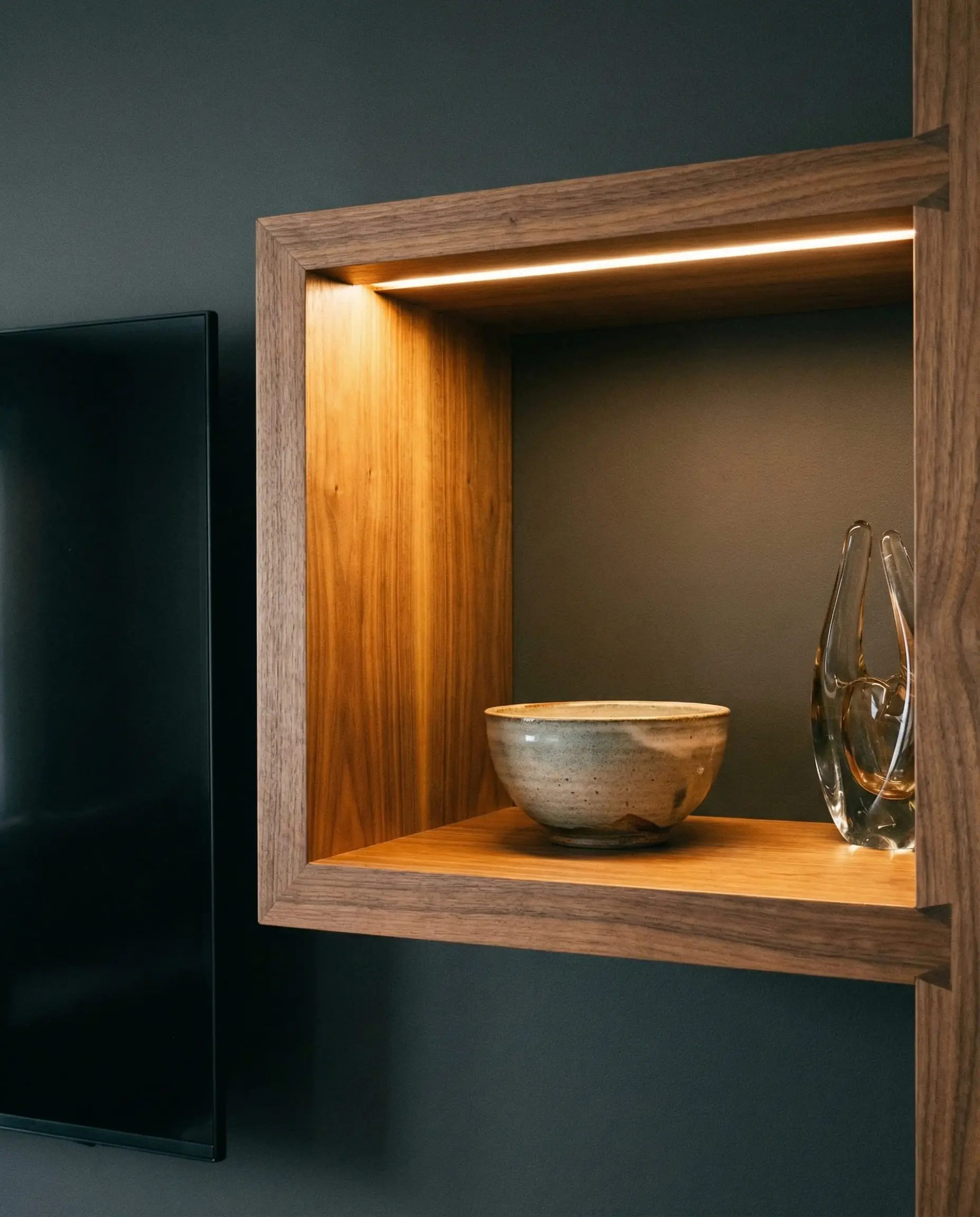
Light it up right: Top 11 Lighting Ideas for Your Living Room
FAQ: Your TV Wall Questions Answered
A: Dark, matte colors are superior. Charcoal, navy, deep green, or black absorb light from the screen rather than reflecting it. This creates a more immersive viewing experience and makes the TV “disappear” when switched off.
A: The wide, white, horizontal farmhouse shiplap is fading in popularity. It is being replaced by vertical V-groove paneling, skinny slats (wood or painted), and darker, moodier wood tones. The direction is shifting from “rustic cottage” to “modern organic.”
A: Follow the “Rule of Three.” If you have shelves, group items in threes. Leave “negative space” (empty space) so the eye can rest. Avoid placing busy artwork too close to the screen itself; keep the area immediately around the bezel clear to maintain focus.
A: Absolutely. However, stick to subtle textures or tone-on-tone patterns. High-contrast geometric patterns or busy florals can be visually exhausting when trying to watch a screen. A grasscloth or linen texture is ideal.
Conclusion
The TV accent wall has graduated. It is no longer just a way to fill space; it is a sophisticated architectural element that balances technology with tranquility. By choosing the right materials—whether it is the acoustic warmth of wood slats or the cinematic depth of dark paint—you can turn the “black box” into a seamless part of your home’s design.
Remember, the best design is one that works for your lifestyle. If you love movie nights, go dark and moody. If you love a bright, airy Sunday morning vibe, go for light oak and soft whites.
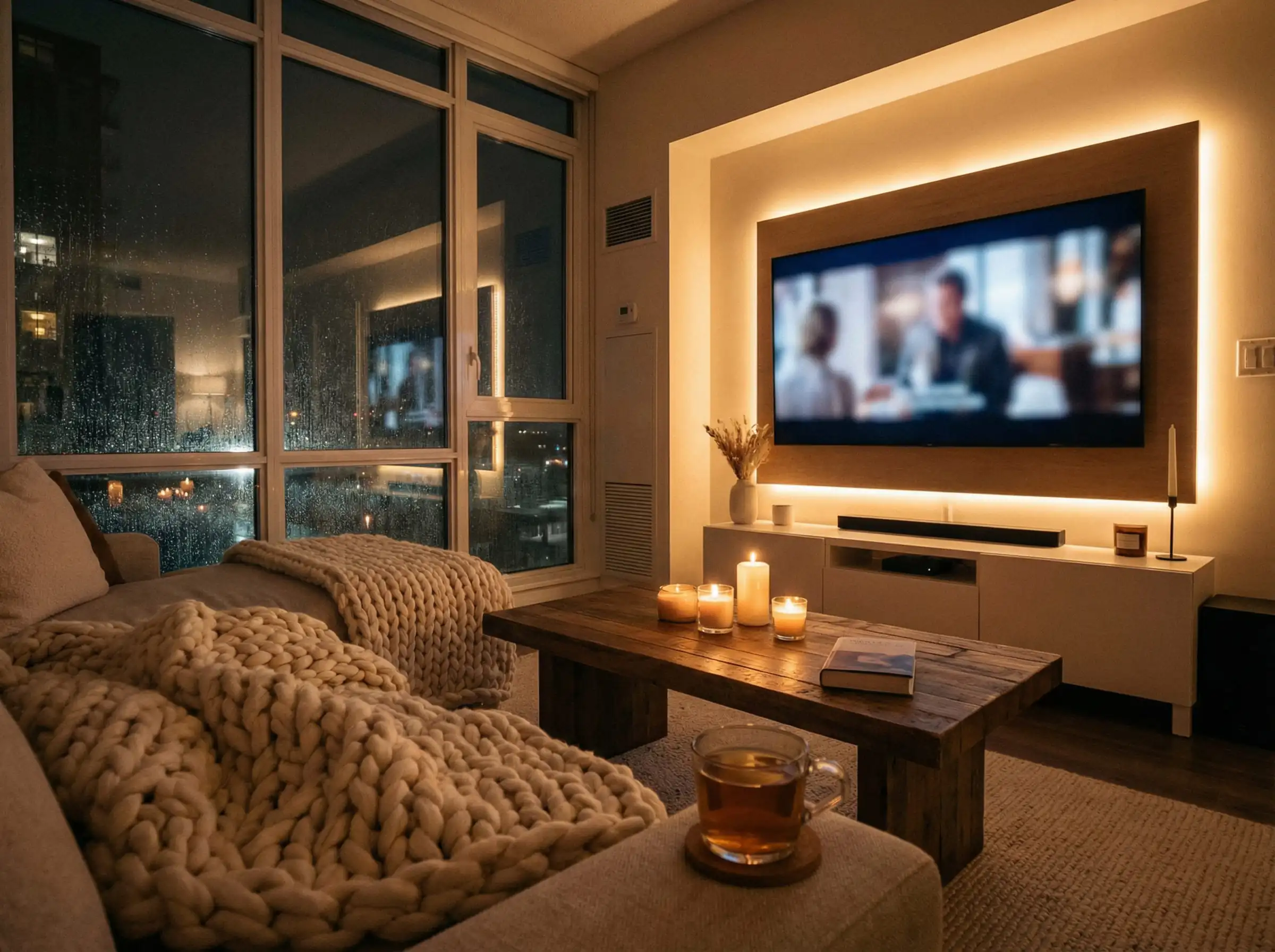
Ready to transform your space? Don’t guess—visualize. Use our styling tools to play with colors, or browse our latest fireplace trends to start planning your dream media wall today.