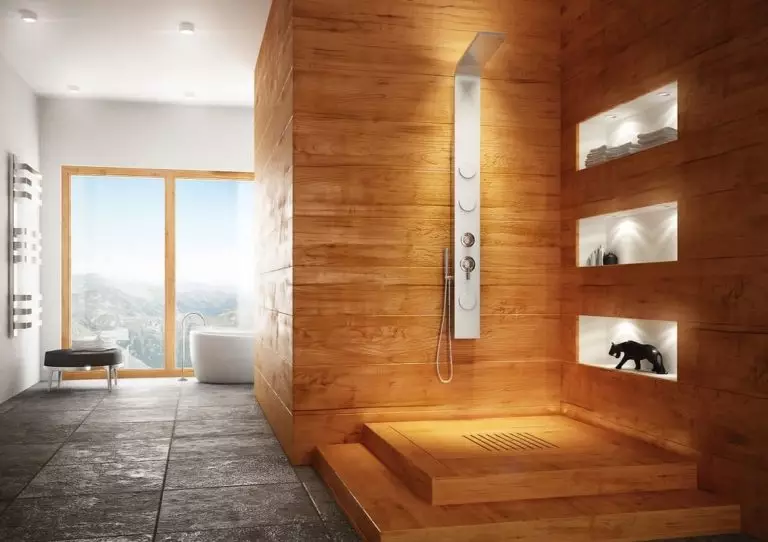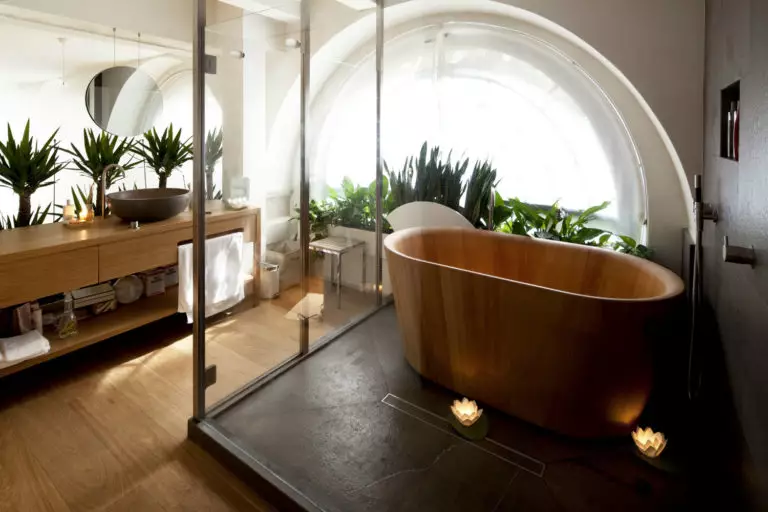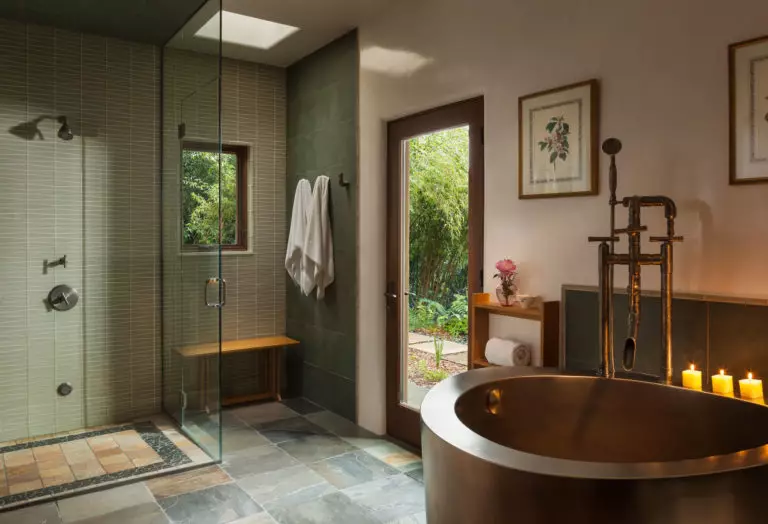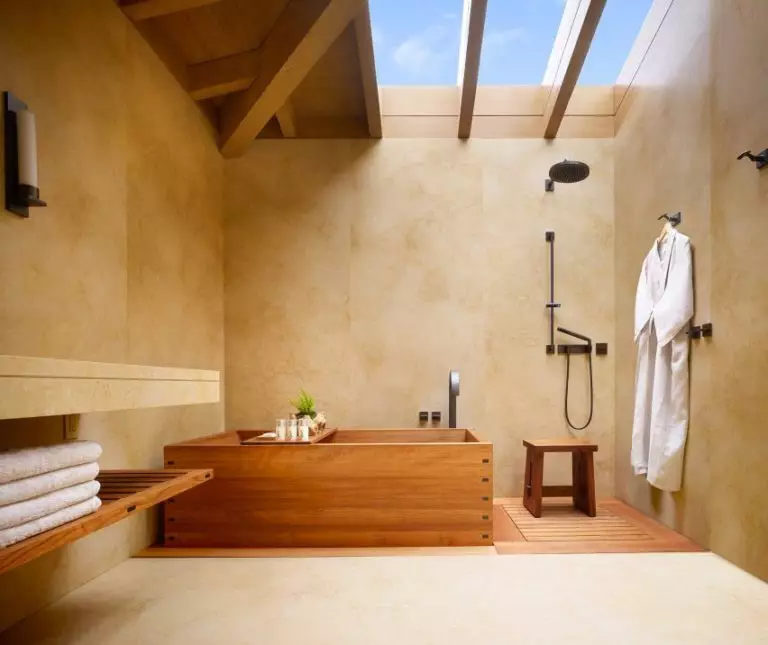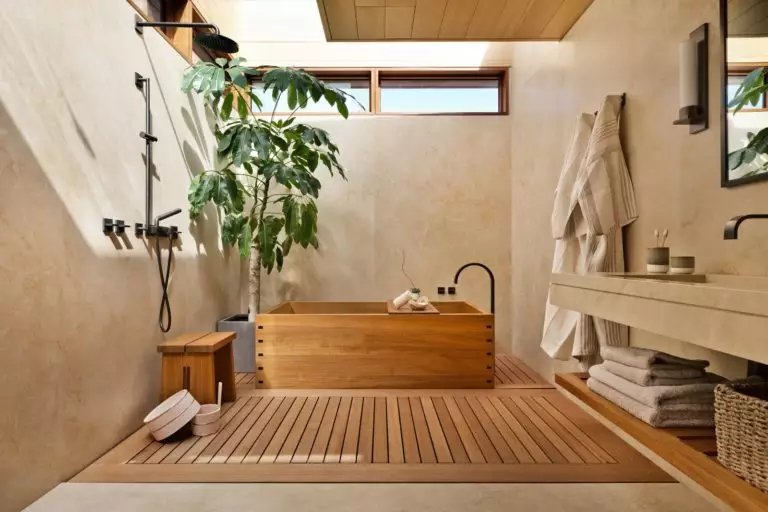
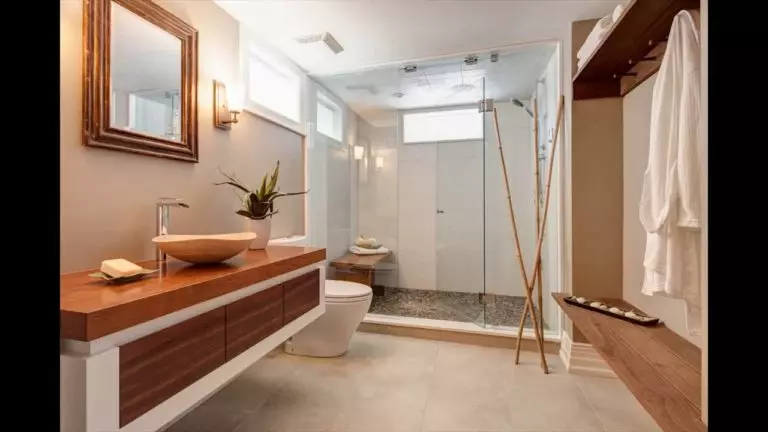
Refinement, tranquility, a sense of unity with nature, and a view of your home as a place of strength and harmony – the Japanese style in interior design enchants with its unique magnetism. There is an impeccable balance between laconicism and the selection of textures and colors – the desire for something authentic and eternal. A similar design can be realized in any living space, from a city apartment to a country cottage—and the bathroom is no exception.
If you have long appreciated the beauty of Japanese minimalism and now dream of equipping a bathroom in this way, you need to clearly understand the main thing for yourself: the interior of this room is based on a real philosophy based on the adoption of bath procedures as a special art that purifies the body and thoughts. And if you cannot imagine your life without a leisurely bath and consider visiting this room as a kind of ritual, you will definitely like this design.
Japanese-style bathroom design: key features
Of course, despite the penchant for simplicity and minimalism, Japanese-style bathroom interiors are pretty diverse; however, they obey certain principles:
Regularity, a tendency to contemplate, a philosophical view of the world – all these are entirely characteristic of Japanese culture and could not but affect the design of living quarters. When decorating a bathroom in this way, it is essential to focus on restraint, unobtrusive asceticism, sophistication, and a moderate amount of expressive accents. Only in this case will you be able not only to enjoy water procedures but also to feel vigorous and morally rested.
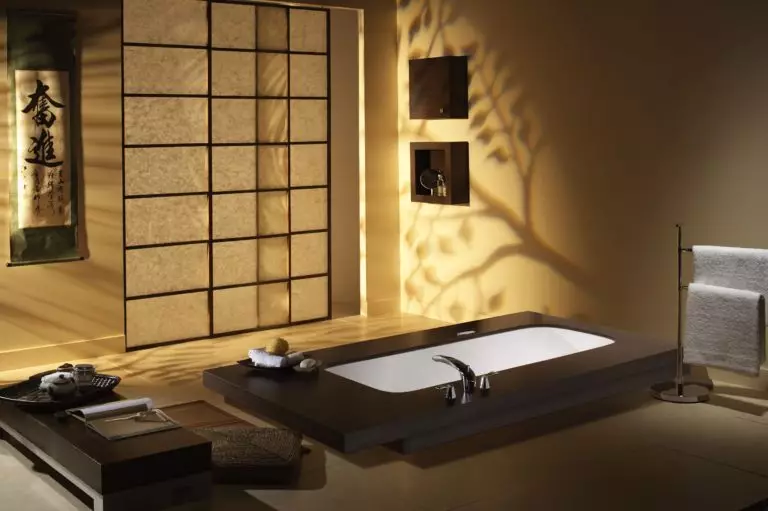
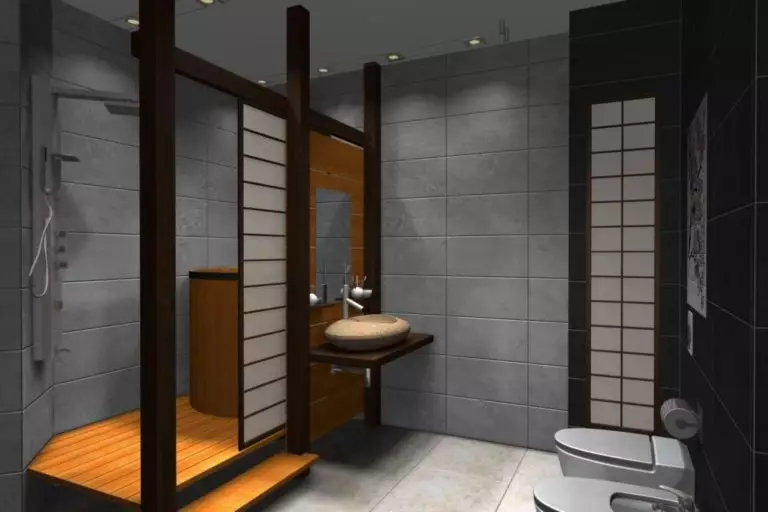
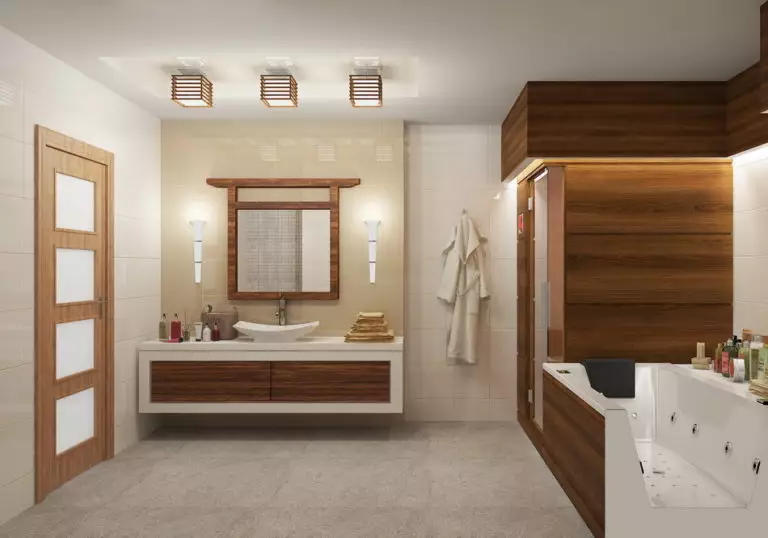
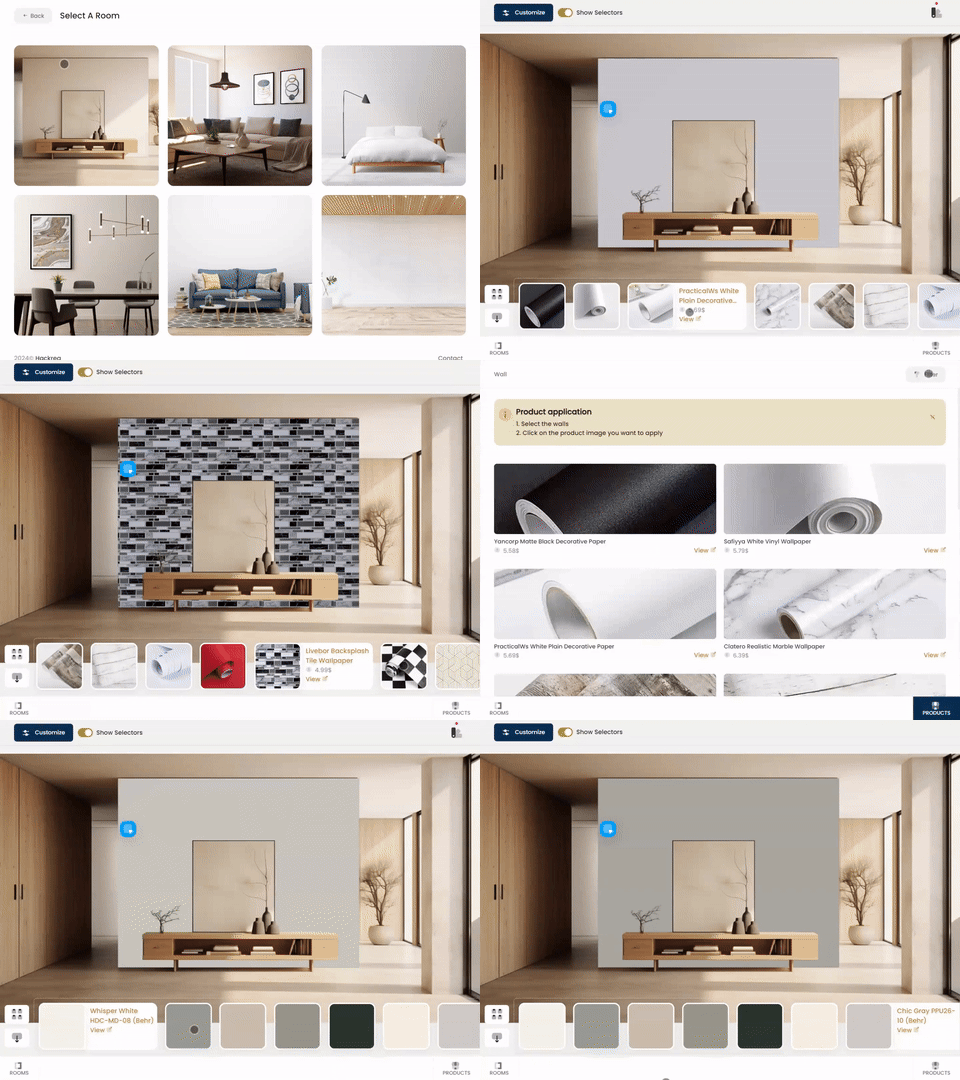
You can apply wallpapers, paints, etc. on walls and see how they look in various interiors.
Space planning and zoning
The Japanese style is primarily about harmony. Harmony is generated by two things: geometry and the correct placement of things. That is why the design in this direction implies the complete separation of the bathroom from the toilet – combined toilets in Japan are considered almost sacrilege.
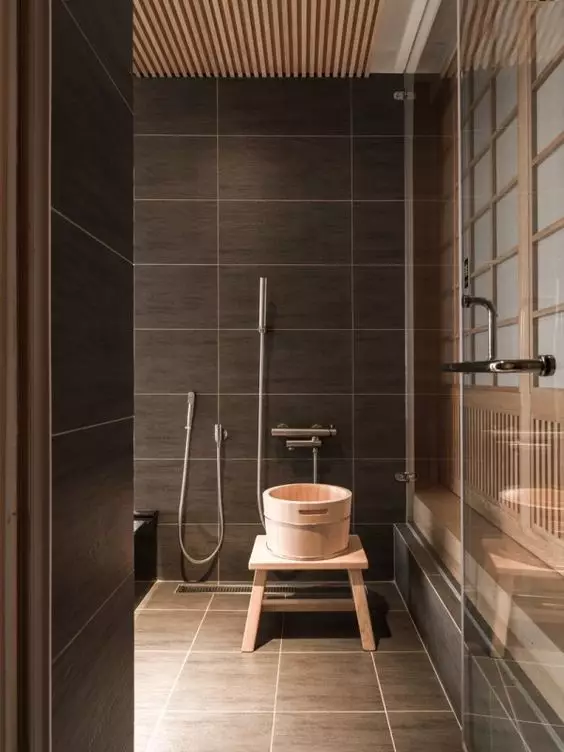
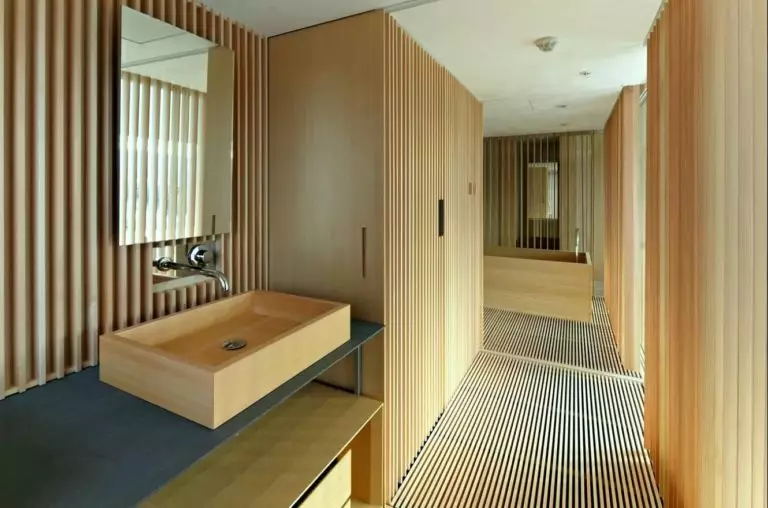
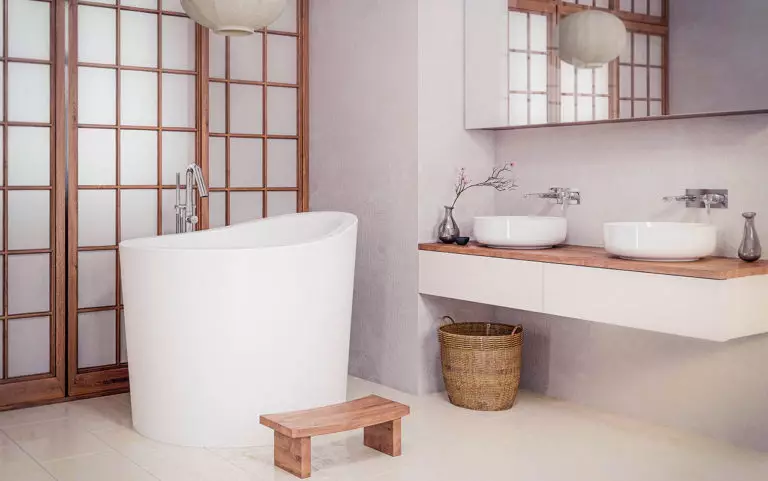
Another critical point is the mandatory delimitation of functional areas. So, for example, if in your bathroom there was a place for the bath tub itself, an open shower, and a sink, then each of these elements should represent at least a partially isolated space. In this case, the best solution would be Japanese shoji partitions made of wood and thin plastic or glass.
Japanese bathroom design in different styles
Although the classic Japanese bathroom has clear, recognizable features—simplicity, natural materials, and a deep connection with nature—it is flexible enough to adapt to various interpretations. Depending on the atmosphere you want to create, you can lean towards modern, minimalist, or traditional approaches while keeping the essence intact.
Modern Japanese bathroom design
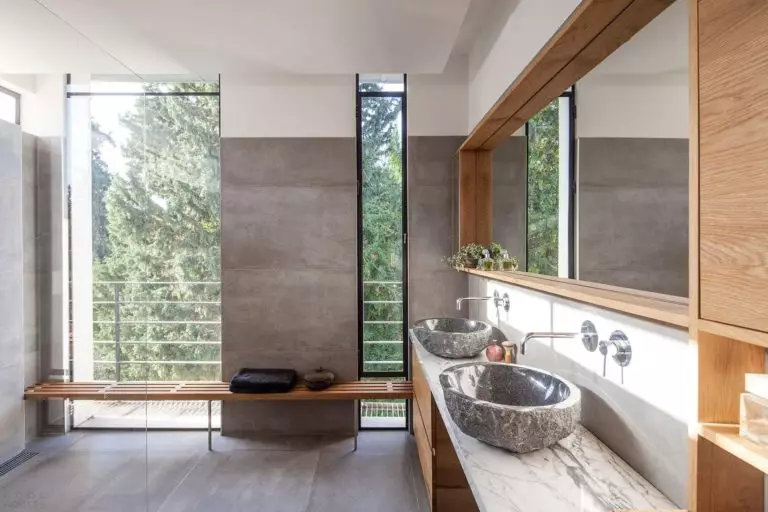
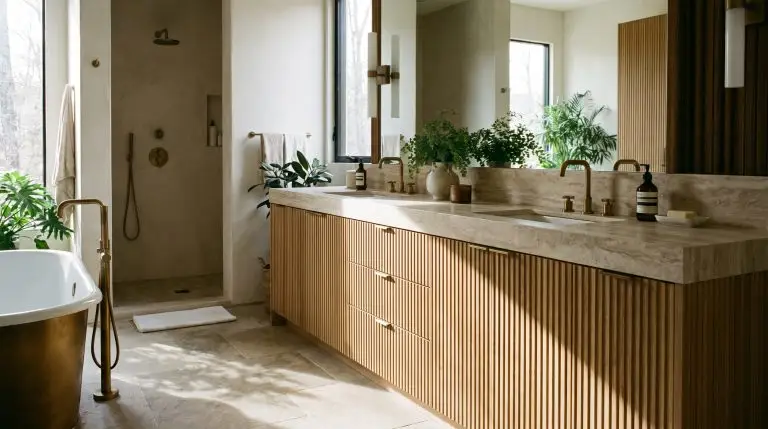
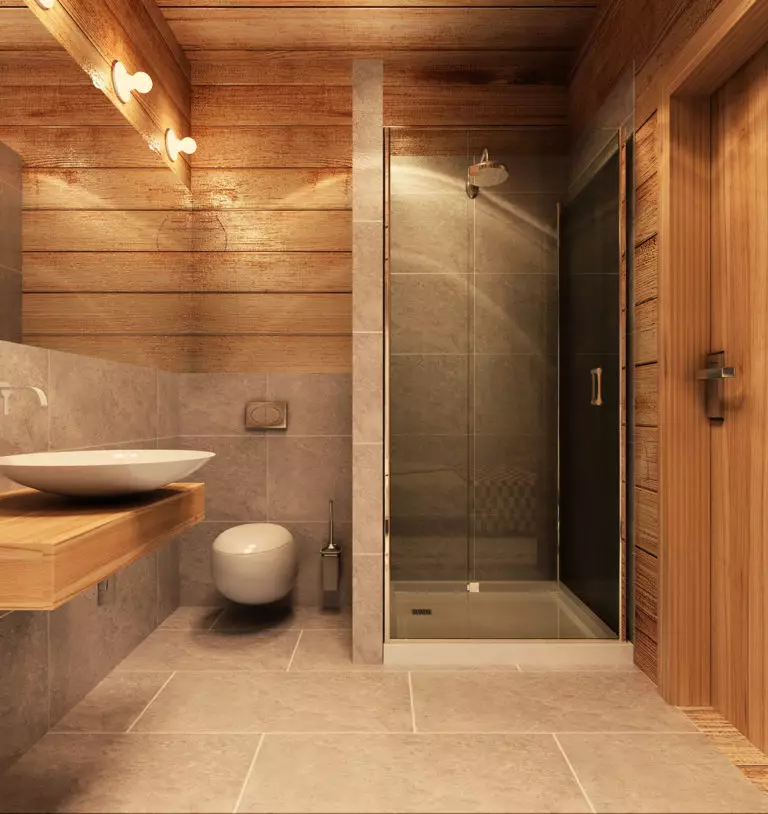
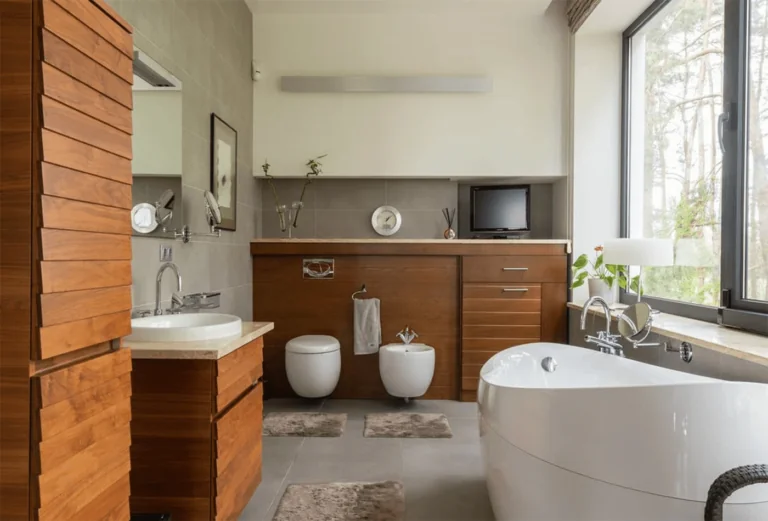
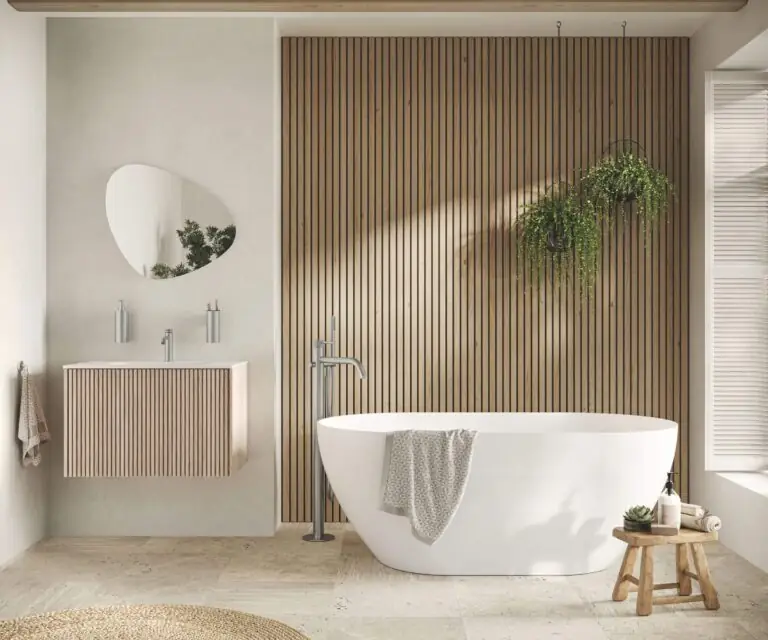
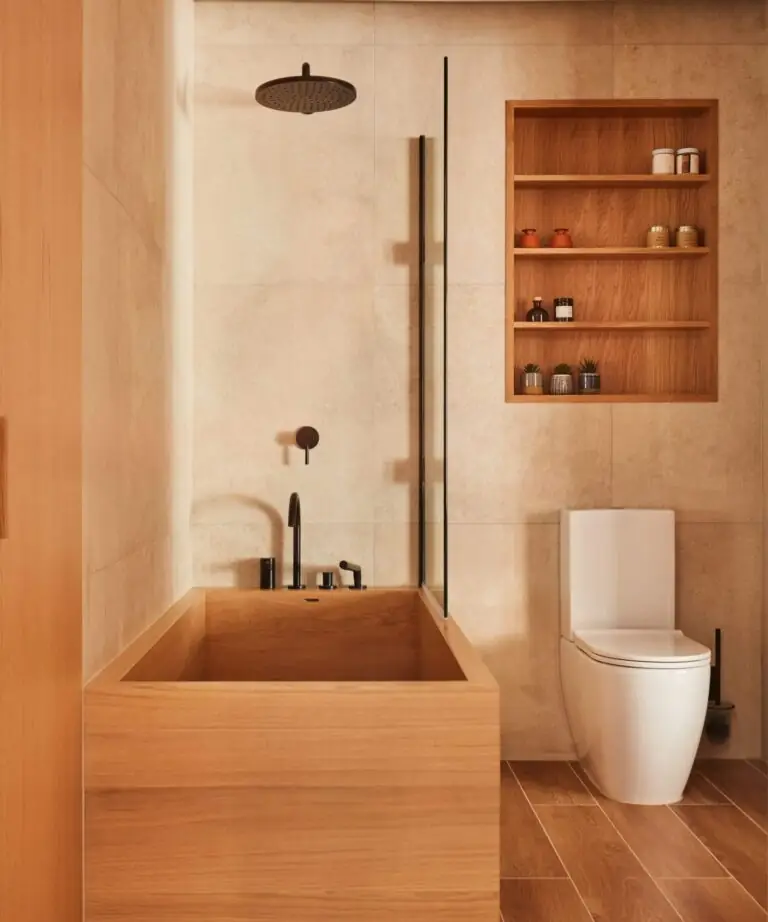
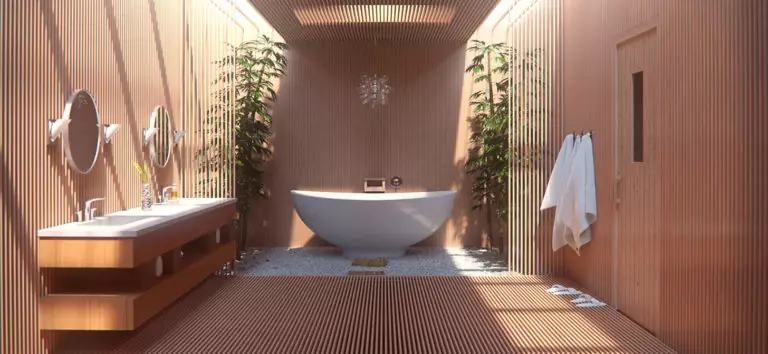
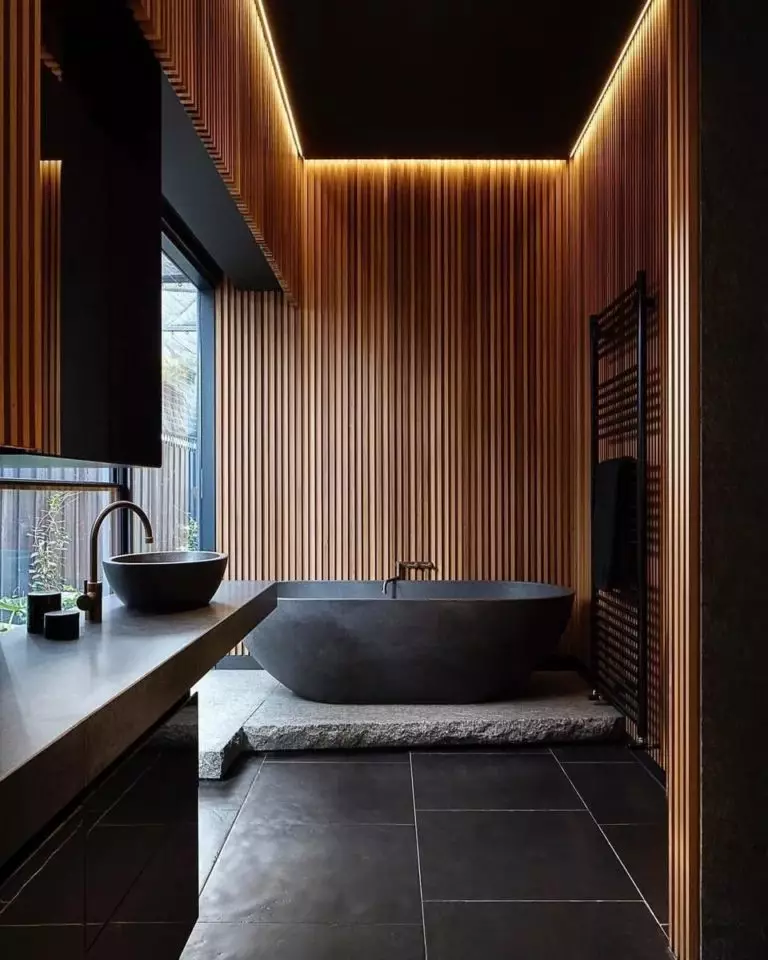
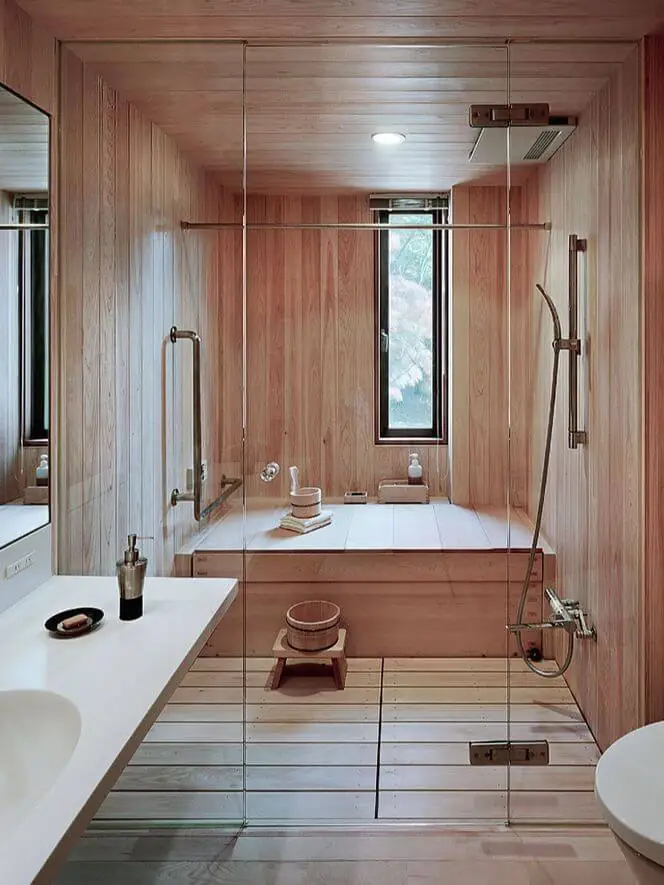
In a modern interpretation, Japanese design embraces clean geometry and discreet functionality. Think of frameless glass showers, wall-hung toilets, and sleek vessel sinks. Technology may be present, but it remains hidden: soft under-cabinet lighting, smart storage systems, or heated flooring. The color palette is typically monochrome or neutral, with the occasional high-contrast accent, such as black fittings against pale stone or wood. The result is an uncluttered space with a distinctly contemporary edge, yet still rooted in balance and harmony.
Minimalist Japanese bathroom design
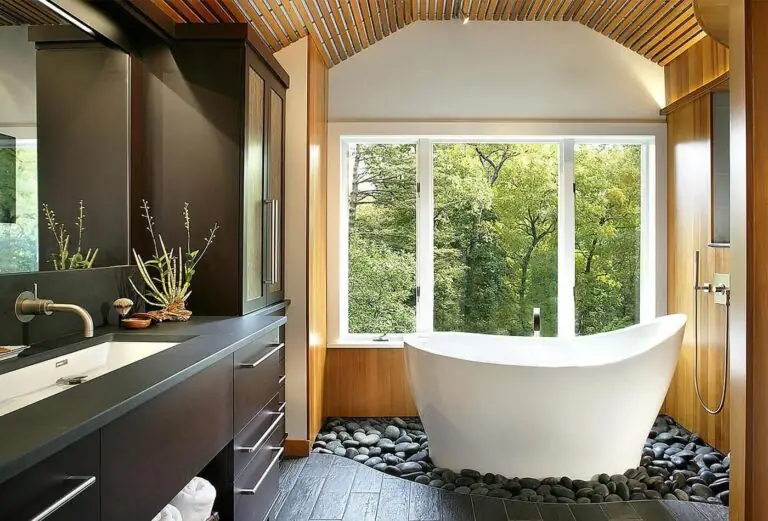
Minimalism pushes the “less is more” philosophy even further. Here, emptiness becomes an element of design in itself. The bathroom feels calm, almost meditative, with only the most essential fixtures visible. Colors are reduced to two or three soft tones, patterns are avoided, and storage is hidden behind smooth panels or built-in niches. Natural textures like wood grain, bamboo, and stone become the primary sources of character. Lighting is soft and indirect, reinforcing the peaceful and uncluttered atmosphere.
Traditional Japanese bathroom design
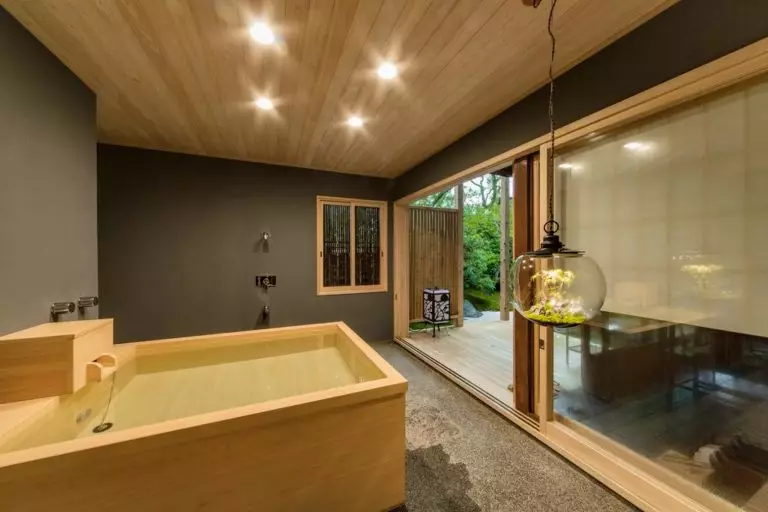
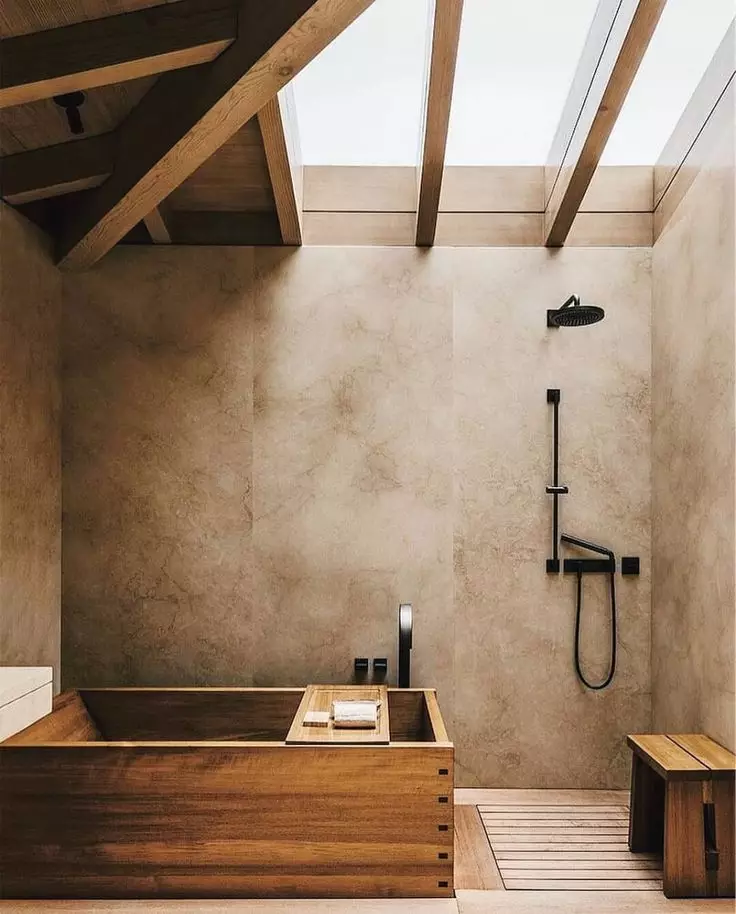
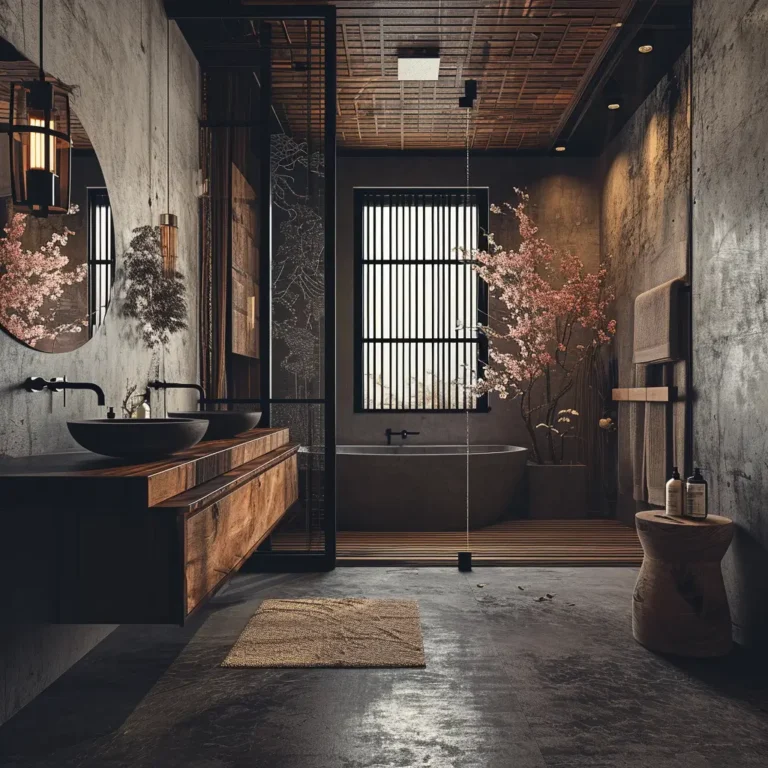
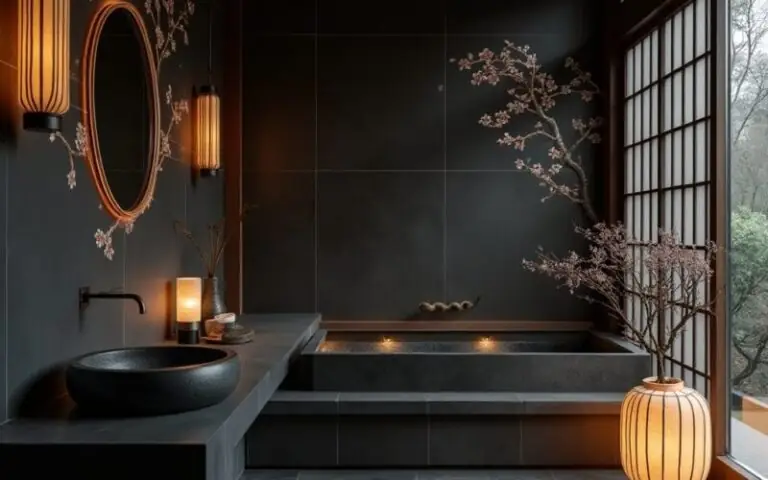
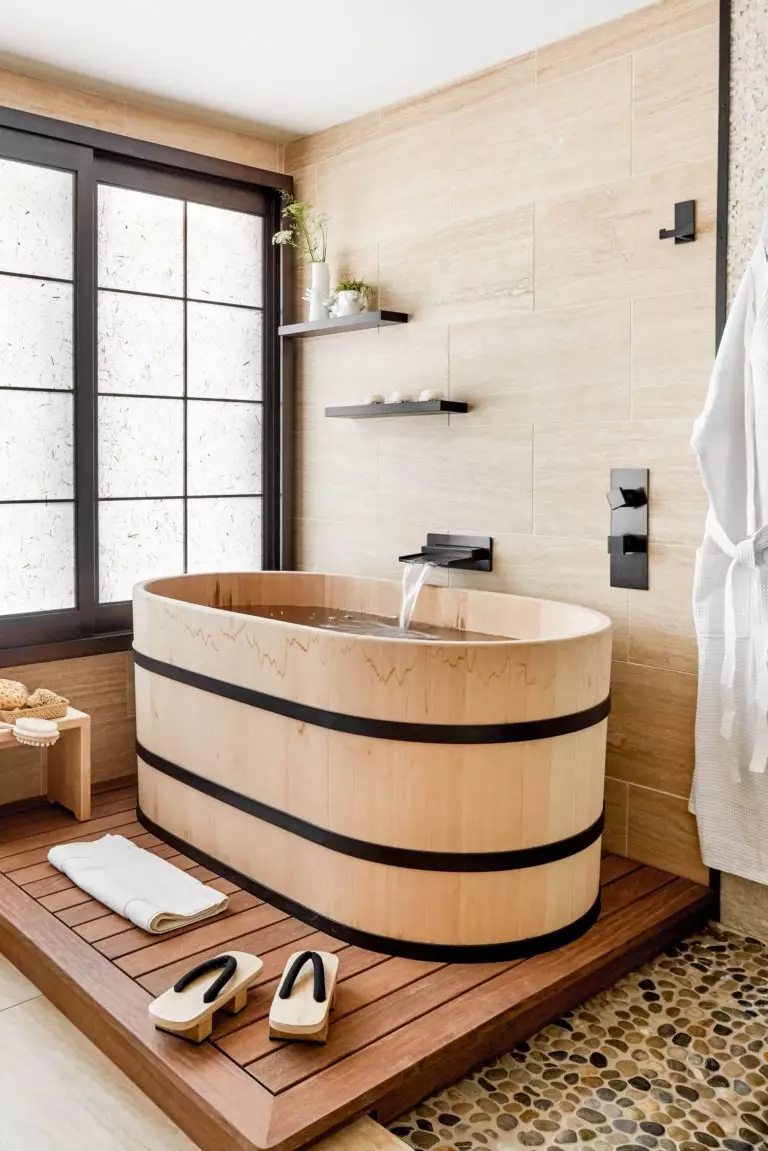
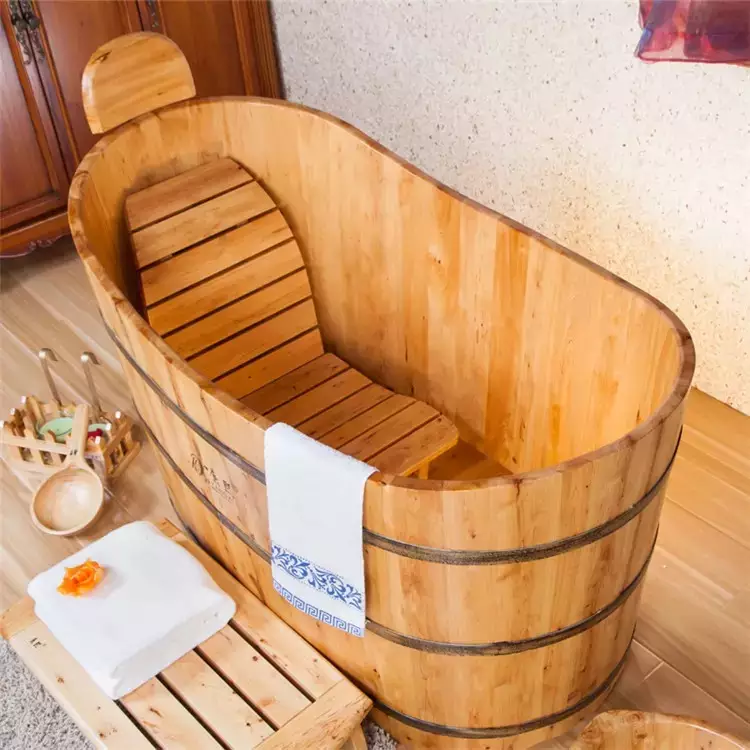
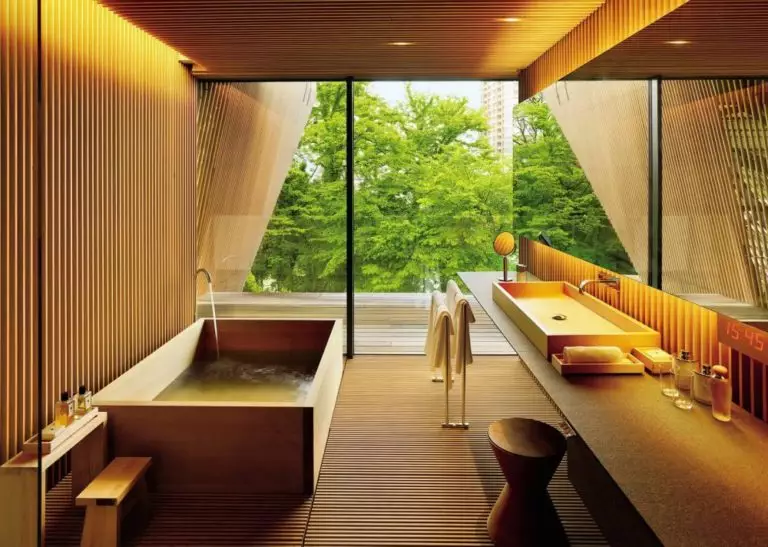
Those who prefer an authentic, timeless setting may turn to a traditional approach. This style recalls the architecture of old Japanese homes and bathhouses, where bathing was treated as a ritual. A hinoki wood soaking tub (ofuro), stone flooring, and shōji-inspired screens are signature elements. Wooden lattice details, washi paper windows, and bonsai or stones add subtle decoration without overpowering the space. The palette here is warm and organic—deep wood tones, mossy greens, and the natural grays of stone—bringing the calm of nature indoors.
Colors
It is hardly worth mentioning that the Japanese style favors calm and restrained tones, as close as possible to those created by nature itself. Those who are at least a little interested in this design direction are well aware of this. When designing a bathroom project, take a look at the following tones:
“Feng shui colour charts tend to move more towards earthy shades, which are often more related to nature,” comments Ruban Selvanayagam of UK home sales specialists Property Solvers.
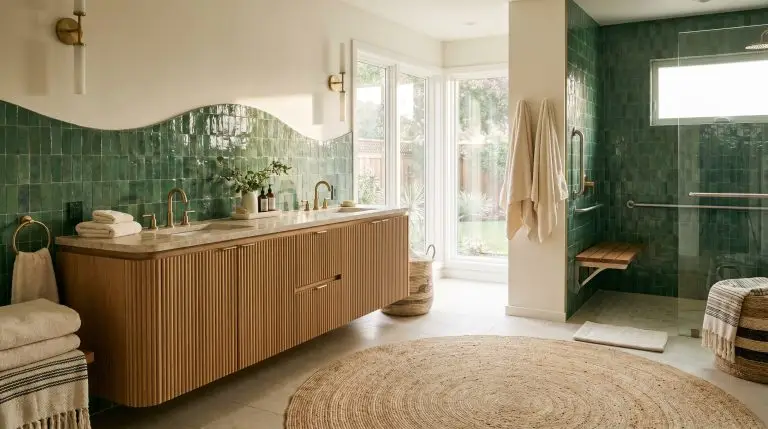
If you still want to add a touch of brightness to the bathroom’s pacifying, calm interior, you can easily use neat accents in rich shades, such as terracotta, plum, wine red, or graphite black. Try not to overdo it; your eyes also need rest.
Materials
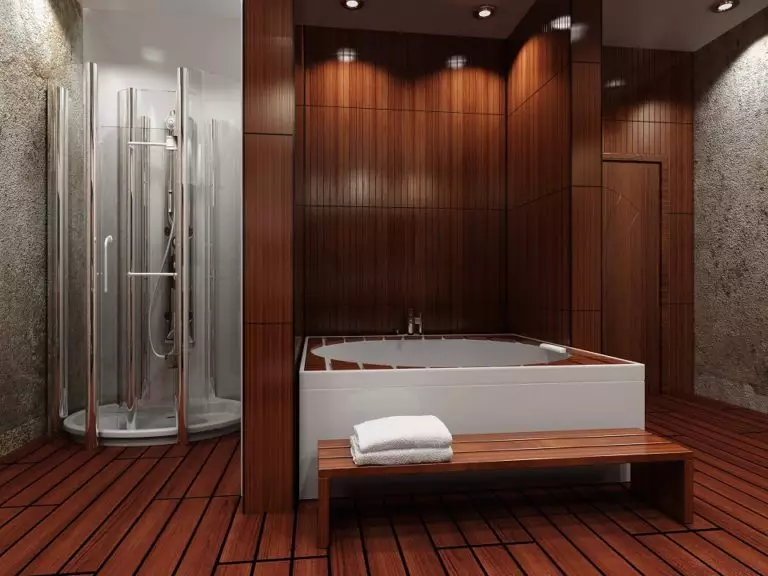
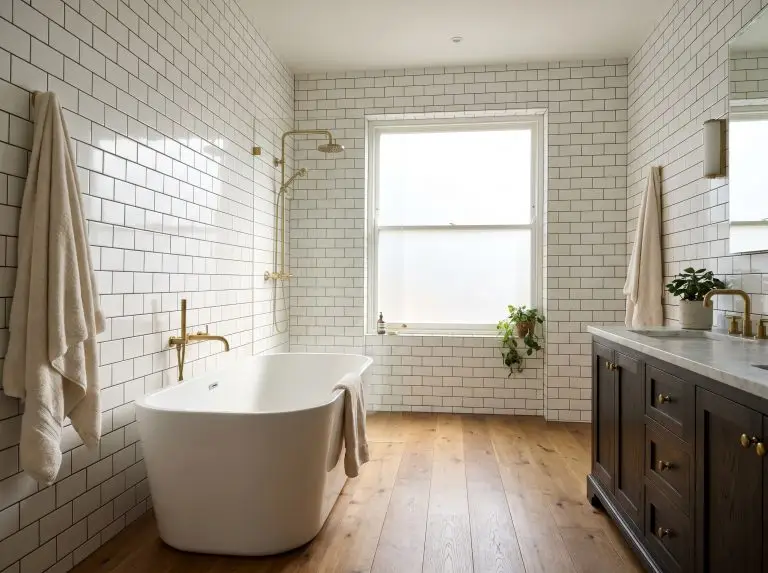
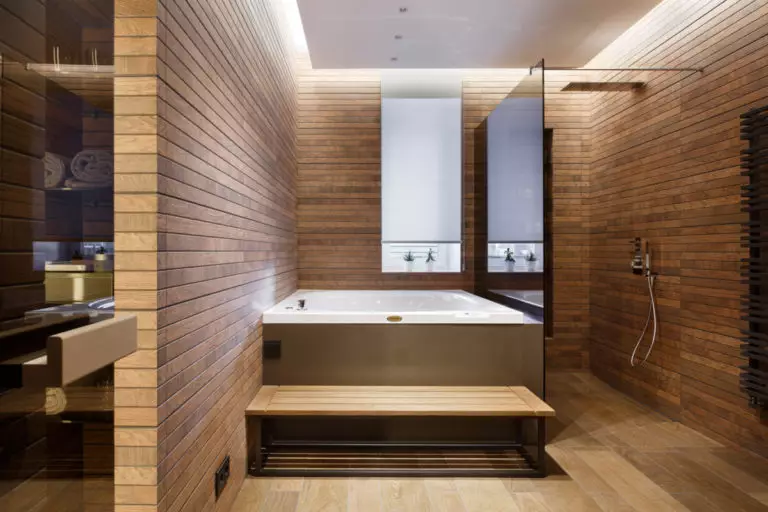
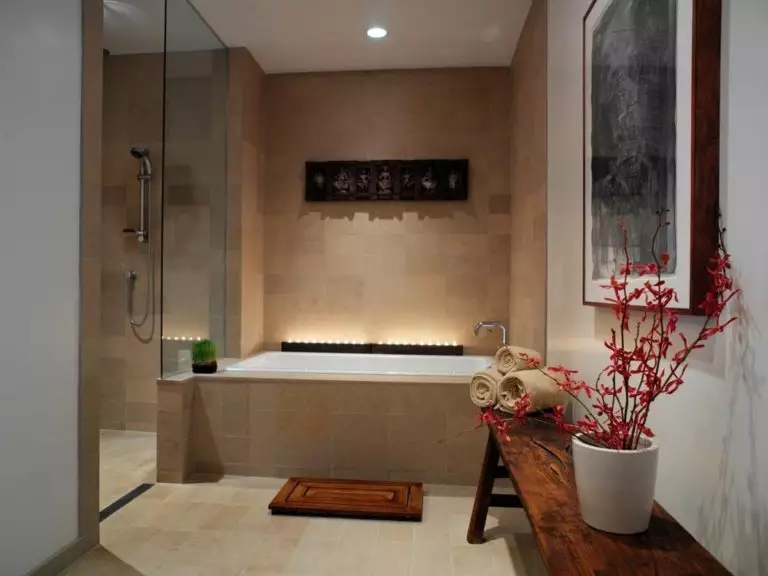
And now, here are a few words about Japanese-style bathroom decoration. As you probably could have guessed from numerous photos, natural wood is the dominant material in such interiors. However, the designers insist on its limited use in modern houses and apartments, suggesting that it should be used sparingly, with a maximum of 50% of the surfaces, due to the need to reduce visual congestion and practical considerations, as not every type of wood can withstand prolonged exposure to moisture. That is why it is worth not only carefully selecting wood panels and other elements for decoration but also trying their combinations with the following types of materials:
At the same time, it is advisable to avoid any drawings and patterns on the surface of the tiles; the only exceptions are traditional Japanese motifs, such as hieroglyphs or fragments of national painting.
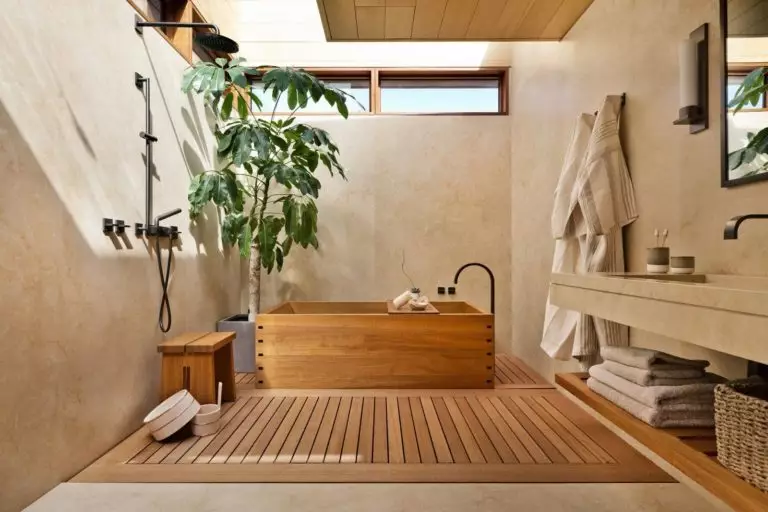
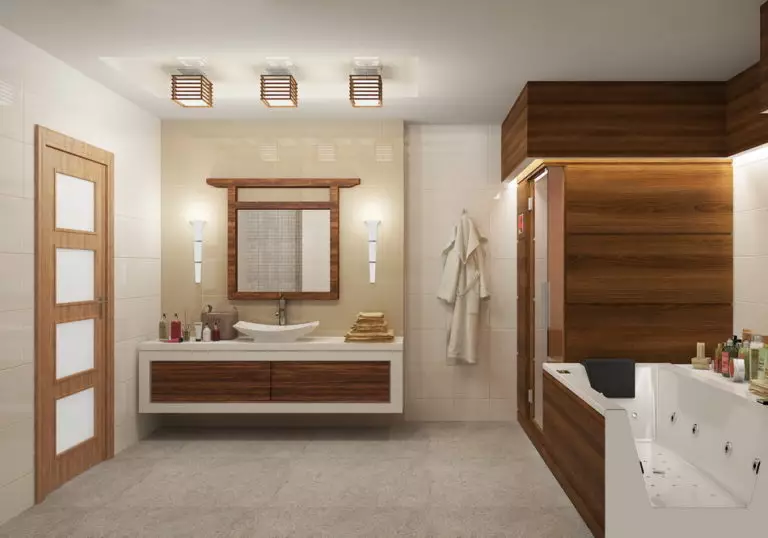
Some vital terminology: types of Japanese bath tubs
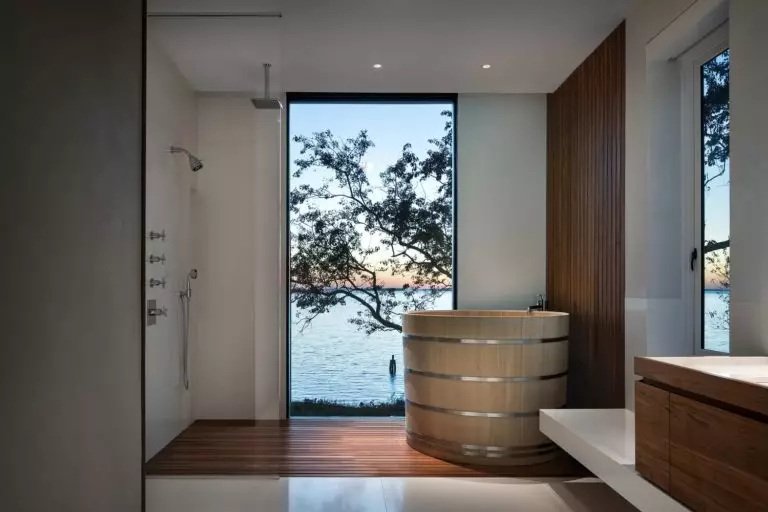
For those looking to create an authentic Japanese bathroom environment, it may be interesting to learn more about the tradition of body washing, specifically the bathtubs used for this purpose. Today, the following types of Japanese bath tubs are distinguished:
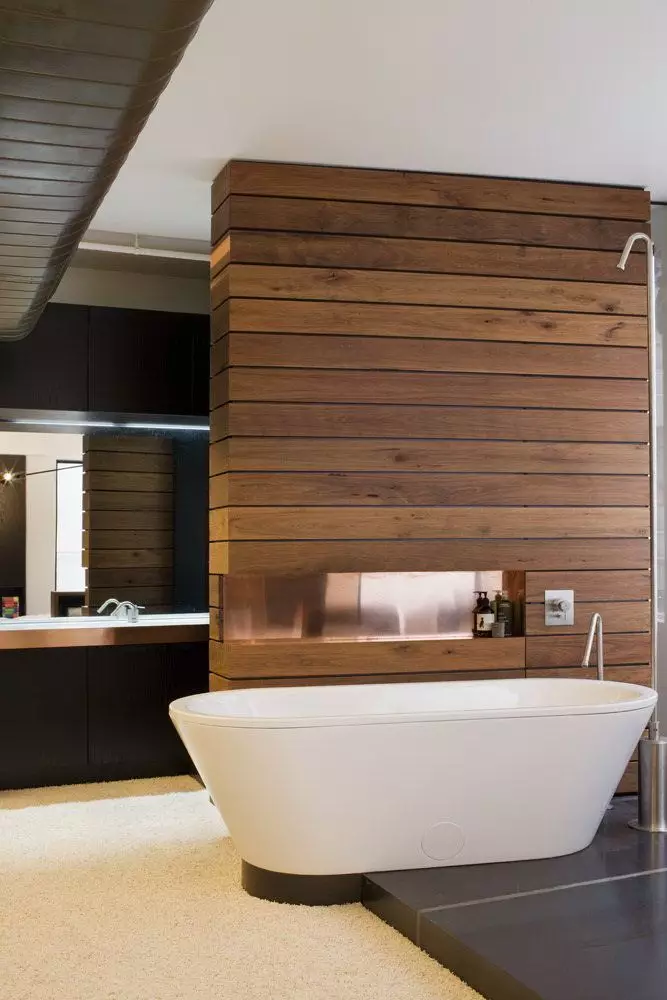
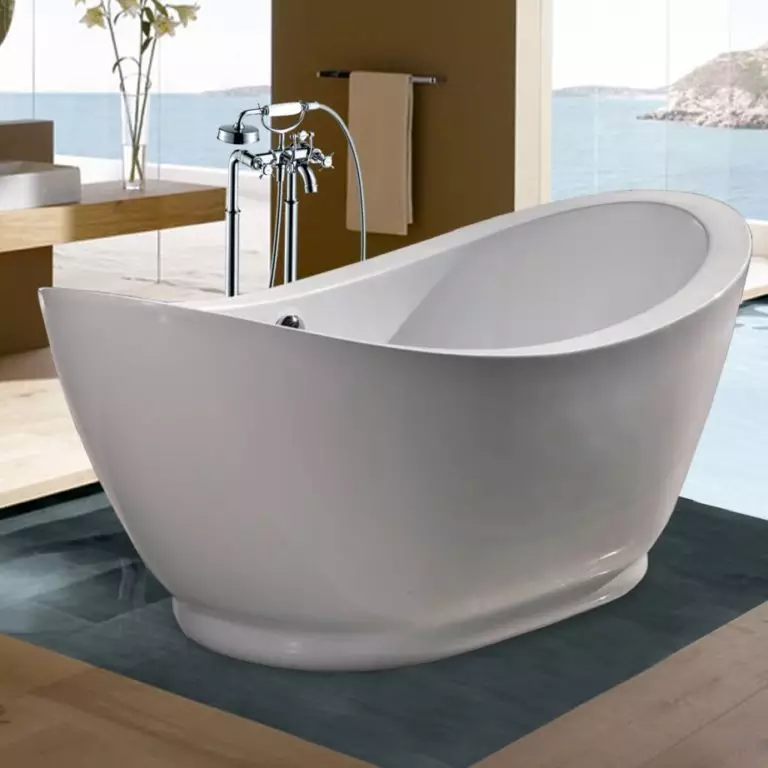
If you are still hesitant to install a wooden bathtub at home, consider installing a more familiar acrylic bathtub instead. In this case, it is also worth giving preference to clear geometric shapes, primarily squares and rectangles, and taking care of their harmonious surroundings, such as wood paneling. However, those allowed by the bathroom area install both an ordinary bathtub and a traditional furako in the room to create an atmosphere and a variety of water procedures.
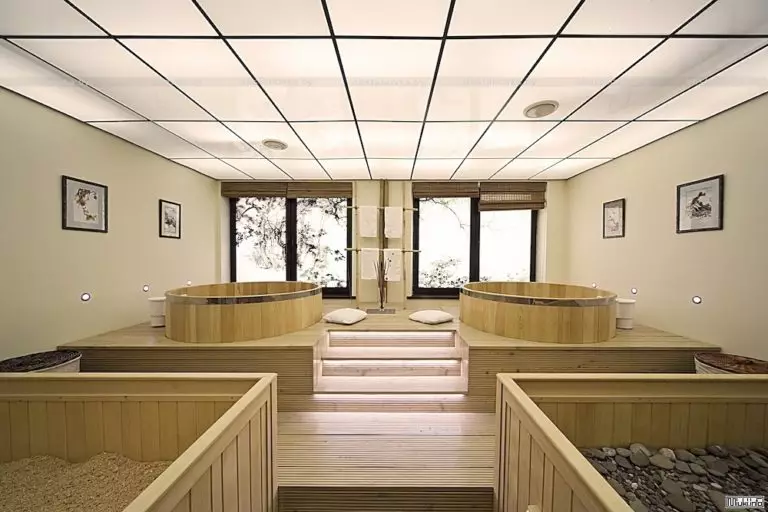
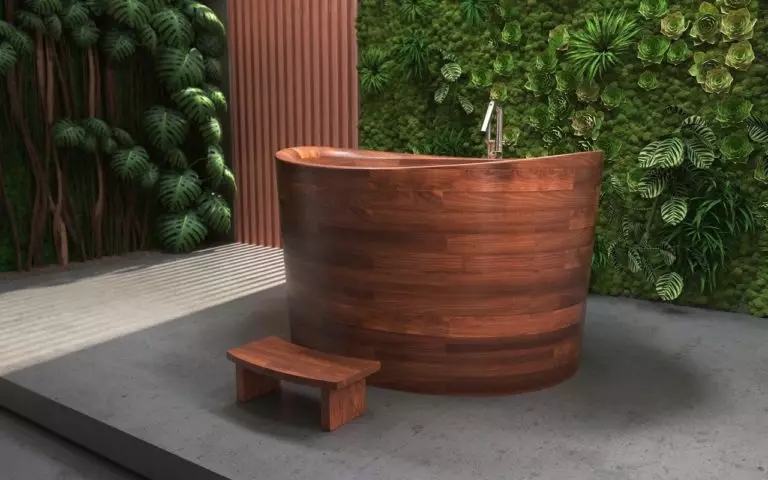
And other plumbing
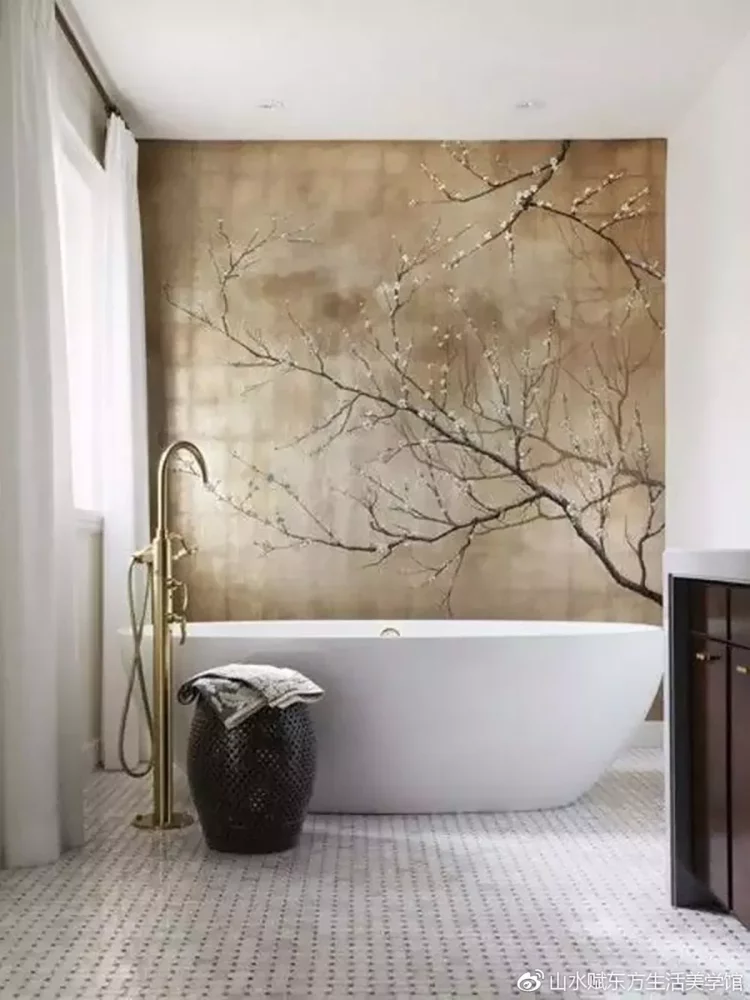
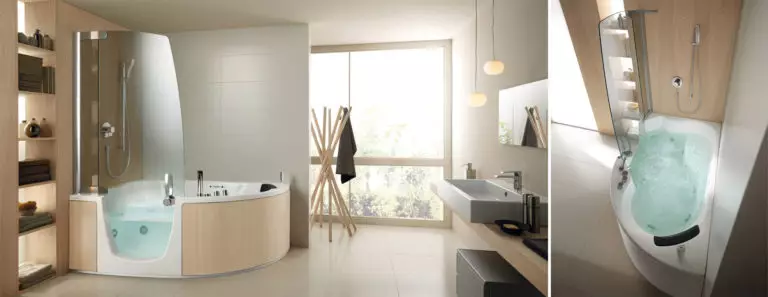
We have already discussed suitable options for Japanese-style bathrooms. However, the need for plumbing equipment does not end there. The following elements will help to make the interior functional and harmonious:
In Japanese bathroom interiors, built-in square sinks and faucets with an open spout are also standard. The most important thing, in this case, is to choose not only an aesthetically and appropriately designed project but also comfortable-to-use equipment: nothing should disturb the serenity of your bathing procedures.
Lighting
The ideal bathroom in the spirit of Japanese minimalism features at least one window, which provides ample natural light that can be controlled using bamboo blinds, and in some cases, the same shoji. If windows are not provided in the room, it is essential to ensure that the lighting is sufficiently rich and comfortable for the eyes, without being excessively bright.
Discreet ceiling spots with warm light, hidden lighting lines, and laconic sconces with styling in the form of cases braided with bamboo or black metal will help achieve the desired light.
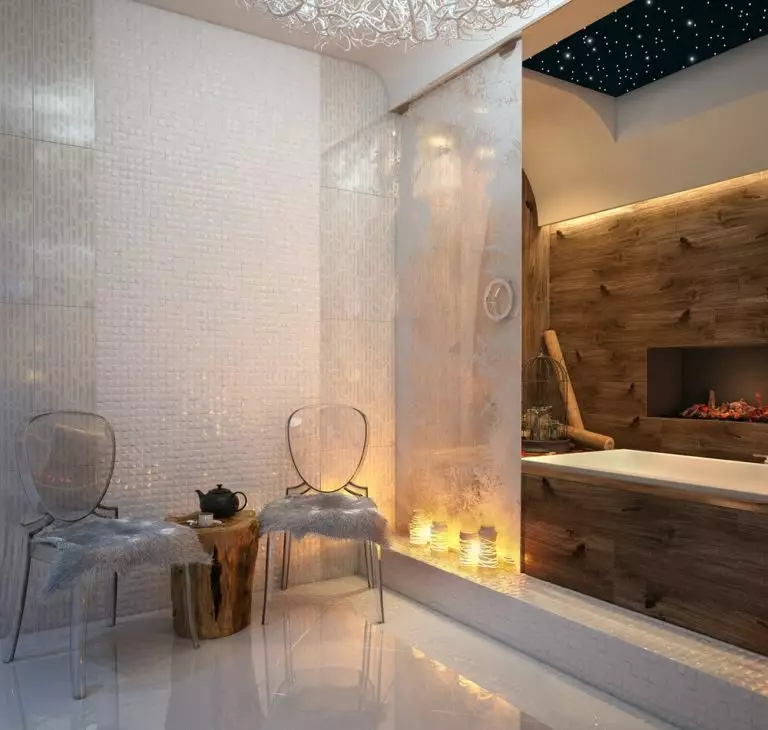
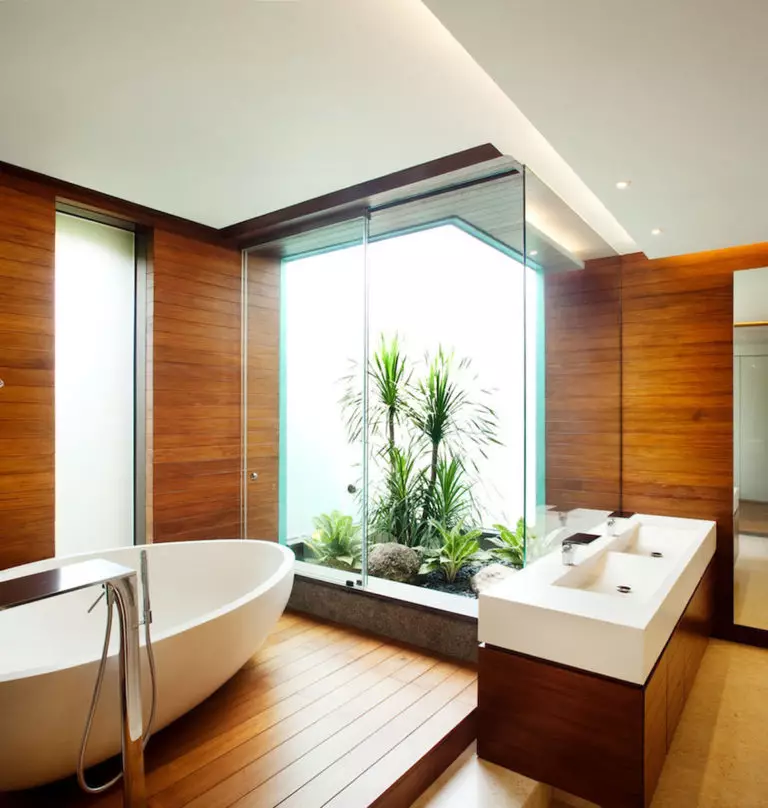
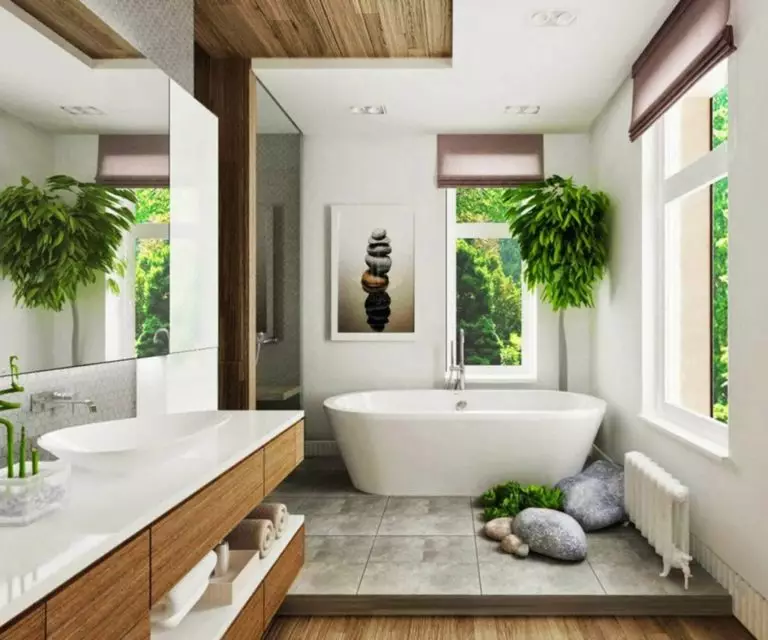
Small Japanese-style bathroom design
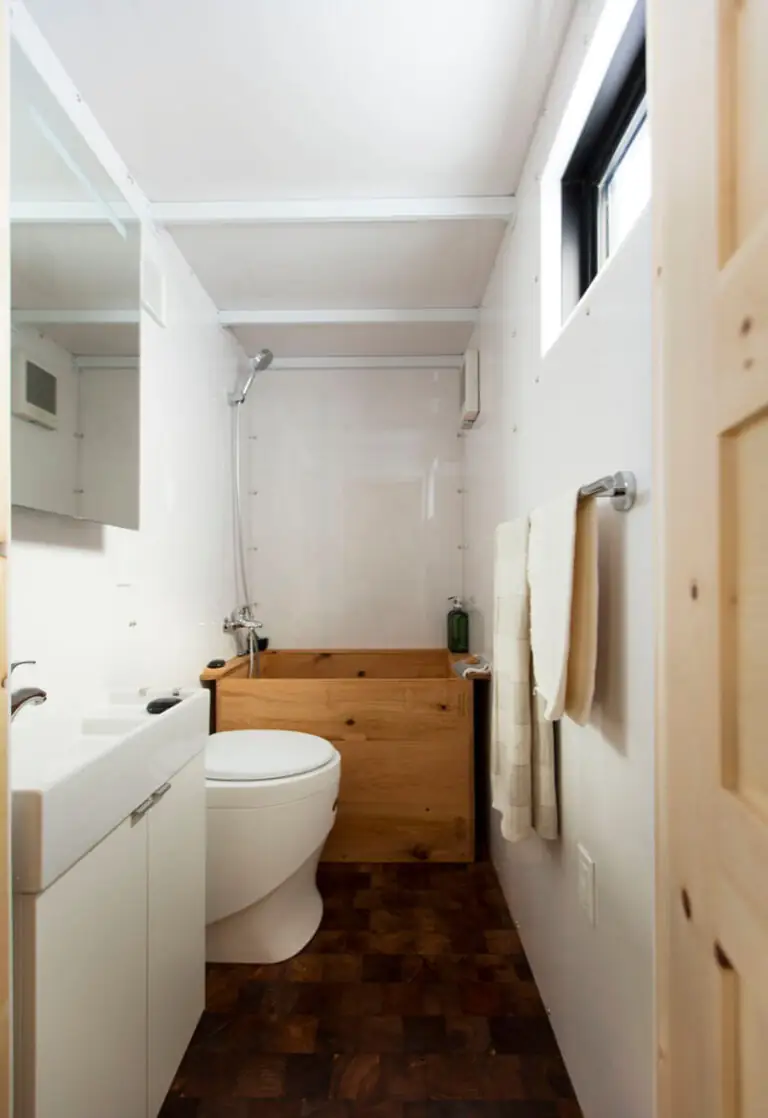
When space is limited, the Japanese style still offers opportunities for serenity, craftsmanship, and harmony—if you approach with intention.
Compact layout & zoning
Light and materials to visually expand
Color, texture & accents
Lighting & decor in small scale
Japanese bathroom: Conclusions + Photo Gallery
A Japanese-style bathroom embodies a sense of freedom, pacifying simplicity, true comfort, and the complete absence of anything superfluous. Even if you have chosen a different design for the rest of the house or apartment, the bathroom will become a real highlight of your interior.