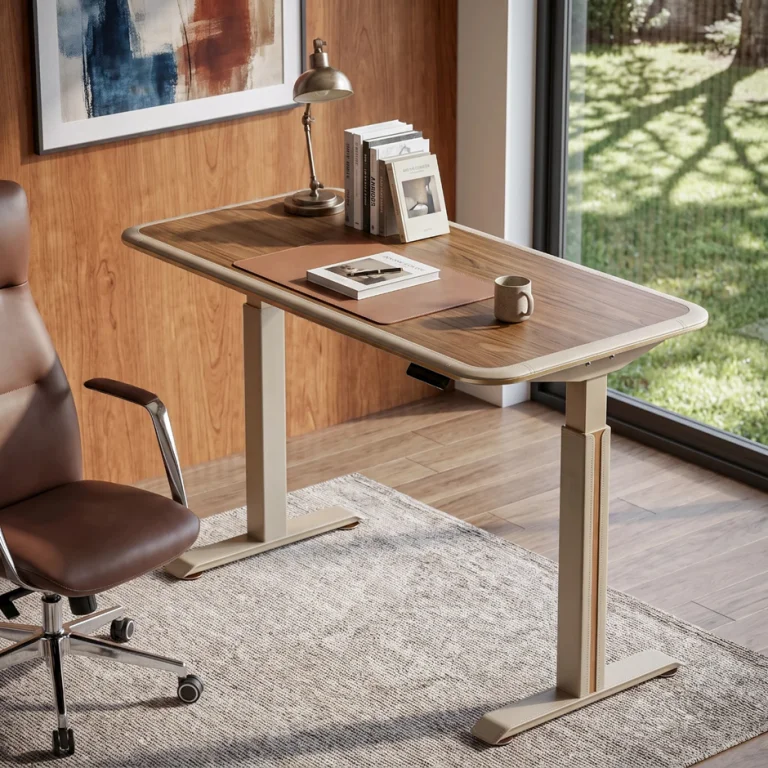
Visual noise can distract us from doing our best work. Yet stripping an office aesthetic down to its bare essentials doesn’t always lead to productivity. It can instead lead to spaces that feel cold and clinical, or uninspiring. Warm minimalism is about creating spaces that are pared back and stripped of unnecessary decoration, but still feel grounded and welcoming. Here’s how to achieve that look in your home office.
The Anchor of Wood-Grain Warmth
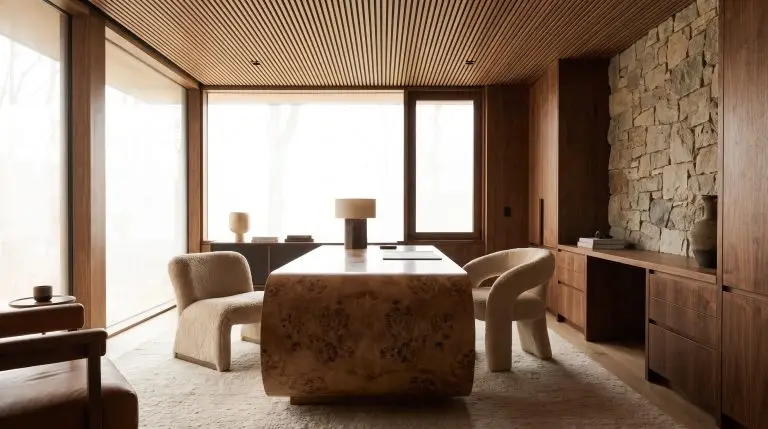
Unlike traditional minimalist aesthetics, warm minimalist decor features more natural finishes and warmer neutrals, rather than whites and cooler grays. A well-finished desk serves as an anchor piece. A natural wood-grain-finish desk adds variety and depth to the space, rather than plain, cold surfaces. Warm whites, oatmeal color schemes, soft taupe tones, and natural textures, combined with rich wood tones, create a consistent look throughout the space.
An example of this philosophy in action is the Eureka Ergonomic Norwood desk, currently reduced from $749 to $649. Its wrapped edges and legs showcase the wood’s natural variation, while height adjustability and integrated cable management preserve a seamless furniture-like appearance. Neat stitching and decorative metal trim add refinement without distraction. The desk is also available during the upcoming Eureka Ergonomics’s Black Friday and Cyber Monday events with up to 30% off select desks, running November 19 through December 6, 2026.
Neat Detailing and Visual Flow
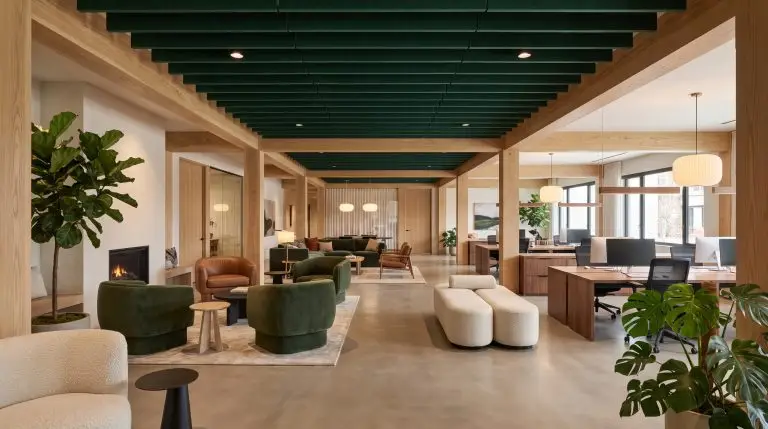
Warm minimalism works beautifully when the details are considered right down to the finer points. Seamless finishes and integrated solutions (think furniture and fittings that sit flush with walls or hidden storage) help to remove the visual clutter, allowing a more cohesive feel and the illusion of a bigger space. Beautifully considered pieces with neat stitching and carefully finished edges will elevate the office design scheme. It is proof that you don’t have to compromise on quality for the sake of minimalism.
Layered lighting, like floor lamps and task lamps with warm-toned bulbs, will enhance the look and feel of these elements. Warm, subtle lighting at various heights will illuminate textures in wood and fabrics, and create a calming effect in the home office. Rather than opting for bright overhead lighting, incorporate lamps to create a soft lighting scheme that promotes relaxation and productivity.
Tactile Surfaces and Restrained Accessories
Textures add to a minimalist space by taking it from flat to interesting and more inviting. When the office has a warm minimalist style, smooth wood grains and tactile materials lend depth and sensory interest. The use of a wood-grain desk, linen chair, clay finishes, or woven rug will help add warmth without being visually distracting. These simple design elements counteract the technology and sleek surfaces through material layering, making a minimalist office cozier and more inviting.
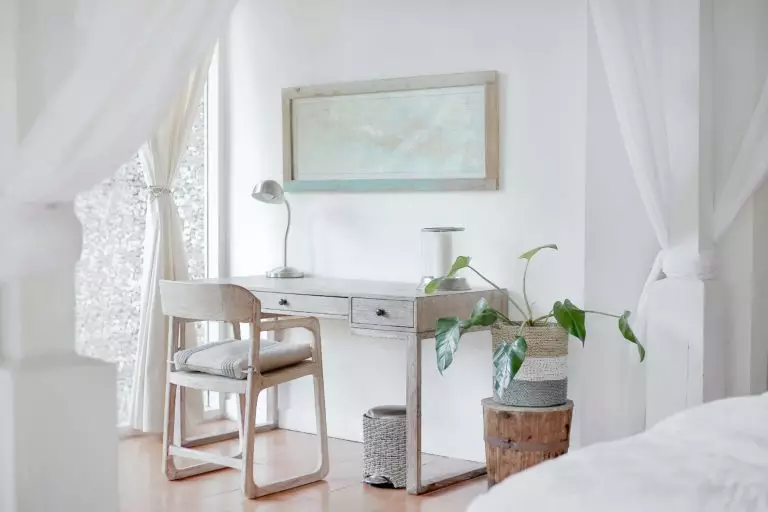
Accessories should be carefully selected; always keep in mind the quality and purpose rather than quantity. Negative space (empty areas on desks and shelves) is important for the eye to rest and for making natural materials and textures more prominent. Choose a few quality accessories with purpose, such as a task lamp, stoneware vase, textured rug, or a tray of corral desk must-haves. Whenever possible, choose furniture with closed storage and other thoughtful details, such as built-in cable management, to reduce the need for add-on storage solutions that can detract from the workspace’s overall flow and tranquility.
Endnote
A warm minimalist home office incorporates texture, layering, and warm finishes to add visual interest and personality. This involves mixing wood-grain warmth, tactile textures, and restrained accessories. Choose pieces with beautiful detailing to elevate your workspace. The result is a productive and comfortable work environment.