Selecting a premium Brazilian stone for your kitchen is merely the opening move; the true architectural luxury lies entirely in the fabrication, edge profiling, and cabinetry integration. Taj Mahal quartzite kitchen islands bring the coveted warmth of marble alongside a structural density that registers higher than granite on the Mohs hardness scale, but throwing a raw slab atop a generic base will immediately diminish its value. We are skipping the basic geological history today to focus strictly on how to physically build and style this exact material as the commanding anchor of your room.
Mastering this stone requires precise control over its environment. A slight misstep in your cabinet undertones or a lazy edge profile will strip the quartzite of its bespoke character, leaving your high-end investment looking flat and disconnected. From calculating the visual weight of your overhangs to curating the tactile finish beneath your guests’ hands, the execution must be flawless.
Here is exactly how to architect, shape, and light your Taj Mahal quartzite island to ensure it commands the space.
Execute a Seamless Waterfall Drop for Modern Kitchens
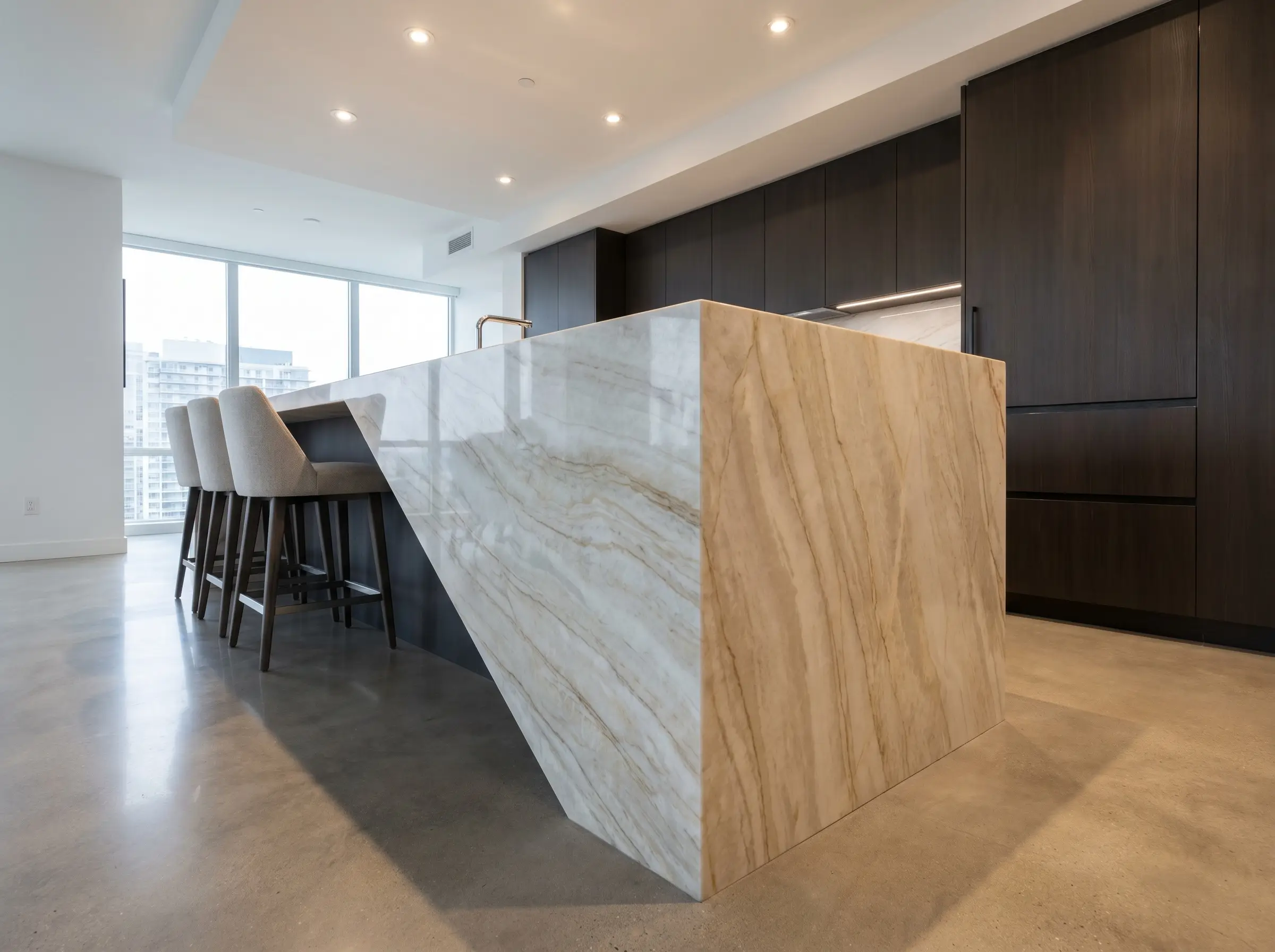
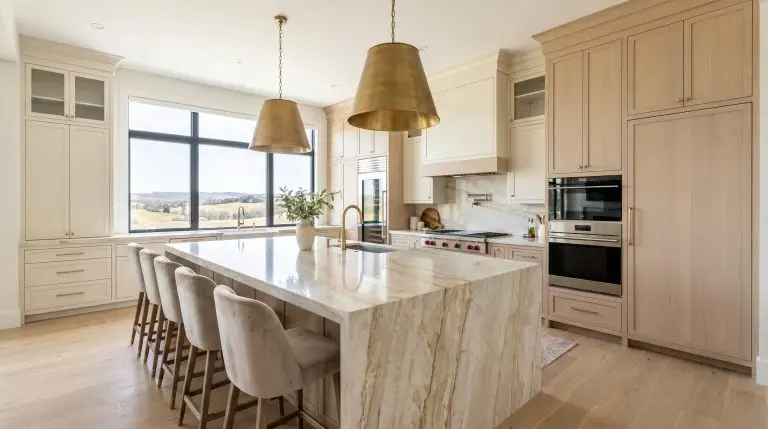
A waterfall edge exploits the continuous, sweeping beige veining of Taj Mahal, dragging the organic movement directly down to the floor. This physical build instantly grounds open-concept spaces by turning a standard functional island into a monolithic architectural block.
Vein-matching at a sharp 45-degree mitered joint requires purchasing consecutive slabs directly from the same quarry lot. Do not assume your fabricator can force a match from mismatched inventory; demand to see the digital templating before a single cut is made.
Fabrication Spec
- Structural Vibe: Monolithic, seamless, and highly contemporary.
- Key Materials: Taj Mahal Quartzite (Polished or honed surface).
- Styling Pro-Tip: Keep the seating tucked entirely on the interior side to ensure the sweeping exterior stone face remains visually uninterrupted.
Anchor the Stone with Rift-Sawn White Oak Bases
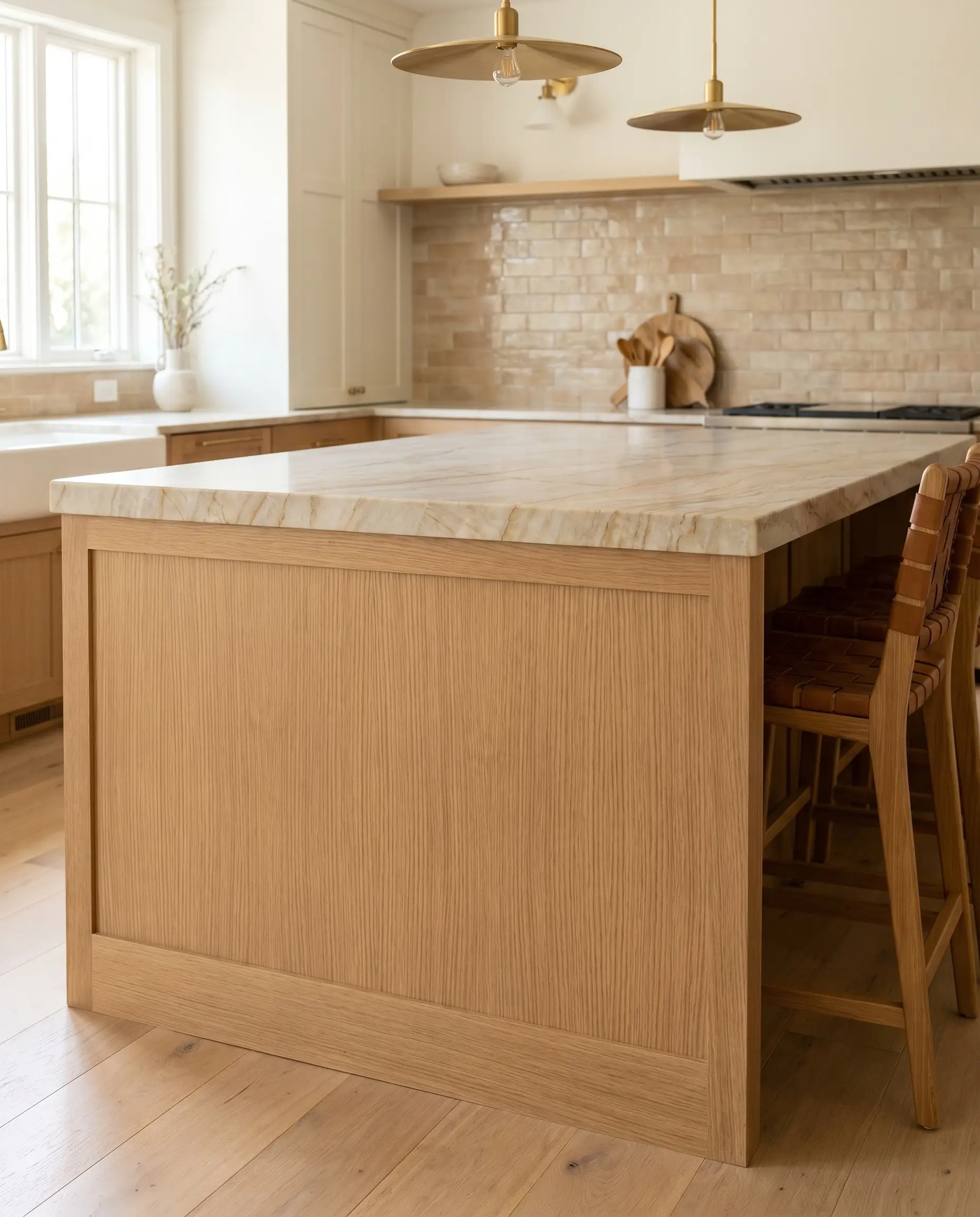
The warm beige and subtle gold veining inherent to the stone pull perfectly from the natural tannins found in premium oak. Select rift-sawn lumber to guarantee a tight, linear grain that refuses to compete with the organic, fluid movement of the quartzite above it.
- Structural Vibe: Refined transitional kitchen architecture and organic modern styling.
- Wood Grain Profile: Rift-sawn (straight, vertical lines) instead of plain-sawn (busy, arched cathedral patterns).
- Stains to Avoid: Avoid red or cherry stains, which violently clash with the stone’s green and gold undertones.
- Washes to Avoid: Avoid gray or cerused washes, which instantly turn the warm quartzite dull and ashen.
Fabricate a Thick Mitered Edge for Visual Weight
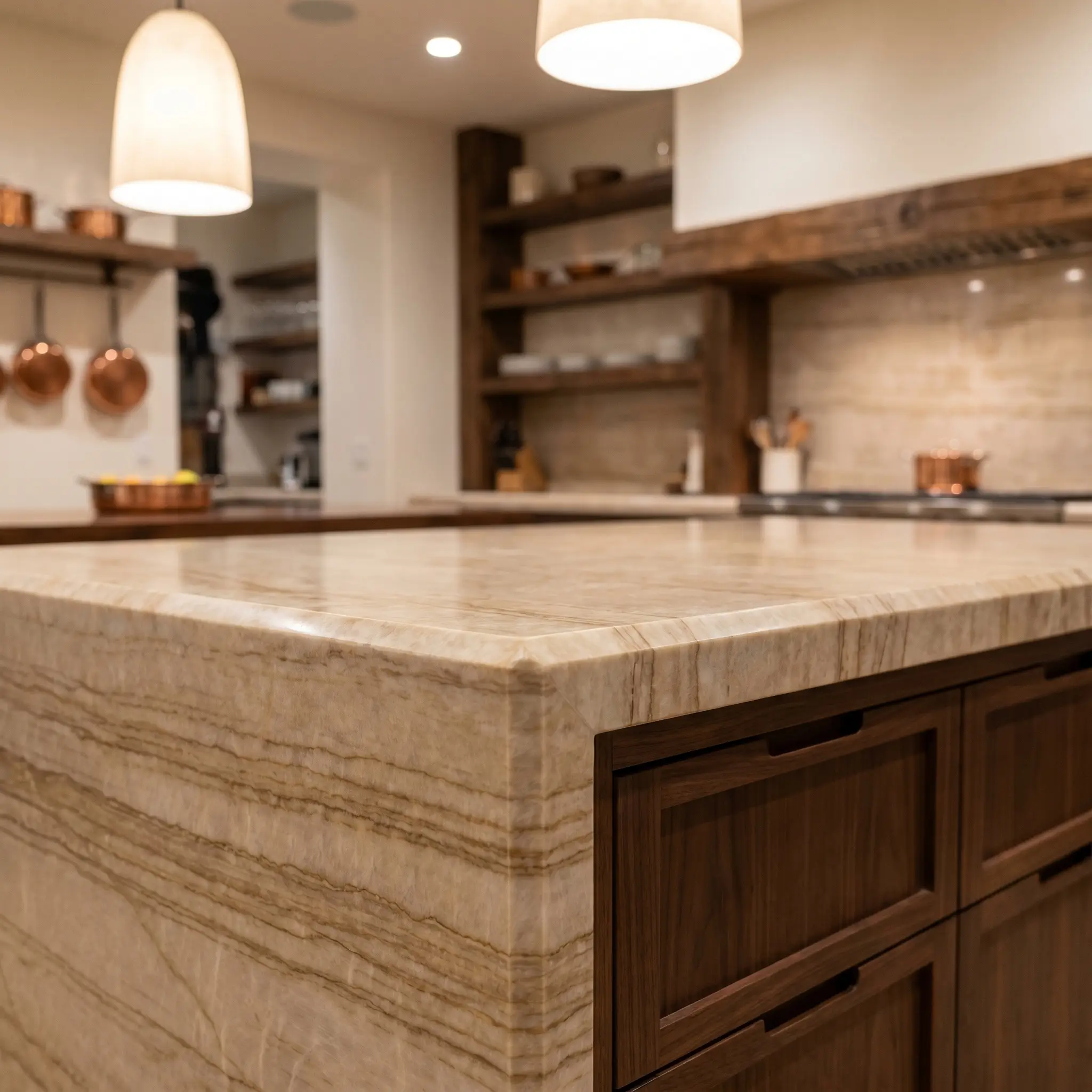
A standard 3cm edge looks structurally insubstantial on a massive ten-foot island. Fabricate a mitered edge to create the illusion of a solid two-inch or three-inch thick slab, giving the entire counter massive visual weight without the literal tonnage of a solid block.
- Structural Vibe: Heavy, bespoke, and architecturally grounded.
- Edge Comparison: Mitered Edge (seamlessly joined drop) versus an Eased Edge (standard 3cm thickness with slightly rounded corners).
- Vein Suitability: Taj Mahal’s linear, horizontal veining handles the folded mitered drop beautifully, creating a convincing faux-thickness.
Apply a Leathered Finish for Tactile Bar Seating
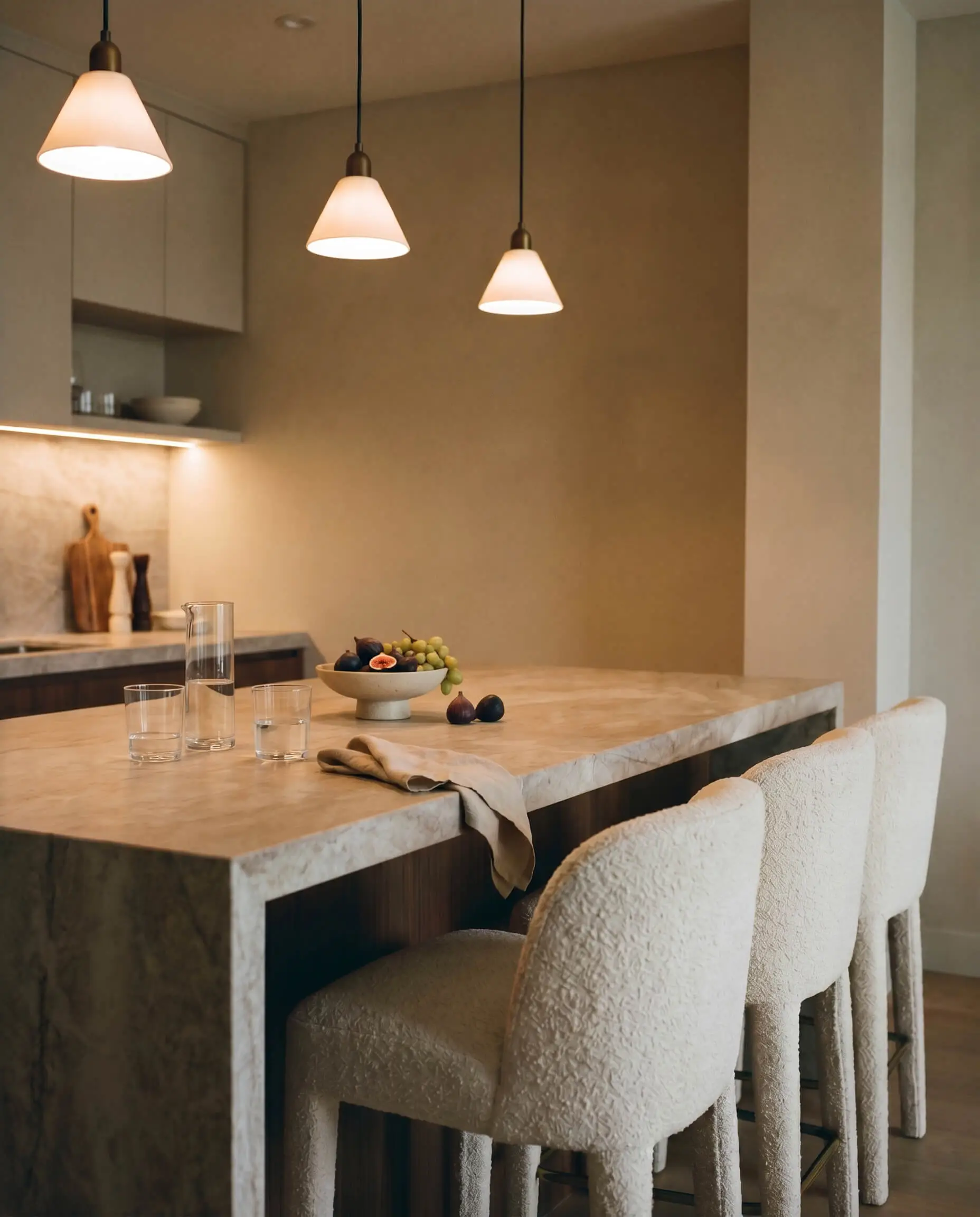
While polished stone is a classic residential staple, applying a brushed or leathered finish provides a matte, softly textured surface that feels incredibly premium beneath the hands of guests sitting at the bar. This tactile fabrication simultaneously diffuses harsh overhead pendant glare and completely hides daily fingerprints.
- Structural Vibe: Earthy, tactile, and understated luxury.
- Sealer Requirement: Leathered surfaces possess open pores; demand a premium penetrating sealer during installation to prevent oil absorption.
Understanding how the surface reflects light and handles daily use is critical when finalizing your stone order. Here is a pros and cons breakdown comparing a leathered finish to a traditional polish on kitchen islands.
| Finish Type | Pros | Cons |
|---|---|---|
| Polished Finish | Highly reflective, classic high-end look, seals pores tightly against spills. | Creates sharp glare under direct pendants, shows fingerprints easily, feels cold. |
| Leathered Finish | Diffuses light beautifully, hides fingerprints, offers a warm, highly textural feel. | More porous surface requires rigorous sealing, lacks the traditional mirror-like shine. |
Soften the Architecture with Radius Corners
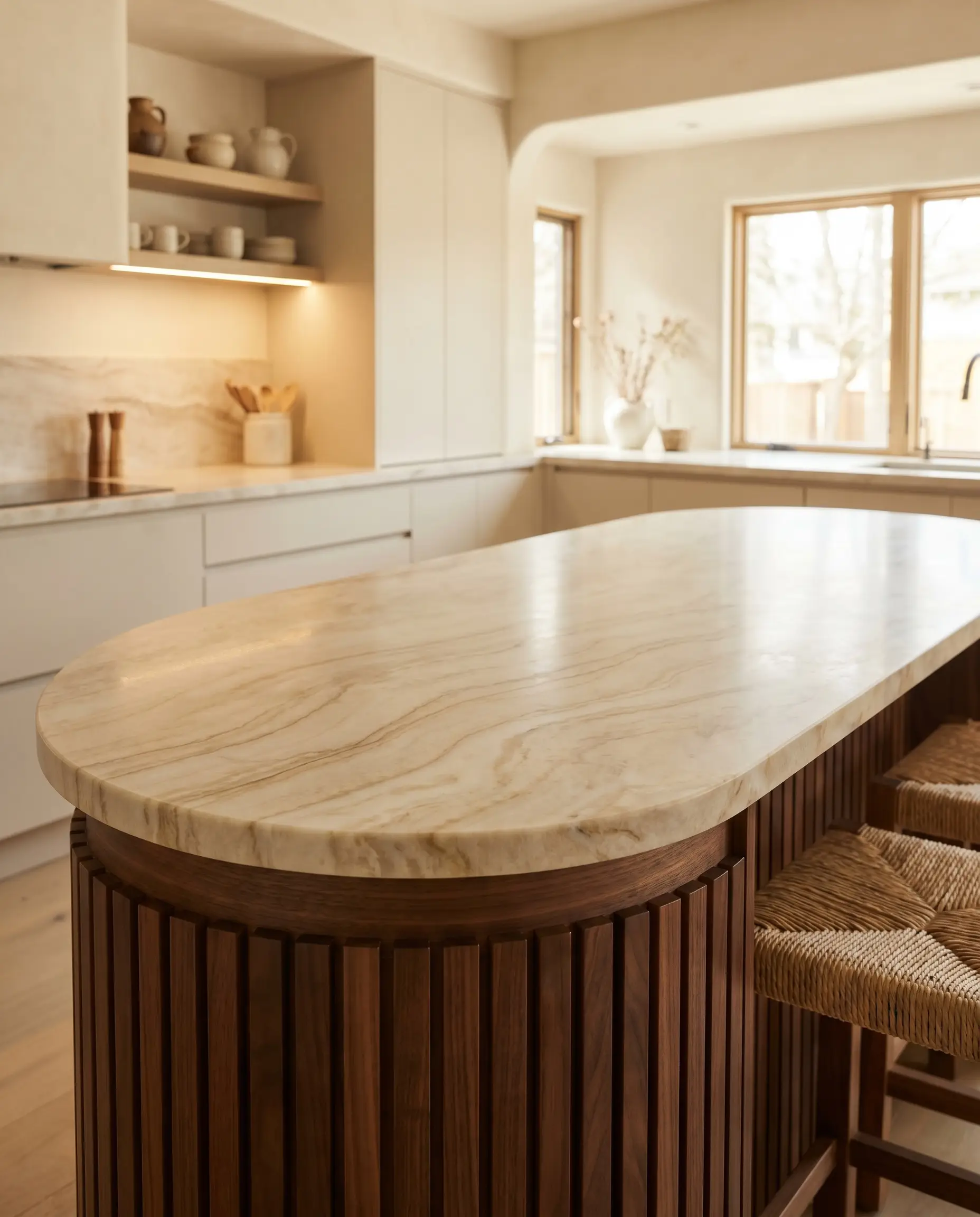
Sharp geometric islands dominate modern millwork, but fabricating a curved overhang or fully rounded island ends instantly softens the room’s rigid architecture. Taj Mahal’s fluid, creamy veining is uniquely suited to wrap around curved fabrication, whereas highly speckled granites look visually distorted when shaped into radius corners.
- Structural Vibe: Fluid, sophisticated, and highly custom.
- Spatial Flow: Curved ends naturally guide foot traffic through tight kitchen zones without the harsh stop of a 90-degree corner.
- Base Pairing: Pair radius stone corners with a curved, slatted wood base to seamlessly mirror the overhead geometry.
Contrast the Warm Veining with Moody Green Cabinetry
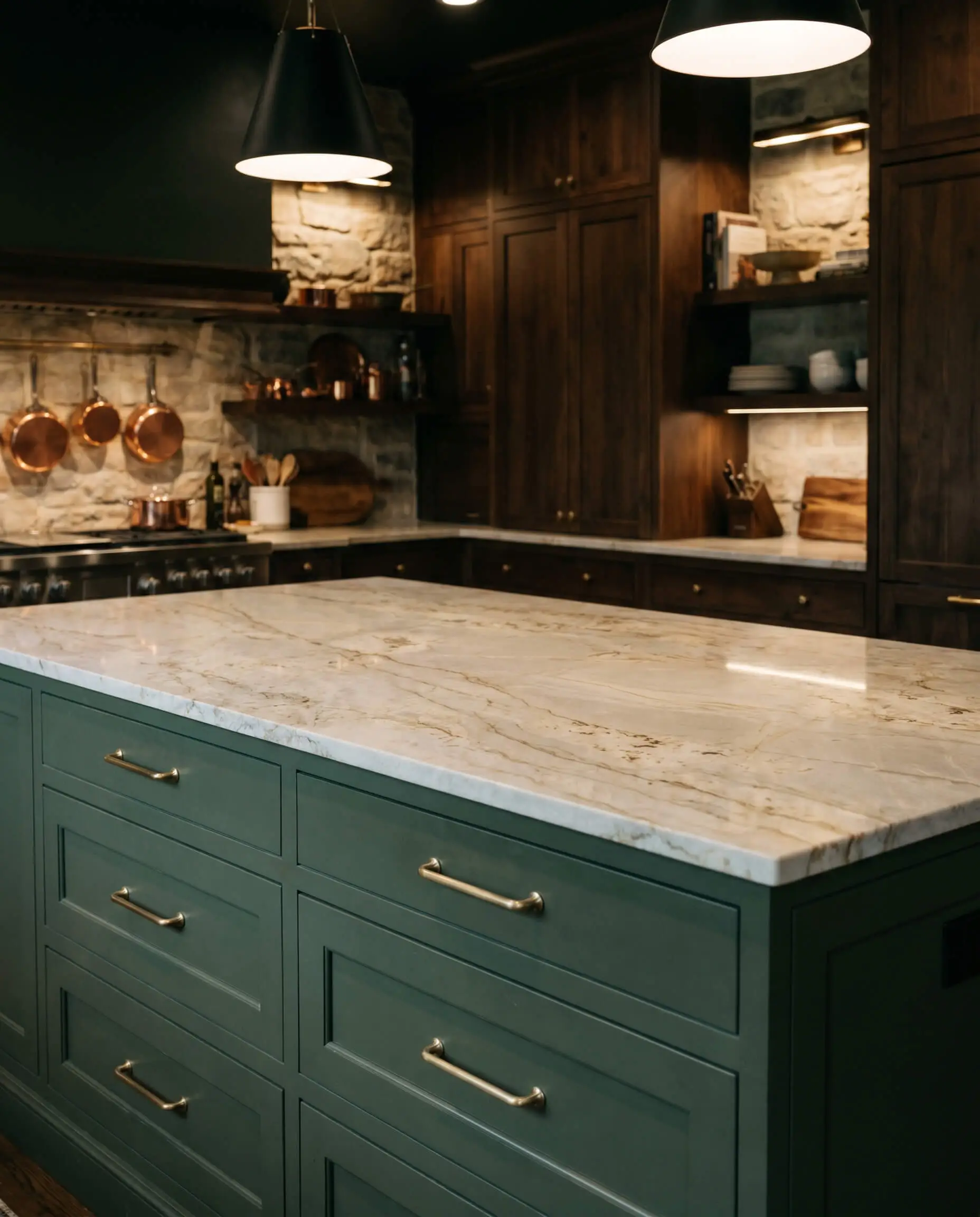
If you are avoiding all-wood or all-white kitchens, anchor the island with deep, earthy tones to create a striking foundation. A dark olive or forest green base provides a high-contrast backdrop that forces the subtle gold and cream flakes embedded in the Taj Mahal surface to visually jump.
- Structural Vibe: Moody, dramatic, and richly layered.
- Primary Paint Recommendation: Benjamin Moore Peale Green (a grounded, historic green with warm undertones).
- Alternative Paint Recommendation: Farrow & Ball Green Smoke (a slightly smokier, complex hue that highlights the stone’s depth).
- Hardware Pairing: Unlacquered brass pulls against the dark green millwork beautifully bridge the gap to the golden veins in the stone.
Install Fluted Wood Paneling on the Seating Side
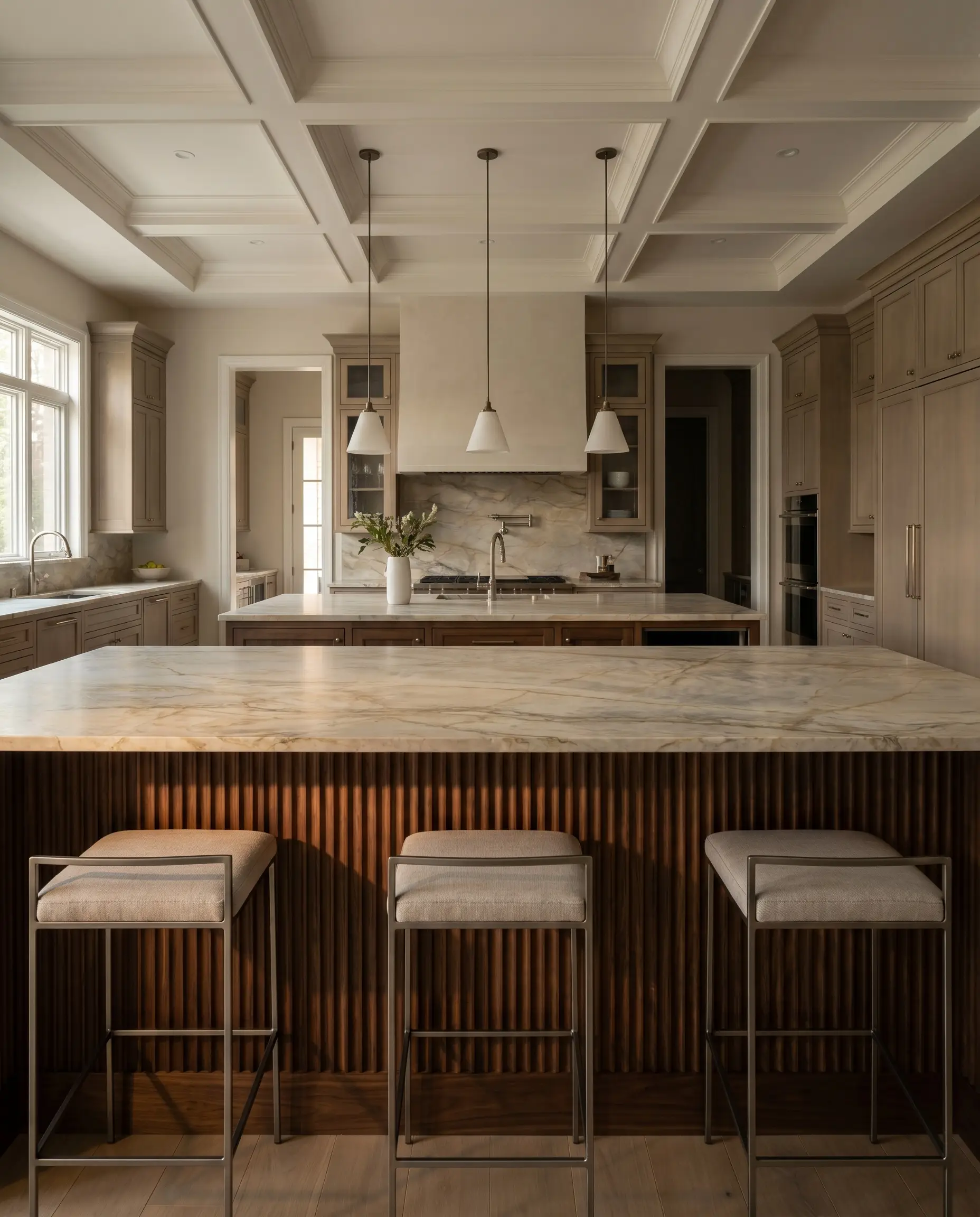
Leaving flat panel drywall or basic cabinet backs exposed underneath a seating overhang looks distinctly unfinished in a bespoke build. Install a fluted base across the back of the island to introduce strict vertical shadow lines that provide a sharp structural contrast to the organic, horizontal movement of the stone above.
- Structural Vibe: Architectural, rhythmic, and highly finished.
- Key Materials: Solid oak or walnut fluting (avoid MDF in high-kick zones).
- Maintenance Mandate: The fluting must be rigorously sealed with a commercial-grade topcoat to protect the ridges against inevitable shoe scuffs from heavy barstools.
Support the Overhang with Concealed Steel Corbels
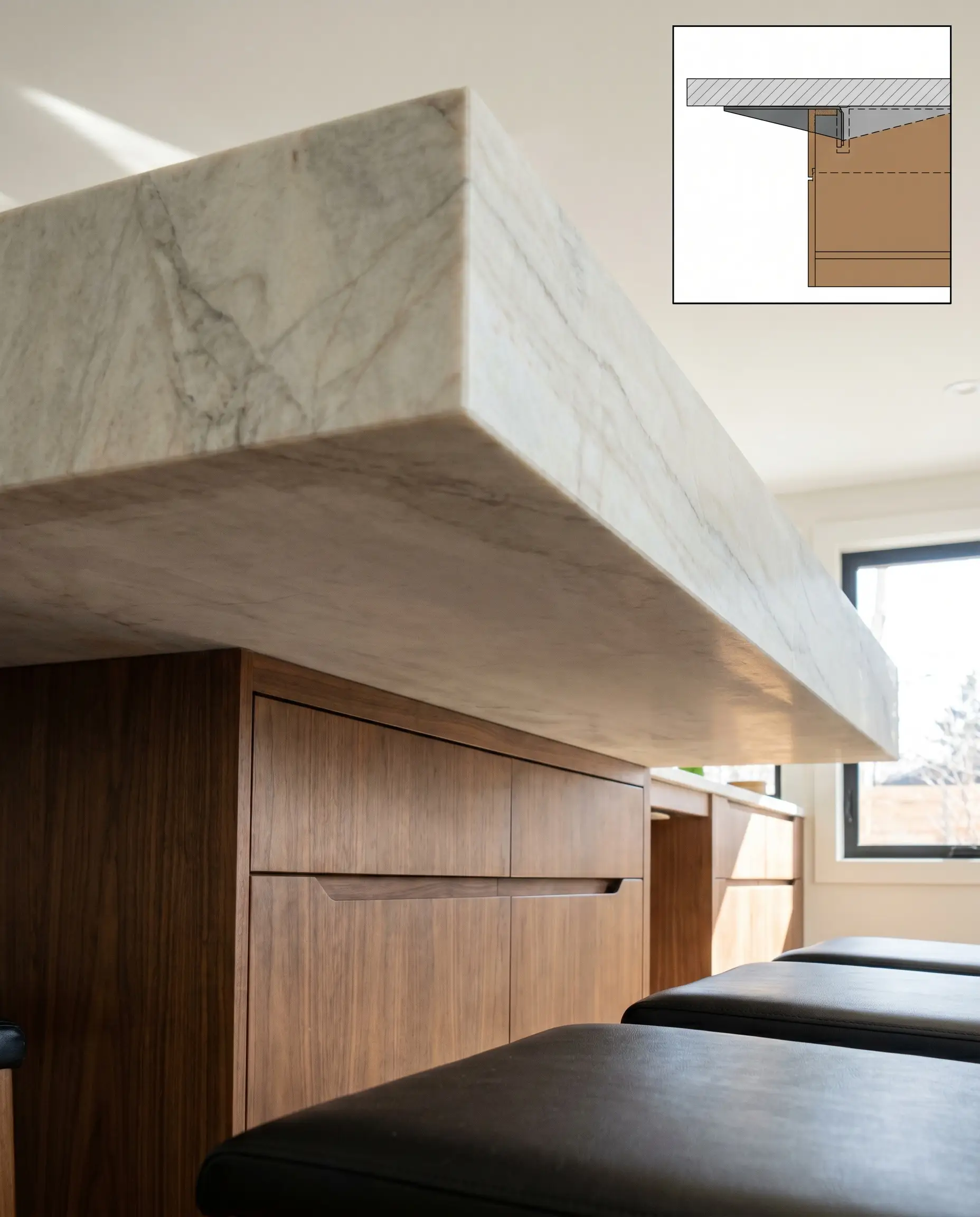
Taj Mahal quartzite is an incredibly dense, heavy material that simply cannot float freely. If your island design calls for a cantilevered overhang extending more than ten to twelve inches, you must engineer serious architectural reinforcement to prevent catastrophic cracking.
Never rely on the stone’s internal tensile strength for a deep seating overhang. Failing to install concealed steel corbel supports beneath a heavy quartzite cantilever is an expensive, dangerous structural failure waiting to happen.
Designer Warning
- Structural Vibe: Safe, engineered, and visually unencumbered.
- Support Hardware: Heavy-duty concealed steel brackets.
- Installation Timing: Steel supports must be routed directly into the cabinetry base before the stone fabricators arrive for the final drop.
Pair the Surface with Unlacquered Brass Pendants
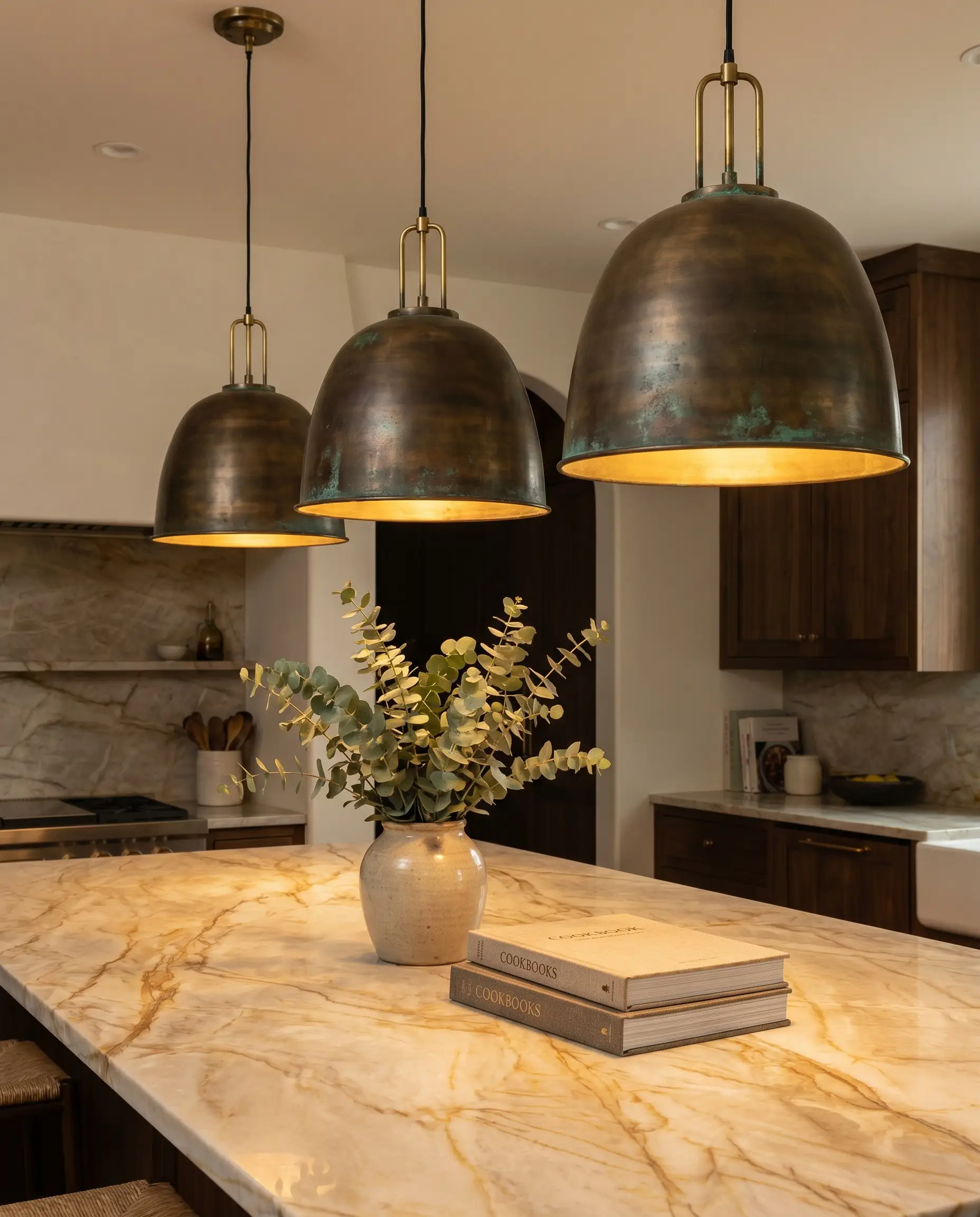
The metallic finishes hanging directly above the island must actively communicate with the stone below. Chrome and polished nickel read far too cold for this material; instead, select unlacquered brass or warm aged bronze pendants that will develop a living patina, perfectly mirroring the organic, timeless nature of the quartzite.
- Structural Vibe: Warm, historic, and continuously evolving.
- Key Materials: Solid unlacquered brass, aged bronze, or oil-rubbed bronze.
- Lighting Placement: Hang the bottom rim of the pendants exactly 30 to 36 inches above the countertop surface to prevent visual obstruction while properly illuminating the stone.
Match the Island to a Full-Height Range Backsplash
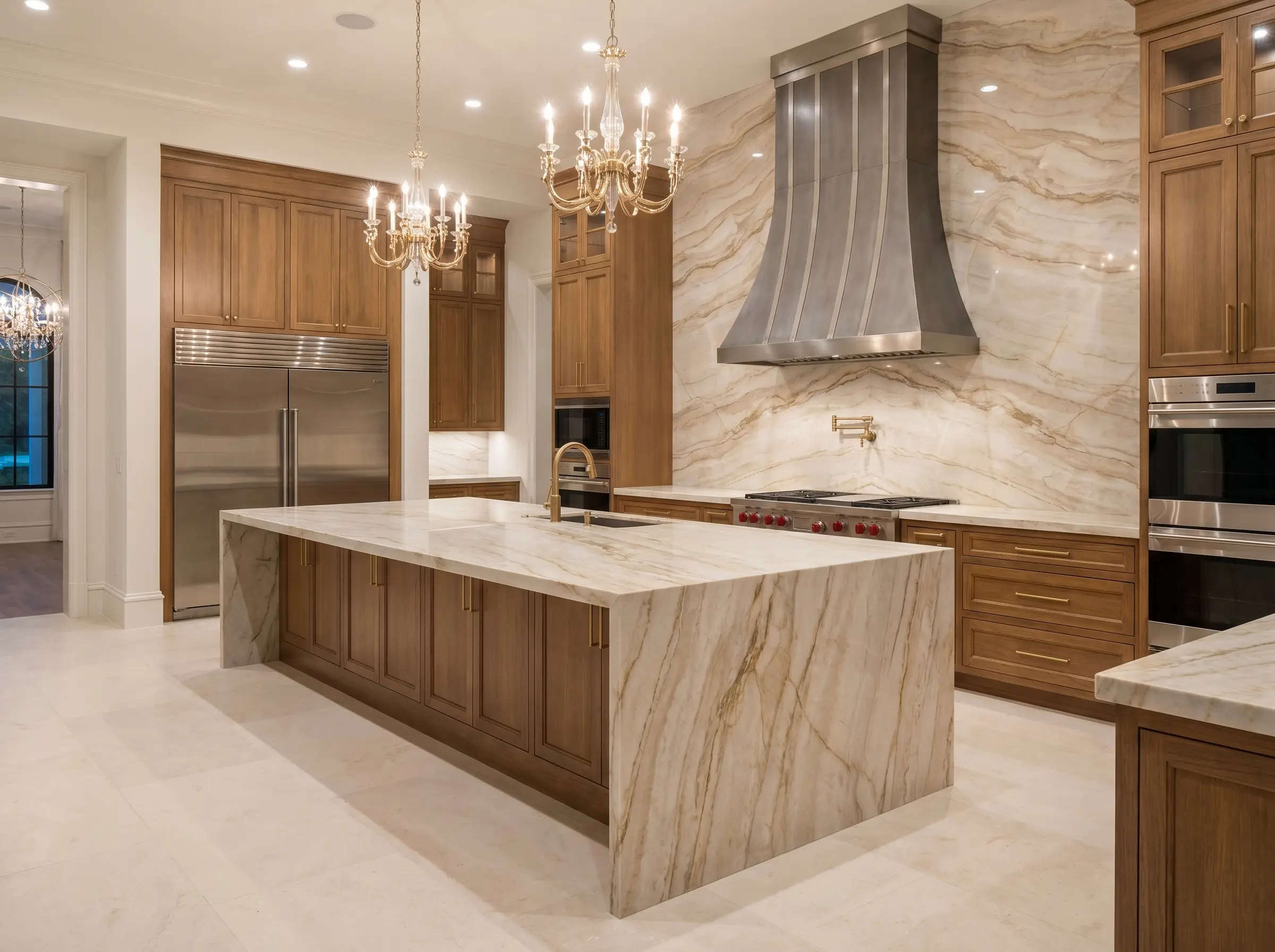
To maximize the island’s visual impact, purchase an additional slab from the exact same quarry lot and run it as a full-height backsplash directly behind the range. This architectural move creates a mirrored visual anchor within the room, seamlessly tying the horizontal plane of your island directly to the vertical plane of the back wall.
- Structural Vibe: Cohesive, highly luxurious, and grand.
- Fabrication Detail: Ensure the fabricator maps the veining so the most dramatic, sweeping lines are centered squarely behind the range hood.
- Depth Consideration: A full-thickness 3cm slab on the wall will affect your range’s installation depth; factor this measurement into your final appliance placement.
Ground the Layout with High-Contrast Matte Black Hardware
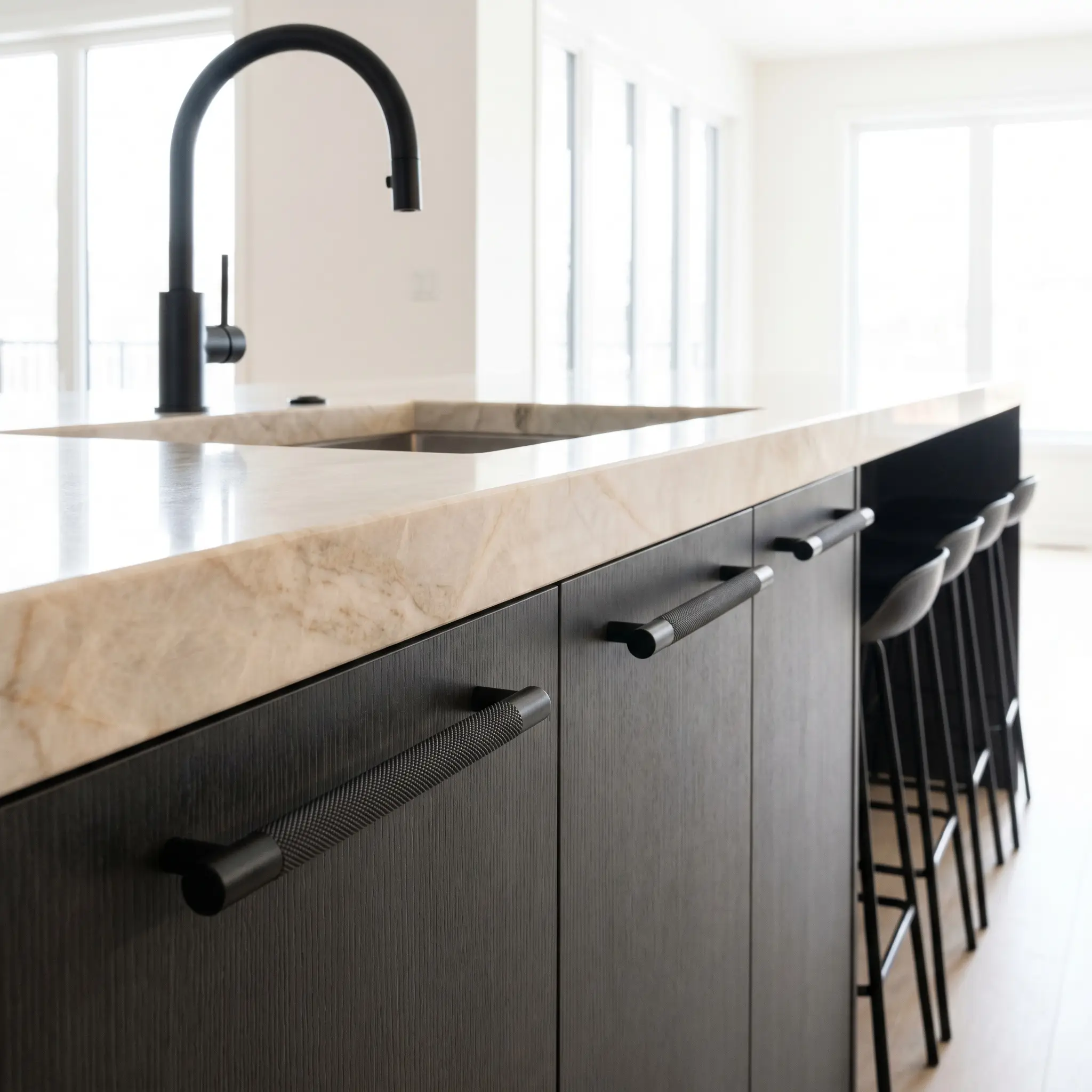
If brass feels too traditional for your specific architecture, install matte black hardware on the island cabinetry for a sharp, contemporary grounding effect. The dark hardware physically cuts through the immense creaminess of the stone, providing a crisp, modern edge that prevents the beige kitchen from looking washed out.
- Structural Vibe: Crisp, industrial-leaning, and highly defined.
- Key Touchpoints: Matte black heavy-knurled drawer pulls, black faucet fixtures, and black iron barstool legs.
- Design Balance: Keep the black accents thin and linear so they act as architectural outlines rather than visually heavy focal points.
Select Creamy Whites Over Icy Gray Paint Tones
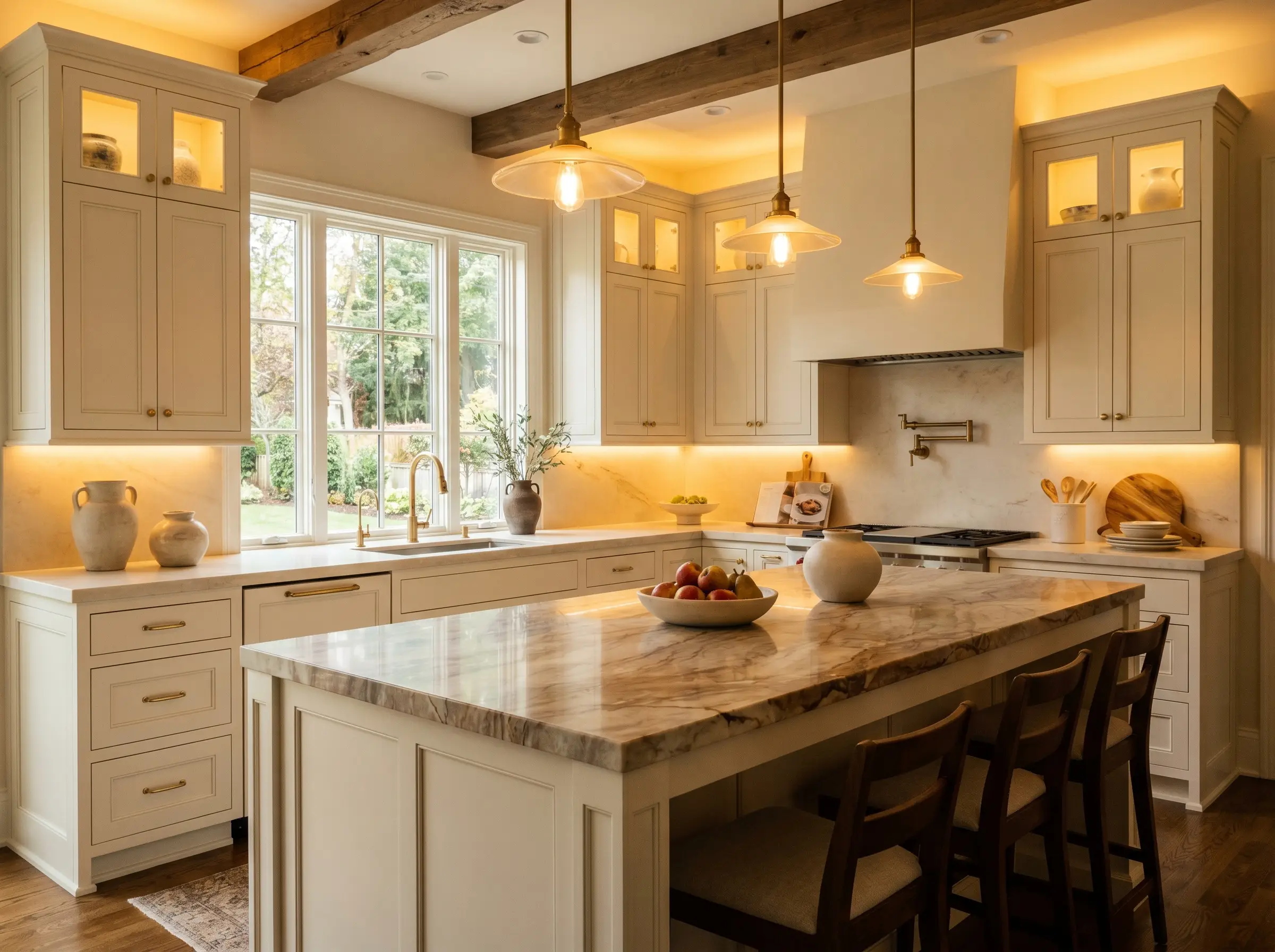
Because Taj Mahal is inherently warm, pairing it with cool, icy whites or stark grays on the surrounding cabinetry will instantly make the premium stone look dirty, yellowed, and completely out of place. You must utilize warm, creamy whites to flawlessly harmonize with the stone’s complex undertones.
Never let a cool gray undertone near Taj Mahal quartzite. If you are painting the island base or the surrounding perimeter cabinets, the paint must possess a distinct yellow or warm umber base to successfully integrate with the stone.
Color Match Rule
- Structural Vibe: Luminous, cohesive, and invitingly warm.
- Primary Paint Recommendation: Sherwin-Williams Alabaster (a balanced, creamy white).
- Alternative Paint Recommendation: Benjamin Moore White Dove (a soft white with a hint of greige).
Finalizing the Centerpiece: Surface Maintenance and Daily Care
Concluding your kitchen build means establishing a long-term relationship with your chosen materials. While Taj Mahal is incredibly durable and resists scratching far better than traditional marble, preserving that flawless leathered or polished finish for decades requires intentional, daily care.
- Sealing Protocol: Insist on a high-quality penetrating sealer immediately upon installation to block the microscopic pores against cooking oils and wine spills.
- Daily Wipe-Downs: Use only pH-neutral stone cleaners or mild soap; strictly avoid acidic formulas like vinegar or bleach, which will slowly strip the protective sealant.
- Long-Term Protection: Treat your island with the respect a premium architectural feature demands, and it will effortlessly serve as the unyielding anchor of your home for generations.

The Aesthetics Desk curates the visual direction for Hackrea. Specializing in design history, global architectural movements, and interior styling, this desk focuses on the psychology of space and how to translate high-end, magazine-quality aesthetics into approachable residential design without falling into fleeting micro-trends.