Kitchen-Living Room Combo Design 2026: The Ultimate Guide to Layouts, Zoning & “Quiet Luxury” Trends
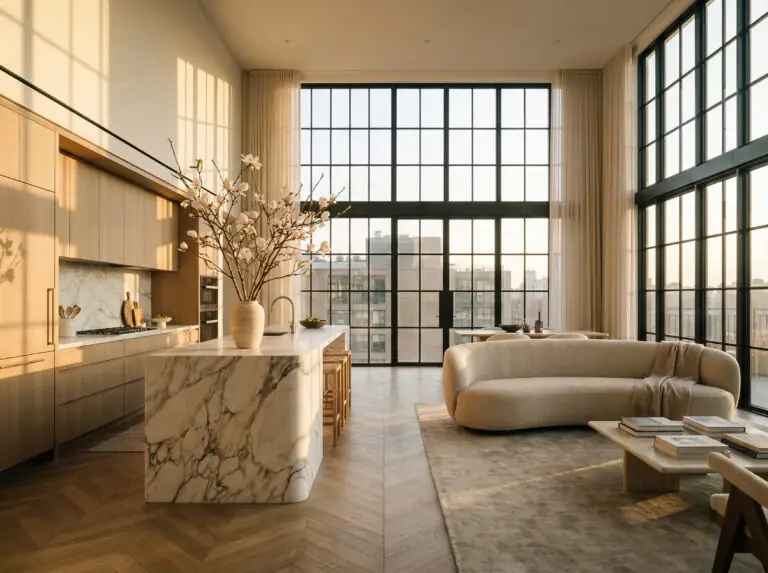
Let’s be honest: the era of the stark, sterile “white box” open plan is officially behind us.
For years, we tore down walls to create massive, echoing halls that looked great on Instagram but felt impossible to live in. Now, as we move through 2026, the philosophy of the kitchen-living room combo has evolved. It is no longer just about removing barriers; it is about creating connection while maintaining comfort. It’s about “Warm Minimalism” and the rise of “Quiet Luxury”—creating spaces that feel as good as they look.
Whether you are renovating a spacious suburban home or trying to maximize a compact city apartment, the challenge remains the same: How do you cook, eat, relax, and entertain in one room without it feeling like a chaotic mess?
In this ultimate guide, we are diving deep into the new rules of open-concept living. We’ll cover the latest 2026 design trends, the layouts that actually work, and the “designer secrets” to fixing common issues like noise and clutter.
⚡ In a Hurry? The 2026 Cheat Sheet
What is the trend for Kitchen-Living Room Combos in 2026? The “sterile white box” is out. The 2026 standard is “Warm Minimalism”—a design philosophy that prioritizes hidden appliances (“The Disappearing Kitchen”), organic curves, and rich textures like wood and stone to make the kitchen feel like a furnished room rather than a utility space.
Top 5 Rules for a Successful Layout:
The Vibe Shift: Top Design Trends for 2026
The kitchen is no longer a utility space tucked in the back; it is the anchor of the home. However, the way we treat this anchor is changing. We are seeing a move away from high-gloss surfaces and towards tactile, organic materials that blur the line between “kitchen” and “living room.”
1. The “Disappearing” Kitchen
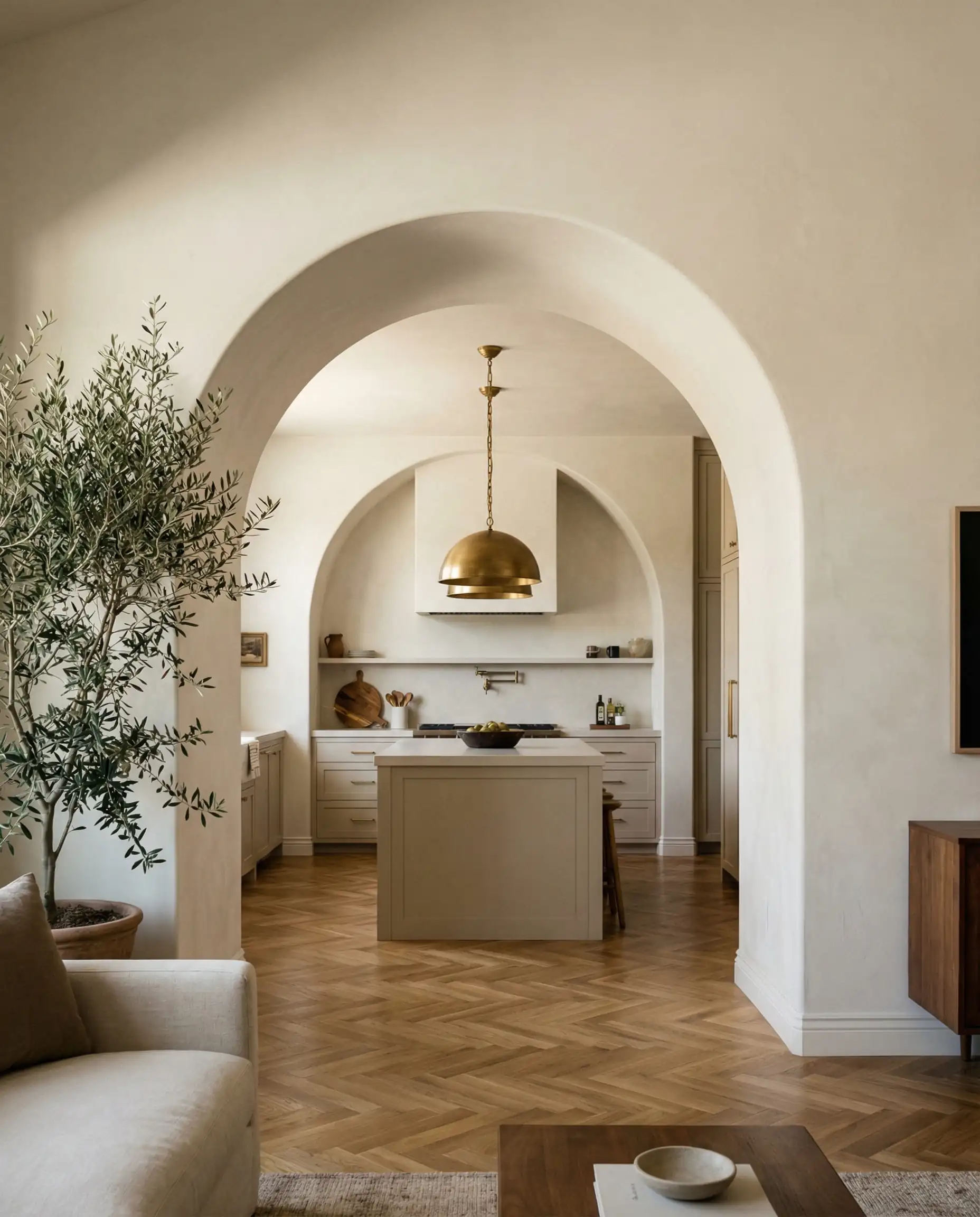
The hottest trend for 2026 is the kitchen that doesn’t look like a kitchen. Since your culinary space is constantly visible from the sofa, designers are prioritizing cabinetry that mimics high-end furniture.
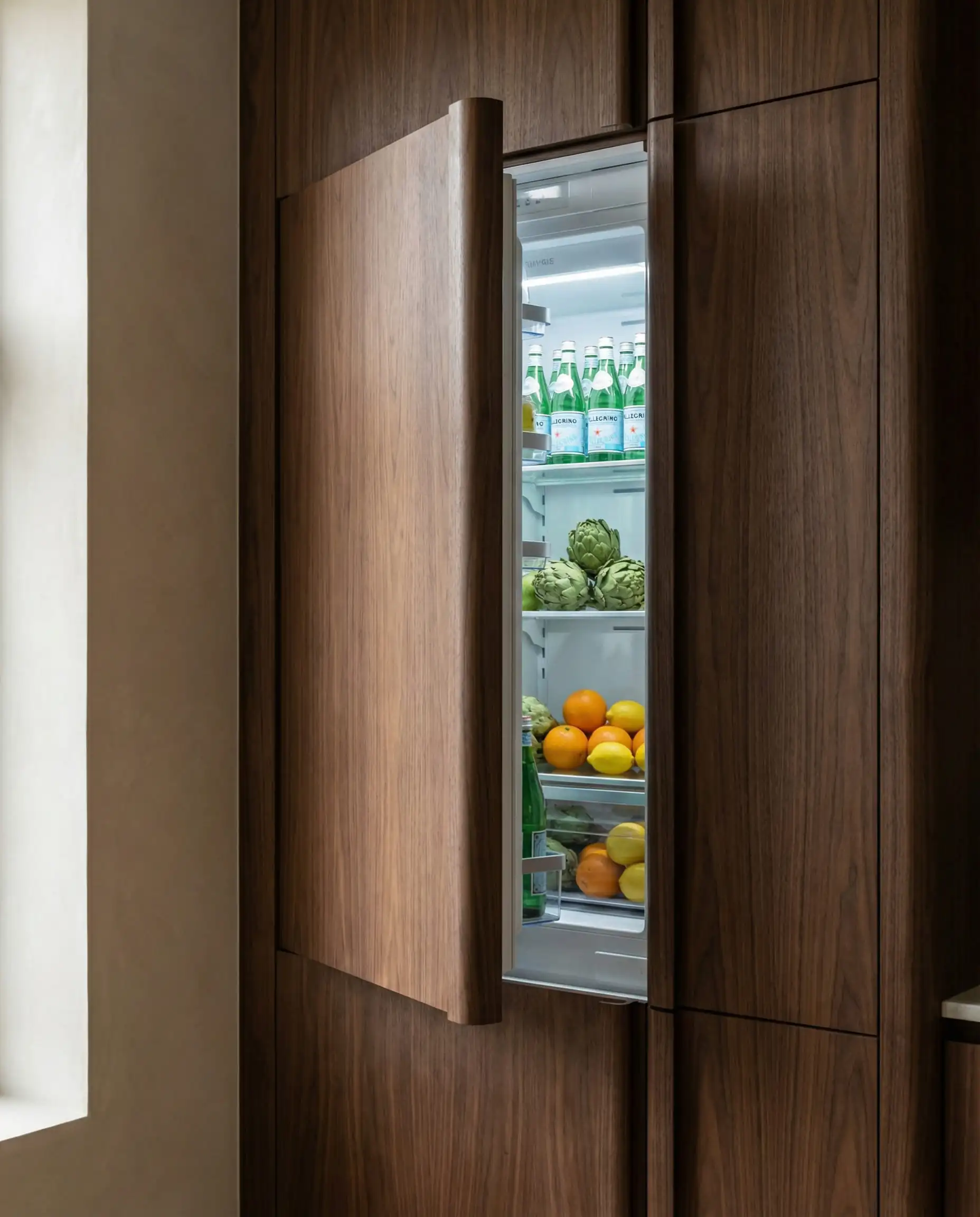
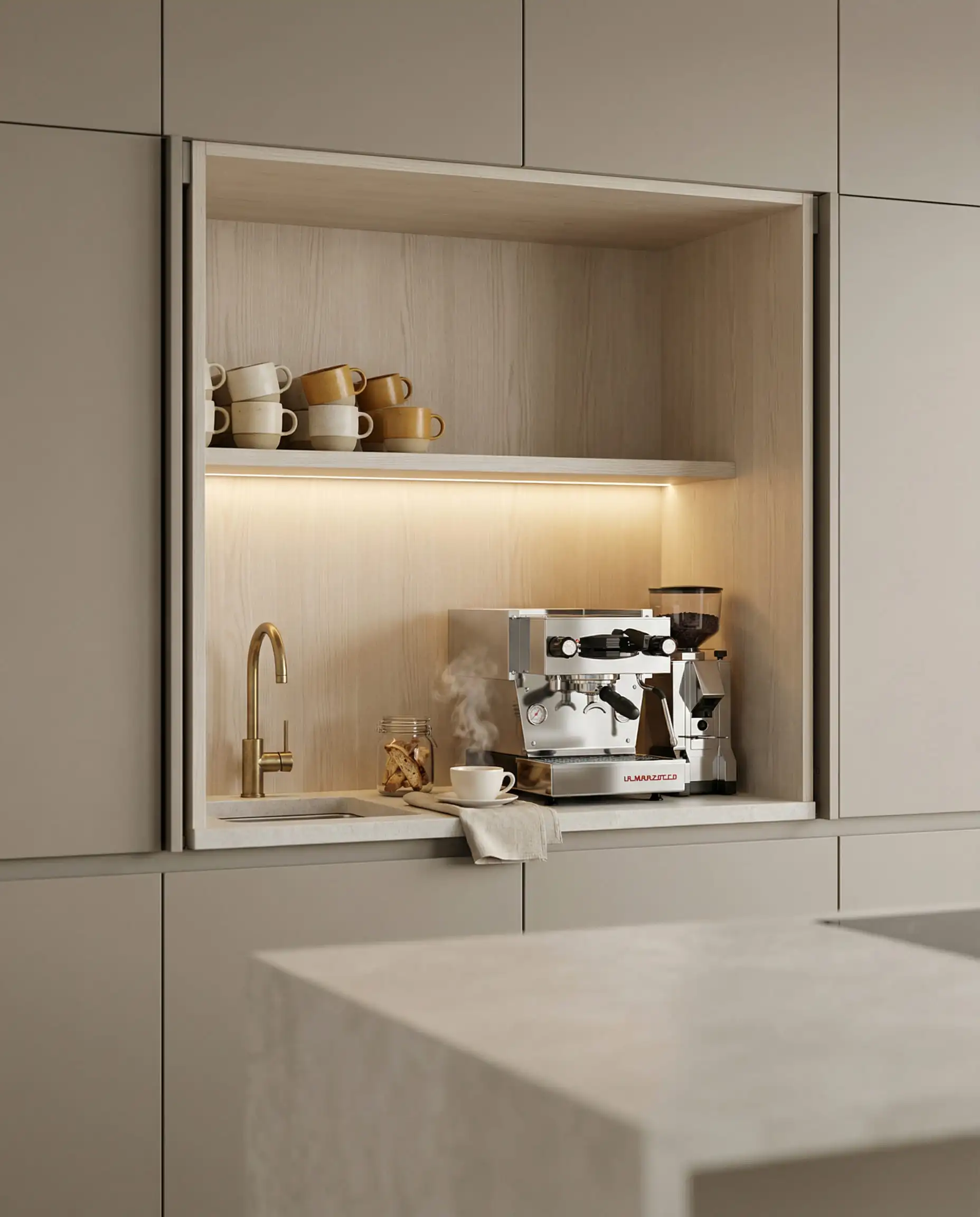
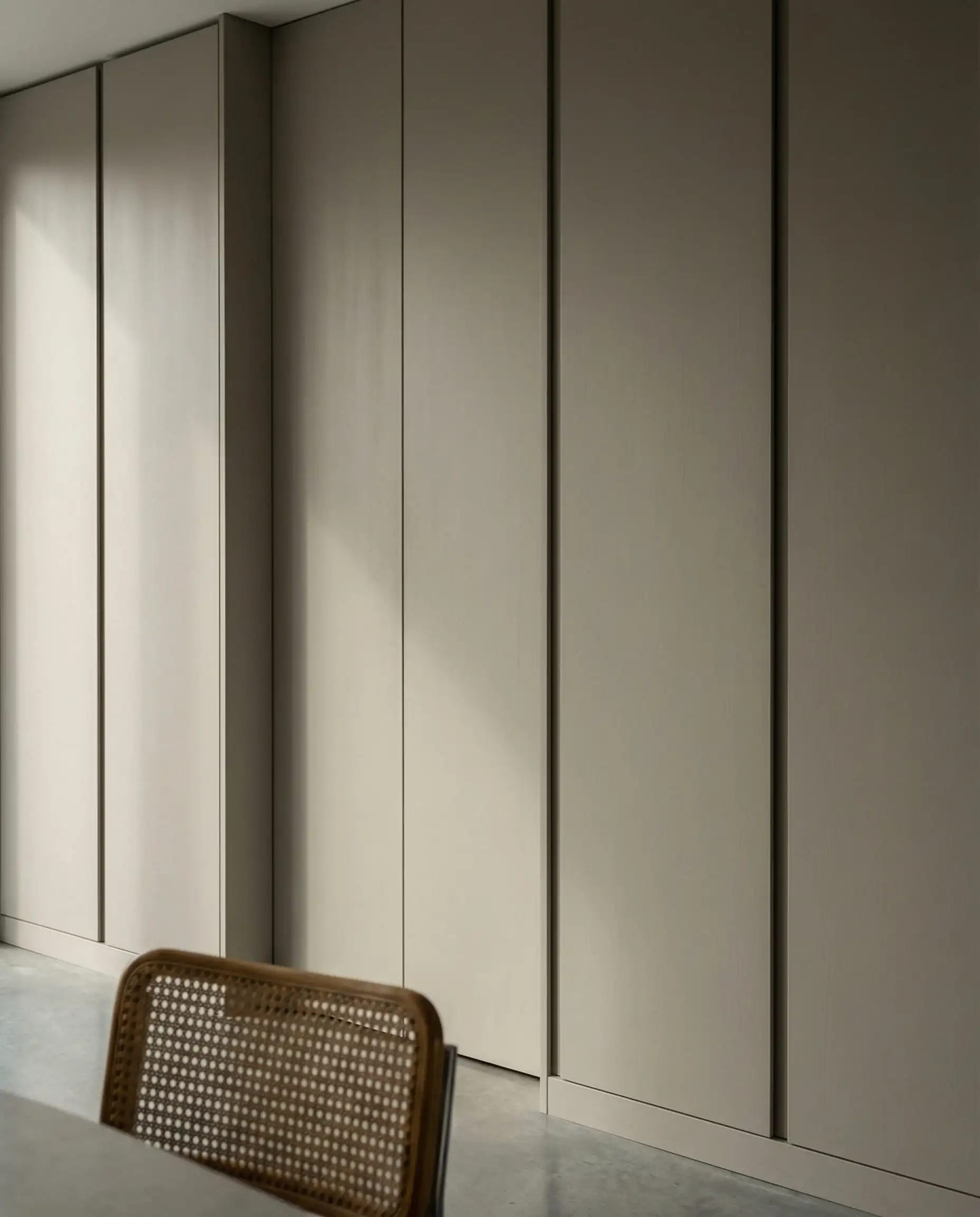
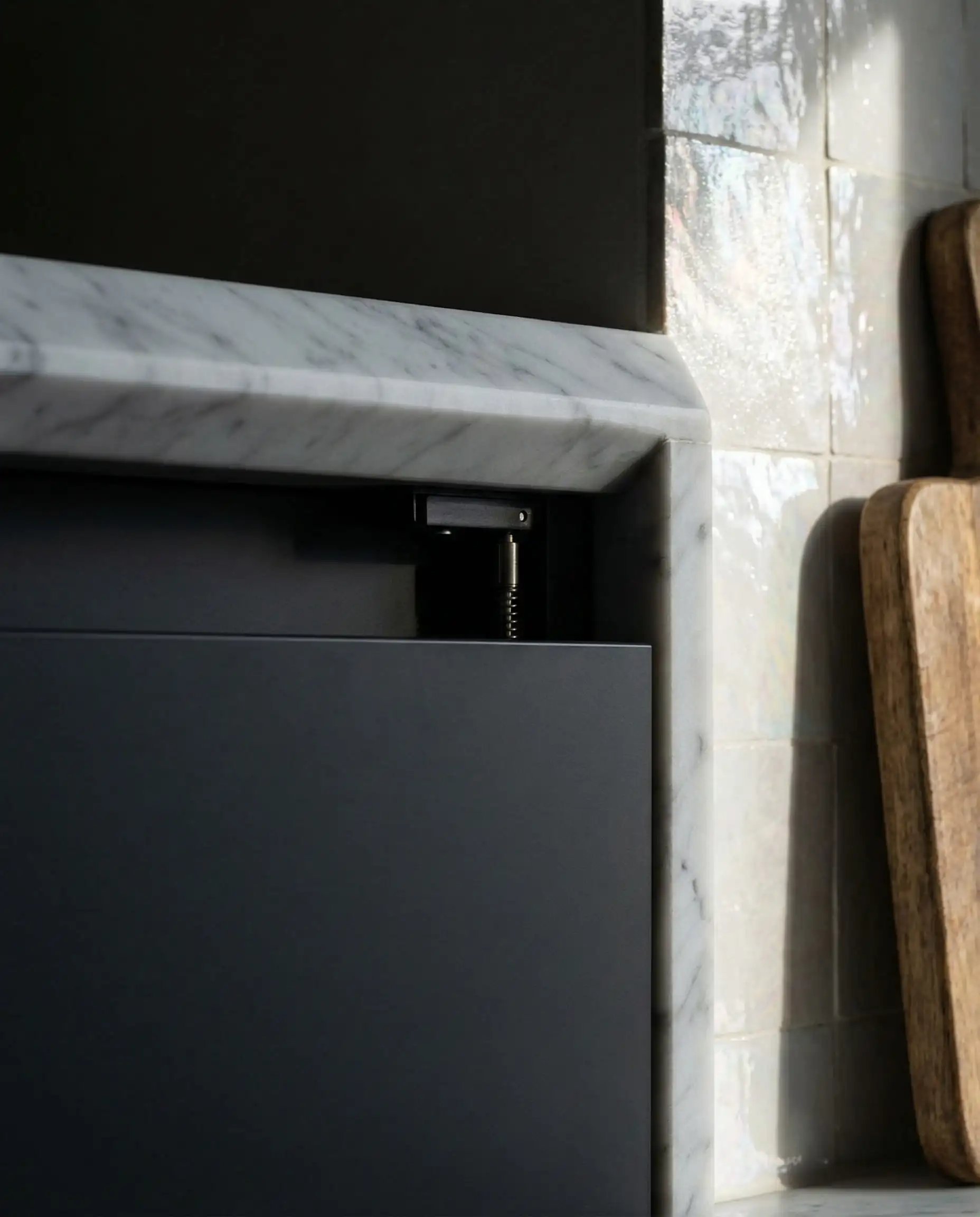
If you can’t hide everything, curate what stays out. A beautiful artisan ceramic bowl or a high-end espresso machine can act as decor, bridging the gap between utility and style.
🎨 Designer Tip
2. “Quiet Luxury” & Warm Minimalism
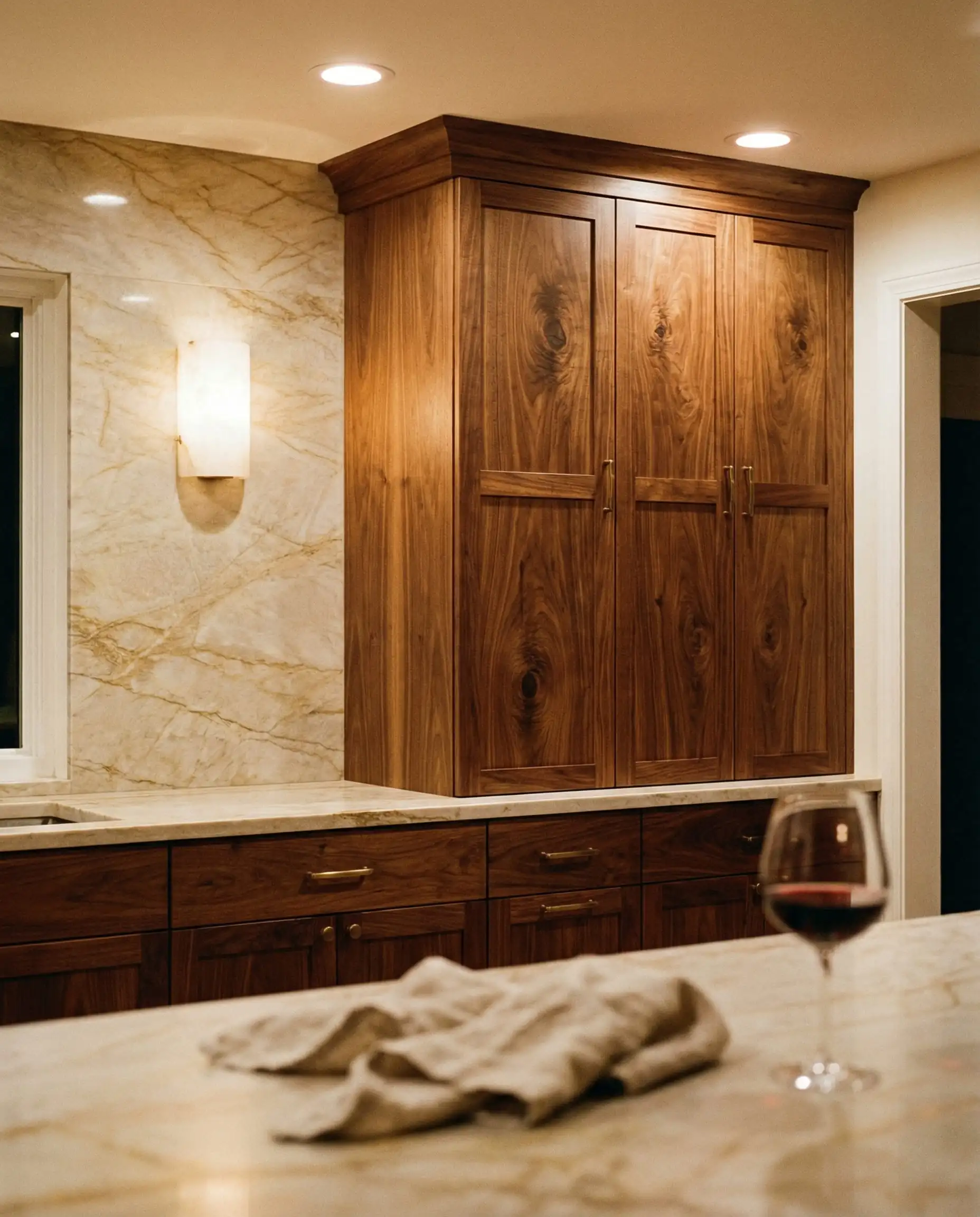
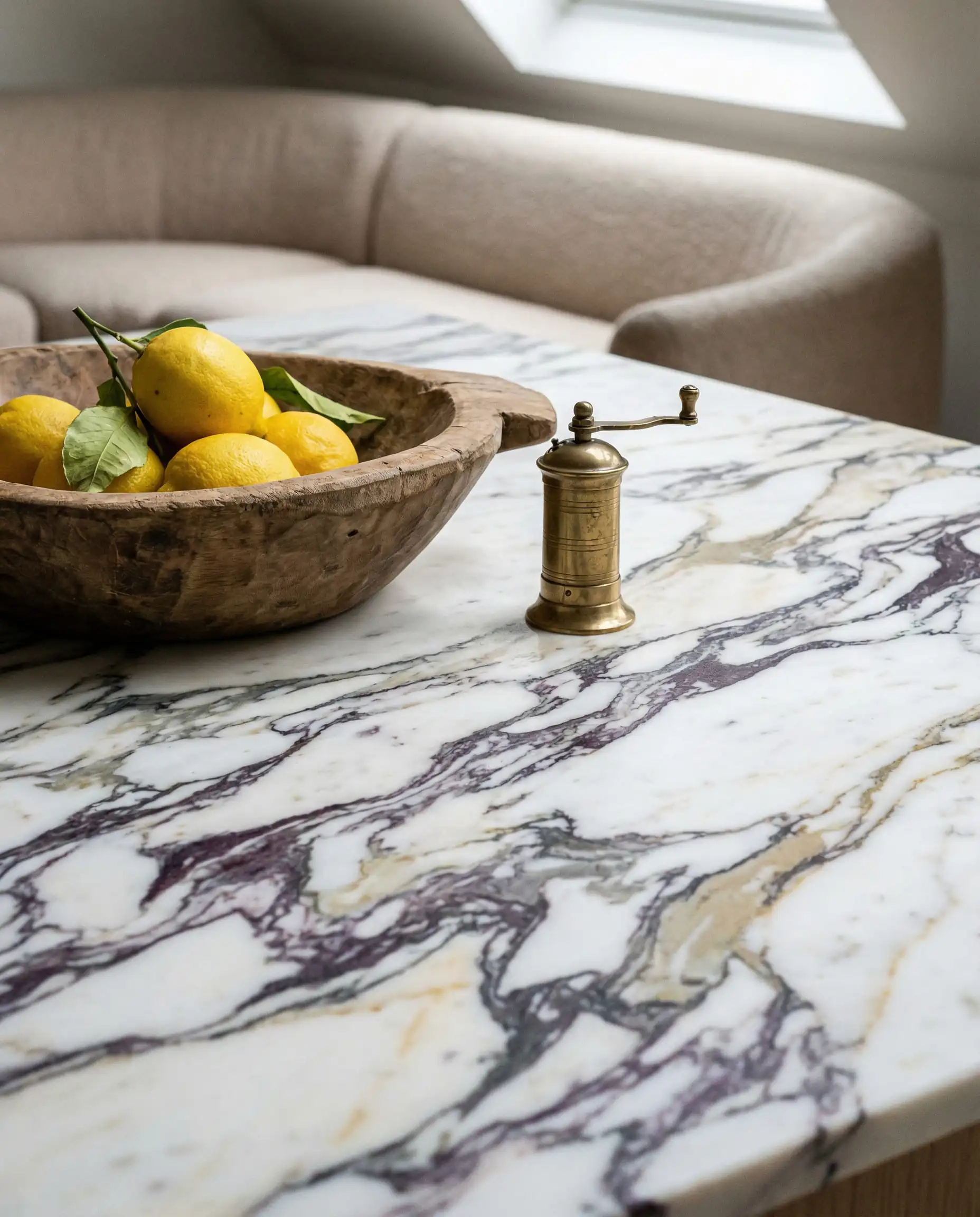
Gone are the days of cool grays and blinding whites. The 2026 aesthetic is rooted in warmth. We are talking about rich woods like walnut and white oak, natural stone with heavy veining (like Viola marble), and a palette of “greige” (gray-beige) and soft terracottas.
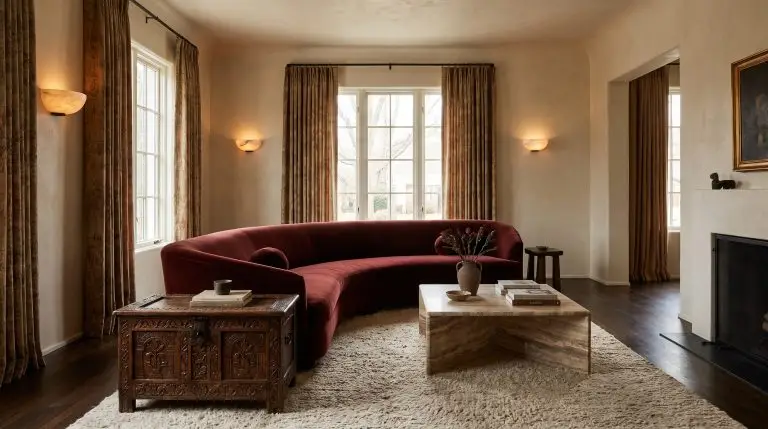
This trend is crucial for combo rooms because it softens the transition. A stark white kitchen feels jarring next to a cozy velvet sofa. A warm wood kitchen, however, feels like an extension of the living room furniture.
For a deeper dive into how these aesthetics are shaping culinary spaces, explore our full report on modern kitchen trends.
3. Curves and Organic Shapes
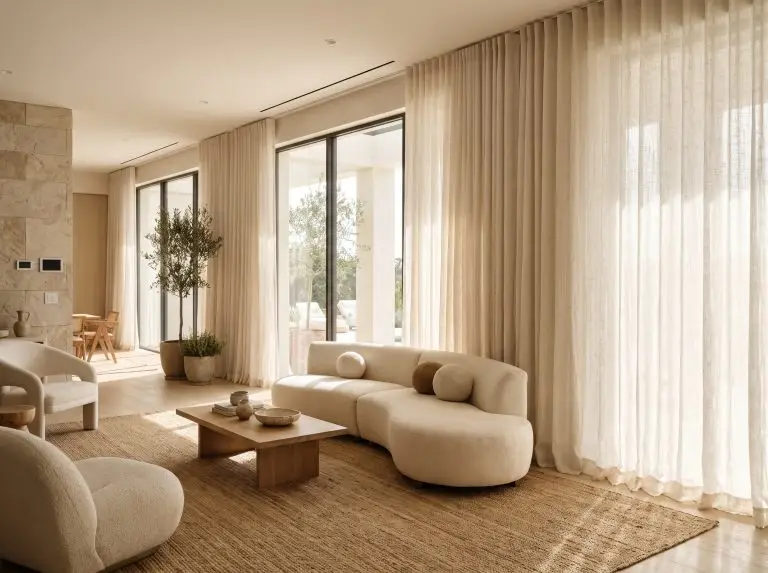
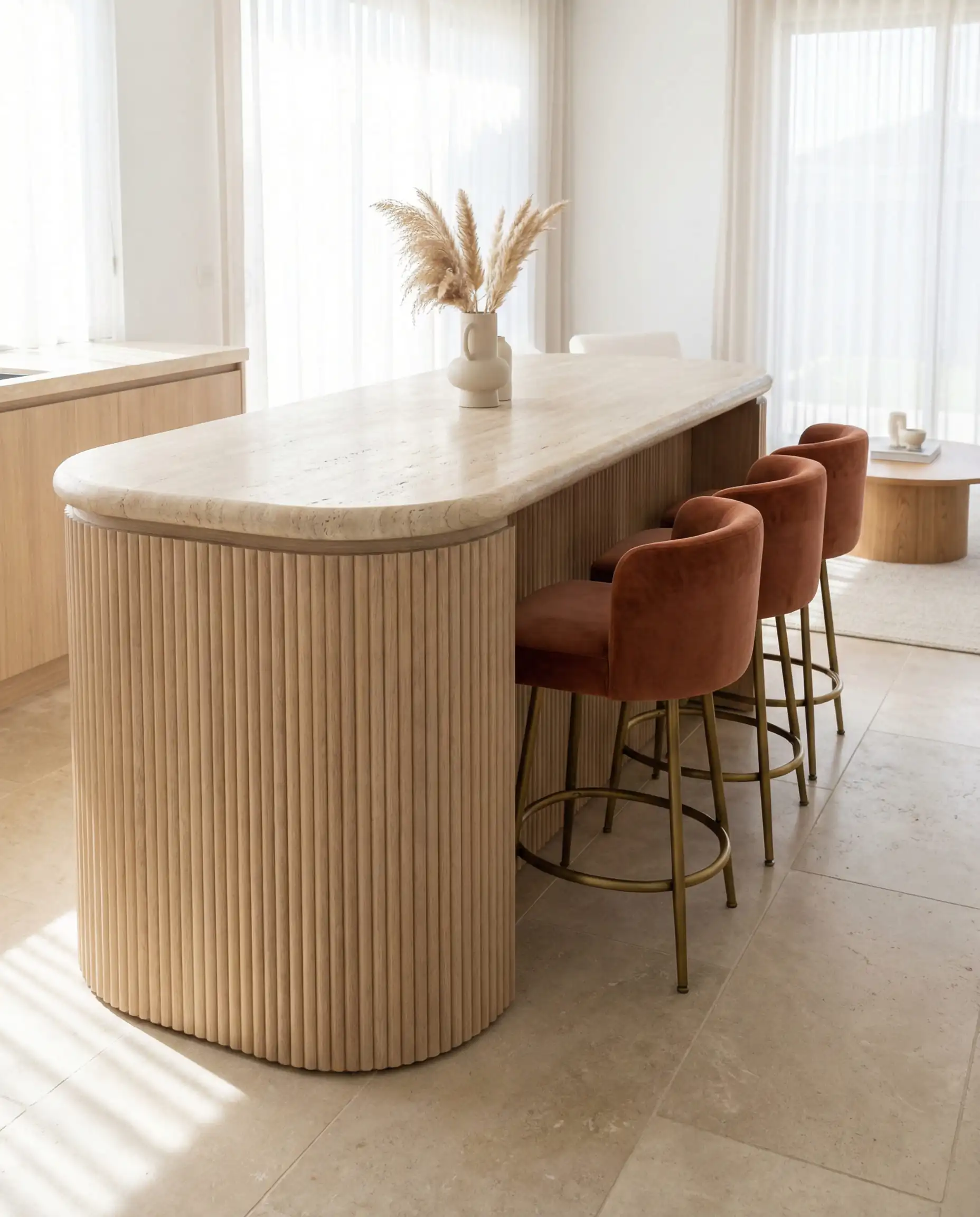
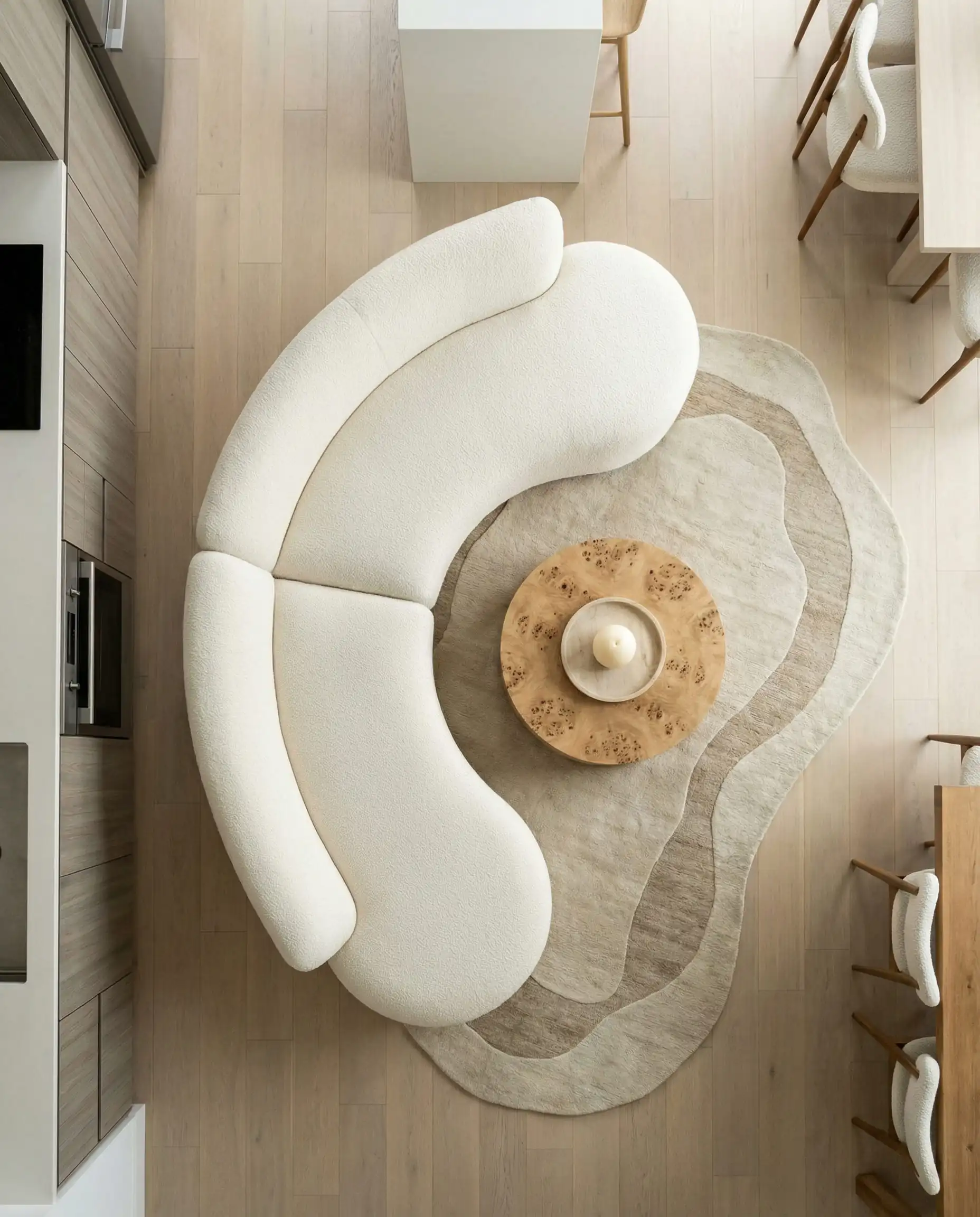
Rectilinear lines can make a room feel rigid. To combat the “boxy” feel of a standard open plan, 2026 designs are introducing curves.
Smart Zoning: How to Separate Without Walls
The biggest mistake homeowners make in open-concept designs is “furniture soup”—where pieces just float aimlessly in a large room. You need Visual Zoning. This is the art of defining spaces using light, texture, and psychology rather than drywall.
The Foundation: Flooring Continuity vs. Definition
Should you use different flooring for the kitchen and living area? In 2026, the answer is generally no.
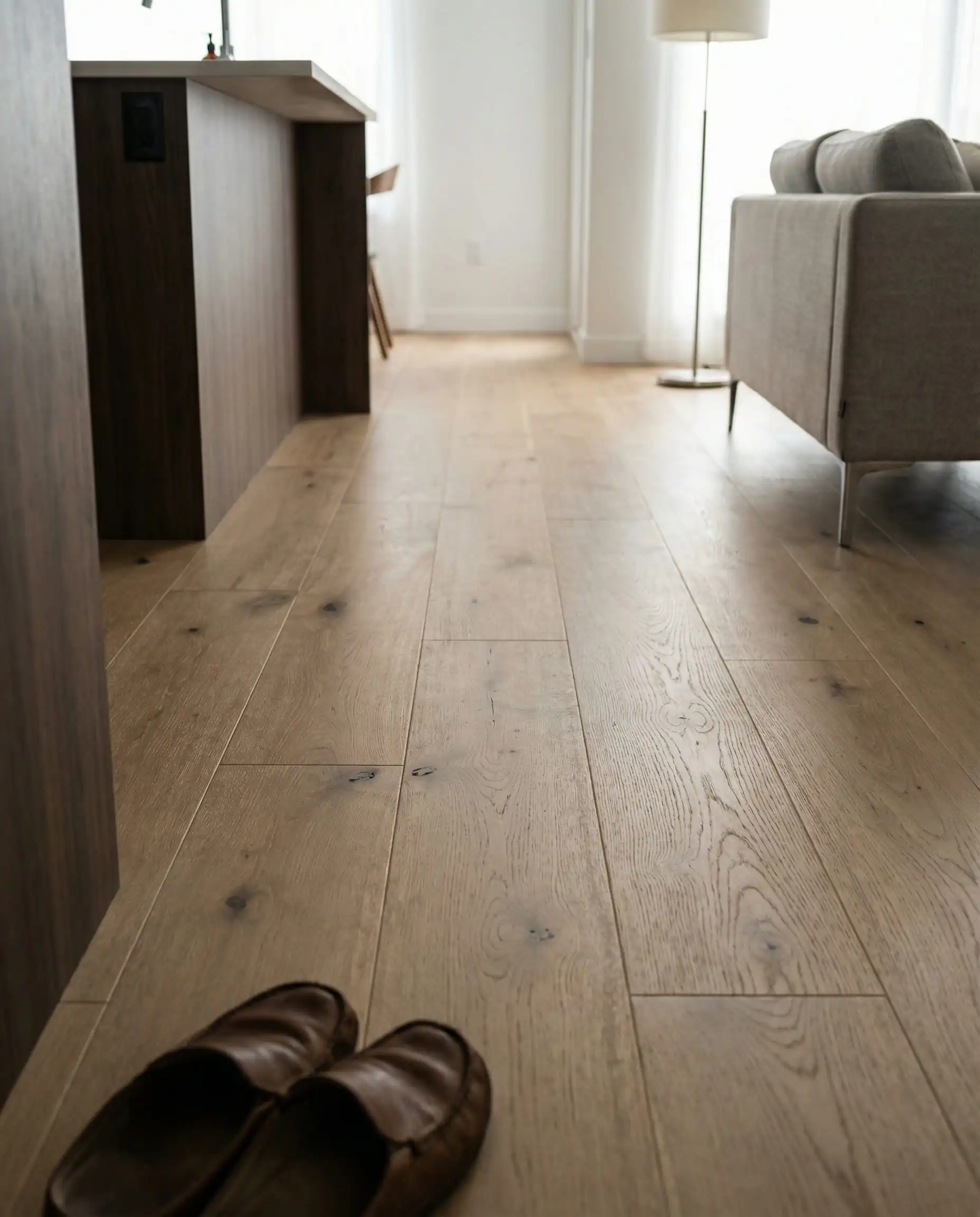
Keeping the flooring consistent (e.g., wide-plank engineered wood or large-format luxury vinyl tile) expands the visual square footage. It makes the room feel massive. To define the living zone, you rely on rugs.
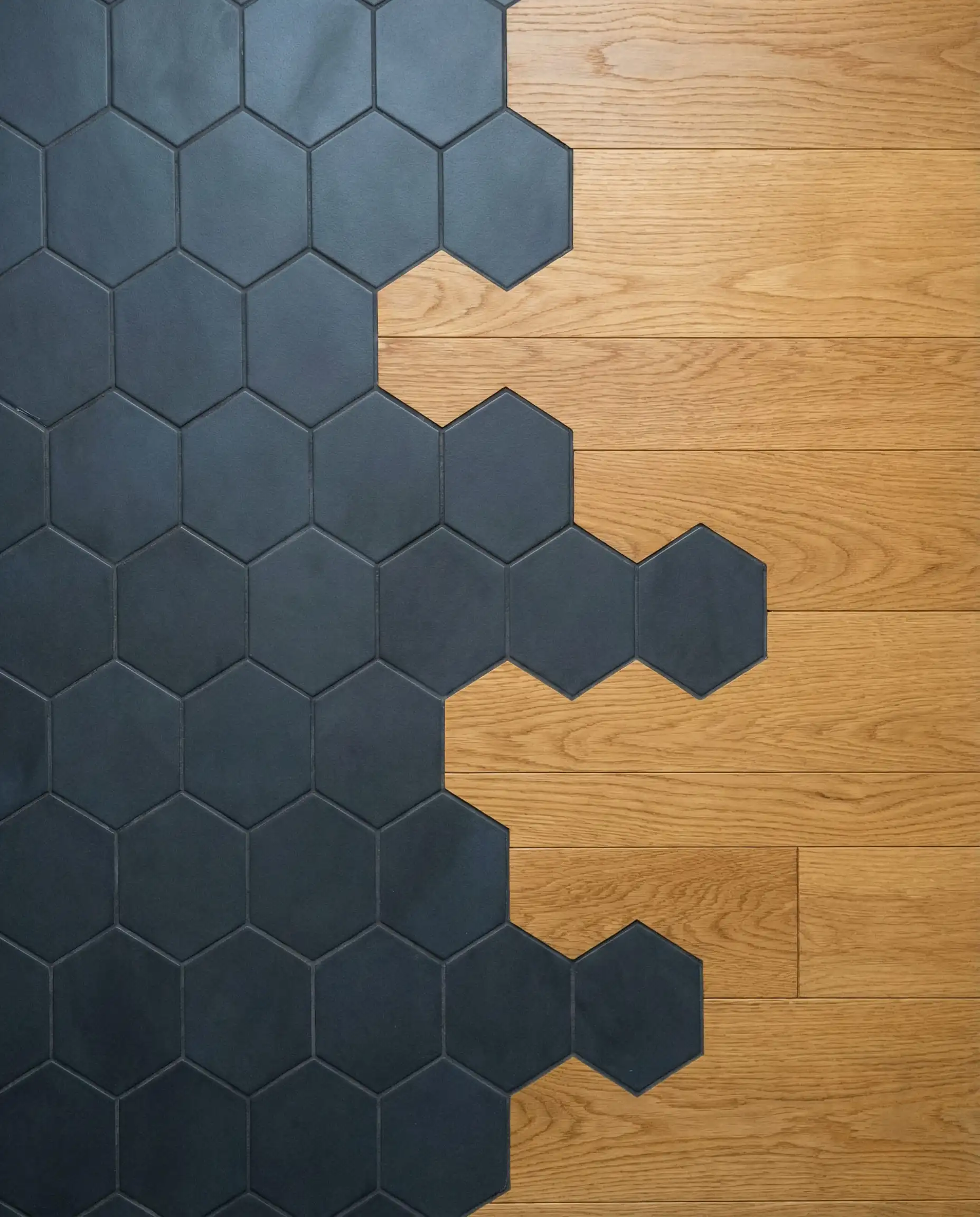
However, if you must transition (perhaps tile in the kitchen for durability), avoid a straight line. Hexagon tiles that “bleed” into wooden planks create a stunning, modern transition that looks intentional, not accidental. You can see more examples of this in our guide to flooring trends for 2026.
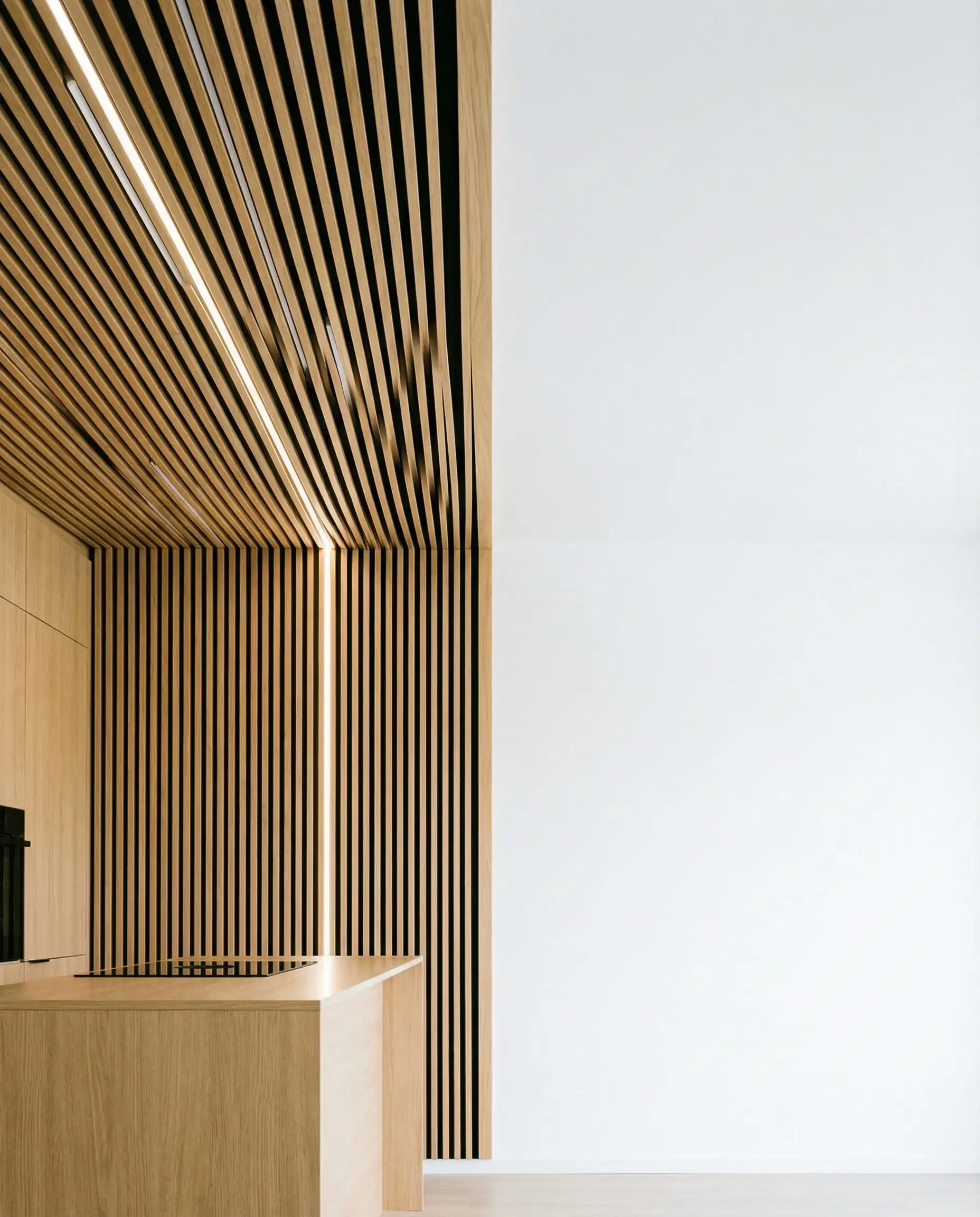
Ceiling Architecture
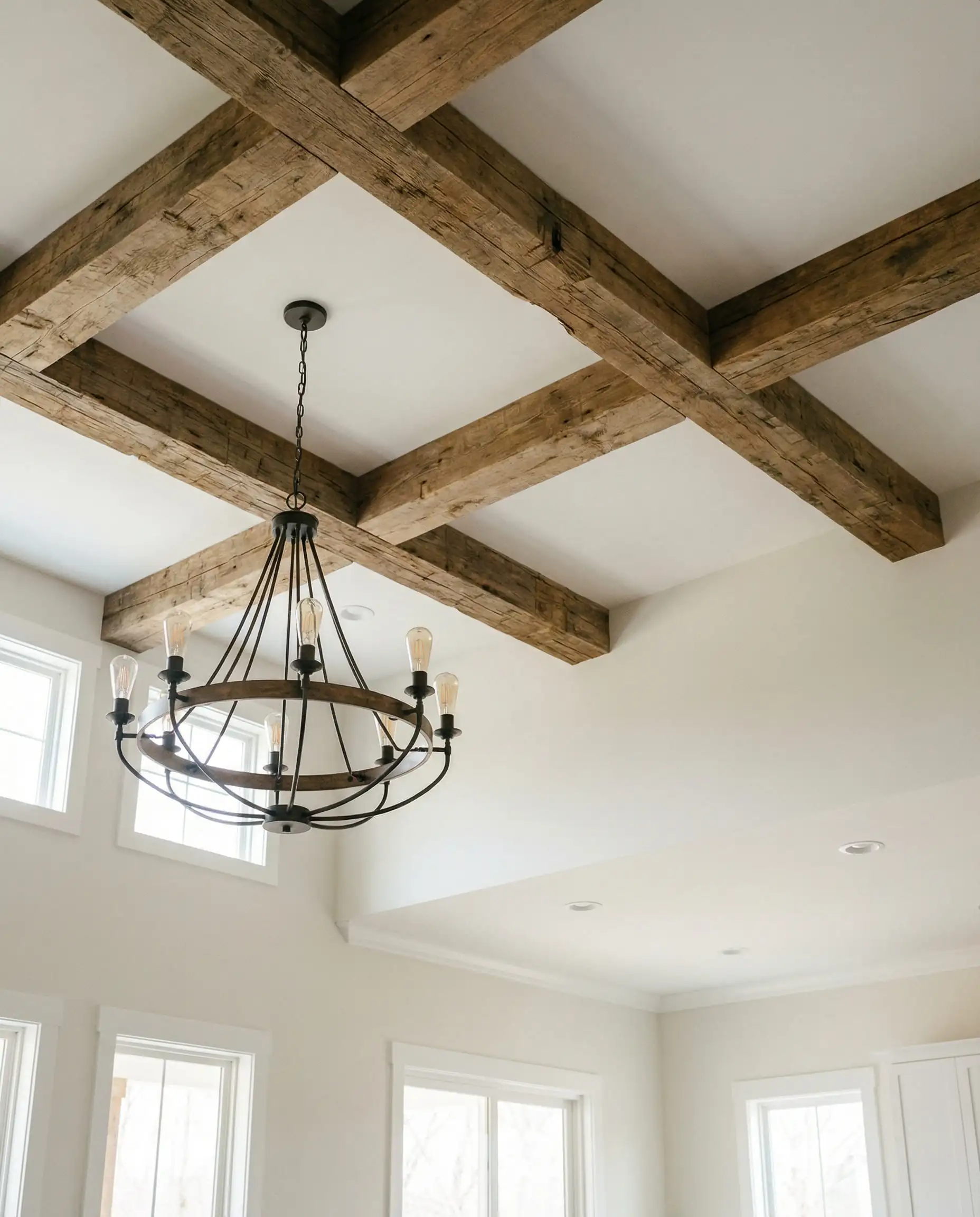
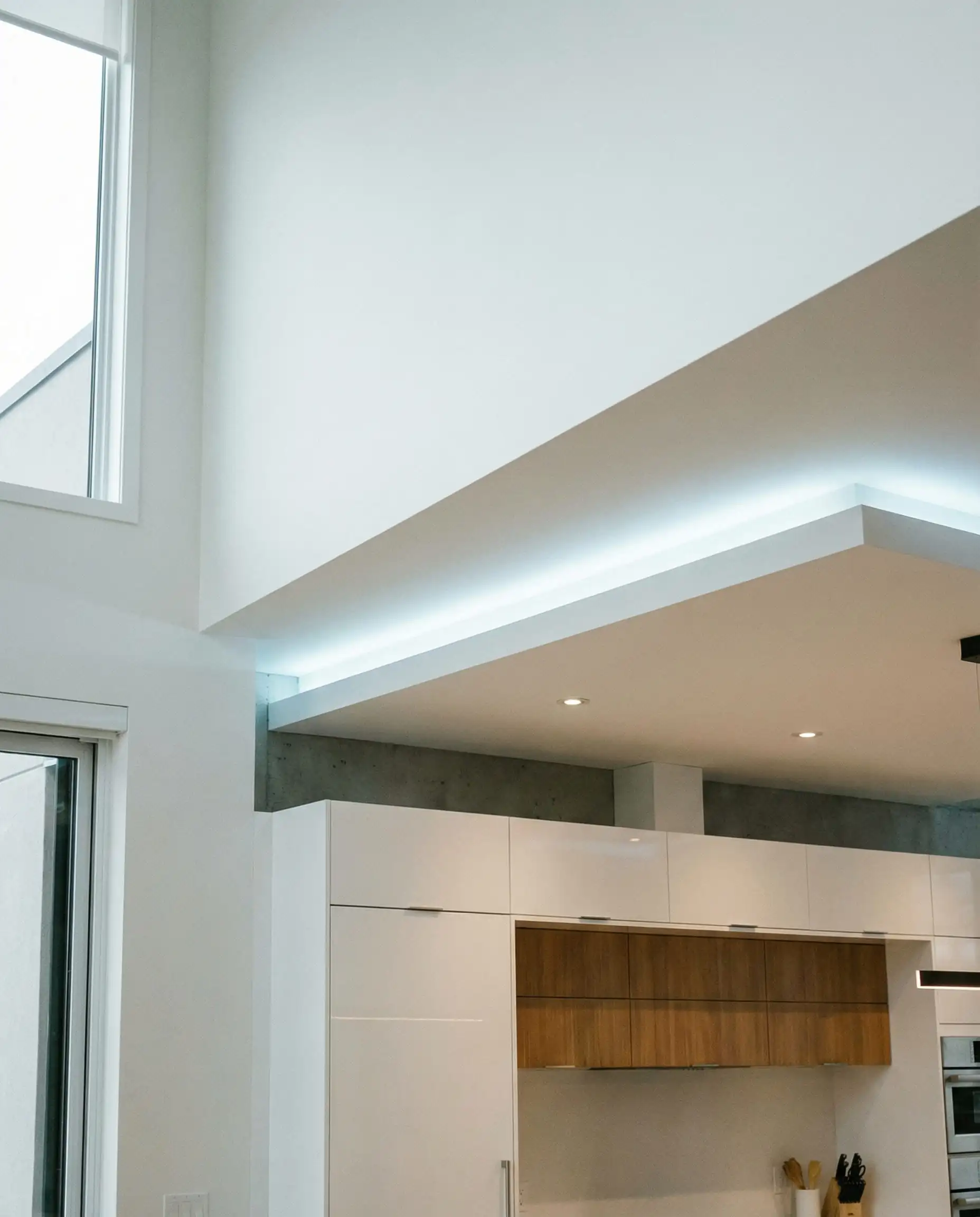
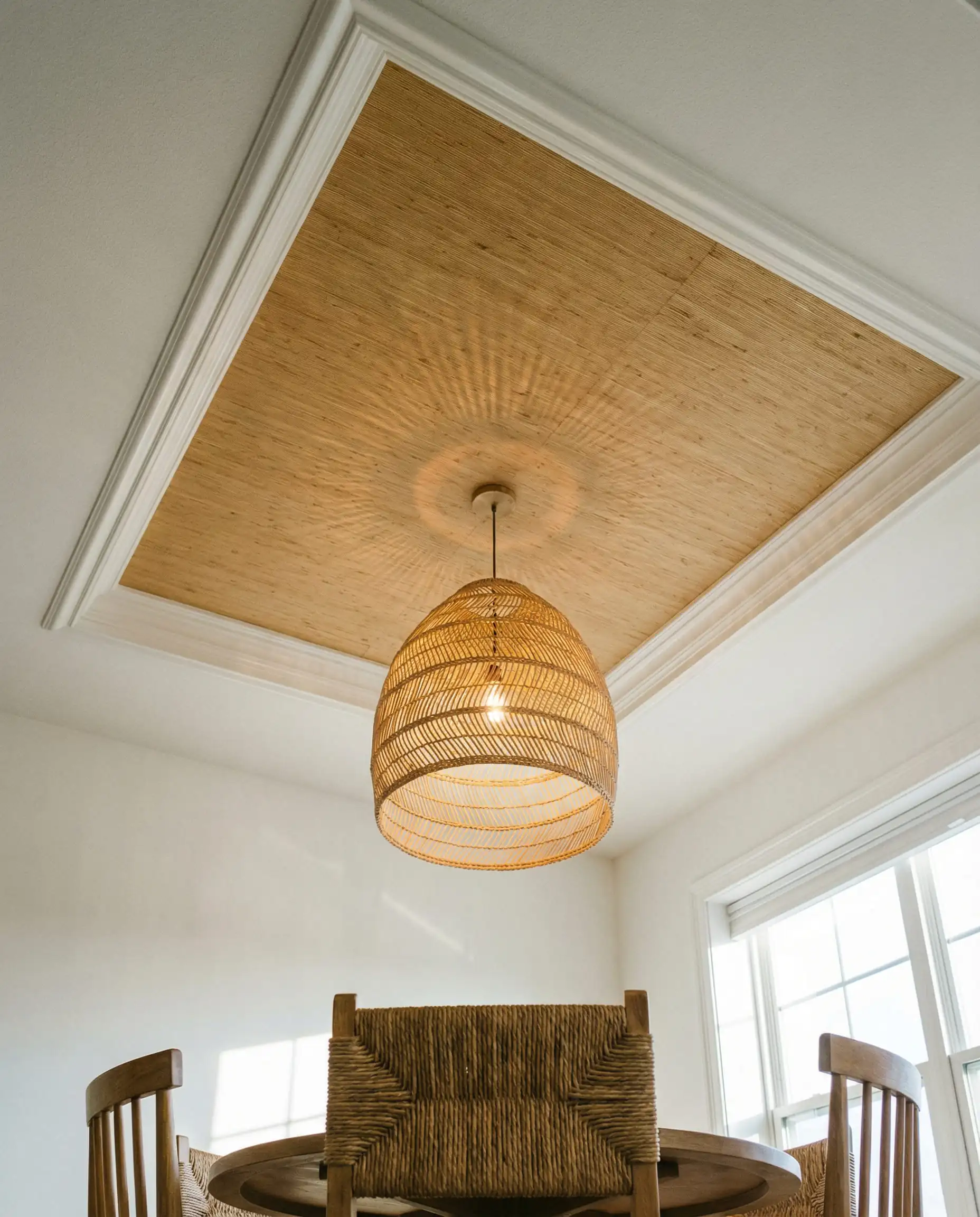
Don’t forget the “fifth wall.” Ceiling treatments are a powerful way to zone a combo room without taking up floor space.
Lighting Layers
Lighting is the unsung hero of the open plan. You need three distinct circuits:
- Task Lighting: Bright, cool light for the kitchen counters (under-cabinet strips are mandatory).
- Dining Lighting: A statement pendant that hangs lower, anchoring the table.
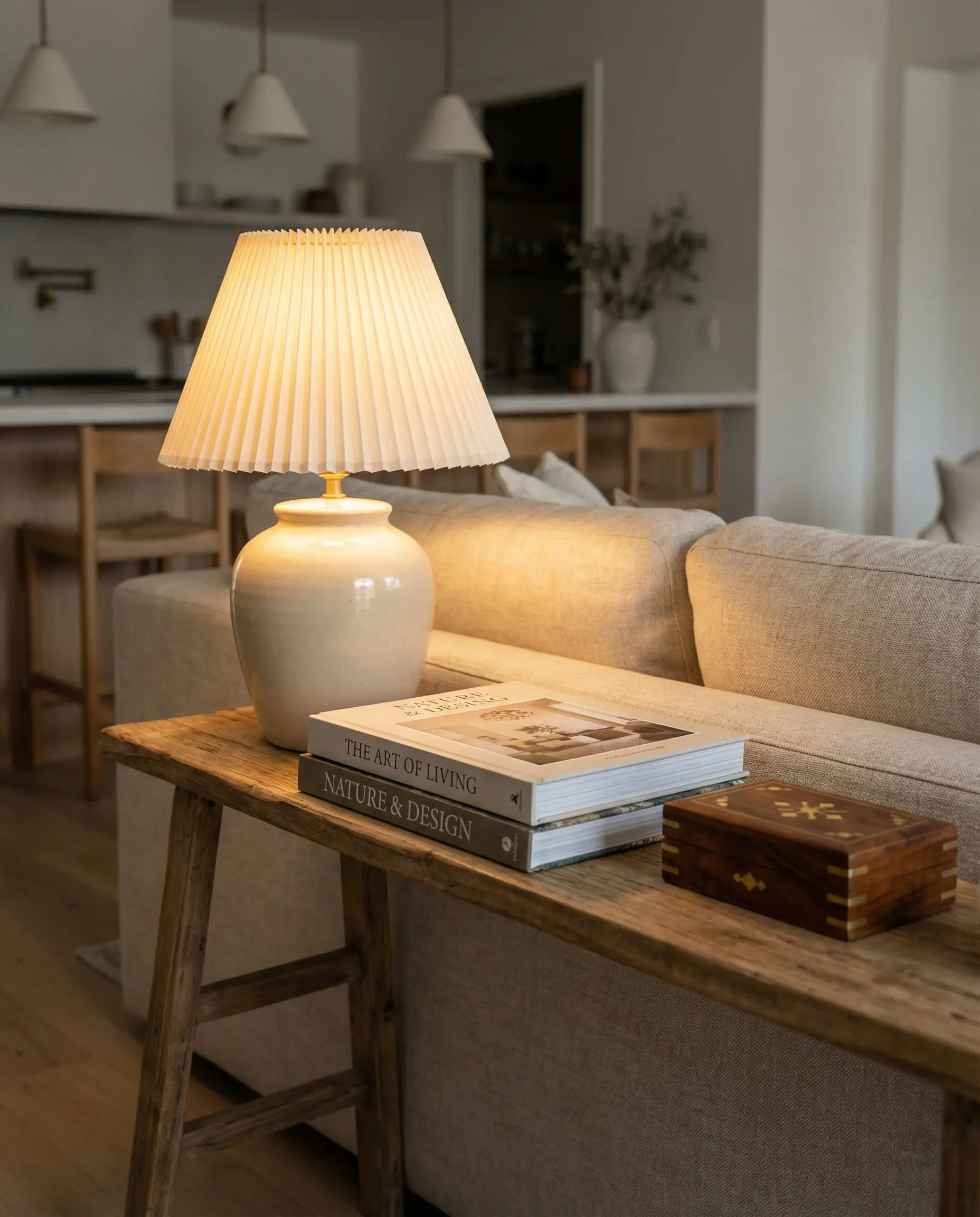
- Lounge Lighting: Soft, warm ambient light (2700K) via floor lamps and wall sconces.
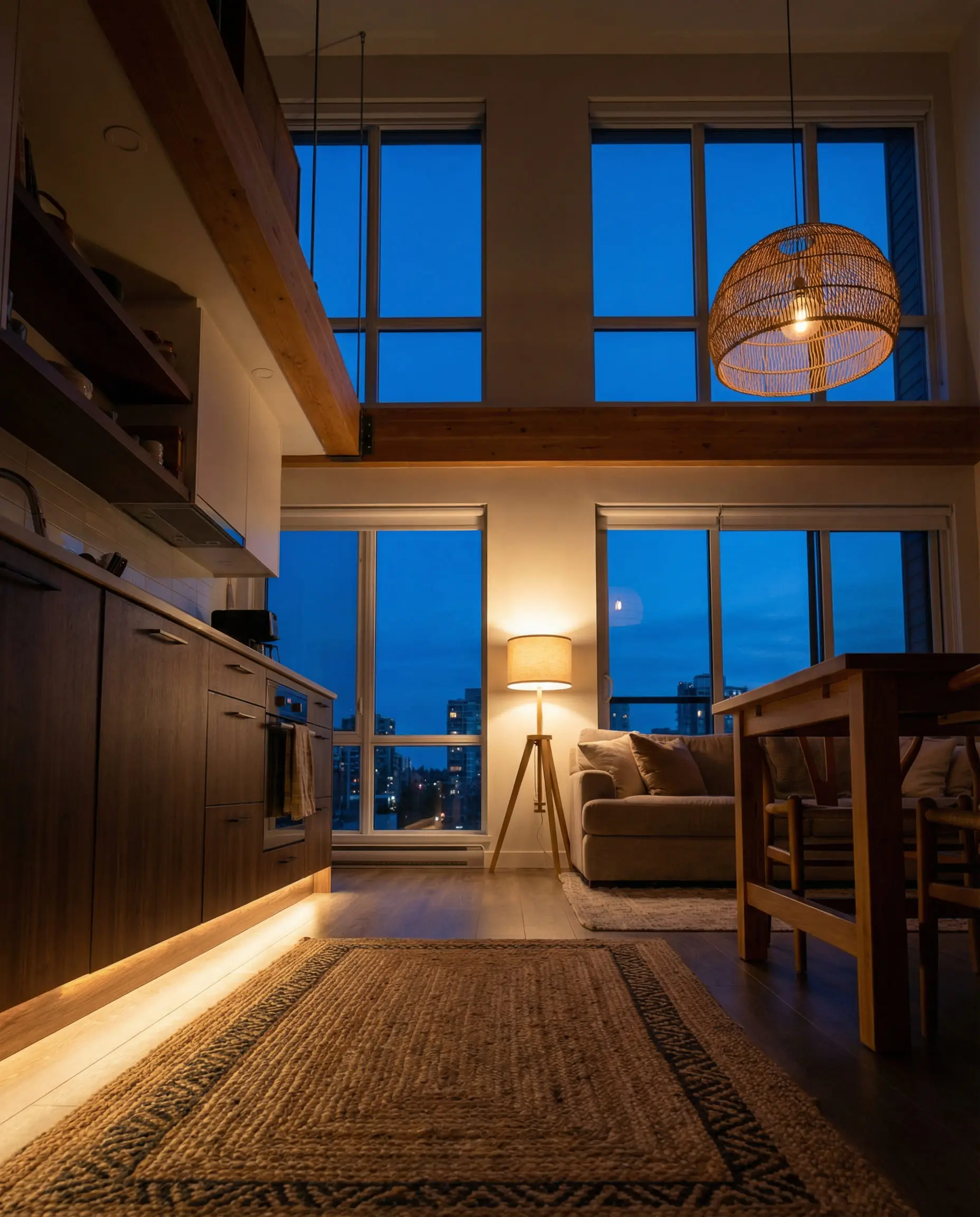
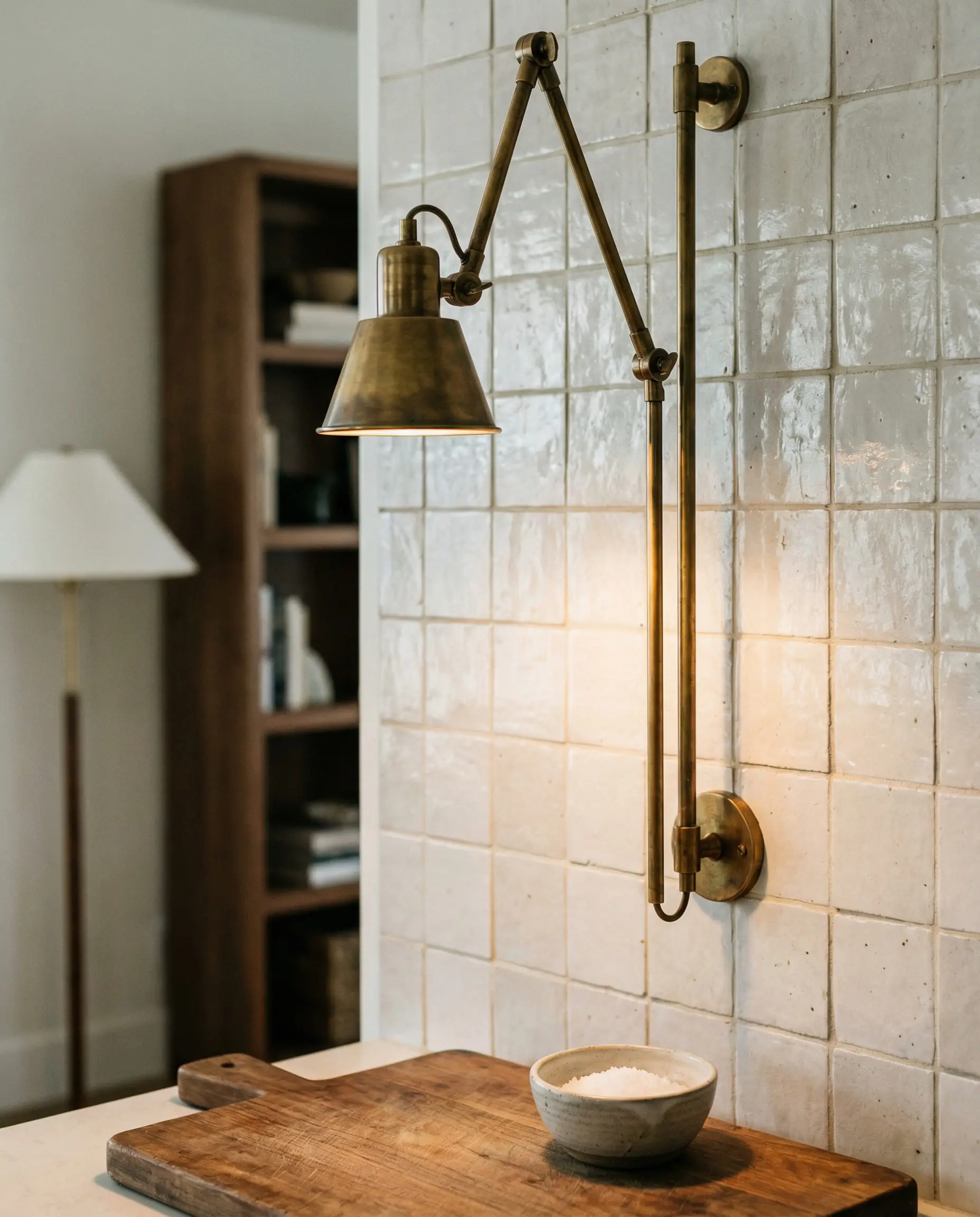
Put everything on dimmers. When you finish cooking and move to the sofa, you want to be able to dim the kitchen lights so you aren’t staring at a brightly lit pile of dirty pots.
💡 Designer Tip
4 Essential Layouts for Kitchen-Living Combos
Choosing the right layout depends entirely on the shape of your room and your lifestyle. Here are the four champions of 2026 design.
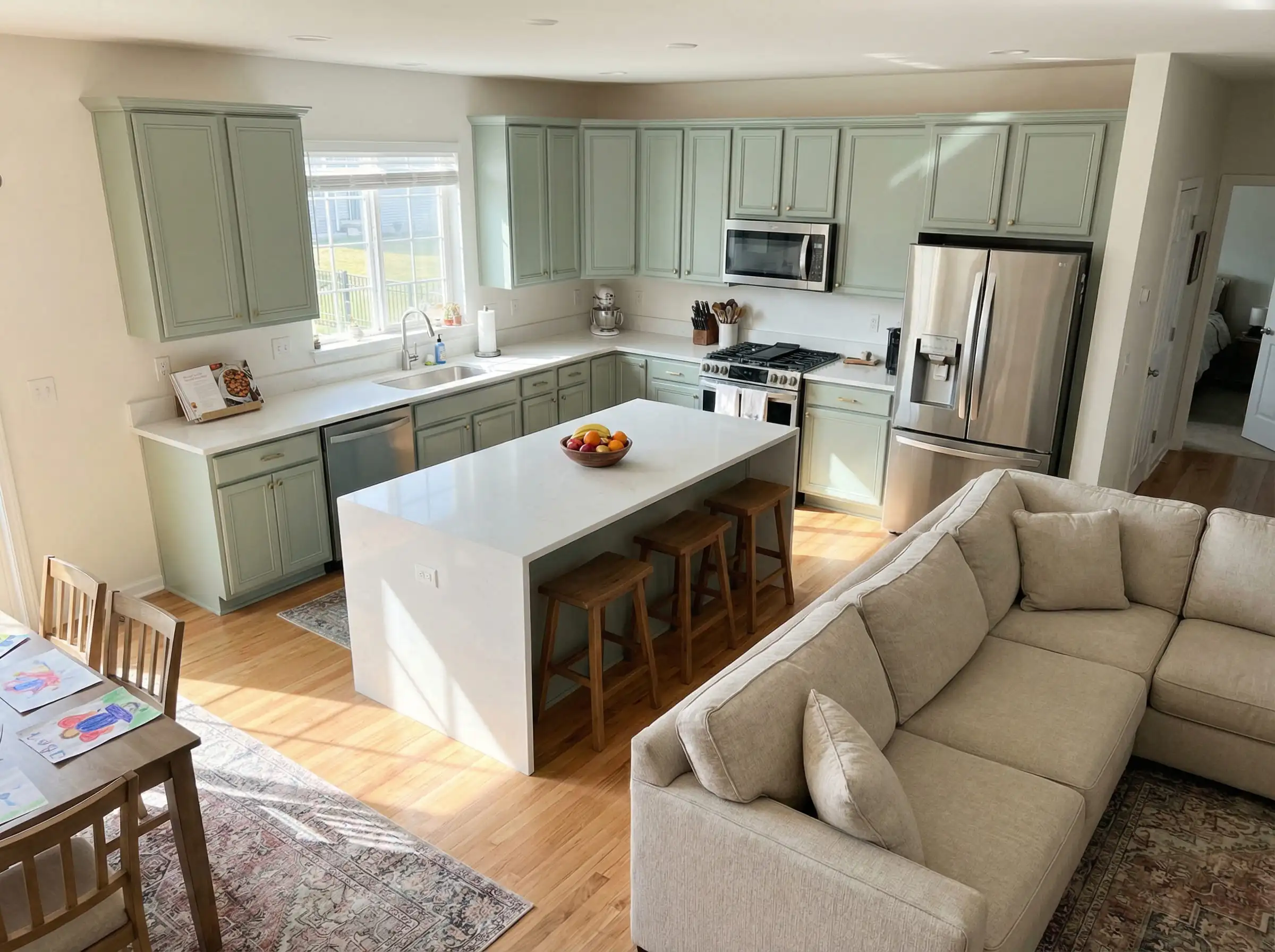
1. The L-Shaped + Island (The Social Hub)
This is the gold standard for medium-to-large homes. The kitchen cabinets run along two perpendicular walls, with an island in the center facing the living area.
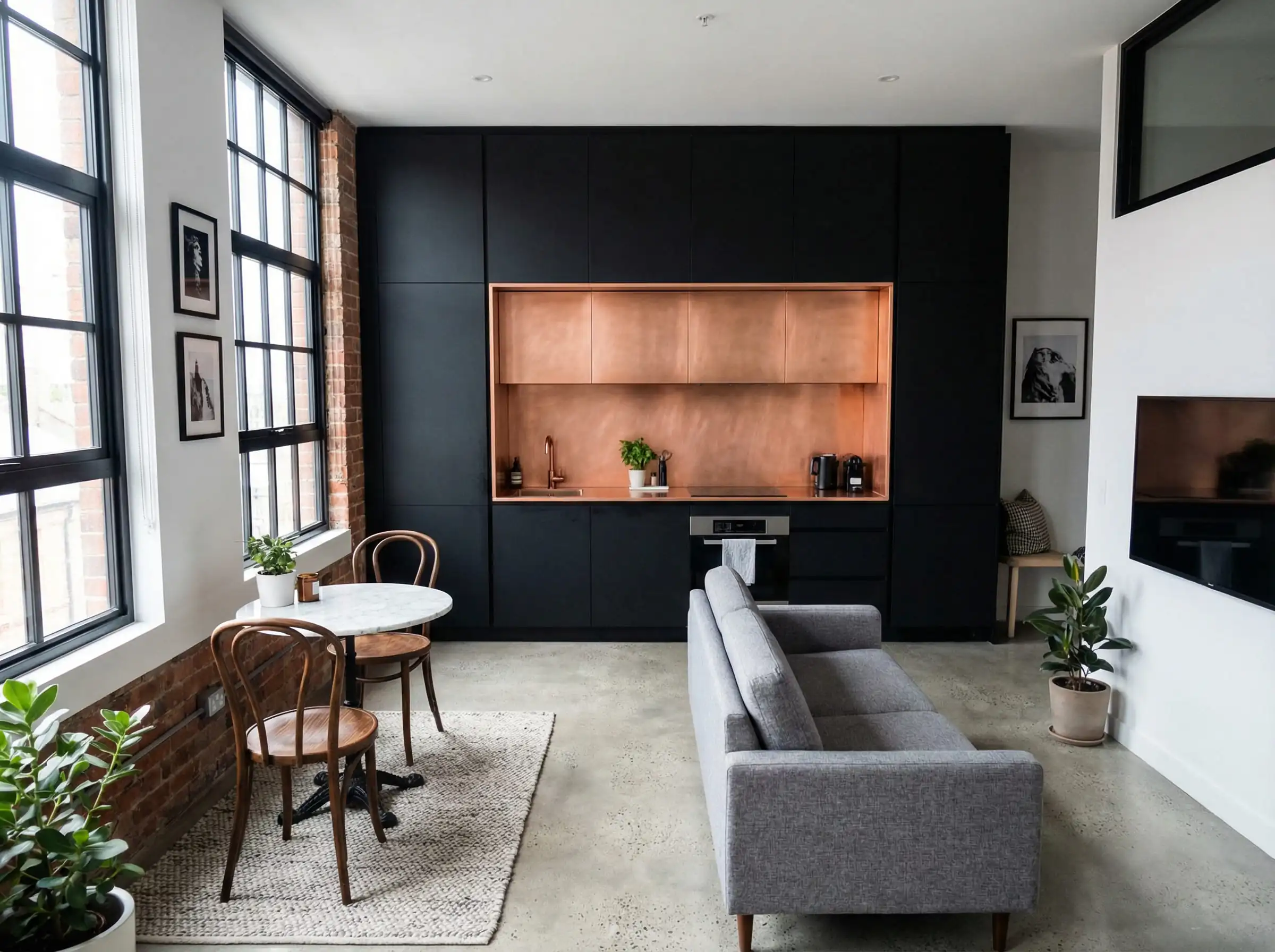
2. The One-Wall “Studio” Layout
Common in lofts and apartments, the kitchen is consolidated onto a single wall.
3. The Peninsula Divider (The Zoning King)
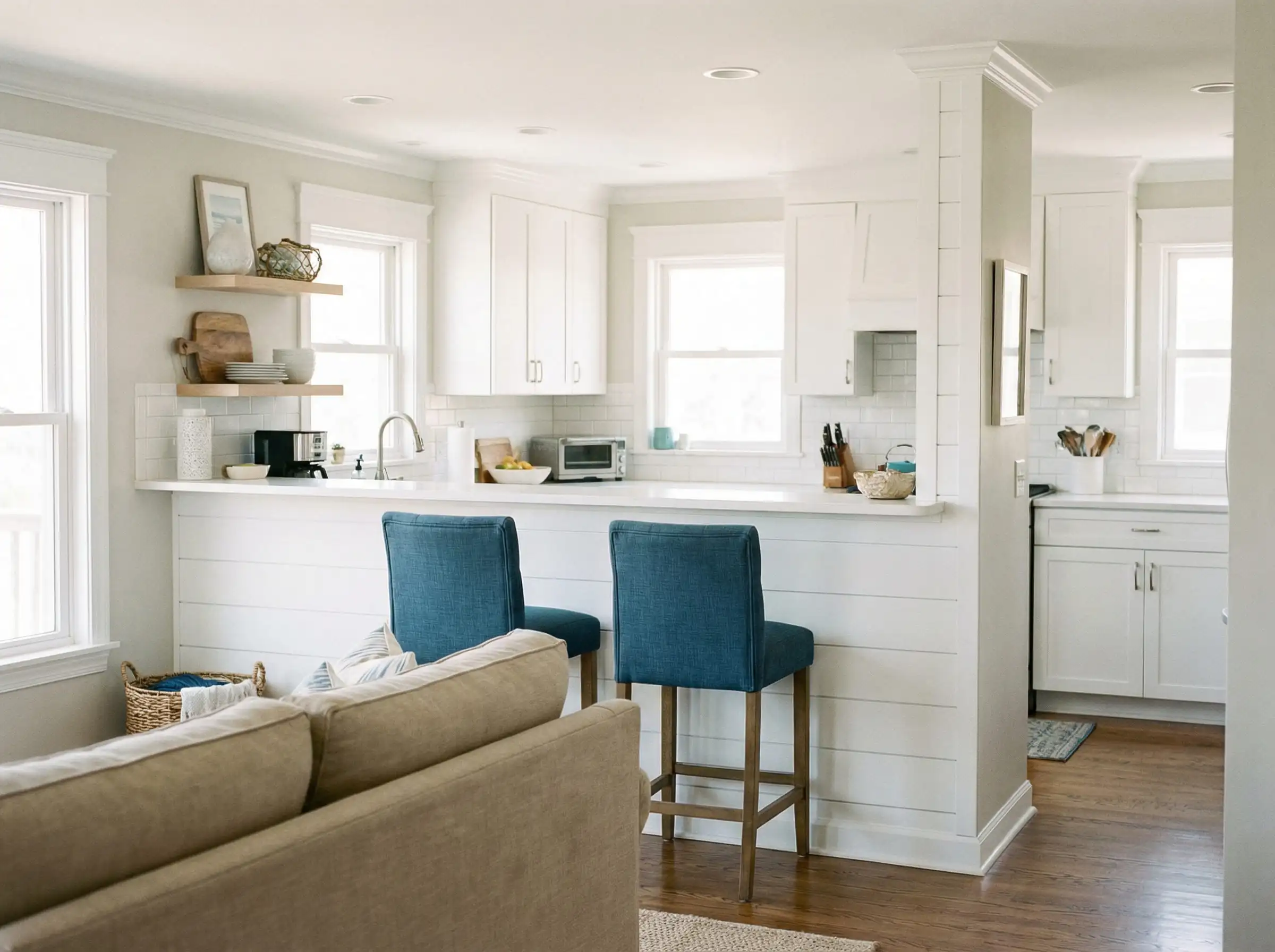
If you don’t have room for a floating island, a peninsula (attached to the wall on one side) is a brilliant alternative.
4. The “Broken Plan” Approach
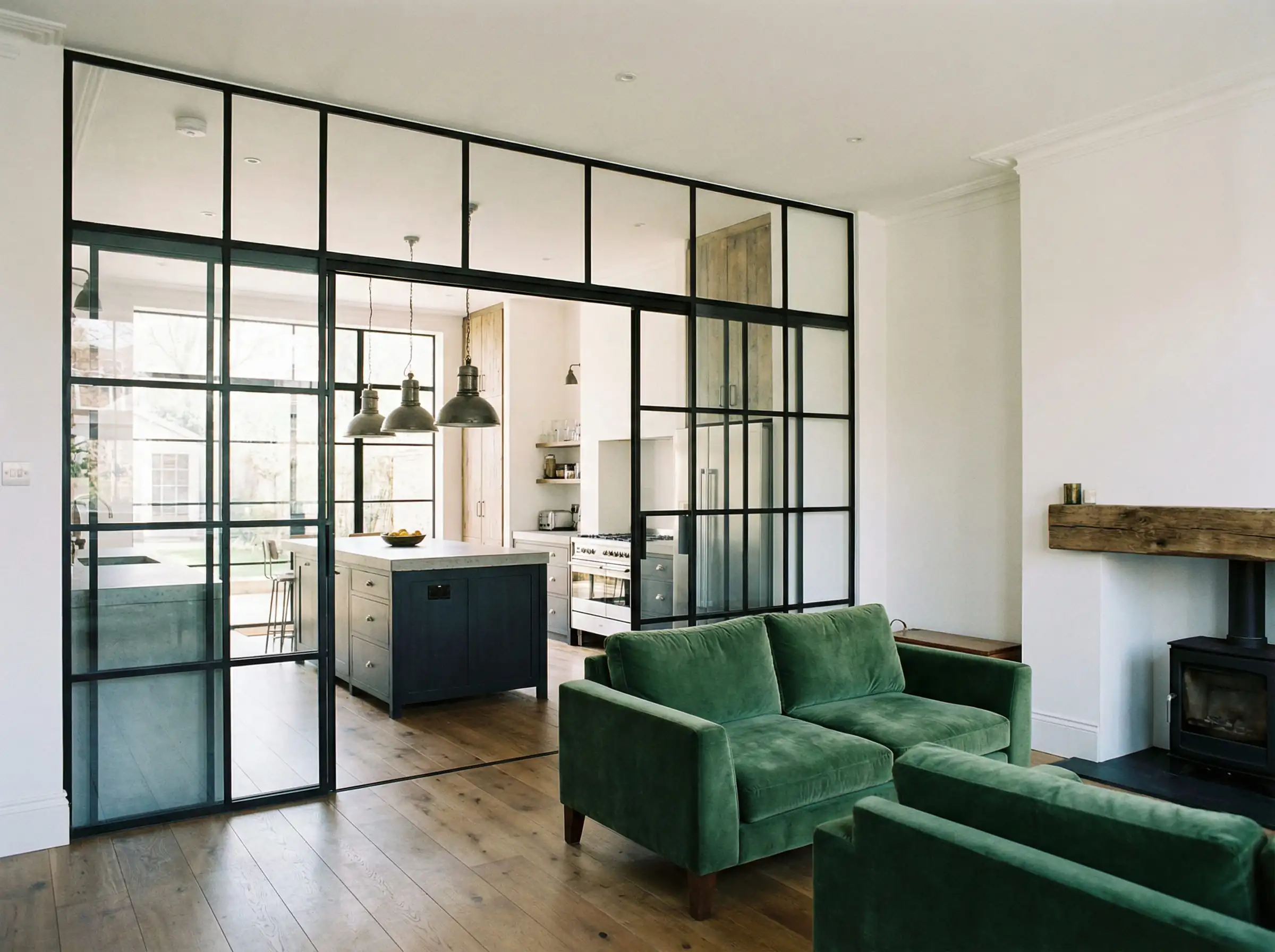
This is a massive trend for 2026. It’s a hybrid between open and closed. You use partial dividers to maintain the light but stop the noise.
For more inspiration on furniture that fits these layouts, check out our analysis of sofa trends.
Color Palettes & Materials: Creating Cohesion
The most challenging part of a combo design is ensuring the kitchen doesn’t look like an alien spaceship landed in your living room. The key is repetition.
The 60-30-10 Rule
Apply this classic design rule across the entire space, not just one room.
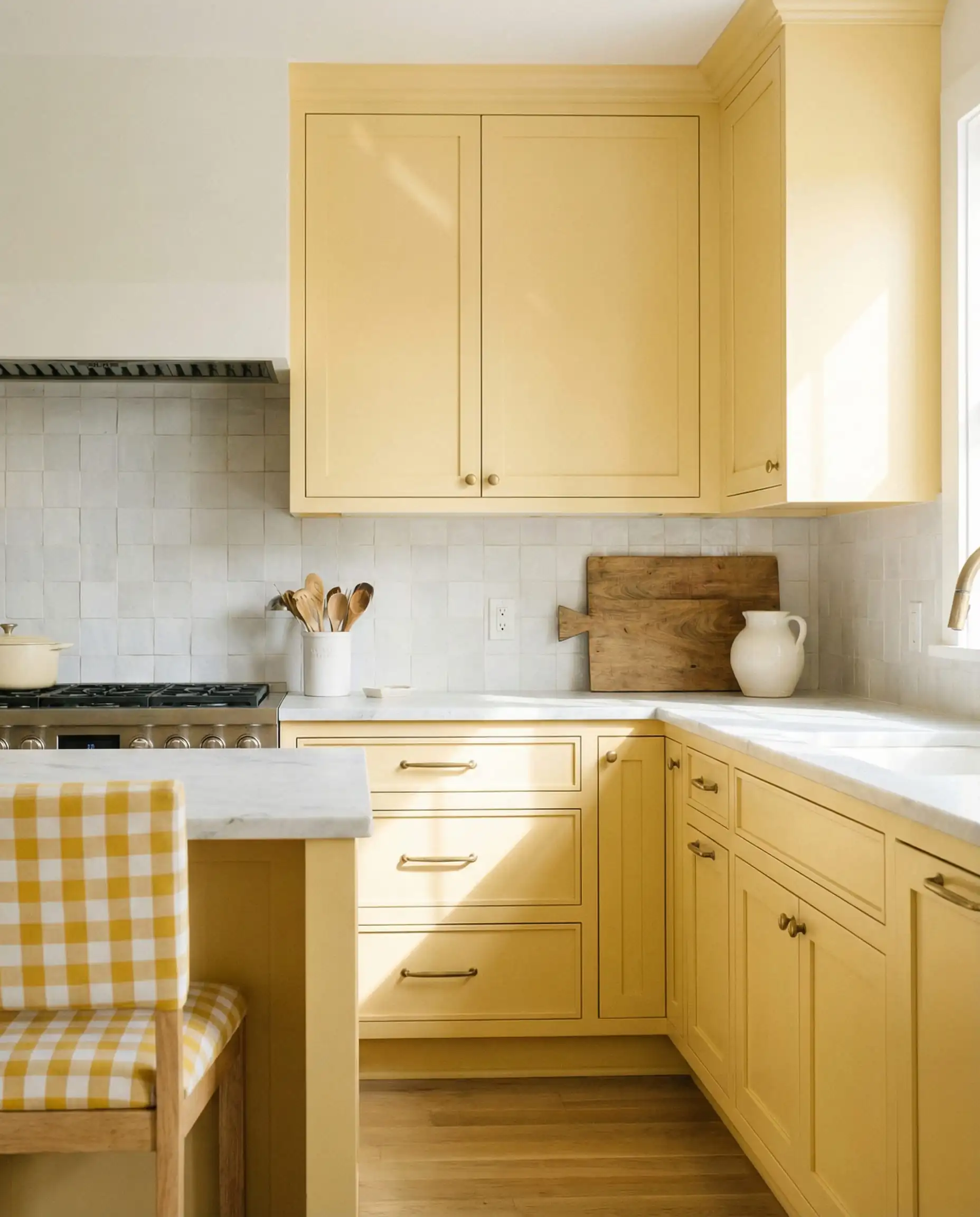
Trending Colors for 2026
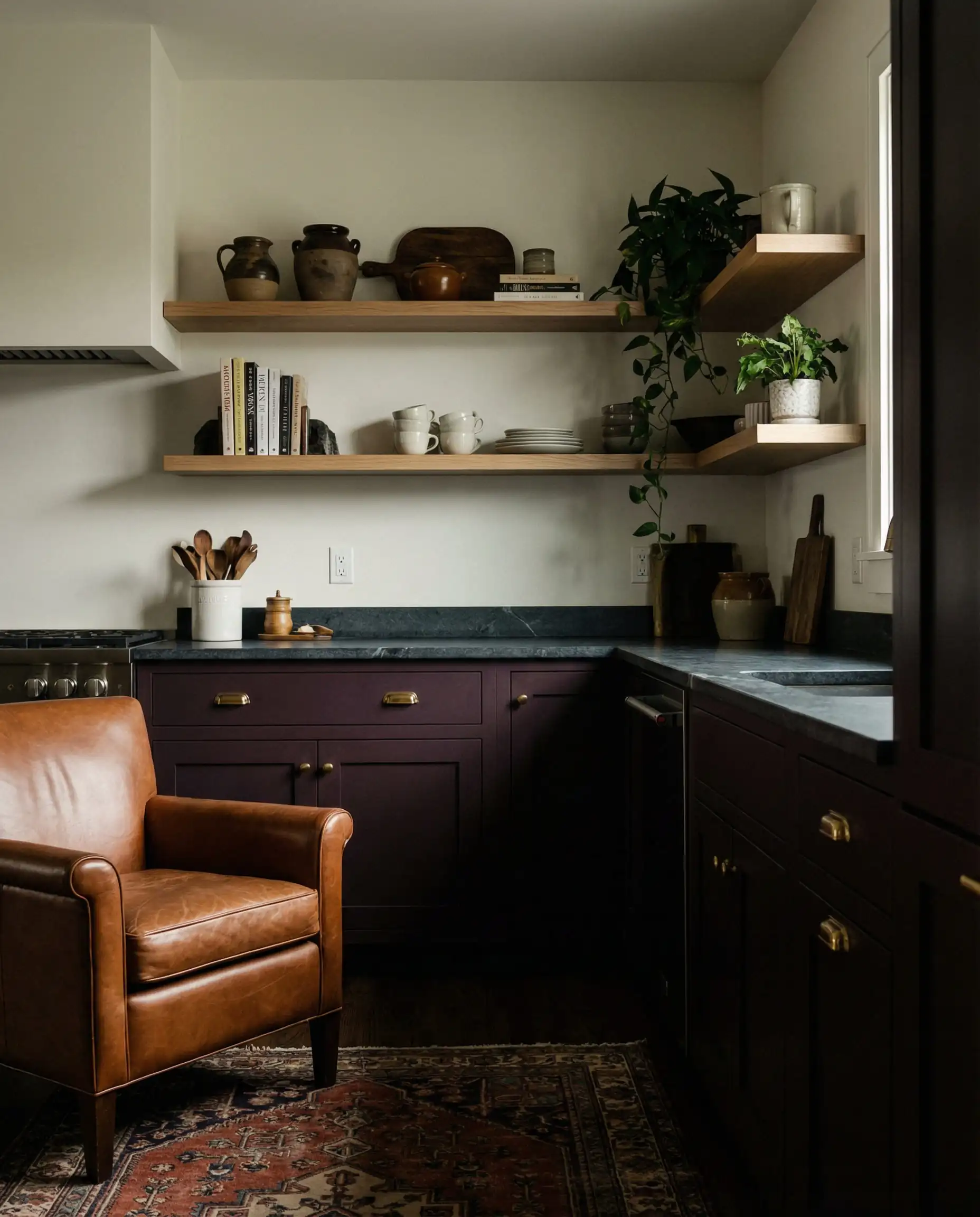
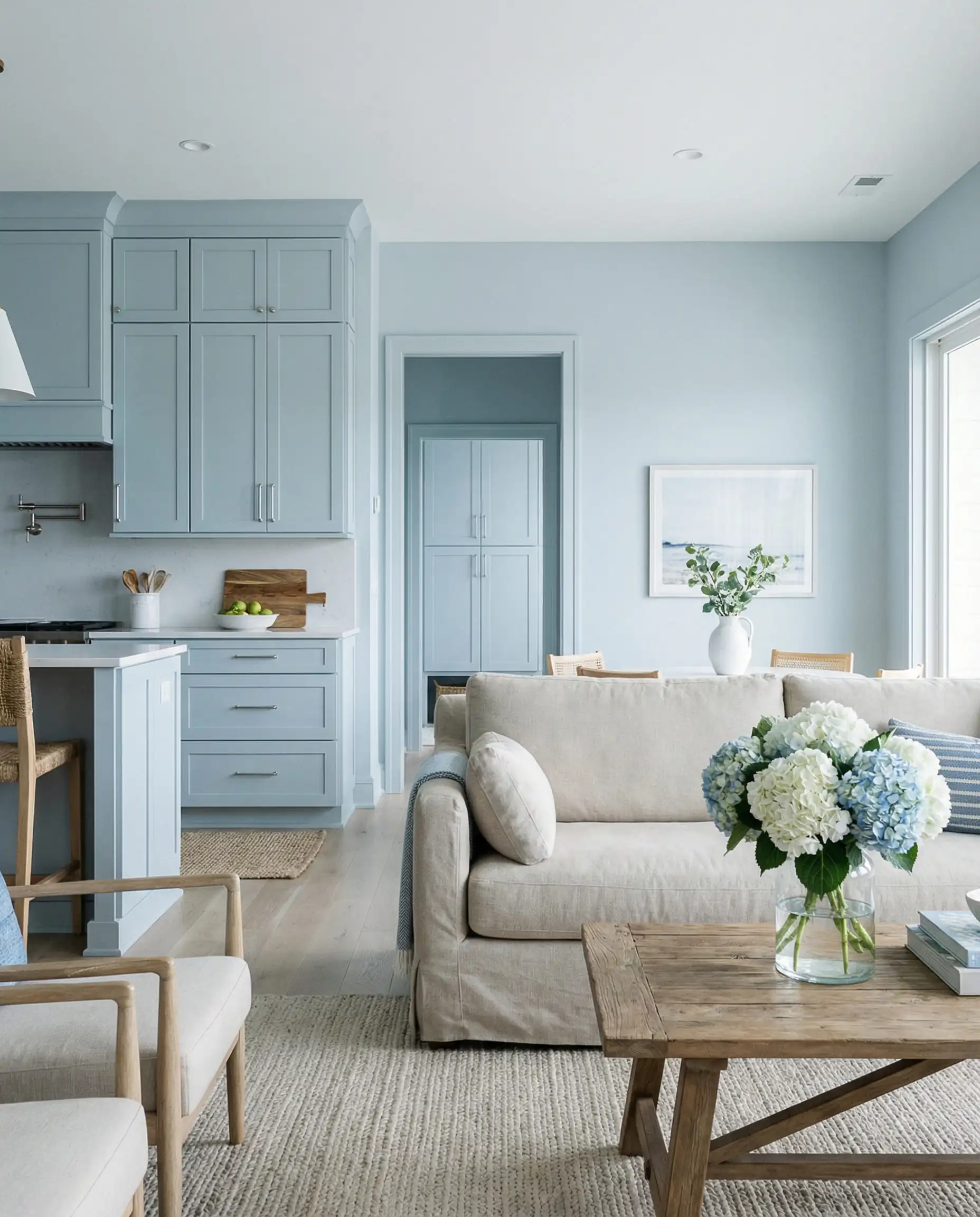
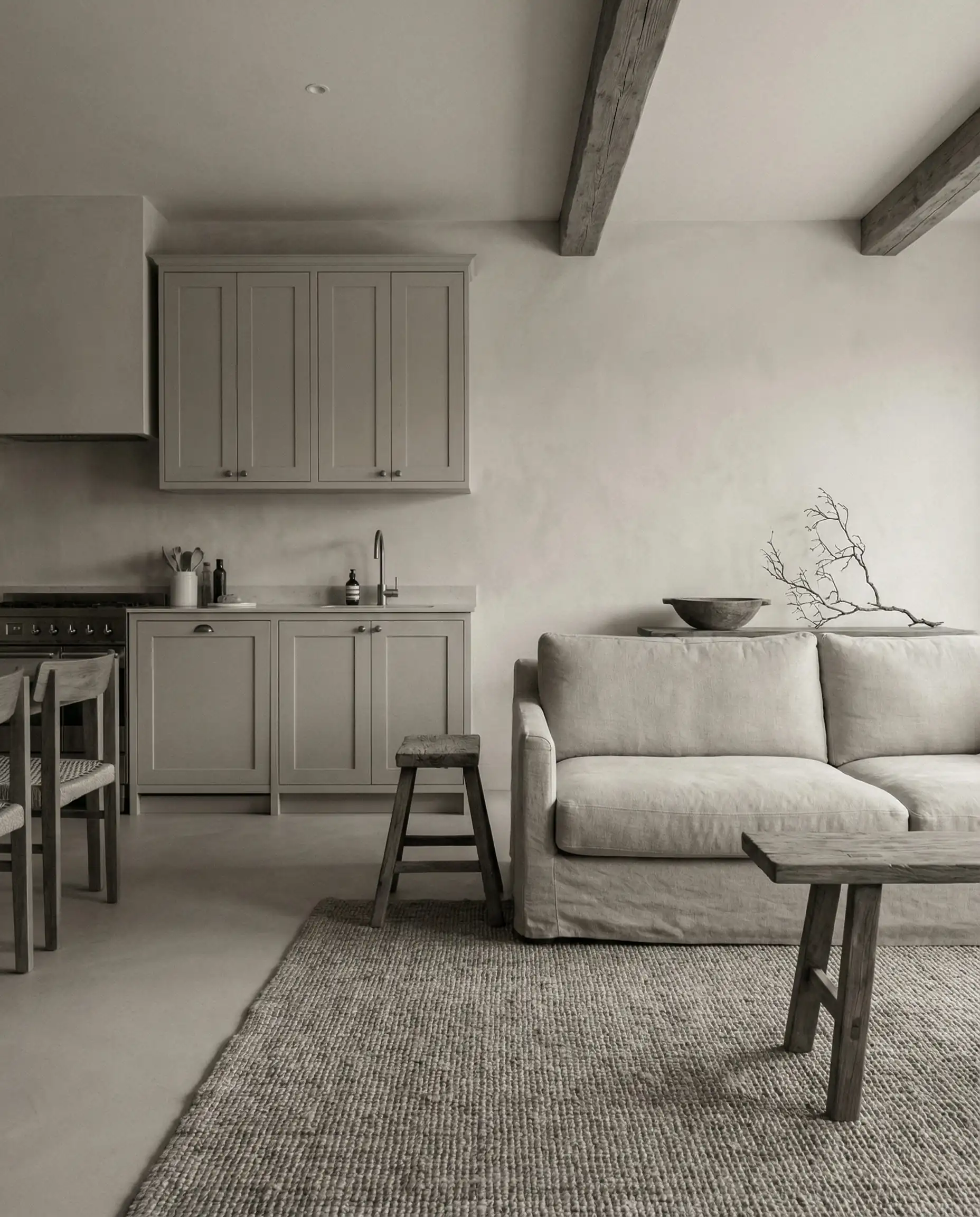
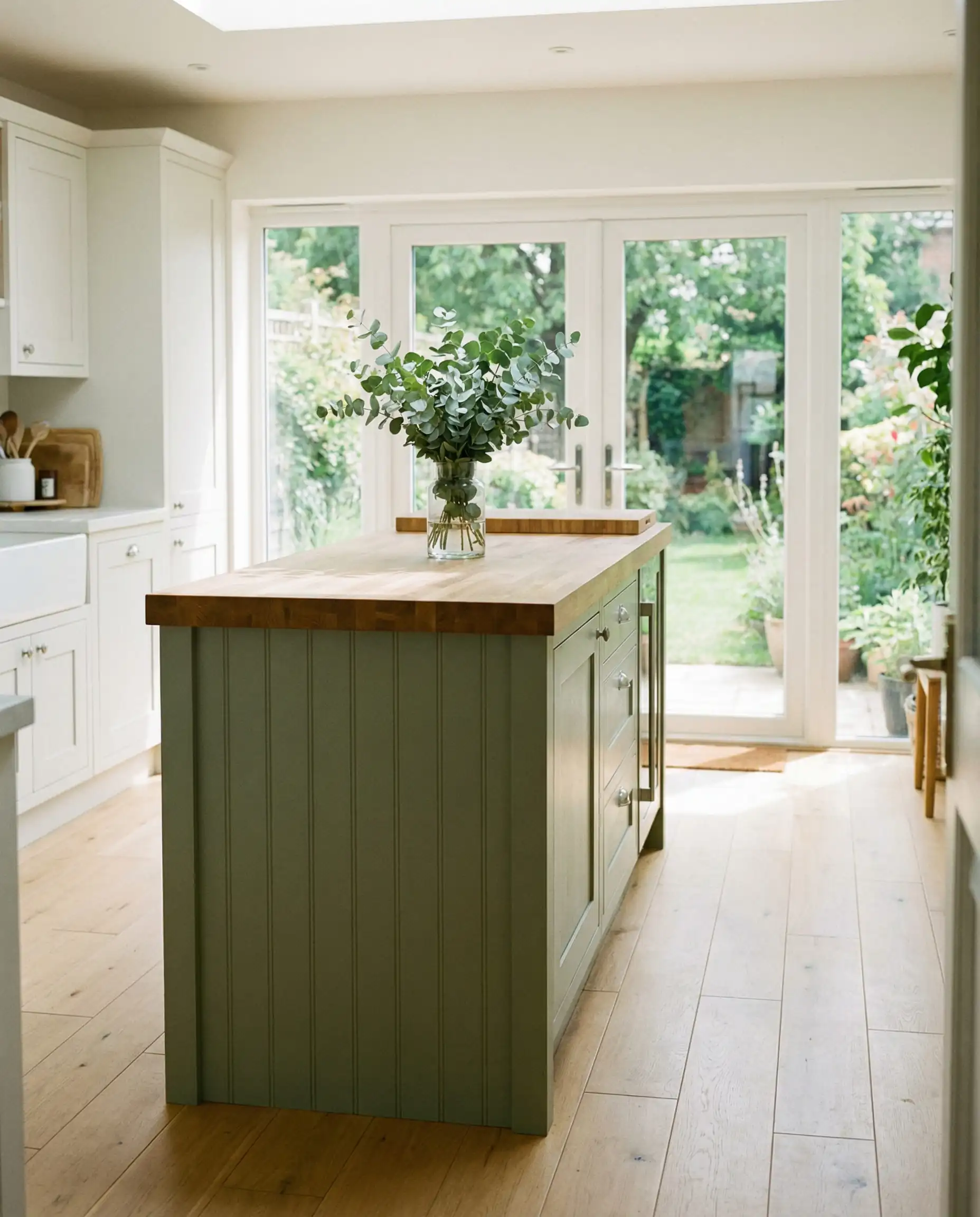
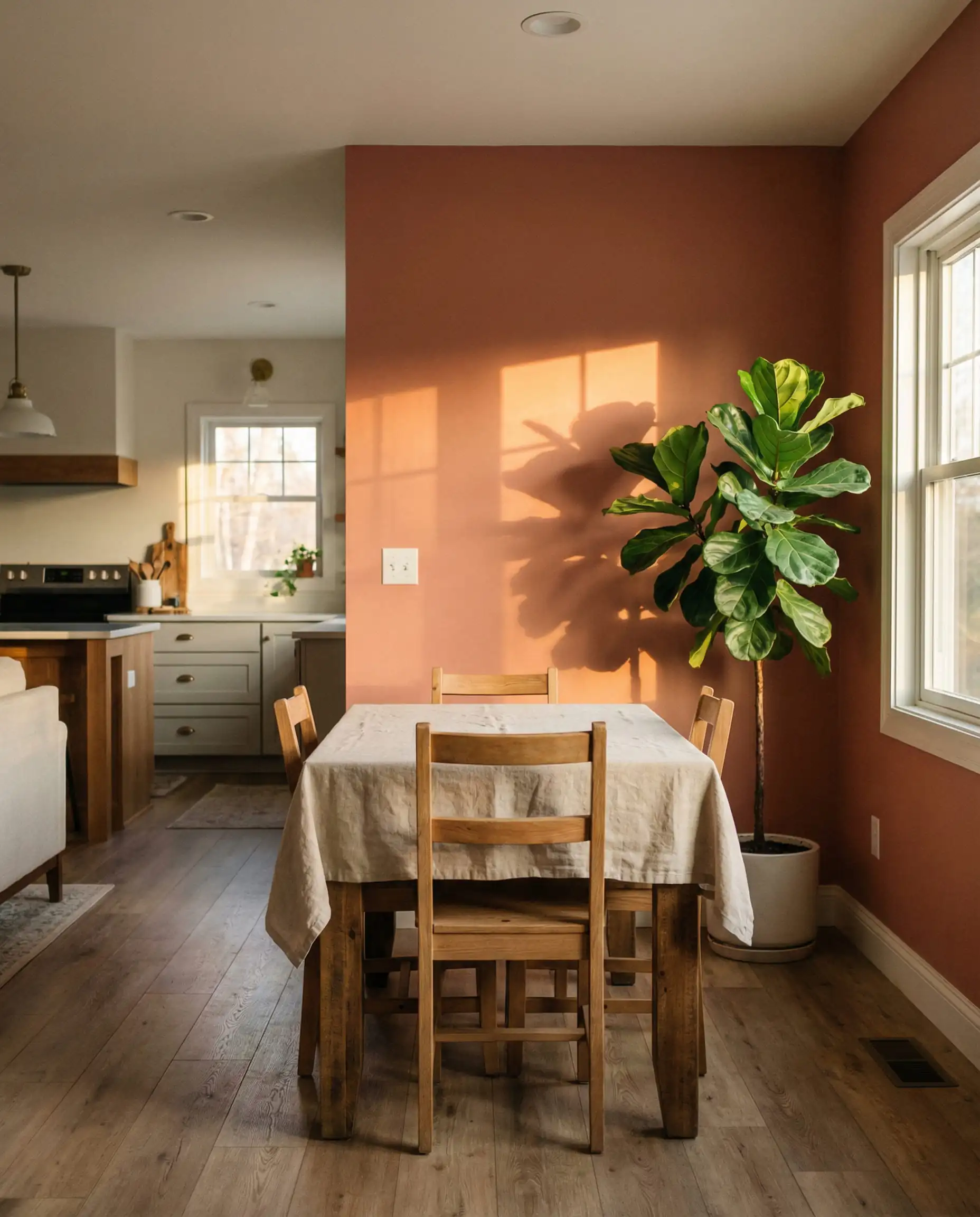
If you are struggling to pick a shade, our guide to paint color trends for 2026 offers a full breakdown of the season’s palette.
Practical Solutions: The “Cons” of Open Plan (And How to Fix Them)
Let’s address the elephant in the room. Open plans can be noisy, smelly, and messy. Here is how you engineer those problems away.
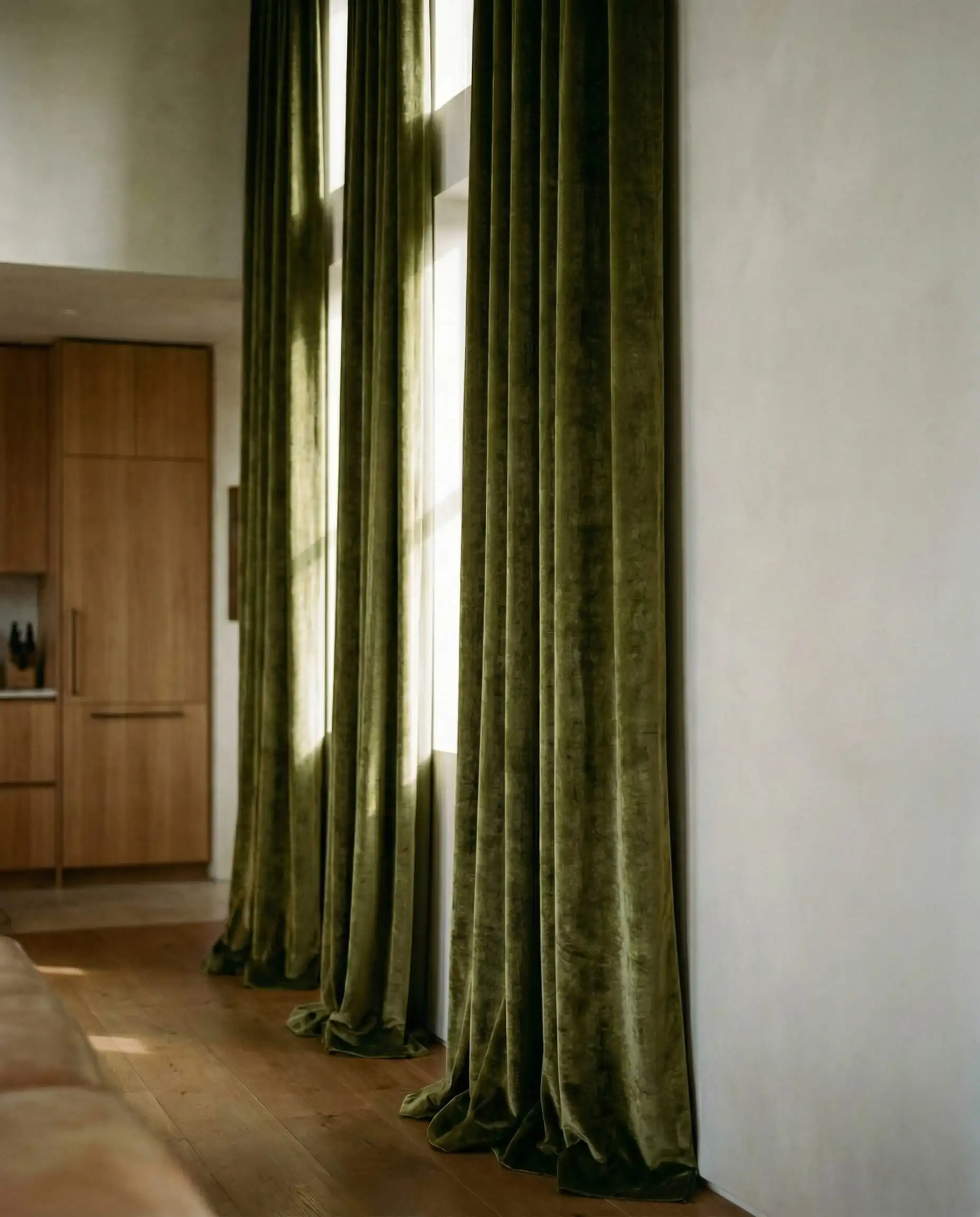
1. The Noise Problem
Clattering dishes and blending smoothies can ruin a movie night.
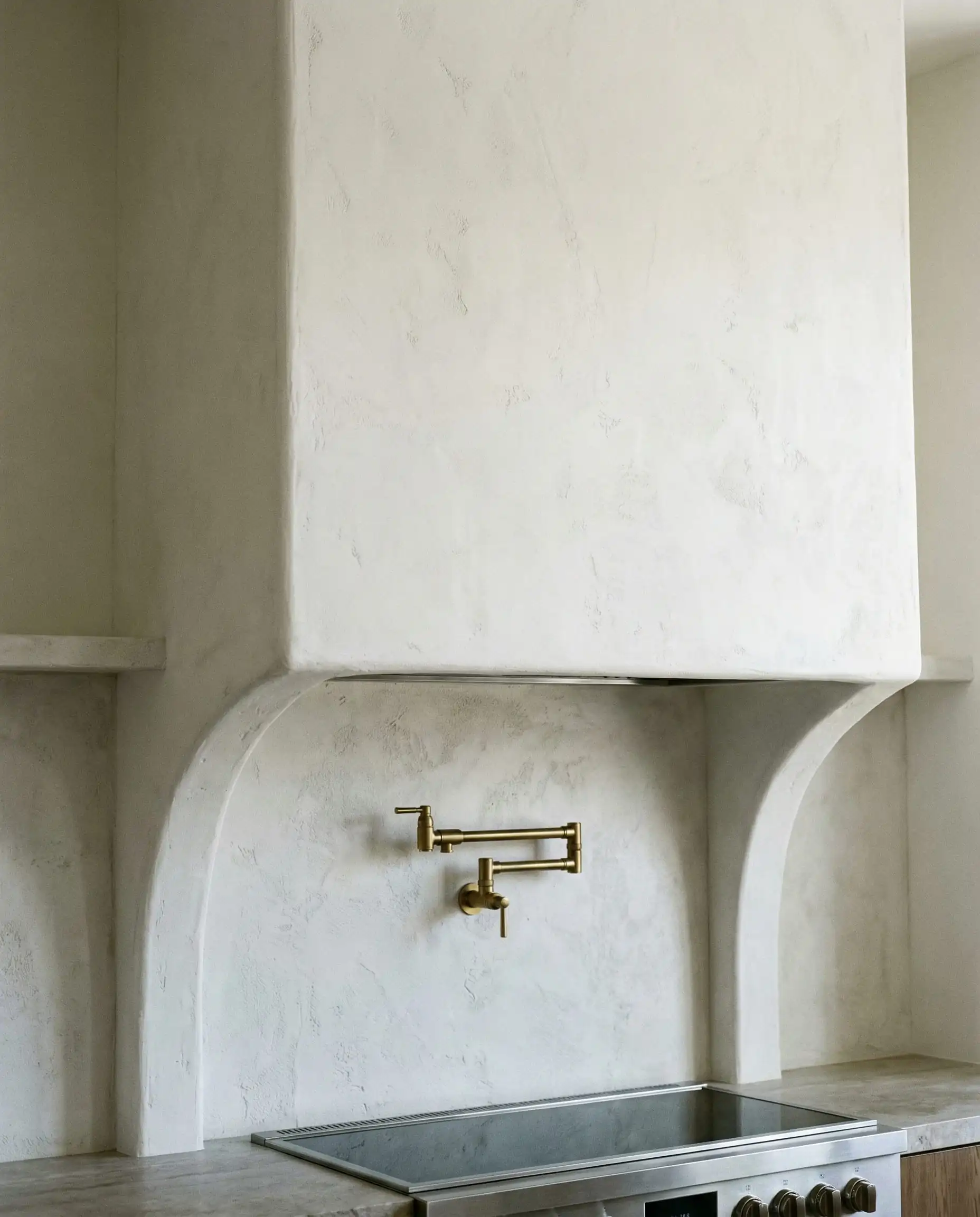
2. The Smell Issue
Nobody wants their sofa to smell like last night’s fish tacos.
3. The Clutter Crisis
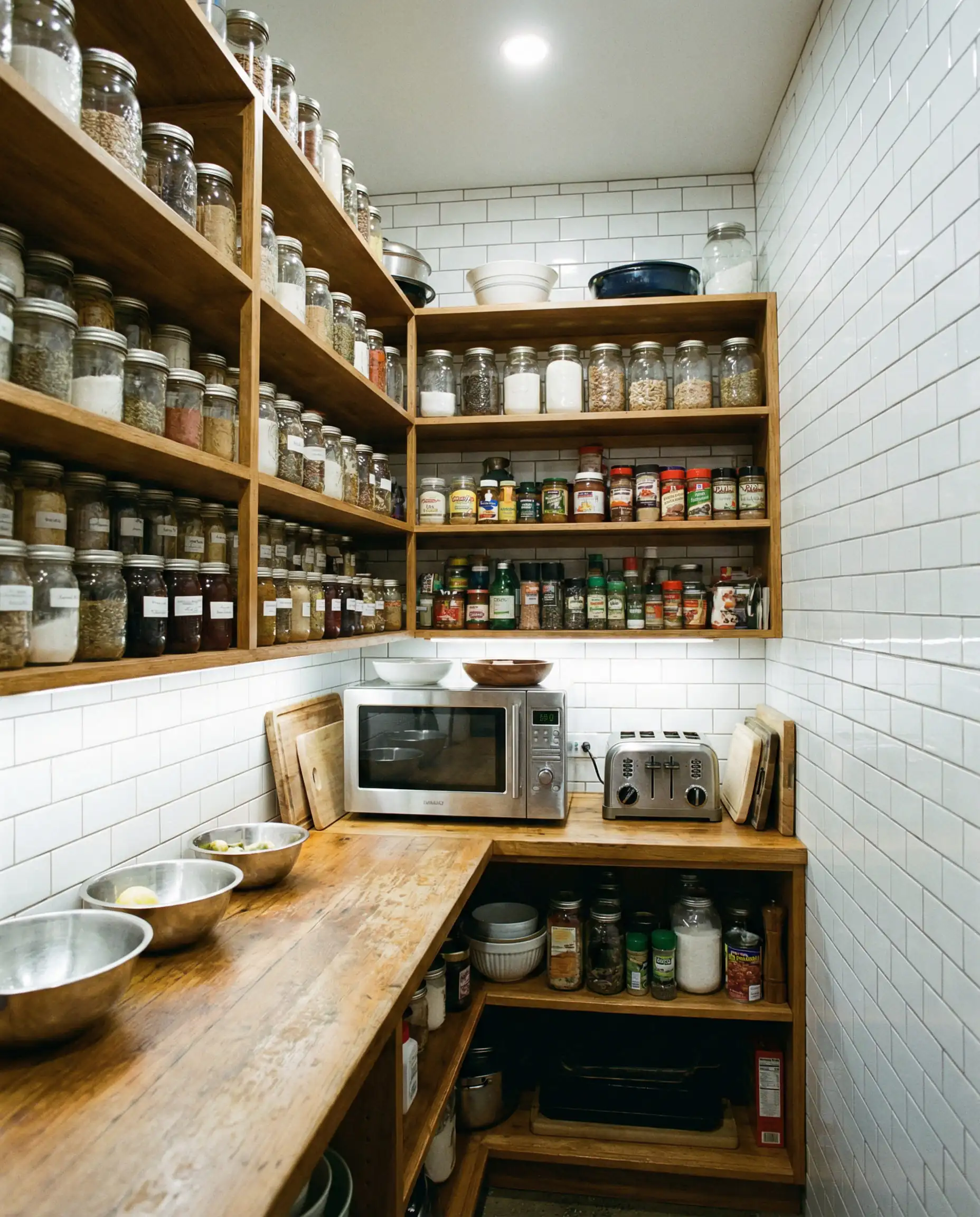
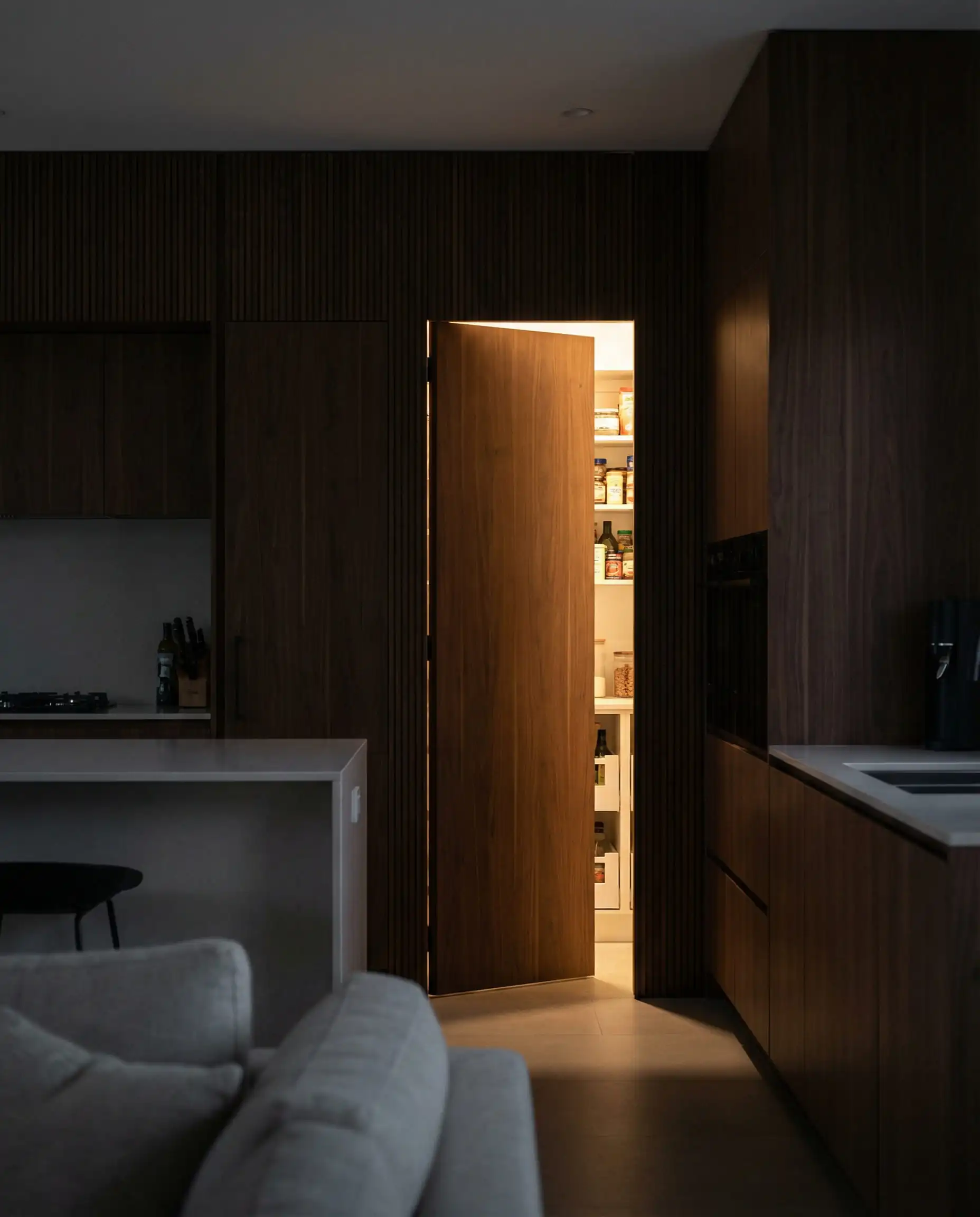
Combining practical storage with style is essential. Learn how lighting can distract from clutter in our lighting trends article.
Furniture Selection: Scaling and Cohesion
In an open-concept space, your furniture does double duty: it provides comfort, but it also acts as the architecture. Without walls, the back of your sofa is the wall. Here is how to select pieces that define zones without blocking flow.
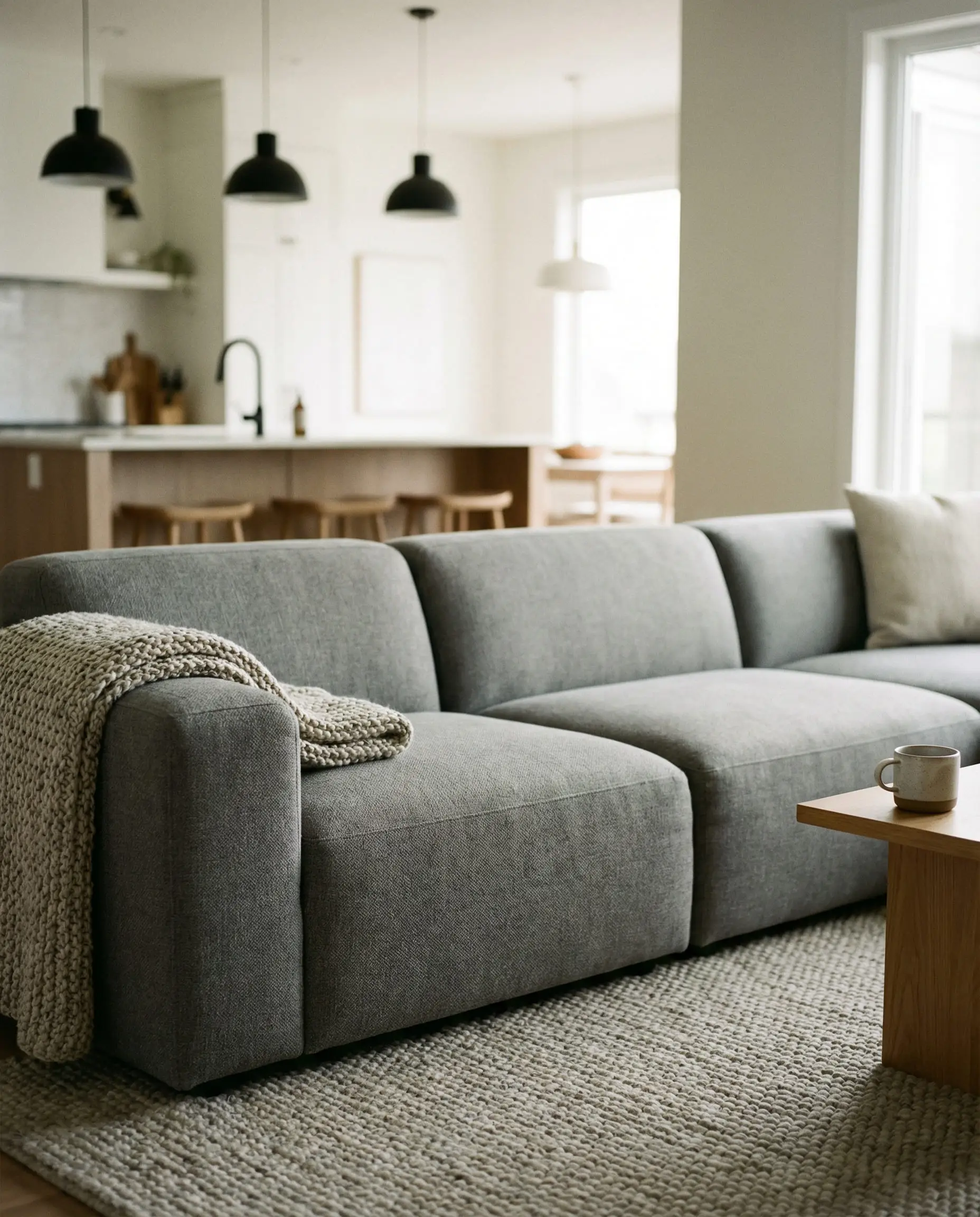
1. The Sofa as a Partition
Your sofa will likely float in the center of the room. This makes it the primary divider between “cooking” and “relaxing.”
2. The Dining Table: The Bridge
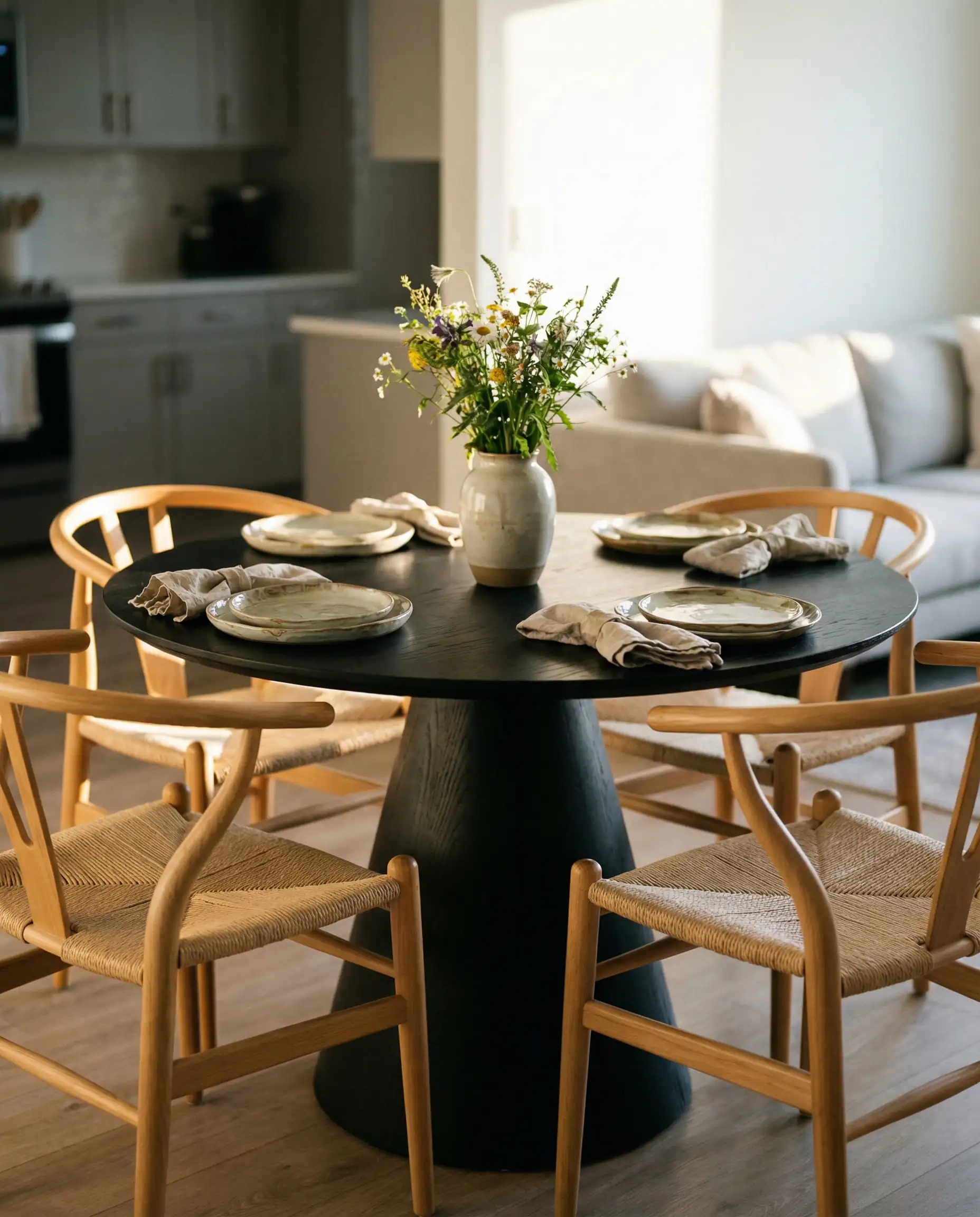
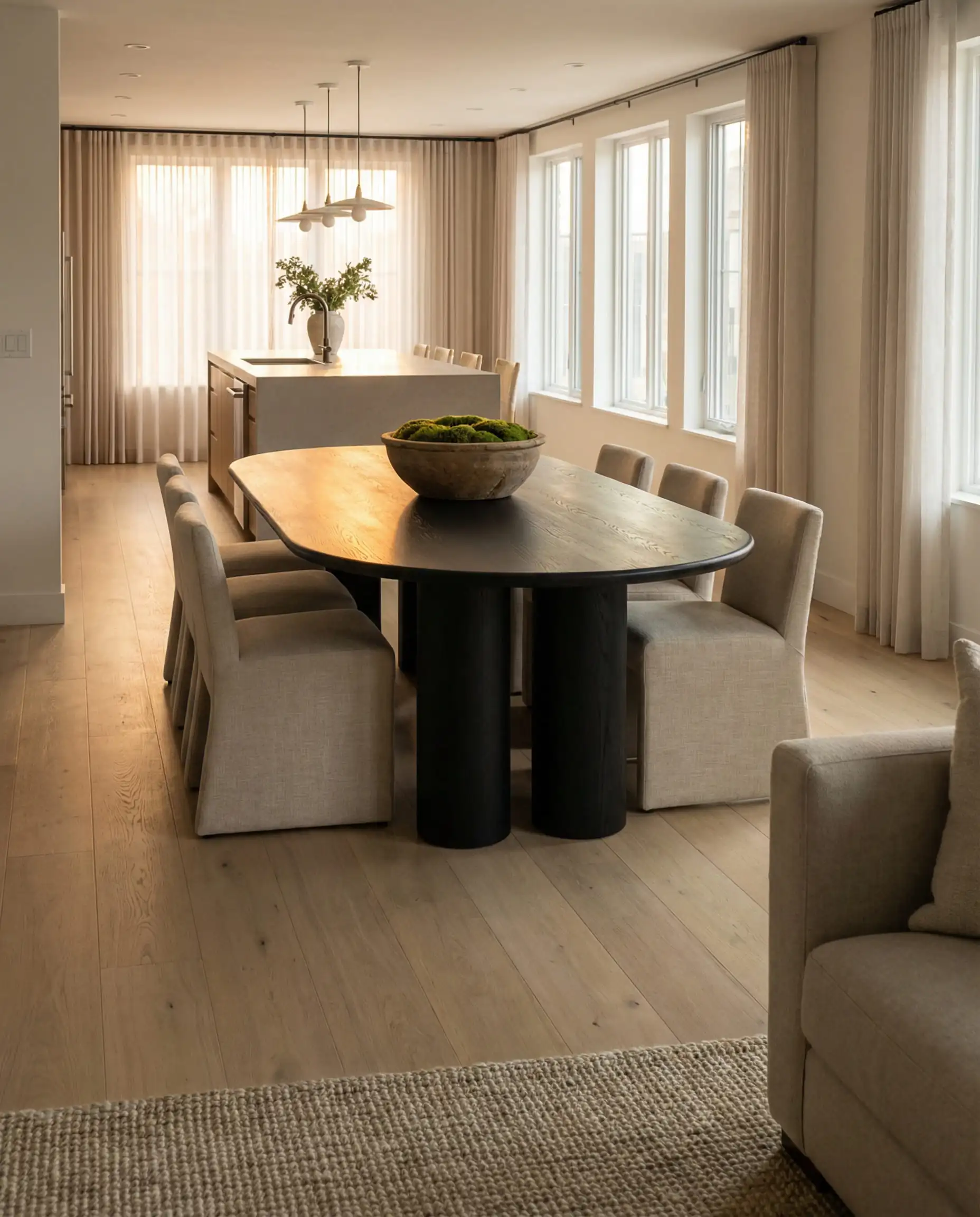
The dining table is the transitional piece—the bridge between the hard surfaces of the kitchen and the soft textures of the living room.
3. The Secret Weapon: Swivel Chairs
If there is one piece of furniture you invest in for an open plan, make it a pair of swivel armchairs.
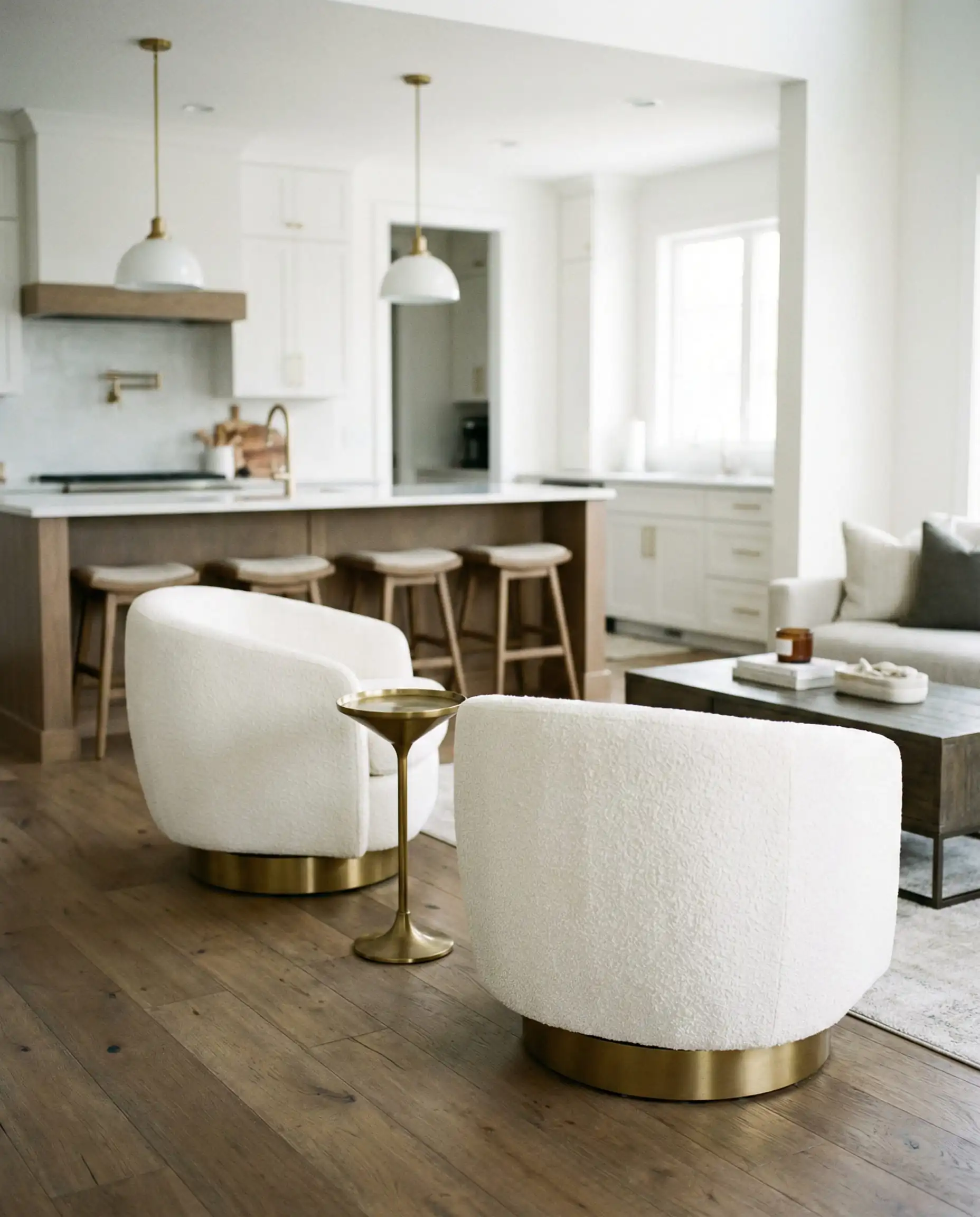
For specific styles that are trending this year, look at our report on modern chairs and armchairs trends.
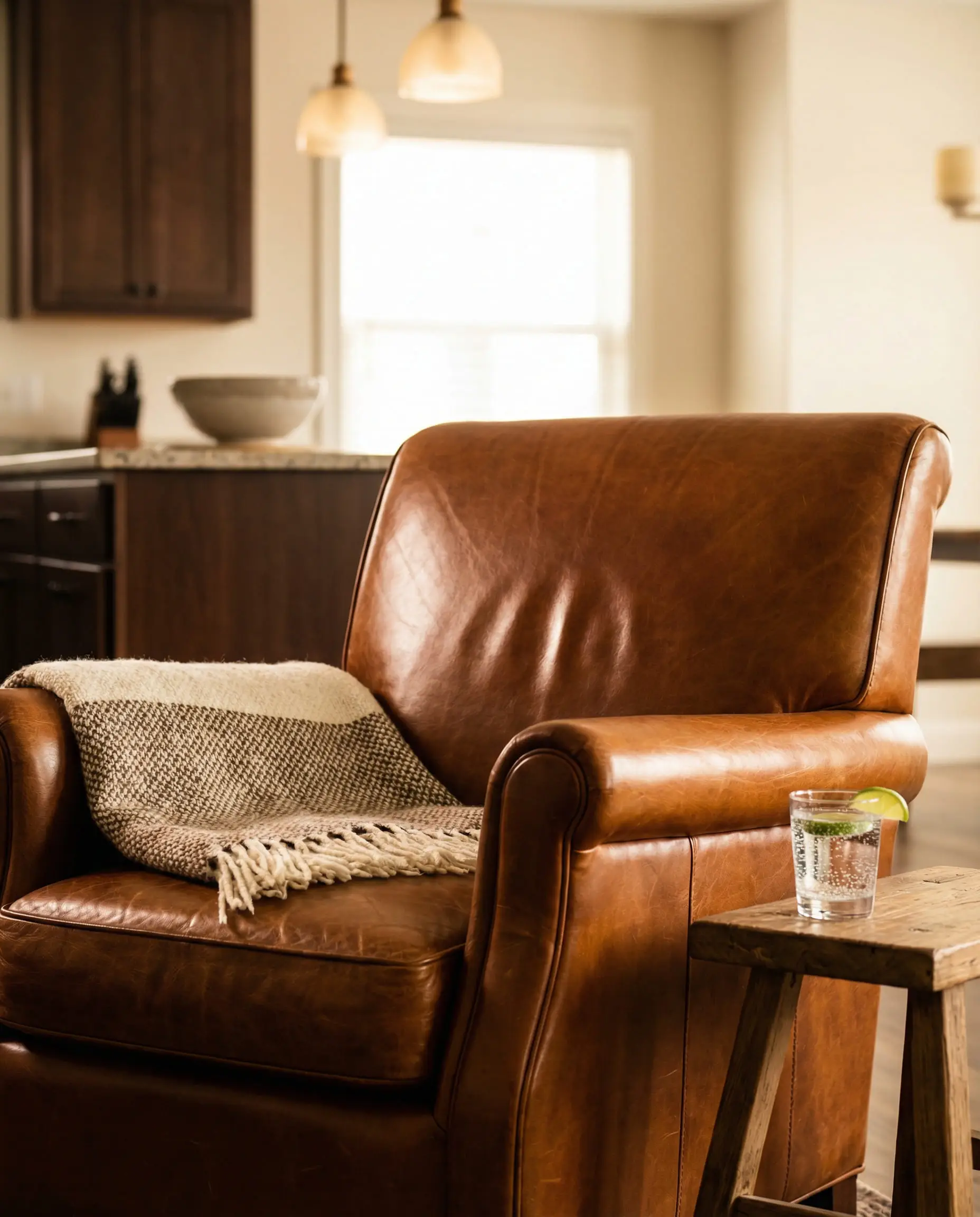
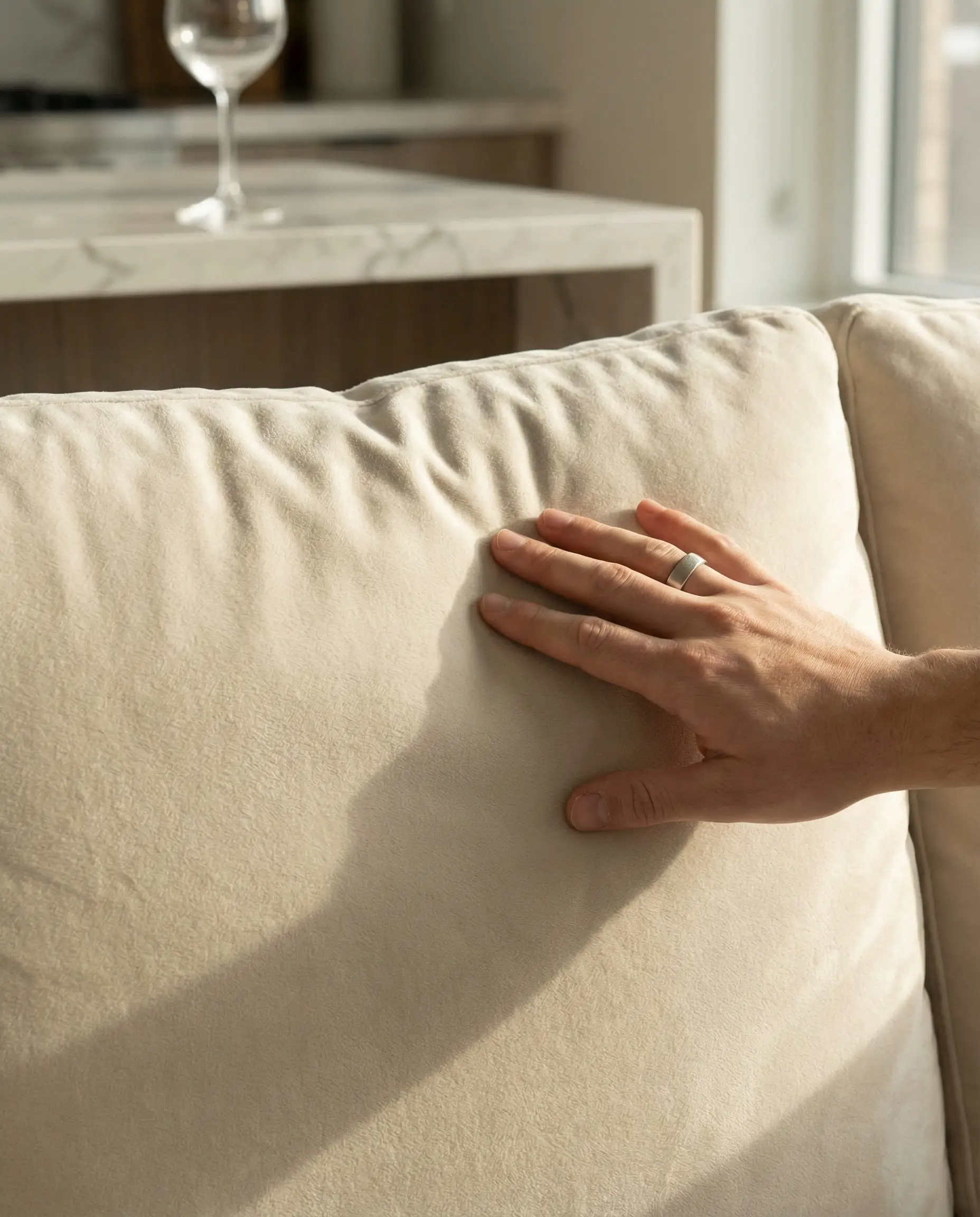
4. Fabrics: The “Kitchen-Proof” Living Room
Living near a kitchen means your furniture is exposed to airborne grease, cooking smells, and the occasional spill.
5. Rugs are Non-Negotiable
You simply cannot skip the rug in the living zone. It is the visual anchor that says, “The living room starts here.”
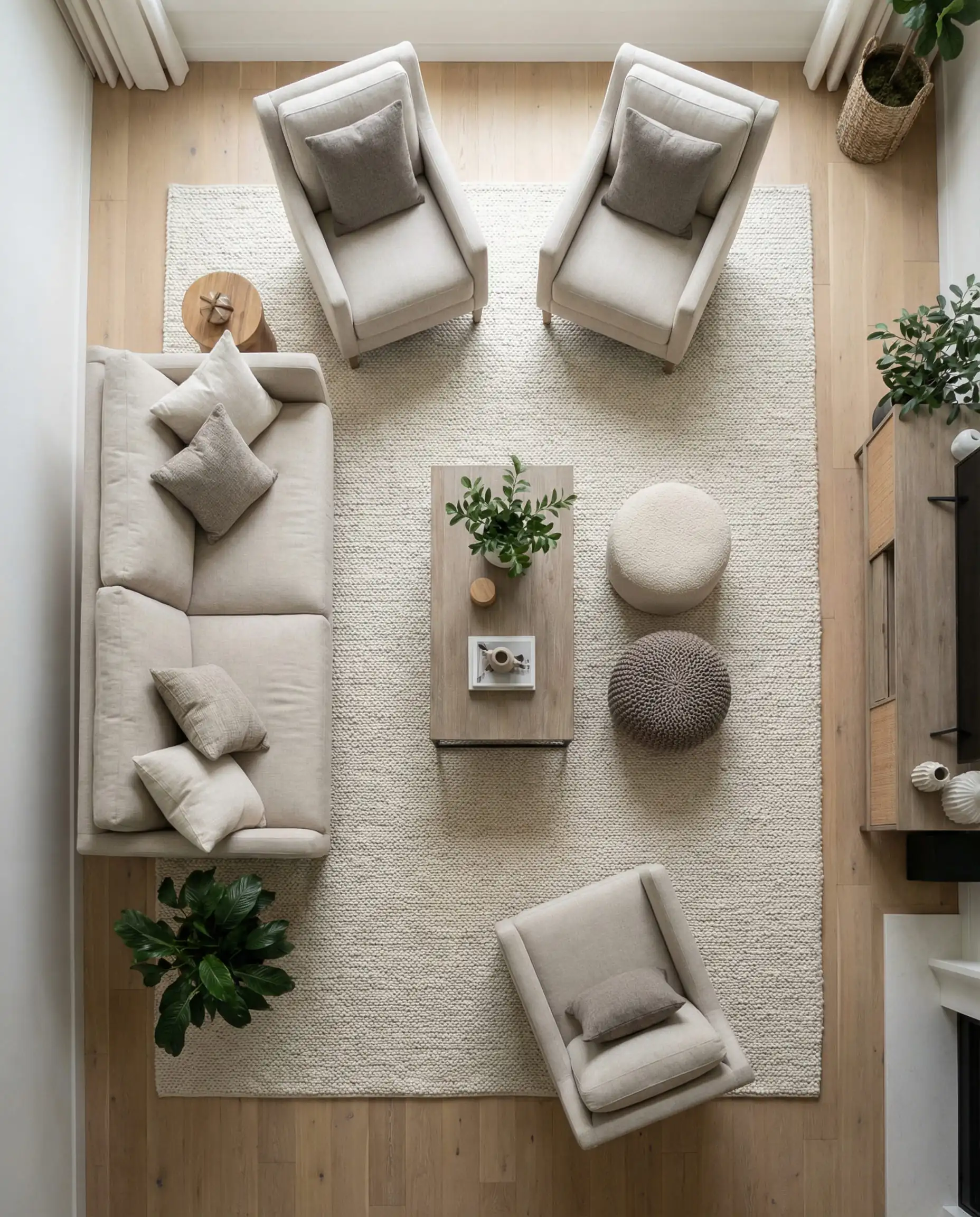
Leave at least 36 to 48 inches of clear walkway between the kitchen island and the back of your sofa or dining chairs. Anything less creates a “pinch point” that will make your spacious home feel cramped.
📏 Designer Tip
For the latest on textures and materials that withstand high traffic, see our update on carpet and rug trends.
FAQ: Common Questions About Kitchen-Living Combos
A: The concept is not going away, but the execution is changing. Completely wide-open “aircraft hangar” spaces are out. “Broken plan” living, which uses arches, screens, and furniture to create cozy “zones” within the open space, is the new standard.
A: Use the same color for the walls and the ceiling to blur the boundaries. Choose leggy furniture (sofas and chairs raised on legs) which allows light to flow underneath, making the floor area appear larger. Mirrors placed opposite the kitchen window can also double the light.
A: Absolutely. In fact, mixing metals (e.g., stainless steel appliances with unlacquered brass cabinet hardware) adds depth and character. Just ensure you repeat each finish at least twice in the room so it looks intentional.
Conclusion
Designing a kitchen-living room combo in 2026 is an exercise in balance. It requires a shift from thinking about “rooms” to thinking about “zones.” By embracing warm minimalism, prioritizing acoustics, and choosing a layout that supports your actual lifestyle—not just an idealized version of it—you can create a space that is the true heart of your home.
The best combo designs are the ones where you don’t notice where the kitchen ends and the living room begins; you just notice that it feels like home.
Ready to transform your space? Browse our full archive of design guides for more inspiration on colors, materials, and furniture layouts.