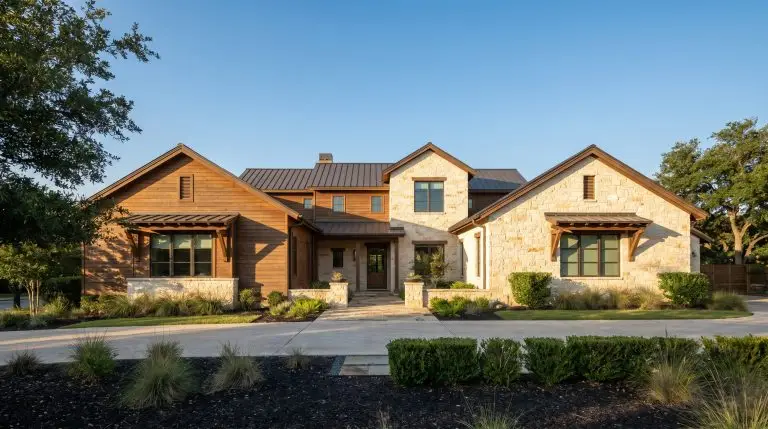
For decades, the phrase “cream and brown house exterior” conjured images of flat, muddy beige siding paired with lifeless brown vinyl shutters—a hallmark of dated, 1990s developments. Today, that association is entirely obsolete. The modern cream and brown facade has evolved into an exercise in organic modernism, relying on high-end, tactile material applications rather than one-dimensional paint buckets.
The secret to mastering this earthy palette is treating texture as color—using physical materials like natural wood cladding, bronze metals, and rough stucco to create architectural depth and high-contrast shadow lines.
The Tactile Rule: Why Material Choice Outperforms Flat Paint
Flat paint on flat siding fails this color scheme because it lacks the necessary depth to capture shifting daylight. When we rely solely on standard exterior paint for both our light and dark tones, the house reads as a monolithic, heavy block. Instead, source physical materials to supply the “brown”—think rich cedar siding, solid walnut doors, or dark bronze metal. Supply the “cream” through the physical texture of rough stucco renderings or limewashed brick. This approach guarantees an organic, grounded aesthetic that feels entirely custom.
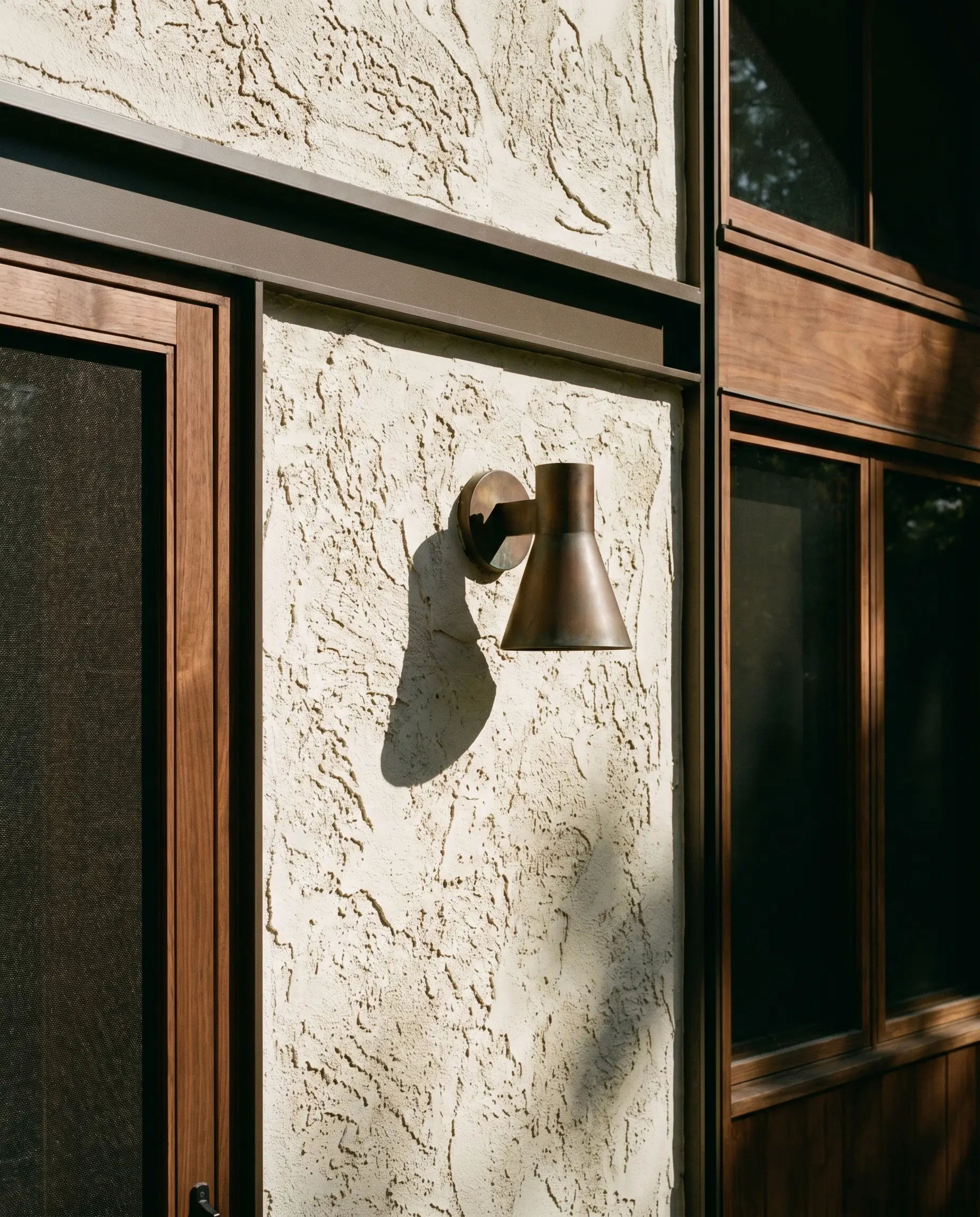
- The Flat Paint Approach: Relies on standard acrylics (e.g., beige siding, brown trim). Results in a visually heavy, one-dimensional facade prone to looking washed out in direct sunlight.
- The Tactile Material Approach: Utilizes physical textures (e.g., cream stucco, thermally modified wood). Generates natural shadow lines, high-contrast trim distinction, and a dynamic living finish that shifts beautifully from morning to evening.
Cream and Wood Cladding Pairings
Wood cladding provides the warmest, most modern iteration of “brown” available to exterior architecture. By contrasting light, tactile masonry against rich, natural wood tones, we instantly anchor the structure to its surrounding landscape.
Cream Stucco Paired with Vertical Cedar Slats
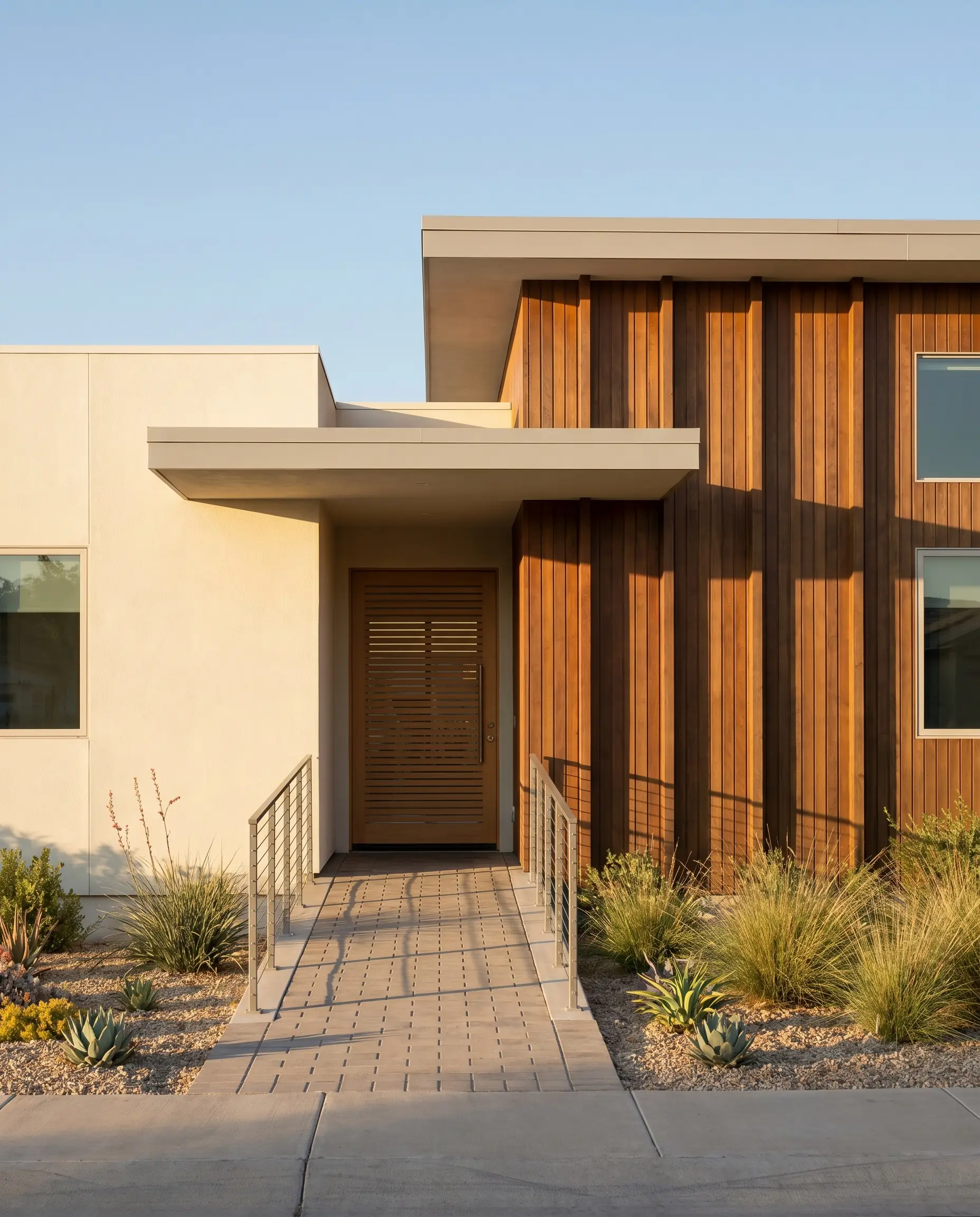
The visual contrast between a smooth, continuous surface of cream stucco rendering and the aggressive vertical shadow lines of natural cedar slats defines the Desert Contemporary aesthetic. This pairing relies on the stark difference in physical depth, allowing the wood to act as a highly architectural brown accent.
- Vibe: Modern Organic / Desert Contemporary.
- Key Materials: Fine-sand cream stucco, clear vertical grain cedar cladding.
- Paint Match: Benjamin Moore White Dove (Stucco).
- Architectural Detail: Ensure your cedar slats are sealed with a UV-protectant clear coat with a matte finish to maintain the rich brown tone and prevent the wood from silvering out.
Limewashed Brick with Rich Walnut Front Doors
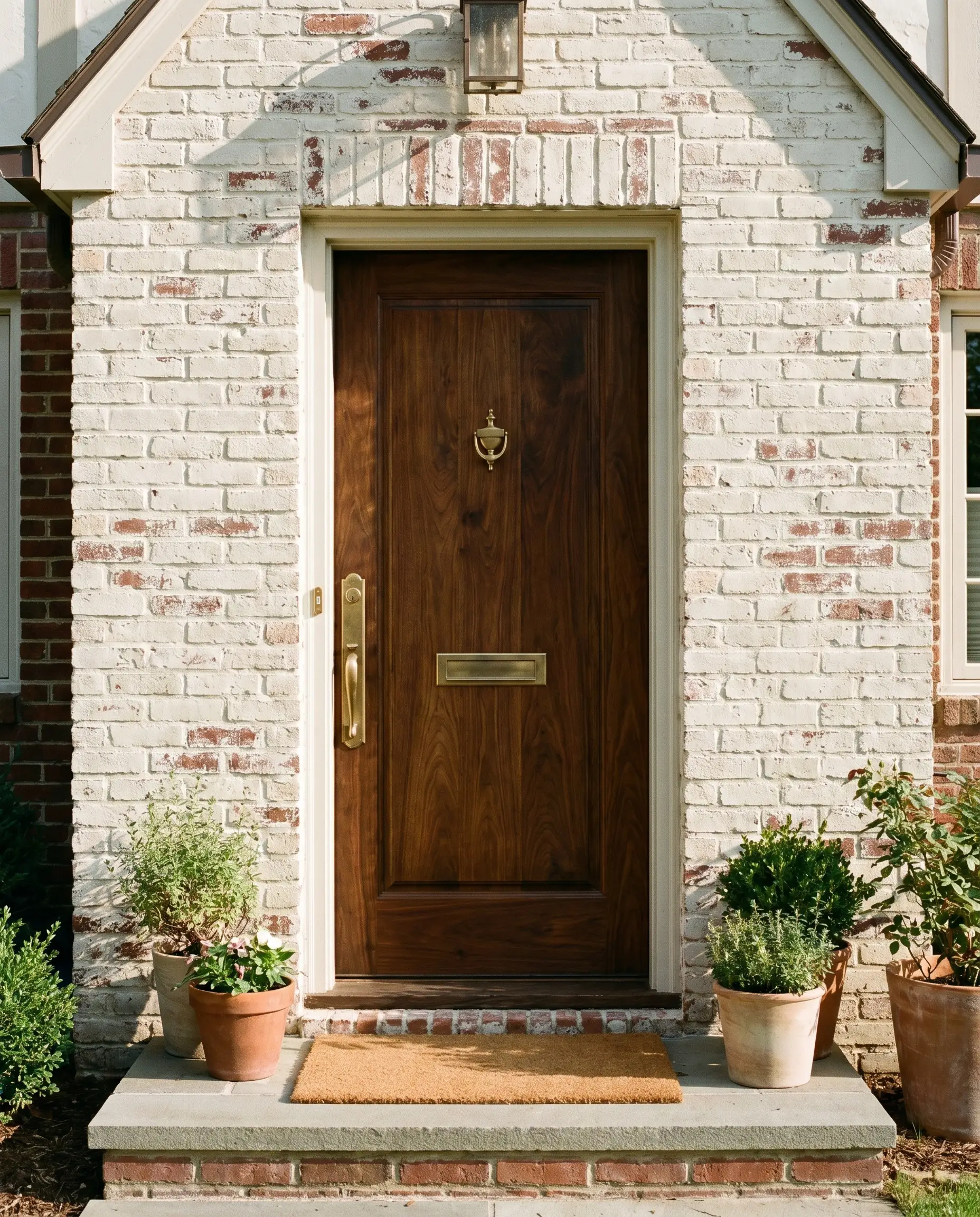
Limewashing classic red brick into a chalky, off-white finish provides a heavily textured canvas perfect for historic renovations or Transitional Tudor designs. Pair this highly sensory, matte masonry explicitly with a heavy, oiled solid walnut front door serving as the primary brown focal point.
- Vibe: Transitional Tudor / Refined Heritage.
- Key Materials: Romabio Classico Limewash, solid walnut or mahogany slab.
- Color Match: Avorio White (Limewash).
- Design Pro-Tip: Contrast the chalky texture of the brick with high-end, unlacquered brass door hardware to bridge the gap between the cream and dark wood.
Cream Board and Batten with Thermally Modified Ash
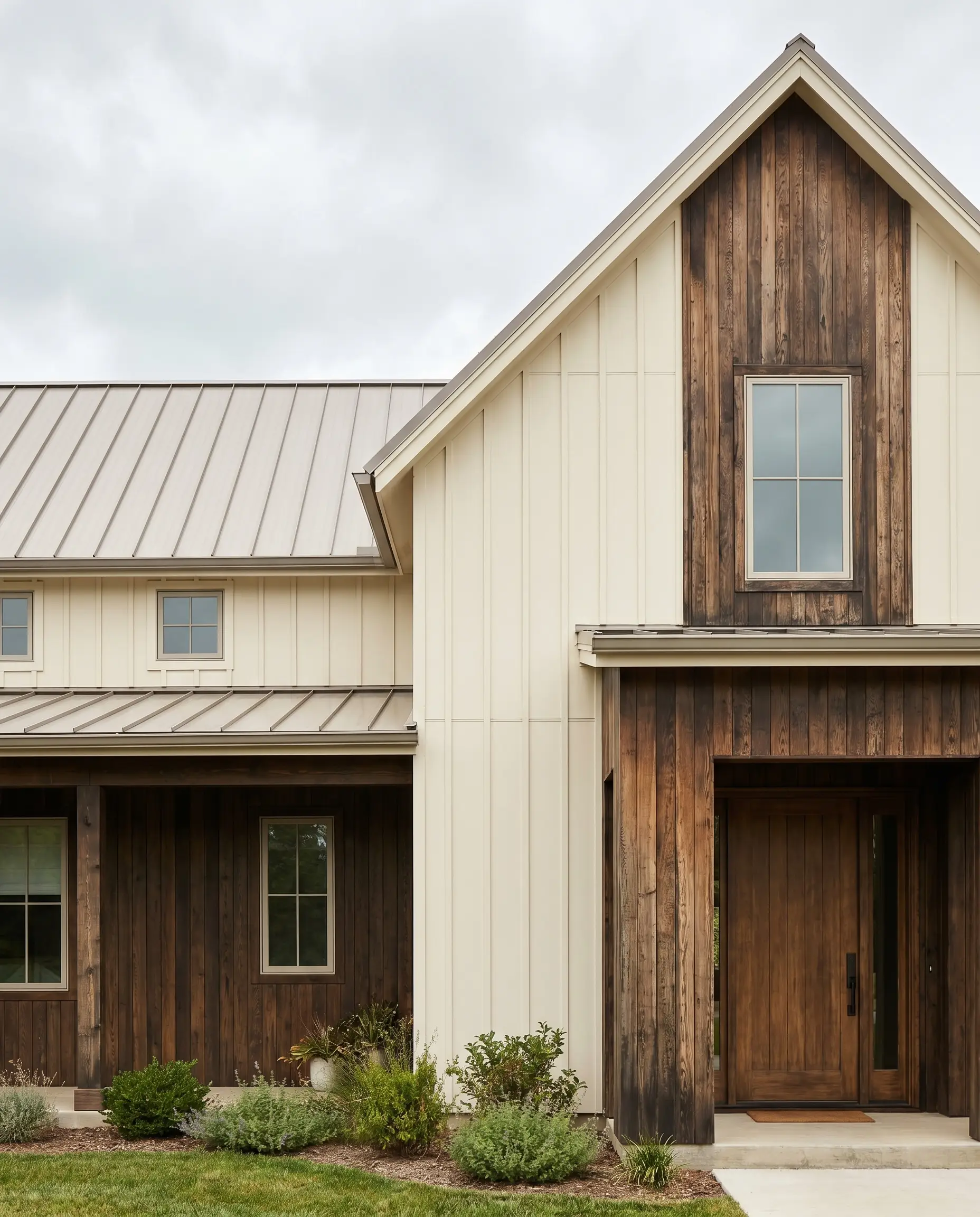
Ditch the stark white Modern Farmhouse look by specifying a warm cream for the board and batten siding. Contrast this soft base with strategic sections of thermally modified ash cladding to introduce a deep, roasted brown that feels entirely bespoke.
- Vibe: Bespoke Modern Farmhouse.
- Key Materials: Hardie Board and Batten, thermally modified wood siding.
- Paint Match: Sherwin-Williams Alabaster.
- Durability Benefit: Thermally modified ash undergoes a heating process that bakes the wood, providing a deep brown color while making it highly weather-resistant and dimensionally stable.
Painted Cream Siding with Exposed Douglas Fir Beams
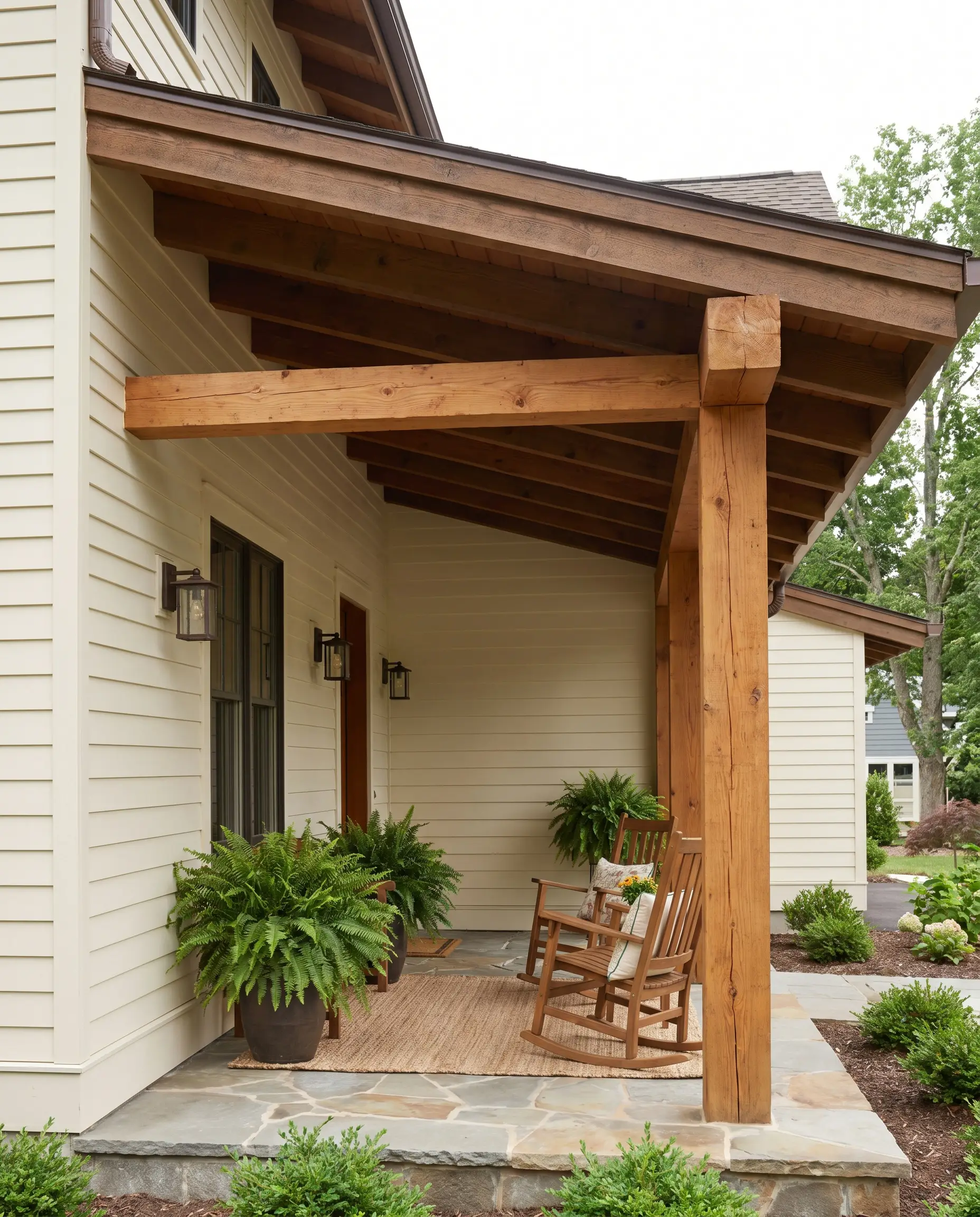
Instead of applying brown directly to the siding, allow thick, structural Douglas Fir beams to carry the color palette across entryways, porches, and deep rooflines. Stained in a medium-dark brown, these heavy timber accents over a soft cream background emphasize massive structural scale and craftsmanship.
- Vibe: Mountain Modern / Craftsman Hybrid.
- Key Materials: Smooth lap siding, rough-sawn Douglas Fir timbers.
- Wood Stain Match: Cabot Semi-Solid Stain in Bark.
- Architectural Detail: Expose the rafter tails under the soffit and stain them to match the main structural beams, carrying the brown tone upward to visually support the roof.
Paint, Trim, and Roofing Combinations
When structural renovations are outside the project scope, manipulate scale and frame the house using high-contrast trim and intelligent roofline planning. The right paint pairings can entirely modernize a static facade.
Soft Cream Walls with Bronze-Brown Window Frames
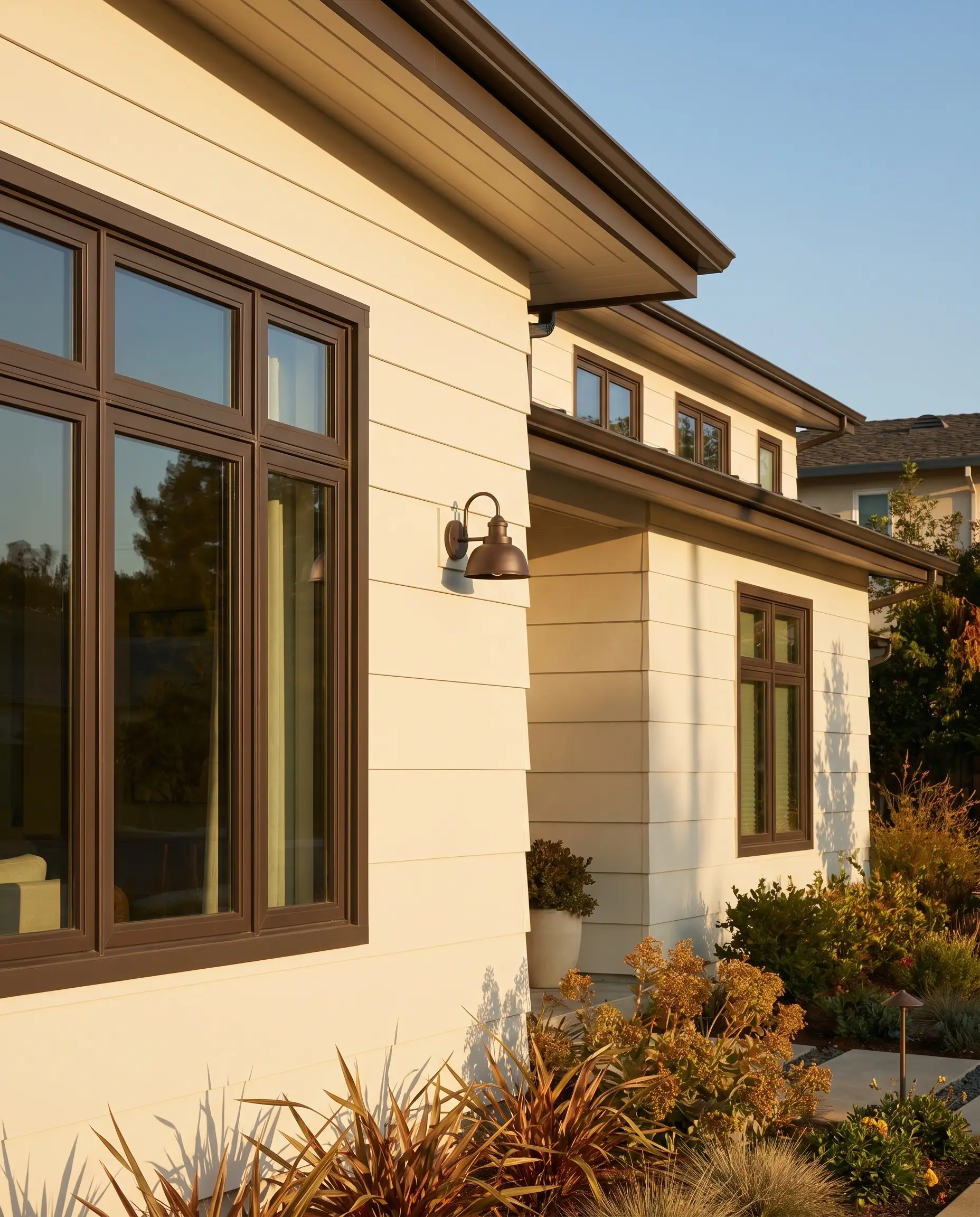
The industry is rapidly shifting away from stark black-and-white exteriors toward softer, more grounded palettes. Specifying dark bronze or dark brown window mullions instead of overused matte black creates a sophisticated frame that feels incredibly rich against a creamy exterior.
- Vibe: Soft Contemporary.
- Key Materials: Aluminum-clad wood windows, smooth fiber cement siding.
- Trim Match: Sherwin-Williams Urbane Bronze.
- Styling Pro-Tip: Match your exterior lighting fixtures exactly to the bronze-brown of the window frames for a cohesive, intentional framing effect.
Pairing Cream Exteriors with Architectural Brown Shingles
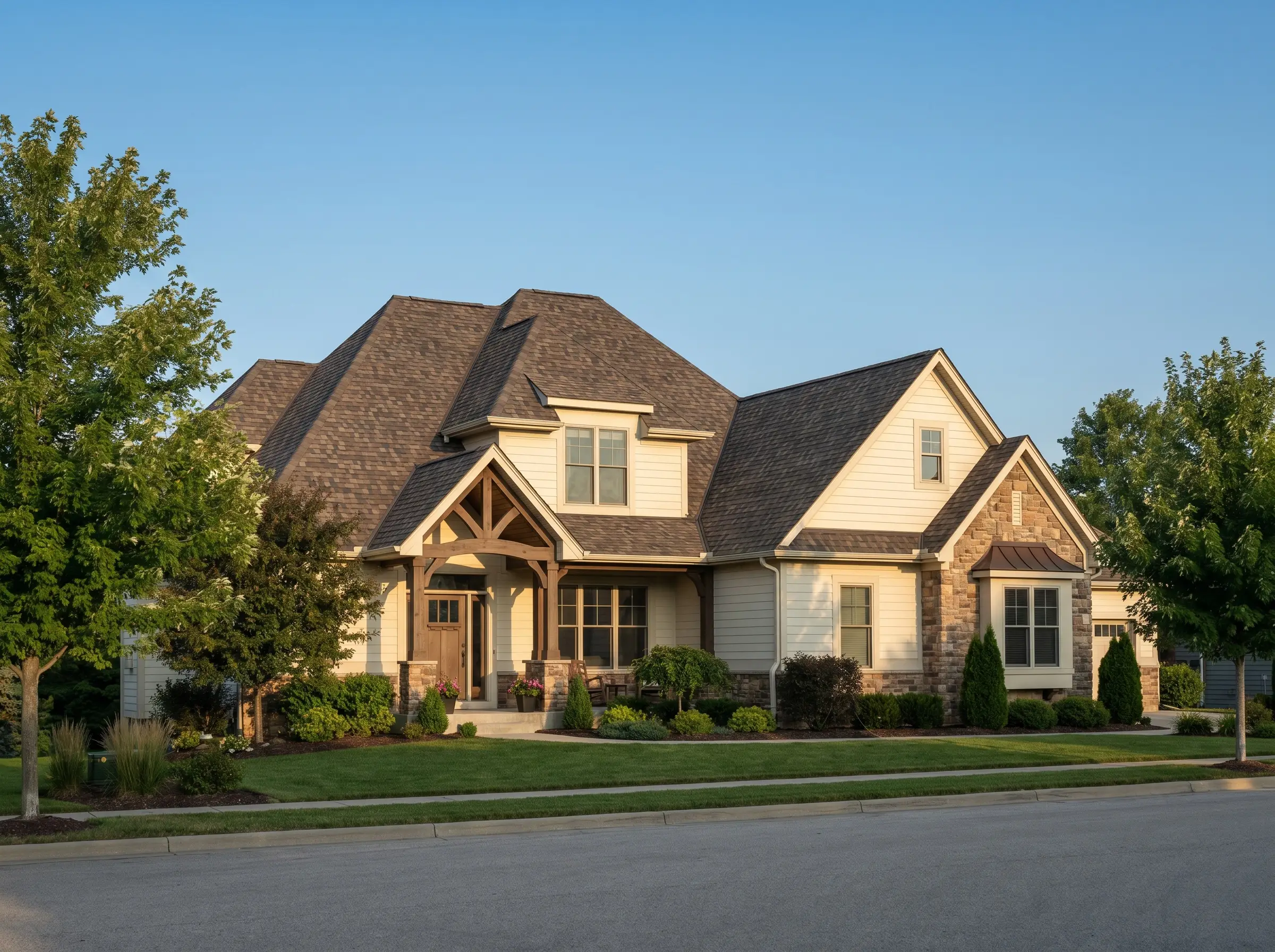
Matching a cream house to a brown roof requires careful attention to undertones and material dimensionality. Choose high-dimensional architectural shingles in a multi-tone brown (like weathered wood or dark bark) rather than flat, 3-tab versions, and ensure your cream paint has warm, earthy undertones to bridge the gap.
Never pair a cool, blue-based white or stark icy cream with a brown roof. The clashing color temperatures will make the roof look dirty and the paint look clinical.
The Dated Trap
- Vibe: Classic Transitional.
- Key Materials: Multi-tone architectural shingles.
- Paint Match: Benjamin Moore Swiss Coffee.
The Color-Drenched Cream Facade with Chocolate Brown Fascia
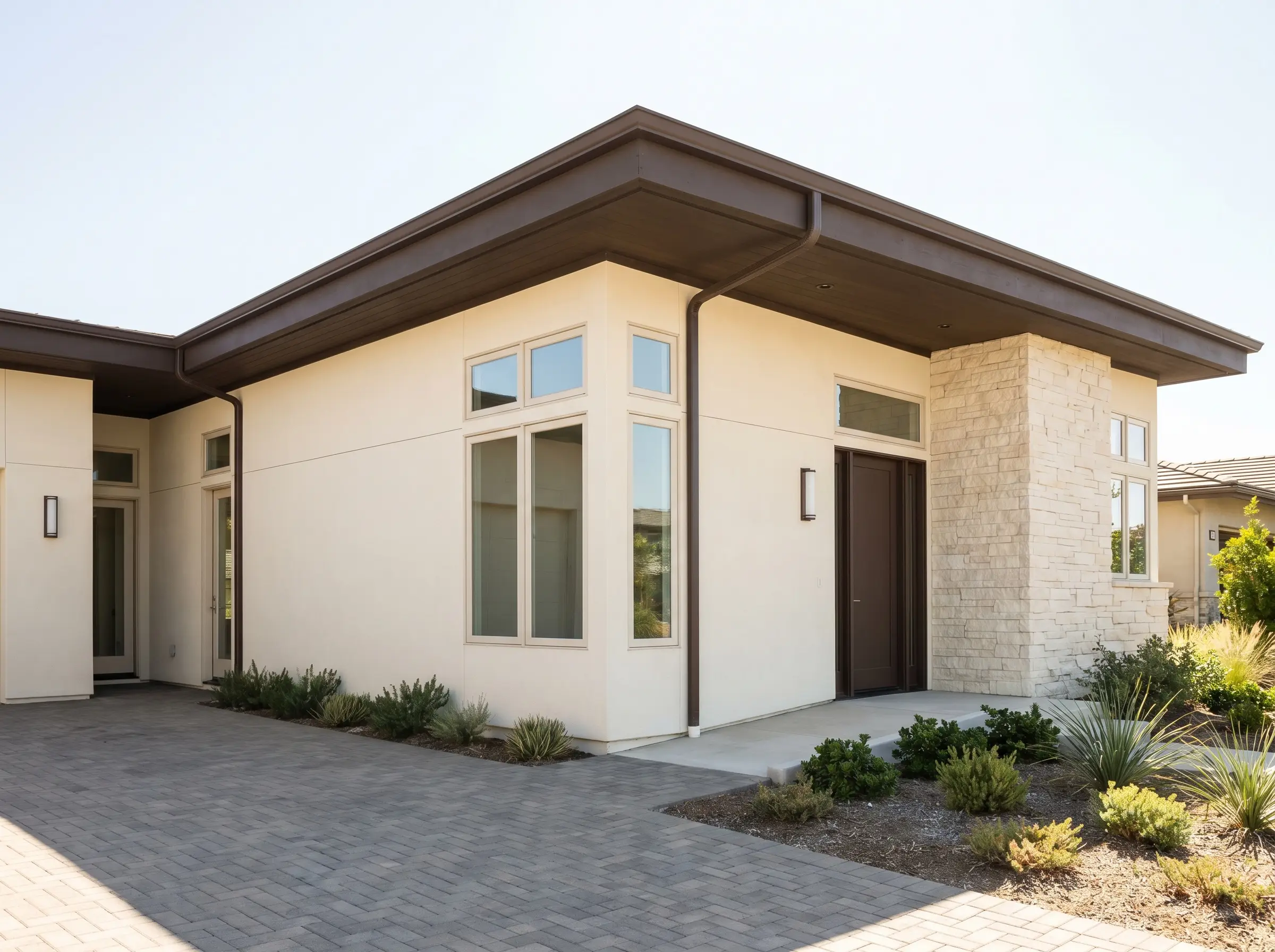
For a high-contrast, minimalist approach, paint the entire body of the house—siding, brick, and secondary trim—in a single, unified cream tone. Reserve a deep, rich chocolate brown exclusively for the roofline fascia to act as a sharp, defining architectural outline.
- Vibe: Minimalist / Modernist.
- Key Materials: Unified masonry/siding, painted wood fascia.
- Trim Match: Benjamin Moore Midsummer Night.
- Design Pro-Tip: Ensure the gutters and downspouts are color-matched exactly to the chocolate brown fascia so they disappear into the roofline rather than cluttering the cream facade.
Two-Tone Paint: Cream Upper Level and Deep Mocha Lower
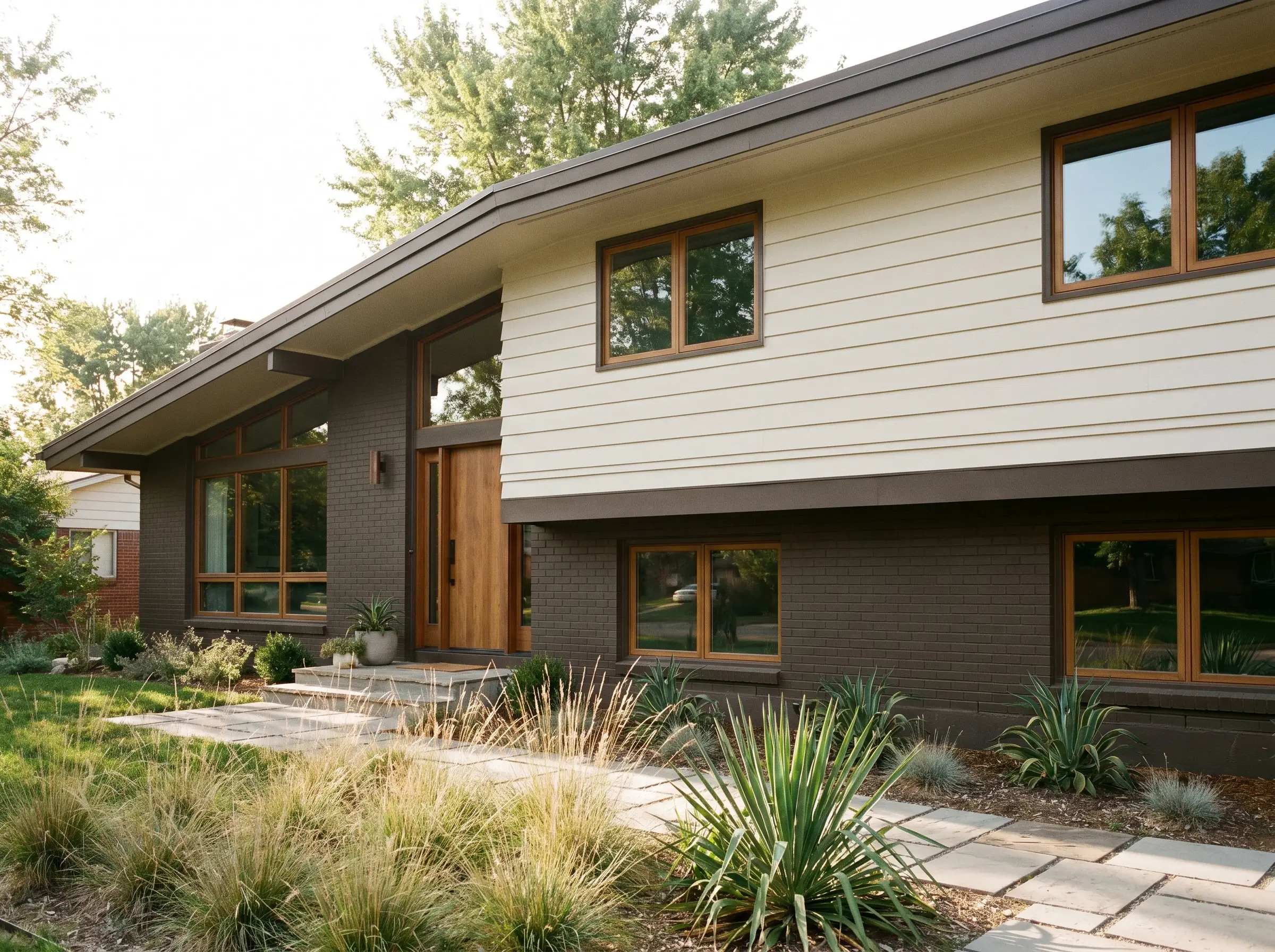
Ground large, imposing homes or split-level architecture by painting the lower masonry in a deep, earthy mocha brown while keeping the upper siding in a light cream. This visual psychology anchors the home firmly to the landscape and visually lowers a towering roofline.
- Vibe: Mid-Century Modern / Split-Level Revamp.
- Key Materials: Painted brick lower, horizontal lap siding upper.
- Paint Match (Lower): Sherwin-Williams Black Fox.
- Paint Match (Upper): Sherwin-Williams Shoji White.
- Architectural Detail: Use a physical trim board painted in the deep mocha tone to create a clean, hard transition line between the two paint colors.
Architectural Accents and Masonry
Stone, metal, and mechanical elements serve as major color anchors for an exterior. By localizing the brown and cream palette into these hardscaping and architectural features, the facade gains immense textural authority.
Creamy Natural Stone Veneers Mixed with Dark Brown Siding
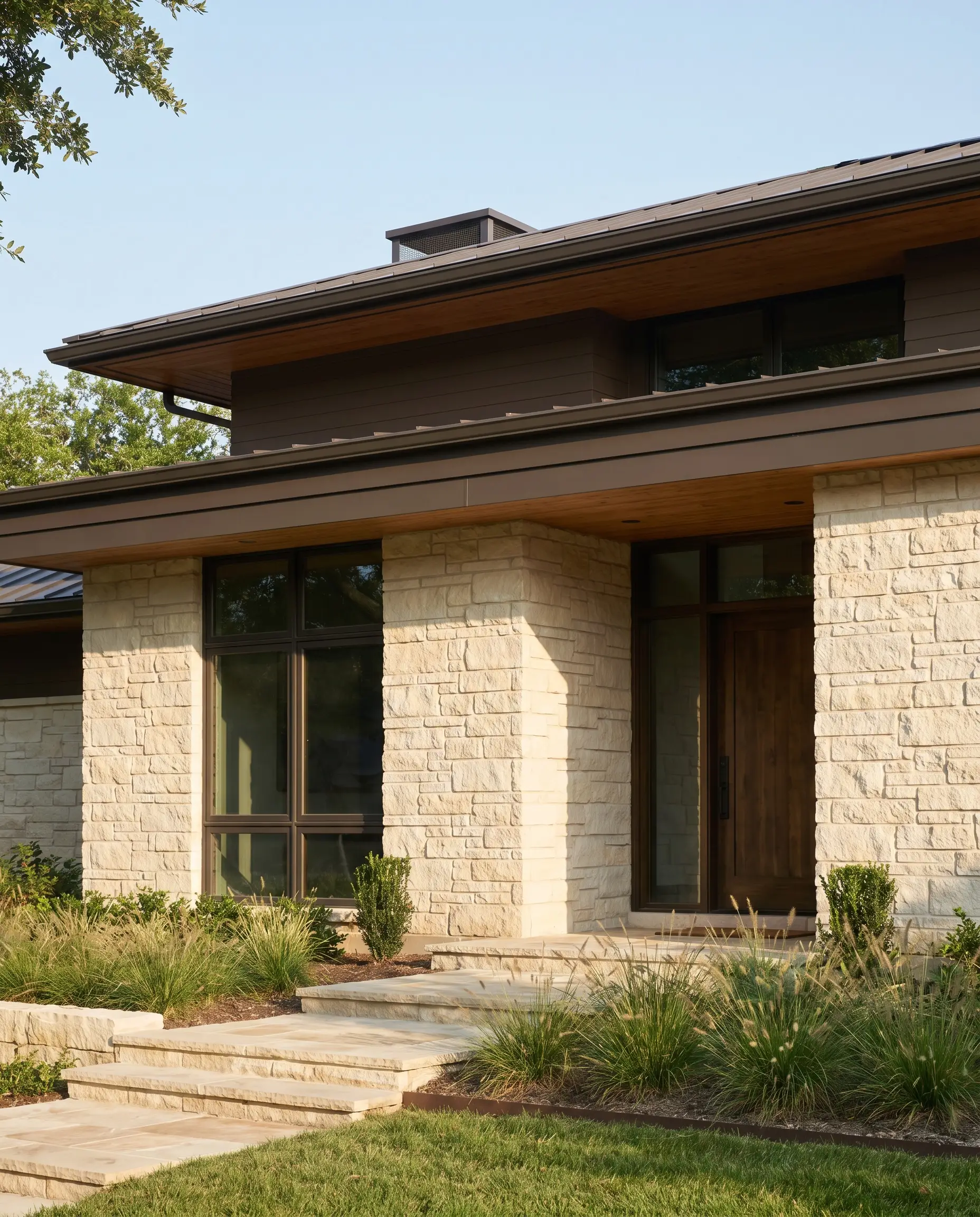
Introduce a luxury mountain-modern aesthetic by anchoring the lower half or entry columns of the home in rough-cut limestone or creamy fieldstone. Pair this highly tactile masonry veneer with dark espresso-brown siding on the main body for a striking, organic contrast.
- Vibe: Luxury Mountain Modern.
- Key Materials: Natural limestone veneer, dark stained cedar or composite siding.
- Siding Match: Benjamin Moore French Press (if painting).
- Architectural Detail: Specify a mortar color that matches the lightest cream tone in the stone, rather than trying to match the dark siding, to keep the masonry reading as a unified, bright texture.
Copper Gutters to Bridge Cream and Brown Tones
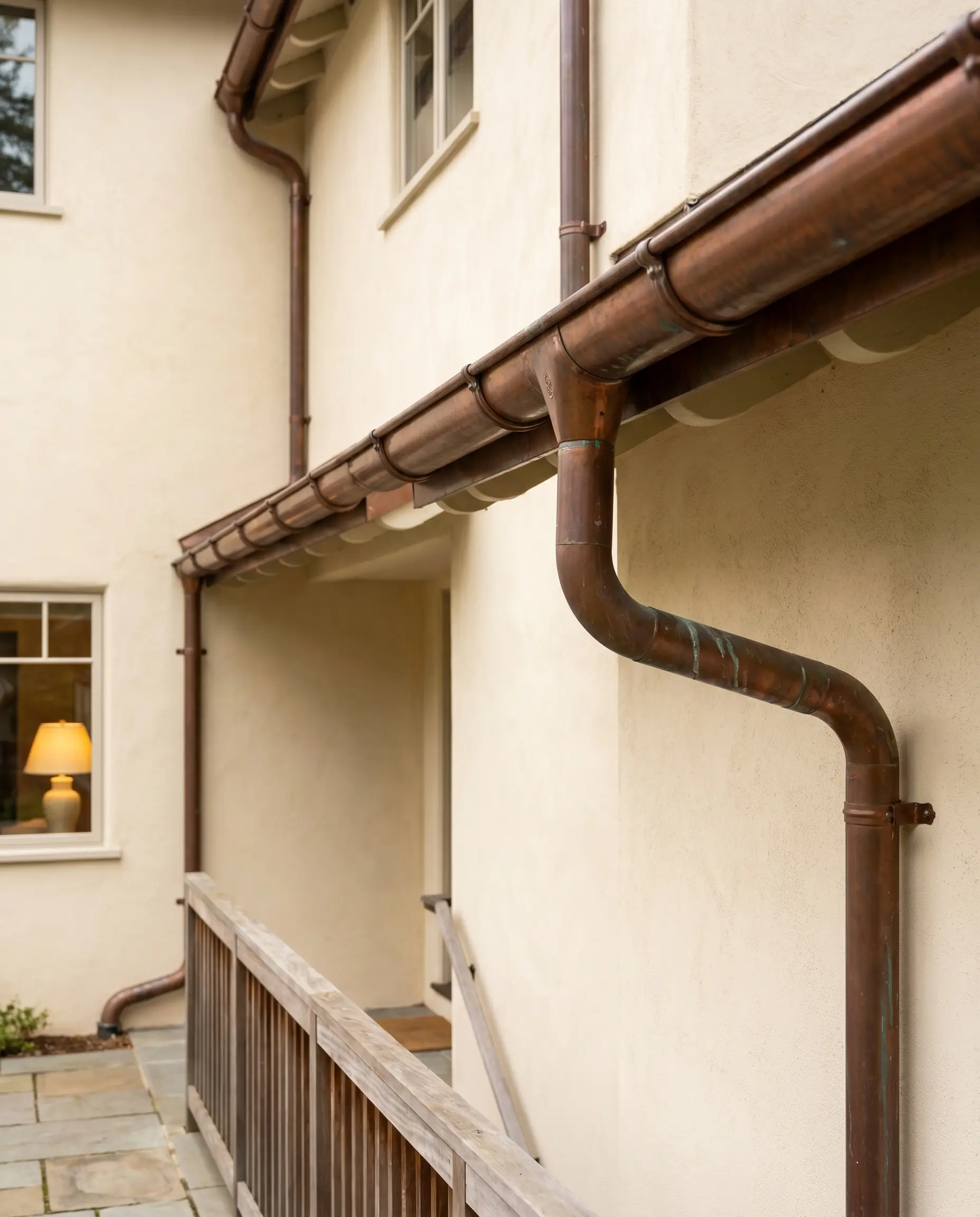
Natural copper gutters start as a bright metallic but quickly patina into a rich, penny-brown, serving as a premium, living finish against a static cream facade. This dynamic weathering process creates a highly sought-after metallic brown accent that ages beautifully with the architecture.
- Vibe: Heritage Luxury.
- Key Materials: Half-round copper gutters, copper downspouts.
- Wall Match: Farrow & Ball Pointing.
- Styling Pro-Tip: Allow the copper to weather naturally; do not apply a clear sealant. The organic shift from bright copper to deep brown is exactly what grounds the cream exterior.
Deep Brown Garage Doors Against a Warm Cream Base
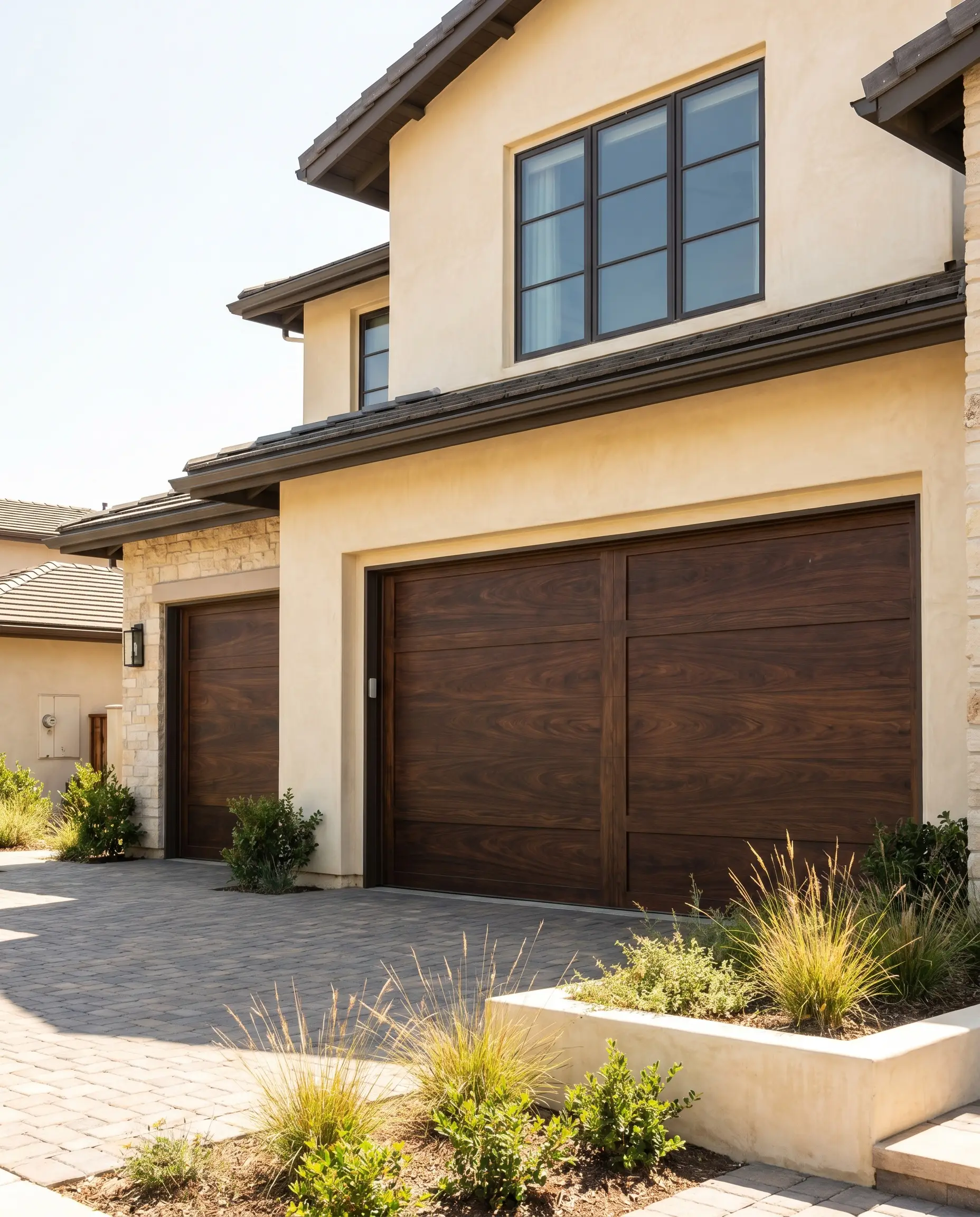
Garage doors often represent the largest single visual plane on a modern home facade. Upgrade standard white builder-grade doors to custom wood composite finished in a rich brown stain to prevent a predominantly cream house from looking washed out and flat.
Never paint your garage doors the exact same color as your trim unless you specifically want the garage to be the absolute focal point of your property. Let the wood grain do the talking.
The Dated Trap
- Vibe: Modern Suburban.
- Key Materials: Faux-wood composite or real cedar garage doors.
- Stain Match: Minwax Dark Walnut (Exterior grade).
Dark Brown Standing Seam Metal Roofs on Cream Homes
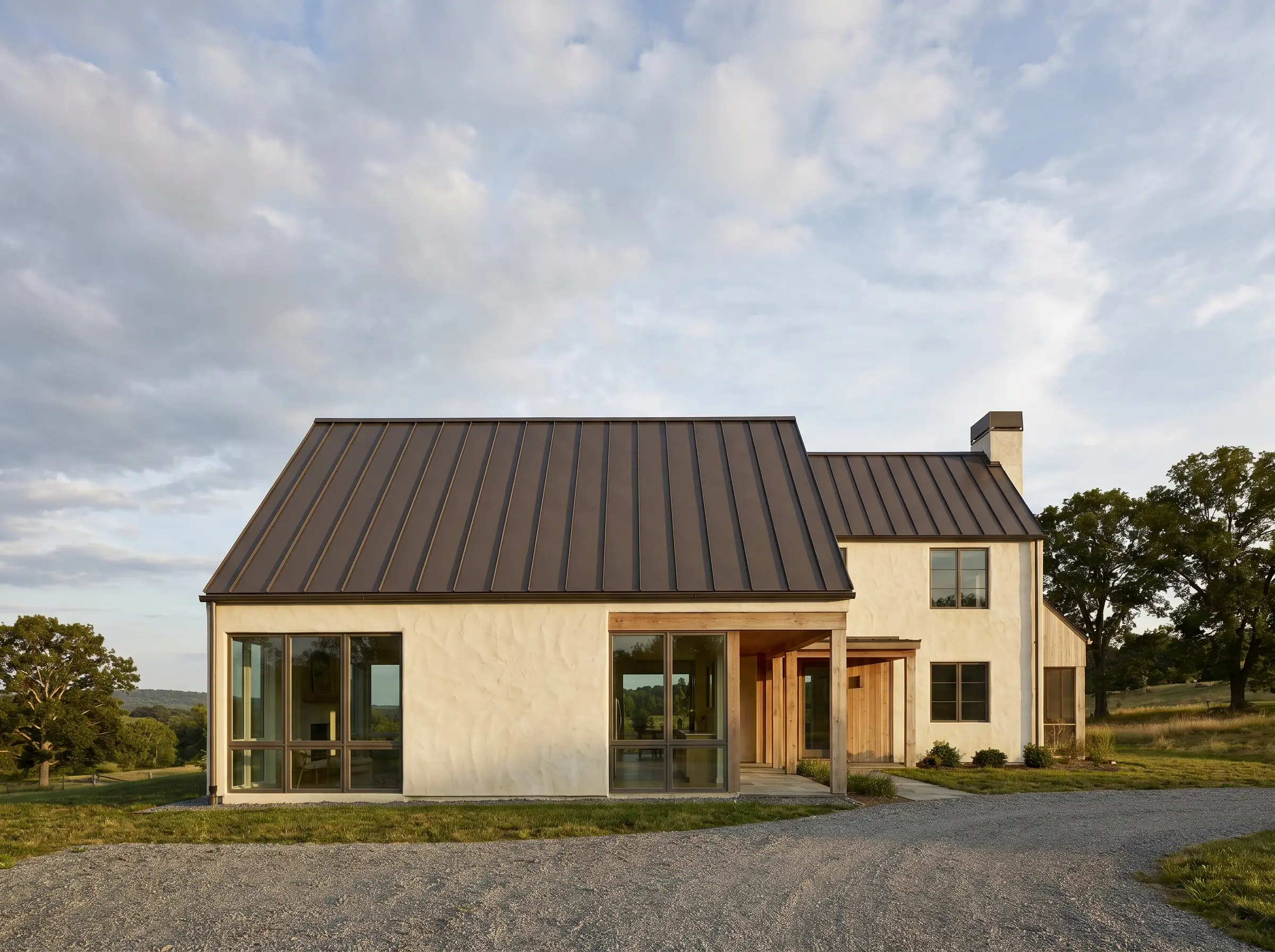
Pair a stark cream stucco exterior with a dark bronze or matte brown standing seam metal roof for a sleek, agricultural-turned-modern aesthetic. The crisp, clean lines of the metal roof provide incredible durability while heavily contrasting the organic, hand-troweled texture of the cream walls.
- Vibe: Modern Rural / Contemporary Farmhouse.
- Key Materials: 24-gauge standing seam metal roof, hand-troweled stucco.
- Roof Match: Dark Bronze (Standard metal roofing finish).
- Architectural Detail: Opt for a hidden fastener metal roof system to maintain perfectly smooth, uninterrupted vertical shadow lines down the roof pitch.
Landscaping and Lighting Integration
Exterior design does not stop at the physical walls of the house; the immediate hardscaping and lighting must echo the palette. Extending the cream and brown scheme into the site plan ensures a cohesive, monolithic property presence.
Warm 2700K Up-Lighting on Cream Stucco and Wood
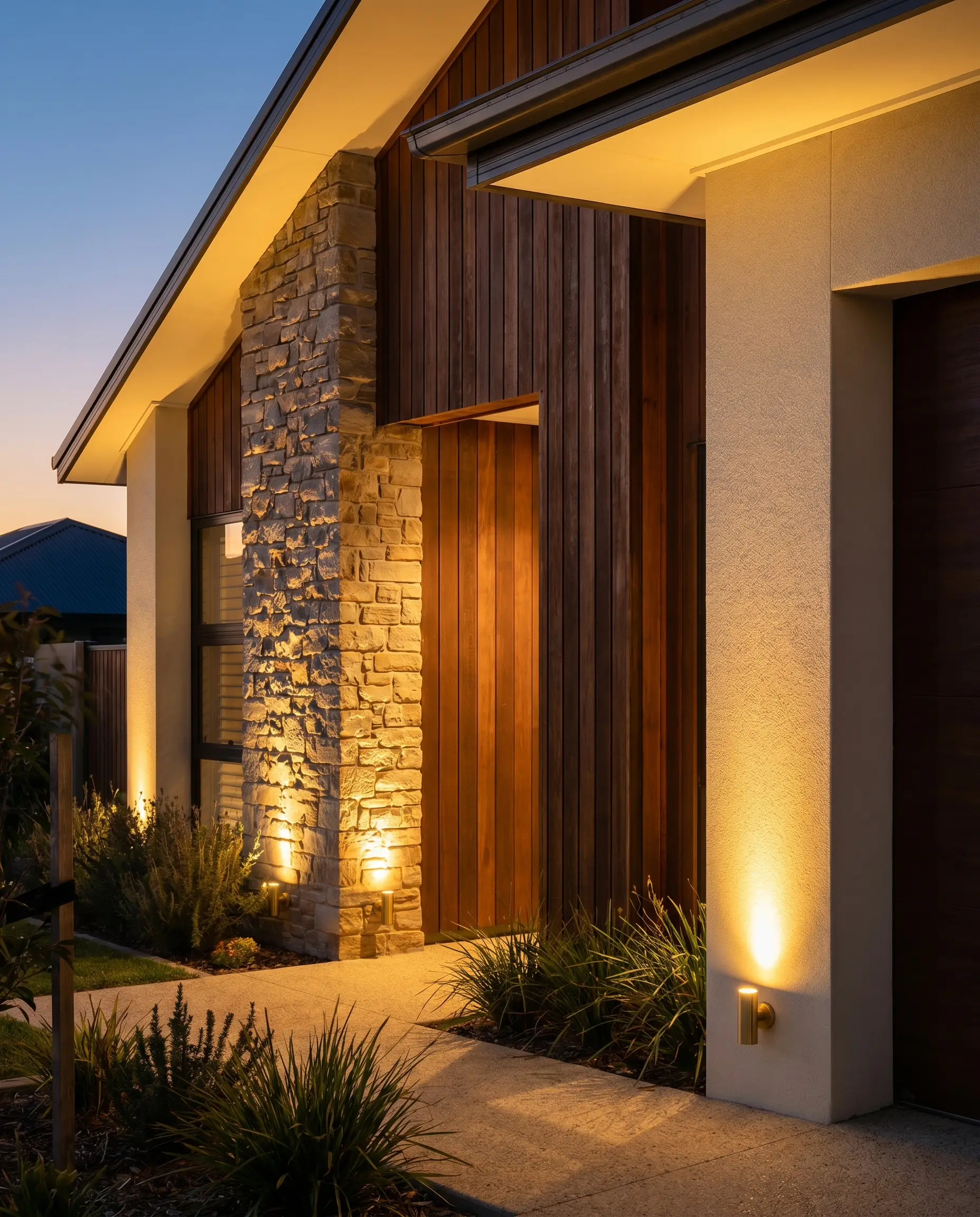
Cool white exterior lighting will instantly ruin a cream and brown palette, turning warm stucco sickly green and washing out rich wood grains. Mandate the use of 2700K warm LED up-lighting to wash the cream walls in a golden glow and properly highlight the depth of the brown architectural accents.
- Vibe: High-End Nighttime Curb Appeal.
- Key Materials: Brass or bronze brass up-lights, 2700K LED bulbs.
- Hardware Match: Kichler 12V Brass Accent Lights.
- Architectural Detail: Position up-lights directly at the base of vertical wood cladding or textured masonry to maximize the shadow lines created by the physical materials.
Corten Steel Planters against Cream Foundations
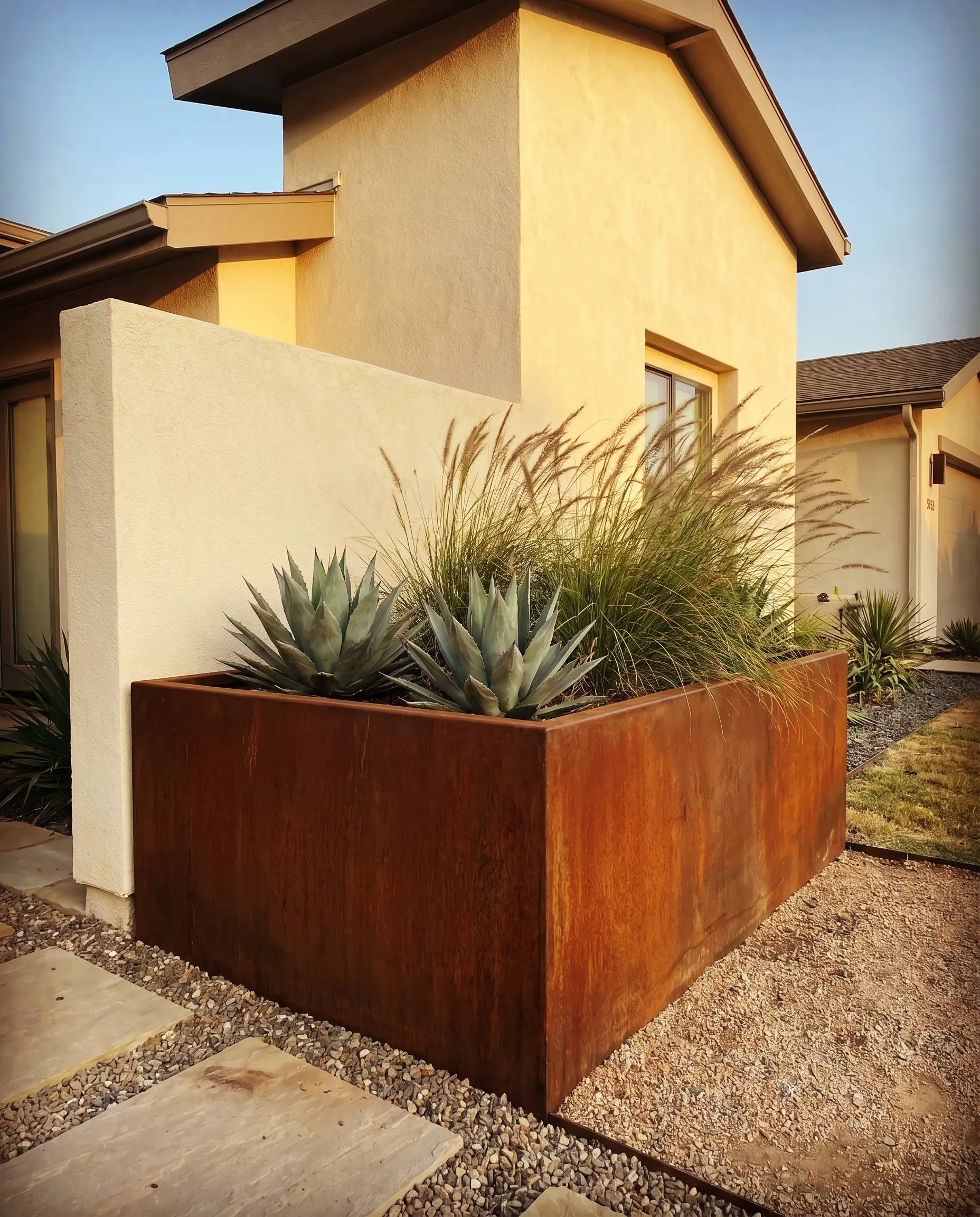
Use Corten steel for retaining walls or large, custom planter boxes installed directly against the cream foundation. The natural chemical weathering process of Corten yields a rusted, deep orange-brown patina that perfectly complements warm cream without ever requiring a drop of paint.
- Vibe: Industrial Organic.
- Key Materials: Corten steel plate.
- Styling Pro-Tip: Plant structural, architectural greenery (like Agave or tall ornamental grasses) inside the planters to break up the rigid lines of the steel and soften the transition to the cream walls.
Dark Mulch and Bronze Hardscaping Paths
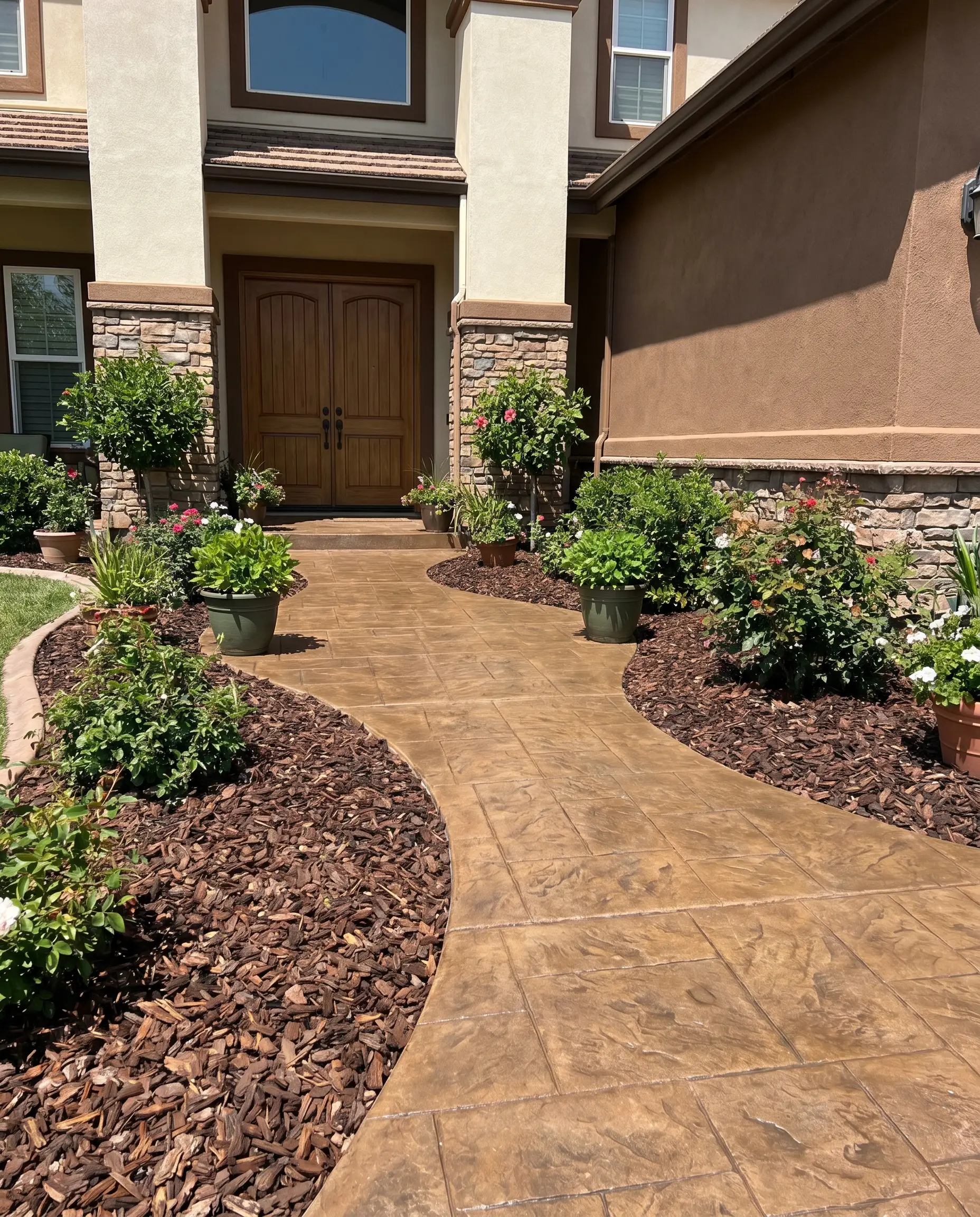
Extend the brown tones directly into the earth by utilizing dark brown natural mulch and bronze-toned pavers leading to the front entry. This visual continuity ties the ground plane to the vertical facade, anchoring the entire property.
Absolutely avoid red-dyed mulch. The artificial red tones violently clash with the sophisticated, natural brown and cream architectural palette and instantly cheapen the landscaping.
The Dated Trap
- Vibe: Tailored Earthy.
- Key Materials: Hardwood bark mulch (undyed), bronze-toned concrete pavers.
Ipe Wood Decking Extensions from the Main Brown Architecture
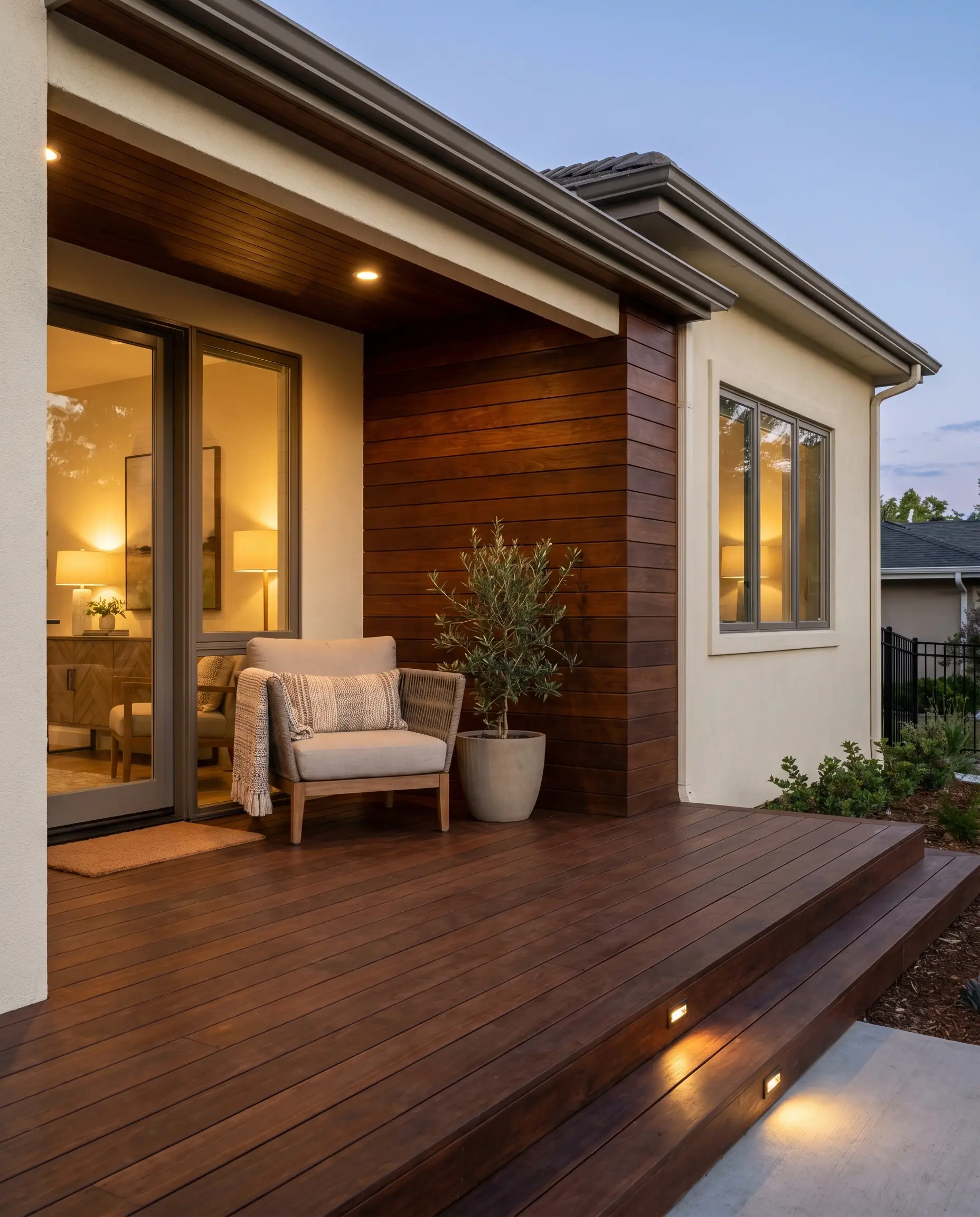
If the house features brown wood cladding on the walls, extend that visual weight to the horizontal floor plane by using rich Brazilian walnut (Ipe wood) for the front porch or wrap-around deck. This creates a seamless indoor/outdoor flow and grounds the entry sequence.
- Vibe: Luxury Modern Organic.
- Key Materials: Ipe wood decking, hidden deck fasteners.
- Architectural Detail: Ipe is incredibly dense; ensure your installation team uses specific hardwood drill bits and concealed fastening systems to maintain a flawless, high-end brown surface.
The Cream and Brown Paint Selection Palette
Selecting the correct paint requires understanding LRV (Light Reflectance Value)—a scale from 0 to 100 measuring how much light a color reflects. A cream with an LRV of 80 or higher will often look stark, blinding white in direct exterior sun, so targeting an LRV between 70 and 75 guarantees a soft, earthy presence. Below is our curated selection of high-end pairings.
| The Cream (Body) | The Brown (Trim/Accent) | Best Architectural Style |
|---|---|---|
| Benjamin Moore Swiss Coffee | Sherwin-Williams Urbane Bronze | Soft Contemporary |
| Sherwin-Williams Alabaster | Sherwin-Williams Black Fox | Bespoke Modern Farmhouse |
| Benjamin Moore White Dove | Benjamin Moore Midsummer Night | Desert Contemporary / Minimalist |
| Sherwin-Williams Shoji White | Benjamin Moore French Press | Mid-Century Modern |
| Farrow & Ball Pointing | Sherwin-Williams Urbane Bronze | Refined Heritage / Tudor |
Finalizing Your Earthy Exterior Blueprint
The cream and brown palette is not a step backward into the 1990s; it is a massive stride forward into timeless, organic modernism. By prioritizing physical material textures—like thermally modified wood siding, limewash masonry, and standing seam metal—over flat paint whenever the budget allows, you guarantee a facade rich in depth and shadow. Always remember to sample your chosen paints on both the north and south sides of the property to observe how the shifting daylight interacts with the undertones. Look at your current exterior: where can you replace a flat coat of paint with a tangible, architectural material?