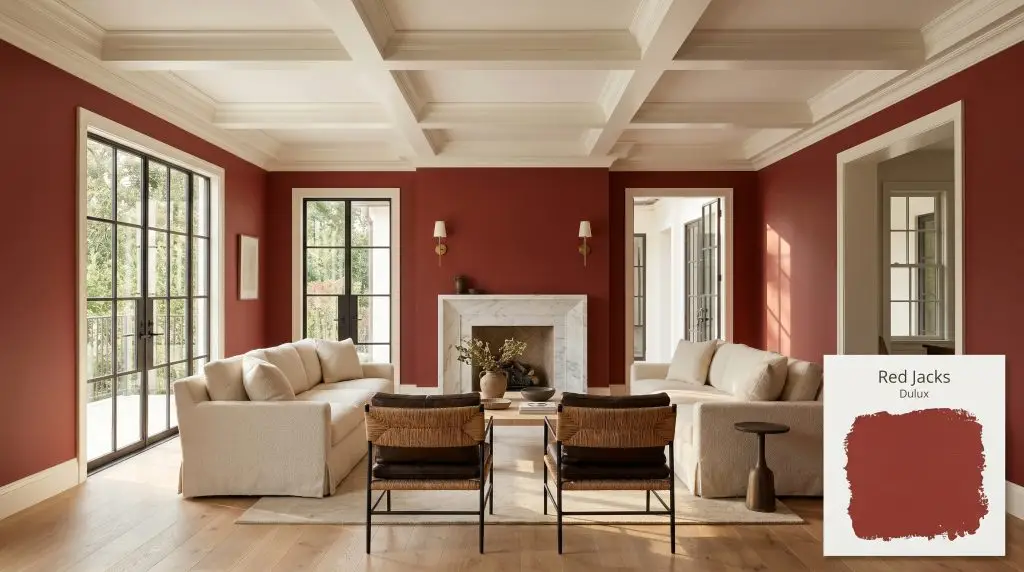
Dulux Red Jacks (NZ10E5) is a deep, vibrant terracotta red with earthy orange and brown undertones. Boasting an LRV of 12, this warm architectural finish provides a rich, enveloping atmosphere, perfect for dramatic dining rooms, striking front doors, and cozy studies.
Will Red Jacks clash with your room?
Paint Technical Profile
| Color ID / SKU | NZ10E5 |
| HEX Code | #95352e |
| Light Reflectance (LRV) | 12 |
| Use | Interior, Exterior |
| Best Exposures | South, West |
| Best For | Accent walls, front doors, dining rooms, cabinetry |
Dulux Red Jacks: Designing With a Substantial Terracotta Red
Red paint often carries a reputation for being aggressive or overly theatrical, but certain pigments operate on an entirely different frequency. Dulux Red Jacks bypasses the primary brightness of traditional reds, offering a substantial, earthy warmth that feels as permanent as fired clay. This terracotta red acts as a foundational material rather than just a surface coating.
When applied thoughtfully, it wraps a room in a reassuring, weighty atmosphere that instantly changes how light travels through the space. You can pair this enveloping color structure with honed marble and unlacquered brass for a refined, modern Mediterranean aesthetic. Alternatively, you can lean into its rugged nature by contrasting the walls with reclaimed wood and blackened steel.
Dulux Red Jacks: Temperature, Undertones & LRV
If you are wondering whether Dulux Red Jacks leans warm or cool, it is undeniably a warm, stabilizing hue. Instead of relying on a stark primary base, this paint draws its heat from a rich blend of earthy pigments that mimic natural brick and aged clay.
With an LRV of 12, this architectural finish absorbs a massive 88% of the light that hits it. This low light reflectance means it will dramatically compress the visual boundaries of a room, creating an immersive, shadowy environment rather than a bright and airy one.
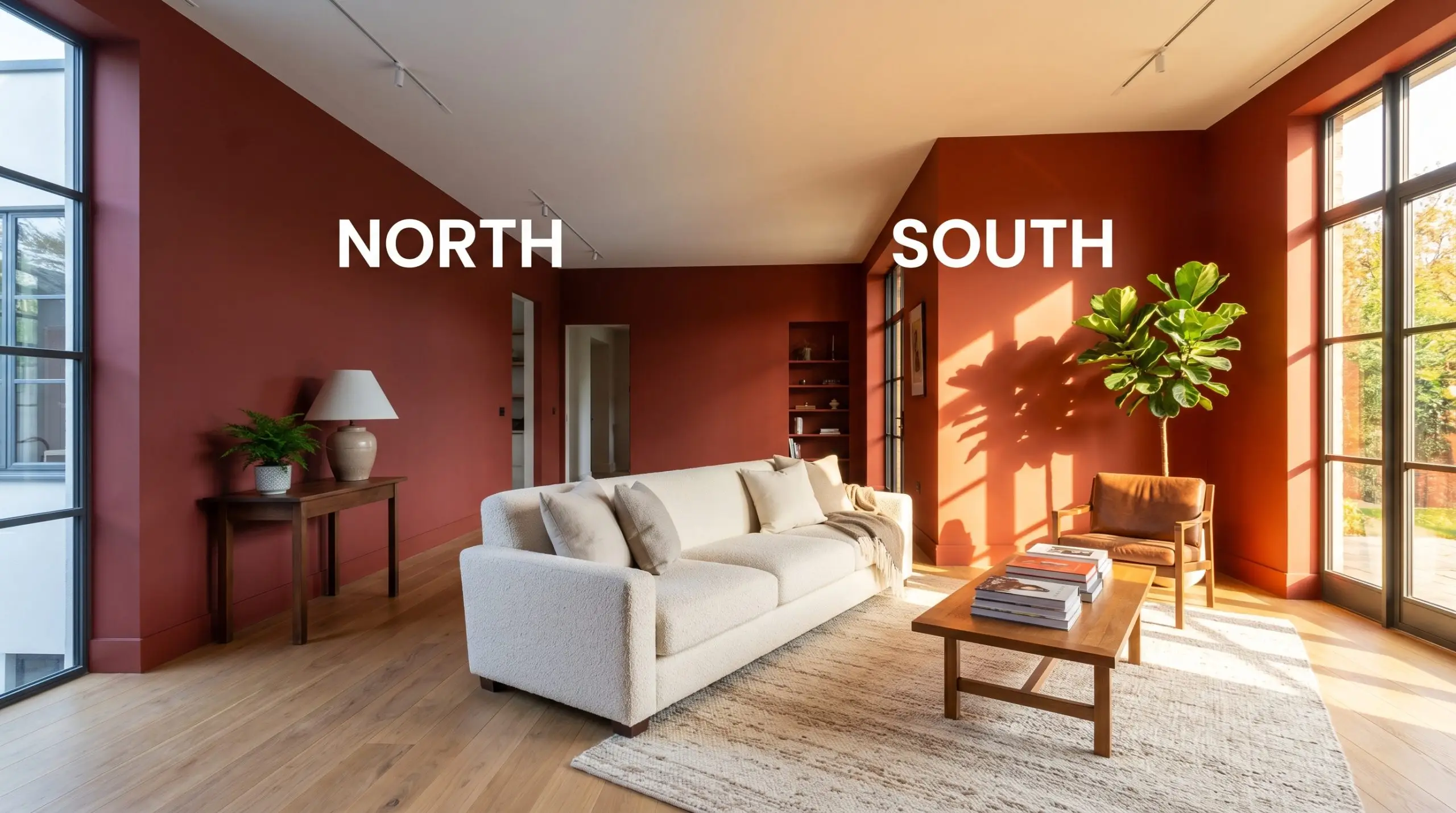
Lighting Effects & The Chameleon Factor of This Earthy Red
Because this warm chromatic profile relies entirely on its brown and orange base, the final aesthetic is dictated by your light source.
Popular Applications for Dulux Red Jacks
Deploying a saturated terracotta requires intentional placement to prevent the pigment from overwhelming the architecture. Here is how to manipulate this substantial hue across various environments to achieve highly customized, premium results.
Dining Rooms
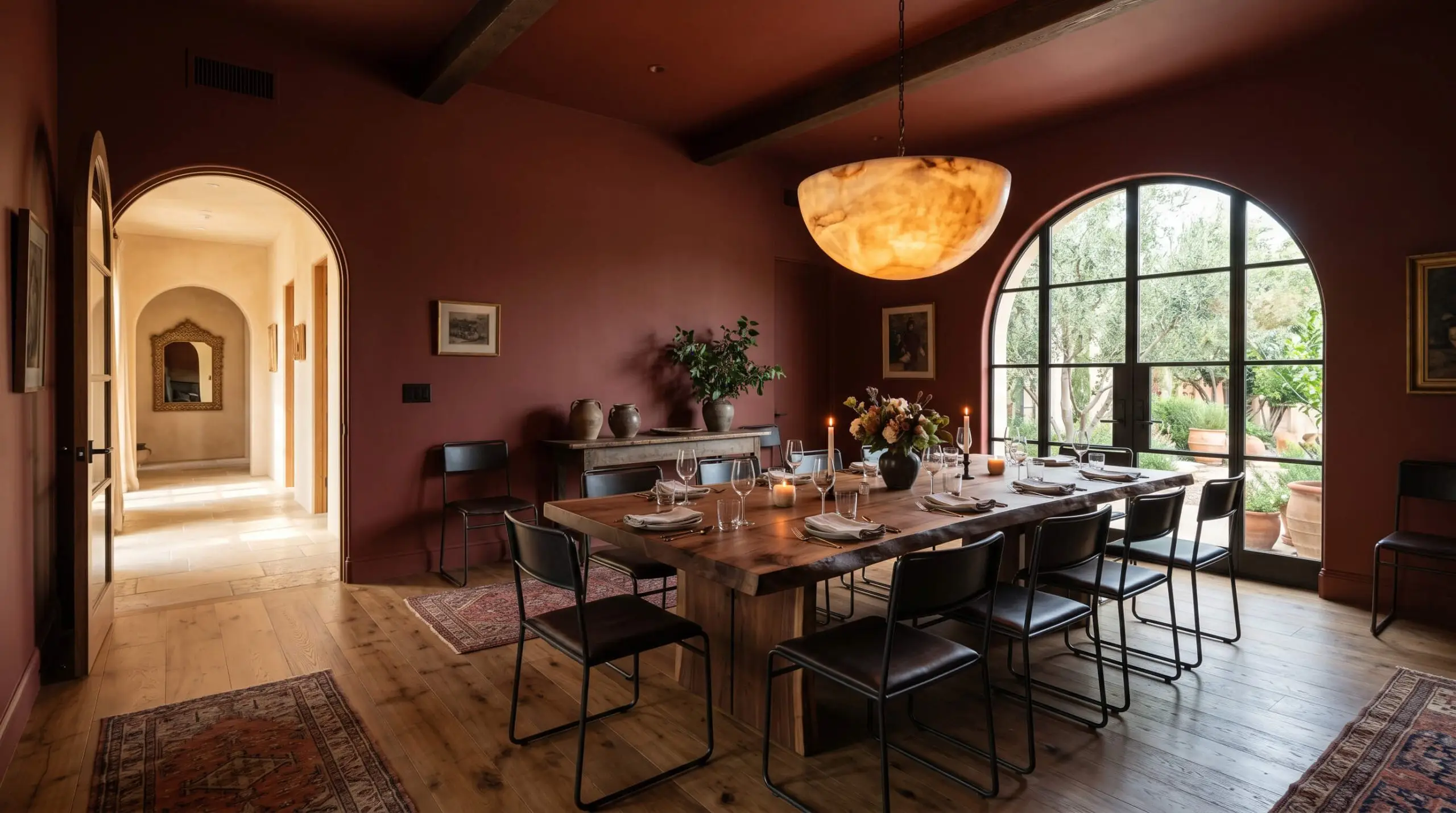
Taking this earthy orange-red into a dining space instantly manufactures a coveted dining room warmth perfect for long evening meals. Rather than defaulting to a traditional formal dining setup, you can use this shade to cultivate a modern, tactile environment inspired by moody Mediterranean restaurants.
Apply the paint across the walls and ceiling to create an enveloping color structure, then contrast that matte warmth with a raw live-edge dining table and sleek blackened steel chairs.
When wrapping a dining space in a low-LRV red, install a striking, oversized alabaster or fluted glass pendant light directly above the table to break up the visual weight and provide a necessary luminous focal point.
Hackrea Pro-Tip (The Luminous Contrast)
Front Doors & Exteriors
Will Red Jacks work with your specific lighting, floor, or furniture?
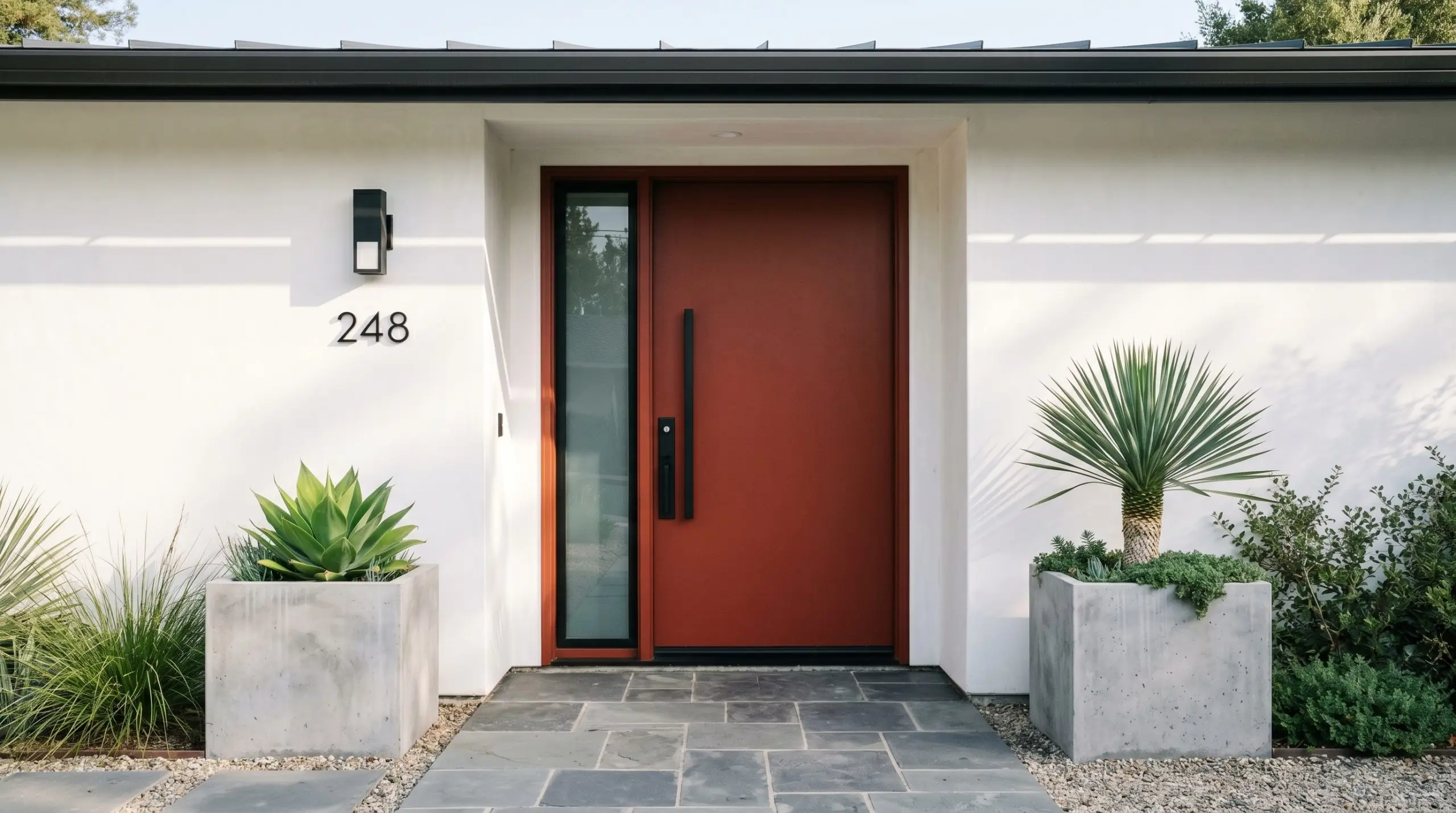
Using an earthy red on an exterior facade provides a brilliant pop of architectural warmth that naturally complements surrounding green landscaping. While often associated with heritage brick homes, this exterior accent shade looks incredibly fresh when applied against modern, smooth white stucco.
For a striking front door update, pair the saturated terracotta with oversized, matte black entry hardware and sleek concrete planters to firmly establish a contemporary aesthetic.
Intense, direct afternoon sun will amplify the orange in this red and drastically lighten its perceived depth; always test a large swatch outdoors to ensure the color remains grounded and doesn’t turn overly vibrant.
Clash Warning (The Direct Sunlight Washout)
Home Libraries & Studies
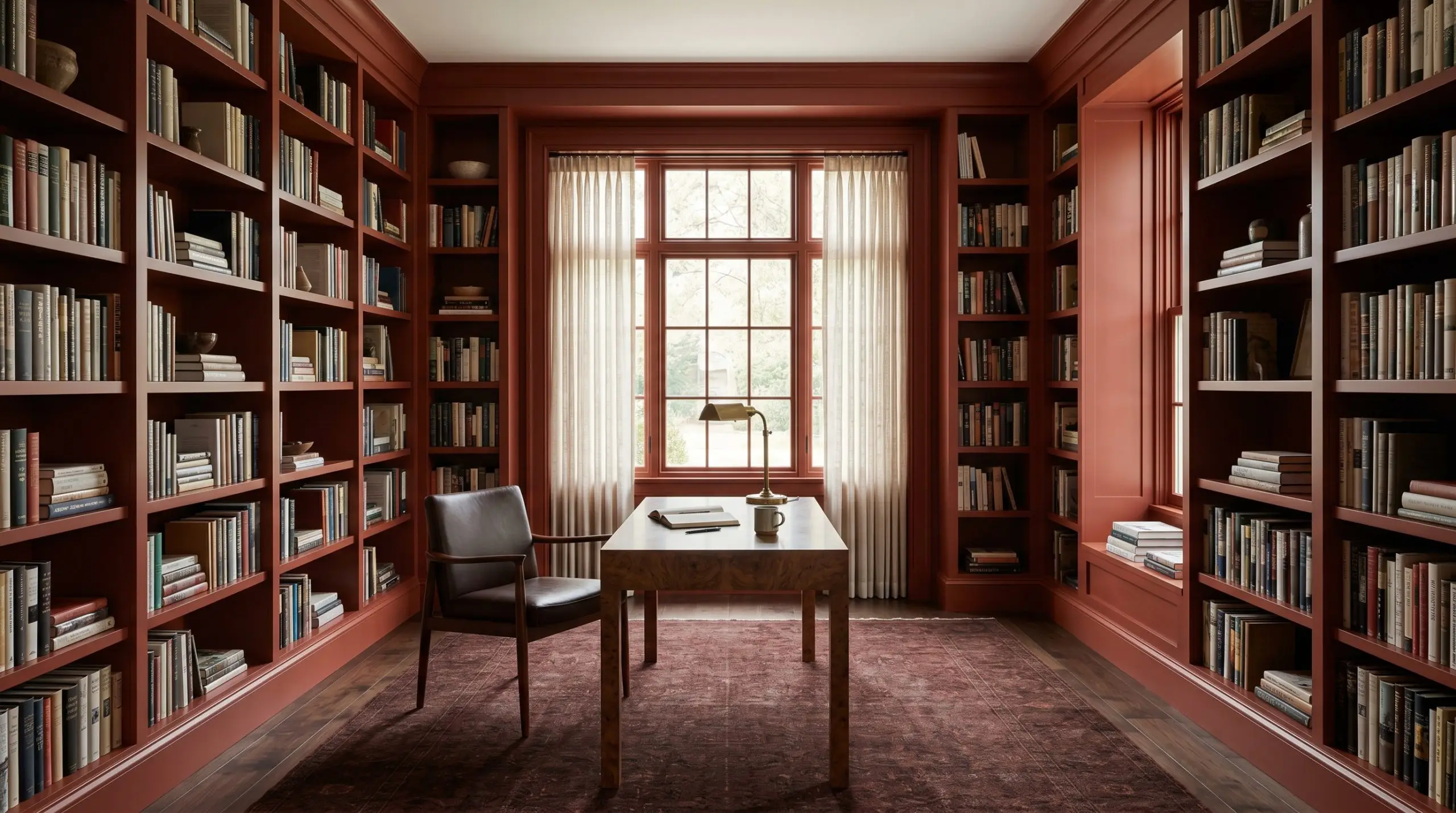
A dedicated workspace requires a stabilizing environment, and this brick tone provides the perfect visual boundary for focused, quiet work. You can easily bypass predictable, dusty library tropes by leaning into a refined, monochromatic modernism.
Paint the entire room—including modern built-in bookcases and window casings—in this single hue, then furnish the space with a sleek burled walnut desk and a minimalist leather chair. Introduce subtle texture through a tonal jacquard rug and sheer wool window treatments to soften the hard architectural lines without breaking the immersive palette.
Powder Rooms
Will Red Jacks work with your specific lighting, floor, or furniture?
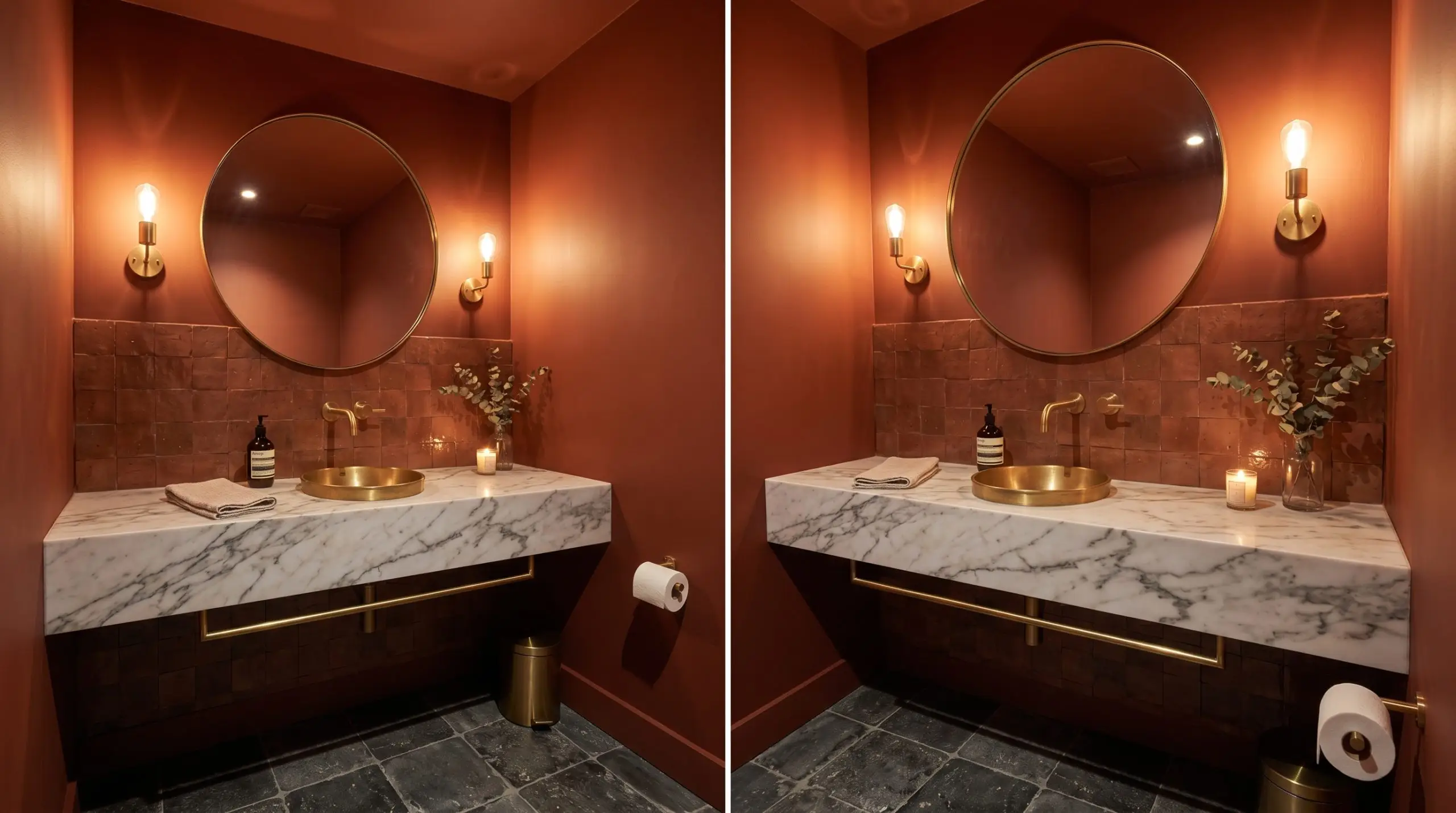
Windowless half-baths are the ideal testing ground for profound, light-absorbing colors because you are intentionally creating a dramatic departure from the rest of the home. Coating the walls and ceiling in this warm chromatic profile turns a standard utility space into a secluded, sensory retreat.
Elevate the installation by pairing the matte red walls with a floating honed marble vanity and a deeply textured zellige tile backsplash. The rich terracotta beautifully catches the subtle reflections of unlacquered brass sconces, adding a layer of curated elegance that feels custom-built.
Relational Aesthetics & Pairing Dulux Red Jacks
Placing this saturated terracotta next to other finishes requires a deliberate approach to contrast, as its dense pigment absorbs surrounding light. It demands crisp, intentional boundaries to hold its shape rather than soft tonal bleeds.
Tailoring the Trim and Millwork
Tactile Finishes and Material Selections
Building a Cohesive Palette
Curated Design Aesthetics
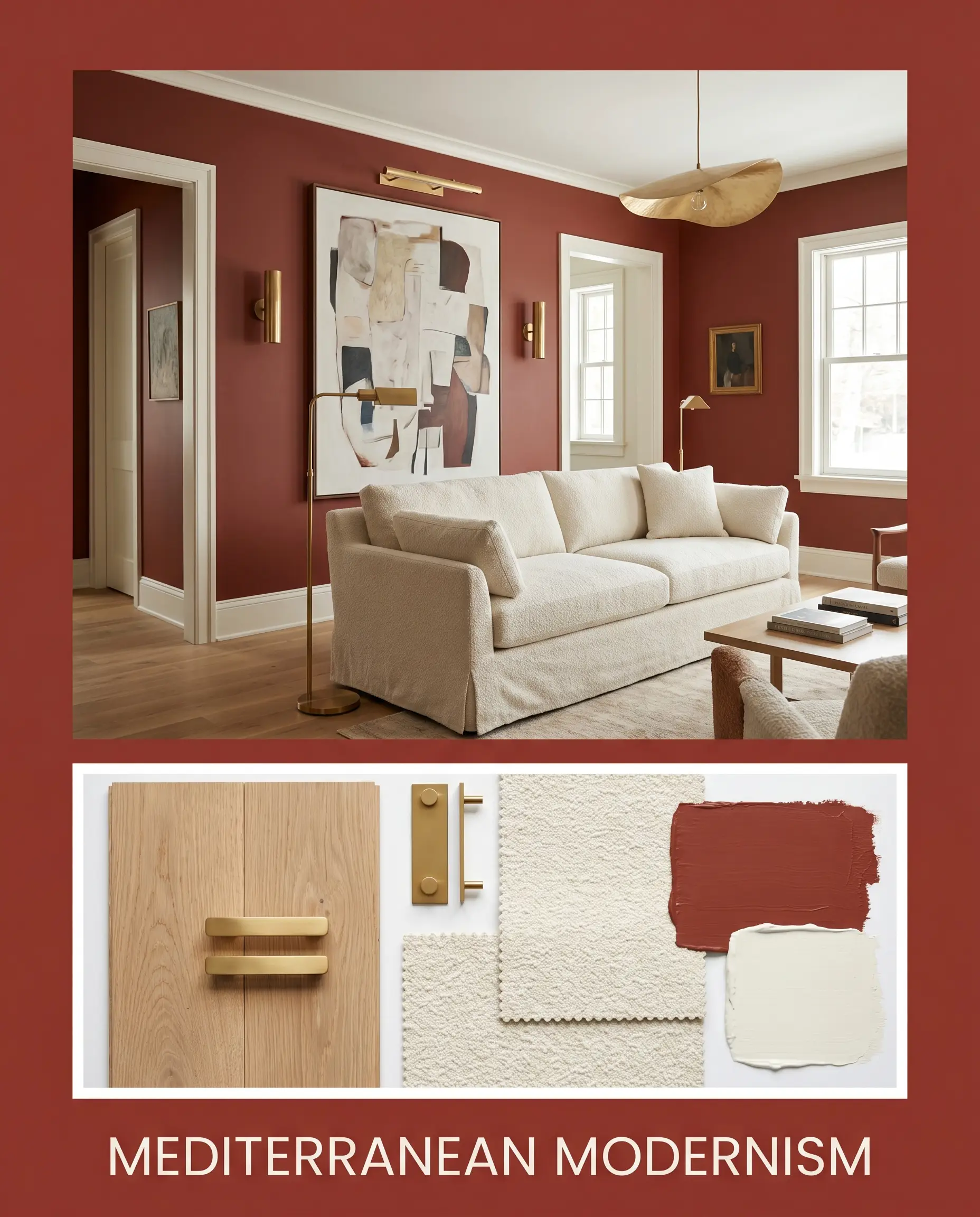
Mediterranean Modernism This aesthetic relies on the tension between raw textures and refined metals to modernize the rich terracotta. Stabilize the room with rift-sawn white oak flooring and introduce Benjamin Moore White Dove on the trim to establish crisp, tailored boundaries. Layer the space with oversized abstract art, slipcovered sofas in cream bouclé, and unlacquered brass lighting fixtures that cast a luminous glow against the matte red walls.
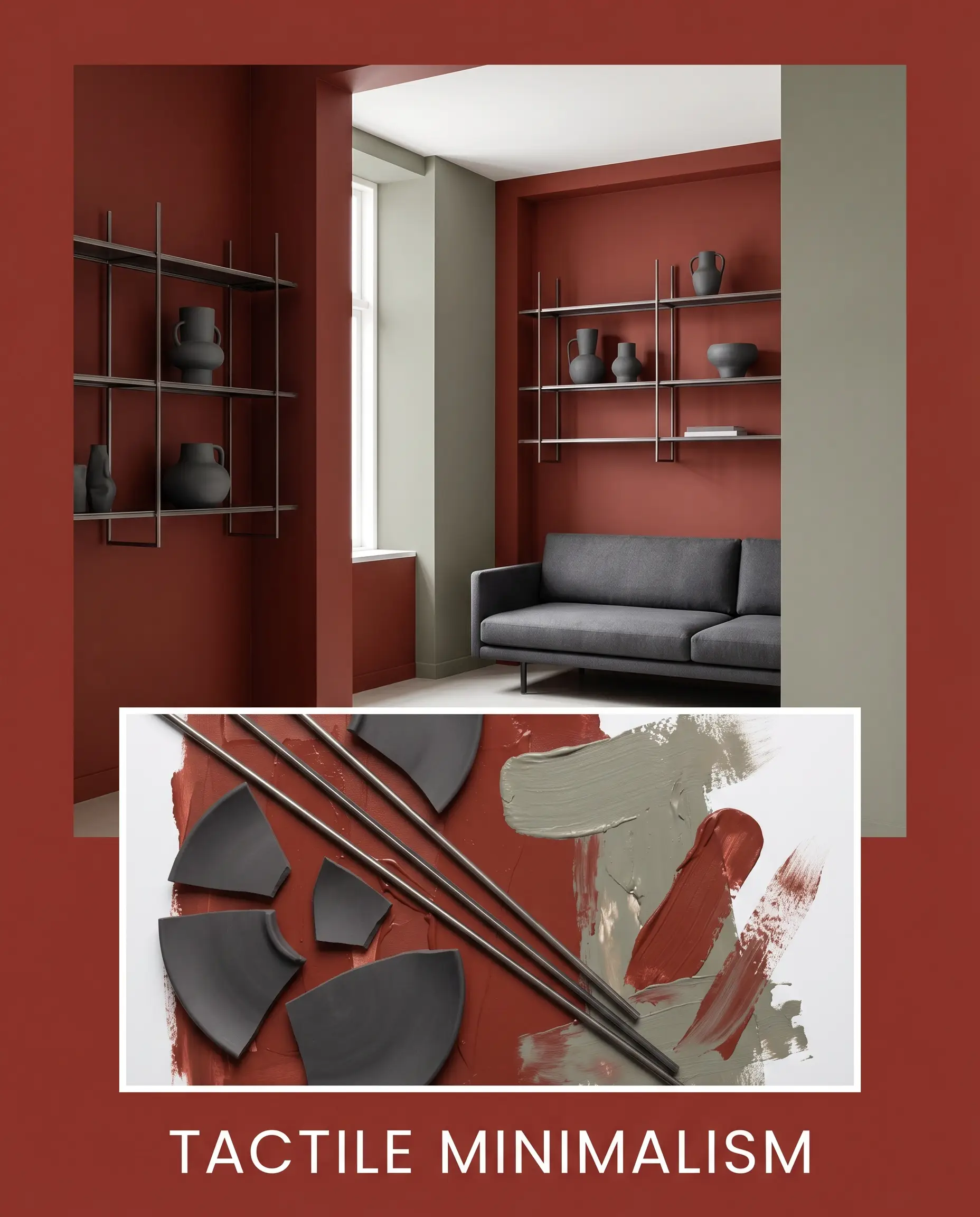
Tactile Minimalism Stripping back the decor allows the dense pigment of Red Jacks to act as the primary architectural feature. Introduce Sherwin-Williams Evergreen Fog on adjoining walls to cool the visual temperature, creating a calm, restorative energy. Furnish the environment with sleek, minimalist metal shelving, matte charcoal ceramic vessels, and a low-profile sofa to maintain a strict, uncluttered silhouette.
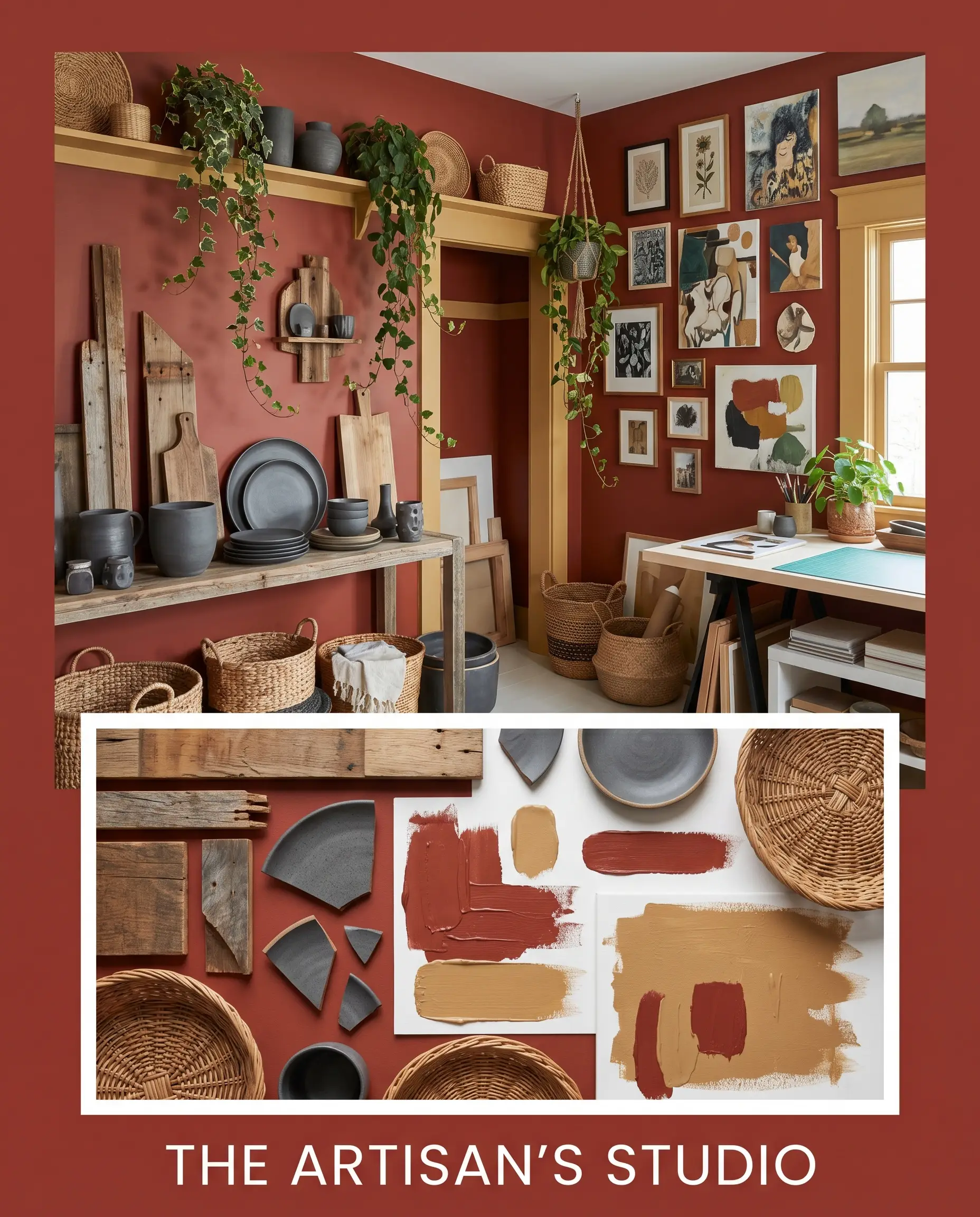
The Artisan’s Studio Embracing a highly energized, analog color story, this palette pairs the earthy red with Farrow & Ball India Yellow accents to cultivate a rich, creative atmosphere. Ground the vibrant heat with intensely saturated, dark grey stoneware and reclaimed wood architectural salvage. Finish the styling with an asymmetrical gallery wall, woven baskets, and trailing ivy to soften the robust color structure.
Evaluating Dulux Red Jacks Against Rival Hues
Deciding between similar saturated reds often comes down to the specific lighting conditions and the architectural style of your home. If your space lacks natural light or you require a slightly different undertone to coordinate with existing hard finishes, comparing these nuances becomes a critical step in the design process.
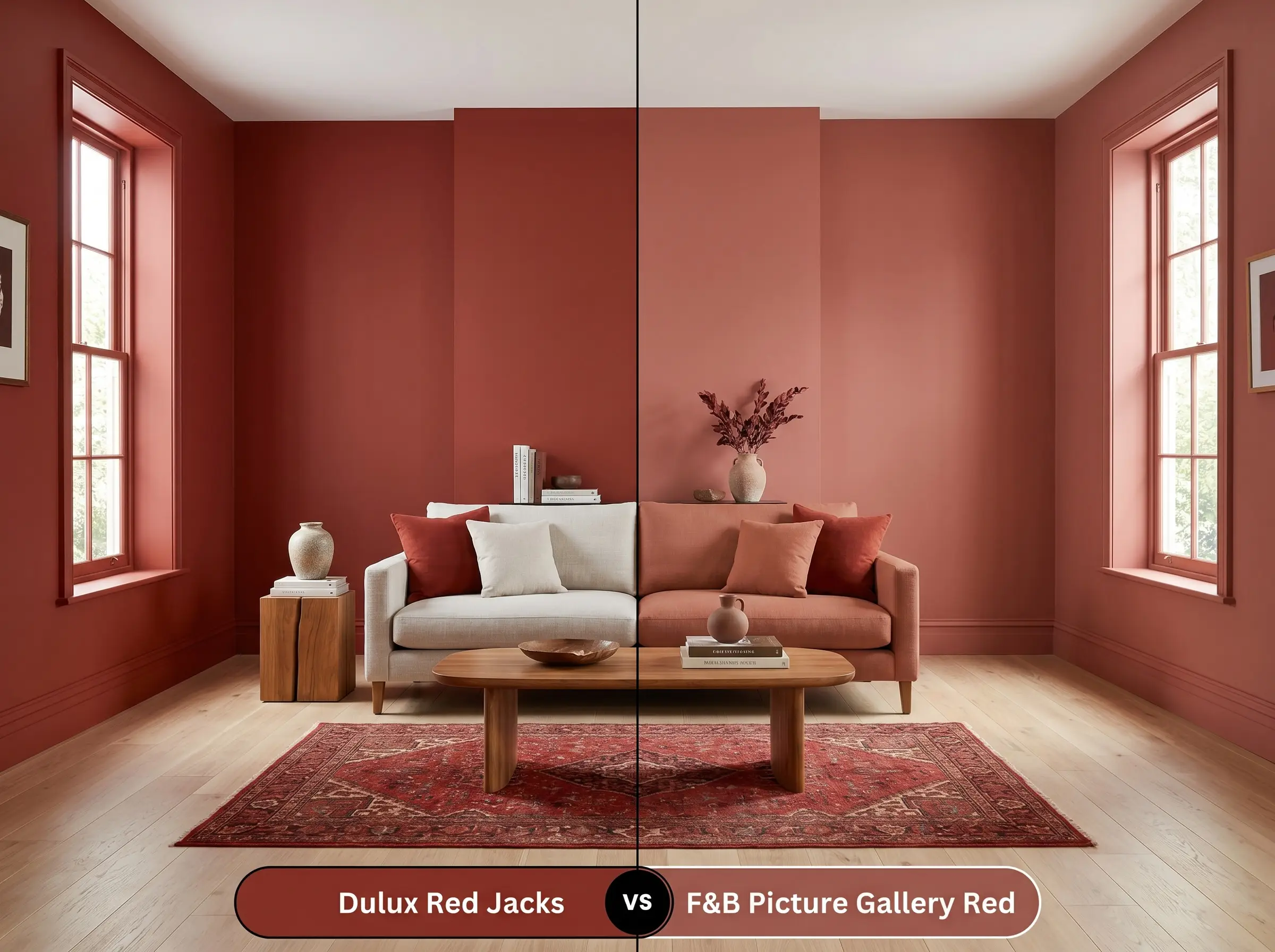
Dulux Red Jacks vs. Farrow & Ball Picture Gallery Red No. 42
Will Red Jacks work with your specific lighting, floor, or furniture?
Farrow & Ball Picture Gallery Red carries a slightly higher light reflectance and leans further into a traditional, rosy brown base. If you are working in a dimly lit room and need a color that feels slightly more buoyant and historic, the Farrow & Ball option performs beautifully. However, if you want a distinctly modern, fiery terracotta edge that commands attention in direct sunlight, the Dulux pigment remains the superior choice.
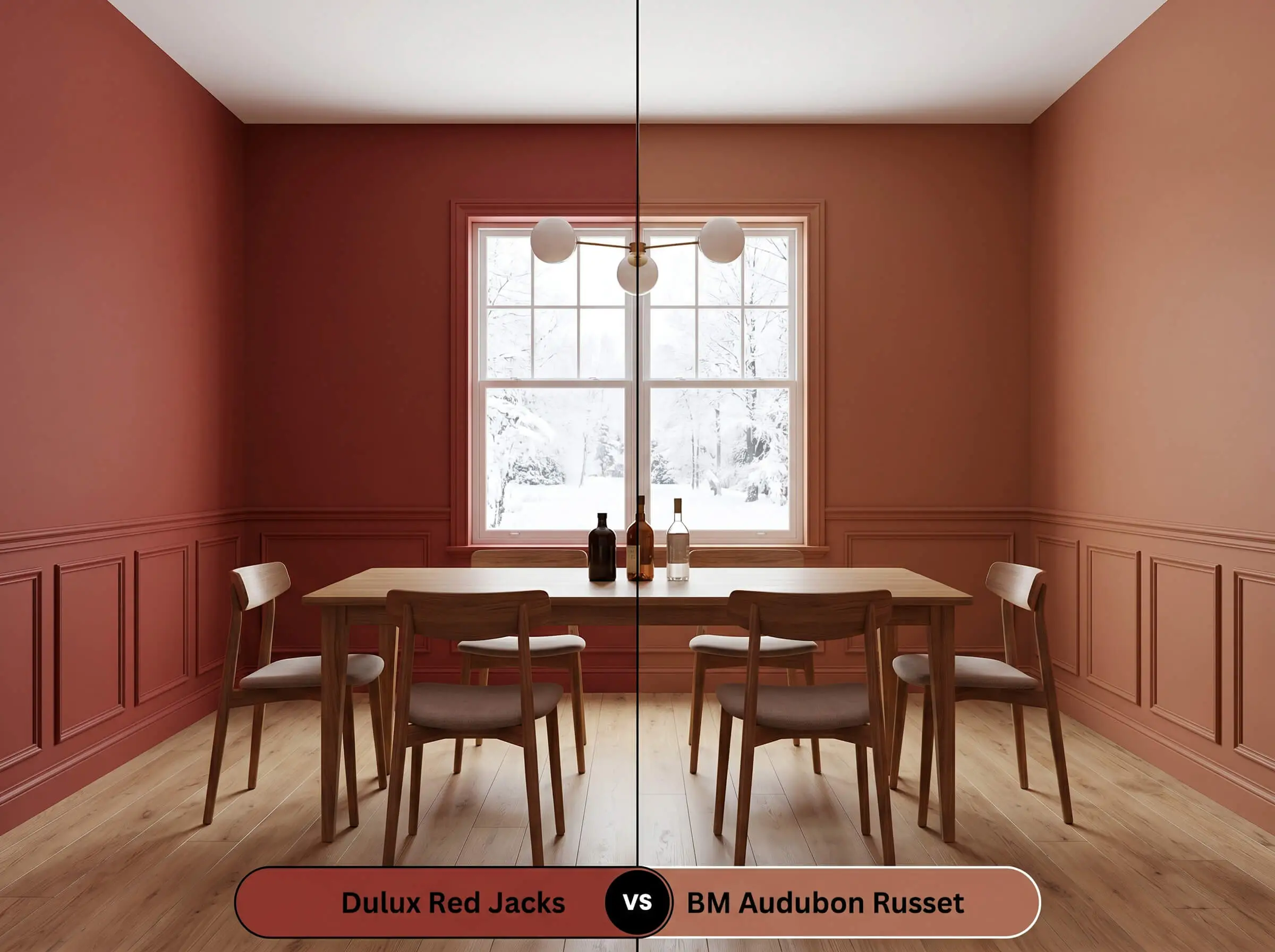
Dulux Red Jacks vs. Benjamin Moore Audubon Russet HC-51
Will Red Jacks work with your specific lighting, floor, or furniture?
Benjamin Moore Audubon Russet shifts noticeably toward a muted, dusty orange, completely shedding the deeper, brick-like gravity of the Dulux hue. If your design relies on extensive natural wood paneling and you want a softer, more faded background, the Benjamin Moore shade provides excellent tonal harmony. Conversely, if you need a profound, weighty foundation to contrast against crisp white stucco or modern white oak, Red Jacks delivers the necessary visual density.
Dulux Red Jacks vs. Sherwin-Williams SW 2839 Roycroft Copper Red
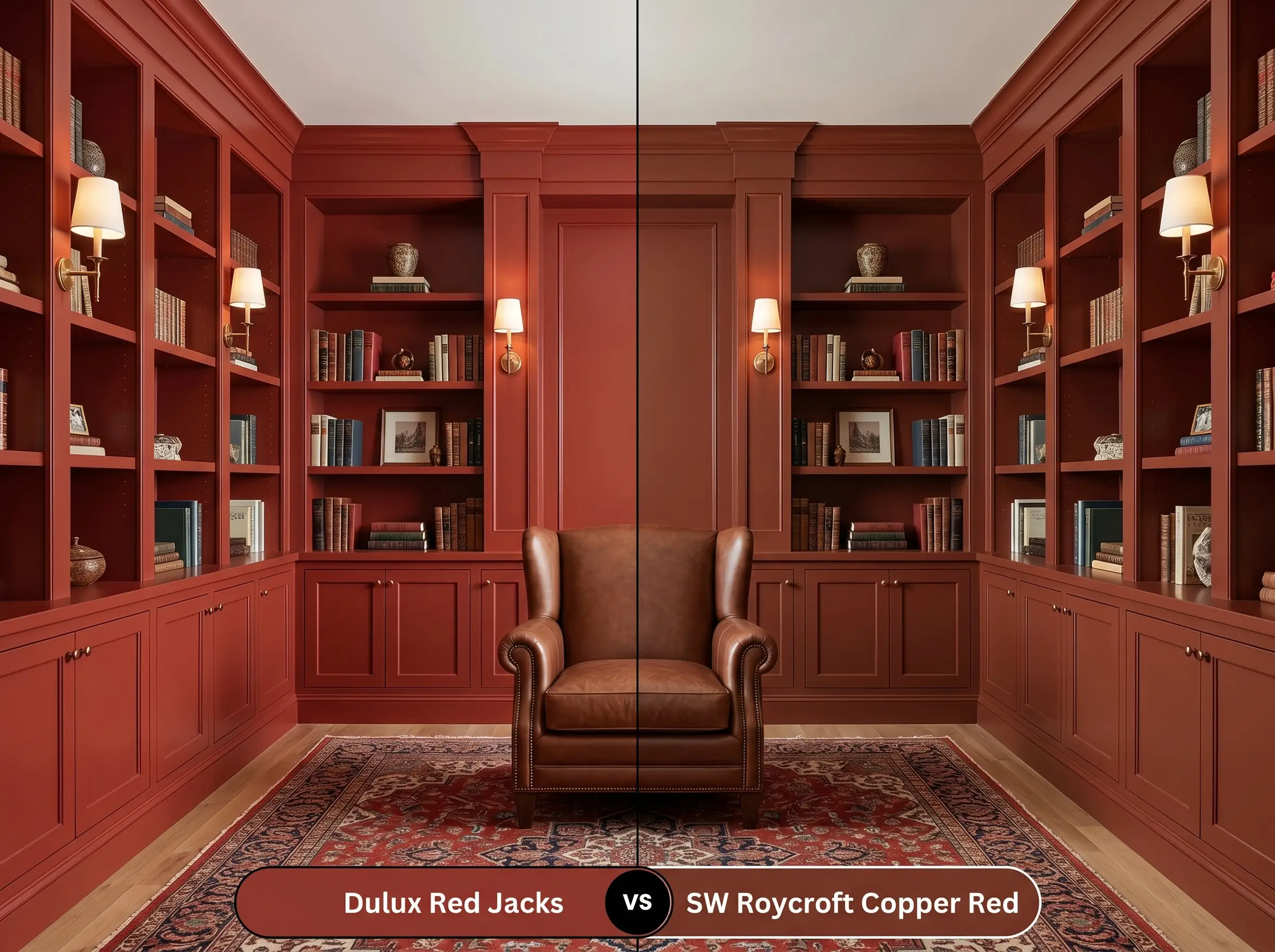
Sherwin-Williams Roycroft Copper Red injects a distinct, earthy brown into its profile, making it read much closer to a weathered clay pot. If you are styling a rustic or highly textured environment and want to suppress any vibrant red flashes, the Sherwin-Williams color acts as a stabilizing neutral. Choose the Dulux alternative when you specifically want that rich, resonant heat to energize a room.
Alternative Pigments and Brand Matches
Sometimes a specific hue is nearly perfect, but the architecture demands a subtle shift in depth or you need to source a match from a different paint manufacturer.
Same-Brand Alternatives
Cross-Brand Matches
Execution and Technical Application
Transitioning from color theory to the physical reality of rolling this pigment onto your walls requires strict attention to finish and preparation.
The Dynamic Sheen Guide
Primer Strategy
A tinted, high-hiding grey primer is absolutely essential before applying this resonant red. Standard white primer will severely distort the final color and force you to apply unnecessary layers to achieve true opacity.
Coverage & Success Tips
Due to its dense, low-LRV composition, expect to apply a minimum of two generous coats, though three are often required for a flawless, professional result. Always maintain a wet edge while rolling to prevent “flashing”—those visible, overlapping roller marks that easily ruin the smooth appearance of dark, matte walls. Touch-ups on this specific shade are notoriously difficult to blend, so aim to complete entire wall sections in a single, continuous painting session.
Frequently Asked Questions
Because this pigment relies strongly on earthy brown undertones to stabilize the red, a windowless hallway with warm artificial lighting will definitely pull forward those muddy brown notes. To keep the color feeling vibrant and intentional, ensure your overhead lighting uses crisp bulbs around 3000K to 3500K.
This robust color performs beautifully on exteriors, but intense, direct sunlight will naturally amplify its orange tones and slightly wash out the depth over time. Using a premium, UV-resistant exterior paint in a satin or semi-gloss finish will significantly prolong the lifespan of the rich terracotta hue.
Layering this resonant red against dark wood panelling creates an incredibly moody, immersive environment, but it drastically reduces the light reflectance of the room. You must intentionally balance this dark combination with highly reflective elements, like unlacquered brass hardware or oversized mirrors, to prevent the space from feeling oppressive.
A semi-gloss finish is the ultimate choice for an exterior door painted in this saturated hue. The higher sheen not only provides a brilliant, welcoming glow but also creates a durable, protective barrier that actively reflects harsh sunlight, reducing the rate of UV fading.
The Final Architectural Assessment
Dulux Red Jacks is the ultimate architectural choice for homeowners who want to inject profound, earthy warmth into their spaces without resorting to primary, aggressive reds. It excels in modern Mediterranean dining rooms, tactile minimalist studies, and striking exterior applications where its brick-like gravity can truly establish the design. This saturated terracotta is perfect for those who understand how to manipulate light and contrast, using the pigment to cultivate an immersive, highly curated energy.
While this resonant red is incredibly versatile, it is fundamentally incompatible with breezy, coastal-inspired interiors or soft, pastel-heavy aesthetics. Placing this dense, earthy pigment next to washed sea-glass blues, delicate mint greens, or overly distressed whitewashed furniture creates a jarring visual disconnect, as the robust terracotta completely overpowers those fragile, airy tones. If your home relies on a light, beach-inspired flow, this weighty color will disrupt that serene energy and feel severely out of place.
Hackrea Design Secret (The Coastal Clash)
Room Compatibility & Clashes Diagnoses
Hackrea's reports evaluating the compatibility of Red Jacks in real rooms.No compatibility tests for Red Jacks yet.
Be the first to see how this color reacts to your space. Run a free architectural diagnostic now.