Cinematic Interiors: Merging Heavy Monoliths with Space Age Chrome
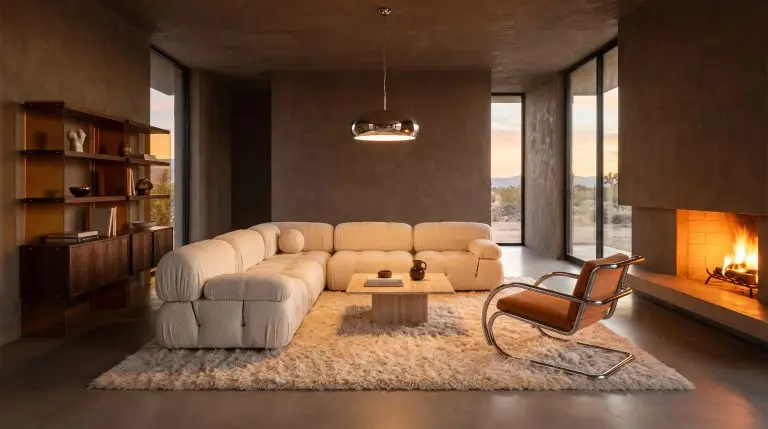
The era of the sterile, flat-white box is officially dead. Design-forward creatives and boutique spatial architects are aggressively shifting toward interiors that feel like a highly curated set design—spaces possessing emotional weight, cinematic tension, and otherworldly nostalgia. To achieve this, the 2027 forecast demands a masterful collision of two distinct movements: warm brutalism retro-futurism. Warm Brutalism grounds a room with heavy, raw, monolithic earthiness, while Retro-Futurism slices through that weight with sleek, curved, forward-looking synthetic metals. The magic of this aesthetic lies entirely in the tactile friction between the deeply organic and the unapologetically synthetic.
The Architectural Shell: Softening the Monolith
Executing this style requires abandoning standard drywall for materials that feel profoundly permanent. The architectural shell of the room must carry immense visual gravity, yet remain physically soft and inviting to the touch.
Apply Micro-Cement and Roman Clay Washes
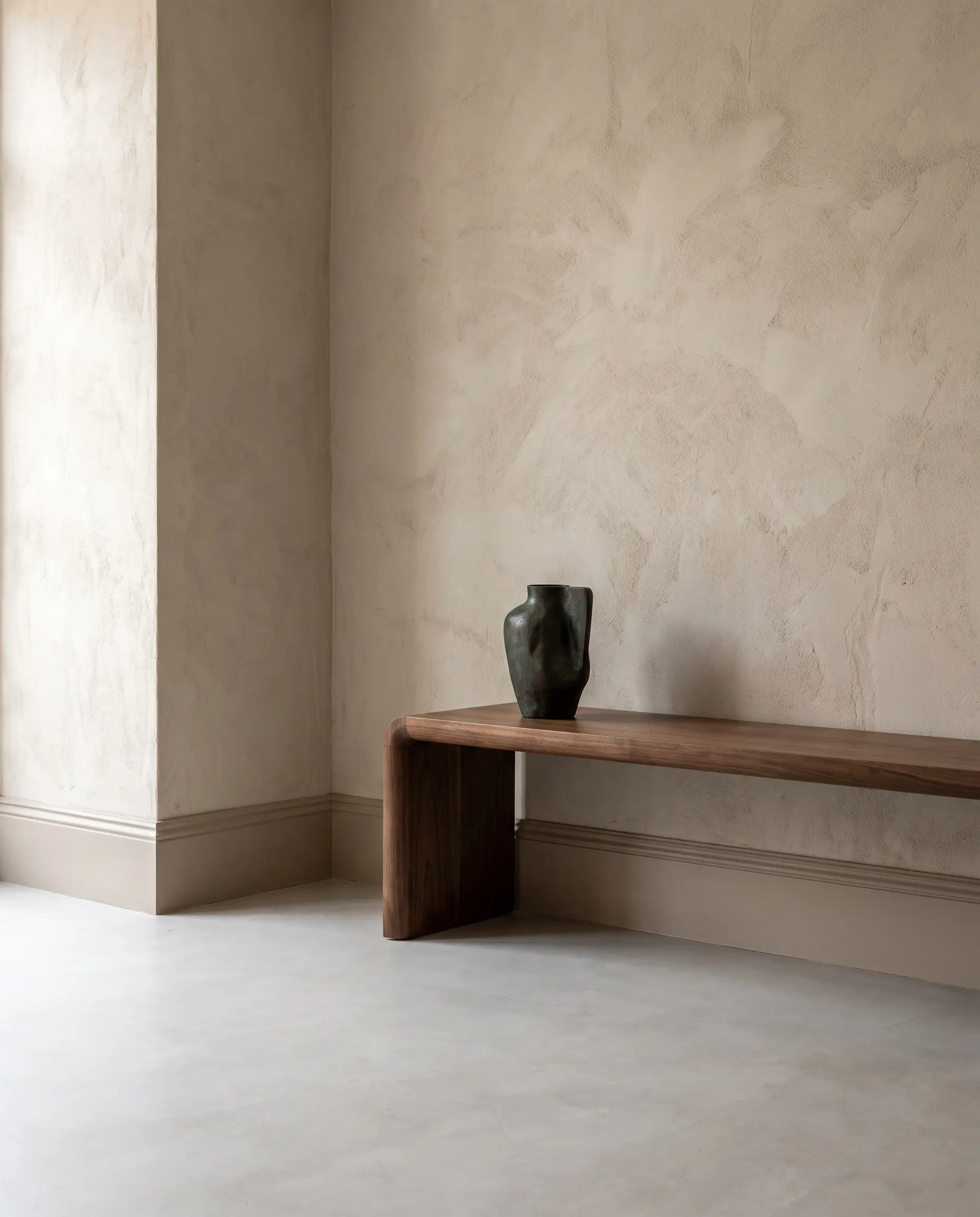
Flat paint simply cannot carry the necessary visual weight, so we must wrap the room in continuous, seamless micro-cement floors and heavily textured Roman clay walls. By dictating warm, earthy tones like deep taupe, pumice, and muted terracotta, these treatments catch ambient light with a soft, matte friction rather than a cold, industrial glare.
- Vibe: Ancient permanence meets modern restraint.
- Key Materials: Seamless micro-cement, Roman clay, limewash.
- Paint Recommendation: Portola Paints “Charleston” (Roman Clay Finish).
- Color Match: Farrow & Ball “Jitney” No. 293 (for trim or secondary lime-washing).
Construct Monolithic Built-Ins and Travertine Plinths
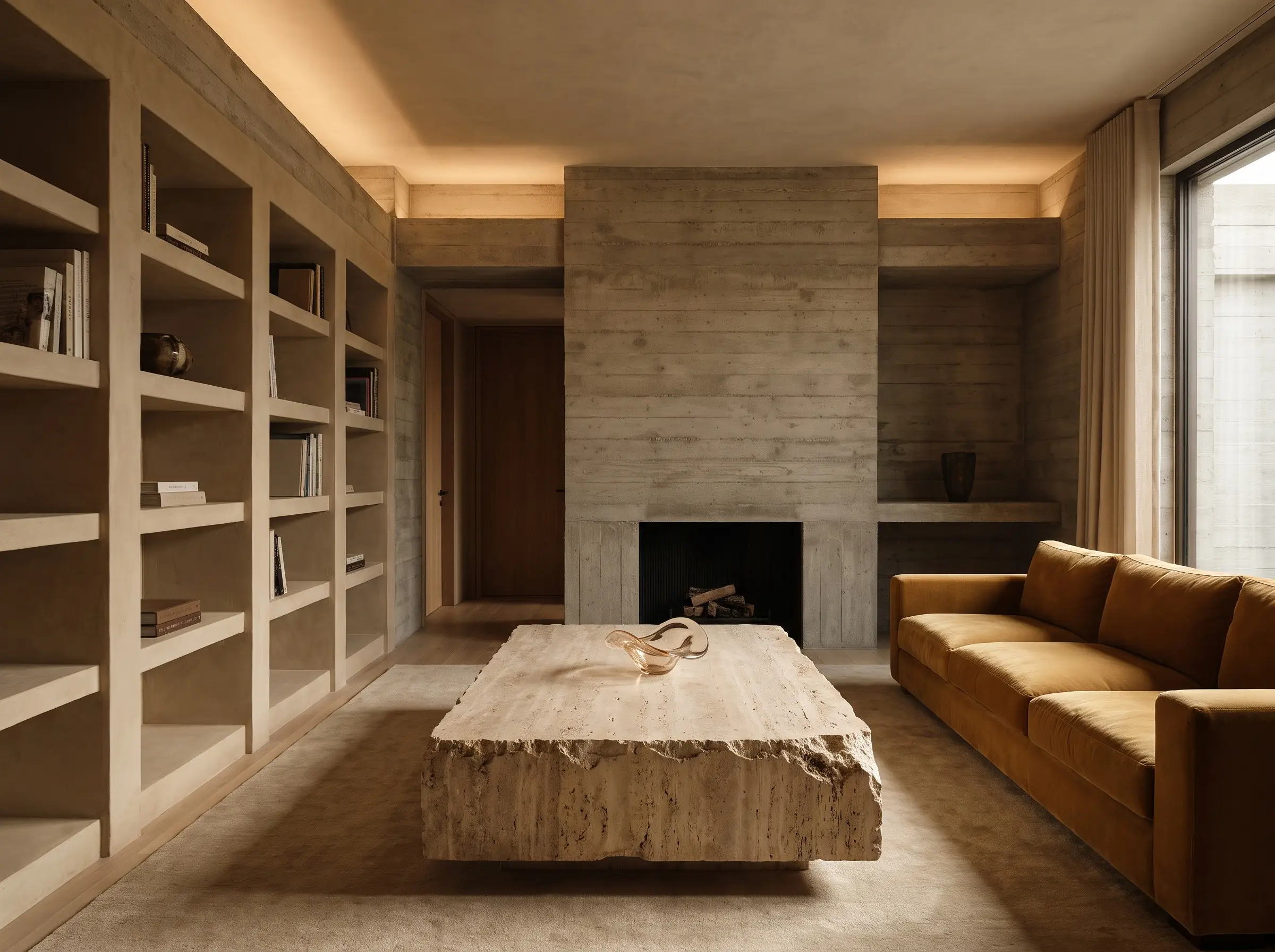
Ground the room by replacing flimsy, freestanding bookshelves with thick, masonry-style built-ins that appear carved directly from the architecture. Introduce the plinth concept by utilizing raw travertine blocks or poured concrete pedestals as coffee tables, instantly establishing a heavy, sculptural gravity.
- Vibe: Architectural weight and spatial permanence.
- Key Materials: Unfilled raw travertine, board-formed concrete, plaster-coated MDF for built-ins.
- Styling Pro-Tip: Keep the surface of the plinth incredibly sparse to emphasize its mass; a single, delicate object creates necessary visual tension.
Contrast Stone with Deep Burl Wood and Walnut
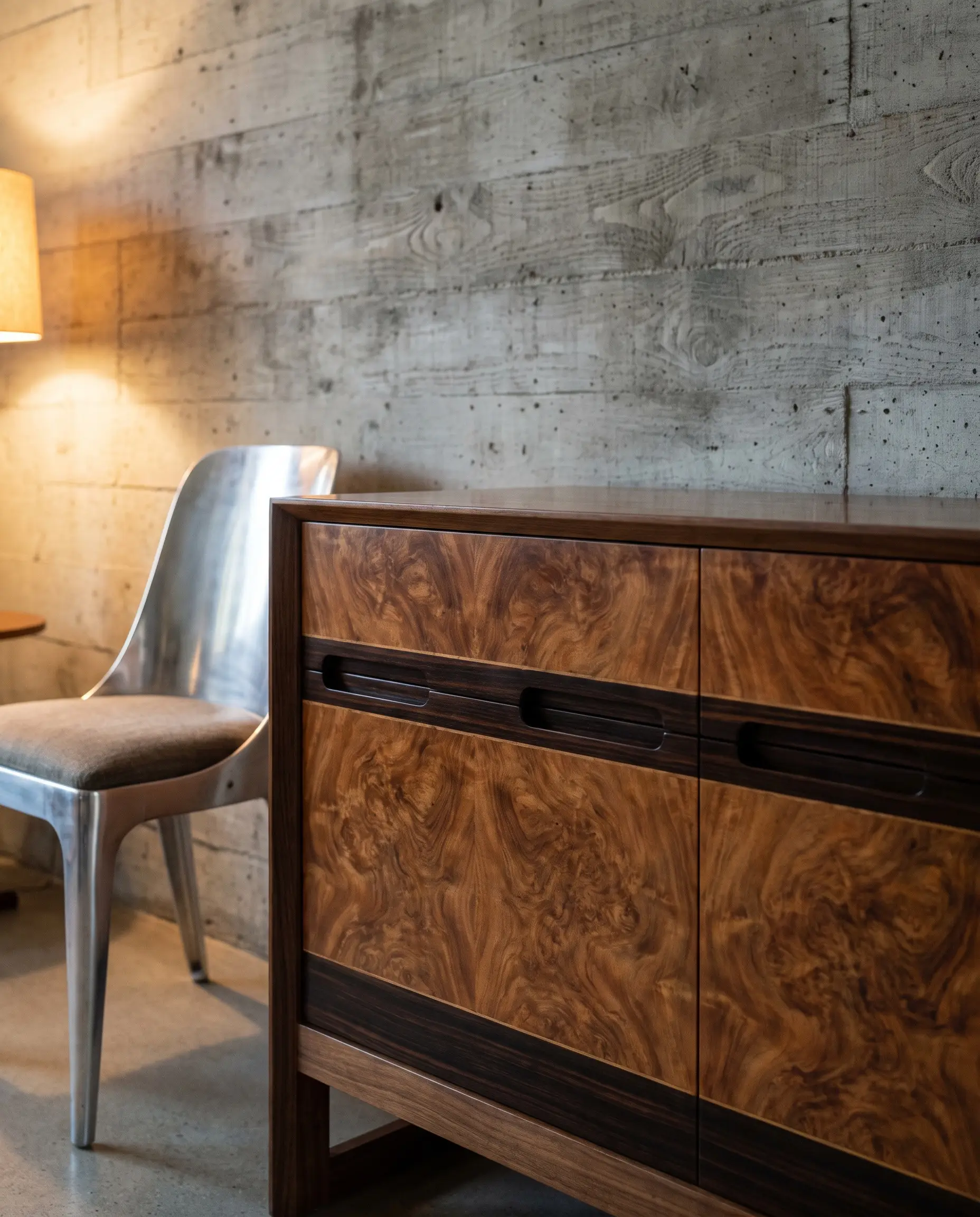
To prevent the monolithic shell from reading like a sterile bunker, you must inject aggressive organic warmth through highly figured, deeply toned woods. Skip the ubiquitous pale ash or white oak entirely; mandate rich, dark, rift-sawn walnut or swirling burl wood to serve as the critical organic bridge between the raw stone walls and the incoming synthetic metals.
- Vibe: Earthy opulence and tactile richness.
- Key Materials: Burl wood veneers, rift-sawn dark walnut, Macassar ebony.
Burl wood is the absolute counter-material to concrete. While concrete absorbs light and feels rigidly uniform, the chaotic, swirling grain and polished sheen of burl wood refracts light, injecting erratic, organic movement that softens the rigid brutalist geometry.
Material Pairing Focus
The Retro-Futuristic Furniture Layer: Curves and Chrome
Now that the architectural shell is heavy and raw, we introduce a stark, space-age slickness. The furniture layer relies on low-slung profiles, synthetic sheen, and nostalgic 1970s optimism to create deliberate friction against the matte walls.
Anchor with Low-Slung, Modular Biomorphic Seating
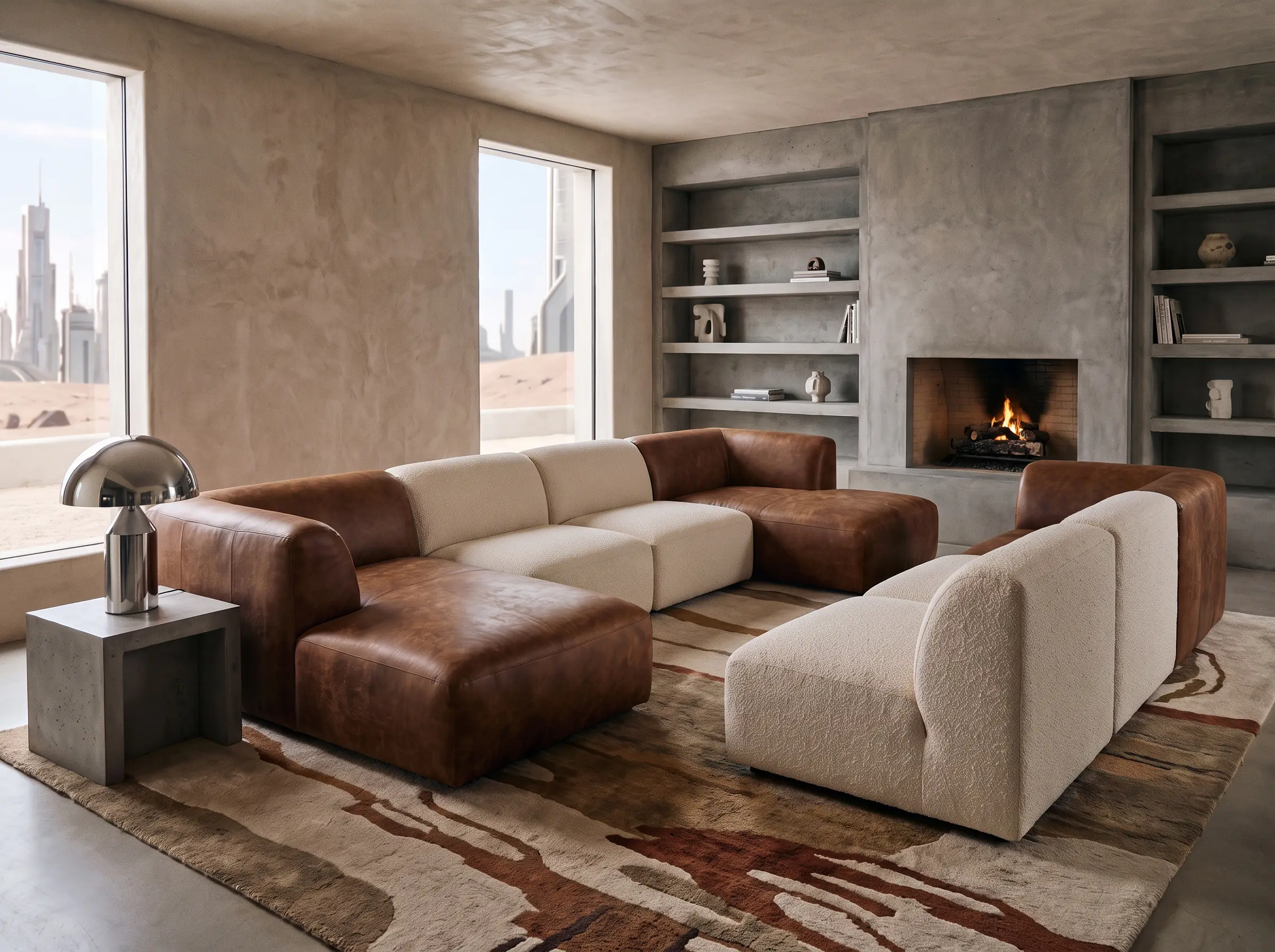
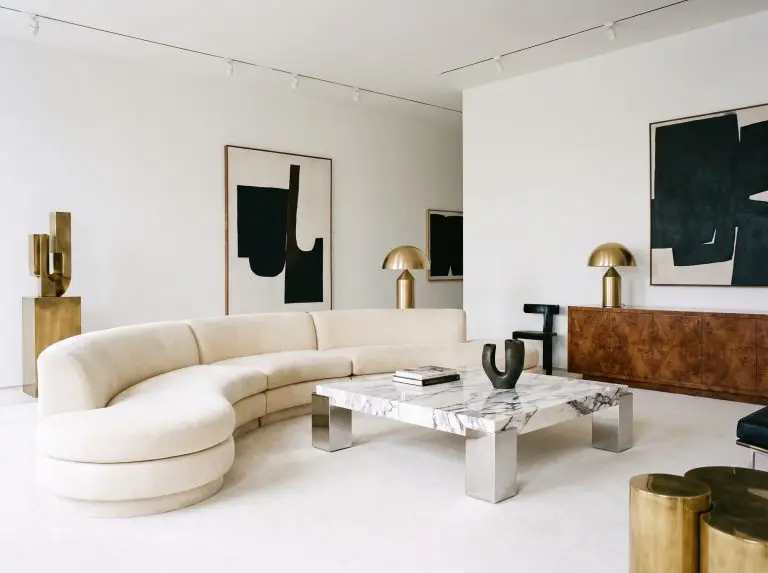
The seating must physically ground the inhabitant, utilizing floor-hugging, sprawling silhouettes that encourage a cinematic, lounge-heavy posture. Source modular, biomorphic shapes that mimic the iconic curves of a modernized Togo or Camaleonda, allowing their soft, organic forms to contrast sharply against the rigid masonry built-ins.
- Vibe: Sci-fi lounge and relaxed gravity.
- Key Silhouette: Floor-hugging, armless modular blocks, and biomorphic curves.
- Material Match: Heavyweight bouclé, distressed aniline leather, or dense mohair.
Inject Tubular Steel and Polished Aluminum
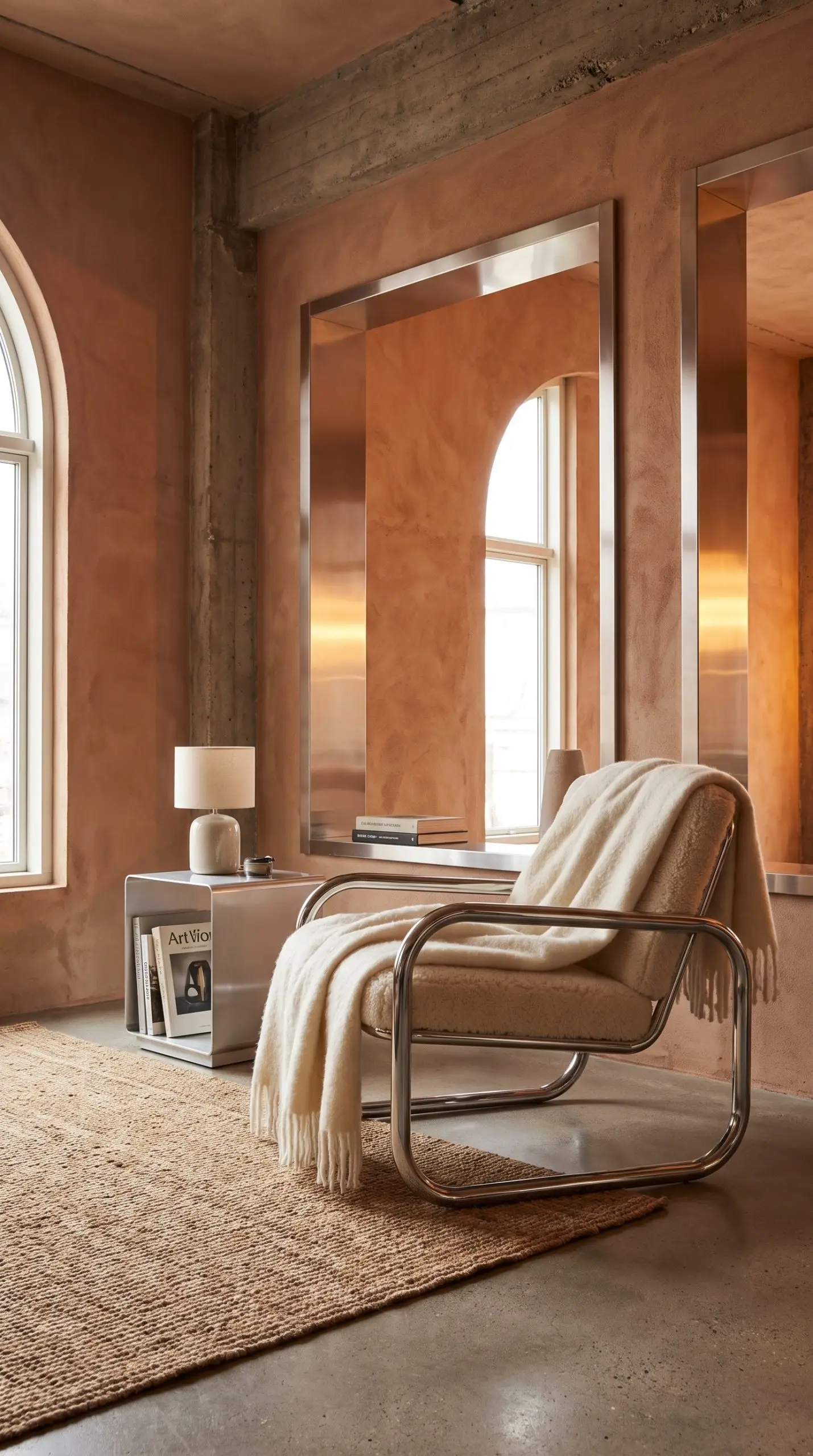
Puncture the matte, earthy plaster with the cold, synthetic brilliance of highly polished, reflective metals. Incorporating tubular chrome lounge chairs or anodized aluminum side tables forces light to bounce aggressively around the matte room, creating profound spatial depth.
- Vibe: Forward-looking 1970s optimism.
- Do: Polished chrome, brushed aluminum, and stainless steel framing.
- Don’t: Matte black, brushed brass, or oil-rubbed bronze hardware.
Layer Tinted Lucite and Smoked Glass Surfaces
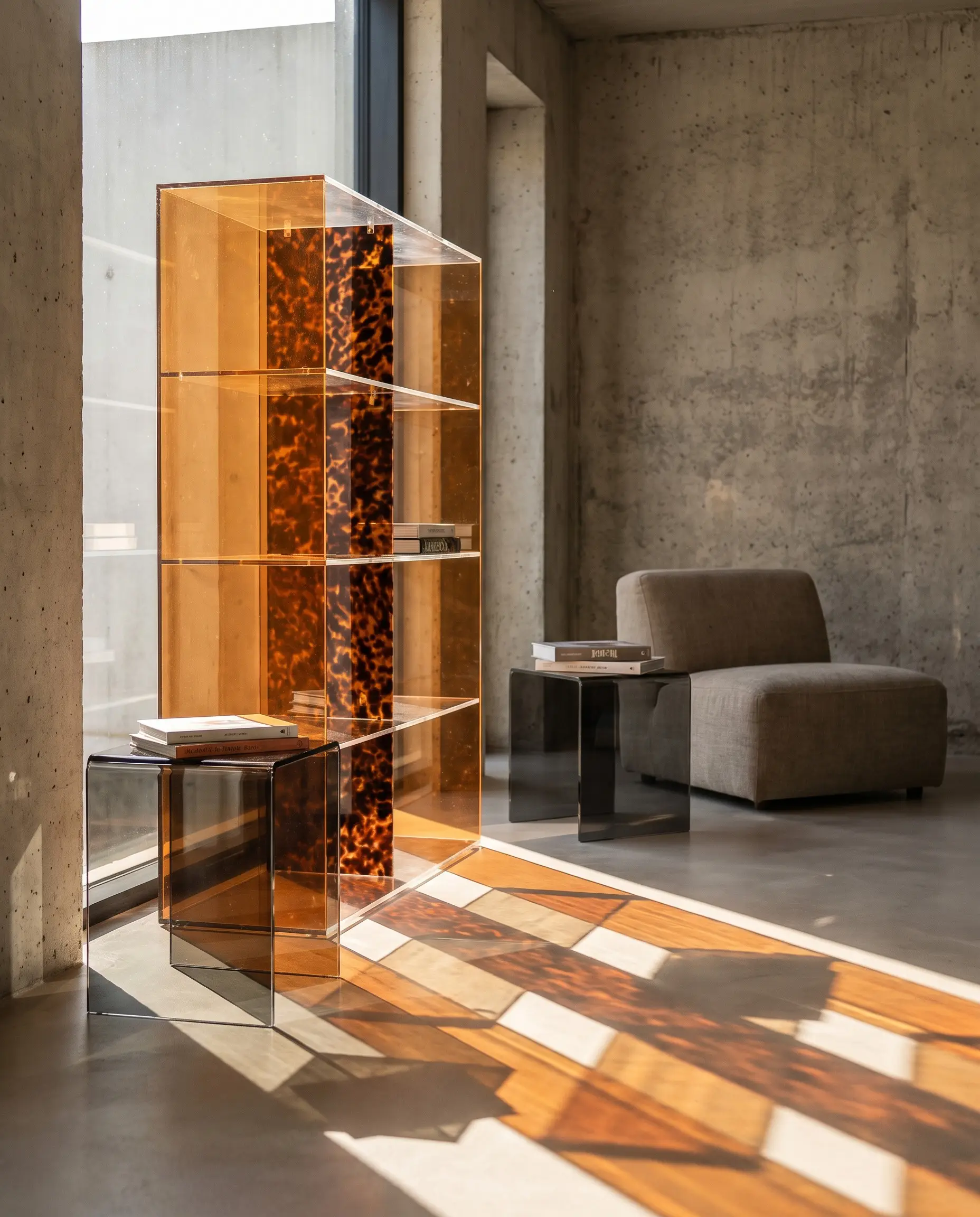
Integrate space-age transparencies through amber-tinted lucite shelving or heavy, smoked black glass tabletops. These materials feel inherently sci-fi and filter light beautifully, but their sheer transparency prevents them from adding visual clutter to the already heavy brutalist base.
- Vibe: Ethereal, synthetic contrast.
- Key Materials: Amber or tortoiseshell lucite, smoked charcoal glass, cast acrylic.
- Styling Pro-Tip: Position tinted lucite directly in the path of natural light to cast warm, colored shadows across the micro-cement floors.
Atmospheric Lighting: Designing the Cinematic Glow
Lighting is not an accessory in this aesthetic; it is an active architectural material that dictates the mood. Overhead lighting is strictly forbidden, as this trend relies entirely on ambient, directional illumination to curate a deliberate set-design atmosphere.
Strictly Enforce a 2700K Amber Ambient Temperature
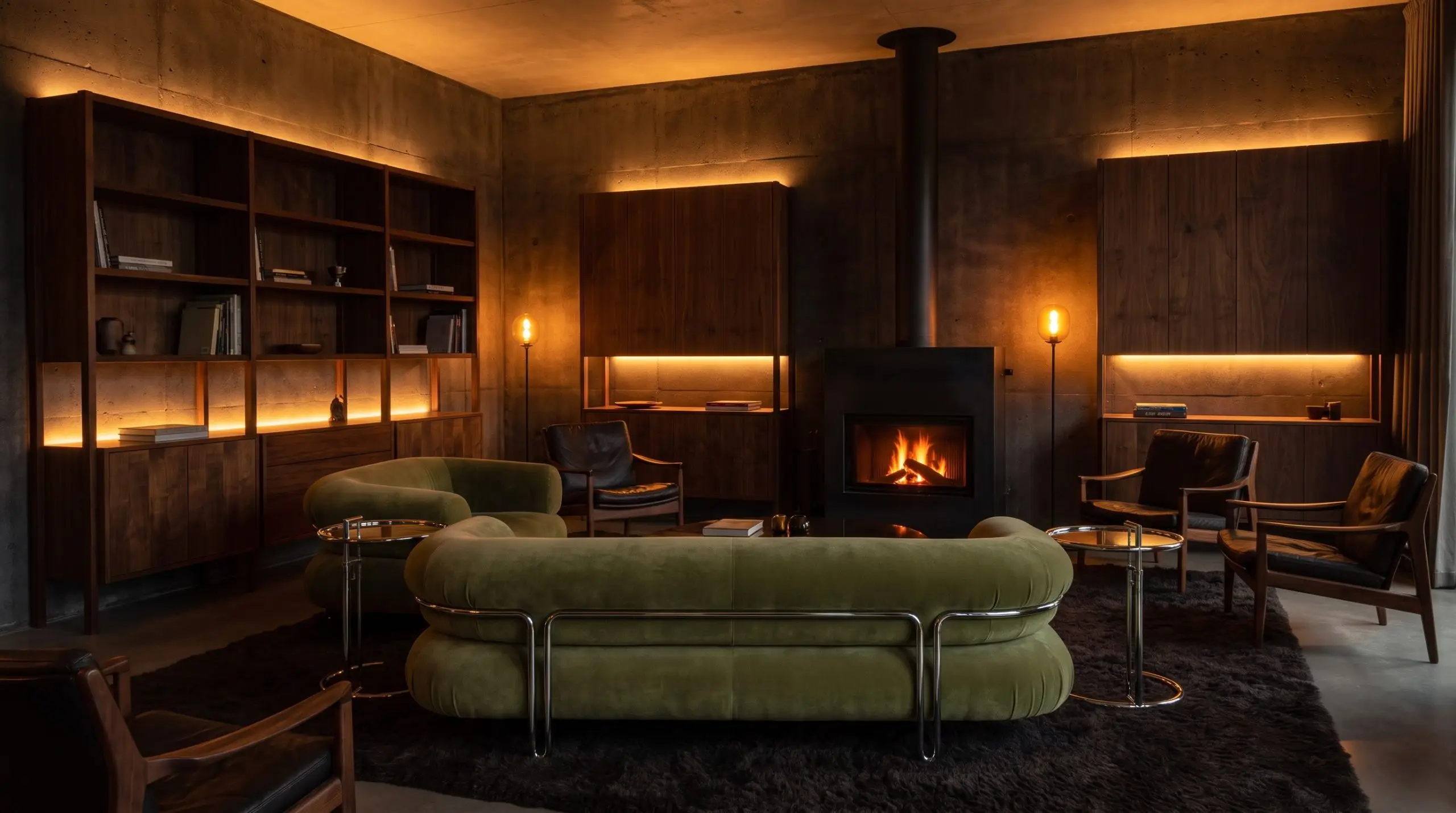
Concrete and chrome will immediately read as a sterile, hostile hospital environment under harsh 4000K lighting. You must strictly mandate the use of 2700K (or lower) smart bulbs to cast a deep, fireplace-like amber glow that physically warms the heavy, raw textures of the room.
- Vibe: Intimate, heavy, and enveloping.
- Key Spec: 2700K to 2200K dimmable LED bulbs.
- Styling Pro-Tip: Use smart bulbs mapped to a single “evening scene” so the entire room shifts into a moody, low-contrast glow simultaneously.
Source Space-Age Spherical and Mushroom Pendants
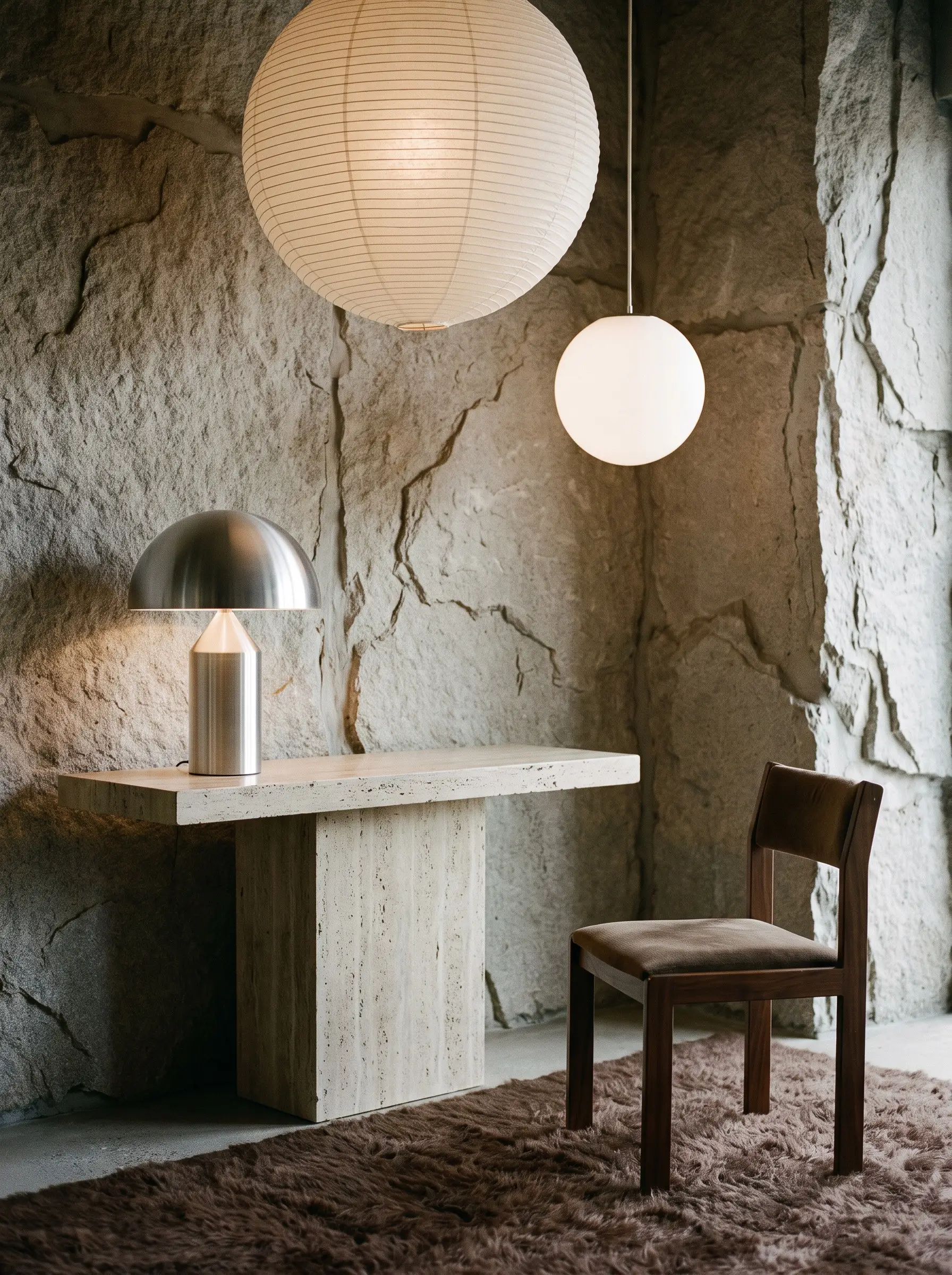
Contrast the jagged, raw stone walls with lighting fixtures that boast flawless, geometric, planetary shapes. Opaque glass globes, oversized paper lanterns, and iconic chrome mushroom lamps—like the Panthella—introduce a sleek, retro-futuristic optimism that cuts through the brutalist shadows.
- Vibe: Sci-fi geometry and diffused softness.
- Key Silhouettes: Domed mushroom table lamps, spherical frosted pendants, oversized Noguchi-style paper orbs.
- Material Match: Spun aluminum, frosted opal glass.
Install Hidden LED Floor-Washes
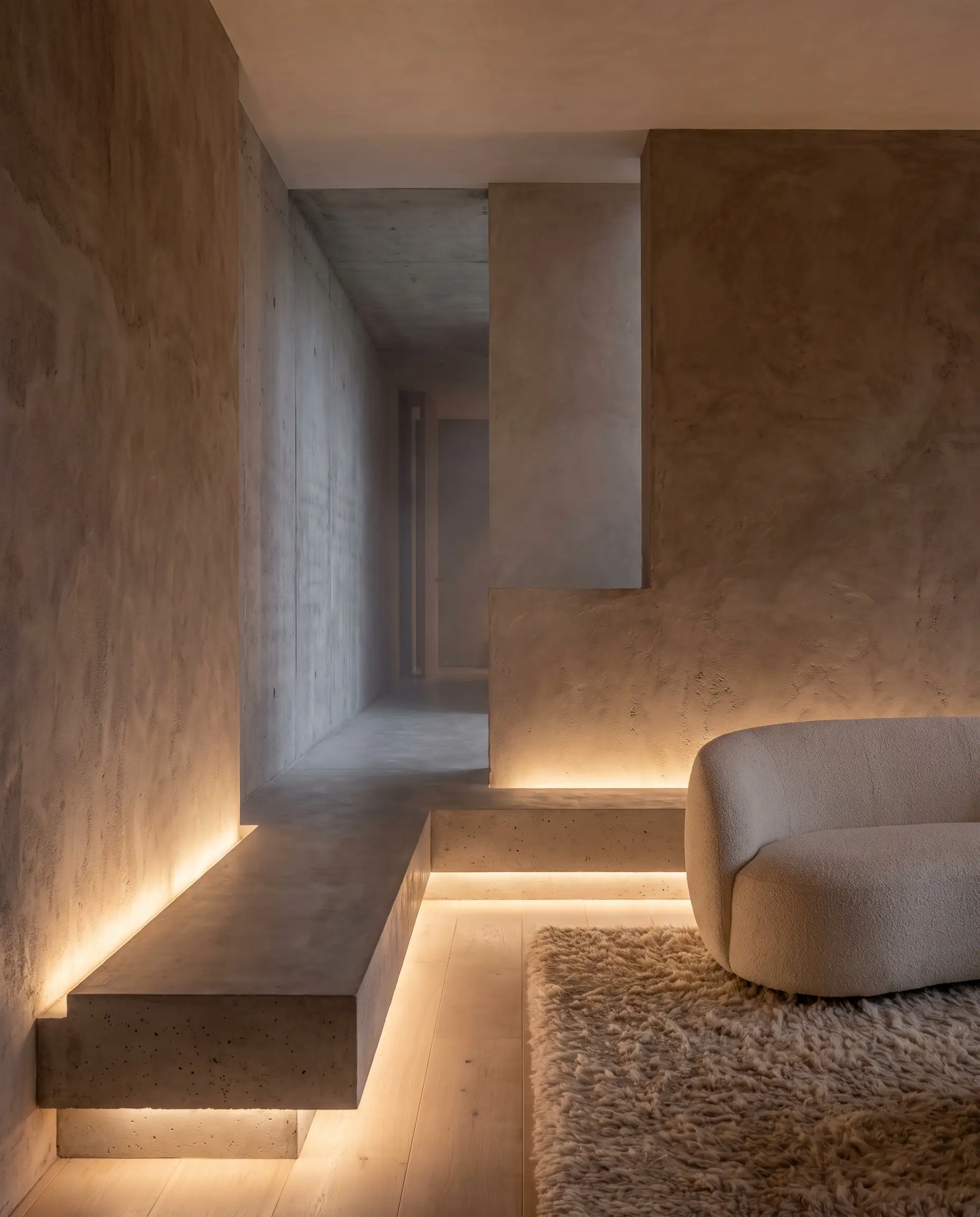
Modernize the space by hiding LED light strips behind concrete plinths, tucked beneath modular sofas, or recessed along baseboards to wash illumination upward against the textured Roman clay. This directional technique creates a surreal, floating effect, instantly making heavy monolithic objects feel entirely weightless.
- Vibe: Cinematic anti-gravity.
- Key Materials: High-CRI LED tape light (2700K), aluminum diffuser channels.
To execute a floor-wash without mimicking a cheap gaming room, you must use an aluminum channel with a milky silicone diffuser cover. Mount the channel facing the wall or floor—never directly outward—so only the soft, bounced halo of light is visible against the plaster.
Step-by-Step Installation Tip
Tactile Styling & Acoustic Softening
Hard materials inherently reflect sound, creating a harsh, echoing environment. To make this cinematic space truly livable, we must aggressively engineer the acoustics using dense, heavy textiles.
Dampen Sound with High-Pile Flokati and Heavy Wool
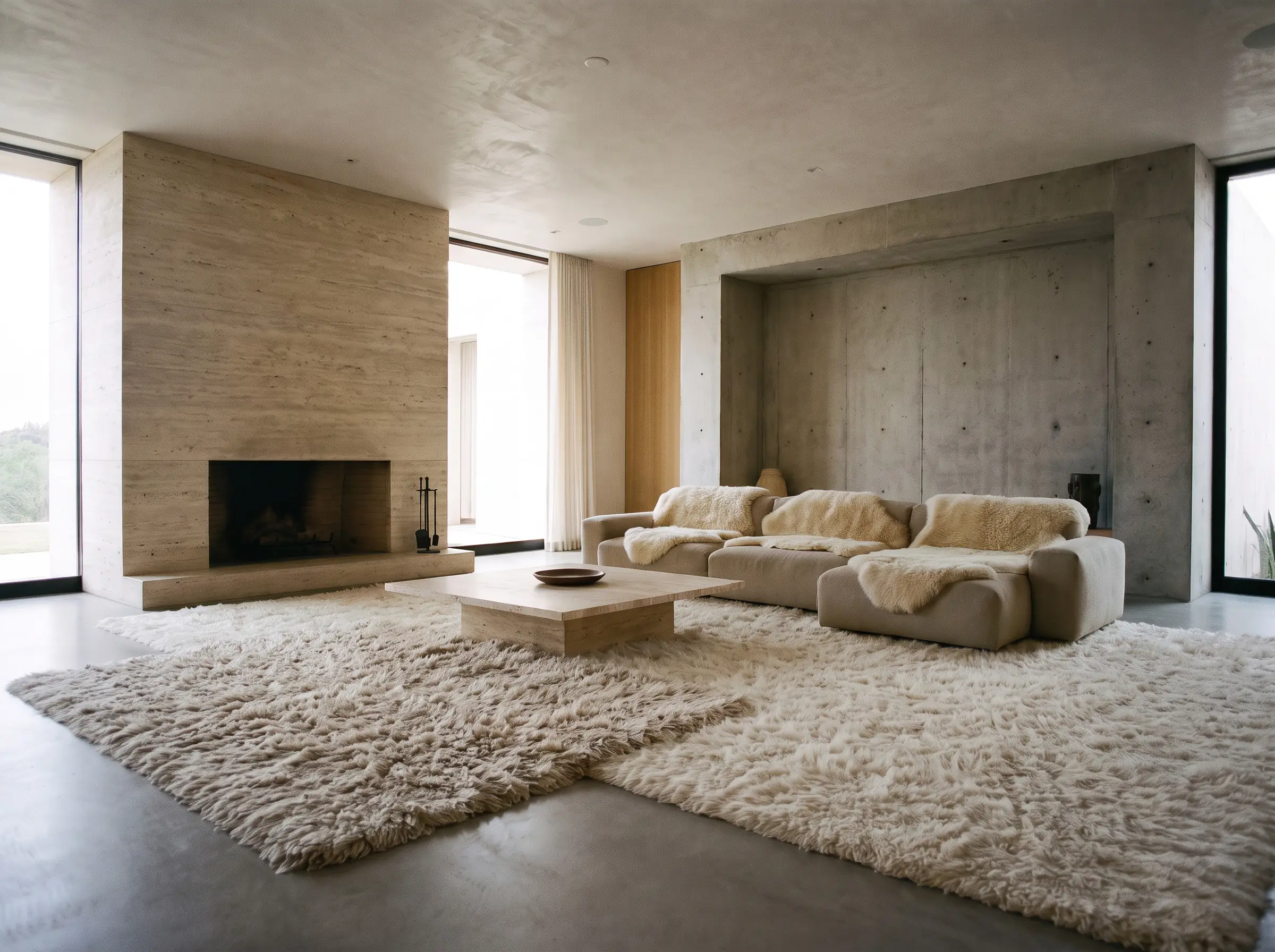
Contrast the rigid, seamless micro-cement floors with massively oversized, ultra-plush rugs that beg to be touched. Layering high-pile Flokati rugs, shearling throws, and dense wool carpets absorbs the sharp echoes bouncing off the walls while adding a crucial layer of primal, tactile warmth.
- Vibe: Primal comfort and acoustic luxury.
- Key Materials: High-pile wool, authentic shearling, dense mohair, Flokati.
- Styling Pro-Tip: Allow a heavy wool rug to slightly overlap the edge of a raw travertine plinth to highlight the extreme contrast in textures.
Curate Metallic and Oxidized Sculptural Objects
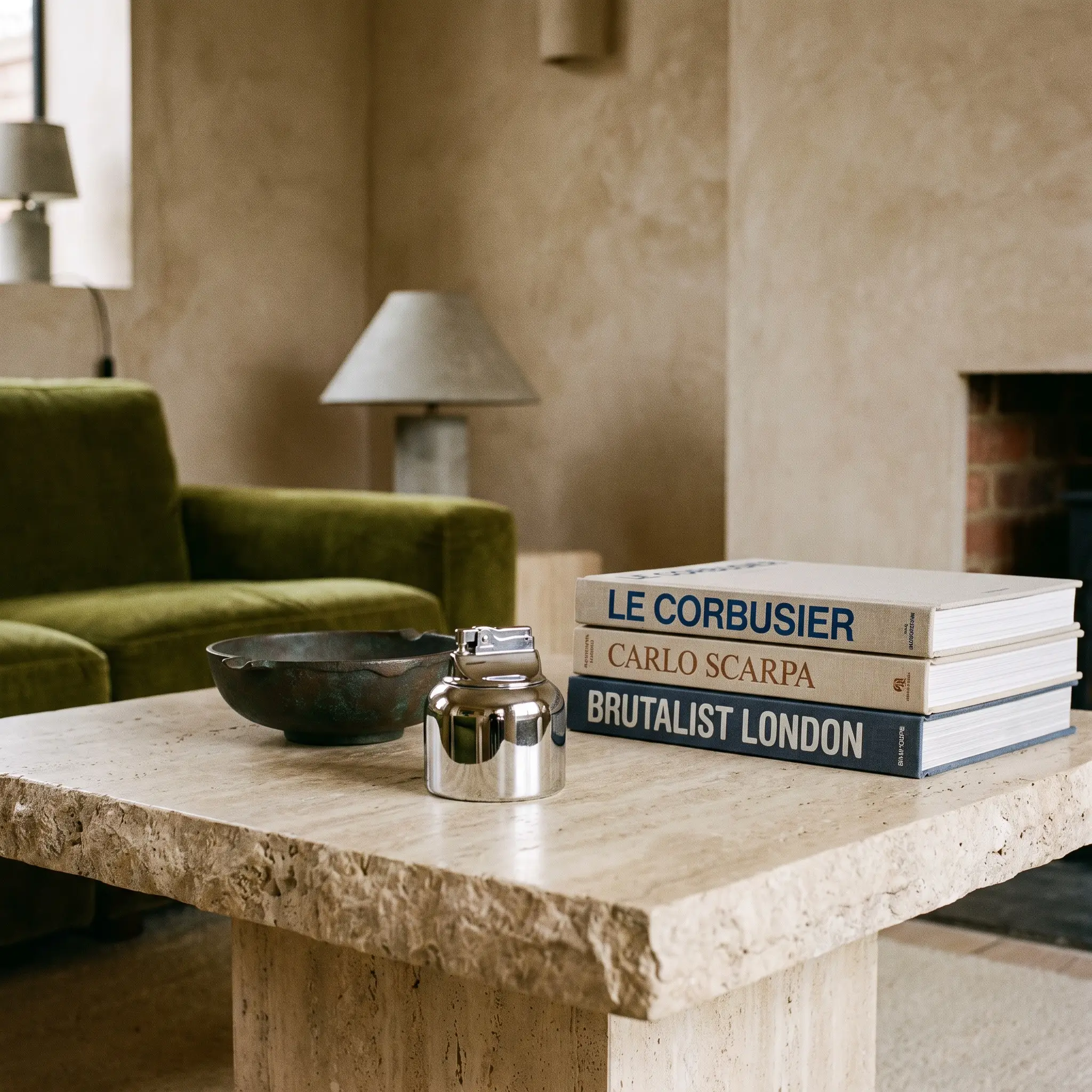
Reject generic, mass-market ceramics in favor of heavy, brutalist tabletop objects that carry genuine physical weight. Style your surfaces with cast iron bowls, oxidized bronze catch-alls, or molten glass vases that look as though they were forged in a distant, retro-futuristic era.
- Vibe: Curated, weighty, and artifact-driven.
- Key Materials: Oxidized bronze, cast iron, raw aluminum, slag glass.
Styling Checklist: To perfectly style a raw travertine coffee table, deploy exactly three items:
- A highly polished, reflective chrome tabletop lighter or ashtray (even if non-functional, for the space-age sheen).
- A heavy, oxidized bronze or cast-iron catch-all bowl (for brutalist weight).
- A stack of three oversized, cloth-bound architecture or design monographs (to ground the arrangement).
Executing the 2027 Vision in Your Own Space
Mastering this aesthetic is an exercise in absolute restraint. You do not need to pour board-formed concrete over your entire living room to achieve cinematic livability. Begin by establishing the core tension in a single zone: pair a heavy, raw travertine coffee table with a highly polished chrome mushroom lamp, and ground them both with a high-pile Flokati rug. By intentionally clashing the heavy, earthy monolith with sleek, space-age optimism, you create an environment that feels less like a static room and more like an immersive, architectural experience. Challenge yourself to strip away the sterile white drywall and embrace the tactile friction of 2027.