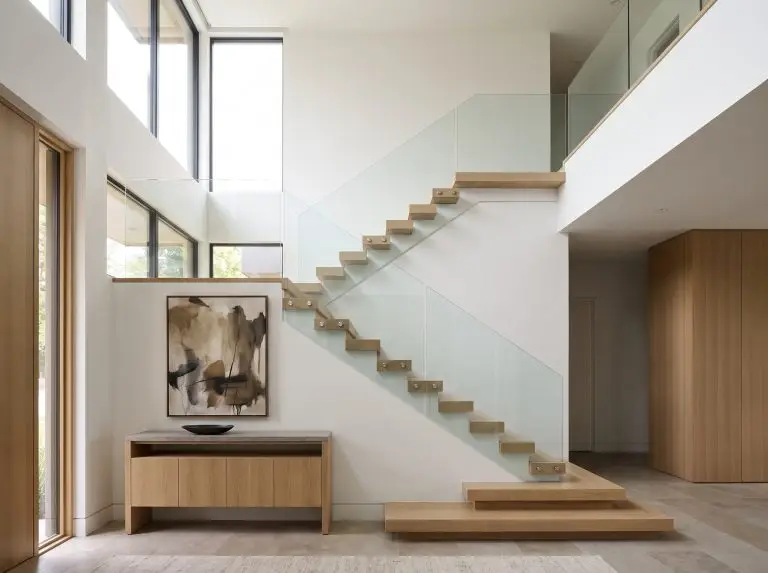
We are officially leaving behind the heavy, utilitarian staircases of the past two decades. The glossy golden oak treads and bulky, ornate iron knuckles of the 2000s are giving way to a new standard where the staircase operates as a home’s primary sculptural focal point. In 2027, top-tier interior architecture relies on structural transparency, tactile material finishes, and seamless integration to maximize natural light flow. Whether you are executing a full tear-down or upgrading the balustrade, these modern banister designs and structural shifts require exact material execution.
| Scope of Work | Estimated Budget Tier | Visual Impact |
|---|---|---|
| Full Floating Teardown & Rebuild | High-End Bespoke | Total spatial transformation; maximum light filtration. |
| Balustrade & Railing Swap | Accessible Luxury | Modernizes the sightlines; removes heavy visual clutter. |
| Tread & Riser Refinishing | Moderate | Refreshes the tonal palette; integrates stairs with flooring. |
The Transparency Movement: Floating & Open-Riser Designs
The defining structural shift of 2027 is allowing natural light to pass completely through the stairwell, transforming a heavy transition zone into a weightless, sculptural element. Achieving this requires rigorous engineering and an absolute commitment to minimalist support structures:
Concealed Mono-Stringers for a True Floating Effect
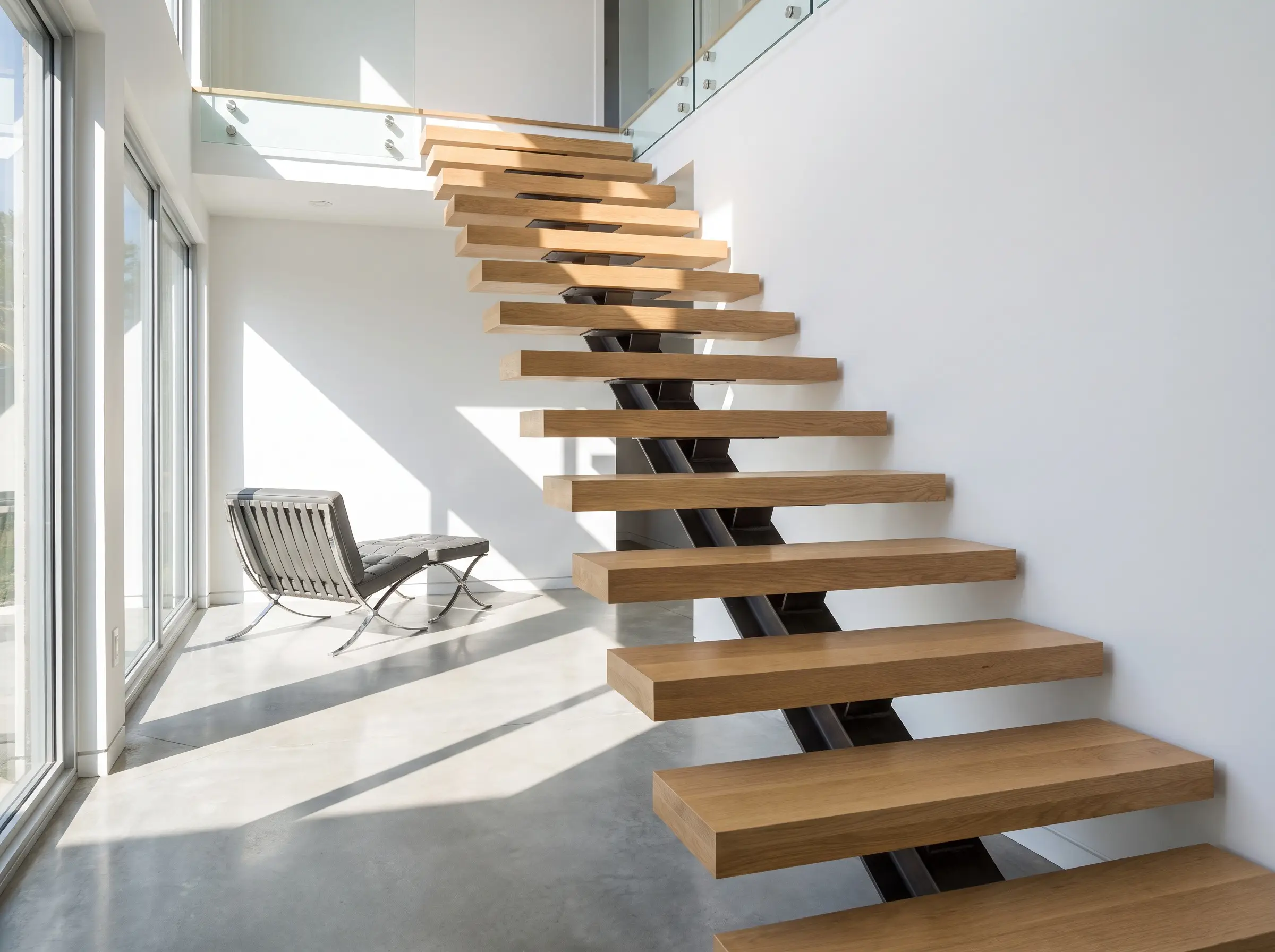
A single, central steel stringer hidden entirely beneath the treads creates the definitive floating staircase illusion. This application demands heavy-gauge structural steel to eliminate bounce and maintain rigorous architectural lines.
- Vibe: Minimalist, gravity-defying, contemporary.
- Key Materials: Heavy-gauge structural steel, custom mounting plates.
Specify a minimum of 1/2-inch thick tubular steel for the mono-stringer spine to prevent the micro-vibrations that plague budget floating staircases.
Architect’s Spec
Frameless Glass Balustrades with Hidden Base Channels
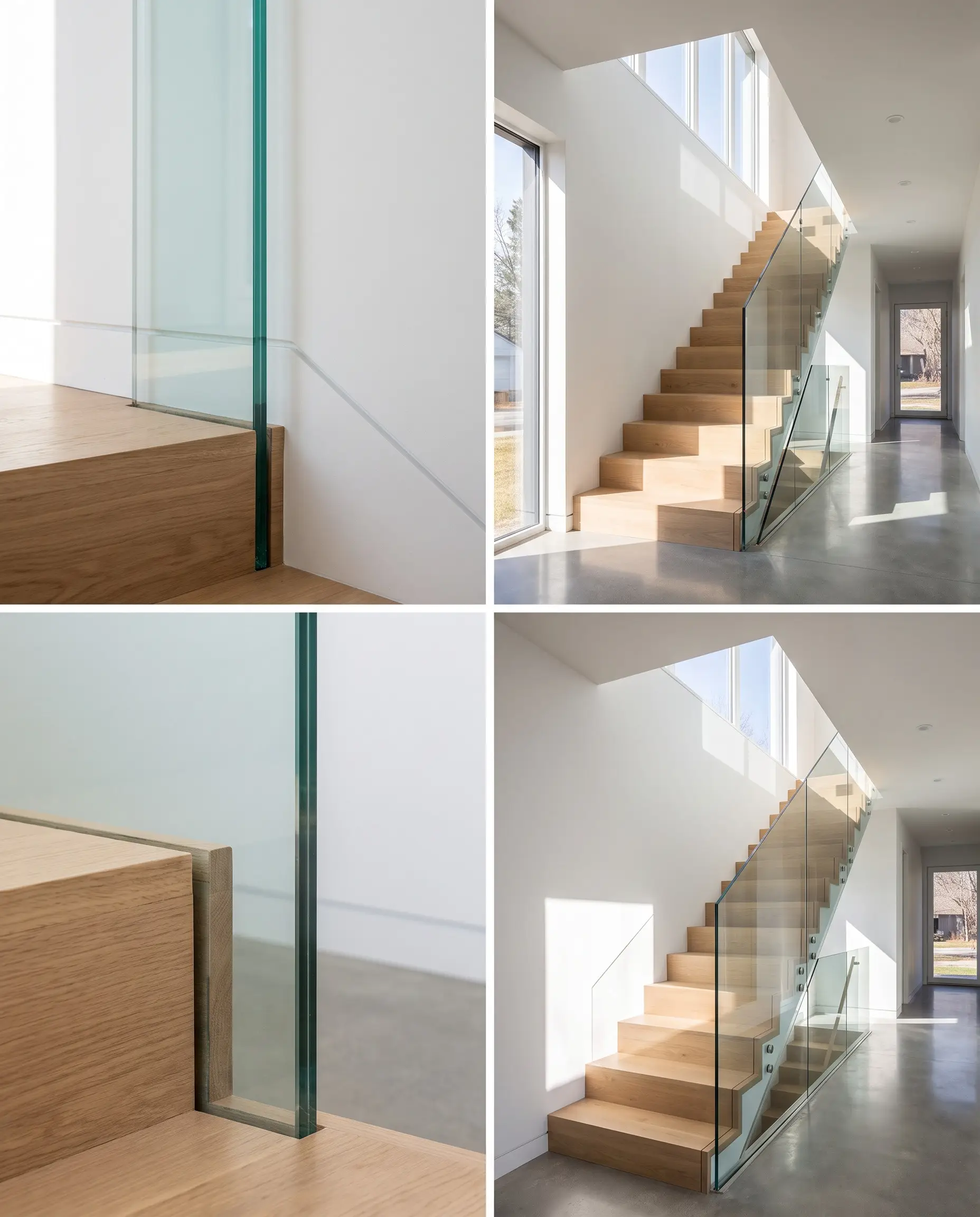
The contemporary stair railing abandons visible metal clips in favor of recessed aluminum U-channels sunk directly into the structural framework. This uninterrupted flow of glass allows natural light to flood the interior architecture without visual obstruction.
- Vibe: Ultra-clean, transparent, gallery-like.
- Key Materials: 1/2-inch tempered or laminated safety glass, recessed aluminum channels.
- Styling Pro-Tip: Ensure the drywall or wood flooring is finished flush against the glass for a true frameless extrusion.
Open-Riser Cantilevered Treads in Rift-Sawn White Oak
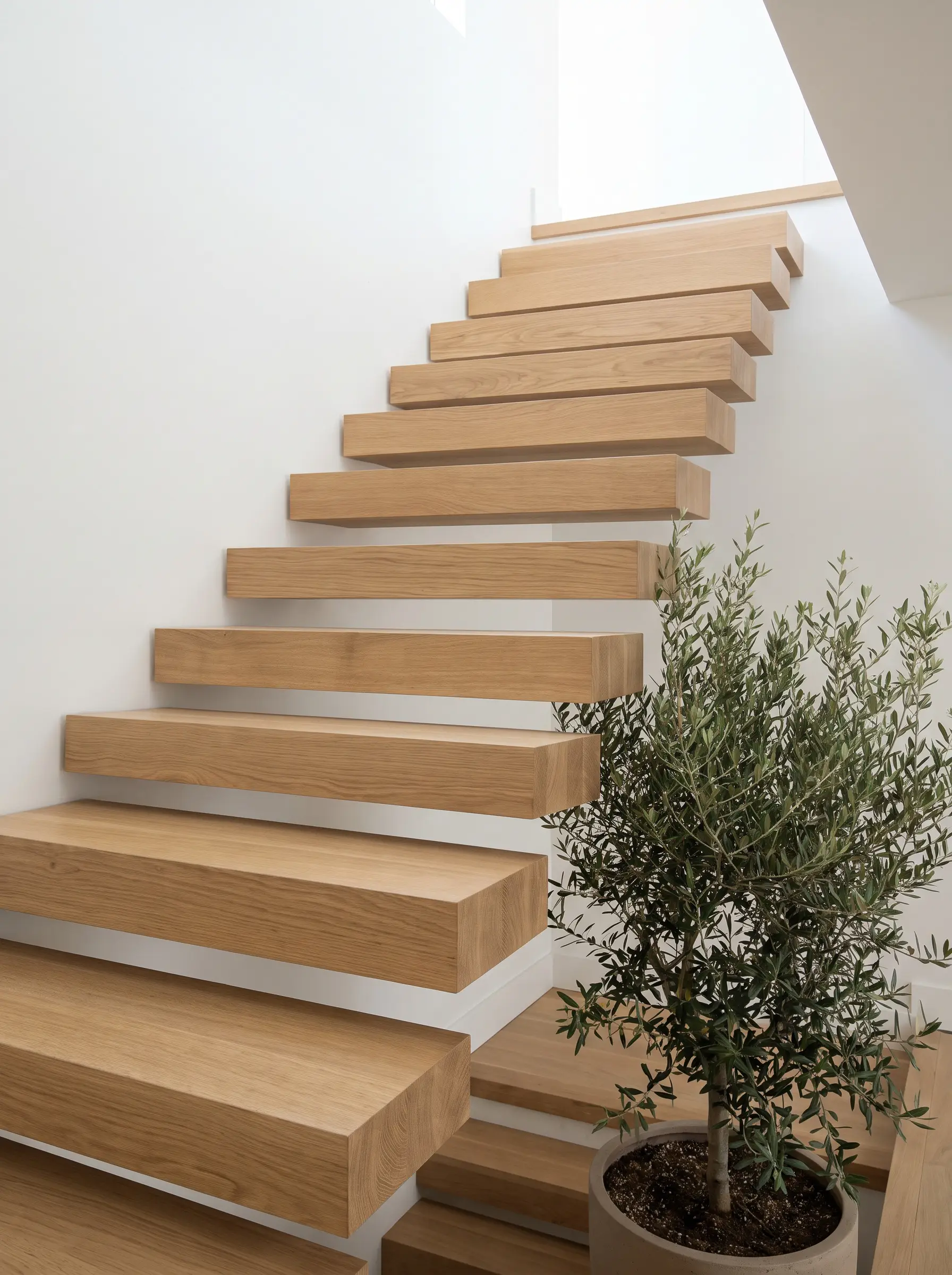
Cantilevered treads anchored directly into a reinforced wall require a wood cut that guarantees absolute dimensional stability. Rift-sawn white oak delivers a rigorously linear grain that resists the warping and cupping inherent to thick, unsupported timber block.
- Vibe: Organic Modern, structurally precise.
- Key Materials: Solid rift-sawn white oak, heavy-duty steel wall pins.
- Material Match: Pair with a clear, matte hard-wax oil to highlight the linear grain.
Suspended Vertical Tension Cables from Floor to Ceiling
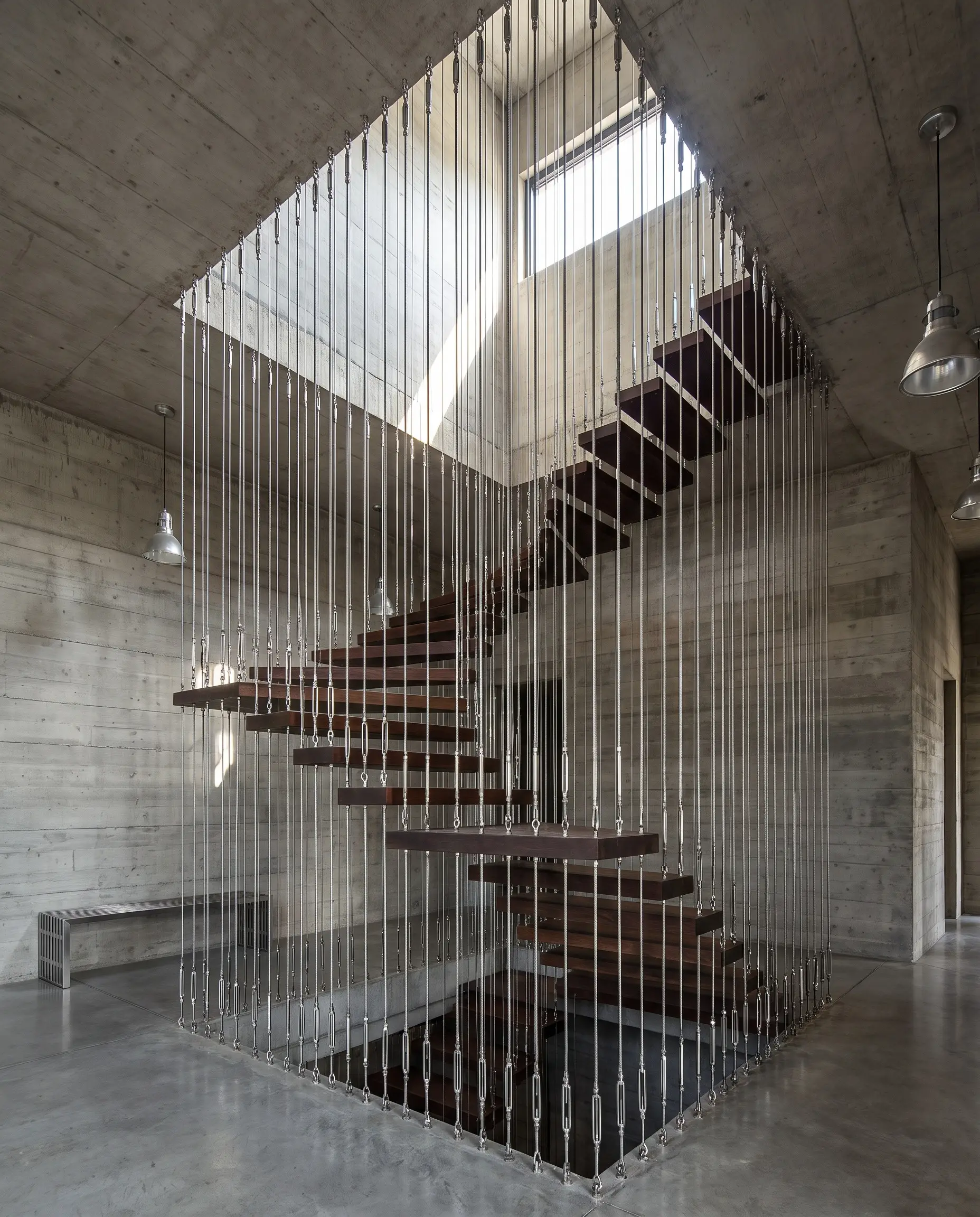
Drawing direct inspiration from the industrial modernism of architects like Tom Kundig, floor-to-ceiling vertical cables serve as both the safety balustrade and the tread suspension system. This creates a striking, geometric cage that feels highly engineered yet incredibly light.
- Vibe: Industrial precision, architectural tension.
- Key Materials: 316 marine-grade stainless steel cables, precision turnbuckles.
- Styling Pro-Tip: Space cables no more than 4 inches apart to meet stringent residential building codes.
By running continuous vertical lines from the floor plane to the ceiling, the eye is forced upward, dramatically exaggerating the perceived height of the stairwell.
The Visual Anchor
Perforated Steel Staircase Panels for Light Filtration
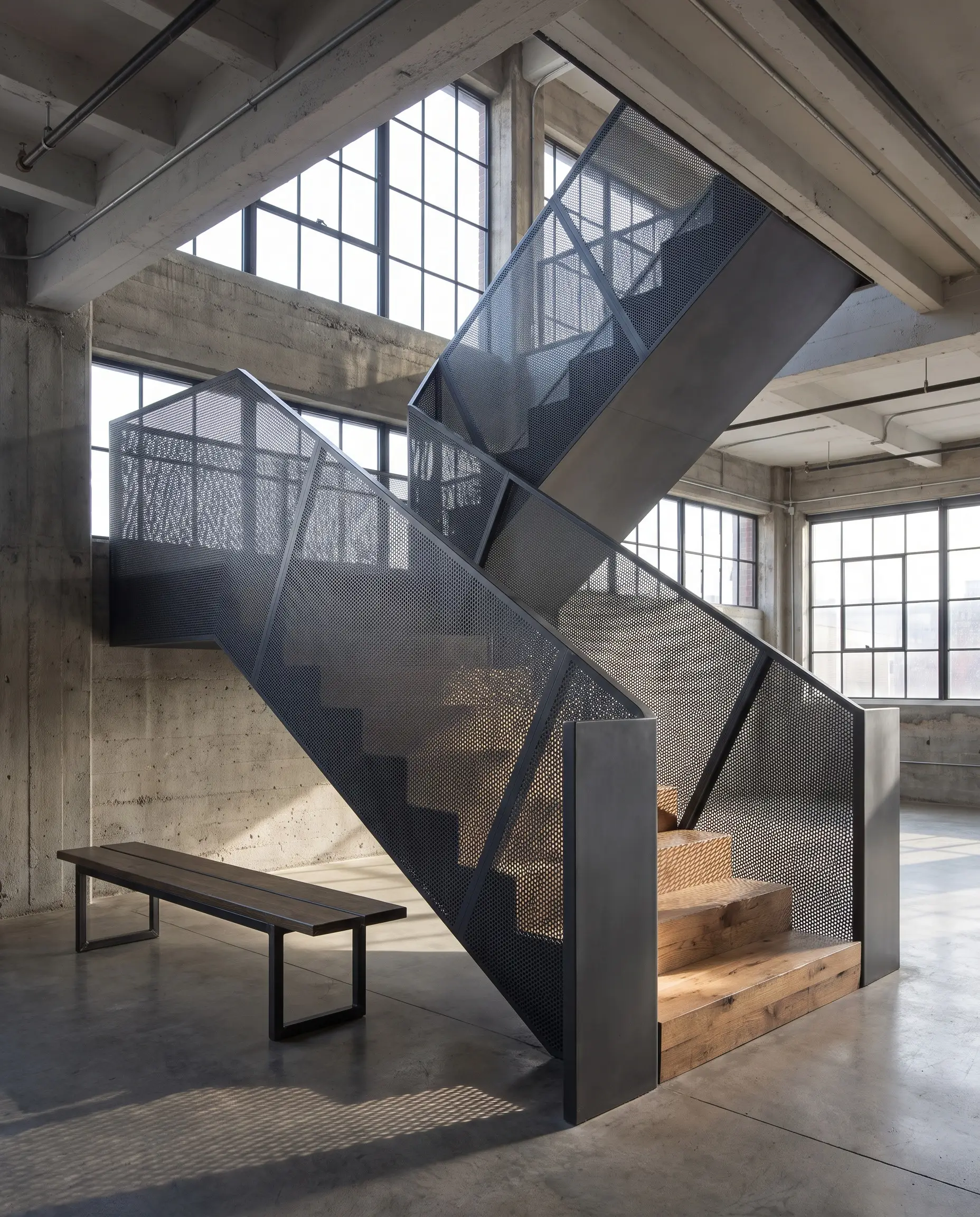
Custom-folded, perforated steel sheets act as a continuous, structural balustrade that filters light rather than blocking it entirely. The micro-perforations offer immense rigidity while casting dynamic, shifting shadows across the entryway throughout the day.
- Vibe: Edgy, urban industrial, highly tactile.
- Key Materials: Powder-coated perforated sheet metal, folded steel edges.
- Styling Pro-Tip: Use a matte finish to absorb light and emphasize the geometry of the perforations.
Modern Railing & Baluster Evolutions
We are officially witnessing the death of the ornate scrollwork spindle. In 2027, safety components are either reduced to ultra-minimalist geometric lines or transformed into highly tactile, bespoke architectural features.
Matte Black Horizontal Marine-Grade Cable Infill
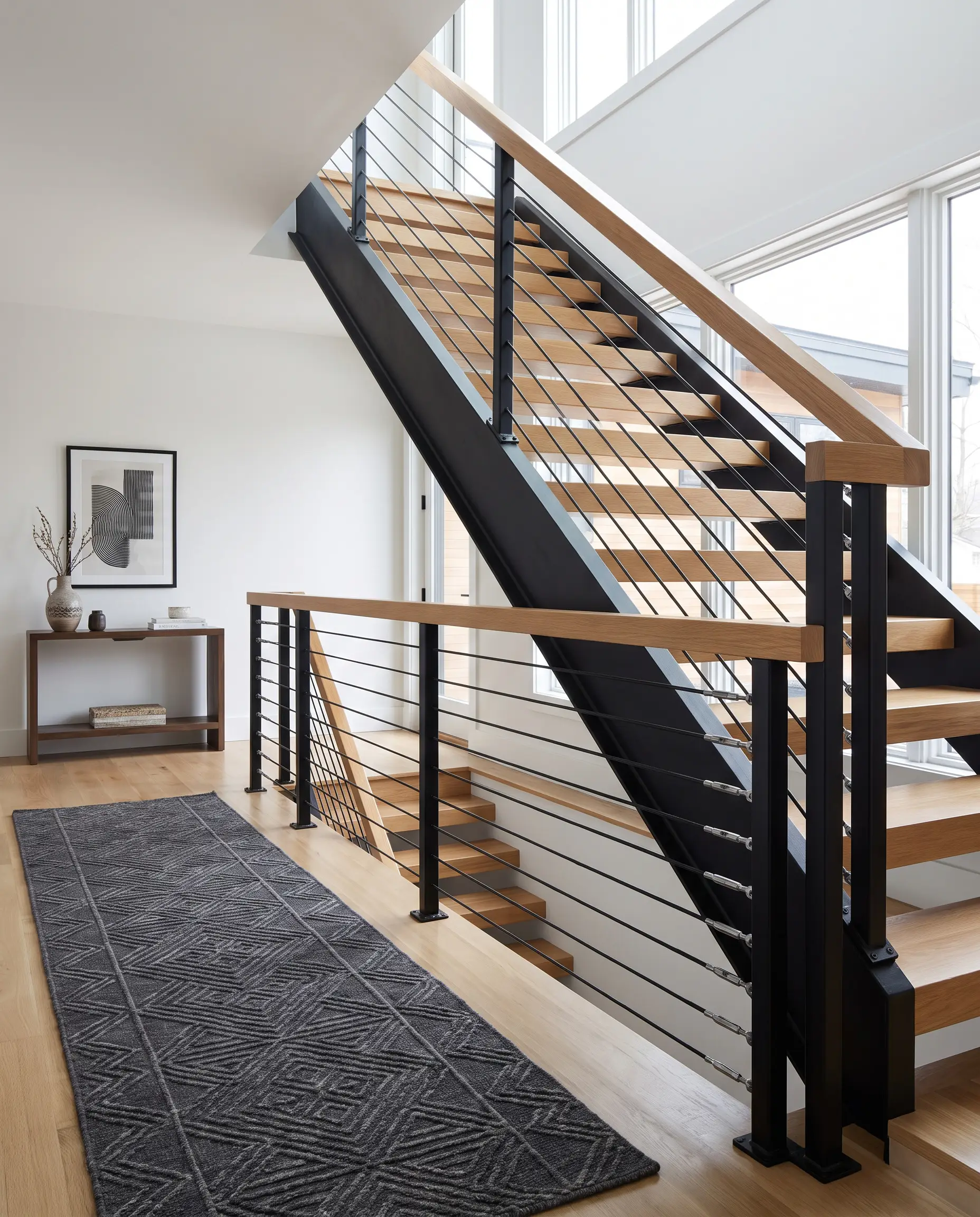
Silver stainless cables are being rapidly replaced by graphic, matte black horizontal runs that anchor the space. This minimalist approach requires premium tension hardware to maintain straight, unyielding lines over decades of use.
- Vibe: Graphic, sharp, modern industrial.
- Key Materials: Matte black powder-coated turnbuckles, black oxide cables.
Do not specify horizontal cables in homes with toddlers without consulting local building codes, as the “ladder effect” is heavily restricted in many municipalities.
Do/Don’t
Slim-Profile Brushed Brass Handrails
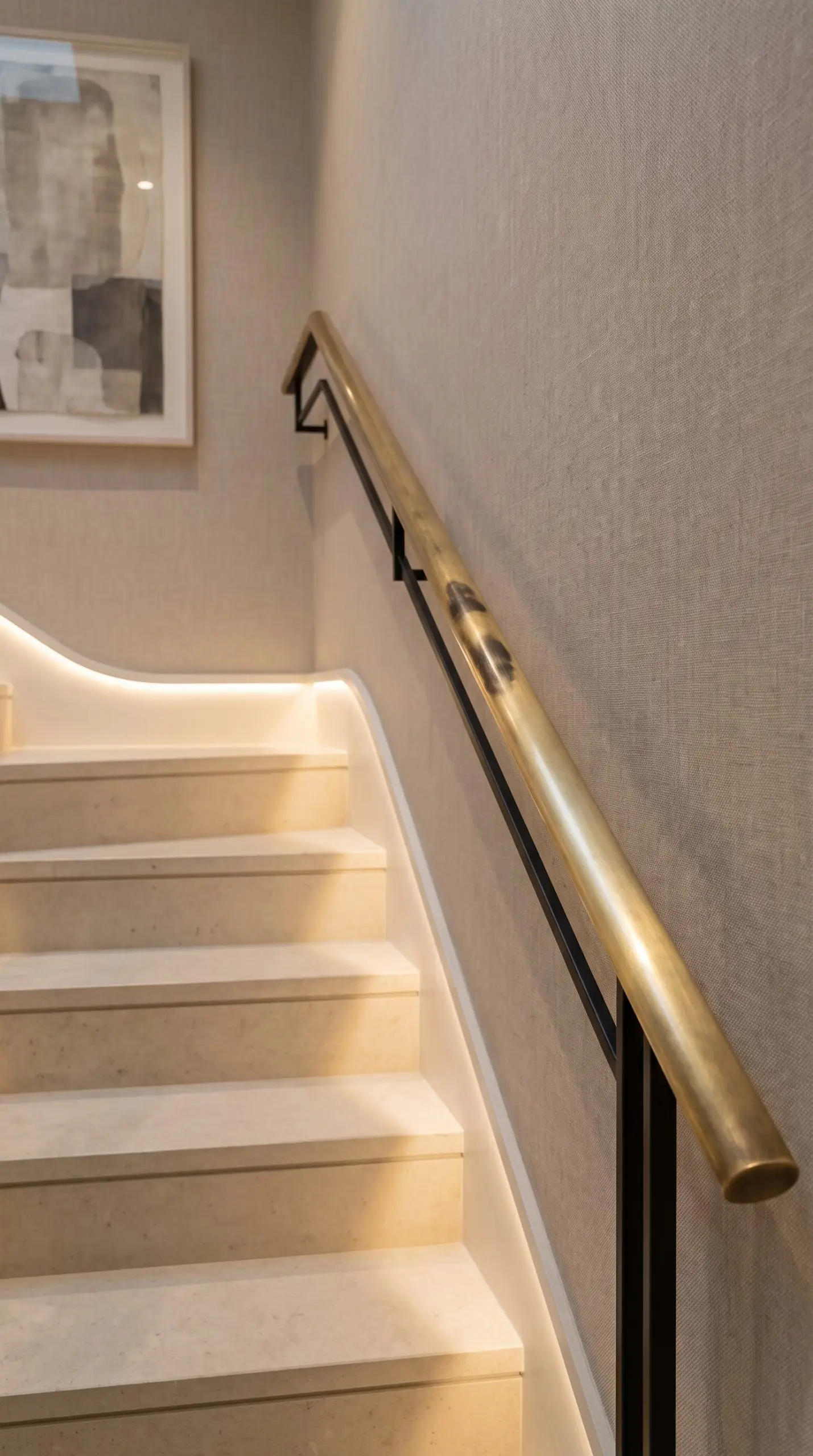
Unlacquered, slim-profile brushed brass handrails mounted on minimalist black or white stanchions inject a layer of Quiet Luxury into the transition zone. The brass acts as a living finish, developing a rich, localized patina wherever hands naturally grip the metal over time.
- Vibe: Quiet luxury, refined, living architecture.
- Key Materials: Unlacquered brushed brass tube, minimalist steel stanchions.
- Styling Pro-Tip: Keep the handrail diameter under 1.5 inches for an elegant, tailored grip.
Replacing Ornate Iron with Minimalist Square Spindles
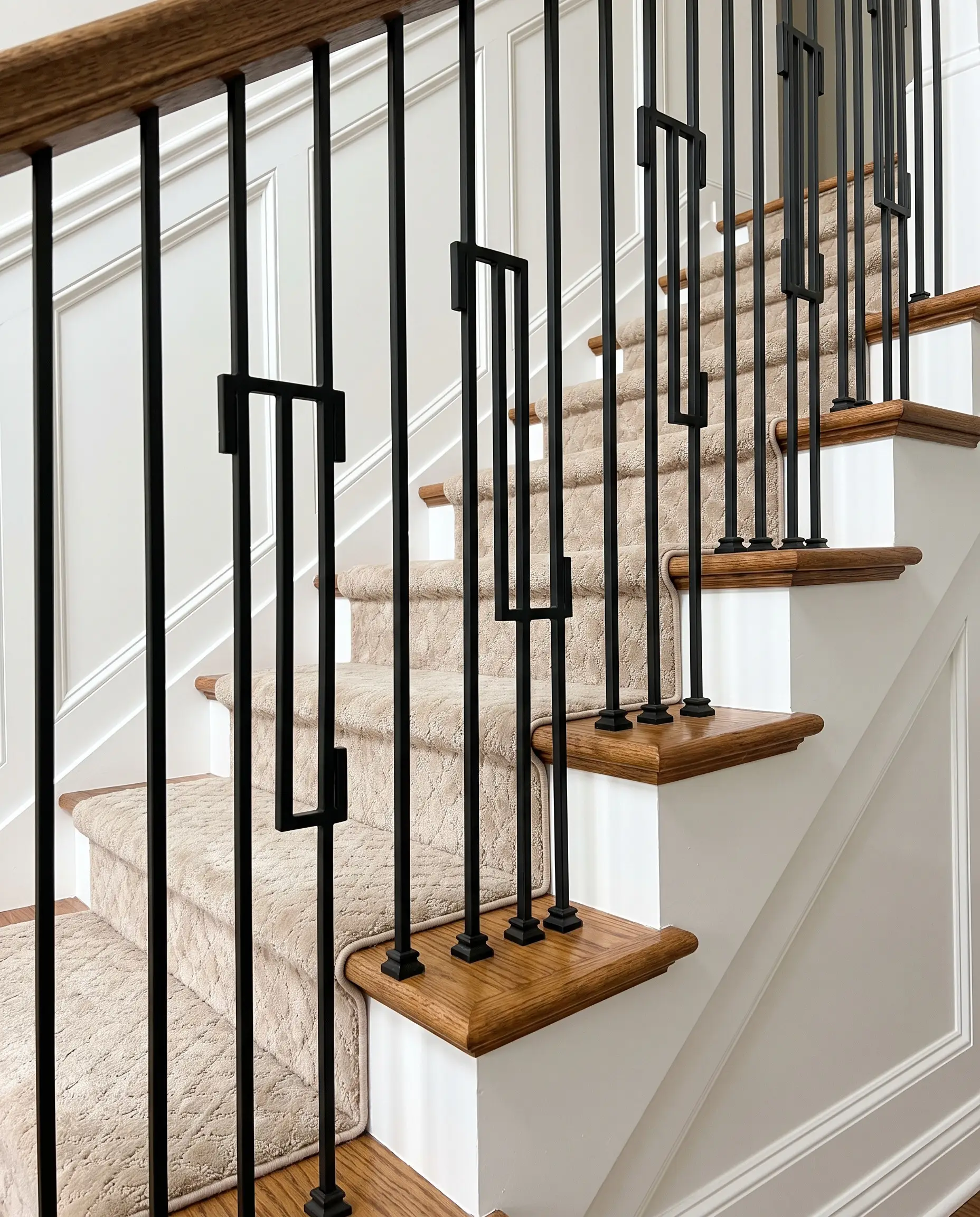
For mid-tier budgets avoiding a full structural teardown, swapping 1990s wrought-iron knuckles for 1/2-inch hollow square matte black balusters yields the highest return on investment. This simple material exchange instantly modernizes the visual rhythm of a traditional staircase.
- Vibe: Transitional, clean, updated traditional.
- Key Materials: 1/2-inch square matte black iron balusters, flat shoes.
- Styling Pro-Tip: Alternate between single and double-knuckle minimalist squares to retain subtle visual interest without the heavy scrollwork.
Continuous Curved Plaster Parapets
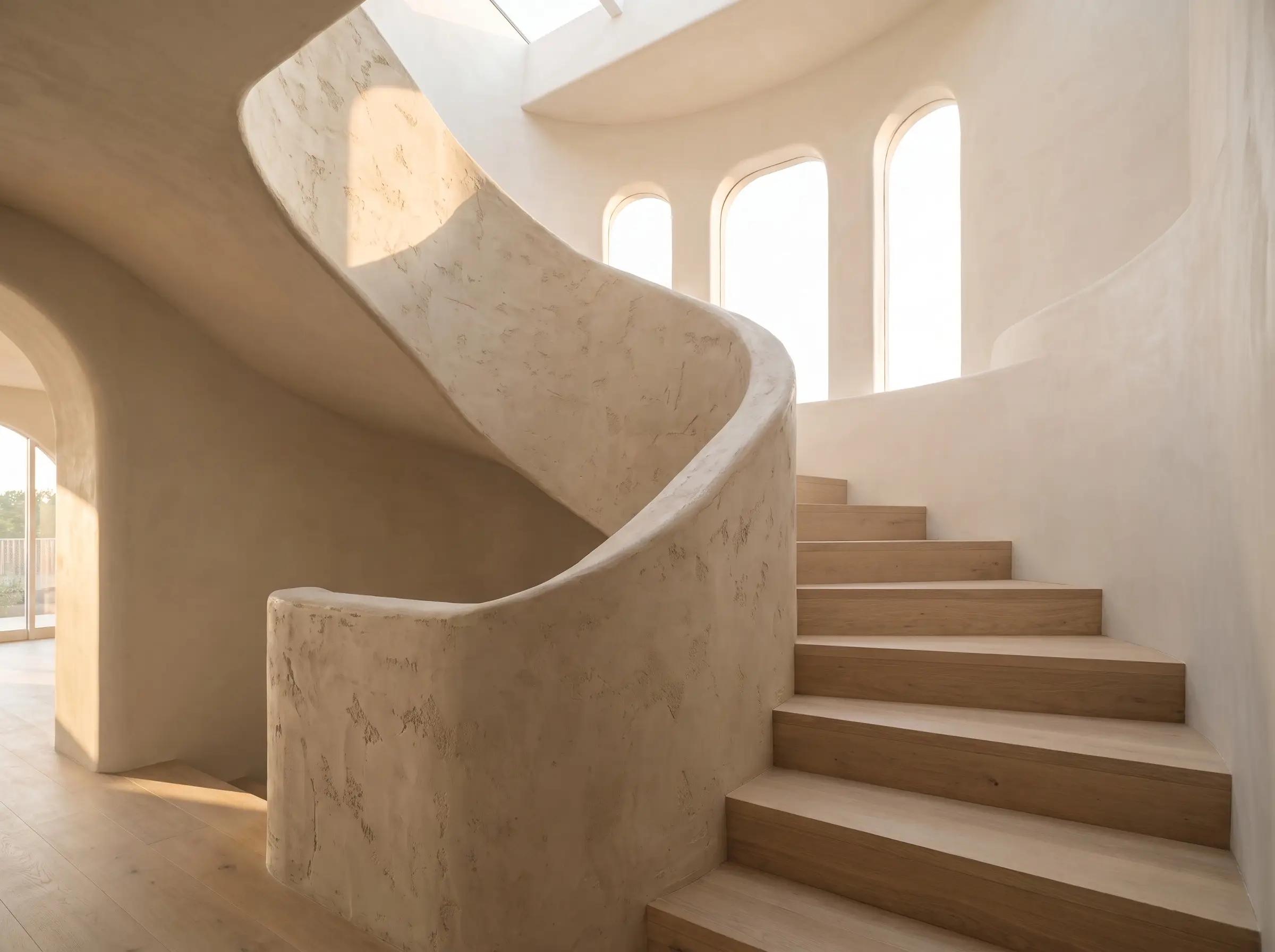
Championed by the monolithic interiors of leading contemporary designers, a solid, curved wall finished in hand-troweled plaster replaces the traditional railing. This creates a soft, Mediterranean-inspired sculptural flow that feels grounded and fiercely organic.
- Vibe: Organic Modern, monolithic, sensory.
- Color Match: Portola Paints Roman Clay in “Kensington”.
- Key Materials: Flexible drywall framing, authentic Roman clay or lime wash.
Leather-Wrapped Handrail Details for Tactile Luxury
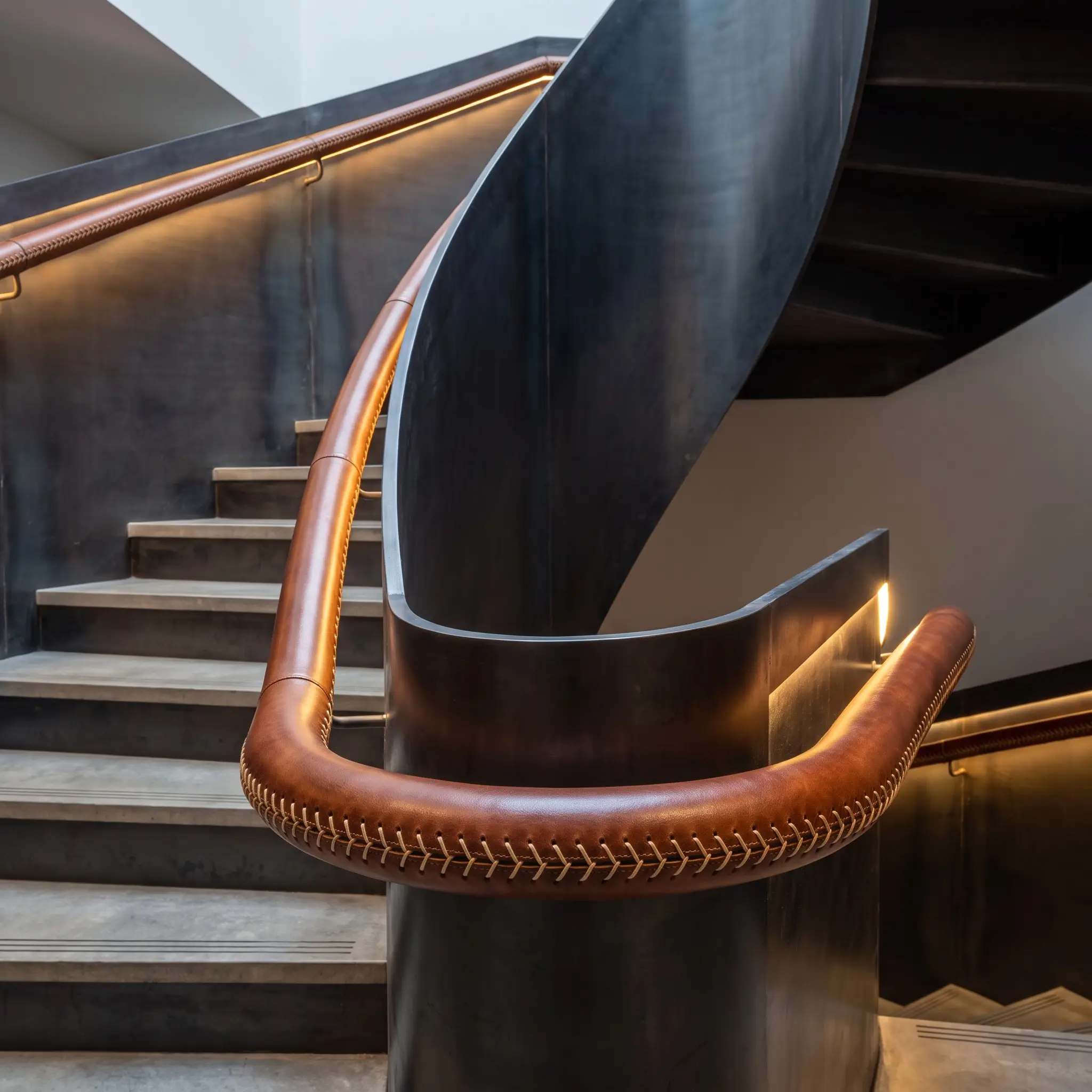
Taking cues from high-end equestrian design, continuous steel or oak handrails tightly wrapped in saddle leather add a bespoke, tailored layer to stark stairwells. This execution dramatically softens the grip and introduces a sophisticated, sensory warmth to cold metal framing.
- Vibe: Bespoke, sensory, ultra-luxurious.
- Key Materials: Veg-tanned saddle leather, heavy waxed thread.
Mandate a “baseball stitch” or “cross stitch” from your leather fabricator, positioned precisely on the underside of the rail so the top grip remains perfectly smooth.
Architect’s Spec
Fluted Timber Balustrades for Organic Texture
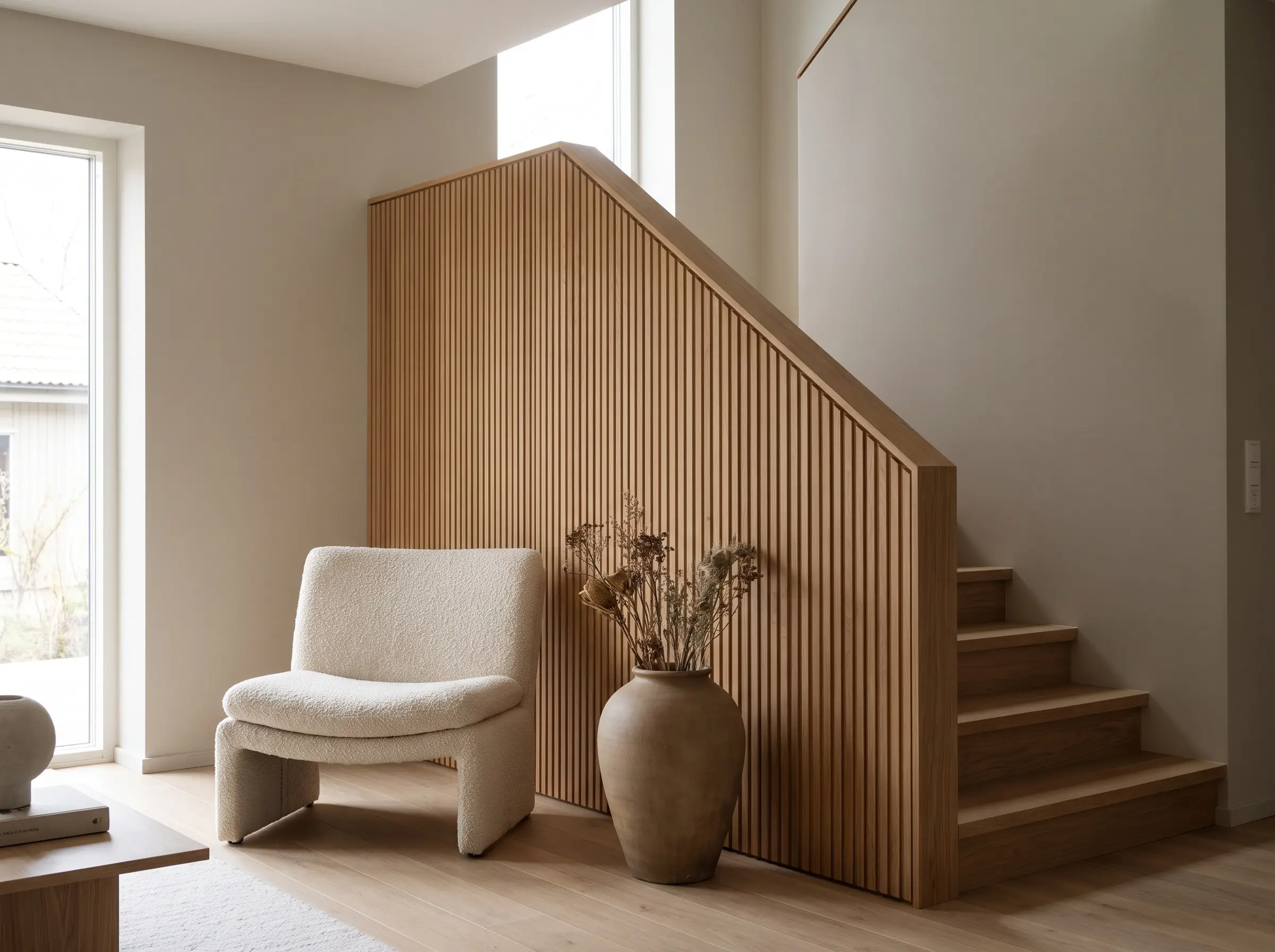
Instead of individual spindles, architects are cladding continuous half-walls in custom fluted or slatted timber panels. This application adds acoustic sound dampening, immense visual warmth, and a rigorous vertical geometry that grounds the staircase.
- Vibe: Japandi, mid-century modern evolution, textural.
- Key Materials: Solid white oak fluted panels, concealed brad nails.
- Styling Pro-Tip: Run the fluting vertically to exaggerate the height of the balustrade.
Material Pairings & Finish Contrasts
A successful 2027 staircase relies completely on the deliberate tension between opposing materials. To master this architectural balance, adhere to these foolproof metal-to-wood finish pairings:
- The Mid-Century Evolution: Warm Walnut + Matte Black Iron.
- The Industrial Luxe: Reclaimed Barn Wood + Patinaed Hot-Rolled Steel.
- The Studio Crisp: Bleached White Oak + High Reflective White Enamel.
Warm Walnut Treads Paired with Matte Black Stanchions
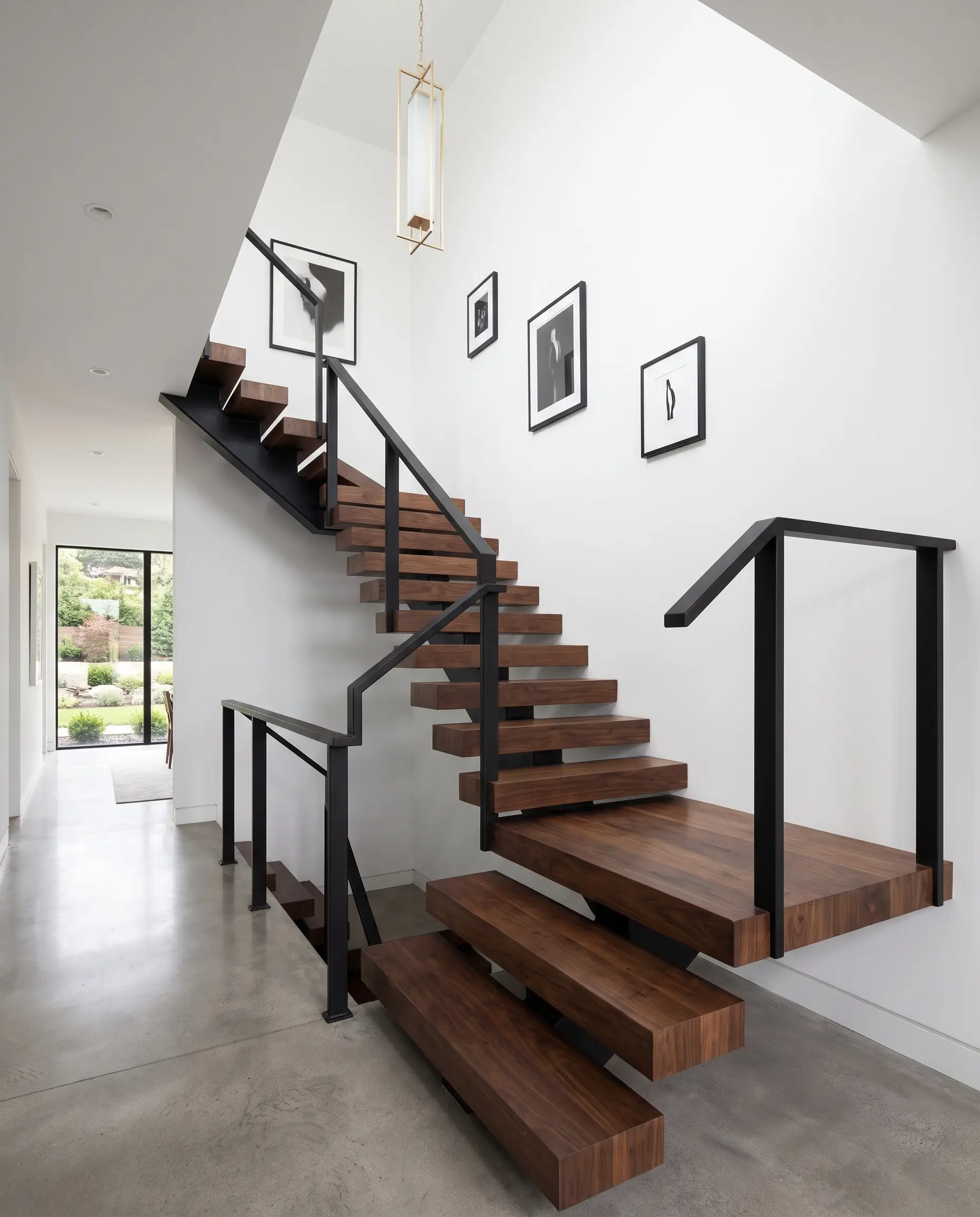
The rich, dark chocolate tones of walnut demand the graphic punch of matte black hardware to prevent the wood from leaning overly traditional. This high-contrast pairing balances the organic warmth of the timber with the cold, precise edge of the metal framing.
- Vibe: Sophisticated, mid-century modern, commanding.
- Key Materials: Solid walnut treads, matte black powder-coated steel.
- Styling Pro-Tip: Use a matte, clear finish on the walnut to avoid a dated, glossy amber sheen.
Reclaimed Timber Meets Industrial Patinaed Steel
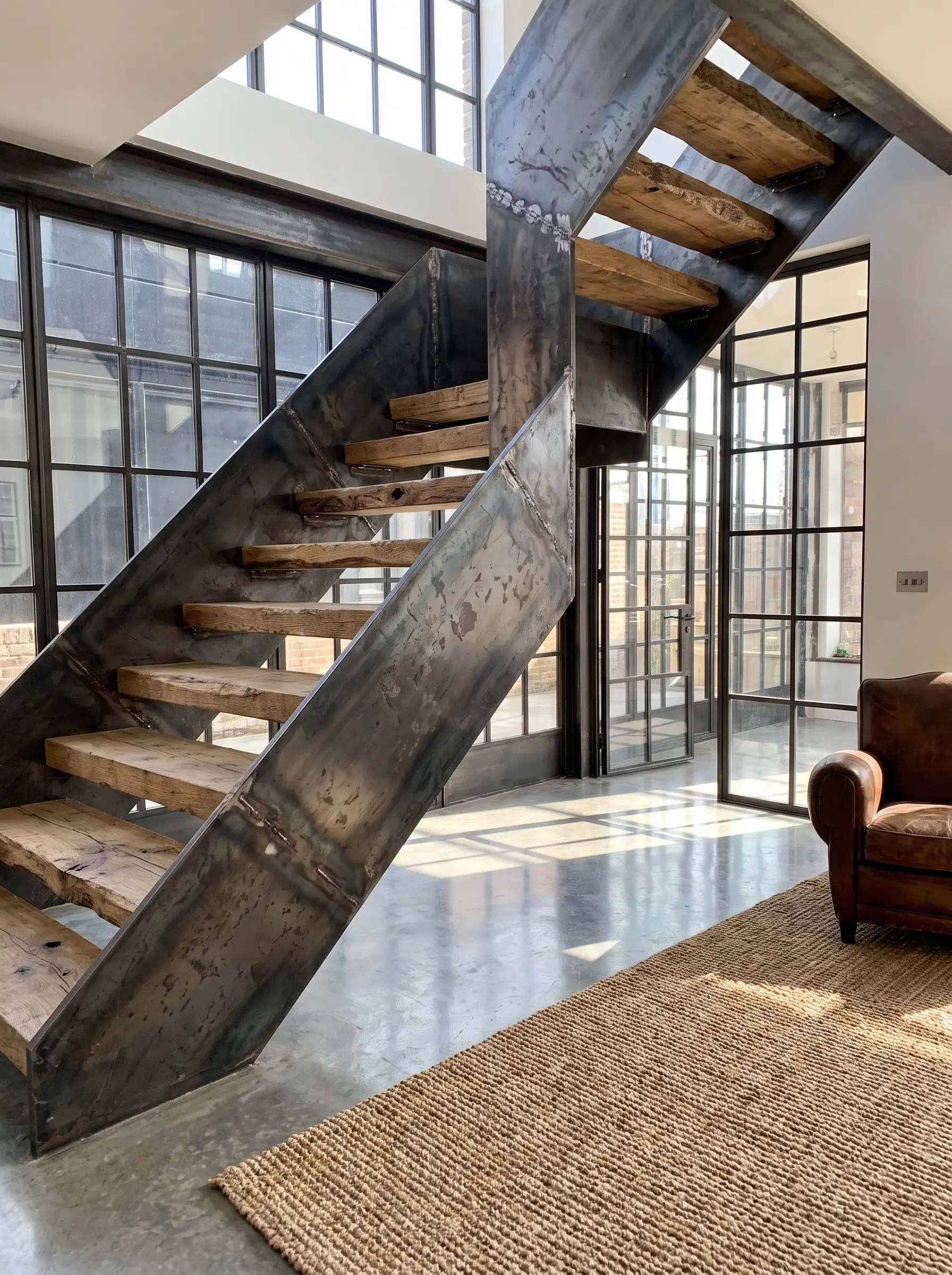
Thick, live-edge or reclaimed barn-wood treads supported by raw, hot-rolled steel stringers capture the pinnacle of high-end rustic-industrial crossover. Leaving the weld marks visible and sealing the steel with a clear-coat patina celebrates the raw fabrication process.
- Vibe: Rugged luxury, industrial, highly textured.
- Key Materials: Antique reclaimed oak or elm, hot-rolled steel plate.
By intentionally showcasing the imperfections of the reclaimed wood and the raw heat marks of the welded steel, the staircase communicates a bespoke, handcrafted luxury that mass-produced materials cannot replicate.
The Visual Anchor
Tonally Matched Treads and Hardwood Floors
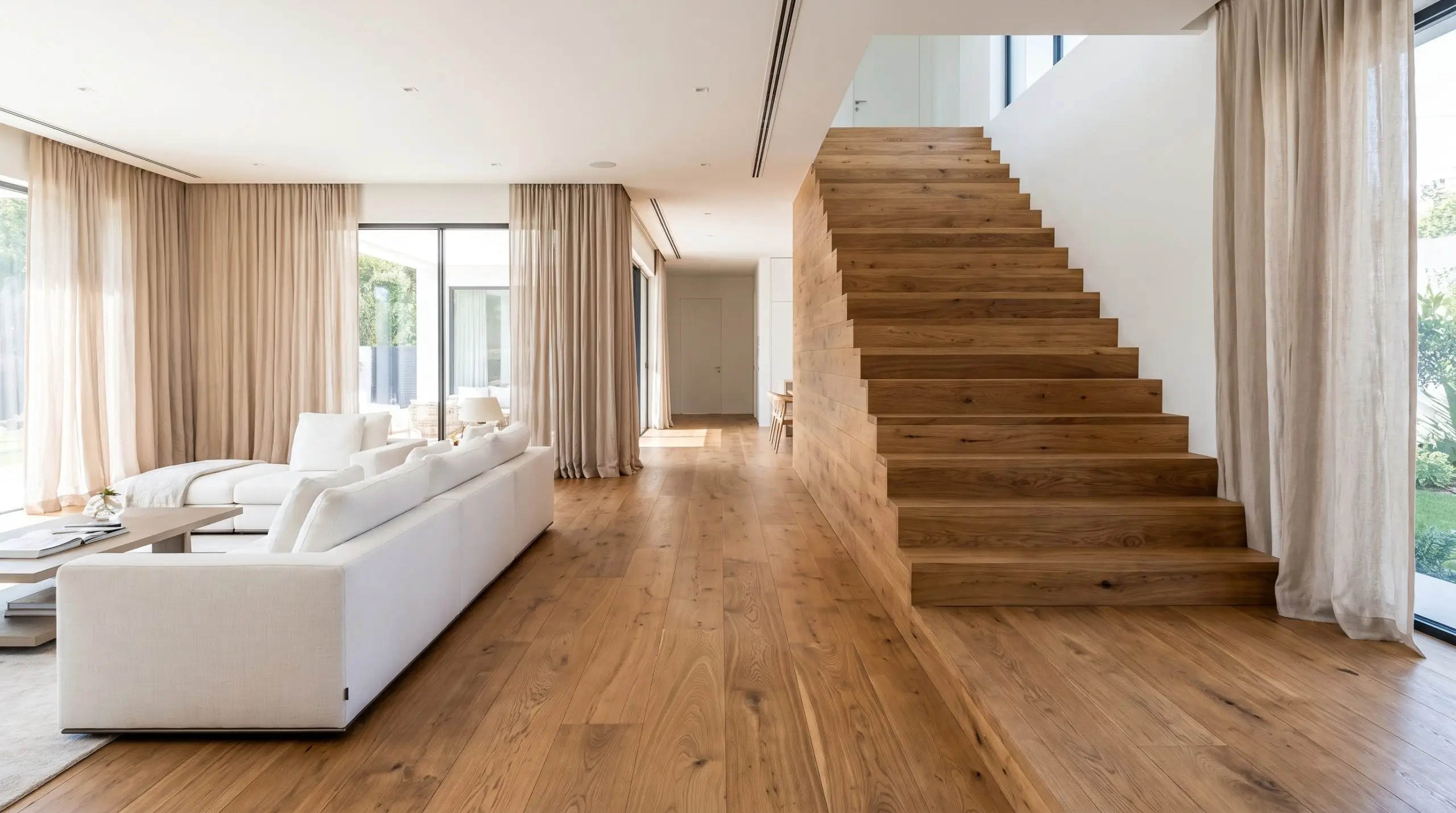
The seamless look mandates that the stain and grain of the stair treads perfectly match the adjoining 2027 Hardwood Flooring Trends. This requires custom on-site staining to ensure the staircase feels like an organic, uninterrupted extrusion of the floor plane.
- Vibe: Monolithic, seamless, expansive.
- Key Materials: Unfinished oak treads matching the floor species exactly.
Do not rely on factory-finished treads to match custom floors; different wood batches absorb stain differently, requiring a master finisher to tint the treads on-site to achieve a true 1:1 match.
Do/Don’t
White Primed Newels with Raw Oak Caps
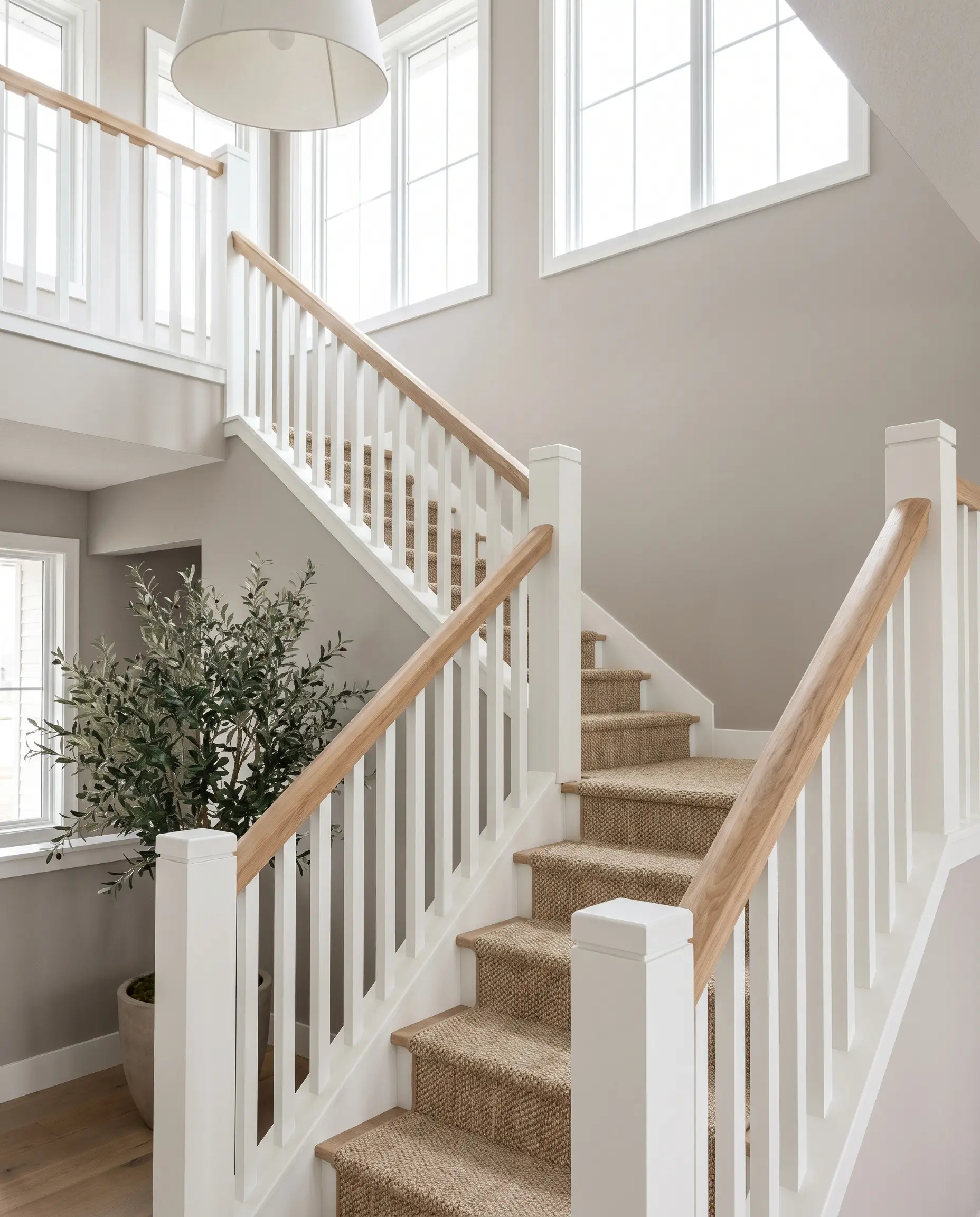
For a crisp, transitional aesthetic, square, white-painted newel posts and balusters are topped with a continuous, raw-oiled white oak handrail. This bright, airy approach keeps the architecture feeling light while grounding the touchpoints in natural wood.
- Vibe: Transitional, crisp, studio-inspired.
- Paint Recommendation: Benjamin Moore Chantilly Lace.
- Key Materials: Poplar newels (for smooth painting), raw white oak caps.
Ebonized Wood Risers with Bleached Oak Treads
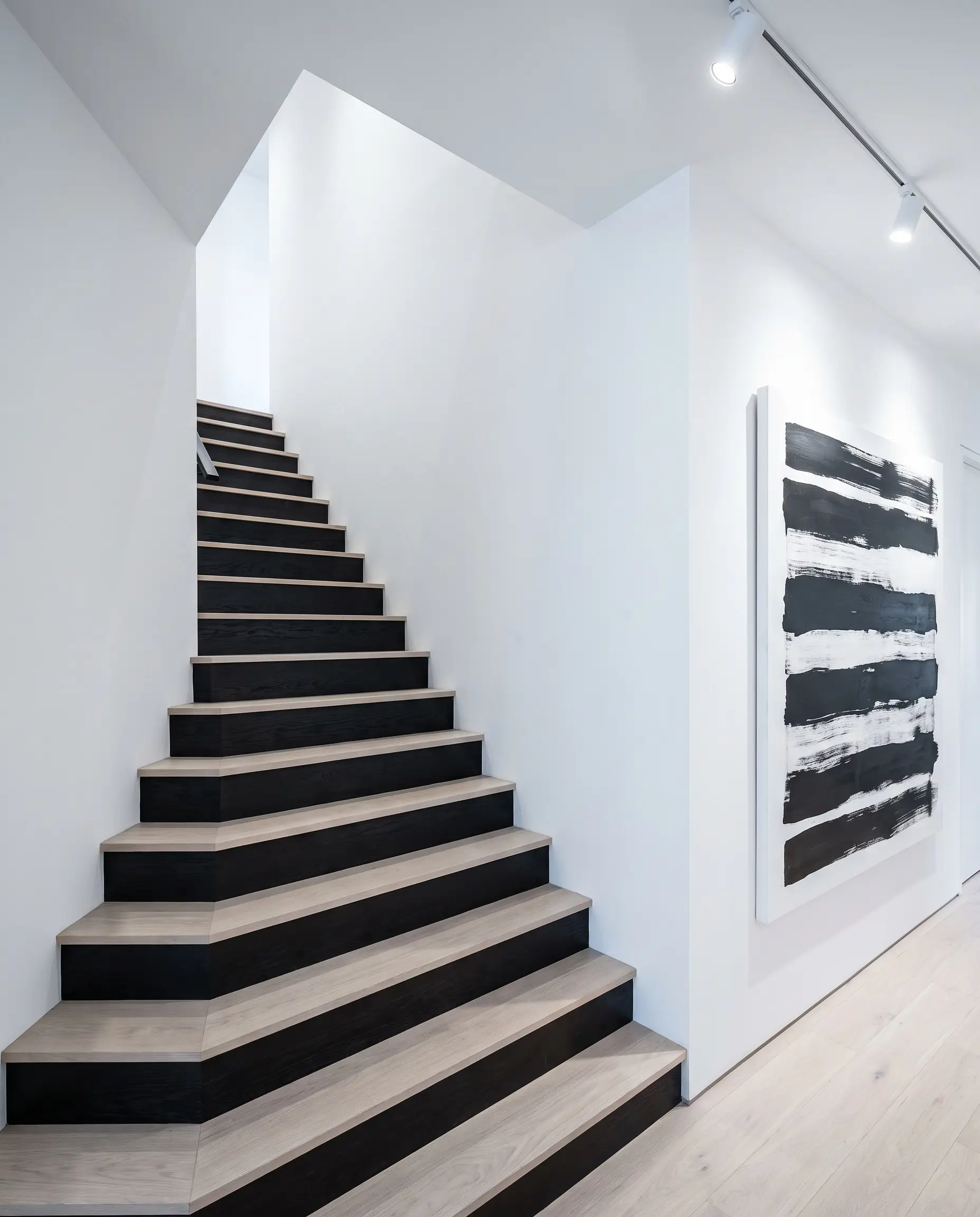
Staining the vertical risers pitch-black while keeping the horizontal treads a pale, bleached oak creates a striking, graphic striping effect. This bold architectural statement instantly modernizes a closed staircase by exaggerating its horizontal geometry.
- Vibe: High-contrast, graphic, contemporary.
- Key Materials: True ebonized wood stain, two-part wood bleach for treads.
- Styling Pro-Tip: Ensure the ebonized finish is fully opaque to provide a sharp, shadow-like backdrop for the pale treads.
High-Tech Integration & Smart Lighting
Staircases are notoriously dark and dangerous transition zones, but visible bulb fixtures disrupt clean architectural lines. In 2027, we solve this through integrated, invisible technology that provides ambient safety without glare.
Recessed Under-Tread LED Strip Lighting
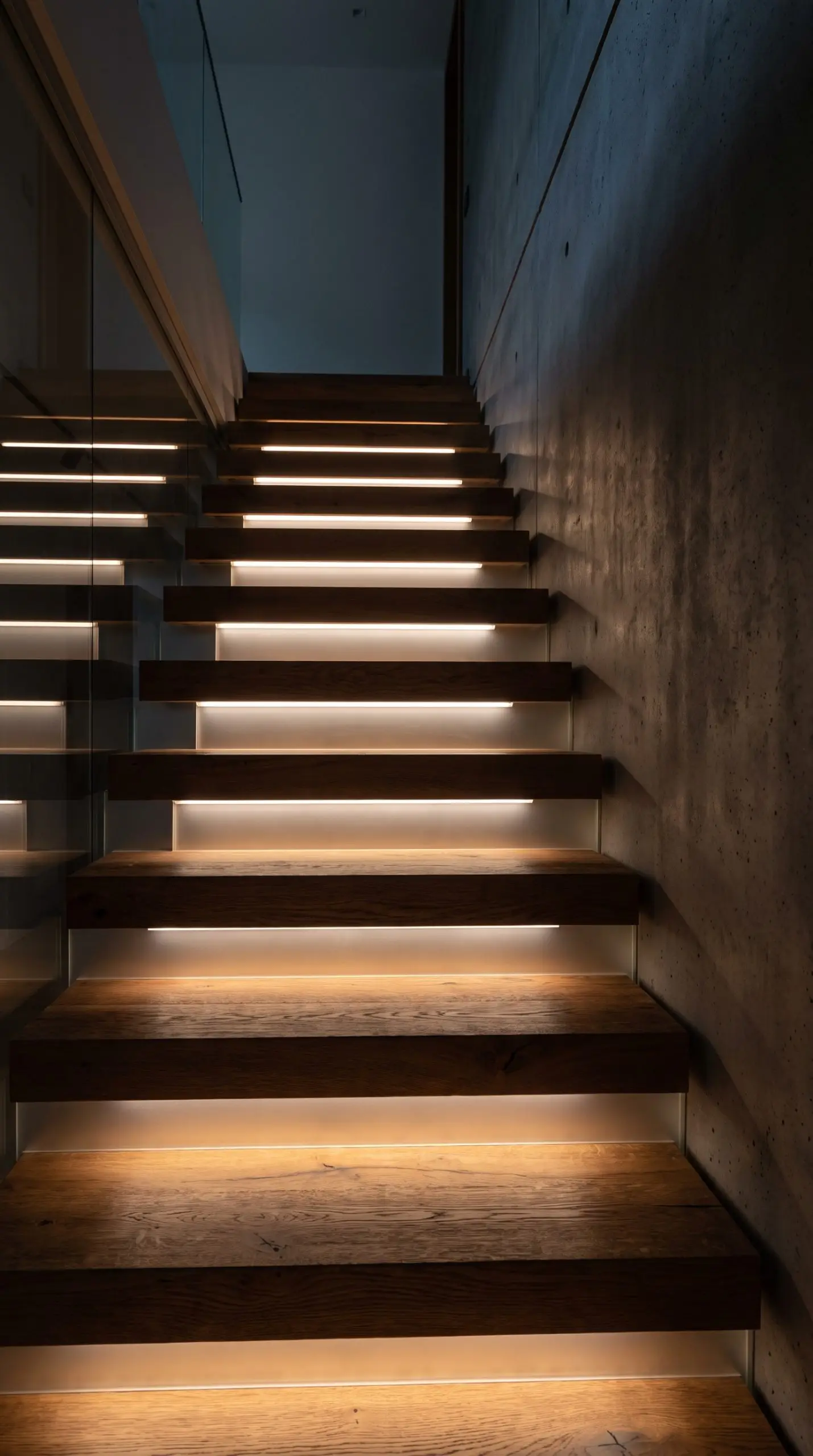
Routing a precise channel into the underside of each floating tread allows a diffused LED strip to wash the tread below in a soft, continuous glow. This highlights the grain of the wood and provides essential wayfinding without exposing the light source.
- Vibe: Cinematic, ultra-modern, safety-conscious.
- Key Materials: Aluminum LED extrusion channels, frosted diffusers, COB LED tape.
Strictly mandate 2700K or 3000K color temperatures for your LED strips; anything cooler will cast a harsh, blue, commercial light that ruins the warmth of residential interiors.
Architect’s Spec
Motion-Sensor Wall Sconces Integrated into the Skirting
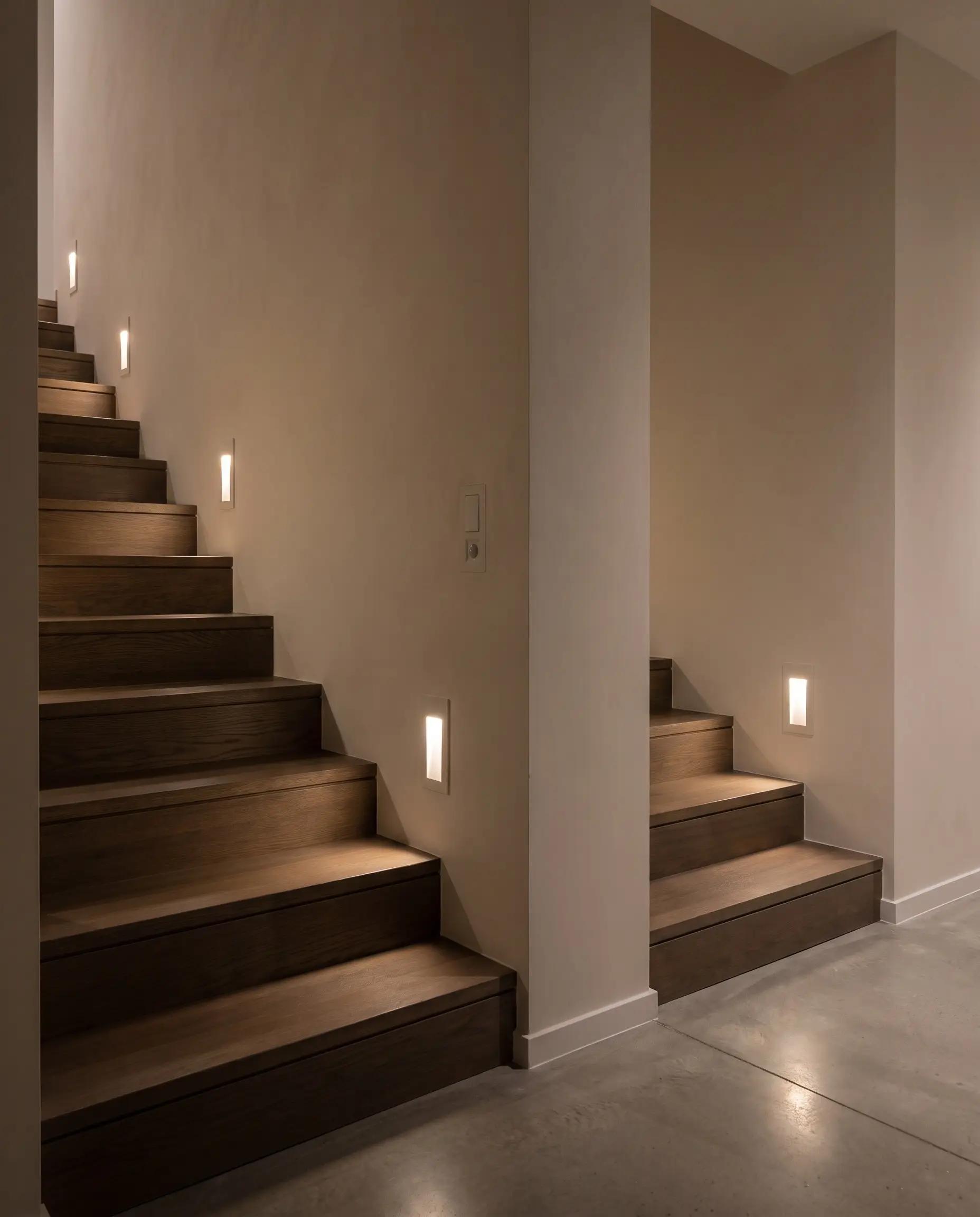
Plaster-in, flush-mounted micro wall lights installed just above the stair stringer or skirting board activate via hidden motion sensors when someone approaches at night. This delivers a luxury hotel aesthetic while providing low-level, hands-free illumination exactly when needed.
- Vibe: High-tech luxury, discreet, highly functional.
- Key Materials: Plaster-in LED micro-sconces, passive infrared (PIR) sensors.
- Styling Pro-Tip: Paint the plaster-in trim to exactly match the surrounding wall color so the fixture disappears completely when turned off.
Backlit Handrail Channels for Low-Glare Wayfinding
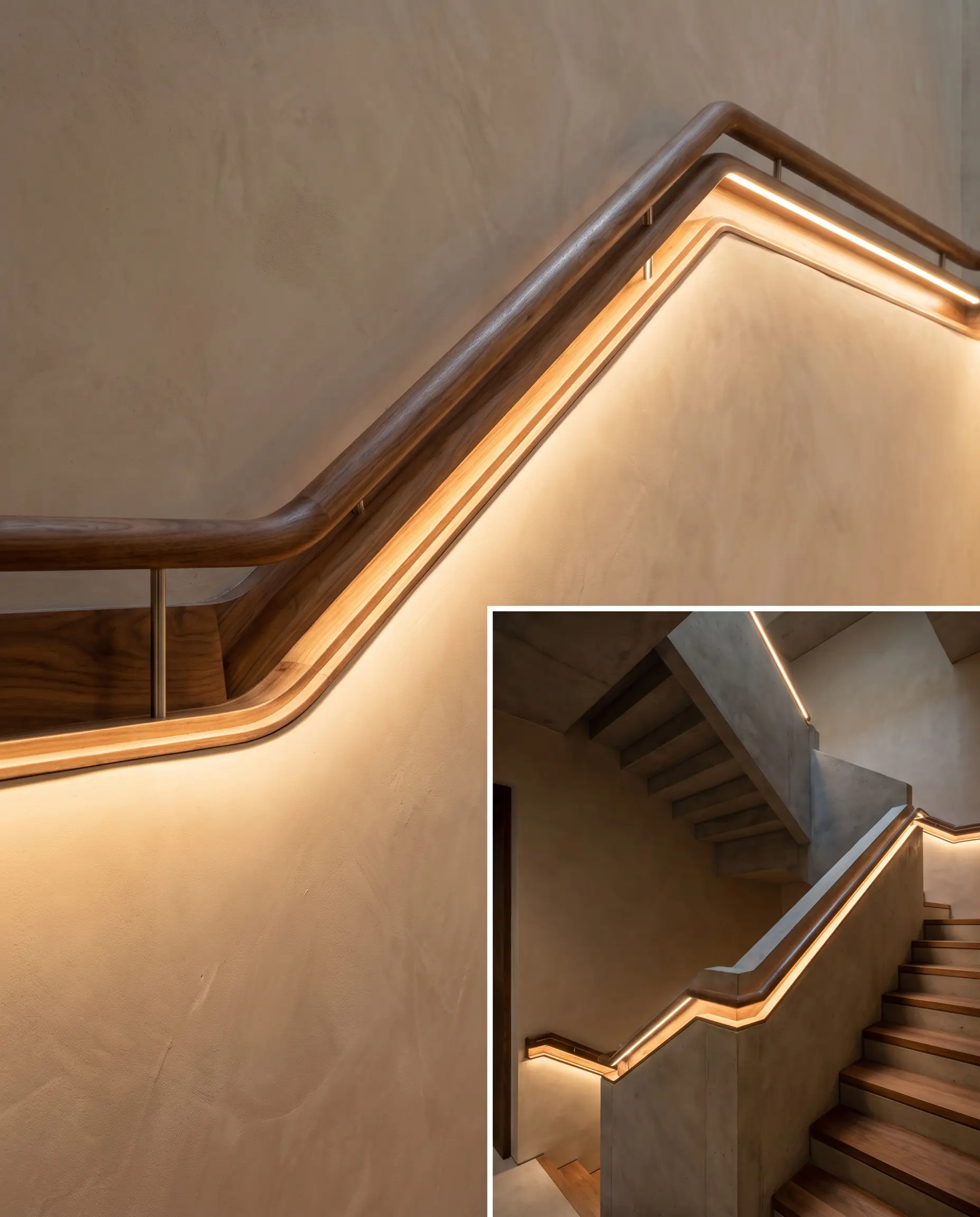
Fabricating a continuous routed groove on the underside of a wooden or metal handrail houses an LED strip that washes the adjacent wall or glass balustrade in soft light. This integrates the lighting directly into the grip, eliminating the need for ceiling-mounted spots.
- Vibe: Sleek, integrated, ambient.
- Key Materials: Custom-routed handrails, low-voltage wiring concealed in stanchions.
By directing the light downward against the wall, this technique highlights the texture of the plaster or drywall, turning the architectural perimeter into a glowing canvas.
The Visual Anchor
Smart-Tinting Glass Railings for Privacy Control
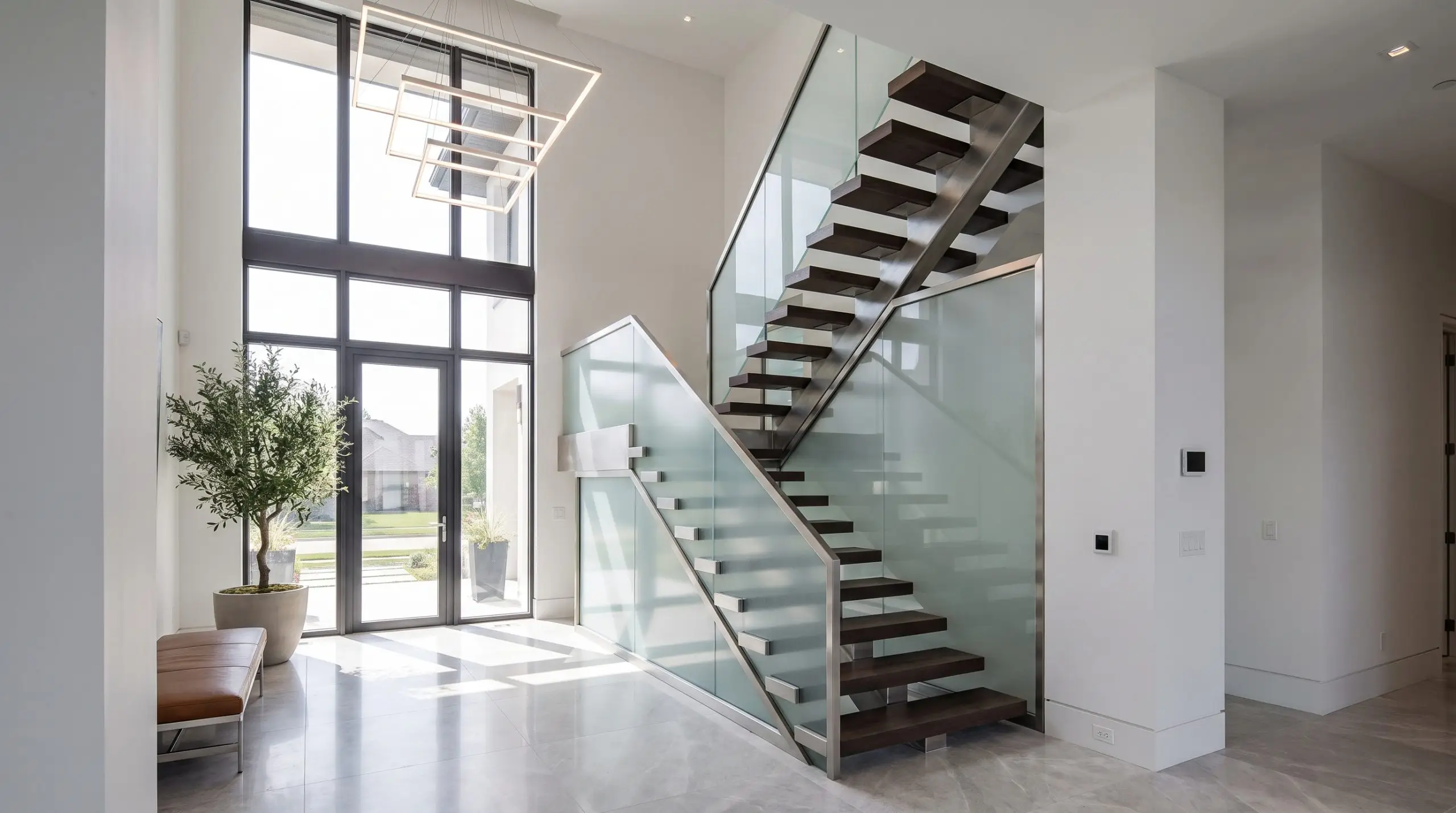
For staircases situated near front doors or massive modern entryway lighting windows, electrochromic smart glass panels offer the ultimate privacy solution. These custom panels switch from transparent to completely frosted at the touch of a button or via smart-home automation systems.
- Vibe: Cutting-edge, bespoke, privacy-focused.
- Key Materials: PDLC (Polymer Dispersed Liquid Crystal) glass, concealed wiring.
- Styling Pro-Tip: Integrate the controls directly into your home’s central automation hub for schedule-based privacy tinting.
Sustainable & Innovative Eco-Materials
Modern architecture demands rigorous environmental responsibility without compromising structural integrity or aesthetic refinement. The materials defining 2027’s sustainable builds focus on longevity, recycled content, and non-toxic finishes.
Bamboo Composite Treads for High-Traffic Durability
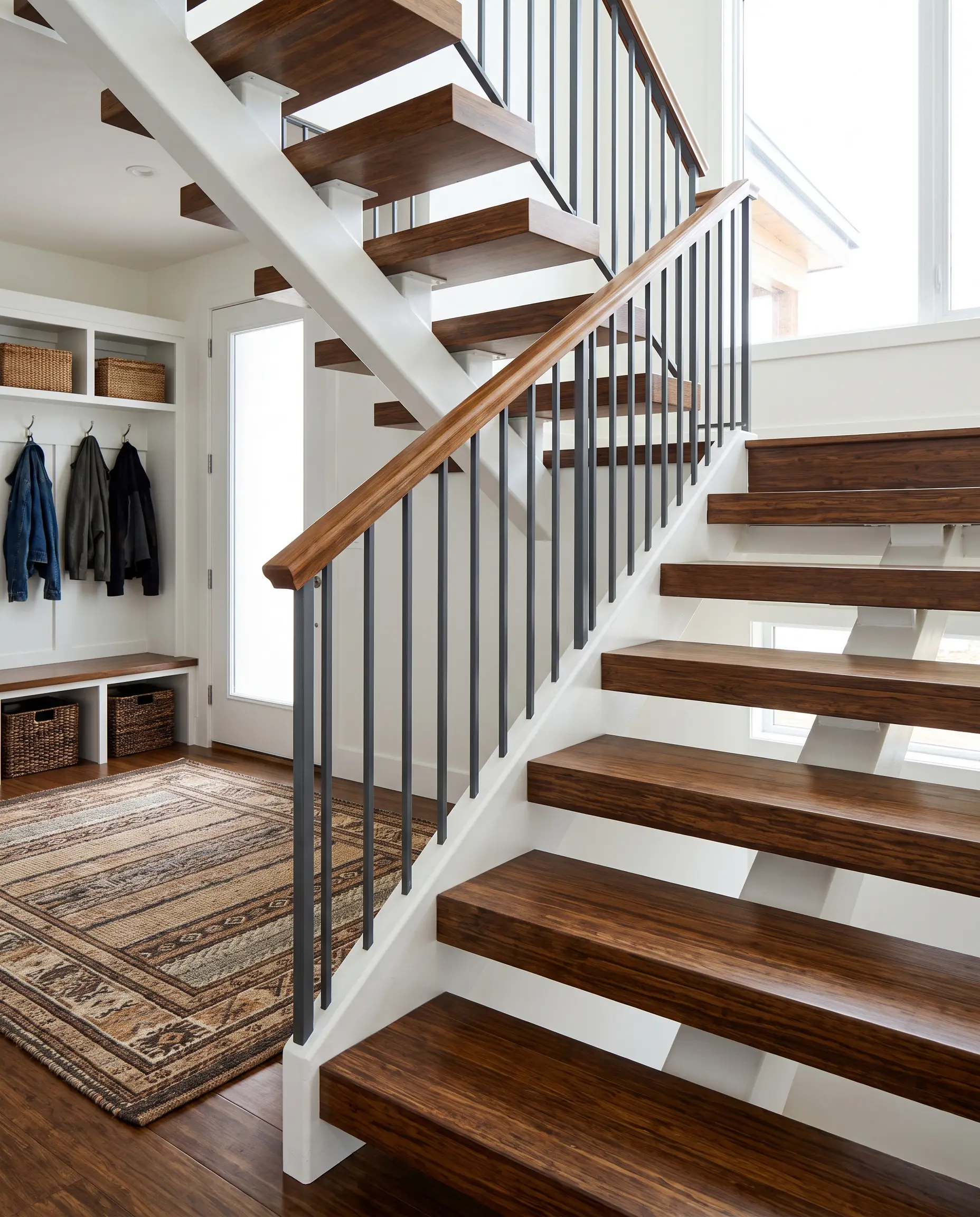
Architectural-grade, strand-woven bamboo composites offer superior dent resistance compared to traditional oak, making them ideal for high-traffic environments. This utilizes a rapidly renewable resource while delivering a dense, heavy-duty structural tread.
- Vibe: Eco-conscious, modern, resilient.
- Key Materials: Strand-woven bamboo composite block.
- Styling Pro-Tip: Opt for carbonized bamboo to achieve a rich, warm tone that permeates the entire block, masking any deep scratches.
Recycled Aluminum Stringers and Posts
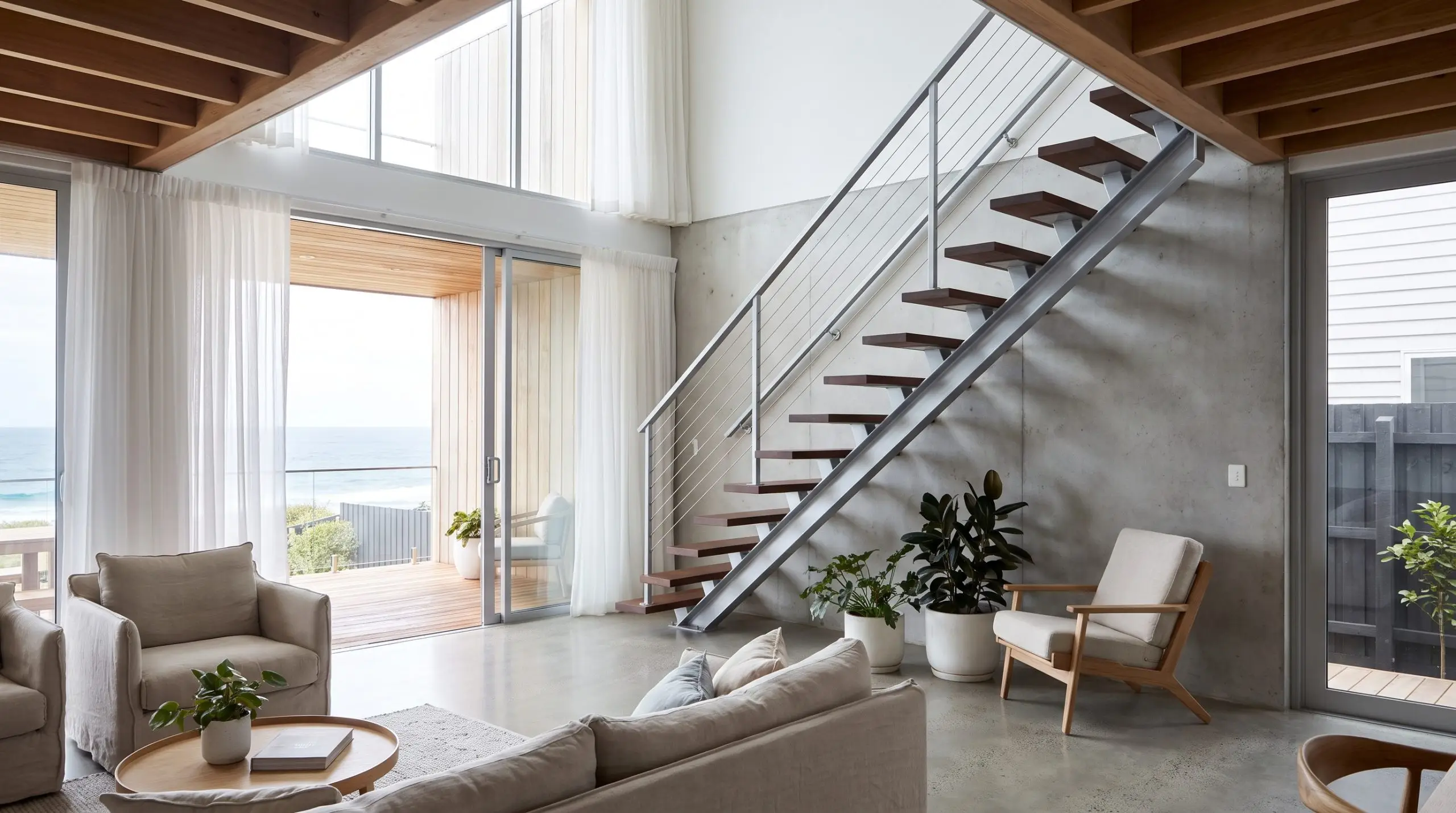
The framework of floating stairs is shifting toward high-recycled-content aluminum, which offers a lighter carbon footprint and significantly lighter physical weight than virgin steel. This allows for easier site installation without sacrificing load-bearing capacity.
- Architect’s Spec: High-recycled-content architectural aluminum.
- Benefit 1: Drastically reduces structural dead load on the home’s framing.
- Benefit 2: Inherently corrosion-resistant, even in high-humidity coastal builds.
- Benefit 3: Requires less energy to extrude and transport than traditional structural steel.
Terrazzo Pre-Cast Stair Treads with Recycled Glass
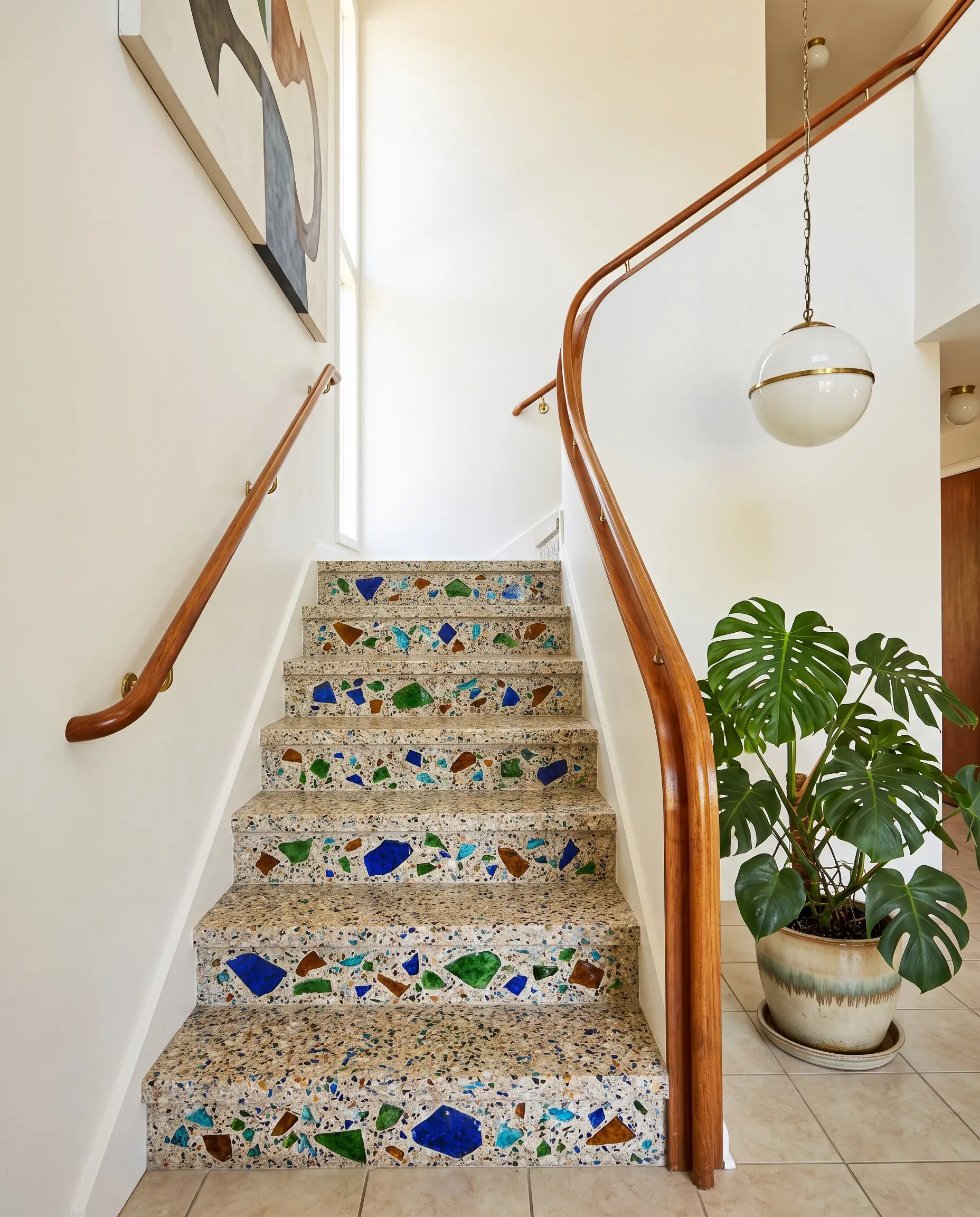
Custom terrazzo is experiencing a massive resurgence for interior stairs, specifically utilizing pre-cast treads loaded with recycled glass aggregate. This provides a highly durable, custom-colored architectural feature that diverts waste from landfills.
- Vibe: Mid-century revival, colorful, bespoke.
- Key Materials: Cementitious or epoxy terrazzo binder, recycled glass chips.
- Styling Pro-Tip: Size the aggregate chips dynamically—mixing micro-glass with large, chunky shards—for a highly textured, custom visual profile.
Low-VOC Natural Oil Finishes for Raw Wood Protection
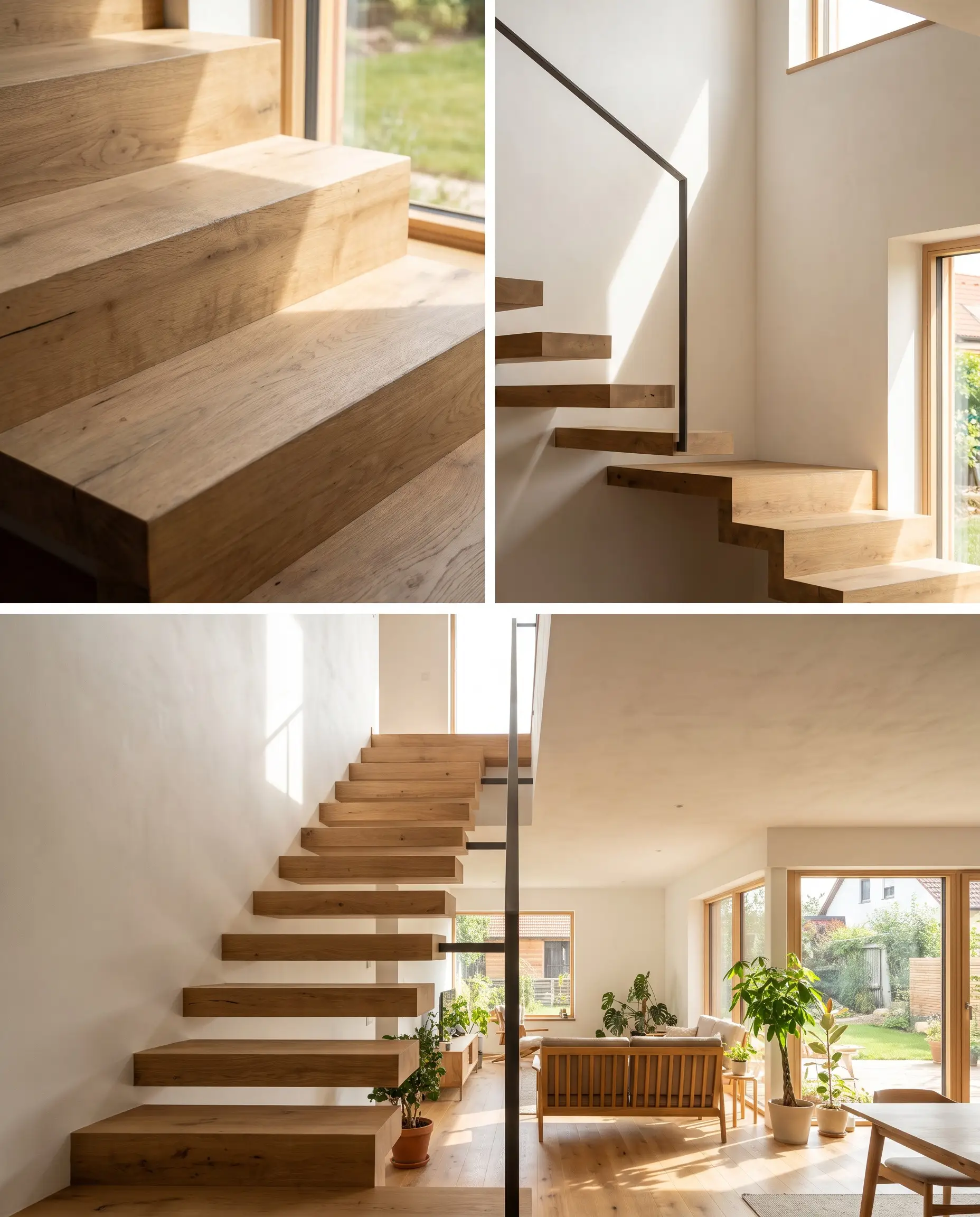
The industry is abandoning high-fume, high-gloss polyurethanes in favor of hard-wax natural oils that protect the wood from within while keeping the VOC count near zero. These finishes maintain the raw, tactile feel of the timber, allowing the natural grain to breathe.
- Vibe: Raw, organic, matte.
- Key Materials: Rubio Monocoat, Osmo Polyx-Oil.
Do not apply thick, glossy, plastic-looking clear coats to premium architectural timber; it visually cheapens the wood and is impossible to spot-repair if scratched.
Do/Don’t
Finalizing the Ascent: Executing Your 2027 Staircase
The 2027 staircase is no longer an afterthought; it is the architectural anchor of the modern home. By embracing structural transparency, demanding deliberate tactile finishes, and seamlessly integrating hidden lighting, you transform a simple transition zone into a daily spatial experience. Before tearing out existing stringers, always consult with a licensed structural engineer to verify load paths and anchoring requirements. When you are ready to refine the rest of your interior architecture, explore our Quiet Luxury Interior Design Guide to perfectly harmonize your new staircase with your home’s broader aesthetic vision.

The Hackrea Style Desk treats interior decoration as an exact visual science. Rather than focusing on demolition or floor plans, this desk masters the art of color theory, undertone matching, material pairings, and spatial proportion. From balancing the visual weight of mixed metals to finding the perfect bridging tone between disparate wood species, this desk provides the rigorous aesthetic rules needed to achieve high-end, editorial-quality harmony in any space.