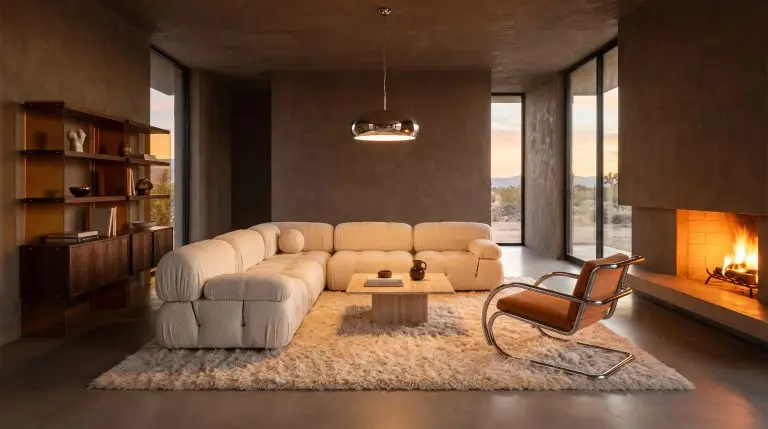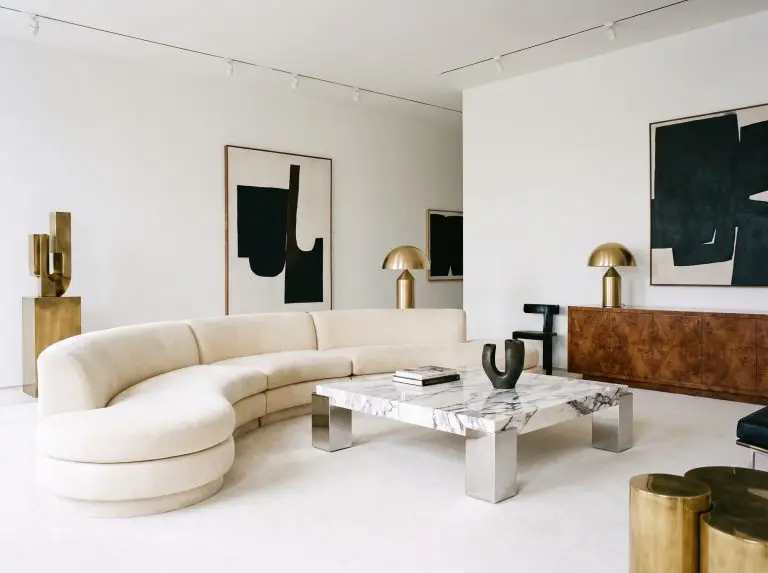
The makeshift, pandemic-era workstation is dead. When remote work shifted from a temporary necessity to a permanent lifestyle, the standard for residential productivity spaces fundamentally changed. We are no longer making do with cramped corners, flat-pack particleboard, and chaotic cable clutter.
The defining home office trends 2027 has to offer center entirely on “Resimercial Design”—a rigorous aesthetic standard that merges commercial workplace design with bespoke residential warmth. This movement demands custom architectural millwork, multi-sensory materials, and ergonomic permanence. It is a complete rejection of the clinical white box in favor of high-performance luxury.
Designing a workspace for longevity requires more than a desk and a chair; it requires an intentional approach to how a room sounds, feels, and operates. By integrating acoustic dampening, hidden technology, and tactile surfaces, we are engineering spaces built for deep focus. It is time to construct the true Executive Sanctuary.
The most successful 2027 workspaces prioritize physical endurance alongside visual beauty. By embracing “Tactile Naturalism”—a focus on organic, heavily textured materials—designers are actively reducing the visual fatigue and harsh screen glare that plague standard drywall rooms. A modern home office must perform flawlessly under the pressure of endless video calls while remaining psychologically restorative.
The Shift to Tactile Naturalism
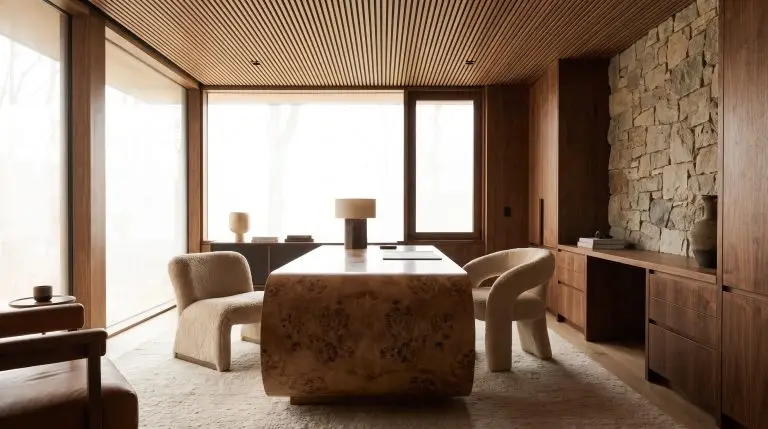
1. Anchor the Room with a Solid Burl Wood or Rift-Sawn Oak Desk
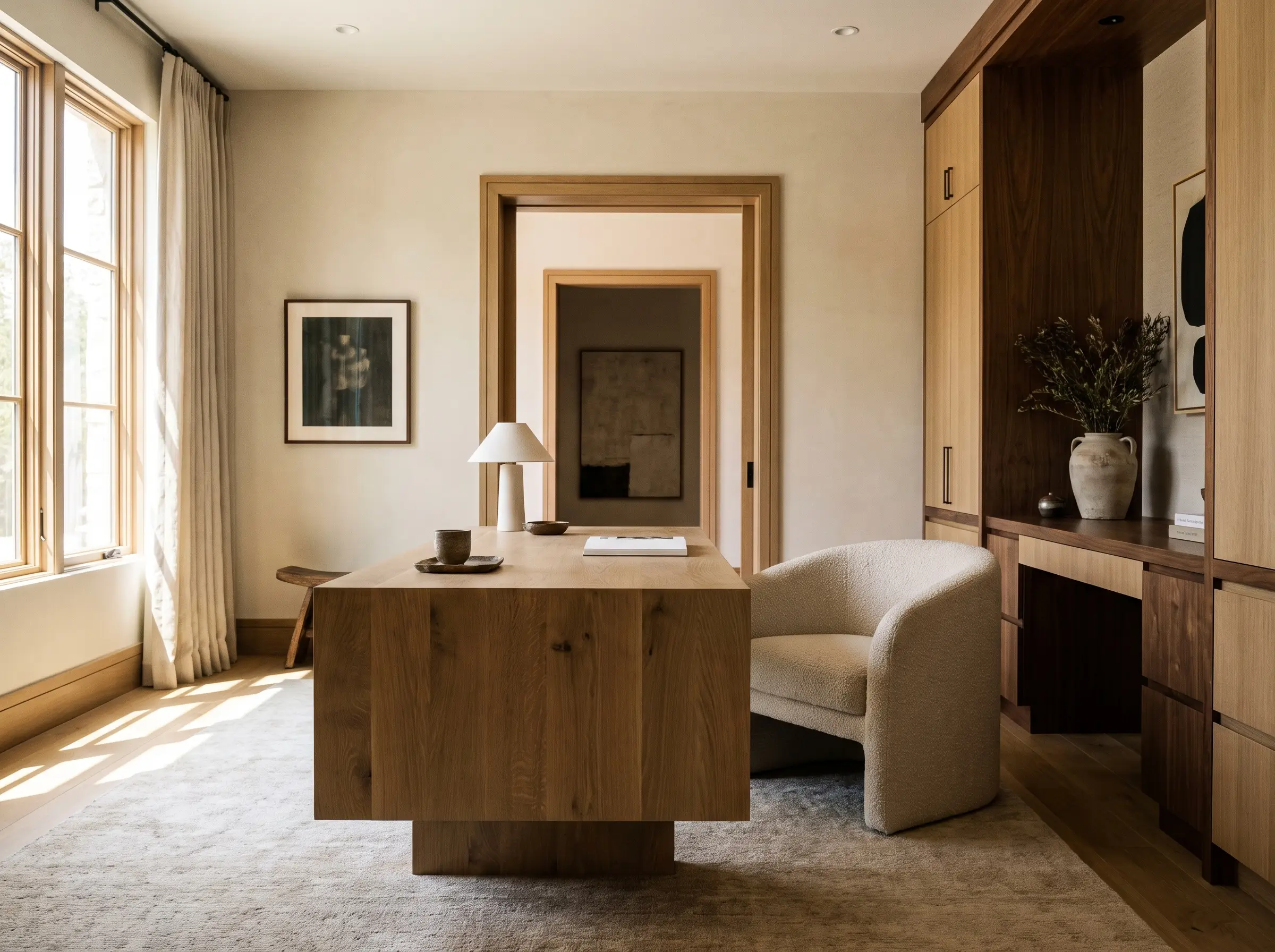
A workspace’s energy is entirely dictated by its central focal point, and the 2027 standard demands a heavy, grounded statement piece. Trading fragile glass or thin laminate for a massive, sculptural desk establishes immediate authority and provides a tactile, grounding surface for deep work.
Never push your desk flush against a wall. Float the desk in the center of the room facing the primary doorway to command the space’s energy and eliminate the vulnerability of having your back to an entrance.
Architect’s Note
- Vibe: Postmodern Luxury or Organic Modern.
- Key Materials: Solid Burl Wood or Rift-Sawn White Oak.
- Styling Pro-Tip: Pair a heavy, monolithic desk with a low-profile, curvilinear chair to balance the visual weight of the room.
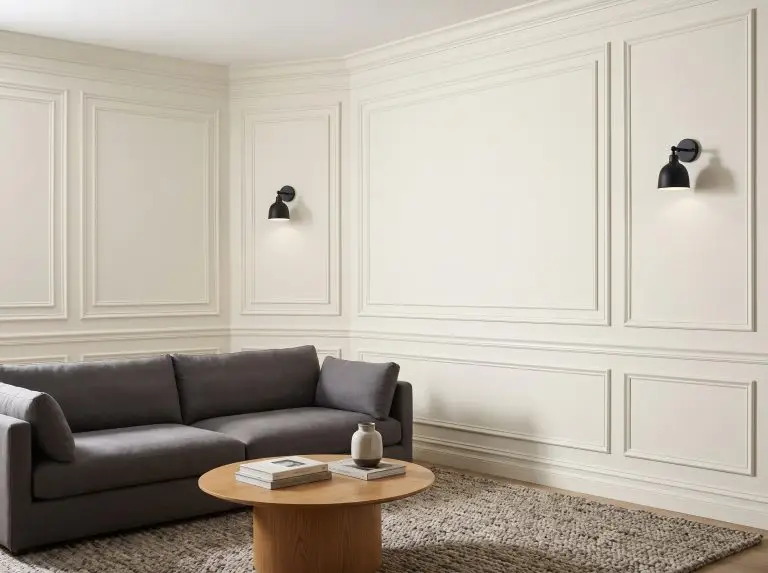
2. Apply Tactile Naturalism with Limewash or Roman Clay Walls
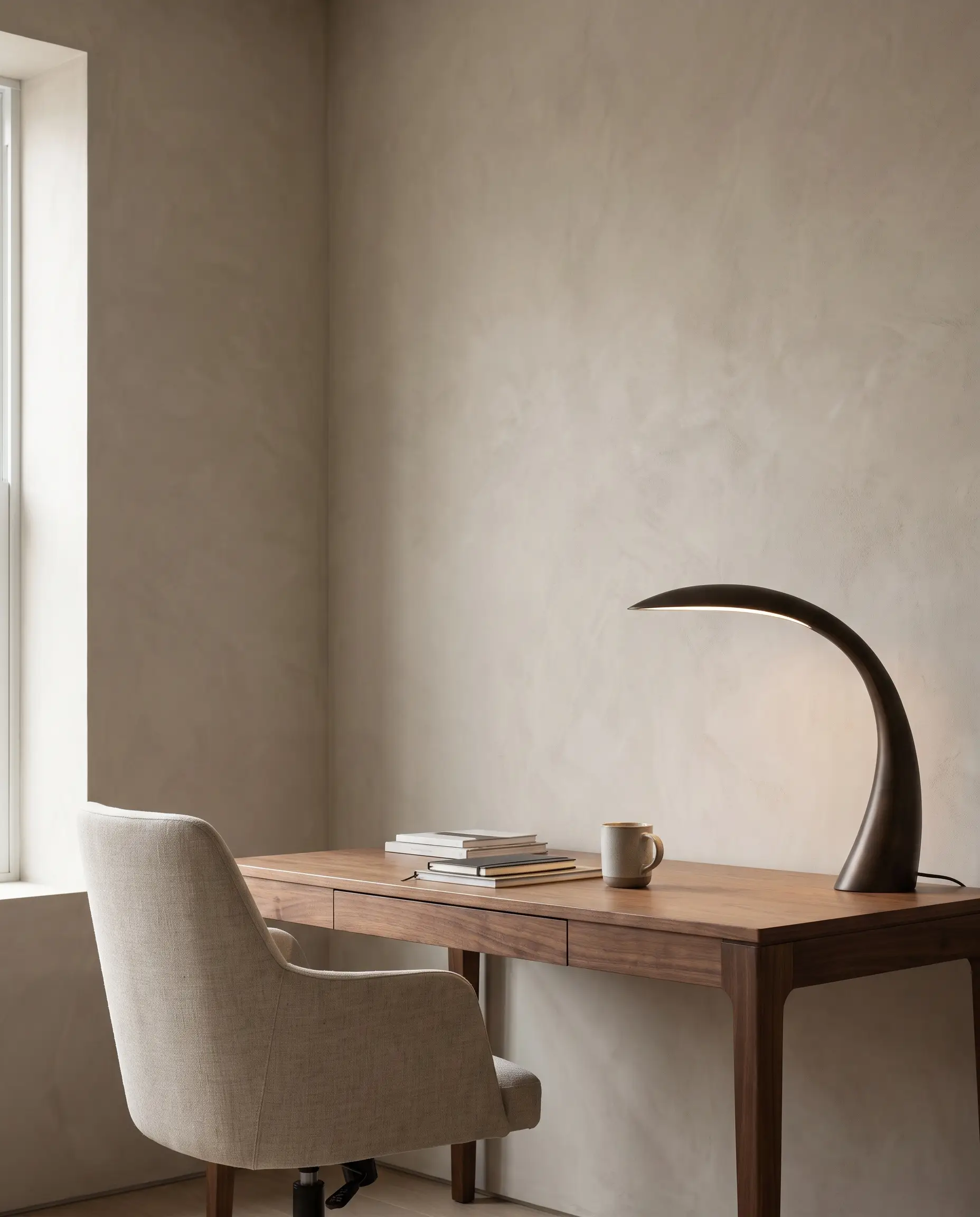
Standard matte or eggshell paint creates a harsh, flat background that bounces ring-light glare directly into the camera lens. Applying limewash or Roman clay introduces a subtle, suede-like movement to the walls, absorbing excess light and creating a beautifully soft, professional depth of field on video calls.
- Vibe: Earthy, restorative, and highly textured.
- Key Materials: Mineral-based lime paint or artisanal Roman clay.
- Paint Recommendation: Portola Paints Roman Clay in “Kensington” (a warm, muted greige).
- Acoustic Benefit: The micro-texture of plaster subtly diffuses high-frequency sound waves better than flat latex.
3. Install Architectural Acoustic Paneling for Superior Call Quality
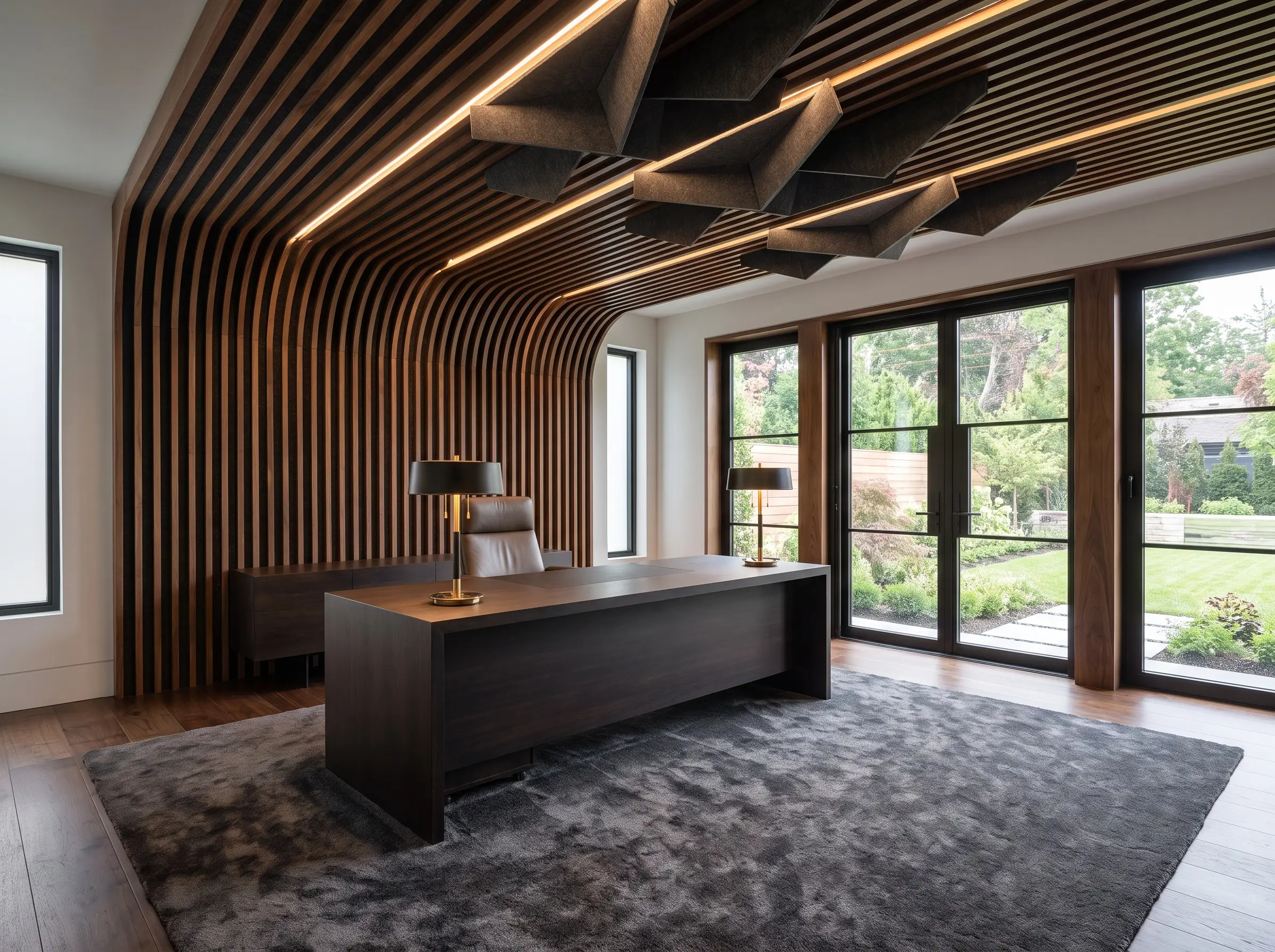
Hard-surface residential rooms are acoustic nightmares, amplifying echoes that ruin professional communication. Integrating commercial-grade acoustic architecture—like fluted wood slat walls or sculptural ceiling baffles—deadens reverberation while adding stunning linear geometry to the space.
- Vibe: High-end recording studio meets modern executive suite.
- Key Materials: PET Felt Baffles, acoustic-backed walnut slats.
- Installation Pro-Tip: Carry the acoustic slating from the wall directly onto the ceiling to create an enveloping, sound-dampened canopy over the desk.
| Acoustic Material | Pros | Cons |
|---|---|---|
| PET Felt Baffles | Maximum sound absorption; lightweight; highly sculptural. | Distinctly commercial aesthetic; requires ceiling installation. |
| Wood Slat Panels | Beautiful organic warmth; easy wall-mount installation. | Lower noise reduction coefficient compared to pure felt. |
4. Design a Screen-Free “Focus Nook” with Soft Seating
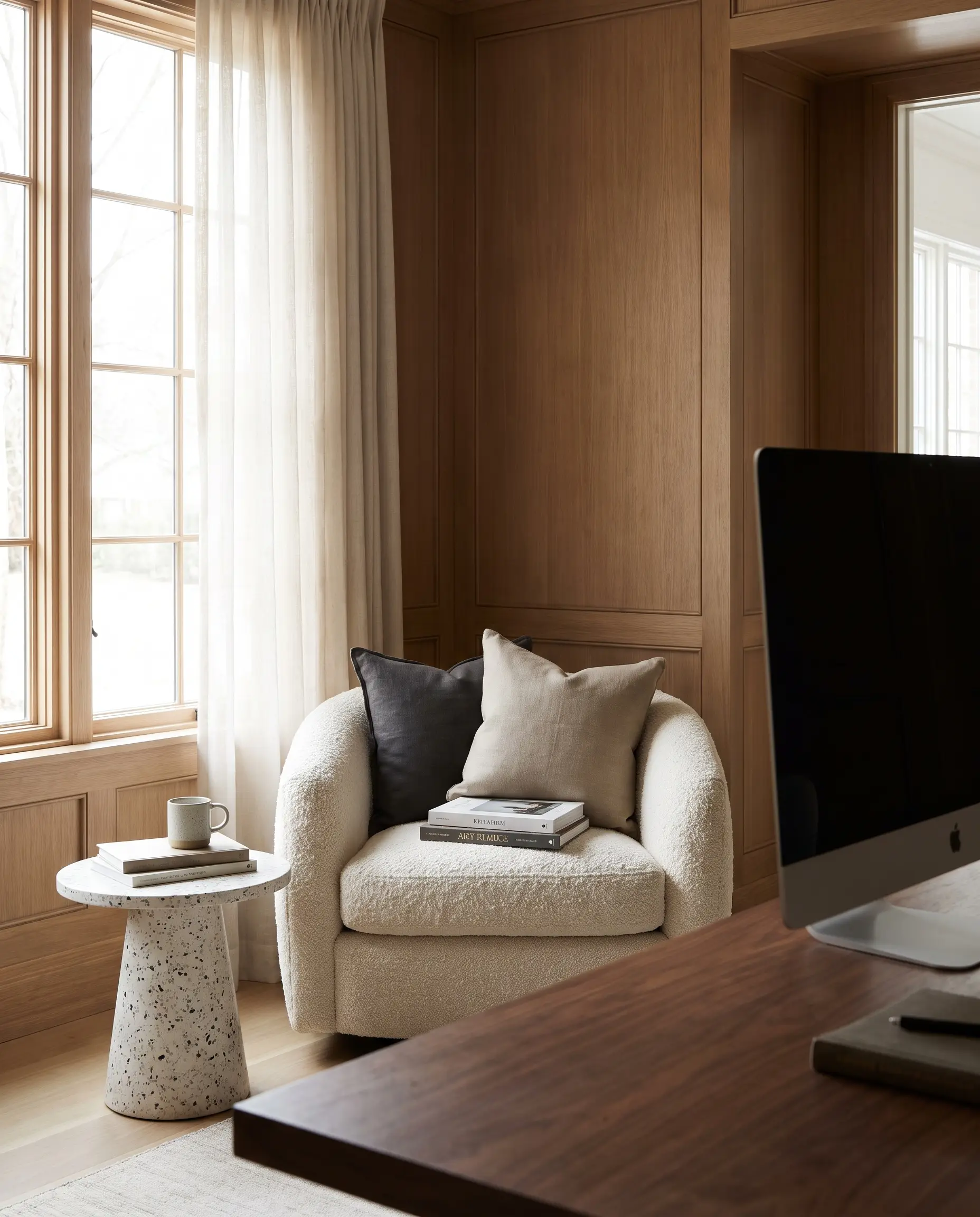
The most sophisticated layouts acknowledge that digital burnout is a spatial problem, requiring a dedicated zone for analog tasks. Carving out a secondary soft-seating area away from the monitors allows for deep reading, physical document review, and vital cognitive resets.
If square footage is tight, position your focus nook adjacent to a window. The transition from staring at a glowing screen to gazing out at natural daylight provides an essential focal-length shift for the eyes, directly combating visual fatigue.
Architect’s Note
- Vibe: A quiet, luxurious library corner.
- Key Materials: Heavy boucle, tailored linen, honed terrazzo.
- Styling Pro-Tip: Anchor the nook with a low-profile armchair and a small terrazzo side table, completely out of the webcam’s line of sight.
5. Conceal Clutter with Invisible Tech and Induction Charging Millwork
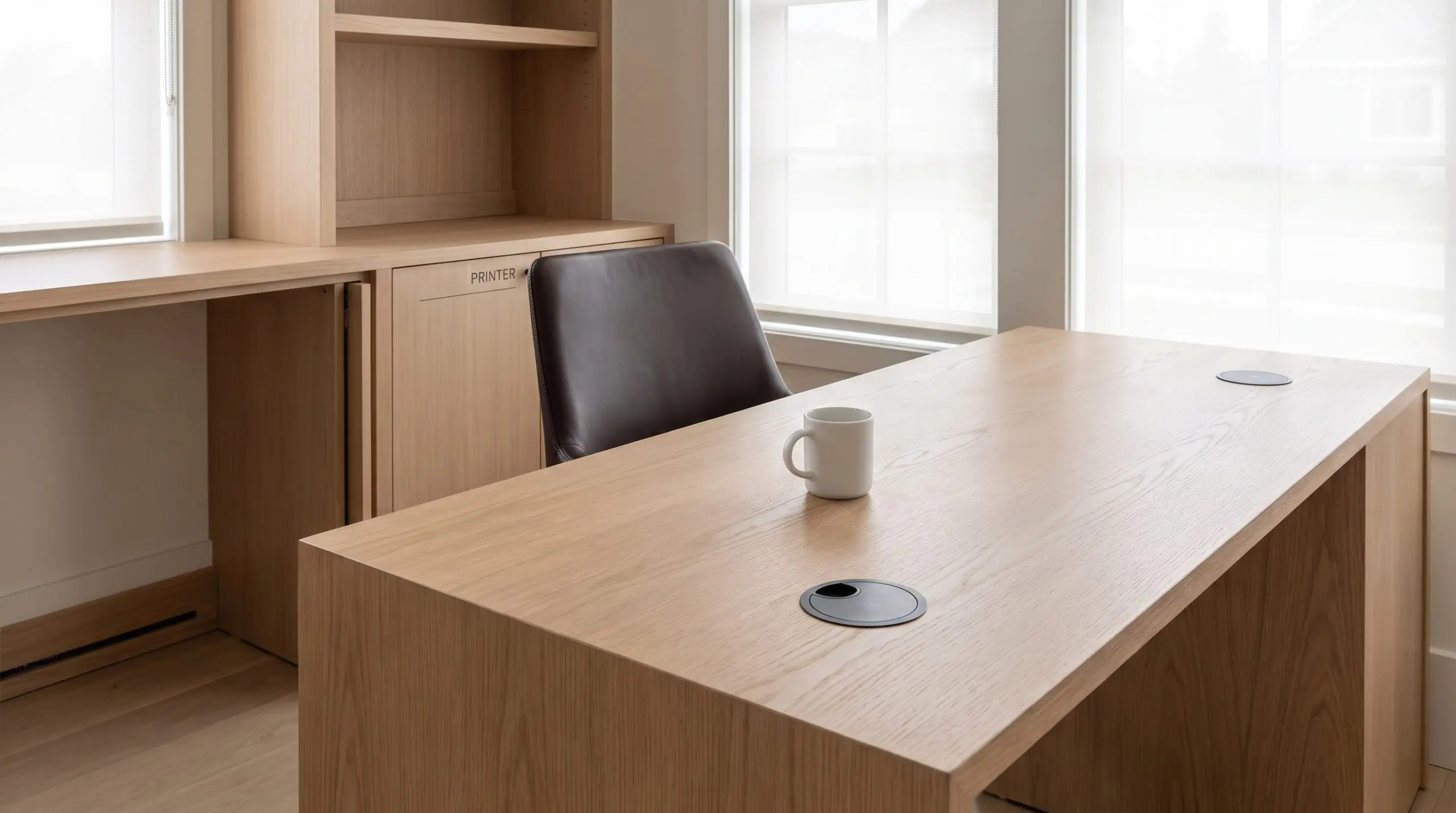
A premium workspace requires invisible technology; tangled cords and bulky hardware instantly degrade the room’s architectural integrity. Custom casework equipped with under-surface induction chargers, hidden cable routing, and pocket-door printer garages ensures the space remains meticulously clean.
- Vibe: Seamless, high-tech minimalism.
- Key Materials: Integrated millwork, flush-mount charging pads, custom baseboards with wire channels.
- Styling Pro-Tip: Specify a 2-inch grommet in your custom millwork to route all monitor cables directly down into a concealed cabinet, eliminating the dreaded “wire waterfall” behind the desk.
6. Drench the Space in Warm, Monochromatic Color Palettes
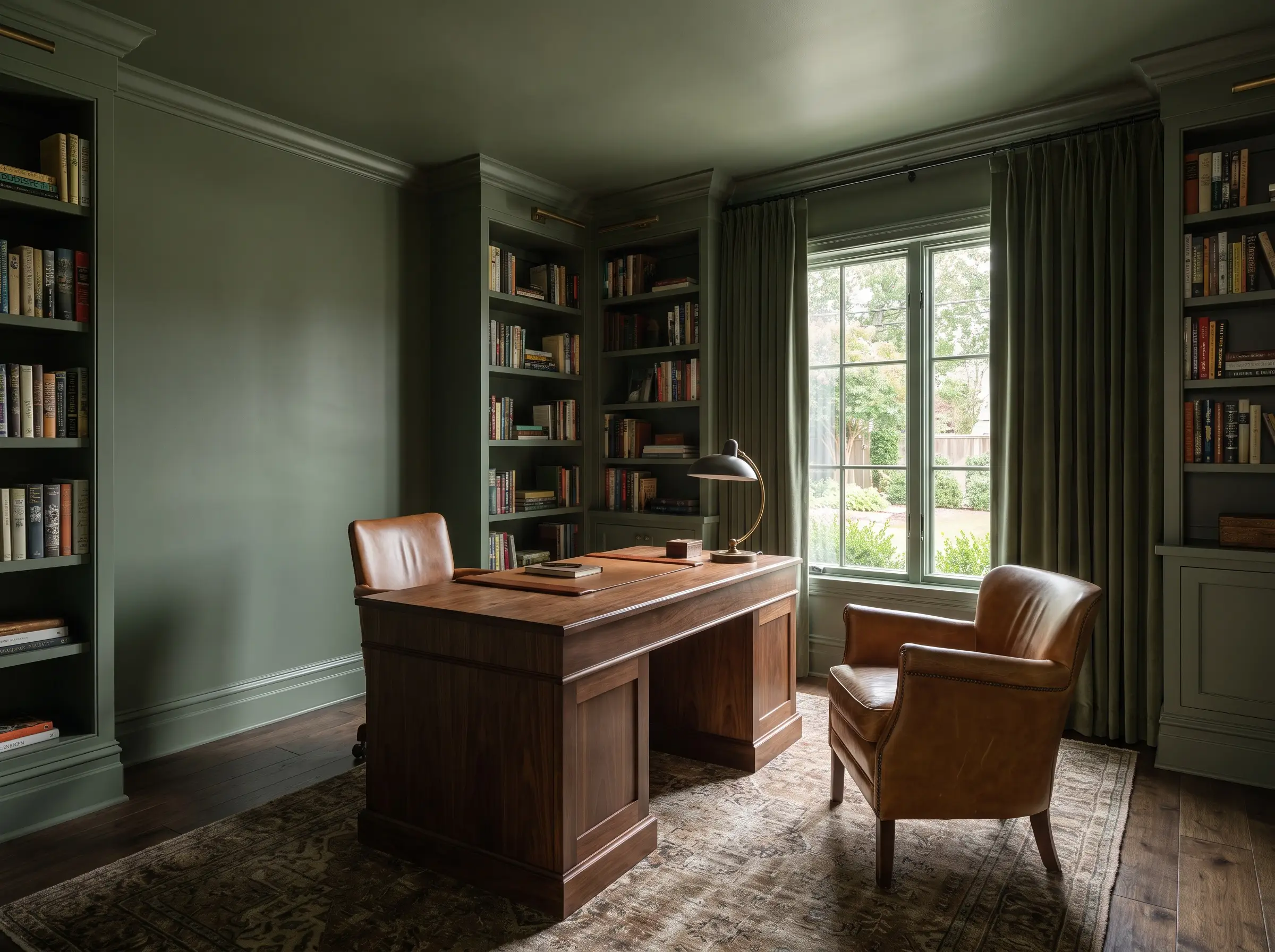
Painting the baseboards, walls, and ceiling the exact same color reduces visual fragmentation, allowing the brain to enter a state of uninterrupted focus. Moving away from stark, corporate whites, the 2027 standard relies on warm, earthy, monochromatic tones that wrap the room in a cohesive, calming envelope.
- Vibe: Enveloping, cohesive, and deeply focused.
- The Muddy Greens: Farrow & Ball “Green Smoke” — Grounds the room in deep, organic focus, perfect for high-stress executive work.
- The Warm Clays: Sherwin-Williams “Redend Point” — Casts a highly flattering, restorative glow on skin tones during virtual meetings.
- The Deep Oxbloods: Benjamin Moore “Townsend Harbor Brown” — Creates a rich, library-like intensity for those who require a moody, dramatic aesthetic.
7. Sync Productivity with Circadian Rhythm LED Lighting
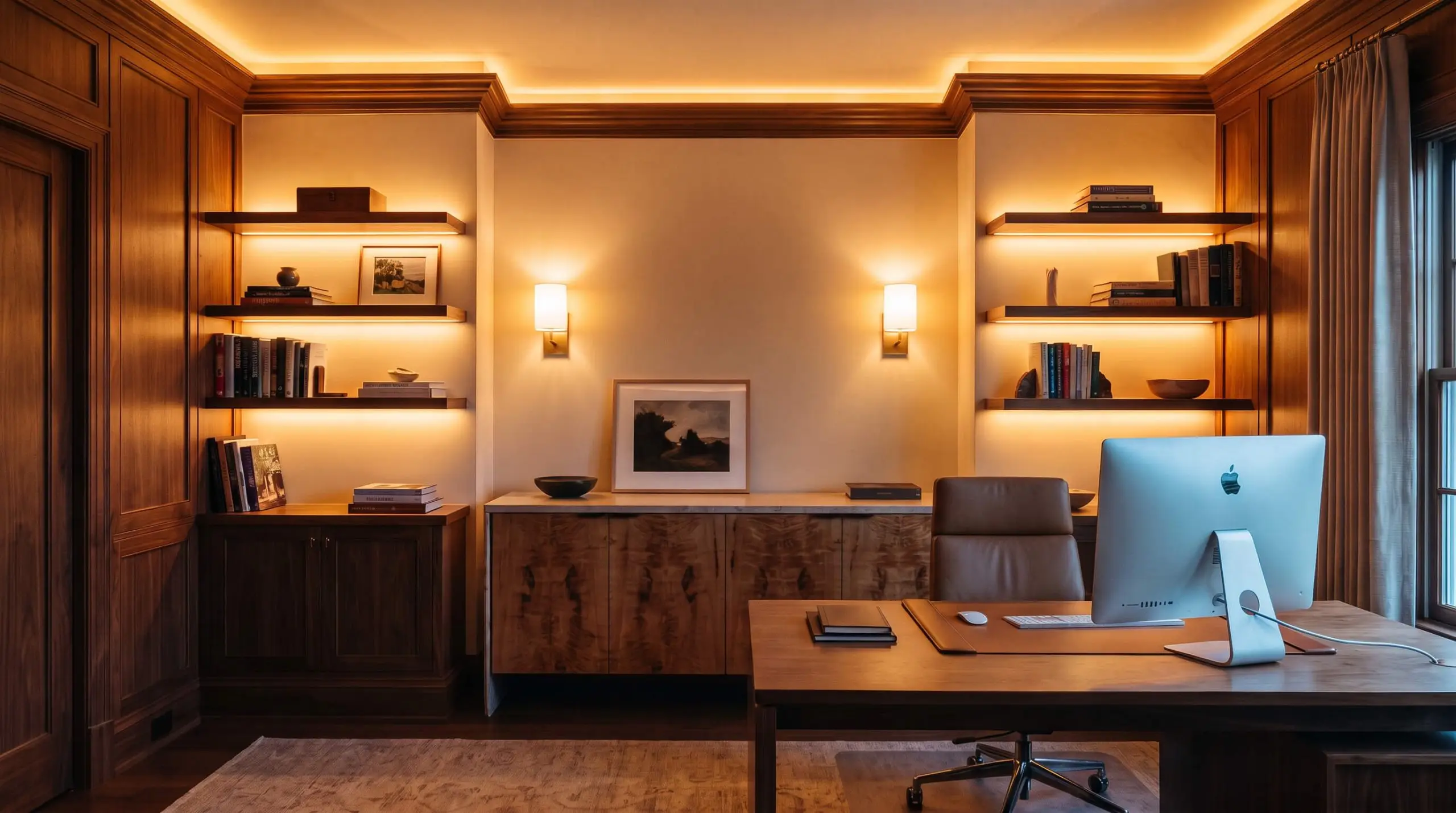
Harsh, static overhead lighting actively disrupts focus and natural energy levels. Implementing a multi-layered, circadian-synced ambient lighting system transforms the room’s atmosphere, shifting from a crisp, blue-toned light for morning alertness to a warm, amber glow that supports evening melatonin production.
- Vibe: Health-conscious, adaptive luxury.
- Key Materials: Smart LED drivers, tunable white architectural strip lights, diffused sconces.
- Styling Pro-Tip: Hide tunable LED strips behind crown molding or floating shelves to wash the walls in ambient light, completely eliminating the need for aggressive overhead cans.
8. Style an Asymmetrical, Curated Backdrop for Video Calls
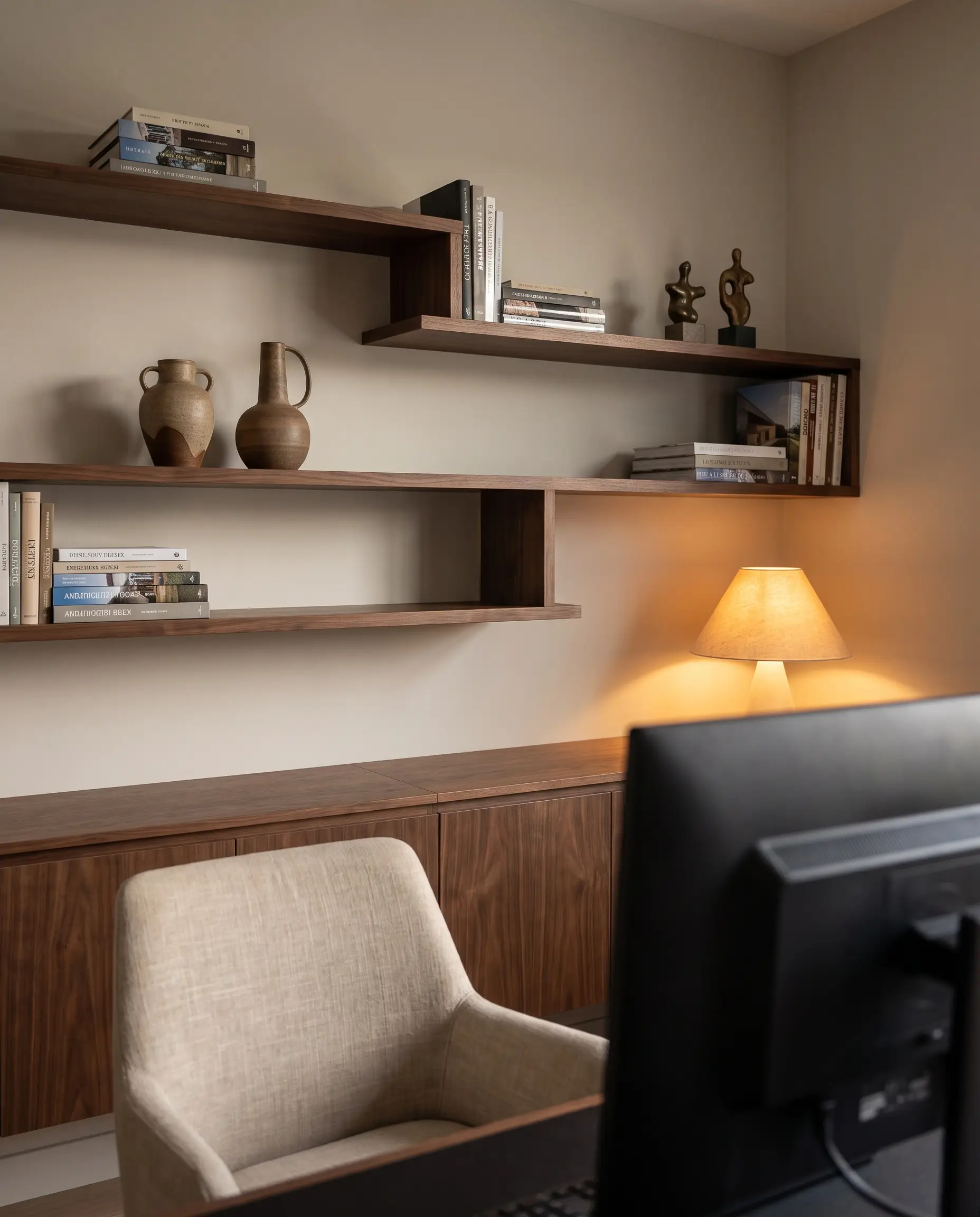
Virtual backgrounds project temporary amateurism; a curated, physical backdrop signals permanence and taste. By utilizing asymmetrical styling and negative space on floating shelves or a rear credenza, you create a sophisticated depth of field that looks immaculate on camera.
- Vibe: Gallery-level curation and intentional restraint.
- Key Materials: Ceramic art, architectural books, sculptural bronze objects.
- Styling Pro-Tip: Group objects in odd numbers and vary their heights to keep the eye moving, ensuring the background feels dynamic rather than rigid.
| Video-Call Background Styling | Do | Don’t |
|---|---|---|
| Shelving Layout | Leave 30% of shelf space completely empty to allow the room to breathe. | Cram shelves with paperback books or excessive personal memorabilia. |
| Lighting | Place a soft, warm-glow lamp on a rear credenza to create depth. | Rely on a bright window directly behind you (creates a harsh silhouette effect). |
| Art Placement | Hang large, abstract, low-contrast canvases that do not distract the viewer. | Display busy gallery walls or glass-framed art that reflects your ring light. |
9. Upgrade to Heavyweight Stone and Terrazzo Desk Accessories
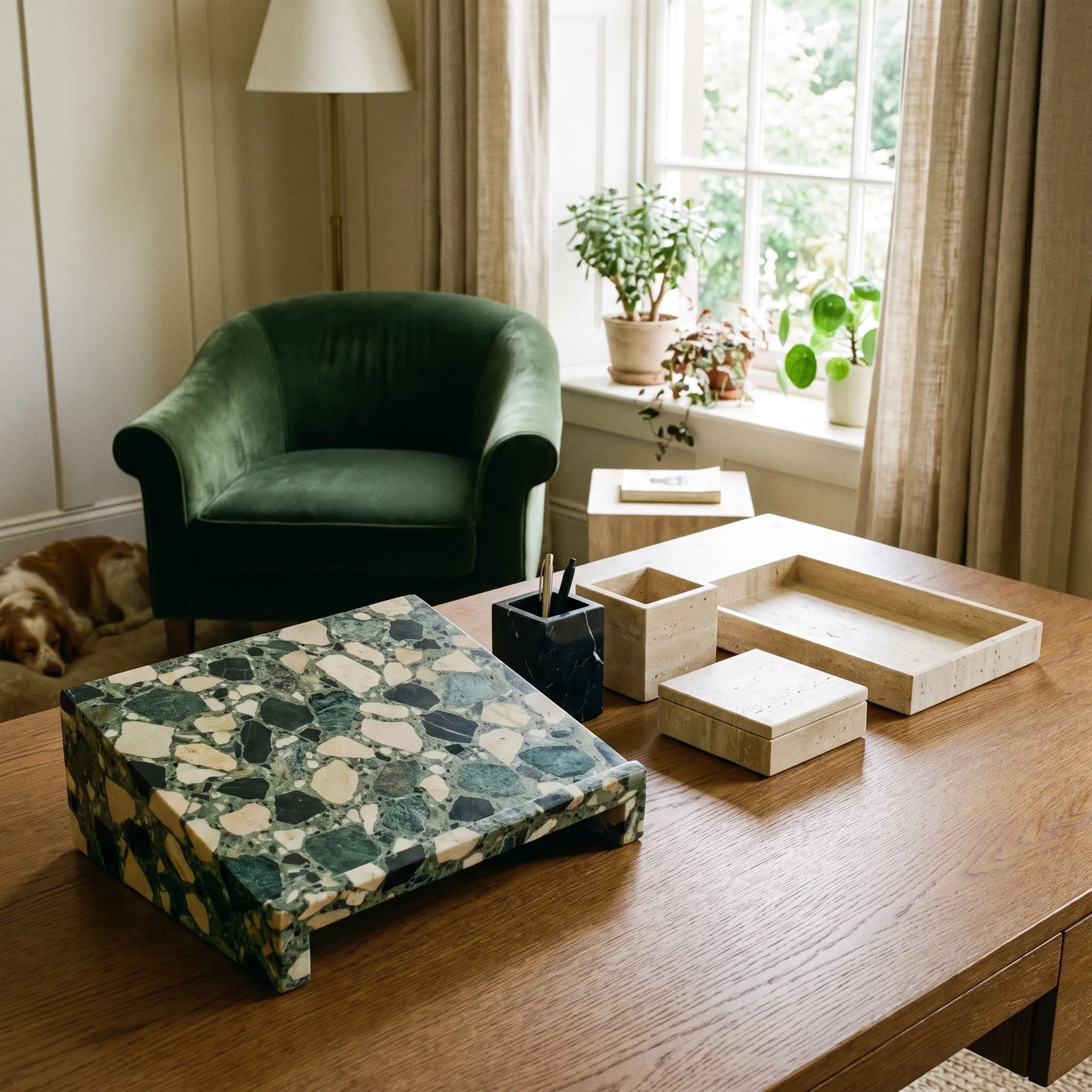
The micro-details of a workspace dictate its overall tactile experience, making cheap plastic organizers a critical failure in a luxury office. Swapping lightweight accessories for heavy, sculptural pieces made of honed stone or bespoke terrazzo adds physical weight, grounding the daily tactile interactions of the workday.
- Vibe: Bold, Postmodern resurgence.
- Key Materials: Honed Travertine, Bespoke Terrazzo, Nero Marquina Marble.
- Styling Pro-Tip: Source a monolithic terrazzo laptop stand to raise your screen to eye level while doubling as a piece of functional desktop sculpture.
10. Disguise Ergonomic Seating with High-End Residential Fabrics
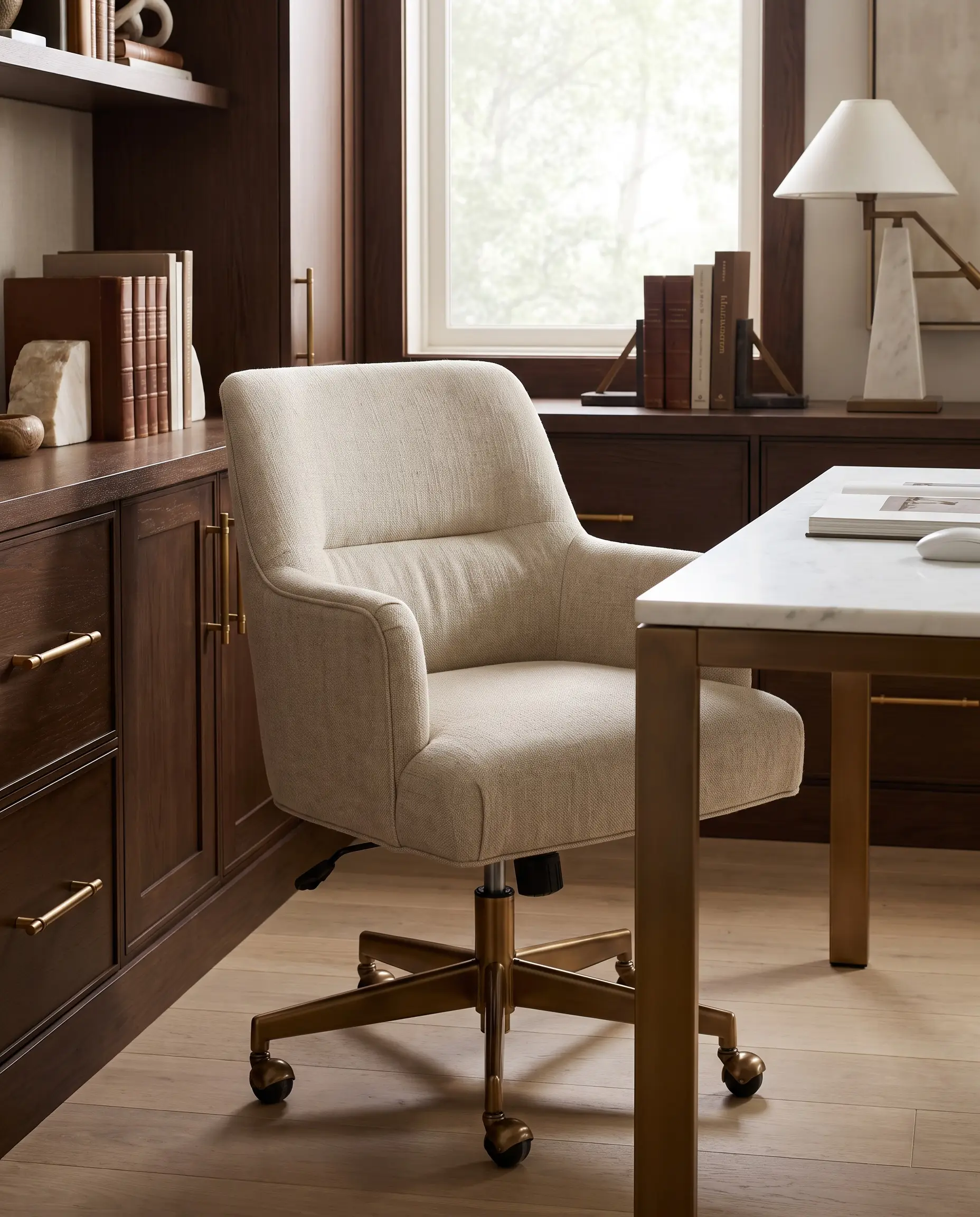
The resimercial movement dictates that you no longer have to compromise the beauty of a room for lumbar support. High-performance ergonomic mechanisms are now being expertly disguised beneath rich, residential upholstery, softening the mechanical, tech-bro aesthetic of standard office chairs.
Always match the undertone of your chair’s base (matte black, polished aluminum, or bronze) to the dominant cabinet hardware in your millwork for a unified architectural language.
Architect’s Note
- Vibe: Tailored, supportive luxury.
- Key Materials: Performance velvet, heavy Belgian linens, top-grain caramel leather.
- Styling Pro-Tip: Avoid mesh-backed chairs at all costs; specify a fully upholstered back to maintain the illusion of a traditional residential armchair.
11. Evolve the “Cloffice” with Architectural Pocket Doors
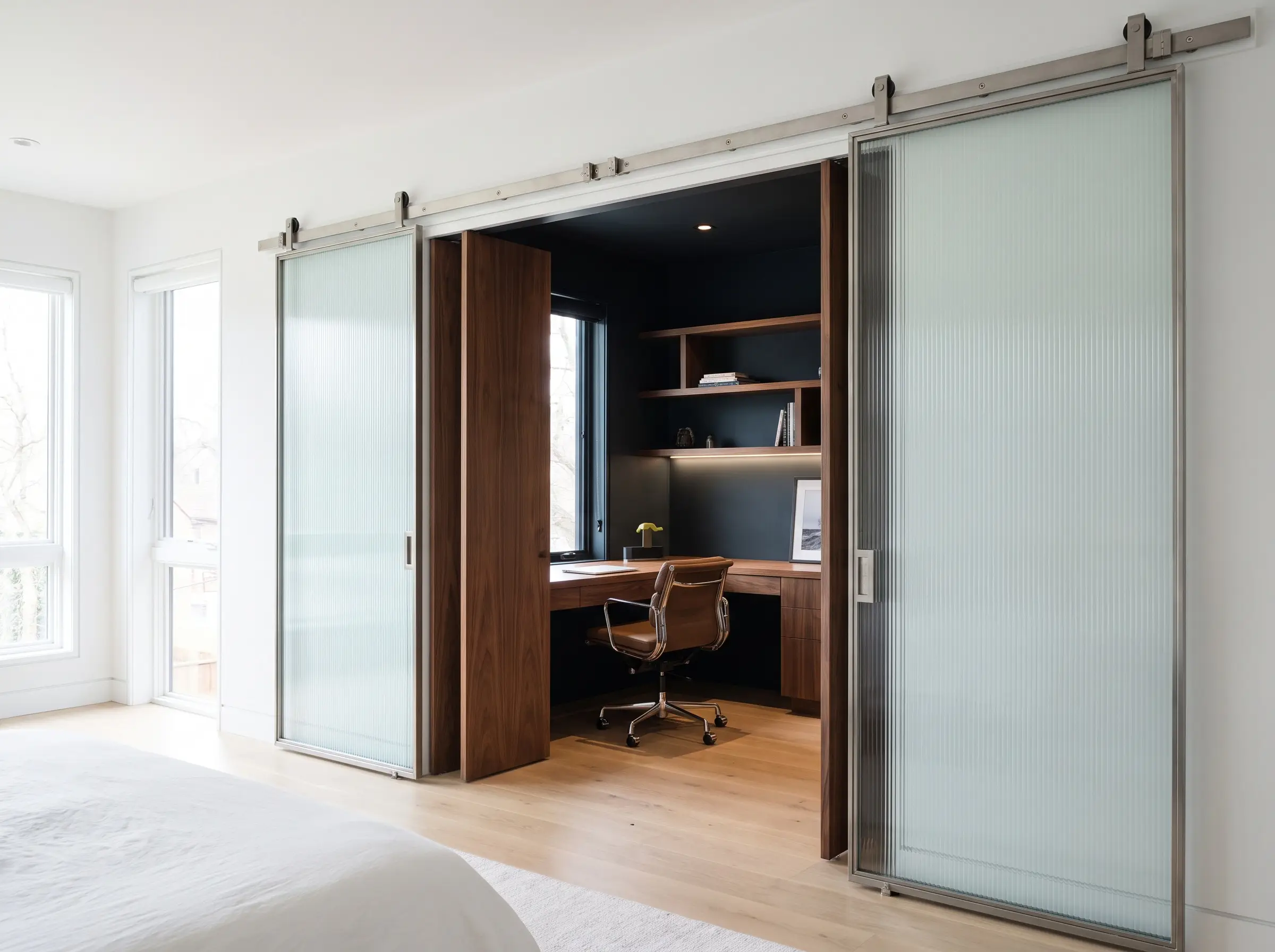
When dedicated square footage is unavailable, the hybrid closet-office must enforce strict work-life boundaries through intelligent architecture. Replacing standard swinging doors with high-end concealment mechanisms allows the entire workstation to vanish at the end of the day, visually separating rest from labor.
- Vibe: Highly engineered spatial efficiency.
- Key Materials: Fluted glass pocket doors, bi-fold millwork, heavy-duty sliding track hardware.
- Styling Pro-Tip: Paint the interior of the concealed office a dramatically darker shade than the surrounding bedroom or hallway to establish it as a distinct, separate zone when open.
12. Soften Glare with Organic Linen Roman Shades
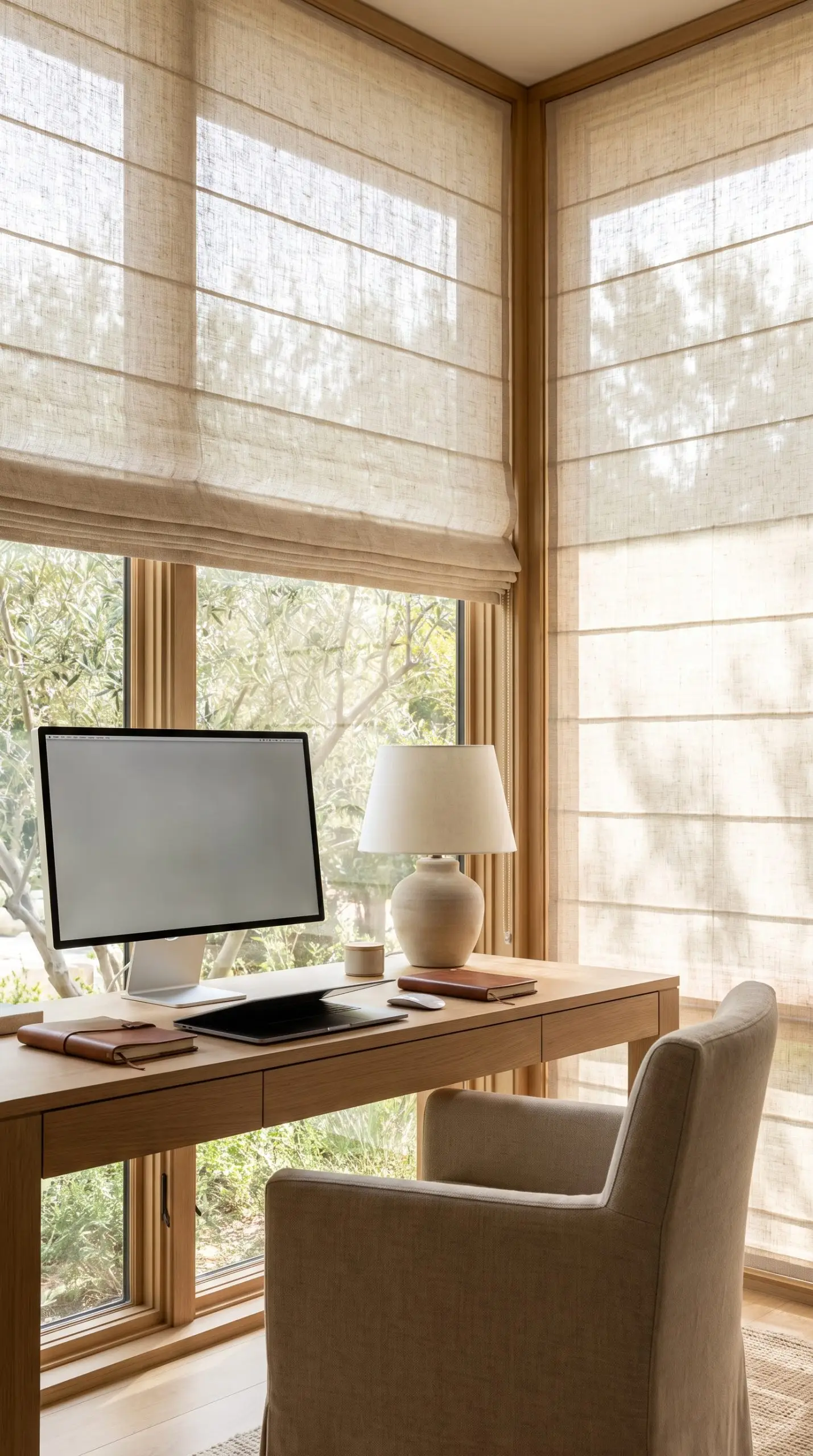
Standard plastic blinds instantly degrade the aesthetic of a bespoke workspace and create harsh, striped shadows across your face. Installing organic, unlined linen Roman shades filters direct sunlight into a soft, diffused glow, perfectly illuminating the face for video calls while eliminating aggressive monitor glare.
- Vibe: Soft, organic minimalism.
- Key Materials: 100% unlined organic linen, custom Roman shade hardware.
- Functional Benefit: The breathable weave of linen provides privacy and light diffusion without completely sacrificing the room’s connection to the outdoors.
Closing the Door on the Workday
An intentionally engineered 2027 home office is a direct investment in your personal output, acoustic comfort, and psychological wellbeing. The goal is to construct an executive sanctuary that you actively desire to spend eight hours in—and, just as importantly, a space that seamlessly powers down when the labor is done. Which architectural upgrade are you implementing first to reclaim your focus?
The Aesthetics Desk curates the visual direction for Hackrea. Specializing in design history, global architectural movements, and interior styling, this desk focuses on the psychology of space and how to translate high-end, magazine-quality aesthetics into approachable residential design without falling into fleeting micro-trends.