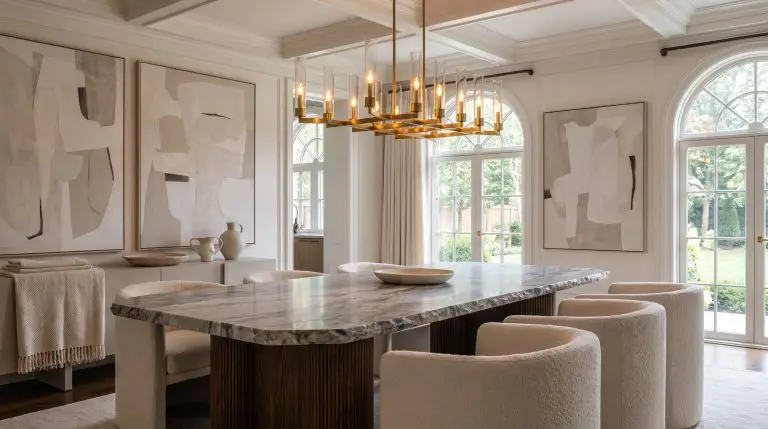
The Invisible Smart Home: 12 Design-First Tech Trends for 2027
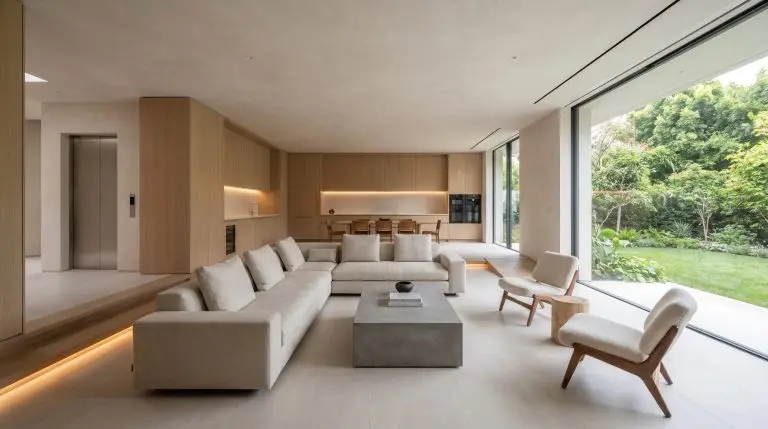
For years, embracing home automation meant compromising a meticulously curated interior layout with glaring screens, bulky plastic hubs, and a tangle of messy cords. The pursuit of convenience actively fought against the visual peace of high-end design, turning beautiful spaces into chaotic electronic showrooms.
The 2027 aesthetic standard completely rejects this compromise, demanding that technology operate entirely behind the scenes. We are transitioning from reactive hardware that begs for manual interaction to predictive systems that sense your spatial needs without a single visible prompt. The new luxury baseline requires that high-performance automation remains completely unobtrusive, blending perfectly into organic materials and custom millwork.
Our analysis of current architectural integration shows that the most sophisticated homes are hiding their capabilities inside the very walls themselves. From biophilic climate control to ambient lighting concealed in Venetian plaster, we are breaking down how to seamlessly fuse cutting-edge, intuitive capabilities with accessible luxury aesthetics.
Reactive Tech (the 2020 standard) required you to push a plastic button on a wall or shout at a visible speaker to dim the lights. Predictive Tech (the 2027 standard) uses concealed micro-sensors and biometric routines to automatically adjust your environment the moment you enter a room, requiring zero visible hardware.
Technologist’s Note
The End of “Gadgets”: 2027’s Invisible Tech Revolution
The most coveted status symbol in modern luxury design is the absolute absence of visible hardware. Achieving a flawless Japandi or Organic Modern aesthetic requires meticulous architectural planning, ensuring high-performance technology operates entirely behind the drywall and custom millwork rather than cluttering your visual field.
Plaster-Finish & Flush-Mount Control Panels
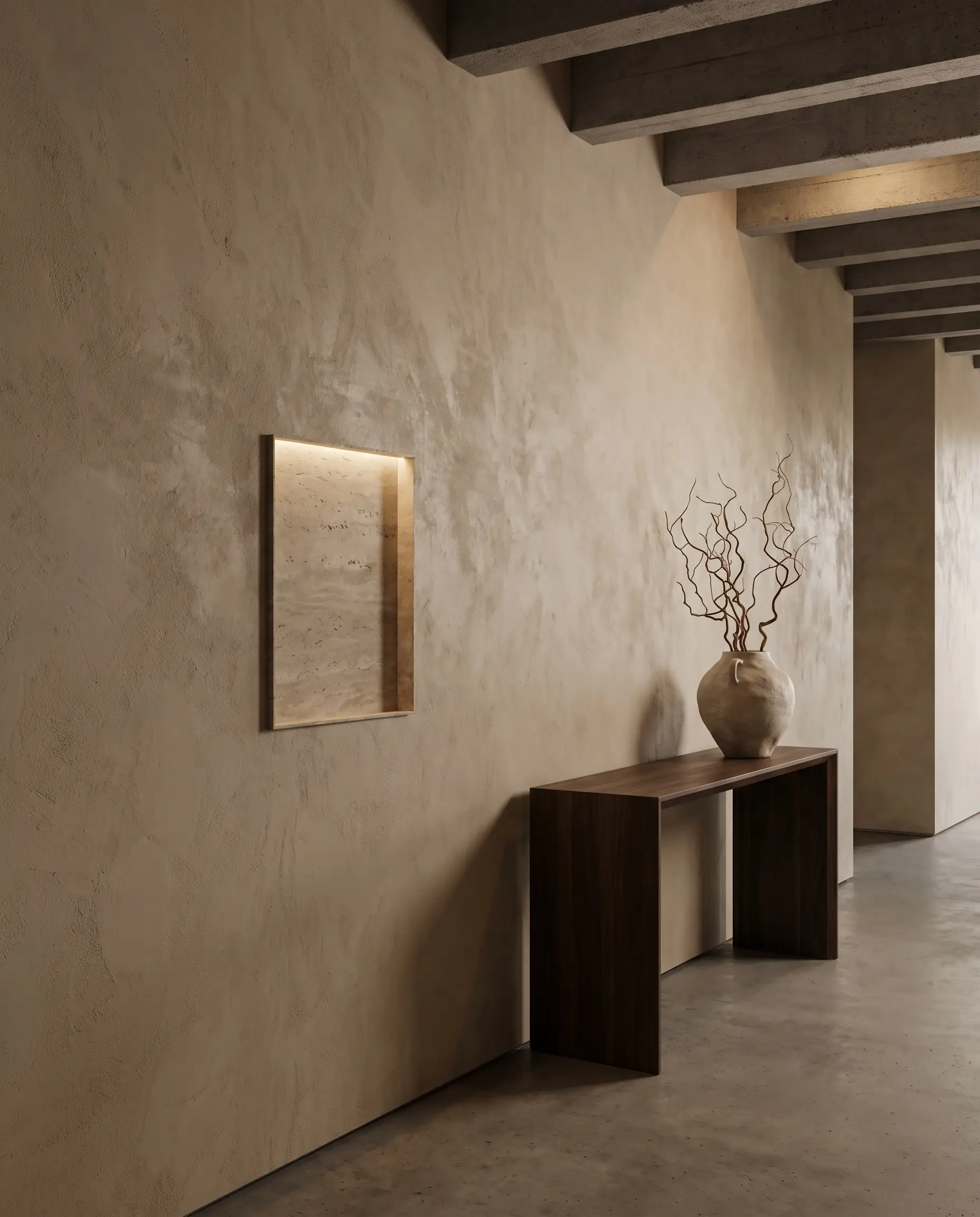
Traditional protruding light switches create visual interruptions, breaking the clean lines of a meticulously finished wall. By utilizing precision mud-in mounting systems, touch panels sit perfectly flush with the drywall, allowing custom material overlays to camouflage the interface completely until illuminated.
- Vibe: Monolithic, uninterrupted architectural purity.
- Key Materials: Gypsum mounting brackets, Venetian plaster, custom stone veneers.
- Design Pairing: Brutalist or minimalist interiors where unbroken wall planes are critical to the visual balance.
- Installation Reality: Must be integrated during the rough electrical phase before drywall finishing begins.
Acoustic Wood Veneers Hiding Architectural Speakers
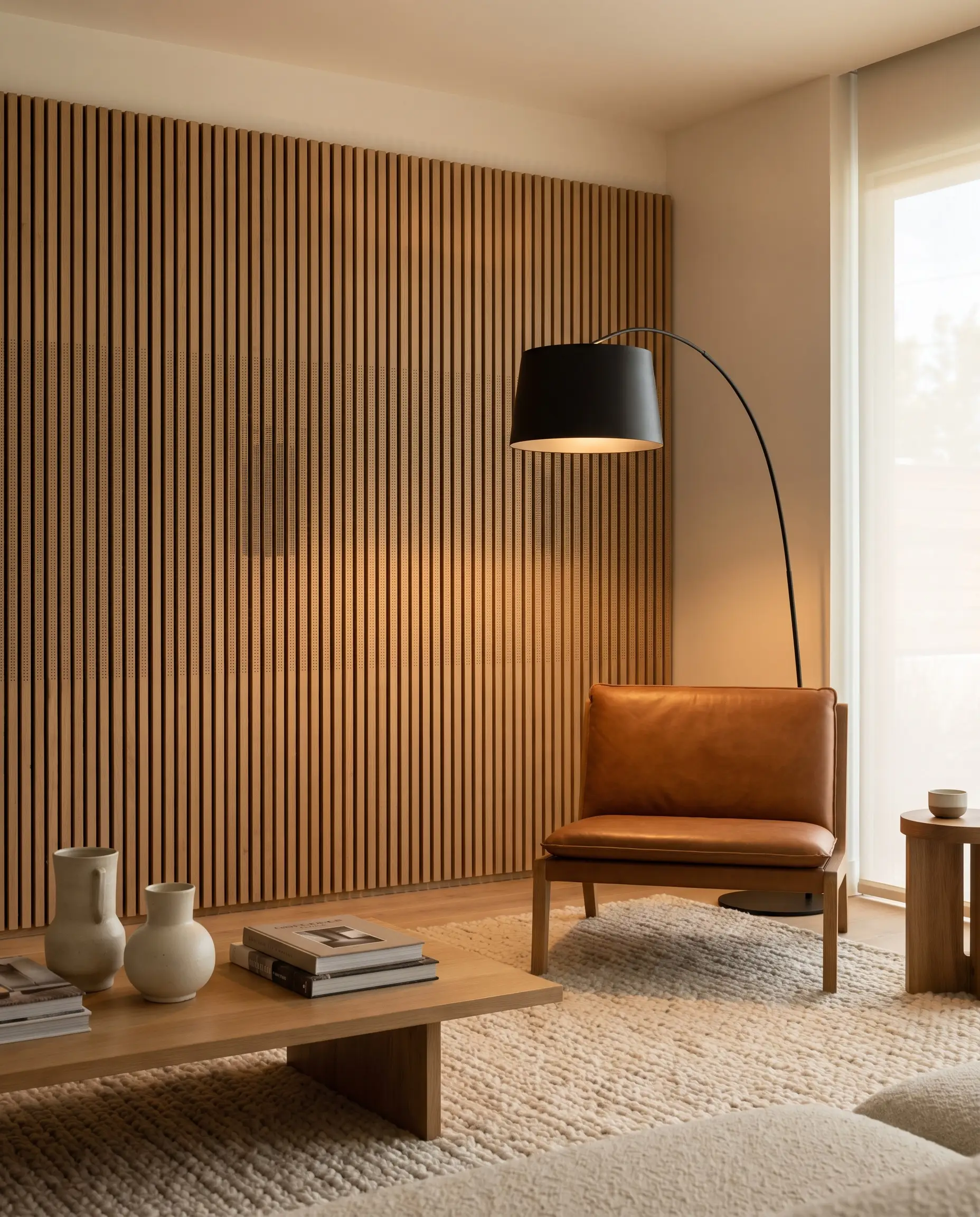
Audiophile-level sound no longer requires sacrificing floor space to bulky towers or interrupting a pristine ceiling with perforated metal grilles. High-fidelity transducers now install directly behind the drywall or sit concealed behind slatted, acoustic wood treatments, delivering rich, ambient sound that seems to emanate from the architecture itself.
- Vibe: Immersive, invisible acoustic warmth.
- Key Materials: Invisible in-wall transducers, micro-perforated acoustic backing.
- Design Pairing: Organic Modern living spaces utilizing rift-sawn white oak or smoked walnut slatted wall panels.
- Pro-Tip: Proper acoustic dampening behind the wood veneer is mandatory to prevent structural rattling at high volumes.
Smart Glass & Electrochromic Privacy Windows
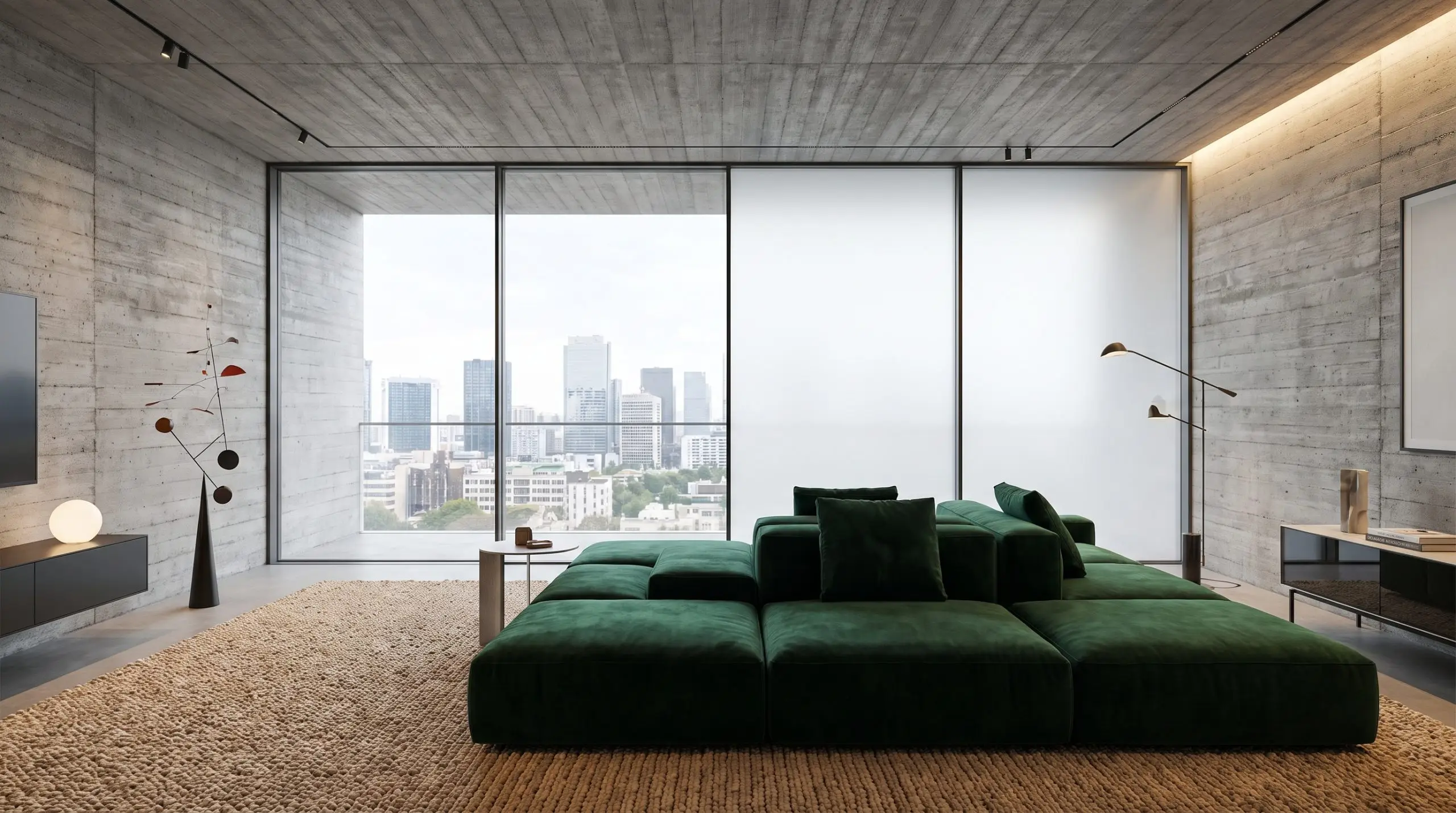
When clean architectural lines and unobstructed sightlines are paramount, traditional heavy drapes add unnecessary visual weight to a room. If your space features floor-to-ceiling fenestration, electrochromic glass solves this spatial challenge by transitioning from crystal clear to opaque on demand, providing instant privacy without compromising the minimalist aesthetic.
- Vibe: Sleek, kinetic, and fiercely modern.
- Key Materials: Low-voltage electrochromic glazing, concealed window framing.
- Design Pairing: Floor-to-ceiling fenestration in Brutalist architecture where raw concrete walls shouldn’t be softened by textiles.
- Wiring Requirement: Low-voltage pre-wire runs must be routed directly into the window jambs during framing.
Motorized Window Treatments with Hidden Fascias
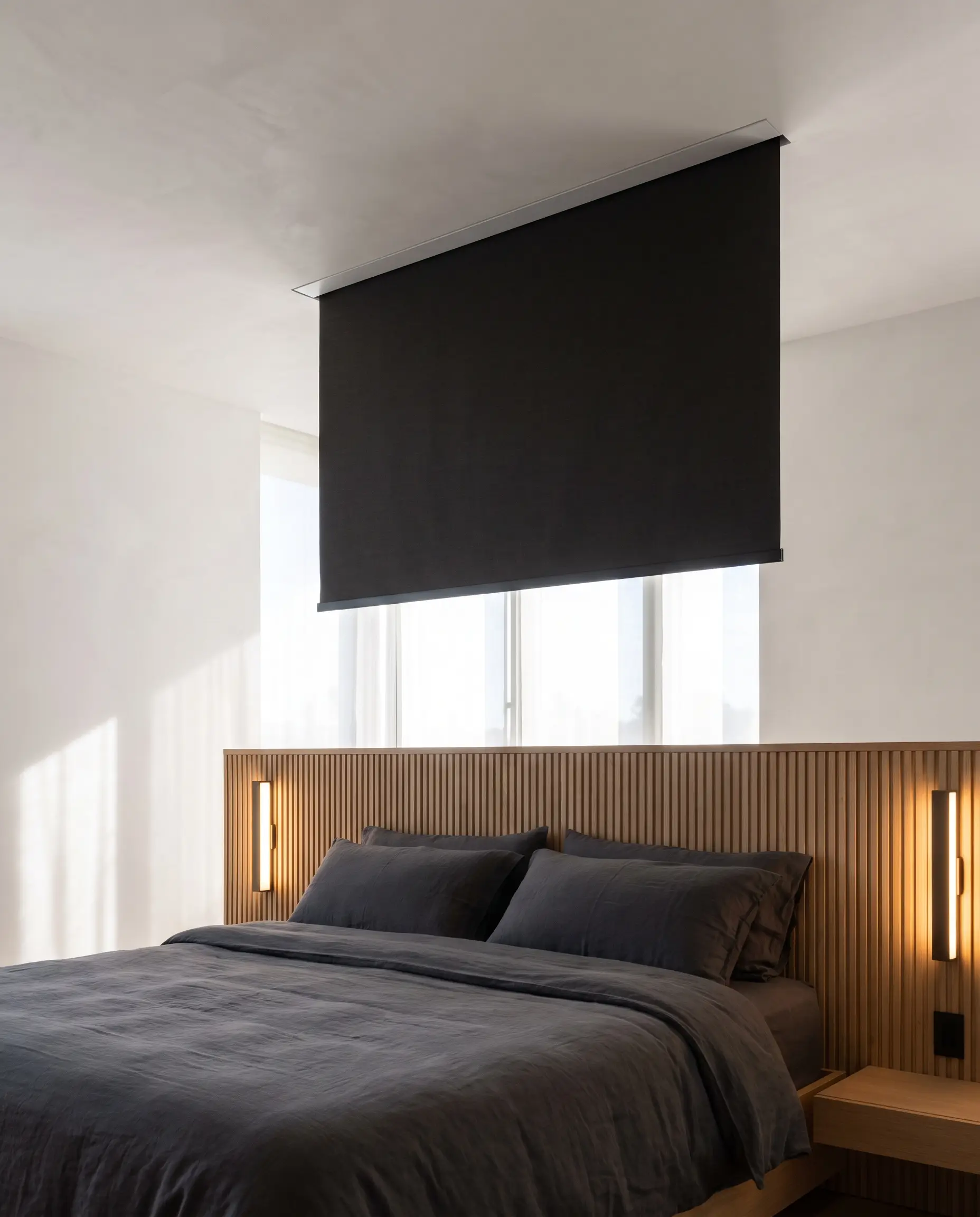
For spaces that demand the tactile softness of textiles, automated shades remain essential, but the hardware must disappear entirely. The 2027 standard recesses motorized shade rollers into custom ceiling pockets with hidden fascias, allowing the fabric to drop seamlessly from a hairline slit in the ceiling.
- Vibe: Tailored, magical, and highly refined.
- Key Materials: Extruded aluminum pocket boxes, ultra-quiet tubular motors.
- Design Pairing: Accessible luxury primary bedrooms needing blackout capabilities without the clutter of exposed roller tubes.
- Structural Planning: Requires early collaboration between the interior designer and framing contractor to build the ceiling pockets before hanging drywall.
Predictive Biophilia: Tech That Enhances Human Wellness
Beyond sheer convenience, 2027’s automation focuses heavily on regulating the human nervous system and mimicking the natural world indoors. By weaving intuitive wellness systems into the physical architecture, our homes become responsive environments that actively support biological health without demanding manual adjustments.
Hyper-Localized Circadian Lighting Systems
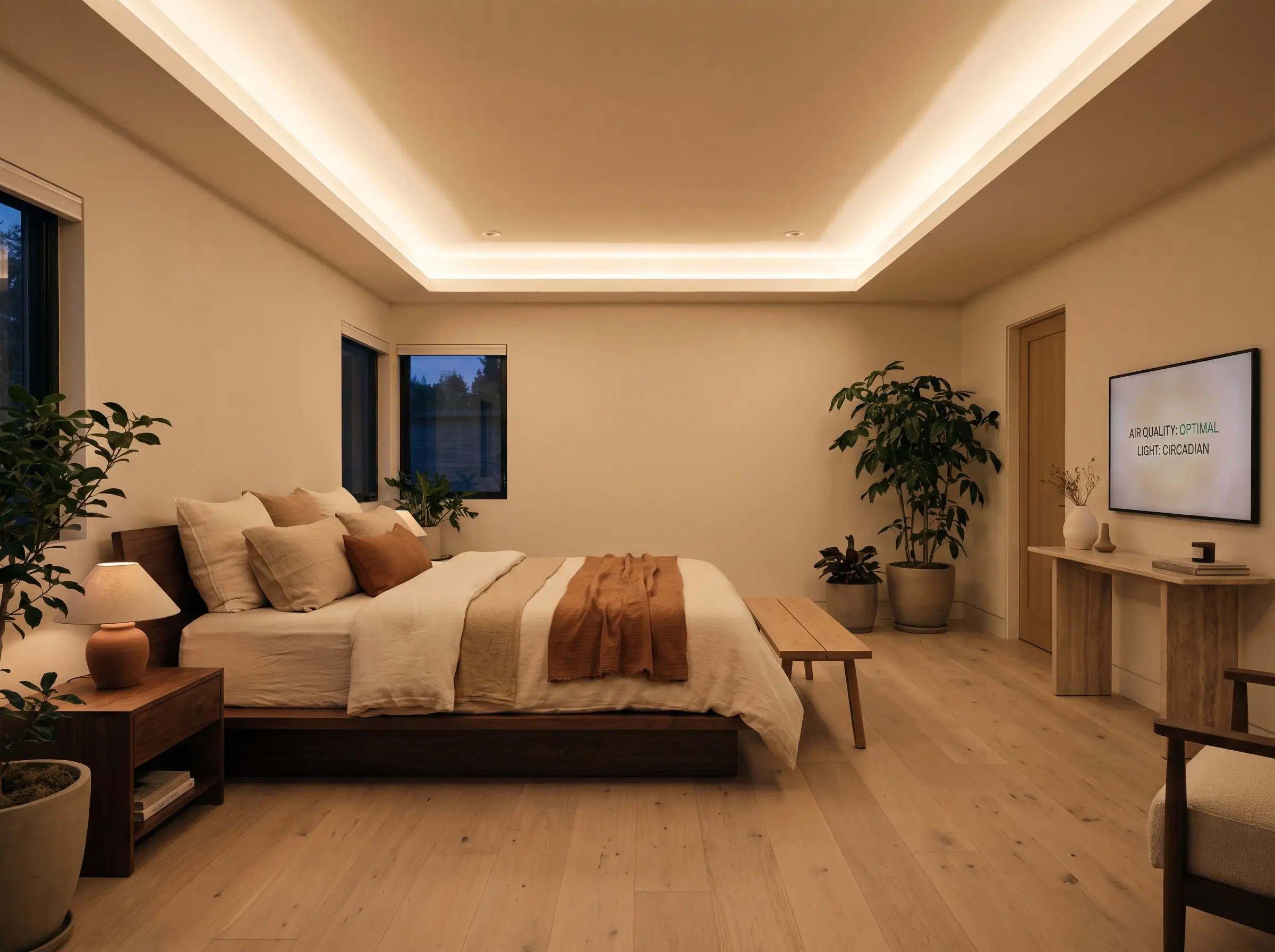
Basic color-changing bulbs are obsolete; today’s sophisticated, tunable white-light systems automatically shift color temperature to mimic the sun’s natural arc. By integrating these dynamic LEDs into concealed architectural cove lighting, the home seamlessly syncs with your biological rhythms throughout the day.
- Vibe: Biological harmony and sensory relief.
- Key Hardware: Multi-channel tunable LED tape, DALI or DMX control modules.
- Design Pairing: Soft, diffused ceiling coves in Japandi bedrooms, prioritizing indirect, ambient illumination over harsh downlights.
- Color Temperature Science: Systems automatically shift from crisp 5000K for morning focus to a warm, melatonin-preserving 2700K for evening wind-down.
Integrated Indoor Air Quality (IAQ) Micro-Sensors
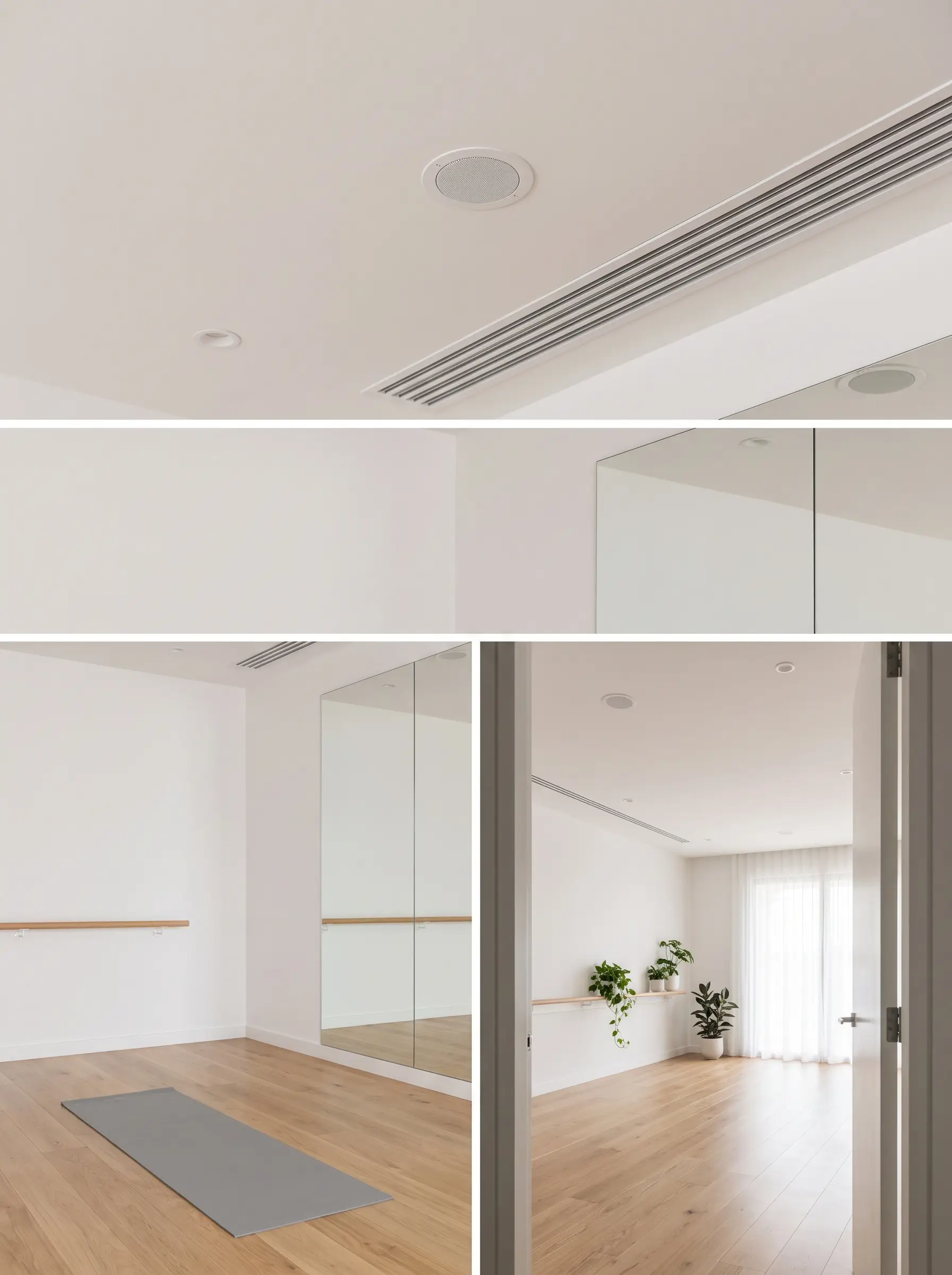
Standalone air purifiers are visual eyesores that consume valuable floor space and disrupt the room’s carefully planned layout. The current luxury standard integrates invisible micro-sensors directly into HVAC zoning systems and ceiling canopies, continuously monitoring air quality and triggering concealed, whole-home purification only when necessary.
- Vibe: Clinical purity meets invisible integration.
- Key Hardware: Flush-mount VOC and CO2 sensors, in-duct HEPA/UV filtration.
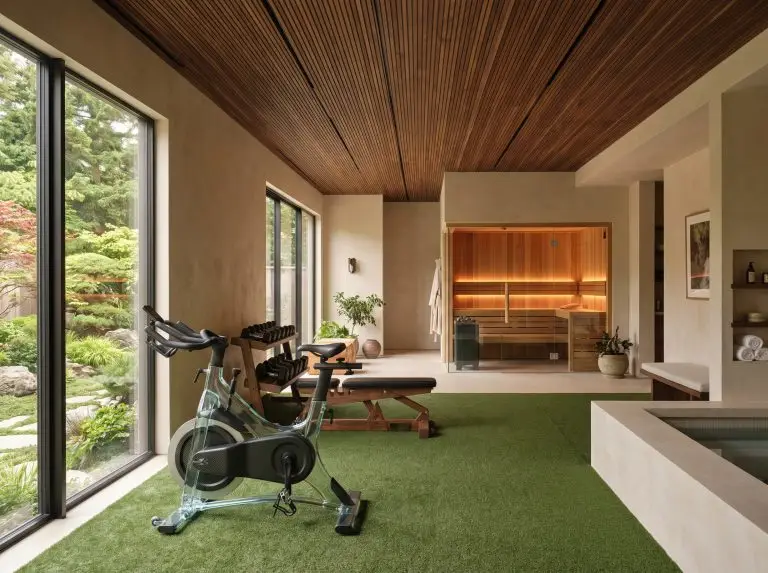
- Design Pairing: High-end wellness rooms or home gyms where pristine air quality is essential but floor space must remain completely clear.
- Analytical Advantage: Localized micro-sensors provide room-by-room data, allowing the HVAC system to isolate and purify specific zones rather than wasting energy on the entire house.
Automated Hydroponic & Living Wall Irrigation
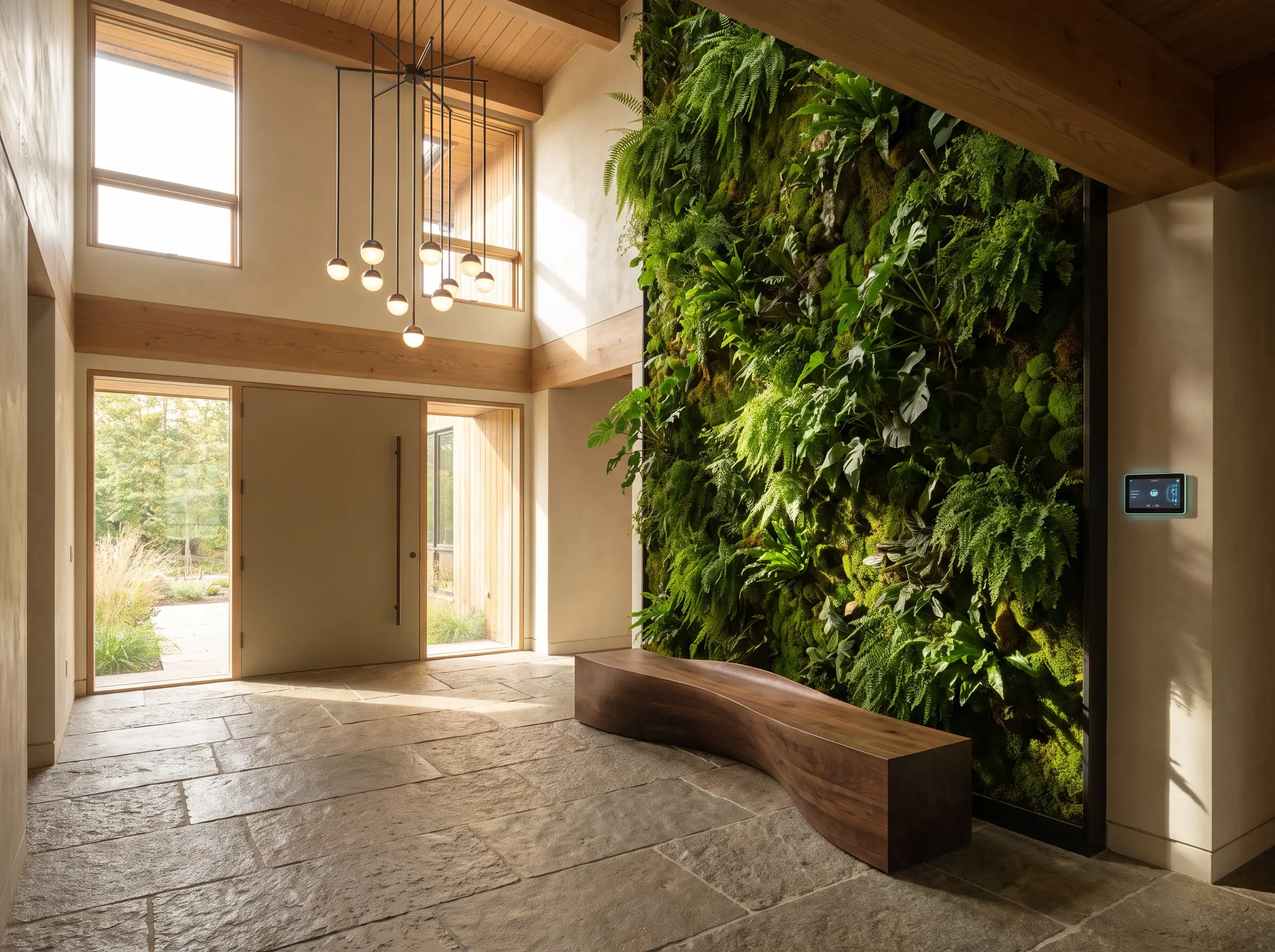
Biophilic design heavily relies on indoor greenery, but the daily maintenance of massive botanical installations can quickly become overwhelming. Concealed hydroponic technology and smart drip-irrigation systems allow homeowners to sustain vast, architectural living walls with zero manual effort, merging organic life with autonomous care.
- Vibe: Lush, vibrant, and effortlessly organic.
- Key Hardware: Micro-drip emitters, hidden moisture sensors, integrated drainage basins.
- Design Pairing: Double-height Organic Modern entryways featuring massive ferns and moss installations.
- Plumbing Reality: Requires dedicated, concealed water supply lines and integrated floor drains planned well before the foundation is poured.
Touchless, Temperature-Predictive Smart Showers
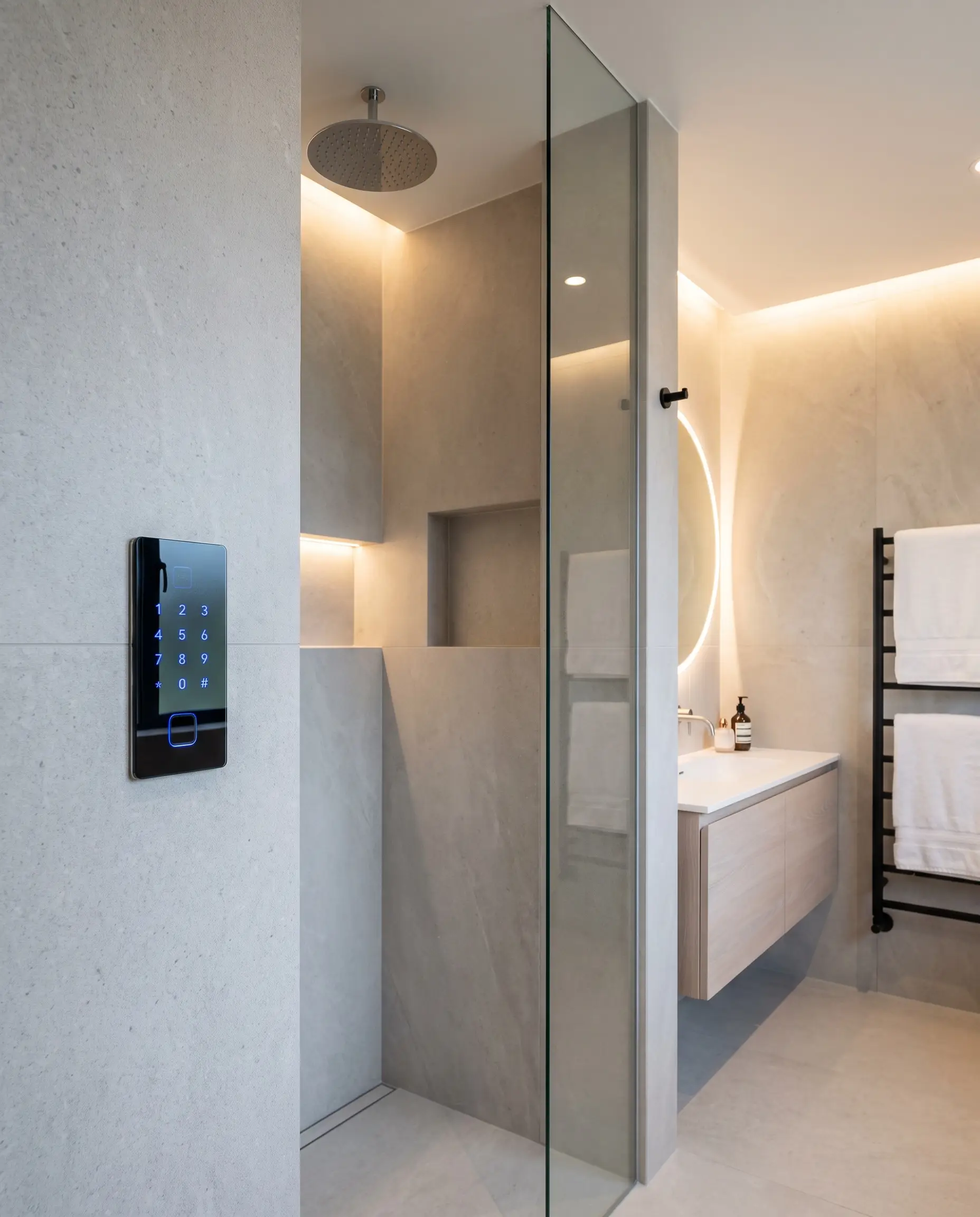
The visual clutter of bulky chrome plumbing fixtures is being replaced by minimalist, flush-mounted digital controls that recognize user profiles via biometrics. These intuitive systems automatically set your exact preferred water temperature and flow rate before you even step inside, preserving the unbroken visual plane of the shower walls.
- Vibe: Streamlined, spa-like, and highly personalized.
- Key Hardware: Digital thermostatic valves (hidden in the wall cavity), flush-mount biometric keypads.
- Design Pairing: Seamless, large-format slab stone bathrooms where traditional metal knobs would disrupt the monolithic materiality.
- Pro-Tip: Locate the digital interface just outside the shower enclosure so the system primes the temperature before you get wet.
The Autonomous Oasis: Kitchen & Energy Innovations
While the kitchen remains the operational command center of the home, its visual footprint is dramatically shrinking as appliances disappear into the cabinetry. Simultaneously, the home’s hidden energy infrastructure is evolving into a sleek, self-sustaining loop that champions both aesthetic purity and environmental independence.
| Integration Tier | Estimated Cost Range | Key Technologies Included | Aesthetic Impact |
|---|---|---|---|
| Accessible Luxury | $15,000 – $30,000 | Motorized shades, basic flush-mount switches, integrated audio, smart HVAC zoning. | Removes wall clutter; requires standard blocking. |
| High-End / Bespoke | $50,000 – $120,000+ | Invisible induction, full circadian cove lighting, electrochromic glass, biometric showers. | Completely invisible tech; requires deep architectural pre-planning. |
Induction Cooktops Hidden Under Porcelain Countertops
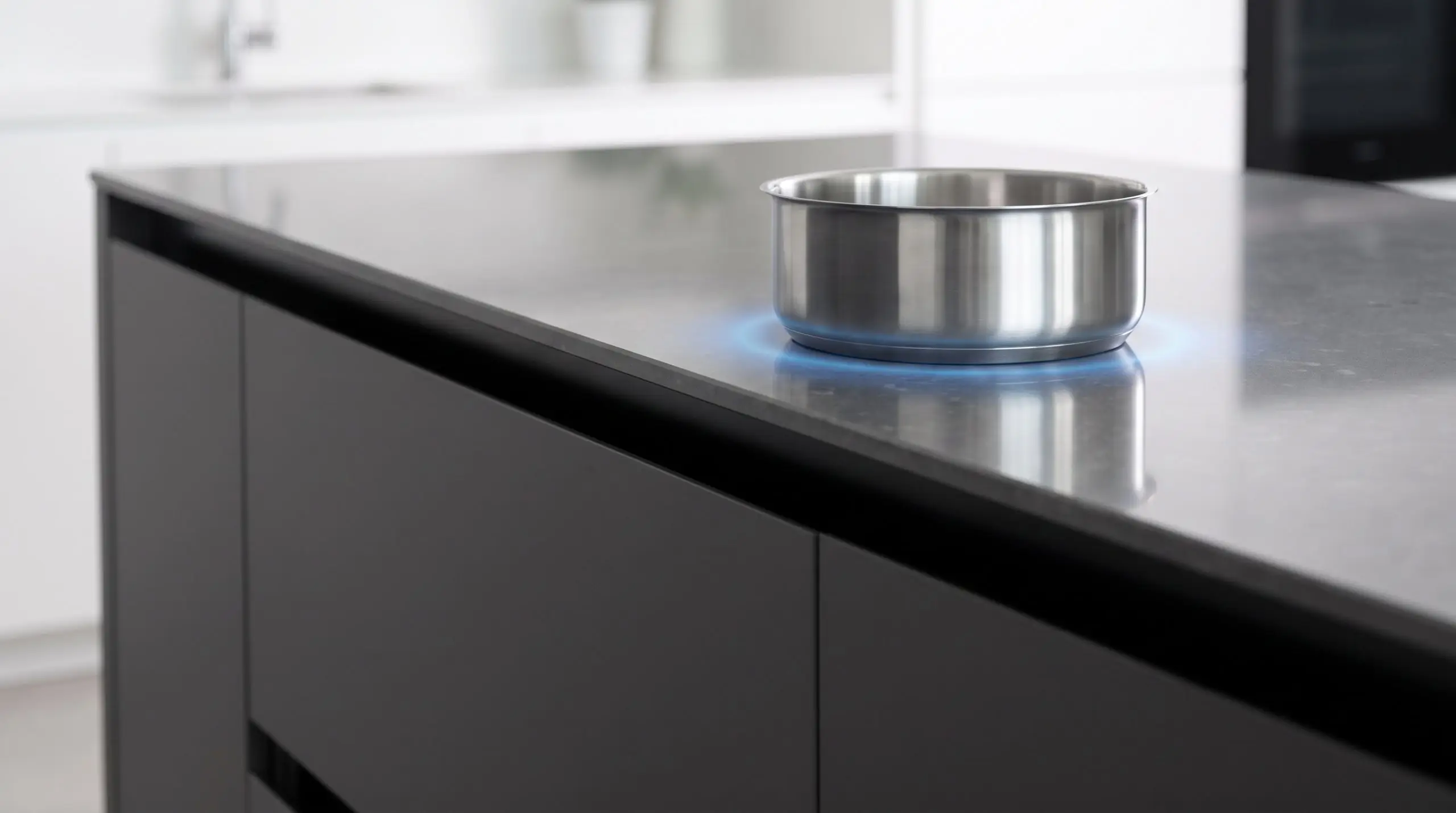
The traditional stove is a visual anchor that often dictates the entire kitchen layout, but invisible induction technology completely eliminates this constraint. By installing high-powered induction burners directly underneath the countertop, you cook directly on the stone, leaving a perfectly monolithic, unbroken island surface when not in use.
- Vibe: Ultra-minimalist, uninterrupted culinary magic.
- Key Materials: Under-counter induction modules, specialized magnetic cookware.
- Design Pairing: Sleek, handle-less European cabinetry topped with large-format porcelain or sintered stone.
- Material Warning: This technology cannot be used with natural quartz or marble due to thermal shock; it requires the intense heat resistance of engineered sintered stone.
AI-Driven Energy Grids as Design Elements
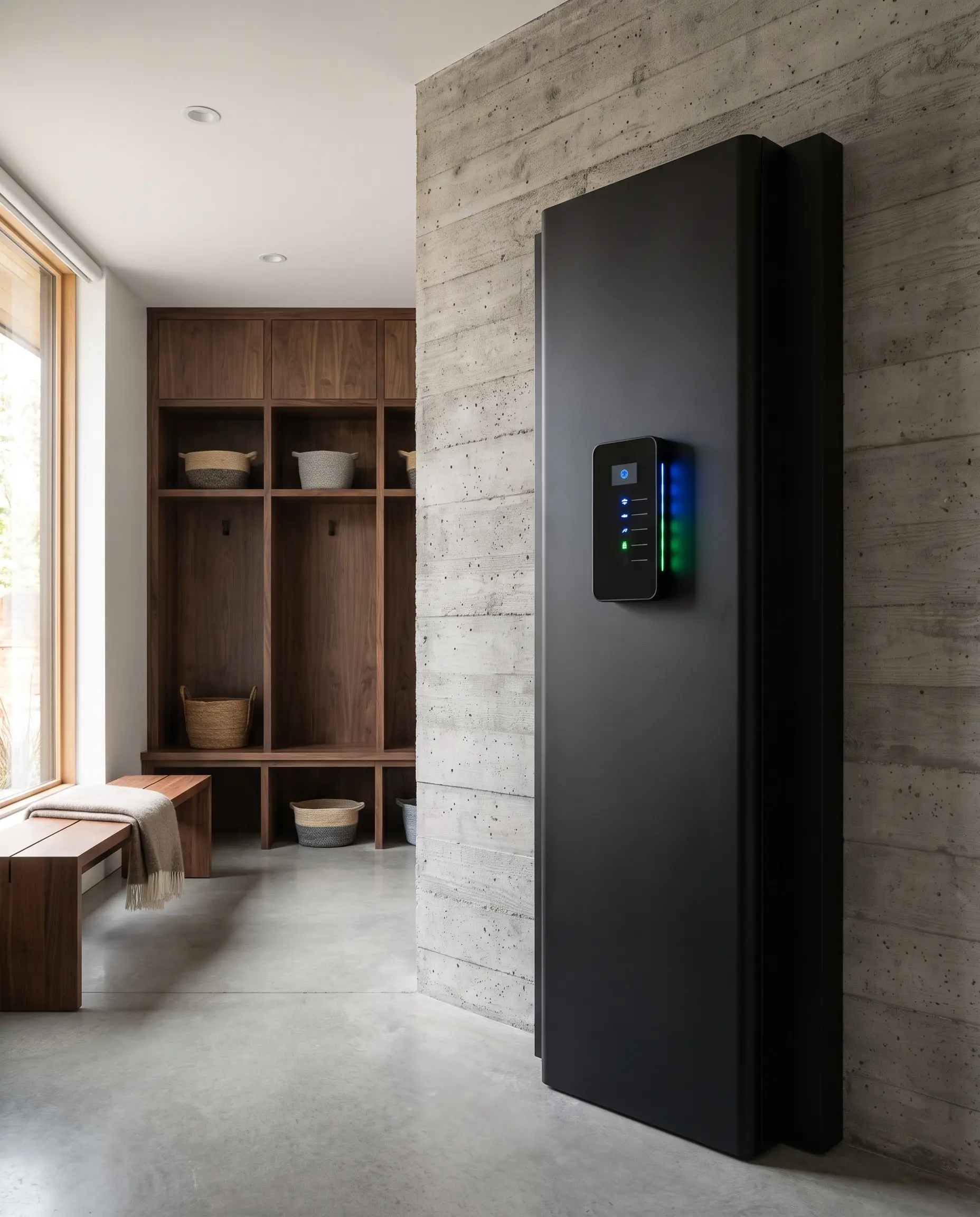
Residential battery walls and solar storage units are no longer utilitarian boxes banished to a dusty garage. Today’s energy grids are designed as sleek, monolithic architectural totems, proudly displayed in mudrooms or utility spaces while predictive AI silently balances solar intake and grid usage in the background.
- Vibe: High-tech sustainability with a sculptural presence.
- Key Hardware: Residential battery banks, AI energy management modules.
- Design Pairing: Utilitarian spaces finished with raw concrete and matte black millwork, turning the power grid into a visual feature.
- Efficiency Pro-Tip: Predictive systems track local weather forecasts to automatically store extra grid power before a major storm hits.
Greywater Recycling with Minimal Visual Footprints
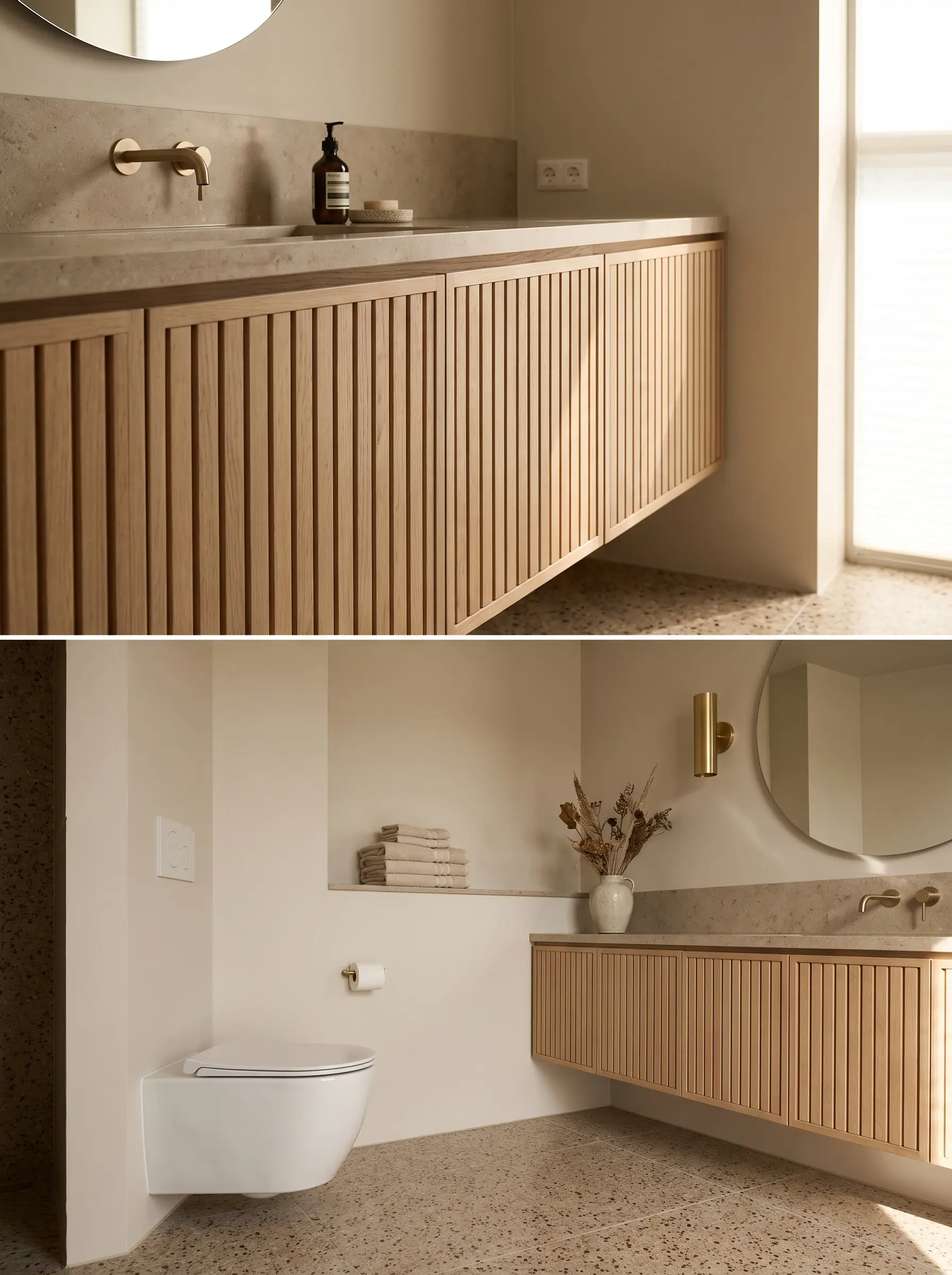
Eco-conscious luxury demands intelligent water management, but older recycling systems required massive, unsightly basement holding tanks. Modern greywater systems shrink this footprint dramatically, capturing shower and sink water, filtering it, and redirecting it to toilets or irrigation while fitting seamlessly inside standard custom cabinetry.
- Vibe: Responsible, compact, and completely hidden.
- Key Hardware: Cabinet-sized micro-filtration units, dual-plumbing lines.
- Design Pairing: Sustainable, high-end builds where environmental impact is just as important as the interior layout.
- Integration Note: Requires a dual-piping system (purple pipe standard) during the rough plumbing phase to separate blackwater from greywater.
The “Matter” Protocol & The Death of Hub Clutter
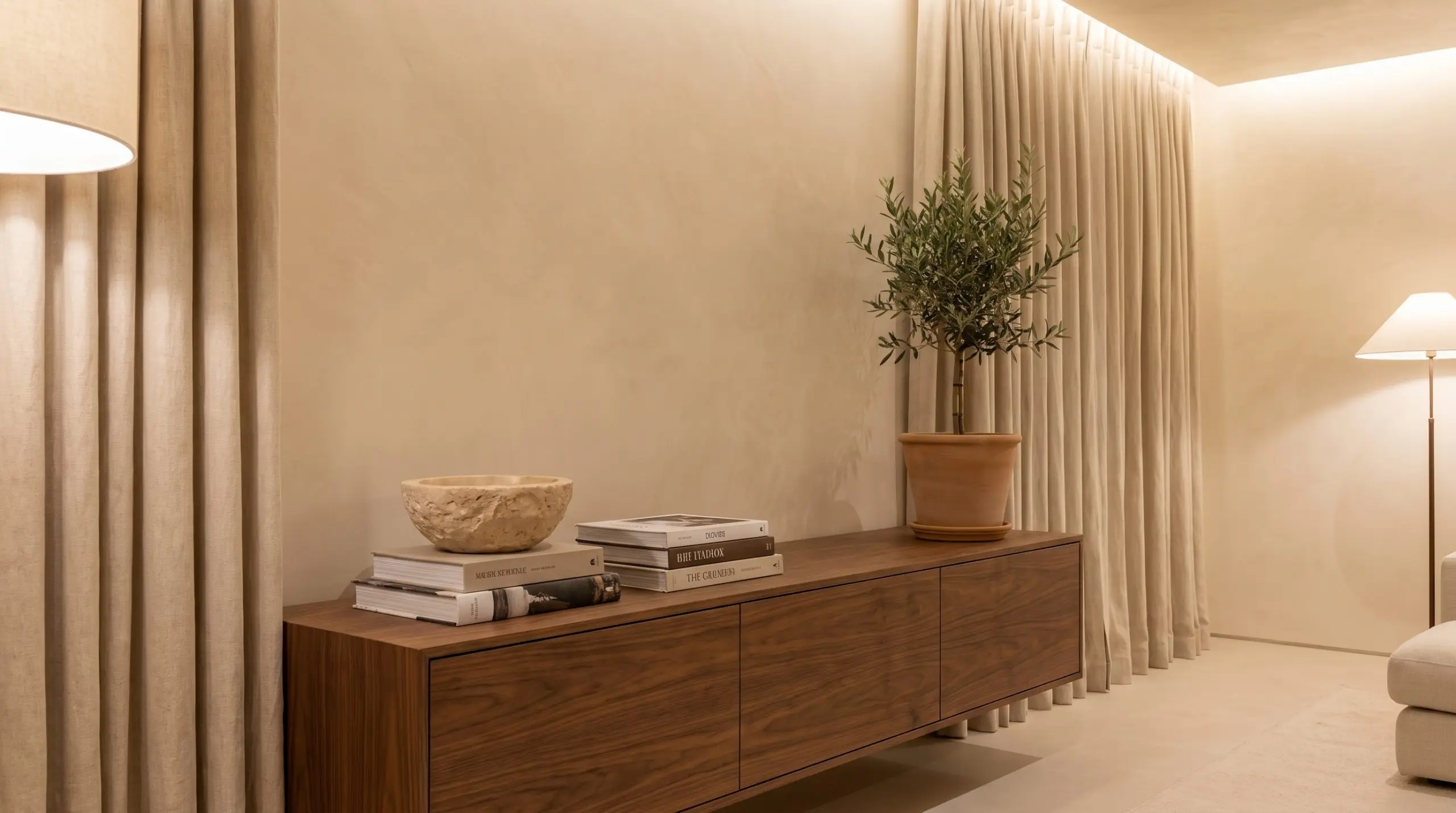
The true secret behind a perfectly pristine, invisible smart home is the backend connectivity that eliminates the need for multiple branded plastic hubs sitting on your credenzas. The universal Matter protocol allows disparate devices to communicate seamlessly in the background, keeping your interior design completely free of electronic clutter.
The Matter protocol is the digital mortar that holds the invisible home together. Aesthetically, it means you no longer need five different proprietary hubs fighting for outlet space on your media console; everything speaks a universal language, allowing your design to remain entirely uncluttered.
Technologist’s Note
- Vibe: Streamlined, unified, and visually quiet.
- Key Technology: Matter-certified hardware, Thread border routers.
- Design Pairing: Any meticulously styled living space where a blinking plastic router would ruin the curated vignette.
- Styling Pro-Tip: Consolidate your single required border router inside a ventilated, custom-built utility closet to keep all flashing LEDs out of the main living areas.
Future-Proofing Your Space (The Technologist’s Verdict)
True luxury in 2027 is a home that anticipates your needs and runs silently in the background, devoid of visual interruption. If you are planning a comprehensive remodel or a new build, consider this your strict warning: do not close up your drywall until you have consulted an architectural tech integrator. The low-voltage pre-wire, structural blocking, and custom ceiling pockets required for invisible technology must be meticulously planned during the framing phase, long before the finishing materials are applied. Waiting until the paint is dry means compromising your aesthetic with surface-mounted hardware.
Intrusive hardware is officially obsolete, replaced by environments that support your lifestyle with quiet, predictive grace. Which invisible integration are you most excited to plan into your next architectural remodel?

The Aesthetics Desk curates the visual direction for Hackrea. Specializing in design history, global architectural movements, and interior styling, this desk focuses on the psychology of space and how to translate high-end, magazine-quality aesthetics into approachable residential design without falling into fleeting micro-trends.